EP3647431A1 - Procédé permettant d'obtenir un produit à base de levure à haute concentration en nucléotides - Google Patents
Procédé permettant d'obtenir un produit à base de levure à haute concentration en nucléotides Download PDFInfo
- Publication number
- EP3647431A1 EP3647431A1 EP17916084.1A EP17916084A EP3647431A1 EP 3647431 A1 EP3647431 A1 EP 3647431A1 EP 17916084 A EP17916084 A EP 17916084A EP 3647431 A1 EP3647431 A1 EP 3647431A1
- Authority
- EP
- European Patent Office
- Prior art keywords
- product
- producing
- concentration
- yeast
- nucleotide concentration
- Prior art date
- Legal status (The legal status is an assumption and is not a legal conclusion. Google has not performed a legal analysis and makes no representation as to the accuracy of the status listed.)
- Pending
Links
Images


Classifications
-
- C—CHEMISTRY; METALLURGY
- C12—BIOCHEMISTRY; BEER; SPIRITS; WINE; VINEGAR; MICROBIOLOGY; ENZYMOLOGY; MUTATION OR GENETIC ENGINEERING
- C12P—FERMENTATION OR ENZYME-USING PROCESSES TO SYNTHESISE A DESIRED CHEMICAL COMPOUND OR COMPOSITION OR TO SEPARATE OPTICAL ISOMERS FROM A RACEMIC MIXTURE
- C12P19/00—Preparation of compounds containing saccharide radicals
- C12P19/26—Preparation of nitrogen-containing carbohydrates
- C12P19/28—N-glycosides
- C12P19/30—Nucleotides
-
- A—HUMAN NECESSITIES
- A23—FOODS OR FOODSTUFFS; TREATMENT THEREOF, NOT COVERED BY OTHER CLASSES
- A23L—FOODS, FOODSTUFFS OR NON-ALCOHOLIC BEVERAGES, NOT OTHERWISE PROVIDED FOR; PREPARATION OR TREATMENT THEREOF
- A23L27/00—Spices; Flavouring agents or condiments; Artificial sweetening agents; Table salts; Dietetic salt substitutes; Preparation or treatment thereof
- A23L27/20—Synthetic spices, flavouring agents or condiments
- A23L27/23—Synthetic spices, flavouring agents or condiments containing nucleotides
-
- C—CHEMISTRY; METALLURGY
- C12—BIOCHEMISTRY; BEER; SPIRITS; WINE; VINEGAR; MICROBIOLOGY; ENZYMOLOGY; MUTATION OR GENETIC ENGINEERING
- C12N—MICROORGANISMS OR ENZYMES; COMPOSITIONS THEREOF; PROPAGATING, PRESERVING, OR MAINTAINING MICROORGANISMS; MUTATION OR GENETIC ENGINEERING; CULTURE MEDIA
- C12N1/00—Microorganisms; Compositions thereof; Processes of propagating, maintaining or preserving microorganisms or compositions thereof; Processes of preparing or isolating a composition containing a microorganism; Culture media therefor
- C12N1/06—Lysis of microorganisms
-
- C—CHEMISTRY; METALLURGY
- C12—BIOCHEMISTRY; BEER; SPIRITS; WINE; VINEGAR; MICROBIOLOGY; ENZYMOLOGY; MUTATION OR GENETIC ENGINEERING
- C12N—MICROORGANISMS OR ENZYMES; COMPOSITIONS THEREOF; PROPAGATING, PRESERVING, OR MAINTAINING MICROORGANISMS; MUTATION OR GENETIC ENGINEERING; CULTURE MEDIA
- C12N1/00—Microorganisms; Compositions thereof; Processes of propagating, maintaining or preserving microorganisms or compositions thereof; Processes of preparing or isolating a composition containing a microorganism; Culture media therefor
- C12N1/14—Fungi; Culture media therefor
- C12N1/16—Yeasts; Culture media therefor
Definitions
- the present invention relates to a method for producing a yeast-based product with a high nucleotide concentration, specifically with a nucleotide content of more than 80% by weight.
- the method of the invention is essentially based on carrying out a first enzymatic digestion with pepsin in the presence of iron ions and a second enzymatic digestion with a Fe chelating agent, using a starting product rich in nucleotides, such as a yeast, thereby obtaining a yeast-based end-product with a high nucleotide concentration, specifically higher than 80% by weight.
- the objective of intensive agriculture techniques is to increase crop yields and they are based on the use of materials such as chemical fertilisers, pesticides and herbicides, which are known to cause environmental damage and pose a risk to human health.
- materials such as chemical fertilisers, pesticides and herbicides, which are known to cause environmental damage and pose a risk to human health.
- chemical fertilisers for example, products are available on the market which are labeled as "organic” due to their biological origin, such as composts, nitrogen-fixing microorganisms, phosphorus and potassium-solubilising microorganisms, etc.
- biofertilisers inoculants based on different microbial species
- yeasts are a rich source of vitamins, especially B-complex vitamins, constitute a natural source of amino acids and proteins and are also a very rich source of iron
- Vegetative growth, chemical composition, and flavonoids content of Azadirachta indica plants as affected by application of yeast natural extract see for example, " Vegetative growth, chemical composition, and flavonoids content of Azadirachta indica plants as affected by application of yeast natural extract", Lobna S. Taha et al., Journal of Applied Pharmaceutical Science Vol. 6 (04), pp.
- Yeasts represent an abundant and reliable source of bioactive compounds that provide properties such as stimulation of vegetative growth and/or protection against different stresses, both biotic and abiotic ( Hanafy et al., "Effect of Some Natural Extracts on Growth and Chemical Constituents of Schefflera arboricola Plants", Journal of Horticultural Science & Ornamental Plants 4 (1): 26-33, 2012 ; Hammad & Ali 2014; Abdelhamid et al. 2014; Kowalczy K & Zielony T 2008; Mohamed 2006; Shalaby & El-Ramady 2014), in the context of sustainable agriculture.
- yeast extracts and yeasts are already known in the fertiliser industry.
- document CN 1966663 (“Composite microorganism foliage fertilizer bacteria agent and its producing method and use"), which describes a microbial agent composed of Saccharomyces cerevisiae, Lactobacillus plantarum, Mucor racemosus and Aspergillus oryzae, and which is used as a foliar fertiliser to stimulate the growth of deep-rooting and foliage plants on improving cultivated soils and increasing crop yield.
- Yeast cells have a chemical composition of approximately 40% of proteins, 15% of nucleic acids, 25% of polysaccharides, 15% of lipids and 5% of hydrosoluble compounds such as nucleotides, amino acids, sugars, growth factors and enzymes, inter alia ( PEREZ, M., (2000), "Obtainment of a hydrolysate from distillery yeast cream and evaluation of its prebiotic activity", Agrarian University of Havana, Cuba, 2000 ).
- nucleotides One of the cellular components of the yeasts of special interest are nucleotides. Given the importance of these components in agriculture, providing a method that will make it possible to obtain a product rich in nucleotides from raw materials rich in these components and readily available, and especially from yeasts, would be desirable and constitutes an object of the present invention.
- Document ES 2 004 241 describes a method for preparing an extract of the yeast Candida utilis CS 7529 (FERM BP-1656) or Candida utilis CSB 6316 (FERM BP-1657), containing 5'-IMP (inosine-5'-monophosphate), 5'GMP (guanosine-5'-monophosphate), natural or similar, in a high concentration, from an extract containing RNA obtained from RNA-rich viable yeast cells, at temperatures between 80°C and 120°C, obtaining a RNA-containing extract and subsequently treating the extract with phosphodiesterase-5.
- the yeast extract thus obtained has an improved flavour.
- the invention relates to a method for producing a nucleotide-rich product from yeasts.
- the method is essentially based on carrying out a first enzymatic digestion with pepsin in the presence of iron ions and a second enzymatic digestion with a Fe chelating agent, using a starting product rich in nucleotides, cell bodies of a yeast, thereby obtaining a yeast-based end-product with a high nucleotide concentration, specifically higher than 80% by weight.
- the method of the invention includes the following stages:
- pepsin in the first enzymatic digestion of the method derives from its capacity to digest both proteins and DNA ( Liu, Y., et al. (2015), “Digestion of Nucleic Acids Starts in the Stomach”. Scientific Reports, 5, 11936 ; Zhang Y, et al. (2016), "The effects of food components on the digestion of DNA by pepsin", International Journal of Food Sciences and Nutrition 7, 67, 2016 , see Figure 1 ).
- This capacity of the pepsin over the DNA is inhibited by adding certain salts such as NaCl, KCI, MgCl 2 and CaCl 2 to the medium in concentrations ranging between 100 and 500 mM.
- yeast cell bodies are firstly digested in the presence of a concentration of Fe 2+ /Fe 3+ ions in order to inhibit the capacity of the pepsin to digest the DNA (asDNA capacity).
- a concentration of Fe 2+ /Fe 3+ ions in order to inhibit the capacity of the pepsin to digest the DNA (asDNA capacity).
- the use of the Fe 2+ /Fe 3+ ion as an inhibitor of the digestive capacity of the pepsin over the DNA is justified by its capacity up to 100 times more powerful than any salt described to date (NaCl, CaCl 2 , see Figure 3 ).
- stage b the insoluble parts containing DNA, which remains intact in the insoluble parts, are separated in stage b).
- stage c) is the incorporation of a Fe 2+ /Fe 3+ chelating agent; in this manner the Fe 2+ /Fe 3+ ions are no longer available and the inhibiting action over the pepsin cannot be carried out, due to which it can begin to digest the DNA.
- stage d the soluble parts are separated from the insoluble parts, wherein the nucleotides are found in the soluble parts in this stage.
- the method makes it possible to produce a product rich in nucleotides which, in an additional stage e) of the method, are dried by means of atomisation or freeze-drying to obtain a dry product with a minimum nucleotide content of 80%.
- the first enzymatic digestion of stage a) takes place in a buffer solution at pH 2.5, at 37°C, for approximately 16 hours.
- the buffer solution to be used may be, for example, a 25 mM glycine buffer.
- yeast to be used in the present invention is not particularly limited, in a preferred embodiment cell bodies of Saccharomyces cerevisiae are used.
- the source of Fe 2+ /Fe 3+ ions is not particularly limited, and inorganic or organic iron salts such as iron sulfate (II), iron chloride (III), ferric ammonium citrate or ferrous gluconate may be used as a source of Fe 2+ /Fe 3+ ions.
- Fe 2+ is used as an iron ion in the form of ferrous sulfate.
- concentration of ferrous sulfate or Fe 2+ ions ranges between 2.5 and 50 mM.
- the second enzymatic digestion of stage c) takes place in a buffer solution at pH 2.5, at 37°C, for approximately 24 hours, in order to achieve the maximum digestion until obtaining nucleotides.
- the chelating agent is preferably selected from ethylenediaminetetraacetic acid (EDTA), hydroxyethylethylenediaminetriacetic acid (HEDTA), diethylenetriaminepentaacetic acid (DTPA), ethylenediamine-N,N'-di[(orthohydroxyphenylacetic)] acid (o,o-EDDHA), ethylenediamine-di-(o-hydroxymethylphenylacetic) acid (o,o-EDDHMA), ethylenediamine-di-2-hydroxy-4-carboxyphenylacetic acid (EDDCHA) and ethylenediamine-N,N-bis(2-hydroxy-5-sulfo)phenylacetic acid (EDDHSA).
- EDTA is used as a chelating agent in stage c).
- the chelating agent cited in stage c) is used in a chelating agent: Fe 2+ /Fe 3+ ion ratio of 0.1:5.
- the drying of the nucleotide-rich product (content greater than 80%) is carried out by atomisation or freeze-drying.
- Example 1 Determination of the inhibiting dose of Fe over the asDNA activity of the pepsin
- Example 3 The incorporation of a Fe chelating agent reestablishes the asDNA activity of the pepsin
- the concentration of the chelating agent EDTA is sufficient to sequester the Na + or Ca 2+ , probably due to their high concentrations.
- this chelating agent is capable of sequestering the Fe, enabling the maximum digestion of the pDNA, both at concentrations of 2.5 mM and 25 mM.
- Example 4 The incorporation of a Fe chelating agent reestablishes the asDNA activity of the pepsin using yeast extract as a source of raw material to be digested
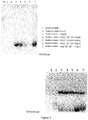
- Example 3 The same protocol as in Example 3 is carried out, but using bodies of yeasts and not pDNA as a source of raw material to be digested. The results are shown in Figure 5 . As can be observed, at a higher concentration of Fe/chelate there is maximum digestion of nucleic acids.
- Protein digestion of an amount of 500 g of Saccharomyces cerevisiae yeasts was carried out under the following conditions: buffer tampon at pH 2.5, FeSO 4 25 mM, for 16 hours at 37°C and 4 ⁇ g/ml of pepsin. The mixture was centrifuged at 8,000 g to obtain the insoluble part wherein the DNA is found. This fraction is subsequently used for the second digestion.
- a buffer solution at pH 2.5 was added in the second digestion, the chelating agent EDTA (50 mM) was added in a concentration of 2X and supplemented with pepsin until obtaining a final concentration of 4 ⁇ g/ml, and the digestion was carried out for 24 hours at 37°C.
- Protein digestion of an amount of 500 g of Saccharomyces cerevisiae yeasts was carried out under the following conditions: buffer tampon at pH 2.5, FeSO 4 5 mM, for 16 hours at 37°C and 4 ⁇ g/ml of pepsin. The mixture was centrifuged at 8,000 g to obtain the insoluble part wherein the DNA is found. This fraction is subsequently used for the second digestion.
- a buffer solution at pH 2.5 was added in the second digestion, the chelating agent EDTA (50 mM) was added in a concentration of 3X and supplemented with pepsin until obtaining a final concentration of 4 ⁇ g/ml, and the digestion was carried out for 24 hours at 37°C.
- Protein digestion of an amount of 500 g of Saccharomyces cerevisiae yeasts was carried out under the following conditions: buffer tampon at pH 2.5, FeSO 4 5 mM, for 16 hours at 37°C and 4 ⁇ g/ml of pepsin.
- the mixture was centrifuged at 8,000 g to obtain the insoluble part wherein the DNA is found. This fraction is subsequently used for the second digestion.
- the mixture was centrifuged at 8,000 g to obtain the insoluble part wherein the DNA is found. This fraction is subsequently used for the second digestion.
- a buffer solution at pH 2.5 was added in the second digestion, the chelating agent o,o-EDDHA (5 mM) was added in a concentration of 0.2X and supplemented with pepsin until obtaining a final concentration of 4 ⁇ g/ml, and the digestion was carried out for 24 hours at 37°C.
Landscapes
- Life Sciences & Earth Sciences (AREA)
- Chemical & Material Sciences (AREA)
- Engineering & Computer Science (AREA)
- Health & Medical Sciences (AREA)
- Organic Chemistry (AREA)
- Wood Science & Technology (AREA)
- Zoology (AREA)
- Biotechnology (AREA)
- Bioinformatics & Cheminformatics (AREA)
- Genetics & Genomics (AREA)
- Biochemistry (AREA)
- Mycology (AREA)
- General Health & Medical Sciences (AREA)
- General Engineering & Computer Science (AREA)
- Microbiology (AREA)
- Tropical Medicine & Parasitology (AREA)
- Biomedical Technology (AREA)
- Virology (AREA)
- Medicinal Chemistry (AREA)
- Botany (AREA)
- Molecular Biology (AREA)
- Chemical Kinetics & Catalysis (AREA)
- General Chemical & Material Sciences (AREA)
- Proteomics, Peptides & Aminoacids (AREA)
- Nutrition Science (AREA)
- Food Science & Technology (AREA)
- Polymers & Plastics (AREA)
- Preparation Of Compounds By Using Micro-Organisms (AREA)
- Micro-Organisms Or Cultivation Processes Thereof (AREA)
Applications Claiming Priority (1)
| Application Number | Priority Date | Filing Date | Title |
|---|---|---|---|
| PCT/ES2017/070463 WO2019002634A1 (fr) | 2017-06-27 | 2017-06-27 | Procédé permettant d'obtenir un produit à base de levure à haute concentration en nucléotides |
Publications (2)
| Publication Number | Publication Date |
|---|---|
| EP3647431A1 true EP3647431A1 (fr) | 2020-05-06 |
| EP3647431A4 EP3647431A4 (fr) | 2021-02-17 |
Family
ID=64740428
Family Applications (1)
| Application Number | Title | Priority Date | Filing Date |
|---|---|---|---|
| EP17916084.1A Pending EP3647431A4 (fr) | 2017-06-27 | 2017-06-27 | Procédé permettant d'obtenir un produit à base de levure à haute concentration en nucléotides |
Country Status (2)
| Country | Link |
|---|---|
| EP (1) | EP3647431A4 (fr) |
| WO (1) | WO2019002634A1 (fr) |
Families Citing this family (1)
| Publication number | Priority date | Publication date | Assignee | Title |
|---|---|---|---|---|
| CN113416101A (zh) * | 2021-06-24 | 2021-09-21 | 贵州鸿洋生物有机肥有限公司 | 一种三磷酸胞苷生物有机液体肥配方及其生产方法 |
Family Cites Families (6)
| Publication number | Priority date | Publication date | Assignee | Title |
|---|---|---|---|---|
| ES2004241A6 (es) | 1987-02-24 | 1988-12-16 | Dow Chemical Co | Un procedimiento para preparar una dispersion de polimero en una fase continua de poliol |
| ES2007241A6 (es) * | 1988-06-23 | 1989-06-01 | Kohjin Co | Procedimiento para preparar un extracto de levadura. |
| CA1336174C (fr) * | 1988-07-22 | 1995-07-04 | Ronald Peter Potman | Methode de preparation d'un extrait de levure, extrait de levure, son utilisation comme arome et composition alimentaire renfermant cet extrait de levure |
| CN100465263C (zh) | 2006-05-12 | 2009-03-04 | 北京沃土天地生物科技有限公司 | 一种复合微生物叶面肥菌剂及其生产方法和用途 |
| US20120269926A1 (en) * | 2008-02-19 | 2012-10-25 | Xuefeng Yu | Yeast extract and method of producng the same |
| EP2675910B1 (fr) * | 2011-02-17 | 2016-10-12 | DSM IP Assets B.V. | Procédé pour la production d'une composition contenant des 5'-ribonucléotides |
-
2017
- 2017-06-27 WO PCT/ES2017/070463 patent/WO2019002634A1/fr not_active Ceased
- 2017-06-27 EP EP17916084.1A patent/EP3647431A4/fr active Pending
Also Published As
| Publication number | Publication date |
|---|---|
| WO2019002634A1 (fr) | 2019-01-03 |
| BR112019027679A2 (pt) | 2020-09-15 |
| EP3647431A4 (fr) | 2021-02-17 |
Similar Documents
| Publication | Publication Date | Title |
|---|---|---|
| ES2397178B2 (es) | Procedimiento para obtener biofertilizantes y bioestimulantes para agricultura y alimentacion animal. | |
| CA3193923C (fr) | Engrais a base de levure enrichi d'azote | |
| US20090173122A1 (en) | Soluble Fertilizer for Organic Agriculture From Distiller's Yeast | |
| US20160331015A1 (en) | Yeast mutant and yeast extract | |
| US20170081631A1 (en) | Rapid Growth Activator | |
| Kleinert et al. | Morphological and symbiotic root modifications for mineral acquisition from nutrient-poor soils | |
| Fazeli-Nasab et al. | Assessment of the role of rhizosphere in soil and its relationship with microorganisms and element absorption | |
| ES2329750B1 (es) | Procedimiento para obtener un producto fertilizante a partir de los residuos de la fabricacion de la cerveza. | |
| Piotrowska et al. | The effect of using effective microorganisms on the changes in the chemical composition of spring wheat | |
| Mohite et al. | New age agricultural bioinputs | |
| Dutta et al. | Proteolytic activity of thermophilic Bacillus licheniformis strain SF5-1 for the efficient bioconversion of pork waste to amino acid fertiliser | |
| WO2019002634A1 (fr) | Procédé permettant d'obtenir un produit à base de levure à haute concentration en nucléotides | |
| US20250214910A1 (en) | Manufacturing nitrogen-enhanced fertilizer | |
| Sethi et al. | Sustainable utilization of fungal resources: applications in plant and animal health | |
| US6709481B2 (en) | Method for the production of a unique soil adjuvant for horticultural and agronomic use | |
| Schmidt et al. | Soil sulfur fractions dynamics and distribution in a tropical grass pasture amended with nitrogen and sulfur fertilizers | |
| CN106359735A (zh) | 一种肽茶及其制作方法 | |
| Ahmed et al. | Effect of calcium superphosphate and sulphur fertilizer on the growth, herb yield and active ingredient of Ambrosia maritime | |
| Bozzo et al. | The role of intracellular and secreted purple acid phosphatases in tomato phosphate nutrition | |
| BR112019027679B1 (pt) | Método para a obtenção de um produto de levedura com alta concentração de nucleotídeos | |
| Al-Meshal | The Effect of some components changes of aspergillus Niger culture media on the production of lipase enzyme | |
| WO2025065107A1 (fr) | Engrais à base de levure | |
| Loomis | Microbial Systems in Agriculture: Yeast Fermentation of Dairy Permeate to Value-Added Bioproducts and Soil Microbiome Responses to Crop Management Techniques | |
| Nikolov | Application of Black Sea sapropels for increasing of grain beans yield cv.“Smiljan”, cultivated on cinnamonic pseudopodzolic soil (Planosol) | |
| WO2023167166A1 (fr) | Engrais et son procédé de fabrication |
Legal Events
| Date | Code | Title | Description |
|---|---|---|---|
| STAA | Information on the status of an ep patent application or granted ep patent |
Free format text: STATUS: THE INTERNATIONAL PUBLICATION HAS BEEN MADE |
|
| PUAI | Public reference made under article 153(3) epc to a published international application that has entered the european phase |
Free format text: ORIGINAL CODE: 0009012 |
|
| STAA | Information on the status of an ep patent application or granted ep patent |
Free format text: STATUS: REQUEST FOR EXAMINATION WAS MADE |
|
| 17P | Request for examination filed |
Effective date: 20191213 |
|
| AK | Designated contracting states |
Kind code of ref document: A1 Designated state(s): AL AT BE BG CH CY CZ DE DK EE ES FI FR GB GR HR HU IE IS IT LI LT LU LV MC MK MT NL NO PL PT RO RS SE SI SK SM TR |
|
| AX | Request for extension of the european patent |
Extension state: BA ME |
|
| DAX | Request for extension of the european patent (deleted) | ||
| RAV | Requested validation state of the european patent: fee paid |
Extension state: MA Effective date: 20191213 |
|
| A4 | Supplementary search report drawn up and despatched |
Effective date: 20210115 |
|
| RIC1 | Information provided on ipc code assigned before grant |
Ipc: C12N 1/16 20060101ALI20210111BHEP Ipc: C12N 1/06 20060101ALI20210111BHEP Ipc: A23L 27/23 20160101ALI20210111BHEP Ipc: C12P 19/30 20060101AFI20210111BHEP |
|
| P01 | Opt-out of the competence of the unified patent court (upc) registered |
Effective date: 20230322 |
|
| STAA | Information on the status of an ep patent application or granted ep patent |
Free format text: STATUS: EXAMINATION IS IN PROGRESS |
|
| 17Q | First examination report despatched |
Effective date: 20240808 |