EP3647970A1 - Procédé et appareil pour partager des informations - Google Patents
Procédé et appareil pour partager des informations Download PDFInfo
- Publication number
- EP3647970A1 EP3647970A1 EP19195394.2A EP19195394A EP3647970A1 EP 3647970 A1 EP3647970 A1 EP 3647970A1 EP 19195394 A EP19195394 A EP 19195394A EP 3647970 A1 EP3647970 A1 EP 3647970A1
- Authority
- EP
- European Patent Office
- Prior art keywords
- user
- shared
- content
- electronic device
- logged
- Prior art date
- Legal status (The legal status is an assumption and is not a legal conclusion. Google has not performed a legal analysis and makes no representation as to the accuracy of the status listed.)
- Ceased
Links
Images

Classifications
-
- G—PHYSICS
- G06—COMPUTING OR CALCULATING; COUNTING
- G06F—ELECTRIC DIGITAL DATA PROCESSING
- G06F16/00—Information retrieval; Database structures therefor; File system structures therefor
- G06F16/90—Details of database functions independent of the retrieved data types
- G06F16/95—Retrieval from the web
- G06F16/955—Retrieval from the web using information identifiers, e.g. uniform resource locators [URL]
- G06F16/9558—Details of hyperlinks; Management of linked annotations
-
- H—ELECTRICITY
- H04—ELECTRIC COMMUNICATION TECHNIQUE
- H04L—TRANSMISSION OF DIGITAL INFORMATION, e.g. TELEGRAPHIC COMMUNICATION
- H04L67/00—Network arrangements or protocols for supporting network services or applications
- H04L67/01—Protocols
- H04L67/02—Protocols based on web technology, e.g. hypertext transfer protocol [HTTP]
-
- H—ELECTRICITY
- H04—ELECTRIC COMMUNICATION TECHNIQUE
- H04L—TRANSMISSION OF DIGITAL INFORMATION, e.g. TELEGRAPHIC COMMUNICATION
- H04L67/00—Network arrangements or protocols for supporting network services or applications
- H04L67/01—Protocols
- H04L67/06—Protocols specially adapted for file transfer, e.g. file transfer protocol [FTP]
-
- G—PHYSICS
- G06—COMPUTING OR CALCULATING; COUNTING
- G06F—ELECTRIC DIGITAL DATA PROCESSING
- G06F16/00—Information retrieval; Database structures therefor; File system structures therefor
- G06F16/90—Details of database functions independent of the retrieved data types
- G06F16/95—Retrieval from the web
- G06F16/955—Retrieval from the web using information identifiers, e.g. uniform resource locators [URL]
- G06F16/9566—URL specific, e.g. using aliases, detecting broken or misspelled links
-
- G—PHYSICS
- G06—COMPUTING OR CALCULATING; COUNTING
- G06F—ELECTRIC DIGITAL DATA PROCESSING
- G06F9/00—Arrangements for program control, e.g. control units
- G06F9/06—Arrangements for program control, e.g. control units using stored programs, i.e. using an internal store of processing equipment to receive or retain programs
- G06F9/46—Multiprogramming arrangements
- G06F9/54—Interprogram communication
- G06F9/543—User-generated data transfer, e.g. clipboards, dynamic data exchange [DDE], object linking and embedding [OLE]
-
- H—ELECTRICITY
- H04—ELECTRIC COMMUNICATION TECHNIQUE
- H04L—TRANSMISSION OF DIGITAL INFORMATION, e.g. TELEGRAPHIC COMMUNICATION
- H04L67/00—Network arrangements or protocols for supporting network services or applications
- H04L67/01—Protocols
- H04L67/10—Protocols in which an application is distributed across nodes in the network
-
- H—ELECTRICITY
- H04—ELECTRIC COMMUNICATION TECHNIQUE
- H04L—TRANSMISSION OF DIGITAL INFORMATION, e.g. TELEGRAPHIC COMMUNICATION
- H04L67/00—Network arrangements or protocols for supporting network services or applications
- H04L67/2866—Architectures; Arrangements
- H04L67/30—Profiles
- H04L67/306—User profiles
-
- H—ELECTRICITY
- H04—ELECTRIC COMMUNICATION TECHNIQUE
- H04L—TRANSMISSION OF DIGITAL INFORMATION, e.g. TELEGRAPHIC COMMUNICATION
- H04L67/00—Network arrangements or protocols for supporting network services or applications
- H04L67/50—Network services
- H04L67/55—Push-based network services
Definitions
- the present disclosure relates to the technical field of internets, and particularly to a method and an apparatus for sharing information, a device and a storage medium.
- a sharing button is usually set on a page of sharable information of an application, and a user may click the sharing button to acquire uniform resource locator (URL) link information of the present page and send a URL link to the other user.
- the other user responsive to that the URL link of the shared information is received, may open the page corresponding to the URL link through a browser in the mobile phone, thereby reading the shared information.
- the other user may open a page shared by the user only after logged in, or the page may be accessed in a specific network environment.
- the other user when receiving a URL link of the shared information meeting the above conditions, is required to execute a second operation on the mobile phone to browse the information.
- a method for sharing information which includes that:
- the operation of determining whether the second operation is required to be performed based on the URL information of the content to be shared to view the content to be shared may include that:
- the method may include that:
- the method may include that:
- the operation of determining whether the second operation is required to be performed based on the URL information of the content to be shared to view the content to be shared may include that:
- the method may include that: responsive to determining that the network in which the electronic device of the first user is located is not the private network and that the user is in a non-logged-in state, the URL information of the content to be shared is sent to the electronic device of the second user.
- the operation of determining whether the first user is in the logged-in state may include that:
- the operation of sending the screenshot of the content to be shared to the electronic device of the second user may include that: the screenshot and the URL information of the content to be shared are sent to the electronic device of the second user.
- an apparatus for sharing information which includes a determination module, an acquisition module and a sending module.
- the determination module is configured to, responsive to that a sharing request triggered by a first user is detected, determine whether a second operation is required to be performed based on URL information of content to be shared to view the content to be shared.
- the acquisition module is configured to, responsive to that the determination module determines that the second operation is required to be performed based on the URL information of the content to be shared to view the content to be shared, acquire a screenshot of the content to be shared.
- the sending module is configured to send the screenshot of the content to be shared to an electronic device of a second user to enable the second user to view the content to be shared based on the screenshot of the content to be shared.
- the determination module may be configured to:
- the sending module may be configured to:
- the determination module may be configured to:
- the determination module may be configured to:
- the sending module may be configured to: responsive to that the determination module determines that the network in which the electronic device of the first user is located is not the private network and that the first user is in a non-logged-in state, send the URL information of the content to be shared to the electronic device of the second user.
- the determination module may be configured to:
- the sharing request triggered by the first user is detected, whether the second operation is required to be performed based on the URL information of the content to be shared to view the content to be shared is determined; responsive to determining that the second operation is required to be performed based on the URL information of the content to be shared to view the content to be shared, the screenshot of the content to be shared is acquired; and the screenshot of the content to be shared is sent to the electronic device of the second user to enable the second user to directly view the content to be shared based on the screenshot of the content to be shared, so that operations of viewing the content to be shared by the user are simplified, difficulties for the user in viewing the content to be shared are reduced, experiences of the user in viewing the content to be shared are improved, occurrence of the condition of sharing failure caused by inconvenience for the user in viewing the content to be shared is avoided, and an information sharing success rate is increased.
- Embodiments of the present disclosure may involve the following application scenario.
- An information sharing method provided in the embodiments of the present disclosure is applied to an electronic device.
- Applications are installed in the electronic device.
- a user browses information through an application and shares browsed information to an electronic device of another user.
- the electronic device may include a terminal such as a smart phone, a tablet computer, a wearable device, etc.
- the electronic device may be provided with a display screen, for example, a touch screen.
- the applications may include, for example, applications like shopping applications, instant chatting applications, social websites, news websites and browsers.
- the application scenario includes an electronic device 1 and an electronic device 2.
- the electronic device 1 may be an electronic device of a user for sharing information
- the electronic device 2 may be an electronic device of a user for receiving the shared information.
- the electronic device 1 may be connected with the electronic device 2 through a network such as a 3rd-Generation (3G), 4th-Generation (4G) or Wireless Fidelity (WIFI) communication network.
- a network such as a 3rd-Generation (3G), 4th-Generation (4G) or Wireless Fidelity (WIFI) communication network.
- 3G 3rd-Generation
- 4G 4th-Generation
- WIFI Wireless Fidelity
- Fig. 2 is a flow chart of a method for sharing information according to an exemplary embodiment. The method may be performed by an electronic device. As illustrated in Fig. 2 , the method provided in the embodiment includes the following operations illustrated in blocks 201 to 203.
- a sharing request is triggered when a user browses some information in an application and wants to share it to other user.
- the sharing request may be triggered by clicking a sharing button in an operation interface of the application.
- the electronic device responsive to that the sharing request triggered by the user is detected, determines whether the second operation is required to be performed by the other user based on the URL information of the content to be shared to view the content to be shared.
- the other user after clicking a URL link of the content to be shared, may view the content to be shared only after logged in with account information. Therefore, operations of viewing the content to be shared by the user are relatively complex and difficulties in viewing the shared information are relatively high.
- a screenshot of the content to be shared is acquired.
- the screenshot of the content to be shared is directly acquired. For example, the interface of the application browsed by the user is captured, or, some key contents on the interface are captured.
- the screenshot of the content to be shared is sent to an electronic device of another user to enable the electronic device of the other user to view the content to be shared based on the screenshot of the content to be shared.
- the screenshot may be directly shared to the other user, namely sent to the electronic device of the other user, to enable the other user to directly view the content to be shared through the screenshot.
- the user searching for merchandise on s shopping website and intending to share merchandise information to the other user clicks a sharing button on an operation interface and selects an application such as WeChat, Microblog and the like to share the merchandise information to the other user.
- the electronic device responsive to that a sharing request triggered by the user by clicking the sharing button is detected, determines whether the second operation is required to be performed based on the URL information of the content to be shared to view the content to be shared.
- the electronic device Responsive to determining that the secondary operation is required to be performed based on the URL information of the content to be shared to view the content to be shared, the electronic device takes a screenshot of the merchandise information, for example, takes a screenshot of the whole interface, and sends the screenshot to the electronic device of the other user. If the user clicks WeChat after clicking the sharing button, the screenshot is sent to the electronic device of the other user through WeChat, namely the other user may view the screenshot through WeChat in the electronic device.
- the screenshot of the content to be shared is acquired; and the screenshot of the content to be shared is sent to the electronic device of the other user to enable the other user to directly view the content to be shared based on the screenshot of the content to be shared, so that operations of viewing the content to be shared by the user are simplified, difficulties for the user in viewing the content to be shared are reduced, experiences of the user in viewing the content to be shared are improved, occurrence of the condition of sharing failure caused by inconvenience for the user in viewing the content to be shared is avoided, and an information sharing success rate is increased.
- the operation of determining whether the second operation is required to be performed based on the URL information of the content to be shared to view the content to be shared may specifically be implemented in the following manner.
- Whether a network in which the electronic device of the user is located is a private network is determined; and responsive to determining that the network in which the electronic device of the user is located is the private network, when a network in which the electronic device of the other user is located is not the private network, it is determined that the second operation is required to be performed based on the URL information of the content to be shared to view the content to be shared.
- the electronic device responsive to that the sharing request triggered by the user is detected, determines whether the network where the electronic device is located is the private network, for example, a specific virtual private network (VPN). If the electronic device has been connected with the VPN, it is indicated that the page presently accessed by the electronic device may be a page which may be accessed only through a private network in a company or enterprise. If a URL link of the content to be shared is directly shared to the other user, the other user may not open the URL link, or the electronic device is also required to be connected with the corresponding VPN for access. Therefore, it is necessary to further determine whether the network in which the electronic device of the other user is located is the private network. When the network in which the electronic device of the other user is located is not the private network, it is determined that the second operation is required to be performed based on the URL information of the content to be shared to view the content to be shared.
- VPN virtual private network
- the operation of determining whether the network in which the electronic device of the other user is located is the private network may be implemented in a request sending manner, as follows.
- a request message is sent to the electronic device of the other user.
- the request message is to request an indication whether the network in which the electronic device of the other user is located is the private network.
- Response information sent by the electronic device of the other user is received.
- the response information is to indicate whether the network in which the electronic device of the other user is located is the private network.
- the logged-in state may be a state after logged in with account information of the user.
- the electronic device determines that the second operation is required to be performed based on the URL information of the content to be shared to view the content to be shared.
- the URL information of the content to be shared is sent to the electronic device of the other user.
- the electronic device of the user when the electronic device does not access the private network and the user is in the non-logged-in state, the electronic device of the user sends the URL information of the content to be shared to the electronic device of the other user, namely the URL link may be directly sent to the electronic device of the other user, and the electronic device of the other user may directly open the URL link to view the content to be shared.
- the operation of determining whether the second operation is required to be performed based on the URL information of the content to be shared to view the content to be shared may specifically be implemented in the following manner.
- the logged-in state may be a state after logged in with the account information of the user.
- the electronic device may determine whether the second operation is required to be performed based on the URL information of the content to be shard to view the content to be shared directly by determining whether the user is in the logged-in state.
- the operation of determining whether the user is in the logged-in state may specifically be implemented in the following manner.
- the electronic device extracts a URL feature from the URL information of the content to be shared; and the electronic device determines whether the user is in the logged-in state based on the URL feature.
- the URL feature in the URL information of the content to be shared may be extracted, and whether the user is in the logged-in state is determined based on the URL feature.
- the URL feature extracted from the URL link may include the account information such as a username and password of the user.
- the URL information of the content to be shared may further be sent to the electronic device of the other user to enable the electronic device of the other user to further operate the content to be shared, so that information sharing flexibility is improved.
- the operation of determining whether the second operation is required to be performed based on the URL information of the content to be shared to view the content to be shared may specifically be implemented in the following manner.
- the logged-in state may be a state after logged in with the account information of the user.
- whether the other user is in the logged-in state may be determined in the following manner.
- a second request message is sent to the electronic device of the other user; here, the second request message is to request an indication whether a user account in the electronic equipment of the other user is in the logged-in state or not.
- Second response information sent by the electronic device of the other user is received.
- the second response information is to indicate whether the user account in the electronic equipment of the other user is in the logged-in state or in the non-logged-in state.
- the user account in the present disclosure includes, but not limited to, a registration account of the application that the user logs in and the like.
- the user may log in through the account to view a web page in the application program in the electronic device.
- different web pages may correspond to different URLs.
- condition that the user is in the non-logged-in state includes, but not limited to, that the corresponding application is installed in the electronic device of the user but the user does not log in the application with the account, and that the corresponding application is not installed in the electronic device of the user.
- corresponding information in the electronic device may be automatically read and corresponding response information may be automatically generated and fed back. If the corresponding right is not opened in the electronic device of the user, a notification message is sent to the user to notify whether the right is opened to the user or notify whether the other user is allowed to read the corresponding information in the electronic device to the user.
- whether the second operation is required to be performed based on the URL information of the content to be shared to view the content to be shared is determined to intelligently determine an information sharing manner. That is, when the second operation is required to be performed based on the URL information of the content to be shared to view the content to be shared, the screenshot of the content to be shared may be shared to enable the other user to directly view the content to be shared. Or, when the second operation is not required to be performed based on the URL information of the content to be shared to view the content to be shared, the URL information of the content to be shared may be shared. Therefore, reading cost of the other user is reduced, and an information sharing experience of the user is improved.
- the embodiments of the present disclosure also provide a method for sharing information, which may be applied to a second electronic device and includes that the following operations.
- a first request message sent by an electronic device (a first electronic device) of a user is received; here, the first request message is to request an indication whether a network in which an electronic device (a second electronic device) of other user is located is a private network.
- First response information is generated; here, the first response information is to indicate whether the network in which the electronic device (the second electronic device) of the other user is located is the private network.
- a screenshot, sent by the electronic device (the first electronic device) of the user, of a content to be shared is received.
- the embodiments of the present disclosure also provide a method for sharing information, which may be applied to a second electronic device and includes that the following operations.
- a second request message sent by an electronic device (a first electronic device) of a user is received.
- the second request message is to request an indication whether other user (user of the second electronic device) is in a logged-in state.
- Second response information is generated; here, the second response information is to indicate whether the other user (user of the second electronic device) is in the logged-in state.
- a screenshot, sent by the electronic device (the first electronic device) of the user, of a content to be shared is received.
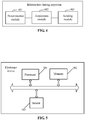
- Fig. 4 is a block diagram of an apparatus for sharing information according to an exemplary embodiment.
- the information sharing apparatus may be implemented into part or all of an electronic device through software, hardware or a combination of the two.
- the information sharing apparatus includes a determination module 401, an acquisition module 402 and a sending module 403.
- the determination module 401 is configured to, responsive to that a sharing request triggered by a user is detected, determine whether a second operation is required to be performed based on URL information of content to be shared to view the content to be shared.
- the acquisition module 402 is configured to, responsive to that the determination module 401 determines that the second operation is required to be performed based on URL information of content to be shared to view the content to be shared, acquire a screenshot of the content to be shared.
- the sending module 403 is configured to send the screenshot of the content to be shared to an electronic device of another user to enable the other user to view the content to be shared based on the screenshot of the content to be shared.
- the determination module 401 may be configured to:
- the sending module 403 may be configured to: send a request message to the electronic device of the other user; herein, the request message is to request for whether the network in which the electronic device of the other user is located is the private network.
- the apparatus further includes a receiving module (not illustrated in the figure).
- the receiving module is configured to receive response information sent by the electronic device of the other user.
- the response information is to indicate whether the network in which the electronic device of the other user is located is the private network.
- the determination module 401 may be configured to:
- the determination module 401 may be configured to:
- the sending module 403 may be configured to: responsive to that the determination module determines that the network in which the electronic device of the user is located is not the private network and that the user is in a non-logged-in state, send the URL information of the content to be shared to the electronic device of the other user.
- the determination module 401 may be configured to:
- the sending module 403 may be configured to: send the screenshot and the URL information of the content to be shared to the electronic device of the other user.
- the information sharing apparatus responsive to that the sharing request triggered by the user is detected, whether the second operation is required to be performed based on the URL information of the content to be shared to view the content to be shared is determined; responsive to determining that the second operation is required to be performed based on the URL information of the content to be shared to view the content to be shared, the screenshot of the content to be shared is acquired; and the screenshot of the content to be shared is sent to the electronic device of the other user to enable the other user to directly view the content to be shared based on the screenshot of the content to be shared, so that operations of viewing the content to be shared by the user are simplified, difficulties for the user in viewing the content to be shared are reduced, experiences of the user in viewing the content to be shared are improved, occurrence of the condition of sharing failure caused by inconvenience for the user in viewing the content to be shared is avoided, and an information sharing success rate is increased.
- Fig. 5 is a block diagram of an electronic device according to an exemplary embodiment. As illustrated in Fig. 5 , the electronic device includes:
- the components may communicate with each other through one or more buses.
- the processor 501 is configured to, responsive to that a sharing request triggered by a user is detected, determine whether a second operation is required to be performed based on URL information of content to be shared to view the content to be shared, and responsive to determining that the second operation is required to be performed based on the URL information of the content to be shared to view the content to be shared, acquire a screenshot of the content to be shared.
- the sender 503 is configured to send the screenshot, acquired by the processor 501, of the content to be shared to an electronic device of other user to enable the other user to view the content to be shared based on the screenshot of the content to be shared.
- processor 501 is configured to execute the executable instructions to execute the corresponding operations in the method embodiments, and a specific implementation process may refer to the method embodiments and will not be elaborated herein.
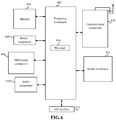
- Fig. 6 is a block diagram of an electronic device according to another exemplary embodiment.
- the electronic device may be a smart phone, a computer, a tablet, a wearable device and the like.
- the electronic device may include one or more of the following components: a processing component 602, a memory 604, a power component 606, a multimedia component 608, an audio component 610, an input/output (I/O) interface 612, a sensor component 614, and a communication component 616.
- the processing component 602 typically controls overall operations of the electronic device, such as operations associated with display, telephone calls, data communications, camera operations, and recording operations.
- the processing component 602 may include one or more processors 620 to execute instructions to perform all or part of the operations in the abovementioned method.
- the processing component 602 may include one or more modules which facilitate interaction between the processing component 602 and other components.
- the processing component 602 may include a multimedia module to facilitate interaction between the multimedia component 608 and the processing component 602.
- the memory 604 is configured to store various types of data to support the operation of the electronic device. Examples of such data include instructions for any applications or methods operated on the electronic device, contact data, phonebook data, messages, pictures, video, etc.
- the memory 604 may be implemented by any type of volatile or non-volatile memory devices, or a combination thereof, such as a static random access memory (SRAM), an electrically erasable programmable read-only memory (EEPROM), an erasable programmable read-only memory (EPROM), a programmable read-only memory (PROM), a read-only memory (ROM), a magnetic memory, a flash memory, and a magnetic or optical disk.
- SRAM static random access memory
- EEPROM electrically erasable programmable read-only memory
- EPROM erasable programmable read-only memory
- PROM programmable read-only memory
- ROM read-only memory
- magnetic memory a magnetic memory
- flash memory and a magnetic or optical disk.
- the power component 606 provides power for various components of the electronic device.
- the power component 606 may include a power management system, one or more power supplies, and other components associated with generation, management and distribution of power for the electronic device.
- the multimedia component 608 includes a screen providing an output interface between the electronic device and a user.
- the screen may include a liquid crystal display (LCD) and a touch panel (TP). If the screen includes the TP, the screen may be implemented as a touch screen to receive an input signal from the user.
- the TP includes one or more touch sensors to sense touches, swipes and gestures on the TP. The touch sensors may not only sense a boundary of a touch or swipe action but also detect a duration and pressure associated with the touch or swipe action.
- the multimedia component 608 includes a front camera and/or a rear camera. The front camera and/or the rear camera may receive external multimedia data when the electronic device is in an operation mode, such as a photographing mode or a video mode. Each of the front camera and the rear camera may be a fixed optical lens system or have focusing and optical zooming capabilities.
- the audio component 610 is configured to output and/or input an audio signal.
- the audio component 610 includes a microphone (MIC),
- the MIC is configured to receive an external audio signal when the electronic device is in the operation mode, such as a call mode, a recording mode and a voice recognition mode.
- the received audio signal may further be stored in the memory 604 or sent through the communication component 616.
- the audio component 610 further includes a speaker configured to output the audio signal.
- the I/O interface 612 provides an interface between the processing component 602 and a peripheral interface module.
- the peripheral interface module may be a keyboard, a click wheel, a button and the like.
- the button may include, but not limited to: a home button, a volume button, a starting button and a locking button.
- the sensor component 614 includes one or more sensors configured to provide status assessment in various aspects for the electronic device. For instance, the sensor component 614 may detect an on/off status of the electronic device and relative positioning of components, such as a display and small keyboard of the electronic device. The sensor component 614 may further detect a change in a position of the electronic device or a component of the electronic device, presence or absence of contact between the user and the electronic device, orientation or acceleration/deceleration of the electronic device and a change in temperature of the electronic device.
- the sensor component 614 may include a proximity sensor configured to detect presence of an object nearby without any physical contact.
- the sensor component 614 may also include a light sensor, such as a complementary metal oxide semiconductor (CMOS) or charge coupled device (CCD) image sensor, configured for use in an imaging application.
- CMOS complementary metal oxide semiconductor
- CCD charge coupled device
- the sensor component 614 may also include an acceleration sensor, a gyroscope sensor, a magnetic sensor, a pressure sensor or a temperature sensor.
- the communication component 616 is configured to facilitate wired or wireless communication between the electronic device and other devices.
- the electronic device may access a communication-standard-based wireless network, such as a WIFI network, a 2nd-Generation (2G) or 3G network or a combination thereof.
- the communication component 616 receives a broadcast signal or broadcast associated information from an external broadcast management system through a broadcast channel.
- the communication component 616 further includes a near field communication (NFC) module to facilitate short-range communication.
- the NFC module may be implemented on the basis of radio frequency identification (RFID) technology, an infrared data association (IrDA) technology, an ultra-wideBand (UWB) technology, a BT technology and other technologies.
- RFID radio frequency identification
- IrDA infrared data association
- UWB ultra-wideBand
- the electronic device may be implemented by one or more application specific integrated circuits (ASICs), digital signal processors (DSPs), digital signal processing devices (DSPDs), programmable logic devices (PLDs), field programmable gate arrays (FPGAs), controllers, micro-controllers, microprocessors or other electronic components, and is configured to execute the abovementioned methods.
- ASICs application specific integrated circuits
- DSPs digital signal processors
- DSPDs digital signal processing devices
- PLDs programmable logic devices
- FPGAs field programmable gate arrays
- controllers micro-controllers, microprocessors or other electronic components, and is configured to execute the abovementioned methods.
- non-transitory computer-readable storage medium including instructions, such as the memory 502 including instructions, and the instructions may be executed by the processor 502 of the electronic device to implement the abovementioned methods.
- the non-transitory computer-readable storage medium may be a ROM, a random access memory (RAM), a compact disc read-only memory (CD-ROM), a magnetic tape, a floppy disc, an optical data storage device and the like.
- a non-transitory computer-readable storage medium when instructions in the storage medium are executed by a processor of an electronic device to enable the electronic device to execute an information sharing method.
Landscapes
- Engineering & Computer Science (AREA)
- Theoretical Computer Science (AREA)
- Computer Networks & Wireless Communication (AREA)
- Signal Processing (AREA)
- Databases & Information Systems (AREA)
- Physics & Mathematics (AREA)
- General Engineering & Computer Science (AREA)
- General Physics & Mathematics (AREA)
- Software Systems (AREA)
- Data Mining & Analysis (AREA)
- Information Transfer Between Computers (AREA)
Applications Claiming Priority (1)
| Application Number | Priority Date | Filing Date | Title |
|---|---|---|---|
| CN201811290664.0A CN109525652B (zh) | 2018-10-31 | 2018-10-31 | 信息分享方法、装置、设备和存储介质 |
Publications (1)
| Publication Number | Publication Date |
|---|---|
| EP3647970A1 true EP3647970A1 (fr) | 2020-05-06 |
Family
ID=65774110
Family Applications (1)
| Application Number | Title | Priority Date | Filing Date |
|---|---|---|---|
| EP19195394.2A Ceased EP3647970A1 (fr) | 2018-10-31 | 2019-09-04 | Procédé et appareil pour partager des informations |
Country Status (3)
| Country | Link |
|---|---|
| US (1) | US11122109B2 (fr) |
| EP (1) | EP3647970A1 (fr) |
| CN (1) | CN109525652B (fr) |
Families Citing this family (5)
| Publication number | Priority date | Publication date | Assignee | Title |
|---|---|---|---|---|
| US11899757B2 (en) * | 2019-12-02 | 2024-02-13 | Cox Automotive, Inc. | Systems and methods for temporary digital content sharing |
| US11606362B2 (en) * | 2020-05-27 | 2023-03-14 | Microsoft Technology Licensing, Llc | Privacy-preserving composite views of computer resources in communication groups |
| JP7527866B2 (ja) * | 2020-07-01 | 2024-08-05 | キヤノン株式会社 | プログラム、情報処理装置及び制御方法 |
| CN112306705A (zh) * | 2020-07-15 | 2021-02-02 | 北京沃东天骏信息技术有限公司 | 信息分享方法及装置 |
| CN115145738A (zh) * | 2021-03-16 | 2022-10-04 | 华为技术有限公司 | 应用程序的分享方法和分享装置 |
Citations (2)
| Publication number | Priority date | Publication date | Assignee | Title |
|---|---|---|---|---|
| US20150220500A1 (en) * | 2014-02-06 | 2015-08-06 | Vojin Katic | Generating preview data for online content |
| US9210210B2 (en) * | 2013-04-18 | 2015-12-08 | Google Inc. | Permission-based snapshots for documents shared on a social media service |
Family Cites Families (6)
| Publication number | Priority date | Publication date | Assignee | Title |
|---|---|---|---|---|
| US7984512B2 (en) * | 2007-06-14 | 2011-07-19 | Microsoft Corporation | Integrating security by obscurity with access control lists |
| US20100274858A1 (en) * | 2009-04-27 | 2010-10-28 | Nokia Corporation | Mid-service sharing |
| EP2708007B1 (fr) * | 2011-05-13 | 2016-11-02 | Telefonaktiebolaget LM Ericsson (publ) | Procédés, serveur et agent proxy pour établir dynamiquement une session entre une resource cible et une application sur un dispositif |
| US9049176B2 (en) * | 2011-06-22 | 2015-06-02 | Dropbox, Inc. | File sharing via link generation |
| CN106533926B (zh) * | 2016-12-27 | 2020-06-12 | 武汉斗鱼网络科技有限公司 | 一种网页信息传播方法以及装置 |
| CN108363734A (zh) * | 2018-01-17 | 2018-08-03 | 链家网(北京)科技有限公司 | 页面生成图片的方法及装置 |
-
2018
- 2018-10-31 CN CN201811290664.0A patent/CN109525652B/zh active Active
-
2019
- 2019-08-22 US US16/548,193 patent/US11122109B2/en not_active Expired - Fee Related
- 2019-09-04 EP EP19195394.2A patent/EP3647970A1/fr not_active Ceased
Patent Citations (2)
| Publication number | Priority date | Publication date | Assignee | Title |
|---|---|---|---|---|
| US9210210B2 (en) * | 2013-04-18 | 2015-12-08 | Google Inc. | Permission-based snapshots for documents shared on a social media service |
| US20150220500A1 (en) * | 2014-02-06 | 2015-08-06 | Vojin Katic | Generating preview data for online content |
Non-Patent Citations (3)
| Title |
|---|
| "Apparatus and method of Sharing Rich Information by Picture", IP.COM JOURNAL, IP.COM INC., WEST HENRIETTA, NY, US, 10 September 2015 (2015-09-10), XP013169483, ISSN: 1533-0001 * |
| ANONYMOUS: "How to show the page preview if we're sharing private pages?", 2 August 2016 (2016-08-02), XP055660907, Retrieved from the Internet <URL:https://support.google.com/edu/classroom/forum/AAAAq1rTZJo71W8-sbmFcI/?hl=en> [retrieved on 20200122] * |
| EL KADRE IGNACIO: "How to show the page preview if we're sharing private pages? - part 2", 2 August 2016 (2016-08-02), XP055849725, Retrieved from the Internet <URL:https://imgur.com/B5WX9vB and https://imgur.com/iqksITa> [retrieved on 20211011] * |
Also Published As
| Publication number | Publication date |
|---|---|
| US11122109B2 (en) | 2021-09-14 |
| CN109525652B (zh) | 2021-07-23 |
| US20200137143A1 (en) | 2020-04-30 |
| CN109525652A (zh) | 2019-03-26 |
Similar Documents
| Publication | Publication Date | Title |
|---|---|---|
| US11122109B2 (en) | Method for sharing information, electronic device and non-transitory storage medium | |
| JP6214812B2 (ja) | 振込処理方法および装置 | |
| CN106603667B (zh) | 屏幕信息共享方法及装置 | |
| EP3561691B1 (fr) | Procédé et afficheur de contenu de page web | |
| WO2018058728A1 (fr) | Procédé et appareil de partage de contenu | |
| CN106897937B (zh) | 一种展示社交分享信息的方法和装置 | |
| CN117390330A (zh) | 网页访问方法及装置 | |
| CN110262692B (zh) | 一种触摸屏扫描方法、装置及介质 | |
| WO2016011749A1 (fr) | Procédé et dispositif de mise à jour hors ligne pour application légère, et terminal | |
| US20160219424A1 (en) | Methods, apparatuses and devices for transmitting data | |
| WO2016045277A1 (fr) | Procédé, dispositif, et système d'acquisition d'informations | |
| CN112463418A (zh) | 跨设备信息分享方法、装置、介质和电子设备 | |
| WO2016082461A1 (fr) | Procédé d'acquisition d'informations de recommandation, terminal, et serveur | |
| CN104050236B (zh) | 网站内容更新提示方法、服务器和客户端 | |
| EP3770763B1 (fr) | Procédé et dispositif pour présenter des informations sur un terminal | |
| CN105976201B (zh) | 用于电商系统的购买行为监控方法及装置 | |
| CN109359252B (zh) | 浏览器选择方法及装置 | |
| CN104572230B (zh) | 脚本文件的加载方法、脚本文件生成方法及装置 | |
| CN111611470A (zh) | 一种数据处理方法、装置和电子设备 | |
| CN106528888A (zh) | 浏览器标签页的处理方法及装置 | |
| JP6441385B2 (ja) | 情報入力方法、装置、プログラム及び記録媒体 | |
| CN105653658A (zh) | 信息展示方法及装置 | |
| CN105681455A (zh) | 获取图像的方法、装置及系统 | |
| CN105376318A (zh) | 文件传输方法、装置及系统 | |
| CN109976549B (zh) | 数据处理方法、装置和机器可读介质 |
Legal Events
| Date | Code | Title | Description |
|---|---|---|---|
| PUAI | Public reference made under article 153(3) epc to a published international application that has entered the european phase |
Free format text: ORIGINAL CODE: 0009012 |
|
| STAA | Information on the status of an ep patent application or granted ep patent |
Free format text: STATUS: THE APPLICATION HAS BEEN PUBLISHED |
|
| AK | Designated contracting states |
Kind code of ref document: A1 Designated state(s): AL AT BE BG CH CY CZ DE DK EE ES FI FR GB GR HR HU IE IS IT LI LT LU LV MC MK MT NL NO PL PT RO RS SE SI SK SM TR |
|
| AX | Request for extension of the european patent |
Extension state: BA ME |
|
| STAA | Information on the status of an ep patent application or granted ep patent |
Free format text: STATUS: REQUEST FOR EXAMINATION WAS MADE |
|
| 17P | Request for examination filed |
Effective date: 20201103 |
|
| RBV | Designated contracting states (corrected) |
Designated state(s): AL AT BE BG CH CY CZ DE DK EE ES FI FR GB GR HR HU IE IS IT LI LT LU LV MC MK MT NL NO PL PT RO RS SE SI SK SM TR |
|
| STAA | Information on the status of an ep patent application or granted ep patent |
Free format text: STATUS: EXAMINATION IS IN PROGRESS |
|
| 17Q | First examination report despatched |
Effective date: 20211018 |
|
| STAA | Information on the status of an ep patent application or granted ep patent |
Free format text: STATUS: THE APPLICATION HAS BEEN REFUSED |
|
| 18R | Application refused |
Effective date: 20230207 |