EP3648237A1 - Système et procédé de détection de gonflement d'élément de batterie - Google Patents
Système et procédé de détection de gonflement d'élément de batterie Download PDFInfo
- Publication number
- EP3648237A1 EP3648237A1 EP19744446.6A EP19744446A EP3648237A1 EP 3648237 A1 EP3648237 A1 EP 3648237A1 EP 19744446 A EP19744446 A EP 19744446A EP 3648237 A1 EP3648237 A1 EP 3648237A1
- Authority
- EP
- European Patent Office
- Prior art keywords
- swelling
- temperature
- battery module
- cooling fan
- predetermined
- Prior art date
- Legal status (The legal status is an assumption and is not a legal conclusion. Google has not performed a legal analysis and makes no representation as to the accuracy of the status listed.)
- Pending
Links
Images

Classifications
-
- H—ELECTRICITY
- H01—ELECTRIC ELEMENTS
- H01M—PROCESSES OR MEANS, e.g. BATTERIES, FOR THE DIRECT CONVERSION OF CHEMICAL ENERGY INTO ELECTRICAL ENERGY
- H01M10/00—Secondary cells; Manufacture thereof
- H01M10/42—Methods or arrangements for servicing or maintenance of secondary cells or secondary half-cells
- H01M10/48—Accumulators combined with arrangements for measuring, testing or indicating the condition of cells, e.g. the level or density of the electrolyte
-
- H—ELECTRICITY
- H01—ELECTRIC ELEMENTS
- H01M—PROCESSES OR MEANS, e.g. BATTERIES, FOR THE DIRECT CONVERSION OF CHEMICAL ENERGY INTO ELECTRICAL ENERGY
- H01M10/00—Secondary cells; Manufacture thereof
- H01M10/60—Heating or cooling; Temperature control
- H01M10/63—Control systems
-
- H—ELECTRICITY
- H01—ELECTRIC ELEMENTS
- H01M—PROCESSES OR MEANS, e.g. BATTERIES, FOR THE DIRECT CONVERSION OF CHEMICAL ENERGY INTO ELECTRICAL ENERGY
- H01M10/00—Secondary cells; Manufacture thereof
- H01M10/42—Methods or arrangements for servicing or maintenance of secondary cells or secondary half-cells
- H01M10/48—Accumulators combined with arrangements for measuring, testing or indicating the condition of cells, e.g. the level or density of the electrolyte
- H01M10/486—Accumulators combined with arrangements for measuring, testing or indicating the condition of cells, e.g. the level or density of the electrolyte for measuring temperature
-
- H—ELECTRICITY
- H01—ELECTRIC ELEMENTS
- H01M—PROCESSES OR MEANS, e.g. BATTERIES, FOR THE DIRECT CONVERSION OF CHEMICAL ENERGY INTO ELECTRICAL ENERGY
- H01M10/00—Secondary cells; Manufacture thereof
- H01M10/60—Heating or cooling; Temperature control
- H01M10/61—Types of temperature control
- H01M10/613—Cooling or keeping cold
-
- H—ELECTRICITY
- H01—ELECTRIC ELEMENTS
- H01M—PROCESSES OR MEANS, e.g. BATTERIES, FOR THE DIRECT CONVERSION OF CHEMICAL ENERGY INTO ELECTRICAL ENERGY
- H01M10/00—Secondary cells; Manufacture thereof
- H01M10/60—Heating or cooling; Temperature control
- H01M10/63—Control systems
- H01M10/633—Control systems characterised by algorithms, flow charts, software details or the like
-
- H—ELECTRICITY
- H01—ELECTRIC ELEMENTS
- H01M—PROCESSES OR MEANS, e.g. BATTERIES, FOR THE DIRECT CONVERSION OF CHEMICAL ENERGY INTO ELECTRICAL ENERGY
- H01M10/00—Secondary cells; Manufacture thereof
- H01M10/60—Heating or cooling; Temperature control
- H01M10/65—Means for temperature control structurally associated with the cells
- H01M10/656—Means for temperature control structurally associated with the cells characterised by the type of heat-exchange fluid
- H01M10/6561—Gases
- H01M10/6563—Gases with forced flow, e.g. by blowers
-
- H—ELECTRICITY
- H01—ELECTRIC ELEMENTS
- H01M—PROCESSES OR MEANS, e.g. BATTERIES, FOR THE DIRECT CONVERSION OF CHEMICAL ENERGY INTO ELECTRICAL ENERGY
- H01M50/00—Constructional details or processes of manufacture of the non-active parts of electrochemical cells other than fuel cells, e.g. hybrid cells
- H01M50/20—Mountings; Secondary casings or frames; Racks, modules or packs; Suspension devices; Shock absorbers; Transport or carrying devices; Holders
- H01M50/233—Mountings; Secondary casings or frames; Racks, modules or packs; Suspension devices; Shock absorbers; Transport or carrying devices; Holders characterised by physical properties of casings or racks, e.g. dimensions
- H01M50/242—Mountings; Secondary casings or frames; Racks, modules or packs; Suspension devices; Shock absorbers; Transport or carrying devices; Holders characterised by physical properties of casings or racks, e.g. dimensions adapted for protecting batteries against vibrations, collision impact or swelling
-
- H—ELECTRICITY
- H01—ELECTRIC ELEMENTS
- H01M—PROCESSES OR MEANS, e.g. BATTERIES, FOR THE DIRECT CONVERSION OF CHEMICAL ENERGY INTO ELECTRICAL ENERGY
- H01M50/00—Constructional details or processes of manufacture of the non-active parts of electrochemical cells other than fuel cells, e.g. hybrid cells
- H01M50/20—Mountings; Secondary casings or frames; Racks, modules or packs; Suspension devices; Shock absorbers; Transport or carrying devices; Holders
- H01M50/258—Modular batteries; Casings provided with means for assembling
-
- H—ELECTRICITY
- H01—ELECTRIC ELEMENTS
- H01M—PROCESSES OR MEANS, e.g. BATTERIES, FOR THE DIRECT CONVERSION OF CHEMICAL ENERGY INTO ELECTRICAL ENERGY
- H01M10/00—Secondary cells; Manufacture thereof
- H01M10/60—Heating or cooling; Temperature control
- H01M10/62—Heating or cooling; Temperature control specially adapted for specific applications
- H01M10/623—Portable devices, e.g. mobile telephones, cameras or pacemakers
-
- H—ELECTRICITY
- H01—ELECTRIC ELEMENTS
- H01M—PROCESSES OR MEANS, e.g. BATTERIES, FOR THE DIRECT CONVERSION OF CHEMICAL ENERGY INTO ELECTRICAL ENERGY
- H01M2220/00—Batteries for particular applications
- H01M2220/30—Batteries in portable systems, e.g. mobile phone, laptop
-
- Y—GENERAL TAGGING OF NEW TECHNOLOGICAL DEVELOPMENTS; GENERAL TAGGING OF CROSS-SECTIONAL TECHNOLOGIES SPANNING OVER SEVERAL SECTIONS OF THE IPC; TECHNICAL SUBJECTS COVERED BY FORMER USPC CROSS-REFERENCE ART COLLECTIONS [XRACs] AND DIGESTS
- Y02—TECHNOLOGIES OR APPLICATIONS FOR MITIGATION OR ADAPTATION AGAINST CLIMATE CHANGE
- Y02E—REDUCTION OF GREENHOUSE GAS [GHG] EMISSIONS, RELATED TO ENERGY GENERATION, TRANSMISSION OR DISTRIBUTION
- Y02E60/00—Enabling technologies; Technologies with a potential or indirect contribution to GHG emissions mitigation
- Y02E60/10—Energy storage using batteries
Definitions
- the present invention relates to a system and method for detecting swelling of a battery cell, and more particularly, to a system and method for detecting swelling of a battery cell using a temperature sensor pre-mounted on a battery module without a separate additional device.
- the pouch type battery is easy to change various types of structures according to customer's needs, so that the product application is excellent, and the battery has an advantage of producing a small quantity of various kinds of products compared to batteries that use metal can-shaped battery cases.
- swelling phenomenon in which a battery swells due to the degree of degradation, inevitably occurs when the use time passes.
- the battery may reach a specific degradation condition earlier than the design life due to a different operating method and environment from the initial design. Due to this, if the battery that caused the swelling phenomenon is used continuously, it may affect battery life and stability. Therefore, when a swelling phenomenon occurs, sensing and detecting this quickly may be used to maintain battery system performance, prevent damage, and prevent other accidents.
- additional sensors may be installed in the battery module to detect if the battery module is swelling, or the battery module is equipped with a flow meter that measures the flow rate of the cooling fan that cools the battery and periodically checks the flow rate measured by the flow meter. Based on this, it is determined whether the battery is swelled or the battery module is recovered and then directly disassembled and inspected.
- these conventional techniques may not remotely detect whether cell swelling of the battery module occurs, and since the battery module must be equipped with an additional device (e.g., a flow meter or pressure sensor), there are problems that the cost is increased and the efficiency of utilizing the internal space of the battery module is lowered.
- there are problems that the inspection method for recovering and disassembling the battery module is troublesome and takes a long time.
- an object of the present invention is to provide a system and method for efficiently detecting swelling of a battery cell without mounting a separate additional device.
- a battery cell swelling detection system includes: a battery module including one or more cells; a cooling fan for cooling the battery module; first and second temperature measurement units disposed in the battery module to measure a temperature of the battery module at regular intervals; a cooling fan control unit for determining whether the cooling fan operates according to a temperature of the battery module measured in the first and second temperature measurement units and controlling an operation of the cooling fan; and a swelling occurrence determination unit for determining whether a swelling of the battery module occurs using the temperature of the battery module measured in the first and second temperature measurement units.
- the cooling fan control unit may include: a maximum temperature extraction unit for extracting a maximum temperature value among the first and second temperature values measured in the first and second temperature measurement units; a maximum temperature comparison unit for comparing the calculated maximum temperature value with a predetermined abnormal condition determination value; and a cooling fan operation determination unit for determining whether the cooling fan operates according to comparison result of the maximum temperature comparison unit, and may control an operation of the cooling fan according to a determination result on whether the cooling fan operates.
- the cooling fan control unit may generate a cooling fan operation On signal and transmit it to the cooling fan, and when it is determined that the cooling fan operation is not required, the cooling fan control unit may generate a cooling fan operation Off signal and transmit it to the cooling fan to control a cooling operation.
- the swelling occurrence determination unit may include: a cooling fan driving detection unit for detecting whether the cooling fan is driven; a temperature deviation calculation unit for calculating a difference between the first and second temperature values measured in the first and second temperature measurement units; a first swelling comparison unit for comparing the calculated temperature deviation with a predetermined first swelling determination value; and a second swelling comparison unit for comparing the calculated temperature deviation with a predetermined second swelling determination value, wherein the temperature deviation calculation unit may operate after a predetermined time after the cooling fan is detected as being driven by the cooling fan driving detection unit.
- the calculated temperature deviation is less than a predetermined first swelling determination value according to a comparison result of the first swelling comparison unit, it may be determined that a swelling first case occurs in the corresponding battery module, and if the calculated temperature deviation exceeds a predetermined second swelling determination value according to a comparison result of the second swelling comparison unit, it may be determined that a swelling second case occurs in the corresponding battery module.
- a swelling detection method of a battery cell includes: a temperature measurement step of measuring two or more temperatures of the battery module at regular intervals; an abnormal condition determination step of determining a temperature abnormal condition of the battery module by using two or more temperature values of the battery module measured in the temperature measurement step; a cooling fan operation step of operating the cooling fan of the battery module according to a determination result of the abnormal condition determination step; and a swelling occurrence determination step of determining whether swelling of the battery module occurs based on two or more temperature values measured in the temperature measurement step, wherein the swelling occurrence determination step is performed after a predetermined time after the cooling fan operation step.
- the abnormal condition determination step may include: a maximum temperature value extraction step of extracting a maximum temperature value among the two or more temperature values; and a maximum temperature comparison step of comparing the extracted maximum temperature value with a predetermined abnormal condition determination value, wherein if the maximum temperature value exceeds a predetermined abnormal condition determination value, it may be determined that a temperature abnormal condition of the battery module occurs.
- the swelling occurrence determining step may include: a temperature deviation calculation step of calculating a difference between the two or more temperature values; and a first swelling comparison step of comparing the calculated temperature deviation with a predetermined first swelling determination value, wherein if the calculated temperature deviation is less than a predetermined first swelling determination value, it may be determined that a swelling first case occurs in the corresponding battery module
- the swelling occurrence determining step may include: a second swelling comparison step of comparing the calculated temperature deviation with a predetermined second swelling determination value when the calculated temperature deviation is equal to or greater than a predetermined first swelling determination value according to a comparison result in the first swelling comparison step, wherein if the calculated temperature deviation exceeds a predetermined second swelling determination value, it may be determined that a swelling second case occurs in the corresponding battery module.
- the present invention may easily sense/detect the occurrence of swelling of a battery cell or a pack without mounting a separate device, so that the production cost of the battery module may be reduced.
- the present invention may be applied to any system that performs battery pack cooling by the flow path such as air cooling and water cooling system, so that in addition to the pouch type lithium ion battery, it may be applied to batteries of various shapes and materials.
- the battery cell swelling detection system may include the following configuration.
- the battery module for example, is a configuration mounted on an ESS device, various portable devices, and the like to supply power and may be configured to include a plurality of battery cells 110.
- the corresponding module identification number is set in the battery module 100. Accordingly, when a plurality of battery modules 100 are connected in series and in parallel to form, for example, one battery rack, each battery module may be controlled by using the corresponding module identification number set for each battery module.
- the cooling fan may be a configuration that is operated under the control of the cooling fan control unit 500 to prevent the battery module 100 from being continuously exposed to a high temperature condition.
- the cooling fan may prevent the battery module from being continuously exposed to a high temperature condition by cooling the battery module.
- the cooling fan is driven under the control of the cooling fan control unit 500.
- the cooling fan may be provided at a position where it is easy to cool the battery module 100, and cool the battery module through a known battery module cooling method such as a method of introducing a coolant into the battery module (Blowing type) or discharging refrigerant to the outside of the battery module (Suction Type).
- the cooling fan 200 may be disposed inside a case in which the battery module 100 is mounted.
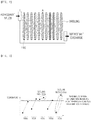
- the first and second temperature measurement units 300 and 400 may be a configuration that is provided in the battery module 100 and measures the temperature of the battery module at regular intervals as shown in A of FIG. 2 .
- the first and second temperature measurement units are located at the inside of the battery module, specifically, asymmetric points on the cooling passage designed to allow the refrigerant flowing into the battery module to pass through it to measure the temperature of the battery module.
- the present invention is not limited to a configuration in which only the first and second temperature measurement units, i.e., two temperature sensors, are included in the battery module, and they may be provided in two or more numbers and the temperature of the battery module may be measured.
- the temperature of the battery module may be measured by providing two or more temperature sensors A at asymmetric points on the designed cooling passage in the battery module. As described above, it may be positioned, for example, as shown in A of FIG. 2 to measure the temperature of the battery module.
- first and second temperature measurement units since they are used to determine the temperature distribution abnormal condition in the battery module by using the deviation of each measured temperature value, in order to more accurately determine that the temperature distribution condition, it may be preferable that they are spaced apart from each other at certain intervals rather than close to each other.
- the cooling fan control unit may be a configuration that controls the operation of the cooling fan 200 according to the temperature of the battery module measured in the first and second temperature measurement units 300 and 400, and the detailed configuration thereof may be configured as follows.
- the maximum temperature extraction unit is a configuration that compares first and second temperature values measured in the first and second temperature measurement units 300 and 400, respectively, and extracts a larger temperature value among them. That is, the maximum temperature value among the first and second temperature measurement values is extracted.
- the reason for extracting the maximum temperature value among the first and second temperature values in the maximum temperature extraction unit is to determine the temperature abnormal condition of the battery module through a comparison between a maximum temperature value among the temperature values measured in the battery module and a predetermined abnormality determination value which is a value for determining a temperature abnormal condition of the battery module described later.
- the extracted maximum temperature value of the battery module may be compared with a predetermined abnormal condition determination value.
- the predetermined abnormal condition determination value may mean a temperature value set to determine whether the battery module is in a high temperature condition.
- the cooling fan operation determination unit 530 which will be described later, may determine whether the cooling operation is performed.
- the cooling fan operation determination unit may determine whether the cooling fan of the battery module operates according to a comparison result of the maximum temperature comparison unit 520.
- the cooling fan 200 is a configuration that cools the battery module 100 such that the battery module 100 is not continuously exposed to a high temperature condition. Therefore, the cooling fan operation determination unit may determine whether the cooling fan operates by determining whether the temperature of the battery module is abnormal according to the comparison result between the maximum temperature value of the battery module and the predetermined abnormal condition determination value. For example, if the maximum temperature value of the battery module exceeds a predetermined abnormal condition determination value according to the comparison result, it is determined that the corresponding battery module enters the high temperature condition so that it is determined that the battery module should be cooled. This determines that the cooling fan should be operated.
- the corresponding battery module means a proper temperature condition that is not the high temperature condition, it is determined that cooling the battery module is not necessary, so that it is determined not to operate the cooling fan.
- the cooling fan control unit may control the operation of the cooling fan by generating a signal to control the operation of the cooling fan according to the determination result of the cooling fan operation determination unit described above.
- a cooling fan operation On signal is generated and transmitted to the cooling fan 200 to control the operation of the cooling fan. Accordingly, the cooling fan 200 receiving the cooling fan operation On signal may operate to cool the battery module.
- the cooling fan operation Off signal may be generated and transmitted to the cooling fan 200 to control the operation of the cooling fan. Accordingly, the cooling fan 200 receiving the cooling fan operation Off signal does not perform the operation of cooling the battery module.
- the cooling fan control unit 500 also determines whether the battery module is in a high temperature condition as described above at regular intervals and controls the operation of the cooling fan 200 to control the battery module to be not continuously exposed to a high temperature condition.
- the swelling occurrence determination unit is a configuration that determines whether the swelling of the battery module occurs using the temperature value of the battery module measured in the first and second temperature measurement units 300 and 400.
- the concrete detailed configuration may be configured as follows.
- the cooling fan driving detection unit is a configuration that detects whether there is a cooling operation of the cooling fan 200. It is connected to the cooling fan control unit 500 and may detect whether the cooling fan 200 is driven according to a cooling fan operation On/Off signal outputted from the cooling fan control unit 500.
- cooling fan operation On signal When the cooling fan operation On signal is outputted from the cooling fan control unit 500, it may be confirmed that the cooling fan is driven by detecting this. If it is confirmed, a cooling fan driving signal indicating the driving of the cooling fan may be generated and outputted to the temperature deviation calculation unit 620 described later.
- the present invention detects the narrowness of a cooling passage due to swelling of a cell in a battery module as a temperature distribution abnormality of a battery module and uses the principle of determining the swelling of the battery module, in an environment in which the cooling fan 200 is driven according to the temperature condition (high temperature condition) of the battery module, it is possible to determine/detect the swelling of the battery module, so that the temperature deviation calculation unit 620 for performing this, which will be described later, is configured to operate when a cooling fan driving signal is inputted.
- the temperature deviation calculation unit 620 is a configuration that calculates the difference between the first and second temperature values measured in the first and second temperature measurement units 300 and 400, and may operate when the cooling fan driving signal is inputted from the cooling fan driving detection unit 610 as described above. At this time, after receiving the cooling fan driving signal, it may operate after a predetermined time.
- the reason for this is that after the cooling operation, since the principle of determining the cell swelling occurrence by the temperature distribution abnormal condition according to the cooling flow rate change in the battery module is used, after the cooling operation of the battery module is completed to some extent, it may be made more accurate to determine whether there is swelling according to the temperature distribution condition inside the battery module. Therefore, by calculating the temperature deviation when a predetermined time elapses after receiving the cooling fan driving signal, it may be preferable to be used for swelling determination.
- the temperature deviation may be calculated as follows.
- the temperature deviation calculation unit 620 sets the first and third temperature measurement units into one group (hereinafter referred to as a first temperature group) and the second and fourth temperature measurement units into one group (hereinafter referred to as a second temperature group) when calculating a temperature deviation from them, and calculates the average of the first and third temperature values, so that the average of the second and fourth temperature values may be calculated as the representative temperature of the first temperature group and may be calculated as the representative temperature of the second temperature group. Accordingly, the temperature deviation calculation unit may calculate the temperature deviation by calculating the difference between the representative temperature of the first temperature group and the representative temperature of the second temperature group calculated as described above.
- the first swelling comparison unit is a configuration that compares the temperature deviation calculated in the temperature deviation calculation unit 620 with a predetermined first swelling determination value, which is a value for determining whether swelling occurs in the battery module.
- the predetermined first swelling determination value is a value set to determine whether a swelling first case of the battery module occurs or not, and means a lower limit value of a normal determination allowable range of the battery module, and this may be experimentally extracted and set according to design elements of a module pack size, a structure, a cell layout type, and a cooling passage (refrigerant passage).
- the swelling occurrence determination unit 600 may determine whether a swelling first case of the battery module occurs according to the comparison result of the first swelling comparison unit.
- the swelling first case may mean that the battery module may not be cooled in a severe swelling state.
- the temperature deviation calculation unit 620 operates when the cooling fan is detected as being driven by the cooling fan driving detection unit 610, and the driving of the cooling fan is a case where the maximum temperature value among the first and second temperature values exceeds the abnormal condition determination value, which is a value for determining whether the battery module is in a high temperature condition. Therefore, the fact that the temperature difference which is the difference between the first and second temperature values is less than the first swelling determination value which is the lower limit value of the normal determination allowable range of the battery module means that both the first and second temperature values exceed the abnormal condition determination value and means that the high temperature condition of the battery module is not solved even though the cooling fan is activated, that is, the cooling operation in the battery module is not normally performed.
- the swelling first case may indicate a severe swelling state in which the battery module may not be cooled.
- the second swelling comparison unit is a configuration that compares the temperature deviation calculated in the temperature deviation calculation unit 620 with a predetermined second swelling determination value, which is a value for determining whether swelling occurs in the battery module.
- the predetermined second swelling determination value is a value set to determine whether a swelling second case of the battery module occurs or not, and means an upper limit value of a normal determination allowable range of the battery module, and as described above, this may be experimentally extracted and set according to design elements of a module pack size, a structure, a cell layout type, and a cooling passage (refrigerant passage).
- the swelling occurrence determination unit 600 may determine whether a swelling second case of the battery module occurs according to the comparison result of the second swelling comparison unit.
- the swelling second case may mean that a part of the cooling passage of the corresponding battery module is shielded in a serious swelling state which is better than the swelling first case.
- the temperature deviation calculation unit 620 operates when the cooling fan is detected as being driven by the cooling fan driving detection unit 610, and the driving of the cooling fan is a case where the maximum temperature value among the first and second temperature values exceeds the abnormal condition determination value, which is a value for determining whether the battery module is in a high temperature condition.
- the temperature difference which is the difference between the first and second temperature values exceeds the second swelling determination value which is the upper limit value of the normal determination allowable range of the battery module means that one temperature value among the first and second temperature values exceed the abnormal condition determination value and the other temperature value is included the normal determination allowable range of the battery module, this may mean that cooling is performed until the cell swelling point occurred in the battery module, but cooling is not performed after the cell swelling point due to cooling passage narrowness, so that the high temperature condition of the part of the battery module is not solved. Therefore, in this case, the swelling second case may be determined as a state of serious swelling and that some cooling passage of the corresponding battery module is shielded.
- FIG. 3 shows an example in which a temperature-specific deviation phenomenon occurs in specific battery modules 100c and 100e among the plurality of battery modules 100a to 100e.
- the memory unit is a configuration that stores the reference data for determining whether a temperature abnormal condition and a swelling of a battery module occur.
- the reference data may be configured including an abnormal condition determination value for determining whether a temperature abnormality condition of the battery module, that is, a high temperature condition, is entered in the cooling fan control unit 500, a first swelling determination value for determining whether a swelling first case of the battery module occurs in the swelling occurrence determination unit 600, and a second swelling determination value for determining whether a swelling second case occurs.
- the present invention may further include a notification unit for notifying this to an administrator or a user.
- the notification unit relates and displays information of the identification number of the corresponding battery module, the swelling degree of the swelling first case or the second swelling case according to a determination result of the swing occurrence determination unit to allow the administrator or the user to recognize it.
- the cooling fan control unit 500, the swelling occurrence determination unit 600, the memory unit 700, and the notification unit 800 may be included in the battery management system (BMS).
- the configurations 100 to 800 described above may be configurations included in one module pack case. Although only one battery module 100 is shown in FIG. 1 for the convenience, it may be composed of a plurality of battery modules. As described above, each battery module has a corresponding module identification number and the cooling fan control unit 500 and the swelling occurrence determination unit 600 may control a cooling operation of a corresponding battery module and determine whether swelling occurs using each module identification number.2. Battery Cell Swelling Detection Method according to Embodiment of Present Invention
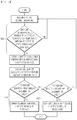
- FIG. 4 is a flowchart of a battery cell swelling detection method according to an embodiment of the present invention. Referring to this, the battery cell swelling detection method according to an embodiment of the present invention will be described.
- a method of detecting a battery cell swelling is a method of determining/detecting the occurrence of cell swelling of battery module by calculating a deviation of a temperature value measured using at least two temperature sensors installed in the battery module, based on this, determining the temperature distribution abnormal condition in the battery module, and understanding the phenomenon of cooling passage narrowness of the battery module.
- the battery cell swelling detection method of the present invention may be performed according to the following procedure.
- the temperature measurement step is a step of measuring the temperature of the battery module at regular intervals. This may be performed using two or more temperature sensors A provided in the battery module 100 as described in the system configuration (see FIG. 2 ). Although the case where more than two temperature sensors are configured in the above system configuration is described, in the following description, it is assumed that two temperature sensors are provided in the battery module, and they are referred to as first and second temperature measurement units 300 and 400 and described. Temperature values measured in the first and second temperature measurement units will be referred to as first and second temperature values, respectively. Specifically, the temperature measurement step S100 is performed by the first and second temperature measurement units 300 and 400 respectively provided at asymmetric positions on the designed cooling passage in the battery module, 2. Thus, the first and second temperature value may be calculated.
- the abnormal condition determination step is a step of determining whether there is a temperature abnormal condition of a battery module by using the first and second temperature values measured in the temperature measurement step.
- the temperature abnormal condition means that the battery module is in a high temperature condition, and the detailed procedure for determining this may be as follows.
- the maximum temperature calculation step is a step of extracting a larger temperature value, i.e., a maximum temperature value, among the first and second temperature values measured in the temperature measurement step S100. This is because if the maximum temperature value in the battery module is compared with a predetermined abnormal condition determination value, it may be determined whether the temperature condition of the battery module is an abnormal condition, that is, a high temperature condition.
- the maximum temperature comparison step is a step of comparing the maximum temperature value of the battery module calculated through the maximum temperature calculation step S220 with a predetermined abnormal condition determination value.
- the predetermined abnormal condition determination value is a temperature value set to determine whether the battery module is in a high temperature condition.
- the temperature abnormal condition of the battery module may be determined according to the comparison result. If the maximum temperature value of the battery module exceeds a predetermined abnormal condition determination value, it is determined that the corresponding battery module enters the high temperature condition. On the other hand, if the maximum temperature value of the battery module is less than a predetermined abnormal condition determination value, it is determined that the corresponding battery module is a proper temperature condition. This may be performed by the cooling fan control unit 500 described in the system configuration.
- the cooling fan operation step is a step of operating the cooling fan 200 according to the determination result of the abnormal condition determination step S200.
- the cooling fan 200 may be operated to prevent the battery module from being continuously exposed to a high temperature condition. Accordingly, the cooling fan 200 may perform a cooling operation of the corresponding battery module to cool the battery module, thereby lowering the temperature of the battery module so as to escape the high temperature condition. This may be performed by the cooling fan control unit 500 described in the system configuration.
- the abnormal condition determination step is a step of determining whether there is a swelling occurrence of a battery module by using the first and second temperature values measured in the temperature measurement step S100, and the detailed procedure may be configured as follows.
- the swelling occurrence determination step may be preferably performed after a predetermined time after the cooling fan operation step S300. It may be operated after a predetermined time after a cooling fan driving signal indicating that the cooling fan operation step S300 is performed is received from the cooling fan driving detection unit 610 described above.
- the first swelling determination step is a step of comparing the temperature deviation of the battery module calculated in the temperature deviation calculation step S410 with a predetermined first swelling determination value, and determining whether a swelling first case of the battery module occurs according to the comparison result.
- the predetermined first swelling determination value may be a value set to determine whether a swelling first case of the battery module occurs, and may mean a lower limit value of a normal determination allowable range of the battery module. This may be experimentally extracted and set according to the module pack size, structure, cell layout type, and design factors of the cooling passage (refrigerant passage).
- the corresponding battery module may determine that a swelling first case occurs.
- the swelling first case may mean that the cooling of the corresponding battery module is no longer possible in a severe swelling state.
- the determination result may be notified to the administrator or the user together with the identification number of the corresponding battery module.
- the administrator/user who recognizes this may take countermeasures to prevent system damage and maintain performance, and if the swelling first case of the corresponding battery module is not detected and continued, it is possible to prevent various dangerous accidents that may occur.
- the corresponding battery module determines that a swelling first case does not occur, and a second swelling determination step may be performed.
- the second swelling determination step is a step of determining whether a swelling second case of the battery module occurs by comparing a temperature deviation of the battery module with a predetermined second swelling determination value.
- the predetermined second swelling determination value is a value set to determine whether a swelling second case of the battery module occurs or not, and means an upper limit value of a normal determination allowable range of the battery module, and as described above, this may be experimentally extracted and set according to design elements of a module pack size, a structure, a cell layout type, and a cooling passage (refrigerant passage).
- the swelling second case may mean that a part of the cooling passage of the corresponding battery module is shielded in a serious swelling state which is better than the swelling first case.
- the battery module determines that a swelling first case occurs, the determination result may be notified to the administrator or the user together with the identification number of the corresponding battery module. Therefore, the administrator/user who recognizes this may take countermeasures to prevent system damage and maintain performance, and if the swelling second case of the corresponding battery module is not detected and continued, it is possible to prevent various dangerous accidents that may occur.
- the corresponding battery module determines that the swelling second case does not occur and returns to the temperature measurement step S100 to detect the temperature condition of the battery module again.
- the swelling determination step S400 may be performed in an environment in which the cooling fan is operated through the cooling fan operation step S300, and a more detailed description of this may be understood with reference to the system configuration swelling occurrence determination unit 600.
- the cooling passage which is the coolant passage in the battery module, is narrowed, resulting in a change in the cooling flow rate in the battery module. Accordingly, when the cooling fan operates, as a space (cooling passage) through which the refrigerant flowing from the cooling fan into the battery module passes becomes insufficient, cooling of the part after the point where cooling passage narrowness phenomenon occurs due to cell swelling is prevented.
- the cooling uniformity in the battery module is degraded and the swelling first case or the swelling second case, which is a specific deviation state out of the normal determination allowable range of the battery module, i.e., the first swelling determination value to the second swelling determination value, occurs, so that it is based on the principle that the change of cooling flow rate due to the cooling passage narrowness phenomenon caused by cell swelling is detected as a temperature distribution abnormal condition. (See FIGS. 2 and 3 )
Landscapes
- Engineering & Computer Science (AREA)
- Chemical & Material Sciences (AREA)
- Chemical Kinetics & Catalysis (AREA)
- Electrochemistry (AREA)
- General Chemical & Material Sciences (AREA)
- Manufacturing & Machinery (AREA)
- Automation & Control Theory (AREA)
- Secondary Cells (AREA)
- Life Sciences & Earth Sciences (AREA)
- Biophysics (AREA)
- Charge And Discharge Circuits For Batteries Or The Like (AREA)
Applications Claiming Priority (2)
| Application Number | Priority Date | Filing Date | Title |
|---|---|---|---|
| KR1020180008898A KR102221778B1 (ko) | 2018-01-24 | 2018-01-24 | 배터리 셀 스웰링 탐지 시스템 및 방법 |
| PCT/KR2019/000922 WO2019146999A1 (fr) | 2018-01-24 | 2019-01-22 | Système et procédé de détection de gonflement d'élément de batterie |
Publications (2)
| Publication Number | Publication Date |
|---|---|
| EP3648237A1 true EP3648237A1 (fr) | 2020-05-06 |
| EP3648237A4 EP3648237A4 (fr) | 2020-12-02 |
Family
ID=67395495
Family Applications (1)
| Application Number | Title | Priority Date | Filing Date |
|---|---|---|---|
| EP19744446.6A Pending EP3648237A4 (fr) | 2018-01-24 | 2019-01-22 | Système et procédé de détection de gonflement d'élément de batterie |
Country Status (6)
| Country | Link |
|---|---|
| US (2) | US11611114B2 (fr) |
| EP (1) | EP3648237A4 (fr) |
| JP (1) | JP7045569B2 (fr) |
| KR (1) | KR102221778B1 (fr) |
| CN (1) | CN110945710B (fr) |
| WO (1) | WO2019146999A1 (fr) |
Families Citing this family (9)
| Publication number | Priority date | Publication date | Assignee | Title |
|---|---|---|---|---|
| DE102019213885A1 (de) * | 2019-09-11 | 2021-03-11 | Continental Automotive Gmbh | Batteriesensor |
| KR102679708B1 (ko) * | 2020-10-14 | 2024-06-27 | 주식회사 엘지에너지솔루션 | 모듈 변형도 추정 장치 및 방법 |
| US11901532B2 (en) | 2020-12-09 | 2024-02-13 | Vltru Systems Llc | Battery module and battery rack with enhanced fire safety features, and applications thereof |
| TWI877447B (zh) * | 2021-03-22 | 2025-03-21 | 美商伏特如系統有限公司 | 具有增強之防火安全特性的電池模組及其操作方法 |
| CN114184639B (zh) * | 2021-11-29 | 2023-12-29 | 湖南省驰普新能源科技有限公司 | 一种电池系统的热扩散检测方法、系统、存储介质及智能终端 |
| US12158380B2 (en) * | 2021-12-23 | 2024-12-03 | Lenovo (United States) Inc. | Monitoring and detection of battery swelling |
| US20260121140A1 (en) * | 2023-01-19 | 2026-04-30 | Tyco Fire Products Lp | Systems and methods for detection of battery deformation |
| KR20240161915A (ko) | 2023-05-06 | 2024-11-13 | 한광현 | 온도 및 압력 변화로부터 셀을 보호하는 배터리 모듈과 이를 구비한 배터리 팩 |
| CN117080629B (zh) * | 2023-08-23 | 2024-04-02 | 清安储能技术(重庆)有限公司 | 一种电池簇的检测方法 |
Family Cites Families (22)
| Publication number | Priority date | Publication date | Assignee | Title |
|---|---|---|---|---|
| JPH11112129A (ja) | 1997-10-02 | 1999-04-23 | Dainippon Printing Co Ltd | 回路パターン形成方法、回路パターン形成シートおよび中間積層体 |
| KR100559334B1 (ko) * | 2003-12-30 | 2006-03-15 | 현대자동차주식회사 | 전기자동차의 배터리 냉각장치 및 방법 |
| WO2011045853A1 (fr) * | 2009-10-14 | 2011-04-21 | 株式会社 日立製作所 | Dispositif de commande de batterie et système d'entraînement de moteur |
| KR101093928B1 (ko) * | 2009-11-26 | 2011-12-13 | 삼성에스디아이 주식회사 | 배터리 셀의 고온 스웰링을 방지할 수 있는 배터리 팩 및 그 방법 |
| KR101000550B1 (ko) | 2009-11-30 | 2010-12-14 | 정윤이 | 배터리 팩과 이를 포함한 능동형 셀 발란싱 배터리 관리장치 |
| JP4865897B1 (ja) * | 2010-09-30 | 2012-02-01 | 三菱重工業株式会社 | 電池システム |
| JP5542631B2 (ja) | 2010-11-17 | 2014-07-09 | 株式会社東芝 | 電気車両制御装置 |
| KR101297005B1 (ko) * | 2010-12-16 | 2013-08-14 | 삼성에스디아이 주식회사 | 배터리 온도 제어장치 및 방법 |
| JP5703458B2 (ja) | 2011-04-21 | 2015-04-22 | 矢崎総業株式会社 | 電源装置における温度センサの組付構造 |
| US20130257382A1 (en) | 2012-04-02 | 2013-10-03 | Apple Inc. | Managing Cycle and Runtime in Batteries for Portable Electronic Devices |
| KR101340365B1 (ko) | 2012-11-22 | 2013-12-11 | 자동차부품연구원 | 배터리 온도 조절 장치 |
| KR101567632B1 (ko) * | 2013-06-28 | 2015-11-09 | 현대자동차주식회사 | 배터리시스템의 온도 제어장치 및 그 제어방법 |
| JP2015056354A (ja) * | 2013-09-13 | 2015-03-23 | 三菱重工業株式会社 | 二次電池システム、制御装置、制御方法及びプログラム |
| US9406980B2 (en) | 2013-09-24 | 2016-08-02 | Blackberry Limited | System and method of mitigating high-temperature, high-charge gas swelling of battery of portable electronic device |
| KR20150067842A (ko) * | 2013-12-10 | 2015-06-19 | 현대자동차주식회사 | 배터리 냉각팬 제어 장치 및 방법 |
| US10270137B1 (en) * | 2014-04-04 | 2019-04-23 | Olaeris, Inc. | Battery status and failure detector |
| KR102213260B1 (ko) | 2014-07-28 | 2021-02-09 | 현대모비스 주식회사 | Bms 온도 조절 방법 및 이를 적용한 bms |
| CN107356600B (zh) * | 2015-01-28 | 2019-09-10 | 杭州高特新能源技术有限公司 | 新型监控电池鼓胀与温度的装置 |
| KR102352449B1 (ko) | 2015-04-30 | 2022-01-18 | 삼성전자주식회사 | 배터리 팽창을 방지하기 위한 방법 및 그 전자 장치 |
| KR101913460B1 (ko) | 2015-06-10 | 2018-10-30 | 주식회사 엘지화학 | 배터리 셀 스웰링 감지 시스템 및 방법 |
| US10403946B2 (en) * | 2016-06-14 | 2019-09-03 | Ford Global Technologies, Llc | Battery chiller control with electronic expansion device |
| KR101924527B1 (ko) * | 2016-06-16 | 2018-12-03 | 주식회사 엘지화학 | 에너지 저장 시스템 및 그것의 온도 제어 방법 |
-
2018
- 2018-01-24 KR KR1020180008898A patent/KR102221778B1/ko active Active
-
2019
- 2019-01-22 WO PCT/KR2019/000922 patent/WO2019146999A1/fr not_active Ceased
- 2019-01-22 US US16/763,504 patent/US11611114B2/en active Active
- 2019-01-22 CN CN201980003666.3A patent/CN110945710B/zh active Active
- 2019-01-22 EP EP19744446.6A patent/EP3648237A4/fr active Pending
- 2019-01-22 JP JP2020505158A patent/JP7045569B2/ja active Active
-
2023
- 2023-02-15 US US18/109,985 patent/US12142744B2/en active Active
Also Published As
| Publication number | Publication date |
|---|---|
| US20230253642A1 (en) | 2023-08-10 |
| KR102221778B1 (ko) | 2021-03-02 |
| EP3648237A4 (fr) | 2020-12-02 |
| US20200343600A1 (en) | 2020-10-29 |
| KR20190090250A (ko) | 2019-08-01 |
| US11611114B2 (en) | 2023-03-21 |
| US12142744B2 (en) | 2024-11-12 |
| JP2020529705A (ja) | 2020-10-08 |
| JP7045569B2 (ja) | 2022-04-01 |
| CN110945710B (zh) | 2023-10-24 |
| WO2019146999A1 (fr) | 2019-08-01 |
| CN110945710A (zh) | 2020-03-31 |
Similar Documents
| Publication | Publication Date | Title |
|---|---|---|
| US12142744B2 (en) | System and method for detecting battery cell swelling | |
| KR102858781B1 (ko) | 배터리 관리 장치 및 방법 | |
| KR20230057894A (ko) | 배터리 팩 내의 이상 징후 셀 검출 장치 및 방법 | |
| JP6384483B2 (ja) | 蓄電池システム | |
| KR102947181B1 (ko) | 배터리 셀의 내부 이상을 진단하는 방법 및 이를 적용한 배터리 팩 | |
| US12467798B2 (en) | System and method for diagnosing abnormal state of temperature of battery cell by using BMS temperature sensor | |
| KR20230088014A (ko) | 이상 배터리 셀 검출 방법 및 시스템 | |
| US20220268853A1 (en) | Battery diagnosis system, power system and battery diagnosis method | |
| CN116885346A (zh) | 一种液冷电池的电池管理系统及其漏液点朔源方法 | |
| CN114739532A (zh) | 一种判断电池组温度采集异常的方法 | |
| KR20210017513A (ko) | 배터리 랙간의 비정상전류 검출 장치 및 방법 | |
| CN109782189A (zh) | 一种用于车辆电池组的测试系统 | |
| KR20250028726A (ko) | 배터리 진단 장치 및 배터리 진단 방법 | |
| KR20240166274A (ko) | 배터리 진단 장치 및 그것의 동작 방법 | |
| CN116520153A (zh) | 一种锂电池热失控预警保护方法和系统 | |
| CN118169584B (zh) | 针对卫星上电池组的工作状态判定方法、装置及存储介质 | |
| CN106532153A (zh) | 一种智能家居用锂离子电池的监控检测系统 | |
| KR102830827B1 (ko) | 배터리 진단 방법, 장치 및 컴퓨터 프로그램 | |
| KR20170142453A (ko) | 고온에 대한 이중화 보호 판별회로 및 구동방법 | |
| US20260009859A1 (en) | Apparatus and method for proactive detection of thermal runaway using bms with eis function | |
| KR102957143B1 (ko) | 배터리 관리 장치 및 배터리 관리 방법 | |
| KR20250038375A (ko) | 배터리 관리 장치 및 배터리 관리 방법 | |
| Xiong et al. | A novel thermal runaway warning method of lithium-ion batteries | |
| KR20260023345A (ko) | 배터리 관리 장치 및 배터리 관리 방법 | |
| KR20250166670A (ko) | 배터리 관리 장치 및 배터리 관리 방법 |
Legal Events
| Date | Code | Title | Description |
|---|---|---|---|
| STAA | Information on the status of an ep patent application or granted ep patent |
Free format text: STATUS: THE INTERNATIONAL PUBLICATION HAS BEEN MADE |
|
| PUAI | Public reference made under article 153(3) epc to a published international application that has entered the european phase |
Free format text: ORIGINAL CODE: 0009012 |
|
| STAA | Information on the status of an ep patent application or granted ep patent |
Free format text: STATUS: REQUEST FOR EXAMINATION WAS MADE |
|
| 17P | Request for examination filed |
Effective date: 20200130 |
|
| AK | Designated contracting states |
Kind code of ref document: A1 Designated state(s): AL AT BE BG CH CY CZ DE DK EE ES FI FR GB GR HR HU IE IS IT LI LT LU LV MC MK MT NL NO PL PT RO RS SE SI SK SM TR |
|
| AX | Request for extension of the european patent |
Extension state: BA ME |
|
| A4 | Supplementary search report drawn up and despatched |
Effective date: 20201102 |
|
| RIC1 | Information provided on ipc code assigned before grant |
Ipc: H01M 10/633 20140101ALI20201027BHEP Ipc: H01M 10/6563 20140101ALI20201027BHEP Ipc: H01M 10/613 20140101ALI20201027BHEP Ipc: H01M 10/63 20140101ALI20201027BHEP Ipc: H01M 10/48 20060101AFI20201027BHEP |
|
| DAV | Request for validation of the european patent (deleted) | ||
| DAX | Request for extension of the european patent (deleted) | ||
| RAP1 | Party data changed (applicant data changed or rights of an application transferred) |
Owner name: LG ENERGY SOLUTION LTD. |
|
| RAP3 | Party data changed (applicant data changed or rights of an application transferred) |
Owner name: LG ENERGY SOLUTION, LTD. |