EP3649799B1 - Procédé de comptage d'équipements d'utilisateurs dans un réseau radio - Google Patents
Procédé de comptage d'équipements d'utilisateurs dans un réseau radio Download PDFInfo
- Publication number
- EP3649799B1 EP3649799B1 EP18733698.7A EP18733698A EP3649799B1 EP 3649799 B1 EP3649799 B1 EP 3649799B1 EP 18733698 A EP18733698 A EP 18733698A EP 3649799 B1 EP3649799 B1 EP 3649799B1
- Authority
- EP
- European Patent Office
- Prior art keywords
- radio
- radio device
- presence message
- coverage area
- network
- Prior art date
- Legal status (The legal status is an assumption and is not a legal conclusion. Google has not performed a legal analysis and makes no representation as to the accuracy of the status listed.)
- Active
Links
Images


Classifications
-
- H—ELECTRICITY
- H04—ELECTRIC COMMUNICATION TECHNIQUE
- H04W—WIRELESS COMMUNICATION NETWORKS
- H04W8/00—Network data management
- H04W8/005—Discovery of network devices, e.g. terminals
-
- H—ELECTRICITY
- H04—ELECTRIC COMMUNICATION TECHNIQUE
- H04W—WIRELESS COMMUNICATION NETWORKS
- H04W24/00—Supervisory, monitoring or testing arrangements
- H04W24/08—Testing, supervising or monitoring using real traffic
-
- H—ELECTRICITY
- H04—ELECTRIC COMMUNICATION TECHNIQUE
- H04W—WIRELESS COMMUNICATION NETWORKS
- H04W24/00—Supervisory, monitoring or testing arrangements
- H04W24/10—Scheduling measurement reports ; Arrangements for measurement reports
-
- H—ELECTRICITY
- H04—ELECTRIC COMMUNICATION TECHNIQUE
- H04W—WIRELESS COMMUNICATION NETWORKS
- H04W48/00—Access restriction; Network selection; Access point selection
- H04W48/02—Access restriction performed under specific conditions
- H04W48/06—Access restriction performed under specific conditions based on traffic conditions
-
- H—ELECTRICITY
- H04—ELECTRIC COMMUNICATION TECHNIQUE
- H04W—WIRELESS COMMUNICATION NETWORKS
- H04W72/00—Local resource management
- H04W72/50—Allocation or scheduling criteria for wireless resources
- H04W72/54—Allocation or scheduling criteria for wireless resources based on quality criteria
- H04W72/542—Allocation or scheduling criteria for wireless resources based on quality criteria using measured or perceived quality
-
- H—ELECTRICITY
- H04—ELECTRIC COMMUNICATION TECHNIQUE
- H04W—WIRELESS COMMUNICATION NETWORKS
- H04W76/00—Connection management
- H04W76/10—Connection setup
-
- H—ELECTRICITY
- H04—ELECTRIC COMMUNICATION TECHNIQUE
- H04W—WIRELESS COMMUNICATION NETWORKS
- H04W4/00—Services specially adapted for wireless communication networks; Facilities therefor
- H04W4/70—Services for machine-to-machine communication [M2M] or machine type communication [MTC]
-
- H—ELECTRICITY
- H04—ELECTRIC COMMUNICATION TECHNIQUE
- H04W—WIRELESS COMMUNICATION NETWORKS
- H04W74/00—Wireless channel access
-
- H—ELECTRICITY
- H04—ELECTRIC COMMUNICATION TECHNIQUE
- H04W—WIRELESS COMMUNICATION NETWORKS
- H04W74/00—Wireless channel access
- H04W74/08—Non-scheduled access, e.g. ALOHA
- H04W74/0833—Random access procedures, e.g. with 4-step access
Definitions
- This disclosure relates to methods for load management in wireless communication systems, where a number of radio devices are present within a dedicated coverage area operated by means of a radio network including base stations.
- Wireless communication systems are widely deployed to provide various telecommunication services such as telephony, video, data, messaging, and broadcasts.
- a wireless communication system may be operated by means of a radio network, comprising a number of radio base stations connected to a backbone, which in turn is connected to the Internet and other networks.
- Wireless radio devices normally referred to as user equipment, may gain contact with the radio network by means of radio communication with the base stations.
- the wireless communication systems are mainly developed for the purpose of providing communication possibilities to mobile devices, but it should be noted that a user equipment may be substantially or completely stationary, and still benefit from being provided with radio communication capabilities.
- LTE Long Term Evolution
- UMTS Universal Mobile Telecommunications System
- WO2010121398A1 discloses method and a system for implementing a MBMS counting in a wireless communication network environment, wherein a plurality of UEs and at least one Radio Network Controller are located in the wireless communication network.
- the method comprises: confirming a counting response from the UE by means of sending a first message containing a Service ID list and a counting sequence number (CSN) to the UE when the CRNC receives a connection request from the UE; storing the CSN in the UE and starting a timer Tcsn configured in the UE when the UE receives the first message; not responding to a counting when a further CSN and a further Service ID list in a further message received from the CRNC are the same as the CSN and the Service ID list stored in UE and the timer Tcsn does not expire; starting a new counting response by responding to the counting and stopping the timer Tcsn when either the further CSN or the Service ID list in the further message is distinguishing from the CSN and
- processors include microprocessors, microcontrollers, digital signal processors (DSPs), field programmable gate arrays (FPGAs), programmable logic devices (PLDs), state machines, gated logic, discrete hardware circuits, and other suitable hardware configured to perform the various functionality described throughout this disclosure.
- DSPs digital signal processors
- FPGAs field programmable gate arrays
- PLDs programmable logic devices
- state machines gated logic, discrete hardware circuits, and other suitable hardware configured to perform the various functionality described throughout this disclosure.
- processors in the processing system may execute software.
- Software shall be construed broadly to mean instructions, instruction sets, code, code segments, program code, programs, subprograms, software modules, applications, software applications, software packages, routines, subroutines, objects, executables, threads of execution, procedures, functions, etc., whether referred to as software, firmware, middleware, microcode, hardware description language, or otherwise.
- Software in any such form may be stored in a memory, such as a
- Machine-to-Machine (M2M) communications often refers to technologies that allow devices to communicate with each other, with little human intervention.
- M2M communication devices typically may store data, and may transmit data to other M2M devices or to a server over a network, such as a cellular network.
- 3GPP 3rd Generation Partnership Project
- LTE Long Term Evolution
- LTE-A LTE-Advanced
- MTC Machine Type Communications
- An MTC device may perform automatic data transmissions in a network wherein each data transmission can be initiated by a first machine, routed through a network, and delivered to one or more other machines.
- a 3GPP system such as an LTE system
- scheduling of resources for such communication is controlled by the network, typically within the base station, or the eNode B (eNB) as denoted in LTE.
- eNB eNode B
- another system that can co-exist is the in-band deployment of a Narrow-Band Internet of Things (NB-IoT) system, which may optionally also be deployed in the guard-band or in stand-alone mode.
- NB-IoT Narrow-Band Internet of Things
- an NB-IoT carrier of ⁇ 200kHz can be located within the assigned bandwidth of LTE operation.
- a dedicated coverage area may be a cell, as served by a base station of a radio network.
- the dedicated area may refer to a larger area comprising a plurality of cells, such as a RAN area.
- a method for UE counting is employed. The objective is that the radio network shall gain knowledge of at least an estimate of the number of UEs present within the dedicated coverage area.
- a serving base station should already know how many active UEs that are connected to the base station. However, for idle mode, or inactive UEs under NR, this would not be possible without some sort of update procedure since there is no RRC connection between the radio device and the base station.
- the radio device in such modes may be configured to make cell reselections and to listen to signaling from the base stations of network, e.g. listen to broadcast messages and monitor paging signals from the network, the radio transmitter in the radio devices are inactive and the base stations of the network are not aware of which base station the radio devices are camped to or moving towards.
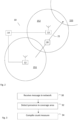
- Fig. 1 schematically illustrates a radio network 10, comprising at least one base station 12 connected to a backbone 14 of a wireless communication system.
- the radio network comprises one or more dedicated coverage areas 15.
- each base station may be configured to cover an area 15 associated with one cell of the radio network, as indicated in Fig. 1 .
- the dedicated coverage area may be a RAN area, incorporating a large number of cells 15.
- the base station 12 may be configured to serve a plurality of radio devices 20 within the coverage area of a cell 15. Some radio devices may be connected, or active, and are indicated by full line contours in Fig. 1 . For such radio devices 20, it will be clear to the network 10, from information gathered from the base station 12, how many radio devices are present within the coverage area 15.
- a number of radio devices 20 may be present within the coverage area 15 in idle or inactive mode, indicated in Fig. 1 by means of a dashed contour. These may be completely or substantially stationary, or mobile radio devices. It will therefore not be clear to the network 10 how many such radio devices are present within the coverage area 15. This also means that the network 14 may not be appropriately prepared to handle access attempt load control, especially if a large number of the radio devices 20 should make an access attempt concurrently.
- a solution is proposed as broadly indicated in Fig. 3 .
- This relates to a method for establishing a count measure of radio devices 20 in a radio network 10, such as a value representing the number of a radio devices 20 present within a certain coverage area.
- the method comprising a step 30 of receiving a presence message at a first base station 12 of the radio network, wherein said presence message is transmitted based on a reporting rule; and 32 detecting presence of a radio device 20 within a dedicated coverage area 15 of the radio network 10 responsive to receiving said presence message.
- This presence message is used in a step 34 for compiling the count measure, in which the received presence message represents a count of at least one radio device 20.
- the network 10 compiles a count measure of how many radio devices 20 are present in a dedicated coverage area 15.
- the method involves counting all radio devices for which a message is received, and adding up the number of such detected radio devices 20.
- not all radio devices 20 are configured to transmit a presence message, and the count measure involves calculating an estimate of the number of radio devices 20 present, based on the number detected radio devices.
- radio devices 20 of one or more predefined radio access technologies are configured to or triggered to report a presence message.
- only Nb-IoT radio devices 20 are configured to transmit a presence message.
- MTC radio devices 20 are configured to transmit a presence message.
- radio devices 20 of any RAT supported in the coverage area e.g. LTE, MTC, Nb-IoT, may be configured to transmit a presence message, but only a subset of those will be triggered to do so, e.g. by a setting in broadcast system information. It thus be understood that where a radio device 20 is described herein e.g. as being configured to send a presence message, this may in various embodiments relate to a radio device with a specific RAT capability.
- At least idle mode radio devices 20 are configured to send this presence message.
- One reason for the network 10, or specifically the base station 12, to know the number of Idle mode radio devices may be for PRACH (Physical Random Access Channel) resource handling. If there are many Idle mode radio devices 20 in the cell 15 and they would try to access the network 10 simultaneously, a PRACH storm, i.e., a congestion situation and overload situation may result.
- also connected mode radio devices 20 are configured to send this presence message, e.g. for the sake of facilitating the step of compiling the count measure in step 34, but strictly speaking that would not be required in order for the network to know how many connected radio devices 20 are present.
- the dedicated coverage area 15 is a RAN area comprising a number of cells
- at least radio devices 20 in Light Connected state are configured to send this presence message, but potentially also connected radio devices 20. If the UE is in Light Connected or in Inactive state, a RAN Area Update could be triggered for every cell change, or for relevant cells, within the dedicated RAN area 15.
- the network 10 or the base station 12 may be configured to compile a measure of how many radio devices 20 in Idle mode there are in the coverage area 15 that benefit from Coverage Enhancement (CE).
- a presence message may be configured to be transmitted for receipt in the network 10, specifically associated with such CE radio devices 20.
- a method for providing a count indication of radio devices 20 to a radio network 10 comprising 44 transmitting a presence message to a first base station 12 of the radio network 10 based on a reporting rule 42, which presence message indicates presence of a radio device 20 within a dedicated coverage area 15 of the radio network 10.
- the transmission of the presence message it preceded by an event, wherein detection 40 of the event may at least partly be configured to cause the transmission of the presence message.
- a method is proposed based on the notion that it may be sufficient for the network 10, or specifically the base station 12, to establish a count measure that represents an estimate of the number of radio devices 20 present within the coverage area 15.
- the step 44 of transmitting the presence message will occupy some portion of the air interface, and there may thus be reasons for minimizing this type of transmission, especially considering that the number of idle mode radio devices may be very large. Also, staying in idle mode, or Light Connected or inactive state, serves a purpose of saving power consumption in such radio devices 20. For these reasons, the system may be configured to minimize messaging, while still being configured to provide a count measure of the number of radio devices 209 present within a dedicated coverage area 15.
- this is accomplished by means of the reporting rule including a probability rule, wherein said presence message is transmitted responsive to an outcome of a probability check, based on the probability rule, indicating that the radio device shall transmit the presence message.
- this may be done by introducing a probability factor.
- the probability check may be carried out in each radio device 20 within the coverage area 15, responsive to the step 40 of detecting an event.
- the probability factor may be both smaller and bigger. Should the network 10, or the specific base station 12, be requiring an exact number, the probability factor may be set to 100%. If an estimate is sufficient, P may be set to lower than 100%.
- the count measure to be compiled may be calculated, involving dividing the number of responses by the probability factor P. As an example, if probability is set to 20% and 100 radio devices 20 transmit a presence message indicating presence in the coverage area 15, then the network can estimate that there are 500 radio devices 20 in the cell, where the other 400 did not pass probability check.
- the estimated value represents the count measure for the radio devices 20 in the coverage area 15 that are configured to answer, e.g. the idle devices or those in Light Connected or inactive state. The lower the probability factor is, the better for power consumption in the radio device 20, while at the same time reducing amount of resource usage to perform the update.
- a probability factor may be preconfigured by specification, or for the radio network 10 in question.
- a certain radio device 20, or type of radio device 20, may be specified or preconfigured to always apply a certain probability factor.
- the network may be configured to send probability level data to the radio devices 20, for use in the radio devices 20 in said probability check. This may e.g. be carried out by broadcasting the probability level data as system information from the network.
- the probability level data may be a numeric value to apply, or an indication which may be mapped to a numeric value by means of a processing device in a receiving radio device 20.
- a detectable event 40 that will cause the radio devices 20 to determine 42 to send a presence message may be time related, and may a period of a number of e.g. subframes or seconds.
- the time-dependent requirement may be preconfigured, or a default value in the radio network 10. In on embodiment, time-dependent requirement may be altered and conveyed to the radio devices 20 by e.g. as system information in a radio broadcast from the base station 12.
- a detectable event 40 that will cause the radio devices 20 determine 42 to send a presence message may be a trigger signal received from the network 10, e.g. from the base station 12. This may be transmitted to the radio devices 20 by broadcast of system information, and the radio devices 20 may be triggered to detect such information by paging.
- the reporting rule may involve messaging dependent on type or class of radio device 20.
- a first type or class of radio device 20 may be capable of broadband data transfer, such as an LTE radio device 20, whereas a second type or class of radio device has a more limited capability, or is restricted to lower bandwidth, such as an NB-IoT radio device 20 or an MTC radio device 20.
- the network 10 may e.g. need or desire information on the number of radio devices 20 with high bandwidth capability only, or only those of lower bandwidth capability, and only such radio devices 20 may be preconfigured or triggered to transmit a presence message to the network 10.
- a certain type or class of radio device 20 may have higher priority, to access or to high bandwidth, in the coverage area 15, such as radio devices 20 associated with emergency services.
- Fig. 2 illustrates radio network 10 and two different coverage areas 151, 152 of that network.
- a radio device 20 in a non-connected mode such as in idle mode, Light Connected or inactive state, is moving from the coverage area 151 served by a first base station 12 into a second coverage area 152 served by a second base station 13.
- the coverage areas 151, 152 may represent different RAN areas, each including several cells.
- each coverage area may be a cell, in which the relocation of the radio device 20 from the first cell 151 to the second cell 152 may be denoted a cell reselection.
- a reporting rule may be that for any radio device 20 entering the coverage area 152, a presence message shall be transmitted to indicate presence of the radio device 20. This may be used as a one-time transmission, which need not require any update until the radio device 20 leaves the coverage area 152.
- the requirement to send the presence message may be dependent on rules related specifically to the new coverage area 152, which did not apply in the former coverage area 151. In other words, not all coverage areas must apply a reporting rule for indicating presence, or the same reporting rule.
- the radio device 20 may receive information via system information from a base station 12 of the previous coverage area 151, that messaging to indicate presence is needed when reselection to a specific different coverage area, e.g. 152.
- This information may potentially also be preconfigured, or configured via dedicated signaling, e.g. in relation to neighbor cell measurement configuration. If the radio device 20 has not received any information before entering the new coverage area 152, the radio device 20 may retrieve such indication from System Information from a serving base station in the new coverage area 152 upon changing to camp to a base station 13 of the new coverage area 152. Alternatively, if there is a sudden need to count the radio devices 20 currently camping in the new coverage area 152, the radio devices 20 in such a cell or area 152 could be paged, and then all the responses could be counted.
- consideration may be taken to further minimize unnecessary signaling. This may be relevant for situations where it can be assessed that the radio device 20 is passing through the coverage area 152 rather than moving to stay in it. In Fig. 2 , this is illustrated by the continuation of the arrow indication the movement of the radio device 20, further to a third coverage area 153, e.g. a new cell 153.
- the reporting rule may include considering a parameter indication that messaging shall not be done as soon as the change of coverage area, e.g. cell reselection has taken place.
- the reporting rule may include an indication of a delay to apply prior to transmitting the presence message from the radio device 20, counted after a certain point in time when change of coverage area, e.g. cell reselection, has been accomplished.
- the reporting rule may include an indication of a time window, within which window the radio device may randomly calculate the delay to apply. Any of these indications may be preconfigured, or be shared from the network 10 in broadcast system information, either through the preceding serving base station 12 or the new base station 13. If, after the applied delay, the radio device has again made a cell reselection, e.g. to cell 153, transmission of the presence message may be inhibited.
- the reporting rule may involve the radio device 20 taking stored mobility information into considerations.
- the reporting rule may involve an indication to transmit a presence message provided a mobility level is below a predetermined value, and not to send if the mobility value is above said level.
- the mobility value may reflect e.g. number of cell reselections in a preceding time period.
- transmitting 44 the presence message indicating presence of a radio device 20 in a coverage area 152 may be carried out by a base station 12 of the preceding coverage area 151, e.g. via the network backbone 14.
- the leaving radio device 20 may update the base station 12 of the present coverage area 151 that a cell reselection to another coverage area 152 is made. This may e.g. be relevant in an embodiment where the first coverage area 151 applies a reporting rule for idle or otherwise non-active radio devices 20 to indicate their presence, but not the coverage area 152 to which it is moving.
- a presence message transmitted from the radio device 20 to the base station 13 of the new coverage area 152 may trigger an update signal from the new base station 13 to the previous serving base station 12 via the backbone 14 that the radio device 20 has left.
- signaling may be reduced to one presence message from the radio device 20 to update the network 10 on the situation in both coverage areas 125, 125.
- the radio device 20 may, in its presence message to the network 10, include information related to presence in a previous coverage area 151, or related to a previously transmitted presence message.
- the reporting rule may include that, where a radio device 20 makes a cell reselection to a coverage area 152 where presence detection is applied by the network 10 through a serving base station 13, the radio device 20 shall include in its presence message, or in separate information associated with the presence message, an indication of a previous coverage area 151.
- this indication may specify the latest coverage area in which a preceding presence message was transmitted by that radio device 20.
- the latest coverage area in which a presence message was transmitted need not be the last coverage area from which the cell reselection was made, since that last coverage need not apply presence detection.
- the network 10 may then signal, through the backbone 14, to the base station of that previous or latest coverage area, that the radio device 20 has left.
- the reporting rule applied to determine whether to transmit a presence message to indicate presence of the radio device 20 within a coverage area 15 may involve both considering a probability rule, and indication of entering a new coverage area, as outlined for the embodiments above, which may thus be combined.
- One variant of such an embodiment may involve the radio device 20 determining to transmit the presence message responsive to the radio device making a cell reselection. A delay or mobility information determination may be made, prior to making this determination.
- a probability check may be made, based on a probability factor P, whether the presence message shall be transmitted.
- the reporting rule may involve an instruction for the radio device 20 to send a presence message indicating that it is leaving a coverage area 151 only if a presence message indicating its presence was transmitted in that area 151 as an outcome of the probability check.
- the presence message indicating presence of a radio device in a coverage area 15 is conveyed to the network in a radio signal received from the radio device 20.
- the presence message is preferably transmitted prior to, or even without, transmitting a connection setup presence message from the radio device.
- the radio device 20 may e.g. transmit the presence message on a random access channel RACH to the base station 12 or 13.
- the presence message would serve the purpose of indicating its presence, but not as a real access request.
- an uplink signal may be transmitted from the radio device 20 including a RACH RA Preamble, potentially after contention resolution if required, where the RACH RA Preamble may be selected based on sensed system information blocks signaled by the base station 12.
- This uplink signal may include, or alternatively be followed by a separate signal, indicating that this is a presence message to indicate presence and not a request for resources.
- the presence message may in such an embodiment be in the form of a simple flag or other indication, such as a known preamble sequence, a code or a value in one or more predefined bits in a dedicated field, which may be decoded or read by the base station 12.
- the base station 12 may interpret the presence message received, and simply return with an Ack, or even terminate the procedure with no further signaling, thereby terminating connection setup. No further RRC signaling need thereafter follow.
- a radio device 20 may be configured to transmit information related to its presence in a previous coverage area 151, or related to a previously transmitted presence message, as outlined above.
- the reporting rule may thus include that, where a radio device 20 makes a cell reselection to a coverage area 152 where presence detection is applied by the network 10 through a serving base station 13, the radio device 20 shall include in its presence message, or in separate information associated with the presence message, an indication of a previous coverage area 151. As an alternative, this indication may specify the latest coverage area in which a preceding presence message was transmitted by that radio device 20.
- the indication related to a previous cell may be in the form of a flag or other indication, such as a known preamble sequence, a code or a value in one or more predefined bits in a dedicated field, which may be decoded or read by the base station 12.
- This indication may form part of the presence message as such, or be a separate message.
- Fig. 5 schematically illustrates an embodiment of a radio station 50, which is configured to operate according to the methods described herein.
- the radio station 50 comprises a processing system 51, connected to a memory 52 for holding data and computer program code executable by the processing system 51.
- a radio transceiver 53 is connected to the processing system, and to an antenna 54 for transmitting and receiving radio signals.
- the radio station 50 is a radio device 20, configured to communicate with a base station 12 of a radio network 10 is connected.
- the radio device 20 may obviously include further elements which are not shown, such as a battery, and auxiliary members such as a user interface.
- the processing system 51 may be configured to carry out any of the steps outlined herein as carried out by the radio device 20.
- the radio station 50 is a base station 12 of a radio network 10, configured to communicate with a radio device 20.
- the base station 12 may also include further elements which are not shown, such as a power supply.
- the processing system 51 may be configured to carry out any of the steps outlined herein as carried out by the base station 12, including communicating with other base stations 13.
Landscapes
- Engineering & Computer Science (AREA)
- Computer Networks & Wireless Communication (AREA)
- Signal Processing (AREA)
- Quality & Reliability (AREA)
- Databases & Information Systems (AREA)
- Computer Security & Cryptography (AREA)
- Mobile Radio Communication Systems (AREA)
Claims (15)
- Procédé permettant d'établir une mesure de comptage de dispositifs radio dans un réseau radio, comprenant :la réception (30) d'un message de présence au niveau d'une première station de base du réseau radio, dans lequel un dispositif radio est configuré pour transmettre ledit message de présence avec une certaine probabilité en fonction d'une règle de rapport prédéfinie et en réponse au dispositif radio étant présent dans une zone de couverture dédiée du réseau radio ;la détection (32) de présence du dispositif radio au sein de la zone de couverture dédiée du réseau radio en réponse à la réception dudit message de présence ;la compilation (34) de la mesure de comptage, comprenant le calcul d'une estimation du nombre de dispositifs radio présents dans la zone de couverture dédiée, dans lequel la présence détectée dudit dispositif radio représente un comptage d'au moins un dispositif radio.
- Procédé selon la revendication 1, dans lequel ledit message de présence est reçu en réponse à une transmission conditionnelle du message de présence, en fonction d'un résultat d'une vérification de probabilité selon une règle de probabilité, ledit résultat indiquant si le dispositif radio doit transmettre le message de présence.
- Procédé selon la revendication 2, dans lequel la présence détectée dudit dispositif radio représente un comptage d'un nombre de dispositifs radio, ce nombre étant déterminé en fonction d'un niveau de probabilité qui est utilisé dans ladite vérification de probabilité.
- Procédé selon la revendication 2 ou 3, comprenant :
l'envoi de données de niveau de probabilité à partir du réseau, pour utilisation dans le dispositif radio lors de ladite vérification de probabilité. - Procédé selon la revendication 4, dans lequel lesdites données de niveau de probabilité sont diffusées en tant qu'informations système à partir du réseau.
- Procédé selon l'une quelconque revendication précédente, dans lequel ladite règle de rapport comporte une instruction pour transmettre un message de présence à partir d'un dispositif radio en réponse au dispositif radio entrant dans ladite zone de couverture, et dans lequel ladite règle de rapport comporte une indication d'un retard à appliquer avant transmission du message de présence à partir du dispositif radio.
- Procédé selon la revendication 6, dans lequel ladite règle de rapport comporte une indication d'une fenêtre temporelle, au sein de laquelle il faut calculer de manière aléatoire le retard.
- Procédé selon l'une quelconque revendication précédente, dans lequel ledit message de présence est reçu avant de, ou sans, recevoir de message de demande d'établissement de connexion en provenance du dispositif radio.
- Procédé selon l'une quelconque revendication précédente, dans lequel ladite zone de couverture est une première cellule desservie par ladite première station de base, et
dans lequel le message de présence est reçu en réponse au dispositif radio effectuant une resélection de cellule à la première cellule. - Procédé selon la revendication 9, dans lequel le message de présence est reçu d'une station de base précédente desservant une cellule précédente, en réponse au dispositif radio effectuant une resélection de cellule à la première cellule à partir de la cellule précédente.
- Procédé selon la revendication 9, comprenant :
la réception, en association avec le message de présence, d'une indication d'une cellule précédente à partir de laquelle le dispositif radio a effectué la resélection de cellule. - Procédé permettant à un dispositif radio de faciliter l'obtention d'une indication de comptage de dispositifs radio dans un réseau radio, comprenant :
la transmission (44), en réponse à la présence du dispositif radio dans une zone de couverture dédiée du réseau radio, d'un message de présence à une première station de base du réseau radio en dépendance d'une certaine probabilité en fonction d'une règle de rapport prédéfinie, ce message de présence indiquant la présence du dispositif radio au sein de la zone de couverture dédiée du réseau radio. - Procédé selon la revendication 12, comprenant :la réception de données de niveau de probabilité en provenance du réseau pour utilisation dans ladite vérification de probabilité, dans lequel ladite règle de rapport comporte une règle de probabilité ; etla détermination (42) qu'il faut transmettre ledit message de présence à partir du dispositif radio en réponse à un résultat d'une vérification de probabilité, en fonction de la règle de probabilité, indiquant que le dispositif radio doit transmettre le message de présence.
- Procédé selon la revendication 12 ou 13, comprenant :la transmission du message de présence à partir du dispositif radio en réponse au (40) dispositif radio entrant dans ladite zone de couverture, en fonction d'une instruction de transmission de ladite règle de rapport, comportantl'application d'un retard avant transmission du message de présence ;le calcul aléatoire dudit retard au sein d'une fenêtre temporelle selon ladite règle de rapport.
- Procédé selon la revendication 12 ou 13, comprenant :
la détection (40) d'une resélection de cellule à ladite zone de couverture dédiée, déclenchant la transmission dudit message de présence.
Applications Claiming Priority (2)
| Application Number | Priority Date | Filing Date | Title |
|---|---|---|---|
| SE1750900 | 2017-07-07 | ||
| PCT/SE2018/050590 WO2019009777A1 (fr) | 2017-07-07 | 2018-06-07 | Procédé de comptage d'équipements d'utilisateurs dans un réseau radio |
Publications (2)
| Publication Number | Publication Date |
|---|---|
| EP3649799A1 EP3649799A1 (fr) | 2020-05-13 |
| EP3649799B1 true EP3649799B1 (fr) | 2024-10-09 |
Family
ID=62713056
Family Applications (1)
| Application Number | Title | Priority Date | Filing Date |
|---|---|---|---|
| EP18733698.7A Active EP3649799B1 (fr) | 2017-07-07 | 2018-06-07 | Procédé de comptage d'équipements d'utilisateurs dans un réseau radio |
Country Status (3)
| Country | Link |
|---|---|
| US (1) | US11019478B2 (fr) |
| EP (1) | EP3649799B1 (fr) |
| WO (1) | WO2019009777A1 (fr) |
Families Citing this family (4)
| Publication number | Priority date | Publication date | Assignee | Title |
|---|---|---|---|---|
| EP3649799B1 (fr) * | 2017-07-07 | 2024-10-09 | Sony Group Corporation | Procédé de comptage d'équipements d'utilisateurs dans un réseau radio |
| CN113395724B (zh) * | 2021-08-13 | 2021-10-15 | 北京玻色量子科技有限公司 | 一种基站的模式优化方法及装置 |
| US12219366B2 (en) * | 2022-01-12 | 2025-02-04 | Qualcomm Incorporated | Active user equipment counting |
| CN116017287B (zh) * | 2022-12-08 | 2025-10-10 | 云南大学 | 一种基于灯光遥感数据的监测站人口覆盖能力评估方法 |
Family Cites Families (27)
| Publication number | Priority date | Publication date | Assignee | Title |
|---|---|---|---|---|
| US6567420B1 (en) * | 1999-04-15 | 2003-05-20 | Qualcomm, Incorporated | Method and apparatus for high rate channel access control |
| DE10340386B3 (de) * | 2003-08-29 | 2005-01-27 | Siemens Ag | Aktualisierung einer einem Benutzer eines Kommunikationsdienstes zugeordneten Anwesenheitsinformation |
| ZA200608267B (en) * | 2004-03-04 | 2008-07-30 | Samsung Electronics Co Ltd | System and method for controlling an operational mode of a mac layer in a broadband wireless access communication system |
| US7120455B1 (en) * | 2004-05-20 | 2006-10-10 | Cellco Partnership | Method and system for mobile instant messaging using multiple interfaces |
| US6987749B2 (en) * | 2004-06-22 | 2006-01-17 | Motorola, Inc. | Method for radio bearer optimization through an adaptive access probability factor |
| US7505775B2 (en) * | 2004-06-25 | 2009-03-17 | Gi Seon Ryu | Verifying availability of idle-mode mobile subscriber station in wireless access system |
| JP4502778B2 (ja) * | 2004-10-27 | 2010-07-14 | 富士通株式会社 | 無線通信システム |
| KR101119095B1 (ko) * | 2004-11-04 | 2012-06-12 | 엘지전자 주식회사 | 광대역 무선접속 시스템에서 유휴 모드 이동국의 아이피주소 갱신 방법 및 이를 위한 정보 전송 방법 |
| US7986633B2 (en) * | 2004-12-27 | 2011-07-26 | Lg Electronics Inc. | Method of controlling data transmission for multimedia and broadcasting services in a broadband wireless access system |
| US20060271661A1 (en) * | 2005-05-27 | 2006-11-30 | International Business Machines Corporation | Method for adaptively modifying the observed collective behavior of individual sensor nodes based on broadcasting of parameters |
| US9462069B2 (en) * | 2006-03-31 | 2016-10-04 | Alcatel Lucent | Presence management proxying methods and devices |
| US7577449B2 (en) * | 2006-06-29 | 2009-08-18 | Motorola, Inc. | Method and system for coordinating a sleep mode wake-up time |
| US8817606B2 (en) * | 2006-07-13 | 2014-08-26 | Alcatel Lucent | Managing overload of an access medium for a communication system |
| US20080219210A1 (en) * | 2007-03-09 | 2008-09-11 | Elster Electricity, Llc | Reconfigurable mobile mode and fixed network mode endpoint meters |
| KR20100019300A (ko) * | 2008-08-10 | 2010-02-18 | 엘지전자 주식회사 | 유휴모드 단말의 위치갱신 수행방법 |
| US8498313B2 (en) * | 2008-10-23 | 2013-07-30 | Qualcomm Incorporated | Fast uplink data transmission using E-DCH enhanced random access without a UE specific E-RNTI |
| US8699412B2 (en) * | 2009-01-05 | 2014-04-15 | Qualcomm Incorporated | Method and apparatus for cell barring in a wireless communication system |
| US8891427B2 (en) * | 2009-04-24 | 2014-11-18 | Telefonaktiebolaget Lm Ericsson (Publ) | Method and a system for providing MBMS counting |
| EP2845428A1 (fr) * | 2012-05-01 | 2015-03-11 | Qualcomm Incorporated | Appareils et procédés pour la programmation de messages de diffusion cellulaire |
| EP2984864B1 (fr) * | 2013-04-08 | 2017-03-01 | Telefonaktiebolaget LM Ericsson (publ) | Procédés permettant d'effectuer des mesures inter-fréquences en état de repos |
| WO2014171786A1 (fr) * | 2013-04-19 | 2014-10-23 | 엘지전자 주식회사 | Procédé pour effectuer une opération de connexion avec de multiples systèmes de communication dans un réseau comprenant de multiples systèmes de communication interfonctionnant les uns avec les autres, et appareil associé |
| JP6601188B2 (ja) * | 2015-11-30 | 2019-11-06 | セイコーエプソン株式会社 | 電子機器、端末装置、無線ネットワーク切替え方法、無線通信接続方法、およびプログラム |
| US10764798B2 (en) * | 2016-11-16 | 2020-09-01 | Corning Optical Communications LLC | Discovery of neighbor radio access systems by a user mobile communications device serviced by a radio access network (RAN) for reporting discovered systems to a serving system in the RAN |
| EP3649799B1 (fr) * | 2017-07-07 | 2024-10-09 | Sony Group Corporation | Procédé de comptage d'équipements d'utilisateurs dans un réseau radio |
| CN109309969B (zh) * | 2017-07-26 | 2022-07-29 | 株式会社Kt | 在rrc空闲模式下控制测量处理的方法及其装置 |
| CA3111692A1 (fr) * | 2018-09-26 | 2020-04-02 | Telefonaktiebolaget Lm Ericsson (Publ) | Commutation de canal sans fil |
| WO2020200446A1 (fr) * | 2019-04-03 | 2020-10-08 | Telefonaktiebolaget Lm Ericsson (Publ) | Technique de communication d'un bilan de qualité radio |
-
2018
- 2018-06-07 EP EP18733698.7A patent/EP3649799B1/fr active Active
- 2018-06-07 WO PCT/SE2018/050590 patent/WO2019009777A1/fr not_active Ceased
- 2018-06-07 US US16/622,261 patent/US11019478B2/en active Active
Also Published As
| Publication number | Publication date |
|---|---|
| EP3649799A1 (fr) | 2020-05-13 |
| WO2019009777A1 (fr) | 2019-01-10 |
| US20200107180A1 (en) | 2020-04-02 |
| US11019478B2 (en) | 2021-05-25 |
Similar Documents
| Publication | Publication Date | Title |
|---|---|---|
| US12035175B2 (en) | Use of wait period to obtain on-demand system information for wireless networks | |
| CN107027095B (zh) | 机器对机器(m2m)终端、基站和方法 | |
| US12028877B2 (en) | Acquisition of system information | |
| EP3020229B1 (fr) | Faire fonctionner des dispositifs limités en couverture | |
| US10342020B2 (en) | Responding to paging requests while waiting to request a connection to a wireless network | |
| EP3649799B1 (fr) | Procédé de comptage d'équipements d'utilisateurs dans un réseau radio | |
| EP3574707B1 (fr) | Informations d'aide à la libération d'une connexion | |
| WO2016188432A1 (fr) | Procédé de programmation de communication de type machine, station de base, et équipement d'utilisateur | |
| TR201816558T4 (tr) | Bir kablosuz telekomünikasyon ağında ağ düğümü ve usul. | |
| US20240397556A1 (en) | Method for initial access to support redcap ue using restricted prach occasions shared with nr ue | |
| WO2020063061A1 (fr) | Procédés, dispositif terminal et station de base destinés à la détection de canal dans un spectre sans licence | |
| WO2022152483A1 (fr) | Enregistrement et rapport de procédure d'accès aléatoire pour réseaux sans fil | |
| US8417251B2 (en) | Mobile station, mobile communication method and network device | |
| KR20250010579A (ko) | 무선 통신을 위한 방법, 디바이스, 및 컴퓨터 프로그램 제품 | |
| US20240407043A1 (en) | Conditional device paging in discontinuous reception (drx) | |
| CN111132360B (zh) | 消息发送、消息配置方法及装置、存储介质 | |
| WO2024096768A1 (fr) | Premier nœud réseau, second nœud réseau et procédés exécutés par ceux-ci pour gérer une transmission en liaison descendante pour un dispositif sans fil | |
| WO2026068028A1 (fr) | Sélection de porteuse pour la transmission de données | |
| WO2026068027A1 (fr) | Sélection de porteuse pour la transmission de données | |
| WO2025014403A1 (fr) | Dispositif sans fil, nœud de réseau et procédés exécutés par ceux-ci, pour gérer un préambule |
Legal Events
| Date | Code | Title | Description |
|---|---|---|---|
| STAA | Information on the status of an ep patent application or granted ep patent |
Free format text: STATUS: UNKNOWN |
|
| STAA | Information on the status of an ep patent application or granted ep patent |
Free format text: STATUS: THE INTERNATIONAL PUBLICATION HAS BEEN MADE |
|
| PUAI | Public reference made under article 153(3) epc to a published international application that has entered the european phase |
Free format text: ORIGINAL CODE: 0009012 |
|
| STAA | Information on the status of an ep patent application or granted ep patent |
Free format text: STATUS: REQUEST FOR EXAMINATION WAS MADE |
|
| 17P | Request for examination filed |
Effective date: 20191211 |
|
| AK | Designated contracting states |
Kind code of ref document: A1 Designated state(s): AL AT BE BG CH CY CZ DE DK EE ES FI FR GB GR HR HU IE IS IT LI LT LU LV MC MK MT NL NO PL PT RO RS SE SI SK SM TR |
|
| AX | Request for extension of the european patent |
Extension state: BA ME |
|
| RIN1 | Information on inventor provided before grant (corrected) |
Inventor name: PRIYANTO, BASUKI Inventor name: WONG, SHIN HORNG Inventor name: BERGGREN, ANDERS Inventor name: MARTIN, BRIAN |
|
| DAV | Request for validation of the european patent (deleted) | ||
| DAX | Request for extension of the european patent (deleted) | ||
| RAP1 | Party data changed (applicant data changed or rights of an application transferred) |
Owner name: SONY CORPORATION |
|
| RAP3 | Party data changed (applicant data changed or rights of an application transferred) |
Owner name: SONY GROUP CORPORATION |
|
| STAA | Information on the status of an ep patent application or granted ep patent |
Free format text: STATUS: EXAMINATION IS IN PROGRESS |
|
| 17Q | First examination report despatched |
Effective date: 20211104 |
|
| REG | Reference to a national code |
Ref country code: DE Ref legal event code: R079 Free format text: PREVIOUS MAIN CLASS: H04W0024000000 Ipc: H04W0024100000 Ref country code: DE Ref legal event code: R079 Ref document number: 602018075180 Country of ref document: DE Free format text: PREVIOUS MAIN CLASS: H04W0024000000 Ipc: H04W0024100000 |
|
| GRAP | Despatch of communication of intention to grant a patent |
Free format text: ORIGINAL CODE: EPIDOSNIGR1 |
|
| STAA | Information on the status of an ep patent application or granted ep patent |
Free format text: STATUS: GRANT OF PATENT IS INTENDED |
|
| RIC1 | Information provided on ipc code assigned before grant |
Ipc: H04W 74/00 20090101ALN20240410BHEP Ipc: H04W 48/06 20090101ALI20240410BHEP Ipc: H04W 24/10 20090101AFI20240410BHEP |
|
| RIC1 | Information provided on ipc code assigned before grant |
Ipc: H04W 74/00 20090101ALN20240424BHEP Ipc: H04W 48/06 20090101ALI20240424BHEP Ipc: H04W 24/10 20090101AFI20240424BHEP |
|
| INTG | Intention to grant announced |
Effective date: 20240508 |
|
| GRAS | Grant fee paid |
Free format text: ORIGINAL CODE: EPIDOSNIGR3 |
|
| GRAA | (expected) grant |
Free format text: ORIGINAL CODE: 0009210 |
|
| STAA | Information on the status of an ep patent application or granted ep patent |
Free format text: STATUS: THE PATENT HAS BEEN GRANTED |
|
| P01 | Opt-out of the competence of the unified patent court (upc) registered |
Free format text: CASE NUMBER: APP_46935/2024 Effective date: 20240814 |
|
| AK | Designated contracting states |
Kind code of ref document: B1 Designated state(s): AL AT BE BG CH CY CZ DE DK EE ES FI FR GB GR HR HU IE IS IT LI LT LU LV MC MK MT NL NO PL PT RO RS SE SI SK SM TR |
|
| REG | Reference to a national code |
Ref country code: CH Ref legal event code: EP |
|
| REG | Reference to a national code |
Ref country code: DE Ref legal event code: R096 Ref document number: 602018075180 Country of ref document: DE |
|
| REG | Reference to a national code |
Ref country code: IE Ref legal event code: FG4D |
|
| REG | Reference to a national code |
Ref country code: LT Ref legal event code: MG9D |
|
| REG | Reference to a national code |
Ref country code: NL Ref legal event code: MP Effective date: 20241009 |
|
| REG | Reference to a national code |
Ref country code: AT Ref legal event code: MK05 Ref document number: 1731958 Country of ref document: AT Kind code of ref document: T Effective date: 20241009 |
|
| PG25 | Lapsed in a contracting state [announced via postgrant information from national office to epo] |
Ref country code: NL Free format text: LAPSE BECAUSE OF FAILURE TO SUBMIT A TRANSLATION OF THE DESCRIPTION OR TO PAY THE FEE WITHIN THE PRESCRIBED TIME-LIMIT Effective date: 20241009 |
|
| PG25 | Lapsed in a contracting state [announced via postgrant information from national office to epo] |
Ref country code: NL Free format text: LAPSE BECAUSE OF FAILURE TO SUBMIT A TRANSLATION OF THE DESCRIPTION OR TO PAY THE FEE WITHIN THE PRESCRIBED TIME-LIMIT Effective date: 20241009 |
|
| PG25 | Lapsed in a contracting state [announced via postgrant information from national office to epo] |
Ref country code: HR Free format text: LAPSE BECAUSE OF FAILURE TO SUBMIT A TRANSLATION OF THE DESCRIPTION OR TO PAY THE FEE WITHIN THE PRESCRIBED TIME-LIMIT Effective date: 20241009 Ref country code: PT Free format text: LAPSE BECAUSE OF FAILURE TO SUBMIT A TRANSLATION OF THE DESCRIPTION OR TO PAY THE FEE WITHIN THE PRESCRIBED TIME-LIMIT Effective date: 20250210 Ref country code: IS Free format text: LAPSE BECAUSE OF FAILURE TO SUBMIT A TRANSLATION OF THE DESCRIPTION OR TO PAY THE FEE WITHIN THE PRESCRIBED TIME-LIMIT Effective date: 20250209 |
|
| PG25 | Lapsed in a contracting state [announced via postgrant information from national office to epo] |
Ref country code: FI Free format text: LAPSE BECAUSE OF FAILURE TO SUBMIT A TRANSLATION OF THE DESCRIPTION OR TO PAY THE FEE WITHIN THE PRESCRIBED TIME-LIMIT Effective date: 20241009 |
|
| PG25 | Lapsed in a contracting state [announced via postgrant information from national office to epo] |
Ref country code: BG Free format text: LAPSE BECAUSE OF FAILURE TO SUBMIT A TRANSLATION OF THE DESCRIPTION OR TO PAY THE FEE WITHIN THE PRESCRIBED TIME-LIMIT Effective date: 20241009 |
|
| PG25 | Lapsed in a contracting state [announced via postgrant information from national office to epo] |
Ref country code: ES Free format text: LAPSE BECAUSE OF FAILURE TO SUBMIT A TRANSLATION OF THE DESCRIPTION OR TO PAY THE FEE WITHIN THE PRESCRIBED TIME-LIMIT Effective date: 20241009 |
|
| PG25 | Lapsed in a contracting state [announced via postgrant information from national office to epo] |
Ref country code: NO Free format text: LAPSE BECAUSE OF FAILURE TO SUBMIT A TRANSLATION OF THE DESCRIPTION OR TO PAY THE FEE WITHIN THE PRESCRIBED TIME-LIMIT Effective date: 20250109 |
|
| PG25 | Lapsed in a contracting state [announced via postgrant information from national office to epo] |
Ref country code: GR Free format text: LAPSE BECAUSE OF FAILURE TO SUBMIT A TRANSLATION OF THE DESCRIPTION OR TO PAY THE FEE WITHIN THE PRESCRIBED TIME-LIMIT Effective date: 20250110 Ref country code: LV Free format text: LAPSE BECAUSE OF FAILURE TO SUBMIT A TRANSLATION OF THE DESCRIPTION OR TO PAY THE FEE WITHIN THE PRESCRIBED TIME-LIMIT Effective date: 20241009 Ref country code: AT Free format text: LAPSE BECAUSE OF FAILURE TO SUBMIT A TRANSLATION OF THE DESCRIPTION OR TO PAY THE FEE WITHIN THE PRESCRIBED TIME-LIMIT Effective date: 20241009 |
|
| PG25 | Lapsed in a contracting state [announced via postgrant information from national office to epo] |
Ref country code: PL Free format text: LAPSE BECAUSE OF FAILURE TO SUBMIT A TRANSLATION OF THE DESCRIPTION OR TO PAY THE FEE WITHIN THE PRESCRIBED TIME-LIMIT Effective date: 20241009 |
|
| PG25 | Lapsed in a contracting state [announced via postgrant information from national office to epo] |
Ref country code: RS Free format text: LAPSE BECAUSE OF FAILURE TO SUBMIT A TRANSLATION OF THE DESCRIPTION OR TO PAY THE FEE WITHIN THE PRESCRIBED TIME-LIMIT Effective date: 20250109 |
|
| PG25 | Lapsed in a contracting state [announced via postgrant information from national office to epo] |
Ref country code: SM Free format text: LAPSE BECAUSE OF FAILURE TO SUBMIT A TRANSLATION OF THE DESCRIPTION OR TO PAY THE FEE WITHIN THE PRESCRIBED TIME-LIMIT Effective date: 20241009 |
|
| PGFP | Annual fee paid to national office [announced via postgrant information from national office to epo] |
Ref country code: DE Payment date: 20250520 Year of fee payment: 8 |
|
| PG25 | Lapsed in a contracting state [announced via postgrant information from national office to epo] |
Ref country code: DK Free format text: LAPSE BECAUSE OF FAILURE TO SUBMIT A TRANSLATION OF THE DESCRIPTION OR TO PAY THE FEE WITHIN THE PRESCRIBED TIME-LIMIT Effective date: 20241009 |
|
| PGFP | Annual fee paid to national office [announced via postgrant information from national office to epo] |
Ref country code: GB Payment date: 20250520 Year of fee payment: 8 |
|
| REG | Reference to a national code |
Ref country code: DE Ref legal event code: R097 Ref document number: 602018075180 Country of ref document: DE |
|
| PG25 | Lapsed in a contracting state [announced via postgrant information from national office to epo] |
Ref country code: EE Free format text: LAPSE BECAUSE OF FAILURE TO SUBMIT A TRANSLATION OF THE DESCRIPTION OR TO PAY THE FEE WITHIN THE PRESCRIBED TIME-LIMIT Effective date: 20241009 |
|
| PGFP | Annual fee paid to national office [announced via postgrant information from national office to epo] |
Ref country code: FR Payment date: 20250521 Year of fee payment: 8 |
|
| PG25 | Lapsed in a contracting state [announced via postgrant information from national office to epo] |
Ref country code: RO Free format text: LAPSE BECAUSE OF FAILURE TO SUBMIT A TRANSLATION OF THE DESCRIPTION OR TO PAY THE FEE WITHIN THE PRESCRIBED TIME-LIMIT Effective date: 20241009 |
|
| PG25 | Lapsed in a contracting state [announced via postgrant information from national office to epo] |
Ref country code: SK Free format text: LAPSE BECAUSE OF FAILURE TO SUBMIT A TRANSLATION OF THE DESCRIPTION OR TO PAY THE FEE WITHIN THE PRESCRIBED TIME-LIMIT Effective date: 20241009 |
|
| PG25 | Lapsed in a contracting state [announced via postgrant information from national office to epo] |
Ref country code: CZ Free format text: LAPSE BECAUSE OF FAILURE TO SUBMIT A TRANSLATION OF THE DESCRIPTION OR TO PAY THE FEE WITHIN THE PRESCRIBED TIME-LIMIT Effective date: 20241009 |
|
| PG25 | Lapsed in a contracting state [announced via postgrant information from national office to epo] |
Ref country code: IT Free format text: LAPSE BECAUSE OF FAILURE TO SUBMIT A TRANSLATION OF THE DESCRIPTION OR TO PAY THE FEE WITHIN THE PRESCRIBED TIME-LIMIT Effective date: 20241009 |
|
| PLBE | No opposition filed within time limit |
Free format text: ORIGINAL CODE: 0009261 |
|
| STAA | Information on the status of an ep patent application or granted ep patent |
Free format text: STATUS: NO OPPOSITION FILED WITHIN TIME LIMIT |
|
| PG25 | Lapsed in a contracting state [announced via postgrant information from national office to epo] |
Ref country code: SE Free format text: LAPSE BECAUSE OF FAILURE TO SUBMIT A TRANSLATION OF THE DESCRIPTION OR TO PAY THE FEE WITHIN THE PRESCRIBED TIME-LIMIT Effective date: 20241009 |
|
| 26N | No opposition filed |
Effective date: 20250710 |
|
| REG | Reference to a national code |
Ref country code: CH Ref legal event code: H13 Free format text: ST27 STATUS EVENT CODE: U-0-0-H10-H13 (AS PROVIDED BY THE NATIONAL OFFICE) Effective date: 20260127 |
|
| PG25 | Lapsed in a contracting state [announced via postgrant information from national office to epo] |
Ref country code: MC Free format text: LAPSE BECAUSE OF FAILURE TO SUBMIT A TRANSLATION OF THE DESCRIPTION OR TO PAY THE FEE WITHIN THE PRESCRIBED TIME-LIMIT Effective date: 20241009 |
|
| PG25 | Lapsed in a contracting state [announced via postgrant information from national office to epo] |
Ref country code: LU Free format text: LAPSE BECAUSE OF NON-PAYMENT OF DUE FEES Effective date: 20250607 |
|
| REG | Reference to a national code |
Ref country code: BE Ref legal event code: MM Effective date: 20250630 |
|
| PG25 | Lapsed in a contracting state [announced via postgrant information from national office to epo] |
Ref country code: IE Free format text: LAPSE BECAUSE OF NON-PAYMENT OF DUE FEES Effective date: 20250607 |
|
| PG25 | Lapsed in a contracting state [announced via postgrant information from national office to epo] |
Ref country code: BE Free format text: LAPSE BECAUSE OF NON-PAYMENT OF DUE FEES Effective date: 20250630 |
|
| PG25 | Lapsed in a contracting state [announced via postgrant information from national office to epo] |
Ref country code: CH Free format text: LAPSE BECAUSE OF NON-PAYMENT OF DUE FEES Effective date: 20250630 |