EP3652149B1 - Procédé de production d'acides et de diacides à longue chaîne - Google Patents
Procédé de production d'acides et de diacides à longue chaîne Download PDFInfo
- Publication number
- EP3652149B1 EP3652149B1 EP18831964.4A EP18831964A EP3652149B1 EP 3652149 B1 EP3652149 B1 EP 3652149B1 EP 18831964 A EP18831964 A EP 18831964A EP 3652149 B1 EP3652149 B1 EP 3652149B1
- Authority
- EP
- European Patent Office
- Prior art keywords
- acid
- long chain
- chain amino
- amino acid
- solvent
- Prior art date
- Legal status (The legal status is an assumption and is not a legal conclusion. Google has not performed a legal analysis and makes no representation as to the accuracy of the status listed.)
- Active
Links
Images


Classifications
-
- C—CHEMISTRY; METALLURGY
- C07—ORGANIC CHEMISTRY
- C07C—ACYCLIC OR CARBOCYCLIC COMPOUNDS
- C07C227/00—Preparation of compounds containing amino and carboxyl groups bound to the same carbon skeleton
- C07C227/14—Preparation of compounds containing amino and carboxyl groups bound to the same carbon skeleton from compounds containing already amino and carboxyl groups or derivatives thereof
- C07C227/18—Preparation of compounds containing amino and carboxyl groups bound to the same carbon skeleton from compounds containing already amino and carboxyl groups or derivatives thereof by reactions involving amino or carboxyl groups, e.g. hydrolysis of esters or amides, by formation of halides, salts or esters
-
- C—CHEMISTRY; METALLURGY
- C07—ORGANIC CHEMISTRY
- C07C—ACYCLIC OR CARBOCYCLIC COMPOUNDS
- C07C209/00—Preparation of compounds containing amino groups bound to a carbon skeleton
- C07C209/62—Preparation of compounds containing amino groups bound to a carbon skeleton by cleaving carbon-to-nitrogen, sulfur-to-nitrogen, or phosphorus-to-nitrogen bonds, e.g. hydrolysis of amides, N-dealkylation of amines or quaternary ammonium compounds
-
- C—CHEMISTRY; METALLURGY
- C07—ORGANIC CHEMISTRY
- C07C—ACYCLIC OR CARBOCYCLIC COMPOUNDS
- C07C227/00—Preparation of compounds containing amino and carboxyl groups bound to the same carbon skeleton
- C07C227/14—Preparation of compounds containing amino and carboxyl groups bound to the same carbon skeleton from compounds containing already amino and carboxyl groups or derivatives thereof
- C07C227/18—Preparation of compounds containing amino and carboxyl groups bound to the same carbon skeleton from compounds containing already amino and carboxyl groups or derivatives thereof by reactions involving amino or carboxyl groups, e.g. hydrolysis of esters or amides, by formation of halides, salts or esters
- C07C227/20—Preparation of compounds containing amino and carboxyl groups bound to the same carbon skeleton from compounds containing already amino and carboxyl groups or derivatives thereof by reactions involving amino or carboxyl groups, e.g. hydrolysis of esters or amides, by formation of halides, salts or esters by hydrolysis of N-acylated amino-acids or derivatives thereof, e.g. hydrolysis of carbamates
-
- C—CHEMISTRY; METALLURGY
- C07—ORGANIC CHEMISTRY
- C07C—ACYCLIC OR CARBOCYCLIC COMPOUNDS
- C07C231/00—Preparation of carboxylic acid amides
- C07C231/22—Separation; Purification; Stabilisation; Use of additives
- C07C231/24—Separation; Purification
-
- C—CHEMISTRY; METALLURGY
- C07—ORGANIC CHEMISTRY
- C07C—ACYCLIC OR CARBOCYCLIC COMPOUNDS
- C07C51/00—Preparation of carboxylic acids or their salts, halides or anhydrides
- C07C51/06—Preparation of carboxylic acids or their salts, halides or anhydrides from carboxylic acid amides
Definitions
- the present invention relates to a process for the production and separation of long chain amino acids, long chain dibasic acids, alkylamines, and alkanoic acids.
- Nylons are a class of polymers that contain amide bond on their backbone of chains. Nylons are one of the most widely used, most numerous in types, and most consumed class of engineering plastics.
- long chain nylons possess extraordinary physical properties, i.e., higher mechanical strength than metal, low hygroscopicity, excellent resistance to oil, low temperature, abrasion, and chemical corrosion, and most importantly, easy to fabricate.
- Long chain nylons are made into many kinds of plastics products, spun to fibers, and stretched to thin films. Long chain nylons are also used in paints and hot melt adhesives. Hence, long chain nylons find wide applications in automobile, electrical, electronic, telecommunications, petrochemical, and aerospace industries.
- WO 2017/088218 the co-pending U.S.S.N. 15/601,556 , and U.S.S.N. 15/644,708 , all of which by the present inventor, disclose a novel process for the coproduction of long chain amino acids and dibasic acids from keto fatty acid derivatives.
- long chain keto fatty acid derivatives are reacted with hydroxylamine to form an oxime derivative, which is subjected to the Beckmann rearrangement to yield a mixture of two amide derivatives.
- These amide derivatives are hydrolyzed with an acid or a basic agent to a mixture of products containing long chain amino acids and dibasic acids, which are isolated by a process of step-wise neutralization.
- the hydrolysis is carried out with an alkali hydroxide as the hydrolysis with an acid is extremely slow and takes excessively long time to complete.
- Copending application U.S.S.N. 15/635,874 discloses a process for the complete separation of each component from a mixture of the hydrolysis products in the production of long chain dibasic acids and amino acids without discharging any waste aqueous stream.
- long chain amino acids and dibasic acids are produced and separated simply, efficiently, and economically with high yields and excellent purity.
- the only byproduct is ammonium sulfate, which is a valuable commodity as a fertilizer.
- the main objective of the present invention is to disclose a process for carrying out the hydrolysis of the mixed amide derivatives of the following structures: from the Beckmann rearrangement of oxime fatty acid derivatives with ammonia or ammonium hydroxide to yield a mixture of main products of the following structures: wherein m is an integer from 0 to 10, n is an integer from 6 to 20; X is OR or NR 1 R 2 , wherein OR is OH, C 1 -C 8 monohydric alcohol or C 1 -C 8 polyhydric alcohol, and R 1 and R 2 are each independently hydrogen or Ci-Cs alkyl group.
- the main products are 11-aminoundecanoic acid, dodecanedioic acid, hexylamine, and heptanoic acid. Because the starting material of commercial grade is obtained from castor oil, significant amount of stearic acid is also present as an impurity in the mixture of products.
- the main products are 9-aminononanoic acid, sebacic acid, octylamine, and pelargonic acid.
- the main products are 13-aminotridecanoic acid, tetradecanedioic acid (brassylic acid), hexylamine, and heptanoic acid.
- the present inventor has found that the mixed amide derivatives from the Beckmann rearrangement can be hydrolyzed with an aqueous solution of ammonia or ammonium hydroxide.
- the hydrolysis reaction is carried out at elevated temperature from 100 °C to 280 °C, preferably from 150 to 250 °C, more preferably from 160 to 240 °C, most preferably from 180 °C to 220 °C.
- the pressure for the hydrolysis reaction is from autogenous to 260 bars.
- the hydrolysis reaction can be carried out in the atmosphere of air or under the protection of inert gas, i.e., helium, argon, or nitrogen.
- inert gas i.e., helium, argon, or nitrogen.
- the molar ratio of ammonia to the mixed amide derivative can be varied from 1 to 20, preferably from 2 to 10, more preferably from 3 to 8, most preferably from 4 to 8.
- the hydrolysis of the mixed amide derivative can also be performed in the presence of a catalyst.
- a catalyst is found in the group consisting of alkali and ammonium salts of hydroxide, bicarbonate, carbonate, bisulfite, sulfite, sulfate, nitrate, phosphate, and a mixture of two or more thereof.
- the catalyst is selected from alkali hydroxides, most preferably, the catalyst is sodium hydroxide.
- the catalyst is added in an amount of 0.01% to 10%, more preferably from 0.1% to 5%, most preferably 0.5% to 2%, by weight of the mixed amide derivatives.
- the alkali metals are lithium, sodium, potassium, or cesium.
- An aqueous solution of organic solvent can be used in the hydrolysis reaction to help dissolve the mixed amide derivatives, which is beneficial to accelerate the hydrolysis.
- a useful solvent is selected from the group consisting of methanol, ethanol, isopropanol, propanol, tetrahydrofuran, dioxane, tert-butanol, isobutanol, butanol, and a mixture of two or more thereof.
- the solvent is preferably selected from alcohols, more preferably methanol or ethanol, most preferably the same alcohol as in the mixed amide ester.
- the content for the selected solvent in an aqueous mixture is varied from 5% to 95%, more preferably in the range from 30 to 70%, most preferably from 40% to 60%.
- the hydrolysis reaction can be carried out continuously, semi-continuously, or batch wise. After the hydrolysis, excess ammonia and the solvent in an aqueous solvent are removed by evaporation to provide a solution or suspension of long chain amino acid and a mixture of alkylamine or ammonium salts of long chain dibasic acid and alkanoic acid. It is important to point out that alkylamine is not evaporated or evaporated insignificantly during the process of ammonia removal. Alkylamine is found to form a salt with long chain dibasic acid or alkanoic acid. After removal of excess ammonia, the strongly alkaline solution or suspension becomes neutral, and the long chain amino acid is precipitated.
- the solution or suspension is further cooled to crystallize the long chain amino acid, which can be recovered by means of solid-liquid separation to provide a mother liquor containing the ammonium or alkylamine salts of long chain dibasic acid and alkanoic acid.
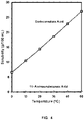
- FIG. 4 demonstrated a large difference in solubility of the ammonium salt of dodecanedioic acid and 11-aminoundecanoic acid. It becomes apparent that the ammonium salt of dodecanedioic acid is soluble and becomes more soluble as temperature increases, while 11-aminoundecanoic acid is nearly insoluble in 5% solution of ammonium hydroxide.
- the three components in the mother liquor i.e., alkylamine, dodecanedioic acid, and alkanoic acid, can be separated according to one of the following three methods.
- the solution is acidified to precipitate long chain dibasic acid and to generate alkanoic acid as an oil.
- the long chain dibasic acid is recovered by means of solid-liquid separation to provide a mother liquor, from which the alkanoic acid is separated by a phase separation to provide a solution, to which a basic agent is added in the presence of an extractant to recover alkylamine.
- Alkylamine in the extractant phase is fractionally distilled to yield alkylamine and to recover the extractant solvent.
- the mother liquor is acidified in the presence of an extractant solvent to dissolve long chain dibasic acid and alkanoic acid.
- an extractant solvent to dissolve long chain dibasic acid and alkanoic acid.
- a basic agent and an extractant solvent to recover alkylamine.
- Long chain dibasic acid and alkanoic acid are separated from the extractant phase by cooling crystallization and distillation, respectively.
- the third method for separating each component in the mother liquor starts with adding a basic agent and an extractant solvent to the solution to recover alkylamine, followed by adding an acid to the solution to form long chain dibasic acid and alkanoic acid in the presence or absence of an extractant solvent.
- the long chain dibasic acid is precipitated and recovered by means of solid-liquid separation, and alkanoic acid is recovered as an oil phase in the mother liquor.
- the long chain dibasic acid and alkanoic acid are dissolved in the extractant phase and separated by crystallization and distillation, respectively.
- fatty acids If there are long chain fatty acids present in the starting material, these fatty acids are precipitated as the ammonium salt, along with the long chain amino acid.
- these fatty acids are precipitated as the ammonium salt, along with the long chain amino acid.
- significant amount of stearic acid is present in the mixed amide derivatives.
- Stearic acid is precipitated as the ammonium salt with 11-aminoundecanoic acid, because the ammonium salt of fatty acids is nearly insoluble in water.
- the long chain amino acid is purified by dissolving the crude product in an aqueous acid solution in the presence of an organic extractant solvent.
- the separation of the long chain amino acid and fatty acids is thus accomplished by forming an aqueous solution of an acidic salt of the long chain amino acid and an organic extractant phase rich in fatty acids and impurities. It is particularly interesting to point out that colored materials are extracted into the extractant phase and the aqueous solution of the acid salt of long chain amino acid is nearly colorless.
- the solution or suspension after removal of excess ammonia is acidified by adding an acid in the presence of an extractant solvent to form an aqueous solution of an acidic salt of the long chain amino acid and alkylamine and an organic extractant phase rich in long chain dibasic acid, alkanoic acid, fatty acids, and impurities.
- the long chain dibasic acid and alkanoic acid are separated by cooling crystallization and distillation of the extractant phase, respectively.
- Suitable acids are an acid of a pKa ⁇ 5.0. These acids are, but not limited to, inorganic acids, i.e., hydrochloric acid, hydrobromic acid, hydroiodic acid, sulfuric acid, nitric acid, phosphoric acid; alkyl and aryl sulfonic acids, i.e., methanesulfonic acid, ethanesulfonic acid, propanesulfonic acid, isethionic acid, benzenesulfonic acid, toluenesulfonic acid, xylenesulfonic acid, and sulfamic acid; organic carboxylic acids: malic acid, maleic acid, tartaric acid, glycolic acid, lactic acid, citric acid, oxalic acid, formic acid, acetic acid, and propionic acid. One or a mixture of two or more of these acids can be used to form an acidic salt of long chain amino acids.
- inorganic acids i.e., hydro
- the acid is selected from one of the inorganic acids, and most preferably, sulfuric acid.
- the aim of acidification is to completely convert the ammonium or alkylamine salts of long chain dibasic acids, short chain alkanoic acids, and fatty acids into free carboxylic acids and to form an acid salt of long chain amino acid, so as to ensure complete dissolution of long chain amino acid in aqueous phase and long chain dibasic acid in an organic extractant phase.
- Organic solvents suitable for extracting dibasic acids, alkanoic acid, and fatty acids are water-insoluble and belong to the classes of ester, aliphatics, aromatics, ethers, alcohols of C 4 to C 10 , and ketones of C 4 to C 10 .
- Useful extractant solvents include, but not limited to, butyl formate, isobutyl formate, butyl acetate, isobutyl acetate, propyl acetate, isopropyl acetate, ethyl acetate, ethyl propionate, octyl acetate, benzene, toluene, xylene, cumene, anisole, diethyl ether, diisopropyl ether, dibutyl ether, methyl tert-butyl ether, ethyl tert-butyl ether, methyl tetrahydrofuran, petroleum ether, cyclohexane, dichloroethane, methylene chloride, chloroform, carbon tetrachloride, and trifluoromethylbenzene, n-butanol, isobutanol, amyl alcohol, isoamyl alcohol, hexanol,
- Selected extractant solvent is expected to have good solubility of long chain dibasic acid and fatty acid at higher temperature, low or little solubility at lower temperature for the long chain dibasic acid and good solubility for fatty acid or the like at lower temperature to ensure an effective separation of long chain dibasic acid from other fatty acids rich in the organic phase.
- the extractant solvent is toluene.
- the amount of extractant solvent is not limited, but is greater than the effective amount for the dissolution of dibasic acids and fatty acid impurities.
- Temperature to perform acidification and extraction is in the range from 50 °C to the boiling point of the mixture of extractant organic phase rich in long chain dibasic acid and fatty acid and below 100 °C under normal pressure. Acidification and extraction can also be carried out at elevated temperature under pressure, but pressure equipment will be needed for the process.
- acidification and extraction are performed at a temperature from 60 °C to 95 °C, and most preferably at a temperature from 80 °C to 90 °C.
- the higher solubility of long chain dibasic acid in the extractant solvent is advantageous in reducing the amount of the extractant solvent used.
- an acid and an extractant solvent are introduced into the solution of ammonium or alkylamine salts of long chain dibasic acid and alkanoic acid.
- An acid and an extractant solvent can be added concomitantly, sequentially, continuously, semi-continuously, or batch wise.
- the strongly acidic aqueous solution is neutralized with a basic agent to near neutral acidity in a pH range from 5 to 9. More preferably, the pH is in the range of 6 to 8.
- the neutralization is performed at a temperature from 50 °C to the boiling point of the solution, preferably from 60 to 90 °C, most preferably from 70 °C to 80 °C. Neutralization at this most preferred temperature produces larger crystals that will facilitate solid-liquid separation.
- the product, long chain amino acid is precipitated and separated by means of solid-liquid separation, i.e., filtration or centrifuge, to yield a mother liquor containing inorganic salt and a small amount of long chain amino acid.
- the basic agent is selected from the group consisting of ammonia, alkali and ammonium salts of hydroxide, bicarbonate, carbonate, sulfite, bisulfite, and carboxylate.
- a single agent or a mixture of two or more agents can be used.
- the basic agent is ammonia or ammonium salts of hydroxide, bicarbonate, or carbonate.
- the most preferable basic agent is ammonium hydroxide.
- alkylamine can only be recovered by extraction. Distillation of the basic solution will remove ammonia instead of alkylamine. It is interesting to note that alkylamine such as hexylamine is freely soluble in a solution of ammonium salt, i.e., ammonium sulfate, although hexylamine is insoluble in water or in a solution of alkali salt. No phase separation is observed between hexylamine and a solution of ammonium sulfate.
- the waste aqueous stream of the process according to the present invention contains alkylamine, a small amount of long chain amino acid, and ammonium sulfate when sulfuric acid is selected as the most preferable acid.
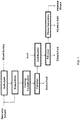
- the treatment of the aqueous solution is schematically illustrated in FIG. 3 .
- the solution is acidified with sulfuric acid to increase the solubility of long chain amino acid and concentrated to precipitate ammonium sulfate.
- Neutralization of the concentrated solution with ammonia or ammonium hydroxide yields a precipitate of long chain amino acid, which is recovered by solid-liquid separation.
- the process according to the present invention achieves the production and complete separation of long chain amino acids, dibasic acids, short chain alkanoic acid, alkylamine, and fatty acids without discharging any waste aqueous stream from the process.
- the only byproduct from the production process, ammonium sulfate, is a valuable commodity as a fertilizer.
- This example relates to the production and separation of 11-aminoundecanoic acid, dodecanedioic acid, hexylamine, heptanoic acid, and stearic acid from their mixture obtained from the ammonium hydroxide hydrolysis of the mixed amide derivatives.
- a mixture of the products was obtained by hydrolyzing 150 g of the mixed amide derivatives prepared from methyl 12-ketostearate according to WO2017/088218 with 1200 mL of 10% ammonium hydroxide.
- the mixed amide methyl esters was suspended in 1200 mL of 10% ammonium hydroxide in a 2 L autoclave and heated to 225 °C for 5 hours under a pressure of 65 bars. After cooling, the suspension was transferred to a 2 L flask and distilled with a 2.5x30 cm vacuum jacketed column packed with porcelain berl saddles to 101 °C to remove excess ammonia. The suspension became neutral at a pH in the range from 7 to 8 and cooled to room temperature. The precipitated 11-amminoundecanoic acid was recovered by filtration and washing with deionized water to provide a mother liquor. The crude product of brown color contained about 20% of ammonium stearate.
- the crude product was dissolved in a mixture of 400 mL of 1 M sulfuric acid and 300 mL of toluene at 85 °C. The mixture was vigorously stirred for 60 minutes at 85 °C and transferred to a separatory funnel to separate the aqueous phase. The dark-colored upper toluene phase was washed with hot deionized water and the washing was combined with the aqueous phase. After distilling off toluene, 14 g of stearic acid of yellow color was obtained.
- the mother liquor was concentrated to 300 mL and an oil phase was separated to yield 24.5 g of heptanoic acid.
- To the solution was then added 50 mL of 25% ammonium hydroxide and extracted with 100 mL of toluene three times.
- the toluene phase was fractionally distilled to give 18.6 g of hexylamine.
- aqueous streams were combined and boiled to remove excess ammonia. Then 5 g of sulfuric acid was added to the solution. The solution was concentrated to precipitate ammonium sulfate, which was removed from the solution by filtration. To the solution of about 150 mL was added a solution of ammonium hydroxide to a pH of 7.5 to precipitate 0.6 g of 11-aminoundecanoic acid after filtration, washing with deionized water, and drying.
- This example relates to the production and separation of 11-aminoundecanoic acid, dodecanedioic acid, hexylamine, heptanoic acid, and stearic acid from their mixture obtained from the ammonium hydroxide hydrolysis of the mixed amide derivatives in 50% ethanol.
- a mixture of the products was obtained by hydrolyzing 150 g of the mixed amide derivatives prepared from methyl 12-ketostearate according to WO2017/088218 with 1200 mL of 10% ammonium hydroxide containing 50% ethanol.
- the mixed amide methyl esters were suspended in 1200 mL of 10% ammonium hydroxide containing 50% ethanol in a 2 L autoclave and heated to 225 °C for 5 hours.
- the suspension was transferred to a 2 L flask and distilled with a 2.5x30 cm vacuum jacketed column packed with porcelain berl saddles to 101 °C to remove excess ammonia and ethanol.
- the suspension became neutral at a pH of 7-8 and cooled to room temperature.
- the toluene phase was concentrated to 300 mL and cooled to 10 °C to crystallize dodecanedioic acid, which was separated by filtration. After drying, 28.4 g of dodecanedioic acid was obtained.
- the mother liquor to distilled to recover toluene and then under vacuum to yield 23.5 g of heptanoic acid. After distillation, the residual contains a mixture of 14 g of stearic and 12 g of dodecanedioic acid.
- the aqueous phase was neutralized with a 25% solution of ammonium hydroxide to a pH at 7.5. After cooling to 25 °C, the crystalline solid was filtered off, washed three times with deionized water, dried to yield 41.9 g of 11-aminoundecanoic acid. An additional 1.2 g of 11-aminoundecanoic acid was recovered from the mother liquor following the same procedure as described in Example 1.
Landscapes
- Chemical & Material Sciences (AREA)
- Organic Chemistry (AREA)
- Chemical Kinetics & Catalysis (AREA)
- Engineering & Computer Science (AREA)
- Oil, Petroleum & Natural Gas (AREA)
- Organic Low-Molecular-Weight Compounds And Preparation Thereof (AREA)
- Low-Molecular Organic Synthesis Reactions Using Catalysts (AREA)
Claims (14)
- Procédé de production d'un acide aminé à longue chaîne, d'un diacide à longue chaîne, d'une alkylamine et d'un acide alcanoïque ayant les structures suivantes :

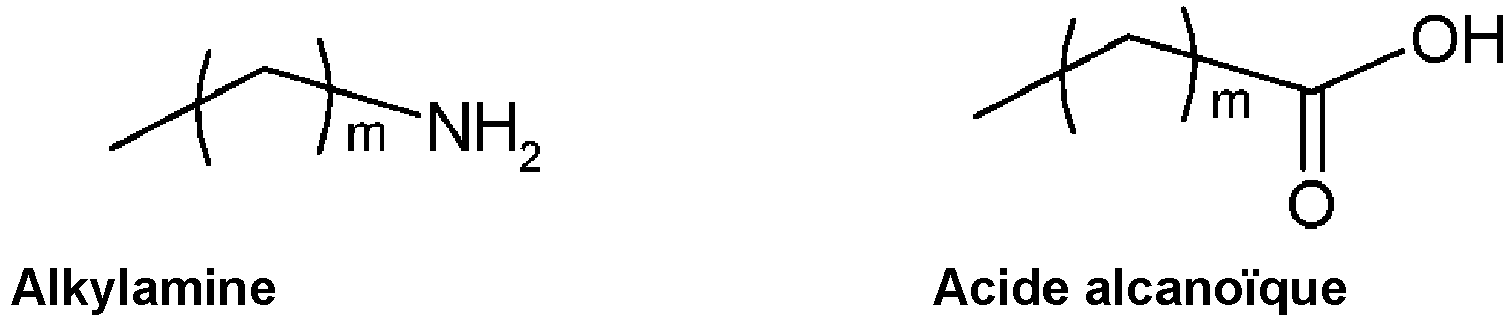 à partir d'une hydrolyse à l'ammoniac ou à l'hydroxyde d'ammonium de dérivés amides mixtes ayant les structures suivantes :
 dans lesquelles m représente un nombre entier valant de 0 à 10 ;n représente un nombre entier valant de 6 à 20 ;X représente OR ou NR1R2, où OR représente OH, un alcool monohydrique en C1 à C8 ou un alcool polyhydrique en C1 à C8 et R1 etR2 représentent chacun indépendamment l'hydrogène ou un groupe alkyle en C1 à C8 ;le procédé comprenant les étapes consistant à :(1) ajouter les dérivés amides mixtes à une solution aqueuse d'hydroxyde d'ammonium en présence ou en l'absence d'un solvant ou d'un catalyseur ;(2) soumettre la solution ou la suspension de l'étape (1) à une réaction d'hydrolyse ;(3) récupérer l'excès d'ammoniac et de solvant en présence du solvant de l'étape (1) par évaporation pour fournir un mélange d'acide aminé à longue chaîne et d'alkylamine ou de sels d'ammonium du diacide à longue chaîne et de l'acide alcanoïque ;(4) cristalliser l'acide aminé à longue chaîne en refroidissant le mélange de l'étape (3) ;(5) séparer l'acide aminé à longue chaîne par une séparation solide-liquide afin d'obtenir une solution mère contenant les sels d'ammonium ou d'alkylamine du diacide à longue chaîne et de l'acide alcanoïque ;(6) ajouter un acide à la solution mère de l'étape (5) afin de précipiter le diacide à longue chaîne et de former l'acide alcanoïque ;(7) séparer l'acide dibasique par une séparation solide-liquide ; et(8) récupérer l'acide alcanoïque de la solution mère de l'étape (7).
 - Procédé de production d'un acide aminé à longue chaîne, d'un diacide à longue chaîne, d'une alkylamine et d'un acide alcanoïque ayant les structures suivantes :

 à partir d'une hydrolyse à l'ammoniac ou à l'hydroxyde d'ammonium de dérivés amides mixtes ayant les structures suivantes :
 dans lesquelles m représente un nombre entier valant de 0 à 10 ;n représente un nombre entier valant de 6 à 20 ;X représente OR ou NR1R2, où OR représente OH, un alcool monohydrique en C1 à C8 ou un alcool polyhydrique en C1 à C8 et R1 etR2 représentent chacun indépendamment l'hydrogène ou un groupe alkyle en C1 à C8 ;le procédé comprenant les étapes consistant à :(1) ajouter les dérivés amides mixtes à une solution aqueuse d'hydroxyde d'ammonium en présence ou en l'absence d'un solvant ou d'un catalyseur ;(2) soumettre la solution ou la suspension de l'étape (1) à une réaction d'hydrolyse ;(3) récupérer l'excès d'ammoniac et de solvant en présence du solvant de l'étape (1) par évaporation pour fournir un mélange d'acide aminé à longue chaîne et d'alkylamine ou de sels d'ammonium du diacide à longue chaîne et de l'acide alcanoïque ;(4) ajouter un acide et un solvant d'extraction au mélange de l'étape (3) ;(5) séparer la phase aqueuse du sel d'acide de l'acide aminé à longue chaîne et de l'alkykamine et de la phase d'extraction contenant le diacide à longue chaîne, l'acide alcanoïque, l'acide gras et les impuretés ;(6) cristalliser le diacide à longue chaîne en refroidissant la phase d'extraction et séparer le diacide à longue chaîne par une séparation solide-liquide afin d'obtenir une solution mère ;(7) récupérer l'acide alcanoïque de la solution mère de l'étape (6) par distillation ;(8) neutraliser la solution aqueuse de l'étape (5) avec un agent de base jusqu'à un pH neutre pour précipiter l'acide aminé à longue chaîne ; et(9) récupérer l'acide aminé à longue chaîne (8) par une séparation solide-liquide.
 - Procédé selon la revendication 1 ou 2, dans lequel la réaction d'hydrolyse est effectuée à une température comprise entre 100 °C et 280 °C.
- Procédé selon la revendication 1 ou 2, dans lequel la réaction d'hydrolyse est effectuée sous une pression autogène de 260 bars.
- Procédé selon la revendication 1 ou 2, dans lequel le solvant est sélectionné dans le groupe constitué de méthanol, d'éthanol, d'isopropanol, de propanol, de tétrahydrofurane, de dioxane, de tert-butanol, d'isobutanol, de butanol et d'un mélange de deux ou de plusieurs d'entre eux.
- Procédé selon la revendication 1 ou 2, dans lequel le catalyseur est sélectionné dans le groupe constitué de sels alcalins et d'ammonium d'hydroxyde, de bicarbonate, de carbonate, de bisulfite, de sulfite, de sulfate, de nitrate, de phosphate et d'un mélange de deux ou de plusieurs d'entre eux.
- Procédé selon la revendication 1 ou 2, dans lequel un processus de purification de l'acide aminé à longue chaîne comprend les étapes consistant à :(a) dissoudre l'acide aminé à longue chaîne dans une solution aqueuse en présence d'un solvant d'extraction ;(b) séparer la phase aqueuse contenant le sel d'acide de l'acide aminé à longue chaîne de l'étape (b) et la phase du solvant d'extraction riche en acide gras et en matériaux colorés ;(c) neutraliser la phase aqueuse de l'étape (b) avec un agent de base afin de précipiter l'acide aminé à longue chaîne ; et(d) récupérer l'acide aminé à longue chaîne par séparation solide-liquide.
- Procédé selon la revendication 2, dans lequel l'acide est sélectionné dans le groupe constitué d'acide chlorhydrique, d'acide bromhydrique, d'acide iodhydrique, d'acide sulfurique, d'acide nitrique, d'acide phosphorique, d'acide méthanesulfonique, d'acide éthanesulfonique, d'acide propanesulfonique, d'acide iséthionique, d'acide benzènesulfonique, d'acide toluènesulfonique, d'acide xylènesulfonique, d'acide sulfamique, d'acide malique, d'acide maléique, d'acide tartrique, d'acide glycolique, d'acide lactique, d'acide citrique, d'acide oxalique, d'acide formique, d'acide acétique, d'acide propionique, et d'un mélange de deux ou de plusieurs de ceux-ci.
- Procédé selon la revendication 7, dans lequel le solvant d'extraction est sélectionné dans le groupe constitué de formate de butyle, de formate d'isobutyle, d'acétate de butyle, d'acétate d'isobutyle, d'acétate de propyle, d'acétate d'isopropyle, d'acétate d'éthyle, de propionate d'éthyle, d'acétate d'octyle, de benzène, de toluène, de xylène, de cumène, d'anisole, d'éther diéthylique, d'éther diisopropylique, d'éther dibutylique, d'éther tert-butylique de méthyle, d'éther tert-butylique d'éthyle, de tétrahydrofurane de méthyle, d'éther de pétrole, de cyclohexane, de dichloroéthane, de chlorure de méthylène, de chloroforme, de tétrachlorure de carbone et trifluorométhylbenzène, de n-butanol, d'isobutanol, d'alcool amylique, d'alcool isoamylique, d'hexanol, de cyclohexanol, de 2-éthylhexanol, d'isooctanol, de sec-octanol, de butanone, de pentanone, d'hexanone, de cyclohexanone, de méthylisobutylcétone et d'un mélange de deux ou de plusieurs de ceux-ci.
- Procédé selon la revendication 7, dans lequel l'agent de base est sélectionné dans le groupe constitué de sels d'ammoniac, alcalins et d'ammonium d'hydroxyde, de bicarbonate, de carbonate, de bisulfite, de sulfite, de carboxylate et d'un mélange de plusieurs de ceux-ci.
- Procédé selon la revendication 1 ou 2, dans lequel l'acide aminé à longue chaîne est l'acide 9-aminononanoïque, l'acide 11, aminoundécanoïque ou l'acide 13-aminotridécanoïque.
- Procédé selon la revendication 1 ou 2, dans lequel le diacide à longue chaîne est l'acide sébacique, l'acide dodécanedioïque ou l'acide brassylique.
- Procédé selon la revendication 1 ou 2, dans lequel l'acide alcanoïque est l'acide heptanoïque ou l'acide pélargonique.
- Procédé selon la revendication 1 ou 2, dans lequel l'alkylamine est la n-hexylamine ou la n-octylamine.
Applications Claiming Priority (2)
| Application Number | Priority Date | Filing Date | Title |
|---|---|---|---|
| US15/647,966 US10053416B1 (en) | 2017-07-12 | 2017-07-12 | Process for producing long chain amino acids and dibasic acids |
| PCT/US2018/038990 WO2019013954A1 (fr) | 2017-07-12 | 2018-06-22 | Procédé de production d'acides et de diacides à longue chaîne |
Publications (3)
| Publication Number | Publication Date |
|---|---|
| EP3652149A1 EP3652149A1 (fr) | 2020-05-20 |
| EP3652149A4 EP3652149A4 (fr) | 2021-02-24 |
| EP3652149B1 true EP3652149B1 (fr) | 2022-12-28 |
Family
ID=63144737
Family Applications (1)
| Application Number | Title | Priority Date | Filing Date |
|---|---|---|---|
| EP18831964.4A Active EP3652149B1 (fr) | 2017-07-12 | 2018-06-22 | Procédé de production d'acides et de diacides à longue chaîne |
Country Status (9)
| Country | Link |
|---|---|
| US (1) | US10053416B1 (fr) |
| EP (1) | EP3652149B1 (fr) |
| JP (1) | JP7236431B2 (fr) |
| CN (1) | CN110770205B (fr) |
| DK (1) | DK3652149T3 (fr) |
| ES (1) | ES2941075T3 (fr) |
| FI (1) | FI3652149T3 (fr) |
| HU (1) | HUE061411T2 (fr) |
| WO (1) | WO2019013954A1 (fr) |
Families Citing this family (7)
| Publication number | Priority date | Publication date | Assignee | Title |
|---|---|---|---|---|
| US10239822B2 (en) * | 2017-06-28 | 2019-03-26 | Vitaworks Ip, Llc | Process for the separation of long chain amino acids and dibasic acids |
| US10822300B2 (en) | 2017-07-07 | 2020-11-03 | Vitaworks Ip, Llc | Process for producing long chain amino acids and dibasic acids |
| US10239823B2 (en) * | 2017-08-25 | 2019-03-26 | Vitaworks Ip, Llc | Process for purifying long chain amino acids |
| CN111394399B (zh) * | 2019-01-03 | 2022-06-28 | 上海凯赛生物技术股份有限公司 | 一种降低长链二元酸中酰基甘油酯杂质含量的方法 |
| EP3980396B1 (fr) | 2019-06-10 | 2025-10-08 | Vitaworks IP, LLC | Production d'acides aminés et d'acides dibasiques à chaîne longue |
| CN116239488A (zh) * | 2021-12-08 | 2023-06-09 | 江苏万年长药业有限公司 | 一种n,n-二甲基癸酰胺副产物回收利用的方法 |
| CN115745773B (zh) * | 2022-11-29 | 2025-12-12 | 孟永财 | 一种利用脂肪酸单甲酯制备脂肪酸的方法 |
Family Cites Families (12)
| Publication number | Priority date | Publication date | Assignee | Title |
|---|---|---|---|---|
| JPS582227B2 (ja) * | 1974-02-04 | 1983-01-14 | 住友化学工業株式会社 | アルフア− − アミノサン ノ セイゾウホウホウ |
| JPS60337B2 (ja) * | 1981-03-27 | 1985-01-07 | 三菱瓦斯化学株式会社 | α−アミノ酸の製造方法 |
| SU1209680A1 (ru) * | 1984-01-06 | 1986-02-07 | Институт токсикологии | Способ получени 7-хлоргептановой кислоты |
| JPS60224661A (ja) * | 1984-04-23 | 1985-11-09 | Mitsui Toatsu Chem Inc | α−アミノ酸の製造方法 |
| US4678843A (en) * | 1986-09-29 | 1987-07-07 | Celanese Corporation | Process for the ammonium hydroxide hydrolysis of polymers of acetoxystyrene to polymers of vinylphenol |
| US6777213B2 (en) * | 2002-10-29 | 2004-08-17 | Cognis Corporation | Isolation of carboxylic acids from fermentation broth |
| FR2933695B1 (fr) * | 2008-07-10 | 2010-08-20 | Arkema France | Procede de synthese de l'acide amino-9-nonanoique ou de ses esters a partir d'acides gras naturels insatures. |
| FR2940282B1 (fr) * | 2008-12-19 | 2010-12-03 | Arkema France | Procede d'ammonolyse de l'acide 11-bromoundecanoique |
| CN102617320A (zh) * | 2012-02-08 | 2012-08-01 | 上海凯赛生物技术研发中心有限公司 | 一种对含长链二元酸盐的反应液进行处理的方法 |
| JP2014070031A (ja) * | 2012-09-28 | 2014-04-21 | Nippon Shokubai Co Ltd | 長鎖ジカルボン酸の製造方法 |
| CN103804209B (zh) * | 2014-02-08 | 2016-01-27 | 中北大学 | 一种由10-十一烯酸制取11-氨基十一酸的方法 |
| CN106810435A (zh) * | 2015-11-27 | 2017-06-09 | 希锐科技(北京)有限公司 | 长链末端氨基酸和二元酸的联产方法 |
-
2017
- 2017-07-12 US US15/647,966 patent/US10053416B1/en active Active
-
2018
- 2018-06-22 ES ES18831964T patent/ES2941075T3/es active Active
- 2018-06-22 JP JP2020501195A patent/JP7236431B2/ja active Active
- 2018-06-22 HU HUE18831964A patent/HUE061411T2/hu unknown
- 2018-06-22 FI FIEP18831964.4T patent/FI3652149T3/fi active
- 2018-06-22 DK DK18831964.4T patent/DK3652149T3/da active
- 2018-06-22 CN CN201880040650.5A patent/CN110770205B/zh active Active
- 2018-06-22 EP EP18831964.4A patent/EP3652149B1/fr active Active
- 2018-06-22 WO PCT/US2018/038990 patent/WO2019013954A1/fr not_active Ceased
Also Published As
| Publication number | Publication date |
|---|---|
| CN110770205A (zh) | 2020-02-07 |
| JP2020526544A (ja) | 2020-08-31 |
| JP7236431B2 (ja) | 2023-03-09 |
| WO2019013954A1 (fr) | 2019-01-17 |
| EP3652149A4 (fr) | 2021-02-24 |
| WO2019013954A8 (fr) | 2020-01-30 |
| US10053416B1 (en) | 2018-08-21 |
| DK3652149T3 (da) | 2023-03-20 |
| HUE061411T2 (hu) | 2023-06-28 |
| EP3652149A1 (fr) | 2020-05-20 |
| FI3652149T3 (fi) | 2023-03-25 |
| CN110770205B (zh) | 2022-11-18 |
| ES2941075T3 (es) | 2023-05-16 |
Similar Documents
| Publication | Publication Date | Title |
|---|---|---|
| EP3645503B1 (fr) | Procédé de séparation d'acides aminés à chaîne longue et d'acides dibasiques à chaîne longue | |
| EP3652149B1 (fr) | Procédé de production d'acides et de diacides à longue chaîne | |
| EP3645504B1 (fr) | Procédé de séparation d'acides aminés à chaîne longue et d'acides dibasiques à chaîne longue | |
| US10329240B2 (en) | Process for the separation of long chain amino acids and dibasic acids | |
| US10899700B2 (en) | Process for the separation of long chain amino acids and dibasic acids | |
| US10239823B2 (en) | Process for purifying long chain amino acids | |
| WO2019118072A1 (fr) | Procédé de purification d'acides aminés à longue chaîne |
Legal Events
| Date | Code | Title | Description |
|---|---|---|---|
| STAA | Information on the status of an ep patent application or granted ep patent |
Free format text: STATUS: THE INTERNATIONAL PUBLICATION HAS BEEN MADE |
|
| PUAI | Public reference made under article 153(3) epc to a published international application that has entered the european phase |
Free format text: ORIGINAL CODE: 0009012 |
|
| STAA | Information on the status of an ep patent application or granted ep patent |
Free format text: STATUS: REQUEST FOR EXAMINATION WAS MADE |
|
| 17P | Request for examination filed |
Effective date: 20191213 |
|
| AK | Designated contracting states |
Kind code of ref document: A1 Designated state(s): AL AT BE BG CH CY CZ DE DK EE ES FI FR GB GR HR HU IE IS IT LI LT LU LV MC MK MT NL NO PL PT RO RS SE SI SK SM TR |
|
| AX | Request for extension of the european patent |
Extension state: BA ME |
|
| DAV | Request for validation of the european patent (deleted) | ||
| DAX | Request for extension of the european patent (deleted) | ||
| A4 | Supplementary search report drawn up and despatched |
Effective date: 20210126 |
|
| RIC1 | Information provided on ipc code assigned before grant |
Ipc: C07C 227/20 20060101AFI20210120BHEP Ipc: C07C 229/08 20060101ALI20210120BHEP Ipc: C07C 51/06 20060101ALI20210120BHEP Ipc: C07C 55/21 20060101ALI20210120BHEP Ipc: C07C 209/62 20060101ALI20210120BHEP Ipc: C07C 211/07 20060101ALI20210120BHEP Ipc: C07C 51/46 20060101ALI20210120BHEP |
|
| REG | Reference to a national code |
Ref country code: DE Ref legal event code: R079 Ref document number: 602018044840 Country of ref document: DE Free format text: PREVIOUS MAIN CLASS: C07C0227000000 Ipc: C07C0227200000 |
|
| GRAP | Despatch of communication of intention to grant a patent |
Free format text: ORIGINAL CODE: EPIDOSNIGR1 |
|
| STAA | Information on the status of an ep patent application or granted ep patent |
Free format text: STATUS: GRANT OF PATENT IS INTENDED |
|
| RIC1 | Information provided on ipc code assigned before grant |
Ipc: C07C 211/07 20060101ALI20220705BHEP Ipc: C07C 229/08 20060101ALI20220705BHEP Ipc: C07C 51/06 20060101ALI20220705BHEP Ipc: C07C 55/21 20060101ALI20220705BHEP Ipc: C07C 51/46 20060101ALI20220705BHEP Ipc: C07C 209/62 20060101ALI20220705BHEP Ipc: C07C 227/20 20060101AFI20220705BHEP |
|
| INTG | Intention to grant announced |
Effective date: 20220721 |
|
| GRAS | Grant fee paid |
Free format text: ORIGINAL CODE: EPIDOSNIGR3 |
|
| GRAA | (expected) grant |
Free format text: ORIGINAL CODE: 0009210 |
|
| STAA | Information on the status of an ep patent application or granted ep patent |
Free format text: STATUS: THE PATENT HAS BEEN GRANTED |
|
| AK | Designated contracting states |
Kind code of ref document: B1 Designated state(s): AL AT BE BG CH CY CZ DE DK EE ES FI FR GB GR HR HU IE IS IT LI LT LU LV MC MK MT NL NO PL PT RO RS SE SI SK SM TR |
|
| REG | Reference to a national code |
Ref country code: GB Ref legal event code: FG4D |
|
| REG | Reference to a national code |
Ref country code: CH Ref legal event code: EP |
|
| REG | Reference to a national code |
Ref country code: DE Ref legal event code: R096 Ref document number: 602018044840 Country of ref document: DE |
|
| REG | Reference to a national code |
Ref country code: AT Ref legal event code: REF Ref document number: 1540398 Country of ref document: AT Kind code of ref document: T Effective date: 20230115 |
|
| REG | Reference to a national code |
Ref country code: IE Ref legal event code: FG4D |
|
| REG | Reference to a national code |
Ref country code: DK Ref legal event code: T3 Effective date: 20230314 |
|
| REG | Reference to a national code |
Ref country code: NL Ref legal event code: FP |
|
| REG | Reference to a national code |
Ref country code: SE Ref legal event code: TRGR |
|
| REG | Reference to a national code |
Ref country code: LT Ref legal event code: MG9D |
|
| PG25 | Lapsed in a contracting state [announced via postgrant information from national office to epo] |
Ref country code: NO Free format text: LAPSE BECAUSE OF FAILURE TO SUBMIT A TRANSLATION OF THE DESCRIPTION OR TO PAY THE FEE WITHIN THE PRESCRIBED TIME-LIMIT Effective date: 20230328 Ref country code: LT Free format text: LAPSE BECAUSE OF FAILURE TO SUBMIT A TRANSLATION OF THE DESCRIPTION OR TO PAY THE FEE WITHIN THE PRESCRIBED TIME-LIMIT Effective date: 20221228 |
|
| REG | Reference to a national code |
Ref country code: AT Ref legal event code: MK05 Ref document number: 1540398 Country of ref document: AT Kind code of ref document: T Effective date: 20221228 |
|
| REG | Reference to a national code |
Ref country code: ES Ref legal event code: FG2A Ref document number: 2941075 Country of ref document: ES Kind code of ref document: T3 Effective date: 20230516 |
|
| PG25 | Lapsed in a contracting state [announced via postgrant information from national office to epo] |
Ref country code: RS Free format text: LAPSE BECAUSE OF FAILURE TO SUBMIT A TRANSLATION OF THE DESCRIPTION OR TO PAY THE FEE WITHIN THE PRESCRIBED TIME-LIMIT Effective date: 20221228 Ref country code: LV Free format text: LAPSE BECAUSE OF FAILURE TO SUBMIT A TRANSLATION OF THE DESCRIPTION OR TO PAY THE FEE WITHIN THE PRESCRIBED TIME-LIMIT Effective date: 20221228 Ref country code: HR Free format text: LAPSE BECAUSE OF FAILURE TO SUBMIT A TRANSLATION OF THE DESCRIPTION OR TO PAY THE FEE WITHIN THE PRESCRIBED TIME-LIMIT Effective date: 20221228 Ref country code: GR Free format text: LAPSE BECAUSE OF FAILURE TO SUBMIT A TRANSLATION OF THE DESCRIPTION OR TO PAY THE FEE WITHIN THE PRESCRIBED TIME-LIMIT Effective date: 20230329 |
|
| REG | Reference to a national code |
Ref country code: HU Ref legal event code: AG4A Ref document number: E061411 Country of ref document: HU |
|
| PG25 | Lapsed in a contracting state [announced via postgrant information from national office to epo] |
Ref country code: SM Free format text: LAPSE BECAUSE OF FAILURE TO SUBMIT A TRANSLATION OF THE DESCRIPTION OR TO PAY THE FEE WITHIN THE PRESCRIBED TIME-LIMIT Effective date: 20221228 Ref country code: RO Free format text: LAPSE BECAUSE OF FAILURE TO SUBMIT A TRANSLATION OF THE DESCRIPTION OR TO PAY THE FEE WITHIN THE PRESCRIBED TIME-LIMIT Effective date: 20221228 Ref country code: PT Free format text: LAPSE BECAUSE OF FAILURE TO SUBMIT A TRANSLATION OF THE DESCRIPTION OR TO PAY THE FEE WITHIN THE PRESCRIBED TIME-LIMIT Effective date: 20230428 Ref country code: EE Free format text: LAPSE BECAUSE OF FAILURE TO SUBMIT A TRANSLATION OF THE DESCRIPTION OR TO PAY THE FEE WITHIN THE PRESCRIBED TIME-LIMIT Effective date: 20221228 Ref country code: CZ Free format text: LAPSE BECAUSE OF FAILURE TO SUBMIT A TRANSLATION OF THE DESCRIPTION OR TO PAY THE FEE WITHIN THE PRESCRIBED TIME-LIMIT Effective date: 20221228 Ref country code: AT Free format text: LAPSE BECAUSE OF FAILURE TO SUBMIT A TRANSLATION OF THE DESCRIPTION OR TO PAY THE FEE WITHIN THE PRESCRIBED TIME-LIMIT Effective date: 20221228 |
|
| PG25 | Lapsed in a contracting state [announced via postgrant information from national office to epo] |
Ref country code: SK Free format text: LAPSE BECAUSE OF FAILURE TO SUBMIT A TRANSLATION OF THE DESCRIPTION OR TO PAY THE FEE WITHIN THE PRESCRIBED TIME-LIMIT Effective date: 20221228 Ref country code: PL Free format text: LAPSE BECAUSE OF FAILURE TO SUBMIT A TRANSLATION OF THE DESCRIPTION OR TO PAY THE FEE WITHIN THE PRESCRIBED TIME-LIMIT Effective date: 20221228 Ref country code: IS Free format text: LAPSE BECAUSE OF FAILURE TO SUBMIT A TRANSLATION OF THE DESCRIPTION OR TO PAY THE FEE WITHIN THE PRESCRIBED TIME-LIMIT Effective date: 20230428 Ref country code: AL Free format text: LAPSE BECAUSE OF FAILURE TO SUBMIT A TRANSLATION OF THE DESCRIPTION OR TO PAY THE FEE WITHIN THE PRESCRIBED TIME-LIMIT Effective date: 20221228 |
|
| REG | Reference to a national code |
Ref country code: DE Ref legal event code: R097 Ref document number: 602018044840 Country of ref document: DE |
|
| PLBE | No opposition filed within time limit |
Free format text: ORIGINAL CODE: 0009261 |
|
| STAA | Information on the status of an ep patent application or granted ep patent |
Free format text: STATUS: NO OPPOSITION FILED WITHIN TIME LIMIT |
|
| 26N | No opposition filed |
Effective date: 20230929 |
|
| PG25 | Lapsed in a contracting state [announced via postgrant information from national office to epo] |
Ref country code: MC Free format text: LAPSE BECAUSE OF FAILURE TO SUBMIT A TRANSLATION OF THE DESCRIPTION OR TO PAY THE FEE WITHIN THE PRESCRIBED TIME-LIMIT Effective date: 20221228 |
|
| PG25 | Lapsed in a contracting state [announced via postgrant information from national office to epo] |
Ref country code: SI Free format text: LAPSE BECAUSE OF FAILURE TO SUBMIT A TRANSLATION OF THE DESCRIPTION OR TO PAY THE FEE WITHIN THE PRESCRIBED TIME-LIMIT Effective date: 20221228 Ref country code: MC Free format text: LAPSE BECAUSE OF FAILURE TO SUBMIT A TRANSLATION OF THE DESCRIPTION OR TO PAY THE FEE WITHIN THE PRESCRIBED TIME-LIMIT Effective date: 20221228 |
|
| PG25 | Lapsed in a contracting state [announced via postgrant information from national office to epo] |
Ref country code: LU Free format text: LAPSE BECAUSE OF NON-PAYMENT OF DUE FEES Effective date: 20230622 |
|
| PG25 | Lapsed in a contracting state [announced via postgrant information from national office to epo] |
Ref country code: LU Free format text: LAPSE BECAUSE OF NON-PAYMENT OF DUE FEES Effective date: 20230622 |
|
| PG25 | Lapsed in a contracting state [announced via postgrant information from national office to epo] |
Ref country code: BG Free format text: LAPSE BECAUSE OF FAILURE TO SUBMIT A TRANSLATION OF THE DESCRIPTION OR TO PAY THE FEE WITHIN THE PRESCRIBED TIME-LIMIT Effective date: 20221228 |
|
| PG25 | Lapsed in a contracting state [announced via postgrant information from national office to epo] |
Ref country code: BG Free format text: LAPSE BECAUSE OF FAILURE TO SUBMIT A TRANSLATION OF THE DESCRIPTION OR TO PAY THE FEE WITHIN THE PRESCRIBED TIME-LIMIT Effective date: 20221228 |
|
| PGFP | Annual fee paid to national office [announced via postgrant information from national office to epo] |
Ref country code: FI Payment date: 20250624 Year of fee payment: 8 |
|
| PGFP | Annual fee paid to national office [announced via postgrant information from national office to epo] |
Ref country code: GB Payment date: 20250616 Year of fee payment: 8 Ref country code: DK Payment date: 20250618 Year of fee payment: 8 |
|
| PGFP | Annual fee paid to national office [announced via postgrant information from national office to epo] |
Ref country code: BE Payment date: 20250630 Year of fee payment: 8 |
|
| PGFP | Annual fee paid to national office [announced via postgrant information from national office to epo] |
Ref country code: FR Payment date: 20250616 Year of fee payment: 8 |
|
| PG25 | Lapsed in a contracting state [announced via postgrant information from national office to epo] |
Ref country code: CY Free format text: LAPSE BECAUSE OF FAILURE TO SUBMIT A TRANSLATION OF THE DESCRIPTION OR TO PAY THE FEE WITHIN THE PRESCRIBED TIME-LIMIT; INVALID AB INITIO Effective date: 20180622 |
|
| PGFP | Annual fee paid to national office [announced via postgrant information from national office to epo] |
Ref country code: TR Payment date: 20250620 Year of fee payment: 8 |
|
| PGFP | Annual fee paid to national office [announced via postgrant information from national office to epo] |
Ref country code: IE Payment date: 20250617 Year of fee payment: 8 |
|
| PGFP | Annual fee paid to national office [announced via postgrant information from national office to epo] |
Ref country code: SE Payment date: 20250618 Year of fee payment: 8 |
|
| PGFP | Annual fee paid to national office [announced via postgrant information from national office to epo] |
Ref country code: HU Payment date: 20250725 Year of fee payment: 8 |
|
| PGFP | Annual fee paid to national office [announced via postgrant information from national office to epo] |
Ref country code: NL Payment date: 20250627 Year of fee payment: 8 |
|
| PGFP | Annual fee paid to national office [announced via postgrant information from national office to epo] |
Ref country code: ES Payment date: 20250714 Year of fee payment: 8 |
|
| PGFP | Annual fee paid to national office [announced via postgrant information from national office to epo] |
Ref country code: DE Payment date: 20250711 Year of fee payment: 8 |
|
| PGFP | Annual fee paid to national office [announced via postgrant information from national office to epo] |
Ref country code: IT Payment date: 20250624 Year of fee payment: 8 |
|
| PGFP | Annual fee paid to national office [announced via postgrant information from national office to epo] |
Ref country code: CH Payment date: 20250725 Year of fee payment: 8 |