EP3653635A1 - Verfahren zur herstellung eines herbizidzwischenprodukts - Google Patents
Verfahren zur herstellung eines herbizidzwischenprodukts Download PDFInfo
- Publication number
- EP3653635A1 EP3653635A1 EP18831006.4A EP18831006A EP3653635A1 EP 3653635 A1 EP3653635 A1 EP 3653635A1 EP 18831006 A EP18831006 A EP 18831006A EP 3653635 A1 EP3653635 A1 EP 3653635A1
- Authority
- EP
- European Patent Office
- Prior art keywords
- group
- chloride
- metal
- alloy
- oxide
- Prior art date
- Legal status (The legal status is an assumption and is not a legal conclusion. Google has not performed a legal analysis and makes no representation as to the accuracy of the status listed.)
- Withdrawn
Links
Images


Classifications
-
- C—CHEMISTRY; METALLURGY
- C07—ORGANIC CHEMISTRY
- C07F—ACYCLIC, CARBOCYCLIC OR HETEROCYCLIC COMPOUNDS CONTAINING ELEMENTS OTHER THAN CARBON, HYDROGEN, HALOGEN, OXYGEN, NITROGEN, SULFUR, SELENIUM OR TELLURIUM
- C07F9/00—Compounds containing elements of Groups 5 or 15 of the Periodic Table
- C07F9/02—Phosphorus compounds
- C07F9/06—Phosphorus compounds without P—C bonds
- C07F9/08—Esters of oxyacids of phosphorus
-
- C—CHEMISTRY; METALLURGY
- C07—ORGANIC CHEMISTRY
- C07F—ACYCLIC, CARBOCYCLIC OR HETEROCYCLIC COMPOUNDS CONTAINING ELEMENTS OTHER THAN CARBON, HYDROGEN, HALOGEN, OXYGEN, NITROGEN, SULFUR, SELENIUM OR TELLURIUM
- C07F9/00—Compounds containing elements of Groups 5 or 15 of the Periodic Table
- C07F9/02—Phosphorus compounds
- C07F9/28—Phosphorus compounds with one or more P—C bonds
- C07F9/50—Organo-phosphines
- C07F9/52—Halophosphines
-
- B—PERFORMING OPERATIONS; TRANSPORTING
- B01—PHYSICAL OR CHEMICAL PROCESSES OR APPARATUS IN GENERAL
- B01J—CHEMICAL OR PHYSICAL PROCESSES, e.g. CATALYSIS OR COLLOID CHEMISTRY; THEIR RELEVANT APPARATUS
- B01J23/00—Catalysts comprising metals or metal oxides or hydroxides, not provided for in group B01J21/00
- B01J23/02—Catalysts comprising metals or metal oxides or hydroxides, not provided for in group B01J21/00 of the alkali- or alkaline earth metals or beryllium
- B01J23/04—Alkali metals
-
- B—PERFORMING OPERATIONS; TRANSPORTING
- B01—PHYSICAL OR CHEMICAL PROCESSES OR APPARATUS IN GENERAL
- B01J—CHEMICAL OR PHYSICAL PROCESSES, e.g. CATALYSIS OR COLLOID CHEMISTRY; THEIR RELEVANT APPARATUS
- B01J23/00—Catalysts comprising metals or metal oxides or hydroxides, not provided for in group B01J21/00
- B01J23/70—Catalysts comprising metals or metal oxides or hydroxides, not provided for in group B01J21/00 of the iron group metals or copper
- B01J23/74—Iron group metals
- B01J23/755—Nickel
-
- B—PERFORMING OPERATIONS; TRANSPORTING
- B01—PHYSICAL OR CHEMICAL PROCESSES OR APPARATUS IN GENERAL
- B01J—CHEMICAL OR PHYSICAL PROCESSES, e.g. CATALYSIS OR COLLOID CHEMISTRY; THEIR RELEVANT APPARATUS
- B01J27/00—Catalysts comprising the elements or compounds of halogens, sulfur, selenium, tellurium, phosphorus or nitrogen; Catalysts comprising carbon compounds
- B01J27/06—Halogens; Compounds thereof
- B01J27/08—Halides
-
- B—PERFORMING OPERATIONS; TRANSPORTING
- B01—PHYSICAL OR CHEMICAL PROCESSES OR APPARATUS IN GENERAL
- B01J—CHEMICAL OR PHYSICAL PROCESSES, e.g. CATALYSIS OR COLLOID CHEMISTRY; THEIR RELEVANT APPARATUS
- B01J27/00—Catalysts comprising the elements or compounds of halogens, sulfur, selenium, tellurium, phosphorus or nitrogen; Catalysts comprising carbon compounds
- B01J27/06—Halogens; Compounds thereof
- B01J27/128—Halogens; Compounds thereof with iron group metals or platinum group metals
-
- B—PERFORMING OPERATIONS; TRANSPORTING
- B01—PHYSICAL OR CHEMICAL PROCESSES OR APPARATUS IN GENERAL
- B01J—CHEMICAL OR PHYSICAL PROCESSES, e.g. CATALYSIS OR COLLOID CHEMISTRY; THEIR RELEVANT APPARATUS
- B01J27/00—Catalysts comprising the elements or compounds of halogens, sulfur, selenium, tellurium, phosphorus or nitrogen; Catalysts comprising carbon compounds
- B01J27/06—Halogens; Compounds thereof
- B01J27/138—Halogens; Compounds thereof with alkaline earth metals, magnesium, beryllium, zinc, cadmium or mercury
-
- C—CHEMISTRY; METALLURGY
- C07—ORGANIC CHEMISTRY
- C07B—GENERAL METHODS OF ORGANIC CHEMISTRY; APPARATUS THEREFOR
- C07B61/00—Other general methods
Definitions
- the present invention relates to a method for producing methyldichlorophosphane that is useful as, for example, a production intermediate of herbicides, 2-amino-4-(hydroxymethylphosphinyl)butanoic acid and L-2-amino-4-(hydroxymethylphosphinyl)butanoic acid.
- Known methods for producing methyldichlorophosphane include reaction in the presence of aluminum chloride (see, for example, Patent Literature 2), a method using a highly toxic compound such as phosgene and carbon tetrachloride (see, for example, Patent Literatures 3 to 5), a method using thionyl chloride and sulfuryl chloride (see, for example, Patent Literature 6), a method using ultraviolet rays (see, for example, Patent Literature 7), a method using oxygen as an additive (see, for example, Patent Literature 8 and Non-Patent Literature 1), and a method using a composite-type, perovskite-type catalyst (see, for example, Non-Patent Literatures 2 to 4).
- Patent Literature 2 requires aluminum chloride in an equivalent amount or more, and has a problem from the economical viewpoint and a problem with a large amount of metal wastes formed.
- Patent Literatures 3 to 5 use highly toxic compounds such as phosgene and carbon tetrachloride, and also has a problem with a large amount of by-products formed as a result of change of these compounds themselves. Further, these compounds have a boiling point close to the boiling point of the product, methyldichlorophosphane, which makes it difficult to perform purification by distillation. As a result, there is a problem that these methods require high-level facilities and extra thermal energy. There is another problem that clogging of reaction tubes occurs due to the formation of solid by-products.
- Patent Literature 6 has a problem with a large amount of by-products formed as a result of change of the compounds themselves that are used. Further, these compounds have a boiling point close to the boiling point of the product, methyldichlorophosphane, which similarly makes it difficult to perform purification by distillation. As a result, there is a problem that this method requires high-level facilities and extra thermal energy.
- Patent Literature 7 which uses ultraviolet rays, has a problem with a low yield of the product.
- Patent Literature 8 and Non-Patent Literature 1 which use oxygen as an additive, have problems such as a low yield of the product, formation of by-products such as methyldichlorophosphinic acid, and corrosion of the facilities, as well as formation of extra wastes.
- Non-Patent Literatures 2 to 4 which synthesize methyldichlorophosphane by using a composite-type, perovskite-type catalyst, have problems with low yield and corrosion of the catalyst.
- an object of the present invention is to provide a method that can produce methyldichlorophosphane useful as, for example, an intermediate of an herbicide at an excellent yield, while giving less environmental loads due to formation of wastes and suppressing formation of by-products.
- the present inventors have found that by allowing methane and phosphorus trichloride to react in the presence of an additive using a metal compound, or a metal compound carried on a carrier, or both thereof, it is possible to produce methyldichlorophosphane at an excellent yield while suppressing formation of wastes and by-products in the reaction. On the basis of this finding, the present invention has been completed.
- methyldichlorophosphane useful as, for example, an intermediate of an herbicide at an excellent yield, while giving less environmental loads due to formation of wastes and suppressing formation of by-products.
- a method for producing methyldichlorophosphane of the present invention includes a reaction step of allowing methane and phosphorus trichloride to react in the presence of an additive using a metal compound, or a metal compound carried on a carrier, or both thereof; and if necessary further includes other steps.
- the additive is not particularly limited and may be appropriately selected depending on the intended purpose. Examples thereof include oxygen and chlorine. These may be used alone or in combination.
- the oxygen may be in the form consisting of oxygen only, or may be the form containing oxygen, such as air.
- the additive is preferably oxygen and chlorine.
- any one of the metal compound and the metal compound carried on the carrier may be used, or both of the metal compound and the metal compound carried on the carrier may be used.
- the metal compound and the metal compound carried on the carrier preferably those having low toxicity.
- An amount of the metal compound, or the metal compound carried on the carrier, or both thereof used is not particularly limited and may be appropriately selected depending on the intended purpose.
- the metal compound, or the metal compound used in the metal compound carried on the carrier is not particularly limited and may be appropriately selected depending on the intended purpose.
- examples thereof include a metal halide, a metal nitrate, a metal nitrite, a metal sulfate, a metal sulfite, a metal oxide, a complex metal oxide, a metal peroxide, a metal halide complex, zeolite, a metal boride, a metal silicide, a metal nitride, a metal sulfide, a metal phosphide, a metal antimonide, a metal selenide, a metal carbide, a metal chlorate, a metal perchlorate, a metal bromate, a metal perbromate, a metal iodate, a metal periodate, a metal oxalate, a metal carbonate, a metal phosphate, a metal phosphite, a metal hypophosphite,
- the metal compound may be used for the reaction as it is, or may be used after pre-treatment for activation.
- the metal refers to a metal element and a semimetal element.
- the semimetal element include boron, silicon, germanium, arsenic, antimony, tellurium, selenium, polonium, and astatine.
- the halogen element refers to a Group 17 element in the Periodic Table.
- Examples of the halogen element include fluorine, chlorine, bromine, and iodine.
- the metal halide refers to a compound in which a halogen element is bound via an ionic bond or a covalent bond to an element having lower electronegativity than the halogen element.
- the metal halide include lithium fluoride, beryllium fluoride, sodium fluoride, magnesium fluoride, aluminum fluoride, potassium fluoride, calcium fluoride, scandium fluoride, titanium fluoride, vanadium fluoride, chromium fluoride, manganese fluoride, iron fluoride, cobalt fluoride, nickel fluoride, copper fluoride, zinc fluoride, gallium fluoride, germanium fluoride, arsenic fluoride, selenium fluoride, rubidium fluoride, strontium fluoride, yttrium fluoride, zirconium fluoride, niobium fluoride, molybdenum fluoride, ruthenium fluoride, rhodium fluoride, palla
- the metal nitrate refers to a compound in which an element of the Group 1 to the Group 16 is bound to a nitrate ion.
- the metal nitrate include lithium nitrate, beryllium nitrate, sodium nitrate, magnesium nitrate, aluminum nitrate, potassium nitrate, calcium nitrate, scandium nitrate, titanium nitrate, vanadium nitrate, chromium nitrate, manganese nitrate, iron nitrate, cobalt nitrate, nickel nitrate, copper nitrate, zinc nitrate, gallium nitrate, germanium nitrate, arsenic nitrate, selenium nitrate, rubidium nitrate, strontium nitrate, yttrium nitrate, zirconium nitrate, niobium nitrate, molybdenum nitrate, ruthen
- the metal nitrite refers to a compound in which an element of the Group 1 to the Group 16 is bound to a nitrite ion.
- the metal nitrite include lithium nitrite, beryllium nitrite, sodium nitrite, magnesium nitrite, aluminum nitrite, potassium nitrite, calcium nitrite, scandium nitrite, titanium nitrite, vanadium nitrite, chromium nitrite, manganese nitrite, iron nitrite, cobalt nitrite, nickel nitrite, copper nitrite, zinc nitrite, gallium nitrite, germanium nitrite, arsenic nitrite, selenium nitrite, rubidium nitrite, strontium nitrite, yttrium nitrite, zirconium nitrite, niobium nitrite, molybdenum nitrite, ruthen
- the metal sulfate refers to a compound in which an element of the Group 1 to the Group 16 is bound to a sulfate ion.
- the metal sulfate include lithium sulfate, beryllium sulfate, sodium sulfate, magnesium sulfate, aluminum sulfate, potassium sulfate, calcium sulfate, scandium sulfate, titanium sulfate, vanadium sulfate, chromium sulfate, manganese sulfate, iron sulfate, cobalt sulfate, nickel sulfate, copper sulfate, zinc sulfate, gallium sulfate, germanium sulfate, arsenic sulfate, selenium sulfate, rubidium sulfate, strontium sulfate, yttrium sulfate, zirconium
- the metal sulfite refers to a compound in which an element of the Group 1 to the Group 16 is bound to a sulfite ion.
- the metal sulfite include lithium sulfite, beryllium sulfite, sodium sulfite, magnesium sulfite, aluminum sulfite, potassium sulfite, calcium sulfite, scandium sulfite, titanium sulfite, vanadium sulfite, chromium sulfite, manganese sulfite, iron sulfite, cobalt sulfite, nickel sulfite, copper sulfite, zinc sulfite, gallium sulfite, germanium sulfite, arsenic sulfite, selenium sulfite, rubidium sulfite, strontium sulfite, yttrium sulfite, zirconium
- the metal oxide refers to a compound in which a metal element of the Group 1 to the Group 16 is bound to oxygen.
- the metal oxide include silver(I) oxide, boron oxide, barium oxide, bismuth trioxide, calcium oxide, cadmium oxide, cerium oxide, cobalt oxide, cobalt monoxide, cobalt oxyhydroxide, tricobalt tetroxide, chromium oxide, chromium trioxide, cuprous oxide, cupric oxide, dysprosium oxide, erbium oxide, europium oxide, ferrous oxide, ferric oxide, tri-iron tetroxide, gallium oxide, gadolinium oxide, germanium dioxide, hafnium oxide, mercuric oxide, holmium oxide, indium oxide, lanthanum oxide, lithium oxide, lutetium oxide, magnesium oxide, manganese monoxide, manganese dioxide, dimanganese trioxide, trimanganese tetroxide, molybdenum dioxide,
- the complex metal oxide refers to an oxide formed of oxygen and two or more kinds of metal elements among the metal elements of the Group 1 to the Group 16.
- examples of the complex oxides formed of two kinds of metals include a complex oxide of a Group 1 element and a Group 1 element, a complex oxide of a Group 1 element and a Group 2 element, a complex oxide of a Group 1 element and a Group 3 element, a complex oxide of a Group 1 element and a Group 4 element, a complex oxide of a Group 1 element and a Group 5 element, a complex oxide of a Group 1 element and a Group 6 element, a complex oxide of a Group 1 element and a Group 7 element, a complex oxide of a Group 1 element and a Group 8 element, a complex oxide of a Group 1 element and a Group 9 element, a complex oxide of a Group 1 element and a Group 10 element, a complex oxide of a Group 1 element and a Group 11 element, a complex oxide of a Group 1 element and
- a complex oxide of a Group 2 element and a Group 8 element a complex oxide of a Group 6 element and a Group 7 element, a complex oxide of a Group 7 element and a Group 8 element, a complex oxide of a Group 8 element and a Group 9 element, a complex oxide of a Group 8 element and a Group 10 element, a complex oxide of a Group 8 element and a Group 11 element, a complex oxide of a Group 13 element and a Group 14 element, and a complex oxide of a Group 14 element and a Group 15 element are preferable.
- Examples thereof include cobalt iron oxide, copper iron oxide, indium tin oxide, magnesium iron oxide, manganese-chromium oxide, manganese-iron oxide, and nickel-iron oxide.
- Examples of the complex metal oxide formed of three or more kinds of metals include complex metal oxides combining 3 to 65 kinds of simple metals listed below; i.e., three or more kinds of the following: lithium, beryllium, sodium, magnesium, aluminum, potassium, calcium, scandium, titanium, vanadium, chromium, manganese, iron, cobalt, nickel, copper, zinc, gallium, germanium, arsenic, selenium, rubidium, strontium, yttrium, zirconium, niobium, molybdenum, ruthenium, rhodium, palladium, silver, cadmium, indium, tin, antimony, tellurium, cesium, barium, lanthanum, hafnium, tantalum, tungsten, rhenium, osmium, iridium, platinum, gold, mercury, thallium, lead, bismuth, cerium, praseodymium, neodymium, promethium
- lead-lanthanum-zirconium-titanium oxide lead-zirconium-titanium oxide, tin ⁇ antimony oxide, and strontium titanate-niobium pentoxide.
- the metal peroxide refers to a peroxide formed of oxygen and two or more kinds of metal elements selected from the metal elements of the Group 1 to the Group 16.
- the metal peroxide include lithium peroxide, beryllium peroxide, sodium peroxide, magnesium peroxide, aluminum peroxide, potassium peroxide, calcium peroxide, scandium peroxide, titanium peroxide, vanadium peroxide, chromium peroxide, manganese peroxide, iron peroxide, cobalt peroxide, nickel peroxide, copper peroxide, zinc peroxide, gallium peroxide, germanium peroxide, arsenic peroxide, selenium peroxide, rubidium peroxide, strontium peroxide, yttrium peroxide, zirconium peroxide, niobium peroxide, molybdenum peroxide, ruthenium peroxide, rhodium peroxide, palladium peroxide, silver peroxide, c
- the metal halide complex refers to a compound containing a metal ion at the center of a molecule and a halide ion as a ligand.
- the metal halide complex include calcium hexafluorosilicate(IV), ammonium hexafluorozirconate(IV), potassium hexafluorozirconate(IV), potassium heptafluorotantalate(V), ammonium hexafluorotitanate(IV), potassium hexafluorotitanate(IV), ammonium tetrafluoroberyllate(II), potassium tetrafluoroberyllate(II), lithium tetrafluoroborate(III), potassium aquapentachlororhodate(III), pentaamminechloroiridium(III) chloride, cis-tetraamminedichlorocobalt(III) chloride, pentaamminechlorocobalt(III) chlor
- the zeolite refers to a kind of clay mineral and a silicate of hydrous aluminum having an anionic skeleton with pores in the crystal structure and containing an alkali or alkaline earth metal.
- examples of the zeolite include Type A, ferrierite, MCM-22, ZSM-5, mordenite, Type L, Type Y, Type X, and Type ⁇ . These may be used alone or in combination.
- metal boride examples include lithium boride, beryllium boride, sodium boride, magnesium boride, aluminum boride, potassium boride, calcium boride, scandium boride, titanium boride, vanadium boride, chromium boride, manganese boride, iron boride, cobalt boride, nickel boride, copper boride, zinc boride, gallium boride, germanium boride, arsenic boride, selenium boride, rubidium boride, strontium boride, yttrium boride, zirconium boride, niobium boride, molybdenum boride, ruthenium boride, rhodium boride, palladium boride, silver boride, cadmium boride, indium boride, tin boride, antimony boride, tellurium boride, cesium boride, barium boride
- metal silicide examples include lithium silicide, beryllium silicide, sodium silicide, magnesium silicide, aluminum silicide, potassium silicide, calcium silicide, scandium silicide, titanium silicide, vanadium silicide, chromium silicide, manganese silicide, iron silicide, cobalt silicide, nickel silicide, copper silicide, zinc silicide, gallium silicide, germanium silicide, arsenic silicide, selenium silicide, rubidium silicide, strontium silicide, yttrium silicide, zirconium silicide, niobium silicide, molybdenum silicide, ruthenium silicide, rhodium silicide, palladium silicide, silver silicide, cadmium silicide, indium silicide, tin silicide, antimony silicide, tellurium silicide, cesium silicide, barium silicide
- metal nitride examples include lithium nitride, beryllium nitride, sodium nitride, magnesium nitride, aluminum nitride, potassium nitride, calcium nitride, scandium nitride, titanium nitride, vanadium nitride, chromium nitride, manganese nitride, iron nitride, cobalt nitride, nickel nitride, copper nitride, zinc nitride, gallium nitride, germanium nitride, arsenic nitride, selenium nitride, rubidium nitride, strontium nitride, yttrium nitride, zirconium nitride, niobium nitride, molybdenum nitride, ruthenium nitride, rhodium n
- metal sulfide examples include lithium sulfide, beryllium sulfide, sodium sulfide, magnesium sulfide, aluminum sulfide, potassium sulfide, calcium sulfide, scandium sulfide, titanium sulfide, vanadium sulfide, chromium sulfide, manganese sulfide, iron sulfide, cobalt sulfide, nickel sulfide, copper sulfide, zinc sulfide, gallium sulfide, germanium sulfide, arsenic sulfide, selenium sulfide, rubidium sulfide, strontium sulfide, yttrium sulfide, zirconium sulfide, niobium sulfide, molybdenum sulfide, ruthenium sulfide, rhodium s
- metal phosphide examples include lithium phosphide, beryllium phosphide, sodium phosphide, magnesium phosphide, aluminum phosphide, potassium phosphide, calcium phosphide, scandium phosphide, titanium phosphide, vanadium phosphide, chromium phosphide, manganese phosphide, iron phosphide, cobalt phosphide, nickel phosphide, copper phosphide, zinc phosphide, gallium phosphide, germanium phosphide, arsenic phosphide, selenium phosphide, rubidium phosphide, strontium phosphide, yttrium phosphide, zirconium phosphide, niobium phosphide, molybdenum phosphide, ruthenium phosphide, rhodium phos
- metal antimonide examples include aluminum antimonide, bismuth antimonide, iron antimonide, indium antimonide, manganese antimonide, tetrazinc triantimonide, and zinc antimonide. These may be used alone or in combination.
- metal selenide examples include lithium selenide, beryllium selenide, sodium selenide, magnesium selenide, aluminum selenide, potassium selenide, calcium selenide, scandium selenide, titanium selenide, vanadium selenide, chromium selenide, manganese selenide, iron selenide, cobalt selenide, nickel selenide, copper selenide, zinc selenide, gallium selenide, germanium selenide, arsenic selenide, rubidium selenide, strontium selenide, yttrium selenide, zirconium selenide, niobium selenide, molybdenum selenide, ruthenium selenide, rhodium selenide, palladium selenide, silver selenide, cadmium selenide, indium selenide, tin selenide, antimony selenide, tellurium selenide, cesium selenide, barium selenide, lanthanum se
- metal carbide examples include lithium carbide, beryllium carbide, sodium carbide, magnesium carbide, aluminum carbide, potassium carbide, calcium carbide, scandium carbide, titanium carbide, vanadium carbide, chromium carbide, manganese carbide, iron carbide, cobalt carbide, nickel carbide, copper carbide, zinc carbide, gallium carbide, germanium carbide, arsenic carbide, selenium carbide, rubidium carbide, strontium carbide, yttrium carbide, zirconium carbide, niobium carbide, molybdenum carbide, ruthenium carbide, rhodium carbide, palladium carbide, silver carbide, cadmium carbide, indium carbide, tin carbide, antimony carbide, tellurium carbide, cesium carbide, barium carbide, lanthanum carbide, hafnium carbide, tantalum carbide, tungsten carbide, rhenium carbide, osm
- metal chlorate examples include sodium chlorate, potassium chlorate, calcium chlorate, barium chlorate, zinc chlorate, and silver chlorate. These may be used alone or in combination.
- metal perchlorate examples include potassium perchlorate, barium perchlorate, magnesium perchlorate, and lithium perchlorate. These may be used alone or in combination.
- metal bromate examples include potassium bromate, sodium bromate, and aluminum bromate. These may be used alone or in combination.
- metal perbromate examples include sodium perbromate, potassium perbromate, and calcium perbromate. These may be used alone or in combination.
- metal iodate examples include sodium iodate, silver iodate, and calcium iodate. These may be used alone or in combination.
- metal periodate examples include sodium periodate, potassium periodate, rubidium periodate, and cesium periodate. These may be used alone or in combination.
- metal oxalate examples include lithium oxalate, beryllium oxalate, sodium oxalate, magnesium oxalate, aluminum oxalate, potassium oxalate, calcium oxalate, scandium oxalate, titanium oxalate, vanadium oxalate, chromium oxalate, manganese oxalate, iron oxalate, cobalt oxalate, nickel oxalate, copper oxalate, zinc oxalate, gallium oxalate, germanium oxalate, arsenic oxalate, selenium oxalate, rubidium oxalate, strontium oxalate, yttrium oxalate, zirconium oxalate, niobium oxalate, molybdenum oxalate, ruthenium oxalate, rhodium o
- metal carbonate examples include lithium carbonate, beryllium carbonate, sodium carbonate, magnesium carbonate, aluminum carbonate, potassium carbonate, calcium carbonate, scandium carbonate, titanium carbonate, vanadium carbonate, chromium carbonate, manganese carbonate, iron carbonate, cobalt carbonate, nickel carbonate, copper carbonate, zinc carbonate, gallium carbonate, germanium carbonate, arsenic carbonate, selenium carbonate, rubidium carbonate, strontium carbonate, yttrium carbonate, zirconium carbonate, niobium carbonate, molybdenum carbonate, ruthenium carbonate, rhodium carbonate, palladium carbonate, silver carbonate, cadmium carbonate, indium carbonate, tin carbonate, antimony carbonate, tellurium carbonate, cesium carbonate, barium carbonate, lanthanum carbonate, hafnium carbonate, tantalum carbonate, tungsten carbonate, rhenium carbonate, osm
- metal phosphate examples include lithium orthophosphate, beryllium orthophosphate, sodium orthophosphate, magnesium orthophosphate, aluminum orthophosphate, potassium orthophosphate, calcium orthophosphate, scandium orthophosphate, titanium orthophosphate, vanadium orthophosphate, chromium orthophosphate, manganese orthophosphate, iron orthophosphate, cobalt orthophosphate, nickel orthophosphate, copper orthophosphate, zinc orthophosphate, gallium orthophosphate, germanium orthophosphate, arsenic orthophosphate, selenium orthophosphate, rubidium orthophosphate, strontium orthophosphate, yttrium orthophosphate, zirconium orthophosphate, niobium orthophosphate, molybdenum orthophosphate, ruthenium orthophosphate, rhodium orthophosphate, palladium orthophosphate, silver orthophosphate, cadmium orthophosphate, indium orthophosphate, tin orthophosphate, antimony orthophosphate, tellurium orthophosphate, cesium orthophosphate, barium orthophosphate
- metal phosphite examples include lithium phosphite, beryllium phosphite, sodium phosphite, magnesium phosphite, aluminum phosphite, potassium phosphite, calcium phosphite, scandium phosphite, titanium phosphite, vanadium phosphite, chromium phosphite, manganese phosphite, iron phosphite, cobalt phosphite, nickel phosphite, copper phosphite, zinc phosphite, gallium phosphite, germanium phosphite, arsenic phosphite, selenium phosphite, rubidium phosphite, strontium phosphite, yttrium phosphite, zirconium phosphite, niobium phosphite, mo
- metal hypophosphite examples include lithium hypophosphite, beryllium hypophosphite, sodium hypophosphite, magnesium hypophosphite, aluminum hypophosphite, potassium hypophosphite, calcium hypophosphite, scandium hypophosphite, titanium hypophosphite, vanadium hypophosphite, chromium hypophosphite, manganese hypophosphite, iron hypophosphite, cobalt hypophosphite, nickel hypophosphite, copper hypophosphite, zinc hypophosphite, gallium hypophosphite, germanium hypophosphite, arsenic hypophosphite, selenium hypophosphite, rubidium hypophosphite, strontium hypophosphite, yttrium hypophosphite, zirconium hypophosphite, niobium hypophosphite, mo
- metal borate examples include lithium orthoborate, beryllium orthoborate, sodium orthoborate, magnesium orthoborate, aluminum orthoborate, potassium orthoborate, calcium orthoborate, scandium orthoborate, titanium orthoborate, vanadium orthoborate, chromium orthoborate, manganese orthoborate, iron orthoborate, cobalt orthoborate, nickel orthoborate, copper orthoborate, zinc orthoborate, gallium orthoborate, germanium orthoborate, arsenic orthoborate, selenium orthoborate, rubidium orthoborate, strontium orthoborate, yttrium orthoborate, zirconium orthoborate, niobium orthoborate, molybdenum orthoborate, ruthenium orthoborate, rhodium orthoborate, palladium orthoborate, silver orthoborate, cadmium orthoborate, indium orthoborate, tin orthoborate, antimony orthoborate, tellurium orthoborate, cesium orthoborate, barium orthoborate,
- metal chromate examples include lithium chromate, beryllium chromate, sodium chromate, magnesium chromate, aluminum chromate, potassium chromate, calcium chromate, scandium chromate, titanium chromate, vanadium chromate, chromium chromate, manganese chromate, iron chromate, cobalt chromate, nickel chromate, copper chromate, zinc chromate, gallium chromate, germanium chromate, arsenic chromate, selenium chromate, rubidium chromate, strontium chromate, yttrium chromate, zirconium chromate, niobium chromate, molybdenum chromate, ruthenium chromate, rhodium chromate, palladium chromate, silver chromate, cadmium chromate, indium chromate, tin chromate, antimony chromate, tellurium chromate, cesium chromate, barium chromate
- metal silicate examples include lithium silicate, beryllium silicate, sodium silicate, magnesium silicate, aluminum silicate, potassium silicate, calcium silicate, scandium silicate, titanium silicate, vanadium silicate, chromium silicate, manganese silicate, iron silicate, cobalt silicate, nickel silicate, copper silicate, zinc silicate, gallium silicate, germanium silicate, arsenic silicate, selenium silicate, rubidium silicate, strontium silicate, yttrium silicate, zirconium silicate, niobium silicate, molybdenum silicate, ruthenium silicate, rhodium silicate, palladium silicate, silver silicate, cadmium silicate, indium silicate, tin silicate, antimony silicate, tellurium silicate, cesium silicate, barium silicate, lanthanum silicate, hafnium silicate, tantalum silicate, tungsten silicate, rhenium silicate, osm
- metal arsenate examples include lithium arsenate, beryllium arsenate, sodium arsenate, magnesium arsenate, aluminum arsenate, potassium arsenate, calcium arsenate, scandium arsenate, titanium arsenate, vanadium arsenate, chromium arsenate, manganese arsenate, iron arsenate, cobalt arsenate, nickel arsenate, copper arsenate, zinc arsenate, gallium arsenate, germanium arsenate, arsenic arsenate, selenium arsenate, rubidium arsenate, strontium arsenate, yttrium arsenate, zirconium arsenate, niobium arsenate, molybdenum arsenate, ruthenium arsenate, rhodium arsenate, palladium arsenate, silver arsenate, cadmium arsenate, indium ars
- metal permanganate examples include lithium permanganate, beryllium permanganate, sodium permanganate, magnesium permanganate, aluminum permanganate, potassium permanganate, calcium permanganate, scandium permanganate, titanium permanganate, vanadium permanganate, chromium permanganate, manganese permanganate, iron permanganate, cobalt permanganate, nickel permanganate, copper permanganate, zinc permanganate, gallium permanganate, germanium permanganate, arsenic permanganate, selenium permanganate, rubidium permanganate, strontium permanganate, yttrium permanganate, zirconium permanganate, niobium permanganate, molybdenum permanganate, ruthenium permanganate, rhodium permanganate, palladium permanganate, silver permanganate, cadmium permanganate, indium perman
- Examples of the simple metal include lithium, beryllium, sodium, magnesium, aluminum, potassium, calcium, scandium, titanium, vanadium, chromium, manganese, iron, cobalt, nickel, copper, zinc, gallium, germanium, arsenic, selenium, rubidium, strontium, yttrium, zirconium, niobium, molybdenum, ruthenium, rhodium, palladium, silver, cadmium, indium, tin, antimony, tellurium, cesium, barium, lanthanum, hafnium, tantalum, tungsten, rhenium, osmium, iridium, platinum, gold, mercury, thallium, lead, bismuth, cerium, praseodymium, neodymium, promethium, samarium, europium, gadolinium, terbium, dysprosium, holmium, erbium, thulium,
- Examples of the alloy formed of two kinds of metals include an alloy of a Group 1 element and a Group 1 element, an alloy of a Group 1 element and a Group 2 element, an alloy of a Group 1 element and a Group 3 element, an alloy of a Group 1 element and a Group 4 element, an alloy of a Group 1 element and a Group 5 element, an alloy of a Group 1 element and a Group 6 element, an alloy of a Group 1 element and a Group 7 element, an alloy of a Group 1 element and a Group 8 element, an alloy of a Group 1 element and a Group 9 element, an alloy of a Group 1 element and a Group 10 element, an alloy of a Group 1 element and a Group 11 element, an alloy of a Group 1 element and a Group 12 element, an alloy of a Group 1 element and a Group 13 element, an alloy of a Group 1 element and a Group 14 element, an alloy of a Group 1 element and a Group 15 element, an alloy of a Group 1 element and a Group 16 element, an alloy
- More specific examples include 42alloy, KS steel, amalgam, an aluminum alloy, alumel, inconel, invar, widia, Wood's metal, elinvar, kanthal, galinstan, cunife, chromium molybdenum steel, chromel, silicon steel, Kovar, constantan, sanplatinum, duranickel, duralumin, silumin, sterling silver, stellite, stainless steel, apteisen, sendust, a titanium alloy, tombac, a sodium-potassium alloy, nichrome, nordic gold, hastelloy, Babbitt metal, solder, permalloy, permendur, pewter, ferro-manganese, white gold, a magnesium alloy, maraging steel, manganese-molybdenum steel, misch metal, monel, Yasuki steel, brass, hard lead, steel, bronze, gold-copper alloy, red brass, cemented carbide
- alloy formed of three or more kinds of metals examples include alloys combining 3 to 65 kinds of simple metals listed below; i.e., alloys combining three or more kinds of the following: lithium, beryllium, sodium, magnesium, aluminum, potassium, calcium, scandium, titanium, vanadium, chromium, manganese, iron, cobalt, nickel, copper, zinc, gallium, germanium, arsenic, selenium, rubidium, strontium, yttrium, zirconium, niobium, molybdenum, ruthenium, rhodium, palladium, silver, cadmium, indium, tin, antimony, tellurium, cesium, barium, lanthanum, hafnium, tantalum, tungsten, rhenium, osmium, iridium, platinum, gold, mercury, thallium, lead, bismuth, cerium, praseodymium, neodymium, promethium,
- the metal compound carried on the carrier refers to one in which the metal compound is carried on at least part of the surface of the carrier.
- a mass of the metal compound carried on the carrier is not particularly limited and may be appropriately selected depending on the intended purpose. It is preferably in the range of 0.1% by mass to 50% by mass, more preferably in the range of 1% by mass to 40% by mass.
- the carrier is not particularly limited and may be appropriately selected depending on the intended purpose. Examples thereof include activated carbon, alumina, magnesia, ceria, titania, silica gel, silica alumina, zirconia, zeolite, hydrotalcite, diatomite, and cordierite.
- the carrier in the metal compound carried on the carrier is not particularly limited and may be appropriately selected depending on the intended purpose. It is preferably alumina, silica gel, and silica alumina.
- the metal compound in the metal compound carried on the carrier is not particularly limited and may be appropriately selected depending on the intended purpose. It is preferably lithium chloride, potassium chloride, barium chloride, calcium chloride, indium chloride, cerium chloride, cesium chloride, iron chloride, sodium chloride, and nickel chloride.
- the metal compound carried on the carrier is not particularly limited and may be appropriately selected depending on the intended purpose.
- Examples thereof include lithium chloride carried on silica gel (hereinafter may be referred to as “lithium chloride/silica gel”), lithium chloride carried on silica alumina (hereinafter may be referred to as “lithium chloride/silica alumina”), lithium chloride carried on zirconia (hereinafter may be referred to as “lithium chloride/zirconia”), lithium chloride carried on zirconia tungstate (hereinafter may be referred to as “lithium chloride/zirconia tungstate”), lithium chloride carried on titania (hereinafter may be referred to as "lithium chloride/titania”), lithium chloride carried on alumina (hereinafter may be referred to as “lithium chloride/alumina”), lithium chloride carried on ceria (hereinafter may be referred to as “lithium chloride/ceria”), lithium chloride carried on magnesia (
- the reaction step may be performed in an open system or a closed system. From the viewpoint of being free of a problem with toxicity, a closed system is preferable.
- reaction tube A reaction device used in the reaction step (hereinafter the reaction device may be referred to as “reaction tube”) is not particularly limited and may be appropriately selected depending on the intended purpose.
- a reaction temperature in the reaction step is not particularly limited and may be appropriately selected depending on the intended purpose. It is preferably in the range of 300°C to 750°C, more preferably in the range of 350°C to 700°C, further preferably 400°C to 650°C, particularly preferably 420°C to 630°C.
- a molar ratio (mol : mol) between methane and phosphorus trichloride is not particularly limited and may be appropriately selected depending on the intended purpose. It is preferably in the range of 20: 1 to 1 : 1, further preferably in the range of 18 : 1 to 1 : 1, particularly preferably 15 : 1 to 1.5 : 1.
- a reaction pressure in the reaction step is not particularly limited and may be appropriately selected depending on the intended purpose. It is preferably in the range of 500 mbar to 25 bar, particularly preferably 900 mbar to 10 bar.
- a velocity at which the methane, the phosphorus trichloride, and the additive pass through the reaction tube (hereinafter the velocity may be referred to as "linear velocity") is not particularly limited and may be appropriately selected depending on the intended purpose.
- a total of the linear velocities of the methane, the phosphorus trichloride, and the additive is preferably in the range of 10 cm/minute to 5,000 cm/minute, more preferably in the range of 50 cm/minute to 3,000 cm/minute, further preferably in the range of 100 cm/minute to 2,000 cm/minute, particularly preferably in the range of 800 cm/minute to 1,800 cm/minute.
- the additive may be introduced into a mixed gas of the methane and the phosphorus trichloride.
- the other steps are not particularly limited and may be appropriately selected depending on the intended purpose so long as the effects of the present invention are not degraded. Examples thereof include a recovery step of recovering reaction products from the reaction device through the reaction step.
- a method for the recovery is not particularly limited and may be appropriately selected from known methods.
- the starting materials can also be recovered in addition to the reaction products.
- the reaction products and the starting materials are separated by, for example, a distillation treatment, and the obtained starting materials can be used again in the above-described ⁇ Reaction step> .
- a quartz tube having a diameter of 12 mm and a length of 310 mm was charged with 0.5 g of nickel chloride, and was placed in an anti-rust tube that is heatable, followed by heating to 550°C.
- Methane was introduced to this reaction device at a linear velocity of 88 cm/minute.
- Phosphorus trichloride was introduced by bubbling methane in phosphorus trichloride maintained in temperature at 30°C.
- oxygen was introduced so that the concentration of the oxygen relative to the methane would be 1% (amount by mol of the oxygen/amount by mol of the methane ⁇ 100).
- the reaction mixture discharged from the reaction device was recovered in a vessel cooled to 0°C and containing ethanol. Note that, the reaction pressure in the reaction was set to 1.013 bar.
- the yield of methyldichlorophosphane was calculated as a production yield, relative to the phosphorus trichloride used, of methylethoxyphosphane that was produced through reaction between methyldichlorophosphane and ethanol (the same applies in the following test examples).
- metal compounds carried on the carriers in Examples 12 to 14 were prepared in the following manner.
- Table 1 presents the yields of methyldichlorophosphane in Examples 2 to 14.
- Table 1 Example Metal compounds or metal compounds carried on carriers Yield 2 Cobalt chloride 22.9% 3 Gadolinium chloride 23.3% 4 Ytterbium chloride 21.2% 5 Holmium chloride 22.6% 6 Cadmium chloride 21.8% 7 Strontium chloride 23.4% 8 Nickel fluoride 22.6% 9 Nickel bromide 21.6% 10 Nickel 22.3% 11 Nickel oxide 21.8% 12 Lithium chloride/alumina 21.7% 13 Lithium chloride/silica gel 22.0% 14 Lithium chloride/silica alumina 21.3%
- the reaction was performed under the same conditions as in Example 1 except that nickel chloride was not used and alumina was used as a carrier.
- the yield of methyldichlorophosphane was 17.0%.
- a quartz tube having a diameter of 6 mm and a length of 310 mm was charged with 0.5 g of nickel, and was placed in an anti-rust tube that is heatable, followed by heating to 550°C.
- Methane was introduced to this reaction device at a linear velocity of 1,061 cm/minute.
- Phosphorus trichloride was introduced by bubbling methane in phosphorus trichloride of room temperature.
- oxygen was introduced so that the concentration of the oxygen relative to the methane would be 1% (amount by mol of the oxygen/amount by mol of the methane ⁇ 100).
- the reaction mixture discharged from the reaction device was recovered in a vessel cooled to 0°C and containing ethanol. Note that, the reaction pressure in the reaction was set to 1.013 bar.
- the metal compound carried on the carrier in Example 31 (potassium chloride/alumina) was prepared in the following manner.
- Table 2 presents the yields of methyldichlorophosphane in Examples 16 to 31.
- Example Metal compounds or metal compounds carried on carriers Yield 16 Indium chloride 26.6% 17 Cobalt chloride 22.8% 18 Cesium chloride 25.0% 19 Strontium oxide 25.6% 20 Cobalt oxide 23.0% 21 Indium oxide 21.9% 22 Niobium carbide 22.6% 23 Tantalum carbide 22.8% 24 Silicon carbide 21.7% 25 Tantalum boride 21.9% 26 Zirconium boride 27.4% 27 Nickel boride 26.3% 28 Iron 21.2% 29 Nickel iron alloy 26.3% 30 Nickel yttrium alloy 26.1% 31 Potassium chloride/alumina 26.0%
- Example 35 The reaction was performed under the same conditions as in Example 15 except that nickel was changed to cesium chloride, the linear velocity of oxygen was changed to the linear velocity described in Table 3, and nitrogen at the linear velocity described in Table 3 was used to adjust the total of the linear velocities of methane, phosphorus trichloride, oxygen, and nitrogen to 1,097 cm/minute. In Example 35, however, oxygen diluted with argon to a concentration of 10% was used instead of oxygen.
- Table 3 presents the yields of methyldichlorophosphane in Examples 32 to 35.
- Table 3 Example Metal compounds or metal compounds carried on carriers Linear velocity of oxygen (cm/minute) Linear velocity of nitrogen (cm/minute) Yield 32 Cesium chloride 15.9 19.5 27.9% 33 10.6 24.8 24.4% 34 5.3 30.1 21.8% 35 10.6 24.8 20.3%
- Table 4 presents the yields of methyldichlorophosphane in Comparative Examples 5 to 8.
- Example 15 The reaction was performed under the same conditions as in Example 15 except that 0.5 g of nickel was changed to 1.0 g of cesium chloride and phosphorus trichloride having the temperature described in Table 5 was used.
- Table 5 presents the yields of methyldichlorophosphane in Examples 36 to 38.
- Table 5 Example Metal compounds or metal compounds carried on carriers Temperature of phosphorus trichloride (°C) Yield 36 Cesium chloride 0 20.2% 37 30 24.4% 38 60 12.7%
- Table 6 presents the yields of methyldichlorophosphane in Comparative Examples 9 to 11.
- Table 6 Comparative Example Metal compounds or metal compounds carried on carriers Temperature of phosphorus trichloride (°C) Yield 9 None 0 13.4% 10 30 21.1% 11 60 9.6%
- the reaction was performed under the same conditions as in Example 15 except that nickel was changed to cesium chloride and air was used instead of oxygen. Here, air was introduced so that the concentration of the oxygen relative to the methane would be 1% (amount by mol of the oxygen/amount by mol of the methane ⁇ 100).
- Patent Literature 8 US Patent No. 3210418
- Non-Patent Literature 1 JOHN A. PIANFETTI, et al., JOURNAL OF THE AMERICAN CHEMICAL SOCIETY, 1962, Vol. 84, pp. 851 to 854
- methyldichlorophosphinic acid is formed as a by-product.
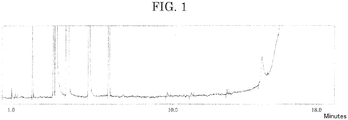
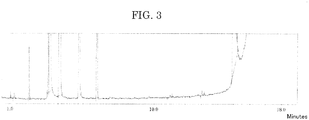
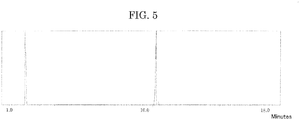
- Whether methyldichlorophosphinic acid was formed as a by-product in the case of using the production method of the present invention was analyzed by gas chromatography mass spectrometry.
- the analysis method and analysis conditions of gas chromatography mass spectrometry are as follows.
- a sample for analysis used was a reaction liquid that was directly recovered without ethanol trapping.
- FIG. 1 presents spectral data obtained from gas chromatography mass spectrometry of the reaction liquid of Example 15
- FIG. 2 presents spectral data obtained from gas chromatography mass spectrometry of the reaction liquid of Example 22
- FIG. 3 presents spectral data obtained from gas chromatography mass spectrometry of the reaction liquid of Example 25
- FIG. 4 presents spectral data obtained from gas chromatography mass spectrometry of the reaction liquid of Example 29
- FIG. 5 presents spectral data obtained from gas chromatography mass spectrometry of a standard sample of methyldichlorophosphinic acid.
- methyldichlorophosphane useful as, for example, an intermediate of an herbicide at an excellent yield, while giving less environmental loads due to formation of wastes and suppressing formation of by-products.
- This makes it possible to improve safety to the surrounding environment and cost saving. Also, since this method does not use a highly toxic compound that has a low boiling point and is highly likely to be released into the environment, safety to the workers and surrounding environment can be more improved.
- the present invention it is possible to industrially advantageously produce methyldichlorophosphane while giving less environmental loads. Hence, it is possible to supply inexpensively and stably an amount that is required as chemical products produced using it as a starting material.
- the present invention can make a great contribution to the production of especially 2-amino-4-(hydroxymethylphosphinyl)butanoic acid and L-2-amino-4-(hydroxymethylphosphinyl)butanoic acid, which are used as herbicides.
Landscapes
- Chemical & Material Sciences (AREA)
- Organic Chemistry (AREA)
- Health & Medical Sciences (AREA)
- Life Sciences & Earth Sciences (AREA)
- Biochemistry (AREA)
- General Health & Medical Sciences (AREA)
- Molecular Biology (AREA)
- Catalysts (AREA)
- Low-Molecular Organic Synthesis Reactions Using Catalysts (AREA)
Applications Claiming Priority (3)
| Application Number | Priority Date | Filing Date | Title |
|---|---|---|---|
| JP2017135963 | 2017-07-12 | ||
| JP2018069264 | 2018-03-30 | ||
| PCT/JP2018/025543 WO2019013095A1 (ja) | 2017-07-12 | 2018-07-05 | 除草剤中間体の製造法 |
Publications (2)
| Publication Number | Publication Date |
|---|---|
| EP3653635A1 true EP3653635A1 (de) | 2020-05-20 |
| EP3653635A4 EP3653635A4 (de) | 2021-03-17 |
Family
ID=65001694
Family Applications (1)
| Application Number | Title | Priority Date | Filing Date |
|---|---|---|---|
| EP18831006.4A Withdrawn EP3653635A4 (de) | 2017-07-12 | 2018-07-05 | Verfahren zur herstellung eines herbizidzwischenprodukts |
Country Status (10)
| Country | Link |
|---|---|
| US (2) | US11306110B2 (de) |
| EP (1) | EP3653635A4 (de) |
| JP (1) | JP7175478B2 (de) |
| CN (1) | CN110891959B (de) |
| AU (1) | AU2018300916A1 (de) |
| BR (1) | BR112020000441A2 (de) |
| RU (1) | RU2020105651A (de) |
| SG (1) | SG11202000158SA (de) |
| TW (1) | TW201908327A (de) |
| WO (1) | WO2019013095A1 (de) |
Cited By (1)
| Publication number | Priority date | Publication date | Assignee | Title |
|---|---|---|---|---|
| EP4319879A4 (de) * | 2022-06-13 | 2025-01-01 | Fikrettin Sahin | Verwendung von lutetiumsalzverbindungen zur antiviralen wirkung |
Families Citing this family (8)
| Publication number | Priority date | Publication date | Assignee | Title |
|---|---|---|---|---|
| CN110526215A (zh) * | 2019-08-26 | 2019-12-03 | 浙江工业大学 | 一种合成黑色硫化汞的方法 |
| CN113546652B (zh) * | 2020-04-26 | 2023-09-05 | 中国科学院理化技术研究所 | 一种光催化Suzuki偶联反应用催化剂及其制备方法和应用 |
| CN111659392B (zh) * | 2020-06-17 | 2023-11-28 | 中山大学 | 一种由氧化钨-金属表面等离子共振激元-铬酸钆组成的桥式异质催化剂的制备及应用 |
| CN113528146B (zh) * | 2021-08-19 | 2022-01-28 | 河南大学 | 一种表面改性掺杂二氧化硅的硫化亚铁土壤重金属钝化剂的制备和应用 |
| CN113501845B (zh) * | 2021-09-09 | 2021-12-14 | 潍坊新绿化工有限公司 | 一种基于碳微球负载铁镍铈催化剂合成甲基二氯化磷的方法 |
| CN115259206B (zh) * | 2022-07-22 | 2024-02-20 | 承德莹科精细化工股份有限公司 | 一种高纯碳酸铥和高纯三氟化铥的制备方法 |
| CN115346744B (zh) * | 2022-08-22 | 2024-08-30 | 中国科学院江西稀土研究院 | 一种磁制冷材料及其制备方法和应用 |
| CN116078154B (zh) * | 2023-01-17 | 2024-08-09 | 昆明理工大学 | 一种提高亚硫酸镁氧化速率的方法 |
Family Cites Families (11)
| Publication number | Priority date | Publication date | Assignee | Title |
|---|---|---|---|---|
| US2137792A (en) | 1936-09-12 | 1938-11-22 | Victor Chemical Works | Organic phosphorus-containing compounds |
| US3210418A (en) | 1953-10-19 | 1965-10-05 | Fmc Corp | Preparation of aliphatic dihalophosphines |
| US3709932A (en) | 1969-09-22 | 1973-01-09 | Stauffer Chemical Co | Phosphonous dichlorides |
| JPS4891019A (de) | 1972-03-08 | 1973-11-27 | ||
| GB1533200A (en) | 1976-06-30 | 1978-11-22 | Hoechst Ag | Production of methyldichlorophosphane |
| US4411842A (en) * | 1981-11-16 | 1983-10-25 | Borg-Warner Chemicals, Inc. | Oxidation of alkyl phosphonous dichlorides |
| DE3149937A1 (de) | 1981-12-17 | 1983-06-30 | Hoechst Ag, 6230 Frankfurt | Verfahren zur herstellung von methyldichlorphosphan |
| DE19840553A1 (de) | 1998-09-07 | 2000-03-09 | Aventis Res & Tech Gmbh & Co | Verfahren zur Herstellung von Alkyldihalogenphosphanen durch Photoinitiierung der Alkylierung von Phosphortrihalogeniden |
| BR112017010466A2 (pt) | 2014-11-20 | 2018-04-03 | Bayer Cropscience Ag | processo para a produção de metildiclorofosfano |
| CN105330693B (zh) * | 2015-12-08 | 2017-11-07 | 山东潍坊润丰化工股份有限公司 | 一种烃基二卤化磷的制备方法 |
| CN106117267A (zh) | 2016-06-27 | 2016-11-16 | 安徽国星生物化学有限公司 | 一种甲基二氯化磷的绿色合成方法 |
-
2018
- 2018-07-05 JP JP2019529097A patent/JP7175478B2/ja active Active
- 2018-07-05 AU AU2018300916A patent/AU2018300916A1/en not_active Abandoned
- 2018-07-05 EP EP18831006.4A patent/EP3653635A4/de not_active Withdrawn
- 2018-07-05 SG SG11202000158SA patent/SG11202000158SA/en unknown
- 2018-07-05 WO PCT/JP2018/025543 patent/WO2019013095A1/ja not_active Ceased
- 2018-07-05 BR BR112020000441-3A patent/BR112020000441A2/pt not_active Application Discontinuation
- 2018-07-05 CN CN201880046531.0A patent/CN110891959B/zh active Active
- 2018-07-05 RU RU2020105651A patent/RU2020105651A/ru not_active Application Discontinuation
- 2018-07-05 US US16/629,742 patent/US11306110B2/en active Active
- 2018-07-09 TW TW107123634A patent/TW201908327A/zh unknown
-
2022
- 2022-03-08 US US17/689,178 patent/US11753423B2/en active Active
Cited By (1)
| Publication number | Priority date | Publication date | Assignee | Title |
|---|---|---|---|---|
| EP4319879A4 (de) * | 2022-06-13 | 2025-01-01 | Fikrettin Sahin | Verwendung von lutetiumsalzverbindungen zur antiviralen wirkung |
Also Published As
| Publication number | Publication date |
|---|---|
| JPWO2019013095A1 (ja) | 2020-07-09 |
| US20220194970A1 (en) | 2022-06-23 |
| RU2020105651A (ru) | 2021-08-12 |
| AU2018300916A1 (en) | 2020-02-06 |
| US20200231612A1 (en) | 2020-07-23 |
| BR112020000441A2 (pt) | 2020-07-21 |
| US11753423B2 (en) | 2023-09-12 |
| CN110891959B (zh) | 2022-10-28 |
| JP7175478B2 (ja) | 2022-11-21 |
| SG11202000158SA (en) | 2020-02-27 |
| EP3653635A4 (de) | 2021-03-17 |
| TW201908327A (zh) | 2019-03-01 |
| WO2019013095A1 (ja) | 2019-01-17 |
| US11306110B2 (en) | 2022-04-19 |
| CN110891959A (zh) | 2020-03-17 |
Similar Documents
| Publication | Publication Date | Title |
|---|---|---|
| US11753423B2 (en) | Method for producing herbicide intermediate | |
| Armarego | Purification of laboratory chemicals: Part 2 inorganic chemicals, catalysts, biochemicals, physiologically active chemicals, nanomaterials | |
| Taran et al. | Chemistry and mineralogy of high-temperature gas discharges from Colima volcano, Mexico. Implications for magmatic gas–atmosphere interaction | |
| Gammons et al. | The disproportionation of gold (I) chloride complexes at 25 to 200 C | |
| Capobianco et al. | Experiments on crystal/liquid partitioning of Ru, Rh and Pd for magnetite and hematite solid solutions crystallized from silicate melt | |
| Vyazovkin et al. | Thermal dissociation kinetics of solid and liquid ammonium nitrate | |
| Corey et al. | A new method for the synthesis of organic nitro compounds | |
| Fogaca et al. | Solid-phase quasi-intramolecular redox reaction of [Ag (NH3) 2] MnO4: an easy way to prepare pure AgMnO2 | |
| Druce | Rhenium | |
| Schmid et al. | Soluble Fluoridobromates as Well‐Behaved Strong Fluorination Reagents | |
| Mbomekalle et al. | Manganous heteropolytungstates. Synthesis and heteroatom effects in Wells–Dawson-derived sandwich complexes | |
| Stolyarova et al. | Vaporization and thermodynamics of the Cs2O–MoO3 system studied using high‐temperature mass spectrometry | |
| Nash et al. | Intermetallic compounds of alkali metals with platinum. A novel preparation of a colloidal platinum hydrogenation catalyst | |
| Anenburg et al. | Quadrivalent praseodymium in planetary materials | |
| Meyer et al. | Versatility and low-temperature synthetic potential of ammonium halides | |
| Antonyshyn et al. | Anisotropic reactivity of CaAg under ethylene epoxidation conditions | |
| Addison | Inorganic Chemistry of the Main-Group Elements: Volume 4 | |
| Liu et al. | Synthesis, crystal structure and photoluminescence of a three-dimensional zinc coordination compound with nbo-type topology | |
| Haire | Californium | |
| Khokhlov et al. | Redox reactions in molten electrolytes containing chlorides of rare-earth metals | |
| EP4692421A1 (de) | Verfahren zur herstellung von metallcarbid und kohlenwasserstoff sowie metallhaltiges element | |
| Volkovich et al. | Reaction of Oxygen with Uranium (IV) Chloride in Fused Alkali Chlorides | |
| Cherginets et al. | Study of the carbohalogenation process in molten KCl–NaCl equimolar mixture | |
| Zapp et al. | Ternary rare-earth hydride oxides: stability in air and potential use as precursors for the synthesis of materials | |
| Ouasri et al. | Synthesis, crystal structure, morphology, and infrared studies of a novel tetramethylammonium nitrate-chlorobismuthate [N (CH3) 4] 2Bi2Cl9NO3 |
Legal Events
| Date | Code | Title | Description |
|---|---|---|---|
| STAA | Information on the status of an ep patent application or granted ep patent |
Free format text: STATUS: THE INTERNATIONAL PUBLICATION HAS BEEN MADE |
|
| PUAI | Public reference made under article 153(3) epc to a published international application that has entered the european phase |
Free format text: ORIGINAL CODE: 0009012 |
|
| STAA | Information on the status of an ep patent application or granted ep patent |
Free format text: STATUS: REQUEST FOR EXAMINATION WAS MADE |
|
| 17P | Request for examination filed |
Effective date: 20200206 |
|
| AK | Designated contracting states |
Kind code of ref document: A1 Designated state(s): AL AT BE BG CH CY CZ DE DK EE ES FI FR GB GR HR HU IE IS IT LI LT LU LV MC MK MT NL NO PL PT RO RS SE SI SK SM TR |
|
| AX | Request for extension of the european patent |
Extension state: BA ME |
|
| DAV | Request for validation of the european patent (deleted) | ||
| DAX | Request for extension of the european patent (deleted) | ||
| RIC1 | Information provided on ipc code assigned before grant |
Ipc: C07B 61/00 20060101ALI20210204BHEP Ipc: B01J 27/128 20060101ALI20210204BHEP Ipc: B01J 27/08 20060101ALI20210204BHEP Ipc: B01J 23/04 20060101ALI20210204BHEP Ipc: B01J 27/138 20060101ALI20210204BHEP Ipc: B01J 23/755 20060101ALI20210204BHEP Ipc: C07F 9/52 20060101AFI20210204BHEP |
|
| A4 | Supplementary search report drawn up and despatched |
Effective date: 20210212 |
|
| STAA | Information on the status of an ep patent application or granted ep patent |
Free format text: STATUS: THE APPLICATION HAS BEEN WITHDRAWN |
|
| 18W | Application withdrawn |
Effective date: 20210517 |