EP3654142B1 - Perspektivisch vermittelte realität aus der ich-perspektive - Google Patents
Perspektivisch vermittelte realität aus der ich-perspektive Download PDFInfo
- Publication number
- EP3654142B1 EP3654142B1 EP18206207.5A EP18206207A EP3654142B1 EP 3654142 B1 EP3654142 B1 EP 3654142B1 EP 18206207 A EP18206207 A EP 18206207A EP 3654142 B1 EP3654142 B1 EP 3654142B1
- Authority
- EP
- European Patent Office
- Prior art keywords
- virtual
- space
- user
- available
- constrained
- Prior art date
- Legal status (The legal status is an assumption and is not a legal conclusion. Google has not performed a legal analysis and makes no representation as to the accuracy of the status listed.)
- Active
Links
Images


Classifications
-
- G—PHYSICS
- G06—COMPUTING OR CALCULATING; COUNTING
- G06F—ELECTRIC DIGITAL DATA PROCESSING
- G06F3/00—Input arrangements for transferring data to be processed into a form capable of being handled by the computer; Output arrangements for transferring data from processing unit to output unit, e.g. interface arrangements
- G06F3/01—Input arrangements or combined input and output arrangements for interaction between user and computer
- G06F3/011—Arrangements for interaction with the human body, e.g. for user immersion in virtual reality
-
- G—PHYSICS
- G06—COMPUTING OR CALCULATING; COUNTING
- G06T—IMAGE DATA PROCESSING OR GENERATION, IN GENERAL
- G06T15/00—Three-dimensional [3D] image rendering
- G06T15/10—Geometric effects
- G06T15/20—Perspective computation
-
- G—PHYSICS
- G06—COMPUTING OR CALCULATING; COUNTING
- G06F—ELECTRIC DIGITAL DATA PROCESSING
- G06F3/00—Input arrangements for transferring data to be processed into a form capable of being handled by the computer; Output arrangements for transferring data from processing unit to output unit, e.g. interface arrangements
- G06F3/01—Input arrangements or combined input and output arrangements for interaction between user and computer
- G06F3/011—Arrangements for interaction with the human body, e.g. for user immersion in virtual reality
- G06F3/013—Eye tracking input arrangements
Definitions
- Embodiments of the present disclosure relate to first-person perspective-mediated reality.
- first-person perspective-mediated reality a user's real point of view (location and orientation) determines the point of view (location and orientation) within a virtual space of a virtual user.
- the point of view of the virtual user determines a representation of a virtual space rendered to the user.
- US 2018/0095542 A1 discloses systems and methods for interacting with virtual reality space using a head-mounted display. It discloses detecting a real world object in a real world space in which a user is interacting. An image of the real world object is presented in the VR space. The image of the real world object is used to identify presence of the real world object while interacting with the VR space. Interaction by the user with the real world object is detected. The VR space is configured to generate a simulator view of the user interacting with the VR object that is mapped to the interaction with the real world object. This simulator view is presented in the head-mounted display.
- an apparatus as defined by claim 1 a method as defined by claim 10, a computer program as defined by claim 12, and a system as defined by claim 14.
- the apparatus comprises means for determining a boundary of the available real space and determining a boundary of the constrained virtual space that corresponds to the available real space.
- the apparatus comprises means for determining a shape of a boundary of the available real space and determining a shape of a boundary of the constrained virtual space that corresponds to the available real space and means for determining a location of the boundary of the constrained virtual space within the virtual space.
- the apparatus comprises means for determining the location of the boundary of the constrained virtual space within the virtual space and/or the scale factor for a mapping from the available real space to the constrained virtual space.
- the apparatus comprises means for providing a map to the user than illustrates a boundary of the constrained virtual space within the virtual space and provides an option for the user to re-locate the constrained virtual space within the virtual space and/or change a scale, but not a shape, of the constrained virtual space within the virtual space.
- the determined sub-set of available mediated reality content is limited to what can be seen by the user moving, without interacting, within the determined available real space or the determined sub-set of available mediated reality content is limited to what can be seen by the user moving, with interacting, within the determined available real space.
- the multiple representations of the virtual space include virtual visual scenes that are representations of a virtual visual space viewed from a location within the virtual space and/or sound scenes that are representations of a virtual sound space listened to from a position within the virtual space.
- automatically determining a sub-set of the available mediated reality content without requiring the user to change location in the real space generates a content for a panning preview and wherein causing rendering of at least some of the determined sub-set of the available virtual reality content to the user, causes rendering of the panning preview without requiring the user to change location in the real space.
- the sub-set of available mediated reality content comprises a sub-set of the multiple representations of the virtual space when observed from a sub-set of virtual locations within the constrained virtual space, wherein the sub-set of virtual locations are selected by the user during rendering of a preview.
- the apparatus comprises means for selecting the sub-set of virtual locations based on a gaze direction and gaze duration during a preview.
- the method occurs in response to switching to first-person perspective-mediated reality from third person perspective-mediated reality.
- a computer program comprising program instructions for causing an apparatus to perform at least the following:
- the computer program comprises program instructions for causing an apparatus to perform at least the methods.
- a system comprising:
- artificial environment may be something that has been recorded or generated.
- virtual visual space refers to a fully or partially artificial environment that may be viewed, which may be three dimensional.
- virtual visual scene refers to a representation of the virtual visual space viewed from a particular point of view (position) within the virtual visual space.
- 'virtual visual object' is a visible virtual object within a virtual visual scene.
- Sound space refers to an arrangement of sound sources in a three-dimensional space.
- a sound space may be defined in relation to recording sounds (a recorded sound space) and in relation to rendering sounds (a rendered sound space).
- sound scene refers to a representation of the sound space listened to from a particular point of view (position) within the sound space.
- sound object refers to sound source that may be located within the sound space.
- a source sound object represents a sound source within the sound space, in contrast to a sound source associated with an object in the virtual visual space.
- a recorded sound object represents sounds recorded at a particular microphone or location.
- a rendered sound object represents sounds rendered from a particular location.
- virtual space may mean a virtual visual space, mean a sound space or mean a combination of a virtual visual space and corresponding sound space.
- the virtual space may extend horizontally up to 360° and may extend vertically up to 180°.
- virtual scene may mean a virtual visual scene, mean a sound scene or mean a combination of a virtual visual scene and corresponding sound scene.
- 'virtual object' is an object within a virtual scene, it may be an artificial virtual object (e.g. a computer-generated virtual object) or it may be an image of a real object in a real space that is live or recorded. It may be a sound object and/or a virtual visual object.
- an artificial virtual object e.g. a computer-generated virtual object
- it may be an image of a real object in a real space that is live or recorded. It may be a sound object and/or a virtual visual object.
- Virtual position is a position within a virtual space. It may be defined using a virtual location and/or a virtual orientation. It may be considered to be a movable 'point of view'.
- Correspondence or “corresponding” when used in relation to a sound space and a virtual visual space means that the sound space and virtual visual space are time and space aligned, that is they are the same space at the same time.
- Correspondence or “corresponding” when used in relation to a sound scene and a virtual visual scene (or visual scene) means that the sound space and virtual visual space (or visual scene) are corresponding and a notional (virtual) listener whose point of view defines the sound scene and a notional (virtual) viewer whose point of view defines the virtual visual scene (or visual scene) are at the same location and orientation, that is they have the same point of view (same virtual position).
- real space (or “physical space”) refers to a real environment, which may be three dimensional.
- real scene refers to a representation of the real space from a particular point of view (position) within the real space.
- real visual scene refers to a visual representation of the real space viewed from a particular real point of view (position) within the real space.
- mediated reality in this document refers to a user experiencing, for example visually, a fully or partially artificial environment (a virtual space) as a virtual scene at least partially rendered by an apparatus to a user.
- the virtual scene is determined by a point of view (virtual position) within the virtual space.
- Displaying the virtual scene means providing a virtual visual scene in a form that can be perceived by the user.
- Augmented reality content is a form of mediated reality content which enables a user to experience, for example visually, a partially artificial environment (a virtual space) as a virtual scene.
- Augmented reality content could include interactive content such as a video game or non-interactive content such as motion video.
- Virtual reality content is a form of mediated reality content which enables a user to experience, for example visually, a fully artificial environment (a virtual space) as a virtual scene.
- Virtual reality content could include interactive content such as a video game or non-interactive content such as motion video.
- virtual user defines the point of view (virtual position- location and/or orientation) in virtual space used to generate a perspective-mediated sound scene and / or visual scene.
- a virtual user may be a notional listener and/or a notional viewer.
- notional listener defines the point of view (virtual position- location and/or orientation) in virtual space used to generate a perspective-mediated sound scene, irrespective of whether or not a user is actually listening.
- notional viewer defines the point of view (virtual position- location and/or orientation) in virtual space used to generate a perspective-mediated visual scene, irrespective of whether or not a user is actually viewing.
- Three degrees of freedom (3DoF) describes mediated reality where the virtual position is determined by orientation only (e.g. the three degrees of three-dimensional orientation). In relation to first-person perspective-mediated reality, only the user's orientation determines the virtual position.
- Six degrees of freedom (6DoF) describes mediated reality where the virtual position is determined by both orientation (e.g. the three degrees of three-dimensional orientation) and location (e.g. the three degrees of three-dimensional location).
- orientation e.g. the three degrees of three-dimensional orientation
- location e.g. the three degrees of three-dimensional location
- FIGs 1A-B, 2A-2B, 3A-3B illustrate the application of a method to a situation where there is rendering of mediated reality using virtual content.
- mediated reality means the rendering of mediated reality for the purposes of achieving mediated reality, for example, augmented reality or virtual reality.
- the mediated reality is first-person perspective-mediated reality. It may or may not be user interactive. It may be 3DoF or 6DoF.
- FIGs. 1A, 2A, 3A illustrate at a first time a real space 50, a sound space 20 and a visual space 60 respectively. There is correspondence between the sound space 20 and the virtual visual space 60.
- a user 51 in the real space 50 has a position (point of view) defined by a location 52 and an orientation 53.
- the location is a three-dimensional location and the orientation is a three-dimensional orientation.
- a virtual user 71 in the virtual space (sound space 20 and/or virtual visual space 60) has a virtual position (virtual point of view) defined by a virtual location 72 and a virtual orientation 73.
- the virtual location 72 is a three-dimensional location and the virtual orientation 73 is a three-dimensional orientation.
- an orientation 53 of the user 51 controls a virtual orientation 73 of a virtual user 71.
- the virtual orientation 73 of the virtual user 71 in combination with a virtual field of view 74 defines a virtual visual scene 75 within the virtual visual space 60. In some examples, it may also define a virtual sound scene 76.
- a virtual visual scene 75 is that part of the virtual visual space 60 that is displayed to a user 51.
- a virtual sound scene 76 is that part of the virtual sound space 20 that is rendered to a user 51.
- the virtual sound space 20 and the virtual visual space 60 correspond in that a position within the virtual sound space 20 has an equivalent position within the virtual visual space 60.
- a change in the location 52 of the user 51 does not change the virtual position 72 or virtual orientation 73 of the virtual user 71.
- the situation is as described for 3DoF and in addition it is possible to change the rendered virtual sound scene 76 and the displayed virtual visual scene 75 by movement of a location 52 of the user 51.
- a mapping M between the location 52 of the user 51 and the virtual location 72 of the virtual user 71.
- a change in the location 52 of the user 51 produces a corresponding change in the virtual location 72 of the virtual user 71.
- a change in the virtual location 72 of the virtual user 71 changes the rendered sound scene 76 and also changes the rendered visual scene 75.
- FIGs. 1B, 2B and 3B illustrate the consequences of a change in location 52 and orientation 53 of the user 51 on respectively the rendered sound scene 76 ( FIG. 2B ) and the rendered visual scene 75 ( FIG. 3B ).
- the real space 50 is constrained to an available real space 150.
- the available real space 150 is that part of the real space 50 that the user 51 can have a location 52 within.
- the user 51 cannot have a location 52 outside the available real space 150. This therefore constrains 6DoF virtual reality.
- the available real space 150 has a corresponding constrained virtual space 152.
- the constrained virtual space 152 is that part of the virtual space (sound space 20 and/or virtual visual space 60) that a virtual user 71 can have a virtual location 72 within.
- a mapping M between the location 52 of the user 51 in the available real space 150 and the virtual location 72 of the virtual user 71 in the constrained virtual space 152.
- This mapping creates a correspondence between the available real space 150 and the constrained virtual space 152.
- a change in the location 52 of the user 51 within the available real space 150 produces a corresponding change in the virtual location 72 of the virtual user 71 within the constrained virtual space 152.
- a change in the virtual location 72 of the virtual user 71 within the constrained virtual space 152 changes the rendered sound scene 76 and also changes the rendered visual scene 75.
- the virtual user 71 cannot have a virtual location 72 outside the constrained virtual space 152 without a change in the mapping M that creates correspondence between the real space 50 and the virtual space.
- the available real space 150 comprises a boundary 160, enclosing a volume defining the available real space 150.
- the constrained virtual space 152 that corresponds to the available real space 150 via the mapping M comprises a boundary 162, enclosing a volume defining the constrained virtual space 152.
- a location 52 and orientation 53 of the user 51 determines a real point of view (position) of the user 51 that is mapped to a virtual point of view (virtual position) of the virtual user 71 within the constrained virtual space 152.
- the virtual point of view of the virtual user 72 determines the rendered virtual content.
- the location 52 and orientation 53 are typically three-dimensional but in some examples may be two-dimensional.
- the boundary 160 of the available real space 150 corresponds to the boundary 162 of the constrained virtual space 152 via the mapping M.
- FIG 5A illustrates a top-perspective view of an example of an available real space 150.
- the real space 50 includes a room 110 that includes furniture 112. At least some of the floor space 114 is not available to the user 51 because it is blocked by furniture 112.
- the available floor space 116 is the available real space 150 in two-dimensions.
- FIG 5B illustrates a top-perspective view of an example of a constrained virtual space 152 that corresponds to the available real space 150 illustrated in FIG 5A .
- the virtual space extends beyond the boundary 162 of the constrained virtual space 152.
- FIG 6A, 6B and FIG 6C illustrate that different mappings M can be used to define different correspondences between the available real space 150 and the constrained virtual space 152.
- Each different mapping uses an orientation reference mapping to map an origin orientation of the user 51 to an origin virtual orientation of the virtual user 71. Changes in orientation 53 of the user 51 are measured relative to the origin orientation. Changes in virtual orientation 73 of the virtual user 71 are effected relative to the origin virtual orientation.
- the orientation reference mapping orients the constrained virtual space 152 corresponding to the available real space 150 within the virtual space.
- Each different mapping uses an orientation mapping that maps changes in the orientation 53 of the user 51 to changes in the orientation 73 of the virtual user 71.
- the orientation mapping is exact and maps changes in the orientation 53 of the user 51 to the same changes in the orientation 73 of the virtual user 71.
- an orientation 53 of the user 51 is defined by a polar angle ( ⁇ ) and an azimuthal angle ( ⁇ ) (from the origin orientation) and a virtual orientation 73 of the virtual user 71 can be defined by a polar angle ( ⁇ ') and an azimuthal angle ( ⁇ ')(from the virtual origin orientation)
- a change in the orientation 53 of the user 51 is defined by a change in the polar angle ( ⁇ ) and a change in the azimuthal angle ( ⁇ ) and a change in the virtual orientation 73 of the virtual user 71 can be defined by a change in the polar angle ( ⁇ ') and a change in the azimuthal angle ( ⁇ ').
- Each different mapping uses a location reference mapping to map an origin location of the user 51 to an origin virtual location of the virtual user 71. Changes in location 52 of the user 51 are measured relative to the origin location. Changes in virtual location 72 of the virtual user 71 are effected relative to the origin virtual location.
- the location reference mapping re-locates the constrained virtual space 152 corresponding to the available real space 150 within the virtual space.
- Each different mapping uses a change in location mapping (a scale mapping) to map changes in the location 52 of the user 51 to changes in the virtual position 72 of the virtual user 71.
- the scale mapping re-sizes the constrained virtual space 152 corresponding to the available real space 150 within the virtual space. If a location 52 of the user 51 is defined by a Cartesian co-ordinate (x, y, z) then a virtual location 72 of the virtual user 71 can be defined by corresponding Cartesian coordinates (x', y', z').
- a change in the location 52 of the user 51 is defined by a change in one or more of the coordinates ( ⁇ x, ⁇ y, ⁇ z) and a change in the virtual position 72 of the virtual user 71 can be defined by a change in one or more of the coordinates ( ⁇ x', ⁇ y', ⁇ z').
- the illustrated mappings M differ in that they have different orientation reference mappings and/or location reference mappings and/or different scale mappings.
- FIG 6A illustrate a first mapping M that has a first orientation reference mapping, a first location mapping and a first scale mapping.
- FIG 6B illustrate a second mapping M that has a second orientation reference mapping (different to the first orientation reference mapping), a second location mapping (different to the first location mapping) and the first scale mapping.
- the constrained virtual space 152 has been re-oriented and re-located but not re-sized compared to FIG 6A . In other examples it could only be re-oriented or only re-located.
- FIG 6B illustrate a third mapping M that has the first orientation reference mapping, a third location mapping (different to the first location mapping and the second location mapping) and a second scale mapping (different to the first scale mapping).
- the constrained virtual space 152 has been re-located and re-sized compared to FIG 6A but not re-oriented. In other examples it could only be re-located or only re-sized.
- FIG 7 illustrates an example of a method 200.
- the method 200 comprises, at block 202, determining an available real space 150 comprising a portion of a real space 50 that comprises locations 52 available to a user 51 to control a corresponding virtual location 72 of a virtual user 71, via first-person perspective-mediated reality.
- first-person perspective-mediated reality creates a correspondence between a location 52 and orientation 53 of a user 51 in real space 50 to a virtual location 72 and virtual orientation 73 of a virtual user 71.
- the method 200 comprises, at block 204, determining a constrained virtual space 152 comprising a portion of a virtual space 20, 60 that corresponds to the available real space 150.
- the method 200 comprises, at block 206, determining available mediated reality content which comprises multiple representations of the virtual space 20, 60 when observed from multiple virtual locations 72 within the constrained virtual space 152.
- the multiple representations may be virtual visual scenes, sound scenes or virtual visual scenes and corresponding sound scenes.
- the method 200 comprises, at block 208, automatically determining a sub-set 174 of the available mediated reality content 170 without requiring the user 51 to change location 52 in the real space 50.
- the method 200 comprises, at block 210, causing rendering of at least some of the determined sub-set 174 of the available virtual reality content to the user 51.
- FIG. 8 illustrates, in more detail, an example of blocks 202 and 204 of the method 200.
- the method 200 determines the available real space 150 by determining a boundary 160 of the available real space.
- the method 200 determines the constrained virtual space 152 by determining a boundary 162 of the constrained virtual space 152 that corresponds to the boundary 160 of the available real space 150.
- Determining the boundary 162 of the constrained virtual space 152 comprises, at block 202, determining a shape of the boundary 160 of the available real space 150 and at block 210 determining a shape of the boundary 162 of the constrained virtual space 152 that corresponds to the shape of the boundary 160 of the available real space 150.
- the method also comprises at block 212, determining an orientation of the boundary 162 of the constrained virtual space 152 within the virtual space.
- the method also comprises at block 214, determining a location of the boundary 162 of the constrained virtual space 152 within the virtual space.
- the method 200 may also comprise, at block 216, determining a scale factor for a mapping from the available real space 150 to the constrained virtual space 152.
- the shape of the boundary 160 of the available real space 150 can, for example, be determined by sensing the presence of obstructions using transmitted signals, for example ultrasound signals, or by a user 51 tracing out the boundary 160 via user movement. This may be achieved by using a pointer device that the user points to the boundary 160 at floor level, the location and orientation of the pointing device being converted to the boundary 160 at floor level. This may be alternatively be achieved by using a tracking device that the user carries over the boundary 160 at floor level, the location of the tracking device being converted to a trace of the boundary 160 at floor level.
- block 210 may be based upon an isomorphic mapping M from the available real space 150 to the constrained virtual space 152.
- the block 212 is based upon the orientation reference mapping of the mapping M between the available real space 150 and the constrained virtual space 152.
- the block 214 is based upon the location mapping of the mapping M between the available real space 150 and the constrained virtual space 152.
- the block 216 is based upon the scale mapping of the mapping M between the available real space 150 and the constrained virtual space 152.
- the mapping M may be automatically optimized for one or more different criteria.
- the mapping M may be optimized in dependence upon the available mediated reality content defined by the constrained virtual space 152.
- the constrained virtual space 152 may, for example, be defined so that the available mediated reality content 170 is content that satisfies one or more criteria such as duration, interactive, rating, etc.
- the mapping M can therefore be determined automatically as part of the method 200.
- FIG. 9 illustrates an example of a user interface 300 that is configured to enable a user 51 to control, by defining or adjusting, the mapping M between the available real space 150 and the constrained virtual space 152.
- the user interface 300 comprises a map 302 that illustrates the virtual space.
- the user interface includes, as an overlay on the map 302, a representation of the constrained virtual space 152.
- the boundary 162 of the constrained virtual space 152 is illustrated within the map 302.
- the user interface 300 provides user input controls 310.
- the user input controls 310 comprise a user input control 312 for controlling the orientation reference mapping. This enables the user 51 to change an orientation of the constrained virtual space 152 within the map 302 of the virtual space.
- the user input controls 310 comprises a user input control 314 for controlling the location reference mapping. This enables the user 51 to change a location of the constrained virtual space 152 within the map 302 of the virtual space.
- the user input controls 310 comprises a user input control 316 for controlling a scale mapping. This enables the user 51 to resize the constrained virtual space 152 within the map 302 of the virtual space.
- the user input controls may be any suitable detector that enables a user 51 to provide a control input such as a touch screen that displays the map 302.
- a simultaneous two-point contact on the touch screen over the constrained virtual space 152 within the map 302 may be used to re-size the constrained virtual space 152 (e.g. by increasing the separation distance between the two points of simultaneous contact) and/or reorient the constrained virtual space 152 (e.g. by rotating the two-points of simultaneous contact), and/or re-locate the constrained virtual space 152 (e.g. by sliding movement of the two points of simultaneous contact).
- the user interface 300 therefore provides a map 302 to the user 51 that illustrates a boundary 162 of the constrained virtual space 152 within the virtual space and provides one or more options for the user 51 to relocate and/or resize and/or reorient the constrained virtual space 152 within the virtual space. It will be appreciated that the options maintain the isomorphism between the real space and the virtual space. Thus although the values of k x , k y , and k z may, in some examples, be varied they remain equal to each other.
- the user 51 may be possible for the user 51 to provide a user input that voluntarily changes the available real space 150 and therefore cause a consequential variation in the constrained virtual space 152.
- the user interface 300 may additionally or alternatively be used to enable a user 51 to control the sub-set 174 of the available mediated reality content 170.
- the available mediated reality content 170 comprises representations of the virtual space observable from virtual locations
- the user interface 300 may allow the user 51 to determine preferred representations of the virtual space observable from preferred virtual locations.
- the user may be able to define the sub-set 174 of the available mediated reality content 170 by indicating a first set of the preferred locations that are within the constrained virtual space 152 and indicating a second set of the preferred locations that are outside the constrained virtual space 152.
- FIG. 10 illustrates a relationship between the constrained virtual space 152 and its boundary 162 and the available mediated reality content 170.
- the available mediated reality content 170 comprises content that can be seen by the user 51 moving, without interacting, within the determined available real space 150. This content is seen by the user 51 moving within the determined available real space 150. In some examples, the available mediated reality content 170 is limited to only content that can be seen by the user 51 moving, without interacting, within the determined available real space 150.
- the available mediated reality content 170 comprises content 170A that is both visible to and accessible by the virtual user 71 moving within the constrained virtual space 152. This content can be seen by the user 51 moving within the determined available real space 150. In some examples, the available mediated reality content 170 is limited to only content that is both visible to and accessible 170A by the virtual user 71.
- the available mediated reality content 170 comprises what is visible to the virtual user 71 moving within the constrained virtual space 152. This corresponds to the content 170A, 170B that can be seen by the user moving within the determined available real space 150. It includes the content 170A that is visible and accessible and the content 170B that is visible but not accessible. The user 51 (or virtual user 71) cannot interact with content that is not accessible.
- the determined available mediated reality content 170 includes content that is visible content, renderable as a consequence of action by the user 51 within the determined available real space 150 and accessible content, renderable for interaction as a consequence of action by the user 51 within the determined available space 150.
- the determined available mediated reality content 170 comprises multiple representations of the virtual space when observed from multiple locations within the constrained virtual space 152.
- the multiple representations of the virtual space 152 may, for example, include virtual visual scenes that are representations of a virtual visual space viewed from a location within the virtual space and/or sound scenes that are representations of a virtual sound space listened to from a position within the virtual space.
- the multiple representations of the virtual space include virtual visual scenes that are video representations of a virtual visual space.
- the determined available mediated reality content 170 does not include content 172 that is not visible or not accessible.
- FIGS 11 and 12 illustrate an example of the operation of block 208 of the method 200.
- the method comprises, at block 208, automatically determining a sub-set 174 of the available mediated reality content 170 without requiring the user 51 to change location 52 in the real space 50.
- the sub-set 174 of the available mediated reality content 170 is a preview of the available mediated reality content 170.
- the block 208 therefore automatically creates a preview.
- the sub-set 174 of the available mediated reality content 170 only comprises representations of the virtual space observable from virtual locations within the constrained virtual space 152. Therefore all the content promised by the preview is viewable by the user 51 by moving only within the available real space 150, after the preview is exited and the previewed content is selected either manually or automatically.
- the preview contains only those parts of the content that are visible from different locations within the available real space 150.
- the preview may be generated from the content by analysis of the content and in other examples the preview may be generated by editing an existing preview of the content to remove unviewable content by analysis of the existing preview.
- the preview is a panning preview 180.
- the block 208 of method 200 (not illustrated), generates content for a panning preview 180 and block 210 of method 200 (not illustrated) causes rendering of the panning preview 180 without requiring the user 51 to change location 52 in the real space 50.
- the sub-set 174 of the available mediated reality content 170, that controls the panning preview comprises multiple representations of the virtual space that are observable from some or all orientations 73 along a trail 181 of virtual locations 72.
- the trail 181 is wholly within the constrained virtual space 152. In other examples, the trail 181 is partially or wholly outside the constrained virtual space 152. Where the trail 181 is outside the constrained virtual space 152, the sub-set 174 of the available mediated reality content 170, that control the panning preview, comprises multiple representations of the virtual space that are observable from orientations 73, along the trail 181 of virtual locations 72, that are directed towards the constrained virtual space 152.
- the panning preview 180 is created as a fly-through trail 181.
- the virtual location 72 of the virtual user 71 that determines a rendered representation of the virtual space moves automatically along the trail 181.
- changes in the virtual orientation 73 of the virtual user 71 that determine the rendered representation of the virtual space correspond to changes in the orientation 53 of the user 51 as the virtual user 71 moves automatically along the trail 181.
- the virtual orientation 73 of the virtual user 71 changes automatically as the virtual user 71 moves automatically along the trail 181 and is not dependent upon changes in the orientation 53 of the user 51.
- FIG 12 illustrates a different example, in which the sub-set 174 of the available mediated reality content 170, that controls the preview, comprises multiple representations of the virtual space when observed from specific discrete virtual locations 182 within the constrained virtual space 152.
- the specific discrete virtual locations are a set of preferred locations 182 within the constrained virtual space 152.
- the sub-set 174 of the available mediated reality content 170, that controls the preview comprises multiple representations of the virtual space when observed from specific discrete virtual locations 182 within the constrained virtual space 152 at specific orientations.
- the virtual location 72 of the virtual user 71 that determines a rendered representation of the virtual space moves automatically from location 182 to location 182.
- changes in the virtual orientation 73 of the virtual user 71 that determine the rendered representation of the virtual space correspond to changes in the orientation 53 of the user 51 as the virtual user 71 moves automatically from location 182 to location 182.
- the virtual orientation 73 of the virtual user 71 changes automatically as the virtual user 71 moves automatically from location 182 to location 182 and is not dependent upon changes in the orientation 53 of the user 51.
- the examples illustrated in FIGS 13 to 15 describe examples in which the sub-set 174 of the available mediated reality content 170 is automatically determined during rendering of a preview.
- the sub-set 174 of available mediated reality content 170 comprises a sub-set of the multiple representations of the virtual space when observed from a sub-set of virtual locations within the constrained virtual space 152.
- the sub-set of virtual locations 182 are selected by the user during rendering of a preview.
- the selected virtual locations 182 and the available real space 150 determines the constrained virtual space 152.
- FIG 13 illustrates an example of the method 200 in which a preview is used to determine the sub-set of the available mediated reality content 170.
- the method 200 determines the available real space 150.
- the method determines a constrained virtual space 152 that corresponds to the available real space 150 and determines available mediated reality content 170.
- the available mediated reality content 170 comprises multiple representations of the virtual space when observed from multiple virtual locations within the constrained virtual space 152.
- the representations can include virtual visual scenes and/or sound scenes.
- the method automatically determines a sub-set 174 of the available mediated reality content 170 without requiring the user 51 to change location 52 in the real space 50.
- the block 208 comprises, at block 220, generation of a preview based on the available mediated reality content 170. This preview is rendered to the user 51.
- the sub-set 174 of the available mediated reality content 170 is determined, at block 222, during rendering of the preview. The determination is based upon which portions of the available mediated reality content 170 attract the user's attention. This can for example be determined by monitoring where and for how long a user looks at particular available mediated reality content 170.
- the method 200 causes rendering of at least some of the determined sub-set 174 of the available virtual reality content to the user 51.
- This can for example be achieved by redetermining the constrained virtual space 152 that corresponds to the available real space 150 such that the new available mediated reality content observable from the virtual locations within the new constrained virtual space 152 are determined by the sub-set 174 of the available mediated reality content. This corresponds to a re-location of the constrained virtual space 152.
- the constrained virtual space 152 may, in addition, be reoriented and/or resized.
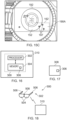
- FIG 14 illustrates an initial placement of a constrained virtual space 152, having a boundary 162, relative to particular content 190 in the virtual space.
- FIG 15A illustrates a trajectory 192 of a fly-through that may be used to generate a preview of the content 190.
- FIG 15B illustrates a direction 194 in which the user looks, relative to the trajectory 192, during the preview. It can be seen that the directions 194 point towards a particular portion 190A of the content 190. In this example, the user looks towards particular interactive objects 197.
- FIG 15C illustrates a reorientation and/or relocation and/or re-sizing of the constrained virtual space 152 as a consequence of the user's attention towards the portion 190A of the content 190.
- the constrained virtual space 152 has been positioned and oriented such that it overlaps with the portion of the virtual space that corresponds to the portion of the content 190A.
- the sub-set 174 of available mediated reality content 190 corresponds to the portion 190A and comprises a sub-set of the multiple representations of the virtual space when observed from a sub-set of virtual locations within the constrained virtual space 152, wherein the sub-set of virtual locations are selected by the user during rendering of the preview.
- the selecting of the sub-set of virtual locations is based upon a gaze direction (the direction in which the user 51 is looking) and gaze duration (time period during which user 51 is looking in a particular direction) during the preview.
- FIG 16 illustrates an example of a controller 300.
- Implementation of a controller 300 may be as controller circuitry.
- the controller 300 may be implemented in hardware alone, have certain aspects in software including firmware alone or can be a combination of hardware and software (including firmware).
- controller 300 may be implemented using instructions that enable hardware functionality, for example, by using executable instructions of a computer program 306 in a general-purpose or special-purpose processor 302 that may be stored on a computer readable storage medium (disk, memory etc) to be executed by such a processor 302.
- a general-purpose or special-purpose processor 302 may be stored on a computer readable storage medium (disk, memory etc) to be executed by such a processor 302.
- the processor 302 is configured to read from and write to the memory 304.
- the processor 302 may also comprise an output interface via which data and/or commands are output by the processor 302 and an input interface via which data and/or commands are input to the processor 302.
- the memory 304 stores a computer program 306 comprising computer program instructions (computer program code) that controls the operation of the apparatus 310 when loaded into the processor 302.
- the computer program instructions, of the computer program 306, provide the logic and routines that enables the apparatus to perform the methods illustrated in FIGS 7, 8 and 13 .
- the processor 302 by reading the memory 304 is able to load and execute the computer program 306.
- the apparatus 310 therefore comprises:
- This operation may be configured to occur in response to switching to first-person perspective-mediated reality from third person perspective-mediated reality. That is it is a calibration step in setting up first-person perspective-mediated reality.
- the computer program 306 may arrive at the apparatus 310 via any suitable delivery mechanism 308.
- the delivery mechanism 308 may be, for example, a machine readable medium, a computer-readable medium, a non-transitory computer-readable storage medium, a computer program product, a memory device, a record medium such as a Compact Disc Read-Only Memory (CD-ROM) or a Digital Versatile Disc (DVD) or a solid state memory, an article of manufacture that comprises or tangibly embodies the computer program 306.
- the delivery mechanism may be a signal configured to reliably transfer the computer program 306.
- the apparatus 310 may propagate or transmit the computer program 306 as a computer data signal.
- Computer program instructions for causing an apparatus to perform at least the following or for performing at least the following:
- the computer program instructions may be comprised in a computer program, a non-transitory computer readable medium, a computer program product, a machine readable medium. In some but not necessarily all examples, the computer program instructions may be distributed over more than one computer program.
- memory 304 is illustrated as a single component/circuitry it may be implemented as one or more separate components/circuitry some or all of which may be integrated/removable and/or may provide permanent/semi-permanent/ dynamic/cached storage.
- processor 302 is illustrated as a single component/circuitry it may be implemented as one or more separate components/circuitry some or all of which may be integrated/removable.
- the processor 302 may be a single core or multi-core processor.
- references to 'computer-readable storage medium', 'computer program product', 'tangibly embodied computer program' etc. or a 'controller', 'computer', 'processor' etc. should be understood to encompass not only computers having different architectures such as single /multi- processor architectures and sequential (Von Neumann)/parallel architectures but also specialized circuits such as field-programmable gate arrays (FPGA), application specific circuits (ASIC), signal processing devices and other processing circuitry.
- References to computer program, instructions, code etc. should be understood to encompass software for a programmable processor or firmware such as, for example, the programmable content of a hardware device whether instructions for a processor, or configuration settings for a fixed-function device, gate array or programmable logic device etc.
- circuitry may refer to one or more or all of the following:
- circuitry also covers an implementation of merely a hardware circuit or processor and its (or their) accompanying software and/or firmware.
- circuitry also covers, for example and if applicable to the particular claim element, a baseband integrated circuit for a mobile device or a similar integrated circuit in a server, a cellular network device, or other computing or network device.
- the blocks illustrated in the FIGS 7, 8 and 13 may represent steps in a method and/or sections of code in the computer program 306.
- the illustration of a particular order to the blocks does not necessarily imply that there is a required or preferred order for the blocks and the order and arrangement of the block may be varied. Furthermore, it may be possible for some blocks to be omitted.
- FIG 18 illustrates an example of a system 500 comprising the apparatus 310 and a head mounted display apparatus 502.
- the head mounted display apparatus 502 comprises a display 504 that is not a see-through display.
- the display is configured to display virtual reality content, for example, a virtual visual scene.
- the head mounted display apparatus 502 can, in some examples, comprise audio output device(s) 506.
- the audio output device(s) 506 is/are configured to render virtual reality content, for example, a sound scene.
- the head mounted display apparatus 502 is configured to enable tracking of an orientation 53 of a user 51 wearing the head mounted display apparatus 502.
- the head mounted display apparatus 502 comprises positioning circuitry 508 that enables tracking of a location 52 and enables tracking of a head orientation 53 of the user 51 wearing the head mounted apparatus 502.
- the apparatus 502 is, for example as previously described. In some examples, it comprises means for:
- module' refers to a unit or apparatus that excludes certain parts/components that would be added by an end manufacturer or a user.
- the controller 300 my be a module, for example.
- a property of the instance can be a property of only that instance or a property of the class or a property of a sub-class of the class that includes some but not all of the instances in the class. It is therefore implicitly disclosed that a feature described with reference to one example but not with reference to another example, can where possible be used in that other example as part of a working combination but does not necessarily have to be used in that other example.
- 'a' or 'the' is used in this document with an inclusive not an exclusive meaning. That is any reference to X comprising a/the Y indicates that X may comprise only one Y or may comprise more than one Y unless the context clearly indicates the contrary. If it is intended to use 'a' or 'the' with an exclusive meaning then it will be made clear in the context. In some circumstances the use of 'at least one' or 'one or more' may be used to emphasis an inclusive meaning but the absence of these terms should not be taken to infer and exclusive meaning.
Landscapes
- Engineering & Computer Science (AREA)
- Theoretical Computer Science (AREA)
- General Engineering & Computer Science (AREA)
- Physics & Mathematics (AREA)
- General Physics & Mathematics (AREA)
- Human Computer Interaction (AREA)
- Computing Systems (AREA)
- Geometry (AREA)
- Computer Graphics (AREA)
- Processing Or Creating Images (AREA)
- User Interface Of Digital Computer (AREA)
Claims (14)
- Vorrichtung umfassend Mittel zum:Bestimmen eines verfügbaren realen Raums (150), der einen Teil eines realen Raums (50) umfasst, durch Bestimmen einer Grenze des verfügbaren realen Raums (150), wobei der verfügbare reale Raum (150) Standorte (52) umfasst, die einem Benutzer (51) zur Verfügung stehen, um einen entsprechenden virtuellen Standort (72) eines virtuellen Benutzers (71) über die perspektivisch vermittelte Realität aus der Ich-Perspektive zu steuern, wobei die perspektivisch vermittelte Realität aus der Ich-Perspektive eine Entsprechung zwischen einem Standort und einer Ausrichtung (53) eines Benutzers im realen Raum zu einem virtuellen Standort und einer virtuellen Ausrichtung (73) eines virtuellen Benutzers erzeugt;Bestimmen eines begrenzten virtuellen Raums (152), der einen Teil eines virtuellen Raums (20, 60) umfasst, durch Bestimmen einer Grenze des begrenzten virtuellen Raums (152), wobei der begrenzte virtuelle Raum dem verfügbaren realen Raum entspricht;Bestimmen von verfügbarem Inhalt (170) der vermittelten Realität, der mehrere Darstellungen des virtuellen Raums umfasst, wenn er von mehreren virtuellen Standorten innerhalb des begrenzten virtuellen Raums aus beobachtet wird;automatisches Bestimmen einer Teilmenge (174) des verfügbaren Inhalts der vermittelten Realität, der mehrere Darstellungen des virtuellen Raums umfasst, wenn er von mehreren virtuellen Standorten innerhalb des begrenzten virtuellen Raums aus beobachtet wird, ohne dass der Benutzer den Standort in dem realen Raum ändern muss; undVeranlassen der Wiedergabe mindestens eines Teils der bestimmten Teilmenge des verfügbaren Inhalts der virtuellen Realität, der mehrere Darstellungen des virtuellen Raums umfasst, wenn er von mehreren virtuellen Standorten innerhalb des begrenzten virtuellen Raums aus beobachtet wird, für den Benutzer.
- Vorrichtung nach einem der vorstehenden Ansprüche, umfassend Mittel zum Bestimmen einer Form einer Grenze des verfügbaren realen Raums und zum Bestimmen einer Form einer Grenze des begrenzten virtuellen Raums, die dem verfügbaren realen Raum entspricht, und Mittel zum Bestimmen einem Standort der Grenze des begrenzten virtuellen Raums innerhalb des virtuellen Raums.
- Vorrichtung nach einem der vorstehenden Ansprüche, umfassend Mittel zum Bestimmen dem Standort der Grenze des begrenzten virtuellen Raums innerhalb des virtuellen Raums und/oder des Skalierungsfaktors für eine Abbildung von dem verfügbaren realen Raum auf den begrenzten virtuellen Raum.
- Vorrichtung nach einem der vorstehenden Ansprüche, umfassend Mittel zum Bereitstellen einer Karte (302) für den Benutzer, die eine Grenze des begrenzten virtuellen Raums innerhalb des virtuellen Raums veranschaulicht und eine Option für den Benutzer bereitstellt, den begrenzten virtuellen Raum innerhalb des virtuellen Raums neu zu positionieren und/oder einen Maßstab, aber nicht eine Form, des begrenzten virtuellen Raums innerhalb des virtuellen Raums zu ändern.
- Vorrichtung nach einem der vorstehenden Ansprüche, wobei die bestimmte Teilmenge des verfügbaren Inhalts der vermittelten Realität auf das beschränkt ist, was von dem Benutzer gesehen werden kann, der sich ohne Interaktion innerhalb des bestimmten verfügbaren realen Raums bewegt, oder die bestimmte Teilmenge des verfügbaren Inhalts der vermittelten Realität auf das beschränkt ist, was von dem Benutzer gesehen werden kann, der sich mit Interaktion innerhalb des bestimmten verfügbaren realen Raums bewegt.
- Vorrichtung nach einem der vorstehenden Ansprüche, wobei die mehreren Darstellungen des virtuellen Raums virtuelle visuelle Szenen beinhalten, die Darstellungen eines virtuellen visuellen Raums sind, der von einem Standort innerhalb des virtuellen Raums betrachtet wird, und/oder
Klangszenen, die Darstellungen eines virtuellen Klangraums sind, der von einer Position innerhalb des virtuellen Raums gehört wird. - Vorrichtung nach einem der vorstehenden Ansprüche, wobei durch das automatische Bestimmen einer Teilmenge des verfügbaren Inhalts der vermittelten Realität, ohne dass der Benutzer den Standort im realen Raum ändern muss, ein Inhalt für eine Panoramavorschau generiert wird und wobei
das Veranlassen der Wiedergabe mindestens eines Teils der bestimmten Teilmenge des verfügbaren Inhalts der virtuellen Realität für den Benutzer, die Wiedergabe der Panoramavorschau bewirkt, ohne dass der Benutzer den Standort im realen Raum ändern muss. - Vorrichtung nach einem der vorstehenden Ansprüche,
wobei die Teilmenge des verfügbaren Inhalts der vermittelten Realität eine Teilmenge der mehreren Darstellungen des virtuellen Raums umfasst, wenn sie von einer Teilmenge von virtuellen Standorten innerhalb des eingeschränkten virtuellen Raums aus beobachtet wird, wobei die Teilmenge von virtuellen Standorten während der Wiedergabe einer Vorschau durch den Benutzer ausgewählt wird. - Vorrichtung nach einem der vorstehenden Ansprüche, umfassend Mittel zum Auswählen der Teilmenge virtueller Standorte basierend auf einer Blickrichtung und Blickdauer während einer Vorschau.
- Verfahren umfassend:Bestimmen eines verfügbaren realen Raums (150), der einen Teil eines realen Raums (50) umfasst, durch Bestimmen einer Grenze des verfügbaren realen Raums, wobei der verfügbare reale Raum Standorte (52) umfasst, die einem Benutzer (51) zur Verfügung stehen, um einen entsprechenden virtuellen Standort (72) eines virtuellen Benutzers (71) über die perspektivisch vermittelte Realität aus der Ich-Perspektive zu steuern, wobei die perspektivisch vermittelte Realität aus der Ich-Perspektive eine Entsprechung zwischen einem Standort und einer Ausrichtung (53) eines Benutzers im realen Raum zu einem virtuellen Standort und einer virtuellen Ausrichtung (73) eines virtuellen Benutzers erzeugt;Bestimmen eines begrenzten virtuellen Raums (152), der einen Teil eines virtuellen Raums (20, 60) umfasst, durch Bestimmen einer Grenze des begrenzten virtuellen Raums, wobei der begrenzte virtuelle Raum dem verfügbaren realen Raum entspricht;Bestimmen von verfügbarem Inhalt (170) der vermittelten Realität, der mehrere Darstellungen des virtuellen Raums umfasst, wenn er von mehreren virtuellen Standorten innerhalb des begrenzten virtuellen Raums aus beobachtet wird;automatisches Bestimmen einer Teilmenge (174) des verfügbaren Inhalts der vermittelten Realität, der mehrere Darstellungen des virtuellen Raums umfasst, wenn er von mehreren virtuellen Standorten innerhalb des begrenzten virtuellen Raums aus beobachtet wird, ohne dass der Benutzer den Standort in dem realen Raum ändern muss; undVeranlassen der Wiedergabe mindestens eines Teils der bestimmten Teilmenge des verfügbaren Inhalts der virtuellen Realität, der mehrere Darstellungen des virtuellen Raums umfasst, wenn er von mehreren virtuellen Standorten innerhalb des begrenzten virtuellen Raums aus beobachtet wird, für den Benutzer.
- Verfahren nach Anspruch 10, wobei das Verfahren nach Anspruch 10 als Reaktion auf das Umschalten auf die perspektivisch vermittelte Realität aus der Ich-Perspektive von der perspektivisch vermittelten Realität aus der Dritte-Person-Perspektive auftritt.
- Computerprogramm mit Programmbefehlen zum Veranlassen einer Vorrichtung, mindestens die folgenden Aktionen durchzuführen:Bestimmen eines verfügbaren realen Raums (150), der einen Teil eines realen Raums (50) umfasst, durch Bestimmen einer Grenze des verfügbaren realen Raums, wobei der verfügbare reale Raum Standorte (52) umfasst, die einem Benutzer (51) zur Verfügung stehen, um einen entsprechenden virtuellen Standort (72) eines virtuellen Benutzers (71) über die perspektivisch vermittelte Realität aus der Ich-Perspektive zu steuern, wobei die perspektivisch vermittelte Realität aus der Ich-Perspektive eine Entsprechung zwischen einem Standort und einer Ausrichtung (53) eines Benutzers im realen Raum zu einem virtuellen Standort und einer virtuellen Ausrichtung (73) eines virtuellen Benutzers erzeugt;Bestimmen eines begrenzten virtuellen Raums (152), der einen Teil eines virtuellen Raums (20, 60) umfasst, durch Bestimmen einer Grenze des begrenzten virtuellen Raums, wobei der verfügbare virtuelle Raum dem verfügbaren realen Raum entspricht;Bestimmen von verfügbarem Inhalt (170) der vermittelten Realität, der mehrere Darstellungen des virtuellen Raums umfasst, wenn er von mehreren virtuellen Standorten innerhalb des begrenzten virtuellen Raums aus beobachtet wird;automatisches Bestimmen einer Teilmenge (174) des verfügbaren Inhalts der vermittelten Realität, der mehrere Darstellungen des virtuellen Raums umfasst, wenn er von mehreren virtuellen Standorten innerhalb des begrenzten virtuellen Raums aus beobachtet wird, ohne dass der Benutzer den Standort in dem realen Raum ändern muss; undVeranlassen der Wiedergabe mindestens eines Teils der bestimmten Teilmenge des verfügbaren Inhalts der virtuellen Realität, der mehrere Darstellungen des virtuellen Raums umfasst, wenn er von mehreren virtuellen Standorten innerhalb des begrenzten virtuellen Raums aus beobachtet wird, für den Benutzer.
- Computerprogramm nach Anspruch 12, mit Programmbefehlen zum Veranlassen einer Vorrichtung, mindestens das Verfahren nach Anspruch 11 durchzuführen.
- System (500) umfassend:eine am Kopf angebrachte Anzeigevorrichtung (502), die eine Anzeige (504) umfasst, die keine durchsichtige Anzeige ist und so konfiguriert ist, dass sie die Verfolgung einer Ausrichtung eines Benutzers (51) ermöglicht, der die am Kopf angebrachte Anzeigevorrichtung trägt; unddie Vorrichtung nach Anspruch 1.
Priority Applications (2)
| Application Number | Priority Date | Filing Date | Title |
|---|---|---|---|
| EP18206207.5A EP3654142B1 (de) | 2018-11-14 | 2018-11-14 | Perspektivisch vermittelte realität aus der ich-perspektive |
| US16/674,372 US10878618B2 (en) | 2018-11-14 | 2019-11-05 | First-person perspective-mediated reality |
Applications Claiming Priority (1)
| Application Number | Priority Date | Filing Date | Title |
|---|---|---|---|
| EP18206207.5A EP3654142B1 (de) | 2018-11-14 | 2018-11-14 | Perspektivisch vermittelte realität aus der ich-perspektive |
Publications (2)
| Publication Number | Publication Date |
|---|---|
| EP3654142A1 EP3654142A1 (de) | 2020-05-20 |
| EP3654142B1 true EP3654142B1 (de) | 2025-01-29 |
Family
ID=64331680
Family Applications (1)
| Application Number | Title | Priority Date | Filing Date |
|---|---|---|---|
| EP18206207.5A Active EP3654142B1 (de) | 2018-11-14 | 2018-11-14 | Perspektivisch vermittelte realität aus der ich-perspektive |
Country Status (2)
| Country | Link |
|---|---|
| US (1) | US10878618B2 (de) |
| EP (1) | EP3654142B1 (de) |
Families Citing this family (2)
| Publication number | Priority date | Publication date | Assignee | Title |
|---|---|---|---|---|
| GB2607622B (en) * | 2021-06-10 | 2026-04-22 | Nokia Technologies Oy | Mediated reality with wireless charging. |
| US11617955B2 (en) * | 2021-06-28 | 2023-04-04 | Andrew Guzik | Inter real-world and virtual world subject matter interchange |
Family Cites Families (14)
| Publication number | Priority date | Publication date | Assignee | Title |
|---|---|---|---|---|
| US9488488B2 (en) * | 2010-02-12 | 2016-11-08 | Apple Inc. | Augmented reality maps |
| US9292085B2 (en) * | 2012-06-29 | 2016-03-22 | Microsoft Technology Licensing, Llc | Configuring an interaction zone within an augmented reality environment |
| US9389682B2 (en) * | 2012-07-02 | 2016-07-12 | Sony Interactive Entertainment Inc. | Methods and systems for interaction with an expanded information space |
| US9514570B2 (en) * | 2012-07-26 | 2016-12-06 | Qualcomm Incorporated | Augmentation of tangible objects as user interface controller |
| US9678660B2 (en) * | 2012-11-05 | 2017-06-13 | Nokia Technologies Oy | Method and apparatus for conveying efficient map panning over a mapping user interface |
| US9417762B2 (en) * | 2013-01-09 | 2016-08-16 | Northrop Grumman Systems Corporation | System and method for providing a virtual immersive environment |
| WO2015142023A1 (en) * | 2014-03-21 | 2015-09-24 | Samsung Electronics Co., Ltd. | Method and wearable device for providing a virtual input interface |
| US9584915B2 (en) * | 2015-01-19 | 2017-02-28 | Microsoft Technology Licensing, Llc | Spatial audio with remote speakers |
| EP3101629B1 (de) * | 2015-06-04 | 2021-03-17 | Nokia Technologies Oy | Vermittelte realität |
| EP3106963B1 (de) * | 2015-06-16 | 2019-07-24 | Nokia Technologies Oy | Vermittelte realität |
| DE102016001313B4 (de) * | 2016-02-05 | 2025-05-28 | Audi Ag | Verfahren zum Betreiben eines Virtual-Reality-Systems und Virtual-Reality-System |
| EP3287868B1 (de) * | 2016-08-26 | 2020-10-14 | Nokia Technologies Oy | Inhaltserkennung |
| US20180095542A1 (en) * | 2016-09-30 | 2018-04-05 | Sony Interactive Entertainment Inc. | Object Holder for Virtual Reality Interaction |
| US10261749B1 (en) * | 2016-11-30 | 2019-04-16 | Google Llc | Audio output for panoramic images |
-
2018
- 2018-11-14 EP EP18206207.5A patent/EP3654142B1/de active Active
-
2019
- 2019-11-05 US US16/674,372 patent/US10878618B2/en active Active
Also Published As
| Publication number | Publication date |
|---|---|
| US10878618B2 (en) | 2020-12-29 |
| EP3654142A1 (de) | 2020-05-20 |
| US20200160589A1 (en) | 2020-05-21 |
Similar Documents
| Publication | Publication Date | Title |
|---|---|---|
| US11194439B2 (en) | Methods, apparatus, systems, computer programs for enabling mediated reality | |
| JP5877219B2 (ja) | 動き特性を使用することによるディスプレイへの三次元ユーザインターフェイス効果 | |
| US9704285B2 (en) | Detection of partially obscured objects in three dimensional stereoscopic scenes | |
| US20230333637A1 (en) | System and method for a blended reality user interface and gesture control system | |
| KR101227255B1 (ko) | 마커 크기 기반 인터렉션 방법 및 이를 구현하기 위한 증강 현실 시스템 | |
| WO2022127479A1 (en) | Methods and systems for selection of objects | |
| US11320894B2 (en) | Dynamic control of hovering drone | |
| WO2010121945A2 (en) | Method and system for interaction with unmodified 3d graphics applications | |
| EP3680753B1 (de) | Vorrichtung und zugehörige verfahren zur präsentation eines raumes der virtuellen realität | |
| US10878618B2 (en) | First-person perspective-mediated reality | |
| US11443487B2 (en) | Methods, apparatus, systems, computer programs for enabling consumption of virtual content for mediated reality | |
| EP4167068A1 (de) | Integration einer zweidimensionalen eingabevorrichtung in eine dreidimensionale rechnerumgebung | |
| US12190439B2 (en) | Mediated reality | |
| EP3404510A1 (de) | Durch freien blickpunkt vermittelte realität | |
| EP3790249B1 (de) | Benutzerschnittstelle, verfahren, computerprogramm zur ermöglichung der benutzerauswahl von audioinhalt | |
| US11449192B2 (en) | Apparatus, method, computer program for enabling access to mediated reality content by a remote user | |
| EP3506054A1 (de) | Ermöglichung der wiedergabe von vermitteltem realitätsinhalt für die nutzung durch einen benutzer |
Legal Events
| Date | Code | Title | Description |
|---|---|---|---|
| PUAI | Public reference made under article 153(3) epc to a published international application that has entered the european phase |
Free format text: ORIGINAL CODE: 0009012 |
|
| STAA | Information on the status of an ep patent application or granted ep patent |
Free format text: STATUS: THE APPLICATION HAS BEEN PUBLISHED |
|
| AK | Designated contracting states |
Kind code of ref document: A1 Designated state(s): AL AT BE BG CH CY CZ DE DK EE ES FI FR GB GR HR HU IE IS IT LI LT LU LV MC MK MT NL NO PL PT RO RS SE SI SK SM TR |
|
| AX | Request for extension of the european patent |
Extension state: BA ME |
|
| STAA | Information on the status of an ep patent application or granted ep patent |
Free format text: STATUS: REQUEST FOR EXAMINATION WAS MADE |
|
| 17P | Request for examination filed |
Effective date: 20201119 |
|
| RBV | Designated contracting states (corrected) |
Designated state(s): AL AT BE BG CH CY CZ DE DK EE ES FI FR GB GR HR HU IE IS IT LI LT LU LV MC MK MT NL NO PL PT RO RS SE SI SK SM TR |
|
| STAA | Information on the status of an ep patent application or granted ep patent |
Free format text: STATUS: EXAMINATION IS IN PROGRESS |
|
| 17Q | First examination report despatched |
Effective date: 20211213 |
|
| GRAP | Despatch of communication of intention to grant a patent |
Free format text: ORIGINAL CODE: EPIDOSNIGR1 |
|
| STAA | Information on the status of an ep patent application or granted ep patent |
Free format text: STATUS: GRANT OF PATENT IS INTENDED |
|
| INTG | Intention to grant announced |
Effective date: 20231208 |
|
| GRAJ | Information related to disapproval of communication of intention to grant by the applicant or resumption of examination proceedings by the epo deleted |
Free format text: ORIGINAL CODE: EPIDOSDIGR1 |
|
| STAA | Information on the status of an ep patent application or granted ep patent |
Free format text: STATUS: EXAMINATION IS IN PROGRESS |
|
| INTC | Intention to grant announced (deleted) | ||
| GRAP | Despatch of communication of intention to grant a patent |
Free format text: ORIGINAL CODE: EPIDOSNIGR1 |
|
| STAA | Information on the status of an ep patent application or granted ep patent |
Free format text: STATUS: GRANT OF PATENT IS INTENDED |
|
| INTG | Intention to grant announced |
Effective date: 20240820 |
|
| GRAS | Grant fee paid |
Free format text: ORIGINAL CODE: EPIDOSNIGR3 |
|
| GRAA | (expected) grant |
Free format text: ORIGINAL CODE: 0009210 |
|
| STAA | Information on the status of an ep patent application or granted ep patent |
Free format text: STATUS: THE PATENT HAS BEEN GRANTED |
|
| AK | Designated contracting states |
Kind code of ref document: B1 Designated state(s): AL AT BE BG CH CY CZ DE DK EE ES FI FR GB GR HR HU IE IS IT LI LT LU LV MC MK MT NL NO PL PT RO RS SE SI SK SM TR |
|
| REG | Reference to a national code |
Ref country code: GB Ref legal event code: FG4D |
|
| REG | Reference to a national code |
Ref country code: CH Ref legal event code: EP |
|
| REG | Reference to a national code |
Ref country code: DE Ref legal event code: R096 Ref document number: 602018078819 Country of ref document: DE |
|
| REG | Reference to a national code |
Ref country code: IE Ref legal event code: FG4D |
|
| REG | Reference to a national code |
Ref country code: NL Ref legal event code: MP Effective date: 20250129 |
|
| PG25 | Lapsed in a contracting state [announced via postgrant information from national office to epo] |
Ref country code: NL Free format text: LAPSE BECAUSE OF FAILURE TO SUBMIT A TRANSLATION OF THE DESCRIPTION OR TO PAY THE FEE WITHIN THE PRESCRIBED TIME-LIMIT Effective date: 20250129 |
|
| PG25 | Lapsed in a contracting state [announced via postgrant information from national office to epo] |
Ref country code: RS Free format text: LAPSE BECAUSE OF FAILURE TO SUBMIT A TRANSLATION OF THE DESCRIPTION OR TO PAY THE FEE WITHIN THE PRESCRIBED TIME-LIMIT Effective date: 20250429 |
|
| PG25 | Lapsed in a contracting state [announced via postgrant information from national office to epo] |
Ref country code: FI Free format text: LAPSE BECAUSE OF FAILURE TO SUBMIT A TRANSLATION OF THE DESCRIPTION OR TO PAY THE FEE WITHIN THE PRESCRIBED TIME-LIMIT Effective date: 20250129 |
|
| PG25 | Lapsed in a contracting state [announced via postgrant information from national office to epo] |
Ref country code: PL Free format text: LAPSE BECAUSE OF FAILURE TO SUBMIT A TRANSLATION OF THE DESCRIPTION OR TO PAY THE FEE WITHIN THE PRESCRIBED TIME-LIMIT Effective date: 20250129 |
|
| PG25 | Lapsed in a contracting state [announced via postgrant information from national office to epo] |
Ref country code: ES Free format text: LAPSE BECAUSE OF FAILURE TO SUBMIT A TRANSLATION OF THE DESCRIPTION OR TO PAY THE FEE WITHIN THE PRESCRIBED TIME-LIMIT Effective date: 20250129 |
|
| REG | Reference to a national code |
Ref country code: LT Ref legal event code: MG9D |
|
| PG25 | Lapsed in a contracting state [announced via postgrant information from national office to epo] |
Ref country code: NO Free format text: LAPSE BECAUSE OF FAILURE TO SUBMIT A TRANSLATION OF THE DESCRIPTION OR TO PAY THE FEE WITHIN THE PRESCRIBED TIME-LIMIT Effective date: 20250429 Ref country code: IS Free format text: LAPSE BECAUSE OF FAILURE TO SUBMIT A TRANSLATION OF THE DESCRIPTION OR TO PAY THE FEE WITHIN THE PRESCRIBED TIME-LIMIT Effective date: 20250529 |
|
| REG | Reference to a national code |
Ref country code: AT Ref legal event code: MK05 Ref document number: 1764083 Country of ref document: AT Kind code of ref document: T Effective date: 20250129 |
|
| PG25 | Lapsed in a contracting state [announced via postgrant information from national office to epo] |
Ref country code: HR Free format text: LAPSE BECAUSE OF FAILURE TO SUBMIT A TRANSLATION OF THE DESCRIPTION OR TO PAY THE FEE WITHIN THE PRESCRIBED TIME-LIMIT Effective date: 20250129 |
|
| PG25 | Lapsed in a contracting state [announced via postgrant information from national office to epo] |
Ref country code: LV Free format text: LAPSE BECAUSE OF FAILURE TO SUBMIT A TRANSLATION OF THE DESCRIPTION OR TO PAY THE FEE WITHIN THE PRESCRIBED TIME-LIMIT Effective date: 20250129 Ref country code: PT Free format text: LAPSE BECAUSE OF FAILURE TO SUBMIT A TRANSLATION OF THE DESCRIPTION OR TO PAY THE FEE WITHIN THE PRESCRIBED TIME-LIMIT Effective date: 20250529 |
|
| PG25 | Lapsed in a contracting state [announced via postgrant information from national office to epo] |
Ref country code: GR Free format text: LAPSE BECAUSE OF FAILURE TO SUBMIT A TRANSLATION OF THE DESCRIPTION OR TO PAY THE FEE WITHIN THE PRESCRIBED TIME-LIMIT Effective date: 20250430 Ref country code: BG Free format text: LAPSE BECAUSE OF FAILURE TO SUBMIT A TRANSLATION OF THE DESCRIPTION OR TO PAY THE FEE WITHIN THE PRESCRIBED TIME-LIMIT Effective date: 20250129 |
|
| PG25 | Lapsed in a contracting state [announced via postgrant information from national office to epo] |
Ref country code: AT Free format text: LAPSE BECAUSE OF FAILURE TO SUBMIT A TRANSLATION OF THE DESCRIPTION OR TO PAY THE FEE WITHIN THE PRESCRIBED TIME-LIMIT Effective date: 20250129 |
|
| PG25 | Lapsed in a contracting state [announced via postgrant information from national office to epo] |
Ref country code: SE Free format text: LAPSE BECAUSE OF FAILURE TO SUBMIT A TRANSLATION OF THE DESCRIPTION OR TO PAY THE FEE WITHIN THE PRESCRIBED TIME-LIMIT Effective date: 20250129 |
|
| PG25 | Lapsed in a contracting state [announced via postgrant information from national office to epo] |
Ref country code: SM Free format text: LAPSE BECAUSE OF FAILURE TO SUBMIT A TRANSLATION OF THE DESCRIPTION OR TO PAY THE FEE WITHIN THE PRESCRIBED TIME-LIMIT Effective date: 20250129 |
|
| PG25 | Lapsed in a contracting state [announced via postgrant information from national office to epo] |
Ref country code: DK Free format text: LAPSE BECAUSE OF FAILURE TO SUBMIT A TRANSLATION OF THE DESCRIPTION OR TO PAY THE FEE WITHIN THE PRESCRIBED TIME-LIMIT Effective date: 20250129 |
|
| PG25 | Lapsed in a contracting state [announced via postgrant information from national office to epo] |
Ref country code: IT Free format text: LAPSE BECAUSE OF FAILURE TO SUBMIT A TRANSLATION OF THE DESCRIPTION OR TO PAY THE FEE WITHIN THE PRESCRIBED TIME-LIMIT Effective date: 20250129 |
|
| PGFP | Annual fee paid to national office [announced via postgrant information from national office to epo] |
Ref country code: FR Payment date: 20250930 Year of fee payment: 8 |
|
| PG25 | Lapsed in a contracting state [announced via postgrant information from national office to epo] |
Ref country code: EE Free format text: LAPSE BECAUSE OF FAILURE TO SUBMIT A TRANSLATION OF THE DESCRIPTION OR TO PAY THE FEE WITHIN THE PRESCRIBED TIME-LIMIT Effective date: 20250129 Ref country code: CZ Free format text: LAPSE BECAUSE OF FAILURE TO SUBMIT A TRANSLATION OF THE DESCRIPTION OR TO PAY THE FEE WITHIN THE PRESCRIBED TIME-LIMIT Effective date: 20250129 |
|
| PG25 | Lapsed in a contracting state [announced via postgrant information from national office to epo] |
Ref country code: RO Free format text: LAPSE BECAUSE OF FAILURE TO SUBMIT A TRANSLATION OF THE DESCRIPTION OR TO PAY THE FEE WITHIN THE PRESCRIBED TIME-LIMIT Effective date: 20250129 |
|
| PG25 | Lapsed in a contracting state [announced via postgrant information from national office to epo] |
Ref country code: SK Free format text: LAPSE BECAUSE OF FAILURE TO SUBMIT A TRANSLATION OF THE DESCRIPTION OR TO PAY THE FEE WITHIN THE PRESCRIBED TIME-LIMIT Effective date: 20250129 |
|
| REG | Reference to a national code |
Ref country code: DE Ref legal event code: R097 Ref document number: 602018078819 Country of ref document: DE |
|
| PLBE | No opposition filed within time limit |
Free format text: ORIGINAL CODE: 0009261 |
|
| STAA | Information on the status of an ep patent application or granted ep patent |
Free format text: STATUS: NO OPPOSITION FILED WITHIN TIME LIMIT |
|
| 26N | No opposition filed |
Effective date: 20251030 |
|
| PGFP | Annual fee paid to national office [announced via postgrant information from national office to epo] |
Ref country code: DE Payment date: 20250930 Year of fee payment: 8 |