EP3655133B1 - Verwendung von adsorbens des typs v und gaskonzentration für co2-adsorption und -abscheidung - Google Patents
Verwendung von adsorbens des typs v und gaskonzentration für co2-adsorption und -abscheidung Download PDFInfo
- Publication number
- EP3655133B1 EP3655133B1 EP18727628.2A EP18727628A EP3655133B1 EP 3655133 B1 EP3655133 B1 EP 3655133B1 EP 18727628 A EP18727628 A EP 18727628A EP 3655133 B1 EP3655133 B1 EP 3655133B1
- Authority
- EP
- European Patent Office
- Prior art keywords
- feedstream
- adsorbent
- adsorption
- temperature
- concentration
- Prior art date
- Legal status (The legal status is an assumption and is not a legal conclusion. Google has not performed a legal analysis and makes no representation as to the accuracy of the status listed.)
- Active
Links
Images



Classifications
-
- B—PERFORMING OPERATIONS; TRANSPORTING
- B01—PHYSICAL OR CHEMICAL PROCESSES OR APPARATUS IN GENERAL
- B01D—SEPARATION
- B01D53/00—Separation of gases or vapours; Recovering vapours of volatile solvents from gases; Chemical or biological purification of waste gases, e.g. engine exhaust gases, smoke, fumes, flue gases, aerosols
- B01D53/02—Separation of gases or vapours; Recovering vapours of volatile solvents from gases; Chemical or biological purification of waste gases, e.g. engine exhaust gases, smoke, fumes, flue gases, aerosols by adsorption, e.g. preparative gas chromatography
- B01D53/04—Separation of gases or vapours; Recovering vapours of volatile solvents from gases; Chemical or biological purification of waste gases, e.g. engine exhaust gases, smoke, fumes, flue gases, aerosols by adsorption, e.g. preparative gas chromatography with stationary adsorbents
- B01D53/0462—Temperature swing adsorption
-
- B—PERFORMING OPERATIONS; TRANSPORTING
- B01—PHYSICAL OR CHEMICAL PROCESSES OR APPARATUS IN GENERAL
- B01D—SEPARATION
- B01D51/00—Auxiliary pretreatment of gases or vapours to be cleaned
- B01D51/10—Conditioning the gas to be cleaned
-
- B—PERFORMING OPERATIONS; TRANSPORTING
- B01—PHYSICAL OR CHEMICAL PROCESSES OR APPARATUS IN GENERAL
- B01D—SEPARATION
- B01D53/00—Separation of gases or vapours; Recovering vapours of volatile solvents from gases; Chemical or biological purification of waste gases, e.g. engine exhaust gases, smoke, fumes, flue gases, aerosols
- B01D53/02—Separation of gases or vapours; Recovering vapours of volatile solvents from gases; Chemical or biological purification of waste gases, e.g. engine exhaust gases, smoke, fumes, flue gases, aerosols by adsorption, e.g. preparative gas chromatography
-
- B—PERFORMING OPERATIONS; TRANSPORTING
- B01—PHYSICAL OR CHEMICAL PROCESSES OR APPARATUS IN GENERAL
- B01D—SEPARATION
- B01D53/00—Separation of gases or vapours; Recovering vapours of volatile solvents from gases; Chemical or biological purification of waste gases, e.g. engine exhaust gases, smoke, fumes, flue gases, aerosols
- B01D53/02—Separation of gases or vapours; Recovering vapours of volatile solvents from gases; Chemical or biological purification of waste gases, e.g. engine exhaust gases, smoke, fumes, flue gases, aerosols by adsorption, e.g. preparative gas chromatography
- B01D53/04—Separation of gases or vapours; Recovering vapours of volatile solvents from gases; Chemical or biological purification of waste gases, e.g. engine exhaust gases, smoke, fumes, flue gases, aerosols by adsorption, e.g. preparative gas chromatography with stationary adsorbents
- B01D53/0407—Constructional details of adsorbing systems
- B01D53/0438—Cooling or heating systems
-
- B—PERFORMING OPERATIONS; TRANSPORTING
- B01—PHYSICAL OR CHEMICAL PROCESSES OR APPARATUS IN GENERAL
- B01D—SEPARATION
- B01D53/00—Separation of gases or vapours; Recovering vapours of volatile solvents from gases; Chemical or biological purification of waste gases, e.g. engine exhaust gases, smoke, fumes, flue gases, aerosols
- B01D53/02—Separation of gases or vapours; Recovering vapours of volatile solvents from gases; Chemical or biological purification of waste gases, e.g. engine exhaust gases, smoke, fumes, flue gases, aerosols by adsorption, e.g. preparative gas chromatography
- B01D53/06—Separation of gases or vapours; Recovering vapours of volatile solvents from gases; Chemical or biological purification of waste gases, e.g. engine exhaust gases, smoke, fumes, flue gases, aerosols by adsorption, e.g. preparative gas chromatography with moving adsorbents, e.g. rotating beds
- B01D53/10—Separation of gases or vapours; Recovering vapours of volatile solvents from gases; Chemical or biological purification of waste gases, e.g. engine exhaust gases, smoke, fumes, flue gases, aerosols by adsorption, e.g. preparative gas chromatography with moving adsorbents, e.g. rotating beds with dispersed adsorbents
-
- B—PERFORMING OPERATIONS; TRANSPORTING
- B01—PHYSICAL OR CHEMICAL PROCESSES OR APPARATUS IN GENERAL
- B01J—CHEMICAL OR PHYSICAL PROCESSES, e.g. CATALYSIS OR COLLOID CHEMISTRY; THEIR RELEVANT APPARATUS
- B01J20/00—Solid sorbent compositions or filter aid compositions; Sorbents for chromatography; Processes for preparing, regenerating or reactivating thereof
- B01J20/22—Solid sorbent compositions or filter aid compositions; Sorbents for chromatography; Processes for preparing, regenerating or reactivating thereof comprising organic material
- B01J20/223—Solid sorbent compositions or filter aid compositions; Sorbents for chromatography; Processes for preparing, regenerating or reactivating thereof comprising organic material containing metals, e.g. organo-metallic compounds, coordination complexes
- B01J20/226—Coordination polymers, e.g. metal-organic frameworks [MOF], zeolitic imidazolate frameworks [ZIF]
-
- B—PERFORMING OPERATIONS; TRANSPORTING
- B01—PHYSICAL OR CHEMICAL PROCESSES OR APPARATUS IN GENERAL
- B01J—CHEMICAL OR PHYSICAL PROCESSES, e.g. CATALYSIS OR COLLOID CHEMISTRY; THEIR RELEVANT APPARATUS
- B01J20/00—Solid sorbent compositions or filter aid compositions; Sorbents for chromatography; Processes for preparing, regenerating or reactivating thereof
- B01J20/30—Processes for preparing, regenerating, or reactivating
- B01J20/32—Impregnating or coating ; Solid sorbent compositions obtained from processes involving impregnating or coating
- B01J20/3202—Impregnating or coating ; Solid sorbent compositions obtained from processes involving impregnating or coating characterised by the carrier, support or substrate used for impregnation or coating
- B01J20/3206—Organic carriers, supports or substrates
-
- B—PERFORMING OPERATIONS; TRANSPORTING
- B01—PHYSICAL OR CHEMICAL PROCESSES OR APPARATUS IN GENERAL
- B01J—CHEMICAL OR PHYSICAL PROCESSES, e.g. CATALYSIS OR COLLOID CHEMISTRY; THEIR RELEVANT APPARATUS
- B01J20/00—Solid sorbent compositions or filter aid compositions; Sorbents for chromatography; Processes for preparing, regenerating or reactivating thereof
- B01J20/30—Processes for preparing, regenerating, or reactivating
- B01J20/32—Impregnating or coating ; Solid sorbent compositions obtained from processes involving impregnating or coating
- B01J20/3231—Impregnating or coating ; Solid sorbent compositions obtained from processes involving impregnating or coating characterised by the coating or impregnating layer
- B01J20/3242—Layers with a functional group, e.g. an affinity material, a ligand, a reactant or a complexing group
- B01J20/3244—Non-macromolecular compounds
- B01J20/3246—Non-macromolecular compounds having a well defined chemical structure
- B01J20/3248—Non-macromolecular compounds having a well defined chemical structure the functional group or the linking, spacer or anchoring group as a whole comprising at least one type of heteroatom selected from a nitrogen, oxygen or sulfur, these atoms not being part of the carrier as such
-
- B—PERFORMING OPERATIONS; TRANSPORTING
- B01—PHYSICAL OR CHEMICAL PROCESSES OR APPARATUS IN GENERAL
- B01D—SEPARATION
- B01D2253/00—Adsorbents used in seperation treatment of gases and vapours
- B01D2253/20—Organic adsorbents
- B01D2253/204—Metal organic frameworks (MOF's)
-
- B—PERFORMING OPERATIONS; TRANSPORTING
- B01—PHYSICAL OR CHEMICAL PROCESSES OR APPARATUS IN GENERAL
- B01D—SEPARATION
- B01D2257/00—Components to be removed
- B01D2257/50—Carbon oxides
- B01D2257/504—Carbon dioxide
-
- B—PERFORMING OPERATIONS; TRANSPORTING
- B01—PHYSICAL OR CHEMICAL PROCESSES OR APPARATUS IN GENERAL
- B01D—SEPARATION
- B01D2258/00—Sources of waste gases
- B01D2258/02—Other waste gases
- B01D2258/0283—Flue gases
-
- B—PERFORMING OPERATIONS; TRANSPORTING
- B01—PHYSICAL OR CHEMICAL PROCESSES OR APPARATUS IN GENERAL
- B01J—CHEMICAL OR PHYSICAL PROCESSES, e.g. CATALYSIS OR COLLOID CHEMISTRY; THEIR RELEVANT APPARATUS
- B01J2220/00—Aspects relating to sorbent materials
- B01J2220/50—Aspects relating to the use of sorbent or filter aid materials
- B01J2220/56—Use in the form of a bed
-
- Y—GENERAL TAGGING OF NEW TECHNOLOGICAL DEVELOPMENTS; GENERAL TAGGING OF CROSS-SECTIONAL TECHNOLOGIES SPANNING OVER SEVERAL SECTIONS OF THE IPC; TECHNICAL SUBJECTS COVERED BY FORMER USPC CROSS-REFERENCE ART COLLECTIONS [XRACs] AND DIGESTS
- Y02—TECHNOLOGIES OR APPLICATIONS FOR MITIGATION OR ADAPTATION AGAINST CLIMATE CHANGE
- Y02C—CAPTURE, STORAGE, SEQUESTRATION OR DISPOSAL OF GREENHOUSE GASES [GHG]
- Y02C20/00—Capture or disposal of greenhouse gases
- Y02C20/40—Capture or disposal of greenhouse gases of CO2
Definitions
- a method for adsorbing CO 2 through the use of Type V adsorbents is provided.
- PSA pressure swing adsorption
- PSA processes rely on the fact that under pressure gases tend to be adsorbed within the pore structure of the microporous adsorbent materials or within the free volume of a polymeric material. The higher the pressure, the greater the amount of targeted gas component will be adsorbed. When the pressure is reduced, the adsorbed targeted component is released, or desorbed.
- PSA processes can be used to separate gases of a gas mixture because different gases tend to fill the micropore or free volume of the adsorbent to different extents.
- TSA temperature swing adsorption
- MOFs Metal organic frameworks
- dmpn 2,2-dimethyl-1,3-diaminopropane
- dobpdc 4,4'-dioxido-3,3'-biphenyldicarboxylate
- mmen N,N'- dimethylethylenediamine
- Aqueous amines are considered a state-of-the-art technology for CO 2 capture for PC power plants, but have a cost of $68/ton of CO 2 avoided) (Klara 2007, DOE/NETL-2007/1282). Developing methods that minimize the amount of energy and other costs will be necessary if CO 2 removal from flue gas is to be economical.
- bypass refers to the point at which an increase in an effluent sorbate concentration is seen due to the adsorption isotherm for the particular adsorbent being inactive for sorbate adsorption at a given partial pressure of sorbate in the influent feedstream.
- Swing adsorption processes can have an adsorption step in which a feed mixture (typically in the gas phase) is flowed over and/or exposed to an adsorbent that can preferentially adsorb a more readily adsorbed component relative to a less readily adsorbed component.
- a component may be more readily adsorbed because of kinetic or equilibrium properties of the adsorbent.
- the adsorbent is typically contained in a contactor that is part of the swing adsorption unit.
- a contactor can contain a particulate adsorbent bed, or alternatively the particulate adsorbent can be suspended in a heat transfer fluid to form a slurry.
- Other components in the swing adsorption unit can be valves, piping, tanks, and other contactors.
- a plurality of contactors can be used as part of a swing adsorption system. This can allow adsorption and desorption to be performed as a continuous process, with one or more contactors being used for adsorption while one or more additional contactors are used for desorption. As contactors approach maximum loading during adsorption and/or approach complete desorption under the desorption conditions, the flows to the contactors can be switched between adsorption and desorption. It is noted that after the desorption step, the adsorbent may retain a substantial loading of the gas component.
- the loading of the adsorbent with the adsorbed gas component at the end of the desorption step can be at least about 0.001 mol/kg, or at least about 0.01 mol/kg, or at least about 0.1 mol/kg, or at least about 0.2 mol/kg, or at least about 0.5 mol/kg, or at least about 1.0 mol/kg, and/or about 3.0 mol/kg or less, or about 2.5 mol/kg or less, or about 2.0 mol/kg or less, or about 1.5 mol/kg or less, or about 1.0 mol/kg or less, or about 0.1 mol/kg or less.
- the loading at the end of the desorption step can be characterized relative to the loading at the end of the prior adsorption step.
- the loading of the adsorbent with the adsorbed gas component at the end of the desorption step can be at least about 0.01% of the adsorbent loading at the end of the prior adsorption step, or at least about 0.1%, or at least about 1%, or at least about 5%, or at least about 10%, or at least about 20%, or at least about 30%, or at least about 50%, and/or about 90% or less, or about 70% or less, or about 50% or less, or about 40% or less, or about 30% or less, or about 20% or less, or about 10% or less, or about 5% or less, or about 1% or less, or about 0.1% or less.
- PSA Pressure swing adsorption
- gases under pressure tend to be adsorbed within the pore structure of the microporous adsorbent materials.
- the higher the pressure the greater the amount of targeted gas component that will be adsorbed.
- the adsorbed targeted component is released, or desorbed.
- PSA processes can be used to separate gases of a gas mixture because different gases tend to fill the micropore or free volume of the adsorbent to different extents due to either the equilibrium or kinetic properties of the adsorbent.
- Temperature swing adsorption (TSA) processes can employ an adsorbent that is repeatedly cycled through at least two steps - an adsorption step and a thermally assisted regeneration step. Regeneration of the adsorbent can be achieved by heating the adsorbent to an effective temperature to desorb target components from the adsorbent. The adsorbent can then be cooled so that another adsorption step can be completed.
- the cycle time between successive adsorption steps for TSA process can typically be on the order of minutes, such as from about 0.2 minutes to about 120 minutes or more.
- the cycle time between successive adsorption steps for a TSA process can be less than about 30 minutes, or less than about 10 minutes, or less than about 2 minutes, or less than about 1 minute.
- the cycle time can depend in part on the nature of the adsorbent bed, such as the depth of the bed for a trickle bed contactor.
- TSA processes can be used to obtain very high product recoveries in the excess of 90 vol %, for example greater than 95 vol % or, in some cases, greater than 98 vol %.
- adsorption as used herein includes physisorption, chemisorption, and condensation onto a solid support, absorption into a solid supported liquid, chemisorption into a solid supported liquid, and combinations thereof.
- a TSA cycle can also typically include a change in the temperature of the adsorbent from the temperature for the adsorption step to the temperature for the desorption step.
- the adsorption step can be defined based on the time when the gas flow is started for the input gas containing the component for adsorption and when the gas flow is stopped.
- the desorption step can be defined based on the time when gas being desorbed from the adsorbent is collected to the time collection is stopped. Any time in the cycle outside of those steps can be used for additional adjustment of the adsorbent temperature.
- a potential advantage of a TSA separation can be that the process can be performed at a convenient pressure, or with a small amount of variation around a convenient pressure.
- a goal of a TSA separation can be to develop a substantially pure stream of a gas component that is adsorbed and then desorbed.
- a convenient pressure for the desorption step can be a pressure of about 1 bar (100 kPa) or less. Attempting to desorb a stream at greater than about 100 kPa can require substantial additional temperature increase for desorption.
- ambient pressure can be a convenient pressure for the adsorption step as well, as many streams containing a gas component for adsorption can correspond to "waste" or flue gas streams that may be at low pressure.
- the pressure difference between the adsorption and desorption steps can be about 1,000 kPa or less, or about 200 kPa or less, or about 100 kPa or less, or about 50 kPa or less, or about 10 kPa or less.
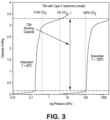
- the vertical dotted lines show the partial pressure of CO 2 (at 4 kPa or 100 kPa) that corresponds to a concentration of either 4 vol% or 100 vol%.
- the adsorption isotherm changes with temperature, with lower temperatures corresponding to higher amounts of adsorbed CO 2 at a given temperature.
- the working capacity of the adsorbent is about 0.5 moles CO 2 per kilogram of adsorbent, as shown by the horizontal lines in FIG. 2 .
- the intersection of the 27°C isotherm and the dotted vertical line corresponding to 4 vol% CO 2 represents the adsorption capacity of the adsorbent for adsorption of CO 2 from a gas stream during a hypothetical adsorption step at 100 kPa and 27°C, which is about 3 mol CO 2 /kg.
- Type V adsorbent with a large vertical step positioned below the partial pressure of CO 2 in the flue gas needed to achieve the desired CO 2 recovery, i.e. at the lower level capture limit of the adsorbent.
- FIG. 3 shows an example of CO 2 isotherms (calculated using an empirical model) for a material that is a Type V adsorbent for CO 2 .
- the modeled material in FIG. 3 is mmen-Mg 2 (dobpdc).
- This material has an expanded MOF-74 structure, with the mmen being a diamine functionalization of the 18.4 Angstrom channels in the structure. Additional details regarding the material can be found, for example, in mmen-Mg 2 (dobpdc) adsorbent, Thomas M. McDonald, Woo Ram Lee, Jarad A. Mason, Brian M. Wiers, Chang Seop Hong, and Jeffrey R. Long, J. Am. Chem. Soc. 2012, 134, 7056-7065 .
- FIG. 1 shows an example of CO 2 isotherms (calculated using an empirical model) for a material that is a Type V adsorbent for CO 2 .
- the modeled material in FIG. 3 is mmen-M
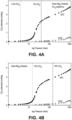
- FIGS. 4A and 4B show an example of CO 2 isotherms for a material that is a Type V adsorbent for CO 2 at differing levels of CO 2 in the feedstream.
- the material in FIGS. 4A and 4B is dmpn-Mg 2 (dobpdc) ( Milner, Phillip J., et al., "A Diaminopropane-Appended Metal-Organic Framework Enabling Efficient CO2 Capture from Coal Flue Gas Via a Mixed Adsorption Mechanism", Journal of the American Chemical Society, 2017, 139, 13541-13553 ).
- dmpn-Mg 2 dobpdc
- 4A illustrates the case where there is insufficient CO 2 concentration in the feed to effectively take advantage of the Type V adsorbent's working capacity and avoid bypass of CO 2 through the adsorbent.
- the dashed line on the isotherm illustrates adsorption of a natural gas power plant flue gas, which has a CO 2 concentration of about 4% (40 mbar).
- the isotherm should show sufficient adsorption at a CO 2 concentration of about 0.4% (4 mbar) defined by the dotted line.
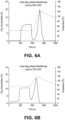
- heat is generated during the adsorption process.
- the heat generated during CO 2 adsorption of the about 3 mol/kg capacity of the adsorbent can increase the temperature of the adsorbent by about 50°C or more. Under conventional conditions, this can lead to low actual working capacity and/or unpredictable working capacity.
- a Type V adsorbent such as mmen-Mg 2 (dobpdc) such a temperature increase would allow CO 2 bypass.
- it can be beneficial to deploy cooling to the adsorbent bed itself.
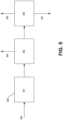
- Effluent stream 506 will generally have a partial pressure (or concentration) of sorbate gas that is at least 80%, at least 85%, at least 90%, or at least 95% less that the partial pressure (or concentration) of the sorbate-rich stream.
- Temperature in the Type V adsorbent contactor 503 can then be raised to the desorption temperature for the adsorbed gas, which then creates desorbed stream 507, which can then be routed for sequestration.
- the desorption temperature is preferably less than 200°C, less than 175°C, less than 150°C, less than 125°C, or less than 100°C. It should be appreciated that the above parameters may also be stated in ranges, e.g. 80-95% reduction or 100-200°C, and all combinations of the above are contemplated.
- the cooler 501 is incorporated in the Type V adsorbent 503.
- the concentrator 502 occurs before the cooler 501.
Landscapes
- Chemical & Material Sciences (AREA)
- Chemical Kinetics & Catalysis (AREA)
- Analytical Chemistry (AREA)
- Organic Chemistry (AREA)
- Engineering & Computer Science (AREA)
- General Chemical & Material Sciences (AREA)
- Oil, Petroleum & Natural Gas (AREA)
- Inorganic Chemistry (AREA)
- Dispersion Chemistry (AREA)
- Treating Waste Gases (AREA)
- Solid-Sorbent Or Filter-Aiding Compositions (AREA)
- Separation Of Gases By Adsorption (AREA)
- Carbon And Carbon Compounds (AREA)
- Organic Low-Molecular-Weight Compounds And Preparation Thereof (AREA)
Claims (11)
- Verfahren zum Absorbieren von CO2, bei demein Einsatzmaterialstrom bei einer ersten Temperatur bereitgestellt wird, wobei der Einsatzmaterialstrom eine erste Konzentration an CO2 umfasst,der Einsatzmaterialstrom auf eine zweite Temperatur gekühlt wird, wobei die zweite Temperatur niedriger als die erste Temperatur ist,der Einsatzmaterialstrom einer Anreicherungsanlage exponiert wird, die eine Membran, metallorganisches Gerüstmaterial oder eine Kombination davon umfasst, wodurch ein angereicherter Einsatzmaterialstrom mit einer zweiten Konzentration an CO2 erzeugt wird,wobei die zweite Konzentration von CO2 höher als die erste Konzentration von CO2 ist,der angereicherte Einsatzmaterialstrom gegenüber Adsorbenspartikeln exponiert wird, um einen Adsorbensausfluss mit einer niedrigeren Konzentration an CO2 als der Einsatzmaterialstrom zu produzieren, wobei die Adsorbenspartikel Adsorbens vom Typ V umfassen, undmindestens ein Anteil an CO2 von den Adsorbenspartikeln bei einer Desorptionstemperatur, die höher als die zweite Temperatur ist, desorbiert wird, wobei die zweite Konzentration an CO2 über dem unteren Niveau der Einfanggrenze des Adsorbens vom Typ V ist, wobei das untere Niveau der Einfanggrenze der Partialdruck von CO2 in dem Einsatzmaterialstrom ist, unterhalb dessen Bypass auftritt.
- Verfahren nach Anspruch 1, bei dem der Einsatzmaterialstrom ausgewählt ist aus einem Verbrennungsabgas, einem Erdgas-Verbrennungsabgas und Erdgas.
- Verfahren nach einem der vorhergehenden Ansprüche, bei dem die erste Konzentration an CO2 1 bis 10 Vol.% beträgt.
- Verfahren nach einem der vorhergehenden Ansprüche, bei dem die zweite Konzentration an CO2 10 bis 25 Vol.% beträgt.
- Verfahren nach einem der vorhergehenden Ansprüche, bei dem eine Beladung des adsorbierten CO2 in den Adsorbenspartikeln nach dem Desorbieren weniger als 50 % der Beladung an CO2 in den Adsorbenspartikeln am Ende der Exposition beträgt
- Verfahren nach einem der vorhergehenden Ansprüche, bei dem die Desorptionstemperatur um mindestens 20°C höher als die zweite Temperatur ist.
- Verfahren nach einem der vorhergehenden Ansprüche, bei dem das Kühlen des Einsatzmaterialstroms Kühlen des Einsatzmaterialstroms stromaufwärts von der Anreicherungsanlage umfasst.
- Verfahren nach einem der vorhergehenden Ansprüche, bei dem Kühlen des Einsatzmaterialstroms Kühlen des Einsatzmaterialstroms gleichzeitig mit dem Exponieren des angereicherten Einsatzmaterialstroms gegenüber den Adsorbenspartikeln umfasst, wobei das Kühlen vorzugsweise mittels Rieselbettkontaktor, Hohlfaserkontaktoren, Parallelkanalmonolithen mit alternierenden Gas- und Flüssigkeitskanälen, Rohrbündelwärmetauschern oder einer Kombination davon erreicht wird.
- Verfahren nach einem der vorhergehenden Ansprüche, bei dem der Einsatzmaterialstrom ein Nachverbrennungs-Einsatzmaterialstrom ist und das Exponieren des Einsatzmaterials gegenüber einer Anreicherungsanlage Anreichern eines Vorverbrennungs-Einsatzmaterialstroms mit O2 und Verbrennen des Vorverbrennungs-Einsatzmaterialstroms umfasst, um den an CO2 angereicherten Nachverbrennungs-Einsatzmaterialstrom zu produzieren.
- Verfahren nach einem der vorhergehenden Ansprüche, bei dem Exponieren des Eingangsfluids gegenüber den Adsorbenspartikeln Exponieren des Eingangsfluids gegenüber den Adsorbenspartikeln in einem Aufschlämmungskontaktor, einem Wirbelbettkontaktor, einem Rieselbettkontaktor, Hohlfaserkontaktoren, Parallelkanalmonolithen mit alternierenden Gas- und Flüssigkeitskanälen, Rohrbündelwärmetauschern oder einer Kombination davon umfasst.
- Verfahren nach einem der vorhergehenden Ansprüche, bei dem die Adsorbenspartikel ein metallorganisches Gerüstmaterial mit angefügtem Amin umfassen, vorzugsweise eines von N,N'-Dimethylethylendiamin angefügt an Mg2 (4,4'-Dioxido-3,3'-biphenyl-dicarboxylat) (mmen-Mg2(dobpdc)) und 2,2-Dimethyl-1,3-diaminopropan angefügt an Mg2(4,4'-Dioxido-3,3'-biphenyldi-carboxylat) (dmpn-Mg2 (dobpdc)) .
Applications Claiming Priority (2)
| Application Number | Priority Date | Filing Date | Title |
|---|---|---|---|
| US201762534278P | 2017-07-19 | 2017-07-19 | |
| PCT/US2018/032268 WO2019018047A1 (en) | 2017-07-19 | 2018-05-11 | USE OF TYPE V ADSORBENT AND GAS CONCENTRATION FOR CO2 ADSORPTION AND CAPTURE |
Publications (2)
| Publication Number | Publication Date |
|---|---|
| EP3655133A1 EP3655133A1 (de) | 2020-05-27 |
| EP3655133B1 true EP3655133B1 (de) | 2024-07-10 |
Family
ID=62245549
Family Applications (1)
| Application Number | Title | Priority Date | Filing Date |
|---|---|---|---|
| EP18727628.2A Active EP3655133B1 (de) | 2017-07-19 | 2018-05-11 | Verwendung von adsorbens des typs v und gaskonzentration für co2-adsorption und -abscheidung |
Country Status (9)
| Country | Link |
|---|---|
| US (1) | US11103826B2 (de) |
| EP (1) | EP3655133B1 (de) |
| JP (1) | JP7498106B2 (de) |
| KR (1) | KR102524769B1 (de) |
| CN (1) | CN110913971A (de) |
| AU (1) | AU2018302747B2 (de) |
| CA (1) | CA3068436C (de) |
| SG (1) | SG11201911582UA (de) |
| WO (1) | WO2019018047A1 (de) |
Families Citing this family (9)
| Publication number | Priority date | Publication date | Assignee | Title |
|---|---|---|---|---|
| CN116348412A (zh) | 2020-06-09 | 2023-06-27 | 全球温控营运有限责任公司 | 连续运动直接空气捕集系统 |
| AU2021320985A1 (en) | 2020-08-06 | 2023-03-09 | ExxonMobil Technology and Engineering Company | Metal-organic frameworks for carbon dioxide capture |
| AU2022200040A1 (en) * | 2021-01-12 | 2022-07-28 | L'Air Liquide, Société Anonyme pour l'Etude et l'Exploitation des Procédés Georges Claude | Flue gas treatment method and installation |
| CN117460571A (zh) * | 2021-05-21 | 2024-01-26 | 埃克森美孚技术与工程公司 | 并入金属有机框架的聚合物吸着剂纤维复合材料 |
| KR102872641B1 (ko) * | 2021-11-16 | 2025-10-16 | 주식회사 엘지에너지솔루션 | 가스 흡착 소재를 포함하는 이차전지 및 이차전지 모듈 |
| US20250171394A1 (en) | 2022-03-30 | 2025-05-29 | Ueno Fine Chemicals Industry, Ltd. | Method for producing 4,4'-dihydroxybiphenyl-3,3'-dicarboxylic acid |
| CN118946540A (zh) | 2022-03-30 | 2024-11-12 | 上野制药株式会社 | 4, 4’-二羟基联苯-3, 3’-二甲酸的制造方法 |
| JP2025518138A (ja) | 2022-05-27 | 2025-06-12 | ゼロ カーボン システムズ インコーポレイテッド | ハイスループット可動パネル直接空気回収システム |
| WO2024155523A1 (en) * | 2023-01-18 | 2024-07-25 | ExxonMobil Technology and Engineering Company | Co2 sorption with oxidation resistant amines |
Family Cites Families (18)
| Publication number | Priority date | Publication date | Assignee | Title |
|---|---|---|---|---|
| JPH0699035A (ja) * | 1992-09-21 | 1994-04-12 | Chubu Electric Power Co Inc | 排ガス中の二酸化炭素の分離回収方法 |
| GB2278113A (en) * | 1993-05-22 | 1994-11-23 | Boc Group Plc | The production of a carbon dioxide and nitrogen mix from the combustion exhaust gases of a hydrocarbon source |
| JP2000024455A (ja) * | 1998-07-09 | 2000-01-25 | Zosengyo Kiban Seibi Jigyo Kyokai | 二酸化炭素の処理方法 |
| US8142745B2 (en) * | 2008-02-21 | 2012-03-27 | Exxonmobil Research And Engineering Company | Separation of carbon dioxide from nitrogen utilizing zeolitic imidazolate framework materials |
| JP2010155214A (ja) | 2008-12-26 | 2010-07-15 | Hitachi Constr Mach Co Ltd | 汚染土砂処理システム |
| EP2210656A1 (de) | 2009-01-27 | 2010-07-28 | General Electric Company | System und Verfahren zur Trennung von Hybridkohlendioxid |
| CN101745288B (zh) * | 2010-01-20 | 2013-06-05 | 华东理工大学 | 一种真空变压变温耦合吸附捕集烟道气中二氧化碳的方法 |
| EP2608867B8 (de) * | 2010-08-27 | 2017-04-05 | Inventys Thermal Technologies Inc. | Verfahren für adsorptive gastrennung mit einer wärmeleitenden schützstruktur |
| RU2534075C1 (ru) * | 2010-09-13 | 2014-11-27 | Мембране Текнолоджи Энд Ресерч, Инк | Способ отделения диоксида углерода из отработанного газа с использованием стадий мембранного разделения на основе продувки и абсорбции |
| EP2747871B1 (de) * | 2011-07-02 | 2017-06-21 | Inventys Thermal Technologies Inc. | System und verfahren zur integrierten adsorbierenden gasabscheidung von verbrennungsabgasen |
| US10722863B2 (en) * | 2011-10-18 | 2020-07-28 | The Regents Of The University Of California | Cooperative chemical adsorption of acid gases in functionalized metal-organic frameworks |
| CN103071364B (zh) * | 2012-12-25 | 2014-12-17 | 国电新能源技术研究院 | 一种多级捕集烟道气中二氧化碳的系统和方法 |
| EP2938425A4 (de) * | 2012-12-31 | 2016-11-23 | Inventys Thermal Technologies Inc | System und verfahren zur integrierten kohlendioxidabscheidung aus verbrennungsgasen |
| US9314731B2 (en) * | 2013-11-20 | 2016-04-19 | L'Air Liquide, Société Anonyme pour l'Etude et l'Exploitation des Procédés Georges Claude | RTSA method using adsorbent structure for CO2 capture from low pressure and low concentration sources |
| US9968882B2 (en) | 2015-09-25 | 2018-05-15 | Exxonmobil Research And Engineering Company | Cyclic thermal swing adsorption with direct heat transfer |
| US10029205B2 (en) * | 2015-09-25 | 2018-07-24 | Exxonmobil Research And Engineering Company | Two stage adsorbent and process cycle for fluid separations |
| AU2016330903A1 (en) * | 2015-09-30 | 2018-04-12 | Chevron U.S.A. Inc. | Gas purification with diamine-appended metal-organic frameworks |
| KR101842838B1 (ko) * | 2017-07-03 | 2018-03-27 | 한국에너지기술연구원 | 산성가스 제거용 흡착제 및 이의 제조 방법 |
-
2018
- 2018-05-11 SG SG11201911582UA patent/SG11201911582UA/en unknown
- 2018-05-11 CN CN201880047698.9A patent/CN110913971A/zh active Pending
- 2018-05-11 CA CA3068436A patent/CA3068436C/en active Active
- 2018-05-11 KR KR1020197038328A patent/KR102524769B1/ko active Active
- 2018-05-11 AU AU2018302747A patent/AU2018302747B2/en active Active
- 2018-05-11 EP EP18727628.2A patent/EP3655133B1/de active Active
- 2018-05-11 JP JP2020502255A patent/JP7498106B2/ja active Active
- 2018-05-11 WO PCT/US2018/032268 patent/WO2019018047A1/en not_active Ceased
- 2018-05-11 US US15/977,281 patent/US11103826B2/en active Active
Non-Patent Citations (1)
| Title |
|---|
| TIMOTHY C. MERKEL ET AL: "Selective Exhaust Gas Recycle with Membranes for CO 2 Capture from Natural Gas Combined Cycle Power Plants", INDUSTRIAL & ENGINEERING CHEMISTRY RESEARCH, vol. 52, no. 3, 23 January 2013 (2013-01-23), pages 1150 - 1159, XP055500754, ISSN: 0888-5885, DOI: 10.1021/ie302110z * |
Also Published As
| Publication number | Publication date |
|---|---|
| EP3655133A1 (de) | 2020-05-27 |
| WO2019018047A1 (en) | 2019-01-24 |
| AU2018302747A1 (en) | 2019-12-19 |
| US11103826B2 (en) | 2021-08-31 |
| US20190022573A1 (en) | 2019-01-24 |
| SG11201911582UA (en) | 2020-02-27 |
| CN110913971A (zh) | 2020-03-24 |
| AU2018302747B2 (en) | 2023-10-19 |
| CA3068436A1 (en) | 2019-01-24 |
| CA3068436C (en) | 2023-10-17 |
| KR20200030507A (ko) | 2020-03-20 |
| JP7498106B2 (ja) | 2024-06-11 |
| JP2020527455A (ja) | 2020-09-10 |
| KR102524769B1 (ko) | 2023-04-25 |
Similar Documents
| Publication | Publication Date | Title |
|---|---|---|
| EP3655133B1 (de) | Verwendung von adsorbens des typs v und gaskonzentration für co2-adsorption und -abscheidung | |
| Yang et al. | Enrichment of low concentration methane: an overview of ventilation air methane | |
| Zhao et al. | Thermodynamic research of adsorbent materials on energy efficiency of vacuum-pressure swing adsorption cycle for CO2 capture | |
| AU2012259377B2 (en) | Methods of removing contaminants from a hydrocarbon stream by swing adsorption and related apparatus and systems | |
| CA2925555C (en) | Carbon dioxide recovery | |
| CA2726383C (en) | Carbon dioxide recovery | |
| AU2012223485B2 (en) | Methods of removing contaminants from a hydrocarbon stream by swing adsorption and related apparatus and systems | |
| CA2604249C (en) | Temperature swing adsorption system | |
| Fouladi et al. | CO2 adsorption by swing technologies and challenges on industrialization | |
| US10029205B2 (en) | Two stage adsorbent and process cycle for fluid separations | |
| Ling et al. | Strategies for CO2 capture from different CO2 emission sources by vacuum swing adsorption technology | |
| Zafanelli et al. | Dual-stage vacuum pressure swing adsorption for green hydrogen recovery from natural gas grids | |
| CN108236829B (zh) | 从含co2原料气中分离高纯度co2的方法及装置 | |
| EP3858463A1 (de) | Anlage und verfahren zur rückgewinnung von gasförmigen stoffen aus gasströmen | |
| JP2007261840A (ja) | 液化炭酸ガス精製装置 | |
| US20260014518A1 (en) | System and Process for Gas Upgrading | |
| WO2025043042A1 (en) | Methods of capturing carbon dioxide from a flue gas, and related systems | |
| JPS63240914A (ja) | 酸素及び窒素を含有する混合ガスから窒素を分離する方法 | |
| Koh¹ et al. | CHUNG Hong Tan1, a,*, SIEH Kiong Tiong 1, b,*, ODAY A Ahmed² | |
| Mhdi | Capture of CO2 from power plants Using Different Adsorbent materials | |
| CHUNG et al. | Carbon capture and storage techniques for CO2 reduction from energy sector |
Legal Events
| Date | Code | Title | Description |
|---|---|---|---|
| STAA | Information on the status of an ep patent application or granted ep patent |
Free format text: STATUS: UNKNOWN |
|
| STAA | Information on the status of an ep patent application or granted ep patent |
Free format text: STATUS: THE INTERNATIONAL PUBLICATION HAS BEEN MADE |
|
| PUAI | Public reference made under article 153(3) epc to a published international application that has entered the european phase |
Free format text: ORIGINAL CODE: 0009012 |
|
| STAA | Information on the status of an ep patent application or granted ep patent |
Free format text: STATUS: REQUEST FOR EXAMINATION WAS MADE |
|
| 17P | Request for examination filed |
Effective date: 20200127 |
|
| AK | Designated contracting states |
Kind code of ref document: A1 Designated state(s): AL AT BE BG CH CY CZ DE DK EE ES FI FR GB GR HR HU IE IS IT LI LT LU LV MC MK MT NL NO PL PT RO RS SE SI SK SM TR |
|
| AX | Request for extension of the european patent |
Extension state: BA ME |
|
| DAV | Request for validation of the european patent (deleted) | ||
| DAX | Request for extension of the european patent (deleted) | ||
| STAA | Information on the status of an ep patent application or granted ep patent |
Free format text: STATUS: EXAMINATION IS IN PROGRESS |
|
| 17Q | First examination report despatched |
Effective date: 20210608 |
|
| RAP3 | Party data changed (applicant data changed or rights of an application transferred) |
Owner name: EXXONMOBIL TECHNOLOGY AND ENGINEERING COMPANY |
|
| REG | Reference to a national code |
Ref country code: DE Ref legal event code: R079 Free format text: PREVIOUS MAIN CLASS: B01D0051100000 Ipc: B01J0019180000 Ref country code: DE Ref legal event code: R079 Ref document number: 602018071560 Country of ref document: DE Free format text: PREVIOUS MAIN CLASS: B01D0051100000 Ipc: B01J0019180000 |
|
| GRAP | Despatch of communication of intention to grant a patent |
Free format text: ORIGINAL CODE: EPIDOSNIGR1 |
|
| STAA | Information on the status of an ep patent application or granted ep patent |
Free format text: STATUS: GRANT OF PATENT IS INTENDED |
|
| RIC1 | Information provided on ipc code assigned before grant |
Ipc: B01J 19/18 20060101AFI20240130BHEP |
|
| INTG | Intention to grant announced |
Effective date: 20240305 |
|
| GRAS | Grant fee paid |
Free format text: ORIGINAL CODE: EPIDOSNIGR3 |
|
| GRAA | (expected) grant |
Free format text: ORIGINAL CODE: 0009210 |
|
| STAA | Information on the status of an ep patent application or granted ep patent |
Free format text: STATUS: THE PATENT HAS BEEN GRANTED |
|
| P01 | Opt-out of the competence of the unified patent court (upc) registered |
Effective date: 20240528 |
|
| AK | Designated contracting states |
Kind code of ref document: B1 Designated state(s): AL AT BE BG CH CY CZ DE DK EE ES FI FR GB GR HR HU IE IS IT LI LT LU LV MC MK MT NL NO PL PT RO RS SE SI SK SM TR |
|
| REG | Reference to a national code |
Ref country code: CH Ref legal event code: EP |
|
| REG | Reference to a national code |
Ref country code: DE Ref legal event code: R096 Ref document number: 602018071560 Country of ref document: DE |
|
| REG | Reference to a national code |
Ref country code: NL Ref legal event code: FP |
|
| REG | Reference to a national code |
Ref country code: LT Ref legal event code: MG9D |
|
| PG25 | Lapsed in a contracting state [announced via postgrant information from national office to epo] |
Ref country code: PT Free format text: LAPSE BECAUSE OF FAILURE TO SUBMIT A TRANSLATION OF THE DESCRIPTION OR TO PAY THE FEE WITHIN THE PRESCRIBED TIME-LIMIT Effective date: 20241111 |
|
| REG | Reference to a national code |
Ref country code: AT Ref legal event code: MK05 Ref document number: 1701586 Country of ref document: AT Kind code of ref document: T Effective date: 20240710 |
|
| PG25 | Lapsed in a contracting state [announced via postgrant information from national office to epo] |
Ref country code: PT Free format text: LAPSE BECAUSE OF FAILURE TO SUBMIT A TRANSLATION OF THE DESCRIPTION OR TO PAY THE FEE WITHIN THE PRESCRIBED TIME-LIMIT Effective date: 20241111 |
|
| PG25 | Lapsed in a contracting state [announced via postgrant information from national office to epo] |
Ref country code: NO Free format text: LAPSE BECAUSE OF FAILURE TO SUBMIT A TRANSLATION OF THE DESCRIPTION OR TO PAY THE FEE WITHIN THE PRESCRIBED TIME-LIMIT Effective date: 20241010 |
|
| PG25 | Lapsed in a contracting state [announced via postgrant information from national office to epo] |
Ref country code: GR Free format text: LAPSE BECAUSE OF FAILURE TO SUBMIT A TRANSLATION OF THE DESCRIPTION OR TO PAY THE FEE WITHIN THE PRESCRIBED TIME-LIMIT Effective date: 20241011 Ref country code: FI Free format text: LAPSE BECAUSE OF FAILURE TO SUBMIT A TRANSLATION OF THE DESCRIPTION OR TO PAY THE FEE WITHIN THE PRESCRIBED TIME-LIMIT Effective date: 20240710 Ref country code: PL Free format text: LAPSE BECAUSE OF FAILURE TO SUBMIT A TRANSLATION OF THE DESCRIPTION OR TO PAY THE FEE WITHIN THE PRESCRIBED TIME-LIMIT Effective date: 20240710 |
|
| PG25 | Lapsed in a contracting state [announced via postgrant information from national office to epo] |
Ref country code: BG Free format text: LAPSE BECAUSE OF FAILURE TO SUBMIT A TRANSLATION OF THE DESCRIPTION OR TO PAY THE FEE WITHIN THE PRESCRIBED TIME-LIMIT Effective date: 20240710 |
|
| PG25 | Lapsed in a contracting state [announced via postgrant information from national office to epo] |
Ref country code: LV Free format text: LAPSE BECAUSE OF FAILURE TO SUBMIT A TRANSLATION OF THE DESCRIPTION OR TO PAY THE FEE WITHIN THE PRESCRIBED TIME-LIMIT Effective date: 20240710 |
|
| PG25 | Lapsed in a contracting state [announced via postgrant information from national office to epo] |
Ref country code: IS Free format text: LAPSE BECAUSE OF FAILURE TO SUBMIT A TRANSLATION OF THE DESCRIPTION OR TO PAY THE FEE WITHIN THE PRESCRIBED TIME-LIMIT Effective date: 20241110 Ref country code: AT Free format text: LAPSE BECAUSE OF FAILURE TO SUBMIT A TRANSLATION OF THE DESCRIPTION OR TO PAY THE FEE WITHIN THE PRESCRIBED TIME-LIMIT Effective date: 20240710 |
|
| PG25 | Lapsed in a contracting state [announced via postgrant information from national office to epo] |
Ref country code: HR Free format text: LAPSE BECAUSE OF FAILURE TO SUBMIT A TRANSLATION OF THE DESCRIPTION OR TO PAY THE FEE WITHIN THE PRESCRIBED TIME-LIMIT Effective date: 20240710 |
|
| PG25 | Lapsed in a contracting state [announced via postgrant information from national office to epo] |
Ref country code: ES Free format text: LAPSE BECAUSE OF FAILURE TO SUBMIT A TRANSLATION OF THE DESCRIPTION OR TO PAY THE FEE WITHIN THE PRESCRIBED TIME-LIMIT Effective date: 20240710 Ref country code: RS Free format text: LAPSE BECAUSE OF FAILURE TO SUBMIT A TRANSLATION OF THE DESCRIPTION OR TO PAY THE FEE WITHIN THE PRESCRIBED TIME-LIMIT Effective date: 20241010 |
|
| PG25 | Lapsed in a contracting state [announced via postgrant information from national office to epo] |
Ref country code: RS Free format text: LAPSE BECAUSE OF FAILURE TO SUBMIT A TRANSLATION OF THE DESCRIPTION OR TO PAY THE FEE WITHIN THE PRESCRIBED TIME-LIMIT Effective date: 20241010 Ref country code: PL Free format text: LAPSE BECAUSE OF FAILURE TO SUBMIT A TRANSLATION OF THE DESCRIPTION OR TO PAY THE FEE WITHIN THE PRESCRIBED TIME-LIMIT Effective date: 20240710 Ref country code: NO Free format text: LAPSE BECAUSE OF FAILURE TO SUBMIT A TRANSLATION OF THE DESCRIPTION OR TO PAY THE FEE WITHIN THE PRESCRIBED TIME-LIMIT Effective date: 20241010 Ref country code: LV Free format text: LAPSE BECAUSE OF FAILURE TO SUBMIT A TRANSLATION OF THE DESCRIPTION OR TO PAY THE FEE WITHIN THE PRESCRIBED TIME-LIMIT Effective date: 20240710 Ref country code: IS Free format text: LAPSE BECAUSE OF FAILURE TO SUBMIT A TRANSLATION OF THE DESCRIPTION OR TO PAY THE FEE WITHIN THE PRESCRIBED TIME-LIMIT Effective date: 20241110 Ref country code: HR Free format text: LAPSE BECAUSE OF FAILURE TO SUBMIT A TRANSLATION OF THE DESCRIPTION OR TO PAY THE FEE WITHIN THE PRESCRIBED TIME-LIMIT Effective date: 20240710 Ref country code: GR Free format text: LAPSE BECAUSE OF FAILURE TO SUBMIT A TRANSLATION OF THE DESCRIPTION OR TO PAY THE FEE WITHIN THE PRESCRIBED TIME-LIMIT Effective date: 20241011 Ref country code: FI Free format text: LAPSE BECAUSE OF FAILURE TO SUBMIT A TRANSLATION OF THE DESCRIPTION OR TO PAY THE FEE WITHIN THE PRESCRIBED TIME-LIMIT Effective date: 20240710 Ref country code: ES Free format text: LAPSE BECAUSE OF FAILURE TO SUBMIT A TRANSLATION OF THE DESCRIPTION OR TO PAY THE FEE WITHIN THE PRESCRIBED TIME-LIMIT Effective date: 20240710 Ref country code: BG Free format text: LAPSE BECAUSE OF FAILURE TO SUBMIT A TRANSLATION OF THE DESCRIPTION OR TO PAY THE FEE WITHIN THE PRESCRIBED TIME-LIMIT Effective date: 20240710 Ref country code: AT Free format text: LAPSE BECAUSE OF FAILURE TO SUBMIT A TRANSLATION OF THE DESCRIPTION OR TO PAY THE FEE WITHIN THE PRESCRIBED TIME-LIMIT Effective date: 20240710 |
|
| REG | Reference to a national code |
Ref country code: DE Ref legal event code: R097 Ref document number: 602018071560 Country of ref document: DE |
|
| PG25 | Lapsed in a contracting state [announced via postgrant information from national office to epo] |
Ref country code: DK Free format text: LAPSE BECAUSE OF FAILURE TO SUBMIT A TRANSLATION OF THE DESCRIPTION OR TO PAY THE FEE WITHIN THE PRESCRIBED TIME-LIMIT Effective date: 20240710 Ref country code: SM Free format text: LAPSE BECAUSE OF FAILURE TO SUBMIT A TRANSLATION OF THE DESCRIPTION OR TO PAY THE FEE WITHIN THE PRESCRIBED TIME-LIMIT Effective date: 20240710 Ref country code: RO Free format text: LAPSE BECAUSE OF FAILURE TO SUBMIT A TRANSLATION OF THE DESCRIPTION OR TO PAY THE FEE WITHIN THE PRESCRIBED TIME-LIMIT Effective date: 20240710 |
|
| PG25 | Lapsed in a contracting state [announced via postgrant information from national office to epo] |
Ref country code: EE Free format text: LAPSE BECAUSE OF FAILURE TO SUBMIT A TRANSLATION OF THE DESCRIPTION OR TO PAY THE FEE WITHIN THE PRESCRIBED TIME-LIMIT Effective date: 20240710 |
|
| PG25 | Lapsed in a contracting state [announced via postgrant information from national office to epo] |
Ref country code: CZ Free format text: LAPSE BECAUSE OF FAILURE TO SUBMIT A TRANSLATION OF THE DESCRIPTION OR TO PAY THE FEE WITHIN THE PRESCRIBED TIME-LIMIT Effective date: 20240710 |
|
| PG25 | Lapsed in a contracting state [announced via postgrant information from national office to epo] |
Ref country code: IT Free format text: LAPSE BECAUSE OF FAILURE TO SUBMIT A TRANSLATION OF THE DESCRIPTION OR TO PAY THE FEE WITHIN THE PRESCRIBED TIME-LIMIT Effective date: 20240710 Ref country code: SK Free format text: LAPSE BECAUSE OF FAILURE TO SUBMIT A TRANSLATION OF THE DESCRIPTION OR TO PAY THE FEE WITHIN THE PRESCRIBED TIME-LIMIT Effective date: 20240710 |
|
| PLBE | No opposition filed within time limit |
Free format text: ORIGINAL CODE: 0009261 |
|
| STAA | Information on the status of an ep patent application or granted ep patent |
Free format text: STATUS: NO OPPOSITION FILED WITHIN TIME LIMIT |
|
| PGFP | Annual fee paid to national office [announced via postgrant information from national office to epo] |
Ref country code: NL Payment date: 20250526 Year of fee payment: 8 |
|
| 26N | No opposition filed |
Effective date: 20250411 |
|
| PGFP | Annual fee paid to national office [announced via postgrant information from national office to epo] |
Ref country code: DE Payment date: 20250528 Year of fee payment: 8 |
|
| PG25 | Lapsed in a contracting state [announced via postgrant information from national office to epo] |
Ref country code: SE Free format text: LAPSE BECAUSE OF FAILURE TO SUBMIT A TRANSLATION OF THE DESCRIPTION OR TO PAY THE FEE WITHIN THE PRESCRIBED TIME-LIMIT Effective date: 20240710 |
|
| REG | Reference to a national code |
Ref country code: CH Ref legal event code: H13 Free format text: ST27 STATUS EVENT CODE: U-0-0-H10-H13 (AS PROVIDED BY THE NATIONAL OFFICE) Effective date: 20251223 |
|
| PG25 | Lapsed in a contracting state [announced via postgrant information from national office to epo] |
Ref country code: LU Free format text: LAPSE BECAUSE OF NON-PAYMENT OF DUE FEES Effective date: 20250511 |
|
| PG25 | Lapsed in a contracting state [announced via postgrant information from national office to epo] |
Ref country code: CH Free format text: LAPSE BECAUSE OF NON-PAYMENT OF DUE FEES Effective date: 20250531 |
|
| GBPC | Gb: european patent ceased through non-payment of renewal fee |
Effective date: 20250511 |
|
| REG | Reference to a national code |
Ref country code: BE Ref legal event code: MM Effective date: 20250531 |
|
| PG25 | Lapsed in a contracting state [announced via postgrant information from national office to epo] |
Ref country code: MC Free format text: LAPSE BECAUSE OF FAILURE TO SUBMIT A TRANSLATION OF THE DESCRIPTION OR TO PAY THE FEE WITHIN THE PRESCRIBED TIME-LIMIT Effective date: 20240710 |
|
| PG25 | Lapsed in a contracting state [announced via postgrant information from national office to epo] |
Ref country code: GB Free format text: LAPSE BECAUSE OF NON-PAYMENT OF DUE FEES Effective date: 20250511 |
|
| PG25 | Lapsed in a contracting state [announced via postgrant information from national office to epo] |
Ref country code: IE Free format text: LAPSE BECAUSE OF NON-PAYMENT OF DUE FEES Effective date: 20250511 |
|
| PG25 | Lapsed in a contracting state [announced via postgrant information from national office to epo] |
Ref country code: BE Free format text: LAPSE BECAUSE OF NON-PAYMENT OF DUE FEES Effective date: 20250531 |
|
| PG25 | Lapsed in a contracting state [announced via postgrant information from national office to epo] |
Ref country code: FR Free format text: LAPSE BECAUSE OF NON-PAYMENT OF DUE FEES Effective date: 20250531 |