EP3655799B1 - Verfahren zum bereitstellen und zum verbessern einer positionswahrscheinlichkeitsverteilung für gnss-empfangsdaten - Google Patents
Verfahren zum bereitstellen und zum verbessern einer positionswahrscheinlichkeitsverteilung für gnss-empfangsdaten Download PDFInfo
- Publication number
- EP3655799B1 EP3655799B1 EP18733549.2A EP18733549A EP3655799B1 EP 3655799 B1 EP3655799 B1 EP 3655799B1 EP 18733549 A EP18733549 A EP 18733549A EP 3655799 B1 EP3655799 B1 EP 3655799B1
- Authority
- EP
- European Patent Office
- Prior art keywords
- distance
- vehicle
- correction term
- determined
- probability distribution
- Prior art date
- Legal status (The legal status is an assumption and is not a legal conclusion. Google has not performed a legal analysis and makes no representation as to the accuracy of the status listed.)
- Active
Links
Images


Classifications
-
- G—PHYSICS
- G01—MEASURING; TESTING
- G01S—RADIO DIRECTION-FINDING; RADIO NAVIGATION; DETERMINING DISTANCE OR VELOCITY BY USE OF RADIO WAVES; LOCATING OR PRESENCE-DETECTING BY USE OF THE REFLECTION OR RERADIATION OF RADIO WAVES; ANALOGOUS ARRANGEMENTS USING OTHER WAVES
- G01S5/00—Position-fixing by co-ordinating two or more direction or position line determinations; Position-fixing by co-ordinating two or more distance determinations
- G01S5/0009—Transmission of position information to remote stations
- G01S5/0072—Transmission between mobile stations, e.g. anti-collision systems
-
- G—PHYSICS
- G01—MEASURING; TESTING
- G01S—RADIO DIRECTION-FINDING; RADIO NAVIGATION; DETERMINING DISTANCE OR VELOCITY BY USE OF RADIO WAVES; LOCATING OR PRESENCE-DETECTING BY USE OF THE REFLECTION OR RERADIATION OF RADIO WAVES; ANALOGOUS ARRANGEMENTS USING OTHER WAVES
- G01S19/00—Satellite radio beacon positioning systems; Determining position, velocity or attitude using signals transmitted by such systems
- G01S19/38—Determining a navigation solution using signals transmitted by a satellite radio beacon positioning system
- G01S19/39—Determining a navigation solution using signals transmitted by a satellite radio beacon positioning system the satellite radio beacon positioning system transmitting time-stamped messages, e.g. GPS [Global Positioning System], GLONASS [Global Orbiting Navigation Satellite System] or GALILEO
- G01S19/42—Determining position
- G01S19/45—Determining position by combining measurements of signals from the satellite radio beacon positioning system with a supplementary measurement
-
- B—PERFORMING OPERATIONS; TRANSPORTING
- B61—RAILWAYS
- B61L—GUIDING RAILWAY TRAFFIC; ENSURING THE SAFETY OF RAILWAY TRAFFIC
- B61L23/00—Control, warning or like safety means along the route or between vehicles or trains
- B61L23/34—Control, warning or like safety means along the route or between vehicles or trains for indicating the distance between vehicles or trains by the transmission of signals therebetween
-
- G—PHYSICS
- G01—MEASURING; TESTING
- G01S—RADIO DIRECTION-FINDING; RADIO NAVIGATION; DETERMINING DISTANCE OR VELOCITY BY USE OF RADIO WAVES; LOCATING OR PRESENCE-DETECTING BY USE OF THE REFLECTION OR RERADIATION OF RADIO WAVES; ANALOGOUS ARRANGEMENTS USING OTHER WAVES
- G01S19/00—Satellite radio beacon positioning systems; Determining position, velocity or attitude using signals transmitted by such systems
- G01S19/38—Determining a navigation solution using signals transmitted by a satellite radio beacon positioning system
- G01S19/39—Determining a navigation solution using signals transmitted by a satellite radio beacon positioning system the satellite radio beacon positioning system transmitting time-stamped messages, e.g. GPS [Global Positioning System], GLONASS [Global Orbiting Navigation Satellite System] or GALILEO
- G01S19/40—Correcting position, velocity or attitude
-
- G—PHYSICS
- G01—MEASURING; TESTING
- G01S—RADIO DIRECTION-FINDING; RADIO NAVIGATION; DETERMINING DISTANCE OR VELOCITY BY USE OF RADIO WAVES; LOCATING OR PRESENCE-DETECTING BY USE OF THE REFLECTION OR RERADIATION OF RADIO WAVES; ANALOGOUS ARRANGEMENTS USING OTHER WAVES
- G01S19/00—Satellite radio beacon positioning systems; Determining position, velocity or attitude using signals transmitted by such systems
- G01S19/38—Determining a navigation solution using signals transmitted by a satellite radio beacon positioning system
- G01S19/39—Determining a navigation solution using signals transmitted by a satellite radio beacon positioning system the satellite radio beacon positioning system transmitting time-stamped messages, e.g. GPS [Global Positioning System], GLONASS [Global Orbiting Navigation Satellite System] or GALILEO
- G01S19/42—Determining position
- G01S19/51—Relative positioning
-
- H—ELECTRICITY
- H04—ELECTRIC COMMUNICATION TECHNIQUE
- H04W—WIRELESS COMMUNICATION NETWORKS
- H04W4/00—Services specially adapted for wireless communication networks; Facilities therefor
- H04W4/30—Services specially adapted for particular environments, situations or purposes
- H04W4/40—Services specially adapted for particular environments, situations or purposes for vehicles, e.g. vehicle-to-pedestrians [V2P]
- H04W4/46—Services specially adapted for particular environments, situations or purposes for vehicles, e.g. vehicle-to-pedestrians [V2P] for vehicle-to-vehicle communication [V2V]
Definitions
- the invention relates to a method for correcting a position probability distribution and a method for providing at least one correction term.
- GNSS Global Navigation Satellite System
- GPS Global Positioning System
- GNSS receivers In aviation, for example, two GNSS receivers that are offset from one another are used to increase the accuracy of position determination.
- a GNSS receiver is arranged at the front and a GNSS receiver at the rear of the aircraft and the accuracy of the position determination is optimized based on the fixed and known distance between the GNSS receivers.
- the accuracy of position determination can be improved by a differential GPS (DGPS).
- DGPS differential GPS
- a DGPS station whose position has been measured in advance, transmits locally valid correction signals with correction terms. This can cause errors, for example caused by satellite clock drift or atmospheric influences, be compensated.
- the DGPS services are usually chargeable and require a receiving device intended for this purpose.
- Position data from vehicles is optimized using a base station as a reference. Based on a known and precisely determined GPS position of the base station and the distance of a vehicle to the base station, the position data of the vehicle can be determined or specified. Further state of the art is out US 2016/0018527 A1 , US 2013/0093618 A1 , DE 10 2016 004370 A1 and DE 10 2009 041586 A1 known.
- the object underlying the invention can be seen as improving the accuracy of position measurements without additional hardware and providing this improvement.
- a method for correcting a position probability distribution is provided.
- position probability distributions for the at least two mobile systems are determined by at least two mobile systems, each with a GNSS receiver.
- a distance between the at least two mobile systems is determined.
- the determined position probability distributions are exchanged with one another by the at least two mobile systems via a communication connection.
- the position probability distributions of the at least two mobile systems are then improved using the at least two determined position probability distributions and the distance between the at least two mobile systems.
- the distance can be used as a more accurate reference for comparing or adjusting position probability distributions.
- This allows GNSS-based localization to be improved by exchanging vehicle-to-vehicle data, for example.
- various data determined by a vehicle or several vehicles such as distances to other road users, distances from several vehicles to an object with an unknown position or to public objects with a known position, can be used to optimize the position determination of the vehicle or the mobile system become.
- the sensors and GNSS receivers already present in the mobile system can be used to localize and improve positioning. Additional hardware, for example to use DGPS, is therefore not required.
- each vehicle has a local estimate of its position in the form of a probability distribution.
- the position in the form of a probability distribution is the position probability distribution that was determined based on previous GNSS measurements carried out by the mobile system.
- other sensors of the mobile system such as distance sensors or acceleration sensors, can also be used.
- the mobile systems exchange their position estimates with the estimated clock drifts to the observed satellites as well as the measured GNSS signals.
- the GNSS signals or measurements can, for example, have the three-dimensional positions, the time at which the signal was sent and the local reception time of the mobile system.
- the sensor data determined by each mobile system can also be transmitted via the communication connection.
- the mobile systems can each determine a distance from one another and then exchange it with one another. This allows individual measurement uncertainties of a sensor to be compensated for.
- the Distance between the mobile systems can also be determined by a first mobile system and transmitted to the other or second mobile system.
- the exchanged or transmitted data can then be used together with the determined position probability distributions by each mobile system to calculate a correction term for correcting or optimizing position probability distributions.
- the correction term determined can be applied to the subsequent calculations or measurements of the position of a mobile system.
- Improving the GPS position can enable new driving functions that, for example, require lane-precise localization. Furthermore, the method can be used to improve the accuracy of classic navigation systems.
- the position probability distribution is determined by the GNSS receiver of a vehicle or a portable device.
- the mobile systems can be, for example, vehicles, portable devices or stationary devices.
- portable devices can also be arranged stationary.
- portable devices can also be arranged in a vehicle and used to carry out the method.
- navigation devices, mobile devices, computers, tablets and the like can be used as portable devices.
- the position probability distribution determined by the position estimator is improved by at least one sensor.
- Each mobile system can use its existing sensors to perceive its external environment.
- the sensor data determined in this way can be used to improve the position probability distribution. If, for example, a communicating mobile system perceives the other or second mobile system via its sensors, such as a radar or a camera, it can precisely determine the relative position of the GNSS receiver of the second mobile system to its own GNSS receiver and this distance as well as the received GNSS measurements of at least one other Mobile system and your own GNSS measurements to estimate the GNSS correction term.
- the correction term determined in this way can be shared with all mobile systems within range. This is possible because it can be assumed that the GNSS errors hardly change in the close vicinity of the mobile systems.
- the at least two mobile systems determine a distance from one another using at least one sensor or estimate the distance from one another.
- the distance of a mobile system to the second mobile system can be determined by radar sensors, LIDAR (light detection and ranging) sensors, ultrasonic sensors and the like.
- the distance between the at least two mobile systems can change or remain the same during the measurement.
- locally determined position data is exchanged through the communication connection of the at least two mobile systems and used to calculate the correction term.
- each mobile system within the communication connection can use its own sensors to measure or estimate a distance to another mobile system or a defined object in its environment. Using this sensor data, the mobile system can improve its own position probability distribution using a calculated correction term.
- the determined sensor data or the correction term can be made available to other mobile systems within a defined radius.
- the communication connection is a radio connection.
- the communication connection can be a cellular connection, a wireless vehicle-to-vehicle connection and the like.
- UMTS, LTE, WLAN, Bluetooth and the like can be used as transmission standards.
- a defined distance between the mobile systems can also be set, for example by a distance keeping assistant.
- vehicles communicating with each other can automatically adjust their relative distance and speed so that the calculation of local correction terms can be optimized.
- fixed distance values can therefore be assumed. This can, for example, improve the cooperative functions of vehicles.
- Cooperative functions are designed to be automated to carry out potentially critical joint driving maneuvers between multiple vehicles, such as automatically merging onto a highway or automatically widening gaps through traffic on a main roadway.
- a method for providing at least one correction term is disclosed.
- the correction term was here calculated by the method according to the previous aspect of the invention.
- at least one correction term is transmitted to a central server unit.
- the transmitted correction term is then assigned to a location or updated at the corresponding location.
- a correction term corresponding to the location or position of the mobile system is transmitted from the central server unit to the mobile system.
- the correction terms determined by a large number of mobile systems can be transmitted to a central server unit in real time or at specific time intervals.
- the positions of the respective mobile systems can also be transmitted to the server unit.
- This data can be used to create a map that can provide position-dependent correction terms for any or specific mobile systems. This can be achieved in particular by linking the correction terms to the corresponding positions.
- the method can be used to provide a service for distributing the correction values to other road users via a central server.
- the correction terms and the respective Positions or position probability distributions can be transmitted to the central server unit, for example, via a mobile phone network or the Internet.
- Providing the correction terms to other participants or mobile systems can also take place in the form of wireless data transmission via a cellular network or via a wired communication network.
- the method can reduce or preferably avoid local obstacles and shadows, such as those caused by buildings.
- the correction terms stored in the central server unit can be transmitted to the requesting mobile systems upon request from mobile systems.
- the correction terms can be provided depending on a position of the mobile system.
- no dedicated receiving device is necessary in vehicles or mobile systems, which is why the GNSS reception hardware can be kept inexpensively in vehicles and the operation of fixed DGPS base stations can be eliminated.
- At least one correction term for at least one second location is estimated based on the at least one transmitted correction term for a first location.
- the limited number of correction terms that are locally valid or only valid in one position point can also be interpolated to other areas of a map.
- the central server unit collects the correction terms from various mobile systems and uses them to form a local distribution of the GNSS correction terms.
- a Gaussian process can be used.
- a Gaussian process trained with the determined data can be used to estimate GNSS correction terms for positions for which no correction terms have been transmitted.
- the big advantage of using a Gaussian process is that the value it delivers for the GNSS correction term is a Gaussian distribution, which, in addition to the mean, also delivers a covariance, i.e. a quantification number for the quality of the interpolated GNSS correction term.
- the change in correction terms over time can also be taken into account. This can be represented, for example, by increasing the covariance of the received correction terms over time, giving them less weight can be awarded when training the Gaussian process.
- the problem under consideration of estimating the local distribution of GNSS correction terms can be viewed as a distributed parametric phenomenon, the parameters of which can be determined using a Bayesian estimate.
- the at least one calculated correction term is transmitted from at least one vehicle to the server unit.
- the mobile systems that transmit the correction terms and the respective positions of the correction terms to the central server unit can preferably be vehicles.
- the vehicles can, for example, have a wireless Internet connection to the central server unit and can send and receive the correction terms via this.
- the Figure 1 shows a schematic sequence of a method 1 for providing at least one correction term according to a first exemplary embodiment.
- a first mobile system 2 or a first vehicle 2 communicates via a wireless communication connection with a second mobile system 4 or a second vehicle 4.
- Both vehicles 2, 4 have determined their respective position probability distribution using GNSS.
- the second vehicle 4 has determined a distance 12 to the first vehicle 2 with the help of a distance keeping assistant and transmitted the distance 12 to the first vehicle 2.
- Both vehicles 2, 4 can therefore make corrections to their respective position probability distributions based on their position probability distributions and the more precisely determined distance 12 of both vehicles 2, 4 from one another.
- the second vehicle 4 measures the relative position of the first vehicle 2 using on-board sensors.
- the position of the first vehicle 2 can then be determined from the calculated position of the second vehicle 4 and the measured relative position.
- the case is considered that a deviation of the signal propagation speed from the nominal speed of light due to atmospheric influences is the only source of error. This assumption is justified because this type of influence is usually the most significant.
- multipath propagation can also be modeled as a variation in the propagation speed.
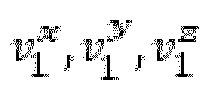
- s i x , s i y , s i e.g the coordinates of satellite i, b 1 and b 2 are the drifts of the local vehicle clocks
- d ij is the measured time difference between the transmission of the GNSS signal by satellite j and reception by vehicle i and finally e j the deviations of the GNSS signal transmission speed of satellite j of nominal speed of light c.
- This system of equations is overdetermined for two vehicles communicating with each other via a communication link for five observed satellites and can be solved, for example, using the least squares method.
- the following inequality can be derived mn ⁇ m + n + 3 , where m is the number of cooperating vehicles and n is the number of observed satellites. If this inequality is fulfilled, the system of equations formulated above can be solved. For example, if four vehicles over If the corresponding communication connection cooperates with one another, two satellites can be sufficient to determine a GNSS position as well as a calculation of the clock drifts of all vehicles involved and the correction terms. If not enough satellites are observable, either the correction terms from the previous calculation can be used or the conventional GNSS equations without correction terms can be used. Furthermore, the use of recursive and non-recursive estimation methods can improve the results.
- the determined correction terms can be used by the vehicles 2, 4 to optimize their position determination and transmitted to a central server unit 6, for example via an Internet connection 8.
- a central server unit 6 On the central server unit 6, the respective positions or position probability distribution of the vehicles 2, 4 are assigned to the calculated correction terms.
- a map for correcting position probabilities can be created and provided. For example, depending on a position of another vehicle 10, an already determined correction value can be sent to this vehicle 10 to optimize its position determination.
- FIG 2 is a schematic sequence of a method 11 for correcting a position probability according to a first exemplary embodiment.
- the two vehicles 2, 4 exchange the determined position probabilities with each other via a communication connection.
- the second vehicle 4 measures a distance 12 between the first vehicle 2 and the second vehicle 4 via a distance sensor.
- the distance 12 can also be transmitted to the first vehicle 2 using the communication connection. Based on an accurate measurement of the distance 12, the vehicles 2, 4 can improve or calibrate their position determination and limit or optimize the determined position probability distributions.
- a landmark 14 recognized by the first vehicle 2 is recognized here and a distance between the first vehicle 2 and the landmark 14 is measured.
- the second vehicle 4 cannot yet recognize the landmark 14 because the distance between the vehicle 4 and the landmark 14 is too great.
- the distance between the landmark 14 and the first vehicle 2 can improve the position probability distribution of the first vehicle 2.
- the second vehicle 4 can also improve its position probability distribution.
- the second vehicle 4 can indirectly recognize the landmark 14 through the communication connection with the first vehicle 2 and thus increase its range.
Landscapes
- Engineering & Computer Science (AREA)
- Radar, Positioning & Navigation (AREA)
- Remote Sensing (AREA)
- Physics & Mathematics (AREA)
- General Physics & Mathematics (AREA)
- Computer Networks & Wireless Communication (AREA)
- Mechanical Engineering (AREA)
- Signal Processing (AREA)
- Navigation (AREA)
- Traffic Control Systems (AREA)
- Position Fixing By Use Of Radio Waves (AREA)
Description
- Die Erfindung betrifft ein Verfahren zum Korrigieren einer Positionswahrscheinlichkeitsverteilung sowie ein Verfahren zum Bereitstellen von mindestens einem Korrekturterm.
- Bei einer Vielzahl an Anwendungen ist eine präzise Positionsbestimmung notwendig. Beispielsweise muss in der Luft- und Raumfahrt und auch bei autonomen Fahrzeugen die Position möglichst genau bestimmbar sein. Allerdings ermöglicht der zivil verfügbare Modus des GNSS (Globales Navigationssatellitensystem) Standards, wie zum Beispiel das globale Positionierungssystem (GPS), eine relativ geringe laterale Genauigkeit von ca. 13m und eine vertikale Genauigkeit von ca. 22m.
- In der Luftfahrt werden beispielsweise zwei zueinander versetzte GNSS-Empfänger dazu verwendet die Genauigkeit der Positionsbestimmung zu erhöhen. Hierzu wird jeweils ein GNSS-Empfänger an der Front und ein GNSS-Empfänger am Heck des Flugzeugs angeordnet und anhand des festen und bekannten Abstandes der GNSS-Empfänger zueinander die Genauigkeit der Positionsbestimmung optimiert.
- Des Weiteren kann die Genauigkeit der Positionsbestimmung durch ein Differential GPS (DGPS) verbessert werden. Dazu überträgt eine DGPS-Station, deren Position im Vorfeld vermessen wurde, lokal gültige Korrektursignale mit Korrekturtermen. Dadurch können Fehler, die beispielswiese durch einen Uhrendrift der Satelliten oder durch atmosphärische Einflüsse entstehen, kompensiert werden. Die DGPS-Dienste sind jedoch in der Regel kostenpflichtig und setzen eine für diesen Zweck vorgesehene Empfangsvorrichtung voraus. Ein derartiges Verfahren zum Verbessern der Genauigkeit der Positionsbestimmung ist aus
US 2010/0164789 A1 bekannt. Es werden Positionsdaten von Fahrzeugen mit Hilfe einer Basisstation als Referenz optimiert. Basierend auf einer bekannten und präzise ermittelten GPS-Position der Basisstation und der Entfernung eines Fahrzeugs zur Basisstation können die Positionsdaten des Fahrzeugs bestimmt oder präzisiert werden. Weiterer Stand der Technik ist ausUS 2016/0018527 A1 ,US 2013/0093618 A1 ,DE 10 2016 004370 A1 undDE 10 2009 041586 A1 bekannt. - Die der Erfindung zugrunde liegende Aufgabe kann darin gesehen werden, eine Genauigkeit von Positionsmessungen ohne zusätzliche Hardware zu verbessern und diese Verbesserung bereitzustellen.
- Diese Aufgabe wird mittels des jeweiligen Gegenstands der unabhängigen Ansprüche gelöst. Vorteilhafte Ausgestaltungen der Erfindung sind Gegenstand von jeweils abhängigen Unteransprüchen.
- Erfindungsgemäß wird ein Verfahren zum Korrigieren einer Positionswahrscheinlichkeitsverteilung bereitgestellt. In einem ersten Schritt werden durch mindestens zwei mobile Systeme mit jeweils einem GNSS-Empfänger Positionswahrscheinlichkeitsverteilungen für die mindestens zwei mobilen Systeme ermittelt. In einem weiteren Schritt wird ein Abstand der mindestens zwei mobilen Systeme zueinander ermittelt. Durch eine Kommunikationsverbindung werden durch die mindestens zwei mobilen Systeme die ermittelten Positionswahrscheinlichkeitsverteilungen untereinander ausgetauscht. Anschließend wird unter Verwendung der mindestens zwei ermittelten Positionswahrscheinlichkeitsverteilungen und des Abstandes zwischen den mindestens zwei mobilen Systemen eine Verbesserung der Positionswahrscheinlichkeitsverteilungen der mindestens zwei mobilen Systeme vorgenommen.
- Durch Ermitteln eines festen oder eines sich veränderlichen Abstandes zwischen einem beweglichen Objekt, wie beispielsweise einem Fahrzeug, und einem anderen beweglichen oder stationären Objekt kann der Abstand als eine genauere Bezugsgröße zum Vergleichen bzw. Anpassen einer Positionswahrscheinlichkeitsverteilungen verwendet werden. Hierdurch kann eine GNSS basierte Lokalisierung durch Austausch von beispielsweise Fahrzeug-zu-Fahrzeug-Daten verbessert werden. Insbesondere können verschiedene von einem Fahrzeug oder mehreren Fahrzeugen ermittelten Daten, wie beispielsweise Entfernungen zu anderen Verkehrsteilnehmern, Entfernung mehrerer Fahrzeuge zu einem Objekt mit einer unbekannten Position oder zu öffentlichen Objekten mit einer bekannten Position, zum Optimieren der Positionsermittlung des Fahrzeuges bzw. des mobilen Systems verwendet werden. Hierbei können die bereits im mobilen System vorhandenen Sensoren und GNSS-Empfänger zum Lokalisieren und zum Verbessern der Positionsbestimmung verwendet werden. Zusätzliche Hardware, beispielsweise zum Anwenden des DGPS, wird somit nicht benötigt.
- Zum Durchführen des Verfahrens weist jedes Fahrzeug eine lokale Schätzung seiner Position in Form einer Wahrscheinlichkeitsverteilung auf. Die Position in Form einer Wahrscheinlichkeitsverteilung ist die Positionswahrscheinlichkeitsverteilung, die auf Basis bisheriger von dem mobilen System durchgeführter GNSS-Messungen ermittelt wurde. Zum Ermitteln der Positionswahrscheinlichkeitsverteilung können auch andere Sensoren des mobilen Systems, wie beispielsweise Entfernungssensoren oder Beschleunigungssensoren, unterstützend verwendet werden. Sobald eine Kommunikationsverbindung zwischen mehreren mobilen Systemen aufgebaut werden konnte, tauschen die mobilen Systeme ihre Positionsschätzungen mit den geschätzten Uhrendrifts zu den beobachteten Satelliten sowie die gemessenen GNSS-Signale aus. Die GNSS-Signale bzw. Messungen können beispielsweise die dreidimensionalen Positionen, Zeitpunkt, zu dem das Signal versendet wurde, sowie die lokale Empfangszeit des mobilen Systems aufweisen. Die von jedem mobilen System ermittelten Sensordaten können ebenfalls über die Kommunikationsverbindung übertragen werden. Beispielsweise können die mobilen Systeme jeweils einen Abstand zueinander ermitteln und anschließend untereinander austauschen. Hierdurch können individuelle Messunsicherheiten eines Sensors ausgeglichen werden. Der Abstand zwischen den mobilen Systemen kann auch von einem ersten mobilen System ermittelt und an das andere bzw. zweite mobile System übertragen werden. Die ausgetauschten bzw. übertragenen Daten können anschließend gemeinsam mit den ermittelten Positionswahrscheinlichkeitsverteilungen von jedem mobilen System dazu verwendet werden einen Korrekturterm zum Korrigieren bzw. Optimieren von Positionswahrscheinlichkeitsverteilungen zu berechnen. In einem weiteren Schritt kann der ermittelte Korrekturterm auf die nachfolgenden Berechnungen bzw. Messungen der Position eines mobilen Systems angewandt werden.
- Die Verbesserung der GPS-Position kann neue Fahrfunktionen ermöglichen, die beispielsweise eine spurgenaue Lokalisierung benötigen. Des Weiteren können durch das Verfahren klassische Navigationssysteme in ihrer Genauigkeit verbessert werden.
- Gemäß einem Ausführungsbeispiel des Verfahrens wird die Positionswahrscheinlichkeitsverteilung durch GNSS-Empfänger eines Fahrzeuges oder eines tragbaren Gerätes ermittelt. Die mobilen Systeme können beispielsweise Fahrzeuge, tragbare Geräte oder stationär angeordnete Geräte sein. Beispielsweise können auch tragbare Geräte stationär angeordnet werden. Des Weiteren können auch tragbare Geräte in einem Fahrzeug angeordnet werden und zum Durchführen des Verfahrens genutzt werden. Als tragbare Geräte können beispielsweise Navigationsgeräte, Mobilfunkgeräte, Computer, Tablets und dergleichen verwendet werden.
- Nach einer weiteren vorteilhaften Ausführungsform des Verfahrens wird die durch den Positionsschätzer ermittelte Positionswahrscheinlichkeitsverteilung durch mindestens einen Sensor verbessert Jedes mobile System kann seine bereits vorhandenen Sensoren dazu verwenden, seine äußere Umgebung wahrzunehmen. Die derart ermittelten Sensordaten können zum Verbessern der Positionswahrscheinlichkeitsverteilung verwendet werden. Falls beispielsweise ein kommunizierendes mobiles System das andere bzw. zweite mobile System über seine Sensorik, wie beispielsweise ein Radar oder eine Kamera wahrnimmt, kann es die relative Position des GNSS-Empfängers des zweiten mobilen Systems zu dem eigenen GNSS-Empfänger präzise bestimmen und diesen Abstand sowie die empfangenen GNSS Messungen mindestens eines anderen mobilen Systems und eigene GNSS Messungen zur Schätzung des GNSS-Korrekturterms verwenden. Der so ermittelte Korrekturterm kann mit allen mobilen Systemen in Reichweite geteilt werden. Das ist möglich, da angenommen werden kann, dass sich die GNSS-Fehler im nahen Umfeld der mobilen Systeme kaum ändern.
- Gemäß einem weiteren Ausführungsbeispiel des Verfahrens ermitteln die mindestens zwei mobilen Systeme durch mindestens einen Sensor einen Abstand zueinander oder schätzen den Abstand zueinander ab. Beispielsweise kann der Abstand eines mobilen Systems zum zweiten mobilen System durch Radarsensoren, LIDAR (engl. light detection and ranging) Sensoren, Ultraschallsensoren und dergleichen ermittelt werden. Hierbei kann der Abstand zwischen den mindestens zwei mobilen Systemen sich während der Messung verändern oder gleich bleiben.
- Nach einem weiteren Ausführungsbeispiel des Verfahrens werden lokal ermittelte Positionsdaten durch die Kommunikationsverbindung der mindestens zwei mobilen Systeme ausgetauscht und zum Berechnen des Korrekturterms verwendet. Beispielsweise kann jedes mobile System innerhalb der Kommunikationsverbindung durch eigene Sensoren einen Abstand zu einem anderen mobilen System oder einem definierten Objekt in seinem Umfeld messen oder abschätzen. Durch diese Sensordaten kann das mobile System seine eigene Positionswahrscheinlichkeitsverteilung anhand eines berechneten Korrekturterms verbessern. Die ermittelten Sensordaten oder der Korrekturterm können anderen mobilen Systemen in einem definierten Umkreis bereitgestellt werden.
- Gemäß einer weiteren vorteilhaften Ausführungsform des Verfahrens ist die Kommunikationsverbindung eine Funkverbindung. Insbesondere kann die Kommunikationsverbindung eine Mobilfunkverbindung, eine drahtlose Fahrzeug-zu-Fahrzeug Verbindung und dergleichen sein. Beispielsweise können als Übertragungsstandard UMTS, LTE, WLAN, Bluetooth und dergleichen verwendet werden.
- Nach einer weiteren Ausführungsform des Verfahrens wird zum Ermitteln der Positionswahrscheinlichkeitsverteilung und des Abstandes durch die mindestens zwei Fahrzeuge ein Abstand zueinander eingestellt. Alternativ oder zusätzlich zum Messen eines Abstandes zwischen den mindestens zwei mobilen Systemen kann auch ein definierter Abstand zwischen den mobilen Systemen, beispielsweise durch einen Abstandshalteassistenten, eingestellt werden. Beispielsweise können miteinander kommunizierende Fahrzeuge ihren relativen Abstand und ihre Geschwindigkeit automatisiert anpassen, sodass die Berechnung der lokalen Korrekturterme optimiert werden kann. Bei der Berechnung der Korrekturterme können somit feste Abstandswerte angenommen werden. Hierdurch können beispielsweise kooperative Funktionen von Fahrzeugen verbessert werden. Kooperative Funktionen sind darauf ausgelegt automatisiert, potentiell kritische gemeinsame Fahrmanöver mehrerer Fahrzeuge, wie beispielsweise automatisches Einfädeln auf eine Autobahn oder automatische Lückenvergrößerung durch den Verkehr auf einer Hauptfahrbahn, auszuführen.
- Nach einem weiteren Aspekt der Erfindung wird ein Verfahren zum Bereitstellen von mindestens einem Korrekturterm offenbart. Der Korrekturterm wurde hierbei durch das Verfahren gemäß dem vorherigen Aspekt der Erfindung berechnet. In einem ersten Schritt wird mindestens ein Korrekturterm an eine zentrale Servereinheit übermittelt. Der übermittelte Korrekturterm wird anschließend einem Ort zugeordnet oder an dem entsprechenden Ort aktualisiert. Abhängig von einer Position eines mobilen Systems wird ein dem Ort bzw. der Position des mobilen Systems entsprechender Korrekturterm von der zentralen Servereinheit an das mobile System übertragen.
- Es können die durch eine Vielzahl an mobilen Systemen ermittelten Korrekturterme in Echtzeit oder in bestimmten zeitlichen Abständen an eine zentrale Servereinheit übertragen werden. Zusätzlich zu den übermittelten Korrekturtermen können auch die Positionen der jeweiligen mobilen Systeme an die Servereinheit übertragen werden. Anhand dieser Daten kann eine Karte erstellt werden, die positionsabhängig Korrekturterme für beliebige oder bestimmte mobile Systeme bereitstellen kann. Dies kann insbesondere durch die Verknüpfung der Korrekturterme an die entsprechenden Positionen realisiert werden. Beispielsweise kann das Verfahren zum Bereitstellen eines Dienstes zum Verteilen der Korrekturwerte über einen zentralen Server an andere Verkehrsteilnehmer verwendet werden. Die Korrekturterme und die jeweiligen Positionen bzw. Positionswahrscheinlichkeitsverteilungen können beispielsweise über ein Mobilfunknetz oder das Internet an die zentrale Servereinheit übermittelt werden. Ein Bereitstellen der Korrekturterme an andere Teilnehmer bzw. mobile Systeme kann ebenfalls in Form einer drahtlosen Datenübertragung über ein zellulares Netzwerk oder über ein kabelgebundenes Kommunikationsnetzwerk erfolgen. Im Vergleich zum DGPS-Diensten können durch das Verfahren lokale Hindernisse und Abschattung, wie beispielsweise durch Gebäude, reduziert oder vorzugsweise vermieden werden. Die in der zentralen Servereinheit abgelegten Korrekturterme können auf Anfrage von mobilen Systemen an die anfragenden mobilen Systeme übermittelt werden. Insbesondere können die Korrekturterme abhängig von einer Position des mobilen Systems bereitgestellt werden. Im Vergleich zu klassischen DGPS-Systemen ist keine dedizierte Empfangsvorrichtung in Fahrzeugen oder mobilen Systemen notwendig, weshalb die GNSS-Empfangshardware in Fahrzeugen günstig gehalten werden kann, sowie der Betrieb von ortsfesten DGPS-Basisstationen entfallen kann.
- Nach einem vorteilhaften Ausführungsbeispiel des Verfahrens wird anhand des mindestens eines übermittelten Korrekturterms für einen ersten Ort mindestens ein Korrekturterm für mindestens einen zweiten Ort geschätzt. Die begrenzte Anzahl an lokal gültigen bzw. lediglich in einem Positionspunkt gültigen Korrekturtermen kann auch auf andere Bereiche einer Karte interpoliert werden. Sobald eine Schätzung oder Berechnung der GNSS-Korrekturterme erfolgt ist, kann diese an den zentralen Server übertragen werden. Die zentrale Servereinheit sammelt die Korrekturterme von verschiedenen mobilen Systemen und benutzt diese, um eine örtliche Verteilung der GNSS-Korrekturterme zu bilden. Hierzu sind diverse Ansätze möglich. Beispielsweise kann ein Gaußprozess verwendet werden. Ein mit den ermittelten Daten trainierter Gaußprozess kann dazu verwendet werden GNSS-Korrekturterme für Positionen abzuschätzen, für die keine Korrekturterme übertragen wurden. Der große Vorteil bei der Verwendung eines Gaußprozesses besteht darin, dass der von ihm gelieferte Wert für den GNSS-Korrekturterm eine Gaußverteilung ist, die neben dem Mittelwert auch eine Kovarianz, also eine Quantifizierungszahl für die Qualität des interpolierten GNSS-Korrekturterms, liefert. Hierbei kann auch die zeitliche Veränderung der Korrekturterme berücksichtigt werden. Dies kann beispielsweise dadurch abgebildet werden, dass die Kovarianz der empfangenen Korrekturterme mit der Zeit vergrößert wird, wodurch ihnen weniger Gewicht beim Trainieren des Gaußprozesses zugesprochen werden kann. Alternativ zur Verwendung eines Gaußprozesses kann das betrachtete Problem der Schätzung der örtlichen Verteilung von GNSS-Korrekturterme als ein verteilt-parametrisches Phänomen aufgefasst werden, dessen Parameter mittels einer Bayesscher Schätzung ermittelt werden können.
- Gemäß einer weiteren Ausführungsform des Verfahrens wird der mindestens ein berechneter Korrekturterm von mindestens einem Fahrzeug an die Servereinheit übermittelt. Die mobilen Systeme, die die Korrekturterme sowie die jeweiligen Positionen der Korrekturterme an die zentrale Servereinheit übermitteln, können vorzugsweise Fahrzeuge sein. Die Fahrzeuge können beispielsweise eine drahtlose Internetverbindung zur zentralen Servereinheit aufweisen und über diese die Korrekturterme senden und empfangen.
- Im Folgenden werden anhand von stark vereinfachten schematischen Darstellungen bevorzugte Ausführungsbeispiele der Erfindung näher erläutert.
- Hierbei zeigen
- Fig. 1
- einen schematischen Ablauf eines Verfahrens zum Bereitstellen von mindestens einem Korrekturterm gemäß einem ersten Ausführungsbeispiel,
- Fig. 2
- einen schematischen Ablauf eines Verfahrens zum Korrigieren einer Positionswahrscheinlichkeit gemäß einem ersten Ausführungsbeispiel und
- Fig. 3
- ein nicht erfindungsgemäßes Beispiel für einen Ablauf eines Verfahrens zum Korrigieren einer Positionswahrscheinlichkeitsverteilung.
- In den Figuren weisen dieselben konstruktiven Elemente jeweils dieselben Bezugsziffern auf.
- Die
Figur 1 zeigt einen schematischen Ablauf eines Verfahrens 1 zum Bereitstellen von mindestens einem Korrekturterm gemäß einem ersten Ausführungsbeispiel. Ein erstes mobiles System 2 bzw. ein erstes Fahrzeug 2 kommuniziert über eine drahtlose Kommunikationsverbindung mit einem zweiten mobilen System 4 bzw. einem zweiten Fahrzeug 4. Beide Fahrzeuge 2, 4 haben per GNSS ihre jeweilige Positionswahrscheinlichkeitsverteilung ermittelt. Das zweite Fahrzeug 4 hat mit Hilfe eines Abstandhalteassistenten einen Abstand 12 zu dem ersten Fahrzeug 2 ermittelt und den Abstand 12 an das erste Fahrzeug 2 übermittelt. Somit können beide Fahrzeuge 2, 4 anhand ihrer Positionswahrscheinlichkeitsverteilungen und des genauer ermittelten Abstandes 12 beider Fahrzeuge 2, 4 zueinander Korrekturen ihrer jeweiligen Positionswahrscheinlichkeitsverteilungen vornehmen. - Gemäß dem Ausführungsbeispiel misst das zweite Fahrzeug 4 die relative Position des ersten Fahrzeuges 2 mittels bordeigener Sensorik. Die Position des ersten Fahrzeugs 2 kann anschließend aus der berechneten Position des zweiten Fahrzeugs 4 sowie der gemessenen relativen Position bestimmt werden. Es wird der Fall betrachtet, dass eine Abweichung der Signalausbreitungsgeschwindigkeit von der nominalen Lichtgeschwindigkeit aufgrund atmosphärischer Einflüsse die einzige Fehlerquelle ist. Diese Annahme ist gerechtfertigt, weil diese Art von Einflüssen in der Regel am bedeutendsten ist. Darüber hinaus lässt sich Mehrwegausbreitung ebenfalls als Variation der Ausbreitungsgeschwindigkeit modellieren. Seien nun


- Dieses Gleichungssystem ist bei zwei über eine Kommunikationsverbindung miteinander kommunizierenden Fahrzeugen für fünf beobachtete Satelliten überbestimmt und kann beispielsweise mittels der Methode der kleinsten Quadrate gelöst werden. Prinzipiell lässt sich folgende Ungleichung herleiten

- Die ermittelten Korrekturterme können von den Fahrzeugen 2, 4 zum Optimieren Ihrer Positionsbestimmung verwendet werden und an eine zentrale Servereinheit 6, beispielsweise über eine Internetverbindung 8, übermittelt werden. Auf der zentralen Servereinheit 6 werden den berechneten Korrekturtermen die jeweilige Positionen bzw. Positionswahrscheinlichkeitsverteilung der Fahrzeuge 2, 4 zugeordnet. Anhand eine Vielzahl an Korrekturtermen und der entsprechenden Positionen kann eine Karte zum Korrigieren von Positionswahrscheinlichkeiten erstellt und bereitgestellt werden. Beispielsweise kann abhängig von einer Position eines weiteren Fahrzeuges 10 diesem Fahrzeug 10 ein bereits ermittelter Korrekturwert zum Optimieren seiner Positionsbestimmung zugesendet werden.
- In der
Figur 2 ist ein schematischer Ablauf eines Verfahrens 11 zum Korrigieren einer Positionswahrscheinlichkeit gemäß einem ersten Ausführungsbeispiel verdeutlicht. Die beiden Fahrzeuge 2, 4 tauschen über eine Kommunikationsverbindung die ermittelten Positionswahrscheinlichkeiten untereinander aus. Das zweite Fahrzeug 4 misst über einen Abstandssensor einen Abstand 12 zwischen dem ersten Fahrzeug 2 und dem zweiten Fahrzeug 4. Der Abstand 12 kann ebenfalls mithilfe der Kommunikationsverbindung an das erste Fahrzeug 2 übertragen werden. Anhand einer genauen Messung des Abstandes 12 können die Fahrzeuge 2, 4 ihre Positionsermittlung verbessern bzw. kalibrieren und die ermittelten Positionswahrscheinlichkeitsverteilungen eingrenzen bzw. optimieren. - In der
Figur 3 ist ein nicht erfindungsgemäßes Beispiel für einen Ablauf eines Verfahrens zum Korrigieren einer Positionswahrscheinlichkeit veranschaulicht. - Insbesondere wird hier eine von dem ersten Fahrzeug 2 erkannte Landmarke 14 erkannt und ein Abstand zwischen dem ersten Fahrzeug 2 und der Landmarke 14 gemessen. Das zweite Fahrzeug 4 kann in diesem Beispiel die Landmarke 14 noch nicht erkennen, da die Distanz des Fahrzeuges 4 zu der Landmarke 14 zu groß Ist. Hierbei kann der Abstand der Landmarke 14 zu dem ersten Fahrzeug 2 die Positionswahrscheinlichkeitsverteilung des ersten Fahrzeuges 2 verbessern. Anhand eines Abstandes des zweiten Fahrzeuges 4 zum ersten Fahrzeug 2 und anschließend der weiteren Entfernung zur Landmarke 14, kann auch das zweite Fahrzeug 4 seine Positionswahrscheinlichkeitsverteilung verbessern. Insbesondere kann das zweite Fahrzeug 4 durch die Kommunikationsverbindung mit dem ersten Fahrzeug 2 die Landmarke 14 indirekt erkennen und somit seine Reichweite erhöhen.
Claims (10)
- Verfahren (11) zum Korrigieren einer Positionswahrscheinlichkeitsverteilung, wobei- mindestens zwei mobile Systeme (2, 4) durch jeweils einen GNSS-Empfänger jeweils eine Positionswahrscheinlichkeitsverteilung ermitteln,- mindestens ein mobiles System (4) einen Abstand (12) zu mindestens einem zweiten mobilen (2) System ermittelt,- die mindestens zwei mobilen Systeme (2, 4) durch eine Kommunikationsverbindung die ermittelten Positionswahrscheinlichkeitsverteilungen untereinander austauschen,dadurch gekennzeichnet, dass unter Verwendung der mindestens zwei ermittelten Positionswahrscheinlichkeitsverteilungen und des Abstandes (12) zwischen den mindestens zwei mobilen Systemen (2, 4) eine Verbesserung der Positionswahrscheinlichkeitsverteilungen der mindestens zwei mobilen Systeme (2, 4) vorgenommen wird.
- Verfahren nach Anspruch 1, wobei die Positionswahrscheinlichkeitsverteilung durch GNSS-Empfänger eines Fahrzeuges (2, 4) oder eines tragbaren Gerätes ermittelt wird.
- Verfahren nach Anspruch 1 oder 2, wobei die durch den Positionsempfänger ermittelte Positionswahrscheinlichkeitsverteilung durch mindestens einen Sensor verbessert wird.
- Verfahren nach einem der Ansprüche 1 bis 3, wobei die mindestens zwei mobilen Systeme (2, 4) durch mindestens einen Sensor einen Abstand (12) zueinander ermitteln oder den Abstand (12) zueinander abschätzen.
- Verfahren nach einem der Ansprüche 1 bis 4, wobei die mindestens zwei mobilen Systeme (2, 4) lokal ermittelte Positionsdaten durch die Kommunikationsverbindung austauschen und zum Berechnen des Korrekturterms verwendet werden.
- Verfahren nach einem der Ansprüche 1 bis 5, wobei die Kommunikationsverbindung eine Fahrzeug-zu-Fahrzeug Kommunikationsverbindung oder eine Funkverbindung ist.
- Verfahren nach einem der Ansprüche 1 bis 6, wobei zum Ermitteln der Positionswahrscheinlichkeitsverteilungen und des Abstandes (12) durch die mindestens zwei Fahrzeuge (2, 4) ein Abstand zueinander eingestellt wird.
- Verfahren (1) zum Bereitstellen von mindestens einem Korrekturterm, wobei der Korrekturterm durch das Verfahren (11) zum Korrigieren einer Positionswahrscheinlichkeitsverteilung nach einem der vorherigen Ansprüche berechnet wurde, aufweisend die folgenden Schritte:- Übermitteln des mindestens einen Korrekturterms an eine Servereinheit (6),- Zuordnen des mindestens einen Korrekturterms einem Ort oder erneuern des mindestens einen Korrekturterms an dem Ort,- Übertragen des mindestens einen Korrekturterms an mindestens ein mobiles System (10) abhängig von einer Position des mobilen Systems (10).
- Verfahren nach Anspruch 8, wobei anhand des mindestens einen übermittelten Korrekturterms für einen ersten Ort mindestens ein Korrekturterm für mindestens einen zweiten Ort geschätzt wird.
- Verfahren nach Anspruch 8 oder 9, wobei der mindestens eine berechnete Korrekturterm von mindestens einem Fahrzeug (2, 4) an die zentrale Servereinheit (6) übermittelt wird.
Applications Claiming Priority (2)
| Application Number | Priority Date | Filing Date | Title |
|---|---|---|---|
| DE102017212603.5A DE102017212603A1 (de) | 2017-07-21 | 2017-07-21 | Verfahren zum Bereitstellen und zum Verbessern einer Positionswahrscheinlichkeitsverteilung für GNSS-Empfangsdaten |
| PCT/EP2018/066016 WO2019015897A1 (de) | 2017-07-21 | 2018-06-15 | Verfahren zum bereitstellen und zum verbessern einer positionswahrscheinlichkeitsverteilung für gnss-empfangsdaten |
Publications (2)
| Publication Number | Publication Date |
|---|---|
| EP3655799A1 EP3655799A1 (de) | 2020-05-27 |
| EP3655799B1 true EP3655799B1 (de) | 2023-11-01 |
Family
ID=62712971
Family Applications (1)
| Application Number | Title | Priority Date | Filing Date |
|---|---|---|---|
| EP18733549.2A Active EP3655799B1 (de) | 2017-07-21 | 2018-06-15 | Verfahren zum bereitstellen und zum verbessern einer positionswahrscheinlichkeitsverteilung für gnss-empfangsdaten |
Country Status (5)
| Country | Link |
|---|---|
| US (1) | US11366194B2 (de) |
| EP (1) | EP3655799B1 (de) |
| CN (1) | CN110945382B (de) |
| DE (1) | DE102017212603A1 (de) |
| WO (1) | WO2019015897A1 (de) |
Families Citing this family (22)
| Publication number | Priority date | Publication date | Assignee | Title |
|---|---|---|---|---|
| US10757485B2 (en) | 2017-08-25 | 2020-08-25 | Honda Motor Co., Ltd. | System and method for synchronized vehicle sensor data acquisition processing using vehicular communication |
| US10473790B2 (en) | 2017-11-17 | 2019-11-12 | Swift Navigation, Inc. | Systems and methods for distributed dense network processing of satellite positioning data |
| US10578747B2 (en) | 2017-12-14 | 2020-03-03 | Swift Navigation, Inc. | Systems and methods for reduced-outlier satellite positioning |
| US11163317B2 (en) | 2018-07-31 | 2021-11-02 | Honda Motor Co., Ltd. | System and method for shared autonomy through cooperative sensing |
| US11181929B2 (en) | 2018-07-31 | 2021-11-23 | Honda Motor Co., Ltd. | System and method for shared autonomy through cooperative sensing |
| EP3963352A4 (de) | 2019-05-01 | 2023-09-20 | Swift Navigation, Inc. | Systeme und verfahren zur satellitenortung mit hoher integrität |
| US20220107427A1 (en) * | 2019-08-01 | 2022-04-07 | Swift Navigation, Inc. | System and method for gaussian process enhanced gnss corrections generation |
| WO2021022251A1 (en) * | 2019-08-01 | 2021-02-04 | Swift Navigation, Inc. | System and method for gaussian process enhanced gnss corrections generation |
| EP4103973A4 (de) | 2020-02-14 | 2024-06-05 | Swift Navigation, Inc. | System und verfahren für rekonvergierende gnss-positionsschätzungen |
| CN116075747A (zh) | 2020-06-09 | 2023-05-05 | 斯威夫特导航股份有限公司 | 用于卫星定位的系统和方法 |
| WO2022015744A1 (en) | 2020-07-13 | 2022-01-20 | Swift Navigation, Inc. | System and method for determining gnss positioning corrections |
| WO2022046317A2 (en) | 2020-07-17 | 2022-03-03 | Swift Navigation, Inc. | System and method for providing gnss corrections |
| US11550067B2 (en) | 2020-12-17 | 2023-01-10 | Swift Navigation, Inc. | System and method for fusing dead reckoning and GNSS data streams |
| US11733397B2 (en) | 2021-07-24 | 2023-08-22 | Swift Navigation, Inc. | System and method for computing positioning protection levels |
| US11693120B2 (en) | 2021-08-09 | 2023-07-04 | Swift Navigation, Inc. | System and method for providing GNSS corrections |
| KR20230046080A (ko) * | 2021-09-29 | 2023-04-05 | 삼성전자주식회사 | 로봇 및 그 제어 방법 |
| US20230184956A1 (en) | 2021-12-10 | 2023-06-15 | Swift Navigation, Inc. | System and method for correcting satellite observations |
| US11860287B2 (en) | 2022-03-01 | 2024-01-02 | Swift Navigation, Inc. | System and method for detecting outliers in GNSS observations |
| WO2023167899A1 (en) | 2022-03-01 | 2023-09-07 | Swift Navigation, Inc. | System and method for fusing sensor and satellite measurements for positioning determination |
| US12013468B2 (en) | 2022-09-01 | 2024-06-18 | Swift Navigation, Inc. | System and method for determining GNSS corrections |
| WO2024058999A1 (en) | 2022-09-12 | 2024-03-21 | Swift Navigation, Inc. | System and method for gnss correction transmission |
| US12498493B2 (en) | 2022-10-21 | 2025-12-16 | Swift Navigation, Inc. | System and method for distributed integrity monitoring |
Family Cites Families (28)
| Publication number | Priority date | Publication date | Assignee | Title |
|---|---|---|---|---|
| JP4549874B2 (ja) * | 2005-01-18 | 2010-09-22 | 三菱電機株式会社 | 測位装置、測位サーバ装置及び測位システム |
| JP4853490B2 (ja) * | 2008-04-25 | 2012-01-11 | トヨタ自動車株式会社 | 移動体間干渉測位システム、装置及び方法 |
| EP2382485B1 (de) * | 2008-11-04 | 2017-03-15 | Sensewhere Limited | Verbesserungen an assistierten positionierungssystemen |
| US20100164789A1 (en) * | 2008-12-30 | 2010-07-01 | Gm Global Technology Operations, Inc. | Measurement Level Integration of GPS and Other Range and Bearing Measurement-Capable Sensors for Ubiquitous Positioning Capability |
| US20110018762A1 (en) * | 2009-07-24 | 2011-01-27 | John Walley | Method and system for calibrating a local gnss clock using non-gnss system clocks in a gnss enabled mobile device |
| DE102009041586B4 (de) * | 2009-09-15 | 2017-06-01 | Deutsches Zentrum für Luft- und Raumfahrt e.V. | Verfahren zur Erhöhung der Genauigkeit sensorerfasster Positionsdaten |
| JP5585177B2 (ja) * | 2010-04-12 | 2014-09-10 | トヨタ自動車株式会社 | 先行車位置判定装置 |
| US8718917B2 (en) * | 2010-10-07 | 2014-05-06 | GM Global Technology Operations LLC | GPS-based relative positioning enhancement method using neighboring entity information |
| WO2012160630A1 (ja) * | 2011-05-20 | 2012-11-29 | 株式会社日立製作所 | 軌跡補正方法、軌跡補正装置および移動体装置 |
| KR101231534B1 (ko) * | 2011-10-17 | 2013-02-07 | 현대자동차주식회사 | 차량간 통신을 이용한 위치보정신호 정확도 개선 방법 및 그 시스템 |
| WO2013147822A1 (en) * | 2012-03-29 | 2013-10-03 | Intel Corporation | Device, system and method of location estimation of a mobile device |
| KR101947619B1 (ko) * | 2013-12-19 | 2019-02-14 | 애플 인크. | 모바일 디바이스에서의 slam |
| US20160327653A1 (en) * | 2014-02-03 | 2016-11-10 | Board Of Regents, The University Of Texas System | System and method for fusion of camera and global navigation satellite system (gnss) carrier-phase measurements for globally-referenced mobile device pose determination |
| EP3129807B1 (de) * | 2014-04-09 | 2018-06-13 | Continental Teves AG & Co. oHG | Positionskorrektur eines fahrzeugs durch referenzierung zu objekten im umfeld |
| KR101679911B1 (ko) * | 2014-07-15 | 2016-11-25 | 현대자동차주식회사 | 차량용 측위 장치 및 그 방법 |
| US20160313450A1 (en) * | 2015-04-27 | 2016-10-27 | Autoliv Asp, Inc. | Automotive gnss real time kinematic dead reckoning receiver |
| CA2952880C (en) * | 2015-12-31 | 2024-04-02 | Radio Systems Corporation | Method and apparatus to determine actionable position and speed |
| US20190016339A1 (en) * | 2016-02-16 | 2019-01-17 | Honda Motor Co., Ltd. | Vehicle control device, vehicle control method, and vehicle control program |
| US11255663B2 (en) * | 2016-03-04 | 2022-02-22 | May Patents Ltd. | Method and apparatus for cooperative usage of multiple distance meters |
| DE102016004370A1 (de) * | 2016-04-09 | 2017-02-16 | Daimler Ag | Verfahren zur Positionsbestimmung von Fahrzeugen |
| NL2016671B1 (en) * | 2016-04-25 | 2017-11-07 | Fugro N V | GNSS Message Authentication. |
| US20190271550A1 (en) * | 2016-07-21 | 2019-09-05 | Intelligent Technologies International, Inc. | System and Method for Creating, Updating, and Using Maps Generated by Probe Vehicles |
| US10117084B2 (en) * | 2016-09-23 | 2018-10-30 | Apple Inc. | Context-dependent allocation of shared resources in a wireless communication interface |
| US10094906B2 (en) * | 2016-12-22 | 2018-10-09 | GM Global Technology Operations LLC | Vehicle positioning system using V2X, sensor, and GNSS information |
| US11441907B2 (en) * | 2017-01-30 | 2022-09-13 | Mitsubishi Electric Corporation | Positioning device and positioning method |
| JP7185511B2 (ja) * | 2018-12-06 | 2022-12-07 | 株式会社Subaru | 車両の走行制御装置 |
| US11187534B2 (en) * | 2019-08-22 | 2021-11-30 | Aptiv Technologies Limited | System and method for GNSS reflective surface mapping and position fix estimation |
| US11096008B1 (en) * | 2020-11-23 | 2021-08-17 | Relay, Inc. | Indoor positioning techniques using beacons |
-
2017
- 2017-07-21 DE DE102017212603.5A patent/DE102017212603A1/de not_active Withdrawn
-
2018
- 2018-06-15 WO PCT/EP2018/066016 patent/WO2019015897A1/de not_active Ceased
- 2018-06-15 US US16/632,003 patent/US11366194B2/en active Active
- 2018-06-15 CN CN201880048950.8A patent/CN110945382B/zh active Active
- 2018-06-15 EP EP18733549.2A patent/EP3655799B1/de active Active
Also Published As
| Publication number | Publication date |
|---|---|
| US20200233056A1 (en) | 2020-07-23 |
| DE102017212603A1 (de) | 2019-01-24 |
| WO2019015897A1 (de) | 2019-01-24 |
| CN110945382B (zh) | 2024-12-03 |
| US11366194B2 (en) | 2022-06-21 |
| EP3655799A1 (de) | 2020-05-27 |
| CN110945382A (zh) | 2020-03-31 |
Similar Documents
| Publication | Publication Date | Title |
|---|---|---|
| WO2019015897A1 (de) | Verfahren zum bereitstellen und zum verbessern einer positionswahrscheinlichkeitsverteilung für gnss-empfangsdaten | |
| DE102016120235B4 (de) | Verfahren und System zum Ermitteln einer Position einer mobilen Vorrichtung | |
| EP2819901B1 (de) | Verfahren und vorrichtung zur ermittlung der geschwindigkeit und/oder position eines fahrzeuges | |
| DE602004002310T2 (de) | Ortungssystem | |
| EP2098088B1 (de) | Verfahren und vorrichtung zur bestimmung der position eines endgeräts in einem mobilfunknetz | |
| DE102008018050B4 (de) | Verfahren des Erzeugens von Verkehrsinformation | |
| DE102009058737B4 (de) | Messniveauintegration von GPS und anderen entfernungs- und richtungsmessungsfähigen Sensoren für eine allgegenwärtige Positionsbestimmungsfähigkeit | |
| DE102011114812A1 (de) | GPS-gestütztes Verfahren zur Verbesserung der relativen Positionsbestimmung unter Verwendung von Nachbarentitätsinformationen | |
| DE102012212681A1 (de) | Autonome Konvoitechnik für Fahrzeuge | |
| DE102018202983A1 (de) | Verfahren zur Ermittlung eines Datenprofils für die satellitengestützte Ermittlung einer Position eines Fahrzeugs | |
| DE102016221471A1 (de) | Verfahren zur Bereitstellung von Korrekturdaten für eine Positionsbestimmung | |
| DE102015009650A1 (de) | Verfahren zum Lokalisieren eines Fahrzeugs | |
| DE102016121928A1 (de) | Fahrzeugnavigationssystem mit Positionsunterstützung von Nachbarfahrzeugen | |
| DE102008012655A1 (de) | Relative Positionsbestimmung von Fahrzeugen | |
| DE102015001016A1 (de) | Verfahren und System zur Fahrzeuglokalisieung sowie Fahrzeug mit einer Vorrichtung zur Durchführung einer Fahrzeug-Zu-X Kommunikation | |
| EP3232221A1 (de) | Positionsbestimmungssystem | |
| WO2017174360A1 (de) | Navigationsverfahren, navigationseinrichtung und navigationssystem | |
| EP3491338B1 (de) | Verfahren zum senden von daten von einem fahrzeug an einen server und verfahren zum aktualisieren einer karte | |
| DE102013001120B4 (de) | Verfahren und System zum Betreiben von Kraftfahrzeugen, die über eine Fahrzeug-zu-Fahrzeug-Kommunikation verbunden sind | |
| DE102013014869B4 (de) | Verfahren zur Positionsbestimmung eines Kraftfahrzeugs und Positionsbestimmungssystem für ein Kraftfahrzeug | |
| DE102016009961A1 (de) | Verfahren zum Bestimmen der Position eines Fahrzeugs und Computersystem dafür | |
| DE102023131843A1 (de) | Verfahren zur Ermittlung einer Position eines Fahrzeugs, Regelungssystem und Fahrzeug | |
| EP2573583B1 (de) | Verfahren und Suchgerät zum Suchen eines Sendegeräts | |
| WO2011117240A1 (de) | Verarbeitung von korrekturdaten in einem fahrzeug | |
| DE102024204479A1 (de) | Verfahren zum Bestimmen eines Konfidenzintervalls für eine geschätzte Position eines Objekts und Verfahren zum Trainieren eines Physik-informierten neuronalen Netzes für diesen Zweck |
Legal Events
| Date | Code | Title | Description |
|---|---|---|---|
| STAA | Information on the status of an ep patent application or granted ep patent |
Free format text: STATUS: UNKNOWN |
|
| STAA | Information on the status of an ep patent application or granted ep patent |
Free format text: STATUS: THE INTERNATIONAL PUBLICATION HAS BEEN MADE |
|
| PUAI | Public reference made under article 153(3) epc to a published international application that has entered the european phase |
Free format text: ORIGINAL CODE: 0009012 |
|
| STAA | Information on the status of an ep patent application or granted ep patent |
Free format text: STATUS: REQUEST FOR EXAMINATION WAS MADE |
|
| 17P | Request for examination filed |
Effective date: 20200221 |
|
| AK | Designated contracting states |
Kind code of ref document: A1 Designated state(s): AL AT BE BG CH CY CZ DE DK EE ES FI FR GB GR HR HU IE IS IT LI LT LU LV MC MK MT NL NO PL PT RO RS SE SI SK SM TR |
|
| AX | Request for extension of the european patent |
Extension state: BA ME |
|
| DAV | Request for validation of the european patent (deleted) | ||
| DAX | Request for extension of the european patent (deleted) | ||
| STAA | Information on the status of an ep patent application or granted ep patent |
Free format text: STATUS: EXAMINATION IS IN PROGRESS |
|
| 17Q | First examination report despatched |
Effective date: 20211108 |
|
| GRAP | Despatch of communication of intention to grant a patent |
Free format text: ORIGINAL CODE: EPIDOSNIGR1 |
|
| STAA | Information on the status of an ep patent application or granted ep patent |
Free format text: STATUS: GRANT OF PATENT IS INTENDED |
|
| INTG | Intention to grant announced |
Effective date: 20230728 |
|
| GRAS | Grant fee paid |
Free format text: ORIGINAL CODE: EPIDOSNIGR3 |
|
| GRAA | (expected) grant |
Free format text: ORIGINAL CODE: 0009210 |
|
| STAA | Information on the status of an ep patent application or granted ep patent |
Free format text: STATUS: THE PATENT HAS BEEN GRANTED |
|
| AK | Designated contracting states |
Kind code of ref document: B1 Designated state(s): AL AT BE BG CH CY CZ DE DK EE ES FI FR GB GR HR HU IE IS IT LI LT LU LV MC MK MT NL NO PL PT RO RS SE SI SK SM TR |
|
| REG | Reference to a national code |
Ref country code: GB Ref legal event code: FG4D Free format text: NOT ENGLISH |
|
| REG | Reference to a national code |
Ref country code: CH Ref legal event code: EP |
|
| REG | Reference to a national code |
Ref country code: IE Ref legal event code: FG4D Free format text: LANGUAGE OF EP DOCUMENT: GERMAN |
|
| REG | Reference to a national code |
Ref country code: DE Ref legal event code: R096 Ref document number: 502018013556 Country of ref document: DE |
|
| REG | Reference to a national code |
Ref country code: LT Ref legal event code: MG9D |
|
| REG | Reference to a national code |
Ref country code: NL Ref legal event code: MP Effective date: 20231101 |
|
| PG25 | Lapsed in a contracting state [announced via postgrant information from national office to epo] |
Ref country code: GR Free format text: LAPSE BECAUSE OF FAILURE TO SUBMIT A TRANSLATION OF THE DESCRIPTION OR TO PAY THE FEE WITHIN THE PRESCRIBED TIME-LIMIT Effective date: 20240202 |
|
| PG25 | Lapsed in a contracting state [announced via postgrant information from national office to epo] |
Ref country code: IS Free format text: LAPSE BECAUSE OF FAILURE TO SUBMIT A TRANSLATION OF THE DESCRIPTION OR TO PAY THE FEE WITHIN THE PRESCRIBED TIME-LIMIT Effective date: 20240301 |
|
| PG25 | Lapsed in a contracting state [announced via postgrant information from national office to epo] |
Ref country code: LT Free format text: LAPSE BECAUSE OF FAILURE TO SUBMIT A TRANSLATION OF THE DESCRIPTION OR TO PAY THE FEE WITHIN THE PRESCRIBED TIME-LIMIT Effective date: 20231101 |
|
| PG25 | Lapsed in a contracting state [announced via postgrant information from national office to epo] |
Ref country code: NL Free format text: LAPSE BECAUSE OF FAILURE TO SUBMIT A TRANSLATION OF THE DESCRIPTION OR TO PAY THE FEE WITHIN THE PRESCRIBED TIME-LIMIT Effective date: 20231101 |
|
| PG25 | Lapsed in a contracting state [announced via postgrant information from national office to epo] |
Ref country code: ES Free format text: LAPSE BECAUSE OF FAILURE TO SUBMIT A TRANSLATION OF THE DESCRIPTION OR TO PAY THE FEE WITHIN THE PRESCRIBED TIME-LIMIT Effective date: 20231101 |
|
| PG25 | Lapsed in a contracting state [announced via postgrant information from national office to epo] |
Ref country code: NL Free format text: LAPSE BECAUSE OF FAILURE TO SUBMIT A TRANSLATION OF THE DESCRIPTION OR TO PAY THE FEE WITHIN THE PRESCRIBED TIME-LIMIT Effective date: 20231101 Ref country code: LT Free format text: LAPSE BECAUSE OF FAILURE TO SUBMIT A TRANSLATION OF THE DESCRIPTION OR TO PAY THE FEE WITHIN THE PRESCRIBED TIME-LIMIT Effective date: 20231101 Ref country code: IS Free format text: LAPSE BECAUSE OF FAILURE TO SUBMIT A TRANSLATION OF THE DESCRIPTION OR TO PAY THE FEE WITHIN THE PRESCRIBED TIME-LIMIT Effective date: 20240301 Ref country code: GR Free format text: LAPSE BECAUSE OF FAILURE TO SUBMIT A TRANSLATION OF THE DESCRIPTION OR TO PAY THE FEE WITHIN THE PRESCRIBED TIME-LIMIT Effective date: 20240202 Ref country code: ES Free format text: LAPSE BECAUSE OF FAILURE TO SUBMIT A TRANSLATION OF THE DESCRIPTION OR TO PAY THE FEE WITHIN THE PRESCRIBED TIME-LIMIT Effective date: 20231101 Ref country code: BG Free format text: LAPSE BECAUSE OF FAILURE TO SUBMIT A TRANSLATION OF THE DESCRIPTION OR TO PAY THE FEE WITHIN THE PRESCRIBED TIME-LIMIT Effective date: 20240201 Ref country code: PT Free format text: LAPSE BECAUSE OF FAILURE TO SUBMIT A TRANSLATION OF THE DESCRIPTION OR TO PAY THE FEE WITHIN THE PRESCRIBED TIME-LIMIT Effective date: 20240301 |
|
| PG25 | Lapsed in a contracting state [announced via postgrant information from national office to epo] |
Ref country code: SE Free format text: LAPSE BECAUSE OF FAILURE TO SUBMIT A TRANSLATION OF THE DESCRIPTION OR TO PAY THE FEE WITHIN THE PRESCRIBED TIME-LIMIT Effective date: 20231101 Ref country code: RS Free format text: LAPSE BECAUSE OF FAILURE TO SUBMIT A TRANSLATION OF THE DESCRIPTION OR TO PAY THE FEE WITHIN THE PRESCRIBED TIME-LIMIT Effective date: 20231101 Ref country code: PL Free format text: LAPSE BECAUSE OF FAILURE TO SUBMIT A TRANSLATION OF THE DESCRIPTION OR TO PAY THE FEE WITHIN THE PRESCRIBED TIME-LIMIT Effective date: 20231101 Ref country code: NO Free format text: LAPSE BECAUSE OF FAILURE TO SUBMIT A TRANSLATION OF THE DESCRIPTION OR TO PAY THE FEE WITHIN THE PRESCRIBED TIME-LIMIT Effective date: 20240201 Ref country code: LV Free format text: LAPSE BECAUSE OF FAILURE TO SUBMIT A TRANSLATION OF THE DESCRIPTION OR TO PAY THE FEE WITHIN THE PRESCRIBED TIME-LIMIT Effective date: 20231101 Ref country code: HR Free format text: LAPSE BECAUSE OF FAILURE TO SUBMIT A TRANSLATION OF THE DESCRIPTION OR TO PAY THE FEE WITHIN THE PRESCRIBED TIME-LIMIT Effective date: 20231101 |
|
| PG25 | Lapsed in a contracting state [announced via postgrant information from national office to epo] |
Ref country code: DK Free format text: LAPSE BECAUSE OF FAILURE TO SUBMIT A TRANSLATION OF THE DESCRIPTION OR TO PAY THE FEE WITHIN THE PRESCRIBED TIME-LIMIT Effective date: 20231101 |
|
| PG25 | Lapsed in a contracting state [announced via postgrant information from national office to epo] |
Ref country code: CZ Free format text: LAPSE BECAUSE OF FAILURE TO SUBMIT A TRANSLATION OF THE DESCRIPTION OR TO PAY THE FEE WITHIN THE PRESCRIBED TIME-LIMIT Effective date: 20231101 |
|
| PG25 | Lapsed in a contracting state [announced via postgrant information from national office to epo] |
Ref country code: SK Free format text: LAPSE BECAUSE OF FAILURE TO SUBMIT A TRANSLATION OF THE DESCRIPTION OR TO PAY THE FEE WITHIN THE PRESCRIBED TIME-LIMIT Effective date: 20231101 |
|
| PG25 | Lapsed in a contracting state [announced via postgrant information from national office to epo] |
Ref country code: SM Free format text: LAPSE BECAUSE OF FAILURE TO SUBMIT A TRANSLATION OF THE DESCRIPTION OR TO PAY THE FEE WITHIN THE PRESCRIBED TIME-LIMIT Effective date: 20231101 Ref country code: SK Free format text: LAPSE BECAUSE OF FAILURE TO SUBMIT A TRANSLATION OF THE DESCRIPTION OR TO PAY THE FEE WITHIN THE PRESCRIBED TIME-LIMIT Effective date: 20231101 Ref country code: IT Free format text: LAPSE BECAUSE OF FAILURE TO SUBMIT A TRANSLATION OF THE DESCRIPTION OR TO PAY THE FEE WITHIN THE PRESCRIBED TIME-LIMIT Effective date: 20231101 Ref country code: EE Free format text: LAPSE BECAUSE OF FAILURE TO SUBMIT A TRANSLATION OF THE DESCRIPTION OR TO PAY THE FEE WITHIN THE PRESCRIBED TIME-LIMIT Effective date: 20231101 Ref country code: DK Free format text: LAPSE BECAUSE OF FAILURE TO SUBMIT A TRANSLATION OF THE DESCRIPTION OR TO PAY THE FEE WITHIN THE PRESCRIBED TIME-LIMIT Effective date: 20231101 Ref country code: CZ Free format text: LAPSE BECAUSE OF FAILURE TO SUBMIT A TRANSLATION OF THE DESCRIPTION OR TO PAY THE FEE WITHIN THE PRESCRIBED TIME-LIMIT Effective date: 20231101 |
|
| REG | Reference to a national code |
Ref country code: DE Ref legal event code: R097 Ref document number: 502018013556 Country of ref document: DE |
|
| PLBE | No opposition filed within time limit |
Free format text: ORIGINAL CODE: 0009261 |
|
| STAA | Information on the status of an ep patent application or granted ep patent |
Free format text: STATUS: NO OPPOSITION FILED WITHIN TIME LIMIT |
|
| 26N | No opposition filed |
Effective date: 20240802 |
|
| PG25 | Lapsed in a contracting state [announced via postgrant information from national office to epo] |
Ref country code: SI Free format text: LAPSE BECAUSE OF FAILURE TO SUBMIT A TRANSLATION OF THE DESCRIPTION OR TO PAY THE FEE WITHIN THE PRESCRIBED TIME-LIMIT Effective date: 20231101 |
|
| PG25 | Lapsed in a contracting state [announced via postgrant information from national office to epo] |
Ref country code: SI Free format text: LAPSE BECAUSE OF FAILURE TO SUBMIT A TRANSLATION OF THE DESCRIPTION OR TO PAY THE FEE WITHIN THE PRESCRIBED TIME-LIMIT Effective date: 20231101 |
|
| PG25 | Lapsed in a contracting state [announced via postgrant information from national office to epo] |
Ref country code: MC Free format text: LAPSE BECAUSE OF FAILURE TO SUBMIT A TRANSLATION OF THE DESCRIPTION OR TO PAY THE FEE WITHIN THE PRESCRIBED TIME-LIMIT Effective date: 20231101 |
|
| REG | Reference to a national code |
Ref country code: CH Ref legal event code: PL |
|
| PG25 | Lapsed in a contracting state [announced via postgrant information from national office to epo] |
Ref country code: LU Free format text: LAPSE BECAUSE OF NON-PAYMENT OF DUE FEES Effective date: 20240615 |
|
| PG25 | Lapsed in a contracting state [announced via postgrant information from national office to epo] |
Ref country code: IE Free format text: LAPSE BECAUSE OF NON-PAYMENT OF DUE FEES Effective date: 20240615 |
|
| PG25 | Lapsed in a contracting state [announced via postgrant information from national office to epo] |
Ref country code: BE Free format text: LAPSE BECAUSE OF NON-PAYMENT OF DUE FEES Effective date: 20240630 Ref country code: CH Free format text: LAPSE BECAUSE OF NON-PAYMENT OF DUE FEES Effective date: 20240630 |
|
| REG | Reference to a national code |
Ref country code: BE Ref legal event code: MM Effective date: 20240630 |
|
| PGFP | Annual fee paid to national office [announced via postgrant information from national office to epo] |
Ref country code: GB Payment date: 20250620 Year of fee payment: 8 |
|
| PGFP | Annual fee paid to national office [announced via postgrant information from national office to epo] |
Ref country code: FR Payment date: 20250626 Year of fee payment: 8 |
|
| REG | Reference to a national code |
Ref country code: AT Ref legal event code: MM01 Ref document number: 1627838 Country of ref document: AT Kind code of ref document: T Effective date: 20240615 |
|
| PG25 | Lapsed in a contracting state [announced via postgrant information from national office to epo] |
Ref country code: FI Free format text: LAPSE BECAUSE OF FAILURE TO SUBMIT A TRANSLATION OF THE DESCRIPTION OR TO PAY THE FEE WITHIN THE PRESCRIBED TIME-LIMIT Effective date: 20231101 |
|
| PGFP | Annual fee paid to national office [announced via postgrant information from national office to epo] |
Ref country code: DE Payment date: 20250814 Year of fee payment: 8 |
|
| PG25 | Lapsed in a contracting state [announced via postgrant information from national office to epo] |
Ref country code: AT Free format text: LAPSE BECAUSE OF NON-PAYMENT OF DUE FEES Effective date: 20240615 |
|
| PG25 | Lapsed in a contracting state [announced via postgrant information from national office to epo] |
Ref country code: RO Free format text: LAPSE BECAUSE OF FAILURE TO SUBMIT A TRANSLATION OF THE DESCRIPTION OR TO PAY THE FEE WITHIN THE PRESCRIBED TIME-LIMIT Effective date: 20231101 |
|
| PG25 | Lapsed in a contracting state [announced via postgrant information from national office to epo] |
Ref country code: CY Free format text: LAPSE BECAUSE OF FAILURE TO SUBMIT A TRANSLATION OF THE DESCRIPTION OR TO PAY THE FEE WITHIN THE PRESCRIBED TIME-LIMIT; INVALID AB INITIO Effective date: 20180615 |
|
| PG25 | Lapsed in a contracting state [announced via postgrant information from national office to epo] |
Ref country code: HU Free format text: LAPSE BECAUSE OF FAILURE TO SUBMIT A TRANSLATION OF THE DESCRIPTION OR TO PAY THE FEE WITHIN THE PRESCRIBED TIME-LIMIT; INVALID AB INITIO Effective date: 20180615 |