EP3655874B1 - Verfahren und elektronische vorrichtung zur authentifizierung eines benutzers - Google Patents
Verfahren und elektronische vorrichtung zur authentifizierung eines benutzers Download PDFInfo
- Publication number
- EP3655874B1 EP3655874B1 EP18859149.9A EP18859149A EP3655874B1 EP 3655874 B1 EP3655874 B1 EP 3655874B1 EP 18859149 A EP18859149 A EP 18859149A EP 3655874 B1 EP3655874 B1 EP 3655874B1
- Authority
- EP
- European Patent Office
- Prior art keywords
- biometric
- control unit
- template
- elements
- user
- Prior art date
- Legal status (The legal status is an assumption and is not a legal conclusion. Google has not performed a legal analysis and makes no representation as to the accuracy of the status listed.)
- Active
Links
Images


Classifications
-
- G—PHYSICS
- G06—COMPUTING OR CALCULATING; COUNTING
- G06F—ELECTRIC DIGITAL DATA PROCESSING
- G06F21/00—Security arrangements for protecting computers, components thereof, programs or data against unauthorised activity
- G06F21/30—Authentication, i.e. establishing the identity or authorisation of security principals
- G06F21/31—User authentication
- G06F21/32—User authentication using biometric data, e.g. fingerprints, iris scans or voiceprints
-
- G—PHYSICS
- G06—COMPUTING OR CALCULATING; COUNTING
- G06V—IMAGE OR VIDEO RECOGNITION OR UNDERSTANDING
- G06V40/00—Recognition of biometric, human-related or animal-related patterns in image or video data
- G06V40/10—Human or animal bodies, e.g. vehicle occupants or pedestrians; Body parts, e.g. hands
- G06V40/12—Fingerprints or palmprints
- G06V40/1365—Matching; Classification
-
- G—PHYSICS
- G06—COMPUTING OR CALCULATING; COUNTING
- G06V—IMAGE OR VIDEO RECOGNITION OR UNDERSTANDING
- G06V40/00—Recognition of biometric, human-related or animal-related patterns in image or video data
- G06V40/50—Maintenance of biometric data or enrolment thereof
-
- G—PHYSICS
- G06—COMPUTING OR CALCULATING; COUNTING
- G06V—IMAGE OR VIDEO RECOGNITION OR UNDERSTANDING
- G06V40/00—Recognition of biometric, human-related or animal-related patterns in image or video data
- G06V40/50—Maintenance of biometric data or enrolment thereof
- G06V40/53—Measures to keep reference information secret, e.g. cancellable biometrics
Definitions
- the present disclosure generally relates to a method for authenticating a user by means of an electronic device, where the electronic device comprises a first and a second control unit adapted to process a biometric representation from a biometric sensor.
- the second control unit comprises a secure element and/or a secure block adapted to provide a secure processing environment.
- the present disclosure also relates to a corresponding electronic device and to a computer program product.
- Biometric techniques to identify and/or authenticate the identity of a user
- Biometric techniques that are promoted for this use include voice, fingerprint, iris, vein pattern and other scans.
- fingerprint sensors for capturing a fingerprint
- smartcard systems possibly eliminating the need for the user to input a PIN code, for example when performing a financial transaction.
- the computational performance into two parts, the first being a high-performance environment and the second being a high-security environment.
- the high-performance environment generally has higher computing performance but less security.
- the high-security environment for example comprising a so called secure element, generally has higher security but less computing performance.
- US9536131 discloses dividing the computational resources needed for performing fingerprint authentication between a first and a second processing unit, the first processing unit providing the above mentioned high-performance environment and the second processing unit providing the above mentioned high-security environment.
- the high-performance first processing unit is used for performing a comparison process between an acquired fingerprint image of a user and a prerecorded fingerprint template for a finger of the user that is to be authenticated.
- KAI XI ET AL "A fingerprint based bio-cryptographic security protocol designed for client/server authentication in mobile computing environment", SECURITY AND COMMUNICATION NETWORKS, vol. 4, no. 5, 3 December 2010 (2010-12-03), pages 487-499, ISSN: 1939-0114 , and CHARLES CLANCY T ET AL: "Secure smartcardbased fingerprint authentication", PROCEEDINGS OF THE 2003 ACM SIGMM WORKSHOP ON BIOMETRICS METHODS AND APPLICATIONS, 8 November 2003, pages 45-52, DOI: 10.1145/982507.982516, ISBN: 978-1-58113-779-8 , present cryptographic algorithms for use in relation to fingerprint sensors.
- the present inventors have found that it may be desirable to make use of two separate and disjoint templates (below defined as a first (public) and a second (private) biometric template) for matching a candidate biometric representation for a user, the biometric representation for example derived from a captured fingerprint, an iris or a face of the user.
- the principal idea behind the present disclosure resides in an improved segmentation of a fingerprint authentication process, where some portions of the fingerprint authentication process is performed by the first control unit and some other portions of the fingerprint authentication process is performed by the second control unit.
- the second control unit is adapted to have a higher security level than the first control unit. Consequently, in a preferred embodiment, the first control unit is adapted to provide a performance environment being higher as compared to the second control unit.
- the second control unit is a secure processor, comprises a secure element and/or comprises a secure block adapted to provide a secure processing environment.
- the first control unit will preferably handle all of the process of extracting relevant biometric data from the candidate biometric representation captured using the biometric sensor, thus to determine the first set of biometric elements.
- biometric data may for example include identifiable features comprised within the biometric representation.
- the first control unit is further arranged in communication with ("associated with") some form of memory element adapted to store the first biometric template, where the first biometric template comprises data relating to a previously enrolled biometric representation for the user.
- the data comprised within the first biometric template corresponds to and is arranged for comparison with the first set of biometric elements extracted from the biometric representation.
- the first set of biometric elements are matched with the first biometric template using the first control unit, and a matching level is determined for at least a portion of the first set of the biometric elements.
- the matching levels for at least a portion of the first set of the biometric elements are subsequently compared to a first threshold, where a selection of the first set of biometric elements typically is considered to have a matching level above the first threshold, in turn forming a second set of biometric elements.
- the first control unit is further adapted to determine mapping information, at least for the second set of biometric elements.
- the mapping information may for example comprise geometric information relating to the second set of biometric elements, such as for example an indication or an estimation of where each of the second set of biometric elements are "located" within the candidate biometric representation, or defined as provided with a relation (ordered set) between the second set of elements and the second biometrics template.
- the mapping information could also, possibly, comprise an indication or an estimation of an orientation of each of the second set of biometric elements within the candidate biometric representation.
- the first biometric template is disjoint from the second biometric template.
- the first biometric template lacks relevant information for allowing a comparison or correlation process with the mapping information. Rather, the mapping information is provided, together with the second biometric elements, to the second control unit where such a comparison or correlation is to be performed.
- the second set of biometric elements and the mapping information is used at the second control unit for determining a second matching level (for each of the second set of biometric elements).
- the mapping information may preferably be used for reducing the processing time needed to perform matching between the second set of biometric elements and the second biometric template.
- the second matching level for at least a portion of the second set of biometric elements is then compared to a second threshold.
- the comparison will, if the presented user is the authentic one, result in at least an adequate number the second set of biometric elements being above the second threshold. If number the second set of biometric elements being above the second threshold is considered, by the second control unit, to be "enough", then the user may be authenticated.
- the user may in accordance to the present disclosure be permitted to perform at least one action.
- Such an action may, for example, be that the electronic device allows the user to perform further operations using the electronic device, such as when the electronic device is a mobile phone or a tablet (unlocking).
- the at least one action may of course be any type of suitable action where there is a need for a biometric authentication, such as allowing a financial transaction to be processed, in case the electronic device e.g. is a smartcard.
- mapping information in the unsecure processing environment
- the mapping information preferably is structured in such a way that the second step of the authentication process (in the secure processing environment) may be performed in a swift and efficient manner as seen from a computational perspective.
- control unit should be understood to include any type of computing device, such as an ASIC, a microprocessor, etc. It should also be understood that the actual implementation of such a control unit may be divided between more than a single element/device/circuit, collectively still referred to as a control unit. Preferably, the second control unit is arranged separately from the first control unit.
- the first control unit is connected to and configured to control the operation of the biometric sensor.
- the biometric sensor is a fingerprint sensor.
- the fingerprint sensor may be implemented using any kind of current or future fingerprint sensing principle, including for example capacitive, optical, thermal, or ultrasonic sensing technology, as well as a combination thereof. Both one and two-dimensional sensors are possible and within the scope of the present disclosure.
- the biometric representation should be interpreted broadly and may include a representation of a fingerprint pattern of a finger of the user or a fingerprint image. However, it should be understood that this should be interpreted broadly and may include any or all of a regular "visual image" of a fingerprint of a finger as well as a set of measurements relating to the finger when acquired using the fingerprint sensor, or any other digital representation of the information contained in such an image. A plurality of fingerprint representations/images may be subsequently acquired and fused together, where the resulting information is used as an input for determining the relevant or important feature information.
- the biometric sensor may for example be adapted for capturing a representation of at least one of an iris and a face of the user.
- a sensor may possibly include a camera or a specifically adapted sensor arrangement suitable for capturing identifiable user distinct features of the iris or the face of the user.
- the electronic device may be further adapted for handling an enrollment process for determining the first and the second biometric template.
- an external (electronic) enrollment device may be connected to the electronic device and adapted for generation and transmission of the first and the second template for storage within the relevant computer memory provided in relation to the first and the second control unit.
- the determination of the first and the second biometric template may be performed using the first control unit, where the second biometric template is transferred from the first control unit to the second control unit for storage in association with the second control unit, and the second biometric template is erased from the first control unit.
- Such an implementation may in some situations be considered reliable, even though the second biometric template is at least shortly available at the first control unit.
- This embodiment is specifically useful in case where the processing power available at the second control unit is considered "too low" for performing the enrollment process without greatly impairing the user experience due to a "too long” waiting period.
- the determination of the first and the second template may be performed using the second control unit, and the first biometric template is transferred from the second control unit to the first control unit for storage in association with the first control unit.
- the second biometric template will "never" leave the secure processing environment provided by the second control unit.
- an electronic device as defined by claim 8. This aspect of the present disclosure provides similar advantages as discussed above in relation to the previous aspect of the present disclosure.
- the electronic device is preferably at least one of a mobile phone, a tablet, a wearable electronic device, and a smartcard.
- a computer program product comprising a non-transitory computer readable medium having stored thereon computer program means for operating an electronic device as is defined by claim 13. Also, this aspect of the present disclosure provides similar advantages as discussed above in relation to the previous aspects of the present disclosure.
- a first example of an electronic device in the form of a mobile phone 100 with an integrated fingerprint sensor 102 and a display unit 104 with a touch screen interface 106.
- the fingerprint sensor 102 and the display unit 104 are together arranged at the front side of the mobile phone 100.
- the fingerprint sensor 102 may, for example, be used for unlocking the mobile phone 100 and/or for authorizing transactions carried out using the mobile phone 100, etc.
- the fingerprint sensor 102 may also be placed on the backside of the mobile phone 100.
- the mobile phone 100 shown in Fig. 1 further comprises a first antenna for WLAN/Wi-Fi communication, a second antenna for telecommunication communication, a microphone, a speaker, and a phone control unit.
- Further hardware elements are of course possibly comprised within the mobile phone.
- the present disclosure may be applicable in relation to any other type of portable electronic device, such as a laptop, a remote control, a tablet computer, or any other type of present or future similarly configured device.
- a fingerprint sensing system including e.g. a corresponding fingerprint sensor 102 including a plurality of sensing elements and configured for capturing a fingerprint representation of a fingerprint pattern of a finger of a user, as well as at least one control unit arrangement 108 connected to and configured to control the operation of the fingerprint sensor 102.
- the fingerprint sensor 102 is arranged on the front side of the smart card 100'.
- the fingerprint sensor 102 may as an alternative (or also) be provided on a back side of the smart card 100'.
- the fingerprint sensor 102 may, for example, be used for authenticating the user when performing a payment/transaction, for example allowing the smart card 100', once the finger of the user has been enrolled, to interact with e.g. a POS terminal.
- the smart card 100' may integrate a plurality of contact pads 110 electrically connected to at least the control unit 108, possibly allowing for providing a wired connection with the POS terminal if/when the smart card 100' is inserted in a card slot provided with the POS terminal 302.
- the smart card 100' may in some embodiments also include a user interface, such as for example a light source 112 (e.g. a light emitting diode, LED) integrated with the smart card carrier 100 and arranged in electrical connection with control unit 108.
- the smart card 100' preferably comprises means (not shown) for allowing wireless interaction with the POS terminal, such as adapted for allowing near field communication (NFC) between the smart card 100' and the POS terminal. Accordingly, in using wireless communication the user need not insert the smart card 100' into the card slot of the POS terminal.
- the NFC connection between the smart card 100' and the POS terminal may further be used for providing electrical power to the smart card 100', in a manner known to the skilled person as energy harvesting.
- the control unit arrangement 108 is preferably arranged in communication with or comprises a memory, such as a database, e.g. for storing one or a plurality of fingerprint template for one or a plurality of fingers for the user.
- the control unit arrangement 108 may include microprocessors, microcontrollers, programmable digital signal processors or other programmable devices.
- the control unit arrangement 108 may also, or instead, each include application specific integrated circuits, programmable gate arrays or programmable array logic, programmable logic devices, or digital signal processors.
- control unit arrangement 108 includes programmable devices such as microprocessors, microcontrollers or programmable digital signal processors as mentioned above, the processors may further include computer executable code that controls operation of the programmable devices. It should be understood that all or some parts of the functionality provided by means of the control unit arrangement 108 may be at least partly integrated with the biometric sensor, such as fingerprint sensor 102. In relation to the present disclosure, the processing performed by the control unit arrangement 108 is partly split between at least a first and a second control unit as will be further elaborated below in relation to Fig. 3 .
- the fingerprint sensor 102 is configured to comprise a large plurality of sensing elements, preferably arranged as a two-dimensional array.
- the two-dimensional array may have sizes depending on the planned implementation and in an embodiment where 160x160 pixels are used. Other sizes are of course possible and within the scope of the present disclosure, including two-dimensional array with less pixels as compared to the above example.
- a single sensing element (also denoted as a pixel) is in Fig. 2 indicated by reference numeral 202.
- the present disclosure may be applicable also to other types of fingerprint sensing technologies, such as optical, thermal, ultrasonic, etc.), as well as a combination thereof. Both one and two-dimensional sensors are possible and within the scope of the present disclosure.
- biometric sensors for forming a biometric representation of the user.
- Such other types of sensors may for example include a camera for capturing an iris or a face of the user.
- Other specifically adapted sensor systems for capturing the iris and/or face of the user are also possible and within the scope of the present disclosure.
- Fig. 3 where it is conceptually illustrated a generalized possible implementation of the concept provided in accordance to the present disclosure.
- the example shown in Fig. 3 may generally be applicable to both of the examples of electronic devices 100, 100' as shown in Figs. 1A and 1B , e.g. applicable to both the mobile phone and the smart card examples.
- the control unit arrangement 108 provided with the electronic device 100, 100' comprises a first 108A and a second 108B control unit.
- the second control unit 108B is configured to have a security level that is higher than a security level provided by the first control unit 108A.
- the second control unit 108B is preferably a secure processor, comprises a secure element and/or comprises a secure block adapted to provide a secure processing environment. It should further be understood that the communication between the first and the second control unit 108A, 108B in some embodiments may be encrypted.
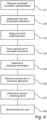
- the biometric sensor is the fingerprint sensor 102, where the fingerprint sensor 102 is communicatively coupled to the first control unit 108A, allowing a fingerprint representation of a finger of the user to be received, S1, at the first control unit 108A from the fingerprint sensor 102.
- the first control unit 108A will determine, S2, a first set of biometric elements (such as fingerprint features) from the fingerprint representation.
- the first control unit 108A further implement a process for determining, S3, a first matching level between the first set of biometric elements and a public fingerprint template (first biometric template) stored with a memory element 302 comprised with the first control unit 108A.
- the memory element may for example be implemented for non-volatile storage of the public template.
- the first control unit 108A forms, S4, a second set of biometric elements, where the second set of biometric elements comprises a selection of the first set of biometric elements, wherein the selection of the first set of biometric elements each has a first matching level above a first threshold.
- the first threshold may be fixed or adjustable, for example based on a security level set for the electronic device 100/100'.
- the first control unit 108A further implements a process for determining, S5, mapping information for the second set of biometric elements. The process for determining the mapping information is further elaborated below in relation to Fig. 5 .
- this information is transmitted from the first control unit 108A and received, S6, by the second control unit 108B.
- the information may possibly be transmitted in an encrypted form or over an encrypted channel.
- the second control unit 108B will then use the received information for determining, S7, a second matching level between the second set of biometric elements and a second biometric template stored with a memory element 304 comprised with the second control unit 108B. This step further makes use of the mapping information for allowing a further reduction of the time needed for performing the determination process.
- the second control unit 108B will review the determined second matching level for the second set of biometric elements in a step of authenticating, S8, the user. Specifically, the second control unit 108B will determine if at least a predetermined number of the second set of biometric elements have a matching level above the second threshold. Once authenticated, the user may be allowed to e.g. unlock the mobile phone 100 or to perform a financial transaction (or any other type of transaction) using the smartcard 100'.
- Figs. 4 and 5 providing a further elaboration in regards to biometric enrollment and authentication of the user.
- the process may for example be implemented to first detect "points of interest” (PI), then a compute a binary representation of a small region around those points using that may be denoted as a “point descriptor” (PD) (or just “descriptor”).
- PD point descriptor
- a “template” consists of these point's geometric locations together with their PD, defined as an "x,y” geometric location, or a “point position” (PP).
- PI point descriptor
- PP point position
- Fig. 4 there is provided an illustration of three different methods for biometric enrollment. Specifically, the three different methods for biometric enrollment may be summarized as:
- FIG. 5 providing a detailed and elaborated example of biometric authentication of the user in line with the present disclosure.
- the steps shown in Fig. 5 may be summarized as outlined below:
- the function F 1 ( K , T ) takes a full template T consisting of the PDs, and PPs and essentially just drops the PDs.
- the secret template Ts is the list of the n PPs.
- the function F 2 ( K , T ) is defined similarly, essentially dropping the PPs, and Tr is the list of n PDs. If a permutation P is defined above, the same will be used in the following.
- F' 2 (T') is just the elements in the vector PD', i.e. the PDs of the candidate template T ', possibly permuted by P.
- each ( i,j ) pair is one PI i from Tr, and a PI j from Tr' where every PI from each has a unique index, i.e. one won't see the same PI from either template in multiple pairings.
- not all PIs from either need necessarily appear in this list.
- the so called "match score" in S should not be confused with the ultimate template match score - this is an intermediate step.
- the function R reduces the candidate T ' and takes away all points where there is no corresponding pair in M with a sufficiently high match score. The corresponding point pairs are removed from M to obtain M', and removing said points from T' leave you with T".
- the function Bs( Ts, T'', M') running on the second control unit 108B takes the match-data M', the coordinate values in T", and the secret template Ts to decide the final match score of T versus T.
- the present disclosure generally relates to a method for authenticating a user using an electronic device, where the electronic device comprises a first and a second control unit adapted to process a biometric representation from a biometric sensor.
- the second control unit comprises a secure element and/or a secure block adapted to provide a secure processing environment.
- Advantages with the invention specifically include a reduced processing time needed for successfully performing a biometric authentication process.
- the security level achieved in relation to the present disclosure comes from the fact that the unsecured part of the system, after enrollment, is unable to access the secret part of the template information.
- the security level achieved using the concept defined by the present disclosure is determined by the difficulty for an attacker, given the public information Tr, to find a matching template candidate T' that will also match against Ts.
- the security level achieved in relation to the present disclosure is determined by the correlation between Tr and Ts.
- Ts In order to be secure, Ts must contain enough additional entropy compared to Tr in order to make it very hard for an attacker to come up with valid candidate T'.
- Ts must contain enough additional entropy compared to Tr in order to make it very hard for an attacker to come up with valid candidate T'.
- There is also a privacy concern in the solution as some template information is stored in the open (unsecured) part of the system.
- control functionality of the present disclosure may be implemented using existing computer processors, or by a special purpose computer processor for an appropriate system, incorporated for this or another purpose, or by a hardwire system.
- Embodiments within the scope of the present disclosure include program products comprising machine-readable medium for carrying or having machine-executable instructions or data structures stored thereon.
- Such machine-readable media can be any available media that can be accessed by a general purpose or special purpose computer or other machine with a processor.
- machine-readable media can comprise RAM, ROM, EPROM, EEPROM, CD-ROM or other optical disk storage, magnetic disk storage or other magnetic storage devices, or any other medium which can be used to carry or store desired program code in the form of machine-executable instructions or data structures and which can be accessed by a general purpose or special purpose computer or other machine with a processor.
- a network or another communications connection either hardwired, wireless, or a combination of hardwired or wireless
- any such connection is properly termed a machine-readable medium.
- Machine-executable instructions include, for example, instructions and data which cause a general purpose computer, special purpose computer, or special purpose processing machines to perform a certain function or group of functions.
- the word “comprising” does not exclude other elements or steps, and the indefinite article “a” or “an” does not exclude a plurality.
- the second control unit comprises a secure element and/or a secure block adapted to provide a secure processing environment. Advantages with the invention specifically include a reduced processing time needed for successfully performing a biometric authentication process.
- the security level achieved in relation to the present disclosure comes from the fact that the unsecured part of the system, after enrollment, is unable to access the secret part of the template information.
- the security level achieved using the concept defined by the present disclosure is determined by the difficulty for an attacker, given the public information Tr, to find a matching template candidate T' that will also match against Ts.
- the security level achieved in relation to the present disclosure is determined by the correlation between Tr and Ts.
- Ts In order to be secure, Ts must contain enough additional entropy compared to Tr in order to make it very hard for an attacker to come up with valid candidate T'.
- Ts must contain enough additional entropy compared to Tr in order to make it very hard for an attacker to come up with valid candidate T'.
- There is also a privacy concern in the solution as some template information is stored in the open (unsecured) part of the system.
- control functionality of the present disclosure may be implemented using existing computer processors, or by a special purpose computer processor for an appropriate system, incorporated for this or another purpose, or by a hardwire system.
- Embodiments within the scope of the present disclosure include program products comprising machine-readable medium for carrying or having machine-executable instructions or data structures stored thereon.
- Such machine-readable media can be any available media that can be accessed by a general purpose or special purpose computer or other machine with a processor.
- machine-readable media can comprise RAM, ROM, EPROM, EEPROM, CD-ROM or other optical disk storage, magnetic disk storage or other magnetic storage devices, or any other medium which can be used to carry or store desired program code in the form of machine-executable instructions or data structures and which can be accessed by a general purpose or special purpose computer or other machine with a processor.
- a network or another communications connection either hardwired, wireless, or a combination of hardwired or wireless
- any such connection is properly termed a machine-readable medium.
- Machine-executable instructions include, for example, instructions and data which cause a general purpose computer, special purpose computer, or special purpose processing machines to perform a certain function or group of functions.
Landscapes
- Engineering & Computer Science (AREA)
- Theoretical Computer Science (AREA)
- Physics & Mathematics (AREA)
- General Physics & Mathematics (AREA)
- Computer Security & Cryptography (AREA)
- Human Computer Interaction (AREA)
- Multimedia (AREA)
- Computer Hardware Design (AREA)
- Software Systems (AREA)
- General Engineering & Computer Science (AREA)
- Collating Specific Patterns (AREA)
- Measurement Of The Respiration, Hearing Ability, Form, And Blood Characteristics Of Living Organisms (AREA)
Claims (13)
- Verfahren zum Authentifizieren eines Benutzers einer elektronischen Vorrichtung (100, 100'), wobei die elektronische Vorrichtung umfasst:- eine erste Steuereinheit (108A), die dafür ausgelegt ist, eine Verarbeitungsumgebung bereitzustellen, die eine erste Sicherheitsebene aufweist, und- eine zweite Steuereinheit (108B), die dafür ausgelegt ist, eine Verarbeitungsumgebung bereitzustellen, die eine zweite Sicherheitsebene aufweist, wobei die zweite Sicherheitsebene höher ist als die erste Sicherheitsebene,wobei das Verarbeiten umfasst:- Empfangen (S1) einer biometrischen Kandidatendarstellung;- Bestimmen (S2), unter Verwendung der ersten Steuereinheit, eines ersten Satzes biometrischer Elemente auf der Grundlage der biometrischen Kandidatendarstellung;- Bestimmen (S3), unter Verwendung der ersten Steuereinheit, eines ersten Übereinstimmungsgrades zwischen mindestens einem Teil des ersten Satzes biometrischer Elemente und einer ersten biometrischen Schablone, die in Verbindung mit der ersten Steuereinheit gespeichert ist;- Bilden (S4) eines zweiten Satzes biometrischer Elemente, wobei der zweite Satz biometrischer Elemente eine Auswahl des ersten Satzes biometrischer Elemente umfasst, wobei die Auswahl des ersten Satzes biometrischer Elemente jeweils einen ersten Übereinstimmungsgrad oberhalb einer ersten Schwelle aufweist;- Bestimmen (S5), unter Verwendung der ersten Steuereinheit, von Abbildungsinformationen für den zweiten Satz biometrischer Elemente, wobei die Abbildungsinformationen geometrische Informationen in Bezug auf den zweiten Satz biometrischer Elemente umfassen;- Empfangen (S6), in der zweiten Steuereinheit, des zweiten Satzes biometrischer Elemente und der Abbildungsinformationen;- Bestimmen (S7), unter Verwendung der zweiten Steuereinheit, eines zweiten Übereinstimmungsgrades zwischen mindestens einem Teil des zweiten Satzes biometrischer Elemente und einer zweiten biometrischen Schablone, die in Verbindung mit der zweiten Steuereinheit gespeichert ist, wobei die Bestimmen des Weiteren auf den Abbildungsinformationen basiert; und- Authentifizieren (S8) des Benutzers, falls der zweite Übereinstimmungsgrad für eine zuvor festgelegte Auswahl des zweiten Satzes biometrischer Elemente über einer zweiten Schwelle liegt,wobei die erste biometrische Schablone eine erste teilweise Beschreibung biometrischer Merkmale für den Benutzer umfasst, die zweite biometrische Schablone eine zweite teilweise Beschreibung entsprechender biometrischer Merkmale für den Benutzer umfasst, und die erste teilweise Beschreibung sich mindestens teilweise von der zweiten teilweisen Beschreibung unterscheidet,wobei die erste biometrische Schablone eine öffentliche Schablone (Tr) ist und die zweite biometrische Schablone eine private Schablone (Ts) ist und die private Schablone im Vergleich zu der öffentlichen Schablone zusätzliche Entropie aufweist.
- Verfahren nach Anspruch 1, wobei die erste teilweise Beschreibung biometrischer Merkmale für den Benutzer disjunkt von der zweiten teilweisen Beschreibung der entsprechenden biometrischen Merkmale für den Benutzer ist.
- Verfahren nach Anspruch 3, das des Weiteren folgende Schritte umfasst:- Abbilden der geometrischen Informationen, die in den Abbildungsinformationen enthalten sind, auf entsprechende Informationen, die in der zweiten biometrischen Schablone enthalten sind.
- Verfahren nach einem der vorangehenden Ansprüche, wobei die Abbildungsinformationen einen Übereinstimmungsdatenvektor (M') umfassen, der aus Übereinstimmungsdaten (M) abgeleitet ist, wobei die Übereinstimmungsdaten auf der Grundlage der ersten biometrischen Schablone und des zweiten Satzes biometrischer Elemente bestimmt werden.
- Verfahren nach Anspruch 1, wobei die biometrische Kandidatendarstellung unter Verwendung eines biometrischen Sensors erfasst wird.
- Verfahren nach einem der vorangehenden Ansprüche, das des Weiteren folgende Schritte umfasst:- Empfangen einer biometrischen Registrierungsdarstellung;- Bestimmen der ersten und der zweiten biometrischen Schablone auf der Grundlage der biometrischen Registrierungsdarstellung.
- Verfahren nach Anspruch 7, wobei das Bestimmen der ersten und der zweiten biometrischen Schablone durchgeführt wird:- unter Verwendung der ersten Steuereinheit, wobei die zweite biometrische Schablone von der ersten Steuereinheit zu der zweiten Steuereinheit zur Speicherung in Verbindung mit der zweiten Steuereinheit übertragen wird und die zweite biometrische Schablone aus der ersten Steuereinheit gelöscht wird, oder- unter Verwendung der zweiten Steuereinheit, wobei die erste biometrische Schablone von der zweiten Steuereinheit zu der ersten Steuereinheit zur Speicherung in Verbindung mit der ersten Steuereinheit übertragen wird.
- Elektronische Vorrichtung (100, 100'), die umfasst:- einen biometrischen Sensor, der dafür konfiguriert ist, eine biometrische Kandidatendarstellung eines Benutzers zu erfassen,- eine erste Steuereinheit, die dafür ausgelegt ist, eine Verarbeitungsumgebung bereitzustellen, die eine erste Sicherheitsebene aufweist, und- eine zweite Steuereinheit, die dafür ausgelegt ist, eine Verarbeitungsumgebung bereitzustellen, die eine zweite Sicherheitsebene aufweist, wobei die erste Sicherheitsebene höher ist als die zweite Sicherheitsebene,wobei die elektronische Vorrichtung ausgelegt ist zum:- Empfangen der biometrischen Kandidatendarstellung von dem biometrischen Sensor;- Bestimmen, unter Verwendung der ersten Steuereinheit, eines ersten Satzes biometrischer Elemente auf der Grundlage der biometrischen Kandidatendarstellung;- Bestimmen, unter Verwendung der ersten Steuereinheit, eines ersten Übereinstimmungsgrades zwischen mindestens einem Teil des ersten Satzes biometrischer Elemente und einer ersten biometrischen Schablone, die in Verbindung mit der ersten Steuereinheit gespeichert ist;- Bilden eines zweiten Satzes biometrischer Elemente, wobei der zweite Satz biometrischer Elemente eine Auswahl des ersten Satzes biometrischer Elemente umfasst, wobei die Auswahl des ersten Satzes biometrischer Elemente jeweils einen ersten Übereinstimmungsgrad oberhalb einer ersten Schwelle aufweist;- Bestimmen, unter Verwendung der ersten Steuereinheit, von Abbildungsinformationen für den zweiten Satz biometrischer Elemente, wobei die Abbildungsinformationen geometrische Informationen in Bezug auf den zweiten Satz biometrischer Elemente umfassen;- Empfangen, in der zweiten Steuereinheit, des zweiten Satzes biometrischer Elemente und der Abbildungsinformationen;- Bestimmen, unter Verwendung der zweiten Steuereinheit, eines zweiten Übereinstimmungsgrades zwischen mindestens einem Teil des zweiten Satzes biometrischer Elemente und einer zweiten biometrischen Schablone, die in Verbindung mit der zweiten Steuereinheit gespeichert ist, wobei die Bestimmen des Weiteren auf den Abbildungsinformationen basiert; und- Authentifizieren des Benutzers, falls der zweite Übereinstimmungsgrad für eine zuvor festgelegte Auswahl des zweiten Satzes biometrischer Elemente über einer zweiten Schwelle liegt,wobei die erste biometrische Schablone eine erste teilweise Beschreibung biometrischer Merkmale für den Benutzer umfasst, die zweite biometrische Schablone eine zweite teilweise Beschreibung entsprechender biometrischer Merkmale für den Benutzer umfasst, und die erste teilweise Beschreibung sich mindestens teilweise von der zweiten teilweisen Beschreibung unterscheidet,wobei die erste biometrische Schablone eine öffentliche Schablone (Tr) ist und die zweite biometrische Schablone eine private Schablone (Ts) ist und die private Schablone im Vergleich zu der öffentlichen Schablone zusätzliche Entropie aufweist.
- Elektronische Vorrichtung nach Anspruch 9, wobei die Abbildungsinformationen einen Übereinstimmungsdatenvektor (M') umfassen, der aus Übereinstimmungsdaten (M) abgeleitet ist, wobei die Übereinstimmungsdaten auf der Grundlage der ersten biometrischen Schablone und des zweiten Satzes biometrischer Elemente bestimmt werden.
- Elektronische Vorrichtung nach einem der Ansprüche 9 und 10, wobei die zweite Steuereinheit ein sicherer Prozessor ist, ein sicheres Element umfasst und/oder einen sicheren Block umfasst, die dafür ausgelegt sind, eine sichere Verarbeitungsumgebung bereitzustellen.
- Elektronische Vorrichtung nach einem der Ansprüche 9-11, wobei der biometrische Sensor ein Fingerabdrucksensor ist.
- Elektronische Vorrichtung nach Anspruch 12, wobei die erste Steuereinheit mit dem Fingerabdrucksensor oder einem Sensor, der für die Erfassung einer Darstellung mindestens eines von einer Iris und einem Gesicht des Benutzers konfiguriert ist, verbunden und dafür konfiguriert ist, den Betrieb dieses Fingerabdrucksensor oder Sensors zu steuern.
- Computerprogrammprodukt, das ein nicht-transitorisches computerlesbares Medium umfasst, auf dem Computerprogrammmittel zum Betreiben einer elektronischen Vorrichtung (100, 100') gespeichert sind, wobei die elektronische Vorrichtung umfasst:- einen biometrischen Sensor, der dafür konfiguriert ist, eine biometrische Kandidatendarstellung eines Benutzers zu erfassen,- eine erste Steuereinheit, die dafür ausgelegt ist, eine Verarbeitungsumgebung bereitzustellen, die eine erste Sicherheitsebene aufweist, und- eine zweite Steuereinheit, die dafür ausgelegt ist, eine Verarbeitungsumgebung bereitzustellen, die eine zweite Sicherheitsebene aufweist, wobei die erste Sicherheitsebene höher ist als die zweite Sicherheitsebene,wobei das Computerprogrammprodukt umfasst:- Code zum Empfangen der biometrischen Kandidatendarstellung von dem biometrischen Sensor;- Code zum Bestimmen, unter Verwendung der ersten Steuereinheit, eines ersten Satzes biometrischer Elemente auf der Grundlage der biometrischen Kandidatendarstellung;- Code zum Bestimmen, unter Verwendung der ersten Steuereinheit, eines ersten Übereinstimmungsgrades zwischen mindestens einem Teil des ersten Satzes biometrischer Elemente und einer ersten biometrischen Schablone, die in Verbindung mit der ersten Steuereinheit gespeichert ist;- Bilden eines zweiten Satzes biometrischer Elemente, wobei der zweite Satz biometrischer Elemente eine Auswahl des ersten Satzes biometrischer Elemente umfasst, wobei die Auswahl des ersten Satzes biometrischer Elemente jeweils einen ersten Übereinstimmungsgrad oberhalb einer ersten Schwelle aufweist;- Bestimmen, unter Verwendung der ersten Steuereinheit, von Abbildungsinformationen für den zweiten Satz biometrischer Elemente, wobei die Abbildungsinformationen geometrische Informationen in Bezug auf den zweiten Satz biometrischer Elemente umfassen;- Code zum Empfangen, in der zweiten Steuereinheit, des zweiten Satzes biometrischer Elemente und der Abbildungsinformationen;- Code zum Bestimmen, unter Verwendung der zweiten Steuereinheit, eines zweiten Übereinstimmungsgrades zwischen mindestens einem Teil des zweiten Satzes biometrischer Elemente und einer zweiten biometrischen Schablone, die in Verbindung mit der zweiten Steuereinheit gespeichert ist, wobei die Bestimmen des Weiteren auf den Abbildungsinformationen basiert; und- Code zum Authentifizieren des Benutzers, falls der zweite Übereinstimmungsgrad für eine zuvor festgelegte Auswahl des zweiten Satzes biometrischer Elemente über einer zweiten Schwelle liegt,wobei die erste biometrische Schablone eine erste teilweise Beschreibung biometrischer Merkmale für den Benutzer umfasst, die zweite biometrische Schablone eine zweite teilweise Beschreibung entsprechender biometrischer Merkmale für den Benutzer umfasst, und die erste teilweise Beschreibung sich mindestens teilweise von der zweiten teilweisen Beschreibung unterscheidet,wobei die erste biometrische Schablone eine öffentliche Schablone (Tr) ist und die zweite biometrische Schablone eine private Schablone (Ts) ist und die private Schablone im Vergleich zu der öffentlichen Schablone zusätzliche Entropie aufweist.
Applications Claiming Priority (2)
| Application Number | Priority Date | Filing Date | Title |
|---|---|---|---|
| SE1751162 | 2017-09-20 | ||
| PCT/SE2018/050913 WO2019059827A1 (en) | 2017-09-20 | 2018-09-11 | METHOD AND ELECTRONIC DEVICE FOR USER AUTHENTICATION |
Publications (3)
| Publication Number | Publication Date |
|---|---|
| EP3655874A1 EP3655874A1 (de) | 2020-05-27 |
| EP3655874A4 EP3655874A4 (de) | 2020-11-11 |
| EP3655874B1 true EP3655874B1 (de) | 2024-02-07 |
Family
ID=65810487
Family Applications (1)
| Application Number | Title | Priority Date | Filing Date |
|---|---|---|---|
| EP18859149.9A Active EP3655874B1 (de) | 2017-09-20 | 2018-09-11 | Verfahren und elektronische vorrichtung zur authentifizierung eines benutzers |
Country Status (4)
| Country | Link |
|---|---|
| US (1) | US10963552B2 (de) |
| EP (1) | EP3655874B1 (de) |
| CN (1) | CN111095246B (de) |
| WO (1) | WO2019059827A1 (de) |
Families Citing this family (5)
| Publication number | Priority date | Publication date | Assignee | Title |
|---|---|---|---|---|
| KR102758937B1 (ko) * | 2019-02-18 | 2025-01-23 | 삼성전자주식회사 | 생체 정보를 인증하기 위한 전자 장치 및 그의 동작 방법 |
| EP3699790B1 (de) * | 2019-02-19 | 2022-11-02 | Nxp B.V. | Verfahren zur freigabe einer biometrischen vorlage |
| EP3770797A1 (de) * | 2019-07-22 | 2021-01-27 | Nxp B.V. | Registrierungsvorrichtung und -verfahren zur ermöglichung der registrierung einer biometrischen schablone |
| US11496466B2 (en) * | 2019-11-15 | 2022-11-08 | Visa International Service Association | Using an enrolled biometric dataset to detect adversarial examples in biometrics-based authentication system |
| US11424929B2 (en) | 2021-01-07 | 2022-08-23 | Bank Of America Corporation | Authentication using encrypted biometric information |
Family Cites Families (24)
| Publication number | Priority date | Publication date | Assignee | Title |
|---|---|---|---|---|
| FR2830395A1 (fr) * | 2001-10-02 | 2003-04-04 | Guedevanichvili Michel | Systeme de controle d'une signature electronique |
| US9191215B2 (en) * | 2003-12-30 | 2015-11-17 | Entrust, Inc. | Method and apparatus for providing authentication using policy-controlled authentication articles and techniques |
| JP4929804B2 (ja) * | 2006-04-10 | 2012-05-09 | 富士通株式会社 | 認証方法、認証装置および認証プログラム |
| US20070248249A1 (en) | 2006-04-20 | 2007-10-25 | Bioscrypt Inc. | Fingerprint identification system for access control |
| US8739278B2 (en) * | 2006-04-28 | 2014-05-27 | Oracle International Corporation | Techniques for fraud monitoring and detection using application fingerprinting |
| US9152779B2 (en) * | 2011-01-16 | 2015-10-06 | Michael Stephen Fiske | Protecting codes, keys and user credentials with identity and patterns |
| US9135496B2 (en) | 2012-05-18 | 2015-09-15 | Apple Inc. | Efficient texture comparison |
| US10270748B2 (en) * | 2013-03-22 | 2019-04-23 | Nok Nok Labs, Inc. | Advanced authentication techniques and applications |
| KR20150027329A (ko) * | 2013-08-29 | 2015-03-12 | 주식회사 팬택 | 지문 인식기를 구비한 단말 및 이의 동작 방법 |
| US9542783B2 (en) * | 2013-11-15 | 2017-01-10 | Google Technology Holdings LLC | Method and apparatus for authenticating access to a multi-level secure environment of an electronic device |
| IN2013MU03602A (de) * | 2013-11-18 | 2015-07-31 | Tata Consultancy Services Ltd | |
| WO2015153559A1 (en) * | 2014-03-31 | 2015-10-08 | Wi-Lan Labs, Inc. | System and method for biometric key management |
| KR102212632B1 (ko) | 2014-05-12 | 2021-02-08 | 삼성전자주식회사 | 지문 인식 방법 및 이를 수행하는 전자 장치 |
| US9430628B2 (en) * | 2014-08-13 | 2016-08-30 | Qualcomm Incorporated | Access authorization based on synthetic biometric data and non-biometric data |
| US9674184B2 (en) * | 2014-08-13 | 2017-06-06 | Qualcomm Incorporated | Systems and methods to generate authorization data based on biometric data and non-biometric data |
| US9536131B1 (en) | 2014-09-18 | 2017-01-03 | Egis Technology Inc. | Fingerprint recognition methods and electronic device |
| US9613252B1 (en) | 2014-10-13 | 2017-04-04 | Egis Technology Inc. | Fingerprint matching method and device |
| US20160125223A1 (en) * | 2014-10-30 | 2016-05-05 | Apple Inc. | Electronic device including multiple speed and multiple accuracy finger biometric matching and related methods |
| WO2016070029A1 (en) * | 2014-10-31 | 2016-05-06 | Florida Atlantic University | Secure and noise-tolerant digital authentication or identification |
| US9374370B1 (en) | 2015-01-23 | 2016-06-21 | Island Intellectual Property, Llc | Invariant biohash security system and method |
| US20160246396A1 (en) | 2015-02-20 | 2016-08-25 | Qualcomm Incorporated | Interactive touchscreen and sensor array |
| US9870456B2 (en) * | 2015-03-30 | 2018-01-16 | Synaptics Incorporated | Systems and methods for biometric authentication |
| CN106709399B (zh) | 2015-08-21 | 2021-02-09 | 小米科技有限责任公司 | 指纹识别方法及装置 |
| HK1259297A1 (zh) * | 2015-11-13 | 2019-11-29 | Badge Inc. | 公/私钥生物特徵认证系统 |
-
2018
- 2018-09-11 WO PCT/SE2018/050913 patent/WO2019059827A1/en not_active Ceased
- 2018-09-11 EP EP18859149.9A patent/EP3655874B1/de active Active
- 2018-09-11 US US16/645,357 patent/US10963552B2/en active Active
- 2018-09-11 CN CN201880059359.2A patent/CN111095246B/zh active Active
Also Published As
| Publication number | Publication date |
|---|---|
| WO2019059827A1 (en) | 2019-03-28 |
| US10963552B2 (en) | 2021-03-30 |
| EP3655874A1 (de) | 2020-05-27 |
| US20200387589A1 (en) | 2020-12-10 |
| CN111095246A (zh) | 2020-05-01 |
| CN111095246B (zh) | 2021-05-07 |
| EP3655874A4 (de) | 2020-11-11 |
Similar Documents
| Publication | Publication Date | Title |
|---|---|---|
| CN110414200B (zh) | 身份验证方法、装置、存储介质和计算机设备 | |
| EP3655874B1 (de) | Verfahren und elektronische vorrichtung zur authentifizierung eines benutzers | |
| US9049191B2 (en) | Biometric authentication system, communication terminal device, biometric authentication device, and biometric authentication method | |
| US8550339B1 (en) | Utilization of digit sequences for biometric authentication | |
| KR102070635B1 (ko) | 생물학적 특징 인식 장치와 방법 및 생물학적 특징 템플릿 등록 방법 | |
| US20120110341A1 (en) | Mobile Device Transaction Using Multi-Factor Authentication | |
| KR20160144419A (ko) | 신원들을 검증하기 위한 방법 및 시스템 | |
| TW201528030A (zh) | 與配備有相機之裝置連接之用於生物特徵量測鑑認之系統及方法 | |
| CN105981048A (zh) | 创建用于指纹认证的模板 | |
| CN114596639B (zh) | 一种生物特征识别方法、装置、电子设备及存储介质 | |
| KR20120102034A (ko) | 기준 포인트 이용 및 미이용에 의한 확실한 생체 특징 추출 | |
| Kwon et al. | CCTV-based multi-factor authentication system. | |
| KR101853270B1 (ko) | 지문인식방법을 채용한 휴대용 보안인증기의 보안 인증방법 | |
| CN112334897B (zh) | 认证用户的方法和电子设备 | |
| KR20050045773A (ko) | 3차원 얼굴 표현 기능을 갖는 모바일 단말기 상에서의얼굴 인증과 검색 방법 및 장치 | |
| CN110651268B (zh) | 认证用户的方法和电子设备 | |
| JP7112320B2 (ja) | 検証装置及び検証方法 | |
| WO2018018787A1 (zh) | 密码验证方法及装置、移动终端、计算机存储介质 | |
| Albahbooh et al. | A mobile phone device as a biometrics authentication method for an ATM terminal | |
| JP6222692B2 (ja) | 機密生体サーバー認証 | |
| KR101988365B1 (ko) | 얼굴 인식 시스템 및 그 방법 | |
| KR20160101248A (ko) | 지문인식방법을 채용한 휴대용 보안인증기 | |
| CN105488377B (zh) | 伪虹膜模板的产生方法和设备以及身份认证方法和设备 | |
| Ninassi et al. | Privacy Compliant Multi-biometric Authentication on Smartphones. | |
| CN105488377A (zh) | 伪虹膜模板的产生方法和设备以及身份认证方法和设备 |
Legal Events
| Date | Code | Title | Description |
|---|---|---|---|
| STAA | Information on the status of an ep patent application or granted ep patent |
Free format text: STATUS: THE INTERNATIONAL PUBLICATION HAS BEEN MADE |
|
| PUAI | Public reference made under article 153(3) epc to a published international application that has entered the european phase |
Free format text: ORIGINAL CODE: 0009012 |
|
| STAA | Information on the status of an ep patent application or granted ep patent |
Free format text: STATUS: REQUEST FOR EXAMINATION WAS MADE |
|
| 17P | Request for examination filed |
Effective date: 20200217 |
|
| AK | Designated contracting states |
Kind code of ref document: A1 Designated state(s): AL AT BE BG CH CY CZ DE DK EE ES FI FR GB GR HR HU IE IS IT LI LT LU LV MC MK MT NL NO PL PT RO RS SE SI SK SM TR |
|
| AX | Request for extension of the european patent |
Extension state: BA ME |
|
| A4 | Supplementary search report drawn up and despatched |
Effective date: 20201009 |
|
| RIC1 | Information provided on ipc code assigned before grant |
Ipc: G06F 21/32 20130101ALI20201005BHEP Ipc: G06K 9/00 20060101AFI20201005BHEP |
|
| DAV | Request for validation of the european patent (deleted) | ||
| DAX | Request for extension of the european patent (deleted) | ||
| RAP1 | Party data changed (applicant data changed or rights of an application transferred) |
Owner name: FINGERPRINT CARDS ANACATUM IP AB |
|
| REG | Reference to a national code |
Ref country code: DE Ref legal event code: R079 Free format text: PREVIOUS MAIN CLASS: G06F0021320000 Ipc: G06V0040120000 Ref country code: DE Ref legal event code: R079 Ref document number: 602018065023 Country of ref document: DE Free format text: PREVIOUS MAIN CLASS: G06F0021320000 Ipc: G06V0040120000 |
|
| GRAP | Despatch of communication of intention to grant a patent |
Free format text: ORIGINAL CODE: EPIDOSNIGR1 |
|
| STAA | Information on the status of an ep patent application or granted ep patent |
Free format text: STATUS: GRANT OF PATENT IS INTENDED |
|
| RIC1 | Information provided on ipc code assigned before grant |
Ipc: G06F 21/32 20130101ALI20230901BHEP Ipc: G06V 40/12 20220101AFI20230901BHEP |
|
| INTG | Intention to grant announced |
Effective date: 20230921 |
|
| GRAS | Grant fee paid |
Free format text: ORIGINAL CODE: EPIDOSNIGR3 |
|
| GRAA | (expected) grant |
Free format text: ORIGINAL CODE: 0009210 |
|
| STAA | Information on the status of an ep patent application or granted ep patent |
Free format text: STATUS: THE PATENT HAS BEEN GRANTED |
|
| AK | Designated contracting states |
Kind code of ref document: B1 Designated state(s): AL AT BE BG CH CY CZ DE DK EE ES FI FR GB GR HR HU IE IS IT LI LT LU LV MC MK MT NL NO PL PT RO RS SE SI SK SM TR |
|
| REG | Reference to a national code |
Ref country code: GB Ref legal event code: FG4D |
|
| REG | Reference to a national code |
Ref country code: CH Ref legal event code: EP |
|
| REG | Reference to a national code |
Ref country code: IE Ref legal event code: FG4D |
|
| REG | Reference to a national code |
Ref country code: DE Ref legal event code: R096 Ref document number: 602018065023 Country of ref document: DE |
|
| REG | Reference to a national code |
Ref country code: LT Ref legal event code: MG9D |
|
| REG | Reference to a national code |
Ref country code: NL Ref legal event code: MP Effective date: 20240207 |
|
| PG25 | Lapsed in a contracting state [announced via postgrant information from national office to epo] |
Ref country code: IS Free format text: LAPSE BECAUSE OF FAILURE TO SUBMIT A TRANSLATION OF THE DESCRIPTION OR TO PAY THE FEE WITHIN THE PRESCRIBED TIME-LIMIT Effective date: 20240607 |
|
| PG25 | Lapsed in a contracting state [announced via postgrant information from national office to epo] |
Ref country code: LT Free format text: LAPSE BECAUSE OF FAILURE TO SUBMIT A TRANSLATION OF THE DESCRIPTION OR TO PAY THE FEE WITHIN THE PRESCRIBED TIME-LIMIT Effective date: 20240207 |
|
| PG25 | Lapsed in a contracting state [announced via postgrant information from national office to epo] |
Ref country code: GR Free format text: LAPSE BECAUSE OF FAILURE TO SUBMIT A TRANSLATION OF THE DESCRIPTION OR TO PAY THE FEE WITHIN THE PRESCRIBED TIME-LIMIT Effective date: 20240508 |
|
| REG | Reference to a national code |
Ref country code: AT Ref legal event code: MK05 Ref document number: 1655850 Country of ref document: AT Kind code of ref document: T Effective date: 20240207 |
|
| PG25 | Lapsed in a contracting state [announced via postgrant information from national office to epo] |
Ref country code: RS Free format text: LAPSE BECAUSE OF FAILURE TO SUBMIT A TRANSLATION OF THE DESCRIPTION OR TO PAY THE FEE WITHIN THE PRESCRIBED TIME-LIMIT Effective date: 20240507 Ref country code: NL Free format text: LAPSE BECAUSE OF FAILURE TO SUBMIT A TRANSLATION OF THE DESCRIPTION OR TO PAY THE FEE WITHIN THE PRESCRIBED TIME-LIMIT Effective date: 20240207 Ref country code: HR Free format text: LAPSE BECAUSE OF FAILURE TO SUBMIT A TRANSLATION OF THE DESCRIPTION OR TO PAY THE FEE WITHIN THE PRESCRIBED TIME-LIMIT Effective date: 20240207 |
|
| PG25 | Lapsed in a contracting state [announced via postgrant information from national office to epo] |
Ref country code: ES Free format text: LAPSE BECAUSE OF FAILURE TO SUBMIT A TRANSLATION OF THE DESCRIPTION OR TO PAY THE FEE WITHIN THE PRESCRIBED TIME-LIMIT Effective date: 20240207 |
|
| PG25 | Lapsed in a contracting state [announced via postgrant information from national office to epo] |
Ref country code: AT Free format text: LAPSE BECAUSE OF FAILURE TO SUBMIT A TRANSLATION OF THE DESCRIPTION OR TO PAY THE FEE WITHIN THE PRESCRIBED TIME-LIMIT Effective date: 20240207 |
|
| PG25 | Lapsed in a contracting state [announced via postgrant information from national office to epo] |
Ref country code: RS Free format text: LAPSE BECAUSE OF FAILURE TO SUBMIT A TRANSLATION OF THE DESCRIPTION OR TO PAY THE FEE WITHIN THE PRESCRIBED TIME-LIMIT Effective date: 20240507 Ref country code: NO Free format text: LAPSE BECAUSE OF FAILURE TO SUBMIT A TRANSLATION OF THE DESCRIPTION OR TO PAY THE FEE WITHIN THE PRESCRIBED TIME-LIMIT Effective date: 20240507 Ref country code: NL Free format text: LAPSE BECAUSE OF FAILURE TO SUBMIT A TRANSLATION OF THE DESCRIPTION OR TO PAY THE FEE WITHIN THE PRESCRIBED TIME-LIMIT Effective date: 20240207 Ref country code: LT Free format text: LAPSE BECAUSE OF FAILURE TO SUBMIT A TRANSLATION OF THE DESCRIPTION OR TO PAY THE FEE WITHIN THE PRESCRIBED TIME-LIMIT Effective date: 20240207 Ref country code: IS Free format text: LAPSE BECAUSE OF FAILURE TO SUBMIT A TRANSLATION OF THE DESCRIPTION OR TO PAY THE FEE WITHIN THE PRESCRIBED TIME-LIMIT Effective date: 20240607 Ref country code: HR Free format text: LAPSE BECAUSE OF FAILURE TO SUBMIT A TRANSLATION OF THE DESCRIPTION OR TO PAY THE FEE WITHIN THE PRESCRIBED TIME-LIMIT Effective date: 20240207 Ref country code: GR Free format text: LAPSE BECAUSE OF FAILURE TO SUBMIT A TRANSLATION OF THE DESCRIPTION OR TO PAY THE FEE WITHIN THE PRESCRIBED TIME-LIMIT Effective date: 20240508 Ref country code: FI Free format text: LAPSE BECAUSE OF FAILURE TO SUBMIT A TRANSLATION OF THE DESCRIPTION OR TO PAY THE FEE WITHIN THE PRESCRIBED TIME-LIMIT Effective date: 20240207 Ref country code: ES Free format text: LAPSE BECAUSE OF FAILURE TO SUBMIT A TRANSLATION OF THE DESCRIPTION OR TO PAY THE FEE WITHIN THE PRESCRIBED TIME-LIMIT Effective date: 20240207 Ref country code: BG Free format text: LAPSE BECAUSE OF FAILURE TO SUBMIT A TRANSLATION OF THE DESCRIPTION OR TO PAY THE FEE WITHIN THE PRESCRIBED TIME-LIMIT Effective date: 20240207 Ref country code: AT Free format text: LAPSE BECAUSE OF FAILURE TO SUBMIT A TRANSLATION OF THE DESCRIPTION OR TO PAY THE FEE WITHIN THE PRESCRIBED TIME-LIMIT Effective date: 20240207 |
|
| PG25 | Lapsed in a contracting state [announced via postgrant information from national office to epo] |
Ref country code: PL Free format text: LAPSE BECAUSE OF FAILURE TO SUBMIT A TRANSLATION OF THE DESCRIPTION OR TO PAY THE FEE WITHIN THE PRESCRIBED TIME-LIMIT Effective date: 20240207 Ref country code: PT Free format text: LAPSE BECAUSE OF FAILURE TO SUBMIT A TRANSLATION OF THE DESCRIPTION OR TO PAY THE FEE WITHIN THE PRESCRIBED TIME-LIMIT Effective date: 20240607 |
|
| PG25 | Lapsed in a contracting state [announced via postgrant information from national office to epo] |
Ref country code: SE Free format text: LAPSE BECAUSE OF FAILURE TO SUBMIT A TRANSLATION OF THE DESCRIPTION OR TO PAY THE FEE WITHIN THE PRESCRIBED TIME-LIMIT Effective date: 20240207 Ref country code: PT Free format text: LAPSE BECAUSE OF FAILURE TO SUBMIT A TRANSLATION OF THE DESCRIPTION OR TO PAY THE FEE WITHIN THE PRESCRIBED TIME-LIMIT Effective date: 20240607 Ref country code: PL Free format text: LAPSE BECAUSE OF FAILURE TO SUBMIT A TRANSLATION OF THE DESCRIPTION OR TO PAY THE FEE WITHIN THE PRESCRIBED TIME-LIMIT Effective date: 20240207 Ref country code: LV Free format text: LAPSE BECAUSE OF FAILURE TO SUBMIT A TRANSLATION OF THE DESCRIPTION OR TO PAY THE FEE WITHIN THE PRESCRIBED TIME-LIMIT Effective date: 20240207 |
|
| PG25 | Lapsed in a contracting state [announced via postgrant information from national office to epo] |
Ref country code: DK Free format text: LAPSE BECAUSE OF FAILURE TO SUBMIT A TRANSLATION OF THE DESCRIPTION OR TO PAY THE FEE WITHIN THE PRESCRIBED TIME-LIMIT Effective date: 20240207 |
|
| PG25 | Lapsed in a contracting state [announced via postgrant information from national office to epo] |
Ref country code: SM Free format text: LAPSE BECAUSE OF FAILURE TO SUBMIT A TRANSLATION OF THE DESCRIPTION OR TO PAY THE FEE WITHIN THE PRESCRIBED TIME-LIMIT Effective date: 20240207 |
|
| PG25 | Lapsed in a contracting state [announced via postgrant information from national office to epo] |
Ref country code: EE Free format text: LAPSE BECAUSE OF FAILURE TO SUBMIT A TRANSLATION OF THE DESCRIPTION OR TO PAY THE FEE WITHIN THE PRESCRIBED TIME-LIMIT Effective date: 20240207 Ref country code: CZ Free format text: LAPSE BECAUSE OF FAILURE TO SUBMIT A TRANSLATION OF THE DESCRIPTION OR TO PAY THE FEE WITHIN THE PRESCRIBED TIME-LIMIT Effective date: 20240207 |
|
| PG25 | Lapsed in a contracting state [announced via postgrant information from national office to epo] |
Ref country code: SK Free format text: LAPSE BECAUSE OF FAILURE TO SUBMIT A TRANSLATION OF THE DESCRIPTION OR TO PAY THE FEE WITHIN THE PRESCRIBED TIME-LIMIT Effective date: 20240207 |
|
| PG25 | Lapsed in a contracting state [announced via postgrant information from national office to epo] |
Ref country code: SM Free format text: LAPSE BECAUSE OF FAILURE TO SUBMIT A TRANSLATION OF THE DESCRIPTION OR TO PAY THE FEE WITHIN THE PRESCRIBED TIME-LIMIT Effective date: 20240207 Ref country code: SK Free format text: LAPSE BECAUSE OF FAILURE TO SUBMIT A TRANSLATION OF THE DESCRIPTION OR TO PAY THE FEE WITHIN THE PRESCRIBED TIME-LIMIT Effective date: 20240207 Ref country code: RO Free format text: LAPSE BECAUSE OF FAILURE TO SUBMIT A TRANSLATION OF THE DESCRIPTION OR TO PAY THE FEE WITHIN THE PRESCRIBED TIME-LIMIT Effective date: 20240207 Ref country code: EE Free format text: LAPSE BECAUSE OF FAILURE TO SUBMIT A TRANSLATION OF THE DESCRIPTION OR TO PAY THE FEE WITHIN THE PRESCRIBED TIME-LIMIT Effective date: 20240207 Ref country code: DK Free format text: LAPSE BECAUSE OF FAILURE TO SUBMIT A TRANSLATION OF THE DESCRIPTION OR TO PAY THE FEE WITHIN THE PRESCRIBED TIME-LIMIT Effective date: 20240207 Ref country code: CZ Free format text: LAPSE BECAUSE OF FAILURE TO SUBMIT A TRANSLATION OF THE DESCRIPTION OR TO PAY THE FEE WITHIN THE PRESCRIBED TIME-LIMIT Effective date: 20240207 |
|
| REG | Reference to a national code |
Ref country code: DE Ref legal event code: R097 Ref document number: 602018065023 Country of ref document: DE |
|
| PG25 | Lapsed in a contracting state [announced via postgrant information from national office to epo] |
Ref country code: IT Free format text: LAPSE BECAUSE OF FAILURE TO SUBMIT A TRANSLATION OF THE DESCRIPTION OR TO PAY THE FEE WITHIN THE PRESCRIBED TIME-LIMIT Effective date: 20240207 |
|
| PLBE | No opposition filed within time limit |
Free format text: ORIGINAL CODE: 0009261 |
|
| STAA | Information on the status of an ep patent application or granted ep patent |
Free format text: STATUS: NO OPPOSITION FILED WITHIN TIME LIMIT |
|
| PG25 | Lapsed in a contracting state [announced via postgrant information from national office to epo] |
Ref country code: IT Free format text: LAPSE BECAUSE OF FAILURE TO SUBMIT A TRANSLATION OF THE DESCRIPTION OR TO PAY THE FEE WITHIN THE PRESCRIBED TIME-LIMIT Effective date: 20240207 |
|
| 26N | No opposition filed |
Effective date: 20241108 |
|
| PG25 | Lapsed in a contracting state [announced via postgrant information from national office to epo] |
Ref country code: SI Free format text: LAPSE BECAUSE OF FAILURE TO SUBMIT A TRANSLATION OF THE DESCRIPTION OR TO PAY THE FEE WITHIN THE PRESCRIBED TIME-LIMIT Effective date: 20240207 Ref country code: MC Free format text: LAPSE BECAUSE OF FAILURE TO SUBMIT A TRANSLATION OF THE DESCRIPTION OR TO PAY THE FEE WITHIN THE PRESCRIBED TIME-LIMIT Effective date: 20240207 |
|
| REG | Reference to a national code |
Ref country code: CH Ref legal event code: PL |
|
| PG25 | Lapsed in a contracting state [announced via postgrant information from national office to epo] |
Ref country code: LU Free format text: LAPSE BECAUSE OF NON-PAYMENT OF DUE FEES Effective date: 20240911 |
|
| REG | Reference to a national code |
Ref country code: BE Ref legal event code: MM Effective date: 20240930 |
|
| PG25 | Lapsed in a contracting state [announced via postgrant information from national office to epo] |
Ref country code: BE Free format text: LAPSE BECAUSE OF NON-PAYMENT OF DUE FEES Effective date: 20240930 |
|
| PG25 | Lapsed in a contracting state [announced via postgrant information from national office to epo] |
Ref country code: CH Free format text: LAPSE BECAUSE OF NON-PAYMENT OF DUE FEES Effective date: 20240930 |
|
| PG25 | Lapsed in a contracting state [announced via postgrant information from national office to epo] |
Ref country code: IE Free format text: LAPSE BECAUSE OF NON-PAYMENT OF DUE FEES Effective date: 20240911 |
|
| PGFP | Annual fee paid to national office [announced via postgrant information from national office to epo] |
Ref country code: DE Payment date: 20250929 Year of fee payment: 8 |
|
| PGFP | Annual fee paid to national office [announced via postgrant information from national office to epo] |
Ref country code: GB Payment date: 20250929 Year of fee payment: 8 |
|
| PGFP | Annual fee paid to national office [announced via postgrant information from national office to epo] |
Ref country code: FR Payment date: 20250925 Year of fee payment: 8 |
|
| PG25 | Lapsed in a contracting state [announced via postgrant information from national office to epo] |
Ref country code: CY Free format text: LAPSE BECAUSE OF FAILURE TO SUBMIT A TRANSLATION OF THE DESCRIPTION OR TO PAY THE FEE WITHIN THE PRESCRIBED TIME-LIMIT; INVALID AB INITIO Effective date: 20180911 |
|
| PG25 | Lapsed in a contracting state [announced via postgrant information from national office to epo] |
Ref country code: HU Free format text: LAPSE BECAUSE OF FAILURE TO SUBMIT A TRANSLATION OF THE DESCRIPTION OR TO PAY THE FEE WITHIN THE PRESCRIBED TIME-LIMIT; INVALID AB INITIO Effective date: 20180911 |