EP3656769B1 - Composé aryl-phosphore-oxygène utilisé en tant qu'inhibiteur de kinase egfr - Google Patents
Composé aryl-phosphore-oxygène utilisé en tant qu'inhibiteur de kinase egfr Download PDFInfo
- Publication number
- EP3656769B1 EP3656769B1 EP18834412.1A EP18834412A EP3656769B1 EP 3656769 B1 EP3656769 B1 EP 3656769B1 EP 18834412 A EP18834412 A EP 18834412A EP 3656769 B1 EP3656769 B1 EP 3656769B1
- Authority
- EP
- European Patent Office
- Prior art keywords
- compound
- alkyl
- optionally substituted
- heteroalkyl
- groups
- Prior art date
- Legal status (The legal status is an assumption and is not a legal conclusion. Google has not performed a legal analysis and makes no representation as to the accuracy of the status listed.)
- Active
Links
Classifications
-
- C—CHEMISTRY; METALLURGY
- C07—ORGANIC CHEMISTRY
- C07D—HETEROCYCLIC COMPOUNDS
- C07D471/00—Heterocyclic compounds containing nitrogen atoms as the only ring hetero atoms in the condensed system, at least one ring being a six-membered ring with one nitrogen atom, not provided for by groups C07D451/00 - C07D463/00
- C07D471/02—Heterocyclic compounds containing nitrogen atoms as the only ring hetero atoms in the condensed system, at least one ring being a six-membered ring with one nitrogen atom, not provided for by groups C07D451/00 - C07D463/00 in which the condensed system contains two hetero rings
- C07D471/06—Peri-condensed systems
-
- C—CHEMISTRY; METALLURGY
- C07—ORGANIC CHEMISTRY
- C07F—ACYCLIC, CARBOCYCLIC OR HETEROCYCLIC COMPOUNDS CONTAINING ELEMENTS OTHER THAN CARBON, HYDROGEN, HALOGEN, OXYGEN, NITROGEN, SULFUR, SELENIUM OR TELLURIUM
- C07F9/00—Compounds containing elements of Groups 5 or 15 of the Periodic Table
- C07F9/02—Phosphorus compounds
- C07F9/547—Heterocyclic compounds, e.g. containing phosphorus as a ring hetero atom
- C07F9/6561—Heterocyclic compounds, e.g. containing phosphorus as a ring hetero atom containing systems of two or more relevant hetero rings condensed among themselves or condensed with a common carbocyclic ring or ring system, with or without other non-condensed hetero rings
- C07F9/65615—Heterocyclic compounds, e.g. containing phosphorus as a ring hetero atom containing systems of two or more relevant hetero rings condensed among themselves or condensed with a common carbocyclic ring or ring system, with or without other non-condensed hetero rings containing a spiro condensed ring system of the formula where at least one of the atoms X or Y is a hetero atom, e.g. S
-
- C—CHEMISTRY; METALLURGY
- C07—ORGANIC CHEMISTRY
- C07F—ACYCLIC, CARBOCYCLIC OR HETEROCYCLIC COMPOUNDS CONTAINING ELEMENTS OTHER THAN CARBON, HYDROGEN, HALOGEN, OXYGEN, NITROGEN, SULFUR, SELENIUM OR TELLURIUM
- C07F9/00—Compounds containing elements of Groups 5 or 15 of the Periodic Table
- C07F9/02—Phosphorus compounds
- C07F9/28—Phosphorus compounds with one or more P—C bonds
-
- C—CHEMISTRY; METALLURGY
- C07—ORGANIC CHEMISTRY
- C07D—HETEROCYCLIC COMPOUNDS
- C07D471/00—Heterocyclic compounds containing nitrogen atoms as the only ring hetero atoms in the condensed system, at least one ring being a six-membered ring with one nitrogen atom, not provided for by groups C07D451/00 - C07D463/00
- C07D471/02—Heterocyclic compounds containing nitrogen atoms as the only ring hetero atoms in the condensed system, at least one ring being a six-membered ring with one nitrogen atom, not provided for by groups C07D451/00 - C07D463/00 in which the condensed system contains two hetero rings
- C07D471/10—Spiro-condensed systems
-
- A—HUMAN NECESSITIES
- A61—MEDICAL OR VETERINARY SCIENCE; HYGIENE
- A61K—PREPARATIONS FOR MEDICAL, DENTAL OR TOILETRY PURPOSES
- A61K31/00—Medicinal preparations containing organic active ingredients
- A61K31/33—Heterocyclic compounds
- A61K31/395—Heterocyclic compounds having nitrogen as a ring hetero atom, e.g. guanethidine or rifamycins
- A61K31/495—Heterocyclic compounds having nitrogen as a ring hetero atom, e.g. guanethidine or rifamycins having six-membered rings with two or more nitrogen atoms as the only ring heteroatoms, e.g. piperazine or tetrazines
- A61K31/505—Pyrimidines; Hydrogenated pyrimidines, e.g. trimethoprim
-
- A—HUMAN NECESSITIES
- A61—MEDICAL OR VETERINARY SCIENCE; HYGIENE
- A61K—PREPARATIONS FOR MEDICAL, DENTAL OR TOILETRY PURPOSES
- A61K31/00—Medicinal preparations containing organic active ingredients
- A61K31/66—Phosphorus compounds
- A61K31/675—Phosphorus compounds having nitrogen as a ring hetero atom, e.g. pyridoxal phosphate
-
- A—HUMAN NECESSITIES
- A61—MEDICAL OR VETERINARY SCIENCE; HYGIENE
- A61K—PREPARATIONS FOR MEDICAL, DENTAL OR TOILETRY PURPOSES
- A61K39/00—Medicinal preparations containing antigens or antibodies
- A61K39/395—Antibodies; Immunoglobulins; Immune serum, e.g. antilymphocytic serum
- A61K39/39533—Antibodies; Immunoglobulins; Immune serum, e.g. antilymphocytic serum against materials from animals
- A61K39/3955—Antibodies; Immunoglobulins; Immune serum, e.g. antilymphocytic serum against materials from animals against proteinaceous materials, e.g. enzymes, hormones, lymphokines
-
- A—HUMAN NECESSITIES
- A61—MEDICAL OR VETERINARY SCIENCE; HYGIENE
- A61P—SPECIFIC THERAPEUTIC ACTIVITY OF CHEMICAL COMPOUNDS OR MEDICINAL PREPARATIONS
- A61P35/00—Antineoplastic agents
-
- A—HUMAN NECESSITIES
- A61—MEDICAL OR VETERINARY SCIENCE; HYGIENE
- A61P—SPECIFIC THERAPEUTIC ACTIVITY OF CHEMICAL COMPOUNDS OR MEDICINAL PREPARATIONS
- A61P35/00—Antineoplastic agents
- A61P35/04—Antineoplastic agents specific for metastasis
-
- C—CHEMISTRY; METALLURGY
- C07—ORGANIC CHEMISTRY
- C07D—HETEROCYCLIC COMPOUNDS
- C07D239/00—Heterocyclic compounds containing 1,3-diazine or hydrogenated 1,3-diazine rings
- C07D239/02—Heterocyclic compounds containing 1,3-diazine or hydrogenated 1,3-diazine rings not condensed with other rings
- C07D239/24—Heterocyclic compounds containing 1,3-diazine or hydrogenated 1,3-diazine rings not condensed with other rings having three or more double bonds between ring members or between ring members and non-ring members
- C07D239/28—Heterocyclic compounds containing 1,3-diazine or hydrogenated 1,3-diazine rings not condensed with other rings having three or more double bonds between ring members or between ring members and non-ring members with hetero atoms or with carbon atoms having three bonds to hetero atoms with at the most one bond to halogen, directly attached to ring carbon atoms
- C07D239/46—Two or more oxygen, sulphur or nitrogen atoms
- C07D239/48—Two nitrogen atoms
-
- C—CHEMISTRY; METALLURGY
- C07—ORGANIC CHEMISTRY
- C07D—HETEROCYCLIC COMPOUNDS
- C07D401/00—Heterocyclic compounds containing two or more hetero rings, having nitrogen atoms as the only ring hetero atoms, at least one ring being a six-membered ring with only one nitrogen atom
- C07D401/02—Heterocyclic compounds containing two or more hetero rings, having nitrogen atoms as the only ring hetero atoms, at least one ring being a six-membered ring with only one nitrogen atom containing two hetero rings
- C07D401/12—Heterocyclic compounds containing two or more hetero rings, having nitrogen atoms as the only ring hetero atoms, at least one ring being a six-membered ring with only one nitrogen atom containing two hetero rings linked by a chain containing hetero atoms as chain links
-
- C—CHEMISTRY; METALLURGY
- C07—ORGANIC CHEMISTRY
- C07D—HETEROCYCLIC COMPOUNDS
- C07D401/00—Heterocyclic compounds containing two or more hetero rings, having nitrogen atoms as the only ring hetero atoms, at least one ring being a six-membered ring with only one nitrogen atom
- C07D401/14—Heterocyclic compounds containing two or more hetero rings, having nitrogen atoms as the only ring hetero atoms, at least one ring being a six-membered ring with only one nitrogen atom containing three or more hetero rings
-
- C—CHEMISTRY; METALLURGY
- C07—ORGANIC CHEMISTRY
- C07D—HETEROCYCLIC COMPOUNDS
- C07D403/00—Heterocyclic compounds containing two or more hetero rings, having nitrogen atoms as the only ring hetero atoms, not provided for by group C07D401/00
- C07D403/02—Heterocyclic compounds containing two or more hetero rings, having nitrogen atoms as the only ring hetero atoms, not provided for by group C07D401/00 containing two hetero rings
- C07D403/12—Heterocyclic compounds containing two or more hetero rings, having nitrogen atoms as the only ring hetero atoms, not provided for by group C07D401/00 containing two hetero rings linked by a chain containing hetero atoms as chain links
-
- C—CHEMISTRY; METALLURGY
- C07—ORGANIC CHEMISTRY
- C07D—HETEROCYCLIC COMPOUNDS
- C07D409/00—Heterocyclic compounds containing two or more hetero rings, at least one ring having sulfur atoms as the only ring hetero atoms
- C07D409/14—Heterocyclic compounds containing two or more hetero rings, at least one ring having sulfur atoms as the only ring hetero atoms containing three or more hetero rings
-
- C—CHEMISTRY; METALLURGY
- C07—ORGANIC CHEMISTRY
- C07D—HETEROCYCLIC COMPOUNDS
- C07D417/00—Heterocyclic compounds containing two or more hetero rings, at least one ring having nitrogen and sulfur atoms as the only ring hetero atoms, not provided for by group C07D415/00
- C07D417/14—Heterocyclic compounds containing two or more hetero rings, at least one ring having nitrogen and sulfur atoms as the only ring hetero atoms, not provided for by group C07D415/00 containing three or more hetero rings
-
- C—CHEMISTRY; METALLURGY
- C07—ORGANIC CHEMISTRY
- C07D—HETEROCYCLIC COMPOUNDS
- C07D519/00—Heterocyclic compounds containing more than one system of two or more relevant hetero rings condensed among themselves or condensed with a common carbocyclic ring system not provided for in groups C07D453/00 or C07D455/00
-
- C—CHEMISTRY; METALLURGY
- C07—ORGANIC CHEMISTRY
- C07F—ACYCLIC, CARBOCYCLIC OR HETEROCYCLIC COMPOUNDS CONTAINING ELEMENTS OTHER THAN CARBON, HYDROGEN, HALOGEN, OXYGEN, NITROGEN, SULFUR, SELENIUM OR TELLURIUM
- C07F9/00—Compounds containing elements of Groups 5 or 15 of the Periodic Table
- C07F9/02—Phosphorus compounds
- C07F9/547—Heterocyclic compounds, e.g. containing phosphorus as a ring hetero atom
- C07F9/645—Heterocyclic compounds, e.g. containing phosphorus as a ring hetero atom having two nitrogen atoms as the only ring hetero atoms
- C07F9/6509—Six-membered rings
- C07F9/6512—Six-membered rings having the nitrogen atoms in positions 1 and 3
-
- C—CHEMISTRY; METALLURGY
- C07—ORGANIC CHEMISTRY
- C07F—ACYCLIC, CARBOCYCLIC OR HETEROCYCLIC COMPOUNDS CONTAINING ELEMENTS OTHER THAN CARBON, HYDROGEN, HALOGEN, OXYGEN, NITROGEN, SULFUR, SELENIUM OR TELLURIUM
- C07F9/00—Compounds containing elements of Groups 5 or 15 of the Periodic Table
- C07F9/02—Phosphorus compounds
- C07F9/547—Heterocyclic compounds, e.g. containing phosphorus as a ring hetero atom
- C07F9/6558—Heterocyclic compounds, e.g. containing phosphorus as a ring hetero atom containing at least two different or differently substituted hetero rings neither condensed among themselves nor condensed with a common carbocyclic ring or ring system
- C07F9/65583—Heterocyclic compounds, e.g. containing phosphorus as a ring hetero atom containing at least two different or differently substituted hetero rings neither condensed among themselves nor condensed with a common carbocyclic ring or ring system each of the hetero rings containing nitrogen as ring hetero atom
-
- C—CHEMISTRY; METALLURGY
- C07—ORGANIC CHEMISTRY
- C07F—ACYCLIC, CARBOCYCLIC OR HETEROCYCLIC COMPOUNDS CONTAINING ELEMENTS OTHER THAN CARBON, HYDROGEN, HALOGEN, OXYGEN, NITROGEN, SULFUR, SELENIUM OR TELLURIUM
- C07F9/00—Compounds containing elements of Groups 5 or 15 of the Periodic Table
- C07F9/02—Phosphorus compounds
- C07F9/547—Heterocyclic compounds, e.g. containing phosphorus as a ring hetero atom
- C07F9/6558—Heterocyclic compounds, e.g. containing phosphorus as a ring hetero atom containing at least two different or differently substituted hetero rings neither condensed among themselves nor condensed with a common carbocyclic ring or ring system
- C07F9/65586—Heterocyclic compounds, e.g. containing phosphorus as a ring hetero atom containing at least two different or differently substituted hetero rings neither condensed among themselves nor condensed with a common carbocyclic ring or ring system at least one of the hetero rings does not contain nitrogen as ring hetero atom
-
- C—CHEMISTRY; METALLURGY
- C07—ORGANIC CHEMISTRY
- C07F—ACYCLIC, CARBOCYCLIC OR HETEROCYCLIC COMPOUNDS CONTAINING ELEMENTS OTHER THAN CARBON, HYDROGEN, HALOGEN, OXYGEN, NITROGEN, SULFUR, SELENIUM OR TELLURIUM
- C07F9/00—Compounds containing elements of Groups 5 or 15 of the Periodic Table
- C07F9/02—Phosphorus compounds
- C07F9/547—Heterocyclic compounds, e.g. containing phosphorus as a ring hetero atom
- C07F9/6561—Heterocyclic compounds, e.g. containing phosphorus as a ring hetero atom containing systems of two or more relevant hetero rings condensed among themselves or condensed with a common carbocyclic ring or ring system, with or without other non-condensed hetero rings
-
- C—CHEMISTRY; METALLURGY
- C07—ORGANIC CHEMISTRY
- C07K—PEPTIDES
- C07K16/00—Immunoglobulins [IG], e.g. monoclonal or polyclonal antibodies
- C07K16/18—Immunoglobulins [IG], e.g. monoclonal or polyclonal antibodies against material from animals or humans
- C07K16/28—Immunoglobulins [IG], e.g. monoclonal or polyclonal antibodies against material from animals or humans against receptors, cell surface antigens or cell surface determinants
- C07K16/2863—Immunoglobulins [IG], e.g. monoclonal or polyclonal antibodies against material from animals or humans against receptors, cell surface antigens or cell surface determinants against receptors for growth factors, growth regulators
-
- A—HUMAN NECESSITIES
- A61—MEDICAL OR VETERINARY SCIENCE; HYGIENE
- A61K—PREPARATIONS FOR MEDICAL, DENTAL OR TOILETRY PURPOSES
- A61K2300/00—Mixtures or combinations of active ingredients, wherein at least one active ingredient is fully defined in groups A61K31/00 - A61K41/00
-
- Y—GENERAL TAGGING OF NEW TECHNOLOGICAL DEVELOPMENTS; GENERAL TAGGING OF CROSS-SECTIONAL TECHNOLOGIES SPANNING OVER SEVERAL SECTIONS OF THE IPC; TECHNICAL SUBJECTS COVERED BY FORMER USPC CROSS-REFERENCE ART COLLECTIONS [XRACs] AND DIGESTS
- Y02—TECHNOLOGIES OR APPLICATIONS FOR MITIGATION OR ADAPTATION AGAINST CLIMATE CHANGE
- Y02A—TECHNOLOGIES FOR ADAPTATION TO CLIMATE CHANGE
- Y02A50/00—TECHNOLOGIES FOR ADAPTATION TO CLIMATE CHANGE in human health protection, e.g. against extreme weather
- Y02A50/30—Against vector-borne diseases, e.g. mosquito-borne, fly-borne, tick-borne or waterborne diseases whose impact is exacerbated by climate change
Definitions
- the present application relates to an aryl-phosphine-oxygen compound as an EGFR kinase inhibitor, and specifically discloses a compound represented by formula (I) and a pharmaceutically acceptable salt thereof.
- Lung cancer is one of the most common malignant tumors. There will be about 1.6 million new cases of lung cancer cases each year worldwide, and there will be 1.4 million deaths from lung cancer each year. Among them, non-small cell lung cancer (NSCLC) accounts for about 80%-85% of all lung cancers (the 10th Lung Cancer Summit Forum).
- NSCLC non-small cell lung cancer
- EGFR epidermal growth factor receptor
- TKI tyrosine kinase inhibitor
- Osimertinib (AZD9291) is a third-generation EGFR-TKI-targeted drug. Although it has higher responsivity to drug resistance caused by T790M mutation, patients also develop drug resistance ( Clin Cancer Res; 21 (17), 2015 ). In 2015, the drug resistance analysis on 15 patients with AZD9291 was first reported in Nature Medicine, 21, 560-562, 2015 , wherein the third mutation obtained, i.e. EGFR C797S mutation, was one of the main mechanisms leading to drug resistance of Osimertinib, accounting for about 40%.
- EAI045 capable of overcoming the drug resistance of Osimertinib to C797S.
- EAI045 belongs to an allosteric inhibitor that shows better tumor inhibition effect in the mouse in vivo pharmacodynamic model with L858R/T790M/C797S mutations when combined with EGFR monoclonal antibody such as cetuximab; but this compound failed to enter clinical studies.
- Nature Communications, 8:14768, 2017 reported that Brigatinib (AP26113) in combination with EGFR monoclonal antibody (such as cetuximab) can overcome the drug resistance of the third-generation targeting drug Osimertinib caused by C797S mutation.
- WO2012051587A1 discloses Comparative Example 1, but failes to provide any data on its effect.
- WO 2017/086832 A1 relates to substituted N2-(4-amino-2-methoxyphenyl)-N4-[2-(dimethylphosphinoyl)phenyl]5-chloro-pyrimidine-2,4-diamines of general formula (1) and to tautomers, stereoisomers, pharmaceutically acceptable salts and solvates thereof, where R is a substituent selected from the series (a) - (o), where R2, R3, R4 and R5 are identical or different optionally substituted C1-C4 alkyls; n is, identically or differently, 1 or 2; and the arrow indicates the point of attachment of substituent R.
- the above R is selected from F, Cl, Br, I, CN, OH, NH 2 , CH 3 , CH 3 CH 2 , CH 3 CH 2 CH 2 , (CH 3 ) 2 CH, CH 3 O, (CH 3 ) 2 N,
- R 1 is selected from H, halogen, C 1-3 alkyl and C 1-3 heteroalkyl, C 2-5 alkenyloxy, and C 4-6 cycloalkyloxy, wherein said C 1-3 alkyl, C 1-3 heteroalkyl, C 2-5 alkenyloxy and C 4-6 cycloalkyloxy are optionally substituted with 1, 2 or 3 R groups, and R is as defined in the present application.
- R 1 is selected from H, F, Cl, Br, I, CH 3 , CH 3 CH 2 , CH 3 CH 2 CH 2 , (CH 3 ) 2 CH, CH 3 O, CH 3 CH 2 O, CH 3 CH 2 CH 2 O, (CH 3 ) 2 CHO, and wherein said CH 3 , CH 3 CH 2 , CH 3 CH 2 CH 2 , (CH 3 ) 2 CH, CH 3 O, CH 3 CH 2 O, CH 3 CH 2 CH 2 O, (CH 3 ) 2 CHO, and are optionally substituted with 1, 2 or 3 R groups, and R is as defined in the present application.
- the above R 2 is selected from H, halogen, CN, OH, NO 2 , NH 2 , C 3-12 cycloalkyl, and 3- to 12-membered heterocycloalkyl, wherein said NH 2 , C 3-12 cycloalkyl and 3- to 12-membered heterocycloalkyl are optionally substituted with 1, 2 or 3 R groups, and R is as defined in the present application.
- R 2 is selected from H, F, Cl, Br, CN, OH, NH 2 , NO 2 , -NHCH 2 CH 3 , -NHCH 3 , -N(CH 3 ) 2 and
- ring A is selected from phenyl, thienyl, pyridyl, pyrazinyl, pyrazolyl, cyclopentanonyl, cyclopentenyl, thiazolyl, isothiazolyl, and pyrrolyl, wherein said phenyl, thienyl, pyridyl, pyrazinyl, pyrazolyl, cyclopentanonyl, cyclopentenyl, thiazolyl, isothiazolyl and pyrrolyl are optionally substituted with R 6 , and R 6 is as defined in the present application.
- R 3 is selected from H, F, Cl, Br, CH 3 , CH 3 CH 2 , (CH 3 ) 2 CH,
- R 5 is selected from H, F, Cl, Br, I, CN, CH 3 , CH 3 CH 2 , CH 3 CH 2 CH 2 , (CH 3 ) 2 CH, wherein said CH 3 , CH 3 CH 2 , CH 3 CH 2 CH 2 , (CH 3 ) 2 CH, are optionally substituted with 1, 2 or 3 R groups, and R is as defined in the present application.
- the structural unit is selected from and
- the above R is selected from F, Cl, Br, I, CN, OH, NH 2 , CH 3 , CH 3 CH 2 , CH 3 CH 2 CH 2 , (CH 3 ) 2 CH, CH 3 O, (CH 3 ) 2 N, and other variables are as defined above.
- R 1 is selected from H, halogen, C 1-3 alkyl and C 1-3 heteroalkyl, C 2-5 alkenyloxy, and C 4-6 cycloalkyloxy, wherein said C 1-3 alkyl, C 1-3 heteroalkyl, C 2-5 alkenyloxy and C 4-6 cycloalkyloxy are optionally substituted with 1, 2 or 3 R groups, and R and other variables are as defined above.
- R 1 is selected from H, F, Cl, Br, I, CH 3 , CH 3 CH 2 , CH 3 CH 2 CH 2 , (CH 3 ) 2 CH, CH 3 O, CH 3 CH 2 O, CH 3 CH 2 CH 2 O, (CH 3 ) 2 CHO, wherein said CH 3 , CH 3 CH 2 , CH 3 CH 2 CH 2 , (CH 3 ) 2 CH, CH 3 O, CH 3 CH 2 O, CH 3 CH 2 CH 2 O, (CH 3 ) 2 CHO, are optionally substituted with 1, 2 or 3 R groups, and R and other variables are as defined above.
- the above R 2 is selected from H, halogen, CN, OH, NO 2 , NH 2 , C 3-12 cycloalkyl, and 3- to 12-membered heterocycloalkyl, wherein said NH 2 , C 3-12 cycloalkyl and 3- to 12-membered heterocycloalkyl are optionally substituted with 1, 2 or 3 R groups, and R and other variables are as defined above.
- R 2 is selected from H, halogen, CN, OH, NH 2 , NO 2 , -NHR, -N(R) 2 , and R and other variables are as defined above.
- R 2 is selected from H, F, Cl, Br, CN, OH, NH 2 , NO 2 , -NHCH 2 CH 3 , -NHCH 3 , -N(CH 3 ) 2 and and other variables are as defined above.
- ring A is selected from phenyl, thienyl, pyridyl, pyrazinyl, pyrazolyl, cyclopentanonyl, cyclopentenyl, thiazolyl, isothiazolyl, and pyrrolyl, wherein said phenyl, thienyl, pyridyl, pyrazinyl, pyrazolyl, cyclopentanonyl, cyclopentenyl, thiazolyl, isothiazolyl and pyrrolyl are optionally substituted with R 6 , and R 6 and other variables are as defined above.
- the above structural unit is selected from and other variables are as defined above.
- the above R 3 is selected from and other variables are as defined above.
- R 3 is selected from H, F, Cl, Br, CH 3 , CH 3 CH 2 , (CH 3 ) 2 CH, and other variables are as defined above.
- the above Rs is selected from H, Cl, Br, CN, CH 3 , CH 3 CH 2 , CH 3 CH 2 CH 2 , (CH 3 ) 2 CH, and other variables are as defined above.
- R 7 and R 8 are each independently selected from H or CH 3 , and other variables are as defined above.
- the above compound or the pharmaceutically acceptable salt thereof is selected from wherein, R 1 , R 2 , R 3 , R 4 , Rs, R 6 , R 7 and R 8 are as defined above.
- the above compound or the pharmaceutically acceptable salt thereof is selected from wherein R 1 , R 3 , R 4 , R 5 , R 7 , R 8 , R and R' are as defined above.
- the compound represented by the above formula (I') or the pharmaceutically acceptable salt thereof is selected from formula (I a ), wherein,
- the compound represented by the above formula (I') or the pharmaceutically acceptable salt thereof is selected from formula (I b ), wherein,
- R is selected from F, Cl, Br, I, CN, OH, NH 2 , CH 3 , CH 3 CH 2 , CH 3 CH 2 CH 2 , (CH 3 ) 2 CH, CH 3 O, (CH 3 ) 2 N,
- R 1 is selected from H, F, Cl, Br, I, CH 3 , CH 3 CH 2 , CH 3 CH 2 CH 2 , (CH 3 ) 2 CH, CH 3 O, CH 3 CH 2 O, CH 3 CH 2 CH 2 O, (CH 3 ) 2 CHO, wherein said CH 3 , CH 3 CH 2 , CH 3 CH 2 CH 2 , (CH 3 ) 2 CH, CH 3 O, CH 3 CH 2 O, CH 3 CH 2 CH 2 O, (CH 3 ) 2 CHO, and are optionally substituted with 1, 2 or 3 R groups.
- R 2 is selected from H, halogen, CN, OH, NO 2 , NH 2 , C 3-12 cycloalkyl and 3- to 12-membered heterocycloalkyl, wherein said NH 2 , C 3-12 cycloalkyl and 3- to 12-membered heterocycloalkyl are optionally substituted with 1, 2 or 3 R groups.
- R 2 is selected from H, halogen, CN, OH, NH 2 , NO 2 , -NHR, -N(R) 2 , and
- R 2 is selected from H, F, Cl, Br, CN, OH, NH 2 , NO 2 , -NHCH 2 CH 3 , -NHCH 3 , -N(CH 3 ) 2 and
- ring A is selected from phenyl, thienyl, pyridyl, pyrazinyl, pyrazolyl, cyclopentanonyl, cyclopentenyl, thiazolyl, isothiazolyl and pyrrolyl, wherein said phenyl, thienyl, pyridyl, pyrazinyl, pyrazolyl, cyclopentanonyl, cyclopentenyl, thiazolyl, isothiazolyl and pyrrolyl are optionally substituted with R 6 .
- ring A is selected from phenyl, thienyl, pyridyl, pyrazinyl, pyrazolyl, cyclopentanonyl, cyclopentenyl, thiazolyl, isothiazolyl and pyrrolyl, wherein said phenyl, thienyl, pyridyl, pyrazinyl, pyrazolyl, cyclopentanonyl, cyclopentenyl, thiazolyl, isothiazolyl and pyrrolyl are optionally substituted with R 6 .
- ring A is selected from phenyl, thienyl, pyridyl, pyrazinyl, pyrazolyl, cyclopentanonyl, cyclopentenyl, thiazolyl, isothiazolyl and pyrrolyl, wherein said phenyl, thienyl, pyridyl, pyrazinyl, pyrazolyl, cyclopentanonyl, cyclopentenyl, thiazolyl, isothiazolyl and pyrrolyl are optionally substituted with R 6 .
- R 3 is selected from H, F, Cl, Br, CH 3 , CH 3 CH 2 and
- R 5 is selected from H, F, Cl, Br, I, CN, CH 3 , CH 3 CH 2 , CH 3 CH 2 CH 2 , (CH 3 ) 2 CH, wherein said CH 3 , CH 3 CH 2 , CH 3 CH 2 CH 2 , (CH 3 ) 2 CH, and are optionally substituted with 1, 2 or 3 R groups.
- R 5 is selected from H, Cl, Br, CN, CH 3 , CH 3 CH 2 , CH 3 CH 2 CH 2 , (CH 3 ) 2 CH,
- R 7 and R 8 are each independently selected from H or CH 3 .
- R is selected from F, Cl, Br, I, CN, OH, NH 2 , CH 3 , CH 3 CH 2 , CH 3 CH 2 CH 2 , (CH 3 ) 2 CH, CH 3 O, (CH 3 ) 2 N, and other variables are as defined above.
- R 1 is selected from H, halogen, C 1-3 alkyl and C 1-3 heteroalkyl, C 2-5 alkenyloxy and C 4-6 cycloalkyloxy, wherein said C 1-3 alkyl, C 1-3 heteroalkyl, C 2-5 alkenyloxy, and C 4-6 cycloalkyloxy are optionally substituted with 1, 2 or 3 R groups, and other variables are as defined above.
- R 1 is selected from H, F, Cl, Br, I, CH 3 , CH 3 CH 2 , CH 3 CH 2 CH 2 , (CH 3 ) 2 CH, CH 3 O, CH 3 CH 2 O, CH 3 CH 2 CH 2 O, (CH 3 ) 2 CHO, wherein said CH 3 , CH 3 CH 2 , CH 3 CH 2 CH 2 , (CH 3 ) 2 CH, CH 3 O, CH 3 CH 2 O, CH 3 CH 2 CH 2 O, (CH 3 ) 2 CHO, and are optionally substituted with 1, 2 or 3 R groups, and other variables are as defined above.
- R 2 is selected from H, halogen, CN, OH, NO 2 , NH 2 , C 3-12 cycloalkyl and 3- to 12-membered heterocycloalkyl, wherein said NH 2 , C 3-12 cycloalkyl and 3- to 12-membered heterocycloalkyl are optionally substituted with 1, 2 or 3 R groups, and other variables are as defined above.
- R 2 is selected from H, halogen, CN, OH, NH 2 , NO 2 , -NHR, -N(R) 2 , and other variables are as defined above.
- R 2 is selected from H, F, Cl, Br, CN, OH, NH 2 , NO 2 , -NHCH 2 CH 3 , -NHCH 3 , -N(CH 3 ) 2 and and other variables are as defined above.
- ring A is selected from phenyl, thienyl, pyridyl, pyrazinyl, pyrazolyl, cyclopentanonyl, cyclopentenyl, thiazolyl, isothiazolyl and pyrrolyl, wherein said phenyl, thienyl, pyridyl, pyrazinyl, pyrazolyl, cyclopentanonyl, cyclopentenyl, thiazolyl, isothiazolyl and pyrrolyl areis optionally substituted with R 6 , and other variables are as defined above.
- ring A is selected from phenyl, thienyl, pyridyl, pyrazinyl, pyrazolyl, cyclopentanonyl, cyclopentenyl, thiazolyl, isothiazolyl and pyrrolyl, wherein said phenyl, thienyl, pyridyl, pyrazinyl, pyrazolyl, cyclopentanonyl, cyclopentenyl, thiazolyl, isothiazolyl and pyrrolyl are optionally substituted with R 6 , and other variables are as defined above.
- ring A is selected from phenyl, thienyl, pyridyl, pyrazinyl, pyrazolyl, cyclopentanonyl, cyclopentenyl, thiazolyl, isothiazolyl and pyrrolyl, wherein said phenyl, thienyl, pyridyl, pyrazinyl, pyrazolyl, cyclopentanonyl, cyclopentenyl, thiazolyl, imidazolyl, isothiazolyl and pyrrolyl are optionally substituted with R 6 , and other variables are as defined above.
- R 3 is selected from H, F, Cl, Br, CH 3 , CH 3 CH 2 , (CH 3 ) 2 CH, and other variables are as defined above.
- R 5 is selected from H, F, Cl, Br, I, CN, CH 3 , CH 3 CH 2 , CH 3 CH 2 CH 2 , (CH 3 ) 2 CH, wherein said CH 3 , CH 3 CH 2 , CH 3 CH 2 CH 2 , (CH 3 ) 2 CH, and are optionally substituted with 1, 2 or 3 R groups, and other variables are as defined above.
- R 8 is selected from H, Cl, Br, CN, CH 3 , CH 3 CH 2 , CH 3 CH 2 CH 2 , (CH 3 ) 2 CH, and others variables are as defined above.
- R 7 and R 8 are each independently selected from H or CH 3 , and other variables are as defined above.
- the above compound or the pharmaceutically acceptable salt thereof is selected from wherein R 1 , R 2 , R 3 , R 4 , R 5 , R 6 , R 7 and R 8 are as defined above.
- the compound represented by the above formula (I") or the pharmaceutically acceptable salt thereof is selected from formula (I), wherein,
- the compound represented by the above formula (I") or the pharmaceutically acceptable salt thereof is selected from formula (I a ), wherein,
- the compound represented by the above formula (I") or the pharmaceutically acceptable salt thereof is selected from formula (I b ), wherein,
- R is selected from F, Cl, Br, I, CN, OH, NH 2 , CH 3 , CH 3 CH 2 , CH 3 CH 2 CH 2 , (CH 3 ) 2 CH, CH 3 O, (CH 3 ) 2 N,
- R 1 is selected from H, halogen, C 1-3 alkyl, C 1-3 heteroalkyl, C 2-5 alkenyloxy, and C 4-6 cycloalkyloxy, wherein said C 1-3 alkyl, C 1-3 heteroalkyl, C 2-5 alkenyloxy and C 4-6 cycloalkyloxy are optionally substituted with 1, 2 or 3 R groups.
- R 1 is selected from H, F, Cl, Br, I, CH 3 , CH 3 CH 2 , CH 3 CH 2 CH 2 , (CH 3 ) 2 CH, CH 3 O, CH 3 CH 2 O, CH 3 CH 2 CH 2 O, (CH 3 ) 2 CHO,
- R 2 is selected from H, halogen, CN, OH, NO 2 , NH 2 , C 3-12 cycloalkyl and 3- to 12-membered heterocycloalkyl, wherein said NH 2 , C 3-12 cycloalkyl and 3- to 12-membered heterocycloalkyl are optionally substituted with 1, 2 or 3 R groups.
- R 2 is selected from H, halogen, CN, OH, NH 2 , NO 2 , -NHR, -N(R) 2 ,
- R 2 is selected from H, F, Cl, Br, CN, OH, NH 2 , NO 2 , -NHCH 2 CH 3 , -NHCH 3 , -N(CH 3 ) 2 and
- ring A is selected from phenyl, thienyl, pyridyl, pyrazinyl, pyrazolyl, cyclopentanonyl, cyclopentenyl, thiazolyl, isothiazolyl and pyrrolyl, wherein said phenyl, thienyl, pyridyl, pyrazinyl, pyrazolyl, cyclopentanonyl, cyclopentenyl, thiazolyl, isothiazolyl and pyrrolyl are optionally substituted with R 6 .
- ring A is selected from phenyl, thienyl, pyridyl, pyrazinyl, pyrazolyl, cyclopentanonyl, cyclopentenyl, thiazolyl, isothiazolyl and pyrrolyl, wherein said phenyl, thienyl, pyridyl, pyrazinyl, pyrazolyl, cyclopentanonyl, cyclopentenyl, thiazolyl, isothiazolyl and pyrrolyl are optionally substituted with R 6 .
- R 3 is selected from H, F, Cl, Br, CH 3 , CH 3 CH 2 and
- R 5 is selected from H, F, Cl, Br, I, CN, CH 3 , CH 3 CH 2 , CH 3 CH 2 CH 2 , (CH 3 ) 2 CH, wherein said CH 3 , CH 3 CH 2 , CH 3 CH 2 CH 2 , (CH 3 ) 2 CH, and are optionally substituted with 1, 2 or 3 R groups.
- R 5 is selected from H, Cl, Br, CN, CH 3 , CH 3 CH 2 , CH 3 CH 2 CH 2 , (CH 3 ) 2 CH,
- R 7 and R 8 are each independently selected from H or CH 3 .
- R is selected from F, Cl, Br, I, CN, OH, NH 2 , CH 3 , CH 3 CH 2 , CH 3 CH 2 CH 2 , (CH 3 ) 2 CH, CH 3 O, (CH 3 ) 2 N, and other variables are as defined above.
- R 1 is selected from H, halogen, C 1-3 alkyl, C 1-3 heteroalkyl, C 2-5 alkenyloxy, and C 4-6 cycloalkyloxy, wherein said C 1-3 alkyl, C 1-3 heteroalkyl, C 2-5 alkenyloxy, and C 4-6 cycloalkyloxy are optionally substituted with 1, 2 or 3 R groups, and other variables are as defined above.
- R 1 is selected from H, F, Cl, Br, I, CH 3 , CH 3 CH 2 , CH 3 CH 2 CH 2 , (CH 3 ) 2 CH, CH 3 O, CH 3 CH 2 O, CH 3 CH 2 CH 2 O, (CH 3 ) 2 CHO, and other variables are as defined above.
- R 2 is selected from H, halogen, CN, OH, NH 2 , NO 2 , -NHR, -N(R) 2 , and other variables are as defined above.
- R 2 is selected from H, F, Cl, Br, CN, OH, NH 2 , NO 2 , -NHCH 2 CH 3 , -NHCH 3 , -N(CH 3 ) 2 and and other variables are as defined above.
- ring A is selected from phenyl, thienyl, pyridyl, pyrazinyl, pyrazolyl, cyclopentanonyl, cyclopentenyl, thiazolyl, isothiazolyl and pyrrolyl, wherein said phenyl, thienyl, pyridyl, pyrazinyl, pyrazolyl, cyclopentanonyl, cyclopentenyl, thiazolyl, isothiazolyl and pyrrolyl are optionally substituted with R 6 , and other variables are as defined above.
- ring A is selected from phenyl, thienyl, pyridyl, pyrazinyl, pyrazolyl, cyclopentanonyl, cyclopentenyl, thiazolyl, isothiazolyl and pyrrolyl, wherein said phenyl, thienyl, pyridyl, pyrazinyl, pyrazolyl, cyclopentanonyl, cyclopentenyl, thiazolyl, isothiazolyl and pyrrolyl are optionally substituted with R 6 , and other variables are as defined above.
- ring A is selected from phenyl, thienyl, pyridyl, pyrazinyl, pyrazolyl, cyclopentanonyl, cyclopentenyl, thiazolyl, isothiazolyl and pyrrolyl, wherein said phenyl, thienyl, pyridyl, pyrazinyl, pyrazolyl, cyclopentanonyl, cyclopentenyl, thiazolyl, isothiazolyl and pyrrolyl are optionally substituted with R 6 , and other variables are as defined above.
- R 3 is selected from H, F, Cl, Br, CH 3 , CH 3 CH 2 and and other variables are as defined above.
- R 5 is selected from H, F, Cl, Br, I, CN, CH 3 , CH 3 CH 2 , CH 3 CH 2 CH 2 , (CH 3 ) 2 CH, wherein said CH 3 , CH 3 CH 2 , CH 3 CH 2 CH 2 , (CH 3 ) 2 CH, and are optionally substituted with 1, 2 or 3 R groups, and other variables are as defined above.
- R 5 is selected from H, Cl, Br, CN, CH 3 , CH 3 CH 2 , CH 3 CH 2 CH 2 , (CH 3 ) 2 CH, and other variables are as defined above.
- R 7 and R 8 are each independently selected from H or CH 3 , and other variables are as defined above.
- the above compound or the pharmaceutically acceptable salt thereof is selected from wherein R 1 , R 2 , R 3 , R 4 , R 5 , R 6 , R 7 and R 8 are as defined above.
- R is selected from: F, Cl, Br, I, CN, OH, NH 2 , CH 3 , CH 3 CH 2 , CH 3 CH 2 CH 2 , (CH 3 ) 2 CH, or CH 3 O.
- R 1 is selected from: H, F, Cl, Br, I, C 1-6 alkyl, or C 1-6 heteroalkyl.
- R 1 is selected from:
- R 2 is selected from:
- the above ring A is selected from phenyl, thienyl, pyridyl, pyrazinyl, pyrazolyl, or cyclopentanonyl, which is optionally substituted with R 6 .
- R 3 is selected from: H, Cl, and CH 3 .
- R 4 is selected from: H.
- R 5 is selected from: H, or Cl.
- R 6 is selected from: H, or CH 3 .
- R is selected from F, Cl, Br, I, CN, OH, NH 2 , CH 3 , CH 3 CH 2 , CH 3 CH 2 CH 2 , (CH 3 ) 2 CH, or CH 3 O, and other variables are as defined above.
- R 1 is selected from: H, F, Cl, Br, I, C 1-6 alkyl, or C 1-6 heteroalkyl, and other variables are as defined above.
- the above ring A is selected from phenyl, thienyl, pyridyl, pyrazinyl, pyrazolyl, or cyclopentanonyl, which is optionally substituted with R 6 , and other variables are as defined above.
- the above structural unit is selected from: and other variables as defined above.
- R 3 is selected from H, Cl, or CH 3 , and other variables are as defined above.
- R 4 is selected from H, and other variables are as defined above.
- R 5 is selected from H, or Cl, and other variables are as defined above.
- R 6 is selected from H, or CH 3 , and other variables are as defined above.
- R 7 and R 8 above are each independently selected from CH 3 , and other variables are as defined above.
- the above compound or the pharmaceutically acceptable salt thereof is selected from wherein R 1 , R 2 , R 3 , R 4 , R 5 , R 6 , R 7 and R 8 are as defined above.
- the present application also provides a pharmaceutical composition
- a pharmaceutical composition comprising a therapeutically effective amount of the above compound or the pharmaceutically acceptable salt thereof, and a pharmaceutically acceptable carrier.
- the present application also provides use of the above compound or the pharmaceutically acceptable salt thereof, or the above pharmaceutical composition in the manufacture of a medicament for treating cancer.
- the present application also provides the above compound or the pharmaceutically acceptable salt thereof, or the above pharmaceutical composition for use in the treatment of cancer.
- the application also provides the above compound, or the pharmaceutically acceptable salt thereof, or the pharmaceutical composition thereof for use in a method for treating cancer, comprising administering to a subject a therapeutically effective amount of the above compound, or the pharmaceutically acceptable salt thereof, or the pharmaceutical composition thereof.
- the application also provides the above compound, or the pharmaceutically acceptable salt thereof, or the pharmaceutical composition thereof for use in a method for treating cancer, comprising administering to a subject a therapeutically effective amount of the above compound or the pharmaceutically acceptable salt thereof or the pharmaceutical composition thereof, and an EGFR monoclonal antibody.
- the above EGFR monoclonal antibody is cetuximab.
- the application also provides the above compound, or the pharmaceutically acceptable salt thereof, or the pharmaceutical composition thereof for use in a method for treating cancer, comprising administering to a subject a therapeutically effective amount of the above compound or the pharmaceutically acceptable salt thereof or the pharmaceutical composition thereof, and a MEK inhibitor.
- the cancer is lung cancer.
- the compounds of the present application show excellent antiproliferative activity on EGFR BalF3 cell with three mutations ( ⁇ 19del/T790M/C797S) and phosphorylation activity in the model of EGFR BalF3 cell with three mutations ( ⁇ 19del/T790M/C797S).
- the compound of the present application exhibits unexpected inhibitory activity compared to Comparative Example 1.
- pharmaceutically acceptable salt refers to a salt of the compound of the present application, which is prepared from a compound having aspecific substituent found in the present application and a relatively non-toxic acid or base.
- the base addition salt thereof can be obtained by contacting such compound in neutral form with a sufficient amount of base in a pure solution or a suitable inert solvent.
- the acid addition salt thereof can be obtained by contacting such compound in neutral form with a sufficient amount of acid in a pure solution or a suitable inert solvent.
- the compound provided herein also exists in prodrug form.
- the prodrug of the compound described herein is the compound that readily undergoes chemical change under physiological condition, to be converted into the compound of the application.
- the prodrug can be converted to the compounds of the application by a chemical or biochemical method in an in vivo environment.
- the compounds of the present application may exist in specific geometric or stereoisomeric forms. All such compounds envisaged by the present invention include cis and trans isomers, (-)- and (+)-enantiomer pairs, ( R )- and ( S )-enantiomers, diastereoisomers, ( D )-isomers, ( L )-isomers, and racemic mixtures thereof, and other mixtures thereof, such as enantiomers or diastereomers enriched mixtures, all of which fall within the scope of the present application. Other asymmetric carbon atoms may be present in the substituents such as alkyl. All these isomers and their mixtures are included.
- cis-trans isomer or "geometric isomer” is caused by the inability of a double bond or a single bond of carbon atoms on the ring to freely rotate.
- diastereomer refers to stereoisomers in which the molecules have two or more chiral centers and are not mirror images of each other.
- a wave line ( ) represents a wedge solid bond ( ) or a wedgedashed bond ( ), or represents a straight solid bond ( ) and a straight dashed bond ( ).
- tautomer or “tautomeric form” refer to the fact that the different functional isomers are in dynamic equilibrium at room temperature and can be rapidly converted into each other. If tautomers are possible (such as in solution), the chemical equilibrium of the tautomers can be achieved.
- proton tautomers also known as prototropic tautomers
- the valence tautomer includes the mutual transformation of some bonding electrons.
- keto-enol tautomerization is the interconversion between two tautomers of pentane-2,4-dione and 4-hydroxypent-3-en-2-one.
- the term "enriched in one isomer”, “isomer enriched”, “enriched in one enantiomer” or “ enantiomer enriched” refers to that the content of one of the isomers or enantiomers is less than 100%, and the content of the isomer or enantiomer is 60% or more, or 70% or more, or 80% or more, or 90% or more, or 95% or more, or 96% or more, or 97% or more, or 98% or more, or 99% or more, or 99.5% or more, or 99.6% or more, or 99.7% or more, or 99.8% or more, or 99.9% or more.
- the term "excess of isomer” or “excess of enantiomer” refers to the difference between the relative percentages of the two isomers or enantiomers. For example, wherein, the content of one of the isomers or enantiomers is 90%, and the other one is 10%, then the excess of isomer or enantiomeric (ee value) is 80%.
- optically active ( R )- and ( S )-isomers as well as the D and L isomers can be prepared by chiral synthesis or chiral reagents or other conventional techniques. If an enantiomer of a certain compound of the present application is desired, it may be prepared by asymmetric synthesis or by derivatization with a chiral auxiliary, wherein the resulting diastereomeric mixture is separated and the ancillary group is cleaved to provide the pure desired enantiomers.
- a molecule when a molecule contains a basic functional group (such as an amino) or an acidic functional group (such as a carboxyl), it forms a salt of diastereomer with a suitable optically active acid or base, and then a diastereomer resolution is performed by a conventional method well known in the art, followed by recovering to give the pure enantiomer.
- the separation of the enantiomers and diastereomers is generally accomplished by the use of chromatography adopting a chiral stationary phase, and optionally in combination with chemical derivatization method (e.g., formation of carbamates from amines).
- the compounds of the present application may contain non-natural proportions of atomic isotopes on one or more atoms which constitute the compound.
- the compound may be labeled with a radioisotope, such as tritium ( 3 H), iodine-125 ( 125 I) or C-14 ( 14 C). Any isotopic composition transformations of the compound of the application, whether are radioactive or not, are included..
- a radioisotope such as tritium ( 3 H), iodine-125 ( 125 I) or C-14 ( 14 C).
- pharmaceutically acceptable carrier refers to any formulation or carrier medium capable of delivering an effective amount of an active substance of the present application, without interfering with the biological activity of the active substance and having no toxic side effects on the host or patient.
- Representative carriers include water, oils, vegetables and minerals, cream bases, lotion bases, ointment bases. These bases include suspensions, tackifiers, transdermal enhancers. Their formulations are well known to those skilled in the cosmetic field or topical drug arts.
- excipient generally refers to the carrier, diluent and/or medium which is required to formulate an effective pharmaceutical composition.
- the term "effective amount” or “therapeutically effective amount” with respect to drugs or pharmacologically active agents refers to a sufficient amount of a drug or agent that is non-toxic but can achieve the desired effect.
- the "effective amount" of one active substance in a composition means the amount required to achieve the desired effect when used in combination with another active substance in the composition.
- the determination of the effective amount will vary with each individual, depending on the age and general condition of the subject, as well as the specific active substance. The appropriate effective amount in each case can be determined by the skilled in the art according to a routine experiment.
- active ingredient refers to a chemical entity that can effectively treat a target disorder, disease or condition.
- substituted means that any one or more of the hydrogen atoms on a specific atom are substituted by a substituent (which may include heavy hydrogen and variants of hydrogen), as long as the valence state of the specific atom is normal and the substituted compound is stable.
- oxygen it means that two hydrogen atoms are substituted.
- Oxygen substitution does not occur on an aromatic group.
- optionally substituted means that it may or may not be substituted, unless otherwise specified; the type and number of the substituent may be arbitrary as long as being chemically achievable.
- any variable e.g., R
- its definition in each case is independent.
- this group may be optionally substituted by at most two R, and R in each case has an independent option.
- the combination of substituents and/or variants thereof is permissible only if such combination results in stable compounds.
- linking group When the number of a linking group is 0, such as -(CRR) 0 -, it means that the linking group is a single bond.
- one of the variables When one of the variables is selected from a single bond, it means that the two groups linke by the single bond are connected directly. For example, when L in A-L-Z represents a single bond, the structure of A-L-Z is actually A-Z.
- a substituent When a substituent is vacant, it means that the substituent does not exist. For example, when X is vacant in A-X, the structure is actually A. When a substituent can be bond to more than one atom on a ring, the substituent may be bonded to any atom on the ring.
- ring refers to a substituted or unsubstituted cycloalkyl, heterocycloalkyl, cycloalkenyl, heterocycloalkenyl, cycloalkynyl, heterocycloalkynyl, aryl or heteroaryl.
- the so-called ring includes a single ring, a bicyclic ring, a spiral ring, a fused ring or a bridged ring.
- the number of the atom on the ring is usually defined as the membernumber of the ring.
- “5- to 7-membered ring” means that 5 to 7 atoms are arranged on a ring.
- the ring optionally contains 1 to 3 heteroatoms.
- a "5- to 7-membered ring” includes, for example, phenyl, pyridine, and piperidinyl; on the other hand, the term “5- to 7-membered heterocycloalkyl ring” includes pyridyl and piperidinyl, but excluding phenyl.
- the term “ring” also includes a ring system containing at least one ring, wherein each "ring" independently meets the above definition.
- heterocycle refers to a stable monocyclic, bicyclic or tricyclic ring containing a heteroatom or heteroatom group, which can be saturated, partially unsaturated or unsaturated (aromatic), and can contain carbon atoms and 1, 2, 3 or 4 ring heteroatoms independently selected from N, O and S, wherein any of the above heterocycles can be fused to a benzene ring to form a bicyclic ring.
- Nitrogen and sulfur heteroatoms can be optionally oxidized (i.e., NO and S(O) p , p is 1 or 2).
- Nitrogen atom can be substituted or unsubstituted (i.e., N or NR, wherein R is H or other substituents as already defined herein).
- the heterocycle can be attached to the pendant groups of any heteroatom or carbon atom to form a stable structure. If the resulting compound is stable, the heterocycles described herein can undergo substitution at a carbon or nitrogen position. Nitrogen atom on the heterocycle is optionally quaternized. In a preferred embodiment, when the total number of S and O atom in the heterocycle is more than 1, the heteroatom is not adjacent to each other. In another preferred embodiment, the total number of S and O atom of the heterocycle is not more than 1.
- aromatic heterocyclic group or “heteroaryl” as used herein refers to a stable 5-, 6-, or 7-membered monocyclic or bicyclic, or 7-, 8-, 9- or 10-membered bicyclic heterocyclic aromatic ring, which contains carbon atoms and 1, 2, 3 or 4 ring heteroatoms independently selected from N, O and S.
- Nitrogen atom can be substituted or unsubstituted (i.e., N or NR, wherein R is H or other substituents as already defined herein).
- Nitrogen and sulfur heteroatoms can be optionally oxidized (i.e., NO and S(O) p , p is 1 or 2).
- a bridged ring is formed when one or more atoms (i.e., C, O, N, or S) link two non-adjacent carbon or nitrogen atoms.
- a preferred bridged ring includes one carbon atom, two carbon atoms, one nitrogen atom, two nitrogen atoms, and one carbon-nitrogen group. It is worth noting that a bridge always converts a monocyclicring to a tricyclic ring. In the bridged ring, the substituent on the ring may also be present on the bridge.
- heterocyclic compound examples include acridinyl, azocinyl, benzimidazolyl, benzofuranyl, benzothiolfuranyl, benzothiolphenyl, benzoxazolyl, benzoxazolinyl, benzothiazolyl, benzotriazolyl, benzotetrazolyl, benzisoxazolyl, benzisothiazolyl, benzimidazolinyl, carbazolyl, 4aH-carbazolyl, carbazolinyl, chromanyl, chromene, cinnolinyl decahydroquinolinyl, 2 H ,6 H -1,5,2-dithiazinyl, dihydrofuro[2,3-b]tetrahydrofuranyl, furyl, furazanyl, imidazolidinyl, imidazolinyl, imidazolyl, 1 H -indazolyl, indoleny
- hydrocarbyl or its hyponyms (e.g., alkyl, alkenyl, alkynyl, aryl), by itself or as part of another substituent, refers to a straight, branched chain or cyclic hydrocarbon radical or a combination thereof, thay can be fully saturated (such as alkyl), mono- or polyunsaturated (e.g., alkenyl, alkynyl, and aryl), can be mono- or polysubstituted, and can be monovalent (e.g., methyl), divalent (e.g., methylene) or multivalent (e.g., methenyl), can include a divalent or multivalent group, have a specified number of carbon atom (e.g., C 1 -C 12 represents 1 to 12 carbon atoms, C 1-12 is selected from C 1 , C 2 , C 3 , C 4 , C 5 , C 6 , C 7 , C 8 , C
- Hydrocarbyl includes aliphatic hydrocarbyl and aromatic hydrocarbyl
- the aliphatic hydrocarbyl includes linear and cyclic hydrocarbyl, specifically includes alkyl, alkenyl, and alkynyl
- the aromatic hydrocarbyl includes 6-to 12-membered aromatic hydrocarbyl, such as phenyl, and naphthyl.
- the term "hydrocarbyl” means a straight or branched group or a combination thereof, which can be fully saturated, mono- or polyunsaturated, and can include a divalent or multivalent radical.
- saturated hydrocarbyl radical examples include methyl, ethyl, n -propyl, isopropyl, n -butyl, t -butyl, isobutyl, sec -butyl, isobutyl, cyclohexyl, (cyclohexyl)methyl, cyclopropylmethyl, and the homolog or isomer of n -pentyl, n -hexyl, n -heptyl, and n -octyl.
- the unsaturated hydrocarbyl group has one or more double or triple bonds, and examples thereof include vinyl, 2-propenyl, butenyl, crotyl, 2-isopentenyl, 2-(butadienyl), 2,4-pentadienyl, 3-(1,4-pentadienyl), ethynyl, 1- and 3-propynyl, 3-butynyl, and more higher homologs and isomers.
- heterohydrocarbyl or its hyponyms (such as heteroalkyl, heteroalkenyl, heteroalkynyl, heteroaryl), by itself or in combination with another term, denotes a stable straight, branched or cyclic hydrocarbon radical or any combination thereof, which has a specified number of carbon atoms and at least one heteroatom.
- heteroalkyl by itself or in combination with another term denotes a stable straight chain, branched hydrocarbon radical or a combination thereof, having a specified number of carbon atoms and at least one heteroatom.
- a heteroatom is selected from B, O, N, and S, wherein nitrogen and sulfur atoms are optionally oxidized, and the nitrogen heteroatom is optionally quaternized.
- the heteroatom or heteroatom group can be located at any internal position of a heterohydrocarbyl, including the position where the hydrocarbyl is attached to the rest part of the molecule.
- alkoxy denotes an alkyl which are attached to the rest part of the molecule via an oxygen atom, an amino or a sulfur atom respectively.
- Up to two heteroatoms can be continuous, such as -CH 2 -NH-OCH 3 .
- cyclohydrocarbyl "heterocyclohydrocarbyl” or its hyponyms (such as aryl, heteroaryl, cycloalkyl, heterocycloalkyl, cycloalkenyl, heterocycloalkenyl, cycloalkynyl, heterocycloalkynyl), by itself or in combination with other terms, represents a cyclized “hydrocarbyl” or “heterohydrocarbyl”, respectively.
- heterohydrocarbyl or heterocyclohydrocarbyl e.g., heteroalkyl or heterocycloalkyl
- a heteroatom can occupy the position where the heterocyclic ring is attached to the rest part of the molecule.
- cyclohydrocarbyl examples include cyclopentyl, cyclohexyl, 1-cyclohexenyl, 3-cyclohexenyl, and cycloheptyl.
- heterocyclic groups include 1-(1,2,5,6-tetrahydropyridyl), 1-piperidinyl, 2-piperidinyl, 3-piperidinyl, 4-morpholinyl, 3-morpholinyl, tetrahydrofuran-2-yl, tetrahydrofuran-3-yl, tetrahydrothiophen-2-yl, tetrahydrothiophen-3-yl, 1-piperazinyl and 2-piperazinyl.
- alkyl refers to a straight or branched saturated hydrocarbon group, which can be mono- (e.g., -CH 2 F) or poly-substituted (e.g., -CF 3 ), and can be monovalent (e.g., methyl), divalent (e.g., methylene) or multivalent (e.g., methenyl).
- alkyl examples include methyl (Me), ethyl (Et), propyl (such as, n -propyl and isopropyl), butyl (such as n -butyl, isobutyl, s-butyl, t-butyl), and pentyl (such as n -pentyl, isopentyl, neopentyl).
- alkenyl refers to an alkyl group having one or more carbon-carbon double bonds at any position of the chain, which can be mono-substituted or poly-substituted, and can be monovalent, divalent or multivalent.
- alkenyl include vinyl, propenyl, butenyl, pentenyl, hexenyl, butadienyl, pentadienyl, and hexadienyl.
- alkynyl refers to an alkyl group having one or more carbon-carbon triple bonds at any position of the chain, which can be mono-substituted or poly-substituted, and can be monovalent, divalent or multivalent.
- alkynyl include ethynyl, propynyl, butynyl, and pentynyl.
- cycloalkyl includes any stable cyclic or polycyclic hydrocarbyl, and any carbon atom is saturated, which can be mono-substituted or poly-substituted, and can be monovalent, divalent or multivalent.
- examples of such cycloalkyl include cyclopropyl, norbornanyl, [2.2.2]bicyclooctane, and [4.4.0]bicyclodecanyl.
- cycloalkyloxy refers to the cycloalkyl group which are each attached to the rest part of the molecule through an oxygen atom, examples including
- cycloalkynyl includes any stable cyclic or polycyclic hydrocarbyl containing one or more carbon-carbon triple bonds at any position of the ring, which can be mono-substituted or poly-substituted, and can be monovalent, divalent or multivalent.
- halo refers to fluorine, chlorine, bromine or iodine atom.
- haloalkyl is intended to include both monohaloalkyl and polyhaloalkyl.
- halo(C 1 -C 4 )alkyl is intended to include trifluoromethyl, 2,2,2-trifluoroethyl, 4-chlorobutyl, and 3-bromopropyl.
- examples of haloalkyl include trifluoromethyl, trichloromethyl, pentafluoroethyl, and pentachloroethyl.
- Alkoxy represents any alkyl defined above having a specified number of carbon atoms attached by an oxygen bridge. Unless otherwise specified, C 1-6 alkoxy includes C 1 , C 2 , C 3 , C 4 , C 5 and C 6 alkoxy. Examples of alkoxy include methoxy, ethoxy, n-propoxy, isopropoxy, n-butoxy, sec-butoxy, tert-butoxy, n-pentyloxy and S-pentyloxy.
- aryl refers to a polyunsaturated aromatic substituent, can be mono- or poly-substituted, can be monovalent, divalent or polyvalent, can be a single ring or multiple rings (for example, 1 to 3 rings; wherein at least one ring is aromatic), which are fused together or covalently connected.
- heteroaryl refers to an aryl (or ring) containing one to four heteroatoms.
- the heteroatom is selected from B, N, O, and S, wherein nitrogen and sulfur atoms are optionally oxidized, and nitrogen atom is optionally quaternized.
- a heteroaryl may attach to the rest part of a molecule via a heteroatom.
- aryl or heteroaryl examples include phenyl, naphthyl, biphenyl, pyrrolyl, pyrazolyl, imidazolyl, pyrazinyl, oxazolyl, phenyl-oxazolyl, isoxazolyl, thiazolyl, furyl, thienyl, pyridyl, pyrimidinyl, benzothiazolyl, purinyl, benzimidazolyl, indolyl, isoquinolyl, quinoxalinyl, quinolinyl, 1-naphthyl, 2-naphthyl, 4-biphenyl, 1-pyrrolyl, 2-pyrrolyl, 3-pyrrolyl, 3-pyrazolyl, 2-imidazolyl, 4-imidazolyl, pyrazinyl, 2-oxazolyl, 4-oxazolyl, 2-phenyl-4-oxazolyl, 5-oxazolyl, 3-is
- aryl when combined with other terms (such as aryloxy, arylthio, aralkyl), the aryl includes the aryl and heteroaryl rings as defined above.
- aralkyl is intended to include the groups (e.g., benzyl, phenethyl, pyridylmethyl) where an aryl is attached to an alkyl, including an alkyl where the carbon atom (e.g., methylene) has been replaced by an atom such as oxygen, for example, phenoxymethyl, and 2-pyridyloxymethyl 3-(1-naphthyloxy)propyl.
- leaving group refers to a functional group or atom which can be replaced by another functional group or atom through a substitution reaction (for example an affinity substitution reaction).
- substituent groups include triflate; chlorine, bromine and iodine; sulfonate, such as mesylate, tosylate, p-bromobenzenesulfonate, and p-toluenesulfonate; acyloxy, such as acetoxy, and trifluoroacetoxy.
- protecting group includes “amino protecting group”, “hydroxy protecting group” or “thiol protecting group”.
- amino protecting group refers to a protecting group suitable for preventing side reactions at the nitrogen position on the amino.
- Representative amino protecting groups include formyl; acyl, such as alkanoyl (e.g., acetyl, trichloroacetyl or trifluoroacetyl); alkoxycarbonyl, such as, tert-butoxycarbonyl (Boc); arylmethoxycarbonyl, such as benzyloxycarbonyl (Cbz) and 9-fluorenylmethyloxycarbonyl (Fmoc); arylmethyl, such as benzyl (Bn), trityl (Tr), 1,1-di-(4'-methoxyphenyl)methyl; silyl, such as trimethylsilyl (TMS) and tert-butyldimethylsilyl (TBS).
- TMS trimethylsily
- hydroxy protecting group refers to a protecting group suitable for use in preventing side reactions of hydroxyl.
- Representative hydroxy protecting groups include alkyl, such as methyl, ethyl and tert-butyl; acyl, such as alkanoyl (e.g., acetyl); arylmethyl, such as benzyl (Bn), p-methoxybenzyl (PMB), 9-fluorenylmethyl (Fm) and diphenylmethyl (benzhydryl, DPM); silyl, such as trimethylsilyl (TMS), and tert-butyl dimethylsilyl (TBS).
- alkyl such as methyl, ethyl and tert-butyl
- acyl such as alkanoyl (e.g., acetyl)
- arylmethyl such as benzyl (Bn), p-methoxybenzyl (PMB), 9-fluorenylmethyl (Fm) and
- the compounds of the present application can be prepared by a variety of synthetic methods well known by those skilled in the art, including the following exemplified embodiments, the embodiments formed by combining them with other chemical synthesis methods, and equivalent alternatives known to those skilled in the art.
- Preferred embodiments include the examples of the present invention.
- compound 2A was prepared according to the method for preparing compound 1E.
- naphthalene-2-amine (4 g, 27.94 mmol) was dissolved in a mixed solution of 120 mL DCM and 40 mL MeOH, and added with benzyltrimethylammonium dichloroiodide (9.72 g, 27.94 mmol).
- the reaction solution was reacted at 20 °C for 0.5 hours. After the reaction was completed, the reaction solution was washed with sodium bicarbonate solution, and the organic phase was collected and concentrated to obtain a crude product. The crude product was purified by column chromatography to give compound 4A.
- compound 9 was prepared according to the method for preparing compound 1.
- compound 10 was prepared according to the method for preparing compound 1.
- compound 11A was prepared according to the method for preparing compound 1E.
- compound 11 was prepared according to the method for preparing compound 1.
- compound 12 was prepared according to the method for preparing compound 1.
- 6-Nitro-1 H -indazole 25 g, 153.25 mmol was dissolved in 200 mL of DMF, NaH (6.74 g, 168.57 mmol, 60% purity) was added in portions at 0 °C, and then MeI (23.93 g, 168.57 mmol, 10.49 mL) was added in portions at 0 °C.
- the reaction was performed at 25 °C for 1 hour. After the reaction was completed, the reaction solution was poured into 500 mL of water and extracted with EtOAc. The organic phase was collected and washed successively with 20 mL of water and 20 mL of saturated brine. The organic phase was collected, dried and concentrated to give a crude product.
- compound 13 was prepared according to the method for preparing compound 1.
- 2,3-Dihydro-1 H -indene-1-one (10 g, 75.67 mmol, 9.09 mL) was dissolved in 100 mL of concentrated sulfuric acid, and KNO 3 (8.03 g, 79.45 mmol) was added thereto at 0 °C. The reaction was carried out at 0-5 °C for 1.5 hours. After the reaction was completed, the reaction solution was poured into 300 mL of water. After filtration, the filter cake was dissolved in EtOAc, dried and then concentrated to give a crude product. The crude product was purified by column chromatography to give compound 14A.
- compound 15B was prepared according to the preparation method of compound 7A.
- compound 15C was prepared according to the preparation method of compound 1B.
- compound 15D was prepared according to the preparation method of compound 1C.
- compound 15E was prepared according to the preparation method of compound 1D.
- compound 15 was prepared according to the preparation method of compound 1.
- compound 16A was prepared according to the method for preparing compound 1B.
- compound 16B was prepared according to the method for preparing compound 1C. Except for replacing compound 1B with compound 16A, compound 16B was prepared according to the method for preparing compound 1C.
- compound 18B 200 mg, 947 ⁇ mol was dissolved in 10 mL of a DCE mixed solution, followed by adding successively pyrazin-2-ylmethylamine (206 mg, 1.89 mmol), acetic acid (113 mg, 1.89 mmol, 108 ⁇ L) and sodium borohydride acetate (602 mg, 2.84 mmol), and stirring at room temperature for 12 hours. After the reaction was completed, a saturated NaHCOs aqueous solution was added to the reaction solution to adjust the pH to about 9, and extracted three times with DCM. The organic phase was dried over anhydrous Na 2 SO 4 , concentrated, and purified by thin-layer chromatography to give compound 18C.
- compound 18 was prepared according to the method for preparing compound 1.
- 1 H NMR 400 MHz, CD 3 OD
- compound 19A was prepared according to the method for preparing compound 18A.
- compound 19B was prepared according to the method for preparing compound 1F.
- compound 20A was prepared according to the method for preparing compound 1E.
- compound 20E was prepared according to the method for preparing compound 1F.
- 1 H NMR 400 MHz, CD 3 OD
- compound 21A was prepared according to the preparation method of compound 1F.
- compound 21B was prepared according to the method for preparing compound 1.
- compound 23 was prepared according to the method for preparing compound 1.
- compound 28A was prepared according to the method for preparing compound 18A.
- compound 28B was prepared according to the method for preparing compound 1F.
- compound 28 was prepared according to the method for preparing compound 1.
- 1 H NMR 400 MHz, CD 3 OD
- compound 29A was prepared according to the method for preparing compound 18A.
- compound 29B was prepared according to the method for preparing compound 1F.
- compound 29 was prepared according to the method for preparing compound 1.
- 1 H NMR 400 MHz, CD 3 OD
- compound 30A was prepared according to the method for preparing compound 1E.
- compound 30B was prepared according to the method for preparing compound 1F.
- compound 30 was prepared according to the method for preparing compound 1.
- 1 H NMR 400 MHz, CD 3 OD
- compound 32A was prepared according to the method for preparing compound 1E.
- 1 H NMR 400 MHz, CDCl 3 ) ⁇ ppm 2.44 (s, 3 H), 3.15-3.22 (m, 4 H), 3.19 (s, 8 H), 3.98 (s, 3 H), 6.57 (s, 1 H), 8.23 (s, 1 H).
- compound 32B was prepared according to the method for preparing compound 24A.
- compound 32C was prepared according to the method for preparing compound 49B.
- compound 32 was prepared according to the method for preparing compound 1.
- compound 34A was prepared according to the method for preparing compound 8E.
- 1 H NMR 400 MHz, CD 3 OD
- compound 34B was prepared according to the method for preparing compound 1E.
- compound 34 was prepared according to the method for preparing compound 1.
- 1 H NMR 400 MHz, CD 3 OD
- compound 35 was prepared according to the method for preparing compound 1.
- 1 H NMR 400 MHz, CD 3 OD
- compound 36 was prepared according to the method for preparing compound 1.
- 1 H NMR 400 MHz, CD 3 OD
- compound 37 was prepared according to the method for preparing compound 1.
- compound 38A was prepared according to the method for preparing compound 1D.
- 1 H NMR 400 MHz, CD 3 OD
- compound 38 was prepared according to the method for preparing compound 1.
- 1 H NMR 400 MHz, MeOD
- compound 40 was prepared according to the method for preparing compound 1.
- 1 H NMR 400 MHz, CD 3 OD
- compound 41A was prepared according to the method for preparing compound 1E.
- compound 41B was prepared according to the method for preparing compound 24A.
- compound 41C was prepared according to the method for preparing compound 1F.
- compound 42A was prepared according to the method for preparing compound 1B.
- compound 42B was prepared according to the method for preparing compound 1C.
- compound 42 was prepared according to the method for preparing compound 1.
- 1 H NMR 400 MHz, CD 3 OD
- compound 43 was prepared according to the method for preparing compound 1.
- 1 H NMR 400 MHz, MeOD
- compound 44A was prepared according to the method for preparing compound 1E.
- compound 44B was prepared according to the method for preparing compound 1F.
- compound 44 was prepared according to the method for preparing compound 1.
- compound 45A was prepared according to the method for preparing compound 1E.
- compound 45B was prepared according to the method for preparing compound 1F.
- compound 45 was prepared according to the method for preparing compound 1.
- compound 46A was prepared according to the method for preparing compound 1E.
- compound 46B was prepared according to the method for preparing compound 1F.
- compound 46 was prepared according to the method for preparing compound 1.
- compound 47A was prepared according to the method for preparing compound 1E.
- 1 H NMR (400MHz, CDCl 3 ) ⁇ 7.80 (s, 1H), 6.55 (s, 1H), 3.93 (s, 3H), 3.23-3.16 (m, 2H), 2.87 (s, 3H), 2.53-2.47 (m, 2H), 2.24 (s, 9H).
- compound 47B was prepared according to the method for preparing compound 1F.
- 1 H NMR (400MHz, CD 3 OD- d 4 ) ⁇ 6.70 (s, 1H), 6.60 (s, 1H), 5.00-4.78 (m, 1H), 4.91 (s, 3H), 3.81 (s, 3H), 3.02- 2.95 (m, 2H), 2.60 (s, 3H), 2.46-2.40 (m, 2H), 2.24 (s, 5H), 2.26-2.22 (m, 1H), 2.15 (s, 3H).
- compound 48 was prepared according to the method for preparing compound 1.
- 1 H NMR 400 MHz, CD 3 OD
- compound 51A was prepared according to the method for preparing compound 1D.
- compound 51 was prepared according to the method for preparing compound 1.
- 1 H NMR 400 MHz, CD 3 OD
- compound 52A was prepared according to the method for preparing compound 1E.
- compound 52C was prepared according to the method for preparing compound 49B.
- compound 52 was prepared according to the method for preparing compound 1.
- 1 H NMR 400 MHz, CD 3 OD
- compound 53A was prepared according to the method for preparing compound 52B.
- compound 53B was prepared according to the method for preparing compound 1F.
- compound 54A was prepared according to the method for preparing compound 1E.
- compound 54B was prepared according to the method for preparing compound 1F.
- compound 54 was prepared according to the method for preparing compound 1.
- compound 55A was prepared according to the method for preparing compound 52B.
- compound 55B was prepared according to the method for preparing compound 1E
- compound 55C was prepared according to the method for preparing compound 49B.
- compound 56A was prepared according to the method for preparing compound 53A.
- compound 56B was prepared according to the method for preparing compound 1E.
- compound 57B was prepared according to the method for preparing compound 1F.
- 1 H NMR (400MHz, CDCl 3 ) ⁇ 6.62 (s, 1H), 6.58 (s, 1H), 3.85 (s, 3H), 3.61-3.50 (m, 2H), 2.82-2.75 (m, 4H), 2.41 (br s, 4H), 2.32 (s, 3H), 2.19 (s, 3H), 1.65-1.60 (m, 8H).
- compound 57 was prepared according to the method for preparing compound 1.
- compound 58A was prepared according to the method for preparing compound 1E.
- compound 58B was prepared according to the method for preparing compound 49B.
- compound 58 was prepared according to the method for preparing compound 1.
- comparative compound 1 was prepared according to the method for preparing compound 1.
- test compound solution which has been diluted to 0.1 mM
- reference compounds at 0.1 mM & 0.03 mM
- the dilution and transfer of the compounds were completed by Echo by Labcyte Inc., with a three-fold concentration gradient, a total of 11 dose points, and 100 nL of the compounds per well.
- the maximum concentration of the test compounds in the kinase reaction solutions was 1000 nM.
- the maximum concentration of the reference compound (Crizotinib & AP26113) in the kinase reaction solution was 1000 nM.
- the maximum concentration of the reference compound (AZD9291) in the kinase reaction solution was 300 nM.
- the IC 50 of compounds of the present application for inhibiting activity of A431 cells were shown in Table 2.
- the compounds to be tested were diluted with a three-fold concentration gradient using Echo, and 10 dose concentrations from 10 ⁇ M to 0.508 nM were obtained.
- the compounds ware transferred to a 384-well plate, with 125 nL of compound per well.
- the cell density was adjusted, and 2000 Ba/F 3 (EGFR ⁇ 19del/T790M/C797S) cells were seeded in each well in a volume of 50 ⁇ L, incubated in a CO 2 incubator at 37 °C for 3 days. After 3 days, 25 ⁇ L of detection reagent was added. The plate was incubated at room temperature for 10 minutes and then read with Envision.
- IC 50 data was obtained by parametric curve fitting (Model 205 in Activity Base, IDBS).
- the IC 50 values of the compounds of the present application for inhibiting activity of Ba/F 3 (EGFR ⁇ 19del/T790M/C797S) cells were shown in Table 2.
- Comparative Example 1 has almost no inhibitory effect on Ba/F 3 cells with three mutations (EGFR ⁇ 19del/T790M/C797S).
- test compounds and reference compounds were diluted with 100% DMSO to 10 mM or 1 mM, and then a gradient dilution was performed by using Echo, 150 nL per well, with a three-fold concentration gradient and a ten-point dose response curve.
- the final concentration of the compounds was 100 ⁇ M or 10 ⁇ M.
- the suspension cells was centrifuged at 1000 rp for 5 minutes, suspend in Hanks' balanced salt solution, and added to a 384-well plate containing the compounds at 10 ⁇ L/120K/well (the cell density of 1.2 ⁇ 10 7 ), followed by centrifugation at 1200 rpm for 30 s and incubation at 37 °C for 30 min.
- EGF which has been diluted with 0.1% BSA Hanks' balanced salt solution
- the plate was centrifuged at 1200 rpm for 30 s and incubated at 37 °C for 20 min.
- 5 ⁇ L of 4X lysis buffer containing blocking solution was added to each well, and then the plate was centrifuged at 1200 rpm for 30 s, and incubated at 37 °C for 30 min.
- the compounds of the present application have excellent inhibitory effect on the phosphorylation activity of Ba/F 3 ( ⁇ 19del/T790M/C797S) cells, while comparative Example 1 has almost no inhibitory effect on the phosphorylation of Ba/F 3 ( ⁇ 19del/T790M/C797S) cells.
- BALB/c nude mice derived from implanted subcutaneously Ba/F 3 ( ⁇ 19del/T790M/C797S).
- BALB/c nude mice female, 6-8 weeks old, 18-20 g of body weight, were housed in SPF-grade environment, and each cage was individually ventilated (5 mice per cage). All cages, bedding and water were sterilized before use. All animals have free access to standard certified commercial and laboratory diets.
- a total of 48 mice purchased from Beijing Weitonglihua company were used for the study. Each mouse was implanted with cells at the right flank, for tumor growth. The experiment was started when the average tumor volume reached approximately 80-120 mm 3 .
- test compounds were administered orally daily, wherein compound Birgatinib (15 mg/kg), compound 34 (5 mg/kg, 15 mg/kg, 45 mg/kg, respectively) and compound 41 (5 mg/kg, 15 mg/kg, 45 mg/kg, respectively) was administered for 13 consecutive days.
- the data were shown in Table 3.
- Antitumor efficacy was determined by dividing the average increase of the tumor volume of the animals treated with the compound by the average increase of the tumor volume of the untreated animals.
- TGI tumor inhibition value
- the plasma was collected from the mice by submandibular blood collection before last administration and 2 hours after last administration, and the plasma samples were collected from the mice at 1h, 4h, 8h and 24h after administration.
- About 100 ul of blood was collected each time, placed in an anticoagulation tube, and centrifuged at 8000 rpm for 7min, to collect plasma, which was stored at -80 °C.
- the lung and tumor tissues of the mice were collected at 2 h after administration and stored at -80 °C, wherein the tumors were divided into two parts (wherein the tumor for PD analysis did not exceed 100 mg) for detection and data analysis.
- Table 3 Test compounds dosage Tumor volume (mm 3 ) Day 0 Day 2 Day 5 Day 8 Day 10 Day 12 Day 13 Blank control N/A 85 143 315 582 765 929 1048 Birgatinib 15 mg/kg/day 84 124 292 477 646 880 965 Compound 34 5 mg/kg/day 84 108 212 395 505 748 881 15 mg/kg/day 84 76 107 126 176 292 326 45 mg/kg/day 84 56 32 35 42 73 68 Compound 41 5 mg/kg/day 84 103 203 348 485 707 814 15 mg/kg/day 84 68 69 82 115 146 211 45 mg/kg/day 84 47 24 7 4 0 0 0
- the compounds of the present application showed strong antitumor effect in xenograft (CDX) BALB/c nude mouse drug-resistance model derived from implanted subcutaneously with Ba/F 3 ( ⁇ 19del/T790M/C797S).
- CDX xenograft
- Ba/F 3 ⁇ 19del/T790M/C797S.
- the half-life and the amount of exposure in plasma and tissues for the compounds of the present application were significantly improved, indicating that the compounds of the present application have good pharmacokinetic effect in mice.
- Tumor diameter was measured twice a week with a vernier caliper.
- the antitumor effect of the compound was evaluated by TGI (%).
- the relative tumor volume (RTV) was calculated according to the results of tumor measurement.
- the data on the same day were taken for TRTV and CRTV TGI (%) reflected tumor growth inhibition rate.
- TGI (%) [(1- (average tumor volume at the end of administration in a treatment group-average tumor volume at the start of administration in the treatment group)) / (average tumor volume at the end of treatment in a solvent control group-average tumor volume at the start of treatment in the solvent control group)] ⁇ 100%.
- the tumor weight would be measured and the TGI (%) was calculated.
Landscapes
- Chemical & Material Sciences (AREA)
- Organic Chemistry (AREA)
- Health & Medical Sciences (AREA)
- Life Sciences & Earth Sciences (AREA)
- General Health & Medical Sciences (AREA)
- Medicinal Chemistry (AREA)
- Biochemistry (AREA)
- Molecular Biology (AREA)
- Pharmacology & Pharmacy (AREA)
- Veterinary Medicine (AREA)
- Public Health (AREA)
- Animal Behavior & Ethology (AREA)
- Immunology (AREA)
- Nuclear Medicine, Radiotherapy & Molecular Imaging (AREA)
- Epidemiology (AREA)
- Chemical Kinetics & Catalysis (AREA)
- General Chemical & Material Sciences (AREA)
- Proteomics, Peptides & Aminoacids (AREA)
- Genetics & Genomics (AREA)
- Biophysics (AREA)
- Endocrinology (AREA)
- Oncology (AREA)
- Engineering & Computer Science (AREA)
- Bioinformatics & Cheminformatics (AREA)
- Microbiology (AREA)
- Mycology (AREA)
- Pharmaceuticals Containing Other Organic And Inorganic Compounds (AREA)
- Medicines That Contain Protein Lipid Enzymes And Other Medicines (AREA)
- Medicines Containing Antibodies Or Antigens For Use As Internal Diagnostic Agents (AREA)
Claims (15)
- Composé de formule (I) ou un sel pharmaceutiquement acceptable de celui-ci,
 le noyau A est choisi parmi un phényle, un hétéroaryle de 5 à 6 chaînons, un hétérocycloalkyle de 5 à 7 chaînons, un cycloalcényle en C5-7 et un cycloalkyle en C5-7, dans lequel lesdits phényle, hétéroaryle de 5 à 6 chaînons, hétérocycloalkyle de 5 à 7 chaînons, cycloalcényle en C5-7 et cycloalkyle en C5-7 sont optionnellement substitués par R6 ;et le motif structural
 R1 est choisi parmi un H, un halogène, un alkyle en C1-6, un hétéroalkyle en C1-6, un alcényloxy en C2-6 et un cycloalkyloxy en C3-6, dans l'alkyle en C1-6, l'hétéroalkyle en C1-6, l'alcényloxy en C2-6 et le cycloalkyloxy en C3-6 sont optionnellement substitués par 1, 2 ou 3 groupes R ;R2 est choisi parmi un H, un halogène, CN, OH, NO2, NH2, un alkyle en C1-6, un alcényle en C2-6, un alcynyle en C2-6, un cycloalkyle en C3-14, un cycloalcényle en C3-6, un cycloalcynyle en C4-6, un phényle, et des groupes hétérocycliques de 3 à 14 chaînons, dans lequel lesdits NH2, alkyle en C1-6, alcényle en C2-6, alcynyle en C2-6, cycloalkyle en C3-14, cycloalcényle en C3-6, cycloalcynyle en C4-6, phényle et groupe hétérocyclique de 3 à 14 chaînons sont optionnellement substitués par 1, 2 ou 3 groupes R ;R3 est choisi parmi un H, un halogène, un alcoxy en C1-6, un alcényloxy en C2-6, un cycloalkyloxy en C3-6, -OC(=O)NH2, -OC(=O)NHR, -OC(=O)NRR, -NRC(=O)OR, - NHC(=O)OR, -NHC(=O)OH, -O(CH2)nNRaRb, un alkyle en C1-6, un cycloalkyle en C3-6 et un groupe hétérocyclique de 5 à 6 chaînons contenant 1, 2 ou 3 atomes de N ou de O, dans lequel lesdits alkyle en C1-6, cycloalkyle en C3-6, et groupe hétérocyclique de 5 à 6 chaînons contenant 1, 2 ou 3 atomes de N ou de O sont optionnellement substitués par 1, 2 ou 3 groupes R ;n est choisi parmi 0, 1, 2, 3 ou 4 ;Ra et Rb sont chacun indépendamment choisis parmi un H, un alkyle en C1-5 et un hétéroalkyle en C1-5, et lesdits alkyle en C1-5 et hétéroalkyle en C1-5 sont optionnellement substitués par 1, 2 ou 3 groupes R ;ou en variante Ra et Rb sont liés ensemble pour former un noyau hétérocyclique de 5 à 6 chaînons ;R4 et R5 sont chacun indépendamment choisis parmi un H, un halogène, CN, NH2, un alkyle en C1-4, un hétéroalkyle en C1-4, un cycloalkyle en C3-6, un phényle et un groupe hétérocyclique de 5 à 6 chaînons, dans lequel lesdits NH2, alkyle en C1-4, hétéroalkyle en C1-4, cycloalkyle en C3-6, phényle et groupe hétérocyclique de 5 à 6 chaînons sont optionnellement substitués par 1, 2 ou 3 groupes R ;ou en variante, Ra et R5 sont liés ensemble pour former un noyau de 5 à 6 chaînons contenant 1, 2 ou 3 atomes indépendamment choisis parmi N, S ou O, dans lequel le noyau de 5 à 6 chaînons est optionnellement substitué par 1, 2 ou 3 groupes R ;chaque R6 est indépendamment choisi parmi un H, un halogène, CN, OH, NH2, un alkyle en C1-6, un hétéroalkyle en C1-6, =O et =S ;R7 et R8 sont chacun indépendamment choisis parmi un H ou un alkyle en C1-6, et de préférence R7 et R8 sont chacun indépendamment choisis parmi un H ou CH3 ;ou en variante R7 et R8 sont liés ensemble pour former un noyau hétérocyclique de 5 à 6 chaînons, et le noyau hétérocyclique de 5 à 6 chaînons est optionnellement substitué par 1, 2 ou 3 groupes R ;R est choisi parmi un halogène, CN, OH, NH2, un alkyle en C1-6, un alcényle en C2-6, un alcynyle en C2-6, un cycloalkyle en C3-6, un cycloalcényle en C3-6, un cycloalcynyle en C4-6, un hétéroalkyle en C1-6, un hétérocycloalkyle de 3 à 6 chaînons, un phényle et un hétéroaryle de 5 à 6 chaînons, dans lequel lesdits alkyle en C1-6, alcényle en C2-6, alcynyle en C2-6, cycloalkyle en C3-6, cycloalcényle en C3-6, cycloalcynyle en C4-6, hétéroalkyle en C1-6, hétérocycloalkyle de 3 à 6 chaînons, phényle et hétéroaryle de 5 à 6 chaînons sont optionnellement substitués par 1, 2 ou 3 groupes R' ;R' est choisi parmi un H, un F, un CI, un Br, un I, CN, OH, NH2, CH3, CH3CH2, CH3CH2CH2, (CH3)2CH, CH3O, CF3, CHF2 et CH2F ;« hétéro » représente un hétéroatome ou un groupe d'hétéroatomes, et chaque groupe « hétéro » dans ledit groupe hétérocyclique de 5 à 6 chaînons, noyau hétérocyclique de 5 à 6 chaînons, hétérocycloalkyle de 5 à 7 chaînons, groupe hétérocyclique de 3 à 14 chaînons, hétéroalkyle en C1-4, hétéroalkyle en C1-5, hétéroalkyle en C1-6, hétérocycloalkyle de 3 à 6 chaînons et hétéroaryle de 5 à 6 chaînons est indépendamment choisi parmi -C(=O)N(R)-, -N(R)-, -C(=NR)-, -(R)C=N-, -S(=O)2N(R)-, - S(=O)N(R)-, N, -NH-, -O-, -S-, -C(=O)O-, -C(=O)-, -C(=S)-, -S(=O)-, -S(=O)2- et - N(R)C(=O)N(R)- ;dans l'un quelconque des cas tels que décrits ci-dessus, le nombre de l'hétéroatome ou du groupe hétéroatomique est chacun indépendamment choisi parmi 1, 2 ou 3.
 - Composé ou sel pharmaceutiquement acceptable de celui-ci selon la revendication 1, dans lequel R est choisi parmi F, Cl, Br, I, CN, OH, NH2, CH3, CH3CH2, CH3CH2CH2, (CH3)2CH, CH3O, (CH3)2N,
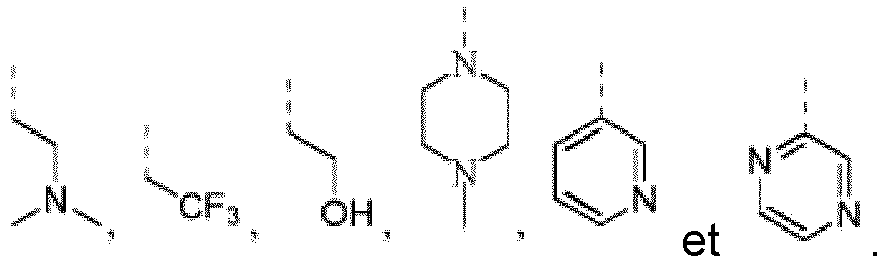
- Composé ou sel pharmaceutiquement acceptable de celui-ci selon la revendication 1 ou 2, dans lequel R1 est choisi parmi un H, un halogène, un alkyle en C1-3, un hétéroalkyle en C1-3, un alcényloxy en C2-5 et un cycloalkyloxy en C4-6, dans lequel lesdits alkyle en C1-3, hétéroalkyle en C1-3, alcényloxy en C2-5 et cycloalkyloxy en C4-6 sont optionnellement substitués par 1, 2 ou 3 groupes R ; de préférence, dans lequel R1 est choisi parmi un H, un F, un CI, un Br, un I, CH3, CH3CH2, CH3CH2CH2, (CH3)2CH, CH3O, CH3CH2O, CH3CH2CH2O, (CH3)2CHO,


- Composé ou sel pharmaceutiquement acceptable de celui-ci selon la revendication 1 ou 2, dans lequel R2 est choisi parmi un H, un halogène, CN, OH, NO2, NH2, un cycloalkyle en C3-12, et un hétérocycloalkyle de 3 à 12 chaînons, dans lequel lesdits NH2, cycloalkyle en C3-12 et hétérocycloalkyle de 3 à 12 chaînons sont optionnellement substitués par 1, 2 ou 3 groupes R ; de préférence, dans lequel R2 est choisi parmi un H, un halogène, CN, OH, NH2, NO2, -NHR, -N(R)2,

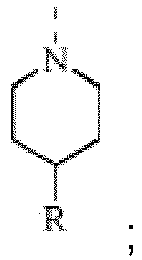
dans lequel R2 est choisi parmi un H, un F, un CI, un Br, CN, OH, NH2, NO2,


- Composé ou sel pharmaceutiquement acceptable de celui-ci selon la revendication 1 ou 2, dans lequel R6 est choisi parmi un H, un F, un CI, un Br, CN, OH, NH2, CH3, CH3CH2, CH3CH2CH2, (CH3)2CH, CH3O, =S et =O.
- Composé ou sel pharmaceutiquement acceptable de celui-ci selon la revendication 1 ou 2, dans lequel le noyau A est choisi parmi un phényle, un thiényle, un pyridyle, un pyrazinyle, un pyrazolyle, un cyclopentanonyle, un cyclopentényle, un thiazolyle, un isothiazolyle et un pyrrolyle, dans lequel lesdits phényle, thiényle, pyridyle, pyrazinyle, pyrazolyle, cyclopentanonyle, cyclopentényle, thiazolyle, isothiazolyle et pyrrolyle sont optionnellement substitués par R6.
- Composé ou sel pharmaceutiquement acceptable de celui-ci selon la revendication 6, dans lequel le motif structural


- Composé ou sel pharmaceutiquement acceptable de celui-ci selon la revendication 1 ou 2, dans lequel Ra et Rb sont chacun indépendamment choisis parmi un H, CH3, CH3CH2,


- Composé ou sel pharmaceutiquement acceptable de celui-ci selon la revendication 1 ou 2, dans lequel R3 est choisi parmi un H, un F, un CI, un Br, CH3, CH3CH2, (CH3)2CH,

- Composé ou sel pharmaceutiquement acceptable de celui-ci selon la revendication 1 ou 2, dans lequel R5 est choisi parmi un H, un F, un CI, un Br, un I, CN, CH3, CH3CH2, CH3CH2CH2, -(CH3)2CH,




- Composé ou sel pharmaceutiquement acceptable de celui-ci selon la revendication 1 ou 2, dans lequel le motif structural



- Composé ou sel pharmaceutiquement acceptable de celui-ci selon l'une quelconque des revendications 1 à 11, qui est choisi parmi

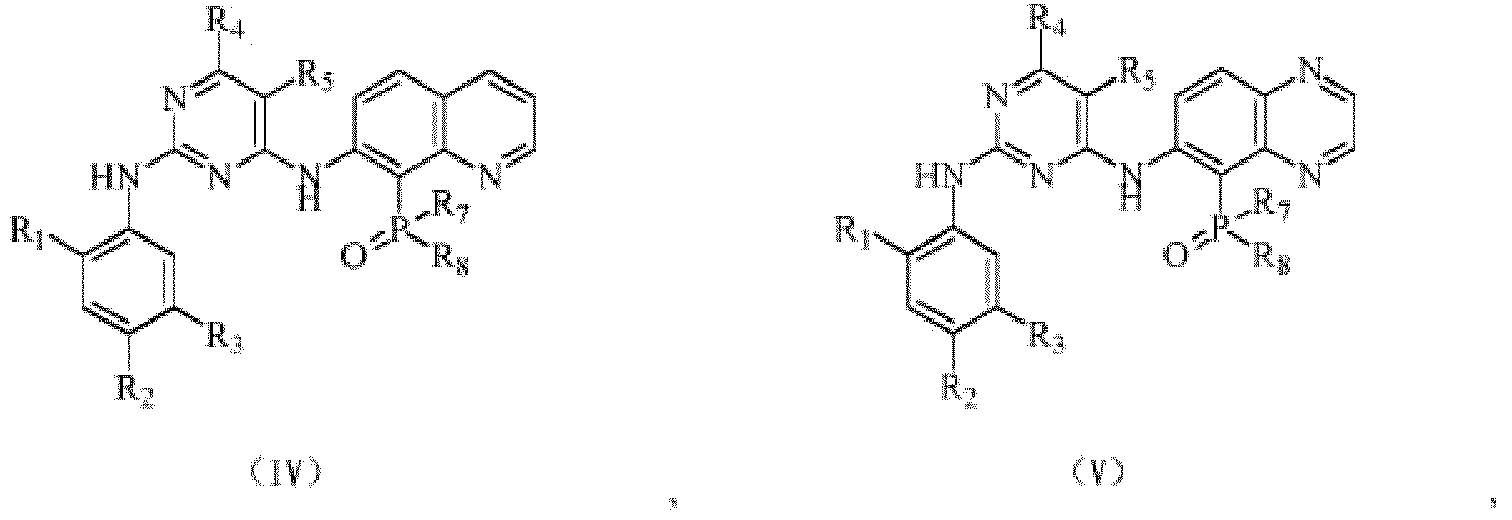

 R1 est tel que défini dans l'une quelconque des revendications 1 à 3,R2 est tel que défini dans l'une quelconque des revendications 1 et 2 ou 4,R3 est tel que défini dans l'une quelconque des revendications 1 et 2 ou 9,R4 est tel que défini dans les revendications 1 et 2 ou 11,R5 est tel que défini dans l'une quelconque des revendications 1 et 2 ou 10 et 11,R6 est tel que défini dans l'une quelconque des revendications 1 et 2 ou 5,R7 et R8 sont tels que définis dans l'une quelconque des revendications 1 et 2 ; de préférence, qui est choisi parmi

- Composé ou sel pharmaceutiquement acceptable de celui-ci selon l'une quelconque des revendications 1 à 12, qui est choisi parmi

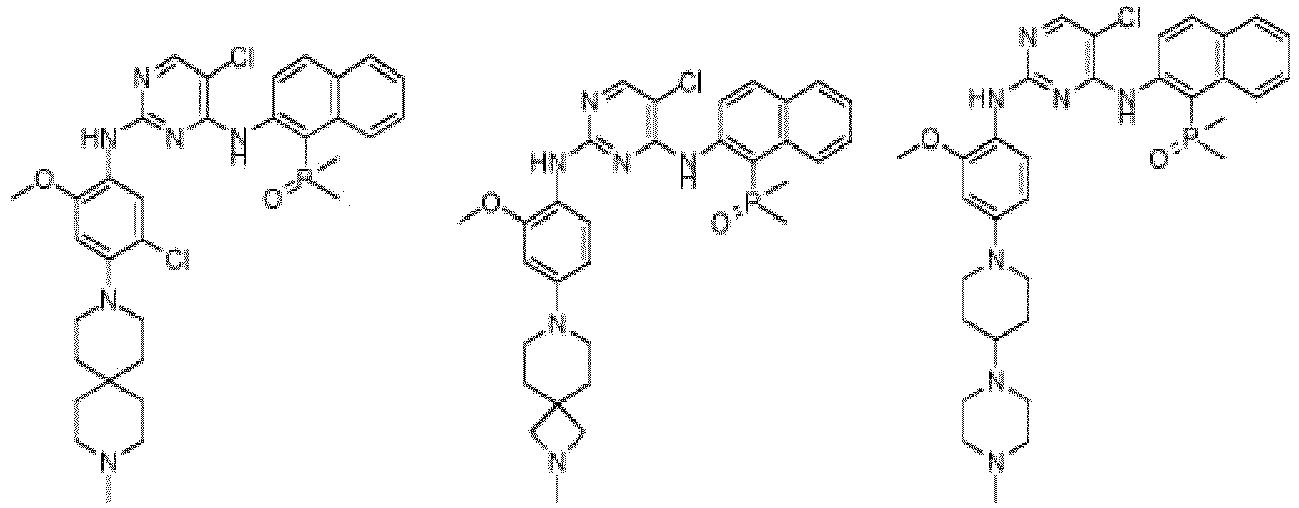


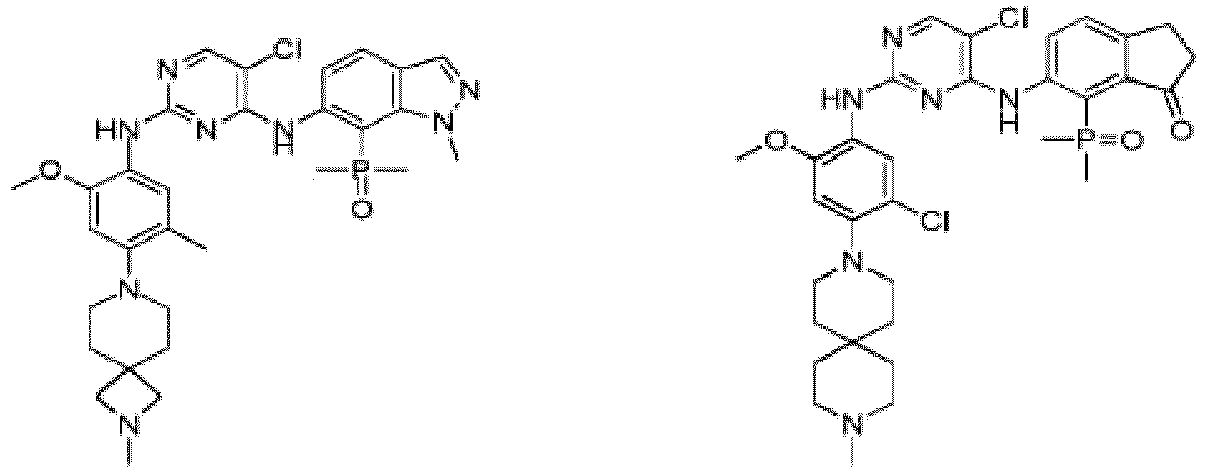


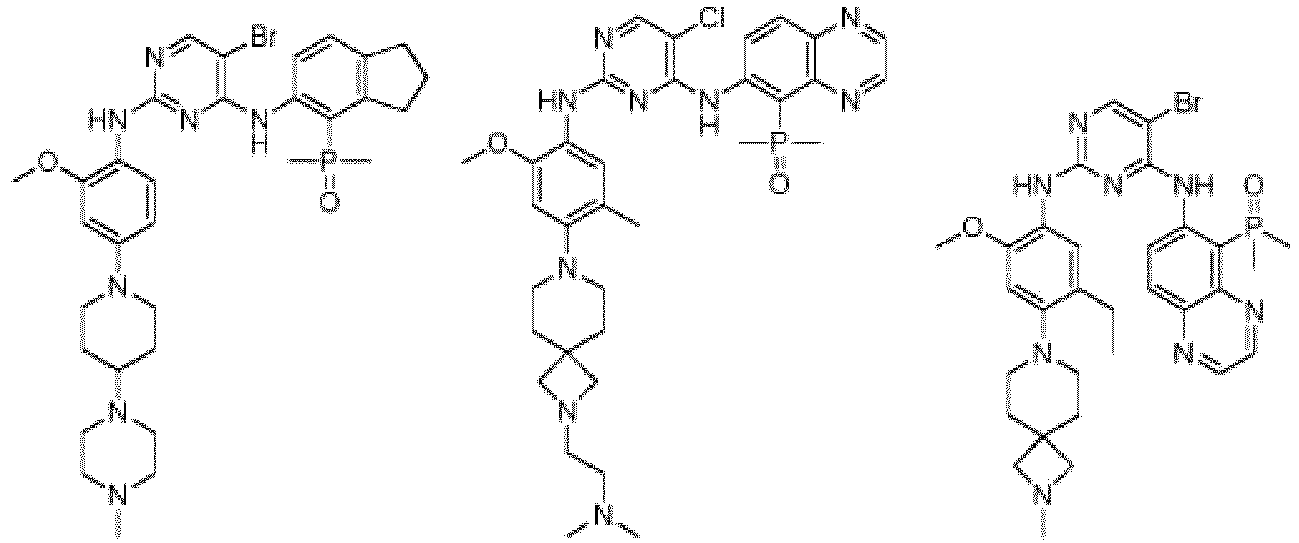


- Composition pharmaceutique comprenant une quantité thérapeutiquement efficace du composé ou du sel pharmaceutiquement acceptable de celui-ci selon l'une quelconque des revendications 1 à 13, et un vecteur pharmaceutiquement acceptable.
- Composé ou sel pharmaceutiquement acceptable de celui-ci selon l'une quelconque des revendications 1 à 13, ou composition pharmaceutique selon la revendication 14, ou combinaison du composé ou du sel pharmaceutiquement acceptable de celui-ci selon l'une quelconque des revendications 1 à 13, ou de la composition pharmaceutique selon la revendication 14 avec un anticorps monoclonal EGFR et/ou un inhibiteur MEK pour une utilisation dans le traitement d'un cancer ; de préférence, l'anticorps monoclonal EGFR est du cétuximab.
Applications Claiming Priority (5)
| Application Number | Priority Date | Filing Date | Title |
|---|---|---|---|
| CN201710592778 | 2017-07-19 | ||
| CN201711277584 | 2017-12-06 | ||
| CN201810130633 | 2018-02-08 | ||
| CN201810355614 | 2018-04-19 | ||
| PCT/CN2018/096344 WO2019015655A1 (fr) | 2017-07-19 | 2018-07-19 | Composé aryl-phosphore-oxygène utilisé en tant qu'inhibiteur de kinase egfr |
Publications (3)
| Publication Number | Publication Date |
|---|---|
| EP3656769A1 EP3656769A1 (fr) | 2020-05-27 |
| EP3656769A4 EP3656769A4 (fr) | 2021-04-14 |
| EP3656769B1 true EP3656769B1 (fr) | 2023-01-25 |
Family
ID=65015797
Family Applications (1)
| Application Number | Title | Priority Date | Filing Date |
|---|---|---|---|
| EP18834412.1A Active EP3656769B1 (fr) | 2017-07-19 | 2018-07-19 | Composé aryl-phosphore-oxygène utilisé en tant qu'inhibiteur de kinase egfr |
Country Status (18)
| Country | Link |
|---|---|
| US (1) | US11390625B2 (fr) |
| EP (1) | EP3656769B1 (fr) |
| JP (1) | JP7233410B2 (fr) |
| KR (1) | KR102647277B1 (fr) |
| CN (3) | CN113354685B (fr) |
| AU (1) | AU2018304757B2 (fr) |
| CA (1) | CA3069829A1 (fr) |
| DK (1) | DK3656769T3 (fr) |
| ES (1) | ES2938899T3 (fr) |
| IL (1) | IL272115B (fr) |
| MX (1) | MX2020000710A (fr) |
| MY (1) | MY198428A (fr) |
| NZ (1) | NZ760967A (fr) |
| PH (1) | PH12020550034B1 (fr) |
| PL (1) | PL3656769T3 (fr) |
| SG (1) | SG11202000470XA (fr) |
| WO (1) | WO2019015655A1 (fr) |
| ZA (1) | ZA202000395B (fr) |
Cited By (1)
| Publication number | Priority date | Publication date | Assignee | Title |
|---|---|---|---|---|
| EP4273149A4 (fr) * | 2020-12-29 | 2024-12-18 | Voronoi Inc. | Composé dérivé d'hétéroaryle et son utilisation |
Families Citing this family (54)
| Publication number | Priority date | Publication date | Assignee | Title |
|---|---|---|---|---|
| CR20210287A (es) * | 2018-11-01 | 2022-02-15 | Syros Pharmaceuticals Inc | Inhibidores de cinasa 7 dependiente de ciclina (cdk7) |
| JP2022517396A (ja) * | 2019-01-18 | 2022-03-08 | チア タイ ティエンチン ファーマシューティカル グループ カンパニー リミテッド | Egfr阻害剤の塩、結晶形及びその製造方法 |
| WO2020200191A1 (fr) * | 2019-04-04 | 2020-10-08 | Betta Pharmaceuticals Co., Ltd | Inhibiteurs d'egfr, compositions et procédés associés |
| CN113166103B (zh) * | 2019-04-26 | 2022-12-16 | 江苏先声药业有限公司 | Egfr抑制剂及其应用 |
| CN112513029B (zh) * | 2019-06-21 | 2023-10-24 | 上海翰森生物医药科技有限公司 | 含氮芳基磷氧化物类衍生物、其制备方法和应用 |
| CN114430739A (zh) * | 2019-07-26 | 2022-05-03 | 贝达药业股份有限公司 | Egfr抑制剂、组合物及其制备方法 |
| WO2021018003A1 (fr) * | 2019-07-26 | 2021-02-04 | 贝达药业股份有限公司 | Inhibiteur d'egfr, composition et procédé de préparation correspondant |
| CN114286678A (zh) * | 2019-08-23 | 2022-04-05 | 北京泰德制药股份有限公司 | 抑制并诱导降解egfr和alk的化合物 |
| CN112538072B (zh) * | 2019-09-21 | 2024-02-06 | 齐鲁制药有限公司 | 氨基嘧啶类egfr抑制剂 |
| CN112824420B (zh) * | 2019-11-21 | 2022-04-26 | 浙江同源康医药股份有限公司 | 用作egfr激酶抑制剂的化合物及其应用 |
| CN114728932B (zh) * | 2019-11-29 | 2024-11-29 | 江苏先声药业有限公司 | 作为egfr激酶抑制剂的多芳基化合物 |
| AU2021218497A1 (en) * | 2020-02-14 | 2022-09-22 | Betta Pharmaceuticals Co., Ltd | Quinolyl phosphine oxide compound, and composition and application thereof |
| CN113717156B (zh) * | 2020-05-25 | 2023-05-09 | 南京红云生物科技有限公司 | Egfr抑制剂、其制备方法及用途 |
| AU2021284676A1 (en) | 2020-06-01 | 2023-02-02 | Wigen Biomedicine Technology (shanghai) Co., Ltd. | New pyrazine compound |
| WO2021244502A1 (fr) * | 2020-06-03 | 2021-12-09 | 江苏先声药业有限公司 | Composé polyaryle et son utilisation |
| AU2021288300A1 (en) * | 2020-06-08 | 2023-02-02 | Hongyun Biotech Co., Ltd. | Alkenyl pyrimidine compound, preparation method therefor, and application thereof |
| US20230248834A1 (en) * | 2020-07-16 | 2023-08-10 | Beigene, Ltd. | Degradation of (egfr) by conjugation of egfr inhibitors with e3 ligase ligand and methods of use |
| WO2022012622A1 (fr) * | 2020-07-16 | 2022-01-20 | Beigene, Ltd. | Dégradation d'egfr par conjugaison d'inhibiteurs d'egfr avec un ligand de ligase e3 et procédés d'utilisation |
| CN116438172A (zh) * | 2020-11-13 | 2023-07-14 | 南京红云生物科技有限公司 | Hpk1激酶调节剂、其制备方法与应用 |
| CN114644654A (zh) * | 2020-12-18 | 2022-06-21 | 上海翰森生物医药科技有限公司 | 芳基磷氧化衍生物、酸式盐或其晶型及其制备方法和应用 |
| WO2022127807A1 (fr) * | 2020-12-18 | 2022-06-23 | 江苏豪森药业集团有限公司 | Forme cristalline d'un dérivé d'oxyde de phosphore aryle sous forme de base libre, son procédé de préparation et son utilisation |
| TW202237597A (zh) * | 2021-03-19 | 2022-10-01 | 大陸商上海齊魯製藥研究中心有限公司 | 新型egfr降解劑 |
| IL307327A (en) * | 2021-04-01 | 2023-11-01 | Therapex Co Ltd | Inhibitors of protein kinase with a pyrimidine skeleton, and preparations for treatment containing them |
| KR102800635B1 (ko) | 2021-04-01 | 2025-04-29 | 주식회사 테라펙스 | 단백질 키나아제 저해 활성을 갖는 피리미딘 유도체 및 이를 포함하는 치료용 약학 조성물 |
| WO2022208454A1 (fr) | 2021-04-02 | 2022-10-06 | Bridge Biotherapeutics, Inc. | Composés de n2-phénylpyrimidine-2,4-diamine et procédés de préparation et procédés d'utilisation correspondants |
| JP7744155B2 (ja) * | 2021-04-19 | 2025-09-25 | キヤノンメディカルシステムズ株式会社 | 多能性幹細胞製造システム |
| IL308103A (en) * | 2021-04-30 | 2023-12-01 | Xizang Haisco Pharmaceutical Co Ltd | The history of phosphonyl, its composition and pharmaceutical application |
| CN117500813A (zh) * | 2021-06-17 | 2024-02-02 | 微境生物医药科技(上海)有限公司 | 芳基氧膦类化合物 |
| JP2024525181A (ja) * | 2021-06-21 | 2024-07-10 | ベイジーン スウィッツァーランド ゲーエムベーハー | (r)-グルタルイミドcrbnリガンド及び使用方法 |
| TW202321228A (zh) * | 2021-08-06 | 2023-06-01 | 大陸商南京紅云生物科技有限公司 | 苯並二噁烷類化合物、其製備方法與應用 |
| CN117769560A (zh) * | 2021-08-19 | 2024-03-26 | 贝达药业股份有限公司 | Egfr抑制剂的盐、晶型及其组合物和应用 |
| CN114181159B (zh) * | 2021-12-28 | 2024-02-20 | 南通大学 | 含2,4,5-三取代嘧啶酰肼衍生物及其制备方法与应用 |
| CN118696038A (zh) * | 2022-01-18 | 2024-09-24 | 百济神州有限公司 | 通过缀合egfr抑制剂与e3连接酶配体降解egfr及其使用方法 |
| CN117263982B (zh) * | 2022-06-21 | 2025-11-11 | 江苏豪森药业集团有限公司 | 含氮芳基磷氧化物衍生物的晶型及其制备方法和应用 |
| WO2024005516A1 (fr) * | 2022-06-28 | 2024-01-04 | 보로노이 주식회사 | Composé dérivé d'hétéroaryle et son utilisation |
| CN115161284B (zh) * | 2022-07-04 | 2024-07-09 | 无锡多宁生物科技有限公司 | 一种lmh悬浮细胞复苏培养方法及其应用 |
| WO2024072075A1 (fr) | 2022-09-30 | 2024-04-04 | 주식회사 테라펙스 | Dérivé de pyrimidine ayant une activité inhibitrice de protéine kinase, et composition pharmaceutique thérapeutique le comprenant |
| AU2024241633A1 (en) | 2023-03-30 | 2025-11-06 | Revolution Medicines, Inc. | Compositions for inducing ras gtp hydrolysis and uses thereof |
| TW202508595A (zh) | 2023-05-04 | 2025-03-01 | 美商銳新醫藥公司 | 用於ras相關疾病或病症之組合療法 |
| CN116655600B (zh) * | 2023-05-23 | 2025-08-22 | 江南大学 | 一种取代的2-芳氨基嘧啶类化合物、药物组合物及其用途 |
| US20250049810A1 (en) | 2023-08-07 | 2025-02-13 | Revolution Medicines, Inc. | Methods of treating a ras protein-related disease or disorder |
| AU2024360465A1 (en) | 2023-10-12 | 2026-04-09 | Revolution Medicines, Inc. | Macrocyclic ras inhibitors |
| WO2025171296A1 (fr) | 2024-02-09 | 2025-08-14 | Revolution Medicines, Inc. | Inhibiteurs de ras |
| TW202547461A (zh) | 2024-05-17 | 2025-12-16 | 美商銳新醫藥公司 | Ras抑制劑 |
| WO2025255438A1 (fr) | 2024-06-07 | 2025-12-11 | Revolution Medicines, Inc. | Procédés de traitement d'une maladie ou d'un trouble lié à la protéine ras |
| WO2025265060A1 (fr) | 2024-06-21 | 2025-12-26 | Revolution Medicines, Inc. | Compositions thérapeutiques et procédés de gestion d'effets liés au traitement |
| WO2026006747A1 (fr) | 2024-06-28 | 2026-01-02 | Revolution Medicines, Inc. | Inhibiteurs de ras |
| WO2026015796A1 (fr) | 2024-07-12 | 2026-01-15 | Revolution Medicines, Inc. | Méthodes de traitement d'une maladie ou d'un trouble lié à ras |
| WO2026015801A1 (fr) | 2024-07-12 | 2026-01-15 | Revolution Medicines, Inc. | Méthodes de traitement d'une maladie ou d'un trouble liés à ras |
| WO2026015790A1 (fr) | 2024-07-12 | 2026-01-15 | Revolution Medicines, Inc. | Méthodes de traitement d'une maladie ou d'un trouble lié à ras |
| WO2026015825A1 (fr) | 2024-07-12 | 2026-01-15 | Revolution Medicines, Inc. | Utilisation d'un inhibiteur de ras pour traiter le cancer du pancréas |
| WO2026026940A1 (fr) * | 2024-08-01 | 2026-02-05 | 石药集团中奇制药技术(石家庄)有限公司 | Agent de dégradation d'egfr et son procédé de préparation et son utilisation |
| WO2026050446A1 (fr) | 2024-08-29 | 2026-03-05 | Revolution Medicines, Inc. | Inhibiteurs de ras |
| WO2026072904A2 (fr) | 2024-09-26 | 2026-04-02 | Revolution Medicines, Inc. | Compositions et méthodes de traitement du cancer du poumon |
Family Cites Families (10)
| Publication number | Priority date | Publication date | Assignee | Title |
|---|---|---|---|---|
| SE9002479D0 (sv) | 1990-07-20 | 1990-07-20 | Pharmacia Ab | Antibody conjugates |
| WO2012051587A1 (fr) * | 2010-10-14 | 2012-04-19 | Ariad Pharmaceuticals, Inc. | Méthodes d'inhibition de la prolifération cellulaire dans des cancers induits par l'egfr |
| EP2704572B1 (fr) * | 2011-05-04 | 2015-12-30 | Ariad Pharmaceuticals, Inc. | Composés permettant d'inhiber la prolifération cellulaire dans les cancers induits par l'egfr |
| WO2013169401A1 (fr) | 2012-05-05 | 2013-11-14 | Ariad Pharmaceuticals, Inc. | Composés pour inhiber la prolifération cellulaire dans les cancers induits par l'egfr |
| CN105601573B (zh) | 2014-11-24 | 2021-07-02 | 中国科学院上海药物研究所 | 2-氨基嘧啶类化合物及其药物组合物和应用 |
| KR101705980B1 (ko) * | 2015-06-12 | 2017-02-13 | 중앙대학교 산학협력단 | 신규 파조파닙 유도체 및 이를 함유하는 약학조성물 |
| CN105017160B (zh) | 2015-06-24 | 2017-12-29 | 温州医科大学 | 一种嘧啶类egfrt790m抑制剂及其合成方法和应用 |
| CN106699810A (zh) * | 2015-11-17 | 2017-05-24 | 清华大学 | 一种含氮杂环化合物及其制备方法与在抑制激酶活性中的应用 |
| RU2606951C1 (ru) * | 2015-11-19 | 2017-01-10 | Закрытое акционерное общество "Р-Фарм" (ЗАО "Р-Фарм") | Дихлорацетаты замещенных N4-[2-(диметилфосфорил)фенил]-N2-(2-метокси-4-пиперидин-1-илфенил)-5-хлорпиримидин-2,4-диаминов в качестве модуляторов ALK и EGFR, предназначенных для лечения рака |
| RU2607371C1 (ru) * | 2015-11-19 | 2017-01-10 | Закрытое акционерное общество "Р-Фарм"(ЗАО "Р-Фарм") | Замещенные N2-(4-амино-2-метоксифенил)-N4-[2-(диметилфосфорил)-фенил]-5-хлор-пиримидин-2,4-диамины в качестве модуляторов ALK и EGFR, предназначенные для лечения рака |
-
2018
- 2018-07-19 DK DK18834412.1T patent/DK3656769T3/da active
- 2018-07-19 JP JP2020502411A patent/JP7233410B2/ja active Active
- 2018-07-19 KR KR1020207004522A patent/KR102647277B1/ko active Active
- 2018-07-19 IL IL272115A patent/IL272115B/en unknown
- 2018-07-19 WO PCT/CN2018/096344 patent/WO2019015655A1/fr not_active Ceased
- 2018-07-19 PL PL18834412.1T patent/PL3656769T3/pl unknown
- 2018-07-19 US US16/631,416 patent/US11390625B2/en active Active
- 2018-07-19 CA CA3069829A patent/CA3069829A1/fr active Pending
- 2018-07-19 ES ES18834412T patent/ES2938899T3/es active Active
- 2018-07-19 MY MYPI2020000245A patent/MY198428A/en unknown
- 2018-07-19 NZ NZ760967A patent/NZ760967A/en unknown
- 2018-07-19 MX MX2020000710A patent/MX2020000710A/es unknown
- 2018-07-19 CN CN202110675950.4A patent/CN113354685B/zh active Active
- 2018-07-19 SG SG11202000470XA patent/SG11202000470XA/en unknown
- 2018-07-19 PH PH1/2020/550034A patent/PH12020550034B1/en unknown
- 2018-07-19 CN CN202110675806.0A patent/CN113480575A/zh active Pending
- 2018-07-19 CN CN201880047086.XA patent/CN110944989B/zh active Active
- 2018-07-19 EP EP18834412.1A patent/EP3656769B1/fr active Active
- 2018-07-19 AU AU2018304757A patent/AU2018304757B2/en active Active
-
2020
- 2020-01-21 ZA ZA2020/00395A patent/ZA202000395B/en unknown
Cited By (1)
| Publication number | Priority date | Publication date | Assignee | Title |
|---|---|---|---|---|
| EP4273149A4 (fr) * | 2020-12-29 | 2024-12-18 | Voronoi Inc. | Composé dérivé d'hétéroaryle et son utilisation |
Also Published As
| Publication number | Publication date |
|---|---|
| US20200207768A1 (en) | 2020-07-02 |
| ZA202000395B (en) | 2023-06-28 |
| NZ760967A (en) | 2026-01-30 |
| MX2020000710A (es) | 2020-07-29 |
| JP7233410B2 (ja) | 2023-03-06 |
| CN110944989B (zh) | 2021-06-25 |
| ES2938899T3 (es) | 2023-04-17 |
| SG11202000470XA (en) | 2020-02-27 |
| AU2018304757A1 (en) | 2020-02-06 |
| CN113354685B (zh) | 2022-12-20 |
| KR20200032146A (ko) | 2020-03-25 |
| EP3656769A1 (fr) | 2020-05-27 |
| CA3069829A1 (fr) | 2019-01-24 |
| MY198428A (en) | 2023-08-29 |
| EP3656769A4 (fr) | 2021-04-14 |
| DK3656769T3 (da) | 2023-02-13 |
| US11390625B2 (en) | 2022-07-19 |
| CN113354685A (zh) | 2021-09-07 |
| PH12020550034B1 (en) | 2024-05-22 |
| CN110944989A (zh) | 2020-03-31 |
| PH12020550034A1 (en) | 2021-02-15 |
| BR112020001124A2 (pt) | 2020-09-01 |
| PL3656769T3 (pl) | 2023-03-27 |
| CN113480575A (zh) | 2021-10-08 |
| AU2018304757B2 (en) | 2022-02-10 |
| IL272115B (en) | 2022-09-01 |
| JP2020527151A (ja) | 2020-09-03 |
| IL272115A (en) | 2020-03-31 |
| WO2019015655A1 (fr) | 2019-01-24 |
| KR102647277B1 (ko) | 2024-03-12 |
Similar Documents
| Publication | Publication Date | Title |
|---|---|---|
| EP3656769B1 (fr) | Composé aryl-phosphore-oxygène utilisé en tant qu'inhibiteur de kinase egfr | |
| EP3719012B1 (fr) | Dérivés de n-[4-[(2-amino-4-pyridinyl)oxy]-3-fluorophényl]-3-(4-fluorophényl)-1,2,3,4-tetrahydro-2,4-dioxo-5-pyrimidinecarboxamide en tant qu'inhibiteurs de c-met/axl pour le traitement des tumeurs | |
| EP3333157B1 (fr) | Composés vinyliques utilisés comme inhibiteurs du fgfr et du vegfr | |
| EP3290419B1 (fr) | Composé aryl-pyrimidine tricyclique ou à cycle fusionné utilisé comme inhibiteur de kinase | |
| EP3556758B1 (fr) | Dérivés de 1,2-dihydro-1,6-naphthyridin-2-one en tant qu'inhibiteurs de cdk4/6 | |
| CN116917286A (zh) | 6-氨基甲酸酯取代的杂芳环衍生物 | |
| EP3738961B1 (fr) | Composé hétérocyclique en tant qu'inhibiteur de csf-1 r et son utilisation | |
| EP3473628B1 (fr) | Composé dihydropyrazole azépine servant d'inhibiteur d'akt | |
| HK40018495B (en) | Aryl-phosphorus-oxygen compound as egfr kinase inhibitor | |
| HK40018495A (en) | Aryl-phosphorus-oxygen compound as egfr kinase inhibitor | |
| BR112020001124B1 (pt) | Composto ou o sal farmaceuticamente aceitável do mesmo, composição farmacêutica, e uso do composto ou do sal farmaceuticamente aceitável do mesmo | |
| EA040849B1 (ru) | Кислородсодержащее арилфосфорное соединение в качестве ингибитора киназы egfr | |
| CN121646596A (zh) | 吡啶酮并环类衍生物及其应用 | |
| HK40034314A (en) | Heterocyclic compound as csf-1r inhibitor and use thereof | |
| HK40038950B (en) | N-[4-[(2-amino-4-pyridinyl)oxy]-3-fluorophenyl]-3-(4-fluorophenyl)-1,2,3,4-tetrahydro-2,4-dioxo-5-pyrimidinecarboxamide derivatives as c-met/axl inhibitors for the treatment of tumors | |
| HK40038950A (en) | N-[4-[(2-amino-4-pyridinyl)oxy]-3-fluorophenyl]-3-(4-fluorophenyl)-1,2,3,4-tetrahydro-2,4-dioxo-5-pyrimidinecarboxamide derivatives as c-met/axl inhibitors for the treatment of tumors | |
| HK40008902A (en) | Cdk4/6 inhibitor |
Legal Events
| Date | Code | Title | Description |
|---|---|---|---|
| STAA | Information on the status of an ep patent application or granted ep patent |
Free format text: STATUS: THE INTERNATIONAL PUBLICATION HAS BEEN MADE |
|
| PUAI | Public reference made under article 153(3) epc to a published international application that has entered the european phase |
Free format text: ORIGINAL CODE: 0009012 |
|
| STAA | Information on the status of an ep patent application or granted ep patent |
Free format text: STATUS: REQUEST FOR EXAMINATION WAS MADE |
|
| 17P | Request for examination filed |
Effective date: 20200127 |
|
| AK | Designated contracting states |
Kind code of ref document: A1 Designated state(s): AL AT BE BG CH CY CZ DE DK EE ES FI FR GB GR HR HU IE IS IT LI LT LU LV MC MK MT NL NO PL PT RO RS SE SI SK SM TR |
|
| AX | Request for extension of the european patent |
Extension state: BA ME |
|
| DAV | Request for validation of the european patent (deleted) | ||
| DAX | Request for extension of the european patent (deleted) | ||
| A4 | Supplementary search report drawn up and despatched |
Effective date: 20210315 |
|
| RIC1 | Information provided on ipc code assigned before grant |
Ipc: C07D 401/12 20060101AFI20210309BHEP Ipc: A61K 31/675 20060101ALI20210309BHEP Ipc: A61K 31/505 20060101ALI20210309BHEP Ipc: A61P 35/00 20060101ALI20210309BHEP Ipc: A61K 31/506 20060101ALI20210309BHEP Ipc: C07D 239/48 20060101ALI20210309BHEP Ipc: C07D 401/14 20060101ALI20210309BHEP Ipc: C07D 403/12 20060101ALI20210309BHEP Ipc: C07D 409/04 20060101ALI20210309BHEP Ipc: C07D 417/14 20060101ALI20210309BHEP Ipc: C07D 471/06 20060101ALI20210309BHEP Ipc: C07F 9/6512 20060101ALI20210309BHEP Ipc: C07F 9/6558 20060101ALI20210309BHEP Ipc: C07D 409/14 20060101ALI20210309BHEP |
|
| GRAP | Despatch of communication of intention to grant a patent |
Free format text: ORIGINAL CODE: EPIDOSNIGR1 |
|
| STAA | Information on the status of an ep patent application or granted ep patent |
Free format text: STATUS: GRANT OF PATENT IS INTENDED |
|
| INTG | Intention to grant announced |
Effective date: 20220908 |
|
| RAP3 | Party data changed (applicant data changed or rights of an application transferred) |
Owner name: CHIA TAI TIANQING PHARMACEUTICAL GROUP CO., LTD. |
|
| GRAS | Grant fee paid |
Free format text: ORIGINAL CODE: EPIDOSNIGR3 |
|
| GRAA | (expected) grant |
Free format text: ORIGINAL CODE: 0009210 |
|
| STAA | Information on the status of an ep patent application or granted ep patent |
Free format text: STATUS: THE PATENT HAS BEEN GRANTED |
|
| AK | Designated contracting states |
Kind code of ref document: B1 Designated state(s): AL AT BE BG CH CY CZ DE DK EE ES FI FR GB GR HR HU IE IS IT LI LT LU LV MC MK MT NL NO PL PT RO RS SE SI SK SM TR |
|
| REG | Reference to a national code |
Ref country code: GB Ref legal event code: FG4D |
|
| REG | Reference to a national code |
Ref country code: CH Ref legal event code: EP |
|
| REG | Reference to a national code |
Ref country code: DK Ref legal event code: T3 Effective date: 20230209 |
|
| REG | Reference to a national code |
Ref country code: NL Ref legal event code: FP Ref country code: AT Ref legal event code: REF Ref document number: 1545845 Country of ref document: AT Kind code of ref document: T Effective date: 20230215 Ref country code: IE Ref legal event code: FG4D |
|
| REG | Reference to a national code |
Ref country code: DE Ref legal event code: R096 Ref document number: 602018045818 Country of ref document: DE |
|
| REG | Reference to a national code |
Ref country code: SE Ref legal event code: TRGR |
|
| REG | Reference to a national code |
Ref country code: ES Ref legal event code: FG2A Ref document number: 2938899 Country of ref document: ES Kind code of ref document: T3 Effective date: 20230417 |
|
| REG | Reference to a national code |
Ref country code: LT Ref legal event code: MG9D |
|
| P01 | Opt-out of the competence of the unified patent court (upc) registered |
Effective date: 20230601 |
|
| PG25 | Lapsed in a contracting state [announced via postgrant information from national office to epo] |
Ref country code: RS Free format text: LAPSE BECAUSE OF FAILURE TO SUBMIT A TRANSLATION OF THE DESCRIPTION OR TO PAY THE FEE WITHIN THE PRESCRIBED TIME-LIMIT Effective date: 20230125 Ref country code: PT Free format text: LAPSE BECAUSE OF FAILURE TO SUBMIT A TRANSLATION OF THE DESCRIPTION OR TO PAY THE FEE WITHIN THE PRESCRIBED TIME-LIMIT Effective date: 20230525 Ref country code: NO Free format text: LAPSE BECAUSE OF FAILURE TO SUBMIT A TRANSLATION OF THE DESCRIPTION OR TO PAY THE FEE WITHIN THE PRESCRIBED TIME-LIMIT Effective date: 20230425 Ref country code: LV Free format text: LAPSE BECAUSE OF FAILURE TO SUBMIT A TRANSLATION OF THE DESCRIPTION OR TO PAY THE FEE WITHIN THE PRESCRIBED TIME-LIMIT Effective date: 20230125 Ref country code: LT Free format text: LAPSE BECAUSE OF FAILURE TO SUBMIT A TRANSLATION OF THE DESCRIPTION OR TO PAY THE FEE WITHIN THE PRESCRIBED TIME-LIMIT Effective date: 20230125 Ref country code: HR Free format text: LAPSE BECAUSE OF FAILURE TO SUBMIT A TRANSLATION OF THE DESCRIPTION OR TO PAY THE FEE WITHIN THE PRESCRIBED TIME-LIMIT Effective date: 20230125 |
|
| PG25 | Lapsed in a contracting state [announced via postgrant information from national office to epo] |
Ref country code: IS Free format text: LAPSE BECAUSE OF FAILURE TO SUBMIT A TRANSLATION OF THE DESCRIPTION OR TO PAY THE FEE WITHIN THE PRESCRIBED TIME-LIMIT Effective date: 20230525 Ref country code: GR Free format text: LAPSE BECAUSE OF FAILURE TO SUBMIT A TRANSLATION OF THE DESCRIPTION OR TO PAY THE FEE WITHIN THE PRESCRIBED TIME-LIMIT Effective date: 20230426 Ref country code: FI Free format text: LAPSE BECAUSE OF FAILURE TO SUBMIT A TRANSLATION OF THE DESCRIPTION OR TO PAY THE FEE WITHIN THE PRESCRIBED TIME-LIMIT Effective date: 20230125 |
|
| REG | Reference to a national code |
Ref country code: DE Ref legal event code: R097 Ref document number: 602018045818 Country of ref document: DE |
|
| PG25 | Lapsed in a contracting state [announced via postgrant information from national office to epo] |
Ref country code: SM Free format text: LAPSE BECAUSE OF FAILURE TO SUBMIT A TRANSLATION OF THE DESCRIPTION OR TO PAY THE FEE WITHIN THE PRESCRIBED TIME-LIMIT Effective date: 20230125 Ref country code: RO Free format text: LAPSE BECAUSE OF FAILURE TO SUBMIT A TRANSLATION OF THE DESCRIPTION OR TO PAY THE FEE WITHIN THE PRESCRIBED TIME-LIMIT Effective date: 20230125 Ref country code: EE Free format text: LAPSE BECAUSE OF FAILURE TO SUBMIT A TRANSLATION OF THE DESCRIPTION OR TO PAY THE FEE WITHIN THE PRESCRIBED TIME-LIMIT Effective date: 20230125 Ref country code: CZ Free format text: LAPSE BECAUSE OF FAILURE TO SUBMIT A TRANSLATION OF THE DESCRIPTION OR TO PAY THE FEE WITHIN THE PRESCRIBED TIME-LIMIT Effective date: 20230125 |
|
| PG25 | Lapsed in a contracting state [announced via postgrant information from national office to epo] |
Ref country code: SK Free format text: LAPSE BECAUSE OF FAILURE TO SUBMIT A TRANSLATION OF THE DESCRIPTION OR TO PAY THE FEE WITHIN THE PRESCRIBED TIME-LIMIT Effective date: 20230125 |
|
| PLBE | No opposition filed within time limit |
Free format text: ORIGINAL CODE: 0009261 |
|
| STAA | Information on the status of an ep patent application or granted ep patent |
Free format text: STATUS: NO OPPOSITION FILED WITHIN TIME LIMIT |
|
| 26N | No opposition filed |
Effective date: 20231026 |
|
| PG25 | Lapsed in a contracting state [announced via postgrant information from national office to epo] |
Ref country code: SI Free format text: LAPSE BECAUSE OF FAILURE TO SUBMIT A TRANSLATION OF THE DESCRIPTION OR TO PAY THE FEE WITHIN THE PRESCRIBED TIME-LIMIT Effective date: 20230125 |
|
| PG25 | Lapsed in a contracting state [announced via postgrant information from national office to epo] |
Ref country code: MC Free format text: LAPSE BECAUSE OF FAILURE TO SUBMIT A TRANSLATION OF THE DESCRIPTION OR TO PAY THE FEE WITHIN THE PRESCRIBED TIME-LIMIT Effective date: 20230125 |
|
| PG25 | Lapsed in a contracting state [announced via postgrant information from national office to epo] |
Ref country code: MC Free format text: LAPSE BECAUSE OF FAILURE TO SUBMIT A TRANSLATION OF THE DESCRIPTION OR TO PAY THE FEE WITHIN THE PRESCRIBED TIME-LIMIT Effective date: 20230125 |
|
| PG25 | Lapsed in a contracting state [announced via postgrant information from national office to epo] |
Ref country code: LU Free format text: LAPSE BECAUSE OF NON-PAYMENT OF DUE FEES Effective date: 20230719 |
|
| PG25 | Lapsed in a contracting state [announced via postgrant information from national office to epo] |
Ref country code: LU Free format text: LAPSE BECAUSE OF NON-PAYMENT OF DUE FEES Effective date: 20230719 |
|
| REG | Reference to a national code |
Ref country code: AT Ref legal event code: UEP Ref document number: 1545845 Country of ref document: AT Kind code of ref document: T Effective date: 20230125 |
|
| PG25 | Lapsed in a contracting state [announced via postgrant information from national office to epo] |
Ref country code: BG Free format text: LAPSE BECAUSE OF FAILURE TO SUBMIT A TRANSLATION OF THE DESCRIPTION OR TO PAY THE FEE WITHIN THE PRESCRIBED TIME-LIMIT Effective date: 20230125 |
|
| PG25 | Lapsed in a contracting state [announced via postgrant information from national office to epo] |
Ref country code: BG Free format text: LAPSE BECAUSE OF FAILURE TO SUBMIT A TRANSLATION OF THE DESCRIPTION OR TO PAY THE FEE WITHIN THE PRESCRIBED TIME-LIMIT Effective date: 20230125 |
|
| PGFP | Annual fee paid to national office [announced via postgrant information from national office to epo] |
Ref country code: PL Payment date: 20250612 Year of fee payment: 8 |
|
| PGFP | Annual fee paid to national office [announced via postgrant information from national office to epo] |
Ref country code: GB Payment date: 20250612 Year of fee payment: 8 |
|
| PGFP | Annual fee paid to national office [announced via postgrant information from national office to epo] |
Ref country code: NL Payment date: 20250613 Year of fee payment: 8 Ref country code: BE Payment date: 20250619 Year of fee payment: 8 |
|
| PGFP | Annual fee paid to national office [announced via postgrant information from national office to epo] |
Ref country code: FR Payment date: 20250610 Year of fee payment: 8 |
|
| PG25 | Lapsed in a contracting state [announced via postgrant information from national office to epo] |
Ref country code: CY Free format text: LAPSE BECAUSE OF FAILURE TO SUBMIT A TRANSLATION OF THE DESCRIPTION OR TO PAY THE FEE WITHIN THE PRESCRIBED TIME-LIMIT; INVALID AB INITIO Effective date: 20180719 |
|
| PGFP | Annual fee paid to national office [announced via postgrant information from national office to epo] |
Ref country code: IE Payment date: 20250610 Year of fee payment: 8 |
|
| PGFP | Annual fee paid to national office [announced via postgrant information from national office to epo] |
Ref country code: SE Payment date: 20250610 Year of fee payment: 8 |
|
| PG25 | Lapsed in a contracting state [announced via postgrant information from national office to epo] |
Ref country code: HU Free format text: LAPSE BECAUSE OF FAILURE TO SUBMIT A TRANSLATION OF THE DESCRIPTION OR TO PAY THE FEE WITHIN THE PRESCRIBED TIME-LIMIT; INVALID AB INITIO Effective date: 20180719 |
|
| PGFP | Annual fee paid to national office [announced via postgrant information from national office to epo] |
Ref country code: ES Payment date: 20250804 Year of fee payment: 8 |
|
| PGFP | Annual fee paid to national office [announced via postgrant information from national office to epo] |
Ref country code: DE Payment date: 20250611 Year of fee payment: 8 Ref country code: DK Payment date: 20250714 Year of fee payment: 8 |
|
| PGFP | Annual fee paid to national office [announced via postgrant information from national office to epo] |
Ref country code: TR Payment date: 20250708 Year of fee payment: 8 Ref country code: IT Payment date: 20250623 Year of fee payment: 8 |
|
| PGFP | Annual fee paid to national office [announced via postgrant information from national office to epo] |
Ref country code: AT Payment date: 20250625 Year of fee payment: 8 |
|
| PGFP | Annual fee paid to national office [announced via postgrant information from national office to epo] |
Ref country code: CH Payment date: 20250801 Year of fee payment: 8 |