EP3658544B1 - Derivate von luciferin and verfahren zu deren synthese - Google Patents
Derivate von luciferin and verfahren zu deren synthese Download PDFInfo
- Publication number
- EP3658544B1 EP3658544B1 EP18762136.2A EP18762136A EP3658544B1 EP 3658544 B1 EP3658544 B1 EP 3658544B1 EP 18762136 A EP18762136 A EP 18762136A EP 3658544 B1 EP3658544 B1 EP 3658544B1
- Authority
- EP
- European Patent Office
- Prior art keywords
- compound
- formula
- alkyl
- luciferin
- thioluciferin
- Prior art date
- Legal status (The legal status is an assumption and is not a legal conclusion. Google has not performed a legal analysis and makes no representation as to the accuracy of the status listed.)
- Active
Links
Images




Classifications
-
- C—CHEMISTRY; METALLURGY
- C07—ORGANIC CHEMISTRY
- C07D—HETEROCYCLIC COMPOUNDS
- C07D417/00—Heterocyclic compounds containing two or more hetero rings, at least one ring having nitrogen and sulfur atoms as the only ring hetero atoms, not provided for by group C07D415/00
- C07D417/02—Heterocyclic compounds containing two or more hetero rings, at least one ring having nitrogen and sulfur atoms as the only ring hetero atoms, not provided for by group C07D415/00 containing two hetero rings
- C07D417/04—Heterocyclic compounds containing two or more hetero rings, at least one ring having nitrogen and sulfur atoms as the only ring hetero atoms, not provided for by group C07D415/00 containing two hetero rings directly linked by a ring-member-to-ring-member bond
-
- A—HUMAN NECESSITIES
- A61—MEDICAL OR VETERINARY SCIENCE; HYGIENE
- A61K—PREPARATIONS FOR MEDICAL, DENTAL OR TOILETRY PURPOSES
- A61K49/00—Preparations for testing in vivo
- A61K49/001—Preparation for luminescence or biological staining
- A61K49/0013—Luminescence
- A61K49/0017—Fluorescence in vivo
- A61K49/0019—Fluorescence in vivo characterised by the fluorescent group, e.g. oligomeric, polymeric or dendritic molecules
- A61K49/0021—Fluorescence in vivo characterised by the fluorescent group, e.g. oligomeric, polymeric or dendritic molecules the fluorescent group being a small organic molecule
-
- C—CHEMISTRY; METALLURGY
- C07—ORGANIC CHEMISTRY
- C07D—HETEROCYCLIC COMPOUNDS
- C07D277/00—Heterocyclic compounds containing 1,3-thiazole or hydrogenated 1,3-thiazole rings
- C07D277/60—Heterocyclic compounds containing 1,3-thiazole or hydrogenated 1,3-thiazole rings condensed with carbocyclic rings or ring systems
- C07D277/62—Benzothiazoles
- C07D277/68—Benzothiazoles with hetero atoms or with carbon atoms having three bonds to hetero atoms with at the most one bond to halogen, e.g. ester or nitrile radicals, directly attached in position 2
-
- C—CHEMISTRY; METALLURGY
- C07—ORGANIC CHEMISTRY
- C07D—HETEROCYCLIC COMPOUNDS
- C07D417/00—Heterocyclic compounds containing two or more hetero rings, at least one ring having nitrogen and sulfur atoms as the only ring hetero atoms, not provided for by group C07D415/00
- C07D417/02—Heterocyclic compounds containing two or more hetero rings, at least one ring having nitrogen and sulfur atoms as the only ring hetero atoms, not provided for by group C07D415/00 containing two hetero rings
- C07D417/12—Heterocyclic compounds containing two or more hetero rings, at least one ring having nitrogen and sulfur atoms as the only ring hetero atoms, not provided for by group C07D415/00 containing two hetero rings linked by a chain containing hetero atoms as chain links
Definitions
- the invention relates to derivatives of the molecule, D-luciferin, and methods for their synthesis.
- Luciferins are light emitting compounds which are oxidised by luciferase enzymes to form short-lived high energy state intermediates that decay spontaneously to their ground state products, giving off light in the process.
- D-luciferin also known as firefly luciferin, is a light emitting compound that is a substrate of the enzyme, luciferase.
- Luciferase is a generic term for the class of oxidative enzymes that produce bioluminescence in combination with luminescent substrates, such as D-luciferin. Luciferases are produced by a number of different organisms including fireflies, clickbeetles, copepods, jellyfish, sea pansies, Jack-O-Lantern mushrooms, luminous fungi and dinoflagellates. Luciferases can be synthetically produced through genetic engineering and may be modified for enhanced stability or to accommodate different substrates. Luciferase genes can be synthesized and inserted into organisms or transfected into cells, such as the cells of humans, mice or rats, to image cells or tissue.
- D-luciferin is oxidised by luciferase to form an unstable 1 ,2-dioxetane intermediate in the presence of ATP, oxygen and magnesium ions.
- the intermediate decays to form carbon dioxide and excited carbonyl compounds, which release their excess energy in the form of light (Scheme 1).
- D-luciferins Existing methods of producing D-luciferin typically start with construction of a 2-cyano-6-hydroxybenzothiazole intermediate, requiring over 7 synthetic steps.
- D-cys D-cysteine
- preparation of certain luciferin derivatives requires the use of a palladium (II) catalyst, which is expensive to use and can be poisoned by sulphur-containing reagents. There is therefore a need for new synthetic methods of producing luciferins and their derivatives.
- D-luciferin and luciferase are used extensively in bioluminescence imaging for non-invasive monitoring of biological processes, with particular application in cancer research where laboratory rodent models are used to monitor cancer in mammalian tissues.
- ⁇ max 594nm (i.e. green or nearly yellow light on the visible light spectrum). Light of this frequency is well absorbed by biological tissue making is suitable for use in bioimaging.
- Various derivatives of D-luciferin are known, with different derivatives having application in different types of studies.
- D-aminoluciferin Derivatives of D-luciferin in which the 6'-hydroxyl has been converted to an amine to afford D-aminoluciferin are known.
- D-aminoluciferin has been used to construct biological probes having a hydrolysable amide bond.
- Many other derivatives have been prepared by various research groups in an effort to yield new bioluminogenic substrates that may be applied in bioimaging. In most cases, the derivatives are based on modifications of either the natural 6'-hydroxy-D-luciferin or the 6'-amino-D-luciferin. Although useful, these substrates have limited application and are unsuitable for use in certain chemical reactions.
- EP 1 835 034 a method for producing D-luciferin or a luminescent derivative thereof, from L-luciferin, by a natural process implementing an esterase.
- WO 2011/146390 discloses lipid-probe compounds for in-vitro and in-vivo imaging methods. These compounds are used to detect lipid uptake in a living cell. It is known from Deau E.
- R a may be H, halogen, or SR 3 ;
- R 3 may be and the compound may be selected from the group consisting of: or a salt, hydrate or solvate thereof, and may particularly be
- a probe for a luminescence assay comprising a compound having the structure of Formula (I) as defined above.
- the compound may have a structure selected from: or a salt, hydrate or solvate thereof.
- a luciferase substrate comprising a compound having the structure of Formula (I) as defined above.
- kits for a luminescence assay comprising a compound having the structure of Formula (I) as defined above and optionally one or more components selected from the group consisting of a luciferase enzyme having an amino acid sequence that has at least 80% sequence identity with SEQ ID NO: 1 or to any subsequence thereof, ATP, coenzyme A and Mg 2+ .
- a method of biological imaging comprising contacting, or causing to be contacted, a compound having the structure of Formula (I) as defined above with a luciferase enzyme having an amino acid sequence that has at least 80% sequence identity with SEQ ID NO: 1 or with any subsequence thereof in a subject or biological sample, and detecting a fluorescence or luminescence signal resulting from the contact.
- the fluorescence or luminescence signal may be between 400 and 800 nm, between 500 and 700 nm or between 580 and 620 nm.
- the method may comprise a step of reacting a compound of Formula (XII): with a thiolate, alkoxide or D-cysteine to produce a compound of Formula (XV):
- the method may comprise a step of reacting a compound of Formula (XII): with D-cysteine to produce D-thioluciferin:
- the invention provides thio derivatives of D-luciferin, also referred to as D-thioluciferin.
- the invention also provides methods for synthesising D-luciferin, its derivatives, and their related 2-cyanobenzothiazole precursors, all of which are commercially valuable because of their application in optical imaging.
- the luciferins and their derivatives can typically be used as probes in luminescence assays in combination with luciferase enzymes.
- a wavy line denoted by " " and bisected by a bond indicates the site of attachment of a molecular fragment to a position on a molecule denoted by a reference letter such as R 1 , R 2 , R 3 , R a , R b , R c etc. This is distinguished from a wavy line attached at an end thereof to a double bond, which indicates a mixture of E/Z isomers of the double bond.
- halogen any one of F, CI, Br or I.
- Alkyl refers to a straight or branched, saturated, aliphatic radical having the number of carbon atoms indicated. Alkyl includes 1 to 6 carbon atoms, such as C 1-2 , C 1-3 , C 1-4 , C 1-5 , and C 1-6 , C 2-3 , C 2-4 , C 2-5 , C 2-6 , C 3-4 , C 3-5 , C 3-6 , C 4-5 , C 4-6 and C 5-6 .
- C 1-6 alkyl includes, but is not limited to, methyl, ethyl, propyl, isopropyl, butyl, isobutyl, see-butyl, tert-butyl, pentyl, isopentyl, hexyl, etc.
- Alkyl groups can be substituted or unsubstituted.
- Substituted alkyl groups include arylalkyl groups, such as optionally substituted benzyl (Bn).
- Me alkyl groups consisting of one, two, three and four carbon atoms, respectively, as is commonly known in the art.
- the prefix “ i " preceding Pr or Bu refers to isopropyl or isobutyl
- the prefix " t “ or “ tert” refers to "tertiary”, e.g. tertiary butyl or tertiary octyl.
- Haloalkyl refers to alkyl, as defined above, where some or all of the hydrogen atoms are replaced with halogen atoms.
- alkyl group haloalkyl groups can have any suitable number of carbon atoms, such as C 1-6 .
- haloalkyl includes trifluoromethyl, fluoromethyl, etc.
- perfluoro can be used to define a compound or radical where all the hydrogens are replaced with fluorine.
- perfluoromethane includes 1,1,1-trifluoromethyl.
- Cycloalkyl refers to a saturated or partially unsaturated, monocyclic, fused bicyclic or bridged polycyclic ring assembly containing from 3 to 12 ring atoms, or the number of atoms indicated. Cycloalkyl can include any number of carbons, such as C 3-6 , C 4-6 , C 5-6 , C 3-8 , C 4-8 , C 5-8 , C 6-8 , C 3-9 , C 3-10 , C 3-11 , and C 3-12 .
- Saturated monocyclic cycloalkyl rings include, for example, cyclopropyl, cyclobutyl, cyclopentyl, cyclohexyl, and cyclooctyl.
- Saturated bicyclic and polycyclic cycloalkyl rings include, for example, norbornane, [2.2.2] bicyclooctane, decahydronaphthalene and adamantane. Cycloalkyl groups can also be partially unsaturated, having one or more double or triple bonds in the ring.
- Representative cycloalkyl groups that are partially unsaturated include, but are not limited to, cyclobutene, cyclopentene, cyclohexene, cyclohexadiene (1,3- and 1,4-isomers), cycloheptene, cycloheptadiene, cyclooctene, cyclooctadiene (1,3-, 1,4- and 1,5-isomers), norbornene, and norbornadiene.
- exemplary groups include, but are not limited to cyclopropyl, cyclobutyl, cyclopentyl, cyclohexyl, cycloheptyl and cyclooctyl.
- exemplary groups include, but are not limited to cyclopropyl, cyclobutyl, cyclopentyl, and cyclohexyl. Cycloalkyl groups can be substituted or unsubstituted.
- Heterocyclyl or “heterocycloalkyl” refers to a saturated ring system having from 3 to 12 ring members and from 1 to 4 heteroatoms of N, O and S. Additional heteroatoms can also be useful, including, but not limited to, B, Al, Si and P. The heteroatoms can also be oxidized, such as, but not limited to, -S(O)- and -S(O) 2 -. Heterocycloalkyl groups can include any number of ring atoms, such as, 3 to 6, 4 to 6, 5 to 6, 3 to 8, 4 to 8, 5 to 8, 6 to 8, 3 to 9, 3 to 10, 3 to 11, or 3 to 12 ring members.
- heterocycloalkyl groups can include groups such as aziridine, azetidine, pyrrolidine, piperidine, azepane, azocane, quinuclidine, pyrazolidine, imidazolidine, piperazine (1,2-, 1,3- and 1,4-isomers), oxirane, oxetane, tetrahydrofuran, oxane (tetrahydropyran), oxepane, thiirane, thietane, thiolane (tetrahydrothiophene), thiane (tetrahydrothiopyran), oxazolidine, isoxalidine, thiazolidine, isothiazolidine, dioxolane, dithiolane, morpholine,
- Aryl refers to an aromatic ring system having from 6 to 12 ring atoms and any suitable number of rings.
- Aryl groups can include any suitable number of ring atoms, such as, 6, 7, 8, 9, 10, 11, or 12 ring atoms, as well as from 6 to 10, or 6 to 12 ring members.
- Aryl groups can be monocyclic, fused to form bicyclic or tricyclic groups, or linked by a bond to form a biaryl group.
- Representative aryl groups include phenyl, naphthyl and biphenyl.
- Other aryl groups include benzyl, having a methylene linking group.
- Some aryl groups have from 6 to 12 ring members, such as phenyl, naphthyl or biphenyl.
- Other aryl groups have from 6 to 10 ring members, such as phenyl or naphthyl.
- Some other aryl groups have 6 ring members, such as phenyl.
- Aryl groups can be substituted
- Heteroaryl refers to a monocyclic or fused bicyclic or tricyclic aromatic ring assembly containing 5 to 16 ring atoms, where from 1 to 5 of the ring atoms are a heteroatom such as N, O or S. Additional heteroatoms can also be useful, including, but not limited to, B, Al, Si and P. The heteroatoms can also be oxidized, such as, but not limited to, N-oxide, -S(O)- and -S(O) 2 -. Heteroaryl groups can include any number of ring atoms, such as, 3 to 6, 4 to 6, 5 to 6, 3 to 8, 4 to 8, 5 to 8, 6 to 8, 3 to 9, 3 to 10, 3 to 11, or 3 to 12 ring members.
- heteroaryl groups such as 1, 2, 3, 4, or 5, or 1 to 2, 1 to 3, 1 to 4, 1 to 5, 2 to 3, 2 to 4, 2 to 5, 3 to 4, or 3 to 5.
- Heteroaryl groups can have from 5 to 8 ring members and from 1 to 4 heteroatoms, or from 5 to 8 ring members and from 1 to 3 heteroatoms, or from 5 to 6 ring members and from 1 to 4 heteroatoms, or from 5 to 6 ring members and from 1 to 3 heteroatoms.
- the heteroaryl group can include groups such as pyrrole, pyridine, imidazole, pyrazole, triazole, tetrazole, pyrazine, pyrimidine, pyridazine, triazine (1,2,3-, 1,2,4- and 1,3,5-isomers), thiophene, furan, thiazole, isothiazole, oxazole, and isoxazole.
- heteroaryl groups can also be fused to aromatic ring systems, such as a phenyl ring, to form members including, but not limited to, benzopyrroles such as indole and isoindole, benzopyridines such as quinolone and isoquinoline, benzopyrazine (quinoxaline), benzopyrimidine (quinazoline), benzopyridazines such as phthalazine and cinnoline, benzothiophene, and benzofuran.
- Other heteroaryl groups include heteroaryl rings linked by a bond, such as bipyridine. Heteroaryl groups can be substituted or unsubstituted.
- Luminescence refers to the production of visible light occurring as a result of a chemical reaction (also termed “chemiluminescence”). Such chemical reactions typically occur between a luminescent molecule (e.g. luciferin) and an activating agent (e.g. luciferase enzyme).
- a luminescent molecule e.g. luciferin
- an activating agent e.g. luciferase enzyme
- Bioluminescence refers to luminescence resulting from biological sources and is typically caused by chemical reactions in living organisms or involving biological reagents (such as enzymes). Fireflies, for example, glow by bioluminescence.
- Fluorescence occurs when electromagnetic radiation (light) is absorbed from an external excitation source by a fluorescent molecule (termed a fluorophore) and subsequently emitted. Fluorescence generally produces light of a frequency that is lower than, but otherwise independent of, the frequency of the absorbed light.
- Identity means the identity between two amino acid sequences compared to each other within a corresponding sequence region having approximately the same amount of amino acids. For example, the identity of a full-length sequence of two amino acid sequences may be determined. Furthermore, a shorter amino acid sequence can be compared with a longer sequence and the identity between the two sequences will relate to the identity between the short sequence and a section of the longer sequence of approximately the same number of amino acids. In this way the identity of a truncated fragment of a luciferase polypeptide can be compared to a full luciferase polypeptide over the length of the truncated fragment.
- amino acid sequences to be compared may differ in several positions which do not alter the biological function or structure of the polypeptides.
- Such “variants” may include amino acid substitutions, deletions, combinations or insertions of one or more positions in the amino acid sequences, but they still function in a substantially similar manner to the protein defined in SEQ ID NO: 1.
- subsequence means a fragment or part of a full length sequence, such as an amino acid sequence.
- a subsequence of a luciferase amino acid sequence has one or more amino acids less than the full length luciferase amino acid sequence (e.g. one or more internal or terminal amino acid deletions from either the N- or C-terminal).
- Subsequences therefore can be any length up to the full length native molecule, provided the length is at least one amino acid less than the full length native molecule. Subsequences can vary in size.
- R 1 is CN
- R 2 group may either be H, in which the reactive acid group is free, or an optionally substituted alkyl group, in which the acid group is in the form of a protected ester.
- the protective ester can be hydrolysed by standard methods to liberate the reactive acid form.
- R 2 is H, methyl or ethyl
- the R a group is H, halogen, or SR 3 .
- R a is In other embodiments, R a is -SR 3 and R 3 is that is, a homodisulfide.
- Exemplary compounds according to Formula (I) can be selected from the group provided in Table 1 below.
- the compounds of Formula (I) can be substrates of a luciferase enzyme.
- Photinus pyralis (Common eastern firefly) luciferase has the amino acid sequence provided below in Table 2 as SEQ ID NO: 1. This sequence can also be found on the Uniprot online protein database under reference number Q27758, accessible at htts://www.uniprot.org/uniprot/Q27758 .
- Table 2 Amino acid sequence of firefly luciferase isolated from Photinus pyralis (common eastern firefly)
- luciferase enzymes can have amino acid sequences that have at least 80%, 81%, 82%, 83%, 84%, 85%, 86%, 87%, 88%, 89%, 90%, 91%, 92%, 93%, 94%, 95%, 96%, 97%, 98%, 99% or 100% sequence identity with SEQ ID NO: 1 or with any subsequence thereof.
- the compounds of Formula (I) are characterised in that when they react as luciferase substrates, they generate detectable luminescence.
- the wavelength of luminescence emitted is in the range of 400 to 800 nm, between 500 and 700 nm or between 580 and 620 nm, with a maximum at about 600 nm.
- the compounds of Formula (I) can be used as probes in luminescence assays.
- the probe may preferably have a chemical structure selected from the compounds presented in Table 1.
- the compounds or probes can be provided in a kit form, optionally together with one or more components selected from the group consisting of a luciferase enzyme having an amino acid sequence that has at least 80%, 81%, 82%, 83%, 84%, 85%, 86%, 87%, 88%, 89%, 90%, 91%, 92%, 93%, 94%, 95%, 96%, 97%, 98%, 99% or 100% sequence identity with SEQ ID NO: 1 or with any subsequence thereof, ATP, coenzyme A and Mg 2+ (e.g.
- the kit may be provided with instructions on how to use the probes in bioluminescence assays.
- the invention also provides a method of biological imaging.
- the method comprises contacting, or causing to be contacted, a compound having the structure of Formula (I), as defined above, with a luciferase enzyme in a subject or biological sample to be imaged, and detecting a fluorescence or luminescence signal resulting from the contact.
- the luciferase enzyme may have an amino acid sequence that has at least 80%, 81%, 82%, 83%, 84%, 85%, 86%, 87%, 88%, 89%, 90%, 91%, 92%, 93%, 94%, 95%, 96%, 97%, 98%, 99% or 100% sequence identity with SEQ ID NO: 1 or with any subsequence thereof.
- the subject may be a mammalian subject, such as a human, mouse or rat.
- the fluorescence or luminescence signal may be between 400 and 800 nm, between 500 and 700 nm or between 580 and 620 nm, and may be detectable by any suitable detector (such as a fluorometer or luminometer).
- the method may include applying light, typically of a frequency of between 300 and 800 nm, between 350 and 450 nm, or between 380 and 420 nm (preferably at about 390 nm), to a subject or biological sample to which a compound having the structure of Formula (I) has been administered, and detecting a fluorescence signal emitted from the subject or biological sample resulting from excitation of the compound by the light.
- light typically of a frequency of between 300 and 800 nm, between 350 and 450 nm, or between 380 and 420 nm (preferably at about 390 nm
- the invention also provides methods for synthesising D-luciferin, derivatives of D-luciferin, and related 2-cyanobenzothiazoles.
- the method is used to synthesise the compounds of Formula (I).
- the 1,2,3-dithiazole of step (i) can have the structure of Formula (VI) where each Hal is a halogen independently selected from CI and Br.
- the 1,2,3-dithiazole is Appel's salt, in which each Hal is a CI, which has the following structure
- the base of step (ii) can be selected from the group consisting of amidine bases [such as 1,8-diazabicyclo[5.4.0]undec-7-ene (DBU) and 1,5-diazabicyclo[4.3.0]non-5-ene (DBN)], 1,4-diazabicyclo[2.2.2]octane (DABCO), diisopropylethylamine (DIPEA), 2,6-di-tert-butylpyridine, imidazole, alkali metal alkoxide bases (e.g., N-diazabicyclo[5.4.0]undec-7-ene (DBN)], 1,4-diazabicyclo[2.2.2]octane (DABCO), diisopropylethylamine (DIPEA), 2,6-di-tert-butylpyridine, imidazole, alkali metal alkoxide bases (e.g., N-diazabicyclo[5.
- the base is DBU or DBN.
- the use of the aforementioned bases, and particularly DBU and DBN, allows the synthesis to be carried out in a one-pot reaction without the use of a metal catalyst.
- Most known methods of synthesising luciferins require a metal catalyst [e.g. Pt(II), Cu(I) or Cu(II)] and elevated temperatures to oxidatively cyclise a substituted aniline intermediate into a substituted 2-cyanobenzothiazole.
- Other methods employ a combination of fragmentation and electrocyclisation to form the substituted 2-cyanobenzothiazole.
- the mild bases described above act to first fragment and then cyclise the dithiazole of Formula (XVII) into the 2-cyanobenzothiazole of Formula (I) where R1 is CN in a one-pot base-mediated S N 2Ar mechanism, which can conveniently be carried out at room temperature.
- This mechanism has a high degree of functional group tolerability and permits a greater range of luciferins to be accessed than the known electrocyclisation and oxidative coupling methods, which are limited in that they do not tolerate electron withdrawing substituents on the aniline.
- R 2 can be H, methyl, or ethyl.
- the method may include one or more additional steps or transformations for introducing a sulfur atom at the 6-position of the benzothiazole ring.
- R a can be -SR 3 and R 3 can be a homodisulfide of a 6-thioluciferin derivative.
- deacylating reagents can be used.
- Metal alkoxides in alcohol are particularly useful for this purpose, with sodium methoxide in methanol being a preferred example.
- the method of the present invention involves a fragmentation cyclization process in which the 2-cyanobenzothiazole motif is constructed from the condensation of substituted aniline with 4,5-dihalo-1,2,3-dithiazolium halide (which in one embodiment is Appel's salt) to generate an N- arylimino-1,2,3-dithiazole which is subsequently fragmented and cyclised to afford the corresponding 2-cyanobenzothiazole of Formula (V), as shown in Scheme 2.
- anilines substituted with a para-nitro (-NO 2 ) functional group can be converted into the respective 6-nitro-2-cyanobenzothiazoles. Reduction of the nitro group leads to the 6-amino-2-cyanobenzothiazole (see Scheme 2).
- anilines substituted with a halogen can be converted into their corresponding 6-halo-2-cyanobenzothiazoles.
- the halo groups can be substituted with thiols to provide novel 6-thio-2-cyanobenzothiazoles, which can be subsequently converted to the 6-thio-D-luciferins by reaction with D-cysteine, as illustrated in Scheme 3.
- D-thioluciferin can be also be achieved starting with a 4-thio substituted aniline (Scheme 4).
- Free thiol is usually too reactive in the presence of Appel's salt and not able to be used directly. It is therefore preferably protected as a vinylsulphide (X, Scheme 4).
- the vinylsulphide (X) can be transformed using methodology described above to form the 2-cyanobenzothiazole intermediate (XII).
- the resultant thioethers can be deprotected by reaction with a thiolate or alkoxide via a base-catalysed retro-Michael reaction.
- the vinylsulfide protected luciferin (XIII) is novel and has potential applications in thiol sensing.
- the vinylsulfide ester-protected 6-thio-2-cyanobenzothiazole (XII) is particularly useful since it can react specifically with D-cysteine to release bioluminescent D-thioluciferin.
- the vinylsulfide ester-protected 6-thio-2-cyanobenzothiazole (XII) can also be synthesised from its ortho -halogenated aniline precursor.
- the vinylsulfide ester-protected 6-thio-2-cyanobenzothiazole (XII) can also be accessed by employing the base-mediated S N 2Ar, metal-free cyclization described above in Scheme 2 for the preparation of 6-OPG-2-cyanobenzothiazoles and related 2-cyanobenzothiazoles.
- the present synthetic method circumvents many of the problems associated with known methods of synthesising D-luciferin and related 6'-derivatives.
- the use of a metal-free synthesis to form the 2-cyanobenzothiazole core provides a considerable cost saving, which is particularly important for large scale synthetic processes.
- the present method has a reduced number of synthetic steps and a generally higher overall yield of 49 % than the metal-catalysed syntheses, which have a generally low overall yield of only 9 %.
- Nuclear Magnetic Resonance (NMR) spectra were recorded on either a 400 MHz spectrometer ( 1 H at 399.95 MHz and 13 C at 100.6 MHz), or a 300 MHz spectrometer ( 1 H at 300.08 MHz). Chemical shifts ( ⁇ ) and J -coupling values were reported in units of ppm and Hz respectively. Chemical shifts for 1 H and 13 C were recorded using tetramethylthylsilane (TMS) as the internal standard. Elemental analyses were performed using a CHNS elemental analyzer. Infra-Red (IR) spectroscopy was performed on a FT-IR Spectrometer with vibrations measured in units of cm -1 . Melting points were obtained using a hot stage microscope (HSM) and are uncorrected. Mass Spectrometry (MS) determinations were carried out using electron impact (EI) on a GC instrument.
- EI electron impact
- D-Cysteine hydrochloride monohydrate (30.0 mg, 0.171 mmol, 1.04 eq) and 2-cyano-6-hydroxy-benzothiazole (29.0 mg, 0.163 mmol, 1 eq) were dissolved in 2:1 MeOH:H 2 O (1 mL).
- the resulting solution was allowed to stir at room temperature for 5 min under a nitrogen atmosphere, after which potassium carbonate (23.0 mg, 0.164 mmol 1.01 eq) was added.
- the resulting bright yellow-green solution was allowed to stir for an additional 20 min, at room temperature, while maintaining the inert atmosphere.
- D-Cysteine hydrochloride monohydrate (81.2 mg, 0.462 mmol, 1.1 eq) and 6-amino-cyanobenzothiazole (71.0 mg, 0.405 mmol, 1 eq) were dissolved in 2:1 MeOH:H 2 O (1 mL).
- the resulting solution was allowed to stir at room temperature for 5 min under a nitrogen atmosphere, after which potassium carbonate (56.5 mg, 0.409 mmol, 1.01 eq) was added.
- the resulting bright yellow-green solution was allowed to stir for an additional 40 min, while maintaining an inert atmosphere.
- D-Aminoluciferin potassium salt (30.0 mg, 0.0950 mmol) was dissolved in water (1 mL). The solution was then cooled to 0 °C and acidified to pH 4 with 1 M HCl. The aqueous solution was then extracted with EtOAc (4 ⁇ 1 mL) and the organic extracts were combined, washed with brine (1 ⁇ 1 mL), dried over MgSO 4 , filtered through Celite and concentrated in vacuo to afford the acid as a light yellow solid (10.0 mg, 37 %).
- Method B DBU (0.3 mL, 1.80 mmol, 3 eq) was added dropwise, over 30 min, to a solution of 3-((4-((cyanocarbonothioyl)-amino)phenyl)thio)acrylic acid (0.200 g, 0.600 mmol, 1 eq) in DMSO (2 mL) at room temperature under a nitrogen atmosphere. The resulting mixture was stirred for 30 min, after which it was allowed to warm to room temperature and left to stir for a further 30 min. The reaction mixture was then diluted with saturated NH 4 Cl aq solution (6 mL), and washed with DCM (4 ⁇ 2 mL).
- D-Cysteine hydrochloride monohydrate (15.0 mg, 0.0790 mmol, 2.01 eq) and benzyl (E)-3-((2-cyanobenzo[ d ]thiazol-6-yl)thio)acrylate (14.0 mg, 0.0397 mmol, 1 eq) were suspended in DMSO (0.4 mL) at room temperature under a nitrogen atmosphere.
- Potassium carbonate (35.0 mg, 0.119 mmol, 3 eq) dissolved in water (0.4 mL) was then added to the mixture, and the resulting bright orange solution was stirred under an inert atmosphere for a further 10 min.
- Luminescence assays were initiated by adding 30 ⁇ L of purified luciferase in enzyme buffer (20 mM Tris [pH 7.4], 0.1 mM EDTA, 1 mM TCEP, and 0.8 mg/mL BSA) to 30 ⁇ L 2x substrate in substrate buffer (20 mM Tris [pH 7.4], 0.1 mM EDTA, 8 mM MgSO4, and 4 mM ATP) in a black 96-well plate. Imaging was performed one minute after enzyme addition using a Xenogen ® IVIS-100 ® at a final enzyme concentration of 10 nM and final substrate concentrations ranging from 0.122 to 250 ⁇ M. Data acquisition and analysis was performed with Living Image ® software. Data are reported as total flux (p/s) for each ROI corresponding to each well of the 96-well plate.
- Purified luciferase in enzyme buffer was rapidly injected into a cuvette containing substrate in substrate buffer to a final enzyme concentration of 100 nM and a final substrate concentration of 10 ⁇ M.
- the emission from 400 to 800 nm was recorded in a fluorimeter with closed excitation slits 10 s after injection.
- Excitation and emission spectra were recorded on a Varian Cary Eclipse fluorometer equipped with a regulated temperature cell holder and Hellma, Suprasil ® quartz fluorescence cuvettes of 10 mm pathlength and 1.5 mL volume capacity. Emission spectra were recorded at an excitation wavelength corresponding to previously recorded absorption maxima. Samples were prepared as a 0.1 mM DMSO solution, unless otherwise stated, and were scanned from 200 nm to 800 nm (Ex. Slit/ Em. Slit 5 nm) at a scan rate of 600.00 nm/mn. Data were analysed using Scan Software Version 1.1.
- Rates are measured for 15 seconds post-specified times and reported in RLU/s Rate 1 min post-peak emission Rate 5 min post-addition Rate 20 minutes post addition D-Luciferin - 9.300 ⁇ 0.9815 0.3400 ⁇ 0.05773 D-Aminoluciferin - 1.216 ⁇ 0.1305 0.1510 ⁇ 0.007506 D-thioluciferin 4.929 ⁇ 0.1584 0.006700 ⁇ 0.003753 0.002200 ⁇ 0.00000001377
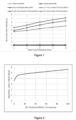
- FIG. 7 shows the bioluminescence emission wavelength of D-thioluciferin. It can be seen from the graph that D-thioluciferin exhibits a more red-shifted emission (599 nm) when treated with purified firefly luciferase (luc) expressed from E. coli, relative to D-Luciferin (557 nm) and D-aminoluciferin (593 nm). This longer wavelength relative to the natural substrate makes D-thioluciferin better suited for deep tissue imaging, since longer and more red-shifted emission maxima are required for tissue penetration. In addition, D-thioluciferin can be used concurrently with D-luciferin for dual imaging, since their respective maximum wavelengths of emission are sufficiently different.
- luc firefly luciferase
- FIGs 8-13 highlight the bioluminescence properties of D-thioluciferin and its analogues.
- no emission was observed for the pure enzyme in the absence of a luciferin (control 1) as well as for the pure substrate in the absence of enzyme (control 2). This means that any luminescence observed must be due to the reaction of D-thioluciferin with the luciferase enzyme.
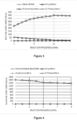
- the burst kinetics profile of D-thioluciferin ( Figure 9 ) was similar to that reported for both D-luciferin and D-aminoluciferin indicating that the new thio-analogue interacts with the luciferase enzyme in a similar manner to the natural compound.
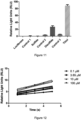
- Figure 10 shows comparative luminescent emission intensities for D-luciferin, D-aminoluciferin and D-thioluciferin.
- the relative luminescence emission intensity of natural D-luciferin ( Figure 10 ) was 100-fold greater than both D-aminoluciferin and D-thioluciferin when treated with purified WT luc as compared with the corresponding controls 1-3 (substrates in the absence of WT luc).
- D-thioluciferin was also found to have a 100-fold less intense emission signal when compared to D-luciferin.
- the reduction in light output could be due to the D-thioluciferin/luciferase light emitting reaction having a lower quantum yield or because of differences in the rate of oxyluciferin production.
- the lower emission intensity of D-thioluciferin relative to the natural substrate D-luciferin should however not be a deterrent for its applications in bioluminescence imaging, since such experiments rely purely on light generated from the enzyme-substrate reaction and as a result, have generally good sensitivity (D-thioluciferin displayed >100-fold greater emission over the background).
- the thioacrylate sulfide and the disulfide of D-thioluciferin were also evaluated for the ability to produce bioluminescence, neither of which appeared to be bioluminescent substrates.
- the luminescence output for D-thioluciferin was 90-fold greater than its protected thioacrylate (i.e sulfide) and 2.5-fold greater than the homo-disulfide when treated with luc under physiological conditions ( Figure 11 ). It was demonstrated that neither pure luciferase nor pure D-thioluciferin thioacrylate (control 1) emitted light.
- the luminescence increased significantly when D-thioluciferin and its disulfide were treated with luciferase to a final enzyme concentration of 10 nM.
- the homodisulfide treated with luciferase had a much higher luminescence output than its corresponding control when compared to the sulfide and its corresponding control, since both were predicted to be inactive as bioluminescence substrates. This was most likely due to the reduction of the bioluminescence inactive D-thioluciferin disulfide to the bioluminescence active free thiol by reducing agents in the enzyme buffer, namely DTT. The free thiol displayed five-fold greater luminescence than the disulfide.
- the sulfide was evaluated as an inhibitor of luciferase where it was shown to be strongly inhibitory ( Figure 14 ).
- the sulfide's inhibition of luciferase could similarly be used to inform the design of D-thioluciferin based probes where disulfides inhibition is relieved upon introduction of a reductant.
- These types of chemistries can only be accessed by D-thioluciferin via its thio-handle.
- D-thioluciferin was found to have a strong fluorescence emission while its protected sulfide was only weakly fluorescent ( Figure 15 ), thus providing further opportunities for imaging applications.
Landscapes
- Chemical & Material Sciences (AREA)
- Organic Chemistry (AREA)
- Health & Medical Sciences (AREA)
- Engineering & Computer Science (AREA)
- Biomedical Technology (AREA)
- Epidemiology (AREA)
- Life Sciences & Earth Sciences (AREA)
- Animal Behavior & Ethology (AREA)
- General Health & Medical Sciences (AREA)
- Public Health (AREA)
- Veterinary Medicine (AREA)
- Nitrogen Condensed Heterocyclic Rings (AREA)
- Measuring Or Testing Involving Enzymes Or Micro-Organisms (AREA)
Claims (13)
- Verbindung mit der Struktur von Formel (I):
 R1 ist CN oder
 R2 ist H oder C1-C6 Alkyl;Ra is H, Halogen, -SR3, C3-C12 Cycloalkyl, C3-C12 Heterocyclyl mit 1 bis 4 Heteroatomen, ausgewählt aus N, O oder S,
 R3 ist C1-C6 Alkyl, C1-C6 Haloalkyl, C3-C12 Cycloalkyl, C3-C12 Heterocyclyl mit 1 bis 4 Heteroatomen, ausgewählt aus N, O oder S, C6-C12 Aryl, oder C5-C16 Heteroaryl mit 1 bis 5 Heteroatomen, ausgewählt aus N, O oder S;R' ist H, C1-C6 Alkyl, C6-C12 Aryl oder OR"; undR" ist H, C1-C6 Alkyl oder C6-C12 Aryl; oder ein Salz, Hydrat oder Solvat davon.
 - Eine Verbindung nach Anspruch 1, wobei die Verbindung ausgewählt ist aus der Gruppe bestehend aus:





- Eine Verbindung nach Anspruch 2, die

- Verbindung nach Anspruch 1, wobei R3

- Sonde für einen Lumineszenztest, wobei die Sonde eine Verbindung nach einem der Ansprüche 1 bis 4 umfasst.
- Sonde nach Anspruch 5, wobei die Verbindung eine Struktur aufweist, die ausgewählt ist aus:


- Ein Luciferasesubstrat, das eine Verbindung nach einem der Ansprüche 1-4 umfasst.
- Kit für einen Lumineszenztest, wobei das Kit eine Verbindung nach einem der Ansprüche 1 bis 4 und gegebenenfalls eine oder mehrere Komponenten umfasst, die aus der Gruppe ausgewählt sind, die aus einem Luciferase-Enzym mit einer Aminosäuresequenz besteht, die mindestens 80 % Sequenzidentität mit SEQ ID NO: 1 hat oder mit einer beliebigen Teilfolge davon, ATP, Coenzym A und Mg2+.
- Verfahren zur biologischen Bildgebung, wobei das Verfahren das In-Kontakt-Bringen oder das Veranlassen des In-Kontakt-Bringens einer Verbindung nach einem der Ansprüche 1 bis 4 mit einem Luciferase-Enzym mit einer Aminosäuresequenz umfasst, die mindestens 80 % Sequenzidentität mit SEQ ID NO: 1 hat oder einer Teilsequenz davon in einem Subjekt oder einer biologischen Probe und Nachweis eines aus dem Kontakt resultierenden Fluoreszenz- oder Lumineszenzsignals.
- Verfahren zur Synthese einer Verbindung mit der Struktur der Formel (I):
 R1 ist CN oder
 R2 ist H oder C1-C6 Alkyl;Ra ist H, Halogen, -SR3, C3-C12 Cycloalkyl, C3-C12 Heterocyclyl mit 1 bis 4 Heteroatomen,ausgewählt aus N, O oder S,
 R3 ist C1-C6 Alkyl, C1-C6 Haloalkyl, C3-C12 Cycloalkyl, C3-C12 Heterocyclyl mit 1 bis 4 Heteroatomen, ausgewählt aus N, O oder S, C6-C12 Aryl, oder C6-C16 Heteroaryl mit 1 bis 5 Heteroatomen, ausgewählt aus N, O oder S;R' ist H, C1-C6 Alkyl, C6-C12 Aryl oder OR"; undR" ist H, C1-C6 Alkyl oder C6-C12 Aryl; oder ein Salz, Hydrat oder Solvat davon;Verfahren, umfassend die folgenden Schritte:(i) Umsetzen einer Verbindung mit der Struktur der Formel (XVI)
 worin Z CI, Br oder I ist, mit einem 1,2,3-Dithiazol in einem geeigneten Lösungsmittel, um eine Verbindung mit der Struktur der Formel (XVII) zu erhalten
 wobei Hal ein Halogen ist; und(ii) Umsetzen der in Schritt (i) erhaltenen Verbindung mit einer Base, die aus der Gruppe ausgewählt ist, die aus Amidinbasen, Imidazol, Alkalimetallalkoxidbasen, Guanidinbasen, 1,4-Diazabicyclo[2.2.2]octan (DABCO), Diisopropylethylamin (DIPEA), 2,6-Di-tert-butylpyridin und Phosphazenbasen besteht, um eine Verbindung mit der Struktur der Formel (I) zu ergeben, worin R1 CN ist:
 (iii) gegebenenfalls Umsetzen der in Schritt (ii) erhaltenen Verbindung mit D-Cystein oder einem Alkyl ester davon, um eine Verbindung der Formel (I) zu erhalten, worin R1

- Verfahren nach Anspruch 10, wobei die Amidinbase ausgewählt ist aus der Gruppe bestehend aus 1,8-Diazabicyclo[5.4.0]undec-7-en (DBU) und 1,5-Diazabicyclo[4.3.0]non-5-en (DBN).
- Verfahren nach einem der Ansprüche 10 und 11, wobei das 1,2,3-Dithiazol die Struktur der Formel (VI) aufweist:

- Verfahren nach einem der Ansprüche 10 bis 12, ferner umfassend die Umsetzung einer Verbindung der Formel (XII):


Applications Claiming Priority (2)
| Application Number | Priority Date | Filing Date | Title |
|---|---|---|---|
| GBGB1711983.5A GB201711983D0 (en) | 2017-07-25 | 2017-07-25 | Derivatives of luciferin and methods for their synthesis |
| PCT/IB2018/055542 WO2019021202A1 (en) | 2017-07-25 | 2018-07-25 | LUCIFERIN DERIVATIVES AND METHODS OF SYNTHESIS |
Publications (2)
| Publication Number | Publication Date |
|---|---|
| EP3658544A1 EP3658544A1 (de) | 2020-06-03 |
| EP3658544B1 true EP3658544B1 (de) | 2024-07-31 |
Family
ID=59771676
Family Applications (1)
| Application Number | Title | Priority Date | Filing Date |
|---|---|---|---|
| EP18762136.2A Active EP3658544B1 (de) | 2017-07-25 | 2018-07-25 | Derivate von luciferin and verfahren zu deren synthese |
Country Status (5)
| Country | Link |
|---|---|
| US (1) | US11149034B2 (de) |
| EP (1) | EP3658544B1 (de) |
| GB (1) | GB201711983D0 (de) |
| WO (1) | WO2019021202A1 (de) |
| ZA (1) | ZA202001140B (de) |
Families Citing this family (3)
| Publication number | Priority date | Publication date | Assignee | Title |
|---|---|---|---|---|
| WO2022196819A1 (ja) * | 2021-03-19 | 2022-09-22 | 関東電化工業株式会社 | D-ルシフェリン及びd-ルシフェリン誘導体、並びにこれら化合物の前駆体、並びにこれらの製造方法 |
| CN118834685B (zh) * | 2023-04-23 | 2025-09-12 | 中国科学院化学研究所 | 一种高稳定性碳点及其制备方法和应用 |
| CN117603158A (zh) * | 2023-12-01 | 2024-02-27 | 广州优南科技有限公司 | 一种d-荧光素以及d-荧光素钾盐的制备方法 |
Family Cites Families (3)
| Publication number | Priority date | Publication date | Assignee | Title |
|---|---|---|---|---|
| JP4682310B2 (ja) * | 2004-12-28 | 2011-05-11 | 独立行政法人産業技術総合研究所 | 天然型l−システインまたはその誘導体を用いたホタル発光基質の生合成システム及び本システムを含んだ発光基質溶液 |
| EP1935986B1 (de) | 2005-05-31 | 2014-04-16 | Promega Corporation | Luminogene und fluorogene Verbindungen und Verfahren für den Nachweis von Molekülen oder Leiden |
| WO2011146390A2 (en) * | 2010-05-17 | 2011-11-24 | The Regents Of The University Of California | Compositions and methods for in vivo imaging |
-
2017
- 2017-07-25 GB GBGB1711983.5A patent/GB201711983D0/en not_active Ceased
-
2018
- 2018-07-25 US US16/633,859 patent/US11149034B2/en active Active
- 2018-07-25 EP EP18762136.2A patent/EP3658544B1/de active Active
- 2018-07-25 WO PCT/IB2018/055542 patent/WO2019021202A1/en not_active Ceased
-
2020
- 2020-02-24 ZA ZA2020/01140A patent/ZA202001140B/en unknown
Non-Patent Citations (1)
| Title |
|---|
| ARNOULD J C ET AL: "Convenient Synthesis of Aromatic Thiols from Phenols", TETRAHEDRON LETTERS, ELSEVIER, AMSTERDAM , NL, vol. 37, no. 26, 24 June 1996 (1996-06-24), pages 4523 - 4524, XP004029056, ISSN: 0040-4039, DOI: 10.1016/0040-4039(96)00873-8 * |
Also Published As
| Publication number | Publication date |
|---|---|
| WO2019021202A1 (en) | 2019-01-31 |
| GB201711983D0 (en) | 2017-09-06 |
| US11149034B2 (en) | 2021-10-19 |
| US20200331902A1 (en) | 2020-10-22 |
| ZA202001140B (en) | 2022-07-27 |
| EP3658544A1 (de) | 2020-06-03 |
Similar Documents
| Publication | Publication Date | Title |
|---|---|---|
| US9714260B2 (en) | Asymmetrical Si rhodamine and rhodol synthesis | |
| EP2454261B1 (de) | Imidazo[1,2-alpha]pyrazin-3(7h)-on-derivate mit neuer elektronenreicher struktur | |
| US7087766B2 (en) | Reagents for the quantitation of active oxygen | |
| US10520509B2 (en) | Fluorescent probes for detecting hydrogen polysulfides | |
| US7524876B2 (en) | Luciferin derivatives | |
| JP4373608B2 (ja) | 一重項酸素測定用試薬 | |
| JP5464311B2 (ja) | ルシフェラーゼの発光基質 | |
| JP5550035B2 (ja) | 波長が制御されたルシフェラーゼの発光基質および製造方法 | |
| US11149034B2 (en) | Derivatives of luciferin and methods for their synthesis | |
| US8962854B2 (en) | Luminescent substrate for luciferase | |
| JP2010215795A5 (de) | ||
| EP1314730B1 (de) | Reagenzien zur bestimmung von atomaren sauerstoff | |
| Das et al. | Cyclobutylamino-naphthalimide-based fluorescent probe for detection of glutathione in living cells | |
| CN114149448A (zh) | 一种用于检测硝基还原酶的近红外荧光探针及应用 | |
| JP2010180191A (ja) | ルシフェラーゼの発光基質 | |
| Ciuffreda et al. | A new synthesis of dehydroluciferin [2-(6′-hydroxy-2′-benzothiazolyl)-thiazole-4-carboxylic acid] from 1, 4-benzoquinone | |
| CN112485231A (zh) | 一种二氧化硫和谷胱甘肽联合检测试剂盒 | |
| JP7255828B2 (ja) | 新規複素環式化合物及びその塩、並びに、発光基質組成物 | |
| Rylands et al. | Synthesis and evaluation of D-thioluciferin, a bioluminescent 6’-thio analog of D-luciferin | |
| Patel | Synthesis and anion photoelectron spectroscopy studies of oxyluciferins and oxyinfraluciferins |
Legal Events
| Date | Code | Title | Description |
|---|---|---|---|
| STAA | Information on the status of an ep patent application or granted ep patent |
Free format text: STATUS: UNKNOWN |
|
| STAA | Information on the status of an ep patent application or granted ep patent |
Free format text: STATUS: THE INTERNATIONAL PUBLICATION HAS BEEN MADE |
|
| PUAI | Public reference made under article 153(3) epc to a published international application that has entered the european phase |
Free format text: ORIGINAL CODE: 0009012 |
|
| STAA | Information on the status of an ep patent application or granted ep patent |
Free format text: STATUS: REQUEST FOR EXAMINATION WAS MADE |
|
| 17P | Request for examination filed |
Effective date: 20200224 |
|
| AK | Designated contracting states |
Kind code of ref document: A1 Designated state(s): AL AT BE BG CH CY CZ DE DK EE ES FI FR GB GR HR HU IE IS IT LI LT LU LV MC MK MT NL NO PL PT RO RS SE SI SK SM TR |
|
| AX | Request for extension of the european patent |
Extension state: BA ME |
|
| DAV | Request for validation of the european patent (deleted) | ||
| DAX | Request for extension of the european patent (deleted) | ||
| STAA | Information on the status of an ep patent application or granted ep patent |
Free format text: STATUS: EXAMINATION IS IN PROGRESS |
|
| 17Q | First examination report despatched |
Effective date: 20210210 |
|
| GRAP | Despatch of communication of intention to grant a patent |
Free format text: ORIGINAL CODE: EPIDOSNIGR1 |
|
| STAA | Information on the status of an ep patent application or granted ep patent |
Free format text: STATUS: GRANT OF PATENT IS INTENDED |
|
| INTG | Intention to grant announced |
Effective date: 20231026 |
|
| GRAJ | Information related to disapproval of communication of intention to grant by the applicant or resumption of examination proceedings by the epo deleted |
Free format text: ORIGINAL CODE: EPIDOSDIGR1 |
|
| STAA | Information on the status of an ep patent application or granted ep patent |
Free format text: STATUS: EXAMINATION IS IN PROGRESS |
|
| INTC | Intention to grant announced (deleted) | ||
| GRAP | Despatch of communication of intention to grant a patent |
Free format text: ORIGINAL CODE: EPIDOSNIGR1 |
|
| STAA | Information on the status of an ep patent application or granted ep patent |
Free format text: STATUS: GRANT OF PATENT IS INTENDED |
|
| INTG | Intention to grant announced |
Effective date: 20240229 |
|
| GRAS | Grant fee paid |
Free format text: ORIGINAL CODE: EPIDOSNIGR3 |
|
| GRAA | (expected) grant |
Free format text: ORIGINAL CODE: 0009210 |
|
| STAA | Information on the status of an ep patent application or granted ep patent |
Free format text: STATUS: THE PATENT HAS BEEN GRANTED |
|
| AK | Designated contracting states |
Kind code of ref document: B1 Designated state(s): AL AT BE BG CH CY CZ DE DK EE ES FI FR GB GR HR HU IE IS IT LI LT LU LV MC MK MT NL NO PL PT RO RS SE SI SK SM TR |
|
| REG | Reference to a national code |
Ref country code: CH Ref legal event code: EP Ref country code: GB Ref legal event code: FG4D |
|
| REG | Reference to a national code |
Ref country code: DE Ref legal event code: R096 Ref document number: 602018072444 Country of ref document: DE |
|
| REG | Reference to a national code |
Ref country code: IE Ref legal event code: FG4D |
|
| REG | Reference to a national code |
Ref country code: LT Ref legal event code: MG9D |
|
| REG | Reference to a national code |
Ref country code: NL Ref legal event code: MP Effective date: 20240731 |
|
| PG25 | Lapsed in a contracting state [announced via postgrant information from national office to epo] |
Ref country code: PT Free format text: LAPSE BECAUSE OF FAILURE TO SUBMIT A TRANSLATION OF THE DESCRIPTION OR TO PAY THE FEE WITHIN THE PRESCRIBED TIME-LIMIT Effective date: 20241202 |
|
| REG | Reference to a national code |
Ref country code: AT Ref legal event code: MK05 Ref document number: 1708379 Country of ref document: AT Kind code of ref document: T Effective date: 20240731 |
|
| PG25 | Lapsed in a contracting state [announced via postgrant information from national office to epo] |
Ref country code: PT Free format text: LAPSE BECAUSE OF FAILURE TO SUBMIT A TRANSLATION OF THE DESCRIPTION OR TO PAY THE FEE WITHIN THE PRESCRIBED TIME-LIMIT Effective date: 20241202 |
|
| PG25 | Lapsed in a contracting state [announced via postgrant information from national office to epo] |
Ref country code: NO Free format text: LAPSE BECAUSE OF FAILURE TO SUBMIT A TRANSLATION OF THE DESCRIPTION OR TO PAY THE FEE WITHIN THE PRESCRIBED TIME-LIMIT Effective date: 20241031 |
|
| PG25 | Lapsed in a contracting state [announced via postgrant information from national office to epo] |
Ref country code: NL Free format text: LAPSE BECAUSE OF FAILURE TO SUBMIT A TRANSLATION OF THE DESCRIPTION OR TO PAY THE FEE WITHIN THE PRESCRIBED TIME-LIMIT Effective date: 20240731 Ref country code: GR Free format text: LAPSE BECAUSE OF FAILURE TO SUBMIT A TRANSLATION OF THE DESCRIPTION OR TO PAY THE FEE WITHIN THE PRESCRIBED TIME-LIMIT Effective date: 20241101 Ref country code: PL Free format text: LAPSE BECAUSE OF FAILURE TO SUBMIT A TRANSLATION OF THE DESCRIPTION OR TO PAY THE FEE WITHIN THE PRESCRIBED TIME-LIMIT Effective date: 20240731 Ref country code: FI Free format text: LAPSE BECAUSE OF FAILURE TO SUBMIT A TRANSLATION OF THE DESCRIPTION OR TO PAY THE FEE WITHIN THE PRESCRIBED TIME-LIMIT Effective date: 20240731 |
|
| PG25 | Lapsed in a contracting state [announced via postgrant information from national office to epo] |
Ref country code: BG Free format text: LAPSE BECAUSE OF FAILURE TO SUBMIT A TRANSLATION OF THE DESCRIPTION OR TO PAY THE FEE WITHIN THE PRESCRIBED TIME-LIMIT Effective date: 20240731 |
|
| PG25 | Lapsed in a contracting state [announced via postgrant information from national office to epo] |
Ref country code: LV Free format text: LAPSE BECAUSE OF FAILURE TO SUBMIT A TRANSLATION OF THE DESCRIPTION OR TO PAY THE FEE WITHIN THE PRESCRIBED TIME-LIMIT Effective date: 20240731 |
|
| P01 | Opt-out of the competence of the unified patent court (upc) registered |
Free format text: CASE NUMBER: APP_66592/2024 Effective date: 20241217 |
|
| PG25 | Lapsed in a contracting state [announced via postgrant information from national office to epo] |
Ref country code: AT Free format text: LAPSE BECAUSE OF FAILURE TO SUBMIT A TRANSLATION OF THE DESCRIPTION OR TO PAY THE FEE WITHIN THE PRESCRIBED TIME-LIMIT Effective date: 20240731 Ref country code: IS Free format text: LAPSE BECAUSE OF FAILURE TO SUBMIT A TRANSLATION OF THE DESCRIPTION OR TO PAY THE FEE WITHIN THE PRESCRIBED TIME-LIMIT Effective date: 20241130 |
|
| PG25 | Lapsed in a contracting state [announced via postgrant information from national office to epo] |
Ref country code: HR Free format text: LAPSE BECAUSE OF FAILURE TO SUBMIT A TRANSLATION OF THE DESCRIPTION OR TO PAY THE FEE WITHIN THE PRESCRIBED TIME-LIMIT Effective date: 20240731 |
|
| PG25 | Lapsed in a contracting state [announced via postgrant information from national office to epo] |
Ref country code: RS Free format text: LAPSE BECAUSE OF FAILURE TO SUBMIT A TRANSLATION OF THE DESCRIPTION OR TO PAY THE FEE WITHIN THE PRESCRIBED TIME-LIMIT Effective date: 20241031 Ref country code: ES Free format text: LAPSE BECAUSE OF FAILURE TO SUBMIT A TRANSLATION OF THE DESCRIPTION OR TO PAY THE FEE WITHIN THE PRESCRIBED TIME-LIMIT Effective date: 20240731 |
|
| PG25 | Lapsed in a contracting state [announced via postgrant information from national office to epo] |
Ref country code: RS Free format text: LAPSE BECAUSE OF FAILURE TO SUBMIT A TRANSLATION OF THE DESCRIPTION OR TO PAY THE FEE WITHIN THE PRESCRIBED TIME-LIMIT Effective date: 20241031 Ref country code: PL Free format text: LAPSE BECAUSE OF FAILURE TO SUBMIT A TRANSLATION OF THE DESCRIPTION OR TO PAY THE FEE WITHIN THE PRESCRIBED TIME-LIMIT Effective date: 20240731 Ref country code: NO Free format text: LAPSE BECAUSE OF FAILURE TO SUBMIT A TRANSLATION OF THE DESCRIPTION OR TO PAY THE FEE WITHIN THE PRESCRIBED TIME-LIMIT Effective date: 20241031 Ref country code: NL Free format text: LAPSE BECAUSE OF FAILURE TO SUBMIT A TRANSLATION OF THE DESCRIPTION OR TO PAY THE FEE WITHIN THE PRESCRIBED TIME-LIMIT Effective date: 20240731 Ref country code: LV Free format text: LAPSE BECAUSE OF FAILURE TO SUBMIT A TRANSLATION OF THE DESCRIPTION OR TO PAY THE FEE WITHIN THE PRESCRIBED TIME-LIMIT Effective date: 20240731 Ref country code: IS Free format text: LAPSE BECAUSE OF FAILURE TO SUBMIT A TRANSLATION OF THE DESCRIPTION OR TO PAY THE FEE WITHIN THE PRESCRIBED TIME-LIMIT Effective date: 20241130 Ref country code: HR Free format text: LAPSE BECAUSE OF FAILURE TO SUBMIT A TRANSLATION OF THE DESCRIPTION OR TO PAY THE FEE WITHIN THE PRESCRIBED TIME-LIMIT Effective date: 20240731 Ref country code: GR Free format text: LAPSE BECAUSE OF FAILURE TO SUBMIT A TRANSLATION OF THE DESCRIPTION OR TO PAY THE FEE WITHIN THE PRESCRIBED TIME-LIMIT Effective date: 20241101 Ref country code: FI Free format text: LAPSE BECAUSE OF FAILURE TO SUBMIT A TRANSLATION OF THE DESCRIPTION OR TO PAY THE FEE WITHIN THE PRESCRIBED TIME-LIMIT Effective date: 20240731 Ref country code: ES Free format text: LAPSE BECAUSE OF FAILURE TO SUBMIT A TRANSLATION OF THE DESCRIPTION OR TO PAY THE FEE WITHIN THE PRESCRIBED TIME-LIMIT Effective date: 20240731 Ref country code: BG Free format text: LAPSE BECAUSE OF FAILURE TO SUBMIT A TRANSLATION OF THE DESCRIPTION OR TO PAY THE FEE WITHIN THE PRESCRIBED TIME-LIMIT Effective date: 20240731 Ref country code: AT Free format text: LAPSE BECAUSE OF FAILURE TO SUBMIT A TRANSLATION OF THE DESCRIPTION OR TO PAY THE FEE WITHIN THE PRESCRIBED TIME-LIMIT Effective date: 20240731 |
|
| PG25 | Lapsed in a contracting state [announced via postgrant information from national office to epo] |
Ref country code: RO Free format text: LAPSE BECAUSE OF FAILURE TO SUBMIT A TRANSLATION OF THE DESCRIPTION OR TO PAY THE FEE WITHIN THE PRESCRIBED TIME-LIMIT Effective date: 20240731 Ref country code: DK Free format text: LAPSE BECAUSE OF FAILURE TO SUBMIT A TRANSLATION OF THE DESCRIPTION OR TO PAY THE FEE WITHIN THE PRESCRIBED TIME-LIMIT Effective date: 20240731 Ref country code: SM Free format text: LAPSE BECAUSE OF FAILURE TO SUBMIT A TRANSLATION OF THE DESCRIPTION OR TO PAY THE FEE WITHIN THE PRESCRIBED TIME-LIMIT Effective date: 20240731 |
|
| PG25 | Lapsed in a contracting state [announced via postgrant information from national office to epo] |
Ref country code: EE Free format text: LAPSE BECAUSE OF FAILURE TO SUBMIT A TRANSLATION OF THE DESCRIPTION OR TO PAY THE FEE WITHIN THE PRESCRIBED TIME-LIMIT Effective date: 20240731 |
|
| PG25 | Lapsed in a contracting state [announced via postgrant information from national office to epo] |
Ref country code: CZ Free format text: LAPSE BECAUSE OF FAILURE TO SUBMIT A TRANSLATION OF THE DESCRIPTION OR TO PAY THE FEE WITHIN THE PRESCRIBED TIME-LIMIT Effective date: 20240731 |
|
| PG25 | Lapsed in a contracting state [announced via postgrant information from national office to epo] |
Ref country code: SK Free format text: LAPSE BECAUSE OF FAILURE TO SUBMIT A TRANSLATION OF THE DESCRIPTION OR TO PAY THE FEE WITHIN THE PRESCRIBED TIME-LIMIT Effective date: 20240731 Ref country code: IT Free format text: LAPSE BECAUSE OF FAILURE TO SUBMIT A TRANSLATION OF THE DESCRIPTION OR TO PAY THE FEE WITHIN THE PRESCRIBED TIME-LIMIT Effective date: 20240731 |
|
| REG | Reference to a national code |
Ref country code: DE Ref legal event code: R097 Ref document number: 602018072444 Country of ref document: DE |
|
| PLBE | No opposition filed within time limit |
Free format text: ORIGINAL CODE: 0009261 |
|
| STAA | Information on the status of an ep patent application or granted ep patent |
Free format text: STATUS: NO OPPOSITION FILED WITHIN TIME LIMIT |
|
| 26N | No opposition filed |
Effective date: 20250501 |
|
| PGFP | Annual fee paid to national office [announced via postgrant information from national office to epo] |
Ref country code: FR Payment date: 20250626 Year of fee payment: 8 |
|
| PG25 | Lapsed in a contracting state [announced via postgrant information from national office to epo] |
Ref country code: SE Free format text: LAPSE BECAUSE OF FAILURE TO SUBMIT A TRANSLATION OF THE DESCRIPTION OR TO PAY THE FEE WITHIN THE PRESCRIBED TIME-LIMIT Effective date: 20240731 |
|
| PGFP | Annual fee paid to national office [announced via postgrant information from national office to epo] |
Ref country code: DE Payment date: 20250713 Year of fee payment: 8 |
|
| PGFP | Annual fee paid to national office [announced via postgrant information from national office to epo] |
Ref country code: GB Payment date: 20250713 Year of fee payment: 8 |
|
| REG | Reference to a national code |
Ref country code: CH Ref legal event code: H13 Free format text: ST27 STATUS EVENT CODE: U-0-0-H10-H13 (AS PROVIDED BY THE NATIONAL OFFICE) Effective date: 20260224 |
|
| PG25 | Lapsed in a contracting state [announced via postgrant information from national office to epo] |
Ref country code: LU Free format text: LAPSE BECAUSE OF NON-PAYMENT OF DUE FEES Effective date: 20250725 |
|
| REG | Reference to a national code |
Ref country code: BE Ref legal event code: MM Effective date: 20250731 |
|
| PG25 | Lapsed in a contracting state [announced via postgrant information from national office to epo] |
Ref country code: BE Free format text: LAPSE BECAUSE OF NON-PAYMENT OF DUE FEES Effective date: 20250731 |
|
| PG25 | Lapsed in a contracting state [announced via postgrant information from national office to epo] |
Ref country code: CH Free format text: LAPSE BECAUSE OF NON-PAYMENT OF DUE FEES Effective date: 20250731 |