EP3659433B1 - System zur analyse von tierausscheidungsbildern - Google Patents
System zur analyse von tierausscheidungsbildern Download PDFInfo
- Publication number
- EP3659433B1 EP3659433B1 EP18209624.8A EP18209624A EP3659433B1 EP 3659433 B1 EP3659433 B1 EP 3659433B1 EP 18209624 A EP18209624 A EP 18209624A EP 3659433 B1 EP3659433 B1 EP 3659433B1
- Authority
- EP
- European Patent Office
- Prior art keywords
- animals
- image
- analysis
- excretions
- software
- Prior art date
- Legal status (The legal status is an assumption and is not a legal conclusion. Google has not performed a legal analysis and makes no representation as to the accuracy of the status listed.)
- Active
Links
Images





Classifications
-
- A—HUMAN NECESSITIES
- A01—AGRICULTURE; FORESTRY; ANIMAL HUSBANDRY; HUNTING; TRAPPING; FISHING
- A01K—ANIMAL HUSBANDRY; AVICULTURE; APICULTURE; PISCICULTURE; FISHING; REARING OR BREEDING ANIMALS, NOT OTHERWISE PROVIDED FOR; NEW BREEDS OF ANIMALS
- A01K29/00—Other apparatus for animal husbandry
- A01K29/005—Monitoring or measuring activity
-
- A—HUMAN NECESSITIES
- A01—AGRICULTURE; FORESTRY; ANIMAL HUSBANDRY; HUNTING; TRAPPING; FISHING
- A01K—ANIMAL HUSBANDRY; AVICULTURE; APICULTURE; PISCICULTURE; FISHING; REARING OR BREEDING ANIMALS, NOT OTHERWISE PROVIDED FOR; NEW BREEDS OF ANIMALS
- A01K1/00—Housing animals; Equipment therefor
- A01K1/01—Removal of dung or urine ; Removal of manure from stables
-
- A—HUMAN NECESSITIES
- A01—AGRICULTURE; FORESTRY; ANIMAL HUSBANDRY; HUNTING; TRAPPING; FISHING
- A01K—ANIMAL HUSBANDRY; AVICULTURE; APICULTURE; PISCICULTURE; FISHING; REARING OR BREEDING ANIMALS, NOT OTHERWISE PROVIDED FOR; NEW BREEDS OF ANIMALS
- A01K31/00—Housing birds
- A01K31/04—Dropping-boards; Devices for removing excrement
-
- G—PHYSICS
- G06—COMPUTING OR CALCULATING; COUNTING
- G06N—COMPUTING ARRANGEMENTS BASED ON SPECIFIC COMPUTATIONAL MODELS
- G06N20/00—Machine learning
-
- G—PHYSICS
- G06—COMPUTING OR CALCULATING; COUNTING
- G06T—IMAGE DATA PROCESSING OR GENERATION, IN GENERAL
- G06T7/00—Image analysis
- G06T7/0002—Inspection of images, e.g. flaw detection
- G06T7/0012—Biomedical image inspection
-
- G—PHYSICS
- G06—COMPUTING OR CALCULATING; COUNTING
- G06V—IMAGE OR VIDEO RECOGNITION OR UNDERSTANDING
- G06V10/00—Arrangements for image or video recognition or understanding
- G06V10/10—Image acquisition
-
- G—PHYSICS
- G06—COMPUTING OR CALCULATING; COUNTING
- G06V—IMAGE OR VIDEO RECOGNITION OR UNDERSTANDING
- G06V10/00—Arrangements for image or video recognition or understanding
- G06V10/40—Extraction of image or video features
- G06V10/56—Extraction of image or video features relating to colour
-
- G—PHYSICS
- G06—COMPUTING OR CALCULATING; COUNTING
- G06V—IMAGE OR VIDEO RECOGNITION OR UNDERSTANDING
- G06V10/00—Arrangements for image or video recognition or understanding
- G06V10/40—Extraction of image or video features
- G06V10/60—Extraction of image or video features relating to illumination properties, e.g. using a reflectance or lighting model
-
- G—PHYSICS
- G06—COMPUTING OR CALCULATING; COUNTING
- G06T—IMAGE DATA PROCESSING OR GENERATION, IN GENERAL
- G06T2207/00—Indexing scheme for image analysis or image enhancement
- G06T2207/30—Subject of image; Context of image processing
- G06T2207/30004—Biomedical image processing
Definitions
- the invention relates to a computer-aided method for keeping animals, in particular to methods which serve to maintain and improve the health of animals.
- the method can be used in particular for the automatic detection of management errors and the early detection of emerging diseases and production disruptions.
- US 2010/0198023 A1 the use of a database and a large number of data acquisition units, in particular sensors of different types, to monitor the health of animals in an animal house.
- the sensors can include, for example, acoustic sensors, vitality measuring devices, ammonia sensors, visual sensors and odor sensors.
- sensors that are used to automatically monitor the health of animals in animal stalls are very expensive to purchase and operate.
- some sensors e.g. sensors for certain gases or other vitality indicators
- the use of complicated and expensive sensors is not an option, as there is a lack of money and trained personnel to install and maintain the sensors and interpret the measured values.
- complex sensors are also prone to failure.
- sensors are installed in animal stalls, the sensors can easily become soiled if they come into contact with the animals' excrement, saliva, litter, food or feathers, for example, and can then - in the worst case over long periods of time - deliver incorrect measurement results unnoticed.
- the invention is accordingly based on the object of providing an alternative or improved method for keeping animals, as well as corresponding computer systems and storage media.
- Said method or the computer systems or storage media can be used in particular for the automatic detection of inadequate housing conditions, for the early detection of emerging diseases and production disruptions, for the monitoring of suitable measured values and measurement methods and / or for the manual or automatic implementation of actions to improve animal health.
- the invention relates to a method for keeping animals according to claim 1. Further aspects are a system for keeping animals according to claim 20, a mobile robot according to claim 22 and a combination of a feed additive and the system according to claim 20 23.
- the animals can in particular be farm animals, for example bills, cattle, sheep, goats, rabbits, and poultry of all kinds, but in particular other animal species, not excluding chickens, laying hens and turkeys.
- the method comprises inputting at least one image into analysis software.
- the at least one image is a digital image which depicts excretions from one or more of the animals.
- the input of the image into the analysis software can include the analysis software receiving the image directly from an image acquisition unit, for example a camera, or the analysis software receiving the image via a network from a remote computer system or from an image acquisition unit coupled to this remote computer system.
- the input of the image can, however, also include reading the at least one image from a storage medium.
- the analysis software be installed on a specific computer system and read the at least one image from a storage medium of this same computer system.
- the analysis software carries out an analysis of the at least one image.
- Various analysis methods can be used here.
- An image analysis is typically carried out first in order to extract individual features of the image (“feature analysis / feature extraction”). These features can include, for example, brightness and contrast values, color values (for example R, G, B values in RGB color images), objects recognized in the image such as circles, lines, polygons or structures (graininess, homogeneity) and other features.
- the extracted features are then evaluated in order to obtain one or more results of the analysis.
- a training data set can contain images of excretions of worms of a certain type and / or a certain stage of development, and by training machine learning software, the resulting analysis software can be made to identify objects of a certain contour, color, texturing and / or size as worms specific type automatically recognized in the course of the image analysis.
- the analysis software outputs a recommended action which is suitable for maintaining or improving the current physiological state of the animals.
- the recommended action depends on a result of the analysis of the at least one image.
- the analysis software outputs a predicted characteristic of a performance indicator of one or more of the animals.
- the performance indicator is a physiological parameter, an illness symptom or an illness.
- the predicted expression depends on a result of the analysis of the at least one image.
- Metadata such as currently administered substances can also be easily entered via a GUI of the analysis software.
- no special knowledge or additional equipment or sensors are required in order to be able to do this in a simple, rapid and accurate manner to check the state of health of animals in an animal herd and to quickly take appropriate measures to protect or improve the health of the animals. Thanks to the ubiquitous proliferation of smartphones, a camera for taking pictures is available practically everywhere. The images of the excretions are not dependent on irrelevant parameters such as the size of the barn or the question of whether a window or door is open, on which, for example, the temperature and humidity of the barn can depend.
- the image-based analysis also does not require the implementation of difficult and hardly reproducible measurement methods (measurement of internal body temperature), etc.
- the excretions are in particular faeces, preferably "fresh" faeces, which were excreted, for example, less than 12 hours, in particular less than six hours, preferably less than an hour, before the time of the picture taking.
- the precipitates fill at least 40%, preferably at least 60% of the area of the at least one image.
- the analysis software can contain a filter function which is designed to initially recognize regions on the image which represent a separation. Images with an area proportion of the feces shown below a specified minimum value are discarded and not taken into account in the analysis.
- the analysis software can, if the resolution allows this, also automatically take into account only one partial image of the received image for the analysis, provided that this partial image contains the required minimum proportion of feces.
- the analysis software contains a filter function which discards images if they do not have a certain minimum resolution and / or a certain minimum contrast.
- the analysis software can preferably output a warning message that draws the user's attention to the analysis software that the at least one input image does not meet the required quality criteria in order to give the user the option of taking one or more new images.
- recording the at least one image of the excretions includes irradiating the excretions with the Light from a light source during the recording of the at least one image.
- the irradiation can be very short (flash light, exposure time typically less than one second) or last several seconds.
- the method comprises sending a control command to a lighting unit.
- the control command can be sent from the analysis software or from software (camera software) assigned to the image acquisition unit, e.g. from a smartphone.
- the control command causes the lighting unit to illuminate the excretions with light of one or more defined wavelength ranges while the at least one image of the excretions is being recorded. Then, while the precipitates are illuminated with light from the one or more wavelength ranges, one or more images of the precipitates are recorded.
- the lighting unit can in particular illuminate the precipitates sequentially with the light of several defined wavelength ranges, for example for a few seconds.
- the image acquisition unit captures one or more wavelength range-specific digital images of the excretions.
- a color reference object can also be illuminated and recorded with one or more color points.
- the analysis software is designed to carry out the analysis in a wavelength range-specific manner selectively for the one or more images that were recorded with light of the respective wavelength range.
- the analysis software (or the part of the analysis software designed as a client application) contains a lighting function which, for example, can be designed as a lighting module of the analysis software.
- the lighting function is operatively linked to the light source and can control it.
- the lighting function can control the lighting duration and / or intensity and / or the wavelength range of the light emitted by the light source.
- the lighting function preferably contains a program for lighting the excretions with at least two or more light pulses of predefined, different wavelengths or wavelength ranges.
- the lighting function is preferably also operative on an image capture unit coupled and able to synchronize the recording of the at least one image with the lighting function.
- the synchronization can be designed such that at least one image is recorded and entered into the analysis software and / or stored in a database for later use for each time interval at which the excretions are illuminated with one of the predefined different wavelengths or wavelength ranges of the light source .
- This can be advantageous because the precipitates are now illuminated with light of different wavelength ranges and, as a result, important optical and, in particular, color properties of the precipitates can be better characterized. For example, feces with a high proportion of non-oxidized blood (feces with a light red color) absorb blue and green light particularly well, while red light is more strongly reflected.
- the light source is preferably a light source that is built into the image acquisition unit or into the device containing it, for example a smartphone.
- the light source can be a flash from a camera.
- the light source is the display of a smartphone. This embodiment can be advantageous since no special apparatus (apart from the smartphone) is required to illuminate the precipitates with light of two or more different wavelength ranges and to record corresponding images.
- Most smartphone displays are not able to selectively emit light in a very narrow and highly precise wavelength range, as can laser devices, for example.
- the analysis software is preferably machine learning software that has been trained on a data set of training images of excretions from the animals, with at least some of the training images being selectively illuminated with only light of one wavelength or with light of a wavelength range which is from the Light source can be generated.
- the training data set preferably covers all wavelength ranges used sequentially by the lighting source or the lighting function, ie the training data set contains several images of excretions that were illuminated by light from each of these defined wavelengths or wavelength ranges.
- the lighting function and the analysis function of the analysis software thus form a functional unit. This can be advantageous because with the simplest means (smartphone with camera and a program that implements the lighting function), a large amount of spectral information about the excretions of the animals can be recorded, which can also be used by the trained machine learning algorithm to enable a precise analysis and prediction or output of the analysis results.
- the lighting unit can also be special lighting devices that are not part of the currently commercially available smartphones.
- the lighting unit can be a laser light source and / or a light source in a wavelength range that is not visible (for humans), e.g. in the infrared range (e.g. 850-950 nm) or UV light range (280-380 nm).
- the physiological parameter can be, for example, a body temperature, a measured metabolite concentration, body weight, feed consumption, water consumption per animal and time unit or per animal group or stable per time unit, etc.
- the water consumption and / or feed consumption can, for example, be entered manually in some embodiments via a GUI of the analysis software and / or can be automatically obtained by the analysis software from corresponding sensors or counters of a drinking system or feeding system for the animals.
- the method for keeping animals in a further aspect also represents a method for computer-aided monitoring of the health of the animals kept and / or a method for early detection of a predicted drop in performance, for example due to an illness.
- the method represents a Process for the computer-aided detection of poor or improvable husbandry conditions, in particular malnutrition or malnutrition, which can occur in animal husbandry.
- the method includes capturing the at least one image by an image capturing unit, in particular a camera.
- the camera can, for example, be a portable camera, in particular a smartphone camera or a camera.
- the camera can be the camera of a smartphone of a person working in the stable. This can be advantageous, as the vast majority of people in developing and emerging countries have smartphones with integrated cameras and are familiar with their operation. It is therefore not necessary to install special sensors in the stables or enclosures, to maintain them regularly and to train the staff.
- the image acquisition unit can also be a camera that is permanently installed in the stable, enclosure or other room in which the animals are kept.
- the image acquisition unit is a camera which is permanently installed on a mobile robot or a conveyor belt.
- the robot or the conveyor belt are designed and positioned accordingly to move in an area on which the animals are kept.
- the camera can be mounted at a suitable height and at a suitable angle, which ensures that images are captured from the ground of the area on which there is regularly excrement.
- Combinations of image acquisition units of different types can also be used.
- the use of robots and / or conveyor belts with a camera can be advantageous, since this means that manual recording of the photos can be omitted and the recording conditions are kept particularly constant.
- the acquisition of the at least one image includes a positioning of a color reference object in spatial proximity to the excretions whose image is acquired.
- the color reference object has one or more different colors in defined areas of the color reference object.
- the analysis software is designed to use the colors of the color reference object in the analysis of the at least one image to normalize the colors of the precipitations depicted in the at least one image.
- the at least one image also depicts the color reference object.
- the color reference object can be a paper or plastic strip on which one or preferably several color points are applied at defined points known to the analysis software, the color points having a defined color and / or brightness value.
- a worker who takes pictures of the excrement of the animals with his smartphone camera during the daily inspection tour through the stable holds the color reference object above or next to the manure so that the recorded image shows both the manure and the color reference object.
- the color reference object and the analysis software are preferably provided by the same provider and the analysis software is designed to normalize the colors, brightness and / or contrast values of the at least one received image based on the colors and / or contrast values of the color reference object.
- the action output by the analysis software is an action that is to be carried out at a specific action time.
- the time of action can be a current time or a future time based on the time of the analysis.
- the analysis software can indicate that the feed must be changed immediately to prevent the animals from being insufficiently supplied with certain minerals.
- the output of the analysis software includes that a certain measure such as changing the feed composition or administering a certain medication has to be carried out immediately or is only necessary at a certain point in time in the future, for example only after two days from the time of analysis.
- the time of the action depends on what action is involved and how clearly the analysis software considers a certain action to be necessary in view of the excretions depicted in the image received. Again, this may depend on the rules or training dataset used to create the analysis software. For example, if the symptoms are unclear, it can be advantageous to take an action that is particularly expensive or associated with disadvantages / side effects (e.g. administration of an antibiotic) not to be carried out immediately, but to say that administration in 2-3 days is recommended.
- side effects e.g. administration of an antibiotic
- the predicted value of the performance indicator can be a value whose occurrence is predicted for a specific time.
- the time of expression is a future time based on the time of the analysis.
- the analysis software is preferably designed to calculate the prediction of the value of the performance indicator at the time of expression and the recommended action at the time of the action so that the time of action is a sufficient period of time before the time of expression that allows the expression of the To influence the performance indicator in a certain, desired way (positive or negative) at the time of expression.
- the analysis software can be designed to recognize the outbreak of certain diseases such as population-wide coccidiosis or clostridial infestation 2-3 days before the actual population-wide outbreak and to predict it based on characteristics that can be specifically assigned to these diseases, such as e.g. Color characteristics of the blood that are visible in the pictures of the excretions of some animals that are already showing slight disease-related changes.
- the countermeasures can include, for example, the administration of drugs against coccidiosis and / or clostridia, the identification and separation of already infected animals, the administration of particularly high-quality or digestible feed, the increase in temperature or humidity and the like.
- the recommended action includes one or more actions.
- These actions can be, for example, the following actions: the provision of certain animal feed or drinking water; an administration of one or more medicinal or non-medicinal substances in a physiologically effective form to the animals, in particular minerals, vitamins, medicaments (e.g. via feed, drinking water, air, etc.); termination of an ongoing administration of one or more medicinal or non-medicinal substances in a physiologically effective form to the animals; a change in the physical parameters of an animal house or area in which the animals are kept, in particular air humidity, and temperature.
- the predicted characteristic of the performance indicator and / or the recommended action is output to a user via a user interface of the analysis software.
- this user interface can be a graphical user interface, a so-called GUI.
- the recommended action is output to an electronic or mechanical system which is operatively linked to an animal stable or an area in which the animals are kept.
- the electronic or mechanical system is designed to carry out the action in response to receiving the action issued.
- this electronic or mechanical system can be the heating or ventilation system of the animal house or an automatic feeder or automatic waterer.
- suitable measures can preferably be taken automatically to adapt physical parameters of the stable in such a way that the performance and health of the animals is preserved and / or increased.
- the drinking water supply or the addition of feed can be increased in order to meet an increased demand, or the feed addition can be reduced if the animals suffer from acute loss of appetite.
- More minerals or vitamins can also be automatically added to the feed, for example as a prophylactic or curative measure.
- the disease is coccidiosis, a clostridial infection, salmonellosis, cryptosporidiosis, a disease caused by gastrointestinal parasites such as, in particular, gastric worms or intestinal worms or unicellular pathogens, colisepsis, lawsoniosis, or pig dysentery.
- the disease can also be any other disease that manifests itself in a characteristically altered picture of the animal's excretions.
- a training data set in the form of training images of the excretions of both healthy animals and those suffering from this disease must be created in order to train a machine learning algorithm on this training data set in order to generate the analysis software, or corresponding rules must be manually applied can be defined for the respective disease, on the basis of which the analysis software carries out the analysis.
- the animals are poultry, cattle, sheep or pigs.
- the analysis software is software based on predefined rules. This can be beneficial as rules can be created and interpreted by humans. It is thus possible to incorporate human expert knowledge into the software.
- rule-based systems also have the disadvantage that the rules have to be formulated explicitly. Predictive parameters that are not known to the programmer cannot be integrated into the software.
- the analysis software is trained machine learning software. This can be advantageous because it is possible, by training the software on a sufficiently large data set, to obtain analysis software which also contains predictive features that are not known to humans, e.g. combinations of certain features of the images of the excretions, such as graininess, Moisture, color of the depicted excretions, but also combinations of features of these images with measured values and / or metadata regarding administered substances, to be recognized and taken into account in future analyzes. While those of the machine learning software are during The features and feature combinations learned during the training process are usually not explicitly stored in a way that can be interpreted by a human being. For this purpose, machine learning systems can use a large number of features and feature combinations to evaluate their predictive power and use combinations with high predictive power, which are often not known to humans, for future analyzes and predictions.
- predictive features that are not known to humans, e.g. combinations of certain features of the images of the excretions, such as graininess, Moisture, color of the depicted excretions, but also combinations of features of
- the method further comprises providing a training data set which contains a plurality of training images of excretions from animals of the same animal species as the animals that are kept.
- the training images are annotated (linked) with metadata.
- the metadata contain at least one performance indicator of the animal or animals whose excretions are shown in the training images.
- the metadata also contain the composition of the feed or drinking water that was given to these animals at the time the training images were taken.
- the method includes generating the analysis software by training machine learning software on the basis of the training images.
- the predicted expression of the performance indicator can contain a predicted strength and / or duration of the expression of the performance indicator, in particular the strength and / or duration of a disease symptom or an illness.
- the recommended action can include, for example, a recommendation on the type and amount of medication, feed, feed additives and / or drinking water additives that are to be administered to the animals in order to preserve or promote the health of the animals.
- the predicted value of the performance indicator can also contain an indication of possible causes of a predicted decline in performance.
- the at least one image comprises a plurality of images.
- This can be advantageous because the database is enlarged and the quality of the analysis is increased.
- it is possible to take pictures of excretions from a large number of animals and preferably also from different areas of the barn. of the area on which the animals are kept. This can reduce the influence of so-called "outliers".
- the situation can arise that initially only a few animals in a herd are infected with a contagious disease and thus only the excretions of these few animals show changes.
- the input of the at least one image and the analysis of the input at least one image take place regularly at a frequency of at least once a day.
- the images entered in each case are digital images that were currently recorded and represent current excretions from one or more of the animals.
- the analysis is carried out selectively in each case on those of the received images that were recorded within a predefined time period before the time of the analysis.
- the analysis can relate not only to the currently recorded images, but to all images that are calculated within a predefined period of time, for example 5 days or 7 days or ten days from the current day on which the further images were recorded and are processed by the analysis software to be analyzed.
- the analysis software (or a part of this software designed as a client application) can be designed to store one or more reference images of excretions from animals of a specific stable linked to one or more metadata.
- the analysis software or the client application is also designed so that a user of the analysis application can cause the analysis software to selectively output these reference images using a selection filter on one or more of these metadata, for example via a smartphone display.
- the metadata can be, for example, the date the picture was taken, an identifier of the barn or site in which the picture was taken, geodata of the location where the picture was taken, the season, the species of animal, the breed of the animals, the species , Origin and / or amount of one or more currently administered substances or substance mixtures (feed, feed additives, medication).
- the storage of reference images and the possibility of metadata-controlled output of the reference images can be advantageous, since it gives the user an additional option to check the plausibility of the outputs of the analysis software. If, for example, the analysis software does not recognize a disease, although the excretions currently photographed look significantly different from the excretions that were recorded a few days ago at the same place, and although nothing has been changed in the feeding parameters, this is an indication that despite the absence of a An increased monitoring of the animals can be useful if a corresponding warning message has broken out, for example, a disease could have broken out that is not covered by the analysis software, e.g. because the analysis software has only been trained on salmonella, coccidiosis and chlostridia, but currently a worm disease for a change in the Color of the excretions.
- a worker or several workers who carry out an inspection tour through an animal barn or enclosure once or several times a day can also take several pictures of the excretions of several animals at different locations in the barn or enclosure using a common smartphone camera .
- the usual workflow for example the administration of feed, changing the litter, checking the drinking system etc. is not significantly delayed by taking the pictures.
- the method comprises providing feed or drinking water to the animals in the stable, the feed or drinking water being mixed with an indicator substance which causes a color in the excretions of the animals that depends on physiological conditions in the animals' metabolism.
- the indicator substance can be a pH indicator.
- the pH of the faeces can be used as an integrated indicator of a large number of metabolic processes in the intestinal tract of the animals. It allows conclusions to be drawn about the metabolic performance of different groups of microorganisms in the intestine, since the stool pH value depends on the composition of the intestinal flora and thus indirectly also on the feed administered, which is metabolized by the microorganisms.
- Carbohydrate compounds, especially dietary fiber are converted into short-chain fatty acids by some bacteria and thus acidify the intestinal environment and the feces.
- Protein-rich feed stimulates the proteolytically active intestinal bacteria, which use this to form ammonia and other metabolic products with an alkalizing effect.
- the pH indicator can be, for example, betaine or another betacyan with a pH indicative effect, or an anthocyanin.
- the pigment betaine is mainly found in the beetroot (Beta vulgaris), but also in the flowers and fruits of other plants. Betaine belongs to the group of betalaine and their subgroup of betacyans.
- the glycoside betanin is a readily water-soluble dye, the color of which in aqueous solution depends on the pH value: In a strongly acidic pH of up to 2, the solution is purple; at pH 4 the color changes to red. In the strongly basic range, the color changes to yellowish-brown with hydrolysis of the glycosidic bond. This creates the aglycon betanidin and glucose.
- pH indicators can also be used as a feed additive or drinking water additive.
- Anthocyanins such as cyanidin-3-triglucoside, give red cabbage a pH-dependent, red to blue color.
- a large number of pH indicators are known from the prior art, such as litmus, bromothymol blue, phenolphthalein or combinations of these substances.
- pH indicators are used which are favorable and chemically stable, which are not completely metabolized even when they pass through the gastrointestinal tract, and which are physiologically compatible.
- the administration of food or water with the indicator substance has the advantage that the recordings of the excretions may contain additional information about relevant physiological parameters, such as the pH value of the excretions, which enable a more precise prediction of the characteristics of a certain performance indicator.
- the pH value of the excretions cannot be determined from the digital images.
- the indicator substance is not added to the feed or drinking water, but rather applied to the excretions shortly before the at least one image of the excretions is recorded.
- This can have the advantage that a smaller amount of the indicator substance is consumed and physiologically harmful substances can also be used which are not suitable as food supplements. However, this makes the step of taking the image somewhat more time-consuming.
- the proportion of undigested fats, fatty acids, certain carbohydrates such as starch and / or the proportion of certain amino acids, peptides and proteins in the excretions can provide information about the state of health of the animals and in particular about the presence of specific digestive problems.
- appropriate indicator substances aimed at the aforementioned substances, which cause a color change in the excretions depending on the content of fats, fatty acids, certain carbohydrates, amino acids, peptides or proteins, as an alternative or in addition to the administration of the pH indicator, a Large number of additional information can be obtained.
- the analysis software preferably contains a GUI which allows the user to enter the one or more administered indicator substances as metadata into the analysis software, so that this information is taken into account when performing the analysis and is included in the analysis result.
- the indicator substance is a fluorescent dye or a substance which is coupled to a fluorescent dye.
- the chemical resistance and / or the excretion rate of the indicator substance preferably depends on physiological parameters of the intestinal tract of the animals, for example the presence of inflammation or parasites in the gastrointestinal tract, the pH, the intestinal flora and other factors.
- the image acquisition unit that is used to acquire the at least one image is preferably coupled to a light source which emits light at a wavelength which can excite the fluorescent dye to fluoresce and to emit fluorescent light.
- this can be at least one picture below Use of a color reference object which contains a color point with a defined amount of this fluorescent dye can be recorded.
- gluconic acid In contrast to many other organic acids, only 30% of gluconic acid is absorbed in the small intestine of most mammals. Most of this substance is metabolized by various intestinal bacteria into acetic and lactic acid, which in turn are further metabolized to health-promoting short-chain fatty acids such as butyric acid and propionic acid.
- the concentration of several other organic acids and their metabolism also depend on the physiological conditions in the gastrointestinal tract, so that the concentration of these metabolic products in the excretions can provide information about possible diseases.
- the detection and quantification of individual chemical substances is too time-consuming in many cases.
- the animals are administered an indicator substance which is coupled to a fluorescent dye or which itself has fluorescent properties and the concentration of which in the excretions of the animals depends on the physiological conditions in the gastrointestinal tract.
- a fluorescent dye or which itself has fluorescent properties and the concentration of which in the excretions of the animals depends on the physiological conditions in the gastrointestinal tract.
- the German patent discloses DE69726135T2 fluorescent complexes of tri- and tetracyclopolyazamacrocyclic compounds that are suitable for biological applications because they are stable in aqueous media and non-toxic.
- chelating agents based on tetraazamacrocyclic skeletons are suitable for generating aqueous stable lanthanide chelates.
- Aminocarboxylate and aminophosphonate chelating agents which are derived from 1,4,7,10-tetraazacyclododecane, form highly stable lanthanide chelates, which have proven to be particularly suitable as feed or drink additive, since their concentration in the excretions at least a rough quantification and thus Conclusions about the animal health in the course of the analysis of the recordings of the excretions excited to fluorescence with a suitable light source allowed. In contrast to conventional fluorescence immunoassay methods, the method is very easy to use.
- Suitable lanthanides include e.g. B. Terbium (Tb) and Europium (Eu) which use coupled to a small molecule, without this necessarily being an antibody.
- This molecule is, for example, bifunctional chelating agents such as those in the patent DE69726135T2 are described, and which are covalently bound to biologically active substances, in particular to substances that are typically metabolized in the gastrointestinal tract, such as. B. dextran, and pharmaceutically acceptable salts thereof.
- “Pharmaceutically-acceptable salts” as used herein means any salt or mixture of salts which is / are sufficiently non-toxic to be useful for diagnosis in animals, preferably mammals.
- the biologically active substances can in particular be organic substances such as acetic acid, succinic acid, citric acid, lactic acid, maleic acid, fumaric acid, palmitic acid, cholic acid, palmonic acid, mucic acid, glutamic acid, gluconic acid, d-camphoric acid, glutaric acid, glycolic acid, phthalic acid, tartaric acid , Formic acid, lauric acid, steric acid, salicylic acid, methanesulfonic acid, benzene sulfonic acid, sorbic acid, picric acid, benzoic acid, cinnamic acids, and other suitable acids.
- organic substances such as acetic acid, succinic acid, citric acid, lactic acid, maleic acid, fumaric acid, palmitic acid, cholic acid, palmonic acid, mucic acid, glutamic acid, gluconic acid, d-camphoric acid, glutaric acid, glycolic acid, phthalic acid, tartaric acid , For
- the fluorescent indicator substances can also only be administered to a few selected animals for a short time in order, for example, to get an even more precise picture of a health problem that may be present.
- the indicator substance can be administered in a range of 0.01-1 mmol / kg body weight of the animal, but the recommended dose depends on the substance in question and the species of animal. In general, so much of the indicator substance should be administered that a clearly measurable amount of the indicator substance is still present in the excretions of a healthy animal, so that deviations in concentration up or down, which may indicate a health problem, are clearly measured and recorded by the image acquisition unit can.
- the intensity of the fluorescence signal of the excretions can provide information on how strongly the indicator substance was chemically degraded or absorbed during the intestinal passage.
- the amount of fluorescent dye per area in the color point of the color reference object preferably corresponds to that amount of fluorescent dye which is to be expected in an identically large area of the animal excretions in healthy animals. Deviations in the intensity of the fluorescence signal provide information about various physiological states of the gastrointestinal tract of the animals.
- the indicator substance can be added in response to a predicted value of a performance indicator, for example when the analysis software already predicts the occurrence of gastrointestinal diseases for the next 2-3 days and the addition of the indicator substance should ensure this that additional information regarding the digestive tract is obtained. But it is also possible to administer the indicator substance prophylactically.
- the analysis software can be designed to predict the presence of the disease based on recordings of excretions from animals which have ingested the indicator substance with their food or drinking water.
- the analysis software was trained on a training data set that includes images that originate from excretions from animals (with different performance parameters, healthy and sick animals) that have consumed the indicator substance with their food or drinking water, or to which the indicator substance has been added directly after the excrement has left the animal's body.
- the latter can be done, for example, by misting or trickling the indicator substance onto the excretions.
- the analysis software is designed to automatically recognize the current or future presence of a disease and / or other performance indicators in the animals on the basis of optical features of the excretions, in particular their color, the optical features of the excretions both from the presence of the disease and / or the performance of the animal as well as the administration and concentration of the indicator substance.
- these are animals that are kept together, for example in the same animal stable or the same area.
- the animals before the at least one image is taken, are provided with or administered a feed or drinking water which is mixed with an indicator substance, the indicator substance being a substance which causes the excretions of the animals to have a coloring that reflects the physiological state of the animals, in particular the infestation of the animals with pathogens.
- the indicator substance can be a pH indicator.
- the analysis software is designed to receive digital images of all or more of the animals in addition to the digital images of excretions at regular time intervals.
- the images are provided with a time stamp and are preferably obtained at a frequency of at least once every 10 seconds, preferably at least once every 5 seconds, further preferably at least once per second. These images are preferably received by one or more stationary cameras in the animal shed or in the area on which the animals are kept.
- the analysis software performs an image analysis of the images with the time stamps in order to recognize individual animals as objects and to calculate a movement profile for the animals over time.
- the mobility of the herd is an indication of the animals' health. A herd that is calm but mobile is healthy.
- a higher frequency of movement can indicate certain illnesses or temperatures that are too low, a reduced frequency of movement can also indicate illnesses, e.g. virus infections, or too high barn temperatures.
- the movement profiles can also be used to refine the analysis, which is essentially based on the analysis of the excretion images.
- the analysis software has access to a database with data on stocks of a keeper of the animals of various substances or substance mixtures, in particular feed compositions, feed additives, drinking water additives, vitamins, minerals and veterinary preparations.
- the database can contain further data, eg actual Measured performance indicators of animals in the animal barn or animal enclosure, to which images of their excretions, which were recorded in close proximity to the measurement of this performance indicator, are assigned.
- the measured performance indicators can be, for example, images of the gastrointestinal tract of slaughtered animals, of which a few hours or days before their slaughter, images of the excretions of these animals were made, which are preferably also stored in the database and for generating or improving the analysis software through training or Retraining a machine learning algorithm can be used.
- the analysis software automatically checks whether the stocks are exhausted after the removal of the amount and type of substance or substance mixture with regard to this substance or substance mixture taken from the stocks in accordance with the recommended action.
- the analysis software then sends an order message to an electronic ordering system of a provider of the extracted substance or substance mixture via a network.
- the database can be the database of goods management software to which automatic ordering software is connected. If the operator of the animal house removes a certain substance, for example a sack of feed, a pack of a feed additive or a veterinary preparation, the removal is automatically or manually entered in the goods management software, so that it is ensured that the one kept in stock The inventory is always updated.
- the goods management software is operatively coupled to consumption sensors of machines and devices, which directly or indirectly indicate the consumption of a substance.
- the consumption sensors can be consumption sensors from feeding machines or water meters from drinking systems.
- the automatic reordering can thus simplify animal husbandry and accelerate the associated processes, since the analysis software in conjunction with the goods management software automatically ensures that the stock of required substances is automatically maintained or supplemented.
- the method comprises manual or automated input of at least one measured value into the analysis software.
- the at least one measured value can include, for example, one of the following measured values or a combination of two or more of these measured values: temperature of the milk given off by the animals; electrical conductivity of the milk given off by the animals; Temperature of the stable; Ammonia content in the; Moisture content of the air;
- the distance between the sensors and the floor is preferably less than 20 cm, preferably less than 10 cm; Amount of feed given per animal or per animal stall per unit of time in the last measured unit of time; Amount of drinking water dispensed per animal or per animal stall per unit of time in the last measured unit of time.
- the analysis software In addition to analyzing the at least one image, the analysis software then also performs an analysis of the at least one measured value.
- the recommended action and / or the predicted expression of the performance indicator depends on the result of the analysis of the at least one image and on a result of the analysis of the at least one measured value.
- the said measured value parameters have the advantage that they are recorded and collected by sensors for the stable management software in many animal stalls every day in order to control the ventilation and other technical equipment of the stable and are therefore already available, relatively easy to record and robust against environmental influences.
- All of these parameters are preferably measured close to the time at which the at least one digital image was recorded, that is to say, for example, within the same hour or within a period of 6 hours or within the same day.
- the said measured values can be additionally taken into account by the analysis software when predicting the performance indicator and / or when calculating the recommended action, provided that the system of the animal barn or site on which the animals are kept already has corresponding sensors.
- the images of the excretions alone are sufficient to obtain an accurate analysis result, so that the method is particularly suitable for keeping animals under technically simple conditions, i.e. without the use of additional sensors or without taking the corresponding additional measured values into account.
- the analysis software is preferably machine learning software, during which only some of the training images, but by no means all that were annotated with additional measured values such as milk temperature, soil temperature, etc.
- a sufficiently large part of the training data set comprises digital images of excretions from animals, of which a current or future performance indicator or a current or future recommended action was known and stored linked to the respective images, but with which no measured values were stored linked. It can thereby be ensured that even in the absence of the said measured values as supplementary metadata, the analysis software can perform an accurate analysis and output of the analysis results.
- further data can be received, for example data that the user has entered via a GUI of the analysis software, e.g. type and strain of the animals, age of the animals, sex of the animals, composition of the feed (possibly coded in the form of a feed type ID) , etc.
- additional data are also included in the forecast.
- the prediction then takes place as a function of the received images, of the other data (“metadata”) such as, in particular, feed, feed additives, medication, etc. and the measured values, provided that these were received.
- the analysis software is implemented as a software application that is instantiated on a mobile computer system, in particular a smartphone.
- the analysis software is designed to receive the at least one image of the excretions from a camera of the mobile computer system and, optionally, to receive metadata (such as currently administered substances such as feed, feed additives and medication) and / or measurement data.
- the analysis software is designed to carry out the analysis of the at least one image and the output of the recommended action and / or the predicted characteristic of the performance indicator.
- the analysis software can, for example, have a GUI which is displayed to the user of the mobile computer system on a display of this computer system and which allows the user to enter the metadata and / or the measured values into the analysis software via the GUI.
- the analysis software can also have a local interface to a sensor or to several sensors, eg thermometers, eg a Bluetooth interface or by means of a network such as the Internet can be connected to the sensors, so that the analysis software can receive measured values from these sensors according to some embodiments.
- a sensor eg thermometers, eg a Bluetooth interface
- the analysis software can receive measured values from these sensors according to some embodiments.
- This variant embodiment can be advantageous since both the recording and the analysis of the images can be carried out using local means, all of which are available on the user's smartphone.
- the analysis software can be installed on the smartphone in the form of an app. The user is thus independent of other remote computer systems, which can be particularly advantageous in areas or buildings with a missing or unstable cellular connection and a lack of WLAN connection.
- the analysis software is designed as a distributed client-server software application.
- the client software is instantiated on a mobile computer system, in particular a smartphone, and is designed to receive the at least one image of the excretions from a camera of the mobile computer system and to a server application that is instantiated on a server computer system, to send.
- the server application is designed to receive the at least one image from the client application, to carry out the analysis of the at least one image to calculate the recommended action and / or the predicted value of the performance indicator and the recommended action and / or the predicted value to the client application over the network.
- the client application is designed to output the recommended action and / or the predicted expression to the user of the mobile computer system.
- the analysis software is designed as a distributed client-server software application.
- the analysis software thus comprises a server application and a client application that are interoperable with one another via a network.
- the client application can be installed and / or instantiated on one or more client computers, the client computers each preferably being designed as mobile computers, for example smartphones or tablet computers.
- the server application can be connected to a large number of client applications via a network.
- Each of the client applications is operational here coupled with an image acquisition unit, eg the camera of the smartphone on which the client application is installed.
- Each of the image acquisition units can be located within one of a large number of different animal stalls or areas on which animals are kept, at least at the time of the image acquisition.
- the server application is designed to carry out the following method:
- the server application receives at least one digital image from each of the client applications via the network.
- the at least one image received shows excretions from one or more of the animals in an animal barn or site on which the animals are kept.
- the server application is designed to carry out an analysis of this image on the basis of the received at least one image and to send the result of the analysis, i.e. a recommended action and / or a predicted characteristic of a performance indicator, to the client application.
- Sending can be done over the network.
- the result of the analysis can be transmitted to the client application from which the at least one image was received, and the client application can be designed to send the result received from the server application to the user of the corresponding client computer via a Display.
- the output can also be made to a mechanical or electronic system that is operatively connected to an animal stall, in order to cause it to change an environmental or feeding parameter.
- This system can be, for example, a heater, an air conditioning system, a drinking water system, an automatic feeder in an animal shed or the like.
- the client application can also be designed to receive measurement values from sensors and / or to receive metadata that a user manually enters via a GUI of the client application and to forward the measurement data and / or metadata to the server application . The forwarded measurement data and / or metadata are then an additional basis for the analysis by the server application.
- This allows a continuous improvement of the analysis functionality through repeated training on a constantly growing data set. It allows incorrect predictions and recommendations to be automatically recognized based on the centrally collected data and the algorithm to be improved, be it by explicitly changing explicit rules in the case of rule-based analysis programs or by repeatedly training a machine learning program on a constantly growing training program -Record. This also makes it possible to provide a lean client application, that is to say that requires little memory and computing capacity.
- Their function is preferably limited to forwarding the images captured by the smartphone camera of the client computer to the server application, the optional provision of a GUI that allows the user to enter metadata such as the currently fed feed, and the receipt of the Analysis results from the server application, the analysis results preferably being displayed to the user of the client computer by the client application via a GUI.
- the analysis software (or in the case of a client-server architecture, in particular the server application) is designed to receive at least one characteristic of a performance indicator of the animals in the animal house, which is measured or entered by a user via a GUI, and optionally other animal houses.
- the characteristics of the respective users of one or more client applications which are each responsible for different animal stalls or animal herds, can be entered via the GUI of the respective client application and transmitted to the server application.
- the expression can also be entered into the respective feedback application by one or more feedback applications via a GUI and transmitted from this to the server application via the network.
- Each of the feedback applications is assigned to a slaughterhouse and is used, for example, to record and forward images of the animals for slaughter.
- the expression of the performance indicator can in particular be images of the gastrointestinal tract after the animals have been slaughtered.
- the characteristic of the performance indicator relates to a point in time close to the point in time when the at least one digital image was taken.
- the performance indicator was measured on the day of slaughter, for example in the form of images of the gastrointestinal tract of the slaughtered animals, and the images of the excretions were taken on the same day or the day before slaughter.
- Temporal proximity means preferably within 48 hours, preferably within 24 hours.
- the method comprises training a machine learning algorithm for the automatic provision of the analysis software (or the part of the analysis software designed as a server application), or for the automatic provision of an improved version of the analysis software (or an improved version of the analysis software as a server application) formed part of the analysis software), wherein the training includes an analysis of a received combination of digital image of the excretions and measured characteristics of the performance indicator.
- the analysis software is also designed as a distributed client-server software application.
- the server application is connected to a large number of client applications via a network, each of the client applications being operatively connected to an image acquisition unit.
- Each image acquisition unit can, at least during the recording of the images of the excretions, be located within one of a large number of different animal stalls or areas in which animals are kept.
- the server application is designed to carry out the following procedure for each of the animal stalls: receiving a message specifying at least one substance or substance mixture, which is currently being administered to the animals in the animal house; Receipt of at least one characteristic of a performance indicator of the animals in the animal house, which is measured or entered by a user via a GUI (the client application or a feedback application of a slaughterhouse), by the server application from the client application, the characteristic of the performance indicator being relates to a point in time close to the point in time at which the substance or substance mixture is administered; and performing a first cluster analysis of the combinations of administered substances or substance mixtures received from each animal house and the received values of the performance indicator for calculating clusters of animal houses with the same or similar administered substance or substance mixture, with an average value of the performance indicator of all animals in each cluster with the respective Cluster linked is stored by the server application.
- the average value can be, for example, a median, the arithmetic mean or another value calculated from a large number of values of a performance indicator.
- the server application carries out a second cluster analysis of the combinations of administered substances or substance mixtures received from each animal stable and the received values of the performance indicator.
- the second cluster analysis is used to calculate clusters of animal stalls whose animals have the same or similar characteristics of the performance indicator, the substance or substance mixture which is administered to the animals of this animal house in the majority of the animal stalls in a cluster being stored linked to the respective cluster . So clusters of animal stalls of similar performance levels should be formed.
- the analysis software carries out the second cluster analysis in such a way that the clusters formed are also assigned the breed of animal and / or the manufacturer of the feed or feed additive. This can be advantageous, as it results in different characteristics of performance and general health Different commercial feed from different manufacturers can be taken from the result of the cluster analysis. Animal breeds with different performance levels or particularly favorable or unfavorable combinations of animal breeds and the feed or feed additive administered in each case can also be identified using the second cluster analysis.
- the results of the first and / or second cluster analysis are finally sent by the server application to at least one of the client applications for outputting the cluster analysis results to a user.
- the cluster analyzes presented above can be advantageous because, without any additional effort worth mentioning, the effectiveness of certain feed additives and / or veterinary products can be checked and quantified in practice on the basis of objective and large numbers of empirical data collected in commercial animal stalls and under commercial housing conditions for the first time can. At present, such tests are often tested in the course of an approval process or product development project. However, the number of animals and stalls tested is often limited and at the hygienic and technical level of universities and research institutions and cannot cover the wide range of other parameters that may be relevant in practice.
- Embodiments of the invention in particular a distributed client-server system with several client applications that are used in different animal populations and which also collects and analyzes real performance indicators measured in at least one slaughterhouse and / or uses them to improve the analysis software, can, however, without any special effort on the part of the animal fattening farms recognize the effectiveness of certain substances with regard to the performance and health of the animals in large numbers and under the real conditions of an animal fattening farm and make them usable.
- the results of the cluster analysis can include suggestions for improving the performance parameters, in particular recommendations for drugs against predicted diseases and disease symptoms, recommendations for feed or changes to feed / feed additives, etc.
- a performance indicator e.g. weight gain over time
- the server application could be designed to send an output of the analysis result in the form of a recommendation message selectively to the client applications that go to the 11 farms with the bad Performance values.
- the recommendation message can contain a recommendation to switch to feed additive A or the better feed manufacturer.
- the invention relates to a storage medium on which computer-readable instructions are stored in the form of analysis software.
- the analysis software is designed to carry out a method comprising: inputting at least one image into analysis software, the at least one image being a digital image which depicts excretions from one or more of the animals; Performing an analysis of the at least one image by the analysis software; Output by the analysis software of a recommended action which is suitable for maintaining or improving the current physiological state of the animals, the recommended action being dependent on a result of the analysis of the at least one image; and / or output of a predicted expression of a performance indicator of one or more of the animals by the analysis software, the performance indicator being a physiological parameter, a disease symptom or an illness, the predicted expression depending on a result of the analysis of the at least one image.
- the storage medium can be a volatile or a non-volatile storage medium.
- the storage medium can in particular be an electronic storage medium which stores information in or on the basis of electronic (semiconductor) components.
- Various mechanisms are used to physically store the information, e.g. in the case of volatile memory, DRAM, dynamic RAM (dynamic random access memory) or SRAM (static random access memory), and in the case of non-volatile memory: ROM (read only memory), PROM (programmable read only memory), EPROM (erasable programmable read only memory), EEPROM (electrically erasable programmable read only memory) , Flash EEPROM (e.g. USB memory sticks) and others.
- ROM read only memory
- PROM programmable read only memory
- EPROM erasable programmable read only memory
- EEPROM electrically erasable programmable read only memory
- Flash EEPROM e.g. USB memory sticks
- the end user therefore usually does not receive the electronic storage media as a single memory module, but rather as a combined product:
- DRAM for use as main memory in computers or peripheral devices
- several memory modules are combined on one memory module.
- the flash memories which are popular for storing multimedia data in mobile applications, come in a wide variety of housings, mostly in the form of memory cards or USB memory sticks, which, in addition to the actual memory module, also contain controllers.
- solid-state drives which also use flash memory but are supplied in a different device design with different interfaces.
- a storage medium here also includes a combination of several storage media which are connected to one another via a network.
- the invention relates to an electronic system for keeping animals.
- the system comprises a distributed or non-distributed computer system coupled to an animal stall image capture unit.
- the computer system includes analysis software and a database.
- the animal stall image acquisition unit is designed to acquire at least one image which depicts excretions from one or more of the animals.
- the analysis software is designed to carry out a method comprising: storing the at least one captured image in the database; Inputting the at least one captured image into the analysis software; Performing an analysis of the at least one image; Output by the analysis software of a recommended action which is suitable for maintaining or improving the current physiological state of the animals, the recommended action being dependent on a result of the analysis of the at least one image; and / or output of a predicted value of a performance indicator of one or more of the animals by the analysis software, the performance indicator being a physiological parameter, a disease symptom or is a disease, the predicted expression being dependent on a result of the analysis of the at least one image.
- the distributed or non-distributed system can also contain one or more sensors that are installed in an animal stable or area in which the animals are kept. The sensors are designed to record measured values and transmit them to the analysis software.
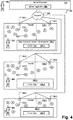
- the computer system is a distributed computer system comprising a server computer and one or more client computers.
- the analysis software is designed as a distributed client-server software application, a server application being installed and / or instantiated on the server computer system and a client application on each of the one or more client computers.
- the distributed computer system further includes a slaughterhouse computer system that is operated by a slaughterhouse and that is coupled to a slaughterhouse image capture unit.
- the slaughterhouse computer system includes a feedback application.
- the slaughterhouse image acquisition unit is designed to acquire images which depict the gastrointestinal tract of one or more of the animals after they have been slaughtered and to make them available to the feedback application.
- the feedback application is designed to transmit the captured gastrointestinal tract images to the server application via the network for storing the gastrointestinal tract images in the database of the server application.
- the server application is designed to carry out a method comprising: receiving at least one digital image of excretions from one or more of the animals from the at least one client application, and storing these images in the database; Receipt of at least one expression of a performance indicator of the animals, whose excretions are shown in the at least one received image, from the client application or from the feedback, measured or entered by a user via a GUI (the client application or the feedback application) -Application, the expression of the performance indicator in particular being images of the gastrointestinal tract after the animals have been slaughtered.
- GUI the client application or the feedback application
- the value of the performance indicator preferably relates to a point in time close to the point in time when the at least one digital image of the excretions was recorded; Training a machine learning algorithm for the automatic provision of an improved version of the analysis software or of an improved version of the server application, the training comprising an analysis of the received combinations of digital images of the excretions and the received characteristics of the performance indicator. Elimination patterns and characteristics of the performance indicator that relate to the same animals or at least to animals in the same animal house are combined, that is, assigned to one another.
- the invention relates to a mobile robot which is designed in particular for keeping and / or monitoring animals.
- the robot contains a motor unit that is designed for autonomous or semi-autonomous movement of the robot within an animal stable or area in which the animals are kept.
- the mobile unit can consist of one or more wheels or crawlers, for example.
- the robot contains an image acquisition unit which is designed and aligned such that it acquires at least one image of the excretions of one or more of the animals.
- the robot can move within the animal barn or area according to a dynamically calculated or previously determined and stored movement path, the image capturing unit being directed to the floor and a digital image of the floor of the animal barn or area at regular intervals, e.g. every 30 seconds detected.
- the robot also includes a network interface, for example an interface for data exchange via the Internet, and an image acquisition unit, for example a camera.
- the robot contains one or more processors and a storage medium on which a robot software is stored.
- the robot software can in particular be analysis software or a client application that is part of analysis software with server-client architecture.
- the robot software is designed to carry out a method, alone or in interoperation with a server connected via a network (and a server application instantiated on this), comprising: acquisition of at least one image by the image acquisition unit, wherein the at least one image is a digital image which depicts the excrements of one or more of the animals; Inputting the digital image into the robot software; Performing an analysis of the received image by the robot software; Output of a recommended action, which is suitable for maintaining or improving the current physiological state of the animals, by the robot software, the recommended action being dependent on a result of the analysis of the at least one image; and / or output of a predicted expression of a performance indicator of one or more of the animals by the robot software, the performance indicator being a physiological parameter, a disease symptom or an illness, the predicted expression depending on a result of the analysis of the at least one image.
- the recommended action and / or the predicted expression is output to a user via a display device of the mobile robot or via a data processing device connected to the robot via a network, e.g. via a display of a smartphone of a user who is with his smartphone at the robot -Software registered.
- the invention relates to a combination of a feed additive with an indicator substance and a distributed or non-distributed storage medium with analysis software, as described for embodiments of the invention.
- the indicator substance is a substance that causes a color in the excretions of the animals, which depends on the physiological conditions in the metabolism of the animals.
- the analysis software is designed to predict the performance of the performance indicator and / or to calculate the recommended action based on optical features of the excretions of animals which the indicator substance recorded before the at least one picture was taken with the feed or drinking water.
- a “camera” is understood here as a phototechnical apparatus which can record static or moving images on photographic film or electronically on magnetic video tape or digital storage medium or transmit them via an interface.
- An analog camera can be a camera, but a smartphone camera is preferably used.
- the image capture unit or camera can also be connected to light-emitting sources such as those already available in a standard smartphone (flash unit and / or smartphone display) or special lighting units that may be commercially available as additional devices, such as lasers with a defined wavelength, IR -Light sources, and / or UV light sources.
- the analysis software or a part of it designed as a client application preferably contains an illumination function which is designed to sequentially illuminate the precipitates in a defined manner with light of two or more different wavelength ranges. If a fluorescent indicator substance has been administered to the animals, the light source can in particular be designed to emit light at a wavelength which excites the fluorescent dye to fluoresce.
- “Analysis software” is understood here to mean software which can be stored distributed over several storage locations or at a single storage location and which is designed to carry out an analysis of at least one or several digital images and optionally further data in order to obtain one or more analysis results to calculate.
- a “computer system” is understood here to mean the entirety of the hardware and software components of a data processing system.
- the hardware and software components can be in the form of a monolithic computer system ("standalone” computer system, e.g. desktop computer, smartphone, notebook, server computer) or in the form of a distributed computer system (cloud computer system, distributed computer system with a server computer system and a or several client computer systems).
- a “performance indicator” is a parameter which is assigned to an animal or an animal herd and which contains information on the performance, for example the health, of this animal or animal herd.
- a performance indicator can, for example, be a physiological parameter (e.g. weight, growth rate, hemoglobin content in the blood), a disease symptom (e.g. bloody diarrhea, watery diarrhea) or a disease (e.g. coccidiosis, clostridiosis).
- a "color reference object” is an object of any shape that contains one or more predefined areas with different colors and / or textures assigned to the areas.
- the size of the object is preferably designed such that the object is not significantly larger than the excretions of the animals, so that an image of the excretions can easily be made with a mobile phone camera, which also depicts a color reference object positioned in spatial proximity to the excretions.
- the color reference object can be substantially two-dimensional, 0.5 to 10 cm in length and 0.3 to 5 cm in width.
- GUI is a "graphical user interface”.
- a “sensor” is a technical component that has certain physical or chemical properties (physical e.g. amount of heat, temperature, humidity, pressure, sound field sizes, brightness, acceleration or chemical e.g. pH value, ionic strength, electrochemical potential) and / or can determine the material properties of its environment qualitatively or quantitatively as a measured variable. These variables are recorded using physical or chemical effects and converted into an electrical signal that can be processed further.
- physical or chemical properties physical e.g. amount of heat, temperature, humidity, pressure, sound field sizes, brightness, acceleration or chemical e.g. pH value, ionic strength, electrochemical potential
- Excretions are understood here to mean solid, liquid or viscous excrement from animals, in particular solid, liquid or viscous faeces.
- Rule-based software contains a set of rules (also called rule repository) and a rule interpreter (also called inference engine or rule engine). The rules are as follows: IF ... THEN ... ELSE (IF THEN ELSE).
- rule-based analysis software can process a received digital image that depicts excretions from animals, for example as follows, and then apply rules to the processed image: First, the digital image received as an rgb image is divided into three separate, monochromatic Divides images, which are referred to in the following as R, G, and B images, where the R image selectively contains the intensity values of the red image channel, the G image selectively contains the intensity values of the green image channel and B selectively contains the intensity values of the blue image channel. In a next step, the intensity values of the three images are normalized individually.
- the maximum intensity values measured in the respective images can be mapped onto another, normalized intensity scale of predefined size, for example 0 to 100.
- the normalization can alternatively or additionally also be based on the Colors that are contained in a color reference object that is mapped on the received rgb image.
- the color reference object can contain a red spot, and the color-specific intensity normalization can take place such that the highest pixel intensity measured in the R image corresponds to the pixel intensity of this red spot.
- the color normalization can also be carried out by analysis software variants that do not work on a rule-based basis, for example also by analysis software variants that are based on a machine learning approach.
- one or more rules can be applied to the normalized R, GB images: IF the average intensity calculated for all pixels of a normalized image, at least for the G image or the B image, exceeds a minimum value of 50 AND the corresponding average value of the R -Image is below 20 THEN rule out "bloody diarrhea in the rectum" as a candidate for a pronounced performance indicator.
- this rule implies that images that have a certain minimum brightness selectively in the green and / or blue light spectrum, but not in the red light spectrum, cannot be regarded as an indication of bloody diarrhea in the rectum, as one with a red coloration of the Stool.
- the evaluation of the brightness values of the green and blue image channels is important, since the absence of a signal in the R image could also be due to the overall insufficient brightness of the image.
- the intensity value of each pixel in each of the R, G and B images is divided by a value K, where K is a value derived from the color reference object.
- K is a value derived from the color reference object.
- Color reference objects have a red color area FBR, a blue color area FBB and a green color area FBG and K can be the sum of the three maximally high intensity values I contained in the three color areas. K can therefore be calculated from I max_FBR + I max_FBB + I max_FBG .
- a pixel P x-Rnorm of the normalized R image would, for example, have the normalized intensity value I pixel-P / I max_FBR.
- a pixel P x-Bnorm of the normalized B-image and would have, for example, the normalized intensity value I pixel-P / I max_FBB .
- a pixel P x-Bnorm of the normalized G-image and would have, for example, the normalized intensity value I pixel-P / I max_FBG .
- a pixel P x-Bnorm of the normalized rgb image would, for example, have the normalized intensity value I pixel-P / K.
- the rules are preferably combined with various image analysis functions which, for example, recognize certain objects and structures. For example, various image analysis methods known in the prior art can recognize lines or spheres (gaseous inclusions). Corresponding rules could then be: IF in the course of the image analysis at least three spherical inclusions per cm2 of the mapped floor area were detected, THEN assign an increased probability of occurrence to all candidates for a pronounced performance indicator that are associated with flatulence. The IF part of the rule is also referred to as the premise, the THEN part as the conclusion.
- a light source can, for example, be a simple flash light source, a white light source, a yellow light source, an infrared light source, a light source that emits fluorescent light and excrement, which contains a fluorescent indicator substance with a corresponding spectral excitation frequency, excites to emit a light signal, a halogen lamp , or in general a light source for light in a defined, short or long wave frequency range.
- Several different light sources can also be used sequentially or sequential illumination with light of different wavelengths from the same light source, the aim being to show as many details of the intestinal function as possible that affect the appearance of the excrement in the images to capture.
- the daily updated electronic details e.g. the RGB values of the image recording with the same electronic details of the previous e.g. 5 or 7 days in a statistical procedure e.g. B. the discriminant analysis in order to prove a statistically verifiable deviation or identity of the current measured value from the measured values of the past of this stable and this animal breed and this feeding to exactly that, the current time, etc.
- the production-technical measurement values occurring in the daily routine are also compared for normality or abnormality in order to refine the information of the image measurement value.
- an increased water consumption at the time of an abnormality in the image results can indicate an incipient diarrheal illness, which on its own would also occur in hot weather without reference to future health risks.
- a reduced feed consumption determined from the daily measured values of the machine or manual feeding combined with abnormal picture - measured values of the cushions in turn combined with increased water consumption shows with a high probability an emerging illness with a febrile background, often a bacterial one Illness from e.g. Respiratory disease or colisepsis. Treated early, you can expect few antibiotics and hardly any loss of performance. Detected too late, these diseases lead to high mortality, high drug use and reduced quality of the animals for slaughter.
- the rule-based analysis software can contain a control module which is designed to adapt the weighting of the rules of the rule database after receiving further data, in particular feedback data from slaughterhouses, so that the analysis result predicts this feedback data as accurately as possible based on the recordings of the excretions.
- a control module which is designed to adapt the weighting of the rules of the rule database after receiving further data, in particular feedback data from slaughterhouses, so that the analysis result predicts this feedback data as accurately as possible based on the recordings of the excretions.
- a cluster analysis is understood here to mean a method for discovering similarity structures in databases.
- the data stocks can in particular include data sets of mutually assigned data, wherein the mutually assigned data can in particular contain images of excretions from animals, empirically collected characteristics of performance indicators of these animals, measured values from sensors in animal stalls and substances administered to the animals.
- the groups of "similar" data records found in this way are referred to as clusters, the group assignment as clustering.
- the similarity groups found can be graph-theoretical, hierarchical, partitioning or optimizing.
- the analysis software or parts of the analysis software, in particular the server application contain one or more cluster analysis algorithms or an interface to corresponding programs from third-party providers.
- the R programming language of the GNU project offers class libraries, which among other things also contain cluster algorithms.
- k-means is used as the clustering algorithm.
- the analysis software is preferably designed to predict the occurrence of one or more performance indicators.
- One of these performance indicators Analysis software that is used to monitor poultry houses or rearing systems includes, in particular, the main diseases such as clostridiosis, coccidiosis, pig dysentery and salmonellosis.
- Analysis software for monitoring pigs, calves, piglets, cows, beef cattle include pigs / calves salmonelosis, pigs Lawsonia disease, calves cryptosporidiosis, and others.
- the analysis software it is also designed for universal use in stables and housing systems for both poultry and mammals and covers a correspondingly wide range of performance indicators.
- Figure 1 shows a computer system with analysis software 108 for monitoring the health of animals 132 in an animal house 130.
- the animal house can be, for example, a large house of a broiler farm for broilers, turkeys, pigs or cattle. In particular with large fattening farms, the risk of the spread of infectious diseases and the associated economic damage is great.
- the animal shed there are a large number of animals, typically of the same species, which are indicated here with the symbol "A".
- One or more employees 138 of the animal fattening company regularly check the animal shed, for example to check whether the nozzles of the drinking system are still permeable, the litter is fresh and / or there is enough feed at the feeding places.
- the worker 138 preferably has an image acquisition unit with him, for example in the form of a camera of a smartphone 142.
- the smartphone is preferably connected to the Internet 136 via a network connection, in particular the cellular network and / or via a local WLAN connection.
- the distributed computer system shown is a further computer system 100, which can be designed, for example, as a server computer system or as a normal desktop computer system for a further user 116.
- the further user 116 can, for example, be a trained employee who is supposed to monitor the health of the animals in one or more animal houses of the fattening farm and who is not necessarily on site, that is to say in the vicinity of the animal house 130.
- the computer system 100 includes one or more processors 106, typically also a display 112 and a network interface 114, with which it is connected to a network 136. It also includes a storage medium 104, typically a hard disk, which contains a plurality of images 102 of excretions from animals 132.
- the images 102 are preferably stored in a database, in particular a relational database.
- This database can also contain further data, in particular measured values 110 from sensors 134, which are optionally attached within or in spatial proximity to the animal stall 130.
- the sensors can be thermometers, for example.
- the sensors are sensors which measure the amount of feed or drinking water currently being administered or being administered over a certain period of time. This can be beneficial as decreased appetite or increased thirst can be early signs of an infectious disease or diarrhea.
- the sensors can comprise sensors for detecting the ammonia content of the air. Diarrhea is often associated with an increased excretion of protein, which is then converted into ammonia in the litter of the stable and received as a measured value by the analysis software and evaluated in addition to the optical parameters of the faeces during the analysis in order to obtain a combination of the optical properties the excretions and the ammonia content of the air to achieve a particularly high level of analytical and prediction accuracy.
- the storage medium 104 contains an analysis software 108 which is designed to access the images 102 in order to display these and optionally further available predictive data such as the measured values 110 or animal-related data Specify metadata (such as the currently administered substances, i.e. animal feed type, feed additives, medication, etc., their dosage or type of administration).
- an analysis software 108 which is designed to access the images 102 in order to display these and optionally further available predictive data such as the measured values 110 or animal-related data Specify metadata (such as the currently administered substances, i.e. animal feed type, feed additives, medication, etc., their dosage or type of administration).
- the smartphone of the user 138 does not contain a client application that is interoperable with the analysis software 108.
- the smartphone camera which is already integrated into practically all smartphone models today, and the associated camera software are installed on the smartphone.
- the user can use the existing software to take photos by means of a smartphone in order to take several pictures of the excretions of the animals in the course of the regular inspection rounds, i.e. typically once or several times a day.
- the images of the excretions are preferably recorded at several different locations in the animal shed.
- the user 138 can then transfer the captured images to the computer system 100 via the network 136.
- the user can send an e-mail to an e-mail address of the user 116 for this purpose, which contains the images of the excretions as an attachment.
- the user 116 can then save the images in the database so that the analysis software can access the images.
- the images 108 of the excretions are preferably stored linked to a time specification which at least approximately indicates the point in time of the image capture.
- the user 116 can call up the analysis software 108.
- the analysis software can be implemented in any common programming language, such as Java, C ++, C #, and others.
- the analysis software reads all images of the excretions of the animals, which were recorded within a predefined period of, for example, one week and stored in the database, and uses these as input in a subsequent analysis step.
- sensor measurement values 110 and metadata that are stored in the database linked to the images 102 can also be read by the analysis software and evaluated during the analysis.
- the measurement data and / or metadata are stored in the database linked to those images 102 which were recorded at a point in time that is close in time to the acquisition of the metadata or the measured values.
- the analysis by analysis software 108 includes a recommended action calculation.
- a recommended action is an action to be carried out manually or automatically, which is suitable for maintaining or improving the current physiological state of the animals.
- the recommended action is calculated as a function of the images 102 read by the analysis software and, if available, further data, for example the measured values 110 and / or the information on currently administered substances.
- the analysis by the analysis software includes a prediction of an expression of a performance indicator of one or more of the animals 132 in the animal stall 130.
- the analysis software can be configured such that the prediction is based on a specific future moment from the current moment of the analysis off refers to, for example, a moment 2 or 3 days in the future.
- the recommended action can also be an action that is recommended to be carried out at a future point in time, for example in 2 or 3 days after the analysis has been carried out. However, it can also be an action that is recommended to be carried out immediately.
- the exact point in time of the recommendation depends on the type of action and the implementation of the analysis software, in particular on the explicitly specified rules (in the case of a rule-based system) or on the nature and annotation of the training data set that is used to create the analysis software using machine learning was used.
- Both types of calculation or prediction are preferably carried out in the course of an analysis. It is possible that, as a result of the analysis, it is not recommended to take any action because the current and predicted performance indicators are good so there is no need for action.
- the user can also specify via a GUI, or it can be specified in a configuration file whether the analysis software should only calculate and output a recommended action, or alternatively calculate and output a future value of a performance indicator, or both.
- the output can take place, for example, via the display 112 of the computer system 100 to the user 116, so that the latter can take suitable measures to maintain or improve the health of the animals.
- the performance indicator can be, for example, the presence of a specific disease in one or more animals 132 in the animal house.
- the analysis software can be designed to use the images 102 of the excretions of the animals to calculate the presence and future degree of severity of various diseases.
- the diseases are, in particular, coccidiosis (infestation with coccidia), clostridiosis (infestation with clostridia), diarrhea or sepsis caused by various bacteria such as in particular coccidia, clostridia, Eschericha coli and / or salmonella).
- the analysis software detects, for example, a current infestation of some broilers with coccidia and predicts a population-wide outbreak of the disease in 2-3 days
- the analysis software outputs a warning message to the user 116 via the screen 112.
- the warning message includes an indication that a population-wide outbreak of coccidiosis in the animal pen 130 is to be expected in the next 2-3 days.
- Coccidiosis Eimeria tenella
- the causative agent of coccidiosis causes bleeding inflammation of the small intestine or appendix, especially in chicken chicks between 2 and 6 weeks old.
- Coccidiosis is associated with bloody diarrhea, which in the case of appendix coccidiosis can lead to a mortality rate of up to 80 percent from bleeding to death.
- a coccidiosis infection of the small intestine also occurs predominantly in young animals, but also in weakened old animals. It manifests itself as an inflammation of the small intestine, which can lead to bleeding and tissue breakdown. This is due to the occurrence of various coccidia species, such as Eimeria necatrix and Eimeria tenella, Eimeria brunetti and Eimeria gallopavonis. The latter two strains lead to slimy diarrhea that rarely bleeds. The mortality rate for small and rectal coccidiosis is 30 percent due to fluid loss.
- the analysis software may have the current or a likely future outbreak of coccidiosis and its Recognize and predict subforms.
- further parameters in particular measured values such as the amount of feed consumed per animal or per stable and day, are also taken into account in the analysis according to embodiments of the invention.
- Loss of appetite which is associated with reduced feed consumption, can be taken into account as a further measured parameter value and is an indication of a possible coccidial infection in chickens.
- the analysis software 108 can be designed to display a GUI via the display 112, via which the user 116 can enter the said metadata, so that they can be stored together with the images 102 in the database and also evaluated by the analysis software 108.
- the analysis software can have an interface via which the said data can also be automatically received from a storage medium, from another software (e.g. stall management software) and / or from sensors or stall equipment (e.g. feeding and water systems).
- the message that the analysis software outputs can, in addition to predicting the clostridial infestation, preferably also contain a recommended action, for example the information that coccidial drugs should be added to the feed or drinking water immediately.
- the message could also contain several recommended actions, for example, a note that the additional administration of multivitamin and mineral supplements is recommended in order to reduce electrolyte loss to compensate and to achieve the fastest possible recovery. Since coccidia are extremely stable in the environment and can survive in the area for many years, the message can also include a recommendation to disinfect the affected stall.
- the "expression" of the performance indicator "coccidiosis disease” can therefore be a more detailed characterization of the disease (appendix coccidiosis or small intestine / rectal coccidiosis) and / or a prediction of the severity of the disease at a specific point in time, as the respective The composition of the pathogen influences both the severity of the disease and the consistency of the faeces.
- FIG. 2 shows a computer system 200 which, like the computer system 100 of FIG Figure 1 analysis software 108 includes.
- the computer system 200 is, however, a portable computer system such as, for example, a smartphone with an integrated image capture unit 140, which the user 138 takes with him when he inspects the stable.
- the portable computer system 200 includes a storage medium 202 on which the analysis software 108 as well as the current and past recorded images 102 of the excretions of the animals are stored, for example in the form of several data sets in a relational database.
- the computer system can have an interface 210 via which it can receive sensor measured values 110 from one or more sensors 134. The sensor measured values 110 can then likewise be stored on the storage medium 202 or in the database located thereon.
- the computer system has one or more processors 204, a display device 206 and preferably also a network interface 208.
- the sensor interface 210 can be, for example, an interface for near-field communication such as a Bluetooth interface or an RF (radio frequency) interface. However, it is also possible that the sensor interface 210 is designed as a network interface 208 or that no measured values 110 are received at all.
- the analysis software 108 is designed as a so-called “standalone” software application, ie, even in the event that no network connection is available, the software 108 can independently generate the images 102, which are recorded by the camera 140 of the excretions of the animals 132, are received and evaluated in the course of an analysis.
- the result of the analysis, a recommended action and / or a predicted expression of a performance indicator of the animals are then output by the analysis software 108.
- the output can take place, for example, via the display 206 to the user of the computer system 200.
- the embodiment shown has the advantage that even in animal stalls or areas in which no network connection or cellular connection is available, a user of the computer system 200 is able to deal with diseases or other health problems of the animals in a simple and intuitive manner and without special training to recognize early and to take suitable countermeasures by simply taking several images of excretions from the animals with his smartphone camera 140 and entering these into the analysis software 108 for analysis.
- the analysis software 108 preferably contains a functionality for controlling the camera 140, so that the camera functionality is integrated into the analysis software, which makes it easier to operate.
- Figure 3 shows a distributed computer system with analysis software that is designed in the form of a client-server architecture.
- the client computer system is preferably designed as a portable computer system, for example as a smartphone or tablet computer of a user 138.
- the client application 304 is interoperable with the server application 302, which means that both applications are designed to exchange data and control commands in a coordinated manner via a network 136 in order to provide the analysis functionality of the analysis software 108 already described in interaction.
- the server application 302 is preferably designed to interact with a multiplicity of client applications, the data exchange being session-bound and a client application does not have access to the data that other client applications exchange with the server application.
- the users of the respective client applications must first register with the server application before the analysis functionality can be carried out.
- the functionality of the analysis software is distributed between the client and the server application in such a way that the client application 304 is designed to control an image acquisition unit 140 that is part of the client computer system 300 or is operatively connected to it to cause them to acquire one or more images of excretions from animals 132.
- the client application 304 can have a graphical user interface which enables the user 138 to capture one or more images of selected locations on the floor of the animal house via the camera 140 and to transfer them from the camera to the client application 304.
- the captured images can be stored locally on the storage medium 202 of the client application.
- the client application 304 can be configured to receive sensor measured values 110 from one or more sensors 134 and to store them locally.
- the GUI of the client application 304 can contain several input fields which enable the user 138 to enter metadata relating to the animals or the animal house into the client application.
- metadata include in particular the type of animal, age of the animals, currently administered medication, feed and feed additives, the amount of feed or drinking water currently administered per animal or animal house per day.
- the server application is designed to receive the images 102 via the network 136 from the client application (or several client applications) and preferably to store them in a database of the server computer.
- the storage preferably takes place in such a way that an identifier of the client application, which can also be designed as a user ID or animal stable ID, and an approximate point in time at which the images 102 were recorded with the received images 102 linked.
- the server application then carries out an analysis of the received images 102 in response to a trigger mechanism.
- the trigger mechanism can be, for example, the receipt of the images or a user interaction with the server application or a control command from an automatic timer (for example "cron job").
- the client application 304 and / or the server application 302 can have a filter function which filters out images and does not forward them to the server application or does not take into account in the analysis which ones have too low a resolution or which only too small a proportion of the image that actually represents the precipitates.
- all measured values can first be received by the client application and then transmitted to the server application via the network.
- the server application is designed to receive sensor measured values 110 via a network interface 114 from the sensors of an animal stable or animal enclosure, which are assigned to the client application 304. It is also possible for the server application to receive part of the measured values 110 from the client application and another part directly from the sensors 134 via the network interface 114.
- An assignment of measured values 110, metadata and digital images 102 also received, if applicable a specific client application and / or for a specific animal stable can for example take place via a common client application ID, which is transmitted to the server application as part of both the images 102 and the metadata and the measured values.
- FIG. 13 is a block diagram of a distributed computer system which, as already shown in FIG Figure 3
- the distributed computer system shown includes a client computer 300.1 and a server computer 310.
- the analysis software 108 is designed in the form of a client-server architecture.
- the distributed system comprises further client computer systems 300.2, 300.3, which in each case have other client applications 304.2, 304.3, other animal stalls 130.2, 130.3 and possibly also other users 404, 406.
- This embodiment has the advantage that empirical data, in particular image data of excretions from the animals kept, measured values recorded by sensors, observed characteristics of performance indicators as well as metadata (such as animal feed, feed additives, animal species, animal age and the like) centrally in a database of the server -Computer 310 can be stored.
- the server application preferably contains extended analysis functions, in particular cluster analysis methods.
- a comparison of the currently used feed, veterinary preparations and feed additives that are administered to the animals of the individual clusters makes it possible to determine whether a certain substance or feed composition or a feed supplier or breeding company correlates with particularly high or particularly low performance of the animals. This makes it possible, on the basis of objective, empirical data, to identify feed or feed additives or suppliers that have a beneficial effect on animal health for a certain type of animal or for a certain initial situation (e.g. suspected infestation with certain pathogens).
- Figure 5 a flow chart of a method for keeping animals.
- the method can be used to monitor the health and performance of animals.
- a first step 502 one or more images 102 showing excretions from animals 132 are input into analysis software 108.
- the analysis software can obtain the images directly from a local image acquisition unit, or read them from a local data memory, or via a Obtain network from a client application or a robot application. It is also possible for the images to be sent via email Application or, in "real time", via an APP application to the computer on which the analysis software is instantiated, and then semiautomatically transferred from an e-mail application of this computer to the analysis software.
- the analysis software carries out an analysis of the input images in order to obtain an analysis result.
- the analysis result can suggest one or more recommended actions that are suitable for maintaining or improving the current physiological state of the animals and / or a predicted value of a performance indicator of the animals.
- the analysis result depends on the received images of the excretion and, if available, on measured values 110 and / or further metadata.
- the metadata can contain substances or mixtures of substances that were administered to the animals at the time of the analysis.
- the analysis preferably relates to images and the optional measured values and / or metadata that were received within a defined period of time before the analysis, for example within 7 days before the analysis was carried out.
- the recommended action and / or in step 508 the predicted expression is output.
- the analysis results output can therefore include either the recommended action or the predicted value of the performance indicator or both.
- the output can for example take place via a GUI of the analysis software to a user.
- Figure 6 Figure 3 shows a block diagram of a mobile robot 600 for monitoring animal health.
- the robot 600 can be used in an animal stable 130, as it is with regard to Figures 1, 2 and 3 is described.
- the robot can be used, for example, to take over or accompany some of the work of workers 138, in particular some patrols.
- the robot includes one or more processors 604 and optionally a display device 606 via which a user can interact with the robot.
- the robot also optionally contains a network interface 608 in order to be able to exchange data with a network, in particular the Internet.
- the network interface 608 can be used by the robot software 108 to transmit images 102 of excretions from the animals in the animal house, which were recorded by one or more cameras 140 of the robot 600, via the network 136 to a Server application 302 to send.
- the robot software 108 can be analysis software, as has already been described for embodiments of the invention.
- the analysis software is designed in particular to analyze the images 102 captured by the camera 140 and to output a recommended action and / or a predicted value of a performance indicator.
- the output can take place, for example, via a GUI by means of the display 606 to a user.
- the robot may comprise a storage medium 602 on which the captured images 102 are stored locally.
- the robot can also have a sensor interface 612 to one or more sensors 134 of the animal house.
- the sensor interface 612 can in particular be an interface for near-field communication, for example a Bluetooth interface or an RF interface.
- the robot can also contain its own sensors 134, for example a thermometer for measuring the floor temperature, moisture measuring devices, and the like.
- the robot has a motor unit 610, for example motor-driven wheels or chains, which enable the robot to cross the animal stable largely autonomously.
- the path of the traversal can be fixed in the robot software.
- the movement path of the robot is not explicitly defined, but is calculated dynamically by the robot software on the basis of certain optimization criteria in combination with dynamically recognized obstacles that are avoided.
- the camera 140 is oriented and positioned at a height such that captured digital images depict an area of the floor in the vicinity of the robot.
- the height and / or orientation of the camera can be changed, it being possible for the height and / or the orientation of the camera to be changed manually and / or automatically.
- the change in height or orientation preferably takes place automatically and is controlled by the robot software 108, which contains a function for analyzing the quality of the images captured by the camera 140. Is the resolution too low or the portion of the image that actually shows animal excrement shows too small, the height and / or the orientation of the camera is automatically adjusted so that the next images have a sufficiently large image area that shows the excretions in high resolution and with sufficient contrast.
- the (optical or software-based) zoom of the camera can also be changed automatically or manually so that the recorded images meet the quality criteria of the robot software.
- FIG. 7 is a block diagram of a distributed computer system 700 as in FIG Figure 3 and 4 respectively.
- the distributed system 700 also includes one or more computer systems 710 of a slaughterhouse 714, which are preferably mobile computer systems. It is also possible that the system 700 includes further computer systems of other slaughterhouses (not shown here).
- slaughterhouses it is common for employees 732 of the slaughterhouse operation to routinely or randomly check the health of the animals for slaughter by carrying out an inspection of the gastrointestinal tract 750-758 of the slaughtered animals 740-748 after slaughter.
- an employee 732 of the slaughterhouse is assigned a mobile computer system 710.
- the mobile computer system 710 can in particular be a smartphone or a tablet computer.
- One or more processors 714, a display device 720 and a network interface 724 are located on the computer system 710.
- the computer system 710 also includes a storage medium 712 with a feedback application 726.
- the computer system 710 also includes an image acquisition unit 716, for example a smartphone camera .
- the feedback application 726 is interoperable with the server application 302. For example, it can be a variant of the client application already described above, which has an additional function instead of sending images of the gastrointestinal tract of slaughtered animals to the server application from or in addition to the images of the excretions.
- the user 732 can start the feedback application 726 and cause it, for example by interacting with a GUI of the feedback application, to use the cameras 716 to generate digital images 728 of the gastrointestinal tract 750-758 freshly slaughtered animals 740-748,132.
- These images 728 can optionally be stored locally on the storage medium 712. In any case, they are sent from the feedback application 726 to the server application 302 via the network 136.
- the images 728 represent feedback information, since they provide information about the state of health of the animals, in particular with regard to the gastrointestinal tract, on the day of slaughter.
- the images 728 thus represent empirically recorded characteristics of one or more performance indicators at a specific point in time.
- the images 728 can, for example, be provided with an identifier of the animal house or fattening farm from which they come, so that they can be found in the database 762 of the server computer Images 102 of the excretions of the animals of the same animal house or fattening farm a few days before their slaughter are assigned via this identifier. It is also possible to assign the images 102, 728 as well as measurement data and metadata, if available, based on an identifier of individual animals. However, individual animals are often not recorded individually.
- the server application 302 is designed, for example, as a machine learning application, which is retrained at regular intervals on a training data set.
- the training data set is preferably continuously supplemented, both with images of excretions from animals from one or more animal stalls and with the associated empirically recorded characteristics of performance indicators, in particular from pictures taken in a slaughterhouse of the gastrointestinal tract of slaughtered animals. It is also possible that these pictures are made by the operator of the animal stalls. For example, it can happen that individual animals die in the animal shed and are examined more closely by the operator of the animal shed to determine whether an infectious disease was the cause of death. On this occasion, images of the gastrointestinal tract of the deceased animals can also be made and transmitted to the server application 302.
- the machine learning software can in particular be software that is based on one or more neural networks.
- the machine learning based analysis software can use existing program libraries, for example Caffe, a program library for deep learning, Deeplearning4j (open source software programmed in Java that is based on a neural network, the Java library ELKI, GNU R and other.
- Machine learning software is software that has automatically acquired knowledge based on examples (a training data set) in a learning phase, which this software can use to solve data processing problems.
- the (trained) software can be designed and "trained” to automatically recognize images of excretions from animals and, optionally, additional information (metadata, measured values) linked to them, which characteristics a performance parameter of the animals will or will have in the near future or currently and which actions can be helpful to promote or stabilize the health of the animals so that a drop in performance is prevented or eliminated.
- Figure 8 shows three photos of faeces from adult turkeys suffering from an acute clostridial infection.
- the thin consistency with vesicular inclusions, which indicate a diarrheal disease, is noticeable.
- the droppings are yellow-orange in color, but not black. This is an indication that the diarrhea is watery rather than bloody.
- Bubble-shaped structures can be recognized by the analysis software, for example by using algorithms to recognize lines, circles and other geometric objects.
- Figure 9 shows two photos of faeces from adult turkeys suffering from acute colisepsis (sepsis caused by Escherichia coli).
- the consistency of the faeces is also thin and slimy, the color white-yellowish, sometimes with a greenish hue.
- the yellow color indicates a lack of bile or a malfunction of the pancreas.
- the greenish color indicates an infection, here with Escherichia coli.
- Figure 10 shows a photo of the feces of an adult turkey suffering from acute coccidiosis. In contrast to the one in the Figures 9A and 9B The feces pictured are in Figure 10 The faeces shown are evenly colored and clearly green. There are no bubble-shaped inclusions. The green color is an indication of a very advanced infection.
- Figure 11 shows a photo of the feces of a broiler suffering from an acute co-infection of clostridia and coccidia.
- the dark color of the feces is an indication of significant blood loss and oxidized hemoglobin.
- Figure 12 shows a photo of the feces of a broiler suffering from an acute clostridial infection.
- a comparison of the photos in Figures 12 and 8th shows that the color and consistency of the faeces depend not only on the disease but also on the species. Therefore, according to preferred embodiments of the invention, the type and / or breed of the animals and preferably also their age is entered into the analysis software in addition to the images of the excretions in order to ensure that the analysis can take this metadata into account.
Landscapes
- Life Sciences & Earth Sciences (AREA)
- Environmental Sciences (AREA)
- Engineering & Computer Science (AREA)
- Animal Husbandry (AREA)
- Biodiversity & Conservation Biology (AREA)
- Theoretical Computer Science (AREA)
- Physics & Mathematics (AREA)
- General Physics & Mathematics (AREA)
- Zoology (AREA)
- Software Systems (AREA)
- Medical Informatics (AREA)
- Computer Vision & Pattern Recognition (AREA)
- Biophysics (AREA)
- Birds (AREA)
- Multimedia (AREA)
- Computing Systems (AREA)
- Artificial Intelligence (AREA)
- Data Mining & Analysis (AREA)
- Evolutionary Computation (AREA)
- General Engineering & Computer Science (AREA)
- Mathematical Physics (AREA)
- Radiology & Medical Imaging (AREA)
- Quality & Reliability (AREA)
- Nuclear Medicine, Radiotherapy & Molecular Imaging (AREA)
- General Health & Medical Sciences (AREA)
- Health & Medical Sciences (AREA)
- Investigating Or Analysing Biological Materials (AREA)
- Measuring And Recording Apparatus For Diagnosis (AREA)
Priority Applications (18)
| Application Number | Priority Date | Filing Date | Title |
|---|---|---|---|
| ES18209624T ES2867895T3 (es) | 2018-11-30 | 2018-11-30 | Sistema para el análisis de imágenes de excrementos de animales |
| EP18209624.8A EP3659433B1 (de) | 2018-11-30 | 2018-11-30 | System zur analyse von tierausscheidungsbildern |
| DK18209624.8T DK3659433T3 (da) | 2018-11-30 | 2018-11-30 | System til analyse af billeder af dyrs afføring |
| PL18209624T PL3659433T3 (pl) | 2018-11-30 | 2018-11-30 | System analizowania obrazów wydzielin zwierzęcych |
| UAA202103731A UA130157C2 (uk) | 2018-11-30 | 2019-11-14 | Система аналізу зображень екскрементів тварин |
| JP2021529096A JP2022510851A (ja) | 2018-11-30 | 2019-11-14 | 動物排泄物画像の分析システム |
| US17/297,911 US12329128B2 (en) | 2018-11-30 | 2019-11-14 | System for analyzing animal secretion images |
| CN201980077664.9A CN113329622B (zh) | 2018-11-30 | 2019-11-14 | 用于分析动物排泄物图像的系统 |
| PE2021000785A PE20211119A1 (es) | 2018-11-30 | 2019-11-14 | Sistema para el analisis de imagenes de excreciones de animales |
| KR1020217015596A KR20210096609A (ko) | 2018-11-30 | 2019-11-14 | 동물 배설물 이미지 분석용 시스템 |
| PCT/EP2019/081348 WO2020109017A1 (de) | 2018-11-30 | 2019-11-14 | System zur analyse von tierausscheidungsbildern |
| CA3121334A CA3121334A1 (en) | 2018-11-30 | 2019-11-14 | System for the analysis of animal excrement images |
| MYPI2021002905A MY207426A (en) | 2018-11-30 | 2019-11-14 | System for the analysis of animal excrement images |
| MX2021006020A MX2021006020A (es) | 2018-11-30 | 2019-11-14 | Sistema para el analisis de imagenes de excreciones de animales. |
| BR112021010091-1A BR112021010091B1 (pt) | 2018-11-30 | 2019-11-14 | Método para manter animais |
| AU2019389192A AU2019389192B2 (en) | 2018-11-30 | 2019-11-14 | System for analyzing animal secretion images |
| CONC2021/0006536A CO2021006536A2 (es) | 2018-11-30 | 2021-05-20 | Sistema para el análisis de imágenes de excreciones de animales |
| PH12021551260A PH12021551260A1 (en) | 2018-11-30 | 2021-05-30 | System for analyzing animal secretion images |
Applications Claiming Priority (1)
| Application Number | Priority Date | Filing Date | Title |
|---|---|---|---|
| EP18209624.8A EP3659433B1 (de) | 2018-11-30 | 2018-11-30 | System zur analyse von tierausscheidungsbildern |
Publications (2)
| Publication Number | Publication Date |
|---|---|
| EP3659433A1 EP3659433A1 (de) | 2020-06-03 |
| EP3659433B1 true EP3659433B1 (de) | 2021-01-20 |
Family
ID=64564725
Family Applications (1)
| Application Number | Title | Priority Date | Filing Date |
|---|---|---|---|
| EP18209624.8A Active EP3659433B1 (de) | 2018-11-30 | 2018-11-30 | System zur analyse von tierausscheidungsbildern |
Country Status (17)
| Country | Link |
|---|---|
| US (1) | US12329128B2 (da) |
| EP (1) | EP3659433B1 (da) |
| JP (1) | JP2022510851A (da) |
| KR (1) | KR20210096609A (da) |
| CN (1) | CN113329622B (da) |
| AU (1) | AU2019389192B2 (da) |
| CA (1) | CA3121334A1 (da) |
| CO (1) | CO2021006536A2 (da) |
| DK (1) | DK3659433T3 (da) |
| ES (1) | ES2867895T3 (da) |
| MX (1) | MX2021006020A (da) |
| MY (1) | MY207426A (da) |
| PE (1) | PE20211119A1 (da) |
| PH (1) | PH12021551260A1 (da) |
| PL (1) | PL3659433T3 (da) |
| UA (1) | UA130157C2 (da) |
| WO (1) | WO2020109017A1 (da) |
Families Citing this family (19)
| Publication number | Priority date | Publication date | Assignee | Title |
|---|---|---|---|---|
| US11468275B1 (en) * | 2019-03-05 | 2022-10-11 | Apple Inc. | Computer vision using a prior probability distribution selected based on an image capture condition |
| GB2591432B (en) * | 2019-10-11 | 2024-04-10 | Caucus Connect Ltd | Animal detection |
| TWI776299B (zh) * | 2019-12-06 | 2022-09-01 | 中央研究院 | 用於禽舍的人工智能系統 |
| WO2022132804A1 (en) * | 2020-12-14 | 2022-06-23 | Mars, Incorporated | Systems and methods for classifying pet information |
| JPWO2022149342A1 (da) * | 2021-01-06 | 2022-07-14 | ||
| US12254673B1 (en) * | 2021-01-19 | 2025-03-18 | Given Imaging Ltd | Systems and methods for classifying or selecting images based on image segmentation |
| JP7655747B2 (ja) | 2021-03-19 | 2025-04-02 | 公益財団法人実中研 | 排泄物性状推定モデル学習装置、排泄物性状推定装置、排泄物性状推定モデル学習方法、排泄物性状推定方法及びプログラム |
| CA3233616A1 (en) * | 2021-09-27 | 2023-03-30 | Silk Way Services Inc. | Systems and methods of livestock management |
| EP4160476A1 (en) * | 2021-10-01 | 2023-04-05 | HORAIZON technology B.V. | A method and system for analyzing intestinal microflora of a subject |
| US12033326B2 (en) | 2021-10-08 | 2024-07-09 | Myaniml | System and method for animal disease management |
| CN114241409A (zh) * | 2021-12-13 | 2022-03-25 | 浙江大学 | 一种基于笼养鸡异常粪便和解剖图像的疾病早期预警系统及方法 |
| WO2024055283A1 (en) * | 2022-09-16 | 2024-03-21 | N.V. Nutricia | Nutrition digestive efficacy assistant and computer implemented algorithm thereof |
| WO2024241284A1 (en) * | 2023-05-24 | 2024-11-28 | Wlodarczyk Konrad | Improving production safety and efficiency by early detection of sick and/or dead individuals and accurate determination of time of death using uv light and/or visible light |
| KR102657668B1 (ko) * | 2023-06-21 | 2024-04-17 | 한국환경연구원 | 분변 및 족적 학습에 기반한 환경영향평가에서의 포유류 자동 탐지 및 분류 방법 및 시스템 |
| US20260007309A1 (en) * | 2023-07-23 | 2026-01-08 | Manta Implant LLC | Device and method to assess rectal effluent |
| CN116682147B (zh) * | 2023-08-02 | 2023-10-31 | 北京市农林科学院智能装备技术研究中心 | 一种动物腹泻的识别装置 |
| CN117423042B (zh) * | 2023-12-15 | 2024-02-20 | 成都大熊猫繁育研究基地 | 一种基于大熊猫排泄物识别的大熊猫健康评估方法及系统 |
| DE202024001854U1 (de) | 2024-09-26 | 2025-01-02 | Biocv Gmbh | Sensorfußring für die individuelle Datenerfassung am Tier für den Einsatz im Geflügelbereich |
| CN119605666B (zh) * | 2025-02-17 | 2025-05-16 | 上海纯天实验室装备有限公司 | 实验室自动饲养设备的清污控制方法、系统及存储介质 |
Family Cites Families (30)
| Publication number | Priority date | Publication date | Assignee | Title |
|---|---|---|---|---|
| JPS5462892A (en) * | 1977-10-21 | 1979-05-21 | Ei Kaachiyuberu Mikaeru | Article useful to detect acid in stomach |
| KR20000010533A (ko) | 1996-04-19 | 2000-02-15 | 텍사스 테크 유니버시티 | 시각적 조직 특이성 조영제로서의 형광 킬레이트 |
| US6607744B1 (en) | 2000-06-23 | 2003-08-19 | Segan Industries | Ingestibles possessing intrinsic color change |
| DE10156453A1 (de) * | 2001-11-16 | 2003-05-28 | Westfalia Landtechnik Gmbh | Verfahren und Einrichtung zur Bestimmung des Gesundheitsstatus von Tieren |
| US20040056965A1 (en) * | 2002-09-20 | 2004-03-25 | Bevans Michael L. | Method for color correction of digital images |
| HUE029852T2 (en) * | 2004-03-15 | 2017-04-28 | Janssen Pharmaceutica Nv | Opioid receptor modulators |
| PE20070057A1 (es) | 2005-06-02 | 2007-02-04 | United States Borax Inc | Composicion alimentaria a base de boro |
| JP2007252805A (ja) * | 2006-03-24 | 2007-10-04 | Konica Minolta Holdings Inc | データ検出装置及びデータ検出方法 |
| ES2487642T3 (es) | 2007-06-29 | 2014-08-22 | Dsm Ip Assets B.V. | Composición de aditivos para piensos que comprende ácido benzoico y una mezcla de compuestos de aceites esenciales adsorbidos |
| WO2009091886A2 (en) * | 2008-01-16 | 2009-07-23 | The Iams Company | Automated systems for feeding animals and collecting animal excrement |
| US8297231B2 (en) | 2009-02-03 | 2012-10-30 | Faunus Ltd. | System and methods for health monitoring of anonymous animals in livestock groups |
| KR20120073919A (ko) * | 2010-12-27 | 2012-07-05 | 웅진코웨이주식회사 | 비데의 배변 분석 장치 및 방법 |
| US20140168427A1 (en) * | 2012-12-18 | 2014-06-19 | Wal-Mart Stores, Inc. | Notify associates of cleanup jobs |
| NL2011942C2 (en) * | 2013-12-12 | 2015-06-16 | C J M Scheepens Consultancy B V Dr | Method and animal housing for separating manure. |
| NL2012186C2 (en) * | 2014-02-03 | 2015-08-06 | Lely Patent Nv | Method and device for cleaning cubicles. |
| EP3132380B1 (en) * | 2014-04-15 | 2020-10-14 | Gauss Surgical, Inc. | Method for estimating a quantity of a blood component in a fluid canister |
| TWI611184B (zh) * | 2014-04-21 | 2018-01-11 | 輔英科技大學 | 人體健康指示劑的使用方法 |
| EP3799776B1 (en) * | 2014-09-25 | 2025-11-26 | BT Bidco, Inc. | Electromechanical pill device with localization capabilities |
| US20150240433A1 (en) * | 2015-01-23 | 2015-08-27 | Ellen Sorbello | Apparatus for collecting animal feces |
| CN105574899B (zh) * | 2015-12-15 | 2018-08-07 | 浙江大学 | 笼养鸡的粪便监测方法及系统 |
| CN106888985A (zh) * | 2015-12-18 | 2017-06-27 | 英业达科技有限公司 | 监测宠物外显信息以判断宠物健康状态的系统及其方法 |
| KR101780128B1 (ko) | 2015-12-29 | 2017-09-19 | 전남대학교산학협력단 | 영상 정보를 이용한 검변 시스템 |
| CN205691511U (zh) * | 2016-06-04 | 2016-11-16 | 深圳灵喵机器人技术有限公司 | 一种动物排泄物成分检测系统 |
| JP6625504B2 (ja) | 2016-09-28 | 2019-12-25 | 学校法人聖路加国際大学 | 情報処理装置、情報処理システム及びプログラム |
| US12016948B2 (en) * | 2017-01-06 | 2024-06-25 | The Regents Of The University Of California | Micromotors and nanomotors for gastrointestinal diagnosis and treatment applications |
| US20190062813A1 (en) * | 2017-08-24 | 2019-02-28 | Himanshu S. Amin | Smart toilet |
| AR113052A1 (es) * | 2017-09-11 | 2020-01-22 | Farmin Tech Llc | Sistemas, métodos y aparatos para el monitoreo y la gestión del peso animal |
| CN207263645U (zh) * | 2017-10-18 | 2018-04-20 | 有婧仪 | 一种畜牧粪便样品图像采集系统 |
| CN107796473B (zh) * | 2017-11-09 | 2024-03-15 | 广东美的环境电器制造有限公司 | 一种监测排泄数据的方法、装置以及坐便器 |
| TWI669051B (zh) * | 2018-01-30 | 2019-08-21 | 貓做科技股份有限公司 | 排泄物收集裝置與應用其之智慧型排泄物收集系統 |
-
2018
- 2018-11-30 ES ES18209624T patent/ES2867895T3/es active Active
- 2018-11-30 EP EP18209624.8A patent/EP3659433B1/de active Active
- 2018-11-30 PL PL18209624T patent/PL3659433T3/pl unknown
- 2018-11-30 DK DK18209624.8T patent/DK3659433T3/da active
-
2019
- 2019-11-14 UA UAA202103731A patent/UA130157C2/uk unknown
- 2019-11-14 MX MX2021006020A patent/MX2021006020A/es unknown
- 2019-11-14 KR KR1020217015596A patent/KR20210096609A/ko active Pending
- 2019-11-14 JP JP2021529096A patent/JP2022510851A/ja active Pending
- 2019-11-14 AU AU2019389192A patent/AU2019389192B2/en active Active
- 2019-11-14 WO PCT/EP2019/081348 patent/WO2020109017A1/de not_active Ceased
- 2019-11-14 CA CA3121334A patent/CA3121334A1/en active Pending
- 2019-11-14 US US17/297,911 patent/US12329128B2/en active Active
- 2019-11-14 PE PE2021000785A patent/PE20211119A1/es unknown
- 2019-11-14 CN CN201980077664.9A patent/CN113329622B/zh active Active
- 2019-11-14 MY MYPI2021002905A patent/MY207426A/en unknown
-
2021
- 2021-05-20 CO CONC2021/0006536A patent/CO2021006536A2/es unknown
- 2021-05-30 PH PH12021551260A patent/PH12021551260A1/en unknown
Non-Patent Citations (1)
| Title |
|---|
| None * |
Also Published As
| Publication number | Publication date |
|---|---|
| CN113329622A (zh) | 2021-08-31 |
| UA130157C2 (uk) | 2025-12-03 |
| KR20210096609A (ko) | 2021-08-05 |
| CA3121334A1 (en) | 2020-06-04 |
| MX2021006020A (es) | 2021-09-23 |
| WO2020109017A1 (de) | 2020-06-04 |
| US12329128B2 (en) | 2025-06-17 |
| AU2019389192B2 (en) | 2025-10-23 |
| DK3659433T3 (da) | 2021-04-19 |
| JP2022510851A (ja) | 2022-01-28 |
| CN113329622B (zh) | 2023-01-10 |
| MY207426A (en) | 2025-02-26 |
| US20220039357A1 (en) | 2022-02-10 |
| BR112021010091A2 (pt) | 2021-08-17 |
| CO2021006536A2 (es) | 2021-06-21 |
| PL3659433T3 (pl) | 2021-11-08 |
| PE20211119A1 (es) | 2021-06-23 |
| AU2019389192A1 (en) | 2021-06-10 |
| ES2867895T3 (es) | 2021-10-21 |
| PH12021551260A1 (en) | 2021-10-25 |
| EP3659433A1 (de) | 2020-06-03 |
Similar Documents
| Publication | Publication Date | Title |
|---|---|---|
| EP3659433A1 (de) | System zur analyse von tierausscheidungsbildern | |
| DE60016767T2 (de) | Verfahren zur steuerung der aufzucht von freilaufenden tieren | |
| Dawkins et al. | Optical flow, behaviour and broiler chicken welfare in the UK and Switzerland | |
| Ozguven | The digital age in agriculture | |
| US10825549B2 (en) | Device and method of using rodent vocalizations for automatic classification of animal behavior | |
| US20160123948A1 (en) | Method For Improving Animal Food Product Quality | |
| Marquez et al. | Evaluating automated infrared thermography and vulva exposure tracking as components of an estrus detection platform in a commercial dairy herd | |
| Siegford | Precision livestock farming and technology in pig husbandry | |
| Wathes | Precision livestock farming for animal health, welfare and production | |
| CN117412706A (zh) | 估计饲养动物种群的环境中的温室气体排放的系统和方法 | |
| Berthel et al. | Validation of automatic monitoring of feeding behaviours in sheep and goats | |
| Grümpel et al. | Reducing estimated tail biting risk in German weaner pigs using a management tool | |
| Kyriazakis et al. | Toward the automated detection of behavioral changes associated with the post-weaning transition in pigs | |
| Sriharee et al. | Toward IoT and data analytics for the chicken welfare using RFID technology | |
| Kannan | Small ruminant welfare, production and sustainability | |
| CN117545348B (zh) | 用于评估给定区域内飞虫对多个动物的骚扰程度的系统和方法 | |
| Canga et al. | Information and communication technologies (ICT) and precision livestock (PLF) applications in farm conditions | |
| Dawkins et al. | Poultry welfare monitoring: group-level technologies | |
| Peckler et al. | Using a real-time location system to detect behavioral changes in ewes with subclinical mastitis and their lambs | |
| Jacob et al. | Characterization of small-scale antibiotic-free broiler production in Minnesota | |
| AT527305B1 (de) | Computer-implementiertes Verfahren zum Ermitteln zumindest eines körperlichen Zustands eines zu überprüfenden Nutztieres | |
| BR112021010091B1 (pt) | Método para manter animais | |
| Dominguez et al. | 112 In situ evaluation of multiple edible insects as feed for cattle | |
| KR102603626B1 (ko) | 동물 건강이상 판단장치 및 동물 건강이상 판단방법 | |
| Siegford et al. | Practical considerations for the use of precision livestock farming to improve animal welfare |
Legal Events
| Date | Code | Title | Description |
|---|---|---|---|
| PUAI | Public reference made under article 153(3) epc to a published international application that has entered the european phase |
Free format text: ORIGINAL CODE: 0009012 |
|
| STAA | Information on the status of an ep patent application or granted ep patent |
Free format text: STATUS: REQUEST FOR EXAMINATION WAS MADE |
|
| 17P | Request for examination filed |
Effective date: 20190626 |
|
| AK | Designated contracting states |
Kind code of ref document: A1 Designated state(s): AL AT BE BG CH CY CZ DE DK EE ES FI FR GB GR HR HU IE IS IT LI LT LU LV MC MK MT NL NO PL PT RO RS SE SI SK SM TR |
|
| AX | Request for extension of the european patent |
Extension state: BA ME |
|
| GRAP | Despatch of communication of intention to grant a patent |
Free format text: ORIGINAL CODE: EPIDOSNIGR1 |
|
| STAA | Information on the status of an ep patent application or granted ep patent |
Free format text: STATUS: GRANT OF PATENT IS INTENDED |
|
| INTG | Intention to grant announced |
Effective date: 20201002 |
|
| GRAS | Grant fee paid |
Free format text: ORIGINAL CODE: EPIDOSNIGR3 |
|
| GRAA | (expected) grant |
Free format text: ORIGINAL CODE: 0009210 |
|
| STAA | Information on the status of an ep patent application or granted ep patent |
Free format text: STATUS: THE PATENT HAS BEEN GRANTED |
|
| AK | Designated contracting states |
Kind code of ref document: B1 Designated state(s): AL AT BE BG CH CY CZ DE DK EE ES FI FR GB GR HR HU IE IS IT LI LT LU LV MC MK MT NL NO PL PT RO RS SE SI SK SM TR |
|
| REG | Reference to a national code |
Ref country code: GB Ref legal event code: FG4D Free format text: NOT ENGLISH |
|
| REG | Reference to a national code |
Ref country code: CH Ref legal event code: EP |
|
| REG | Reference to a national code |
Ref country code: DE Ref legal event code: R096 Ref document number: 502018003711 Country of ref document: DE |
|
| REG | Reference to a national code |
Ref country code: AT Ref legal event code: REF Ref document number: 1355543 Country of ref document: AT Kind code of ref document: T Effective date: 20210215 |
|
| REG | Reference to a national code |
Ref country code: IE Ref legal event code: FG4D Free format text: LANGUAGE OF EP DOCUMENT: GERMAN |
|
| REG | Reference to a national code |
Ref country code: CH Ref legal event code: NV Representative=s name: VALIPAT S.A. C/O BOVARD SA NEUCHATEL, CH |
|
| REG | Reference to a national code |
Ref country code: DK Ref legal event code: T3 Effective date: 20210414 |
|
| REG | Reference to a national code |
Ref country code: NL Ref legal event code: FP |
|
| REG | Reference to a national code |
Ref country code: LT Ref legal event code: MG9D |
|
| PG25 | Lapsed in a contracting state [announced via postgrant information from national office to epo] |
Ref country code: FI Free format text: LAPSE BECAUSE OF FAILURE TO SUBMIT A TRANSLATION OF THE DESCRIPTION OR TO PAY THE FEE WITHIN THE PRESCRIBED TIME-LIMIT Effective date: 20210120 Ref country code: GR Free format text: LAPSE BECAUSE OF FAILURE TO SUBMIT A TRANSLATION OF THE DESCRIPTION OR TO PAY THE FEE WITHIN THE PRESCRIBED TIME-LIMIT Effective date: 20210421 Ref country code: HR Free format text: LAPSE BECAUSE OF FAILURE TO SUBMIT A TRANSLATION OF THE DESCRIPTION OR TO PAY THE FEE WITHIN THE PRESCRIBED TIME-LIMIT Effective date: 20210120 Ref country code: BG Free format text: LAPSE BECAUSE OF FAILURE TO SUBMIT A TRANSLATION OF THE DESCRIPTION OR TO PAY THE FEE WITHIN THE PRESCRIBED TIME-LIMIT Effective date: 20210420 Ref country code: NO Free format text: LAPSE BECAUSE OF FAILURE TO SUBMIT A TRANSLATION OF THE DESCRIPTION OR TO PAY THE FEE WITHIN THE PRESCRIBED TIME-LIMIT Effective date: 20210420 Ref country code: PT Free format text: LAPSE BECAUSE OF FAILURE TO SUBMIT A TRANSLATION OF THE DESCRIPTION OR TO PAY THE FEE WITHIN THE PRESCRIBED TIME-LIMIT Effective date: 20210520 Ref country code: LT Free format text: LAPSE BECAUSE OF FAILURE TO SUBMIT A TRANSLATION OF THE DESCRIPTION OR TO PAY THE FEE WITHIN THE PRESCRIBED TIME-LIMIT Effective date: 20210120 |
|
| PG25 | Lapsed in a contracting state [announced via postgrant information from national office to epo] |
Ref country code: RS Free format text: LAPSE BECAUSE OF FAILURE TO SUBMIT A TRANSLATION OF THE DESCRIPTION OR TO PAY THE FEE WITHIN THE PRESCRIBED TIME-LIMIT Effective date: 20210120 Ref country code: LV Free format text: LAPSE BECAUSE OF FAILURE TO SUBMIT A TRANSLATION OF THE DESCRIPTION OR TO PAY THE FEE WITHIN THE PRESCRIBED TIME-LIMIT Effective date: 20210120 Ref country code: SE Free format text: LAPSE BECAUSE OF FAILURE TO SUBMIT A TRANSLATION OF THE DESCRIPTION OR TO PAY THE FEE WITHIN THE PRESCRIBED TIME-LIMIT Effective date: 20210120 |
|
| PG25 | Lapsed in a contracting state [announced via postgrant information from national office to epo] |
Ref country code: IS Free format text: LAPSE BECAUSE OF FAILURE TO SUBMIT A TRANSLATION OF THE DESCRIPTION OR TO PAY THE FEE WITHIN THE PRESCRIBED TIME-LIMIT Effective date: 20210520 |
|
| REG | Reference to a national code |
Ref country code: DE Ref legal event code: R097 Ref document number: 502018003711 Country of ref document: DE Ref country code: ES Ref legal event code: FG2A Ref document number: 2867895 Country of ref document: ES Kind code of ref document: T3 Effective date: 20211021 |
|
| PG25 | Lapsed in a contracting state [announced via postgrant information from national office to epo] |
Ref country code: SM Free format text: LAPSE BECAUSE OF FAILURE TO SUBMIT A TRANSLATION OF THE DESCRIPTION OR TO PAY THE FEE WITHIN THE PRESCRIBED TIME-LIMIT Effective date: 20210120 Ref country code: CZ Free format text: LAPSE BECAUSE OF FAILURE TO SUBMIT A TRANSLATION OF THE DESCRIPTION OR TO PAY THE FEE WITHIN THE PRESCRIBED TIME-LIMIT Effective date: 20210120 Ref country code: EE Free format text: LAPSE BECAUSE OF FAILURE TO SUBMIT A TRANSLATION OF THE DESCRIPTION OR TO PAY THE FEE WITHIN THE PRESCRIBED TIME-LIMIT Effective date: 20210120 |
|
| PLBE | No opposition filed within time limit |
Free format text: ORIGINAL CODE: 0009261 |
|
| STAA | Information on the status of an ep patent application or granted ep patent |
Free format text: STATUS: NO OPPOSITION FILED WITHIN TIME LIMIT |
|
| PG25 | Lapsed in a contracting state [announced via postgrant information from national office to epo] |
Ref country code: SK Free format text: LAPSE BECAUSE OF FAILURE TO SUBMIT A TRANSLATION OF THE DESCRIPTION OR TO PAY THE FEE WITHIN THE PRESCRIBED TIME-LIMIT Effective date: 20210120 Ref country code: RO Free format text: LAPSE BECAUSE OF FAILURE TO SUBMIT A TRANSLATION OF THE DESCRIPTION OR TO PAY THE FEE WITHIN THE PRESCRIBED TIME-LIMIT Effective date: 20210120 |
|
| 26N | No opposition filed |
Effective date: 20211021 |
|
| PG25 | Lapsed in a contracting state [announced via postgrant information from national office to epo] |
Ref country code: AL Free format text: LAPSE BECAUSE OF FAILURE TO SUBMIT A TRANSLATION OF THE DESCRIPTION OR TO PAY THE FEE WITHIN THE PRESCRIBED TIME-LIMIT Effective date: 20210120 |
|
| PG25 | Lapsed in a contracting state [announced via postgrant information from national office to epo] |
Ref country code: IS Free format text: LAPSE BECAUSE OF FAILURE TO SUBMIT A TRANSLATION OF THE DESCRIPTION OR TO PAY THE FEE WITHIN THE PRESCRIBED TIME-LIMIT Effective date: 20210520 |
|
| PG25 | Lapsed in a contracting state [announced via postgrant information from national office to epo] |
Ref country code: MC Free format text: LAPSE BECAUSE OF FAILURE TO SUBMIT A TRANSLATION OF THE DESCRIPTION OR TO PAY THE FEE WITHIN THE PRESCRIBED TIME-LIMIT Effective date: 20210120 |
|
| PG25 | Lapsed in a contracting state [announced via postgrant information from national office to epo] |
Ref country code: LU Free format text: LAPSE BECAUSE OF NON-PAYMENT OF DUE FEES Effective date: 20211130 |
|
| PG25 | Lapsed in a contracting state [announced via postgrant information from national office to epo] |
Ref country code: IE Free format text: LAPSE BECAUSE OF NON-PAYMENT OF DUE FEES Effective date: 20211130 |
|
| PG25 | Lapsed in a contracting state [announced via postgrant information from national office to epo] |
Ref country code: CY Free format text: LAPSE BECAUSE OF FAILURE TO SUBMIT A TRANSLATION OF THE DESCRIPTION OR TO PAY THE FEE WITHIN THE PRESCRIBED TIME-LIMIT Effective date: 20210120 |
|
| PG25 | Lapsed in a contracting state [announced via postgrant information from national office to epo] |
Ref country code: HU Free format text: LAPSE BECAUSE OF FAILURE TO SUBMIT A TRANSLATION OF THE DESCRIPTION OR TO PAY THE FEE WITHIN THE PRESCRIBED TIME-LIMIT; INVALID AB INITIO Effective date: 20181130 |
|
| PG25 | Lapsed in a contracting state [announced via postgrant information from national office to epo] |
Ref country code: SI Free format text: LAPSE BECAUSE OF FAILURE TO SUBMIT A TRANSLATION OF THE DESCRIPTION OR TO PAY THE FEE WITHIN THE PRESCRIBED TIME-LIMIT Effective date: 20210120 |
|
| PG25 | Lapsed in a contracting state [announced via postgrant information from national office to epo] |
Ref country code: MK Free format text: LAPSE BECAUSE OF FAILURE TO SUBMIT A TRANSLATION OF THE DESCRIPTION OR TO PAY THE FEE WITHIN THE PRESCRIBED TIME-LIMIT Effective date: 20210120 |
|
| PG25 | Lapsed in a contracting state [announced via postgrant information from national office to epo] |
Ref country code: MT Free format text: LAPSE BECAUSE OF FAILURE TO SUBMIT A TRANSLATION OF THE DESCRIPTION OR TO PAY THE FEE WITHIN THE PRESCRIBED TIME-LIMIT Effective date: 20210120 |
|
| REG | Reference to a national code |
Ref country code: CH Ref legal event code: U11 Free format text: ST27 STATUS EVENT CODE: U-0-0-U10-U11 (AS PROVIDED BY THE NATIONAL OFFICE) Effective date: 20251201 |
|
| PGFP | Annual fee paid to national office [announced via postgrant information from national office to epo] |
Ref country code: NL Payment date: 20251119 Year of fee payment: 8 |
|
| PGFP | Annual fee paid to national office [announced via postgrant information from national office to epo] |
Ref country code: DE Payment date: 20251119 Year of fee payment: 8 |
|
| PGFP | Annual fee paid to national office [announced via postgrant information from national office to epo] |
Ref country code: GB Payment date: 20251121 Year of fee payment: 8 |
|
| PGFP | Annual fee paid to national office [announced via postgrant information from national office to epo] |
Ref country code: AT Payment date: 20251120 Year of fee payment: 8 |
|
| PGFP | Annual fee paid to national office [announced via postgrant information from national office to epo] |
Ref country code: IT Payment date: 20251125 Year of fee payment: 8 Ref country code: DK Payment date: 20251125 Year of fee payment: 8 |
|
| PGFP | Annual fee paid to national office [announced via postgrant information from national office to epo] |
Ref country code: FR Payment date: 20251126 Year of fee payment: 8 |
|
| PGFP | Annual fee paid to national office [announced via postgrant information from national office to epo] |
Ref country code: TR Payment date: 20251124 Year of fee payment: 8 Ref country code: BE Payment date: 20251119 Year of fee payment: 8 |
|
| PGFP | Annual fee paid to national office [announced via postgrant information from national office to epo] |
Ref country code: CH Payment date: 20251201 Year of fee payment: 8 |
|
| PGFP | Annual fee paid to national office [announced via postgrant information from national office to epo] |
Ref country code: PL Payment date: 20251125 Year of fee payment: 8 |
|
| PGFP | Annual fee paid to national office [announced via postgrant information from national office to epo] |
Ref country code: ES Payment date: 20251229 Year of fee payment: 8 |