EP3660023B1 - Thienopyrimidindionverbindungen als acc-inhibitoren und deren verwendung - Google Patents
Thienopyrimidindionverbindungen als acc-inhibitoren und deren verwendung Download PDFInfo
- Publication number
- EP3660023B1 EP3660023B1 EP18838186.7A EP18838186A EP3660023B1 EP 3660023 B1 EP3660023 B1 EP 3660023B1 EP 18838186 A EP18838186 A EP 18838186A EP 3660023 B1 EP3660023 B1 EP 3660023B1
- Authority
- EP
- European Patent Office
- Prior art keywords
- mmol
- ethyl
- methyl
- methoxyphenyl
- mixture
- Prior art date
- Legal status (The legal status is an assumption and is not a legal conclusion. Google has not performed a legal analysis and makes no representation as to the accuracy of the status listed.)
- Active
Links
Classifications
-
- A—HUMAN NECESSITIES
- A61—MEDICAL OR VETERINARY SCIENCE; HYGIENE
- A61P—SPECIFIC THERAPEUTIC ACTIVITY OF CHEMICAL COMPOUNDS OR MEDICINAL PREPARATIONS
- A61P1/00—Drugs for disorders of the alimentary tract or the digestive system
-
- C—CHEMISTRY; METALLURGY
- C07—ORGANIC CHEMISTRY
- C07D—HETEROCYCLIC COMPOUNDS
- C07D495/00—Heterocyclic compounds containing in the condensed system at least one hetero ring having sulfur atoms as the only ring hetero atoms
- C07D495/02—Heterocyclic compounds containing in the condensed system at least one hetero ring having sulfur atoms as the only ring hetero atoms in which the condensed system contains two hetero rings
- C07D495/04—Ortho-condensed systems
-
- A—HUMAN NECESSITIES
- A61—MEDICAL OR VETERINARY SCIENCE; HYGIENE
- A61K—PREPARATIONS FOR MEDICAL, DENTAL OR TOILETRY PURPOSES
- A61K31/00—Medicinal preparations containing organic active ingredients
- A61K31/33—Heterocyclic compounds
- A61K31/395—Heterocyclic compounds having nitrogen as a ring hetero atom, e.g. guanethidine or rifamycins
- A61K31/495—Heterocyclic compounds having nitrogen as a ring hetero atom, e.g. guanethidine or rifamycins having six-membered rings with two or more nitrogen atoms as the only ring heteroatoms, e.g. piperazine or tetrazines
- A61K31/505—Pyrimidines; Hydrogenated pyrimidines, e.g. trimethoprim
- A61K31/519—Pyrimidines; Hydrogenated pyrimidines, e.g. trimethoprim ortho- or peri-condensed with heterocyclic rings
-
- A—HUMAN NECESSITIES
- A61—MEDICAL OR VETERINARY SCIENCE; HYGIENE
- A61K—PREPARATIONS FOR MEDICAL, DENTAL OR TOILETRY PURPOSES
- A61K31/00—Medicinal preparations containing organic active ingredients
- A61K31/33—Heterocyclic compounds
- A61K31/395—Heterocyclic compounds having nitrogen as a ring hetero atom, e.g. guanethidine or rifamycins
- A61K31/535—Heterocyclic compounds having nitrogen as a ring hetero atom, e.g. guanethidine or rifamycins having six-membered rings with at least one nitrogen and one oxygen as the ring hetero atoms, e.g. 1,2-oxazines
- A61K31/5375—1,4-Oxazines, e.g. morpholine
- A61K31/5377—1,4-Oxazines, e.g. morpholine not condensed and containing further heterocyclic rings, e.g. timolol
-
- A—HUMAN NECESSITIES
- A61—MEDICAL OR VETERINARY SCIENCE; HYGIENE
- A61P—SPECIFIC THERAPEUTIC ACTIVITY OF CHEMICAL COMPOUNDS OR MEDICINAL PREPARATIONS
- A61P1/00—Drugs for disorders of the alimentary tract or the digestive system
- A61P1/16—Drugs for disorders of the alimentary tract or the digestive system for liver or gallbladder disorders, e.g. hepatoprotective agents, cholagogues, litholytics
-
- A—HUMAN NECESSITIES
- A61—MEDICAL OR VETERINARY SCIENCE; HYGIENE
- A61P—SPECIFIC THERAPEUTIC ACTIVITY OF CHEMICAL COMPOUNDS OR MEDICINAL PREPARATIONS
- A61P3/00—Drugs for disorders of the metabolism
-
- A—HUMAN NECESSITIES
- A61—MEDICAL OR VETERINARY SCIENCE; HYGIENE
- A61P—SPECIFIC THERAPEUTIC ACTIVITY OF CHEMICAL COMPOUNDS OR MEDICINAL PREPARATIONS
- A61P3/00—Drugs for disorders of the metabolism
- A61P3/04—Anorexiants; Antiobesity agents
-
- A—HUMAN NECESSITIES
- A61—MEDICAL OR VETERINARY SCIENCE; HYGIENE
- A61P—SPECIFIC THERAPEUTIC ACTIVITY OF CHEMICAL COMPOUNDS OR MEDICINAL PREPARATIONS
- A61P3/00—Drugs for disorders of the metabolism
- A61P3/08—Drugs for disorders of the metabolism for glucose homeostasis
- A61P3/10—Drugs for disorders of the metabolism for glucose homeostasis for hyperglycaemia, e.g. antidiabetics
-
- A—HUMAN NECESSITIES
- A61—MEDICAL OR VETERINARY SCIENCE; HYGIENE
- A61P—SPECIFIC THERAPEUTIC ACTIVITY OF CHEMICAL COMPOUNDS OR MEDICINAL PREPARATIONS
- A61P35/00—Antineoplastic agents
-
- C—CHEMISTRY; METALLURGY
- C07—ORGANIC CHEMISTRY
- C07D—HETEROCYCLIC COMPOUNDS
- C07D519/00—Heterocyclic compounds containing more than one system of two or more relevant hetero rings condensed among themselves or condensed with a common carbocyclic ring system not provided for in groups C07D453/00 or C07D455/00
Definitions
- the present disclosure relates to the field of medicinal chemistry, and particularly relates to a class of compounds which are inhibitors of acetyl-CoA carboxylase (ACC) or pharmaceutically acceptable salts, solvates, or crystals thereof, and methods for preparing the same, and pharmaceutical compositions comprising the compounds and the compounds or compositions for use in treating and/or preventing diseases associated with ACC expression, such as fibrotic diseases, metabolic diseases, cancers or tissue hyperplasia diseases.
- ACC acetyl-CoA carboxylase
- Acetyl-CoA carboxylase is a biotinase that catalyzes the reaction of acetyl-CoA to form malonyl-CoA, which is the rate-limiting step that restricts the first stage of fatty acid synthesis.
- ACC exists in the form of two tissue-specific isozymes, of which ACC1 is mainly found in lipid-producing tissues such as liver and fat, while ACC2 is mainly found in oxidized tissues such as liver, heart and skeletal muscle.
- ACC1 and ACC2 are encoded by independent genes, and although presenting different cell distributions, they share a total of 75% overall amino acid sequence identity.
- Nonalcoholic fatty liver disease and nonalcoholic steatohepatitis (NASH) are considered to be two manifestations of abnormal liver metabolism, and are the most common chronic liver disease, and their incidence is increasing year by year. Among them, NASH may further develop into cirrhosis and liver cancer, which may cause death. At present, there is no effective treatment strategy for this type of disease.
- the existing therapeutic drugs are still insulin sensitizers represented by thiazolidinediones and antioxidants (such as vitamin E), in addition to lipid-lowering drugs and angiotensin receptor antagonist, polyunsaturated fatty acids, etc., and the treatment effect is very limited.
- ACC1 and ACC2 are considered to be potential drug targets for the treatment of NAFLD and NASH [ Geraldine Harriman, Jeremy Greenwood, Sathesh Bhat, et al. Proc Natl Acad Sci U.S.A. 2016, 113(13): E1796-E1805 .].
- An object of the present disclosure is to provide a compound having an inhibitory activity against ACC, or a pharmaceutically acceptable salt, isomer, solvate, crystal or prodrug thereof, wherein
- Another object of the present disclosure is to provide a process for producing the compound of formula I of the present disclosure, or a pharmaceutically acceptable salt, isomer, solvate or prodrug thereof.
- Another object of the present disclosure is to provide a composition comprising a compound of formula I of the present disclosure, or a pharmaceutically acceptable salt, isomer, solvate or prodrug thereof, and a pharmaceutically acceptable carrier, and a composition comprising a compound of formula I of the present disclosure, or a pharmaceutically acceptable salt, isomer, solvate or prodrug thereof, and another or more ACC inhibitors.
- Another object of the present disclosure is to provide use of the compound of formula I of the present disclosure, or a pharmaceutically acceptable salt, isomer, solvate, crystal, prodrug thereof, or the pharmaceutical composition, in the manufacture of a medicament for treating a disease associated with ACC expression in a patient, such as fibrotic disease, metabolic disease, tumor, and proliferative disease.
- the present disclosure provides a compound of formula (I), or a pharmaceutically acceptable salt, isomer, solvate, crystal or prodrug thereof, wherein
- the compound is a compound of formula I or a pharmaceutically acceptable salt, isomer, solvate, crystal or prodrug thereof, wherein:
- the compound of the present disclosure is a compound of formula I or a pharmaceutically acceptable salt, isomer, solvate, crystal or prodrug thereof, wherein R 1 is selected from hydrogen, fluorine, carboxyl, halogenated C 1-6 alkoxy, C(O)R 3 and S(O) 2 R 4 ; preferably, R 1 is selected from hydrogen, fluorine, carboxyl, fluoroethyloxy, chloroethyloxy, bromoethyloxy, fluoropropyloxy, chloropropyloxy, bromopropyloxy, chlorobutyloxy, bromobutyloxy, fluorobutyloxy, C(O)R 3 and S(O) 2 R 4 .
- the compound of the present disclosure is a compound of formula I or a pharmaceutically acceptable salt, isomer, solvate, crystal or prodrug thereof, wherein
- the compound of the present disclosure is a compound of formula I or a pharmaceutically acceptable salt, isomer, solvate, crystal or prodrug thereof, wherein
- the compound of the present disclosure is a compound of formula I or a pharmaceutically acceptable salt, isomer, solvate, crystal or prodrug thereof, wherein
- the compound of formula (I) of the present disclosure or a pharmaceutically acceptable salt, isomer, solvate, crystal or prodrug thereof, has a structure as shown in formula (II): wherein L, R 1 , R 2 and X are as defined in the above formula (I).
- the compound of formula (I) of the present disclosure or a pharmaceutically acceptable salt, isomer, solvate, crystal or prodrug thereof has a structure as shown in formula (III): wherein L, R 1 , R 2 and X are as defined in the above formula (I).
- the compound of formula (I) of the present disclosure or a pharmaceutically acceptable salt, isomer, solvate, crystal or prodrug thereof has a structure as shown in formula (IV): wherein,
- L is selected from the group consisting of C 1-6 alkylene, 3-6 membered cycloalkylene, phenylene, 3-6 membered saturated or partially unsaturated heterocycloalkylene containing 1-3 heteroatoms, and 8-10 membered bicyclic heteroarylene containing 1-3 heteroatoms, and each of which is optionally substituted by one or more of hydroxyl, halogen, C 1-6 alkyl, halogenated C 1-6 alkyl, amino C 1-6 alkyl, C 1-6 alkylamino, C 1-6 alkoxy, oxo group, C 1-6 alkyl acyl, C 2-6 alkenyl, C 2-6 alkynyl, 6-10 membered aryl and 5-12 membered heteroaryl; more preferably, L is selected from the group consisting of methylene, phenylene,
- the compound of formula (IV) of the present disclosure or a pharmaceutically acceptable salt, isomer, solvate, crystal or prodrug thereof wherein R 1 is selected from hydrogen, fluorine, carboxyl, halogenated C 1-6 alkoxy, C(O)R 3 and S(O) 2 R 4 , preferably, R 1 is selected from hydrogen, fluorine, carboxyl, fluoroethyloxy, C(O)R 3 and S(O) 2 R 4 , wherein
- R 3 is selected from the group consisting of C 1-6 alkyl, C 1-6 alkylamino, 3-6 membered cycloalkyl, 6-10 membered aryl, 5-8 membered heteroaryl containing 1-3 heteroatoms, and 4-8 membered heterocycloalkyl containing 1-3 heteroatoms, and each of which is optionally substituted by one or more of hydroxyl, C 1-6 alkyl, carboxyl, halogen, halogenated C 1-6 alkyl, amino C 1-6 alkyl, C 1-6 alkylamino, C 1-6 alkoxy, oxo group, C 1-6 alkyl acyl, C 2-6 alkenyl, C 2-6 alkynyl, phenyl, naphthyl and 5-6 membered heteroaryl; and
- R 4 is C 1-6 alkyl, C 1-6 alkylamino, 3-6 membered cycloalkyl, 6-10 membered aryl, 5-8 membered heteroaryl containing 1-2 heteroatoms, and 4-8 membered heterocycloalkyl containing 1-2 heteroatoms, and each of which is optionally substituted by one or more of C 1-6 alkyl, halogen, halogenated C 1-6 alkyl, amino C 1-6 alkyl, C 1-6 alkylamino, C 1-6 alkoxy, oxo group, C 1-6 alkyl acyl, C 2-6 alkenyl, C 2-6 alkynyl, phenyl and 5-6 membered heteroaryl.
- the compound of formula (IV) or a pharmaceutically acceptable salt, isomer, solvate, crystal or prodrug thereof wherein M is one or more groups selected from hydroxy, C 1-4 alkyl, amino C 1-4 alkyl, C 1-4 alkylamino, C 1-4 alkoxy, C 2-4 alkenyl, C 2-4 alkynyl, halogenated C 1-4 alkyl, C 1-4 alkyl acyl, C 1-4 alkanoylamino, C 1-4 alkyl sulfonyl, 3-6 membered cycloalkyl acyl, oxo group and 5-6 membered heteroaryl containing 1-3 heteroatoms, or two M together with the atom(s) to which they are attached form 3-8 membered cycloalkyl, 3-8 membered heterocycloalkyl, 3-8 membered aryl or 3-8 membered heteroaryl, and each of which is optionally substituted by one or more of hydroxyl
- M is one or more groups selected from hydroxy, methyl, aminomethyl, methylamino, methoxy, ethenyl, ethynyl, trifluoromethyl, trifluoroethyl, acetyl, acetylamino, methylsulfonyl, ethylsulfonyl, cyclohexylformyl, oxo group and imidazolyl, or two M together with the atom(s) to which they are attached form 3-6 membered cycloalkyl, 3-6 membered heterocycloalkyl, 3-6 membered aryl or 3-6 membered heteroaryl, and each of which is optionally substituted by one or more of hydroxy, C 1-3 alkyl, amino C 1-3 alkyl, C 1-3 alkylamino, C 1-3 alkoxy, C 2-3 alkenyl, C 2-3 alkynyl, halogenated C 1-3 alkyl, C 1-3
- L is
- R 1 is
- n, p, q are 1 respectively.
- the compound of formula (I) or a pharmaceutically acceptable salt, isomer, solvate, crystal or prodrug thereof has a structure as shown in formula (V): wherein
- the compound of formula (V) or a pharmaceutically acceptable salt, isomer, solvate, crystal or prodrug thereof wherein L is selected from the group consisting of 3-6 membered cycloalkylene, phenylene, 3-6 membered saturated or partially unsaturated heterocycloalkylene containing 1-3 heteroatoms, and 8-10 membered bicyclic heteroarylene containing 1-3 heteroatoms, and each of which is optionally substituted by one or more of hydroxyl, halogen, C 1-4 alkyl, halogenated C 1-4 alkyl, amino C 1-4 alkyl, C 1-4 alkylamino, C 1-4 alkoxy, oxo group, C 1-4 alkyl acyl, C 2-4 alkenyl, C 2-4 alkynyl, 6-10 membered aryl and 5-12 membered heteroaryl; more preferably, L is selected from the group consisting of methylene, phenylene, azetidinylidene
- the compound of formula (V) or a pharmaceutically acceptable salt, isomer, solvate, crystal or prodrug thereof wherein R 1 is selected from hydrogen, fluorine, carboxyl, halogenated C 1-6 alkoxy, C(O)R 3 and S(O) 2 R 4 , preferably, R 1 is selected from hydrogen, fluorine, carboxyl, fluoroethyloxy, C(O)R 3 and S(O) 2 R 4 , wherein
- the compound of formula (V) or a pharmaceutically acceptable salt, isomer, solvate, crystal or prodrug thereof wherein M is one or more groups selected from hydroxy, C 1-4 alkyl, amino C 1-4 alkyl, C 1-4 alkylamino, C 1-4 alkoxy, C 2-4 alkenyl, C 2-4 alkynyl, halogenated C 1-4 alkyl, C 1-4 alkyl acyl, C 1-4 alkanoylamino, C 1-4 alkyl sulfonyl, 3-6 membered cycloalkyl acyl, oxo group and 5-6 membered heteroaryl containing 1-3 heteroatoms, or two M together with the atom(s) to which they are attached form 3-8 membered cycloalkyl, 3-8 membered heterocycloalkyl, 3-8 membered aryl or 3-8 membered heteroaryl, and each of which is optionally substituted by one or more of hydroxyl
- X is -O-.
- Those marked with a star ( ⁇ ) are the compounds of the invention: or a pharmaceutically acceptable salt, solvate or crystal thereof.
- the present disclosure provides a process for producing the compound represented by the general formula:
- the present disclosure provides a pharmaceutical composition
- a pharmaceutical composition comprising a compound of the present disclosure, or a pharmaceutically acceptable salt, isomer, solvate, crystal or prodrug thereof, and a pharmaceutically acceptable carrier.
- the present disclosure provides a pharmaceutical composition
- a pharmaceutical composition comprising a compound of the present disclosure, or a pharmaceutically acceptable salt, isomer, solvate, crystal or prodrug thereof, and one or more components selected from: other ACC inhibitor, bile acid sequestrant, HMG-CoA reductase inhibitor, HMG-CoA synthetase inhibitor, cholesterol absorption inhibitor, acyl-CoA-cholesteryl acyltransferase (ACAT) inhibitor, CETP inhibitor, squalene synthetase inhibitor, squalene epoxidase inhibitor, PPAR- ⁇ agonist, PPAR- ⁇ agonist, PPAR- ⁇ partial agonist, PPAR- ⁇ / ⁇ agonist, biguanide, ASK1 inhibitor, FXR receptor modulator, LXR receptor modulator, lipoprotein synthesis inhibitor, renin-angiotensin system inhibitor, triglyceride synthesis inhibitor, low density lipoprotein receptor inducer, microsomes
- the present disclosure provides a compound, or a pharmaceutically acceptable salt, isomer, solvate, crystal or prodrug thereof, and a pharmaceutical composition comprising the compound or pharmaceutically acceptable salt, isomer, solvate, crystal or prodrug thereof, and use of the compound or the pharmaceutical composition for the manufature of a medicament for treating a disease associated with ACC expression in a patient, such as fibrotic disease, metabolic disease, tumor or proliferative disease.
- a disease associated with ACC expression in a patient such as fibrotic disease, metabolic disease, tumor or proliferative disease.
- the compound or pharmaceutically acceptable salt, isomer, solvate, crystal or prodrug thereof may be mixed with a pharmaceutically acceptable carrier, diluent or excipient to produce a pharmaceutical preparation suitable for oral or parenteral administration.
- Methods of administration include, but not limited to, oral, intradermal, intramuscular, intraperitoneal, intravenous, subcutaneous, and intranasal administration.
- the formulation may be administered by any route, for example by oral administration, by infusion or bolus injection, by a route of absorption through the epithelium or skin mucosa (e.g., oral mucosa or rectum). Administration can be systemic or topical.
- orally administered preparations include solid or liquid dosage forms, specifically, tablets, pills, granules, powders, capsules, syrups, emulsions, suspensions and the like.
- the formulations may be prepared by methods known in the art and comprise carriers, diluents or excipients conventionally used in the field of pharmaceutical formulations.
- the present disclosure provides use of the compound of formula (I) or pharmaceutically acceptable salt, isomer, solvate, crystal or prodrug thereof, or a composition comprising the same for the manufacture of a medicament for treating a disease associated with ACC expression, such as a fibrotic disease, a metabolic disease, a tumor, and a proliferative disease, wherein the fibrotic disease is liver fibrosis, the metabolic disease is selected from obesity, diabetes, nonalcoholic fatty liver disease, or nonalcoholic steatohepatitis, and the tumor and proliferative disease are selected from liver cancer, kidney cancer, lung cancer, breast cancer, melanoma, papillary thyroid tumor, cholangiocarcinoma, colon cancer, ovarian cancer, malignant lymphoma, cancer and sarcoma of bladder, prostate and pancreas, and primary and recurrent solid tumor of skin, colon, thyroid, and ovary.
- a disease associated with ACC expression such as a fibrotic disease, a metabolic disease, a tumor
- the present disclosure relates to the aforementioned compounds or compositions for use in a method of treating fibrotic disease, metabolic disease, tumor or proliferative disease, comprising administering to a subject in need thereof a therapeutically effective amount of the compound of formula (I) or a pharmaceutically acceptable salt, isomer, solvate, or prodrug, or a pharmaceutical composition comprising the same, wherein the fibrotic disease is liver fibrosis, the metabolic disease is selected from obesity, diabetes, nonalcoholic fatty liver disease, or nonalcoholic steatohepatitis, and the tumor and proliferative disease are selected from liver cancer, kidney cancer, lung cancer, breast cancer, melanoma, papillary thyroid tumor, cholangiocarcinoma, colon cancer, ovarian cancer, malignant lymphoma, cancer and sarcoma of bladder, prostate and pancreas, and primary and recurrent solid tumor of skin, colon, thyroid, and ovary.
- the fibrotic disease is liver fibrosis
- the metabolic disease is selected
- halogen of the present disclosure means fluorine, chlorine, bromine or iodine.
- alkyl of the present disclosure means a linear or branched saturated aliphatic hydrocarbon group, preferably a linear or branched group having 1 to 6 carbon atoms, and more preferably a linear or branched group having 1 to 3 carbon atoms, and the non-limiting examples include methyl, ethyl, n-propyl, isopropyl, n-butyl, isobutyl, tert-butyl, sec-butyl, n-pentyl, 1,1-dimethylpropyl, 1,2-dimethylpropyl, 2,2-dimethylpropyl, 1-ethylpropyl, 2-methylbutyl, 3-methylbutyl, n-hexyl, and the like.
- the alkyl group may be substituted or unsubstituted, and if substituted, the substituent can attach to any usable point.
- the "carboxyl” of the present disclosure means a group having carboxyl (-COOH) in the molecule.
- carboxyl include: formyl (-COOH), acetoxy (-CH 2 COOH), propionyloxy (-CH 2 CH 2 COOH), and the like.
- haloalkyl of the present disclosure means an alkyl substituted with at least one halogen.
- hydroxyalkyl of the present disclosure means an alkyl substituted with at least one hydroxyl.
- alkoxy of the present disclosure means -O-alkyl.
- alkoxy include: methoxy, ethoxy, propoxy, n-propoxy, isopropoxy, isobutoxy, sec-butoxy, and the like.
- the alkoxy can be optionally substituted or unsubstituted, and if substituted, the substituent can attach to any usable point.
- cycloalkyl of the present disclosure means a cyclic saturated hydrocarbon group. Suitable cycloalkyl may be substituted or unsubstituted monocyclic, bicyclic or tricyclic saturated hydrocarbon groups having 3-8 carbon atoms, such as cyclopropyl, cyclobutyl, cyclopentyl, cyclohexyl.
- heterocycloalkyl containing 1-3 heteroatoms means a group obtained by substituting a carbon atom at the ring of a cycloalkyl with 1-3 heteroatoms, such as azacyclobutyl piperidinyl tetrahydropyranyl, morpholinyl, etc.
- 4--10 membered heterocycloalkyl containing 1-3 heteroatoms means a group obtained by substituting carbon atom at the ring of a 4-10 membered cycloalkyl with 1-3 heteroatoms
- 4-6 membered heterocycloalkyl containing 1-3 heteroatoms means a group obtained by substituting carbon atom at the ring of a 4-10 membered cycloalkyl with 1-3 heteroatoms.
- bicyclic heterocyclyl containing 1-3 heteroatoms means a group obtained by substituting carbon atom at the ring of a saturated or partially unsaturated bicycloalkyl group with 1-3 heteroatoms, such as etc.
- 7-12 membered saturated or partially unsaturated bicyclic heterocyclyl containing 1-3 heteroatoms means a group obtained by substituting carbon atom at the ring of a 7-12 membered saturated or partially unsaturated bicycloalkyl group with 1-3 heteroatoms
- 8-12 membered saturated or partially unsaturated bicyclic heterocyclyl containing 1-2 heteroatoms means a group obtained by substituting carbon atom at the ring of a 8-12 membered saturated or partially unsaturated bicycloalkyl group with 1-2 heteroatoms.
- cycloalkylene of the present disclosure means a group formed by removing a hydrogen atom from cycloalkyl, such as a cyclopropylene group a cyclobutylene group a cyclohexylene group or etc.
- cycloalkyl such as a cyclopropylene group a cyclobutylene group a cyclohexylene group or etc.
- 3-8 membered cycloalkylene means a group formed by removing a hydrogen atom from 3-8 membered cycloalkyl
- 3-6 membered cycloalkylene group means a group formed by removing a hydrogen atom from 3-6 membered cycloalkyl.
- heterocycloalkylene group containing 1-3 heteroatoms means a group obtained by substituting carbon atom at the ring of alkylene with 1-3 heteroatoms, such as an azetidinylidene group a piperidylidene group etc.
- 3-8 membered saturated or partially unsaturated heterocycloalkylene group containing 1-3 heteroatoms means a group formed by removing a hydrogen atom from a 3-8 membered saturated or partially unsaturated cycloalkyl containing 1-3 heteroatoms
- 3-6 membered saturated or partially unsaturated heterocycloalkylene group containing 1-3 heteroatoms means a group formed by removing a hydrogen atom from a 3-6 membered saturated or partially unsaturated cycloalkyl containing 1-3 heteroatoms.
- aryl of the present disclosure means a group formed by removing a hydrogen atom from a carbon atom at the aromatic nucleus of an aromatic hydrocarbon molecule, such as phenyl, naphthyl and the like.
- arylene of the present disclosure means a group formed by removing a hydrogen atom from aryl, such as a phenylene group and a naphthylene group and the like.
- heteroaryl of the present disclosure means a group obtained by substituting a carbon atom at the ring of aryl with heteroatoms, such as imidazolyl pyrazolyl, pyridyl, indolyl and the like.
- heteroarylene of the present disclosure means a group formed by removing a hydrogen atom from the aromatic nucleus of a heteroaryl, such as and the like.
- Haldrogen “carbon”, “oxygen” in the compounds of the present disclosure include all isotopes thereof. Isotopes are understood to include those atoms having the same number of atoms but having different mass numbers. For example, isotopes of hydrogen include protium, deuterium, and tritium, isotopes of carbon include 13 C and 14 C, and isotopes of oxygen include 16 O and 18 O.
- Examples 24, 24a, 25 to 30 and 56 relate to the compounds of the invention. All the other examples are illustrative only. The materials used in the following examples are commercially available unless otherwise specified.
- Example 1 3-(1-(2-(2-methoxyphenyl)-2-((tetrahydro-2 H -pyran-4-yl)oxy)ethyl)-5-methyl-6-(oxazol-2-yl)-2,4-dioxo-1,4-dihydrothieno[2,3- d ]pyrimidin-3(2 H )-yl)cyclobutane-1-car boxylic acid
- Step 1 Preparation of ethyl 3-oxocyclobutanecarboxylate
- Step 4 Preparation of ethyl 2-(3-(3-(ethoxycarbonyl)cyclobutyl)ureido) -4-methylthiophene-3 -carboxylate
- Step 5 Preparation of ethyl 3-(5-methyl-2,4-dioxo-1,4-dihydrothieno[2,3-d] pyrimidin-3(2 H )-yl)cyclobutanecarboxylate
- Step 6 Preparation of ethyl 3-(1-(2-(2-methoxyphenyl)-2-((tetrahydro-2 H -pyran-4-yl)oxy)ethyl)-5-methyl-2,4-(2-oxo-1,4-dihydrothieno[2,3- d ]pyrimidin-3(2 H )-yl)cyclobutanecarboxylate
- Step 7 Preparation of ethyl 3-(6-bromo-1-(2-(2-methoxyphenyl)-2-((tetrahydro-2 H -pyran-4-yl)oxy)ethyl)-5-methyl-2,4-dioxo-1,4-dihydrothieno[2,3- d ]pyrimidin-3(2 H )-yl)cyclobutane-1-carboxylate
- Step 8 Preparation of ethyl 3-(1-(2-(2-methoxyphenyl)-2-((tetrahydro-2 H -pyran-4-yl)oxy)ethyl)-5-methyl-6 (oxazol-2-yl)-4-dioxo-1,4-dihydrothieno[2,3- d ]pyrimidin-3(2 H )-yl)cyclobutanecarboxylate
- Step 9 Preparation of 3-(1-(2-(2-methoxyphenyl)-2-((tetrahydro-2 H )-pyran-4-yl)oxy)ethyl)-5-methyl-6-(oxazol-2-yl)-2, 4-dioxo-1,2-dihydrothieno[2,3- d ]pyrimidin-3(4 H )-yl)cyclobutanecarboxylic acid
- Step 1 Preparation of ethyl 2-(3-(3,3-difluorocyclobutylamino) ureido)-4-methyl-thiophene-3-carboxylate
- Step 2 Preparation of 3-(3,3-difluorocyclobutyl)-5-methylthieno[2,3- d ]pyrimidine-2,4(1 H ,3 H )-dione
- ethyl 2-(3-(3,3-difluorocyclobutylamino)ureido)-4-methyl-thiophene-3-carboxylate (2.5 g, 7.86 mmol) was dissolved in anhydrous tetrahydrofuran (20 mL) and anhydrous N,N-dimethylformamide (15 mL). Under argon protection, sodium hydride (0.472 g, 11.79 mmol) was added, and then the mixture was heated and refluxed at 110 °C for 2 h. After completion of the reaction, the mixture was cooled to room temperature.
- Step 3 Preparation of 3-(3,3-difluorocyclobutyl)-1-(2-(2-methoxyphenyl)-2-((tetrahydro-2 H -pyran-4-yl)oxy)ethyl)-5-methylthieno[2,3- d ]pyrimidine-2,4(1 H ,3 H )-dione
- Step 4 Preparation of 3-(3,3-difluorocyclobutyl)-1-(2-(2-methoxyphenyl)-2-((tetrahydro-2 H -pyran-4-yl)oxy)ethyl)-5-methyl-6-bromothieno[2,3- d ]pyrimidine-2,4(1 H ,3 H )-dione
- Step 5 Preparation of 3-(3,3-difluorocyclobutyl)-1-(2-(2-methoxyphenyl)-2-((tetrahydro-2 H -pyran-4-yl)oxy)ethyl)-5-methyl-6-(oxazol-2-yl)thieno[2,3-d]pyrimidine-2,4(1H,3H)-dione
- Example 3 Preparation of (1 R ,3 r )-3-(1-(( R )-2-(2-methoxyphenyl)-2-((tetrahydro-2 H -pyran-4-yl)oxy)ethyl)-5-methyl-6-(oxazol-2-yl)-2,4-dioxo-1,4-dihydrothieno[2,3- d ]pyrimidine-3(2 H )-yl)-1-methylcyclobutanecarb oxylic acid
- Step 1 Preparation of methyl 3-(dibenzylamino)-1-methylcyclobutanecarboxylate
- methyl 1-methyl-3-oxo-cyclobutyrate (4.95 g, 34.8 mmol) was dissolved in anhydrous tetrahydrofuran (200 mL), followed by the addition of glacial acetic acid (22 mL), dibenzylamine (7.56 g, 38.3 mmol), sodium triacetoxyborohydride (14.8 g, 69.7 mmol) in sequence.
- the mixture was stirred at room temperature overnight. After completion of the reaction, the mixture was filtered. The filtrate was concentrated and dissolved in dichloromethane (300 ml).
- Step 4 Preparation of ethyl 2-(3-(3-(methoxycarbonyl)-3-methylcyclobutyl)ureido) -4-methylthiophene-3 -carboxylate
- triphosgene (9.56 g, 32.2 mmol) was dissolved in anhydrous dichloromethane (70 mL) and the mixture was put at -5 °C.
- Methyl 2-amino-4-methylthiophene-3-carboxylate (5.97 g, 32.2 mmol) and triethylamine (13.0 g, 128.8 mmol) were dissolved in anhydrous dichloromethane (140 mL), which was added dropwise to the above solution of triphosgene in dichloromethane.
- Step 5 Preparation of methyl 1-methyl-3-(5-methyl-2,4-dioxo-1,4-dihydrothieno[2,3-d] pyrimidin-3(2 H )-yl)cyclobutanecarboxylate
- Step 6 Preparation of methyl (1 R ,3 r )-3-(1-(( R )-2-(2-methoxyphenyl)-2-((tetrahydro-2 H -pyran-4-yl)oxy)ethyl)-5-methyl-2,4-dioxo-1,4-dihydrothieno[2,3- d ]pyrimidin-3( 2 H )-yl-1-methylcyclobutanecarboxylate
- Step 7 Preparation of methyl (1 R ,3 r )-3-(6-bromo-1-(( R )-2-(2-methoxyphenyl)-2 -((tetrahydro-2 H -pyran-4-yl)oxy)ethyl)-5-methyl-2,4-dioxo-1,4-dihydrothieno[2,3- d ]pyrimidin-3 (2 H )-yl)-1-methylcyclobutanecarboxylate
- Step 8 Preparation of methyl (1 R ,3 r )-3-(1-(( R )-2-(2-methoxyphenyl)-2-((tetrahydro-2 H -pyran-4-yl)oxy)ethyl)-5-methyl-6-(oxazol-2-yl)-2,4-dioxo-1,4-dihydrothieno[2,3- d ]pyrimidin-3(2 H )-yl)-1-methylcyclobut anecarboxylate
- Step 9 Preparation of (1 R ,3 r )-3-(1-(( R )-2-(2-methoxyphenyl)-2-((tetrahydro-2 H -pyran-4-yl)oxy)ethyl)-5-methyl-6-(oxazol-2-yl)-2,4-dioxo-1,4-dihydrothieno[2,3- d ]pyrimidin -3(2 H )-yl)-1-methylcyclobutanecarboxylic acid
- Example 4 (1 S ,3 s )-3-(1-(( R )-2-(2-methoxyphenyl)-2-((tetrahydro-2 H -pyran-4-yl)oxy) ethyl)-5-methyl-6-(oxazol-2-yl)-2,4-dioxo-1,4-dihydrothieno[2,3- d ]pyrimidine-3(2 H )-yl)-1-meth ylcyclobutanecarboxylic acid
- Step 1 Preparation of methyl (1 S ,3 s )-3-(1-(( R )-2-(2-methoxyphenyl)-2 -((tetrahydro-2 H -pyran-4-yl)oxy)ethyl)-5-methyl-2,4-dioxo-1,4-dihydrothieno[2,3- d ]pyrimidin-3 (2 H )-yl-1-methylcyclobutanecarboxylate
- Step 2 Preparation of methyl (1 S ,3 s )-3-(6-bromo-1-(( R )-2-(2-methoxyphenyl)-2 -((tetrahydro-2 H -pyran-4-yl)oxy)ethyl)-5-methyl-2,4-dioxo-1,4-dihydrothieno[2,3- d ]pyrimidin-3 (2 H )-yl)-1-methylcyclobutanecarboxylate
- Step 3 Preparation of methyl (1 S ,3 s )-3-(1 -(( R )-2-(2-methoxyphenyl)-2-((tetrahydro-2 H -pyran-4-yl)oxy)ethyl)-5-methyl-6-(oxazol-2-yl)-2, 4-dioxo-1,4-dihydrothieno[2,3-d]pyrimidine-3(2 H )-1-methylcyclobutanecarboxylate
- Step 4 Preparation of (1 S ,3 s )-3-(1-(( R )-2-(2-methoxyphenyl)-2-((tetrahydro-2 H -pyran-4-yl)oxy)ethyl)-5-methyl-6-(oxa zol-2-yl)-2,4-dioxo-1,4-dihydrothieno[2,3- d ]pyrimidin-3(2 H )-yl-1-methylcyclobutanecarboxylic acid
- Example 5 1-(2-(2-methoxyphenyl)-2-((tetrahydro-2 H -pyran-4-yl)oxy)ethyl)-5-methyl-3-(7-methylimidazo[1,2- a ]pyridin-8-yl)-6-(oxazol-2-yl)thieno[2,3- d ]pyrimidine-2,4(1 H , 3 H )-diketone
- Step 1 Preparation of 7-methyl-8-nitroimidazo[1,2- a ]pyridine
- Step 2 Preparation of 7-methyl-8-aminoimidazo[1,2- a ]pyridine
- Step 3 Preparation of ethyl 2-amino-5-bromo-4-methylthiophene-3-carboxylate
- Step 4 Preparation of ethyl 5-bromo-4-methyl-2-(3-(7-methylimidazo[1,2- a ] pyridin-8-yl)ureido)thiophene-3-carboxylate
- Triphosgene (0.740 g, 2.50 mmol) was added to anhydrous dichloromethane (10 mL), and the mixture was cool to -10 °C.
- Step 5 Preparation of 6-bromo-5-methyl-3-(7-methylimidazo[1,2-a]pyridin-8-yl) thieno[2,3-d]pyrimidine-2,4 (1 H , 3 H )-dione
- Step 6 Preparation of 6-bromo-1-(2-(2-methoxyphenyl)-2-((tetrahydro-2 H -pyran-4-yl) oxy)ethyl)-5-methyl-3-(7-methylimidazo[1,2- a ]pyridin-8-yl)thieno[2,3- d ]pyrimidine-2,4(1 H ,3 H ) -dione
- Step 7 Preparation of 1-(2-(2-methoxyphenyl)-2-((tetrahydro-2 H -pyran-4-yl)oxy)ethyl)-5-methyl-3-(7-methylimidazo[ 1,2- a ]pyridin-8-yl)-6-(oxazol-2-yl)thieno[2,3- d ]pyrimidine-2,4(1 H ,3 H )-dione
- Step 2 Preparation of ethyl 5-(3-(1-(tert-butoxycarbonyl)azetidin-3-yl)ureido) -3-methylthiophene-2,4-dicarboxylate
- Step 3 Preparation of ethyl 3-(1-(tert-butoxycarbonyl)azetidin-3-yl)-5-methyl -2,4-dioxo-1,2,3,4-tetrahydrothieno[2,3- d ]pyrimidine-6-carboxylate
- Step 4 Preparation of 3-(1-(tert-butoxycarbonyl)azetidin-3-yl)-5-methyl-2,4-dioxo -1,2,3,4-tetrahydrothieno[2,3-d]pyrimidine-6-carboxylic acid
- Step 5 Preparation of tert-butyl 3-(5-methyl-2,4-dioxo-1,4-dihydrothieno[2,3- d ]pyrimidin-3(2 H )-yl)azetidin-1-carboxylate
- Step 6 Preparation of tert-butyl 3-(1-(2-(2-methoxyphenyl)-2-((tetrahydro-2 H -pyran-4-yl)oxy)ethyl)-5-methyl-2,4-dioxo-1,4-dih ydrothieno[2,3- d ]pyrimidin-3(2 H )-yl)azetidin-1-carboxylate
- Step 7 Preparation of tert-butyl 3-(6-bromo-1-(2-(2-methoxyphenyl)-2-((tetrahydro-2 H -pyran-4-yl)oxy)ethyl)-5-methyl-2,4-diox o-1,4-dihydrothieno[2,3- d ]pyrimidin-3(2 H )-yl)azetidin-1-carboxylate
- tert-butyl 3-(1-(2-(2-methoxyphenyl)-2-((tetrahydro-2 H -pyran-4-yl)oxy)ethyl)-5-methyl-2,4-dioxo-1,4-dih ydrothieno[2,3- d ]pyrimidin-3(2 H )-yl)azetidin-1-carboxylate (0.800g, 1.399 mmol) was dissolved in chloroform (25 mL), followed by addition of N-bromosuccinimide (0.249 g, 1.399 mmol) and azobisisobutyronitrile (0.023 g, 0.140 mmol) in sequence.
- Step 8 Preparation of t-butyl3-(1-(2-(2-methoxyphenyl)-2-((tetrahydro-2 H -pyran-4-yl)oxy)ethyl)-5-methyl-6-(oxazol-2 -yl)2,4-dioxo-1,4-dihydrothieno[2,3- d ]pyrimidin-3(2 H )-yl)azetidin-1-carboxylate
- Step 9 Preparation of 3-(azetidin-3-yl)-1-(2-(2-methoxyphenyl)-2-((tetrahydro-2H-pyran-4-yl)oxy)ethyl)-5-methyl-6-(oxazol-2-yl)thieno[2,3- d ]pyrimidine-2,4(1 H ,3 H )-dione
- Example 7 3-(1-acetylazetidin-3-yl)-1-(2-(2-methoxyphenyl)-2-((tetrahydro-2 H- pyran-4)-yl)oxy)ethyl)-5-methyl-6-(oxazol-2-yl)thieno[2,3- d ]pyrimidin-2,4(1 H ,3 H )-dione
- Example 8 3-(1-(cyclopropanecarbonyl)azetidin-3-yl)-1-(2-(2-methoxyphenyl)-2-((tetrahydro-2 H -pyran-4-yl)oxy)ethyl)-5-methyl-6-thieno[2,3- d ]pyrimidine-2,4(1 H ,3 H )-dione
- Example 9 1-(2-(2-methoxyphenyl)-2-((tetrahydro-2H-pyran-4-yl)oxy)ethyl)-5-methyl -3-(1-(methylsulfonyl)azetidin-3-yl)-6-(oxazol-2-yl)thieno[2,3- d ]pyrimidine-2,4(1 H ,3 H )-dione
- Example 10 3-(1-(ethylsulfonyl)azetidin-3-yl)-1-(2-(2-methoxyphenyl)-2-((tetrahydro-2 H -pyran-4-yl)oxy)ethyl)-5-methyl-6-(oxazol-2-yl)thieno[2,3- d ]pyrimidine-2,4(1 H , 3 H )-dione
- Example 11 3-(1-benzoylazetidin-3-yl)-1-(2-(2-methoxyphenyl)-2-((tetrahydro -2 H -pyran-4-yl)oxy)ethyl)-5-methyl-6-(oxazol-2-yl)thieno[2,3- d ]pyrimidine-2,4(1 H ,3 H )-dione
- Example 12 1-(2-(2-methoxyphenyl)-2-((tetrahydro-2 H -pyran-4-yl)oxy)ethyl) -5-methyl-3-(1-(morpholine-4-formyl)azetidin-3-yl)-6-(oxazol-2-yl)thieno[2,3- H ]pyrimidine-2,4( 1 H ,3 H )-dione
- Example 13 1-(2-(2-methoxyphenyl)-2-((tetrahydro-2H-pyran-4-yl)oxy)ethyl)-5-methyl-6-(oxazol-2-yl)-3-(1-pyridineformylazetidin-3-yl)thieno[2,3- d ]pyrimidine-2,4(1 H ,3 H )-di one
- Example 14 3-(1-(1 H -imidazol-2-carbonyl)azetidin-3-yl)-1-(2-(2-methoxyphenyl)-2 -((tetrahydro)-2 H -pyran-4-yl)oxy)ethyl)-5-methyl-6-(oxazol-2-yl)thieno[2,3- d ]pyrimidine-2,4(1 H ,3 H )-dione
- Example 15 1-(3-(1-(2-(2-methoxyphenyl)-2-((tetrahydro-2 H -pyran-4-yl)oxy)ethyl)-5-methyl-6-(oxazol-2-yl)-2,4-dioxo-1,2-dihydrothieno[2,3- d ]pyrimidin-3(4 H -yl)azetidine-1-carbo nyl)-3-methylazetidine-3-carboxylic acid
- Step 1 Preparation of methyl 1-(3-(1-(2-(2-methoxyphenyl)-2-((tetrahydro-2 H -pyran-4-yl)oxy)ethyl)-5-methyl-6-(oxazol-2-yl)-2,4-dioxo-1,4-dihydrothieno[2,3- d ]pyrimidin-3( 2 H )-yl)azetidine-1 -carbonyl)-3 -methylazetidine-3 -carboxylate
- Step 2 Preparation of 1-(3-(1-(2-(2-methoxyphenyl)-2-((tetrahydro-2 H -pyran-4-yl)oxy)ethyl)-5-methyl-6-(oxazol-2-yl) -2,4-dioxo-1,4-dihydrothieno[2,3- d ]pyrimidin-3(2 H -yl)azetidine-1-carbonyl)-3-methylazetidin-3 -carboxylic acid
- the reaction was carried out at room temperature for 1 h. After completion of the reaction, the mixture was adjusted with diluted hydrochloric acid (2 M) to a weak acidity, and extracted with ethyl acetate (10 mL ⁇ 3). The organic layers were combined and washed twice with saturated aqueous solution of sodium chloride. The organic layer was dried over anhydrous sodium sulfate and filtered, and the filtrate was concentrated and separated by preparative chromatography to obtain 0.020 g of the title compound with a yield of 34 %.
- Example 16 3 -(1-(3 -Hydroxy-3 -methylazetidin-1-oyl)azetidin-3 -yl)-1 -(2-(2-methoxyphenyl)-2-((tetrahydro-2 H -pyran-4-yl)oxy)ethyl)-5-methyl-6-(oxazol-2-yl)thieno[ 2.3- d ]pyrimidine-2,4(1 H ,3 H )-dione
- Example 17 2-(1-(2-(2-methoxyphenyl)-2-(piperidin-4-yloxy)ethyl)-5-methyl-6-(oxazole-2)-yl)-2,4-dioxo-1,4-dihydrothieno[2,3- d ]pyrimidin-3(2 H -yl)-2-methylpropionic acid
- Step 1 preparation of tert-butyl 4-(2-hydroxy-1-(2-methoxyphenyl)ethoxy)piperidine-1-carboxylate
- Step 2 Preparation of ethyl 2-(3-(1-(tert-butoxy)-2-methyl-1-oxopropan-2-yl)ureido) -4-methylthiophene-3 -carboxylate
- Ethyl 2-amino-4-methylthiophene-3-carboxylate (10 g, 54 mmol) and anhydrous dichloromethane (100 mL) were added to a 500 mL round bottom flask, and at 0°C, a solution of triphosgene (5.288 g, 17.8 mmol) in dichloromethane (100 mL) was added dropwise, and the reaction was carried out at 0°C for 1 h. Triethylamine (21.816 g, 216 mmol) was then slowly added dropwise, and the reaction was continued at 0 °C for 3 h.
- Step 3 Preparation of tert-butyl 2-methyl-2-(5-methyl-2,4-dioxo-1,4-dihydrothieno [2,3- d ]pyrimidin-3(2 H )-yl)propionate
- Step 4 Preparation of tert-butyl 4-(2-(3-(1-(tert-butoxy)-2-methyl-1-oxopropan-2-yl)-5-methyl-2,4-dioxo-3,4-dihydrothieno[2,3- d ]pyrimidin-1-(2 H -yl)-1-(2-methoxyphenyl)ethoxy)piperidine-1-carboxylate
- Triphenylphosphine (4.06 g, 15.5 mmol) was added into a 500 mL two-necked flask and protected with argon. At 0 °C, anhydrous tetrahydrofuran (100 mL) was added, and diisopropyl azodicarboxylate (DIAD) (3.13 g, 15.5 mmol) was slowly added dropwise.
- DIAD diisopropyl azodicarboxylate
- Step 5 Preparation of tert-butyl 4-(2-(6-bromo-3-(1-(tert-butoxy)-2-methyl-1-oxopropan-2-yl)-5-methy1-2,4-dioxo-3,4-dihydrothieno[2,3- d ]pyrimidin-1(2 H )-yl)-1-(2-methoxy phenyl)ethoxy)piperidine-1-carboxylate
- Step 6 Preparation of tert-butyl 4-(2-(3-(1-tert-butoxy)-2-methyl-1-oxopropan-2-yl)-5-methyl-6-(oxazol-2-yl)-2,4-dioxo-3,4-dihy drothieno[2,3- d ]pyrimidin-1(2 H -yl)-1-(2-methoxyphenyl)ethoxy)piperidine-1-carboxylate
- Step 7 Preparation of 2-(1-(2-(2-methoxyphenyl)-2-(piperidin-4-yloxy)ethyl)-5-methyl-6-(oxazole-2-yl)-2,4-dioxo-1,4-dihydrothiophene[2,3- d ]pyrimidin-3(2 H) -yl)-2-methylpropionic acid
- Example 18 2-(1-(2-(2-methoxyphenyl)-2-(piperidin-1-yl)ethyl)-5-methyl-6-(oxazol-2-yl)-2,4-dioxo-1,4-dihydrothieno[2,3- d ]pyrimidin-3(2 H )-yl)-2-methylpropionic acid
- Step 2 Preparation of tert-butyl 2-(1-(2-(2-methoxyphenyl)-2-(piperidin-1-yl)ethyl)-5-methyl-2,4-dioxo-1,4-dihydrothieno[2,3- d ] pyrimidin-3(2 H )-yl)-2-methylpropanoate
- Step 3 Preparation of tert-butyl 2-(6-bromo-1-(2-(2-methoxyphenyl)-2-(piperidin-1-yl)ethyl)-5-methyl-2,4-dioxo-1,4-dihydrothie no [2,3- d ]pyrimidin-3(2 H )-yl)-2-methylpropanoate
- Step 4 Preparation of 2-(1-(2-(2-methoxyphenyl)-2-(piperidin-1-yl)ethyl)-5-methyl -6-(oxazol-2-yl)-2,4-dioxo-1,4-dihydrothieno[2,3- d ]pyrimidin-3(2 H )-yl)-2-methylpropionic acid
- the preparation method was the same as that of 2-(1-(2-(2-methoxyphenyl)-2-(piperidin-4-yloxy)ethyl)-5-methyl-6-(oxazole-2-yl)-2,4-dioxo-1,4-dihydrothiophene[2,3- d ]pyrimidin-3(2 H )-yl)-2-methylpropionic acid in steps 6-7 of Example 17, expect that the starting material tert-butyl 4-(2-(6-bromo-3-(1-(tert-butoxy)-2-methyl-1-oxopropan-2-yl)-5-methyl-2,4-dioxo-3,4-dihydrothi eno[2,3- d ]pyrimidin-1(2 H -yl)-1-(2-methoxyphenyl)ethoxy)piperidine-1-carboxylate was replaced with tert-butyl 2-(6-bromo-1-(2-(2-methoxy
- Example 19 2-(1-(2-(2-methoxyphenyl)-2-((1-methylpiperidin-4-yl)oxy)ethyl) -5-methyl-6-(oxazol-2-yl)-2,4-dioxo-1,4-dihydrothieno[2,3- d ]pyrimidin-3(2 H )-yl)-2-methylpropi onic acid
- Step 1 Preparation of tert-butyl 2-(1-(2-(2-methoxyphenyl)-2-(piperidin-4-yloxy) ethyl)-5-methyl-6-(oxazole-2-yl)-2,4-dioxo-1,4-dihydrothieno[2,3- d ]pyrimidin-3(2 H -yl)-2-meth ylpropanoate
- the preparation method was the same as that of 2-(1-(2-(2-methoxyphenyl)-2-(piperidin-4-yloxy)ethyl)-5-methyl-6-(oxazole-2-yl)-2,4-dioxo-1,4-dihydrothiophene[2,3- d ]pyrimidin-3(2 H )-yl)-2-methylpropionic acid in steps 1-7 of Example 17, expect that the reaction temperature of Example 17 was room temperature instead of 50 °C, to obtain the title compound, which was used directly in the next step without purification.
- LC-MS m/z [M+H] + 625.
- Step 2 Preparation of tert-butyl 2-(1-(2-(2-methoxyphenyl)-2-((1-methylpiperidin-4-yl) oxy)ethyl)-5-methyl-6-(oxazol-2-yl)-2,4-dioxo-1,4-dihydrothieno[2,3- d ]pyrimidin-3(2 H -yl)-2-m ethylpropanoate
- Step 3 Preparation of 2-(1-(2-(2-methoxyphenyl)-2-((1-methylpiperidin-4-yl)oxy)ethyl) -5-methyl-6-(oxazol-2-yl)-2,4-dioxo-1,4-dihydrothieno[2,3- d ]pyrimidin-3(2 H )-yl)-2-methylpropi onic acid
- Example 20 2-(1-(2-((1-acetylpiperidin-4-yl)oxy)-2-(2-methoxyphenyl)ethyl) -5-methyl-6-(oxazol-2-yl)-2,4-dioxo-1,4-dihydrothieno[2,3- d ]pyrimidin-3(2 H -yl)-2-methylpropi onic acid
- Step 1 Preparation of tert-butyl 2-(1-(2-(2-methoxyphenyl)-2-(piperidin-4-yloxy)ethyl) -5-methyl-2,4-dioxo-1,4-dihydrothieno[2,3- d ]pyrimidin-3(2 H )-yl)-2-methylpropanoate
- Step 2 Preparation of tert-butyl 2-(1-(2-((1-acetylpiperidin-4-yl)oxy)-2-(2-methoxyphenyl)ethyl)-5-methyl-2,4-dioxo-1,4-dihydrothieno[2,3- d ]pyrimidin-3(2 H )-yl)-2-me thylpropanoate
- Step 3 Preparation of 2-(1-(2-((1-acetylpiperidin-4-yl)oxy)-2-(methoxyphenyl)ethyl) -5-methyl-6-(oxazol-2-yl)-2,4-dioxo-1,4-dihydrothieno[2,3- d ]pyrimidin-3(2 H -yl)-2-methylpropi onic acid
- the preparation method was the same as that of 2-(1-(2-(2-methoxyphenyl)-2-(piperidin-4-yloxy)ethyl)-5-methyl-6-(oxazole-2-yl)-2,4-dioxo-1,4-dihydrothiophene[2,3- d ]pyrimidin-3(2 H )-yl)-2-methylpropionic acid in steps 5-7 of Example 17, expect that the starting material tert-butyl 4-(2-(3-(1-tert-butoxy)-2-methyl-1-oxopropan-2-yl) -5-methyl-2,4-dioxo-3,4-dihydrothieno[2,3- d ]pyrimidin-1(2 H )-yl)-1-(2-methoxyphenyl)ethoxy)p iperidine-1-carboxylate was replaced with tert-butyl 2-(1-(2-((1-acetylpiperidin-4-
- Example 21 2-(1-(2-((1-(cyclopropanoylpiperidin-4-yl)oxy)-2-(2-methoxyphenyl)ethyl) -5-methyl-6-(oxazol-2-yl)-2,4-dioxo-1,4-dihydrothieno[2,3- d ]pyrimidin-3(2 H -yl)-2-methylpropi onic acid
- Step 1 Preparation of tert-butyl 2-(1-(2-((1-(cyclopropanoyl)piperidin-4-yl)oxy)-2-(2-methoxyphenyl)ethyl)-5-methyl-2,4-dioxo-1,4-dihydrothieno[2,3- d ]pyrimidin-3(2 H -yl)-2-me thylpropanoate
- Step 2 Preparation of 2-(1-(2-((1-(cyclopropionylpiperidin-4-yl)oxy)-2-(2-methoxyphenyl)ethyl)-5-methyl-6-(oxazol-2-yl)-2,4-dioxo-1,2-dihydrothieno[2,3-d]pyrimidin-3 (4 H )-yl)-2-methylpropionic acid
- the preparation method was the same as that of 2-(1-(2-(2-methoxyphenyl)-2-(piperidin-4-yloxy)ethyl)-5-methyl-6-(oxazole-2-yl)-2,4-dioxo-1,4-dihydrothiophene[2,3- d ]pyrimidin-3(2 H )-yl)-2-methylpropionic acid in steps 5-7 of Example 17, expect that the starting material tert-butyl 4-(2-(3-(1-tert-butoxy)-2-methyl-1-oxopropan-2-yl) -5-methl-2,4-dioxo-3,4-dihydrothieno[2,3- d ]pyrimidin-1(2 H )-yl)-1-(2-methoxyphenyl)ethoxy)p iperidine-1-carboxylate was replaced with tert-butyl 2-(1-(2-((1-(cyclopropanoy
- Example 22 2-(1-(2-(2-methoxyphenyl)-2-((1-methylsulfonyl)piperidin-4-yl) oxy)ethyl)-5-methyl-6-(oxazol-2-yl)-2,4-dioxo-1,4-dihydrothieno[2,3- d ]pyrimidin-3(2 H -yl)-2-m ethylpropionic acid
- Step 1 Preparation of tert-butyl 2-(1-(2-(2-methoxyphenyl)-2-((1-methylsulfonyl) piperidin-4-yl)oxy)ethyl)-5-methyl-6-(oxazol-2-yl)-2,4-dioxo-1,4-dihydrothieno[2,3-d]pyrimidin-3(2 H )-yl)-2-methylpropanoate
- Step 2 Preparation of 2-(1-(2-(2-methoxyphenyl)-2-((1-methylsulfonyl)piperidin-4-yl) oxy)ethyl)-5-methyl-6-(oxazol-2-yl)-2,4-dioxo-1,4-dihydrothieno[2,3- d ]pyrimidin-3(2 H )-yl)-2-m ethylpropionic acid
- Example 23 2-(1-2-((1-acetylazetidin-3-yl)oxy)-2-(2-methoxyphenyl)ethyl)-5-methyl -6-(oxazol-2-yl)-2,4-dioxo-1,4-dihydrothieno[2,3- d ]pyrimidin-3(2 H )-yl)-2-methylpropionic acid
- Step 2 Preparation of tert-butyl 3-(2-hydroxy-1-(2-methoxyphenyl) ethoxy)azetidin-1-carboxylate
- Step 3 Preparation of tert-butyl 3-(2-(3-(1-(tert-butoxy)-2-methyl-1-oxopropan-2-yl) -5-methyl-2,4-dioxo-3,4-dihydrothieno[2,3- d ]pyrimidin-1(2 H )-yl)-1-(2-methoxyphenyl)ethoxy)a zetidin-1 -carboxylate
- Step 4 Preparation of tert-butyl 2-(1-(2-(azetidin-3-yloxy)-2-(2-methoxyphenyl)ethyl) -5-methyl-2,4-dioxo-1,4-dihydrothieno[2,3- d ]pyrimidin-3(2 H )-yl)-2-methylpropanoate
- Step 5 Preparation of 2-(1-(2-((1-acetylazetidin-3-yl)oxy)-2-(2-methoxyphenyl) ethyl)-5-methyl-2,4-dioxo-1,4-dihydrothieno[2,3- d ]pyrimidin-3(2 H -yl)-2-methylpropionate
- Step 6 Preparation of 2-(1-(2-((1-acetylazetidin-3-yl)oxy)-2-(2-methoxyphenyl)ethyl) -5-methyl-6-(oxazol-2-yl)-2,4-dioxo-1,4-dihydrothieno[2,3- d ]pyrimidin-3(2 H )-yl)-2-methylpropi onic acid
- the preparation method was the same as that of 2-(1-(2-(2-methoxyphenyl)-2-(piperidin-1-yl)ethyl)-5-methyl-6-(oxazol-2-yl)-2,4-dioxo-1,4-dihy drothieno[2,3- d ]pyrimidin-3(2 H )-yl)-2-methylpropionic acid in steps 3-4 of Example 18, expect that the starting material tert-butyl 2-(1-(2-(2-methoxyphenyl)-2-(piperidin-1-yl)ethyl) -5-methyl-2,4-dioxo-1,4-dihydrothieno[2,3- d ]]pyrimidin-3(2 H )-yl)-2-methylpropanoate was replaced with 2-(1-(2-((1-acetylazetidin-3-yl)oxy)-2-(2-methoxyphenyl)ethyl)
- Example 24 4-(1-(2-(2-methoxyphenyl)-2-((tetrahydro-2 H -pyran-4-yl)oxy)ethyl)-5-methyl-6-(oxazol-2-yl)-2, 4-dioxo-1,4-dihydrothieno[2,3- d ]pyrimidin-3(2 H )-yl)benzoic acid
- Step 1 Preparation of ethyl 2-(3-(4-(tert-butoxycarbonyl)phenyl)ureido) -4-methylthiophene-3 -carboxylate
- Step 2 Preparation of ethyl 4-(5-methyl-2,4-dioxo-1,4-dihydrothieno [2,3- d ]pyrimidin-3(2 H )-y1)benzoate
- Step 3 Preparation of ethyl 4-(1-(2-(2-methoxyphenyl)-2-((tetrahydro-2H-pyran-4-yl) oxy)ethyl)-5-methyl-2,4-dioxo-1,4-dihydrothieno[2,3- d ]pyrimidin-3(2 H )-yl)benzoate
- Step 4 Preparation of ethyl 4-(6-bromo-l-(2-(2-methoxyphenyl)-2-((tetrahydro-2/7-pyran-4-yl)oxy)ethyl)-5-methyl-2,4-dioxo-1,4-dihydrothieno[2,3- d ]pyrimidin-3(2 H )-yl)benzoate
- Step 5 Preparation of ethyl 4-(1-(2-(2-methoxyphenyl)-2-((tetrahydro-2H-pyran-4-yl) oxy)ethyl)-5-methyl-6-(oxazol-2-yl)-2,4-dioxo-1,4-dihydrothieno[2,3- d ]pyrimidin-3(2 H )-yl)benz oate
- Step 6 Preparation of 4-(1-(2-(2-methoxyphenyl)-2-((tetrahydro-2 H -pyran-4-yl) oxy)ethyl)-5-methyl-6-(oxazol-2-yl)-2,4-dioxo-1,4-dihydrothieno[2,3- d ]pyrimidin-3(2 H -yl)benz oic acid
- Example 24a ( R )-4-(1-(2-(2-methoxyphenyl)-2-((tetrahydro-2H-pyran-4-yl)oxy)ethyl) -5-methyl-6-(oxazol-2-yl)-2,4-dioxo-1,4-dihydrothieno[2,3- d ]pyrimidin-3(2 H -yl)benzoic acid
- Example 25 Preparation of 3-(1-(2-(2-methoxyphenyl)-2-((tetrahydro-2 H -pyran-4-yl) oxy)ethyl)-5-methyl-6-(oxazol-2-yl)-2,4-dioxo-1,4-dihydrothieno[2,3- d ]pyrimidin-3(2 H )-yl)benz oic acid
- Step 1 Preparation of ethyl 2-(3-(3-(tert-butoxycarbonyl)phenyl)ureido) -4-methylthiophene-3 -carboxylate
- the preparation method was the same as that of ethyl 2-(3-(4-(tert-butoxycarbonyl)phenyl)ureido)-4-methylthiophene-3-carboxylate in Step 1 of Example 24, except that the starting material tert-butyl 4-aminobenzoate was replaced with tert-butyl 3-aminobenzoate (5 g, 25.9 mmol) to obtain 8.5 g of the title compound.
- LC-MS m/z [M+H] + 405.
- Step 2 Preparation of 3-(1-(2-(2-methoxyphenyl)-2-((tetrahydro-2 H -pyran-4-yl)oxy) ethyl)-5-methyl-6-(oxazol-2-yl)-2,4-dioxo-1,4-dihydrothieno[2,3- d ]pyrimidin-3(2 H )-yl)benzoic acid
- the preparation method was the same as that of 4-(1-(2-(2-methoxyphenyl)-2-((tetrahydro-2 H -pyran-4-yl)oxy)ethyl)-5-methyl-6-(oxazol-2-yl)-2, 4-dioxo-1,4-dihydrothieno[2,3- d ]pyrimidin-3(2 H )-yl)benzoic acid in steps 2-6 of Example 24, except that the starting material ethyl 2-(3-(4-(tert-butoxycarbonyl)phenyl)ureido)-4-methylthiophene-3-carboxylate was replaced with ethyl 2-(3-(3-(tert-butoxycarbonyl) phenyl)ureido)-4-methylthiophene-3-carboxylate as prepared in Step 1 of Example 25 to obtain 200 mg of the title compound.
- Example 26 Preparation of 3-methoxy-4-(1-(2-(2-methoxyphenyl)-2-((tetrahydro -2 H -pyran-4-yl)oxy)ethyl)-5-methyl-6-(oxazol-2-yl)-2,4-dioxo-1,4-dihydrothieno[2,3- d ]pyrimidi n-3(2 H )-yl)benzoic acid
- Step 1 Preparation of ethyl 2-(3-(2-methoxy-4-(methoxycarbonyl)phenyl)ureido) -4-methylthiophene-3 -carboxylate
- the preparation method was the same as that of ethyl 2-(3-(4-(tert-butoxycarbonyl)phenyl)ureido)-4-methylthiophene-3-carboxylate in Step 1 of Example 24, except that the starting material tert-butyl 4-aminobenzoate was replaced with methyl 4-amino-3-methoxybenzoate (4.7 g, 25.9 mmol) to obtain 3.2 g of the title compound.
- LC-MS m/z [M+H] + 393.
- Step 2 Preparation of 3-methoxy-4-(1-(2-(2-methoxyphenyl)-2-((tetrahydro -2 H- pyran-4-yl)oxy)ethyl)-)5-methyl-6-(oxazol-2-yl)-2,4-dioxo-1,4-dihydrothieno[2,3- d ]pyrimid in-3(2 H )-yl)benzoic acid
- the preparation method was the same as that of 4-(1-(2-(2-methoxyphenyl)-2-((tetrahydro-2 H -pyran-4-yl)oxy)ethyl)-5-methyl-6-(oxazol-2-yl)-2, 4-dioxo-1,4-dihydrothieno[2,3- d ]pyrimidin-3(2 H )-yl)benzoic acid in steps 2-6 of Example 24, except that the starting material ethyl 2-(3-(4-(tert-butoxycarbonyl)phenyl)ureido)-4-methylthiophene-3-carboxylate was replaced with ethyl 2-(3-(2-methoxy-4-(methoxycarbonyl) phenyl)ureido)-4-methylthiophene-3-carboxylate as prepared in Step 1 of Example 26 to obtain 48 mg of the title compound.
- Example 27 4-Methoxy-3-(1-(2-(2-methoxyphenyl)-2-(tetrahydro-2 H -pyran-4-yl)oxy) -ethyl]-5-methyl-6-oxazol-2-yl)-2,4-dioxo-1,4-dihydrothieno[2,3- d ]pyrimidin-3(2 H -yl)-benzoic acid
- Step 1 Preparation of ethyl 2-(3-(2-methoxy-5-(methoxycarbonyl)phenyl)ureido) -4-methylthiophene-3-carboxylate
- the preparation method was the same as that of ethyl 2-(3-(4-(tert-butoxycarbonyl)phenyl)ureido)-4-methylthiophene-3-carboxylate in Step 1 of Example 24, except that the starting material tert-butyl 4-aminobenzoate was replaced with methyl 3-amino-4-methoxybenzoate (4.7 g, 25.9 mmol) to obtain 8.4 g of the title compound.
- LC-MS m/z [M+H] + 393.
- Step 2 Preparation of 4-methoxy-3-(1-(2-(2-methoxyphenyl)-2-((tetrahydro -2 H -pyran-4-yl)oxy)ethyl)-5-methyl-6-(oxazol-2-yl)-2,4-dioxo-1,4-dihydrothieno[2,3- d ]pyrimidi n-3(2 H )-yl)benzoic acid
- the preparation method was the same as that of 4-(1-(2-(2-methoxyphenyl)-2-((tetrahydro-2 H -pyran-4-yl)oxy)ethyl)-5-methyl-6-(oxazol-2-yl)-2, 4-dioxo-1,4-dihydrothieno[2,3- d ]pyrimidin-3(2 H )-yl)benzoic acid in steps 2-6 of Example 24, except that the starting material ethyl 2-(3-(4-(tert-butoxycarbonyl)phenyl)ureido)-4-methylthiophene-3-carboxylate was replaced with ethyl 2-(3-(2-methoxy-5-(methoxycarbonyl) phenyl)ureido)-4-methylthiophene-3-carboxylate as prepared in Step 1 of Example 27 to obtain 19 mg of the title compound.
- Example 28 2-Fluoro-3-(1-(2-(2-methoxyphenyl)-2-((tetrahydro-2 H- pyran-4-yl)oxy) ethyl)-5-methyl-6-(oxazol-2-yl)-2,4-dioxo-1,4-dihydrothieno[2,3- d ]pyrimidin-3(2 H )-yl)benzoic acid
- Step 2 Preparation of ethyl 2-(3-(3-(ethoxycarbonyl)-2-fluorophenyl)ureido) -4-methylthiophene-3-carboxylate
- the preparation method was the same as that of ethyl 2-(3-(4-(tert-butoxycarbonyl)phenyl)ureido)-4-methylthiophene-3-carboxylate in Step 1 of Example 24, except that the starting material tert-butyl 4-aminobenzoate was replaced with ethyl 3-amino-2-fluorobenzoate (4.74 g, 25.9 mmol) to obtain 3.75g of the title compound.
- LC-MS m/z [M+H] + 395.
- Step 3 Preparation of 2-fluoro-3-(I-(2-(2-methoxyphenyl)-2-((tetrahydro-2H-pyran-4-yl)oxy)ethyl)-5-methyl-6-(oxazol-2-yl)-2,4-dioxo-1,4-dihydrothieno[2,3- d ]pyrimidin-3(2 H )-yl)benzoic acid
- the preparation method was the same as that of 4-(1-(2-(2-methoxyphenyl)-2-((tetrahydro-2 H -pyran-4-yl)oxy)ethyl)-5-methyl-6-(oxazol-2-yl)-2, 4-dioxo-1,4-dihydrothieno[2,3- d ]pyrimidin-3(2 H )-yl)benzoic acid in steps 2-6 of Example 24, except that the starting material ethyl 2-(3-(4-(tert-butoxycarbonyl)phenyl)ureido)-4-methylthiophene-3-carboxylate was replaced with ethyl 2-(3-(3-(ethoxycarbonyl)-2-fluorophenyl) ureido)-4-methylthiophene-3-carboxylate as prepared in Step 2 of Example 28 to obtain 83 mg of the title compound.
- Example 29 2-Methoxy-3-(1-(2-(2-methoxyphenyl)-2-((tetrahydro-2 H- pyran-4-yl) oxy)ethyl)-5-methyl-6-(oxazol-2-yl)-2,4-dioxo-1,4-dihydrothieno[2,3- d ]pyrimidin-3(2 H )-yl)benz oic acid
- Methyl 3-nitrosalicylate (6 g, 30.43 mmol), potassium carbonate (16.82 g, 121.73 mmol) and iodomethane (12.96 g, 91.30 mmol) were added to N,N-dimethylformamide. Under argon protection, the reaction was carried out at 60 °C for 4 h. After completion of the reaction, the mixture was quenched with water (20 mL) and extracted with ethyl acetate (40 mL). The organic phase was separated, extracted twice with water (20 mL), dried, concentrated and subjected to column chromatography to give 5 g of the title compound.
- Step 3 Preparation of ethyl 2-(3-(2-methoxy-3-(methoxycarbonyl)phenyl)ureido) -4-methylthiophene-3 -carboxylate
- the preparation method was the same as that of ethyl 2-(3-(4-(tert-butoxycarbonyl)phenyl)ureido)-4-methylthiophene-3-carboxylate in Step 1 of Example 24, except that the starting material tert-butyl 4-aminobenzoate was replaced with methyl 3-amino-2-methoxybenzoate (4.7 g, 25.9 mmol) as prepared in Step 2 of Example 29 to obtain 2 g of the title compound.
- LC-MS m/z [M+H] + 393.15.
- Step 4 Preparation of 2-methoxy-3-(1-(2-(2-methoxyphenyl)-2-((tetrahydro-2H-pyran-4-yl)oxy)ethyl)-5-methyl-6-(oxazol-2-yl)-2,4-dioxo-1,4-dihydrothieno[2,3-d]pyrimidin-3 (2 H )-yl)benzoic acid
- the preparation method was the same as that of 4-(1-(2-(2-methoxyphenyl)-2-((tetrahydro-2 H -pyran-4-yl)oxy)ethyl)-5-methyl-6-(oxazol-2-yl)-2, 4-dioxo-1,4-dihydrothieno[2,3- d ]pyrimidin-3(2 H )-yl)benzoic acid in steps 2-6 of Example 24, except that the starting material ethyl 2-(3-(4-(tert-butoxycarbonyl)phenyl)ureido)-4-methylthiophene-3-carboxylate was replaced with ethyl 2-(3-(2-methoxy-3-(methoxycarbonyl) phenyl)ureido)-4-methylthiophene-3-carboxylate as prepared in Step 3 of Example 29 to obtain 45 mg of the title compound.
- Example 30 4-Fluoro-3-(1-(2-(2-methoxyphenyl)-2-((tetrahydro-2 H -pyran-4-yl)oxy) ethyl)-5-methyl-6-(oxazol-2-yl)-2,4-dioxo-1,4-dihydrothieno[2,3- d ]pyrimidin-3(2 H )-yl)benzoic acid
- Step 1 Preparation of ethyl 2-(3-(2-fluoro-5-(methoxycarbonyl)phenyl)ureido) -4-methylthiophene-3-carboxylate
- the preparation method was the same as that of ethyl 2-(3-(4-(tert-butoxycarbonyl)phenyl)ureido)-4-methylthiophene-3-carboxylate in Step 1 of Example 24, except that the starting material tert-butyl 4-aminobenzoate was replaced with methyl 3-amino-4-fluorophenylcarboxylate (4.38 g, 25.9 mmol) to obtain 1 g of the title compound.
- LC-MS m/z [M+H] + 381.2.
- Step 2 Preparation of 4-fluoro-3-(1-(2-(2-methoxyphenyl)-2-((tetrahydro -2 H -pyran-4-yl)oxy)ethyl)-5-methyl-6-(oxazol-2-yl)-2,4-dioxo-1,4-dihydrothieno[2,3- d ]pyrimidi n-3(2 H )-yl)benzoic acid
- the preparation method was the same as that of 4-(1-(2-(2-methoxyphenyl)-2-((tetrahydro-2H pyran-4-yl)oxy)ethyl)-5-methyl-6-(oxazol-2-yl)-2, 4-dioxo-1,4-dihydrothieno[2,3- d ]pyrimidin-3(2 H )-yl)benzoic acid in steps 2-6 of Example 24, except that the starting material ethyl 2-(3-(4-(tert-butoxycarbonyl)phenyl)ureido)-4-methylthiophene-3-carboxylate was replaced with 4-fluoro-3-(1-(2-(2-methoxyphenyl) -2-((tetrahydro-2 H -pyran-4-yl)oxy)ethyl)-5-methyl-6-(oxazol-2-yl)-2,4-dioxo-1,4-dihydrothieno[ 2,3
- Example 31 3-(3-(2-Fluoroethoxy)cyclobutyl)-1-(2-(2-methoxyphenyl)-2-((tetrahydro -2 H -pyran-4)-yl)oxy)ethyl)-5-methyl-6-(oxazol-2-yl)thieno[2,3- d ]pyrimidin-2,4(1 H ,3 H )-dione
- Step 4 Preparation of ethyl 2-(3-(3-(2-fluoroethoxy)cyclobutyl)ureido) -4-methylthiophene-3 -carboxylate
- the preparation method was the same as that of ethyl 2-(3-(4-(tert-butoxycarbonyl)phenyl)ureido)-4-methylthiophene-3-carboxylate in Step 1 of Example 24, except that the starting material tert-butyl 4-aminobenzoate was replaced with 3-(2-fluoroethoxy)cyclobutyl-1-amine (3.45 g, 25.9 mmol) as prepared in Step 3 of Example 31 to obtain 1 g of the title compound.
- Step 5 Preparation of 3-(3-(2-fluoroethoxy)cyclobutyl)-1-(2-(2-methoxyphenyl)-2-((tetrahydro-2 H- pyran-4-yl)oxy)ethyl)-5-methyl-6-(oxazol-2-yl)thieno[2,3- d ]pyrimidine-2,4(1 H , 3 H )-dione
- the preparation method was the same as that of 4-(1-(2-(2-methoxyphenyl)-2-((tetrahydro-2 H- pyran-4-yl)oxy)ethyl)-5-methyl-6-(oxazol-2-yl)-2, 4-dioxo-1,4-dihydrothieno[2,3- d ]pyrimidin-3(2 H )-yl)benzoic acid in steps 2-6 of Example 24, except that the starting material ethyl 2-(3-(4-(tert-butoxycarbonyl)phenyl)ureido)-4-methylthiophene-3-carboxylate was replaced with ethyl 2-(3-(3-(2-fluoroethoxy)cyclobutyl) ureido)-4-methylthiophene-3-carboxylate as prepared in Step 4 of Example 31 to obtain 1.8 g of the title compound.
- Example number Compound structure m/z Example number Compound structure m/z Example 32 598.2 [M+H] + Example 33 651.2 [M+H] + Example 34 651.2 [M+H] + Example 35 625.2 [M+H] + Example 36 625.1 [M+H] + Example 37 609.2 [M+H] + Example 38 606.2 [M+H] + Example 39 634.2 [M+H] + Example 40 623.2 [M+H] + Example 41 621.2 [M+H] + Example 42 621.2 [M+H] + Example 43 651.2 [M+H] + Example 44 638.2 [M+H] + Example 45 609.2 [M+H] + Example 46 637.2 [M+H] + Example 47 595.2 [M+H] + Example 48 623.2 [M+H] + Example 49 623.3 [M+H]
- Control compound is compound ND-630 disclosed in Example I-181 of the patent WO2013/071169 (which is currently the most promising drug for such diseases in the clinic), of which the chemical name is (2-[1-[2- (2-methoxyphenyl)-2-(oxecyclo-4-yloxy)ethyl]-5-methyl-6-(1,3-oxazol-2-yl)-2,4-dioxo-1 H ,2 H ,3 H ,4 H -thieno[2,3- d ]pyrimidin-3-yl]-2-methylpropanoic acid).
- the control compound was prepared according to the method described in WO2013/071169 and identified by hydrogen spectroscopy and mass spectrometry.
- Compound preparation the compounds of the present disclosure prepared in the above examples and the control compound were respectively formulated into 10 mM with DMSO for use.
- the above compounds were used from a concentration of 1000 nM and diluted for 3 times successively, i.e., 1000 nM, 333.3 nM, 111.1 nM, and 37.1 nM, 12.3 nM, 4.12 nM, 1.37 nM, 0.46 nM, 0.15 nM and 0.05 nM, respectively.
- HEPES buffer was purchased from Invitrogen; MgCl 2 , potassium citrate buffer solution, DTT, acetyl-CoA and NaHCOs were purchased from Sigma; BRIJ-35 was purchased from MERCK; ACC1 and ACC2 enzymes each was purchased from BPS; ADP-Glo TM kinase Kit was purchased from Promega.
- 96-Well polypropylene plates were purchased from Nunc; oscillators were purchased from QILINBEIER; centrifuges were purchased from Eppendorf; 384-well white plates and Envision 2104 plate readers were purchased from Perkin Elmer.
- HEPES stock solutions (1 M), MgCl 2 (1 M), BRIJ-35 (10%), potassium citrate buffer (1 M), BSA (10 mg/mL) and DTT(500 mM) were formulated to enzyme reaction buffer containing HEPES (50 mM), MgCl 2 (2 mM), BRIJ-35 (0.01%), potassium citrate buffer (2 mM), BSA (50 Gg/mL) and DTT (2 mM).
- Substrate (40 ⁇ M ATP, 20 ⁇ M acetyl CoA, 60 mM NaHCO 3 ) was prepared using the buffer prepared in 2.1; 5 ⁇ L of 2 ⁇ substrate was added to the 384-well plate, and the mixture was incubated at room temperature for 30 min; 10 ⁇ L ADP-Glo reagent was added, the mixture was incubated at room temperature for 40 min, and then the reaction was terminated; finally, 20 ⁇ L of the enzyme detection reagent was added, the mixture was incubated at room temperature for 40 min, and an Envision 2104 instrument was used to read the relative light units (RLU).
- RLU relative light units
- Example 1 0.69 5.13 Example 17 7.66 - Example 2 8.7 - Example 18 > 1000 - Example 3 11.9 Example 19 23.3 - Example 4 0.68 3.16 Example 20 0.91 8.03 Example 5 38.5 - Example 21 0.70 - Example 6 2.81 9.64 Example 22 0.63 5.13 Example 7 2.23 12.4 Example 23 11.5 - Example 8 1.12 13.1 Example 24 3.06 5.12 Example 9 2.03 7.92 Example 25 1.57 7.57 Example 10 1.35 6.85 Example 26 0.87 10.3 Example 11 4.5 - Example 27 11.8 - Example 12 1.22 8.04 Example 28 1.48 7.8 Example 13 2.33 11.6 Example 29 2.13 14.1 Example 14 1.69 7.85 Example 30 7.97 - Example 15 8.79 - Example 31 136 - Example 16 6.89 - ND-630 0.5 3.56 "-" means no assay was performed.
- Methanol and acetonitrile were purchased from Merck; anhydrous ethanol, PEG400 and physiological saline were purchased from Nanjing Kaiji Biotechnology Development Co., Ltd.; orphenadrine was purchased from Shanghai Ziqi Biotechnology Co., Ltd.
- API 4000 triple quadrupole liquid chromatograph/mass spectrometer, Analyst QS A01.01 chromatography workstation were purchased from AB SCIEX, USA; Milli-Q ultrapure water was purchased from Millipore; CF16R XII desktop high speed refrigerated centrifuge was purchased from Hitachi; Qilinbeier Vortex-5 oscillator was purchased from IKA, Germany; electric thermostatic water bath was purchased from Changzhou Guohua Electric Co., Ltd.; electric pipette was purchased from Thermo, USA; microanalytical balance was purchased from Shanghai METTLER Co., Ltd.
- test compound 6 mg was weighed and added to 20 mL of ethanol-PEG400-saline (10:30:60). The mixture was vortexed for 2 min, and sonicated for 3 min, and then used to prepare a solution of test sample solution with a concentration of 0.3 mg/mL for oral administration. 100 ⁇ L of the test sample solution was volumed to 10 ng/mL with methanol, and a control sample of the same concentration was prepared. The concentrations of the test sample and control sample were detected by HPLC, and the accuracy was calculated.
- SD rats were given a single oral administration of 3 mg/kg of test compound at a dose of 10 mL/kg.
- the rats were bled in femoral artery and ruptured in neck 0.25 h after administration.
- the liver and blood samples (anticoagulation with heparin sodium) were collected immediately, and placed on ice.
- liver tissue was weighed, chopped, and homogenizeed in 2 mL of 75% methanol-water. The homogenate was centrifuged (centrifugation conditions: 8000 rpm/min, 5 min, 4 °C). The supernatant was transferred and subjected to cryopreservation. The supernatant was thawed and centrifuged before injection, and the supernatant was collected and subjected to LC-MS/MS for analyzing the content of the compound in the supernatant sample.
- the collected whole blood sample was placed on ice and centrifuged within 30 min
- the compounds of the present disclosure have a high enrichment in the liver, and the selectivity and targeting to liver are good (liver/plasma ratio > 50), wherein examples 24 and 25 are compounds of the invention.
- the compounds of the present disclosure are expected to be a more effective and safer drug for the treatment of metabolic liver diseases such as fatty liver and nonalcoholic fatty liver hepatitis (NASH).
- metabolic liver diseases such as fatty liver and nonalcoholic fatty liver hepatitis (NASH).
- the compounds of the present disclosure prepared in the above examples and the control compound were respectively formulated into 60 mM with DMSO for use.
- Human hepatic stellate cell line LX-2 was established by Professor Xu Lieming at the Hepatology Center of Mount Sinai School of Medicine in the United States, and preserved in the Cell bank of Shanghai hepatology research institute.
- DMEM medium FBS, trypsin, phosphate buffer (DPBS) and penicillin-streptomycin double antibiotics were purchased from GIBCO, USA; recombinant human TGF- ⁇ 1 cytokine was purchased from PeproTech, Cat: 100-21; TransZOL Up Plus RNA extraction kit was purchased from TransGen Biotech, Cat: ER501-01; cDNA reverse transcription kit was purchased from TransGen Biotech, Cat: AH341-01; 5 ⁇ SYBR Green qPCR kit was purchased from QuantiNovaTM, Cat: 154045739).
- DMSO stock solution of the compounds of the examples of the present disclosure and the control compound were sequentially diluted with culture medium to 30 ⁇ M, 10 ⁇ M, and 3 ⁇ M.
- TGF- ⁇ 1 was dissolved to 1 ⁇ g/mL with 10 mM citric acid buffer in the kit (PeproTech) according to the instructions, ready for use.
- LX-2 cells were inoculated into a 6-well culture plate at a density of 2 ⁇ 10 5 cells/mL after cell passage. Each well contained 2 mL DMEM with 10% FBS. The cells were cultured at 37 °C in a 5% CO 2 incubator, which was recorded as Day 1. After 24 h (Day 2), the cell confluence reached 70-80%, the old culture medium was discarded, and the serum-free DMEM was used to treat the cells as low serum starvation. The old culture medium was discarded at Day 3, and the culture medium or the culture medium containing different concentrations of the drug was added for continuing culture. There were control group (serum-free DMEM culture medium), TGF ⁇ 1 group, TGF ⁇ 1+ compound group. The TGF ⁇ 1 working concentration was 10 ng/mL. 24 h after the drug treatment (Day 4), the cell medium was discarded and the cells were washed once with precooled 1 ⁇ PBS and then subjected to total RNA extraction.
- RNA sample 2 ⁇ L was added to NanoVue spectrophotometer to detect the absorbance at 260nm wavelength and calculate the RNA concentration.
- the purity of the RNA sample was calculated based on the ratio of the absorbance values of 260nm and 280nm (A260/A280). If the ratio is in the range of 1.8-2.1, indicating that the RNA sample was not contaminated or degraded, which could be used in subsequent experiments.
- the extracted RNA was diluted to a concentration of 0.1 ⁇ g-0.5 ⁇ g (Total RNA ⁇ 1 ⁇ g) based on the same mass.
- the total RNA in the reverse transcription system of each sample in the experiment was about 500 ng.
- Real-Time PCR primers Gene Primer sequences Gene Bank NO Length(bp) GAPDH Forward 5' TATAAATTGAGCCCGCAGCC 3' NM 002046.5 141 Reverse 5' ACCAAATCCGTTGACTCCG 3' Col1A1 Forward 5' TGAAGGGACACAGAGGTTTCAG 3' NM 000088.3 193 Reverse 5' GTAGCACCATCATTTCCACGA 3'
- PCR reaction system Reagent Amount SYBRGreen PCR Master Mix (2 ⁇ ) 10 ⁇ L QN ROX Reference Dye 0.1 ⁇ L PCR Forward Primer (10 ⁇ M) 1.4 ⁇ L PCR Reverse Primer (10 ⁇ M) 1.4 ⁇ L RNase-free water 6.1 ⁇ L cDNA template 1 ⁇ L Total 20 ⁇ L
- the PCR program was set as follow.
- the threshold of the Real Time PCR result was automatically set by the Real Time PCR detector system.
- the relative expression of the Col1A1 gene was calculated as follows.
- Collagen 1 was a key signaling factor in the formation of liver fibrosis, and its expression was represented by the expression of the Col1A1 gene.
- the experimental results showed that the compounds of the present disclosure have significant inhibitory activity on the expression of the Collagen 1 gene in TGF- ⁇ 1- induced LX-2 cells, wherein examples 24a, 25 and 56 are compounds of the invention.
- examples 24a, 25 and 56 are compounds of the invention.
- some compounds of the present disclosure have stronger inhibitory activity on liver fibrosis formation, and can be used for ACC-mediated fibrotic diseases, proliferative diseases, and the like.
- High-fat diet was used to induce liver steatosis in animals, and then carbon tetrachloride (CCL4) was used to induce liver inflammation, necrosis, and liver fibrosis.
- CTL4 carbon tetrachloride
- This model was similar to the human NASH disease process and pathological phenomenon.
- the purpose of this experiment was to evaluate the efficacy of the compound of the disclosure in a NASH model of C57BL/6 mice induced by HFD-CCL4, with ND-630 as a control compound.
- HFD-CCL4 inducement was performed for 10 weeks and drug intervention was performed for 4 weeks. The therapeutic effects of the drug on NASH and liver fibrosis were observed.
- C57BL/6 mice male, 18-20g were purchased from Beijing Weitong Lihua Co., Ltd. All experimental protocols of the laboratory animal were approved by the KCI Institutional Animal Care and Use Committee (IACUC). The conditions for breeding mice were as follows: temperature 20-25 °C, humidity 40%-70%, day and night alternate time 12 hours/12 hours. The bedding material was changed twice a week.
- test compounds in the examples of the present disclosure and ND-630 were diluted to 0.3 mg/mL, 1 mg/mL, 3 mg/mL with PEG200 : 0.2M Na2HPO4-NaH2PO4 buffer (35:65), which was prepared just before use.
- HFD-CCL4 induced NASH model in C57BL/6 mice the animals were first housed in the SPF barrier of the KCI Experimental Animal Center for 3-7 days, and then the animals were changed to HFD feeding in a cycle of 10 weeks. At the end of the 6 th week of HFD feeding, the HFD mice were randomly grouped according to the weight, 10 mice each group. CCL4 was orally administered (three times a week, at 9-10 am) for 4 weeks. Detailed modeling method was based on establishment of HFD-CCL4 induced NASH model in male C57BL/6 mice according to the method established by KCI. The modeling reagent was Olive Oil + CCL4 solution (prepared by KCI). The remaining 10 animals were given normal maintenance feed as normal control animals.
- the animals were divided into a normal control group, a HFD-CCL4 model group (model group) and a compound group (test compound group of the present disclosure, ND-630 group).
- test compound of the present disclosure After 6 weeks of HFD feeding, the test compound of the present disclosure and ND-630 were administered intragastrically once a day for 4 weeks, and the administration was terminated at the 10 th week.
- the dose of the test compound group of the present disclosure was 10 mg/kg/d, and the dose of the ND-630 group was 30 mg/kg/d. That is, the dosage of the test compound group of the present disclosure was one third of the dosage of the ND-630 group.
- the animals in each group were fasted for six hours, and the animals were euthanized according to KCI standard protocol.
- the animals were dissected according to the KCI animal dissection experimental operating procedures. After the animals were perfused with PBS throughout the body at low temperature, the livers (left liver lobe of each animal) were collected. The liver samples were quickly frozen with liquid nitrogen and stored at low temperature of -80 °C. The remaining animal livers were fixed with formalin (the volume ratio of the liver to the fixation solution was 1:10), and pathological tests were performed.
- H&E haematoxylin-eosin staining. Hematoxylin-eosin staining can detect tissue inflammation, fat deposition, vacuolar degeneration and tissue fibrosis, giving semi-quantitative analysis for the lesion.
- Liver tissue was cut into 5 ⁇ m sections and dried for 2 h. After rehydration, the sections were stained with Sirius red (Beijing Head, article number: 26357) at room temperature for 30 min, and then dehydrated and sealed for image analysis. Sections were scanned with Aperio ScanScope CS2 (Leica) at 200x magnification, and the scanned images were opened in the Aperio ImageScope program to remove blood vessel signals. The remaining target images were algorithm analyzed by Color Deconvolution v9. The fibrotic parts stained red was identified by the software as a positive signal and used to calculate the percentage of fibrosis.
- the data were expressed as mean ⁇ standard error.
- the significance analysis used student t-test, one way ANOVA or two way ANOVA and post-hoc Dunnett's test.
- the experimental animals were given a high-fat diet for 10 weeks. Compared with the normal control group, the hepatic steatosis in the model group was significantly worse.
- the experimental results are shown in Table 5.
- Table 5 Hepatic steatosis Group Hepatic steatosis score Mean + standard deviation (Mean ⁇ SD) Normal control group 0.00 ⁇ 0.00 Model group 0.37 ⁇ 0.48
- Example 25 (10mg/kg/d) 0.03 ⁇ 0.11 ND-630 (30mg/kg/d) 0.13 ⁇ 0.32
- the compounds of the present disclosure has a certain therapeutic effect on the HFD-CCL4 induced NASH mouse model; in terms of histopathology, compared with the model group, the compounds of the present disclosure can effectively reduce hepatic steatosis and hepatocyte degeneration.
Landscapes
- Health & Medical Sciences (AREA)
- Chemical & Material Sciences (AREA)
- Organic Chemistry (AREA)
- Animal Behavior & Ethology (AREA)
- Pharmacology & Pharmacy (AREA)
- Life Sciences & Earth Sciences (AREA)
- General Health & Medical Sciences (AREA)
- Public Health (AREA)
- Veterinary Medicine (AREA)
- Medicinal Chemistry (AREA)
- Chemical Kinetics & Catalysis (AREA)
- Nuclear Medicine, Radiotherapy & Molecular Imaging (AREA)
- General Chemical & Material Sciences (AREA)
- Bioinformatics & Cheminformatics (AREA)
- Engineering & Computer Science (AREA)
- Diabetes (AREA)
- Hematology (AREA)
- Obesity (AREA)
- Gastroenterology & Hepatology (AREA)
- Epidemiology (AREA)
- Child & Adolescent Psychology (AREA)
- Emergency Medicine (AREA)
- Endocrinology (AREA)
- Pharmaceuticals Containing Other Organic And Inorganic Compounds (AREA)
- Heterocyclic Carbon Compounds Containing A Hetero Ring Having Oxygen Or Sulfur (AREA)
Claims (4)
- Verbindung oder pharmazeutisch annehmbares Salz, Solvat oder Kristall davon, wobei die Verbindung ausgewählt ist aus:

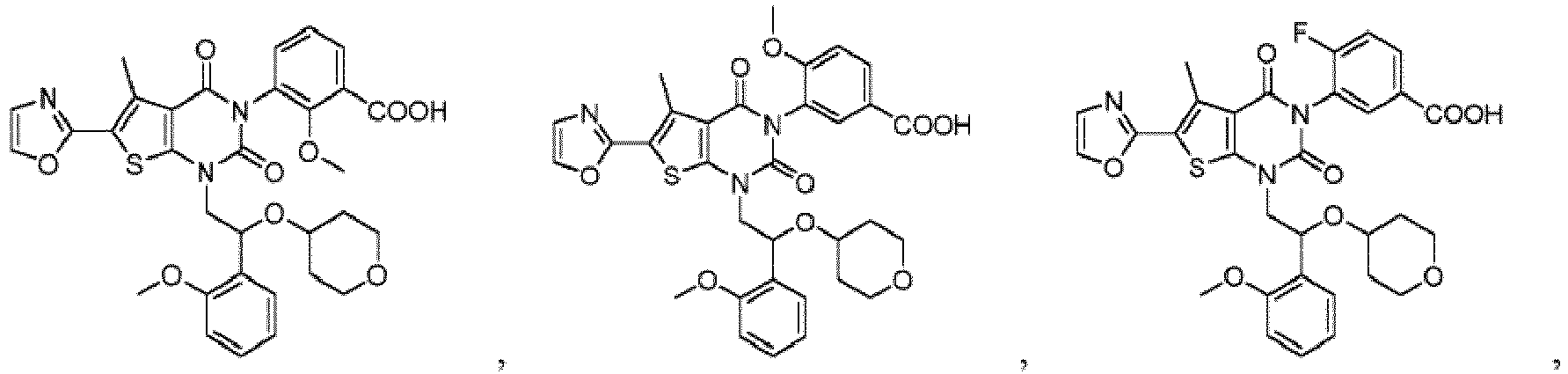

- Pharmazeutische Zusammensetzung umfassend die Verbindung oder das pharmazeutisch annehmbare Salz, Solvat oder Kristall davon nach Anspruch 1 und einen pharmazeutisch annehmbaren Träger.
- Die Verbindung oder das pharmazeutisch annehmbare Salz, Solvat oder Kristall davon nach Anspruch 1, oder die pharmazeutische Zusammensetzung nach Anspruch 2, zur Verwendung bei der Behandlung einer Erkrankung, die ausgewählt ist aus einer fibrotischen Erkrankung, Stoffwechsel-Erkrankung, einem Tumor oder einer proliferativen Erkrankung.
- Die Verbindung oder das pharmazeutisch annehmbare Salz, Solvat oder Kristall davon nach Anspruch 1, oder die pharmazeutische Zusammensetzung nach Anspruch 2 zur Verwendung bei der Behandlung einer Erkrankung, die ausgewählt ist aus Leberfibrose, Fettleibigkeit, Diabetes, nichtalkoholischer Fettlebererkrankung, nichtalkoholischer Steatohepatitis, Leberkrebs, Nierenkrebs, Lungenkrebs, Brustkrebs, Melanom, papillärer Schilddrüsentumor, Cholangiokarzinom, Dickdarmkrebs, Eierstockkrebs, malignes Lymphom, Krebs und Sarkom von Blase, Prostata und Bauchspeicheldrüse, oder primärer und rezidivierender fester Tumor der Haut, des Dickdarms, der Schilddrüse oder des Eierstocks.
Applications Claiming Priority (2)
| Application Number | Priority Date | Filing Date | Title |
|---|---|---|---|
| CN201710616033 | 2017-07-26 | ||
| PCT/CN2018/096930 WO2019020041A1 (zh) | 2017-07-26 | 2018-07-25 | 作为acc抑制剂的化合物及其应用 |
Publications (3)
| Publication Number | Publication Date |
|---|---|
| EP3660023A1 EP3660023A1 (de) | 2020-06-03 |
| EP3660023A4 EP3660023A4 (de) | 2021-05-26 |
| EP3660023B1 true EP3660023B1 (de) | 2023-03-08 |
Family
ID=65040002
Family Applications (1)
| Application Number | Title | Priority Date | Filing Date |
|---|---|---|---|
| EP18838186.7A Active EP3660023B1 (de) | 2017-07-26 | 2018-07-25 | Thienopyrimidindionverbindungen als acc-inhibitoren und deren verwendung |
Country Status (8)
| Country | Link |
|---|---|
| US (1) | US11186587B2 (de) |
| EP (1) | EP3660023B1 (de) |
| JP (1) | JP6919055B2 (de) |
| KR (1) | KR102418195B1 (de) |
| CN (2) | CN110959007B (de) |
| CA (1) | CA3070525C (de) |
| TW (1) | TW201910338A (de) |
| WO (1) | WO2019020041A1 (de) |
Families Citing this family (12)
| Publication number | Priority date | Publication date | Assignee | Title |
|---|---|---|---|---|
| CN111201234A (zh) * | 2017-07-17 | 2020-05-26 | 南京瑞捷医药科技有限公司 | 新型化合物及其作为acc抑制剂的用途 |
| CN111484504B (zh) * | 2019-01-25 | 2024-05-10 | 南京圣和药业股份有限公司 | Acc抑制剂的光学异构体及其应用 |
| CN111848678A (zh) * | 2019-04-30 | 2020-10-30 | 正大天晴药业集团股份有限公司 | 含磷类噻吩并嘧啶衍生物 |
| EP3995498A4 (de) | 2019-07-02 | 2023-03-01 | Sunshine Lake Pharma Co., Ltd. | Thienopyrimidinderivate mit stereokonfiguration und ihre verwendung in der medizin |
| CN112778325A (zh) * | 2019-11-07 | 2021-05-11 | 南京瑞捷医药科技有限公司 | 一种acc抑制剂及其用途 |
| WO2021112213A1 (ja) * | 2019-12-05 | 2021-06-10 | 日本曹達株式会社 | 2,4-ジオキソ-1,4-ジヒドロチエノピリミジン化合物、及びそれを含有する農園芸用殺菌剤又は医療用・動物用抗真菌剤 |
| CN113968872A (zh) * | 2020-07-25 | 2022-01-25 | 南京圣和药业股份有限公司 | 苯基取代类acc抑制剂的制备方法 |
| CN113968871A (zh) * | 2020-07-25 | 2022-01-25 | 南京圣和药业股份有限公司 | 苯基取代类acc抑制剂的晶型 |
| CN113967213A (zh) * | 2020-07-25 | 2022-01-25 | 南京圣和药业股份有限公司 | 一种包含苯基取代类acc抑制剂的组合物及其用途 |
| WO2022166761A1 (zh) * | 2021-02-07 | 2022-08-11 | 正大天晴药业集团股份有限公司 | 噻吩并嘧啶衍生物 |
| CN116354984B (zh) * | 2021-12-27 | 2025-10-17 | 南京汇诚制药有限公司 | 苯基取代类acc抑制剂及其中间体的制备方法 |
| WO2025218778A1 (zh) * | 2024-04-19 | 2025-10-23 | 赛诺哈勃药业(成都)有限公司 | 杂环化合物及其作为ret抑制剂的用途 |
Family Cites Families (8)
| Publication number | Priority date | Publication date | Assignee | Title |
|---|---|---|---|---|
| CA2644996A1 (en) * | 2006-03-02 | 2007-09-13 | Cv Therapeutics, Inc. | A2a adenosine receptor antagonists |
| RS57157B1 (sr) * | 2011-11-11 | 2018-07-31 | Gilead Apollo Llc | Acc inhibitori i njihove primene |
| WO2015007451A1 (en) * | 2013-07-15 | 2015-01-22 | Syngenta Participations Ag | Microbiocidal heterobicyclic derivatives |
| EA201791258A1 (ru) * | 2015-01-09 | 2017-12-29 | Джилид Аполло, Ллс | Комбинированная терапия с применением ингибитора ацетил-коа-карбоксилазы (acc) для лечения неалкогольной жировой болезни печени |
| AR106472A1 (es) * | 2015-10-26 | 2018-01-17 | Gilead Apollo Llc | Inhibidores de acc y usos de los mismos |
| EP3571205B1 (de) * | 2017-01-22 | 2023-08-30 | Sunshine Lake Pharma Co., Ltd. | Thienpyrimidinderivat und verwendungen davon in der medizin |
| CN110709402B (zh) * | 2017-06-15 | 2022-05-10 | 浙江海正药业股份有限公司 | 杂芳基并嘧啶酮类衍生物、其制备方法及其在医药上用途 |
| CN111201234A (zh) * | 2017-07-17 | 2020-05-26 | 南京瑞捷医药科技有限公司 | 新型化合物及其作为acc抑制剂的用途 |
-
2018
- 2018-07-25 TW TW107125617A patent/TW201910338A/zh unknown
- 2018-07-25 KR KR1020207004936A patent/KR102418195B1/ko not_active Expired - Fee Related
- 2018-07-25 CA CA3070525A patent/CA3070525C/en active Active
- 2018-07-25 CN CN201880048775.2A patent/CN110959007B/zh active Active
- 2018-07-25 EP EP18838186.7A patent/EP3660023B1/de active Active
- 2018-07-25 JP JP2020502961A patent/JP6919055B2/ja not_active Expired - Fee Related
- 2018-07-25 CN CN201810829055.1A patent/CN109305976B/zh active Active
- 2018-07-25 WO PCT/CN2018/096930 patent/WO2019020041A1/zh not_active Ceased
- 2018-07-25 US US16/632,633 patent/US11186587B2/en not_active Expired - Fee Related
Also Published As
| Publication number | Publication date |
|---|---|
| KR20200032158A (ko) | 2020-03-25 |
| CA3070525C (en) | 2022-03-15 |
| EP3660023A4 (de) | 2021-05-26 |
| EP3660023A1 (de) | 2020-06-03 |
| JP2020527160A (ja) | 2020-09-03 |
| WO2019020041A1 (zh) | 2019-01-31 |
| CN109305976B (zh) | 2022-07-01 |
| US11186587B2 (en) | 2021-11-30 |
| CN109305976A (zh) | 2019-02-05 |
| CA3070525A1 (en) | 2019-01-31 |
| US20200165265A1 (en) | 2020-05-28 |
| JP6919055B2 (ja) | 2021-08-11 |
| CN110959007B (zh) | 2022-07-01 |
| TW201910338A (zh) | 2019-03-16 |
| CN110959007A (zh) | 2020-04-03 |
| KR102418195B1 (ko) | 2022-07-07 |
Similar Documents
| Publication | Publication Date | Title |
|---|---|---|
| EP3660023B1 (de) | Thienopyrimidindionverbindungen als acc-inhibitoren und deren verwendung | |
| CN114728938B (zh) | 作为prmt5抑制剂的四氢异喹啉螺环化合物 | |
| EP3936502A1 (de) | Pyrazinderivate und ihre verwendung zur hemmung von shp2 | |
| EP3068785B1 (de) | Substituierte 4,5,6,7-tetrahydropyrazolo[1,5-a]pyrazin-derivative als casein-kinase-1-d/e-inhibitoren | |
| CN114315834A (zh) | 咪唑啉酮衍生物及其在医药上的应用 | |
| CN113149968B (zh) | 一种作为己酮糖激酶抑制剂的化合物及其应用 | |
| EP4043459A1 (de) | Substituierte tricyclische verbindung als prmt5-inhibitor und verwendung davon | |
| KR20250073451A (ko) | 신형 prmt5 억제제 및 그 응용 | |
| CN101903396A (zh) | 新的细胞周期关卡调节剂和它们与关卡激酶抑制剂的联合应用 | |
| CN111484504B (zh) | Acc抑制剂的光学异构体及其应用 | |
| CN115038707A (zh) | 氮杂卓类稠环化合物及其医药用途 | |
| EP4069700B1 (de) | Makrocyclen zur verwendung beim behandeln von krankheiten | |
| WO2022135390A1 (zh) | 己酮糖激酶抑制剂及其用途 | |
| TW202309008A (zh) | 類polo激酶4抑制劑 | |
| EP4404931B1 (de) | Azoloverbindungen zur behandlung von fibrotischen erkrankungen | |
| CN113493453B (zh) | 稠合芳香环类衍生物、其制备方法及其在医药上的应用 | |
| TW202126636A (zh) | 作為menin抑制劑之六氫吡啶化合物 | |
| HK40019680B (en) | Compound as acc inhibitor and use thereof | |
| HK40072076A (en) | Azepine fused ring compounds and medical uses thereof | |
| HK40019680A (en) | Compound as acc inhibitor and use thereof | |
| CN118930548A (zh) | 一种Menin-MLL蛋白抑制剂、其药物组合物及应用 | |
| CN116745299A (zh) | 噻吩并嘧啶衍生物 | |
| BR122025025229A2 (pt) | Derivados de imidazolidinona, seus usos, e composição farmacêutica | |
| CN116535396A (zh) | 己酮糖激酶抑制剂及其用途 |
Legal Events
| Date | Code | Title | Description |
|---|---|---|---|
| STAA | Information on the status of an ep patent application or granted ep patent |
Free format text: STATUS: THE INTERNATIONAL PUBLICATION HAS BEEN MADE |
|
| PUAI | Public reference made under article 153(3) epc to a published international application that has entered the european phase |
Free format text: ORIGINAL CODE: 0009012 |
|
| STAA | Information on the status of an ep patent application or granted ep patent |
Free format text: STATUS: REQUEST FOR EXAMINATION WAS MADE |
|
| 17P | Request for examination filed |
Effective date: 20200121 |
|
| AK | Designated contracting states |
Kind code of ref document: A1 Designated state(s): AL AT BE BG CH CY CZ DE DK EE ES FI FR GB GR HR HU IE IS IT LI LT LU LV MC MK MT NL NO PL PT RO RS SE SI SK SM TR |
|
| AX | Request for extension of the european patent |
Extension state: BA ME |
|
| DAV | Request for validation of the european patent (deleted) | ||
| DAX | Request for extension of the european patent (deleted) | ||
| RIC1 | Information provided on ipc code assigned before grant |
Ipc: C07D 519/00 20060101ALI20210219BHEP Ipc: A61K 31/519 20060101ALI20210219BHEP Ipc: A61P 3/04 20060101ALI20210219BHEP Ipc: A61P 3/10 20060101ALI20210219BHEP Ipc: C07D 495/04 20060101AFI20210219BHEP Ipc: A61P 35/00 20060101ALI20210219BHEP Ipc: A61P 1/16 20060101ALI20210219BHEP Ipc: A61P 1/00 20060101ALI20210219BHEP |
|
| A4 | Supplementary search report drawn up and despatched |
Effective date: 20210429 |
|
| RIC1 | Information provided on ipc code assigned before grant |
Ipc: C07D 495/04 20060101AFI20210422BHEP Ipc: C07D 519/00 20060101ALI20210422BHEP Ipc: A61K 31/519 20060101ALI20210422BHEP Ipc: A61P 35/00 20060101ALI20210422BHEP Ipc: A61P 3/10 20060101ALI20210422BHEP Ipc: A61P 3/04 20060101ALI20210422BHEP Ipc: A61P 1/16 20060101ALI20210422BHEP Ipc: A61P 1/00 20060101ALI20210422BHEP |
|
| GRAP | Despatch of communication of intention to grant a patent |
Free format text: ORIGINAL CODE: EPIDOSNIGR1 |
|
| STAA | Information on the status of an ep patent application or granted ep patent |
Free format text: STATUS: GRANT OF PATENT IS INTENDED |
|
| RIC1 | Information provided on ipc code assigned before grant |
Ipc: A61P 35/00 20060101ALI20220915BHEP Ipc: A61P 3/10 20060101ALI20220915BHEP Ipc: A61P 3/04 20060101ALI20220915BHEP Ipc: A61P 1/16 20060101ALI20220915BHEP Ipc: A61P 1/00 20060101ALI20220915BHEP Ipc: A61K 31/519 20060101ALI20220915BHEP Ipc: C07D 495/04 20060101AFI20220915BHEP |
|
| INTG | Intention to grant announced |
Effective date: 20221007 |
|
| GRAS | Grant fee paid |
Free format text: ORIGINAL CODE: EPIDOSNIGR3 |
|
| GRAA | (expected) grant |
Free format text: ORIGINAL CODE: 0009210 |
|
| STAA | Information on the status of an ep patent application or granted ep patent |
Free format text: STATUS: THE PATENT HAS BEEN GRANTED |
|
| AK | Designated contracting states |
Kind code of ref document: B1 Designated state(s): AL AT BE BG CH CY CZ DE DK EE ES FI FR GB GR HR HU IE IS IT LI LT LU LV MC MK MT NL NO PL PT RO RS SE SI SK SM TR |
|
| REG | Reference to a national code |
Ref country code: CH Ref legal event code: EP Ref country code: AT Ref legal event code: REF Ref document number: 1552527 Country of ref document: AT Kind code of ref document: T Effective date: 20230315 |
|
| REG | Reference to a national code |
Ref country code: IE Ref legal event code: FG4D |
|
| REG | Reference to a national code |
Ref country code: DE Ref legal event code: R096 Ref document number: 602018047080 Country of ref document: DE |
|
| REG | Reference to a national code |
Ref country code: SE Ref legal event code: TRGR |
|
| REG | Reference to a national code |
Ref country code: LT Ref legal event code: MG9D |
|
| REG | Reference to a national code |
Ref country code: NL Ref legal event code: MP Effective date: 20230308 |
|
| PG25 | Lapsed in a contracting state [announced via postgrant information from national office to epo] |
Ref country code: RS Free format text: LAPSE BECAUSE OF FAILURE TO SUBMIT A TRANSLATION OF THE DESCRIPTION OR TO PAY THE FEE WITHIN THE PRESCRIBED TIME-LIMIT Effective date: 20230308 Ref country code: NO Free format text: LAPSE BECAUSE OF FAILURE TO SUBMIT A TRANSLATION OF THE DESCRIPTION OR TO PAY THE FEE WITHIN THE PRESCRIBED TIME-LIMIT Effective date: 20230608 Ref country code: LV Free format text: LAPSE BECAUSE OF FAILURE TO SUBMIT A TRANSLATION OF THE DESCRIPTION OR TO PAY THE FEE WITHIN THE PRESCRIBED TIME-LIMIT Effective date: 20230308 Ref country code: LT Free format text: LAPSE BECAUSE OF FAILURE TO SUBMIT A TRANSLATION OF THE DESCRIPTION OR TO PAY THE FEE WITHIN THE PRESCRIBED TIME-LIMIT Effective date: 20230308 Ref country code: HR Free format text: LAPSE BECAUSE OF FAILURE TO SUBMIT A TRANSLATION OF THE DESCRIPTION OR TO PAY THE FEE WITHIN THE PRESCRIBED TIME-LIMIT Effective date: 20230308 Ref country code: ES Free format text: LAPSE BECAUSE OF FAILURE TO SUBMIT A TRANSLATION OF THE DESCRIPTION OR TO PAY THE FEE WITHIN THE PRESCRIBED TIME-LIMIT Effective date: 20230308 |
|
| REG | Reference to a national code |
Ref country code: AT Ref legal event code: MK05 Ref document number: 1552527 Country of ref document: AT Kind code of ref document: T Effective date: 20230308 |
|
| PG25 | Lapsed in a contracting state [announced via postgrant information from national office to epo] |
Ref country code: NL Free format text: LAPSE BECAUSE OF FAILURE TO SUBMIT A TRANSLATION OF THE DESCRIPTION OR TO PAY THE FEE WITHIN THE PRESCRIBED TIME-LIMIT Effective date: 20230308 Ref country code: GR Free format text: LAPSE BECAUSE OF FAILURE TO SUBMIT A TRANSLATION OF THE DESCRIPTION OR TO PAY THE FEE WITHIN THE PRESCRIBED TIME-LIMIT Effective date: 20230609 Ref country code: FI Free format text: LAPSE BECAUSE OF FAILURE TO SUBMIT A TRANSLATION OF THE DESCRIPTION OR TO PAY THE FEE WITHIN THE PRESCRIBED TIME-LIMIT Effective date: 20230308 |
|
| PG25 | Lapsed in a contracting state [announced via postgrant information from national office to epo] |
Ref country code: SM Free format text: LAPSE BECAUSE OF FAILURE TO SUBMIT A TRANSLATION OF THE DESCRIPTION OR TO PAY THE FEE WITHIN THE PRESCRIBED TIME-LIMIT Effective date: 20230308 Ref country code: RO Free format text: LAPSE BECAUSE OF FAILURE TO SUBMIT A TRANSLATION OF THE DESCRIPTION OR TO PAY THE FEE WITHIN THE PRESCRIBED TIME-LIMIT Effective date: 20230308 Ref country code: PT Free format text: LAPSE BECAUSE OF FAILURE TO SUBMIT A TRANSLATION OF THE DESCRIPTION OR TO PAY THE FEE WITHIN THE PRESCRIBED TIME-LIMIT Effective date: 20230710 Ref country code: EE Free format text: LAPSE BECAUSE OF FAILURE TO SUBMIT A TRANSLATION OF THE DESCRIPTION OR TO PAY THE FEE WITHIN THE PRESCRIBED TIME-LIMIT Effective date: 20230308 Ref country code: CZ Free format text: LAPSE BECAUSE OF FAILURE TO SUBMIT A TRANSLATION OF THE DESCRIPTION OR TO PAY THE FEE WITHIN THE PRESCRIBED TIME-LIMIT Effective date: 20230308 Ref country code: AT Free format text: LAPSE BECAUSE OF FAILURE TO SUBMIT A TRANSLATION OF THE DESCRIPTION OR TO PAY THE FEE WITHIN THE PRESCRIBED TIME-LIMIT Effective date: 20230308 |
|
| PG25 | Lapsed in a contracting state [announced via postgrant information from national office to epo] |
Ref country code: SK Free format text: LAPSE BECAUSE OF FAILURE TO SUBMIT A TRANSLATION OF THE DESCRIPTION OR TO PAY THE FEE WITHIN THE PRESCRIBED TIME-LIMIT Effective date: 20230308 Ref country code: PL Free format text: LAPSE BECAUSE OF FAILURE TO SUBMIT A TRANSLATION OF THE DESCRIPTION OR TO PAY THE FEE WITHIN THE PRESCRIBED TIME-LIMIT Effective date: 20230308 Ref country code: IS Free format text: LAPSE BECAUSE OF FAILURE TO SUBMIT A TRANSLATION OF THE DESCRIPTION OR TO PAY THE FEE WITHIN THE PRESCRIBED TIME-LIMIT Effective date: 20230708 |
|
| REG | Reference to a national code |
Ref country code: DE Ref legal event code: R097 Ref document number: 602018047080 Country of ref document: DE |
|
| PLBE | No opposition filed within time limit |
Free format text: ORIGINAL CODE: 0009261 |
|
| STAA | Information on the status of an ep patent application or granted ep patent |
Free format text: STATUS: NO OPPOSITION FILED WITHIN TIME LIMIT |
|
| PG25 | Lapsed in a contracting state [announced via postgrant information from national office to epo] |
Ref country code: SI Free format text: LAPSE BECAUSE OF FAILURE TO SUBMIT A TRANSLATION OF THE DESCRIPTION OR TO PAY THE FEE WITHIN THE PRESCRIBED TIME-LIMIT Effective date: 20230308 Ref country code: DK Free format text: LAPSE BECAUSE OF FAILURE TO SUBMIT A TRANSLATION OF THE DESCRIPTION OR TO PAY THE FEE WITHIN THE PRESCRIBED TIME-LIMIT Effective date: 20230308 |
|
| 26N | No opposition filed |
Effective date: 20231211 |
|
| PG25 | Lapsed in a contracting state [announced via postgrant information from national office to epo] |
Ref country code: MC Free format text: LAPSE BECAUSE OF FAILURE TO SUBMIT A TRANSLATION OF THE DESCRIPTION OR TO PAY THE FEE WITHIN THE PRESCRIBED TIME-LIMIT Effective date: 20230308 |
|
| PG25 | Lapsed in a contracting state [announced via postgrant information from national office to epo] |
Ref country code: MC Free format text: LAPSE BECAUSE OF FAILURE TO SUBMIT A TRANSLATION OF THE DESCRIPTION OR TO PAY THE FEE WITHIN THE PRESCRIBED TIME-LIMIT Effective date: 20230308 |
|
| REG | Reference to a national code |
Ref country code: CH Ref legal event code: PL |
|
| REG | Reference to a national code |
Ref country code: BE Ref legal event code: MM Effective date: 20230731 |
|
| PG25 | Lapsed in a contracting state [announced via postgrant information from national office to epo] |
Ref country code: LU Free format text: LAPSE BECAUSE OF NON-PAYMENT OF DUE FEES Effective date: 20230725 |
|
| PG25 | Lapsed in a contracting state [announced via postgrant information from national office to epo] |
Ref country code: LU Free format text: LAPSE BECAUSE OF NON-PAYMENT OF DUE FEES Effective date: 20230725 |
|
| REG | Reference to a national code |
Ref country code: IE Ref legal event code: MM4A |
|
| PG25 | Lapsed in a contracting state [announced via postgrant information from national office to epo] |
Ref country code: CH Free format text: LAPSE BECAUSE OF NON-PAYMENT OF DUE FEES Effective date: 20230731 |
|
| PG25 | Lapsed in a contracting state [announced via postgrant information from national office to epo] |
Ref country code: IT Free format text: LAPSE BECAUSE OF FAILURE TO SUBMIT A TRANSLATION OF THE DESCRIPTION OR TO PAY THE FEE WITHIN THE PRESCRIBED TIME-LIMIT Effective date: 20230308 Ref country code: BE Free format text: LAPSE BECAUSE OF NON-PAYMENT OF DUE FEES Effective date: 20230731 |
|
| PG25 | Lapsed in a contracting state [announced via postgrant information from national office to epo] |
Ref country code: IE Free format text: LAPSE BECAUSE OF NON-PAYMENT OF DUE FEES Effective date: 20230725 |
|
| PG25 | Lapsed in a contracting state [announced via postgrant information from national office to epo] |
Ref country code: IE Free format text: LAPSE BECAUSE OF NON-PAYMENT OF DUE FEES Effective date: 20230725 |
|
| PGFP | Annual fee paid to national office [announced via postgrant information from national office to epo] |
Ref country code: FR Payment date: 20240619 Year of fee payment: 7 |
|
| PGFP | Annual fee paid to national office [announced via postgrant information from national office to epo] |
Ref country code: DE Payment date: 20240712 Year of fee payment: 7 |
|
| PGFP | Annual fee paid to national office [announced via postgrant information from national office to epo] |
Ref country code: GB Payment date: 20240729 Year of fee payment: 7 |
|
| PGFP | Annual fee paid to national office [announced via postgrant information from national office to epo] |
Ref country code: SE Payment date: 20240726 Year of fee payment: 7 |
|
| PG25 | Lapsed in a contracting state [announced via postgrant information from national office to epo] |
Ref country code: BG Free format text: LAPSE BECAUSE OF FAILURE TO SUBMIT A TRANSLATION OF THE DESCRIPTION OR TO PAY THE FEE WITHIN THE PRESCRIBED TIME-LIMIT Effective date: 20230308 |
|
| PG25 | Lapsed in a contracting state [announced via postgrant information from national office to epo] |
Ref country code: BG Free format text: LAPSE BECAUSE OF FAILURE TO SUBMIT A TRANSLATION OF THE DESCRIPTION OR TO PAY THE FEE WITHIN THE PRESCRIBED TIME-LIMIT Effective date: 20230308 |
|
| PG25 | Lapsed in a contracting state [announced via postgrant information from national office to epo] |
Ref country code: CY Free format text: LAPSE BECAUSE OF FAILURE TO SUBMIT A TRANSLATION OF THE DESCRIPTION OR TO PAY THE FEE WITHIN THE PRESCRIBED TIME-LIMIT; INVALID AB INITIO Effective date: 20180725 |
|
| PG25 | Lapsed in a contracting state [announced via postgrant information from national office to epo] |
Ref country code: HU Free format text: LAPSE BECAUSE OF FAILURE TO SUBMIT A TRANSLATION OF THE DESCRIPTION OR TO PAY THE FEE WITHIN THE PRESCRIBED TIME-LIMIT; INVALID AB INITIO Effective date: 20180725 |
|
| PG25 | Lapsed in a contracting state [announced via postgrant information from national office to epo] |
Ref country code: TR Free format text: LAPSE BECAUSE OF FAILURE TO SUBMIT A TRANSLATION OF THE DESCRIPTION OR TO PAY THE FEE WITHIN THE PRESCRIBED TIME-LIMIT Effective date: 20230308 |
|
| REG | Reference to a national code |
Ref country code: DE Ref legal event code: R119 Ref document number: 602018047080 Country of ref document: DE |
|
| GBPC | Gb: european patent ceased through non-payment of renewal fee |
Effective date: 20250725 |
|
| PG25 | Lapsed in a contracting state [announced via postgrant information from national office to epo] |
Ref country code: GB Free format text: LAPSE BECAUSE OF NON-PAYMENT OF DUE FEES Effective date: 20250725 |
|
| PG25 | Lapsed in a contracting state [announced via postgrant information from national office to epo] |
Ref country code: DE Free format text: LAPSE BECAUSE OF NON-PAYMENT OF DUE FEES Effective date: 20260203 |
|
| PG25 | Lapsed in a contracting state [announced via postgrant information from national office to epo] |
Ref country code: FR Free format text: LAPSE BECAUSE OF NON-PAYMENT OF DUE FEES Effective date: 20250731 |