EP3660082A1 - Herstellungsverfahren eines prepregs durch verwendung eines farbstoffs als photoinitiator, und verwendung eines solchen farbstoffs - Google Patents
Herstellungsverfahren eines prepregs durch verwendung eines farbstoffs als photoinitiator, und verwendung eines solchen farbstoffs Download PDFInfo
- Publication number
- EP3660082A1 EP3660082A1 EP19211885.9A EP19211885A EP3660082A1 EP 3660082 A1 EP3660082 A1 EP 3660082A1 EP 19211885 A EP19211885 A EP 19211885A EP 3660082 A1 EP3660082 A1 EP 3660082A1
- Authority
- EP
- European Patent Office
- Prior art keywords
- photoinitiator
- prepreg
- manufacturing
- equal
- photopolymerizable composition
- Prior art date
- Legal status (The legal status is an assumption and is not a legal conclusion. Google has not performed a legal analysis and makes no representation as to the accuracy of the status listed.)
- Withdrawn
Links
- 238000004519 manufacturing process Methods 0.000 title claims abstract description 42
- 238000000034 method Methods 0.000 title claims abstract description 18
- 239000000203 mixture Substances 0.000 claims abstract description 85
- 229920005989 resin Polymers 0.000 claims abstract description 49
- 239000011347 resin Substances 0.000 claims abstract description 49
- 239000002131 composite material Substances 0.000 claims abstract description 41
- 230000002787 reinforcement Effects 0.000 claims abstract description 36
- OARRHUQTFTUEOS-UHFFFAOYSA-N safranin Chemical compound [Cl-].C=12C=C(N)C(C)=CC2=NC2=CC(C)=C(N)C=C2[N+]=1C1=CC=CC=C1 OARRHUQTFTUEOS-UHFFFAOYSA-N 0.000 claims abstract description 26
- RBTBFTRPCNLSDE-UHFFFAOYSA-N 3,7-bis(dimethylamino)phenothiazin-5-ium Chemical compound C1=CC(N(C)C)=CC2=[S+]C3=CC(N(C)C)=CC=C3N=C21 RBTBFTRPCNLSDE-UHFFFAOYSA-N 0.000 claims abstract description 13
- 229960000907 methylthioninium chloride Drugs 0.000 claims abstract description 11
- 239000011203 carbon fibre reinforced carbon Substances 0.000 claims abstract description 6
- NZYCYASKVWSANA-UHFFFAOYSA-M new methylene blue Chemical compound [Cl-].CCNC1=C(C)C=C2N=C(C=C(C(NCC)=C3)C)C3=[S+]C2=C1 NZYCYASKVWSANA-UHFFFAOYSA-M 0.000 claims abstract 3
- 238000006243 chemical reaction Methods 0.000 claims description 49
- 230000005855 radiation Effects 0.000 claims description 30
- 239000003999 initiator Substances 0.000 claims description 28
- NIXOWILDQLNWCW-UHFFFAOYSA-M Acrylate Chemical compound [O-]C(=O)C=C NIXOWILDQLNWCW-UHFFFAOYSA-M 0.000 claims description 17
- NPKSPKHJBVJUKB-UHFFFAOYSA-N N-phenylglycine Chemical group OC(=O)CNC1=CC=CC=C1 NPKSPKHJBVJUKB-UHFFFAOYSA-N 0.000 claims description 17
- -1 polysiloxane Polymers 0.000 claims description 11
- 230000008569 process Effects 0.000 claims description 8
- 150000001412 amines Chemical class 0.000 claims description 3
- CERQOIWHTDAKMF-UHFFFAOYSA-M Methacrylate Chemical compound CC(=C)C([O-])=O CERQOIWHTDAKMF-UHFFFAOYSA-M 0.000 claims description 2
- 239000004721 Polyphenylene oxide Substances 0.000 claims description 2
- 229920001807 Urea-formaldehyde Polymers 0.000 claims description 2
- 238000004040 coloring Methods 0.000 claims description 2
- 239000003822 epoxy resin Substances 0.000 claims description 2
- RJLZSKYNYLYCNY-UHFFFAOYSA-N ethyl carbamate;isocyanic acid Chemical compound N=C=O.CCOC(N)=O RJLZSKYNYLYCNY-UHFFFAOYSA-N 0.000 claims description 2
- LNEPOXFFQSENCJ-UHFFFAOYSA-N haloperidol Chemical compound C1CC(O)(C=2C=CC(Cl)=CC=2)CCN1CCCC(=O)C1=CC=C(F)C=C1 LNEPOXFFQSENCJ-UHFFFAOYSA-N 0.000 claims description 2
- 229920001568 phenolic resin Polymers 0.000 claims description 2
- 239000005011 phenolic resin Substances 0.000 claims description 2
- 229920000647 polyepoxide Polymers 0.000 claims description 2
- 229920000570 polyether Polymers 0.000 claims description 2
- 229920001296 polysiloxane Polymers 0.000 claims description 2
- 238000007493 shaping process Methods 0.000 claims description 2
- 229920002803 thermoplastic polyurethane Polymers 0.000 claims description 2
- 229920006337 unsaturated polyester resin Polymers 0.000 claims description 2
- 229920001567 vinyl ester resin Polymers 0.000 claims description 2
- 125000000391 vinyl group Chemical group [H]C([*])=C([H])[H] 0.000 claims description 2
- WSFSSNUMVMOOMR-UHFFFAOYSA-N Formaldehyde Chemical class O=C WSFSSNUMVMOOMR-UHFFFAOYSA-N 0.000 claims 1
- 235000019256 formaldehyde Nutrition 0.000 claims 1
- 238000006116 polymerization reaction Methods 0.000 description 41
- 230000036961 partial effect Effects 0.000 description 19
- 239000000178 monomer Substances 0.000 description 17
- 238000005033 Fourier transform infrared spectroscopy Methods 0.000 description 13
- 150000003254 radicals Chemical class 0.000 description 11
- 239000000975 dye Substances 0.000 description 9
- SQHOAFZGYFNDQX-UHFFFAOYSA-N ethyl-[7-(ethylamino)-2,8-dimethylphenothiazin-3-ylidene]azanium;chloride Chemical compound [Cl-].S1C2=CC(=[NH+]CC)C(C)=CC2=NC2=C1C=C(NCC)C(C)=C2 SQHOAFZGYFNDQX-UHFFFAOYSA-N 0.000 description 9
- 239000000853 adhesive Substances 0.000 description 7
- 230000001070 adhesive effect Effects 0.000 description 7
- 150000003512 tertiary amines Chemical group 0.000 description 6
- VYPSYNLAJGMNEJ-UHFFFAOYSA-N Silicium dioxide Chemical compound O=[Si]=O VYPSYNLAJGMNEJ-UHFFFAOYSA-N 0.000 description 5
- 150000001252 acrylic acid derivatives Chemical class 0.000 description 5
- 230000008901 benefit Effects 0.000 description 5
- 239000010410 layer Substances 0.000 description 5
- 229920000642 polymer Polymers 0.000 description 5
- 150000003839 salts Chemical class 0.000 description 5
- 239000000835 fiber Substances 0.000 description 4
- 230000005764 inhibitory process Effects 0.000 description 4
- 239000004310 lactic acid Substances 0.000 description 4
- 239000011159 matrix material Substances 0.000 description 4
- 239000000523 sample Substances 0.000 description 4
- 239000000126 substance Substances 0.000 description 4
- WEVYAHXRMPXWCK-UHFFFAOYSA-N Acetonitrile Chemical compound CC#N WEVYAHXRMPXWCK-UHFFFAOYSA-N 0.000 description 3
- 239000004925 Acrylic resin Substances 0.000 description 3
- 238000010521 absorption reaction Methods 0.000 description 3
- 230000015572 biosynthetic process Effects 0.000 description 3
- 125000004386 diacrylate group Chemical group 0.000 description 3
- 238000009792 diffusion process Methods 0.000 description 3
- ZOMNIUBKTOKEHS-UHFFFAOYSA-L dimercury dichloride Chemical class Cl[Hg][Hg]Cl ZOMNIUBKTOKEHS-UHFFFAOYSA-L 0.000 description 3
- 230000008034 disappearance Effects 0.000 description 3
- 230000005281 excited state Effects 0.000 description 3
- 239000011521 glass Substances 0.000 description 3
- 239000003365 glass fiber Substances 0.000 description 3
- 239000001257 hydrogen Substances 0.000 description 3
- 229910052739 hydrogen Inorganic materials 0.000 description 3
- 238000007254 oxidation reaction Methods 0.000 description 3
- 150000003335 secondary amines Chemical class 0.000 description 3
- 230000008719 thickening Effects 0.000 description 3
- IQVNEKKDSLOHHK-FNCQTZNRSA-N (E,E)-hydramethylnon Chemical compound N1CC(C)(C)CNC1=NN=C(/C=C/C=1C=CC(=CC=1)C(F)(F)F)\C=C\C1=CC=C(C(F)(F)F)C=C1 IQVNEKKDSLOHHK-FNCQTZNRSA-N 0.000 description 2
- 238000005481 NMR spectroscopy Methods 0.000 description 2
- 229920003235 aromatic polyamide Polymers 0.000 description 2
- 239000011324 bead Substances 0.000 description 2
- 238000005452 bending Methods 0.000 description 2
- 239000000460 chlorine Substances 0.000 description 2
- 125000002147 dimethylamino group Chemical group [H]C([H])([H])N(*)C([H])([H])[H] 0.000 description 2
- 239000004744 fabric Substances 0.000 description 2
- 125000000524 functional group Chemical group 0.000 description 2
- 239000003112 inhibitor Substances 0.000 description 2
- 230000000977 initiatory effect Effects 0.000 description 2
- 239000000395 magnesium oxide Substances 0.000 description 2
- CPLXHLVBOLITMK-UHFFFAOYSA-N magnesium oxide Inorganic materials [Mg]=O CPLXHLVBOLITMK-UHFFFAOYSA-N 0.000 description 2
- AXZKOIWUVFPNLO-UHFFFAOYSA-N magnesium;oxygen(2-) Chemical compound [O-2].[Mg+2] AXZKOIWUVFPNLO-UHFFFAOYSA-N 0.000 description 2
- SLCVBVWXLSEKPL-UHFFFAOYSA-N neopentyl glycol Chemical compound OCC(C)(C)CO SLCVBVWXLSEKPL-UHFFFAOYSA-N 0.000 description 2
- 230000003647 oxidation Effects 0.000 description 2
- 229920000728 polyester Polymers 0.000 description 2
- 238000006862 quantum yield reaction Methods 0.000 description 2
- 230000002829 reductive effect Effects 0.000 description 2
- 230000008439 repair process Effects 0.000 description 2
- 239000000377 silicon dioxide Substances 0.000 description 2
- 238000001228 spectrum Methods 0.000 description 2
- 239000003381 stabilizer Substances 0.000 description 2
- 238000003860 storage Methods 0.000 description 2
- 125000003837 (C1-C20) alkyl group Chemical group 0.000 description 1
- VSSAADCISISCOY-UHFFFAOYSA-N 1-(4-furo[3,4-c]pyridin-1-ylphenyl)furo[3,4-c]pyridine Chemical compound C1=CN=CC2=COC(C=3C=CC(=CC=3)C3=C4C=CN=CC4=CO3)=C21 VSSAADCISISCOY-UHFFFAOYSA-N 0.000 description 1
- UADWUILHKRXHMM-UHFFFAOYSA-N 2-ethylhexyl benzoate Chemical compound CCCCC(CC)COC(=O)C1=CC=CC=C1 UADWUILHKRXHMM-UHFFFAOYSA-N 0.000 description 1
- 229940106004 2-ethylhexyl benzoate Drugs 0.000 description 1
- ZWVHTXAYIKBMEE-UHFFFAOYSA-N 2-hydroxyacetophenone Chemical class OCC(=O)C1=CC=CC=C1 ZWVHTXAYIKBMEE-UHFFFAOYSA-N 0.000 description 1
- FWDGZHHNDZQPGV-UHFFFAOYSA-N 3,7-dimethylphenazine-2,8-diamine Chemical compound CC1=C(N)C=C2N=C(C=C(C(C)=C3)N)C3=NC2=C1 FWDGZHHNDZQPGV-UHFFFAOYSA-N 0.000 description 1
- OKTJSMMVPCPJKN-UHFFFAOYSA-N Carbon Chemical compound [C] OKTJSMMVPCPJKN-UHFFFAOYSA-N 0.000 description 1
- ZAMOUSCENKQFHK-UHFFFAOYSA-N Chlorine atom Chemical compound [Cl] ZAMOUSCENKQFHK-UHFFFAOYSA-N 0.000 description 1
- 241001101998 Galium Species 0.000 description 1
- 238000003794 Gram staining Methods 0.000 description 1
- UFHFLCQGNIYNRP-UHFFFAOYSA-N Hydrogen Chemical compound [H][H] UFHFLCQGNIYNRP-UHFFFAOYSA-N 0.000 description 1
- NHNBFGGVMKEFGY-UHFFFAOYSA-N Nitrate Chemical compound [O-][N+]([O-])=O NHNBFGGVMKEFGY-UHFFFAOYSA-N 0.000 description 1
- 239000004743 Polypropylene Substances 0.000 description 1
- 238000004616 Pyrometry Methods 0.000 description 1
- 238000001069 Raman spectroscopy Methods 0.000 description 1
- 229910000831 Steel Inorganic materials 0.000 description 1
- 244000028419 Styrax benzoin Species 0.000 description 1
- 235000000126 Styrax benzoin Nutrition 0.000 description 1
- 235000008411 Sumatra benzointree Nutrition 0.000 description 1
- 230000002745 absorbent Effects 0.000 description 1
- 239000002250 absorbent Substances 0.000 description 1
- 150000008062 acetophenones Chemical class 0.000 description 1
- 230000002378 acidificating effect Effects 0.000 description 1
- 239000000654 additive Substances 0.000 description 1
- 150000001299 aldehydes Chemical class 0.000 description 1
- PNEYBMLMFCGWSK-UHFFFAOYSA-N aluminium oxide Inorganic materials [O-2].[O-2].[O-2].[Al+3].[Al+3] PNEYBMLMFCGWSK-UHFFFAOYSA-N 0.000 description 1
- 125000004103 aminoalkyl group Chemical group 0.000 description 1
- 150000001450 anions Chemical class 0.000 description 1
- RWZYAGGXGHYGMB-UHFFFAOYSA-N anthranilic acid Chemical class NC1=CC=CC=C1C(O)=O RWZYAGGXGHYGMB-UHFFFAOYSA-N 0.000 description 1
- 239000004760 aramid Substances 0.000 description 1
- 125000003118 aryl group Chemical group 0.000 description 1
- QVGXLLKOCUKJST-UHFFFAOYSA-N atomic oxygen Chemical compound [O] QVGXLLKOCUKJST-UHFFFAOYSA-N 0.000 description 1
- 238000012550 audit Methods 0.000 description 1
- UADWUILHKRXHMM-ZDUSSCGKSA-N benzoflex 181 Natural products CCCC[C@H](CC)COC(=O)C1=CC=CC=C1 UADWUILHKRXHMM-ZDUSSCGKSA-N 0.000 description 1
- WPYMKLBDIGXBTP-UHFFFAOYSA-N benzoic acid Chemical compound OC(=O)C1=CC=CC=C1 WPYMKLBDIGXBTP-UHFFFAOYSA-N 0.000 description 1
- 229960002130 benzoin Drugs 0.000 description 1
- 239000012965 benzophenone Substances 0.000 description 1
- 150000008366 benzophenones Chemical class 0.000 description 1
- 125000001797 benzyl group Chemical group [H]C1=C([H])C([H])=C(C([H])=C1[H])C([H])([H])* 0.000 description 1
- 238000009954 braiding Methods 0.000 description 1
- 229940075397 calomel Drugs 0.000 description 1
- 229910052799 carbon Inorganic materials 0.000 description 1
- 125000002091 cationic group Chemical group 0.000 description 1
- VYXSBFYARXAAKO-WTKGSRSZSA-N chembl402140 Chemical compound Cl.C1=2C=C(C)C(NCC)=CC=2OC2=C\C(=N/CC)C(C)=CC2=C1C1=CC=CC=C1C(=O)OCC VYXSBFYARXAAKO-WTKGSRSZSA-N 0.000 description 1
- 239000003795 chemical substances by application Substances 0.000 description 1
- 229910052801 chlorine Inorganic materials 0.000 description 1
- 239000003086 colorant Substances 0.000 description 1
- 230000000052 comparative effect Effects 0.000 description 1
- 150000001875 compounds Chemical class 0.000 description 1
- 230000006835 compression Effects 0.000 description 1
- 238000007906 compression Methods 0.000 description 1
- 239000000994 contrast dye Substances 0.000 description 1
- 230000032798 delamination Effects 0.000 description 1
- ISAOCJYIOMOJEB-UHFFFAOYSA-N desyl alcohol Natural products C=1C=CC=CC=1C(O)C(=O)C1=CC=CC=C1 ISAOCJYIOMOJEB-UHFFFAOYSA-N 0.000 description 1
- 238000007323 disproportionation reaction Methods 0.000 description 1
- 230000000694 effects Effects 0.000 description 1
- 238000000295 emission spectrum Methods 0.000 description 1
- 125000001495 ethyl group Chemical group [H]C([H])([H])C([H])([H])* 0.000 description 1
- 230000005284 excitation Effects 0.000 description 1
- 239000011152 fibreglass Substances 0.000 description 1
- 239000000945 filler Substances 0.000 description 1
- 238000010304 firing Methods 0.000 description 1
- 238000001879 gelation Methods 0.000 description 1
- 235000019382 gum benzoic Nutrition 0.000 description 1
- 238000010438 heat treatment Methods 0.000 description 1
- 229920001903 high density polyethylene Polymers 0.000 description 1
- 239000004700 high-density polyethylene Substances 0.000 description 1
- 125000004435 hydrogen atom Chemical group [H]* 0.000 description 1
- 238000005470 impregnation Methods 0.000 description 1
- 230000006698 induction Effects 0.000 description 1
- 230000003993 interaction Effects 0.000 description 1
- 239000011229 interlayer Substances 0.000 description 1
- 238000009940 knitting Methods 0.000 description 1
- 230000031700 light absorption Effects 0.000 description 1
- 230000000670 limiting effect Effects 0.000 description 1
- 239000007788 liquid Substances 0.000 description 1
- 239000000463 material Substances 0.000 description 1
- 238000005259 measurement Methods 0.000 description 1
- 238000012544 monitoring process Methods 0.000 description 1
- 239000004745 nonwoven fabric Substances 0.000 description 1
- 230000003287 optical effect Effects 0.000 description 1
- 150000002902 organometallic compounds Chemical class 0.000 description 1
- 239000001301 oxygen Substances 0.000 description 1
- 229910052760 oxygen Inorganic materials 0.000 description 1
- FZUGPQWGEGAKET-UHFFFAOYSA-N parbenate Chemical compound CCOC(=O)C1=CC=C(N(C)C)C=C1 FZUGPQWGEGAKET-UHFFFAOYSA-N 0.000 description 1
- 239000002245 particle Substances 0.000 description 1
- 230000035515 penetration Effects 0.000 description 1
- 230000010363 phase shift Effects 0.000 description 1
- 125000001997 phenyl group Chemical group [H]C1=C([H])C([H])=C(*)C([H])=C1[H] 0.000 description 1
- FAQJJMHZNSSFSM-UHFFFAOYSA-N phenylglyoxylic acid Chemical class OC(=O)C(=O)C1=CC=CC=C1 FAQJJMHZNSSFSM-UHFFFAOYSA-N 0.000 description 1
- XNGJNGFXWWYBJS-UHFFFAOYSA-N phosphoroso-(2,4,6-trimethylphenyl)methanone Chemical compound CC1=CC(C)=C(C(=O)P=O)C(C)=C1 XNGJNGFXWWYBJS-UHFFFAOYSA-N 0.000 description 1
- 238000006303 photolysis reaction Methods 0.000 description 1
- 230000015843 photosynthesis, light reaction Effects 0.000 description 1
- 239000000049 pigment Substances 0.000 description 1
- 238000013001 point bending Methods 0.000 description 1
- 229920000139 polyethylene terephthalate Polymers 0.000 description 1
- 239000005020 polyethylene terephthalate Substances 0.000 description 1
- 229920001155 polypropylene Polymers 0.000 description 1
- 229920002635 polyurethane Polymers 0.000 description 1
- 239000004814 polyurethane Substances 0.000 description 1
- 239000000843 powder Substances 0.000 description 1
- 238000002360 preparation method Methods 0.000 description 1
- 150000003141 primary amines Chemical class 0.000 description 1
- 230000000135 prohibitive effect Effects 0.000 description 1
- 239000012429 reaction media Substances 0.000 description 1
- 230000036632 reaction speed Effects 0.000 description 1
- 230000035484 reaction time Effects 0.000 description 1
- 238000005215 recombination Methods 0.000 description 1
- 230000006798 recombination Effects 0.000 description 1
- 230000002468 redox effect Effects 0.000 description 1
- 239000002824 redox indicator Substances 0.000 description 1
- 230000009467 reduction Effects 0.000 description 1
- 230000003014 reinforcing effect Effects 0.000 description 1
- 230000027756 respiratory electron transport chain Effects 0.000 description 1
- 230000002441 reversible effect Effects 0.000 description 1
- AZJPTIGZZTZIDR-UHFFFAOYSA-L rose bengal Chemical compound [K+].[K+].[O-]C(=O)C1=C(Cl)C(Cl)=C(Cl)C(Cl)=C1C1=C2C=C(I)C(=O)C(I)=C2OC2=C(I)C([O-])=C(I)C=C21 AZJPTIGZZTZIDR-UHFFFAOYSA-L 0.000 description 1
- STRXNPAVPKGJQR-UHFFFAOYSA-N rose bengal A Natural products O1C(=O)C(C(=CC=C2Cl)Cl)=C2C21C1=CC(I)=C(O)C(I)=C1OC1=C(I)C(O)=C(I)C=C21 STRXNPAVPKGJQR-UHFFFAOYSA-N 0.000 description 1
- 239000004576 sand Substances 0.000 description 1
- 229910052710 silicon Inorganic materials 0.000 description 1
- 239000010703 silicon Substances 0.000 description 1
- 239000007787 solid Substances 0.000 description 1
- 229910001220 stainless steel Inorganic materials 0.000 description 1
- 239000010935 stainless steel Substances 0.000 description 1
- 230000003068 static effect Effects 0.000 description 1
- 239000010959 steel Substances 0.000 description 1
- 238000012360 testing method Methods 0.000 description 1
- 238000006276 transfer reaction Methods 0.000 description 1
- 238000009941 weaving Methods 0.000 description 1
Images




Classifications
-
- C—CHEMISTRY; METALLURGY
- C08—ORGANIC MACROMOLECULAR COMPOUNDS; THEIR PREPARATION OR CHEMICAL WORKING-UP; COMPOSITIONS BASED THEREON
- C08J—WORKING-UP; GENERAL PROCESSES OF COMPOUNDING; AFTER-TREATMENT NOT COVERED BY SUBCLASSES C08B, C08C, C08F, C08G or C08H
- C08J5/00—Manufacture of articles or shaped materials containing macromolecular substances
- C08J5/24—Impregnating materials with prepolymers which can be polymerised in situ, e.g. manufacture of prepregs
- C08J5/241—Impregnating materials with prepolymers which can be polymerised in situ, e.g. manufacture of prepregs using inorganic fibres
- C08J5/244—Impregnating materials with prepolymers which can be polymerised in situ, e.g. manufacture of prepregs using inorganic fibres using glass fibres
-
- C—CHEMISTRY; METALLURGY
- C08—ORGANIC MACROMOLECULAR COMPOUNDS; THEIR PREPARATION OR CHEMICAL WORKING-UP; COMPOSITIONS BASED THEREON
- C08J—WORKING-UP; GENERAL PROCESSES OF COMPOUNDING; AFTER-TREATMENT NOT COVERED BY SUBCLASSES C08B, C08C, C08F, C08G or C08H
- C08J5/00—Manufacture of articles or shaped materials containing macromolecular substances
- C08J5/04—Reinforcing macromolecular compounds with loose or coherent fibrous material
- C08J5/10—Reinforcing macromolecular compounds with loose or coherent fibrous material characterised by the additives used in the polymer mixture
-
- C—CHEMISTRY; METALLURGY
- C08—ORGANIC MACROMOLECULAR COMPOUNDS; THEIR PREPARATION OR CHEMICAL WORKING-UP; COMPOSITIONS BASED THEREON
- C08J—WORKING-UP; GENERAL PROCESSES OF COMPOUNDING; AFTER-TREATMENT NOT COVERED BY SUBCLASSES C08B, C08C, C08F, C08G or C08H
- C08J5/00—Manufacture of articles or shaped materials containing macromolecular substances
- C08J5/04—Reinforcing macromolecular compounds with loose or coherent fibrous material
- C08J5/0405—Reinforcing macromolecular compounds with loose or coherent fibrous material with inorganic fibres
- C08J5/043—Reinforcing macromolecular compounds with loose or coherent fibrous material with inorganic fibres with glass fibres
-
- C—CHEMISTRY; METALLURGY
- C08—ORGANIC MACROMOLECULAR COMPOUNDS; THEIR PREPARATION OR CHEMICAL WORKING-UP; COMPOSITIONS BASED THEREON
- C08J—WORKING-UP; GENERAL PROCESSES OF COMPOUNDING; AFTER-TREATMENT NOT COVERED BY SUBCLASSES C08B, C08C, C08F, C08G or C08H
- C08J5/00—Manufacture of articles or shaped materials containing macromolecular substances
- C08J5/24—Impregnating materials with prepolymers which can be polymerised in situ, e.g. manufacture of prepregs
- C08J5/249—Impregnating materials with prepolymers which can be polymerised in situ, e.g. manufacture of prepregs characterised by the additives used in the prepolymer mixture
-
- C—CHEMISTRY; METALLURGY
- C08—ORGANIC MACROMOLECULAR COMPOUNDS; THEIR PREPARATION OR CHEMICAL WORKING-UP; COMPOSITIONS BASED THEREON
- C08J—WORKING-UP; GENERAL PROCESSES OF COMPOUNDING; AFTER-TREATMENT NOT COVERED BY SUBCLASSES C08B, C08C, C08F, C08G or C08H
- C08J2300/00—Characterised by the use of unspecified polymers
- C08J2300/24—Thermosetting resins
-
- C—CHEMISTRY; METALLURGY
- C08—ORGANIC MACROMOLECULAR COMPOUNDS; THEIR PREPARATION OR CHEMICAL WORKING-UP; COMPOSITIONS BASED THEREON
- C08J—WORKING-UP; GENERAL PROCESSES OF COMPOUNDING; AFTER-TREATMENT NOT COVERED BY SUBCLASSES C08B, C08C, C08F, C08G or C08H
- C08J2333/00—Characterised by the use of homopolymers or copolymers of compounds having one or more unsaturated aliphatic radicals, each having only one carbon-to-carbon double bond, and only one being terminated by only one carboxyl radical, or of salts, anhydrides, esters, amides, imides, or nitriles thereof; Derivatives of such polymers
- C08J2333/04—Characterised by the use of homopolymers or copolymers of compounds having one or more unsaturated aliphatic radicals, each having only one carbon-to-carbon double bond, and only one being terminated by only one carboxyl radical, or of salts, anhydrides, esters, amides, imides, or nitriles thereof; Derivatives of such polymers esters
- C08J2333/06—Characterised by the use of homopolymers or copolymers of compounds having one or more unsaturated aliphatic radicals, each having only one carbon-to-carbon double bond, and only one being terminated by only one carboxyl radical, or of salts, anhydrides, esters, amides, imides, or nitriles thereof; Derivatives of such polymers esters of esters containing only carbon, hydrogen, and oxygen, the oxygen atom being present only as part of the carboxyl radical
- C08J2333/08—Homopolymers or copolymers of acrylic acid esters
-
- C—CHEMISTRY; METALLURGY
- C08—ORGANIC MACROMOLECULAR COMPOUNDS; THEIR PREPARATION OR CHEMICAL WORKING-UP; COMPOSITIONS BASED THEREON
- C08J—WORKING-UP; GENERAL PROCESSES OF COMPOUNDING; AFTER-TREATMENT NOT COVERED BY SUBCLASSES C08B, C08C, C08F, C08G or C08H
- C08J2367/00—Characterised by the use of polyesters obtained by reactions forming a carboxylic ester link in the main chain; Derivatives of such polymers
- C08J2367/06—Unsaturated polyesters
-
- C—CHEMISTRY; METALLURGY
- C08—ORGANIC MACROMOLECULAR COMPOUNDS; THEIR PREPARATION OR CHEMICAL WORKING-UP; COMPOSITIONS BASED THEREON
- C08J—WORKING-UP; GENERAL PROCESSES OF COMPOUNDING; AFTER-TREATMENT NOT COVERED BY SUBCLASSES C08B, C08C, C08F, C08G or C08H
- C08J2375/00—Characterised by the use of polyureas or polyurethanes; Derivatives of such polymers
- C08J2375/04—Polyurethanes
- C08J2375/14—Polyurethanes having carbon-to-carbon unsaturated bonds
- C08J2375/16—Polyurethanes having carbon-to-carbon unsaturated bonds having terminal carbon-to-carbon unsaturated bonds
Definitions
- the present invention relates to the technical field of methods of manufacturing prepregs, and of composite parts obtained from these prepregs as well as the use of a specific photoinitiator improving the manufacture of such prepregs.
- the manufacture of a prepreg reinforcement consists in gelling the resin impregnating the reinforcement in order to facilitate its handling and / or its storage without said resin flowing.
- the resin impregnating the reinforcement is thus partially polymerized, and not completely.
- the prepreg obtained thus has a tackiness, also called tack.
- This incomplete polymerization can be obtained by increasing the viscosity of the resin by a physical process. For example by creating hydrogen bonds with the resin by the use of magnesium oxide combined with an addition of heat. This thickening is reversible with temperature. This physical thickening process has the drawback that it is very long (around 48 hours), and that the increase in viscosity can continue after lowering the temperature, making the prepreg unusable.
- the reinforcements impregnated with resin (s) can also be obtained by photopolymerization. They are thus light-cured for the first time for the formation of prepregs, ie partially polymerized prepreg reinforcements. Then, the prepregs are superimposed and formed into the shape of the composite part, the assembly thus formed is polymerized at least a second time so that the polymerization is complete, ie at least sufficient to achieve the expected mechanical performance.
- This technique is used in particular in the repair of composite parts and in the automobile industry for the manufacture of composite parts.
- Incomplete polymerization can be obtained by using a photopolymerizable composition comprising a resin having first and second different functional groups, each being activatable separately, via a specific radiation source.
- the photopolymerizable composition uses two different chemistries making it possible to create a network of interpenetrated layers (also designated in the state of the art by IPN for “inter penetrated network”).
- IPN inter penetrated network
- the matrix thus obtained is not homogeneous since it results from two different types of polymerization.
- the use of two radiation sources of different nature does not allow good control of the reaction kinetics.
- the heating generated to initiate a first polymerization reaction can initiate a second polymerization reaction which is induced by the addition of heat, which is the case when using infrared rays.
- the incomplete polymerization for obtaining a prepreg can also be obtained by using a photopolymerizable composition comprising at least two photoinitiators each absorbing in different wavelength ranges, for example a first photoinitiator absorbs the lengths d waves greater than 500 nm and a second photoinitiator absorbs lengths less than 500 nm.
- a photopolymerizable composition comprising at least two photoinitiators each absorbing in different wavelength ranges, for example a first photoinitiator absorbs the lengths d waves greater than 500 nm and a second photoinitiator absorbs lengths less than 500 nm.
- the polymerization times can however be very long to obtain a complete polymerization throughout the thickness of the composite part, in particular when the latter comprises at least three plies.
- the combination of at least two photoinitiators having different absorption intervals can be complex to implement. Indeed, the photoinitiator allowing the complete polymerization must not be activated during the partial polymerization.
- Organometallic compounds such as titanocenes (for example sold under the brand Irgacure® 784) can be excited around 532 nm but they are very expensive which makes their use unsuitable for high tonnage applications such as for the manufacture of composite parts in medium and in large series.
- the formation of a prepreg is delicate because the polymerization must remain partial so that it can be terminated by the application of a radiation source once the prepreg associated with another prepreg. .
- the prepregs no longer adhere to each other, and the folds of the composite part have poor resistance to delamination.
- the reproducibility of the partial polymerization of prepregs is particularly delicate in the case of composite parts produced in large series.
- Safranin O is known as a biological contrast dye, for example it is used in Gram staining, or even as a redox indicator.
- a photoinitiator B in the list defined above makes it possible to obtain a low conversion rate (in particular less than 30%) in step iv), and this independently of the light intensity and / or the concentration of photoinitiator B.
- This arrangement thus makes it possible to obtain a partial polymerization of the perfectly reproducible prepreg, and therefore to consolidate the manufacturing process, in particular for the manufacture of large composite parts and medium series.
- said at least one photoinitiator B is Safranin O and / or methylene blue (M) and / or new methylene blue (NMB).
- Safranin O has been tested in the prior art as a photoinitiator in the radical photopolymerization of film but has a poor polymerization yield.
- a low conversion rate is in the state of the art considered to be prohibitive in photopolymerization since the photoinitiators are usually selected in order to achieve conversion rates tending towards 100%.
- the method according to the invention makes it possible to very finely control the partial polymerization of the prepreg, regardless of the light dose, the concentration of photoinitiator or in co-initiator.
- photoinitiators B in particular Safranin O, exhibit a very short inhibition time (of the order of a few seconds) compared to other dyes tested (for example rhodamine 6G for which the inhibition time is of the order of 60 seconds), which makes it possible to obtain a prepreg in a few seconds in a reproducible manner regardless of the irradiation time.
- the photoinitiators B according to the invention also have the advantage of having a maximum absorption wavelength, ⁇ max, greater than or equal to 430 nm, preferably greater than or equal to 460 nm, even more preferably greater than or equal to 500 nm. .
- This arrangement advantageously makes it possible to be able to selectively excite the photoinitiators B, without exciting the photoinitiator (s) C (defined below) performing the C stage.
- Safranin O has a maximum absorption wavelength, ⁇ max (measured in acetonitrile) of the order of 532 nm.
- the dyes selected in the present invention also have the advantage of being readily available on the market and at a cost allowing their use in composite parts in large and medium series.
- the resin can comprise one or more monomer (s) and / or one or more oligomer (s) and / or one or more polymer (s).
- the monomer (s) can / can be mixed with one or more oligomer (s) and / or polymer (s) to adjust the viscosity of the resin to be used and / or the mechanical properties of the final matrix.
- the term “monomer” is understood to mean any compound comprising a repeating unit or unit, unlike an oligomer which can comprise at least two repeating units or units, in particular up to approximately 100 repeating units. Above 100 repeat units, it is a polymer.
- said at least one photoinitiator B is Safranin O.
- Safranin O whose preferred structure is shown in figure 1 annexed to the present, is a salt of 2,8-dimethyl-3,7-diaminophenazine, in particular (C 20 H 19 N 4 + ; Cl - ).
- Methylene blue is a salt of 3,7-bis (dimethylamino) phenothiazine-5-ium or designated by the term of methylthioninium salt.
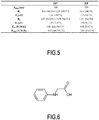
- the new methylene blue whose preferred structure, is shown in the figure 3 appended hereto, is also a salt.
- Photoinitiators B are preferably stabilized by chlorine, or any other anion which makes it possible to form a stable salt, for example a nitrate ion.
- the isomers of the aforementioned photomaorcing agents B, when they enable results equivalent to those indicated in the present invention to be obtained are considered to belong to the definition of Safranin O, methylene blue or the new methylene blue according to the present invention. .
- the photoinitiator (s) B is / are in solid form at room temperature (i.e. between 0 ° C and 35 ° C), for example in the form of powder, and therefore dissolved in the resin.
- the photopolymerizable composition comprising at least one photoinitiator B, the ratio of the mass in photoinitiator (s) B relative to the total mass of the photopolymerizable composition is greater than 0%.
- the photopolymerizable composition can also comprise various additives, such as stabilizers, dyes (different from the dyes listed above), pigments, fillers in order to improve the appearance and the final properties of the composite part.
- additives such as stabilizers, dyes (different from the dyes listed above), pigments, fillers in order to improve the appearance and the final properties of the composite part.
- the impregnated reinforcements used in the context of the present invention must be able to be translucent or at least semi-opaque to light rays so that the resins used can polymerize, partially during the B stage, and completely during the C traineeship.
- the reactive species resulting from the absorption of light rays by the photoinitiators B, and possibly C defined below, are radical species.
- the method according to the invention can be used for the manufacture of prepregs, and of composite parts, but also in the repair of composite parts.
- the mass of said at least one resin represents at least 70% by mass, more preferably at least 90% by mass, preferably at least 95% by mass, of the total mass of the photopolymerizable composition.
- the duration of application of radiation B, and / or C defined below is greater than or equal to one second, more preferably less than or equal to 10 minutes, in particular less than or equal to 5 minutes.
- the photopolymerizable composition comprises an electron donor co-initiator or electron acceptor (s).
- the dye after excitation, is promoted in its excited states and can react with a co-initiator by an electron transfer reaction.
- the co-initiator is an electron donor.
- the excited states of the dye are capable of accepting an electron.
- the dye Under the effect of the electron donor co-initiator, the dye is transformed into its semi-reduced form and the co-initiator into a cation radical.
- the cation radical by loss of hydrogen can form a radical, for example aminoalkyl when the co-initiator is a tertiary amine.
- This radical is capable of initiating a radical photopolymerization reaction.
- the irradiation of the dye / co-initiator system with a light source leads to the formation of radicals which react with the resin, in particular the component comprising the carbon-carbon double bond, for example a monomer and / or an oligomer M, to give the first macro-radical.
- the propagation of the reaction by addition of monomer units on the growing macro-radical.
- the process of photopolymerization finally ends with a mono or bimolecular termination reaction.
- the bimolecular termination occurs by recombination of two polymer chains (radicals with small steric hindrance) and by dismutation. It can also take place between the growing chain and deactivators or initiating radicals. Finally, when the medium is too viscous, the diffusion of the monomers towards the reactive centers is restricted, this is known as monomolecular termination.
- the co-initiator is chosen from the list consisting of: amines, preferably from primary amines, secondary amines, and tertiary amines, more preferably from secondary amines and tertiary amines, in particular tertiary amines, in particular aminobenzoates, especially comprising a dimethylamine group -N (CH 3 ) 2 , for example it is EDB (ethyl dimethylamino-4 benzoate) or EHA (dimethylamino-4 2-ethylhexyl benzoate) or any tertiary amine comprising a dimethylamine group -N (CH 3 ) 2 , organoborates, N-phenylglycine (NPG).
- amines preferably from primary amines, secondary amines, and tertiary amines, more preferably from secondary amines and tertiary amines, in particular tertiary amines, in particular aminobenzoates, especially
- the co-initiator is chosen from secondary and / or tertiary amines, in particular it is EDB or NPG.
- the photopolymerizable composition comprises a single co-initiator.
- the co-initiator has an oxidation potential E ox of less than or equal to 1.20 Volts / DHW (Saturated Calomel Electrode); more preferably less than or equal to 1.00 V / DHW; preferably less than or equal to 0.95 V / DHW.
- E ox of less than or equal to 1.20 Volts / DHW (Saturated Calomel Electrode); more preferably less than or equal to 1.00 V / DHW; preferably less than or equal to 0.95 V / DHW.
- the co-initiator comprises a benzene ring and / or a -C (O) O-R function with R is a hydrogen or a C1-C20 alkyl chain.
- the co-initiator is N-phenylglycine.
- the photopolymerizable composition comprises at least one photoinitiator C, different from photoinitiator B.
- photoinitiator C is chosen from radical, cationic, photobase or photoacid photoinitiators, which release, depending on their photolysis, reactive radical, ionic, basic or acidic species, preferably from radical photoinitiators.
- the photoinitiator C is chosen from: alpha hydroxyacetophenones, alkylaminocetophenones, dialkoxyacetophenones, acetophenones, benzyl cetals, acylphosphine oxides, substituted aromatic alpha-aminocetones, benzophenones, thioxanthones, aldehydes, hydroxyalkylated phenones, benzoin ethers, oxime esters, alpha-sulfonylketone, phenylglyoxalates, metallocenes, onium salts, BAPO (bis (2,4,6 trimethylbenzoylphosphine oxide), preferably BAPO.
- the amount of photoinitiator absorbed generally depends in particular on the power of the light radiation source but also on the time of application of said radiation source, which is a function of the running speed of the superimposed impregnated reinforcement layer or layers to be treated or from the radiation source if said layers are static.
- the radiation source B is a light source whose emitted wavelengths are greater than or equal to ⁇ 1
- the photoinitiator C is excited by the application of a light radiation source C whose lengths emitted waves are less than or equal to ⁇ 2, ⁇ 2 being less than ⁇ 1.
- the first source of light radiation ⁇ 1, and optionally the second source of light radiation ⁇ 2 can (can) be a light source of the light-emitting diode (s) type (ie one or more LED lamp (s) ( “Light Emitting Diode”)), which in particular has emission spectra at +/- 20 nm around a determined value, for example ⁇ 1 and / or ⁇ 2.
- s light-emitting diode
- LED lamp s
- ⁇ 2 Light Emitting Diode
- a laser diode lamp which makes it possible to obtain even more restricted spectra, for example at least 80% by number of the light rays emitted are within an interval of +/- 5 nm around a value determined, in particular at +/- 2 nm around a determined value, here ⁇ 1 and / or ⁇ 2.
- the power applied per unit of treated surface of the first source of light radiation B (B stage), and / or, the power applied per unit of treated surface of the second source of light radiation C (C stage ), is / are greater than or equal to 10 mW / cm 2 , preferably greater than or equal to 1 W / cm 2 , even more preferably greater than or equal ) at 2 W / cm 2 , preferably greater than or equal to 5 W / cm 2 .
- the power applied per unit area treated of the first source of light radiation B, and / or, the power applied per unit area treated of the second source of light radiation C is / are less than or equal (s) at 500 W / cm 2 , preferably less than or equal to 100 W / cm 2 , and more preferably less than or equal to 10 W / cm 2 .
- the power can be measured using a Powerpuck radiometer marketed by EIT.
- the power thus delivered is focused on quasi-monochromatic spectra which makes it possible to improve the energy yields, and correspondingly to improve the control of the kinetics and the degree of polymerization and therefore of the consumption of photominitiators.
- the light source (s) (B and / or C) may / may also be a UV source.
- ⁇ 1 is greater than or equal to 430 nm, more preferably greater than or equal to 460 nm, possibly greater than or equal to 500 nm.
- ⁇ 2 is less than or equal to 500 nm, more preferably less than or equal to 460 nm.
- ⁇ 2 is greater than or equal to 200 nm, more preferably greater than or equal to 300 nm.
- ⁇ 2 is at least 50 nm less than ⁇ 1.
- this conversion rate is independent of the quantity of co-initiator (s) and / or of the light intensity, which makes it possible to obtain a reliable partial polymerization process for obtaining pre -impregnated.
- This arrangement is particularly advantageous for the production of composite parts in medium and large series.
- the ratio of the mass of the co-initiator to the total mass of the photopolymerizable composition is less than or equal to 3%, preferably less than or equal to 2%.
- the ratio of the mass of photoinitiator B relative to the total mass of the photopolymerizable composition is less than or equal to 3%; preferably less than or equal to 1%.
- the 3% ratio, especially the 1% ratio, in particular the 0.5% ratio is exceeded, there is a risk of an internal filter.
- the photopolymerizable composition polymerizes quickly on the surface and subsequently prevents the penetration of the light throughout the thickness of the impregnated reinforcement.
- the prepreg then has non-homogeneous properties.
- the inhibition time is less than or equal to 15 seconds, preferably less than or equal to 10 seconds, in particular less than or equal to 5 seconds, in particular for a volume of 1000 g of photopolymerizable composition.
- the inhibition time can be measured on a curve representing the rate of conversion into acrylate functions according to the reaction time, obtained by RT-FTIR.
- the inventors have surprisingly observed that it is thus possible to continuously manufacture prepregs at speeds corresponding to the production rates of parts in large and medium series.
- the polymerization speed is preferably greater than or equal to 1 meter / second.
- said at least one resin is chosen from the list consisting of: unsaturated polyester resins, epoxy resins, unsaturated vinyl ester resins, unblocked amine resins, urea-formaldehyde resins, phenolic resins, methacrylate resins , acrylate resins, isocyanate urethane resins, polyether resins, polysiloxane resins, or a mixture thereof.
- the reinforcement comprises fibers or threads considered individually or in combination, in particular implemented by weaving, knitting, braiding, and / or nonwovens, and / or particles, in particular chosen from the family of the following materials: para-aramid, meta-aramid, silica-based fibers, glass fibers, polyethylene terephthalate, high density polyethylene, poly (p-phenylene-2,6- benzobisoxazole (PBO), carbon, carbide silicon, alumina hydrate, stainless steel, gravel, sand, glass beads, steel beads, silica.
- the ratio of the mass of said at least one reinforcement, relative to the total mass of the composite part is greater than or equal to 50%, preferably greater than or equal to 65%.
- the ratio of the mass of the photopolymerizable composition, forming the matrix, relative to the total mass of the composite part is greater than or equal to 0%, preferably greater than or equal to 20%, again from preferably less than or equal to 50%, preferably less than or equal to 35%.
- step a) is followed by a storage step, of at least 5 hours, possibly at least 24 hours, before carrying out step c).
- the composite part may include a single prepreg, or two or more.
- the radiation sources B and C are light sources, and the light source B emits wavelengths ⁇ 1 greater than the wavelengths ⁇ 2 emitted by the light source C.
- said at least one reinforcement impregnated with the photopolymerizable composition obtained in step ii) has a first color, in particular corresponding to the coloring of said at least one photoinitiator B, and the prepreg obtained in step iv) has a second color, different from the first color.
- the progress of the partial polymerization can be followed by the consumption of photoinitiator B, and therefore by its gradual disappearance.
- at least one photoinitiator B chosen from: Safranin O, methylene blue, and the new methylene blue, or their mixture
- the photopolymerizable composition further comprises an electron donor co-initiator (s) and / or electron acceptor (s).
- the photopolymerization reaction can be followed by many techniques, including the following: time-resolved Fourier transform infrared spectroscopy (RT-FTIR), photocalorimetry, optical pyrometry, Raman spectroscopy or nuclear magnetic resonance (NMR) , and preferably by RT-FTIR.
- RT-FTIR time-resolved Fourier transform infrared spectroscopy
- photocalorimetry photocalorimetry
- optical pyrometry optical pyrometry
- Raman spectroscopy or nuclear magnetic resonance (NMR)
- NMR nuclear magnetic resonance
- the photopolymerization profile (or the conversion curve as a function of time) can be drawn.
- the curve can be divided into three different regimes. The first regime begins after irradiation: excited states and reactive species react with inhibitors such as oxygen, stabilizers. This is the induction period during which the polymerization is inhibited.
- a photopolymerizable composition according to the invention comprises 2 g of an acrylate resin (resulting from a 50/50 mass mixture of a polyurethane diacrylate, E270 (Allnex), and a diacrylate monomer SR 306 (Sartomer) ), 1% by mass of an electron donor co-initiator, in particular NPG (N-phenylglycine) relative to the total mass of the resin, and 0.1% by mass of a photoinitiator B, in this specific example Safranin O, the mass percentages being indicated relative to the total mass of the acrylate resin.
- an electron donor co-initiator in particular NPG (N-phenylglycine
- a photoinitiator B in this specific example Safranin O
- a control photopolymerizable composition identical to the previous one, includes, in place of Safranin O, a control photoinitiator (Rose Bengal).
- a light-curing composition CP2 is prepared in an identical manner to CP1, and differs from CP1 only in that Safranin O is replaced by methylene blue or the new methylene blue, and that NPG is present at 3% by mass per relative to the total mass of the resin (ie comprising the acrylate resin and the diacrylate monomer).
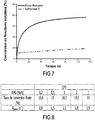
- the conversion profiles obtained are shown on the figure 7 , and on the figure 13 .
- the final conversion rate for CT1 is around 76% against 18.8% for CP1, and around 21.5% for CP2 (MB), and around 15.4% for CP2 (NBM).
- the photopolymerization speed R pmax (s -1 ) is around 17.5 s -1 for CT1 against 31.9 s -1 for CP1.
- the low final conversion rate according to the invention is thus reached 1.8 times faster than for CT1. Partial polymerization is thus quickly achieved reliably, which is particularly advantageous for the manufacture of a prepreg.
- the mass concentration of co-initiator NPG in the photopolymerizable composition CP1 is varied between 0.2% by mass (relative to the total mass of CP1) and 3% by mass (relative to the total mass of CP1).
- the conversion rates and photopolymerization rates R pmax (s -1 ) obtained are shown in the table shown in the figure 8 .
- Conversation rates increase for NPG values between 0.2% (m / m) and 1% (m / m) and then decrease for NPG values greater than 3% (m / m), the same for polymerization speed.
- An overdose in co-initiator therefore does not lead to an increase in the conversion rate beyond the desired partial polymerization.
- the light intensity to which the photopolymerizable composition CP1 is subjected is varied between 5 mW / cm 2 and 180 mW / cm 2 .
- the conversion rates and photopolymerization rates R pmax (s -1 ) obtained are shown in the table shown in the figure 10 .
- the final conversion rate is independent of the light intensity.
- the structure of the monomer is varied in the photopolymerizable composition CP1 by replacing the 2 g of resin with the resins indicated in the table shown in the figure 11 .
- the conversion rates and photopolymerization rates R pmax (s -1 ) obtained are shown in the table shown in the figure 12 .
- the results show that the characteristics of the monomer (functionality, viscosity, backbone) do not matter since the conversion profiles into acrylates have kept the singular character observed with the E270 / SR306 mixture.
- a photoinitiator C is added to the photopolymerizable composition CP1, in this specific example BAPO, at a mass concentration of 3% by mass relative to the total mass of CP1.
- the source of radiation B applied is a laser diode whose wavelengths emitted are greater than or equal to ⁇ 1, ⁇ 1 being of the order of 532 nm, at a power of 40 mW.cm 2 , the duration of application is 20 seconds. Then, the 50 ⁇ m wire is left in the dark for 20 seconds.
- the radiation source C comprises an LED lamp whose emitted wavelengths are less than or equal to ⁇ 2, ⁇ 2 being of the order of 395 nm, at a power of 10 mW.cm 2 , the duration of application is 60 seconds.
- the final conversion rate into acrylate functions, evaluated by RT-FTIR, after the application of B radiation is of the order of 14%.
- the photoinitiator B therefore does not disturb the obtaining of a stable partial polymerization.
- the final conversion rate into acrylate functions after application of the radiation is of the order of 82%. Two-step light curing with two photosensitive systems is therefore possible without interactions.
- a reinforcement comprising unidirectional glass fibers of 500 g / m 2 is impregnated with the composition CP1 with 3% by mass of BAPO relative to the mass of the resin.
- the resin represents 35% by mass of the total mass of the reinforcement impregnated with the photopolymerizable composition.
- the weight percentage of the reinforcement is therefore of the order of 65%.
- the reinforcement impregnated with the resin is placed between two polypropylene films to protect the assembly.
- the first source of radiation is then applied, it is an LED lamp emitting wavelengths greater than or equal to 515 nm, the power is 10 mW / cm 2 .
- the scrolling speed is 10 meters / min.
- the tack or tackiness of the prepreg is evaluated using an Anton-Paar rheometer (MCR302) using a dedicated probe.
- the tack or tack is defined in this text according to the description given in standard ASTM D1878-61T. This test consists in approaching a cylindrical probe with a flat or slightly convex face, of the adhesive surface to be reached until reaching the desired nominal force. Once reached, this nominal force is maintained for a predefined time, then the probe is moved away from the adhesive surface. Three phases are thus obtained: compression, relaxation and traction. The maximum measured force required to detach the probe from the adhesive surface during the traction phase makes it possible to calculate the adhesive energy of the adhesive surface tested.
- the adhesive energy is of the order of 360 mJ / m 2 .
- the tackiness of the adhesive surface following the polymerization is therefore very good and makes it possible to combine the prepregs with good interlayer adhesion.
- a light-curing composition CP4 comprises 988 g of polyester orthophthalic neopentyl glycol unsaturated resin (for example AOC / Aliancys Synolite 2103-Q1 resin), 1 g of Safranin O (photoinitiator B), 2g of Genocure EHA (co-initiator), 9 g of BAPO (photoinitiator C), 0.3 g of Omnirad BDK (photoinitiator C).
- polyester orthophthalic neopentyl glycol unsaturated resin for example AOC / Aliancys Synolite 2103-Q1 resin
- 1 g of Safranin O photoinitiator B
- 2g of Genocure EHA co-initiator
- 9 g of BAPO photoinitiator C
- Omnirad BDK Omnirad BDK
- This impregnated reinforcement is placed under a Phoseon lamp with a power of 8W / cm 2 of peak 465nm at a distance of 60 mm for 10 seconds, to obtain a pre-gelling (partial polymerization), and the pre-impregnated.
- This prepreg is then hardened under a 400 W lamp at a distance of 30 cm for 3 min.
- GPa flexural modulus
- the prepregs without 180 ° folding, compacted and irradiated under UV-Ga, have a flexural modulus (GPa) of 11.71 +/- 0.60 GPa, a flexural stress at Max Force of 307 +/- 19 .06 MPa.
- GPa flexural modulus
- a photopolymerizable composition CP5 comprises 993.8 g of polyester orthophthalic neopentyl glycol unsaturated resin (for example AOC / Aliancys Synolite 2103-Q1 resin), 0.2 g of Safranine O (photoinitiator B), 2g of Genocure EPD (co-initiator ), 1g of BAPO (photoinitiator C), 3g of Omnirad BDK (photoinitiator C).
- polyester orthophthalic neopentyl glycol unsaturated resin for example AOC / Aliancys Synolite 2103-Q1 resin
- Safranine O photoinitiator B
- Genocure EPD co-initiator
- BAPO photoinitiator C
- Omnirad BDK photoinitiator C
- a comparative example CT5 was carried out, identical to example CP5 with the difference that Safranin O is not present, and the prepreg is prepared by thickening in a known manner with magnesium oxide.
- the flexural modulus (GPa) for the CP5 reinforcement is greater than 9.85 MPa, the standard deviation is 0.33 MPa, the bending stress at maximum force (MPa) is 195.27 MPa, for a deviation 8.38 MPa type.
- the flexural modulus (GPa) for the CT5 reinforcement is greater than 7.12 MPa, the standard deviation is 1.08 MPa, the bending stress at maximum force (MPa) is 193.62 MPa, for a deviation 44.55 MPa type.
- the mechanical performances obtained for the composite (CP5) according to the invention are similar, even better, concerning the flexural modulus compared to the CT5 composite.
- the mechanical performances obtained for the CP5 composite are more reliable since the standard deviations are small, and markedly reduced compared to those obtained for CT5.
- the present invention thus makes it possible to offer a method of manufacturing a composite part entirely by reliable photopolymerization, eliminating potential manufacturing errors, for example with regard to the adjustment of the light intensity for obtaining the B -Traineeship.
Landscapes
- Chemical & Material Sciences (AREA)
- Engineering & Computer Science (AREA)
- Materials Engineering (AREA)
- Manufacturing & Machinery (AREA)
- Health & Medical Sciences (AREA)
- Chemical Kinetics & Catalysis (AREA)
- Medicinal Chemistry (AREA)
- Polymers & Plastics (AREA)
- Organic Chemistry (AREA)
- Inorganic Chemistry (AREA)
- Reinforced Plastic Materials (AREA)
- Polymerisation Methods In General (AREA)
Applications Claiming Priority (1)
| Application Number | Priority Date | Filing Date | Title |
|---|---|---|---|
| FR1871926A FR3088933B1 (fr) | 2018-11-27 | 2018-11-27 | Procédé de fabrication d’un pré-imprégné mettant en œuvre un colorant en tant que photoamorceur, et utilisation d’un tel colorant. |
Publications (1)
| Publication Number | Publication Date |
|---|---|
| EP3660082A1 true EP3660082A1 (de) | 2020-06-03 |
Family
ID=65951745
Family Applications (1)
| Application Number | Title | Priority Date | Filing Date |
|---|---|---|---|
| EP19211885.9A Withdrawn EP3660082A1 (de) | 2018-11-27 | 2019-11-27 | Herstellungsverfahren eines prepregs durch verwendung eines farbstoffs als photoinitiator, und verwendung eines solchen farbstoffs |
Country Status (2)
| Country | Link |
|---|---|
| EP (1) | EP3660082A1 (de) |
| FR (1) | FR3088933B1 (de) |
Citations (5)
| Publication number | Priority date | Publication date | Assignee | Title |
|---|---|---|---|---|
| US3547651A (en) * | 1968-04-02 | 1970-12-15 | Du Pont | Photopolymerizable compositions containing organometal compounds |
| US3579339A (en) * | 1967-05-23 | 1971-05-18 | Du Pont | Photopolymerizable dispersions and elements containing nonmigratory photoreducible dyes |
| EP0269568A2 (de) * | 1986-11-22 | 1988-06-01 | Ciba-Geigy Ag | Polymerisierbare Zusammensetzungen |
| US6207726B1 (en) | 1998-02-13 | 2001-03-27 | Showa Denko Kabushiki Kaisha | Photocurable prepreg composition and production method thereof |
| EP3019550B1 (de) | 2013-07-08 | 2018-03-07 | A ET A - Mäder | Verfahren zur herstellung eines verbundstoffteils |
-
2018
- 2018-11-27 FR FR1871926A patent/FR3088933B1/fr not_active Expired - Fee Related
-
2019
- 2019-11-27 EP EP19211885.9A patent/EP3660082A1/de not_active Withdrawn
Patent Citations (5)
| Publication number | Priority date | Publication date | Assignee | Title |
|---|---|---|---|---|
| US3579339A (en) * | 1967-05-23 | 1971-05-18 | Du Pont | Photopolymerizable dispersions and elements containing nonmigratory photoreducible dyes |
| US3547651A (en) * | 1968-04-02 | 1970-12-15 | Du Pont | Photopolymerizable compositions containing organometal compounds |
| EP0269568A2 (de) * | 1986-11-22 | 1988-06-01 | Ciba-Geigy Ag | Polymerisierbare Zusammensetzungen |
| US6207726B1 (en) | 1998-02-13 | 2001-03-27 | Showa Denko Kabushiki Kaisha | Photocurable prepreg composition and production method thereof |
| EP3019550B1 (de) | 2013-07-08 | 2018-03-07 | A ET A - Mäder | Verfahren zur herstellung eines verbundstoffteils |
Also Published As
| Publication number | Publication date |
|---|---|
| FR3088933B1 (fr) | 2020-12-04 |
| FR3088933A1 (fr) | 2020-05-29 |
Similar Documents
| Publication | Publication Date | Title |
|---|---|---|
| JPH10508636A (ja) | 安定性のある低硬化温度の準構造用感圧接着剤 | |
| Mau et al. | Concomitant initiation of radical and cationic polymerisations using new copper complexes as photoinitiators: Synthesis and characterisation of acrylate/epoxy interpenetrated polymer networks | |
| Jankowska et al. | Novel multi-material photo-curable resins containing high-performance photoinitiating systems and nano additives dedicated to 3D-VAT printing | |
| WO2016166470A1 (fr) | Procédé de réticulation duale photochimique/thermique activable sous irradiation uv/visible, et composition pour la mise en oeuvre dudit procédé | |
| Zhu et al. | Chemical Optimization Strategy of Rapid Additive Manufacturing via Up‐Conversion Assisted Photopolymerization Based Direct Ink Writing | |
| WO2020131675A1 (en) | Energy absorbing dual cure polyurethane elastomers for additive manufacturing | |
| EP3105277B1 (de) | Dimensionierungszusammensetzung zur verstärkung von fasern und anwendungen davon | |
| EP3660082A1 (de) | Herstellungsverfahren eines prepregs durch verwendung eines farbstoffs als photoinitiator, und verwendung eines solchen farbstoffs | |
| EP2408851B1 (de) | Verwendung von hartbaren harzen, die ein prepolymer aus glycidyl(meth)acrylat enthalten, für die herstellung von verbundstoffen, zu diese im all anzuwenden | |
| FR3078537A1 (fr) | Composition de precurseur pour composites thermoplastiques acryliques et ses procedes de preparation et utilisation | |
| Sangermano et al. | Infrared spectroscopy as a tool to monitor radiation curing | |
| Coqueret | Radiation-induced cross-linking polymerization: Recent developments for coating and composite applications | |
| Geiser et al. | Conversion and shrinkage analysis of acrylated hyperbranched polymer nanocomposites | |
| CN101987472B (zh) | 组合物,由其浸渍的木材元件及浸渍木材元件的方法 | |
| EP3019550B1 (de) | Verfahren zur herstellung eines verbundstoffteils | |
| CA3194075A1 (fr) | Utilisation de fibres composite verre-resine pour le renforcement du beton | |
| CN1640956A (zh) | 反应型受阻胺用途、涂料配方及涂层的原位光稳定化方法 | |
| WO2026003468A1 (fr) | Procédé d'amélioration de la résistance aux alcalins d'un support | |
| Fitriana et al. | Preparation of Hybrid Organic-Inorganic Polymers doped with Luminescent Molecules and their Characterizations | |
| CN108715626A (zh) | 一种有机硅类梯度阻尼聚合物的制备方法 | |
| WO2025068141A1 (fr) | Utilisation de fibres composites pour le renforcement du beton | |
| WO2023242268A1 (fr) | Utilisation de fibres composite carbone-resine pour le renforcement du beton | |
| JP2018135465A (ja) | Led照射により紫外線硬化樹脂組成物の表面を硬化させる方法 | |
| FR3165007A1 (fr) | Procédé de fabrication d’une composition de résine réticulée à partir d’un mélange issu d’une dépolymérisation de polystyrène | |
| Manolea et al. | Thermal and spectral behaviour of a light-cured methacrylate-based composite material used in dentistry |
Legal Events
| Date | Code | Title | Description |
|---|---|---|---|
| PUAI | Public reference made under article 153(3) epc to a published international application that has entered the european phase |
Free format text: ORIGINAL CODE: 0009012 |
|
| STAA | Information on the status of an ep patent application or granted ep patent |
Free format text: STATUS: THE APPLICATION HAS BEEN PUBLISHED |
|
| AK | Designated contracting states |
Kind code of ref document: A1 Designated state(s): AL AT BE BG CH CY CZ DE DK EE ES FI FR GB GR HR HU IE IS IT LI LT LU LV MC MK MT NL NO PL PT RO RS SE SI SK SM TR |
|
| AX | Request for extension of the european patent |
Extension state: BA ME |
|
| STAA | Information on the status of an ep patent application or granted ep patent |
Free format text: STATUS: THE APPLICATION IS DEEMED TO BE WITHDRAWN |
|
| 18D | Application deemed to be withdrawn |
Effective date: 20201204 |