EP3660131A1 - Verfahren zum erhalten von bio-rohöl durch pyrolyse, und hydrothermale verflüssigung einer biomasse - Google Patents
Verfahren zum erhalten von bio-rohöl durch pyrolyse, und hydrothermale verflüssigung einer biomasse Download PDFInfo
- Publication number
- EP3660131A1 EP3660131A1 EP19212230.7A EP19212230A EP3660131A1 EP 3660131 A1 EP3660131 A1 EP 3660131A1 EP 19212230 A EP19212230 A EP 19212230A EP 3660131 A1 EP3660131 A1 EP 3660131A1
- Authority
- EP
- European Patent Office
- Prior art keywords
- biomass
- pyrolysis
- bio
- oil
- hydroliquefaction
- Prior art date
- Legal status (The legal status is an assumption and is not a legal conclusion. Google has not performed a legal analysis and makes no representation as to the accuracy of the status listed.)
- Withdrawn
Links
- 238000000034 method Methods 0.000 title claims abstract description 57
- 239000002028 Biomass Substances 0.000 title claims abstract description 56
- 238000000197 pyrolysis Methods 0.000 title claims abstract description 41
- 230000008569 process Effects 0.000 claims abstract description 49
- 239000000725 suspension Substances 0.000 claims abstract description 38
- UFHFLCQGNIYNRP-UHFFFAOYSA-N Hydrogen Chemical compound [H][H] UFHFLCQGNIYNRP-UHFFFAOYSA-N 0.000 claims abstract description 33
- 239000012075 bio-oil Substances 0.000 claims abstract description 33
- OKTJSMMVPCPJKN-UHFFFAOYSA-N Carbon Chemical group [C] OKTJSMMVPCPJKN-UHFFFAOYSA-N 0.000 claims abstract description 16
- 239000002551 biofuel Substances 0.000 claims abstract description 13
- 230000015572 biosynthetic process Effects 0.000 claims abstract description 6
- 238000002156 mixing Methods 0.000 claims abstract description 4
- 239000007789 gas Substances 0.000 claims description 34
- VNWKTOKETHGBQD-UHFFFAOYSA-N methane Chemical compound C VNWKTOKETHGBQD-UHFFFAOYSA-N 0.000 claims description 23
- 239000002904 solvent Substances 0.000 claims description 17
- 239000003054 catalyst Substances 0.000 claims description 13
- XLYOFNOQVPJJNP-UHFFFAOYSA-N water Substances O XLYOFNOQVPJJNP-UHFFFAOYSA-N 0.000 claims description 11
- 238000007670 refining Methods 0.000 claims description 10
- 150000002430 hydrocarbons Chemical class 0.000 claims description 9
- 238000005336 cracking Methods 0.000 claims description 8
- 229930195733 hydrocarbon Natural products 0.000 claims description 8
- 238000005868 electrolysis reaction Methods 0.000 claims description 5
- 238000002407 reforming Methods 0.000 claims description 4
- 239000000295 fuel oil Substances 0.000 abstract description 4
- 238000006243 chemical reaction Methods 0.000 description 17
- 239000012071 phase Substances 0.000 description 15
- 239000007788 liquid Substances 0.000 description 12
- 239000003921 oil Substances 0.000 description 11
- 235000019198 oils Nutrition 0.000 description 11
- 239000000446 fuel Substances 0.000 description 10
- 239000000203 mixture Substances 0.000 description 10
- 239000007787 solid Substances 0.000 description 9
- QVGXLLKOCUKJST-UHFFFAOYSA-N atomic oxygen Chemical compound [O] QVGXLLKOCUKJST-UHFFFAOYSA-N 0.000 description 8
- 229910052739 hydrogen Inorganic materials 0.000 description 8
- 239000001301 oxygen Substances 0.000 description 8
- 229910052760 oxygen Inorganic materials 0.000 description 8
- 230000009466 transformation Effects 0.000 description 8
- 239000001257 hydrogen Substances 0.000 description 7
- 238000004519 manufacturing process Methods 0.000 description 7
- 229910052799 carbon Inorganic materials 0.000 description 6
- 238000009833 condensation Methods 0.000 description 6
- 230000005494 condensation Effects 0.000 description 6
- 239000000463 material Substances 0.000 description 6
- 238000000926 separation method Methods 0.000 description 6
- 239000011269 tar Substances 0.000 description 6
- CXWXQJXEFPUFDZ-UHFFFAOYSA-N tetralin Chemical compound C1=CC=C2CCCCC2=C1 CXWXQJXEFPUFDZ-UHFFFAOYSA-N 0.000 description 6
- 239000000571 coke Substances 0.000 description 4
- 238000000227 grinding Methods 0.000 description 4
- 239000002245 particle Substances 0.000 description 4
- 239000000047 product Substances 0.000 description 4
- 230000000171 quenching effect Effects 0.000 description 4
- 238000011084 recovery Methods 0.000 description 4
- CURLTUGMZLYLDI-UHFFFAOYSA-N Carbon dioxide Chemical compound O=C=O CURLTUGMZLYLDI-UHFFFAOYSA-N 0.000 description 3
- 150000001875 compounds Chemical class 0.000 description 3
- 238000001816 cooling Methods 0.000 description 3
- 238000001035 drying Methods 0.000 description 3
- 238000002309 gasification Methods 0.000 description 3
- 239000007791 liquid phase Substances 0.000 description 3
- 238000010791 quenching Methods 0.000 description 3
- 239000004215 Carbon black (E152) Substances 0.000 description 2
- UGFAIRIUMAVXCW-UHFFFAOYSA-N Carbon monoxide Chemical compound [O+]#[C-] UGFAIRIUMAVXCW-UHFFFAOYSA-N 0.000 description 2
- CPLXHLVBOLITMK-UHFFFAOYSA-N Magnesium oxide Chemical compound [Mg]=O CPLXHLVBOLITMK-UHFFFAOYSA-N 0.000 description 2
- 241001465754 Metazoa Species 0.000 description 2
- UFWIBTONFRDIAS-UHFFFAOYSA-N Naphthalene Chemical compound C1=CC=CC2=CC=CC=C21 UFWIBTONFRDIAS-UHFFFAOYSA-N 0.000 description 2
- ATUOYWHBWRKTHZ-UHFFFAOYSA-N Propane Chemical compound CCC ATUOYWHBWRKTHZ-UHFFFAOYSA-N 0.000 description 2
- VYPSYNLAJGMNEJ-UHFFFAOYSA-N Silicium dioxide Chemical compound O=[Si]=O VYPSYNLAJGMNEJ-UHFFFAOYSA-N 0.000 description 2
- 239000000443 aerosol Substances 0.000 description 2
- MWPLVEDNUUSJAV-UHFFFAOYSA-N anthracene Chemical compound C1=CC=CC2=CC3=CC=CC=C3C=C21 MWPLVEDNUUSJAV-UHFFFAOYSA-N 0.000 description 2
- 230000005587 bubbling Effects 0.000 description 2
- 229910002091 carbon monoxide Inorganic materials 0.000 description 2
- 239000012159 carrier gas Substances 0.000 description 2
- 235000013339 cereals Nutrition 0.000 description 2
- 238000004821 distillation Methods 0.000 description 2
- 238000010438 heat treatment Methods 0.000 description 2
- 239000010763 heavy fuel oil Substances 0.000 description 2
- 238000002347 injection Methods 0.000 description 2
- 239000007924 injection Substances 0.000 description 2
- 239000003350 kerosene Substances 0.000 description 2
- 239000002029 lignocellulosic biomass Substances 0.000 description 2
- 229910052750 molybdenum Inorganic materials 0.000 description 2
- 239000003960 organic solvent Substances 0.000 description 2
- 239000007790 solid phase Substances 0.000 description 2
- 239000000126 substance Substances 0.000 description 2
- 238000003786 synthesis reaction Methods 0.000 description 2
- 238000005979 thermal decomposition reaction Methods 0.000 description 2
- 238000011282 treatment Methods 0.000 description 2
- 235000013311 vegetables Nutrition 0.000 description 2
- 239000002699 waste material Substances 0.000 description 2
- 239000002023 wood Substances 0.000 description 2
- 241000195493 Cryptophyta Species 0.000 description 1
- 101100326341 Drosophila melanogaster brun gene Proteins 0.000 description 1
- 241000196324 Embryophyta Species 0.000 description 1
- 241000861223 Issus Species 0.000 description 1
- 240000008042 Zea mays Species 0.000 description 1
- 238000005054 agglomeration Methods 0.000 description 1
- 230000002776 aggregation Effects 0.000 description 1
- 239000002154 agricultural waste Substances 0.000 description 1
- 125000001931 aliphatic group Chemical group 0.000 description 1
- PNEYBMLMFCGWSK-UHFFFAOYSA-N aluminium oxide Inorganic materials [O-2].[O-2].[O-2].[Al+3].[Al+3] PNEYBMLMFCGWSK-UHFFFAOYSA-N 0.000 description 1
- 239000012223 aqueous fraction Substances 0.000 description 1
- 239000008346 aqueous phase Substances 0.000 description 1
- 125000003118 aryl group Chemical group 0.000 description 1
- 239000010426 asphalt Substances 0.000 description 1
- 238000009835 boiling Methods 0.000 description 1
- 239000001273 butane Substances 0.000 description 1
- 229910002092 carbon dioxide Inorganic materials 0.000 description 1
- 239000001569 carbon dioxide Substances 0.000 description 1
- 239000003575 carbonaceous material Substances 0.000 description 1
- 230000003197 catalytic effect Effects 0.000 description 1
- 238000005119 centrifugation Methods 0.000 description 1
- 239000003610 charcoal Substances 0.000 description 1
- 239000003153 chemical reaction reagent Substances 0.000 description 1
- 238000004581 coalescence Methods 0.000 description 1
- 238000002485 combustion reaction Methods 0.000 description 1
- 239000000470 constituent Substances 0.000 description 1
- 238000010908 decantation Methods 0.000 description 1
- 230000006324 decarbonylation Effects 0.000 description 1
- 238000006606 decarbonylation reaction Methods 0.000 description 1
- 238000006114 decarboxylation reaction Methods 0.000 description 1
- 238000006392 deoxygenation reaction Methods 0.000 description 1
- 238000011161 development Methods 0.000 description 1
- 238000010790 dilution Methods 0.000 description 1
- 239000012895 dilution Substances 0.000 description 1
- 238000009826 distribution Methods 0.000 description 1
- 239000010791 domestic waste Substances 0.000 description 1
- 230000005611 electricity Effects 0.000 description 1
- 229940082150 encore Drugs 0.000 description 1
- 230000007613 environmental effect Effects 0.000 description 1
- 238000011156 evaluation Methods 0.000 description 1
- 239000000945 filler Substances 0.000 description 1
- 238000001914 filtration Methods 0.000 description 1
- 239000012467 final product Substances 0.000 description 1
- 239000012530 fluid Substances 0.000 description 1
- 235000013305 food Nutrition 0.000 description 1
- 238000009472 formulation Methods 0.000 description 1
- 239000007792 gaseous phase Substances 0.000 description 1
- 239000003502 gasoline Substances 0.000 description 1
- 230000005484 gravity Effects 0.000 description 1
- 238000000265 homogenisation Methods 0.000 description 1
- 239000010903 husk Substances 0.000 description 1
- 150000002431 hydrogen Chemical class 0.000 description 1
- 238000005984 hydrogenation reaction Methods 0.000 description 1
- 239000002440 industrial waste Substances 0.000 description 1
- 229910052500 inorganic mineral Inorganic materials 0.000 description 1
- 230000010354 integration Effects 0.000 description 1
- 229910052742 iron Inorganic materials 0.000 description 1
- 238000002955 isolation Methods 0.000 description 1
- 239000000395 magnesium oxide Substances 0.000 description 1
- 230000035800 maturation Effects 0.000 description 1
- 239000011707 mineral Substances 0.000 description 1
- IJDNQMDRQITEOD-UHFFFAOYSA-N n-butane Chemical compound CCCC IJDNQMDRQITEOD-UHFFFAOYSA-N 0.000 description 1
- OFBQJSOFQDEBGM-UHFFFAOYSA-N n-pentane Natural products CCCCC OFBQJSOFQDEBGM-UHFFFAOYSA-N 0.000 description 1
- 229910052759 nickel Inorganic materials 0.000 description 1
- 150000002894 organic compounds Chemical class 0.000 description 1
- 239000012074 organic phase Substances 0.000 description 1
- 230000003647 oxidation Effects 0.000 description 1
- 238000007254 oxidation reaction Methods 0.000 description 1
- 229910052763 palladium Inorganic materials 0.000 description 1
- 239000008188 pellet Substances 0.000 description 1
- 239000003208 petroleum Substances 0.000 description 1
- 239000003209 petroleum derivative Substances 0.000 description 1
- 238000011020 pilot scale process Methods 0.000 description 1
- 229910052697 platinum Inorganic materials 0.000 description 1
- 125000005575 polycyclic aromatic hydrocarbon group Chemical group 0.000 description 1
- 239000000843 powder Substances 0.000 description 1
- 238000002360 preparation method Methods 0.000 description 1
- 238000012545 processing Methods 0.000 description 1
- 230000002035 prolonged effect Effects 0.000 description 1
- 239000001294 propane Substances 0.000 description 1
- 238000005086 pumping Methods 0.000 description 1
- 239000002994 raw material Substances 0.000 description 1
- 239000012429 reaction media Substances 0.000 description 1
- 238000004064 recycling Methods 0.000 description 1
- 238000012552 review Methods 0.000 description 1
- 229910052703 rhodium Inorganic materials 0.000 description 1
- 229910052707 ruthenium Inorganic materials 0.000 description 1
- 239000000377 silicon dioxide Substances 0.000 description 1
- 239000002002 slurry Substances 0.000 description 1
- 239000000243 solution Substances 0.000 description 1
- 241000894007 species Species 0.000 description 1
- 239000007921 spray Substances 0.000 description 1
- 239000010902 straw Substances 0.000 description 1
- 238000009997 thermal pre-treatment Methods 0.000 description 1
- 238000001149 thermolysis Methods 0.000 description 1
- 229910052721 tungsten Inorganic materials 0.000 description 1
- 229910052720 vanadium Inorganic materials 0.000 description 1
- 235000015112 vegetable and seed oil Nutrition 0.000 description 1
- 239000008158 vegetable oil Substances 0.000 description 1
Images

Classifications
-
- C—CHEMISTRY; METALLURGY
- C10—PETROLEUM, GAS OR COKE INDUSTRIES; TECHNICAL GASES CONTAINING CARBON MONOXIDE; FUELS; LUBRICANTS; PEAT
- C10B—DESTRUCTIVE DISTILLATION OF CARBONACEOUS MATERIALS FOR PRODUCTION OF GAS, COKE, TAR, OR SIMILAR MATERIALS
- C10B53/00—Destructive distillation, specially adapted for particular solid raw materials or solid raw materials in special form
- C10B53/02—Destructive distillation, specially adapted for particular solid raw materials or solid raw materials in special form of cellulose-containing material
-
- C—CHEMISTRY; METALLURGY
- C10—PETROLEUM, GAS OR COKE INDUSTRIES; TECHNICAL GASES CONTAINING CARBON MONOXIDE; FUELS; LUBRICANTS; PEAT
- C10G—CRACKING HYDROCARBON OILS; PRODUCTION OF LIQUID HYDROCARBON MIXTURES, e.g. BY DESTRUCTIVE HYDROGENATION, OLIGOMERISATION, POLYMERISATION; RECOVERY OF HYDROCARBON OILS FROM OIL-SHALE, OIL-SAND, OR GASES; REFINING MIXTURES MAINLY CONSISTING OF HYDROCARBONS; REFORMING OF NAPHTHA; MINERAL WAXES
- C10G1/00—Production of liquid hydrocarbon mixtures from oil-shale, oil-sand, or non-melting solid carbonaceous or similar materials, e.g. wood, coal
- C10G1/02—Production of liquid hydrocarbon mixtures from oil-shale, oil-sand, or non-melting solid carbonaceous or similar materials, e.g. wood, coal by distillation
-
- C—CHEMISTRY; METALLURGY
- C10—PETROLEUM, GAS OR COKE INDUSTRIES; TECHNICAL GASES CONTAINING CARBON MONOXIDE; FUELS; LUBRICANTS; PEAT
- C10G—CRACKING HYDROCARBON OILS; PRODUCTION OF LIQUID HYDROCARBON MIXTURES, e.g. BY DESTRUCTIVE HYDROGENATION, OLIGOMERISATION, POLYMERISATION; RECOVERY OF HYDROCARBON OILS FROM OIL-SHALE, OIL-SAND, OR GASES; REFINING MIXTURES MAINLY CONSISTING OF HYDROCARBONS; REFORMING OF NAPHTHA; MINERAL WAXES
- C10G1/00—Production of liquid hydrocarbon mixtures from oil-shale, oil-sand, or non-melting solid carbonaceous or similar materials, e.g. wood, coal
- C10G1/06—Production of liquid hydrocarbon mixtures from oil-shale, oil-sand, or non-melting solid carbonaceous or similar materials, e.g. wood, coal by destructive hydrogenation
-
- C—CHEMISTRY; METALLURGY
- C10—PETROLEUM, GAS OR COKE INDUSTRIES; TECHNICAL GASES CONTAINING CARBON MONOXIDE; FUELS; LUBRICANTS; PEAT
- C10G—CRACKING HYDROCARBON OILS; PRODUCTION OF LIQUID HYDROCARBON MIXTURES, e.g. BY DESTRUCTIVE HYDROGENATION, OLIGOMERISATION, POLYMERISATION; RECOVERY OF HYDROCARBON OILS FROM OIL-SHALE, OIL-SAND, OR GASES; REFINING MIXTURES MAINLY CONSISTING OF HYDROCARBONS; REFORMING OF NAPHTHA; MINERAL WAXES
- C10G1/00—Production of liquid hydrocarbon mixtures from oil-shale, oil-sand, or non-melting solid carbonaceous or similar materials, e.g. wood, coal
- C10G1/06—Production of liquid hydrocarbon mixtures from oil-shale, oil-sand, or non-melting solid carbonaceous or similar materials, e.g. wood, coal by destructive hydrogenation
- C10G1/065—Production of liquid hydrocarbon mixtures from oil-shale, oil-sand, or non-melting solid carbonaceous or similar materials, e.g. wood, coal by destructive hydrogenation in the presence of a solvent
-
- C—CHEMISTRY; METALLURGY
- C10—PETROLEUM, GAS OR COKE INDUSTRIES; TECHNICAL GASES CONTAINING CARBON MONOXIDE; FUELS; LUBRICANTS; PEAT
- C10G—CRACKING HYDROCARBON OILS; PRODUCTION OF LIQUID HYDROCARBON MIXTURES, e.g. BY DESTRUCTIVE HYDROGENATION, OLIGOMERISATION, POLYMERISATION; RECOVERY OF HYDROCARBON OILS FROM OIL-SHALE, OIL-SAND, OR GASES; REFINING MIXTURES MAINLY CONSISTING OF HYDROCARBONS; REFORMING OF NAPHTHA; MINERAL WAXES
- C10G1/00—Production of liquid hydrocarbon mixtures from oil-shale, oil-sand, or non-melting solid carbonaceous or similar materials, e.g. wood, coal
- C10G1/08—Production of liquid hydrocarbon mixtures from oil-shale, oil-sand, or non-melting solid carbonaceous or similar materials, e.g. wood, coal with moving catalysts
-
- C—CHEMISTRY; METALLURGY
- C10—PETROLEUM, GAS OR COKE INDUSTRIES; TECHNICAL GASES CONTAINING CARBON MONOXIDE; FUELS; LUBRICANTS; PEAT
- C10G—CRACKING HYDROCARBON OILS; PRODUCTION OF LIQUID HYDROCARBON MIXTURES, e.g. BY DESTRUCTIVE HYDROGENATION, OLIGOMERISATION, POLYMERISATION; RECOVERY OF HYDROCARBON OILS FROM OIL-SHALE, OIL-SAND, OR GASES; REFINING MIXTURES MAINLY CONSISTING OF HYDROCARBONS; REFORMING OF NAPHTHA; MINERAL WAXES
- C10G1/00—Production of liquid hydrocarbon mixtures from oil-shale, oil-sand, or non-melting solid carbonaceous or similar materials, e.g. wood, coal
- C10G1/08—Production of liquid hydrocarbon mixtures from oil-shale, oil-sand, or non-melting solid carbonaceous or similar materials, e.g. wood, coal with moving catalysts
- C10G1/083—Production of liquid hydrocarbon mixtures from oil-shale, oil-sand, or non-melting solid carbonaceous or similar materials, e.g. wood, coal with moving catalysts in the presence of a solvent
-
- C—CHEMISTRY; METALLURGY
- C10—PETROLEUM, GAS OR COKE INDUSTRIES; TECHNICAL GASES CONTAINING CARBON MONOXIDE; FUELS; LUBRICANTS; PEAT
- C10G—CRACKING HYDROCARBON OILS; PRODUCTION OF LIQUID HYDROCARBON MIXTURES, e.g. BY DESTRUCTIVE HYDROGENATION, OLIGOMERISATION, POLYMERISATION; RECOVERY OF HYDROCARBON OILS FROM OIL-SHALE, OIL-SAND, OR GASES; REFINING MIXTURES MAINLY CONSISTING OF HYDROCARBONS; REFORMING OF NAPHTHA; MINERAL WAXES
- C10G1/00—Production of liquid hydrocarbon mixtures from oil-shale, oil-sand, or non-melting solid carbonaceous or similar materials, e.g. wood, coal
- C10G1/08—Production of liquid hydrocarbon mixtures from oil-shale, oil-sand, or non-melting solid carbonaceous or similar materials, e.g. wood, coal with moving catalysts
- C10G1/086—Characterised by the catalyst used
-
- C—CHEMISTRY; METALLURGY
- C10—PETROLEUM, GAS OR COKE INDUSTRIES; TECHNICAL GASES CONTAINING CARBON MONOXIDE; FUELS; LUBRICANTS; PEAT
- C10G—CRACKING HYDROCARBON OILS; PRODUCTION OF LIQUID HYDROCARBON MIXTURES, e.g. BY DESTRUCTIVE HYDROGENATION, OLIGOMERISATION, POLYMERISATION; RECOVERY OF HYDROCARBON OILS FROM OIL-SHALE, OIL-SAND, OR GASES; REFINING MIXTURES MAINLY CONSISTING OF HYDROCARBONS; REFORMING OF NAPHTHA; MINERAL WAXES
- C10G3/00—Production of liquid hydrocarbon mixtures from oxygen-containing organic materials, e.g. fatty oils, fatty acids
- C10G3/42—Catalytic treatment
-
- C—CHEMISTRY; METALLURGY
- C10—PETROLEUM, GAS OR COKE INDUSTRIES; TECHNICAL GASES CONTAINING CARBON MONOXIDE; FUELS; LUBRICANTS; PEAT
- C10G—CRACKING HYDROCARBON OILS; PRODUCTION OF LIQUID HYDROCARBON MIXTURES, e.g. BY DESTRUCTIVE HYDROGENATION, OLIGOMERISATION, POLYMERISATION; RECOVERY OF HYDROCARBON OILS FROM OIL-SHALE, OIL-SAND, OR GASES; REFINING MIXTURES MAINLY CONSISTING OF HYDROCARBONS; REFORMING OF NAPHTHA; MINERAL WAXES
- C10G3/00—Production of liquid hydrocarbon mixtures from oxygen-containing organic materials, e.g. fatty oils, fatty acids
- C10G3/50—Production of liquid hydrocarbon mixtures from oxygen-containing organic materials, e.g. fatty oils, fatty acids in the presence of hydrogen, hydrogen donors or hydrogen generating compounds
-
- C—CHEMISTRY; METALLURGY
- C10—PETROLEUM, GAS OR COKE INDUSTRIES; TECHNICAL GASES CONTAINING CARBON MONOXIDE; FUELS; LUBRICANTS; PEAT
- C10G—CRACKING HYDROCARBON OILS; PRODUCTION OF LIQUID HYDROCARBON MIXTURES, e.g. BY DESTRUCTIVE HYDROGENATION, OLIGOMERISATION, POLYMERISATION; RECOVERY OF HYDROCARBON OILS FROM OIL-SHALE, OIL-SAND, OR GASES; REFINING MIXTURES MAINLY CONSISTING OF HYDROCARBONS; REFORMING OF NAPHTHA; MINERAL WAXES
- C10G2300/00—Aspects relating to hydrocarbon processing covered by groups C10G1/00 - C10G99/00
- C10G2300/10—Feedstock materials
- C10G2300/1011—Biomass
-
- Y—GENERAL TAGGING OF NEW TECHNOLOGICAL DEVELOPMENTS; GENERAL TAGGING OF CROSS-SECTIONAL TECHNOLOGIES SPANNING OVER SEVERAL SECTIONS OF THE IPC; TECHNICAL SUBJECTS COVERED BY FORMER USPC CROSS-REFERENCE ART COLLECTIONS [XRACs] AND DIGESTS
- Y02—TECHNOLOGIES OR APPLICATIONS FOR MITIGATION OR ADAPTATION AGAINST CLIMATE CHANGE
- Y02E—REDUCTION OF GREENHOUSE GAS [GHG] EMISSIONS, RELATED TO ENERGY GENERATION, TRANSMISSION OR DISTRIBUTION
- Y02E50/00—Technologies for the production of fuel of non-fossil origin
- Y02E50/10—Biofuels, e.g. bio-diesel
-
- Y—GENERAL TAGGING OF NEW TECHNOLOGICAL DEVELOPMENTS; GENERAL TAGGING OF CROSS-SECTIONAL TECHNOLOGIES SPANNING OVER SEVERAL SECTIONS OF THE IPC; TECHNICAL SUBJECTS COVERED BY FORMER USPC CROSS-REFERENCE ART COLLECTIONS [XRACs] AND DIGESTS
- Y02—TECHNOLOGIES OR APPLICATIONS FOR MITIGATION OR ADAPTATION AGAINST CLIMATE CHANGE
- Y02P—CLIMATE CHANGE MITIGATION TECHNOLOGIES IN THE PRODUCTION OR PROCESSING OF GOODS
- Y02P30/00—Technologies relating to oil refining and petrochemical industry
- Y02P30/20—Technologies relating to oil refining and petrochemical industry using bio-feedstock
Definitions
- the present invention relates to the field of valorization of biomass as liquid fuel (biobrut and biofuel) or fuel, in particular as maritime fuel, advanced fuel or as a substitute for fuel oil traditionally used in boilers.
- a process for obtaining a biobrut by pyrolysis of the biomass then hydroliquefaction (hydrogenation in liquid phase) of a mixture comprising the carbonaceous residue and the bio-oil from the pyrolysis step .
- Biomass is one of the most abundant renewable resources on earth and certainly one of the least expensive.
- This gasification is preferably carried out either in a fluidized bed reactor or in a driven flow reactor.
- Fluidized beds only require drying and grinding with an average particle size of the biomass. However, they are less effective because of the reaction temperature generally between 800 ° C and 1000 ° C, which leads to a less conversion of the biomass into CO + H 2 (in particular because of the generation of methane CH 4 and tars).
- the entrained flow reactors have an excellent conversion efficiency of the biomass into CO + H 2 and are therefore completely suitable for the production of fuels or synthetic chemicals from biomass. They therefore serve as a reference in the field of BtL fuels (in English "Biomass to Liquid”). However, they require a thermal pre-treatment (roasting) of the biomass in order to finely grind it in order to be able to inject it easily, which introduces a loss of material, which can lower the fuel yield, or a loss of energy for the process. Furthermore, because of a high temperature level of the order of 1500 ° C., the heat input of the process is generally brought about by the combustion of part of the biomass (raw biomass, gases produced or recycled, solid residues, tars ). The process is said to be autothermal. However, part of the carbon in the biomass is therefore not converted into biofuel, which reduces the conversion yield.
- Another attractive technological solution consists in carrying out a hydroconversion of the biomass in the presence of dihydrogen and of a catalyst, in order to increase its hydrogen content and reduce its oxygen content.
- the reactions involved are deoxygenation reactions (decarbonylation (-CO), decarboxylation (-CO 2 ) and hydrodeoxygenation (-H 2 O)): the oxygenated organic compounds present are degraded and form water and oil.
- this process requires the use of two reactors in series (a bubbling bed reactor and a reactor and a reactor containing a dispersed phase catalyst).
- a drying and / or roasting step between 200 ° C and 300 ° C, for 15 to 120 minutes
- a grinding step to obtain biomass particles having a size less than 600 ⁇ m.
- pyrolysis processes in particular so-called “rapid” or “flash” pyrolysis processes, have been developed to make it possible to transform the biomass into recoverable material.
- the biomass Prior to the pyrolysis stage, the biomass is coarsely ground.
- the pyrolysis process is, for example, carried out with a fluidized bed or with a double screw.
- the distribution of these three fractions depends on the temperature and the speed of the pyrolysis ( Bridgwater et al. ("Review of fast pyrolysis of biomass and product upgrading", Biomass and Bioenergy 38 (2012), 68-94 )).
- the pyrolysis must be carried out at a temperature around 500 ° C., with a residence time of approximately one second.
- Temperatures around 500-550 ° C make it possible to favor obtaining the condensable fraction.
- a high temperature up to 1000 ° C promotes gas production, while a low temperature (300 to 400 ° C) with a long residence time helps promote tank production.
- the bio-oils thus obtained have a qualitative and quantitative composition which varies according to the biomass from which they are produced as well as the pyrolysis and condensation conditions.
- the bio-oil is therefore separated from the other constituents and then refined in isolation, by a physical, chemical or catalytic process.
- a challenge is therefore to provide a process making it possible to very efficiently convert biomass into biofuel / biofuel in a simple, rapid, inexpensive manner and with little or no impact on the environment, including understood as part of an implementation on an industrial scale.
- the object of the invention is precisely to provide a process for the recovery of biomass which meets all these requirements.
- the process differs fundamentally from the prior art in that it comprises, firstly, a pyrolysis step then a hydroliquefaction step, the hydroliquefaction step being carried out on the mixture of the carbonaceous residue (char) and bio-oil from the pyrolysis step.
- the process does not require any particular preparation of the biomass (roasting, drying, fine grinding, etc.), unlike the processes of the prior art using a gasifier.
- the bio-oil in addition to being valued, plays, at the same time, the role of carrier fluid, facilitating the homogenization of the reaction medium.
- the suspension subjected to the hydroliquefaction stage consists of char, bio-oil and, optionally, a solvent.
- step c) is carried out without solvent.
- solvent since the pyrolysis oil makes it possible to form the suspension, which reduces the costs of the process and its ecological impact compared to a process using organic solvents, such as tetralin.
- step c) is carried out without a catalyst, which reduces the costs of the process.
- step c) is carried out with a catalyst, to improve the reaction kinetics.
- the temperature of step c) ranges from 300 ° C to 350 ° C.
- the pyrolysis in step a) lasts from 0.5 to 10 seconds.
- the temperature of the pyrolysis step is 500 ° C.
- the biobrut obtained in step d) is refined into biofuel.
- the refining step produces light gases, at least part of the light gases being recycled to the pyrolysis step and / or being subjected to a cracking and / or reforming step, whereby dihydrogen is formed which can be recycled to the hydroliquefaction stage.
- the non-condensable gas phase obtained in step a) comprises methane and light hydrocarbons, the methane and the hydrocarbons being subjected to a cracking step, whereby dihydrogen is formed which can be recycled to the hydroliquefaction step.
- At least part of the dihydrogen used for the hydroliquefaction stage comes from an electrolysis of water, which makes it possible to increase the C / H molar ratio in the process and therefore the carbon conversion yield.
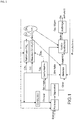
- FIG. 1 and 2 schematically illustrate the different stages of the valorization of the biomass, firstly, in biobrut, then possibly, by means of a stage of refining in biofuel.
- the biomass is subjected to a pyrolysis step.
- biomass carbonaceous materials of plant origin (lignocellulosic biomass and algae) or animal. This can be waste from forestry operations and wood processing industries (such as sawmills, peeling companies, carpentry, paneling, etc.), agricultural residues (such as straw and husks of grain of cereals), the food industry or household or industrial waste.
- forestry operations and wood processing industries such as sawmills, peeling companies, carpentry, paneling, etc.
- agricultural residues such as straw and husks of grain of cereals
- Biomass can be wet or almost dry. It preferably comprises less than 50% water.
- biomass can have a humidity of less than 10%. It can be of any form, for example in the form of platelets forest, or pellets, or shredded whose shapes and dimensions are compatible with the pyrolyzer (a few cm for a fluidized bed or a screw, for example).
- the biomass can have dimensions of less than 6 mm and a humidity of less than 10%.
- Fillers preferably solid
- Fillers can be added alone or as a mixture. It can be loads of animal or vegetable origin, household or industrial agricultural waste, used tires or petroleum residue for example. Preferably, it is a recycled fraction, preferably solid, resulting from the process.
- the bio-oil may contain tars (or "tar” in English terms). It is a so-called heavy phase comprising condensable hydrocarbon molecules, aliphatic or having one or more aromatic rings and, for example, being able to reach a molar mass greater than 100 g / mol. It can be polycyclic aromatic hydrocarbons (or PAHs) such as naphthalene, anthracene, etc.
- the bio-oil can also contain a fraction of water miscible up to about 25%.
- the pyrolysis is carried out at a temperature above 400 ° C, preferably from 400 ° C to 550 ° C, and even more preferably around 500 ° C.
- the residence time of the biomass in the pyrolysis reactor is rapid, of the order of a few seconds. For example, to have a high efficiency, a residence time of 0.5 to 10 seconds will be used.
- This heat treatment can be carried out in any pyrolyzer whose reactor (pyrolysis oven) is designed to withstand temperatures ranging at least up to 550 ° C. and pressures close to atmospheric pressure.
- the pyrolysis reactor is, for example, chosen from a dense fluidized bed, a circulating fluidized bed, a rotary cone, a double screw, a vortex or cyclone, and an ablative system.
- a dense fluidized bed a circulating fluidized bed, a rotary cone, a double screw, a vortex or cyclone, and an ablative system.
- it is a fluidized bed or a double screw.
- the noncondensable fraction and the condensable fraction are in gaseous form, the carbon residue is in solid form. It is possible to separate the three phases from each other.
- the solid phase and the hot gas phase (containing the condensable and noncondensable fractions), is separated from the tank.
- the noncondensable phase is separated from the condensable phase.
- Such a separation can be obtained by reducing the temperature with a quenching process, until the condensable phase is condensed, to avoid cracking of the heavy molecules and the production of gas. This separation is advantageously quick to avoid secondary chemical reactions and thus obtain a high yield of bio-oil.
- the gas-solid separator is for example a cyclonic separator (or cyclone).
- the operating temperature is chosen so as to avoid condensation of the heaviest vapors (bio-oils), but low enough to limit cracking and maturation reactions (between 400 and 450 ° C).
- the gaseous phase comprises condensable vapors, aerosols, non-condensable gaseous products and, optionally, a carrier gas.
- the condensable vapors are rapidly cooled to minimize secondary cracking reactions, then condensed while the aerosols are recovered by coalescence or agglomeration, the fine solid particles, entrained by the gas, can be trapped by a filter.
- the condensable vapors are, for example, cooled to ambient temperature (of the order of 20-25 ° C), to form a liquid fraction (bio-oil + aqueous phase).
- the condensation is preferably carried out at atmospheric pressure (approximately 1 bar).
- Bio-oil can be separated from part of the phase aqueous by stepped condensation with several levels of cooling temperature. The separation can be carried out, for example by filtration, centrifugation, decantation for the immiscible water fraction, or optionally by a hydrodeoxygenation (HDO) step.
- HDO hydrodeoxygenation
- a condenser or several condensers may be used in series.
- the condensers can be so-called conventional condensers and / or quenching systems.
- the quenching systems make it possible to overcome these clogging problems. They generally consist of direct gas / liquid contact (such as a column with trays or sprayed with solvent) with a solvent or bio-oil cooled to room temperature which ensures the quenching effect.
- the bio-oil produced which is cooled, can be used to spray the hot gas against the current to condense the bio-oil contained in the gas.
- the choice of solvent depends on the use to be made of the oils.
- An immiscible solvent with a different density of oils is preferable to facilitate the recovery of oils for analysis and material balances.
- step b) the carbon residue (char) and the bio-oil (comprising the tars or devoid of tars) from the pyrolysis step are intimately mixed to obtain a suspension (“slurry”).
- the tank and the bio-oil are, for example, mixed in a kneader or mixer.
- the tank can be ground, roughly or finely, in order to obtain a more homogeneous suspension.
- the grinding step can be carried out, before or after, mixing with the bio-oil.
- the solid phase of the suspension is preferably made up of the tank.
- the immiscible water is separated as much as possible from the oil.
- the proportion of final water can range from 1% to ten percent (for example 15%).
- the suspension has an energy density higher than that of the initial resource.
- the suspension is in liquid form, easy to store. It can be pumped and injected easily, unlike biomass powders used for gasification devices, such as entrained flow reactors (RFE).
- RFE entrained flow reactors
- the suspension comprising the tank and the bio-oil is subjected to a hydroliquefaction step.
- the suspension could contain a solvent, for example to thin the suspension or lower the oxygen level. Avoid using water-based solvents that contain oxygen. It is possible to use organic solvents of the hydrocarbon type. It can be a vegetable oil. Preferably, it is a liquid fraction resulting from the process. The added or recycled fraction is variable, it can range from 10 to 20%.
- the suspension is devoid of solvent.
- the bio-oil forms the liquid phase of the suspension.
- the suspension consists of char, bio-oil and, optionally, a solvent.
- the suspension consists of char and bio-oil.
- the suspension consists of char, bio-oil and a solvent.
- the suspension is injected into the reactor.
- the suspension can be injected under pressure as a mixture with dihydrogen, into the reactor.
- the suspension is, for example, injected under a pressure ranging from 10 to 25 MPa, for example of the order of 20 MPa, with dihydrogen in a reactor heated to a temperature ranging from 250 to 450 ° C.
- the dihydrogen and the suspension are injected separately into the reactor.
- the suspension can be preheated beforehand to facilitate pumping and injection into the reactor.
- the theoretical stoichiometry for the final product is approximately 2 moles of hydrogen per 1 mole of carbon.
- the average formula of lignocellulosic biomass being C 6 H 9 O 4 , it is theoretically possible to produce approximately 4CH 2 + 2CO 2 from a mole of wood, for example.
- the hydroliquefaction stage is carried out in a reactor, for example a longitudinal one, designed to withstand temperatures ranging at least up to 450 ° C. and pressures ranging at least up to 25 MPa.
- This reactor includes, for example, a mechanical stirrer, injection lines for the suspension and hydrogen, a heating system (internal or external) of the reactor, possibly a cooling system because certain reactions with H 2 are exothermic, a pressure regulation system (overflow valve, controlled adjustment valve), an outlet line, a liquid (biobrut) / gas separator.
- the reactor includes a reagent inlet (suspension), and a biobrut outlet.
- the reactor can also include a gas outlet (for example CH 4 ).
- a gas outlet for example CH 4
- the reactor includes a dihydrogen inlet.
- the reactor may further comprise means configured to mix the suspension and the hydrogen.
- the hydroliquefaction reaction can be carried out in the presence of one or more catalysts, for example chosen from Fe, Mo, Ni, W, Co, V, Ru, Rh, Pt, Mo and Pd.
- the catalyst (s) can be in dispersed phase (advantageously mixed with the suspension, before or after its introduction into the reactor) or else supported, for example, on an oxidized mineral support (alumina, silica, magnesia, etc.).
- a catalyst promotes chemical reactions and allows a better yield for given conditions. It makes it possible to direct the reactions to obtain organic chains close to that of petroleum.
- this step is carried out without a catalyst.
- this step is carried out without catalyst and without solvent.
- the dihydrogen necessary for the hydroliquefaction stage can come from recycled dihydrogen, coming from the transformation of the incondensable gas phase, and / or from an external supply of dihydrogen in order to increase the C / H ratio and the material yield.
- biobrut At the outlet of the hydroliquefaction reactor, a “biobrut” is obtained.
- the biobrut can be used for maritime applications, for example for boat engines, possibly by means of a step of bringing the biobrut into conformity with the specific features of the formulations conventionally used for such applications.
- biobrut is devoid of oxygen, or after a possible hydrodeoxygenation step, it can be distilled to produce fuel cuts. Depending on the condensing temperatures, it is possible to separate methane, kerosene, fuel oil and heavy fuel oil.
- the biobrut obtained by the process can be subjected to post-treatments making it possible to refine it into biofuel.
- the refining can be carried out for example with a distillation process. Distillation leads to the separation of the different components of the liquid mixture according to their boiling temperature, starting with the most volatile compounds (methane, butane, propane), then gasoline, kerosene, diesel, domestic fuel oil and finally heavy fuel oil and bitumen.
- the invention makes it possible to obtain “green oil” from biomass for the production of a second generation biofuel.
- the incondensable gases (CO, CO 2 , H 2 , CH4, etc.), originating from the various stages of the process (pyrolysis and / or refining), can be recovered dihydrogen necessary for the hydroliquefaction step, gas for the pyrolysis step, and / or heat.
- Methane and light hydrocarbons (C 2 H 2 , CH4, C 2 H 6 , etc.) can be thermally reformed / cracked to form a mixture of CO and H 2 or carbon and hydrogen.
- the cracking step is, for example, carried out at 1200 ° C.
- CO can be transformed by the reaction of gas to reverse water (or RWGSR for “Reverse Water Gas Shift Reaction”): CO + H 2 O ⁇ H 2 + CO 2 .
- the carbon produced can advantageously be added to the suspension.
- the transformation of the incondensable gases into dihydrogen can be carried out, for example, after a separation step.
- a reinjection of dihydrogen at the hydroliquefaction stage can advantageously make it possible to shift the balance towards a maximization of the production of liquid recoverable in biobrut.
- the dihydrogen necessary for the process can be produced by alkaline electrolysis or by high temperature electrolysis.
- This advantageously makes it possible to simultaneously produce oxygen, which can supply a biomass-burning boiler, the heat of which can be used to heat the pyrolyzer and / or the hydroliquefaction reactor for example.
- the so-called electrolytic dihydrogen makes it possible to improve the yield of material and to eliminate the stages of reforming and transformation of the CO by RWGSR.
- Incondensable gases can also be used to provide heat to the process, for example via a gas boiler.
- the boiler advantageously works in whole or in part with the gases from the process.
- It can also be a boiler operating with biomass, which, in addition to providing energy for the operation of certain stages of the process, to recover gas from CH4.
Landscapes
- Chemical & Material Sciences (AREA)
- Oil, Petroleum & Natural Gas (AREA)
- Engineering & Computer Science (AREA)
- Organic Chemistry (AREA)
- Chemical Kinetics & Catalysis (AREA)
- General Chemical & Material Sciences (AREA)
- Life Sciences & Earth Sciences (AREA)
- Wood Science & Technology (AREA)
- Materials Engineering (AREA)
- Production Of Liquid Hydrocarbon Mixture For Refining Petroleum (AREA)
- Processing Of Solid Wastes (AREA)
Applications Claiming Priority (1)
| Application Number | Priority Date | Filing Date | Title |
|---|---|---|---|
| FR1872088A FR3089230B1 (fr) | 2018-11-29 | 2018-11-29 | Procédé d’obtention d’un biobrut par pyrolyse et hydroliquefaction d’une biomasse |
Publications (1)
| Publication Number | Publication Date |
|---|---|
| EP3660131A1 true EP3660131A1 (de) | 2020-06-03 |
Family
ID=65951764
Family Applications (1)
| Application Number | Title | Priority Date | Filing Date |
|---|---|---|---|
| EP19212230.7A Withdrawn EP3660131A1 (de) | 2018-11-29 | 2019-11-28 | Verfahren zum erhalten von bio-rohöl durch pyrolyse, und hydrothermale verflüssigung einer biomasse |
Country Status (2)
| Country | Link |
|---|---|
| EP (1) | EP3660131A1 (de) |
| FR (1) | FR3089230B1 (de) |
Cited By (1)
| Publication number | Priority date | Publication date | Assignee | Title |
|---|---|---|---|---|
| CN118369164A (zh) * | 2021-11-24 | 2024-07-19 | 德松零点有限公司 | 利用有机废物生产原油前体和原油的工艺和设备 |
Citations (5)
| Publication number | Priority date | Publication date | Assignee | Title |
|---|---|---|---|---|
| US20110167713A1 (en) * | 2010-01-12 | 2011-07-14 | IFP Energies Nouvelles | Process for direct hydorliquefaction of biomass comprising two stages of ebullating bed hydroconversion |
| WO2012140335A1 (fr) | 2011-04-14 | 2012-10-18 | IFP Energies Nouvelles | Procede d'hydroconversion de biomasse integrant une technologie en lit bouillonnant et une technologie en slurry |
| US20140288338A1 (en) * | 2010-09-14 | 2014-09-25 | IFP Energies Nouvelles | Methods of upgrading biooil to transportation grade hydrocarbon fuels |
| US20160040072A1 (en) * | 2013-03-15 | 2016-02-11 | The Board Of Regents Of The University Of Texas System | Processes for liquefying carbonaceous feedstocks and related compositions |
| WO2019128866A1 (zh) * | 2017-12-25 | 2019-07-04 | 北京三聚环保新材料股份有限公司 | 一种生物质或煤与生物质的一锅法液化工艺 |
-
2018
- 2018-11-29 FR FR1872088A patent/FR3089230B1/fr not_active Expired - Fee Related
-
2019
- 2019-11-28 EP EP19212230.7A patent/EP3660131A1/de not_active Withdrawn
Patent Citations (5)
| Publication number | Priority date | Publication date | Assignee | Title |
|---|---|---|---|---|
| US20110167713A1 (en) * | 2010-01-12 | 2011-07-14 | IFP Energies Nouvelles | Process for direct hydorliquefaction of biomass comprising two stages of ebullating bed hydroconversion |
| US20140288338A1 (en) * | 2010-09-14 | 2014-09-25 | IFP Energies Nouvelles | Methods of upgrading biooil to transportation grade hydrocarbon fuels |
| WO2012140335A1 (fr) | 2011-04-14 | 2012-10-18 | IFP Energies Nouvelles | Procede d'hydroconversion de biomasse integrant une technologie en lit bouillonnant et une technologie en slurry |
| US20160040072A1 (en) * | 2013-03-15 | 2016-02-11 | The Board Of Regents Of The University Of Texas System | Processes for liquefying carbonaceous feedstocks and related compositions |
| WO2019128866A1 (zh) * | 2017-12-25 | 2019-07-04 | 北京三聚环保新材料股份有限公司 | 一种生物质或煤与生物质的一锅法液化工艺 |
Non-Patent Citations (2)
| Title |
|---|
| BRIDGWATER ET AL.: "Review of fast pyrolysis of biomass and product upgrading", BIOMASS AND BIOENERGY, vol. 38, 2012, pages 68 - 94, XP055209446, DOI: 10.1016/j.biombioe.2011.01.048 |
| DE SEILER ET AL.: "Technical and economical evaluation of enhanced biomass to liquid fuel processes", ENERGY, vol. 35, 2010, pages 3587 - 3592, XP055028263, DOI: 10.1016/j.energy.2010.04.048 |
Cited By (1)
| Publication number | Priority date | Publication date | Assignee | Title |
|---|---|---|---|---|
| CN118369164A (zh) * | 2021-11-24 | 2024-07-19 | 德松零点有限公司 | 利用有机废物生产原油前体和原油的工艺和设备 |
Also Published As
| Publication number | Publication date |
|---|---|
| FR3089230A1 (fr) | 2020-06-05 |
| FR3089230B1 (fr) | 2021-07-02 |
Similar Documents
| Publication | Publication Date | Title |
|---|---|---|
| US9057031B2 (en) | Co-gasification process for hydrocarbon solids and biomass | |
| EP1947160B1 (de) | Verfahren zur Umwandlung der Biomasse für die Synthesegasproduktion | |
| Conti et al. | Thermocatalytic reforming of biomass waste streams | |
| Peláez-Samaniego et al. | Improvements of Brazilian carbonization industry as part of the creation of a global biomass economy | |
| CN103347985B (zh) | 可再生燃料油 | |
| Pighinelli et al. | Evaluation of Brazilian biomasses as feedstocks for fuel production via fast pyrolysis | |
| US10822546B2 (en) | Conversion of biomass into a liquid hydrocarbon material | |
| MX2013009118A (es) | Bioaceite estable. | |
| Dewayanto et al. | Use of palm oil decanter cake as a new substrate for the production of bio-oil by vacuum pyrolysis | |
| EP3380584B1 (de) | Umwandlung von biomasse in ein flüssiges kohlenwasserstoffmaterial | |
| CA2565936A1 (fr) | Procede de production de gaz de synthese a partir de matiere carbonee et d'energie electrique | |
| Cerone et al. | Updraft gasification at pilot scale of hydrolytic lignin residue | |
| CA3193807A1 (en) | Converting biomass to diesel | |
| WO2012140333A1 (fr) | Procede d'hydroconversion de biomasse integrant une technologie utilisant un reacteur contenant un catalyseur disperse | |
| US11713419B2 (en) | Systems and methods for producing lignocellulosic alkanes | |
| US8317883B1 (en) | Production of stable pyrolysis bio-oil from mustard family seeds, mustard family seed presscake, and defatted mustard family seed presscake | |
| US20130232856A1 (en) | Process for production of fuels and chemicals from biomass feedstocks | |
| FR3089230A1 (fr) | Procédé d’obtention d’un biobrut par pyrolyse et hydroliquefaction d’une biomasse | |
| US20100282588A1 (en) | Thermochemical Processing of Algal Biomass | |
| KR102076255B1 (ko) | 바이오매스 유래 열분해유의 물성 개선 방법 | |
| WO2024023161A1 (fr) | Composition renouvelable de carburéacteur à teneur élevée en composés naphténiques et procédé de préparation associé | |
| EP3625350B1 (de) | Vorrichtung und verfahren zur umwandlung von organischem material in mischungen von methan (ch4) und / oder hydrogen (h2) und / oder kohlendioxid (co2) durch kopplung von thermochemischen und biologischen prozessen | |
| Bimbela et al. | Biomass pyrolysis liquids. Fundamentals, technologies and new strategies. | |
| Odetoye et al. | Biomass Conversion by Pyrolysis Technology | |
| Ahmmed et al. | Potato (Solanum tuberosum) peel waste utilization for eco-friendly bio-oil production via pyrolysis |
Legal Events
| Date | Code | Title | Description |
|---|---|---|---|
| PUAI | Public reference made under article 153(3) epc to a published international application that has entered the european phase |
Free format text: ORIGINAL CODE: 0009012 |
|
| STAA | Information on the status of an ep patent application or granted ep patent |
Free format text: STATUS: REQUEST FOR EXAMINATION WAS MADE |
|
| 17P | Request for examination filed |
Effective date: 20191128 |
|
| AK | Designated contracting states |
Kind code of ref document: A1 Designated state(s): AL AT BE BG CH CY CZ DE DK EE ES FI FR GB GR HR HU IE IS IT LI LT LU LV MC MK MT NL NO PL PT RO RS SE SI SK SM TR |
|
| AX | Request for extension of the european patent |
Extension state: BA ME |
|
| STAA | Information on the status of an ep patent application or granted ep patent |
Free format text: STATUS: EXAMINATION IS IN PROGRESS |
|
| 17Q | First examination report despatched |
Effective date: 20201022 |
|
| STAA | Information on the status of an ep patent application or granted ep patent |
Free format text: STATUS: THE APPLICATION IS DEEMED TO BE WITHDRAWN |
|
| 18D | Application deemed to be withdrawn |
Effective date: 20210302 |