EP3660171A1 - Nukleinsäurekomplexpaar, kompetitive struktur und pcr-kit mit diesen - Google Patents
Nukleinsäurekomplexpaar, kompetitive struktur und pcr-kit mit diesen Download PDFInfo
- Publication number
- EP3660171A1 EP3660171A1 EP18839013.2A EP18839013A EP3660171A1 EP 3660171 A1 EP3660171 A1 EP 3660171A1 EP 18839013 A EP18839013 A EP 18839013A EP 3660171 A1 EP3660171 A1 EP 3660171A1
- Authority
- EP
- European Patent Office
- Prior art keywords
- nucleic acid
- tag
- determinant
- label
- acid complex
- Prior art date
- Legal status (The legal status is an assumption and is not a legal conclusion. Google has not performed a legal analysis and makes no representation as to the accuracy of the status listed.)
- Withdrawn
Links
- 102000039446 nucleic acids Human genes 0.000 title claims abstract description 1707
- 108020004707 nucleic acids Proteins 0.000 title claims abstract description 1707
- 150000007523 nucleic acids Chemical class 0.000 title claims abstract description 1703
- 230000002860 competitive effect Effects 0.000 title description 158
- 230000000295 complement effect Effects 0.000 claims abstract description 180
- 230000002441 reversible effect Effects 0.000 claims abstract description 51
- 238000003752 polymerase chain reaction Methods 0.000 claims description 224
- 102000053602 DNA Human genes 0.000 claims description 183
- 108020004414 DNA Proteins 0.000 claims description 183
- 239000000463 material Substances 0.000 claims description 125
- 230000003321 amplification Effects 0.000 claims description 118
- 238000003199 nucleic acid amplification method Methods 0.000 claims description 118
- 229920002477 rna polymer Polymers 0.000 claims description 59
- 108091093037 Peptide nucleic acid Proteins 0.000 claims description 45
- 230000036961 partial effect Effects 0.000 claims description 30
- 108091093094 Glycol nucleic acid Proteins 0.000 claims description 26
- 108091046915 Threose nucleic acid Proteins 0.000 claims description 23
- 108010014303 DNA-directed DNA polymerase Proteins 0.000 claims description 11
- 102000016928 DNA-directed DNA polymerase Human genes 0.000 claims description 11
- 108010082025 cyan fluorescent protein Proteins 0.000 claims description 10
- 150000003839 salts Chemical class 0.000 claims description 10
- 239000000872 buffer Substances 0.000 claims description 7
- 239000005515 coenzyme Substances 0.000 claims description 7
- 238000007847 digital PCR Methods 0.000 claims description 7
- -1 hexose nucleic acid Chemical class 0.000 claims description 6
- 108010000239 Aequorin Proteins 0.000 claims description 5
- VGIRNWJSIRVFRT-UHFFFAOYSA-N 2',7'-difluorofluorescein Chemical compound OC(=O)C1=CC=CC=C1C1=C2C=C(F)C(=O)C=C2OC2=CC(O)=C(F)C=C21 VGIRNWJSIRVFRT-UHFFFAOYSA-N 0.000 claims description 4
- ABZLKHKQJHEPAX-UHFFFAOYSA-N tetramethylrhodamine Chemical compound C=12C=CC(N(C)C)=CC2=[O+]C2=CC(N(C)C)=CC=C2C=1C1=CC=CC=C1C([O-])=O ABZLKHKQJHEPAX-UHFFFAOYSA-N 0.000 claims description 4
- HGCIXCUEYOPUTN-UHFFFAOYSA-N cis-cyclohexene Natural products C1CCC=CC1 HGCIXCUEYOPUTN-UHFFFAOYSA-N 0.000 claims description 2
- 229920000642 polymer Polymers 0.000 description 182
- 239000000523 sample Substances 0.000 description 175
- 238000010494 dissociation reaction Methods 0.000 description 144
- 230000005593 dissociations Effects 0.000 description 144
- 230000014759 maintenance of location Effects 0.000 description 95
- 150000001875 compounds Chemical class 0.000 description 92
- 238000010586 diagram Methods 0.000 description 79
- 230000009471 action Effects 0.000 description 60
- 230000008859 change Effects 0.000 description 57
- 238000006116 polymerization reaction Methods 0.000 description 57
- 230000003287 optical effect Effects 0.000 description 56
- 238000000137 annealing Methods 0.000 description 55
- 238000001514 detection method Methods 0.000 description 54
- 238000004925 denaturation Methods 0.000 description 50
- 230000036425 denaturation Effects 0.000 description 50
- 239000000126 substance Substances 0.000 description 47
- 108020004682 Single-Stranded DNA Proteins 0.000 description 45
- 230000007423 decrease Effects 0.000 description 38
- OPTASPLRGRRNAP-UHFFFAOYSA-N cytosine Chemical compound NC=1C=CNC(=O)N=1 OPTASPLRGRRNAP-UHFFFAOYSA-N 0.000 description 36
- UYTPUPDQBNUYGX-UHFFFAOYSA-N guanine Chemical compound O=C1NC(N)=NC2=C1N=CN2 UYTPUPDQBNUYGX-UHFFFAOYSA-N 0.000 description 35
- 239000000243 solution Substances 0.000 description 32
- 238000002372 labelling Methods 0.000 description 31
- 238000000034 method Methods 0.000 description 31
- 229910052739 hydrogen Inorganic materials 0.000 description 28
- 238000006243 chemical reaction Methods 0.000 description 26
- 239000002245 particle Substances 0.000 description 26
- 230000000704 physical effect Effects 0.000 description 25
- 125000006850 spacer group Chemical group 0.000 description 25
- 230000006641 stabilisation Effects 0.000 description 23
- 238000011105 stabilization Methods 0.000 description 23
- RWQNBRDOKXIBIV-UHFFFAOYSA-N thymine Chemical compound CC1=CNC(=O)NC1=O RWQNBRDOKXIBIV-UHFFFAOYSA-N 0.000 description 22
- 238000009004 PCR Kit Methods 0.000 description 21
- 239000001257 hydrogen Substances 0.000 description 21
- GFFGJBXGBJISGV-UHFFFAOYSA-N Adenine Chemical compound NC1=NC=NC2=C1N=CN2 GFFGJBXGBJISGV-UHFFFAOYSA-N 0.000 description 20
- 201000010099 disease Diseases 0.000 description 20
- 208000037265 diseases, disorders, signs and symptoms Diseases 0.000 description 20
- 238000004519 manufacturing process Methods 0.000 description 20
- 230000015572 biosynthetic process Effects 0.000 description 19
- KDCGOANMDULRCW-UHFFFAOYSA-N 7H-purine Chemical compound N1=CNC2=NC=NC2=C1 KDCGOANMDULRCW-UHFFFAOYSA-N 0.000 description 18
- LRFVTYWOQMYALW-UHFFFAOYSA-N 9H-xanthine Chemical compound O=C1NC(=O)NC2=C1NC=N2 LRFVTYWOQMYALW-UHFFFAOYSA-N 0.000 description 18
- 229940104302 cytosine Drugs 0.000 description 18
- FDGQSTZJBFJUBT-UHFFFAOYSA-N hypoxanthine Chemical compound O=C1NC=NC2=C1NC=N2 FDGQSTZJBFJUBT-UHFFFAOYSA-N 0.000 description 18
- 239000000203 mixture Substances 0.000 description 18
- 238000002474 experimental method Methods 0.000 description 17
- 229930024421 Adenine Natural products 0.000 description 16
- ISAKRJDGNUQOIC-UHFFFAOYSA-N Uracil Chemical compound O=C1C=CNC(=O)N1 ISAKRJDGNUQOIC-UHFFFAOYSA-N 0.000 description 16
- 229960000643 adenine Drugs 0.000 description 16
- 230000006870 function Effects 0.000 description 15
- 239000002773 nucleotide Substances 0.000 description 14
- 125000003729 nucleotide group Chemical group 0.000 description 14
- 102000004190 Enzymes Human genes 0.000 description 13
- 108090000790 Enzymes Proteins 0.000 description 13
- 229940113082 thymine Drugs 0.000 description 13
- UGQMRVRMYYASKQ-UHFFFAOYSA-N Hypoxanthine nucleoside Natural products OC1C(O)C(CO)OC1N1C(NC=NC2=O)=C2N=C1 UGQMRVRMYYASKQ-UHFFFAOYSA-N 0.000 description 9
- CZPWVGJYEJSRLH-UHFFFAOYSA-N Pyrimidine Chemical compound C1=CN=CN=C1 CZPWVGJYEJSRLH-UHFFFAOYSA-N 0.000 description 9
- 229940075420 xanthine Drugs 0.000 description 9
- 230000008901 benefit Effects 0.000 description 8
- 238000009826 distribution Methods 0.000 description 8
- 229910052757 nitrogen Inorganic materials 0.000 description 8
- 229940035893 uracil Drugs 0.000 description 8
- 238000003745 diagnosis Methods 0.000 description 7
- 229910052731 fluorine Inorganic materials 0.000 description 7
- 230000002209 hydrophobic effect Effects 0.000 description 7
- 229910052760 oxygen Inorganic materials 0.000 description 7
- 108091093088 Amplicon Proteins 0.000 description 6
- NBIIXXVUZAFLBC-UHFFFAOYSA-N Phosphoric acid Chemical compound OP(O)(O)=O NBIIXXVUZAFLBC-UHFFFAOYSA-N 0.000 description 6
- 229910052799 carbon Inorganic materials 0.000 description 6
- 230000000694 effects Effects 0.000 description 6
- 230000001965 increasing effect Effects 0.000 description 6
- QKNYBSVHEMOAJP-UHFFFAOYSA-N 2-amino-2-(hydroxymethyl)propane-1,3-diol;hydron;chloride Chemical compound Cl.OCC(N)(CO)CO QKNYBSVHEMOAJP-UHFFFAOYSA-N 0.000 description 5
- 241000341655 Human papillomavirus type 16 Species 0.000 description 5
- 108010006785 Taq Polymerase Proteins 0.000 description 5
- 238000004220 aggregation Methods 0.000 description 5
- 238000013461 design Methods 0.000 description 5
- 239000003623 enhancer Substances 0.000 description 5
- 239000012634 fragment Substances 0.000 description 5
- 125000002887 hydroxy group Chemical group [H]O* 0.000 description 5
- 230000002401 inhibitory effect Effects 0.000 description 5
- 229920002521 macromolecule Polymers 0.000 description 5
- 230000008569 process Effects 0.000 description 5
- 229940124272 protein stabilizer Drugs 0.000 description 5
- 230000009257 reactivity Effects 0.000 description 5
- OKTJSMMVPCPJKN-UHFFFAOYSA-N Carbon Chemical compound [C] OKTJSMMVPCPJKN-UHFFFAOYSA-N 0.000 description 4
- 108010043121 Green Fluorescent Proteins Proteins 0.000 description 4
- 102000004144 Green Fluorescent Proteins Human genes 0.000 description 4
- TWRXJAOTZQYOKJ-UHFFFAOYSA-L Magnesium chloride Chemical compound [Mg+2].[Cl-].[Cl-] TWRXJAOTZQYOKJ-UHFFFAOYSA-L 0.000 description 4
- CSNNHWWHGAXBCP-UHFFFAOYSA-L Magnesium sulfate Chemical compound [Mg+2].[O-][S+2]([O-])([O-])[O-] CSNNHWWHGAXBCP-UHFFFAOYSA-L 0.000 description 4
- 239000002202 Polyethylene glycol Substances 0.000 description 4
- WCUXLLCKKVVCTQ-UHFFFAOYSA-M Potassium chloride Chemical compound [Cl-].[K+] WCUXLLCKKVVCTQ-UHFFFAOYSA-M 0.000 description 4
- 230000002776 aggregation Effects 0.000 description 4
- 239000000470 constituent Substances 0.000 description 4
- SZVJSHCCFOBDDC-UHFFFAOYSA-N ferrosoferric oxide Chemical compound O=[Fe]O[Fe]O[Fe]=O SZVJSHCCFOBDDC-UHFFFAOYSA-N 0.000 description 4
- 239000005090 green fluorescent protein Substances 0.000 description 4
- 239000000178 monomer Substances 0.000 description 4
- 125000002467 phosphate group Chemical group [H]OP(=O)(O[H])O[*] 0.000 description 4
- 235000011007 phosphoric acid Nutrition 0.000 description 4
- 229920001223 polyethylene glycol Polymers 0.000 description 4
- 230000000379 polymerizing effect Effects 0.000 description 4
- 102000040430 polynucleotide Human genes 0.000 description 4
- 108091033319 polynucleotide Proteins 0.000 description 4
- 239000002157 polynucleotide Substances 0.000 description 4
- 230000002829 reductive effect Effects 0.000 description 4
- 108091005957 yellow fluorescent proteins Proteins 0.000 description 4
- FWMNVWWHGCHHJJ-SKKKGAJSSA-N 4-amino-1-[(2r)-6-amino-2-[[(2r)-2-[[(2r)-2-[[(2r)-2-amino-3-phenylpropanoyl]amino]-3-phenylpropanoyl]amino]-4-methylpentanoyl]amino]hexanoyl]piperidine-4-carboxylic acid Chemical compound C([C@H](C(=O)N[C@H](CC(C)C)C(=O)N[C@H](CCCCN)C(=O)N1CCC(N)(CC1)C(O)=O)NC(=O)[C@H](N)CC=1C=CC=CC=1)C1=CC=CC=C1 FWMNVWWHGCHHJJ-SKKKGAJSSA-N 0.000 description 3
- 238000001712 DNA sequencing Methods 0.000 description 3
- 229910000147 aluminium phosphate Inorganic materials 0.000 description 3
- 238000012790 confirmation Methods 0.000 description 3
- 230000001419 dependent effect Effects 0.000 description 3
- PCHJSUWPFVWCPO-UHFFFAOYSA-N gold Chemical compound [Au] PCHJSUWPFVWCPO-UHFFFAOYSA-N 0.000 description 3
- 239000010931 gold Substances 0.000 description 3
- 229910052737 gold Inorganic materials 0.000 description 3
- IJGRMHOSHXDMSA-UHFFFAOYSA-N Atomic nitrogen Chemical compound N#N IJGRMHOSHXDMSA-UHFFFAOYSA-N 0.000 description 2
- YLQBMQCUIZJEEH-UHFFFAOYSA-N Furan Chemical compound C=1C=COC=1 YLQBMQCUIZJEEH-UHFFFAOYSA-N 0.000 description 2
- UQSXHKLRYXJYBZ-UHFFFAOYSA-N Iron oxide Chemical compound [Fe]=O UQSXHKLRYXJYBZ-UHFFFAOYSA-N 0.000 description 2
- 238000002944 PCR assay Methods 0.000 description 2
- IQFYYKKMVGJFEH-XLPZGREQSA-N Thymidine Chemical compound O=C1NC(=O)C(C)=CN1[C@@H]1O[C@H](CO)[C@@H](O)C1 IQFYYKKMVGJFEH-XLPZGREQSA-N 0.000 description 2
- 241000700605 Viruses Species 0.000 description 2
- 238000004458 analytical method Methods 0.000 description 2
- 238000007846 asymmetric PCR Methods 0.000 description 2
- 125000004429 atom Chemical group 0.000 description 2
- 238000003776 cleavage reaction Methods 0.000 description 2
- 238000002484 cyclic voltammetry Methods 0.000 description 2
- RGWHQCVHVJXOKC-SHYZEUOFSA-N dCTP Chemical compound O=C1N=C(N)C=CN1[C@@H]1O[C@H](CO[P@](O)(=O)O[P@](O)(=O)OP(O)(O)=O)[C@@H](O)C1 RGWHQCVHVJXOKC-SHYZEUOFSA-N 0.000 description 2
- UJLXYODCHAELLY-XLPZGREQSA-N dTDP Chemical compound O=C1NC(=O)C(C)=CN1[C@@H]1O[C@H](COP(O)(=O)OP(O)(O)=O)[C@@H](O)C1 UJLXYODCHAELLY-XLPZGREQSA-N 0.000 description 2
- 230000003247 decreasing effect Effects 0.000 description 2
- 230000023077 detection of light stimulus Effects 0.000 description 2
- 238000001962 electrophoresis Methods 0.000 description 2
- 230000007613 environmental effect Effects 0.000 description 2
- 125000004435 hydrogen atom Chemical group [H]* 0.000 description 2
- 238000000338 in vitro Methods 0.000 description 2
- 230000000977 initiatory effect Effects 0.000 description 2
- 229910001629 magnesium chloride Inorganic materials 0.000 description 2
- 229910052943 magnesium sulfate Inorganic materials 0.000 description 2
- 239000002105 nanoparticle Substances 0.000 description 2
- 230000003647 oxidation Effects 0.000 description 2
- 238000007254 oxidation reaction Methods 0.000 description 2
- 229910052698 phosphorus Inorganic materials 0.000 description 2
- 238000010791 quenching Methods 0.000 description 2
- 230000003252 repetitive effect Effects 0.000 description 2
- 230000007017 scission Effects 0.000 description 2
- 229910052717 sulfur Inorganic materials 0.000 description 2
- 239000001226 triphosphate Substances 0.000 description 2
- 235000011178 triphosphate Nutrition 0.000 description 2
- UNXRWKVEANCORM-UHFFFAOYSA-N triphosphoric acid Chemical compound OP(O)(=O)OP(O)(=O)OP(O)(O)=O UNXRWKVEANCORM-UHFFFAOYSA-N 0.000 description 2
- 208000035657 Abasia Diseases 0.000 description 1
- DWRXFEITVBNRMK-UHFFFAOYSA-N Beta-D-1-Arabinofuranosylthymine Natural products O=C1NC(=O)C(C)=CN1C1C(O)C(O)C(CO)O1 DWRXFEITVBNRMK-UHFFFAOYSA-N 0.000 description 1
- 229910002518 CoFe2O4 Inorganic materials 0.000 description 1
- 229910018979 CoPt Inorganic materials 0.000 description 1
- 239000004971 Cross linker Substances 0.000 description 1
- 238000000018 DNA microarray Methods 0.000 description 1
- 108060002716 Exonuclease Proteins 0.000 description 1
- 229910005335 FePt Inorganic materials 0.000 description 1
- UFHFLCQGNIYNRP-UHFFFAOYSA-N Hydrogen Chemical compound [H][H] UFHFLCQGNIYNRP-UHFFFAOYSA-N 0.000 description 1
- 229910017163 MnFe2O4 Inorganic materials 0.000 description 1
- 108091028043 Nucleic acid sequence Proteins 0.000 description 1
- 238000012408 PCR amplification Methods 0.000 description 1
- 239000004793 Polystyrene Substances 0.000 description 1
- 241000239226 Scorpiones Species 0.000 description 1
- 239000000956 alloy Substances 0.000 description 1
- 229910045601 alloy Inorganic materials 0.000 description 1
- 229920006125 amorphous polymer Polymers 0.000 description 1
- 239000011324 bead Substances 0.000 description 1
- IQFYYKKMVGJFEH-UHFFFAOYSA-N beta-L-thymidine Natural products O=C1NC(=O)C(C)=CN1C1OC(CO)C(O)C1 IQFYYKKMVGJFEH-UHFFFAOYSA-N 0.000 description 1
- 239000008280 blood Substances 0.000 description 1
- 210000004369 blood Anatomy 0.000 description 1
- 239000003153 chemical reaction reagent Substances 0.000 description 1
- 238000007796 conventional method Methods 0.000 description 1
- SPTYHKZRPFATHJ-HYZXJONISA-N dT6 Chemical compound O=C1NC(=O)C(C)=CN1[C@@H]1O[C@H](COP(O)(=O)O[C@@H]2[C@H](O[C@H](C2)N2C(NC(=O)C(C)=C2)=O)COP(O)(=O)O[C@@H]2[C@H](O[C@H](C2)N2C(NC(=O)C(C)=C2)=O)COP(O)(=O)O[C@@H]2[C@H](O[C@H](C2)N2C(NC(=O)C(C)=C2)=O)COP(O)(=O)O[C@@H]2[C@H](O[C@H](C2)N2C(NC(=O)C(C)=C2)=O)COP(O)(=O)O[C@@H]2[C@H](O[C@H](C2)N2C(NC(=O)C(C)=C2)=O)CO)[C@@H](O)C1 SPTYHKZRPFATHJ-HYZXJONISA-N 0.000 description 1
- ORTYMGHCFWKXHO-UHFFFAOYSA-N diethadione Chemical compound CCC1(CC)COC(=O)NC1=O ORTYMGHCFWKXHO-UHFFFAOYSA-N 0.000 description 1
- 238000003912 environmental pollution Methods 0.000 description 1
- 102000013165 exonuclease Human genes 0.000 description 1
- 230000036541 health Effects 0.000 description 1
- IIRDTKBZINWQAW-UHFFFAOYSA-N hexaethylene glycol Chemical compound OCCOCCOCCOCCOCCOCCO IIRDTKBZINWQAW-UHFFFAOYSA-N 0.000 description 1
- 230000001939 inductive effect Effects 0.000 description 1
- 208000015181 infectious disease Diseases 0.000 description 1
- XEEYBQQBJWHFJM-UHFFFAOYSA-N iron Substances [Fe] XEEYBQQBJWHFJM-UHFFFAOYSA-N 0.000 description 1
- JEIPFZHSYJVQDO-UHFFFAOYSA-N iron(III) oxide Inorganic materials O=[Fe]O[Fe]=O JEIPFZHSYJVQDO-UHFFFAOYSA-N 0.000 description 1
- 239000004816 latex Substances 0.000 description 1
- 229920000126 latex Polymers 0.000 description 1
- 238000007403 mPCR Methods 0.000 description 1
- 239000002122 magnetic nanoparticle Substances 0.000 description 1
- 239000003550 marker Substances 0.000 description 1
- 238000005259 measurement Methods 0.000 description 1
- 239000002082 metal nanoparticle Substances 0.000 description 1
- 229910052752 metalloid Inorganic materials 0.000 description 1
- 150000002738 metalloids Chemical class 0.000 description 1
- 239000011259 mixed solution Substances 0.000 description 1
- 229910000510 noble metal Inorganic materials 0.000 description 1
- 230000001590 oxidative effect Effects 0.000 description 1
- 150000003016 phosphoric acids Chemical class 0.000 description 1
- 230000026731 phosphorylation Effects 0.000 description 1
- 238000006366 phosphorylation reaction Methods 0.000 description 1
- 239000013612 plasmid Substances 0.000 description 1
- 229920002223 polystyrene Polymers 0.000 description 1
- 229910001848 post-transition metal Inorganic materials 0.000 description 1
- 108090000623 proteins and genes Proteins 0.000 description 1
- 230000000171 quenching effect Effects 0.000 description 1
- 230000009467 reduction Effects 0.000 description 1
- 238000011160 research Methods 0.000 description 1
- 230000035945 sensitivity Effects 0.000 description 1
- 238000003786 synthesis reaction Methods 0.000 description 1
- 239000013077 target material Substances 0.000 description 1
- 229940104230 thymidine Drugs 0.000 description 1
- 229910052723 transition metal Inorganic materials 0.000 description 1
- 150000003624 transition metals Chemical class 0.000 description 1
- 229910000859 α-Fe Inorganic materials 0.000 description 1
Images





















Classifications
-
- C—CHEMISTRY; METALLURGY
- C12—BIOCHEMISTRY; BEER; SPIRITS; WINE; VINEGAR; MICROBIOLOGY; ENZYMOLOGY; MUTATION OR GENETIC ENGINEERING
- C12Q—MEASURING OR TESTING PROCESSES INVOLVING ENZYMES, NUCLEIC ACIDS OR MICROORGANISMS; COMPOSITIONS OR TEST PAPERS THEREFOR; PROCESSES OF PREPARING SUCH COMPOSITIONS; CONDITION-RESPONSIVE CONTROL IN MICROBIOLOGICAL OR ENZYMOLOGICAL PROCESSES
- C12Q1/00—Measuring or testing processes involving enzymes, nucleic acids or microorganisms; Compositions therefor; Processes of preparing such compositions
- C12Q1/68—Measuring or testing processes involving enzymes, nucleic acids or microorganisms; Compositions therefor; Processes of preparing such compositions involving nucleic acids
- C12Q1/6844—Nucleic acid amplification reactions
- C12Q1/6853—Nucleic acid amplification reactions using modified primers or templates
-
- C—CHEMISTRY; METALLURGY
- C12—BIOCHEMISTRY; BEER; SPIRITS; WINE; VINEGAR; MICROBIOLOGY; ENZYMOLOGY; MUTATION OR GENETIC ENGINEERING
- C12Q—MEASURING OR TESTING PROCESSES INVOLVING ENZYMES, NUCLEIC ACIDS OR MICROORGANISMS; COMPOSITIONS OR TEST PAPERS THEREFOR; PROCESSES OF PREPARING SUCH COMPOSITIONS; CONDITION-RESPONSIVE CONTROL IN MICROBIOLOGICAL OR ENZYMOLOGICAL PROCESSES
- C12Q1/00—Measuring or testing processes involving enzymes, nucleic acids or microorganisms; Compositions therefor; Processes of preparing such compositions
- C12Q1/68—Measuring or testing processes involving enzymes, nucleic acids or microorganisms; Compositions therefor; Processes of preparing such compositions involving nucleic acids
- C12Q1/6844—Nucleic acid amplification reactions
- C12Q1/686—Polymerase chain reaction [PCR]
-
- C—CHEMISTRY; METALLURGY
- C12—BIOCHEMISTRY; BEER; SPIRITS; WINE; VINEGAR; MICROBIOLOGY; ENZYMOLOGY; MUTATION OR GENETIC ENGINEERING
- C12Q—MEASURING OR TESTING PROCESSES INVOLVING ENZYMES, NUCLEIC ACIDS OR MICROORGANISMS; COMPOSITIONS OR TEST PAPERS THEREFOR; PROCESSES OF PREPARING SUCH COMPOSITIONS; CONDITION-RESPONSIVE CONTROL IN MICROBIOLOGICAL OR ENZYMOLOGICAL PROCESSES
- C12Q1/00—Measuring or testing processes involving enzymes, nucleic acids or microorganisms; Compositions therefor; Processes of preparing such compositions
- C12Q1/68—Measuring or testing processes involving enzymes, nucleic acids or microorganisms; Compositions therefor; Processes of preparing such compositions involving nucleic acids
- C12Q1/6876—Nucleic acid products used in the analysis of nucleic acids, e.g. primers or probes
- C12Q1/6883—Nucleic acid products used in the analysis of nucleic acids, e.g. primers or probes for diseases caused by alterations of genetic material
-
- C—CHEMISTRY; METALLURGY
- C12—BIOCHEMISTRY; BEER; SPIRITS; WINE; VINEGAR; MICROBIOLOGY; ENZYMOLOGY; MUTATION OR GENETIC ENGINEERING
- C12Q—MEASURING OR TESTING PROCESSES INVOLVING ENZYMES, NUCLEIC ACIDS OR MICROORGANISMS; COMPOSITIONS OR TEST PAPERS THEREFOR; PROCESSES OF PREPARING SUCH COMPOSITIONS; CONDITION-RESPONSIVE CONTROL IN MICROBIOLOGICAL OR ENZYMOLOGICAL PROCESSES
- C12Q1/00—Measuring or testing processes involving enzymes, nucleic acids or microorganisms; Compositions therefor; Processes of preparing such compositions
- C12Q1/68—Measuring or testing processes involving enzymes, nucleic acids or microorganisms; Compositions therefor; Processes of preparing such compositions involving nucleic acids
- C12Q1/6813—Hybridisation assays
- C12Q1/6816—Hybridisation assays characterised by the detection means
- C12Q1/6818—Hybridisation assays characterised by the detection means involving interaction of two or more labels, e.g. resonant energy transfer
-
- C—CHEMISTRY; METALLURGY
- C12—BIOCHEMISTRY; BEER; SPIRITS; WINE; VINEGAR; MICROBIOLOGY; ENZYMOLOGY; MUTATION OR GENETIC ENGINEERING
- C12Q—MEASURING OR TESTING PROCESSES INVOLVING ENZYMES, NUCLEIC ACIDS OR MICROORGANISMS; COMPOSITIONS OR TEST PAPERS THEREFOR; PROCESSES OF PREPARING SUCH COMPOSITIONS; CONDITION-RESPONSIVE CONTROL IN MICROBIOLOGICAL OR ENZYMOLOGICAL PROCESSES
- C12Q1/00—Measuring or testing processes involving enzymes, nucleic acids or microorganisms; Compositions therefor; Processes of preparing such compositions
- C12Q1/68—Measuring or testing processes involving enzymes, nucleic acids or microorganisms; Compositions therefor; Processes of preparing such compositions involving nucleic acids
- C12Q1/6876—Nucleic acid products used in the analysis of nucleic acids, e.g. primers or probes
-
- C—CHEMISTRY; METALLURGY
- C12—BIOCHEMISTRY; BEER; SPIRITS; WINE; VINEGAR; MICROBIOLOGY; ENZYMOLOGY; MUTATION OR GENETIC ENGINEERING
- C12Q—MEASURING OR TESTING PROCESSES INVOLVING ENZYMES, NUCLEIC ACIDS OR MICROORGANISMS; COMPOSITIONS OR TEST PAPERS THEREFOR; PROCESSES OF PREPARING SUCH COMPOSITIONS; CONDITION-RESPONSIVE CONTROL IN MICROBIOLOGICAL OR ENZYMOLOGICAL PROCESSES
- C12Q2521/00—Reaction characterised by the enzymatic activity
- C12Q2521/10—Nucleotidyl transfering
- C12Q2521/101—DNA polymerase
-
- C—CHEMISTRY; METALLURGY
- C12—BIOCHEMISTRY; BEER; SPIRITS; WINE; VINEGAR; MICROBIOLOGY; ENZYMOLOGY; MUTATION OR GENETIC ENGINEERING
- C12Q—MEASURING OR TESTING PROCESSES INVOLVING ENZYMES, NUCLEIC ACIDS OR MICROORGANISMS; COMPOSITIONS OR TEST PAPERS THEREFOR; PROCESSES OF PREPARING SUCH COMPOSITIONS; CONDITION-RESPONSIVE CONTROL IN MICROBIOLOGICAL OR ENZYMOLOGICAL PROCESSES
- C12Q2525/00—Reactions involving modified oligonucleotides, nucleic acids, or nucleotides
- C12Q2525/30—Oligonucleotides characterised by their secondary structure
- C12Q2525/301—Hairpin oligonucleotides
-
- C—CHEMISTRY; METALLURGY
- C12—BIOCHEMISTRY; BEER; SPIRITS; WINE; VINEGAR; MICROBIOLOGY; ENZYMOLOGY; MUTATION OR GENETIC ENGINEERING
- C12Q—MEASURING OR TESTING PROCESSES INVOLVING ENZYMES, NUCLEIC ACIDS OR MICROORGANISMS; COMPOSITIONS OR TEST PAPERS THEREFOR; PROCESSES OF PREPARING SUCH COMPOSITIONS; CONDITION-RESPONSIVE CONTROL IN MICROBIOLOGICAL OR ENZYMOLOGICAL PROCESSES
- C12Q2527/00—Reactions demanding special reaction conditions
- C12Q2527/101—Temperature
-
- C—CHEMISTRY; METALLURGY
- C12—BIOCHEMISTRY; BEER; SPIRITS; WINE; VINEGAR; MICROBIOLOGY; ENZYMOLOGY; MUTATION OR GENETIC ENGINEERING
- C12Q—MEASURING OR TESTING PROCESSES INVOLVING ENZYMES, NUCLEIC ACIDS OR MICROORGANISMS; COMPOSITIONS OR TEST PAPERS THEREFOR; PROCESSES OF PREPARING SUCH COMPOSITIONS; CONDITION-RESPONSIVE CONTROL IN MICROBIOLOGICAL OR ENZYMOLOGICAL PROCESSES
- C12Q2531/00—Reactions of nucleic acids characterised by
- C12Q2531/10—Reactions of nucleic acids characterised by the purpose being amplify/increase the copy number of target nucleic acid
- C12Q2531/113—PCR
-
- C—CHEMISTRY; METALLURGY
- C12—BIOCHEMISTRY; BEER; SPIRITS; WINE; VINEGAR; MICROBIOLOGY; ENZYMOLOGY; MUTATION OR GENETIC ENGINEERING
- C12Q—MEASURING OR TESTING PROCESSES INVOLVING ENZYMES, NUCLEIC ACIDS OR MICROORGANISMS; COMPOSITIONS OR TEST PAPERS THEREFOR; PROCESSES OF PREPARING SUCH COMPOSITIONS; CONDITION-RESPONSIVE CONTROL IN MICROBIOLOGICAL OR ENZYMOLOGICAL PROCESSES
- C12Q2565/00—Nucleic acid analysis characterised by mode or means of detection
- C12Q2565/10—Detection mode being characterised by the assay principle
- C12Q2565/101—Interaction between at least two labels
-
- C—CHEMISTRY; METALLURGY
- C12—BIOCHEMISTRY; BEER; SPIRITS; WINE; VINEGAR; MICROBIOLOGY; ENZYMOLOGY; MUTATION OR GENETIC ENGINEERING
- C12Q—MEASURING OR TESTING PROCESSES INVOLVING ENZYMES, NUCLEIC ACIDS OR MICROORGANISMS; COMPOSITIONS OR TEST PAPERS THEREFOR; PROCESSES OF PREPARING SUCH COMPOSITIONS; CONDITION-RESPONSIVE CONTROL IN MICROBIOLOGICAL OR ENZYMOLOGICAL PROCESSES
- C12Q2565/00—Nucleic acid analysis characterised by mode or means of detection
- C12Q2565/10—Detection mode being characterised by the assay principle
- C12Q2565/101—Interaction between at least two labels
- C12Q2565/1015—Interaction between at least two labels labels being on the same oligonucleotide
-
- C—CHEMISTRY; METALLURGY
- C12—BIOCHEMISTRY; BEER; SPIRITS; WINE; VINEGAR; MICROBIOLOGY; ENZYMOLOGY; MUTATION OR GENETIC ENGINEERING
- C12Q—MEASURING OR TESTING PROCESSES INVOLVING ENZYMES, NUCLEIC ACIDS OR MICROORGANISMS; COMPOSITIONS OR TEST PAPERS THEREFOR; PROCESSES OF PREPARING SUCH COMPOSITIONS; CONDITION-RESPONSIVE CONTROL IN MICROBIOLOGICAL OR ENZYMOLOGICAL PROCESSES
- C12Q2565/00—Nucleic acid analysis characterised by mode or means of detection
- C12Q2565/60—Detection means characterised by use of a special device
-
- C—CHEMISTRY; METALLURGY
- C12—BIOCHEMISTRY; BEER; SPIRITS; WINE; VINEGAR; MICROBIOLOGY; ENZYMOLOGY; MUTATION OR GENETIC ENGINEERING
- C12Q—MEASURING OR TESTING PROCESSES INVOLVING ENZYMES, NUCLEIC ACIDS OR MICROORGANISMS; COMPOSITIONS OR TEST PAPERS THEREFOR; PROCESSES OF PREPARING SUCH COMPOSITIONS; CONDITION-RESPONSIVE CONTROL IN MICROBIOLOGICAL OR ENZYMOLOGICAL PROCESSES
- C12Q2600/00—Oligonucleotides characterized by their use
- C12Q2600/16—Primer sets for multiplex assays
-
- C—CHEMISTRY; METALLURGY
- C12—BIOCHEMISTRY; BEER; SPIRITS; WINE; VINEGAR; MICROBIOLOGY; ENZYMOLOGY; MUTATION OR GENETIC ENGINEERING
- C12Q—MEASURING OR TESTING PROCESSES INVOLVING ENZYMES, NUCLEIC ACIDS OR MICROORGANISMS; COMPOSITIONS OR TEST PAPERS THEREFOR; PROCESSES OF PREPARING SUCH COMPOSITIONS; CONDITION-RESPONSIVE CONTROL IN MICROBIOLOGICAL OR ENZYMOLOGICAL PROCESSES
- C12Q2600/00—Oligonucleotides characterized by their use
- C12Q2600/166—Oligonucleotides used as internal standards, controls or normalisation probes
Definitions
- An exemplary embodiment relates to a nucleic acid complex pair.
- An exemplary embodiment relates to a method of detecting a target using a nucleic acid complex pair.
- An exemplary embodiment relates to a competitive construct used along with a nucleic acid complex pair.
- An exemplary embodiment relates to a polymerase chain reaction (PCR) kit which includes a nucleic acid complex pair and a competitive construct.
- PCR polymerase chain reaction
- PCR DNA sequencing and polymerase chain reaction
- one target is detected from one PCR tube, or a plurality of fluorescent channels are individually designed to emit light according to the presence or absence of a target using a probe, and multiple targets corresponding to the number of fluorescent channels may be simultaneously detected in one PCR tube using the probe.
- the PCR method for detecting one target in one PCR tube has problems of wasting a large amount of reagents and considerably large amounts of time and labor costs.
- the PCR method using probes designed to emit light in each of a plurality of fluorescent channels according to the presence or absence of a target it was difficult to design probes and there was a problem of low reactivity.
- the present application is directed to providing a nucleic acid complex pair which is simply designed to be used for target detection in a sample.
- the present application is also directed to providing a PCR kit which includes a nucleic acid complex pair capable of detecting multiple types of targets per fluorescent channel.
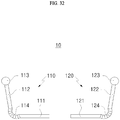
- the present application may provide a competitive construct used in polymerase chain reaction (PCR) using a nucleic acid complex pair, which includes a first nucleic acid complex including a first determinant being a primer for a first target DNA, and a first tag; and a second nucleic acid complex including a second determinant being a primer for a second target DNA, and a second tag having a complementary sequence to the first tag, wherein the competitive construct includes a first additional sequence having a complementary sequence to at least a part of the base sequence of the first determinant, and a second additional sequence having a complementary sequence to at least a part of the base sequence of the first tag.
- PCR polymerase chain reaction
- a nucleic acid complex pair according to an embodiment can be used for target detection in a sample using the dissociation temperature of a tag complementarily bound with the target.
- a PCR kit includes a multiple types of nucleic acid complex pairs designed to have different dissociation temperatures of tags and thus can be used for detection of multiple types of targets per fluorescent channel.
- the first determinant may include a forward primer for a first target DNA
- the second determinant may include a reverse primer for the first target DNA
- the first tag may include a base sequence complementary to the base sequence of the second tag
- the second tag may include a base sequence complementary to the base sequence of the first tag.
- the first determinant may consist of deoxyribonucleic acid (DNA), ribonucleic acid (RNA), peptide nucleic acid (PNA), locked nucleic acid (LNA), bridged nucleic acid (BNA), hexose nucleic acid (HNA), glycol nucleic acid (GNA), threose nucleic acid (TNA), cyclohexene nucleic acid (CeNA) or a combination thereof
- the second determinant may consist of DNA, RNA, PNA, LNA, BNA, HNA, GNA, TNA, CeNA or a combination thereof.
- the first tag may consist of DNA, RNA, PNA, LNA, BNA, HNA, GNA, TNA, CeNA or a combination thereof
- the second tag may consist of DNA, RNA, PNA, LNA, BNA, HNA, GNA, TNA, CeNA or a combination thereof.
- the first nucleic acid complex may include a first label
- the second nucleic acid complex may include a second label, wherein the first label may be configured to provide energy to the second label.
- the first label may include at least one of FAM, JOE, TET, HEX, VIC, Oregon Green®, TAMRA, ROX, Cyanine-3, Cyanine-3.5, Cyanine-5, Cyanine-5.5, Aequorin and a cyan fluorescent protein (CFP).
- FAM FAM
- JOE JOE
- TET HEX
- VIC Oregon Green®
- TAMRA ROX
- Cyanine-3 Cyanine-3.5
- Cyanine-5 Cyanine-5.5
- Aequorin a cyan fluorescent protein
- the second label may be a material configured to accept a first light emitted from the first label and convert the first light to a second light or a material configured to absorb the first light emitted from the first label.
- the first label when the first tag is complementarily bonded with the second tag, the first label may provide energy to the second label.
- the first tag may be located between the first determinant and the first label
- the second tag may be located between the second determinant and the second label
- the first label may be located between the first determinant and the first tag
- the second tag may be located between the second determinant and the second label
- a first linker may be located between the first determinant and the first tag, and a second linker may be located between the second determinant and the second tag.
- the first linker may include a PCR blocker for preventing an amplification product for the first tag from being produced
- the second linker may include a PCR blocker for preventing an amplification product for the second tag from being produced.
- the nucleic acid complex pair may be used for PCR, which may be performed to amplify at least a part of the first target DNA sequence.
- the nucleic acid complex pair may be used for a digital PCR.
- the length of the base sequence of the first tag may be shorter than a length of a base sequence of the second tag.
- a part of the base sequence of the first tag may be the same as a part of the base sequence of the first determinant or the second determinant.
- a kit for PCR including the nucleic acid complex pair according to claim 1 may be provided.
- the kit for PCR may further include at least one of a DNA polymerase, a coenzyme involved in PCR, and a buffer for adjusting pH and/or a salt concentration.
- a competitive construct used for PCR using a nucleic acid complex pair which includes a first nucleic acid complex including a first determinant being a primer for a first target DNA, and a first tag; and a second nucleic acid complex including a second determinant being a primer for second target DNA, and a second tag having a complementary sequence to the first tag, may be provided, wherein the competitive construct may include a first additional sequence having a complementary sequence to at least a part of the base sequence of the first determinant; and a second additional sequence having a complementary sequence to at least a part of the base sequence of the first tag.
- the first determinant may be a forward primer for the first target DNA
- the second determinant may be a reverse primer for the first target DNA
- the first determinant may be a reverse primer for the first target DNA
- the second determinant may be a forward primer for the first target DNA
- the first additional sequence may consist of DNA, RNA, PNA, LNA, BNA, HNA, GNA, TNA, CeNA or a combination thereof.
- the second additional sequence may consist of DNA, RNA, PNA, LNA, BNA, HNA, GNA, TNA, CeNA or a combination thereof.
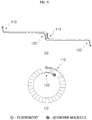
- the second nucleic acid complex may include a fluorescent molecule emitting a first light
- the first nucleic acid complex may include a quencher molecule, which accepts the first light and then emits second light, or absorbs the first light.
- the first nucleic acid complex may include a fluorescent molecule emitting a first light
- the second nucleic acid complex may include a quencher molecule, which accepts the first light and then emits second light, or absorbs the first light.
- a first light emitted from a tube including the first nucleic acid complex and the competitive construct after a complementary binding between the first nucleic acid complex and the competitive construct is induced may be stronger than a first light emitted from the tube including the first nucleic acid complex and the second nucleic acid complex after the complementary bond between the first nucleic acid complex and the second nucleic acid complex is induced.
- the second additional sequence may have a base sequence complementary to a base sequence of the first tag, and the number of bases in the base sequence complementary to the base sequence of the first tag may be 50% or more of the number of base pairs complementarily binding between the first tag and the second tag.
- the number of bases of the base sequence complementary to the base sequence of the first tag may be 75% or more of the number of base pairs complementarily binding between the first tag and the second tag.
- the first additional sequence may have a base sequence complementary to a base sequence of the first determinant, and the base sequence complementary to the base sequence of the first determinant has an annealing temperature of 10 to 35 °C.
- the base sequence complementary to the base sequence of the first determinant may have an annealing temperature of 20 to 30 °C.
- a kit for PCR which includes a first nucleic acid complex including a first determinant being a primer for first target DNA, and a first tag; a second nucleic acid complex including a second determinant being a primer for second target DNA, and a second tag having a complementary sequence to the first tag; and a first additional sequence having a sequence complementary to at least a part of the base sequence of the first determinant and a second additional sequence having a sequence complementary to at least a part of the base sequence of the first tag, may be provided.
- the first determinant may be a forward primer for the first target DNA
- the second determinant may be a reverse primer for the first target DNA
- the second determinant may be a forward primer for the first target DNA
- the first determinant may be a reverse primer for the first target DNA
- the first additional sequence may consist of DNA, RNA, PNA, LNA, BNA, HNA, GNA, TNA, CeNA or a combination thereof.
- the second additional sequence may consist of DNA, RNA, PNA, LNA, BNA, HNA, GNA, TNA, CeNA or a combination thereof.
- the second nucleic acid complex may include a fluorescent molecule emitting a first light
- the first nucleic acid complex may include a quencher molecule, which accepts the first light and then emits a second light, or absorbs the first light
- the first nucleic acid complex may include a fluorescent molecule emitting a first light
- the second nucleic acid complex may include a quencher molecule, which accepts the first light and then emits a second light, or absorbs the first light
- the total mass of at least one competitive construct included in the PCR kit may be larger than at least one of the total mass of at least one first nucleic acid complex included in the PCR kit and the total mass of at least one second nucleic acid complex included in the PCR kit.
- the total mass of at least one competitive construct included in the PCR kit may be two-fold or larger than at least one of the total mass of at least one first nucleic acid complex included in the PCR kit and the total mass of at least one second nucleic acid complex included in the PCR kit.
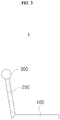
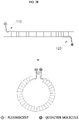
- FIG. 1 is a diagram of a nucleic acid complex 1 according to an exemplary embodiment of the present application.
- the nucleic acid complex 1 may include a determinant 100 and a tag 200.
- the determinant 100 may include a nucleic acid and/or a nucleic acid analog.
- the determinant 100 may include a unit molecule of a nucleic acid.
- the determinant 100 may include a unit molecule of a nucleic acid analog.
- the determinant 100 may include a unit molecule of a nucleic acid and the unit molecule of a nucleic acid analog.
- the determinant 100 may include a unit molecule of a nucleic acid.
- the determinant 100 may include the unit molecule of DNA which is a nucleic acid.
- the unit molecule of DNA may be a material represented by Formula 1 below.
- the base of Formula 1 may be adenine (A), guanine (G), thymine (T) or cytosine (C).
- the base of Formula 1 may be a purine or pyrimidine-based derivative such as hypoxanthine or xanthine.
- the determinant 100 may include the unit molecule of RNA which is a nucleic acid.
- a unit molecule of RNA may be a material represented by Formula 2 below.
- the base of Formula 2 may be adenine (A), guanine (G), cytosine (C) or uracil (U).
- the base of Formula 2 may be a purine or pyrimidine-based derivative such as hypoxanthine or xanthine.
- the determinant 100 may include the unit molecule of a nucleic acid.
- the determinant 100 may consist of the unit molecule of a nucleic acid. In a specific example, the determinant 100 may consist of the unit molecule of DNA. Alternatively, the determinant 100 may consist of the unit molecule of RNA.
- the determinant 100 may consist of a polymer of the unit molecule of a nucleic acid.
- the determinant 100 may consist of a polymer of the unit molecule of DNA.
- the determinant 100 may consist of a polymer of the unit molecule of RNA.
- the determinant 100 may include the unit molecule of a first nucleic acid and the unit molecule of a second nucleic acid.
- the determinant 100 may include at least a first nucleic acid and a second nucleic acid.
- the first and second nucleic acids included in the determinant 100 may be directly connected to each other.
- the determinant 100 may be provided in the form in which one end of the unit molecule of a first nucleic acid (or a polymer of the unit molecule) and one end of the unit molecule of a second nucleic acid (or a polymer of the unit molecule) are directly connected to each other.
- the first and second nucleic acids included in the determinant 100 may be connected by a specific compound.
- the determinant 100 may be provided in the form in which one end of the unit molecule of a first nucleic acid (or a polymer of the unit molecule) and one end of the unit molecule of a second nucleic acid (or a polymer of the unit molecule) are connected by a specific compound.
- the determinant 100 may be provided in the form in which the unit molecule of a first nucleic acid and the unit molecule of a second nucleic acid are connected.
- the determinant 100 may be provided in the form in which the unit molecule of DNA and the unit molecule of RNA are connected.
- the determinant 100 may be provided in the form in which the unit molecule of DNA and the unit molecule of DNA are connected by a specific compound (e.g., a crosslinker).
- the determinant 100 may be provided in the form in which the unit molecule of RNA and the unit molecule of RNA are connected by a specific compound.
- the determinant 100 may be provided in the form in which the unit molecule of a second nucleic acid and a polymer of the unit molecule of a first nucleic acid are connected.
- the determinant 100 may be configured in the form in which the unit molecule of RNA and a polymer of the unit molecule of DNA are connected.
- the determinant 100 may be configured in the form in which the unit molecule of DNA and a polymer of the unit molecule of RNA are connected.
- the determinant 100 may be configured in the form in which the unit molecule of DNA and a polymer of the unit molecule of DNA are connected by a specific compound.
- the determinant 100 may be configured in the form in which the unit molecule of RNA and a polymer of the unit molecule of RNA are connected by a specific compound.
- the determinant 100 may be configured in the form in which a polymer of the unit molecule of a first nucleic acid and a polymer of the unit molecule of a second nucleic acid are connected.
- the determinant 100 may be configured in the form in which a polymer of the unit molecule of DNA and a polymer of the unit molecule of RNA are connected.
- the determinant 100 may be configured in the form in which a polymer of the unit molecule of DNA and a polymer of the unit molecule of DNA are connected by a specific compound.
- the determinant 100 may be configured in the form in which a polymer of the unit molecule of RNA and a polymer of the unit molecule of RNA are connected by a specific compound.
- the determinant 100 may include the unit molecule of a nucleic acid analog.
- the determinant 100 may include the unit molecule of PNA which is a nucleic acid analog.
- the unit molecule of PNA may be a material represented by Formula 3 below.
- the base of Formula 3 may be adenine (A), guanine (G), thymine (T), cytosine (C) or uracil (U).
- the base of Formula 3 may be a purine or pyrimidine-based derivative such as hypoxanthine or xanthine.
- the determinant 100 may include the unit molecule of LNA which is a nucleic acid analog.
- the unit molecule of LNA may be a material represented by Formula 4 below.
- the base of Formula 4 may be adenine (A), guanine (G), thymine (T), cytosine (C) or uracil (U).
- the base of Formula 4 may be a purine or pyrimidine-based derivative such as hypoxanthine or xanthine.
- the determinant 100 may include the unit molecule of BNA which is a nucleic acid analog.
- the unit molecule of BNA may be a material represented by Formula 5 below.
- the base of Formula 5 may be adenine (A), guanine (G), thymine (T), cytosine (C) or uracil (U).
- the base of Formula 5 may be a purine or pyrimidine-based derivative such as hypoxanthine or xanthine.
- the determinant 100 may include the unit molecule of HNA which is a nucleic acid analog.
- the unit molecule of HNA may be a material represented by Formula 6 below.
- the base of Formula 6 may be adenine (A), guanine (G), thymine (T), cytosine (C) or uracil (U).
- the base of Formula 6 may be a purine or pyrimidine-based derivative such as hypoxanthine or xanthine.
- the determinant 100 may include the unit molecule of GNA which is a nucleic acid analog.
- the unit molecule of GNA may be a material represented by Formula 7 below.
- the base of Formula 7 may be adenine (A), guanine (G), thymine (T), cytosine (C) or uracil (U).
- the base of Formula 7 may be a purine or pyrimidine-based derivative such as hypoxanthine or xanthine.
- the determinant 100 may include the unit molecule of TNA which is a nucleic acid analog.
- the unit molecule of TNA may be a material represented by Formula 8 below.
- the base of Formula 8 may be adenine (A), guanine (G), thymine (T), cytosine (C) or uracil (U).
- the base of Formula 8 may be a purine or pyrimidine-based derivative such as hypoxanthine or xanthine.
- the determinant 100 may include the unit molecule of CeNA which is a nucleic acid analog.
- the unit molecule of CeNA may be a material represented by Formula 9 below.
- the base of Formula 9 may be adenine (A), guanine (G), thymine (T), cytosine (C) or uracil (U).
- the base of Formula 9 may be a purine or pyrimidine-based derivative such as hypoxanthine or xanthine.
- the determinant 100 may include the unit molecule of a nucleic acid analog.
- the determinant 100 may consist of the unit molecule of a nucleic acid analog. In a specific example, the determinant 100 may consist of the unit molecule of LNA.
- the determinant 100 may consist of a polymer of the unit molecule of a nucleic acid analog. In a specific example, the determinant 100 may consist of a polymer of the unit molecule of PNA.
- the determinant 100 may include the unit molecule of a first nucleic acid analog and the unit molecule of a second nucleic acid analog.
- the determinant 100 may include at least the first nucleic acid analog and the second nucleic acid analog.
- the first nucleic acid analog and the second nucleic acid analog, which are included in the determinant 100, may be directly connected to each other.
- the determinant 100 may be provided in the form in which one end of the unit molecule (or a polymer of the unit molecule) of the first nucleic acid analog and one end of the unit molecule (or a polymer of the unit molecule) of the second nucleic acid analog are directly connected to each other.
- the first nucleic acid analog and the second nucleic acid analog, which are included in the determinant 100, may be connected by a specific compound.
- the determinant 100 may be provided in the form in which one end of the unit molecule (or a polymer of the unit molecule) of the first nucleic acid analog and one end of the unit molecule (or a polymer of the unit molecule) of the second nucleic acid analog are connected by a specific compound.
- the determinant 100 may be configured in the form in which the unit molecule of the first nucleic acid analog and the unit molecule of the second nucleic acid analog are connected. In a specific example, the determinant 100 may be configured in the form in which the unit molecule of PNA and the unit molecule of LNA are connected.
- the determinant 100 may be configured in the form in which the unit molecule of the second nucleic acid analog and a polymer of the unit molecule of the first nucleic acid analog are connected.
- the determinant 100 may be configured in the form in which the unit molecule of GNA and a polymer of the unit molecule of TNA are connected.
- the determinant 100 may be configured in the form in which the unit molecule of CeNA and a polymer of the unit molecule of CeNA are connected by a specific compound.
- the determinant 100 may be configured in the form in which a polymer of the unit molecule of the first nucleic acid analog and a polymer of the unit molecule of the second nucleic acid analog are connected.
- the determinant 100 may be configured in the form in which a polymer of the unit molecule of BNA and a polymer of the unit molecule of HNA are connected.
- the determinant 100 may be configured in the form in which a polymer of the unit molecule of LNA and a polymer of the unit molecule of LNA are connected by a specific compound.
- the determinant 100 may include the unit molecule of a nucleic acid and the unit molecule of a nucleic acid analog.
- the determinant 100 may include at least a first nucleic acid and a first nucleic acid analog.
- the first nucleic acid and the first nucleic acid analog, which are included in the determinant 100 may be directly connected to each other.
- the determinant 100 may be provided in the form in which one end of the unit molecule (or a polymer of the unit molecule) of a first nucleic acid and one end of the unit molecule (or a polymer of the unit molecule) of a first nucleic acid analog may be directly connected to each other.
- the first nucleic acid and the first nucleic acid analog, which are included in the determinant 100, may be connected by a specific compound.
- the determinant 100 may be provided in the form in which one end of the unit molecule (or a polymer of the unit molecule) of a first nucleic acid and one end of the unit molecule (or a polymer of the unit molecule) of a first nucleic acid analog may be connected by a specific compound.
- the determinant 100 may be configured in the form in which the unit molecule of a nucleic acid and the unit molecule of a nucleic acid analog are connected. In a specific example, the determinant 100 may be configured in the form in which the unit molecule of DNA and the unit molecule of LNA are connected.
- the determinant 100 may be configured in the form in which the unit molecule of a nucleic acid and a polymer of the unit molecule of a nucleic acid analog are connected. In a specific example, the determinant 100 may be configured in the form in which the unit molecule of RNA and a polymer of the unit molecule of PNA are connected.
- the determinant 100 may be configured in the form in which the unit molecule of a nucleic acid analog and a polymer of the unit molecule of a nucleic acid are connected. In a specific example, the determinant 100 may be configured in the form in which the unit molecule of GNA and a polymer of the unit molecule of DNA are connected.
- the determinant 100 may be configured in which a polymer of the unit molecule of a nucleic acid and a polymer of the unit molecule of a nucleic acid analog are connected.
- the determinant 100 may be configured in the form in which a polymer of the unit molecule of RNA and a polymer of the unit molecule of CeNA are connected.
- the determinant 100 can be construed to include the unit molecule of a nucleic acid analog which is not disclosed in the specification.
- the unit molecule of a nucleic acid analog may include a base, and have a form in which at least a part of the components except the base is chemically modified.
- the determinant 100 may include a material in which at least one of Formulas 1 to 9 is chemically modified within a range easily designed and changed by one of ordinary skill in the art.
- the determinant 100 may include deoxycytidine triphosphate (dCTP) in which cytosine (C) binds to the base of Formula 1, and two phosphoric acids further bind to the phosphoric acid of Formula 1.
- dCTP deoxycytidine triphosphate
- C cytosine
- the operation and examples of the determinant 100 will be described in detail. According to the material characteristics of the determinant 100 which are previously described and the operation and examples of the determinant 100 described below, the definition and function of the determinant 100 will be more clearly understood.
- the determinant 100 may include a region complementarily binding to a specific base sequence.
- the determinant 100 may include a region specifically binding to a specific base sequence.
- the specific base sequence may be a base sequence complementary to at least a part of the base sequence of the determinant 100.
- the expression "the determinant 100 includes a region complementarily binding to a specific base sequence” may mean that at least one property of the electrical, chemical and physical properties in at least a part of the regions of the determinant 100 corresponds to a specific base sequence.
- the determinant 100 may include a region in which a chemical binding force with a specific base sequence may occur.
- the determinant 100 may include a region which is configured to form at least one bond of a covalent bond, a hydrogen bond, an ionic bond and a hydrophobic bond with a specific base sequence may occur.
- the determinant 100 may have a unique base sequence.
- the determinant 100 may have a unique base sequence according to a base type (e.g., adenine, guanine, etc.) of the unit molecule of a nucleic acid included in the determinant 100 and/or the unit molecule of a nucleic acid analog.
- a base type e.g., adenine, guanine, etc.
- the determinant 100 may complementarily bind to a specific base sequence.
- the determinant 100 may specifically bind to the specific base sequence which is complementary to at least a part of the unique base sequence of the determinant 100.
- the determinant 100 may complementarily bind to the specific base sequence by hydrogen bonding between at least a part of the unique base sequence of the determinant 100 and the specific base sequence.
- the determinant 100 may determine a different material which can complementarily bind thereto.
- the determinant 100 may specifically bind to a specific base sequence, such that a binding target material of the determinant 100 may be determined to be a different material (e.g., ssDNA including the specific base sequence) including the specific base sequence.
- the determinant 100 may be a single strand including a nucleic acid and/or a nucleic acid analog.
- the determinant 100 may consist of at least one nucleic acid and/or nucleic acid analog.
- the determinant 100 consists of a plurality of nucleic acids and/or nucleic acid analogs
- the plurality of nucleic acids and/or nucleic acid analogs included in the determinant 100 may be connected to each other such that the determinant 100 is formed in a single strand.
- the determinant 100 may specifically bind to a nucleic acid including a sequence complementary to the base sequence of the determinant 100. At least a part of the base sequence of the determinant 100 may specifically bind to a nucleic acid with a sequence complementary to the base sequence of the determinant 100.
- all of the base sequence of the determinant 100 may specifically bind to a nucleic acid including a sequence complementary to the base sequence of the determinant 100.
- the determinant 100 when the determinant 100 is 5'-AAACGGCTCAAATTTTT-3', the determinant 100 may specifically bind to a nucleic acid including 5'-AAAAATTTGAGCCGTTT-3'.
- the determinant 100 when the determinant 100 is 5'-AAACGGCTCAAATTTTT-3', the determinant 100 may specifically bind to a nucleic acid including 5'-AAAAATTTGAG-3'.
- the determinant 100 may include 1 to 100 mer of a nucleic acid and/or nucleic acid analog.
- the determinant 100 may include a 5 to 50-mer nucleic acid and/or nucleic acid analog.
- the determinant 100 may include a 15 to 30-mer nucleic acid and/or nucleic acid analog.
- the determinant 100 may be improved in reactivity with a target nucleic acid, compared to when having a 10-mer or less nucleic acid and/or nucleic acid analog.
- the determinant 100 may be a PCR primer.
- the determinant 100 may specifically bind to a specific base sequence.
- the specific base sequence may a base sequence complementary to at least a part of the base sequence of the determinant 100.
- the determinant 100 may bind to a target nucleic acid (e.g., target DNA including a specific base sequence), and a nucleotide is connected to the 3' end of the determinant 100, resulting in the elongation at the 3' end of the determinant 100.
- a target nucleic acid e.g., target DNA including a specific base sequence
- the determinant 100 bound to a target nucleic acid may be elongated at the 3' end of the determinant 100 by a polymerase to connect a nucleotide (e.g., dNTP or ddNTP) to the 3' end of the determinant 100 .
- a nucleotide e.g., dNTP or ddNTP
- the determinant 100 when the determinant 100 is 5'-AAACGGCTCAAATTTTT-3', the determinant 100 may specifically bind to a target nucleic acid including 5'-AAAAATTTGAGCCGTTT-3', and the unit molecule of a nucleic acid (e.g., a nucleotide) having a base sequence complementary to bases in a region adjacent to the 5' end of the target nucleic acid may be connected to the 3' end of the determinant 100, resulting in the elongation at the 3' end of the determinant 100.
- a nucleic acid e.g., a nucleotide
- a nucleotide may be connected to the 3' end of the determinant 100 by a covalent bond.
- a nucleotide may be connected to the 3' end of the determinant 100 by a covalent bond between a H group of a sugar at the 3' end of the determinant 100 and an OH group of a phosphate group of the nucleotide to be attached to the 3' end of the determinant 100.
- the determinant 100 may include a 1 to 50-mer nucleic acid and/or nucleic acid analog.
- the determinant 100 may include a 5 to 30-mer nucleic acid and/or nucleic acid analog.
- the determinant 100 may include a 10 to 25-mer nucleic acid and/or nucleic acid analog.
- the determinant 100 may be improved in reactivity of the determinant 100 with the target nucleic acid, compared to when including a 10-mer or less nucleic acid and/or nucleic acid analog.
- the determinant 100 may include at least two or more nucleic acids, and the first and second nucleic acids may be connected by a specific compound.
- the determinant 100 may include at least two unit molecules of nucleic acids, and the first nucleic acid (the unit molecule of a nucleic acid or a polymer of the unit molecule of a nucleic acid) and the second nucleic acid (the unit molecule of a nucleic acid or a polymer of the unit molecule of a nucleic acid) may be connected by a specific compound.
- the determinant 100 may be configured in the form in which a first strand consisting of a polymer of the unit molecule of DNA and a second strand consisting of a polymer of the unit molecule of DNA are connected by a specific compound.
- the determinant 100 may be provided in the form in which the first and second strands are connected by a polydeoxyinosine linker.
- the determinant 100 in which the first strand and the second strand relatively shorter than the first strand are connected by a polydeoxyinosine linker may be provided.
- the tag 200 may include a compound including at least one of F, N, O and H to enable hydrogen bonding.
- the tag 200 may be a polymer produced by polymerizing a monomer including at least one of F, N, O and H.
- the tag 200 may consist of a polymer of the unit molecule of Formula 10 below.
- the tag 200 may have a form in which a first polymer produced by polymerizing a monomer including at least one of F, N, O and H and a second polymer produced by polymerizing a monomer including at least one of F, N, O and H are connected by a specific compound.
- the tag 200 may have a form in which a polymer produced by polymerizing a monomer including at least one of F, N, O and H and an arbitrary compound are connected.
- the tag 200 may include a nucleic acid and/or a nucleic acid analog.
- the tag 200 may include the unit molecule of a nucleic acid.
- the tag 200 may include the unit molecule of a nucleic acid analog.
- the tag 200 may include the unit molecule of a nucleic acid and the unit molecule of a nucleic acid analog.
- the tag 200 may include the unit molecule of a nucleic acid.
- the tag 200 may include the unit molecule of DNA which is a nucleic acid.
- the unit molecule of DNA may be a material represented by Formula 1 described above.
- the tag 200 may include the unit molecule of RNA which is a nucleic acid.
- the unit molecule of RNA may be a material represented by Formula 2 described above.
- the tag 200 may include the unit molecule of a nucleic acid.
- the tag 200 may consist of the unit molecule of a nucleic acid. In a specific example, the tag 200 may consist of the unit molecule of DNA. Alternatively, the tag 200 may consist of the unit molecule of RNA.
- the tag 200 may consist of a polymer of the unit molecule of a nucleic acid.
- the tag 200 may consist of a polymer of the unit molecule of DNA.
- the tag 200 may consist of a polymer of the unit molecule of RNA.
- the tag 200 may include the unit molecule of a first nucleic acid and the unit molecule of a second nucleic acid.
- the tag 200 may include at least the first and second nucleic acids.
- the first and second nucleic acids included in the tag 200 may be directly connected to each other.
- the tag 200 may be provided in the form in which one end of the unit molecule (or a polymer of the unit molecule) of a first nucleic acid and one end of the unit molecule (or a polymer of the unit molecule) of a second nucleic acid are directly connected to each other.
- the first and second nucleic acids included in the tag 200 may be connected by a specific compound.
- the tag 200 may be provided in the form in which one end of the unit molecule (or a polymer of the unit molecule) of a first nucleic acid and one end of the unit molecule (or a polymer of the unit molecule) of a second nucleic acid are connected by a specific compound.
- the tag 200 may be configured in the form in which the unit molecule of a first nucleic acid and the unit molecule of a second nucleic acid are connected.
- the tag 200 may be configured in the form in which the unit molecule of DNA and the unit molecule of RNA are connected.
- the tag 200 may be configured in the form in which the unit molecule of DNA and the unit molecule of DNA are connected by a specific compound.
- the tag 200 may be configured in the form in which the unit molecule of RNA and the unit molecule of RNA are connected by a specific compound.
- the tag 200 may be configured in the form in which the unit molecule of a second nucleic acid and a polymer of the unit molecule of a first nucleic acid are connected.
- the tag 200 may be configured in the form in which the unit molecule of RNA and a polymer of the unit molecule of DNA are connected.
- the tag 200 may be configured in the form in which the unit molecule of DNA and a polymer of the unit molecule of RNA are connected.
- the tag 200 may be configured in the form in which the unit molecule of DNA and a polymer of the unit molecule of DNA are connected by a specific compound.
- the tag 200 may be configured in the form in which the unit molecule of RNA and a polymer of the unit molecule of RNA are connected by a specific compound.
- the tag 200 may be configured in the form in which a polymer of the unit molecule of a first nucleic acid and a polymer of the unit molecule of a second nucleic acid are connected.
- the tag 200 may be configured in the form in which a polymer of the unit molecule of DNA and a polymer of the unit molecule of RNA are connected.
- the tag 200 may be configured in the form in which a polymer of the unit molecule of DNA and a polymer of the unit molecule of DNA are connected by a specific compound.
- the tag 200 may be configured in the form in which a polymer of the unit molecule of RNA and a polymer of the unit molecule of RNA are connected by a specific compound.
- the tag 200 may include the unit molecule of a nucleic acid analog.
- the tag 200 may include the unit molecule of PNA which is a nucleic acid analog.
- the unit molecule of PNA may be a material represented by Formula 3 described above.
- the tag 200 may include the unit molecule of LNA which is a nucleic acid analog.
- the unit molecule of LNA may be a material represented by Formula 4 described above.
- the tag 200 may include the unit molecule of BNA which is a nucleic acid analog.
- the unit molecule of BNA may be a material represented by Formula 5 described above.
- the tag 200 may include the unit molecule of HNA which is a nucleic acid analog.
- the unit molecule of HNA may be a material represented by Formula 6 described above.
- the tag 200 may include the unit molecule of GNA which is a nucleic acid analog.
- the unit molecule of GNA may be a material represented by Formula 7 described above.
- the tag 200 may include the unit molecule of TNA which is a nucleic acid analog.
- the unit molecule of TNA may be a material represented by Formula 8 described above.
- the tag 200 may include the unit molecule of CeNA which is a nucleic acid analog.
- the unit molecule of CeNA may be a material represented by Formula 9 described above.
- the tag 200 may include the unit molecule of a nucleic acid analog.
- the tag 200 may consist of the unit molecule of a nucleic acid analog. In a specific example, the tag 200 may consist of the unit molecule of LNA.
- the tag 200 may consist of a polymer of the unit molecule of a nucleic acid analog. In a specific example, the tag 200 may consist of a polymer of the unit molecule of PNA.
- the tag 200 may include the unit molecule of a first nucleic acid analog and the unit molecule of a second nucleic acid analog.
- the tag 200 may include at least a first nucleic acid analog and a second nucleic acid analog.
- the first nucleic acid analog and the second nucleic acid analog, which are included in the tag 200, may be directly connected to each other.
- the tag 200 may be provided in the form in which one end of the unit molecule (or a polymer of the unit molecule) of a first nucleic acid analog and one end of the unit molecule (or a polymer of the unit molecule) of a second nucleic acid analog are directly connected to each other.
- the first nucleic acid analog and the second nucleic acid analog, which are included in the tag 200, may be connected by a specific compound.
- the tag 200 may be provided in the form in which one end of the unit molecule (or a polymer of the unit molecule) of a first nucleic acid analog and one end of the unit molecule (or a polymer of the unit molecule) of a second nucleic acid analog are connected by a specific compound.
- the tag 200 may be configured in the form in which the unit molecule of a first nucleic acid analog and the unit molecule of a second nucleic acid analog are connected.
- the tag 200 may be configured in the form in which the unit molecule of PNA and the unit molecule of LNA are connected.
- the tag 200 may be configured in the form in which the unit molecule of a second nucleic acid analog and a polymer of the unit molecule of a first nucleic acid analog are connected.
- the tag 200 may be configured in the form in which the unit molecule of GNA and a polymer of the unit molecule of TNA are connected.
- the tag 200 may be configured in the form in which the unit molecule of CeNA and a polymer of the unit molecule of CeNA are connected by a specific compound.
- the tag 200 may be configured in the form in which a polymer of the unit molecule of a first nucleic acid analog and a polymer of the unit molecule of a second nucleic acid analog are connected.
- the tag 200 may be configured in the form in which a polymer of the unit molecule of BNA and a polymer of the unit molecule of HNA are connected.
- the tag 200 may be configured in the form in which a polymer of the unit molecule of LNA and a polymer of the unit molecule of LNA are connected by a specific compound.
- the tag 200 may include the unit molecule of a nucleic acid and the unit molecule of a nucleic acid analog.
- the tag 200 may include at least a first nucleic acid and a first nucleic acid analog.
- the first nucleic acid and the first nucleic acid analog, which are included in the tag 200, may be directly connected to each other.
- the tag 200 may be provided in the form in which one end of the unit molecule (or a polymer of the unit molecule) of a first nucleic acid and one end of the unit molecule (or a polymer of the unit molecule) of a first nucleic acid analog are directly connected to each other.
- the first nucleic acid and the first nucleic acid analog included in the tag 200 may be connected by a specific compound.
- the tag 200 may be provided in the form in which one end of the unit molecule (or a polymer of the unit molecule) of a first nucleic acid and one end of the unit molecule (or a polymer of the unit molecule) of a first nucleic acid analog are connected by a specific compound.
- the tag 200 may be configured in the form in which the unit molecule of a nucleic acid and the unit molecule of a nucleic acid analog are connected. In a specific example, the tag 200 may be configured in the form in which the unit molecule of DNA and the unit molecule of LNA are connected.
- the tag 200 may be configured in the form in which a polymer of the unit molecule of a nucleic acid analog and the unit molecule of a nucleic acid are connected.
- the tag 200 may be configured in the form in which a polymer of the unit molecule of PNA and the unit molecule of RNA are connected.
- the tag 200 may be configured in the form in which a polymer of the unit molecule of a nucleic acid and the unit molecule of a nucleic acid analog are connected.
- the tag 200 may be configured in the form in which a polymer of the unit molecule of DNA and the unit molecule of GNA are connected.
- the tag 200 may be configured in the form in which a polymer of the unit molecule of a nucleic acid and a polymer of the unit molecule of a nucleic acid analog are connected.
- the tag 200 may be configured in the form in which a polymer of the unit molecule of RNA and a polymer of the unit molecule of CeNA are connected.
- the tag 200 includes a compound that is not disclosed herein.
- the tag 200 may be interpreted to include the unit molecule of a nucleic acid analog which is not disclosed herein.
- the unit molecule of a nucleic acid analog includes a base, and at least a part of the components except the base may be chemically modified, compared to a nucleotide.
- the tag 200 may be interpreted to include a material in which at least one of Formulas 1 to 10 is chemically modified within a range that is easily designed and modified by one of ordinary skill in the art.
- the tag 200 may include thymidine diphosphate (TDP) in which thymidine (T) binds to the base of Formula 2 and one phosphoric acid further binds to the phosphoric acid of Formula 2.
- TDP thymidine diphosphate
- the tag 200 may include a region complementarily binding to a specific base sequence.
- the tag 200 may include a region specifically binding to the specific base sequence.
- the specific base sequence may be a base sequence which is complementary to at least a part of the base sequence of the tag 200.
- the tag 200 includes a region complementarily binding to a specific base sequence
- the expression "the tag 200 includes a region complementarily binding to a specific base sequence” may mean that at least one property of electrical, chemical and physical properties in at least a part of the regions of the tag 200 corresponds to a specific base sequence.
- the tag 200 may include a region in which a chemical binding force with a specific base sequence may occur.
- the tag 200 may include a region which is configured to form at least one bond of a covalent bond, a hydrogen bond, an ionic bond and a hydrophobic bond with a specific base sequence may occur.
- the tag 200 may include a region complementarily binding to a different nucleic acid complex 1.
- the tag 200 may include a region complementarily binding to a tag 200 of the different nucleic acid complex 1.
- the compound included in the tag 200 may have a unique chemical structure.
- the tag 200 may have a unique chemical structure according to a distance between elements of the compound included in the tag 200 and an element type of the compound included in the tag 200.
- the tag 200 may complementarily bind to the tag 200 of a different nucleic acid complex 1 having a specific chemical structure.
- the tag 200 may complementarily bind to the tag 200 of a different nucleic acid complex 1 by hydrogen bonding with a specific chemical structure corresponding to the unique chemical structure of the tag 200.
- a hydrogen of the tag 200 may be bonded to a hydrogen of the tag 200 of a different nucleic acid complex 1 by a hydrogen bond, and a nitrogen of the tag 200 may be bonded to a hydrogen of the tag 200 of a different nucleic acid complex 1 by a hydrogen bond.
- the tag 200 when the tag 200 includes a nucleic acid and/or the unit molecule of a nucleic acid analog, the tag 200 may have a unique base sequence.
- the tag 200 may have a unique base sequence according to a base type (e.g" adenine, guanine, etc.) of the unit molecule of a nucleic acid and/or the unit molecule of a nucleic acid analog, which are included in the tag 200.
- a base type e.g" adenine, guanine, etc.
- the tag 200 may complementarily bind to a tag 200 of a different nucleic acid complex 1 including a specific base sequence.
- the tag 200 may complementarily bind to the tag 200 of a different nucleic acid complex 1 by hydrogen bonding with a specific base sequence corresponding to at least a part of the unique base sequence of the tag 200.
- cytosine (C) in the base sequence of the tag 200 may form a hydrogen bond with guanine (G) in the base sequence of the tag 200 of a different nucleic acid complex 1
- adenine (A) in the base sequence of the tag 200 may form a hydrogen bond with thymine (T) in the base sequence of the tag 200.
- the tag 200 may be a single strand including a nucleic acid and/or nucleic acid analog.
- the tag 200 may consist of at least one nucleic acid and/or nucleic acid analog.
- the tag 200 may consist of a plurality of nucleic acids and/or nucleic acid analogs
- the plurality of nucleic acids and/or nucleic acid analogs included in the tag 200 may be connected to each other such that the tag 200 is formed in a single strand.
- the tag 200 may specifically bind to a tag 200 of a different nucleic acid complex 1 including a sequence complementary to the base sequence of the tag 200. At least a part of the base sequence of the tag 200 may specifically bind to the tag 200 of a different nucleic acid complex 1.
- all of the base sequence of the tag 200 may specifically bind to the tag 200 of a different nucleic acid complex 1.
- the tag 200 when the tag 200 is AAAAAAAAAA (SEQ ID NO: 5), the tag 200 may specifically bind to the tag 200 of a different nucleic acid complex 1 including TTTTTTTTTT (SEQ ID NO: 7).
- a part of the base sequence of the tag 200 may specifically bind to a tag 200 of a different nucleic acid complex 1.
- the tag 200 when the tag 200 is AAAAAAAAAA (SEQ ID NO: 5), the tag 200 may specifically bind to the tag 200 of a different nucleic acid complex 1 including TTTTTTTT (SEQ ID NO: 3). At least two bases (that is, AA) of the tag 200 may not participate in bonding.
- nucleic acid complex 1 according to an exemplary embodiment of the present application related to this will be described in detail in 2.2 (relating to Tag 200) and 2.4 (relating to the applications of a nucleic acid complex pair 10 according to Example 7).
- the tag 200 may include a 1 to 50-mer nucleic acid and/or nucleic acid analog.
- the tag 200 includes a 3 to 25-mer nucleic acid and/or nucleic acid analog.
- the tag 200 includes a 5 to 20-mer nucleic acid and/or nucleic acid analog.
- the tag 200 may be a probe for PCR clamping.
- the tag 200 may be a single strand including a nucleic acid and/or nucleic acid analog, which has at least one different base sequence from a primer used in the PCR.
- the tag 200 may be formed to have at least one different base sequence from the base sequence of the determinant 100.
- the tag 200 may specifically bind to a nucleic acid having a sequence similar to a specific base sequence binding to the determinant 100.
- the tag 200 may prevent the determinant 100 from mismatch-binding to a similar sequence similar to a target base sequence of the determinant 100 (that is, a base sequence corresponding to at least a part of the base sequence of the determinant 100).
- the tag 200 may specifically bind to a similar sequence similar to the target base sequence to prevent the determinant 100 from mismatch-binding to the similar sequence similar to the target base sequence.
- the tag 200 when the tag 200 is 5'-GAACGCCATC-3', the determinant 100 is 5'-TACGAATGCCATC-3', and a target base sequence to which the determinant 100 specifically binds is 3'-ATGCTTACGGTAG-5', the tag 200 may specifically bind to 5'-CTTGCGGTAG-3' in 3'-ATGCTTGCGGTAG-3' which is a similar sequence similar to the target base sequence. As a result, the tag 200 may prevent mismatch binding of the determinant 100 to the similar sequence.
- the tag 200 may include a 1 to 50-mer nucleic acid and/or nucleic acid analog.
- the tag 200 includes a 5 to 30-mer nucleic acid and/or nucleic acid analog.
- the tag 200 includes a 10 to 25-mer nucleic acid and/or nucleic acid analog.
- the tag 200 includes at least a 15-mer or more nucleic acid and/or nucleic acid analog, compared to when the tag 200 includes a 10-mer or less nucleic acid and/or nucleic acid analog, the reactivity of the tag 200 with the similar sequence may be improved.
- nucleic acid complex 1 including a determinant 100 and a tag 200
- material, operation and example of each element that is, the determinant 100 and the tag 200
- FIG. 2 is a diagram illustrating the positional relationship between components of a nucleic acid complex 1 according to an exemplary embodiment of the present application.
- the nucleic acid complex 1 may include a determinant 100 and a tag 200.
- the determinant 100 and tag 200 of the nucleic acid complex 1 may have a predetermined positional relation.
- the determinant 100 and the tag 200 may be connected.
- one end of the determinant 100 and one end of the tag 200 may be directly connected to each other.
- One end of the determinant 100 and one end of the tag 200 may be connected based on a chemical binding force.
- One end of the determinant 100 and one end of the tag 200 may be connected based on at least one of a covalent bond, a hydrogen bond, an ionic bond and a hydrophobic bond.
- the determinant 100 and the tag 200 may be connected by a covalent bond.
- the determinant 100 and the tag 200 may be connected in the form in which the 3' end of the tag 200 and the 5' end of the determinant 100 are directly connected (see FIG. 2(a) ).
- the determinant 100 and the tag 200 may be connected by a covalent bond of a H group of a sugar at the 3' end of the tag 200 and a OH group of a phosphate group at the 5' end of the determinant 100.
- the determinant 100 and the tag 200 may be connected in the form in which the 5' end of the tag 200 and the 3' end of the determinant 100 are directly connected (see FIG. 2(b) ).
- the determinant 100 and the tag 200 may be connected by a covalent bond of a H group of a sugar at the 3' end of the determinant 100 and a OH group of a phosphate group at the 5' end of the tag 200.
- the determinant 100 and the tag 200 may be connected by a separate material.
- one end of the determinant 100 and one end of the tag 200 may be connected by a specific compound.
- the positional relationship between elements of a nucleic acid complex 1 (described in 4.2 below) will be described in detail with reference to specific examples related thereto.
- nucleic acid complex 1 according to an exemplary embodiment of the present application was described.
- the nucleic acid complex 1 according to the first exemplary embodiment to be described below is the same as the above-described nucleic acid complex 1, except that it includes a label 300. Therefore, to explain the first exemplary embodiment, the same reference numerals are assigned to the components common to those of the above-described embodiment, and detailed description thereof will be omitted.
- FIG. 3 is a diagram illustrating a nucleic acid complex 1 according to a first exemplary embodiment of the present application.
- the nucleic acid complex 1 may include a determinant 100, a tag 200 and a label 300.
- the label 300 may include a small material having physical properties (e.g., size) and chemical properties (e.g., the change in chemical structure).
- the label 300 may be a metal nanoparticle.
- the label 300 may include a transition metal, a post-transition metal, and/or a metalloid, or may be a particle with a size of several nanometers to several hundreds of nanometers (approximately 10 -9 m).
- the label 300 may be a magnetic nanoparticle.
- the label 300 may be a particle including an iron oxide (Fe 2 O 3 or Fe 3 O 4 ), ferrite (one Fe in Fe 3 O 4 is changed to a different magnetic atom (e.g., CoFe 2 O 4 or MnFe 2 O 4 )) and/or an alloy (alloyed with a noble metal for increased conductivity and stability and addressing oxidation problems caused by magnetic atoms, e.g., FePt or CoPt), and having a size of several nanometers to several hundreds of nanometers (approximately 10 -9 m).
- the label 300 may be a latex bead.
- the label 300 may be a spherical polymer particle including an amorphous polymer (e.g., polystyrene), and having a colloidal size.
- amorphous polymer e.g., polystyrene
- the label 300 may include particles donating energy.
- the label 300 may include particles accepting energy.
- the label 300 may include particles donating and accepting energy.
- Energy donated from or accepted by the label 300 may include at least one of chemical energy, electrical energy, luminous energy and magnetic field energy.
- the label 300 may include particles donating energy.
- the label 300 may be a particle donating electron energy.
- the label 300 may be an oxidizing material that loses an electron.
- the label 300 may be a particle donating fluorescence resonance energy.
- the label 300 may be a luminescent material.
- the label 300 may be a fluorescent molecule that emits light of its own wavelength when light is projected.
- the label 300 may be FAM, JOE, TET, HEX, VIC, Oregon Green®, TAMRA, ROX, Cyanine-3, Cyanine-3.5, Cyanine-5, Cyanine-5.5, Aequorin or a cyan fluorescent protein (CFP).
- the label 300 may include an energy-accepting particle.
- the label 300 may be an electron energy-accepting particle.
- the label 300 may be a reducing material obtaining an electron.
- the label 300 may be a particle accepting fluorescence resonance energy.
- the label 300 may be a quenching material.
- the label 300 may be a black hole quencher (BHQ).
- BHQ black hole quencher
- the BHQ may be any one of Formulas 11 to 14 below.
- the label 300 may be a fluorescent conversion material.
- the label 300 may be a green fluorescent protein (GFP) emitting green fluorescence of 508 nm by accepting energy from Aequorin.
- the label 300 may be a yellow fluorescent protein (YFP) emitting yellow fluorescence of 535 nm by accepting energy from a cyan fluorescent protein (CFP).
- GFP green fluorescent protein
- YFP yellow fluorescent protein
- the label 300 may be involved in labeling the nucleic acid complex 1.
- the label 300 may serve as a marker for confirming information on the nucleic acid complex 1.
- the nucleic acid complex 1 may be indicated by the label 300.
- the information on the nucleic acid complex 1 may be detected.
- the label 300 when the label 300 is a particle having physical properties, the presence or absence of the nucleic acid complex 1 may be confirmed depending on whether the label 300 is detected. In another specific example, when the label 300 is a particle having physical properties, the degree of aggregation of the nucleic acid complex 1 may be confirmed according to the position of the label 300. In still another specific example, when the label 300 is a particle having physical properties, according to the moving path of the label 300, whether the nucleic acid complex 1 moves or not and the information on the movement (e.g., speed) may be confirmed.
- the information on the nucleic acid complex 1 including the label 300 may be detected in such a manner that at least one of chemical, electrical, optical and magnetic signals generated from the label 300 is detected.
- the label 300 is a material emitting energy
- the presence or absence of the nucleic acid complex 1 and/or the distribution of the nucleic acid complex 1 may be confirmed based on the emitted energy (i.e., a signal).
- the information on the nucleic acid complex 1 including the label 300 may be detected by detecting at least one of the chemical, electrical, optical and magnetic signals, which are generated by the label 300.
- the label 300 when the label 300 is a material accepting energy and emitting energy different from the accepted energy or a material absorbing energy, the information on the nucleic acid complex 1 may be confirmed according to the characteristics of the label 300 detected under a specific environmental condition.
- a label 300 according to an exemplary embodiment of the present application may be a gold nanoparticle.
- the label 300 may be a particle including gold, and having a size of several nanometers to several hundreds of nanometers.
- the nucleic acid complex 1 including the label 300 may be labeled in the manner in which the information on the particles of the label 300 (e.g., the size, mobility, location of particles, etc.) is detected.
- the presence or absence of the label 300 may be confirmed depending on whether particles corresponding to the size of the label 300 are detected by an optical sensor or the like. Depending on whether the label 300 is detected, the presence or absence of the nucleic acid complex 1 may be confirmed.
- the degree of aggregation of the label 300 may be confirmed. According to the degree of the aggregation of the label 300, the degree of aggregation of the nucleic acid complex 1 may be confirmed.
- the movement of the nucleic acid complex 1 and the information thereof may be confirmed according to the moving path of the label 300.
- the nucleic acid complex 1 including the label 300 may be labeled in the manner that information on the particle reactivity of the label 300 is detected.
- the presence or absence of particles of the label 300 may be confirmed. According to whether the label 300 is detected or not, the presence or absence of the nucleic acid complex 1 may be confirmed.
- the distribution of the label 300 may be confirmed.
- the distribution of the nucleic acid complex 1 may be confirmed.
- the label 300 may be a fluorescent material.
- the label 300 may be a fluorescent molecule emitting light with a unique wavelength when the light is projected.
- information on the nucleic acid complex 1 including the label 300 may be detected in the manner that at least one of the chemical, electrical, optical and magnetic signals generated from the label 300 is detected.
- the presence or absence of particles of the label 300 may be confirmed by detecting an optical signal generated from the label 300. By detecting a signal in a specific wavelength band generated from the label 300, the presence or absence of the label 300 may be confirmed. By detecting whether a signal in a specific wavelength band generated from the label 300 exceeds a threshold, the presence or absence of particles of the label 300 may be confirmed. According to whether the label 300 is detected, the presence or absence of the nucleic acid complex 1 may be confirmed.
- distribution of the label may be confirmed.
- the distribution of the nucleic acid complex 1 may be confirmed according to the distribution of the label 300.
- the label 300 may be a quencher material.
- the label 300 may be a quencher molecule absorbing energy, or maybe a material, when the energy in a specific wavelength band is projected, converting the projected energy in a specific wavelength band and emitting the converted energy.
- At least one of the chemical, electrical, optical and magnetic signals generated by the label 300 may be detected, thereby detecting information on the nucleic acid complex 1 including the label 300.
- the presence or absence of the label 300 may be confirmed.
- the label 300 may be labeled based on whether there is a change or and/or the degree of change. According to labeling of the label 300, the nucleic acid complex 1 including the label 300 may be labeled.
- nucleic acid complex 1 including the determinant 100, the tag 200 and the label 300
- material, operation and example of each element that is, the determinant 100, the tag 200 or the label 300
- FIG. 4 is a diagram illustrating the positional relationship between components of a nucleic acid complex 1 according to an exemplary embodiment of the present application.
- the nucleic acid complex 1 may include a determinant 100, a tag 200 and a label 300.
- the determinant 100, the tag 200 and the label 300 of the nucleic acid complex 1 may have a predetermined positional relation.
- the determinant 100, the tag 200 and the label 300 may be connected.
- the determinant 100, the tag 200 and the label 300 may be connected by a chemical binding force.
- the determinant 100, the tag 200 and the label 300 may be connected by at least one of a covalent bond, a hydrogen bond, an ionic bond, and a hydrophobic bond.
- the tag 200 may be located between the determinant 100 and the label 300 (see FIG. 4(a) ).
- the determinant 100 may be connected to one end of the tag 200.
- One end of the determinant 100 may be connected to one end of the tag 200 by a chemical bond.
- One end of the determinant 100 may be directly connected with one end of the tag 200.
- one end of the tag 200 and one end of the determinant 100 may be connected by a specific compound.
- the label 300 may be connected to the other end of the tag 200 (that is, an end different from one end of the tag 200).
- One end of the label 300 may be connected to the other end of the tag 200 by a chemical bond.
- the other end of the tag 200 and one end of the label 300 may be directly connected to each other.
- the other end of the tag 200 and one end of the label 300 may be connected by a specific compound.
- the label 300 may be further included, and the nucleic acid complex 1 which is configured such that the tag 200 is connected between the label 300 and the determinant 100 may be provided.
- the label 300 may be located between the determinant 100 and the tag 200 (see FIG. 4(b) ).
- the determinant 100 may be connected to one end of the label 300.
- One end of the determinant 100 may be connected to one end of the label 300 by a chemical bond.
- One end of the label 300 and one end of the determinant 100 may be directly connected to each other.
- one end of the label 300 and one end of the determinant 100 may be connected by a specific compound.
- the tag 200 may be connected to the other end (that is, an end different from one end of the label 300) of the label 300.
- One end of the tag 200 may be connected to the other end of the label 300 by a chemical bond.
- the other end of the label 300 and one end of the tag 200 may be directly connected to each other.
- the other end of the label 300 and one end of the tag 200 may be connected by a specific compound.
- the label 300 in the nucleic acid complex 1 of FIGS. 2(a) and 2(b) , the label 300 may be further included, and the nucleic acid complex 1 which is configured such that the label 300 is connected between the determinant 100 and the tag 200 may be provided.
- the determinant 100 may be located between the tag 200 and the label 300 (see FIG. 4(c) ).
- the tag 200 may be connected to one end of the determinant 100.
- One end of the tag 200 may be connected to one end of the determinant 100 by a chemical bond.
- One end of the determinant 100 and one end of the tag 200 may be directly connected to each other.
- one end of the determinant 100 and one end of the tag 200 may be connected by a specific compound.
- the label 300 may be connected to the other end (that is, an end different from one end of the determinant 100) of the determinant 100.
- One end of the label 300 may be connected to the other end of the determinant 100 by a chemical bond.
- the other end of the determinant 100 and one end of the label 300 may be directly connected to each other.
- the other end of the determinant 100 and one end of the label 300 may be connected by a specific compound.
- the label 300 may be further included, and the nucleic acid complex 1 which is configured such that the determinant 100 is connected between the tag 200 and the label 300 may be provided.
- nucleic acid complex 1 according to the first exemplary embodiment of the present application has been described.
- a nucleic acid complex 1 according to a second exemplary embodiment to be described below is the same as that according to the first exemplary embodiment, except that it does not include a label 300, but further includes a linker 400. Therefore, to describe the second exemplary embodiment, components common to those of the above-described embodiment are denoted by the same reference numerals, and detailed description thereof will be omitted.
- FIG. 5 is a diagram illustrating a nucleic acid complex 1 according to a second exemplary embodiment of the present application.
- the nucleic acid complex 1 may include a determinant 100, a tag 200 and a linker 400.
- the linker 400 may be a compound including at least one of H, O, F, N, S, C and P.
- the linker 400 may have a predetermined length, and include a compound having at least one of H, O, F, N, S, C and P.
- the linker 400 may include a carbon having at least one single bond.
- the linker 400 may include a compound of Formula 15 below.
- the linker 400 may be hexaethylene glycol.
- the linker 400 may include a carbon having a resonance structure.
- the linker 400 may include a carbon having at least one double bond.
- the linker 400 may include abasic Furan.
- the linker 400 may include a compound of Formula 16 below.
- the linker 400 may include a nucleic acid analog and/or a modified nucleic acid.
- the linker 400 may include the unit molecule of a modified nucleic acid.
- the linker 400 may include the unit molecule of a nucleic acid analog.
- the linker 400 may include the unit molecule of a modified nucleic acid and the unit molecule of a nucleic acid analog.
- the linker 400 may include the unit molecule of the modified nucleic acid.
- the unit molecule of the modified nucleic acid may be a molecule in which at least a part of the structure of the base of the unit molecule of DNA which is a nucleic acid is modified.
- the unit molecule of the modified nucleic acid may be a molecule in which at least a part of the structure of the base of the unit molecule of RNA which is a nucleic acid is modified.
- the linker 400 may include the unit molecule of the modified nucleic acid.
- the linker 400 may consist of the unit molecule of the modified nucleic acid. In a specific example, the linker 400 may consist of the unit molecule of RNA in which a part of the base is modified.
- the linker 400 may consist of a polymer of the unit molecule of the modified nucleic acid.
- the linker 400 may consist of a polymer of the unit molecule of DNA in which the base is completely modified.
- the linker 400 may include the unit molecule of a first modified nucleic acid and the unit molecule of a second modified nucleic acid.
- the linker 400 may include at least a first modified nucleic acid and a second modified nucleic acid.
- the first modified nucleic acid and the second modified nucleic acid, which are included in the linker 400, may be directly connected to each other.
- the linker 400 may be provided in the form in which one end of the unit molecule (or a polymer of the unit molecule) of the first modified nucleic acid and one end of the unit molecule (or a polymer of the unit molecule) of the second modified nucleic acid are directly connected.
- the first modified nucleic acid and the second modified nucleic acid, which are included in the linker 400, may be connected by a specific compound.
- the linker 400 may be provided in the form in which one end of the unit molecule (or a polymer of the unit molecule) of the first modified nucleic acid and one end of the unit molecule (or a polymer of the unit molecule) of the second modified nucleic acid are connected by a specific compound.
- the linker 400 may be configured in the form in which the unit molecule of the first modified nucleic acid and the unit molecule of the second modified nucleic acid are connected.
- the linker 400 may be configured in the form in which the unit molecule of DNA in which at least a part of the base is modified and the unit molecule of RNA in which at least a part of the base is modified are connected.
- the linker 400 may be configured in the form in which the unit molecule of RNA in which at least a part of the base is modified and the unit molecule of RNA in which at least a part of the base is modified are connected by a specific compound.
- the linker 400 may be configured in the form in which a polymer of the unit molecule of the first modified nucleic acid and the unit molecule of the second modified nucleic acid are connected.
- the linker 400 may be configured in the form in which a polymer of the unit molecule of DNA in which at least a part of the base is modified and the unit molecule of RNA in which at least a part of the base is modified are connected.
- the linker 400 may be configured in the form in which a polymer of the unit molecule of DNA in which at least a part of the base is modified and the unit molecule of DNA in which at least a part of the base is modified are connected by a specific compound.
- the linker 400 may be configured in the form in which a polymer of the unit molecule of the first modified nucleic acid and a polymer of the unit molecule of the second modified nucleic acid are connected.
- the linker 400 may be configured in the form in which a polymer of the unit molecule of DNA in which at least a part of the base is modified and a polymer of the unit molecule of RNA in which at least a part of the base is modified are connected.
- the linker 400 may be configured in the form in which a polymer of the unit molecule of RNA in which at least a part of the base is modified and a polymer of the unit molecule of RNA in which at least a part of the base is modified are connected by a specific compound.
- the linker 400 may include the unit molecule of a nucleic acid analog.
- the linker 400 may include the unit molecule of PNA which is a nucleic acid analog.
- the unit molecule of PNA may be a material represented by Formula 3 shown above.
- the linker 400 may include the unit molecule of LNA which is a nucleic acid analog.
- the unit molecule of LNA may be a material represented by Formula 4 shown above.
- the linker 400 may include the unit molecule of BNA which is a nucleic acid analog.
- the unit molecule of BNA may be a material represented by Formula 5 shown above.
- the linker 400 may include the unit molecule of HNA which is a nucleic acid analog.
- the unit molecule of HNA may be a material represented by Formula 6 shown above.
- the linker 400 may include the unit molecule of GNA which is a nucleic acid analog.
- the unit molecule of GNA may be a material represented by Formula 7 shown above.
- the linker 400 may include the unit molecule of TNA which is a nucleic acid analog.
- the unit molecule of TNA may be a material represented by Formula 8 shown above.
- the linker 400 may include the unit molecule of CeNA which is a nucleic acid analog.
- the unit molecule of CeNA may be a material represented by Formula 9 shown above.
- the linker 400 may include the unit molecule of a nucleic acid analog.
- the linker 400 may consist of the unit molecule of a nucleic acid analog. In a specific example, the linker 400 may consist of the unit molecule of LNA.
- the linker 400 may consist of a polymer of the unit molecule of a nucleic acid analog. In a specific example, the linker 400 may consist of a polymer of the unit molecule of PNA.
- the linker 400 may include the unit molecule of a first nucleic acid analog and the unit molecule of a second nucleic acid analog.
- the linker 400 may include at least a first nucleic acid analog and a second nucleic acid analog.
- the first nucleic acid analog and the second nucleic acid analog, which are included in the linker 400, may be directly connected to each other.
- the linker 400 may be provided in the form in which one end of the unit molecule (or a polymer of the unit molecule) of the first nucleic acid analog and one end of the unit molecule (or a polymer of the unit molecule) of the second nucleic acid analog are directly connected.
- the first nucleic acid analog and the second nucleic acid analog, which are included in the linker 400, may be connected by a specific compound.
- the linker 400 may be provided in the form in which one end of the unit molecule (or a polymer of the unit molecule) of the first nucleic acid analog and one end of the unit molecule (or a polymer of the unit molecule) of the second nucleic acid analog are connected by a specific compound.
- the linker 400 may be configured in the form in which the unit molecule of the first nucleic acid analog and the unit molecule of the second nucleic acid analog are connected. In a specific example, the linker 400 may be configured in the form in which the unit molecule of PNA and the unit molecule of LNA are connected.
- the linker 400 may be configured in the form in which a polymer of the unit molecule of the first nucleic acid analog and the unit molecule of the second nucleic acid analog are connected.
- the linker 400 may be configured in which a polymer of the unit molecule of TNA and the unit molecule of GNA are connected.
- the linker 400 may be configured in the form in which a polymer of the unit molecule of CeNA and the unit molecule of CeNA are connected by a specific compound.
- the linker 400 may be configured in the form in which a polymer of the unit molecule of the first nucleic acid analog and a polymer of the unit molecule of the second nucleic acid analog are connected.
- the linker 400 may be configured in the form in which a polymer of the unit molecule of BNA and a polymer of the unit molecule of HNA are connected.
- the linker 400 may be configured in the form in which a polymer of the unit molecule of LNA and a polymer of the unit molecule of LNA are connected by a specific compound.
- the linker 400 may include the unit molecule of a nucleic acid analog and the unit molecule of a modified nucleic acid.
- the linker 400 may include at least a first nucleic acid analog and a first modified nucleic acid.
- the first nucleic acid analog and the first modified nucleic acid, which are included in the linker 400, may be directly connected to each other.
- the linker 400 may be provided in the form in which one end of the unit molecule (or a polymer of the unit molecule) of the first nucleic acid analog and one end of the unit molecule (or a polymer of the unit molecule) of the first modified nucleic acid are directly connected.
- the first nucleic acid analog and the first modified nucleic acid, which are included in the linker 400, may be connected by a specific compound.
- the linker 400 may be provided in the form in which one end of the unit molecule (or a polymer of the unit molecule) of the first nucleic acid analog and one end of the unit molecule (or a polymer of the unit molecule) of the first modified nucleic acid are connected by a specific compound.
- the linker 400 may be configured in the form in which the unit molecule of a nucleic acid analog and the unit molecule of a modified nucleic acid are connected.
- the linker 400 may be configured in the form in which the unit molecule of DNA in which at least a part of the base is modified, and the unit molecule of LNA are connected.
- the linker 400 may be configured in the form in which a polymer of the unit molecule of a nucleic acid analog and the unit molecule of the modified nucleic acid are connected.
- the linker 400 may be configured in the form in which the unit molecule of RNA in which at least a part of the base is modified, and a polymer of the unit molecule of PNA are connected.
- the linker 400 may be configured in the form in which a polymer of the unit molecule of the modified nucleic acid and the unit molecule of a nucleic acid analog are connected.
- the linker 400 may be configured in the form in which a polymer of the unit molecule of DNA in which at least a part of the base is modified, and the unit molecule of GNA are connected.
- the linker 400 may be configured in the form in which a polymer of the unit molecule of a nucleic acid analog and a polymer of the unit molecule of the modified nucleic acid are connected.
- the linker 400 may be configured in the form in which a polymer of the unit molecule of RNA in which at least a part of the base is modified, and a polymer of the unit molecule of CeNA are connected.
- linker 400 So far, the materials for constituting the linker 400 and the configuration thereof have been described in detail. However, specific embodiments are merely provided to help in understanding the linker 400 according to the present application and it does not mean that the linker 400 should be construed as limited to including the material disclosed herein.
- linker 400 includes a compound that has not been disclosed herein.
- the linker 400 includes the unit molecule of a nucleic acid analog, which has not been disclosed herein.
- the unit molecule of a nucleic acid analog may include a base, and have a form in which at least a part of the materials except the base is chemically modified, compared to a nucleotide.
- the linker 400 includes a material in which at least one of Formulas 1 to 10 and 15 and 16 is chemically modified in a range in which the linker 400 can be easily designed or modified by one of ordinary skill in the art.
- linker 400 The operation and examples of the linker 400 according to an exemplary embodiment of the present application will be described in detail below. According to the material characteristics of the linker 400 described above and the operation and examples of the linker 400 which will be described, the definition and function of the linker 400 will be understood more specifically.
- the linker 400 may be used to connect the determinant 100 with the tag 200.
- the linker 400 may be disposed between the determinant 100 and the tag 200.
- the determinant 100 and the tag 200 may be connected by the linker 400.
- the linker 400 may directly bind to one end of the determinant 100, or may be connected by a specific compound.
- the linker 400 may be connected with one end of the determinant 100 based on a chemical binding force.
- the linker 400 may be connected with one end of the determinant 100 based on at least one of a covalent bond, a hydrogen bond, an ionic bond and a hydrophobic bond.
- the linker 400 may directly bind to one end of the tag 200, or may be connected by a specific compound.
- the linker 400 may be connected with one end of the tag 200 by a chemical binding force.
- the linker 400 may be connected with one end of the tag 200 based on at least one of a covalent bond, a hydrogen bond, an ionic bond and a hydrophobic bond.
- the linker 400 may serve to space the determinant 100 from the tag 200.
- the linker 400 may serve to space one end of the determinant 100 from one end of the tag 200.
- the linker 400 may space the determinant 100 from the tag 200 to block reading of the base sequence of the tag 200 by a DNA polymerase reading the base sequence of the determinant 100. This will be described in further detail in 3.1.1.3.1 (blocker for PCR) below.
- the linker 400 may be a blocker for PCR.
- the blocker for PCR may block information in one region connected with the blocker for PCR from being acquired by a different material (e.g., DNA polymerase).
- the blocker for PCR may prevent the production of an amplification product for the base sequence in any one region connected with the blocker for PCR.
- the blocker for PCR may prevent a DNA polymerase from acquiring information in any one region connected with the blocker for PCR.
- the "amplification product” used herein may be a material produced as a result of at least one cycle of PCR.
- the “amplification product” used herein may be a material produced by connecting at least two nucleotides by a covalent bond through PCR.
- the "amplification product for A” used herein may be a material produced to have a base sequence complementary to the base sequence of A.
- the "amplification product for A” used herein may be a nucleotide or polynucleotide produced to have a base sequence complementary to the base sequence of A.
- the polynucleotide may be produced by elongation in such a manner that a H group of the sugar of at least one nucleotide reacts with an OH group in a phosphate group of another nucleotide to form a covalent bond.
- the linker 400 may prevent the production of an amplification product of the determinant 100 connected with the linker 400. In addition, the linker 400 may prevent the production of an amplification product of the tag 200 connected with the linker 400.
- the linker 400 may have a predetermined length.
- the linker 400 may be formed in a length exceeding at least 1 ⁇ .
- the linker 400 is formed in a length exceeding at least 3.4 ⁇ .
- the linker 400 is formed in a length exceeding at least 5 ⁇ .
- the linker 400 may be formed in a length exceeding at least one mer.
- the linker 400 is formed in a length exceeding at least 3 mer.
- the linker 400 is formed in a length exceeding at least 5 mer.
- the linker 400 may include the unit molecule of a nucleic acid from which the base is removed.
- the linker 400 may be a polymer of the unit molecule of DNA from which the base is removed.
- the linker 400 may be a polymer of the unit molecule of RNA from which the base is removed.
- the linker 400 may include the unit molecule of a nucleic acid in which the base is modified.
- the linker 400 may be a polymer of the unit molecule of DNA in which the base is modified.
- the linker 400 may be a polymer of the unit molecule of RNA in which the base is modified.
- the linker 400 may include the unit molecule of a nucleic acid analog.
- the linker 400 may be a polymer of the unit molecule of PNA.
- the linker 400 may be a polymer of the unit molecule of LNA.
- the linker 400 may be a chain structure including a carbon.
- the linker 400 may be polyethylene glycol (PEG).
- nucleic acid complex 1 including the determinant 100, the tag 200 and the linker 400
- the materials, operation and examples of each component that is, the determinant 100, the tag 200 and the linker 400
- FIG. 6 is a diagram illustrating the positional relationship between components of a nucleic acid complex 1 according to an exemplary embodiment of the present application.
- the nucleic acid complex 1 may include the determinant 100, the tag 200 and the linker 400.
- the determinant 100, the tag 200 and the linker 400 of the nucleic acid complex 1 may have a predetermined positional relationship.
- the determinant 100, the tag 200 and the linker 400 may be connected.
- a side of the linker 400 connected with the determinant 100 may be different from a side of the linker 400 connected with the tag 200.
- the linker 400 may be located between the determinant 100 and the tag 200.
- One end of the determinant 100 and one end of the linker 400 may be directly connected, or connected by a specific compound.
- One end of the tag 200 and the other end of the linker 400 (an end different from one end of the linker 400) may be directly connected, or connected by a specific compound.
- one end of the determinant 100 may be directly connected to one end of the linker 400 by a chemical bond
- one end of the tag 200 may be directly connected to the other end of the linker 400 by a chemical bond.
- one end of the linker 400 may be directly connected with one end of the determinant 100, and the other end of the linker 400 may be connected with one end of the tag 200 by a specific compound.
- one end of the linker 400 may be connected with one end of the determinant 100 by a specific compound, and the other end of the linker 400 may be directly connected with one end of the tag 200.
- one end of the linker 400 may be connected with one end of the determinant 100 by a specific compound, and the other end of the linker 400 may be connected with one end of the tag 200 by a specific compound.
- the determinant 100, the tag 200 and the linker 400 may be connected in such a manner that the 3' end of the tag 200 is connected with one end of the linker 400, and the other end of the linker 400 (an end different from one end of the linker 400) is connected with the 5' end of the determinant 100 (see FIG. 6(a) ).
- the determinant 100, the tag 200 and the linker 400 may be connected in such a manner that the 3' end of the tag 200 and one end of the linker 400 are connected, and the other end of the linker 400 is connected with the 3' end of the determinant 100 (see FIG. 6(b) ).
- the determinant 100, the tag 200 and the linker 400 may be connected in such a manner that the 5' end of the tag 200 and one end of the linker 400 are connected, and the other end of the linker 400 is connected with the 5' end of the determinant 100 (see FIG. 6(c) ).
- the determinant 100, the tag 200 and the linker 400 may be connected in such a manner that the 5' end of the tag 200 and one end of the linker 400 are connected, and the other end of the linker 400 is connected with the 3' end of the determinant 100 (see FIG. 6(d) ).
- nucleic acid complex 1 according to the second exemplary embodiment of the present application has been described above.
- a nucleic acid complex 1 according to a third exemplary embodiment to be described below is the same as the above-described nucleic acid complex 1, except that a label 300 is further included. Therefore, in the description of the third exemplary embodiment, components common to those in the above-described exemplary embodiment are denoted by like reference numerals, and detailed description thereof is omitted.
- FIG. 7 is a diagram illustrating a nucleic acid complex 1 according to the third exemplary embodiment of the present application.
- the nucleic acid complex 1 may include a determinant 100, a tag 200, a label 300 and a linker 400.
- FIG. 8 is a diagram illustrating the positional relationship between components of a nucleic acid complex 1 according to an exemplary embodiment of the present application.
- the nucleic acid complex 1 may include a determinant 100, a tag 200, a label 300 and a linker 400.
- the determinant 100, the tag 200, the label 300 and the linker 400 may be connected by a chemical binding force.
- the determinant 100, the tag 200, the label 300 and the linker 400 may be connected based on at least one of a covalent bond, a hydrogen bond, an ionic bond and a hydrophobic bond.
- the determinant 100, the tag 200, the label 300 and the linker 400 of the nucleic acid complex 1 may have a predetermined positional relationship.
- a nucleic acid complex 1 in which the label 300, the tag 200, the linker 400 and the determinant 100 are sequentially connected may be provided (see FIG. 8(a) ).
- the label 300 may be connected to one end of the tag 200.
- One end of the label 300 may be connected to one end of the tag 200 by a chemical bond.
- One end of the tag 200 and one end of the label 300 may be directly connected to each other.
- one end of the tag 200 and one end of the label 300 may be connected by a specific compound.
- the linker 400 may be connected to the other end of the tag 200 (that is, an end different from one end of the tag 200).
- One end of the linker 400 may be connected to the other end of the tag 200 by a chemical bond.
- the other end of the tag 200 and one end of the linker 400 may be directly connected to each other.
- the other end of the tag 200 and one end of the linker 400 may be connected by a specific compound.
- the determinant 100 may be connected to the other end of the linker 400 (that is, an end different from one end of the linker 400).
- One end of the determinant 100 may be connected to the other end of the linker 400 by a chemical bond.
- the other end of the linker 400 and one end of the determinant 100 may be directly connected to each other.
- the other end of the linker 400 and one end of the determinant 100 may be connected by a specific compound.
- a nucleic acid complex 1 like the nucleic acid complex 1 according to FIGS. 6(a) to 6(d) but further including a label 300 and configured such that a label 300, a tag 200, a linker 400 and a determinant 100 are sequentially connected may be provided.
- a nucleic acid complex 1 in which a tag 200, a label 300, a linker 400 and a determinant 100 are sequentially connected may be provided (see FIG. 8(b) ).
- the tag 200 may be connected to one end of the label 300.
- One end of the tag 200 may be connected to one end of the label 300 by a chemical bond.
- One end of the label 300 and one end of the tag 200 may be directly connected to each other.
- one end of the label 300 and one end of the tag 200 may be connected by a specific compound.
- the linker 400 may be connected to the other end (that is, an end different from one end of the label 300) of the label 300.
- One end of the linker 400 may be connected to the other end of the label 300 by a chemical bond.
- the other end of the label 300 and one end of the linker 400 may be directly connected to each other.
- the other end of the label 300 and one end of the linker 400 may be connected by a specific compound.
- the determinant 100 may be connected to the other end (that is, an end different from one end of the linker 400) of the linker 400.
- One end of the determinant 100 may be connected to the other end of the linker 400 by a chemical bond.
- the other end of the linker 400 and one end of the determinant 100 may be directly connected to each other.
- the other end of the linker 400 and one end of the determinant 100 may be connected by a specific compound.
- a nucleic acid complex 1 like the nucleic acid complex 1 according to FIGS. 6(a) to 6(d) but further including a label 300 and configured such that a tag 200, a label 300, a linker 400 and a determinant 100 are sequentially connected may be provided.
- a nucleic acid complex 1 in which a tag 200, a linker 400, a label 300 and a determinant 100 are sequentially connected may be provided (see FIG. 8(c) ).
- the tag 200 may be connected to one end of the linker 400.
- One end of the tag 200 may be connected to one end of the linker 400 by a chemical bond.
- One end of the linker 400 and one end of the tag 200 may be directly connected to each other.
- one end of the linker 400 and one end of the tag 200 may be connected by a specific compound.
- the label 300 may be connected to the other end (that is, an end different from one end of the linker 400) of the linker 400.
- One end of the label 300 may be connected to the other end of the linker 400 by a chemical bond.
- the other end of the linker 400 and one end of the label 300 may be directly connected to each other.
- the other end of the linker 400 and one end of the label 300 may be connected by a specific compound.
- the determinant 100 may be connected to the other end (that is, an end different from one end of the label 300) of the label 300.
- One end of the determinant 100 may be connected to the other end of the label 300 by a chemical bond.
- the other end of the label 300 and one end of the determinant 100 may be directly connected to each other.
- the other end of the label 300 and one end of the determinant 100 may be connected by a specific compound.
- a nucleic acid complex 1 like the nucleic acid complex 1 according to FIGS. 6(a) to 6(d) but further including a label 300 and configured such that a tag 200, a linker 400, a label 300 and a determinant 100 are sequentially connected may be provided.
- a nucleic acid complex 1 in which a tag 200, a linker 400, a determinant 100 and a label 300 are sequentially connected may be provided (see FIG. 8(d) ).
- the tag 200 may be connected to one end of the linker 400.
- One end of the tag 200 may be connected to one end of the linker 400 by a chemical bond.
- One end of the linker 400 and one end of the tag 200 may be directly connected to each other.
- one end of the linker 400 and one end of the tag 200 may be connected by a specific compound.
- the determinant 100 may be connected to the other end (that is, an end different from one end of the linker 400) of the linker 400.
- One end of the determinant 100 may be connected to the other end of the linker 400 by a chemical bond.
- the other end of the linker 400 and one end of the determinant 100 may be directly connected to each other.
- the other end of the linker 400 and one end of the determinant 100 may be connected by a specific compound.
- the label 300 may be connected to the other end (that is, an end different from one end of the determinant 100) of the determinant 100.
- One end of the label 300 may be connected to the other end of the determinant 100 by a chemical bond.
- the other end of the determinant 100 and one end of the label 300 may be directly connected to each other.
- the other end of the determinant 100 and one end of the label 300 may be connected by a specific compound.
- a nucleic acid complex 1 like the nucleic acid complex 1 according to FIGS. 6(a) to 6(d) but further including a label 300 and configured such that a tag 200, a linker 400, a determinant 100 and a label 300 are sequentially connected may be provided.
- nucleic acid complexes 1 according to several exemplary embodiments of the present application have been described in detail.
- the nucleic acid complex 1 according to the present application may be embodied as a form excluding one of the above-described components, further including a separate component, having a plurality of specific components, and/or some modified elements.
- nucleic acid complex pair 10 including at least two nucleic acid complexes 1 will be described in detail.
- FIG. 9 is a diagram illustrating a nucleic acid complex pair 10 according to an exemplary embodiment of the present application.
- the nucleic acid complex pair 10 may include at least a first nucleic acid complex 110 and a second nucleic acid complex 120.
- the nucleic acid complex pair 10 may consist of a first nucleic acid complex 110 and a second nucleic acid complex 120.
- the nucleic acid complex pair 10 may be provided with a pair of the first nucleic acid complex 110 and the second nucleic acid complex 120.
- the first nucleic acid complex 110 may be any one of the nucleic acid complexes 1 according to exemplary embodiments of the present application.
- the first nucleic acid complex 110 may include at least one component of a first determinant 111, a first tag 112, a first linker 114 and a first label 113.
- the first nucleic acid complex 110 may include a first determinant 111, a first tag 112, a first label 113 and a first linker 114.
- the first nucleic acid complex 110 may include a first determinant 111, a first tag 112 and a first label 113.
- the first nucleic acid complex 110 may include a first determinant 111, a first tag 112 and a first linker 114. In yet another example, the first nucleic acid complex 110 may include a first determinant 111 and a first tag 112.
- the second nucleic acid complex 120 may be any one of the nucleic acid complexes 1 according to exemplary embodiments of the present application.
- the second nucleic acid complex 120 may include at least one component of a second determinant 121, a second tag 122, a second linker 124 and a second label 123.
- the second nucleic acid complex 120 may include a second determinant 121, a second tag 122, a second label 123 and a second linker 124.
- the second nucleic acid complex 120 may include a second determinant 121, a second tag 122 and a second label 123.
- the second nucleic acid complex 120 may include a second determinant 121, a second tag 122 and a second linker 124. In yet another example, the second nucleic acid complex 120 may include a second determinant 121 and a second tag 122.
- Components of first nucleic acid complex 110 and second nucleic acid complex 120 are Components of first nucleic acid complex 110 and second nucleic acid complex 120
- the first nucleic acid complex 110 may consist of the same components as the second nucleic acid complex 120.
- the second nucleic acid complex 120 may also consist of a second determinant 121 and a second tag 122.
- the second nucleic acid complex 120 may also consist of a second determinant 121, a second tag 122, a second label 123 and a second linker 124.
- the first nucleic acid complex 110 may consist of components different from those of the second nucleic acid complex 120.
- the second nucleic acid complex 120 may consist of a second determinant 121 and a second tag 122.
- the second nucleic acid complex 120 may consist of a second determinant 121, a second tag 122, a second label 123 and a second linker 124.
- the positional relationship between components of the first nucleic acid complex 110 may be the same as that of the second nucleic acid complex 120.
- the positional relationship between components of the first nucleic acid complex 110 may be the same as that of the second nucleic acid complex 120.
- the first nucleic acid complex 110 and the second nucleic acid complex 120 include a determinant 100, a tag 200 and a label 300
- the first nucleic acid complex 110 and the second nucleic acid complex 120 may each have a form in which the determinant 100, the tag 200 and the label 300 are sequentially connected.
- the positional relationship between components of the first nucleic acid complex 110 may be different from that of the second nucleic acid complex 120.
- the positional relationship between components of the first nucleic acid complex 110 may be different from that of the second nucleic acid complex 120.
- the first nucleic acid complex 110 when the first nucleic acid complex 110 includes a first determinant 111, a first tag 112, a first label 113 and a first linker 114, and the second nucleic acid complex 120 includes a second determinant 121, a second tag 122 and a second label 123, the first nucleic acid complex 110 may have a form in which a first determinant 111, a first linker 114, a first tag 112 and a first label 113 are sequentially connected, and the second nucleic acid complex 120 may have a form in which second determinant 121, a second tag 122, and a second label 123 are sequentially connected.
- the positional relationship between components of the first nucleic acid complex 110 may be different from that of the second nucleic acid complex 120.
- the first nucleic acid complex 110 and the second nucleic acid complex 120 include a determinant 100, a tag 200, a label 300 and a linker 400
- the first nucleic acid complex 110 may have a form in which a determinant 100, a linker 400, a tag 200 and a label 300 are sequentially connected
- the second nucleic acid complex 120 may have a form in which a determinant 100, a label 300, a linker 400 and a tag 200 are sequentially connected.
- the first nucleic acid complex 110 and the second nucleic acid complex 120 may have the same function between corresponding components.
- a component corresponding to the first determinant 111 may be a second determinant 121.
- a component corresponding to the first tag 112 may be a second tag 122.
- a component corresponding to the first label 113 may be a second label 123.
- a component corresponding to the first linker 114 may be a second linker 124.
- the first determinant 111 and the second determinant 121 may serve as PCR primers, and the first label 113 and the second label 123 may serve to generate signals (e.g., to emit light or perform oxidation/reduction).
- the first nucleic acid complex 110 and the second nucleic acid complex 120 may include components having different functions between corresponding components.
- the first label 113 may serve to generate a specific signal (e.g., to emit light of a first wavelength band), and the second label 123 may serve to absorb the specific signal (e.g., to absorb light of a first wavelength band).
- a specific signal e.g., to emit light of a first wavelength band
- the second label 123 may serve to absorb the specific signal (e.g., to absorb light of a first wavelength band).
- the first nucleic acid complex 110 and the second nucleic acid complex 120 may include at least one component with the same function as a corresponding one.
- the first label 113 may serve to generate a specific signal (e.g., to emit light of a first wavelength band), and the second label 123 may serve to absorb the specific signal (e.g., to absorb light of a first wavelength band).
- the first determinant 111 and the second determinant 121 may serve as PCR primers.
- the first nucleic acid complex 110 and the second nucleic acid complex 120 may not include at least one component with the same function as a corresponding one.
- the first label 113 may serve to generate a specific signal (e.g., to emit light of a first wavelength band), and the second label 123 may serve to absorb the specific signal (e.g., to absorb light of a first wavelength band).
- the first tag 112 may serve as a probe for PCR clamping, and the second tag 122 may not serve as a probe for PCR clamping.
- corresponding constituent components between the first nucleic acid complex 110 and the second nucleic acid complex 120 may consist of the same material.
- the first determinant 111 and the second determinant 121 may consist of a polymer of the unit molecule of DNA
- the first tag 112 and the second tag 122 may consist of a polymer of Formula 10 shown above.
- corresponding constituent components between the first nucleic acid complex 110 and the second nucleic acid complex 120 may consist of different materials.
- the first determinant 111 may consist of a polymer of the unit molecule of DNA
- the second determinant 121 (the component corresponding to the first determinant 111) may consist of a polymer of the unit molecule of PNA.
- the first nucleic acid complex 110 and the second nucleic acid complex 120 include at least one component consisting of a different material from a corresponding one
- the first nucleic acid complex 110 and the second nucleic acid complex 120 may include at least one component consisting of the same material as a corresponding one.
- the first determinant 111 may consist of a polymer of the unit molecule of DNA
- the second determinant 121 (the component corresponding to the first determinant 111) may consist of a polymer of the unit molecule of LNA.
- the first tag 112 and the second tag 122 may consist of Formula 10 shown above.
- the first nucleic acid complex 110 and the second nucleic acid complex 120 may not include at least one component consisting of the same material as a corresponding one.
- the first determinant 111 may consist of a polymer of the unit molecule of DNA
- the second determinant 121 (the component corresponding to the first determinant 111) may consist of a polymer of the unit molecule of LNA
- the first tag 112 may consist of a polymer of the unit molecule of DNA
- the second tag 122 may consist of a polymer of the unit molecule of PNA.
- the first label 113 may consist of a fluorescent molecule
- the second label 123 may consist of a quencher molecule.
- the first nucleic acid complex 110 and the second nucleic acid complex 120 may have the same physical properties between corresponding components.
- the first nucleic acid complex 110 and the second nucleic acid complex 120 may have different physical properties between corresponding components.
- the first nucleic acid complex 110 and the second nucleic acid complex 120 may include at least one component having the same physical property as a corresponding one.
- the first nucleic acid complex 110 and the second nucleic acid complex 120 may not include at least one component having the same physical property as a corresponding one.
- the physical properties may include physical length, weight, optical properties (e.g., wavelength band, intensity, etc.), binding force with a specific material, color, thermal conductivity and/or strength.
- first nucleic acid complex 110 and the second nucleic acid complex 120 will be described.
- first nucleic acid complex 110 and the second nucleic acid complex 120 relating to other properties among the physical properties will be omitted, but the first nucleic acid complex 110 and the second nucleic acid complex 120, which may have the same properties or different properties, may be easily understood by one of ordinary skill in the art, and thus, in interpreting the scope of the specification, physical properties should not be limited to length.
- the first nucleic acid complex 110 and the second nucleic acid complex 120 may have the same physical length between corresponding components.
- the first determinant 111 is a single-stranded nucleic acid (e.g., DNA) with a length of 10 mer
- the second determinant 121 may also be a single-stranded nucleic acid (e.g., DNA) with a length of 10 mer.
- the first nucleic acid complex 110 and the second nucleic acid complex 120 may have different physical lengths of corresponding components.
- the first tag 112 may have a single-stranded nucleic acid (e.g., DNA) with a length of 10 mer
- the second tag 122 may have a single-stranded nucleic acid (e.g., DNA) with a length of 7 mer.
- the first nucleic acid complex 110 and the second nucleic acid complex 120 may include at least one component with the same physical length as a corresponding one.
- the second tag 122 may be a single-stranded nucleic acid (e.g., PNA) with a length of 7 mer.
- the first determinant 111 is a single-stranded nucleic acid (e.g., DNA) with a length of 10 mer
- the second determinant 121 may be a single-stranded nucleic acid (e.g., DNA) with a length of 10 mer.
- the first nucleic acid complex 110 and the second nucleic acid complex 120 may not include at least one component having the same physical length as a corresponding one.
- the second tag 122 may be a single-stranded nucleic acid (e.g., PNA) with a length of 7 mer.
- the first determinant 111 is a single-stranded nucleic acid (e.g., DNA) with a length of 17 mer
- the second determinant 121 may be a single-stranded nucleic acid (e.g., DNA) with a length of 15 mer.
- nucleic acid complex pair 10 is merely provided to help in understanding the nucleic acid complex pair 10 according to the present application, and it does not mean that the nucleic acid complex pair 10 should be construed as limited to the configuration disclosed herein.
- nucleic acid complex pair 10 may be provided in the form in which an additional nucleic acid complex 1 is included as well as the first nucleic acid complex 110 and the second nucleic acid complex 120.
- first nucleic acid complex 110 and the second nucleic acid complex 120 included in the nucleic acid complex pair 10 may have characteristics other than those described above, or the first nucleic acid complex 110 and the second nucleic acid complex 120 may have at least two or more distinguishing characteristics among the above-described characteristics.
- nucleic acid complex pair 10 According to the configuration of the nucleic acid complex pair 10 described above and the operation and examples thereof, which will be described below, the definition and function of the nucleic acid complex pair 10 will be more clearly understood.
- the nucleic acid complex pair 10 consists of a first nucleic acid complex 110 and a second nucleic acid complex 120
- the first nucleic acid complex 110 includes a first determinant 111, a first linker 114, a first tag 112 and a first label 113
- the second nucleic acid complex 120 includes a second determinant 121, a second linker 124, a second tag 122 and a second label 123.
- nucleic acid complex pairs 10 used in various exemplary embodiments described below should be construed in a limited way according to the above-described assumption.
- the first determinant 111 may complementarily bind to a first target base sequence.
- the "first target base sequence” used herein may mean a base sequence complementary to at least a part of the base sequence of the first determinant 111.
- the complementary bond between the first determinant 111 and the first target base sequence may mean that they are associated with each other in correspondence with at least one of electrical, chemical and physical properties.
- the first determinant 111 and the first target base sequence may complementarily bind to each other.
- the binding force between the first determinant 111 and the first target base sequence may be determined in association with at least one of the type of the unit molecule of the first target base sequence, the type of a base of the unit molecule of the first target base sequence, and the number of bases involved in the complementary binding with the first determinant 111.
- the binding force between the first determinant 111 and the first target base sequence may be determined in association with at least one of the type of the unit molecule of the first determinant 111, the type of a base of the unit molecule of the first determinant 111, and the number of bases involved in the complementary binding with the first target base sequence.
- the binding force between the first target base sequence and the first determinant 111 may be higher.
- the binding force between the first target base sequence and the first determinant 111 may be higher.
- the binding force between the first target base sequence and the first determinant 111 may be higher.
- a second determinant 121 may complementarily bind to a second target base sequence.
- the "second target base sequence” used herein may mean a base sequence complementary to at least a part of the base sequence of the second determinant 121.
- the complementary bond between the second determinant 121 and the second target base sequence may mean that they are associated with each other in correspondence with at least one of electrical, chemical and physical properties.
- the second determinant 121 and the second target base sequence may complementarily bind to each other.
- the binding force between the second determinant 121 and the second target base sequence may be determined in association with at least one of the type of the unit molecule of the second target base sequence, the type of a base of the unit molecule of the second target base sequence, and the number of bases involved in the complementary binding with the second determinant 121.
- the binding force between the second determinant 121 and the second target base sequence may be determined in association with at least one of the type of the unit molecule of the second determinant 121, the type of a base of the unit molecule of the second determinant 121, and at least one of bases involved in the complementary binding with the second target base sequence.
- the binding force between the second target base sequence and the second determinant 121 may be higher.
- the binding force between second target base sequence and the second determinant 121 may be higher.
- the binding force between the second target base sequence and the second determinant 121 may be higher.
- the first determinant 111 and the second determinant 121 may specifically bind to a related material.
- a first target nucleic acid including a first target base sequence complementarily binding to the first determinant 111 may be associated with a second target nucleic acid including a second target base sequence complementarily binding to the second determinant 121.
- the first nucleic acid complex 110 and the second nucleic acid complex 120 may act on related materials, respectively.
- the first determinant 111 and the second determinant 121 may be associated with each other afterward.
- the first determinant 111 and the second determinant 121 may specifically bind to the same nucleic acid.
- the first target nucleic acid and the second target nucleic acid may be the same.
- a first target base sequence and a second target base sequence may be included in a single-stranded nucleic acid.
- first target base sequence and the second target base sequence may be included in a double-stranded nucleic acid, wherein the first target base sequence and the second target base sequence may be any one strand of the double strands.
- the first target base sequence and the second target base sequence may be included in a double-stranded nucleic acid, wherein the first target base sequence may be included in one strand of the double strands, and the second target base sequence may be included in the other strand of the double strands.
- FIGS. 10 and 11 are diagrams illustrating operations of the first determinant 111 and the second determinant 121 according to an exemplary embodiment of the present application
- the first determinant 111 and the second determinant 121 may complementarily bind to related materials, respectively.
- the first determinant 111 and the second determinant 121 may complementarily bind to the same nucleic acid.
- the same nucleic acid may be a single-stranded nucleic acid including the first target base sequence and the second target base sequence.
- the first determinant 111 may complementarily bind to the first target base sequence
- the second determinant 121 may complementarily bind to the second target base sequence in a region different from the first target base sequence.
- the first tag 112 connected with the first determinant 111 and the second tag 122 connected with the second determinant 121 may be disposed on the same side based on the first determinant 111 and the second determinant 121, respectively (see FIG. 10(a) ).
- the first determinant 111 may complementarily bind to the first target base sequence
- the second determinant 121 may complementarily bind to the second target base sequence in a region different from the first target base sequence.
- the first tag 112 connected with the first determinant 111 and the second tag 122 connected with the second determinant 121 may be disposed on opposite sides based on the first determinant 111 and the second determinant 121, respectively (see FIG. 10(b) ).
- the first determinant 111 and the second determinant 121 may complementarily bind to related materials.
- the first determinant 111 and the second determinant 121 may complementarily bind to the same nucleic acid.
- the first target base sequence and the second target base sequence may be included in a double-stranded nucleic acid, wherein the first target base sequence and the second target base sequence may be included in any one strand of the double strands.
- the first determinant 111 may complementarily bind to the first target base sequence
- the second determinant 121 may complementarily bind to the second target base sequence included in any one strand including the first target base sequence (see FIG. 11(a) ).
- the first determinant 111 and the second determinant 121 may complementarily bind to related materials.
- the first determinant 111 and the second determinant 121 may complementarily bind to the same nucleic acid.
- the first target base sequence and the second target base sequence may be included in the double-stranded nucleic acid, wherein the first target base sequence may be included in one strand of the double strands, and the second target base sequence may be included in the other strand of the double strands.
- One region of the nucleic acid corresponding to the first target base sequence and one region of the nucleic acid corresponding to the second target base sequence may be present in the form of a single strand.
- the first determinant 111 may complementarily bind to the first target base sequence included in one strand
- the second determinant 121 may complementarily bind to the second target base sequence included in the other strand (see FIG. 11(b) ).
- the first tag 112 connected with the first determinant 111 and the second tag 122 connected with the second determinant 121 may be disposed on the same side based on the first determinant 111 and the second determinant 121, respectively.
- the first target nucleic acid including the first target base sequence to which the first determinant 111 specifically binds and the second target nucleic acid including the second target base sequence to which the second determinant 121 specifically binds may be associated with each other afterward.
- the first determinant 111 specifically binds to a first target base sequence, and a nucleotide may be elongated at the 3' end of the determinant 100 to have a sequence complementary to the first target base sequence.
- the base sequence of the polynucleotide formed by elongation may include the second target nucleic acid.
- the second target base sequence may be included in the polynucleotide formed by being elongated at the 3' end of the first determinant 111.
- the first target nucleic acid and the second target nucleic acid may be associated with each other afterward.
- this will be understood in detail with reference to FIGS. 27 and 28 to be described below.
- the first tag 112 may complementarily bind to another nucleic acid complex 1 (that is, a nucleic acid complex 1 other than the first nucleic acid complex 110).
- the first tag 112 may complementarily bind to the second tag 122 of the second nucleic acid complex 120.
- the first tag 112 may include a compound having a chemical structure complementary to that of the second tag 122.
- the second tag 122 may include a compound having a chemical structure complementary to that of the first tag 112.
- the first tag 112 may include a base sequence complementary to the base sequence of the second tag 122.
- the first tag 112 may include a nucleic acid and/or nucleic acid complex 1, which includes a base sequence complementary to the base sequence of the second tag 122.
- the second tag 122 may include a base sequence complementary to that of the first tag 112.
- the second tag 122 may include a nucleic acid and/or nucleic acid complex 1, which includes a base sequence complementary to that of the first tag 112.
- the binding directions of the first nucleic acid complex 110 and the second nucleic acid complex 120 may vary depending on the binding directions of the first tag 112 and the second tag 122.
- the binding directions of the first nucleic acid complex 110 and the second nucleic acid complex 120 may vary. In another example, depending on the base sequences of the first tag 112 and the second tag 122, the binding directions of the first nucleic acid complex 110 and the second nucleic acid complex 120 may vary.
- the binding directions of the first nucleic acid complex 110 and the second nucleic acid complex 120 may vary.
- FIG. 12 is a diagram illustrating the direction in which a first nucleic acid complex 110 and a second nucleic acid complex 120 are bonded according to an exemplary embodiment of the present application.
- a first tag 112 may include a sequence complementary to a second tag 122 such that one region of the first tag 112 adjacent to a first determinant 111 complementarily binds to one region of the second tag 122 spaced apart from a second determinant 121.
- the second tag 122 may include a sequence complementary to the first tag 112 such that one region of the second tag 122 adjacent to the second determinant 121 complementarily binds to one region of the first tag 112 spaced apart from the first determinant 111.
- the first nucleic acid complex 110 and the second nucleic acid complex 120 may be embodied in the form in which a determinant 100, a linker 400, a tag 200 and a label 300 are sequentially connected.
- the first tag 112 may have the base sequence of CCCCCAAAA, enumerating a base sequence of the first tag 112 adjacent to a first linker 114.
- the second tag 122 may have the base sequence of TTTTGGGGG, enumerating a base sequence of the second tag 122 adjacent to a second linker 124.
- the first tag 112 has the base sequence of 5'-CCCCCAAAA-3', enumerating a base sequence of the first tag 112 adjacent to the first linker 114.
- the second tag 122 may have the base sequence of 5'-TTTTGGGGG-3', enumerating a base sequence of the second tag 122 adjacent to the first linker 124.
- the first tag 112 has the base sequence of 3'-CCCCCAAAA-5', enumerating a base sequence of the first tag 112 adjacent to the first linker 114.
- the second tag 122 may have the base sequence of 3'-TTTTGGGGG-5', enumerating a base sequence of the second tag 122 adjacent to the second linker 124.
- the first determinant 111 may be disposed on one side based on the first tag 112 and the second tag 122, and the second determinant 121 may be disposed on the opposite side based on the first tag 112 and the second tag 122.
- the part in which the first determinant 111 is connected with the first tag 112 may be disposed on a first side based on an imaginary surface passing through the first tag 112 and the second tag 122, and the part in which the second determinant 121 is connected with the second tag 122 may be disposed on a second side based on an imaginary surface passing through the first tag 112 and the second tag 122.
- the first and second sides may be opposite to each other based on the imaginary surface.
- the first tag 112 may include a sequence complementary to the second tag 122 such that one region of the first tag 112 adjacent to the first determinant 111 complementarily binds to one region of the second tag 122 adjacent to the second determinant 121.
- the second tag 122 may include a sequence complementary to the first tag 112 such that one region of the second tag 122 adjacent to the second determinant 121 complementarily binds to one region of the first tag 112 adjacent to the first determinant 111.
- the first nucleic acid complex 110 and the second nucleic acid complex 120 may be embodied in the form in which a determinant 100, a linker 400, a tag 200 and a label 300 are sequentially connected.
- the first tag 112 may have the base sequence of CCCCCAAAA, enumerating a base sequence of the first tag 112 adjacent to the first linker 114.
- the second tag 122 may have the base sequence of GGGGGTTTT, enumerating a base sequence of the second tag 122 adjacent to the second linker 124.
- the first tag 112 preferably has the base sequence of 5'-CCCCCAAAA-3', enumerating a base sequence of the first tag 112 adjacent to the first linker 114.
- the second tag 122 may have the base sequence of 3'-GGGGGTTTT-5', enumerating a base sequence of the second tag 122 adjacent to the second linker 124.
- the first tag 112 preferably has the base sequence of 3'-CCCCCAAAA-5', enumerating a base sequence of the first tag 112 adjacent to the first linker 114.
- the second tag 122 may have the base sequence of 5'-GGGGGTTTT-3', enumerating a base sequence of the second tag 122 adjacent to the second linker 124.
- the first determinant 111 may be disposed on one side based on the first tag 112 and the second tag 122
- the second determinant 121 may be disposed on the one side based on the first tag 112 and the second tag 122.
- the part in which the first determinant 111 is connected with the first tag 112 may be disposed on a first side based on an imaginary surface passing through the first tag 112 and the second tag 122, and the part in which the second determinant 121 is connected with the second tag 122 may be disposed on a second side based on an imaginary surface passing through the first tag 112 and the second tag 122.
- the first side and the second side may be on the same side based on the imaginary surface.
- the shapes of other materials related to the first nucleic acid complex 110 and the second nucleic acid complex 120 may be changed.
- the shape of at least one target nucleic acid including the first target base sequence and the second target base sequence may be changed. In this regard, this will be described in detail in 1.2 Formation of secondary structure below.
- the complementary bond between the first tag 112 and the second tag 122 does not include the complementary bond between one region of the second tag 122 adjacent to the second determinant 121 and one region of the first tag 112 adjacent to the first determinant 111.
- the first tag 112 may include a region complementarily binding to the second tag 122.
- the first tag 112 may complementarily bind to at least a partial region of the second tag 122.
- the first tag 112 may complementarily bind to the entire region of the second tag 122.
- a base sequence of the first tag 112 may complementarily bind to the entire base sequence of the second tag 122.
- the first tag 112 may not have a base not binding to the second tag 122.
- a base sequence of the second tag 122 may complementarily bind to the entire base sequence of the first tag 112.
- the second tag 122 may not have a base not binding to the base sequence of the first tag 112.
- the first tag 112 may have a base sequence complementary to the base sequence of the second tag 122, and the base sequence of the first tag 112 and the base sequence of the second tag 122 may differ by at least one base.
- the second tag 122 may have a base sequence complementary to the base sequence of the first tag 112, and the base sequence of the second tag 122 and the base sequence of the first tag 112 may differ by at least one base.
- the first tag 112 and the second tag 122 may be mismatched and bonded to each other based on bond between complementary base sequences included in the first tag 112 and the second tag 122.
- the first tag 112 may complementarily bind to a partial region of the second tag 122.
- the base sequence of the first tag 112 may complementarily bind to a part of the base sequence of the second tag 122.
- the first tag 112 may not have a base that does not bind to the second tag 122.
- the second tag 122 may include a base that does not bind to the base sequence of the first tag 112.
- FIG. 13 is a diagram illustrating the bond between a first tag 112 and a second tag 122 according to an exemplary embodiment of the present application.
- the first tag 112 may complementarily bind to a partial region of the second tag 122.
- the base sequence of the first tag 112 and the base sequence of the second tag 122 may have regions complementarily binding to each other, and the first tag 112 may further include a region that does not complementarily bind to the base sequence of the second tag 122.
- the region (BR) in which the first tag 112 and the second tag 122 form complementary bonds may be relatively adjacent to a part in which the first tag 112 and the first determinant 111 are connected, compared to a region (NBR) in which there is no complementary bond between the first tag 112 and the second tag 122.
- a base of the first tag 112 complementarily binding to the second tag 122 may be adjacent to the first determinant 111, compared to a base of the first tag 112 not complementarily binding to the second tag 122 (see FIG. 13(a) ).
- the region (BR) in which the first tag 112 and the second tag 122 form complementary bonds may be relatively spaced apart from the part in which the first tag 112 and the first determinant 111 are connected, compared to the region (NBR) in which there is no complementary bond between the first tag 112 and the second tag 122.
- a base of the first tag 112 complementarily binding to the second tag 122 may be spaced apart from the first determinant 111, compared to a base of the first tag 112 not complementarily binding to the second tag 122 (see FIG. 13(b) ).
- the region (BR) in which the first tag 112 and the second tag 122 form complementary bonds may be located between a first region (NBR) of the first tag 112 that does not complementarily bind to the second tag 122 and a second region (NBR) of the first tag 112 that does not bind to the second tag 122.
- the first tag 112 may include a first target base sequence that does not complementarily bind to the second tag 122, a second target base sequence that complementarily binds to the second tag 122, and a third base sequence that does not complementarily bind to the second tag 122.
- the first tag 112 may be formed by sequentially connecting a first target base sequence that does not complementarily bind to the second tag 122, a second target base sequence that complementarily binds to the second tag 122, and a third base sequence that does not complementarily bind to the second tag 122 (see FIG. 13(c) ).
- the second tag 122 may further include a base sequence that does not complementarily bind to the base sequence of the first tag 112.
- a base of the second tag 122 which does not complementarily bind to the first tag 112 may be formed in a first direction (e.g., a 5' to 3' direction based on the second tag 122) of a region in which the first tag 112 complementarily binds to the second tag 122.
- a base of the second tag 122 which does not complementarily bind to the first tag 112, may be formed in a second direction (e.g., a 3' to 5' direction based on the second tag 122) of a region in which the first tag 112 complementarily binds to the second tag 122.
- a base of the second tag 122 which does not complementarily bind to the first tag 112, may be formed in a first direction (e.g., a 5' to 3' direction based on the second tag 122) of a region in which the first tag 112 complementarily binds to the second tag 122 and a second direction (e.g., a 3' to 5' direction based on the second tag 122) of a region in which the first tag 112 complementarily binds to the second tag 122.
- a first direction e.g., a 5' to 3' direction based on the second tag 122
- a second direction e.g., a 3' to 5' direction based on the second tag 122
- a first label 113 and a second label 123 may be involved in labeling of a nucleic acid complex pair 10.
- the first label 113 may be involved in labeling of the nucleic acid complex pair 10 due to an action associated with the second label 123.
- the second label 123 may be involved in labeling of the nucleic acid complex pair 10 through a linked action with the first label 113.
- the first label 113 may be associated with the second label 123.
- the linked action hereinafter, a linked action
- the linked action between the first label 113 and the second label 123 may occur through complementary binding between the first tag 112 and the second tag 122.
- the linked action between the first label 113 and the second label 123 may occur.
- the linked action may be performed in the form in which energy delivery between the first label 113 and the second label 123 occurs.
- the first label 113 may provide energy to the second label 123, and the second label 123 may receive energy from the first label 113.
- the second label 123 may provide energy to the first label 113, and the first label 113 may receive energy from the second label 123.
- the first label 113 may provide energy to the second label 123, and receive energy from the second label 123.
- the second label 123 may provide energy to the first label 113, and receive energy from first label 113.
- a physical property generated by the linked action between the first label 113 and the second label 123 may vary.
- the physical property may be at least one of chemical, electrical, optical and magnetic properties.
- an optical property detected from an unit cell (UC) including the first label 113 and the second label 123 may vary.
- the varying optical property may be a change in intensity of light or a change in wavelength range of light.
- the association between the first label 113 and the second label 123 may be confirmed.
- a nucleic acid complex pair 10 may be labeled in such a manner that information of the nucleic acid complex pair 10 is confirmed according to whether the first label 113 and the second label 123 are associated.
- the first label 113 is a fluorescent molecule emitting light of a first wavelength range when light is incident
- the second label 123 is a blackhole quencher molecule absorbing light when light of a first wavelength range is incident.
- FIG. 14 is a diagram illustrating the operations of a first label 113 and a second label 123 according to an exemplary embodiment of the present application.
- a nucleic acid complex pair 10 will be defined by "effective linkage distance (LD)" between the first label 113 and the second label 123.
- the "effective linkage distance (LD)" may refer to a reference distance from a first label 113 or a second label 123, in which a linked action may occur between the first label 113 and the second label 123.
- the "effective linkage distance (LD)” may refer to the critical distance between the first label 113 and the second label 123, in which a linked action may occur between the first label 113 and the second label 123.
- the “effective linkage distance (LD)” may refer to the critical distance of spacing between the second label 123 and the first label 113, in which a linked action may occur between the first label 113 and the second label 123.
- the effective linkage distance (LD) may be determined based on properties of the first label 113 and the second label 123.
- the effective linkage distance (LD) may be determined according to characteristics between the fluorescent molecule and the quencher molecule. In one example, when a distance between the quencher molecule and the fluorescent molecule is 100 ⁇ (angstrom) and the linked action is performed, the effective linkage distance (LD) may be 100 ⁇ .
- the first label 113 and the second label 123 may perform a linked action (see FIG. 14(a) ).
- the first label 113 and the second label 123 When the first label 113 and the second label 123 perform a linked action, the first label 113 may emit light of a first wavelength band, and the second label 123 may absorb light of the first wavelength band.
- the light of the first wavelength band may not be detected from the unit cell (UC).
- the intensity of light of the first wavelength band detected from the unit cell (UC) may be reduced.
- the first label 113 and the second label 123 When the first label 113 and the second label 123 are spaced such that the distance between the first label 113 and the second label 123 exceeds the effective linkage distance (LD), the first label 113 and the second label 123 may not perform a linked action (see FIG. 14(b) ).
- LD effective linkage distance
- the first label 113 and the second label 123 may emit light of the first wavelength band, and the second label 123 may not emit light of the first wavelength band.
- the unit cell e.g., a tube
- the light of the first wavelength band may be detected from the unit cell (UC).
- the distance between the first label 113 and the second label 123 may be changed based on whether the first tag 112 and the second tag 122 are bonded.
- the distance between the first label 113 and the second label 123 may be determined based on whether the first tag 112 and the second tag 122 are bonded.
- the first label 113 and the second label 123 may be disposed adjacent to each other.
- the first label 113 connected to the first tag 112 and the second label 123 connected to the second tag 122 may be disposed adjacent to each other.
- first label 113 and the second label 123 may be spaced apart from each other.
- first label 113 connected to the first tag 112 and the second label 123 connected to the second tag 122 may be disposed spaced apart from each other.
- whether the linked action between the first label 113 and the second label 123 is performed or not may be determined based on whether the first tag 112 and the second tag 122 are bonded.
- FIG. 15 is a graph of the fluorescence (F) per wavelength band (WL) according to the linked action between the first label 113 and the second label 123 according to an exemplary embodiment of the present application.
- the linked action between the first label 113 and the second label 123 may cause a change in optical characteristics.
- the optical characteristics of the unit cell (UC) including the first label 113 and the second label 123 before the linked action between the first label 113 and the second label 123 may be different from those of the unit cell (UC) including the first label 113 and the second label 123 after the linked action between the first label 113 and the second label 123.
- the linked action between the first label 113 and the second label 123 may lead to a change in the wavelength band of the detected signal (e.g., the wavelength band of light).
- the linked action between the first label 113 and the second label 123 may lead to a change in the intensity of a signal in a specific wavelength band.
- the linked action between the first label 113 and the second label 123 may lead to a change of a signal between on/off due to the setting or limit of the optical device.
- the detection value of the unit cell (UC) may decrease to less than the fluorescence threshold (TF) (see FIG. 15(a) ).
- the fluorescence threshold (TF) may be the lowest fluorescence value that can be detected using the optical device, determined by the setting or limit of the optical device.
- a signal of the optical device may be changed from "on" state to "off state.
- a signal of the optical device continuously detect a fluorescence value of the unit cell (UC) and then may be changed to "off state when the detection value of the unit cell (UC) is reduced to less than the fluorescence threshold (TF) from the initial state by the linked action.
- a detection value of the unit cell (UC) may decrease to less than the fluorescence threshold (TF) in the detection region (DR) (see FIG. 15(b) ).
- the detection region (DR) may be a wavelength band range that can detect a fluorescence value using the optical device, determined by the setting or limit of the optical device.
- the fluorescence threshold (TF) may be the lowest fluorescence value that can detect a fluorescence value using the optical device, determined by the setting or limit of the optical device.
- a signal of the optical device may be changed from "on" state to "off state.
- a signal of the optical device may continuously detect a fluorescence value of the unit cell (UC) and then be changed to "off state.
- the first linker 114 may prevent the production of an amplification product for the first tag 112.
- the second linker 124 may prevent the production of an amplification product for the second tag 122.
- the first linker 114 and the second linker 124 may allow the first tag 112 and the second tag 122 to be maintained in a single-stranded nucleic acid.
- the first tag 112 and the second tag 122 which are single-stranded nucleic acids, may complementarily bind in specific environmental conditions.
- the first linker 114 and the second linker 124 may allow the length of the amplification product produced in association with the nucleic acid complex pair 10 through PCR to have a constant length. In this regard, it will be described in further detail in 1. Application of nucleic acid complex pair 10 #1- PCR.
- nucleic acid complex pair 10 The structure and general operation of the nucleic acid complex pair 10 disclosed in the present application have been disclosed.
- the nucleic acid complex pair 10 according to the present application may be used in various fields using a nucleic acid.
- the nucleic acid complex pair 10 may be used in synthesis of a plasmid, manufacture of a DNA chip, and as a primer for DNA sequencing. In another example, the nucleic acid complex pair 10 may be used to prevent amplification of a specific base sequence in PCR. In still another example, the nucleic acid complex pair 10 may be used to confirm the presence or absence of a target nucleic acid in a sample.
- nucleic acid complex 1 and the nucleic acid complex pair 10 will be described in detail.
- the first determinant 111 is a forward primer
- the second determinant 121 is a reverse primer
- the first linker 114 and the second linker 124 are PCR blockers
- the first tag 112 and the second tag 122 are single strands consisting of DNA
- the first label 113 is a fluorescent molecule
- the second label 123 is a quencher molecule.
- first determinant 111, the first linker 114, the first tag 112, the first label 113, the second determinant 121, the second linker 124, the second tag 122 and the second label 123 should be reasonably interpreted based on the above-described materials, configurations, examples, and the spirit of the specification, and the first determinant 111, the first linker 114, the first tag 112, the first label 113, the second determinant 121, the second linker 124, the second tag 122 and the second label 123 should not be construed as limited to the above-described assumptions.
- FIG. 16 is a diagram illustrating a nucleic acid complex 1 which can be used for PCR clamping according to an exemplary embodiment of the present application.
- the nucleic acid complex 1 which can perform PCR clamping may include at least a determinant 100 and a tag 200.
- the nucleic acid complex 1 according to an exemplary embodiment of the present application may include a determinant 100, a tag 200 and a linker 400.
- the determinant 100 may be a forward primer or reverse primer which initiates PCR.
- the detailed description thereof has been shown in 1.1.1.3.2 (Primer), and overlapping content will be omitted.
- the tag 200 may be a single-stranded body including a nucleic acid and/or a nucleic acid analog.
- the tag 200 may be a probe for PCR clamping.
- the base sequence of the tag 200 and the base sequence of the determinant 100 may differ by at least one base. The detailed description thereof has been shown in 1.1.2.3.2 (Probe for PCR clamping), and overlapping content will be omitted.
- the linker 400 may be a compound having a predetermined length.
- the linker 400 may be a blocker for PCR. The detailed description thereof has been shown in 3.1.1.3.1 (blocker for PCR), and overlapping content will be omitted.
- the nucleic acid complex 1 may be used in PCR.
- FIG. 17 is a diagram illustrating the PCR steps according to an exemplary embodiment of the present application.
- the PCR may include a thermal denaturation step (S2000), an annealing step (S3000) and a polymerization step (S4000).
- PCR steps for the unit cell (UC) including the nucleic acid complex 1 may be performed.
- the unit cell (UC) including the nucleic acid complex 1 may be a unit cell (UC) in which a temperature is changed to perform a PCR reaction.
- the unit cell (UC) including the nucleic acid complex 1 may be a unit cell (UC) to which a plurality of samples are provided to perform a PCR reaction.
- the unit cell (UC) may be a tube in which a PCR reaction is performed.
- At least one sample may be provided to the unit cell (UC).
- the unit cell (UC) may be provided with at least one sample used in the PCR steps.
- the nucleic acid complex 1 may be included in the unit cell (UC).
- at least one of an enzyme involved in polymerization e.g., polymerase
- a base fragment e.g., deoxynucleotide triphosphate (dNTP)
- dNTP deoxynucleotide triphosphate
- coenzyme involved in PCR e.g., MgCl 2 or MgSO 4
- a buffer for providing optimized pH and/or salt concentration for PCR e.g., MgCl 2 or MgSO 4
- the PCR steps for the unit cell (UC) may include, generally, 1) a thermal denaturation step (S2000, denaturation step) for separating double-stranded DNA by adjusting the temperature of a unit cell (UC), 2) an annealing step (S3000) for allowing a primer to bind to a target nucleic acid (e.g., separated single-stranded DNA) including a specific base sequence by adjusting a temperature of the unit cell (UC), and 3) a polymerization step (S4000, extension step) for producing an amplification product for the target nucleic acid at one end of the primer binding to the target nucleic acid by adjusting the temperature of the unit cell (UC).
- S2000 thermal denaturation step
- S3000 annealing step
- S4000 polymerization step
- thermal denaturation step (S2000), annealing step (S3000) and polymerization step (S4000) may be sequentially performed repeatedly.
- the temperature adjusted in the thermal denaturation step (S2000) may be a temperature at which double-stranded DNA is separated.
- the temperature of the unit cell (UC) in the thermal denaturation step (S2000) is maintained over 80 °C.
- the temperature of the unit cell (UC) in the thermal denaturation step (S2000) is maintained over 90 °C.
- the temperature of the unit cell (UC) in the thermal denaturation step (S2000) is maintained over 95 °C.
- the temperature of the unit cell (UC) in the thermal denaturation step (S2000) is maintained at 95 °C.
- the temperature adjusted in the annealing step (S3000) may be a temperature at which a primer binds to a target nucleic acid.
- the temperature of the unit cell (UC) in the annealing step (S3000) is maintained at approximately 40 to 60 °C.
- the temperature of the unit cell (UC) in the annealing step (S3000) is maintained at approximately 45 to 55 °C.
- the temperature of the unit cell (UC) in the annealing step (S3000) is maintained at approximately 50 °C.
- the temperature adjusted in the polymerization step (S4000) may be a temperature for producing an amplification product for the target nucleic acid from one end of a primer binding to the target nucleic acid.
- the temperature of the unit cell (UC) in the polymerization step (S4000) is maintained at approximately 50 to 70 °C.
- the temperature of the unit cell (UC) in the annealing step (S3000) is maintained at approximately 55 to 65 °C.
- the temperature of the unit cell (UC) in the annealing step (S3000) is maintained at approximately 60 °C.
- nucleic acid complex 1 which can perform PCR clamping, according to an exemplary embodiment of the present application is provided to the unit cell (UC; e.g., tube), the schematic diagram of the nucleic acid complex 1 as PCR is performed will be described in detail.
- FIGS. 18 and 19 are diagrams illustrating the operations of a nucleic acid complex 1, which can be used for PCR clamping, according to an exemplary embodiment of the present application.
- double-stranded DNA present in the unit cell (UC) may be denatured to single-stranded DNA.
- the double-stranded DNA may be separated into two of single-stranded DNAs.
- double-stranded DNA formed by the hydrogen bonding of two single stranded DNAs may be separated into two of single-stranded DNAs.
- At least one single-stranded DNA separated in the thermal denaturation step (S2000) may include a target base sequence (i.e., base sequence complementary to at least part of the base sequence of the determinant 100).
- the at least one single-stranded DNA present in the unit cell (UC) may include a target base sequence.
- the determinant 100 may bind to a target nucleic acid including a target base sequence of a single-stranded DNA present in the unit cell (UC).
- the determinant 100 may complementarily bind to the target base sequence of a single-stranded DNA present in the unit cell (UC).
- the determinant 100 may complementarily bind to the target base sequence, and initiate the production of an amplification product for at least a partial region of the target nucleic acid including the target base sequence.
- a separate reverse primer may be provided to the unit cell (UC).
- the reverse primer may be the nucleic acid complex 1.
- the reverse primer may not be the nucleic acid complex 1.
- the reverse primer may bind to single-stranded DNA having a complementary sequence to the base sequence of the reverse primer.
- the reverse primer may complementarily bind to single-stranded DNA having a complementary sequence to the base sequence of the reverse primer.
- a separate forward primer may be provided in the unit cell (UC).
- the forward primer may be the nucleic acid complex 1.
- the forward primer may not be the nucleic acid complex 1.
- the forward primer may bind to single-stranded DNA having a complementary sequence to the base sequence of the forward primer.
- the forward primer may complementarily bind to single-stranded DNA having a complementary sequence to the base sequence of the forward primer.
- an amplification product for at least a part of a target nucleic acid to which the determinant 100 binds may be produced.
- an amplification product for at least a part of a target nucleic acid may be extended from the 3' end of the determinant 100.
- an amplification product for at least a part of single-stranded DNA to which the reverse primer binds may be produced.
- an amplification product for at least a part of single-stranded DNA to which the reverse primer binds may be extended at the 3' end of the reverse primer.
- the forward primer and the reverse primer are the nucleic acid complexes 1
- a construct in which a first tag 112 is located at one side of double-stranded DNA and a second tag 122 is located at the other side (a side different from one side of the double-stranded DNA) of the double-stranded DNA may be produced.
- the forward primer and the reverse primer are nucleic acid complexes 1
- a construct in which a first tag 112 is located at the 5' end of the forward primer, and a second tag 122 is located at the 5' end of the reverse primer may be produced.
- double-stranded DNA present in the unit cell (UC) may be denatured into single-stranded DNA.
- double-stranded DNA including the target base sequence may be denatured to single-stranded DNA.
- the double-stranded DNA including the target base sequence may be separated into two of single-stranded DNA.
- a similar base sequence may mean a base sequence in which a partial base sequence is omitted or substituted, compared to the target base sequence.
- double-stranded DNA including a similar base sequence may be denatured into single-stranded DNA.
- the double-stranded DNA including a similar base sequence may be separated into two of single-stranded DNA.
- the similar base sequence and the target base sequence may be included in the same nucleic acid. In a specific example, the similar base sequence and the target base sequence may be included in the same strand of DNA. The similar base sequence and the target base sequence may be included in different nucleic acids. In a specific example, the similar base sequence and the target base sequence may be included in different strands of DNA.
- the determinant 100 may bind to a target nucleic acid including a target base sequence of single-stranded DNA present in the unit cell (UC).
- the determinant 100 may complementarily bind to the target base sequence of the single-stranded DNA of the unit cell (UC).
- the tag 200 may bind to a nucleic acid including a similar base sequence of the single-stranded DNA present in the unit cell (UC).
- the tag 200 may complementarily bind to the similar base sequence of the single-stranded DNA in the unit cell (UC).
- the tag 200 may prevent the determinant 100 from being mismatched and bonded to the similar base sequence.
- the tag 200 may prevent the determinant 100 from non-specifically binding to the similar base sequence.
- an amplification product for at least a part of the target nucleic acid to which the determinant 100 binds may be produced.
- an amplification product for at least a part of the target nucleic acid may be extended from the 3' end of the determinant 100.
- the production of an amplification product for single-stranded DNA including the similar base sequence using the tag 200 as a starting point may be prevented.
- the tag 200 may be connected with the linker 400.
- the production of an amplification product for single-stranded DNA including the similar base sequence with the tag 200 as a starting point may be prevented by connecting the tag 200 with a linker 400.
- the production of an amplification product for single-stranded DNA including the similar base sequence may be prevented by connecting the tag 200 with the linker 400.
- the tag 200 when the linker 400 is polyethylene glycol (PEG), the tag 200 may be connected with the linker 400 in such a manner that a H group of the tag 200 reacts with an OH group of the linker 400 to form a covalent bond.
- PEG polyethylene glycol
- the production of a amplification product for single-stranded DNA including the similar base sequence in the 3' end direction of the tag 200 may be prevented by previously involving a H group of a sugar at the 3' end of the tag 200 at which the nucleotide is extended in the reaction.
- the tag 200 in the polymerization step (S4000), may be dissociated from the similar base sequence. According to the binding force of the tag 200 determined based on the type and length of the base sequence of the tag 200, and the composition of the tag 200, in the polymerization step (S4000), the bond between the tag 200 and the similar base sequence may be dissociated.
- nucleic acid complex 1 according to an exemplary embodiment of the present invention when used in PCR, an amplification product for a nucleic acid related to a target base sequence can be produced, and the production of an amplification product for a nucleic acid related to a similar base sequence can be prevented. Therefore, when the nucleic acid complex 1 according to an exemplary embodiment of the present application is used in PCR, the advantage that desired DNA can be more accurately amplified may be derived.
- a nucleic acid complex 1 that can perform PCR clamping may include a determinant 100 and a tag 200.
- the determinant 100 may be a forward primer or reverse primer, which initiates a PCR reaction.
- the determinant 100 may initiate the production of an amplification product for at least a partial region of a nucleic acid including a target base sequence.
- the tag 200 may include a nucleic acid analog.
- the tag 200 may consist of a polymer of the unit molecule of PNA.
- the tag 200 may have a base sequence in which at least a partial region is different from the determinant 100.
- the tag 200 may have a base sequence in which a partial sequence of the base sequence of the determinant 100 is deleted or a partial sequence is substituted.
- the tag 200 may bind to a similar base sequence.
- the tag 200 may bind to a similar base sequence to prevent binding of the determinant 100 to the similar base sequence.
- the tag 200 may bind to a similar base sequence to prevent the amplification of single-stranded DNA including the similar base sequence.
- the tag 200 may consist of the unit molecule of a nucleic acid analog, and may not be extended by a DNA polymerase. As a result, the tag 200 may prevent the amplification of single-stranded DNA including the similar base sequence.
- nucleic acid complex pair 10 for providing primer pair
- FIG. 20 is a diagram illustrating a nucleic acid complex pair 10 according to an exemplary embodiment of the present application.
- the nucleic acid complex pair 10 may include a first nucleic acid complex 110 and a second nucleic acid complex 120.
- the first nucleic acid complex 110 may include at least a first determinant 111 and a first tag 112.
- the second nucleic acid complex 120 may include at least a second determinant 121 and a second tag 122.
- the first determinant 111 may be a forward primer or a reverse primer.
- the second determinant 121 may be a reverse primer.
- the second determinant 121 may be a forward primer.
- the first determinant 111 may complementarily bind to a first target base sequence related to a specific disease
- the second determinant 121 may complementarily bind to a second target base sequence related to the same specific disease.
- the first tag 112 may complementarily bind to the second tag 122.
- the second tag 122 may include a base sequence complementarily binding to the first tag 112.
- the second tag 122 may include a compound complementarily binding to the first tag 112.
- the nucleic acid complex pair 10 may be used in PCR.
- the nucleic acid complex pair 10 may be used in PCR to serve as a forward primer and a reverse primer.
- the first nucleic acid complex 110 may be used as a forward primer
- the second nucleic acid complex 120 may be used as a reverse primer.
- the first nucleic acid complex 110 may be used as a reverse primer
- the second nucleic acid complex 120 may be used as a forward primer.
- the nucleic acid complex pair 10 When the nucleic acid complex pair 10 is used in PCR, the nucleic acid complex pair 10 may be provided to a unit cell (UC) to be subjected to PCR.
- UC unit cell
- the nucleic acid complex pair 10 When the nucleic acid complex pair 10 is provided to the unit cell (UC), the nucleic acid complex pair 10 may have a state in which the first tag 112 and the second tag 122 complementarily bind to each other.
- the nucleic acid complex pair 10 in which the first tag 112 and the second tag 122 complementarily bind to each other may be provided to the unit cell (UC). This is because the nucleic acid complex pair 10 may be synthesized in a form in which the first tag 112 and the second tag 122 complementarily bind to each other.
- the first tag 112 and the second tag 122 may complementarily bind to each other.
- FIG. 21 is a diagram illustrating the pairing operation of a nucleic acid complex pair 10 according to an exemplary embodiment of the present application.
- a pairing step (S1000) Before the performance of PCR, a pairing step (S1000) may be performed. Before a thermal denaturation step (S2000), a pairing step (S1000) may be performed.
- the pairing step (S 1000) may be a step of inducing the complementary binding of the first tag 112 and the second tag 122.
- the complementary bond between the first tag 112 and the second tag 122 of the nucleic acid complex pair 10 included in the unit cell (UC) may be induced by adjusting a temperature of the unit cell (UC).
- the temperature adjusted in the pairing step (SI000) may be a temperature at which the first tag 112 and the second tag 122 complementarily bind to each other.
- the temperature adjusted in the pairing step (S1000) is an annealing temperature of a region in which the first tag 112 and the second tag 122 complementarily bind to each other.
- the nucleic acid complex pair 10 may be used for PCR.
- the nucleic acid complex pair 10 may undergo a thermal denaturation step (S2000).
- the nucleic acid complex pair 10 may be subjected to PCR in the sequence of a thermal denaturation step (S2000), an annealing step (S3000), and a polymerization step (S4000).
- the nucleic acid complex pair 10 may be subjected to at least one cycle of PCR including a thermal denaturation step (S2000), an annealing step (S3000), and a polymerization step (S4000).
- a solution of a unit cell (UC) containing the nucleic acid complex pair 10 may be distributed.
- a solution of a unit cell (UC) containing the nucleic acid complex pair 10 may be distributed into a smaller unit (e.g., a tube or well). This will be described in detail in 4.
- FIG. 22 is a diagram illustrating a nucleic acid complex pair 10 according to an exemplary embodiment of the present application.
- the nucleic acid complex pair 10 may include a first nucleic acid complex 110 and a second nucleic acid complex 120.
- the first nucleic acid complex 110 may include at least a first determinant 111, a first tag 112 and a first label 113.
- the second nucleic acid complex 120 may include at least a second determinant 121, a second tag 122 and a second label 123.
- the first determinant 111 may be a forward primer or a reverse primer.
- the second determinant 121 may be a reverse primer.
- the second determinant 121 may be a forward primer.
- the first determinant 111 may complementarily bind to a first target base sequence related to a specific disease
- the second determinant 121 may complementarily bind to a second target base sequence related to the same disease
- the first tag 112 may complementarily bind to the second tag 122.
- the second tag 122 may include a base sequence complementarily binding to the first tag 112.
- the second tag 122 may include a compound complementarily binding to the first tag 112.
- the first label 113 and the second label 123 may perform a linked action.
- the second label 123 may be a quencher molecule for absorbing or converting light emitted from the first label 113.
- the linked action between the first label 113 and the second label 123 may be associated with binding between the first tag 112 and the second tag 122. In one example, the linked action between the first label 113 and the second label 123 may be determined by binding between the first tag 112 and the second tag 122.
- a solution of a unit cell (UC) containing the nucleic acid complex pair 10 may be distributed.
- the solution of a unit cell (UC) containing the nucleic acid complex pair 10 may be distributed into a smaller unit.
- a temperature of the distributed solution of a smaller unit cell (UC) may be adjusted.
- the nucleic acid complex pair 10 distributed into a smaller unit cell (UC) may induce or dissociate the bond between the first tag 112 and the second tag 122 according to an adjusted temperature.
- the nucleic acid complex pair 10 distributed into a smaller unit cell (UC) dissociates the bond between the first tag 112 and the second tag 122 by increasing a temperature of the distributed solution of a smaller unit cell (UC).
- physical properties of the smaller unit cell (UC) before the temperature adjustment may be different from physical properties of the smaller unit cell (UC) after the temperature adjustment.
- a detection value obtained before the temperature of the unit cell (UC) is adjusted to increase may be smaller than a detection value obtained after the temperature of the unit cell (UC) is adjusted to increase.
- a first determinant 111 and a second determinant 121 may specifically bind to a related material.
- the nucleic acid complex pair 10 may specifically bind to a nucleic acid (i.e., a related material) including a first target base sequence complementarily binding to the first determinant 111 and a second target base sequence complementarily binding to the second determinant 121.
- the first determinant 111 and the second determinant 121 may specifically bind to a nucleic acid including a first target base sequence and a second target base sequence.
- the first tag 112 and the second tag 122 may complementarily bind to each other.
- the shape of the construct in which the first determinant 111 and the second determinant 121 are connected may be changed.
- the construct in which the first determinant 111 and the second determinant 121 are connected may have a secondary structure.
- a construct in which the first determinant 111 and the second determinant 121 are connected may have a hairpin-like structure.
- the shape of a secondary structure formed by complementary binding between the first tag 112 and the second tag 122 may vary according to a binding direction of the first tag 112 and the second tag 122.
- the binding operation between the first tag 112 and the second tag 122 has been described in detail in 2.2 Tag 200 described above, and duplicate descriptions will be omitted.
- FIGS. 23 and 24 are diagrams illustrating the formation of the secondary structure of a construct in which a first determinant 111 is bonded with a second determinant 121 according to an exemplary embodiment of the present application.
- the first determinant 111 may bind to a nucleic acid including a first target base sequence.
- the second determinant 121 may bind to a nucleic acid including a second target base sequence.
- the first determinant 111 and the second determinant 121 may bind to a nucleic acid including a first target base sequence and a second target base sequence.
- the first tag 112 may complementarily bind to the second tag 122.
- the first tag 112 and the second tag 122 may have base sequences which allow complementary bonds between base sequences of the first tag 112 which are adjacent to the first determinant 111 and base sequences of the second tag 122 which are spaced apart from the second determinant 121 to be formed.
- the first tag 112 and the second tag 122 may have base sequences which allow complementary bonds between base sequences of the first tag 112 which are adjacent to the first linker 114 and base sequences of the second tag 122 which are spaced apart from the second linker 124 to be formed.
- the first tag 112 and the second tag 122 may have base sequences that can bind to each other as shown in FIG. 12(a) .
- a nucleic acid including a first target base sequence and a second target base sequence may form a circle-like structure.
- the nucleic acid including the first target base sequence and the second target base sequence may complementarily bind to the first determinant 111 and the second determinant 121.
- the nucleic acid including the first target base sequence and the second target base sequence which are connected to the first determinant 111 and the second determinant 121, respectively may have a circle-like structure.
- the circle-like structure of the nucleic acid including the first target base sequence and the second target base sequence which are connected to the first determinant 111 and the second determinant 121, respectively, may be formed by forming the complementary bonds between base sequences of the first tag 112 adjacent to the first determinant 111 and base sequences of the second tag 122 spaced apart from the second determinant 121.
- the "circle-like structure" used herein may be formed in such a manner that at least a partial region of a loop structure formed to have an arbitrary curvature is formed in double strands, and does not form an intact round shape due to the opening of at least a partial region of the loop structure.
- whether a nucleic acid connected with the first determinant 111 and the second determinant 121 forms a circle-like structure may be determined.
- whether the first label 113 and the second label 123 are linked may be determined.
- whether the first label 113 and the second label 123 performs a linked action may vary.
- the first determinant 111 may bind to a nucleic acid including a first target base sequence.
- the second determinant 121 may bind to a nucleic acid including a second target base sequence.
- the first determinant 111 and the second determinant 121 may bind to the nucleic acid including the first target base sequence and the second target base sequence.
- the first tag 112 may complementarily bind to the second tag 122.
- the first tag 112 and the second tag 122 may have base sequences which allow complementary bonds between base sequences of the first tag 112 which are adjacent to the first determinant 111 and base sequences of the second tag 122 which are adjacent to the second determinant 121 to be formed.
- the first tag 112 and the second tag 122 may have base sequences which allow complementary bonds between base sequences of the first tag 112 which are adjacent to the first linker 114 and base sequences of the second tag 122 which are adjacent to the second linker 124 to be formed.
- the first tag 112 and the second tag 122 may have base sequences which can bind in the form shown in FIG. 12(b) .
- a nucleic acid including the first target base sequence and the second target base sequence may form a hairpin-like structure.
- the nucleic acid including the first target base sequence and the second target base sequence may complementarily bind to the first determinant 111 and the second determinant 121, respectively.
- the nucleic acids including the first target base sequence and the second target base sequence, which are connected with the first determinant 111 and the second determinant 121, respectively may form a circle-like structure.
- the nucleic acids including the first target base sequence and the second target base sequence, which are connected with the first determinant 111 and the second determinant 121, respectively, may form a hairpin-like structure.
- hairpin-like structure used herein may mean that a loop structure and a stem structure linked to the loop structure are formed.
- at least a partial region of the loop structure formed to have an arbitrary curvature has double strands, and the stem structure is formed in a way that nucleic acids extended from end of each single strand included in the double strands are linked to each other.
- the first determinant 111 and the second determinant 121 may specifically bind to a related material.
- the nucleic acid complex pair 10 may specifically bind to a nucleic acid (i.e., related material) including a first target base sequence complementarily binding to the first determinant 111 and a second target base sequence complementarily binding to the second determinant 121.
- a nucleic acid i.e., related material
- a first target nucleic acid including a first target base sequence to which the first determinant 111 specifically binds and a second target nucleic acid including a second target base sequence to which the second determinant 121 specifically binds may be associated afterward.
- the first determinant 111 and the second determinant 121 may be associated afterward in the form of which a double-stranded nucleic acid construct including the first determinant 111 and the second determinant 121 is formed.
- FIGS. 25 and 26 are diagrams illustrating a process of forming a construct including a first determinant 111 and a second determinant 121 according to an exemplary embodiment of the present application.
- a nucleic acid complex pair 10 and various samples may be provided to a unit cell (UC) in which PCR proceeds.
- double-stranded DNA including a first target base sequence and a second target base sequence may be present in the unit cell (UC).
- Double-stranded DNA may be provided in the unit cell (UC), wherein, in the double-stranded DNA, a first target base sequence is included in a first strand, a second target base sequence is included in a second strand, and the first and second strands are complementarily connected to each other.
- the double-stranded DNA present in the unit cell (UC) may be denatured into single-stranded DNAs by adjusting a temperature of the unit cell (UC).
- the complementary bonds between the first strand including the first target base sequence and the second strand including the second target base sequence may be dissociated.
- the first determinant 111 of the first nucleic acid complex 110 may complementarily bind to the first strand.
- the second determinant 121 of the second nucleic acid complex 120 may complementarily bind to the second strand.
- the first label 113 connected to the first determinant 111 binding to the first strand and the second label 123 connected to the second determinant 121 binding to the second strand may not perform a linked action.
- the first label 113 and the second label 123 are spaced relatively far from each other, and thus may not perform a linked action between each other.
- the first label 113 and the second label 123 may be spaced apart from each other farther than an effective linkage distance (LD), and thus may not perform a linked action between each other.
- LD effective linkage distance
- a fluorescence may be emitted due to the first label 113.
- an amplification product may be produced for at least a part of the first strand including the first target base sequence to which the first determinant 111 binds, using the first determinant 111 as a starting point.
- an amplification product may be produced for at least a part of the second strand including the second target base sequence to which the second determinant 121 binds, using the second determinant 121 as a starting point.
- One cycle is set to include a thermal denaturation step (S2000), an annealing step (S3000) and a polymerization step (S4000), and at least one or more cycles of PCR for a unit cell (UC) may be performed.
- S2000 thermal denaturation step
- S3000 annealing step
- S4000 polymerization step
- the double-stranded DNA present in the unit cell (UC) may be separated into single-stranded DNAs by adjusting a temperature of the unit cell (UC).
- a single-stranded nucleic acid including an amplification product for the first strand including the first target base sequence and the first determinant 111 may be produced.
- the single-stranded nucleic acid including the amplification product for the first strand and the first determinant 111 may include a second target base sequence.
- a single-stranded nucleic acid including the amplification product for the second strand including the second target base sequence and the second determinant 121 may be produced.
- the single-stranded nucleic acid including the amplification product for the second strand and the second determinant 121 may include a first target base sequence.
- the first determinant 111 may complementarily bind to the single-stranded nucleic acid including the amplification product for the second strand including the second target base sequence and the second determinant 121.
- the second determinant 121 may complementarily bind to the single-stranded nucleic acid including the amplification product for the first strand including the first target base sequence and the first determinant 111.
- the first determinant 111 may complementarily bind to the first strand including the first target base sequence.
- the second determinant 121 may complementarily bind to the second strand including the second target base sequence.
- the first label 113 connected to the first determinant 111 binding to the first strand and the second label 123 connected to the second determinant 121 binding to the second strand may not perform a linked action.
- the first label 113 and the second label 123 are spaced a relatively large distance apart from each other, and thus may not perform a linked action.
- the first label 113 and the second label 123 may be spaced from each other farther than an effective linkage distance (LD), and thus may perform a linked action.
- LD effective linkage distance
- a fluorescence may be emitted due to the first label 113.
- an amplification product for a single-stranded nucleic acid including an amplification product for the second strand including the second target base sequence and the second determinant 121, to which the first determinant 111 binds may be produced, using the first determinant 111 as a starting point.
- the second linker 124 may prevent an amplification product for the second tag 122 from being produced.
- an amplification product for a single-stranded nucleic acid including the amplification product for a first strand of a first target base sequence and a first determinant 111, to which the second determinant 121 binds may be produced, using the second determinant 121 as a starting point.
- the first linker 114 may prevent an amplification product for the first tag 112 from being produced.
- an amplification product for at least a part of the first strand including the first target base sequence to which the first determinant 111 binds may be produced, using the first determinant 111 as a starting point.
- an amplification product for at least a part of the second strand including the second target base sequence to which the second determinant 121 binds may be produced, using the second determinant 121 as a starting point.
- a double-stranded nucleic acid construct which includes a first target base sequence and a second target base sequence in a unit cell (UC) and further includes a first nucleic acid complex 110 and a second nucleic acid complex 120, may be produced.
- the double-stranded nucleic acid construct including a first target base sequence and a second target base sequence and including a first nucleic acid complex 110 and a second nucleic acid complex 120 the first tag 112 and the second tag 122 may be maintained in a single-stranded form.
- the first tag 112 and the second tag 122 maintained in a single-stranded form still remain in a single strand after PCR is completed, whereby complementary bonds between the first tag 112 and the second tag 122 can be formed.
- a first label 113 and a second label 123 are detected, whereby the presence of a target nucleic acid can be detected.
- a specific embodiment of the nucleic acid complex pair 10 will be more specifically described in 1.3 Application of nucleic acid complex pair for target detection.
- FIGS. 27 and 28 are diagrams illustrating the formation of a secondary structure of a construct including a first determinant 111 and a second determinant 121 according to an exemplary embodiment of the present application.
- a structure including a first nucleic acid complex 110, a second nucleic acid complex 120, a first target base sequence and a second target base sequence may form a secondary structure.
- a structure including a first nucleic acid complex 110, a second nucleic acid complex 120, a first target base sequence and a second target base sequence, which is produced by PCR may form a secondary structure.
- the first tag 112 may complementarily bind to the second tag 122.
- the first tag 112 and the second tag 122 which are maintained in a single-stranded form, may complementarily bind to each other.
- the first tag 112 and the second tag 122 which are maintained in a single-stranded nucleic acid, may complementarily bind to each other.
- the first tag 112 and the second tag 122 may have base sequences which allow complementary bonds between base sequences of the first tag 112 which are adjacent to the first determinant 111 and base sequences of the second tag 122 which are spaced apart from the second determinant 121 to be formed.
- the first tag 112 and the second tag 122 may have base sequences which allow complementary bonds between base sequences of the first tag 112 which are adjacent to the first linker 114and base sequences of the second tag 122 which are spaced apart from second linker 124 to be formed.
- the first tag 112 and the second tag 122 may have base sequences binding to each other in the form shown in FIG. 12(a) .
- a nucleic acid construct including a first determinant 111, a second determinant 121, a first target base sequence and a second target base sequence has a double-stranded form
- the construct including the first determinant 111, the second determinant 121, the first target base sequence and the second target base sequence may form a circle-like structure.
- the first tag 112 exposed at the 5' end of the first determinant 111 and the second tag 122 exposed at the 5' end of the second determinant 121 may complementarily bind to each other.
- the nucleic acid construct including the first determinant 111, the second determinant 121, the first target base sequence and the second target base sequence may have a circle-like structure formed by complementary binding between the first tag 112 and the second tag 122,.
- a construct including a first nucleic acid complex 110, a second nucleic acid complex 120, a first target base sequence and a second target base sequence may form a secondary structure.
- the construct including the first nucleic acid complex 110, the second nucleic acid complex 120, the first target base sequence and the second target base sequence, produced by PCR may form a secondary structure.
- the first tag 112 may complementarily bind to the second tag 122.
- the first tag 112 and the second tag 122 which are maintained in a single-stranded form, may complementarily bind to each other.
- the first tag 112 and the second tag 122 which are maintained in a single-stranded nucleic acid, may complementarily bind to each other.
- the first tag 112 and the second tag 122 may have base sequences which allow complementary bonds between base sequences of the firs tag 112 which are adjacent to the first determinant 111 and base sequences of the second tan 122 which are adjacent to the second determinant 121 to be formed.
- the first tag 112 and the second tag 122 may have base sequences which allow complementary bonds between base sequences of the first tag 112 which are adjacent to the first linker 114and base sequences which are adjacent to the second linker 124 to be formed.
- the first tag 112 and the second tag 122 may have base sequences that can bind to each other in the form shown in FIG. 12(b) .
- a nucleic acid construct including a first determinant 111, a second determinant 121, a first target base sequence and a second target base sequence may have a double-stranded form
- the construct including the first determinant 111, the second determinant 121, the first target base sequence and the second target base sequence may form a hairpin-like structure.
- the first tag 112 exposed at the 5' end of the first determinant 111 and the second tag 122 exposed at the 5' end of the second determinant 121 may complementarily bind to each other.
- the nucleic acid construct including the first determinant 111, the second determinant 121, the first target base sequence and the second target base sequence may have a hairpin-like structure formed by complementarily binding the first tag 112 and the second tag 122.
- FIGS. 29 and 30 are diagrams illustrating the formation of a secondary structure of a nucleic acid construct including a nucleic acid complex pair 10 according to an exemplary embodiment of the present application.
- Tris-HCl pH 9.0
- a salt KCl
- MaCl 2 a dNTP mixture
- a protein stabilizer a protein stabilizer
- a PCR enhancer micromolecules
- fast hot-start Taq DNA polymerase was introduced into a tube (or well) of a PCT plate.
- a first nucleic acid complex pair 10 was introduced into the first tube of the PCR plate.
- the first nucleic acid complex pair 10 consisted of a first nucleic acid complex 110 and a second nucleic acid complex 120.
- the first nucleic acid complex 110 was formed by sequentially connecting a first label 113, a first tag 112, a first linker 114 and a first determinant 111, wherein the first label 113 was FAM, the first tag 112 was AAAAAAAA (SEQ ID NO: 1), the first linker 114 was an 18-atom hexa-ethyleneglycol spacer (Spacer 18), and the first determinant 111 was TACGCCTGCTACTTTCACG (SEQ ID NO: 2).
- the second nucleic acid complex 120 was formed by sequentially connecting a second label 123, a second tag 122, a second linker 124 and a second determinant 121, wherein the second label 123 was a quencher molecule (Iowa Black® FQ (Iowa Black® Quenchers)), the second tag 122 was TTTTTTTT (SEQ ID NO: 3), the second linker 124 was Spacer 18, and the second determinant 121 was ATATTTAAGGGCATAATTTCCG (SEQ ID NO: 4).
- the second label 123 was a quencher molecule (Iowa Black® FQ (Iowa Black® Quenchers)
- the second tag 122 was TTTTTTTT (SEQ ID NO: 3)
- the second linker 124 was Spacer 18
- the second determinant 121 was ATATTTAAGGGCATAATTTCCG (SEQ ID NO: 4).
- a second nucleic acid complex pair 10 was introduced into a second tube of the PCR plate.
- the second nucleic acid complex pair 10 consisted of a third nucleic acid complex 1 and a fourth nucleic acid complex 1.
- the third nucleic acid complex 1 was formed by sequentially connecting a third label 300, a third tag 200, a third linker 400 and a third determinant 100, wherein the third label 300 was FAM, the third tag 200 was AAAAAAAAAA (SEQ ID NO: 5), the third linker 400 was Spacer 18, and the third determinant 100 was AGGTAAACGCTCCTCTGAA (SEQ ID NO: 6).
- the fourth nucleic acid complex 1 was formed by sequentially connecting a fourth label 300, a fourth tag 200, a fourth linker 400 and a fourth determinant 100, wherein the fourth label 300 was a quencher molecule (Iowa Black® FQ (Iowa Black® Quenchers)), the fourth tag 200 was TTTTTTTTTT (SEQ ID NO: 7), the fourth linker 400 was Spacer 18, and the fourth determinant 100 was GCGAGTTACGAAGACAAAA (SEQ ID NO: 8).
- the fourth label 300 was a quencher molecule (Iowa Black® FQ (Iowa Black® Quenchers)
- the fourth tag 200 was TTTTTTTTTTTTTT (SEQ ID NO: 7)
- the fourth linker 400 was Spacer 18
- the fourth determinant 100 was GCGAGTTACGAAGACAAAA (SEQ ID NO: 8).
- a third nucleic acid complex pair 10 was introduced into a third tube of the PCR plate.
- the third nucleic acid complex pair 10 consisted of a fifth nucleic acid complex 1 and a sixth nucleic acid complex 1.
- the fifth nucleic acid complex 1 was formed by sequentially connecting a fifth label 300, a fifth tag 200, a fifth linker 400 and a fifth determinant 100, wherein the fifth label 300 was FAM, the fifth tag 200 was AACCTTGGGA (SEQ ID NO: 9), the fifth linker 400 was Spacer 18, and the fifth determinant 100 was AGCTCCTATTGCCAACGTA (SEQ ID NO: 10).
- the sixth nucleic acid complex 1 was formed by sequentially connecting a sixth label 300, a sixth tag 200, a sixth linker 400 and a sixth determinant 100, wherein the sixth label 300 was a quencher molecule (Iowa Black® FQ (Iowa Black® Quenchers)), the sixth tag 200 was TCCCAAGGTT (SEQ ID NO: 11), the sixth linker 400 was Spacer 18, and the sixth determinant 100 was AATCTTTGTGTGGAGCATC (SEQ ID NO: 12).
- the sixth label 300 was a quencher molecule (Iowa Black® FQ (Iowa Black® Quenchers)
- the sixth tag 200 was TCCCAAGGTT (SEQ ID NO: 11)
- the sixth linker 400 was Spacer 18
- the sixth determinant 100 was AATCTTTGTGTGGAGCATC (SEQ ID NO: 12).
- a PCR reaction was performed on a solution in tubes by adjusting the temperature of the tubes into which the nucleic acid complex pair 10 and other enzymes were introduced. As shown in FIG. 29 , the temperature of the tubes was maintained at 95 °C for 10 minutes, and a course of a thermal denaturation step (S2000; 95 °C, 10 sec), a annealing step (S3000; 50 °C, 40 sec) and a polymerization step (S4000; 60 °C, 20 sec) was set as one cycle, and repeatedly performed for 40 cycles. In this experiment, Bio-Rad CFX96 (Permit Number 10-205) was used.
- the first tube, the second tube and the third tube were stabilized in a refrigerator for a predetermined time or more, and then an electrophoresis experiment was performed on the solutions in the first, second and third tubes.
- the result for the first tube corresponds to the second column (i.e., Probeless PCR amplicon T1). It was confirmed that the nucleic acid construct including a first nucleic acid complex pair 10 (i.e., the first nucleic acid complex 110, the second nucleic acid complex 120, an amplification product for at least a part of a first target nucleic acid including a first target base sequence, and an amplification product for at least a part of a second target nucleic acid including a second target base sequence) in the first tube has a mass of 180 bp.
- a first nucleic acid complex pair 10 i.e., the first nucleic acid complex 110, the second nucleic acid complex 120, an amplification product for at least a part of a first target nucleic acid including a first target base sequence, and an amplification product for at least a part of a second target nucleic acid including a second target base sequence
- a fourth tube which includes the same enzymes as the first tube, and includes a forward primer (TACGCCTGCTACTTTCACG (SEQ ID NO: 2)) and a reverse primer (ATATTTAAGGGCATAATTTCCG (SEQ ID NO: 4)) instead of the first nucleic acid complex 110 and the second nucleic acid complex 120, was performed, and the result corresponds to the fifth column (i.e., PCR amplicon T1).
- TACGCCTGCTACTTTCACG SEQ ID NO: 2
- a reverse primer ATATTTAAGGGCATAATTTCCG (SEQ ID NO: 4)
- the amplification product including the forward primer and the reverse primer i.e., an amplification product for at least a part of a nucleic acid including a forward primer, a reverse primer, an amplification product for at least a part of a nucleic acid including a sequence complementary to the forward primer, and a sequence complementary to the reverse primer
- the amplification product including the forward primer and the reverse primer has a mass of 143 bp.
- FIG. 31 is a diagram illustrating the formation of a secondary structure of a nucleic acid construct according to an exemplary embodiment of the present application.
- a secondary structure is formed.
- nucleic acid construct including the nucleic acid complex pair 10 forms a secondary structure.
- the result for the second tube was 230 bp, shown in the third column (i.e., Probeless PCR amplicon T2), and the result for the fifth tube including the same enzymes as that of the second tube and further including a forward primer (AGGTAAACGCTCCTCTGAA(SEQ ID NO: 6)) and a reverse primer (GCGAGTTACGAAGACAAAA(SEQ ID NO: 8)) instead of the first nucleic acid complex 110 and the second nucleic acid complex 120 was 191 bp, shown in the sixth column (i.e., PCR amplicon T2).
- the result for the third tube was 150 bp, shown in the fourth column (i.e., Probeless PCR amplicon T3), and the result for the sixth tube including the same enzymes as the third tube and further including a forward primer (AGCTCCTATTGCCAACGTA (SEQ ID NO: 10)) and a reverse primer (AATCTTTGTGTGGAGCATC(SEQ ID NO: 12)), instead of the first nucleic acid complex 110 and the second nucleic acid complex 120, was 113 bp, shown in the seventh column (i.e., PCR amplicon T3).
- the mass of the nucleic acid construct including the nucleic acid complex pair 10 does not exceed twice the mass of a nucleic acid construct not including the nucleic acid complex pair 10, confirming that a first tag 112 of the nucleic acid construct including the nucleic acid complex pair 10 did not complementarily bind to a second tag 122 of a nucleic acid construct including another nucleic acid complex pair 10, and thus a secondary structure was formed by complementarily binding between the first tag 112 and the second tag 122 of the nucleic acid construct including the nucleic acid complex pair 10.
- nucleic acid complex 1 disclosed in the present application and related operations are briefly illustrated and described in detail so that one of ordinary skill in the art can easily understand the specification, and in interpreting the scope of the specification, it should not be construed as limited to the drawings or specific description.
- nucleic acid complex pair 10 for target detection
- FIG. 32 is a diagram illustrating the nucleic acid complex pair 10 according to an exemplary embodiment of the present application.
- the nucleic acid complex pair 10 may include a first nucleic acid complex 110 and a second nucleic acid complex 120.
- the first nucleic acid complex 110 may include a first determinant 111, a first tag 112, a first label 113 and a first linker 114.
- the second nucleic acid complex 120 may include a second determinant 121, a second tag 122, a second label 123 and a second linker 124.
- the first determinant 111 may be a forward primer or a reverse primer.
- the second determinant 121 may be a reverse primer.
- the second determinant 121 may be a forward primer.
- the first determinant 111 may complementarily bind to a first target base sequence related to a specific disease
- the second determinant 121 may complementarily bind to a second target base sequence related to the same disease
- the first tag 112 may complementarily bind to the second tag 122.
- the second tag 122 may include a base sequence complementarily binding to the first tag 112.
- the second tag 122 may include a compound complementarily binding to the first tag 112.
- the first linker 114 may prevent an amplification product for the first tag 112 from being produced.
- an amplification product for at least a partial region of the first target nucleic acid including the first target base sequence is produced by complementarily binding between the first determinant 111 and the first target base sequence
- the amplification product for at least a partial region of the first target nucleic acid is bonded with the second determinant 121 to initiate amplification for a single-stranded nucleic acid including the first determinant 111, and then the first linker 114 may prevent an amplification product for the first tag 112 from being produced.
- the second linker 124 may prevent an amplification product for the second tag 122 from being produced.
- an amplification product for at least a partial region of a second target nucleic acid including the second target base sequence is produced by complementarily binding between the second determinant 121 and a second target base sequence
- the amplification product for at least a partial region of the second target nucleic acid binds to the first determinant 111 to initiate amplification for a single-stranded nucleic acid including the second determinant 121, and then the second linker 124 may prevent an amplification product for the second tag 122 from being produced.
- first linker 114 and the second linker 124 may be PCR blockers.
- the first label 113 may be linked with the second label 123.
- the detection value of an optical device for a unit cell (UC) including the first label 113 and the second label 123 is obtained, the detection value obtained when the first label 113 and the second label 123 are linked may differ from the detection value obtained when the first label 113 and the second label 123 are not linked.
- the first label 113 may be a fluorescent molecule
- the second label 123 may be a quencher molecule, and when the linked action is performed, light emitted from the first label 113 may be absorbed by the second label 123, and when the linked action is not performed, light emitted from the first label 113 may be detected using an optical device.
- the nucleic acid complex pair 10 may be used as a primer in PCR.
- the linkage in the nucleic acid complex pair 10 may be confirmed by detecting a signal of the unit cell (UC) including the nucleic acid complex pair 10, and the presence of a target nucleic acid in the unit cell (UC) may be detected by confirming the linkage of the nucleic acid complex pair 10.
- a detection value of an optical device for the unit cell (UC) may be changed at a specific temperature.
- a detection value for the unit cell (UC) obtained by an optical device may vary.
- a detection value obtained by an optical device is changed at a specific temperature, it can be confirmed whether a target nucleic acid to be detected is present in the unit cell (UC).
- FIG. 33 is a diagram illustrating a detection step after PCR according to an exemplary embodiment of the present application.
- a stabilization step (S5000) for the PCR-completed unit cell (UC) may be performed.
- the stabilization step (S5000) may be performed in such a manner that a temperature of the unit cell (UC) is lowered to a predetermined temperature or less.
- the stabilization step (S5000) may be performed in such a manner that the temperature of a solution in the unit cell (UC) is lowered to at least 40 °C or less, and maintained for a predetermined time.
- the temperature adjusted in the stabilization step (S5000) may be a temperature that induces binding between the first tag 112 and the second tag 122.
- the temperature of the unit cell (UC) is not maintained over 20 °C.
- the temperature of the unit cell (UC) is not maintained over 15 °C.
- the temperature of the unit cell (UC) in the stabilization step (S5000) is not maintained over 10 °C.
- the temperature of the unit cell (UC) in the stabilization step (S5000) is not maintained over 5 °C.
- nucleic acid complex pair 10 complementary bonds between the first tag 112 and the second tag 122 of the nucleic acid complex pair 10 may be formed.
- a nucleic acid including the first determinant 111 and the second determinant 121 may form a secondary structure.
- a step of obtaining a dissociation curve (S6000) may be performed.
- the step of obtaining a dissociation curve (S6000) may be performed for the unit cell which has undergone the stabilization step (S5000) .
- the "dissociation curve” means a graph of a fluorescence value against a temperature of the unit cell (UC) within a temperature range including a temperature which dissociates the first tag 112 and the second tag 122.
- a fluorescence value of the solution included in the unit cell (UC) may be detected.
- a fluorescence value of the solution included in the unit cell (UC) may be detected as the temperature of the solution included in the unit cell (UC) increases at a constant rate.
- a fluorescence value of the solution included in the unit cell (UC) may be detected.
- a fluorescence value of the solution included in the unit cell (UC) may be detected as the temperature of the solution included in the unit cell (UC) decreases at a constant rate.
- step of obtaining a dissociation curve fluorescence values in multiple wavelength bands of the solution included in the unit cell (UC) may be detected.
- step of obtaining a dissociation curve some of the fluorescence values in multiple wavelength bands of the solution included in the unit cell (UC) may be detected.
- step of obtaining a dissociation curve S6000
- fluorescence values for previously-set some wavelength bands (or some wavelength band groups) among the fluorescence values in multiple wavelength bands may be detected from the solution included in the unit cell (UC).
- a dissociation curve obtained in the step of obtaining a dissociation curve may be a graph showing that a fluorescence value decreases with an increase in temperature (see FIG. 34(a) ).
- first tag 112 and the second tag 122 complementarily bind to each other in the stabilization step (S5000)
- light emitted from the first label 113 may be extinguished due to the second label 123.
- a differential graph may be obtained from a fluorescence graph according to a detected temperature.
- the fluorescence graph according to a temperature according to the detected step of obtaining a dissociation curve (S6000) may be transformed into a graph of relationship between temperature and the rate of change in fluorescence with respect to temperature.
- the fluorescence graph according to temperature shown in FIG. 34(a) may be shown as a graph of relationship between temperature and the rate of change in fluorescence with respect to temperature as shown in FIG. 34(b) .
- a dissociation peak value may be obtained.
- the "dissociation peak value” used herein may mean a temperature at which the complementary bond between the first tag 112 and the second tag 122 of the nucleic acid complex pair 10 is dissociated.
- the "dissociation peak value” used herein may mean a temperature at the point where the change in fluorescence value is greatest or smallest based on a fluorescence value obtained in the step of obtaining a dissociation curve (S6000).
- the "dissociation peak value” used herein may mean a temperature corresponding to the maximum point or a temperature corresponding to the minimum point on a graph showing a relationship between temperature and a negative change in fluorescence value with respect to temperature obtained based on the dissociation curve(see FIGS. 34(b) and 35(b) ).
- the "dissociation peak value” may mean, when a fluorescence is changed more than a reference amount in a specific temperature range based on the dissociation curve, a temperature of the point at which fluorescence is reduced by a fluorescence amount corresponding to 1/2 of the changed fluorescence amount.
- the "dissociation peak value” used herein may mean a temperature at which the fluorescence value for one type of the nucleic acid complex pair 10 decreases below a predetermined ratio.
- T1 is a temperature corresponding to the minimum point in a graph showing a relationship between temperature and a negative change in fluorescence value with respect to temperature, obtained based on the dissociation curve, and therefore, T1 may be a dissociation peak value.
- a dissociation curve obtained in the step of obtaining a dissociation curve may be a graph in which a fluorescence value increases according to an increase in temperature (see FIG. 35(a) ).
- first tag 112 and the second tag 122 complementarily bind to each other in the stabilization step (S5000)
- light from the first label 113 may be converted into detectable light t by the second label 123.
- T1 is a temperature corresponding to the maximum point in a graph showing a relationship between temperature and a negative change in fluorescence value with respect to temperature, obtained based on the dissociation curve, and thus T1 may be a dissociation peak value.
- a target nucleic acid in the unit cell (UC) using the nucleic acid complex pair 10 in confirming whether there is a target nucleic acid in the unit cell (UC) using the nucleic acid complex pair 10 according to an exemplary embodiment of the present application, when the negative change in fluorescence value with respect to temperature/temperature exceeds the reference value at a specific temperature, based on the information obtained in the step of obtaining a dissociation curve (S6000), it can be confirmed that a target nucleic acid related to a dissociation peak value is present in the unit cell (UC).
- nucleic acid complex pair 10 In confirming whether there is a target nucleic acid in the unit cell (UC) using the nucleic acid complex pair 10 according to an exemplary embodiment of the present application, it is possible to confirm the concentration of a target nucleic acid.
- FIG. 36 is a diagram illustrating the confirmation of the concentration of a target nucleic acid present in a unit cell (UC) according to an exemplary embodiment of the present application.
- Tris-HCl pH 9.0
- a salt KCl
- MaCl 2 a dNTP mixture
- a protein stabilizer a protein stabilizer
- a PCR enhancer micromolecules
- fast hot-start Taq DNA polymerase was introduced into a tube (or well) of a PCT plate.
- a first nucleic acid complex pair 10 was introduced into first to fifth tubes of the PCR plate.
- the first nucleic acid complex pair 10 consisted of a first nucleic acid complex 110 and a second nucleic acid complex 120. Specifically, as much as 1.5 pmol/Rxn of each of the first nucleic acid complex 110 and the second nucleic acid complex 120 may be introduced.
- the first nucleic acid complex 110 was formed by sequentially connecting a first label 113, a first tag 112, a first linker 114 and a first determinant 111, wherein the first label 113 was a quencher molecule (Iowa Black® FQ (Iowa Black® Quenchers)), the first tag 112 was ACCGCGCGGG (SEQ ID NO: 13), the first linker 114 was Spacer 18, and the first determinant 111 was TGGAGATACACCTACATTG (SEQ ID NO: 14).
- the first label 113 was a quencher molecule (Iowa Black® FQ (Iowa Black® Quenchers)
- the first tag 112 was ACCGCGCGGG (SEQ ID NO: 13)
- the first linker 114 was Spacer 18
- the first determinant 111 was TGGAGATACACCTACATTG (SEQ ID NO: 14).
- the second nucleic acid complex 120 was formed by sequentially connecting a second label 123, a second tag 122, a second linker 124 and a second determinant 121, wherein the second label 123 was FAM, the second tag 122 was CCCGCGCGGT (SEQ ID NO: 15), the second linker 124 was Spacer 18, and the second determinant 121 was GCTGGACCATCTATTTCATC (SEQ ID NO: 16).
- a PCR reaction was performed on a solution in a tube by adjusting the temperature of the tube into which the nucleic acid complex pair 10 and other enzymes were introduced. As shown in FIG. 29 , the temperature of the tube was maintained at 95 °C for 10 minutes, and then a process including a thermal denaturation step (S2000; 95 °C, 10 sec), an annealing step (S3000; 50 °C, 40 sec) and a polymerization step (S4000; 60 °C, 20 sec) was repeated for 40 cycles. In this experiment, Bio-Rad CFX96 (Permit Number 10-205) was used.
- the graph of the negative rate of change in fluorescence value with respect to temperature/temperature it can be confirmed whether there is a target nucleic acid in a unit cell (UC) based on whether a dissociation peak value is detected at a specific temperature, and it was confirmed that the concentration of the target nucleic acid can be estimated by specifically confirming the minimum or maximum value of the dissociation peak in the graph of the negative rate of change in fluorescence value with respect to temperature/temperature.
- UC unit cell
- the complementary bond between the first tag 112 and the second tag 122 may be dissociated at a high temperature.
- the first tag 112 or the second tag 122 may form a hairpin structure by itself.
- the formation of complementary bonds between the first tag 112 and the second tag 122 may be inhibited in the stabilization step (S5000).
- the first tag 112 may form a hairpin structure by itself, and thus the second tag 122 may not bind to the first tag 112.
- the first tag 112 when a first tag 112 and a second tag 122 are designed, if cytosine (C) is included in the first tag 112, the first tag 112 may be designed not to include guanine (G). In addition, if guanine (G) is included in the second tag 122, the second tag 122 may be designed not to include cytosine (C).
- the first tag 112 and a second tag 122 are designed, if adenine (A) is included in the first tag 112, the first tag 112 may be designed not to include thymine (T). In addition, if thymine (T) is included in the second tag 122, the second tag 122 may be designed not to include adenine (A).
- the binding involved in a dissociation peak value is the binding between the first tag 112 and the second tag 122, depending on a target to be detected, there is less of a need to change the base sequences of the first tag 112 and the second tag 122 (i.e., the base sequences involved in a dissociation peak value).
- the nucleic acid complex pair 10 according to an exemplary embodiment of the present application may be easily designed according to the base sequences of the first tag 112 and the second tag 122 involved in a dissociation peak value, and the nucleic acid complex pair 10 according to the fifth exemplary embodiment may also be used.
- FIG. 37 is a diagram illustrating a competitive construct 2 according to an exemplary embodiment of the present application.
- a competitive construct 2 in PCR using a nucleic acid complex pair 10, a competitive construct 2 may be further used.
- the competitive construct 2 may be provided to a unit cell (UC) including a nucleic acid complex pair 10, and PCR for the unit cell (UC) may be performed.
- the competitive construct 2 may include a tag competitive region 500 and a primer competitive region 600.
- the tag competitive region 500 may include a unit molecule of a nucleic acid.
- the tag competitive region 500 may consist of a unit molecule of a nucleic acid.
- the tag competitive region 500 may consist of a polymer of a unit molecule of a nucleic acid.
- the tag competitive region 500 may include a unit molecule of a nucleic acid analog.
- the tag competitive region 500 may consist of a unit molecule of a nucleic acid analog.
- the tag competitive region 500 may consist of a polymer of a unit molecule of a nucleic acid analog.
- the tag competitive region 500 may include a unit molecule of a nucleic acid and a unit molecule of a nucleic acid analog.
- the tag competitive region 500 may consist of a unit molecule of a nucleic acid and a unit molecule of a nucleic acid analog.
- the tag competitive region 500 may consist of a polymer of a unit molecule of a nucleic acid analog and a unit molecule of a nucleic acid.
- the tag competitive region 500 may consist of a polymer of a unit molecule of a nucleic acid and a unit molecule of a nucleic acid analog.
- the tag competitive region 500 may consist of a polymer of a unit molecule of a nucleic acid and a polymer of a unit molecule of a nucleic acid analog.
- the tag competitive region 500 may have a sequence complementary to the base sequence of the tag 200 of the nucleic acid complex 1.
- the tag competitive region 500 may include a sequence complementary to at least a part of the base sequence of the tag 200 of the nucleic acid complex 1.
- the tag competitive region 500 includes a sequence complementary to 90% of the base sequence of the tag 200.
- the tag competitive region 500 includes a sequence complementary to 85% of the base sequence of the tag 200.
- the tag competitive region 500 includes a sequence complementary to 80% of the base sequence of the tag 200.
- the tag competitive region 500 may include a sequence complementary to 75% of the base sequence of the tag 200.
- the tag competitive region 500 may be designed to have a relatively longer base sequence complementarily binding to the base sequence of the tag 200 as the wavelength of the label 300 increases.
- the primer competitive region 600 may include a unit molecule of a nucleic acid.
- the primer competitive region 600 may consist of a unit molecule of a nucleic acid.
- the primer competitive region 600 may consist of a polymer of a unit molecule of a nucleic acid.
- the primer competitive region 600 may include a unit molecule of a nucleic acid analog.
- the primer competitive region 600 may consist of a unit molecule of a nucleic acid analog.
- the primer competitive region 600 may consist of a polymer of a unit molecule of a nucleic acid analog.
- the primer competitive region 600 may include a unit molecule of a nucleic acid and a unit molecule of a nucleic acid analog.
- the primer competitive region 600 may consist of a unit molecule of a nucleic acid and a unit molecule of a nucleic acid analog.
- the primer competitive region 600 may consist of a polymer of a unit molecule of a nucleic acid analog and a unit molecule of a nucleic acid.
- the primer competitive region 600 may consist of a polymer of a unit molecule of a nucleic acid and a unit molecule of a nucleic acid analog.
- the primer competitive region 600 may consist of a polymer of a unit molecule of a nucleic acid and a polymer of a unit molecule of a nucleic acid analog.
- the primer competitive region 600 may include a sequence complementary to the base sequence of the determinant 100 of the nucleic acid complex 1.
- the primer competitive region 600 may include a sequence complementary to at least a part of the base sequence of the determinant 100 of the nucleic acid complex 1.
- the primer competitive region 600 has a sequence corresponding to an annealing temperature ranging from 10 to 35 °C, and the sequence of the primer competitive region 600 may be a sequence complementary to the primer.
- the primer competitive region 600 has a sequence corresponding to an annealing temperature ranging from 20 to 30 °C, and the sequence of the primer competitive region 600 may be a sequence complementary to the primer.
- the primer competitive region 600 may be designed to have a relatively longer base sequence complementarily binding to the base sequence of the determinant 200 as the wavelength of the label 300 increases.
- the competitive construct 2 may be embodied with respect to the nucleic acid complex 1.
- the competitive construct 2 may have a sequence complementary to at least a part of the base sequence of the determinant 100 of the nucleic acid complex 1, and have a sequence complementary to at least a part of the base sequence of the tag 200 of the nucleic acid complex 1.
- the competitive construct 2 may be embodied with respect to the nucleic acid complex pair 10.
- a competitive construct 2 for the first nucleic acid complex 110 may be provided, but a competitive construct 2 for the second nucleic acid complex 120 may not be provided.
- a competitive construct 2 for the second nucleic acid complex 120 may be provided, but a competitive construct 2 for the first nucleic acid complex 110 may not be provided.
- a first competitive construct 2 for the first nucleic acid complex 110 may be provided, and a second competitive construct 2 for the second nucleic acid complex 120 may be provided.
- the complementary binding force between the first tag 112 and the first tag competitive region 500 may be smaller than that between the first tag 112 and the second tag 122.
- the number of base sequences formed by complementary binding between the first tag 112 and the first tag competitive region 500 may be smaller than that between the first tag 112 and the second tag 122.
- the number of C-G to the number of A-T in the base sequence formed by complementary binding between the first tag 112 and the second tag 122 may be smaller than that in the base sequence formed by complementary binding between the first tag 112 and the first tag competitive region 500.
- This may be for preventing the active bonds between the first tag 112 and the first tag competitive region 500 from inhibiting the binding between the first tag 112 and the second tag 122.
- the complementary binding force between the second tag 122 and the second tag competitive region 500 may be smaller than that between the first tag 112 and the second tag 122.
- the number of base sequences formed by complementary binding between the second tag 122 and the second tag competitive region 500 may be smaller than that between the first tag 112 and the second tag 122.
- the number of C-G to the number of A-T in the base sequence formed by complementary binding between the first tag 112 and the second tag 122 may be smaller than that in the base sequence formed by complementary binding between the first tag 112 and the first tag competitive region 500.
- This may be for preventing the active bonds between the second tag 122 and the second tag competitive region 500 from inhibiting the binding between the first tag 112 and the second tag 122.
- the complementary binding force between the first determinant 111 and the first primer competitive region 600 may be smaller than that between the first determinant 111 and the first target base sequence.
- the number of base sequences formed by complementary binding between the first determinant 111 and the first primer competitive region 600 may be smaller than that between the first determinant 111 and the first target base sequence.
- the number of C-G to the number of A-T in the base sequence formed by complementary binding between the first determinant 111 and the first target base sequence may be smaller than that in the base sequence formed by complementary binding between the first determinant 111 and the primer competitive region 600.
- This may be for preventing the active bonds between the first determinant 111 and the first primer competitive region 600 from inhibiting the binding between the first determinant 111 and the first target base sequence.
- the complementary binding force between the second determinant 121 and the second primer competitive region 600 may be smaller than that between the second determinant 121 and the second target base sequence.
- the number of base sequences formed by complementary binding between the second determinant 121 and the second primer competitive region 600 may be smaller than that between the second determinant 121 and the second target base sequence.
- the number of C-G to the number of A-T in the base sequence formed by complementary binding between the second determinant 121 and the second target base sequence may be smaller than that in the base sequence formed by complementary binding between the second determinant 121 and the primer competitive region 600.
- This may be for preventing the active bonds between the second determinant 121 and the second primer competitive region 600 from inhibiting the binding between the second determinant 121 and the second target base sequence.
- the competitive construct 2 may be embodied in the form in which a PCR blocker is placed between the tag competitive region 500 and the primer competitive region 600.
- the competitive construct 2 may be embodied in the form in which the tag competitive region 500, the PCR blocker, the primer competitive region 600 and 3' phosphorylation are connected.
- FIGS. 38 to 40 are diagrams illustrating the operations of the competitive construct 2 according to an exemplary embodiment of the present application.
- first nucleic acid complexes 110 there are four first nucleic acid complexes 110, four second nucleic acid complexes 120, competitive constructs 2 for two first nucleic acid complexes 110, a first strand including a first target base sequence and a second strand including a second target base sequence in a unit cell (UC) subjected to PCR.
- UC unit cell
- FIGS. 38 to 40 and the descriptions are merely drawings and descriptions for helping the understanding the present invention and provided under the assumption of there are four first nucleic acid complexes 110, four second nucleic acid complexes 120, competitive constructs 2 for two first nucleic acid complexes 110, a first strand including a first target base sequence and a second strand including a second target base sequence in a unit cell (UC), which does not mean that PCR is performed by actually providing four first nucleic acid complexes 110, four second nucleic acid complexes 120, competitive constructs 2 for two first nucleic acid complexes 110, a first strand including a first target base sequence and a second strand including a second target base sequence in the unit cell (UC).
- UC unit cell
- first nucleic acid complexes 110 in the unit cell (U) subjected to PCR, four first nucleic acid complexes 110, four second nucleic acid complexes 120, competitive constructs 2 for two first nucleic acid complexes 110, a first strand including a first target base sequence and a second strand including a second target base sequence may be present.
- double-stranded DNA in which the first strand and the second strand complementarily bind to each other may be present.
- the double-stranded DNA present in the unit cell (UC) may be transformed into single-stranded DNAs by adjusting the temperature of the unit cell (UC).
- the complementary bond between the first strand including the first target base sequence and the second strand including the second target base sequence may be dissociated.
- the first determinant 111 of the first nucleic acid complex 110 may complementarily bind to the first strand.
- the first determinant 111 may complementarily bind to the first target base sequence of the first strand.
- the second determinant 121 of the second nucleic acid complex 120 may complementarily bind to the second strand.
- the second determinant 121 may complementarily bind to the second target base sequence of the second strand.
- three first nucleic acid complexes 110, three second nucleic acid complexes 120 and competitive constructs 2 for two first nucleic acid complexes 110, which do not participate in a reaction, may flow in the unit cell (UC).
- an amplification product for at least a part of the first strand including the first target base sequence to which the first determinant 111 binds may be produced, using the first determinant 111 as a starting point.
- an amplification product for at least a part of the second strand including the second target base sequence to which the second determinant 121 binds may be produced, using the second determinant 121 as a starting point.
- three first nucleic acid complexes 110, three second nucleic acid complexes 120 and competitive constructs 2 for two first nucleic acid complexes 110, which do not participate in a reaction, may flow in the unit cell (UC).
- At least one cycle of PCR may be performed on the unit cell (UC), each cycle consisting of a thermal denaturation step (S2000), an annealing step (S3000) and a polymerization step (S4000).
- the double-stranded DNA present in the unit cell (UC) may be separated into single-stranded DNAs by adjusting the temperature of the unit cell (UC).
- a single-stranded nucleic acid including an amplification product for the first strand including the first target base sequence and the first determinant 111 may be produced.
- the single-stranded nucleic acid including the amplification product for the first strand and the first determinant 111 may include a second target base sequence.
- double-stranded DNA present in the unit cell (UC) may be separated into a single-stranded nucleic acid including an amplification product for the second strand and the second determinant 121.
- the single-stranded nucleic acid including an amplification product for the second strand and the second determinant 121 may include a first target base sequence.
- three first nucleic acid complexes 110, three second nucleic acid complexes 120 and competitive constructs 2 for two first nucleic acid complexes 110, which do not participate in a reaction, may flow in the unit cell (UC).
- the first determinant 111 may complementarily bind to the single-stranded nucleic acid including an amplification product for the second strand and the second determinant 121.
- the second determinant 121 may complementarily bind to the single-stranded nucleic acid including amplification product for the first strand and the first determinant 111.
- the first determinant 111 may complementarily bind to the first strand including a first target base sequence.
- the second determinant 121 may complementarily bind to the second strand including a second target base sequence.
- one first nucleic acid complex 110, one second nucleic acid complex 120 and competitive constructs 2 for two first nucleic acid complexes 110, which do not participate in a reaction may flow in a unit cell (UC).
- UC unit cell
- an amplification product for a single-stranded nucleic acid including an amplification product for the second strand and the second determinant 121, to which the first determinant 111 binds may be produced.
- an amplification product for a single-stranded nucleic acid including an amplification product for the first strand and the first determinant 111, to which the second determinant 121 binds may be produced.
- an amplification product for at least a part of the first strand including the first target base sequence, to which the first determinant 111 binds may be produced.
- an amplification product for at least a part of the second strand including the second target base sequence to which the second determinant 121 binds may be produced.
- one first nucleic acid complex 110, one second nucleic acid complex 120 and competitive constructs 2 for two first nucleic acid complexes 110, which do not participate in a reaction may flow in a unit cell (UC).
- UC unit cell
- a double-stranded nucleic acid construct including the first target base sequence and the second target base sequence, and further including the first nucleic acid complex 110 and the second nucleic acid complex 120 may be produced in a unit cell (UC).
- the first tag 112 and the second tag 122 may be maintained in a single-stranded form.
- the first tag 112 and the second tag 122 which are maintained in a single-stranded form, still remain as a single strand after the PCR is completed, and thus complementary bonds between the first tag 112 and the second tag 122 may be formed.
- whether the first label 113 and the second label 123 are linked is checked so as to confirm the presence of a target nucleic acid.
- the second tag 122 of one second nucleic acid complex 120 which is flowing, in the polymerization step (S4000) complementarily binds to the first tag 112 of the double-stranded nucleic acid construct including the first target base sequence and the second target base sequence, and further including the first nucleic acid complex 110 and the second nucleic acid complex 120 (see FIG. 40(a) ), there may be a problem of acquiring incorrect data on the presence of a target nucleic acid (i.e., target DNA to be detected) and the concentration of the target nucleic acid.
- a target nucleic acid i.e., target DNA to be detected
- a signal may be generated due to the linkage between the first label 113 and the second label 123, by forming complementary bonds between the first tag 112 and the second tag 122.
- UC unit cell
- PCR may be performed further using the competitive construct 2.
- the competitive construct 2 flowing after the PCR is completed may complementarily bind to the first nucleic acid complex 110 not participating in the reaction (see FIG. 40(b) ).
- the problem of acquiring incorrect data on the presence of a target nucleic acid and the concentration of the target nucleic acid generated by the reaction of the first nucleic acid complex 110 and the second nucleic acid complex 120, which are flowing but do not participate in the reaction can be prevented.
- the accuracy of the detection of the presence of the target nucleic acid may be improved.
- FIG. 41 is a diagram illustrating the PCR result using a nucleic acid complex pair 10 and a competitive construct 2 according to an exemplary embodiment of the present application.
- Tris-HCl pH 9.0
- a salt KCl
- MaCl 2 a dNTP mixture
- a protein stabilizer a protein stabilizer
- a PCR enhancer micromolecules
- fast hot-start Taq DNA polymerase was introduced into a tube (or well) of a PCT plate.
- a nucleic acid complex pair 10 was introduced into first to fourth tubes of the PCR plate.
- the nucleic acid complex pair 10 consisted of a first nucleic acid complex 110 and a second nucleic acid complex 120.
- the first nucleic acid complex 110 was formed by sequentially connecting a first label 113, a first tag 112, a first linker 114 and a first determinant 111, wherein the first label 113 was FAM, the first tag 112 was AACCTTGGGA (SEQ ID NO: 9), the first linker 114 was Spacer 18, and the first determinant 111 was AGCTCCTATTGCCAACGTA (SEQ ID NO: 10).
- the second nucleic acid complex 120 was formed by sequentially connecting a second label 123, a second tag 122, a second linker 124 and a second determinant 121, wherein the second label 123 was a quencher molecule (Iowa Black® FQ (Iowa Black® Quenchers)), the second tag 122 was TCCCAAGGTT (SEQ ID NO: 11), the second linker 124 was Spacer 18, and the second determinant 121 was GCGAGTTACGAAGACAAAA (SEQ ID NO: 8).
- the second label 123 was a quencher molecule (Iowa Black® FQ (Iowa Black® Quenchers)
- the second tag 122 was TCCCAAGGTT (SEQ ID NO: 11)
- the second linker 124 was Spacer 18
- the second determinant 121 was GCGAGTTACGAAGACAAAA (SEQ ID NO: 8).
- 1.5 pmol/Rxn of each of the first nucleic acid complex 110 and the second nucleic acid complex 120 were introduced into the first to fourth tubes.
- a competitive construct 2 was not provided to the first tube of the PCR plate, and a competitive construct 2 for the second nucleic acid complex 120 was provided to each of the second to fourth tubes of the PCR plate.
- the concentration of the competitive construct 2 for the second nucleic acid complex 120 introduced into the second tube was approximately one-fold that of the first nucleic acid complex 110.
- the concentration of the competitive construct 2 for the second nucleic acid complex 120 introduced into the second tube was approximately one-fold that of the second nucleic acid complex 120.
- the concentration of the competitive construct 2 for the second nucleic acid complex 120 introduced into the third tube was approximately two-fold that of the first nucleic acid complex 110.
- the concentration of the competitive construct 2 for the second nucleic acid complex 120 introduced into the third tube was approximately two-fold that of the second nucleic acid complex 120.
- the concentration of the competitive construct 2 for the second nucleic acid complex 120 introduced into the fourth tube was approximately eight-fold that of the first nucleic acid complex 110.
- the concentration of the competitive construct 2 for the second nucleic acid complex 120 introduced into the fourth tube was approximately eight-fold that of the second nucleic acid complex 120.
- the competitive construct 2 for the second nucleic acid complex 120 was formed by sequentially connecting a primer competitive region 600, a PCR blocker and a tag competitive region 500, wherein the tag competitive region 500 was AAAAAAAACCTT (SEQ ID NO: 17), the PCR blocker was Spacer 18, and the primer competitive region 600 was CCACACAAAGATT (SEQ ID NO: 18).
- a PCR reaction was performed on the solution in tubes by adjusting the temperature of the first to fourth tubes into which the nucleic acid complex pair 10 and other enzymes were introduced. As shown in FIG. 29 , the temperature of the tubes was maintained at 95 °C for 10 minutes, and a course of a thermal denaturation step (S2000; 95 °C, 10 sec), a annealing step (S3000; 50 °C, 40 sec), and a polymerization step (S4000; 60 °C, 20 sec) was set as one cycle, and repeatedly performed for 50 cycles. In this experiment, Bio-Rad CFX96 (Permit Number 10-205) was used.
- target detection was possible by detecting a dissociation peak value at approximately 38 °C.
- target detection was possible by detecting a dissociation peak value at approximately 38 °C.
- the competitive construct 2 is provided in a certain ratio (e.g., 1:2) with respect to the first nucleic acid complex 110 (or the second nucleic acid complex 120) to detect the presence of a target nucleic acid using the nucleic acid complex pair 10, it was confirmed that the detection accuracy depending on the presence of the first target base sequence corresponding to the first determinant 111 and the second target base sequence corresponding to the second determinant 121 was improved.
- a certain ratio e.g., 1:2
- the presence of a target nucleic acid may be confirmed by confirming the linkage between a first label 113 and a second label 123 based on the binding between a first tag 112 and a second tag 122 of a nucleic acid complex pair 10.
- a specific temperature at which there is a change in the linkage between the first label 113 and the second label 123 may be checked, thereby confirming the presence of multiple types of target nucleic acids in a unit cell (UC).
- UC unit cell
- a bond retention force for retaining the binding between the first tag 112 and the second tag 122 of the nucleic acid complex pair 10 may vary according to the components and structure of the nucleic acid complex 1, multiple types of the nucleic acid complex pairs 10 to which the same label is attached can be labeled separately.
- a nucleic acid construct including a first determinant 111 and a second determinant 121 may form a secondary structure according to bonds between the first tag 112 and the second tag 122. This has been described in detail in 1.2 Formation of secondary structure above, and duplicated descriptions will be omitted.
- the minimum external force to be applied to simply dissociate the complementary bond between the first tag 112 and the second tag 122 in the nucleic acid construct including the first determinant 111 and the second determinant 121, the minimum external force to be applied to dissociate the binding between the first tag 112 and the second tag 122 when a secondary structure is formed by complementary bonds between the first tag 112 and the second tag 122 may be higher.
- a binding force between the first tag 112 and the second tag 122 when a second structure is formed by the complementary bond between the first tag 112 and the second tag 122 may be higher.
- the minimum external force applied to dissociate the binding between the first tag 112 and the second tag 122 of the nucleic acid complex pair 10 is called "bond retention force.”
- nucleic acid complex pair 10 Some factors related to the nucleic acid complex pair 10, which affect the bond retention force, will be described in detail below.
- the bond retention force according to an exemplary embodiment of the present application may be associated with a type of unit molecule of a nucleic acid and/or a nucleic acid analog of the first tag 112 and the second tag 122.
- the bond retention force according to an exemplary embodiment of the present application may increase or decrease according to a binding force of the unit molecules of the nucleic acids constituting the first tag 112 and the second tag 122.
- the bond retention force of the nucleic acid complex pair 10 may increase.
- the bond retention force of the nucleic acid complex pair 10 may increase.
- the bond retention force of the nucleic acid complex pair 10 may increase.
- the unit molecule constituting the second tag 122 is LNA, compared to when the unit molecule constituting the second tag 122 is DNA, the bond retention force of the nucleic acid complex pair 10 may increase.
- the unit molecules constituting the first tag 112 and the second tag 122 are PNA, compared to when the unit molecule constituting the first tag 112 is PNA, and the unit molecule constituting the second tag 122 is DNA, a bond retention force may be higher.
- the bond retention force according to an exemplary embodiment of the present application may be associated with the base sequences of the first tag 112 and the second tag 122.
- the bond retention force according to an exemplary embodiment of the present application may increase or decrease according to kinds of bases in the base sequences of the first tag 112 and the second tag 122.
- the bond retention force may increase or decrease according to kinds of bases in the base sequence included in the first tag 112 complementarily binding to the second tag 122.
- first tags 112 of the same length the higher the cytosine (C)-guanine (G)/adenine (A)-thymine (T) ratio of the first tag 112, the higher the bond retention force of the nucleic acid complex pair 10.
- the bond retention force according to an exemplary embodiment of the present application may increase or decrease according to the kinds of bases in the base sequence included in the second tag 122 complementarily binding to the first tag 112.
- the more cytosines (C) in the base sequence involved in binding with the first tag 112 of the base sequence constituting the second tag 122 the higher the bond retention force of the nucleic acid complex pair 10.
- the more guanines (G) in the base sequence involved in binding with the first tag 112 of the base sequence constituting the second tag 122 the higher the bond retention force of the nucleic acid complex pair 10.
- the higher the cytosine (C)-guanine (G)/adenine (A)-thymine (T) ratio of the second tag 122 the higher the bond retention force of the nucleic acid complex pair 10.
- the bond retention force according to an exemplary embodiment of the present application may be associated with the base sequences of the first tag 112 and the second tag 122.
- the bond retention force according to an exemplary embodiment of the present application may increase or decrease according to the arrangement of bases in the base sequences of the first tag 112 and the second tag 122.
- the bond retention force may increase or decrease according to the arrangement of bases in the base sequence of the first tag 112.
- the bond retention force caused by the binding between a first tag 112 consisting of 5'-CCCCCAAAAA-3' and a second tag 122 consisting of 5'-TTTTTGGGGG-3' and the bond retention force caused by the binding between a first tag 112 consisting of 5'-CCAAAAACCC-3' and a second tag 122 consisting of 5'-GGGTTTTTGG-3' may be different from each other.
- the base sequence constituting the first tag 112 includes five guanines (G) and five adenines (A), depending on whether guanines (G) are located adjacent to a first label 113, or guanines (G) are located adjacent to a first linker 114, a bond retention force may vary.
- a bond retention force may increase or decrease according to the arrangement of bases in the base sequence of the second tag 122.
- the bond retention force caused by the binding between a second tag 122 consisting of 5'-CCCCCAAAAA-3' and a first tag 112 consisting of 5'-TTTTTGGGGG-3' may be different from that caused by the binding between a second tag 122 consisting of 5'-CCAAAAACCC-3' and a first tag 112 consisting of 5'-GGGTTTTTGG-3'.
- the bond retention force of the nucleic acid complex pair 10 may vary according to whether the guanines (G) are located adjacent to the second label 123 or located adjacent to the second linker 124.
- the bond retention force according to an exemplary embodiment of the present application may be associated with the number of bases involved in complementary binding between the first tag 112 and the second tag 122.
- the bond retention force according to an exemplary embodiment of the present application may increase or decrease according to the number of bases involved in complementary binding between the first tag 112 and the second tag 122.
- the bond retention force of the nucleic acid complex pair 10 may increase.
- the bond retention force may be associated with a relative base sequence between the first tag 112 and the second tag 122. According to a binding direction between the first tag 112 and the second tag 122, the bond retention force may increase or decrease.
- the binding direction between the first tag 112 and the second tag 122 has been described in detail in 2.2 Tag 200 and 1.2 Formation of secondary structure, and duplicated descriptions will be omitted.
- the bond retention force of a nucleic acid complex pair 10 in which base sequences of the first tag 112 adjacent to the first determinant 111 and base sequences of the second tag 122 spaced apart from the second determinant 121 form complementary bonds may be different from that of a nucleic acid complex pair 10 in which base sequences of the first tag 112 adjacent to the first determinant 111 and base sequences of the second tag 122 adjacent to the second determinant 121 form complementary bonds.
- the bond retention force may be associated with mismatched base sequences between the first tag 112 and the second tag 122.
- the bond retention force may increase or decrease according to the presence of mismatched base sequences between the first tag 112 and the second tag 122 and/or the number of mismatched base sequences.
- the bond retention force when there is a mismatched base sequence between the first tag 112 and the second tag 122, the bond retention force may decrease.
- the first tag 112 has a base sequence of 5'-AAACCCGG-3'
- the second tag 122 has 5'-CCGGGTTT-3'
- the bond retention force thereof may be higher.
- the bond retention force may be associated with the position(s) of the first label 113 and/or the second label 123. According to the positional relationship between each component of a first nucleic acid complex 110 and the first label 113, the bond retention force may increase or decrease. According to the positional relationship between each component of a second nucleic acid complex 120 and the second label 123, the bond retention force may increase or decrease.
- a second nucleic acid complex 120 formed by sequentially connecting a second tag 122, a second linker 124, a second label 123 and a second determinant 121 may have a higher bond retention force than that formed by sequentially connecting a second label 123, a second tag 122, a second linker 124 and a second determinant 121.
- the bond retention force may be associated with the kind(s) of the first label 113 and/or the second label 123. According to the kind of the first label 113, the bond retention force may increase or decrease. According to the kind of the second label 123, the bond retention force may increase or decrease.
- the bond retention force of the nucleic acid complex pair 10 in which the first label 113 is FAM may be different from that of the nucleic acid complex pair 10 in which the first label 113 is HEX.
- the bond retention force of the nucleic acid complex pair 10 in which the second label 123 is FAM may be different from that of the nucleic acid complex pair 10 in which the second label 123 is HEX.
- the bond retention force may be associated with an amplification product for a first strand including a first target base sequence and/or an amplification product of a second strand including a second target base sequence, which are(is) formed by complementary bonds between the first determinant 111 and/or the second determinant 121 and PCR.
- the bond retention force may increase or decrease.
- the bond retention force may increase or decrease.
- the more the cytosine (C)-guanine (G) in the base sequence included in the amplification product for the first strand including the first target base sequence the higher the bond retention force.
- the more the cytosine (C)-guanine (G) in the base sequence included in the amplification product for the second strand including the second target base sequence the higher the bond retention force.
- the bond retention force may be associated with the amplification product for the first strand including the first target base sequence and/or the amplification product for the second strand including the second target base sequence, which are (is) formed by complementary bonds between the first determinant 111 and/or the second determinant 121 and PCR.
- the bond retention force may increase or decrease.
- the bond retention force may increase or decrease.
- the bond retention force may increase or decrease.
- the bond retention force may increase or decrease.
- the bond retention force may increase or decrease.
- the bond retention force may increase or decrease.
- the bond retention force may be associated with the base sequence(s) of the first determinant 111 and/or the second determinant 121.
- the bond retention force may be associated with the first target base sequence and/or the second target base sequence.
- the bond retention force may be associated with a specific disease targeted by the first determinant 111 and/or a specific disease targeted by the second determinant 121.
- the bond retention force may be associated with a specific disease targeted by the first determinant 111 and the second determinant 121.
- the bond retention force may increase or decrease. In another example, according to the arrangement of bases in the base sequence of the first determinant 111, the bond retention force may increase or decrease. In still another example, according to the length of the base sequence of the first determinant 111, the bond retention force may increase or decrease. In yet another example, according to the kinds of bases in the base sequence of the second determinant 121, the bond retention force may increase or decrease. In yet another example, according to the arrangement of bases in the base sequence of the second determinant 121, bond retention force may increase or decrease. In yet another example, according to the length of the base sequence of the second determinant 121, the bond retention force may increase or decrease.
- At least a first nucleic acid complex pair 10 and a second nucleic acid complex pair 10 may be used.
- the first nucleic acid complex pair 10 may include a first nucleic acid complex 110 and a second nucleic acid complex 120.
- the first nucleic acid complex 110 may include a first determinant 111, a first linker 114, a first tag 112 and a first label 113.
- the first nucleic acid complex 110 may be formed by sequentially connecting a first determinant 111, a first linker 114, a first tag 112 and a first label 113.
- the second nucleic acid complex 120 may include a second determinant 121, a second linker 124, a second tag 122 and a second label 123.
- the second nucleic acid complex 120 may be formed by sequentially connecting a second determinant 121, a second linker 124, a second tag 122 and a second label 123.
- the second nucleic acid complex pair 10 may include a third nucleic acid complex 1 and a fourth nucleic acid complex 1.
- the third nucleic acid complex 1 may include a third determinant 100, a third linker 400, a third tag 200 and a third label 300.
- the third nucleic acid complex 1 may be formed by sequentially connecting a third determinant 100, a third linker 400, a third tag 200 and a third label 300.
- the fourth nucleic acid complex 1 may include a fourth determinant 100, a fourth linker 400, a fourth tag 200 and a fourth label 300.
- the fourth nucleic acid complex 1 may be formed by sequentially connecting a fourth determinant 100, a fourth linker 400, a fourth tag 200 and a fourth label 300.
- the first determinant 111 and the second determinant 121 may be primers.
- the second determinant 121 may be a reverse primer.
- the second determinant 121 may be a forward primer.
- the first determinant 111 may be a primer for amplifying a first strand including a first target base sequence related to a first disease
- the second determinant 121 may be a primer for amplifying a second strand including a second target base sequence related to the first disease.
- the third determinant 100 and the fourth determinant 100 may be primers.
- the fourth determinant 100 may be a reverse primer.
- the fourth determinant 100 may be a forward primer.
- the third determinant 100 may be a primer for amplifying a third strand including a third target base sequence related to a second disease
- the fourth determinant 100 may be a primer for amplifying a fourth strand including a fourth target base sequence related to a second disease.
- the first determinant 111, the second determinant 121, the third determinant 100 and the fourth determinant 100 may have similar annealing temperatures.
- the annealing temperature (Tm) at which the above-mentioned components bind to the target base sequence may be calculated using a program.
- the annealing temperatures of the first determinant 100, the second determinant 121, the third determinant 100 and the fourth determinant 100 may be designed to be similar to each other.
- the first tag 112 and the second tag 122 may complementarily bind to each other.
- the third tag 200 and the fourth tag 200 may complementarily bind to each other.
- the bond retention force of the first nucleic acid complex pair 10 may be different from that of the second nucleic acid complex pair 10.
- the base sequence involved in complementary binding between the first tag 112 and the second tag 122 may consist of four C-G and three A-T.
- the base sequence involved in complementary binding between the third tag 200 and the fourth tag 200 may consist of five C-G and five A-T.
- the bond retention force between the first tag 112 and the second tag 122 may be smaller than that between the third tag 200 and the fourth tag 200.
- the first label 113 may include a first signal-generating material.
- the third label 300 may include the same signal-detection material which is detected with the same signal as that of the first label 113.
- the "same signal-detection material" used herein may include materials of the same type.
- a first signal material included in the first nucleic acid complex pair 10 is JOE
- a second signal material included in the second nucleic acid complex pair 10 may be JOE.
- the "same signal-detection material” may include multiple types of different materials detected with the same signal (e.g., a signal included in a wavelength band range corresponding to a predetermined wavelength band) based on the specifications of a device.
- a first signal material included in the first nucleic acid complex pair 10 is TET with an emission wavelength of 548 lambda
- signal materials, JOE and TET may be detected with light in the same wavelength range according to the specifications of a device, and here, JOE and TET may be the same signal-detection materials.
- the second label 123 may include a first signal conversion material which converts a first signal of the first label 113.
- the fourth label 300 may include may include a second signal conversion material which converts a signal of the third label 300 detected with the same signal as the first signal of the first label 113.
- the second label 123 and the fourth label 300 may be the same materials.
- the second label 123 and the fourth label 300 may be different materials.
- the first label 113 and the second label 123 may perform a linked action. Based on whether the first tag 112 and the second tag 122 are bound, the first label 113 and the second label 123 may perform a linked action.
- the third label 300 and the fourth label 300 may perform a linked action. Based on whether the third tag 200 and the fourth tag 200 are bound, the third label 300 and the fourth label 300 may perform a linked action.
- the bond retention force between the first tag 112 and the second tag 122 may be different from that between the third tag 200 and the fourth tag 200.
- a point of time at which the linkage between the first label 113 and the second label 123 is dissociated and a point of time at which the linkage between the third label 300 and the fourth label 300 is dissociated may be detected separately.
- a temperature at which the linkage between the first label 113 and the second label 123 is dissociated and a temperature at which the linkage between the third label 300 and the fourth label 300 is dissociated may be different from each other.
- a point of time at which the linkage between the first label 113 and the second label 123 is dissociated and a point of time at which the linkage between the third label 300 and the fourth label 300 is dissociated may be detected separately.
- a temperature at which the linkage between the first label 113 and the second label 123 is dissociated and a temperature at which the linkage between the third label 300 and the fourth label 300 is dissociated may be different from each other.
- the first linker 114, the second linker 124, the third linker 400 and the fourth linker 400 may be a PCR blocker.
- the first linker 114 may prevent an amplification product for the first tag 112 from being produced.
- the second linker 124 may prevent an amplification product for the second tag 122 from being produced.
- the third linker 400 may prevent an amplification product for the third tag 200 from being produced.
- the fourth linker 400 may prevent an amplification product for the fourth tag 200 from being produced.
- multiple types of target nucleic acids may be detected in one unit cell (UC).
- UC unit cell
- one target nucleic acid may be detected per fluorescent channel in one unit cell (UC), and multiple types of target nucleic acids may be detected in one unit cell (UC) using a plurality of fluorescent channels.
- multiple types of target nucleic acids may be detected per one fluorescent channel.
- nucleic acid complex pairs 10 used to detect multiple types of target nucleic acids per fluorescent channel may be designed to have bond retention forces that do not overlap, in consideration of the various factors described above in 2.1 Bond retention force.
- Multiple kinds of nucleic acid complex pairs 10 used to detect multiple types of target nucleic acids per fluorescent channel may be designed to have dissociation peak values, which do not overlap, in consideration of the various factors described above in 2.1 Bond retention force.
- the first nucleic acid complex pair 10 and the second nucleic acid complex pair 10 may be designed such that a dissociation peak value of the first nucleic acid complex pair 10 and a dissociation peak value of the second nucleic acid complex pair 10 are different, even when the first tag 112 and the third tag 200 have the same base sequence, and the second tag 122 and the fourth tag 200 have the same base sequence.
- the multiple types of nucleic acid complexes 1 used to detect multiple types of target nucleic acids in one fluorescent channel may have at least one different determinant 100 sequence.
- the base sequence of the first determinant 111 may be different from that of the third determinant 100.
- the base sequence of the second determinant 121 may be different from that of the fourth determinant 100.
- the base sequence of the first determinant 111 may be different from that of the third determinant 100
- the base sequence of the second determinant 121 may be different from that of the fourth determinant 100.
- each of the plurality of dissociation peak values may be assigned to the nucleic acid complex pairs 10 corresponding to different target base sequences. For example, when the dissociation peak value corresponding to the first nucleic acid complex pair 10 is 40C, the dissociation peak value corresponding to the second nucleic acid complex pair 10 may be designed to be 55C.
- PCR may be performed to detect multiple types of target nucleic acids.
- PCR may be performed to detect multiple types of target nucleic acids per fluorescent channel.
- a target nucleic acid reacted with the first nucleic acid complex pair 10 and a target nucleic acid reacted with the second nucleic acid complex pair 10 may be different from each other, a thermal denaturation step (S2000), an annealing step (S3000) and a polymerization step (S4000) in PCR have been described above in 1.3.2 Operation of nucleic acid complex pair 10, and thus detailed descriptions will be omitted.
- a stabilization step (S5000) may be performed on a unit cell (UC) including the PCR-completed multiple types of nucleic acid complex pairs 10.
- UC unit cell
- complementary binding between the first tag 112 and the second tag 122 and complementary binding between the third tag 200 and the fourth tag 200 may be induced.
- a step of obtaining a dissociation curve may be performed.
- a fluorescence value may be detected according to the temperature of the unit cell (UC).
- a graph of between a temperature and the negative rate of change in fluorescence with respect to temperature may be obtained by analyzing a fluorescence value according to the detected temperature, and a dissociation peak value may be confirmed.
- PCR when PCR is performed using a first nucleic acid complex pair 10 designed to have a dissociation peak value at a first temperature and a second nucleic acid complex pair 10 designed to have a dissociation peak value at a second temperature, based on whether a dissociation peak value is confirmed at the first temperature, the presence of a first target base sequence (i.e., a sequence complementary to at least a part of the first determinant 111) and a second target base sequence (i.e., a sequence complementary to at least a part of the second determinant 121) of the first nucleic acid complex pair 10 may be confirmed, and based on whether a dissociation peak value is confirmed at the second temperature, the presence of a third target base sequence (i.e., a sequence complementary to at least a part of the third determinant 100) and a fourth target base sequence (i.e., a sequence complementary to at least a part of the fourth determinant 100) of the second nucleic acid complex pair 10 may be confirmed.
- FIG. 42 shows a graph of fluorescence vs. temperature and a graph of the negative rate of change in fluorescence with respect to temperature/temperature in one fluorescent channel according to an exemplary embodiment of the present application.
- the first label 113 and the third label 300 are signal-generating materials detected with the same signal
- the second label 123 may be a signal conversion material absorbing light emitted from the first label 113
- the fourth label 300 may be a signal conversion material absorbing light emitted from the third label 300.
- fluorescence values detected from the unit cell (UC) at the temperatures corresponding to a dissociation peak value (T1) related to the first nucleic acid complex pair 10 and a dissociation peak value (T2) related to the second nucleic acid complex pair 10 may increase (see FIG. 42(a) ).
- a nucleic acid construct including the first nucleic acid complex pair 10 may have a secondary structure formed by bonds between the first tag 112 and the second tag 122, and the second nucleic acid complex pair 10 may have a secondary structure formed by bonds between the third tag 200 and the fourth tag 200.
- a fluorescence value generated from a unit cell (UC) When a fluorescence value generated from a unit cell (UC) is detected by increasing a temperature, light of the first label 113, which has been absorbed by the second label 123, may be emitted due to dissociation of the binding between the first tag 112 and the second tag 122. As a result, on the graph of fluorescence with respect to a temperature, at a temperature corresponding to a dissociation peak value (T1) related to the first nucleic acid complex pair 10, a fluorescence level detected from the unit cell (UC) may increase.
- T1 dissociation peak value
- a fluorescence value generated from a unit cell (UC) when a fluorescence value generated from a unit cell (UC) is detected by increasing a temperature, light of the third label 300, which has been absorbed by the fourth label 300, may be emitted due to dissociation of the binding between the third tag 200 and the fourth tag 200.
- a fluorescence value detected from the unit cell (UC) at a temperature corresponding to a dissociation peak value (T2) related to the second nucleic acid complex pair 10 may increase.
- the temperature-fluorescence graph may be converted into a graph of the negative rate of change in fluorescence with respect to temperature/temperature.
- the first label 113 and the third label 300 may be signal-generating materials detected with the same signal
- the second label 123 may be a signal conversion material absorbing light emitted from the first label 113
- the fourth label 300 may be a signal conversion material absorbing light emitted from the third label 300.
- a first temperature i.e., a dissociation peak value related to the first nucleic acid complex pair 10
- a second temperature i.e., a dissociation peak value related to the second nucleic acid complex pair
- At least the temperature difference between the first and second temperatures can be designed based on a distinguishable range using a device.
- multiple types of nucleic acid complex pairs 10 are designed such that a temperature difference between the first temperature and the second temperature is in the range of 1 to 10 °C.
- a dissociation peak value may be adjusted based on a bond retention force between the first tag 112 and the second tag 122 of the nucleic acid complex pair 10. Accordingly, compared to another probe for confirming whether there is a target nucleic acid based on the change in fluorescence value due to dissociation of a region binding to the target nucleic acid, the presence of a target nucleic acid is confirmed using the nucleic acid complex pair 10 according to an exemplary embodiment of the present application, based on a bond retention force of a region not binding to the target nucleic acid (i.e., the first tag 112 and the second tag 122), achieving an advantage of a simpler and more flexible design of the first tag 112, the second tag 122 and a dissociation peak value based on the first and second tags 112 and 122.
- the confirmation whether there is a target nucleic acid using the nucleic acid complex pair 10 it is less necessary to provide a binding position of another probe, so that the target nucleic acid can be detected even by symmetric PCR, achieving an advantage of higher detection sensitivity.
- a PCR kit which includes the nucleic acid complex pair 10 disclosed in the present application may include two or more kinds of nucleic acid complex pairs 10.
- the PCR kit may include at least two or more kinds of nucleic acid complex pairs 10.
- the PCR kit may further include at least one of enzymes involved in polymerization, base fragments, coenzymes involved in PCR, and buffers used to provide optimal pH and/or salt concentrations for PCR.
- the PCR kit may be realized in a form in which a composition including at least one material (e.g., a container containing a composition including one type of nucleic acid complex pair 10) is put in one container, and multiple containers (e.g., a container containing a composition including one type of nucleic acid complex pair 10 and a container containing a composition including another type of nucleic acid complex pair 10) are put in one package for sale.
- the PCR kit may be embodied in a form in which a composition including at least one material is contained in one container.
- the PCR kit may be embodied in the form in which at least one material is dried and put in a container.
- the PCR kit may include X types or less of nucleic acid complex pairs 10.
- the value X may be dependent on a minimum dissociation peak value difference (_T) to distinguish multiple dissociation peak values according to dissociation of the complementary bond between one tag 200 (i.e., first tag 112) and another tag 200 (i.e., second tag 122) of multiple types of nucleic acid complex pairs 10 and a temperature range for detecting a signal depending on a device.
- the value X may be dependent on the number of groups in wavelength ranges that can be distinguished by a device.
- the value X may be dependent on the type of signal material included in the multiple types of nucleic acid complex pairs 10.
- composition for PCR including multiple types of nucleic acid complex pairs 10 according to an exemplary embodiment of the present application it is possible to confirm whether there are 60 different kinds of target nucleic acids in one tube.
- a composition for PCR including 60 kinds of nucleic acid complex pairs 10 according to an exemplary embodiment of the present application it is possible to confirm whether there are 60 different kinds of target nucleic acids in one tube using five fluorescent channels.
- the second label 123 may be designed to quench light emitted from the first label 113 (hereinafter, signal quencher type).
- the second label 123 may be designed to convert light emitted from the first label 113 and to be detected by a device (hereinafter, signal emission type).
- At least a first nucleic acid complex pair 10 and a second nucleic acid complex pair 10 may be designed to be the same type (for example, the first nucleic acid complex pair 10 and the second nucleic acid complex pair 10 are designed as the signal quencher type), or different types (for example, the first nucleic acid complex pair 10 is designed as the signal emission type and the second nucleic acid complex pair 10 is designed as the signal quencher type).
- the kit may consist of X/2 kinds of nucleic acid complex pairs 10 designed as a signal quencher type and X/2 kinds of nucleic acid complex pairs 10 designed as a signal emission type. In this case, the number of kinds of target nucleic acids that can be detected in one tube may increase.
- the presence of multiple types of target nucleic acids in a unit cell (UC) may be confirmed using the multiple types of nucleic acid complex pairs 10.
- FIG. 43 is a diagram illustrating the result according to an experiment for confirming at least four kinds of target nucleic acids present in a unit cell (UC) according to an exemplary embodiment of the present application.
- Tris-HCl pH 9.0
- a salt KC1
- MaCl 2 a dNTP mixture
- a protein stabilizer a protein stabilizer
- a PCR enhancer micromolecules
- fast hot-start Taq DNA polymerase was introduced into a tube (or well) of a PCT plate.
- a first nucleic acid complex pair 10 to a fourth nucleic acid complex pair 10 were introduced into a first tube of the PCR plate.
- the first nucleic acid complex pair 10 consisted of a first nucleic acid complex 110 and a second nucleic acid complex 120.
- the second nucleic acid complex pair 10 consisted of a third nucleic acid complex 110 and a fourth nucleic acid complex 120.
- the third nucleic acid complex pair 10 consisted of a fifth nucleic acid complex 110 and a sixth nucleic acid complex 120.
- the fourth nucleic acid complex pair 10 consisted of a seventh nucleic acid complex 110 and an eighth nucleic acid complex 120.
- 1 pmol/Rxn of the first nucleic acid complex 110 was introduced.
- 1 pmol/Rxn of the second nucleic acid complex 120 was introduced.
- 1 pmol/Rxn of the third nucleic acid complex 110 was introduced.
- 1 pmol/Rxn of the fourth nucleic acid complex 120 was introduced.
- 1 pmol/Rxn of the fifth nucleic acid complex 110 was introduced.
- 1 pmol/Rxn of the sixth nucleic acid complex 120 was introduced.
- 1 pmol/Rxn of the seventh nucleic acid complex 110 was introduced.
- 1 pmol/Rxn of the eighth nucleic acid complex 120 was introduced.
- the first nucleic acid complex 110 was formed by sequentially connecting a first label 113, a first tag 112, a first linker 114 and a first determinant 111, wherein the first label 113 was a quencher molecule (Iowa Black® FQ (Iowa Black® Quenchers)), the first tag 112 was CCCGCGCG (SEQ ID NO: 19), the first linker 114 was Spacer 18, and the first determinant 111 was TGGAGATACACCTACATTG (SEQ ID NO: 14).
- the first label 113 was a quencher molecule (Iowa Black® FQ (Iowa Black® Quenchers)
- the first tag 112 was CCCGCGCG (SEQ ID NO: 19)
- the first linker 114 was Spacer 18
- the first determinant 111 was TGGAGATACACCTACATTG (SEQ ID NO: 14).
- the second nucleic acid complex 120 was formed by sequentially connecting a second label 123, a second tag 122, a second linker 124 and a second determinant 121, wherein the second label 123 was FAM, the second tag 122 was CGCGCGGG (SEQ ID NO: 20), the second linker 124 was Spacer 18, and the second determinant 121 was GCTGGACCATCTATTTCATC (SEQ ID NO: 16).
- the third nucleic acid complex 110 was formed by sequentially connecting a third label 113, a third tag 112, a third linker 114 and a third determinant 111, wherein the third label 113 was a quencher molecule (Iowa Black® FQ (Iowa Black® Quenchers)), the third tag 112 was AAAAAAAA (SEQ ID NO: 1), the third linker 114 was Spacer 18, and the third determinant 111 was TACGCCTGCTACTTTCACG (SEQ ID NO: 2).
- the third label 113 was a quencher molecule (Iowa Black® FQ (Iowa Black® Quenchers)
- the third tag 112 was AAAAAAAA (SEQ ID NO: 1)
- the third linker 114 was Spacer 18
- the third determinant 111 was TACGCCTGCTACTTTCACG (SEQ ID NO: 2).
- the fourth nucleic acid complex 120 was formed by sequentially connecting a fourth label 123, a fourth tag 122, a fourth linker 124 and a fourth determinant 121, wherein the fourth label 123 was FAM, the fourth tag 122 was TTTTTTTT (SEQ ID NO: 3), the fourth linker 124 was Spacer 18, and the fourth determinant 121 was ATATTTAAGGGCATAATTTCCG (SEQ ID NO: 4).
- the fifth nucleic acid complex 110 was formed by sequentially connecting a fifth label 113, a fifth tag 112, a fifth linker 114 and a fifth determinant 111, wherein the fifth label 113 was a quencher molecule (Iowa Black® FQ (Iowa Black® Quenchers)), the fifth tag 112 was AAAAAAAAAA (SEQ ID NO: 5), the fifth linker 114 was Spacer 18, and the fifth determinant 111 was AGGTAAACGCTCCTCTGAA (SEQ ID NO: 6).
- the fifth label 113 was a quencher molecule (Iowa Black® FQ (Iowa Black® Quenchers)
- the fifth tag 112 was AAAAAAAAAAAA (SEQ ID NO: 5)
- the fifth linker 114 was Spacer 18
- the fifth determinant 111 was AGGTAAACGCTCCTCTGAA (SEQ ID NO: 6).
- the sixth nucleic acid complex 120 was formed by sequentially connecting a sixth label 123, a sixth tag 122, a sixth linker 124 and a sixth determinant 121, wherein the sixth label 123 was FAM, the sixth tag 122 was TTTTTTTTTT (SEQ ID NO: 7), the sixth linker 124 was Spacer 18, and the sixth determinant 121 was GCGAGTTACGAAGACAAAA (SEQ ID NO: 8).
- the seventh nucleic acid complex 110 was formed by sequentially connecting a seventh label 113, a seventh tag 112, a seventh linker 114 and a seventh determinant 111, wherein the seventh label 113 was a quencher molecule (Iowa Black® FQ (Iowa Black® Quenchers)), the seventh tag 112 was AACCTTGGGA (SEQ ID NO: 9), the seventh linker 114 was Spacer 18, and the seventh determinant 111 was AGCTCCTATTGCCAACGTA (SEQ ID NO: 10).
- the seventh label 113 was a quencher molecule (Iowa Black® FQ (Iowa Black® Quenchers)
- the seventh tag 112 was AACCTTGGGA (SEQ ID NO: 9)
- the seventh linker 114 was Spacer 18
- the seventh determinant 111 was AGCTCCTATTGCCAACGTA (SEQ ID NO: 10).
- the eighth nucleic acid complex 120 was formed by sequentially connecting an eighth label 123, an eighth tag 122, an eighth linker 124 and an eighth determinant 121, wherein the eighth label 123 was FAM, the eighth tag 122 was TCCCAAGGTT (SEQ ID NO: 11), the eighth linker 124 was Spacer 18, and the eighth determinant 121 was AATCTTTGTGTGGAGCATC (SEQ ID NO: 12).
- a competitive construct 2 for the first nucleic acid complex 110, a competitive construct 2 for the fourth nucleic acid complex 120, a competitive construct 2 for the sixth nucleic acid complex 120, and a competitive construct 2 for the eighth nucleic acid complex 120 were provided to a first tube of the PCR plate.
- 2 pmol/Rxn of the competitive construct 2 for the first nucleic acid complex 110 was introduced.
- 8 pmol/Rxn of the competitive construct 2 for the fourth nucleic acid complex 120 was introduced.
- 2 pmol/Rxn of the competitive construct 2 for the sixth nucleic acid complex 120 was introduced.
- 8 pmol/Rxn of the competitive construct 2 for the eighth nucleic acid complex 120 was introduced.
Landscapes
- Chemical & Material Sciences (AREA)
- Life Sciences & Earth Sciences (AREA)
- Organic Chemistry (AREA)
- Proteomics, Peptides & Aminoacids (AREA)
- Health & Medical Sciences (AREA)
- Zoology (AREA)
- Engineering & Computer Science (AREA)
- Wood Science & Technology (AREA)
- Analytical Chemistry (AREA)
- Genetics & Genomics (AREA)
- Biophysics (AREA)
- Microbiology (AREA)
- Molecular Biology (AREA)
- Immunology (AREA)
- Biotechnology (AREA)
- Physics & Mathematics (AREA)
- Biochemistry (AREA)
- Bioinformatics & Cheminformatics (AREA)
- General Engineering & Computer Science (AREA)
- General Health & Medical Sciences (AREA)
- Chemical Kinetics & Catalysis (AREA)
- Pathology (AREA)
- Measuring Or Testing Involving Enzymes Or Micro-Organisms (AREA)
Applications Claiming Priority (5)
| Application Number | Priority Date | Filing Date | Title |
|---|---|---|---|
| US201762536898P | 2017-07-25 | 2017-07-25 | |
| US201762580335P | 2017-11-01 | 2017-11-01 | |
| KR1020180007355A KR101899371B1 (ko) | 2017-07-25 | 2018-01-19 | 핵산 복합체 페어, 핵산 복합체 페어를 포함하는 pcr용 키트, 및 핵산 복합체 페어를 이용한 타겟 검출 방법 |
| KR1020180014739A KR101899372B1 (ko) | 2017-07-25 | 2018-02-06 | 핵산 복합체 페어를 포함하는 pcr용 키트 및 이의 용도 |
| PCT/KR2018/008444 WO2019022520A1 (ko) | 2017-07-25 | 2018-07-25 | 핵산 복합체 페어, 경쟁 구조체, 이를 이용한 pcr 키트 |
Publications (2)
| Publication Number | Publication Date |
|---|---|
| EP3660171A1 true EP3660171A1 (de) | 2020-06-03 |
| EP3660171A4 EP3660171A4 (de) | 2021-04-28 |
Family
ID=63721923
Family Applications (1)
| Application Number | Title | Priority Date | Filing Date |
|---|---|---|---|
| EP18839013.2A Withdrawn EP3660171A4 (de) | 2017-07-25 | 2018-07-25 | Nukleinsäurekomplexpaar, kompetitive struktur und pcr-kit mit diesen |
Country Status (7)
| Country | Link |
|---|---|
| US (3) | US11091802B2 (de) |
| EP (1) | EP3660171A4 (de) |
| KR (10) | KR101899371B1 (de) |
| CN (1) | CN111278989A (de) |
| AU (1) | AU2018308331A1 (de) |
| CA (1) | CA3071088A1 (de) |
| WO (1) | WO2019022520A1 (de) |
Families Citing this family (3)
| Publication number | Priority date | Publication date | Assignee | Title |
|---|---|---|---|---|
| KR101899371B1 (ko) * | 2017-07-25 | 2018-10-29 | (주)엔바이오텍 | 핵산 복합체 페어, 핵산 복합체 페어를 포함하는 pcr용 키트, 및 핵산 복합체 페어를 이용한 타겟 검출 방법 |
| JP7066540B2 (ja) * | 2018-06-14 | 2022-05-13 | 株式会社日立製作所 | デジタルpcrの測定方法および測定装置 |
| KR20240028084A (ko) | 2022-08-24 | 2024-03-05 | 주식회사 멀티렉스 | 표지자가 결합된 태그 프로브 및 이의 용도 |
Family Cites Families (19)
| Publication number | Priority date | Publication date | Assignee | Title |
|---|---|---|---|---|
| US6432642B1 (en) | 1999-01-15 | 2002-08-13 | Pe Corporation (Ny) | Binary probe and clamp composition and methods for a target hybridization detection |
| CN1348096A (zh) | 2000-10-10 | 2002-05-08 | 栾国彦 | 一种均相特异性检测核酸的探针及应用方法 |
| US20020197611A1 (en) * | 2001-06-21 | 2002-12-26 | Chagovetz Alexander Michael | Method for real-time detection and quantification of nucleic acid sequences using fluorescent primers |
| EP1799853A2 (de) | 2004-09-24 | 2007-06-27 | Universität Bern | Molekulare beacons |
| EP3095873B1 (de) * | 2006-12-21 | 2018-04-18 | Gen-Probe Incorporated | Verfahren und zusammensetzungen zur amplifizierung von nukleinsäuren |
| US20100129792A1 (en) * | 2007-02-06 | 2010-05-27 | Gerassimos Makrigiorgos | Direct monitoring and pcr amplification of the dosage and dosage difference between target genetic regions |
| WO2009108693A2 (en) * | 2008-02-25 | 2009-09-03 | The Government Of The United States Of America , As Represented By The Secretary, Department Of Health And Human Services, | Composition and methods for rapid detection of hiv by loop- mediated isothermal amplification (lamp) |
| WO2010013017A1 (en) | 2008-07-31 | 2010-02-04 | Oxitec Limited | Multiplex amplification and detection |
| US9587270B2 (en) | 2009-06-29 | 2017-03-07 | Luminex Corporation | Chimeric primers with hairpin conformations and methods of using same |
| US20120052502A1 (en) | 2010-08-30 | 2012-03-01 | Samsung Techwin Co., Ltd. | Real-time pcr detection using stabilized probes |
| CN102242211A (zh) * | 2011-07-08 | 2011-11-16 | 无锡锐奇基因生物科技有限公司 | 检测突变核酸序列的方法及试剂盒 |
| KR20130008283A (ko) | 2011-07-12 | 2013-01-22 | 주식회사 파나진 | 평행결합 구조의 이중 혼성화 pna 프로브 시스템을 포함하는 실시간 다중 중합효소 연쇄반응에 의한 결핵균 및 비결핵 항산균의 동시 검출용 조성물 및 이를 이용한 검출 방법 |
| JP5503021B2 (ja) * | 2011-09-14 | 2014-05-28 | 日本碍子株式会社 | 標的核酸の検出方法 |
| US9074249B2 (en) | 2012-06-04 | 2015-07-07 | New England Biolabs, Inc. | Detection of amplification products |
| AU2014200958B2 (en) * | 2013-02-25 | 2016-01-14 | Seegene, Inc. | Detection of nucleotide variation on target nucleic acid sequence |
| GB2515990B (en) | 2013-03-06 | 2016-05-04 | Lgc Genomics Ltd | Polymerase chain reaction detection system |
| GB2512631A (en) | 2013-04-03 | 2014-10-08 | Rupert Maxwell Gaut | Quantitative detection of specific nucleic acid sequences |
| CN108603224B (zh) | 2015-12-16 | 2022-06-28 | 富鲁达公司 | 高水平多路复用扩增 |
| KR101899371B1 (ko) * | 2017-07-25 | 2018-10-29 | (주)엔바이오텍 | 핵산 복합체 페어, 핵산 복합체 페어를 포함하는 pcr용 키트, 및 핵산 복합체 페어를 이용한 타겟 검출 방법 |
-
2018
- 2018-01-19 KR KR1020180007355A patent/KR101899371B1/ko not_active Expired - Fee Related
- 2018-02-06 KR KR1020180014739A patent/KR101899372B1/ko not_active Expired - Fee Related
- 2018-07-25 AU AU2018308331A patent/AU2018308331A1/en not_active Abandoned
- 2018-07-25 US US16/045,566 patent/US11091802B2/en not_active Expired - Fee Related
- 2018-07-25 WO PCT/KR2018/008444 patent/WO2019022520A1/ko not_active Ceased
- 2018-07-25 CN CN201880062251.9A patent/CN111278989A/zh active Pending
- 2018-07-25 KR KR1020180086860A patent/KR102144163B1/ko not_active Expired - Fee Related
- 2018-07-25 EP EP18839013.2A patent/EP3660171A4/de not_active Withdrawn
- 2018-07-25 CA CA3071088A patent/CA3071088A1/en active Pending
- 2018-08-21 KR KR1020180097147A patent/KR102130167B1/ko not_active Expired - Fee Related
- 2018-08-21 KR KR1020180097145A patent/KR102130165B1/ko not_active Expired - Fee Related
- 2018-08-21 KR KR1020180097144A patent/KR102144166B1/ko not_active Expired - Fee Related
- 2018-08-21 KR KR1020180097146A patent/KR20190011704A/ko not_active Ceased
- 2018-09-10 KR KR1020180108002A patent/KR102361993B1/ko not_active Expired - Fee Related
- 2018-09-10 KR KR1020180108001A patent/KR20190011706A/ko not_active Withdrawn
-
2020
- 2020-01-24 US US16/752,277 patent/US11066700B2/en not_active Expired - Fee Related
- 2020-08-06 KR KR1020200098647A patent/KR20200096893A/ko not_active Withdrawn
-
2021
- 2021-05-17 US US17/322,737 patent/US20210292813A1/en not_active Abandoned
Also Published As
| Publication number | Publication date |
|---|---|
| KR20190011700A (ko) | 2019-02-07 |
| KR102144166B1 (ko) | 2020-08-18 |
| KR20190011707A (ko) | 2019-02-07 |
| KR101899372B1 (ko) | 2018-09-17 |
| KR20190011706A (ko) | 2019-02-07 |
| AU2018308331A1 (en) | 2020-02-27 |
| KR20190011702A (ko) | 2019-02-07 |
| US20190330679A1 (en) | 2019-10-31 |
| KR20190011703A (ko) | 2019-02-07 |
| KR20200096893A (ko) | 2020-08-14 |
| WO2019022520A1 (ko) | 2019-01-31 |
| US11066700B2 (en) | 2021-07-20 |
| KR20190011705A (ko) | 2019-02-07 |
| KR102130167B1 (ko) | 2020-07-09 |
| KR20190011704A (ko) | 2019-02-07 |
| US20200232012A1 (en) | 2020-07-23 |
| CA3071088A1 (en) | 2019-01-31 |
| KR102130165B1 (ko) | 2020-07-09 |
| KR102144163B1 (ko) | 2020-08-18 |
| KR102361993B1 (ko) | 2022-03-10 |
| US20210292813A1 (en) | 2021-09-23 |
| US11091802B2 (en) | 2021-08-17 |
| CN111278989A (zh) | 2020-06-12 |
| EP3660171A4 (de) | 2021-04-28 |
| KR101899371B1 (ko) | 2018-10-29 |
Similar Documents
| Publication | Publication Date | Title |
|---|---|---|
| Obliosca et al. | Fluorescent silver nanoclusters as DNA probes | |
| JP5354216B2 (ja) | 核酸測定用の核酸プローブ、核酸プローブセットおよびそれらを用いる標的核酸の測定方法 | |
| US9273345B2 (en) | Methods and compositions for processes of rapid selection and production of nucleic acid aptamers | |
| ES2700606T3 (es) | Uso de trifosfatos de desoxinucleósidos modificados en sus bases para mejorar la detección de ácidos nucleicos | |
| US20070059690A1 (en) | "Met/fret based method of target nucleic acid detection whereby the donor/acceptor moieties are on complementary strands" | |
| US20210292813A1 (en) | Nucleic acid complex pair, competitive construct, and pcr kit using the same | |
| KR20170041897A (ko) | 핵산 검정에서 개선된 용융 판별 및 멀티플렉싱을 위한 프로브 | |
| JP7175326B2 (ja) | 標的核酸増幅方法及び標的核酸増幅用組成物 | |
| US12529095B2 (en) | Digital amplification assays for genetic instability | |
| JPWO2003100095A1 (ja) | 標的核酸の検出法 | |
| CN104894260A (zh) | 一种用于测定miRNA的DNA纳米机器及其建立和测定方法 | |
| Oberc et al. | Nucleic acid amplification test (NAAT) conducted in a microfluidic chip to differentiate between various ginseng species | |
| JP5813263B1 (ja) | 遺伝子変異の検出方法及びそれに用いる蛍光標識オリゴヌクレオチド | |
| US9193993B1 (en) | Nucleic acid amplification by a destabilization method | |
| Sawamura et al. | A fluorescence quenching assay based on molecular beacon formation through a ligase detection reaction for facile and rapid detection of point mutations | |
| CN108026569A (zh) | 用于催化性测定的方法和组合物 | |
| JP2004135509A (ja) | 遺伝子発現解析法及び遺伝子発現解析用プローブキット | |
| Dmitrienko et al. | Oligonucleotide derivatives in the hybridization analysis of nucleic acids: II. Isothermal signal amplification in DNA analysis by minisequencing | |
| CN117089603A (zh) | 一种定量重组酶链置换活性的试剂与检测方法 |
Legal Events
| Date | Code | Title | Description |
|---|---|---|---|
| STAA | Information on the status of an ep patent application or granted ep patent |
Free format text: STATUS: THE INTERNATIONAL PUBLICATION HAS BEEN MADE |
|
| PUAI | Public reference made under article 153(3) epc to a published international application that has entered the european phase |
Free format text: ORIGINAL CODE: 0009012 |
|
| STAA | Information on the status of an ep patent application or granted ep patent |
Free format text: STATUS: REQUEST FOR EXAMINATION WAS MADE |
|
| 17P | Request for examination filed |
Effective date: 20200217 |
|
| AK | Designated contracting states |
Kind code of ref document: A1 Designated state(s): AL AT BE BG CH CY CZ DE DK EE ES FI FR GB GR HR HU IE IS IT LI LT LU LV MC MK MT NL NO PL PT RO RS SE SI SK SM TR |
|
| AX | Request for extension of the european patent |
Extension state: BA ME |
|
| RAP1 | Party data changed (applicant data changed or rights of an application transferred) |
Owner name: MULTILEX, INC. |
|
| RIN1 | Information on inventor provided before grant (corrected) |
Inventor name: MOON, JUN HYE Inventor name: KIM, YONG TAE |
|
| DAV | Request for validation of the european patent (deleted) | ||
| DAX | Request for extension of the european patent (deleted) | ||
| REG | Reference to a national code |
Ref country code: DE Ref legal event code: R079 Free format text: PREVIOUS MAIN CLASS: C12Q0001688300 Ipc: C12Q0001685300 |
|
| A4 | Supplementary search report drawn up and despatched |
Effective date: 20210331 |
|
| RIC1 | Information provided on ipc code assigned before grant |
Ipc: C12Q 1/6853 20180101AFI20210325BHEP |
|
| STAA | Information on the status of an ep patent application or granted ep patent |
Free format text: STATUS: THE APPLICATION IS DEEMED TO BE WITHDRAWN |
|
| 18D | Application deemed to be withdrawn |
Effective date: 20240201 |