EP3660175A1 - Verfahren zur selektiven rückgewinnung von wertvollem metall aus einem abfalldenitrifizierungskatalysator durch alkalischmelzen - Google Patents
Verfahren zur selektiven rückgewinnung von wertvollem metall aus einem abfalldenitrifizierungskatalysator durch alkalischmelzen Download PDFInfo
- Publication number
- EP3660175A1 EP3660175A1 EP18839016.5A EP18839016A EP3660175A1 EP 3660175 A1 EP3660175 A1 EP 3660175A1 EP 18839016 A EP18839016 A EP 18839016A EP 3660175 A1 EP3660175 A1 EP 3660175A1
- Authority
- EP
- European Patent Office
- Prior art keywords
- denitrification catalyst
- alkali
- waste denitrification
- alkali fusion
- calcination
- Prior art date
- Legal status (The legal status is an assumption and is not a legal conclusion. Google has not performed a legal analysis and makes no representation as to the accuracy of the status listed.)
- Granted
Links
Images





Classifications
-
- C—CHEMISTRY; METALLURGY
- C22—METALLURGY; FERROUS OR NON-FERROUS ALLOYS; TREATMENT OF ALLOYS OR NON-FERROUS METALS
- C22B—PRODUCTION AND REFINING OF METALS; PRETREATMENT OF RAW MATERIALS
- C22B34/00—Obtaining refractory metals
- C22B34/30—Obtaining chromium, molybdenum or tungsten
- C22B34/36—Obtaining tungsten
- C22B34/365—Obtaining tungsten from spent catalysts
-
- C—CHEMISTRY; METALLURGY
- C22—METALLURGY; FERROUS OR NON-FERROUS ALLOYS; TREATMENT OF ALLOYS OR NON-FERROUS METALS
- C22B—PRODUCTION AND REFINING OF METALS; PRETREATMENT OF RAW MATERIALS
- C22B1/00—Preliminary treatment of ores or scrap
- C22B1/02—Roasting processes
-
- C—CHEMISTRY; METALLURGY
- C22—METALLURGY; FERROUS OR NON-FERROUS ALLOYS; TREATMENT OF ALLOYS OR NON-FERROUS METALS
- C22B—PRODUCTION AND REFINING OF METALS; PRETREATMENT OF RAW MATERIALS
- C22B1/00—Preliminary treatment of ores or scrap
- C22B1/14—Agglomerating; Briquetting; Binding; Granulating
- C22B1/16—Sintering; Agglomerating
-
- C—CHEMISTRY; METALLURGY
- C22—METALLURGY; FERROUS OR NON-FERROUS ALLOYS; TREATMENT OF ALLOYS OR NON-FERROUS METALS
- C22B—PRODUCTION AND REFINING OF METALS; PRETREATMENT OF RAW MATERIALS
- C22B3/00—Extraction of metal compounds from ores or concentrates by wet processes
- C22B3/04—Extraction of metal compounds from ores or concentrates by wet processes by leaching
- C22B3/12—Extraction of metal compounds from ores or concentrates by wet processes by leaching in inorganic alkaline solutions
-
- C—CHEMISTRY; METALLURGY
- C22—METALLURGY; FERROUS OR NON-FERROUS ALLOYS; TREATMENT OF ALLOYS OR NON-FERROUS METALS
- C22B—PRODUCTION AND REFINING OF METALS; PRETREATMENT OF RAW MATERIALS
- C22B3/00—Extraction of metal compounds from ores or concentrates by wet processes
- C22B3/20—Treatment or purification of solutions, e.g. obtained by leaching
- C22B3/205—Treatment or purification of solutions, e.g. obtained by leaching using adducts or inclusion complexes
-
- C—CHEMISTRY; METALLURGY
- C22—METALLURGY; FERROUS OR NON-FERROUS ALLOYS; TREATMENT OF ALLOYS OR NON-FERROUS METALS
- C22B—PRODUCTION AND REFINING OF METALS; PRETREATMENT OF RAW MATERIALS
- C22B34/00—Obtaining refractory metals
- C22B34/10—Obtaining titanium, zirconium or hafnium
- C22B34/12—Obtaining titanium or titanium compounds from ores or scrap by metallurgical processing; preparation of titanium compounds from other titanium compounds see C01G23/00 - C01G23/08
- C22B34/1236—Obtaining titanium or titanium compounds from ores or scrap by metallurgical processing; preparation of titanium compounds from other titanium compounds see C01G23/00 - C01G23/08 obtaining titanium or titanium compounds from ores or scrap by wet processes, e.g. by leaching
-
- C—CHEMISTRY; METALLURGY
- C22—METALLURGY; FERROUS OR NON-FERROUS ALLOYS; TREATMENT OF ALLOYS OR NON-FERROUS METALS
- C22B—PRODUCTION AND REFINING OF METALS; PRETREATMENT OF RAW MATERIALS
- C22B34/00—Obtaining refractory metals
- C22B34/10—Obtaining titanium, zirconium or hafnium
- C22B34/12—Obtaining titanium or titanium compounds from ores or scrap by metallurgical processing; preparation of titanium compounds from other titanium compounds see C01G23/00 - C01G23/08
- C22B34/1236—Obtaining titanium or titanium compounds from ores or scrap by metallurgical processing; preparation of titanium compounds from other titanium compounds see C01G23/00 - C01G23/08 obtaining titanium or titanium compounds from ores or scrap by wet processes, e.g. by leaching
- C22B34/124—Obtaining titanium or titanium compounds from ores or scrap by metallurgical processing; preparation of titanium compounds from other titanium compounds see C01G23/00 - C01G23/08 obtaining titanium or titanium compounds from ores or scrap by wet processes, e.g. by leaching using acidic solutions or liquors
-
- C—CHEMISTRY; METALLURGY
- C22—METALLURGY; FERROUS OR NON-FERROUS ALLOYS; TREATMENT OF ALLOYS OR NON-FERROUS METALS
- C22B—PRODUCTION AND REFINING OF METALS; PRETREATMENT OF RAW MATERIALS
- C22B34/00—Obtaining refractory metals
- C22B34/20—Obtaining niobium, tantalum or vanadium
- C22B34/22—Obtaining vanadium
- C22B34/225—Obtaining vanadium from spent catalysts
-
- C—CHEMISTRY; METALLURGY
- C22—METALLURGY; FERROUS OR NON-FERROUS ALLOYS; TREATMENT OF ALLOYS OR NON-FERROUS METALS
- C22B—PRODUCTION AND REFINING OF METALS; PRETREATMENT OF RAW MATERIALS
- C22B7/00—Working up raw materials other than ores, e.g. scrap, to produce non-ferrous metals and compounds thereof; Methods of a general interest or applied to the winning of more than two metals
- C22B7/006—Wet processes
- C22B7/008—Wet processes by an alkaline or ammoniacal leaching
-
- C—CHEMISTRY; METALLURGY
- C22—METALLURGY; FERROUS OR NON-FERROUS ALLOYS; TREATMENT OF ALLOYS OR NON-FERROUS METALS
- C22B—PRODUCTION AND REFINING OF METALS; PRETREATMENT OF RAW MATERIALS
- C22B7/00—Working up raw materials other than ores, e.g. scrap, to produce non-ferrous metals and compounds thereof; Methods of a general interest or applied to the winning of more than two metals
- C22B7/009—General processes for recovering metals or metallic compounds from spent catalysts
-
- Y—GENERAL TAGGING OF NEW TECHNOLOGICAL DEVELOPMENTS; GENERAL TAGGING OF CROSS-SECTIONAL TECHNOLOGIES SPANNING OVER SEVERAL SECTIONS OF THE IPC; TECHNICAL SUBJECTS COVERED BY FORMER USPC CROSS-REFERENCE ART COLLECTIONS [XRACs] AND DIGESTS
- Y02—TECHNOLOGIES OR APPLICATIONS FOR MITIGATION OR ADAPTATION AGAINST CLIMATE CHANGE
- Y02P—CLIMATE CHANGE MITIGATION TECHNOLOGIES IN THE PRODUCTION OR PROCESSING OF GOODS
- Y02P10/00—Technologies related to metal processing
- Y02P10/20—Recycling
Definitions
- the present disclosure relates to a method for recovering valuable metals through which vanadium, tungsten, and titanium may be selectively recovered from a waste denitrification catalyst.
- NOx nitrogen oxide
- SCR Selective catalytic reduction
- Denitrification catalysts generate waste after 3 to 4 years of use and 2 to 3 times of regenerations, and opportunity cost of usable valuable metals in the catalyst is increased when a total amount thereof is wasted.
- the waste denitrification catalyst contains about 1 to 1.5% (w/w) of vanadium and about 10% (w/w) of tungsten and various kinds of valuable metals such as titanium, aluminum, and silicon.
- Korean Patent No. 1281579 (published on July 3, 2013 ) invented by the present inventors, discloses a method of leaching valuable metals contained in a waste denitrification catalyst through calcinations and water leaching.
- each of vanadium and tungsten may be recovered in a form of oxide, but energy efficiency thereof is low due to an increase in calcination time, and as no means to additionally separate and recover titanium dioxide are provided, and thus, the valuable metals may not be selectively separated and recovered.
- the present disclosure provides a method for recovering a valuable metal from a waste denitrification catalyst, for example, a method for effectively recovering various types of valuable metals by selecting alkali metals and leaching processes and adjusting a reaction rate thereof during a precipitation process.
- the present disclosure provides a method for separating titanium dioxide during a recovery process of vanadium and tungsten, where titanium dioxide is difficult to be recovered through an acid and alkali leaching method in related art.
- the present disclosure provides a method for selectively recovering valuable metals from a waste denitrification catalyst through alkali fusion, where the method may include (a) adding an alkali metal to the waste denitrification catalyst, followed by mixing and alkali fusion, to generate a calcination product; (b) subjecting the calcination product to water-leaching to recover an alkali leachate and a residue; (c) adding a precipitator to the alkali leachate, followed by stirring, to recover calcium metavanadate (Ca(VO 3 ) 2 ) or calcium tungstate (CaWO 4 ) through precipitation; and (d) subjecting the recovered calcium tungstate to acid decomposition to prepare tungstic acid.
- the method may include (a) adding an alkali metal to the waste denitrification catalyst, followed by mixing and alkali fusion, to generate a calcination product; (b) subjecting the calcination product to water-leaching to recover an alkali leachate and a
- the alkali metal may also be added in an amount of 1.1 to 2 equivalents based on 1 equivalent of the waste denitrification catalyst.
- the alkali metal may also be sodium carbonate (Na 2 CO 3 ) or sodium hydroxide (NaOH).
- calcination may also be performed at an output of 1 kW per 100 g of waste denitrification catalyst when microwaves are used.
- the calcination may also be performed for 20 to 60 minutes at 900°C to 1000°C.
- the precipitator may also be calcium chloride (CaCl 2 ).
- pH may also be adjusted by adding the precipitator and further adding strong alkaline calcium hydroxide [Ca(OH) 2 ].
- Stirring may also be performed at 200 to 600 rpm for 30 minutes to 2 hours after the addition of the precipitator.
- the alkali metal is sodium hydroxide and sodium hydroxide in the alkaline leachate has a concentration of 0.5 to 0.75 mol/L
- a precipitator is added in order for 1.0 to 1.5 equivalents of calcium to be added and reacted to thereby precipitate calcium metavanadate with precipitation efficiency 99% or more.
- the alkali metal is sodium hydroxide and the sodium hydroxide in the alkali leachate has a concentration of 0.5 mol/L or less
- a precipitator is added in order for 1.0 equivalent or less of calcium to be added, and reacted to thereby precipitate calcium tungstate with a precipitation efficiency of 1% or less.
- a precipitator is added to the alkaline leachate, stirred, and is reacted with the alkaline leachate.
- the reaction is carried out at 333 K to 353 K for 15 minutes or less to precipitate calcium metavanadate, and the reaction may be carried out for 1 hour to 2 hour at 313 K to 353 K to precipitate calcium tungstate.
- the present disclosure may further include recovering the residue, (i) acid leaching by adding sulfuric acid or hydrochloric acid to the residue; (ii) adding sodium hydroxide to the acid leachate and reacting to precipitate meta titanic acid (TiO(OH) 2 ); and (iii) calcining the metatitanic acid to recover titanium dioxide.
- the acid leaching may also be performed for 2 to 3 hours at 323 K to 333 K.
- a leaching rate may be 99% or more by adjusting pH to be 2 or less during adding and reacting with the sodium hydroxide.
- the calcination may be performed at 850 K to 900 K for 4 hours to 5 hours.
- vanadium and tungsten can be recovered at high efficiency by a method in which a precipitator is added to a leachate, which is obtained by adding an excess amount of an alkali metal to a waste denitrification catalyst and carrying out calcination and water-leaching, and then a reaction rate is controlled.
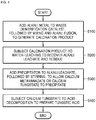
- FIG. 1 shows a process flow of a selective valuable metal recovery method from a waste denitrification catalyst through alkali fusion according to an embodiment of the present disclosure.
- the selective valuable metal recovery method from the waste denitrification catalyst through the alkali fusion includes: (a) adding an alkali metal to a waste denitrification catalyst, followed by mixing and alkali fusion, to generate a calcination product; (b) subjecting the calcination product to water-leaching to recover an alkali leachate and a residue; (c) adding a precipitator to the alkali leachate, followed by stirring, to recover calcium metavanadate (Ca(VO 3 ) 2 ) or calcium tungstate (CaWO 4 ) through precipitation; and (d) subjecting the recovered calcium tungstate to acid decomposition to prepare tungstic acid.
- FIG. 1 shows a process flow of a selective valuable metal recovery method from a waste denitrification catalyst through alkali fusion according to an embodiment of the present disclosure.
- the selective valuable metal recovery method from the waste denitrification catalyst through the alkali fusion includes: (a) adding an alkali metal to a waste denitrification catalyst, followed by mixing and alkali fusion, to generate a calcination product; (b) subjecting the calcination product to water-leaching to recover an alkali leachate and a residue; (c) adding a precipitator to the alkali leachate, followed by stirring, to recover calcium metavanadate (Ca(VO 3 ) 2 ) or calcium tungstate (CaWO 4 ) through precipitation; and (d) subjecting the recovered calcium tungstate to acid decomposition to prepare tungstic acid.
- a waste denitrification catalyst is prepared and alkali metal is added thereto and is mixed therewith to produce a calcination product through alkali fusion (S100).
- the waste denitrification catalyst may be crushed to have a thickness of 100 ⁇ m or less and may be dried in an oven to remove moisture.
- the waste denitrification catalyst includes vanadium (V) and tungsten (W) in the form of oxides (V 2 O 5 and WO 3 ), and may contain a large amount of titanium dioxide (TiO 2 ).
- the alkali fusion refers to a process in which the waste denitrification catalyst is calcined with the alkali metal, which is a strong alkali, and an excessive amount of alkali metal is added, up to 2 equivalents of alkali metal with respect to the equivalent of the waste denitrification catalyst to be reacted to thereby change insoluble compounds, for example, vanadium oxide and tungsten oxide into water-soluble compounds and power used for calcination may be adjusted using an electric furnace or based on microwave with which an amount of supplied power to significantly improve the energy efficiency of the calcination.
- the alkali metal may be sodium carbonate (Na 2 CO 3 ) or sodium hydroxide (NaOH).
- the alkali metal corresponds to a strong alkali in an aqueous solution and conditions of the alkali fusion, for example, each of equivalents of added alkali metal, calcination temperatures and calcination time may be different depending on the selection of the alkali metal.
- the calcination product may be prepared according to Reaction formula 1 or Reaction formula 2 below.
- Reaction formula 1 V 2 O 5 ( s, l ) + Na 2 CO 3 ( s , l ) ⁇ 2NaVO 3 (s, l ) + CO 2 ( g ) WO 3 ( s , l ) + Na 2 CO 3 ( s , l ) ⁇ Na 2 WO 4 (s, l ) + CO 2 ( g ) 3TiO 2 ( s ) + Na 2 CO 3 ( s ) ⁇ Na 2 Ti 3 O 7 ( s ) + CO 2 ( g )
- Reaction formula 2 V 2 O 5 ( s , l ) + 2NaOH ( s , l ) ⁇ 2NaVO 3 ( s , l ) + H 2 O ( g ) WO 3 ( s , l ) + 2NaOH ( s , ,
- the alkali metal is sodium hydroxide (NaOH) and 1.2 equivalents of sodium hydroxide (NaOH) is added with respect to the waste denitrification catalyst.
- the tungsten has a leaching rate of a maximum of 87.5% when being calcined at 1000°C for 20 minutes and a maximum of 91.3% when being calcined at 900°C for 60 minutes.
- the alkali metal is sodium carbonate (Na 2 CO 3 )
- sodium carbonate (Na 2 CO 3 ) is added in an amount of 1.2 equivalents, and can be calcined at 1000°C for 20 minutes to provide 99.8% of tungsten leaching rate.
- the calcination may be performed using an electric furnace or based on microwave.
- the microwave is used, the leaching rates of tungsten and vanadium may be efficiently determined by accurately adjusting the power supply amount with respect to the equivalent thereof.
- the calcination may be performed at an output of 1 kW per 100 g of the waste denitrification catalyst.
- the equivalent of the alkali metal which is a strong alkali is adjusted with respect to the waste denitrification catalyst and the calcination temperature and time are adjusted based on the determined power amount required for calcination to effectively determine the leaching rates of tungsten and vanadium (W/V) and the leaching rate of titanium dioxide to thereby selectively recover the valuable metals.
- the calcination product is water leached to recover the alkali leachate and the residue (S200).
- the calcination product is obtained by converting an insoluble compound into a water-soluble compound.
- the alkali leachate may contain water-soluble NaVO 3 and Na 2 WO 4 and the residue may contain sodium titanate, for example, Na 2 TiO 3 or Na 2 Ti 3 O 7 .
- Tungsten and vanadium may be recovered by precipitating the alkali leachate, and the residue is acid leached to produce a hydrated titanium dioxide intermediate, and thus, each of valuable metals may be selectively separated through the precipitation process.
- the precipitator is added to the alkaline leachate and stirred to precipitate calcium metavanadate Ca(VO 3 ) 2 ] or calcium tungstate (CaWO 4 ) (S300).
- the precipitator may be calcium chloride (CaCl 2 ).
- the calcium chloride allows separation and recovery of each of the two metals from the leachate by adjusting the leaching rates of tungsten and vanadium through calcium.
- Reaction formula 3 NaVO 3 ( Aq .) + CaCl 2 ( Aq .) ⁇ CaV 2 O 3 ( s ) + NaCl ( Aq .) Na 2 WO 4 ( Aq .) + CaCl 2 ( Aq .) ⁇ CaWO 4 ( s ) + NaCl ( Aq .)
- the pH may be adjusted by adding the precipitator and further adding strong alkaline calcium hydroxide [Ca(OH) 2 ].
- the pH may be adjusted to 13.25 to precipitate calcium metavanadate, and calcium tungstate may be precipitated at a pH of 13 or less.
- Stirring after adding the precipitator may be performed at 200 to 600 rpm for 30 minutes to 2 hours.
- the alkali metal is sodium hydroxide and sodium hydroxide in the alkaline leachate has a concentration of 0.5 to 0.75 mol/L
- a precipitator is added in order for 1.0 to 1.5 equivalents of calcium to be added, and reacted, to thereby obtain 99% or more of the precipitation efficiency of calcium metavanadate.
- the alkali metal is sodium hydroxide and sodium hydroxide in the alkaline leachate has a concentration of 0.5 mol/L or less
- a precipitator is added in order for calcium of 1.0 equivalent or less to be added and reacted to thereby precipitate the calcium tungstate with a recovery rate of 1% or less.
- the precipitation efficiency of each of tungsten and vanadium may be determined based on the equivalent of calcium in calcium chloride as a precipitator and the concentration of sodium hydroxide in the alkaline leachate to be selectively recovered.
- a precipitator is added to the alkaline leachate, stirred, and reacted.
- the reaction was carried out at 333 K to 353 K for 15 minutes or less to precipitate calcium metavanadate, and the reaction was carried out at 313 K to 353 K for 1 hour to 2 hours to precipitate calcium tungstate.
- each of vanadium and tungsten may be separated even at room temperatures.
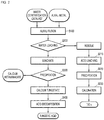
- FIG. 2 shows a process flow of a selective valuable metal recovery method from a waste denitrification catalyst through alkali fusion according to another embodiment of the present disclosure.
- the selective valuable metal recovery method from the waste denitrification catalyst through alkaline fusion further includes recovering the residue, (i) acid leaching by adding sulfuric acid or hydrochloric acid to the residue; (ii) adding sodium hydroxide to the acid leachate and reacting to precipitate meta titanic acid (TiO(OH) 2 ); and (iii) calcining the metatitanic acid to recover titanium dioxide.
- the residue is an intermediate product produced through alkali fusion and contains a large amount of titanium dioxide.
- each of vanadium and tungsten may be precipitated after being calcined, but there is a problem in that titanium dioxide may not be selectively separated.
- the calcination product produced through the alkaline fusion is acid leached to be separated into an alkaline leachate and a residue, and the residue is acid leached again to selectively recover titanium dioxide having high purity.
- the acid leaching may be performed at 323 K to 333 K for two hours to three hours.
- the acid leaching may be performed according to Reaction formula 4 below.
- Reaction formula 4 Na 2 TiO 3 ( s ) + 2HCl ( Aq .) ⁇ TiOCl 2 ( Aq .) + 2NaOH ( Aq .) Na 2 TiO 3 ( s ) + 2H 2 SO 4 ( Aq .) ⁇ TiOSO 4 ( Aq .) + Na 2 SO 4 ( Aq. ) + 2H 2 O
- Sodium hydroxide is added to the acid leachate and reacted to precipitate metatitanic acid.
- the metatitanic acid has a form of a hydrate of titanium dioxide.
- the leaching rate may be 99% or more based on adjustment of the pH to be 2 or less.
- Precipitation may be easily carried out in the range of a strong acid, in particular, the leaching rate of titanium dioxide hydrate may be equal to or greater than 99% based on the adjustment to pH 2 or less.
- the metatitanic acid may be calcined to recover titanium dioxide.
- reaction formula 6 TiO(OH) 2 ( s ) ⁇ TiO 2 ( s ) + H 2 O ( g )
- the calcination may be carried out at 900 K or more for 5 hours or more, and in that case, titanium dioxide is recovered with 90% or more of purity.
- Waste denitrification catalyst was prepared and ground, and composition thereof was analyzed using inductively coupled plasma-atomic emission spectroscopy (ICP-AES).
- ICP-AES inductively coupled plasma-atomic emission spectroscopy
- waste denitrification catalyst 300 g was prepared, 1.2 equivalents of sodium hydroxide (NaOH) was added with respect to the waste denitrification catalyst, and 2 equivalents of sodium hydroxide was added with respect to the waste denitrification catalyst to recover titanium, and alkali fusion was performed in the same manner.
- NaOH sodium hydroxide
- the microwave was controlled to output 3 kW of power and alkaline fusion was performed for 20 minutes in the case of 1.2 equivalents of sodium hydroxide and 60 minutes in the case of 2 equivalents of sodium hydroxide.
- the alkali fusion was carried out in a temperature range from 900°C to 1000°C.
- the alkali leachate and the residue were recovered by adjusting a pulp density to be 20% and water leaching for two hours.
- An average size of a particle was controlled to be 200 ⁇ m or less and it was carried out at room temperatures.
- the alkaline leachate contains sodium hydroxide and contains sodium hydroxide having the concentration of 0.50 to 0.75 mol/L, vanadium, and tungsten.
- 1.0 to 1.5 equivalents of calcium, in calcium chloride (CaCl 2 ) as a precipitator was added to precipitate.
- Hydrochloric acid was added to a residue in Example 1, and pH was adjusted to be 2 or less, and reacted at 50°C for two hours to perform acid leaching.
- the precipitate obtained by adding sodium hydroxide and precipitating and recovering was calcined at 900 K for five hours to recover titanium dioxide having 90% or more of purity.
- composition thereof was first analyzed using an ICP-AES.
- FIG. 3 shows results of X-ray diffraction analysis of a waste denitrification catalyst.
- Table 1 shows the composition of the waste denitrification catalyst.
- the analysis showed identified valuable metals contained in the waste denitrification catalyst, and in particular, presence of oxide of each of vanadium, tungsten, and titanium.
- the conditions to obtain high leaching rates of vanadium and tungsten were determined in order to derive the calcination conditions for alkali fusion to recover vanadium and tungsten.
- the amount of added alkali was calculated in accordance with Reaction formula 2 above.
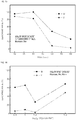
- FIG. 4 shows leaching rates of vanadium and tungsten with respect to calcination temperatures during alkaline fusion for 20 minutes in a selective valuable metal recovery method from a waste denitrification catalyst through alkali fusion according to an embodiment of the present disclosure.
- FIG. 5 shows leaching rates of vanadium and tungsten with respect to calcination temperatures during alkaline fusion for 60 minutes in a selective valuable metal recovery method from a waste denitrification catalyst through alkaline fusion according to an embodiment of the present disclosure.
- Table 2 shows leaching rates of vanadium and tungsten determined by selecting sodium hydroxide as alkali, having 1.2 equivalents of NaOH with respect to the denitrification catalyst, and calcination in an electric furnace for each time and each temperature.
- FIGS. 4 , 5 , and Table 2 show that higher leaching rates of vanadium and tungsten (hereinafter; "W/V”) at 1000°C at 20 minutes of calcination based on the predetermined amount of alkali and a highest W/V leaching rate at 900°C at 60 minutes of calcination.
- W/V vanadium and tungsten
- NaOH sodium hydroxide
- FIG. 6 shows leaching rates vanadium and tungsten with respect to equivalent of sodium hydroxide during alkaline fusion in a selective valuable metal recovery method from a waste denitrification catalyst through alkaline fusion according to an embodiment of the present disclosure.
- the tungsten leaching rate showed a relatively low leaching rate of 85% in the case of 2 equivalents, but showed a high leaching rate of 91% or more in the case of 1.2 and 1.5 equivalents. Further, it was determined that 1.5 equivalents or more of NaOH was required for leaching vanadium and tungsten from the waste denitrification catalyst when the calcination is performed at 900°C for one hour.
- the alkali metal is sodium carbonate (Na 2 CO 3 )
- changes in the leaching rate were examined based on the calcination time and an amount of Na 2 CO 3 to determine optimum calcination conditions for leaching W/V.
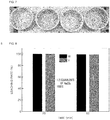
- FIG. 7 is a photograph after calcination using sodium carbonate during alkaline fusion in a selective valuable metal recovery method from a waste denitrification catalyst through alkali fusion according to an embodiment of the present disclosure.
- FIG. 7 shows changes in a state of a calcination material.
- FIG. 8 shows leaching rates of vanadium and tungsten with respect to calcination time determined by adding sodium carbonate during alkaline fusion in a selective valuable metal recovery method from a waste denitrification catalyst through alkali fusion according to an embodiment of the present disclosure.
- FIG. 9 shows leaching rates of vanadium and tungsten with respect to an equivalent of sodium carbonate during alkaline fusion in a selective valuable metal recovery method from a waste denitrification catalyst through alkali fusion according to an embodiment of the present disclosure.
- TiO 2 is produced in the form of Na 2 TiO 3 or Na 2 Ti 3 O 7 , which may not be readily leached by acids.
- FIG. 10 shows leaching rates of vanadium, tungsten, and titanium with respect to a calcination temperature during alkaline fusion in a selective valuable metal recovery method from a waste denitrification catalyst through alkaline fusion according to an embodiment of the present disclosure.
- the leaching rate of Ti was 95% when being calcined with NaOH at 950°C for 1 hour, and the leaching rate of Ti was 93% when being calcined with Na 2 CO 3 at 1000°C for 1 hour. At this time, at least 98% or more or W/V was also leached.
- the basic experiment showed temperature changes with respect to time during microwave calcination determined based on greater W/V and Ti leaching rate at about 1000°C.
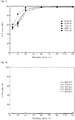
- FIG. 11 is a graph showing changes in temperature with respect to calcination time based on a microwave.
- FIG. 11 showed temperatures with respect to time at conditions of 300 g of waste denitrification catalyst, 1.2 equivalents of NaOH, and 3 kW of output of microwave and a temperature reaching about 900°C at about 5 minutes and being maintained until 25 minutes, and rapidly increasing.
- the W/V leaching rate with respect to microwave calcination time was determined.
- FIG. 12 is a graph showing leaching rates of vanadium and tungsten with respect to a microwave irradiation time when sodium hydroxide is added in a selective valuable metal recovery method from a waste denitrification catalyst through alkali fusion according to an embodiment of the present disclosure.
- FIG. 12 showed a tungsten leaching rate close to 100% for only 20 minutes of microwave calcination and a vanadium leaching rate of 85% or more.
- the leaching rate with respect to equivalents of NaOH was determined under the same calcination conditions as the conditions to measure the W/V leaching rate with respect to the time.
- FIG. 13 is a graph showing changes in a leaching rate with respect to equivalents of sodium hydroxide during microwave irradiation in a selective valuable metal recovery method from a waste denitrification catalyst through alkali fusion according to an embodiment of the present disclosure.
- the calcination time is one hour and is not optimal condition when compared to the experimental result of leaching tungsten close to 100% only for 20 minutes, but meaningful results were obtained when Ti is also aimed to be recovered.
- optimal conditions for W/V recovery correspond to sodium hydroxide as an alkali metal, the power of the microwave of 3 kW, 1.2 equivalents of the alkali, and calcination for 20 minutes and that optimal conditions for Ti recovery as well as the W/V recovery correspond to 3 kW of power of microwave, 2 equivalents of alkali, and calcination for 60 minutes.
- FIG. 14 shows leaching rates of vanadium and tungsten with respect to microwave outputs.
- a W/V leaching rate is reduced as microwave irradiation is performed for a longer period of time at 3 kW and the W/V leaching rate is greater at 2 kW. It is determined that the temperature was not high enough to affect the reduction in the leaching rate even during irradiation of microwave for one hour due to the low output with respect to the same amount of calcination.
- FIG. 15 is a graph showing a change in a leaching rate with respect to an equivalent of sodium hydroxide during microwave irradiation in a selective valuable metal recovery method from a waste denitrification catalyst through alkali fusion according to an embodiment of the present disclosure.
- FIG. 16 is a graph showing changes in leaching rates of vanadium and tungsten with respect to equivalents of sodium carbonate in a selective valuable metal recovery method from a waste denitrification catalyst through alkali fusion according to an embodiment of the present disclosure.
- optimal conditions for vanadium and tungsten recovery correspond to selection of sodium carbonate as the alkali metal, 3 kW of microwave output, 1.2 equivalents thereof, and calcination for 40 minutes. It was determined that optimal conditions for vanadium, tungsten, and titanium recovery correspond to 3 kW of microwave output, 2.0 equivalents, and calcination for 60 minutes.
- Selective leaching may be performed based on equivalents of alkali, the calcination temperature, the calcination time, and the microwave power to determine the optimal leaching conditions for each metal.
- Vanadium may have 97.5 to 99.1% of leaching rate and tungsten may have 10.6 to 13.6% of leaching rate using Ca(OH) 2 in a storing alkali region of pH 13 or higher, and thus, it was predicted that separation between the two metals may be performed by precipitation using calcium.
- Calcium vanadate (Ca x V y O z ) exists in various types of forms and has different degrees of hydration ranging from pH 0 to pH 12, but no region having pH 12 or greater has been determined. Meanwhile, calcium tungstate (CaWO 4 ) is stable in the pH range of 5 to 14.
- the alkaline leachate obtained from the waste denitrification catalyst is a strong alkali solution with pH of 12 or greater, and each of the two metals may be separated by calcium.
- the precipitation and separation of each of vanadium and tungsten through adding of calcium were performed through definition of properties of precipitation behaviors of vanadium and tungsten in the storing alkali region.
- it may be an efficient separation process because it is relatively economical in time and cost compared to a solvent extraction method and an ion exchange method.
- the experiment was performed using a simulated solution for accurate pH control in the strong alkali region.
- the simulated solution was prepared by dissolving NaVO 3 and NaWO 4 ⁇ 2H 2 O in NaOH solution and using 1 g/L of vanadium and 10 g/L of tungsten based on contents of vanadium and tungsten in the waste denitrification catalyst.
- Precipitator CaCl 2 was used, and was prepared with 4 mol/L to prevent dilution of each of vanadium and tungsten due to a large amount of added CaCl 2 .
- 1 equivalent of calcium corresponds to 2.57 g/L, which is used for the precipitation reaction of 1 g/L of vanadium and 10 g/L of tungsten, and the amount of added calcium was calculated as 1 equivalent based on the sum of amount of calcium used for the precipitation of vanadium and tungsten by the following Reaction formula 8.
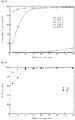
- FIG. 17 is a graph showing precipitation behavior of vanadium based on changes in a stirring speed in a selective valuable metal recovery method from a waste denitrification catalyst through alkali fusion according to an embodiment of the present disclosure.
- FIG. 18 is a graph showing precipitation behavior of tungsten based on changes in a stirring speed in a selective valuable metal recovery method from a waste denitrification catalyst through alkali fusion according to an embodiment of the present disclosure.
- FIGS. 17 and 18 show 98.4 to 98.7% of vanadium and 0.2 to 1.2% of tungsten, and accordingly, an influence of the stirring rate on a precipitation reaction rate was determined to be insignificant. Subsequent experiments were performed with fixed stirring speed of 500 rpm.
- Precipitation experiments were performed at room temperatures for two hours by adding Ca corresponding to 0.5 to 1.5 equivalents of each of vanadium and tungsten to a 0.1 to 1.0 mol/L of NaOH solution containing vanadium and tungsten.
- FIG. 19 is a graph showing a precipitation rate of vanadium with respect to a concentration of sodium hydroxide and an amount of added calcium in a selective valuable metal recovery method from a waste denitrification catalyst through alkali fusion according to an embodiment of the present disclosure.
- vanadium showed 80% or more of leaching rate with respect to the concentration of NaOH solution and an amount of added Ca within experimental conditions. It showed 99% or more of leaching rate under conditions of addition of 1.0 to 1.5 equivalents of Ca into 0.50 to 0.75 mol/L of NaOH solution.
- FIG. 20 is a graph showing a precipitation rate of tungsten with respect to a concentration of sodium hydroxide and an amount of added calcium in a selective valuable metal recovery method from a waste denitrification catalyst through alkali fusion according to an embodiment of the present disclosure.
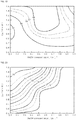
- FIG. 21 is a graph showing precipitation behaviors of vanadium and tungsten with respect to a concentration of sodium hydroxide in a selective valuable metal recovery method from a waste denitrification catalyst through alkaline fusion according to an embodiment of the present disclosure.
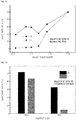
- conditions may be determined in which the conditions in which a precipitation area of 99% or more of vanadium and a precipitation area of 10% or less of tungsten are overlapped with each other.
- Area A is a precipitation area in which 99% or more of vanadium is precipitated and 1% or less of tungsten is precipitated.
- Area A+B refers to a precipitation area in which 97% or more of vanadium is precipitated and 1% or less of tungsten is precipitated.
- Area A+B+C refers to a precipitation area in which 95% or more of vanadium and 1% or less of tungsten are precipitated.
- vanadium and tungsten could be recovered separately based on the concentration of sodium hydroxide.
- FIG. 22 is a graph showing precipitation behavior of vanadium with temperature in a selective valuable metal recovery method from a waste denitrification catalyst through alkali fusion according to an embodiment of the present disclosure.
- Precipitation reaction was completed within 45 minutes at 283 to 313 K, and within 15 minutes above 333 K.
- FIG. 23 is a graph showing precipitation behavior of tungsten with respect to a temperature in a selective valuable metal recovery method from a waste denitrification catalyst through alkaline fusion according to an embodiment of the present disclosure.
- the precipitation reaction did not occur at a temperature of the room temperature (293 K) or less, but the precipitation reaction began to occur after one hour at the temperature of 313 K or more, and showed a leaching rate of 10.0% after the completion of the reaction for 2 hours. Further, it started being precipitated together with vanadium at 333 K or more and the leaching rate was 98.5% at 333 K and 97.2% at 353 K after completion of the reaction.
- each of vanadium and tungsten is significantly degraded as the temperature is increased. In other words, it was determined that each of vanadium and tungsten may be separated at room temperatures due to the difference in precipitation reaction rate.
- FIG. 24 is a graph showing precipitation behaviors of calcium, vanadium, and tungsten with respect to a retention time at room temperatures in a selective valuable metal recovery method from a waste denitrification catalyst through alkaline fusion according to an embodiment of the present disclosure.
- the separation behaviors of vanadium and tungsten in the strong alkali region were affected by the concentration of NaOH solution, the amount of added Ca, and the temperature.
- the conditions may be determined in which the precipitation area of 95% or more of vanadium and the precipitation area of 1% or less of tungsten are overlapped with each other.
- the precipitation area may be selected based on required final metal class and purity improved through a subsequent process.
Landscapes
- Chemical & Material Sciences (AREA)
- Engineering & Computer Science (AREA)
- Organic Chemistry (AREA)
- Metallurgy (AREA)
- Mechanical Engineering (AREA)
- Materials Engineering (AREA)
- Manufacturing & Machinery (AREA)
- Geology (AREA)
- Life Sciences & Earth Sciences (AREA)
- General Life Sciences & Earth Sciences (AREA)
- Environmental & Geological Engineering (AREA)
- Geochemistry & Mineralogy (AREA)
- Chemical Kinetics & Catalysis (AREA)
- Inorganic Chemistry (AREA)
- Catalysts (AREA)
- Processing Of Solid Wastes (AREA)
- Manufacture And Refinement Of Metals (AREA)
Applications Claiming Priority (2)
| Application Number | Priority Date | Filing Date | Title |
|---|---|---|---|
| KR1020170095357A KR101813233B1 (ko) | 2017-07-27 | 2017-07-27 | 알칼리 퓨전을 통한 폐탈질촉매로부터 선택적 유가금속 회수방법 |
| PCT/KR2018/008523 WO2019022555A1 (ko) | 2017-07-27 | 2018-07-27 | 알칼리 퓨전을 통한 폐탈질촉매로부터 선택적 유가금속 회수방법 |
Publications (3)
| Publication Number | Publication Date |
|---|---|
| EP3660175A1 true EP3660175A1 (de) | 2020-06-03 |
| EP3660175A4 EP3660175A4 (de) | 2021-05-05 |
| EP3660175B1 EP3660175B1 (de) | 2026-01-07 |
Family
ID=60939990
Family Applications (1)
| Application Number | Title | Priority Date | Filing Date |
|---|---|---|---|
| EP18839016.5A Active EP3660175B1 (de) | 2017-07-27 | 2018-07-27 | Verfahren zur selektiven rückgewinnung von wertvollen metallen aus denitrifizierungskatalysatorabfall mittels alkalischen aufschluss |
Country Status (6)
| Country | Link |
|---|---|
| US (1) | US12037659B2 (de) |
| EP (1) | EP3660175B1 (de) |
| JP (1) | JP6955621B2 (de) |
| KR (1) | KR101813233B1 (de) |
| CN (1) | CN110945151A (de) |
| WO (1) | WO2019022555A1 (de) |
Families Citing this family (18)
| Publication number | Priority date | Publication date | Assignee | Title |
|---|---|---|---|---|
| KR101994610B1 (ko) * | 2018-03-21 | 2019-09-30 | 이종애 | 마이크로웨이브를 이용한 탈질 폐촉매 이온 분해 장치 |
| KR101957705B1 (ko) * | 2018-10-24 | 2019-03-13 | 한국지질자원연구원 | 폐탈질촉매로부터 고순도 이산화타이타늄 제조방법 |
| CN109628731B (zh) * | 2019-01-31 | 2020-09-04 | 河钢股份有限公司承德分公司 | 一种短流程处理含钒原料提取制备钒及合金粉末的方法 |
| CN111690824A (zh) * | 2019-03-14 | 2020-09-22 | 边悟 | 含钛钨原料酸解提钛提钨及含钛原料酸解提钛的方法 |
| CN110760683A (zh) * | 2019-11-07 | 2020-02-07 | 河钢股份有限公司承德分公司 | 一种废弃scr催化剂提钒并制备碱金属氟钛酸盐的方法及其产品和用途 |
| KR102150087B1 (ko) * | 2019-12-24 | 2020-09-01 | 주식회사 한내포티 | 폐탈질 촉매를 이용한 고품위 텅스텐 및 바나듐의 회수 방법 |
| CN112495982A (zh) * | 2020-10-22 | 2021-03-16 | 湖北君集水处理有限公司 | 一种餐厨垃圾催化湿式氧化转化为废水反硝化碳源的方法 |
| CN112143901B (zh) * | 2020-10-27 | 2022-01-28 | 江西理工大学 | 一种从钒钛系废脱硝催化剂分别回收钛钨钒的方法 |
| WO2022191290A1 (ja) * | 2021-03-10 | 2022-09-15 | 国立研究開発法人量子科学技術研究開発機構 | 無機物溶液の製造方法、及び、無機物溶液の製造装置 |
| CN113215419B (zh) * | 2021-05-11 | 2022-11-11 | 江西理工大学 | 一种从废scr脱硝催化剂提取有价元素的方法 |
| CN114231760A (zh) * | 2021-12-20 | 2022-03-25 | 安徽工业大学 | 一种硫酸工业废钒催化剂回收利用的方法 |
| CN114534706B (zh) * | 2022-01-17 | 2023-04-21 | 北京科技大学 | 一种废脱硝催化剂回收制备钛硅载体的方法 |
| CN114671464B (zh) * | 2022-03-28 | 2023-09-01 | 江苏龙净科杰环保技术有限公司 | 一种新型废催化剂清洗球磨工艺 |
| CN115228464B (zh) * | 2022-04-22 | 2024-01-19 | 南京市生态环境保护科学研究院 | 一种废脱硝催化剂的资源化利用方法 |
| JP2024037557A (ja) * | 2022-09-07 | 2024-03-19 | 国立研究開発法人量子科学技術研究開発機構 | 無機物溶液の製造方法、及び無機物溶液の製造装置 |
| CN115924926B (zh) * | 2022-11-22 | 2024-05-14 | 辽宁智优环保科技有限公司 | 一种高效回收废scr催化剂中有价值组分的方法 |
| CN115717201A (zh) * | 2022-11-25 | 2023-02-28 | 辽宁智优环保科技有限公司 | 一种从废弃scr脱硝催化剂中回收金属氧化物的方法 |
| CN116287721B (zh) * | 2023-02-27 | 2026-03-20 | 广东省科学院资源利用与稀土开发研究所 | 一种处理废石化催化剂回收稀有金属的方法 |
Family Cites Families (14)
| Publication number | Priority date | Publication date | Assignee | Title |
|---|---|---|---|---|
| US4168296A (en) * | 1976-06-21 | 1979-09-18 | Lundquist Adolph Q | Extracting tungsten from ores and concentrates |
| JPH04114747A (ja) * | 1990-09-05 | 1992-04-15 | Catalysts & Chem Ind Co Ltd | 使用済触媒から金属成分を回収する方法 |
| KR20020035085A (ko) * | 2002-04-23 | 2002-05-09 | 유정근 | 폐탈질촉매로부터 바나듐,텅스텐,티타늄성분의 분리회수방법 |
| KR20020040736A (ko) | 2002-05-16 | 2002-05-30 | 유정근 | 폐탈질촉매로부터 바나듐,텅스텐,티타늄성분의 분리회수방법 |
| US7625536B2 (en) * | 2005-10-18 | 2009-12-01 | Millennium Inorganic Chemicals, Inc. | Titaniferous ore beneficiation |
| JP5185937B2 (ja) * | 2006-09-14 | 2013-04-17 | アルベマール・ネーザーランズ・ベーブイ | Vi−b族の金属を使用済み触媒から回収する方法 |
| CN103028394A (zh) * | 2011-10-10 | 2013-04-10 | 河南佰利联化学股份有限公司 | 一种用偏钛酸制备脱硝用二氧化钛的方法 |
| KR101281579B1 (ko) * | 2012-09-07 | 2013-07-03 | 한국지질자원연구원 | 배소 및 수침출을 이용한 탈질폐촉매에 함유된 유가금속 침출 방법 |
| BR112015006536A2 (pt) * | 2012-09-26 | 2017-08-08 | Orbite Aluminae Inc | processos para preparar alumina e cloreto de magnésio por lixiviação com hcl de vários materiais. |
| KR101454645B1 (ko) * | 2013-02-20 | 2014-10-27 | 한국생산기술연구원 | 배기 가스 정화 장치의 폐촉매에 포함된 금속 정량 방법 |
| KR101452179B1 (ko) * | 2014-03-11 | 2014-10-24 | 한국지질자원연구원 | 탈질 폐촉매의 침출용액으로부터 바나듐 및 텅스텐의 회수방법 |
| CN105002361A (zh) * | 2015-07-20 | 2015-10-28 | 福建紫荆环境工程技术有限公司 | 一种整体湿法回收失效scr脱硝催化剂中有价金属的工艺 |
| CN105648241B (zh) * | 2016-03-18 | 2018-03-09 | 昆明冶金研究院 | 废钒钨钛脱硝催化剂中有价金属钨、钒、钛综合回收的方法 |
| CN105969991A (zh) * | 2016-06-18 | 2016-09-28 | 浙江天蓝环保技术股份有限公司 | 一种从失效scr催化剂中提取钛、钒、钨金属氧化物的方法 |
-
2017
- 2017-07-27 KR KR1020170095357A patent/KR101813233B1/ko active Active
-
2018
- 2018-07-27 JP JP2020503954A patent/JP6955621B2/ja active Active
- 2018-07-27 CN CN201880048569.1A patent/CN110945151A/zh active Pending
- 2018-07-27 EP EP18839016.5A patent/EP3660175B1/de active Active
- 2018-07-27 WO PCT/KR2018/008523 patent/WO2019022555A1/ko not_active Ceased
- 2018-07-27 US US16/633,257 patent/US12037659B2/en active Active
Also Published As
| Publication number | Publication date |
|---|---|
| US12037659B2 (en) | 2024-07-16 |
| CN110945151A (zh) | 2020-03-31 |
| EP3660175A4 (de) | 2021-05-05 |
| KR101813233B1 (ko) | 2017-12-28 |
| US20210130928A1 (en) | 2021-05-06 |
| JP2020528964A (ja) | 2020-10-01 |
| WO2019022555A1 (ko) | 2019-01-31 |
| EP3660175B1 (de) | 2026-01-07 |
| JP6955621B2 (ja) | 2021-10-27 |
Similar Documents
| Publication | Publication Date | Title |
|---|---|---|
| EP3660175B1 (de) | Verfahren zur selektiven rückgewinnung von wertvollen metallen aus denitrifizierungskatalysatorabfall mittels alkalischen aufschluss | |
| CN106164304B (zh) | 从脱硝废弃催化剂的浸出液中回收钒和钨的方法 | |
| US11316208B2 (en) | Process for recycling cobalt and nickel from lithium ion batteries | |
| US5787332A (en) | Process for recovering tantalum and/or niobium compounds from composites containing a variety of metal compounds | |
| US5980841A (en) | Method for recovering reusable elements from rare earth-nickel alloy | |
| CA3008040C (en) | Rare earth ore processing methods by acid mixing, sulphating and decomposing | |
| JP6186246B2 (ja) | 結晶性酸化チタンの製造方法及び脱硝触媒の再生方法 | |
| US8980203B1 (en) | Process for obtaining highly pure litharge from lead acid battery paste | |
| CN109022763A (zh) | 一种含钨废料的处理方法及其设备 | |
| CN114774701B (zh) | 工业废盐和废弃脱硝催化剂资源化利用的方法 | |
| MXPA97005395A (en) | Recovery process for carbide detungsteno / cobalto using digestion with ac | |
| TWI418514B (zh) | 含鈦礦石之選礦 | |
| CN112410562A (zh) | 一种钒钛系脱硝废催化剂的处理工艺 | |
| EP1941067B1 (de) | Titaniumeisenerz-veredelung | |
| EP2244980B1 (de) | Herstellung von titantrifluorid | |
| CN103060843B (zh) | 一种氢氧化钾溶液中电化学分解钒渣同步提取钒铬的方法 | |
| EP3265427B1 (de) | Verfahren zur herstellung einer wässrigen natriumchloridlösung | |
| EP1663871B1 (de) | Verfahren zur gewinnung von titandioxid aus titanhaltigen zusammensetzungen | |
| CN106048240A (zh) | 一种钒铬还原渣分离提取钒铬的方法 | |
| WO2011069221A1 (en) | Physical-chemical process for the recovery of metals contained steel industry residues | |
| KR102838425B1 (ko) | 굴 패각 폐기물을 이용한 탄산칼슘 및 이의 제조방법 | |
| US20250137094A1 (en) | Alkali microwave extraction | |
| Jeon et al. | Novel Eco-friendly Roasting and Leaching Process Development to Recycle Valuable Metals from Spent SCR deNOX Catalyst | |
| Purnell | Giddings, C. J., and Keller, RA, Advances in Chromatography, Vol. 7, Dekker, New |
Legal Events
| Date | Code | Title | Description |
|---|---|---|---|
| STAA | Information on the status of an ep patent application or granted ep patent |
Free format text: STATUS: THE INTERNATIONAL PUBLICATION HAS BEEN MADE |
|
| PUAI | Public reference made under article 153(3) epc to a published international application that has entered the european phase |
Free format text: ORIGINAL CODE: 0009012 |
|
| STAA | Information on the status of an ep patent application or granted ep patent |
Free format text: STATUS: REQUEST FOR EXAMINATION WAS MADE |
|
| 17P | Request for examination filed |
Effective date: 20200127 |
|
| AK | Designated contracting states |
Kind code of ref document: A1 Designated state(s): AL AT BE BG CH CY CZ DE DK EE ES FI FR GB GR HR HU IE IS IT LI LT LU LV MC MK MT NL NO PL PT RO RS SE SI SK SM TR |
|
| AX | Request for extension of the european patent |
Extension state: BA ME |
|
| DAV | Request for validation of the european patent (deleted) | ||
| DAX | Request for extension of the european patent (deleted) | ||
| A4 | Supplementary search report drawn up and despatched |
Effective date: 20210407 |
|
| RIC1 | Information provided on ipc code assigned before grant |
Ipc: C22B 34/36 20060101AFI20210330BHEP Ipc: C22B 1/02 20060101ALI20210330BHEP Ipc: C22B 3/12 20060101ALI20210330BHEP Ipc: C22B 3/20 20060101ALI20210330BHEP Ipc: C22B 34/12 20060101ALI20210330BHEP |
|
| STAA | Information on the status of an ep patent application or granted ep patent |
Free format text: STATUS: EXAMINATION IS IN PROGRESS |
|
| 17Q | First examination report despatched |
Effective date: 20230302 |
|
| RIC1 | Information provided on ipc code assigned before grant |
Ipc: C22B 34/36 20060101AFI20250820BHEP Ipc: C22B 1/02 20060101ALI20250820BHEP Ipc: C22B 3/12 20060101ALI20250820BHEP Ipc: C22B 3/20 20060101ALI20250820BHEP Ipc: C22B 34/12 20060101ALI20250820BHEP Ipc: C22B 34/22 20060101ALI20250820BHEP |
|
| GRAP | Despatch of communication of intention to grant a patent |
Free format text: ORIGINAL CODE: EPIDOSNIGR1 |
|
| STAA | Information on the status of an ep patent application or granted ep patent |
Free format text: STATUS: GRANT OF PATENT IS INTENDED |
|
| INTG | Intention to grant announced |
Effective date: 20250929 |
|
| GRAS | Grant fee paid |
Free format text: ORIGINAL CODE: EPIDOSNIGR3 |
|
| GRAA | (expected) grant |
Free format text: ORIGINAL CODE: 0009210 |
|
| STAA | Information on the status of an ep patent application or granted ep patent |
Free format text: STATUS: THE PATENT HAS BEEN GRANTED |
|
| AK | Designated contracting states |
Kind code of ref document: B1 Designated state(s): AL AT BE BG CH CY CZ DE DK EE ES FI FR GB GR HR HU IE IS IT LI LT LU LV MC MK MT NL NO PL PT RO RS SE SI SK SM TR |
|
| REG | Reference to a national code |
Ref country code: CH Ref legal event code: F10 Free format text: ST27 STATUS EVENT CODE: U-0-0-F10-F00 (AS PROVIDED BY THE NATIONAL OFFICE) Effective date: 20260107 Ref country code: GB Ref legal event code: FG4D |
|
| REG | Reference to a national code |
Ref country code: DE Ref legal event code: R096 Ref document number: 602018088488 Country of ref document: DE |
|
| REG | Reference to a national code |
Ref country code: IE Ref legal event code: FG4D |