EP3660657B1 - Bildverarbeitungsverfahren, antriebsvorrichtung, anzeigetafel und wearable-vorrichtung - Google Patents
Bildverarbeitungsverfahren, antriebsvorrichtung, anzeigetafel und wearable-vorrichtung Download PDFInfo
- Publication number
- EP3660657B1 EP3660657B1 EP18833378.5A EP18833378A EP3660657B1 EP 3660657 B1 EP3660657 B1 EP 3660657B1 EP 18833378 A EP18833378 A EP 18833378A EP 3660657 B1 EP3660657 B1 EP 3660657B1
- Authority
- EP
- European Patent Office
- Prior art keywords
- grayscale
- pixel
- region
- transition
- display
- Prior art date
- Legal status (The legal status is an assumption and is not a legal conclusion. Google has not performed a legal analysis and makes no representation as to the accuracy of the status listed.)
- Active
Links
Images


Classifications
-
- G—PHYSICS
- G09—EDUCATION; CRYPTOGRAPHY; DISPLAY; ADVERTISING; SEALS
- G09G—ARRANGEMENTS OR CIRCUITS FOR CONTROL OF INDICATING DEVICES USING STATIC MEANS TO PRESENT VARIABLE INFORMATION
- G09G5/00—Control arrangements or circuits for visual indicators common to cathode-ray tube indicators and other visual indicators
- G09G5/02—Control arrangements or circuits for visual indicators common to cathode-ray tube indicators and other visual indicators characterised by the way in which colour is displayed
- G09G5/026—Control of mixing and/or overlay of colours in general
-
- G—PHYSICS
- G06—COMPUTING OR CALCULATING; COUNTING
- G06F—ELECTRIC DIGITAL DATA PROCESSING
- G06F1/00—Details not covered by groups G06F3/00 - G06F13/00 and G06F21/00
- G06F1/16—Constructional details or arrangements
- G06F1/1613—Constructional details or arrangements for portable computers
- G06F1/163—Wearable computers, e.g. on a belt
-
- G—PHYSICS
- G06—COMPUTING OR CALCULATING; COUNTING
- G06F—ELECTRIC DIGITAL DATA PROCESSING
- G06F1/00—Details not covered by groups G06F3/00 - G06F13/00 and G06F21/00
- G06F1/16—Constructional details or arrangements
- G06F1/1613—Constructional details or arrangements for portable computers
- G06F1/1633—Constructional details or arrangements of portable computers not specific to the type of enclosures covered by groups G06F1/1615 - G06F1/1626
- G06F1/1637—Details related to the display arrangement, including those related to the mounting of the display in the housing
-
- G—PHYSICS
- G06—COMPUTING OR CALCULATING; COUNTING
- G06F—ELECTRIC DIGITAL DATA PROCESSING
- G06F3/00—Input arrangements for transferring data to be processed into a form capable of being handled by the computer; Output arrangements for transferring data from processing unit to output unit, e.g. interface arrangements
- G06F3/14—Digital output to display device ; Cooperation and interconnection of the display device with other functional units
- G06F3/147—Digital output to display device ; Cooperation and interconnection of the display device with other functional units using display panels
-
- G—PHYSICS
- G06—COMPUTING OR CALCULATING; COUNTING
- G06T—IMAGE DATA PROCESSING OR GENERATION, IN GENERAL
- G06T5/00—Image enhancement or restoration
- G06T5/20—Image enhancement or restoration using local operators
-
- G—PHYSICS
- G06—COMPUTING OR CALCULATING; COUNTING
- G06T—IMAGE DATA PROCESSING OR GENERATION, IN GENERAL
- G06T5/00—Image enhancement or restoration
- G06T5/70—Denoising; Smoothing
-
- G—PHYSICS
- G09—EDUCATION; CRYPTOGRAPHY; DISPLAY; ADVERTISING; SEALS
- G09G—ARRANGEMENTS OR CIRCUITS FOR CONTROL OF INDICATING DEVICES USING STATIC MEANS TO PRESENT VARIABLE INFORMATION
- G09G3/00—Control arrangements or circuits, of interest only in connection with visual indicators other than cathode-ray tubes
- G09G3/20—Control arrangements or circuits, of interest only in connection with visual indicators other than cathode-ray tubes for presentation of an assembly of a number of characters, e.g. a page, by composing the assembly by combination of individual elements arranged in a matrix no fixed position being assigned to or needed to be assigned to the individual characters or partial characters
- G09G3/2003—Display of colours
-
- G—PHYSICS
- G09—EDUCATION; CRYPTOGRAPHY; DISPLAY; ADVERTISING; SEALS
- G09G—ARRANGEMENTS OR CIRCUITS FOR CONTROL OF INDICATING DEVICES USING STATIC MEANS TO PRESENT VARIABLE INFORMATION
- G09G3/00—Control arrangements or circuits, of interest only in connection with visual indicators other than cathode-ray tubes
- G09G3/20—Control arrangements or circuits, of interest only in connection with visual indicators other than cathode-ray tubes for presentation of an assembly of a number of characters, e.g. a page, by composing the assembly by combination of individual elements arranged in a matrix no fixed position being assigned to or needed to be assigned to the individual characters or partial characters
- G09G3/2007—Display of intermediate tones
-
- G—PHYSICS
- G09—EDUCATION; CRYPTOGRAPHY; DISPLAY; ADVERTISING; SEALS
- G09G—ARRANGEMENTS OR CIRCUITS FOR CONTROL OF INDICATING DEVICES USING STATIC MEANS TO PRESENT VARIABLE INFORMATION
- G09G3/00—Control arrangements or circuits, of interest only in connection with visual indicators other than cathode-ray tubes
- G09G3/20—Control arrangements or circuits, of interest only in connection with visual indicators other than cathode-ray tubes for presentation of an assembly of a number of characters, e.g. a page, by composing the assembly by combination of individual elements arranged in a matrix no fixed position being assigned to or needed to be assigned to the individual characters or partial characters
- G09G3/22—Control arrangements or circuits, of interest only in connection with visual indicators other than cathode-ray tubes for presentation of an assembly of a number of characters, e.g. a page, by composing the assembly by combination of individual elements arranged in a matrix no fixed position being assigned to or needed to be assigned to the individual characters or partial characters using controlled light sources
- G09G3/30—Control arrangements or circuits, of interest only in connection with visual indicators other than cathode-ray tubes for presentation of an assembly of a number of characters, e.g. a page, by composing the assembly by combination of individual elements arranged in a matrix no fixed position being assigned to or needed to be assigned to the individual characters or partial characters using controlled light sources using electroluminescent panels
- G09G3/32—Control arrangements or circuits, of interest only in connection with visual indicators other than cathode-ray tubes for presentation of an assembly of a number of characters, e.g. a page, by composing the assembly by combination of individual elements arranged in a matrix no fixed position being assigned to or needed to be assigned to the individual characters or partial characters using controlled light sources using electroluminescent panels semiconductive, e.g. using light-emitting diodes [LED]
- G09G3/3208—Control arrangements or circuits, of interest only in connection with visual indicators other than cathode-ray tubes for presentation of an assembly of a number of characters, e.g. a page, by composing the assembly by combination of individual elements arranged in a matrix no fixed position being assigned to or needed to be assigned to the individual characters or partial characters using controlled light sources using electroluminescent panels semiconductive, e.g. using light-emitting diodes [LED] organic, e.g. using organic light-emitting diodes [OLED]
-
- G—PHYSICS
- G06—COMPUTING OR CALCULATING; COUNTING
- G06T—IMAGE DATA PROCESSING OR GENERATION, IN GENERAL
- G06T2207/00—Indexing scheme for image analysis or image enhancement
- G06T2207/20—Special algorithmic details
- G06T2207/20021—Dividing image into blocks, subimages or windows
-
- G—PHYSICS
- G06—COMPUTING OR CALCULATING; COUNTING
- G06T—IMAGE DATA PROCESSING OR GENERATION, IN GENERAL
- G06T2207/00—Indexing scheme for image analysis or image enhancement
- G06T2207/20—Special algorithmic details
- G06T2207/20172—Image enhancement details
- G06T2207/20192—Edge enhancement; Edge preservation
-
- G—PHYSICS
- G09—EDUCATION; CRYPTOGRAPHY; DISPLAY; ADVERTISING; SEALS
- G09G—ARRANGEMENTS OR CIRCUITS FOR CONTROL OF INDICATING DEVICES USING STATIC MEANS TO PRESENT VARIABLE INFORMATION
- G09G2310/00—Command of the display device
- G09G2310/02—Addressing, scanning or driving the display screen or processing steps related thereto
- G09G2310/0232—Special driving of display border areas
-
- G—PHYSICS
- G09—EDUCATION; CRYPTOGRAPHY; DISPLAY; ADVERTISING; SEALS
- G09G—ARRANGEMENTS OR CIRCUITS FOR CONTROL OF INDICATING DEVICES USING STATIC MEANS TO PRESENT VARIABLE INFORMATION
- G09G2320/00—Control of display operating conditions
- G09G2320/02—Improving the quality of display appearance
- G09G2320/0271—Adjustment of the gradation levels within the range of the gradation scale, e.g. by redistribution or clipping
-
- G—PHYSICS
- G09—EDUCATION; CRYPTOGRAPHY; DISPLAY; ADVERTISING; SEALS
- G09G—ARRANGEMENTS OR CIRCUITS FOR CONTROL OF INDICATING DEVICES USING STATIC MEANS TO PRESENT VARIABLE INFORMATION
- G09G2340/00—Aspects of display data processing
- G09G2340/14—Solving problems related to the presentation of information to be displayed
Definitions
- Embodiments of the present disclosure provide an image processing method of a display panel, a drive device, a display panel and a wearable device, which are used for solving a problem that severe sawtooth sense appears on a display edge portion when a conventional display panel displays a non-rectangular image area, thereby improving a visual effect of the display panel.
- FIG. 1 is a flowchart of an image processing method provided by an embodiment of the present disclosure.
- the display panel includes a display image region and a peripheral region.
- a pixel array arranged in an array is arranged on the display panel.
- the peripheral region includes grayscale transition regions.
- the grayscale transition regions are adjacent to the display image region.
- the display image region includes a plurality of display pixels arranged along a row direction and a column direction.
- the image processing method may comprise following steps:
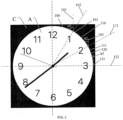
- the display image region is generally disposed in the middle of the display panel. All areas on the display panel, except the display image region, are the peripheral region. Because pixels in the display panel are arranged in an array, for instance, as for a round display image region, there is a problem of edge sawteeth at a junction between the display image region and the peripheral region. Based on this, the image processing method provided by the embodiment of the present disclosure can adjust the grayscales of pixels disposed in the grayscale transition region and at the junction between the non-rectangular display image region and the peripheral region, thereby ameliorating the problem of edge sawteeth.
- pixel grayscales may be provided for all pixels in the background image region; or pixel grayscales (namely the second pixel grayscale) may be provided for only a portion of pixels (e.g., the adjacent background pixels) adjacent to the grayscale transition regions in the background image region, and the pixel grayscales are not provided for pixels in remaining areas of the background image region; or pixels (e.g., the adjacent background pixels) may also be only arranged in areas adjacent to the grayscale transition regions of the background image region, and pixel grayscales (namely the second grayscale) are provided for these pixels.
- the sector may be divided into three equal parts along the central angle, and the three equal parts include a first sectorial sub-area from a number 12 to a number 1, a second sectorial sub-area from a number 1 to a number 2, and a third sectorial sub-area from a number 2 to a number 3.
- the first macroscopic edge 100 is between the first sectorial sub-area and the peripheral area
- the second macroscopic edge 110 is between the second sectorial sub-area and the peripheral area
- the third macroscopic edge 120 is between the third sectorial sub-area and the peripheral area.
- each of grayscale transition regions B adjacent to the first sectorial sub-area may include a plurality of transition pixels located in one row and adjacent to the first sectorial sub-area in the peripheral region.
- each of the grayscale transition regions B may include 2 to 4 transition pixels located in one row.
- each of grayscale transition regions B adjacent to the second sectorial sub-area may include one transition pixel adjacent to the second sectorial sub-area in the peripheral region.
- the positions of the grayscale transition regions can be determined by a following method:
- the second default included angle ⁇ 2 is usually less than the first default included angle ⁇ 1.
- the second default included angle ⁇ 2 may be 30° and the first default included angle ⁇ 1 is generally 60°.
- the second default included angle ⁇ 2 may also be equal to the first default included angle ⁇ 1.
- both the second default included angle ⁇ 2 and the first default included angle ⁇ 1 are 45°.
- both the first default included angle ⁇ 1 and the second default included angle ⁇ 2 may be set to be 45°.
- the pentagonal display image region may be can be equally divided into 5 equal portions along a center and sides, and each portion is an isosceles triangle with a vertex angle of 72°.
- the 5 equal portions are respectively a first triangular sub-area A1, a second triangular sub-area A2, a third triangular sub-area A3, a fourth triangular sub-area A4 and a fifth triangular sub-area A5.
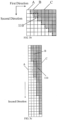
- a normal line direction of the macroscopic edge of the display image region does not coincide with the row direction 109 and the column direction 103 of the pixel array; and at a junction between the third triangular sub-area A3 and the peripheral region, a normal line direction of the macroscopic edge of the display image region coincides with the column direction 103 of the pixel array.
- grayscale transition regions (not shown in FIG. 4 ) are provided at the junctions between the peripheral region and the first triangular sub-area A1, the second triangular sub-area A2, the fourth triangular sub-area A4 and the fifth triangular sub-area A5.
- an included angle ⁇ 1 between a macroscopic edge 200 corresponding to the first triangular sub-area A1 and the column direction 103 of the pixel array is 54°, so the included angle ⁇ 1 is greater than 45°, namely greater than the first default included angle ⁇ 1.
- each of the grayscale transition regions B adjacent to the macroscopic edge 200 may include a plurality of transition pixels located in one row and adjacent to the first triangular sub-area A1 in the peripheral region.
- each of the grayscale transition regions B may include 3 or 4 transition pixels located in one row.
- an included angle ⁇ 2 between a macroscopic edge 210 corresponding to the second triangular sub-area A2 and the column direction 103 of the pixel array is 18°, so the included angle ⁇ 2 is less than 45°, namely less than the second default included angle ⁇ 2.
- each of the grayscale transition regions B adjacent to the macroscopic edge 210 may include a plurality of transition pixels located in one column and adjacent to the second triangular sub-area A2 in the peripheral region.
- each of the grayscale transition regions may include 4 or 5 transition pixels located in one column.
- included angles are all acute angles.
- the position of the grayscale transition region may be determined according to the shape of the display image region.
- the number of the transition pixels included in each grayscale transition region may be different.
- the number of the transition pixels in each grayscale transition region may be greater than 1. Therefore, the third pixel grayscales of the transition pixels in each grayscale transition region can be adjusted by various methods, so as to achieve an effect of edge blurring and effectively weaken the sawtooth sense at the edge.
- the step S101 may include following steps: determining an extending direction of the grayscale transition region according to the position of the grayscale transition region; and determining the adjacent display pixel adjacent to the grayscale transition region in the display image region in the extending direction of the grayscale transition region.
- the step S101 may further include: determining an extending direction of the grayscale transition region according to the position of the grayscale transition region; and determining the adjacent background pixel adjacent to the grayscale transition region in the background image region in the extending direction of the grayscale transition region.
- the second pixel grayscale is a grayscale of the adjacent background pixel.
- the extending direction of the grayscale transition region may indicate a direction in which the transition pixels are arranged in the grayscale transition region.
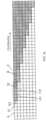
- the extending direction of the grayscale transition region may be the row direction of the pixel array, namely a first direction in FIGS. 3a and 5a .
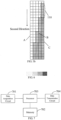
- the extending direction of the grayscale transition region may be the column direction of the pixel array, namely the second direction in FIGS. 3c and 5b .
- the extending direction of the grayscale transition region may be the row direction of the pixel array (namely the first direction in FIG. 3b ), and may also be the column direction of the pixel array (namely the second direction in FIG. 3b ).
- the number of the adjacent display pixels may be 1.
- the number of the adjacent background pixels may also be 1. Taking a grayscale transition region in a first row shown in FIG. 3a as an example, in the display image region A, the adjacent display pixel is a pixel 10; and in the background image region C, the adjacent background pixel is a pixel 20.
- grayscale change step lengths of the third pixel grayscales of the transition pixels in the grayscale transition region may be same, so as to achieve the optimum effect of edge blurring and effectively weaken the sense of edge sawteeth.
- the first pixel grayscale of the adjacent display pixel 10 is X
- the second pixel grayscale of the adjacent background pixel 20 is 0.
- the processor 703 is configured to, according to the stored position of the grayscale transition region, determine the adjacent display pixel adjacent to the grayscale transition region in the row direction or in the column direction in the display image region, the first pixel grayscale being the grayscale of the adjacent display pixel; determine a transition pixel in the grayscale transition region; and adjust a third pixel grayscale of the transition pixel in the grayscale transition region according to the first pixel grayscale, the second pixel grayscale and the transition pixel.
- the third pixel grayscale is between the first pixel grayscale of the adjacent display pixel and the second pixel grayscale.
- the data transmission circuit 704 is configured to transmit the third pixel grayscale to the display panel for display.
- the memory 702 may also be configured to store the first pixel grayscale and/or the second pixel grayscale.
- the data transmission circuit 704 is also configured to transmit grayscales of display pixels in the display image region to the display image region for display.
- the data transmission circuit 704 is also configured to transmit grayscales of the background pixels in the background image region to the background image region for display.
- the background pixels can be arranged in an array along the row direction and the column direction.
- the processor 703 is also configured to determine an adjacent background pixel adjacent to the grayscale transition region in the row direction or in the column direction in the background image region according to the position of the grayscale transition region, the second pixel grayscale is a grayscale of the adjacent background pixel.
- a step of determining the transition pixel in the grayscale transition region includes: forming a virtual rectangular area in the peripheral region by taking adjacent two line segments as adjacent two sides; and determining a quantity and an arrangement mode of transition pixels in the grayscale transition region according to the virtual rectangular area.
- the detailed description on the step of determining the transition pixel in the grayscale transition region performed by the processor 703 may refer to relevant description in the embodiment of the image processing method, and the repeated descriptions will be omitted here.
- the processor 703 is configured to: in the extending direction of the grayscale transition region, adjust third pixel grayscales of transition pixel in the grayscale transition region to be gradually decreased in a direction from the display image region to the peripheral region.
- the processor 703 is configured to: in the extending direction of the grayscale transition region, adjust third pixel grayscales of transition pixel in the grayscale transition region to be gradually increased in a direction from the display image region to the peripheral region.
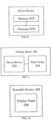
- FIG. 8 is a schematic structural view of another drive device of a display panel provided by an embodiment of the present disclosure.
- the drive device may be applied to a display panel, e.g., an active organic electroluminescent display panel.
- the processor 820 may be a central processing unit (CPU) or other forms of processing units having data processing capabilities and/or program execution capabilities, such as a graphics processing unit (GPU), a field-programmable gate array (FPGA), a tensor processing unit (TPU), or the like.
- the central processing unit (CPU) may be an X86, ARM architecture, or the like.
- the processor 820 may control other components in the drive device to perform desired functions.
- the display panel can reduce the brightness and the contrast of the edge between the display image region and the peripheral region, thereby effectively ameliorating the problem of edge sawteeth, improving the visual effect of the display panel, and enhancing customer experience.
- the display panel 500 may be an active organic electroluminescent display panel.
- the display panel 500 may be applied to a mobile phone, a tablet, a television, a monitor, a notebook computer, a digital photo frame, a navigator, or any products or components having a display function.
- FIG. 10 is a schematic block diagram of a wearable device provided by an embodiment of the present disclosure.
- the wearable device 600 provided by the embodiment of the present disclosure may comprise the display panel 500 provided by an embodiment of the present disclosure. Therefore, the wearable device 600 can reduce the brightness and the contrast of the edge between the display image region and the peripheral region, thereby effectively ameliorating the problem of edge sawteeth, improving the visual effect of the display panel, and enhancing customer experience.
- the wearable device 600 may be a smart watch, and a display image region of the smart watch may be round, elliptical, etc. But the present disclosure is not limited thereto, the wearable device 600 may also be a smart bracelet, smart eyeglasses, and the like.
- the embodiments of the present disclosure can be implemented by hardware, or may also be implemented by means of software plus a necessary general hardware platform.
- the technical solution of the embodiments of the present disclosure can be embodied in a form of a software product, and the software product may be stored in a non-volatile storage medium (which may be a CD-ROM, a USB flash disk, a mobile hard disk, etc.) and includes a number of instructions which are configured to allow a computer device (which may be a personal computer, a server, a network device, etc.) to perform the methods of respective embodiments of the present disclosure.
- a non-volatile storage medium which may be a CD-ROM, a USB flash disk, a mobile hard disk, etc.
- a computer device which may be a personal computer, a server, a network device, etc.
Landscapes
- Engineering & Computer Science (AREA)
- Theoretical Computer Science (AREA)
- Computer Hardware Design (AREA)
- Physics & Mathematics (AREA)
- General Physics & Mathematics (AREA)
- Human Computer Interaction (AREA)
- General Engineering & Computer Science (AREA)
- Control Of Indicators Other Than Cathode Ray Tubes (AREA)
- Electroluminescent Light Sources (AREA)
- Control Of El Displays (AREA)
Claims (12)
- Verfahren zur Bildverarbeitung eines Anzeige-Panels (500), wobei das Anzeige-Panel (500) einen Bildanzeigebereich (A) und einen Peripheriebereich aufweist, wobei der Peripheriebereich Graustufen-Übergangsbereiche (B) aufweist, wobei die Graustufen-Übergangsbereiche (B) an den Bildanzeigebereich (A) angrenzen, wobei der Bildanzeigebereich (A) eine Vielzahl von Anzeige-Pixeln aufweist, die entlang einer Zeilenrichtung und einer Spaltenrichtung angeordnet sind, der Bildanzeigebereich (A) basierend auf eines von dem Anzeige-Panel (500) angezeigten Bildes bestimmt wird, ein Bereich auf dem Anzeige-Panel (500), der nicht der Bildanzeigebereich (A) ist, als Peripheriebereich verwendet wird, Übergang-Pixel basierend auf einer Form des Bildanzeigebereichs (A) bestimmt werden, um die Graustufen-Übergangsbereiche (B) zu bestimmen, die Graustufen-Übergangsbereiche (B) Bereiche darstellen, die aus den Übergang-Pixeln bestehen, wobei der Anzeigebildbereich (A) verwendet wird, um das Bild anzuzeigen; und
das Verfahren zur Bildverarbeitung aufweist:(S101): Bestimmen eines benachbarten Anzeige-Pixels (10), das an jeden Graustufen-Übergangsbereich (B) in der Zeilenrichtung oder in der Spaltenrichtung im Anzeigebildbereich (A) angrenzt, gemäß einer Position des Graustufen-Übergangsbereichs (B);(S102): Bestimmen eines Übergang-Pixels im Graustufen-Übergangsbereich (B);(S103): Erfassen einer ersten Pixel-Graustufe, wobei die erste Pixel-Graustufe eine Graustufe des benachbarten Anzeige-Pixels (10) ist;(S104): Erfassen einer zweiten Pixel-Graustufe, wobei die erste Pixel-Graustufe größer oder kleiner als die zweite Pixel-Graustufe ist;(S105): Anpassen einer dritten Pixel-Graustufe des Übergang-Pixels gemäß der ersten Pixel-Graustufe, der zweiten Pixel-Graustufe und des Übergang-Pixels, wobei die dritte Pixel-Graustufe zwischen der ersten Pixel-Graustufe und der zweiten Pixel-Graustufe liegt; und(S106): Übertragen der dritten Pixel-Graustufe an das Anzeige-Panel (500) zur Anzeige;dadurch gekennzeichnet, dass:
das Bestimmen der Übergang-Pixel basierend auf der Form des Anzeigebildbereichs (A), um den Graustufen-Übergangsbereich (B) zu bestimmen, aufweist:wenn ein eingeschlossener Winkel zwischen einer Tangentiallinie einer makroskopischen Kante des Anzeigebildbereichs (A) und der Spaltenrichtung größer als ein erster Standard-eingeschlossener Winkel (θ1) und kleiner als 90° ist, Bestimmen einer Vielzahl von Übergang-Pixeln, die in einer Zeile und benachbart zu dem Anzeigebildbereich (A) in dem Peripheriebereich liegen, um jeden Graustufen-Übergangsbereich (B) benachbart zu dem Anzeigebildbereich (A) zu bestimmen;wenn der eingeschlossene Winkel zwischen der Tangentiallinie des makroskopischen Randes des Anzeigebildbereichs (A) und der Spaltenrichtung größer als 0° und kleiner als ein zweiter Standard-eingeschlossener Winkel (θ2) ist, Bestimmen einer Vielzahl von Übergang-Pixeln, die in einer Spalte liegen und an den Anzeigebildbereich (A) im Peripheriebereich angrenzen, um jeden Graustufen-Übergangsbereich (B) zu bestimmen, der an den Anzeigebildbereich (A) angrenzt;wenn der eingeschlossene Winkel zwischen der Tangentiallinie des makroskopischen Randes des Anzeigebildbereichs (A) und der Spaltenrichtung größer oder gleich dem zweiten Standard-eingeschlossenen Winkel (θ2) und kleiner oder gleich dem ersten Standard-eingeschlossenen Winkel (θ1) ist, Bestimmen eines Übergang-Pixels, das an den Anzeigebildbereich (A) in dem Peripheriebereich angrenzt, um jeden Graustufen-Übergangsbereich (B) zu bestimmen, der an den Anzeigebildbereich (A) angrenzt,wobei sowohl der erste eingeschlossene Standardwinkel (θ1) als auch der zweite eingeschlossene Standardwinkel (θ2) spitze Winkel sind. - Verfahren zur Bildverarbeitung nach Anspruch 1, wobei der Peripheriebereich weiter einen Hintergrundbildbereich (C) aufweist, der Hintergrundbildbereich (C) eine Vielzahl von Hintergrundpixeln aufweist, die entlang der Richtung der Zeilen und der Richtung der Spalten angeordnet sind; und
das Erfassen der zweiten Pixel-Graustufe umfasst:
Bestimmen eines benachbarten Hintergrundpixels (20), das in Richtung der Zeilen oder in Richtung der Spalten in dem Hintergrundbildbereich (C) an den Graustufen-Übergangsbereich (B) angrenzt, wobei die Graustufe des zweiten Pixels eine Graustufe des benachbarten Hintergrundpixels (20) ist. - Verfahren zur Bildverarbeitung nach Anspruch 1 oder 2, wobei die Form des Bildanzeigebereichs (A) eine nicht rechteckige Form aufweist,
beispielsweise eine runde Form aufweist. - Verfahren zur Bildverarbeitung gemäß einem der Ansprüche 1 bis 3, wobei das Bestimmen des benachbarten Anzeige-Pixels (10), das an den Graustufen-Übergangsbereich (B) angrenzt, in Zeilenrichtung oder in Spaltenrichtung im Bildanzeigebereich (A) gemäß der Position des Graustufen-Übergangsbereichs (B) aufweist:Bestimmen einer Ausdehnungsrichtung des Graustufen-Übergangsbereichs (B) entsprechend der Position des Graustufen-Übergangsbereichs (B); undBestimmen des benachbarten Anzeige-Pixels (10) benachbart zum Graustufen-Übergangsbereich (B) im Anzeigebildbereich (A) in der Ausdehnungsrichtung des Graustufen-Übergangsbereichs (B).
- Verfahren zur Bildverarbeitung gemäß einem der Ansprüche 1 bis 4, wobei das Anpassen der dritten Pixel-Graustufe des Übergang-Pixels gemäß der Position des Graustufen-Übergangsbereichs (B), der ersten Pixel-Graustufe des benachbarten Anzeige-Pixels (10), der zweiten Pixel-Graustufe und des Übergang-Pixels aufweist:wenn die erste Pixel-Graustufe des benachbarten Anzeige-Pixels (10) größer ist als die zweite Pixel-Graustufe, in der Ausdehnungsrichtung des Graustufen-Übergangsbereichs (B) dritte Pixel-Graustufen von Übergang-Pixeln im Graustufen-Übergangsbereich (B) so angepasst werden, dass sie in einer Richtung des Bildanzeigebereichs (A) zum Peripheriebereich graduell abnehmen; oderwenn die erste Pixel-Graustufe des benachbarten Anzeige-Pixels (10) geringer ist als die zweite Pixel-Graustufe, in der Ausdehnungsrichtung des Graustufen-Übergangsbereichs (B) die dritten Pixel-Graustufen der Übergang-Pixel im Graustufen-Übergangsbereich (B) so anpassen, dass sie in einer Richtung des Bildanzeigebereichs (A) zum Peripheriebereich graduell erhöht werden,beispielsweise sind die Graustufen-Änderungsschrittlängen der dritten Pixel-Graustufen der Übergang-Pixel im Graustufen-Übergangsbereich (B) gleich.
- Ansteuereinrichtung (520) eines Anzeige-Panels (500), wobei das Anzeige-Panel (500) einen Anzeige-Bildbereich (A) und einen Peripheriebereich aufweist, der Peripheriebereich Graustufen-Übergangsbereiche (B) aufweist, die Graustufen-Übergangsbereiche (B) an den Bildanzeigebereich (A) angrenzen, der Bildanzeigebereich (A) eine Vielzahl von Anzeige-Pixeln aufweist, die entlang einer Zeilenrichtung und einer Spaltenrichtung eingerichtet sind, der Bildanzeigebereich (A) basierend auf eines durch das Anzeige-Panel (500) angezeigten Bildes bestimmt wird, ein Bereich auf dem Anzeige-Panel (500), der nicht der Bildanzeigebereich (A) ist, als der Peripheriebereich verwendet wird, Übergang-Pixel basierend auf einer Form des Bildanzeigebereichs (A) bestimmt werden, um die Graustufen-Übergangsbereiche (B) zu bestimmen, wobei die Graustufen-Übergangsbereiche (B) Bereiche darstellen, die aus den Übergang-Pixeln bestehen, wobei der Bildanzeigebereich (A) verwendet wird, um das Bild anzuzeigen; und die Ansteuereinrichtung (520) aufweist:eine Datenerfassungsschaltung (701), die konfiguriert ist, eine erste Pixel-Graustufe und eine zweite Pixel-Graustufe zu erfassen, wobei die erste Pixel-Graustufe größer oder kleiner als die zweite Pixel-Graustufe ist;einen Speicher (702), der konfiguriert ist, eine Position jedes Graustufen-Übergangsbereichs (B) zu speichern; undeinen Prozessor (703), der konfiguriert ist, um:einen benachbarten Anzeige-Pixel (10) zu bestimmen, der in Zeilenrichtung oder in Spaltenrichtung im Anzeigebildbereich (A) an den Graustufen-Übergangsbereich (B) angrenzt, und zwar gemäß der Position des gespeicherten Graustufen-Übergangsbereichs (B), wobei die Graustufe des ersten Pixels eine Graustufe des benachbarten Anzeige-Pixels (10) ist;ein Übergang-Pixel im Graustufen-Übergangsbereich (B) zu bestimmen; undeine dritte Pixel-Graustufe des Übergang-Pixels gemäß der ersten Pixel-Graustufe, der zweiten Pixel-Graustufe und des Übergang-Pixels anzupassen, wobei die dritte Pixel-Graustufe zwischen der ersten Pixel-Graustufe und der zweiten Pixel-Graustufe liegt; undeine Datenübertragungsschaltung (704), die konfiguriert ist, die dritte Pixel-Graustufe an das Anzeige-Panel (500) zur Anzeige zu übertragen;dadurch gekennzeichnet, dass:
ein Schritt des Bestimmens der Übergang-Pixel basierend auf der Form des Anzeigebildbereichs (A), um den Graustufen-Übergangsbereich (B) zu bestimmen, der durch den Prozessor (703) ausgeführt wird, aufweist:wenn ein eingeschlossener Winkel zwischen einer Tangentiallinie einer makroskopischen Kante des Anzeigebildbereichs (A) und der Spaltenrichtung größer als ein erster Standard-eingeschlossener Winkel (θ1) und kleiner als 90° ist, Bestimmen einer Vielzahl von Übergang-Pixeln, die in einer Zeile liegen und an den Anzeigebildbereich (A) im Peripheriebereich angrenzen, um jeden Graustufen-Übergangsbereich (B) angrenzend an den Anzeigebildbereich (A) zu bestimmen;wenn der eingeschlossene Winkel zwischen der Tangentiallinie des makroskopischen Randes des Anzeigebildbereichs (A) und der Spaltenrichtung größer als 0° und kleiner als ein zweiter Standard-eingeschlossener Winkel (θ2) ist, Bestimmen einer Vielzahl von Übergang-Pixeln, die in einer Spalte liegen und an den Anzeigebildbereich (A) im Peripheriebereich angrenzen, um jeden Graustufen-Übergangsbereich (B) zu bestimmen, der an den Anzeigebildbereich (A) angrenzt;wenn der eingeschlossene Winkel zwischen der Tangentiallinie des makroskopischen Randes des Bildanzeigebereichs (A) und der Spaltenrichtung größer oder gleich dem zweiten Standard-eingeschlossenen Winkel (θ2) und kleiner oder gleich dem ersten Standard-eingeschlossenen Winkel (θ1) ist, Bestimmen eines Übergang-Pixels, das an den Bildanzeigebereich (A) in dem Peripheriebereich angrenzt, um jeden Graustufen-Übergangsbereich (B) zu bestimmen, der an den Bildanzeigebereich (A) angrenzt,wobei sowohl der erste standardmäßig eingeschlossene Winkel (θ1) als auch der zweite standardmäßig eingeschlossene Winkel (θ2) spitze Winkel sind. - Ansteuereinrichtung (520) gemäß Anspruch 6, wobei der Peripheriebereich weiter einen Hintergrundbildbereich (C) aufweist, der Hintergrundbildbereich (C) eine Vielzahl von Hintergrundpixeln aufweist, die entlang der Richtung der Zeilen und der Richtung der Spalten angeordnet sind; und
der Prozessor (703) außerdem konfiguriert ist, ein benachbartes Hintergrundpixel (20) zu bestimmen, das in der Zeile oder in der Spalte im Hintergrundbildbereich (C) benachbart zum Graustufen-Übergangsbereich (B) liegt, und zwar entsprechend der Position des Graustufen-Übergangsbereichs (B), wobei die Graustufe des zweiten Pixels eine Graustufe des benachbarten Hintergrundpixels (20) ist. - Ansteuereinrichtung (520) nach Anspruch 6, wobei
die Form des Bildanzeigebereichs (A) eine nicht rechteckige Form aufweist. - Ansteuereinrichtung (520) nach einem der Ansprüche 6 bis 8, wobei der Prozessor (703) konfiguriert ist, um: in der Ausdehnungsrichtung des Graustufen-Übergangsbereichs (B) dritte Pixel-Graustufen von Übergang-Pixeln im Graustufen-Übergangsbereich (B) so anzupassen, dass sie in einer Richtung von dem Bildanzeigebereich (A) zum Peripheriebereich graduell abnehmen; oderwenn die erste Pixel-Graustufe des benachbarten Anzeige-Pixels (10) kleiner als die zweite Pixel-Graustufe ist, der Prozessor (703) konfiguriert ist, um: in der Ausdehnungsrichtung des Graustufen-Übergangsbereichs (B) dritte Pixel-Graustufen von Übergang-Pixeln im Graustufen-Übergangsbereich (B) so anzupassen, dass sie graduell in einer Richtung des Bildanzeigebereichs (A) zum Peripheriebereich erhöht werden,beispielsweise sind die Graustufen-Änderungsschrittlängen der dritten Pixel-Graustufen der Übergang-Pixel im Graustufen-Übergangsbereich (B) gleich.
- Ansteuereinrichtung (520) eines Anzeige-Panels (500), aufweisend:einen Speicher (810), der konfiguriert ist, um nicht-transitorische computerlesbare Anweisungen zu speichern; undeinen Prozessor (820), der konfiguriert ist, um die nicht-transitorischen computerlesbaren Anweisungen auszuführen, wobei, wenn die nicht-transitorischen computerlesbaren Anweisungen durch den Prozessor (820) ausgeführt werden, ein oder mehrere Schritte des Verfahrens zur Bildverarbeitung gemäß einem der Ansprüche 1 bis 5 durchgeführt werden.
- Anzeige-Panel (500), aufweisend die Ansteuereinrichtung (520) gemäß einem der Ansprüche 6 bis 9 oder die Ansteuereinrichtung (520) gemäß Anspruch 10.
- Tragbare Vorrichtung (600), aufweisend das Anzeige-Panel (500) gemäß Anspruch 11.
Applications Claiming Priority (2)
| Application Number | Priority Date | Filing Date | Title |
|---|---|---|---|
| CN201710632881.2A CN107450878B (zh) | 2017-07-28 | 2017-07-28 | Amoled的图像处理方法、驱动芯片及可穿戴设备 |
| PCT/CN2018/087734 WO2019019782A1 (zh) | 2017-07-28 | 2018-05-22 | 图像处理方法、驱动装置、显示面板及可穿戴设备 |
Publications (3)
| Publication Number | Publication Date |
|---|---|
| EP3660657A1 EP3660657A1 (de) | 2020-06-03 |
| EP3660657A4 EP3660657A4 (de) | 2021-05-05 |
| EP3660657B1 true EP3660657B1 (de) | 2025-07-02 |
Family
ID=60490501
Family Applications (1)
| Application Number | Title | Priority Date | Filing Date |
|---|---|---|---|
| EP18833378.5A Active EP3660657B1 (de) | 2017-07-28 | 2018-05-22 | Bildverarbeitungsverfahren, antriebsvorrichtung, anzeigetafel und wearable-vorrichtung |
Country Status (4)
| Country | Link |
|---|---|
| US (1) | US11488511B2 (de) |
| EP (1) | EP3660657B1 (de) |
| CN (1) | CN107450878B (de) |
| WO (1) | WO2019019782A1 (de) |
Families Citing this family (17)
| Publication number | Priority date | Publication date | Assignee | Title |
|---|---|---|---|---|
| CN107450878B (zh) | 2017-07-28 | 2019-11-05 | 京东方科技集团股份有限公司 | Amoled的图像处理方法、驱动芯片及可穿戴设备 |
| CN108198534A (zh) * | 2018-01-12 | 2018-06-22 | 京东方科技集团股份有限公司 | 显示方法、显示优化装置、以及显示装置 |
| CN108196811B (zh) * | 2018-01-15 | 2021-08-10 | 惠州Tcl移动通信有限公司 | 一种图片清晰度处理方法、移动终端及存储介质 |
| CN108492773B (zh) * | 2018-03-30 | 2020-09-04 | 武汉华星光电半导体显示技术有限公司 | 一种图像显示方法、异形显示设备及具有存储功能的装置 |
| CN109408022B (zh) * | 2018-10-31 | 2026-03-31 | 北京小米移动软件有限公司 | 显示方法、装置、终端及存储介质 |
| US11127356B2 (en) | 2019-01-04 | 2021-09-21 | Chengdu Boe Optoelectronics Technology Co., Ltd. | Method for compensating brightness unevenness of a display device and related display device |
| CN109859709A (zh) * | 2019-02-12 | 2019-06-07 | 南京中电熊猫平板显示科技有限公司 | 一种异形显示装置 |
| CN110211534B (zh) * | 2019-05-20 | 2021-02-23 | 武汉华星光电半导体显示技术有限公司 | 图像显示方法、装置、控制器及存储介质 |
| CN112308868B (zh) * | 2019-07-26 | 2024-11-12 | 腾讯科技(深圳)有限公司 | 一种图像边缘锯齿点确定方法、装置、设备及存储介质 |
| CN110428411B (zh) * | 2019-07-31 | 2022-08-30 | 武汉精立电子技术有限公司 | 一种基于二次曝光的背光板检测方法及系统 |
| CN114822428B (zh) * | 2021-01-29 | 2023-11-21 | 奇景光电股份有限公司 | 显示面板的驱动电路及其操作方法 |
| CN113593494B (zh) * | 2021-07-19 | 2022-07-12 | Tcl华星光电技术有限公司 | 显示补偿方法及装置、显示面板 |
| CN114512103B (zh) * | 2022-04-19 | 2022-07-12 | 惠科股份有限公司 | 背光模组及显示装置 |
| TWI817668B (zh) * | 2022-08-22 | 2023-10-01 | 大陸商北京集創北方科技股份有限公司 | Oled顯示器之邊緣鋸齒顯示補償方法、驅動晶片及oled顯示裝置 |
| CN115188314B (zh) * | 2022-09-08 | 2023-01-31 | 惠科股份有限公司 | 异形屏的显示电路及显示设备 |
| CN115810325A (zh) * | 2022-12-16 | 2023-03-17 | 信利(仁寿)高端显示科技有限公司 | 一种异形屏像素光透过率调整方法及异形屏 |
| CN117036206B (zh) * | 2023-10-10 | 2024-03-26 | 荣耀终端有限公司 | 一种确定图像锯齿化程度的方法及相关电子设备 |
Family Cites Families (14)
| Publication number | Priority date | Publication date | Assignee | Title |
|---|---|---|---|---|
| US6731257B2 (en) * | 2001-01-22 | 2004-05-04 | Brillian Corporation | Image quality improvement for liquid crystal displays |
| JP5233920B2 (ja) * | 2009-09-01 | 2013-07-10 | セイコーエプソン株式会社 | 映像処理回路、その処理方法、液晶表示装置および電子機器 |
| EP2766852A1 (de) * | 2011-10-13 | 2014-08-20 | Pioneer Hi-Bred International | Automatische erkennung von objektpixeln für hyperspektrale analyse |
| US9558535B2 (en) * | 2012-08-07 | 2017-01-31 | Sharp Kabushiki Kaisha | Image processing device, image processing method, image processing program, and image display device |
| CN104200427B (zh) | 2014-09-17 | 2017-12-15 | 厦门美图之家科技有限公司 | 一种消除图像边缘锯齿的方法 |
| CN104599625B (zh) | 2015-03-02 | 2017-06-06 | 京东方科技集团股份有限公司 | 边界判定方法和装置、显示驱动方法和装置 |
| CN106652899B (zh) * | 2015-10-29 | 2019-03-12 | 上海和辉光电有限公司 | 显示装置及显示面板的图像显示修正方法 |
| CN106886380B (zh) * | 2015-12-16 | 2020-01-14 | 上海和辉光电有限公司 | 显示装置、图像数据处理装置及方法 |
| WO2017110721A1 (ja) * | 2015-12-22 | 2017-06-29 | シャープ株式会社 | 表示装置 |
| CN105741774B (zh) * | 2016-01-28 | 2018-03-20 | 京东方科技集团股份有限公司 | 一种图像处理方法及其装置、显示装置 |
| CN105511152A (zh) * | 2016-02-02 | 2016-04-20 | 京东方科技集团股份有限公司 | 显示基板、显示面板和显示装置 |
| CN108140346B (zh) * | 2016-08-04 | 2019-06-28 | 苹果公司 | 具有用于弯曲边缘的像素调光的显示器 |
| CN106530993B (zh) * | 2016-12-28 | 2019-04-16 | 上海天马微电子有限公司 | 一种显示面板和显示装置 |
| CN107450878B (zh) * | 2017-07-28 | 2019-11-05 | 京东方科技集团股份有限公司 | Amoled的图像处理方法、驱动芯片及可穿戴设备 |
-
2017
- 2017-07-28 CN CN201710632881.2A patent/CN107450878B/zh active Active
-
2018
- 2018-05-22 US US16/320,390 patent/US11488511B2/en active Active
- 2018-05-22 WO PCT/CN2018/087734 patent/WO2019019782A1/zh not_active Ceased
- 2018-05-22 EP EP18833378.5A patent/EP3660657B1/de active Active
Also Published As
| Publication number | Publication date |
|---|---|
| WO2019019782A1 (zh) | 2019-01-31 |
| EP3660657A1 (de) | 2020-06-03 |
| CN107450878A (zh) | 2017-12-08 |
| EP3660657A4 (de) | 2021-05-05 |
| US11488511B2 (en) | 2022-11-01 |
| US20210335189A1 (en) | 2021-10-28 |
| CN107450878B (zh) | 2019-11-05 |
Similar Documents
| Publication | Publication Date | Title |
|---|---|---|
| US11488511B2 (en) | Image processing method, drive device, display panel and wearable device | |
| EP3850585B1 (de) | Adaptive fovea-darstellung während des fluges | |
| US10504400B2 (en) | Method and apparatus for performing correction processing on grayscale of a pixel in an image | |
| CN109388448B (zh) | 图像显示方法、显示系统以及计算机可读存储介质 | |
| CN106531073B (zh) | 显示屏的处理电路、显示方法及显示器件 | |
| CN107526201B (zh) | 一种显示面板、显示装置和显示面板的驱动方法 | |
| US8775965B1 (en) | Immersive mode for a web browser | |
| CN109791431B (zh) | 视点渲染 | |
| US9997560B2 (en) | Display substrate, method for fabricating the same and display device | |
| KR102254540B1 (ko) | 곡면형 표시 장치 및 이의 구동방법 | |
| US10297234B2 (en) | Curved virtual display surface for displaying digital objects | |
| CN104049800B (zh) | 一种内嵌式触摸屏及显示装置 | |
| US11474401B2 (en) | Display panel and fabrication method thereof, and display apparatus | |
| CN107277419A (zh) | 一种显示装置及其显示方法 | |
| CN111476852B (zh) | 阅读器刷新方法、计算设备及计算机存储介质 | |
| CN104094167A (zh) | 具有基本白屏关闭状态的电子显示投影组件 | |
| WO2020192493A1 (zh) | 显示控制方法、存储介质、显示控制装置和显示装置 | |
| CN105467603B (zh) | 一种立体显示装置 | |
| KR102592143B1 (ko) | 디스플레이 장치 및 그의 구동 방법 | |
| CN109359255B (zh) | 一种表格数据展示方法及终端设备 | |
| CN114815406A (zh) | 一种阵列基板、液晶显示面板和显示装置 | |
| CN118762636A (zh) | 灰阶补偿方法、显示模组、终端及存储介质 | |
| US20250139898A1 (en) | Object rendering method and apparatus, electronic device, storage medium, and program product | |
| CN112988294B (zh) | 一种rh850液晶仪表虚拟指针优化方法和装置 | |
| CN119105215B (zh) | 显示面板和显示装置 |
Legal Events
| Date | Code | Title | Description |
|---|---|---|---|
| STAA | Information on the status of an ep patent application or granted ep patent |
Free format text: STATUS: UNKNOWN |
|
| STAA | Information on the status of an ep patent application or granted ep patent |
Free format text: STATUS: THE INTERNATIONAL PUBLICATION HAS BEEN MADE |
|
| PUAI | Public reference made under article 153(3) epc to a published international application that has entered the european phase |
Free format text: ORIGINAL CODE: 0009012 |
|
| STAA | Information on the status of an ep patent application or granted ep patent |
Free format text: STATUS: REQUEST FOR EXAMINATION WAS MADE |
|
| 17P | Request for examination filed |
Effective date: 20190131 |
|
| AK | Designated contracting states |
Kind code of ref document: A1 Designated state(s): AL AT BE BG CH CY CZ DE DK EE ES FI FR GB GR HR HU IE IS IT LI LT LU LV MC MK MT NL NO PL PT RO RS SE SI SK SM TR |
|
| AX | Request for extension of the european patent |
Extension state: BA ME |
|
| DAV | Request for validation of the european patent (deleted) | ||
| DAX | Request for extension of the european patent (deleted) | ||
| A4 | Supplementary search report drawn up and despatched |
Effective date: 20210406 |
|
| RIC1 | Information provided on ipc code assigned before grant |
Ipc: G06F 3/147 20060101AFI20210329BHEP Ipc: G09G 5/02 20060101ALI20210329BHEP Ipc: G09G 3/20 20060101ALI20210329BHEP Ipc: G06T 5/00 20060101ALI20210329BHEP Ipc: G06F 1/16 20060101ALI20210329BHEP Ipc: G09G 3/3208 20160101ALI20210329BHEP Ipc: G06T 5/20 20060101ALI20210329BHEP |
|
| STAA | Information on the status of an ep patent application or granted ep patent |
Free format text: STATUS: EXAMINATION IS IN PROGRESS |
|
| 17Q | First examination report despatched |
Effective date: 20230201 |
|
| GRAP | Despatch of communication of intention to grant a patent |
Free format text: ORIGINAL CODE: EPIDOSNIGR1 |
|
| STAA | Information on the status of an ep patent application or granted ep patent |
Free format text: STATUS: GRANT OF PATENT IS INTENDED |
|
| INTG | Intention to grant announced |
Effective date: 20250210 |
|
| GRAS | Grant fee paid |
Free format text: ORIGINAL CODE: EPIDOSNIGR3 |
|
| GRAA | (expected) grant |
Free format text: ORIGINAL CODE: 0009210 |
|
| STAA | Information on the status of an ep patent application or granted ep patent |
Free format text: STATUS: THE PATENT HAS BEEN GRANTED |
|
| AK | Designated contracting states |
Kind code of ref document: B1 Designated state(s): AL AT BE BG CH CY CZ DE DK EE ES FI FR GB GR HR HU IE IS IT LI LT LU LV MC MK MT NL NO PL PT RO RS SE SI SK SM TR |
|
| REG | Reference to a national code |
Ref country code: GB Ref legal event code: FG4D |
|
| REG | Reference to a national code |
Ref country code: CH Ref legal event code: EP |
|
| REG | Reference to a national code |
Ref country code: DE Ref legal event code: R096 Ref document number: 602018083264 Country of ref document: DE |
|
| REG | Reference to a national code |
Ref country code: IE Ref legal event code: FG4D |
|
| REG | Reference to a national code |
Ref country code: NL Ref legal event code: MP Effective date: 20250702 |
|
| PG25 | Lapsed in a contracting state [announced via postgrant information from national office to epo] |
Ref country code: PT Free format text: LAPSE BECAUSE OF FAILURE TO SUBMIT A TRANSLATION OF THE DESCRIPTION OR TO PAY THE FEE WITHIN THE PRESCRIBED TIME-LIMIT Effective date: 20251103 |
|
| PG25 | Lapsed in a contracting state [announced via postgrant information from national office to epo] |
Ref country code: NL Free format text: LAPSE BECAUSE OF FAILURE TO SUBMIT A TRANSLATION OF THE DESCRIPTION OR TO PAY THE FEE WITHIN THE PRESCRIBED TIME-LIMIT Effective date: 20250702 |
|
| REG | Reference to a national code |
Ref country code: AT Ref legal event code: MK05 Ref document number: 1809996 Country of ref document: AT Kind code of ref document: T Effective date: 20250702 |
|
| PG25 | Lapsed in a contracting state [announced via postgrant information from national office to epo] |
Ref country code: IS Free format text: LAPSE BECAUSE OF FAILURE TO SUBMIT A TRANSLATION OF THE DESCRIPTION OR TO PAY THE FEE WITHIN THE PRESCRIBED TIME-LIMIT Effective date: 20251102 |
|
| PG25 | Lapsed in a contracting state [announced via postgrant information from national office to epo] |
Ref country code: NO Free format text: LAPSE BECAUSE OF FAILURE TO SUBMIT A TRANSLATION OF THE DESCRIPTION OR TO PAY THE FEE WITHIN THE PRESCRIBED TIME-LIMIT Effective date: 20251002 |
|
| REG | Reference to a national code |
Ref country code: LT Ref legal event code: MG9D |
|
| PG25 | Lapsed in a contracting state [announced via postgrant information from national office to epo] |
Ref country code: AT Free format text: LAPSE BECAUSE OF FAILURE TO SUBMIT A TRANSLATION OF THE DESCRIPTION OR TO PAY THE FEE WITHIN THE PRESCRIBED TIME-LIMIT Effective date: 20250702 |
|
| PG25 | Lapsed in a contracting state [announced via postgrant information from national office to epo] |
Ref country code: FI Free format text: LAPSE BECAUSE OF FAILURE TO SUBMIT A TRANSLATION OF THE DESCRIPTION OR TO PAY THE FEE WITHIN THE PRESCRIBED TIME-LIMIT Effective date: 20250702 |
|
| PG25 | Lapsed in a contracting state [announced via postgrant information from national office to epo] |
Ref country code: HR Free format text: LAPSE BECAUSE OF FAILURE TO SUBMIT A TRANSLATION OF THE DESCRIPTION OR TO PAY THE FEE WITHIN THE PRESCRIBED TIME-LIMIT Effective date: 20250702 |
|
| PG25 | Lapsed in a contracting state [announced via postgrant information from national office to epo] |
Ref country code: GR Free format text: LAPSE BECAUSE OF FAILURE TO SUBMIT A TRANSLATION OF THE DESCRIPTION OR TO PAY THE FEE WITHIN THE PRESCRIBED TIME-LIMIT Effective date: 20251003 |
|
| PG25 | Lapsed in a contracting state [announced via postgrant information from national office to epo] |
Ref country code: SE Free format text: LAPSE BECAUSE OF FAILURE TO SUBMIT A TRANSLATION OF THE DESCRIPTION OR TO PAY THE FEE WITHIN THE PRESCRIBED TIME-LIMIT Effective date: 20250702 Ref country code: CZ Free format text: LAPSE BECAUSE OF FAILURE TO SUBMIT A TRANSLATION OF THE DESCRIPTION OR TO PAY THE FEE WITHIN THE PRESCRIBED TIME-LIMIT Effective date: 20250702 |
|
| PG25 | Lapsed in a contracting state [announced via postgrant information from national office to epo] |
Ref country code: LV Free format text: LAPSE BECAUSE OF FAILURE TO SUBMIT A TRANSLATION OF THE DESCRIPTION OR TO PAY THE FEE WITHIN THE PRESCRIBED TIME-LIMIT Effective date: 20250702 |
|
| PG25 | Lapsed in a contracting state [announced via postgrant information from national office to epo] |
Ref country code: PL Free format text: LAPSE BECAUSE OF FAILURE TO SUBMIT A TRANSLATION OF THE DESCRIPTION OR TO PAY THE FEE WITHIN THE PRESCRIBED TIME-LIMIT Effective date: 20250702 Ref country code: BG Free format text: LAPSE BECAUSE OF FAILURE TO SUBMIT A TRANSLATION OF THE DESCRIPTION OR TO PAY THE FEE WITHIN THE PRESCRIBED TIME-LIMIT Effective date: 20250702 |
|
| PG25 | Lapsed in a contracting state [announced via postgrant information from national office to epo] |
Ref country code: RS Free format text: LAPSE BECAUSE OF FAILURE TO SUBMIT A TRANSLATION OF THE DESCRIPTION OR TO PAY THE FEE WITHIN THE PRESCRIBED TIME-LIMIT Effective date: 20251002 |
|
| PG25 | Lapsed in a contracting state [announced via postgrant information from national office to epo] |
Ref country code: ES Free format text: LAPSE BECAUSE OF FAILURE TO SUBMIT A TRANSLATION OF THE DESCRIPTION OR TO PAY THE FEE WITHIN THE PRESCRIBED TIME-LIMIT Effective date: 20250702 |
|
| PG25 | Lapsed in a contracting state [announced via postgrant information from national office to epo] |
Ref country code: SM Free format text: LAPSE BECAUSE OF FAILURE TO SUBMIT A TRANSLATION OF THE DESCRIPTION OR TO PAY THE FEE WITHIN THE PRESCRIBED TIME-LIMIT Effective date: 20250702 |
|
| REG | Reference to a national code |
Ref country code: DE Ref legal event code: R097 Ref document number: 602018083264 Country of ref document: DE |
|
| PG25 | Lapsed in a contracting state [announced via postgrant information from national office to epo] |
Ref country code: DK Free format text: LAPSE BECAUSE OF FAILURE TO SUBMIT A TRANSLATION OF THE DESCRIPTION OR TO PAY THE FEE WITHIN THE PRESCRIBED TIME-LIMIT Effective date: 20250702 |
|
| PG25 | Lapsed in a contracting state [announced via postgrant information from national office to epo] |
Ref country code: IT Free format text: LAPSE BECAUSE OF FAILURE TO SUBMIT A TRANSLATION OF THE DESCRIPTION OR TO PAY THE FEE WITHIN THE PRESCRIBED TIME-LIMIT Effective date: 20250702 |
|
| PG25 | Lapsed in a contracting state [announced via postgrant information from national office to epo] |
Ref country code: SK Free format text: LAPSE BECAUSE OF FAILURE TO SUBMIT A TRANSLATION OF THE DESCRIPTION OR TO PAY THE FEE WITHIN THE PRESCRIBED TIME-LIMIT Effective date: 20250702 Ref country code: EE Free format text: LAPSE BECAUSE OF FAILURE TO SUBMIT A TRANSLATION OF THE DESCRIPTION OR TO PAY THE FEE WITHIN THE PRESCRIBED TIME-LIMIT Effective date: 20250702 |
|
| PLBE | No opposition filed within time limit |
Free format text: ORIGINAL CODE: 0009261 |
|
| STAA | Information on the status of an ep patent application or granted ep patent |
Free format text: STATUS: NO OPPOSITION FILED WITHIN TIME LIMIT |
|
| REG | Reference to a national code |
Ref country code: CH Ref legal event code: L10 Free format text: ST27 STATUS EVENT CODE: U-0-0-L10-L00 (AS PROVIDED BY THE NATIONAL OFFICE) Effective date: 20260518 |
|
| 26N | No opposition filed |
Effective date: 20260407 |
|
| PG25 | Lapsed in a contracting state [announced via postgrant information from national office to epo] |
Ref country code: LT Free format text: LAPSE BECAUSE OF FAILURE TO SUBMIT A TRANSLATION OF THE DESCRIPTION OR TO PAY THE FEE WITHIN THE PRESCRIBED TIME-LIMIT Effective date: 20250702 |
|
| PGFP | Annual fee paid to national office [announced via postgrant information from national office to epo] |
Ref country code: DE Payment date: 20260520 Year of fee payment: 9 |