EP3660680A1 - Système redondant - Google Patents
Système redondant Download PDFInfo
- Publication number
- EP3660680A1 EP3660680A1 EP19207046.4A EP19207046A EP3660680A1 EP 3660680 A1 EP3660680 A1 EP 3660680A1 EP 19207046 A EP19207046 A EP 19207046A EP 3660680 A1 EP3660680 A1 EP 3660680A1
- Authority
- EP
- European Patent Office
- Prior art keywords
- devices
- communication
- redundant system
- group
- malfunction
- Prior art date
- Legal status (The legal status is an assumption and is not a legal conclusion. Google has not performed a legal analysis and makes no representation as to the accuracy of the status listed.)
- Granted
Links
Images



Classifications
-
- H—ELECTRICITY
- H04—ELECTRIC COMMUNICATION TECHNIQUE
- H04L—TRANSMISSION OF DIGITAL INFORMATION, e.g. TELEGRAPHIC COMMUNICATION
- H04L41/00—Arrangements for maintenance, administration or management of data switching networks, e.g. of packet switching networks
- H04L41/06—Management of faults, events, alarms or notifications
- H04L41/0654—Management of faults, events, alarms or notifications using network fault recovery
-
- G—PHYSICS
- G06—COMPUTING OR CALCULATING; COUNTING
- G06F—ELECTRIC DIGITAL DATA PROCESSING
- G06F11/00—Error detection; Error correction; Monitoring
- G06F11/07—Responding to the occurrence of a fault, e.g. fault tolerance
- G06F11/16—Error detection or correction of the data by redundancy in hardware
- G06F11/20—Error detection or correction of the data by redundancy in hardware using active fault-masking, e.g. by switching out faulty elements or by switching in spare elements
- G06F11/2002—Error detection or correction of the data by redundancy in hardware using active fault-masking, e.g. by switching out faulty elements or by switching in spare elements where interconnections or communication control functionality are redundant
- G06F11/2007—Error detection or correction of the data by redundancy in hardware using active fault-masking, e.g. by switching out faulty elements or by switching in spare elements where interconnections or communication control functionality are redundant using redundant communication media
-
- G—PHYSICS
- G06—COMPUTING OR CALCULATING; COUNTING
- G06F—ELECTRIC DIGITAL DATA PROCESSING
- G06F11/00—Error detection; Error correction; Monitoring
- G06F11/07—Responding to the occurrence of a fault, e.g. fault tolerance
- G06F11/16—Error detection or correction of the data by redundancy in hardware
- G06F11/1658—Data re-synchronization of a redundant component, or initial sync of replacement, additional or spare unit
-
- G—PHYSICS
- G06—COMPUTING OR CALCULATING; COUNTING
- G06F—ELECTRIC DIGITAL DATA PROCESSING
- G06F11/00—Error detection; Error correction; Monitoring
- G06F11/07—Responding to the occurrence of a fault, e.g. fault tolerance
- G06F11/16—Error detection or correction of the data by redundancy in hardware
- G06F11/20—Error detection or correction of the data by redundancy in hardware using active fault-masking, e.g. by switching out faulty elements or by switching in spare elements
- G06F11/2002—Error detection or correction of the data by redundancy in hardware using active fault-masking, e.g. by switching out faulty elements or by switching in spare elements where interconnections or communication control functionality are redundant
- G06F11/2012—Error detection or correction of the data by redundancy in hardware using active fault-masking, e.g. by switching out faulty elements or by switching in spare elements where interconnections or communication control functionality are redundant and using different communication protocols
-
- H—ELECTRICITY
- H04—ELECTRIC COMMUNICATION TECHNIQUE
- H04L—TRANSMISSION OF DIGITAL INFORMATION, e.g. TELEGRAPHIC COMMUNICATION
- H04L45/00—Routing or path finding of packets in data switching networks
- H04L45/28—Routing or path finding of packets in data switching networks using route fault recovery
-
- G—PHYSICS
- G06—COMPUTING OR CALCULATING; COUNTING
- G06F—ELECTRIC DIGITAL DATA PROCESSING
- G06F11/00—Error detection; Error correction; Monitoring
- G06F11/07—Responding to the occurrence of a fault, e.g. fault tolerance
- G06F11/16—Error detection or correction of the data by redundancy in hardware
- G06F11/20—Error detection or correction of the data by redundancy in hardware using active fault-masking, e.g. by switching out faulty elements or by switching in spare elements
- G06F11/202—Error detection or correction of the data by redundancy in hardware using active fault-masking, e.g. by switching out faulty elements or by switching in spare elements where processing functionality is redundant
- G06F11/2023—Failover techniques
- G06F11/203—Failover techniques using migration
-
- G—PHYSICS
- G06—COMPUTING OR CALCULATING; COUNTING
- G06F—ELECTRIC DIGITAL DATA PROCESSING
- G06F11/00—Error detection; Error correction; Monitoring
- G06F11/07—Responding to the occurrence of a fault, e.g. fault tolerance
- G06F11/16—Error detection or correction of the data by redundancy in hardware
- G06F11/20—Error detection or correction of the data by redundancy in hardware using active fault-masking, e.g. by switching out faulty elements or by switching in spare elements
- G06F11/202—Error detection or correction of the data by redundancy in hardware using active fault-masking, e.g. by switching out faulty elements or by switching in spare elements where processing functionality is redundant
- G06F11/2035—Error detection or correction of the data by redundancy in hardware using active fault-masking, e.g. by switching out faulty elements or by switching in spare elements where processing functionality is redundant without idle spare hardware
Definitions
- the disclosure relates to a redundant system and, more particularly, to a redundant system including multiple devices mounted in an aircraft.
- multiple devices 101 A to 101 E may be communicably coupled via a bus 102 that is a communication path to constitute a system 100 as illustrated in, for example, FIG. 7 .
- a malfunction such as a wire break occurs in the bus 102
- communication between the devices is interrupted in a malfunction part, indicated by the sign "x", of the bus 102 and the system 100 is divided into two groups.
- one group includes the devices 101A to 101C, and the other group includes the devices 101D and 101E.
- the system may be constructed so that each of the devices is communicably coupled to two or more of the devices other than the each of the devices via communication paths (see, for example, Japanese Unexamined Patent Application Publication JP H8-265 319 A ).
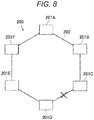
- each of six devices 201A to 201F such as computers may be communicably coupled to two or more of the devices other than the each of the six devices 201A to 201F via communication paths 202 to construct a system 200.
- this configuration may be expressed by the phrase that "multiple devices are communicably coupled in a ring shape via communication paths", for the purpose of simplifying the description.
- the multiple devices 201A to 201F are kept communicably coupled to each other via the communication paths 202.
- the multiple devices 201A to 201F are not divided into two groups unlike the system 100 (see FIG. 7 ), and communication may be continued among the devices 201A to 201F via the communication paths 202.
- the system 200 is configured such that the multiple devices 201A to 201F are communicably coupled in a ring shape via the communication paths 202, which provides the redundancy of the system 200.
- redundant system a system having the redundancy as described above will be referred to as a "redundant system”.
- An aspect of the invention provides a redundant system including multiple devices communicably coupled via communication paths.
- Each of the devices is communicably coupled via two or more of the communication paths to two or more of the devices other than each of the devices.
- Each of the devices is configured to perform wired communication via two or more of the communication paths with the devices communicably coupled to each of the devices via the two or more of the communication paths in a normal state.
- Each of the devices includes a wireless communication unit.
- each of the devices When each of the devices communicates with two or more of the devices other than each of the devices under a condition that a malfunction occurs in two or more parts in the redundant system, then each of the devices performs a wired communication via the communication path with a counterpart device with which the wired communication via the communication path is enabled, and switches from the wired communication via the communication path to a wireless communication and continues communication with a counterpart device with which the wired communication via the communication path is disabled.
- the redundant system 200 is divided into two groups.
- one group includes devices 201A to 201D, and the other group includes devices 201E and 201F.
- the redundant system 200 is also divided into two groups.
- one group includes the devices 201A to 201C, and the other group includes the devices 201E and 201F.
- a device of a certain group may be unable to communicate with any device of a group(s) other than the certain group.
- the system may be divided into multiple groups, and a device of a certain group may be unable to communicate with any device of a group(s) other than the certain group.
- this configuration may be expressed by the phrase that the multiple devices are communicably coupled in a ring shape via the communication paths, for the purpose of simplifying the description. It is appreciated that this does not limit an actual redundant system to one having a ring shape without a twist.
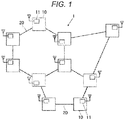
- FIG. 1 illustrates an example of the configuration of the redundant system according to the embodiment.
- a redundant system 1 according to the embodiment includes multiple devices 10 communicably coupled via communication paths 20 such as signal lines. Each of the devices 10 is communicably coupled via the communication paths 20 to two or more of the devices 10 other than the each of the devices 10. That is, the redundant system 1 according to the embodiment includes the multiple devices 10 communicably coupled in the ring shape via the communication paths 20.
- the redundant system 1 in FIG. 1 includes the multiple devices 10 communicably coupled in multiple ring shapes in a combined manner via the communication paths 20.
- the redundant system 1 may include the multiple devices 10 communicably coupled in a single ring shape via the communication paths 20, for example, like the redundant system 200 illustrated in FIG. 8 .
- the redundant system 1 when the redundant system 1 is configured such that all or many of the devices 10 in the aircraft are communicably coupled to each other via the communication paths 20 or the devices 10 physically distant from each other are communicably coupled to each other via the communication paths 20, the volume of the hardware of the redundant system 1 may increase or the number of the communication paths 20 may increase, which may result in an increase in the weight of the aircraft.
- the redundant system 1 when the redundant system 1 is configured such that the devices 10 physically close to each other are communicably coupled to each other via the communication paths 20, the redundant system 1 can avoid the increase in the weight of the aircraft.
- the devices 10 physically close to each other are communicably coupled to each other in a single ring shape via the communication paths 20 in a combined manner via the communication paths 20 as illustrated in FIG. 1 , which provides the redundancy.
- the devices 10 are, for example, computers and modules mounted in an aircraft.
- the devices 10 uniquely perform processes such as control of equipment and appliances of a power system, a steering system, a power supply system, and a communication system.
- the devices 10 constituting the redundant system 1 do not include an alternative device that performs no work in a normal state, that is, a state in which no malfunction occurs in the communication paths 20 , and each of the devices 10 performs a unique process.
- the devices 10 of the redundant system 1 may include an alternative device that performs no process in the normal state.
- each of the devices 10 performs wired communication via the communication paths 20 with the devices 10 (referred to below as the adjacent devices 10) communicably coupled to the each of the device 10 via the communication paths 20.
- each of the devices 10 communicates with the adjacent devices 10 periodically or at predetermined timings (for example, at a timing when transmitting or receiving a signal or data) to confirm that wired communication with the adjacent devices 10 via the communication paths 20 is established, that is, communicable coupling via the communication paths 20 is maintained and no malfunction occurs in the communication paths 20.
- the device 10 when the device 10 becomes unable to perform the wired communication with any of the adjacent devices 10 via the communication path 20 due to, for example, occurrence of a malfunction (such as a wire break that disables the wired communication via the communication paths 20) in the communication path 20, the device 10 notifies all the devices 10 of the redundant system 1 by transmitting a signal indicating that the wired communication is disabled, using the wired communication via the communication paths 20 other than the communication path 20 through which the wired communication is disabled.
- a malfunction such as a wire break that disables the wired communication via the communication paths 20
- each of the devices 10 Upon receipt of the signal, each of the devices 10 recognizes that wired communication between a certain pair of the devices 10 via the communication path 20 is disabled (that is, a malfunction has occurred in the communication path 20 therebetween).
- the multiple devices 10 of the redundant system 1 are kept communicably coupled to each other via the communication paths 20 in the redundant system 1 according to the embodiment even when a malfunction occurs in one of the communication paths 20. Therefore, the wired communication between the devices 10 via the communication paths 20 continues.
- a malfunction may occur in two or more parts in the redundant system 1. For example, a malfunction occurs in one part in the redundant system 1, and then a malfunction occurs in another part in the redundant system 1. Or, a malfunction occurs in two or more parts in the redundant system 1 at the same time. In this case, even in the redundant system 1 according to the embodiment, the wired communication via the communication paths 20 is interrupted in the parts in which a malfunction has occurred.
- each of the devices 10 includes a wireless communication unit 11.
- each of the multiple devices 10 of the redundant system 1 (i) performs the wired communication via the communication path 20 with a counterpart device 10 with which wired communication via the communication path 20 is enabled and (ii) switches from the wired communication via the communication path 20 to wireless communication and continues communication with a counterpart device 10 with which the wired communication via the communication path 20 is disabled.
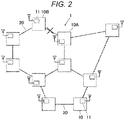
- a malfunction includes either one or both of a malfunction in the communication path 20 and a malfunction in the device 10. Description will be made on the case in which a malfunction occurs in two communication paths 20 of the redundant system 1, to show a method for continuing communication between the devices 10 even when a malfunction occurs in the redundant system 1 according to the embodiment.
- the redundant system 1 keeps all the devices 10 communicably coupled via the communication paths 20.
- the redundant system 1 continues to function as a single system.
- the redundant system 200 is formed in a single ring via the communication paths 202 like the redundant system 200 illustrated in FIG. 8 , if a malfunction occurs in two of the communication paths of the redundant system 200, the redundant system 200 is divided into two groups (specifically, a group including the devices 201A to 201D and a group including the devices 201E and 201F) as illustrated in FIG. 9A , and the redundant system 200 no longer continues to function as a single system.
- the redundant system 1 is configured such that the multiple devices 10 are communicably coupled in multiple ring shapes in a combined manner via the communication paths 20 as illustrated in FIG. 1 , even if a malfunction occurs in two of the communication paths 20, all the devices 10 is kept communicably coupled via the communication paths 20, and the redundant system 1 continues to function as a single system as described above.
- the device 10A and the device 10J transmit signals (referred to below as "communication outage signals") indicating that the wired communication with the corresponding devices 10J and 10A via the communication paths 20 is disabled, via the communication paths 20 other than the communication paths 20 through which the wired communication is disabled, using the wired communication.
- all the devices 10 in the redundant system 1 are communicably coupled via the communication paths 20.
- Each of the devices 10 receives both the communication outage signal transmitted from the device 10A and the communication outage signal transmitted from the device 10J.
- each of the devices 10 upon receipt of the communication outage signals from these two devices 10, each of the devices 10 recognizes that a malfunction has occurred in the communication paths 20 through which the two devices 10 are communicably coupled and that all the devices 10 are kept communicably coupled via the communication paths 20 (that is, the redundant system 1 continues to function as a single system) even when the malfunction has occurred.
- each of the devices 10 notifies a user of the occurrence of a malfunction, prompts the user for repair, and continues wired communication via the communication paths 20 with the devices 10.
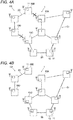
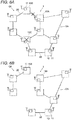
- the devices 10 of a group G1 (see FIG. 4B ) including the devices 10A and 10C can perform wired communication with each other via the communication paths 20, and the devices 10 of a group G2 including the devices 10B and 10D can perform wired communication with each other via the communication paths 20.
- disabled is wired communication between the groups G1 and G2 via the communication paths 20.
- the redundant system 1 is divided into two groups, that is, the groups G1 and G2.
- the device 10B becomes unable to perform wired communication with any devices 10 other than the device 10B via the communication paths 20.
- the one device 10 becomes unable to perform wired communication with any devices 10 other than the device 10B via the communication paths 20.
- the one device 10 is treated as a group, that is, a group G4 consisting of the device 10B that is unable to perform wired communication with any devices 10 other than the device 10B via the communication paths 20.
- multiple devices 10 capable of performing wired communication with each other via the communication paths 20 are treated as a group, and one device 10 that is unable to perform wired communication with the device 10 other than the one device 10 via the communication paths 20 is treated as a group.
- the devices 10 of the redundant system 1 belong to any of groups. As a result, there may be a group including multiple devices 10 and a group consisting of one device 10.
- wireless communication between a device 10 of one group and a device 10 of a group other than the one group may be referred to as wireless communication between the groups for simplification.
- each group includes multiple devices 10 as illustrated in FIGS. 4A and 4B , below. It is noted that the following description is applicable to an example in which a group consists of one device 10.
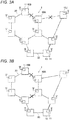
- the redundant system 1 illustrated in FIG. 1 may continue to function as a single system as illustrated in FIGS. 3A and 3B , or the redundant system 1 may be divided into two groups G1 and G2 as illustrated in FIGS. 4A and 4B and disabled is wired communication between the groups G1 and G2 via the communication paths 20.
- each of the devices 10 determines whether
- both the communication outage signal transmitted from the device 10A and the communication outage signal transmitted from the device 10J are transmitted to all the devices 10.
- each of the devices 10 determines that all the devices 10 are kept communicably coupled via the communication paths 20 even though a malfunction has occurred (that is, the redundant system 1 continues to function as a single system).
- each of the devices 10 notifies a user of the occurrence of a malfunction, prompts the user for repair, and continues wired communication via the communication paths 20 with the devices 10.
- the communication outage signal from the device 10C is transmitted to the devices 10 of the group G1, but the communication outage signal from the device 10D is not transmitted to the devices 10 of the group G1.
- the communication outage signal from the device 10D is transmitted to the devices 10 of the group G2, but the communication outage signal from the device 10C is not transmitted to the devices 10 of the group G2.
- each of the devices 10 when each of the devices 10 receives the communication outage signal from one device 10 and does not receive the communication outage signal from the other device 10, each of the devices 10 determines that a malfunction has occurred and the redundant system 1 has been divided into the two groups G1 and G2.
- each of the devices 10 recognizes which of the devices 10 is communicable to each of the devices 10 via the communication paths 20, by exchanging information with other devices 10.
- each of the devices 10 of the group G1 including the device 10A recognizes (i) that the group G1 includes the seven devices 10 (including the each of the devices 10) communicable via the communication paths 20 and (ii) which of the ten devices 10 the group G1 includes.
- each of the devices 10 of the group G2 including the device 10B recognizes
- each of the devices 10 When each of the devices 10 communicates with the devices 10 of the group to which each of the devices 10 belongs, each of the devices 10 performs wired communication via the communication paths 20. When each of the devices 10 communicates across groups, each of the devices 10 switches to wireless communication using the wireless communication unit 11 to continue the communication.
- single input and single output (SISO) wireless communication may be performed between one of the devices 10 of the group G1 and one of the devices 10 of the group G2.
- wireless communication has a higher error rate and lower reliability than wired communication via the communication paths 20.
- SISO wireless communication either one of multi input and multi output (MIMO) wireless communication, multi input and single output (MISO) wireless communication, and single input and multi output (SIMO) wireless communication may be performed between the groups G1 and G2.
- MIMO multi input and multi output
- MISO multi input and single output
- SIMO single input and multi output
- all (or one or ones of) the devices 10 of the group G1 Upon receipt of the signal, all (or one or ones of) the devices 10 of the group G1 transmit the received signal to the device 10A via the communication paths 20 using the wired communication.
- the devices 10 of different groups that perform wireless communication, the output of wireless communication, and the like may be improved based on the physical distance between the devices 10 of the different groups, the noise strength of wireless communication, and the radio characteristics.
- the communication strength of wireless communication may become weak if the physical distance between the device 10A and the device 10B is large.
- a large noise may be added to the wireless communication between the devices 10A and 10B.
- the obstacle when an obstacle is present between the device 10A and the device 10B, the obstacle may interfere with the radio waves of wireless communication.
- the radio waves of wireless communication between the device 10A and the device 10B may be amplified by reflection or diffraction by an object, such as a wall, other than the device 10A and the device 10B.
- wireless communication may be improved by determining the devices 10 that perform transmission and reception in wireless communication so as to be improved those conditions and determining the output and the like in wireless communication.
- an improvement process may be performed in one or ones of the devices 10 of the groups G1 and G2 based on situations such as noise and an obstacle and the sensitivity of wireless communication in the devices 10, to determine which of (one or ones of) devices 10 of the groups perform wireless communication and how much output power is used in wireless communication.
- a table may be prepared in advance that defines which (one or ones of) devices 10 of the groups performs wireless communication and how much output power is used in the wireless communication when a malfunction occurs in two communication paths 20 of the redundant system 1, for all combinations of two communication paths 20.
- the reliability of wireless communication is lower than that of wired communication via the communication paths 20.
- the redundant system 1 switches the communication between groups to wireless communication when a malfunction has occurred and the redundant system 1 has been divided into two groups. Since the reliability of wireless communication is lower than that of wired communication via the communication paths 20, such a measure is an emergency measure and is taken until wired communication via the communication paths 20 is recovered.
- the amount of wireless communication is desirably reduced.
- two groups generated due to occurrence of a malfunction is classified into a main group and an isolated group.
- communication between the groups is switched from wired communication via the communication paths 20 to wireless communication, data including signals, information, and parameters (the same applies to the following) is transmitted from the isolated group to the main group using wireless communication, but no data is basically transmitted from the main group to the isolated group.
- the main group may simply transmit the requested data to the isolated group using wireless communication.
- each group may be classified into a main group or an isolated group based on, for example, the number of devices 10 of each group.
- the group G1 includes seven devices 10 and the group G2 includes three devices 10. Then, the group G1 is classified into the main group, and the group G2 is classified into the isolated group.
- a group G3 including the device 10A is classified into the main group, and a group G4 including the device 10B is classified into an isolated group.
- a group G5 including the device 10A is classified into the main group, and a group G6 including the device 10B is classified into the isolated group.
- the redundant system 1 includes a management device that manages the redundant system 1
- the group including this management device may be classified into the main group, and the other group may be classified into the isolated group.
- the method for classification into the main group or the isolated group is determined as appropriate.
- wireless communication from the main group to the isolated group is simply limited to necessary communication, so that the amount of wireless communication in the entire redundant system 1 is reduced while the reliability of the entire redundant system 1 is maintained.
- one of the groups may be classified into the main group based on the number of the devices 10 of the groups and the presence or absence of the management device.
- the groups other than the main group may be classified into isolated groups.
- each of the devices 10 may determine the group to be classified into the main group and the groups to be classified into the isolated groups at the time when a malfunction occurs in two or more communication paths 20 of the redundant system 1.
- a table may be prepared in advance that defines a group to be classified into the main group and groups to be classified into the isolated groups when a malfunction occurs in the redundant system 1, for all combinations of two or more communication paths 20.
- each of the devices 10 may recognize the classification of the groups with reference to the table.
- the redundant system 1 is also divided into two groups G5 and G6.
- the redundant system 1 when a malfunction occurs in two or more parts in the devices 10 and the communication paths 20 of the redundant system 1 in which the devices 10 are communicably coupled in a ring shape via the communication paths 20, the redundant system 1 switches to wireless communication from the wired communication via the communication path 20 between
- the process to be uniquely performed by the device 10C is inherited to a device 10 other than the device 10C.
- each of the devices 10 communicates with the other devices 10, for example, exchanges information, recognizes the devices 10 with which the each of the devices 10 is communicable via the communication paths 20, performs wireless communication between groups, and recognizes which group is the main group. It is noted here that a group may consist of one device 10 as described above.
- each of the devices 10 determines that a malfunction has occurred in a certain device (the device 10C in this example).
- a device 10 of the main group inherits and performs the process originally performed by the device 10C in which a malfunction has occurred.
- Such a configuration allows the devices 10 (or one of the devices 10) of the main group to inherit and perform the process originally performed by the device 10C in which a malfunction has occurred, thereby preventing the process originally performed by the device 10C from being not performed.
- the device 10 of the isolated group does not inherit the process originally performed by the device 10C in which a malfunction has occurred, and performs its own process.
- the devices 10 of the isolated group notify the main group of completion or non-completion of a certain process using wireless communication as well as the number of the devices 10 of the isolated group.
- the management device may store, in advance, programs of all the devices 10 of the redundant system 1.
- the management device may inherit and perform the process based on the programs or may cause one of the devices 10 of the main group to inherit the process by transmitting the programs to be used to the device 10.
- each of the devices 10 may store the programs of all the devices 10 of the redundant system 1 in advance.
- any of the devices 10 of the main group (group G5 in the example of FIGS. 6A and 6B ) stores in advance the programs necessary for the process originally performed by the device 10 in which a malfunction has occurred, the device 10 may inherit and perform the process based on the programs.
- one of the devices 10 of the main group inherits the process originally performed by the device 10C in which a malfunction has occurred as described above, for example, one of the devices 10 of the main group that has enough processing power may inherit the process originally performed by the device 10C in which a malfunction has occurred. Alternatively, multiple devices 10 of the main group may inherit and perform the process in corporation.
- the device 10 communicably coupled to the equipment originally processed by the device 10 in which a malfunction has occurred may inherit the process.
- the device 10 communicably coupled to the equipment originally processed by the device 10 in which a malfunction has occurred is present in the isolated group but is absent in the main group, the device 10 of the isolated group may inherit the process originally processed by device 10 in which a malfunction has occurred.
- a table that contains all assumed cases in which a malfunction occurs in the devices 10 and the communication paths 20 of the redundant system 1 may be prepared and, when a malfunction occurs, the device 10 that inherits the processing originally performed by the device 10 in which a malfunction has occurred may be determined based on the table.
Landscapes
- Engineering & Computer Science (AREA)
- Theoretical Computer Science (AREA)
- Quality & Reliability (AREA)
- Physics & Mathematics (AREA)
- General Engineering & Computer Science (AREA)
- General Physics & Mathematics (AREA)
- Computer Networks & Wireless Communication (AREA)
- Signal Processing (AREA)
- Small-Scale Networks (AREA)
Applications Claiming Priority (2)
| Application Number | Priority Date | Filing Date | Title |
|---|---|---|---|
| JP2018220889 | 2018-11-27 | ||
| JP2019179204A JP7454349B2 (ja) | 2018-11-27 | 2019-09-30 | 冗長システム |
Publications (2)
| Publication Number | Publication Date |
|---|---|
| EP3660680A1 true EP3660680A1 (fr) | 2020-06-03 |
| EP3660680B1 EP3660680B1 (fr) | 2023-01-04 |
Family
ID=68468581
Family Applications (1)
| Application Number | Title | Priority Date | Filing Date |
|---|---|---|---|
| EP19207046.4A Active EP3660680B1 (fr) | 2018-11-27 | 2019-11-05 | Système redondant |
Country Status (2)
| Country | Link |
|---|---|
| US (1) | US11196615B2 (fr) |
| EP (1) | EP3660680B1 (fr) |
Families Citing this family (1)
| Publication number | Priority date | Publication date | Assignee | Title |
|---|---|---|---|---|
| WO2023043440A1 (fr) * | 2021-09-15 | 2023-03-23 | Hewlett-Packard Development Company, L.P. | Identifications de problèmes de réseau |
Citations (4)
| Publication number | Priority date | Publication date | Assignee | Title |
|---|---|---|---|---|
| JPH08265319A (ja) | 1995-03-20 | 1996-10-11 | Nec Telecom Syst Ltd | 二重化監視制御システム |
| US20060253726A1 (en) * | 2005-05-06 | 2006-11-09 | Vikas Kukshya | Fault-tolerant architecture for a distributed control system |
| JP2010033454A (ja) * | 2008-07-30 | 2010-02-12 | Kyocera Corp | 情報処理装置および情報処理方法 |
| US20170242764A1 (en) * | 2016-02-23 | 2017-08-24 | Vmware, Inc. | High availability handling network segmentation in a cluster |
Family Cites Families (3)
| Publication number | Priority date | Publication date | Assignee | Title |
|---|---|---|---|---|
| JP4776374B2 (ja) * | 2005-12-27 | 2011-09-21 | 株式会社東芝 | 二重化監視制御システム、及び同システムの冗長化切替え方法 |
| US8976744B2 (en) * | 2010-11-03 | 2015-03-10 | Broadcom Corporation | Vehicle communication network including wireless communications |
| US10419271B2 (en) * | 2014-12-30 | 2019-09-17 | Lg Cns Co., Ltd. | Public transportation fee payment system and operating method thereof |
-
2019
- 2019-11-01 US US16/671,812 patent/US11196615B2/en active Active
- 2019-11-05 EP EP19207046.4A patent/EP3660680B1/fr active Active
Patent Citations (4)
| Publication number | Priority date | Publication date | Assignee | Title |
|---|---|---|---|---|
| JPH08265319A (ja) | 1995-03-20 | 1996-10-11 | Nec Telecom Syst Ltd | 二重化監視制御システム |
| US20060253726A1 (en) * | 2005-05-06 | 2006-11-09 | Vikas Kukshya | Fault-tolerant architecture for a distributed control system |
| JP2010033454A (ja) * | 2008-07-30 | 2010-02-12 | Kyocera Corp | 情報処理装置および情報処理方法 |
| US20170242764A1 (en) * | 2016-02-23 | 2017-08-24 | Vmware, Inc. | High availability handling network segmentation in a cluster |
Also Published As
| Publication number | Publication date |
|---|---|
| US20200169454A1 (en) | 2020-05-28 |
| EP3660680B1 (fr) | 2023-01-04 |
| US11196615B2 (en) | 2021-12-07 |
Similar Documents
| Publication | Publication Date | Title |
|---|---|---|
| JPH04117743A (ja) | 光トランシーバ | |
| EP3384612B1 (fr) | Matrice de commutation avec des second ports actifs et de reserves et connection d'un premier port d'un port actif sur un port de reserve en cas de performance reduite sur le second port actif. | |
| EP3660680A1 (fr) | Système redondant | |
| CN112995070B (zh) | 一种双卡切换系统及方法 | |
| US10595255B2 (en) | Wireless communication apparatus, system, and method | |
| CN111431668B (zh) | 基于多节点uart通讯的波特率切换方法、空调系统及处理器 | |
| US8626001B2 (en) | Optical communication card and optical transmission device | |
| JP2020091839A (ja) | 冗長システム | |
| CN100382535C (zh) | 数据通信装置、数据通信系统及数据通信方法 | |
| EP4489353A1 (fr) | Appareil et procédé de communication can | |
| KR102177230B1 (ko) | 시리얼 통신 식별장치 및 방법 | |
| CN113300885B (zh) | 一种网络切换设备及方法 | |
| WO2020230316A1 (fr) | Terminal de communication constituant un réseau multi-saut et réseau multi-saut | |
| EP1793626B1 (fr) | Système et procédé pour la mise en oeuvre d'une commutation de service | |
| EP1897286A1 (fr) | Systeme de reseau de communication | |
| US7440398B2 (en) | Fault tolerant communication apparatus | |
| JP3149047B2 (ja) | 二重化データ処理装置 | |
| JP2003140704A (ja) | プロセス制御装置 | |
| CN117319183A (zh) | 环网通信故障识别方法、装置和分布式控制环网 | |
| KR200206030Y1 (ko) | 교환기 셀프간 이중화 인터페이스 구조 | |
| CN115835391A (zh) | 一种数据传输方法及设备 | |
| KR101099785B1 (ko) | Uart 기반의 rf 통신장치 및 방법 | |
| JP6117152B2 (ja) | 伝送装置および伝送装置用ラック | |
| JP3601507B2 (ja) | 通信システム | |
| JP2014021753A (ja) | パラレルバス回路及び通信システム |
Legal Events
| Date | Code | Title | Description |
|---|---|---|---|
| PUAI | Public reference made under article 153(3) epc to a published international application that has entered the european phase |
Free format text: ORIGINAL CODE: 0009012 |
|
| STAA | Information on the status of an ep patent application or granted ep patent |
Free format text: STATUS: THE APPLICATION HAS BEEN PUBLISHED |
|
| AK | Designated contracting states |
Kind code of ref document: A1 Designated state(s): AL AT BE BG CH CY CZ DE DK EE ES FI FR GB GR HR HU IE IS IT LI LT LU LV MC MK MT NL NO PL PT RO RS SE SI SK SM TR |
|
| AX | Request for extension of the european patent |
Extension state: BA ME |
|
| STAA | Information on the status of an ep patent application or granted ep patent |
Free format text: STATUS: REQUEST FOR EXAMINATION WAS MADE |
|
| 17P | Request for examination filed |
Effective date: 20201203 |
|
| RBV | Designated contracting states (corrected) |
Designated state(s): AL AT BE BG CH CY CZ DE DK EE ES FI FR GB GR HR HU IE IS IT LI LT LU LV MC MK MT NL NO PL PT RO RS SE SI SK SM TR |
|
| STAA | Information on the status of an ep patent application or granted ep patent |
Free format text: STATUS: EXAMINATION IS IN PROGRESS |
|
| 17Q | First examination report despatched |
Effective date: 20210826 |
|
| GRAP | Despatch of communication of intention to grant a patent |
Free format text: ORIGINAL CODE: EPIDOSNIGR1 |
|
| STAA | Information on the status of an ep patent application or granted ep patent |
Free format text: STATUS: GRANT OF PATENT IS INTENDED |
|
| INTG | Intention to grant announced |
Effective date: 20220714 |
|
| GRAS | Grant fee paid |
Free format text: ORIGINAL CODE: EPIDOSNIGR3 |
|
| GRAA | (expected) grant |
Free format text: ORIGINAL CODE: 0009210 |
|
| STAA | Information on the status of an ep patent application or granted ep patent |
Free format text: STATUS: THE PATENT HAS BEEN GRANTED |
|
| AK | Designated contracting states |
Kind code of ref document: B1 Designated state(s): AL AT BE BG CH CY CZ DE DK EE ES FI FR GB GR HR HU IE IS IT LI LT LU LV MC MK MT NL NO PL PT RO RS SE SI SK SM TR |
|
| REG | Reference to a national code |
Ref country code: GB Ref legal event code: FG4D |
|
| REG | Reference to a national code |
Ref country code: CH Ref legal event code: EP |
|
| REG | Reference to a national code |
Ref country code: AT Ref legal event code: REF Ref document number: 1542460 Country of ref document: AT Kind code of ref document: T Effective date: 20230115 |
|
| REG | Reference to a national code |
Ref country code: DE Ref legal event code: R096 Ref document number: 602019023896 Country of ref document: DE |
|
| REG | Reference to a national code |
Ref country code: IE Ref legal event code: FG4D |
|
| REG | Reference to a national code |
Ref country code: LT Ref legal event code: MG9D |
|
| REG | Reference to a national code |
Ref country code: NL Ref legal event code: MP Effective date: 20230104 |
|
| REG | Reference to a national code |
Ref country code: AT Ref legal event code: MK05 Ref document number: 1542460 Country of ref document: AT Kind code of ref document: T Effective date: 20230104 |
|
| PG25 | Lapsed in a contracting state [announced via postgrant information from national office to epo] |
Ref country code: NL Free format text: LAPSE BECAUSE OF FAILURE TO SUBMIT A TRANSLATION OF THE DESCRIPTION OR TO PAY THE FEE WITHIN THE PRESCRIBED TIME-LIMIT Effective date: 20230104 |
|
| PG25 | Lapsed in a contracting state [announced via postgrant information from national office to epo] |
Ref country code: RS Free format text: LAPSE BECAUSE OF FAILURE TO SUBMIT A TRANSLATION OF THE DESCRIPTION OR TO PAY THE FEE WITHIN THE PRESCRIBED TIME-LIMIT Effective date: 20230104 Ref country code: PT Free format text: LAPSE BECAUSE OF FAILURE TO SUBMIT A TRANSLATION OF THE DESCRIPTION OR TO PAY THE FEE WITHIN THE PRESCRIBED TIME-LIMIT Effective date: 20230504 Ref country code: NO Free format text: LAPSE BECAUSE OF FAILURE TO SUBMIT A TRANSLATION OF THE DESCRIPTION OR TO PAY THE FEE WITHIN THE PRESCRIBED TIME-LIMIT Effective date: 20230404 Ref country code: LV Free format text: LAPSE BECAUSE OF FAILURE TO SUBMIT A TRANSLATION OF THE DESCRIPTION OR TO PAY THE FEE WITHIN THE PRESCRIBED TIME-LIMIT Effective date: 20230104 Ref country code: LT Free format text: LAPSE BECAUSE OF FAILURE TO SUBMIT A TRANSLATION OF THE DESCRIPTION OR TO PAY THE FEE WITHIN THE PRESCRIBED TIME-LIMIT Effective date: 20230104 Ref country code: HR Free format text: LAPSE BECAUSE OF FAILURE TO SUBMIT A TRANSLATION OF THE DESCRIPTION OR TO PAY THE FEE WITHIN THE PRESCRIBED TIME-LIMIT Effective date: 20230104 Ref country code: ES Free format text: LAPSE BECAUSE OF FAILURE TO SUBMIT A TRANSLATION OF THE DESCRIPTION OR TO PAY THE FEE WITHIN THE PRESCRIBED TIME-LIMIT Effective date: 20230104 Ref country code: AT Free format text: LAPSE BECAUSE OF FAILURE TO SUBMIT A TRANSLATION OF THE DESCRIPTION OR TO PAY THE FEE WITHIN THE PRESCRIBED TIME-LIMIT Effective date: 20230104 |
|
| PG25 | Lapsed in a contracting state [announced via postgrant information from national office to epo] |
Ref country code: SE Free format text: LAPSE BECAUSE OF FAILURE TO SUBMIT A TRANSLATION OF THE DESCRIPTION OR TO PAY THE FEE WITHIN THE PRESCRIBED TIME-LIMIT Effective date: 20230104 Ref country code: PL Free format text: LAPSE BECAUSE OF FAILURE TO SUBMIT A TRANSLATION OF THE DESCRIPTION OR TO PAY THE FEE WITHIN THE PRESCRIBED TIME-LIMIT Effective date: 20230104 Ref country code: IS Free format text: LAPSE BECAUSE OF FAILURE TO SUBMIT A TRANSLATION OF THE DESCRIPTION OR TO PAY THE FEE WITHIN THE PRESCRIBED TIME-LIMIT Effective date: 20230504 Ref country code: GR Free format text: LAPSE BECAUSE OF FAILURE TO SUBMIT A TRANSLATION OF THE DESCRIPTION OR TO PAY THE FEE WITHIN THE PRESCRIBED TIME-LIMIT Effective date: 20230405 Ref country code: FI Free format text: LAPSE BECAUSE OF FAILURE TO SUBMIT A TRANSLATION OF THE DESCRIPTION OR TO PAY THE FEE WITHIN THE PRESCRIBED TIME-LIMIT Effective date: 20230104 |
|
| REG | Reference to a national code |
Ref country code: DE Ref legal event code: R097 Ref document number: 602019023896 Country of ref document: DE |
|
| PG25 | Lapsed in a contracting state [announced via postgrant information from national office to epo] |
Ref country code: SM Free format text: LAPSE BECAUSE OF FAILURE TO SUBMIT A TRANSLATION OF THE DESCRIPTION OR TO PAY THE FEE WITHIN THE PRESCRIBED TIME-LIMIT Effective date: 20230104 Ref country code: RO Free format text: LAPSE BECAUSE OF FAILURE TO SUBMIT A TRANSLATION OF THE DESCRIPTION OR TO PAY THE FEE WITHIN THE PRESCRIBED TIME-LIMIT Effective date: 20230104 Ref country code: EE Free format text: LAPSE BECAUSE OF FAILURE TO SUBMIT A TRANSLATION OF THE DESCRIPTION OR TO PAY THE FEE WITHIN THE PRESCRIBED TIME-LIMIT Effective date: 20230104 Ref country code: DK Free format text: LAPSE BECAUSE OF FAILURE TO SUBMIT A TRANSLATION OF THE DESCRIPTION OR TO PAY THE FEE WITHIN THE PRESCRIBED TIME-LIMIT Effective date: 20230104 Ref country code: CZ Free format text: LAPSE BECAUSE OF FAILURE TO SUBMIT A TRANSLATION OF THE DESCRIPTION OR TO PAY THE FEE WITHIN THE PRESCRIBED TIME-LIMIT Effective date: 20230104 |
|
| PLBE | No opposition filed within time limit |
Free format text: ORIGINAL CODE: 0009261 |
|
| STAA | Information on the status of an ep patent application or granted ep patent |
Free format text: STATUS: NO OPPOSITION FILED WITHIN TIME LIMIT |
|
| PG25 | Lapsed in a contracting state [announced via postgrant information from national office to epo] |
Ref country code: SK Free format text: LAPSE BECAUSE OF FAILURE TO SUBMIT A TRANSLATION OF THE DESCRIPTION OR TO PAY THE FEE WITHIN THE PRESCRIBED TIME-LIMIT Effective date: 20230104 |
|
| 26N | No opposition filed |
Effective date: 20231005 |
|
| PG25 | Lapsed in a contracting state [announced via postgrant information from national office to epo] |
Ref country code: SI Free format text: LAPSE BECAUSE OF FAILURE TO SUBMIT A TRANSLATION OF THE DESCRIPTION OR TO PAY THE FEE WITHIN THE PRESCRIBED TIME-LIMIT Effective date: 20230104 |
|
| PG25 | Lapsed in a contracting state [announced via postgrant information from national office to epo] |
Ref country code: IT Free format text: LAPSE BECAUSE OF FAILURE TO SUBMIT A TRANSLATION OF THE DESCRIPTION OR TO PAY THE FEE WITHIN THE PRESCRIBED TIME-LIMIT Effective date: 20230104 |
|
| REG | Reference to a national code |
Ref country code: CH Ref legal event code: PL |
|
| PG25 | Lapsed in a contracting state [announced via postgrant information from national office to epo] |
Ref country code: MC Free format text: LAPSE BECAUSE OF FAILURE TO SUBMIT A TRANSLATION OF THE DESCRIPTION OR TO PAY THE FEE WITHIN THE PRESCRIBED TIME-LIMIT Effective date: 20230104 |
|
| PG25 | Lapsed in a contracting state [announced via postgrant information from national office to epo] |
Ref country code: LU Free format text: LAPSE BECAUSE OF NON-PAYMENT OF DUE FEES Effective date: 20231105 |
|
| PG25 | Lapsed in a contracting state [announced via postgrant information from national office to epo] |
Ref country code: CH Free format text: LAPSE BECAUSE OF NON-PAYMENT OF DUE FEES Effective date: 20231130 |
|
| GBPC | Gb: european patent ceased through non-payment of renewal fee |
Effective date: 20231105 |
|
| PG25 | Lapsed in a contracting state [announced via postgrant information from national office to epo] |
Ref country code: MC Free format text: LAPSE BECAUSE OF FAILURE TO SUBMIT A TRANSLATION OF THE DESCRIPTION OR TO PAY THE FEE WITHIN THE PRESCRIBED TIME-LIMIT Effective date: 20230104 Ref country code: LU Free format text: LAPSE BECAUSE OF NON-PAYMENT OF DUE FEES Effective date: 20231105 Ref country code: CH Free format text: LAPSE BECAUSE OF NON-PAYMENT OF DUE FEES Effective date: 20231130 |
|
| REG | Reference to a national code |
Ref country code: BE Ref legal event code: MM Effective date: 20231130 |
|
| REG | Reference to a national code |
Ref country code: IE Ref legal event code: MM4A |
|
| PG25 | Lapsed in a contracting state [announced via postgrant information from national office to epo] |
Ref country code: IE Free format text: LAPSE BECAUSE OF NON-PAYMENT OF DUE FEES Effective date: 20231105 |
|
| PG25 | Lapsed in a contracting state [announced via postgrant information from national office to epo] |
Ref country code: GB Free format text: LAPSE BECAUSE OF NON-PAYMENT OF DUE FEES Effective date: 20231105 |
|
| PG25 | Lapsed in a contracting state [announced via postgrant information from national office to epo] |
Ref country code: BE Free format text: LAPSE BECAUSE OF NON-PAYMENT OF DUE FEES Effective date: 20231130 |
|
| PG25 | Lapsed in a contracting state [announced via postgrant information from national office to epo] |
Ref country code: IE Free format text: LAPSE BECAUSE OF NON-PAYMENT OF DUE FEES Effective date: 20231105 Ref country code: GB Free format text: LAPSE BECAUSE OF NON-PAYMENT OF DUE FEES Effective date: 20231105 Ref country code: BE Free format text: LAPSE BECAUSE OF NON-PAYMENT OF DUE FEES Effective date: 20231130 |
|
| PG25 | Lapsed in a contracting state [announced via postgrant information from national office to epo] |
Ref country code: BG Free format text: LAPSE BECAUSE OF FAILURE TO SUBMIT A TRANSLATION OF THE DESCRIPTION OR TO PAY THE FEE WITHIN THE PRESCRIBED TIME-LIMIT Effective date: 20230104 |
|
| PG25 | Lapsed in a contracting state [announced via postgrant information from national office to epo] |
Ref country code: BG Free format text: LAPSE BECAUSE OF FAILURE TO SUBMIT A TRANSLATION OF THE DESCRIPTION OR TO PAY THE FEE WITHIN THE PRESCRIBED TIME-LIMIT Effective date: 20230104 |
|
| PG25 | Lapsed in a contracting state [announced via postgrant information from national office to epo] |
Ref country code: CY Free format text: LAPSE BECAUSE OF FAILURE TO SUBMIT A TRANSLATION OF THE DESCRIPTION OR TO PAY THE FEE WITHIN THE PRESCRIBED TIME-LIMIT; INVALID AB INITIO Effective date: 20191105 |
|
| PG25 | Lapsed in a contracting state [announced via postgrant information from national office to epo] |
Ref country code: HU Free format text: LAPSE BECAUSE OF FAILURE TO SUBMIT A TRANSLATION OF THE DESCRIPTION OR TO PAY THE FEE WITHIN THE PRESCRIBED TIME-LIMIT; INVALID AB INITIO Effective date: 20191105 |
|
| PG25 | Lapsed in a contracting state [announced via postgrant information from national office to epo] |
Ref country code: TR Free format text: LAPSE BECAUSE OF FAILURE TO SUBMIT A TRANSLATION OF THE DESCRIPTION OR TO PAY THE FEE WITHIN THE PRESCRIBED TIME-LIMIT Effective date: 20230104 |
|
| PGFP | Annual fee paid to national office [announced via postgrant information from national office to epo] |
Ref country code: DE Payment date: 20251119 Year of fee payment: 7 |
|
| PGFP | Annual fee paid to national office [announced via postgrant information from national office to epo] |
Ref country code: FR Payment date: 20251126 Year of fee payment: 7 |