EP3660721B1 - Procédé et appareil de transfert de ressources et de transfert de capital - Google Patents
Procédé et appareil de transfert de ressources et de transfert de capital Download PDFInfo
- Publication number
- EP3660721B1 EP3660721B1 EP18880424.9A EP18880424A EP3660721B1 EP 3660721 B1 EP3660721 B1 EP 3660721B1 EP 18880424 A EP18880424 A EP 18880424A EP 3660721 B1 EP3660721 B1 EP 3660721B1
- Authority
- EP
- European Patent Office
- Prior art keywords
- resource
- amount
- transferor
- transaction request
- transferee
- Prior art date
- Legal status (The legal status is an assumption and is not a legal conclusion. Google has not performed a legal analysis and makes no representation as to the accuracy of the status listed.)
- Active
Links
Images



Classifications
-
- G—PHYSICS
- G06—COMPUTING OR CALCULATING; COUNTING
- G06F—ELECTRIC DIGITAL DATA PROCESSING
- G06F21/00—Security arrangements for protecting computers, components thereof, programs or data against unauthorised activity
- G06F21/60—Protecting data
- G06F21/62—Protecting access to data via a platform, e.g. using keys or access control rules
- G06F21/6218—Protecting access to data via a platform, e.g. using keys or access control rules to a system of files or objects, e.g. local or distributed file system or database
- G06F21/6245—Protecting personal data, e.g. for financial or medical purposes
-
- H—ELECTRICITY
- H04—ELECTRIC COMMUNICATION TECHNIQUE
- H04L—TRANSMISSION OF DIGITAL INFORMATION, e.g. TELEGRAPHIC COMMUNICATION
- H04L63/00—Network architectures or network communication protocols for network security
- H04L63/04—Network architectures or network communication protocols for network security for providing a confidential data exchange among entities communicating through data packet networks
- H04L63/0407—Network architectures or network communication protocols for network security for providing a confidential data exchange among entities communicating through data packet networks wherein the identity of one or more communicating identities is hidden
- H04L63/0421—Anonymous communication, i.e. the party's identifiers are hidden from the other party or parties, e.g. using an anonymizer
-
- G—PHYSICS
- G06—COMPUTING OR CALCULATING; COUNTING
- G06Q—INFORMATION AND COMMUNICATION TECHNOLOGY [ICT] SPECIALLY ADAPTED FOR ADMINISTRATIVE, COMMERCIAL, FINANCIAL, MANAGERIAL OR SUPERVISORY PURPOSES; SYSTEMS OR METHODS SPECIALLY ADAPTED FOR ADMINISTRATIVE, COMMERCIAL, FINANCIAL, MANAGERIAL OR SUPERVISORY PURPOSES, NOT OTHERWISE PROVIDED FOR
- G06Q40/00—Finance; Insurance; Tax strategies; Processing of corporate or income taxes
- G06Q40/03—Credit; Loans; Processing thereof
-
- G—PHYSICS
- G06—COMPUTING OR CALCULATING; COUNTING
- G06Q—INFORMATION AND COMMUNICATION TECHNOLOGY [ICT] SPECIALLY ADAPTED FOR ADMINISTRATIVE, COMMERCIAL, FINANCIAL, MANAGERIAL OR SUPERVISORY PURPOSES; SYSTEMS OR METHODS SPECIALLY ADAPTED FOR ADMINISTRATIVE, COMMERCIAL, FINANCIAL, MANAGERIAL OR SUPERVISORY PURPOSES, NOT OTHERWISE PROVIDED FOR
- G06Q20/00—Payment architectures, schemes or protocols
- G06Q20/38—Payment protocols; Details thereof
- G06Q20/382—Payment protocols; Details thereof insuring higher security of transaction
- G06Q20/3821—Electronic credentials
- G06Q20/38215—Use of certificates or encrypted proofs of transaction rights
-
- G—PHYSICS
- G06—COMPUTING OR CALCULATING; COUNTING
- G06Q—INFORMATION AND COMMUNICATION TECHNOLOGY [ICT] SPECIALLY ADAPTED FOR ADMINISTRATIVE, COMMERCIAL, FINANCIAL, MANAGERIAL OR SUPERVISORY PURPOSES; SYSTEMS OR METHODS SPECIALLY ADAPTED FOR ADMINISTRATIVE, COMMERCIAL, FINANCIAL, MANAGERIAL OR SUPERVISORY PURPOSES, NOT OTHERWISE PROVIDED FOR
- G06Q40/00—Finance; Insurance; Tax strategies; Processing of corporate or income taxes
- G06Q40/02—Banking, e.g. interest calculation or account maintenance
-
- H—ELECTRICITY
- H04—ELECTRIC COMMUNICATION TECHNIQUE
- H04L—TRANSMISSION OF DIGITAL INFORMATION, e.g. TELEGRAPHIC COMMUNICATION
- H04L9/00—Cryptographic mechanisms or cryptographic arrangements for secret or secure communications; Network security protocols
- H04L9/06—Cryptographic mechanisms or cryptographic arrangements for secret or secure communications; Network security protocols the encryption apparatus using shift registers or memories for block-wise or stream coding, e.g. DES systems or RC4; Hash functions; Pseudorandom sequence generators
- H04L9/0618—Block ciphers, i.e. encrypting groups of characters of a plain text message using fixed encryption transformation
- H04L9/0637—Modes of operation, e.g. cipher block chaining [CBC], electronic codebook [ECB] or Galois/counter mode [GCM]
-
- H—ELECTRICITY
- H04—ELECTRIC COMMUNICATION TECHNIQUE
- H04L—TRANSMISSION OF DIGITAL INFORMATION, e.g. TELEGRAPHIC COMMUNICATION
- H04L9/00—Cryptographic mechanisms or cryptographic arrangements for secret or secure communications; Network security protocols
- H04L9/32—Cryptographic mechanisms or cryptographic arrangements for secret or secure communications; Network security protocols including means for verifying the identity or authority of a user of the system or for message authentication, e.g. authorization, entity authentication, data integrity or data verification, non-repudiation, key authentication or verification of credentials
- H04L9/3218—Cryptographic mechanisms or cryptographic arrangements for secret or secure communications; Network security protocols including means for verifying the identity or authority of a user of the system or for message authentication, e.g. authorization, entity authentication, data integrity or data verification, non-repudiation, key authentication or verification of credentials using proof of knowledge, e.g. Fiat-Shamir, GQ, Schnorr, ornon-interactive zero-knowledge proofs
-
- H—ELECTRICITY
- H04—ELECTRIC COMMUNICATION TECHNIQUE
- H04L—TRANSMISSION OF DIGITAL INFORMATION, e.g. TELEGRAPHIC COMMUNICATION
- H04L9/00—Cryptographic mechanisms or cryptographic arrangements for secret or secure communications; Network security protocols
- H04L9/32—Cryptographic mechanisms or cryptographic arrangements for secret or secure communications; Network security protocols including means for verifying the identity or authority of a user of the system or for message authentication, e.g. authorization, entity authentication, data integrity or data verification, non-repudiation, key authentication or verification of credentials
- H04L9/3218—Cryptographic mechanisms or cryptographic arrangements for secret or secure communications; Network security protocols including means for verifying the identity or authority of a user of the system or for message authentication, e.g. authorization, entity authentication, data integrity or data verification, non-repudiation, key authentication or verification of credentials using proof of knowledge, e.g. Fiat-Shamir, GQ, Schnorr, ornon-interactive zero-knowledge proofs
- H04L9/3221—Cryptographic mechanisms or cryptographic arrangements for secret or secure communications; Network security protocols including means for verifying the identity or authority of a user of the system or for message authentication, e.g. authorization, entity authentication, data integrity or data verification, non-repudiation, key authentication or verification of credentials using proof of knowledge, e.g. Fiat-Shamir, GQ, Schnorr, ornon-interactive zero-knowledge proofs interactive zero-knowledge proofs
-
- H—ELECTRICITY
- H04—ELECTRIC COMMUNICATION TECHNIQUE
- H04L—TRANSMISSION OF DIGITAL INFORMATION, e.g. TELEGRAPHIC COMMUNICATION
- H04L9/00—Cryptographic mechanisms or cryptographic arrangements for secret or secure communications; Network security protocols
- H04L9/32—Cryptographic mechanisms or cryptographic arrangements for secret or secure communications; Network security protocols including means for verifying the identity or authority of a user of the system or for message authentication, e.g. authorization, entity authentication, data integrity or data verification, non-repudiation, key authentication or verification of credentials
- H04L9/3236—Cryptographic mechanisms or cryptographic arrangements for secret or secure communications; Network security protocols including means for verifying the identity or authority of a user of the system or for message authentication, e.g. authorization, entity authentication, data integrity or data verification, non-repudiation, key authentication or verification of credentials using cryptographic hash functions
- H04L9/3239—Cryptographic mechanisms or cryptographic arrangements for secret or secure communications; Network security protocols including means for verifying the identity or authority of a user of the system or for message authentication, e.g. authorization, entity authentication, data integrity or data verification, non-repudiation, key authentication or verification of credentials using cryptographic hash functions involving non-keyed hash functions, e.g. modification detection codes [MDCs], MD5, SHA or RIPEMD
-
- H—ELECTRICITY
- H04—ELECTRIC COMMUNICATION TECHNIQUE
- H04L—TRANSMISSION OF DIGITAL INFORMATION, e.g. TELEGRAPHIC COMMUNICATION
- H04L9/00—Cryptographic mechanisms or cryptographic arrangements for secret or secure communications; Network security protocols
- H04L9/50—Cryptographic mechanisms or cryptographic arrangements for secret or secure communications; Network security protocols using hash chains, e.g. blockchains or hash trees
-
- G—PHYSICS
- G06—COMPUTING OR CALCULATING; COUNTING
- G06F—ELECTRIC DIGITAL DATA PROCESSING
- G06F2221/00—Indexing scheme relating to security arrangements for protecting computers, components thereof, programs or data against unauthorised activity
- G06F2221/21—Indexing scheme relating to G06F21/00 and subgroups addressing additional information or applications relating to security arrangements for protecting computers, components thereof, programs or data against unauthorised activity
- G06F2221/2107—File encryption
-
- G—PHYSICS
- G06—COMPUTING OR CALCULATING; COUNTING
- G06F—ELECTRIC DIGITAL DATA PROCESSING
- G06F2221/00—Indexing scheme relating to security arrangements for protecting computers, components thereof, programs or data against unauthorised activity
- G06F2221/21—Indexing scheme relating to G06F21/00 and subgroups addressing additional information or applications relating to security arrangements for protecting computers, components thereof, programs or data against unauthorised activity
- G06F2221/2115—Third party
-
- H—ELECTRICITY
- H04—ELECTRIC COMMUNICATION TECHNIQUE
- H04L—TRANSMISSION OF DIGITAL INFORMATION, e.g. TELEGRAPHIC COMMUNICATION
- H04L2463/00—Additional details relating to network architectures or network communication protocols for network security covered by H04L63/00
- H04L2463/102—Additional details relating to network architectures or network communication protocols for network security covered by H04L63/00 applying security measure for e-commerce
Definitions
- the present application relates to the field of computer technologies, and in particular, to resource transfer and capital transfer methods and systems.
- a blockchain technology (also referred to as a distributed ledger technology) is a special distributed database technology, suitable for storing simple and sequential data that can be verified in a system, and uses cryptography and a consensus algorithm to ensure that the data cannot be tampered or counterfeited.
- the blockchain technology is favored for advantages such as decentralization, transparency, non-tamperablility, and trustworthiness, and is widely applied in various fields such as intelligent contracts, securities trading, e-commerce, the Internet-of-Things, social messaging, file storage, an existence proof, identity authentication, and equity-based crowdfunding.
- the blockchain technology When the blockchain technology is applied to a transaction scenario such as resource transfer, because all transaction information needs to be sent to a blockchain system for verification, implementation, and on-chain, privacy information (e.g., specific transaction information, a total amount of owned resources, and individual privacy information) of both a resource transferor and transferee that participate in the transaction is at risk of being disclosed to a third party unrelated to the transaction.
- privacy information e.g., specific transaction information, a total amount of owned resources, and individual privacy information
- the blockchain technology is applied to a lending service of an Internet bank.
- Transaction information such as a specific amount of a loan requested by a borrower from a lender needs to be added to a blockchain, posing a threat to privacy information of both the borrower and the lender.
- US 2017/0289111 A1 discloses a technique for providing data privacy in a private distributed ledger, comprising: a distributed application preparing a transaction payload for a private transaction; the distributed application sending a payload storage message comprising a hash digest, an encrypted payload, and an encrypted symmetric key to a transaction key manager; the transaction key manager storing the hash and the encrypted payload; the distributed application sending a pending transaction comprising the hash digest to a first node in a plurality of nodes; and one of the plurality of nodes proposing a block comprising the pending transaction to the other nodes. Nodes that are parties of the private transaction are allowed to obtain from the transaction key manager the encrypted payload and a version of the encrypted symmetric key that they can decrypt using their own private key.
- WO 2017/145003 A1 discloses a secure method for exchanging entities via a blockchain based on an offering platform where invitations from different parties are placed. If two invitations are successfully matched, exchange transactions are performed preferably via a bitcoin-based blockchain.
- tokens representing any type of transferrable contract can be offered or bought in exchange of e.g. bitcoins.
- WO 2017/090041 A1 discloses a system and method for executing cryptographically secure transactions in a network comprising a public ledger, comprising associating a first proposed transaction with a public keys smart contract and associating at least a second transaction including private data and public data in said network with a cryptographically secure transaction.
- the zero-knowledge knowledge proof algorithm is presented.
- embodiments of the present application provide a resource transfer method and apparatus, a corresponding electronic device, and a computer-readable storage medium, to protect privacy information of both a resource transferor and transferee during resource transfer.
- the embodiments of the present application further provide a capital transfer method and apparatus, a corresponding electronic device, and a computer-readable storage medium, to protect privacy information of both a capital borrower and lender during capital transfer.
- a first amount of a to-be-transferred first resource is determined, based on this, the first amount of the first resource is converted into a second amount of a second resource that is of a different resource type, then a transaction request for transferring the second amount is initiated, and encrypted amount information (that is, the encrypted second amount) is obtained by encrypting the second amount.
- information about a specific transaction between a resource transferor and a resource transferee may be hidden by encrypting the second amount.
- the information is specifically represented by information of the first amount of the to-be-transferred first resource.
- a resource referred to in the present application may be specifically a type of resource that can be transferred between a plurality of parties, such as a data resource or a capital resource.
- resource holders may transfer resources between each other when a resource transfer condition is met. Specifically, after an amount of a to-be-transferred resource is determined, a resource transferor initiates a transaction request to a blockchain; the blockchain verifies and implements the transaction request; and after the resource transferor transfers the to-be-transferred resource to a resource transferee, the blockchain writes an execution result of the transaction request to the blockchain.
- an embodiment of the present application provides a blockchain-based resource transfer method.
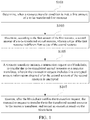
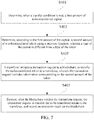
- a blockchain-based resource transfer method is applicable to a resource transferor, and specifically includes: S101: Determine, when a resource transfer condition is met, a first amount of a to-be-transferred first resource.
- the resource transferor when the resource transfer condition is met and before resource transfer needs to be performed, the resource transferor needs to determine a type and an amount of a to-be-transferred resource, that is, the first amount of the to-be-transferred first resource. In addition, the resource transferor also needs to determine an object of the resource transfer, that is, a resource transferee receiving the to-be-transferred resource.
- resource transfer conditions vary with different service purposes.
- a specific resource transfer condition may be determined and set according to an agreement between the resource transferor and transferee or a service flow of a service platform on which the resource transfer is based. Further, on the service platform on which the resource transfer is based, the resource transfer may need to be performed a plurality of times according to an actual requirement of the service flow, to achieve different purposes of different phases in the service flow.
- a type and an amount of a to-be-transferred resource and a resource transferor and a resource transferee that participate in the resource transfer may vary, and content and a format of a transaction request initiated by the resource transferor for achieving resource transfer may also vary. The following describes a plurality of different cases by way of example.
- S103 Determine, according to the first amount of the first resource a second amount of a to-be-transferred second resource, where a type of the first resource is different from a type of the second resource.
- Step S103 is performed to convert the first resource into the second resource.
- an amount of a resource is also converted from the first amount of the first resource into the second amount of the second resource. Therefore, during further resource transfer, transfer of the first resource may be converted into transfer of the second resource.
- the first resource is of a resource type that both the resource transferor and transferee actually need to transfer (for example, in a lending scenario, the first resource may be specifically capital, corresponding to a real currency), and the second resource is of a resource that is actually transferred during resource transfer (for example, in the lending scenario, the second resource may be specifically a token, which is a virtual currency).
- the second resource is a protective shell of the first resource.
- the first resource having intrinsic value in an actual service is converted into the second resource that is explicit and may have no intrinsic value. Therefore, even if related information of the second amount of the actually transferred second resource is written on a blockchain, information about the first amount of the first resource is still hidden, thereby helping protect privacy of the transaction for resource transfer.
- a correspondence or a conversion relationship further exists between the amounts of the two types of resources.
- a specific conversion relationship may be set according to a requirement of the service platform.
- the amounts of the first resource and the second resource may be directly equal, that is, conversion of the two amounts is 1:1.
- a third party other than both the resource transferor and transferee may infer the first amount of the first resource by using the second amount of the second resource
- the information about the second amount is not directly carried in a transaction request initiated in a subsequent step of this embodiment of the present application, and instead, the second amount is encrypted, and first encrypted amount information obtained after the encryption is carried in the transaction request. Therefore, information about a real amount of the resource transfer can still be protected, thereby protecting transaction privacy.
- the amounts of the first resource and the second resource may be converted according to a preset conversion coefficient or a function relationship, and the real amount of the resource transfer (that is, the first amount of the first resource) can also be protected by protecting such a conversion coefficient or function relationship. It may be understood that, the two parties participating in the resource transfer need to know such a conversion coefficient or function relationship, to achieve reverse conversion of the resource types (that is, the second amount of a second type is converted into the first amount of a first type), to achieve a final purpose of the resource transfer.
- the amounts of the first resource and the second resource are preferably converted using a one-way function.
- the second amount of the second resource is determined according to the first amount of the first resource using the one-way function.
- the first amount of the first resource and a random number may be used as inputs of the one-way function, and an output of the one-way function may be determined as the second amount of the second resource.
- a feature of the one-way function is used, and even if the second amount is not encrypted in a subsequently initiated transaction request, but instead, the second amount obtained through conversion using the one-way function is directly added to the transaction request, a real amount for the resource transfer (that is, the first amount of the first resource) can still be protected to some extent.
- the second amount is further encrypted to obtain the first encrypted amount information, and the first encrypted amount information is added to the transaction request initiated by the resource transferor, thereby better protecting privacy information of the resource transfer transaction.
- the resource transferor When conversion between the amounts of the first resource and the second resource is implemented using the one-way function, the resource transferor further needs to send the random number (as an input of the one-way function) used during the conversion to the resource transferee, for the resource transferee to perform reverse conversion of resource types, and infer the first amount of the first resource.
- the random number may be encrypted before the resource transferor initiates the transaction request to the blockchain, and then, the initiated transaction request carries an encrypted random number generated by encrypting the random number, thereby avoiding leakage of the random number, and protecting the privacy information of the resource transfer transaction.
- the random number may be encrypted by using a public key of the resource transferee. In this way, only a private key of the resource transferee can decrypt the random number, and then the random number is used to achieve the reverse conversion of resource types, that is, the first amount of the first resource is inferred based on the second amount of the second resource.
- a resource transferor initiates a transaction request to a blockchain, to transfer the to-be-transferred second resource to a resource transferee, where the transaction request includes first encrypted amount information obtained after the second amount of the second resource is encrypted.
- a step of encrypting the second amount of the second resource, to obtain first encrypted amount information may further be included. Regardless of whether the conversion relationship between the first resource and the second resource can be learned by a third part other than both the resource transferor and transferee, the information about the specific amount of the resource transfer transaction can be protected as long as the information about the second amount is encrypted, thereby protecting privacy of both the resource transferor and transferee.
- the first encrypted amount information included in the transaction request may be obtained by encrypting the second amount of the second resource using a first encryption function (denoted as enc(x, y)).
- An input of the first encryption function is the second amount of the second resource (denoted as quota_c), and another input of the first encryption function is the public key of the resource transferee (denoted as pk_c).
- the public key of the resource transferee is an asymmetric key
- the first encryption function is an asymmetric encryption function; or if the public key of the resource transferee is a symmetric key, the first encryption function is a symmetric encryption function.
- identification information of the public key of the resource transferee may further be used as a part of the transaction request and sent to a blockchain system, for the blockchain system to perform an on-chain operation after verification and implementation.
- a hash value (denoted as hash(pk c)) of the public key of the resource transferee may be used as the identification information of the public key.
- S107 Execute, after the blockchain verifies the transaction request, the transaction request to transfer the to-be-transferred second resource to the resource transferee, and record an execution result on the blockchain.
- each node of the blockchain verifies the transaction request.
- the resource transferor further executes the transaction request, to transfer the to-be-transferred second resource to the resource transferee. It may be understood that, an amount of the transferred second resource is the second amount.
- an execution result of the transaction request is recorded on the blockchain.
- the node when each node of the blockchain system verifies the transaction request, the node mainly verifies whether a format of the transaction request conforms to the agreement (e.g.,, a quantity of fields in the transaction request, a length of each field, or content of a specific field), but encrypted information in the transaction request (e.g., a first encrypted amount information or an encrypted random number in the one-way function), is directly verified, to further execute the transaction request.
- a format of the transaction request conforms to the agreement (e.g., a quantity of fields in the transaction request, a length of each field, or content of a specific field), but encrypted information in the transaction request (e.g., a first encrypted amount information or an encrypted random number in the one-way function), is directly verified, to further execute the transaction request.
- the resource transferor transfers the second resource (whose amount is the second amount) to the resource transferee.
- the resource transferee may determine, according to the conversion relationship between the first resource and the second resource, whether an amount of the first resource that is essentially transferred in the current resource transfer transaction is the first amount.
- a first amount of a to-be-transferred first resource is determined, based on this, the first amount of the first resource is converted into a second amount of a second resource that is of a different resource type, then a transaction request for transferring the second amount is initiated, and encrypted amount information (that is, the encrypted second amount) is obtained by encrypting the second amount.
- encrypted amount information that is, the encrypted second amount
- a blockchain verifies, implements, and performs an on-chain operation on the transaction request, information about a specific transaction between a resource transferor and a resource transferee may be hidden by encrypting the second amount.
- the information is specifically represented by information of the first amount of the to-be-transferred first resource. Therefore, privacy information of both the resource transferor and transferee can be protected during resource transfer.
- information about a specific transaction amount that is, the first amount of the to-be-transferred first resource
- the resource transfer condition varies
- the manner of determining the first amount of the to-be-transferred first resource varies
- the determined first amount also varies. The following provides descriptions by using examples.
- the borrower transfers, to the lender (the resource transferee), the part that is of the second resource held by the borrower and that corresponds to the amount of the first resource that is requested to borrow, and the purpose of performing the resource transfer and recording the resource transfer transaction on the blockchain may be understood as follows:
- the resource transferor proves to the resource transferee that the credit limit (represented as the amount of the second resource held by the resource transferor before the resource transfer) of the resource borrowed by the resource transferor meets a requirement of the amount of the resource that is requested to borrow, for the resource transferor to borrow a first resource having intrinsic value from the resource transferee.
- the resource transferor transfers the second resource of the corresponding amount
- the amount of the second resource held by the resource transferor is reduced accordingly, and this is equivalent to reduction of a credit limit of a allowed resource borrowed from the resource transferor.
- Writing the transaction of reducing the credit limit in the blockchain helps regulate and restrict the amount of the resource borrowed by the resource borrower, thereby protecting interests of the resource lender.
- the amount of the first resource that is requested to borrow in the resource borrowing agreement may be determined as the first amount of the to-be-transferred first resource, and then the second amount of the to-be-transferred second resource is determined based on this, to transfer the second resource.
- the credit limit of the resource borrower serving as the resource transferor in the current resource transfer
- the resource transferor needs to prove legitimacy of the current resource transfer transaction to nodes on the blockchain other than the nodes participating in the current resource transfer transaction (the nodes corresponding to the resource transferor and the resource transferee).
- a zero-knowledge proof may be added to the transaction request initiated by the resource transferor, to prove that a sum of the second amount and a balance of the second resource to be held by the resource transferor after the execution of the transaction request is equal to an amount of the second resource held by the resource transferor before the transaction request is initiated.
- the resource transferor can prove authenticity of related content to each node on the blockchain without exposing any specific information (including the amount of the resource transfer, and the like).
- quota_c the balance of the second resource to be held by the resource transferor
- quota_d the second amount of the to-be-transferred second resource
- quota_d the amount of the second resource held by the resource transferor before the transaction request is initiated
- the resource transferor may further prove the following items to each node on the blockchain by using the zero-knowledge proof: the amount, that is, the second amount quota_d, of the second resource transferred out by the resource transferor is greater than zero, the amount quota_c of the second resource held by the resource transferor before the transaction request is initiated is greater than zero, and the balance quota_c' of the second resource to be held by the resource transferor after the execution of the transaction request is not less than zero.
- the transaction request may further include identification information (which may be denoted as Tx in) of a previous resource transfer transaction in which the resource transferor participates, and the identification information may be specifically set to a hash value that is of the previous resource transfer transaction and that is recorded on the blockchain.
- the previous resource transfer transaction in which the resource transferor participates may be a resource borrowing transaction, or a transaction of determining a borrowing credit limit, or a transaction of increasing the credit limit after the resource is returned.
- Sending the identification information of the previous resource transfer transaction in which the resource transferor participates to the blockchain for verification helps ensure consistency of the change in the amount of the second resource held by the resource transferor (serving as the resource borrower).
- the transaction request may further include second encrypted amount information obtained after a balance (denoted as quota_c') of the second resource to be held by the resource transferor after the transaction request is encrypted.
- the balance quota_c' of the second resource to be held by the resource transferor after the execution of the transaction request may be encrypted by using a second encryption function (denoted as enc(x, y)).
- An input of the second encryption function is the balance (denoted as quota_c') of the second resource, and another input of the second encryption function is a public key (denoted as pk_c) of the resource transferor.
- the second encryption function is an asymmetric encryption function; or if the public key of the resource transferor is a symmetric key, the second encryption function is a symmetric encryption function.
- identification information of the public key of the resource transferor may further be used as a part of the transaction request and sent to a blockchain system, for the blockchain system to perform an on-chain operation after verification and implementation.
- a hash value (denoted as hash(pk_c)) of the public key of the resource transferor may be used as the identification information of the public key.
- the first resource is capital
- the second resource is a token.
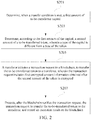
- the scenario involves a blockchain-based capital transfer method. Referring to FIG. 2 , the method includes:
- the service flow may include a credit assessment and token issuance phase, a loan application and issuance phase, a repayment phase, and the like.
- a specific institution A may be predetermined, to assess a credit rating of a user, and provides a credible conclusion on a credit limit of a loan to be issued to the user. It may be understood that, the specific institution A may be reviewed and appointed by a fund supervision department according to relevant regulations, or may be selected or agreed upon by an institution participating in loan issuance.
- the specific institution A is mainly responsible for performing a credit assessment of the user according to related information of the user, and determine the credit limit (represented in a form of a real currency, namely, capital, that is, the first amount of the first resource described above in the embodiments of the present application) of the loan to be issued to the user.
- related information of a user C intended to apply for a loan usually involves personal privacy of the user C, for example, personal information such as a name of the user and an ID card number, and information related to a financing capability of the user C such as income data, consumption information, and a repayment status of the use.
- personal information such as a name of the user and an ID card number
- information related to a financing capability of the user C such as income data, consumption information, and a repayment status of the use.
- the information provided by the user C for the specific institution A is not disclosed to another institution, for example, a loan issuance institution, but is known only to the specific institution A.
- the specific institution A sends an assessment result (including the loan issuance credit limit) to a preset specific institution B, and the specific institution B issues a token (represented in a form of a virtual currency, namely, the second resource described above in the embodiments of the present application) of an amount corresponding to the loan issuance credit limit to the user C intended to apply for the loan.
- a token represented in a form of a virtual currency, namely, the second resource described above in the embodiments of the present application
- the specific institution A and the specific institution B may be concurrently served by a same entity.
- a loan issuance credit limit that the user C is allowed borrow is determined as a first amount of to-be-transferred capital, and based on this, a second amount of a to-be-transferred token is determined (as described in the foregoing embodiment, a correspondence between the first amount of the capital and the second amount of the token may be implemented in a plurality of manners).
- a transferor is specifically the foregoing specific institution B
- a transferee is specifically the user C intended to apply for a loan
- a transaction request initiated by the transferor to a blockchain includes first encrypted amount information obtained after the second amount (denoted as quota c) of the token is encrypted.
- the first encrypted amount information may be obtained by encrypting the second amount quota c of the token by using a first encryption function (denoted as enc(x, y)).
- An input of the first encryption function is the second amount quota_c of the token
- another input of the first encryption function is a public key (denoted as pk_c) of the transferee (that is, the user C).
- pk_c public key of the transferee
- identification information of the public key pk_c of the transferee may further be used as a part of the transaction request and sent to a blockchain system, for the blockchain system to perform an on-chain operation after verification and implementation.
- a hash value (denoted as hash(pk c)) of the public key of the transferee may be used as the identification information of the public key.
- an amount (represented as quota_c herein) of the token held by the user C can reflect an actual amount (that is, the loan issuance credit limit) of allowed capital borrowed from the user C. It may be understood that, when the user C has borrowed a part of the capital (the actual amount of the borrowed capital should not be greater than the foregoing loan issuance credit limit), the amount of the token held by the user C is reduced, indicating that the credit limit of the capital that can be borrowed by the user C is reduced; when the user C returns the borrowed capital, the amount of the token held by the user C is increased, indicating that the credit limit of the capital that can be borrowed by the user C is restored or made up.
- the credit assessment may be performed on the user C again regularly or periodically, to adjust the loan issuance credit limit of the user.
- the specific institution B may perform the foregoing capital transfer process to issue a difference of the credit limit to the user C.
- the difference of the credit limit is determined as the first amount of the to-be-transferred capital.
- the credit limit is reduced, the user may be required to return a difference of the credit limit to the specific institution B within a specified time period.
- the user C serves as the transferor
- the specific institution B serves as the transferee
- the difference of the credit limit is determined as the first amount of the to-be-transferred capital.
- the specific institution B may send a blacklist to all loan issuance institutions, to restrict the user C from applying for a loan, and to allow only receiving repayments from the user C until the user C returns the difference of the credit limit.
- the token representing the loan amount is issued to the user C, and the issuance process is written on the blockchain, helping regulate the loan amount of the user C, thereby reducing the risk of loan lending by a loan issuance institution, and ensuring transaction security.
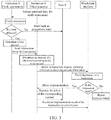
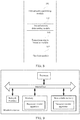
- FIG. 3 is a schematic diagram of a service flow in a credit assessment and token issuance phase, and is specifically as follows:
- the institution B (serving as the resource transferor or the transferor) initiates a transaction request to a blockchain platform, where the transaction request includes information about the amount of the token.
- the information is encrypted information obtained after the amount of the token is encrypted.
- the blockchain platform allows the institution B to implement the transaction request.
- the institution B transfers the token of the corresponding amount to the user C (serving as the resource transferee or the transferee)
- an implementation result of the transaction is recorded on the blockchain.
- the amount of the token held by the user C reflects the credit limit of an allowed loan borrowed from the user C.
- the user C may reach a loan agreement (equivalent to the resource borrowing agreement in the resource transfer process) with a lending institution D, to determine the amount (equivalent to the first amount of the first resource) of the capital that the user C requests to borrow.
- the corresponding second amount (equivalent to the second amount of the second resource) of the token is determined according to the first amount that is of the capital that is requested to borrow and that is determined in the agreement.
- the user C sends the held token to the lending institution D, where the amount of the token is the second amount and is denoted as quota_d, and further, may return a balance (denoted as quota_c') of the held token to an account of the user C.
- the lending institution D may send capital (a real currency) to the user C, for the user C to obtain the capital that is requested to borrow.
- the user C sends a transaction request to the blockchain, to send the token whose amount is quota d to the lending institution D.
- the transaction request may include first encrypted amount information obtained by encrypting quota_d, reflecting the amount of the token to be transferred to the institution D; or may further include second encrypted amount information obtained by encrypting the balance quota_c' of the token held by the user C, reflecting the balance of the token to be returned to the account of the user C; or may further include identification information (which may be denoted as Tx in) of a previous capital transfer transaction in which the user C participates, where the identification information may be specifically set to a hash value that is of the previous capital transfer transaction and that is recorded on the blockchain, or may be a preset identifier for distinguishing between different transactions, reflecting a basis for determining the amount quota c of the token held by the user C.
- a zero-knowledge proof may further be added to the transaction request from the user C to the blockchain, used for proving that a sum of the amount quota_d of the transferred token and the balance quota c' of the token to be held by the transferor (the user C) after the execution of the transaction request is equal to an amount quota_c of a token held by the transferor (the user C) before initiating the transaction request.
- the zero-knowledge proof may be further used for proving that the amount quota_d of the token transferred out by the transferor (the user C) is greater than zero, the amount quota c of the token held by the transferor (the user C) before initiating the transaction request is greater than zero, and the balance quota_c' of the token to be held by the transferor (the user C) after the execution of the transaction request is not less than zero.
- Tx in may be understood as an input of the current transaction, reflecting a source of the amount of the token held by the user C (which is the transferor herein).
- enc(pk_d, quota_d) and hash(pk_d) may be understood as a first output of the current transaction, reflecting the amount quota_d of the token sent by the user C to the institution D, and also reflecting the amount of the token sent by the user C and received by the institution D.
- enc(pk_c, quota_c') and hash(pk_c) may be understood as a second output of the current transaction, reflecting the remaining amount quota c', equivalent to a change obtained after the user C sends the token, of the token after the user C completes the token transfer.
- the zero-knowledge proof is used for proving legitimacy of the current transaction to a node not participating in the current transaction on the blockchain, without leaking a specific amount of the current transaction, thereby protecting privacy of both parties of the transaction.
- Making the transaction on-chain can write change statuses of the tokens held by the two parties (the user C and the lending institution D) participating in the transaction in the blockchain, thereby regulating legitimacy of the transaction, and preventing the user C from applying for a loan exceeding the loan credit limit.
- privacy of both parties of the transaction is protected by encrypting the specific amount of the transferred token and proving legitimacy by using the zero-knowledge proof.
- FIG. 4 is a schematic diagram of a service flow in a loan application and issuance phase, and is specifically as follows:
- the institution D issues the loan of the corresponding amount to the user C.
- the user C completes the loan application, and the institution D completes the loan issuance. It may be understood that, after the transaction is completed, the amount of the token held by the user C is reduced, and a balance of the held token reflects a remaining credit limit of an allowed loan borrowed from the user C.
- the user C When the user C needs to repay the loan to the lending institution D, the user C first remits money to a bank account of the lending institution D, to repay the loan in a real currency (equivalent to the first resource). Then, after receiving the real currency returned by the user C, the lending institution D initiates a transaction request to the blockchain, to transfer, to the user C, a token (equivalent to the first resource) corresponding to the real currency returned by the user C, thereby restoring or making up the loan amount for the user C.
- the transaction request may be understood as encrypting, by using an encryption function, the amount quota_d of the token that corresponds to the amount of the capital received by the lending institution D (the capital transferor), where an input of the encryption function is the amount quota_d of the token, and another input of the encryption function is a public key pk_c of the user C (the capital transferee).
- identification information of the public key of the user C for example, a hash value hash(pk c) of the public key pk_c, is further used as a part of the transaction request and sent to the blockchain system.
- FIG. 5 is a schematic diagram of a service flow in a repayment phase, and is specifically as follows:
- the user C completes the loan repayment
- the institution D completes the loan recovery. It may be understood that, after the transaction is completed, the amount of the token held by the user C is increased, and the amount of the held token reflects a credit limit of an allowed loan borrowed from the user C.
- the capital transfer method provided in the embodiments of the present application is used in all the foregoing phases. Privacy of both transaction parties is protected by converting an amount of capital representing a real currency into an amount of a token representing a virtual currency and encrypting an amount of a token circulating in the blockchain. Even if a plurality of loan issuance institutions joins the blockchain for loan issuance, a total amount of a loan applied for by a user from the plurality of issuance institutions does not exceed an allowed loan amount, thereby reducing lending risks of the lending institutions.
- the token reflecting the loan amount is issued by the specific institution B, an amount of a token held by the user also changes accordingly with borrowing and repayment behaviors of the user, and transactions causing these changing processes are all written on the blockchain. Therefore, authenticity and reliability of the amount of the token can be ensured by using features of publicity, transparency, and non-tamperability of the blockchain technology, thereby ensuring that the user cannot over-apply for a loan.
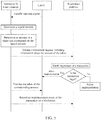
- An embodiment of the present application further provides a blockchain-based resource transfer method.
- the blockchain-based resource transfer method includes:
- a first resource that actually needs to be transferred is converted into a second resource for transferring, and a purpose of resource transfer can be achieved by transferring the second resource.
- conversion between the amounts of the first resource and the second resource is implemented using the one-way function, and use of features of the one-way function makes a third party other than both transaction parties incapable of inferring the first amount of the first resource according to the second amount of the second resource, thereby hiding the amount of the actually transferred first resource, and achieving a function of protecting transaction privacy.
- the first amount of the first resource and a random number may be used as inputs of the one-way function, and an output of the one-way function may be determined as the second amount of the second resource.
- a feature of the one-way function is used, and even if the second amount is not encrypted in a subsequently initiated transaction request, but instead, the second amount obtained through conversion using the one-way function is directly added to the transaction request, a real amount for the resource transfer (that is, the first amount of the first resource) can still be protected to some extent.
- the second amount is further encrypted to obtain the first encrypted amount information, and the first encrypted amount information is added to the transaction request initiated by the resource transferor, thereby better protecting privacy information of the resource transfer transaction.
- the resource transferor When conversion between the amounts of the first resource and the second resource is implemented using the one-way function, the resource transferor further needs to send the random number (as an input of the one-way function) used during the conversion to the resource transferee, for the resource transferee to perform reverse conversion of resource types, and infer the first amount of the first resource.
- the random number may be encrypted before the resource transferor initiates the transaction request to the blockchain, and then, the initiated transaction request carries an encrypted random number generated by encrypting the random number, thereby avoiding leakage of the random number, and protecting the privacy information of the resource transfer transaction.
- the random number may be encrypted by using a public key of the resource transferee. In this case, the random number can be decrypted only by using a private key of the resource transferee, thereby protecting transaction privacy.
- this embodiment may also be applied to an application scenario of capital lending.
- the first resource is capital
- the second resource is a token.
- a corresponding blockchain-based capital transfer method includes:
- an embodiment of the present application further provides a blockchain-based resource transfer apparatus.
- the apparatus includes:
- FIG. 9 is a schematic structural diagram of an electronic device, according to an embodiment of the present application.
- the electronic device includes a processor, and optionally, further includes an internal bus, a network interface, and a memory.
- the memory may include an internal memory, for example, a high-speed random-access memory (RAM), and may further include a non-volatile memory, for example, at least one magnetic disk storage.
- the electronic device may further include hardware required by other services.
- the processor, the network interface, and the memory may be connected to one another by using the internal bus.
- the internal bus may be an industry standard architecture (ISA) bus, a peripheral component interconnect (PCI) bus, an extended industry standard architecture (EISA) bus, or the like.
- ISA industry standard architecture
- PCI peripheral component interconnect
- EISA extended industry standard architecture
- the bus may be classified into an address bus, a data bus, a control bus, and the like.
- FIG. 9 the bus is represented by using only one double-sided arrow, which, however, does not indicate that there is only one bus or only one type of bus.
- the memory is configured to store a program.
- the program may include program code, where the program code includes a computer operation instruction.
- the memory may include an internal memory and a non-volatile memory, and provides an instruction and data for the processor.
- the processor reads a corresponding computer program from the non-volatile memory to the internal memory for running, forming a blockchain-based resource transfer apparatus at a logic level.
- the processor executes the program stored in the memory, for specifically performing the following operations:
- the method performed by the blockchain-based resource transfer apparatus and disclosed in the embodiment shown in FIG. 1 of the present application may be applied to the processor or implemented by the processor.
- the processor may be an integrated circuit chip and has a signal processing capability.
- the steps of the foregoing method may be implemented by using a hardware integrated logic circuit in the processor or instructions in a form of software.
- the foregoing processor may be a general purpose processor, including a central processing unit (CPU), a network processor (NP), or the like; or may be a digital signal processor (DSP), an application-specific integrated circuit (ASIC), a field-programmable gate array (FPGA), or another programmable logic device, discrete gate or transistor logic device, or discrete hardware component.
- the processor may implement or perform the methods, the steps, and logical block diagrams that are disclosed in the embodiments of the present application.
- the general purpose processor may be a microprocessor, or the processor may be any conventional processor or the like. Steps of the methods disclosed with reference to the embodiments of the present application may be directly performed and completed by using a hardware decoding processor, or may be performed and completed by using a combination of hardware and a software module in the decoding processor.
- the software module may be located in a mature storage medium in the field, such as a RAM, a flash memory, a read-only memory (ROM), a programmable ROM, an electrically erasable programmable memory, or a register.
- the storage medium is located in the memory, and the processor reads information in the memory and completes the steps of the foregoing methods in combination with hardware of the processor.
- the electronic device may further perform the method in FIG. 1 that is performed by the blockchain-based resource transfer apparatus, and implement the function of the blockchain-based resource transfer apparatus in the embodiment shown in FIG. 1 . Details are not described herein again in this embodiment of the present application.
- An embodiment of the present application further provides a computer-readable storage medium, the computer-readable storage medium stores one or more programs, the one or more programs include an instruction, and when the instruction is executed by an electronic device that includes a plurality of application programs, the electronic device can be enabled to perform the method in the embodiment shown in FIG. 1 and that is performed by the blockchain-based resource transfer apparatus, and is specifically configured to perform:
- an embodiment of the present application further provides a blockchain-based capital transfer apparatus.
- the apparatus includes:
- FIG. 11 is a schematic structural diagram of an electronic device, according to an embodiment of the present application.
- the electronic device includes a processor, and optionally, further includes an internal bus, a network interface, and a memory.
- the memory may include an internal memory, for example, a high-speed RAM, and may further include a non-volatile memory, for example, at least one magnetic disk storage.
- the electronic device may further include hardware required by other services.
- the processor, the network interface, and the memory may be connected to one another by using the internal bus.
- the internal bus may be an ISA bus, a PCI bus, an EISA bus, or the like.
- the bus may be classified into an address bus, a data bus, a control bus, and the like.
- the bus is represented by using only one double-sided arrow, which, however, does not indicate that there is only one bus or only one type of bus.
- the memory is configured to store a program.
- the program may include program code, where the program code includes a computer operation instruction.
- the memory may include an internal memory and a non-volatile memory, and provides an instruction and data for the processor.
- the processor reads a corresponding computer program from the non-volatile memory to the internal memory for running, forming a blockchain-based capital transfer apparatus at a logic level.
- the processor executes the program stored in the memory, for specifically performing the following operations:
- the method performed by the blockchain-based capital transfer apparatus and disclosed in the embodiment shown in FIG. 2 of the present application may be applied to the processor or implemented by the processor.
- the processor may be an integrated circuit chip and has a signal processing capability.
- the steps of the foregoing method may be implemented by using a hardware integrated logic circuit in the processor or instructions in a form of software.
- the foregoing processor may be a general purpose processor, including a CPU, an NP, or the like; or may be a DSP, an ASIC, an FPGA, or another programmable logic device, discrete gate or transistor logic device, or discrete hardware component.
- the processor may implement or perform the methods, the steps, and logical block diagrams that are disclosed in the embodiments of the present application.
- the general purpose processor may be a microprocessor, or the processor may be any conventional processor or the like. Steps of the methods disclosed with reference to the embodiments of the present application may be directly performed and completed by using a hardware decoding processor, or may be performed and completed by using a combination of hardware and a software module in the decoding processor.
- the software module may be located in a mature storage medium in the field, such as a RAM, a flash memory, a ROM, a programmable ROM, an electrically erasable programmable memory, or a register.
- the storage medium is located in the memory, and the processor reads information in the memory and completes the steps of the foregoing methods in combination with hardware of the processor.
- the electronic device may further perform the method in FIG. 2 that is performed by the blockchain-based capital transfer apparatus, and implement the function of the blockchain-based capital transfer apparatus in the embodiment shown in FIG. 2 . Details are not described herein again in this embodiment of the present application.
- An embodiment of the present application further provides a computer-readable storage medium, the computer-readable storage medium stores one or more programs, the one or more programs include an instruction, and when the instruction is executed by an electronic device that includes a plurality of application programs, the electronic device can be enabled to perform the method in the embodiment shown in FIG. 2 and that is performed by the blockchain-based capital transfer apparatus, and is specifically configured to perform:
- the embodiments of the present invention may be provided as a method, a system, or a computer program product. Therefore, the present invention may use a form of hardware only embodiments, software only embodiments, or embodiments with a combination of software and hardware. Moreover, the present invention may use a form of a computer program product that is implemented on one or more computer-usable storage media (including but not limited to a disk memory, a CD-ROM, an optical memory, and the like) that include computer-usable program code.
- computer-usable storage media including but not limited to a disk memory, a CD-ROM, an optical memory, and the like
- the present invention is described with reference to the flowchart and/or block diagram of the method, device (system), and computer program product of the embodiments of the present invention.
- computer program instructions can implement each procedure and/or block in the flowcharts and/or block diagrams and a combination of procedures and/or blocks in the flowcharts and/or block diagrams.
- These computer program instructions may be provided to a general-purpose computer, a special-purpose computer, an embedded processor, or a processor of another programmable data processing device to generate a machine, so that an apparatus configured to implement functions specified in one or more procedures in the flowcharts and/or one or more blocks in the block diagrams is generated by using instructions executed by the general-purpose computer or the processor of another programmable data processing device.
- These computer program instructions may also be stored in a computer readable memory that can guide a computer or another programmable data processing device to work in a specific manner, so that the instructions stored in the computer readable memory generate a product including an instruction apparatus, where the instruction apparatus implements functions specified in one or more procedures in the flowcharts and/or one or more blocks in the block diagrams.
- These computer program instructions may also be loaded into a computer or another programmable data processing device, so that a series of operation steps are performed on the computer or another programmable data processing device to generate processing implemented by a computer, and instructions executed on the computer or another programmable data processing device provide steps for implementing functions specified in one or more procedures in the flowcharts and/or one or more blocks in the block diagrams.
- the computer device includes one or more processors (CPUs), an input/output interface, a network interface, and a memory.
- the memory may include a form such as a persistent memory, a random-access memory (RAM) and/or a non-volatile memory of computer readable media, for example, a read-only memory (ROM) or a flash memory (RAM).
- RAM random-access memory
- ROM read-only memory
- RAM flash memory
- the computer readable medium includes a persistent medium and a non-persistent medium, a removable medium and a non-removable medium, which may implement storage of information by using any method or technology.
- the information may be a computer readable instruction, a data structure, a module of a program or other data.
- Examples of computer storage media include but are not limited to a phase change memory (PRAM), a static random access memory (SRAM), a dynamic random access memory (DRAM), other type of random access memory (RAM), a read-only memory (ROM), an electrically erasable programmable read-only memory (EEPROM), a flash memory or other memory technology, a compact disc read-only memory (CD-ROM), a digital versatile disc (DVD) or other optical storage, a cassette magnetic tape, tape and disk storage or other magnetic storage device or any other non-transmission media that may be configured to store information that a computing device can access.
- the computer-readable medium does not include transitory computer readable media (transitory media), such as a modulated data signal and a carrier.
- this application may be provided as a method, a system, or a computer program product. Therefore, this application may use a form of hardware only embodiments, software only embodiments, or embodiments with a combination of software and hardware. In addition, this application may use a form of a computer program product implemented on one or more computer available storage media (including but not limited to a disk memory, a CD-ROM, an optical memory, and the like) including computer available program code.
- a computer available storage media including but not limited to a disk memory, a CD-ROM, an optical memory, and the like
Landscapes
- Engineering & Computer Science (AREA)
- Computer Security & Cryptography (AREA)
- Business, Economics & Management (AREA)
- Accounting & Taxation (AREA)
- Theoretical Computer Science (AREA)
- Finance (AREA)
- Computer Networks & Wireless Communication (AREA)
- Signal Processing (AREA)
- General Physics & Mathematics (AREA)
- Physics & Mathematics (AREA)
- Strategic Management (AREA)
- General Business, Economics & Management (AREA)
- Bioethics (AREA)
- Health & Medical Sciences (AREA)
- General Health & Medical Sciences (AREA)
- Economics (AREA)
- Computer Hardware Design (AREA)
- Development Economics (AREA)
- General Engineering & Computer Science (AREA)
- Marketing (AREA)
- Technology Law (AREA)
- Medical Informatics (AREA)
- Databases & Information Systems (AREA)
- Software Systems (AREA)
- Computing Systems (AREA)
- Financial Or Insurance-Related Operations Such As Payment And Settlement (AREA)
Claims (12)
- Procédé de transfert de ressources sur une chaîne de blocs, consistant :à déterminer (S101), lorsqu'une condition de transfert de ressource est satisfaite, un premier montant d'une première ressource à transférer, la première ressource étant un capital ;à déterminer (S103), en fonction du premier montant de la première ressource, un second montant d'une seconde ressource à transférer, la seconde ressource étant un jeton, dans lequel un type de la première ressource est différent d'un type de la seconde ressource, la seconde ressource représentant la première ressource dans le transfert de ressource, le second montant de la seconde ressource étant représentatif du premier montant de la première ressource ;à initier (S105), par un cédant de ressource, une demande de transaction à une chaîne de blocs pour transférer la seconde ressource à transférer à un bénéficiaire de transfert de ressource, dans lequel la demande de transaction comprend des premières informations de montant cryptées obtenues en cryptant le second montant de la seconde ressource à l'aide d'une première fonction de cryptage, dans lequel une entrée de la première fonction de cryptage est le second montant de la seconde ressource et une autre entrée de la première fonction de cryptage est une clé publique du bénéficiaire de transfert de ressource ; età exécuter (S107), après que la chaîne de blocs a vérifié la demande de transaction, la demande de transaction pour transférer la seconde ressource à transférer au bénéficiaire de transfert de ressource, età enregistrer un résultat d'exécution sur la chaîne de blocs.
- Procédé selon la revendication 1, dans lequel la demande de transaction comprend en outre des informations d'identification de la clé publique du bénéficiaire de transfert de ressource.
- Procédé selon la revendication 2, dans lequel les informations d'identification de la clé publique du bénéficiaire de transfert de ressource sont une valeur de hachage de la clé publique du bénéficiaire de transfert de ressource.
- Procédé selon la revendication 1, dans lequel la détermination, en fonction du premier montant de la première ressource, d'un second montant d'une seconde ressource à transférer consiste :
à déterminer, en fonction du premier montant de la première ressource, le deuxième montant de la deuxième ressource à l'aide d'une fonction unidirectionnelle. - Procédé selon la revendication 4, dans lequel la détermination du second montant de la seconde ressource à l'aide d'une fonction unidirectionnelle consiste :à utiliser le premier montant de la première ressource et un nombre aléatoire en tant qu'entrées de la fonction unidirectionnelle, età déterminer une sortie de la fonction unidirectionnelle en tant que second montant de la seconde ressource,dans lequel la demande de transaction initiée par le cédant de ressource à la chaîne de blocs comprend en outre un nombre aléatoire cryptée généré en cryptant le nombre aléatoire.
- Procédé selon l'une quelconque des revendications 1 à 5, dans lequel :la condition de transfert de ressource consiste à autoriser le bénéficiaire de transfert de ressource à emprunter la première ressource, etla détermination d'un premier montant d'une première ressource à transférer consiste :à utiliser une limite de crédit d'une première ressource autorisée empruntée au bénéficiaire de transfert de ressource en tant que premier montant de la première ressource à transférer ; et/oula condition de transfert de ressource comprend le fait que le cédant de ressource a reçu la première ressource renvoyée par le bénéficiaire de transfert de ressource, etla détermination d'un premier montant d'une première ressource à transférer consiste :
à déterminer un montant de la première ressource renvoyée en tant que premier montant de la première ressource à transférer. - Procédé selon l'une quelconque des revendications 1 à 5, dans lequel :la condition de transfert de ressource comprend le fait que le bénéficiaire de transfert de ressource et le cédant de ressource concluent un accord d'emprunt de ressource, dans lequel l'accord d'emprunt de ressource comprend un montant d'une première ressource que le cédant de ressource demande d'emprunter au bénéficiaire de transfert de ressource ; etla détermination d'un premier montant d'une première ressource à transférer consiste :
à déterminer le montant de la première ressource dont l'emprunt est demandé en tant que premier montant de la première ressource à transférer. - Procédé selon la revendication 7, dans lequel la demande de transaction comprend en outre une preuve à connaissance nulle, utilisée pour prouver qu'une somme du second montant et d'un solde de la seconde ressource à détenir par le cédant de ressource après l'exécution de la demande de transaction est égale à un montant de la seconde ressource détenue par le cédant de ressource avant que la demande de transaction ne soit initiée,
dans lequel la preuve à connaissance nulle est en outre utilisée pour prouver que le second montant est supérieur à zéro, qu'un montant de la seconde ressource détenue par le cédant de ressource avant que la demande de transaction ne soit initiée est supérieur à zéro, et que le solde de la seconde ressource à détenir par le cédant de ressource après l'exécution de la demande de transaction n'est pas inférieur à zéro. - Procédé selon la revendication 7, dans lequel la demande de transaction comprend en outre des informations d'identification d'une transaction de transfert de ressource précédente à laquelle le cédant de ressource participe,
dans lequel les informations d'identification de la transaction de transfert de ressource précédente à laquelle le cédant de ressource participe sont spécifiquement une valeur de hachage qui est celle de la transaction de transfert de ressource précédente et qui est enregistrée dans la chaîne de blocs. - Procédé selon la revendication 7, dans lequel la demande de transaction comprend en outre des secondes informations de montant cryptées obtenues après qu'un solde de la seconde ressource à détenir par le cédant de ressource a été crypté après l'exécution de la demande de transaction,
dans lequel les secondes informations de montant cryptées dans la demande de transaction sont obtenues en cryptant, à l'aide d'une seconde fonction de cryptage, le solde de la seconde ressource devant être détenue par le cédant de ressource après l'exécution de la demande de transaction, dans lequel
une entrée de la seconde fonction de cryptage est le solde de la seconde ressource, et une autre entrée de la seconde fonction de cryptage est une clé publique du cédant de ressource,
dans lequel la demande de transaction comprend en outre des informations d'identification de la clé publique du cédant de ressource,
dans lequel les informations d'identification de la clé publique du cédant de ressource sont une valeur de hachage de la clé publique du cédant de ressource. - Dispositif électronique, comprenant :un processeur ; etune mémoire, configurée pour stocker une instruction exécutable par ordinateur, dans lequel, lorsque l'instruction exécutable est exécutée, le processeur est en mesure de mettre en œuvre un procédé selon l'une quelconque des revendications précédentes.
- Support de stockage lisible par ordinateur comprenant des instructions stockées sur celui-ci, qui, lorsqu'elles sont exécutées par un dispositif électronique, amènent le dispositif électronique à mettre en œuvre un procédé selon l'une quelconque des revendications 1 à 10.
Applications Claiming Priority (2)
| Application Number | Priority Date | Filing Date | Title |
|---|---|---|---|
| CN201711183322.4A CN108009441B (zh) | 2017-11-23 | 2017-11-23 | 资源转移和资金转移的方法和装置 |
| PCT/CN2018/110034 WO2019100865A1 (fr) | 2017-11-23 | 2018-10-12 | Procédé et appareil de transfert de ressources et de transfert de capital |
Publications (3)
| Publication Number | Publication Date |
|---|---|
| EP3660721A1 EP3660721A1 (fr) | 2020-06-03 |
| EP3660721A4 EP3660721A4 (fr) | 2020-10-14 |
| EP3660721B1 true EP3660721B1 (fr) | 2021-07-21 |
Family
ID=62053279
Family Applications (1)
| Application Number | Title | Priority Date | Filing Date |
|---|---|---|---|
| EP18880424.9A Active EP3660721B1 (fr) | 2017-11-23 | 2018-10-12 | Procédé et appareil de transfert de ressources et de transfert de capital |
Country Status (6)
| Country | Link |
|---|---|
| US (1) | US11443368B2 (fr) |
| EP (1) | EP3660721B1 (fr) |
| CN (1) | CN108009441B (fr) |
| SG (1) | SG11202001945YA (fr) |
| TW (1) | TWI733057B (fr) |
| WO (1) | WO2019100865A1 (fr) |
Families Citing this family (65)
| Publication number | Priority date | Publication date | Assignee | Title |
|---|---|---|---|---|
| GB201720946D0 (en) | 2017-12-15 | 2018-01-31 | Nchain Holdings Ltd | Computer-implemented system and method |
| WO2019092552A1 (fr) | 2017-11-09 | 2019-05-16 | nChain Holdings Limited | Systèmes et procédés permettant de garantir l'exécution correcte d'un programme informatique à l'aide d'un système informatique médiateur |
| KR102738013B1 (ko) | 2017-11-09 | 2024-12-05 | 엔체인 홀딩스 리미티드 | 확인 키를 변경으로부터 보호하고 정확성 증명의 유효성을 확인하기 위한 시스템 |
| CN108009441B (zh) * | 2017-11-23 | 2023-05-30 | 创新先进技术有限公司 | 资源转移和资金转移的方法和装置 |
| KR102810891B1 (ko) * | 2017-12-13 | 2025-05-20 | 엔체인 홀딩스 리미티드 | 암호 자료를 안전하게 공유하기 위한 시스템 및 방법 |
| US11985225B2 (en) * | 2018-05-14 | 2024-05-14 | Nchain Licensing Ag | Computer-implemented systems and methods for using veiled values in blockchain |
| CN108805574B (zh) * | 2018-05-19 | 2021-01-26 | 深圳市图灵奇点智能科技有限公司 | 基于隐私保护的交易方法和系统 |
| CN113283988B (zh) * | 2018-05-29 | 2024-12-03 | 蚂蚁链技术有限公司 | 资产转移方法及装置、电子设备 |
| CN108876606B (zh) | 2018-05-29 | 2021-02-09 | 创新先进技术有限公司 | 资产转移方法及装置、电子设备 |
| CN109767204A (zh) * | 2018-06-14 | 2019-05-17 | 杭州复杂美科技有限公司 | 一种区块链预付款融资方法 |
| CN109034766A (zh) * | 2018-06-22 | 2018-12-18 | 杭州复杂美科技有限公司 | 借款方法及系统、设备和存储介质 |
| CN108985933A (zh) * | 2018-06-29 | 2018-12-11 | 联动优势科技有限公司 | 一种记账方法及装置 |
| CN109035029A (zh) * | 2018-07-27 | 2018-12-18 | 阿里巴巴集团控股有限公司 | 基于区块链的资产转移方法及装置、电子设备 |
| CN109102299A (zh) * | 2018-08-01 | 2018-12-28 | 腾讯科技(深圳)有限公司 | 资源转移数据管理方法、装置及存储介质 |
| CN109359971B (zh) | 2018-08-06 | 2020-05-05 | 阿里巴巴集团控股有限公司 | 区块链交易方法及装置、电子设备 |
| CN109409857A (zh) * | 2018-08-22 | 2019-03-01 | 泰链(厦门)科技有限公司 | 基于桥梁区块链系统实现资源转移的方法、介质及计算机设备 |
| CN109118227A (zh) * | 2018-08-23 | 2019-01-01 | 泰链(厦门)科技有限公司 | 桥梁区块链系统的构建方法、介质、装置及区块链系统 |
| CN109389496A (zh) * | 2018-08-23 | 2019-02-26 | 泰链(厦门)科技有限公司 | 主体区块链系统的构建方法、介质、装置及区块链系统 |
| CN112651740B (zh) | 2018-08-30 | 2024-10-29 | 蚂蚁链技术有限公司 | 区块链交易方法及装置、电子设备 |
| CN111833186B (zh) * | 2018-09-20 | 2024-11-01 | 蚂蚁链技术有限公司 | 基于区块链的交易方法、装置和节点设备 |
| CN109117674A (zh) * | 2018-09-25 | 2019-01-01 | 深圳市元征科技股份有限公司 | 一种客户端验证加密方法、系统、设备及计算机介质 |
| CN109583886B (zh) * | 2018-09-30 | 2020-07-03 | 阿里巴巴集团控股有限公司 | 基于区块链的交易方法、装置和汇出方设备 |
| EP3866094A4 (fr) | 2018-10-11 | 2022-04-20 | Hefei Dappworks Technology Co., Ltd. | Procédé et appareil de transaction de flux de ressources |
| CN109361664B (zh) * | 2018-10-11 | 2021-05-11 | 腾讯科技(深圳)有限公司 | 基于区块链的数据验证方法、系统和计算机可读存储介质 |
| CN109598149B (zh) * | 2018-11-20 | 2020-04-07 | 阿里巴巴集团控股有限公司 | 业务处理的方法和装置 |
| CN109615516B (zh) * | 2018-12-05 | 2021-04-16 | 腾讯科技(深圳)有限公司 | 资源转移方法、装置、电子设备及存储介质 |
| US11151558B2 (en) * | 2018-12-12 | 2021-10-19 | American Express Travel Related Services Company, Inc | Zero-knowledge proof payments using blockchain |
| MX2019006095A (es) * | 2018-12-29 | 2019-08-14 | Alibaba Group Holding Ltd | Sistema y metodo para proteccion de informacion. |
| US20200211099A1 (en) * | 2018-12-31 | 2020-07-02 | Finicity Corporation | Decentralized Customer-Controlled Credit Verification |
| CN110245522B (zh) * | 2019-01-16 | 2022-07-12 | 腾讯科技(深圳)有限公司 | 区块链资金结算系统中的数据处理方法、终端和介质 |
| CN111612453A (zh) * | 2019-02-22 | 2020-09-01 | 北京趣块远扬科技有限公司 | 基于区块链的去中心化交易方法、装置及电子设备 |
| CN110175831B (zh) * | 2019-04-23 | 2023-09-29 | 创新先进技术有限公司 | 一种基于区块链的信用转移方法、装置及电子设备 |
| CN110264172B (zh) * | 2019-05-10 | 2024-02-02 | 平安科技(深圳)有限公司 | 基于区块链的交易处理方法及装置 |
| CN110278266B (zh) * | 2019-06-20 | 2021-09-17 | 深圳前海微众银行股份有限公司 | 一种基于区块链的资源处理方法及装置 |
| TWI717798B (zh) * | 2019-08-06 | 2021-02-01 | 郭谷彰 | 架構於區塊鏈的密鑰保存方法及檔案分享與存取系統 |
| CN110598455B (zh) * | 2019-09-20 | 2024-11-08 | 腾讯科技(深圳)有限公司 | 基于spv节点级联的数据处理方法及相关产品 |
| CN110738480B (zh) * | 2019-09-23 | 2022-09-13 | 杭州复杂美科技有限公司 | 数字资产托管风险控制方法、设备和存储介质 |
| CN110738481B (zh) * | 2019-09-23 | 2022-09-13 | 杭州复杂美科技有限公司 | 数字资产托管风险控制方法、设备和存储介质 |
| US11379815B2 (en) * | 2019-10-07 | 2022-07-05 | Bank Of America Corporation | System for secure peer-to-peer interactions with event-based confirmation triggering mechanism |
| CN110910109B (zh) * | 2019-11-25 | 2022-03-25 | 腾讯科技(深圳)有限公司 | 基于区块链的电子资源转移方法及装置 |
| CN111260347A (zh) * | 2020-01-13 | 2020-06-09 | 北京三快在线科技有限公司 | 基于区块链的资源处理方法、装置、设备及存储介质 |
| CN111383114A (zh) * | 2020-03-13 | 2020-07-07 | 普洛斯科技(重庆)有限公司 | 基于区块链的资产信息管理方法和装置 |
| CN113535372A (zh) * | 2020-04-14 | 2021-10-22 | 支付宝实验室(新加坡)有限公司 | 一种数据处理、支付方法、装置、设备及介质 |
| CN111507818B (zh) * | 2020-04-23 | 2026-02-24 | 腾讯科技(深圳)有限公司 | 一种基于区块链的信息共享方法、装置及存储介质 |
| CN111768303B (zh) * | 2020-06-01 | 2024-12-31 | 先进新星技术(新加坡)控股有限公司 | 交易处理方法、装置、设备及系统 |
| CN111738712A (zh) * | 2020-07-17 | 2020-10-02 | 百度在线网络技术(北京)有限公司 | 一种区块链的付费处理方法、装置、设备和介质 |
| CN111881433B (zh) * | 2020-07-27 | 2023-02-03 | 平安证券股份有限公司 | 基于验证手势的资源转移方法、装置和计算机设备 |
| CN114066592B (zh) * | 2020-08-06 | 2025-07-22 | 先进新星技术(新加坡)控股有限公司 | 分批次的资源转移方法及装置 |
| CN111970123B (zh) * | 2020-08-10 | 2023-07-25 | 中国联合网络通信集团有限公司 | 基于区块链网络的无线资源交易方法、终端和系统 |
| CN111932233B (zh) * | 2020-08-13 | 2023-08-15 | 中国工商银行股份有限公司 | 资源转移方法、装置和设备 |
| US11636467B2 (en) * | 2020-09-14 | 2023-04-25 | Visa International Service Association | System, method, and computer program product for secured, encrypted transaction processing |
| CN114328708B (zh) * | 2020-09-27 | 2025-04-08 | 中国移动通信有限公司研究院 | 一种计费方法、装置和存储介质 |
| CN112507296B (zh) * | 2020-11-12 | 2024-04-05 | 迅鳐成都科技有限公司 | 一种基于区块链的用户登录验证方法及系统 |
| CN112581141A (zh) * | 2021-02-22 | 2021-03-30 | 支付宝(杭州)信息技术有限公司 | 基于区块链的交易处理方法、装置及系统 |
| CN113112252B (zh) * | 2021-04-28 | 2023-03-10 | 深圳壹账通智能科技有限公司 | 基于区块链的资源转移方法、装置、电子设备及存储介质 |
| US12450606B2 (en) * | 2021-06-28 | 2025-10-21 | Rebate Assets, LLC | Utilizing a public benefit assets secure token |
| US11888981B2 (en) * | 2021-08-17 | 2024-01-30 | International Business Machines Corporation | Privacy preserving auditable accounts |
| CN114022150B (zh) * | 2022-01-07 | 2022-04-22 | 北京笔新互联网科技有限公司 | 资源转移方法、装置、电子设备及存储介质 |
| US12437033B1 (en) * | 2022-01-31 | 2025-10-07 | Splunk Inc. | Smart contracts for licensing |
| WO2023167241A1 (fr) * | 2022-03-02 | 2023-09-07 | Sushi Top Marketing株式会社 | Dispositif, programme et procédé de traitement d'informations |
| CN114780970B (zh) * | 2022-03-18 | 2026-04-03 | 上海阵方科技有限公司 | 资源数据处理方法、装置和服务器 |
| US12277551B2 (en) * | 2022-04-26 | 2025-04-15 | Bank Of America Corporation | Resource transfer validation within a metaverse |
| US12444009B2 (en) | 2022-09-02 | 2025-10-14 | Bank Of America Corporation | Systems and methods for generating and training a module selection engine for distribution allocation in a network environment |
| CN115965459B (zh) * | 2022-11-11 | 2025-09-05 | 招联消费金融股份有限公司 | 基于联盟链的资源借调评估方法、装置和计算机设备 |
| US12530716B2 (en) | 2023-03-20 | 2026-01-20 | Bank Of America Corporation | Systems and methods for combined processing of disparate resource types |
Family Cites Families (41)
| Publication number | Priority date | Publication date | Assignee | Title |
|---|---|---|---|---|
| US20130090951A1 (en) * | 2011-10-07 | 2013-04-11 | Kevin Carias | System and method for premium financing |
| US11164164B2 (en) * | 2014-05-15 | 2021-11-02 | Uphold Global Foundation | System and method for converting cryptocurrency to virtual assets whose value is substantiated by a reserve of assets |
| US10255600B2 (en) * | 2014-06-16 | 2019-04-09 | Bank Of America Corporation | Cryptocurrency offline vault storage system |
| US11481771B2 (en) | 2015-05-20 | 2022-10-25 | Ripple Luxembourg S.A. | One way functions in a resource transfer system |
| US10740732B2 (en) | 2015-05-20 | 2020-08-11 | Ripple Luxembourg S.A. | Resource transfer system |
| US11386415B2 (en) | 2015-05-20 | 2022-07-12 | Ripple Luxembourg S.A. | Hold condition in a resource transfer system |
| WO2017021153A1 (fr) | 2015-07-31 | 2017-02-09 | British Telecommunications Public Limited Company | Commande d'accès extensible |
| US10841082B2 (en) * | 2015-11-24 | 2020-11-17 | Adi BEN-ARI | System and method for blockchain smart contract data privacy |
| US20170236103A1 (en) * | 2016-02-12 | 2017-08-17 | D+H Usa Corporation | Peer-to-Peer Financial Transactions Using A Private Distributed Ledger |
| KR102753021B1 (ko) * | 2016-02-23 | 2025-01-14 | 엔체인 홀딩스 리미티드 | 블록체인에서 교환을 구현하기 위한 토큰화 방법 및 시스템 |
| KR102777896B1 (ko) * | 2016-02-23 | 2025-03-10 | 엔체인 홀딩스 리미티드 | 토큰화를 이용한 블록체인 기반 교환 방법 |
| EP3437048B1 (fr) * | 2016-04-01 | 2021-06-09 | ConsenSys Software Inc. | Systèmes et procédés de fourniture de confidentialité de données dans un registre distribué privé |
| WO2017178956A1 (fr) * | 2016-04-11 | 2017-10-19 | nChain Holdings Limited | Procédé de communication poste à poste sécurisée sur une chaîne de blocs |
| US11010729B2 (en) * | 2016-04-14 | 2021-05-18 | Pricewaterhousecoopers Llp | Cryptoconomy solution for administration and governance in a distributed system |
| US11223598B2 (en) | 2016-05-03 | 2022-01-11 | Nokia Of America Corporation | Internet security |
| CN106022741A (zh) | 2016-05-19 | 2016-10-12 | 北京太云科技有限公司 | 一种基于区块链的不可分割的数字资产转账方法 |
| EP3491611A1 (fr) * | 2016-07-29 | 2019-06-05 | Nchain Holdings Limited | Procédé et système mis en application par blockchain |
| US10187368B2 (en) | 2016-08-03 | 2019-01-22 | Ripple Luxembourg S.A. | Resource transfer setup and verification |
| CN106331151A (zh) | 2016-09-19 | 2017-01-11 | 中国银联股份有限公司 | 基于区块链结构的资源文件处理系统及方法 |
| US20180150910A1 (en) * | 2016-11-30 | 2018-05-31 | Paypal, Inc. | Systems and methods for processing business data |
| TWM543413U (zh) * | 2016-12-05 | 2017-06-11 | Taiwan United Financial Technology Co Ltd | 利用區塊鏈技術進行交易的網路借貸平台 |
| WO2018120057A1 (fr) * | 2016-12-30 | 2018-07-05 | 深圳前海达闼云端智能科技有限公司 | Procédé et système de gestion de devises basés sur une chaîne de blocs |
| CN106846666B (zh) * | 2017-01-18 | 2019-05-07 | 北京云知科技有限公司 | 一种基于区块链的存取款方法 |
| WO2018140913A1 (fr) * | 2017-01-30 | 2018-08-02 | SALT Lending Holdings, Inc. | Système et procédé de création d'un accord sécurisé automatisé basé sur des actifs |
| CN107067255B (zh) | 2017-02-27 | 2019-02-26 | 腾讯科技(深圳)有限公司 | 区块链中账户的处理方法和装置 |
| CN107066893B (zh) | 2017-02-28 | 2018-11-09 | 腾讯科技(深圳)有限公司 | 区块链中账户信息的处理方法和装置 |
| CN106960388A (zh) * | 2017-03-01 | 2017-07-18 | 中钞信用卡产业发展有限公司北京智能卡技术研究院 | 跨区块链的数字资产流转的方法和装置 |
| CN106982205B (zh) * | 2017-03-01 | 2020-05-19 | 中钞信用卡产业发展有限公司杭州区块链技术研究院 | 基于区块链的数字资产处理方法和装置 |
| WO2018161007A1 (fr) * | 2017-03-03 | 2018-09-07 | Mastercard International Incorporated | Procédé et système de mémoire et de transfert de données vérifiées par l'intermédiaire d'une chaîne de blocs |
| US10243743B1 (en) * | 2017-09-13 | 2019-03-26 | Vijay K. Madisetti | Tokens or crypto currency using smart contracts and blockchains |
| CN107067243A (zh) * | 2017-04-19 | 2017-08-18 | 迅鳐成都科技有限公司 | 一种区块链中共享价值代币的设计于流通方法 |
| CN107301536B (zh) | 2017-06-12 | 2019-07-12 | 腾讯科技(深圳)有限公司 | 资源转移方法及装置 |
| CN107358424B (zh) * | 2017-06-26 | 2020-09-29 | 中国人民银行数字货币研究所 | 一种基于数字货币的交易方法和装置 |
| US10643202B2 (en) | 2017-07-25 | 2020-05-05 | Bank Of America Corporation | Real-time processing distributed ledger system |
| US20190147431A1 (en) * | 2017-11-16 | 2019-05-16 | Blockmason Inc. | Credit Protocol |
| CN108009441B (zh) * | 2017-11-23 | 2023-05-30 | 创新先进技术有限公司 | 资源转移和资金转移的方法和装置 |
| KR102005158B1 (ko) * | 2017-11-29 | 2019-07-29 | 신한카드 주식회사 | 여신 가상화폐 생성 장치 및 여신 가상화폐 관리 장치 |
| GB2572627A (en) | 2018-04-05 | 2019-10-09 | Electroneum Ltd | Hybrid blockchain transaction system |
| US20190318329A1 (en) | 2018-04-12 | 2019-10-17 | Bank Of America Corporation | Internet-of-things enabled real-time event processing |
| US10754693B2 (en) | 2018-07-05 | 2020-08-25 | Vmware, Inc. | Secure transfer of control over computational entities in a distributed computing environment |
| CN110599170B (zh) | 2019-09-16 | 2021-06-25 | 腾讯科技(深圳)有限公司 | 基于区块链的交易信息处理方法和系统、存储介质 |
-
2017
- 2017-11-23 CN CN201711183322.4A patent/CN108009441B/zh active Active
-
2018
- 2018-09-19 TW TW107132969A patent/TWI733057B/zh active
- 2018-10-12 SG SG11202001945YA patent/SG11202001945YA/en unknown
- 2018-10-12 WO PCT/CN2018/110034 patent/WO2019100865A1/fr not_active Ceased
- 2018-10-12 EP EP18880424.9A patent/EP3660721B1/fr active Active
-
2020
- 2020-02-11 US US16/788,217 patent/US11443368B2/en active Active
Also Published As
| Publication number | Publication date |
|---|---|
| EP3660721A1 (fr) | 2020-06-03 |
| TWI733057B (zh) | 2021-07-11 |
| CN108009441B (zh) | 2023-05-30 |
| TW201926203A (zh) | 2019-07-01 |
| US20200184557A1 (en) | 2020-06-11 |
| WO2019100865A1 (fr) | 2019-05-31 |
| EP3660721A4 (fr) | 2020-10-14 |
| SG11202001945YA (en) | 2020-04-29 |
| CN108009441A (zh) | 2018-05-08 |
| US11443368B2 (en) | 2022-09-13 |
Similar Documents
| Publication | Publication Date | Title |
|---|---|---|
| EP3660721B1 (fr) | Procédé et appareil de transfert de ressources et de transfert de capital | |
| CN110458543B (zh) | 数据处理方法、相关设备及介质 | |
| TWI729719B (zh) | 基於區塊鏈的資料授權方法及裝置、電子設備及電腦可讀儲存媒介 | |
| EP3819850B1 (fr) | Procédé et dispositif de traitement de données basé sur une chaîne de blocs | |
| CN110457875B (zh) | 基于区块链的数据授权方法及装置 | |
| US11544794B2 (en) | Claim settlement method and apparatus employing blockchain technology | |
| EP3961455A1 (fr) | Procedes et dispositifs de verification de donnees | |
| CN108885761B (zh) | 用于区块链上的安全点对点通信的方法 | |
| EP3962020A1 (fr) | Procédés et systèmes de partage d'informations | |
| CN110163590A (zh) | 基于区块链的缴费代扣方法及装置、电子设备、存储介质 | |
| WO2020220761A1 (fr) | Procédé et dispositif de signature d'accord de déduction de paiements utilisant une chaîne de blocs, et appareil électronique | |
| WO2020042774A1 (fr) | Procédé et appareil de remise basée sur une chaîne de blocs | |
| CN111784341B (zh) | 区块链交易方法及装置、电子设备、存储介质 | |
| CN111784347A (zh) | 一种资源转移方法及装置 | |
| CN111461691A (zh) | 基于区块链的流量统计系统、方法及装置 | |
| CN112561407B (zh) | 基于区块链的资产管理方法、系统及装置 | |
| CN112767153B (zh) | 区块链交易方法及装置、电子设备、存储介质 | |
| CN114930373B (zh) | 用于管理备用信用证的方法和设备 | |
| CN116629865A (zh) | 基于区块链的外包支付计算交易实现方法及系统 | |
| HK1254001A1 (zh) | 资源转移和资金转移的方法和装置 | |
| HK1254001B (en) | Method and device for resource transfer and fund transfer | |
| Wang | Confidential Distributed Ledgers for Online Syndicated Lending | |
| HK40047872B (en) | Asset management method, system and device based on blockchain | |
| HK40047872A (en) | Asset management method, system and device based on blockchain | |
| HK40015570A (en) | Method for data processing, and device and medium related to the same |
Legal Events
| Date | Code | Title | Description |
|---|---|---|---|
| STAA | Information on the status of an ep patent application or granted ep patent |
Free format text: STATUS: THE INTERNATIONAL PUBLICATION HAS BEEN MADE |
|
| PUAI | Public reference made under article 153(3) epc to a published international application that has entered the european phase |
Free format text: ORIGINAL CODE: 0009012 |
|
| STAA | Information on the status of an ep patent application or granted ep patent |
Free format text: STATUS: REQUEST FOR EXAMINATION WAS MADE |
|
| 17P | Request for examination filed |
Effective date: 20200227 |
|
| AK | Designated contracting states |
Kind code of ref document: A1 Designated state(s): AL AT BE BG CH CY CZ DE DK EE ES FI FR GB GR HR HU IE IS IT LI LT LU LV MC MK MT NL NO PL PT RO RS SE SI SK SM TR |
|
| AX | Request for extension of the european patent |
Extension state: BA ME |
|
| REG | Reference to a national code |
Ref country code: DE Ref legal event code: R079 Ref document number: 602018020611 Country of ref document: DE Free format text: PREVIOUS MAIN CLASS: G06F0021620000 Ipc: H04L0029060000 |
|
| A4 | Supplementary search report drawn up and despatched |
Effective date: 20200914 |
|
| RIC1 | Information provided on ipc code assigned before grant |
Ipc: G06F 21/62 20130101ALI20200908BHEP Ipc: H04L 29/06 20060101AFI20200908BHEP Ipc: G06Q 40/02 20120101ALI20200908BHEP Ipc: H04L 9/32 20060101ALI20200908BHEP |
|
| RAP1 | Party data changed (applicant data changed or rights of an application transferred) |
Owner name: ADVANCED NEW TECHNOLOGIES CO., LTD. |
|
| DAV | Request for validation of the european patent (deleted) | ||
| DAX | Request for extension of the european patent (deleted) | ||
| GRAP | Despatch of communication of intention to grant a patent |
Free format text: ORIGINAL CODE: EPIDOSNIGR1 |
|
| STAA | Information on the status of an ep patent application or granted ep patent |
Free format text: STATUS: GRANT OF PATENT IS INTENDED |
|
| INTG | Intention to grant announced |
Effective date: 20210318 |
|
| GRAS | Grant fee paid |
Free format text: ORIGINAL CODE: EPIDOSNIGR3 |
|
| GRAA | (expected) grant |
Free format text: ORIGINAL CODE: 0009210 |
|
| STAA | Information on the status of an ep patent application or granted ep patent |
Free format text: STATUS: THE PATENT HAS BEEN GRANTED |
|
| AK | Designated contracting states |
Kind code of ref document: B1 Designated state(s): AL AT BE BG CH CY CZ DE DK EE ES FI FR GB GR HR HU IE IS IT LI LT LU LV MC MK MT NL NO PL PT RO RS SE SI SK SM TR |
|
| REG | Reference to a national code |
Ref country code: GB Ref legal event code: FG4D |
|
| REG | Reference to a national code |
Ref country code: CH Ref legal event code: EP |
|
| REG | Reference to a national code |
Ref country code: DE Ref legal event code: R096 Ref document number: 602018020611 Country of ref document: DE |
|
| REG | Reference to a national code |
Ref country code: AT Ref legal event code: REF Ref document number: 1413669 Country of ref document: AT Kind code of ref document: T Effective date: 20210815 |
|
| REG | Reference to a national code |
Ref country code: IE Ref legal event code: FG4D |
|
| REG | Reference to a national code |
Ref country code: LT Ref legal event code: MG9D |
|
| REG | Reference to a national code |
Ref country code: NL Ref legal event code: MP Effective date: 20210721 |
|
| REG | Reference to a national code |
Ref country code: DE Ref legal event code: R079 Ref document number: 602018020611 Country of ref document: DE Free format text: PREVIOUS MAIN CLASS: H04L0029060000 Ipc: H04L0065000000 |
|
| REG | Reference to a national code |
Ref country code: AT Ref legal event code: MK05 Ref document number: 1413669 Country of ref document: AT Kind code of ref document: T Effective date: 20210721 |
|
| PG25 | Lapsed in a contracting state [announced via postgrant information from national office to epo] |
Ref country code: SE Free format text: LAPSE BECAUSE OF FAILURE TO SUBMIT A TRANSLATION OF THE DESCRIPTION OR TO PAY THE FEE WITHIN THE PRESCRIBED TIME-LIMIT Effective date: 20210721 Ref country code: RS Free format text: LAPSE BECAUSE OF FAILURE TO SUBMIT A TRANSLATION OF THE DESCRIPTION OR TO PAY THE FEE WITHIN THE PRESCRIBED TIME-LIMIT Effective date: 20210721 Ref country code: FI Free format text: LAPSE BECAUSE OF FAILURE TO SUBMIT A TRANSLATION OF THE DESCRIPTION OR TO PAY THE FEE WITHIN THE PRESCRIBED TIME-LIMIT Effective date: 20210721 Ref country code: ES Free format text: LAPSE BECAUSE OF FAILURE TO SUBMIT A TRANSLATION OF THE DESCRIPTION OR TO PAY THE FEE WITHIN THE PRESCRIBED TIME-LIMIT Effective date: 20210721 Ref country code: LT Free format text: LAPSE BECAUSE OF FAILURE TO SUBMIT A TRANSLATION OF THE DESCRIPTION OR TO PAY THE FEE WITHIN THE PRESCRIBED TIME-LIMIT Effective date: 20210721 Ref country code: BG Free format text: LAPSE BECAUSE OF FAILURE TO SUBMIT A TRANSLATION OF THE DESCRIPTION OR TO PAY THE FEE WITHIN THE PRESCRIBED TIME-LIMIT Effective date: 20211021 Ref country code: AT Free format text: LAPSE BECAUSE OF FAILURE TO SUBMIT A TRANSLATION OF THE DESCRIPTION OR TO PAY THE FEE WITHIN THE PRESCRIBED TIME-LIMIT Effective date: 20210721 Ref country code: HR Free format text: LAPSE BECAUSE OF FAILURE TO SUBMIT A TRANSLATION OF THE DESCRIPTION OR TO PAY THE FEE WITHIN THE PRESCRIBED TIME-LIMIT Effective date: 20210721 Ref country code: NL Free format text: LAPSE BECAUSE OF FAILURE TO SUBMIT A TRANSLATION OF THE DESCRIPTION OR TO PAY THE FEE WITHIN THE PRESCRIBED TIME-LIMIT Effective date: 20210721 Ref country code: NO Free format text: LAPSE BECAUSE OF FAILURE TO SUBMIT A TRANSLATION OF THE DESCRIPTION OR TO PAY THE FEE WITHIN THE PRESCRIBED TIME-LIMIT Effective date: 20211021 Ref country code: PT Free format text: LAPSE BECAUSE OF FAILURE TO SUBMIT A TRANSLATION OF THE DESCRIPTION OR TO PAY THE FEE WITHIN THE PRESCRIBED TIME-LIMIT Effective date: 20211122 |
|
| PG25 | Lapsed in a contracting state [announced via postgrant information from national office to epo] |
Ref country code: PL Free format text: LAPSE BECAUSE OF FAILURE TO SUBMIT A TRANSLATION OF THE DESCRIPTION OR TO PAY THE FEE WITHIN THE PRESCRIBED TIME-LIMIT Effective date: 20210721 Ref country code: LV Free format text: LAPSE BECAUSE OF FAILURE TO SUBMIT A TRANSLATION OF THE DESCRIPTION OR TO PAY THE FEE WITHIN THE PRESCRIBED TIME-LIMIT Effective date: 20210721 Ref country code: GR Free format text: LAPSE BECAUSE OF FAILURE TO SUBMIT A TRANSLATION OF THE DESCRIPTION OR TO PAY THE FEE WITHIN THE PRESCRIBED TIME-LIMIT Effective date: 20211022 |
|
| REG | Reference to a national code |
Ref country code: DE Ref legal event code: R097 Ref document number: 602018020611 Country of ref document: DE |
|
| PG25 | Lapsed in a contracting state [announced via postgrant information from national office to epo] |
Ref country code: DK Free format text: LAPSE BECAUSE OF FAILURE TO SUBMIT A TRANSLATION OF THE DESCRIPTION OR TO PAY THE FEE WITHIN THE PRESCRIBED TIME-LIMIT Effective date: 20210721 |
|
| PLBE | No opposition filed within time limit |
Free format text: ORIGINAL CODE: 0009261 |
|
| STAA | Information on the status of an ep patent application or granted ep patent |
Free format text: STATUS: NO OPPOSITION FILED WITHIN TIME LIMIT |
|
| PG25 | Lapsed in a contracting state [announced via postgrant information from national office to epo] |
Ref country code: SM Free format text: LAPSE BECAUSE OF FAILURE TO SUBMIT A TRANSLATION OF THE DESCRIPTION OR TO PAY THE FEE WITHIN THE PRESCRIBED TIME-LIMIT Effective date: 20210721 Ref country code: SK Free format text: LAPSE BECAUSE OF FAILURE TO SUBMIT A TRANSLATION OF THE DESCRIPTION OR TO PAY THE FEE WITHIN THE PRESCRIBED TIME-LIMIT Effective date: 20210721 Ref country code: RO Free format text: LAPSE BECAUSE OF FAILURE TO SUBMIT A TRANSLATION OF THE DESCRIPTION OR TO PAY THE FEE WITHIN THE PRESCRIBED TIME-LIMIT Effective date: 20210721 Ref country code: EE Free format text: LAPSE BECAUSE OF FAILURE TO SUBMIT A TRANSLATION OF THE DESCRIPTION OR TO PAY THE FEE WITHIN THE PRESCRIBED TIME-LIMIT Effective date: 20210721 Ref country code: CZ Free format text: LAPSE BECAUSE OF FAILURE TO SUBMIT A TRANSLATION OF THE DESCRIPTION OR TO PAY THE FEE WITHIN THE PRESCRIBED TIME-LIMIT Effective date: 20210721 Ref country code: AL Free format text: LAPSE BECAUSE OF FAILURE TO SUBMIT A TRANSLATION OF THE DESCRIPTION OR TO PAY THE FEE WITHIN THE PRESCRIBED TIME-LIMIT Effective date: 20210721 |
|
| REG | Reference to a national code |
Ref country code: CH Ref legal event code: PL |
|
| REG | Reference to a national code |
Ref country code: BE Ref legal event code: MM Effective date: 20211031 |
|
| 26N | No opposition filed |
Effective date: 20220422 |
|
| PG25 | Lapsed in a contracting state [announced via postgrant information from national office to epo] |
Ref country code: MC Free format text: LAPSE BECAUSE OF FAILURE TO SUBMIT A TRANSLATION OF THE DESCRIPTION OR TO PAY THE FEE WITHIN THE PRESCRIBED TIME-LIMIT Effective date: 20210721 |
|
| PG25 | Lapsed in a contracting state [announced via postgrant information from national office to epo] |
Ref country code: LU Free format text: LAPSE BECAUSE OF NON-PAYMENT OF DUE FEES Effective date: 20211012 Ref country code: IT Free format text: LAPSE BECAUSE OF FAILURE TO SUBMIT A TRANSLATION OF THE DESCRIPTION OR TO PAY THE FEE WITHIN THE PRESCRIBED TIME-LIMIT Effective date: 20210721 Ref country code: BE Free format text: LAPSE BECAUSE OF NON-PAYMENT OF DUE FEES Effective date: 20211031 |
|
| PG25 | Lapsed in a contracting state [announced via postgrant information from national office to epo] |
Ref country code: LI Free format text: LAPSE BECAUSE OF NON-PAYMENT OF DUE FEES Effective date: 20211031 Ref country code: CH Free format text: LAPSE BECAUSE OF NON-PAYMENT OF DUE FEES Effective date: 20211031 |
|
| PG25 | Lapsed in a contracting state [announced via postgrant information from national office to epo] |
Ref country code: IE Free format text: LAPSE BECAUSE OF NON-PAYMENT OF DUE FEES Effective date: 20211012 |
|
| P01 | Opt-out of the competence of the unified patent court (upc) registered |
Effective date: 20230524 |
|
| PG25 | Lapsed in a contracting state [announced via postgrant information from national office to epo] |
Ref country code: CY Free format text: LAPSE BECAUSE OF FAILURE TO SUBMIT A TRANSLATION OF THE DESCRIPTION OR TO PAY THE FEE WITHIN THE PRESCRIBED TIME-LIMIT Effective date: 20210721 |
|
| PG25 | Lapsed in a contracting state [announced via postgrant information from national office to epo] |
Ref country code: HU Free format text: LAPSE BECAUSE OF FAILURE TO SUBMIT A TRANSLATION OF THE DESCRIPTION OR TO PAY THE FEE WITHIN THE PRESCRIBED TIME-LIMIT; INVALID AB INITIO Effective date: 20181012 |
|
| PG25 | Lapsed in a contracting state [announced via postgrant information from national office to epo] |
Ref country code: MK Free format text: LAPSE BECAUSE OF FAILURE TO SUBMIT A TRANSLATION OF THE DESCRIPTION OR TO PAY THE FEE WITHIN THE PRESCRIBED TIME-LIMIT Effective date: 20210721 |
|
| PG25 | Lapsed in a contracting state [announced via postgrant information from national office to epo] |
Ref country code: MT Free format text: LAPSE BECAUSE OF FAILURE TO SUBMIT A TRANSLATION OF THE DESCRIPTION OR TO PAY THE FEE WITHIN THE PRESCRIBED TIME-LIMIT Effective date: 20210721 |
|
| PGFP | Annual fee paid to national office [announced via postgrant information from national office to epo] |
Ref country code: GB Payment date: 20250821 Year of fee payment: 8 |
|
| PGFP | Annual fee paid to national office [announced via postgrant information from national office to epo] |
Ref country code: FR Payment date: 20250821 Year of fee payment: 8 |
|
| PG25 | Lapsed in a contracting state [announced via postgrant information from national office to epo] |
Ref country code: TR Free format text: LAPSE BECAUSE OF FAILURE TO SUBMIT A TRANSLATION OF THE DESCRIPTION OR TO PAY THE FEE WITHIN THE PRESCRIBED TIME-LIMIT Effective date: 20210721 |
|
| PGFP | Annual fee paid to national office [announced via postgrant information from national office to epo] |
Ref country code: DE Payment date: 20250819 Year of fee payment: 8 |