EP3660748A1 - Analyseverfahren eines parametersatzes eines neuronennetzes zum erzielen einer technischen verbesserung, beispielsweise einer speicherverstärkung - Google Patents
Analyseverfahren eines parametersatzes eines neuronennetzes zum erzielen einer technischen verbesserung, beispielsweise einer speicherverstärkung Download PDFInfo
- Publication number
- EP3660748A1 EP3660748A1 EP19211416.3A EP19211416A EP3660748A1 EP 3660748 A1 EP3660748 A1 EP 3660748A1 EP 19211416 A EP19211416 A EP 19211416A EP 3660748 A1 EP3660748 A1 EP 3660748A1
- Authority
- EP
- European Patent Office
- Prior art keywords
- initial
- neural network
- memory size
- reduction
- memory
- Prior art date
- Legal status (The legal status is an assumption and is not a legal conclusion. Google has not performed a legal analysis and makes no representation as to the accuracy of the status listed.)
- Pending
Links
Images




Classifications
-
- G—PHYSICS
- G06—COMPUTING OR CALCULATING; COUNTING
- G06N—COMPUTING ARRANGEMENTS BASED ON SPECIFIC COMPUTATIONAL MODELS
- G06N3/00—Computing arrangements based on biological models
- G06N3/02—Neural networks
- G06N3/04—Architecture, e.g. interconnection topology
- G06N3/0495—Quantised networks; Sparse networks; Compressed networks
-
- G—PHYSICS
- G06—COMPUTING OR CALCULATING; COUNTING
- G06N—COMPUTING ARRANGEMENTS BASED ON SPECIFIC COMPUTATIONAL MODELS
- G06N3/00—Computing arrangements based on biological models
- G06N3/02—Neural networks
- G06N3/04—Architecture, e.g. interconnection topology
- G06N3/045—Combinations of networks
-
- G—PHYSICS
- G06—COMPUTING OR CALCULATING; COUNTING
- G06N—COMPUTING ARRANGEMENTS BASED ON SPECIFIC COMPUTATIONAL MODELS
- G06N3/00—Computing arrangements based on biological models
- G06N3/02—Neural networks
- G06N3/06—Physical realisation, i.e. hardware implementation of neural networks, neurons or parts of neurons
- G06N3/063—Physical realisation, i.e. hardware implementation of neural networks, neurons or parts of neurons using electronic means
-
- G—PHYSICS
- G06—COMPUTING OR CALCULATING; COUNTING
- G06N—COMPUTING ARRANGEMENTS BASED ON SPECIFIC COMPUTATIONAL MODELS
- G06N3/00—Computing arrangements based on biological models
- G06N3/02—Neural networks
- G06N3/04—Architecture, e.g. interconnection topology
- G06N3/0464—Convolutional networks [CNN, ConvNet]
-
- G—PHYSICS
- G06—COMPUTING OR CALCULATING; COUNTING
- G06N—COMPUTING ARRANGEMENTS BASED ON SPECIFIC COMPUTATIONAL MODELS
- G06N3/00—Computing arrangements based on biological models
- G06N3/02—Neural networks
- G06N3/08—Learning methods
- G06N3/084—Backpropagation, e.g. using gradient descent
-
- G—PHYSICS
- G06—COMPUTING OR CALCULATING; COUNTING
- G06N—COMPUTING ARRANGEMENTS BASED ON SPECIFIC COMPUTATIONAL MODELS
- G06N3/00—Computing arrangements based on biological models
- G06N3/02—Neural networks
- G06N3/08—Learning methods
- G06N3/09—Supervised learning
Definitions
- Modes of implementation and embodiment of the invention relate to deep learning (in English "deep learning”) and more particularly to deep neural networks.
- Neural networks are widely used to solve various statistical problems including the problem of classification of data.
- a neural network After a generally supervised machine learning phase, that is to say on a reference database already classified, a neural network "learns" and becomes all alone capable of applying the same classification to unknown data.
- CNN Convolutional Neural Networks
- the architecture of a neural network generally comprises a succession of layers, each of which takes its inputs from the outputs of the previous layer.
- the output data ("features" in English) are stored in memory areas having a previously defined size.
- the input data is multiplied by at least one weight by a given value for each layer.
- weight which is a term whose meaning in the field of neural networks is well known to those skilled in the art, is meant parameters of neurons which can be configured to obtain good output data.
- This weight is determined by training the neural network on a training database. More precisely, the neural network processes for example an image extracted from said database and at the output it makes a prediction, that is to say to which class the image could belong knowing that the class of the image is previously known.
- the output data and the weights of each layer are represented in floating point for example on 32 bits, which makes it possible to have a neural network with better performance as regards predictions.
- the output data and the weights of each layer can also be represented in fixed point for example on 16 or 8 bits.
- floating point is meant a representation of a number by a sign, a mantissa and an exponent.
- fixed point is meant a representation of a number with a fixed number of digits after the point.
- the memory areas allocated for fixed-point representations are therefore smaller than those allocated for floating-point representations.
- Instruction per second is a unit for measuring the performance of a system, for example a microprocessor.
- the more complex the configuration of the neural network the more time it takes to make an inference, that is to say the execution of all the layers of the neural network, increases.
- microprocessors of systems storing a neural network are generally optimized for data represented in fixed point for example on 16 or 8 bits.
- a user of a neural network the ability to be able to decide whether it is possible, according to a criterion preferentially chosen by this user, to modify or adjust certain parameters of the neural network, for example the size of the weights and / or the output data, to obtain for example a gain in terms of memory or a gain in performance, for example a gain in processing time, at the processor level while keeping good performance for the neural network thus modified.
- a method comprising an analysis of a set of initial parameters defining an initial multilayer neural network, the neural network being intended to be implemented by a system comprising a calculation unit, for example a processor coupled to a set of memories, said analysis comprising, in particular with a view to obtaining a technical improvement comprising for example at least an improvement in the processing time of the calculation unit and / or a gain in memory size, a reduction or an attempt to reduce the initial memory size of at least one initial parameter so as to obtain a set of modified parameters defining a neural network modified with respect to the initial network.
- a calculation unit for example a processor coupled to a set of memories
- said analysis comprising, in particular with a view to obtaining a technical improvement comprising for example at least an improvement in the processing time of the calculation unit and / or a gain in memory size, a reduction or an attempt to reduce the initial memory size of at least one initial parameter so as to obtain a set of modified parameters defining a neural network modified with respect to the initial network.
- This reduction or attempted reduction is advantageously conditioned on the satisfaction or not of a criterion, for example chosen.
- the method further comprises an implementation by said system, of the initial neural network and of the modified neural network using a set of test input data, an elaboration of a factor of quality for the initial neural network and of a quality factor for the neural network modified using at least said set of test input data, a comparison between the two quality factors and an acceptance or refusal of said reduction of the initial memory size of said at least one parameter as a function of the result of said comparison with regard to the satisfaction or not of the chosen criterion.
- This criterion is for example chosen by the user of the neural network, depending for example on the application envisaged.
- This choice can then condition on what type of initial parameter can bear said reduction of said memory size.
- set of initial parameters is meant parameters relating to the configuration of the neural network, for example the weights of each layer, its type and the size to be allocated for the output data of each layer.
- a modified neural network is a network where the memory size of one of the initial parameters or of all of them has been modified for example by reducing said memory size.
- a set of test input data is put at the input of the modified neural network. This dataset is used to assess the performance of the neural network by calculating a quality factor.
- the quality factor for the initial network and the quality factor for the modified network are calculated and compared.
- This quality factor can for example be a precision factor or a noise factor without these examples being limiting.
- the two quality factors are identical to a tolerance near, for example a few percent, chosen by the user, then we consider that the criterion is satisfied, that is to say that the modified neural network allows for example a gain in memory while retaining substantially the same performance as the initial neural network.
- the two quality factors are not identical to the said tolerance, then it is considered that the criterion is not satisfied, that is to say that the gain in memory for example, obtained with the modified neural network does not not allow to obtain the same performances as those obtained with the initial neural network.
- the system retains the original neural network and deletes the new one.
- the new neural network can for example replace the initial neural network.
- each layer of the initial neural network comprises at least one initial weight belonging to the set of initial parameters and having an initial memory size.
- Said analysis comprises a first reduction of the initial memory size of said at least one initial weight to a first size memory for all the layers, and in case of refusal of the first reduction after said comparison of the quality factors, a second reduction of said at least one weight to a second size memory for all the layers, the second size being greater than the first size , and in case of refusal of the second reduction after said comparison of the quality factors, a conservation of the initial memory size of the initial weights of the initial neural network.
- the initial memory size of said at least one weight is allocated in a non-volatile memory, for example a ROM memory for ("Read-Only Memory” in English).
- the initial memory size of said at least one weight is for example 32 bits.
- a first reduction in the initial memory size of said at least one weight is for example a reduction of 24 bits.
- Said at least one weight therefore has a modified memory size of 8 bits.
- the expected technical improvement is for example a memory gain.
- said at least one weight loses precision, it is advantageous to check whether the modified neural network satisfies said criterion. For this, the quality factors are compared.
- the initial memory size of said at least one weight is reduced less strongly so as to have a memory size of 16 bits.
- the comparison is again made between a modified neural network in which said at least one weight has a memory size of 16 bits with the initial neural network in which said at least one weight has its initial memory size, that is to say - say 32 bits.
- the initial memory size is kept, that is to say here 32 bits.
- said at least one weight has an initial size of 8 bits.
- each layer of the initial neural network comprises an initial memory area intended for storing output data, belonging to the set of initial parameters and having an initial memory size.
- the method comprises, if the memory size of said at least one initial weight has been reduced, a first reduction of the initial memory size of all the initial memory areas to said first size, and in case of refusal of the first reduction after said comparison of the quality factors, a second reduction of the initial memory size of all the initial memory areas to the second size, and in case of refusal of the second reduction after said comparison, a conservation of the initial memory size of the initial memory areas of the network.
- the initial memory size of the memory area is allocated in a volatile memory for example a RAM memory for ("Random Access Memory” in English).
- the initial memory size of the memory area is for example 32 bits. In this case, if the memory size of said at least one weight has been reduced, a first reduction of the initial memory size of the 24-bit memory area is carried out.
- the memory area therefore has a memory size of 8 bits.
- the initial memory size of the memory area is reduced less strongly so as to have 16 bits.
- the comparison is made between a modified neural network in which the memory area has a memory size of 16 bits with the initial neural network in which the memory area has an initial memory size, that is to say 32 bits.
- the initial memory size is kept, that is to say here 32 bits.
- the memory area has an initial size of 8 bits.
- the second size is twice the first size.
- the first reduction makes it possible to obtain a memory size of 8 bits and a memory size of 16 bits after the second reduction.
- the set of modified parameters of the modified neural network can comprise said at least one weight having a reduced memory size and all the initial memory areas having a reduced memory size.
- the set of modified parameters of the modified neurons comprises said at least one weight having a memory size of 8 or 16 bits and the memory areas having a memory size of 8 or 16 bits.
- the modified set of parameters of the modified neural network can comprise said at least one weight having a reduced memory size and all the initial memory areas having their initial memory size.
- the reduction in the memory size of said at least one weight was advantageous, that is to say it makes it possible to remain close to the performance of the initial neural network but only if one does not reduce the memory size of the initial memory areas.
- said at least one quality factor includes a precision factor.
- the precision factor for example “Average Average Precision” in English is a measure of evaluation of the neural network. This provides the average of the percentages calculated for each class. Each percentage corresponds to the number of data that have been correctly predicted.
- said at least one quality factor comprises a noise factor.
- noise factor within the framework of the neural network, one can cite the mean square error (“Mean Square Error” in English) which makes it possible to compare, at the level of the layers of the neural network, the output data of each layer of the initial neural network and of the modified neural network. Another variant would be to compare the input data of each layer. This comparison can be made for example by testing the two neural networks with a set of test random data at the input of the two networks.
- each layer of the initial neural network comprises at least one initial weight belonging to the set of initial parameters and having an initial memory size.
- Said analysis comprises a first reduction in the memory size of said at least one weight of said layer to a first memory size, and in case of refusal of the first reduction after said comparison of the quality factors, a second reduction in the initial memory size of said at least an initial weight of said layer at a second memory size greater than the first memory size, and in case of refusal of the second reduction after said comparison, a conservation of the initial memory size of said at least one weight of the layer.
- Each layer of the initial neural network comprises an initial memory area having an initial memory size intended for storing output data, belonging to the sets of initial parameters.
- Said analysis then also includes a first reduction of the initial memory size of the initial memory area of the layer to said first size, and in case of refusal of the first reduction after said comparison, a second reduction of the initial memory size of the area initial memory of the layer at the second size, and in the event of refusal of the second reduction after said comparison, a conservation of the initial memory size of the initial memory area and of the initial memory size of said at least one initial weight of the layer .
- the first and second reduction are carried out only per layer.
- a modified neural network can thus for example comprise a set of parameters modified only for a single layer.
- each layer of the initial neural network comprises at least an initial weight and an initial memory area intended for storing output data, belonging to the set of initial parameters, said at least one weight having a memory size initial equal to the initial memory size of the initial memory area
- said analysis comprises a reduction by half of the initial memory size of said at least one initial weight of said layer, and in the event of refusal of said reduction after said comparison of the quality factors , a conservation of the initial memory size of said at least one initial weight and a reduction by half of the initial memory size of the initial memory area, and in case of refusal of the reduction in memory size of the initial memory area after said comparison of the quality factors, keeping the initial memory size of the initial memory area.
- each layer of the initial neural network comprises at least an initial weight and a initial memory zone intended for storing output data belonging to the initial parameter set, said at least one weight having an initial memory size greater than the initial memory size of the initial memory zone
- said analysis comprises a reduction in the initial memory size of said at least one initial weight at the initial memory size of the initial memory area, and in the event of refusal after said comparison of the quality factors a conservation of the initial memory size of said at least one weight.
- each layer of the initial neural network comprises at least an initial weight and an initial memory area intended for storing output data, belonging to the set of initial parameters, said at least one initial weight having a memory size initial less than the initial memory size of the initial memory area
- said analysis comprises a reduction of the initial memory size of the initial memory area to the initial memory size of said at least one initial weight, and in the event of refusal of the reduction after said comparison of quality factors, conservation of the initial memory size of the initial memory area.
- said at least one quality factor includes a precision factor.
- said at least one quality factor includes a noise factor.
- the method further comprises a calculation of a score for each layer of the initial neural network as a function of the technical improvement sought and a selection of the layers having a score above a threshold .
- Reducing the memory size of a memory area and / or the memory size of the weights of a layer can potentially lead to the desired improvement.
- a score is calculated for each layer. If the calculated score is less than a threshold for example 0, this means that said layer does not lead to the desired improvement after reduction of the memory size of its memory area and / or the memory size of its weights. It would not be useful to carry out said reduction on this layer.
- the reduction can also be carried out on said layer but the layer will not have priority over the potential layers.
- the layers of the neural network are classified according to the score obtained.
- each selected layer of the initial neural network comprises at least one initial weight having an initial memory size and an initial memory area intended for storing output data, having an initial memory size, said analysis comprising a reduction of the initial memory size of the initial memory area and / or of said at least one weight of the selected layer to a chosen size, and in case of refusal of said reduction after said comparison, conservation of the initial memory size of said at least an initial weight and / or the initial memory area and a transition to the next selected layer.
- the technical improvement sought is a gain in memory.
- the set of memories of the system comprises a volatile memory intended to be allocated to the initial memory area of the selected layer and a non-volatile memory intended to store said at least one weight of the selected layer, and as a function of a weighting factor, the gain in memory comprises a gain in volatile or non-volatile memory or a gain in the two memories, the gain in non-volatile memory corresponding to a reduction in the initial memory size of said at minus a weight of the selected layer, the gain in volatile memory corresponding to a reduction in the initial memory size of the initial memory area of the selected layer.
- a weighting factor is defined for example 0.5, this gives the same importance to the gain in volatile memory and in non-volatile memory.
- the technical improvement sought is a gain in treatment time.
- gain in processing time is meant a gain in processing time at the level of the computing unit.
- said at least one quality factor includes a precision factor.
- said at least one quality factor comprises a noise factor.
- a system comprising a calculation unit, for example a processor, coupled to a set of memories, the calculation unit comprising analysis means configured to perform an analysis of a set of parameters. initials defining an initial multilayer neural network intended to be implemented by said system, the analysis means being configured for, in particular with a view to obtaining a technical improvement comprising for example at least an improvement in the processing time of the calculation unit and / or a gain in memory size, reduce or attempt to reduce the initial memory size by at least one initial parameter so as to obtain a set of modified parameters defining a neural network modified with respect to the initial network .
- the analysis means are advantageously configured to condition the reduction or the attempt to reduce the initial memory size of at least one initial parameter, whether or not a criterion is satisfied.
- the calculation unit is further configured to implement the initial neural network and the modified neural network using a set of test input data
- the analysis means are configured to develop a factor of quality for the initial neural network and a quality factor for the neural network modified using said at least one set of test input data, to make a comparison between the two quality factors, and to deliver a decision acceptance or rejection of said reduction in the initial memory size of said at least one parameter as a function of the result of said comparison with regard to the satisfaction or not of the chosen criterion.
- each layer of the initial neural network comprises at least one initial weight belonging to the set of initial parameters and having an initial memory size
- the analysis means being configured to carry out a first reduction of the initial memory size of said at least an initial weight at a first memory size for all the layers, and in case of refusal of the first reduction after said comparison by the calculation unit, the analysis means are configured to carry out a second reduction of said at least one weight at a second memory size for all the layers, the second memory size being greater than the first memory size, and in case of refusal of the second reduction after said comparison by the calculation unit, the analysis means are configured for keep the initial memory size of the initial weights of the initial neural network.
- each layer of the initial neural network comprises an initial memory area intended for storing output data, belonging to the set of initial parameters and having an initial memory size
- the analysis means being configured for, if the initial memory size of said at least one initial weight has been reduced, carry out a first reduction of the initial memory size of all the initial memory areas to said first size, and in case of refusal of the first reduction after said comparison by the unit of calculation, the analysis means are configured to perform a second reduction in the initial memory size of all the initial memory areas to the second size, and in the event of refusal of the second reduction after said comparison by the calculation unit, the means of analysis are configured to keep the initial memory size of the initial memory areas.
- the second size can be twice the first size.
- the modified set of parameters of the modified neural network comprises said at least one weight having a reduced memory size and all the initial memory areas having a reduced memory size.
- the modified set of parameters of the modified neural network comprises said at least one weight having a reduced memory size and all the initial memory areas having their initial memory size.
- said at least one quality factor is precision.
- said at least one quality factor is noise.
- each layer of the initial neural network comprises at least one initial weight belonging to the set of initial parameters and having an initial memory size
- the analysis means being configured to effect a first reduction in the memory size of said at at least one weight of said layer to a first memory size, and in case of refusal of the first reduction after said comparison by the calculation unit, the analysis means are configured to carry out a second reduction of the initial memory size of said at minus an initial weight of said layer at a second memory size greater than the first memory size, and in case of refusal of the second reduction after said comparison by the calculation unit, the analysis means are configured to keep the memory size initial of said at least one layer weight.
- each layer of the initial neural network comprising an initial memory zone intended for storing output data, belonging to the initial parameter sets and having an initial memory size
- the analysis means are also configured to perform a first reduction in the initial memory size of the zone initial memory of the layer at said first size, and in case of refusal of the first reduction after said comparison by the calculation unit, the analysis means are configured to perform a second reduction of the initial memory size of the memory area initial layer at the second size, and in case of refusal of the second reduction after said comparison by the calculation unit, the analysis means are configured to keep the initial memory size of the initial memory area and of the size initial memory of said at least one initial weight of the layer.
- each layer of the initial neural network comprises at least an initial weight and an initial memory area intended for storing output data, belonging to the set of initial parameters, said at least one weight having an equal initial memory size at the initial memory size of the initial memory area, the analysis means being configured to effect a reduction by half of the initial memory size of said at least one initial weight of said layer, and in the event of refusal of said reduction after said comparison by the calculation unit, the analysis means are configured to keep the initial memory size of said at least one initial weight and to perform a reduction by half of the initial memory size of the initial memory area, and in the event of refusal to reduction of the initial memory size of the initial memory area after said comparison, the analysis means are configured to keep the initial memory size d e the initial memory area.
- each layer of the initial neural network comprises at least an initial weight and an initial memory area intended for storing output data, belonging to the set of initial parameters, said at least one weight having a greater initial memory size to the initial memory size of the initial memory area, the analysis means being configured to reduce the initial memory size of said at least one initial weight to the initial memory size of the initial memory area, and in the event of refusal after said comparison by the calculation unit, the analysis means are configured to keep the initial memory size of said at least one weight.
- each layer of the initial neural network comprises at least an initial weight and an initial memory area intended for storing output data, belonging to the set of initial parameters, said at least one initial weight having an initial memory size less than the initial memory size of the initial memory area, the analysis means being configured to reduce the initial memory size of the initial memory area to the initial memory size of said at least one initial weight, and in the event of refusal of the reduction after said comparison by the calculation unit, the analysis means are configured to keep the initial memory size of the initial memory area.
- the analysis means are configured to process the layers of the initial neural network from the first to the last layer and / or from the last to the first layer.
- said at least one quality factor comprises a precision factor.
- said at least one quality factor e comprises a noise factor.
- the calculation unit is configured to calculate a score for each layer of the initial neural network as a function of the technical improvement sought and to select the layers having a score above a threshold.
- each layer selected by the analysis means comprises at least one weight having an initial memory size and an initial memory area intended for storing output data and having an initial memory size, the analysis means being configured to effect the reduction of the initial memory size of the initial memory zone and / or of said at least one weight of the selected layer to a selected size, and in the event of refusal of said reduction after said comparison by the calculation unit , the analysis means are configured to keep the memory size initial of said at least one initial weight and / or of the initial memory area, and to pass to the next selected layer.
- the technical improvement sought is a gain in the set of memories.
- the set of memories of the system comprises a volatile memory intended to be allocated to the initial memory area of the selected layer and a non-volatile memory intended to store said at least one weight of the selected layer, and in as a function of a weighting factor, the gain in memory comprises a gain in volatile or non-volatile memory or a gain in the two memories, the gain in non-volatile memory corresponding to a reduction in the initial memory size of said at least one weight of the layer selected by the analysis means, the gain in volatile memory corresponding to a reduction in the initial memory size of the initial memory area of the layer selected by the analysis means.
- the technical improvement sought is a gain in processing time.
- said at least one quality factor comprises a precision factor.
- said at least one quality factor comprises a noise factor.
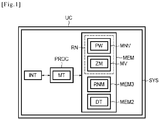
- the reference UC designates an electronic object, for example a microcontroller, a code generator or any other object which may contain an embedded software or hardware architecture.
- the object UC comprises a system SYS, for example a module configured to implant an initial neural network RN, and comprising a set of memories MEM, a calculation unit (here a processor) PROC and a user interface INT.
- SYS for example a module configured to implant an initial neural network RN, and comprising a set of memories MEM, a calculation unit (here a processor) PROC and a user interface INT.
- the set of memories MEM is coupled to the processor PROC and comprises a non-volatile memory MNV, for example a memory ROM (“Read-Only Memory” in English).
- Said non-volatile memory is configured to store the configuration of the neuron network RN for example the different layers characterizing it and its weights PW.
- the set of memories MEM also includes a volatile memory MV, for example a memory RAM (for “Random Access Memory” in English).
- the volatile memory MV is configured to store initial memory areas ZM intended to contain the output data of each layer of the initial neural network RN.
- the weights PW and the initial memory areas represent a set of initial parameters of the initial neural network RN.
- the set of memories MEM also includes a memory MEM3 configured to store the data relating to a set of modified parameters of a modified neural network RNM.
- the processor PROC is configured to store the set of modified parameters of the modified neural network RNM in place of the initial parameter set of the initial neural network RN.
- It includes a memory MEM2 configured to store a set of test input data DT, for example a non-volatile memory ROM.
- the test input data set is configured to evaluate the performance of the initial neural network RN or the performance of the modified neural network RNM by calculating a quality factor.
- the processor PROC comprises analysis means MT, produced for example in software form, configured to carry out an analysis of the set of initial parameters defining the neural network RN, to reduce the initial memory size by at least one initial parameter of the network of RN neurons and obtain said modified parameter set defining the modified RNM neural network.
- the analysis means MT are configured to effect said reduction with a view to obtaining a technical improvement, for example an improvement in the processing time of the processor PROC and / or a gain in memory size of all of the memories MEM.
- the analysis means MT are configured to calculate the quality factor for the initial network and the quality factor for the modified network and to compare these two quality factors.
- the refusal or acceptance of said reduction in the memory size of at least one initial parameter of the initial network will depend on the result of said comparison with regard to the satisfaction or not of a criterion advantageously chosen by the user of the network of neurons.
- the modified neural network allows for example a gain in memory while retaining substantially the same performance as the initial neural network.
- the two quality factors are not identical to the said tolerance, then it is considered that the criterion is not satisfied, that is to say that the gain in memory for example, obtained with the neural network modified does not allow to obtain the same performances as those obtained with the initial neural network.
- This tolerance which is involved in determining whether the criterion is satisfied or not met (advantageously chosen by the user), is therefore also advantageously chosen by the user.
- the processor PROC is coupled to the user interface INT configured to allow the user to choose the criterion, that is to say here to deliver to the system the value of said tolerance.
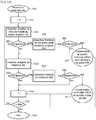
- the figure 2 represents an algorithm for analyzing the set of initial parameters defining the neural network RN.
- step S1 the processor PROC extracts the set of initial parameters from the neural network RN, for example the weights PW of all the layers.
- the analysis means MT carry out a first reduction in the initial memory size of the weights PW of the neural network RN in step S2.
- the analysis means MT reduce said initial size by 24 bits.
- the weights PW therefore each have a new first memory size of 8 bits.
- step S3 the processor PROC implements the modified neural network RNM by using the test input data set DT so as to develop a quality factor for example the precision (“Mean Average Precision” in English ). For example, 90% accuracy is obtained.
- a quality factor for example the precision (“Mean Average Precision” in English ).
- 90% accuracy is obtained.
- Another quality factor can also be developed, for example “accuracy” known to those skilled in the art.
- the processor PROC compares in step S3 the quality factor developed with another quality factor previously developed during the implementation of the initial neural network RN for example 95%. There is therefore a difference of 5% between the two quality factors.
- step S7 of the algorithm we go to step S4.
- step S4 the analysis means MT carry out a second reduction in the initial memory size of the weights PW to obtain, for example, a second memory size greater than the first memory size, for example 16 bits.
- step S5 the processor PROC implements the modified neural network using said set of test input data DT so as to develop a quality factor, for example precision. For example, an accuracy of 92% is obtained.
- the processor PROC compares the quality factor developed with another quality factor previously developed during the implementation of the initial neural network RN for example 95%. There is therefore a difference of 3%.
- the PROC processor retains the initial memory size of the weights PW and therefore retains the initial neural network RN.
- step S7 after reduction of the weights PW, the analysis means MT carry out a first reduction in the memory size of the memory areas ZM intended to store the output data of each layer of the neural network RN.
- the analysis means MT reduce said initial size by 24 bits.
- the initial memory zones ZM therefore each have a new first memory size of 8 bits.
- step S8 the processor PROC implements the modified neural network RNM using the test input data set DT so as to develop a quality factor, for example precision. For example, 90% accuracy is obtained.
- the processor PROC compares in step S8 the quality factor developed with another quality factor previously developed during the implementation of the initial neural network RN for example 95%. There is therefore a difference of 5%.
- step S13 the neural network RN by the modified neural network RNM in which the set of its weights PW and all of the memory zones ZM have their initial size modified. Otherwise, we go to step S9.
- step S9 the analysis means MT carry out a second reduction in the initial memory size of the initial memory area ZM to obtain, for example, a second memory size of 16 bits, greater than the first memory size (8 bits).
- step S10 the processor PROC implements the modified neural network using said set of test input data DT so as to develop a quality factor, for example precision. For example, an accuracy of 92% is obtained.
- the processor PROC compares the quality factor developed with another quality factor previously developed during the implementation of the initial neural network RN for example 95%. There is therefore a difference of 3%.
- step S12 the set of initial parameters with the new modified parameter set.
- the processor PROC retains the initial memory size of the initial memory areas ZM and replaces the initial weights PW with the new weights having said size reduced in step S11.
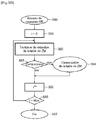
- the figure 3A represents an alternative to the analysis algorithm of the set of initial parameters defining the neural network RN.
- step S20 the processor PROC extracts the layers of the initial neural network RN.
- variable i that the processor PROC initializes at 0 in step S21 represents the layer number.
- the processor PROC implements the modified neural network RNM with said set of test input data DT in step S23 and develops a quality factor, for example an accuracy of 80%.
- step S20 If this difference is within the tolerance set by the user via the INT interface (for example +/- 15%), the criterion is satisfied and the processor PROC goes to step S20 if not to step S24.
- step S24 the analysis means MT reduce the initial size of the weights of layer i to obtain a second memory size, greater than the first memory size, for example 16 bits.
- the second memory size therefore here represents twice the first memory size.
- step S25 the processor PROC implements the modified neural network RNM to develop a quality factor, for example an accuracy of 90%. There is therefore a difference of 5%.
- step S20 If this difference is within the tolerance set by the user via the INT interface (for example +/- 6%), the criterion is satisfied and the processor PROC goes to step S20 otherwise the analysis means MT keep the initial memory size of the weights PW of the layer i and pass to the next layer by incrementing the value of i in step S32. If in step S33, the value of the variable i is greater than a variable Max representing the maximum number of layers, this means that the processor PROC has traversed all the layers (S34).
- step S20 the analysis means MT reduce the size of the memory area ZM intended for storing the output data of layer i to a first size, for example 8 bits.
- step S28 the processor PROC implements the modified neural network RNM to develop a quality factor for example the precision and compare it to the quality factor previously developed during the implementation of the initial neural network RN.
- step S32 If the difference between the two quality factors is within the tolerance set by the user via the interface INT, the criterion is satisfied and the processor PROC goes to step S32 if not to step S29.
- step S29 the analysis means MT reduce the initial memory size of the initial memory area ZM to obtain a second memory size, for example of 16 bits.
- the second memory size is twice the first memory size.
- step S30 the processor PROC implements the modified neural network RNM to develop a quality factor, for example precision.
- step S32 If the difference between the two quality factors is within the tolerance margin set by the user via the interface, the criterion is satisfied and the processor PROC goes to step S32 otherwise the analysis means MT keep in l step S31 the initial memory size of the initial memory area ZM and the initial memory size of the weights PW and pass to the next layer by incrementing the value of i in step S32.
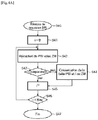
- the figure 3B represents an alternative to the analysis algorithm of the set of initial parameters defining the neural network RN.
- step S50 the processor PROC extracts the layers of the initial neural network RN.
- variable i that the processor PROC initializes at 0 in step S51 represents the layer number.
- the initial memory size of the weights of layer i and the initial memory size of the memory area of layer i are equal for example 16 bits.
- step S53 the processor PROC implements the modified neural network RNM to develop a quality factor, for example the accuracy, and compares it to the quality factor previously developed by implementing the initial neural network RN.
- step S55 If the difference between the two quality factors is within the tolerance set by the user via the INT interface, the criterion is satisfied and the processor PROC goes to step S55 otherwise the analysis means MT keep in the step S54 the initial memory size of the weights PW of layer i and go to step S55.
- step S55 the analysis means MT perform a reduction in the initial memory size of the initial memory area ZM of the first layer i of the initial neural network RN to obtain, for example, a first memory size of 8 bits.
- step S56 the processor PROC implements the modified neural network RNM to develop a quality factor, for example the precision, and compares it to the quality factor previously developed by implementing the initial neural network RN.
- step S58 If the difference between the two quality factors is within the tolerance margin set by the user via the INT interface, the criterion is satisfied and the processor PROC goes to step S58 otherwise the analysis means MT keep in step S57 the initial memory size of the initial memory area ZM of layer i and go to step S58.
- step S58 the variable i is incremented by 1 to go to the next layer and if in step S59 the value of i is greater than the value of the variable Max which represents the maximum number of layers, the processor PROC goes to step S60 which marks the end of the algorithm otherwise to step S52.
- the figure 3C represents another alternative to the algorithm for analyzing the set of initial parameters defining the neural network RN.
- step S70 the processor PROC extracts the layers of the initial neural network RN.
- variable i that the processor PROC initializes at 0 in step S71 represents the layer number.
- the initial memory size of the weights of layer i is greater than the initial memory size of the memory area ZM of the same layer i.
- step S72 the analysis means MT carry out a reduction in the initial memory size of the weights PW of the first layer i of the initial neural network RN to obtain for example a memory size of 8 bits equal to the initial memory size from the initial memory zone ZM.
- step S73 the processor PROC implements the modified neural network RNM to develop a quality factor, for example the accuracy, and compares it to the quality factor previously developed by implementing the initial neural network RN.
- step S75 If the difference between the two quality factors is within the tolerance set by the user via the interface, the criterion is satisfied and the processor PROC goes to step S75 otherwise the analysis means MT keep in step S74 the initial memory size of the weights PW of the layer i then go to step S75.
- step S75 the processor PROC increments the value of i by 1 to go to the next layer and if in step S76, the value of the variable i is greater than the value of the variable Max defined above, the processor PROC terminates the algorithm in step S77. Otherwise, the different steps of the algorithm are repeated from step S72 for the next layer.
- the 3D figure represents another alternative to the algorithm for analyzing the set of initial parameters defining the neural network RN.
- step S80 the processor PROC extracts the layers of the initial neural network RN.
- variable i that the processor PROC initializes at 0 in step S81 represents the layer number.
- the initial memory size of the weights of layer i is less than the initial memory size of the memory area ZM of the same layer i.
- step S82 the analysis means MT perform a reduction in the initial memory size of the memory area ZM of the first layer i of the initial neural network RN to obtain, for example, a memory size of 8 bits equal to the size initial memory of the weights PW of layer i.
- step S83 the processor PROC implements the modified neural network RNM to develop a quality factor, for example the precision, and compares it to the quality factor developed beforehand by implementing the initial neural network RN.
- step S85 If the difference between the two quality factors is within the tolerance set by the user via the INT interface, the criterion is satisfied and the processor PROC goes to step S85 otherwise the analysis means MT keep in the step S84 the initial memory size of the initial memory area ZM of the layer i then go to step S85.
- step S85 the processor PROC increments the value of i by 1 to go to the next layer and if in step S86, the value of the variable i is greater than the value of the variable Max defined above, the processor PROC terminates the algorithm in step S87. Otherwise, the different steps of the algorithm are repeated from step S82 for the next layer.
- PROC processor can process the layers of the algorithms presented in the Figures 3A to 3C from the first to the last layer and / or from the last to the first layer.
- the figure 4A represents another alternative to the algorithm for analyzing the set of initial parameters defining the neural network RN.
- step S40 the processor PROC extracts all the layers of the initial neural network RN.
- the analysis means MT perform classify the layers as a function of the criteria or criteria entered by the user in the user interface INT.
- the user can also enter a weighting factor in the INT user interface, for example 0.5 if the user gives the same importance to the gain in volatile memory and in non-volatile memory.
- the processor PROC it is advantageous to reduce the initial memory size of the weights PW of each layer and / or the initial memory size of the memory areas ZM of each layer.
- the MT analysis means classify the potential (candidate) layers.
- An example of classification is explained in the figure 4B .
- variable i that the processor PROC initializes at 0 in step S41 represents the number of potential layers.
- step S42 depending on the type or types of gain (types of technical improvement) chosen by the user, the analysis means MT reduce the initial memory size of the weights PW of the potential layer and / or the size initial memory of the memory zone ZM, for example 8 bits.
- step S43 the processor PROC implements the modified neural network RNM and develops a quality factor for example the accuracy and compares it to the quality factor previously developed during the implementation of the initial neural network RN.
- step S44 the analysis means MT retain in step S44, the initial memory size of the weights of the potential layer i and / or the initial memory size of the memory area ZM of potential layer i.
- the PROC processor then proceeds to step S45. If not, it proceeds directly to step S45 from step S43.
- step S46 the processor PROC increments the value of i by 1 to move to the next potential layer.
- step S46 If the value of the variable i is greater than the value of the variable Max in step S46, this means that the processor PROC has analyzed and processed all the potential layers and therefore ends the algorithm in step S47 .
- processor PROC proceeds to the analysis of the set of initial parameters of the next potential layer and repeats the steps of the algorithm from step S42.
- the figure 4B represents a graph describing the evolution of a variable BT as a function of another variable LO in percentage.
- variable LO represents the percentage of performance loss calculated as a function of the type of layer.
- the percentage LO is determined by an attempt to reduce the initial memory size of the weights PW of the layer and / or the initial memory size of the memory area ZM and by the implementation of the modified neural network RNM with the data set. test.
- the value of the variable BT contributes to the calculation of a score associated with each layer.
- the score makes it possible to select the potential layers leading to a gain in memory or a gain in processing time.
- the potential layers will be classified according to the calculated scores.
- score BT ⁇ Alph ⁇ RAMG + 1 - Alph ⁇ ROMG
- the Alph variable corresponds to the weighting factor.
- the RAMG variable corresponds to the gain in volatile memory expressed in byte.
- the ROMG variable corresponds to the gain in non-volatile memory expressed in byte.
- the variable BT is worth 1.
- variable BT 1 - LO / MG
- Scores are listed in descending order and layers with a score of 0 are not selected.
- score BT ⁇ CYG
- variable CYG corresponds to the gain in processing time.
- the variable BT is worth 1.
- variable BT 1 - LO / MG
- Scores are listed in descending order and layers with a score of 0 are not selected.
- the invention is not limited to these embodiments and of implementation but embraces all the variants thereof, for example one can reduce the memory size of the memory area or the memory size of the weights as many times as 'it is possible to do this as long as the criteria defined by the user is satisfied.
Landscapes
- Engineering & Computer Science (AREA)
- Physics & Mathematics (AREA)
- Theoretical Computer Science (AREA)
- Health & Medical Sciences (AREA)
- Life Sciences & Earth Sciences (AREA)
- Biomedical Technology (AREA)
- Biophysics (AREA)
- General Health & Medical Sciences (AREA)
- Data Mining & Analysis (AREA)
- Evolutionary Computation (AREA)
- Computational Linguistics (AREA)
- Molecular Biology (AREA)
- Computing Systems (AREA)
- General Engineering & Computer Science (AREA)
- General Physics & Mathematics (AREA)
- Mathematical Physics (AREA)
- Software Systems (AREA)
- Artificial Intelligence (AREA)
- Neurology (AREA)
- Image Analysis (AREA)
Applications Claiming Priority (1)
| Application Number | Priority Date | Filing Date | Title |
|---|---|---|---|
| FR1872036A FR3089329A1 (fr) | 2018-11-29 | 2018-11-29 | Procédé d’analyse d’un jeu de paramètres d’un réseau de neurones en vue d’obtenir une amélioration technique, par exemple un gain en mémoire. |
Publications (1)
| Publication Number | Publication Date |
|---|---|
| EP3660748A1 true EP3660748A1 (de) | 2020-06-03 |
Family
ID=66166169
Family Applications (1)
| Application Number | Title | Priority Date | Filing Date |
|---|---|---|---|
| EP19211416.3A Pending EP3660748A1 (de) | 2018-11-29 | 2019-11-26 | Analyseverfahren eines parametersatzes eines neuronennetzes zum erzielen einer technischen verbesserung, beispielsweise einer speicherverstärkung |
Country Status (4)
| Country | Link |
|---|---|
| US (1) | US20200175373A1 (de) |
| EP (1) | EP3660748A1 (de) |
| CN (1) | CN111242274B (de) |
| FR (1) | FR3089329A1 (de) |
Families Citing this family (2)
| Publication number | Priority date | Publication date | Assignee | Title |
|---|---|---|---|---|
| FR3094104A1 (fr) * | 2019-03-20 | 2020-09-25 | Stmicroelectronics (Rousset) Sas | Procédé et dispositif de détermination de la taille mémoire globale d’une zone mémoire globale allouée aux données d’un réseau de neurones compte tenu de sa topologie |
| US11362670B2 (en) * | 2020-10-30 | 2022-06-14 | International Business Machines Corporation | ReLU compression to reduce GPU memory |
Citations (2)
| Publication number | Priority date | Publication date | Assignee | Title |
|---|---|---|---|---|
| US20160328647A1 (en) * | 2015-05-08 | 2016-11-10 | Qualcomm Incorporated | Bit width selection for fixed point neural networks |
| EP3276540A2 (de) * | 2016-07-28 | 2018-01-31 | Samsung Electronics Co., Ltd. | Verfahren und vorrichtung für ein neurales netzwerk |
Family Cites Families (7)
| Publication number | Priority date | Publication date | Assignee | Title |
|---|---|---|---|---|
| US20110019693A1 (en) * | 2009-07-23 | 2011-01-27 | Sanyo North America Corporation | Adaptive network system with online learning and autonomous cross-layer optimization for delay-sensitive applications |
| US10373050B2 (en) * | 2015-05-08 | 2019-08-06 | Qualcomm Incorporated | Fixed point neural network based on floating point neural network quantization |
| CN106796668B (zh) * | 2016-03-16 | 2019-06-14 | 香港应用科技研究院有限公司 | 用于人工神经网络中比特深度减少的方法和系统 |
| US10373049B2 (en) * | 2016-12-20 | 2019-08-06 | Google Llc | Generating an output for a neural network output layer |
| CN108345939B (zh) * | 2017-01-25 | 2022-05-24 | 微软技术许可有限责任公司 | 基于定点运算的神经网络 |
| US20190171927A1 (en) * | 2017-12-06 | 2019-06-06 | Facebook, Inc. | Layer-level quantization in neural networks |
| US20200104715A1 (en) * | 2018-09-28 | 2020-04-02 | Xilinx, Inc. | Training of neural networks by including implementation cost as an objective |
-
2018
- 2018-11-29 FR FR1872036A patent/FR3089329A1/fr not_active Withdrawn
-
2019
- 2019-11-12 US US16/680,840 patent/US20200175373A1/en not_active Abandoned
- 2019-11-26 EP EP19211416.3A patent/EP3660748A1/de active Pending
- 2019-11-28 CN CN201911193633.8A patent/CN111242274B/zh active Active
Patent Citations (2)
| Publication number | Priority date | Publication date | Assignee | Title |
|---|---|---|---|---|
| US20160328647A1 (en) * | 2015-05-08 | 2016-11-10 | Qualcomm Incorporated | Bit width selection for fixed point neural networks |
| EP3276540A2 (de) * | 2016-07-28 | 2018-01-31 | Samsung Electronics Co., Ltd. | Verfahren und vorrichtung für ein neurales netzwerk |
Non-Patent Citations (1)
| Title |
|---|
| DE BRUIN BARRY ET AL: "Quantization of Constrained Processor Data Paths Applied to Convolutional Neural Networks", 2018 21ST EUROMICRO CONFERENCE ON DIGITAL SYSTEM DESIGN (DSD), IEEE, 29 August 2018 (2018-08-29), pages 357 - 364, XP033420219, DOI: 10.1109/DSD.2018.00069 * |
Also Published As
| Publication number | Publication date |
|---|---|
| CN111242274B (zh) | 2024-02-06 |
| FR3089329A1 (fr) | 2020-06-05 |
| CN111242274A (zh) | 2020-06-05 |
| US20200175373A1 (en) | 2020-06-04 |
Similar Documents
| Publication | Publication Date | Title |
|---|---|---|
| CN109829894B (zh) | 分割模型训练方法、oct图像分割方法、装置、设备及介质 | |
| US10817991B2 (en) | Methods for deep-learning based super-resolution using high-frequency loss | |
| US20200242515A1 (en) | Systems and methods for deep-learning based super-resolution using multiple degradations on-demand learning | |
| WO2022207573A1 (fr) | Autoencodeur multimodal a fusion de donnees latente amelioree | |
| WO2007006943A2 (fr) | Systeme informatique permettant de prevoir le devenir d'un jeu chronologique de valeurs numeriques | |
| JP7188856B2 (ja) | 動的な画像解像度評価 | |
| EP4099228A1 (de) | Verbessertes maschinelles lernen ohne anmerkungen durch adaptive gruppierungen in offenen klassensätzen | |
| CN116543277B (zh) | 模型构建方法及目标检测方法 | |
| FR3095042A1 (fr) | Procede de definition d’un chemin | |
| EP3660748A1 (de) | Analyseverfahren eines parametersatzes eines neuronennetzes zum erzielen einer technischen verbesserung, beispielsweise einer speicherverstärkung | |
| EP3966739B1 (de) | Automatisches bildanalyseverfahren zur automatischen erkennung von mindestens einer seltenen eigenschaft | |
| EP4443348A1 (de) | Verfahren zum suchen einer optimalen kombination von hyperparametern für ein maschinenlernmodell | |
| FR3113155A1 (fr) | Procédé d’identification d’un implant dentaire visible sur une image d’entrée au moyen d’au moins un réseau de neurones à convolution. | |
| EP3712775A1 (de) | Verfahren und vorrichtung zur bestimmung der globalen speichergrösse einer globalen speicherzone, die den daten eines neuronalen netzes unter berücksichtigung seiner topologie zugeordnet ist | |
| FR3156963A1 (fr) | Méthode de super-résolution d’image présentant une robustesse universelle | |
| EP4202770A1 (de) | Neuronales netzwerk mit erzeugung von netzwerkparametern | |
| Breus | Flexible Variable Star Extractor-new software for variable stars detection using CCD photometry | |
| CA3104759A1 (fr) | Procede de modelisation pour le controle des resultats fournis par un reseau de neurones artificiels et autres procedes associes | |
| FR3117646A1 (fr) | Méthode de compression d’un réseau de neurones artificiel | |
| EP3712821A1 (de) | Analyseverfahren eines parameter-sets eines neuronalen netzes, um die diesen parametern zugewiesenen bereiche anzupassen | |
| FR3131790A1 (fr) | Procédé et dispositif de calcul d’une explication contrefactuelle d’une prédiction d’un modèle d’ensemble d’arbres de décision | |
| FR3158815A1 (fr) | Méthode de calcul d’un score de confiance, associé au résultat d’un traitement de données d’inférence par un modèle | |
| WO2018206871A1 (fr) | Procede, mise en oeuvre par ordinateur, de recherche de regles d'association dans une base de donnees | |
| EP1688872A2 (de) | Informatikwerkzeug zur Vorhersage | |
| EP4322061A1 (de) | Elektronische vorrichtung und datenverarbeitungsverfahren mit mindestens einem selbstadaptiven künstlichen intelligenzmodell mit lokalem lernen, elektronisches system und computerprogramm dafür |
Legal Events
| Date | Code | Title | Description |
|---|---|---|---|
| PUAI | Public reference made under article 153(3) epc to a published international application that has entered the european phase |
Free format text: ORIGINAL CODE: 0009012 |
|
| STAA | Information on the status of an ep patent application or granted ep patent |
Free format text: STATUS: REQUEST FOR EXAMINATION WAS MADE |
|
| 17P | Request for examination filed |
Effective date: 20191126 |
|
| AK | Designated contracting states |
Kind code of ref document: A1 Designated state(s): AL AT BE BG CH CY CZ DE DK EE ES FI FR GB GR HR HU IE IS IT LI LT LU LV MC MK MT NL NO PL PT RO RS SE SI SK SM TR |
|
| AX | Request for extension of the european patent |
Extension state: BA ME |
|
| STAA | Information on the status of an ep patent application or granted ep patent |
Free format text: STATUS: EXAMINATION IS IN PROGRESS |
|
| 17Q | First examination report despatched |
Effective date: 20211104 |
|
| RIC1 | Information provided on ipc code assigned before grant |
Ipc: G06N 3/063 20060101AFI20260226BHEP Ipc: G06N 3/084 20230101ALI20260226BHEP Ipc: G06N 3/045 20230101ALI20260226BHEP Ipc: G06N 3/0464 20230101ALI20260226BHEP Ipc: G06N 3/0495 20230101ALI20260226BHEP Ipc: G06N 3/09 20230101ALI20260226BHEP |
|
| GRAP | Despatch of communication of intention to grant a patent |
Free format text: ORIGINAL CODE: EPIDOSNIGR1 |
|
| STAA | Information on the status of an ep patent application or granted ep patent |
Free format text: STATUS: GRANT OF PATENT IS INTENDED |