EP3660813A1 - Procédé et système d'analyse automatique de contenu - Google Patents
Procédé et système d'analyse automatique de contenu Download PDFInfo
- Publication number
- EP3660813A1 EP3660813A1 EP19207236.1A EP19207236A EP3660813A1 EP 3660813 A1 EP3660813 A1 EP 3660813A1 EP 19207236 A EP19207236 A EP 19207236A EP 3660813 A1 EP3660813 A1 EP 3660813A1
- Authority
- EP
- European Patent Office
- Prior art keywords
- vehicle
- image capture
- information
- report
- location data
- Prior art date
- Legal status (The legal status is an assumption and is not a legal conclusion. Google has not performed a legal analysis and makes no representation as to the accuracy of the status listed.)
- Ceased
Links
Images







Classifications
-
- G—PHYSICS
- G01—MEASURING; TESTING
- G01C—MEASURING DISTANCES, LEVELS OR BEARINGS; SURVEYING; NAVIGATION; GYROSCOPIC INSTRUMENTS; PHOTOGRAMMETRY OR VIDEOGRAMMETRY
- G01C21/00—Navigation; Navigational instruments not provided for in groups G01C1/00 - G01C19/00
- G01C21/38—Electronic maps specially adapted for navigation; Updating thereof
- G01C21/3804—Creation or updating of map data
- G01C21/3833—Creation or updating of map data characterised by the source of data
- G01C21/3848—Data obtained from both position sensors and additional sensors
-
- B—PERFORMING OPERATIONS; TRANSPORTING
- B60—VEHICLES IN GENERAL
- B60K—ARRANGEMENT OR MOUNTING OF PROPULSION UNITS OR OF TRANSMISSIONS IN VEHICLES; ARRANGEMENT OR MOUNTING OF PLURAL DIVERSE PRIME-MOVERS IN VEHICLES; AUXILIARY DRIVES FOR VEHICLES; INSTRUMENTATION OR DASHBOARDS FOR VEHICLES; ARRANGEMENTS IN CONNECTION WITH COOLING, AIR INTAKE, GAS EXHAUST OR FUEL SUPPLY OF PROPULSION UNITS IN VEHICLES
- B60K28/00—Safety devices for propulsion-unit control, specially adapted for, or arranged in, vehicles, e.g. preventing fuel supply or ignition in the event of potentially dangerous conditions
- B60K28/02—Safety devices for propulsion-unit control, specially adapted for, or arranged in, vehicles, e.g. preventing fuel supply or ignition in the event of potentially dangerous conditions responsive to conditions relating to the driver
- B60K28/06—Safety devices for propulsion-unit control, specially adapted for, or arranged in, vehicles, e.g. preventing fuel supply or ignition in the event of potentially dangerous conditions responsive to conditions relating to the driver responsive to incapacity of driver
-
- B—PERFORMING OPERATIONS; TRANSPORTING
- B60—VEHICLES IN GENERAL
- B60W—CONJOINT CONTROL OF VEHICLE SUB-UNITS OF DIFFERENT TYPE OR DIFFERENT FUNCTION; CONTROL SYSTEMS SPECIALLY ADAPTED FOR HYBRID VEHICLES; ROAD VEHICLE DRIVE CONTROL SYSTEMS FOR PURPOSES NOT RELATED TO THE CONTROL OF A PARTICULAR SUB-UNIT
- B60W30/00—Purposes of road vehicle drive control systems not related to the control of a particular sub-unit, e.g. of systems using conjoint control of vehicle sub-units
- B60W30/08—Active safety systems predicting or avoiding probable or impending collision or attempting to minimise its consequences
- B60W30/095—Predicting travel path or likelihood of collision
- B60W30/0953—Predicting travel path or likelihood of collision the prediction being responsive to vehicle dynamic parameters
-
- B—PERFORMING OPERATIONS; TRANSPORTING
- B60—VEHICLES IN GENERAL
- B60W—CONJOINT CONTROL OF VEHICLE SUB-UNITS OF DIFFERENT TYPE OR DIFFERENT FUNCTION; CONTROL SYSTEMS SPECIALLY ADAPTED FOR HYBRID VEHICLES; ROAD VEHICLE DRIVE CONTROL SYSTEMS FOR PURPOSES NOT RELATED TO THE CONTROL OF A PARTICULAR SUB-UNIT
- B60W30/00—Purposes of road vehicle drive control systems not related to the control of a particular sub-unit, e.g. of systems using conjoint control of vehicle sub-units
- B60W30/08—Active safety systems predicting or avoiding probable or impending collision or attempting to minimise its consequences
- B60W30/095—Predicting travel path or likelihood of collision
- B60W30/0956—Predicting travel path or likelihood of collision the prediction being responsive to traffic or environmental parameters
-
- B—PERFORMING OPERATIONS; TRANSPORTING
- B60—VEHICLES IN GENERAL
- B60W—CONJOINT CONTROL OF VEHICLE SUB-UNITS OF DIFFERENT TYPE OR DIFFERENT FUNCTION; CONTROL SYSTEMS SPECIALLY ADAPTED FOR HYBRID VEHICLES; ROAD VEHICLE DRIVE CONTROL SYSTEMS FOR PURPOSES NOT RELATED TO THE CONTROL OF A PARTICULAR SUB-UNIT
- B60W40/00—Estimation or calculation of non-directly measurable driving parameters for road vehicle drive control systems not related to the control of a particular sub unit, e.g. by using mathematical models
- B60W40/02—Estimation or calculation of non-directly measurable driving parameters for road vehicle drive control systems not related to the control of a particular sub unit, e.g. by using mathematical models related to ambient conditions
- B60W40/04—Traffic conditions
-
- B—PERFORMING OPERATIONS; TRANSPORTING
- B60—VEHICLES IN GENERAL
- B60W—CONJOINT CONTROL OF VEHICLE SUB-UNITS OF DIFFERENT TYPE OR DIFFERENT FUNCTION; CONTROL SYSTEMS SPECIALLY ADAPTED FOR HYBRID VEHICLES; ROAD VEHICLE DRIVE CONTROL SYSTEMS FOR PURPOSES NOT RELATED TO THE CONTROL OF A PARTICULAR SUB-UNIT
- B60W40/00—Estimation or calculation of non-directly measurable driving parameters for road vehicle drive control systems not related to the control of a particular sub unit, e.g. by using mathematical models
- B60W40/08—Estimation or calculation of non-directly measurable driving parameters for road vehicle drive control systems not related to the control of a particular sub unit, e.g. by using mathematical models related to drivers or passengers
- B60W40/09—Driving style or behaviour
-
- B—PERFORMING OPERATIONS; TRANSPORTING
- B60—VEHICLES IN GENERAL
- B60W—CONJOINT CONTROL OF VEHICLE SUB-UNITS OF DIFFERENT TYPE OR DIFFERENT FUNCTION; CONTROL SYSTEMS SPECIALLY ADAPTED FOR HYBRID VEHICLES; ROAD VEHICLE DRIVE CONTROL SYSTEMS FOR PURPOSES NOT RELATED TO THE CONTROL OF A PARTICULAR SUB-UNIT
- B60W50/00—Details of control systems for road vehicle drive control not related to the control of a particular sub-unit, e.g. process diagnostic or vehicle driver interfaces
- B60W50/08—Interaction between the driver and the control system
- B60W50/14—Means for informing the driver, warning the driver or prompting a driver intervention
-
- G—PHYSICS
- G01—MEASURING; TESTING
- G01C—MEASURING DISTANCES, LEVELS OR BEARINGS; SURVEYING; NAVIGATION; GYROSCOPIC INSTRUMENTS; PHOTOGRAMMETRY OR VIDEOGRAMMETRY
- G01C21/00—Navigation; Navigational instruments not provided for in groups G01C1/00 - G01C19/00
- G01C21/26—Navigation; Navigational instruments not provided for in groups G01C1/00 - G01C19/00 specially adapted for navigation in a road network
- G01C21/34—Route searching; Route guidance
- G01C21/36—Input/output arrangements for on-board computers
- G01C21/3602—Input other than that of destination using image analysis, e.g. detection of road signs, lanes, buildings, real preceding vehicles using a camera
-
- G—PHYSICS
- G01—MEASURING; TESTING
- G01C—MEASURING DISTANCES, LEVELS OR BEARINGS; SURVEYING; NAVIGATION; GYROSCOPIC INSTRUMENTS; PHOTOGRAMMETRY OR VIDEOGRAMMETRY
- G01C21/00—Navigation; Navigational instruments not provided for in groups G01C1/00 - G01C19/00
- G01C21/38—Electronic maps specially adapted for navigation; Updating thereof
- G01C21/3804—Creation or updating of map data
- G01C21/3807—Creation or updating of map data characterised by the type of data
- G01C21/3815—Road data
-
- G—PHYSICS
- G01—MEASURING; TESTING
- G01C—MEASURING DISTANCES, LEVELS OR BEARINGS; SURVEYING; NAVIGATION; GYROSCOPIC INSTRUMENTS; PHOTOGRAMMETRY OR VIDEOGRAMMETRY
- G01C21/00—Navigation; Navigational instruments not provided for in groups G01C1/00 - G01C19/00
- G01C21/38—Electronic maps specially adapted for navigation; Updating thereof
- G01C21/3804—Creation or updating of map data
- G01C21/3833—Creation or updating of map data characterised by the source of data
- G01C21/3841—Data obtained from two or more sources, e.g. probe vehicles
-
- G—PHYSICS
- G06—COMPUTING OR CALCULATING; COUNTING
- G06V—IMAGE OR VIDEO RECOGNITION OR UNDERSTANDING
- G06V20/00—Scenes; Scene-specific elements
- G06V20/50—Context or environment of the image
- G06V20/56—Context or environment of the image exterior to a vehicle by using sensors mounted on the vehicle
-
- G—PHYSICS
- G06—COMPUTING OR CALCULATING; COUNTING
- G06V—IMAGE OR VIDEO RECOGNITION OR UNDERSTANDING
- G06V20/00—Scenes; Scene-specific elements
- G06V20/50—Context or environment of the image
- G06V20/56—Context or environment of the image exterior to a vehicle by using sensors mounted on the vehicle
- G06V20/58—Recognition of moving objects or obstacles, e.g. vehicles or pedestrians; Recognition of traffic objects, e.g. traffic signs, traffic lights or roads
-
- G—PHYSICS
- G06—COMPUTING OR CALCULATING; COUNTING
- G06V—IMAGE OR VIDEO RECOGNITION OR UNDERSTANDING
- G06V20/00—Scenes; Scene-specific elements
- G06V20/50—Context or environment of the image
- G06V20/59—Context or environment of the image inside of a vehicle, e.g. relating to seat occupancy, driver state or inner lighting conditions
- G06V20/597—Recognising the driver's state or behaviour, e.g. attention or drowsiness
-
- G—PHYSICS
- G08—SIGNALLING
- G08G—TRAFFIC CONTROL SYSTEMS
- G08G1/00—Traffic control systems for road vehicles
- G08G1/01—Detecting movement of traffic to be counted or controlled
- G08G1/0104—Measuring and analyzing of parameters relative to traffic conditions
- G08G1/0108—Measuring and analyzing of parameters relative to traffic conditions based on the source of data
- G08G1/0112—Measuring and analyzing of parameters relative to traffic conditions based on the source of data from the vehicle, e.g. floating car data [FCD]
-
- G—PHYSICS
- G08—SIGNALLING
- G08G—TRAFFIC CONTROL SYSTEMS
- G08G1/00—Traffic control systems for road vehicles
- G08G1/01—Detecting movement of traffic to be counted or controlled
- G08G1/0104—Measuring and analyzing of parameters relative to traffic conditions
- G08G1/0108—Measuring and analyzing of parameters relative to traffic conditions based on the source of data
- G08G1/012—Measuring and analyzing of parameters relative to traffic conditions based on the source of data from other sources than vehicle or roadside beacons, e.g. mobile networks
-
- G—PHYSICS
- G08—SIGNALLING
- G08G—TRAFFIC CONTROL SYSTEMS
- G08G1/00—Traffic control systems for road vehicles
- G08G1/01—Detecting movement of traffic to be counted or controlled
- G08G1/0104—Measuring and analyzing of parameters relative to traffic conditions
- G08G1/0125—Traffic data processing
- G08G1/0133—Traffic data processing for classifying traffic situation
-
- G—PHYSICS
- G08—SIGNALLING
- G08G—TRAFFIC CONTROL SYSTEMS
- G08G1/00—Traffic control systems for road vehicles
- G08G1/01—Detecting movement of traffic to be counted or controlled
- G08G1/0104—Measuring and analyzing of parameters relative to traffic conditions
- G08G1/0137—Measuring and analyzing of parameters relative to traffic conditions for specific applications
- G08G1/0141—Measuring and analyzing of parameters relative to traffic conditions for specific applications for traffic information dissemination
-
- G—PHYSICS
- G08—SIGNALLING
- G08G—TRAFFIC CONTROL SYSTEMS
- G08G1/00—Traffic control systems for road vehicles
- G08G1/01—Detecting movement of traffic to be counted or controlled
- G08G1/017—Detecting movement of traffic to be counted or controlled identifying vehicles
- G08G1/0175—Detecting movement of traffic to be counted or controlled identifying vehicles by photographing vehicles, e.g. when violating traffic rules
-
- G—PHYSICS
- G08—SIGNALLING
- G08G—TRAFFIC CONTROL SYSTEMS
- G08G1/00—Traffic control systems for road vehicles
- G08G1/01—Detecting movement of traffic to be counted or controlled
- G08G1/04—Detecting movement of traffic to be counted or controlled using optical or ultrasonic detectors
-
- G—PHYSICS
- G08—SIGNALLING
- G08G—TRAFFIC CONTROL SYSTEMS
- G08G1/00—Traffic control systems for road vehicles
- G08G1/09—Arrangements for giving variable traffic instructions
- G08G1/0962—Arrangements for giving variable traffic instructions having an indicator mounted inside the vehicle, e.g. giving voice messages
-
- G—PHYSICS
- G08—SIGNALLING
- G08G—TRAFFIC CONTROL SYSTEMS
- G08G1/00—Traffic control systems for road vehicles
- G08G1/09—Arrangements for giving variable traffic instructions
- G08G1/0962—Arrangements for giving variable traffic instructions having an indicator mounted inside the vehicle, e.g. giving voice messages
- G08G1/09623—Systems involving the acquisition of information from passive traffic signs by means mounted on the vehicle
-
- G—PHYSICS
- G08—SIGNALLING
- G08G—TRAFFIC CONTROL SYSTEMS
- G08G1/00—Traffic control systems for road vehicles
- G08G1/123—Traffic control systems for road vehicles indicating the position of vehicles, e.g. scheduled vehicles; Managing passenger vehicles circulating according to a fixed timetable, e.g. buses, trains, trams
- G08G1/127—Traffic control systems for road vehicles indicating the position of vehicles, e.g. scheduled vehicles; Managing passenger vehicles circulating according to a fixed timetable, e.g. buses, trains, trams to a central station ; Indicators in a central station
- G08G1/13—Traffic control systems for road vehicles indicating the position of vehicles, e.g. scheduled vehicles; Managing passenger vehicles circulating according to a fixed timetable, e.g. buses, trains, trams to a central station ; Indicators in a central station the indicator being in the form of a map
-
- G—PHYSICS
- G08—SIGNALLING
- G08G—TRAFFIC CONTROL SYSTEMS
- G08G1/00—Traffic control systems for road vehicles
- G08G1/16—Anti-collision systems
- G08G1/161—Decentralised systems, e.g. inter-vehicle communication
- G08G1/163—Decentralised systems, e.g. inter-vehicle communication involving continuous checking
-
- G—PHYSICS
- G08—SIGNALLING
- G08G—TRAFFIC CONTROL SYSTEMS
- G08G1/00—Traffic control systems for road vehicles
- G08G1/16—Anti-collision systems
- G08G1/166—Anti-collision systems for active traffic, e.g. moving vehicles, pedestrians, bikes
-
- G—PHYSICS
- G08—SIGNALLING
- G08G—TRAFFIC CONTROL SYSTEMS
- G08G1/00—Traffic control systems for road vehicles
- G08G1/16—Anti-collision systems
- G08G1/167—Driving aids for lane monitoring, lane changing, e.g. blind spot detection
-
- G—PHYSICS
- G08—SIGNALLING
- G08G—TRAFFIC CONTROL SYSTEMS
- G08G1/00—Traffic control systems for road vehicles
- G08G1/16—Anti-collision systems
- G08G1/168—Driving aids for parking, e.g. acoustic or visual feedback on parking space
-
- H—ELECTRICITY
- H04—ELECTRIC COMMUNICATION TECHNIQUE
- H04W—WIRELESS COMMUNICATION NETWORKS
- H04W4/00—Services specially adapted for wireless communication networks; Facilities therefor
- H04W4/02—Services making use of location information
- H04W4/025—Services making use of location information using location based information parameters
- H04W4/027—Services making use of location information using location based information parameters using movement velocity, acceleration information
-
- H—ELECTRICITY
- H04—ELECTRIC COMMUNICATION TECHNIQUE
- H04W—WIRELESS COMMUNICATION NETWORKS
- H04W4/00—Services specially adapted for wireless communication networks; Facilities therefor
- H04W4/02—Services making use of location information
- H04W4/029—Location-based management or tracking services
-
- B—PERFORMING OPERATIONS; TRANSPORTING
- B60—VEHICLES IN GENERAL
- B60W—CONJOINT CONTROL OF VEHICLE SUB-UNITS OF DIFFERENT TYPE OR DIFFERENT FUNCTION; CONTROL SYSTEMS SPECIALLY ADAPTED FOR HYBRID VEHICLES; ROAD VEHICLE DRIVE CONTROL SYSTEMS FOR PURPOSES NOT RELATED TO THE CONTROL OF A PARTICULAR SUB-UNIT
- B60W2540/00—Input parameters relating to occupants
- B60W2540/22—Psychological state; Stress level or workload
-
- B—PERFORMING OPERATIONS; TRANSPORTING
- B60—VEHICLES IN GENERAL
- B60W—CONJOINT CONTROL OF VEHICLE SUB-UNITS OF DIFFERENT TYPE OR DIFFERENT FUNCTION; CONTROL SYSTEMS SPECIALLY ADAPTED FOR HYBRID VEHICLES; ROAD VEHICLE DRIVE CONTROL SYSTEMS FOR PURPOSES NOT RELATED TO THE CONTROL OF A PARTICULAR SUB-UNIT
- B60W2540/00—Input parameters relating to occupants
- B60W2540/24—Drug level, e.g. alcohol
-
- B—PERFORMING OPERATIONS; TRANSPORTING
- B60—VEHICLES IN GENERAL
- B60W—CONJOINT CONTROL OF VEHICLE SUB-UNITS OF DIFFERENT TYPE OR DIFFERENT FUNCTION; CONTROL SYSTEMS SPECIALLY ADAPTED FOR HYBRID VEHICLES; ROAD VEHICLE DRIVE CONTROL SYSTEMS FOR PURPOSES NOT RELATED TO THE CONTROL OF A PARTICULAR SUB-UNIT
- B60W2540/00—Input parameters relating to occupants
- B60W2540/26—Incapacity
-
- G—PHYSICS
- G08—SIGNALLING
- G08B—SIGNALLING SYSTEMS, e.g. PERSONAL CALLING SYSTEMS; ORDER TELEGRAPHS; ALARM SYSTEMS
- G08B21/00—Alarms responsive to a single specified undesired or abnormal condition and not otherwise provided for
- G08B21/02—Alarms for ensuring the safety of persons
- G08B21/06—Alarms for ensuring the safety of persons indicating a condition of sleep, e.g. anti-dozing alarms
-
- G—PHYSICS
- G08—SIGNALLING
- G08G—TRAFFIC CONTROL SYSTEMS
- G08G1/00—Traffic control systems for road vehicles
- G08G1/16—Anti-collision systems
- G08G1/165—Anti-collision systems for passive traffic, e.g. including static obstacles, trees
-
- H—ELECTRICITY
- H04—ELECTRIC COMMUNICATION TECHNIQUE
- H04L—TRANSMISSION OF DIGITAL INFORMATION, e.g. TELEGRAPHIC COMMUNICATION
- H04L67/00—Network arrangements or protocols for supporting network services or applications
- H04L67/01—Protocols
- H04L67/12—Protocols specially adapted for proprietary or special-purpose networking environments, e.g. medical networks, sensor networks, networks in vehicles or remote metering networks
-
- H—ELECTRICITY
- H04—ELECTRIC COMMUNICATION TECHNIQUE
- H04W—WIRELESS COMMUNICATION NETWORKS
- H04W4/00—Services specially adapted for wireless communication networks; Facilities therefor
- H04W4/30—Services specially adapted for particular environments, situations or purposes
- H04W4/40—Services specially adapted for particular environments, situations or purposes for vehicles, e.g. vehicle-to-pedestrians [V2P]
Definitions
- the present invention relates to image and video processing and more particularly, to such processing based on time-based changes.
- One aspect of the invention provides a system which includes a plurality of image capture devices mounted to, or integrated in, a different one of a plurality of vehicles, each of the image capture devices having an image capturing unit, a positioning unit, and a processing unit.
- One or more applications are executed on each of the image capture devices.
- Each one of the image capture devices captures a sequence of images and extracts therefrom information about a plurality of surface objects located within a distance from a first vehicle, in real-time, where said first vehicle is one of the plurality of vehicles.
- the one or more applications executed on that image capture device instructs the respective processing unit to derive location data related to the surface objects based on positioning measurements derived from the positioning unit of that image capture device.
- the system further includes a server, connected to each one of the applications via a wireless network, where the server receives the information and the location data of the surface objects transmitted by each one of the applications, and generates a report, in real-time, retrievable by a remote device in real-time.
- the report is created according to an analysis of the information and the location data from the applications, the report including a subset of the information and location data of surface objects located within the distance from the first vehicle, received from the one or more applications, where the subset of information and location data belongs to one of a plurality of different categories.
- the report includes a status of the plurality of surface objects belonging to the one of the plurality of different categories.
- Another aspect of the invention provides a method executing at least one smart phone application installed in each of a plurality of smart phones, each having an image capturing unit, a positioning unit, and a processing unit, where all of the units are physically packed within a respective smart phone and where each of the smart phones is housed in or mounted to a different one of a plurality of vehicles.
- the method steps include capturing a sequence of images, by each of the plurality of smart phones, extracting from the sequence of images information about a plurality of surface objects located within a distance from a first vehicle, in real time, where the first vehicle is one of the plurality of vehicles, deriving location data related to the plurality of surface objects, based on positioning measurements derived from the positioning unit of each of the plurality of smart phones, connecting to a remote server via a wireless network, and transmitting the information and the location data of the plurality of surface objects to the remote server, where the server generates a report, in real-time, accessible to each of the plurality of smart phones via the wireless network, in real-time, the report comprising a map of a city according to an analysis of the information and the location data from the at least one smart phone application, the report including a subset of the information and location data of the plurality of surface objects located within the distance from the first vehicle, where the subset of information and location data belongs to one of a plurality of different categories, and where the report includes
- DB as used herein in this application, is defined as database
- GIS is defined as a computer system designed to allow users to collect and/or manage and/or analyze spatially referenced information.
- surface objects as used herein in this application, is defined as objects that are on the surface of a planet such as buildings, roads, canals, fields.
- surface data as used herein in this application is defined as information gathered on surface objects such as aerial images, satellite images, ground images, and images taken with a handheld camera or camera-phone, GIS information, LIDAR data, Radar scans.
- image as used herein in this application is defined as visual representation that can be presented on two dimensional or three dimensional surfaces. Images can be taken in any part of the electromagnetic spectrum such as visible light, infrared, ultraviolet, X-rays, Terahertz, Microwaves, and Radio frequency waves. An Image could be taken from one or more sensors or with one sensors with multiple lenses in order to create a 3 dimensional image.
- photo as used herein in this application is defined as image in the visible light.
- DSM is defined as a topographic elevation model of the Earth surface that provides a geometrically representation for the purpose of overlaying the model with a wide range of GIS data. DSM provides a surface elevation of every natural and artificial feature visible within the image area.
- ECM is defined as a digital representation of a continuous variable over a two-dimensional surface by a regular array of z values referenced to a common datum.
- DTM Digital Terrain Model
- DEM height model
- Map Data Map Data or Aerial Photograph
- INS is defined as a navigation aid that uses a computer, motion sensors (accelerometers) and rotation sensors (gyroscopes) to continuously calculate via dead reckoning the position, orientation, and velocity (direction and speed of movement) of a moving object without the need for external references.
- GPS is defined as A system based on satellites that allows a user with a receiver to determine precise coordinates for their location on the earth's surface.
- Micronavigation is defined as a method based on visual objects that allows a user to determine precise coordinates for their location on the earth's surface in a precision that is higher than of a GPS system.
- Real Time Map is defined Map having layer that are updated in a latency that is lower than the latency needed to benefit from the map considering the changes in the layer.
- a real time traffic jam map is a map that is updated for at least the last hour as that jams might be gone in an hour
- GPU as used herein in this application, is defined as an apparatus adapted to reduce the time it takes to produce images on the computer screen by incorporating its own processor and memory, having more than 16 CPU cores, such as GeForce 8800.
- Keypoint is defined as interest points in an object.
- the image is convolved with Gaussian filters at different scales, and then the difference of successive Gaussian-blurred images are taken. Keypoints are then taken as maxima/minima of the Difference of Gaussians.
- Such keypoint can be calculated for the original image or for a transformation of the original image such as an affine transform of the original images.
- Keypoint descriptor is defined as a descriptor of a key point.
- the feature descriptor is computed as a set of orientation histograms on neighborhoods.
- the orientation histograms are relative to the keypoint orientation and the orientation data comes from the Gaussian image closest in scale to the keypoint's scale.
- Visual content item is defined as an object with visual characteristics such as An image file like BMP,JPG,JPEG,GIF,TIFF,PNG files; a screenshot; A video file like AVI, MPG,MPEG,MOV ,WMV,FLV files or a one or more frame of a video.
- LIDAR as used herein in this application is defined as is an optical remote sensing technology that measures properties of scattered light to find range and/or other information of a distant target.
- the prevalent method to determine distance to an object or surface is to use laser pulses
- Visual object as used herein in this application, is defined as a content that includes visual information such as Visual content item, images, photos, videos, IR image, magnified image, an image sequence or TV broadcast.
- Terminal as used herein in this application, is defined as an apparatus adapted to show visual content such as a computer, a laptop computer, Mobile phone or a TV.
- Visual similarity is defined as the measure of resemblances between two visual objects that can be comprised of:
- Visual analysis is defined as the analysis of the characteristics of visual objects such, as visual similarity, coherence, hierarchical organization, concept load or density, feature extraction and noise removal
- Sound analysis is defined as the analysis of audio waves such as speech recognition , song recognition, and sentiment recognition
- Text similarity is defined as Measure the pair-wise similarity of strings. Text similarity can score the overlaps found between two strings based on text matching. Identical strings will have a score of 100% while “car” and “dogs” will have close to zero score. “Nike Air max blue” and Nike Air max red” will have a score which is between the two. Further string similarity metrics are described in http://en.wikipedia.org/wiki/String_metric.
- Regular expression is defined as a string that provides a concise and flexible means for identifying strings of text of interest, such as particular characters, words, or patterns of characters. See http: /en.wikipedia.org/wiki/Regular_ expression.
- LPR as used herein in this application, is defined as : license plate recognition as described in en.wikipedia.org/wiki/Automatic_number_plate_recognition.
- OCR optical character recognition
- Symbol analysis is defined as analysis of symbolic data such as: OCR,LPR, hand write recognition, bar-code recognition, and QR code recognition.
- Capturing data is defined as data taken while capturing a visual object such as: X-Y-Z coordinates ; 3 angles ; Manufacturer; Model; Orientation (rotation) top - left; Software; Date and Time; YCbCr Positioning centered; Compression; x-Resolution; y-Resolution; Resolution Unit; Exposure Time; FNumber; ExposureProgram; Exif Version; Date and Time (original); Date and Time (digitized); Components Configuration Y Cb Cr -; Compressed Bits per Pixel; Exposure Bias; Max Aperture Value; Metering Mode Pattern; Flash fired or not; Focal Length; Maker Note; Flash Pix Version; Color Space; Pixel X Dimension; Pixel Y Dimension; File Source; Interoperability Index; Interoperability Version;
- Service location is defined as a physical place where objects can be serviced and/or fixed such as a mobile carrier service center.
- Location based analysis is defined as analysis of local data such as GPS location, triangulation data, RFID data, and street address. Location data can for example identify the service location or even the specific part of the service location in which the visual object was captured.
- Content analysis is defined as the combination of text analysis, visual analysis, symbol analysis, location based analysis, Capturing data analysis, sound analysis and/or analysis of other data such as numerical fields (price range), date fields, logical fields (Female/male), arrays and structures, and analysis history.
- Content Match is defined as a numerical value that describes the results of the content analysis that computes the similarity between one or more visual objects, or a logical value that is true in case said similarity is above a certain threshold.
- Data Clustering methods as used herein in this application, is defined as the assignment of objects into groups (called clusters) so that objects from the same cluster are more similar to each other than objects from different clusters. Often similarity is assessed according to a distance measure. See en.wikipedia. org/wiki/Data_clustering
- Driver warning as used herein in this application, is defined as a warning comprising: Audio alert such as a beep sound; A Visual alert such as a red light and/ or a text such as: “stop”, “slow down”, “approaching destination”, “pedestrian are crossing", “crossing border”; A Tactile feedback such as vibrations;
- driving intervention as used herein in this application, is defined as automatic driving operation such as: Braking; Slowing down; Complete stop; Taking a right turn; Taking a left turn; Turning lights on; Tightening the seat belt;
- Server reaction is defined as an action performed on a remote server such as sending a message such as an SMS to a specific person or sending a team to a specific location.
- System reaction as used herein in this application, is defined as a driver warning, a driving intervention or server reaction combination of them.
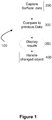
- Figure 1 is a flowchart of acts performed in accordance with an exemplary embodiment of the invention.
- System 100 performs the following steps:
- Surface data is captured 200 in manner further described in Figure 2 .
- the Surface data is compared 300 to surface data taken or created at an earlier time. And the difference results are presented 350 as further described in Figure 3 .
- Ordering system 222 such as plane to capture another image of the changed object such as:
- FIG. 2 is a scheme describing the system and process in accordance with an exemplary embodiment of the invention.
- System 200 performs the process of gathering surface data using:
- Figure 3 is a high level block diagram illustrating a data processing and presenting according to some embodiments of the invention.
- the inputs for system 250 are comprised of:
- Subsystem 300 Said inputs and historical data of the same location and/or object are processed by subsystem 300.
- Subsystem 300 is preferable using one or more GPU's 310 as processing of large data sets requires a significant amount of computation and the usage of parallel algorithms such as keypoint descriptors comparison.
- System 300 is further comprised of two subsystems: Subsystem 320 that does content analysis such change detection between two or more data sets such as:
- Subsystem 340 used to filter in the more important changes comprising:
- Subsystem 350 presents the data in a format useful for the intended applications such as:
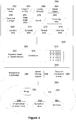
- Figure 4A is a front view of a system and process in accordance with an exemplary embodiment of the invention.
- System 490 is located on the inner part of a vehicle such as 110. It can be mounted on the front window 442 or the back window 444 of the vehicle.
- the system is comprised of: Car mount 450 further comprising of: Suction cup 456 - a device, usually made of rubber or plastic, that sticks to smooth, nonporous surfaces such as 442. This device can be replaced by an adhesive unit.
- Arm 454 attached to both 456 and 452. Sometimes arm 454 is flexible.
- Cradle is adapted to enable repeated quick and repeatable mounting and un-mounting(for example in less than 5 seconds), for example by using side holders 453 that grab device 120 from its left and right side. In some cases one of the corners of cradle 452 is eliminated or cut to clear line of sight for camera 122 and/or 128.
- Device 120 is a device having a processing unit, such as a smart-phone such as an iPhone device. Sometimes device 120 is mobile and sometimes it is stationary. Sometimes device 120 has multiple cores (such as a graphic card) that enable executing parallel algorithms. Sometimes device 120 has an internal and/or external antenna such as 121. Antenna 121 can wirelessly connect the device to a public network such the Internet and thus transmit the information gathered by device to a remote server and/or to other users such as other users of a device such as 120 and thereby share that information.
- a processing unit such as a smart-phone such as an iPhone device.
- device 120 is mobile and sometimes it is stationary.
- device 120 has multiple cores (such as a graphic card) that enable executing parallel algorithms.
- device 120 has an internal and/or external antenna such as 121.
- Antenna 121 can wirelessly connect the device to a public network such the Internet and thus transmit the information gathered by device to a remote server and/or to other users such as other users of a device such
- Device 120 can have one back side camera such as 122 or additional camera such as 128. Sometimes device 120 runs a second application such as a Navigation application in parallel to performing the process of figure 5 . Sometimes though, camera is actively capturing images, device 120 is adapted not to display the captured image.
- Device 120 uses means for receiving power such as cable 462 that connects to the a car lighter socket such as 464.
- Device 410 is a media player such as car radio.
- Figure 4B is a side view of a system and process in accordance with an exemplary embodiment of the invention described in 4A
- the vehicle's driving direction is defined in 430.
- the vehicle has a front window 442, a back window 444, and a roof 446.
- the vehicle is driven by driver 140, drivers eye is marked 142.
- device 120 has additional sensors 124,126, these sensors can be:
- a microphone can be used to capture sound waves indicating a car problem.
- motion sensor 124 and/or camera 128 can be used as a car theft alarm, hence in case the car is moved while its owners are out of the car, it will produce an alarm sound and/or call and/or SMS its owner and or the police.
- a front camera such as 128 can capture a visual object, and its analysis can indicate driver 140 has fallen asleep as his eye leads have been closed for a period longer than a predefined threshold.
- Device 120 can also receive data from a remote server indicating such as triangulation data indicative of its location and/or estimated speed.
- Camera 122 can be used to estimate the distance d 472 between 120 and another object such as 130 of figure 6 .
- Distance d can be estimated using the formula:
- Figure 5 is a flowchart of acts performed in accordance with an exemplary embodiment of the invention.
- One of the inputs for the process is a visual object such as a photo frame captured by camera 122.
- Others are for example sensors 124,126 input and other data as shown in 250 Processing can be performed on device 120 or on a remotes servers.
- Device 120 or devices connected to it can than show to user such as driver 140 and/or other users in vehicle 110 information such as:
- the advertisements are optionally directed at inducing, promoting and/or encouraging purchase of products and/or services and/or acceptance of ideas.
- the user to which the advertisements are displayed is not charged for display of the advertisements, but rather the provider of the advertisements is charged for their display.
- the advertisement is an audio sound such as a radio advertisement.
- the advertisements are displayed only when device 120 indicates the car 110 is slow, in complete stop or in a traffic jam
- Steps 512,514,516,518 can all use Content analysis and content match.
- Some of the steps 512-530 are optional.
- Figure 6 is a scheme describing a system and process in accordance with an exemplary embodiment of the invention.
- Scheme shows a first, lead vehicle 130 traveling along a road 620 and followed by a second vehicle 110 having device 120.
- System 490 processes images of the environment in front of the second vehicle 110 and produces information out of them.
- this information system 490 calculates distance (d) 472 between two vehicles 110,130 and speed of second vehicle 110 at any given time as further described in figure 5 .
- system 490 then processes images taken by camera 122 and estimates the risk of collision between the two vehicles for example by comparing the estimated time to collision and the time to collision threshold.
- the risk to collision can take in account the breaking time, the cars relative distance, velocity, acceleration and jolt. Road conditions such as wet road (such as 826), oil spills, and the presence of other car, and drivers 140 expected reaction time due to his fatigue and his reaction time history.
- system 490 can extract further attributes of vehicle 130.
- vehicle 130 such as a for sale sign 610, vehicle 130's car model, color, size, condition
- system 490 produces a relevant notice such as an alert for potential vehicles for sale within range.
- system 490 creates a system reaction in case the distance between 110 and 130 and/or the estimated time to collision is below a certain threshold.
- 130 is behind car 110 and system 490 creates a system reaction in case the distance between 110 and 130 and/or the estimated time to collision is below a certain threshold.
- the system reaction can be displayed on the back side such as through the back window 444 of 110 using a back window sign.
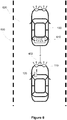
- Figure 7 is a scheme describing a system and process in accordance with an exemplary embodiment of the invention.
- Person 140 drives his vehicle 110 having device 120. He is supposed to drive in accordance with lane markings 600.
- vehicle driving direction 720 deviates beyond a certain threshold from the middle of the lane markings 730
- System 490 process images taken by camera 122 and recognizes using steps such as the ones described in Figure 5 ,the deviation from the middle of the lane. If such a deviation crosses a predefined threshold system 490 reaction will occur.
- system 490 will use the input from camera 122 and /or microphone 124 to check whether the driver has used the left turn blinker 710 in which case no alert will be created.
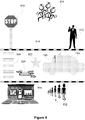
- Figure 8 is a scheme describing a system and process in accordance with an exemplary embodiment of the invention.
- Scheme shows a vehicle/taxi 110 traveling along a road 620.
- System 490 processes images taken by camera 122,128 of the environment in front of the taxi 110 having device 120, and produces information and data regarding items within driving range, such as:
- System 490 uses OCR technology to read and interpret traffic signs above the road level, this is
- Driver 140 is driving in a foreign country. Traffic and
- System 490 recognizes people at the side of the road raising their hand for a taxi, System 490 then produces relevant notice, available to all system's users via web.
- Another example is a car is driving along a road, a person face is captured and is compared against a person DB, for example:
- Celebrity Faces DB in which case a system reaction is created such as sending a message that the celebrity was seen on a certain location using twitter.com of Facebook.com.
- a person category DB of police or soldier uniforms A person category DB of police or soldier uniforms.
- Figure 9 is a scheme describing a system and process in accordance with an exemplary embodiment of the invention.
- He is driving towards a pedestrian 902 who is crossing the road. Person 140 is falling asleep or not paying attention to the road.
- System 490 processes images taken by camera 122 and estimates distance from and/or the relative speed to pedestrian 902 and the estimated risk for an accident. If such a risk crosses a predefined threshold system reaction will occur.
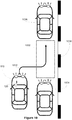
- Figure 10 is a scheme describing a system and process in accordance with an exemplary embodiment of the invention.
- Scheme shows a vehicle 110having device 120 and traveling along a road 620.
- Driver 140 is driving his vehicle 110 and is seeking for a parking spot.
- System 490 processes images of the environment surrounding vehicle 110 , and produces information out of them.
- From this information system 490 identifies available parking spots and alerts driver 140 when one is detected 1002. For example pavement stones marking an allowed parking place such as 1008 with that are not taken by cars such as 1006 and 1004 and with a length that is above a predefined length.
- Driver 140 then reaches parking spot 1002, between two parking vehicles 1004, 1006 and tries to park his vehicle 110.
- System 490 processes images taken by cameras 122,128 and accordingly calculates parking route 1012, then system 490 reaction will occur in order to guide driver 140 into parking spot 1002.
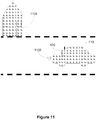
- Figure 11 is a scheme describing a system and process in accordance with an exemplary embodiment of the invention.
- Scheme shows a vehicle 110 traveling along a road 620.
- System 490 processes images of the environment in front of the vehicle 110 and recognizes whether it's a day or a night driving. In case of night driving system 490 checks whether vehicle lights 1102 are turned on. If lights 1102 are off, system 490 preforms a reaction.
- system 490 recognizes whether vehicle 110 has reached its destination 1104 using Micronavigation for example by comparing the input received by 120 to the known images of taken before on that coordinates. In case of destination arrival system produces relevant notice. Micronavigation can be also used to navigate person 236 to a specific shelf in store 834. Or to assist a driver in navigation such as telling him to change lanes or take a turn.
- Figure 12 is a scheme describing a system and process in accordance with an exemplary embodiment of the invention.
- Information is collected using the act described in figure 5 using one or more systems such as 490 on one or more objects 1210.
- each object optionally for each object its category 514 and attributes 518 are extracted.
- Object of the same of similar coordinates and or attributes can be counted 1230 in order to analyze the data.
- Preparation 1230 is sometimes the preparation such as 1240.
- the reports of 1240 can be of several categories such as: GIS information reports, Summarized information and street view including business names, crowd and traffic.
- a report of vacant parking places Multiple cars such as 110 are driving through the city as shown in figure 13 , in case a car comes across a vacant parking place, that spot is reported back through a public network to create the report.
- a reported on wanted cars for example each car such as 110, 1310,and 1320 carry system such as 490 using devices such as 120.
- system 490 identify a license plate of a neighboring car such as 130, it uses LPR to report the license plate to a remote server such as 1340.
- the remote server compares the found license plate to a wanted car database such as stolen cars, fugitives, and people with unpaid debt. In case match is found a system reaction is created such as an SMS to the local police station.
- a report of places of interest for example places where vehicles or people tend to slow down or even stop (that could be measured using GPS, acceleration, or the camera) are considered places that create higher level of interest.
- Figure 13 is a scheme describing a system and process in accordance with an exemplary embodiment of the invention.
- the System is comprised of : A fleet of platform such as 200, for example cars 110,1310,1320 where each of them carries devices such as 120. Platforms are connected via a public network such as wireless Internet 1330 to a remote server 1340. Servers processes the captured by 1302 such as shown in figure 5 or step 1230. Reports such as 1240,1260 are shown using devices such as 120 or on a remote terminal such as 1342.
- Figures 14A and 14B are schemes describing a system and process in accordance with an exemplary embodiment of the invention.
- Object A and its coordinates are captured 1450 and its coordinates are recorder using systems such as a GPS.
- the same steps are performed on object B 1452 and data on both objects is stored 1454 in a DB.
- Person 236 is moving in direction 1410 and passes by object a marked 1422 requests system such as 120 to get to object B or its coordinates.
- Device 120 uses sensors such as 122, 128,124,126 to capture information on object 1422 as described in step 1456.
- the Captured data on object 1422 is compared against the data in the DB of 1454 to search 1458 for a content match.
- navigation instructions are calculated 1460 using the coordinates of object B in relation to the coordinates of object A and displayed 1462 to person 236.
- the system and process can be used for example to navigate in place where GPS usage is not possible such as between stores in a shopping mole , between shelves in a supermarket , and to find ones car in a parking lot for finding the right door in a an office place.
- the system can be used for Micronavigation, for example to identify in case someone is navigating in the wrong lane, or took the wrong turn.
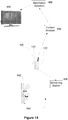
- Figure 15 is a schematic illustration of an information display system 940, in accordance with an exemplary embodiment of the invention.
- System 940 comprises a device 120 with cameras 122,128 which acquires images, optionally a video stream of images.
- the images are provided to a content analysis unit 954 which identifies objects of interest in the images.
- Information on the identified objects and optionally their attributes is forwarded to an information selection unit 958 which determines accordingly what information is to be displayed on a display 956, using any of the above described methods .
- device 120 may monitor people, such as person 942, standing near display 956 and select advertisements for display 956 according to attributes of the people. For example, advertisements directed to a child audience may be displayed when device 954 identifies a large percentage of children in the images acquired by device 120. Alternatively to being directed at a location from which display 956 is viewed, camera 952 may view an entrance to a shop or other closed area in which display 956 displays advertisements or other information. The advertisements displayed are optionally selected according to the average profile of people entering the shop .
- the advertisements are selected responsive to behavior against rules identified in the images of device 120. For example, when a camera monitoring a printer at a work place identifies misuse of the printer it may show on display 956 a warning and/or use instructions .
- Device 120 is stationary, in some embodiments. In other embodiments of the invention, Device 120 is a portable camera, possibly mounted on a mobile communication terminal. In these embodiments, display 956 is optionally the display of the mobile terminal. Alternatively, display 956 is separate from the mobile terminal, which periodically transmits information selection instructions to the display. In some embodiments of the invention, Device 120 stores the selected information until the mobile terminal is connected to a base computer. Device 120 may also be mounted on home and/or office appliances, such as refrigerators .
- the images from device 120 are additionally provided to a monitoring station 950.
- device 120 is used for two different tasks and the cost of camera hardware is reduced.
- installation of system 940 is financed by the advertisements.
- aspects of the present invention may be embodied as a system, method or computer program product. Accordingly, aspects of the present invention may take the form of an entirely hardware embodiment, an entirely software embodiment (including firmware, resident software, micro-code, etc.) or an embodiment combining software and hardware aspects that may all generally be referred to herein as a "circuit,” “module” or “system.” Furthermore, aspects of the present invention may take the form of a computer program product embodied in one or more computer readable medium(s) having computer readable program code embodied thereon.
- the computer readable medium may be a computer readable signal medium or a computer readable storage medium.
- a computer readable storage medium may be, for example, but not limited to, an electronic, magnetic, optical, electromagnetic, infrared, or semiconductor system, apparatus, or device, or any suitable combination of the foregoing.
- a computer readable storage medium may be any tangible medium that can contain, or store a program for use by or in connection with an instruction execution system, apparatus, or device.
- Program code embodied on a computer readable medium may be transmitted using any appropriate medium, including but not limited to wireless, wire- line, optical fiber cable, RF, etc., or any suitable combination of the foregoing.
- Computer program code for carrying out operations for aspects of the present invention may be written in any combination of one or more programming languages, including an object oriented programming language such as Java, Smalltalk, C++ or the like and conventional procedural programming languages, such as the "C" programming language or similar programming languages.
- the program code may execute entirely on the user's computer, partly on the user's computer, as a stand-alone software package, partly on the user's computer and partly on a remote computer or entirely on the remote computer or server.
- the remote computer may be connected to the user's computer through any type of network, including a local area network (LAN) or a wide area network (WAN), or the connection may be made to an external computer (for example, through the Internet using an Internet Service Provider).
- LAN local area network
- WAN wide area network
- Internet Service Provider for example, AT&T, MCI, Sprint, EarthLink, MSN, GTE, etc.
- These computer program instructions may also be stored in a computer readable medium that can direct a computer, other programmable data processing apparatus, or other devices to function in a particular manner, such that the instructions stored in the computer readable medium produce an article of manufacture including instructions which implement the function/act specified in the flowchart and/or block diagram block or blocks.
- the computer program instructions may also be loaded onto a computer, other programmable data processing apparatus, or other devices to cause a series of operational steps to be performed on the computer, other programmable apparatus or other devices to produce a computer implemented process such that the instructions which execute on the computer or other programmable apparatus provide processes for implementing the functions/acts specified in the flowchart and/or block diagram block or blocks.
- each block in the flowchart or block diagrams may represent a module, segment, or portion of code, which comprises one or more executable instructions for implementing the specified logical function(s).
- the functions noted in the block may occur out of the order noted in the figures. For example, two blocks shown in succession may, in fact, be executed substantially concurrently, or the blocks may sometimes be executed in the reverse order, depending upon the functionality involved.
- Methods of the present invention may be implemented by performing or completing manually, automatically, or a combination thereof, selected steps or tasks.
- the present invention may be implemented in the testing or practice with methods and materials equivalent or similar to those described herein.
Landscapes
- Engineering & Computer Science (AREA)
- Physics & Mathematics (AREA)
- General Physics & Mathematics (AREA)
- Remote Sensing (AREA)
- Radar, Positioning & Navigation (AREA)
- Automation & Control Theory (AREA)
- Transportation (AREA)
- Mechanical Engineering (AREA)
- Theoretical Computer Science (AREA)
- Multimedia (AREA)
- Chemical & Material Sciences (AREA)
- Analytical Chemistry (AREA)
- Computer Vision & Pattern Recognition (AREA)
- Mathematical Physics (AREA)
- Computer Networks & Wireless Communication (AREA)
- Signal Processing (AREA)
- Combustion & Propulsion (AREA)
- Human Computer Interaction (AREA)
- Traffic Control Systems (AREA)
- Image Analysis (AREA)
Applications Claiming Priority (8)
| Application Number | Priority Date | Filing Date | Title |
|---|---|---|---|
| US24926309P | 2009-10-07 | 2009-10-07 | |
| US28640309P | 2009-12-15 | 2009-12-15 | |
| US32910910P | 2010-04-29 | 2010-04-29 | |
| US33099710P | 2010-05-04 | 2010-05-04 | |
| US33380910P | 2010-05-12 | 2010-05-12 | |
| US34746810P | 2010-05-24 | 2010-05-24 | |
| PCT/IB2010/054538 WO2011042876A1 (fr) | 2009-10-07 | 2010-10-07 | Procédé d'analyse automatique de contenu et système associé |
| EP10821663.1A EP2486516A4 (fr) | 2009-10-07 | 2010-10-07 | Procédé d'analyse automatique de contenu et système associé |
Related Parent Applications (1)
| Application Number | Title | Priority Date | Filing Date |
|---|---|---|---|
| EP10821663.1A Division EP2486516A4 (fr) | 2009-10-07 | 2010-10-07 | Procédé d'analyse automatique de contenu et système associé |
Publications (1)
| Publication Number | Publication Date |
|---|---|
| EP3660813A1 true EP3660813A1 (fr) | 2020-06-03 |
Family
ID=43856418
Family Applications (2)
| Application Number | Title | Priority Date | Filing Date |
|---|---|---|---|
| EP19207236.1A Ceased EP3660813A1 (fr) | 2009-10-07 | 2010-10-07 | Procédé et système d'analyse automatique de contenu |
| EP10821663.1A Ceased EP2486516A4 (fr) | 2009-10-07 | 2010-10-07 | Procédé d'analyse automatique de contenu et système associé |
Family Applications After (1)
| Application Number | Title | Priority Date | Filing Date |
|---|---|---|---|
| EP10821663.1A Ceased EP2486516A4 (fr) | 2009-10-07 | 2010-10-07 | Procédé d'analyse automatique de contenu et système associé |
Country Status (3)
| Country | Link |
|---|---|
| US (2) | US9076045B2 (fr) |
| EP (2) | EP3660813A1 (fr) |
| WO (1) | WO2011042876A1 (fr) |
Families Citing this family (48)
| Publication number | Priority date | Publication date | Assignee | Title |
|---|---|---|---|---|
| WO2011042876A1 (fr) | 2009-10-07 | 2011-04-14 | Alon Atsmon | Procédé d'analyse automatique de contenu et système associé |
| US9104702B2 (en) * | 2010-10-06 | 2015-08-11 | Nec Corporation | Positioning system |
| WO2012150591A2 (fr) | 2011-05-03 | 2012-11-08 | Alon Atsmon | Procédé et système d'analyse automatique de contenu |
| US20140380494A1 (en) * | 2011-10-18 | 2014-12-25 | Xlerate Technologies Limited | Driver related data storage system and method |
| CN103802670A (zh) * | 2012-11-07 | 2014-05-21 | 原相科技股份有限公司 | 车用监测和警示系统 |
| EP2959266A4 (fr) * | 2013-02-25 | 2017-05-03 | Continental Automotive GmbH | Navigation vidéo intelligente pour automobiles |
| DE102013209999B4 (de) * | 2013-05-29 | 2025-07-10 | Robert Bosch Gmbh | Verfahren und Vorrichtung zum Erkennen einer Kollision zwischen einem Fahrzeug und einem Objekt unter Verwendung eines mit dem Fahrzeug koppelbaren mobilen Endgeräts |
| US10298741B2 (en) * | 2013-07-18 | 2019-05-21 | Secure4Drive Communication Ltd. | Method and device for assisting in safe driving of a vehicle |
| US10515110B2 (en) * | 2013-11-12 | 2019-12-24 | Pinterest, Inc. | Image based search |
| US20150176989A1 (en) * | 2013-12-23 | 2015-06-25 | Hti Ip, Llc | Accelerometer-Based Hill Angle Estimation |
| USD823858S1 (en) * | 2014-06-02 | 2018-07-24 | Mitsubishi Electric Corporation | Information display for a vehicle with a graphical user interface |
| JP6327034B2 (ja) * | 2014-07-22 | 2018-05-23 | 株式会社デンソー | 車両用表示制御装置 |
| CN112923936B (zh) * | 2015-02-10 | 2023-04-18 | 御眼视觉技术有限公司 | 用于车辆的导航系统、方法及计算机可读介质 |
| US10679269B2 (en) | 2015-05-12 | 2020-06-09 | Pinterest, Inc. | Item selling on multiple web sites |
| US10269055B2 (en) | 2015-05-12 | 2019-04-23 | Pinterest, Inc. | Matching user provided representations of items with sellers of those items |
| KR102278387B1 (ko) * | 2015-07-07 | 2021-07-16 | 주식회사 만도 | 거리 산출 장치, 거리 산출 방법, 운전 지원 장치 및 운전 지원 시스템 |
| US10691958B1 (en) * | 2015-07-30 | 2020-06-23 | Ambarella International Lp | Per-lane traffic data collection and/or navigation |
| US11055343B2 (en) | 2015-10-05 | 2021-07-06 | Pinterest, Inc. | Dynamic search control invocation and visual search |
| US11609946B2 (en) | 2015-10-05 | 2023-03-21 | Pinterest, Inc. | Dynamic search input selection |
| JP6540482B2 (ja) * | 2015-12-04 | 2019-07-10 | 株式会社デンソー | 情報処理システム、情報処理装置及び出力制御方法 |
| US9610476B1 (en) * | 2016-05-02 | 2017-04-04 | Bao Tran | Smart sport device |
| KR102580576B1 (ko) * | 2016-02-12 | 2023-09-21 | 한국전자통신연구원 | 스마트 사이니지를 이용한 경로 안내 방법 및 경로 안내 시스템 |
| US9791864B2 (en) * | 2016-03-10 | 2017-10-17 | Ford Global Technologies, Llc | Systems and methods for driving risk index estimation |
| US9952056B2 (en) * | 2016-03-11 | 2018-04-24 | Route4Me, Inc. | Methods and systems for detecting and verifying route deviations |
| US10034066B2 (en) * | 2016-05-02 | 2018-07-24 | Bao Tran | Smart device |
| US11704692B2 (en) | 2016-05-12 | 2023-07-18 | Pinterest, Inc. | Promoting representations of items to users on behalf of sellers of those items |
| JP6493354B2 (ja) | 2016-10-13 | 2019-04-03 | トヨタ自動車株式会社 | 車両用乗員拘束装置 |
| US10891496B2 (en) * | 2016-11-01 | 2021-01-12 | Mitsubishi Electric Corporation | Information presentation method |
| US10745009B2 (en) | 2016-12-21 | 2020-08-18 | Samsung Electronics Co., Ltd. | Electronic apparatus for determining a dangerous situation of a vehicle and method of operating the same |
| KR102471072B1 (ko) * | 2016-12-21 | 2022-11-25 | 삼성전자주식회사 | 전자 장치 및 그 동작 방법 |
| JP6767276B2 (ja) * | 2017-02-07 | 2020-10-14 | トヨタ自動車株式会社 | 車両用乗員拘束装置 |
| RU2650700C1 (ru) * | 2017-03-10 | 2018-04-17 | Федеральное государственное бюджетное образовательное учреждение высшего образования "Сибирский государственный университет геосистем и технологий" | Способ аэрокосмического геоинформационного мониторинга природных и техногенных объектов с применением метода вейвлет-преобразования для аэрокосмических цифровых фотоснимков |
| JP2018156462A (ja) * | 2017-03-17 | 2018-10-04 | 東芝メモリ株式会社 | 移動体及びそれを含む運転支援システム |
| US11126653B2 (en) | 2017-09-22 | 2021-09-21 | Pinterest, Inc. | Mixed type image based search results |
| US10373500B1 (en) * | 2017-09-22 | 2019-08-06 | State Farm Mutual Automobile Insurance Company | Technology for using image data to assess vehicular risks and communicate notifications |
| US11841735B2 (en) | 2017-09-22 | 2023-12-12 | Pinterest, Inc. | Object based image search |
| US10942966B2 (en) | 2017-09-22 | 2021-03-09 | Pinterest, Inc. | Textual and image based search |
| US10699140B2 (en) | 2018-05-04 | 2020-06-30 | Qualcomm Incorporated | System and method for capture and distribution of information collected from signs |
| EP3626585A1 (fr) | 2018-09-21 | 2020-03-25 | Visteon Global Technologies, Inc. | Système d'assistance au conducteur et procédé d'affichage d'informations sur la circulation |
| CN109637082A (zh) * | 2018-12-24 | 2019-04-16 | 航天信息股份有限公司 | 网约车监管装置和方法 |
| US10887431B2 (en) | 2019-03-07 | 2021-01-05 | Route4Me, Inc. | Autonomous telematics platform |
| CN115803796A (zh) * | 2020-07-10 | 2023-03-14 | 哈曼国际工业有限公司 | 用于为车辆检测交通杆攻击的系统和方法 |
| KR102534402B1 (ko) * | 2020-08-19 | 2023-05-18 | 세메스 주식회사 | 비히클 검사 장치 및 이를 갖는 대상물 이송 시스템 |
| FR3132777B1 (fr) * | 2022-02-11 | 2024-12-13 | Thales Sa | Système électronique d’assistance à la navigation d’un aéronef, procédé et programme d’ordinateur associés |
| CN115431965B (zh) * | 2022-08-31 | 2025-09-16 | 北京京东乾石科技有限公司 | 一种驾驶方法、装置、电子设备及计算机可读介质 |
| US12468306B2 (en) * | 2023-07-14 | 2025-11-11 | Torc Robotics, Inc. | Detection and mapping of generalized retroreflective surfaces |
| US20250137815A1 (en) * | 2023-10-25 | 2025-05-01 | GM Global Technology Operations LLC | Voting based method for fusing map data for a vehicle |
| CN117935559B (zh) * | 2024-03-07 | 2024-05-24 | 深圳市新创中天信息科技发展有限公司 | 基于多模态融合感知技术的交通事故决策系统 |
Citations (6)
| Publication number | Priority date | Publication date | Assignee | Title |
|---|---|---|---|---|
| US20020055926A1 (en) * | 2000-11-06 | 2002-05-09 | Meir Dan | Open platform information on universal maps |
| US20040239509A1 (en) * | 2003-06-02 | 2004-12-02 | Branislav Kisacanin | Target awareness determination system and method |
| US20050107955A1 (en) * | 2003-11-13 | 2005-05-19 | Denso Corporation | Collision-prediction unit for a vehicle |
| US20060103513A1 (en) * | 2004-10-22 | 2006-05-18 | Toru Ihara | Alert system installed in vehicle |
| US20090072997A1 (en) * | 2007-09-18 | 2009-03-19 | Shrum Edgar Jr | Collaborative Environmental Reporting |
| US20090215488A1 (en) * | 2008-02-27 | 2009-08-27 | At&T Mobility Ii Llc | Devices and Methods for Detecting Proximal Traffic |
Family Cites Families (47)
| Publication number | Priority date | Publication date | Assignee | Title |
|---|---|---|---|---|
| US5642093A (en) * | 1995-01-27 | 1997-06-24 | Fuji Jukogyo Kabushiki Kaisha | Warning system for vehicle |
| US6370475B1 (en) | 1997-10-22 | 2002-04-09 | Intelligent Technologies International Inc. | Accident avoidance system |
| US7840342B1 (en) * | 1997-10-22 | 2010-11-23 | Intelligent Technologies International, Inc. | Road physical condition monitoring techniques |
| GB2340646A (en) * | 1998-08-14 | 2000-02-23 | Nicholas Francis Barrow | Vehicle braking distance warning system incorporating assessment of driver |
| US6570609B1 (en) | 1999-04-22 | 2003-05-27 | Troy A. Heien | Method and apparatus for monitoring operation of a motor vehicle |
| US6526335B1 (en) | 2000-01-24 | 2003-02-25 | G. Victor Treyz | Automobile personal computer systems |
| US7697027B2 (en) | 2001-07-31 | 2010-04-13 | Donnelly Corporation | Vehicular video system |
| AU2003209654A1 (en) | 2002-03-07 | 2003-09-16 | Nice Systems Ltd. | Method and apparatus for internal and external monitoring of a transportation vehicle |
| US7124027B1 (en) * | 2002-07-11 | 2006-10-17 | Yazaki North America, Inc. | Vehicular collision avoidance system |
| US6868333B2 (en) | 2003-01-15 | 2005-03-15 | Toyota Infotechnology Center Co., Ltd. | Group interaction system for interaction with other vehicles of a group |
| SE524039C2 (sv) | 2003-03-31 | 2004-06-15 | Volvo Lastvagnar Ab | Anordning samt metod för att varna en förare då ett fordon avviker från ett fördefinierat körområde i ett körfält |
| WO2004108466A1 (fr) * | 2003-06-06 | 2004-12-16 | Volvo Technology Corporation | Procede et agencement permettant de commander des sous-systemes de vehicules bases sur une activite de conducteur interpretee |
| US20050096974A1 (en) | 2003-10-30 | 2005-05-05 | International Business Machines Corporation | Method and apparatus for optimizing parking situations |
| JP4166707B2 (ja) | 2004-01-20 | 2008-10-15 | パイオニア株式会社 | 映像内容認識装置、録画装置、映像内容認識方法、録画方法、映像内容認識プログラム、および録画プログラム |
| JP2005268847A (ja) | 2004-03-16 | 2005-09-29 | Olympus Corp | 画像生成装置、画像生成方法、および画像生成プログラム |
| JP4561456B2 (ja) | 2005-04-21 | 2010-10-13 | アイシン・エィ・ダブリュ株式会社 | 駐車支援方法及び駐車支援装置 |
| US7834778B2 (en) | 2005-08-19 | 2010-11-16 | Gm Global Technology Operations, Inc. | Parking space locator |
| TWI268772B (en) * | 2005-09-02 | 2006-12-21 | Ind Tech Res Inst | Physiological status monitoring system and method |
| EP1961622B1 (fr) * | 2005-12-12 | 2018-06-13 | Panasonic Intellectual Property Corporation of America | Dispositif d'assistance au voyage en securite |
| US20070139182A1 (en) | 2005-12-19 | 2007-06-21 | O'connor Jay D | Emergency communications for the mobile environment |
| US20070204042A1 (en) | 2006-02-07 | 2007-08-30 | Finisar Corporation | Method of using a sender-selected audio security feature for authenticating access over a network |
| US8645991B2 (en) | 2006-03-30 | 2014-02-04 | Tout Industries, Inc. | Method and apparatus for annotating media streams |
| WO2007138930A1 (fr) * | 2006-05-29 | 2007-12-06 | Sharp Kabushiki Kaisha | dispositif d'estimation de fatigue et appareil Électronique COMPORTant le dispositif d'estimation de fatigue montÉ sur celui-ci |
| US7889860B2 (en) * | 2006-12-20 | 2011-02-15 | The Boeing Company | Securable cradle for handheld devices |
| US9008617B2 (en) * | 2006-12-28 | 2015-04-14 | Verizon Patent And Licensing Inc. | Layered graphical event mapping |
| US7719410B2 (en) * | 2007-01-08 | 2010-05-18 | Gm Global Technology Operations, Inc. | Threat assessment state processing for collision warning, mitigation and/or avoidance in ground-based vehicles |
| US8068968B2 (en) * | 2007-02-06 | 2011-11-29 | Denso Corporation | Vehicle travel control system |
| JP5056067B2 (ja) * | 2007-02-26 | 2012-10-24 | 株式会社デンソー | 居眠り警報装置 |
| US8184159B2 (en) | 2007-03-26 | 2012-05-22 | Trw Automotive U.S. Llc | Forward looking sensor system |
| US8155826B2 (en) | 2007-03-30 | 2012-04-10 | Aisin Aw Co., Ltd. | Vehicle behavior learning apparatuses, methods, and programs |
| JP4427759B2 (ja) | 2007-06-29 | 2010-03-10 | アイシン・エィ・ダブリュ株式会社 | 車両挙動学習装置及び車両挙動学習プログラム |
| ATE551674T1 (de) | 2007-09-14 | 2012-04-15 | Saab Ab | Verfahren, computerprogramm und vorrichtung zum bestimmen der gefahr einer kollision in der luft |
| US8102334B2 (en) * | 2007-11-15 | 2012-01-24 | International Businesss Machines Corporation | Augmenting reality for a user |
| EP2216764A4 (fr) | 2007-12-05 | 2012-07-25 | Bosch Corp | Dispositif d'affichage d'informations de véhicule |
| WO2009099022A1 (fr) * | 2008-02-04 | 2009-08-13 | Konica Minolta Holdings, Inc. | Dispositif de surveillance périphérique et procédé de surveillance périphérique |
| KR20090088210A (ko) * | 2008-02-14 | 2009-08-19 | 주식회사 만도 | 두 개의 기준점을 이용한 목표주차위치 검출 방법과 장치및 그를 이용한 주차 보조 시스템 |
| JP4905840B2 (ja) * | 2008-02-28 | 2012-03-28 | アイシン・エィ・ダブリュ株式会社 | ナビゲーション装置及びナビゲーションプログラム |
| US8441535B2 (en) | 2008-03-05 | 2013-05-14 | Omnivision Technologies, Inc. | System and method for independent image sensor parameter control in regions of interest |
| US10210479B2 (en) | 2008-07-29 | 2019-02-19 | Hartford Fire Insurance Company | Computerized sysem and method for data acquistion and application of disparate data to two stage bayesian networks to generate centrally maintained portable driving score data |
| US20100157061A1 (en) * | 2008-12-24 | 2010-06-24 | Igor Katsman | Device and method for handheld device based vehicle monitoring and driver assistance |
| EP2237237B1 (fr) | 2009-03-30 | 2013-03-20 | Tobii Technology AB | Détection de la fermeture des yeux à l'aide d'un éclairage structuré |
| US8384532B2 (en) | 2009-04-02 | 2013-02-26 | GM Global Technology Operations LLC | Lane of travel on windshield head-up display |
| US20110022301A1 (en) | 2009-07-27 | 2011-01-27 | Htc Corporation | Method, mobile device and recording medium for recording parking information |
| WO2011042876A1 (fr) | 2009-10-07 | 2011-04-14 | Alon Atsmon | Procédé d'analyse automatique de contenu et système associé |
| US9497581B2 (en) | 2009-12-16 | 2016-11-15 | Trimble Navigation Limited | Incident reporting |
| US8063797B1 (en) | 2010-07-31 | 2011-11-22 | ParkMe LLC | Parking information collection system and method |
| WO2012150591A2 (fr) | 2011-05-03 | 2012-11-08 | Alon Atsmon | Procédé et système d'analyse automatique de contenu |
-
2010
- 2010-10-07 WO PCT/IB2010/054538 patent/WO2011042876A1/fr not_active Ceased
- 2010-10-07 EP EP19207236.1A patent/EP3660813A1/fr not_active Ceased
- 2010-10-07 US US13/500,409 patent/US9076045B2/en active Active
- 2010-10-07 EP EP10821663.1A patent/EP2486516A4/fr not_active Ceased
-
2015
- 2015-07-02 US US14/791,076 patent/US9970774B2/en active Active
Patent Citations (6)
| Publication number | Priority date | Publication date | Assignee | Title |
|---|---|---|---|---|
| US20020055926A1 (en) * | 2000-11-06 | 2002-05-09 | Meir Dan | Open platform information on universal maps |
| US20040239509A1 (en) * | 2003-06-02 | 2004-12-02 | Branislav Kisacanin | Target awareness determination system and method |
| US20050107955A1 (en) * | 2003-11-13 | 2005-05-19 | Denso Corporation | Collision-prediction unit for a vehicle |
| US20060103513A1 (en) * | 2004-10-22 | 2006-05-18 | Toru Ihara | Alert system installed in vehicle |
| US20090072997A1 (en) * | 2007-09-18 | 2009-03-19 | Shrum Edgar Jr | Collaborative Environmental Reporting |
| US20090215488A1 (en) * | 2008-02-27 | 2009-08-27 | At&T Mobility Ii Llc | Devices and Methods for Detecting Proximal Traffic |
Also Published As
| Publication number | Publication date |
|---|---|
| US9076045B2 (en) | 2015-07-07 |
| EP2486516A1 (fr) | 2012-08-15 |
| US9970774B2 (en) | 2018-05-15 |
| WO2011042876A1 (fr) | 2011-04-14 |
| WO2011042876A4 (fr) | 2011-07-14 |
| EP2486516A4 (fr) | 2018-03-28 |
| US20150377634A1 (en) | 2015-12-31 |
| US20120194681A1 (en) | 2012-08-02 |
Similar Documents
| Publication | Publication Date | Title |
|---|---|---|
| US9970774B2 (en) | Automatic content analysis method and system | |
| US10147004B2 (en) | Automatic image content analysis method and system | |
| JP7499256B2 (ja) | ドライバの挙動を分類するためのシステムおよび方法 | |
| US10296794B2 (en) | On-demand artificial intelligence and roadway stewardship system | |
| AU2019235551B2 (en) | On-demand artificial intelligence and roadway stewardship system | |
| US11294387B2 (en) | Systems and methods for training a vehicle to autonomously drive a route | |
| CN108571974B (zh) | 使用摄像机的车辆定位 | |
| JP7420734B2 (ja) | データ配信システム、センサデバイス及びサーバ | |
| US20150178572A1 (en) | Road surface condition classification method and system | |
| JP2019527832A (ja) | 正確な位置特定およびマッピングのためのシステムおよび方法 | |
| US20190385452A1 (en) | Method and system for vehicle location | |
| JP7238821B2 (ja) | 地図生成システム及び地図生成プログラム | |
| US10832569B2 (en) | Vehicle detection systems | |
| KR101623102B1 (ko) | 영상 요약데이터 태깅 및 무선통신 기반의 스마트 차량용 카메라 기술과 그 장치를 이용한 정보 거래 서비스 제공 시스템 및 방법 | |
| Matsuda et al. | A system for real-time on-street parking detection and visualization on an edge device | |
| US11410432B2 (en) | Methods and systems for displaying animal encounter warnings in vehicles | |
| JP6704568B1 (ja) | 情報処理システム、情報処理装置、端末装置、サーバ装置、プログラム、又は方法 | |
| Arvind et al. | Vision based speed breaker detection for autonomous vehicle | |
| KR102894188B1 (ko) | 도로위험 안내 시스템 및 그 방법 | |
| Chen et al. | A real-time driving assistance and surveillance system |
Legal Events
| Date | Code | Title | Description |
|---|---|---|---|
| PUAI | Public reference made under article 153(3) epc to a published international application that has entered the european phase |
Free format text: ORIGINAL CODE: 0009012 |
|
| STAA | Information on the status of an ep patent application or granted ep patent |
Free format text: STATUS: THE APPLICATION HAS BEEN PUBLISHED |
|
| AC | Divisional application: reference to earlier application |
Ref document number: 2486516 Country of ref document: EP Kind code of ref document: P |
|
| AK | Designated contracting states |
Kind code of ref document: A1 Designated state(s): AL AT BE BG CH CY CZ DE DK EE ES FI FR GB GR HR HU IE IS IT LI LT LU LV MC MK MT NL NO PL PT RO RS SE SI SK SM TR |
|
| STAA | Information on the status of an ep patent application or granted ep patent |
Free format text: STATUS: REQUEST FOR EXAMINATION WAS MADE |
|
| 17P | Request for examination filed |
Effective date: 20201202 |
|
| RBV | Designated contracting states (corrected) |
Designated state(s): AL AT BE BG CH CY CZ DE DK EE ES FI FR GB GR HR HU IE IS IT LI LT LU LV MC MK MT NL NO PL PT RO RS SE SI SK SM TR |
|
| STAA | Information on the status of an ep patent application or granted ep patent |
Free format text: STATUS: EXAMINATION IS IN PROGRESS |
|
| 17Q | First examination report despatched |
Effective date: 20220411 |
|
| STAA | Information on the status of an ep patent application or granted ep patent |
Free format text: STATUS: THE APPLICATION HAS BEEN REFUSED |
|
| 18R | Application refused |
Effective date: 20250125 |