EP3661074B1 - Verfahren und vorrichtung zur csi-rs-messwertrückführung - Google Patents
Verfahren und vorrichtung zur csi-rs-messwertrückführung Download PDFInfo
- Publication number
- EP3661074B1 EP3661074B1 EP18851909.4A EP18851909A EP3661074B1 EP 3661074 B1 EP3661074 B1 EP 3661074B1 EP 18851909 A EP18851909 A EP 18851909A EP 3661074 B1 EP3661074 B1 EP 3661074B1
- Authority
- EP
- European Patent Office
- Prior art keywords
- matrix
- csi
- rss
- antenna port
- correspond
- Prior art date
- Legal status (The legal status is an assumption and is not a legal conclusion. Google has not performed a legal analysis and makes no representation as to the accuracy of the status listed.)
- Active
Links
Images

Classifications
-
- H—ELECTRICITY
- H04—ELECTRIC COMMUNICATION TECHNIQUE
- H04B—TRANSMISSION
- H04B7/00—Radio transmission systems, i.e. using radiation field
- H04B7/02—Diversity systems; Multi-antenna system, i.e. transmission or reception using multiple antennas
- H04B7/04—Diversity systems; Multi-antenna system, i.e. transmission or reception using multiple antennas using two or more spaced independent antennas
- H04B7/06—Diversity systems; Multi-antenna system, i.e. transmission or reception using multiple antennas using two or more spaced independent antennas at the transmitting station
- H04B7/0613—Diversity systems; Multi-antenna system, i.e. transmission or reception using multiple antennas using two or more spaced independent antennas at the transmitting station using simultaneous transmission
- H04B7/0615—Diversity systems; Multi-antenna system, i.e. transmission or reception using multiple antennas using two or more spaced independent antennas at the transmitting station using simultaneous transmission of weighted versions of same signal
- H04B7/0619—Diversity systems; Multi-antenna system, i.e. transmission or reception using multiple antennas using two or more spaced independent antennas at the transmitting station using simultaneous transmission of weighted versions of same signal using feedback from receiving side
- H04B7/0621—Feedback content
- H04B7/0626—Channel coefficients, e.g. channel state information [CSI]
-
- H—ELECTRICITY
- H04—ELECTRIC COMMUNICATION TECHNIQUE
- H04B—TRANSMISSION
- H04B7/00—Radio transmission systems, i.e. using radiation field
- H04B7/02—Diversity systems; Multi-antenna system, i.e. transmission or reception using multiple antennas
- H04B7/04—Diversity systems; Multi-antenna system, i.e. transmission or reception using multiple antennas using two or more spaced independent antennas
- H04B7/0413—MIMO systems
- H04B7/0456—Selection of precoding matrices or codebooks, e.g. using matrices antenna weighting
-
- H—ELECTRICITY
- H04—ELECTRIC COMMUNICATION TECHNIQUE
- H04B—TRANSMISSION
- H04B7/00—Radio transmission systems, i.e. using radiation field
- H04B7/02—Diversity systems; Multi-antenna system, i.e. transmission or reception using multiple antennas
- H04B7/04—Diversity systems; Multi-antenna system, i.e. transmission or reception using multiple antennas using two or more spaced independent antennas
- H04B7/0413—MIMO systems
- H04B7/0417—Feedback systems
-
- H—ELECTRICITY
- H04—ELECTRIC COMMUNICATION TECHNIQUE
- H04B—TRANSMISSION
- H04B7/00—Radio transmission systems, i.e. using radiation field
- H04B7/02—Diversity systems; Multi-antenna system, i.e. transmission or reception using multiple antennas
- H04B7/04—Diversity systems; Multi-antenna system, i.e. transmission or reception using multiple antennas using two or more spaced independent antennas
- H04B7/06—Diversity systems; Multi-antenna system, i.e. transmission or reception using multiple antennas using two or more spaced independent antennas at the transmitting station
- H04B7/0613—Diversity systems; Multi-antenna system, i.e. transmission or reception using multiple antennas using two or more spaced independent antennas at the transmitting station using simultaneous transmission
- H04B7/0615—Diversity systems; Multi-antenna system, i.e. transmission or reception using multiple antennas using two or more spaced independent antennas at the transmitting station using simultaneous transmission of weighted versions of same signal
- H04B7/0619—Diversity systems; Multi-antenna system, i.e. transmission or reception using multiple antennas using two or more spaced independent antennas at the transmitting station using simultaneous transmission of weighted versions of same signal using feedback from receiving side
- H04B7/0621—Feedback content
- H04B7/063—Parameters other than those covered in groups H04B7/0623 - H04B7/0634, e.g. channel matrix rank or transmit mode selection
-
- H—ELECTRICITY
- H04—ELECTRIC COMMUNICATION TECHNIQUE
- H04B—TRANSMISSION
- H04B7/00—Radio transmission systems, i.e. using radiation field
- H04B7/02—Diversity systems; Multi-antenna system, i.e. transmission or reception using multiple antennas
- H04B7/04—Diversity systems; Multi-antenna system, i.e. transmission or reception using multiple antennas using two or more spaced independent antennas
- H04B7/06—Diversity systems; Multi-antenna system, i.e. transmission or reception using multiple antennas using two or more spaced independent antennas at the transmitting station
- H04B7/0613—Diversity systems; Multi-antenna system, i.e. transmission or reception using multiple antennas using two or more spaced independent antennas at the transmitting station using simultaneous transmission
- H04B7/0615—Diversity systems; Multi-antenna system, i.e. transmission or reception using multiple antennas using two or more spaced independent antennas at the transmitting station using simultaneous transmission of weighted versions of same signal
- H04B7/0619—Diversity systems; Multi-antenna system, i.e. transmission or reception using multiple antennas using two or more spaced independent antennas at the transmitting station using simultaneous transmission of weighted versions of same signal using feedback from receiving side
- H04B7/0636—Feedback format
- H04B7/0639—Using selective indices, e.g. of a codebook, e.g. pre-distortion matrix index [PMI] or for beam selection
-
- H—ELECTRICITY
- H04—ELECTRIC COMMUNICATION TECHNIQUE
- H04B—TRANSMISSION
- H04B7/00—Radio transmission systems, i.e. using radiation field
- H04B7/02—Diversity systems; Multi-antenna system, i.e. transmission or reception using multiple antennas
- H04B7/04—Diversity systems; Multi-antenna system, i.e. transmission or reception using multiple antennas using two or more spaced independent antennas
- H04B7/06—Diversity systems; Multi-antenna system, i.e. transmission or reception using multiple antennas using two or more spaced independent antennas at the transmitting station
- H04B7/0686—Hybrid systems, i.e. switching and simultaneous transmission
- H04B7/0691—Hybrid systems, i.e. switching and simultaneous transmission using subgroups of transmit antennas
-
- H—ELECTRICITY
- H04—ELECTRIC COMMUNICATION TECHNIQUE
- H04L—TRANSMISSION OF DIGITAL INFORMATION, e.g. TELEGRAPHIC COMMUNICATION
- H04L1/00—Arrangements for detecting or preventing errors in the information received
- H04L1/02—Arrangements for detecting or preventing errors in the information received by diversity reception
- H04L1/06—Arrangements for detecting or preventing errors in the information received by diversity reception using space diversity
-
- H—ELECTRICITY
- H04—ELECTRIC COMMUNICATION TECHNIQUE
- H04L—TRANSMISSION OF DIGITAL INFORMATION, e.g. TELEGRAPHIC COMMUNICATION
- H04L5/00—Arrangements affording multiple use of the transmission path
- H04L5/003—Arrangements for allocating sub-channels of the transmission path
- H04L5/0048—Allocation of pilot signals, i.e. of signals known to the receiver
Definitions
- This application relates to the field of wireless communications technologies, and in particular, to a CSI-RS measurement feedback method and device.
- a future wireless communications system needs to further improve a system capacity and ensure a quality of service (quality of service, QoS) requirement of a user.
- QoS quality of service
- Many new technologies and concepts such as massive multiple-input multiple-output (multiple-input multiple-output, MIMO) and dense network technologies are put forward to meet the requirements.
- MIMO massive multiple-input multiple-output
- dense network technologies are put forward to meet the requirements.
- the communication industry also turns to high frequency band communication, due to a very large bandwidth of a millimeter wave (millimeter wave) segment, millimeter wave communication has become one of technologies with development potential in future 5G radio communications systems.
- a digital-analog hybrid architecture is a compromise between a conventional digital MIMO architecture and a pure analog architecture.
- a power loss and hardware costs can be reduced, and on the other hand, a relatively large degree of freedom can be provided to implement an array gain and a diversity gain, so that system performance is ensured.
- a pilot frequency that is sent out is weighted through analog precoding, and an analog precoding weight usually remains unchanged, and consequently, performance of the digital-analog hybrid architecture may be affected.
- CN 106 209 195 A discloses a channel state information feedback method that a terminal determines Q antenna ports according to the channel estimation values of the A antenna ports, where L ⁇ Q ⁇ A.
- WO 2012/144866 A2 provides an apparatus and method for maintaining compatibility with conventional communication methods and transmitting and receiving feedback information for CoMP transmission in a wireless communication system.
- " High Throughput (HT) PHY specification” vol. 802.111 drafts, no. D3.0, (20100607), IEEE DRAFT; DRAFT P802.11REVMB_D3.0 WORD CONVERSION CLAUSE 20, IEEE-SA , relates to the specification of HT PHY layer.
- WO 2012/148742 A2 discusses a method and system for feedback of spatial CSI of a spatial channel that connects receive antennas at user equipment and multiple transmit antennas.
- CN 101 291 192 A provides a precoding method for downlink multiuser multiple-input and multiple-output under a time division duplex mode.
- this application provides a CSI-RS measurement feedback method, where the method includes: receiving, by a terminal device, S channel state information reference signals CSI-RSs sent by a network device, sending, by the terminal device, M antenna port numbers that correspond to M CSI-RSs to the network device, and sending a precoding matrix indicator PMI that corresponds to a quantization result of a channel matrix H to the network device
- CSI-RS corresponds to one antenna port number, and S is a positive integer.
- the terminal device selects the M antenna port numbers that correspond to the M CSI-RSs from S antenna port numbers that correspond to the S CSI-RSs, and feeds back the M antenna port numbers to a base station, to assist the network device in determining M analog precoding weights that correspond to the M antenna port numbers, so that an analog beam determined based on the M analog precoding weights can better point to the terminal device. Therefore, performance of hybrid beamforming (hybrid beamforming, HBF) can be improved, spectrum utilization efficiency can be improved, and a throughput can be improved.
- hybrid beamforming hybrid beamforming
- the terminal device sends the PMI that corresponds to the channel matrix H or the quantization result of the channel matrix H to the network device, to assist the network device in determining the precoding matrix, and optimizing digital precoding. Finally, the spectrum utilization efficiency is improved, and the throughput is improved.
- M may be configured by the network device or determined by the terminal device.
- the M CSI-RSs are M CSI-RSs whose signal receiving strengths are selected by the terminal device in descending order from signal receiving strengths that respectively correspond to the S CSI-RSs.
- the M CSI-RSs are CSI-RSs with relatively high signal receiving strengths, to assist the network device in selecting an analog precoding weight.
- the terminal device may send the M antenna port numbers that correspond to the M CSI-RSs to the network device by using but not limited to the following two methods:
- this application provides a plurality of possible implementations of feeding back the M antenna port numbers. If the M antenna port numbers are fed back by using Method 2, only the PMIs of the first matrices that correspond to the M antenna port numbers need to be fed back, so that uplink overheads can be reduced.
- the quantization result of the channel matrix H includes quantized values of modulus values and quantized values of phases that respectively correspond to M elements that are included in a quantization matrix H' that corresponds to the channel matrix H.
- the quantization result of the channel matrix H is determined by using a throughput maximization principle or an estimated signal to interference plus noise ratio (signal to interference plus noise ratio, SINR) maximization principle.
- the uplink overheads can be effectively reduced.
- the quantization result of the channel matrix H includes M groups of values, and an i th group of values includes a value of an i th k 1 and a value of an i th k 2 that respectively correspond to
- the uplink overheads can be effectively reduced.
- the quantization result of the channel matrix H includes a quantized value
- a feedback amount namely, uplink overheads
- the uplink overheads can be reduced by approximately 50%.
- the terminal device may define a codebook, the codebook includes a plurality of predefined precoding matrices, and each precoding matrix has a corresponding PMI. After each precoding matrix is matched with the channel matrix H, a precoding matrix closest to the channel matrix H is selected, and a corresponding PMI is fed back.
- the terminal device after the terminal device sends the M antenna port numbers that correspond to the M CSI-RSs to the network device, and sends the precoding matrix indicator PMI that corresponds to the channel matrix H or the quantization result of the channel matrix H to the network device, the terminal device receives data that is sent by the network device to the terminal device by using antenna ports that respectively correspond to the M antenna port numbers.
- the data is data encoded based on the precoding matrix.
- the network device selects the analog precoding weights based on the M antenna port numbers, determines the precoding matrix based on the PMI that corresponds to the channel matrix H or the quantization result of the channel matrix H, then encodes, by using the precoding matrix, the data that needs to be sent to the terminal device, and sends the data to the terminal device.
- this application provides a CSI-RS measurement feedback method, where the method includes: sending, by a network device, S CSI-RSs, receiving, by the network device, M antenna port numbers that correspond to M CSI-RSs sent by a terminal device, and a PMI that corresponds to a quantization result of a channel matrix H.
- Each CSI-RS corresponds to one antenna port number, and S is a positive integer.
- the channel matrix H corresponds to the M CSI-RSs, the channel matrix H includes M elements, S ⁇ M, and M is a positive integer.
- the M CSI-RSs are M CSI-RSs whose signal receiving strengths are selected by the terminal device in descending order from signal receiving strengths that respectively correspond to the S CSI-RSs.
- the network device may receive, by using the following two methods, the M antenna port numbers that correspond to the M CSI-RSs sent by the terminal device:
- Method 1 The network device receives the M antenna port numbers that correspond to the M CSI-RSs and that are sent by the terminal device on a PUSCH or a PUCCH.
- Method 2 The network device receives PMIs that are sent by the terminal device and are of first matrices that correspond to the M antenna port numbers in a first codebook.
- the first codebook includes a plurality of predefined first matrices, each first matrix corresponds to one PMI, and each first matrix is an S ⁇ 1 matrix.
- S elements in each first matrix correspond one-to-one to S antenna port numbers that correspond to the S CSI-RSs, values of elements that respectively correspond to the M antenna port numbers in the first matrices that correspond to the M antenna port numbers are 1, and values of remaining S-M elements are 0.
- the quantization result of the channel matrix H includes quantized values of modulus values and quantized values of phases that respectively correspond to M elements that are included in a quantization matrix H' that corresponds to the channel matrix H.
- the quantization result of the channel matrix H includes M groups of values, and an i th group of values includes a value of an i th k 1 and a value of an i th k 2 that respectively correspond to
- the quantization result of the channel matrix H includes a quantized value
- of a modulus value of the quantization matrix H' , the quantized values of phases ( ⁇ 1,1 ,..., ⁇ i ,1 ,...,..., ⁇ M ,1 ) that respectively correspond to the M elements, and quantized values of transformation phases ( ⁇ M ,1 , ⁇ , ⁇ i ,1 , ⁇ , ⁇ 2,1 ) that respectively correspond to an Mth element to the second element, so that the network device recovers HI according to the following formula: H 1 H DG M 1 T ⁇ M , 1 ⁇ G i 1 T ⁇ i , 1 ⁇ G 21 T ⁇ 2,1 e 1 , where
- the network device after the network device receives the M antenna port numbers that correspond to the M CSI-RSs sent by the terminal device, and the PMI that corresponds to the channel matrix H or the quantization result of the channel matrix H, the network device sends data to the terminal device by using antenna ports that respectively correspond to the M antenna port numbers.
- the data is data encoded based on a precoding matrix.
- this application provides a terminal device, including a memory, a processor, and a transceiver.
- the memory stores an instruction, and when the instruction is executed by the processor, the transceiver is configured to receive S channel state information-reference signals CSI-RSs sent by a network device, where each CSI-RS corresponds to one antenna port number, and S is a positive integer.
- the transceiver is further configured to: send M antenna port numbers that correspond to M CSI-RSs to the network device, and send a precoding matrix indicator PMI that corresponds to a quantization result of a channel matrix H to the network device.
- M may be configured by the network device or determined by the terminal device.
- the M CSI-RSs are M CSI-RSs whose signal receiving strengths are selected by the terminal device in descending order from signal receiving strengths that separately correspond to the S CSI-RSs.
- the transceiver is specifically configured to: send the M antenna port numbers on a physical uplink shared channel PUSCH or a PUCCH; or send PMIs of first matrices that correspond to the M antenna port numbers in a first codebook.
- the first codebook includes a plurality of predefined first matrices, each first matrix corresponds to one PMI, and each first matrix is an S ⁇ 1 matrix.
- S elements in each first matrix correspond one-to-one to S antenna port numbers that correspond to the S CSI-RSs, values of elements that respectively correspond to the M antenna port numbers in the first matrices that correspond to the M antenna port numbers are 1, and values of remaining S-M elements are 0.
- the quantization result of the channel matrix H includes quantized values of modulus values and quantized values of phases that respectively correspond to M elements that are included in a quantization matrix H' that corresponds to the channel matrix H.
- the quantization result of the channel matrix H includes M groups of values, and an i th group of values includes a value of an i th k 1 and a value of an i th k 2 that respectively correspond to
- , B ⁇ indicates a quantity of quantization bits of ⁇ i 1 , i is a positive integer less than or equal to M, and the M groups of values all meet a throughput maximization principle or an estimated signal to
- the quantization result of the channel matrix H includes a quantized value
- the transceiver is further configured to: after sending the M antenna port numbers that correspond to the M CSI-RSs to the network device, and sending the precoding matrix indicator PMI that corresponds to the channel matrix H or the quantization result of the channel matrix H to the network device, receive data that is sent by the network device to the terminal device by using antenna ports that respectively correspond to the M antenna port numbers.
- the data is data encoded based on a precoding matrix.
- this application provides a network device, including a memory, a processor, and a transceiver.
- the memory stores an instruction, and when the instruction is executed by the processor, the transceiver is configured to send S CSI-RSs.
- Each CSI-RS corresponds to one antenna port number, and S is a positive integer.
- the transceiver is further configured to: receive M antenna port numbers that correspond to M CSI-RSs and that are sent by a terminal device, and a PMI that corresponds to a quantization result of a channel matrix H.
- the channel matrix H corresponds to the M CSI-RSs, the channel matrix H includes M elements, S ⁇ M, and M is a positive integer.
- the M CSI-RSs are M CSI-RSs whose signal receiving strengths are selected by the terminal device in descending order from signal receiving strengths that respectively correspond to the S CSI-RSs.
- the transceiver is specifically configured to: receive the M antenna port numbers that correspond to the M CSI-RSs sent by the terminal device on a PUSCH or a PUCCH; or receive PMIs that are sent by the terminal device and are of first matrices that correspond to the M antenna port numbers in a first codebook.
- the first codebook includes a plurality of predefined first matrices, each first matrix corresponds to one PMI, and each first matrix is an S ⁇ 1 matrix.
- S elements in each first matrix correspond one-to-one to S antenna port numbers that correspond to the S CSI-RSs, values of elements that respectively correspond to the M antenna port numbers in the first matrices that correspond to the M antenna port numbers are 1, and values of remaining S-M elements are 0.
- the quantization result of the channel matrix H includes quantized values of modulus values and quantized values of phases that respectively correspond to M elements that are included in a quantization matrix H' that corresponds to the channel matrix H.
- the quantization result of the channel matrix H includes M groups of values, and an i th group of values includes a value of an i th k 1 and a value of an i th k 2 that respectively correspond to
- the quantization result of the channel matrix H includes a quantized value
- the transceiver is configured to: after the network device receives the M antenna port numbers that correspond to the M CSI-RSs, and the PMI that corresponds to the channel matrix H or the quantization result of the channel matrix H that are sent by the terminal device, send data to the terminal device by using antenna ports that respectively correspond to the M antenna port numbers.
- the data is data encoded based on a precoding matrix.
- this application provides a CSI-RS measurement feedback apparatus.
- the apparatus includes a receiving unit and a sending unit.
- the receiving unit is configured to perform the receiving step performed by the terminal device in the first aspect
- the sending unit is configured to perform the sending step performed by the terminal device in the first aspect.
- this application provides a CSI-RS measurement feedback apparatus.
- the apparatus includes a sending unit and a receiving unit.
- the receiving unit is configured to perform the receiving step performed by the network device in the second aspect
- the sending unit is configured to perform the sending step performed by the network device in the second aspect.
- an embodiment of this application further provides a communications system, and the communications system includes the network device in the second aspect and the terminal device in the first aspect.
- an embodiment of this application further provides a first computer storage medium storing a computer executable instruction.
- the computer executable instruction is used to perform the method in the first aspect of this application, or is used to perform the method in the second aspect of this application.
- an embodiment of this application further provides a first computer program product.
- the computer program product includes a computer program stored in the first computer storage medium, the computer program includes a program instruction, and when the program instruction is executed by a computer, the computer is enabled to perform the method in the first aspect of this application; or the computer program product includes a computer program stored in the second computer storage medium, the computer program includes a program instruction, and when the program instruction is executed by a computer, the computer is enabled to perform the method in the second aspect of this application.
- this application further provides a chip.
- the chip includes a processor and a memory, and the processor is configured to read code stored in the memory, to implement the method and the possible designs in the first aspect, or implement the method and the possible designs in the second aspect.
- technologies described in this application may be applicable to wireless communications systems that use various radio access technologies, for example, systems that use access technologies such as code division multiple access (code division multiple access, CDMA), frequency division multiple access (frequency division multiple access, FDMA), time division multiple access (time division multiple access, TDMA), orthogonal frequency division multiple access (orthogonal frequency division multiple access, OFDMA), and single carrier-frequency division multiple access (single carrier-frequency division multiple access, SC-FDMA).
- code division multiple access code division multiple access
- frequency division multiple access frequency division multiple access
- TDMA time division multiple access
- OFDMA orthogonal frequency division multiple access
- SC-FDMA single carrier-frequency division multiple access
- 5G which may also be referred to as new radio (new radio, NR)
- Network elements related in the embodiments of this application include a network device and a terminal.
- the network device is an access device that is in a mobile communications system and to which the terminal device is connected in a wireless manner, and may be a base station (NodeB), an evolved base station (eNodeB), a base station in a 5G mobile communications system, a base station in a future mobile communications system, an access node in a WiFi system, or the like.
- NodeB base station
- eNodeB evolved base station
- a specific technology and a specific device form used by the network device are not limited in the embodiments of this application.
- a terminal device may be referred to as a terminal for short, or may be user equipment (user equipment, UE), a mobile station (mobile station, MS), a mobile terminal (mobile terminal, MT), or the like.
- the terminal device may be a mobile phone (mobile phone), a tablet (Pad), a computer with wireless receiving and transmitting functions, a virtual reality (virtual reality, VR) terminal device, an augmented reality (augmented reality, AR) terminal device, a wireless terminal in industrial control (industrial control), a wireless terminal in unmanned driving (self driving), a wireless terminal in remote surgery (remote medical surgery), a wireless terminal in a smart grid (smart grid), a wireless terminal in transportation safety (transportation safety), a wireless terminal in a smart city (smart city), a wireless terminal in a smart home (smart home), or the like.
- a quantity of antenna ports of the network device is S.
- the network device transmits a channel state information reference signal (channel state information reference signal, CSI-RS) by using a plurality of beams, and the terminal device performs channel estimation based on the CSI-RS, quantizes a channel estimation result, and feeds back the channel information.
- the network device precodes data based on the channel information and sends the data to the terminal device, so that the terminal device can receive the data.
- an analog precoding weight usually does not change, and consequently, performance of a digital-analog hybrid architecture may be affected.
- this application provides a CSI-RS measurement feedback method, to optimize the foregoing process.
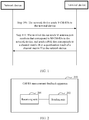
- the method includes the following steps.
- Step 100 A network device sends S CSI-RSs to a terminal device, where each CSI-RS corresponds to one antenna port number, and S is a positive integer.
- Step 110 The terminal device sends, based on the S CSI-RSs sent by the network device, M antenna port numbers that correspond to M of the S CSI-RSs to the network device, and sends a precoding matrix indicator (precoding matrix indicator, PMI) that corresponds to a quantization result of a channel matrix H to the network device.
- any column in the channel matrix H includes M elements, that is, corresponds to M transmit antenna ports.
- M may be configured by the network device or determined by the terminal device.
- the M CSI-RSs are M CSI-RSs whose signal receiving strengths are selected by the terminal device in descending order from signal receiving strengths that respectively correspond to the S CSI-RSs.
- the M CSI-RSs are CSI-RSs with relatively high signal receiving strengths, to assist the network device in selecting an analog precoding weight, so that M analog beams that correspond to the M antenna port numbers can better point to the terminal device.
- the signal receiving strength herein may be reference signal received power (reference signal received power, RSRP).
- RSRP reference signal received power
- the RSRP is a key parameter that represents a radio signal strength and is one of physical layer measurement requirements, and is an average value of signal power received on all resource elements (resource element, RE) that carry a reference signal in a symbol.
- the terminal device may send the M antenna port numbers that correspond to the M CSI-RSs to the network device by using but not limited to the following methods:
- Method 1 The terminal device directly sends the M antenna port numbers on a physical uplink shared channel (physical uplink shared channel, PUSCH) or a physical uplink control channel (physical uplink control channel, PUCCH).
- PUSCH physical uplink shared channel
- PUCCH physical uplink control channel
- sequence numbers of S antenna ports are 1, 2, ..., and S
- the terminal device may feed back the M antenna port numbers to the network device on the PUSCH or the PUCCH; or may feed back a quantity M of the antenna port numbers and the corresponding antenna port numbers to the network device.
- the M antenna port numbers may further be fed back to the network device in a form of a bitmap (bitmap).
- bitmap bitmap
- Method 2 The terminal device sends PMIs of first matrices that correspond to the M antenna port numbers in a first codebook.
- the first codebook includes a plurality of predefined first matrices, each first matrix corresponds to one PMI, and each first matrix is an S ⁇ 1 matrix.
- S elements in each first matrix correspond one-to-one to S antenna port numbers that correspond to the S CSI-RSs, values of elements that respectively correspond to the M antenna port numbers in the first matrices that correspond to the M antenna port numbers are 1, and values of remaining S-M elements are 0.
- the terminal device selects the M CSI-RSs in descending order of signal receiving strengths, determines a corresponding first matrix W, and feeds back a corresponding PMI to the network device.
- the terminal device determines the M CSI-RSs in the S CSI-RSs
- the terminal determines a corresponding channel matrix H based on the M CSI-RSs, and further obtains a quantization result of the channel matrix H.
- the quantization result of the channel matrix H may be in the following two forms.
- the quantization result of the channel matrix H includes quantized values of modulus values and quantized values of phases that respectively correspond to M elements that are included in a quantization matrix H ' that corresponds to the channel matrix H.
- the quantization result of the channel matrix H includes M groups of values, and an i th group of values includes a value of an i th k 1 and a value of an i th k 2 that respectively correspond to
- the quantization result of the channel matrix H is determined by using a throughput maximization principle or an estimated signal to interference plus noise ratio (signal to interference plus noise ratio, SINR) maximization principle.
- SINR signal to interference plus noise ratio
- the quantization result of the channel matrix H includes a quantized value
- of a modulus value of the quantization matrix H' , the quantized values of phases ( ⁇ 1,1 , ⁇ , ⁇ i ,1 , ⁇ , ⁇ M ,1 ) that respectively correspond to the M elements, and quantized values of transformation phases ( ⁇ M ,1 , ⁇ , ⁇ i ,1 , ⁇ , ⁇ 2,1 ) that respectively correspond to an M th element to the second element, so that the network device recovers Hi according to the following formula: H 1 H DG M 1 T ⁇ M , 1 ⁇ G i 1 T ⁇ i , 1 ⁇ G 21 T ⁇ 2,1 e 1 , where
- a Givens transformation method can significantly reduce a feedback amount, namely, the uplink overheads. Compared with a total feedback amount in the above Form 1 of direct feedback, the uplink overheads can be reduced by approximately 50%.
- the terminal may obtain the quantization result of the channel matrix H in any one of the foregoing two forms, and send the quantization result to the network device.
- the terminal device may define a codebook, the codebook includes a plurality of predefined precoding matrices, and each precoding matrix has a corresponding PMI. After each precoding matrix is matched with the channel matrix H, a precoding matrix closest to the channel matrix H is selected, and a corresponding PMI is fed back.
- the terminal quantizes the channel matrix H by using a codebook similar to that in LTE release 10, 12, 13, or 14, and feeds back a PMI that is in the codebook and that corresponds to the selected precoding matrix that is closest to the channel matrix H.
- the terminal device receives data that is sent by the network device to the terminal device by using antenna ports that respectively correspond to the M antenna port numbers.
- the data is data encoded based on the precoding matrix.
- the network device performs analog precoding on transmit beams that correspond to the M antenna port numbers, and obtains the precoding matrix based on the PMI that corresponds to the channel matrix H or the quantization result of the channel matrix H. Then, the network device sends data to the terminal device by using the antenna ports that respectively correspond to the M antenna port numbers, and the data is data encoded based on the precoding matrix.
- the network device sends the S CSI-RSs that correspond to the S antenna ports to the terminal device by using the S antenna ports.
- the terminal device measures the S CSI-RSs sent by the S antenna ports, and selects antenna port numbers, that is, the M antenna port numbers, of the M antenna ports that correspond to M of the S CSI-RSs.
- the terminal device feeds back the M antenna port numbers, the PMI that corresponds to the quantization result of the channel matrix H.
- the channel matrix H is determined based on the M CSI-RSs.
- the network device determines M analog precoding weights based on the M antenna port numbers, and determines an analog beam based on the M analog precoding weights, so that the analog beam can better point to the terminal device.
- the network device obtains the precoding matrix based on the PMI that corresponds to the channel matrix H or the quantization result of the channel matrix H, and sends data to the terminal device by using the antenna ports that respectively correspond to the M antenna port numbers.
- the data sent by the network device to the terminal device is data encoded based on the precoding matrix. Therefore, use of the method provided in this application can improve a throughput and spectrum utilization efficiency.
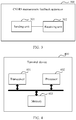
- the CSI-RS measurement feedback apparatus 200 includes a receiving unit 201 and a sending unit 202.
- the receiving unit 201 is configured to receive S CSI-RSs sent by a network device.
- the sending unit 202 is configured to send, to the network device based on the S CSI-RSs that are sent by the network device and that are received by the receiving unit 201, M antenna port numbers that correspond to M of the S CSI-RSs, and send a PMI that corresponds to a quantization result of a channel matrix H to the network device.
- M antenna port numbers that correspond to M of the S CSI-RSs
- an embodiment of this application provides a CSI-RS measurement feedback apparatus that corresponds to a network device and that is configured to implement the method shown in FIG. 1 .
- the CSI-RS measurement feedback apparatus 300 includes a sending unit 301 and a receiving unit 302.
- the sending unit 301 is configured to send S CSI-RSs.
- the receiving unit 302 is configured to receive M antenna port numbers that correspond to M CSI-RSs that are sent by the terminal device based on the received S CSI-RSs that are sent by the network device, and a PMI that corresponds to a channel matrix H or a quantization result of a channel matrix H.
- any column in the channel matrix H includes M elements, that is, corresponds to M transmit antenna ports.
- division of the units in the terminal device and the network device is merely logical function division.
- all or some of the units may be integrated into one physical entity, or the units may be physically separated.
- the units all may be implemented by software invoked by a processing element, or all may be implemented by hardware, or some units may be implemented by software invoked by a processing element, and some units are implemented by hardware.
- a processing unit may be a separately disposed processing element, may be implemented by being integrated into a chip, or may be stored in a memory in a form of a program, and a processing element invokes and executes a function of the unit. Implementations of the other units are similar thereto.
- the processing element may be an integrated circuit and has a signal processing capability.
- the steps in the foregoing methods or the foregoing units can be implemented by using a hardware integrated logic circuit in the processing element, or by using instructions in a form of software.
- the foregoing receiving unit is a receiving control unit, and may receive information by using a receiving apparatus of the terminal device or the network device, for example, an antenna or a radio frequency apparatus.
- the sending unit is a sending control unit, and may send information by using a sending apparatus of the terminal device or the network device, for example, an antenna and a radio frequency apparatus.
- the foregoing units may be one or more integrated circuits configured to implement the foregoing method, for example, one or more application-specific integrated circuits (application-specific integrated circuit, ASIC), one or more digital signal processors (digital signal processor, DSP), or one or more field programmable gate arrays (Field Programmable Gate Array, FPGA).
- ASIC application-specific integrated circuit
- DSP digital signal processor
- FPGA Field Programmable Gate Array
- the processing element may be a general purpose processor, for example, a central processing unit (Central Processing Unit, CPU) or another processor that can invoke the program.
- CPU central processing unit
- these units may be integrated together, and implemented in a form of a system-on-a-chip (system-on-a-chip, SOC).
- an embodiment of this application further provides a terminal device, configured to perform the method shown in FIG. 1 .
- the terminal device 400 includes: a transceiver 401, a processor 402, and a memory 403. Functions of the receiving unit 201 and the sending unit 202 in FIG. 2 are implemented by using the transceiver 401.
- the memory 403 is configured to store a program, an instruction, and the like.
- the program may include program code, and the program code includes a computer operation instruction.
- the memory 403 may include a random access memory (random access memory, RAM), and may further include a non-volatile memory, for example, at least one magnetic disk memory.
- the processor 402 executes an application program stored in the memory 403, to implement the method shown in FIG. 1 .
- FIG. 1 For details, refer to the method embodiment shown in FIG. 1 . Details are not described herein again in this application.
- an embodiment of this application further provides a network device, configured to perform the method shown in FIG. 1 .
- the terminal device 500 includes: a transceiver 501, a processor 502, and a memory 503. Functions of the sending unit 301 and the receiving unit 302 in FIG. 3 are implemented by using the transceiver 501.
- the memory 503 is configured to store a program, an instruction, and the like.
- the program may include program code, and the program code includes a computer operation instruction.
- the memory 503 may include a RAM, and may further include a non-volatile memory (non-volatile memory), for example, at least one magnetic disk memory.
- the processor 502 executes an application program stored in the memory 503, to implement the method shown in FIG. 1 .
- FIG. 1 For details, refer to the method embodiment shown in FIG. 1 . Details are not described herein again in this application.
- the embodiments of this application may be provided as a method, a system, or a computer program product. Therefore, the embodiments of this application may use a form of hardware only embodiments, software only embodiments, or embodiments with a combination of software and hardware. Moreover, the embodiments of this application may use a form of a computer program product that is implemented on one or more computer-usable storage media (including but not limited to a disk memory, a CD-ROM, an optical memory, and the like) that include computer-usable program code.
- computer-usable storage media including but not limited to a disk memory, a CD-ROM, an optical memory, and the like
- These computer program instructions may be provided for a general-purpose computer, a dedicated computer, an embedded processor, or a processor of any other programmable data processing device to generate a machine, so that the instructions executed by a computer or a processor of any other programmable data processing device generate an apparatus for implementing a specific function in one or more processes in the flowcharts and/or in one or more blocks in the block diagrams.
- These computer program instructions may be stored in a computer readable memory that can instruct the computer or any other programmable data processing device to work in a specific manner, so that the instructions stored in the computer readable memory generate an artifact that includes an instruction apparatus.
- the instruction apparatus implements a specific function in one or more processes in the flowcharts and/or in one or more blocks in the block diagrams.
- These computer program instructions may be loaded onto a computer or another programmable data processing device, so that a series of operations and steps are performed on the computer or the another programmable device, thereby generating computer-implemented processing. Therefore, the instructions executed on the computer or the another programmable device provide steps for implementing a specific function in one or more processes in the flowcharts and/or in one or more blocks in the block diagrams.
Landscapes
- Engineering & Computer Science (AREA)
- Computer Networks & Wireless Communication (AREA)
- Signal Processing (AREA)
- Physics & Mathematics (AREA)
- Mathematical Physics (AREA)
- Radio Transmission System (AREA)
- Mobile Radio Communication Systems (AREA)
Claims (9)
- Messungsrückmeldeverfahren für ein Referenzsignal von Kanalzustandsinformationen ("Channel State Information Reference Signal measurement feedback method"-, CSI-RS-Messungsrückmeldeverfahren), wobei das Verfahren umfasst:Empfangen (100) von S Referenzsignalen von Kanalzustandsinformationen, CSI-RSs, von einer Netzwerkvorrichtung, wobei jedes CSI-RS einer Antennenanschlussnummer entspricht und wobei S eine positive ganze Zahl ist; undSenden (110) von M Antennenanschlussnummern, die M CSI-RSs entsprechen, an die Netzwerkvorrichtung, und Senden eines Vorcodierungsmatrixindikators ("Precoding Matrix Indicator", PMI), der einem Quantisierungsergebnis einer Kanalmatrix H entspricht, an die Netzwerkvorrichtung,wobei die Kanalmatrix H den M CSI-RSs entspricht, jede Reihe in der Kanalmatrix H M Elemente umfasst, S > M oder S = M ist und M eine positive ganze Zahl ist;wobei das Quantisierungsergebnis der Kanalmatrix H umfasst: einen quantisierten Wert |H| eines Moduluswerts einer Quantisierungsmatrix H', die der Kanalmatrix H entspricht; quantisierte Werte von Phasen (ϕ1,1 , ..., ϕi,1, ..., ϕM,1 ), die jeweils den M Elementen entsprechen; und quantisierte Werte von Transformationsphasen (ψM,1, ..., ψi,1, ..., ψ2,1 ), die jeweils einem M-ten Element bis zu dem zweiten Element entsprechen, sodass die Netzwerkvorrichtung Hi gemäß der folgenden Formel wiederherstellt:

 eine Diagonalmatrix D lautet:
 eine k-te Givens-Rotationsmatrix lautet:
 wobei i eine positive ganze Zahl kleiner als oder gleich M ist, die Transformationsphasen (ψM,1, ..., ψi,1, ..., ψ2,1 ), die jeweils dem M-ten Element bis zu dem zweiten Element entsprechen, aufgrund der Kanalmatrix H und der Diagonalmatrix D erhalten werden, e1 = [1, 0, ..., 0]T ist, und Ii-2 eine Einheitsmatrix von (i - 2) x (i - 2) darstellt.
 - Verfahren nach Anspruch 1, wobei die M CSI-RSs M CSI-RSs sind, deren Signalempfangsstärken in absteigender Reihenfolge aus den Signalempfangsstärken ausgewählt werden, die jeweils den S CSI-RSs entsprechen.
- Verfahren nach Anspruch 1 oder 2, wobei das Senden, an die Netzwerkvorrichtung, von M Antennenanschlussnummern, die M CSI-RSs entsprechen, umfasst:
Senden der M Antennenanschlussnummern auf einem gemeinsam genutzten physischen Uplink-Kanal ("Physical Uplink Shared Channel", PUSCH) oder einem physischen Uplink-Steuerkanal ("Physical Uplink Control Channel", PUCCH); oder Senden von PMIs von ersten Matrizen, die den M Antennenanschlussnummern in einem ersten Codebuch entsprechen, wobei das erste Codebuch eine Vielzahl von vordefinierten ersten Matrizen umfasst, wobei jede erste Matrix einem PMI entspricht, wobei jede erste Matrix eine S x 1 Matrix ist, wobei S Elemente in jeder ersten Matrix den S Antennenanschlussnummern Eins-zu-Eins entsprechen, die den S CSI-RSs entsprechen, wobei Werte von Elementen, die jeweils den M Antennenanschlussnummern in den ersten Matrizen entsprechen, die den M Antennenanschlussnummern entsprechen, gleich 1 sind, und wobei Werte der verbleibenden S - M Elemente gleich 0 sind. - Messungsrückmeldeverfahren für ein Referenzsignal von Kanalzustandsinformationen ("Channel State Information Reference Signal measurement feedback method"-, CSI-RS-Messungsrückmeldeverfahren), wobei das Verfahren umfasst:Senden (100) von S CSI-RSs, wobei jedes CSI-RS einer Antennenanschlussnummer entspricht und wobei S eine positive ganze Zahl ist; undEmpfangen (110) von M Antennenanschlussnummern, die den M CSI-RSs entsprechen, von einer Endgerätevorrichtung, und eines PMI, der einem Quantisierungsergebnis einer Kanalmatrix H entspricht, wobei die Kanalmatrix H den M CSI-RSs entspricht, die Kanalmatrix H M Elemente umfasst, S ≥ M ist und M eine positive ganze Zahl ist;wobei das Quantisierungsergebnis der Kanalmatrix H umfasst: einen quantisierten Wert |H| eines Moduluswerts einer Quantisierungsmatrix H', die der Kanalmatrix H entspricht; quantisierte Werte von Phasen (ϕ1,1, ..., ϕi,1, ..., ϕM,1 ), die jeweils den M Elementen entsprechen; und quantisierte Werte von Transformationsphasen (ψM,1, ..., ψi,1, ..., ψ2,1 ), die jeweils einem M-ten Element bis zu dem zweiten Element entsprechen, sodass die Netzwerkvorrichtung H1 gemäß der folgenden Formel wiederherstellt:

 eine Diagonalmatrix D lautet:
 eine k-te Givens-Rotationsmatrix lautet:
 wobei i eine positive ganze Zahl kleiner als oder gleich M ist, die Transformationsphasen (ψM,1, ..., ψi,1, ..., ψ2,1 ), die jeweils dem M-ten Element bis zu dem zweiten Element entsprechen, aufgrund der Kanalmatrix H und der Diagonalmatrix D erhalten werden, e1 = [1, 0, ..., 0]T ist, und Ii-2 eine Einheitsmatrix von (i - 2) x (i - 2) darstellt.
 - Verfahren nach Anspruch 4, wobei die M CSI-RSs M CSI-RSs sind, deren Signalempfangsstärken in absteigender Reihenfolge aus den Signalempfangsstärken, die jeweils den S CSI-RSs entsprechen, durch die Endgerätevorrichtung ausgewählt werden.
- Verfahren nach Anspruch 4 oder 5, wobei das Empfangen, von einer Endgerätevorrichtung, von M Antennenanschlussnummern, die M CSI-RSs entsprechen, umfasst:
Empfangen der M Antennenanschlussnummern, die M CSI-RSs entsprechen und die von der Endgerätevorrichtung auf einem gemeinsam genutzten physischen Uplink-Kanal ("Physical Uplink Shared Channel", PUSCH) oder einem physischen Uplink-Steuerkanal ("Physical Uplink Control Channel", PUCCH) gesendet werden; oder Empfangen von PMIs, die von der Endgerätevorrichtung gesendet werden und die von ersten Matrizen stammen, die den M Antennenanschlussnummern in einem ersten Codebuch entsprechen, wobei das erste Codebuch eine Vielzahl von vordefinierten ersten Matrizen umfasst, wobei jede erste Matrix einem PMI entspricht, wobei jede erste Matrix eine S x 1 Matrix ist, wobei S Elemente in jeder ersten Matrix den S Antennenanschlussnummern Eins-zu-Eins entsprechen, die den S CSI-RSs entsprechen, wobei Werte von Elementen, die jeweils den M Antennenanschlussnummern in den ersten Matrizen entsprechen, die den M Antennenanschlussnummern entsprechen, gleich 1 sind, und wobei Werte der verbleibenden S - M Elemente gleich 0 sind. - Kommunikationsvorrichtung, die konfiguriert ist, um das Verfahren nach einem der Ansprüche 1 bis 3 oder einem der Ansprüche 4 bis 6 auszuführen.
- Kommunikationsvorrichtung nach Anspruch 7, die einen Prozessor (402) und einen Speicher (403) umfasst, wobei der Prozessor konfiguriert ist zum Ausführen eines Codes, der in dem Speicher gespeichert ist, sodass die Kommunikationsvorrichtung das Verfahren nach einem der Ansprüche 1 bis 3 oder einem der Ansprüche 4 bis 6 ausführt.
- Computerspeichermedium, wobei in dem Computerspeichermedium ein Computerbefehlssatz gespeichert ist, und wobei, wenn der Befehlssatz ausgeführt wird, das Verfahren nach einem der Ansprüche 1 bis 3 oder einem der Ansprüche 4 bis 6 ausgeführt wird.
Applications Claiming Priority (2)
| Application Number | Priority Date | Filing Date | Title |
|---|---|---|---|
| CN201710751755.9A CN109428637B (zh) | 2017-08-28 | 2017-08-28 | 一种csi-rs测量反馈方法及设备 |
| PCT/CN2018/102539 WO2019042258A1 (zh) | 2017-08-28 | 2018-08-27 | 一种csi-rs测量反馈方法及设备 |
Publications (3)
| Publication Number | Publication Date |
|---|---|
| EP3661074A1 EP3661074A1 (de) | 2020-06-03 |
| EP3661074A4 EP3661074A4 (de) | 2020-07-15 |
| EP3661074B1 true EP3661074B1 (de) | 2021-08-04 |
Family
ID=65502652
Family Applications (1)
| Application Number | Title | Priority Date | Filing Date |
|---|---|---|---|
| EP18851909.4A Active EP3661074B1 (de) | 2017-08-28 | 2018-08-27 | Verfahren und vorrichtung zur csi-rs-messwertrückführung |
Country Status (4)
| Country | Link |
|---|---|
| US (1) | US11218208B2 (de) |
| EP (1) | EP3661074B1 (de) |
| CN (1) | CN109428637B (de) |
| WO (1) | WO2019042258A1 (de) |
Families Citing this family (11)
| Publication number | Priority date | Publication date | Assignee | Title |
|---|---|---|---|---|
| CN110535512B (zh) * | 2018-10-31 | 2023-06-30 | 中兴通讯股份有限公司 | 一种报告天线端口加权矢量的方法、装置和系统 |
| CN112242862A (zh) * | 2019-07-18 | 2021-01-19 | 中国移动通信有限公司研究院 | 一种信息上报方法、终端及网络侧设备 |
| CN113872649B (zh) * | 2020-06-30 | 2023-03-10 | 华为技术有限公司 | 一种信道状态信息的反馈方法及通信装置 |
| CN112636801B (zh) * | 2020-11-20 | 2021-12-28 | 鹏城实验室 | 一种毫米波混合预编码方法、智能终端及存储介质 |
| CN118591993A (zh) * | 2022-03-24 | 2024-09-03 | 联发科技股份有限公司 | 用于多输入和多输出(mimo)信道状态信息(csi)反馈的方法和设备 |
| WO2024192970A1 (en) * | 2023-03-17 | 2024-09-26 | Huawei Technologies Co., Ltd. | A scalar quantization based channel state information feedback mechanism |
| CN120186813A (zh) * | 2023-12-20 | 2025-06-20 | 华为技术有限公司 | 一种通信方法及装置 |
| CN120200639A (zh) * | 2023-12-22 | 2025-06-24 | 维沃移动通信有限公司 | 预编码矩阵的获取方法、终端及网络侧设备 |
| CN121077514A (zh) * | 2024-06-04 | 2025-12-05 | 华为技术有限公司 | 通信方法和通信装置 |
| CN121193293A (zh) * | 2024-06-20 | 2025-12-23 | 华为技术有限公司 | 一种通信方法和装置 |
| CN121643831A (zh) * | 2024-09-04 | 2026-03-10 | 维沃移动通信有限公司 | 预编码信息确定方法、装置及相关设备 |
Family Cites Families (23)
| Publication number | Priority date | Publication date | Assignee | Title |
|---|---|---|---|---|
| CN101291192B (zh) * | 2007-04-18 | 2012-01-11 | 中兴通讯股份有限公司 | 时分双工方式下下行多用户多输入多输出的预编码方法 |
| KR20120119175A (ko) * | 2011-04-20 | 2012-10-30 | 주식회사 팬택 | 무선 통신 시스템에 있어서 채널 상태 정보를 송수신하는 방법 및 장치 |
| JP2014519227A (ja) * | 2011-04-26 | 2014-08-07 | ゼットティーイー コーポレイション | MIMO(Multiple−inputMultiple−output)のための空間CSIのフィードバック方法、および空間CSIフィードバックシステム |
| US8885569B2 (en) * | 2011-12-19 | 2014-11-11 | Ofinno Technologies, Llc | Beamforming signaling in a wireless network |
| US20130343299A1 (en) * | 2012-06-21 | 2013-12-26 | Samsung Electronics Co., Ltd | Method for cqi feedback without spatial feedback (pmi/ri) for tdd coordinated multi-point and carrier aggregation scenarios |
| KR20150035705A (ko) * | 2012-07-03 | 2015-04-07 | 엘지전자 주식회사 | 무선 통신 시스템에서 3차원 빔포밍을 위한 채널 상태 정보를 보고하는 방법 및 이를 위한 장치 |
| CN105009626B (zh) * | 2013-02-24 | 2018-09-25 | Lg电子株式会社 | 在无线通信系统中报告用于3维波束形成的信道状态信息的方法 |
| CN110212958B (zh) * | 2013-05-21 | 2021-03-26 | 上海朗帛通信技术有限公司 | 一种移动通信系统中的信道信息反馈方法和装置 |
| JP6114153B2 (ja) * | 2013-09-26 | 2017-04-12 | 株式会社Nttドコモ | 基地局、移動局、参照信号送信方法及びチャネル品質測定方法 |
| CN104579586B (zh) * | 2013-10-22 | 2018-03-20 | 电信科学技术研究院 | 信道状态信息的反馈方法和装置、以及接收方法和装置 |
| CN106209195B (zh) * | 2015-03-06 | 2020-02-11 | 电信科学技术研究院 | 信道状态信息获取方法、信道状态信息反馈方法及装置 |
| US10312975B2 (en) * | 2015-03-24 | 2019-06-04 | Sony Corporation | Apparatus |
| CN106301507B (zh) * | 2015-05-18 | 2019-09-13 | 工业和信息化部电信传输研究所 | 一种信道状态信息测量反馈方法 |
| CN106688190B (zh) * | 2015-09-03 | 2018-07-24 | Lg电子株式会社 | 在无线通信系统中报告信道状态信息的方法及其设备 |
| WO2017043902A1 (ko) * | 2015-09-11 | 2017-03-16 | 엘지전자 주식회사 | 무선 통신 시스템에서 랭크 지시자의 비트 사이즈 결정 방식 및 이를 위한 장치 |
| CN106559121B (zh) * | 2015-09-25 | 2021-07-09 | 华为技术有限公司 | 一种多天线信道测量方法和装置 |
| US10536206B2 (en) * | 2015-12-17 | 2020-01-14 | Lg Electronics Inc. | Method for transmitting and receiving channel state information in wireless communication system and apparatus therefor |
| CN106992837B (zh) * | 2016-01-20 | 2020-06-16 | 华为技术有限公司 | 多天线数据传输的方法、网络设备、终端设备及系统 |
| WO2017171486A2 (ko) * | 2016-03-31 | 2017-10-05 | 엘지전자 주식회사 | 무선 통신 시스템에서 dm-rs 기반 개루프 하향링크 전송을 위한 피드백 정보 송신 방법 및 이를 위한 장치 |
| WO2017168349A1 (en) * | 2016-03-31 | 2017-10-05 | Telefonaktiebolaget Lm Ericsson (Publ) | Methods and devices for determining precoder parameters in a wireless communication network |
| US11394518B2 (en) * | 2016-04-01 | 2022-07-19 | Telefonaktiebolaget Lm Ericsson (Publ) | System and method for flexible channel state information-reference signal transmission |
| US20180031478A1 (en) * | 2016-07-28 | 2018-02-01 | Allan Wexler | Surface evaluation system using voltage sensitive chromophore |
| JP7082109B2 (ja) * | 2016-08-11 | 2022-06-07 | コンヴィーダ ワイヤレス, エルエルシー | New radioのためのcsiフィードバック設計 |
-
2017
- 2017-08-28 CN CN201710751755.9A patent/CN109428637B/zh active Active
-
2018
- 2018-08-27 EP EP18851909.4A patent/EP3661074B1/de active Active
- 2018-08-27 WO PCT/CN2018/102539 patent/WO2019042258A1/zh not_active Ceased
-
2020
- 2020-02-21 US US16/797,482 patent/US11218208B2/en active Active
Also Published As
| Publication number | Publication date |
|---|---|
| US20200195329A1 (en) | 2020-06-18 |
| US11218208B2 (en) | 2022-01-04 |
| CN109428637B (zh) | 2022-02-01 |
| EP3661074A4 (de) | 2020-07-15 |
| CN109428637A (zh) | 2019-03-05 |
| WO2019042258A1 (zh) | 2019-03-07 |
| EP3661074A1 (de) | 2020-06-03 |
Similar Documents
| Publication | Publication Date | Title |
|---|---|---|
| EP3661074B1 (de) | Verfahren und vorrichtung zur csi-rs-messwertrückführung | |
| US11831379B2 (en) | Method for feeding backchannel state information, user equipment, and base station | |
| US12267132B2 (en) | Channel state information reporting method and communications apparatus | |
| EP3826199B1 (de) | Verfahren zur anzeige und bestimmung einer vorcodierungsmatrix und kommunikationsvorrichtung | |
| EP3518434B1 (de) | Verfahren und vorrichtung für codebuchbasierte kanalstatusinformationsrückkopplung | |
| EP3522384B1 (de) | Verfahren und vorrichtung zur festlegung einer vorcodierungsmatrix | |
| US10778294B2 (en) | Channel state information feedback method, terminal device, and network device | |
| EP3641149A1 (de) | Kommunikationsverfahren, -vorrichtung und -system | |
| US10630353B2 (en) | Two-stage precoding method and apparatus | |
| US20190081680A1 (en) | Channel state information feedback method, base station, terminal device, and system | |
| EP2425544B1 (de) | Differential-feedbackschema für mimo-strahlenformung in einem geschlossenen regelkreis | |
| TWI439065B (zh) | 用以排程行動或無線通訊系統中之使用者的方法,相應的行動終端及基地站 | |
| WO2022021443A1 (zh) | 一种预编码方法及装置 | |
| US20240178893A1 (en) | Channel information feedback method and communication apparatus | |
| EP4478621A1 (de) | Verfahren zur rückkopplung von kanalstatusinformationen und kommunikationsvorrichtung | |
| US10985824B2 (en) | Channel state information feedback and receiving method, transmit-end device, and receive-end device | |
| US11115091B2 (en) | Channel state information feedback and receiving methods, transmit-end device and receive-end device | |
| US20250227514A1 (en) | Communication method and related device | |
| CN107683574A (zh) | 无线通信控制方法、无线通信系统、接收装置以及发送装置 | |
| US12526014B2 (en) | Communication method and apparatus | |
| US10594369B2 (en) | Channel information feedback method, channel information determining method, receive end device, and transmit end device |
Legal Events
| Date | Code | Title | Description |
|---|---|---|---|
| STAA | Information on the status of an ep patent application or granted ep patent |
Free format text: STATUS: THE INTERNATIONAL PUBLICATION HAS BEEN MADE |
|
| PUAI | Public reference made under article 153(3) epc to a published international application that has entered the european phase |
Free format text: ORIGINAL CODE: 0009012 |
|
| STAA | Information on the status of an ep patent application or granted ep patent |
Free format text: STATUS: REQUEST FOR EXAMINATION WAS MADE |
|
| 17P | Request for examination filed |
Effective date: 20200226 |
|
| AK | Designated contracting states |
Kind code of ref document: A1 Designated state(s): AL AT BE BG CH CY CZ DE DK EE ES FI FR GB GR HR HU IE IS IT LI LT LU LV MC MK MT NL NO PL PT RO RS SE SI SK SM TR |
|
| AX | Request for extension of the european patent |
Extension state: BA ME |
|
| A4 | Supplementary search report drawn up and despatched |
Effective date: 20200617 |
|
| RIC1 | Information provided on ipc code assigned before grant |
Ipc: H04L 1/06 20060101ALI20200610BHEP Ipc: H04B 7/06 20060101ALI20200610BHEP Ipc: H04B 7/0413 20170101ALI20200610BHEP Ipc: H04B 7/0456 20170101AFI20200610BHEP |
|
| DAV | Request for validation of the european patent (deleted) | ||
| DAX | Request for extension of the european patent (deleted) | ||
| GRAP | Despatch of communication of intention to grant a patent |
Free format text: ORIGINAL CODE: EPIDOSNIGR1 |
|
| STAA | Information on the status of an ep patent application or granted ep patent |
Free format text: STATUS: GRANT OF PATENT IS INTENDED |
|
| RIC1 | Information provided on ipc code assigned before grant |
Ipc: H04B 7/06 20060101ALI20210218BHEP Ipc: H04B 7/0456 20170101AFI20210218BHEP Ipc: H04L 1/06 20060101ALI20210218BHEP Ipc: H04B 7/0413 20170101ALI20210218BHEP |
|
| INTG | Intention to grant announced |
Effective date: 20210304 |
|
| GRAS | Grant fee paid |
Free format text: ORIGINAL CODE: EPIDOSNIGR3 |
|
| GRAA | (expected) grant |
Free format text: ORIGINAL CODE: 0009210 |
|
| STAA | Information on the status of an ep patent application or granted ep patent |
Free format text: STATUS: THE PATENT HAS BEEN GRANTED |
|
| AK | Designated contracting states |
Kind code of ref document: B1 Designated state(s): AL AT BE BG CH CY CZ DE DK EE ES FI FR GB GR HR HU IE IS IT LI LT LU LV MC MK MT NL NO PL PT RO RS SE SI SK SM TR |
|
| REG | Reference to a national code |
Ref country code: GB Ref legal event code: FG4D |
|
| REG | Reference to a national code |
Ref country code: AT Ref legal event code: REF Ref document number: 1418059 Country of ref document: AT Kind code of ref document: T Effective date: 20210815 |
|
| REG | Reference to a national code |
Ref country code: CH Ref legal event code: EP |
|
| REG | Reference to a national code |
Ref country code: DE Ref legal event code: R096 Ref document number: 602018021423 Country of ref document: DE |
|
| REG | Reference to a national code |
Ref country code: IE Ref legal event code: FG4D |
|
| REG | Reference to a national code |
Ref country code: LT Ref legal event code: MG9D |
|
| REG | Reference to a national code |
Ref country code: NL Ref legal event code: MP Effective date: 20210804 |
|
| REG | Reference to a national code |
Ref country code: AT Ref legal event code: MK05 Ref document number: 1418059 Country of ref document: AT Kind code of ref document: T Effective date: 20210804 |
|
| PG25 | Lapsed in a contracting state [announced via postgrant information from national office to epo] |
Ref country code: PT Free format text: LAPSE BECAUSE OF FAILURE TO SUBMIT A TRANSLATION OF THE DESCRIPTION OR TO PAY THE FEE WITHIN THE PRESCRIBED TIME-LIMIT Effective date: 20211206 Ref country code: NO Free format text: LAPSE BECAUSE OF FAILURE TO SUBMIT A TRANSLATION OF THE DESCRIPTION OR TO PAY THE FEE WITHIN THE PRESCRIBED TIME-LIMIT Effective date: 20211104 Ref country code: HR Free format text: LAPSE BECAUSE OF FAILURE TO SUBMIT A TRANSLATION OF THE DESCRIPTION OR TO PAY THE FEE WITHIN THE PRESCRIBED TIME-LIMIT Effective date: 20210804 Ref country code: AT Free format text: LAPSE BECAUSE OF FAILURE TO SUBMIT A TRANSLATION OF THE DESCRIPTION OR TO PAY THE FEE WITHIN THE PRESCRIBED TIME-LIMIT Effective date: 20210804 Ref country code: BG Free format text: LAPSE BECAUSE OF FAILURE TO SUBMIT A TRANSLATION OF THE DESCRIPTION OR TO PAY THE FEE WITHIN THE PRESCRIBED TIME-LIMIT Effective date: 20211104 Ref country code: LT Free format text: LAPSE BECAUSE OF FAILURE TO SUBMIT A TRANSLATION OF THE DESCRIPTION OR TO PAY THE FEE WITHIN THE PRESCRIBED TIME-LIMIT Effective date: 20210804 Ref country code: RS Free format text: LAPSE BECAUSE OF FAILURE TO SUBMIT A TRANSLATION OF THE DESCRIPTION OR TO PAY THE FEE WITHIN THE PRESCRIBED TIME-LIMIT Effective date: 20210804 Ref country code: SE Free format text: LAPSE BECAUSE OF FAILURE TO SUBMIT A TRANSLATION OF THE DESCRIPTION OR TO PAY THE FEE WITHIN THE PRESCRIBED TIME-LIMIT Effective date: 20210804 Ref country code: FI Free format text: LAPSE BECAUSE OF FAILURE TO SUBMIT A TRANSLATION OF THE DESCRIPTION OR TO PAY THE FEE WITHIN THE PRESCRIBED TIME-LIMIT Effective date: 20210804 Ref country code: ES Free format text: LAPSE BECAUSE OF FAILURE TO SUBMIT A TRANSLATION OF THE DESCRIPTION OR TO PAY THE FEE WITHIN THE PRESCRIBED TIME-LIMIT Effective date: 20210804 |
|
| PG25 | Lapsed in a contracting state [announced via postgrant information from national office to epo] |
Ref country code: PL Free format text: LAPSE BECAUSE OF FAILURE TO SUBMIT A TRANSLATION OF THE DESCRIPTION OR TO PAY THE FEE WITHIN THE PRESCRIBED TIME-LIMIT Effective date: 20210804 Ref country code: LV Free format text: LAPSE BECAUSE OF FAILURE TO SUBMIT A TRANSLATION OF THE DESCRIPTION OR TO PAY THE FEE WITHIN THE PRESCRIBED TIME-LIMIT Effective date: 20210804 Ref country code: GR Free format text: LAPSE BECAUSE OF FAILURE TO SUBMIT A TRANSLATION OF THE DESCRIPTION OR TO PAY THE FEE WITHIN THE PRESCRIBED TIME-LIMIT Effective date: 20211105 |
|
| REG | Reference to a national code |
Ref country code: CH Ref legal event code: PL |
|
| PG25 | Lapsed in a contracting state [announced via postgrant information from national office to epo] |
Ref country code: NL Free format text: LAPSE BECAUSE OF FAILURE TO SUBMIT A TRANSLATION OF THE DESCRIPTION OR TO PAY THE FEE WITHIN THE PRESCRIBED TIME-LIMIT Effective date: 20210804 |
|
| REG | Reference to a national code |
Ref country code: BE Ref legal event code: MM Effective date: 20210831 |
|
| PG25 | Lapsed in a contracting state [announced via postgrant information from national office to epo] |
Ref country code: LI Free format text: LAPSE BECAUSE OF NON-PAYMENT OF DUE FEES Effective date: 20210831 Ref country code: DK Free format text: LAPSE BECAUSE OF FAILURE TO SUBMIT A TRANSLATION OF THE DESCRIPTION OR TO PAY THE FEE WITHIN THE PRESCRIBED TIME-LIMIT Effective date: 20210804 Ref country code: CH Free format text: LAPSE BECAUSE OF NON-PAYMENT OF DUE FEES Effective date: 20210831 |
|
| REG | Reference to a national code |
Ref country code: DE Ref legal event code: R097 Ref document number: 602018021423 Country of ref document: DE |
|
| PG25 | Lapsed in a contracting state [announced via postgrant information from national office to epo] |
Ref country code: SM Free format text: LAPSE BECAUSE OF FAILURE TO SUBMIT A TRANSLATION OF THE DESCRIPTION OR TO PAY THE FEE WITHIN THE PRESCRIBED TIME-LIMIT Effective date: 20210804 Ref country code: SK Free format text: LAPSE BECAUSE OF FAILURE TO SUBMIT A TRANSLATION OF THE DESCRIPTION OR TO PAY THE FEE WITHIN THE PRESCRIBED TIME-LIMIT Effective date: 20210804 Ref country code: RO Free format text: LAPSE BECAUSE OF FAILURE TO SUBMIT A TRANSLATION OF THE DESCRIPTION OR TO PAY THE FEE WITHIN THE PRESCRIBED TIME-LIMIT Effective date: 20210804 Ref country code: MC Free format text: LAPSE BECAUSE OF FAILURE TO SUBMIT A TRANSLATION OF THE DESCRIPTION OR TO PAY THE FEE WITHIN THE PRESCRIBED TIME-LIMIT Effective date: 20210804 Ref country code: LU Free format text: LAPSE BECAUSE OF NON-PAYMENT OF DUE FEES Effective date: 20210827 Ref country code: EE Free format text: LAPSE BECAUSE OF FAILURE TO SUBMIT A TRANSLATION OF THE DESCRIPTION OR TO PAY THE FEE WITHIN THE PRESCRIBED TIME-LIMIT Effective date: 20210804 Ref country code: CZ Free format text: LAPSE BECAUSE OF FAILURE TO SUBMIT A TRANSLATION OF THE DESCRIPTION OR TO PAY THE FEE WITHIN THE PRESCRIBED TIME-LIMIT Effective date: 20210804 Ref country code: AL Free format text: LAPSE BECAUSE OF FAILURE TO SUBMIT A TRANSLATION OF THE DESCRIPTION OR TO PAY THE FEE WITHIN THE PRESCRIBED TIME-LIMIT Effective date: 20210804 |
|
| PLBE | No opposition filed within time limit |
Free format text: ORIGINAL CODE: 0009261 |
|
| STAA | Information on the status of an ep patent application or granted ep patent |
Free format text: STATUS: NO OPPOSITION FILED WITHIN TIME LIMIT |
|
| 26N | No opposition filed |
Effective date: 20220506 |
|
| PG25 | Lapsed in a contracting state [announced via postgrant information from national office to epo] |
Ref country code: IT Free format text: LAPSE BECAUSE OF FAILURE TO SUBMIT A TRANSLATION OF THE DESCRIPTION OR TO PAY THE FEE WITHIN THE PRESCRIBED TIME-LIMIT Effective date: 20210804 Ref country code: IE Free format text: LAPSE BECAUSE OF NON-PAYMENT OF DUE FEES Effective date: 20210827 Ref country code: BE Free format text: LAPSE BECAUSE OF NON-PAYMENT OF DUE FEES Effective date: 20210831 |
|
| PG25 | Lapsed in a contracting state [announced via postgrant information from national office to epo] |
Ref country code: SI Free format text: LAPSE BECAUSE OF FAILURE TO SUBMIT A TRANSLATION OF THE DESCRIPTION OR TO PAY THE FEE WITHIN THE PRESCRIBED TIME-LIMIT Effective date: 20210804 |
|
| PG25 | Lapsed in a contracting state [announced via postgrant information from national office to epo] |
Ref country code: FR Free format text: LAPSE BECAUSE OF NON-PAYMENT OF DUE FEES Effective date: 20211004 |
|
| GBPC | Gb: european patent ceased through non-payment of renewal fee |
Effective date: 20220827 |
|
| PG25 | Lapsed in a contracting state [announced via postgrant information from national office to epo] |
Ref country code: CY Free format text: LAPSE BECAUSE OF FAILURE TO SUBMIT A TRANSLATION OF THE DESCRIPTION OR TO PAY THE FEE WITHIN THE PRESCRIBED TIME-LIMIT Effective date: 20210804 |
|
| PG25 | Lapsed in a contracting state [announced via postgrant information from national office to epo] |
Ref country code: HU Free format text: LAPSE BECAUSE OF FAILURE TO SUBMIT A TRANSLATION OF THE DESCRIPTION OR TO PAY THE FEE WITHIN THE PRESCRIBED TIME-LIMIT; INVALID AB INITIO Effective date: 20180827 |
|
| PG25 | Lapsed in a contracting state [announced via postgrant information from national office to epo] |
Ref country code: GB Free format text: LAPSE BECAUSE OF NON-PAYMENT OF DUE FEES Effective date: 20220827 |
|
| PG25 | Lapsed in a contracting state [announced via postgrant information from national office to epo] |
Ref country code: MK Free format text: LAPSE BECAUSE OF FAILURE TO SUBMIT A TRANSLATION OF THE DESCRIPTION OR TO PAY THE FEE WITHIN THE PRESCRIBED TIME-LIMIT Effective date: 20210804 |
|
| PG25 | Lapsed in a contracting state [announced via postgrant information from national office to epo] |
Ref country code: MT Free format text: LAPSE BECAUSE OF FAILURE TO SUBMIT A TRANSLATION OF THE DESCRIPTION OR TO PAY THE FEE WITHIN THE PRESCRIBED TIME-LIMIT Effective date: 20210804 |
|
| PGFP | Annual fee paid to national office [announced via postgrant information from national office to epo] |
Ref country code: DE Payment date: 20250702 Year of fee payment: 8 |
|
| PG25 | Lapsed in a contracting state [announced via postgrant information from national office to epo] |
Ref country code: TR Free format text: LAPSE BECAUSE OF FAILURE TO SUBMIT A TRANSLATION OF THE DESCRIPTION OR TO PAY THE FEE WITHIN THE PRESCRIBED TIME-LIMIT Effective date: 20210804 |