EP3661104B1 - Procédé, appareil et système de transmission de données et point d'accès - Google Patents
Procédé, appareil et système de transmission de données et point d'accès Download PDFInfo
- Publication number
- EP3661104B1 EP3661104B1 EP19191871.3A EP19191871A EP3661104B1 EP 3661104 B1 EP3661104 B1 EP 3661104B1 EP 19191871 A EP19191871 A EP 19191871A EP 3661104 B1 EP3661104 B1 EP 3661104B1
- Authority
- EP
- European Patent Office
- Prior art keywords
- uplink
- allocated
- data
- ofdma ppdu
- uplink ofdma
- Prior art date
- Legal status (The legal status is an assumption and is not a legal conclusion. Google has not performed a legal analysis and makes no representation as to the accuracy of the status listed.)
- Active
Links
Images



Classifications
-
- H—ELECTRICITY
- H04—ELECTRIC COMMUNICATION TECHNIQUE
- H04L—TRANSMISSION OF DIGITAL INFORMATION, e.g. TELEGRAPHIC COMMUNICATION
- H04L27/00—Modulated-carrier systems
- H04L27/26—Systems using multi-frequency codes
- H04L27/2601—Multicarrier modulation systems
- H04L27/2602—Signal structure
-
- H—ELECTRICITY
- H04—ELECTRIC COMMUNICATION TECHNIQUE
- H04L—TRANSMISSION OF DIGITAL INFORMATION, e.g. TELEGRAPHIC COMMUNICATION
- H04L5/00—Arrangements affording multiple use of the transmission path
- H04L5/0001—Arrangements for dividing the transmission path
- H04L5/0003—Two-dimensional division
- H04L5/0005—Time-frequency
- H04L5/0007—Time-frequency the frequencies being orthogonal, e.g. OFDM(A) or DMT
-
- H—ELECTRICITY
- H04—ELECTRIC COMMUNICATION TECHNIQUE
- H04L—TRANSMISSION OF DIGITAL INFORMATION, e.g. TELEGRAPHIC COMMUNICATION
- H04L5/00—Arrangements affording multiple use of the transmission path
- H04L5/003—Arrangements for allocating sub-channels of the transmission path
- H04L5/0044—Allocation of payload; Allocation of data channels, e.g. PDSCH or PUSCH
-
- H—ELECTRICITY
- H04—ELECTRIC COMMUNICATION TECHNIQUE
- H04L—TRANSMISSION OF DIGITAL INFORMATION, e.g. TELEGRAPHIC COMMUNICATION
- H04L5/00—Arrangements affording multiple use of the transmission path
- H04L5/003—Arrangements for allocating sub-channels of the transmission path
- H04L5/0053—Allocation of signalling, i.e. of overhead other than pilot signals
-
- H—ELECTRICITY
- H04—ELECTRIC COMMUNICATION TECHNIQUE
- H04L—TRANSMISSION OF DIGITAL INFORMATION, e.g. TELEGRAPHIC COMMUNICATION
- H04L5/00—Arrangements affording multiple use of the transmission path
- H04L5/0091—Signalling for the administration of the divided path, e.g. signalling of configuration information
- H04L5/0094—Indication of how sub-channels of the path are allocated
-
- H—ELECTRICITY
- H04—ELECTRIC COMMUNICATION TECHNIQUE
- H04W—WIRELESS COMMUNICATION NETWORKS
- H04W72/00—Local resource management
- H04W72/04—Wireless resource allocation
- H04W72/044—Wireless resource allocation based on the type of the allocated resource
- H04W72/0453—Resources in frequency domain, e.g. a carrier in FDMA
-
- H—ELECTRICITY
- H04—ELECTRIC COMMUNICATION TECHNIQUE
- H04W—WIRELESS COMMUNICATION NETWORKS
- H04W72/00—Local resource management
- H04W72/12—Wireless traffic scheduling
- H04W72/1263—Mapping of traffic onto schedule, e.g. scheduled allocation or multiplexing of flows
-
- H—ELECTRICITY
- H04—ELECTRIC COMMUNICATION TECHNIQUE
- H04W—WIRELESS COMMUNICATION NETWORKS
- H04W72/00—Local resource management
- H04W72/20—Control channels or signalling for resource management
-
- H—ELECTRICITY
- H04—ELECTRIC COMMUNICATION TECHNIQUE
- H04W—WIRELESS COMMUNICATION NETWORKS
- H04W74/00—Wireless channel access
- H04W74/002—Transmission of channel access control information
-
- H—ELECTRICITY
- H04—ELECTRIC COMMUNICATION TECHNIQUE
- H04W—WIRELESS COMMUNICATION NETWORKS
- H04W74/00—Wireless channel access
- H04W74/04—Scheduled access
-
- H—ELECTRICITY
- H04—ELECTRIC COMMUNICATION TECHNIQUE
- H04W—WIRELESS COMMUNICATION NETWORKS
- H04W72/00—Local resource management
- H04W72/04—Wireless resource allocation
- H04W72/044—Wireless resource allocation based on the type of the allocated resource
- H04W72/0446—Resources in time domain, e.g. slots or frames
-
- H—ELECTRICITY
- H04—ELECTRIC COMMUNICATION TECHNIQUE
- H04W—WIRELESS COMMUNICATION NETWORKS
- H04W74/00—Wireless channel access
- H04W74/08—Non-scheduled access, e.g. ALOHA
- H04W74/0808—Non-scheduled access, e.g. ALOHA using carrier sensing, e.g. carrier sense multiple access [CSMA]
- H04W74/0816—Non-scheduled access, e.g. ALOHA using carrier sensing, e.g. carrier sense multiple access [CSMA] with collision avoidance
Definitions
- the present invention relates to the field of network communications technologies, and in particular, to a data transmission method, an apparatus and a computer readable storage medium.
- uplink data transmission is always point-to-point transmission, that is, on a same channel or in a same spectrum, only one station transceives data to an access point at a same time.
- downlink data transmission is also point-to-point transmission, that is, on a same channel or in a same spectrum, an access point transceives data to only one station at a same time.
- Wi-Fi Wireless Fidelity, wireless local area network
- HEW high efficiency WLAN
- YONSEI UNIV "Bandwidth granularity on UL-OFDMA data allocation", IEEE draft, 11-15-0354-00-00AX-BANDWIDTH-GRANULARITY-ON-UL-OFDMA-DATA-ALLOCATION, IEEE-SA MENTOR, PISCATAWAY, NJ USA, vol.
- 802.11ax 9 March 2015, page 1-16, XP 68082998A , discloses a solution for uplink Orthogonal Frequency Division Multiple Access transmission, in which, depending on the data size of each station, sub-channels of different sizes are assigned.
- the present invention provides a data transmission method, apparatus, and a computer readable storage medium, different channel resources are allocated to different stations at a same moment, that is, multiple stations can access a channel at a same moment, thereby improving a service transmission rate.
- an OFDMA Orthogonal Frequency Division Multiple Access, orthogonal frequency division multiple access
- IEEE Institute of Electrical and Electronics Engineers, Institute of Electrical and Electronics Engineers 802.11ax standard.
- Data of a data portion in an uplink OFDMA PPDU scheduled by an access point AP is transceived on a corresponding allocated frequency resource unit RU, one or more fundamental channel units on which the allocated frequency resource unit RU is located are determined, and at least some fields in a common signaling portion in the uplink OFDMA PPDU are transceived on the determined one or more fundamental channels.
- one or more fundamental channels for transceiving at least some fields in a common signaling portion in an uplink OFDMA PPDU are determinate.
- the user detects that the one or more fundamental channels for transceiving at least some fields in the common signaling portion in the uplink OFDMA PPDU are busy, and the user can transceive data on another idle fundamental channel, thereby improving channel utilization.
- multiple users can simultaneously transceive data on multiple fundamental channels, thereby improving a service transmission rate.
- an OFDMA Orthogonal Frequency Division Multiple Access, orthogonal frequency division multiple access
- IEEE Institute of Electrical and Electronics Engineers, Institute of Electrical and Electronics Engineers 802.11ax standard.
- an air interface radio channel time-frequency resource is divided into multiple RBs (Resource Block, resource block), and the multiple RBs may be shared simultaneously and orthogonal in a frequency domain.
- uplink data transmission is multipoint-to-point transmission instead of point-to-point transmission.
- downlink data transmission is point-to-multipoint transmission instead of point-to-point transmission. Based on this, the inventor considers some multipoint-to-point transmission manners, for example, a first manner and a second manner.
- a data portion in an uplink OFDMA PPDU is transceived on a frequency resource unit RU allocated in advance, and a common signaling portion in the uplink OFDMA PPDU is duplicated over each fundamental channel in a channel bandwidth.
- the frequency resource unit RU is smaller than a fundamental channel unit.
- Both a data portion and a common signaling portion in an uplink OFDMA PPDU are transceived on a frequency resource unit RU allocated in advance.
- the frequency resource unit RU is smaller than a fundamental channel unit.
- the common signaling portion in the uplink OFDMA PPDU is duplicated over each fundamental channel in a channel bandwidth, it is detected that energy on each fundamental channel in the channel bandwidth is higher than a specified CCA standard. That is, it is detected that each fundamental channel is busy.
- the common signaling portion in the uplink OFDMA PPDU is transceived on only one fundamental channel at a same moment.
- the foregoing transmission manner prevents the another user in the BSS from contending for an idle fundamental channel for a data portion, and this is not conducive to improving frequency spectrum utilization.
- energy of an uplink user data portion concentrates on an allocated RU when the data is sent, while the front common signaling portion is transceived on multiple fundamental channels. As a result, power for receiving the front common signaling portion and power for receiving the back data portion do not match at a receive end.
- embodiments of the present disclosure provide a multipoint-to-point transmission manner.
- data of a data portion in an uplink OFDMA (orthogonal frequency-division multiplex access, orthogonal frequency division multiple access) PPDU (a physical layer convergence protocol data unit, physical layer convergence protocol data unit) scheduled by an access point AP is transceived on a corresponding allocated frequency resource unit RU, one or more fundamental channel units on which the allocated frequency resource unit RU is located are determined, and at least some fields in a common signaling portion in the uplink OFDMA PPDU are transceived on the determined one or more fundamental channels.
- one or more fundamental channels for transceiving at least some fields in a common signaling portion in an uplink OFDMA PPDU are determinate.
- the user detects that the one or more fundamental channels for transceiving the at least some fields in the common signaling portion in the uplink OFDMA PPDU are busy, and the user can transceive data on another idle fundamental channel, thereby improving channel utilization.
- multiple users can simultaneously transceive data on multiple fundamental channels, thereby improving a service transmission rate.
- the one or more fundamental channels are capable of accommodating the at least some fields in the common signaling portion in the uplink OFDMA PPDU. Therefore, a complete common signaling portion is finally transceived to a receive end through the one or more fundamental channels, and transmission signaling is not lost in a transmission process.
- FIG. 1 is a flowchart of a data transmission method according to Embodiment 1 of this application. The method is applied to an uplink OFDMA PPDU corresponding to a downlink OFDMA PPDU. As shown in FIG. 1 , the method may include the following steps.
- S101 Determine a size of a frequency resource that is need by a data portion in an uplink OFDMA PPDU scheduled by an access point AP.
- S102 Allocate a corresponding frequency resource unit RU.
- the data portion in the uplink OFDMA PPDU includes uplink user data and/or uplink user MAC control signaling.
- S103 Determine one or more fundamental channel units on which the allocated frequency resource unit RU is located.
- the fundamental channel unit is preferably a 20 MHz channel.
- the fundamental channel unit in this embodiment of the present invention is not limited to a 20 MHz channel, and any eligible channel can be used as the fundamental channel unit in this embodiment.
- S104 Transceive the data portion in the uplink OFDMA PPDU on the allocated frequency resource unit RU, and transceive at least some fields in a common signaling portion in the uplink OFDMA PPDU on the determined one or more fundamental channels.
- Fields in the common signaling portion in the uplink OFDMA PPDU include at least a legacy preamble Legacy preamble, and may further include an HE-SIG-A (High Efficient signal part A, High Efficient signal part A) or an HE-SIG-B (High Efficient signal part B, High Efficient signal part B).
- the HE-SIG-A is common resource indication signaling in the uplink OFDMA PPDU
- the HE-SIG-B is resource indication signaling for the user in the uplink OFDMA PPDU. It can be known according to a physical-layer frame format of the transmission frame that the legacy preamble Legacy preamble includes a legacy short training sequence field, a legacy long training sequence field, and a legacy signaling field.
- the HE-SIG-A includes a bandwidth, an inter-symbol guard interval, and common signaling for setting a length and modulation coding of an HE-SIG-B, and the like.
- the HE-SIG-B is used to indicate information related to resources allocated to the target user and the like.
- the at least some fields in the common signaling portion in the uplink OFDMA PPDU frame include only a legacy preamble Legacy preamble and an HE-SIG-A, or the common signaling portion in the uplink OFDMA PPDU frame includes a legacy preamble Legacy preamble, an HE-SIG-A, and an HE-SIG-B.
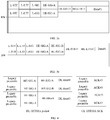
- FIG. 2a is a simple schematic diagram of channel resources used when an uplink OFDMA PPDU frame is sent according to Embodiment 1.
- FIG. 2b is a simple schematic diagram of channel resources used when another uplink OFDMA PPDU frame is sent according to Embodiment 1.
- uplink user data or uplink user MAC control signaling is sent on the allocated RU, and the RU is located on a 20 MHz channel.
- the legacy preamble Legacy preamble and the HE-SIG-A; or, the legacy preamble Legacy preamble, the HE-SIG-A, and the HE-SIG-B, in the common signaling portion in the uplink OFDMA PPDU frame in Embodiment 1 of the present invention are sent on the 20 MHz channel including the RU, and the common signaling portion in the uplink OFDMA PPDU frame is not sent on any other channel(s) in the bandwidth.
- FIG. 3a is a simple schematic diagram of channel resources used when still another uplink OFDMA PPDU frame is sent according to Embodiment 1.
- FIG. 3b is a simple schematic diagram of channel resources used when yet another uplink OFDMA PPDU frame is sent according to Embodiment 1.
- uplink user data or uplink user MAC control signaling is sent on the allocated RU, and the RU is located in multiple 20 MHz channels.
- the legacy preamble Legacy preamble and the HE-SIG-A, or the legacy preamble Legacy preamble, the HE-SIG-A, and the HE-SIG-B in the common signaling portion in the uplink OFDMA PPDU frame are sent on the multiple 20 MHz channels where the RU is located, and are duplicated over each 20 MHz channel.
- the legacy preamble Legacy preamble and the HE-SIG-A are not sent on any other channel(s) in the bandwidth.
- the data portion in the uplink OFDMA PPDU frame includes only ACK signaling, or the data portion in the uplink OFDMA PPDU frame includes uplink user data and uplink user ACK signaling.
- the ACK signaling belongs to MAC signaling, and the ACK signaling is located in a frequency resource on a basis of one or more fundamental channel.
- FIG. 4 is a simple schematic diagram of channel resources used when another uplink OFDMA PPDU frame is sent according to Embodiment 1.
- uplink user ACK signaling uses a same symbol length as a legacy preamble, and there is no HE-SIG-A or HE-STF/LTF between the legacy preamble and the ACK. If the frequency resource unit RU is located in only one fundamental channel unit, and an RU is allocated for ACK of each user on a per 20 MHz basis, both the legacy preamble and the ACK signaling in the uplink OFDMA PPDU frame are sent on the allocated 20 MHz channel.
- the legacy preamble Legacy preamble and the ACK signaling are duplicated over the multiple 20 MHz channels where the RU located, and the legacy preamble Legacy preamble and the ACK signaling are not sent on any other channel(s) in the bandwidth. For example, for a user #3, if an allocated RU is located in multiple 20 MHz channels, a legacy preamble Legacy preamble and ACK signaling are duplicated over the third and fourth 20 MHz channels where a corresponding downlink resource located.
- a data portion in an uplink OFDMA PPDU scheduled by an access point AP is transceived on an allocated frequency resource unit RU, and at least some fields in a common signaling portion in the uplink OFDMA PPDU are transceived on one or more fundamental channels where the frequency resource unit RU is located, for example, the at least some fields are transceived on one or more determined 20 MHz channels.
- the one or more 20 MHz channels for transceiving the common signaling portion in the uplink OFDMA PPDU are already determinate, when another user in a conventional 802.11a/b/n/ac and 802.11ax BSS performs detection according to conventional CCA, the one or more 20 MHz channels are excluded, and the user performs detection on other idle 20 MHz channel(s) for a data portion.
- the another user in the BSS contends for an idle 20 MHz channel for a data portion, and the another user in the BSS can transceive data on an idle fundamental channel for a data portion, thereby improving channel utilization.
- multiple users can simultaneously transceive data on multiple fundamental channels, thereby improving a service transmission rate.
- the at least some fields in the common signaling portion in the uplink OFDMA PPDU are transceived over the one or more fundamental channels, and a fundamental channel has a relatively large capacity, where the fundamental channel is preferably 20 MHz, the one or more fundamental channels are capable of accommodating the at least some fields in the common signaling portion in the uplink OFDMA PPDU. Therefore, a complete common signaling portion is finally transceived to a receive end through the one or more fundamental channels, and transmission signaling is not lost in a transmission process.
- a data portion in an uplink OFDMA PPDU scheduled by an access point AP is transceived on a corresponding allocated frequency resource unit RU, one or more fundamental channel units where the allocated frequency resource unit RU is located are determined, and at least some fields in a common signaling portion in the uplink OFDMA PPDU are transceived on the determined one or more fundamental channels.
- one or more fundamental channels for transceiving at least some fields in a common signaling portion in an uplink OFDMA PPDU are determinate.
- the user detects that the one or more fundamental channels for transceiving at least some fields in the common signaling portion in the uplink OFDMA PPDU are busy, and the user can transceive data in other idle fundamental channel(s), thereby improving channel utilization.
- multiple users can simultaneously transceive data on multiple fundamental channels, thereby improving a service transmission rate.
- Embodiment 2 further discloses another data transmission method. As shown in FIG. 5 , the method includes the following steps.
- S201 Determine a size of a frequency resource that is needed by a data portion in an uplink OFDMA PPDU scheduled by an access point AP.
- S202 Allocate a corresponding frequency resource unit RU.
- the data portion in the uplink OFDMA PPDU includes uplink user data and/or uplink user MAC control signaling.
- S203 Determine multiple fundamental channel units where the allocated frequency resource unit RU is located.
- the fundamental channel unit is preferably a 20 MHz channel.
- the fundamental channel unit in this embodiment of the present invention is not limited to a 20 MHz channel, and any eligible channel can be used as the fundamental channel unit in this embodiment of the present invention.
- S204 Transceive the data portion in the uplink OFDMA PPDU on the allocated frequency resource unit RU, and duplicated at least some fields in a common signaling portion in the uplink OFDMA PPDU over the determined multiple fundamental channels on a per fundamental-channel basis.
- data of a data portion in an uplink OFDMA PPDU scheduled by an access point AP is transceived on a corresponding allocated frequency resource unit RU, multiple fundamental channel units where the allocated frequency resource unit RU is located are determined, and at least some fields in a common signaling portion in the uplink OFDMA PPDU are transceived over the determined multiple fundamental channels.
- multiple fundamental channels for transceiving at least some fields in a common signaling portion in an uplink OFDMA PPDU are determinate.
- the user detects that the multiple fundamental channels for transceiving at least some fields in the common signaling portion in the uplink OFDMA PPDU are busy, and the user can transceive data on other idle fundamental channel(s), thereby improving channel utilization.
- multiple users can simultaneously transceive data on multiple fundamental channels, thereby improving a service transmission rate.
- Embodiment 3 describes in detail a data transmission apparatus.
- the data transmission apparatus described in this embodiment includes an allocation unit 301, a determining unit 302, and a transmission unit 303.
- the allocation unit 301 is configured to: determine a size of a frequency resource needed by a data portion in an uplink OFDMA PPDU scheduled by an access point AP, and allocate a corresponding frequency resource unit RU for transceiving the data portion in the uplink OFDMA PPDU.
- the data portion in the uplink OFDMA PPDU includes uplink user data and/or uplink user MAC control signaling.
- the determining unit 302 is configured to determine one or more fundamental channel units on which the allocated frequency resource unit RU is located.
- the fundamental channel unit is preferably a 20 MHz channel.
- the fundamental channel unit in this embodiment of the present invention is not limited to a 20 MHz channel, and any eligible channel can be used as the fundamental channel unit in this embodiment of the present invention.
- the transmission unit 303 is configured to: transceive the data portion in the uplink OFDMA PPDU on the allocated frequency resource unit RU, and transceive at least some fields in a common signaling portion in the uplink OFDMA PPDU on the determined one or more fundamental channels.
- Fields in the common signaling portion in the uplink OFDMA PPDU include at least a legacy preamble Legacy preamble, and may further include an HE-SIG-A (High Efficient signal part A, High Efficient signal part A) or an HE-SIG-B (High Efficient signal part B, High Efficient signal part B).
- the HE-SIG-A is common resource indication signaling in the uplink OFDMA PPDU
- the HE-SIG-B is resource indication signaling for the user in the uplink OFDMA PPDU. It can be known according to a physical-layer frame format of the transmission frame that the legacy preamble Legacy preamble includes a legacy short training sequence field, a legacy long training sequence field, and a legacy signaling field.
- the HE-SIG-A includes a bandwidth, an inter-symbol guard interval, and common signaling for setting a length and modulation coding of an HE-SIG-B, and the like.
- the HE-SIG-B is used to indicate information related to resources allocated to the target user and the like.
- the at least some fields in the common signaling portion in the uplink OFDMA PPDU frame include only a legacy preamble Legacy preamble and an HE-SIG-A, or the common signaling portion in the uplink OFDMA PPDU frame includes a legacy preamble Legacy preamble, an HE-SIG-A, and an HE-SIG-B.
- an uplink user data or uplink user MAC control signaling is sent on the allocated RU, and the RU is located in only one 20 MHz channel.
- the legacy preamble Legacy preamble and the HE-SIG-A; or, the legacy preamble Legacy preamble, the HE-SIG-A, and the HE-SIG-B, in the common signaling portion in the uplink OFDMA PPDU frame are sent on the 20 MHz channel including the RU, and the common signaling portion in the uplink OFDMA PPDU frame is not sent on any other channel(s) in the bandwidth.
- an uplink user data or uplink user MAC control signaling is sent on the allocated RU, and the RU is located in multiple 20 MHz channels.
- the legacy preamble Legacy preamble and the HE-SIG-A; or, the legacy preamble Legacy preamble, the HE-SIG-A, and the HE-SIG-B in the common signaling portion in the uplink OFDMA PPDU frame are sent on the multiple 20 MHz channels where the RU is located, and are duplicated over each 20 MHz channel.
- the legacy preamble Legacy preamble and the HE-SIG-A are not sent on any other channel(s) in the bandwidth.
- the data portion in the uplink OFDMA PPDU frame includes only ACK signaling, or the data portion in the uplink OFDMA PPDU frame includes uplink user data and uplink user ACK signaling.
- the ACK signaling belongs to MAC signaling, and the ACK signaling is located in a frequency resource on a basis of per fundamental channel unit.
- uplink user ACK signaling uses a same symbol length as a legacy preamble, and there is no HE-SIG-A or HE-STF/LTF between the legacy preamble and the ACK. If the frequency resource unit RU is located in only one fundamental channel unit, and an RU is allocated for ACK of each user on a per 20 MHz basis, both the legacy preamble and the ACK signaling in the uplink OFDMA PPDU frame are sent on the allocated 20 MHz channel.
- the legacy preamble Legacy preamble and the ACK signaling are duplicated over the multiple 20 MHz channels, and the legacy preamble Legacy preamble and the ACK signaling are not sent on any other channel(s) in the bandwidth. For example, for a user #3, if an allocated RU is located in multiple 20 MHz channels, a legacy preamble Legacy preamble and ACK signaling are duplicated over the third and fourth 20 MHz channels where a corresponding downlink resource located.
- a data portion in an uplink OFDMA PPDU scheduled by an access point AP is transceived on a frequency resource unit RU allocated by the allocation unit 301, and at least some fields in a common signaling portion in the uplink OFDMA PPDU are transceived on one or more fundamental channels on which the frequency resource unit RU is located and that are determined by the determining unit 302, for example, the at least some fields are transceived on one or more determined 20 MHz channels.
- the one or more 20 MHz channels for transceiving the common signaling portion in the uplink OFDMA PPDU are already determinate, when another user in a conventional 802.11a/b/n/ac and 802.11ax BSS performs detection according to conventional CCA, the one or more 20 MHz channels are excluded, and the user performs detection on another idle 20 MHz channel for a data portion.
- the another user in the BSS contends for an idle 20 MHz channel for a data portion, and the another user in the BSS can transceive data on an idle fundamental channel for a data portion, thereby improving channel utilization.
- multiple users can simultaneously transceive data on multiple fundamental channels, thereby improving a service transmission rate.
- the one or more fundamental channels are capable of accommodating the at least some fields in the common signaling portion in the uplink OFDMA PPDU. Therefore, a complete common signaling portion is finally transceived to a receive end through the one or more fundamental channels, and transmission signaling is not lost in a transmission process.
- data of a data portion in an uplink OFDMA PPDU scheduled by an access point AP is transceived on a frequency resource unit RU allocated by the allocation unit 301, one or more fundamental channel units on which the allocated frequency resource unit RU is located are determined by the determining unit 302, and at least some fields in a common signaling portion in the uplink OFDMA PPDU are transceived by the transmission unit 303 on the determined one or more fundamental channels.
- one or more fundamental channels for transceiving at least some fields in a common signaling portion in an uplink OFDMA PPDU are determinate.
- 11a/b/n/ac and 802.11ax BSS performs detection according to conventional CCA, the user detects that the one or more fundamental channels for transceiving at least some fields in the common signaling portion in the uplink OFDMA PPDU are busy, and the user can transceive data on another idle fundamental channel, thereby improving channel utilization.
- multiple users can simultaneously transceive data on multiple fundamental channels, thereby improving a service transmission rate.
- Embodiment 4 describes in detail another data transmission apparatus.
- the data transmission apparatus described in this embodiment includes: an allocation unit 301, a determining unit 302, and a transmission unit 303.
- the allocation unit 301 is configured to: determine a size of a frequency resource that is needed by a data portion in an uplink OFDMA PPDU scheduled by an access point AP, and allocate a corresponding frequency resource unit RU for transceiving the data portion in the uplink OFDMA PPDU.
- the data portion in the uplink OFDMA PPDU includes uplink user data and/or uplink user MAC control signaling.
- the determining unit 302 is configured to determine one or more fundamental channel units on which the allocated frequency resource unit RU is located.
- the fundamental channel unit is preferably a 20 MHz channel.
- the fundamental channel unit in this embodiment of the present invention is not limited to a 20 MHz channel, and any eligible channel can be used as the fundamental channel unit in this embodiment of the present invention.
- the transmission unit 303 is configured to: transceive the data portion in the uplink OFDMA PPDU on the allocated frequency resource unit RU, and transceive at least some fields in a common signaling portion in the uplink OFDMA PPDU on the determined one or more fundamental channels.
- the transmission unit 303 includes: a first transmission unit 3031, configured to repeatedly transceive, by using the determined multiple fundamental channels on a per fundamental-channel basis, the at least some fields in the common signaling portion in the uplink OFDMA PPDU on the multiple fundamental channels.
- data of a data portion in an uplink OFDMA PPDU scheduled by an access point AP is transceived on a frequency resource unit RU allocated by the allocation unit 301, multiple fundamental channel units on which the allocated frequency resource unit RU is located are determined by the determining unit 302, and at least some fields in a common signaling portion in the uplink OFDMA PPDU are transceived by the transmission unit 3031 on the determined multiple fundamental channels.
- multiple fundamental channels for transceiving at least some fields in a common signaling portion in an uplink OFDMA PPDU are determinate.
- the user detects that the multiple fundamental channels for transceiving at least some fields in the common signaling portion in the uplink OFDMA PPDU are busy, and the user can transceive data on another idle fundamental channel, thereby improving channel utilization.
- multiple users can simultaneously transceive data on multiple fundamental channels, thereby improving a service transmission rate.
- An embodiment further provides an access point, and the access point may include any data transmission apparatus as described above.
- data transmission may be implemented directly by hardware, a memory executed by a processor, or a combination thereof. Therefore, corresponding to the method and apparatus disclosed in the embodiments of the present disclosure, the present disclosure further discloses a data transmission system. A specific embodiment is given below for detailed description.
- the data transmission system 1 includes a memory 11 and a processor 13 that is connected to the memory 11 by using a bus 12.
- the memory 11 has a storage medium, and the storage medium stores a data transmission program used to transceive data in the uplink OFDMA PPDU.
- the memory 11 may include a high-speed RAM memory, and may also include a nonvolatile memory, for example, at least one magnetic disk memory.
- the processor 13 is connected to the memory 11 by using the bus 12.
- the processor 13 invokes the data transmission method program that is used for transceiving data in the uplink OFDMA PPDU and that is stored in the memory 11.
- the database search program may include program code, and the program code includes a series of operation instructions arranged sequentially.
- the processor 13 may be a central processing unit CPU, or an application-specific integrated circuit, or may be one or more integrated circuits configured to implement this embodiment of the present invention.
- the data transmission method program that is stored in the memory and that is invoked by the processor 13 may specifically include:
- an OFDMA technology is introduced based on the IEEE 802.11ax standard.
- Data of a data portion in an uplink OFDMA PPDU scheduled by an access point AP is transceived on a corresponding allocated frequency resource unit RU, one or more fundamental channel units on which the allocated frequency resource unit RU is located are determined, and at least some fields in a common signaling portion in the uplink OFDMA PPDU are transceived on the determined one or more fundamental channels.
- one or more fundamental channels for transceiving at least some fields in a common signaling portion in an uplink OFDMA PPDU are determinate.
- the user detects that the one or more fundamental channels for transceiving at least some fields in the common signaling portion in the uplink OFDMA PPDU are busy, and the user can transceive data on another idle fundamental channel, thereby improving channel utilization.
- multiple users can simultaneously transceive data on multiple fundamental channels, thereby improving a service transmission rate.
- method or algorithm steps may be implemented by hardware, a software module executed by a processor, or a combination thereof.
- the software module may reside in a random access memory (RAM), a memory, a read-only memory (ROM), an electrically programmable ROM, an electrically erasable programmable ROM, a register, a hard disk, a removable disk, a CD-ROM, or any other form of storage medium known in the art.
Landscapes
- Engineering & Computer Science (AREA)
- Signal Processing (AREA)
- Computer Networks & Wireless Communication (AREA)
- Mobile Radio Communication Systems (AREA)
Claims (12)
- Procédé de transmission de données pour transmettre une unité de données de protocole de convergence de couche physique, PPDU, d'accès multiple par répartition orthogonale de la fréquence, OFDMA, de liaison montante, dans une largeur de bande, dans lequel la largeur de bande a de multiples canaux de 20 MHz, la PPDU d'OFDMA de liaison montante comprend une portion de signalisation commune et une portion de données, une unité de ressource, RU, de fréquence à l'intérieur de la largeur de bande est attribuée pour la portion de données, la RU est située à l'intérieur d'un ou de plusieurs canaux de 20 MHz dans la largeur de bande, la largeur de bande comprend un ou plusieurs autres canaux de 20 MHz où la RU attribuée n'est pas située, et la portion de signalisation commune inclut un préambule existant et une partie de signal hautement efficace A, HE-SIG-A, le procédé comprenant :l'envoi, par une station, STA, du préambule existant et du HE-SIG-A seulement sur les un ou plusieurs canaux de 20 MHz où la RU attribuée est située ; etl'envoi, par la STA, de la portion de données dans la PPDU d'OFDMA de liaison montante sur la RU attribuée.
- Procédé selon la revendication 1, dans lequel l'envoi du préambule existant et du HE-SIG-A seulement sur les un ou plusieurs canaux de 20 MHz où la RU attribuée est située comprend :la reproduction du préambule existant et du HE-SIG-A ; etl'envoi du préambule existant et du HE-SIG-A reproduits seulement par l'intermédiaire de chacun des un ou plusieurs canaux de 20 MHz où la RU attribuée est située.
- Procédé selon la revendication 1 ou 2, dans lequel la portion de données dans la PPDU d'OFDMA de liaison montante inclut au moins un de ce qui suit : des données d'utilisateur de liaison montante, et une signalisation de contrôle d'accès au support, MAC, d'utilisateur de liaison montante.
- Procédé selon l'une quelconque des revendications 1 à 3, comprenant en outre :
l'envoi d'un champ d'apprentissage court hautement efficace, HE-STF, et d'un champ d'apprentissage long hautement efficace, HE-LTF, dans la PPDU d'OFDMA de liaison montante sur la RU attribuée. - Procédé selon l'une quelconque des revendications 1 à 4, dans lequel la PPDU d'OFDMA de liaison montante est basée sur la norme 802.11ax.
- Appareil de transmission de données, comprenant :une mémoire (11) configurée pour stocker un programme pour transmettre une unité de données de protocole de convergence de couche physique, PPDU, d'accès multiple par répartition orthogonale de la fréquence, OFDMA, de liaison montante, dans une largeur de bande, dans lequel la largeur de bande a de multiples canaux de 20 MHz, la PPDU d'OFDMA de liaison montante comprend une portion de signalisation commune et une portion de données, une unité de ressource, RU, de fréquence à l'intérieur de la largeur de bande est attribuée pour la portion de données, la RU est située à l'intérieur d'un ou de plusieurs canaux de 20 MHz dans la largeur de bande, la largeur de bande comprend un ou plusieurs autres canaux de 20 MHz où la RU attribuée n'est pas située, et la portion de signalisation commune inclut un préambule existant et une partie de signal hautement efficace A, HE-SIG-A ; etun processeur (13) connecté à la mémoire et configuré pour faire appel au programme stocké dans la mémoire et exécuter le programme pour amener l'appareil de transmission de données à :envoyer le préambule existant et le HE-SIG-A seulement sur les un ou plusieurs canaux de 20 MHz où la RU attribuée est située ; etenvoyer la portion de données dans la PPDU d'OFDMA de liaison montante sur la RU attribuée.
- Appareil selon la revendication 6, dans lequel le processeur est configuré pour faire appel au programme stocké dans la mémoire et exécuter le programme pour amener l'appareil de transmission de données à :reproduire le préambule existant et le HE-SIG-A ; etenvoyer le préambule existant et le HE-SIG-A reproduits seulement par l'intermédiaire de chacun des un ou plusieurs canaux de 20 MHz où la RU attribuée est située.
- Appareil selon la revendication 6 ou 7, dans lequel la portion de données dans la PPDU d'OFDMA de liaison montante inclut au moins un de ce qui suit : des données d'utilisateur de liaison montante, et une signalisation de contrôle d'accès au support, MAC, d'utilisateur de liaison montante.
- Appareil selon l'une quelconque des revendications 6 à 8, dans lequel le processeur est configuré pour faire appel au programme stocké dans la mémoire et exécuter le programme pour amener l'appareil de transmission de données à :
envoyer un champ d'apprentissage court hautement efficace, HE-STF, et un champ d'apprentissage long hautement efficace, HE-LTF, dans la PPDU d'OFDMA de liaison montante sur la RU attribuée. - Appareil selon l'une quelconque des revendications 6 à 9, dans lequel la PPDU d'OFDMA de liaison montante est basée sur la norme 802.11ax.
- Appareil selon l'une quelconque des revendications 6 à 10, l'appareil étant une station.
- Support de stockage lisible par ordinateur, comprenant des instructions qui, lorsqu'elles sont exécutées par un ordinateur, amènent l'ordinateur à réaliser le procédé de l'une quelconque des revendications 1 à 5.
Priority Applications (3)
| Application Number | Priority Date | Filing Date | Title |
|---|---|---|---|
| ES19191871T ES2889779T3 (es) | 2015-05-21 | 2015-05-21 | Sistema, aparato y método de transmisión de datos y punto de acceso |
| EP19191871.3A EP3661104B1 (fr) | 2015-05-21 | 2015-05-21 | Procédé, appareil et système de transmission de données et point d'accès |
| EP21184138.2A EP3982583B1 (fr) | 2015-05-21 | 2015-05-21 | Procédé, appareil et système de transmission de données et point d'accès |
Applications Claiming Priority (3)
| Application Number | Priority Date | Filing Date | Title |
|---|---|---|---|
| EP15892221.1A EP3297385B1 (fr) | 2015-05-21 | 2015-05-21 | Procédé, dispositif de transmission de données et structure de trame |
| PCT/CN2015/079496 WO2016183842A1 (fr) | 2015-05-21 | 2015-05-21 | Procédé, dispositif et système de transmission de données, et point d'accès |
| EP19191871.3A EP3661104B1 (fr) | 2015-05-21 | 2015-05-21 | Procédé, appareil et système de transmission de données et point d'accès |
Related Parent Applications (2)
| Application Number | Title | Priority Date | Filing Date |
|---|---|---|---|
| EP15892221.1A Division-Into EP3297385B1 (fr) | 2015-05-21 | 2015-05-21 | Procédé, dispositif de transmission de données et structure de trame |
| EP15892221.1A Division EP3297385B1 (fr) | 2015-05-21 | 2015-05-21 | Procédé, dispositif de transmission de données et structure de trame |
Related Child Applications (1)
| Application Number | Title | Priority Date | Filing Date |
|---|---|---|---|
| EP21184138.2A Division EP3982583B1 (fr) | 2015-05-21 | 2015-05-21 | Procédé, appareil et système de transmission de données et point d'accès |
Publications (2)
| Publication Number | Publication Date |
|---|---|
| EP3661104A1 EP3661104A1 (fr) | 2020-06-03 |
| EP3661104B1 true EP3661104B1 (fr) | 2021-07-21 |
Family
ID=57319122
Family Applications (3)
| Application Number | Title | Priority Date | Filing Date |
|---|---|---|---|
| EP21184138.2A Active EP3982583B1 (fr) | 2015-05-21 | 2015-05-21 | Procédé, appareil et système de transmission de données et point d'accès |
| EP19191871.3A Active EP3661104B1 (fr) | 2015-05-21 | 2015-05-21 | Procédé, appareil et système de transmission de données et point d'accès |
| EP15892221.1A Active EP3297385B1 (fr) | 2015-05-21 | 2015-05-21 | Procédé, dispositif de transmission de données et structure de trame |
Family Applications Before (1)
| Application Number | Title | Priority Date | Filing Date |
|---|---|---|---|
| EP21184138.2A Active EP3982583B1 (fr) | 2015-05-21 | 2015-05-21 | Procédé, appareil et système de transmission de données et point d'accès |
Family Applications After (1)
| Application Number | Title | Priority Date | Filing Date |
|---|---|---|---|
| EP15892221.1A Active EP3297385B1 (fr) | 2015-05-21 | 2015-05-21 | Procédé, dispositif de transmission de données et structure de trame |
Country Status (11)
| Country | Link |
|---|---|
| US (4) | US10674533B2 (fr) |
| EP (3) | EP3982583B1 (fr) |
| JP (1) | JP6744332B2 (fr) |
| KR (1) | KR101996581B1 (fr) |
| CN (2) | CN107534996B (fr) |
| AU (1) | AU2015395033B2 (fr) |
| CA (1) | CA2986605C (fr) |
| ES (1) | ES2889779T3 (fr) |
| MY (1) | MY190060A (fr) |
| RU (1) | RU2673699C1 (fr) |
| WO (1) | WO2016183842A1 (fr) |
Families Citing this family (5)
| Publication number | Priority date | Publication date | Assignee | Title |
|---|---|---|---|---|
| CN107534996B (zh) | 2015-05-21 | 2023-11-03 | 华为技术有限公司 | 一种数据传输方法、装置、系统及接入点 |
| EP3923531B1 (fr) * | 2016-02-04 | 2023-04-05 | LG Electronics Inc. | Procédé et appareil pour générer un signal d'entraînement à l'aide d'une séquence binaire prédéterminée dans un système de réseau local sans fil |
| US20180146076A1 (en) * | 2016-11-20 | 2018-05-24 | Qualcomm Incorporated | Indicating presence of mid-amble |
| US11057174B2 (en) * | 2017-12-22 | 2021-07-06 | Qualcomm Incorporated | Wireless communication with partial channel puncturing |
| US12463853B2 (en) * | 2020-08-10 | 2025-11-04 | Avalon Technology Solutions LLC | Extending communication range of wireless devices operating in a 6 gigahertz band |
Family Cites Families (18)
| Publication number | Priority date | Publication date | Assignee | Title |
|---|---|---|---|---|
| RU2470494C2 (ru) * | 2008-04-22 | 2012-12-20 | Нтт Досомо, Инк. | Способ мобильной связи, мобильная станция и базовая станция радиосвязи |
| KR101532748B1 (ko) * | 2009-01-19 | 2015-07-01 | 삼성전자주식회사 | 무선통신 시스템에서 2개의 경로를 갖는 라디오 유닛들을 이용한 4-빔포밍 장치 및 방법 |
| US8848680B2 (en) | 2009-12-03 | 2014-09-30 | Lg Electronics Inc. | Method and apparatus for transmitting a frame in a wireless RAN system |
| US9794032B2 (en) * | 2010-03-05 | 2017-10-17 | Lg Electronics Inc. | PPDU receiving method and apparatus based on the MIMO technique in a WLAN system |
| US9281924B2 (en) * | 2011-04-13 | 2016-03-08 | Qualcomm Incorporated | Method and apparatus for generating various transmission modes for WLAN systems |
| JP5487229B2 (ja) * | 2011-11-07 | 2014-05-07 | 株式会社Nttドコモ | 無線基地局装置、ユーザ端末、無線通信システム及び無線通信方法 |
| WO2013115629A1 (fr) * | 2012-02-05 | 2013-08-08 | 엘지전자 주식회사 | Procédé et appareil permettant l'accès au canal au moyen d'une trame de paquet de données vide dans un système de réseau local sans fil |
| US9608789B2 (en) | 2012-05-11 | 2017-03-28 | Interdigital Patent Holdings, Inc. | Method and apparatus for transmitting acknowledgements in response to received frames |
| CN103024911A (zh) * | 2012-11-30 | 2013-04-03 | 北京邮电大学 | 蜂窝与d2d混合网络中终端直通通信的数据传输方法 |
| US9397805B2 (en) | 2013-04-15 | 2016-07-19 | Qualcomm Incorporated | Systems and methods for backwards-compatible preamble formats for multiple access wireless communication |
| US9474073B2 (en) | 2013-10-31 | 2016-10-18 | Qualcomm Incorporated | Methods and apparatus for multiple user uplink bandwidth allocation |
| US9961510B2 (en) * | 2013-11-01 | 2018-05-01 | Qualcomm Incorporated | Protocols for multiple user frame exchanges |
| KR20160008971A (ko) * | 2014-07-15 | 2016-01-25 | 뉴라컴 인코포레이티드 | 하향링크 다중 사용자 전송에 응답하는 상향링크 확인응답 |
| KR102232863B1 (ko) | 2014-08-21 | 2021-03-26 | 엘지전자 주식회사 | 무선 통신 시스템에서 상향링크 전송 방법 및 이를 위한 장치 |
| CN104580053B (zh) * | 2014-12-02 | 2017-09-15 | 江苏中兴微通信息科技有限公司 | 在宽带无线局域网中实现ofdma技术的收发方法和装置 |
| EP3236625B1 (fr) * | 2014-12-16 | 2020-07-22 | LG Electronics Inc. | Procédé de transmission de données dans un système de communication sans fil et dispositif associé |
| US10181930B2 (en) * | 2015-05-10 | 2019-01-15 | Newracom, Inc. | Multiplexing acknowledgment messages in response to downlink frames |
| CN107534996B (zh) | 2015-05-21 | 2023-11-03 | 华为技术有限公司 | 一种数据传输方法、装置、系统及接入点 |
-
2015
- 2015-05-21 CN CN201580078881.1A patent/CN107534996B/zh active Active
- 2015-05-21 CA CA2986605A patent/CA2986605C/fr active Active
- 2015-05-21 AU AU2015395033A patent/AU2015395033B2/en active Active
- 2015-05-21 EP EP21184138.2A patent/EP3982583B1/fr active Active
- 2015-05-21 RU RU2017143962A patent/RU2673699C1/ru active
- 2015-05-21 EP EP19191871.3A patent/EP3661104B1/fr active Active
- 2015-05-21 CN CN201811125251.7A patent/CN109245872B/zh active Active
- 2015-05-21 WO PCT/CN2015/079496 patent/WO2016183842A1/fr not_active Ceased
- 2015-05-21 JP JP2017560523A patent/JP6744332B2/ja active Active
- 2015-05-21 KR KR1020177036693A patent/KR101996581B1/ko active Active
- 2015-05-21 EP EP15892221.1A patent/EP3297385B1/fr active Active
- 2015-05-21 ES ES19191871T patent/ES2889779T3/es active Active
- 2015-05-21 MY MYPI2017704441A patent/MY190060A/en unknown
-
2017
- 2017-11-21 US US15/819,048 patent/US10674533B2/en active Active
-
2019
- 2019-03-28 US US16/368,300 patent/US10716135B2/en active Active
-
2020
- 2020-06-26 US US16/913,342 patent/US11368977B2/en active Active
-
2022
- 2022-05-23 US US17/751,155 patent/US11916710B2/en active Active
Also Published As
| Publication number | Publication date |
|---|---|
| JP6744332B2 (ja) | 2020-08-19 |
| ES2889779T3 (es) | 2022-01-13 |
| EP3297385A4 (fr) | 2018-05-16 |
| CN107534996A (zh) | 2018-01-02 |
| EP3982583A1 (fr) | 2022-04-13 |
| EP3297385A1 (fr) | 2018-03-21 |
| CN109245872A (zh) | 2019-01-18 |
| US11916710B2 (en) | 2024-02-27 |
| US20180092123A1 (en) | 2018-03-29 |
| EP3982583B1 (fr) | 2024-03-06 |
| US20200329491A1 (en) | 2020-10-15 |
| CA2986605C (fr) | 2020-01-14 |
| CN107534996B (zh) | 2023-11-03 |
| AU2015395033B2 (en) | 2019-06-20 |
| US10674533B2 (en) | 2020-06-02 |
| EP3297385B1 (fr) | 2019-09-18 |
| RU2673699C1 (ru) | 2018-11-29 |
| US20190223211A1 (en) | 2019-07-18 |
| EP3661104A1 (fr) | 2020-06-03 |
| WO2016183842A1 (fr) | 2016-11-24 |
| KR101996581B1 (ko) | 2019-07-04 |
| KR20180011195A (ko) | 2018-01-31 |
| CA2986605A1 (fr) | 2016-11-24 |
| US10716135B2 (en) | 2020-07-14 |
| CN109245872B (zh) | 2019-11-05 |
| US20220376963A1 (en) | 2022-11-24 |
| JP2018516016A (ja) | 2018-06-14 |
| AU2015395033A1 (en) | 2018-01-04 |
| US11368977B2 (en) | 2022-06-21 |
| MY190060A (en) | 2022-03-24 |
Similar Documents
| Publication | Publication Date | Title |
|---|---|---|
| US10979194B2 (en) | Resource indication method, user equipment, and network device | |
| US11916710B2 (en) | Data transmission method and apparatus | |
| CN110291841B (zh) | 无线电系统的同步信号传输和接收 | |
| EP3678321B1 (fr) | Procédé, appareil et dispositif de planification de ressources | |
| CN106851744B (zh) | 无线通信的方法和装置 | |
| EP3627733B1 (fr) | Procédé de communication, dispositif de réseau, et dispositif terminal | |
| CN108347778A (zh) | 通信方法及装置 | |
| WO2017028051A1 (fr) | Procédé de transmission d'informations, station de base et équipement utilisateur | |
| CN106937357B (zh) | 一种多用户接入的方法及装置 | |
| US10397862B2 (en) | Wireless communication method for enhancing transmission efficiency through separating transmission interval in wireless local area network (WLAN) system | |
| CN106793097B (zh) | 用户设备、网络侧设备及用户设备的控制方法 | |
| CN107615852B (zh) | 资源调度的方法、装置和设备 | |
| US10880828B2 (en) | Wireless communication method for enhancing transmission efficiency through separating transmission interval in wireless local area network (WLAN) system | |
| WO2023006067A1 (fr) | Procédé et appareil de communication | |
| CN106304380B (zh) | 一种资源调度的指示方法及装置 | |
| JP6968240B2 (ja) | データ送信方法および装置 |
Legal Events
| Date | Code | Title | Description |
|---|---|---|---|
| PUAI | Public reference made under article 153(3) epc to a published international application that has entered the european phase |
Free format text: ORIGINAL CODE: 0009012 |
|
| STAA | Information on the status of an ep patent application or granted ep patent |
Free format text: STATUS: THE APPLICATION HAS BEEN PUBLISHED |
|
| AC | Divisional application: reference to earlier application |
Ref document number: 3297385 Country of ref document: EP Kind code of ref document: P |
|
| AK | Designated contracting states |
Kind code of ref document: A1 Designated state(s): AL AT BE BG CH CY CZ DE DK EE ES FI FR GB GR HR HU IE IS IT LI LT LU LV MC MK MT NL NO PL PT RO RS SE SI SK SM TR |
|
| STAA | Information on the status of an ep patent application or granted ep patent |
Free format text: STATUS: REQUEST FOR EXAMINATION WAS MADE |
|
| 17P | Request for examination filed |
Effective date: 20201203 |
|
| RBV | Designated contracting states (corrected) |
Designated state(s): AL AT BE BG CH CY CZ DE DK EE ES FI FR GB GR HR HU IE IS IT LI LT LU LV MC MK MT NL NO PL PT RO RS SE SI SK SM TR |
|
| GRAP | Despatch of communication of intention to grant a patent |
Free format text: ORIGINAL CODE: EPIDOSNIGR1 |
|
| STAA | Information on the status of an ep patent application or granted ep patent |
Free format text: STATUS: GRANT OF PATENT IS INTENDED |
|
| RIC1 | Information provided on ipc code assigned before grant |
Ipc: H04W 74/08 20090101ALN20210122BHEP Ipc: H04L 5/00 20060101AFI20210122BHEP Ipc: H04W 74/04 20090101ALI20210122BHEP Ipc: H04W 72/04 20090101ALI20210122BHEP Ipc: H04L 27/26 20060101ALI20210122BHEP |
|
| INTG | Intention to grant announced |
Effective date: 20210216 |
|
| RIN1 | Information on inventor provided before grant (corrected) |
Inventor name: LIU, LE Inventor name: LAN, ZHOU |
|
| GRAS | Grant fee paid |
Free format text: ORIGINAL CODE: EPIDOSNIGR3 |
|
| GRAA | (expected) grant |
Free format text: ORIGINAL CODE: 0009210 |
|
| STAA | Information on the status of an ep patent application or granted ep patent |
Free format text: STATUS: THE PATENT HAS BEEN GRANTED |
|
| GRAT | Correction requested after decision to grant or after decision to maintain patent in amended form |
Free format text: ORIGINAL CODE: EPIDOSNCDEC |
|
| AC | Divisional application: reference to earlier application |
Ref document number: 3297385 Country of ref document: EP Kind code of ref document: P |
|
| AK | Designated contracting states |
Kind code of ref document: B1 Designated state(s): AL AT BE BG CH CY CZ DE DK EE ES FI FR GB GR HR HU IE IS IT LI LT LU LV MC MK MT NL NO PL PT RO RS SE SI SK SM TR |
|
| REG | Reference to a national code |
Ref country code: GB Ref legal event code: FG4D |
|
| REG | Reference to a national code |
Ref country code: CH Ref legal event code: EP |
|
| REG | Reference to a national code |
Ref country code: DE Ref legal event code: R096 Ref document number: 602015071617 Country of ref document: DE |
|
| REG | Reference to a national code |
Ref country code: AT Ref legal event code: REF Ref document number: 1413612 Country of ref document: AT Kind code of ref document: T Effective date: 20210815 |
|
| REG | Reference to a national code |
Ref country code: IE Ref legal event code: FG4D |
|
| REG | Reference to a national code |
Ref country code: NL Ref legal event code: FP |
|
| REG | Reference to a national code |
Ref country code: SE Ref legal event code: TRGR |
|
| REG | Reference to a national code |
Ref country code: LT Ref legal event code: MG9D |
|
| REG | Reference to a national code |
Ref country code: AT Ref legal event code: MK05 Ref document number: 1413612 Country of ref document: AT Kind code of ref document: T Effective date: 20210721 |
|
| REG | Reference to a national code |
Ref country code: ES Ref legal event code: FG2A Ref document number: 2889779 Country of ref document: ES Kind code of ref document: T3 Effective date: 20220113 |
|
| PG25 | Lapsed in a contracting state [announced via postgrant information from national office to epo] |
Ref country code: HR Free format text: LAPSE BECAUSE OF FAILURE TO SUBMIT A TRANSLATION OF THE DESCRIPTION OR TO PAY THE FEE WITHIN THE PRESCRIBED TIME-LIMIT Effective date: 20210721 Ref country code: NO Free format text: LAPSE BECAUSE OF FAILURE TO SUBMIT A TRANSLATION OF THE DESCRIPTION OR TO PAY THE FEE WITHIN THE PRESCRIBED TIME-LIMIT Effective date: 20211021 Ref country code: PT Free format text: LAPSE BECAUSE OF FAILURE TO SUBMIT A TRANSLATION OF THE DESCRIPTION OR TO PAY THE FEE WITHIN THE PRESCRIBED TIME-LIMIT Effective date: 20211122 Ref country code: LT Free format text: LAPSE BECAUSE OF FAILURE TO SUBMIT A TRANSLATION OF THE DESCRIPTION OR TO PAY THE FEE WITHIN THE PRESCRIBED TIME-LIMIT Effective date: 20210721 Ref country code: AT Free format text: LAPSE BECAUSE OF FAILURE TO SUBMIT A TRANSLATION OF THE DESCRIPTION OR TO PAY THE FEE WITHIN THE PRESCRIBED TIME-LIMIT Effective date: 20210721 Ref country code: BG Free format text: LAPSE BECAUSE OF FAILURE TO SUBMIT A TRANSLATION OF THE DESCRIPTION OR TO PAY THE FEE WITHIN THE PRESCRIBED TIME-LIMIT Effective date: 20211021 Ref country code: FI Free format text: LAPSE BECAUSE OF FAILURE TO SUBMIT A TRANSLATION OF THE DESCRIPTION OR TO PAY THE FEE WITHIN THE PRESCRIBED TIME-LIMIT Effective date: 20210721 Ref country code: RS Free format text: LAPSE BECAUSE OF FAILURE TO SUBMIT A TRANSLATION OF THE DESCRIPTION OR TO PAY THE FEE WITHIN THE PRESCRIBED TIME-LIMIT Effective date: 20210721 |
|
| PG25 | Lapsed in a contracting state [announced via postgrant information from national office to epo] |
Ref country code: PL Free format text: LAPSE BECAUSE OF FAILURE TO SUBMIT A TRANSLATION OF THE DESCRIPTION OR TO PAY THE FEE WITHIN THE PRESCRIBED TIME-LIMIT Effective date: 20210721 Ref country code: LV Free format text: LAPSE BECAUSE OF FAILURE TO SUBMIT A TRANSLATION OF THE DESCRIPTION OR TO PAY THE FEE WITHIN THE PRESCRIBED TIME-LIMIT Effective date: 20210721 Ref country code: GR Free format text: LAPSE BECAUSE OF FAILURE TO SUBMIT A TRANSLATION OF THE DESCRIPTION OR TO PAY THE FEE WITHIN THE PRESCRIBED TIME-LIMIT Effective date: 20211022 |
|
| REG | Reference to a national code |
Ref country code: DE Ref legal event code: R097 Ref document number: 602015071617 Country of ref document: DE |
|
| PG25 | Lapsed in a contracting state [announced via postgrant information from national office to epo] |
Ref country code: DK Free format text: LAPSE BECAUSE OF FAILURE TO SUBMIT A TRANSLATION OF THE DESCRIPTION OR TO PAY THE FEE WITHIN THE PRESCRIBED TIME-LIMIT Effective date: 20210721 |
|
| PLBE | No opposition filed within time limit |
Free format text: ORIGINAL CODE: 0009261 |
|
| STAA | Information on the status of an ep patent application or granted ep patent |
Free format text: STATUS: NO OPPOSITION FILED WITHIN TIME LIMIT |
|
| PG25 | Lapsed in a contracting state [announced via postgrant information from national office to epo] |
Ref country code: SM Free format text: LAPSE BECAUSE OF FAILURE TO SUBMIT A TRANSLATION OF THE DESCRIPTION OR TO PAY THE FEE WITHIN THE PRESCRIBED TIME-LIMIT Effective date: 20210721 Ref country code: SK Free format text: LAPSE BECAUSE OF FAILURE TO SUBMIT A TRANSLATION OF THE DESCRIPTION OR TO PAY THE FEE WITHIN THE PRESCRIBED TIME-LIMIT Effective date: 20210721 Ref country code: RO Free format text: LAPSE BECAUSE OF FAILURE TO SUBMIT A TRANSLATION OF THE DESCRIPTION OR TO PAY THE FEE WITHIN THE PRESCRIBED TIME-LIMIT Effective date: 20210721 Ref country code: EE Free format text: LAPSE BECAUSE OF FAILURE TO SUBMIT A TRANSLATION OF THE DESCRIPTION OR TO PAY THE FEE WITHIN THE PRESCRIBED TIME-LIMIT Effective date: 20210721 Ref country code: CZ Free format text: LAPSE BECAUSE OF FAILURE TO SUBMIT A TRANSLATION OF THE DESCRIPTION OR TO PAY THE FEE WITHIN THE PRESCRIBED TIME-LIMIT Effective date: 20210721 Ref country code: AL Free format text: LAPSE BECAUSE OF FAILURE TO SUBMIT A TRANSLATION OF THE DESCRIPTION OR TO PAY THE FEE WITHIN THE PRESCRIBED TIME-LIMIT Effective date: 20210721 |
|
| 26N | No opposition filed |
Effective date: 20220422 |
|
| REG | Reference to a national code |
Ref country code: CH Ref legal event code: PL |
|
| REG | Reference to a national code |
Ref country code: BE Ref legal event code: MM Effective date: 20220531 |
|
| PG25 | Lapsed in a contracting state [announced via postgrant information from national office to epo] |
Ref country code: MC Free format text: LAPSE BECAUSE OF FAILURE TO SUBMIT A TRANSLATION OF THE DESCRIPTION OR TO PAY THE FEE WITHIN THE PRESCRIBED TIME-LIMIT Effective date: 20210721 Ref country code: LU Free format text: LAPSE BECAUSE OF NON-PAYMENT OF DUE FEES Effective date: 20220521 Ref country code: LI Free format text: LAPSE BECAUSE OF NON-PAYMENT OF DUE FEES Effective date: 20220531 Ref country code: CH Free format text: LAPSE BECAUSE OF NON-PAYMENT OF DUE FEES Effective date: 20220531 |
|
| PG25 | Lapsed in a contracting state [announced via postgrant information from national office to epo] |
Ref country code: IE Free format text: LAPSE BECAUSE OF NON-PAYMENT OF DUE FEES Effective date: 20220521 |
|
| PG25 | Lapsed in a contracting state [announced via postgrant information from national office to epo] |
Ref country code: BE Free format text: LAPSE BECAUSE OF NON-PAYMENT OF DUE FEES Effective date: 20220531 |
|
| P01 | Opt-out of the competence of the unified patent court (upc) registered |
Effective date: 20230514 |
|
| PG25 | Lapsed in a contracting state [announced via postgrant information from national office to epo] |
Ref country code: MK Free format text: LAPSE BECAUSE OF FAILURE TO SUBMIT A TRANSLATION OF THE DESCRIPTION OR TO PAY THE FEE WITHIN THE PRESCRIBED TIME-LIMIT Effective date: 20210721 Ref country code: CY Free format text: LAPSE BECAUSE OF FAILURE TO SUBMIT A TRANSLATION OF THE DESCRIPTION OR TO PAY THE FEE WITHIN THE PRESCRIBED TIME-LIMIT Effective date: 20210721 |
|
| PG25 | Lapsed in a contracting state [announced via postgrant information from national office to epo] |
Ref country code: HU Free format text: LAPSE BECAUSE OF FAILURE TO SUBMIT A TRANSLATION OF THE DESCRIPTION OR TO PAY THE FEE WITHIN THE PRESCRIBED TIME-LIMIT; INVALID AB INITIO Effective date: 20150521 |
|
| PG25 | Lapsed in a contracting state [announced via postgrant information from national office to epo] |
Ref country code: MT Free format text: LAPSE BECAUSE OF FAILURE TO SUBMIT A TRANSLATION OF THE DESCRIPTION OR TO PAY THE FEE WITHIN THE PRESCRIBED TIME-LIMIT Effective date: 20210721 |
|
| PGFP | Annual fee paid to national office [announced via postgrant information from national office to epo] |
Ref country code: NL Payment date: 20250409 Year of fee payment: 11 |
|
| PGFP | Annual fee paid to national office [announced via postgrant information from national office to epo] |
Ref country code: DE Payment date: 20250402 Year of fee payment: 11 |
|
| PGFP | Annual fee paid to national office [announced via postgrant information from national office to epo] |
Ref country code: ES Payment date: 20250605 Year of fee payment: 11 |
|
| PGFP | Annual fee paid to national office [announced via postgrant information from national office to epo] |
Ref country code: IT Payment date: 20250422 Year of fee payment: 11 |
|
| PGFP | Annual fee paid to national office [announced via postgrant information from national office to epo] |
Ref country code: FR Payment date: 20250401 Year of fee payment: 11 |
|
| PGFP | Annual fee paid to national office [announced via postgrant information from national office to epo] |
Ref country code: TR Payment date: 20250514 Year of fee payment: 11 |
|
| PGFP | Annual fee paid to national office [announced via postgrant information from national office to epo] |
Ref country code: SE Payment date: 20250411 Year of fee payment: 11 |
|
| PGFP | Annual fee paid to national office [announced via postgrant information from national office to epo] |
Ref country code: GB Payment date: 20260325 Year of fee payment: 12 |