EP3661138A1 - Procédé, dispositif et système pour rejeter un paquet de données - Google Patents
Procédé, dispositif et système pour rejeter un paquet de données Download PDFInfo
- Publication number
- EP3661138A1 EP3661138A1 EP17919487.3A EP17919487A EP3661138A1 EP 3661138 A1 EP3661138 A1 EP 3661138A1 EP 17919487 A EP17919487 A EP 17919487A EP 3661138 A1 EP3661138 A1 EP 3661138A1
- Authority
- EP
- European Patent Office
- Prior art keywords
- data packet
- discarding
- packet
- layer
- timer
- Prior art date
- Legal status (The legal status is an assumption and is not a legal conclusion. Google has not performed a legal analysis and makes no representation as to the accuracy of the status listed.)
- Pending
Links
- 238000000034 method Methods 0.000 title claims abstract description 65
- 230000005540 biological transmission Effects 0.000 claims abstract description 42
- 238000012544 monitoring process Methods 0.000 claims abstract description 41
- 238000005538 encapsulation Methods 0.000 claims description 8
- 230000006978 adaptation Effects 0.000 claims description 2
- 230000006854 communication Effects 0.000 abstract description 22
- 238000005516 engineering process Methods 0.000 abstract description 22
- 238000004891 communication Methods 0.000 abstract description 21
- 230000007246 mechanism Effects 0.000 abstract description 10
- 102100022734 Acyl carrier protein, mitochondrial Human genes 0.000 abstract 4
- 101000678845 Homo sapiens Acyl carrier protein, mitochondrial Proteins 0.000 abstract 4
- 238000012545 processing Methods 0.000 description 18
- 238000010586 diagram Methods 0.000 description 14
- 230000011664 signaling Effects 0.000 description 6
- 230000003287 optical effect Effects 0.000 description 5
- 230000006870 function Effects 0.000 description 4
- 238000007726 management method Methods 0.000 description 4
- 230000005236 sound signal Effects 0.000 description 3
- 230000009471 action Effects 0.000 description 2
- 230000008859 change Effects 0.000 description 2
- 230000003993 interaction Effects 0.000 description 2
- 238000010295 mobile communication Methods 0.000 description 2
- 230000001133 acceleration Effects 0.000 description 1
- 238000003491 array Methods 0.000 description 1
- 230000009286 beneficial effect Effects 0.000 description 1
- 238000013500 data storage Methods 0.000 description 1
- 230000003247 decreasing effect Effects 0.000 description 1
- 238000011161 development Methods 0.000 description 1
- 238000003384 imaging method Methods 0.000 description 1
- 239000004973 liquid crystal related substance Substances 0.000 description 1
- 238000013507 mapping Methods 0.000 description 1
- 230000004048 modification Effects 0.000 description 1
- 238000012986 modification Methods 0.000 description 1
- 238000011017 operating method Methods 0.000 description 1
- 230000002093 peripheral effect Effects 0.000 description 1
- 230000008569 process Effects 0.000 description 1
- 230000001681 protective effect Effects 0.000 description 1
- 230000003068 static effect Effects 0.000 description 1
- 238000006467 substitution reaction Methods 0.000 description 1
- 239000002699 waste material Substances 0.000 description 1
Images





Classifications
-
- H—ELECTRICITY
- H04—ELECTRIC COMMUNICATION TECHNIQUE
- H04W—WIRELESS COMMUNICATION NETWORKS
- H04W24/00—Supervisory, monitoring or testing arrangements
- H04W24/10—Scheduling measurement reports ; Arrangements for measurement reports
-
- H—ELECTRICITY
- H04—ELECTRIC COMMUNICATION TECHNIQUE
- H04W—WIRELESS COMMUNICATION NETWORKS
- H04W24/00—Supervisory, monitoring or testing arrangements
- H04W24/02—Arrangements for optimising operational condition
-
- H—ELECTRICITY
- H04—ELECTRIC COMMUNICATION TECHNIQUE
- H04L—TRANSMISSION OF DIGITAL INFORMATION, e.g. TELEGRAPHIC COMMUNICATION
- H04L1/00—Arrangements for detecting or preventing errors in the information received
- H04L1/12—Arrangements for detecting or preventing errors in the information received by using return channel
- H04L1/16—Arrangements for detecting or preventing errors in the information received by using return channel in which the return channel carries supervisory signals, e.g. repetition request signals
- H04L1/18—Automatic repetition systems, e.g. Van Duuren systems
- H04L1/1867—Arrangements specially adapted for the transmitter end
- H04L1/1874—Buffer management
- H04L1/1877—Buffer management for semi-reliable protocols, e.g. for less sensitive applications like streaming video
-
- H—ELECTRICITY
- H04—ELECTRIC COMMUNICATION TECHNIQUE
- H04L—TRANSMISSION OF DIGITAL INFORMATION, e.g. TELEGRAPHIC COMMUNICATION
- H04L1/00—Arrangements for detecting or preventing errors in the information received
- H04L1/12—Arrangements for detecting or preventing errors in the information received by using return channel
- H04L1/16—Arrangements for detecting or preventing errors in the information received by using return channel in which the return channel carries supervisory signals, e.g. repetition request signals
- H04L1/18—Automatic repetition systems, e.g. Van Duuren systems
- H04L1/1867—Arrangements specially adapted for the transmitter end
- H04L1/188—Time-out mechanisms
-
- H—ELECTRICITY
- H04—ELECTRIC COMMUNICATION TECHNIQUE
- H04L—TRANSMISSION OF DIGITAL INFORMATION, e.g. TELEGRAPHIC COMMUNICATION
- H04L47/00—Traffic control in data switching networks
- H04L47/10—Flow control; Congestion control
- H04L47/32—Flow control; Congestion control by discarding or delaying data units, e.g. packets or frames
-
- H—ELECTRICITY
- H04—ELECTRIC COMMUNICATION TECHNIQUE
- H04W—WIRELESS COMMUNICATION NETWORKS
- H04W24/00—Supervisory, monitoring or testing arrangements
- H04W24/08—Testing, supervising or monitoring using real traffic
-
- H—ELECTRICITY
- H04—ELECTRIC COMMUNICATION TECHNIQUE
- H04W—WIRELESS COMMUNICATION NETWORKS
- H04W28/00—Network traffic management; Network resource management
- H04W28/02—Traffic management, e.g. flow control or congestion control
- H04W28/06—Optimizing the usage of the radio link, e.g. header compression, information sizing, discarding information
Definitions
- the present disclosure generally relates to communications technologies, and more particularly, to a method, device and system for discarding a data packet.
- the 5G technology is a continuation of the 4th-Generation (4G) mobile communication technology: the communication process is divided into a user plane and a control plane.
- the user plane mainly comprises three sub-layers, which are a Packet Data Convergence Protocol (PDCP) layer, a Radio Link Control (RLC) layer and a Media Access Control (MAC) layer from top to bottom.
- PDCP Packet Data Convergence Protocol
- RLC Radio Link Control
- MAC Media Access Control
- SDAP Service Data Adaptation Protocol
- one of the important tasks is to perform mapping between a data stream and a Data Radio Bearer (DRB) (namely, allocating a DRB for transmitting the data packet to the data stream) so as to transmit the data stream through the mapped DRB.
- DRB Data Radio Bearer
- a monitoring mechanism in which a timer is used to count of time and monitor whether a data packet can be delivered from the PDCP layer to the RLC layer and then to the MAC layer until it is finally sent out from the terminal within a preset period of time.
- the timer is actually managed by the PDCP layer and whether the data packet is sent from the terminal is also monitored by the PDCP layer.
- the data packet will be discarded, namely, it will be removed from a transmission queue to avoid the excessive occupy of communication resources by lots of data packets.
- the SDAP layer is provided above the PDCP layer.
- the SDAP layer can control the data stream and a data stream is firstly loaded into a plurality of data packets in the SDAP layer, and then transferred to the underlying layers for processing.
- the SDAP layer supports data streams while the PDCP layer supports data packets, and the data streams supported by the SDAP layer cannot be found in the PDCP layer. Therefore, the PDCP layer cannot monitor the data streams in the SDAP layer.
- the monitoring mechanism in the 4G technology only involves the PDCP layer and the RLC layer, but it does not take into account time during which the data streams remain in the SDAP layer. Obviously, the monitoring mechanism used before is no longer applicable.
- a method for discarding a data packet comprising:
- the packet discarding timer corresponding to each data packet in the data stream of the target session is started according to the instruction message.
- a monitoring mechanism can be used for the SDAP layer, the PDCP layer and the RLC layer and time during which the data stream remains in the SDAP layer is also taken into account, so the monitoring of transmission timeout of a data packet is achieved in 5G technology.
- discarding the data packet corresponding to the packet discarding timer if the packet discarding timer expires and it is detected that the data packet corresponding to the packet discarding timer fails to be sent locally comprises:
- the data packet corresponding to the packet discarding timer can be positioned and the positioned data packet can be discarded.
- determining a current layer in which the data packet corresponding to the packet discarding timer is located comprises:
- the data packet corresponding to the packet discarding timer can be positioned and the positioned data packet can be discarded, which avoids waste of communication resources due to the transmission timeout of data packet corresponding to the packet discarding timer.
- the method further comprises:
- the base station is notified of which data packets are discarded, so that it does waits for these data packets any longer, which avoids decreasing the processing efficiency of the base station.
- the method before transmitting the data packet discarding information to the base station, the method further comprises:
- identifications corresponding to a plurality of discarded data packets can be comprised in a piece of data packet discarding information to be sent to the base station once.
- transmitting the data packet discarding information to the base station comprises:
- a method for discarding a data packet comprising:
- the method further comprises:
- the reordering window of the base station does not wait for the discarded data packet any longer, so unnecessary time resources will not be wasted and processing efficiency of the base station will be improved.
- a device for discarding a data packet comprising:
- the discarding module comprises:
- the first determination unit comprises:
- the device further comprises:
- the device further comprises:
- the first transmitting module comprises:
- a device for discarding a data packet comprising:
- the device further comprises:
- a system for discarding a data packet comprising a terminal and a base station; the terminal is configured to receive an instruction message transmitted from a base station, which instructs to start monitoring transmission timeout of a data packet a SDAP layer; start a packet discarding timer corresponding to each data packet in a data stream of a target session in the SDAP layer according to the instruction message, after it is detected that the target session is initiated; and discard the data packet corresponding to the packet discarding timer if the packet discarding timer expires and it is detected that the data packet corresponding to the packet discarding timer fails to be transmitted locally; and the base station is configured to generate an instruction message, which instructs a terminal to start monitoring transmission timeout of a data packet in a SDAP layer; and transmit the instruction message to the terminal.
- a terminal comprising: a processor and a storage, wherein the storage stores at least one instruction, at least one program, a set of codes or a set of instructions which, when loaded and executed by the processor, implement the above-described method for discarding the data packet.
- a computer readable storage medium which stores at least one instruction, at least one program, a set of codes or a set of instructions which, when loaded and executed by the processor, implement the above-described method for discarding the data packet.
- a base station comprising: a processor and a storage, wherein the storage stores at least one instruction, at least one program, a set of codes or a set of instructions which, when loaded and executed by the processor, implement the above-described method for discarding the data packet.
- a computer readable storage medium which stores at least one instruction, at least one program, a set of codes or a set of instructions which, when loaded and executed by the processor, implement the method for discarding the data packet.
- the packet discarding timer corresponding to each data packet in the data stream of the target session is started according to the instruction message.
- a monitoring mechanism can be used for the SDAP layer, the PDCP layer and the RLC layer and time during which the data stream stays in the SDAP layer is also taken into account, so that the monitoring of transmission timeout of a data packet is achieved in 5G technology.
- the embodiments of the present disclosure provide a method for discarding a data packet, which can be implemented by a terminal and a base station.
- the terminal can be a mobile phone, a tablet computer, and can comprise components such as a transceiver, a processor and a storage.
- the transceiver can perform data transmission with a server, for example, transmit a data packet to the base station.
- the transceiver can comprise a Bluetooth component, a Wireless-Fidelity (WiFi) component, an antenna, a matching circuit or a modem.
- WiFi Wireless-Fidelity
- the processor can be a Central Processing Unit (CPU), which can be configured to start a packet discarding timer corresponding to each data packet in a data stream of a target session in the SDAP layer according to the instruction message, after it is detected that the target session is initiated.
- the storage can be an Random Access Memory (RAM), a flash memory (Flash) and etc., which can be configured to store received data, data required for processing, data generated during processing, such as a data packet of a target data stream.
- the terminal can also comprise an input component, a display component or an audio output component.
- the input component can be a touch screen, a keyboard or a mouse.
- the audio output component can be a speaker or a headphone.
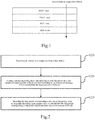
- a communication underlying architecture comprises a SDAP layer, a PDCP layer, an RLC layer and a MAC layer from top to bottom in 5G technology.
- the terminal can transmit multiple data streams in the session, each of which can comprise multiple data packets, which are delivered from top to bottom in the communication underlying architecture of the terminal until they are sent to the base station from the last layer.
- the data packets are comprised in the terminal in the form of data streams before they are split and the SDAP layer can allocate DRBs to the data streams for transmitting the data streams.
- the SDAP layer allocates the DRBs to the data streams, the data streams are delivered to the underlying layers in the form of data packets. At initial allocation, the same DRBs are allocated to the same data streams.
- FIG. 2 is a flowchart illustrating a method for discarding a data packet according to an embodiment of the present disclosure.
- the method for discarding a data packet comprises the following steps.
- Step S210 receiving an instruction message sent from a base station, which instructs to start monitoring transmission timeout of a data packet in a SDAP layer.
- Step S220 starting a packet discarding timer corresponding to each data packet in a data stream of a target session in the SDAP layer according to the instruction message, if it is detected that the target session is initiated.
- Step S230 discarding the data packet corresponding to the packet discarding timer, if the packet discarding timer expires and it is detected that the data packet corresponding to the packet discarding timer fails to be transmitted locally.
- the terminal when receiving the instruction message sent from the base station, the terminal can accordingly start the function of monitoring the transmission timeout of a data packet in the SDAP layer. If timing duration setting information exists in the instruction message, the timing duration of the packet discarding timer can be set. The packet discarding timer monitors and keeps account of a duration during which the data packets in a target data stream are delivered from the SDAP layer to the underlying layers, and are finally sent out from the terminal.
- the above-described method can be performed in the terminal.
- the packet discarding timer corresponding to each data packet in the data stream of the target session is started according to the instruction message.
- a monitoring mechanism can be used for the SDAP layer, the PDCP layer and the RLC layer and time during which the data stream remains in the SDAP layer is also taken into account, so the monitoring of transmission timeout of a data packet is achieved in 5G technology.
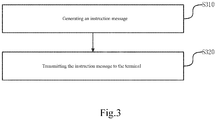
- FIG. 3 is a flowchart of a method for discarding a data packet according to an embodiment of the present disclosure. Referring to FIG. 3 , the method comprises the following steps.
- Step S310 generating an instruction message, which instructs a terminal to start monitoring transmission timeout of a data packet in a SDAP layer.
- the instruction message can be a Radio Resource Control (RRC) message.
- the instruction message is configured to instruct the terminal to monitor the transmission timeout of a data packet in the SDAP layer.
- the RRC message can further comprise timing duration setting information, which instructs to set timing duration for the packet discarding timer which monitors whether the transmission of the data packet is timed out.
- Step S320 transmitting the instruction message to the terminal.
- the above-described method can be performed in the terminal.
- the instruction message instructs the terminal to start monitoring transmission timeout of the data packet in the SDAP layer.
- a monitoring mechanism can be used for the SDAP layer, the PDCP layer and the RLC layer and time during which the data stream remains in the SDAP layer is also taken into account, so the monitoring of transmission timeout of a data packet is achieved in 5G technology.
- FIG. 4 is a flowchart of a method for discarding a data packet according to an embodiment of the present disclosure. Referring to FIG. 4 , the method comprises the following steps.
- Step S410 a base station generating an instruction message, which instructs a terminal to start monitor transmission timeout of a data packet in a SDAP layer.
- the instruction message can be an RRC message.
- the instruction message is configured to instruct the terminal to monitor the transmission timeout of a data packet in the SDAP layer.
- the RRC message can further comprise timing duration setting information, which instructs to set timing duration for the packet discarding timer which monitors whether the transmission of the data packet is timed out.
- Step S420 the base station transmitting the instruction message to the terminal.
- the base station can transmit the generated instruction message to the terminal.
- Step S430 the terminal receiving the instruction message sent from the base station, which instructs to start the monitoring of the transmission timeout of the data packet in the SDAP layer.
- the terminal when receiving the instruction message sent from the base station, the terminal can accordingly start the function of monitoring the transmission timeout of the data packet in the SDAP layer. If timing duration setting information exists in the instruction message, the timing duration of the packet discarding timer may be set. The packet discarding timer monitors and keeps account of a duration during which the data packets in a target data stream are delivered from the SDAP layer to the underlying layers, and are finally sent out from the terminal.
- Step S440 the terminal starting a packet discarding timer corresponding to each data packet in a data stream of a target session in the SDAP layer according to the instruction message, if it is detected that the target session is initiated.
- a plurality of packet discarding timers are provided, each of which keeps account of time taken for the transmission of each of the data packets in the target data stream.
- the terminal will reset the packet discarding timer corresponding to the data packet, if the data packet has been successfully sent from the terminal.
- the following step S450 will be performed, if it is monitored that the data packet fails to be sent from the terminal after the packet discarding timer corresponding to the data packet expires.
- Step S450 the terminal will discard the data packet corresponding to the packet discarding timer, if the packet discarding timer expires and it is detected that the data packet corresponding to the packet discarding timer fails to be sent locally.
- the terminal can discard the data packet corresponding to the packet discarding timer which expires from a transmission queue.
- the step S450 can comprise step S551 and step S552.
- step S551 if the packet discarding timer expires and it is detected that the data packet corresponding to the packet discarding timer fails to be sent locally, the terminal determines a current layer in which the data packet corresponding to the packet discarding timer is located. In step S552, the terminal discards the data packet corresponding to the packet discarding timer in the current layer.
- step S551 can comprise step S5511 and step S5512.
- step S5511 the terminal searches for the data packet corresponding to the packet discarding timer starting from the SDAP layer.
- step S5512 the terminal searches for the data packet corresponding to the packet discarding timer in a next layer subsequent to a layer that is searched, if no data packet corresponding to the packet discarding timer is found in the layer that is searched.
- step S5513 the terminal determines the layer that is searched as the current layer, if the data packet corresponding to the packet discarding timer is found in the layer that is searched.
- step S5514 the terminal determines the next layer as the current layer, if the data packet corresponding to the packet discarding timer is found in the next layer.
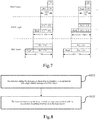
- SDU Service Data Unit
- PDU Packet Data Unit
- the SDU and header (information) are encapsulated, and the encapsulated SDU is a PDU.
- the PDU of each layer is the SDU of the next layer.
- the terminal judges whether the data packet corresponding to the packet discarding timer is in the SDAP layer. If the data packet corresponding to the packet discarding timer is in the SDAP layer and the data packet is a SDAP SDU, the SDAP SDU will be deleted; and if the data packet has been encapsulated to be a SDAP PDU, the SDAP SDU and its corresponding SDAP PDU will be deleted. If the data packet corresponding to the packet discarding timer is not in the SDAP layer, the SDAP layer informs the PDCP layer of deleting the data packet corresponding to the packet discarding timer.
- the data packet corresponding to the packet discarding timer is in the PDCP layer, the data packet is a PDCP SDU, and then the PDCP SDU will be deleted; and if the data packet has been encapsulated to be a PDCP PDU, then the PDCP SDU and its corresponding PDCP PDU will be deleted. If the data packet corresponding to the packet discarding timer is not in the PDCP layer, the PDCP layer informs the RLC layer of deleting the data packet corresponding to the packet discarding timer.
- the data packet corresponding to the packet discarding timer is in the RLC layer, then the data packet is an RLC SDU, and the RLC SDU will be deleted; and if the data packet has been encapsulated to be an RLC PDU, then the RLC SDU and its corresponding RLC PDU will be deleted.
- the method provided by the embodiment of the present disclosure further comprises: the terminal transmitting data packet discarding information to the base station, wherein the data packet discarding information comprises an identification corresponding to the discarded data packet.
- the identification corresponding to the data packet can be a Serial Number (SN).
- the terminal notifies the base station of which data packets are discarded by transmitting the data packet discarding information to the base station.
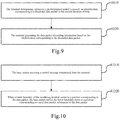
- the step of the terminal transmitting the data packet discarding information to the base station comprises step S810 and step S820.
- step S810 the terminal adds the data packet discarding information to encapsulation of a target control message in a PDCP layer.
- step S820 the terminal transmits the target control message encapsulated with the data packet discarding information to the base station.
- the terminal can add the data packet discarding information to the encapsulation of the control message in the PDCP layer, so that the base station can identify the data packet discarding information in the control message in the PDCP layer on the base station side.
- the target control message is different from general data.
- the general data carries a large amount of substantial information, such as streaming media information.
- the control message is a dedicated message for controlling communication.
- the terminal can also place the identification corresponding to the discarded data packet in the RRC message and transmit the RRC message to the base station.
- the terminal can directly generate a piece of signaling information in the PDCP layer which indicates data packets that are discarded in the PDCP layer and will be sent to the base station, which will not be elaborated herein.
- the terminal can generate a piece of data packet discarding information based on the identifications corresponding to several discarded data packets, and transmit it to the base station.
- the method provided by the embodiment further comprises step S910 and step S920.
- step S910 the terminal determines, whenever a preset period of time passed by, an identification corresponding to a discarded data packet in the current duration of time.
- step S920 the terminal generates data packet discarding information based on the identification corresponding to the discarded data packet.
- the terminal can count time through a signaling timer.
- a piece of data packet discarding information is generated based on identifications corresponding to the discarded data packets that exists, and then it is sent to the base station.
- duration that the signaling timer counts time is shorter than duration that an ordering timer counts time in the reordering window at the base station.
- the ordering timer in the reordering window is configured to count arrival time of data packets to be received in the reordering window. When the ordering timer expires, the reordering window will not wait for the data packet corresponding to the ordering timer any longer, and starts receiving the next data packet.
- the method provided by the embodiment of the present disclosure further comprises step S1010 and step S1020.
- the base station receives a control message transmitted from the terminal, wherein the control message comprises data packet discarding information which comprises the identification corresponding to the discarded data packet.
- the base station moves the lower boundary down to a position corresponding to a next data packet subsequent to the data packet.
- the base station When the base station receives the data packet discarding information transmitted from the terminal, for each discarded data packet recorded in the data packet discarding information, when the lower boundary of the reordering window is moved to a position corresponding to the discarded data packet, the base station moves the lower boundary down to a position corresponding to a next data packet subsequent to the discarded data packet.
- the SNs corresponding to the data packets to be ordered in the reordering window are 1, 2, 3, 4, 5 and 6.
- the SNs corresponding to the discarded data packets are 3 and 5. Firstly, the lower boundary of the reordering window is located at a position corresponding to the data packet the SN of which is 1.
- the lower boundary of the reordering window is moved to a position corresponding to the data packet the SN of which is 2.
- the lower boundary of the reordering window is moved to a position corresponding to the data packet the SN of which is 3. It is determined that the data packet the SN of which is 3 is discarded, and the lower boundary of the reordering window is moved to a position corresponding to the data packet the SN of which is 4.
- the lower boundary of the reordering window is moved to a position corresponding to the data packet the SN of which is 5.
- the packet discarding timer corresponding to each data packet in the data stream of the target session is started according to the instruction message.
- the monitoring mechanism can be used for the SDAP layer, the PDCP layer and the RLC layer and time during which the data stream stays in the SDAP layer is also taken into account, so the monitoring of transmission timeout of a data packet is achieved in 5G technology.
- FIG. 11 is a block diagram illustrating a device for discarding a data packet according to an embodiment of the present disclosure.
- the device comprises a receiving module 1110, a starting module 1120 and a discarding module 1130.
- the receiving module 1110 is configured to receive an instruction message transmitted from a base station, which instructs to start monitoring transmission timeout of a data packet in a SDAP layer.
- the starting module 1120 is configured to start a packet discarding timer corresponding to each data packet in a data stream of a target session in the SDAP layer according to the instruction message, if it is detected that the target session is initiated.
- the discarding module 1130 is configured to discard the data packet corresponding to the packet discarding timer, if the packet discarding timer expires and it is detected that the data packet corresponding to the packet discarding timer fails to be transmitted locally.
- the discarding module 1130 comprises a first determination unit 1231 and a discarding unit 1232.
- the first determination unit 1231 is configured to determine a current layer in which the data packet corresponding to the packet discarding timer is located, if the packet discarding timer expires and it is detected that the data packet corresponding to the packet discarding timer fails to be transmitted locally.
- the discarding unit 1232 is configured to discard the data packet corresponding to the packet discarding timer in the current layer.
- the first determination unit 1231 comprises a first search subunit, a second search subunit, a first determination subunit and a second determination subunit.
- the first search subunit is configured to search for the data packet corresponding to the packet discarding timer starting from the SDAP layer.
- the second search subunit is configured to search for the data packet corresponding to the packet discarding timer in a next layer subsequent to a layer that is searched, if no data packet corresponding to the packet discarding timer is found in the layer that is searched.
- the first determination subunit is configured to determine the layer that is searched as the current layer, if the data packet corresponding to the packet discarding timer is found in the layer that is searched.
- the second determination subunit is configured to determine the next layer as the current layer, if the data packet corresponding to the packet discarding timer is found in the next layer.
- the device further comprises: a first transmitting module configured to transmit data packet discarding information to the base station, wherein the data packet discarding information comprises an identification corresponding to the discarded data packet.
- a first transmitting module configured to transmit data packet discarding information to the base station, wherein the data packet discarding information comprises an identification corresponding to the discarded data packet.
- the device further comprises:
- the first transmitting module comprises:
- FIG. 15 is a block diagram illustrating a device for discarding a data packet according to an embodiment of the present disclosure.
- the device comprises a generation module 1510 and a transmitting module 1520.
- the generation module 1510 is configured to generate an instruction message, which instructs a terminal to start monitoring transmission timeout of a data packet in a SDAP layer.
- the transmitting module 1520 is configured to transmit the instruction message to the terminal.
- the device further comprises a receiving module 1610 and a down shifting module 1620.
- the receiving module 1610 is configured to receive a control message transmitted from the terminal, wherein the control message comprises data packet discarding information which comprises an identification corresponding to a discarded data packet.
- the down shifting module 1620 is configured to, when a lower boundary of a reordering window moves to a position corresponding to the data packet, move the lower boundary down to a position corresponding to a next data packet subsequent to the data packet.
- the packet discarding timer corresponding to each data packet in the data stream of the target session is started according to the instruction message.
- a monitoring mechanism can be used for the SDAP layer, the PDCP layer and the RLC layer and time during which the data stream stays in the SDAP layer is also taken into account, so that the monitoring of transmission timeout of a data packet is achieved in 5G technology.
- the discarding of the data packet performed by the device for discarding the data packet according to the above embodiments is only illustrated as the functional modules in, for example, the above division manner.
- the above functions may be assigned to different functional modules as desired, that is, the internal structure of the device may be divided into different functional modules to accomplish all or a part of the functions described above.
- the above embodiments of the device for discarding the data packet and the embodiments of the method for discarding the data packet belong to the same inventive concept, and the specific operating procedure of the device can refer to the embodiments of the method. Therefore, the description thereof will not be repeated herein.
- Another exemplary embodiment of the present disclosure provides a system for discarding a data packet comprising a terminal and a base station.
- the terminal is configured to receive an instruction message transmitted from a base station, which instructs to start monitoring transmission timeout of a data packet in a SDAP layer; start a packet discarding timer corresponding to each data packet in a data stream of a target session in the SDAP layer according to the instruction message, if it is detected that the target session is initiated; and discard the data packet corresponding to the packet discarding timer, if the packet discarding timer expires and it is detected that the data packet corresponding to the packet discarding timer fails to be transmitted locally.
- the base station is configured to generate an instruction message, which instructs a terminal to start monitoring transmission timeout of a data packet in a SDAP layer; and transmit the instruction message to the terminal.
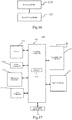
- a terminal 1700 may comprise one or more of the following components: a processing component 1702, a memory 1704, a power component 1706, a multimedia component 1708, an audio component 1710, an input/output (I/O) interface 1712, a sensor component 1714, and a communication component 1716.
- a processing component 1702 may comprise one or more of the following components: a memory 1704, a power component 1706, a multimedia component 1708, an audio component 1710, an input/output (I/O) interface 1712, a sensor component 1714, and a communication component 1716.
- the processing component 1702 typically controls overall operations of the terminal 1700, such as the operations associated with display, telephone calls, data communications, camera operations, and recording operations.
- the processing component 1702 can comprise one or more processors 1720 configured to execute instructions to perform all or part of the steps in the above described methods.
- the processing component 1702 can comprise one or more modules which facilitate interaction between the processing component 1702 and other components.
- the processing component 1702 can comprise a multimedia module to facilitate interaction between the multimedia component 1708 and the processing component 1702.
- the memory 1704 is configured to store various types of data to support the operation of the terminal 1700. Examples of such data comprise instructions for any applications or methods operated on the terminal 1700, contact data, phonebook data, messages, pictures, video, etc.
- the memory 1704 may be implemented using any type of volatile or non-volatile memory devices, or a combination thereof, such as a static random access memory (SRAM), an electrically erasable programmable read-only memory (EEPROM), an erasable programmable read-only memory (EPROM), a programmable read-only memory (PROM), a read-only memory (ROM), a magnetic memory, a flash memory, a magnetic or optical disk.
- SRAM static random access memory
- EEPROM electrically erasable programmable read-only memory
- EPROM erasable programmable read-only memory
- PROM programmable read-only memory
- ROM read-only memory
- magnetic memory a magnetic memory
- flash memory a flash memory
- magnetic or optical disk a magnetic
- the communication component 1716 is configured to facilitate communication, wired or wirelessly, between the terminal 1700 and other devices.
- the terminal 1700 can access a wireless network based on a communication standard, such as WiFi, 2G, or 3G, or a combination thereof.
- the communication component 1716 receives a broadcast signal or broadcast associated information from an external broadcast management system via a broadcast channel.
- the communication component 1716 further comprises a near field communication (NFC) module to facilitate short-range communications.
- the NFC module may be implemented based on a radio frequency identification (RFID) technology, an infrared data association (IrDA) technology, an ultra-wideband (UWB) technology, a Bluetooth (BT) technology, and other technologies.
- RFID radio frequency identification
- IrDA infrared data association
- UWB ultra-wideband
- BT Bluetooth
- the power component 1706 provides power to various components of the terminal 1700.
- the power component 1706 can comprise a power management system, one or more power sources, and any other components associated with generation, management, and distribution of power in the audio output device 1700.
- the multimedia component 1708 comprises a screen providing an output interface between the terminal 1700 and the user.
- the screen may comprise a liquid crystal display (LCD) and a touch panel (TP). If the screen comprises the touch panel, the screen may be implemented as a touch screen to receive input signals from the user.
- the touch panel comprises one or more touch sensors to sense touches, drawings, and gestures on the touch panel. The touch sensors may not only sense a boundary of a touch or drawing action, but also sense duration and a pressure associated with the touch or drawing action.
- the multimedia component 1708 comprises a front camera and/or a rear camera.
- the front camera and/and the rear camera can receive an external multimedia datum while the terminal 1700 is in an operation mode, such as a photographing mode or a video mode.
- an operation mode such as a photographing mode or a video mode.
- Each of the front camera and the rear camera can be a fixed optical lens system or have focus and optical zoom capability.
- the audio component 1710 is configured to output and/or input audio signals.
- the audio component 1710 comprises a microphone ("MIC") configured to receive an external audio signal when the audio output device 1700 is in an operation mode, such as a call mode, a recording mode, and a speech recognition mode.
- the received audio signal can be further stored in the memory 1704 or transmitted via the communication component 1716.
- the I/O interface 1712 provides an interface between the processing component 1702 and peripheral interface modules, such as a keyboard, a click wheel, a button, and the like.
- the button can comprise, but is not limited to, a home button, a volume button, a starting button, and a locking button.
- the sensor component 1714 comprises one or more sensors to provide status assessments of various aspects of the terminal 1700. For instance, the sensor component 1714 can detect an ON/OFF status of the terminal 1700, relative positioning of components, e.g., the display and the keypad, of the terminal 1700. The sensor component 1714 can further detect a change in position of the terminal 1700 or a component of the terminal 1700, a presence or absence of user contact with the terminal 1700, an orientation or an acceleration/deceleration of the terminal 1700, and a change in temperature of the terminal 1700. The sensor component 1714 can comprise a proximity sensor configured to detect the presence of nearby objects without any physical contact.
- the sensor component 1714 can also comprise a light sensor, such as a CMOS or CCD image sensor, for use in imaging applications.
- the sensor component 1714 can further comprise an accelerometer sensor, a gyroscope sensor, a magnetic sensor, a pressure sensor, or a temperature sensor.
- the terminal 1700 may be implemented with one or more application specific integrated circuits (ASICs), digital signal processors (DSPs), digital signal processing devices (DSPDs), programmable logic devices (PLDs), field programmable gate arrays (FPGAs), controllers, micro-controllers, microprocessors, or other electronic components, for performing the above described methods.
- ASICs application specific integrated circuits
- DSPs digital signal processors
- DSPDs digital signal processing devices
- PLDs programmable logic devices
- FPGAs field programmable gate arrays
- controllers micro-controllers, microprocessors, or other electronic components, for performing the above described methods.
- a computer-readable storage medium comprising instructions, such as the memory 1704 comprising instructions, executable by the processor 1720 in the terminal 1700, for performing the above-described methods.
- the computer-readable storage medium can be a ROM, a random access memory (RAM), a CD-ROM, a magnetic tape, a floppy disc, an optical data storage device, and the like.
- Still another embodiment of the present disclosure provides a computer-readable storage medium comprising instructions which, when executed by a processor of a terminal, allows the terminal to:
- discarding the data packet corresponding to the packet discarding timer if the packet discarding timer expires and it is detected that the data packet corresponding to the packet discarding timer fails to be transmitted locally comprises:
- determining a current layer in which the data packet corresponding to the packet discarding timer is located comprises:
- the method further comprises: transmitting data packet discarding information to the base station, wherein the data packet discarding information comprises an identification corresponding to the discarded data packet.
- the method before transmitting the data packet discarding information to the base station, the method further comprises:
- transmitting the data packet discarding information to the base station comprises:
- FIG. 18 is a block diagram of a base station 1900 according to an exemplary embodiment.
- the base station 1900 comprises a processing component 1922 that further comprises one or more processors, and memory resources represented by a memory 1932 for storing instructions executable by the processing component 1922, such as applications.
- the applications stored in the memory 1932 can comprise one or more modules each corresponding to a set of instructions.
- the processing component 1922 is configured to execute the instructions to perform the above described method for discarding the data packet.
- the base station 1900 can further comprise a power component 1926 configured to perform power management of the base station 1900, an antenna 1950 configured to connect the base station 1900 to a communication network, and an input/output (I/O) interface 1958.
- a power component 1926 configured to perform power management of the base station 1900
- an antenna 1950 configured to connect the base station 1900 to a communication network
- an input/output (I/O) interface 1958 configured to connect the base station 1900 to a communication network.
- the base station 1900 can comprise a memory and one or more programs stored in the memory, wherein the one or more programs are configured to be executed by one or more processors, and comprise instructions of performing operations of:
- the method further comprises:
Landscapes
- Engineering & Computer Science (AREA)
- Computer Networks & Wireless Communication (AREA)
- Signal Processing (AREA)
- Multimedia (AREA)
- Mobile Radio Communication Systems (AREA)
Applications Claiming Priority (1)
| Application Number | Priority Date | Filing Date | Title |
|---|---|---|---|
| PCT/CN2017/094359 WO2019019025A1 (fr) | 2017-07-25 | 2017-07-25 | Procédé, dispositif et système pour rejeter un paquet de données |
Publications (2)
| Publication Number | Publication Date |
|---|---|
| EP3661138A1 true EP3661138A1 (fr) | 2020-06-03 |
| EP3661138A4 EP3661138A4 (fr) | 2021-01-06 |
Family
ID=63489809
Family Applications (1)
| Application Number | Title | Priority Date | Filing Date |
|---|---|---|---|
| EP17919487.3A Pending EP3661138A4 (fr) | 2017-07-25 | 2017-07-25 | Procédé, dispositif et système pour rejeter un paquet de données |
Country Status (4)
| Country | Link |
|---|---|
| US (1) | US11456963B2 (fr) |
| EP (1) | EP3661138A4 (fr) |
| CN (1) | CN108541387B (fr) |
| WO (1) | WO2019019025A1 (fr) |
Families Citing this family (23)
| Publication number | Priority date | Publication date | Assignee | Title |
|---|---|---|---|---|
| CN109565474B (zh) * | 2017-07-25 | 2022-05-06 | 北京小米移动软件有限公司 | 数据传输方法及装置、电子设备和计算机可读存储介质 |
| US10764115B1 (en) | 2018-01-05 | 2020-09-01 | Open Invention Network Llc | EMS handling of faults in virtual network function components |
| WO2020062126A1 (fr) * | 2018-09-29 | 2020-04-02 | Oppo广东移动通信有限公司 | Procédé de traitement de paquet de données, entité et support de stockage |
| CN109121163B (zh) * | 2018-10-11 | 2021-06-01 | 中国电子科技集团公司第三十六研究所 | 一种基于sdap pdu长度的sdap层重映射方法 |
| CN109526026B (zh) * | 2018-10-29 | 2021-11-23 | 中国电子科技集团公司第三十六研究所 | 一种基于End/Start Mark的上行SDAP重映射方法和装置 |
| CN113709804A (zh) * | 2020-05-22 | 2021-11-26 | 维沃移动通信有限公司 | 数据传输方法、终端设备和网络设备 |
| CN113923713A (zh) * | 2020-07-09 | 2022-01-11 | 维沃移动通信有限公司 | 数据处理的方法及装置 |
| WO2022266964A1 (fr) * | 2021-06-24 | 2022-12-29 | Oppo广东移动通信有限公司 | Procédé et appareil de transmission de données fondée sur le bluetooth à faible énergie, et dispositif et support de stockage |
| CN115834742B (zh) | 2021-09-16 | 2024-11-22 | 大唐移动通信设备有限公司 | 定时器处理方法、装置及存储介质 |
| CN115811716A (zh) * | 2021-09-16 | 2023-03-17 | 大唐移动通信设备有限公司 | 数据处理方法、装置及设备 |
| CN115996423A (zh) * | 2021-10-19 | 2023-04-21 | 维沃移动通信有限公司 | 数据传输方法、装置及终端 |
| CN115996420A (zh) * | 2021-10-19 | 2023-04-21 | 维沃移动通信有限公司 | 数据处理方法、装置及终端 |
| CN116233921A (zh) * | 2021-12-03 | 2023-06-06 | 维沃移动通信有限公司 | 数据包的处理方法、装置及终端 |
| CN117280825A (zh) * | 2022-04-13 | 2023-12-22 | 北京小米移动软件有限公司 | 一种上行传输方法/装置/设备及存储介质 |
| US20250351125A1 (en) * | 2022-04-27 | 2025-11-13 | Lenovo (Beijing) Limited | Methods and apparatuses for enhancements of a data discarding operation |
| CN117082005A (zh) * | 2022-05-09 | 2023-11-17 | 维沃移动通信有限公司 | 数据包丢弃的处理方法、装置、终端及可读存储介质 |
| CN117640531A (zh) * | 2022-08-16 | 2024-03-01 | 中国电信股份有限公司 | 数据传输方法、装置、pdcp、基站以及存储介质 |
| WO2024055334A1 (fr) * | 2022-09-16 | 2024-03-21 | 北京小米移动软件有限公司 | Procédé et appareil de traitement pour perte de paquets, et dispositif de communication et support d'enregistrement |
| WO2024065542A1 (fr) * | 2022-09-29 | 2024-04-04 | 北京小米移动软件有限公司 | Procédé et appareil d'envoi de paquets de données, dispositif électronique et support de stockage lisible |
| EP4595289A1 (fr) * | 2022-11-04 | 2025-08-06 | Apple Inc. | Améliorations de réordonnancement de protocole pdcp |
| WO2024108326A1 (fr) * | 2022-11-21 | 2024-05-30 | Oppo广东移动通信有限公司 | Procédé et dispositif de communication sans fil |
| WO2025091445A1 (fr) * | 2023-11-03 | 2025-05-08 | 北京小米移动软件有限公司 | Procédé de communication, terminal et support de stockage |
| CN119946695A (zh) * | 2023-11-03 | 2025-05-06 | 成都华为技术有限公司 | 一种通信方法及装置 |
Family Cites Families (9)
| Publication number | Priority date | Publication date | Assignee | Title |
|---|---|---|---|---|
| KR101513033B1 (ko) * | 2007-09-18 | 2015-04-17 | 엘지전자 주식회사 | 다중 계층 구조에서 QoS를 보장하기 위한 방법 |
| KR101391382B1 (ko) * | 2007-10-01 | 2014-05-07 | 인터디지탈 패튼 홀딩스, 인크 | Pdcp를 폐기하기 위한 방법 및 장치 |
| CN101809924B (zh) * | 2007-12-29 | 2013-08-21 | 中兴通讯股份有限公司 | 无线链路控制实体的复位控制方法 |
| US8325608B2 (en) * | 2008-08-07 | 2012-12-04 | Qualcomm Incorporated | Efficient packet handling for timer-based discard in a wireless communication system |
| US8576709B2 (en) * | 2011-05-25 | 2013-11-05 | Futurewei Technologies, Inc. | System and method for monitoring dropped packets |
| CN103167553A (zh) * | 2011-12-13 | 2013-06-19 | 华为技术有限公司 | 用于无线通信的方法和装置以及基站 |
| US9497299B2 (en) * | 2014-09-18 | 2016-11-15 | Blackberry Limited | Configuring a discard timer |
| US11425594B2 (en) * | 2017-03-23 | 2022-08-23 | Nokia Technologies Oy | Quality of service flow relocation |
| CN106921996B (zh) * | 2017-05-12 | 2019-07-26 | 电信科学技术研究院 | 一种层2统计量的统计方法、cu及du |
-
2017
- 2017-07-25 EP EP17919487.3A patent/EP3661138A4/fr active Pending
- 2017-07-25 US US16/618,263 patent/US11456963B2/en active Active
- 2017-07-25 WO PCT/CN2017/094359 patent/WO2019019025A1/fr not_active Ceased
- 2017-07-25 CN CN201780000682.8A patent/CN108541387B/zh active Active
Also Published As
| Publication number | Publication date |
|---|---|
| WO2019019025A1 (fr) | 2019-01-31 |
| CN108541387A (zh) | 2018-09-14 |
| US20200153746A1 (en) | 2020-05-14 |
| US11456963B2 (en) | 2022-09-27 |
| EP3661138A4 (fr) | 2021-01-06 |
| CN108541387B (zh) | 2021-11-09 |
Similar Documents
| Publication | Publication Date | Title |
|---|---|---|
| US11456963B2 (en) | Method, device and system for discarding data packet | |
| US20230156855A1 (en) | Method and apparatus for selecting destination address in sidelink, and storage medium | |
| US12028835B2 (en) | Methods, apparatuses, user equipment and base stations for determining sidelink resource | |
| US11343704B2 (en) | Method and apparatus for assigning identifier, base station and user equipment | |
| US12016076B2 (en) | Information processing method and apparatus, and computer storage medium | |
| US10694572B2 (en) | Methods and devices for controlling states of user equipment | |
| US12137495B2 (en) | Inactivity timer control method and device | |
| US20250324242A1 (en) | Information processing method and apparatus, communication device, and storage medium | |
| CN108702281B (zh) | 下行控制信息格式大小的确定方法及装置 | |
| US11395175B2 (en) | Method, device and system of processing data packet in data bearer remapping process | |
| CN113873607B (zh) | 小区切换方法及装置 | |
| US20220303841A1 (en) | Handover processing method and apparatus | |
| EP4207921A1 (fr) | Procédés de communication directe, appareil de communication directe et support de stockage | |
| CN109451788B (zh) | 一种数据传输方法和装置 | |
| JP2026505585A (ja) | QoS監視測定の購読方法、装置、通信デバイスおよび記憶媒体 | |
| WO2021056362A1 (fr) | Procédé de traitement d'ensemble de ressources de commande, dispositif et support de stockage informatique | |
| EP3541036B1 (fr) | Procédé et appareil d'envoi d'unité de données de protocole de commande (pdu) | |
| US11665586B2 (en) | Method and apparatus for data transmission, electronic device and computer readable storage medium | |
| EP3280217B1 (fr) | Procédé et dispositif pour établir une connexion de service | |
| CN105163391A (zh) | 数据传输方法、终端及无线访问接入点 | |
| US20250374035A1 (en) | Capability reporting method, capability determination method, communication apparatus, and storage medium | |
| JP2025504788A (ja) | モニタスキップ方法、装置、通信デバイス及び記憶媒体 | |
| US20230254881A1 (en) | Activated resource switching method, communication device, and storage medium | |
| JP2026504580A (ja) | リソース決定方法、装置、通信デバイス及び記憶媒体 |
Legal Events
| Date | Code | Title | Description |
|---|---|---|---|
| STAA | Information on the status of an ep patent application or granted ep patent |
Free format text: STATUS: THE INTERNATIONAL PUBLICATION HAS BEEN MADE |
|
| PUAI | Public reference made under article 153(3) epc to a published international application that has entered the european phase |
Free format text: ORIGINAL CODE: 0009012 |
|
| STAA | Information on the status of an ep patent application or granted ep patent |
Free format text: STATUS: REQUEST FOR EXAMINATION WAS MADE |
|
| 17P | Request for examination filed |
Effective date: 20191217 |
|
| AK | Designated contracting states |
Kind code of ref document: A1 Designated state(s): AL AT BE BG CH CY CZ DE DK EE ES FI FR GB GR HR HU IE IS IT LI LT LU LV MC MK MT NL NO PL PT RO RS SE SI SK SM TR |
|
| AX | Request for extension of the european patent |
Extension state: BA ME |
|
| DAV | Request for validation of the european patent (deleted) | ||
| DAX | Request for extension of the european patent (deleted) | ||
| A4 | Supplementary search report drawn up and despatched |
Effective date: 20201203 |
|
| RIC1 | Information provided on ipc code assigned before grant |
Ipc: H04W 28/06 20090101ALI20201127BHEP Ipc: H04L 12/823 20130101AFI20201127BHEP |
|
| RAP1 | Party data changed (applicant data changed or rights of an application transferred) |
Owner name: KONINKLIJKE PHILIPS N.V. |
|
| STAA | Information on the status of an ep patent application or granted ep patent |
Free format text: STATUS: EXAMINATION IS IN PROGRESS |
|
| 17Q | First examination report despatched |
Effective date: 20221215 |