EP3661140A1 - Procédé de demande de ressource de service commun, dispositif associé, et système - Google Patents
Procédé de demande de ressource de service commun, dispositif associé, et système Download PDFInfo
- Publication number
- EP3661140A1 EP3661140A1 EP18846244.4A EP18846244A EP3661140A1 EP 3661140 A1 EP3661140 A1 EP 3661140A1 EP 18846244 A EP18846244 A EP 18846244A EP 3661140 A1 EP3661140 A1 EP 3661140A1
- Authority
- EP
- European Patent Office
- Prior art keywords
- unit
- common service
- service
- vnf
- resource
- Prior art date
- Legal status (The legal status is an assumption and is not a legal conclusion. Google has not performed a legal analysis and makes no representation as to the accuracy of the status listed.)
- Granted
Links
Images



Classifications
-
- H—ELECTRICITY
- H04—ELECTRIC COMMUNICATION TECHNIQUE
- H04L—TRANSMISSION OF DIGITAL INFORMATION, e.g. TELEGRAPHIC COMMUNICATION
- H04L41/00—Arrangements for maintenance, administration or management of data switching networks, e.g. of packet switching networks
- H04L41/08—Configuration management of networks or network elements
- H04L41/0803—Configuration setting
- H04L41/0806—Configuration setting for initial configuration or provisioning, e.g. plug-and-play
-
- H—ELECTRICITY
- H04—ELECTRIC COMMUNICATION TECHNIQUE
- H04L—TRANSMISSION OF DIGITAL INFORMATION, e.g. TELEGRAPHIC COMMUNICATION
- H04L67/00—Network arrangements or protocols for supporting network services or applications
- H04L67/50—Network services
- H04L67/51—Discovery or management thereof, e.g. service location protocol [SLP] or web services
-
- G—PHYSICS
- G06—COMPUTING OR CALCULATING; COUNTING
- G06F—ELECTRIC DIGITAL DATA PROCESSING
- G06F9/00—Arrangements for program control, e.g. control units
- G06F9/06—Arrangements for program control, e.g. control units using stored programs, i.e. using an internal store of processing equipment to receive or retain programs
- G06F9/44—Arrangements for executing specific programs
- G06F9/455—Emulation; Interpretation; Software simulation, e.g. virtualisation or emulation of application or operating system execution engines
-
- G—PHYSICS
- G06—COMPUTING OR CALCULATING; COUNTING
- G06F—ELECTRIC DIGITAL DATA PROCESSING
- G06F9/00—Arrangements for program control, e.g. control units
- G06F9/06—Arrangements for program control, e.g. control units using stored programs, i.e. using an internal store of processing equipment to receive or retain programs
- G06F9/44—Arrangements for executing specific programs
- G06F9/455—Emulation; Interpretation; Software simulation, e.g. virtualisation or emulation of application or operating system execution engines
- G06F9/45533—Hypervisors; Virtual machine monitors
- G06F9/45558—Hypervisor-specific management and integration aspects
-
- G—PHYSICS
- G06—COMPUTING OR CALCULATING; COUNTING
- G06F—ELECTRIC DIGITAL DATA PROCESSING
- G06F9/00—Arrangements for program control, e.g. control units
- G06F9/06—Arrangements for program control, e.g. control units using stored programs, i.e. using an internal store of processing equipment to receive or retain programs
- G06F9/46—Multiprogramming arrangements
- G06F9/50—Allocation of resources, e.g. of the central processing unit [CPU]
- G06F9/5061—Partitioning or combining of resources
- G06F9/5077—Logical partitioning of resources; Management or configuration of virtualized resources
-
- H—ELECTRICITY
- H04—ELECTRIC COMMUNICATION TECHNIQUE
- H04L—TRANSMISSION OF DIGITAL INFORMATION, e.g. TELEGRAPHIC COMMUNICATION
- H04L41/00—Arrangements for maintenance, administration or management of data switching networks, e.g. of packet switching networks
- H04L41/08—Configuration management of networks or network elements
- H04L41/0895—Configuration of virtualised networks or elements, e.g. virtualised network function or OpenFlow elements
-
- H—ELECTRICITY
- H04—ELECTRIC COMMUNICATION TECHNIQUE
- H04L—TRANSMISSION OF DIGITAL INFORMATION, e.g. TELEGRAPHIC COMMUNICATION
- H04L41/00—Arrangements for maintenance, administration or management of data switching networks, e.g. of packet switching networks
- H04L41/08—Configuration management of networks or network elements
- H04L41/0896—Bandwidth or capacity management, i.e. automatically increasing or decreasing capacities
- H04L41/0897—Bandwidth or capacity management, i.e. automatically increasing or decreasing capacities by horizontal or vertical scaling of resources, or by migrating entities, e.g. virtual resources or entities
-
- H—ELECTRICITY
- H04—ELECTRIC COMMUNICATION TECHNIQUE
- H04L—TRANSMISSION OF DIGITAL INFORMATION, e.g. TELEGRAPHIC COMMUNICATION
- H04L41/00—Arrangements for maintenance, administration or management of data switching networks, e.g. of packet switching networks
- H04L41/40—Arrangements for maintenance, administration or management of data switching networks, e.g. of packet switching networks using virtualisation of network functions or resources, e.g. SDN or NFV entities
-
- H—ELECTRICITY
- H04—ELECTRIC COMMUNICATION TECHNIQUE
- H04L—TRANSMISSION OF DIGITAL INFORMATION, e.g. TELEGRAPHIC COMMUNICATION
- H04L41/00—Arrangements for maintenance, administration or management of data switching networks, e.g. of packet switching networks
- H04L41/50—Network service management, e.g. ensuring proper service fulfilment according to agreements
- H04L41/5041—Network service management, e.g. ensuring proper service fulfilment according to agreements characterised by the time relationship between creation and deployment of a service
- H04L41/5054—Automatic deployment of services triggered by the service manager, e.g. service implementation by automatic configuration of network components
-
- H—ELECTRICITY
- H04—ELECTRIC COMMUNICATION TECHNIQUE
- H04L—TRANSMISSION OF DIGITAL INFORMATION, e.g. TELEGRAPHIC COMMUNICATION
- H04L67/00—Network arrangements or protocols for supporting network services or applications
- H04L67/01—Protocols
- H04L67/10—Protocols in which an application is distributed across nodes in the network
-
- H—ELECTRICITY
- H04—ELECTRIC COMMUNICATION TECHNIQUE
- H04L—TRANSMISSION OF DIGITAL INFORMATION, e.g. TELEGRAPHIC COMMUNICATION
- H04L67/00—Network arrangements or protocols for supporting network services or applications
- H04L67/50—Network services
- H04L67/60—Scheduling or organising the servicing of application requests, e.g. requests for application data transmissions using the analysis and optimisation of the required network resources
- H04L67/61—Scheduling or organising the servicing of application requests, e.g. requests for application data transmissions using the analysis and optimisation of the required network resources taking into account QoS or priority requirements
-
- G—PHYSICS
- G06—COMPUTING OR CALCULATING; COUNTING
- G06F—ELECTRIC DIGITAL DATA PROCESSING
- G06F9/00—Arrangements for program control, e.g. control units
- G06F9/06—Arrangements for program control, e.g. control units using stored programs, i.e. using an internal store of processing equipment to receive or retain programs
- G06F9/44—Arrangements for executing specific programs
- G06F9/455—Emulation; Interpretation; Software simulation, e.g. virtualisation or emulation of application or operating system execution engines
- G06F9/45533—Hypervisors; Virtual machine monitors
- G06F9/45558—Hypervisor-specific management and integration aspects
- G06F2009/4557—Distribution of virtual machine instances; Migration and load balancing
-
- H—ELECTRICITY
- H04—ELECTRIC COMMUNICATION TECHNIQUE
- H04L—TRANSMISSION OF DIGITAL INFORMATION, e.g. TELEGRAPHIC COMMUNICATION
- H04L67/00—Network arrangements or protocols for supporting network services or applications
- H04L67/2866—Architectures; Arrangements
-
- H—ELECTRICITY
- H04—ELECTRIC COMMUNICATION TECHNIQUE
- H04W—WIRELESS COMMUNICATION NETWORKS
- H04W28/00—Network traffic management; Network resource management
- H04W28/16—Central resource management; Negotiation of resources or communication parameters, e.g. negotiating bandwidth or QoS [Quality of Service]
- H04W28/26—Resource reservation
Definitions
- This application relates to the field of electronic technologies, and in particular, to a common service resource application method, a related device, and a system.
- a conventional telecommunications system includes various dedicated hardware devices, and different applications use different hardware devices. With the increase of network scale, the system becomes more complex. This brings many challenges, including development and launch of a new service, operation and maintenance of the system, resource utilization, and the like.
- a network functions virtualization (Network Functions Virtualization, NFV) technology can be simply understood as that functions of network elements used in a telecommunications network are transferred from a current dedicated hardware platform to a general commercial off-the-shelf (COTS, Commercial off-the-shelf) server.
- COTS Commercial off-the-shelf
- the network elements used in the telecommunications network are converted into independent applications by using the NFV technology, and the applications may be flexibly deployed on a uniform infrastructure platform constructed based on devices such as a standard server, a memory, and a switch.
- Resource pooling and virtualization are performed on an infrastructure hardware device by using the virtualization technology, and virtual resources are provided to upper-layer applications, so as to implement decoupling between the applications and hardware, so that virtual resources can be quickly added to each application to quickly extend a system capacity, or virtual resources can be quickly reduced to shrink a system capacity, thereby greatly improving network flexibility.
- a general COTS server is used to form a shared resource pool, so that a hardware device does not need to be independently deployed for a newly developed service, greatly shortening a time to launch the new service.
- a basis of the NFV technology includes the cloud computing technology and the virtualization technology.
- Hardware devices such as general COTS computing, storage, and network devices may be decomposed into various virtual resources by using the virtualization technology, so that the virtual resources are used by the various upper-layer applications.
- the virtualization technology implements decoupling between the applications and the hardware, so that a virtual resource supplying speed is greatly increased.
- the cloud computing technology can implement flexible scaling of the applications, and implement a match between the virtual resources and service loads. This not only increases utilization of virtual resources, but also increases a response rate of the system.
- VNF Virtual Network Function
- Embodiments of this application provide a common service resource application method, a related device, and a system, so as to apply for a resource required by a common service by using an NFV system architecture.
- an embodiment of this application provides a common service resource application method, including: receiving, by a common service manager CSM unit, resource requirement information of a common service required by a VNF; and then requesting, based on the resource requirement information of the common service, a virtualized infrastructure manager VIM unit to allocate a resource required by the common service of the VNF.
- the CSM unit applies to the VIM unit for the resource of the common service required by the VNF, so as to avoid that the VNF cannot work or service quality deteriorates because the common service has no available resource or resources are insufficient, and avoid a waste of common service resources.
- the CSM unit is introduced to an NFV architecture to unify interfaces for other network units to apply for the common service and manage a lifecycle of the common service.
- the CSM unit receives, from an NFVO unit by using an interface between the CSM unit and a network functions virtualization orchestrator NFVO unit, the resource requirement information of the common service required by the VNF.
- the CSM unit receives, from a VNFM unit by using an interface between the CSM unit and the virtualized network function manager VNFM unit, the resource requirement information of the common service required by the VNF
- the resource requirement information of the common service required by the VNF is obtained by the VNFM unit based on a virtualized network function descriptor VNFD carried in a received VNF instantiation request message.
- the resource requirement information of the common service required by the VNF is determined by the VNFD based on the VNF instantiation request message.
- a resource application process of the VNF when the VNF is instantiated and a resource application process of the common service required by the VNF are concurrently performed, so as to avoid rollback of the VNF instantiation process because the application fails, avoid that the VNF cannot provide a service function because the VNF fails to apply for the common service, and avoid that the service function or capacity is deteriorated because the VNF cannot apply for the sufficient common service.
- a VNF instantiation time can be reduced.
- the CSM unit requests, based on the resource requirement information of the common service by using an interface between the CSM unit and the VIM unit, the VIM unit to allocate the resource required by the common service of the VNF
- the CSM unit requests, based on the resource requirement information of the common service by using the interface between the CSM unit and the VNFM unit, the VNFM unit to allocate the resource required by the common service, so as to indicate that the VNFM unit requests the VIM unit to allocate the resource required by the common service of the VNF
- the CSM unit before the CSM unit requests, based on the resource requirement information of the common service, the VIM unit to allocate the resource required by the common service of the VNF, the CSM unit further requests, based on the resource requirement information of the common service, the VIM unit to reserve the resource required by the common service of the VNF
- the CSM unit before requesting, the VIM unit to allocate the resource required by the common service of the VNF, the CSM unit first requests the VIM unit to reserve the resource required by the common service of the VNF. In this way, the VIM unit first allocates the resource required by the common service to the common service, so as to avoid a subsequent resource application failure of the common service because another service preempts the resource at the same time.
- the CSM unit requests, based on the resource requirement information of the common service by using the interface between the CSM unit and the VIM unit, the VIM unit to reserve the resource required by the common service of the VNF.
- the CSM unit requests, based on the resource requirement information of the common service by using the interface between the CSM unit and the VNFM unit, the VNFM unit to reserve the resource required by the common service, so as to indicate that the VNFM unit requests the VIM unit to reserve the resource required by the common service of the VNF
- the resource requirement information of the common service of the VNF includes a service type, an instance specification, and a quantity of instances.
- parameter types of the service type and the instance specification are identifiers, and a parameter type of the instance quantity is an integer.
- the service type and the instance specification are indicated by a common service member in the VNFD, and the instance quantity is indicated by a common service constituent member in a deployment configuration of the VNFD.
- the CSM unit allocates, based on the resource requirement information of the common service, the resource required by the common service.
- the CSM allocates, in a pre-deployed common service instance CS, the common service resource required by the VNF, so that the CS provides some shared resources to provide the common service for the VNF.
- the CSM unit before the CSM unit allocates, based on the resource requirement information of the common service, the resource required by the common service, the CSM unit further reserves, based on the resource requirement information of the common service, the resource required by the common service.
- the CSM unit before allocating the resource required by the common service of the VNF, the CSM unit first reserves the resource required by the common service of the VNF. In this way, the pre-deployed common service instance first allocates the resource required by the common service to the common service, so as to avoid the subsequent resource application failure of the common service because another service preempts the resource at the same time.
- an embodiment of this application provides a common service manager unit, including a processor, a memory, and a transceiver.
- the processor is connected to the memory and the transceiver.
- the processor may be connected to the memory and the transceiver by using a bus.
- the transceiver is configured to communicate with another network device.
- the memory is configured to store a set of program code.
- the processor invokes and executes the program code stored in the memory, to instruct the common service manager unit to execute some or all of the processes of the first aspect.
- an embodiment of this application provides a common service resource application apparatus, where the apparatus includes a CSM unit, a VNFM unit, an NFVO unit, and a VIM unit that are described in the first aspect.
- an embodiment of this application provides a computer readable storage medium, where the storage medium stores an instruction, and when the instruction is run on a computer, the computer is enabled to perform the common service resource application method provided in any one of the first aspect or the implementations of the first aspect.
- an embodiment of this application provides a computer program product including an instruction.
- the computer program product When the computer program product is run on a computer, the computer is enabled to perform the common service resource application method provided in any one of the first aspect or the implementations of the first aspect.
- FIG. 1 is a schematic diagram of an NFV-based enhanced network architecture, mainly including: an operations support system (Operation Support System, OSS)/a business support system (Business Support System, BSS), an element management (Element Manager, EM) unit, a virtualized network function (VNF) unit, a network functions virtualization infrastructure (NFV Infrastructure, NFVI) unit, a common service (Common Service, CS) unit, and a network functions virtualization management and orchestration (NFV MANO) system.
- an operations support system Operaation Support System
- BSS Business Support System
- Element Manager Element Manager
- VNF virtualized network function
- NFVI network functions virtualization infrastructure
- CS Common Service
- NFV MANO network functions virtualization management and orchestration
- the network functions virtualization management and orchestration (NFV Management and Orchestration, NFV MANO) system includes a network functions virtualization orchestrator (NFV Orchestrator, NFVO) unit, a virtualized network function manager (VNF Manager, VNFM) unit, a virtualized infrastructure manager (Virtualized Infrastructure Manager, VIM) unit, and a common service manager (Common Service Manager, CSM) unit.
- NFV Orchestrator NFVO
- VNF Manager virtualized network function manager
- VIM Virtualized Infrastructure Manager
- CSM Common Service Manager
- each unit may be used for describing a corresponding unit, for example, the element management unit may be described as an EM or an EM unit. The following briefly describes the units.
- the OSS/BSS is a system for supporting integration and information resource sharing of telecommunications operators, and mainly includes network management, system management, charging, business, accounting, customer services, and the like.
- the systems are integrated by using a specific information bus.
- the OSS/BSS can help the operators not only customize an operations support system but also determine system development directions and formulate system integration standards for users, optimizing and improving customers' service level.
- the OSS/BSS is configured to perform necessary modification and adjustment on lifecycle management (such as instantiation) of each network element.
- the EM unit is configured to manage some VNF units.
- the NFVI unit is a collective term of all hardware devices and software components in an environment having a capability of deploying network functions virtualization.
- the NFVI unit may cross a plurality of physical sites (for example, data center operating places) to perform extended deployment.
- a network providing a data connection for these physical sites may be considered as a part of the NFVI unit.
- the NFVO unit may be configured to manage a lifecycle of a network service (Network Service, NS), coordinate NS lifecycle management, coordinate VNF lifecycle management (supported by the VNFM), and coordinate management of various resources of the NFVI unit (supported by the VIM), thereby ensuring optimal configuration of required resources and connections.
- the lifecycle management is management performed for instantiation, maintenance, and termination of the VNF unit, the NS unit, or the like.
- the VNFM unit is responsible for lifecycle management of the VNF unit.
- the VIM unit is responsible for controlling and managing computing resources, storage resources, and network resources of the NFVI unit.
- the VIM may be deployed in an infrastructure domain (for example, an NFVI access point/a service providing point) of an infrastructure network operator.
- this application adds a CS unit and a CSM unit in an NFV-based enhanced network architecture.
- the CS unit is a unit that provides a common service for at least one VNF instance, for example, may provide a common service for a common service instance.
- types of CS units may mainly include types of common services that need to apply for resources, such as a database, a cache, or a dispatcher.
- the common service CS unit may provide common service resources for a specific quantity of VNF instances, for example, may provide a public database for five VNF instances.
- CS units there may be two types of CS units: a fixed deployment sharing type and an on-demand application exclusive type.
- a CS unit of the fixed deployment sharing type is deployed in advance based on a specific service volume by default, and may provide services for several VNFs at the same time. The CS unit exists regardless of whether the VNF applies for the services for use.
- a CS unit of the on-demand application exclusive type is deployed only when a VNF applies for a common resource service, and a deployed specific common resource instance provides a service only for the specific VNF that applies for the common resource service this time.
- the CSM unit is mainly responsible for managing one or more CS units.
- a main function of the CSM unit is to manage a lifecycle of a CS unit, and provides management interfaces of the CS unit for peripheral units.
- the management interfaces include: an interface Csm-Vnfm between the CSM and the VNFM, an interface Csm-Or between the NFVO and the CSM, an interface Csm-Vi between the CSM and the VIM, and an interface Cs-Csm between the common service and the CSM.
- Basic operations between the CSM and the VNFM, and between the CSM and the NFVO are performed by using the interface Csm-Vnfm and the interface Csm-Or, and mainly include: an application service, a query service, an update service, a release service, an operation service, a scale in/out service, a service change notification, and the like.
- the CSM delivers an operation command to a specific common service unit by using the interface Cs-Csm.
- the CSM needs to apply, by using the interface Csm-Vi, to the VIM for computing resources, storage resources, and network resources of the NFVI that are required by the common service unit.
- API Application Programming Interface
- parameter information for example, mandatory/optional, quantity, type, and description
- Table 1 Interface parameter comparison table API operation Parameter Mandatory/ Optional Quantity Type Description Create service reservation request Service Type Mandatory 1 Identifier Used to describe a type of a service that needs to be reserved, for example, a relational database and a cache Service instance specification Mandatory 1 Identifier Instance type of a specific service that needs to be reserved, where the instance type needs to match a type defined in a common service Service instance quantity Mandatory 1 Integer Quantity of instances of a specific service that needs to be reserved Start time Mandatory 0/1 Timestamp Indicating the earliest timestamp of a service that needs to be used.
- the parameter indicates that the service is used immediately End time Mandatory 0/1 Timestamp Indicating the latest timestamp of a service that needs to be used. If the parameter is 0, it indicates that the latest time is not limited Timeout time Mandatory 0/1 Timestamp Indicating that a CSM can release a reserved service if a resource is not applied within the time Location constraint Mandatory 0/1 Location constraint of a resource to be allocated, for example, a specific resource area Resource group identifier Mandatory 1 Identifier Identifier of a logical NFVI resource group of a virtual resource allocated to a tenant in an NFVI domain Create service reservation response Reservation identifier Mandatory 1 Identifier Resource reservation number Service type Mandatory 1 Identifier Used to describe a type of a reserved service, for example, a relational database and a cache Service instance specification Mandatory 1 Identifier Instance type of a reserved specific service, where the instance type needs to match a type defined in a bulletin service Service instance quantity
- Mandatory 1 Integer Quantity
- the parameter indicates that the service is used immediately End time Mandatory 0/1 Timestamp Indicating the latest timestamp of a service that needs to be used. If the parameter is 0, it indicates that the latest time is not limited Timeout time Mandatory 0/1 Timestamp Indicating that a CSM can release a reserved service if a resource is not applied within the time
- Application service request Service type Mandatory 1 Identifier Used to describe a type of a service, for example, a relational database and a cache Service name Mandatory 1 Character string Used to set the service name Reservation identifier Mandatory 1 Identifier Resource reservation number
- Service instance specification Mandatory 1 Identifier Instance type of a specific service that needs to be applied, where the instance type needs to match a type defined in a common service Service instance quantity Mandatory 1 Integer Quantity of instances of a specific service that needs to be applied Metadata Optional 0..N Key value group Metadata of an applied service, such as an engine type, a port number, an administrator name, and an initial password of a database
- Service identifier that needs to be updated Service data Mandatory 1 Service data
- Service data that needs to be updated Update service response Service identifier
- Mandatory 1 Identifier Updated service identifier which is the same as the update service request Service data
- Mandatory 1 Service data Updated service data Release service request Service identifier
- Mandatory 1 Identifier Released service identifier Release service request Service identifier
- Service identifier Mandatory 1 Identifier Released service identifier
- String Operation types such as starting, stopping, pausing, resetting, creating an image, and deleting the image Service operation input data
- Optional 0/1 Key value group Additional data related to operations, such as an image identifier to be deleted Operation service response Service identifier
- Mandatory 1 Identifier Service identifier that needs to be operated Service operation input data
- Optional 0/1 Key value group Output data of operations, such as an image identifier and a location that are successfully
- each parameter corresponding to each API operation refers to the content of a corresponding description part.
- “mandatory/optional” indicates whether the parameter is mandatory in the API operation. In other words, “mandatory” indicates that the parameter is mandatory, and “optional” indicates that the parameter is optional.
- the quantity indicates a quantity of specific parameters. For example, “1” indicates that there is one parameter, and "0..N” indicates that a quantity of the parameters may be any quantity from 0 to N, where N is a positive integer. "0/1" indicates that the quantity of parameters may be 0, and the quantity of parameters may be 1.
- Types of the parameters include a character string, an integer, a timestamp, an identifier, an enumerated value, a key value group, service data, and a filter condition.
- Timestamp indicates that a complete and verifiable data that exists before a specific time, and is usually a character sequence that uniquely identifies a time point.
- the identifier is information that can uniquely indicate a number, a name, an address, and the like of a specific parameter.
- Enumerated value includes customized and specific data and is a set of the data that has common features.
- Key value group The key value group, namely, a KeyValuePair, is a pair of one-to-one data types.
- the filter condition is a data type that represents conditions for filtering data.
- Service data For a definition, refer to Table 2.
- Table 2 Service data definition table Attribute Mandatory/ Optional Quantity Type Description Service identifier Mandatory 1 Identifier Identifier of a service Service name Mandatory 0/1 Character string Name of a service Specification identifier Mandatory 1 Identifier Name of a service instance type Instance Mandatory 1 Integer Quantity of service quantity instances Metadata Optional 0..N Key value group Metadata of an applied service, such as an engine type, a port number, an administrator name, and an initial password of the database
- a plurality of types of common services and inconsistent interfaces result in a problem that the NFVO and each VNFM need to use a different interface to connect to a plurality of common service manager units.
- the CSM unit is introduced to unify the interfaces for the NFVO and the VNFM to reserve and apply for a common service and manage a lifecycle of the common service. Further, parameters of the service type, the service specification instance, and the service instance quantity are newly defined in an interface operation, and a resource operation for the common service is decoupled from the VNF.
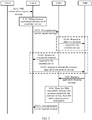
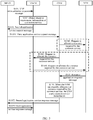
- FIG. 2 and FIG. 3 are schematic flowcharts of two common service resource application methods according to an embodiment of this application.
- This embodiment is applicable to an implementation scenario in which a CS is of an on-demand application exclusive type.
- a CSM needs to apply to a VIM for a resource to instantiate a common service resource required by a VNF, so that the instantiated CS provides a common service specially for the VNF.
- the method includes but is not limited to the following steps.
- An NFVO sends a VNF instantiation request message to a VNFM.
- the instantiation request message is used to instruct the VNFM to perform an instantiation operation on the VNF, where the VNF instantiation request message carries a virtualized network function descriptor (Virtualized Network Function Descriptor, VNFD).
- VNFD Virtualized Network Function Descriptor
- the VNFD is a configuration template that describes a deployment and operation behavior of the VNF, and is used for a running process of the VNF and lifecycle management of a VNF instance.
- the VNFD includes resource requirement information of the common service required by the VNF.
- the NFVO has declared, in the VNFD, the common service required by the VNF. Therefore, when reading data in the VNFD, the VNFM may obtain the resource requirement information of the common service required by the VNF.
- the VNFM also applies for instantiation of the common service required by the VNF
- the resource requirement information may include a service type, an instance specification, an instance quantity, and the like.
- the service type may refer to a type of the common service that is currently applied for, for example, may be at least one type of a database, a cache, or a dispatcher.
- different service types may be represented in a form of identifiers, for example, 1x1 and 1x2.
- the instance quantity refers to a quantity of instances that need to be generated during the instantiation of the common service that is currently applied for.
- the instance specification may indicate a size of the specification required for the instantiation of the common service that is currently applied for.
- different instance specifications may be represented in a form of identifiers, for example, sl1, sl2, and sl3. These identifiers that represent different instance specifications respectively have specific parameters of corresponding instance specifications.
- the NFVO sends the VNF instantiation request message to the VNFM, where the VNF instantiation request message carries the VNFD, and the VNFD includes the resource requirement information of the common service required by the VNF.
- the service type may be lx1, the instance quantity may be 2, and the instance specification may be sl2.
- a common service resource definition is coupled with the VNF.
- the common service requires that the VNFD needs to be modified together.
- a parameter type of an identifier type is used to describe the service type of the common service, and the service type of the common service is decoupled from the quantity of computing, network, and storage resources that are actually applied for by the common service. If the common service modifies the resource model of the service, the VNF, the VNFM, and the NFVO do not need to perceive the modification.
- the NFVO when declaring, in the VNFD, the common service required by the VNF, the NFVO needs to add the common service of the VNF to a basic member of the VNFD, so as to indicate the common service required by the VNF.
- Table 3 a type of a member identified as comm_service is Element. To be specific, the member may be expanded, and after the expansion, there are a plurality of parameters, and a quantity of the parameters is a positive integer from 0 to N.
- Other members in Table 3 are existing members in the VNFD when the VNF is deployed, and details are not described herein again.
- Table 3 Example table of VNFD members Identifier Type Cardinality Description Id Leaf 1 Identifier, for example, a name of the VNFD vendor Leaf 1 Vendor of the VNFD descriptor_versi on Leaf 1 Version of the VNFD version Leaf 1 Software version of a VNF vdu Element 1...N Group of a specific VDU (virtual deployment unit) of a VNF virtual_link Element 0...N Virtual network connection of a VNF comm_service Element 0...N New member, where a common service is required by a VNF lifecycle_event Leaf 0...N Function scripts or work flows for defining VNF lifecycle events (such as initialization, termination, politely closing, scale in/out, and updating/upgrading) ... deployment_fla vour Element 1...N Assurance parameters and requirements for defining each deployment configuration ...
- Table 4 shows only a basic member of the common service of the VNF, but is not limited to the members listed in Table 4, and may further extend service-specific data, such as the engine type and the port number of the database.
- the service type refers to the common service type
- the instance_type refers to a specification of a common service instance
- the VNFD includes two parameters: the service type and an instance specification in resource requirement information of the common service required by the VNF, may be determined by using the two parameters of the service type and the instance type in Table 4.
- Table 4 Example table of VNF common service members in a VNFD Comm service element (vnfd: comm_service) Identifier Type Cardinality Description Id Leaf 1 Identifier of a service service type Leaf 1 Type of a service instance_type Leaf 1 Specification of a service instance
- a common service constituent member of the VNF also needs to be added to the deployment configuration of the VNFD.
- a member identified as a constituent_comm_service is added to a member included in a member identified as the deployment_flavour in Table 3 (referring to Table 5).
- the member identified as a constituent comm service further includes a member identified as a comm_service_reference and a member identified as number_of_instances (referring to Table 6).
- Other members in Table 5 are existing members in the VNFD when the VNF is deployed, and details are not described herein again.
- the member identified as the constituent_comm_service in Table 5 is used to describe a resource requirement of the common service that matches the deployment configuration of a current VNF.
- the deployment configuration indicated by the flavour_key in Table 5 is a "small" specification.
- the constituent vdu may describe a resource requirement of the VNF corresponding to the current "small” specification
- the constituent_comm_service may describe the resource requirement of the common service that is corresponding to the current "small” specification and that matches the currently deployed VNF
- the member identified as the comm_service_reference in Table 6 may indicate an identifier of the common service, to be specific, associate members of the service identifier Id in Table 4, so as to indicate the service type and the instance specification of the common service.
- a type of the member identified as the comm_service_reference is a reference, to be specific, a link associated with other VNFD content.
- the member identified as the number_of_instances in Table 6 may indicate the quantity of the common service instances corresponding to a common service identifier indicated by the member identified as the comm_service_reference.
- Table 5 Example table of VNF deployment configuration members in a VNFD Deployment flavour element (vnfd: deployment_flavour) Identifier Type Quantity Description Identifier Type Cardinality Description Id Leaf 1 flavour_key Leaf 1 constraint Leaf 0...N constituent_vdu Leaf 1...N constituent_comm_service Leaf 0...N New member, used to describe requirements for a common service in a deployment configuration
- Table 6 Example table of constituent_comm_service members in a VNFD Constituent comm service (vnfd: deployment_flavour:constituent _ comm_service) Identifier Type Quantity Description Identifier Type Cardinality Description Comm_service_reference Reference 1 Associating a common service identifier vnfd:comm_service:id that should be used in a deployment configuration number of instances Leaf 1 Quantity of instances of a common service required in a deployment configuration
- the VNFM obtains the resource requirement information of the common service.
- the VNFM may read the VNFD carried in the VNF instantiation request message, so as to obtain the resource requirement information of the common service required by the VNF included in the VNFD.
- the VNFM notifies the CSM of the resource requirement information of the common service.
- the VNFM may directly send an application service request message to the CSM, and the S103 may be specifically an S1031.
- the VNFM sends a first application service request message to the CSM, where the first application service request message includes the resource requirement information of the common service.
- the VNFM sends the first application service request message to the CSM based on an application service request operation (which may be referring to Table 1) provided on the Csm-Vnfm interface, where the first application service request message includes the resource requirement information of the common service, and is used to instruct the CSM to request, based on the resource requirement information of the common service, the VIM to allocate a resource required by the common service.
- an application service request operation (which may be referring to Table 1) provided on the Csm-Vnfm interface, where the first application service request message includes the resource requirement information of the common service, and is used to instruct the CSM to request, based on the resource requirement information of the common service, the VIM to allocate a resource required by the common service.
- the resource requirement information may include the service type, the instance specification, the instance quantity, and the like.
- the first application service request message may further include parameters such as a service name, a reservation identifier, metadata, a resource group identifier, and a location constraint. For a detailed description of a definition and a function of each parameter, refer to the description corresponding to the application service request operation in Table 1, and details are not described herein again.
- each VNFM may prestore information about the plurality of CSMs, for example, service types, network addresses, and identification information that are corresponding to the CSMs.
- the VNFM may determine, from the plurality of CSMs based on the service type of the common service included in the resource requirement information of the common service, the CSM corresponding to the service type of the common service, and send the first application service request message to the CSM.
- a CSM 1, a CSM 2, and a CSM 3 exist, where a service type corresponding to the CSM 1 is a database, a service type corresponding to the CSM 2 includes a database and a cache, and a service type corresponding to the CSM 3 includes a database, a cache, and a dispatcher. If the service type of the common service included in the resource requirement information of the common service that is obtained by the VNFM is a cache, the VNFM may determine the CSM 2 or the CSM 3 as a target CSM, and send the first application service request message to the target CSM.
- the VNFM may first request, by using the NFVO, the CSM to reserve the resource of the common service. In this case, if the reservation succeeds, the NFVO may notify the VNFM of the address of the CSM or an identifier of the CSM that is determined when the VNFM requests the reservation, so that the VNFM sends the first application service request message to the corresponding CSM based on the address of the CSM or the identifier of the CSM.
- the VNFM may directly determine, by receiving the address of the CSM or the identifier of the CSM that is sent by the NFVO, the CSM to which the first application service request message is sent.
- the VNFM may directly determine, by receiving the address of the CSM or the identifier of the CSM that is sent by the NFVO, the CSM to which the first application service request message is sent.
- the VNFM needs to send an application service request message to the CSM by using the NFVO
- S103 may include S1032 and S1033.
- the VNFM sends a second application service request message to the NFVO.
- the second application service request message includes the resource requirement information of the common service, and is used to instruct the NFVO to send a third application service request message to the CSM.
- the second application service request message is similar to the first application service request message, and the resource requirement information may include the service type, the instance specification, the instance quantity, and the like.
- the second application service request message may further include parameters such as the service name, the reservation identifier, the metadata, the resource group identifier, and the location constraint. For the detailed description of the definition and the function of each parameter, refer to the description corresponding to the application service request operation in Table 1, and details are not described herein again.
- the VNFM may first send the second application service request message to the NFVO, and send the resource requirement information of the common service to the CSM by using the NFVO.
- the NFVO sends the third application service request message to the CSM based on the second application service request message.
- the third application service request message includes the resource requirement information of the common service, and is used to instruct the CSM to request the VIM to pre-allocate the resource required by the common service. Further, based on the parameters carried in the second application service request message, the third application service request message may further include the parameters such as the service name, the reservation identifier, the metadata, the resource group identifier, and the location constraint.
- the NFVO may store information about the plurality of CSMs, for example, service types, network addresses, and identification information that are corresponding to the CSMs.
- the NFVO may obtain, based on the second application service request message, the service type of the common service included in the resource requirement information of the common service, then determine, from the plurality of CSMs, the CSM corresponding to the service type of the common service, and send the third application service request message to the CSM.
- the CSM requests, based on the resource requirement information of the common service, a VIM unit to allocate the resource required by the common service.
- the CSM may directly request the VIM to allocate the resource, and S104 may be specifically S1041.
- the CSM requests, based on the resource requirement information of the common service, the VIM to allocate the resource required by the common service.
- the CSM may apply to the VIM for computing resources, network resources, and storage resources based on the received resource requirement information of the common service, so that the VIM allocates the resource required by the common service.
- the CSM may send a computing resource application request message, a network resource application request message, and a storage resource application request message to the VIM, so as to separately apply to the VIM for the computing resources, the network resources, and the storage resources that are required by the common service for allocating.
- the resource requirement information of the common service is already quantifiable resource information.
- the CSM may directly request, based on the resource requirement information of the common service, the VIM to allocate the resource required by the common service.
- some or all information of the resource requirement information of the common service may be represented by using other information that cannot be quantized, such as an identifier. Therefore, the CSM may first determine, based on the resource requirement information of the common service, the resource requirement quantization information of the common service corresponding to the resource requirement information of the common service. In other words, the resource requirement information of the common service is converted into quantifiable resource requirement quantization information of the common service. Then, the CSM requests, based on the resource requirement quantization information of the common service, the VIM to allocate the resource required by the common service.
- the resource requirement information of the common service received by the CSM includes a service type of 1x2, an instance quantity of 2, and an instance specification of sl3.
- the CSM may determine, based on a correspondence between an identifier of the service type and the service type, a correspondence between an identifier of the instance specification and the instance specification, the resource requirement quantization information of the common service corresponding to the resource requirement information of the common service. For example, for a comparison table of service types, refer to Table 7, and for a comparison table of instance specifications, refer to Table 8.
- the service type of 1x2, the instance quantity of 2, and the instance specification of sl3 may be converted into resource requirement quantization information of a common service indicating that a service type is a database, a quantity of instances is 2, and an instance specification is a CPU of 8 G, a memory of 32 G, network bandwidth of 1.5 Gb/s, and storage space of 2 T.
- the CSM requests, based on the resource requirement quantization information of the common service, the VIM to allocate the resource required by the common service.
- Table 7 Service type comparison table (example) Service type lx1 Cache lx2 Database lx3 Dispatcher Table 8: Instance specification comparison table 1 (example) Instance specification CPU Memory Network bandwidth Storage space sl1 2 G 8 G 0.5 Gb/s 500 G sl2 4 G 16 G 0.8 Gb/s 1 T sl3 8 G 32 G 1.5 Gb/s 2 T
- the CSM needs to request, by using the VNFM, the VIM to allocate the resource, and S104 may be specifically S1042 and S1043.
- the CSM requests, based on the resource requirement information of the common service, the VNFM to allocate the resource required by the common service.
- the VNFM requests the VIM unit to allocate the resource required by the common service.
- the CSM may apply to the VNFM for the computing resources, the network resources, and the storage resources based on the received resource requirement information of the common service. Further, the VNFM applies to the VIM for the computing resources, the network resources, and the storage resources, so that the VIM allocates the resource required by the common service. Specifically, the CSM may send the computing resource application request message, the network resource application request message, and the storage resource application request message to the VIM by using the VNFM, so as to separately apply to the VIM for the computing resources, the network resources, and the storage resources that are required by the common service for allocating.
- a process of a lifecycle management operation of the common service performed by the NFVO and the VNFM is decoupled from a process of an actual lifecycle management operation (for example, applying for the computing, storage, or network resources) of the common service performed by the CSM, so as to simplify VNFD creation, and simplify an operation process of common service management performed by the NFVO and the VNFM.
- S105 may be further performed after S104.
- the VIM sends a resource application response message to the CSM.
- the resource application response message may include a computing resource application response message, a network resource application response message, and a storage resource application response message, and is used to indicate an application result of the resource required by the common service, for example, an application success or an application failure.
- S106 may be further performed after S105.
- the CSM may start an operation of the common service instantiation, so as to generate a common service instance exclusive to the VNF, namely, a CS unit.
- the CS unit provides the common service only for the current VNF
- the CSM may feedback to the VIM, based on the computing resource application request message, the network resource application request message, and the storage resource application request message sent by the VIM, a response message, for example, the computing resource application response message, the network resource application response message, and the storage resource application response message.
- a response message for example, the computing resource application response message, the network resource application response message, and the storage resource application response message.
- the CSM After starting VNF instantiation, the CSM applies for the resource required by the common services again.
- the VNF may fail to provide a service function because the VNF cannot apply for the common service.
- the VNF can be used only after the common service instantiation is started and the initialization is completed. This takes a relatively long time. However, in this application, a process in which the VNF applies for the resource and a process in which the common service applies for the resource is performed at the same time, so that a VNF instantiation time can be saved.
- S1071 may be further performed after S106.
- the CSM sends a first application service response message to the VNFM.
- the first application service response message is used to indicate that the resource required by the common service is successfully allocated.
- the first application service response message includes service data allocated to the common service required by the VNF. For details, refer to descriptions of an application service response operation in Table 1.
- VNF Record VNF Record, VNFR
- VNFM VNF Record, VNFR
- VNFM also needs to add related members of the common service of the VNF in the VNFR, to be specific, members of the comm_service in Table 9.
- Other members in Table 9 are all members that exist in the VNFR when the VNF instance is formed, and are not described herein.
- Table 10 An example table of members of the VNFR Identifier Type Quantity Description Identifier Type Cardinality Description ...
- Table 10 Example of the common service members of the VNF in the VNFR Comm Service Record (vnfr: comm_service) Identifier Type Quantity Description Identifier Type Cardinality Description id Leaf 1 Identifier of a common service service type Leaf 1 Type of a common service instance_type Leaf 1 Instance type of a common service instance_number Leaf 1 Quantity of instances of a common service
- S1072 and S1073 may be further performed after S106.
- the CSM sends a second application service response message to the NFVO.
- the CSM sends the second application service response message to the NFVO, where the second application service response message is used to indicate that the resource required by the common service is successfully allocated, and the second application service response message includes the service data allocated to the common service required by the VNF.
- the second application service response message is used to indicate that the resource required by the common service is successfully allocated, and the second application service response message includes the service data allocated to the common service required by the VNF.
- the NFVO sends a third application service response message to the VNFM based on the second application service response message.
- the NFVO indicates, to the VNFM by using the third application service response message, that the resource required by the common service is successfully allocated, where the third application service response message may include the service data that is allocated to the common service required by the VNF and that is carried in the second application service response message.
- the VNF record (VNFR, VNF Record) in the VNFM may store the related information of the common service applied by the VNF.
- VNFR VNF Record
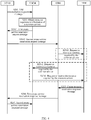
- FIG. 4 is a schematic flowchart of a common service resource reservation method according to an embodiment of this application.
- This embodiment is applicable to an implementation scenario in which resource needs to be reserved before a common service resource is applied. Therefore, the method in this embodiment may be coupled with the embodiments shown in FIG. 2 or FIG. 3 .
- a resource reservation process is added before the VNFM/NFVO applies to the CSM for the common service resource.
- the CS is of an on-demand application exclusive type.
- the CSM needs to apply to the VIM for resource reservation, so as to reserve the common service resource required by the VNF.
- the method includes but is not limited to the following steps.
- the NFVO sends a VNF instantiation request message to the VNFM.
- the VNFM obtains resource requirement information of a common service.
- a difference between S201 and S202 in this embodiment and the embodiment shown in FIG. 2 or FIG. 3 lies in that after receiving the VNF instantiation request message, the VNFM triggers a create reservation request for the common service resource instead of an application request.
- the VNFM notifies the CSM of the resource requirement information of the common service. Details may be S3031 and S3032.
- the VNFM sends a first service create reservation request message to the NFVO.
- the first create service reservation request message includes the resource requirement information of the common service, and is used to instruct the NFVO to send a second create service reservation request message to the CSM.
- the resource requirement information may include a service type, an instance specification, an instance quantity, and the like.
- the first create service reservation request message may further include parameters such as a start time, an end time, a timeout time, a location constraint, and a resource group identifier. For detailed descriptions of a definition and functions of each parameter, refer to descriptions corresponding to service create reservation request operations in Table 1, and details are not described herein again.
- the NFVO sends the second service create reservation request message to the CSM based on the first service create reservation request message.
- the second service create reservation request message includes the resource requirement information of the common service, and is used to instruct the CSM to request the VIM to reserve a resource required by the common service. Further, based on the first service create reservation request message, the second service create reservation request message may further include the parameters such as the start time, the end time, the timeout time, the location constraint, and the resource group identifier.
- the NFVO may store information about the plurality of CSMs, for example, a service type, a network address, and an identification information of the CSM.
- the NFVO may obtain, based on the first service create reservation request message, a service type of the common service included in the resource requirement information of the common service, then determine, from the plurality of CSMs, the CSM corresponding to the service type of the common service, and send the second service create reservation request message to the CSM.
- the CSM requests, based on the resource requirement information of the common service, the VIM unit to reserve the resource required by the common service.
- the CSM may directly request the VIM to reserve the resource, and S204 may be specifically S2041.
- the CSM requests, based on the resource requirement information of the common service, the VIM to reserve the resource required by the common service.
- the CSM may create, based on the received resource requirement information of the common service, an application to the VIM for reserving computing resources, network resources, and storage resources, so that the VIM reserves the resource required by the common service.
- the CSM may send a create computing resource reservation request message, a create network resource reservation request message, and a create storage resource reservation request message to the VIM, so as to separately apply to the VIM for the computing resources, the network resources, and the storage resources that are required by common service reservation creation.
- Reserving the resource required by the common service means that the VIM first allocates the resource required by the common service to the common service, so as to prevent another service from preempting the resource at the same time, resulting in a subsequent resource application failure of the common service.
- the resource requirement information of the common service is already quantifiable resource information.
- the CSM may directly request, based on the resource requirement information of the common service, the VIM to create the resource required for reserving the common service.
- the CSM may first determine, based on the resource requirement information of the common service, the resource requirement quantization information of the common service corresponding to the resource requirement information of the common service. In other words, the resource requirement information of the common service is converted into quantifiable resource requirement quantization information of the common service. Then, the CSM requests, based on the resource requirement quantization information of the common service, the VIM to reserve the resource required by the common service.
- the CSM may first determine, based on the resource requirement information of the common service, the resource requirement quantization information of the common service corresponding to the resource requirement information of the common service.
- the resource requirement information of the common service is converted into quantifiable resource requirement quantization information of the common service.
- the CSM requests, based on the resource requirement quantization information of the common service, the VIM to reserve the resource required by the common service.
- the CSM needs to request, by using the VNFM, the VIM to reserve the resource, and S204 may be specifically S2042 and S2043.
- the CSM requests, based on the resource requirement information of the common service, the VNFM to reserve the resource required by the common service.
- the VNFM requests the VIM unit to reserve the resource required by the common service.
- the CSM may create the application to the VNFM for reserving the computing resources, the network resources, and the storage resources based on the received resource requirement information of the common service. Further, the VNFM creates the application to the VIM for reserving the computing resources, the network resources, and the storage resources, so that the VIM allocates the resource required by the common service. Specifically, the CSM may send the create computing resource reservation request message, the create network resource reservation request message, and the create storage resource reservation request message to the VIM by using the VNFM, so as to separately apply to the VIM for the computing resources, the network resources, and the storage resources that are reserved for the common service.
- S205 may be further performed after S204.
- the VIM sends a create resource reservation response message to the CSM.
- the create resource reservation response message may include the computing resource application response message, the network resource application response message, and the storage resource application response message, and is used to indicate the application result of the resource required by the common service, for example, the application success or the application failure.
- S206 and S207 may be further performed after S205.
- the CSM sends a first service create reservation response message to the NFVO.
- the CSM sends the first service create reservation response message to the NFVO, where the first service create reservation response message is used to indicate that the resource required by the common service is successfully reserved, and the first service create reservation response message includes parameters such as the resource requirement information (the service type, the instance specification, and the instance quantity), the reservation identifier, the reservation status, the start time, the end time, and the timeout time.
- the resource requirement information the service type, the instance specification, and the instance quantity
- the reservation identifier the reservation status
- start time the end time
- timeout time the timeout timeout time.
- the NFVO sends, based on the first service create reservation response message, the second service create reservation response message to the VNFM.
- the NFVO indicates, to the VNFM by using the second service create reservation response message, that the resource required by the common service is successful reserved, where the second service create reservation response message may include the parameters such as the resource requirement information (the service type, the instance specification, and the instance quantity), the reservation identifier, the reservation status, the start time, the end time, and the timeout time that are carried in the first service create reservation response message.
- the resource requirement information the service type, the instance specification, and the instance quantity
- the reservation identifier the reservation status, the start time, the end time, and the timeout time that are carried in the first service create reservation response message.
- the NFVO may further send an address of the CSM or an identifier of the CSM to the VNFM, where the address of the CSM or the identifier of the CSM is used to instruct the VNFM to request the CSM to allocate the resource required by the common service.
- the address of the CSM or the identifier of the CSM may be carried in the second service create reservation response message, or may be separately sent to the VNFM. This is not specifically limited herein.
- FIG. 5 and FIG. 6 are schematic flowcharts of another two common service resource application methods according to an embodiment of this application.
- This embodiment is applicable to an implementation scenario in which the CS is a fixed deployment sharing type of the CS.
- the CSM allocates, in a pre-deployed CS, a common service resource required by the VNF, so that the CS provides some shared resources for the VNF to provide a common service.
- the method includes but is not limited to the following steps.
- the NFVO sends a VNF instantiation request message to the VNFM.
- the VNFM obtains resource requirement information of the common service.
- the VNFM notifies the CSM of the resource requirement information of the common service.
- the VNFM may directly send an application service request message to the CSM, and S303 may be specifically S3031.
- the VNFM sends a first application service request message to the CSM, where the first application service request message includes the resource requirement information of the common service.
- the VNFM needs to send the application service request message to the CSM by using the NFVO
- S303 may include S3032 and S3033.
- the VNFM sends a second application service request message to the NFVO.
- the NFVO sends a third application service request message to the CSM based on the second application service request message.
- the CSM allocates, based on the resource requirement information of the common service, a resource required by the common service.
- the resource requirement information of the common service is already quantifiable resource information.
- the CSM may directly allocate, based on the resource requirement information of the common service, the resource required by the common service.
- some or all information of the resource requirement information of the common service may be represented by using other information that cannot be quantized, such as an identifier. Therefore, the CSM may first determine, based on the resource requirement information of the common service, the resource requirement quantization information of the common service corresponding to the resource requirement information of the common service. In other words, the resource requirement information of the common service is converted into quantifiable resource requirement quantization information of the common service. Then, the CSM allocates, based on the resource requirement quantization information of the common service, the resource required by the common service.
- the resource requirement information in the third application service request message received by the CSM indicates that a service type is lx1, a quantity of instances is 2, and an instance specification is sl1
- the resource requirement information of the common service may be converted into resource requirement quantization information of the common service indicating that a service type is a cache, a quantity of instances is 2, and an instance specification is a cache of 10 G.
- the CSM allocates, based on the resource requirement quantification information of the common service, the resource required by the common service in the pre-deployed CS.
- two cache instances may be obtained through division from a pre-deployed CS to serve the VNF, where each cache instance includes cache resources of 10 G.
- one cache instance with cache resources of 10 G may be allocated in each of two pre-deployed CSs, to serve the VNF. There may be another allocation manner, which is not specifically limited in this embodiment.
- Table 11 Instance specification comparison table 2 (example) Instance specification Cache sl1 10 G sl2 50 G sl3 100 G
- the CSM may further apply, based on the resource requirement information of the common service, to the VIM or another network unit for the resource for scaling out, so that the CS can provide the common service resource required by the VNF.
- the CSM may further apply, based on the resource requirement information of the common service, to the VIM or another network unit for the resource for scaling out, so that the CS can provide the common service resource required by the VNF.
- resource application methods refer to S104.
- S3051 may be further performed after S304.
- the CSM When the CSM successfully allocates the resource required by the common service, the CSM sends a first application service response message to the VNFM.
- S3052 and S3053 may be further performed after S304.
- the CSM sends a second application service response message to the NFVO.
- the NFVO sends a third application service response message to the VNFM based on the second application service response message.
- FIG. 7 is a schematic flowchart of another common service resource reservation method according to an embodiment of this application.
- This embodiment is applicable to an implementation scenario in which resource reservation needs to be performed before a common service resource application. Therefore, the method in this embodiment may be coupled with the embodiments shown in FIG. 5 or FIG. 6 .
- a resource reservation process is added before the VNFM/NFVO applies to the CSM for a common service resource.
- the CS is a fixed deployment sharing type of the CS.
- the CSM reserves, in a pre- deployed CS, the common service resource required by the VNF, so that the CS reserves some shared resources to provide a common service for the VNF
- the NFVO sends a VNF instantiation request message to the VNFM.
- the VNFM obtains resource requirement information of the common service.
- a difference between S401 and S402 in this embodiment and the embodiment shown in FIG. 5 or FIG. 6 lies in that after receiving the VNF instantiation request message, the VNFM triggers a create reservation request for the common service resource instead of an application request.
- the VNFM notifies the CSM of the resource requirement information of the common service. Details may be S4031 and S4032.
- the VNFM sends a first service create reservation request message to the NFVO.
- the NFVO sends a second service create reservation request message to the CSM based on the first service create reservation request message.
- the CSM reserves, based on the resource requirement information of the common service, a resource required by the common service.
- the resource requirement information of the common service is already quantifiable resource information.
- the CSM may directly reserve, based on the resource requirement information of the common service, the resource required by the common service.
- some or all information of the resource requirement information of the common service may be represented by using other information that cannot be quantized, such as an identifier. Therefore, the CSM may first determine, based on the resource requirement information of the common service, the resource requirement quantization information of the common service corresponding to the resource requirement information of the common service. In other words, the resource requirement information of the common service is converted into the quantifiable resource requirement quantization information of the common service. Then, the CSM reserves, based on the resource requirement quantization information of the common service, the resource required by the common service.
- the resource requirement information in the second create service request message received by the CSM indicates that a service type is lx1, a quantity of instances is 2, and an instance specification is sl1, the resource requirement information may be converted into resource requirement quantization information of a common service indicating that a service type is a cache, a quantity of instances is 2, and an instance specification is a cache of 10 G.
- the CSM reserves, based on the resource requirement quantification information of the common service, the resource required by the common service in the pre-deployed CS.
- two cache instances may be reserved in one pre-deployed CS to serve the VNF, where each cache instance includes cache resources of 10 G.
- one cache instance with cache resources of 10 G may be reserved in each of two pre-deployed CSs, to serve the VNF. There may be another reservation manner, which is not specifically limited in this embodiment.
- the CSM When the CSM successfully reserves the resource required by the common service, the CSM sends a first service create reservation response message to the NFVO.
- the NFVO sends, based on the first service create reservation response message, a second service create reservation response message to the VNFM.
- FIG. 8 is a schematic structural diagram of a common service manager apparatus according to an embodiment of this application.
- a network element includes a processor 801, a memory 802, and a transceiver 803.
- the processor 801 is connected to the memory 802 and the transceiver 803.
- the processor 801 may be connected to the memory 802 and the transceiver 803 by using a bus.
- the processor 801 is configured to support the CSM unit in performing a corresponding function in the methods shown in FIG. 2 to FIG. 7 .
- the processor 801 may be a central processing unit (CPU), a network processor (NP), a hardware chip, or any combination thereof.
- the hardware chip may be an application-specific integrated circuit (ASIC), a programmable logic device (PLD), or a combination thereof.
- the PLD may be a complex programmable logic device (CPLD), a field programmable gate array (FPGA), a generic array logic (GAL), or a combination of the complex programmable logic device, the field programmable gate array, and the generic array logic.
- the memory 802 is configured to store program code and the like.
- the memory 802 may include a volatile memory, for example, a random access memory (RAM).
- the memory 802 may also include a nonvolatile memory, for example, a read-only memory (ROM), a flash memory, a hard disk drive (HDD), or a solid-state drive (SSD).
- the memory 802 may further include a combination of memories of the foregoing types.
- the transceiver 803 may be a communications module and a transceiver circuit, and is configured to transmit information such as data and signaling between the CSM unit and another network unit.
- the processor 801 may invoke the program code to perform the following operations:
- the processor is specifically configured to:
- the resource requirement information of the common service required by the VNF is obtained by the VNFM unit based on a virtualized network function descriptor VNFD carried in a received VNF instantiation request message.
- the processor is specifically configured to:
- the processor is further configured to: request, based on the resource requirement information of the common service, the VIM unit to reserve the resource required by the common service of the VNF
- the processor is specifically configured to:
- the common service resource requirement information of the VNF includes a service type, an instance specification, and an instance quantity.
- parameter types of the service type and the instance specification are identifiers, and a parameter type of the instance quantity is an integer.
- the service type and the instance specification are indicated by a common service member in the VNFD, and the instance quantity is indicated by a common service constituent member in a deployment configuration of the VNFD.
- FIG. 9 is a schematic structural diagram of another common service manager unit according to an embodiment of this application.
- the apparatus includes a sending module 901 and a receiving module 902, and optionally, may further include a processing module 903.
- the processing module 903 implements functions of the processor shown in FIG. 8 .
- the sending module 901 implements, in combination with the receiving module 902, functions of the transceiver shown in FIG. 8 .
- the processes may be implemented by a computer program instructing related hardware.
- the program may be stored in a computer readable storage medium. When the program is run, the processes of the methods in the embodiments are performed.
- the foregoing storage medium includes any medium that can store program code, such as a ROM or a random access memory RAM, a magnetic disk or an optical disc.
Landscapes
- Engineering & Computer Science (AREA)
- Computer Networks & Wireless Communication (AREA)
- Signal Processing (AREA)
- Software Systems (AREA)
- Theoretical Computer Science (AREA)
- Physics & Mathematics (AREA)
- General Engineering & Computer Science (AREA)
- General Physics & Mathematics (AREA)
- Data Exchanges In Wide-Area Networks (AREA)
- Mobile Radio Communication Systems (AREA)
Applications Claiming Priority (2)
| Application Number | Priority Date | Filing Date | Title |
|---|---|---|---|
| CN201710716453.8A CN109413011B (zh) | 2017-08-18 | 2017-08-18 | 公共服务资源申请方法、相关设备及系统 |
| PCT/CN2018/100666 WO2019034084A1 (fr) | 2017-08-18 | 2018-08-15 | Procédé de demande de ressource de service commun, dispositif associé, et système |
Publications (3)
| Publication Number | Publication Date |
|---|---|
| EP3661140A1 true EP3661140A1 (fr) | 2020-06-03 |
| EP3661140A4 EP3661140A4 (fr) | 2020-06-24 |
| EP3661140B1 EP3661140B1 (fr) | 2023-05-17 |
Family
ID=65362753
Family Applications (1)
| Application Number | Title | Priority Date | Filing Date |
|---|---|---|---|
| EP18846244.4A Active EP3661140B1 (fr) | 2017-08-18 | 2018-08-15 | Procédé de demande de ressource de service commun et dispositif associé |
Country Status (4)
| Country | Link |
|---|---|
| US (1) | US11442756B2 (fr) |
| EP (1) | EP3661140B1 (fr) |
| CN (1) | CN109413011B (fr) |
| WO (1) | WO2019034084A1 (fr) |
Families Citing this family (5)
| Publication number | Priority date | Publication date | Assignee | Title |
|---|---|---|---|---|
| JP7173337B2 (ja) * | 2019-06-19 | 2022-11-16 | 日本電信電話株式会社 | リソース管理装置、リソース管理方法およびプログラム |
| CA3196912A1 (fr) * | 2020-10-28 | 2022-05-05 | Ping Zhou | Procede et appareils d'instanciation d'un ns ou d'une vnf |
| US12483515B2 (en) * | 2021-02-18 | 2025-11-25 | Intel Corporation | Application-to-application resource reservation schemes for precision networking |
| US12498995B2 (en) * | 2022-08-04 | 2025-12-16 | Salesforce, Inc. | Generating a federated application programming interface for heterogenous data sources |
| CN120256158B (zh) * | 2025-02-20 | 2026-03-17 | 西安华为技术有限公司 | 通信方法和通信装置 |
Family Cites Families (21)
| Publication number | Priority date | Publication date | Assignee | Title |
|---|---|---|---|---|
| CN105103507B (zh) * | 2014-01-28 | 2018-01-05 | 华为技术有限公司 | 网络功能虚拟化的方法及装置 |
| CN104954220B (zh) * | 2014-03-31 | 2018-01-16 | 华为技术有限公司 | 一种虚拟网络业务部署方法和设备 |
| US11856457B2 (en) * | 2014-08-07 | 2023-12-26 | Apple Inc. | Virtualized network function management |
| KR102438042B1 (ko) * | 2014-09-25 | 2022-08-29 | 애플 인크. | 네트워크 기능 가상화 |
| CN107005431B (zh) * | 2014-11-21 | 2020-01-31 | 华为技术有限公司 | 更改基于服务的数据平面配置的系统和方法 |
| WO2016086214A1 (fr) * | 2014-11-28 | 2016-06-02 | Huawei Technologies Co., Ltd | Systèmes et procédés pour fournir des réseaux sans fil virtuels personnalisés sur la base d'une création automatique de réseau orienté services |
| CN105808316B (zh) * | 2014-12-31 | 2019-04-23 | 杭州华为数字技术有限公司 | 虚拟网络加载方法和装置 |
| EP3257229A1 (fr) * | 2015-02-12 | 2017-12-20 | Telefonaktiebolaget LM Ericsson (publ) | Procédé pour exécuter une machine virtuelle |
| EP3249527B1 (fr) * | 2015-02-16 | 2022-11-02 | Huawei Technologies Co., Ltd. | Procédé et dispositif d'exploitation de progiciel de vnf |
| WO2016192639A1 (fr) * | 2015-06-01 | 2016-12-08 | Huawei Technologies Co., Ltd. | Système et procédé destinés à des fonctions virtualisées dans des plans de commande et de données |
| US10200543B2 (en) * | 2015-06-01 | 2019-02-05 | Huawei Technologies Co., Ltd. | Method and apparatus for customer service management for a wireless communication network |
| US10700936B2 (en) * | 2015-06-02 | 2020-06-30 | Huawei Technologies Co., Ltd. | System and methods for virtual infrastructure management between operator networks |
| US10148731B2 (en) * | 2015-06-30 | 2018-12-04 | Oracle International Corporation | Methods, systems, and computer readable media for on-boarding virtualized network function (VNF) packages in a network functions virtualization (NFV) system |
| US10034295B2 (en) * | 2015-07-15 | 2018-07-24 | Nokia Solutions And Networks Oy | Coordination of downlink channel assignments for communication with cluster of access points in wireless network |
| CN107925620B (zh) * | 2015-07-31 | 2022-01-18 | 康维达无线有限责任公司 | (s)gi-lan中的mtc服务选择方法 |
| KR20180061299A (ko) * | 2015-09-29 | 2018-06-07 | 후아웨이 테크놀러지 컴퍼니 리미티드 | 네트워크 기능 가상화 자원 처리 방법 및 가상 네트워크 기능 관리자 |
| CN106921977B (zh) * | 2015-12-26 | 2020-11-06 | 华为技术有限公司 | 一种基于业务流的服务质量规划方法、装置及系统 |
| US10341195B1 (en) * | 2016-06-29 | 2019-07-02 | Sprint Communications Company L.P. | Virtual network function (VNF) resource management in a software defined network (SDN) |
| CN106792858A (zh) * | 2016-12-30 | 2017-05-31 | 南京邮电大学 | 一种基于软件定义的超密集无线网络体系结构及实现方法 |
| WO2018167537A1 (fr) * | 2017-03-15 | 2018-09-20 | Nokia Technologies Oy | Procédé et système de demande et de fourniture de service de réseau automatique assistée dans un environnement de réseau |
| US11070432B2 (en) * | 2017-07-20 | 2021-07-20 | Cisco Technology, Inc. | Dynamic and customizable virtual network functions |
-
2017
- 2017-08-18 CN CN201710716453.8A patent/CN109413011B/zh active Active
-
2018
- 2018-08-15 EP EP18846244.4A patent/EP3661140B1/fr active Active
- 2018-08-15 WO PCT/CN2018/100666 patent/WO2019034084A1/fr not_active Ceased
-
2020
- 2020-02-18 US US16/793,451 patent/US11442756B2/en active Active
Also Published As
| Publication number | Publication date |
|---|---|
| EP3661140A4 (fr) | 2020-06-24 |
| WO2019034084A1 (fr) | 2019-02-21 |
| US11442756B2 (en) | 2022-09-13 |
| CN109413011B (zh) | 2021-12-14 |
| EP3661140B1 (fr) | 2023-05-17 |
| US20200183714A1 (en) | 2020-06-11 |
| CN109413011A (zh) | 2019-03-01 |
Similar Documents
| Publication | Publication Date | Title |
|---|---|---|
| US11442756B2 (en) | Common service resource application method, related device, and system | |
| US12020055B2 (en) | VNF service instantiation method and apparatus | |
| US11226847B2 (en) | Implementing an application manifest in a node-specific manner using an intent-based orchestrator | |
| US11363117B2 (en) | Software-specific auto scaling | |
| US11611481B2 (en) | Policy management method and system, and apparatus | |
| US11310123B2 (en) | Method for managing service in network function virtualization architecture, and apparatus | |
| CN107005426B (zh) | 一种虚拟网络功能的生命周期管理方法及装置 | |
| CN107967140B (zh) | 软件修改的发起方法、发布元数据的方法及装置 | |
| WO2020248507A1 (fr) | Procédé de surveillance de ressources de système basé sur un nuage de conteneurs et dispositif associé | |
| CN109428764B (zh) | 虚拟网络功能的实例化方法 | |
| CN111831504B (zh) | 监控方法、监控装置、计算机设备和介质 | |
| WO2020011214A1 (fr) | Procédé et dispositif de gestion de ressource virtualisée | |
| CN111835679B (zh) | 多租户场景下的租户资源管理方法和装置 | |
| WO2020147573A1 (fr) | Procédé et dispositif permettant d'instancier une fonction de réseau virtualisé | |
| EP3879875A1 (fr) | Procédé et dispositif de changement de ressource, appareil, et support de stockage | |
| WO2020211362A1 (fr) | Procédé et appareil permettant d'améliorer la disponibilité d'un réseau radioélectrique à ressources partagées | |
| CN105794182A (zh) | 分布式系统中锁服务器故障的处理方法及其系统 | |
| WO2020135517A1 (fr) | Procédé et dispositif de déploiement d'une fonction de réseau virtuel | |
| US10805182B2 (en) | Provisioner disaster-recovery framework for platform-as-a-service offering | |
| CN110737503B (zh) | 容器服务快照的管理方法和装置 | |
| WO2023185267A1 (fr) | Procédé de gestion de microservices, dispositif électronique et support d'enregistrement lisible par ordinateur | |
| CN110377298A (zh) | 一种分布式集群升级方法及分布式集群 | |
| CN109257201B (zh) | 一种License的发送方法和装置 | |
| CN112889247B (zh) | Vnf服务实例化方法及装置 | |
| US20200244525A1 (en) | System and method for device configuration update |
Legal Events
| Date | Code | Title | Description |
|---|---|---|---|
| STAA | Information on the status of an ep patent application or granted ep patent |
Free format text: STATUS: THE INTERNATIONAL PUBLICATION HAS BEEN MADE |
|
| PUAI | Public reference made under article 153(3) epc to a published international application that has entered the european phase |
Free format text: ORIGINAL CODE: 0009012 |
|
| STAA | Information on the status of an ep patent application or granted ep patent |
Free format text: STATUS: REQUEST FOR EXAMINATION WAS MADE |
|
| 17P | Request for examination filed |
Effective date: 20200225 |
|
| AK | Designated contracting states |
Kind code of ref document: A1 Designated state(s): AL AT BE BG CH CY CZ DE DK EE ES FI FR GB GR HR HU IE IS IT LI LT LU LV MC MK MT NL NO PL PT RO RS SE SI SK SM TR |
|
| AX | Request for extension of the european patent |
Extension state: BA ME |
|
| A4 | Supplementary search report drawn up and despatched |
Effective date: 20200526 |
|
| RIC1 | Information provided on ipc code assigned before grant |
Ipc: H04L 12/24 20060101ALI20200518BHEP Ipc: H04L 12/915 20130101AFI20200518BHEP Ipc: H04L 29/06 20060101ALI20200518BHEP Ipc: H04W 28/26 20090101ALN20200518BHEP |
|
| DAV | Request for validation of the european patent (deleted) | ||
| DAX | Request for extension of the european patent (deleted) | ||
| STAA | Information on the status of an ep patent application or granted ep patent |
Free format text: STATUS: EXAMINATION IS IN PROGRESS |
|
| 17Q | First examination report despatched |
Effective date: 20210527 |
|
| REG | Reference to a national code |
Ref country code: DE Ref legal event code: R079 Ref document number: 602018050031 Country of ref document: DE Free format text: PREVIOUS MAIN CLASS: H04L0012915000 Ipc: H04L0041080600 |
|
| GRAP | Despatch of communication of intention to grant a patent |
Free format text: ORIGINAL CODE: EPIDOSNIGR1 |
|
| STAA | Information on the status of an ep patent application or granted ep patent |
Free format text: STATUS: GRANT OF PATENT IS INTENDED |
|
| RIC1 | Information provided on ipc code assigned before grant |
Ipc: H04W 28/26 20090101ALN20221121BHEP Ipc: H04L 41/0897 20220101ALI20221121BHEP Ipc: H04L 41/0895 20220101ALI20221121BHEP Ipc: H04L 41/5054 20220101ALI20221121BHEP Ipc: H04L 41/40 20220101ALI20221121BHEP Ipc: H04L 41/0806 20220101AFI20221121BHEP |
|
| INTG | Intention to grant announced |
Effective date: 20221213 |
|
| GRAS | Grant fee paid |
Free format text: ORIGINAL CODE: EPIDOSNIGR3 |
|
| GRAA | (expected) grant |
Free format text: ORIGINAL CODE: 0009210 |
|
| STAA | Information on the status of an ep patent application or granted ep patent |
Free format text: STATUS: THE PATENT HAS BEEN GRANTED |
|
| AK | Designated contracting states |
Kind code of ref document: B1 Designated state(s): AL AT BE BG CH CY CZ DE DK EE ES FI FR GB GR HR HU IE IS IT LI LT LU LV MC MK MT NL NO PL PT RO RS SE SI SK SM TR |
|
| REG | Reference to a national code |
Ref country code: GB Ref legal event code: FG4D |
|
| REG | Reference to a national code |
Ref country code: CH Ref legal event code: EP |
|
| REG | Reference to a national code |
Ref country code: DE Ref legal event code: R096 Ref document number: 602018050031 Country of ref document: DE |
|
| REG | Reference to a national code |
Ref country code: IE Ref legal event code: FG4D |
|
| REG | Reference to a national code |
Ref country code: AT Ref legal event code: REF Ref document number: 1568864 Country of ref document: AT Kind code of ref document: T Effective date: 20230615 |
|
| REG | Reference to a national code |
Ref country code: LT Ref legal event code: MG9D |
|
| REG | Reference to a national code |
Ref country code: NL Ref legal event code: MP Effective date: 20230517 |
|
| REG | Reference to a national code |
Ref country code: AT Ref legal event code: MK05 Ref document number: 1568864 Country of ref document: AT Kind code of ref document: T Effective date: 20230517 |
|
| PG25 | Lapsed in a contracting state [announced via postgrant information from national office to epo] |
Ref country code: SE Free format text: LAPSE BECAUSE OF FAILURE TO SUBMIT A TRANSLATION OF THE DESCRIPTION OR TO PAY THE FEE WITHIN THE PRESCRIBED TIME-LIMIT Effective date: 20230517 Ref country code: PT Free format text: LAPSE BECAUSE OF FAILURE TO SUBMIT A TRANSLATION OF THE DESCRIPTION OR TO PAY THE FEE WITHIN THE PRESCRIBED TIME-LIMIT Effective date: 20230918 Ref country code: NO Free format text: LAPSE BECAUSE OF FAILURE TO SUBMIT A TRANSLATION OF THE DESCRIPTION OR TO PAY THE FEE WITHIN THE PRESCRIBED TIME-LIMIT Effective date: 20230817 Ref country code: NL Free format text: LAPSE BECAUSE OF FAILURE TO SUBMIT A TRANSLATION OF THE DESCRIPTION OR TO PAY THE FEE WITHIN THE PRESCRIBED TIME-LIMIT Effective date: 20230517 Ref country code: ES Free format text: LAPSE BECAUSE OF FAILURE TO SUBMIT A TRANSLATION OF THE DESCRIPTION OR TO PAY THE FEE WITHIN THE PRESCRIBED TIME-LIMIT Effective date: 20230517 Ref country code: AT Free format text: LAPSE BECAUSE OF FAILURE TO SUBMIT A TRANSLATION OF THE DESCRIPTION OR TO PAY THE FEE WITHIN THE PRESCRIBED TIME-LIMIT Effective date: 20230517 |
|
| PG25 | Lapsed in a contracting state [announced via postgrant information from national office to epo] |
Ref country code: RS Free format text: LAPSE BECAUSE OF FAILURE TO SUBMIT A TRANSLATION OF THE DESCRIPTION OR TO PAY THE FEE WITHIN THE PRESCRIBED TIME-LIMIT Effective date: 20230517 Ref country code: PL Free format text: LAPSE BECAUSE OF FAILURE TO SUBMIT A TRANSLATION OF THE DESCRIPTION OR TO PAY THE FEE WITHIN THE PRESCRIBED TIME-LIMIT Effective date: 20230517 Ref country code: LV Free format text: LAPSE BECAUSE OF FAILURE TO SUBMIT A TRANSLATION OF THE DESCRIPTION OR TO PAY THE FEE WITHIN THE PRESCRIBED TIME-LIMIT Effective date: 20230517 Ref country code: LT Free format text: LAPSE BECAUSE OF FAILURE TO SUBMIT A TRANSLATION OF THE DESCRIPTION OR TO PAY THE FEE WITHIN THE PRESCRIBED TIME-LIMIT Effective date: 20230517 Ref country code: IS Free format text: LAPSE BECAUSE OF FAILURE TO SUBMIT A TRANSLATION OF THE DESCRIPTION OR TO PAY THE FEE WITHIN THE PRESCRIBED TIME-LIMIT Effective date: 20230917 Ref country code: HR Free format text: LAPSE BECAUSE OF FAILURE TO SUBMIT A TRANSLATION OF THE DESCRIPTION OR TO PAY THE FEE WITHIN THE PRESCRIBED TIME-LIMIT Effective date: 20230517 Ref country code: GR Free format text: LAPSE BECAUSE OF FAILURE TO SUBMIT A TRANSLATION OF THE DESCRIPTION OR TO PAY THE FEE WITHIN THE PRESCRIBED TIME-LIMIT Effective date: 20230818 |
|
| PG25 | Lapsed in a contracting state [announced via postgrant information from national office to epo] |
Ref country code: FI Free format text: LAPSE BECAUSE OF FAILURE TO SUBMIT A TRANSLATION OF THE DESCRIPTION OR TO PAY THE FEE WITHIN THE PRESCRIBED TIME-LIMIT Effective date: 20230517 |
|
| PG25 | Lapsed in a contracting state [announced via postgrant information from national office to epo] |
Ref country code: SK Free format text: LAPSE BECAUSE OF FAILURE TO SUBMIT A TRANSLATION OF THE DESCRIPTION OR TO PAY THE FEE WITHIN THE PRESCRIBED TIME-LIMIT Effective date: 20230517 |
|
| PG25 | Lapsed in a contracting state [announced via postgrant information from national office to epo] |
Ref country code: SM Free format text: LAPSE BECAUSE OF FAILURE TO SUBMIT A TRANSLATION OF THE DESCRIPTION OR TO PAY THE FEE WITHIN THE PRESCRIBED TIME-LIMIT Effective date: 20230517 Ref country code: SK Free format text: LAPSE BECAUSE OF FAILURE TO SUBMIT A TRANSLATION OF THE DESCRIPTION OR TO PAY THE FEE WITHIN THE PRESCRIBED TIME-LIMIT Effective date: 20230517 Ref country code: RO Free format text: LAPSE BECAUSE OF FAILURE TO SUBMIT A TRANSLATION OF THE DESCRIPTION OR TO PAY THE FEE WITHIN THE PRESCRIBED TIME-LIMIT Effective date: 20230517 Ref country code: EE Free format text: LAPSE BECAUSE OF FAILURE TO SUBMIT A TRANSLATION OF THE DESCRIPTION OR TO PAY THE FEE WITHIN THE PRESCRIBED TIME-LIMIT Effective date: 20230517 Ref country code: DK Free format text: LAPSE BECAUSE OF FAILURE TO SUBMIT A TRANSLATION OF THE DESCRIPTION OR TO PAY THE FEE WITHIN THE PRESCRIBED TIME-LIMIT Effective date: 20230517 Ref country code: CZ Free format text: LAPSE BECAUSE OF FAILURE TO SUBMIT A TRANSLATION OF THE DESCRIPTION OR TO PAY THE FEE WITHIN THE PRESCRIBED TIME-LIMIT Effective date: 20230517 |
|
| REG | Reference to a national code |
Ref country code: DE Ref legal event code: R097 Ref document number: 602018050031 Country of ref document: DE |
|
| PG25 | Lapsed in a contracting state [announced via postgrant information from national office to epo] |
Ref country code: MC Free format text: LAPSE BECAUSE OF FAILURE TO SUBMIT A TRANSLATION OF THE DESCRIPTION OR TO PAY THE FEE WITHIN THE PRESCRIBED TIME-LIMIT Effective date: 20230517 |
|
| PLBE | No opposition filed within time limit |
Free format text: ORIGINAL CODE: 0009261 |
|
| STAA | Information on the status of an ep patent application or granted ep patent |
Free format text: STATUS: NO OPPOSITION FILED WITHIN TIME LIMIT |
|
| REG | Reference to a national code |
Ref country code: CH Ref legal event code: PL |
|
| PG25 | Lapsed in a contracting state [announced via postgrant information from national office to epo] |
Ref country code: MC Free format text: LAPSE BECAUSE OF FAILURE TO SUBMIT A TRANSLATION OF THE DESCRIPTION OR TO PAY THE FEE WITHIN THE PRESCRIBED TIME-LIMIT Effective date: 20230517 |
|
| PG25 | Lapsed in a contracting state [announced via postgrant information from national office to epo] |
Ref country code: LU Free format text: LAPSE BECAUSE OF NON-PAYMENT OF DUE FEES Effective date: 20230815 |
|
| 26N | No opposition filed |
Effective date: 20240220 |
|
| GBPC | Gb: european patent ceased through non-payment of renewal fee |
Effective date: 20230817 |
|
| PG25 | Lapsed in a contracting state [announced via postgrant information from national office to epo] |
Ref country code: LU Free format text: LAPSE BECAUSE OF NON-PAYMENT OF DUE FEES Effective date: 20230815 Ref country code: CH Free format text: LAPSE BECAUSE OF NON-PAYMENT OF DUE FEES Effective date: 20230831 |
|
| PG25 | Lapsed in a contracting state [announced via postgrant information from national office to epo] |
Ref country code: SI Free format text: LAPSE BECAUSE OF FAILURE TO SUBMIT A TRANSLATION OF THE DESCRIPTION OR TO PAY THE FEE WITHIN THE PRESCRIBED TIME-LIMIT Effective date: 20230517 |
|
| REG | Reference to a national code |
Ref country code: BE Ref legal event code: MM Effective date: 20230831 |
|
| REG | Reference to a national code |
Ref country code: IE Ref legal event code: MM4A |
|
| PG25 | Lapsed in a contracting state [announced via postgrant information from national office to epo] |
Ref country code: SI Free format text: LAPSE BECAUSE OF FAILURE TO SUBMIT A TRANSLATION OF THE DESCRIPTION OR TO PAY THE FEE WITHIN THE PRESCRIBED TIME-LIMIT Effective date: 20230517 Ref country code: IT Free format text: LAPSE BECAUSE OF FAILURE TO SUBMIT A TRANSLATION OF THE DESCRIPTION OR TO PAY THE FEE WITHIN THE PRESCRIBED TIME-LIMIT Effective date: 20230517 |
|
| PG25 | Lapsed in a contracting state [announced via postgrant information from national office to epo] |
Ref country code: IE Free format text: LAPSE BECAUSE OF NON-PAYMENT OF DUE FEES Effective date: 20230815 |
|
| PG25 | Lapsed in a contracting state [announced via postgrant information from national office to epo] |
Ref country code: GB Free format text: LAPSE BECAUSE OF NON-PAYMENT OF DUE FEES Effective date: 20230817 |
|
| PG25 | Lapsed in a contracting state [announced via postgrant information from national office to epo] |
Ref country code: IE Free format text: LAPSE BECAUSE OF NON-PAYMENT OF DUE FEES Effective date: 20230815 Ref country code: GB Free format text: LAPSE BECAUSE OF NON-PAYMENT OF DUE FEES Effective date: 20230817 Ref country code: FR Free format text: LAPSE BECAUSE OF NON-PAYMENT OF DUE FEES Effective date: 20230831 |
|
| PG25 | Lapsed in a contracting state [announced via postgrant information from national office to epo] |
Ref country code: BE Free format text: LAPSE BECAUSE OF NON-PAYMENT OF DUE FEES Effective date: 20230831 |
|
| PG25 | Lapsed in a contracting state [announced via postgrant information from national office to epo] |
Ref country code: BG Free format text: LAPSE BECAUSE OF FAILURE TO SUBMIT A TRANSLATION OF THE DESCRIPTION OR TO PAY THE FEE WITHIN THE PRESCRIBED TIME-LIMIT Effective date: 20230517 |
|
| PG25 | Lapsed in a contracting state [announced via postgrant information from national office to epo] |
Ref country code: BG Free format text: LAPSE BECAUSE OF FAILURE TO SUBMIT A TRANSLATION OF THE DESCRIPTION OR TO PAY THE FEE WITHIN THE PRESCRIBED TIME-LIMIT Effective date: 20230517 |
|
| PG25 | Lapsed in a contracting state [announced via postgrant information from national office to epo] |
Ref country code: CY Free format text: LAPSE BECAUSE OF FAILURE TO SUBMIT A TRANSLATION OF THE DESCRIPTION OR TO PAY THE FEE WITHIN THE PRESCRIBED TIME-LIMIT; INVALID AB INITIO Effective date: 20180815 |
|
| PG25 | Lapsed in a contracting state [announced via postgrant information from national office to epo] |
Ref country code: HU Free format text: LAPSE BECAUSE OF FAILURE TO SUBMIT A TRANSLATION OF THE DESCRIPTION OR TO PAY THE FEE WITHIN THE PRESCRIBED TIME-LIMIT; INVALID AB INITIO Effective date: 20180815 |
|
| PGFP | Annual fee paid to national office [announced via postgrant information from national office to epo] |
Ref country code: DE Payment date: 20250702 Year of fee payment: 8 |
|
| PG25 | Lapsed in a contracting state [announced via postgrant information from national office to epo] |
Ref country code: TR Free format text: LAPSE BECAUSE OF FAILURE TO SUBMIT A TRANSLATION OF THE DESCRIPTION OR TO PAY THE FEE WITHIN THE PRESCRIBED TIME-LIMIT Effective date: 20230517 |