EP3661221B1 - Verfahren zur überwachung eines audiovisuellen rundfunks und ausrüstung zu dessen durchführung - Google Patents
Verfahren zur überwachung eines audiovisuellen rundfunks und ausrüstung zu dessen durchführung Download PDFInfo
- Publication number
- EP3661221B1 EP3661221B1 EP19211240.7A EP19211240A EP3661221B1 EP 3661221 B1 EP3661221 B1 EP 3661221B1 EP 19211240 A EP19211240 A EP 19211240A EP 3661221 B1 EP3661221 B1 EP 3661221B1
- Authority
- EP
- European Patent Office
- Prior art keywords
- broadcasting
- connected device
- message
- user
- audiovisual
- Prior art date
- Legal status (The legal status is an assumption and is not a legal conclusion. Google has not performed a legal analysis and makes no representation as to the accuracy of the status listed.)
- Active
Links
Images

Classifications
-
- H—ELECTRICITY
- H04—ELECTRIC COMMUNICATION TECHNIQUE
- H04N—PICTORIAL COMMUNICATION, e.g. TELEVISION
- H04N21/00—Selective content distribution, e.g. interactive television or video on demand [VOD]
- H04N21/20—Servers specifically adapted for the distribution of content, e.g. VOD servers; Operations thereof
- H04N21/23—Processing of content or additional data; Elementary server operations; Server middleware
- H04N21/233—Processing of audio elementary streams
-
- H—ELECTRICITY
- H04—ELECTRIC COMMUNICATION TECHNIQUE
- H04N—PICTORIAL COMMUNICATION, e.g. TELEVISION
- H04N21/00—Selective content distribution, e.g. interactive television or video on demand [VOD]
- H04N21/20—Servers specifically adapted for the distribution of content, e.g. VOD servers; Operations thereof
- H04N21/23—Processing of content or additional data; Elementary server operations; Server middleware
- H04N21/234—Processing of video elementary streams, e.g. splicing of video streams or manipulating encoded video stream scene graphs
-
- H—ELECTRICITY
- H04—ELECTRIC COMMUNICATION TECHNIQUE
- H04N—PICTORIAL COMMUNICATION, e.g. TELEVISION
- H04N21/00—Selective content distribution, e.g. interactive television or video on demand [VOD]
- H04N21/20—Servers specifically adapted for the distribution of content, e.g. VOD servers; Operations thereof
- H04N21/23—Processing of content or additional data; Elementary server operations; Server middleware
- H04N21/236—Assembling of a multiplex stream, e.g. transport stream, by combining a video stream with other content or additional data, e.g. inserting a URL [Uniform Resource Locator] into a video stream, multiplexing software data into a video stream; Remultiplexing of multiplex streams; Insertion of stuffing bits into the multiplex stream, e.g. to obtain a constant bit-rate; Assembling of a packetised elementary stream
-
- H—ELECTRICITY
- H04—ELECTRIC COMMUNICATION TECHNIQUE
- H04N—PICTORIAL COMMUNICATION, e.g. TELEVISION
- H04N21/00—Selective content distribution, e.g. interactive television or video on demand [VOD]
- H04N21/40—Client devices specifically adapted for the reception of or interaction with content, e.g. set-top-box [STB]; Operations thereof
- H04N21/43—Processing of content or additional data, e.g. demultiplexing additional data from a digital video stream; Elementary client operations, e.g. monitoring of home network or synchronising decoder's clock; Client middleware
- H04N21/436—Interfacing a local distribution network, e.g. communicating with another STB or one or more peripheral devices inside the home
-
- H—ELECTRICITY
- H04—ELECTRIC COMMUNICATION TECHNIQUE
- H04N—PICTORIAL COMMUNICATION, e.g. TELEVISION
- H04N21/00—Selective content distribution, e.g. interactive television or video on demand [VOD]
- H04N21/40—Client devices specifically adapted for the reception of or interaction with content, e.g. set-top-box [STB]; Operations thereof
- H04N21/43—Processing of content or additional data, e.g. demultiplexing additional data from a digital video stream; Elementary client operations, e.g. monitoring of home network or synchronising decoder's clock; Client middleware
- H04N21/436—Interfacing a local distribution network, e.g. communicating with another STB or one or more peripheral devices inside the home
- H04N21/43615—Interfacing a Home Network, e.g. for connecting the client to a plurality of peripherals
-
- H—ELECTRICITY
- H04—ELECTRIC COMMUNICATION TECHNIQUE
- H04N—PICTORIAL COMMUNICATION, e.g. TELEVISION
- H04N21/00—Selective content distribution, e.g. interactive television or video on demand [VOD]
- H04N21/40—Client devices specifically adapted for the reception of or interaction with content, e.g. set-top-box [STB]; Operations thereof
- H04N21/43—Processing of content or additional data, e.g. demultiplexing additional data from a digital video stream; Elementary client operations, e.g. monitoring of home network or synchronising decoder's clock; Client middleware
- H04N21/436—Interfacing a local distribution network, e.g. communicating with another STB or one or more peripheral devices inside the home
- H04N21/4363—Adapting the video stream to a specific local network, e.g. a Bluetooth® network
- H04N21/43637—Adapting the video stream to a specific local network, e.g. a Bluetooth® network involving a wireless protocol, e.g. Bluetooth®, RF or wireless LAN [IEEE 802.11]
-
- H—ELECTRICITY
- H04—ELECTRIC COMMUNICATION TECHNIQUE
- H04N—PICTORIAL COMMUNICATION, e.g. TELEVISION
- H04N21/00—Selective content distribution, e.g. interactive television or video on demand [VOD]
- H04N21/40—Client devices specifically adapted for the reception of or interaction with content, e.g. set-top-box [STB]; Operations thereof
- H04N21/43—Processing of content or additional data, e.g. demultiplexing additional data from a digital video stream; Elementary client operations, e.g. monitoring of home network or synchronising decoder's clock; Client middleware
- H04N21/442—Monitoring of processes or resources, e.g. detecting the failure of a recording device, monitoring the downstream bandwidth, the number of times a movie has been viewed, the storage space available from the internal hard disk
- H04N21/44209—Monitoring of downstream path of the transmission network originating from a server, e.g. bandwidth variations of a wireless network
-
- H—ELECTRICITY
- H04—ELECTRIC COMMUNICATION TECHNIQUE
- H04N—PICTORIAL COMMUNICATION, e.g. TELEVISION
- H04N21/00—Selective content distribution, e.g. interactive television or video on demand [VOD]
- H04N21/40—Client devices specifically adapted for the reception of or interaction with content, e.g. set-top-box [STB]; Operations thereof
- H04N21/41—Structure of client; Structure of client peripherals
- H04N21/422—Input-only peripherals, i.e. input devices connected to specially adapted client devices, e.g. global positioning system [GPS]
Definitions
- the present invention relates to a method for monitoring an audiovisual broadcast on the various broadcasting equipment in a room.
- the invention also relates to the broadcasting equipment and the broadcasting equipment system for implementing this method.
- the invention finds applications in the field of television reception and, in particular, in the field of reception of television programs on several devices.
- the decoders are independent of each other so that each television set can display a television programme different from the television programmes displayed on the other television sets.
- a consequence of the independence of the decoders in the same home is that the user who moves from a first room to a second room in the home, for example from the living room to the bedroom, must, in each of the rooms, switch on the decoder if it is not already in operation, then search for the desired TV program and program its viewing choices (e.g., sound level, language, etc.).
- a known method for following a television program - or audiovisual broadcast - from one room of the home to a second room consists of switching on the decoder in the second room and recording the current program there, when the decoders offer a so-called "multi-room” solution.
- the audiovisual program exists on the cloud, that is to say it has been recorded in NPVR format (Network Personal Video Recorder, in English terms) on a dematerialized network, then the user does not need to record an audiovisual program beforehand; he can simply manually go back to resume the audiovisual program at the point where he left the first room.
- NPVR format Network Personal Video Recorder, in English terms
- US 2015/215382 A1 discloses a system for detecting a personal mobile device playing multimedia content and for automatically transmitting the presentation of this multimedia content to another multimedia device (television, stereo device, video game device).
- US 2014/330951 A1 discloses a method and system for separating and distributing media content and associated state information elements during active streaming sessions from the host server in a home network system.
- the applicant proposes an automatic method for tracking an audiovisual broadcast in which a time delay of the audiovisual broadcast is launched as soon as a movement of a connected device associated with the user is detected.
- the method of the invention allows a user to automatically continue viewing and/or listening to an audiovisual broadcast on the various broadcasting equipment in a room.
- the method comprises a preliminary operation of recognizing the connected device associated with the user and of transmitting, to the broadcasting equipment connected to the router, a tracking message containing tracking data of said connected device.
- the invention relates to equipment for broadcasting an audiovisual program, characterized in that it comprises a calculation processor, a memory and at least one interface for tracking a connected device associated with a user, said broadcasting equipment being capable of detecting a distance and an approach of the connected device, of sending, receiving and processing a distance message, and of broadcasting the audiovisual program taking into account a timing data item contained in the distance message.
- This system has the advantage of not requiring any additional, more or less expensive device.
- This system is made up solely of equipment (broadcasting equipment, connected device, router) present in a conventional habitat which, in the invention, have the particularity of exchanging information between them.
- the invention relates to a computer program, characterized in that it comprises instructions which, when executed by equipment for broadcasting an audiovisual program, are capable of implementing the method as defined above to detect the connected device and broadcast the audiovisual program.
- the invention relates to a storage means, characterized in that it stores a computer program comprising instructions for implementing, by equipment for broadcasting an audiovisual program, the method as defined above when the program is executed by a processor of said equipment.
- FIG 1 There figure 1 represents an example of an apartment plan in which three broadcasting devices are installed in three different rooms.
- the apartment 10 comprises a kitchen 11, a living room 12, a bathroom 13 and a bedroom 14.
- a first broadcasting device 21 is installed in the living room 12
- a second broadcasting device 22 is installed in the bedroom 14, these first and second broadcasting devices each being, for example, a decoder/television set.
- a third broadcasting device 23 is installed in the kitchen 11, this third broadcasting device 23 being, for example, a smart speaker.
- a broadcasting device can be any type of device or set of devices for broadcasting an audiovisual program entirely or partially.
- a broadcasting device can be a device or set of devices for broadcasting the sound and image of an audiovisual program, or only the sound, or only the image.
- the broadcasting equipment can therefore be, for example, a decoder/television set, a smart speaker, a mobile phone, or any other electronic device capable of broadcasting a visual broadcast and/or an audio broadcast.
- each broadcasting equipment 21, 22, 23 is independent of the other broadcasting equipment(s) of said habitat or premises, which offers each equipment the possibility of displaying a specific audiovisual broadcast, different from the audiovisual broadcast displayed on the other equipment.
- each broadcasting equipment (more simply called equipment) is connected to other equipment via a router that routes packets in the home's computer network.
- This router can be, for example, the home's WiFi router.
- the router 24 is located in the living room 12, it being understood that it can be positioned in any place in the home and that it can be independent or integrated into a computer device in the home.
- This broadcasting system further comprises at least one connected device 30 associated with a user. Indeed, nowadays, the majority of people keep on them, or within reach, a connected device such as a connected watch or a mobile phone.
- the system of the invention proposes to detect the movements, in the home, of at least some of the connected devices and to consider that each connected device moves with its user. By following the movement of the connected device, the broadcasting system follows the movement of the user and allows automatic continuation of the broadcasting of the audiovisual program on the different equipment of the system, so that the user does not miss any part of the audiovisual program.
- FIG. 2 There figure 2 represents an example of a broadcasting system according to the invention.
- This example corresponds to the broadcasting system installed in apartment 10 of the figure 1 .
- the broadcasting system therefore comprises a first decoder/television set 21 forming the first equipment of the system, a second decoder/television set 22 forming the second equipment and a smart speaker 23 forming the third equipment of the broadcasting system.
- Each decoder/television set 21, 22 may comprise a decoder 21a, 22a, a television 21b, 22b and a remote control 21c, 22c, the decoder being equipped with an audio-video output interface, for example of the HDMI type, connected to the television.
- Each equipment 21, 22, 23 comprises several digital signal inputs, such as for example Ethernet, Cable, Satellite, TNT antenna and Wifi inputs.
- Each equipment 21, 22, 23 also comprises a calculation processor and a memory for implementing the method of the invention.
- Each equipment further comprises a first interface 50, for example a Bluetooth interface, for implementing the monitoring of the connected device and, in certain variants, managing user actions via the remote control.
- each equipment 21, 22, 23 may also include a second interface 60, for example Infrared (IR), to manage user actions, for example via the remote control 21c, 22c, 23c.
- IR Infrared
- the broadcasting system of the figure 2 further comprises a router 24 connected by any known means of communication to the various broadcasting equipment 21, 22, 23 of the system.
- the router 24 communicates with the broadcasting equipment via Wifi (shown schematically by reference 40). This router 24 allows all the equipment to communicate with each other and to share events and audio/video data streams.
- the broadcasting system of the figure 2 also comprises at least one connected device 30, associated with a user, and communicating with the broadcasting equipment by a communication protocol such as Bluetooth (shown schematically by the reference BT on the figure 2 ).
- the system may include as many connected devices as there are users of the system, each connected device having previously been selected by the user and recognized by the broadcasting system, in the manner described later.
- the connected device may be a mobile phone, a smart watch or any other connected device specifically associated with a user.
- This broadcasting system allows the user equipped with his connected device to continue viewing and/or listening to an audiovisual program when he moves around his home. For example, when the user, who is watching an audiovisual program on a first broadcasting device, for example the decoder/television set 21 of the living room 12, moves away, equipped with his connected device 30, from said first device and leaves the living room, said broadcasting device 21 detects his moving away. It then informs the other devices 22, 23 of the home 10 that the user has moved away and that he will certainly move closer to another broadcasting device of the home. Each device 21, 22, 23 of the home then checks whether the user, equipped with his connected device 30, is approaching said device.
- a first broadcasting device for example the decoder/television set 21 of the living room 12
- said broadcasting device 21 detects his moving away. It then informs the other devices 22, 23 of the home 10 that the user has moved away and that he will certainly move closer to another broadcasting device of the home.
- Each device 21, 22, 23 of the home checks whether the user, equipped with his connected device
- the second equipment starts the broadcasting of the audiovisual program.
- the decoder/television set 22 begins the audiovisual broadcast of the audiovisual program at the location where said audiovisual broadcast was when the user moved away from the decoder/television set 21 in the living room.
- the smart speaker 23 begins the audio broadcast of the audiovisual broadcast at the location where said audiovisual broadcast was when the user moved away from the decoder/television set 21 in the living room.
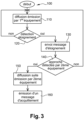
- This method 100 comprises, during a step 110, the broadcasting of an audiovisual program by a first device. It also comprises a step 120 of detecting the distance of the connected device relative to the first device. This step 120 consists in the first device determining whether the signal that it receives from the connected device is greater than or less than a threshold value, called the proximity threshold. Indeed, if the signal that the first device receives is less than this proximity threshold, this means that the connected device is moving away from said first device. If this is not the case - that is to say that the connected device is detected in proximity to the first device - then the broadcasting of the program by the first device continues.
- a threshold value called the proximity threshold
- step 130 said first device sends, via the router, a distance message to all the devices of the broadcasting system (step 130).
- the devices then check whether the connected device is approaching one of them.
- the connected device is detected in the vicinity of one of the devices, here called the second device, then said second device begins broadcasting the rest of the audiovisual broadcast (step 150). If no device detects the approach of the connected device, then the audiovisual broadcast continues to be broadcast on the first device.
- the second device has started broadcasting the audiovisual broadcast (step 150)
- the second device sends an acknowledgement message (160) to all the devices of the broadcasting system.
- This acknowledgement message may, for example, contain the identifier of the second broadcasting device as well as the user identifier and be transmitted by means of an exchange protocol similar to the protocol described below for sending the distance message.
- the broadcast by the first device may be interrupted automatically, unless the presence of a other connected device has been detected near the first equipment.
- the method of the invention may provide for automatically switching off a broadcasting equipment, when the broadcast has been resumed by another equipment. It may also provide for asking the user, by an acknowledgment message, whether the broadcast on the first equipment should be interrupted.
- the method of the invention may provide for switching off the first broadcasting equipment, when the broadcast has been resumed by the second equipment and only if no other connected device is detected near said first equipment.
- the method 100 may comprise, before step 110, a preliminary operation of recognizing the connected device.
- This recognition operation firstly comprises a selection of the connected device by the user. Indeed, during the installation of the broadcasting system, each connected device of the users of the system is previously detected at least by the first equipment. Each user must then select, from a menu displayed on said first equipment, the connected device with which he is associated.
- proximity and/or distance information must be identified.
- technologies such as, for example, NFC (Near Field Communication) technology, Beacon technology, Wifi positioning, and Bluetooth, etc.
- the identification of proximity and/or distance information is carried out using Bluetooth technology.
- Some technologies allow precise localization of the connected device.
- Bluetooth technology is easy to implement, it does not, however, allow very precise localization of the connected device.
- the preliminary recognition operation can then include a learning phase, during which at least the first device will learn near threshold and far threshold values of the connected device.
- the first equipment is a decoder/television set
- a menu displayed on the television allows the display of the list of connected devices provided to allow the identification of the user.
- the user is invited to sit in front of his screen and select the connected device that he wishes to use to allow the implementation of the tracking method, for example a smart phone with Bluetooth enabled.
- the decoder measures the strength of the Bluetooth signal it receives from the smart phone and stores this connected device and this strength as a reference for the user.
- the measurement of the signal reception power uses the RSSI value (Received Signal Strength Indicator, in English terms), sampled over a short period of time of a few seconds (for example 5 seconds) which allows to filter the noise inherent in the reception of a radio signal.
- the signal on the selected connected device is measured during this period of time and stored as a threshold value.
- a near threshold value is measured, for example when the user is seated in front of his television.
- a far threshold value is measured when, upon invitation from the configuration system, the user has moved away from the television for a period of a few seconds (for example 10 seconds).
- a final movement of the user near the television allows the identification to be finalized.
- the signal measurement is then recorded and becomes the reference for the event of activation of the monitoring of the audiovisual broadcast on the various equipment of the broadcasting system.
- the RSSI value is a value mainly linked to the drivers of the Bluetooth chip and is not standardized.
- the learning phase makes it possible to detect the threshold values specific to each connected device.
- the use of the SNR (Signal to noise Ratio, in English terms) is another possible technique for measuring the power of reception of the signal of the connected device, if this value is available by the Bluetooth chip.
- this data is transmitted to all the devices in the broadcast system by sending a tracking message.
- This tracking message which contains the data necessary for tracking the connected device through the habitat, is transmitted by the first device to all the devices in the broadcast system so that each of these devices can detect the connected device as it approaches.
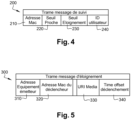
- FIG. 4 An example of a tracking message is shown schematically in the figure 4 .
- This tracking message 200 includes, within the same message frame, the MAC address 210 of the connected device, its nearby threshold value 220 as measured, its remote threshold value 230 as measured and a user identifier.
- the user identifier allows each user to easily find their connected device in the list, when selecting.
- the MAC address has the advantage of being an address specific to each connected device, which makes it possible to associate, with each connected device, its own near and far threshold values.
- the near and far threshold values are measured for a single connected device and these default values are assigned to each new connected device. This variation, although less accurate, allows for rapid installation of new connected devices.
- the learning phase as defined above is implemented by each broadcasting equipment, which makes it possible to obtain precise detection, adapted to the size of each room in the home.
- the broadcasting system is operational and any user can automatically follow an audiovisual broadcast from one room to another in the home.
- the tracking of the connected device across the home is obtained, as explained previously, by detecting the distance and/or proximity of the connected device. More precisely, when the connected device moves away from a broadcasting device, the latter sends a distance message to the other broadcasting devices so that they can check whether the connected device is approaching one of them.
- An example of a distance message is shown in the figure 5 .
- This remote message 300 comprises, in the same message frame, an identifier 310 of the broadcasting equipment transmitting the remote message, the MAC address 320 of the connected device, information 330 for restarting the audiovisual broadcast and a timing data item 340.
- the identifier 310 of the broadcasting equipment is an identifier of the equipment having transmitted the remote information. It can be used, in particular, to display on the second equipment that the content of the audiovisual broadcast is that which was broadcast by the first equipment.
- the MAC address 320 of the connected device makes it possible to attach to the connected device the user identifier which generated the event.
- the information for restarting the audiovisual broadcast 330 is the information allowing the playback of the content of the audiovisual program to be restarted, for example an HLS M3U8 link, which allows the second device to know from which source the content of the audiovisual broadcast comes, for example a Multicast source, HLS, Netflix, TNT, SAT, etc.
- the timing data 340 called “Time Offset trigger” on the figure 5 , is the time shift information allowing to return, in the content of the audiovisual program, to the moment when the distance of the connected device was detected so that the user does not lose content of the audiovisual program.
- the remoteness message can be sent, by the equipment having detected the remoteness of the connected device, by any type of standard network protocol such as, for example, by WebSocket, UPnP or any other network protocol known to those skilled in the art.
- the decoder/television set 22 in the bedroom detects the user's approach and broadcasts the audiovisual program from the moment the distance event was emitted.
- the method of the invention may include an operation for setting certain variables.
- the menu displayed on the broadcasting equipment during installation of the broadcasting system may propose setting certain variables such as, for example, a time slot during which automatic monitoring of the audiovisual broadcast is authorized. It may also propose selecting the equipment authorized to implement automatic monitoring of audiovisual broadcasts and defining the management of this equipment, in particular switching on and off the equipment. It may also propose, systematically or in certain time slots, requesting the user's consent for monitoring an audiovisual broadcast. It may also propose defining a hierarchy of the users' connected devices, the parents' connected devices being able, for example, to have priority over those of the children. It may further propose defining the conditions for switching off and/or switching on broadcasting equipment. A person skilled in the art will understand that these proposed settings are only examples and that other settings may be considered depending, in particular, on the premises considered, the users, the broadcasting equipment, etc.
- the monitoring of the audiovisual broadcast can be carried out by means of the user's connected device, for example when said connected device is a smart phone or a tablet.
- the connected device can also constitute one of the broadcasting equipment of the system.
- a dedicated application can be downloaded into the connected device to allow it to broadcast the audiovisual broadcast.
- the connected device is used both for detecting the distance of the user, as described above, and for broadcasting the audiovisual broadcast, like any other equipment of the broadcasting system, which makes it possible to continue viewing an audiovisual broadcast during the movement or when the user is out of range of a broadcasting equipment.
- the information received by the connected device is the same as the frame sent by the equipment transmitting the remote message, but will be processed by the operator's application installed on the connected device which will be the only one able to interpret it to broadcast the content.
- the tracking method and broadcasting system according to the invention include various variations, modifications and improvements which will be obvious to those skilled in the art, it being understood that these variations, modifications and improvements are part of the scope of the invention.
Landscapes
- Engineering & Computer Science (AREA)
- Multimedia (AREA)
- Signal Processing (AREA)
- Computer Networks & Wireless Communication (AREA)
- Databases & Information Systems (AREA)
- Two-Way Televisions, Distribution Of Moving Picture Or The Like (AREA)
Claims (14)
- Verfahren zur Verfolgung einer audiovisuellen Sendung zwischen mindestens einem ersten und einem zweiten Ausstrahlungsgerät (21, 22, 23), die mittels eines Routers (24) verbunden und je fähig sind, die audiovisuelle Sendung zumindest teilweise auszustrahlen,
dadurch gekennzeichnet, dass die Ausstrahlungsgeräte miteinander kommunizieren und die Ereignisse und die Audio-/Video-Datenflüsse gemeinsam nutzen, wobei jedes der Ausstrahlungsgeräte einen Rechnungsprozessor, einen Speicher und mindestens eine Verfolgungsschnittstelle (50) einer einem Benutzer zugeordneten verbundenen Vorrichtung (30) aufweist, und dass das Verfahren die folgenden Vorgänge aufweist:- Erkennen (120), durch das erste Ausstrahlungsgerät, der Entfernung der verbundenen Vorrichtung bezüglich des ersten Ausstrahlungsgeräts,- Senden (130), durch das erste Ausstrahlungsgerät, einer Entfernungsnachricht (300) an alle mit dem Router verbundenen Ausstrahlungsgeräte, wobei diese Entfernungsnachricht einen Verzögerungsdatenwert der audiovisuellen Sendung aufweist,- ^ Überprüfen, durch jedes der mit dem Router verbundenen Ausstrahlungsgeräte, der Annäherung der verbundenen Vorrichtung,- Erkennen (140), durch das zweite Ausstrahlungsgerät, der Annäherung der dem Benutzer zugeordneten verbundenen Vorrichtung (30),- Ausstrahlen (150) der audiovisuellen Sendung durch das zweite Ausstrahlungsgerät abhängig von dem vom ersten Ausstrahlungsgerät in der Entfernungsnachricht (300) übertragenen Verzögerungsdatenwert, und- Senden (160), durch das zweite Ausstrahlungsgerät, einer Bestätigungsnachricht an alle Ausstrahlungsgeräte. - Verfolgungsverfahren nach Anspruch 1, dadurch gekennzeichnet, dass es einen einleitenden Vorgang der Erkennung der dem Benutzer zugeordneten verbundenen Vorrichtung (30) und der Übertragung einer Verfolgungsdaten der verbundenen Vorrichtung enthaltenden Verfolgungsnachricht (200) an die mit dem Router verbundenen Ausstrahlungsgeräte aufweist.
- Verfolgungsverfahren nach Anspruch 2, dadurch gekennzeichnet, dass jede Verfolgungsnachricht (200) in einem Nachrichtenrahmen eine MAC-Adresse bezüglich der verbundenen Vorrichtung (210), einen Wert einer nahen Schwelle (220), einen Wert einer entfernten Schwelle (230) und eine Benutzerkennung (240) aufweist.
- Verfolgungsverfahren nach einem der Ansprüche 1 bis 3, dadurch gekennzeichnet, dass jede Entfernungsnachricht (300) in einem Nachrichtenrahmen eine Kennung (310) des die Entfernungsnachricht sendenden Ausstrahlungsgeräts, die MAC-Adresse der verbundenen Vorrichtung (320), eine Information (330) des Neustarts der audiovisuellen Sendung und den Verzögerungsdatenwert (340) aufweist.
- Verfolgungsverfahren nach einem der Ansprüche 2 bis 4, dadurch gekennzeichnet, dass der einleitende Vorgang der Erkennung der verbundenen Vorrichtung mindestens eine Messung, mindestens durch das erste Ausstrahlungsgerät, eines Stärkeindikators eines empfangenen Signals aufweist.
- Verfolgungsverfahren nach Anspruch 5, dadurch gekennzeichnet, dass der einleitende Vorgang der Erkennung der verbundenen Vorrichtung eine Abtastung des Stärkeindikators eines empfangenen Signals aufweist.
- Verfolgungsverfahren nach einem der Ansprüche 2 bis 6, dadurch gekennzeichnet, dass der einleitende Vorgang der Erkennung der verbundenen Vorrichtung eine Auswahl der verbundenen Vorrichtung durch den Benutzer aufweist.
- Verfolgungsverfahren nach einem der Ansprüche 1 bis 7, dadurch gekennzeichnet, dass es nach Empfang der Bestätigungsnachricht und in Abwesenheit einer erkannten zweiten verbundenen Vorrichtung in der Nähe des ersten Ausstrahlungsgeräts einen Stoppvorgang der Ausstrahlung durch das erste Ausstrahlungsgerät aufweist.
- Verfolgungsverfahren nach einem der Ansprüche 1 bis 8, dadurch gekennzeichnet, dass die verbundene Vorrichtung (30) über ein drahtloses Bluetooth-Austauschprotokoll mit den Ausstrahlungsgeräten (21, 22, 23) kommuniziert.
- Verfolgungsverfahren nach einem der Ansprüche 1 bis 9, dadurch gekennzeichnet, dass, wenn die verbundene Vorrichtung (30) bei der Annäherung des zweiten Ausstrahlungsgeräts erkannt wird, das zweite Ausstrahlungsgerät eine Akzeptanzanfrage der Wiederaufnahme der audiovisuellen Sendung an den Benutzer sendet.
- Ausstrahlungsgerät einer audiovisuellen Sendung, dadurch gekennzeichnet, dass es einen Rechnungsprozessor, einen Speicher und mindestens eine Verfolgungsschnittstelle (50) einer einem Benutzer zugeordneten verbundenen Vorrichtung (30) aufweist, wobei das Ausstrahlungsgerät fähig ist, eine Entfernung und eine Annäherung der verbundenen Vorrichtung (30) zu erkennen, eine Entfernungsnachricht (300) zu schicken, zu empfangen und zu verarbeiten, und die audiovisuelle Sendung auszustrahlen, unter Berücksichtigung eines in der Entfernungsnachricht enthaltenen Verzögerungsdatenwerts.
- System zur Ausstrahlung einer audiovisuellen Sendung, das das Verfahren nach einem der Ansprüche 1 bis 10 durchführt, dadurch gekennzeichnet, dass es aufweist:- mindestens ein erstes und ein zweites Ausstrahlungsgerät (21, 22, 23), die mittels eines Routers (24) verbunden sind, und- mindestens eine verbundene Vorrichtung (30), die einem Benutzer zugeordnet und über ein drahtloses Austauschprotokoll mit den Ausstrahlungsgeräten verbunden ist,wobei jedes der ersten und zweiten Ausstrahlungsgeräte einen Rechnungsprozessor, einen Speicher und mindestens eine Verfolgungsschnittstelle (50) der verbundenen Vorrichtung (30) aufweist.
- Computerprogramm, dadurch gekennzeichnet, dass es Anweisungen enthält, die, wenn sie von einem Ausstrahlungsgerät einer audiovisuellen Sendung ausgeführt werden, geeignet sind, das Verfahren nach einem der Ansprüche 1 bis 10 durchzuführen, um die verbundene Vorrichtung zu erkennen und die audiovisuelle Sendung auszustrahlen.
- Speichereinrichtung, dadurch gekennzeichnet, dass sie ein Computerprogramm speichert, das Anweisungen enthält, um das Verfahren nach einem der Ansprüche 1 bis 10 durch ein Ausstrahlungsgerät einer audiovisuellen Sendung durchzuführen, wenn das Programm von einem Prozessor des Geräts ausgeführt wird.
Applications Claiming Priority (1)
| Application Number | Priority Date | Filing Date | Title |
|---|---|---|---|
| FR1872165A FR3089379B1 (fr) | 2018-11-30 | 2018-11-30 | Procédé de suivi d’une émission audiovisuelle et équipement permettant sa mise en œuvre |
Publications (2)
| Publication Number | Publication Date |
|---|---|
| EP3661221A1 EP3661221A1 (de) | 2020-06-03 |
| EP3661221B1 true EP3661221B1 (de) | 2024-11-06 |
Family
ID=66676615
Family Applications (1)
| Application Number | Title | Priority Date | Filing Date |
|---|---|---|---|
| EP19211240.7A Active EP3661221B1 (de) | 2018-11-30 | 2019-11-25 | Verfahren zur überwachung eines audiovisuellen rundfunks und ausrüstung zu dessen durchführung |
Country Status (5)
| Country | Link |
|---|---|
| US (1) | US11259077B2 (de) |
| EP (1) | EP3661221B1 (de) |
| CN (1) | CN111263213B (de) |
| BR (1) | BR102019025090A2 (de) |
| FR (1) | FR3089379B1 (de) |
Families Citing this family (1)
| Publication number | Priority date | Publication date | Assignee | Title |
|---|---|---|---|---|
| US20220052867A1 (en) * | 2020-05-08 | 2022-02-17 | Google Llc | User Proximity Sensing For Automatic Cross-Device Content Transfer |
Family Cites Families (12)
| Publication number | Priority date | Publication date | Assignee | Title |
|---|---|---|---|---|
| ATE458346T1 (de) | 2005-02-28 | 2010-03-15 | Koninkl Philips Electronics Nv | System und verfahren zur bereitstellung einer universellen 'follow-me -funktionalität in einem upnp-av-netzwerk |
| US8655953B2 (en) | 2008-07-18 | 2014-02-18 | Porto Technology, Llc | System and method for playback positioning of distributed media co-viewers |
| US20110072452A1 (en) * | 2009-09-23 | 2011-03-24 | Rovi Technologies Corporation | Systems and methods for providing automatic parental control activation when a restricted user is detected within range of a device |
| US8880648B1 (en) * | 2012-06-27 | 2014-11-04 | Audible, Inc. | Automated transition of content consumption across devices |
| US9497137B2 (en) * | 2013-01-04 | 2016-11-15 | Sookbox, LLC | Digital content connectivity and control via a plurality of controllers that are treated discriminatively |
| US9820093B2 (en) * | 2013-12-20 | 2017-11-14 | Apple Inc. | Programmable beacon payloads |
| US9747011B2 (en) * | 2014-09-16 | 2017-08-29 | Google Inc. | Continuation of playback of media content by different output devices |
| EP3018845A1 (de) * | 2014-11-06 | 2016-05-11 | Thomson Licensing | Verfahren zur Übergabe der Wiedergabe von Audio-/Videorundfunkinhalt und zugehörige Vorrichtung |
| US10395278B2 (en) * | 2015-01-23 | 2019-08-27 | Bluefox, Inc. | Mobile device detection and engaging |
| EP3251373B1 (de) * | 2015-01-28 | 2020-06-17 | Roku Denmark ApS | Selbstorganisierende audiosynchronisation |
| WO2016180914A1 (en) * | 2015-05-13 | 2016-11-17 | Nagravision S.A. | Home-automation system |
| WO2017173117A1 (en) * | 2016-03-30 | 2017-10-05 | 3-East, Llc | System, method, and devices for managing retail transactions at a retail location |
-
2018
- 2018-11-30 FR FR1872165A patent/FR3089379B1/fr not_active Expired - Fee Related
-
2019
- 2019-11-25 EP EP19211240.7A patent/EP3661221B1/de active Active
- 2019-11-25 US US16/694,613 patent/US11259077B2/en active Active
- 2019-11-28 BR BR102019025090-9A patent/BR102019025090A2/pt unknown
- 2019-11-29 CN CN201911199918.2A patent/CN111263213B/zh active Active
Also Published As
| Publication number | Publication date |
|---|---|
| CN111263213B (zh) | 2023-08-29 |
| CN111263213A (zh) | 2020-06-09 |
| FR3089379A1 (fr) | 2020-06-05 |
| EP3661221A1 (de) | 2020-06-03 |
| FR3089379B1 (fr) | 2023-03-17 |
| BR102019025090A2 (pt) | 2020-08-04 |
| US11259077B2 (en) | 2022-02-22 |
| US20200177952A1 (en) | 2020-06-04 |
Similar Documents
| Publication | Publication Date | Title |
|---|---|---|
| EP2057632B1 (de) | Verfahren zur verwaltung eines multimediaprogramms, server, endgeräte, signal und entsprechende computerprogramme | |
| EP2795845B1 (de) | Steuersystem zur wiedergabe eines datenstroms auf einer empfangsvorrichtung | |
| EP3840388B1 (de) | Dual audio-link decoder ausrüstung | |
| EP3661221B1 (de) | Verfahren zur überwachung eines audiovisuellen rundfunks und ausrüstung zu dessen durchführung | |
| EP3430786B1 (de) | Erfassung von extrakten eines multimediastroms auf einem endgerät | |
| EP1152609B1 (de) | Über ein Fernmeldenetzwerk ferngesteuerte Videosignal-Aufnahmeanlage | |
| FR2898458A1 (fr) | Procede pour la distribution securisee de sequences audiovisuelles, decodeur et systeme pour la mise en oeuvre de ce procede | |
| EP3718301B1 (de) | Videokonferenzkommunikation | |
| CN105474652B (zh) | 用于用户监控和意图判断的系统和方法 | |
| EP4224868A2 (de) | Verfahren zur synchronisation, erzeugung eines stroms, computerprogramme, speichermedium, wiedergabe-, ausführungs- und erzeugungsvorrichtungen dafür | |
| WO2023180274A1 (fr) | Gestion perfectionnée d'un code visuel en cours d'affichage dans un contenu multimédia | |
| FR2863805A1 (fr) | Procede et appareil de prise de vue pour l'enrichissement d'images | |
| EP3526945B1 (de) | Kommunikationssystem mit inhaltsempfänger zur verwaltung eines anrufs während eines rundfunks und entsprechendes verfahren zur verwaltung von | |
| FR3036510A1 (fr) | Procede et dispositif pour selectionner un contenu multimedia secondaire | |
| FR3131160A1 (fr) | Procédé de restitution d’un contenu multimédia, programme d’ordinateur et terminal lecteur de flux multimédia correspondants. | |
| FR3116685A1 (fr) | Personnalisation de flux multimédia en fonction de données dynamiques issues d’objets connectés | |
| FR3076155A1 (fr) | Procede de transfert de donnees d'un contexte televise entre deux decodeurs et equipement permettant sa mise en œuvre | |
| FR3079705A1 (fr) | Communication par video conference | |
| FR2961997A1 (fr) | Obtention d'informations complementaires associees a un contenu diffuse | |
| EP3548997A1 (de) | Verfahren zur verwaltung des empfangs von digitalem inhalt durch eine verwaltungsvorrichtung | |
| FR2833744A1 (fr) | Procede de reconnaissance vocale et, terminal multimedia mettant en oeuvre le procede | |
| EP2944137A1 (de) | Vorrichtung zur synchronisation der rundsendung von klangsignalen und klangrundsender | |
| FR2905546A1 (fr) | Procede et systeme de synchronisation d'informations avec un flux |
Legal Events
| Date | Code | Title | Description |
|---|---|---|---|
| PUAI | Public reference made under article 153(3) epc to a published international application that has entered the european phase |
Free format text: ORIGINAL CODE: 0009012 |
|
| STAA | Information on the status of an ep patent application or granted ep patent |
Free format text: STATUS: THE APPLICATION HAS BEEN PUBLISHED |
|
| AK | Designated contracting states |
Kind code of ref document: A1 Designated state(s): AL AT BE BG CH CY CZ DE DK EE ES FI FR GB GR HR HU IE IS IT LI LT LU LV MC MK MT NL NO PL PT RO RS SE SI SK SM TR |
|
| AX | Request for extension of the european patent |
Extension state: BA ME |
|
| STAA | Information on the status of an ep patent application or granted ep patent |
Free format text: STATUS: REQUEST FOR EXAMINATION WAS MADE |
|
| 17P | Request for examination filed |
Effective date: 20201020 |
|
| RBV | Designated contracting states (corrected) |
Designated state(s): AL AT BE BG CH CY CZ DE DK EE ES FI FR GB GR HR HU IE IS IT LI LT LU LV MC MK MT NL NO PL PT RO RS SE SI SK SM TR |
|
| STAA | Information on the status of an ep patent application or granted ep patent |
Free format text: STATUS: EXAMINATION IS IN PROGRESS |
|
| 17Q | First examination report despatched |
Effective date: 20210323 |
|
| RAP3 | Party data changed (applicant data changed or rights of an application transferred) |
Owner name: SAGEMCOM BROADBAND SAS |
|
| GRAP | Despatch of communication of intention to grant a patent |
Free format text: ORIGINAL CODE: EPIDOSNIGR1 |
|
| STAA | Information on the status of an ep patent application or granted ep patent |
Free format text: STATUS: GRANT OF PATENT IS INTENDED |
|
| INTG | Intention to grant announced |
Effective date: 20240528 |
|
| GRAS | Grant fee paid |
Free format text: ORIGINAL CODE: EPIDOSNIGR3 |
|
| GRAA | (expected) grant |
Free format text: ORIGINAL CODE: 0009210 |
|
| STAA | Information on the status of an ep patent application or granted ep patent |
Free format text: STATUS: THE PATENT HAS BEEN GRANTED |
|
| AK | Designated contracting states |
Kind code of ref document: B1 Designated state(s): AL AT BE BG CH CY CZ DE DK EE ES FI FR GB GR HR HU IE IS IT LI LT LU LV MC MK MT NL NO PL PT RO RS SE SI SK SM TR |
|
| REG | Reference to a national code |
Ref country code: GB Ref legal event code: FG4D Free format text: NOT ENGLISH |
|
| REG | Reference to a national code |
Ref country code: CH Ref legal event code: EP |
|
| REG | Reference to a national code |
Ref country code: DE Ref legal event code: R096 Ref document number: 602019061435 Country of ref document: DE |
|
| REG | Reference to a national code |
Ref country code: IE Ref legal event code: FG4D Free format text: LANGUAGE OF EP DOCUMENT: FRENCH |
|
| REG | Reference to a national code |
Ref country code: LT Ref legal event code: MG9D |
|
| REG | Reference to a national code |
Ref country code: NL Ref legal event code: MP Effective date: 20241106 |
|
| PG25 | Lapsed in a contracting state [announced via postgrant information from national office to epo] |
Ref country code: HR Free format text: LAPSE BECAUSE OF FAILURE TO SUBMIT A TRANSLATION OF THE DESCRIPTION OR TO PAY THE FEE WITHIN THE PRESCRIBED TIME-LIMIT Effective date: 20241106 Ref country code: PT Free format text: LAPSE BECAUSE OF FAILURE TO SUBMIT A TRANSLATION OF THE DESCRIPTION OR TO PAY THE FEE WITHIN THE PRESCRIBED TIME-LIMIT Effective date: 20250306 Ref country code: IS Free format text: LAPSE BECAUSE OF FAILURE TO SUBMIT A TRANSLATION OF THE DESCRIPTION OR TO PAY THE FEE WITHIN THE PRESCRIBED TIME-LIMIT Effective date: 20250306 |
|
| PG25 | Lapsed in a contracting state [announced via postgrant information from national office to epo] |
Ref country code: NL Free format text: LAPSE BECAUSE OF FAILURE TO SUBMIT A TRANSLATION OF THE DESCRIPTION OR TO PAY THE FEE WITHIN THE PRESCRIBED TIME-LIMIT Effective date: 20241106 Ref country code: FI Free format text: LAPSE BECAUSE OF FAILURE TO SUBMIT A TRANSLATION OF THE DESCRIPTION OR TO PAY THE FEE WITHIN THE PRESCRIBED TIME-LIMIT Effective date: 20241106 |
|
| REG | Reference to a national code |
Ref country code: AT Ref legal event code: MK05 Ref document number: 1740684 Country of ref document: AT Kind code of ref document: T Effective date: 20241106 |
|
| PG25 | Lapsed in a contracting state [announced via postgrant information from national office to epo] |
Ref country code: BG Free format text: LAPSE BECAUSE OF FAILURE TO SUBMIT A TRANSLATION OF THE DESCRIPTION OR TO PAY THE FEE WITHIN THE PRESCRIBED TIME-LIMIT Effective date: 20241106 |
|
| PG25 | Lapsed in a contracting state [announced via postgrant information from national office to epo] |
Ref country code: ES Free format text: LAPSE BECAUSE OF FAILURE TO SUBMIT A TRANSLATION OF THE DESCRIPTION OR TO PAY THE FEE WITHIN THE PRESCRIBED TIME-LIMIT Effective date: 20241106 |
|
| PG25 | Lapsed in a contracting state [announced via postgrant information from national office to epo] |
Ref country code: NO Free format text: LAPSE BECAUSE OF FAILURE TO SUBMIT A TRANSLATION OF THE DESCRIPTION OR TO PAY THE FEE WITHIN THE PRESCRIBED TIME-LIMIT Effective date: 20250206 |
|
| PG25 | Lapsed in a contracting state [announced via postgrant information from national office to epo] |
Ref country code: GR Free format text: LAPSE BECAUSE OF FAILURE TO SUBMIT A TRANSLATION OF THE DESCRIPTION OR TO PAY THE FEE WITHIN THE PRESCRIBED TIME-LIMIT Effective date: 20250207 Ref country code: LV Free format text: LAPSE BECAUSE OF FAILURE TO SUBMIT A TRANSLATION OF THE DESCRIPTION OR TO PAY THE FEE WITHIN THE PRESCRIBED TIME-LIMIT Effective date: 20241106 Ref country code: AT Free format text: LAPSE BECAUSE OF FAILURE TO SUBMIT A TRANSLATION OF THE DESCRIPTION OR TO PAY THE FEE WITHIN THE PRESCRIBED TIME-LIMIT Effective date: 20241106 |
|
| PG25 | Lapsed in a contracting state [announced via postgrant information from national office to epo] |
Ref country code: PL Free format text: LAPSE BECAUSE OF FAILURE TO SUBMIT A TRANSLATION OF THE DESCRIPTION OR TO PAY THE FEE WITHIN THE PRESCRIBED TIME-LIMIT Effective date: 20241106 |
|
| PG25 | Lapsed in a contracting state [announced via postgrant information from national office to epo] |
Ref country code: RS Free format text: LAPSE BECAUSE OF FAILURE TO SUBMIT A TRANSLATION OF THE DESCRIPTION OR TO PAY THE FEE WITHIN THE PRESCRIBED TIME-LIMIT Effective date: 20250206 |
|
| REG | Reference to a national code |
Ref country code: CH Ref legal event code: PL |
|
| PG25 | Lapsed in a contracting state [announced via postgrant information from national office to epo] |
Ref country code: SM Free format text: LAPSE BECAUSE OF FAILURE TO SUBMIT A TRANSLATION OF THE DESCRIPTION OR TO PAY THE FEE WITHIN THE PRESCRIBED TIME-LIMIT Effective date: 20241106 |
|
| PG25 | Lapsed in a contracting state [announced via postgrant information from national office to epo] |
Ref country code: DK Free format text: LAPSE BECAUSE OF FAILURE TO SUBMIT A TRANSLATION OF THE DESCRIPTION OR TO PAY THE FEE WITHIN THE PRESCRIBED TIME-LIMIT Effective date: 20241106 |
|
| PG25 | Lapsed in a contracting state [announced via postgrant information from national office to epo] |
Ref country code: LU Free format text: LAPSE BECAUSE OF NON-PAYMENT OF DUE FEES Effective date: 20241125 |
|
| REG | Reference to a national code |
Ref country code: CH Ref legal event code: PL |
|
| PG25 | Lapsed in a contracting state [announced via postgrant information from national office to epo] |
Ref country code: EE Free format text: LAPSE BECAUSE OF FAILURE TO SUBMIT A TRANSLATION OF THE DESCRIPTION OR TO PAY THE FEE WITHIN THE PRESCRIBED TIME-LIMIT Effective date: 20241106 |
|
| PG25 | Lapsed in a contracting state [announced via postgrant information from national office to epo] |
Ref country code: CH Free format text: LAPSE BECAUSE OF NON-PAYMENT OF DUE FEES Effective date: 20241130 |
|
| PG25 | Lapsed in a contracting state [announced via postgrant information from national office to epo] |
Ref country code: RO Free format text: LAPSE BECAUSE OF FAILURE TO SUBMIT A TRANSLATION OF THE DESCRIPTION OR TO PAY THE FEE WITHIN THE PRESCRIBED TIME-LIMIT Effective date: 20241106 |
|
| PG25 | Lapsed in a contracting state [announced via postgrant information from national office to epo] |
Ref country code: SK Free format text: LAPSE BECAUSE OF FAILURE TO SUBMIT A TRANSLATION OF THE DESCRIPTION OR TO PAY THE FEE WITHIN THE PRESCRIBED TIME-LIMIT Effective date: 20241106 |
|
| PG25 | Lapsed in a contracting state [announced via postgrant information from national office to epo] |
Ref country code: CZ Free format text: LAPSE BECAUSE OF FAILURE TO SUBMIT A TRANSLATION OF THE DESCRIPTION OR TO PAY THE FEE WITHIN THE PRESCRIBED TIME-LIMIT Effective date: 20241106 |
|
| PG25 | Lapsed in a contracting state [announced via postgrant information from national office to epo] |
Ref country code: IT Free format text: LAPSE BECAUSE OF FAILURE TO SUBMIT A TRANSLATION OF THE DESCRIPTION OR TO PAY THE FEE WITHIN THE PRESCRIBED TIME-LIMIT Effective date: 20241106 |
|
| REG | Reference to a national code |
Ref country code: DE Ref legal event code: R097 Ref document number: 602019061435 Country of ref document: DE |
|
| REG | Reference to a national code |
Ref country code: BE Ref legal event code: MM Effective date: 20241130 |
|
| PG25 | Lapsed in a contracting state [announced via postgrant information from national office to epo] |
Ref country code: SE Free format text: LAPSE BECAUSE OF FAILURE TO SUBMIT A TRANSLATION OF THE DESCRIPTION OR TO PAY THE FEE WITHIN THE PRESCRIBED TIME-LIMIT Effective date: 20241106 |
|
| PLBE | No opposition filed within time limit |
Free format text: ORIGINAL CODE: 0009261 |
|
| STAA | Information on the status of an ep patent application or granted ep patent |
Free format text: STATUS: NO OPPOSITION FILED WITHIN TIME LIMIT |
|
| PG25 | Lapsed in a contracting state [announced via postgrant information from national office to epo] |
Ref country code: MC Free format text: LAPSE BECAUSE OF FAILURE TO SUBMIT A TRANSLATION OF THE DESCRIPTION OR TO PAY THE FEE WITHIN THE PRESCRIBED TIME-LIMIT Effective date: 20241106 |
|
| 26N | No opposition filed |
Effective date: 20250807 |
|
| PG25 | Lapsed in a contracting state [announced via postgrant information from national office to epo] |
Ref country code: BE Free format text: LAPSE BECAUSE OF NON-PAYMENT OF DUE FEES Effective date: 20241130 |
|
| PG25 | Lapsed in a contracting state [announced via postgrant information from national office to epo] |
Ref country code: IE Free format text: LAPSE BECAUSE OF NON-PAYMENT OF DUE FEES Effective date: 20241125 |
|
| PGFP | Annual fee paid to national office [announced via postgrant information from national office to epo] |
Ref country code: DE Payment date: 20251022 Year of fee payment: 7 |
|
| PGFP | Annual fee paid to national office [announced via postgrant information from national office to epo] |
Ref country code: GB Payment date: 20251022 Year of fee payment: 7 |
|
| PGFP | Annual fee paid to national office [announced via postgrant information from national office to epo] |
Ref country code: FR Payment date: 20251022 Year of fee payment: 7 |
|
| PG25 | Lapsed in a contracting state [announced via postgrant information from national office to epo] |
Ref country code: HU Free format text: LAPSE BECAUSE OF FAILURE TO SUBMIT A TRANSLATION OF THE DESCRIPTION OR TO PAY THE FEE WITHIN THE PRESCRIBED TIME-LIMIT; INVALID AB INITIO Effective date: 20191125 |
|
| PG25 | Lapsed in a contracting state [announced via postgrant information from national office to epo] |
Ref country code: CY Free format text: LAPSE BECAUSE OF FAILURE TO SUBMIT A TRANSLATION OF THE DESCRIPTION OR TO PAY THE FEE WITHIN THE PRESCRIBED TIME-LIMIT; INVALID AB INITIO Effective date: 20191125 |