EP3661734B1 - Stecker - Google Patents
Stecker Download PDFInfo
- Publication number
- EP3661734B1 EP3661734B1 EP18840287.9A EP18840287A EP3661734B1 EP 3661734 B1 EP3661734 B1 EP 3661734B1 EP 18840287 A EP18840287 A EP 18840287A EP 3661734 B1 EP3661734 B1 EP 3661734B1
- Authority
- EP
- European Patent Office
- Prior art keywords
- plug
- tyre
- sealant
- porous material
- accelerant
- Prior art date
- Legal status (The legal status is an assumption and is not a legal conclusion. Google has not performed a legal analysis and makes no representation as to the accuracy of the status listed.)
- Active
Links
Images



Classifications
-
- B—PERFORMING OPERATIONS; TRANSPORTING
- B29—WORKING OF PLASTICS; WORKING OF SUBSTANCES IN A PLASTIC STATE IN GENERAL
- B29C—SHAPING OR JOINING OF PLASTICS; SHAPING OF MATERIAL IN A PLASTIC STATE, NOT OTHERWISE PROVIDED FOR; AFTER-TREATMENT OF THE SHAPED PRODUCTS, e.g. REPAIRING
- B29C73/00—Repairing of articles made from plastics or substances in a plastic state, e.g. of articles shaped or produced by using techniques covered by this subclass or subclass B29D
- B29C73/04—Repairing of articles made from plastics or substances in a plastic state, e.g. of articles shaped or produced by using techniques covered by this subclass or subclass B29D using preformed elements
- B29C73/06—Repairing of articles made from plastics or substances in a plastic state, e.g. of articles shaped or produced by using techniques covered by this subclass or subclass B29D using preformed elements using plugs sealing in the hole
-
- B—PERFORMING OPERATIONS; TRANSPORTING
- B29—WORKING OF PLASTICS; WORKING OF SUBSTANCES IN A PLASTIC STATE IN GENERAL
- B29C—SHAPING OR JOINING OF PLASTICS; SHAPING OF MATERIAL IN A PLASTIC STATE, NOT OTHERWISE PROVIDED FOR; AFTER-TREATMENT OF THE SHAPED PRODUCTS, e.g. REPAIRING
- B29C73/00—Repairing of articles made from plastics or substances in a plastic state, e.g. of articles shaped or produced by using techniques covered by this subclass or subclass B29D
- B29C73/02—Repairing of articles made from plastics or substances in a plastic state, e.g. of articles shaped or produced by using techniques covered by this subclass or subclass B29D using liquid or paste-like material
-
- B—PERFORMING OPERATIONS; TRANSPORTING
- B29—WORKING OF PLASTICS; WORKING OF SUBSTANCES IN A PLASTIC STATE IN GENERAL
- B29C—SHAPING OR JOINING OF PLASTICS; SHAPING OF MATERIAL IN A PLASTIC STATE, NOT OTHERWISE PROVIDED FOR; AFTER-TREATMENT OF THE SHAPED PRODUCTS, e.g. REPAIRING
- B29C73/00—Repairing of articles made from plastics or substances in a plastic state, e.g. of articles shaped or produced by using techniques covered by this subclass or subclass B29D
- B29C73/16—Auto-repairing or self-sealing arrangements or agents
- B29C73/163—Sealing compositions or agents, e.g. combined with propellant agents
-
- C—CHEMISTRY; METALLURGY
- C08—ORGANIC MACROMOLECULAR COMPOUNDS; THEIR PREPARATION OR CHEMICAL WORKING-UP; COMPOSITIONS BASED THEREON
- C08J—WORKING-UP; GENERAL PROCESSES OF COMPOUNDING; AFTER-TREATMENT NOT COVERED BY SUBCLASSES C08B, C08C, C08F, C08G or C08H
- C08J3/00—Processes of treating or compounding macromolecular substances
- C08J3/24—Crosslinking, e.g. vulcanising, of macromolecules
- C08J3/26—Crosslinking, e.g. vulcanising, of macromolecules of latex
-
- C—CHEMISTRY; METALLURGY
- C08—ORGANIC MACROMOLECULAR COMPOUNDS; THEIR PREPARATION OR CHEMICAL WORKING-UP; COMPOSITIONS BASED THEREON
- C08J—WORKING-UP; GENERAL PROCESSES OF COMPOUNDING; AFTER-TREATMENT NOT COVERED BY SUBCLASSES C08B, C08C, C08F, C08G or C08H
- C08J5/00—Manufacture of articles or shaped materials containing macromolecular substances
- C08J5/04—Reinforcing macromolecular compounds with loose or coherent fibrous material
- C08J5/045—Reinforcing macromolecular compounds with loose or coherent fibrous material with vegetable or animal fibrous material
-
- C—CHEMISTRY; METALLURGY
- C08—ORGANIC MACROMOLECULAR COMPOUNDS; THEIR PREPARATION OR CHEMICAL WORKING-UP; COMPOSITIONS BASED THEREON
- C08J—WORKING-UP; GENERAL PROCESSES OF COMPOUNDING; AFTER-TREATMENT NOT COVERED BY SUBCLASSES C08B, C08C, C08F, C08G or C08H
- C08J5/00—Manufacture of articles or shaped materials containing macromolecular substances
- C08J5/04—Reinforcing macromolecular compounds with loose or coherent fibrous material
- C08J5/046—Reinforcing macromolecular compounds with loose or coherent fibrous material with synthetic macromolecular fibrous material
-
- B—PERFORMING OPERATIONS; TRANSPORTING
- B29—WORKING OF PLASTICS; WORKING OF SUBSTANCES IN A PLASTIC STATE IN GENERAL
- B29C—SHAPING OR JOINING OF PLASTICS; SHAPING OF MATERIAL IN A PLASTIC STATE, NOT OTHERWISE PROVIDED FOR; AFTER-TREATMENT OF THE SHAPED PRODUCTS, e.g. REPAIRING
- B29C73/00—Repairing of articles made from plastics or substances in a plastic state, e.g. of articles shaped or produced by using techniques covered by this subclass or subclass B29D
- B29C73/02—Repairing of articles made from plastics or substances in a plastic state, e.g. of articles shaped or produced by using techniques covered by this subclass or subclass B29D using liquid or paste-like material
- B29C73/025—Repairing of articles made from plastics or substances in a plastic state, e.g. of articles shaped or produced by using techniques covered by this subclass or subclass B29D using liquid or paste-like material fed under pressure
-
- C—CHEMISTRY; METALLURGY
- C08—ORGANIC MACROMOLECULAR COMPOUNDS; THEIR PREPARATION OR CHEMICAL WORKING-UP; COMPOSITIONS BASED THEREON
- C08J—WORKING-UP; GENERAL PROCESSES OF COMPOUNDING; AFTER-TREATMENT NOT COVERED BY SUBCLASSES C08B, C08C, C08F, C08G or C08H
- C08J2307/00—Characterised by the use of natural rubber
- C08J2307/02—Latex
-
- C—CHEMISTRY; METALLURGY
- C08—ORGANIC MACROMOLECULAR COMPOUNDS; THEIR PREPARATION OR CHEMICAL WORKING-UP; COMPOSITIONS BASED THEREON
- C08J—WORKING-UP; GENERAL PROCESSES OF COMPOUNDING; AFTER-TREATMENT NOT COVERED BY SUBCLASSES C08B, C08C, C08F, C08G or C08H
- C08J2309/00—Characterised by the use of homopolymers or copolymers of conjugated diene hydrocarbons
- C08J2309/02—Copolymers with acrylonitrile
- C08J2309/04—Latex
-
- C—CHEMISTRY; METALLURGY
- C08—ORGANIC MACROMOLECULAR COMPOUNDS; THEIR PREPARATION OR CHEMICAL WORKING-UP; COMPOSITIONS BASED THEREON
- C08J—WORKING-UP; GENERAL PROCESSES OF COMPOUNDING; AFTER-TREATMENT NOT COVERED BY SUBCLASSES C08B, C08C, C08F, C08G or C08H
- C08J2309/00—Characterised by the use of homopolymers or copolymers of conjugated diene hydrocarbons
- C08J2309/06—Copolymers with styrene
- C08J2309/08—Latex
-
- C—CHEMISTRY; METALLURGY
- C08—ORGANIC MACROMOLECULAR COMPOUNDS; THEIR PREPARATION OR CHEMICAL WORKING-UP; COMPOSITIONS BASED THEREON
- C08J—WORKING-UP; GENERAL PROCESSES OF COMPOUNDING; AFTER-TREATMENT NOT COVERED BY SUBCLASSES C08B, C08C, C08F, C08G or C08H
- C08J2309/00—Characterised by the use of homopolymers or copolymers of conjugated diene hydrocarbons
- C08J2309/10—Latex
-
- C—CHEMISTRY; METALLURGY
- C08—ORGANIC MACROMOLECULAR COMPOUNDS; THEIR PREPARATION OR CHEMICAL WORKING-UP; COMPOSITIONS BASED THEREON
- C08J—WORKING-UP; GENERAL PROCESSES OF COMPOUNDING; AFTER-TREATMENT NOT COVERED BY SUBCLASSES C08B, C08C, C08F, C08G or C08H
- C08J2311/00—Characterised by the use of homopolymers or copolymers of chloroprene
- C08J2311/02—Latex
-
- C—CHEMISTRY; METALLURGY
- C08—ORGANIC MACROMOLECULAR COMPOUNDS; THEIR PREPARATION OR CHEMICAL WORKING-UP; COMPOSITIONS BASED THEREON
- C08J—WORKING-UP; GENERAL PROCESSES OF COMPOUNDING; AFTER-TREATMENT NOT COVERED BY SUBCLASSES C08B, C08C, C08F, C08G or C08H
- C08J2313/00—Characterised by the use of rubbers containing carboxyl groups
- C08J2313/02—Latex
-
- C—CHEMISTRY; METALLURGY
- C08—ORGANIC MACROMOLECULAR COMPOUNDS; THEIR PREPARATION OR CHEMICAL WORKING-UP; COMPOSITIONS BASED THEREON
- C08J—WORKING-UP; GENERAL PROCESSES OF COMPOUNDING; AFTER-TREATMENT NOT COVERED BY SUBCLASSES C08B, C08C, C08F, C08G or C08H
- C08J2321/00—Characterised by the use of unspecified rubbers
- C08J2321/02—Latex
-
- Y—GENERAL TAGGING OF NEW TECHNOLOGICAL DEVELOPMENTS; GENERAL TAGGING OF CROSS-SECTIONAL TECHNOLOGIES SPANNING OVER SEVERAL SECTIONS OF THE IPC; TECHNICAL SUBJECTS COVERED BY FORMER USPC CROSS-REFERENCE ART COLLECTIONS [XRACs] AND DIGESTS
- Y10—TECHNICAL SUBJECTS COVERED BY FORMER USPC
- Y10T—TECHNICAL SUBJECTS COVERED BY FORMER US CLASSIFICATION
- Y10T152/00—Resilient tires and wheels
- Y10T152/10—Tires, resilient
- Y10T152/10882—Patches
- Y10T152/10909—Patches with plugs
Definitions
- the present invention relates to the field of puncture repair. It relates to a plug and to a kit for tyre puncture repair according to claims 1 and 2 and to a method of sealing a puncture in a tyre according to claim 4.
- plugs for tyre puncture repair are all non-porous.
- porous tyre repair plugs are not used because the pores can provide another pathway for pressurized air to escape.
- the salt comprises a cation selected from the group consisting of hydrogen, sodium, magnesium, calcium, zinc, nitrogen, and aluminium.
- the cation is selected from the group consisting of a calcium, zinc, magnesium, aluminium and hydrogen.
- the acid has a pH of less than 7.
- the acid has a pH of less than 5. More suitably, the acid has a pH of less than 4.
- the acid has a pH of less than 3.
- the acid may be selected from the group consisting of citric acid, etidronic acid, hydrochloric acid and sulphuric acid.
- the sealant is an anionic latex.
- the sealant has a basic pH.
- the sealant has a pH of greater than 7.5. More suitably, the sealant has a pH of greater than 8.0.
- the sealant has a pH of greater than 8.5.
- the sealant is selected from the group consisting of polychloroprene latex, natural rubber latex and styrene-butadiene latex
- the accelerant is selected from the group consisting of Ca(NO 3 ) 2 , Ca(C 2 H 5 COO) 2 , CaCl 2 , HCl, ZnCl 2 , MgCl 2 , Al 2 (SO 4 ) 3 , AlCl 3 and H 2 SO 4 .
- the accelerant can be selected from the group consisting of acetone, acetonitrile, phenoxyethanol, n-butanol, and isopropyl alcohol.
- the sealant is selected from the group consisting of polychloroprene latex, natural rubber latex and styrene-butadiene latex
- the accelerant is selected from the group consisting of citric acid, etidronic acid, hydrochloric acid and sulphuric acid.
- the sealant is present in the form of a sealant composition.
- the sealant composition comprises the sealant, one or more additives and a diluent.
- the plug comprises a head portion and a tail portion.
- the head portion formed of, at least in part, porous material.
- the tail portion is formed of a porous material and/or a non-porous material.
- the head portion comprises at least one projection.
- the at least one projection is formed, at least in part, of porous material.
- the projections extend away from the head portion.
- the projections extend generally orthogonally from the head portion.
- the tyre is a tubeless tyre.
- the invention resides in a kit for sealing a puncture in a tyre according to claim 2.
- the plug comprises a head portion and a tail portion.
- the head portion is attached to, connected to, or integrally formed with, the tail portion.
- the head portion is formed, at least in part, of a porous material.
- the tail portion may be formed of a porous material and/or a non-porous material.
- the head portion is inserted into the puncture such that it is exposed to the internal cavity of the tyre.
- the tail portion may protrude from the external surface of the tyre.
- the head portion delivers an effective quantity of the accelerant to the internal cavity of the tyre and as such is formed, at least in part, of porous material.
- the head portion may further comprise at least one projection.
- the projection(s) assist in anchoring the plug in the puncture.
- the projections are preferably formed, at least in part, of porous material.
- the projections extend away from the head portion.
- the projection(s) extend in a generally orthogonal direction from the head portion. The projection ensures that the plug remains in place during curing of the sealant.
- the accelerant may be impregnated into the porous material by contacting the porous material with the accelerant or accelerant composition.
- the accelerant may be impregnated into the porous material by simply submerging the plug in the accelerant and/or an accelerant composition.
- Other methods of impregnating the plug include wiping, dipping, pouring, spraying, brushing, rolling, scraping or dripping the accelerant onto the surface.
- the accelerant reduces the curing time of the sealant which forms a seal over the puncture.
- the porous material of the plug allows for the accelerant to be held or retained therein. Once held or retained, the accelerant facilitates curing of the sealant.
- the porous material allows the sealant to be held or retained. This increases the strength of the cured sealant to the plug and thus provides a stronger seal over the puncture.
- the plug delivers an effective amount of accelerant to the sealant.
- the anion examples include, but are not limited to, halide, sulfate, borate, nitrate, phosphate, phosphonate, silicate, thiosulphate, thiocyanate, and carboxylate, or polymers thereof.
- the anion is a halide. More preferably, the anion is a chloride anion.
- the salt is calcium chloride, such as calcium chloride dihydrate.
- the accelerant is preferably a low viscosity liquid, formulated as a solution or a suspension. However, it will be appreciated that the accelerant may also be applied as a more viscous semi-solid or in the gas phase.
- the accelerant is a cationic composition.
- the accelerant is an acidic accelerant.
- the accelerant is non-toxic and ready-to-use.
- the accelerant comprises at least one of a salt, a solvent and an acid. It is postulated that an accelerant that comprises one or more of the above components is suitable for use with a number of commercially available sealants. For instance, it is postulated that an accelerant that comprises calcium chloride and citric acid can be used to reduce the curing time of both an anionic stabilized sealant and an anionic colloidal dispersion.
- a sealant may be stabilized by more than one means. As such, a sealant that is stabilized by multiple means can be destabilized by more than one accelerant. This results in the curing time being reduced by more than one of a salt, an acid and a solvent.
- the sealant is a reagent that is used to seal a puncture such that the puncture is substantially airtight.
- the sealant may suitably comprise natural or synthetic components.
- the sealant is suitably a latex emulsion.
- the sealant may be a commercially available sealant.
- the sealant can be forced into the plug and surrounding puncture cavities. It will be appreciated that the sealant can penetrate further into the plug to interact with the accelerant therein. As such, a more effective seal/bond is formed.
- the plug is used in conjunction with an accelerant, and a sealant to seal a puncture.
- the invention also resides in a kit for sealing a puncture in a tyre according to claim 2.
- the plug, porous material, accelerant and sealant are as substantially described hereinabove.
- the accelerant is impregnated in the porous material.
- the kit contains a plug comprising a porous material, and an accelerant impregnated in the porous material.
- the plug can be pre-impregnated with the accelerant.
- the plug comprising the porous material and accelerant can be provided separately, and impregnation can occur before the sealing of the puncture.
- the porous plug may comprise dry accelerant which may optionally be rehydrated prior to use.
- the kit may further comprise pressurized gas and/or a pump.
- the pressurized gas may be in the form of a pressurized gas canister with pressurized gas therein.
- the pressurized gas can be used to reinflate the tyre.
- the pressurized gas and/or pump can be used to inflate the tyre before the sealant material has cured. In this regard, it is postulated that the inflation of the tyre, whilst the sealant is still flowable, may push the sealant into the porous material and the tyre to form a stronger seal.
- the pressure at which the tyre is inflated to push the sealant into the pores of the porous material and the tyre depends on the type of tyre, and is suitably between about 13.8 kPa (2 psi) and 827.4 kPa (120 psi), more suitably between about 68.9 kPa (10 psi) and 620.5 kPa (90 psi). It will be appreciated that any gas can be used to inflate the tyre.
- the gas is selected from the group consisting of air, carbon dioxide, oxygen, nitrogen, helium, and argon.
- the operating pressure at which the tyre may then be inflated is dependent on the type of tyre and suitably between about 34.5 kPa (5 psi) and about 827.4 kPa (120 psi), and more suitably between about 68.9 kPa (10 psi) and 620.5 kPa (90 psi).
- the kit may further comprise a tool for inserting the plug into the puncture.
- the tool may be selected from the group consisting of screwdrivers, hex keys and awls.
- the tool is a flat metal sheet, a blade, a spatula, an awl, or a similar tool thereof.
- the tool is preferably a blade with suitable dimensions to push the plug into a puncture.
- the preferred width of the blade is less than the diameter of the puncture.
- the blade is greater than 0.05mm thick with a length of at least 5mm.
- the tool has a handle.
- the blade may be made of any sufficiently rigid material, such as metal, plastic or carbon fibre.
- a flat bladed screwdriver is a suitable tool.
- the tool may also incorporate a sharp edge to trim excess plug material after insertion.
- the tool is suitably a multi-tool comprising blades and suitable cutting implements.
- the kit may suitably comprise more than one plug.
- the kit may suitably comprise more than one accelerant.
- the kit may suitably comprise more than one sealant.
- the kit can be used to seal multiple punctures.
- the method further includes the step of impregnating the porous material with the accelerant.
- the consumer can impregnate the porous material with the accelerant just prior to sealing a puncture in a tyre.
- the porous material may be pre-impregnated with the accelerant.
- the porous plug may comprise dry accelerant which may optionally be rehydrated prior to use.
- the tyre can be inflated before the sealant is cured.
- the method can further include the step of inflating the tyre.
- the tyre is suitably any tyre.
- the tyre is a tubeless tyre.
- the tyre is a pneumatic tyre.
- the tyre is suitably a lighter and thinner type of tyre.
- Non-limiting examples of the tyre include motorcycle tyres, scooter tyres, skateboard tyres, all-terrain vehicle tyres, cart tyres, bicycle tyres, wheelbarrow tyres and trailer tyres. It will be appreciated that the present invention can be used to seal punctures in a number of tyres, including larger and heavier tyres.
- Non-limiting examples of the tyres include automobile tyres such as car tyres and truck tyres. It will be appreciated that the lists provided merely exemplify the types of tyres that the present invention can be applied, and that other types of tyres not specifically exemplified can be used with the present invention.
- the disclosure describes also a plug when used for sealing a puncture in a tyre, the plug comprising:
- the plug, porous material, accelerant, tyre and sealant are as substantially described hereinabove.
- a flat blade with a blunt end such as a flat 4mm screwdriver blade, was used to insert a plug into the puncture.
- the plug is a 2-ply plug
- the plug material was folded in half and the end of the flat blade placed into the hinge line of the fold.
- the blade and the folded 2-ply loop of plug thread were pushed through the puncture for a sufficient distance.
- the blade was then freely withdrawn by pulling back through the tyre section.
- a 2-ply loop of the plug remains on the inside face of the tyre section (the head portion) and the 2 externally protruding threads of plug material (the tail portion) can be snipped off flush with the tread of the tyre.
- a single ply plug can be inserted by folding the plug material at around one quarter the way along its length.
- the flat blade of the tool is then used to insert into the puncture hole until only a single ply tail resides within the tyre wall. Once fully inserted the blade is withdrawn freely to leave a single ply plug through the tyre, with approximately half of its length on the external face and half on the internal face.
- a similar method can be used to insert a multiple-ply plug into a puncture. More than one porous plug can be inserted into a puncture hole.
- a 38mm diameter circular section with a thickness of approximately 1mm was cut out of a suitable tyre sidewall. It was mounted in a threaded cap which has a 24mm hole cut from the centre such that the external face of the tyre section faces outwards through the hole and the internal face of the tyre is seated under the threads of the cap.
- a 38mm diameter silicone rubber washer that was 2mm thick was placed on top of the circular tyre section with the flat face of the silicone washer flush against the tyre.
- the silicone washer had an 18mm diameter hole through its centre and 5mm raised silicone walls formed a cylinder around this hole. The silicone cylinder protruded above the tyre circle adjacent to the cap threads.
- the silicone washer fitted snugly into the threaded cap.
- the volume formed by the cylindrical wall section against the face of the tyre was approximately 2ml.
- the threaded cap with the silicone washer and tyre section are screwed onto a plastic threaded bottle neck. This holds the tyre section and the silicone washer in place to form a water tight sealed open top cylinder.
- the plastic bottle has had the base removed and the 2ml silicone and rubber sealed cylinder therein is readily accessible.
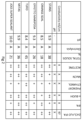
- Dry plug material of 50mm in length were provided. Flexibility was tested with a 2.5mm diameter metal rod which was placed crosswise halfway along the dry material. The plug material was then wrapped once completely around the rod such that the two adjacent sides of the test material butted against each other and looped completely around the rod. Each end of the wrapped plug material was gently pulled apart along a plane 180° to each other and a pass was recorded if the 360° loop of material was able to completely contact the full circumference of the metal rod. Tensile force was measured by clamping one end of the 50mm length of plug material to a 5.1kg or a 3.6kg mass. The unclamped plug was clamped and lifted gently by 10mm such that the entire mass was suspended between the two clamps. A pass was recorded if the dry plug material withstood the 50N (or 35N) force for >10 seconds without breaking. The results of these tests are shown in Figure 7 .
- accelerant compositions were prepared using materials readily available from suppliers including Sigma-Aldrich and Labtek.
- the pH (TPS Aqua-pH) and conductivity (Hanna Instruments HI98312) of the accelerant compositions were measured.
- the % of total solids ( ⁇ 4g sample evaporated in oven for 3h at 105°C) and the colloidal charge of the sealant were also measured by electrodeposition (modified ASTM D244).
- Approximately 1.5ml of each accelerant composition was placed into a round plastic dish. A single drop of a sealant was placed on each accelerant composition and after 5 seconds the mixture was stirred gently. The results were recorded as:
- Porous (microfibre leather and PVC/nylon laminate, polypropylene sheathed rubber) and non-porous (PVC, Panaracer) materials were tested.
- the material (in duplicate) was measured, weighed and then submerged in accelerant (CaCl 2 /citric acid) for an hour and then removed, the surface wiped with a dry cloth to remove excess liquid and the wet-weight recorded.
- the porosity (average) was calculated as % increase above initial.
- the material comprising accelerant was then dipped 25mm deep into a sealant composition (Tyre Shot) for 30 seconds and then removed, shaken dry and the weight recorded again.
- Example 4 Load Test with porous and non-porous plug types, two types of accelerant and four types of sealant.
- the wheel was rotated for 30 sec and then inflated to 193.1 kPa (28 psi).
- the wheel was mounted on a bike and ridden on mixed terrain for 30min.
- the pressure remained at 193.1 kPa (28 psi).
- the tyre was submerged in a water bath and no air leaks were apparent through the repaired puncture.
- the tyre remained inflated and was ridden on regular occasions over a period of 3 weeks, thereby demonstrating a suitable repair.
- Example 5 The method of Example 5 was repeated with the exception that a non-porous PVC plug (22 ⁇ 3 ⁇ 1mm) was submerged in accelerant and then inserted into a 5mm cut in tyre. As the tyre was inflated with air, a leak was observed (particularly at higher pressures). It should be apparent that the non-porous PVC plug resulted in an ineffective repair.
- the non-porous and ineffective PVC plug was removed and replaced with a porous plug as described in Example 5.
- the tyre was inflated to riding pressure and was ridden on regular occasions over a period of 3 weeks, thereby demonstrating a suitable repair.
- Porous plugs were prepared in a manner similar to the above and carried in a kit (tool, plugs, pump, and Tyre Shot sealant) by an experienced mountain bike rider.
- the rider prepared the tyres with 60ml of Tyre Shot sealant.
- the rider punctured through the rear tread of the 29x2.25 Thunder Burt (Schwalbe) whilst riding.
- the rider used the tool to insert a plug into the puncture hole and then added the Tyre Shot sealant.
- the rider re-inflated the tyre using a hand pump and continued riding.
- Porous plugs were prepared in a manner similar to above and carried in a kit (tool, plugs, CO 2 canister, and Tyre Shot sealant) by an experienced road cyclist.
- the rider prepared both Pro 1 (Schwalbe) 700C tyres with 60ml of Tyre Shot sealant each and inflated the tyres to 620.5 kPa (90 psi).
- the rider punctured through the rear tread whilst riding and the tyre deflated.
- the rider added 60ml of Tyre Shot sealant via the valve stem, then used the tool to insert a plug into the puncture, and within 5 minutes the rider re-inflated the tyre using a CO 2 canister and continued riding.
- a porous material (22 ⁇ 5 ⁇ 1mm) as described in Example 5 was folded in half and placed into a flexible plastic sleeve then impregnated with accelerant.
- a 26x2.25 Maxxis Ardent EXO TR tyre was mounted on a tubeless wheel without sealant and inflated to 275.8 kPa (40 psi) and stabilized using the standard method.
- the tyre was deflated to 193.1 kPa (28 psi) and a 4.5mm diameter nail was used to puncture a hole in the tyre and the tyre deflated.
- the plug with accelerant was inserted into the puncture using a tool.
Landscapes
- Chemical & Material Sciences (AREA)
- Engineering & Computer Science (AREA)
- Mechanical Engineering (AREA)
- Health & Medical Sciences (AREA)
- Chemical Kinetics & Catalysis (AREA)
- Medicinal Chemistry (AREA)
- Polymers & Plastics (AREA)
- Organic Chemistry (AREA)
- Manufacturing & Machinery (AREA)
- Materials Engineering (AREA)
- Sealing Material Composition (AREA)
Claims (15)
- Ein Pfropfen mit einem Kopfteil und einem Endteil zum Abdichten eines Lochs in einem Reifen, wobei der Kopfteil umfasst:ein poröses Material, das >0,02 Gramm Wasser pro Gramm poröses Material absorbiert, gemessen nach dem Verfahren von Beispiel 2 der Beschreibung; und einen Beschleuniger, ausgewählt aus der Gruppe bestehend aus einem Salz, einem Lösungsmittel und einer Säure oder einer Kombination davon, imprägniert in dem porösen Material, wobei derBeschleuniger die Aushärtungszeit eines Dichtungsmittels reduziert, das aus der Gruppe ausgewählt ist, die aus anionisch stabilisierten Dichtungsmitteln, sterisch stabilisierten Dichtungsmitteln und anionischen kolloidalen Dispersionen besteht, und wobei das poröse Material das Dichtungsmittel nicht umfasst.
- Ein Satz zum Abdichten einer Reifenpanne, bestehend aus:
einem Stopfen, bestehend aus:einen Kopfteil und einen Endteil, wobei der Kopfteil ein poröses Material umfasst, das >0,02 Gramm Wasser pro Gramm poröses Material absorbiert, gemessen nach dem Verfahren von Beispiel 2 der Beschreibung;einen Beschleuniger, ausgewählt aus der Gruppe, die aus einem Salz, einem Lösungsmittel und einer Säure oder einer Kombination davon besteht, zur Imprägnierung des porösen Materials; undein Dichtungsmittel, das aus der Gruppe ausgewählt ist, die aus anionischen stabilisierten Dichtungsmitteln, sterisch stabilisierten Dichtungsmitteln und anionischen kolloidalen Dispersionen besteht;wobei der Beschleuniger die Aushärtezeit der Dichtungsmasse verkürzt, und wobei das poröse Material die Dichtungsmasse nicht enthält. - Bausatz nach Anspruch 2, wobei der Beschleuniger in dem porösen Material imprägniert ist.
- Ein Verfahren zum Abdichten einer Reifenpanne, das die folgenden Schritte umfasst:(i) Bereitstellen eines Pfropfens, umfassend einen Kopfteil und einen Endteil, wobei der Kopfteil ein poröses Material umfasst, das >0.02 g Wasser pro Gramm poröses Material, gemessen nach dem Verfahren von Beispiel 2 der Beschreibung, mit einem Beschleuniger, ausgewählt aus der Gruppe, bestehend aus einem Salz, einem Lösungsmittel und einer Säure oder einer Kombination davon, der die Aushärtungszeit eines Dichtungsmittels, ausgewählt aus der Gruppe, bestehend aus anionisch stabilisierten Dichtungsmitteln, sterisch stabilisierten Dichtungsmitteln und anionischen kolloidalen Dispersionen, das darin imprägniert ist, reduziert, wobei das poröse Material kein Dichtungsmittel umfasst;(ii) Einsetzen des Kopfteils des Stopfens in die Punktion; und(iii) Auftragen eines Dichtungsmittels auf die Punktion,um dadurch das Loch im Reifen abzudichten; und optional mit dem Schritt:(iv) Imprägnieren des porösen Materials mit dem Beschleuniger vor Schritt (i); und(v) Wiederaufpumpen des Reifens nach Schritt iii).
- Der Stopfen, das Kit oder das Verfahren nach einem der vorhergehenden Ansprüche, wobei das poröse Material >0,05 oder >0,1 oder >0,2 oder >0,5 Gramm Wasser pro Gramm poröses Material absorbiert.
- Der Stopfen, das Kit oder das Verfahren nach einem der vorhergehenden Ansprüche, wobei das poröse Material aus der Gruppe ausgewählt ist, die aus Mikrofaser-Wildleder, gebundenem Leder, PVC/Polyester-Gewebe, Leder, beflocktem Gummi, Mikrofaser-Leder, Baumwollzwirn, ummanteltem Polypropylen-Gummi, PVC/Baumwollgewebe-Laminat, PVC/Polypropylengewebe-Laminat, PVC/Polyestergewebe-Laminat, PVC/Seidengewebe-Laminat und PVC/Nylongewebe-Laminat besteht.
- Stopfen, Kit oder Verfahren nach einem der vorhergehenden Ansprüche, wobei das Salz ein Kation, ausgewählt aus der Gruppe bestehend aus Calcium, Zink, Magnesium und Aluminium, und/oder ein Anion, ausgewählt aus der Gruppe bestehend aus Halogenid, Sulfat, Borat, Nitrat, Phosphat, Phosphonat, Silikat, Thiocyanat, Propionat und Carboxylat, umfasst.
- Stopfen, Kit oder Verfahren nach einem der vorhergehenden Ansprüche, wobei die Säure einen pH-Wert von weniger als 7, weniger als 5, weniger als 4 oder weniger als 3 aufweist.
- Stopfen, Kit oder Verfahren nach einem der vorhergehenden Ansprüche, wobei die Säure ausgewählt ist aus der Gruppe bestehend aus Zitronensäure, Etidronsäure, Salzsäure und Schwefelsäure.
- Der Stopfen, das Kit oder das Verfahren nach einem der vorhergehenden Ansprüche, wobei das Dichtungsmittel aus der Gruppe ausgewählt ist, die aus Polyisopren, Polychloropren, Polybutadien, Styrol-Butadien, carboxyliertem Styrol-Butadien, Acrylnitril-Butadien, carboxyliertem Nitril-Butadien, Isobutylen-Isopren, Polyisopren-Polymethylmethacrylat, Polychloropren-Latex, Naturkautschuk-Latex und Styrol-Butadien-Latex besteht.
- Der Stecker, das Kit oder das Verfahren nach Anspruch 10, wobei:
das Beschleunigungsmittel ausgewählt ist aus der Gruppe bestehend aus: (i) Ca(NO )32, Ca(C H25 COO)2 , CaCl2 , HCl, ZnCl2 , MgCl2 , Al2 (SO )43 , AlCl3 und H2 SO4 , vorzugsweise Calciumchlorid; (ii) Aceton, Acetonitril, Phenoxyethanol, n-Butanol und Isopropylalkohol; oder (iii) Zitronensäure, Etidronsäure, Salzsäure und Schwefelsäure. - Pfropfen, Kit oder Verfahren nach Anspruch 11, wobei das Lösungsmittel ausgewählt ist aus der Gruppe bestehend aus Aceton, Acetonitril, Phenoxyethanol, n-Butanol und Isopropylalkohol.
- Der Stopfen, der Bausatz oder das Verfahren nach einem der vorhergehenden Ansprüche, wobei der Endteil aus einem nicht-porösen Material gebildet ist.
- Der Stopfen, der Bausatz oder das Verfahren nach einem der Ansprüche 1 bis 13, wobei der Endteil aus einem porösen Material gebildet ist.
- Der Stopfen, der Bausatz oder das Verfahren nach Anspruch 14, wobei das poröse Material des Endstücks das Beschleunigungsmittel enthält.
Applications Claiming Priority (2)
| Application Number | Priority Date | Filing Date | Title |
|---|---|---|---|
| AU2017903058A AU2017903058A0 (en) | 2017-08-02 | A plug | |
| PCT/AU2018/050806 WO2019023754A1 (en) | 2017-08-02 | 2018-08-02 | A plug |
Publications (3)
| Publication Number | Publication Date |
|---|---|
| EP3661734A1 EP3661734A1 (de) | 2020-06-10 |
| EP3661734A4 EP3661734A4 (de) | 2021-05-05 |
| EP3661734B1 true EP3661734B1 (de) | 2024-07-03 |
Family
ID=65232101
Family Applications (1)
| Application Number | Title | Priority Date | Filing Date |
|---|---|---|---|
| EP18840287.9A Active EP3661734B1 (de) | 2017-08-02 | 2018-08-02 | Stecker |
Country Status (4)
| Country | Link |
|---|---|
| US (1) | US12134239B2 (de) |
| EP (1) | EP3661734B1 (de) |
| AU (1) | AU2018312422B2 (de) |
| WO (1) | WO2019023754A1 (de) |
Families Citing this family (1)
| Publication number | Priority date | Publication date | Assignee | Title |
|---|---|---|---|---|
| US20220010109A1 (en) * | 2018-11-16 | 2022-01-13 | Alfonso Garcia de Arboleya Fernandez | Coagulatable mixture for sealing a tire puncture |
Family Cites Families (16)
| Publication number | Priority date | Publication date | Assignee | Title |
|---|---|---|---|---|
| US733014A (en) * | 1903-03-27 | 1903-07-07 | David H Cox Jr | Bicycle repair-plug. |
| US2125578A (en) * | 1936-10-24 | 1938-08-02 | Bowes Seal Fast Corp | Casing repair |
| US2803284A (en) * | 1956-06-29 | 1957-08-20 | Thomas Westmoreland Mullen | Tire repair |
| US3035626A (en) * | 1959-09-08 | 1962-05-22 | Thomas W Mullen | Tubeless tire repair equipment |
| US3049164A (en) * | 1961-11-09 | 1962-08-14 | Robert E Humphreys | Puncture repair material |
| US3277642A (en) * | 1964-03-16 | 1966-10-11 | Alec W Niconchuk | Tire repair units |
| US3342240A (en) * | 1965-10-08 | 1967-09-19 | Robert L Williams | Tubeless tire repair means |
| US3894449A (en) * | 1969-02-26 | 1975-07-15 | Dunlop Co Ltd | Repair of tubeless pneumatic tires |
| US4111867A (en) * | 1976-04-05 | 1978-09-05 | Nippon Zeon Co., Ltd. | Rubber composition for tire treads |
| US4279343A (en) * | 1980-01-25 | 1981-07-21 | Teofilo Alfanta | Repair kit for tubeless tires |
| US4718469A (en) | 1984-02-28 | 1988-01-12 | The Firestone Tire & Rubber Company | Preformed plug-tire repair |
| US4923543A (en) * | 1984-02-28 | 1990-05-08 | Bridgestone/Firestone, Inc. | Preformed plug - tire repair |
| JP2009512792A (ja) * | 2005-10-20 | 2009-03-26 | ダウ ライヒホールド スペシャルティ ラテックス,エルエルシー | 複合革材料 |
| FR2905376B1 (fr) * | 2006-08-29 | 2012-10-05 | Hutchinson | Nouveau materiau absorbant et son procede de preparation. |
| US20080265453A1 (en) * | 2007-04-25 | 2008-10-30 | Brazeau Russell J | Tire Repair Tools And Method |
| KR101623970B1 (ko) * | 2014-02-05 | 2016-05-27 | 김남수 | 타이어 수리용 총알 및 이를 구비한 타이어 수리장치 |
-
2018
- 2018-08-02 EP EP18840287.9A patent/EP3661734B1/de active Active
- 2018-08-02 US US16/635,203 patent/US12134239B2/en active Active
- 2018-08-02 AU AU2018312422A patent/AU2018312422B2/en active Active
- 2018-08-02 WO PCT/AU2018/050806 patent/WO2019023754A1/en not_active Ceased
Also Published As
| Publication number | Publication date |
|---|---|
| EP3661734A4 (de) | 2021-05-05 |
| AU2018312422A1 (en) | 2020-01-02 |
| AU2018312422B2 (en) | 2020-03-05 |
| WO2019023754A1 (en) | 2019-02-07 |
| US12134239B2 (en) | 2024-11-05 |
| US20210086458A1 (en) | 2021-03-25 |
| EP3661734A1 (de) | 2020-06-10 |
Similar Documents
| Publication | Publication Date | Title |
|---|---|---|
| JP4540609B2 (ja) | パンクシーリング剤 | |
| US20090272476A1 (en) | Sealant material composition, self-sealing pneumatic tire, and preparation thereof | |
| CN108463336B (zh) | 用于车辆车轮的自密封轮胎 | |
| EP3661734B1 (de) | Stecker | |
| WO2016115560A1 (en) | High performance sealant composition for tire repair | |
| WO2003020539A1 (en) | Pneumatic tire and method of producing the same | |
| CN100379834C (zh) | 补胎剂 | |
| EP0122480B1 (de) | Bei Umwelttemperatur wiederhergestellte elastomere Gegenstände mit Löchern oder Deformationen | |
| US20190337250A1 (en) | Self-sealing pneumatic vehicle tyre and method for the production thereof | |
| WO2022229914A1 (en) | Self-sealing tyre for vehicle wheels | |
| WO2005097884B1 (en) | Tire sealant composition | |
| WO2014159805A1 (en) | Refresh agent | |
| JP4673003B2 (ja) | パンクシーリング剤 | |
| JP5474727B2 (ja) | パンクシーリング剤 | |
| JP5384049B2 (ja) | パンクシーリング剤 | |
| JP4993538B2 (ja) | パンクシール剤のタイヤ注入方法、およびそれに用いるパンクシール剤密封容器 | |
| JP3943585B1 (ja) | パンク修理方法 | |
| US12617243B2 (en) | Self-sealing tyre for vehicle wheels | |
| JP2010037521A (ja) | パンクシーリング剤 | |
| CN202130266U (zh) | 自补式防爆轮胎 | |
| WO2021245988A1 (ja) | タイヤ加工装置、タイヤ補修装置、補修用シート、タイヤ補修方法、及びタイヤの製造方法 | |
| KR100871989B1 (ko) | 타이어 펑크를 방지하는 공기입 타이어 | |
| WO2025109478A1 (en) | Self-sealing tyre for vehicle wheels | |
| JP2006290288A (ja) | 空気入りタイヤ及びその製造方法 | |
| JP2010260904A (ja) | パンクシーリング剤 |
Legal Events
| Date | Code | Title | Description |
|---|---|---|---|
| STAA | Information on the status of an ep patent application or granted ep patent |
Free format text: STATUS: THE INTERNATIONAL PUBLICATION HAS BEEN MADE |
|
| PUAI | Public reference made under article 153(3) epc to a published international application that has entered the european phase |
Free format text: ORIGINAL CODE: 0009012 |
|
| STAA | Information on the status of an ep patent application or granted ep patent |
Free format text: STATUS: REQUEST FOR EXAMINATION WAS MADE |
|
| 17P | Request for examination filed |
Effective date: 20200224 |
|
| AK | Designated contracting states |
Kind code of ref document: A1 Designated state(s): AL AT BE BG CH CY CZ DE DK EE ES FI FR GB GR HR HU IE IS IT LI LT LU LV MC MK MT NL NO PL PT RO RS SE SI SK SM TR |
|
| AX | Request for extension of the european patent |
Extension state: BA ME |
|
| DAV | Request for validation of the european patent (deleted) | ||
| DAX | Request for extension of the european patent (deleted) | ||
| A4 | Supplementary search report drawn up and despatched |
Effective date: 20210409 |
|
| RIC1 | Information provided on ipc code assigned before grant |
Ipc: B29C 73/02 20060101AFI20210401BHEP Ipc: B29C 73/06 20060101ALI20210401BHEP Ipc: C08J 3/26 20060101ALI20210401BHEP |
|
| REG | Reference to a national code |
Ref country code: DE Free format text: PREVIOUS MAIN CLASS: B29C0073060000 Ref country code: DE Ref legal event code: R079 Ref document number: 602018071387 Country of ref document: DE Free format text: PREVIOUS MAIN CLASS: B29C0073060000 Ipc: B29C0073020000 |
|
| GRAP | Despatch of communication of intention to grant a patent |
Free format text: ORIGINAL CODE: EPIDOSNIGR1 |
|
| STAA | Information on the status of an ep patent application or granted ep patent |
Free format text: STATUS: GRANT OF PATENT IS INTENDED |
|
| RIC1 | Information provided on ipc code assigned before grant |
Ipc: C08J 5/04 20060101ALI20240108BHEP Ipc: C08J 3/26 20060101ALI20240108BHEP Ipc: B29C 73/06 20060101ALI20240108BHEP Ipc: B29C 73/02 20060101AFI20240108BHEP |
|
| INTG | Intention to grant announced |
Effective date: 20240123 |
|
| GRAS | Grant fee paid |
Free format text: ORIGINAL CODE: EPIDOSNIGR3 |
|
| GRAA | (expected) grant |
Free format text: ORIGINAL CODE: 0009210 |
|
| STAA | Information on the status of an ep patent application or granted ep patent |
Free format text: STATUS: THE PATENT HAS BEEN GRANTED |
|
| AK | Designated contracting states |
Kind code of ref document: B1 Designated state(s): AL AT BE BG CH CY CZ DE DK EE ES FI FR GB GR HR HU IE IS IT LI LT LU LV MC MK MT NL NO PL PT RO RS SE SI SK SM TR |
|
| REG | Reference to a national code |
Ref country code: CH Ref legal event code: EP |
|
| REG | Reference to a national code |
Ref country code: DE Ref legal event code: R096 Ref document number: 602018071387 Country of ref document: DE |
|
| REG | Reference to a national code |
Ref country code: NL Ref legal event code: FP |
|
| REG | Reference to a national code |
Ref country code: LT Ref legal event code: MG9D |
|
| PG25 | Lapsed in a contracting state [announced via postgrant information from national office to epo] |
Ref country code: PT Free format text: LAPSE BECAUSE OF FAILURE TO SUBMIT A TRANSLATION OF THE DESCRIPTION OR TO PAY THE FEE WITHIN THE PRESCRIBED TIME-LIMIT Effective date: 20241104 |
|
| REG | Reference to a national code |
Ref country code: AT Ref legal event code: MK05 Ref document number: 1699416 Country of ref document: AT Kind code of ref document: T Effective date: 20240703 |
|
| PG25 | Lapsed in a contracting state [announced via postgrant information from national office to epo] |
Ref country code: PT Free format text: LAPSE BECAUSE OF FAILURE TO SUBMIT A TRANSLATION OF THE DESCRIPTION OR TO PAY THE FEE WITHIN THE PRESCRIBED TIME-LIMIT Effective date: 20241104 |
|
| PG25 | Lapsed in a contracting state [announced via postgrant information from national office to epo] |
Ref country code: NO Free format text: LAPSE BECAUSE OF FAILURE TO SUBMIT A TRANSLATION OF THE DESCRIPTION OR TO PAY THE FEE WITHIN THE PRESCRIBED TIME-LIMIT Effective date: 20241003 |
|
| PG25 | Lapsed in a contracting state [announced via postgrant information from national office to epo] |
Ref country code: GR Free format text: LAPSE BECAUSE OF FAILURE TO SUBMIT A TRANSLATION OF THE DESCRIPTION OR TO PAY THE FEE WITHIN THE PRESCRIBED TIME-LIMIT Effective date: 20241004 Ref country code: FI Free format text: LAPSE BECAUSE OF FAILURE TO SUBMIT A TRANSLATION OF THE DESCRIPTION OR TO PAY THE FEE WITHIN THE PRESCRIBED TIME-LIMIT Effective date: 20240703 Ref country code: PL Free format text: LAPSE BECAUSE OF FAILURE TO SUBMIT A TRANSLATION OF THE DESCRIPTION OR TO PAY THE FEE WITHIN THE PRESCRIBED TIME-LIMIT Effective date: 20240703 |
|
| PG25 | Lapsed in a contracting state [announced via postgrant information from national office to epo] |
Ref country code: BG Free format text: LAPSE BECAUSE OF FAILURE TO SUBMIT A TRANSLATION OF THE DESCRIPTION OR TO PAY THE FEE WITHIN THE PRESCRIBED TIME-LIMIT Effective date: 20240703 |
|
| PG25 | Lapsed in a contracting state [announced via postgrant information from national office to epo] |
Ref country code: LV Free format text: LAPSE BECAUSE OF FAILURE TO SUBMIT A TRANSLATION OF THE DESCRIPTION OR TO PAY THE FEE WITHIN THE PRESCRIBED TIME-LIMIT Effective date: 20240703 |
|
| PG25 | Lapsed in a contracting state [announced via postgrant information from national office to epo] |
Ref country code: IS Free format text: LAPSE BECAUSE OF FAILURE TO SUBMIT A TRANSLATION OF THE DESCRIPTION OR TO PAY THE FEE WITHIN THE PRESCRIBED TIME-LIMIT Effective date: 20241103 Ref country code: AT Free format text: LAPSE BECAUSE OF FAILURE TO SUBMIT A TRANSLATION OF THE DESCRIPTION OR TO PAY THE FEE WITHIN THE PRESCRIBED TIME-LIMIT Effective date: 20240703 |
|
| PG25 | Lapsed in a contracting state [announced via postgrant information from national office to epo] |
Ref country code: CZ Free format text: LAPSE BECAUSE OF FAILURE TO SUBMIT A TRANSLATION OF THE DESCRIPTION OR TO PAY THE FEE WITHIN THE PRESCRIBED TIME-LIMIT Effective date: 20240703 Ref country code: HR Free format text: LAPSE BECAUSE OF FAILURE TO SUBMIT A TRANSLATION OF THE DESCRIPTION OR TO PAY THE FEE WITHIN THE PRESCRIBED TIME-LIMIT Effective date: 20240703 |
|
| PG25 | Lapsed in a contracting state [announced via postgrant information from national office to epo] |
Ref country code: ES Free format text: LAPSE BECAUSE OF FAILURE TO SUBMIT A TRANSLATION OF THE DESCRIPTION OR TO PAY THE FEE WITHIN THE PRESCRIBED TIME-LIMIT Effective date: 20240703 Ref country code: RS Free format text: LAPSE BECAUSE OF FAILURE TO SUBMIT A TRANSLATION OF THE DESCRIPTION OR TO PAY THE FEE WITHIN THE PRESCRIBED TIME-LIMIT Effective date: 20241003 |
|
| PG25 | Lapsed in a contracting state [announced via postgrant information from national office to epo] |
Ref country code: RS Free format text: LAPSE BECAUSE OF FAILURE TO SUBMIT A TRANSLATION OF THE DESCRIPTION OR TO PAY THE FEE WITHIN THE PRESCRIBED TIME-LIMIT Effective date: 20241003 Ref country code: PL Free format text: LAPSE BECAUSE OF FAILURE TO SUBMIT A TRANSLATION OF THE DESCRIPTION OR TO PAY THE FEE WITHIN THE PRESCRIBED TIME-LIMIT Effective date: 20240703 Ref country code: NO Free format text: LAPSE BECAUSE OF FAILURE TO SUBMIT A TRANSLATION OF THE DESCRIPTION OR TO PAY THE FEE WITHIN THE PRESCRIBED TIME-LIMIT Effective date: 20241003 Ref country code: LV Free format text: LAPSE BECAUSE OF FAILURE TO SUBMIT A TRANSLATION OF THE DESCRIPTION OR TO PAY THE FEE WITHIN THE PRESCRIBED TIME-LIMIT Effective date: 20240703 Ref country code: IS Free format text: LAPSE BECAUSE OF FAILURE TO SUBMIT A TRANSLATION OF THE DESCRIPTION OR TO PAY THE FEE WITHIN THE PRESCRIBED TIME-LIMIT Effective date: 20241103 Ref country code: HR Free format text: LAPSE BECAUSE OF FAILURE TO SUBMIT A TRANSLATION OF THE DESCRIPTION OR TO PAY THE FEE WITHIN THE PRESCRIBED TIME-LIMIT Effective date: 20240703 Ref country code: GR Free format text: LAPSE BECAUSE OF FAILURE TO SUBMIT A TRANSLATION OF THE DESCRIPTION OR TO PAY THE FEE WITHIN THE PRESCRIBED TIME-LIMIT Effective date: 20241004 Ref country code: FI Free format text: LAPSE BECAUSE OF FAILURE TO SUBMIT A TRANSLATION OF THE DESCRIPTION OR TO PAY THE FEE WITHIN THE PRESCRIBED TIME-LIMIT Effective date: 20240703 Ref country code: ES Free format text: LAPSE BECAUSE OF FAILURE TO SUBMIT A TRANSLATION OF THE DESCRIPTION OR TO PAY THE FEE WITHIN THE PRESCRIBED TIME-LIMIT Effective date: 20240703 Ref country code: CZ Free format text: LAPSE BECAUSE OF FAILURE TO SUBMIT A TRANSLATION OF THE DESCRIPTION OR TO PAY THE FEE WITHIN THE PRESCRIBED TIME-LIMIT Effective date: 20240703 Ref country code: BG Free format text: LAPSE BECAUSE OF FAILURE TO SUBMIT A TRANSLATION OF THE DESCRIPTION OR TO PAY THE FEE WITHIN THE PRESCRIBED TIME-LIMIT Effective date: 20240703 Ref country code: AT Free format text: LAPSE BECAUSE OF FAILURE TO SUBMIT A TRANSLATION OF THE DESCRIPTION OR TO PAY THE FEE WITHIN THE PRESCRIBED TIME-LIMIT Effective date: 20240703 |
|
| REG | Reference to a national code |
Ref country code: CH Ref legal event code: PL |
|
| REG | Reference to a national code |
Ref country code: DE Ref legal event code: R097 Ref document number: 602018071387 Country of ref document: DE |
|
| PG25 | Lapsed in a contracting state [announced via postgrant information from national office to epo] |
Ref country code: RO Free format text: LAPSE BECAUSE OF FAILURE TO SUBMIT A TRANSLATION OF THE DESCRIPTION OR TO PAY THE FEE WITHIN THE PRESCRIBED TIME-LIMIT Effective date: 20240703 Ref country code: DK Free format text: LAPSE BECAUSE OF FAILURE TO SUBMIT A TRANSLATION OF THE DESCRIPTION OR TO PAY THE FEE WITHIN THE PRESCRIBED TIME-LIMIT Effective date: 20240703 Ref country code: SM Free format text: LAPSE BECAUSE OF FAILURE TO SUBMIT A TRANSLATION OF THE DESCRIPTION OR TO PAY THE FEE WITHIN THE PRESCRIBED TIME-LIMIT Effective date: 20240703 |
|
| PG25 | Lapsed in a contracting state [announced via postgrant information from national office to epo] |
Ref country code: LU Free format text: LAPSE BECAUSE OF NON-PAYMENT OF DUE FEES Effective date: 20240802 |
|
| PG25 | Lapsed in a contracting state [announced via postgrant information from national office to epo] |
Ref country code: CH Free format text: LAPSE BECAUSE OF NON-PAYMENT OF DUE FEES Effective date: 20240831 Ref country code: MC Free format text: LAPSE BECAUSE OF FAILURE TO SUBMIT A TRANSLATION OF THE DESCRIPTION OR TO PAY THE FEE WITHIN THE PRESCRIBED TIME-LIMIT Effective date: 20240703 Ref country code: EE Free format text: LAPSE BECAUSE OF FAILURE TO SUBMIT A TRANSLATION OF THE DESCRIPTION OR TO PAY THE FEE WITHIN THE PRESCRIBED TIME-LIMIT Effective date: 20240703 |
|
| PG25 | Lapsed in a contracting state [announced via postgrant information from national office to epo] |
Ref country code: IT Free format text: LAPSE BECAUSE OF FAILURE TO SUBMIT A TRANSLATION OF THE DESCRIPTION OR TO PAY THE FEE WITHIN THE PRESCRIBED TIME-LIMIT Effective date: 20240703 Ref country code: SK Free format text: LAPSE BECAUSE OF FAILURE TO SUBMIT A TRANSLATION OF THE DESCRIPTION OR TO PAY THE FEE WITHIN THE PRESCRIBED TIME-LIMIT Effective date: 20240703 |
|
| PLBE | No opposition filed within time limit |
Free format text: ORIGINAL CODE: 0009261 |
|
| STAA | Information on the status of an ep patent application or granted ep patent |
Free format text: STATUS: NO OPPOSITION FILED WITHIN TIME LIMIT |
|
| 26N | No opposition filed |
Effective date: 20250404 |
|
| REG | Reference to a national code |
Ref country code: BE Ref legal event code: MM Effective date: 20240831 |
|
| PG25 | Lapsed in a contracting state [announced via postgrant information from national office to epo] |
Ref country code: BE Free format text: LAPSE BECAUSE OF NON-PAYMENT OF DUE FEES Effective date: 20240831 |
|
| PG25 | Lapsed in a contracting state [announced via postgrant information from national office to epo] |
Ref country code: IE Free format text: LAPSE BECAUSE OF NON-PAYMENT OF DUE FEES Effective date: 20240802 |
|
| PG25 | Lapsed in a contracting state [announced via postgrant information from national office to epo] |
Ref country code: SE Free format text: LAPSE BECAUSE OF FAILURE TO SUBMIT A TRANSLATION OF THE DESCRIPTION OR TO PAY THE FEE WITHIN THE PRESCRIBED TIME-LIMIT Effective date: 20240703 |
|
| PGFP | Annual fee paid to national office [announced via postgrant information from national office to epo] |
Ref country code: NL Payment date: 20250814 Year of fee payment: 8 |
|
| PGFP | Annual fee paid to national office [announced via postgrant information from national office to epo] |
Ref country code: DE Payment date: 20250805 Year of fee payment: 8 |
|
| PGFP | Annual fee paid to national office [announced via postgrant information from national office to epo] |
Ref country code: GB Payment date: 20250807 Year of fee payment: 8 |
|
| PGFP | Annual fee paid to national office [announced via postgrant information from national office to epo] |
Ref country code: FR Payment date: 20250808 Year of fee payment: 8 |
|
| PG25 | Lapsed in a contracting state [announced via postgrant information from national office to epo] |
Ref country code: CY Free format text: LAPSE BECAUSE OF FAILURE TO SUBMIT A TRANSLATION OF THE DESCRIPTION OR TO PAY THE FEE WITHIN THE PRESCRIBED TIME-LIMIT; INVALID AB INITIO Effective date: 20180802 |
|
| PG25 | Lapsed in a contracting state [announced via postgrant information from national office to epo] |
Ref country code: HU Free format text: LAPSE BECAUSE OF FAILURE TO SUBMIT A TRANSLATION OF THE DESCRIPTION OR TO PAY THE FEE WITHIN THE PRESCRIBED TIME-LIMIT; INVALID AB INITIO Effective date: 20180802 |