EP3662696B1 - Verfahren und vorrichtung zur implementierung einer nichtstandard-bandbreite sowie netzwerkvorrichtung mit der vorrichtung - Google Patents
Verfahren und vorrichtung zur implementierung einer nichtstandard-bandbreite sowie netzwerkvorrichtung mit der vorrichtung Download PDFInfo
- Publication number
- EP3662696B1 EP3662696B1 EP17921582.7A EP17921582A EP3662696B1 EP 3662696 B1 EP3662696 B1 EP 3662696B1 EP 17921582 A EP17921582 A EP 17921582A EP 3662696 B1 EP3662696 B1 EP 3662696B1
- Authority
- EP
- European Patent Office
- Prior art keywords
- bandwidth
- amount
- central frequency
- prbs
- nonstandard
- Prior art date
- Legal status (The legal status is an assumption and is not a legal conclusion. Google has not performed a legal analysis and makes no representation as to the accuracy of the status listed.)
- Not-in-force
Links
Images


Classifications
-
- H—ELECTRICITY
- H04—ELECTRIC COMMUNICATION TECHNIQUE
- H04L—TRANSMISSION OF DIGITAL INFORMATION, e.g. TELEGRAPHIC COMMUNICATION
- H04L5/00—Arrangements affording multiple use of the transmission path
- H04L5/003—Arrangements for allocating sub-channels of the transmission path
- H04L5/0044—Allocation of payload; Allocation of data channels, e.g. PDSCH or PUSCH
- H04L5/0046—Determination of the number of bits transmitted on different sub-channels
-
- H—ELECTRICITY
- H04—ELECTRIC COMMUNICATION TECHNIQUE
- H04L—TRANSMISSION OF DIGITAL INFORMATION, e.g. TELEGRAPHIC COMMUNICATION
- H04L1/00—Arrangements for detecting or preventing errors in the information received
- H04L1/02—Arrangements for detecting or preventing errors in the information received by diversity reception
- H04L1/04—Arrangements for detecting or preventing errors in the information received by diversity reception using frequency diversity
-
- H—ELECTRICITY
- H04—ELECTRIC COMMUNICATION TECHNIQUE
- H04L—TRANSMISSION OF DIGITAL INFORMATION, e.g. TELEGRAPHIC COMMUNICATION
- H04L5/00—Arrangements affording multiple use of the transmission path
- H04L5/003—Arrangements for allocating sub-channels of the transmission path
- H04L5/0058—Allocation criteria
- H04L5/0066—Requirements on out-of-channel emissions
-
- H—ELECTRICITY
- H04—ELECTRIC COMMUNICATION TECHNIQUE
- H04L—TRANSMISSION OF DIGITAL INFORMATION, e.g. TELEGRAPHIC COMMUNICATION
- H04L5/00—Arrangements affording multiple use of the transmission path
- H04L5/0091—Signalling for the administration of the divided path, e.g. signalling of configuration information
- H04L5/0096—Indication of changes in allocation
-
- H—ELECTRICITY
- H04—ELECTRIC COMMUNICATION TECHNIQUE
- H04W—WIRELESS COMMUNICATION NETWORKS
- H04W28/00—Network traffic management; Network resource management
- H04W28/16—Central resource management; Negotiation of resources or communication parameters, e.g. negotiating bandwidth or QoS [Quality of Service]
- H04W28/18—Negotiating wireless communication parameters
- H04W28/20—Negotiating bandwidth
-
- H—ELECTRICITY
- H04—ELECTRIC COMMUNICATION TECHNIQUE
- H04L—TRANSMISSION OF DIGITAL INFORMATION, e.g. TELEGRAPHIC COMMUNICATION
- H04L27/00—Modulated-carrier systems
- H04L27/10—Frequency-modulated carrier systems, i.e. using frequency-shift keying
-
- H—ELECTRICITY
- H04—ELECTRIC COMMUNICATION TECHNIQUE
- H04L—TRANSMISSION OF DIGITAL INFORMATION, e.g. TELEGRAPHIC COMMUNICATION
- H04L5/00—Arrangements affording multiple use of the transmission path
- H04L5/0001—Arrangements for dividing the transmission path
- H04L5/0003—Two-dimensional division
- H04L5/0005—Time-frequency
- H04L5/0007—Time-frequency the frequencies being orthogonal, e.g. OFDM(A) or DMT
-
- H—ELECTRICITY
- H04—ELECTRIC COMMUNICATION TECHNIQUE
- H04W—WIRELESS COMMUNICATION NETWORKS
- H04W72/00—Local resource management
- H04W72/04—Wireless resource allocation
- H04W72/044—Wireless resource allocation based on the type of the allocated resource
- H04W72/0453—Resources in frequency domain, e.g. a carrier in FDMA
Definitions
- Embodiments of the disclosure generally relate to wireless communication, and, more particularly, to method and apparatus for implementing nonstandard bandwidth as well as network device comprising the apparatus.
- LTE long term evolution
- 3GPP 3rd generation partnership project
- WO 2016/183720 relates to downlink and uplink compression of a nonstandard bandwidth of an LTE system.
- US 2014/126498 relates to flexible spectrum, or bandwidth, support in a cellular communications network.
- One of the objects of the disclosure is to provide an effective solution for implementing a nonstandard bandwidth.
- a nonstandard bandwidth refers to a channel bandwidth which is not a standard channel bandwidth
- a standard channel bandwidth corresponds to a transmission bandwidth configuration equal to one of the following: 6, 15, 25, 50, 75 or 100 physical resource blocks (PRBs).
- the method comprises determining a first amount of physical resource blocks (PRBs) available in the nonstandard bandwidth.
- the method further comprises determining a second amount of PRBs available in a standard bandwidth corresponding to the nonstandard bandwidth.
- the method further comprises determining a central frequency shift of the nonstandard bandwidth relative to the standard bandwidth, based at least on the first and second amounts, wherein determining the central frequency shift comprises calculating a third amount of one or more PRBs that are blocked on the edge(s) of the standard bandwidth.
- the third amount equals to a difference between the second and first amounts. Determining the central frequency shift further comprises, when the third amount is even, setting the central frequency shift as zero. Determining the central frequency shift further comprises, when the third amount is odd, setting the central frequency shift as a half of a PRB bandwidth, or an opposite number of a half of a PRB bandwidth.
- determining the first amount comprises selecting a bandpass filter corresponding to the nonstandard bandwidth. Determining the first amount further comprises calculating a passband bandwidth of the bandpass filter. Determining the first amount further comprises calculating the first amount based on the passband bandwidth.
- an apparatus for implementing a nonstandard bandwidth at a network device wherein a nonstandard bandwidth refers to a channel bandwidth which is not a standard channel bandwidth, and wherein a standard channel bandwidth corresponds to a transmission bandwidth configuration equal to one of the following: 6, 15, 25, 50, 75 or 100 physical resource blocks (PRBs).
- the apparatus comprises a processor and a memory.
- the memory contains instructions executable by the processor, whereby the apparatus is operative to determine a first amount of PRBs available in the nonstandard bandwidth.
- the apparatus is further operative to determine a second amount of PRBs available in a standard bandwidth corresponding to the nonstandard bandwidth.
- the apparatus is further operative to determine a central frequency shift of the nonstandard bandwidth relative to the standard bandwidth, based at least on the first and second amounts, wherein the instructions are executable by the processor, whereby the apparatus is operative to determine the central frequency shift by calculating a third amount of one or more PRBs that are blocked on the edge(s) of the standard bandwidth.
- the third amount equals to a difference between the second and first amounts.
- the apparatus is operative to determine the central frequency shift by, when the third amount is even, setting the central frequency shift as zero.
- the apparatus is operative to determine the central frequency shift by, when the third amount is odd, setting the central frequency shift as a half of a PRB bandwidth, or an opposite number of a half of a PRB bandwidth.
- the instructions are executable by the processor, whereby the apparatus is operative to determine the first amount by selecting a bandpass filter corresponding to the nonstandard bandwidth.
- the apparatus is operative to determine the first amount by calculating a passband bandwidth of the bandpass filter.
- the apparatus is operative to determine the first amount by calculating the first amount based on the passband bandwidth.
- the apparatus is included in a radio unit (RU) of the network device.
- RU radio unit
- the apparatus is included in a digital unit (DU) of the network device.
- DU digital unit
- the network device comprises a radio admission control (RAC) configured to obtain a bandwidth configuration from an operation administration and maintenance (OAM).
- the network device further comprises a radio unit (RU) comprising the apparatus according to the above aspect.
- the RU is further configured to obtain the bandwidth configuration from the RAC and feedback information about the determined central frequency shift and the first amount of PRBs to the RAC.
- the RAC is further configured to, based on the information feedback, determine one or more PRBs that are blocked on the edge(s) of the standard bandwidth.
- the network device further comprises a digital unit (DU) configured to obtain information about the one or more PRBs and the central frequency shift from the RAC and determine, based on the obtained information, which PRB(s) are to be blocked for resource scheduling.
- DU digital unit
- wireless communication network refers to a network following any suitable communication standards, such as LTE-Advanced (LTE-A), LTE, Wideband Code Division Multiple Access (WCDMA), High-Speed Packet Access (HSPA), and so on.
- LTE-A LTE-Advanced
- WCDMA Wideband Code Division Multiple Access
- HSPA High-Speed Packet Access
- the communications between a terminal device and a network device in the wireless communication network may be performed according to any suitable generation communication protocols, including, but not limited to, Global System for Mobile Communications (GSM), Universal Mobile Telecommunications System (UMTS), Long Term Evolution (LTE), and/or other suitable, and/or other suitable the first generation (1G), the second generation (2G), 2.5G, 2.75G, the third generation (3G), the fourth generation (4G), 4.5G, the future fifth generation (5G) communication protocols, wireless local area network (WLAN) standards, such as the IEEE 802.11 standards; and/or any other appropriate wireless communication standard, such as the Worldwide Interoperability for Microwave Access (WiMax), Bluetooth, and/or ZigBee standards, and/or any other protocols either currently known or to be developed in the future.
- GSM Global System for Mobile Communications
- UMTS Universal Mobile Telecommunications System
- LTE Long Term Evolution
- 5G fifth generation
- WLAN wireless local area network
- WiMax Worldwide Interoperability for Microwave Access
- Bluetooth Bluetooth
- the term "network device” refers to a device in a wireless communication network via which a terminal device accesses the network and receives services therefrom.
- the network device refers a base station (BS), an access point (AP), or any other suitable device in the wireless communication network.
- the BS may be, for example, a node B (NodeB or NB), an evolved NodeB (eNodeB or eNB), or gNB, a Remote Radio Unit (RRU), a radio header (RH), a remote radio head (RRH), a relay, a low power node such as a femto, a pico, and so forth.
- the network device may include multi-standard radio (MSR) radio equipment such as MSR BSs, network controllers such as radio network controllers (RNCs) or base station controllers (BSCs), base transceiver stations (BTSs), transmission points, transmission nodes.
- MSR multi-standard radio
- RNCs radio network controllers
- BSCs base station controllers
- BTSs base transceiver stations
- transmission nodes transmission nodes.
- the network device may represent any suitable device (or group of devices) capable, configured, arranged, and/or operable to enable and/or provide a terminal device access to the wireless communication network or to provide some service to a terminal device that has accessed the wireless communication network.
- references in the specification to "one embodiment,” “an embodiment,” “an example embodiment,” and the like indicate that the embodiment described may include a particular feature, structure, or characteristic, but it is not necessary that every embodiment includes the particular feature, structure, or characteristic. Moreover, such phrases are not necessarily referring to the same embodiment. Further, when a particular feature, structure, or characteristic is described in connection with an embodiment, it is submitted that it is within the knowledge of one skilled in the art to affect such feature, structure, or characteristic in connection with other embodiments whether or not explicitly described.
- first and second etc. may be used herein to describe various elements, these elements should not be limited by these terms. These terms are only used to distinguish one element from another. For example, a first element could be termed a second element, and similarly, a second element could be termed a first element, without departing from the scope of example embodiments.
- the term “and/or” includes any and all combinations of one or more of the associated listed terms.
- FIG. 1 shows an example of an existing nonstandard bandwidth implementation.
- a narrowband digital filter is used to fit a nonstandard narrowband carrier request.
- the central frequency of the narrowband digital filter is set to be the same as the central frequency of LTE system.
- MBB mobile broadband
- PRB edge physical resource block
- the existing solution will block even number of PRBs. However, in some scenarios, only odd number of PRBs (e.g., only one PRB) need to be blocked on the edge(s) of a LTE standard bandwidth to implement the nonstandard bandwidth. Thus, the existing solution will reduce the spectral efficiency in these scenarios.
- the present disclosure proposes a solution for implementing a nonstandard bandwidth at a network device such as a base station.
- the nonstandard bandwidth refers to a channel bandwidth which is not contained in standard channel bandwidths such as evolved universal terrestrial radio access (E-UTRA) channel bandwidths.
- E-UTRA evolved universal terrestrial radio access
- the nonstandard bandwidth may be, for example, 4,5MHz, 9MHz, and so on.
- the solution will be described in detail with reference to FIGs. 2-11 . Although the solution will be described below in the context of LTE system, those skilled in the art can understand that the principle of the present disclosure may also be applied to any other suitable communication standard.
- FIG. 2 is a flowchart illustrating a method for implementing a nonstandard bandwidth according to an embodiment of the disclosure.
- the method may be performed by an apparatus at a network device such as a base station.
- the nonstandard bandwidth may be configured by a network operator and the configuration of the nonstandard bandwidth (also referred to as the bandwidth configuration) may be informed to the network device.
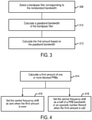
- a first amount of PRBs available in the nonstandard bandwidth is determined.
- This block may be implemented as blocks 308-312 of FIG. 3 .
- a bandpass filter corresponding to the nonstandard bandwidth is selected.
- the bandpass filter may be selected such that the difference between its upper and lower cutoff frequencies approximates or equals to the bandwidth configuration, as shown in FIG. 5 which illustrates an embodiment of the present disclosure.
- WB and Rpass Wpass/WB
- the first amount is calculated based on the passband bandwidth.
- the standard bandwidth (denoted as BW LTE in LTE context) may be selected as the one whose size is nearest to the size of the bandwidth configuration. Then, the second amount (denoted as N RB-LTE in LTE context) may be determined according to the selected standard bandwidth.
- Table 5.6-1 presents the transmission bandwidth configuration N RB in E-UTRA channel bandwidths as follows: Channel bandwidth BW Channel [MHz] 1.4 3 5 10 15 20 Transmission bandwidth configuration N RB 6 15 25 50 75 100
- the standard bandwidth and the second amount can be determined as follows:
- a central frequency shift of the nonstandard bandwidth relative to the standard bandwidth is determined based at least on the first and second amounts.
- this block is implemented as blocks 414-418 of FIG. 4 .
- it is calculated a third amount of one or more PRBs that are blocked on the edge(s) of the standard bandwidth.
- the positive central frequency shift represents shifting to the left side on a frequency axis
- the negative central frequency shift represents shifting to the right side on a frequency axis.
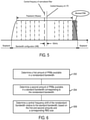
- FIG. 5 shows an example of a nonstandard bandwidth implementation according to an embodiment of the disclosure.
- a narrow nonstandard bandwidth is requested to be implemented and the third amount N BlockedPRB is odd.
- N BlockedPRB 2k + 1, where k is an integer.
- the central frequency of the narrowband filter is the same as the central frequency of LTE system.
- the 2k+1 PRBs will be symmetrical about the LTE central frequency. That is, on each of the left and right sides of the LTE central frequency, there will be k+0.5 PRBs to be blocked. Since the minimum scheduling unit is one PRB, there will be k+1 PRBs to be blocked for each side. As a result, there will be 2k+2 PRBs to be blocked, thereby causing a waste of one PRB.
- FShift LTE 90kHz when N BlockedPRB is odd.
- FShift LTE 90kHz when N BlockedPRB is odd.
- an unsymmetrical solution can be provided by making the central frequency shift to select maximum available bandwidth for LTE standard bandwidth configuration.
- any number (not only even number but also odd number) of PRBs can be blocked. For example, only one PRB can be blocked when it is required to block one PRB to implement the nonstandard bandwidth. This will increase one PRB spectral efficiency when compared with the existing solution.
- block 206 may be implemented as block 606 of FIG. 6 .
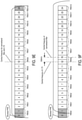
- the central frequency shift is determined based on the first and second amounts and further on a resource block group (RBG) size corresponding to the nonstandard bandwidth.
- RBG resource block group
- Table 7.1.6.1-1 presents type 0 resource allocation RBG size vs. downlink system bandwidth as follows: System Bandwidth RBG Size N RB DL ( P ) ⁇ 10 1 11-26 2 27-63 3 64 - 110 4
- the RBG size can be determined as follows:
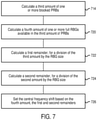
- block 606 may be implemented as blocks 714-726 of FIG. 7 .
- a third amount (denoted as N BlockedPRB ) of one or more PRBs is calculated that are blocked on the edge(s) of the standard bandwidth.
- the third amount equals to a difference between the second and first amounts. This block is similar to block 314 of FIG. 3 .
- a fourth amount of one or more full RBGs available in the third amount of PRBs is calculated.
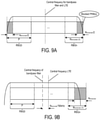
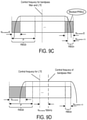
- the central frequency shift is set based on the fourth amount, the first and second remainders.
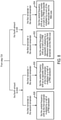
- This block may be implemented as blocks 828-834 of FIG. 8 .
- the positive or negative sign represents the same meaning as the first option described above. That is, the positive central frequency shift represents shifting to the left side on a frequency axis, while the negative central frequency shift represents shifting to the right side on a frequency axis.
- N BlockedPRB 0 and N Remainder ⁇ N Remainder-LTE .
- the central frequency of the bandpass filter is the same as the central frequency of LTE.
- the N Remainder PRB(s) will be symmetrical about the LTE central frequency. That is, on each of the left and right sides of the LTE central frequency, there will be N Remainder /2 PRB(s) to be blocked. Because a part of RBG0 or RBGn is blocked, the other part of RBG0 or RBGn is also needed to be blocked. As a result, two RBGs (RBG0 and RBGn) will be blocked if the exiting solution is used.
- N BlockedPRB 0 and N Remainder > 2N Remainder-LTE .
- N Remainder 2N Remainder-LTE .
- N Remainder /2 PRB(s) to be blocked. Because a part of RBG0, RBGn-1 or RBGn is blocked, the other part of RBG0, RBGn-1 or RBGn is also needed to be blocked. As a result, three RBGs (RBG0, RBGn-1 and RBGn) will be blocked if the exiting solution is used.
- FIG. 10 is a block diagram showing an apparatus according to an embodiment of the disclosure.
- the apparatus 1000 includes a processor 1002 and a memory 1004.
- the memory 1004 contains instructions which may be executed by the processor 1002 to cause the apparatus 1000 to perform the blocks described above with reference to FIGs. 2-4 and 6-8 .
- the apparatus may be included in a radio unit (RU) or a digital unit (DU) of a network device (e.g., a base station), as described later.
- RU radio unit
- DU digital unit of a network device
- the apparatus may include a first determination module, a second determination module and a third determination module.
- the first determination module is configured to determine a first amount of PRBs available in a nonstandard bandwidth.
- the second determination module is configured to determine a second amount of PRBs available in a standard bandwidth corresponding to the nonstandard bandwidth.
- the third determination module is configured to determine a central frequency shift of the nonstandard bandwidth relative to the standard bandwidth, based at least on the first and second amounts.
- the first to third determination modules can be implemented as described above with reference to FIGs. 2-4 and 6-8 .
- FIG. 11 is a block diagram showing a network device according to an embodiment of the disclosure.
- the network device may be, for example, a base station.
- the network device 1100 includes a radio admission control (RAC) 1102, a RU 1104 and a DU 1106.
- the RAC 1102 is configured to obtain a bandwidth configuration from an operation administration and maintenance (OAM).
- OAM operation administration and maintenance
- the RAC 1102 may control admission or rejection of new radio bearer establishment requests. Its goal is to maximize radio resource utilization while ensuring that the required quality of service (QoS) is achieved for sessions which are already established.
- QoS quality of service
- the OAM is an entity that interfaces between base stations such as LTE eNodeBs. It may include an element management system (EMS) that consists of systems and applications for managing network elements.
- EMS element management system
- the EMS is generally proprietary, designed by each vendor to suit the needs of their equipments.
- a network operator can use the EMS to provide the bandwidth configuration to the RAC 1102.
- the RU 1104 includes the apparatus 1000 as described above with reference to FIG. 10 . Thus, it can determine the central frequency shift and the first amount of PRBs.
- the RU 1104 is further configured to obtain the bandwidth configuration from the RAC 1102 and feedback information about the determined central frequency shift and the first amount to the RAC 1102.
- the RAC 1102 is further configured to, based on the information feedback, determine one or more PRBs that are blocked on the edge(s) of the standard bandwidth.
- the apparatus 1000 may determine the central frequency shifts corresponding to the first or second option of block 206.
- the RAC 1102 may determine the blocked PRB(s) corresponding to the first or second option.
- the DU 1106 is configured to obtain information about the one or more PRBs and the central frequency shift from the RAC and determine, based on the obtained information, which PRB(s) are to be blocked for resource scheduling. For example, when allocation type 0 as defined in 3GPP TS 36.213 is used for resource scheduling, if the blocked PRB(s) are determined according to the second option, the spectrum efficiency can be increased by applying less blocked PRBs and less control information bits.
- the apparatus 1000 is included in the RU 1104 to determine the central frequency shift.
- the apparatus 1000 is included in the DU 1106.
- the RAC 1102 may inform both the RU 1104 and the DU 1106 of the bandwidth configuration. Then, the RU 1104 and the DU 1106 may determine the central frequency shift and the first amount of PRBs via the apparatus 1000, respectively. Then, either of the RU 1104 and the DU 1106 may inform the determined central frequency shift and the first amount to the RAC 1102. Then, the RAC 1102 may determine the blocked PRB(s) and inform the information thereof to the DU 1106 for performing resource scheduling.
- the various exemplary embodiments may be implemented in hardware or special purpose circuits, software, logic or any combination thereof.
- some aspects may be implemented in hardware, while other aspects may be implemented in firmware or software which may be executed by a controller, microprocessor or other computing device, although the disclosure is not limited thereto.
- firmware or software which may be executed by a controller, microprocessor or other computing device, although the disclosure is not limited thereto.
- While various aspects of the exemplary embodiments of this disclosure may be illustrated and described as block diagrams, flow charts, or using some other pictorial representation, it is well understood that these blocks, apparatus, systems, techniques or methods described herein may be implemented in, as non-limiting examples, hardware, software, firmware, special purpose circuits or logic, general purpose hardware or controller or other computing devices, or some combination thereof.
- the exemplary embodiments of the disclosure may be practiced in various components such as integrated circuit chips and modules. It should thus be appreciated that the exemplary embodiments of this disclosure may be realized in an apparatus that is embodied as an integrated circuit, where the integrated circuit may comprise circuitry (as well as possibly firmware) for embodying at least one or more of a data processor, a digital signal processor, baseband circuitry and radio frequency circuitry that are configurable so as to operate in accordance with the exemplary embodiments of this disclosure.
- exemplary embodiments of the disclosure may be embodied in computer-executable instructions, such as in one or more program modules, executed by one or more computers or other devices.
- program modules include routines, programs, objects, components, data structures, etc. that perform particular tasks or implement particular abstract data types when executed by a processor in a computer or other device.
- the computer executable instructions may be stored on a computer readable medium such as a hard disk, optical disk, removable storage media, solid state memory, RAM, etc.
- the function of the program modules may be combined or distributed as desired in various embodiments.
- the function may be embodied in whole or in part in firmware or hardware equivalents such as integrated circuits, field programmable gate arrays (FPGA), and the like.
Landscapes
- Engineering & Computer Science (AREA)
- Signal Processing (AREA)
- Computer Networks & Wireless Communication (AREA)
- Quality & Reliability (AREA)
- Mobile Radio Communication Systems (AREA)
Claims (7)
- Verfahren zur Implementierung einer Nichtstandard-Bandbreite, das von einer Netzwerkvorrichtung durchgeführt wird, wobei eine Nichtstandard-Bandbreite sich auf eine Kanalbandbreite bezieht, die keine Standardkanalbandbreite ist, und wobei eine Standardkanalbandbreite einer Übertragungsbandbreitenkonfiguration entspricht, die gleich einem von Folgenden ist: 6, 15, 25, 50, 75 oder 100 physikalische Ressourcenblöcke, PRBs, und das Verfahren umfasst:Bestimmen (202) einer ersten Menge von PRBs, die in der Nichtstandard-Bandbreite verfügbar ist;Bestimmen (204) einer zweiten Menge von PRBs, die in einer Standardbandbreite verfügbar ist, die der Nichtstandard-Bandbreite entspricht; undBestimmen (206) einer Mittenfrequenzverschiebung der Nichtstandard-Bandbreite in Bezug auf die Standardbandbreite wenigstens basierend auf der ersten und der zweiten Menge, wobei das Bestimmen (206) der Mittenfrequenzverschiebung umfasst:Berechnen (414) einer dritten Menge einer oder mehrerer PRBs, die an mindestens einem Rand der Standardbandbreite gesperrt ist, wobei die dritte Menge gleich einer Differenz zwischen der ersten und der zweiten Menge ist;Setzen (416) der Mittenfrequenzverschiebung als null, wenn die dritte Menge gerade ist; undSetzen (418) der Mittenfrequenzverschiebung als eine Hälfte einer PRB-Bandbreite oder ein Pendant einer Hälfte einer PRB-Bandbreite, wenn die dritte Menge ungerade ist.
- Verfahren nach Anspruch 1, wobei das Bestimmen (202) der Menge umfasst:Auswählen (308) eines Bandpassfilters, das der Nichtstandard-Bandbreite entspricht;Berechnen (310) einer Passband-Bandbreite des Bandpassfilters; undBerechnen (312) der ersten Menge basierend auf der Passband-Bandbreite.
- Einrichtung (1000) zum Implementieren einer Nichtstandard-Bandbreite an einer Netzwerkvorrichtung (1100), wobei eine Nichtstandard-Bandbreite sich auf eine Kanalbandbreite bezieht, die keine Standardkanalbandbreite ist, und wobei eine Standardkanalbandbreite einer Übertragungsbandbreitenkonfiguration entspricht, die gleich einem von Folgenden ist: 6, 15, 25, 50, 75 oder 100 physikalische Ressourcenblöcke, PRBs, und die Einrichtung (1000) umfasst:einen Prozessor (1002); undeinen Speicher (1004), wobei der Speicher (1004) Anweisungen enthält, die vom Prozessor (1002) ausgeführt werden können, wodurch die Einrichtung (1000) ausgelegt ist zum:Bestimmen (202) einer ersten Menge von PRBs, die in der Nichtstandard-Bandbreite verfügbar ist;Bestimmen (204) einer zweiten Menge von PRBs, die in einer Standardbandbreite verfügbar ist, die der Nichtstandard-Bandbreite entspricht; undBestimmen (206) einer Mittenfrequenzverschiebung der Nichtstandard-Bandbreite in Bezug auf die Standardbandbreite wenigstens basierend auf der ersten und der zweiten Menge, wobei die Anweisungen vom Prozessor (1002) ausgeführt werden können, wobei die Einrichtung (1000) zum Bestimmen (206) der Mittenfrequenzverschiebung ausgelegt ist durch:Berechnen (414) einer dritten Menge einer oder mehrerer PRBs, die an mindestens einem Rand der Standardbandbreite gesperrt ist, wobei die dritte Menge gleich einer Differenz zwischen der ersten und der zweiten Menge ist;Setzen (416) der Mittenfrequenzverschiebung als null, wenn die dritte Menge gerade ist; undSetzen (418) der Mittenfrequenzverschiebung als eine Hälfte einer PRB-Bandbreite oder ein Pendant einer Hälfte einer PRB-Bandbreite, wenn die dritte Menge ungerade ist.
- Einrichtung (1000) nach Anspruch 3, wobei die Anweisungen vom Prozessor (1002) ausgeführt werden können, wodurch die Einrichtung (1000) zum Bestimmen (202) der ersten Menge ausgelegt ist durch:Auswählen (308) eines Bandpassfilters, das der Nichtstandard-Bandbreite entspricht;Berechnen (310) einer Passband-Bandbreite des Bandpassfilters; undBerechnen (312) der ersten Menge basierend auf der Passband-Bandbreite.
- Einrichtung (1000) nach Anspruch 3 oder 4, wobei die Einrichtung (1000) in einer Funkeinheit, RU, (1104) der Netzwerkvorrichtung (1100) enthalten ist.
- Einrichtung (1000) nach Anspruch 3 oder 4, wobei die Einrichtung (1000) in einer Digitaleinheit, DU, (1106) der Netzwerkvorrichtung (1100) enthalten ist.
- Netzwerkvorrichtung (1100), umfassend:eine Funkzulassungssteuerung, RAC, (1102), die zum Erhalten einer Bandbreitenkonfiguration von einem Betrieb, Verwaltung und Wartung, OAM, konfiguriert ist;eine Funkeinheit, RU, (1104), welche die Einrichtung (1000) nach einem der Ansprüche 3 bis 6 umfasst, wobei die RU (1104) ferner zum Erhalten der Bandbreitenkonfiguration von der RAC (1102) und Rückmelden von Informationen über die bestimmte Mittenfrequenzverschiebung und die erste Menge von PRBs an die RAC (1102) konfiguriert ist, und wobei die RAC (1102) ferner so konfiguriert ist, dass sie einen oder mehrere PRBs, die an dem mindestens einen Rand der Standardbandbreite gesperrt sind, basierend auf der Informationsrückmeldung bestimmt; undeine Digitaleinheit, DU, (1106) die so konfiguriert ist, dass sie Informationen über den einen oder die mehreren PRBs und die bestimmte Mittenfrequenzverschiebung von der RAC (1102) erhält und basierend auf den erhaltenen Informationen bestimmt, welche PRBs hinsichtlich Ressourcendisposition gesperrt werden sollen.
Applications Claiming Priority (1)
| Application Number | Priority Date | Filing Date | Title |
|---|---|---|---|
| PCT/CN2017/097626 WO2019033290A1 (en) | 2017-08-16 | 2017-08-16 | METHOD AND APPARATUS FOR IMPLEMENTING NON-STANDARD BANDWIDTH AND NETWORK DEVICE INCLUDING THE APPARATUS |
Publications (3)
| Publication Number | Publication Date |
|---|---|
| EP3662696A1 EP3662696A1 (de) | 2020-06-10 |
| EP3662696A4 EP3662696A4 (de) | 2020-07-22 |
| EP3662696B1 true EP3662696B1 (de) | 2022-01-19 |
Family
ID=65361735
Family Applications (1)
| Application Number | Title | Priority Date | Filing Date |
|---|---|---|---|
| EP17921582.7A Not-in-force EP3662696B1 (de) | 2017-08-16 | 2017-08-16 | Verfahren und vorrichtung zur implementierung einer nichtstandard-bandbreite sowie netzwerkvorrichtung mit der vorrichtung |
Country Status (3)
| Country | Link |
|---|---|
| US (1) | US11296842B2 (de) |
| EP (1) | EP3662696B1 (de) |
| WO (1) | WO2019033290A1 (de) |
Families Citing this family (3)
| Publication number | Priority date | Publication date | Assignee | Title |
|---|---|---|---|---|
| EP3753170B1 (de) * | 2018-02-16 | 2021-12-29 | Sony Group Corporation | Telekommunikationsvorrichtung, -verfahren und integrierte schaltung |
| EP4167491A1 (de) * | 2021-10-18 | 2023-04-19 | Nokia Technologies Oy | Kanalfilterung in einem benutzergerät |
| US12355708B2 (en) * | 2021-10-21 | 2025-07-08 | Apple Inc. | Systems and methods for supporting irregular bandwidth channels |
Family Cites Families (10)
| Publication number | Priority date | Publication date | Assignee | Title |
|---|---|---|---|---|
| JP2002218191A (ja) | 2001-01-22 | 2002-08-02 | Murata Mach Ltd | 通信端末装置及び通信制御プログラムを記録した記録媒体 |
| US8825037B2 (en) | 2009-12-22 | 2014-09-02 | Starkey Laboratories, Inc. | FM radio system for digital and analog communications for hearing assistance devices |
| US20130114571A1 (en) | 2011-11-07 | 2013-05-09 | Qualcomm Incorporated | Coordinated forward link blanking and power boosting for flexible bandwidth systems |
| ES2749515T3 (es) * | 2012-11-02 | 2020-03-20 | Ericsson Telefon Ab L M | Soporte del espectro flexible en comunicaciones inalámbricas celulares |
| EP2941079A4 (de) * | 2013-01-25 | 2016-03-16 | Huawei Tech Co Ltd | Verfahren zur trägeraggregationsübertragung und vorrichtung zur trägeraggregationsübertragung |
| EP2779700A1 (de) | 2013-03-15 | 2014-09-17 | Starkey Laboratories, Inc. | Hörhilfe mit drahtlosen Prüfmodalitäten als Diagnosewerkzeug |
| EP3092722B1 (de) * | 2014-01-09 | 2020-02-26 | Gestion Valeo Societe En Commandite (Valeo Managem L.P.) | Systeme im zusammenhang mit ultrabreitbandrundfunk mit dynamischem frequenz- und bandbreitenspringen |
| WO2016183720A1 (zh) * | 2015-05-15 | 2016-11-24 | 华为技术有限公司 | Lte系统的非标准带宽的下行、上行压缩方法和装置 |
| EP3363220A1 (de) * | 2015-10-12 | 2018-08-22 | IPCom GmbH & Co. KG | Unterstützung des betriebs mit flexibler bandbreite in lte |
| US10299260B2 (en) * | 2016-05-20 | 2019-05-21 | Qualcomm Incorporated | Methods and apparatus for flexible bandwidth operation |
-
2017
- 2017-08-16 US US16/631,337 patent/US11296842B2/en not_active Expired - Fee Related
- 2017-08-16 WO PCT/CN2017/097626 patent/WO2019033290A1/en not_active Ceased
- 2017-08-16 EP EP17921582.7A patent/EP3662696B1/de not_active Not-in-force
Also Published As
| Publication number | Publication date |
|---|---|
| WO2019033290A1 (en) | 2019-02-21 |
| US20200228265A1 (en) | 2020-07-16 |
| EP3662696A1 (de) | 2020-06-10 |
| EP3662696A4 (de) | 2020-07-22 |
| US11296842B2 (en) | 2022-04-05 |
Similar Documents
| Publication | Publication Date | Title |
|---|---|---|
| US11490370B2 (en) | Information transmission method and apparatus | |
| US11133910B2 (en) | Methods and arrangements for wide bandwidth communications | |
| DE102015201800B4 (de) | Dynamische Antennenabstimmungsvorrichtungseinstellung für Trägeraggregationsszenarien | |
| KR101909038B1 (ko) | 이동통신 시스템에서 단말의 성능을 보고하는 방법 및 장치 | |
| US9426815B2 (en) | Method and arrangement for dynamic allocation of a shared bandwidth | |
| US20200059793A1 (en) | Signal transmission apparatus and method, and wireless access node | |
| US9491662B2 (en) | Method in a radio network node for controlling usage of rat and frequency bandwidth in a radio communication system | |
| EP3820218A1 (de) | Signalübertragungsverfahren, gerät, endgerät, netzwerkvorrichtung und system | |
| AU2021369864A9 (en) | Channel transmission method and apparatus, terminal device, network device, and storage medium | |
| US20210266904A1 (en) | Multi-band indication method and communications device | |
| US20230079322A1 (en) | Communication method and apparatus | |
| US11368965B2 (en) | Wireless communication method, terminal device and network device | |
| EP4195735A1 (de) | Verfahren zur überwachung von steuerkanälen und bestimmung der übertragungskonfigurationsanzeige und endgerät | |
| US20210274590A1 (en) | Communication Method and Apparatus | |
| US10462786B2 (en) | Resource configuration method and network device | |
| US11296842B2 (en) | Method and apparatus for implementing nonstandard bandwidth as well as network device comprising the apparatus | |
| US20190327606A1 (en) | Method and device for sending capability information of communications device | |
| EP3451728B1 (de) | Verfahren und vorrichtung zur konfiguration eines unterrahmens | |
| DE112018000218T5 (de) | Breitbandmessungen in New-Radio-Systemen | |
| KR20250117686A (ko) | 네트워크 구성 방법, 및 통신 장치 및 관련 디바이스 | |
| CN101521889A (zh) | 一种高带宽系统信道设计的方法和系统 | |
| KR102244326B1 (ko) | 다중 요소 반송파 시스템에서 서빙 셀을 그룹핑하는 방법 및 장치 | |
| US12149485B2 (en) | Communications method and apparatus | |
| EP4665053A1 (de) | Kommunikationsverfahren und -vorrichtung |
Legal Events
| Date | Code | Title | Description |
|---|---|---|---|
| STAA | Information on the status of an ep patent application or granted ep patent |
Free format text: STATUS: THE INTERNATIONAL PUBLICATION HAS BEEN MADE |
|
| PUAI | Public reference made under article 153(3) epc to a published international application that has entered the european phase |
Free format text: ORIGINAL CODE: 0009012 |
|
| STAA | Information on the status of an ep patent application or granted ep patent |
Free format text: STATUS: REQUEST FOR EXAMINATION WAS MADE |
|
| 17P | Request for examination filed |
Effective date: 20200107 |
|
| AK | Designated contracting states |
Kind code of ref document: A1 Designated state(s): AL AT BE BG CH CY CZ DE DK EE ES FI FR GB GR HR HU IE IS IT LI LT LU LV MC MK MT NL NO PL PT RO RS SE SI SK SM TR |
|
| AX | Request for extension of the european patent |
Extension state: BA ME |
|
| A4 | Supplementary search report drawn up and despatched |
Effective date: 20200623 |
|
| RIC1 | Information provided on ipc code assigned before grant |
Ipc: H04W 28/06 20090101AFI20200617BHEP Ipc: H04L 5/00 20060101ALI20200617BHEP |
|
| DAV | Request for validation of the european patent (deleted) | ||
| DAX | Request for extension of the european patent (deleted) | ||
| STAA | Information on the status of an ep patent application or granted ep patent |
Free format text: STATUS: EXAMINATION IS IN PROGRESS |
|
| 17Q | First examination report despatched |
Effective date: 20210414 |
|
| GRAP | Despatch of communication of intention to grant a patent |
Free format text: ORIGINAL CODE: EPIDOSNIGR1 |
|
| STAA | Information on the status of an ep patent application or granted ep patent |
Free format text: STATUS: GRANT OF PATENT IS INTENDED |
|
| INTG | Intention to grant announced |
Effective date: 20211008 |
|
| GRAS | Grant fee paid |
Free format text: ORIGINAL CODE: EPIDOSNIGR3 |
|
| GRAA | (expected) grant |
Free format text: ORIGINAL CODE: 0009210 |
|
| STAA | Information on the status of an ep patent application or granted ep patent |
Free format text: STATUS: THE PATENT HAS BEEN GRANTED |
|
| AK | Designated contracting states |
Kind code of ref document: B1 Designated state(s): AL AT BE BG CH CY CZ DE DK EE ES FI FR GB GR HR HU IE IS IT LI LT LU LV MC MK MT NL NO PL PT RO RS SE SI SK SM TR |
|
| REG | Reference to a national code |
Ref country code: GB Ref legal event code: FG4D |
|
| REG | Reference to a national code |
Ref country code: CH Ref legal event code: EP |
|
| REG | Reference to a national code |
Ref country code: DE Ref legal event code: R096 Ref document number: 602017052632 Country of ref document: DE |
|
| REG | Reference to a national code |
Ref country code: AT Ref legal event code: REF Ref document number: 1464482 Country of ref document: AT Kind code of ref document: T Effective date: 20220215 |
|
| REG | Reference to a national code |
Ref country code: IE Ref legal event code: FG4D |
|
| REG | Reference to a national code |
Ref country code: NL Ref legal event code: FP |
|
| REG | Reference to a national code |
Ref country code: LT Ref legal event code: MG9D |
|
| REG | Reference to a national code |
Ref country code: AT Ref legal event code: MK05 Ref document number: 1464482 Country of ref document: AT Kind code of ref document: T Effective date: 20220119 |
|
| PG25 | Lapsed in a contracting state [announced via postgrant information from national office to epo] |
Ref country code: SE Free format text: LAPSE BECAUSE OF FAILURE TO SUBMIT A TRANSLATION OF THE DESCRIPTION OR TO PAY THE FEE WITHIN THE PRESCRIBED TIME-LIMIT Effective date: 20220119 Ref country code: RS Free format text: LAPSE BECAUSE OF FAILURE TO SUBMIT A TRANSLATION OF THE DESCRIPTION OR TO PAY THE FEE WITHIN THE PRESCRIBED TIME-LIMIT Effective date: 20220119 Ref country code: PT Free format text: LAPSE BECAUSE OF FAILURE TO SUBMIT A TRANSLATION OF THE DESCRIPTION OR TO PAY THE FEE WITHIN THE PRESCRIBED TIME-LIMIT Effective date: 20220519 Ref country code: NO Free format text: LAPSE BECAUSE OF FAILURE TO SUBMIT A TRANSLATION OF THE DESCRIPTION OR TO PAY THE FEE WITHIN THE PRESCRIBED TIME-LIMIT Effective date: 20220419 Ref country code: LT Free format text: LAPSE BECAUSE OF FAILURE TO SUBMIT A TRANSLATION OF THE DESCRIPTION OR TO PAY THE FEE WITHIN THE PRESCRIBED TIME-LIMIT Effective date: 20220119 Ref country code: HR Free format text: LAPSE BECAUSE OF FAILURE TO SUBMIT A TRANSLATION OF THE DESCRIPTION OR TO PAY THE FEE WITHIN THE PRESCRIBED TIME-LIMIT Effective date: 20220119 Ref country code: ES Free format text: LAPSE BECAUSE OF FAILURE TO SUBMIT A TRANSLATION OF THE DESCRIPTION OR TO PAY THE FEE WITHIN THE PRESCRIBED TIME-LIMIT Effective date: 20220119 Ref country code: BG Free format text: LAPSE BECAUSE OF FAILURE TO SUBMIT A TRANSLATION OF THE DESCRIPTION OR TO PAY THE FEE WITHIN THE PRESCRIBED TIME-LIMIT Effective date: 20220419 |
|
| PG25 | Lapsed in a contracting state [announced via postgrant information from national office to epo] |
Ref country code: PL Free format text: LAPSE BECAUSE OF FAILURE TO SUBMIT A TRANSLATION OF THE DESCRIPTION OR TO PAY THE FEE WITHIN THE PRESCRIBED TIME-LIMIT Effective date: 20220119 Ref country code: LV Free format text: LAPSE BECAUSE OF FAILURE TO SUBMIT A TRANSLATION OF THE DESCRIPTION OR TO PAY THE FEE WITHIN THE PRESCRIBED TIME-LIMIT Effective date: 20220119 Ref country code: GR Free format text: LAPSE BECAUSE OF FAILURE TO SUBMIT A TRANSLATION OF THE DESCRIPTION OR TO PAY THE FEE WITHIN THE PRESCRIBED TIME-LIMIT Effective date: 20220420 Ref country code: FI Free format text: LAPSE BECAUSE OF FAILURE TO SUBMIT A TRANSLATION OF THE DESCRIPTION OR TO PAY THE FEE WITHIN THE PRESCRIBED TIME-LIMIT Effective date: 20220119 Ref country code: AT Free format text: LAPSE BECAUSE OF FAILURE TO SUBMIT A TRANSLATION OF THE DESCRIPTION OR TO PAY THE FEE WITHIN THE PRESCRIBED TIME-LIMIT Effective date: 20220119 |
|
| PG25 | Lapsed in a contracting state [announced via postgrant information from national office to epo] |
Ref country code: IS Free format text: LAPSE BECAUSE OF FAILURE TO SUBMIT A TRANSLATION OF THE DESCRIPTION OR TO PAY THE FEE WITHIN THE PRESCRIBED TIME-LIMIT Effective date: 20220519 |
|
| PGFP | Annual fee paid to national office [announced via postgrant information from national office to epo] |
Ref country code: NL Payment date: 20220826 Year of fee payment: 6 |
|
| REG | Reference to a national code |
Ref country code: DE Ref legal event code: R097 Ref document number: 602017052632 Country of ref document: DE |
|
| PG25 | Lapsed in a contracting state [announced via postgrant information from national office to epo] |
Ref country code: SM Free format text: LAPSE BECAUSE OF FAILURE TO SUBMIT A TRANSLATION OF THE DESCRIPTION OR TO PAY THE FEE WITHIN THE PRESCRIBED TIME-LIMIT Effective date: 20220119 Ref country code: SK Free format text: LAPSE BECAUSE OF FAILURE TO SUBMIT A TRANSLATION OF THE DESCRIPTION OR TO PAY THE FEE WITHIN THE PRESCRIBED TIME-LIMIT Effective date: 20220119 Ref country code: RO Free format text: LAPSE BECAUSE OF FAILURE TO SUBMIT A TRANSLATION OF THE DESCRIPTION OR TO PAY THE FEE WITHIN THE PRESCRIBED TIME-LIMIT Effective date: 20220119 Ref country code: EE Free format text: LAPSE BECAUSE OF FAILURE TO SUBMIT A TRANSLATION OF THE DESCRIPTION OR TO PAY THE FEE WITHIN THE PRESCRIBED TIME-LIMIT Effective date: 20220119 Ref country code: DK Free format text: LAPSE BECAUSE OF FAILURE TO SUBMIT A TRANSLATION OF THE DESCRIPTION OR TO PAY THE FEE WITHIN THE PRESCRIBED TIME-LIMIT Effective date: 20220119 Ref country code: CZ Free format text: LAPSE BECAUSE OF FAILURE TO SUBMIT A TRANSLATION OF THE DESCRIPTION OR TO PAY THE FEE WITHIN THE PRESCRIBED TIME-LIMIT Effective date: 20220119 |
|
| PGFP | Annual fee paid to national office [announced via postgrant information from national office to epo] |
Ref country code: GB Payment date: 20220829 Year of fee payment: 6 Ref country code: DE Payment date: 20220829 Year of fee payment: 6 |
|
| PLBE | No opposition filed within time limit |
Free format text: ORIGINAL CODE: 0009261 |
|
| STAA | Information on the status of an ep patent application or granted ep patent |
Free format text: STATUS: NO OPPOSITION FILED WITHIN TIME LIMIT |
|
| PG25 | Lapsed in a contracting state [announced via postgrant information from national office to epo] |
Ref country code: AL Free format text: LAPSE BECAUSE OF FAILURE TO SUBMIT A TRANSLATION OF THE DESCRIPTION OR TO PAY THE FEE WITHIN THE PRESCRIBED TIME-LIMIT Effective date: 20220119 |
|
| 26N | No opposition filed |
Effective date: 20221020 |
|
| PG25 | Lapsed in a contracting state [announced via postgrant information from national office to epo] |
Ref country code: SI Free format text: LAPSE BECAUSE OF FAILURE TO SUBMIT A TRANSLATION OF THE DESCRIPTION OR TO PAY THE FEE WITHIN THE PRESCRIBED TIME-LIMIT Effective date: 20220119 |
|
| PG25 | Lapsed in a contracting state [announced via postgrant information from national office to epo] |
Ref country code: MC Free format text: LAPSE BECAUSE OF FAILURE TO SUBMIT A TRANSLATION OF THE DESCRIPTION OR TO PAY THE FEE WITHIN THE PRESCRIBED TIME-LIMIT Effective date: 20220119 |
|
| REG | Reference to a national code |
Ref country code: CH Ref legal event code: PL |
|
| PG25 | Lapsed in a contracting state [announced via postgrant information from national office to epo] |
Ref country code: LU Free format text: LAPSE BECAUSE OF NON-PAYMENT OF DUE FEES Effective date: 20220816 Ref country code: LI Free format text: LAPSE BECAUSE OF NON-PAYMENT OF DUE FEES Effective date: 20220831 Ref country code: CH Free format text: LAPSE BECAUSE OF NON-PAYMENT OF DUE FEES Effective date: 20220831 |
|
| REG | Reference to a national code |
Ref country code: BE Ref legal event code: MM Effective date: 20220831 |
|
| PG25 | Lapsed in a contracting state [announced via postgrant information from national office to epo] |
Ref country code: IT Free format text: LAPSE BECAUSE OF FAILURE TO SUBMIT A TRANSLATION OF THE DESCRIPTION OR TO PAY THE FEE WITHIN THE PRESCRIBED TIME-LIMIT Effective date: 20220119 Ref country code: IE Free format text: LAPSE BECAUSE OF NON-PAYMENT OF DUE FEES Effective date: 20220816 Ref country code: FR Free format text: LAPSE BECAUSE OF NON-PAYMENT OF DUE FEES Effective date: 20220831 |
|
| PG25 | Lapsed in a contracting state [announced via postgrant information from national office to epo] |
Ref country code: BE Free format text: LAPSE BECAUSE OF NON-PAYMENT OF DUE FEES Effective date: 20220831 |
|
| REG | Reference to a national code |
Ref country code: DE Ref legal event code: R119 Ref document number: 602017052632 Country of ref document: DE |
|
| REG | Reference to a national code |
Ref country code: NL Ref legal event code: MM Effective date: 20230901 |
|
| GBPC | Gb: european patent ceased through non-payment of renewal fee |
Effective date: 20230816 |
|
| PG25 | Lapsed in a contracting state [announced via postgrant information from national office to epo] |
Ref country code: CY Free format text: LAPSE BECAUSE OF FAILURE TO SUBMIT A TRANSLATION OF THE DESCRIPTION OR TO PAY THE FEE WITHIN THE PRESCRIBED TIME-LIMIT Effective date: 20220119 |
|
| PG25 | Lapsed in a contracting state [announced via postgrant information from national office to epo] |
Ref country code: NL Free format text: LAPSE BECAUSE OF NON-PAYMENT OF DUE FEES Effective date: 20230901 |
|
| PG25 | Lapsed in a contracting state [announced via postgrant information from national office to epo] |
Ref country code: NL Free format text: LAPSE BECAUSE OF NON-PAYMENT OF DUE FEES Effective date: 20230901 Ref country code: MK Free format text: LAPSE BECAUSE OF FAILURE TO SUBMIT A TRANSLATION OF THE DESCRIPTION OR TO PAY THE FEE WITHIN THE PRESCRIBED TIME-LIMIT Effective date: 20220119 Ref country code: HU Free format text: LAPSE BECAUSE OF FAILURE TO SUBMIT A TRANSLATION OF THE DESCRIPTION OR TO PAY THE FEE WITHIN THE PRESCRIBED TIME-LIMIT; INVALID AB INITIO Effective date: 20170816 |
|
| PG25 | Lapsed in a contracting state [announced via postgrant information from national office to epo] |
Ref country code: GB Free format text: LAPSE BECAUSE OF NON-PAYMENT OF DUE FEES Effective date: 20230816 |
|
| PG25 | Lapsed in a contracting state [announced via postgrant information from national office to epo] |
Ref country code: GB Free format text: LAPSE BECAUSE OF NON-PAYMENT OF DUE FEES Effective date: 20230816 Ref country code: DE Free format text: LAPSE BECAUSE OF NON-PAYMENT OF DUE FEES Effective date: 20240301 |
|
| PG25 | Lapsed in a contracting state [announced via postgrant information from national office to epo] |
Ref country code: MT Free format text: LAPSE BECAUSE OF FAILURE TO SUBMIT A TRANSLATION OF THE DESCRIPTION OR TO PAY THE FEE WITHIN THE PRESCRIBED TIME-LIMIT Effective date: 20220119 |
|
| PG25 | Lapsed in a contracting state [announced via postgrant information from national office to epo] |
Ref country code: TR Free format text: LAPSE BECAUSE OF FAILURE TO SUBMIT A TRANSLATION OF THE DESCRIPTION OR TO PAY THE FEE WITHIN THE PRESCRIBED TIME-LIMIT Effective date: 20220119 |