EP3662760B1 - Procédé de fabrication d'une alimentation enrichie en au moins un carotinoïde ou d'un composant d'alimentation enrichi d'au moins un carotinoïde - Google Patents
Procédé de fabrication d'une alimentation enrichie en au moins un carotinoïde ou d'un composant d'alimentation enrichi d'au moins un carotinoïde Download PDFInfo
- Publication number
- EP3662760B1 EP3662760B1 EP19401050.0A EP19401050A EP3662760B1 EP 3662760 B1 EP3662760 B1 EP 3662760B1 EP 19401050 A EP19401050 A EP 19401050A EP 3662760 B1 EP3662760 B1 EP 3662760B1
- Authority
- EP
- European Patent Office
- Prior art keywords
- feed
- astaxanthin
- larvae
- microorganisms
- insect larvae
- Prior art date
- Legal status (The legal status is an assumption and is not a legal conclusion. Google has not performed a legal analysis and makes no representation as to the accuracy of the status listed.)
- Active
Links
Images
Classifications
-
- A—HUMAN NECESSITIES
- A23—FOODS OR FOODSTUFFS; TREATMENT THEREOF, NOT COVERED BY OTHER CLASSES
- A23K—FODDER
- A23K10/00—Animal feeding-stuffs
- A23K10/10—Animal feeding-stuffs obtained by microbiological or biochemical processes
- A23K10/16—Addition of microorganisms or extracts thereof, e.g. single-cell proteins, to feeding-stuff compositions
-
- A—HUMAN NECESSITIES
- A23—FOODS OR FOODSTUFFS; TREATMENT THEREOF, NOT COVERED BY OTHER CLASSES
- A23K—FODDER
- A23K10/00—Animal feeding-stuffs
- A23K10/20—Animal feeding-stuffs from material of animal origin
-
- A—HUMAN NECESSITIES
- A23—FOODS OR FOODSTUFFS; TREATMENT THEREOF, NOT COVERED BY OTHER CLASSES
- A23K—FODDER
- A23K20/00—Accessory food factors for animal feeding-stuffs
- A23K20/10—Organic substances
- A23K20/174—Vitamins
-
- A—HUMAN NECESSITIES
- A23—FOODS OR FOODSTUFFS; TREATMENT THEREOF, NOT COVERED BY OTHER CLASSES
- A23K—FODDER
- A23K20/00—Accessory food factors for animal feeding-stuffs
- A23K20/10—Organic substances
- A23K20/179—Colouring agents, e.g. pigmenting or dyeing agents
-
- A—HUMAN NECESSITIES
- A23—FOODS OR FOODSTUFFS; TREATMENT THEREOF, NOT COVERED BY OTHER CLASSES
- A23K—FODDER
- A23K40/00—Shaping or working-up of animal feeding-stuffs
-
- A—HUMAN NECESSITIES
- A23—FOODS OR FOODSTUFFS; TREATMENT THEREOF, NOT COVERED BY OTHER CLASSES
- A23K—FODDER
- A23K50/00—Feeding-stuffs specially adapted for particular animals
- A23K50/80—Feeding-stuffs specially adapted for particular animals for aquatic animals, e.g. fish, crustaceans or molluscs
Definitions
- the present invention relates to a process for producing a feed or feed component enriched with astaxanthin and to such an enriched feed or feed component.
- the feed used for the farmed animals is an important factor.
- the feed should contain the carotenoid astaxanthin, which causes the typical reddish color of the fish meat and, as a natural antioxidant, has a variety of positive effects that contribute to the quality of the produced food.
- salmon usually absorb astaxanthin from small crustaceans.
- the small crustaceans in turn, feed on microalgae, which naturally produce astaxanthin.
- This food chain does not exist in aquaculture. Therefore, in aquaculture, astaxanthin is added to the feed, which essentially covers the salmon's protein requirements through fishmeal.
- the astaxanthin used for this purpose is usually artificially synthesized from petroleum.
- this artificial astaxanthin is not permitted for use in organically operated aquaculture facilities.
- the nutritional composition of artificial astaxanthin is relatively unfavorable.
- artificially produced astaxanthin may contain toxic constituents and/or undesirable stereoisomers that potentially pose a threat to food production.
- An alternative to synthetically produced astaxanthin is natural astaxanthin, which can be obtained industrially, for example, from cultivated microalgae.
- Krill meal which is essentially wild-caught, can also be used as an astaxanthin source, although this involves the consumption of only limited natural resources.
- optimized process control is required for the economical, large-scale production of astaxanthin from cultivated microalgae.
- the processing of the microalgae up to the extraction or purification of the astaxanthin is associated with high costs. Overall, therefore, the production of a feed for animal food production that is enriched with a valuable substance such as astaxanthin is very complex and expensive, especially if the valuable substance is to be used rather than a synthetic one.
- the invention therefore has the object of providing an improved process for producing a feed enriched with astaxanthin, which avoids the aforementioned disadvantages and allows the economical provision of a feed enriched with astaxanthin.
- This object is achieved by a method for producing an astaxanthin-enriched feed or an astaxanthin-enriched feed component, as is the subject matter of claim 1. Preferred embodiments of this method are set out in the dependent claims. Furthermore, the object is achieved by an astaxanthin-enriched feed or an astaxanthin-enriched feed component, as is the subject matter of the independent claim.
- microorganisms are first cultivated to provide a microorganism biomass, whereby the microorganisms produce and/or accumulate at least one valuable substance, namely astaxanthin.
- the core of the process is that this microorganism biomass is fed to insect larvae.
- the insect larvae are larvae of the genus Hermetia. These insect larvae, which store the valuable substance, are then cultivated. Finally, these insect larvae are processed into a feed or a feed component.
- a valuable substance is mentioned below, this generally refers to astaxanthin.
- the valuable substance is first produced economically in the microorganisms. This valuable substance is then with the microorganisms is fed to the insect larvae.
- the insect larvae ingest the microorganisms, so that the digestion of the microorganisms usually occurs by the insect larvae themselves and does not have to be carried out through complex technical processes. Furthermore, it can be assumed that an enrichment of the valuable substance occurs within the insect larvae, since little or no metabolism of the valuable substance is to be expected in the insect larvae.
- the insect larvae function, in a sense, as a natural bioreactor and at the same time act as a high-quality protein supplier during their subsequent processing into animal feed.
- the proposed combination of microorganism biotechnology and insect biotechnology thus makes it possible to produce a valuable substance-enriched feed that is particularly advantageously suited for the production of animal-based foods.
- the proposed process dispenses with synthetic production of the valuable substance, thus avoiding the disadvantages of synthetically produced valuable substances described above.
- the process takes advantage of the natural tendency of many microorganisms to extract valuable substances from food through their digestive system and to store them as energy stores and/or reserves, for example.
- the use of a food chain that mimics nature's own makes it possible to avoid technically complex and costly processes for cell disruption and purification of the valuable substance.
- the feed or feed component is preferably a feed or feed component for animals.
- the feed or feed component it is also possible, in principle, for the feed or feed component to be intended for human consumption, so that the process can also be used to produce a food or food component enriched with valuable substances for humans.
- the microorganism biomass is provided for feeding to the insect larvae without cell disruption of the microorganisms, in particular without technical cell disruption of the microorganisms.
- the cultivated microorganisms can therefore be fed directly to the insect larvae after harvesting.
- the insect larvae are often able to ingest and digest the microorganisms without prior cell disruption, so the actual cell exclusion occurs within the insect larvae.
- microorganism biomass it may be particularly advantageous to carry out further processing of the microorganism biomass before feeding the microorganism biomass to the insect larvae, since the insect larvae may have only a limited ability to break through the cell wall of the to completely disrupt microorganisms. It is therefore particularly preferred that, in order to provide the microorganism biomass, a partial or complete technical cell disruption of the microorganisms takes place before the microorganism biomass is fed to the insect larvae.
- Technical cell disruption here means that process-engineering steps are carried out to bring about the cell disruption. Such technical cell disruption is possible using simple methods and can, if necessary, promote particularly efficient incorporation of the valuable material into the insect larvae in the downstream value chain.
- Suitable technologies for the gentle weakening of cell wall structures or for partial cell disruption are known to those skilled in the art.
- Power ultrasound for example, is suitable. Using precisely dosed ultrasound with preferably controlled adjustment of specific power input, amplitude, pulse sequence, residence time, pressure, and/or temperature, cell suspensions can be exposed and the cell wall structures weakened without completely disintegrating the cell. This has been demonstrated, for example, by the separation of cell aggregates (chains) of cyanobacteria of the species Arthrospira platensis without destroying the individual cells.
- Electroporation for example, is also suitable. Various effects generated in an electric field (e.g., accelerated charge carriers) can reversibly or irreversibly permeabilize cell walls.
- partial cell disruption or weakening of the cell wall can be achieved through temperature treatment.
- Cell walls can be partially damaged, particularly through freeze/thaw steps, as can brief heating.
- freeze/thaw steps is particularly advantageous when intermediate storage and/or transport is planned for the microorganism biomass to be fed to the insect larvae, whereby the biomass can be frozen for transport.
- Equipment for this purpose includes ball mills, impact mills, or high-pressure homogenizers.
- Further options include chemical and biochemical methods, such as the use of enzymes or other, particularly decomposing, microorganisms.
- cysts in the case of algae.
- These persistent stages exhibit a particularly rigid cell wall as resilient survival stages.
- various morphological and physiological changes occur in the cells, which, in addition to altered metabolic activity, also lead to the formation of a stable cell wall.
- the cells thus transition from a vegetative-flagellated cell stage to an immobile cyst stage.
- the cysts represent a resilient survival form, which, primarily through the stability and heterogeneity of the formed cell wall, are intended to optimally protect the organism from various abiotic environmental influences.
- the microorganisms are conditioned before the microorganism biomass is provided.
- the production and/or enrichment of the valuable substance within the microorganisms can be stimulated or enhanced.
- the production of certain valuable substances in the microorganisms can be triggered and/or enhanced by certain light conditions.
- conditioning is appropriate for the respective application depends on the respective microorganism and is known to the person skilled in the art. Through conditioning, the production of the valuable substance by the microorganisms can be significantly increased.
- the conditioning can be carried out as part of a stress induction, whereby in particular the light conditions and/or the temperature conditions and/or the media composition (e.g., nutrient limitation) and/or salinity (e.g., increased salinity) can be varied.
- the conditioning takes place This should preferably be done after the actual cultivation or reproduction phase of the microorganisms.
- the microorganisms After culturing and, if necessary, conditioning the microorganisms and transferring them to vegetative propagation stages, the microorganisms are harvested and, if necessary, further processed to partially or completely disrupt the cells or to weaken the cell walls in order to facilitate cell disruption and/or processing within the insect larvae.
- the microorganism biomass can be mixed into a standard feed substrate for the insect larvae. This has the particular advantage that the microbiome typically present in the standard feed substrate can further disrupt the cells of the microorganisms, making the microorganism material even easier to process for the insect larvae.
- the insect larvae are larvae of the genus Hermetia, specifically larvae of Hermetia illucens (black soldier fly).
- Hermetia illucens larvae are particularly well-suited for large-scale biotechnological production because they are robust and relatively undemanding.
- Hermetia illucens larvae which can feed on almost any type of organic substance, are already being used as animal feed.
- Hermetia illucens larvae have high protein contents and high proportions of essential amino acids. Due to their unique lifestyle, they are extremely efficient feed converters.
- Hermetia illucens larvae can be mass-produced in a particularly advantageous manner with relatively little effort and feed. Furthermore, the suitability of larvae of this species for feeding fish has already been demonstrated.
- the valuable substance is astaxanthin, a carotenoid.
- astaxanthin encompasses not only astaxanthin in its pure form, but also astaxanthin derivatives, such as, in particular, the ester forms of astaxanthin (e.g., mono- or diester forms of astaxanthin).
- the mono- and diester forms can occur naturally alongside the non-esterified pure form and are therefore also well suited for the purposes of the invention.
- microorganisms can be enabled, for example, by recombinant methods, to produce and/or enrich astaxanthin, e.g., in its non-esterified pure form and/or astaxanthin derivatives, so that the proposed process can be used to produce feed or feed components enriched with the corresponding derivatives.
- astaxanthin it is possible for the astaxanthin to be derivatized during the process.
- other valuable substances can also be used for the production of the feed or feed component analogously to the proposed process. Examples of other valuable substances include phycoerythrin, phycocyanin, other carotenoids and pigments, e.g., fucoxanthin, vitamins, and amino acids, especially essential or limiting amino acids.
- corresponding microorganisms can be used that naturally produce and/or enrich the respective valuable substance.
- the following list shows some selected valuable substances and corresponding microorganisms, particularly microalgae and cyanobacteria, that synthesize these valuable substances and that can be used analogously to the proposed process:
- Phycoerythrin Porphyridium purpureum, Porphyridium cruentum, Planktothrix rubescens
- Phycocyanin Arthrospira platensis, Chlorella vulgaris, Aphanizomenon flos aquae
- Fucoxanthin Phaeodactylum tricornutum, Chaetoceros gracilis, Odontella aurita
- Vitamin E Vitamin C: Scenedesmus obiquus, Chlamydomonas reinhardtii, Chlorella vulgaris Amino acids MAA ( mycosporine-like amino acids ): Aphanizomenon flos aquae, Aphanizomenon spiralis, Chlorella soro
- genetically modified microorganisms can also be used, which are enabled, for example, by recombinant methods, to produce and/or enrich the valuable substance.
- Unsaturated fatty acids in particular polyunsaturated fatty acids (PUFAs)
- PUFAs polyunsaturated fatty acids
- Omega-3 fatty acids could be used as a valuable substance.
- Omega-3 fatty acids play a major role in human nutrition.
- Omega-3 fatty acids can, for example, be made available for human consumption via appropriately enriched eggs.
- the proposed process is therefore, in principle, suitable in an analogous manner for producing a feed or a feed component for poultry, whereby this feed or component is enriched with omega-3 fatty acids as a valuable substance.
- the eggs laid by this poultry contain particularly high proportions of omega-3 fatty acids and are therefore particularly suitable for human consumption.
- Microorganisms that can be used for this process include Chlamydomonas variabilis, Chlorella vulgaris or Nannochloropsis salina , whereby the microorganism biomass provided is fed, for example, to Hermetia larvae in the manner described above. The larvae are then processed into a suitable feed or feed component for poultry.
- microorganisms refers to microscopically small organisms that are invisible to the naked eye. These are essentially single-celled or few-celled organisms. It is advantageous for the process according to the invention if the microorganisms can be cultivated, for example, in bioreactors.
- the invention utilizes the property of many microorganisms to produce or accumulate certain substances that can be used by humans as valuable materials.
- the term “valuable material” refers in particular to substances that play a special role in physiology, particularly in human nutrition and/or in the cultivation of livestock.
- Valuable materials can be understood, for example, as substances that are not synthesized by the organism itself or are synthesized only to a limited extent and that must therefore be ingested with food, e.g., certain vitamins, antioxidants, or unsaturated fatty acids (essential nutritional components). In addition to their nutritional significance, these valuable substances can also have health or other functional benefits for humans and/or the farm animals being cultivated. For example, in salmon farming in aquaculture, the main reason for adding astaxanthin is to achieve the typical salmon color. Salmon meat without this color would be virtually unmarketable, even though the actual nutritional value is essentially identical. Furthermore, astaxanthin offers the additional benefit of being a highly effective antioxidant, although this generally plays only a minor role in marketability.
- the microorganisms are preferably algae, fungi, or bacteria, such as cyanobacteria.
- the microorganisms can be cultivated in a conventional manner, for example, in a photobioreactor.
- a photobioreactor For example, conventional tubular photobioreactors or plate photobioreactors can be used.
- the microorganisms are cultivated under controlled and/or regulated cultivation conditions in specially designed photobioreactors.
- Microalgae are particularly advantageously suited for the proposed process.
- green algae especially green algae of the genus Haematococcus, preferably green algae of the species Haematococcus pluvialis (blood rain algae), can be used.
- Haematococcus pluvialis is traditionally one of the most important natural sources for the industrial production of astaxanthin.
- the astaxanthin is localized intracellularly within the cells, with the astaxanthin accumulating within the cells in so-called lipid bodies .
- the algal cells generally have a very stable cell wall. In the industrial production of astaxanthin from Haematococcus pluvialis , cell disruption and extraction of the astaxanthin therefore represent a crucial cost factor.
- This complex cell disruption and extraction of the astaxanthin is largely avoided in the process according to the invention by feeding the cultivated algal cells themselves, possibly with a certain amount of processing, to the insect larvae, so that the algal cells within the insect larvae are disrupted by their digestive system.
- the algae can be fed directly to the insect larvae, i.e. fresh and without further processing and, for example, without freeze-drying, since the uptake and accumulation of astaxanthin in the larvae is generally already good.
- the uptake and storage of astaxanthin can be further improved if the algae are processed before feeding and, for example, partial cell disruption and/or a weakening of the cell walls is carried out. This can be achieved through simple technical measures, such as ultrasonic treatment or temperature treatment (as described above). The technical effort involved is considerably lower than for the industrial extraction of astaxanthin from algae.
- yeasts for example, can be used as microorganisms, for example yeasts of the genus Phaffia, preferably yeasts of the species Phaffia rhodozyma.
- Phaffia rhodozyma is also capable of producing or enriching astaxanthin and, like Haematococcus pluvialis , is suitable for producing an astaxanthin-enriched feed according to the method of the invention.
- the feed or feed component produced using the process according to the invention can preferably be intended as a feed or feed component for fish and/or poultry.
- appropriate adaptations to the feed can be made, for example, adjusting it to a specific protein content, adding certain additives, producing a specific dosage form, etc.
- the astaxanthin-enriched feed is particularly suitable as fish feed, especially for salmon farmed in aquaculture, since the astaxanthin produces the desired reddish coloration of the fish and also has beneficial nutritional properties for humans who consume the farmed fish.
- the feed produced according to the invention represents an economically and ecologically very advantageous alternative to astaxanthin-enriched fish meal, which is currently used in large quantities for aquaculture.
- a simplified cell disruption can be carried out, for example by freezing/thawing or other methods.
- Technically complex methods for cell disruption and extraction can therefore be dispensed with, since these conventionally technically complex steps are carried out by the insect larvae within a near-natural food chain.
- the nutritional properties of salmon meat can be improved by incorporating naturally produced astaxanthin and its beneficial constituents. This results in a novel and economically advantageous source of astaxanthin, even for organic aquaculture.
- the further processing of the insect larvae begins with drying of the larval biomass.
- the drying of the larval biomass can be carried out up to to a definable residual moisture content.
- a residual moisture content of up to 10% or up to 5% can be achieved.
- the insect larvae are first killed before drying.
- the drying process can be carried out, for example, by treatment with hot air until the desired residual moisture content is reached. Drying the larval biomass has the advantage that, in principle, solids can be used in subsequent processing (rather than liquids or pastes).
- the fat fraction may be advantageous to separate the fat fraction from the protein fraction when processing insect larvae into feed or feed components, or perhaps not to separate the fat fraction from the protein fraction. Separating the fat fraction is particularly useful if the protein is to be obtained as a dry meal. Separating the fat and protein fractions generally has the additional advantage that it allows for particularly precise mixing ratios and compensates for naturally occurring fluctuations in nutrient content. This makes it possible, for example, to produce a standardized and reproducible feed, for example in pelleted form. Depending on the valuable material involved, failing to separate the fat fraction may have the advantage that the valuable material accumulates partly or essentially in the fat fraction of the insect larvae, and therefore separating the fat fraction would result in a certain proportion of the valuable material being lost.
- the fat fraction for the feed, provided no protein source is desired in the feed or another protein source is to be added. Omitting the fat fraction may also be advantageous if the required process-related parameters (e.g., temperature, pressure) are likely to damage the valuable material.
- the insect larvae enriched with the valuable substance represent only one component of the feed.
- the insect larvae are therefore first processed into a feed component, which is then processed into the final feed together with at least one other ingredient.
- the feed can be optimally adapted to various purposes, for example by using additional nutrients and/or additives for the production of the feed.
- Suitable additional components for a ready-to-use feed include, for example, wheat, wheat gluten, peas, horse beans, soy cake, soy concentrate, rapeseed meal, guar protein meal, sunflower cake, blood meal, brewer's yeast, krill meal, hydrolyzed fish protein, fish oil, rapeseed oil, vitamins and minerals such as monocalcium phosphate.
- the ready-to-use feed can contain, in addition to the astaxanthin-enriched feed according to the invention,
- the enriched protein-rich component may further contain, for example, wheat, fish oil, wheat gluten, krill meal, hydrolyzed fish protein, monocalcium phosphate, and brewer's yeast, whereby this feed is particularly suitable for salmon cultures.
- a salmon trout feed may, for example, contain, in addition to the feed component according to the invention, blood meal, soy cake, rapeseed meal, sunflower cake, wheat, fish oil, rapeseed oil, guar protein meal, peas, horse beans, soy concentrate, vitamins, and minerals.
- the nutrient contents for suitable feeds may, for example, be 40-60% total protein and 15-25% fat.
- carbohydrates, minerals, and vitamins, as well as indigestible components (burdens) are included in varying weight proportions.
- the astaxanthin content of the finished feed is preferably 50-100 mg/kg feed, preferably 70-80 mg/kg, in particular 75 mg/kg.
- the resulting feed (or feed component) is characterized in that the feed or a component of a feed is enriched with astaxanthin.
- Such feeds are particularly suitable as feeds in animal breeding or animal husbandry.
- the astaxanthin content of the feed is preferably enriched feed approximately 50 - 100 mg/kg feed, preferably 70 - 80 mg/kg, in particular 75 mg/kg.
- the feed can in principle be based on a conventional feed recipe, wherein in particular the protein content and/or the fat content of the recipe are completely or partially replaced by the insect meal and/or the fat fraction (insect fat) producible according to the invention.
- the amounts of the insect components can be selected accordingly depending on the desired valuable substance content of the finished feed. For example, 5-50%, in particular 10-25%, preferably 19-20% of the dry mass of the feed can be formed by the insect meal. Furthermore, additionally or alternatively, 5-10%, in particular 7%, of the dry mass of the feed can be formed by the insect fat.
- the feeds produced according to the invention are also suitable as food or as food components for human nutrition.
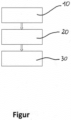
- the figure illustrates schematically the method according to the invention.
- the microorganisms that produce and/or accumulate astaxanthin are cultivated to provide a microorganism biomass.
- This step can include conditioning, in which the synthesis or production of the valuable substance is stimulated by setting appropriate conditions.
- the microorganism biomass is fed to the insect larvae, i.e., larvae of the genus Hermetia, and the insect larvae are cultivated.
- the insect larvae are processed into a feed or a feed component.
- microalgae in particular algae of the species Haematococcus pluvialis , which are capable of producing astaxanthin, are used for this process.
- Larvae of the species Hermetia illucens are used as insect larvae.
- the enriched feed produced by this process is particularly suitable as fish feed or as an additive to fish feed. It is particularly preferably used for salmon farming in aquaculture.
- Astaxanthin is currently the most important high-value product that can be obtained from microalgae. Nevertheless, the global market share of commercially used, algae-based astaxanthin is less than 1%. The majority of the market is held by synthetic astaxanthin synthesized from petrochemical sources. However, synthetic astaxanthin contains an unnatural ratio of the compound's stereoisomers, which is unfavorable for nutritional purposes and is particularly prohibited in organically certified foods. Despite growing consumer interest in natural food production chains and the disadvantages of synthetic astaxanthin, the current production price of algal astaxanthin is difficult to compete with its synthetic counterpart. In a conventional algae cultivation process for the production of astaxanthin, harvesting, cell disruption, and product extraction represent enormous costs.
- a crucial cost factor here is the mechanical cell disruption and extraction of the astaxanthin, which is usually achieved using supercritical CO2 extraction. Extraction is traditionally performed on dried biomaterial, requiring a drying step, such as spray drying, beforehand. These are all very energy-intensive processes.
- the method according to the invention has the decisive advantage that these energy-intensive process steps can be partially or completely dispensed with.
- the insect larvae i.e., the Hermetia larvae
- the astaxanthin-producing microalgae directly.
- a natural cell disruption and storage of astaxanthin essentially takes place. This natural cell disruption can be supported by suitable processing of the algae.
- an algal biomass Haematococcus pluvialis
- Hermetia larvae fresh and freeze-dried
- a total of ⁇ 56 mg of astaxanthin in the form of fresh or freeze-dried algal biomass (2.8 g dry matter biomass) was mixed with 410 g of larval base feed and used to feed 230 Hermetia larvae .
- the larvae were cultured on the medium for 12 to 15 days before harvesting. At the time of harvest, some of the larvae had already reached the pupal stage. After harvesting, the larvae or pupae were killed by cold and used for further analysis.
- the various developmental stages were examined separately for astaxanthin concentration.
- the larvae and pupae were first freeze-dried for 48 h and then processed into a homogeneous sample mixture using a ball mill. Defined amounts were weighed from the homogenized samples, and mechanical cell disruption was then performed. After cell disruption, the astaxanthin was extracted from the samples using acetone. The astaxanthin concentration was determined using a photometric measurement at 420 nm.
- the measurement results showed that the larval stage at harvest has a significant influence on the astaxanthin concentration within the larvae.
- the analyses showed that the astaxanthin concentration in the pupae was comparatively lower than in the larvae.
- the concentrations varied between 1 and 200 ⁇ g of astaxanthin per gram of dry biomass of the larvae.
- conclusions could be drawn from the experiments regarding the optimal dosage form of the algal biomass.
- the test results showed that the astaxanthin concentration in the larvae fed with fresh algal biomass was 2–2.5 times higher than in those fed with freeze-dried algal biomass.
- the cultivation of the green algae Haematococcus pluvialis is carried out in a conventional manner.
- cultivation can be carried out in a two-stage process.
- the algal biomass is cultivated under optimal growth conditions in a suitable photobioreactor.
- Light and nutrient conditions correspond to the needs of the algae. of the algae.
- Cultivation is preferably carried out on a mineral salt medium with nitrate as the nitrogen source at a temperature of 20 - 30 °C.
- Illumination is preferably provided by PAR light (PAR - Photosynthetically Active Radiation ) and photon flux densities of 50 - 350 ⁇ mol/(m 2 s).
- Fumigation is carried out with CO 2 - enriched air in the range of 0.1 - 2% CO 2 .
- the cultivation phase generally takes place over a period of 5 - 15 days.
- the algal cells are exposed to limiting and/or inhibiting stress conditions (conditioning). These include, preferably, light stress, salinity and nutrient limitation.
- the algae then induce astaxanthin biosynthesis. Astaxanthin formation is preferably triggered by irradiation with strong blue light and photon flux densities of 300–1500 ⁇ mol/(m 2 s) with the addition of salt and a limited nitrogen source.
- the resulting carotenogenesis lasts between 2–5 days under these conditions.
- the cells form persistent forms (cysts) that can be easily harvested by separation in a gravitational field (sedimentation, centrifugation).
- the obtained fresh biomass can preferably be used directly for feeding to the Hermetia larvae , e.g., as a 1–2% aqueous suspension.
- the algal biomass can be made storable by freezing, freeze-drying, or drying.
- Hermetia larvae are cultivated in a standard breeding tank, with newly hatched Hermetia illucens larvae being fed a standard larval feed substrate, such as pig fattening feed, supplemented with food sources from suitable biomass, such as industrial waste streams (plant residues, food waste, fermentation residues).
- a standard larval feed substrate such as pig fattening feed
- suitable biomass such as industrial waste streams (plant residues, food waste, fermentation residues).
- the feed composition is mixed with drinking water to a water content of approximately 70% and transferred to the breeding tank.
- the newly hatched L1 larvae newly hatched larvae
- the larvae are cultivated at a temperature range between 28°C and 35°C with continuous addition and removal of metabolic gases.
- the algal biomass which contains the valuable substance astaxanthin, is added after one to seven days. After another twelve days, the final larval stage is reached. The larvae are separated from the remaining substrate by sieving and air separation and then processed further.
- the Hermetia larvae enriched with the valuable substance are converted into a dry, powdered, and storable formulation that can be incorporated into a feed as a feed component.
- This feed component is characterized, on the one hand, by its high astaxanthin content.
- the insect larvae provide a high protein content to this feed component.
- further ingredients for the ready-to-use feed can be added, the compositions of which can be adapted to the respective intended use in a manner known per se, for example in terms of further value and nutrient content, etc.
- yeast Phaffia rhodozyma A possible alternative to Haematococcus pluvialis is the yeast Phaffia rhodozyma , which is also suitable for the production of astaxanthin.
- a preferred embodiment of the process first involves drying the killed insect larvae, particularly with hot air, so that most of the water is removed from the larvae.
- the dried insect mass can then be further processed in an oil press, where oil is separated under increased pressure and temperature.
- These products are insect fat, and the other is a presscake made from the hydrophilic components of the insect biomass. Both products contain astaxanthin, which was transferred to the insects via the algae. Free astaxanthin is extracted with the insect fat. Protein-bound forms are found in the presscake.
- the presscake consists of approximately 60% crude protein and is approximately 90% digestible.
- presscake can be ground into insect flour. Both products can be used as feed components. Depending on requirements, they can be added to the feed being produced in different weight proportions along with other ingredients. This allows the feed to be produced in a standardized and reproducible manner.
- the larvae can first be killed and then dried to a maximum residual moisture content of 5% (24 hours in warm air at 80°C).
- the dried larvae are heated to 60°C.
- the larvae are pressed in an extruder process, with temperatures between 80°C and 100°C being set in the screw thread of the press.
- the protein-rich press cake is ground into flour using a hammer mill or impact mill (insect meal).
- the remaining components are separated into liquid and solid components by sieving at room temperature.
- refining can be carried out to the desired degree of separation (insect fat).
- the press cake contains approximately 53% crude protein, approximately 18% carbohydrates, approximately 15.7% crude ash, and approximately 9.7% fat. Although astaxanthin is fat-soluble and therefore a A significant proportion is present in the fat fraction, a certain proportion is also present in the press cake, since the press cake also has a certain fat content and since astaxanthin can also be bound to proteins or carbohydrates.
- Both the protein meal and the fat fraction can be used for further processing as a feed component.
- this material can be mixed with conventional feed components to the desired concentration of valuable substances and nutrients and then processed into a pelleted feed, for example by extrusion.
- Suitable additional components for a ready-to-use feed include wheat, wheat gluten, peas, horse beans, soy cake, soy concentrate, rapeseed meal, guar protein meal, sunflower cake, blood meal, brewer's yeast, krill meal, hydrolyzed fish protein, fish oil, rapeseed oil, vitamins, and minerals such as monocalcium phosphate.
- Such substances for a feed can, for example, be used as a basic recipe, with individual components of this basic recipe being fully or partially replaced by the feed components according to the invention, which are based on insect larvae enriched with a carotenoid (in particular insect meal and insect fat, see above).
- a carotenoid in particular insect meal and insect fat, see above.
- fish meal and fish oil and/or vegetable oil of a conventional basic recipe can be partially or completely replaced by the insect meal according to the invention and/or the fat fraction according to the invention, so that the resulting carotenoid concentration in the finished feed is, for example, 50-100 mg/kg of feed, preferably 70-80 mg/kg.
- up to about 70% of the protein and fat content in the feed can be replaced by insect protein according to the invention and insect fat according to the invention.
- 1 kg of dry matter of the feed for example, 5-50%, e.g., approximately 20%
- Feed components Feed % dry matter Fish meal (Clupea sp.) 3.92 Carotenoid-enriched insect meal 19.16 Blood meal 5.00 gelatin 5.00 Pea protein isolate 14.00 Wheat gluten 10.00 Biolysin 0.21 Wheat starch 13.49 cornstarch 9.50 rapeseed oil 1.30 Fish oil 3.00 Carotenoid-enriched insect fat 7.00 Vitamin mix 0.50 Mineral mix 0.40 Monocalcium phosphate 0.50 Fibers (bentonite/cellulose/diamol) 7.02 sum 100.00
- the astaxanthin-enriched feed can be fed particularly to farmed fish, such as salmon.
- a feed enriched with omega-3 fatty acids which is particularly suitable for feeding poultry, especially chickens and turkeys.
- the method according to the invention can be used to produce a near-natural feed, wherein the larvae and/or prepupae are fed directly.
- the harvested larvae and/or prepupae can be killed, for example, by freezing at -18°C.
- killing by oxygen deprivation in a nitrogen or carbon dioxide atmosphere, for example, is possible.
- the essentially unprocessed insect larvae are suitable as fresh feed, for example, for the cultivation of farmed fish and, correspondingly, also for poultry or other farm animals.
Landscapes
- Life Sciences & Earth Sciences (AREA)
- Chemical & Material Sciences (AREA)
- Polymers & Plastics (AREA)
- Engineering & Computer Science (AREA)
- Zoology (AREA)
- Food Science & Technology (AREA)
- Animal Husbandry (AREA)
- Biomedical Technology (AREA)
- Health & Medical Sciences (AREA)
- Biotechnology (AREA)
- Molecular Biology (AREA)
- Physiology (AREA)
- Microbiology (AREA)
- Insects & Arthropods (AREA)
- Marine Sciences & Fisheries (AREA)
- Birds (AREA)
- Biochemistry (AREA)
- Fodder In General (AREA)
- Feed For Specific Animals (AREA)
Claims (14)
- Procédé de fabrication d'un aliment pour animaux enrichi en astaxanthine ou d'un composant alimentaire pour animaux enrichi en astaxanthine, comprenant les étapes de procédé suivantes :- culture de microorganismes qui produisent de l'astaxanthine et/ou enrichissent en astaxanthine, pour la préparation d'une biomasse de microorganismes,- alimentation de larves d'insectes de l'espèce Hermetia avec la biomasse de microorganismes et culture des larves d'insectes, et- traitement des larves d'insectes pour former un aliment pour animaux ou un composant alimentaire pour animaux.
- Procédé selon la revendication 1, caractérisé en ce que la préparation de la biomasse de microorganismes pour l'alimentation des larves d'insectes se produit sans décomposition cellulaire technique des microorganismes.
- Procédé selon la revendication 1, caractérisé en ce que la préparation de la biomasse de microorganismes pour l'alimentation des larves d'insectes se produit avec une décomposition cellulaire technique partielle ou complète des microorganismes.
- Procédé selon l'une des revendications précédentes, caractérisé en ce que, lors de la culture des microorganismes, des formes persistentes des microorganismes sont converties en formes végétatives par modification des conditions de culture.
- Procédé selon l'une des revendications précédentes, caractérisé en ce qu'avant la préparation de la biomasse de microorganismes, les microorganismes sont conditionnés par une induction de stress pour la stimulation ou le renforcement de la production d'astaxanthine et/ou l'enrichissement en astaxanthine.
- Procédé selon l'une des revendications précédentes, caractérisé en ce que les larves d'insectes sont des larves d'Hermetia illucens.
- Procédé selon l'une des revendications précédentes, caractérisé en ce que les microorganismes sont des algues ou des champignons.
- Procédé selon la revendication 7, caractérisé en ce que les algues sont des algues vertes, notamment des algues vertes du genre Haematococcus, de préférence des algues vertes de l'espèce Haematococcus pluvialis.
- Procédé selon la revendication 7, caractérisé en ce que les champignons sont des levures du genre Phaffia, de préférence des levures de l'espèce Phaffia rhodozyma.
- Procédé selon l'une des revendications précédentes, caractérisé en ce qu'un séchage des larves d'insectes a lieu lors du traitement des larves d'insectes.
- Procédé selon l'une des revendications précédentes, caractérisé en ce qu'il n'y a pas de séparation de la fraction lipidique d'avec la fraction protéique lors du traitement des larves d'insectes.
- Procédé selon l'une des revendications 1 à 10, caractérisé en ce qu'il y a une séparation de la fraction lipidique d'avec la fraction protéique lors du traitement des larves d'insectes.
- Procédé selon l'une des revendications précédentes, caractérisé en ce que les larves d'insectes sont traitées pour former le composant alimentaire pour animaux qui est traité pour former un aliment pour animaux en conjonction avec au moins un ingrédient supplémentaire.
- Aliment pour animaux enrichi en astaxanthine ou composant alimentaire pour animaux enrichi en astaxanthine, pouvant être fabriqué avec un procédé selon l'une des revendications 1 à 13.
Applications Claiming Priority (1)
| Application Number | Priority Date | Filing Date | Title |
|---|---|---|---|
| DE102018009529.1A DE102018009529A1 (de) | 2018-12-07 | 2018-12-07 | Verfahren zur Herstellung eines wertstoffangereicherten Ernährungsmittels oder einer wertstoffangereicherten Ernährungsmittelkomponente |
Publications (3)
| Publication Number | Publication Date |
|---|---|
| EP3662760A1 EP3662760A1 (fr) | 2020-06-10 |
| EP3662760B1 true EP3662760B1 (fr) | 2025-06-25 |
| EP3662760C0 EP3662760C0 (fr) | 2025-06-25 |
Family
ID=69165288
Family Applications (1)
| Application Number | Title | Priority Date | Filing Date |
|---|---|---|---|
| EP19401050.0A Active EP3662760B1 (fr) | 2018-12-07 | 2019-12-04 | Procédé de fabrication d'une alimentation enrichie en au moins un carotinoïde ou d'un composant d'alimentation enrichi d'au moins un carotinoïde |
Country Status (2)
| Country | Link |
|---|---|
| EP (1) | EP3662760B1 (fr) |
| DE (1) | DE102018009529A1 (fr) |
Families Citing this family (4)
| Publication number | Priority date | Publication date | Assignee | Title |
|---|---|---|---|---|
| DE102019219928A1 (de) * | 2019-12-17 | 2021-06-17 | Deutsches Institut Für Lebensmitteltechnik E.V. | Verfahren zur Herstellung von Proteinmasse |
| DE102020004957A1 (de) | 2020-08-13 | 2022-02-17 | Hermetia Baruth GmbH | Verfahren zur Gewinnung von Insektenmehl |
| DE102021117134B3 (de) | 2021-07-02 | 2022-11-10 | Alpha-Protein GmbH | Vorrichtung und Verfahren zur Aufzucht von Insekten in einem Hochregallager |
| CN117694311B (zh) * | 2024-01-12 | 2025-06-10 | 生物源生物技术(深圳)股份有限公司 | 一种富含类胡萝卜素的黑水虻及其饲养方法及应用 |
Family Cites Families (5)
| Publication number | Priority date | Publication date | Assignee | Title |
|---|---|---|---|---|
| SE503336C2 (sv) * | 1994-09-19 | 1996-05-28 | Asta Carotene Ab | Medel och sätt för att öka produktionen av/hos fjäderfän |
| JP4463347B2 (ja) * | 1999-09-30 | 2010-05-19 | 新日本石油株式会社 | 飼料添加用色素含有物 |
| ES2551259B2 (es) * | 2014-05-15 | 2016-06-06 | Universidad De Alicante | Procedimiento de acumulación y extracción de grasas de microalgas unicelulares mediante digestión larvaria de insectos dípteros |
| WO2017165290A1 (fr) * | 2016-03-22 | 2017-09-28 | River Road Research, Inc. | Appareils, systèmes et procédés pour la culture d'une biomasse d'algues |
| DE202019001707U1 (de) * | 2019-04-13 | 2019-06-12 | Ulrich Wendlberger | Einrichtung/System zur Zucht und Vermehrung von Insekten |
-
2018
- 2018-12-07 DE DE102018009529.1A patent/DE102018009529A1/de active Pending
-
2019
- 2019-12-04 EP EP19401050.0A patent/EP3662760B1/fr active Active
Also Published As
| Publication number | Publication date |
|---|---|
| EP3662760A1 (fr) | 2020-06-10 |
| DE102018009529A1 (de) | 2020-06-10 |
| EP3662760C0 (fr) | 2025-06-25 |
Similar Documents
| Publication | Publication Date | Title |
|---|---|---|
| Demarco et al. | Digestibility, bioaccessibility and bioactivity of compounds from algae | |
| DE69525545T2 (de) | Wirkstoff zur erhöhung der produktion und der zucht von tieren in der geflügelindustrie | |
| DE69726279T2 (de) | Stoff zur erhöhung der effizienz der vermehrung und der produktion von säugetieren | |
| EP3021683B1 (fr) | Procédé destiné au séchage de biomasse | |
| DE3883539T3 (de) | Astaxantin liefernde hefezellen, verfahren zur herstellung. | |
| EP3200604B1 (fr) | Procédé pour la préparation d'un aliment pour animaux | |
| EP3200605B1 (fr) | Biomasse de labyrinthulomycètes à forte teneur en exopolysaccharides et en so4 et son utilisation dans la production d'aliments pour animaux | |
| EP2953480B1 (fr) | Améliorisation de la biodisponibilité de substances de valeur à partir de microorganismes | |
| EP2953479B1 (fr) | Améliorisation de la biodisponibilité de substances de valeur à partir de microorganismes en utilisant un système rotor-stator pour le fractionnement cellulaire | |
| El-Kassas et al. | Cultivation of Arthrospira (Spirulina) platensis using confectionary wastes for aquaculture feeding | |
| EP3662760A1 (fr) | Procédé de fabrication d'une alimentation enrichie en au moins un carotinoïde ou d'un composant d'alimentation enrichi d'au moins un carotinoïde | |
| KR20160019424A (ko) | 조류 세포 배양물 및 바이오매스, 지질 화합물 및 조성물, 그리고 관련 산물을 생산하는 방법 | |
| US20130309719A1 (en) | Heterotrophic microbial production of xanthophyll pigments | |
| Abdelhay et al. | The use of vermicompost in cultivation and production of Spirulina platensis | |
| EP2500412B1 (fr) | Procédé de production de cellules de poisson ayant une teneur plus élevée en acides gras hautement insaturés et utilisation de ces cellules de poisson pour la production de produits spécifiques aux poissons | |
| AU2014393411B2 (en) | Selecting, producing, and feeding whole algae as a feed supplement for cattle and bison to produce meat high in Omega 3's for human health | |
| CN117694311A (zh) | 一种富含类胡萝卜素的黑水虻及其饲养方法及应用 | |
| KR102170664B1 (ko) | 무환자 열매 추출물을 함유하는 친환경 농자재 조성물 및 그 제조 방법 | |
| Sarri et al. | Impact of Acadian Marine Plant Extract Powder (AMPEP) concentration in nutrient medium on the growth and lipid accumulation of Chlorella sp. culture | |
| DE112021003651T5 (de) | Mit organischem Selen angereicherte essbare marine Mikroalgen-Biomasse | |
| AT400792B (de) | Milchsäurebakterien enthaltender futtermittelzusatz und verfahren zu seiner herstellung | |
| DE456284C (de) | Verfahren zur Herstellung leicht verdaulicher Futter- und Nahrungsmittel von angenehmem Geruch und Geschmack aus minderwertigeren Stoffen | |
| KR102838363B1 (ko) | 펩신 소화율이 우수한 고단백 미세조류 바이오매스, 배양 방법 및 이의 용도 | |
| Yoong et al. | Insect-derived green materials and sustainable development goal | |
| Shaikh et al. | Insect secretions and extracts as green material resources |
Legal Events
| Date | Code | Title | Description |
|---|---|---|---|
| PUAI | Public reference made under article 153(3) epc to a published international application that has entered the european phase |
Free format text: ORIGINAL CODE: 0009012 |
|
| STAA | Information on the status of an ep patent application or granted ep patent |
Free format text: STATUS: THE APPLICATION HAS BEEN PUBLISHED |
|
| AK | Designated contracting states |
Kind code of ref document: A1 Designated state(s): AL AT BE BG CH CY CZ DE DK EE ES FI FR GB GR HR HU IE IS IT LI LT LU LV MC MK MT NL NO PL PT RO RS SE SI SK SM TR |
|
| AX | Request for extension of the european patent |
Extension state: BA ME |
|
| STAA | Information on the status of an ep patent application or granted ep patent |
Free format text: STATUS: REQUEST FOR EXAMINATION WAS MADE |
|
| 17P | Request for examination filed |
Effective date: 20201112 |
|
| RBV | Designated contracting states (corrected) |
Designated state(s): AL AT BE BG CH CY CZ DE DK EE ES FI FR GB GR HR HU IE IS IT LI LT LU LV MC MK MT NL NO PL PT RO RS SE SI SK SM TR |
|
| STAA | Information on the status of an ep patent application or granted ep patent |
Free format text: STATUS: EXAMINATION IS IN PROGRESS |
|
| 17Q | First examination report despatched |
Effective date: 20231006 |
|
| GRAP | Despatch of communication of intention to grant a patent |
Free format text: ORIGINAL CODE: EPIDOSNIGR1 |
|
| STAA | Information on the status of an ep patent application or granted ep patent |
Free format text: STATUS: GRANT OF PATENT IS INTENDED |
|
| INTG | Intention to grant announced |
Effective date: 20250226 |
|
| GRAS | Grant fee paid |
Free format text: ORIGINAL CODE: EPIDOSNIGR3 |
|
| GRAA | (expected) grant |
Free format text: ORIGINAL CODE: 0009210 |
|
| STAA | Information on the status of an ep patent application or granted ep patent |
Free format text: STATUS: THE PATENT HAS BEEN GRANTED |
|
| AK | Designated contracting states |
Kind code of ref document: B1 Designated state(s): AL AT BE BG CH CY CZ DE DK EE ES FI FR GB GR HR HU IE IS IT LI LT LU LV MC MK MT NL NO PL PT RO RS SE SI SK SM TR |
|
| REG | Reference to a national code |
Ref country code: GB Ref legal event code: FG4D Free format text: NOT ENGLISH |
|
| RIN1 | Information on inventor provided before grant (corrected) |
Inventor name: YAKTI, WAEL Inventor name: LEIFHEIT, MATTHIAS Inventor name: REDA, VINCENT Inventor name: EHRHARDT, ENRICO Inventor name: WERNECKE, HENRI Inventor name: KRUEGER, KLAUS Inventor name: RADEMACHER, JOERG |
|
| REG | Reference to a national code |
Ref country code: CH Ref legal event code: EP |
|
| REG | Reference to a national code |
Ref country code: CH Ref legal event code: EP |
|
| REG | Reference to a national code |
Ref country code: IE Ref legal event code: FG4D Free format text: LANGUAGE OF EP DOCUMENT: GERMAN |
|
| REG | Reference to a national code |
Ref country code: DE Ref legal event code: R096 Ref document number: 502019013503 Country of ref document: DE |
|
| U01 | Request for unitary effect filed |
Effective date: 20250710 |
|
| U07 | Unitary effect registered |
Designated state(s): AT BE BG DE DK EE FI FR IT LT LU LV MT NL PT RO SE SI Effective date: 20250717 |
|
| PG25 | Lapsed in a contracting state [announced via postgrant information from national office to epo] |
Ref country code: GR Free format text: LAPSE BECAUSE OF FAILURE TO SUBMIT A TRANSLATION OF THE DESCRIPTION OR TO PAY THE FEE WITHIN THE PRESCRIBED TIME-LIMIT Effective date: 20250926 |
|
| PG25 | Lapsed in a contracting state [announced via postgrant information from national office to epo] |
Ref country code: HR Free format text: LAPSE BECAUSE OF FAILURE TO SUBMIT A TRANSLATION OF THE DESCRIPTION OR TO PAY THE FEE WITHIN THE PRESCRIBED TIME-LIMIT Effective date: 20250625 |
|
| PG25 | Lapsed in a contracting state [announced via postgrant information from national office to epo] |
Ref country code: RS Free format text: LAPSE BECAUSE OF FAILURE TO SUBMIT A TRANSLATION OF THE DESCRIPTION OR TO PAY THE FEE WITHIN THE PRESCRIBED TIME-LIMIT Effective date: 20250925 |
|
| U20 | Renewal fee for the european patent with unitary effect paid |
Year of fee payment: 7 Effective date: 20251203 |
|
| PG25 | Lapsed in a contracting state [announced via postgrant information from national office to epo] |
Ref country code: IS Free format text: LAPSE BECAUSE OF FAILURE TO SUBMIT A TRANSLATION OF THE DESCRIPTION OR TO PAY THE FEE WITHIN THE PRESCRIBED TIME-LIMIT Effective date: 20251025 |
|
| PGFP | Annual fee paid to national office [announced via postgrant information from national office to epo] |
Ref country code: NO Payment date: 20251216 Year of fee payment: 7 |
|
| PG25 | Lapsed in a contracting state [announced via postgrant information from national office to epo] |
Ref country code: SM Free format text: LAPSE BECAUSE OF FAILURE TO SUBMIT A TRANSLATION OF THE DESCRIPTION OR TO PAY THE FEE WITHIN THE PRESCRIBED TIME-LIMIT Effective date: 20250625 |
|
| PG25 | Lapsed in a contracting state [announced via postgrant information from national office to epo] |
Ref country code: CZ Free format text: LAPSE BECAUSE OF FAILURE TO SUBMIT A TRANSLATION OF THE DESCRIPTION OR TO PAY THE FEE WITHIN THE PRESCRIBED TIME-LIMIT Effective date: 20250625 |
|
| PG25 | Lapsed in a contracting state [announced via postgrant information from national office to epo] |
Ref country code: PL Free format text: LAPSE BECAUSE OF FAILURE TO SUBMIT A TRANSLATION OF THE DESCRIPTION OR TO PAY THE FEE WITHIN THE PRESCRIBED TIME-LIMIT Effective date: 20250625 |
|
| PG25 | Lapsed in a contracting state [announced via postgrant information from national office to epo] |
Ref country code: SK Free format text: LAPSE BECAUSE OF FAILURE TO SUBMIT A TRANSLATION OF THE DESCRIPTION OR TO PAY THE FEE WITHIN THE PRESCRIBED TIME-LIMIT Effective date: 20250625 |
|
| PG25 | Lapsed in a contracting state [announced via postgrant information from national office to epo] |
Ref country code: ES Free format text: LAPSE BECAUSE OF FAILURE TO SUBMIT A TRANSLATION OF THE DESCRIPTION OR TO PAY THE FEE WITHIN THE PRESCRIBED TIME-LIMIT Effective date: 20250625 |
|
| PLBE | No opposition filed within time limit |
Free format text: ORIGINAL CODE: 0009261 |
|
| STAA | Information on the status of an ep patent application or granted ep patent |
Free format text: STATUS: NO OPPOSITION FILED WITHIN TIME LIMIT |
|
| REG | Reference to a national code |
Ref country code: CH Ref legal event code: L10 Free format text: ST27 STATUS EVENT CODE: U-0-0-L10-L00 (AS PROVIDED BY THE NATIONAL OFFICE) Effective date: 20260507 |
|
| 26N | No opposition filed |
Effective date: 20260326 |
|
| PG25 | Lapsed in a contracting state [announced via postgrant information from national office to epo] |
Ref country code: MC Free format text: LAPSE BECAUSE OF FAILURE TO SUBMIT A TRANSLATION OF THE DESCRIPTION OR TO PAY THE FEE WITHIN THE PRESCRIBED TIME-LIMIT Effective date: 20250625 |
|
| REG | Reference to a national code |
Ref country code: CH Ref legal event code: H13 Free format text: ST27 STATUS EVENT CODE: U-0-0-H10-H13 (AS PROVIDED BY THE NATIONAL OFFICE) Effective date: 20260723 |