EP3662981A2 - Procédé et système pour générer un enregistrement de jeu vidéo - Google Patents
Procédé et système pour générer un enregistrement de jeu vidéo Download PDFInfo
- Publication number
- EP3662981A2 EP3662981A2 EP19196958.3A EP19196958A EP3662981A2 EP 3662981 A2 EP3662981 A2 EP 3662981A2 EP 19196958 A EP19196958 A EP 19196958A EP 3662981 A2 EP3662981 A2 EP 3662981A2
- Authority
- EP
- European Patent Office
- Prior art keywords
- video game
- video
- signal
- frames
- audio
- Prior art date
- Legal status (The legal status is an assumption and is not a legal conclusion. Google has not performed a legal analysis and makes no representation as to the accuracy of the status listed.)
- Pending
Links
Images




Classifications
-
- A—HUMAN NECESSITIES
- A63—SPORTS; GAMES; AMUSEMENTS
- A63F—CARD, BOARD, OR ROULETTE GAMES; INDOOR GAMES USING SMALL MOVING PLAYING BODIES; VIDEO GAMES; GAMES NOT OTHERWISE PROVIDED FOR
- A63F13/00—Video games, i.e. games using an electronically generated display having two or more dimensions
- A63F13/85—Providing additional services to players
- A63F13/86—Watching games played by other players
-
- A—HUMAN NECESSITIES
- A63—SPORTS; GAMES; AMUSEMENTS
- A63F—CARD, BOARD, OR ROULETTE GAMES; INDOOR GAMES USING SMALL MOVING PLAYING BODIES; VIDEO GAMES; GAMES NOT OTHERWISE PROVIDED FOR
- A63F13/00—Video games, i.e. games using an electronically generated display having two or more dimensions
- A63F13/45—Controlling the progress of the video game
- A63F13/49—Saving the game status; Pausing or ending the game
-
- A—HUMAN NECESSITIES
- A63—SPORTS; GAMES; AMUSEMENTS
- A63F—CARD, BOARD, OR ROULETTE GAMES; INDOOR GAMES USING SMALL MOVING PLAYING BODIES; VIDEO GAMES; GAMES NOT OTHERWISE PROVIDED FOR
- A63F13/00—Video games, i.e. games using an electronically generated display having two or more dimensions
- A63F13/45—Controlling the progress of the video game
- A63F13/49—Saving the game status; Pausing or ending the game
- A63F13/497—Partially or entirely replaying previous game actions
-
- A—HUMAN NECESSITIES
- A63—SPORTS; GAMES; AMUSEMENTS
- A63F—CARD, BOARD, OR ROULETTE GAMES; INDOOR GAMES USING SMALL MOVING PLAYING BODIES; VIDEO GAMES; GAMES NOT OTHERWISE PROVIDED FOR
- A63F13/00—Video games, i.e. games using an electronically generated display having two or more dimensions
- A63F13/30—Interconnection arrangements between game servers and game devices; Interconnection arrangements between game devices; Interconnection arrangements between game servers
- A63F13/33—Interconnection arrangements between game servers and game devices; Interconnection arrangements between game devices; Interconnection arrangements between game servers using wide area network [WAN] connections
- A63F13/335—Interconnection arrangements between game servers and game devices; Interconnection arrangements between game devices; Interconnection arrangements between game servers using wide area network [WAN] connections using Internet
-
- A—HUMAN NECESSITIES
- A63—SPORTS; GAMES; AMUSEMENTS
- A63F—CARD, BOARD, OR ROULETTE GAMES; INDOOR GAMES USING SMALL MOVING PLAYING BODIES; VIDEO GAMES; GAMES NOT OTHERWISE PROVIDED FOR
- A63F13/00—Video games, i.e. games using an electronically generated display having two or more dimensions
- A63F13/40—Processing input control signals of video game devices, e.g. signals generated by the player or derived from the environment
-
- A—HUMAN NECESSITIES
- A63—SPORTS; GAMES; AMUSEMENTS
- A63F—CARD, BOARD, OR ROULETTE GAMES; INDOOR GAMES USING SMALL MOVING PLAYING BODIES; VIDEO GAMES; GAMES NOT OTHERWISE PROVIDED FOR
- A63F13/00—Video games, i.e. games using an electronically generated display having two or more dimensions
- A63F13/40—Processing input control signals of video game devices, e.g. signals generated by the player or derived from the environment
- A63F13/42—Processing input control signals of video game devices, e.g. signals generated by the player or derived from the environment by mapping the input signals into game commands, e.g. mapping the displacement of a stylus on a touch screen to the steering angle of a virtual vehicle
- A63F13/424—Processing input control signals of video game devices, e.g. signals generated by the player or derived from the environment by mapping the input signals into game commands, e.g. mapping the displacement of a stylus on a touch screen to the steering angle of a virtual vehicle involving acoustic input signals, e.g. by using the results of pitch or rhythm extraction or voice recognition
-
- A—HUMAN NECESSITIES
- A63—SPORTS; GAMES; AMUSEMENTS
- A63F—CARD, BOARD, OR ROULETTE GAMES; INDOOR GAMES USING SMALL MOVING PLAYING BODIES; VIDEO GAMES; GAMES NOT OTHERWISE PROVIDED FOR
- A63F13/00—Video games, i.e. games using an electronically generated display having two or more dimensions
- A63F13/50—Controlling the output signals based on the game progress
-
- A—HUMAN NECESSITIES
- A63—SPORTS; GAMES; AMUSEMENTS
- A63F—CARD, BOARD, OR ROULETTE GAMES; INDOOR GAMES USING SMALL MOVING PLAYING BODIES; VIDEO GAMES; GAMES NOT OTHERWISE PROVIDED FOR
- A63F13/00—Video games, i.e. games using an electronically generated display having two or more dimensions
- A63F13/50—Controlling the output signals based on the game progress
- A63F13/53—Controlling the output signals based on the game progress involving additional visual information provided to the game scene, e.g. by overlay to simulate a head-up display [HUD] or displaying a laser sight in a shooting game
- A63F13/533—Controlling the output signals based on the game progress involving additional visual information provided to the game scene, e.g. by overlay to simulate a head-up display [HUD] or displaying a laser sight in a shooting game for prompting the player, e.g. by displaying a game menu
-
- A—HUMAN NECESSITIES
- A63—SPORTS; GAMES; AMUSEMENTS
- A63F—CARD, BOARD, OR ROULETTE GAMES; INDOOR GAMES USING SMALL MOVING PLAYING BODIES; VIDEO GAMES; GAMES NOT OTHERWISE PROVIDED FOR
- A63F13/00—Video games, i.e. games using an electronically generated display having two or more dimensions
- A63F13/50—Controlling the output signals based on the game progress
- A63F13/53—Controlling the output signals based on the game progress involving additional visual information provided to the game scene, e.g. by overlay to simulate a head-up display [HUD] or displaying a laser sight in a shooting game
- A63F13/537—Controlling the output signals based on the game progress involving additional visual information provided to the game scene, e.g. by overlay to simulate a head-up display [HUD] or displaying a laser sight in a shooting game using indicators, e.g. showing the condition of a game character on screen
- A63F13/5375—Controlling the output signals based on the game progress involving additional visual information provided to the game scene, e.g. by overlay to simulate a head-up display [HUD] or displaying a laser sight in a shooting game using indicators, e.g. showing the condition of a game character on screen for graphically or textually suggesting an action, e.g. by displaying an arrow indicating a turn in a driving game
-
- A—HUMAN NECESSITIES
- A63—SPORTS; GAMES; AMUSEMENTS
- A63F—CARD, BOARD, OR ROULETTE GAMES; INDOOR GAMES USING SMALL MOVING PLAYING BODIES; VIDEO GAMES; GAMES NOT OTHERWISE PROVIDED FOR
- A63F13/00—Video games, i.e. games using an electronically generated display having two or more dimensions
- A63F13/60—Generating or modifying game content before or while executing the game program, e.g. authoring tools specially adapted for game development or game-integrated level editor
- A63F13/63—Generating or modifying game content before or while executing the game program, e.g. authoring tools specially adapted for game development or game-integrated level editor by the player, e.g. authoring using a level editor
-
- A—HUMAN NECESSITIES
- A63—SPORTS; GAMES; AMUSEMENTS
- A63F—CARD, BOARD, OR ROULETTE GAMES; INDOOR GAMES USING SMALL MOVING PLAYING BODIES; VIDEO GAMES; GAMES NOT OTHERWISE PROVIDED FOR
- A63F13/00—Video games, i.e. games using an electronically generated display having two or more dimensions
- A63F13/60—Generating or modifying game content before or while executing the game program, e.g. authoring tools specially adapted for game development or game-integrated level editor
- A63F13/67—Generating or modifying game content before or while executing the game program, e.g. authoring tools specially adapted for game development or game-integrated level editor adaptively or by learning from player actions, e.g. skill level adjustment or by storing successful combat sequences for re-use
-
- G—PHYSICS
- G06—COMPUTING OR CALCULATING; COUNTING
- G06F—ELECTRIC DIGITAL DATA PROCESSING
- G06F18/00—Pattern recognition
- G06F18/20—Analysing
- G06F18/21—Design or setup of recognition systems or techniques; Extraction of features in feature space; Blind source separation
- G06F18/214—Generating training patterns; Bootstrap methods, e.g. bagging or boosting
- G06F18/2155—Generating training patterns; Bootstrap methods, e.g. bagging or boosting characterised by the incorporation of unlabelled data, e.g. multiple instance learning [MIL], semi-supervised techniques using expectation-maximisation [EM] or naïve labelling
-
- G—PHYSICS
- G06—COMPUTING OR CALCULATING; COUNTING
- G06F—ELECTRIC DIGITAL DATA PROCESSING
- G06F18/00—Pattern recognition
- G06F18/20—Analysing
- G06F18/21—Design or setup of recognition systems or techniques; Extraction of features in feature space; Blind source separation
- G06F18/217—Validation; Performance evaluation; Active pattern learning techniques
- G06F18/2178—Validation; Performance evaluation; Active pattern learning techniques based on feedback of a supervisor
-
- G—PHYSICS
- G06—COMPUTING OR CALCULATING; COUNTING
- G06N—COMPUTING ARRANGEMENTS BASED ON SPECIFIC COMPUTATIONAL MODELS
- G06N20/00—Machine learning
-
- G—PHYSICS
- G06—COMPUTING OR CALCULATING; COUNTING
- G06N—COMPUTING ARRANGEMENTS BASED ON SPECIFIC COMPUTATIONAL MODELS
- G06N3/00—Computing arrangements based on biological models
- G06N3/02—Neural networks
- G06N3/04—Architecture, e.g. interconnection topology
- G06N3/0464—Convolutional networks [CNN, ConvNet]
-
- G—PHYSICS
- G06—COMPUTING OR CALCULATING; COUNTING
- G06N—COMPUTING ARRANGEMENTS BASED ON SPECIFIC COMPUTATIONAL MODELS
- G06N3/00—Computing arrangements based on biological models
- G06N3/02—Neural networks
- G06N3/08—Learning methods
-
- G—PHYSICS
- G06—COMPUTING OR CALCULATING; COUNTING
- G06N—COMPUTING ARRANGEMENTS BASED ON SPECIFIC COMPUTATIONAL MODELS
- G06N3/00—Computing arrangements based on biological models
- G06N3/02—Neural networks
- G06N3/08—Learning methods
- G06N3/0895—Weakly supervised learning, e.g. semi-supervised or self-supervised learning
-
- G—PHYSICS
- G06—COMPUTING OR CALCULATING; COUNTING
- G06N—COMPUTING ARRANGEMENTS BASED ON SPECIFIC COMPUTATIONAL MODELS
- G06N3/00—Computing arrangements based on biological models
- G06N3/02—Neural networks
- G06N3/08—Learning methods
- G06N3/09—Supervised learning
-
- G—PHYSICS
- G06—COMPUTING OR CALCULATING; COUNTING
- G06V—IMAGE OR VIDEO RECOGNITION OR UNDERSTANDING
- G06V20/00—Scenes; Scene-specific elements
- G06V20/40—Scenes; Scene-specific elements in video content
- G06V20/41—Higher-level, semantic clustering, classification or understanding of video scenes, e.g. detection, labelling or Markovian modelling of sport events or news items
-
- G—PHYSICS
- G06—COMPUTING OR CALCULATING; COUNTING
- G06V—IMAGE OR VIDEO RECOGNITION OR UNDERSTANDING
- G06V20/00—Scenes; Scene-specific elements
- G06V20/40—Scenes; Scene-specific elements in video content
- G06V20/46—Extracting features or characteristics from the video content, e.g. video fingerprints, representative shots or key frames
- G06V20/47—Detecting features for summarising video content
-
- H—ELECTRICITY
- H04—ELECTRIC COMMUNICATION TECHNIQUE
- H04N—PICTORIAL COMMUNICATION, e.g. TELEVISION
- H04N21/00—Selective content distribution, e.g. interactive television or video on demand [VOD]
- H04N21/40—Client devices specifically adapted for the reception of or interaction with content, e.g. set-top-box [STB]; Operations thereof
- H04N21/43—Processing of content or additional data, e.g. demultiplexing additional data from a digital video stream; Elementary client operations, e.g. monitoring of home network or synchronising decoder's clock; Client middleware
- H04N21/433—Content storage operation, e.g. storage operation in response to a pause request, caching operations
- H04N21/4334—Recording operations
-
- H—ELECTRICITY
- H04—ELECTRIC COMMUNICATION TECHNIQUE
- H04N—PICTORIAL COMMUNICATION, e.g. TELEVISION
- H04N21/00—Selective content distribution, e.g. interactive television or video on demand [VOD]
- H04N21/40—Client devices specifically adapted for the reception of or interaction with content, e.g. set-top-box [STB]; Operations thereof
- H04N21/43—Processing of content or additional data, e.g. demultiplexing additional data from a digital video stream; Elementary client operations, e.g. monitoring of home network or synchronising decoder's clock; Client middleware
- H04N21/44—Processing of video elementary streams, e.g. splicing a video clip retrieved from local storage with an incoming video stream or rendering scenes according to encoded video stream scene graphs
- H04N21/44008—Processing of video elementary streams, e.g. splicing a video clip retrieved from local storage with an incoming video stream or rendering scenes according to encoded video stream scene graphs involving operations for analysing video streams, e.g. detecting features or characteristics in the video stream
-
- H—ELECTRICITY
- H04—ELECTRIC COMMUNICATION TECHNIQUE
- H04N—PICTORIAL COMMUNICATION, e.g. TELEVISION
- H04N21/00—Selective content distribution, e.g. interactive television or video on demand [VOD]
- H04N21/40—Client devices specifically adapted for the reception of or interaction with content, e.g. set-top-box [STB]; Operations thereof
- H04N21/47—End-user applications
- H04N21/478—Supplemental services, e.g. displaying phone caller identification, shopping application
- H04N21/4781—Games
-
- H—ELECTRICITY
- H04—ELECTRIC COMMUNICATION TECHNIQUE
- H04N—PICTORIAL COMMUNICATION, e.g. TELEVISION
- H04N21/00—Selective content distribution, e.g. interactive television or video on demand [VOD]
- H04N21/80—Generation or processing of content or additional data by content creator independently of the distribution process; Content per se
- H04N21/83—Generation or processing of protective or descriptive data associated with content; Content structuring
- H04N21/845—Structuring of content, e.g. decomposing content into time segments
- H04N21/8456—Structuring of content, e.g. decomposing content into time segments by decomposing the content in the time domain, e.g. in time segments
-
- H—ELECTRICITY
- H04—ELECTRIC COMMUNICATION TECHNIQUE
- H04N—PICTORIAL COMMUNICATION, e.g. TELEVISION
- H04N21/00—Selective content distribution, e.g. interactive television or video on demand [VOD]
- H04N21/80—Generation or processing of content or additional data by content creator independently of the distribution process; Content per se
- H04N21/85—Assembly of content; Generation of multimedia applications
- H04N21/854—Content authoring
- H04N21/8549—Creating video summaries, e.g. movie trailer
-
- G—PHYSICS
- G06—COMPUTING OR CALCULATING; COUNTING
- G06N—COMPUTING ARRANGEMENTS BASED ON SPECIFIC COMPUTATIONAL MODELS
- G06N3/00—Computing arrangements based on biological models
- G06N3/02—Neural networks
- G06N3/04—Architecture, e.g. interconnection topology
- G06N3/044—Recurrent networks, e.g. Hopfield networks
-
- G—PHYSICS
- G06—COMPUTING OR CALCULATING; COUNTING
- G06N—COMPUTING ARRANGEMENTS BASED ON SPECIFIC COMPUTATIONAL MODELS
- G06N3/00—Computing arrangements based on biological models
- G06N3/02—Neural networks
- G06N3/04—Architecture, e.g. interconnection topology
- G06N3/045—Combinations of networks
-
- G—PHYSICS
- G06—COMPUTING OR CALCULATING; COUNTING
- G06V—IMAGE OR VIDEO RECOGNITION OR UNDERSTANDING
- G06V30/00—Character recognition; Recognising digital ink; Document-oriented image-based pattern recognition
- G06V30/10—Character recognition
Definitions
- the present disclosure relates to a method and system for generating a recording of video game gameplay.
- Video game consoles allow a player to capture a recording of their gameplay. Typically, this involves continuously recording gameplay over a particular interval and storing the recording in a temporary buffer. The recording may be overwritten with each successive interval, such that only the most recent e.g. fifteen minutes of gameplay are stored in the buffer. If the player provides an input, such as selecting a 'share button', then a clip that corresponds with the timing of the input is generated and stored in permanent memory.
- the clip will include some of the video frames that were output before and after the input was received, to compensate for any early or delayed reaction of a user in realising that an event of interest is about to occur within the video game.
- the player may then have to go into video editing software, such as e.g. 'SHAREfactoryTM', in order to generate a clip that satisfactorily covers the event they intended to capture.
- video editing software such as e.g. 'SHAREfactoryTM'
- capturing recordings in this way relies on a player's ability to anticipate events of interest.
- capturing in-game events in this way often results in a breaking of immersion, where, for example, the user has to interrupt what they were doing in order to interact with the 'share button'.
- Al artificial intelligence
- FTE full time employment
- the present invention seeks to address or mitigate the above-identified problems.
- a system that may employ the method(s) described herein may include a a server or a similar or similar general-purpose computer running suitable software instructions encapsulating the method(s), and operated by a service provider to which a video game playing device owned by a user may connect, for example via a network such as the Internet.
- the server or general-purpose computer will be responsible for collecting data from a plurality of video game playing devices and using this to train an artificial intelligence (as will be described below).
- this training of the artificial intelligence will be achieved using one or more graphics processing units (GPU) or tensor processing units (TPU).
- GPU graphics processing units
- TPU tensor processing units
- the artificial intelligence may be exported to a video game playing device. This may be provided as, for example, a software update with the trained artificial intelligence being downloaded to the video game playing device as part of the software update. Additionally or alternatively, the trained artificial intelligence may be accessed by a video game playing device via e.g. an internet connection.
- the artificial intelligence may correspond to a trained model, or a software module at which the trained model can be accessed.
- the system may comprise the videogame playing device owned by the user.
- both the videogame playing device and the server may operate cooperatively to implement the method(s) or the videogame playing device may implement the method(s) locally.
- the trained Al may be game specific as a result of having been trained using data generated during the playing of a specific video game. In such a case, access to the trained Al may only be permitted if a player is detected as having the video game for which the Al has been trained.
- Figure 1 schematically illustrates the overall system architecture of a Sony® PlayStation 4® entertainment device. It will be appreciated that the device shown in Figure 1 is just an illustrative example, and that in some embodiments, the entertainment device may include a next generation console, such as a Sony® PlayStation 5 ® device.
- a next generation console such as a Sony® PlayStation 5 ® device.
- a system unit 10 is provided, with various peripheral devices connectable to the system unit.
- the system unit 10 comprises an accelerated processing unit (APU) 20 being a single chip that in turn comprises a central processing unit (CPU) 20A and a graphics processing unit (GPU) 20B. 25
- the APU 20 has access to a random access memory (RAM) unit 22.
- RAM random access memory
- the APU 20 communicates with a bus 40, optionally via an I/O bridge 24, which may be a discrete component or part of the APU 20.
- bus 40 Connected to the bus 40 are data storage components such as a hard disk drive 37, and a Blu-ray ® drive 36 operable to access data on compatible optical discs 36A. Additionally the RAM unit 22 may communicate with the bus 40.
- auxiliary processor 38 is also connected to the bus 40.
- the auxiliary processor 38 may be provided to run or support the operating system.
- the system unit 10 communicates with peripheral devices as appropriate via an audio/visual input port 31, an Ethernet ® port 32, a Bluetooth ® wireless link 33, a Wi-Fi ® wireless link 34, 5 or one or more universal serial bus (USB) ports 35. Audio and video may be output via an AV output 39, such as an HDMI port.
- the peripheral devices may include a monoscopic or stereoscopic video camera 41 such as the PlayStation Eye ®; wand-style videogame controllers 42 such as the PlayStation Move ® and conventional handheld videogame controllers 43 such as the DualShock 4 ®; portable 10 entertainment devices 44 such as the PlayStation Portable ® and PlayStation Vita ®; a keyboard 45 and/or a mouse 46; a media controller 47, for example in the form of a remote control; and a headset 48.
- Other peripheral devices may similarly be considered such as a microphone, speakers, mobile phone, printer, or a 3D printer (not shown).
- the GPU 20B optionally in conjunction with the CPU 20A, generates video images and audio for output via the AV output 39.
- the audio may be generated in conjunction with or instead by an audio processor (not shown).
- the video and optionally the audio may be presented to a television 51. Where supported by the television, the video may be stereoscopic.
- the audio may be presented to a home cinema system 52 in one of a number of formats such as stereo, 5.1 surround sound or 7.1 surround sound.
- Video and audio may likewise be presented to a head mounted display unit 53 worn by a user 60.
- the entertainment device defaults to an operating system such as a variant of FreeBSD 9.0.
- the operating system may run on the CPU 20A, the auxiliary processor 38, or a mixture of the two.
- the operating system provides the user with a graphical user interface such as the PlayStation Dynamic Menu. The menu allows the user to access operating system features 25 and to select games and optionally other content.
- a player may wish to capture moments of their gameplay, where for example, a player is performing a particularly impressive feat within the video game. This may correspond to e.g. defeating a particular enemy or multiple enemies, performing a complex fight sequence, making a difficult jump, etc. Videos including such feats are popular on video sharing platforms such as e.g. YouTubeTM. In some cases, a player may simply want a memento of their game playing session(s).
- capturing interesting gameplay typically requires a user to interact with e.g. a 'share button' whilst playing the video game. In some cases, this means that only those moments that a player remembers to capture manually, are saved. For example, the recording of the video game gameplay may be cyclically overwritten, such that only the last 15 minutes of gameplay are stored in a temporary buffer. In some cases, the recording in the buffer may be sufficiently long to have caught the event of interest, but it may be somewhat cumbersome for the player to go back into the recording, and splice the event of interest from the rest of the recording.
- the interaction with the share button may interrupt the gameplay itself, thus interfering with the event that the player had intended to capture. For example, it may be inconvenient to press the share button during the playing of a fast-paced video game, meaning that the event of interest does not play out in the manner the player had intended.
- telemetry data may be generated and provide an indication of in-game events occurring within the video game, such as e.g. a player dying, a goal being scored, a car crashing, etc. and this data may be used to generate corresponding highlight clips.
- a player will usually be presented with a replay of their death from the perspective of the other player (or even bullet) responsible for that player dying.
- this recording is not stored in permanent memory.
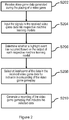
- FIG. 2 an example of a method for generating a recording of video game gameplay in accordance with the present disclosure is described.
- the method corresponds to a method that may be implemented whilst a video game is being played, or after a video gaming session.
- video game data generated during the playing of a video game is received.
- the video game data includes at least a video signal and corresponding audio signal generated by a video game playing device.
- the video game data is received at, for example, a monitoring or listening module implemented at the video game playing device.
- the video game data is transmitted to one or more servers for processing thereat (the one or more servers corresponding to e.g a computer cloud network).
- the video signal may include a plurality of RGB or YUV video frames representing the visual content output during playing of the video game.
- the audio signal may include a plurality of audio frames, corresponding to the audio content output in synchronization with the visual content.
- the audio signal may not be divided into frames and there may be a separate step of dividing the audio signal into a plurality of frames.
- the audio signal may be divided in 960ms intervals, such that each audio frame is 960ms in duration.
- the audio may be output at a frequency of 44 kHz, down-sampled to 16kHz, and then divided into frames such that each frame includes 15,360 samples.
- the video signal may include a video file that includes both the RGB or YUV frames and the corresponding audio (e.g. a '.wav' file).
- step S202 may involve separating the audio from the RGB or YUV frames into separate respective signals.
- the respective video and audio frames in each signal may be stored in a temporary buffer, prior to performing the analysis described below.
- the temporary buffer may correspond to the ring buffer that is used to record gameplay in a video game playing device, such as the ring buffer of the PS4® or PS5® devices for example.
- the video game data received at step S202 may be sampled.
- the RGB or YUV frames and corresponding audio frames in the received signals are sampled periodically, such as at e.g. 5 frames per second.
- the RGB or YUV frames may also be downsized, for example, from 1280 (width) x 720 (height) pixels to 398 (width) x 224 (height) pixels.
- the video game data may further comprise a telemetry signal indicating an in-game event.
- in-game events such as obtaining a trophy, killing an opponent, making a headshot, dying, scoring a goal, drifting around a corner, etc. may be stored as telemetry data and received as part of the video game data.
- the telemetry data may include each detected in-game event and timing information indicating when the event was detected as occurring in the video game.
- the telemetry data may be generated by e.g. the APU, in response to the video game being executed at the video game playing device.
- the video game data may comprise a haptic signal that includes haptic data indicating haptic feedback output at one or more devices, during the playing of the video game.
- the haptic feedback may have been output at one or more of the peripheral devices described previously in relation to Figure 1 .
- the haptic data may include an indication of the times at which vibrations were output at the peripheral device(s) and / or the magnitude of those vibrations.
- the video game data may further comprise a motion signal that includes motion data indicating motion of the player during the playing the video game.
- the motion of the player may be recorded using a video camera that is connected to, or forms part of, the video game playing device.
- the video camera may correspond to e.g. the PlayStation Eye® mentioned previously.
- the motion signal may be generated by a motion detector at a peripheral device, such as a device that a user is holding (such as their DualShock 4 ®or Move ® controller) or wearing (such as an HMD) and this data may be included in the video game data received at step S202.
- the video game data may comprise a speech signal that includes speech data indicating speech (or more generally, audio) output by the player.
- the speech signal may be captured by one or more peripheral devices that include microphones and are in communication with the video game playing device.
- the video game data may also comprise player input signals.
- the player input signals may include data indicating e.g. different player inputs, such as button presses that were received at a controller device, during the playing of the video game.
- the input signals may provide an indication of the different player inputs and the timing at which those player inputs were received.
- the video game data may also comprise a video camera signal comprising a video recording of the player.
- the video recording may be useful in determining e.g. changes in facial expression of the player as opposed to the larger body movements that may be identified using the motion data described previously.
- the video recording of the player may be captured by a video camera in communication with the video game playing device, such as e.g. the PlayStation EyeTM.
- At step S204 at least the video signal and corresponding audio signal in the received video game data is input into a respective machine learning model. This may involve inputting at least some of the video frames in the video signal into a video machine learning model and at least some of the audio frames into an audio machine learning model.
- the embodiments described herein will largely focus on the training and execution of the video and audio machine learning models.
- Each machine learning model is trained to identify one or more events occurring within the video game, based on the signals input to that machine learning model.
- the machine learning models may be trained using semi-supervised deep learning, as will be described in more detail, later. It should be noted that, for the method described in relation to Figure 2 , referring to the models as 'being trained' means that they have been trained (i.e. past tense).
- the video game data includes one of more of telemetry, haptic, motion, speech, video recording data
- telemetry data may be somewhat explicit in identifying an in-game event and so it may not be necessary to use machine learning for identifying the event.
- machine learning may be more useful in determining whether e.g. the timing of different button presses or motion of a peripheral device corresponds to an in-game event.
- there may be a respective machine learning model for each of the different signal types to which machine learning is to be applied.
- step S203 there may be a prior step (i.e. step S203) of generating feature representations of each signal in the received video game data.
- the feature representations may correspond to numerical representations of the data in a respective signal.
- Step 204 may therefore comprise inputting the feature representations of each signal into a respective machine learning model.
- a feature representation of the video signal may be generated by generating a feature representation of each video frame that is to be input to the video machine learning model.
- the feature representations of the video frames may be generated by inputting each frame into a pre-trained model such as, for example, a Deep Residual Network (ResNet), a Densely Connected Convolutional Network (DenseNet), MobileNet, etc. More generally, the feature representations may be input to a deep learning model that is trained on generic image datasets such as images in the ImageNet database.
- a pre-trained model such as, for example, a Deep Residual Network (ResNet), a Densely Connected Convolutional Network (DenseNet), MobileNet, etc.
- the feature representations may be input to a deep learning model that is trained on generic image datasets such as images in the ImageNet database.
- the Densenet201 pre-trained model is used to convert the input RGB (or YUV) video frames into a numeric vector with 1920 elements - each element corresponding to the average of the 7 x 12 feature maps in the penultimate layer in the DenseNet201 architecture.
- the vector for each RGB (or YUV) frame may then be held in memory.
- Generating feature representations of the audio signal may comprise generating a feature representation of each audio frame in the audio signal.
- the raw audio signal may be down-sampled and divided into a plurality of frames, where each frame comprises a consecutive, non-overlapping section of audio, of a desired duration.
- a feature representation may be generated for each section of audio in the audio signal corresponding to a frame.
- this may involve generating a spectrogram of each audio frame, such as a log-mel spectrogram.
- a log-mel spectrogram corresponds to a log-scaled mel spectrogram.
- the audio frames are 960 ms in duration and the log-mel spectrograms are generated by decomposing each frame with a short-time Fourier transform applying 25 ms windows every 10 ms. The resulting spectrogram is then integrated into 64 mel-spaced frequency bins and the magnitude of each bin is log-transformed. This gives a log-mel spectrogram having 96 x 64 bins. The log-mel spectrogram for each frame (having 96 x 64 bins) may then be averaged so as to form a 64-dimensional vector representation of the audio frame. The vector for each frame may then be held in memory.
- the generation of feature representations will depend on how the video and audio machine learning models have been trained (described later, see 'training of the machine learning models'). In some embodiments, it may be that the machine learning models have been trained with video and audio frames and not necessarily the feature representations thereof.
- each machine learning model is trained to identify one or more events occurring within the video game, based on the signals input to that model (or, as the case may be, the feature representations input to that model).
- the video machine learning model may be trained to identify a type of scene that each video frame (or feature representation thereof) corresponds to. For example, the video machine learning model may be trained to determine whether a given video frame corresponds to one or more of: a cut-scene, gameplay, loading screen, menu, solid colour screen (e.g. death), other, etc. The granularity with which the machine learning model can determine different scene-types will ultimately depend on the training. In some examples, the video machine learning model may be trained to identify scene-types as corresponding to different types of gameplay, e.g. combat, walking, idle, etc.
- the video machine learning model may comprise a neural network, such as, for example, a convolutional or recurrent neural network (RNN, or CNN).
- RNN convolutional or recurrent neural network
- any suitable machine learning system may be considered.
- the audio machine learning model may have been trained to identify an audio event that each audio frame (or corresponding feature representation) input to the model, corresponds to.
- the audio machine learning model is trained to determine whether an audio frame corresponds to a 'highlight' or 'non-highlight' audio event. Whether an audio event is determined as corresponding to a 'highlight' or 'non-highlight' event will depend on how the audio machine learning model is trained, as will be described later.
- An example of an audio 'highlight' event may include e.g. the sound of a weapon being used, whereas a 'non-highlight' audio event may correspond to e.g. a city or nature sounds that may be present in the video game.
- the audio machine learning model may be trained to detect audio events with a finer granularity, e.g. distinguishing between different types of highlight audio events.
- the audio machine learning model may comprise a logistic regression model.
- the audio machine learning model may comprise a binary classification algorithm such as a Gradient Boosting Trees, Random Forests, Support Vector Machine, etc. However, any suitable machine learning system may be considered.
- each trained machine learning model is executed locally at the video game playing device being used to play the video game.
- step S206 it is determined whether a highlight event has occurred based on the output of each machine learning model. This determination may be based, for example, on the type of scene identified by the video machine learning model and the type of audio event identified by the audio machine learning model. In some examples, it may be determined that a highlight event has occurred if the scene-type is identified as corresponding to 'gameplay' and the audio corresponds to a 'highlight' audio event. Detecting highlight events in this way means that, for example, the firing of e.g. a gun in a cut-scene is not identified as corresponding to a highlight event stemming from gameplay.
- FIG. 3 shows the output of the video machine learning model and audio machine learning model over a plurality of frames (in this case, around 305 frames).
- the top two charts show the probability determined by the video machine learning that the RGB frames correspond to a cut-scene and game-play (i.e. the player controlling their character in a virtual environment).
- a probability of '1' corresponds to a detection of an event.
- gameplay has been detected as occurring between frames 75 - 160 and 250 - 290.
- the video machine learning model has also detected cut-scenes as occurring between frames e.g. 20 - 60, 65-70 and 290-305.
- the audio machine learning model has detected a highlight audio event between frames 85 and 155. As a result of this, it may be determined that a highlight event within the video game has occurred between frames 85 and 155.
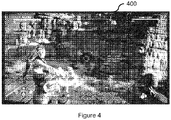
- Figure 4 shows an example of a video frame 400 that has been identified as corresponding to a highlight event.
- the frame 400 is an RGB frame taken from the video game Horizon Zero DawnTM, and shows the protagonist, Aloy, firing a gun at an enemy.
- the video machine learning model has identified the RGB frame as corresponding to 'gameplay' and the audio of the gun being fired (or prepared for firing) as corresponding to a highlight audio event, as indicated by the 'scene-classification' and 'highlight-classification'.
- the determination of whether a highlight event has occurred may depend on the type of gameplay (e.g .combat) that is identified by the video machine learning model and the type of audio detected by the audio machine learning model. This may ensure, for example, that the video frames in which a player is blindly shooting into empty landscape are not identified as corresponding to a highlight event, despite the corresponding audio indicating that a highlight event may be occurring.
- type of gameplay e.g .combat
- the method comprises a further step S208 of selecting at least some of the frames in the video and or audio signals (received in the video game data) for inclusion in a recording of the video game gameplay.
- both video and audio frames may be selected for inclusion in the recording (i.e. the recording may be a video file).
- the video and or audio frames may be selected so as to correspond to the frames for which a highlight event was detected. In some cases, this may involve selecting at least some of the frames that occurred before and after the detected highlight event, to ensure that the highlight is shown in context and to compensate for any in the highlight event detection. As will be appreciated, it may be necessary to determine the duration over which a given detected highlight event is detected as occurring, to ensure that recording does not include highlight events occurring over excessively long or short time periods.
- At least some of the data in one or more of the telemetry signal, motion signal, speech signal, player input signal and video camera signal may be selected for inclusion in the recording, along with the selected video and or audio frames.
- the player's speech may also be included in the recording, along with the video recording of the player reacting whilst playing the video game.
- a recording of the video game gameplay that includes the selected video and or audio frames is generated.
- the recording may be generated in the form of a video file and stored in electronic storage at for example, the video game playing device, or at a remote server.
- the recording may be generated at one or more servers, and transmitted to the video game playing device (so long as a connection between the video game playing device and the one or more servers exists or has been restored).
- the recording may include a plurality of different highlight events detected during gameplay, so as to form a highlight reel.
- Each highlight event may include a corresponding highlight clip that includes the video and audio that is identified as corresponding to the highlight event.
- each highlight video clip will include a plurality of contiguous video and audio frames.
- the method may further comprise displaying the recording of the video game gameplay at a display device.
- the video game playing device may include, or be connected to, a display device.
- the recording may displayed automatically, in response to a player having terminated a gaming session, or may be displayed in response to a user having selected the recording from a menu.
- the PS4TM or PS5TM may have an associated home screen menu, from which recordings can be accessed via the 'Capture Gallery' tab.
- the method may comprise displaying or outputting at least some of the data in one or more of the telemetry signal, motion signal, speech signal, player input signal, video camera signal that corresponds with the selected video and or audio frames.
- the method may comprise displaying the video of the real player, in addition to the video of the video game gameplay. This video may be displayed in a small window that is superimposed over the video of the video game gameplay, for example.
- telemetry data indicating an in-game event that corresponds with the selected video frames may be displayed. This may involve, for example, super-imposing text, such as 'HEADSHOT!' over the corresponding video frames that include that event.
- the recording of the video game gameplay may be transmitted from the video game playing device to a mobile device that is in communication with the video game playing device.
- the video game playing device may be configured to detect that the game application running at the video game device has been closed, and in response thereto, transmit the recording to the mobile communication device.
- the method may comprise a step of generating a message for display, indicating that the recording is ready for playback. If, for example, the recording is generated via the cloud, then it may be possible for a user to receive a message through an app on their phone (such as e.g. the PS AppTM), informing them that the recording is ready for playback.
- the message may include (i.e. have embedded), or provide a link to, the corresponding recording. As a result of this, it may be that the player is not presented with the recording until their next video gaming session.
- the recording is generated by the video game playing device, in the background, whilst the player interacts with other content.
- the message may be presented to the player as a notification, in a similar manner in which players are informed that e.g. software updates are available.
- the recording is made available to the player at the end of their video game playing session.
- the recordings may be generated on a per video game session basis - i.e. as a summary of the highlight events occurring within each individual video game session.
- a video game session may correspond to a continuous playing of the video game (i.e. duration for which the video game application is not closed), or a specific event within the video game, such as e.g. a match, a race, or other timed event.
- the player may be playing the video game offline (as in, not with other online players) or online (i.e. with other online players).
- the recordings may be generated over multiple video game sessions.
- the recording may correspond to a summary of the player's highlights at different points within the story. This recording may be presented to the user after they have completed the story mode, for example, along with the end credits.
- the method comprises determining the duration of the generated recording. For example, it may not be desirable to present the recording to the player, if that recording is more than or less than a threshold duration. The player may be notified that the recording is ready for playback, in response to the duration of the recording being determined as being within an acceptable range of a threshold duration.
- the recording is to correspond to a summary of the player's progress over a prolonged period then it may be necessary to determine the player's progress before presenting the recording to the player. For example, it may be necessary to determine whether the player has completed a sufficient number of missions, games, tasks, matches, etc. before the recording is to be stored as a final version. Once a final version has been generated, a message indicating that the recording is ready for playback may be presented to the player.
- the method may further comprise selecting an order for playing back the video and or audio frames selected at step S208 based on the highlight event each selected frame corresponds to and a pre-determined order for playing back different highlight events.
- the pre-determined order may correspond to a narrative arc that defines an order in which different highlight events are to be played back in the recording.
- the pre-determined order may correspond to the chronological order in which the highlight events occurred, but may also follow a structure that shows the player slowly improving at the video game.
- the pre-determined order may define relative locations within the recording in which video of e.g. a player's character dying or losing, and video of a player successfully defeating an opponent, are to be positioned.
- the method comprises receiving historical data generated during the playing of the video game by one or more other players.
- the historical data may include statistical data indicating how other players have compared when playing the same video game.
- the other players may include, for example, players that are known to the current player, such as the friends on the current player's friend list.
- a correspondence between at least some of the received historical data and selected video and or audio frames may then be determined. That is, historical data that is relevant to the selected video and or audio frames may be identified, and this relevant information may be displayed when playing back the recording of the video game. For example, if the video frames are of the player's avatar fighting and defeating a particular enemy or opponent within the video game, the player may be able to view stats indicating how other players have fared against the same opponent. This may include, for example, '80% of all players died at least once when facing this enemy' or 'your friend, JimBob86 died 8 times when facing this opponent'.
- the historical data may include recordings of the player's friends at the same point in the video game, and the player may be able to view the recording for a given frame, alongside the recording generated for the current player.
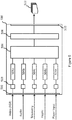
- FIG. 5 shows schematically an example of a high-level system for implementing the trained machine learning models.
- the high-level system includes a listening unit 500 configured to detect (i.e. monitor for or 'listen for') highlight events occurring within video game gameplay.
- the listening unit 500 may be implemented locally as software installed at a video game playing device, such as a games console, personal computer, mobile device, etc.
- the listening unit 500 may be implemented at one or more servers (such as a cloud network), with the video, audio and any other video game data being obtained by the video game playing device and being passed on to the one or more servers.
- the listening unit 500 may be configured to transmit its output to the video game playing device from which video game data was received.
- a specific example of the system will be described later, in relation to Figure 6 .
- the listening unit 500 comprises a receiving unit 502 configured to receive video game data generated during the playing of a video game.
- the video game data includes at least a video signal and corresponding audio signal.
- the video and audio signals may be in any of the forms described previously in relation to Figure 2 .
- the receiving unit 502 may include a video buffer, such as a ring buffer, that enables video (e.g RGB, YUV) and corresponding audio frames to be sampled.
- a video buffer such as a ring buffer, that enables video (e.g RGB, YUV) and corresponding audio frames to be sampled.
- the video game data may further comprise one or more of a telemetry signal indicating an in-game event, a haptic signal indicating haptic feedback output at one or more devices being used to play the video game and a player input signal indicating an input received by the player, whilst playing the video game.
- the player input signal may provide an indication of e.g. button presses made by the player, movement of the player, speech output by the player, changes in the player's facial expression or pose, etc.
- Figure 5 shows a single player input signal, but it will be appreciated that there may be separate respective signals for each of these types of data, as described previously in relation to Figure 2 .
- the listening unit 500 further comprises a plurality of modules 504a, 504b, 504c, 504d, 504e, with each module being configured to receive a different one of the signals in the video game data. That is, each module is configured to receive a different type of signal (e.g. video or audio, etc.) in the received video game data.
- a different type of signal e.g. video or audio, etc.
- the video and audio signals and the corresponding modules are shown in bold, to indicate that these modules are not optional.
- the other signals in the received video game data and the corresponding modules are shown with dashed lines to show that these are optional.
- Each module is configured to determine an event occurring within the video game, based on the signals input to that module.
- a first module 504a may be configured to detect events occurring within the video game, based on the video frames input to that module 504a.
- a second module 504b may be configured to detect events occurring within the video game, based on the audio frames input to that learning module 504b.
- the first module 504a may be trained to classify the video frames into different scene-types; the second module 504b may be trained to classify the audio frames into 'highlight' or 'non-highlight' audio events.
- the classification performed by the first and second modules 504a, 504b may be performed using any of the methods described previously in relation to Figure 2 .
- the other modules 504c, 504d, 504e may be configured to identify in-game events based on e.g. the received telemetry data, haptic data and player input data. As described above, it may be that machine learning is only applied to some of this data. For example, deterministic rules may be used for the telemetry data and / or haptic data, but machine learning used for the player input data. It may therefore be that not all of the modules 504c, 504d and / or 504e use machine learning to identify in-game events, based on the input signal. However, machine learning is used by the first and second modules 504a, 504b for performing the classification.
- the first and second modules are trained using semi-supervised learning so as to determine a relationship between the signals input to that model and corresponding events, as will be described in more detail, later.
- one of more of the third, fourth and fifth modules 504c, 504d, 504e are trained in this way.
- the output of each module is received at a highlight detector 506.
- the highlight detector 506 is configured to detect, based on the events detected by each module, the occurrence of highlight events within the video game.
- the highlight detector 506 may also be configured to detect the absence of highlight events.
- the highlight detector 506 may be configured to detect a highlight event based on the scene-type identified by the first module 504a, and the audio event detected by the second module 504b. For example, if a scene-type is identified as corresponding to e.g. 'combat', and the audio detected as corresponding to a 'highlight event' then the video and corresponding audio frames may be identified as corresponding to a highlight event in the video game.
- the accuracy with which the highlight detector 506 detects highlights may be improved by including further modules.
- an event may be detected as corresponding to a highlight event based on the output of three or more modules. This may compensate for any inaccuracy in the outputs of any one of individual modules. For example, if the video, audio, and haptic and / or telemetry and / or player input data all indicate that an interesting in-game event occurred then it may be determined with high confidence that a highlight event did actually occur.
- the telemetry data may be somewhat explicit in indicating an in-game event (e.g. 'headshot', 'player death', etc.) and this may also be used directly by the highlight detector 506 when determining whether a highlight event has occurred during gameplay. For example, it may be determined with a high confidence that a highlight event occurred if this is indicated by all three of the video, audio and telemetry data.
- an in-game event e.g. 'headshot', 'player death', etc.
- the listening unit 500 further comprises a recording unit 508 configured to generate a recording of the video game gameplay, based on the output of the highlight detector 506.
- the recording unit 508 may be configured to generate a recording that includes the video and or audio frames corresponding to the detected highlight event.
- the recording may include a video file that includes both the selected video and corresponding audio.
- the recording may be stored in memory (not shown), prior being output via an output unit 510.
- the recording may be output in the form of a highlight reel, comprising video clips corresponding to the different highlight events detected during playing of the video.
- the system may include a display device (not shown) at which the generated recording is to be output.
- the recording may be output at e.g. a mobile device that is in communication with the listening unit 500, as described previously in relation to Figure 2 .
- the listening unit 500 may be configured to include at least some of the data received in at least one of the telemetry or player input signals, in the recording of video game gameplay. This may include e.g. video of the player (rather than their avatar), the player's speech, buttons pressed by the player, an in-game event indicated via the telemetry data, etc. This data may also be output as part of the recording, as described previously.
- the listening unit 500 comprises a plurality of feature extractors 503, wherein each feature extractor is configured to receive a different signal in the received video game data and to generate feature representations of the data frames in that signal.
- a first feature extractor may be configured to receive video frames and a second feature extractor may be configured to receive audio frames.
- the first and second feature extractors may be configured to generate feature representations in the manners described previously, in relation to Figure 2 .
- the feature representations generated by each feature extractor may be input to a corresponding machine learning model.
- the first and second feature extractors may be configured to receive feature representations of video and audio frames respectively.
- Al for generating highlight reels from video game footage
- the Al is typically trained using supervised learning only. Training the Al in this way requires a developer or data scientist to manually tag video frames from tens of hours of video game footage with corresponding labels indicating whether those frames correspond to a highlight event or not, in order to generate a sufficient amount of training data for training the Al. It has been found by the inventors, for example, that the manual tagging of 15 hours of game video for the game Horizon Zero DawnTM (corresponding to approximately 300,000 frames) took nearly 6 FTE days to complete. Clearly generating training data in this manner is undesirable and means that the Al is not easily portable to other video games.
- this problem is overcome by training each machine learning model with previously generated video game data, and using semi-supervised deep learning to determine a relationship between the signals in the previously generated video game data and one or more corresponding events.
- a method for training the machine learning models using semi-supervised learning will now be described in relation to Figure 6 .
- the previously generated video game data may comprise at least video and audio signals generated during previous playing of the video game. In some examples, this data may be obtained from a video sharing platform such as YouTubeTM.
- the previously generated video game data will generally be specific to a particular video game. For example, the machine learning models may be trained for a particular video game and (once trained) made available to players that are detected as having that video game. As will be appreciated, it may be necessary to re-train the models if additional content is released for, or in relation to that game, such as downloadable content (DLC), prequels, sequels, etc.
- DLC downloadable content
- the previously generated video game data may be generated by multiple different players and provide representative coverage of the whole video game or different events that may occur within the video game. For some games, it may be possible to collect as few as 2-5 videos, so long as those videos cover a sufficient extent of the possible gameplay. This may be possible, for example, using videos for Horizon Zero DawnTM, if each video covers a majority of the main story.
- the previously generated video game data may also include one or more of telemetry signals, haptic signals, motion signals, speech signals, player input signals, video camera signals generated during previous playing of the video game.
- the previously generated audio signals do not include any player voice over - i.e. this is received in a separate speech signal, or not at all. If the audio signals include both game audio and player speech, it may be difficult to train the audio machine learning model.
- the video and audio may be received together as a video file and need to be separated into different respective signals. As before the audio signals may need to be divided into 960ms segments (i.e. frames).
- the method comprises generating feature representations of the signals in the previously generated video game data.
- generating the feature representations of the previously generated video signals may involve inputting at least some of the RGB or YUV video frames in the previously generated video signal into a pre-trained model, such as e.g. DenseNet, ResNet, MobileNet, etc.
- a pre-trained model such as e.g. DenseNet, ResNet, MobileNet, etc.
- Generating feature representations of the previously generated audio signals may involve generating a log-mel spectrogram of at least some of the audio frames in the previously generated audio signal.
- Each spectrogram may correspond to a 960 ms audio frame and the method may comprise generating a 64-dimensional feature representation of each spectrogram by taking the mean across the 64 frequency bands for that spectrogram (ranging from 125 Hz to 7000 Hz). This may correspond to the feature representation generation described previously, in relation to Figure 2 .
- the feature representations generated for each signal are clustered into respective clusters using unsupervised learning.
- Each cluster corresponds to content (for a given signals) that has been identified as being similar in some with respect with other content in that cluster.
- the different types of visual and audio events that may occur are structured and repetitive in nature, and so can be distinguished from one another to a relatively high degree of accuracy. For example, it may be that in a shooting game, explosions from e.g. grenades or bombs look substantially similar in terms of colour, size, etc. and so these can easily be identified as being separate from a player aiming a weapon. Even in the latter case, it may be that the appearance of the player's avatar looks substantially similar when aiming the weapon, despite the target being different, and so this may identified as a different cluster.
- the RGB or YUV video frames may be input to an RGB-scaler model to standardise the video data to have a zero mean and unit standard deviation before, the mini-batch k-means clustering is applied to the video data.
- the audio frames may be input to an audio-scaler model to standardise the input data to having zero mean and unit standard deviation before the mini-batch k-means is applied to the audio data.
- k may be used in the k-means or mini-batch k-means, depending on the level of granularity that is desired for detecting different events (corresponding to different clusters) within the signals of the previously generated video game data.
- Figure 7 shows an example of some of the different clusters that were identified using mini-batch k-means clustering to sort 15 hours of video game footage (RGB frames) from the game Horizon Zero DawnTM.
- the first cluster 702a corresponds to the character Aloy, aiming at a target, be that during e.g. combat or for the purposes of hunting.
- the second cluster 702b corresponds to the player opening the "Quests" tab in the menu settings.
- the third cluster 702c corresponds to a cut-scene. It will be appreciated that these are just some examples of the RGB frames that may be identified as belonging to different clusters. In some examples, it may be that multiple clusters relate to the same type of event.
- clusters corresponding to 'gameplay' i.e. where the player is navigating the open world
- each cluster corresponding to a particular type of environment - e.g. frozen / snow covered lands, desert, dark 'Coldrons', etc.
- clusters for each type of menu screen For example, a cluster for each of "Quests”, “Inventory”, “Map”, etc.
- the training method comprises a step of filtering at least some of the feature representations from each cluster. This may involve removing feature representations from a respective cluster that exceed a threshold distance from the centroid of that cluster.
- the top 10% of RGB or YUV frames closest to a respective cluster centroid may be selected as being representative of the visual event that the data in that cluster corresponds to.
- RGB frames that are closest to the centroid of the cluster are considered to be better examples of the in-game event that the cluster represents. It may be that a larger number of RGB or YUV frames fall beyond the top-10% in terms of distance to their respective clusters, and so are not used when training the machine video machine learning model.
- the clusters for each different type of audio event may be filtered in a similar manner.
- 25% of the audio frames in each cluster are randomly sampled and used to create a corresponding audio file of all the sampled audio frames in that cluster.
- the audio file may be built 960ms chunks at a time, for example.
- the step of clustering the RGB or YUV video frames and audio frames may also involve generating model files to enable the feature representations in each cluster to be labelled.
- the training method further comprises a step S608 of manually labelling each cluster (for a given signal) with a label indicating an event associated with that cluster.
- manually labelling means that e.g. a data scientist or developer must provide an input to indicate a label that is to be given each cluster. This may involve reviewing at least some of the frames in each cluster and determining an event that the frames in that cluster correspond to.
- the video frames it may be that e.g. 50 RGB frames in each cluster need to be reviewed, before all of the RGB frames in that cluster can be identified as corresponding to a particular in-game event. For example, it may be possible to determine that a cluster corresponds to e.g. 'gameplay' based on a review of the video content for that cluster. By labelling the cluster as corresponding to 'gameplay', all of the frames (or feature representations of the frames) be identified as corresponding to 'gameplay'. As will be appreciated, labelling frames in this way is considerably quicker than having to go through thousands, or even hundreds of thousands of frames and manually labelling each frame with a corresponding label.
- the audio frames it may be desirable to also display the corresponding video, when determining a label for the audio clusters, so that the developer or data scientist can see (as well as hear) what the audio in each cluster represents. This may involve identifying different sections of the video that each audio cluster corresponds to, and determining a label for each audio cluster based on the video clips associated with that cluster. For example, it may be that e.g. 0 to 3 minutes of a given video is identified as pertaining to audio cluster-15, 3 to 4 minutes pertaining to audio cluster-2, 4 to 7 minutes pertaining to audio cluster-15 (and so on and so forth). A label for e.g. cluster-15 may then be determined by viewing a portion of the video output between 0 to 3 minutes and 4 to 7 minutes, along with the corresponding audio.
- Figure 8a shows an example of descriptive labels that have been given to some of the 64 clusters identified for RGB video frames.
- a first cluster has been identified as corresponding 'cut-scenes'; the second and third clusters have been identified as corresponding to 'menu screens'; the 64 th cluster has been identified as corresponding to 'gameplay'.
- cluster 2 may correspond to a "quests" menu screen and cluster 3 may correspond to e.g. a "crafting" screen. It is unlikely that video frames including either of these screens would be considered a highlight event, and so it may be desirable to merge these clusters into a single cluster by giving them the same descriptive-label.
- some of the clusters may correspond to different types of gameplay (e.g. 'combat', 'exploring', 'swimming', etc.) and it may be desirable to merge these clusters into a single cluster corresponding to 'gameplay'. This may be desirable where, for example, it can be determined from the corresponding audio whether a highlight event has occurred.
- Figure 8b shows an example of descriptive labels that have been given to some of the 32 clusters identified for the audio frames.
- clusters 1 and 32 have been identified as corresponding to highlight audio events whilst clusters 2 and 3 have been identified as not corresponding to non-highlight events.
- Clusters 1 and 32 may correspond to audio that is generated during different types of combat.
- Clusters 2 and 3 may correspond to e.g. cut-scene dialogue or sounds that are usually present as background noise (e.g. birds singing, rain, etc.).
- the method comprises a step S610 of inputting the feature representations of each signal and the corresponding labels, into respective machine learning models.
- the machine learning models are trained using supervised deep learning.
- the models are said to have been trained using supervised learning because the training data was at least partially generated using unsupervised learning.
- the feature representations of the video frames and their corresponding labels may be input to a multi-class classification algorithm (corresponding to the video machine learning model).
- the video machine learning model may then be trained to determine a relationship between feature representations of RGB or YUV frames and descriptive labels associated with those frames.
- the video machine learning model may comprise a neural network, such as a convolutional or recurrent neural network, for example.
- the video machine learning model may be configured to output, for each video frame (or rather representation thereof), predicted probabilities for each of the different corresponding labels.
- a video frame may be identified as corresponding to a particular event based on the label that is associated with the highest probability.
- the feature representations of the audio frames and the corresponding labels may be input to a corresponding audio machine learning model, or a binary classification model such as a Gradient Boosting Trees, Random Forests, Support Vector Machine algorithm, for example.
- Each model may be trained in iterative manner. For example, after each epoch (pass through a training set), a final version of the model may be saved if it is determined that model performed better than it did for a previous iteration. In some cases, a given model may be determined as being ready for deployment when it produces sufficiently accurate results for an unseen input set of training data.
- the machine learning models may not be trained with feature representations of the different signals in the previously generated video game data. Rather, once the labels have been determined for the video and audio frames in a given cluster (as described above), it may be that the audio and video frames, along with the corresponding labels, are input to respective machine learning models.
- Training the models in this way can be advantageous in that the machine learning models can be trained in a more bespoke manner.
- generating feature representations using a pre-trained model such as e.g. DenseNet may be inefficient because the pre-trained model will likely have been trained using thousands of images that have no relevance to a particular video game.
- the use of such a pre-trained model may be excessive in terms of the memory required to store it and the time taken to execute it (requiring the use of a GPU, for example).
- DenseNet may therefore be desirable to ensure that DenseNet is not required, once the model has been trained. This may be achieved, for example, by using DenseNet for the purposes of clustering, but then training e.g. a neural network with the video (RGB or YUV) and audio frames and the corresponding labels generated as above. This would then mean that the trained model could take the video and audio frames as inputs, along with the corresponding labels, without the input video and audio frames first having to go through e.g. DenseNet.
- the steps of generating feature representations, clustering the feature representations and manually labelling the clusters may equally be applied to any one of the haptic, telemetry, motion, player input, speech, video camera signals included in the training data. Once the clusters for a given signal have been labelled, the data (or feature representations thereof) may then be input to a corresponding machine learning model.
- this may involve dividing the signals into a plurality of frames and detecting the buttons pressed, and the frequency with which the buttons were pressed, for each frame.
- the button presses and corresponding frequencies may then be clustered (as above), and correlated with the corresponding video.
- the different clusters may then be labelled (e.g. 'combat', 'ambling', etc.) and used to train a machine learning model.
- the machine learning model may be trained to identify, for a given frame of button presses, a corresponding label for that frame.
- a computer readable medium having computer executable instructions may be adapted to cause a computer system to perform any of the training method steps described previously.
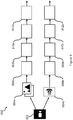
- Figure 9 shows schematically an example of a system 900 for training the first and second modules 504a, 504b described previously.
- the system is shown for video frames and corresponding audio only. It will be appreciated that the system may also be trained using telemetry data, haptic data, player input data, etc. as described previously. In such cases, there may be a parallel branch in the system for each different signal type, with each branch including corresponding units.
- the system may be trained with previously generated video game data, which may be generated and collected in any of the manners described previously in relation to Figure 6 .
- a video file 902 comprising RGB or YUV frames 904a (corresponding to the video signal) and a corresponding audio signal 904b is shown.
- the video game playing device may generate video files of gameplay and it may be necessary to separate the RGB or YUV frames and corresponding audio into separate files (or signals). It may also be necessary to divide the audio signal into audio frames of e.g. 960ms in duration. A separate unit (not shown) may be provided for this function.
- the system is shown as comprising a plurality of feature extractors.
- Each feature extractor is configured to receive a different type of signal and to generate feature representations of the data in those signals.
- the first feature extractor 906a is shown as being arranged to receive video frames.
- the first feature extractor 906a is configured to generate feature representations of the received video frames using any of the methods described previously.
- the first feature extractor 906a may include a pre-trained model (e.g. DenseNet, ResNet, MobileNet, etc.) that receives RGB or YUV video frames as an input and is pre-trained to output a feature representation of those frames.
- a pre-trained model e.g. DenseNet, ResNet, MobileNet, etc.
- the second feature extractor 906b is shown as receiving audio frames.
- the second feature extractor 906b is configured to generate feature representations of the audio frames using any of the method described previously.
- the second feature extractor 906b may be configured to generate log-mel spectrograms of each of the audio frames in a received audio signal.
- the system further comprises a plurality of clustering units.
- Each clustering unit is configured to receive the feature representations output by a corresponding feature extractor and to use unsupervised learning to sort the received feature representations into a plurality of clusters.
- each clustering unit is configured to receive the feature representations of a different type of signal.
- the feature representations for each signal may be clustered using k-means or mini-batch k-means clustering as described previously.
- the first clustering unit 908a is shown as receiving the feature representations output by the first feature extractor 906a; the second clustering unit 908b is shown as receiving the feature representations output by the second feature extractor 906b.
- the system further comprises a labelling unit operable to generate labels for the clusters output by the clustering unit.
- a labelling unit operable to generate labels for the clusters output by the clustering unit.
- the system is shown as comprising a plurality of labelling units, one for each clustering unit.
- Each labelling unit is configured to generate labels for each cluster based on an input received from a user.
- the labels correspond to descriptive labels indicating an event associated with the feature representations in a respective cluster.
- the labels may be generated for each of the clusters for a given signal in any of the manners described previously in relation to Figure 6 .
- the system further comprises a training unit for training the first and second modules 504a, 504b described previously.
- the system may comprise a plurality of training units, with each training unit being configured to receive the feature representations and corresponding labels generated for a particular signal type.
- Each training unit is configured to determine a relationship between the feature representations of the signals and corresponding descriptive labels input to that training unit.
- the first training unit 912a is configured to receive the feature representations output by the first feature extractor 906a and the corresponding labels output by the first labelling unit 910a, and to determine a relationship between the two.
- the second training unit 912b is configured to receive the feature representations output by the second feature extractor 906b and the corresponding labels output by the second labelling unit 910b, and to determine a relationship between the two.
- the first training unit 912a may comprise a neural network that is to be trained with feature representations of the video frames and corresponding descriptive labels, as described previously.
- the second training unit 912b may comprise a logistic regression learning model or a binary classification model that is to be trained with log-mel spectrograms of audio frames and corresponding descriptive labels, as described previously. However, either training unit may employ a suitable machine learning model or system.
- the first and second training units 912a, 912b may correspond to one or more servers (forming 'the cloud') on which the first and second modules 504a, 504b are to be trained.
- the feature representations and corresponding descriptive labels generated by the feature extractors and labelling units may be uploaded to these one or more servers, so that the corresponding modules 504a, 504b installed thereat can be trained.
- each module 504a, 504b is sufficiently trained by the corresponding training unit it may then be exported to the listening unit 500 described previously in relation to Figure 5 .
- the system may include a feature extractor, clustering unit, labelling unit and training unit for handling each of these different types of data.
- a feature extractor, clustering unit, labelling unit and training unit for handling each of these different types of data.
- it may not be necessary to train a machine learning module with telemetry data since this will usually provide an explicit indication of an in-game event.
- a feature extractor, clustering unit, labelling unit and training unit will be needed for player input data.
- the method of generating a recording of video game gameplay described herein with reference to a plurality of machine learning models may be combined with the method of training set of machine learning models, also as described herein, for example to monitor the output of a system during training by a developer, or to refine a partially trained set of machine learning models to respond to an individual's game play style (for example, if a player is a sniper rather than a melee-style player, they may accumulate different balances of events, and optionally this can result in one or more clusters being created, modified or split within the training method to refine one or more models).
- a plurality of machine learning models e.g.
- video and audio are trained such that they operate as described herein, one or more additional models may be trained in parallel with the process of generating recordings of video game gameplay for the end user; for example, a model based upon user inputs and/or responses to game play may be trained or re-trained / refined in response to the particular inputs and/or responses of the end user.
- any suitable combination of two or more trained machine learning models and a (re)training regime for those models or additional models may be implemented as a combined method.
- a conventional equivalent device may be implemented in the form of a computer program product comprising processor implementable instructions stored on a non-transitory machine-readable medium such as a floppy disk, optical disk, hard disk, PROM, RAM, flash memory or any combination of these or other storage media, or realised in hardware as an ASIC (application specific integrated circuit) or an FPGA (field programmable gate array) or other configurable circuit suitable to use in adapting the conventional equivalent device.
- a computer program may be transmitted via data signals on a network such as an Ethernet, a wireless network, the Internet, or any combination of these or other networks.
Landscapes
- Engineering & Computer Science (AREA)
- Multimedia (AREA)
- Physics & Mathematics (AREA)
- Theoretical Computer Science (AREA)
- General Physics & Mathematics (AREA)
- Data Mining & Analysis (AREA)
- Software Systems (AREA)
- General Engineering & Computer Science (AREA)
- Artificial Intelligence (AREA)
- Evolutionary Computation (AREA)
- Signal Processing (AREA)
- Life Sciences & Earth Sciences (AREA)
- Computational Linguistics (AREA)
- Mathematical Physics (AREA)
- Computing Systems (AREA)
- Biophysics (AREA)
- Biomedical Technology (AREA)
- Health & Medical Sciences (AREA)
- General Health & Medical Sciences (AREA)
- Molecular Biology (AREA)
- Optics & Photonics (AREA)
- Computer Vision & Pattern Recognition (AREA)
- Databases & Information Systems (AREA)
- Computer Security & Cryptography (AREA)
- Bioinformatics & Computational Biology (AREA)
- Bioinformatics & Cheminformatics (AREA)
- Evolutionary Biology (AREA)
- Human Computer Interaction (AREA)
- Acoustics & Sound (AREA)
- Medical Informatics (AREA)
- Two-Way Televisions, Distribution Of Moving Picture Or The Like (AREA)
- Image Analysis (AREA)
- User Interface Of Digital Computer (AREA)
- Television Signal Processing For Recording (AREA)
- Electrically Operated Instructional Devices (AREA)
- Information Transfer Between Computers (AREA)
Applications Claiming Priority (1)
| Application Number | Priority Date | Filing Date | Title |
|---|---|---|---|
| GB1819865.5A GB2579603A (en) | 2018-12-05 | 2018-12-05 | Method and system for generating a recording of video game gameplay |
Publications (2)
| Publication Number | Publication Date |
|---|---|
| EP3662981A2 true EP3662981A2 (fr) | 2020-06-10 |
| EP3662981A3 EP3662981A3 (fr) | 2020-07-22 |
Family
ID=65030125
Family Applications (2)
| Application Number | Title | Priority Date | Filing Date |
|---|---|---|---|
| EP19196958.3A Pending EP3662981A3 (fr) | 2018-12-05 | 2019-09-12 | Procédé et système pour générer un enregistrement de jeu vidéo |
| EP19208016.6A Ceased EP3662982A3 (fr) | 2018-12-05 | 2019-11-08 | Système et procédé permettant d'obtenir un contenu d'image |
Family Applications After (1)
| Application Number | Title | Priority Date | Filing Date |
|---|---|---|---|
| EP19208016.6A Ceased EP3662982A3 (fr) | 2018-12-05 | 2019-11-08 | Système et procédé permettant d'obtenir un contenu d'image |
Country Status (5)
| Country | Link |
|---|---|
| US (2) | US12208327B2 (fr) |
| EP (2) | EP3662981A3 (fr) |
| JP (1) | JP2020121102A (fr) |
| CN (1) | CN111265859B (fr) |
| GB (2) | GB2579603A (fr) |
Cited By (4)
| Publication number | Priority date | Publication date | Assignee | Title |
|---|---|---|---|---|
| WO2021257452A1 (fr) * | 2020-06-19 | 2021-12-23 | Sony Interactive Entertainment Inc. | Reprise de jeu assistée par système d'événements de jeu exceptionnels dans un jeu vidéo |
| US20240412515A1 (en) * | 2023-06-09 | 2024-12-12 | Sony Interactive Entertainment LLC | Ai highlight detection using cascaded filtering of captured content |
| WO2024259437A1 (fr) * | 2023-06-15 | 2024-12-19 | Guardiangamer, Inc. | Systèmes et procédés d'expérience en ligne surveillée |
| WO2025199020A1 (fr) * | 2024-03-20 | 2025-09-25 | Sony Interactive Entertainment Inc. | Données de jeu automatisées à l'aide de la reconnaissance par ia |
Families Citing this family (39)
| Publication number | Priority date | Publication date | Assignee | Title |
|---|---|---|---|---|
| EP3887005A4 (fr) * | 2018-11-26 | 2022-10-12 | Photo Butler Inc. | Facilitation de chasse au trésor |
| US11612813B2 (en) * | 2019-09-30 | 2023-03-28 | Dolby Laboratories Licensing Corporation | Automatic multimedia production for performance of an online activity |
| US11358063B2 (en) * | 2020-03-06 | 2022-06-14 | International Business Machines Corporation | Generation of audience appropriate content |
| US11010679B1 (en) | 2020-04-08 | 2021-05-18 | Curtis Ray Robinson, JR. | Systems and methods for autonomously executing computer programs |
| CN111603771B (zh) * | 2020-05-22 | 2023-06-23 | 腾讯科技(深圳)有限公司 | 动画生成方法、装置、设备及介质 |
| US11554324B2 (en) | 2020-06-25 | 2023-01-17 | Sony Interactive Entertainment LLC | Selection of video template based on computer simulation metadata |
| US20210406697A1 (en) * | 2020-06-26 | 2021-12-30 | Nvidia Corporation | Interaction determination using one or more neural networks |
| CN111726682B (zh) * | 2020-06-30 | 2022-08-16 | 北京百度网讯科技有限公司 | 视频片段生成方法、装置、设备和计算机存储介质 |
| US20220008824A1 (en) * | 2020-07-13 | 2022-01-13 | Nvidia Corporation | Game generation using one or more neural networks |
| US12505673B2 (en) | 2020-09-03 | 2025-12-23 | Sony Interactive Entertainment Inc. | Multimodal game video summarization with metadata |
| US20220067384A1 (en) * | 2020-09-03 | 2022-03-03 | Sony Interactive Entertainment Inc. | Multimodal game video summarization |
| US20240298046A1 (en) * | 2020-09-11 | 2024-09-05 | Noice Entertainment Oy | Method and system for detecting predictable event actions during a video game stream |
| US12015806B2 (en) * | 2020-09-11 | 2024-06-18 | Noice Entertainment Oy | Method and data processing system for making predictions during a live event stream |
| US11648481B2 (en) * | 2020-10-20 | 2023-05-16 | Nvidia Corporation | Game event recognition |
| EP4221853A4 (fr) | 2020-11-05 | 2024-11-20 | Onmobile Global Solutions Canada Limited | Système de mise en oeuvre de moment de jeu et son procédé d'utilisation |
| US12321846B2 (en) * | 2020-12-09 | 2025-06-03 | International Business Machines Corporation | Knowledge distillation using deep clustering |
| CN112672200B (zh) * | 2020-12-14 | 2023-10-24 | 完美世界征奇(上海)多媒体科技有限公司 | 视频生成方法和装置、电子设备和存储介质 |
| CN113139090A (zh) * | 2021-04-16 | 2021-07-20 | 北京字节跳动网络技术有限公司 | 交互方法、装置、电子设备及计算机可读存储介质 |
| US12293226B2 (en) * | 2021-05-03 | 2025-05-06 | Dell Products, L.P. | Systems and methods for establishing and managing fast data channels among modern workspaces |
| US12172089B2 (en) * | 2021-05-04 | 2024-12-24 | Sony Interactive Entertainment Inc. | Controller action recognition from video frames using machine learning |
| CN113318429B (zh) * | 2021-05-25 | 2024-03-22 | 网易(杭州)网络有限公司 | 退出游戏的控制方法、装置、处理器及电子装置 |
| US11865443B2 (en) * | 2021-09-02 | 2024-01-09 | Steelseries Aps | Selecting head related transfer function profiles for audio streams in gaming systems |
| JP7216176B1 (ja) | 2021-11-22 | 2023-01-31 | 株式会社Albert | 画像解析システム、画像解析方法およびプログラム |
| JP7216175B1 (ja) * | 2021-11-22 | 2023-01-31 | 株式会社Albert | 画像解析システム、画像解析方法およびプログラム |
| CN116251361A (zh) * | 2021-12-01 | 2023-06-13 | 完美世界(北京)软件科技发展有限公司 | 游戏动态内容录制方法、装置、电子设备和存储介质 |
| GB2614545A (en) * | 2022-01-06 | 2023-07-12 | Sony Interactive Entertainment Inc | Video recording system and method |
| US12273604B2 (en) * | 2022-03-16 | 2025-04-08 | Istreamplanet Co., Llc | Method and system to highlight video segments in a video stream |
| US12017148B2 (en) * | 2022-05-31 | 2024-06-25 | Sony Group Corporation | User interface for operating artificial intelligence experiments |
| KR102870674B1 (ko) * | 2022-07-07 | 2025-10-15 | 한국전자통신연구원 | 하이라이트 영상 추출 방법 및 장치 |
| CN115546694A (zh) * | 2022-10-11 | 2022-12-30 | 清华大学 | 用于对多个视频样本进行故事线布局可视化的方法和系统 |
| GB2623959A (en) | 2022-10-31 | 2024-05-08 | Sony Interactive Entertainment Inc | Apparatus and methods for recording content |
| US20240331262A1 (en) * | 2023-03-31 | 2024-10-03 | Electronic Arts Inc. | Accessible animation selection and stylization in video games |
| US20240375018A1 (en) * | 2023-05-10 | 2024-11-14 | Sony Interactive Entertainment LLC | Gamified annotations |
| US12284421B2 (en) * | 2023-05-19 | 2025-04-22 | Sony Interactive Entertainment Inc. | Event driven auto bookmarking for sharing |
| US20240408484A1 (en) * | 2023-06-09 | 2024-12-12 | Sony Interactive Entertainment LLC | Ai highlight detection trained on shared video |
| JP7612786B1 (ja) | 2023-08-24 | 2025-01-14 | 株式会社コロプラ | プログラム、及び、システム |
| CN117319742A (zh) * | 2023-09-22 | 2023-12-29 | 北京字跳网络技术有限公司 | 一种视频生成方法、装置、计算机设备及存储介质 |
| CN117892823B (zh) * | 2023-12-27 | 2025-03-25 | 中国科学院自动化研究所 | 兵棋数据的标注方法、系统、存储介质和电子设备 |
| GB2643740A (en) * | 2024-08-30 | 2026-03-04 | Sony Interactive Entertainment Inc | Apparatus and method of video tracking |
Citations (2)
| Publication number | Priority date | Publication date | Assignee | Title |
|---|---|---|---|---|
| US20160004911A1 (en) * | 2012-04-23 | 2016-01-07 | Sri International | Recognizing salient video events through learning-based multimodal analysis of visual features and audio-based analytics |
| US20180078862A1 (en) * | 2016-09-16 | 2018-03-22 | Microsoft Technology Licensing, Llc | Automatic Video Game Highlight Reel |
Family Cites Families (25)
| Publication number | Priority date | Publication date | Assignee | Title |
|---|---|---|---|---|
| JP2742394B2 (ja) * | 1994-12-02 | 1998-04-22 | 株式会社ナムコ | ゲームプログラムおよびデータの読込み方法、ならびにこれを用いたゲーム装置 |
| JP3685931B2 (ja) * | 1998-07-31 | 2005-08-24 | 株式会社ソニー・コンピュータエンタテインメント | 情報処理装置の立ち上げ方法、記憶媒体、及び情報処理装置 |
| JP2001079262A (ja) * | 1999-09-10 | 2001-03-27 | Sony Computer Entertainment Inc | 情報処理装置、エンタテインメント装置、起動画像表示方法および情報記録媒体 |
| US8515253B2 (en) * | 2008-02-15 | 2013-08-20 | Sony Computer Entertainment America Llc | System and method for automated creation of video game highlights |
| US20160019598A1 (en) * | 2014-07-17 | 2016-01-21 | David Harrison | Targeted advertising and attribution across multiple screens based on playing games on a game console through a television |
| US9244924B2 (en) * | 2012-04-23 | 2016-01-26 | Sri International | Classification, search, and retrieval of complex video events |
| US9844729B2 (en) * | 2012-12-26 | 2017-12-19 | Sony Interactive Entertainment America Llc | Systems and methods for managing video game titles and user play metrics for video game titles executing on a game cloud system |
| KR20140103538A (ko) * | 2013-02-18 | 2014-08-27 | 주식회사 엔씨소프트 | 스크린 샷을 이용한 캐릭터의 설정정보 처리장치 및 방법 |
| JP6200684B2 (ja) * | 2013-05-01 | 2017-09-20 | 任天堂株式会社 | 情報共有システム、サーバ装置、表示システム、プログラム及び情報共有方法 |
| US10565818B2 (en) * | 2016-09-26 | 2020-02-18 | Everi Games, Inc. | Apparatus and methods for facilitating wagering on games conducted on an independent video gaming system |
| US20170228600A1 (en) * | 2014-11-14 | 2017-08-10 | Clipmine, Inc. | Analysis of video game videos for information extraction, content labeling, smart video editing/creation and highlights generation |
| US10129608B2 (en) * | 2015-02-24 | 2018-11-13 | Zepp Labs, Inc. | Detect sports video highlights based on voice recognition |
| WO2017004433A1 (fr) | 2015-06-30 | 2017-01-05 | Amazon Technologies, Inc. | Systèmes de jeux intégrant un système de visionnage |
| US20170065888A1 (en) * | 2015-09-04 | 2017-03-09 | Sri International | Identifying And Extracting Video Game Highlights |
| US20170106283A1 (en) * | 2015-10-16 | 2017-04-20 | Microsoft Technology Licensing, Llc | Automated generation of game event recordings |
| US10321208B2 (en) * | 2015-10-26 | 2019-06-11 | Alpinereplay, Inc. | System and method for enhanced video image recognition using motion sensors |
| US9782678B2 (en) * | 2015-12-06 | 2017-10-10 | Sliver VR Technologies, Inc. | Methods and systems for computer video game streaming, highlight, and replay |
| CN114681914B (zh) * | 2016-03-16 | 2024-12-10 | 思奇里兹平台股份有限公司 | 用于管理流式传输视频数据的方法和系统 |
| CN109479163B (zh) * | 2016-06-13 | 2023-09-01 | 索尼互动娱乐有限责任公司 | 游戏运行配套应用程序 |
| CA2944435C (fr) * | 2016-10-04 | 2024-01-09 | Square Enix, Ltd. | Methodes, systemes et support informatique destines a diffuser un eclairage global au moyen de sondes |
| WO2018106461A1 (fr) * | 2016-12-06 | 2018-06-14 | Sliver VR Technologies, Inc. | Procédés et systèmes de diffusion en continu, de mise en évidence et de relecture de jeu vidéo informatique |
| US10497382B2 (en) * | 2016-12-16 | 2019-12-03 | Google Llc | Associating faces with voices for speaker diarization within videos |
| US10546197B2 (en) * | 2017-09-26 | 2020-01-28 | Ambient AI, Inc. | Systems and methods for intelligent and interpretive analysis of video image data using machine learning |
| US10846621B2 (en) * | 2017-12-12 | 2020-11-24 | Amazon Technologies, Inc. | Fast context switching for computational networks |
| US11020671B2 (en) * | 2018-07-12 | 2021-06-01 | Microsoft Technology Licensing, Llc | System and method for enhancing participation in online multiplayer sessions |
-
2018
- 2018-12-05 GB GB1819865.5A patent/GB2579603A/en not_active Withdrawn
-
2019
- 2019-08-07 GB GB1911284.6A patent/GB2579693A/en not_active Withdrawn
- 2019-09-12 EP EP19196958.3A patent/EP3662981A3/fr active Pending
- 2019-11-08 EP EP19208016.6A patent/EP3662982A3/fr not_active Ceased
- 2019-11-19 US US16/688,091 patent/US12208327B2/en active Active
- 2019-11-21 CN CN201911146636.6A patent/CN111265859B/zh active Active
- 2019-11-21 US US16/690,748 patent/US11182616B2/en active Active
- 2019-11-26 JP JP2019212929A patent/JP2020121102A/ja active Pending
Patent Citations (2)
| Publication number | Priority date | Publication date | Assignee | Title |
|---|---|---|---|---|
| US20160004911A1 (en) * | 2012-04-23 | 2016-01-07 | Sri International | Recognizing salient video events through learning-based multimodal analysis of visual features and audio-based analytics |
| US20180078862A1 (en) * | 2016-09-16 | 2018-03-22 | Microsoft Technology Licensing, Llc | Automatic Video Game Highlight Reel |
Cited By (5)
| Publication number | Priority date | Publication date | Assignee | Title |
|---|---|---|---|---|
| WO2021257452A1 (fr) * | 2020-06-19 | 2021-12-23 | Sony Interactive Entertainment Inc. | Reprise de jeu assistée par système d'événements de jeu exceptionnels dans un jeu vidéo |
| US11224806B2 (en) | 2020-06-19 | 2022-01-18 | Sony Interactive Entertainment Inc. | System assisted replay of exceptional game events in a video game |
| US20240412515A1 (en) * | 2023-06-09 | 2024-12-12 | Sony Interactive Entertainment LLC | Ai highlight detection using cascaded filtering of captured content |
| WO2024259437A1 (fr) * | 2023-06-15 | 2024-12-19 | Guardiangamer, Inc. | Systèmes et procédés d'expérience en ligne surveillée |
| WO2025199020A1 (fr) * | 2024-03-20 | 2025-09-25 | Sony Interactive Entertainment Inc. | Données de jeu automatisées à l'aide de la reconnaissance par ia |
Also Published As
| Publication number | Publication date |
|---|---|
| EP3662982A2 (fr) | 2020-06-10 |
| GB2579693A (en) | 2020-07-01 |
| EP3662981A3 (fr) | 2020-07-22 |
| JP2020121102A (ja) | 2020-08-13 |
| US12208327B2 (en) | 2025-01-28 |
| US11182616B2 (en) | 2021-11-23 |
| GB2579603A (en) | 2020-07-01 |
| CN111265859A (zh) | 2020-06-12 |
| GB201819865D0 (en) | 2019-01-23 |
| US20200186897A1 (en) | 2020-06-11 |
| US20200184225A1 (en) | 2020-06-11 |
| CN111265859B (zh) | 2024-08-06 |
| GB201911284D0 (en) | 2019-09-18 |
| EP3662982A3 (fr) | 2020-07-22 |
Similar Documents
| Publication | Publication Date | Title |
|---|---|---|
| US12208327B2 (en) | Method and system for generating a recording of video game gameplay | |
| US11783007B2 (en) | Apparatus and method for generating a recording | |
| US11786812B2 (en) | Systems and methods for transcribing user interface elements of a game application into haptic feedback | |
| US11779844B2 (en) | Video game inventory coach | |
| CN113633971B (zh) | 视频帧的渲染方法、装置、设备以及存储介质 | |
| WO2017066029A1 (fr) | Génération automatisée d'enregistrements d'événement de jeu | |
| US20250041717A1 (en) | Real-time generation of assistive content | |
| CN112231220B (zh) | 一种游戏测试方法和装置 | |
| CN113633968A (zh) | 一种游戏中的信息展示方法、装置、电子设备及存储介质 | |
| WO2025090238A1 (fr) | Annotation de sentiment de joueur ou de spectateur pour la génération de fragment de jeu vidéo | |
| US20250177858A1 (en) | Apparatus, systems and methods for visual description | |
| US20250114706A1 (en) | Virtual environment augmentation methods and systems | |
| US11878238B2 (en) | System and method for generating an input signal | |
| US20240307791A1 (en) | User-generated replayable gaming content utilizing regamification data | |
| GB2614545A (en) | Video recording system and method | |
| EP4556087A1 (fr) | Contenu de jeu rejoignable généré par l'utilisateur à l'aide de données de régamification | |
| US12496529B2 (en) | Method for personalizing a video game trophy | |
| CN120001047A (zh) | 利用再游戏化数据的用户生成的可重玩游戏内容 | |
| CN121944500A (zh) | 一种游戏辅助方法、智能眼镜系统、设备、介质及产品 | |
| KR20210032836A (ko) | 게임의 에너지 충전 장치 및 방법 |
Legal Events
| Date | Code | Title | Description |
|---|---|---|---|
| PUAI | Public reference made under article 153(3) epc to a published international application that has entered the european phase |
Free format text: ORIGINAL CODE: 0009012 |
|
| STAA | Information on the status of an ep patent application or granted ep patent |
Free format text: STATUS: REQUEST FOR EXAMINATION WAS MADE |
|
| 17P | Request for examination filed |
Effective date: 20190927 |
|
| AK | Designated contracting states |
Kind code of ref document: A2 Designated state(s): AL AT BE BG CH CY CZ DE DK EE ES FI FR GB GR HR HU IE IS IT LI LT LU LV MC MK MT NL NO PL PT RO RS SE SI SK SM TR |
|
| AX | Request for extension of the european patent |
Extension state: BA ME |
|
| PUAL | Search report despatched |
Free format text: ORIGINAL CODE: 0009013 |
|
| AK | Designated contracting states |
Kind code of ref document: A3 Designated state(s): AL AT BE BG CH CY CZ DE DK EE ES FI FR GB GR HR HU IE IS IT LI LT LU LV MC MK MT NL NO PL PT RO RS SE SI SK SM TR |
|
| AX | Request for extension of the european patent |
Extension state: BA ME |
|
| RIC1 | Information provided on ipc code assigned before grant |
Ipc: G06K 9/00 20060101ALI20200617BHEP Ipc: A63F 13/67 20140101ALI20200617BHEP Ipc: A63F 13/497 20140101AFI20200617BHEP Ipc: A63F 13/50 20140101ALI20200617BHEP Ipc: G06N 20/00 20190101ALI20200617BHEP Ipc: A63F 13/86 20140101ALI20200617BHEP Ipc: A63F 13/424 20140101ALI20200617BHEP |
|
| STAA | Information on the status of an ep patent application or granted ep patent |
Free format text: STATUS: EXAMINATION IS IN PROGRESS |
|
| 17Q | First examination report despatched |
Effective date: 20211118 |