EP3663211B1 - Flugzeugswartungsmethode und flugzeugwartungssysteme - Google Patents
Flugzeugswartungsmethode und flugzeugwartungssysteme Download PDFInfo
- Publication number
- EP3663211B1 EP3663211B1 EP19211248.0A EP19211248A EP3663211B1 EP 3663211 B1 EP3663211 B1 EP 3663211B1 EP 19211248 A EP19211248 A EP 19211248A EP 3663211 B1 EP3663211 B1 EP 3663211B1
- Authority
- EP
- European Patent Office
- Prior art keywords
- aircraft
- parameters
- sensors
- values
- operational metrics
- Prior art date
- Legal status (The legal status is an assumption and is not a legal conclusion. Google has not performed a legal analysis and makes no representation as to the accuracy of the status listed.)
- Active
Links
Images






Classifications
-
- B—PERFORMING OPERATIONS; TRANSPORTING
- B64—AIRCRAFT; AVIATION; COSMONAUTICS
- B64F—GROUND OR AIRCRAFT-CARRIER-DECK INSTALLATIONS SPECIALLY ADAPTED FOR USE IN CONNECTION WITH AIRCRAFT; DESIGNING, MANUFACTURING, ASSEMBLING, CLEANING, MAINTAINING OR REPAIRING AIRCRAFT, NOT OTHERWISE PROVIDED FOR; HANDLING, TRANSPORTING, TESTING OR INSPECTING AIRCRAFT COMPONENTS, NOT OTHERWISE PROVIDED FOR
- B64F5/00—Designing, manufacturing, assembling, cleaning, maintaining or repairing aircraft, not otherwise provided for; Handling, transporting, testing or inspecting aircraft components, not otherwise provided for
- B64F5/40—Maintaining or repairing aircraft
-
- B—PERFORMING OPERATIONS; TRANSPORTING
- B64—AIRCRAFT; AVIATION; COSMONAUTICS
- B64F—GROUND OR AIRCRAFT-CARRIER-DECK INSTALLATIONS SPECIALLY ADAPTED FOR USE IN CONNECTION WITH AIRCRAFT; DESIGNING, MANUFACTURING, ASSEMBLING, CLEANING, MAINTAINING OR REPAIRING AIRCRAFT, NOT OTHERWISE PROVIDED FOR; HANDLING, TRANSPORTING, TESTING OR INSPECTING AIRCRAFT COMPONENTS, NOT OTHERWISE PROVIDED FOR
- B64F5/00—Designing, manufacturing, assembling, cleaning, maintaining or repairing aircraft, not otherwise provided for; Handling, transporting, testing or inspecting aircraft components, not otherwise provided for
- B64F5/60—Testing or inspecting aircraft components or systems
-
- G—PHYSICS
- G05—CONTROLLING; REGULATING
- G05B—CONTROL OR REGULATING SYSTEMS IN GENERAL; FUNCTIONAL ELEMENTS OF SUCH SYSTEMS; MONITORING OR TESTING ARRANGEMENTS FOR SUCH SYSTEMS OR ELEMENTS
- G05B23/00—Testing or monitoring of control systems or parts thereof
- G05B23/02—Electric testing or monitoring
- G05B23/0205—Electric testing or monitoring by means of a monitoring system capable of detecting and responding to faults
- G05B23/0259—Electric testing or monitoring by means of a monitoring system capable of detecting and responding to faults characterized by the response to fault detection
- G05B23/0283—Predictive maintenance, e.g. involving the monitoring of a system and, based on the monitoring results, taking decisions on the maintenance schedule of the monitored system; Estimating remaining useful life [RUL]
-
- G—PHYSICS
- G06—COMPUTING OR CALCULATING; COUNTING
- G06F—ELECTRIC DIGITAL DATA PROCESSING
- G06F16/00—Information retrieval; Database structures therefor; File system structures therefor
- G06F16/20—Information retrieval; Database structures therefor; File system structures therefor of structured data, e.g. relational data
- G06F16/23—Updating
- G06F16/2379—Updates performed during online database operations; commit processing
-
- G—PHYSICS
- G06—COMPUTING OR CALCULATING; COUNTING
- G06N—COMPUTING ARRANGEMENTS BASED ON SPECIFIC COMPUTATIONAL MODELS
- G06N20/00—Machine learning
-
- G—PHYSICS
- G06—COMPUTING OR CALCULATING; COUNTING
- G06Q—INFORMATION AND COMMUNICATION TECHNOLOGY [ICT] SPECIALLY ADAPTED FOR ADMINISTRATIVE, COMMERCIAL, FINANCIAL, MANAGERIAL OR SUPERVISORY PURPOSES; SYSTEMS OR METHODS SPECIALLY ADAPTED FOR ADMINISTRATIVE, COMMERCIAL, FINANCIAL, MANAGERIAL OR SUPERVISORY PURPOSES, NOT OTHERWISE PROVIDED FOR
- G06Q10/00—Administration; Management
- G06Q10/20—Administration of product repair or maintenance
-
- G—PHYSICS
- G06—COMPUTING OR CALCULATING; COUNTING
- G06Q—INFORMATION AND COMMUNICATION TECHNOLOGY [ICT] SPECIALLY ADAPTED FOR ADMINISTRATIVE, COMMERCIAL, FINANCIAL, MANAGERIAL OR SUPERVISORY PURPOSES; SYSTEMS OR METHODS SPECIALLY ADAPTED FOR ADMINISTRATIVE, COMMERCIAL, FINANCIAL, MANAGERIAL OR SUPERVISORY PURPOSES, NOT OTHERWISE PROVIDED FOR
- G06Q50/00—Information and communication technology [ICT] specially adapted for implementation of business processes of specific business sectors, e.g. utilities or tourism
- G06Q50/40—Business processes related to the transportation industry
-
- G—PHYSICS
- G07—CHECKING-DEVICES
- G07C—TIME OR ATTENDANCE REGISTERS; REGISTERING OR INDICATING THE WORKING OF MACHINES; GENERATING RANDOM NUMBERS; VOTING OR LOTTERY APPARATUS; ARRANGEMENTS, SYSTEMS OR APPARATUS FOR CHECKING NOT PROVIDED FOR ELSEWHERE
- G07C5/00—Registering or indicating the working of vehicles
- G07C5/008—Registering or indicating the working of vehicles communicating information to a remotely located station
-
- G—PHYSICS
- G07—CHECKING-DEVICES
- G07C—TIME OR ATTENDANCE REGISTERS; REGISTERING OR INDICATING THE WORKING OF MACHINES; GENERATING RANDOM NUMBERS; VOTING OR LOTTERY APPARATUS; ARRANGEMENTS, SYSTEMS OR APPARATUS FOR CHECKING NOT PROVIDED FOR ELSEWHERE
- G07C5/00—Registering or indicating the working of vehicles
- G07C5/08—Registering or indicating performance data other than driving, working, idle, or waiting time, with or without registering driving, working, idle or waiting time
- G07C5/0808—Diagnosing performance data
Definitions
- the present disclosure relates generally to operation of an aircraft, and more particularly, to methods and systems for performing maintenance on an aircraft.
- An aircraft or an airplane needs consistent maintenance and is subject to regular testing.
- a human may perform a physical check of the aircraft or review in-flight sensor data from the aircraft to determine whether the aircraft is performing normally as compared to specified requirements.
- the sensor data can be indicative of pitch, roll, yaw, or other in-flight characteristics of the aircraft.
- Existing methods for determining whether an aircraft needs maintenance may require extensive time and effort for a human inspector. Further, existing methods may take sensor data into account to assess the performance of an aircraft as a whole, but without determining a specific portion of the aircraft that requires maintenance, such as the wings, ailerons, fuselage, stabilizers, etc. In such scenarios, even where it is determined that the aircraft requires maintenance, additional time and consideration is required to determine which discrete portions of the aircraft require maintenance. These issues impact the cost and reliability of performing aircraft maintenance.
- What is needed is a method and/or system that takes different sensor data into account with respect to operationally distinct portions of an aircraft to provide an accurate determination that one or more portions of the aircraft requires maintenance.
- United States Patent Application Publication US 2018/288080 A1 in accordance with its abstract, states method and apparatus for detecting anomalous flights. Examples collect sensor data from a plurality of sensor devices onboard an aircraft during a flight. A plurality of feature definitions are determined, where a first one of the feature definitions specifies one or more of the plurality of sensor devices and an algorithm for deriving data values from sensor data collected from the one or more sensor devices. Examples determine whether anomalous activity occurred during the flight using an anomaly detection model, where the anomaly detection model describes a pattern of normal feature values for at least the feature definition, and comprising comparing feature values calculated from the collected sensor data with the pattern of normal feature values for the first feature definition. A report specifying a measure of the anomalous activity for the flight is generated.
- states predictive aircraft maintenance systems may include modules configured to extract feature data, classify feature data, and aggregate classifications.
- hybrid feature selection methods include methods of creating a predictive model for structural repair during heavy maintenance in a fleet of aircraft.
- Methods include qualifying a qualification dataset of fatigue-related parameters calculated from data collected during a first group of flights of a first aircraft that experience a replacement of a structural component during heavy maintenance.
- Methods include receiving a qualified selection of the fatigue-related parameters and verifying a verification dataset of the qualified selection of the fatigue-related parameters calculated from data collected during a second group of flights of a second aircraft that experienced heavy maintenance without replacement of the structural component.
- Methods include receiving a set of verified and qualified fatigue-related parameters and building a predictive model for structural repair during heavy maintenance with a training dataset of the verified and qualified fatigue-related parameters calculated from data collected during additional flights of the fleet.
- European Patent Application Publication EP 2570880 A2 in accordance with its abstract, states a system and methods for real-time model based vehicle structural anomaly detection are disclosed.
- a real-time measurement corresponding to a location on a vehicle structure during an operation of the vehicle is received, and the real-time measurement is compared to expected operation data for the location to provide a modeling error signal.
- a statistical significance of the modeling error signal to provide an error significance is calculated, and a persistence of the error significance is determined.
- a structural anomaly is indicated, if the persistence exceeds a persistence threshold value.
- United States Patent Publication US 8521448 B1 in accordance with its abstract, states a computer implemented method is provided for analyzing the health of a structure by measuring the value of preload on each of a plurality of fasteners installed on the structure and correlating the measured values of preload with a set of specifications. A report is generated for each of the fasteners representing the results of the correlations. Groups of the fastener reports are used to infer the health of the structure.
- methods and systems for determining whether to perform aircraft maintenance are described. More specifically, systems and methods that use sets of sensors and/or parameters that are tailored to operationally distinct portions of an aircraft to determine whether to perform maintenance on the aircraft are described. More specifically, methods and systems that train a machine learning model using metrics associated with the groupings of sensors and/or parameters to determine whether to perform maintenance on the aircraft are described.
- Example methods and systems involve tailoring how a machine learning model is trained to efficiently and accurately determine which portion or portions of an aircraft require maintenance.
- groupings of sensors and/or parameters are selected that correspond to operationally distinct portions of an aircraft.
- the groupings of sensors and/or parameters may correspond to unique forces experienced by, or functions performed by, each respective portion of the aircraft. Training the machine learning model based on these groupings may allow the model to provide targeted maintenance outputs, and to more accurately make such determinations.
- Example methods and systems involve receiving feature data that corresponds to each respective grouping.
- values for predetermined operational metrics are determined from the sensor data.
- the predetermined operational metrics may include specific data points determined to correspond to a level of performance of one or more portions of the aircraft during a particular flight.
- the values for the predetermined operational metrics can be compared to values from previous flights to determine additional operational metrics.
- the additional operational metrics may include maximum values, minimum values, and average values of the compared values between multiple flights. These values can be used to train the machine learning model. By using a subset of values from the received feature data, the machine learning model can determine which, if any, portions of the aircraft require maintenance using less computing power than would otherwise be required. Further, using the additional operational metrics, which are indicative of responses of the aircraft to forces experienced by each respective portion of the aircraft during multiple flights of the same aircraft, the machine learning model can produce outputs that are more likely accurate and that are tailored to unique operational qualities of the aircraft.
- Examples described herein are for aircraft. However, methods and systems may also be used for other vehicles to assist with determining maintenance needs of other vehicles.
- At least some implementations of this disclosure provide technological improvements that are particular to aircraft maintenance systems, for example, those concerning determining whether to perform maintenance on a given aircraft.
- Aircraft maintenance-specific technological problems such as efficiently and consistently identifying when aircraft require maintenance, can be wholly or partially solved by at least some implementations of this disclosure.
- at least some implementations of this disclosure reduces the amount of data required to train a machine learning model by using values associated with predetermined operational metrics and additional operational metrics to train the machine learning model, rather than the entirety of data received from a given aircraft.
- at least some implementations of this disclosure allow for flexible and targeted determinations of the need for aircraft maintenance.
- grouping the sensors and/or parameters may reduce the amount of data to be transferred between an aircraft and a computing system associated with the machine learning model, and thus reduce time and increase efficiency in training the model. At least some implementations of this disclosure can thus introduce new and efficient improvements in the ways in which aircraft are maintained by selectively determining which data to use in training the machine learning model.
- FIG. 1 illustrates a block diagram of an example of a system 100 for determining whether to perform aircraft maintenance, according to an example implementation.
- system 100 includes a computing device 102, a plurality of aircraft including aircraft 110, aircraft 112, and aircraft 114 (though more or fewer aircraft might be included in system 100), a database 116, a machine learning model server 118, and an aircraft maintenance controller 120.
- System 100 can be a computing system that includes one or more computing devices, such as computing device 102.
- computing device 102 includes a user interface 104, processor(s) 106, and a memory 108.
- User interface 104 includes a physical interface such as a mouse and keyboard, touchscreen, or other interactive interface, a virtual interface such as a web browser, application interface, virtual machine interface, or the like, or any other apparatus configured to receive input from a human user and transmit that input to a processor.
- a physical interface such as a mouse and keyboard, touchscreen, or other interactive interface
- a virtual interface such as a web browser, application interface, virtual machine interface, or the like, or any other apparatus configured to receive input from a human user and transmit that input to a processor.
- Memory 108 includes or takes the form of one or more computer-readable storage media that can be read or accessed by processor(s) 106.
- the computer-readable storage media can include volatile and/or non-volatile storage components, such as optical, magnetic, organic or other memory or disc storage, which can be integrated in whole or in part with processor(s) 106.
- Memory 108 is considered non-transitory computer readable media.
- memory 108 can be implemented using a single physical device (e.g., one optical, magnetic, organic or other memory or disc storage unit), while in other examples, memory 108 can be implemented using two or more physical devices.
- Memory 108 thus is a non-transitory computer readable storage medium, and executable instructions are stored thereon. The instructions include computer executable code.
- Processor(s) 106 may be general-purpose processors or special purpose processors (e.g., digital signal processors, application specific integrated circuits, etc.). Processor(s) 106 is configured to receive inputs from one or more of aircraft 110, 112, 114, or other aircraft in the plurality of aircraft, and process the inputs to generate feature data that is stored in memory 108. In some examples, processing the inputs from the aircraft by processor(s) 106 can include receiving raw data from each aircraft and assigning corresponding values to that data, assigning timestamps to data as it is received, and/or sending the received raw data to particular portions of memory 108. Processor(s) 106 can be configured to execute the executable instructions (e.g., computer-readable program instructions) that are stored in memory 108 and are executable to provide the functionality of computing device 102, and related systems and methods described herein.
- executable instructions e.g., computer-readable program instructions
- the plurality of aircraft can include one or more aircraft types. Each aircraft type can be a unique make and model of aircraft.
- Computing device 102 can provide, by way of user interface 104, an option to select an aircraft type and to select groupings of sensors and/or parameters corresponding to operationally distinct portions of the aircraft.
- the groupings of sensors and/or parameters may be associated with forces experienced by, or functions performed by, the cockpit, fuselage, wings, nacelles, ailerons, flaps, slats, winglets, stabilizers, elevators, runners, or other operationally distinct portions of an aircraft, as described further below.
- computing device 102 automatically selects groupings of sensors and/or parameters based on schematics, design documents, circuit diagrams, or the like associated with a given aircraft type. Such information may be stored in memory 108.
- computing device 102 receives an indication of an aircraft type by way of user interface 104, and execute instructions stored on memory 108 to determine which sensors and/or parameters are associated with each portion of an aircraft in a predetermined list of portions of the aircraft type.
- Computing device 102 presents these groupings as suggestions to a user by way of the user interface 104, or automatically selects the groupings.
- computing device 102 can receive feature data from the plurality of aircraft over one or more flights.
- the feature data may be a subset of data logged by an aircraft during flight that corresponds to sensors and/or parameters in the selected groupings.
- receiving the feature data occurs without prompting. That is, each aircraft automatically sends data to computing device 102, perhaps via a proxy server or other another computing device, at the conclusion of each flight.
- Computing device 102 can then determine the feature data from the data received from the aircraft. Otherwise, computing device 102 may query a given aircraft at a schedule flight conclusion time for particular data that corresponds to the groupings of sensors and/or parameters, and responsively receive the feature data from the aircraft.
- computing device 102 Upon receiving the feature data, computing device 102 sends some or all of the data to database 116, along with an aircraft identifier, a flight identifier, and instructions that control where and how the data is stored within database 116. In some examples, computing device 102 might only send a subset of the feature data that includes values for predetermined operational metrics to database 116, along with an instruction to send similar values from previous flights of the same aircraft, and/or from aircraft of the same aircraft type as the aircraft, to computing device 102. Processes for determining the predetermined operational metrics are explained in further detail below.
- Computing device 102 compares values for predetermined operational metrics from previous flights to those received from a given aircraft in a most recent flight of the given aircraft. Based on comparing these values, computing device 102 determines values for additional operational metrics that are indicative of responses to the aircraft to forces experienced during multiple flights. For instance, based on comparing the values for the predetermined operational metrics from the multiple flights, computing device 102 determines overall minimum values, maximum values, and average values of the predetermined operational metrics.
- a machine learning model can be a random forest model, support vector machine (SVM), a neural network, or any other type of algorithm that uses machine learning.
- Machine learning generally relates to computer assisted processing of inputs that uses statistical techniques to automatically improve task performance in the classification of data sets.
- Machine learning includes supervised learning, where the sample, historical data is labeled with the appropriate classification. In this case the supervised algorithm mathematically optimizes equations that separate the data by the corresponding label.
- Unsupervised training where, by contrast, desired outputs are not provided when training the model can be used to identify hypothesized labels through various clustering techniques, with the ultimate goal of preparing data for supervised training.
- the machine learned models are stored in the machine learning model server 118.
- computing device 102 provides the values, consisting of newly generated data, for the additional operational metrics as inputs to one or more machine learning models stored on machine learning model server 118.
- Machine learning model server 118 may be a plurality of computing devices, processors, and/or server clusters configured to run one or more machine learning models.
- the machine learning model can be executed to evaluate performance of operationally distinct portions of aircraft during testing.
- Computing device 102 provides test data from a given aircraft, which may include data logged by the aircraft during flight. For example, computing device 102 provides data similar to that used to train the machine learning model.
- the machine learning model may be executed to provide an output based on receiving the test data.
- Computing device 102 receives the output from the machine learning model.
- the output of the machine learning model might be a binary indication that a portion of the aircraft requires maintenance or does not require maintenance. Based on the binary indication, computing device 102 provides an instruction to aircraft maintenance controller 120 to cause or schedule a given portion of the aircraft to be maintained.
- aircraft maintenance controller 120 might be a management system of a remote maintenance facility that schedules maintenance and storage of aircraft, and may include a server associated with an aircraft maintenance facility.
- the output received from the machine learning model includes a performance rating for each portion of the aircraft for which an input was provided to the machine learning model.
- the performance rating indicates how closely the inputs to the machine learning model match expected or desired values for the inputs.
- Computing device 102 can determine whether to perform maintenance on a given portion of the aircraft by comparing the received performance rating of the aircraft to a performance rating threshold.
- the threshold indicates a percentage that shows how closely the additional operational metrics match expected values for those metrics.
- the expected values might be based on simulated flight data, on data received from one or more maintained aircraft, or on outputs generated by the machine learning model.
- computing device 102 provides same or similar metrics to a plurality of machine learning models, such as random forest models, SVMs, and neural networks, and receive outputs from each. In this fashion, computing device 102 receives a plurality of outputs from the machine learning models, each of which indicate whether maintenance should be performed. Receiving outputs from multiple machine learning models may advantageously allow for redundancy and corroboration of decisions to perform maintenance.
- machine learning models such as random forest models, SVMs, and neural networks
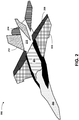
- FIG. 2 is an example illustration of an aircraft 200 with operationally distinct portions.
- aircraft 200 includes at least a forward fuselage 202, center fuselage 204, wings 206, ailerons/flaps 208, aft fuselage 210, vertical stabilizers 212, and horizontal stabilizers 214.
- Aircraft 200 may be of a particular aircraft type, and be associated with schematics, design documents, circuit diagrams, or the like that indicate sensors and/or parameters of aircraft 200 associated with each respective operationally distinct portion. Further, testing data or simulation data may be available that indicates forces experienced by each respective operationally distinct portion and functions performed by each portion. Selecting a group of sensors and/or parameters that correspond to a given portion of aircraft 200 can include determining forces experienced by and/or functions performed by the given portion, and determining sensors and/or parameters that relate to the forces and/or functionalities.
- aft fuselage 210 may be an operationally distinct portion of aircraft 200 for which a grouping of sensors and/or parameters is selected.
- Aft fuselage 210 may be determined to experience torsional and bending moments throughout a flight of aircraft 200 in response to changes in aileron position and elevator position respectively. For example, such forces might be measured during simulations and/or design testing of aircraft 200.
- Roll, pitch, and yaw data of aircraft 200, in conjunction with aileron and elevator positions, and possibly other forces and/or parameters, may indicate how aft fuselage 210 responds to the forces experienced during flight.
- an accelerometer and gyroscopic sensor e.g., an inertial measurement unit (IMU)
- IMU inertial measurement unit
- left and right aileron positions, elevator positions, and related control signals from an aircraft controller might be selected as a grouping of sensors and parameters that correspond to the aft fuselage 210 portion of aircraft 200. More or fewer sensors and/or parameters might be selected.
- Groupings of sensors and/or parameters may be selected for some or all of the other depicted portions of aircraft 200. Further description of examples for selecting groups of sensors and/or parameters are described below.
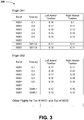
- Figure 3 depicts an example of feature data 300 associated with a portion of an aircraft, according to an example implementation.
- the depicted example includes a subset of feature data associated with aft fuselage 210 depicted in Figure 2 .
- the depicted feature data shows left aileron positions and right aileron positions during a first flight "001" of aircraft 200 and a second flight "002" of aircraft 200, which corresponds to "aircraft number #10001.”
- such data may be logged by aircraft 200 during flight, and transmitted to a computing device, such as computing device 102 after completion of the flight.
- the feature data includea data from yet further flights of aircraft 200, or from other aircraft of the same aircraft type.
- the data associated with aft fuselage 210 is timestamped, it can be evaluated relative to other data determined during each flight. For example, the time stamps for changing aileron position can be compared to corresponding control signals of aircraft 200 and roll data from an IMU of aircraft 200 to determine how aft fuselage 210 is responding to forces experienced during flight of aircraft 200.
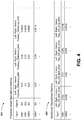
- Figure 4 depicts an example of predetermined operational metrics 400 and additional operational metrics 402 associated with a portion of an aircraft, according to an example implementation.
- Predetermined operational metrics 400 may be determined based on the type of data associated with corresponding sensors and/or parameters of a particular grouping, and may be selected such that values for the predetermined operational metrics are indicative of responses of the aircraft to forces experienced by each respective portion of the aircraft.
- predetermined operational metrics 400 include a minimum difference between the left and right aileron of an aircraft during a particular flight, a maximum difference between the left and right aileron of an aircraft during a particular flight, and an average difference between the left and right aileron of an aircraft during a particular flight.
- the predetermined operational metrics can include a subset of feature data 300, and one or more additional values determined from feature data 300.
- feature data for a particular sensor and/or parameter might be used in its entirety.
- a parameter is used that includes a binary indication for a particular flight, such as whether a failsafe mode was entered into during flight
- the predetermined operational metric might match the corresponding feature data.
- determining predetermined operational metrics 400 may be performed automatically upon selection of a grouping of sensors and/or parameters. For example, each sensor and parameter might correspond to a set of operational metrics. In other examples, predetermined operational metrics 400 may be selected by way of a user interface. These examples are explained in further detail below.
- the depicted predetermined operational metrics 400 show values determined for a plurality of flights of a first aircraft (aircraft 200) that corresponds to "aircraft # 10001," a second aircraft that corresponds to "aircraft #10002,” and possibly other aircraft. Additional operational metrics 402 are determined based on a comparison of predetermined operational metrics 400 over this plurality of flights. For instance, in the depicted example, additional operational metrics 402 for "aircraft #10001" are determined based on a comparison of a first flight "001" and a second flight "002.” Additional operational metrics 402 include overall minimums, maximums, and averages from this plurality of flights.
- additional operational metrics 402 are indicative of responses of the aircraft to forces experienced by each respective portion of the aircraft that corresponds to a selected grouping of sensors and/or parameters during multiple flights of the aircraft. Further, since additional operational metrics 402 include overall maximum, minimum, and average values of predetermined operational metrics 400, using additional operational metrics 402 as inputs to a machine learning model reduces the amount of computing power required for training.
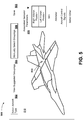
- Figure 5 is an example illustration of a user interface 500 for selecting groupings of sensors and/or parameters associated with a portion of an aircraft, according to an example implementation.
- the user interface can include an option to select an aircraft type 502, an option to view suggested groupings of sensors and/or parameters 504, an option to manually select groupings of sensors and/or parameters 506, and an option to save a selected grouping 508.
- a computing device 102 may receive an indication of the selection by way of user interface 500.
- Computing device 102 receives, from database 116, simulation and/or test data, known sensors and/or parameters of the aircraft type that relate to expected in-flight forces to be experienced by an aircraft of the aircraft type.
- the known sensors and/or parameters may be derived from design documents, design testing data, or other information pertaining to the type of aircraft.
- computing device 102 determines known sensors and/or parameters of the aircraft type that relate to the expected in-flight forces.
- computing device 102 determines that a known IMU of the aircraft type relates to expected in-flight forces of the particular portion.
- Computing device 102 may also select the groupings of sensors and/or parameters that correspond to the plurality of portions of the aircraft type based on determining the known sensors and/or parameters of the aircraft type that relate to the expected in-flight forces.
- Computing device 102 further provides, by way of the user interface 500 the selected groupings as suggested groupings, and provide an option to edit or accept the suggested groupings.
- computing device 102 Upon receiving an indication to edit or accept the suggested groupings by way of user interface 500, computing device 102 saves the groupings in memory 108.
- Figure 5 does not depict this scenario. Instead, Figure 5 depicts a scenario where user has selected the option to manually select groupings of sensors and/or parameters 506. In some examples, computing device simply selects the groupings of sensors and/or parameters automatically, and without user contribution.
- user interface 500 includes a schematic view 510 of an aircraft type, and depicts a cursor 512 being used to select a aft fuselage portion of the aircraft type.
- the selected aft fuselage portion might correspond to aft fuselage 210 described above with respect to Figure 2 .
- a computing device 102 retrieves a list of selectable sensors and parameters 514 associated with the aircraft type and provide the list for selection by the user by way of user interface 500. As depicted in the present example, computing device 102 orders the provided list by relevance to the selected aft fuselage portion of the aircraft type.
- the order of relevance may be determined based on simulation and/or test data, or known sensors and/or parameters of the aircraft type that relate to expected in-flight forces to be experienced by an aircraft of the aircraft type.
- the known sensors and/or parameters may be derived from design documents, design testing data, or other information pertaining to the aircraft type.
- computing device 102 After manually selecting a grouping of sensors and/or parameters, a user can select the option to save the groupings 508.
- computing device 102 stores the groupings in memory 108 and/or in database 116.
- user interface 500 includes selectable options for predetermined operational metrics 400 associated with each selected sensor and/or parameter.
- the operational metrics includes types of feature data 300 that can be received from an aircraft 200 of the aircraft type, or types of data that can be derived from the feature data 300. Additionally or alternatively, the operational metrics includes parameters associated with sensors or components of aircraft 200. Predetermined operational metrics 400 may automatically be selected based on the selected sensors and parameters rather than being selected by way of user interface 500.
- additional operational metrics 402 may be selected. For instance, the additional operational metrics 402 are selected by way of user interface 500. In other examples, the additional operational metrics 402 are automatically selected based on the selected predetermined operational metrics. In some examples, the additional operational metrics includes overall maximums, minimums, and averages of the predetermined operational metrics 400 as determined over multiple flights of an aircraft 200.
- Figure 6 shows a flowchart of an example of a method 600 for determining whether to perform aircraft maintenance, according to an example implementation.
- Method 600 shown in Figure 6 presents an example of a method that could be used with the computing device 102 shown in Figure 1 , with components of computing device 102, or in conjunction with an aircraft, such as aircraft 200 shown in Figure 2 , for example.
- devices or systems may be used or configured to perform logical functions presented in Figure 6 .
- components of the devices and/or systems are configured to perform the functions such that the components are actually configured and structured (with hardware and/or software) to enable such performance.
- components of the devices and/or systems are arranged to be adapted to, capable of, or suited for performing the functions, such as when operated in a specific manner.
- Method 600 includes one or more operations, functions, or actions as illustrated by one or more of blocks 602-614. Although the blocks are illustrated in a sequential order, these blocks may also be performed in parallel, and/or in a different order than those described herein. Also, the various blocks may be combined into fewer blocks, divided into additional blocks, and/or removed based upon the desired implementation.
- each block or portions of each block represents a module, a segment, or a portion of program code, which includes one or more instructions executable by a processor for implementing specific logical functions or steps in the process.
- the program code is to be stored on any type of computer readable medium or data storage, for example, such as a storage device including a disk or hard drive. Further, the program code can be encoded on a computer-readable storage media in a machine-readable format, or on other non-transitory media or articles of manufacture.
- the computer readable medium includes non-transitory computer readable medium or memory, for example, such as computer-readable media that stores data for short periods of time like register memory, processor cache and Random Access Memory (RAM).
- the computer readable medium may also include non-transitory media, such as secondary or persistent long term storage, like read only memory (ROM), optical or magnetic disks, compact-disc read only memory (CD-ROM), for example.
- the computer readable media may also be any other volatile or non-volatile storage systems.
- the computer readable medium may be considered a tangible computer readable storage medium, for example.
- each block or portions of each block in Figure 6 represents circuitry that is wired to perform the specific logical functions in the process.
- Alternative implementations are included within the scope of the examples of the present disclosure in which functions may be executed out of order from that shown or discussed, including concurrent or substantially concurrent or in reverse order, depending on the functionality involved, as would be understood by those reasonably skilled in the art.
- method 600 includes selecting, from a plurality of sensors and parameters associated with an aircraft type, based on expected in-flight forces to be experienced by a plurality of operationally distinct portions of the aircraft type, a plurality of groupings of sensors and/or parameters that correspond to the plurality of portions of the aircraft type.
- selecting the groupings of sensors and/or parameters are to be performed automatically by a computing device 102, or are selected by way of a user interface 500. Grouping the sensors and/or parameters allow for more flexible and targeted training of machine learning models, and further serve to limit the amount of data transmitted between aircraft 200 and computing device 102, and that is required to train the machine learning model.
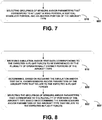
- Figure 7 shows a flowchart of an example method for determining whether to perform aircraft maintenance as shown in block 602, according to an example implementation.
- functions include selecting groupings of sensors and/or parameters that correspond to at least wings 206, vertical stabilizers 212, and ailerons/flaps 208 of the aircraft type. Accordingly, in examples, the groupings of sensors and/or parameters might not account for each operationally distinct portion of the aircraft type. This allows for more targeted aircraft maintenance determinations, or allows human inspectors to focus on certain portions of the aircraft 200, while allowing for automated determinations with respect to other portions of the aircraft 200.
- Figure 8 shows a flowchart of an example method for determining whether to perform aircraft maintenance as shown in block 602, according to an example implementation.
- functions include receiving simulation and/or test data corresponding to the expected in-flight forces to be experienced by the plurality of operationally distinct portions of the aircraft type.
- computing device 102 receives the simulation and/or test data from database 116.
- functions include determining, based on receiving the simulation and/or test data, known sensors and/or parameters of the aircraft type that relate to the expected in-flight forces.
- the simulation and/or test data indicates types of forces and force levels typically experienced by the operationally distinct portions of the aircraft type.
- functions include selecting the groupings of sensors and/or parameters that correspond to the plurality of portions of the aircraft type based on determining the known sensors and/or parameters of the aircraft type that relate to the expected in-flight forces. For example, having received the simulation and/or test data indicating types of forces and force levels typically experienced by the operationally distinct portions of the aircraft type, computing device 102 may associate sensors and/or parameters with the indicated types of forces and force levels. Accordingly, in examples, computing device 102 automatically selects the groupings of sensors and/or parameters. Performing such selections automatically allows for more efficient and consistent maintenance determinations across multiple aircraft types.
- Figure 9 shows a flowchart of an example method for determining whether to perform aircraft maintenance as shown in block 602, according to an example implementation.
- functions include determining, by the computing system 100, sensors and/or parameters that correspond to the expected in-flight forces to be experienced by the plurality of operationally distinct portions of the aircraft type.
- functions include providing, by the computing system 100, by way of a user interface 500, an indication of the sensors and/or parameters that correspond to the expected in-flight forces.
- functions include receiving, by the computing system 100, by way of the user interface 500, a selection of one or more sensors and parameters from the indication.
- Figure 9 thus depicts operations that correspond to the interface depicted in Figure 5 .
- a user provides tailored selections of groupings of sensors and/or parameters. This allows for more targeted maintenance determinations based on maintenance goals or standards that computing system 100 might not be aware of.
- Figure 10 shows a flowchart of an example method for determining whether to perform aircraft maintenance as shown in block 602, according to an example implementation.
- functions include providing, by the computing system 100, by way of a user interface 500, a schematic view 510 of the aircraft type.
- a schematic view may be a three-dimensional (3D) rendering of the aircraft type, such as a transparent rendering, having selectable portions.
- functions include receiving a selection, by way of the user interface 500, of a portion of the schematic view 510 that corresponds to a portion of the aircraft type. For example, as depicted in Figure 5 , an aft fuselage portion of schematic view 510 is depicted as being selected.
- functions include providing, by way of the user interface, selectable sensors and parameters 514 associated with the portion of the schematic view 510.
- functions include receiving, by way of the user interface 500, a selection of one or more of the selectable sensors and parameters 514.
- the selectable sensors and parameters 514 may be suggested sensors and/or parameters, or may be a comprehensive set of sensors and parameters associated with the aircraft type.
- functions include, determining a given grouping of sensors and parameters based on receiving the selection of one or more of the selectable sensors and parameters.
- a user provides tailored selections of groupings of sensors and/or parameters in accordance with suggested sensors and/or parameters, or based on manual determinations.
- functions include receiving, from an aircraft 200 of the aircraft type, feature data 300 that corresponds to each grouping of sensors and/or parameters.
- feature data 300 might be logged by aircraft 200 and transmitted to computing device 102 upon completion of a flight.
- functions include determining, by a computing system 100, from the feature data 300, values for predetermined operational metrics 400 that correspond to the plurality of groupings of sensors and/or parameters, wherein the values for the predetermined operational metrics 400 are indicative of responses of the aircraft 200 to forces experienced by each respective portion of the aircraft 200 that corresponds to a selected grouping of sensors and/or parameters during a given flight of the aircraft 200.
- the predetermined operational metrics 400 are selected by way of a user interface 500, or automatically determined by computing device 102.
- functions include comparing, by the computing system 100, the values for the predetermined operational metrics 400 to values for the predetermined operational metrics 400 that correspond to at least one other flight of the aircraft 200.
- functions include determining, by the computing system 100, based on comparing the values for the predetermined operational metrics 400, values of additional operational metrics 402, wherein the values of the additional operational metrics 402 are indicative of responses of the aircraft to forces experienced by each respective portion of the aircraft 200 that corresponds to a selected grouping of sensors and/or parameters during multiple flights of the aircraft 200.
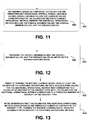
- Figure 11 shows a flowchart of an example method for performing the determining as shown in block 610 according to an example implementation.
- functions include determining, based on comparing the values for the predetermined operational metrics 400, overall maximum values, overall minimum values, and average values corresponding to the values for the predetermined operational metrics 400, wherein the additional operational metrics 402 include the overall maximum values, the overall minimum values, and the average values.
- Figure 12 shows a flowchart of an example method for performing the training as shown in block 612 according to an example implementation associated with block 640.
- functions include providing the overall minimum values, the overall maximum values, and the overall average values determined at block 640 as inputs to the machine learning model.
- functions include training a machine learning model using at least the values for the additional operational metrics 402.
- the machine learning model includes one or more machine learning models, and may be associated with a machine learning model server 118.
- functions include providing, by the computing system 100, based on an output of the machine learning model, an instruction to perform maintenance on one or more of the plurality of portions of the aircraft 200 or another aircraft of the aircraft type.
- the trained machine learning model can be executed to evaluate performance of operationally distinct portions of aircraft during testing/implementation.
- Computing device 102 provides test data from a given aircraft, which includes data logged by the aircraft during flight.
- the given aircraft might be aircraft 200, in which case the test data might correspond to a test flight of aircraft 200, or another aircraft of the aircraft type, such as another aircraft in a fleet of aircraft.
- Computing device 102 provides data similar to that used to train the machine learning model.
- the test data might include values for predetermined operational metrics 400 or additional operational metrics 402.
- This data, or other test data, can be provided as an input to the machine learning model after it has been trained.
- the machine learning model may be executed to provide an output based on receiving the test data.
- computing device 102 causes the machine learning model to execute based on the test data of the aircraft or another aircraft of the aircraft type. Responsive to causing the machine learning model to execute, the computing device 102, based on an output of the machine learning model, provides the instruction to perform maintenance on one or more of the plurality of portions of the aircraft or another aircraft of the aircraft type.
- providing the instruction to perform maintenance on one or more of the plurality of portions of aircraft 200 comprises transmitting the instruction to aircraft maintenance controller 120, which may schedule maintenance of aircraft 200 and/or cause a maintenance facility to perform maintenance on aircraft 200.
- Figure 13 shows a flowchart of an example method for use with the method 600, according to an example implementation.
- functions include, prior to training the machine learning model using at least the values for the additional operational metrics 402, accumulating values for the additional operational metrics 402 that correspond to a plurality of aircraft of the aircraft type until the values for the additional operational metrics 402 correspond to a threshold number of aircraft of the aircraft type.
- the threshold number of aircraft may be, for example, 10 aircraft. In other examples, the threshold number of aircraft may be a percentage of a total number of aircraft of the aircraft type. For example, the threshold number may be 25% or about 25% of the total number of aircraft of the aircraft type.
- functions include, after determining that the values for the additional operational metrics 402 correspond to the threshold number of aircraft of the aircraft type, training the machine learning model using the accumulated values for the additional operational metrics. Waiting to train the training model until more data is available in this fashion may allow for more confidence in the output of the training model once it is trained.
- FIG. 14 shows a flowchart of an example method for use with the method 600, according to an example implementation.
- functions include determining simulated values for the additional operational metrics 402 for each grouping of the plurality of groupings, based on known aerodynamic qualities of respective portions of the aircraft type that correspond to each respective grouping. This includes simulated flights that generate simulated forces similar to those expected during an actual flight of aircraft 200.
- functions include, prior to training the machine learning model using at least the values for the additional operational metrics 402, training the machine learning model using the simulated values for the additional operational metrics 402. In this fashion, the machine learning model may be exposed to significant amounts of data prior to being trained by actual data from flights of aircraft 200.
- FIG. 15 shows a flowchart of an example method for use with the method 600, according to an example implementation.
- Block 650 is a further example for performing the training as shown in block 612 according to an example implementation.
- functions include training two or more distinct machine learning models using at least the values for the additional operational metrics 402.
- the machine learning models can include a random forest model, support vector machine (SVM), a neural network, or any other type of algorithm that uses machine learning. Training multiple distinct machine learning models allow for outputs for a given model to be vetted by the others once it is executed.
- SVM support vector machine
- functions include comparing, by the computing system 100, outputs of the two or more distinct machine learning models. For example, outputs of two executed machine learning models might be compared to determine whether they are similar or substantially similar. For instance, where the outputs provide binary outputs regarding whether a given portion of an aircraft requires maintenance, the outputs can be compared to determine if they are the same. In some examples where the executed machine learning models provide performance ratings of each given portion of an aircraft, the ratings might be compared to determine that they share a threshold extent of similarity. For instance the performance ratings of a given portion might be compared to determine whether they are within 10% of each other. If the two or more performance ratings each fall within the threshold, they may be determined as similar or substantially similar, and therefore in agreement with respect to whether performance should be performed on the given portion of the aircraft.
- Block 654 is a further example for performing the providing as shown in block 614 according to an example implementation.
- functions include providing the instruction to perform maintenance based on comparing the outputs of the two or more distinct machine learning models. For instance, if the outputs of the training models are the same or fall within the threshold level of similarity, and indicate that maintenance should be performed on a given portion of an aircraft, an instruction is provided to perform maintenance on that portion. Similarly, if the outputs of the training models are the same or fall within the threshold level of similarity, and indicate that maintenance should not be performed on a given portion of an aircraft, an instruction is provided not to perform maintenance on that portion.
- FIG. 16 shows a flowchart of an example method for use with the method 600, according to an example implementation.
- functions include, prior to training the machine learning model using at least the values for the additional operational metrics 402, training the machine learning model using values for additional operational metrics 402 that correspond to other aircraft of the aircraft type. This similarly allows for confidence in an output of the machine learning model.
- Figure 17 shows a flowchart of an example method for performing the providing as shown in block 614 according to an example implementation.
- functions include receiving the output of the machine learning model, wherein the output comprises a performance rating of each portion of the aircraft that corresponds to a selected grouping of sensors and/or parameters.
- functions include determining that a performance rating of one or more portions of the aircraft 200 falls below a performance rating threshold.
- the threshold indicates a percentage that shows how closely the additional operational metrics 402 match expected values for those metrics.
- the expected values might be based on simulated flight data, on data received from one or more maintained aircraft, or on outputs generated by the machine learning model.
- the threshold might be, for example, an 80% performance rating threshold.
- functions include providing the instruction to perform maintenance on the one or more portions.
- tolerance levels can be established that vary based on aircraft type, or based on particular operationally distinct portions of aircraft 200. This allows for flexible maintenance decisions that rely on maintenance standards that differ based on which portion of aircraft 200 is being evaluated.
- methods and systems provide for consistent and reliable maintenance determinations corresponding to an aircraft of plurality of aircraft.
- the disclosed systems provide for automatic or user-based determinations for training a machine learning model using data that corresponds to targeted metrics associated with a particular aircraft type.
- vetting the machine learning model by using more than one type of learning model, and by requiring threshold amounts of training before using the model allow for more reliable outputs and maintenance determinations.
Landscapes
- Engineering & Computer Science (AREA)
- General Physics & Mathematics (AREA)
- Physics & Mathematics (AREA)
- Theoretical Computer Science (AREA)
- Business, Economics & Management (AREA)
- Aviation & Aerospace Engineering (AREA)
- Transportation (AREA)
- Manufacturing & Machinery (AREA)
- Human Resources & Organizations (AREA)
- Software Systems (AREA)
- Databases & Information Systems (AREA)
- General Engineering & Computer Science (AREA)
- Data Mining & Analysis (AREA)
- Strategic Management (AREA)
- Economics (AREA)
- General Business, Economics & Management (AREA)
- Tourism & Hospitality (AREA)
- Marketing (AREA)
- Computer Vision & Pattern Recognition (AREA)
- Mathematical Physics (AREA)
- Medical Informatics (AREA)
- Evolutionary Computation (AREA)
- Artificial Intelligence (AREA)
- Computing Systems (AREA)
- Primary Health Care (AREA)
- Health & Medical Sciences (AREA)
- General Health & Medical Sciences (AREA)
- Automation & Control Theory (AREA)
- Entrepreneurship & Innovation (AREA)
- Operations Research (AREA)
- Quality & Reliability (AREA)
- Traffic Control Systems (AREA)
Claims (15)
- Verfahren (600) zum Bestimmen, ob eine Flugzeugwartung durchgeführt werden soll, mit den Schritten:Auswählen (602), aus einer Mehrzahl von einem Flugzeugtyp zugeordneten Sensoren und Parametern, basierend auf erwarteten Kräften während des Fluges, denen eine Mehrzahl von betrieblich unterschiedlichen Teilen des Flugzeugtyps ausgesetzt ist, einer Mehrzahl von Gruppierungen von Sensoren und/oder Parametern, die der Mehrzahl von betrieblich unterschiedlichen Teilen des Flugzeugtyps entsprechen, wobei das Auswählen (602) der Gruppierungen von Sensoren und/oder Parametern, die der Mehrzahl von betrieblich unterschiedlichen Teilen des Flugzeugtyps entsprechen, umfasst:Empfangen (618) von Simulations- und/oder Testdaten, die erwarteten Kräften im Flug entsprechen, denen die Mehrzahl der betrieblich unterschiedlichen Teile des Flugzeugtyps ausgesetzt sein wird;Festlegen (620), basierend auf dem Empfangen der Simulations- und/oder Testdaten, von bekannten Sensoren und/oder Parametern des Flugzeugtyps, die sich auf die erwarteten Kräfte während des Fluges beziehen; undAuswählen (622) der Gruppierungen von der Mehrzahl von betrieblich unterschiedlichen Teilen des Flugzeugtyps entsprechenden Sensoren und/oder Parametern auf der Grundlage des Festlegens der bekannten Sensoren und/oder Parameter des Flugzeugtyps, die sich auf die erwarteten Kräfte während des Fluges beziehen;Empfangen (604) von Merkmalsdaten (300), die jeder Gruppierung von Sensoren und/oder Parametern entsprechen, von einem Flugzeug (200) des Flugzeugtyps, wobei das Flugzeug (200) Teile des Flugzeugs (200) umfasst, die jeweiligen Teilen der Mehrzahl von betrieblich unterschiedlichen Teilen des Flugzeugtyps entsprechen;Bestimmen (606) von Werten für vorgegebene Betriebsmessgrößen (400), die der Mehrzahl von Gruppierungen von Sensoren und/oder Parametern entsprechen, aus den Merkmalsdaten (300) durch ein Rechensystem (100), wobei die Werte für die vorgegebenen Betriebsmessgrößen (400) Reaktionen des Flugzeugs (200) auf Kräfte anzeigen, denen jeder jeweilige Teil des Flugzeugs (200) ausgesetzt ist, der einer ausgewählten Gruppierung von Sensoren und/oder Parametern während eines gegebenen Flugs des Flugzeugs (200) entspricht;Vergleichen (608) der Werte für die vorgegebenen Betriebsmessgrößen (400) mit Werten für die vorgegebenen Betriebsmessgrößen (400), die mindestens einem anderen Flug des Flugzeugs (200) entsprechen, durch das Rechensystem (100);Bestimmen (610), durch das Rechensystem (100), basierend auf dem Vergleich der Werte für die vorgegebenen Betriebsparameter (400), von Werten zusätzlicher Betriebsmessgrößen (402), wobei die Werte der zusätzlichen Betriebsmessgrößen (402) Reaktionen des Flugzeugs (200) auf Kräfte anzeigen, denen jeder jeweilige Teil des Flugzeugs (200) ausgesetzt ist, der einer ausgewählten Gruppierung von Sensoren und/oder Parametern entspricht, während mehrerer Flüge des Flugzeugs (200);Trainieren (612) eines Maschinenlernmodells unter Verwendung mindestens der Werte für die zusätzlichen Betriebskenngrößen (402); undBereitstellen (614) einer Anweisung zur Durchführung von Wartungsarbeiten an einem oder mehreren der Mehrzahl von Teilen des Flugzeugs (200) oder eines anderen Flugzeugs des Flugzeugtyps durch das Rechensystem (100), basierend auf einer Ausgabe des Maschinenlernmodells.
- Verfahren nach Anspruch 1, bei dem das Auswählen (602) der Gruppierungen von Sensoren und/oder Parametern, die der Mehrzahl von betrieblich unterschiedlichen Teilen des Luftfahrzeugtyps entsprechen, das Auswählen (616) von Gruppierungen von Sensoren und/oder Parametern umfasst, die mindestens einem Flügelteil, einem Seitenleitwerksteil und einem Querruderteil des Luftfahrzeugtyps entsprechen.
- Verfahren (600) nach einem der Ansprüche 1-2, bei dem das Auswählen (602) der Gruppierungen von Sensoren und/oder Parametern, die der Mehrzahl von betrieblich unterschiedlichen Teilen des Flugzeugtyps entsprechen, umfasst:Bestimmen (624) von Sensoren und/oder Parametern, die den erwarteten Kräften während des Fluges, denen die Mehrzahl von betrieblich unterschiedlichen Teilen des Flugzeugtyps ausgesetzt sein wird, entsprechen, durch das Rechensystem (100);Bereitstellen (626) einer Angabe der Sensoren und/oder Parameter, die den erwarteten Kräften während des Fluges entsprechen, durch das Rechensystem (100) mittels einer Benutzerschnittstelle; undEmpfangen (628) einer Auswahl eines oder mehrerer Sensoren und Parametern aus der Angabe durch das Rechensystem (100) über die Benutzerschnittstelle.
- Verfahren (600) nach einem der Ansprüche 1-3, bei dem (602) das Auswählen der Gruppierungen von Sensoren und/oder Parametern, die der Mehrzahl von betrieblich unterschiedlichen Teilen des Flugzeugtyps entsprechen, umfasst:Bereitstellen (630) einer schematischen Ansicht (510) des Flugzeugtyps durch das Rechensystem (100) mittels einer Benutzerschnittstelle (500);Empfangen (632) einer Auswahl eines Teils der schematischen Ansicht (510), der einem Teil des Flugzeugtyps entspricht, über die Benutzerschnittstelle (500);Bereitstellen (634) von auswählbaren Sensoren und Parametern (514), die dem Teil der schematischen Ansicht (510) zugeordnet sind, über die Benutzerschnittstelle (500);Empfangen (636) einer Auswahl von einem oder mehreren der auswählbaren Sensoren und Parameter (514) über die Benutzerschnittstelle (500); undBestimmen (638) einer gegebenen Gruppierung von Sensoren und/oder Parametern auf der Grundlage des Empfangs der Auswahl von einem oder mehreren der auswählbaren Sensoren und Parameter.
- Verfahren (600) nach einem der Ansprüche 1-4, bei dem (610) das Bestimmen der Werte zusätzlicher Betriebsmessgrößen umfasst:Bestimmen (640), basierend auf dem Vergleichen der Werte für die vorgegebenen Betriebsmessgrößen (400), von Gesamtmaximalwerten, Gesamtminimalwerten und Durchschnittswerten, die den Werten für die vorgegebenen Betriebsmessgrößen (400) entsprechen, wobei die zusätzlichen Betriebsmessgrößen (402) die Gesamtmaximalwerte, die Gesamtminimalwerte und die Durchschnittswerte umfassen.
- Verfahren (600) nach Anspruch 5, bei dem das Trainieren (612) des Maschinenlernmodells unter Verwendung mindestens der Werte für die zusätzlichen Betriebsmessgrößen (402) das Bereitstellen (642) der Gesamtminimalwerte, der Gesamtmaximalwerte und der Durchschnittswerte als Eingaben für das Maschinenlernmodell umfasst.
- Verfahren nach einem der Ansprüche 1-6, das ferner umfasst:vor dem Trainieren des Maschinenlernmodells unter Verwendung mindestens der Werte für die zusätzlichen Betriebsmessgrößen (402), Sammeln (642) von Werten für die zusätzlichen Betriebsmessgrößen, die einer Mehrzahl von Flugzeugen des Flugzeugtyps entsprechen, bis die Werte für die zusätzlichen Betriebsmessgrößen (402) einer Schwellenanzahl von Flugzeugen des Flugzeugtyps entsprechen; undnach der Feststellung, dass die Werte für die zusätzlichen Betriebsmessgrößen (402) der Schwellenanzahl von Flugzeugen des Flugzeugtyps entsprechen, Trainieren (644) des Maschinenlernmodells unter Verwendung der gesammelten Werte für die zusätzlichen Betriebsmessgrößen.
- Verfahren nach einem der Ansprüche 1-7, das ferner umfasst:Bestimmen (646) simulierter Werte für die zusätzlichen Betriebsmessgrößen für jede Gruppierung der Mehrzahl von Gruppierungen von Sensoren und/oder Parametern, basierend auf bekannten aerodynamischen Eigenschaften von jeweiligen betrieblich unterschiedlichen Teilen des Flugzeugtyps, die jeder jeweiligen Gruppierung entsprechen; undvor dem Trainieren des Maschinenlernmodells unter Verwendung mindestens der Werte für die zusätzlichen Betriebsmessgrößen (402), Trainieren (648) des Maschinenlernmodells unter Verwendung der simulierten Werte für die zusätzlichen Betriebsmessgrößen (402).
- Verfahren nach einem der Ansprüche 1-8, bei dem das Trainieren (612) des Maschinenlernmodells das Trainieren (650) von zwei oder mehr verschiedenen Maschinenlernmodellen unter Verwendung zumindest der Werte für die zusätzlichen Betriebsmessgrößen (402) umfasst, wobei das Verfahren ferner umfasst:
Vergleichen der Ausgaben der zwei oder mehr unterschiedlichen Maschinenlernmodelle durch das Rechensystem (100), wobei das Bereitstellen (614) der Anweisung zur Durchführung von Wartungsarbeiten an einem oder mehreren der Mehrzahl von Teilen des Luftfahrzeugs (200) oder eines anderen Luftfahrzeugs des Luftfahrzeugtyps das Bereitstellen (654) der Anweisung zur Durchführung von Wartungsarbeiten auf der Grundlage des Vergleichs der Ausgaben der zwei oder mehr unterschiedlichen Maschinenlernmodelle umfasst. - Verfahren nach einem der Ansprüche 1-9, bei dem das Bereitstellen (614) der Anweisung zur Durchführung von Wartungsarbeiten an einem oder mehreren der Teile des Flugzeugs (200) oder eines anderen Flugzeugs des Flugzeugtyps umfasst:Empfangen (658) der Ausgabe des Maschinenlernmodells, wobei die Ausgabe eine Leistungsbewertung jedes Teils des Flugzeugs umfasst, der einer ausgewählten Gruppierung von Sensoren und/oder Parametern entspricht;Bestimmen (660), dass eine Leistungsbewertung von einem oder mehreren Teilen des Flugzeugs unter einen Leistungsbewertungsschwellenwert fällt; undBereitstellen (662) der Anweisung, eine Wartung an dem einen oder den mehreren Teilen des Luftfahrzeugs durchzuführen.
- Verfahren (600) zum Warten eines Flugzeugs, das umfasst:das Verfahren zur Bestimmung, ob eine Flugzeugwartung durchgeführt werden soll, nach einem der Ansprüche 1-10; undDurchführen der Wartung an dem einen oder den mehreren Teilen des Flugzeugs gemäß der Anweisung zur Durchführung der Wartung.
- Computersystem (100) zum Bestimmen, ob eine Flugzeugwartung durchgeführt werden soll, das umfasst:
eine Rechenvorrichtung (102) mit einem Prozessor (106) und einem Speicher (108), der Befehle speichert, die, wenn sie vom Prozessor (106) ausgeführt werden, das Computersystem veranlassen, das Verfahren nach einem der Ansprüche 1 bis 10 auszuführen. - Computersystem (100) nach Anspruch 12, bei dem die Rechenvorrichtung (102) ferner eine Benutzerschnittstelle (500) umfasst, und bei dem:(a) die Anweisungen, wenn sie von dem Prozessor (106) ausgeführt werden, das Computersystem (100) veranlassen, über die Benutzerschnittstelle (500) vorgeschlagene Sensoren und Parameter für die Gruppierungen von Sensoren und/oder Parametern, die Teilen des Flugzeugtyps zugeordnet sind, bereitzustellen; oder(b) die Rechenvorrichtung (102) ferner eine Benutzerschnittstelle (500) umfasst und das Bestimmen der Mehrzahl von Gruppierungen von Sensoren und Parametern das Empfangen von Angaben zu den Gruppierungen von Sensoren und/oder Parametern mittels der Benutzerschnittstelle (500) umfasst.
- Computersystem (100) nach Anspruch 12 oder 13, das ferner eine Datenbank (116) umfasst, wobei die Befehle, wenn sie von dem Prozessor (106) ausgeführt werden, das Computersystem (100) veranlassen zumEmpfangen der Merkmalsdaten (300);Übertragen der Merkmalsdaten (300) an die Datenbank (116); undÜbertragen einer Flugzeugkennung, die einem bestimmten Flugzeug zugeordnet ist, das den Merkmalsdaten (300) entspricht, zusammen mit den Merkmalsdaten (300) an die Datenbank (116).
- Computerprogramm, das Computerbefehle umfasst, die, wenn sie von einem Computerprozessor eines Rechensystems (100) ausgeführt werden, das Rechensystem (100) veranlassen, das Verfahren nach einem der Ansprüche 1 bis 10 durchzuführen.
Applications Claiming Priority (1)
| Application Number | Priority Date | Filing Date | Title |
|---|---|---|---|
| US16/213,136 US11358737B2 (en) | 2018-12-07 | 2018-12-07 | Methods and systems for performing aircraft maintenance |
Publications (2)
| Publication Number | Publication Date |
|---|---|
| EP3663211A1 EP3663211A1 (de) | 2020-06-10 |
| EP3663211B1 true EP3663211B1 (de) | 2021-11-10 |
Family
ID=68655400
Family Applications (1)
| Application Number | Title | Priority Date | Filing Date |
|---|---|---|---|
| EP19211248.0A Active EP3663211B1 (de) | 2018-12-07 | 2019-11-25 | Flugzeugswartungsmethode und flugzeugwartungssysteme |
Country Status (5)
| Country | Link |
|---|---|
| US (1) | US11358737B2 (de) |
| EP (1) | EP3663211B1 (de) |
| JP (1) | JP7343374B2 (de) |
| CN (1) | CN111361758B (de) |
| SG (1) | SG10201911355YA (de) |
Families Citing this family (8)
| Publication number | Priority date | Publication date | Assignee | Title |
|---|---|---|---|---|
| GB2598530A (en) * | 2019-09-30 | 2022-03-09 | Airbus Operations Ltd | Test Apparatus |
| CN112069607B (zh) * | 2020-07-17 | 2024-07-16 | 北京动力机械研究所 | 整体叶轮成组分类编码与几何特征参数计算方法及装置 |
| US11845570B2 (en) * | 2020-08-11 | 2023-12-19 | The Boeing Company | Aircraft system operational testing |
| CN112215982A (zh) * | 2020-09-28 | 2021-01-12 | 广州航新航空科技股份有限公司 | 一种直升机数据采集方法、系统、装置及存储介质 |
| GB2603777A (en) | 2021-02-11 | 2022-08-17 | Airbus Operations Ltd | Aircraft control system |
| US12073729B2 (en) * | 2021-04-27 | 2024-08-27 | Rockwell Collins, Inc. | Machine-learned operating system and processor |
| CN113325747B (zh) * | 2021-04-30 | 2023-06-16 | 中国民用航空总局第二研究所 | 一种通用航空器定检监控预警方法及系统 |
| JP7808834B2 (ja) * | 2021-10-19 | 2026-01-30 | 国立研究開発法人宇宙航空研究開発機構 | 異常判定装置、異常判定方法、及びプログラム |
Family Cites Families (15)
| Publication number | Priority date | Publication date | Assignee | Title |
|---|---|---|---|---|
| US8521448B1 (en) | 2009-10-21 | 2013-08-27 | The Boeing Company | Structural analysis using measurement of fastener parameters |
| GB2492328A (en) | 2011-06-24 | 2013-01-02 | Ge Aviat Systems Ltd | Updating troubleshooting procedures for aircraft maintenance |
| US9020689B2 (en) | 2011-09-19 | 2015-04-28 | The Boeing Company | Method for real-time model based structural anomaly detection |
| JP6097517B2 (ja) | 2012-10-16 | 2017-03-15 | 三菱航空機株式会社 | 状態診断方法、および、状態診断装置 |
| WO2015198213A1 (en) * | 2014-06-26 | 2015-12-30 | Bombardier Inc. | Methods and apparatus for assisting in the maintenance of aircraft and other mobile platforms |
| US10336472B2 (en) * | 2014-10-15 | 2019-07-02 | The Boeing Company | Motor health management apparatus and method |
| EP3098681B1 (de) | 2015-05-27 | 2020-08-26 | Tata Consultancy Services Limited | Auf künstlicher intelligenz basierendes gesundheitsmanagement eines hostsystems |
| WO2017069825A2 (en) | 2015-08-04 | 2017-04-27 | Sikorsky Aircraft Corporation | Rotorcraft structural fault-detection and isolation using virtual monitoring of loads |
| US10706361B1 (en) * | 2015-12-11 | 2020-07-07 | The Boeing Company | Hybrid feature selection for performance prediction of fluid control valves |
| US20170193372A1 (en) | 2016-01-06 | 2017-07-06 | The Boeing Company | Health Management Using Distances for Segmented Time Series |
| US20170233105A1 (en) * | 2016-02-16 | 2017-08-17 | Taleris Global Llp | Visualization of Aggregated Maintenance Data for Aircraft Reliability Program |
| US20170369190A1 (en) | 2016-06-24 | 2017-12-28 | The Boeing Company | Performance prediction methods and systems for maintenance of aircraft flight control surface components |
| US10474789B2 (en) | 2016-06-24 | 2019-11-12 | The Boeing Company | Prediction methods and systems for structural repair during heavy maintenance of aircraft |
| JP6720101B2 (ja) | 2017-02-27 | 2020-07-08 | 三菱重工業株式会社 | 航空機管理装置及び方法並びにプログラム |
| US10587635B2 (en) | 2017-03-31 | 2020-03-10 | The Boeing Company | On-board networked anomaly detection (ONAD) modules |
-
2018
- 2018-12-07 US US16/213,136 patent/US11358737B2/en active Active
-
2019
- 2019-11-25 EP EP19211248.0A patent/EP3663211B1/de active Active
- 2019-11-28 SG SG10201911355YA patent/SG10201911355YA/en unknown
- 2019-12-03 JP JP2019218522A patent/JP7343374B2/ja active Active
- 2019-12-06 CN CN201911243759.1A patent/CN111361758B/zh active Active
Also Published As
| Publication number | Publication date |
|---|---|
| US11358737B2 (en) | 2022-06-14 |
| JP2020117209A (ja) | 2020-08-06 |
| JP7343374B2 (ja) | 2023-09-12 |
| CN111361758B (zh) | 2024-08-27 |
| US20200180788A1 (en) | 2020-06-11 |
| CN111361758A (zh) | 2020-07-03 |
| SG10201911355YA (en) | 2020-07-29 |
| EP3663211A1 (de) | 2020-06-10 |
Similar Documents
| Publication | Publication Date | Title |
|---|---|---|
| US11358737B2 (en) | Methods and systems for performing aircraft maintenance | |
| US10891406B2 (en) | Prediction methods and systems for structural repair during heavy maintenance of aircraft | |
| US10472096B2 (en) | Advanced analytic methods and systems utilizing trust-weighted machine learning models | |
| US20170369190A1 (en) | Performance prediction methods and systems for maintenance of aircraft flight control surface components | |
| EP3229187B1 (de) | Bordeigene strukturelle lastbeurteilung eines flugzeuges während flugereignissen | |
| Esperon-Miguez et al. | A review of Integrated Vehicle Health Management tools for legacy platforms: Challenges and opportunities | |
| US10239640B2 (en) | Predictive aircraft maintenance systems and methods incorporating classifier ensembles | |
| Ahmad et al. | Intelligent framework for automated failure prediction, detection, and classification of mission critical autonomous flights | |
| US20160140783A1 (en) | Method for diagnosing a horizontal stabilizer fault | |
| US8504331B2 (en) | Aerodynamic model identification process for aircraft simulation process | |
| US9561863B2 (en) | Aircraft prognostics health system | |
| KR102697061B1 (ko) | 철도 신호 관리 시스템 및 방법 | |
| CN104108474A (zh) | 用于预测放气系统故障的方法 | |
| US10706361B1 (en) | Hybrid feature selection for performance prediction of fluid control valves | |
| CN112990329B (zh) | 一种系统异常诊断方法和装置 | |
| CN103979113A (zh) | 用于预测水平稳定器故障的方法 | |
| CN103324155A (zh) | 系统监控 | |
| CN114299338A (zh) | 用于系统管理的故障预测与健康管理系统与相关方法 | |
| CN114398944A (zh) | 资源受限条件下的无人机在线并行异常检测方法及系统 | |
| KR20240087314A (ko) | 차량고장 예측 방법 및 시스템 | |
| Jammal | Digital Twin-Driven Condition Monitoring Approach for Aircraft Carbon Brakes | |
| US20260127062A1 (en) | Method and system for health-aware dynamic contingency management for autonomous unmanned aircraft systems | |
| Modest et al. | A design methodology of optimized diagnosis functions for high lift actuation systems | |
| Bates et al. | Rotorcraft Dynamic Component Usage Based Maintenance Process | |
| KR20250055695A (ko) | 자동차 예지보전용 센서 제어 칩 개발 장치 및 시스템 |
Legal Events
| Date | Code | Title | Description |
|---|---|---|---|
| PUAI | Public reference made under article 153(3) epc to a published international application that has entered the european phase |
Free format text: ORIGINAL CODE: 0009012 |
|
| STAA | Information on the status of an ep patent application or granted ep patent |
Free format text: STATUS: THE APPLICATION HAS BEEN PUBLISHED |
|
| AK | Designated contracting states |
Kind code of ref document: A1 Designated state(s): AL AT BE BG CH CY CZ DE DK EE ES FI FR GB GR HR HU IE IS IT LI LT LU LV MC MK MT NL NO PL PT RO RS SE SI SK SM TR |
|
| AX | Request for extension of the european patent |
Extension state: BA ME |
|
| STAA | Information on the status of an ep patent application or granted ep patent |
Free format text: STATUS: REQUEST FOR EXAMINATION WAS MADE |
|
| 17P | Request for examination filed |
Effective date: 20201203 |
|
| RBV | Designated contracting states (corrected) |
Designated state(s): AL AT BE BG CH CY CZ DE DK EE ES FI FR GB GR HR HU IE IS IT LI LT LU LV MC MK MT NL NO PL PT RO RS SE SI SK SM TR |
|
| GRAP | Despatch of communication of intention to grant a patent |
Free format text: ORIGINAL CODE: EPIDOSNIGR1 |
|
| STAA | Information on the status of an ep patent application or granted ep patent |
Free format text: STATUS: GRANT OF PATENT IS INTENDED |
|
| INTG | Intention to grant announced |
Effective date: 20210604 |
|
| GRAS | Grant fee paid |
Free format text: ORIGINAL CODE: EPIDOSNIGR3 |
|
| GRAA | (expected) grant |
Free format text: ORIGINAL CODE: 0009210 |
|
| STAA | Information on the status of an ep patent application or granted ep patent |
Free format text: STATUS: THE PATENT HAS BEEN GRANTED |
|
| AK | Designated contracting states |
Kind code of ref document: B1 Designated state(s): AL AT BE BG CH CY CZ DE DK EE ES FI FR GB GR HR HU IE IS IT LI LT LU LV MC MK MT NL NO PL PT RO RS SE SI SK SM TR |
|
| REG | Reference to a national code |
Ref country code: GB Ref legal event code: FG4D |
|
| REG | Reference to a national code |
Ref country code: AT Ref legal event code: REF Ref document number: 1445886 Country of ref document: AT Kind code of ref document: T Effective date: 20211115 Ref country code: CH Ref legal event code: EP |
|
| REG | Reference to a national code |
Ref country code: DE Ref legal event code: R096 Ref document number: 602019009143 Country of ref document: DE |
|
| REG | Reference to a national code |
Ref country code: IE Ref legal event code: FG4D |
|
| REG | Reference to a national code |
Ref country code: LT Ref legal event code: MG9D |
|
| REG | Reference to a national code |
Ref country code: NL Ref legal event code: MP Effective date: 20211110 |
|
| REG | Reference to a national code |
Ref country code: AT Ref legal event code: MK05 Ref document number: 1445886 Country of ref document: AT Kind code of ref document: T Effective date: 20211110 |
|
| PG25 | Lapsed in a contracting state [announced via postgrant information from national office to epo] |
Ref country code: RS Free format text: LAPSE BECAUSE OF FAILURE TO SUBMIT A TRANSLATION OF THE DESCRIPTION OR TO PAY THE FEE WITHIN THE PRESCRIBED TIME-LIMIT Effective date: 20211110 Ref country code: LT Free format text: LAPSE BECAUSE OF FAILURE TO SUBMIT A TRANSLATION OF THE DESCRIPTION OR TO PAY THE FEE WITHIN THE PRESCRIBED TIME-LIMIT Effective date: 20211110 Ref country code: FI Free format text: LAPSE BECAUSE OF FAILURE TO SUBMIT A TRANSLATION OF THE DESCRIPTION OR TO PAY THE FEE WITHIN THE PRESCRIBED TIME-LIMIT Effective date: 20211110 Ref country code: BG Free format text: LAPSE BECAUSE OF FAILURE TO SUBMIT A TRANSLATION OF THE DESCRIPTION OR TO PAY THE FEE WITHIN THE PRESCRIBED TIME-LIMIT Effective date: 20220210 Ref country code: AT Free format text: LAPSE BECAUSE OF FAILURE TO SUBMIT A TRANSLATION OF THE DESCRIPTION OR TO PAY THE FEE WITHIN THE PRESCRIBED TIME-LIMIT Effective date: 20211110 |
|
| PG25 | Lapsed in a contracting state [announced via postgrant information from national office to epo] |
Ref country code: IS Free format text: LAPSE BECAUSE OF FAILURE TO SUBMIT A TRANSLATION OF THE DESCRIPTION OR TO PAY THE FEE WITHIN THE PRESCRIBED TIME-LIMIT Effective date: 20220310 Ref country code: SE Free format text: LAPSE BECAUSE OF FAILURE TO SUBMIT A TRANSLATION OF THE DESCRIPTION OR TO PAY THE FEE WITHIN THE PRESCRIBED TIME-LIMIT Effective date: 20211110 Ref country code: PT Free format text: LAPSE BECAUSE OF FAILURE TO SUBMIT A TRANSLATION OF THE DESCRIPTION OR TO PAY THE FEE WITHIN THE PRESCRIBED TIME-LIMIT Effective date: 20220310 Ref country code: PL Free format text: LAPSE BECAUSE OF FAILURE TO SUBMIT A TRANSLATION OF THE DESCRIPTION OR TO PAY THE FEE WITHIN THE PRESCRIBED TIME-LIMIT Effective date: 20211110 Ref country code: NO Free format text: LAPSE BECAUSE OF FAILURE TO SUBMIT A TRANSLATION OF THE DESCRIPTION OR TO PAY THE FEE WITHIN THE PRESCRIBED TIME-LIMIT Effective date: 20220210 Ref country code: NL Free format text: LAPSE BECAUSE OF FAILURE TO SUBMIT A TRANSLATION OF THE DESCRIPTION OR TO PAY THE FEE WITHIN THE PRESCRIBED TIME-LIMIT Effective date: 20211110 Ref country code: LV Free format text: LAPSE BECAUSE OF FAILURE TO SUBMIT A TRANSLATION OF THE DESCRIPTION OR TO PAY THE FEE WITHIN THE PRESCRIBED TIME-LIMIT Effective date: 20211110 Ref country code: HR Free format text: LAPSE BECAUSE OF FAILURE TO SUBMIT A TRANSLATION OF THE DESCRIPTION OR TO PAY THE FEE WITHIN THE PRESCRIBED TIME-LIMIT Effective date: 20211110 Ref country code: GR Free format text: LAPSE BECAUSE OF FAILURE TO SUBMIT A TRANSLATION OF THE DESCRIPTION OR TO PAY THE FEE WITHIN THE PRESCRIBED TIME-LIMIT Effective date: 20220211 Ref country code: ES Free format text: LAPSE BECAUSE OF FAILURE TO SUBMIT A TRANSLATION OF THE DESCRIPTION OR TO PAY THE FEE WITHIN THE PRESCRIBED TIME-LIMIT Effective date: 20211110 |
|
| PG25 | Lapsed in a contracting state [announced via postgrant information from national office to epo] |
Ref country code: SM Free format text: LAPSE BECAUSE OF FAILURE TO SUBMIT A TRANSLATION OF THE DESCRIPTION OR TO PAY THE FEE WITHIN THE PRESCRIBED TIME-LIMIT Effective date: 20211110 Ref country code: SK Free format text: LAPSE BECAUSE OF FAILURE TO SUBMIT A TRANSLATION OF THE DESCRIPTION OR TO PAY THE FEE WITHIN THE PRESCRIBED TIME-LIMIT Effective date: 20211110 Ref country code: RO Free format text: LAPSE BECAUSE OF FAILURE TO SUBMIT A TRANSLATION OF THE DESCRIPTION OR TO PAY THE FEE WITHIN THE PRESCRIBED TIME-LIMIT Effective date: 20211110 Ref country code: LU Free format text: LAPSE BECAUSE OF NON-PAYMENT OF DUE FEES Effective date: 20211125 Ref country code: EE Free format text: LAPSE BECAUSE OF FAILURE TO SUBMIT A TRANSLATION OF THE DESCRIPTION OR TO PAY THE FEE WITHIN THE PRESCRIBED TIME-LIMIT Effective date: 20211110 Ref country code: DK Free format text: LAPSE BECAUSE OF FAILURE TO SUBMIT A TRANSLATION OF THE DESCRIPTION OR TO PAY THE FEE WITHIN THE PRESCRIBED TIME-LIMIT Effective date: 20211110 Ref country code: CZ Free format text: LAPSE BECAUSE OF FAILURE TO SUBMIT A TRANSLATION OF THE DESCRIPTION OR TO PAY THE FEE WITHIN THE PRESCRIBED TIME-LIMIT Effective date: 20211110 Ref country code: BE Free format text: LAPSE BECAUSE OF NON-PAYMENT OF DUE FEES Effective date: 20211130 |
|
| REG | Reference to a national code |
Ref country code: BE Ref legal event code: MM Effective date: 20211130 |
|
| REG | Reference to a national code |
Ref country code: DE Ref legal event code: R097 Ref document number: 602019009143 Country of ref document: DE |
|
| PG25 | Lapsed in a contracting state [announced via postgrant information from national office to epo] |
Ref country code: MC Free format text: LAPSE BECAUSE OF FAILURE TO SUBMIT A TRANSLATION OF THE DESCRIPTION OR TO PAY THE FEE WITHIN THE PRESCRIBED TIME-LIMIT Effective date: 20211110 |
|
| PLBE | No opposition filed within time limit |
Free format text: ORIGINAL CODE: 0009261 |
|
| STAA | Information on the status of an ep patent application or granted ep patent |
Free format text: STATUS: NO OPPOSITION FILED WITHIN TIME LIMIT |
|
| 26N | No opposition filed |
Effective date: 20220811 |
|
| PG25 | Lapsed in a contracting state [announced via postgrant information from national office to epo] |
Ref country code: IE Free format text: LAPSE BECAUSE OF NON-PAYMENT OF DUE FEES Effective date: 20211125 Ref country code: AL Free format text: LAPSE BECAUSE OF FAILURE TO SUBMIT A TRANSLATION OF THE DESCRIPTION OR TO PAY THE FEE WITHIN THE PRESCRIBED TIME-LIMIT Effective date: 20211110 |
|
| PG25 | Lapsed in a contracting state [announced via postgrant information from national office to epo] |
Ref country code: SI Free format text: LAPSE BECAUSE OF FAILURE TO SUBMIT A TRANSLATION OF THE DESCRIPTION OR TO PAY THE FEE WITHIN THE PRESCRIBED TIME-LIMIT Effective date: 20211110 |
|
| PG25 | Lapsed in a contracting state [announced via postgrant information from national office to epo] |
Ref country code: IT Free format text: LAPSE BECAUSE OF FAILURE TO SUBMIT A TRANSLATION OF THE DESCRIPTION OR TO PAY THE FEE WITHIN THE PRESCRIBED TIME-LIMIT Effective date: 20211110 |
|
| P01 | Opt-out of the competence of the unified patent court (upc) registered |
Effective date: 20230516 |
|
| PG25 | Lapsed in a contracting state [announced via postgrant information from national office to epo] |
Ref country code: CY Free format text: LAPSE BECAUSE OF FAILURE TO SUBMIT A TRANSLATION OF THE DESCRIPTION OR TO PAY THE FEE WITHIN THE PRESCRIBED TIME-LIMIT Effective date: 20211110 |
|
| REG | Reference to a national code |
Ref country code: CH Ref legal event code: PL |
|
| PG25 | Lapsed in a contracting state [announced via postgrant information from national office to epo] |
Ref country code: LI Free format text: LAPSE BECAUSE OF NON-PAYMENT OF DUE FEES Effective date: 20221130 Ref country code: HU Free format text: LAPSE BECAUSE OF FAILURE TO SUBMIT A TRANSLATION OF THE DESCRIPTION OR TO PAY THE FEE WITHIN THE PRESCRIBED TIME-LIMIT; INVALID AB INITIO Effective date: 20191125 Ref country code: CH Free format text: LAPSE BECAUSE OF NON-PAYMENT OF DUE FEES Effective date: 20221130 |
|
| PG25 | Lapsed in a contracting state [announced via postgrant information from national office to epo] |
Ref country code: MK Free format text: LAPSE BECAUSE OF FAILURE TO SUBMIT A TRANSLATION OF THE DESCRIPTION OR TO PAY THE FEE WITHIN THE PRESCRIBED TIME-LIMIT Effective date: 20211110 |
|
| PG25 | Lapsed in a contracting state [announced via postgrant information from national office to epo] |
Ref country code: TR Free format text: LAPSE BECAUSE OF FAILURE TO SUBMIT A TRANSLATION OF THE DESCRIPTION OR TO PAY THE FEE WITHIN THE PRESCRIBED TIME-LIMIT Effective date: 20211110 |
|
| PG25 | Lapsed in a contracting state [announced via postgrant information from national office to epo] |
Ref country code: MT Free format text: LAPSE BECAUSE OF FAILURE TO SUBMIT A TRANSLATION OF THE DESCRIPTION OR TO PAY THE FEE WITHIN THE PRESCRIBED TIME-LIMIT Effective date: 20211110 |
|
| PGFP | Annual fee paid to national office [announced via postgrant information from national office to epo] |
Ref country code: DE Payment date: 20251128 Year of fee payment: 7 |
|
| PGFP | Annual fee paid to national office [announced via postgrant information from national office to epo] |
Ref country code: GB Payment date: 20251127 Year of fee payment: 7 |
|
| PGFP | Annual fee paid to national office [announced via postgrant information from national office to epo] |
Ref country code: FR Payment date: 20251125 Year of fee payment: 7 |