EP3663660A1 - Klimaanlage und steuerverfahre dafür - Google Patents
Klimaanlage und steuerverfahre dafür Download PDFInfo
- Publication number
- EP3663660A1 EP3663660A1 EP18860635.4A EP18860635A EP3663660A1 EP 3663660 A1 EP3663660 A1 EP 3663660A1 EP 18860635 A EP18860635 A EP 18860635A EP 3663660 A1 EP3663660 A1 EP 3663660A1
- Authority
- EP
- European Patent Office
- Prior art keywords
- air conditioning
- conditioning apparatus
- schedule information
- load
- time zone
- Prior art date
- Legal status (The legal status is an assumption and is not a legal conclusion. Google has not performed a legal analysis and makes no representation as to the accuracy of the status listed.)
- Granted
Links
Images








Classifications
-
- F—MECHANICAL ENGINEERING; LIGHTING; HEATING; WEAPONS; BLASTING
- F24—HEATING; RANGES; VENTILATING
- F24F—AIR-CONDITIONING; AIR-HUMIDIFICATION; VENTILATION; USE OF AIR CURRENTS FOR SCREENING
- F24F11/00—Control or safety arrangements
- F24F11/30—Control or safety arrangements for purposes related to the operation of the system, e.g. for safety or monitoring
-
- F—MECHANICAL ENGINEERING; LIGHTING; HEATING; WEAPONS; BLASTING
- F24—HEATING; RANGES; VENTILATING
- F24F—AIR-CONDITIONING; AIR-HUMIDIFICATION; VENTILATION; USE OF AIR CURRENTS FOR SCREENING
- F24F11/00—Control or safety arrangements
- F24F11/50—Control or safety arrangements characterised by user interfaces or communication
- F24F11/61—Control or safety arrangements characterised by user interfaces or communication using timers
-
- F—MECHANICAL ENGINEERING; LIGHTING; HEATING; WEAPONS; BLASTING
- F24—HEATING; RANGES; VENTILATING
- F24F—AIR-CONDITIONING; AIR-HUMIDIFICATION; VENTILATION; USE OF AIR CURRENTS FOR SCREENING
- F24F11/00—Control or safety arrangements
- F24F11/62—Control or safety arrangements characterised by the type of control or by internal processing, e.g. using fuzzy logic, adaptive control or estimation of values
-
- F—MECHANICAL ENGINEERING; LIGHTING; HEATING; WEAPONS; BLASTING
- F24—HEATING; RANGES; VENTILATING
- F24F—AIR-CONDITIONING; AIR-HUMIDIFICATION; VENTILATION; USE OF AIR CURRENTS FOR SCREENING
- F24F11/00—Control or safety arrangements
- F24F11/62—Control or safety arrangements characterised by the type of control or by internal processing, e.g. using fuzzy logic, adaptive control or estimation of values
- F24F11/63—Electronic processing
- F24F11/64—Electronic processing using pre-stored data
-
- F—MECHANICAL ENGINEERING; LIGHTING; HEATING; WEAPONS; BLASTING
- F24—HEATING; RANGES; VENTILATING
- F24F—AIR-CONDITIONING; AIR-HUMIDIFICATION; VENTILATION; USE OF AIR CURRENTS FOR SCREENING
- F24F2110/00—Control inputs relating to air properties
- F24F2110/10—Temperature
-
- F—MECHANICAL ENGINEERING; LIGHTING; HEATING; WEAPONS; BLASTING
- F24—HEATING; RANGES; VENTILATING
- F24F—AIR-CONDITIONING; AIR-HUMIDIFICATION; VENTILATION; USE OF AIR CURRENTS FOR SCREENING
- F24F2110/00—Control inputs relating to air properties
- F24F2110/10—Temperature
- F24F2110/12—Temperature of the outside air
-
- F—MECHANICAL ENGINEERING; LIGHTING; HEATING; WEAPONS; BLASTING
- F24—HEATING; RANGES; VENTILATING
- F24F—AIR-CONDITIONING; AIR-HUMIDIFICATION; VENTILATION; USE OF AIR CURRENTS FOR SCREENING
- F24F2110/00—Control inputs relating to air properties
- F24F2110/20—Humidity
-
- F—MECHANICAL ENGINEERING; LIGHTING; HEATING; WEAPONS; BLASTING
- F24—HEATING; RANGES; VENTILATING
- F24F—AIR-CONDITIONING; AIR-HUMIDIFICATION; VENTILATION; USE OF AIR CURRENTS FOR SCREENING
- F24F2110/00—Control inputs relating to air properties
- F24F2110/50—Air quality properties
- F24F2110/64—Airborne particle content
-
- F—MECHANICAL ENGINEERING; LIGHTING; HEATING; WEAPONS; BLASTING
- F24—HEATING; RANGES; VENTILATING
- F24F—AIR-CONDITIONING; AIR-HUMIDIFICATION; VENTILATION; USE OF AIR CURRENTS FOR SCREENING
- F24F2110/00—Control inputs relating to air properties
- F24F2110/50—Air quality properties
- F24F2110/65—Concentration of specific substances or contaminants
-
- F—MECHANICAL ENGINEERING; LIGHTING; HEATING; WEAPONS; BLASTING
- F24—HEATING; RANGES; VENTILATING
- F24F—AIR-CONDITIONING; AIR-HUMIDIFICATION; VENTILATION; USE OF AIR CURRENTS FOR SCREENING
- F24F2120/00—Control inputs relating to users or occupants
- F24F2120/10—Occupancy
-
- F—MECHANICAL ENGINEERING; LIGHTING; HEATING; WEAPONS; BLASTING
- F24—HEATING; RANGES; VENTILATING
- F24F—AIR-CONDITIONING; AIR-HUMIDIFICATION; VENTILATION; USE OF AIR CURRENTS FOR SCREENING
- F24F2120/00—Control inputs relating to users or occupants
- F24F2120/10—Occupancy
- F24F2120/12—Position of occupants
-
- Y—GENERAL TAGGING OF NEW TECHNOLOGICAL DEVELOPMENTS; GENERAL TAGGING OF CROSS-SECTIONAL TECHNOLOGIES SPANNING OVER SEVERAL SECTIONS OF THE IPC; TECHNICAL SUBJECTS COVERED BY FORMER USPC CROSS-REFERENCE ART COLLECTIONS [XRACs] AND DIGESTS
- Y02—TECHNOLOGIES OR APPLICATIONS FOR MITIGATION OR ADAPTATION AGAINST CLIMATE CHANGE
- Y02B—CLIMATE CHANGE MITIGATION TECHNOLOGIES RELATED TO BUILDINGS, e.g. HOUSING, HOUSE APPLIANCES OR RELATED END-USER APPLICATIONS
- Y02B30/00—Energy efficient heating, ventilation or air conditioning [HVAC]
- Y02B30/70—Efficient control or regulation technologies, e.g. for control of refrigerant flow, motor or heating
Definitions
- the disclosure relates to an air conditioning apparatus and a control method thereof, and more particularly, to an air conditioning apparatus modifying schedule information on the basis of collected environmental information and a control method thereof.
- An air conditioning apparatus is an apparatus placed in a space, such as a house, an office, a shop, or a crop-cultivating house, to control a temperature, a humidity, a degree of cleanliness, and a flow of air therein, thereby maintaining a comfortable indoor environment for people to live or a suitable indoor environment for crops to grow.
- the conventional air conditioning apparatus determines an operation state and an output intensity based on a current temperature.
- a current temperature e.g. 24 degrees
- the output intensity of the air conditioning apparatus needs to be stronger (or higher) in an air condition target where there are ten persons than in an air condition target where there is one person, to maintain a target temperature (e.g. 24 degrees), because the body temperatures of the persons cause a temperature of ambient air to rise.
- an air conditioning apparatus includes: a driver configured to perform a predetermined function of the air conditioning apparatus; a sensor configured to collect ambient environmental information of the air conditioning apparatus; a memory configured to store the collected environmental information therein; and a processor configured to control an operation of the driver on the basis of schedule information in which an operation state is defined according to a time change and modify the schedule information on the basis of environmental information collected during a predetermined period.
- the processor may be configured to modify the schedule information by classifying the collected environmental information as stored in the memory for each time zone, and comparing the classified environmental information for each time zone with an operation state for each time zone in the schedule information.
- the processor may be configured to predict a load for each time zone on the basis of the classified environmental information for each time zone and modify the operation state for each time zone in the schedule information on the basis of the predicted load for each time zone.
- the processor may be configured to predict the operation state for each time zone from the classified environmental information for each time zone using a predetermined learning model.
- the processor may be configured to modify the operation state for each time zone in the schedule information by determining an operation mode of the air conditioning apparatus and an output intensity in the operation mode for the each time zone on the basis of the predicted load for each time zone.
- the processor may be configured to modify the operation state for each time zone in the schedule information on the basis of the predicted load for each time zone and spatial information of an air conditioning target.
- the environmental information may include at least one of an indoor temperature, an outdoor temperature, a humidity, the number of persons in an air conditioning target, or an amount of dust.
- the memory may be configured to store a plurality of schedule information for each day of the week, and the processor may be configured to control the driver on the basis of schedule information corresponding to a current day of the week among the plurality of schedule information.
- the memory may be configured to store a plurality of initial schedule information
- the processor may be configured to control the operation of the driver on the basis of initial schedule information selected by a user among the plurality of initial schedule information.
- the processor may be configured to control the operation of the driver on the basis of the collected environmental information rather than the schedule information, when a difference between a load for a current time zone in the schedule information and a load corresponding to currently collected environmental information is a predetermined value or more.
- a control method of an air conditioning apparatus includes: performing a predetermined function of the air conditioning apparatus on the basis of schedule information in which an operation state is defined according to a time change; collecting ambient environmental information of the air conditioning apparatus; storing the collected environmental information; and modifying the schedule information on the basis of environmental information collected during a predetermined period.
- the schedule information may be modified by classifying the collected environmental information as stored for each time zone, and comparing the classified environmental information for each time zone with an operation state for each time zone in the schedule information.
- a load for each time zone may be predicted on the basis of the classified environmental information for each time zone, and the operation state for each time zone in the schedule information may be modified on the basis of the predicted load for each time zone.
- the operation state for each time zone may be predicted from the classified environmental information for each time zone using a predetermined learning model.
- the operation state for each time zone in the schedule information may be modified by determining an operation mode of the air conditioning apparatus and an output intensity in the operation mode for the each time zone on the basis of the predicted load for each time zone.
- the operation state for each time zone in the schedule information may be modified on the basis of the predicted load for each time zone and spatial information of an air conditioning target.
- the environmental information may include at least one of an indoor temperature, an outdoor temperature, a humidity, the number of persons in an air conditioning target, or an amount of dust.
- the control method may further include previously storing a plurality of schedule information for each day of the week.
- the predetermined function of the air conditioning apparatus may be performed on the basis of schedule information corresponding to a current day of the week among the plurality of schedule information.
- the predetermined function of the air conditioning apparatus may be performed on the basis of initial schedule information selected by a user among a plurality of initial schedule information that is previously stored.
- the predetermined function may be performed on the basis of the collected environmental information rather than the schedule information, when a difference between a load for a current time zone in the schedule information and a load corresponding to currently collected environmental information is a predetermined value or more.
- ordinal numbers such as “first” and “second” may be used to distinguish the elements from each other. These ordinals are used to distinguish identical or similar elements from each other, and the use of such ordinals should not be understood as limiting the meanings of the terms. As an example, elements combined with such ordinal numbers should not be limited in use order, arrangement order, or the like by the numbers. If necessary, the ordinal numbers may be used interchangeably with each other.
- first may be used to describe various elements, but the elements are not to be construed as being limited by these terms. The terms are used only to distinguish one element from another element.
- module refers to an element that performs at least one function or operation.
- the element may be implemented with hardware, software, or a combination of hardware and software.
- a plurality of “modules”, “units”, “parts”, or the like may be integrated into at least one module or chip and implemented by at least one processor, excluding the case where each of the plurality of "modules", “units”, “parts”, or the like should necessarily be implemented with individual specific hardware.
- any part when any part is described as being connected to another part, this includes not only a direct connection but also an indirect connection through another medium.
- the terms "load”, “load information” and “load value” may all be used in a similar sense. Values of the collected environmental information are all in different units, and they can be converted into one representative value. Thus, the load means that the values of the collected environmental information are converted into one representative value. Through the load (load information, load value) converted in this way, a user may easily compare a current state of an air conditioning apparatus depending on time.
- FIG. 1 is a block diagram illustrating an air conditioning apparatus 100 according to an embodiment of the disclosure.
- the air conditioning apparatus 100 may include a driver 110, a sensor 120, a memory 130, and a processor 140.
- the air conditioning apparatus 100 is an apparatus placed in a space, such as a house, an office, a shop, or a crop-cultivating house, to control a temperature, a humidity, a degree of cleanliness, and a flow of air therein, thereby maintaining a comfortable indoor environment for people to live or a suitable indoor environment for crops to grow.
- a space such as a house, an office, a shop, or a crop-cultivating house
- the driver 110 refers to a part that actually performs a predetermined function of the air conditioning apparatus 100 through the control of the processor 140.
- the driver 110 may be a part performing a cooling function.
- the driver 110 may be configured to perform various functions of the air conditioning apparatus 100, such as cooling, heating, and air cleaning.
- the driver 110 is not limited to any specific function and may refer to a component of the air conditioning apparatus 100 that may be controlled by a user's command or by the processor 140.
- the operation state for each time zone in the schedule information may be modified on the basis of the predicted load for each time zone. As in the above-described example, it is assumed that the current number of persons is 30 and the current temperature is 27 degrees. Here, the predicted load is 35 and an operation state may be determined to correspond to the load value of 35. The operation state may be set to a cooling (strong) mode, and the operation state corresponding to the load value of 35 may be changed according to user's settings.
- the predicted load is calculated as 32.5.
- a load at the corresponding time is stored as 40 in the schedule information that is already applied to the air conditioning apparatus 100, there is a load difference of 7.5.
- the processor 140 may modify the load, the operation mode, the output intensity, and the like included in the schedule information on the basis of environmental information collected during a predetermined period.
- the processor 140 may modify the schedule information on the basis of environmental information collected for a predetermined period. To modify the schedule information, however, it is required that data having a great difference from existing data should not be data obtained through one-time measurement. This is because the collected data may exceptionally have a high or low measurement value only at a current time simply due to an exceptional situation. To modify the schedule information as previously stored in the memory 130, it is thus necessary to collect environmental information during a period long enough to be meaningful. That is, the schedule information may be modified only when it is determined that the ambient environment of the air conditioning apparatus 100 will continue to remain changed in the future.
- the processor 140 may include a random-access memory (RAM), a read-only memory (ROM), a central processing unit (CPU), a graphic processing unit (GPU), and a bus.
- RAM random-access memory
- ROM read-only memory
- CPU central processing unit
- GPU graphic processing unit
- the RAM, ROM, CPU and GPU may be connected to each other via the bus.
- the air conditioning apparatus 100 may quickly cope with an exceptional situation without modifying the existing schedule information, thereby efficiently managing power of the air conditioning apparatus 100.
- a user does not need to control the air conditioning apparatus 100 separately in an exceptional situation, thereby improving the convenience of the user.
- driver 110 The operations of the driver 110, the sensor 120, the memory 130, and the processor 140 have been described above with reference to FIG. 1 . Thus, the overlapping descriptions thereof will be omitted.
- the communicator 150 may convey environmental information collected by the sensor 120 to an external server or the like.
- the external server may be a cloud server 300 or an automatic control server 400.
- the external server may perform an operation of newly generating or modifying schedule information based on information sent by the communicator 150 of the air conditioning apparatus 100.
- the external server may also convey the generated or modified schedule information to the air conditioning apparatus 100.
- the communicator 150 of the air conditioning apparatus 100 may receive the generated or modified schedule information from the external server.
- the processor 140 may control the air conditioning apparatus 100 while reflecting the received schedule information.
- the operation input 160 may be implemented as a device such as a button, a touch pad, a mouse, or a keyboard, or may be implemented as a touch screen that is capable of performing the above-described function of the display 170 together with the operation input function.
- the display 170 may include a touch sensor for sensing a user's touch gesture.
- the touch sensor may be implemented as a sensor in any of various types such as an electrostatic type, a pressure sensitive type, and a piezoelectric type.
- the electrostatic type is a type in which a touch coordinate is calculated using a dielectric that is coated on a surface of the display to sense micro electricity excited by a user's body when a part of the user's body touches the surface of the display.
- the pressure sensitive type is a type in which a touch coordinate is calculated by sensing a current flow using two electrode plates embedded in the display such that when a user touches a screen, the upper and lower plates are brought into contact with each other at the touch point.
- one display 170 performs both a display function and a touch gesture sensing function.
- the display function and the gesture sensing function may be performed by different components. That is, the display may be implemented by combining a display device only capable of displaying an image and a touch panel only capable of sensing a touch.
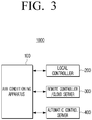
- FIG. 3 is a block diagram for explaining a system 1000 controlling the air conditioning apparatus 100 according to an embodiment of the disclosure.
- the air conditioning apparatus 100 may receive a control command from the cloud server 300 every hour and perform a corresponding operation.
- the automatic control server 400 may communicate with the air conditioning apparatus 100.
- the external automatic control server 400 may perform the operations of conveying a command regarding a control operation to the air conditioning apparatus 100, analyzing environmental information, and generating or modifying schedule information, at each predetermined time, and may transmit the result thereof to the air conditioning apparatus 100.
- the operation state may include information on operation modes and output intensities.
- the operation modes may refer to different modes such as cooling, heating, blowing and air cleaning functions
- the output intensities may refer to different outputs in the same operation mode, such as cooling (strong), cooling (medium), and cooling (weak).
- the load may refer to various information that having an influence on the time for reaching the target temperature.
- the load is used to refer to one representative value in which various environmental information are combined, rather than each information.
- the load may be a value calculated by reflecting at least one of an indoor temperature, an outdoor temperature, a humidity, the number of persons in an air conditioning target, body temperatures of the persons, or an amount of dust.
- one load value may be calculated through a conversion process corresponding to each information.
- a load obtained in this manner may have a different value depending on time, which will be described in detail below with reference to FIGS. 4 to 7 .
- FIGS. 4 to 7 are diagrams for explaining an amount of change in load depending on time according to an embodiment of the disclosure.
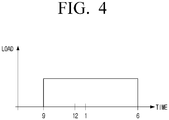
- FIG. 4 is a diagram for explaining an amount of change in load relative to time according to an embodiment of the disclosure.
- the load has a constant value from 9 o'clock to 6 o'clock, and the load at the other times is 0.
- the load is kept constant, not adjusting a range of fluctuation in the load over time. Therefore, the schedule information reflecting this may enable the air conditioning apparatus 100 to be set to operate with a constant output from 9 o'clock to 6 o'clock.
- FIG. 4 may be relevant to a pattern of load, and the pattern of load may show a change in load over time.
- the schedule information reflecting FIG. 4 may be set as basic schedule information.
- the schedule information should be set as the simplest one because there is no data stored. Therefore, the schedule information reflecting FIG. 4 may be set as basic schedule information.
- an operation start time and an operation end time of the air conditioning apparatus 100 at which the load is changed i.e. 9 o'clock and 6 o'clock, may be changed.
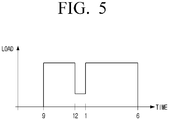
- FIG. 5 is a diagram for explaining an amount of change in load according to another embodiment of the disclosure.
- FIG. 6 is a diagram for explaining an amount of change in load according to another embodiment of the disclosure.
- FIG. 6 it corresponds to a situation opposite to that of FIG. 5 .
- it may correspond to a space having a high load between 12 o'clock and 1 o'clock and a low load at the other times. It may correspond to a case such as a restaurant where a load is high only during a lunch time.
- it may correspond to a situation from 12 o'clock to 1 o'clock where the persons go out as in FIG. 5 and move to the space corresponding to FIG. 6 .
- a load at a time other than 12 o'clock to 1 o'clock is not indicated as zero (0) because there are workers working in the restaurant.
- the load at a time other than 12 o'clock to 1 o'clock may be zero (0).
- FIGS. 4 to 6 illustrate graphs in which the amount of load is changed instantaneously.
- the load may be measured on an hourly basis.
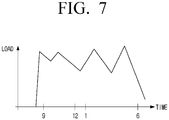
- FIG. 7 is a diagram for explaining an amount of change in load according to another embodiment of the disclosure.
- FIG. 7 it is illustrated that a measurement cycle is shortened to check that the load increases at a certain speed.
- the load is measured on an hourly basis. If the measurement duration is shortened, however, a slope concerning the amount of change in load can be seen as in FIG. 7 .
- FIG. 7 there may be no regularity depending on time.
- a certain pattern is shown from 9 o'clock a.m. to 6 o'clock p.m., but in FIG. 7 , increases and decreases are repeated without having a certain pattern.
- the processor 140 may apply general schedule information as in FIG. 4 .
- the air conditioning apparatus 100 may be controlled according to an average value of loads that are changed at a certain time.
- the change in load value may be calculated through the environmental information collected by the sensor 120.
- the environmental information may include spatial information, temporal information, and person information.
- space A has a wideness of 100 and space B has a wideness of 200, under the same conditions that the air conditioning object is in a square structure and the number of persons is five.
- a current temperature is 30 degrees
- a target temperature is set to 25 degrees
- the same air conditioning apparatus 100 is used for a cooling function with the same output
- space B may be predicted to take a longer time to reach the target temperature.
- the air conditioning apparatus 100 may ascertain a time for reaching the target temperature by using the converted load values.
- the temporal information may be an operation start time and an operation end time of the air conditioning apparatus 100, an efficient operation-required period for saving energy, and a time when an indoor temperature rapidly rises (or falls). In addition, it may depend on seasons whether to operate the air conditioning apparatus 100. Thus, the temporal information may include information on seasons.
- a load may be added to the temporal information for the period from June to August.
- the air conditioning apparatus 100 may perform an operation of adding +20 to a load value for the period from June to August.
- the person information may include the number of persons, temperatures of the persons, a density of the persons, an activity of the persons, a clothing amount, an age, a race (or a nationality or a country), and user-specified setting records.
- the persons may refer to people who are present in an air conditioning target, and the density of the persons may refer to the number of persons relative to a wideness of the air conditioning target.
- the ascertainment of the activity of the persons may refer to ascertaining if the persons in the air conditioning target are stationary or moving. If the persons are moving for a certain time, the air conditioning apparatus 100 may ascertain that they are exercising. Here, it may be predicted in advance that the persons will feel hot soon, and the processor 140 may increase an output of the air conditioning apparatus 100 in advance.
- FIGS. 8 to 10 are diagrams for explaining an operation of collecting environmental information according to an embodiment of the disclosure.
- FIG. 8 is a diagram for explaining a state where there are persons in an air conditioning target 800 where the air conditioning apparatus 100 operates.
- the air conditioning apparatus 100 may determine the number of persons in the air conditioning target 800 using the sensor 120.
- the persons are expressed as being irregularly located, but the sensor 120 may ascertain the number of persons even if the persons are present in a regular form. For example, the number of persons may be ascertained even in a space where a density of persons is very high.
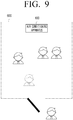
- FIG. 9 is a diagram for explaining a movement of a person according to another embodiment of the disclosure.
- the air conditioning apparatus 100 may determine a change in the number of persons in the space of the air conditioning target 800 using the sensor 120.
- the sensor 120 may detect a movement of the person, and thus ascertain a change in the number of persons in the space of the air conditioning target 800.
- the air conditioning apparatus 100 may ascertain the change in the number of persons by checking the number of persons who are currently present in the air conditioning target 800 at each predetermined time instead of detecting the movement of the person.
- the load reflects environmental information varying depending on time, but may reflect environmental information that does not vary depending on time. For example, it may be spatial information. Normally, once the air conditioning apparatus 100 is installed, its location is rarely changed, and thus, the air conditioning target 800 is not changed depending on time. That is, the air conditioning target 800 of the air conditioning apparatus 100 once installed, i.e. an office or a classroom, has a constant area, a load reflecting this may be constant.
- FIGS. 8 to 9 illustrate a form 800 in which the air conditioning target 800 have right-angled corner portions, but the sensor 120 may also detect a form of an air conditioning target having curved corners.
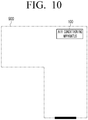
- FIG. 10 is a diagram for explaining an air conditioning target according to another embodiment of the disclosure.
- the sensor 120 of the air conditioning apparatus 100 may detect a form of an air conditioning target. Referring to FIG. 10 , even when the air conditioning target is not in a general rectangle structure, a specific form may be detected using the sensor 120. The sensor 120 may detect a space having an unusual form 900 as illustrated in FIG. 10 .
- FIG. 11 is a diagram for explaining a learning model according to an embodiment of the disclosure.
- load information may be calculated by a machine learning-based recognition system.
- a deep learning-based recognition system is described as an example of a classification system using a series of machine learning algorithms based on neural networks.
- the deep learning-based recognition system may include at least one classifier.
- the classifier may correspond to one or a plurality of processors 140.
- the processor 140 may be implemented as an array of multiple logic gates, or implemented as a combination of a general-purpose microprocessor 140 and a memory 130 storing a program that may be executed in the microprocessor 140.
- the classifier may be implemented as a neural network-based classifier, a support vector machine (SVM), an adaboost classifier, a Bayesian classifier, a perceptron classifier, and the like.
- SVM support vector machine
- An embodiment of the disclosure in which the classifier is implemented as a convolutional neural network (CNN)-based classifier will be described below.
- the neural network-based classifier which is an arithmetic operation model implemented to emulate a calculation ability of a biological system by using numerous artificial neurons connected by connection lines, performs a cognitive function or a learning process of a human through the connection lines having connection intensities (weights).
- the classifier of the disclosure is not limited thereto, and may be implemented as any of the various classifiers described above.
- a general neural network includes an input layer 1110, a hidden layer 1120, and an output layer 1130.
- the hidden layer 1120 may include one or more layers depending on the need.
- a back propagation algorithm may be used as an algorithm for training the neural network.
- the classifier may train the neural network such that if certain data is input to the input layer 1110 of the neural network, output data with respect to the input learning data is output to the output layer 1130 of the neural network. If feature information extracted from a captured image is input, the classifier may classify patterns of the feature information into any one of the various classes by using the neural network and output the result of classification.
- the input layer 1110 may be a data value measured by the sensor 120.
- nodes 1111, 1112 and 1113 of the input layer 1110 may be a temperature, a humidity, the number of persons, body temperatures of the persons, behaviors of the persons, a size of a space, a structure of the space, or the like.
- the example of the input layer 1110 described above is only for illustrative purposes, and is not limited thereto. That is, the number of nodes of the input layer 1110 may be changed according to user's settings.
- the nodes 1111, 1112 and 1113 of the input layer 1110 are illustrated in three types, but this may be changed.
- Data received through the sensor 120 may correspond to the input layer 1110.
- the output layer 1130 may be an output intensity of the driver 110 or an operating mode of the driver 110.
- the processor 140 may determine an operation mode or an output intensity of the driver 110, which are included in the schedule information, through various data received from the sensor 120.
- the processor 140 may learn based on whether or not power consumption according to the operation mode or the output intensity of the driver 110 is appropriate. In the learning process, a time for reaching a target temperature may also be considered. The processor 140 may learn while considering the time for reaching the target temperature with the operation mode or the output intensity of the driver 110 obtained as an output value.
- the output layer 1130 may be set as a load in that the operation mode or the output intensity may vary depending on a size of the load.
- the processor 140 needs to calculate an output value for ultimately controlling the driver 110 on the basis of the data received from the sensor 120.
- the processor 140 may use a deep learning-based recognition system as a classification system using a series of machine learning algorithms based on neural networks.
- the hidden layer 1120 is expressed to include two stages in FIG. 11 , the classification system may include only one-stage hidden layer. In addition, the number of nodes included in the hidden layer 1120 may also be changed.
- FIGS. 12 to 17 are diagrams for explaining schedule information.
- FIG. 12A is a diagram for explaining a change in load depending on time.
- a plurality of loads 1210 are classified into, load #1 1211, load #2 1212, and load #3 1213 on a daily basis.
- Times are classified on an hourly basis, and a load varies depending on the classified time 1220. For example, loads from 9 o'clock to 12 o'clock among load #1 1211 are 30.
- Load #1 1211, load #2 1212, and load #3 1213 refer to load information on a daily basis. A load value is stored for each hour on a daily basis.
- FIG. 12B is a diagram for explaining an operation state of the air conditioning apparatus 100 corresponding to the load.
- the operation state may include information on operation modes and output intensities.
- the operation modes may refer to different modes such as cooling, heating, blowing and air cleaning functions
- the output intensities may refer to different outputs in the same operation mode, such as cooling (strong), cooling (medium), and cooling (weak).
- the operation state is not limited to the operation modes and the output intensities, and may additionally include information on functions and operations.
- the load is zero (0) before 9 o'clock and is 30 from 9 o'clock.
- the air conditioning apparatus 100 needs to operate in advance in an air conditioning target having a load of 30 from 9 o'clock. This is because a user may already feel hot if the air conditioning apparatus 100 starts to operate from 9 o'clock, at which the load becomes 30.
- the operation state of the air conditioning apparatus 100 may be changed to a cooling (strong) mode 15 minutes earlier than the point-in-time when the load becomes 30.
- the operation state may be changed to a cooling (medium) mode.
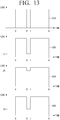
- FIG. 13 is a diagram for explaining that a next load is predicted by combining individual load #1 1211, load #2 1212, and load #3 1213 illustrated in FIG. 12A .
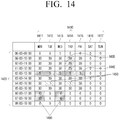
- FIG. 14 is a table illustrating only load values among schedule information.
- a load value may only reflect the number of persons.
- the sensor 120 may measure the number of persons depending on time. After ascertained, the measured number of persons may be converted into a corresponding load value and stored for each hour.
- loads are shown to be changed on an hourly basis in a weekly cycle.
- times are classified on an hourly basis, and load information may be seen based on the classified times 1420 for each day of the week, i.e. Monday 1411, Tuesday 1412, Wednesday 1413, Thursday 1414, Friday 1415, Saturday 1416 and Sunday 1417.
- the air conditioning target may be a classroom or an office where there are no person on the weekend.
- loads are zero (0) before 9 o'clock a.m. and after 6 o'clock p.m.
- the air conditioning apparatus 100 may be controlled not to operate.
- Most loads from 9 o'clock a.m. to 12 o'clock p.m. are indicated as 30. This may mean that a load value concerning the number of persons is 30.
- load values from 9 o'clock a.m. to 12 o'clock p.m. for Thursday may be set to 29 (1430), which means that one person is unusually absent in the air conditioning target. For example, when a person is not present in the air conditioning target at a specific time because he/she is on a business trip or is late, this may be ascertained through the sensor 120.
- a load is expressed as 5 indicating that most of the persons are out of the air conditioning target and only some of the persons remain there (1440).
- the load from 12 o'clock to 13 o'clock may be set to 5.
- the persons After 13 o'clock, the persons returns to the air conditioning target and a load value may be set back to 30.
- loads from 14 o'clock to 15 o'clock for Tuesday and Thursday are indicated as 1 (1450). This is based on the assumption that most persons are not present in the air conditioning target because they are in a physical education class on a specific day of the week. Here, a situation is reflected where only one person remains there, and a load may actually be zero (0) or more than 1. In general, a physical education for a class is carried out at a fixed time on a weekly basis. Thus, load values from 14 o'clock to 15 o'clock for next Tuesday and Thursday may be similar.
- the processor 140 may issue a control command corresponding to the schedule information. For example, an output of the air conditioning apparatus 100 may be lowered before 14 o'clock on Tuesdays and Thursdays to avoid wasting unnecessary power.
- loads may be 10 from 16 o'clock to 18 o'clock on Monday and Wednesday (1460), but may be zero (0) on Tuesday, Thursday and Friday. It is reflected that a class ends at 16 o'clock regularly and there is no person in the air conditioning target thereafter, but on Monday and Wednesday a few people remain in the space for other activities from 16 o'clock to 18 o'clock.
- Load values may be stored while reflecting information on the air conditioning target of the air conditioning apparatus 100.
- the stored load values may be reflected in schedule information through the processor 140.
- the schedule information may include a control command for operating the air conditioning apparatus 100 from 8:45 a.m., with the prediction that the load rapidly increases to 30 at 9 o'clock a.m.
- the schedule information may also include a command for stopping the operation of the air conditioning apparatus 100 from 11:45, with the prediction that the load decreases to 5 at 12 o'clock.
- the schedule information may include a control command for operating the air conditioning apparatus 100 at 12:45 in advance, with the prediction that the load rapidly increases back to 30 from 13 o'clock.
- the schedule information may include a control command for changing the operation mode of the air conditioning apparatus 100 to a low-output mode from 15:45, with the prediction that the load decreases back to 10 at 16 o'clock.
- the control unit may include a control command to stop the operation mode of the air conditioning apparatus 100 from 17:45, with the prediction that the load becomes zero (0) after 18 o'clock.
- FIG. 15 is a diagram illustrating load information on a weekly basis according to another embodiment of the disclosure.
- This change is repeated on a weekly basis. Thus, it may be checked if an indoor temperature has repeatedly increased at a specific time using the stored data. If the rising pattern has been repeatedly shown by a predetermined number of times or more, a load may be raised and the raised load may be stored as in FIG. 15 . After the load is changed, the schedule information may be generated or modified while reflecting the change.
- the schedule information may correspond to a combination of control commands for the air conditioning apparatus 100 to analyze data stored for a certain period and perform corresponding operations depending on time.
- the schedule information is changed according to a change in the stored load, but it is general that the schedule information once applied basically remain unchanged.
- an embodiment of the disclosure may include an operation of changing the applied schedule information.
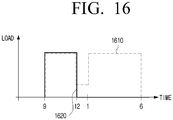
- FIG. 16 is a diagram for comparing a load 1610 corresponding to the applied schedule information and a currently measured load 1620.
- the load values 1620 measured after 12 o'clock are maintained as zero (0) in FIG. 16 .
- the previous loads 1610 are also low from o'clock 12 to 1 o'clock, and the processor 140 may not apply new schedule information.
- the difference from the previously loads 1610 is great, which corresponds to the predetermined condition, and the processor 140 may not apply the existing schedule information.
- an output intensity of the driver 110 may be regulated without applying the existing schedule information.
- FIG. 17 is a diagram for explaining modification or generation of schedule information.
- a new load pattern 1710 may be generated as illustrated in FIG. 17 .
- the existing schedule information may be modified or a new schedule information may be generated.
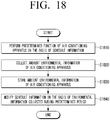
- FIG. 18 is a flowchart for explaining a control method of the air conditioning apparatus 100 according to an embodiment of the disclosure.
- a predetermined function of the air conditioning apparatus 100 may be performed on the basis of schedule information (S1810).
- the control method may further include previously storing a plurality of schedule information for each day of the week in the air conditioning apparatus 100.
- the predetermined function of the air conditioning apparatus 100 may be performed on the basis of schedule information corresponding to a current day of the week among the plurality of schedule information.
- the predetermined function of the air conditioning apparatus 100 may be performed on the basis of initial schedule information selected by a user among a plurality of initial schedule information as previously stored.
- the predetermined function may be performed on the basis of the collected environmental information rather than the schedule information.
- ambient environmental information of the air conditioning apparatus 100 may be collected (S1820), and the collected ambient environmental information may be stored (S1830).
- the environmental information may include at least one of an indoor temperature, an outdoor temperature, a humidity, the number of persons in an air conditioning target, or an amount of dust.
- the schedule information may be modified based on environmental information collected during a predetermined period (S1840).
- the schedule information may be modified by classifying the collected environmental information as stored for each time zone and comparing the classified environmental information for each time zone with an operation state for each time zone in the schedule information.
- a load for each time zone may be predicted on the basis of the classified environmental information for each time zone, and the operation state for each time zone in the schedule information may be modified on the basis of the predicted load for each time zone.
- the operation state for each time zone may be predicted from the classified environmental information for each time zone using a predetermined learning model, and the operation state for each time zone in the schedule information may be modified by determining an operation mode of the air conditioning apparatus 100 and an output intensity in the operation mode for the time zone on the basis of the predicted load for the each time zone.
- the operation state for each time zone in the schedule information may be modified on the basis of the predicted load for each time zone and spatial information of an air conditioning target.
- the air conditioning apparatus 100 is controlled using the schedule information classified in time units.
- the user does not need to control the air conditioning apparatus 100 every time and the convenience of the user can be improved.
- the schedule information is modified on the basis of the collected environmental information and the modified schedule information is reflected in controlling the air conditioning apparatus 100. Therefore, it is possible to automatically control the air conditioning apparatus 100 without requiring the user to control an operation state of the air conditioning apparatus 100 to be suitable for an personal environment, thereby improving the convenience of the user.
- the air conditioning apparatus 100 performs an operation of modifying schedule information when the environmental information is analyzed to be in a different pattern from the schedule information that is basically applied.
- the processor 140 may predict a future situation by comparing environmental information collected for a predetermined time with existing schedule information. In addition, if the predicted situation is different from the existing schedule information, the processor 140 may modify the existing schedule information, thereby making it possible to efficiently manage the air conditioning apparatus 100.
- the air conditioning apparatus 100 may cope with an exceptional situation without modifying the existing schedule information.
- the processor 140 may compare environmental information measured by the sensor with schedule information currently applied to the air conditioning apparatus 100. When an exceptional situation occurs in which there is a great difference between the two values of the compared information, the processor 140 may recognize the situation.
- the driver 110 may be controlled to cancel the schedule information previously applied to the air conditioning apparatus 100 such that the air conditioning apparatus 100 operates in a state corresponding to the collected environmental information.
- the air conditioning apparatus 100 may quickly cope with an exceptional situation without modifying the existing schedule information, thereby efficiently managing power of the air conditioning apparatus 100.
- the user does not need to control the air conditioning apparatus 100 separately in an exceptional situation, thereby improving the convenience of the user.
- the air conditioning apparatus 100 may predict a future change in environmental information in advance and operate while reflecting the change.
- the air conditioning apparatus 100 may operate in advance, while predicting in advance that there will be an increase in the number of persons.
- the air conditioning apparatus 100 operating based on the predicted schedule information makes it possible to maintain a comfortable temperature at all times.
- the various embodiments described above may be implemented through a recording medium that is readable by a computer or a similar device by using software, hardware, or a combination thereof.
- the embodiments described in the disclosure may be implemented using at least one of application specific integrated circuits (ASICs), digital signal processors (DSPs), digital signal processing devices (DSPDs), programmable logic devices (PLDs), field programmable gate arrays (FPGAs), processors 140, controllers, micro-controllers, micro-processors 140, or other electrical units for performing functions.
- ASICs application specific integrated circuits
- DSPs digital signal processors
- DSPDs digital signal processing devices
- PLDs programmable logic devices
- FPGAs field programmable gate arrays
- processors 140 controllers, micro-controllers, micro-processors 140, or other electrical units for performing functions.
- the embodiments described in the specification may be implemented by processors 140 themselves.
- the embodiments, such as procedures and functions, described in the specification may be implemented by separate software
- computer instructions for performing processing operations of the air conditioning apparatus 100 according to the various embodiments of the disclosure described above may be stored in a non-transitory computer-readable recording medium.
- the computer instructions stored in the non-transitory computer-readable medium may cause a specific device to perform the processing operations of the air conditioning apparatus 100 according to the various embodiments described above when executed by a processor 140 of the specific device.
- the non-transitory computer-readable medium refers to a medium that stores data semi-permanently, rather than storing data for a short moment, such as a register, a cache, or a memory 130, and is readable by an apparatus.
- a specific example of the non-transitory computer-readable medium may include a compact disc (CD), a digital versatile disk (DVD), a hard disk, a Blu-ray disk, a universal serial bus (USB), a memory 130 card, or a ROM.
Landscapes
- Engineering & Computer Science (AREA)
- Chemical & Material Sciences (AREA)
- Combustion & Propulsion (AREA)
- Mechanical Engineering (AREA)
- General Engineering & Computer Science (AREA)
- Signal Processing (AREA)
- Physics & Mathematics (AREA)
- Fuzzy Systems (AREA)
- Mathematical Physics (AREA)
- Human Computer Interaction (AREA)
- Air Conditioning Control Device (AREA)
Applications Claiming Priority (2)
| Application Number | Priority Date | Filing Date | Title |
|---|---|---|---|
| KR1020170124882A KR102379638B1 (ko) | 2017-09-27 | 2017-09-27 | 공기조화장치 및 그의 제어 방법 |
| PCT/KR2018/010540 WO2019066301A1 (ko) | 2017-09-27 | 2018-09-10 | 공기조화장치 및 그의 제어 방법 |
Publications (3)
| Publication Number | Publication Date |
|---|---|
| EP3663660A1 true EP3663660A1 (de) | 2020-06-10 |
| EP3663660A4 EP3663660A4 (de) | 2020-10-14 |
| EP3663660B1 EP3663660B1 (de) | 2024-03-13 |
Family
ID=65901695
Family Applications (1)
| Application Number | Title | Priority Date | Filing Date |
|---|---|---|---|
| EP18860635.4A Active EP3663660B1 (de) | 2017-09-27 | 2018-09-10 | Klimaanlage |
Country Status (5)
| Country | Link |
|---|---|
| US (1) | US20200248916A1 (de) |
| EP (1) | EP3663660B1 (de) |
| KR (1) | KR102379638B1 (de) |
| CN (1) | CN111164351B (de) |
| WO (1) | WO2019066301A1 (de) |
Cited By (1)
| Publication number | Priority date | Publication date | Assignee | Title |
|---|---|---|---|---|
| JPWO2022185399A1 (de) * | 2021-03-02 | 2022-09-09 |
Families Citing this family (16)
| Publication number | Priority date | Publication date | Assignee | Title |
|---|---|---|---|---|
| TWI813745B (zh) * | 2018-09-25 | 2023-09-01 | 日商夏普股份有限公司 | 空氣清淨機及空氣清淨機的控制方法 |
| US11619413B2 (en) | 2019-07-12 | 2023-04-04 | Lg Electronics Inc. | Intelligent air cleaner, indoor air quality control method and control apparatus using intelligent air cleaner |
| WO2021010506A1 (ko) * | 2019-07-12 | 2021-01-21 | 엘지전자 주식회사 | 지능형 공기 청정기를 이용한 실내 공기질 제어방법 및 제어 장치 |
| KR102114989B1 (ko) * | 2019-12-10 | 2020-05-26 | 한국산업기술시험원 | 심층 강화 학습 알고리즘을 적용한 공기조화기 정밀 학습 시스템 및 그 방법 |
| KR102747287B1 (ko) * | 2020-08-20 | 2024-12-31 | 삼성전자주식회사 | 제어 장치, 공기 조화 장치 및 제어 방법 |
| KR102507614B1 (ko) * | 2021-06-14 | 2023-03-07 | 경희대학교 산학협력단 | 기계학습을 이용한 실내 미세먼지 농도 예측 시스템, 예측방법 및 이를 이용한 공기청정기 가동여부 판단 운영시스템 |
| KR20230013424A (ko) * | 2021-07-19 | 2023-01-26 | 주식회사 엔이알 | 스마트미러형 공기청정기를 적용한 IoT 기반의 공기청정 시스템 |
| KR102770469B1 (ko) * | 2021-08-09 | 2025-02-18 | 단국대학교 산학협력단 | 냉난방 설비의 동작상태 판단을 위한 학습방법 및 장치 |
| CN114234397B (zh) * | 2021-11-25 | 2023-08-15 | 青岛海尔空调器有限总公司 | 用于控制空调器的方法及装置、空调器 |
| US20230280061A1 (en) * | 2022-03-01 | 2023-09-07 | Johnson Controls Tyco IP Holdings LLP | Building automation system with edge processing diversity |
| JP7664875B2 (ja) * | 2022-03-01 | 2025-04-18 | 株式会社東芝 | 流動挙動予測システム、流動挙動予測方法、予測モデル生成方法および学習済予測モデル |
| US12530040B2 (en) | 2022-03-01 | 2026-01-20 | Tyco Fire & Security Gmbh | Building automation system with edge device common data bus |
| CN114923267A (zh) * | 2022-05-19 | 2022-08-19 | 浙江启真医健科技有限公司 | 基于空间人数的温度控制方法及系统 |
| US12607380B2 (en) | 2023-06-21 | 2026-04-21 | Haier Us Appliance Solutions, Inc. | System and method for operating an air conditioner unit according to a predetermined schedule |
| KR102701384B1 (ko) * | 2023-10-11 | 2024-09-02 | 탐나 주식회사 | 인공지능 모델을 이용한 식물 인테리어 기반 실내환경을 조절 방법 및 장치 |
| WO2025249677A1 (ko) * | 2024-05-28 | 2025-12-04 | 제로웰 주식회사 | 인공지능 선풍기 및 인공지능 선풍기의 바람 공급 방법 |
Family Cites Families (17)
| Publication number | Priority date | Publication date | Assignee | Title |
|---|---|---|---|---|
| JPH0658591A (ja) * | 1992-08-06 | 1994-03-01 | Hitachi Ltd | 空気調和機の入タイマ予約運転方法 |
| KR100696122B1 (ko) * | 2005-02-05 | 2007-03-21 | 엘지전자 주식회사 | 공기조화기 운전제어장치 및 그 방법 |
| JP2009293847A (ja) * | 2008-06-04 | 2009-12-17 | Toshiba Corp | 空調制御システムおよびこれに利用する空調機制御装置、空調制御監視方法 |
| JP2010286190A (ja) * | 2009-06-12 | 2010-12-24 | Yamatake Corp | 負荷予測方法及び負荷予測装置 |
| CA2818696C (en) * | 2010-12-31 | 2020-07-28 | Nest Labs, Inc. | Flexible functionality partitioning within intelligent-thermostat-controlled hvac systems |
| KR20130120865A (ko) * | 2012-04-26 | 2013-11-05 | 에스케이텔레콤 주식회사 | 빌딩 에너지 관리 시스템에서의 냉동기 대수 제어 장치 및 방법 |
| US9298197B2 (en) * | 2013-04-19 | 2016-03-29 | Google Inc. | Automated adjustment of an HVAC schedule for resource conservation |
| EP2990734B1 (de) * | 2013-04-22 | 2018-12-26 | Mitsubishi Electric Corporation | Klimaanlagensteuerungssystem und -verfahren |
| KR20160010982A (ko) * | 2014-07-21 | 2016-01-29 | 엘지전자 주식회사 | 공기조화기 및 그 제어방법 |
| US20160146497A1 (en) * | 2014-11-20 | 2016-05-26 | Honeywell International Inc. | Maintaining an attribute of a building |
| CN107110537B (zh) * | 2014-12-22 | 2021-02-02 | 特灵国际有限公司 | 利用移动设备的占体感应和建筑物控制 |
| WO2016186417A1 (ko) * | 2015-05-15 | 2016-11-24 | 삼성전자 주식회사 | 공조 기기의 기동 제어 방법 및 장치 |
| KR102424689B1 (ko) * | 2015-05-15 | 2022-07-26 | 삼성전자 주식회사 | 공조 기기의 기동 제어 방법 및 장치 |
| KR101571806B1 (ko) * | 2015-09-21 | 2015-11-25 | (주)가교테크 | 공기조화시스템의 무인 최적제어 방법 |
| CN105318499B (zh) * | 2015-09-30 | 2018-06-01 | 广东美的制冷设备有限公司 | 用户行为自学习空调系统及其控制方法 |
| JP6807556B2 (ja) * | 2015-10-01 | 2021-01-06 | パナソニックIpマネジメント株式会社 | 空調制御方法、空調制御装置及び空調制御プログラム |
| KR101757446B1 (ko) * | 2016-11-10 | 2017-07-13 | (주)아스크스토리 | 인공지능을 이용한 공기조화시스템 제어 장치 및 그 방법 |
-
2017
- 2017-09-27 KR KR1020170124882A patent/KR102379638B1/ko active Active
-
2018
- 2018-09-10 EP EP18860635.4A patent/EP3663660B1/de active Active
- 2018-09-10 US US16/651,164 patent/US20200248916A1/en not_active Abandoned
- 2018-09-10 WO PCT/KR2018/010540 patent/WO2019066301A1/ko not_active Ceased
- 2018-09-10 CN CN201880062923.6A patent/CN111164351B/zh active Active
Cited By (2)
| Publication number | Priority date | Publication date | Assignee | Title |
|---|---|---|---|---|
| JPWO2022185399A1 (de) * | 2021-03-02 | 2022-09-09 | ||
| WO2022185399A1 (ja) * | 2021-03-02 | 2022-09-09 | 三菱電機株式会社 | 空気調和システムおよび学習装置 |
Also Published As
| Publication number | Publication date |
|---|---|
| WO2019066301A1 (ko) | 2019-04-04 |
| EP3663660A4 (de) | 2020-10-14 |
| US20200248916A1 (en) | 2020-08-06 |
| CN111164351B (zh) | 2022-07-29 |
| CN111164351A (zh) | 2020-05-15 |
| KR20190036574A (ko) | 2019-04-05 |
| KR102379638B1 (ko) | 2022-03-29 |
| EP3663660B1 (de) | 2024-03-13 |
Similar Documents
| Publication | Publication Date | Title |
|---|---|---|
| EP3663660B1 (de) | Klimaanlage | |
| Cao et al. | Smart sensing for HVAC control: Collaborative intelligence in optical and IR cameras | |
| US10481780B2 (en) | Adjusting proximity thresholds for activating a device user interface | |
| US11874637B2 (en) | Remote device control and energy monitoring by analyzing and applying rules | |
| Wei et al. | Vision-based detection and prediction of equipment heat gains in commercial office buildings using a deep learning method | |
| US10436467B2 (en) | Temperature control method and apparatus | |
| US10443879B2 (en) | HVAC control system encouraging energy efficient user behaviors in plural interactive contexts | |
| Makonin et al. | A smarter smart home: Case studies of ambient intelligence | |
| Akbar et al. | Contextual occupancy detection for smart office by pattern recognition of electricity consumption data | |
| CN106527664B (zh) | 自助终端节能控制方法及装置 | |
| US20210164663A1 (en) | Integrated management method and system for kitchen environment using artificial intelligence | |
| US20120086568A1 (en) | Inferring Building Metadata From Distributed Sensors | |
| US10127782B1 (en) | Configurable sensor | |
| CN106196433A (zh) | 一种空调控制参数确定装置及方法、空调及服务器 | |
| CN101937194A (zh) | 具有学习功能的智能控制系统和方法 | |
| CN106062485A (zh) | 用于控制空调设备或空调系统的舒适温度的装置和方法 | |
| CN106164596A (zh) | 用于控制hvac系统中的能量的方法和设备 | |
| KR102607366B1 (ko) | 공기 조화 장치 및 이의 제어 방법 | |
| Jazizadeh et al. | Personalized Thermal Comfort-Driven Control in HVAC-OperatedOffice Buildings | |
| Wang et al. | A smart campus internet of things framework | |
| US20210311580A1 (en) | Heated atm touch screen | |
| CN103824118A (zh) | 图书馆座位实时管理系统 | |
| KR20130122205A (ko) | 사용자 만족도 및 에너지 효율을 높이기 위한 냉난방 제어 방법 및 시스템 | |
| US20160338177A1 (en) | Lighting control system and lighting control method | |
| WO2023089723A1 (ja) | 検温システム、検温装置、検温方法及びプログラム |
Legal Events
| Date | Code | Title | Description |
|---|---|---|---|
| STAA | Information on the status of an ep patent application or granted ep patent |
Free format text: STATUS: THE INTERNATIONAL PUBLICATION HAS BEEN MADE |
|
| PUAI | Public reference made under article 153(3) epc to a published international application that has entered the european phase |
Free format text: ORIGINAL CODE: 0009012 |
|
| STAA | Information on the status of an ep patent application or granted ep patent |
Free format text: STATUS: REQUEST FOR EXAMINATION WAS MADE |
|
| 17P | Request for examination filed |
Effective date: 20200303 |
|
| AK | Designated contracting states |
Kind code of ref document: A1 Designated state(s): AL AT BE BG CH CY CZ DE DK EE ES FI FR GB GR HR HU IE IS IT LI LT LU LV MC MK MT NL NO PL PT RO RS SE SI SK SM TR |
|
| AX | Request for extension of the european patent |
Extension state: BA ME |
|
| A4 | Supplementary search report drawn up and despatched |
Effective date: 20200911 |
|
| RIC1 | Information provided on ipc code assigned before grant |
Ipc: F24F 110/20 20180101ALI20200907BHEP Ipc: F24F 120/10 20180101ALI20200907BHEP Ipc: F24F 11/64 20180101ALI20200907BHEP Ipc: F24F 11/62 20180101ALI20200907BHEP Ipc: F24F 110/10 20180101ALI20200907BHEP Ipc: F24F 120/12 20180101ALN20200907BHEP Ipc: F24F 11/30 20180101AFI20200907BHEP Ipc: F24F 110/65 20180101ALN20200907BHEP Ipc: F24F 11/61 20180101ALI20200907BHEP Ipc: F24F 110/64 20180101ALI20200907BHEP Ipc: F24F 110/12 20180101ALI20200907BHEP |
|
| DAV | Request for validation of the european patent (deleted) | ||
| DAX | Request for extension of the european patent (deleted) | ||
| STAA | Information on the status of an ep patent application or granted ep patent |
Free format text: STATUS: EXAMINATION IS IN PROGRESS |
|
| 17Q | First examination report despatched |
Effective date: 20220704 |
|
| GRAP | Despatch of communication of intention to grant a patent |
Free format text: ORIGINAL CODE: EPIDOSNIGR1 |
|
| STAA | Information on the status of an ep patent application or granted ep patent |
Free format text: STATUS: GRANT OF PATENT IS INTENDED |
|
| RIC1 | Information provided on ipc code assigned before grant |
Ipc: F24F 120/12 20180101ALN20231023BHEP Ipc: F24F 110/65 20180101ALN20231023BHEP Ipc: F24F 120/10 20180101ALI20231023BHEP Ipc: F24F 110/20 20180101ALI20231023BHEP Ipc: F24F 110/10 20180101ALI20231023BHEP Ipc: F24F 110/64 20180101ALI20231023BHEP Ipc: F24F 110/12 20180101ALI20231023BHEP Ipc: F24F 11/62 20180101ALI20231023BHEP Ipc: F24F 11/61 20180101ALI20231023BHEP Ipc: F24F 11/64 20180101ALI20231023BHEP Ipc: F24F 11/30 20180101AFI20231023BHEP |
|
| INTG | Intention to grant announced |
Effective date: 20231113 |
|
| RIC1 | Information provided on ipc code assigned before grant |
Ipc: F24F 120/12 20180101ALN20231103BHEP Ipc: F24F 110/65 20180101ALN20231103BHEP Ipc: F24F 120/10 20180101ALI20231103BHEP Ipc: F24F 110/20 20180101ALI20231103BHEP Ipc: F24F 110/10 20180101ALI20231103BHEP Ipc: F24F 110/64 20180101ALI20231103BHEP Ipc: F24F 110/12 20180101ALI20231103BHEP Ipc: F24F 11/62 20180101ALI20231103BHEP Ipc: F24F 11/61 20180101ALI20231103BHEP Ipc: F24F 11/64 20180101ALI20231103BHEP Ipc: F24F 11/30 20180101AFI20231103BHEP |
|
| GRAS | Grant fee paid |
Free format text: ORIGINAL CODE: EPIDOSNIGR3 |
|
| GRAA | (expected) grant |
Free format text: ORIGINAL CODE: 0009210 |
|
| STAA | Information on the status of an ep patent application or granted ep patent |
Free format text: STATUS: THE PATENT HAS BEEN GRANTED |
|
| AK | Designated contracting states |
Kind code of ref document: B1 Designated state(s): AL AT BE BG CH CY CZ DE DK EE ES FI FR GB GR HR HU IE IS IT LI LT LU LV MC MK MT NL NO PL PT RO RS SE SI SK SM TR |
|
| REG | Reference to a national code |
Ref country code: GB Ref legal event code: FG4D |
|
| REG | Reference to a national code |
Ref country code: CH Ref legal event code: EP |
|
| REG | Reference to a national code |
Ref country code: DE Ref legal event code: R096 Ref document number: 602018066682 Country of ref document: DE |
|
| REG | Reference to a national code |
Ref country code: IE Ref legal event code: FG4D |
|
| PG25 | Lapsed in a contracting state [announced via postgrant information from national office to epo] |
Ref country code: LT Free format text: LAPSE BECAUSE OF FAILURE TO SUBMIT A TRANSLATION OF THE DESCRIPTION OR TO PAY THE FEE WITHIN THE PRESCRIBED TIME-LIMIT Effective date: 20240313 |
|
| REG | Reference to a national code |
Ref country code: LT Ref legal event code: MG9D |
|
| PG25 | Lapsed in a contracting state [announced via postgrant information from national office to epo] |
Ref country code: GR Free format text: LAPSE BECAUSE OF FAILURE TO SUBMIT A TRANSLATION OF THE DESCRIPTION OR TO PAY THE FEE WITHIN THE PRESCRIBED TIME-LIMIT Effective date: 20240614 |
|
| REG | Reference to a national code |
Ref country code: NL Ref legal event code: MP Effective date: 20240313 |
|
| PG25 | Lapsed in a contracting state [announced via postgrant information from national office to epo] |
Ref country code: RS Free format text: LAPSE BECAUSE OF FAILURE TO SUBMIT A TRANSLATION OF THE DESCRIPTION OR TO PAY THE FEE WITHIN THE PRESCRIBED TIME-LIMIT Effective date: 20240613 Ref country code: HR Free format text: LAPSE BECAUSE OF FAILURE TO SUBMIT A TRANSLATION OF THE DESCRIPTION OR TO PAY THE FEE WITHIN THE PRESCRIBED TIME-LIMIT Effective date: 20240313 |
|
| PG25 | Lapsed in a contracting state [announced via postgrant information from national office to epo] |
Ref country code: ES Free format text: LAPSE BECAUSE OF FAILURE TO SUBMIT A TRANSLATION OF THE DESCRIPTION OR TO PAY THE FEE WITHIN THE PRESCRIBED TIME-LIMIT Effective date: 20240313 |
|
| PG25 | Lapsed in a contracting state [announced via postgrant information from national office to epo] |
Ref country code: RS Free format text: LAPSE BECAUSE OF FAILURE TO SUBMIT A TRANSLATION OF THE DESCRIPTION OR TO PAY THE FEE WITHIN THE PRESCRIBED TIME-LIMIT Effective date: 20240613 Ref country code: NO Free format text: LAPSE BECAUSE OF FAILURE TO SUBMIT A TRANSLATION OF THE DESCRIPTION OR TO PAY THE FEE WITHIN THE PRESCRIBED TIME-LIMIT Effective date: 20240613 Ref country code: LT Free format text: LAPSE BECAUSE OF FAILURE TO SUBMIT A TRANSLATION OF THE DESCRIPTION OR TO PAY THE FEE WITHIN THE PRESCRIBED TIME-LIMIT Effective date: 20240313 Ref country code: HR Free format text: LAPSE BECAUSE OF FAILURE TO SUBMIT A TRANSLATION OF THE DESCRIPTION OR TO PAY THE FEE WITHIN THE PRESCRIBED TIME-LIMIT Effective date: 20240313 Ref country code: GR Free format text: LAPSE BECAUSE OF FAILURE TO SUBMIT A TRANSLATION OF THE DESCRIPTION OR TO PAY THE FEE WITHIN THE PRESCRIBED TIME-LIMIT Effective date: 20240614 Ref country code: FI Free format text: LAPSE BECAUSE OF FAILURE TO SUBMIT A TRANSLATION OF THE DESCRIPTION OR TO PAY THE FEE WITHIN THE PRESCRIBED TIME-LIMIT Effective date: 20240313 Ref country code: ES Free format text: LAPSE BECAUSE OF FAILURE TO SUBMIT A TRANSLATION OF THE DESCRIPTION OR TO PAY THE FEE WITHIN THE PRESCRIBED TIME-LIMIT Effective date: 20240313 Ref country code: BG Free format text: LAPSE BECAUSE OF FAILURE TO SUBMIT A TRANSLATION OF THE DESCRIPTION OR TO PAY THE FEE WITHIN THE PRESCRIBED TIME-LIMIT Effective date: 20240313 |
|
| REG | Reference to a national code |
Ref country code: AT Ref legal event code: MK05 Ref document number: 1666092 Country of ref document: AT Kind code of ref document: T Effective date: 20240313 |
|
| PG25 | Lapsed in a contracting state [announced via postgrant information from national office to epo] |
Ref country code: SE Free format text: LAPSE BECAUSE OF FAILURE TO SUBMIT A TRANSLATION OF THE DESCRIPTION OR TO PAY THE FEE WITHIN THE PRESCRIBED TIME-LIMIT Effective date: 20240313 Ref country code: LV Free format text: LAPSE BECAUSE OF FAILURE TO SUBMIT A TRANSLATION OF THE DESCRIPTION OR TO PAY THE FEE WITHIN THE PRESCRIBED TIME-LIMIT Effective date: 20240313 |
|
| PG25 | Lapsed in a contracting state [announced via postgrant information from national office to epo] |
Ref country code: NL Free format text: LAPSE BECAUSE OF FAILURE TO SUBMIT A TRANSLATION OF THE DESCRIPTION OR TO PAY THE FEE WITHIN THE PRESCRIBED TIME-LIMIT Effective date: 20240313 |
|
| PG25 | Lapsed in a contracting state [announced via postgrant information from national office to epo] |
Ref country code: NL Free format text: LAPSE BECAUSE OF FAILURE TO SUBMIT A TRANSLATION OF THE DESCRIPTION OR TO PAY THE FEE WITHIN THE PRESCRIBED TIME-LIMIT Effective date: 20240313 |
|
| PG25 | Lapsed in a contracting state [announced via postgrant information from national office to epo] |
Ref country code: IS Free format text: LAPSE BECAUSE OF FAILURE TO SUBMIT A TRANSLATION OF THE DESCRIPTION OR TO PAY THE FEE WITHIN THE PRESCRIBED TIME-LIMIT Effective date: 20240713 |
|
| PG25 | Lapsed in a contracting state [announced via postgrant information from national office to epo] |
Ref country code: PT Free format text: LAPSE BECAUSE OF FAILURE TO SUBMIT A TRANSLATION OF THE DESCRIPTION OR TO PAY THE FEE WITHIN THE PRESCRIBED TIME-LIMIT Effective date: 20240715 Ref country code: SM Free format text: LAPSE BECAUSE OF FAILURE TO SUBMIT A TRANSLATION OF THE DESCRIPTION OR TO PAY THE FEE WITHIN THE PRESCRIBED TIME-LIMIT Effective date: 20240313 |
|
| PG25 | Lapsed in a contracting state [announced via postgrant information from national office to epo] |
Ref country code: CZ Free format text: LAPSE BECAUSE OF FAILURE TO SUBMIT A TRANSLATION OF THE DESCRIPTION OR TO PAY THE FEE WITHIN THE PRESCRIBED TIME-LIMIT Effective date: 20240313 Ref country code: EE Free format text: LAPSE BECAUSE OF FAILURE TO SUBMIT A TRANSLATION OF THE DESCRIPTION OR TO PAY THE FEE WITHIN THE PRESCRIBED TIME-LIMIT Effective date: 20240313 |
|
| PG25 | Lapsed in a contracting state [announced via postgrant information from national office to epo] |
Ref country code: AT Free format text: LAPSE BECAUSE OF FAILURE TO SUBMIT A TRANSLATION OF THE DESCRIPTION OR TO PAY THE FEE WITHIN THE PRESCRIBED TIME-LIMIT Effective date: 20240313 |
|
| PG25 | Lapsed in a contracting state [announced via postgrant information from national office to epo] |
Ref country code: PL Free format text: LAPSE BECAUSE OF FAILURE TO SUBMIT A TRANSLATION OF THE DESCRIPTION OR TO PAY THE FEE WITHIN THE PRESCRIBED TIME-LIMIT Effective date: 20240313 |
|
| PG25 | Lapsed in a contracting state [announced via postgrant information from national office to epo] |
Ref country code: SK Free format text: LAPSE BECAUSE OF FAILURE TO SUBMIT A TRANSLATION OF THE DESCRIPTION OR TO PAY THE FEE WITHIN THE PRESCRIBED TIME-LIMIT Effective date: 20240313 |
|
| PG25 | Lapsed in a contracting state [announced via postgrant information from national office to epo] |
Ref country code: SM Free format text: LAPSE BECAUSE OF FAILURE TO SUBMIT A TRANSLATION OF THE DESCRIPTION OR TO PAY THE FEE WITHIN THE PRESCRIBED TIME-LIMIT Effective date: 20240313 Ref country code: SK Free format text: LAPSE BECAUSE OF FAILURE TO SUBMIT A TRANSLATION OF THE DESCRIPTION OR TO PAY THE FEE WITHIN THE PRESCRIBED TIME-LIMIT Effective date: 20240313 Ref country code: RO Free format text: LAPSE BECAUSE OF FAILURE TO SUBMIT A TRANSLATION OF THE DESCRIPTION OR TO PAY THE FEE WITHIN THE PRESCRIBED TIME-LIMIT Effective date: 20240313 Ref country code: PT Free format text: LAPSE BECAUSE OF FAILURE TO SUBMIT A TRANSLATION OF THE DESCRIPTION OR TO PAY THE FEE WITHIN THE PRESCRIBED TIME-LIMIT Effective date: 20240715 Ref country code: PL Free format text: LAPSE BECAUSE OF FAILURE TO SUBMIT A TRANSLATION OF THE DESCRIPTION OR TO PAY THE FEE WITHIN THE PRESCRIBED TIME-LIMIT Effective date: 20240313 Ref country code: IS Free format text: LAPSE BECAUSE OF FAILURE TO SUBMIT A TRANSLATION OF THE DESCRIPTION OR TO PAY THE FEE WITHIN THE PRESCRIBED TIME-LIMIT Effective date: 20240713 Ref country code: EE Free format text: LAPSE BECAUSE OF FAILURE TO SUBMIT A TRANSLATION OF THE DESCRIPTION OR TO PAY THE FEE WITHIN THE PRESCRIBED TIME-LIMIT Effective date: 20240313 Ref country code: CZ Free format text: LAPSE BECAUSE OF FAILURE TO SUBMIT A TRANSLATION OF THE DESCRIPTION OR TO PAY THE FEE WITHIN THE PRESCRIBED TIME-LIMIT Effective date: 20240313 Ref country code: AT Free format text: LAPSE BECAUSE OF FAILURE TO SUBMIT A TRANSLATION OF THE DESCRIPTION OR TO PAY THE FEE WITHIN THE PRESCRIBED TIME-LIMIT Effective date: 20240313 |
|
| PG25 | Lapsed in a contracting state [announced via postgrant information from national office to epo] |
Ref country code: IT Free format text: LAPSE BECAUSE OF FAILURE TO SUBMIT A TRANSLATION OF THE DESCRIPTION OR TO PAY THE FEE WITHIN THE PRESCRIBED TIME-LIMIT Effective date: 20240313 |
|
| REG | Reference to a national code |
Ref country code: DE Ref legal event code: R097 Ref document number: 602018066682 Country of ref document: DE |
|
| PG25 | Lapsed in a contracting state [announced via postgrant information from national office to epo] |
Ref country code: IT Free format text: LAPSE BECAUSE OF FAILURE TO SUBMIT A TRANSLATION OF THE DESCRIPTION OR TO PAY THE FEE WITHIN THE PRESCRIBED TIME-LIMIT Effective date: 20240313 |
|
| PG25 | Lapsed in a contracting state [announced via postgrant information from national office to epo] |
Ref country code: DK Free format text: LAPSE BECAUSE OF FAILURE TO SUBMIT A TRANSLATION OF THE DESCRIPTION OR TO PAY THE FEE WITHIN THE PRESCRIBED TIME-LIMIT Effective date: 20240313 |
|
| PLBE | No opposition filed within time limit |
Free format text: ORIGINAL CODE: 0009261 |
|
| STAA | Information on the status of an ep patent application or granted ep patent |
Free format text: STATUS: NO OPPOSITION FILED WITHIN TIME LIMIT |
|
| PG25 | Lapsed in a contracting state [announced via postgrant information from national office to epo] |
Ref country code: DK Free format text: LAPSE BECAUSE OF FAILURE TO SUBMIT A TRANSLATION OF THE DESCRIPTION OR TO PAY THE FEE WITHIN THE PRESCRIBED TIME-LIMIT Effective date: 20240313 |
|
| 26N | No opposition filed |
Effective date: 20241216 |
|
| PG25 | Lapsed in a contracting state [announced via postgrant information from national office to epo] |
Ref country code: SI Free format text: LAPSE BECAUSE OF FAILURE TO SUBMIT A TRANSLATION OF THE DESCRIPTION OR TO PAY THE FEE WITHIN THE PRESCRIBED TIME-LIMIT Effective date: 20240313 Ref country code: MC Free format text: LAPSE BECAUSE OF FAILURE TO SUBMIT A TRANSLATION OF THE DESCRIPTION OR TO PAY THE FEE WITHIN THE PRESCRIBED TIME-LIMIT Effective date: 20240313 |
|
| REG | Reference to a national code |
Ref country code: CH Ref legal event code: PL |
|
| PG25 | Lapsed in a contracting state [announced via postgrant information from national office to epo] |
Ref country code: LU Free format text: LAPSE BECAUSE OF NON-PAYMENT OF DUE FEES Effective date: 20240910 |
|
| GBPC | Gb: european patent ceased through non-payment of renewal fee |
Effective date: 20240910 |
|
| PG25 | Lapsed in a contracting state [announced via postgrant information from national office to epo] |
Ref country code: GB Free format text: LAPSE BECAUSE OF NON-PAYMENT OF DUE FEES Effective date: 20240910 |
|
| REG | Reference to a national code |
Ref country code: BE Ref legal event code: MM Effective date: 20240930 |
|
| PG25 | Lapsed in a contracting state [announced via postgrant information from national office to epo] |
Ref country code: BE Free format text: LAPSE BECAUSE OF NON-PAYMENT OF DUE FEES Effective date: 20240930 |
|
| PG25 | Lapsed in a contracting state [announced via postgrant information from national office to epo] |
Ref country code: FR Free format text: LAPSE BECAUSE OF NON-PAYMENT OF DUE FEES Effective date: 20240930 |
|
| PG25 | Lapsed in a contracting state [announced via postgrant information from national office to epo] |
Ref country code: CH Free format text: LAPSE BECAUSE OF NON-PAYMENT OF DUE FEES Effective date: 20240930 |
|
| PG25 | Lapsed in a contracting state [announced via postgrant information from national office to epo] |
Ref country code: IE Free format text: LAPSE BECAUSE OF NON-PAYMENT OF DUE FEES Effective date: 20240910 |
|
| PGFP | Annual fee paid to national office [announced via postgrant information from national office to epo] |
Ref country code: DE Payment date: 20250820 Year of fee payment: 8 |
|
| PG25 | Lapsed in a contracting state [announced via postgrant information from national office to epo] |
Ref country code: CY Free format text: LAPSE BECAUSE OF FAILURE TO SUBMIT A TRANSLATION OF THE DESCRIPTION OR TO PAY THE FEE WITHIN THE PRESCRIBED TIME-LIMIT; INVALID AB INITIO Effective date: 20180910 |
|
| PG25 | Lapsed in a contracting state [announced via postgrant information from national office to epo] |
Ref country code: HU Free format text: LAPSE BECAUSE OF FAILURE TO SUBMIT A TRANSLATION OF THE DESCRIPTION OR TO PAY THE FEE WITHIN THE PRESCRIBED TIME-LIMIT; INVALID AB INITIO Effective date: 20180910 |