EP3663874A1 - Verfahren und system zur optimierung eines herstellungsprozesses auf basis eines stellvertretermodells eines teils - Google Patents
Verfahren und system zur optimierung eines herstellungsprozesses auf basis eines stellvertretermodells eines teils Download PDFInfo
- Publication number
- EP3663874A1 EP3663874A1 EP19213242.1A EP19213242A EP3663874A1 EP 3663874 A1 EP3663874 A1 EP 3663874A1 EP 19213242 A EP19213242 A EP 19213242A EP 3663874 A1 EP3663874 A1 EP 3663874A1
- Authority
- EP
- European Patent Office
- Prior art keywords
- manufacturing
- surrogate model
- new part
- functions
- engine
- Prior art date
- Legal status (The legal status is an assumption and is not a legal conclusion. Google has not performed a legal analysis and makes no representation as to the accuracy of the status listed.)
- Granted
Links
Images


Classifications
-
- G—PHYSICS
- G05—CONTROLLING; REGULATING
- G05B—CONTROL OR REGULATING SYSTEMS IN GENERAL; FUNCTIONAL ELEMENTS OF SUCH SYSTEMS; MONITORING OR TESTING ARRANGEMENTS FOR SUCH SYSTEMS OR ELEMENTS
- G05B17/00—Systems involving the use of models or simulators of said systems
- G05B17/02—Systems involving the use of models or simulators of said systems electric
-
- G—PHYSICS
- G06—COMPUTING OR CALCULATING; COUNTING
- G06Q—INFORMATION AND COMMUNICATION TECHNOLOGY [ICT] SPECIALLY ADAPTED FOR ADMINISTRATIVE, COMMERCIAL, FINANCIAL, MANAGERIAL OR SUPERVISORY PURPOSES; SYSTEMS OR METHODS SPECIALLY ADAPTED FOR ADMINISTRATIVE, COMMERCIAL, FINANCIAL, MANAGERIAL OR SUPERVISORY PURPOSES, NOT OTHERWISE PROVIDED FOR
- G06Q10/00—Administration; Management
- G06Q10/04—Forecasting or optimisation specially adapted for administrative or management purposes, e.g. linear programming or "cutting stock problem"
-
- G—PHYSICS
- G05—CONTROLLING; REGULATING
- G05B—CONTROL OR REGULATING SYSTEMS IN GENERAL; FUNCTIONAL ELEMENTS OF SUCH SYSTEMS; MONITORING OR TESTING ARRANGEMENTS FOR SUCH SYSTEMS OR ELEMENTS
- G05B19/00—Program-control systems
- G05B19/02—Program-control systems electric
- G05B19/418—Total factory control, i.e. centrally controlling a plurality of machines, e.g. direct or distributed numerical control [DNC], flexible manufacturing systems [FMS], integrated manufacturing systems [IMS] or computer integrated manufacturing [CIM]
- G05B19/41865—Total factory control, i.e. centrally controlling a plurality of machines, e.g. direct or distributed numerical control [DNC], flexible manufacturing systems [FMS], integrated manufacturing systems [IMS] or computer integrated manufacturing [CIM] characterised by job scheduling, process planning, material flow
-
- G—PHYSICS
- G06—COMPUTING OR CALCULATING; COUNTING
- G06N—COMPUTING ARRANGEMENTS BASED ON SPECIFIC COMPUTATIONAL MODELS
- G06N20/00—Machine learning
-
- G—PHYSICS
- G06—COMPUTING OR CALCULATING; COUNTING
- G06Q—INFORMATION AND COMMUNICATION TECHNOLOGY [ICT] SPECIALLY ADAPTED FOR ADMINISTRATIVE, COMMERCIAL, FINANCIAL, MANAGERIAL OR SUPERVISORY PURPOSES; SYSTEMS OR METHODS SPECIALLY ADAPTED FOR ADMINISTRATIVE, COMMERCIAL, FINANCIAL, MANAGERIAL OR SUPERVISORY PURPOSES, NOT OTHERWISE PROVIDED FOR
- G06Q50/00—Information and communication technology [ICT] specially adapted for implementation of business processes of specific business sectors, e.g. utilities or tourism
- G06Q50/04—Manufacturing
-
- G—PHYSICS
- G05—CONTROLLING; REGULATING
- G05B—CONTROL OR REGULATING SYSTEMS IN GENERAL; FUNCTIONAL ELEMENTS OF SUCH SYSTEMS; MONITORING OR TESTING ARRANGEMENTS FOR SUCH SYSTEMS OR ELEMENTS
- G05B2219/00—Program-control systems
- G05B2219/30—Nc systems
- G05B2219/32—Operator till task planning
- G05B2219/32015—Optimize, process management, optimize production line
-
- G—PHYSICS
- G05—CONTROLLING; REGULATING
- G05B—CONTROL OR REGULATING SYSTEMS IN GENERAL; FUNCTIONAL ELEMENTS OF SUCH SYSTEMS; MONITORING OR TESTING ARRANGEMENTS FOR SUCH SYSTEMS OR ELEMENTS
- G05B2219/00—Program-control systems
- G05B2219/30—Nc systems
- G05B2219/42—Servomotor, servo controller kind till VSS
- G05B2219/42058—General predictive controller GPC
-
- G—PHYSICS
- G05—CONTROLLING; REGULATING
- G05B—CONTROL OR REGULATING SYSTEMS IN GENERAL; FUNCTIONAL ELEMENTS OF SUCH SYSTEMS; MONITORING OR TESTING ARRANGEMENTS FOR SUCH SYSTEMS OR ELEMENTS
- G05B2219/00—Program-control systems
- G05B2219/30—Nc systems
- G05B2219/42—Servomotor, servo controller kind till VSS
- G05B2219/42155—Model
Definitions
- the present disclosure generally relates to manufacturing processes. More particularly, the present disclosure relates to a system and a method for optimizing a manufacturing process based on a surrogate model of a part.
- the typical lifecycle earnings curve of a newly launched product may exhibit three distinct phases.
- the first phase which is the earliest, typically includes early field experiences in which customers adopt and evaluate product, and the manufacturer of the product gathers data regarding commercial and technical aspects of the product's in-field use.
- the manufacturer's earnings are typically negative, as the cost of manufacturing and deploying the product may exceed the revenues generated from early-adopting customers.
- the second phase which typically begins at the point where earnings become positive, includes a high growth phase where the product is adopted by many customers and earnings grow at a rapid pace.
- a plateau in the earnings is typically observed, which suggests that the product has reached its maximum market potential.
- the embodiments featured herein help solve or mitigate the above-noted issues as well as other issues known in the art.
- the embodiments allow the optimization of two or more aspects of a manufacturing process.
- the embodiments allow the manufacturing process of a part to be optimized for manufacturing cost without adversely affecting performance, and in some cases, the embodiments may even mitigate costs while enhancing durability via strategic deployment of components.
- one embodiment provides a method for optimizing a manufacturing process of a new part.
- the method includes executing, by a system configured to drive the manufacturing process, a set of manufacturing functions. Executing these functions include receiving data associated with one or more fielded parts similar to the new part, and generating, based on the data, a forecast representative of a longevity of the one or more fielded parts.
- the method further includes generating a digital thread forming a surrogate model for the new part based on the forecast.
- the method includes creating the set of manufacturing functions based on the surrogate model and manufacturing the new part according to the set of manufacturing functions.
- the system includes a processor and a memory including instructions that, when executed by the processor, cause the processor to perform operations including executing a set of manufacturing functions. Executing these functions include receiving data associated with one or more fielded parts similar to the new part and generating, based on the data, a forecast representative of a longevity of the one or more fielded parts. The operations further include generating a digital thread forming a surrogate model for the new part based on the forecast and creating the set of manufacturing functions based on the surrogate model. Furthermore, the operations include manufacturing the new part according to the set of manufacturing functions.
- Illustrative embodiments may take form in various components and arrangements of components. Illustrative embodiments are shown in the accompanying drawings, throughout which like reference numerals may indicate corresponding or similar parts in the various drawings.
- An embodiment provided can include a system that is specifically configured to perform manufacturing optimization.
- a system may be configured to provide a surrogate model for driving an optimized manufacturing process.
- the surrogate model may be generated from running one or more machine learning algorithms using inputs such as manufacturing parameters, environmental factors, customer de-rate, and route structures.
- the one or more machine learning algorithms may then predict the expected life of one or more subsystems of a component.
- the one or more machine learning algorithms may provide a predictive model of a hot gas path component for a given customer and ESN.
- the surrogate model may take in the new manufacturing parameters, expected route structures, customer de-rate, and environmental factors and make a recommendations that mitigates a trade-off typically encountered in the manufacturing process.
- One such trade-off may be, without limitation, the manufacturing cost versus the expected durability of the component.
- the surrogate model may be representative of a component in a cold section of an engine.
- such a component may be compressor blades, fan blades, or fuel nozzles.
- the surrogate model may be trained through algorithms based on machine learning and/or the transfer function between manufacturing parameters (e.g., laser settings, part rotation speeds, EDM burn rates) and component robustness (or durability). Once established, the same surrogate model can be used to discern components of similar quality, which can then be kitted for a specific customer and/or for a specific application.
- a kitting algorithm yielding a set of manufacturing functions according to an embodiment may not necessarily optimize the process to maximize time-on-wing alone. Instead, time-on-wing as well as manufacturing costs may be optimized together to provide value for both the customer and the manufacturer under a given customer service agreement contract (CSA).
- CSA customer service agreement contract
- FIG. 1 illustrates a process 100 in accordance with an exemplary embodiment.
- the process 100 may be an example process associated with the lifecycle of a component and/or a general manufacturing cycle. While the process 100 is described in the context of airplane or jet engine parts, it may extend to the manufacture or in general to the lifecycle of any manufactured component.
- the process 100 includes a module 102 that is a product environment spectrum. In other words, the module 102 can be a database that stores information of about one or more instances of the same product as they are used in the field.
- the module 102 may include information about the reliability or failure of a plurality of turbine blades as they are commissioned in a fleet of engines (i.e., in two or more engines, or generally on two or more planes).
- the module 102 may be configured to organize, or present upon request from a device communicatively coupled thereto, a product environment spectrum which sorts all of the products of interest in a predetermined order. For example, the products may be sorted from best performing (102a) to worst performing (102n). Generally, one or more criteria may be used to sort these products according to the aforementioned spectrum. For example, in the case of a hot gas path component of an engine, the products may be sorted according to their thermal performance, which may be measured using one or more field inspection methods or derivatives thereof.
- the product environment spectrum may be driven by constraints from customers, which may be collected and functionalized (i.e., put in the form of computer instructions) in the module 104. Similarly, the product environment spectrum may be driven by commercial constraints, which may be functionalized in the module 106.
- the customer constraints of the module 104 may also drive the engineering functions of the module 108, which in turn drive the manufacturing decisions, as functionalized in the module 112.
- the process 100 further includes a strategic deployment analytical module 110, which is an analytics module that can output a surrogate model to further alter the engineering decisions of the module 108 and consequently produce a new set of manufacturing functions at the module 112.
- the surrogate model may be associated with an engine component such as a hot gas path of an engine.
- the analytics module may include a machine learning module, which transforms and generates data for the surrogate model based on training and adaptation.
- the new set of manufacturing functions may represent an optimized set of manufacturing functions relative to another of set of manufacturing functions that are not based on the surrogate model.
- the set of manufacturing functions may be a manufacturing process to provides both a better part (i.e., with durability tuned specifically for the application in which the part is to be used) and an optimized cost for manufacturing the part.
- a typical manufacturing process would only be optimized based on physical parameters.
- the analytical module 110 may be configured to provide the surrogate model via training, for example based on one or more transfer functions that relate one or more manufacturing parameters with performance metrics of the part, such as, for example, the part's robustness or durability.
- the analytics module may be configured to provide the surrogate model based on a set of manufacturing parameters, laser settings, part rotation speeds, EDM burn rates, and the robustness of the part.
- the analytics module provides the surrogate model without using a physics-based model of the part.
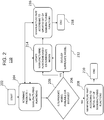
- FIG. 2 illustrates an exemplary method that may be executed by the analytical module 110 and integrated within the process 100.
- the method is described, for illustrations purposes only, in the context of the manufacture a hot gas path component of an engine. However, the exemplary method can be adapted to the manufacture of any part.
- the method begins at the step 202, and it includes setting up manufacturing directives for making a new part (step 204). These directives may initially include a set of manufacturing functions for making the new part based on geometrical constraints or generally based on a physics-based model. The method may then move to step 206 to check whether a surrogate model is available.
- step 206 If the model does not exist in a memory or database of the manufacturing system or it is not desired to use such a model (NO at step 206),the method continues to step 208 and the part is manufactured according to the initial set of manufacturing functions, and the method may then end at step 210.
- step 214 the method moves to step 214 and the initial set of manufacturing functions is updated. The method then moves to step 214 where the manufacturing system manufactures the new part based on the updated set of manufacturing functions, which are based on the surrogate model. The method ends at step 218.
- the method moves to step 212 where the model is developed using training from various data relating to manufacturing parameters, customer constraints, performance data, as described above. Steps 214 and 216 are then undertaken to fabricate the new part according to new manufacturing functions based on the developed surrogate model. The method then ends at step 218.
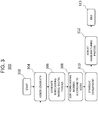
- FIG. 3 illustrates another method 300 according to one embodiment.
- the method 300 may be executed by a manufacturing system in order to assess the performance of field parts and/or configure a manufacturing process to produce a new part according based on the information from various data sources, as shall be described below.
- the new part described in the method 300 may be a turbine airfoil.
- the new part may be intended to be one of several like parts within a system, such as an engine.
- the method 300 begins at step 302 where the anticipated longevity of a set of parts that are already fielded is assessed.
- the set of parts already fielded may be a set of turbine airfoils similar to the one that is to be made, i.e. similar to the new part.
- the longevity of each of the set of parts of already fielded may be assessed via a field inspection which may be full or partial.
- the field inspection may be a functional inspection of the parts.
- the data gathered from the inspection may be used to generate a forecasting model for each of the individual parts.
- this forecasting model could be physics-based, surrogate-based, machine learning-based, or correlation-based.
- the forecasting model may include a score for each part, as shown in FIG. 1 in the context of the module 102.
- the method 300 includes digitally threading each individual part's score into a digital environment to forma fielded part ecosystem.
- the method 300 includes sorting their scores according to their anticipated longevity.
- the method 300 can instruct a management system to deploy parts with better scores into harder or harsher working environments (step 310).
- the forecasting model may be used to anticipate the longevity of each part in its assigned deployment environment, i.e., where the engine will go and how the engine will be operated. And as such, each engine may be assigned a specific deployment environment with a given confidence level. The aforementioned steps may then be repeated for different parts of any specific engine.
- the method 300 may further include, at step 310, gathering the outputs of the forecasting models in step 306 for several of the parts in the system and assess based on the individual forecasted longevities, the overall longevity of the entire system. This may be done, for example, by identifying the weakest link of the system, i.e., the part having the shortest anticipated longevity and thus assigning that longevity to the entire system.
- the method 300 may further include building and deploying engines using the sorted part distributions from steps 306-308.
- the method 300 may include steps that focus on monitoring the deployed parts and their longevity in the field. This relates back to step 304 where different longevities of fielded parts are monitored.
- machine learning may be used so that the monitored field data are used to evolve/update the forecasting model in time. In some embodiments, this updating may be done in real time, in other embodiments it may be done periodically.
- the method 300 includes making adjustments to the manufacturing processes associated with any or all of the parts in the engine system (i.e., with one part, all parts, or selected parts). This may include quantifying cost changes associated with changing each manufacturing process. Furthermore, this may include manufacturing a statistical sample of each part with the adjusted manufacturing process and functionally inspect the sample parts for each part being adjusted. The data from the functional inspection may then be used for each as-manufactured part into the forecasting model from step 304.
- the method 300 may then include returning to step 304 with the alternative as-manufactured information from the step 310.
- one target outcome would be to have all the parts in an engine ending their useful life at the same time.
- a target outcome would be for all of the engines ending their useful life at the same time.
- the outcome would be to have a combination of both of the aforementioned scenarios.
- the outcome would be to have a desired statistical distribution of anticipated operational longevity such that one might install a set of new-make part type (e.g. the turbine airfoils) that forecast to have a longevity of 1000 operating cycles into an already in-service engine that forecasts to have the same i.e. 1,000 operating cycles remaining in its useful life.
- These findings may then be absorbed into the manufacturing process (step 312).
- the method 300 ends at step 313.
- FIG. 4 depicts a system 400 that includes an application-specific processor 414 configured to perform tasks specific to optimizing a manufacturing process based on a surrogate model.
- the processor 414 may be part of or it may be wirelessly coupled to a cloud-based infrastructure.
- the processor 414 has a specific structure imparted by instructions stored in a memory 402 and/or by instructions 418 that can be fetched by the processor 414 from a storage 420.
- the storage 420 may be co-located with the processor 414, or it may be located elsewhere and be communicatively coupled to the processor 414 via a communication interface 416, for example.
- the system 400 can be a stand-alone programmable system, or it can be a programmable module located in a much larger system.
- the system 400 can be part of a distributed system configured to handle the various modules of the process 100 described above.
- the processor 414 may include one or more hardware and/or software components configured to fetch, decode, execute, store, analyze, distribute, evaluate, and/or categorize information.
- the processor 414 can include an input/output module (I/O module 412) that can be configured to ingest data pertaining to single assets or fleets of assets.
- the processor 414 may include one or more processing devices or cores (not shown). In some embodiments, the processor 414 may be a plurality of processors, each having either one or more cores.
- the processor 414 can be configured to execute instructions fetched from the memory 402, i.e. from one of memory block 404, memory block 406, memory block 408, and memory block 410.
- the storage 420 and/or the memory 402 may include a volatile or non-volatile, magnetic, semiconductor, tape, optical, removable, non-removable, read-only, random-access, or any type of non-transitory computer-readable computer medium.
- the storage 420 may be configured to log data processed, recorded, or collected during the operation of the processor 414.
- the data may be time-stamped, location-stamped, cataloged, indexed, or organized in a variety of ways consistent with data storage practice.
- the storage 420 and/or the memory 402 may include programs and/or other information that may be used by the processor 414 to perform tasks consistent with those described herein.
- the processor 414 may be configured by instructions from the memory block 406, the memory block 408, and the memory block 410, which may form the analytical module 110 described above, to generate a surrogate model in order to optimize a manufacturing process for both cost and durability.
- the processor 414 may execute the aforementioned instructions from memory blocks, 406, 408, and 410.
- the processor 414 may then output a set of manufacturing instructions that optimizes the process based on cost and durability.
- the operations performed by the processor upon executing the instructions from the memory blocks 406, 408, and 410 may include constructing a set of manufacturing functions based on a recommendation fetched from a canvas of information originating from at least one of the manufacturing module 112, the engineering module 108, and the customer service module 104.
- the operations can further include communicating at least one of a manufacturing parameter, an environmental factor, a customer de-rate, and a route structure to an analytics module of the system. And the operations can include generating the recommendation based on a surrogate model of the part outputted by the analytics module.
- the embodiments provide significant advantages over typical optimization techniques used when optimizing manufacturing processes. For example, and not by limitation, they embodiments provide a non-physics-based means for optimization of a manufacturing process, thereby allowing improved manufacturing based on performance, part usage, environmental factors, and other in-field constraints.
- one embodiment provides a method for optimizing a manufacturing process of a part.
- the method includes executing, by a system configured to drive the manufacturing process, a set of manufacturing functions based on a recommendation.
- the execution includes communicating at least one of a manufacturing parameter, an environmental factor, a customer de-rate, and a route structure to an analytics module of the system.
- the execution includes generating the recommendation based on a surrogate model of the part, the surrogate model being outputted by the analytics module.
Landscapes
- Engineering & Computer Science (AREA)
- Physics & Mathematics (AREA)
- General Physics & Mathematics (AREA)
- Business, Economics & Management (AREA)
- Theoretical Computer Science (AREA)
- General Engineering & Computer Science (AREA)
- Manufacturing & Machinery (AREA)
- Quality & Reliability (AREA)
- Automation & Control Theory (AREA)
- Strategic Management (AREA)
- Economics (AREA)
- Human Resources & Organizations (AREA)
- Marketing (AREA)
- Tourism & Hospitality (AREA)
- Software Systems (AREA)
- General Business, Economics & Management (AREA)
- Data Mining & Analysis (AREA)
- Medical Informatics (AREA)
- Development Economics (AREA)
- Artificial Intelligence (AREA)
- Computer Vision & Pattern Recognition (AREA)
- Entrepreneurship & Innovation (AREA)
- Evolutionary Computation (AREA)
- Operations Research (AREA)
- Game Theory and Decision Science (AREA)
- Computing Systems (AREA)
- Mathematical Physics (AREA)
- Health & Medical Sciences (AREA)
- General Health & Medical Sciences (AREA)
- Primary Health Care (AREA)
- Management, Administration, Business Operations System, And Electronic Commerce (AREA)
Priority Applications (1)
| Application Number | Priority Date | Filing Date | Title |
|---|---|---|---|
| EP22212938.9A EP4167034A1 (de) | 2018-12-04 | 2019-12-03 | Verfahren und system zur optimierung eines herstellungsverfahrens auf basis eines ersatzmodells eines teils |
Applications Claiming Priority (1)
| Application Number | Priority Date | Filing Date | Title |
|---|---|---|---|
| US16/209,905 US10935964B2 (en) | 2018-12-04 | 2018-12-04 | Method and system for optimizing a manufacturing process based on a surrogate model of a part |
Related Child Applications (2)
| Application Number | Title | Priority Date | Filing Date |
|---|---|---|---|
| EP22212938.9A Division EP4167034A1 (de) | 2018-12-04 | 2019-12-03 | Verfahren und system zur optimierung eines herstellungsverfahrens auf basis eines ersatzmodells eines teils |
| EP22212938.9A Division-Into EP4167034A1 (de) | 2018-12-04 | 2019-12-03 | Verfahren und system zur optimierung eines herstellungsverfahrens auf basis eines ersatzmodells eines teils |
Publications (2)
| Publication Number | Publication Date |
|---|---|
| EP3663874A1 true EP3663874A1 (de) | 2020-06-10 |
| EP3663874B1 EP3663874B1 (de) | 2026-05-06 |
Family
ID=68766675
Family Applications (2)
| Application Number | Title | Priority Date | Filing Date |
|---|---|---|---|
| EP22212938.9A Pending EP4167034A1 (de) | 2018-12-04 | 2019-12-03 | Verfahren und system zur optimierung eines herstellungsverfahrens auf basis eines ersatzmodells eines teils |
| EP19213242.1A Active EP3663874B1 (de) | 2018-12-04 | 2019-12-03 | Verfahren und system zur optimierung eines herstellungsprozesses auf basis eines ersatzmodells eines teils |
Family Applications Before (1)
| Application Number | Title | Priority Date | Filing Date |
|---|---|---|---|
| EP22212938.9A Pending EP4167034A1 (de) | 2018-12-04 | 2019-12-03 | Verfahren und system zur optimierung eines herstellungsverfahrens auf basis eines ersatzmodells eines teils |
Country Status (3)
| Country | Link |
|---|---|
| US (1) | US10935964B2 (de) |
| EP (2) | EP4167034A1 (de) |
| CN (2) | CN111275236B (de) |
Families Citing this family (4)
| Publication number | Priority date | Publication date | Assignee | Title |
|---|---|---|---|---|
| EP3751370B1 (de) | 2019-06-14 | 2024-07-24 | General Electric Company | Mit generativer fertigung gekoppeltes digitales zwillingsökosystem auf basis eines multivarianten verteilungsmodells von leistung |
| EP3751368B1 (de) | 2019-06-14 | 2023-09-27 | General Electric Company | Mit generativer fertigung gekoppeltes digitales zwillingsökosystem auf basis eines ersatzmessmodells |
| EP3751369B1 (de) | 2019-06-14 | 2024-07-24 | General Electric Company | Mit generativer fertigung gekoppeltes digitales zwillingsökosystem |
| US20220114083A1 (en) * | 2021-08-05 | 2022-04-14 | Intel Corporation | Methods and apparatus to generate a surrogate model based on traces from a computing unit |
Citations (4)
| Publication number | Priority date | Publication date | Assignee | Title |
|---|---|---|---|---|
| WO2016179455A1 (en) * | 2015-05-07 | 2016-11-10 | Siemens Corporation | Data-feedback loop from product lifecycle into design and manufacturing |
| US20170124448A1 (en) * | 2015-10-30 | 2017-05-04 | Northrop Grumman Systems Corporation | Concurrent uncertainty management system |
| EP3166052A1 (de) * | 2015-11-05 | 2017-05-10 | Northrop Grumman Systems Corporation | System und verfahren zur borddatenverfolgung |
| US20180137219A1 (en) * | 2016-11-14 | 2018-05-17 | General Electric Company | Feature selection and feature synthesis methods for predictive modeling in a twinned physical system |
Family Cites Families (29)
| Publication number | Priority date | Publication date | Assignee | Title |
|---|---|---|---|---|
| US7016794B2 (en) * | 1999-03-16 | 2006-03-21 | Lsi Logic Corporation | Floor plan development electromigration and voltage drop analysis tool |
| US6775647B1 (en) | 2000-03-02 | 2004-08-10 | American Technology & Services, Inc. | Method and system for estimating manufacturing costs |
| JPWO2002033555A1 (ja) * | 2000-10-18 | 2004-02-26 | ソニー株式会社 | 情報処理装置および情報処理方法、保守情報管理システム、並びに記録媒体 |
| US7016825B1 (en) * | 2000-10-26 | 2006-03-21 | Vextec Corporation | Method and apparatus for predicting the failure of a component |
| US6745153B2 (en) * | 2001-11-27 | 2004-06-01 | General Motors Corporation | Data collection and manipulation apparatus and method |
| CN101064025A (zh) * | 2006-04-30 | 2007-10-31 | 吴志成 | 汽车信息预警与零件寿命预测系统与方法 |
| US20080103788A1 (en) * | 2006-10-31 | 2008-05-01 | The Boeing Company | System, method and program product for predicting commercial off-the-shelf equipment reliability |
| NZ572036A (en) * | 2008-10-15 | 2010-03-26 | Nikola Kirilov Kasabov | Data analysis and predictive systems and related methodologies |
| US9514434B2 (en) * | 2009-01-06 | 2016-12-06 | The Boeing Company | Apparatus and method for automatic work instruction generation |
| FR2945136A1 (fr) * | 2009-05-04 | 2010-11-05 | Turbomeca | Structure de donnees d'une nomenclature |
| JP5592813B2 (ja) * | 2011-01-28 | 2014-09-17 | 株式会社日立ソリューションズ東日本 | 生涯需要予測方法、プログラムおよび生涯需要予測装置 |
| US9002722B2 (en) * | 2011-12-12 | 2015-04-07 | The Boeing Company | Lifecycle obsolescence forecasting tool |
| US20170206510A1 (en) * | 2013-05-24 | 2017-07-20 | Azteca Systems, Llc | Spatially-keyed, consolidated-data-controlled apparatus and method |
| CN103558102A (zh) * | 2013-11-04 | 2014-02-05 | 广西大学 | 基于Volterra级数的旧机械零件内部损伤检测方法 |
| US10466681B1 (en) * | 2014-09-02 | 2019-11-05 | Machine Research Corporation | Systems and methods for machining knowledge reuse |
| US10139311B2 (en) * | 2014-09-26 | 2018-11-27 | Palo Alto Research Center Incorporated | Computer-implemented method and system for machine tool damage assessment, prediction, and planning in manufacturing shop floor |
| US10713594B2 (en) * | 2015-03-20 | 2020-07-14 | Salesforce.Com, Inc. | Systems, methods, and apparatuses for implementing machine learning model training and deployment with a rollback mechanism |
| US11150304B2 (en) * | 2015-11-25 | 2021-10-19 | Hewlett-Packard Development Company, L.P. | Battery performance prediction |
| WO2017124448A1 (zh) * | 2016-01-23 | 2017-07-27 | 张阳 | 剧院中的音频传输方法及系统 |
| US20170286854A1 (en) * | 2016-03-30 | 2017-10-05 | General Electric Company | Automatic revision of a predictive damage model |
| US10417614B2 (en) * | 2016-05-06 | 2019-09-17 | General Electric Company | Controlling aircraft operations and aircraft engine components assignment |
| US10318904B2 (en) | 2016-05-06 | 2019-06-11 | General Electric Company | Computing system to control the use of physical state attainment of assets to meet temporal performance criteria |
| US10444748B2 (en) * | 2016-06-30 | 2019-10-15 | Ge Aviation Systems Llc | In-situ measurement logging by wireless communication unit for communicating engine data |
| WO2018204410A1 (en) * | 2017-05-04 | 2018-11-08 | Minds Mechanical, Llc | Metrology system for machine learning-based manufacturing error predictions |
| CN107194826A (zh) * | 2017-06-16 | 2017-09-22 | 北京航空航天大学 | 一种基于质量状态任务网的制造系统健康诊断与预测方法 |
| CN108241909B (zh) * | 2018-01-24 | 2022-04-26 | 长安大学 | 一种机械设备再制造时机的预测方法 |
| CN108829933B (zh) * | 2018-05-22 | 2023-04-07 | 北京天泽智云科技有限公司 | 一种半导体制造设备的预测性维护与健康管理的方法 |
| US20200175438A1 (en) * | 2018-12-04 | 2020-06-04 | General Electric Company | Method and system for strategic deployment of components |
| US11280751B2 (en) * | 2018-12-04 | 2022-03-22 | General Electric Company | System and method for optimizing a manufacturing process based on an inspection of a component |
-
2018
- 2018-12-04 US US16/209,905 patent/US10935964B2/en active Active
-
2019
- 2019-11-27 CN CN201911180367.5A patent/CN111275236B/zh active Active
- 2019-11-27 CN CN202211664265.2A patent/CN116009493A/zh active Pending
- 2019-12-03 EP EP22212938.9A patent/EP4167034A1/de active Pending
- 2019-12-03 EP EP19213242.1A patent/EP3663874B1/de active Active
Patent Citations (4)
| Publication number | Priority date | Publication date | Assignee | Title |
|---|---|---|---|---|
| WO2016179455A1 (en) * | 2015-05-07 | 2016-11-10 | Siemens Corporation | Data-feedback loop from product lifecycle into design and manufacturing |
| US20170124448A1 (en) * | 2015-10-30 | 2017-05-04 | Northrop Grumman Systems Corporation | Concurrent uncertainty management system |
| EP3166052A1 (de) * | 2015-11-05 | 2017-05-10 | Northrop Grumman Systems Corporation | System und verfahren zur borddatenverfolgung |
| US20180137219A1 (en) * | 2016-11-14 | 2018-05-17 | General Electric Company | Feature selection and feature synthesis methods for predictive modeling in a twinned physical system |
Also Published As
| Publication number | Publication date |
|---|---|
| US10935964B2 (en) | 2021-03-02 |
| CN116009493A (zh) | 2023-04-25 |
| EP4167034A1 (de) | 2023-04-19 |
| EP3663874B1 (de) | 2026-05-06 |
| US20200174456A1 (en) | 2020-06-04 |
| CN111275236A (zh) | 2020-06-12 |
| CN111275236B (zh) | 2023-11-03 |
Similar Documents
| Publication | Publication Date | Title |
|---|---|---|
| CN111274652B (zh) | 根据优化的制造过程制作新零件的方法和系统 | |
| EP3663874B1 (de) | Verfahren und system zur optimierung eines herstellungsprozesses auf basis eines ersatzmodells eines teils | |
| EP3493128B1 (de) | Verfahren und vorrichtung zur erzeugung eines anlagenarbeitsumfangsvorgangs | |
| US10796018B2 (en) | Methods and apparatus to generate an optimized workscope | |
| CN110046716B (zh) | 用以生成资产工作范围的系统、方法和存储介质 | |
| CN109766567B (zh) | 用以生成涡轮发动机的资产健康量词的设备和方法 | |
| CN109284854B (zh) | 用于根据遇险模型预测资产维护成本的累积成本模型 | |
| EP3751369B1 (de) | Mit generativer fertigung gekoppeltes digitales zwillingsökosystem | |
| CN111275235B (zh) | 用于基于部件的检查来优化制造过程的系统和方法 | |
| CN112907055B (zh) | 数据处理时效测试方法和装置 | |
| CN117980840A (zh) | 用于基板处理的机器学习平台 | |
| EP3664002A1 (de) | Verfahren und system zum strategischen einsetzen von komponenten | |
| US20220036320A1 (en) | Prediction of failure recovery timing in manufacturing process | |
| JP6341729B2 (ja) | 運用計画作成評価装置及び運用計画作成評価方法 | |
| CN113177653B (zh) | 用于资产的预测分析的系统和方法 | |
| JP2010020573A (ja) | 設備のライフサイクルマネジメントシステムおよびその方法 | |
| CN120562610A (zh) | 基于智能监控的企业生产计划优化管理方法及系统 | |
| CN119439893A (zh) | 用于生产过程的多层次仿真优化与质量控制方法及系统 | |
| CN120851816B (zh) | 服务器组装方法、设备、介质及程序产品 | |
| CN120108603A (zh) | 一种发光显示材料制冷工艺提升方法 | |
| CN121833542A (zh) | 对人工智能系统进行性能监测的方法及系统 |
Legal Events
| Date | Code | Title | Description |
|---|---|---|---|
| PUAI | Public reference made under article 153(3) epc to a published international application that has entered the european phase |
Free format text: ORIGINAL CODE: 0009012 |
|
| STAA | Information on the status of an ep patent application or granted ep patent |
Free format text: STATUS: THE APPLICATION HAS BEEN PUBLISHED |
|
| AK | Designated contracting states |
Kind code of ref document: A1 Designated state(s): AL AT BE BG CH CY CZ DE DK EE ES FI FR GB GR HR HU IE IS IT LI LT LU LV MC MK MT NL NO PL PT RO RS SE SI SK SM TR |
|
| AX | Request for extension of the european patent |
Extension state: BA ME |
|
| STAA | Information on the status of an ep patent application or granted ep patent |
Free format text: STATUS: REQUEST FOR EXAMINATION WAS MADE |
|
| 17P | Request for examination filed |
Effective date: 20201207 |
|
| RBV | Designated contracting states (corrected) |
Designated state(s): AL AT BE BG CH CY CZ DE DK EE ES FI FR GB GR HR HU IE IS IT LI LT LU LV MC MK MT NL NO PL PT RO RS SE SI SK SM TR |
|
| STAA | Information on the status of an ep patent application or granted ep patent |
Free format text: STATUS: EXAMINATION IS IN PROGRESS |
|
| 17Q | First examination report despatched |
Effective date: 20210401 |
|
| GRAP | Despatch of communication of intention to grant a patent |
Free format text: ORIGINAL CODE: EPIDOSNIGR1 |
|
| STAA | Information on the status of an ep patent application or granted ep patent |
Free format text: STATUS: GRANT OF PATENT IS INTENDED |
|
| INTG | Intention to grant announced |
Effective date: 20251210 |
|
| GRAS | Grant fee paid |
Free format text: ORIGINAL CODE: EPIDOSNIGR3 |
|
| GRAA | (expected) grant |
Free format text: ORIGINAL CODE: 0009210 |
|
| STAA | Information on the status of an ep patent application or granted ep patent |
Free format text: STATUS: THE PATENT HAS BEEN GRANTED |
|
| RAP3 | Party data changed (applicant data changed or rights of an application transferred) |
Owner name: GENERAL ELECTRIC COMPANY |