EP3663942B1 - Évaluation d'une caractéristique simulée d'une fonctionnalité de véhicule - Google Patents
Évaluation d'une caractéristique simulée d'une fonctionnalité de véhicule Download PDFInfo
- Publication number
- EP3663942B1 EP3663942B1 EP18210997.5A EP18210997A EP3663942B1 EP 3663942 B1 EP3663942 B1 EP 3663942B1 EP 18210997 A EP18210997 A EP 18210997A EP 3663942 B1 EP3663942 B1 EP 3663942B1
- Authority
- EP
- European Patent Office
- Prior art keywords
- vehicle
- simulated
- feature
- real
- hmd
- Prior art date
- Legal status (The legal status is an assumption and is not a legal conclusion. Google has not performed a legal analysis and makes no representation as to the accuracy of the status listed.)
- Active
Links
Images

Classifications
-
- G—PHYSICS
- G06—COMPUTING OR CALCULATING; COUNTING
- G06F—ELECTRIC DIGITAL DATA PROCESSING
- G06F30/00—Computer-aided design [CAD]
- G06F30/10—Geometric CAD
- G06F30/15—Vehicle, aircraft or watercraft design
-
- G—PHYSICS
- G06—COMPUTING OR CALCULATING; COUNTING
- G06F—ELECTRIC DIGITAL DATA PROCESSING
- G06F30/00—Computer-aided design [CAD]
- G06F30/20—Design optimisation, verification or simulation
-
- G—PHYSICS
- G06—COMPUTING OR CALCULATING; COUNTING
- G06Q—INFORMATION AND COMMUNICATION TECHNOLOGY [ICT] SPECIALLY ADAPTED FOR ADMINISTRATIVE, COMMERCIAL, FINANCIAL, MANAGERIAL OR SUPERVISORY PURPOSES; SYSTEMS OR METHODS SPECIALLY ADAPTED FOR ADMINISTRATIVE, COMMERCIAL, FINANCIAL, MANAGERIAL OR SUPERVISORY PURPOSES, NOT OTHERWISE PROVIDED FOR
- G06Q10/00—Administration; Management
- G06Q10/06—Resources, workflows, human or project management; Enterprise or organisation planning; Enterprise or organisation modelling
- G06Q10/063—Operations research, analysis or management
- G06Q10/0639—Performance analysis of employees; Performance analysis of enterprise or organisation operations
- G06Q10/06393—Score-carding, benchmarking or key performance indicator [KPI] analysis
-
- B—PERFORMING OPERATIONS; TRANSPORTING
- B60—VEHICLES IN GENERAL
- B60K—ARRANGEMENT OR MOUNTING OF PROPULSION UNITS OR OF TRANSMISSIONS IN VEHICLES; ARRANGEMENT OR MOUNTING OF PLURAL DIVERSE PRIME-MOVERS IN VEHICLES; AUXILIARY DRIVES FOR VEHICLES; INSTRUMENTATION OR DASHBOARDS FOR VEHICLES; ARRANGEMENTS IN CONNECTION WITH COOLING, AIR INTAKE, GAS EXHAUST OR FUEL SUPPLY OF PROPULSION UNITS IN VEHICLES
- B60K35/00—Instruments specially adapted for vehicles; Arrangement of instruments in or on vehicles
- B60K35/10—Input arrangements, i.e. from user to vehicle, associated with vehicle functions or specially adapted therefor
-
- B—PERFORMING OPERATIONS; TRANSPORTING
- B60—VEHICLES IN GENERAL
- B60K—ARRANGEMENT OR MOUNTING OF PROPULSION UNITS OR OF TRANSMISSIONS IN VEHICLES; ARRANGEMENT OR MOUNTING OF PLURAL DIVERSE PRIME-MOVERS IN VEHICLES; AUXILIARY DRIVES FOR VEHICLES; INSTRUMENTATION OR DASHBOARDS FOR VEHICLES; ARRANGEMENTS IN CONNECTION WITH COOLING, AIR INTAKE, GAS EXHAUST OR FUEL SUPPLY OF PROPULSION UNITS IN VEHICLES
- B60K35/00—Instruments specially adapted for vehicles; Arrangement of instruments in or on vehicles
- B60K35/20—Output arrangements, i.e. from vehicle to user, associated with vehicle functions or specially adapted therefor
- B60K35/21—Output arrangements, i.e. from vehicle to user, associated with vehicle functions or specially adapted therefor using visual output, e.g. blinking lights or matrix displays
- B60K35/23—Head-up displays [HUD]
-
- G—PHYSICS
- G02—OPTICS
- G02B—OPTICAL ELEMENTS, SYSTEMS OR APPARATUS
- G02B27/00—Optical systems or apparatus not provided for by any of the groups G02B1/00 - G02B26/00, G02B30/00
- G02B27/0093—Optical systems or apparatus not provided for by any of the groups G02B1/00 - G02B26/00, G02B30/00 with means for monitoring data relating to the user, e.g. head-tracking, eye-tracking
-
- G—PHYSICS
- G06—COMPUTING OR CALCULATING; COUNTING
- G06F—ELECTRIC DIGITAL DATA PROCESSING
- G06F3/00—Input arrangements for transferring data to be processed into a form capable of being handled by the computer; Output arrangements for transferring data from processing unit to output unit, e.g. interface arrangements
- G06F3/14—Digital output to display device ; Cooperation and interconnection of the display device with other functional units
-
- G—PHYSICS
- G06—COMPUTING OR CALCULATING; COUNTING
- G06T—IMAGE DATA PROCESSING OR GENERATION, IN GENERAL
- G06T19/00—Manipulating three-dimensional [3D] models or images for computer graphics
- G06T19/006—Mixed reality
-
- B—PERFORMING OPERATIONS; TRANSPORTING
- B60—VEHICLES IN GENERAL
- B60K—ARRANGEMENT OR MOUNTING OF PROPULSION UNITS OR OF TRANSMISSIONS IN VEHICLES; ARRANGEMENT OR MOUNTING OF PLURAL DIVERSE PRIME-MOVERS IN VEHICLES; AUXILIARY DRIVES FOR VEHICLES; INSTRUMENTATION OR DASHBOARDS FOR VEHICLES; ARRANGEMENTS IN CONNECTION WITH COOLING, AIR INTAKE, GAS EXHAUST OR FUEL SUPPLY OF PROPULSION UNITS IN VEHICLES
- B60K35/00—Instruments specially adapted for vehicles; Arrangement of instruments in or on vehicles
- B60K35/60—Instruments characterised by their location or relative disposition in or on vehicles
Definitions
- the present disclosure relates to enabling evaluation of a simulated vehicle functionality feature.
- Static or dynamic evaluation rigs are commonly utilized, where the static rig for instance may be represented by a non-movable rig that may display the environment and traffic on large scale screens in front of a vehicle mock-up, and where the dynamic rig for instance may be represented by a similar rig with the difference that the dynamic rig may move in order to simulate acceleration forces and/or movement.
- test subject may feel motion sickness.
- environment as well as the traffic in fact is simulated. The latter results in that the interaction therewith may become somewhat artificial, and it may be difficult to validate that the result actually corresponds to an experience in a real vehicle, in real traffic.
- the object is achieved by a method performed by a vehicle feature evaluation system for enabling evaluation of a simulated vehicle functionality feature.
- the vehicle feature evaluation system determines in relation to a road-driven vehicle, with support from a tracking system, an orientation of a head-mounted display, HMD, adapted to be worn by an occupant on-board the road-driven vehicle.
- the vehicle feature evaluation system further determines a simulated vehicle functionality feature to be evaluated in the road-driven vehicle.
- the vehicle feature evaluation system provides in real-time to a HMD display of the HMD, taking into consideration the HMD orientation, a virtual representation of the simulated vehicle functionality feature superimposed on a real-time real-world video stream derived from real-world image data captured with support from one or more forward-facing cameras provided on the HMD in eye-position of the occupant.
- evaluation of the simulated vehicle functionality feature may take place in an actual real vehicle. Furthermore, that is, since there is determined a simulated vehicle functionality feature to be evaluated in the road-driven vehicle, there is defined, e.g. computer-generated, a virtual vehicle functionality feature of interest to validate in a real vehicle.
- a virtual representation of the simulated vehicle functionality feature superimposed on a real-time real-world video stream derived from real-world image data captured with support from one or more forward-facing cameras provided on the HMD in eye-position of the occupant
- a real-time physical world view - essentially as seen by the occupant with support from the eye-level forward facing camera(s) - electronically mixed with the computer-generated virtual representation temporally and spatially commensurate with said physical world view such that the real-world video stream appears as a background overlaid with said virtual representation.
- the real-time real-world video stream may then represent what a driver or passenger of said road-driven vehicle would see even if not wearing the HMD, such as for instance a portion of an interior of the vehicle and/or a view exterior of the vehicle through the windscreen or other window(s) thereof.
- a virtual representation of a simulated vehicle functionality feature - such as for instance a virtual display with e.g.
- said simulated vehicle functionality feature may be evaluated in a road-driven vehicle, e.g. while said road-driven vehicle is driven in real traffic and/or along actual roads.
- the entire test environment is authentic and/or real. Consequently, the simulated vehicle functionality feature may be evaluated in real traffic and/or in real road-driving scenarios, which thus enables said simulated vehicle functionality feature to be evaluated under more reality-resembling conditions and/or in a more reality-resembling environment than should said evaluation be performed in e.g. a commonly known static or dynamic rig displaying the environment and traffic on large scale screens in front of a vehicle mock-up.
- vehicle feature evaluation system may refer to “vehicle feature validation system”, “vehicle evaluation system”, “evaluation system” and/or “evaluation supporting system”, whereas "for enabling evaluation of” may refer to “for evaluating” and/or “for providing”.
- enabling evaluation may refer to “supporting” evaluation, whereas “evaluation” may refer to “validation”, "testing” and/or “analysis”.
- “Simulated” vehicle functionality feature may refer to “virtual”, “computer-generated”, “modelled” and/or “fictive” vehicle functionality feature, whereas "a simulated vehicle functionality feature” may refer to “a simulated vehicle function", “a simulated vehicle functionality”, “a simulated vehicle feature” and/or “simulated vehicle characteristics”. According to an example, the expression “for enabling evaluation of a simulated vehicle functionality feature” may refer to “for enabling evaluation of a simulated vehicle functionality feature in a road-driven vehicle”.
- the vehicle feature evaluation system determines in relation to a road-driven vehicle, with support from a tracking system, an orientation of a head mounted display, HMD, adapted to be worn by an occupant on-board the road-driven vehicle, there is established a position and/or location of an occupant-worn HMD in view of a real vehicle e.g. adapted to and/or intended to be driven outdoors such as in real traffic and/or along actual roads.
- HMD-wearing occupant - which may also be referred to as the test subject - being positioned in a road-driven vehicle rather than in an e.g. indoor static or dynamic rig, evaluation may take place in an actual real vehicle.
- Determining the orientation of the HMD in relation to the road-driven vehicle, with support from the tracking system may be accomplished as commonly known in the art, for instance with input from tracking sensors such as cameras, accelerometers, magnetometers and/or gyroscopes, and/or based on software tracking e.g. aligning markers in the vehicle with corresponding markers in the virtual model.
- the HMD may comprise and/or support any arbitrary features known in the art from HMDs commonly utilized today, with the addition of further features that will be described further on.
- the referred to "vehicle” may be represented by any arbitrary vehicle, for instance an engine-propelled vehicle, such as e.g. a car, truck, lorry, van, tractor and/or bus.
- road-driven vehicle may refer to "real vehicle”, “outdoor vehicle”, “vehicle adapted to be driven in real traffic” and/or “vehicle adapted to be driven along outdoor tracks and/or public roads and/or public road networks”.
- Determining in relation to a road-driven vehicle may refer to “calculating and/or analysing” in relation to a road-driven vehicle and/or “determining optically, magnetically and/or by means of laser and/or by means of software” in relation to a road-driven vehicle.
- In relation to may refer to "in view of" and/or "in comparison to”.
- “In relation to a road-driven vehicle” may further refer to “in relation to a reference point of a road-driven vehicle", which "reference point” may be arbitrarily selected as deemed adequate for the implementation at hand.
- the expression “with support from” a tracking system may refer to “by means of” a tracking system and/or “with input from” a tracking system, whereas “a tracking system”, on the other hand, may refer to “one or more tracking sensors” and/or "a software based tracking system”.
- “An orientation” of a head-mounted display may refer to "a position and/or location of” a head-mounted display, whereas “head-mounted display” may refer to "augmented reality and/or virtual reality head-mounted display", “goggles” and/or “electronic goggles”.
- the expression “adapted to be worn by” an occupant may refer to “adapted to be worn at least partly in front of the eyes of” an occupant and/or merely “worn by” an occupant, whereas “an occupant” may refer to "a vehicle occupant", “a driver” and/or “a test subject”.
- “On-board” the road-driven vehicle may refer to "positioned in”, “seated in a front seat of” and/or “seated in a driver's seat of” the road-driven vehicle.
- the vehicle feature evaluation system determines a simulated vehicle functionality feature to be evaluated in the road-driven vehicle, there is defined - e.g. computer-generated - a virtual vehicle functionality feature of interest to validate in a real vehicle.
- “Determining” a simulated vehicle functionality feature may refer to “computer-generating”, “simulating” and/or “modelling” a simulated vehicle functionality feature, whereas vehicle “functionality feature” may refer to vehicle “characteristics” and further to merely vehicle “feature” and/or vehicle “functionality”.
- “determining” a simulated vehicle functionality feature may refer to "determining logic, design, graphics, aesthetics, geometries and/or functionality of" a simulated vehicle functionality feature.
- the vehicle feature evaluation system provides in real-time to a HMD display of the HMD, taking into consideration the HMD orientation, a virtual representation of the simulated vehicle functionality feature superimposed on a real-time real-world video stream derived from real-world image data captured with support from one or more forward-facing cameras provided on the HMD in eye-position of the occupant, there is provided to the HMD display a real-time physical world view - essentially as seen by the occupant with support from the eye-level forward facing camera(s) - electronically mixed with the computer-generated virtual representation temporally and spatially commensurate with said physical world view such that the real-world video stream appears as a background overlaid with said virtual representation .
- live imagery from the physical world is electronically merged with computer-generated imagery, a concept commonly referred to as mixed reality and/or augmented reality.
- the virtual representation of the simulated vehicle functionality feature is overlaid the real-world video stream, a concept commonly referred to as video see-through.
- the camera(s) and/or HMD may for instance be adapted to support arranging and/or re-arranging said camera(s) such that the camera(s) are positioned to correspond to respective points of right and left eye views of the occupant.
- the real-time real-world video stream may represent what the occupant would see even if not wearing the HMD, such as temporally and spatially commensurate with what said occupant would see even if not wearing the HMD.
- the HMD-wearing occupant being on-board the road-driven vehicle, e.g.
- the real-time real-world video stream may then represent what a driver or passenger of said road-driven vehicle would see even if not wearing the HMD, such as for instance a portion of an interior of the vehicle and/or a view exterior of the vehicle through the windscreen or other window(s) thereof.
- a virtual representation of a simulated vehicle functionality feature - such as for instance a virtual display with e.g. new and/or updated design and/or functionality - on the real-world video stream
- said simulated vehicle functionality feature may be evaluated in a road-driven vehicle, e.g. while said road-driven vehicle is driven in real traffic and/or along actual roads.
- the entire test environment is authentic and/or real. Consequently, the simulated vehicle functionality feature may be evaluated in real traffic and/or in real road-driving scenarios, which thus enables said simulated vehicle functionality feature to be evaluated under more reality-resembling conditions and/or in a more reality-resembling environment than should said evaluation be performed in e.g. a commonly known static or dynamic rig displaying the environment and traffic on large scale screens in front of a vehicle mock-up.
- Providing "in real-time”, on the other hand may refer to providing “essentially in real-time” and/or “live”, and further to that the virtual representation superimposed on the real-world video stream is provided to the HMD display substantially close to the time of the actual capturing of the real-world image data. According to an example, “providing in real-time” may refer to merely “providing”.
- the expression “taking into consideration” the HMD orientation may refer to “considering” and/or “taking into consideration for positioning and/or spatial positioning” the HMD orientation.
- “Virtual” representation may refer to “augmented” and/or “overlaid” representation, whereas “representation” may refer to “augmentation”, “data” and/or “geometrical and/or graphical model”.
- “representation” may further refer to "graphical model”, "computer-aided design, CAD, geometries and/or design surface model, DSM, geometries” and/or “result from computer-aided engineering, CAE”.
- Superimposed on" a real-time real-world video stream may refer to “overlaid”, “virtually overlaid”, “placed and/or displayed in front of” a real-time real-world video stream, whereas "a real-time” real-world video stream may refer to "an essentially real-time”, “a live or essentially live” and/or "instant or essentially instant” real-world video stream.
- the term "real-time” real-world video stream may further indicate that the real-world video stream is derived in a timeframe substantially close to the time of the actual capturing of the real-world image data.
- Real-world may refer to "physical world” and/or “real environment world”
- video stream may refer to “streaming video” and/or merely “video”.
- "Derived from” real-world image data may refer to "which video stream is based on” real-world image data
- real-world image data may refer to "video data” and/or “images”.
- “Captured” with support from one or more forward-facing cameras may refer to “taped” and/or “filmed” with support from one or more forward-facing cameras, whereas captured “with support from” one or more forward-facing cameras may refer to captured “by” and/or “by means of” one or more forward-facing cameras.
- one or more forward-facing cameras may refer to “at least two" forward-facing cameras, whereas “forward-facing” cameras may refer to “essentially forward-facing” cameras.
- “Provided on” the HMD may refer to “comprised in”, “mounted on” and/or “attached to” the HMD, whereas provided on the HMD “in eye-position” of the occupant may refer to provided on the HMD "positioned to correspond to respective points of right and left eye views” of the occupant.
- the expression "captured with support from one or more forward-facing cameras provided on the HMD in eye-position of the occupant” may refer to “captured with support from at least two forward-facing cameras respectively positioned to correspond to respective points of right and left eye views of the occupant”.
- the simulated vehicle functionality feature may comprise a simulated vehicle human machine interface, HMI.
- a virtual vehicle HMI may be evaluated in the road-driven vehicle, such as e.g. graphics thereof and/or new and/or updated functionality and/or design thereof.
- the expression that the simulated vehicle functionality feature "comprises” may refer to that the simulated vehicle functionality feature "is represented by”.
- the simulated vehicle functionality feature may comprise a simulated vehicle display.
- a virtual vehicle display e.g. an infotainment display may be evaluated in the road-driven vehicle, such as e.g. graphics thereof and/or new and/or updated functionality and/or design thereof.
- the simulated vehicle functionality feature may comprise a simulated vehicle head-up display, HUD.
- a virtual vehicle HUD may be evaluated in the road-driven vehicle, such as e.g. graphics thereof and/or new and/or updated functionality and/or design thereof.
- the simulated vehicle functionality feature may comprise a simulated interior vehicle section.
- a virtual interior vehicle section e.g. a dashboard or a portion thereof may be evaluated in the road-driven vehicle, such as e.g. geometries for instance CAD and/or DSM geometries thereof and/or new and/or updated colour(s), material(s) and/or design thereof.
- the simulated vehicle functionality feature may comprise simulated light characteristics.
- virtual light characteristics e.g. interior light characteristics may be evaluated in the road-driven vehicle, such as e.g. new and/or updated appearance and/or ambience of e.g. interior lighting.
- the expression light “characteristics” may refer to light "position(s)", “positioning”, “function(s)", “ambience” and/or “appearance”.
- the simulated vehicle functionality feature may comprise a simulated effect resulting from a simulation of the simulated vehicle functionality feature.
- a virtual effect resulting from simulation of a simulated vehicle functionality feature e.g. wiper performance, cabin climate, air flow, contamination etc. may be evaluated in the road-driven vehicle, such as e.g. the effect of a computer-aided engineering, CAE, simulation thereof.
- CAE computer-aided engineering
- the vehicle feature evaluation system may determine a fictive location of the simulated vehicle functionality feature relative the road-driven vehicle.
- the above discussed providing of the virtual representation taking into consideration the HMD orientation may then comprise providing the virtual representation superimposed on the real-time real-world video stream such that positioning of the virtual representation corresponds to the fictive location.
- the fictive location may be arbitrarily selected as deemed relevant for the implementation at hand, and may further be of any arbitrary form, size and/or dimensions ranging from a few millimetres up to hundreds or even thousands of millimetres across.
- Determining" a fictive location may refer to “mapping” a fictive location, whereas “fictive” location may refer to “intended” and/or “virtual” location.
- Fictive “location”, on the other hand, may refer to fictive “position” and/or “placement”, whereas “relative” the road-driven vehicle may refer to “in relation to” and/or “within” the road-driven vehicle.
- “Corresponds to” the fictive location may refer to "commensurate with", "reflects” and/or "represents” the fictive location.
- the vehicle feature evaluation system may further comprise updating the virtual representation based on a user interaction with the simulated vehicle functionality feature.
- interaction by a user with the simulated vehicle functionality feature - e.g. by a user voice command - may result in that the virtual representation of the simulated vehicle functionality feature is updated in accordance with said interaction.
- user interaction with the simulated vehicle functionality feature which feature for instance is represented by selectable options available on a simulated vehicle display, may result in that a user selected option is carried out and/or updated in accordance with the user interaction, which subsequently is reflected by the corresponding virtual feature being updated in accordance therewith.
- User interaction may be detected in any arbitrary manner known in the art, e.g.
- a user interaction determining system for instance comprising a microphone.
- the expression “updating” the virtual representation may refer to “updating content, graphical data and/or geometric data of” the virtual representation, whereas “based on a” user interaction may refer to “as a result of” user interaction and/or “based on input data and/or one or more signals derived from” user interaction.
- User interaction on the other hand, may refer to "occupant interaction”.
- said user interaction may be based on detection, by means of one or more user interaction sensors, of a user in and/or at the fictive location.
- presence of a user e.g. the HMD-wearing occupant, and/or e.g. a finger of said user/occupant, may be sensed in or at the position in the vehicle representing the location of the simulated vehicle functionality feature, whereby the virtual representation of the simulated vehicle functionality feature subsequently may be updated in accordance with said presence, and/or in accordance with the geographical position and/or the nature of said presence.
- User interaction may be detected in any arbitrary manner known in the art, e.g.
- detection by means of one or more user interaction sensors and/or a user interaction determining system, for instance comprising touch sensor(s), camera(s) and/or position detection sensor(s) worn by the user e.g. on his/her hand and/or finger.
- detection by means of” one or more user interaction sensors may refer to detection “with support from” and/or “with input from” one or more user interaction sensors.
- Detection “of a user”, on the other hand may refer to detection “of the occupant", and further to detection "of a hand and/or one or more fingers of a user”.
- the expression “in and/or at” the fictive location may refer to "in or at a location within the vehicle representing" the fictive location.
- the vehicle feature evaluation system may further comprise updating the virtual representation based on a vehicle signal affecting the simulated vehicle functionality feature, derived from the road-driven vehicle.
- a vehicle signal which affects the simulated vehicle functionality feature - e.g. resulting from manoeuvring of and/or user interaction with the road-driven vehicle - results in that the virtual representation of the simulated vehicle functionality feature is updated in accordance therewith. That is, deriving - from the road-driven vehicle - a vehicle signal affecting the simulated vehicle functionality feature, where the vehicle signal for instance comprises vehicle data such as e.g. fuel consumption and where the simulated vehicle functionality feature for instance is represented by a simulated vehicle display showing said vehicle data e.g.
- the virtual feature - in this example the virtual vehicle display - is updated in accordance with said vehicle signal, i.e. the fuel consumption value shown on the virtual display is updated along with the received vehicle signal comprising an updated fuel consumption value.
- the vehicle signal may be derived from the road-driven vehicle in any arbitrary known manner, for instance via wired and/or wireless communication therewith, and/or with support from a vehicle signal determining system and/or unit adapted for determining which input derived from the road-driven vehicle affects the simulated vehicle functionality feature.
- updating the virtual representation may refer to “updating content, graphical data and/or geometric data of” the virtual representation, whereas "based on a" vehicle signal may refer to “based on input and/or data from a” vehicle signal. "Derived from” the road-driven vehicle, on the other hand, may refer to “received from” the road-driven vehicle.
- "updating the virtual representation based on a vehicle signal affecting the simulated vehicle functionality feature, derived from the road-driven vehicle” may refer to “updating the virtual representation based on a vehicle signal derived from the road-driven vehicle, which vehicle signal is based on a manoeuvring of and/or user interaction with the road-driven vehicle affecting the simulated vehicle functionality feature".
- the vehicle feature evaluation system may update the real-time video stream and/or the superimposed virtual representation based on updated captured image data and/or based on updated determined HMD orientation.
- the real-time video stream and/or the virtual representation is continuously updated to reflect updated captured image data and/or updated orientation of the HMD.
- Updating may refer to “continuously and/or intermittently updating”.
- the object is achieved by a vehicle feature evaluation system for - and/or adapted for - enabling evaluation of a simulated vehicle functionality feature.
- the vehicle feature evaluation system comprises a HMD orientation determining unit for - and/or adapted for - determining in relation to a road-driven vehicle, with support from a tracking system, an orientation of a head-mounted display, HMD, adapted to be worn by an occupant on-board the road-driven vehicle.
- the vehicle feature evaluation system further comprises a feature determining unit for - and/or adapted for - determining a simulated vehicle functionality feature to be evaluated in the road-driven vehicle.
- the vehicle feature evaluation system comprises a HMD providing unit for - and/or adapted for - providing in real-time to a HMD display of the HMD, taking into consideration the HMD orientation, a virtual representation of the simulated vehicle functionality feature superimposed on a real-time real-world video stream derived from real-world image data captured with support from one or more forward-facing cameras provided on the HMD in eye-position of the occupant.
- the simulated vehicle functionality feature may comprise a simulated vehicle human machine interface, HMI. Additionally or alternatively, optionally, the simulated vehicle functionality feature may comprise a simulated vehicle display. Moreover, additionally or alternatively, optionally, the simulated vehicle functionality feature may comprise a simulated vehicle head-up display, HUD. Additionally or alternatively, optionally, the simulated vehicle functionality feature may comprise a simulated interior vehicle section. Furthermore, additionally or alternatively, optionally, the simulated vehicle functionality feature may comprise simulated light characteristics. Additionally or alternatively, optionally, the simulated vehicle functionality feature may comprise a simulated effect resulting from a simulation of the simulated vehicle functionality feature.
- the vehicle feature evaluation system may further comprise a location determining unit for - and/or adapted for - determining a fictive location of the simulated vehicle functionality feature relative the road-driven vehicle.
- the HMD providing unit may then be further adapted for providing the virtual representation superimposed on the real-time real-world video stream such that positioning of the virtual representation corresponds to the fictive location.
- the vehicle feature evaluation system may further comprise a user interaction updating unit for - and/or adapted for - updating the virtual representation based on a user interaction with the simulated vehicle functionality feature.
- the user interaction may be based on detection, by means of one or more user interaction sensors, of a user in and/or at the fictive location.
- the vehicle feature evaluation system may further comprise a vehicle signal updating unit for - and/or adapted for - updating the virtual representation based on a vehicle signal affecting the simulated vehicle functionality feature, derived from the road-driven vehicle.
- the vehicle feature evaluation system may further comprise a continuous updating unit for - and/or adapted for - updating the real-time video stream and/or the superimposed virtual representation based on updated captured image data and/or based on updated determined HMD orientation.
- a continuous updating unit for - and/or adapted for - updating the real-time video stream and/or the superimposed virtual representation based on updated captured image data and/or based on updated determined HMD orientation.
- the object is achieved by a vehicle - e.g. a road-driven vehicle - comprising a vehicle feature evaluation system as discussed above.
- a vehicle - e.g. a road-driven vehicle - comprising a vehicle feature evaluation system as discussed above.
- the object is achieved by a computer program product comprising a computer program containing computer program code means arranged to cause a computer or a processor to execute the steps of the vehicle feature evaluation system discussed in the foregoing, stored on a computer-readable medium or a carrier wave.
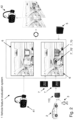
- the vehicle feature evaluation system 1 is here comprised in a road-driven vehicle 2, namely an exemplifying a passenger car.
- a road-driven vehicle 2 On-board said vehicle 2 is an occupant 3, wearing an HMD 4, the orientation of which - in relation to the vehicle 2 - may be determined with support from a tracking system 5 (shown in Fig. 2 ).
- a tracking system 5 shown in Fig. 2 .
- one or more forward-facing cameras 41 here two cameras, in eye-position of the occupant 3.
- the HMD 4 further comprises at least one HMD display 42, here two displays, on which it is displayed a real-time real-world video stream 6 derived from real-world image data captured with support from the one or more forward-facing cameras 41.
- a virtual representation 7 of a simulated vehicle functionality feature to be evaluated in the road-driven vehicle 2.
- the simulated vehicle functionality feature here comprises an exemplifying simulated vehicle display, more specifically a simulated infotainment display, and the virtual representation 7 is accordingly here represented by a virtual infotainment display.
- the simulated vehicle functionality feature may have a fictive location 70 relative the vehicle 2, and for the exemplifying simulated infotainment display in Figs.
- the fictive location 70 is essentially centered on a dashboard of the vehicle 2 in an exemplifying manner. Additionally depicted is an exemplifying alternative virtual representation 7' of an alternative simulated vehicle functionality feature.
- the alternative simulated vehicle functionality feature here comprises an optional exemplifying simulated driver information display, and the alternative virtual representation 7' is then accordingly represented by an exemplifying virtual driver information display.
- the simulated driver information display here has an exemplifying fictive location 70' on the vehicle dashboard, behind a steering wheel of the road-driven vehicle 2.
- a simulated vehicle functionality feature may additionally or alternatively optionally comprise a simulated vehicle HMI, a simulated HUD, a simulated interior vehicle section, simulated light characteristics and/or a simulated effect resulting from a simulation of the simulated vehicle functionality feature.
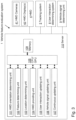
- a server 110 which will be described in greater detail in conjunction with Fig. 3 .
- the vehicle feature evaluation system 1 comprises a HMD orientation determining unit 101, a feature determining unit 102, an optional location determining unit 103, a HMD providing unit 104, an optional user interaction updating unit 105, an optional vehicle signal updating unit 106, and an optional continuous updating unit 107, all of which will be described in greater detail in conjunction with Fig. 4 .
- the embodiments herein for enabling evaluation of a simulated vehicle functionality feature may be implemented through one or more processors, such as a processor 108, here denoted CPU, together with computer program code for performing the functions and actions of the embodiments herein.
- Said program code may also be provided as a computer program product, for instance in the form of a data carrier carrying computer program code for performing the embodiments herein when being loaded into the vehicle feature evaluation system 1.
- a data carrier carrying computer program code for performing the embodiments herein when being loaded into the vehicle feature evaluation system 1.
- One such carrier may be in the form of a CD ROM disc and/or a hard drive. It is however feasible with other data carriers such as a memory stick.
- the computer program code may furthermore be provided as pure program code on a server and downloaded to the vehicle feature evaluation system 1.
- the vehicle feature evaluation system 1 may further comprise a memory 109 comprising one or more memory units.
- the memory 109 may be arranged to be used to store e.g. information, and further to store data, configurations, schedulings, and applications, to perform the methods herein when being executed in the vehicle feature evaluation system 1.
- the computer program code may be implemented in the firmware, stored in FLASH memory 109, of an embedded processor 108, and/or downloaded from online.
- the HMD orientation determining unit 101, the feature determining unit 102, the optional location determining unit 103, the HMD providing unit 104, the optional user interaction updating unit 105, the optional vehicle signal updating unit 106, the optional continuous updating unit 107, the optional processor 108 and/or the optional memory 109 may at least partly be comprised in the server 110, which server 110 may be comprised in and/or carried onboard the road-driven vehicle 2.
- server 110 may be comprised in and/or carried onboard the road-driven vehicle 2.
- said units 101, 102, 103, 104, 105, 106, 107 described above, and which will be described in more detail later on in this description may refer to a combination of analog and digital circuits, and/or one or more processors configured with software and/or firmware, e.g.
- processors such as the processor 108 perform as will be described in more detail in conjunction with Fig. 4 .
- processors may be included in a single ASIC (Application-Specific Integrated Circuitry), or several processors and various digital hardware may be distributed among several separate components, whether individually packaged or assembled into a SoC (System-on-a-Chip).
- SoC System-on-a-Chip
- FIG. 3 Further shown in Fig. 3 is an exemplifying optional user interaction determining system 8, adapted for determining user interaction by a user e.g. the occupant 3 with the simulated vehicle functionality feature - here the exemplifying simulated vehicle infotainment display.
- the user interaction determining system 8 may for instance comprise touch sensor(s), camera(s) and/or position detection sensor(s) worn by the user e.g. on his/her hand and/or finger.
- an exemplifying optional vehicle signal determining unit 9 adapted for determining which input derived from the road-driven vehicle 2 affects the simulated vehicle functionality feature - here the exemplifying simulated vehicle infotainment display - e.g. during manoeuvring of said vehicle 2.
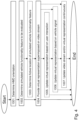
- Fig. 4 is a flowchart depicting an exemplifying method performed by a vehicle feature evaluation system 1 according to embodiments of the disclosure. Said method is for enabling evaluation of a simulated vehicle functionality feature.
- the exemplifying method which may be continuously repeated, comprises the following actions discussed with support from Figs. 1-3 .
- the vehicle feature evaluation system 1 determines in relation to the road-driven vehicle 2 - e.g. by means of the HMD orientation determining unit 101 - with support from the tracking system 5, an orientation of the HMD 4 adapted to be worn by the occupant 3 on-board the road-driven vehicle 2.
- an orientation of the HMD 4 adapted to be worn by the occupant 3 on-board the road-driven vehicle 2.
- a position and/or location of an occupant-worn HMD 4 in view of a real vehicle 2 e.g. adapted to and/or intended to be driven outdoors such as in real traffic and/or along actual roads.
- evaluation may take place in an actual real vehicle 2.
- the vehicle feature evaluation system 1 determines - e.g. by means of the feature determining unit 102 - a simulated vehicle functionality feature to be evaluated in the road-driven vehicle 2.
- a virtual vehicle functionality feature - optionally a simulated vehicle infotainment display - of interest to validate in a real vehicle 2.
- the simulated vehicle functionality feature - here the virtual infotainment display 7 - may be evaluated in the road-driven vehicle 2, such as e.g. graphics thereof and/or new and/or updated functionality and/or design thereof.
- the simulated vehicle functionality feature may comprise a simulated vehicle human machine interface, HMI.
- a virtual vehicle HMI may be evaluated in the road-driven vehicle 2, such as e.g. graphics thereof and/or new and/or updated functionality and/or design thereof.
- the simulated vehicle functionality feature may comprise a simulated vehicle head-up display, HUD.
- a virtual vehicle HUD may be evaluated in the road-driven vehicle 2, such as e.g. graphics thereof and/or new and/or updated functionality and/or design thereof.
- the simulated vehicle functionality feature may comprise a simulated interior vehicle section.
- a virtual interior vehicle section e.g.
- a dashboard may be evaluated in the road-driven vehicle 2, such as e.g. geometries for instance CAD and/or DSM geometries thereof and/or new and/or updated colour(s), material(s) and/or design thereof.
- the simulated vehicle functionality feature may comprise simulated light characteristics.
- virtual light characteristics e.g. interior light characteristics may be evaluated in the road-driven vehicle 2, such as e.g. new and/or updated appearance and/or ambience of e.g. interior lighting.
- the simulated vehicle functionality feature may comprise a simulated effect resulting from a simulation of the simulated vehicle functionality feature.
- a virtual effect resulting from simulation of a simulated vehicle functionality feature e.g. wiper performance, cabin climate, air flow, contamination etc. may be evaluated in the road-driven vehicle 2, such as e.g. the effect of a computer-aided engineering, CAE, simulation thereof.
- the vehicle feature evaluation system 1 may determine - e.g. by means of the location determining unit 103 - a fictive location 70 of the simulated vehicle functionality feature relative the road-driven vehicle 2.
- the fictive location 70 of the simulated vehicle functionality feature - here the simulated infotainment display - may be determined to have a location in relation to the vehicle 2, e.g. in the case of the simulated infotainment display be located for instance essentially centered on the vehicle dashboard.
- the vehicle feature evaluation system 1 provides in real-time to the HMD display 42 of the HMD 4 - e.g. by means of the HMD providing unit 104 - taking into consideration the HMD orientation, the virtual representation 7 of the simulated vehicle functionality feature superimposed on the real-time real-world video stream 6 derived from real-world image data captured with support from one or more forward-facing cameras 41 provided on the HMD 4 in eye-position of the occupant 3.
- the virtual representation 7 of the simulated vehicle functionality feature superimposed on the real-time real-world video stream 6 derived from real-world image data captured with support from one or more forward-facing cameras 41 provided on the HMD 4 in eye-position of the occupant 3.
- the HMD display 42 a real-time physical world view 6 - essentially as seen by the occupant 3 with support from the eye-level forward facing camera(s) 41 - electronically mixed with the computer-generated virtual feature 7 temporally and spatially commensurate with said physical world view 6 such that the real-world video stream 6 appears as a background overlaid with said virtual feature 7.
- live imagery from the physical world is electronically merged with computer-generated imagery, a concept commonly referred to as mixed reality and/or augmented reality.
- the virtual representation 7 of the simulated vehicle functionality feature is overlaid the real-world video stream 6, a concept commonly referred to as video see-through.
- the real-time real-world video stream 6 may represent what the occupant 3 would see even if not wearing the HMD 4, such as temporally and spatially commensurate with what said occupant 3 would see even if not wearing the HMD 4. Subsequently, with the HMD-wearing occupant 3 being on-board the road-driven vehicle 2, e.g.
- the real-time real-world video stream 6 may then represent what a driver or passenger of said road-driven vehicle 2 would see even if not wearing the HMD 4, such as for instance a portion of an interior of the road-driven vehicle 2 and/or a view exterior of the road-driven vehicle 2 through the windscreen or other window(s) thereof. Accordingly, upon in real-time superimposing a virtual representation 7 of a simulated vehicle functionality feature - in Figs.
- the virtual representation 7 of the simulated vehicle functionality feature e.g. the simulated infotainment display
- the entire test environment is authentic and/or real. Consequently, the simulated vehicle functionality feature may be evaluated in real traffic and/or in real road-driving scenarios, which thus enables said simulated vehicle functionality feature e.g.
- the simulated infotainment display to be evaluated under more reality-resembling conditions and/or in a more reality-resembling environment than should said evaluation be performed in e.g. a commonly known static or dynamic rig displaying the environment and traffic on large scale screens in front of a vehicle mock-up.
- Action 1004 of providing discussed above be preceded by optional Action 1003 of determining a fictive location 70 of the simulated vehicle functionality feature relative the road-driven vehicle 2
- Action 1004 of providing taking into consideration the HMD orientation may comprise providing the virtual representation 7 superimposed on the real-time real-world video stream 6 such that positioning of the virtual representation 7 corresponds to the fictive location 70.
- the vehicle feature evaluation system 1 may update - e.g. by means of the user interaction updating unit 105 - the virtual representation 7 based on a user interaction with the simulated vehicle functionality feature.
- interaction by a user with the simulated vehicle functionality feature may result in that the virtual representation 7 of the simulated vehicle functionality feature is updated in accordance with said interaction.
- 1-2 represented by selectable options available on the simulated vehicle display - may result in that a user selected option is carried out and/or updated in accordance with the user interaction, which subsequently is reflected by the corresponding virtual feature 7 - here the virtual infotainment display 7 - being updated in accordance therewith.
- said user interaction may be based on detection, by means of one or more user interaction sensors, of a user in and/or at the fictive location 70.
- a user e.g. the HMD-wearing occupant 3, and/or e.g. a finger of said user/occupant 3
- the virtual representation 7 of the simulated vehicle functionality feature here the simulated infotainment display, subsequently may be updated in accordance with said presence, and/or in accordance with the geographical position and/or the nature of said presence.
- User interaction may be detected in any arbitrary manner known in the art, e.g. by means of one or more user interaction sensors and/or the user interaction determining system 8 shown in Fig. 3 , for instance comprising touch sensor(s), camera(s) and/or position detection sensor(s) worn by the user e.g. on his/her hand and/or finger.
- the vehicle feature evaluation system 1 may update - e.g. by means of the vehicle signal updating unit 106 - the virtual representation 7' based on a vehicle signal affecting the simulated vehicle functionality feature, derived from the road-driven vehicle 2.
- a vehicle signal which affects the simulated vehicle functionality feature - e.g. resulting from manoeuvring of and/or user interaction with the road-driven vehicle 2 - may result in that the virtual representation 7' of the simulated vehicle functionality feature, in Fig. 2 the virtual information display 7', is updated in accordance therewith.
- deriving - from the road-driven vehicle 2 - a vehicle signal affecting the simulated vehicle functionality feature may result in that the virtual feature 7' - in Fig. 2 the exemplifying virtual information display 7' - is updated in accordance with said vehicle signal, i.e. the fuel consumption value shown on the virtual information display 7' is updated along with the received updated fuel consumption value.
- the vehicle signal may be derived from the road-driven vehicle 2 in any arbitrary known manner, for instance via wired and/or wireless communication therewith, and/or with support from the vehicle signal determining system and/or unit 9 adapted for determining which input derived from the road-driven vehicle 2 affects the simulated vehicle functionality feature.
- the vehicle feature evaluation system 1 may update - e.g. by means of the continuous updating unit 107 - the real-time video stream 6 and/or the superimposed virtual representation 7 based on updated captured image data and/or based on updated determined HMD orientation.
- the real-time video stream 6 and/or the virtual representation 7 is continuously updated to reflect updated captured image data and/or updated orientation of the HMD.
Landscapes
- Engineering & Computer Science (AREA)
- Physics & Mathematics (AREA)
- Theoretical Computer Science (AREA)
- General Physics & Mathematics (AREA)
- Business, Economics & Management (AREA)
- General Engineering & Computer Science (AREA)
- Geometry (AREA)
- Human Resources & Organizations (AREA)
- Computer Hardware Design (AREA)
- Mechanical Engineering (AREA)
- Chemical & Material Sciences (AREA)
- Transportation (AREA)
- Combustion & Propulsion (AREA)
- Evolutionary Computation (AREA)
- Educational Administration (AREA)
- Strategic Management (AREA)
- Entrepreneurship & Innovation (AREA)
- Economics (AREA)
- Development Economics (AREA)
- Optics & Photonics (AREA)
- Human Computer Interaction (AREA)
- Software Systems (AREA)
- Computational Mathematics (AREA)
- Quality & Reliability (AREA)
- General Business, Economics & Management (AREA)
- Operations Research (AREA)
- Marketing (AREA)
- Tourism & Hospitality (AREA)
- Automation & Control Theory (AREA)
- Game Theory and Decision Science (AREA)
- Aviation & Aerospace Engineering (AREA)
- Computer Graphics (AREA)
- Mathematical Analysis (AREA)
- Mathematical Optimization (AREA)
- Pure & Applied Mathematics (AREA)
- Processing Or Creating Images (AREA)
Claims (13)
- Procédé réalisé par un système d'évaluation de caractéristique de véhicule (1) pour permettre l'évaluation d'une caractéristique de fonctionnalité de véhicule simulée, le procédé comprenant :la détermination (1001), en ce qui concerne un véhicule conduit sur route (2), avec l'aide d'un système de suivi (5), d'une orientation d'un visiocasque (4), HMD, adapté pour être porté par un occupant (3) à bord du véhicule conduit sur route (2) ;la détermination (1002) d'une caractéristique de fonctionnalité de véhicule simulée destinée à être évaluée dans le véhicule conduit sur route (2) ;la fourniture (1004), en temps réel, à un affichage de HMD (42) du HMD (4), en prenant en considération l'orientation de HMD, d'une représentation virtuelle (7) de la caractéristique de fonctionnalité de véhicule simulée superposée sur un flux vidéo de monde réel en temps réel (6) dérivé de données d'image de monde réel capturées, avec une aide d'une ou de plusieurs caméras tournées vers l'avant (41) prévues sur le HMD (4) dans une position oculaire de l'occupant (3) ; etla mise à jour (1005) de la représentation virtuelle (7) sur la base d'une interaction utilisateur avec une option sélectionnable par utilisateur fournie par la caractéristique de fonctionnalité de véhicule simulée.
- Procédé selon la revendication 1, dans lequel la caractéristique de fonctionnalité de véhicule simulée comprend :une interface homme-machine, HMI, de véhicule simulé ;un affichage de véhicule simulé ;un affichage tête haute, HUD, de véhicule simulé ;une section de véhicule intérieur simulée ;des particularités de lumière simulées ; et/ouun effet simulé résultant d'une simulation de la caractéristique de fonctionnalité de véhicule simulée.
- Procédé selon la revendication 1 ou 2, comprenant en outre :la détermination (1003) d'un emplacement fictif (70) de la caractéristique de fonctionnalité de véhicule simulée relativement au véhicule conduit sur route (2) ;dans lequel la fourniture (1004), en prenant en considération l'orientation de HMD, comprend la fourniture de la représentation virtuelle (7) superposée sur le flux vidéo de monde réel en temps réel (6) de telle sorte que le positionnement de la représentation virtuelle (7) corresponde à l'emplacement fictif (70).
- Procédé selon la revendication 3, dans lequel l'interaction utilisateur est sur la base de détection, au moyen d'un ou de plusieurs capteurs d'interaction utilisateur, d'un utilisateur dans et/ou à l'emplacement fictif (70).
- Procédé selon l'une quelconque des revendications 1 à 4, comprenant en outre :
la mise à jour (1006) de la représentation virtuelle (7') sur la base d'un signal de véhicule affectant la caractéristique de fonctionnalité de véhicule simulée, dérivée du véhicule conduit sur route (2). - Procédé selon l'une quelconque des revendications 1 à 5, comprenant en outre :
la mise à jour (1007) du flux vidéo en temps réel (6) et/ou de la représentation virtuelle superposée (7) sur la base de données d'image capturées mises à jour et/ou sur la base d'orientation de HMD déterminée mise à jour. - Système d'évaluation de caractéristique de véhicule (1) pour permettre une évaluation d'une caractéristique de fonctionnalité de véhicule simulée, le système d'évaluation de caractéristique de véhicule (1) comprenant :une unité de détermination d'orientation de HMD (101) pour la détermination (1001), en ce qui concerne un véhicule conduit sur route (2), avec l'aide d'un système de suivi (5), d'une orientation d'un visiocasque (4), HMD, adapté pour être porté par un occupant (3) à bord du véhicule conduit sur route (2) ;une unité de détermination de caractéristique (102) pour la détermination (1002) d'une caractéristique de fonctionnalité de véhicule simulée destinée à être évaluée dans le véhicule conduit sur route (2) ;une unité de fourniture de HMD (104) pour la fourniture (1004), en temps réel, à un affichage de HMD (42) du HMD (4), en prenant en considération l'orientation de HMD, d'une représentation virtuelle (7) de la caractéristique de fonctionnalité de véhicule simulée superposée sur un flux vidéo de monde réel en temps réel (6), dérivé de données d'image de monde réel capturées avec une aide d'une ou de plusieurs caméras tournées vers l'avant (41) prévues sur le HMD (4), dans une position oculaire de l'occupant (3) ; etune unité de mise à jour d'interaction utilisateur (105) pour la mise à jour (1005) de la représentation virtuelle (7) sur la base d'une interaction utilisateur avec une option sélectionnable par utilisateur fournie par la caractéristique de fonctionnalité de véhicule simulée.
- Système d'évaluation de caractéristique de véhicule (1) selon la revendication 7, dans lequel la caractéristique de fonctionnalité de véhicule simulée comprend :une interface homme-machine, HMI, de véhicule simulé ;un affichage de véhicule simulé ;un affichage tête haute, HUD, de véhicule simulé ;une section de véhicule intérieur simulée ;des particularités de lumière simulées ; et/ouun effet simulé résultant d'une simulation de la caractéristique de fonctionnalité de véhicule simulée.
- Système d'évaluation de caractéristique de véhicule (1) selon la revendication 7 ou 8, comprenant en outre :une unité de détermination d'emplacement (103) pour la détermination (1003) d'un emplacement fictif (70) de la caractéristique de fonctionnalité de véhicule simulée relativement au véhicule conduit sur route (2) ;dans lequel l'unité de fourniture de HMD (104) est en outre adaptée pour fournir la représentation virtuelle (Z) superposée sur le flux vidéo de monde réel en temps réel (6) de telle sorte que le positionnement de la représentation virtuelle (7) corresponde à l'emplacement fictif (70).
- Système d'évaluation de caractéristique de véhicule (1) selon la revendication 9, dans lequel l'interaction utilisateur est sur la base de détection, au moyen d'un ou de plusieurs capteurs d'interaction utilisateur, d'un utilisateur dans et/ou à l'emplacement fictif (70).
- Système d'évaluation de caractéristique de véhicule (1) selon l'une quelconque des revendications 8 à 10, comprenant en outre :
une unité de mise à jour de signal de véhicule (106) pour la mise à jour (1006) de la représentation virtuelle (7') sur la base d'un signal de véhicule affectant la caractéristique de fonctionnalité de véhicule simulée, dérivée du véhicule conduit sur route (2). - Système d'évaluation de caractéristique de véhicule (1) selon l'une quelconque des revendications 7 à 11, comprenant en outre :
une unité de mise à jour continue (107) pour la mise à jour (1007) du flux vidéo en temps réel (6) et/ou de la représentation virtuelle superposée (7) sur la base de données d'image capturées mises à jour et/ou sur la base d'orientation de HMD déterminée mise à jour. - Véhicule (2), comprenant le système d'évaluation de caractéristique de véhicule (1) selon l'une quelconque des revendications 7 à 12.
Priority Applications (3)
| Application Number | Priority Date | Filing Date | Title |
|---|---|---|---|
| EP18210997.5A EP3663942B1 (fr) | 2018-12-07 | 2018-12-07 | Évaluation d'une caractéristique simulée d'une fonctionnalité de véhicule |
| US16/672,695 US11113435B2 (en) | 2018-12-07 | 2019-11-04 | Evaluation of a simulated vehicle functionality feature |
| CN201911180421.6A CN111291447B (zh) | 2018-12-07 | 2019-11-27 | 评估模拟的车辆功能特征 |
Applications Claiming Priority (1)
| Application Number | Priority Date | Filing Date | Title |
|---|---|---|---|
| EP18210997.5A EP3663942B1 (fr) | 2018-12-07 | 2018-12-07 | Évaluation d'une caractéristique simulée d'une fonctionnalité de véhicule |
Publications (2)
| Publication Number | Publication Date |
|---|---|
| EP3663942A1 EP3663942A1 (fr) | 2020-06-10 |
| EP3663942B1 true EP3663942B1 (fr) | 2023-04-26 |
Family
ID=64901822
Family Applications (1)
| Application Number | Title | Priority Date | Filing Date |
|---|---|---|---|
| EP18210997.5A Active EP3663942B1 (fr) | 2018-12-07 | 2018-12-07 | Évaluation d'une caractéristique simulée d'une fonctionnalité de véhicule |
Country Status (3)
| Country | Link |
|---|---|
| US (1) | US11113435B2 (fr) |
| EP (1) | EP3663942B1 (fr) |
| CN (1) | CN111291447B (fr) |
Families Citing this family (1)
| Publication number | Priority date | Publication date | Assignee | Title |
|---|---|---|---|---|
| US11938819B2 (en) * | 2018-12-07 | 2024-03-26 | Volvo Car Corporation | Evaluation of a simulated vehicle-related feature |
Family Cites Families (10)
| Publication number | Priority date | Publication date | Assignee | Title |
|---|---|---|---|---|
| US7761269B1 (en) * | 2000-04-14 | 2010-07-20 | Ford Global Technologies, Llc | System and method of subjective evaluation of a vehicle design within a virtual environment using a virtual reality |
| US7479967B2 (en) * | 2005-04-11 | 2009-01-20 | Systems Technology Inc. | System for combining virtual and real-time environments |
| JP5804571B2 (ja) * | 2010-09-06 | 2015-11-04 | 国立大学法人 東京大学 | 車両システム |
| GB2506203B (en) * | 2012-09-25 | 2016-12-14 | Jaguar Land Rover Ltd | Method of interacting with a simulated object |
| WO2017020132A1 (fr) * | 2015-08-04 | 2017-02-09 | Yasrebi Seyed-Nima | Réalité augmentée dans des plates-formes de véhicules |
| JP7036732B2 (ja) * | 2015-11-04 | 2022-03-15 | ズークス インコーポレイテッド | 自律車両のためのシミュレーションシステムおよび方法 |
| CN106778619A (zh) * | 2016-12-16 | 2017-05-31 | 合肥寰景信息技术有限公司 | 一种基于激光和视频信号结合的行人检测方法 |
| EP3613031A4 (fr) * | 2017-05-02 | 2021-01-06 | The Regents of The University of Michigan | Trafic de véhicule simulé pour véhicules autonomes |
| US10410426B2 (en) * | 2017-12-19 | 2019-09-10 | GM Global Technology Operations LLC | Augmented reality vehicle user interface |
| CN108256213B (zh) * | 2018-01-16 | 2021-08-17 | 中铁一局集团有限公司 | 基于vr和bim的城市轨道交通车辆基地模块化施工模拟方法 |
-
2018
- 2018-12-07 EP EP18210997.5A patent/EP3663942B1/fr active Active
-
2019
- 2019-11-04 US US16/672,695 patent/US11113435B2/en active Active
- 2019-11-27 CN CN201911180421.6A patent/CN111291447B/zh active Active
Also Published As
| Publication number | Publication date |
|---|---|
| US20200184030A1 (en) | 2020-06-11 |
| US11113435B2 (en) | 2021-09-07 |
| CN111291447A (zh) | 2020-06-16 |
| CN111291447B (zh) | 2023-11-21 |
| EP3663942A1 (fr) | 2020-06-10 |
Similar Documents
| Publication | Publication Date | Title |
|---|---|---|
| US11257390B2 (en) | Evaluation of a simulated vehicle-related feature | |
| US12296678B2 (en) | Evaluation of a simulated vehicle-related feature | |
| CN109484299B (zh) | 控制增强现实显示装置的显示的方法、装置、存储介质 | |
| CN115244492B (zh) | 物理对象对增强现实中的虚拟对象的遮挡 | |
| KR20230062802A (ko) | 경면 반사를 제공하는 표면들의 이미지-기반 검출 및 반사 수정 | |
| US10347030B2 (en) | Adjusting depth of augmented reality content on a heads up display | |
| JP2020513957A5 (fr) | ||
| JP2022091878A (ja) | 自動車における表示デバイスの操作装置 | |
| JP2020532797A (ja) | 前の目線からのレンダリングされたコンテンツおよびレンダリングされなかったコンテンツを使用した新しいフレームの生成 | |
| EP3869302A1 (fr) | Système, appareil et procédé pour réduire l'apparition du mal des transports | |
| CN117916706A (zh) | 在行驶期间在机动车中运行智能眼镜的方法、可相应运行的智能眼镜及机动车 | |
| CN108039084A (zh) | 基于虚拟现实的汽车视野评价方法及系统 | |
| US8896631B2 (en) | Hyper parallax transformation matrix based on user eye positions | |
| US11113435B2 (en) | Evaluation of a simulated vehicle functionality feature | |
| Schwab et al. | Consistent test method for assistance systems | |
| CN103782329B (zh) | 用于表示交通标志信息的方法和设备 | |
| CN208655066U (zh) | 汽车视野评价系统 | |
| US10354547B1 (en) | Apparatus and method for virtual test drive for virtual reality applications in head mounted displays | |
| Galazka et al. | CiThruS2: Open-source photorealistic 3D framework for driving and traffic simulation in real time | |
| JP2020161002A (ja) | 映像表示システム、運転シミュレータシステム、映像表示方法、及びプログラム | |
| JP6481596B2 (ja) | 車両用ヘッドアップディスプレイの評価支援装置 | |
| WO2024095356A1 (fr) | Dispositif de génération de graphiques, procédé de génération de graphiques et programme | |
| EP3591624B1 (fr) | Vision augmentée pour séquence d'images prise à partir d'un véhicule en mouvement | |
| JP2021171564A (ja) | 視野検査システム、視野検査装置、および視野検査プログラム | |
| US20260073808A1 (en) | Systems and methods for virtual autonomous vehicle demonstration |
Legal Events
| Date | Code | Title | Description |
|---|---|---|---|
| PUAI | Public reference made under article 153(3) epc to a published international application that has entered the european phase |
Free format text: ORIGINAL CODE: 0009012 |
|
| STAA | Information on the status of an ep patent application or granted ep patent |
Free format text: STATUS: THE APPLICATION HAS BEEN PUBLISHED |
|
| AK | Designated contracting states |
Kind code of ref document: A1 Designated state(s): AL AT BE BG CH CY CZ DE DK EE ES FI FR GB GR HR HU IE IS IT LI LT LU LV MC MK MT NL NO PL PT RO RS SE SI SK SM TR |
|
| AX | Request for extension of the european patent |
Extension state: BA ME |
|
| STAA | Information on the status of an ep patent application or granted ep patent |
Free format text: STATUS: REQUEST FOR EXAMINATION WAS MADE |
|
| 17P | Request for examination filed |
Effective date: 20201210 |
|
| RBV | Designated contracting states (corrected) |
Designated state(s): AL AT BE BG CH CY CZ DE DK EE ES FI FR GB GR HR HU IE IS IT LI LT LU LV MC MK MT NL NO PL PT RO RS SE SI SK SM TR |
|
| STAA | Information on the status of an ep patent application or granted ep patent |
Free format text: STATUS: EXAMINATION IS IN PROGRESS |
|
| 17Q | First examination report despatched |
Effective date: 20220215 |
|
| REG | Reference to a national code |
Ref country code: DE Ref legal event code: R079 Free format text: PREVIOUS MAIN CLASS: G06F0017500000 Ipc: G06F0030200000 Ref country code: DE Ref legal event code: R079 Ref document number: 602018048839 Country of ref document: DE Free format text: PREVIOUS MAIN CLASS: G06F0017500000 Ipc: G06F0030200000 |
|
| GRAP | Despatch of communication of intention to grant a patent |
Free format text: ORIGINAL CODE: EPIDOSNIGR1 |
|
| STAA | Information on the status of an ep patent application or granted ep patent |
Free format text: STATUS: GRANT OF PATENT IS INTENDED |
|
| RIC1 | Information provided on ipc code assigned before grant |
Ipc: G06F 30/15 20200101ALI20230203BHEP Ipc: G06F 30/20 20200101AFI20230203BHEP |
|
| GRAS | Grant fee paid |
Free format text: ORIGINAL CODE: EPIDOSNIGR3 |
|
| INTG | Intention to grant announced |
Effective date: 20230221 |
|
| GRAA | (expected) grant |
Free format text: ORIGINAL CODE: 0009210 |
|
| STAA | Information on the status of an ep patent application or granted ep patent |
Free format text: STATUS: THE PATENT HAS BEEN GRANTED |
|
| AK | Designated contracting states |
Kind code of ref document: B1 Designated state(s): AL AT BE BG CH CY CZ DE DK EE ES FI FR GB GR HR HU IE IS IT LI LT LU LV MC MK MT NL NO PL PT RO RS SE SI SK SM TR |
|
| REG | Reference to a national code |
Ref country code: GB Ref legal event code: FG4D |
|
| REG | Reference to a national code |
Ref country code: CH Ref legal event code: EP |
|
| REG | Reference to a national code |
Ref country code: DE Ref legal event code: R096 Ref document number: 602018048839 Country of ref document: DE |
|
| REG | Reference to a national code |
Ref country code: AT Ref legal event code: REF Ref document number: 1563384 Country of ref document: AT Kind code of ref document: T Effective date: 20230515 |
|
| REG | Reference to a national code |
Ref country code: IE Ref legal event code: FG4D |
|
| P01 | Opt-out of the competence of the unified patent court (upc) registered |
Effective date: 20230529 |
|
| REG | Reference to a national code |
Ref country code: LT Ref legal event code: MG9D |
|
| REG | Reference to a national code |
Ref country code: NL Ref legal event code: MP Effective date: 20230426 |
|
| REG | Reference to a national code |
Ref country code: AT Ref legal event code: MK05 Ref document number: 1563384 Country of ref document: AT Kind code of ref document: T Effective date: 20230426 |
|
| PG25 | Lapsed in a contracting state [announced via postgrant information from national office to epo] |
Ref country code: NL Free format text: LAPSE BECAUSE OF FAILURE TO SUBMIT A TRANSLATION OF THE DESCRIPTION OR TO PAY THE FEE WITHIN THE PRESCRIBED TIME-LIMIT Effective date: 20230426 |
|
| PG25 | Lapsed in a contracting state [announced via postgrant information from national office to epo] |
Ref country code: SE Free format text: LAPSE BECAUSE OF FAILURE TO SUBMIT A TRANSLATION OF THE DESCRIPTION OR TO PAY THE FEE WITHIN THE PRESCRIBED TIME-LIMIT Effective date: 20230426 Ref country code: PT Free format text: LAPSE BECAUSE OF FAILURE TO SUBMIT A TRANSLATION OF THE DESCRIPTION OR TO PAY THE FEE WITHIN THE PRESCRIBED TIME-LIMIT Effective date: 20230828 Ref country code: NO Free format text: LAPSE BECAUSE OF FAILURE TO SUBMIT A TRANSLATION OF THE DESCRIPTION OR TO PAY THE FEE WITHIN THE PRESCRIBED TIME-LIMIT Effective date: 20230726 Ref country code: ES Free format text: LAPSE BECAUSE OF FAILURE TO SUBMIT A TRANSLATION OF THE DESCRIPTION OR TO PAY THE FEE WITHIN THE PRESCRIBED TIME-LIMIT Effective date: 20230426 Ref country code: AT Free format text: LAPSE BECAUSE OF FAILURE TO SUBMIT A TRANSLATION OF THE DESCRIPTION OR TO PAY THE FEE WITHIN THE PRESCRIBED TIME-LIMIT Effective date: 20230426 |
|
| PG25 | Lapsed in a contracting state [announced via postgrant information from national office to epo] |
Ref country code: RS Free format text: LAPSE BECAUSE OF FAILURE TO SUBMIT A TRANSLATION OF THE DESCRIPTION OR TO PAY THE FEE WITHIN THE PRESCRIBED TIME-LIMIT Effective date: 20230426 Ref country code: PL Free format text: LAPSE BECAUSE OF FAILURE TO SUBMIT A TRANSLATION OF THE DESCRIPTION OR TO PAY THE FEE WITHIN THE PRESCRIBED TIME-LIMIT Effective date: 20230426 Ref country code: LV Free format text: LAPSE BECAUSE OF FAILURE TO SUBMIT A TRANSLATION OF THE DESCRIPTION OR TO PAY THE FEE WITHIN THE PRESCRIBED TIME-LIMIT Effective date: 20230426 Ref country code: LT Free format text: LAPSE BECAUSE OF FAILURE TO SUBMIT A TRANSLATION OF THE DESCRIPTION OR TO PAY THE FEE WITHIN THE PRESCRIBED TIME-LIMIT Effective date: 20230426 Ref country code: IS Free format text: LAPSE BECAUSE OF FAILURE TO SUBMIT A TRANSLATION OF THE DESCRIPTION OR TO PAY THE FEE WITHIN THE PRESCRIBED TIME-LIMIT Effective date: 20230826 Ref country code: HR Free format text: LAPSE BECAUSE OF FAILURE TO SUBMIT A TRANSLATION OF THE DESCRIPTION OR TO PAY THE FEE WITHIN THE PRESCRIBED TIME-LIMIT Effective date: 20230426 Ref country code: GR Free format text: LAPSE BECAUSE OF FAILURE TO SUBMIT A TRANSLATION OF THE DESCRIPTION OR TO PAY THE FEE WITHIN THE PRESCRIBED TIME-LIMIT Effective date: 20230727 |
|
| PG25 | Lapsed in a contracting state [announced via postgrant information from national office to epo] |
Ref country code: FI Free format text: LAPSE BECAUSE OF FAILURE TO SUBMIT A TRANSLATION OF THE DESCRIPTION OR TO PAY THE FEE WITHIN THE PRESCRIBED TIME-LIMIT Effective date: 20230426 |
|
| PG25 | Lapsed in a contracting state [announced via postgrant information from national office to epo] |
Ref country code: SK Free format text: LAPSE BECAUSE OF FAILURE TO SUBMIT A TRANSLATION OF THE DESCRIPTION OR TO PAY THE FEE WITHIN THE PRESCRIBED TIME-LIMIT Effective date: 20230426 |
|
| REG | Reference to a national code |
Ref country code: DE Ref legal event code: R097 Ref document number: 602018048839 Country of ref document: DE |
|
| PG25 | Lapsed in a contracting state [announced via postgrant information from national office to epo] |
Ref country code: SM Free format text: LAPSE BECAUSE OF FAILURE TO SUBMIT A TRANSLATION OF THE DESCRIPTION OR TO PAY THE FEE WITHIN THE PRESCRIBED TIME-LIMIT Effective date: 20230426 Ref country code: SK Free format text: LAPSE BECAUSE OF FAILURE TO SUBMIT A TRANSLATION OF THE DESCRIPTION OR TO PAY THE FEE WITHIN THE PRESCRIBED TIME-LIMIT Effective date: 20230426 Ref country code: RO Free format text: LAPSE BECAUSE OF FAILURE TO SUBMIT A TRANSLATION OF THE DESCRIPTION OR TO PAY THE FEE WITHIN THE PRESCRIBED TIME-LIMIT Effective date: 20230426 Ref country code: EE Free format text: LAPSE BECAUSE OF FAILURE TO SUBMIT A TRANSLATION OF THE DESCRIPTION OR TO PAY THE FEE WITHIN THE PRESCRIBED TIME-LIMIT Effective date: 20230426 Ref country code: DK Free format text: LAPSE BECAUSE OF FAILURE TO SUBMIT A TRANSLATION OF THE DESCRIPTION OR TO PAY THE FEE WITHIN THE PRESCRIBED TIME-LIMIT Effective date: 20230426 Ref country code: CZ Free format text: LAPSE BECAUSE OF FAILURE TO SUBMIT A TRANSLATION OF THE DESCRIPTION OR TO PAY THE FEE WITHIN THE PRESCRIBED TIME-LIMIT Effective date: 20230426 |
|
| PLBE | No opposition filed within time limit |
Free format text: ORIGINAL CODE: 0009261 |
|
| STAA | Information on the status of an ep patent application or granted ep patent |
Free format text: STATUS: NO OPPOSITION FILED WITHIN TIME LIMIT |
|
| 26N | No opposition filed |
Effective date: 20240129 |
|
| PG25 | Lapsed in a contracting state [announced via postgrant information from national office to epo] |
Ref country code: SI Free format text: LAPSE BECAUSE OF FAILURE TO SUBMIT A TRANSLATION OF THE DESCRIPTION OR TO PAY THE FEE WITHIN THE PRESCRIBED TIME-LIMIT Effective date: 20230426 |
|
| PG25 | Lapsed in a contracting state [announced via postgrant information from national office to epo] |
Ref country code: SI Free format text: LAPSE BECAUSE OF FAILURE TO SUBMIT A TRANSLATION OF THE DESCRIPTION OR TO PAY THE FEE WITHIN THE PRESCRIBED TIME-LIMIT Effective date: 20230426 Ref country code: IT Free format text: LAPSE BECAUSE OF FAILURE TO SUBMIT A TRANSLATION OF THE DESCRIPTION OR TO PAY THE FEE WITHIN THE PRESCRIBED TIME-LIMIT Effective date: 20230426 |
|
| REG | Reference to a national code |
Ref country code: CH Ref legal event code: PL |
|
| PG25 | Lapsed in a contracting state [announced via postgrant information from national office to epo] |
Ref country code: LU Free format text: LAPSE BECAUSE OF NON-PAYMENT OF DUE FEES Effective date: 20231207 |
|
| PG25 | Lapsed in a contracting state [announced via postgrant information from national office to epo] |
Ref country code: MC Free format text: LAPSE BECAUSE OF FAILURE TO SUBMIT A TRANSLATION OF THE DESCRIPTION OR TO PAY THE FEE WITHIN THE PRESCRIBED TIME-LIMIT Effective date: 20230426 |
|
| REG | Reference to a national code |
Ref country code: BE Ref legal event code: MM Effective date: 20231231 |
|
| PG25 | Lapsed in a contracting state [announced via postgrant information from national office to epo] |
Ref country code: MC Free format text: LAPSE BECAUSE OF FAILURE TO SUBMIT A TRANSLATION OF THE DESCRIPTION OR TO PAY THE FEE WITHIN THE PRESCRIBED TIME-LIMIT Effective date: 20230426 Ref country code: LU Free format text: LAPSE BECAUSE OF NON-PAYMENT OF DUE FEES Effective date: 20231207 |
|
| REG | Reference to a national code |
Ref country code: IE Ref legal event code: MM4A |
|
| PG25 | Lapsed in a contracting state [announced via postgrant information from national office to epo] |
Ref country code: IE Free format text: LAPSE BECAUSE OF NON-PAYMENT OF DUE FEES Effective date: 20231207 |
|
| PG25 | Lapsed in a contracting state [announced via postgrant information from national office to epo] |
Ref country code: BE Free format text: LAPSE BECAUSE OF NON-PAYMENT OF DUE FEES Effective date: 20231231 |
|
| PG25 | Lapsed in a contracting state [announced via postgrant information from national office to epo] |
Ref country code: CH Free format text: LAPSE BECAUSE OF NON-PAYMENT OF DUE FEES Effective date: 20231231 |
|
| PG25 | Lapsed in a contracting state [announced via postgrant information from national office to epo] |
Ref country code: IE Free format text: LAPSE BECAUSE OF NON-PAYMENT OF DUE FEES Effective date: 20231207 Ref country code: CH Free format text: LAPSE BECAUSE OF NON-PAYMENT OF DUE FEES Effective date: 20231231 Ref country code: BE Free format text: LAPSE BECAUSE OF NON-PAYMENT OF DUE FEES Effective date: 20231231 |
|
| PG25 | Lapsed in a contracting state [announced via postgrant information from national office to epo] |
Ref country code: BG Free format text: LAPSE BECAUSE OF FAILURE TO SUBMIT A TRANSLATION OF THE DESCRIPTION OR TO PAY THE FEE WITHIN THE PRESCRIBED TIME-LIMIT Effective date: 20230426 |
|
| PG25 | Lapsed in a contracting state [announced via postgrant information from national office to epo] |
Ref country code: BG Free format text: LAPSE BECAUSE OF FAILURE TO SUBMIT A TRANSLATION OF THE DESCRIPTION OR TO PAY THE FEE WITHIN THE PRESCRIBED TIME-LIMIT Effective date: 20230426 |
|
| PG25 | Lapsed in a contracting state [announced via postgrant information from national office to epo] |
Ref country code: CY Free format text: LAPSE BECAUSE OF FAILURE TO SUBMIT A TRANSLATION OF THE DESCRIPTION OR TO PAY THE FEE WITHIN THE PRESCRIBED TIME-LIMIT; INVALID AB INITIO Effective date: 20181207 |
|
| PG25 | Lapsed in a contracting state [announced via postgrant information from national office to epo] |
Ref country code: HU Free format text: LAPSE BECAUSE OF FAILURE TO SUBMIT A TRANSLATION OF THE DESCRIPTION OR TO PAY THE FEE WITHIN THE PRESCRIBED TIME-LIMIT; INVALID AB INITIO Effective date: 20181207 |
|
| PG25 | Lapsed in a contracting state [announced via postgrant information from national office to epo] |
Ref country code: TR Free format text: LAPSE BECAUSE OF FAILURE TO SUBMIT A TRANSLATION OF THE DESCRIPTION OR TO PAY THE FEE WITHIN THE PRESCRIBED TIME-LIMIT Effective date: 20230426 |
|
| PGFP | Annual fee paid to national office [announced via postgrant information from national office to epo] |
Ref country code: DE Payment date: 20251126 Year of fee payment: 8 |
|
| PGFP | Annual fee paid to national office [announced via postgrant information from national office to epo] |
Ref country code: GB Payment date: 20251119 Year of fee payment: 8 |
|
| PGFP | Annual fee paid to national office [announced via postgrant information from national office to epo] |
Ref country code: FR Payment date: 20251120 Year of fee payment: 8 |