EP3664520B1 - Method for indicating and determining terminal state, base station and terminal - Google Patents
Method for indicating and determining terminal state, base station and terminal Download PDFInfo
- Publication number
- EP3664520B1 EP3664520B1 EP18842399.0A EP18842399A EP3664520B1 EP 3664520 B1 EP3664520 B1 EP 3664520B1 EP 18842399 A EP18842399 A EP 18842399A EP 3664520 B1 EP3664520 B1 EP 3664520B1
- Authority
- EP
- European Patent Office
- Prior art keywords
- subsequence
- target
- state
- terminal
- predetermined
- Prior art date
- Legal status (The legal status is an assumption and is not a legal conclusion. Google has not performed a legal analysis and makes no representation as to the accuracy of the status listed.)
- Active
Links
Images


Classifications
-
- H—ELECTRICITY
- H04—ELECTRIC COMMUNICATION TECHNIQUE
- H04W—WIRELESS COMMUNICATION NETWORKS
- H04W52/00—Power management, e.g. Transmission Power Control [TPC] or power classes
- H04W52/02—Power saving arrangements
- H04W52/0209—Power saving arrangements in terminal devices
- H04W52/0225—Power saving arrangements in terminal devices using monitoring of external events, e.g. the presence of a signal
- H04W52/0229—Power saving arrangements in terminal devices using monitoring of external events, e.g. the presence of a signal where the received signal is a wanted signal
- H04W52/0235—Power saving arrangements in terminal devices using monitoring of external events, e.g. the presence of a signal where the received signal is a wanted signal where the received signal is a power saving command
-
- H—ELECTRICITY
- H04—ELECTRIC COMMUNICATION TECHNIQUE
- H04W—WIRELESS COMMUNICATION NETWORKS
- H04W52/00—Power management, e.g. Transmission Power Control [TPC] or power classes
- H04W52/02—Power saving arrangements
- H04W52/0209—Power saving arrangements in terminal devices
- H04W52/0225—Power saving arrangements in terminal devices using monitoring of external events, e.g. the presence of a signal
-
- H—ELECTRICITY
- H04—ELECTRIC COMMUNICATION TECHNIQUE
- H04W—WIRELESS COMMUNICATION NETWORKS
- H04W52/00—Power management, e.g. Transmission Power Control [TPC] or power classes
- H04W52/02—Power saving arrangements
- H04W52/0209—Power saving arrangements in terminal devices
- H04W52/0261—Power saving arrangements in terminal devices managing power supply demand, e.g. depending on battery level
- H04W52/0274—Power saving arrangements in terminal devices managing power supply demand, e.g. depending on battery level by switching on or off the equipment or parts thereof
- H04W52/028—Power saving arrangements in terminal devices managing power supply demand, e.g. depending on battery level by switching on or off the equipment or parts thereof switching on or off only a part of the equipment circuit blocks
-
- H—ELECTRICITY
- H04—ELECTRIC COMMUNICATION TECHNIQUE
- H04W—WIRELESS COMMUNICATION NETWORKS
- H04W52/00—Power management, e.g. Transmission Power Control [TPC] or power classes
- H04W52/02—Power saving arrangements
- H04W52/0209—Power saving arrangements in terminal devices
- H04W52/0261—Power saving arrangements in terminal devices managing power supply demand, e.g. depending on battery level
- H04W52/0287—Power saving arrangements in terminal devices managing power supply demand, e.g. depending on battery level changing the clock frequency of a controller in the equipment
- H04W52/0293—Power saving arrangements in terminal devices managing power supply demand, e.g. depending on battery level changing the clock frequency of a controller in the equipment having a sub-controller with a low clock frequency switching on and off a main controller with a high clock frequency
-
- H—ELECTRICITY
- H04—ELECTRIC COMMUNICATION TECHNIQUE
- H04W—WIRELESS COMMUNICATION NETWORKS
- H04W72/00—Local resource management
- H04W72/20—Control channels or signalling for resource management
- H04W72/23—Control channels or signalling for resource management in the downlink direction of a wireless link, i.e. towards a terminal
-
- H—ELECTRICITY
- H04—ELECTRIC COMMUNICATION TECHNIQUE
- H04W—WIRELESS COMMUNICATION NETWORKS
- H04W76/00—Connection management
- H04W76/20—Manipulation of established connections
- H04W76/27—Transitions between radio resource control [RRC] states
-
- H—ELECTRICITY
- H04—ELECTRIC COMMUNICATION TECHNIQUE
- H04W—WIRELESS COMMUNICATION NETWORKS
- H04W76/00—Connection management
- H04W76/20—Manipulation of established connections
- H04W76/28—Discontinuous transmission [DTX]; Discontinuous reception [DRX]
-
- Y—GENERAL TAGGING OF NEW TECHNOLOGICAL DEVELOPMENTS; GENERAL TAGGING OF CROSS-SECTIONAL TECHNOLOGIES SPANNING OVER SEVERAL SECTIONS OF THE IPC; TECHNICAL SUBJECTS COVERED BY FORMER USPC CROSS-REFERENCE ART COLLECTIONS [XRACs] AND DIGESTS
- Y02—TECHNOLOGIES OR APPLICATIONS FOR MITIGATION OR ADAPTATION AGAINST CLIMATE CHANGE
- Y02D—CLIMATE CHANGE MITIGATION TECHNOLOGIES IN INFORMATION AND COMMUNICATION TECHNOLOGIES [ICT], I.E. INFORMATION AND COMMUNICATION TECHNOLOGIES AIMING AT THE REDUCTION OF THEIR OWN ENERGY USE
- Y02D30/00—Reducing energy consumption in communication networks
- Y02D30/70—Reducing energy consumption in communication networks in wireless communication networks
Definitions
- the present disclosure relates to the technical field of communication applications, and in particular to a terminal state indicating method, a terminal state determining method, a base station and a terminal.
- UE user equipment
- RRC radio resource control
- UE user equipment
- the process of detecting the paging signal is as follows: blindly detecting a physical downlink control channel (PDCCH) corresponding to a P-RNTI (Paging-RNTI); if the PDCCH is not detected, ending the detection; and if the PDCCH is detected, further detecting a physical downlink shared channel (PDSCH) indicated by the PDCCH, and ending the detection when the detected PDSCH is not a paging signal of a current UE, otherwise, the detected PDSCH being the paging signal of a current user.
- PDCCH physical downlink control channel
- Paging-RNTI P-RNTI
- a UE in an RRC idle state periodically detects a paging signal, and the probability of receiving a paging signal belonging to the UE is relatively low, while the power consumption when each time a terminal detects PDCCH and PDSCH is high, which is not conducive for a terminal to save power.
- a basic mechanism of Discontinuous Reception is to configure a DRX cycle for a UE in an RRC connected state.
- the DRX cycle includes an active period (On Duration) and a sleep period (Opportunity for DRX), where during the active period, the UE monitors and receives the PDCCH, and during the sleep period, the UE does not receive data from a downlink channel to save power.
- the UE may probably be scheduled persistently in next few subframes, and if it is needed to wait to receive or transmit the data until the next DRX cycle comes, additional delay may be caused. To shorten this type of delay, the UE may be in an active period persistently after being scheduled, that is, the UE may persistently monitor the PDCCH during a configured active period.
- a current mechanism is that each time when the UE is scheduled for initial data transmission, a timer drx-InactivityTimer may be started (or restarted), and the UE will stay in an active state until the timer expires.
- the drx-InactivityTimer specifies the number of consecutive PDCCH subframe(s) in an active state after the UE successfully decodes a PDCCH indicating an initial uplink UL or downlink DL user data transmission. That is, the timer is restarted once each time when the UE is scheduled for initial data transmission.
- WUS wake-up signal
- go-to-sleep signal the concepts of wake-up signal (WUS) and go-to-sleep signal are proposed.
- a base station transmits a wake-up signal to the UE, and the UE wakes up at a corresponding time, and detects the wake-up signal. If the UE detects the wake-up signal, the UE blindly detects the Paging signal or the PDCCH; otherwise, the UE does not blindly detect the Paging signal or the PDCCH (i.e., continuing to sleep).
- the detecting the wake-up signal is less complex and more power-saving than blindly detecting the Paging signal or the PDCCH.
- a base station transmits a go-to-sleep signal to the UE, and the UE wakes up at a corresponding time, and detects the go-to-sleep signal. If the UE detects the go-to-sleep signal, the UE does not blindly detect the Paging signal or the PDCCH (i.e., continuing to sleep); otherwise, the UE blindly detects the Paging signal or the PDCCH (i.e., waking up).
- the detecting the go-to-sleep signal is less complex and more power-saving than blindly detecting the Paging signal or the PDCCH.
- one sequence is only used to indicate one UE to enter a wake-up state or a sleep state, thereby resulting in a low resource utilization.
- Prior art document US 2015/0124706 A1 discloses that a unique code sequence is generally assigned to each of the many STAs or at least those in a same polling group.
- a sequence conflict occurs (for example, when ACK frames of STA1 and STA5 are overlapped, and both those STAs are using the same code sequence to send their ACK, the AP1 cannot use the code sequence to distinguish the different ACK from STA1 from that of STA5), the STA's Zadoff-Chu sequence number and the time slot number which are used to uniquely identify a particular STA in a WLAN, or the AP1 change its sequence root to a different value.
- the present disclosure provides a terminal state indicating method according to claim 1, which is applied to a base station.
- the method includes: transmitting a subsequence in a predetermined subsequence set, where the predetermined subsequence set includes at least one subsequence, each of the at least one subsequence is configured to indicate that at least two terminals are in a target state, and the target state includes a wake-up state or a sleep state.
- An embodiment of the present disclosure further provides a terminal state determining method according to claim 8, which is applied to a terminal and includes:
- An embodiment of the present disclosure further provides a base station according to claim 14, which includes: a transmission module, configured to transmit a subsequence in a predetermined subsequence set, where the predetermined subsequence set includes at least three subsequences, wherein the at least three subsequences are configured to indicate that at least two terminals are in a target state, and the target state includes a wake-up state or a sleep state, and the at least three subsequences comprises: different subsequences respectively corresponding to the at least two terminals, and a same subsequence corresponding to the at least two terminals.
- An embodiment of the present disclosure further provides a terminal according to claim 15, which includes:
- FIG. 1 is a flowchart of a terminal state indicating method according to an embodiment of the present disclosure.
- the method includes step 101: transmitting a subsequence in a predetermined subsequence set, where the predetermined subsequence set includes at least one subsequence, each of the at least one subsequence is configured to indicate that at least two terminals are in a target state, and the target state includes a wake-up state or a sleep state.
- the predetermined subsequence set herein is a collection of subsequences pre-stored in the terminal and the base station, and indexes of every subsequences in the subsequence set are stored in both the terminal and the base station, thus the terminal can know a corresponding subsequence according to an index of the subsequence indicated by the base station.
- At least one subsequence in the predetermined subsequence set is a root sequence of a predetermined sequence, or is obtained by a predetermined sequence subjected to different cyclic shifts.
- the predetermined sequence may be at least one of a ZC sequence or an M sequence.
- the predetermined sequence may also be other sequences, such as a gold sequence.
- the ZC sequence is an abbreviation of ZadeOff-chu sequence.
- the above predetermined sequence is a ZC sequence, specifically, whether each of at least two terminals is in a wake-up state or a sleep state is indicated through different root sequences.
- the above predetermined sequence is an M sequence, specifically, whether each of at least two terminals is in a wake-up state or a sleep state is indicated through different cyclic shifts.
- a subsequence in a predetermined subsequence set is transmitted, the predetermined subsequence set includes at least one subsequence, each subsequence is configured to indicate that at least two terminals are in a target state, and the target state includes a wake-up state or a sleep state.
- the embodiment of the present disclosure can indicate that at least two terminals are respectively in a wake-up state or a sleep state simultaneously through one subsequence, thereby improving resource utilization.
- the method further includes indicating, to each terminal of the at least two terminals, configuration information corresponding to a target subsequence set in an implicit manner or in an explicit manner.
- the target subsequence set is a subset or a full set of the predetermined subsequence set, the target subsequence set includes at least one subsequence, and target subsequence sets indicated to the at least two terminals are different sequence sets or a same sequence set.
- the configuration information includes an index of each subsequence in the target subsequence set, a relationship between each subsequence and the target state, time-domain resource information of each subsequence and frequency-domain resource information of each subsequence.
- the time-domain resource information may be an orthogonal frequency division multiplexed OFDM symbol, a slot or a mini-slot.
- the base station indicates configuration information corresponding to a target subsequence set to each terminal.
- the terminal detects whether a target subsequence matching the currently received subsequence exists in the target subsequence set corresponding to the configuration information indicated by the base station, and in a case that the target subsequence matching the currently received subsequence exists in the target subsequence set, the terminal determines a current state of the terminal according to the target state indicated by the target subsequence.
- At least two subsequences in the predetermined subsequence set are obtained from a same subsequence subjected to different phase offsets.
- the terminal may perform a predetermined matching operation between only one subsequence of the two subsequences and the currently received subsequence, such as an exclusive OR operation, to obtain a processing result, and obtains, according to the processing result, a result of the other subsequence about whether the other subsequence matches the currently received subsequence. Therefore, the number of times of performing the predetermined matching operation is reduced.
- the base station may configure a subsequence only indicating that a terminal is in a wake-up state, or a subsequence only indicating that a terminal is in a sleep state, or may configure a subsequence separately indicating that a terminal is in a wake-up state and a terminal is in a sleep state.
- the relationship between the subsequence and the target state includes at least one of the following: a first relationship between the subsequence and a wake-up state, or a second relationship between the subsequence and a sleep state.
- subsequences configured by the base station for every terminals may be different, or subsequences configured by the base station for some terminals may be the same.
- the indicating, to each terminal of the at least two terminals, the configuration information corresponding to the target subsequence set in the explicit manner includes:
- the indicating, to each terminal of the at least two terminals, the configuration information corresponding to the target subsequence set in the implicit manner includes: indicating a relationship between the configuration information and a terminal identifier to each terminal of the at least two terminals based on an agreement of a technical specification.
- the relationship between the configuration information and the terminal identifier is indicated to a terminal, so that the terminal obtains corresponding configuration information according to its own terminal identifier and the relationship.
- the configuration information is indicated to each terminal of the at least two terminals based on an agreement of a technical specification.
- subsequences in the predetermined subsequence set are transmitted on fixed resources based on an agreement of a technical specification.
- the fixed resources include several sub-carriers in the center of the system bandwidth.
- a time-domain resource and/or a frequency-domain resource of a first subsequence in the predetermined subsequence set is different from a time-domain resource and/or a frequency-domain resource of a second subsequence in the predetermined subsequence set, the first subsequence is configured to indicate that at least two terminals within a coverage of a first cell are in the target state, the second subsequence is configured to indicate that at least two terminals within a coverage of a second cell are in the target state, and the first cell and the second cell are different cells.
- Inter-cells Resources occupied by subsequences for different cells (inter-cells) are staggered, so as to avoid mutual interference and improve reliability of a sequence for waking a terminal up.
- the sequence may be used for cell measurement at the same time, such as reference signal reception quality RSRQ and the received signal strength indication RSSI measurements, thereby making the RSRQ and RSSI measurements more accurate.
- a time-frequency resource of a third subsequence in the predetermined subsequence set is reserved as empty in a fourth cell
- a time-frequency resource of a fourth subsequence in the predetermined subsequence set is reserved as empty in a third cell
- the third subsequence is configured to indicate that at least two terminals within a coverage of the third cell are in the target state
- the fourth subsequence is configured to indicate that at least two terminals within a coverage of the fourth cell are in the target state
- the third cell and the fourth cell are neighboring cells.
- Resources occupied by sequences corresponding to adjacent cells may be orthogonal (taking three adjacent cells as an example, each cell does not transmit any signal on time-frequency resources where the other two cell sequences are located, that is, it is blank).
- the resources occupied by subsequences for inter-cells are staggered to avoid mutual interference and improve reliability of the subsequence for waking up the terminal.
- a downlink transmission power corresponding to a time-frequency resource of the subsequence is higher than a downlink transmission power corresponding to a predetermined resource, and the predetermined resource and the subsequence occupy a same time-domain resource and different frequency-domain resources.
- the downlink transmission power of the predetermined resource is lower than the transmission power of the time-frequency resource of the subsequence, and may even be 0, which increases the transmission power of the subsequence, thereby improving reliability of the subsequence for waking the terminal up.
- M subsequences in the predetermined subsequence set are configured to indicate that N terminals are respectively in a wake-up state or in a sleep state, M is less than or equal to 2 N , and M and N are positive integers.
- one subsequence of the predetermined subsequence set is a discontinuous transmission DTX message.
- a combination of states of a plurality of different terminals may be indicated through a sequence, or a state combination of the terminals may be indicated through a DTX message, thereby achieving the objective of saving resources.
- One subsequence is used to indicate states of two UEs.
- the base station may configure subsequences respectively indicating that UE A and UE B are in a wake-up state according to the above relationship between the root sequences and the UE states, for example, configuring subsequences 2 and 3 for UE A, and configuring subsequences 1 and 3 for UE B.
- UE A detects any of root sequence 2 or root sequence 3
- UE A enters into a wake-up state; otherwise, UE A remains in a sleep state.
- UE B detects any of root sequence 1 or root sequence 3
- UE B enters into a wake-up state; otherwise, UE B remains in a sleep state.
- two subsequences of the four subsequences in the first application scenario have opposite phases. It is assumed that a phase of root sequence 2 is opposite to a phase of root sequence 3, a predetermined matching operation may be performed between any one subsequence of root sequence 2 and root sequence 3 and the currently received subsequence, and an index of the subsequence is determined based on positive or negative of the obtained correlation value. In such a manner, the number of correlated operations can be reduced.
- One subsequence is used to indicate states of two UEs.
- states of UE A and UE B which are represented by three root sequences of a 31-bit ZC sequence and DTX (transmitting nothing). It is assumed that indexes of the three root sequences are 0, 1, and 2, respectively, where:
- the base station may configure subsequences respectively indicating that UE A and UE B are in a wake-up state according to the above relationship between the root sequences and the UE states or the above relationship between the DTX and the UE state, for example, configuring subsequences 1 and 2 for UE A, and configuring subsequences 0 and 2 for UE B.
- UE A detects any of root sequence 1 and root sequence 2
- UE A enters a wake-up state; otherwise, UE A remains in a sleep state.
- UE B detects any of root sequence 0 and root sequence 2
- UE B enters a wake-up state; otherwise, UE B remains in a sleep state.
- One subsequence is used to indicate states of three UEs.
- the eight states may be represented by eight root sequences of a 62-bit ZC sequence. It is assumed that indexes of the eight root sequences are 0, 1, 2, 3, 4, 5, 6, and 7, respectively, where:
- the base station may configure subsequences used to indicate that UE A and UE B are respectively in a wake-up state according to the above relationship between the root sequences and the UE states, for example, configuring subsequences 4, 5, 6, and 7 for UE A, configuring subsequences 2, 3, 6, and 7 for UE B, and configuring subsequences 1, 3, 5, and 7 for UE C.
- UE A detects any of root sequences 4, 5, 6, and 7, UE A enters a wake-up state; otherwise, UE A continues to be in a sleep state.
- UE B detects any of root sequences 2, 3, 6, and 7, UE B is in a wake-up state; otherwise, UE B remains in a sleep state.
- UE C detects any of root sequences 1, 3, 5, and 7, UE C enters a wake-up state; otherwise, UE C remains in a wake-up state.
- eight states of UE A, UE B, and UE C are indicated by five root sequences of one sequence. Specifically, the eight states are represented by five root sequences of a 31-bit ZC sequence. It is assumed that indexes of the five root sequences are 0, 1, 2, 3, and 4, respectively, where:
- the base station may configure subsequences respectively indicating that UE A, UE B and UE C are in a wake-up state according to the above relationship between the root sequences and the UE states, for example, configuring subsequences 3 and 4 for UE A, configuring subsequences 2 and 3 for UE B, and configuring subsequences 1 and 3 for UE C.
- UE A detects root sequence 3 or 4
- UE A enters a wake-up state; otherwise, UE A continues to be in a sleep state.
- UE B detects root sequence 2 or 3
- UE B is in a wake-up state; otherwise, UE B remains in a sleep state.
- UE C detects root sequence 1 or 3
- UE C enters a wake-up state; otherwise, UE C continues to be in a sleep state.
- root sequence 3 indicates four UE state combinations (where at least two UEs of the three UEs are in a wake-up state), and any one of the three UEs enters a wake-up state upon receipt of root sequence 3.
- One subsequence is used to indicate states of three UEs.
- states of UE A, UE B, and UE C which are specifically represented by three root sequences of a 31-bit ZC sequence and DTX. It is assumed that indexes of the three root sequences are 0, 1, and 2, respectively, where:
- the base station may configure subsequences indicating that UE A and UE B are respectively in a wake-up state according to the above relationship between the root sequences and the UE states, for example, configuring subsequence 2 and DTX for UE A, configuring subsequences 1 and 2 for UE B, and configuring subsequences 0 and 2 for UE C.
- UE A In a case that UE A detects root sequence 2 or DTX, UE A enters a wake-up state; otherwise, UE A remains in a sleep state. In a case that UE B detects root sequence 1 or 2, UE B is enters a wake-up state; otherwise, UE B remains in a sleep state. In a case that UE C detects root sequence 0 or 2, UE C enters a wake-up state; otherwise, UE C remains in a sleep state.
- root sequence 2 indicates four UE state combinations (where at least two UEs among the three UEs are in a wake-up state), and any one of the three UEs enters a wake-up state when receiving root sequence 2.
- a subsequence may also be used to indicate that one UE is in a wake-up state or a sleep state.
- the UE performs a correlated operation on a received sequence through any one of the foregoing sequences, determines an index of the sequence based on positive or negative of the obtained correlation value, and then determines whether the UE is in a wake-up state or in a sleep state.
- the UE performs a correlated operation between the received sequence transmitted by a base station and sequence 0: 11011011011011; the UE enters a sleep state in a case that the obtained correlation value is greater than a certain positive threshold; or the UE enters a wake-up state in a case that the obtained correlation value is less than a certain negative threshold.
- a plurality of UEs shares one sequence and resources of the sequence, which increases capacity of a wake-up WUS signal, and the number of multiplexed UEs in each sequence can be flexibly adjusted, thereby achieving a flexible compromise between capacity and robustness.
- a plurality of UEs shares one sequence, and the sequence can monopolize a transmission power of a base station.
- an embodiment of the present disclosure further provides a terminal state determining method, which is applied to a terminal and includes steps 201 to 203.
- Step 201 receiving a subsequence transmitted by a base station.
- Step 202 detecting whether a target subsequence matching the currently received subsequence exists in a target subsequence set corresponding to configuration information indicated by the base station, where the target subsequence set is a subset of a predetermined subsequence set, the predetermined subsequence set includes at least one subsequence, each of the at least one subsequence is configured to indicate that at least two terminals are in a target state, and the target state includes a wake-up state or a sleep state.
- a predetermined matching operation is performed between subsequences in the target subsequence set and the currently received subsequence; and whether the target subsequence matching the currently received subsequence exists in the target subsequence set is detected according to a relationship between a processing result of the predetermined matching operation and a predetermined threshold.
- the above predetermined matching operation may specifically include correlating two sequences.
- the predetermined matching operation is performed sequentially on subsequences in the target subsequence set, with the currently received subsequence, until it is detected that a target subsequence matching the currently received subsequence exists in the target subsequence set.
- the terminal sequentially matches subsequences in the target subsequence set that are used to indicate the terminal being in a sleep state, with the currently received sequence (for example, performing a correlated operation on two sequences), to determine whether a subsequence configured to the terminal by the base station has been received.
- the terminal stops a detection operation on the next sequence, and the UE enters into a sleep state; otherwise, the UE enters into a wake-up state.
- the predetermined matching operation is performed respectively on each subsequence in the target subsequence set, with the currently received subsequence.
- the terminal matches the currently received sequence with all the subsequences indicating the terminal being in a sleep state that are in the target subsequence set, and there are two detection results:
- a UE determines whether a subsequence in the target subsequence set configured by a base station for the UE has been received, by performing a correlated operation between all the subsequences in the target subsequence set and the currently received sequence. The UE determines whether to enter a sleep state or a wake-up state according to the received subsequence as determined by the UE.
- the UE In a case that the received subsequence as determined by the UE is a subsequence indicating a sleep state, the UE enters a sleep state; in a case that the received subsequence as determined by the UE is a subsequence indicating a wake-up state, the UE enters a wake-up state; and in a case that the received subsequence as determined by the UE includes a subsequence indicating a wake-up state and a subsequence indicating a sleep state, the UE enters a wake-up state.
- the UE performs a correlated operation between one or more subsequences configured by the base station for the UE and the currently received sequence, to determine whether an index of a subsequence configured by the base station for the UE has been received, and then determines the target state (wake-up state or sleep state) of the UE.
- the predetermined matching operation is performed between the first subsequence and the currently received subsequence to obtain a first processing result; and a second processing result of the second subsequence is obtained according to the first processing result, where the second processing result is a result whether the second subsequence matches the currently received subsequence.
- a predetermined matching operation only needs to be performed between one subsequence and the currently received subsequence, thereby reducing the number of times of performing the predetermined matching operation.
- Step 203 determining a current state of the terminal according to the target state indicated by the target subsequence, in a case that the target subsequence matching the currently received subsequence exists in the target subsequence set.
- the target state corresponding to the target subsequence is obtained according to a relationship between the target subsequence and the target state in the above configuration information, and the current state of the terminal is determined as the target state.
- the terminal state determining method includes: receiving a subsequence transmitted by a base station; detecting whether a target subsequence matching the currently received subsequence exists in a target subsequence set corresponding to configuration information indicated by the base station; and determining a current state of the terminal according to the target state indicated by the target subsequence, in a case that the target subsequence matching the currently received subsequence exists in the target subsequence set.
- the subsequence transmitted by the base station is configured to indicate that at least two terminals are in a target state, thereby improving utilization of resources.
- the method further includes:
- the terminal can receive a target subsequence set configured by a base station for the terminal, by obtaining configuration information, and determine a current state of the terminal according to a state indicated by the subsequence in the target subsequence set.
- the obtaining, in the explicit manner, the configuration information corresponding to the target subsequence set of the terminal indicated by the base station includes: obtaining, through a predetermined message transmitted by the base station, the configuration information corresponding to the target subsequence set of the terminal indicated by the base station.
- the predetermined message includes at least one of the following: system information, a radio resource control RRC signaling, a media access control layer (MAC) control signaling, an L1 control signal, or an L2 control signal, and the predetermined message is transmitted by the base station in a broadcast, multicast, or unicast manner.
- the obtaining, in the implicit manner, the configuration information corresponding to the target subsequence set of the terminal indicated by the base station includes: obtaining, based on an agreement of a technical specification, the configuration information corresponding to the target subsequence set of the terminal indicated by the base station.
- configuration information and a terminal identifiers are indicated to the terminal through the agreement of a technical specification, so that the terminal obtains corresponding configuration information according to its own terminal identifier and the relationship.
- a relationship between the configuration information indicated by the base station and terminal identifiers is obtained based on an agreement of a technical specification, and the configuration information indicated by the base station is obtained based on the relationship.
- a subsequence in the predetermined subsequence set is transmitted on a fixed resource based on an agreement of a technical specification.
- the fixed resource includes several sub-carriers in the center of the system bandwidth.
- the terminal state determining method further includes: performing at least one of a synchronization or a cell measurement according to the target subsequence, in a case that the target subsequence matching the currently received subsequence exists in the target subsequence set.
- the terminal state determining method includes: receiving a subsequence transmitted by a base station; detecting whether a target subsequence matching the currently received subsequence exists in a target subsequence set corresponding to configuration information indicated by the base station; and determining a current state of the terminal according to the target state indicated by the target subsequence, in a case that the target subsequence matching the currently received subsequence exists in the target subsequence set.
- the subsequence transmitted by the base station is configured to indicate that at least two terminals are in a target state, thereby improving utilization of resources.
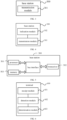
- a base station 300 is further provided according to an embodiment of the present disclosure, which includes: a transmission module 301 configured to transmit a subsequence in a predetermined subsequence set, where the predetermined subsequence set includes at least one subsequence, each of the at least one subsequence is configured to indicate that at least two terminals are in a target state, and the target state includes a wake-up state or a sleep state.
- the base station further includes: an indication module 302, configured to indicate, to each terminal of the at least two terminals, configuration information corresponding to a target subsequence set in an implicit manner or in an explicit manner, where the target subsequence set is a subset or a full set of the predetermined subsequence set, the target subsequence set includes at least one subsequence, and target subsequence sets indicated for the at least two terminals are different sequence sets or a same sequence set.
- an indication module 302 configured to indicate, to each terminal of the at least two terminals, configuration information corresponding to a target subsequence set in an implicit manner or in an explicit manner, where the target subsequence set is a subset or a full set of the predetermined subsequence set, the target subsequence set includes at least one subsequence, and target subsequence sets indicated for the at least two terminals are different sequence sets or a same sequence set.
- the configuration information includes an index of each subsequence in the target subsequence set, a relationship between the subsequence and the target state, time-domain resource information of the subsequence and frequency-domain resource information of the subsequence.
- the relationship between the subsequence and the target state includes at least one of: a first relationship between the subsequence and the wake-up state, or a second relationship between the subsequence and a sleep state.
- the indication module 302 is configured to indicate, to each terminal of the at least two terminals, the configuration information corresponding to the target subsequence set through a predetermined message.
- the predetermined message includes at least one of: system information, a radio resource control RRC signaling, a media access control layer control signaling, an L1 control signal, or an L2 control signal.
- the predetermined message is transmitted to each terminal in a broadcast, multicast, or unicast manner.
- the indication module 302 is configured to indicate a relationship between the configuration information and a terminal identifier to each terminal of the at least two terminals based on an agreement of a technical specification; or indicate the configuration information to each terminal of the at least two terminals based on an agreement of a technical specification.
- a time-domain resource and/or a frequency-domain resource of a first subsequence in the predetermined subsequence set is different from a time-domain resource and/or a frequency-domain resource of a second subsequence in the predetermined subsequence set
- the first subsequence is configured to indicate that at least two terminals within a coverage of a first cell are in the target state
- the second subsequence is configured to indicate that at least two terminals within a coverage of a second cell are in the target state
- the first cell and the second cell are different cells.
- a time-frequency resource of a third subsequence in the predetermined subsequence set is blank in a fourth cell
- a time-frequency resource of a fourth subsequence in the predetermined subsequence set is blank in a third cell
- the third subsequence is configured to indicate that at least two terminals within a coverage of the third cell are in the target state
- the fourth subsequence is configured to indicate that at least two terminals within a coverage of the fourth cell are in the target state
- the third cell and the fourth cell are neighboring cells.
- a downlink transmission power corresponding to a time-frequency resource of the subsequence is higher than a downlink transmission power corresponding to a predetermined resource, and the predetermined resource and the subsequence occupy a same time-domain resource and different frequency-domain resources.
- M subsequences in the predetermined subsequence set are configured to indicate that N terminals are respectively in a wake-up state or in a sleep state, M is less than or equal to 2 N , and M and N are positive integers.
- At least one subsequence in the predetermined subsequence set is a root sequence of a predetermined sequence, or is obtained from a predetermined sequence subjected to different cyclic shifts.
- At least two subsequences in the predetermined subsequence set are obtained from one subsequence subjected to different phase shifts.
- a subsequence of the predetermined subsequence set is a discontinuous transmission DTX message.
- the base station in the embodiments of the present disclosure transmits a subsequence in a predetermined subsequence set, where the predetermined subsequence set includes at least one subsequence, each of the at least one subsequence is configured to indicate that at least two terminals are in a target state, and the target state includes a wake-up state or a sleep state.
- the embodiments of the present disclosure can indicate that at least two terminals are respectively in a wake-up state or a sleep state simultaneously through one subsequence, thereby improving resource utilization.
- An embodiment of the present disclosure further provides a base station, which includes: a memory, a processor, and a terminal state indicating program that is stored in the memory and executable by the processor.
- the processor When executing the terminal state indicating program, the processor is configured to implement various processes in the above embodiments of the terminal state indicating method, and the same technical effects can be achieved, which are not described herein again, to avoid repetition.
- An embodiment of the present disclosure further provides a computer-readable storage medium.
- the computer-readable storage medium stores a terminal state indicating program, the terminal state indicating program is implemented by a processor to implement various processes in the above embodiments of the terminal state indicating method, and the same technical effects can be achieved, which are not described herein again, to avoid repetition.
- the computer-readable storage medium includes, for example, a read-only memory (ROM), a random access memory (RAM), a magnetic disk or an optical disk.
- an embodiment of the present disclosure further provides a base station 500, which includes a processor 501, a transceiver 502, a memory 503, and a bus interface.
- the processor 501 is configured to read a program from the memory 503 and execute the following processes: transmitting, by the transceiver 502, a subsequence in a predetermined subsequence set, where the predetermined subsequence set includes at least one subsequence, each of which is configured to indicate that at least two terminals are in a target state, and the target state includes a wake-up state or a sleep state.
- the bus architecture may include any number of interconnected buses and bridges, and is configured to link various circuits including one or more processors specifically represented by the processor 501 and the memory specifically represented by the memory 503.
- the bus architecture can also link various other circuits together such as a peripheral, a voltage regulator, and a power management circuit, which are well known in the art, and thus are not further described herein.
- a bus interface provides an interface.
- the transceiver 502 may be multiple elements, including a transmitter and a receiver, providing a unit for communicating with various other devices over a transmission medium.
- the processor 501 is responsible for managing the bus architecture and general processing, and the memory 503 may store data used by the processor 501 when performing operations.
- the processor 501 When reading a program from the memory 503, the processor 501 is further configured to perform the following steps:
- the relationship between the subsequence and the target state includes at least one of: a first relationship between the subsequence and the wake-up state, or a second relationship between the subsequence and a sleep state.
- the processor 501 when reading a program from the memory 503, the processor 501 is further configured to perform the following steps:
- the processor 501 when reading a program from the memory 503, the processor 501 is further configured to perform the following steps:
- a time-domain resource and/or a frequency-domain resource of a first subsequence in the predetermined subsequence set is different from a time-domain resource and/or a frequency-domain resource of a second subsequence in the predetermined subsequence set, the first subsequence is configured to indicate that at least two terminals within a coverage of a first cell are in the target state, the second subsequence is configured to indicate that at least two terminals within a coverage of a second cell are in the target state, and the first cell and the second cell are different cells.
- a time-frequency resource of a third subsequence in the predetermined subsequence set is blank in a fourth cell
- a time-frequency resource of a fourth subsequence in the predetermined subsequence set is blank in a third cell
- the third subsequence is configured to indicate that at least two terminals within a coverage of the third cell are in the target state
- the fourth subsequence is configured to indicate that at least two terminals within a coverage of the fourth cell are in the target state
- the third cell and the fourth cell are neighboring cells.
- a downlink transmission power corresponding to a time-frequency resource of the subsequence is higher than a downlink transmission power corresponding to a predetermined resource, and the predetermined resource and the subsequence occupy a same time-domain resource and different frequency-domain resources.
- M subsequences in the predetermined subsequence set are configured to indicate that N terminals are respectively in a wake-up state or in a sleep state, M is less than or equal to 2 N , and M and N are positive integers.
- At least one subsequence in the predetermined subsequence set is a root sequence of a predetermined sequence, or is obtained from a predetermined sequence subjected to different cyclic shifts.
- At least two subsequences in the predetermined subsequence set are obtained from one subsequence subjected to different phase shifts.
- a subsequence of the predetermined subsequence set is a discontinuous transmission DTX message.
- the base station in the embodiments of the present disclosure transmits a subsequence in a predetermined subsequence set, where the predetermined subsequence set includes at least one subsequence, each of which is configured to indicate that at least two terminals are in a target state, and the target state includes a wake-up state or a sleep state.
- the embodiments of the present disclosure can simultaneously indicate that at least two terminals are respectively in a wake-up state or a sleep state through one subsequence, thereby improving resource utilization.
- An embodiment of the present disclosure further provides a terminal 600.
- the terminal includes:
- the terminal further includes: an obtaining module 604, configured to obtain the configuration information corresponding to the target subsequence set of the terminal indicated by the base station in an implicit manner or in an explicit manner.
- the configuration information includes an index of each subsequence in the target subsequence set, a relationship between the subsequence and the target state, time-domain resource information of the subsequence and frequency-domain resource information of the subsequence.
- the obtaining module 604 is configured to obtain, through a predetermined message transmitted by the base station, the configuration information corresponding to the target subsequence set of the terminal indicated by the base station.
- the predetermined message includes at least one of: system information, a radio resource control RRC signaling, a media access control layer control signaling, an L1 control signal, or an L2 control signal, and the predetermined message is transmitted by the base station in a broadcast, multicast, or unicast manner.
- the obtaining module 604 is configured to obtain, based on an agreement of a technical specification, the configuration information corresponding to the target subsequence set of the terminal indicated by the base station, or obtain, based on an agreement of a technical specification, a relationship between the configuration information indicated by the base station and a terminal identifier, and obtain, based on the relationship, the configuration information indicated by the base station.
- the detection module 602 includes: a matching submodule 6021, configured to perform a predetermined matching operation between subsequences in the target subsequence set and the currently received subsequence; and a detection submodule 6022, configured to detect whether the target subsequence matching the currently received subsequence exists in the target subsequence set according to a relationship between a processing result of the predetermined matching operation and a predetermined threshold.
- the matching submodule 6021 is configured to perform the predetermined matching operation sequentially between subsequences in the target subsequence set and the currently received subsequence, until it is detected that a target subsequence matching the currently received subsequence exists in the target subsequence set; or perform the predetermined matching operation between all the subsequences in the target subsequence set and the currently received subsequence, respectively.
- the matching submodule 6021 includes: a first processing unit 60211, configured to perform the predetermined matching operation between a first subsequence and the currently received subsequence to obtain a first processing result, in a case that the first subsequence and a second subsequence with opposite phases exist in a subsequence group in the target subsequence set; and a second processing unit 60212, configured to obtain, according to the first processing result, a second processing result of the second subsequence about whether the second subsequence matches the currently received subsequence.
- the terminal in the embodiment of the present disclosure further includes: a processing module 605, configured to perform a synchronization and/or a cell measurement according to the target subsequence, in a case that a target subsequence matching the currently received subsequence exists in the target subsequence set.
- a processing module 605 configured to perform a synchronization and/or a cell measurement according to the target subsequence, in a case that a target subsequence matching the currently received subsequence exists in the target subsequence set.
- the terminal is a terminal corresponding to the foregoing method embodiments, and all the implementation manners in the foregoing method embodiments applied to a terminal side are applicable to the embodiments of the terminal, and the same technical effects can also be achieved.
- the terminal in the embodiments of the present disclosure receives a subsequence transmitted by a base station, detects whether a target subsequence matching the currently received subsequence exists in a target subsequence set corresponding to configuration information indicated by the base station, and determines a current state of the terminal according to the target state indicated by the target subsequence, in a case that the target subsequence matching the currently received subsequence exists in the target subsequence set.
- the subsequence transmitted by the base station is configured to indicate that at least two terminals are in a target state, thereby improving resource utilization.
- An embodiment of the present disclosure further provides a terminal, including: a memory, a processor, and a terminal state determining program that is stored in the memory and executable by the processor.
- the processor When executing the terminal state determining program, the processor is configured to implement various processes in the above embodiments about the terminal state determining method, and the same technical effects can be achieved, which are not described herein again, to avoid repetition.
- An embodiment of the present disclosure further provides a computer-readable storage medium.
- the computer-readable storage medium stores a terminal state determining program, the terminal state determining program is implemented by a processor to implement various processes in the above embodiments about the terminal state determining method, and the same technical effects can be achieved, which are not described herein again to avoid repetition.
- the computer-readable storage medium includes, for example, a read-only memory (ROM), a random access memory (RAM), a magnetic disk or an optical disk.
- an embodiment of the present disclosure further provides a terminal.
- the terminal 800 shown in FIG. 8 includes: at least one processor 801, a memory 802, at least one network interface 804, and other user interfaces 803.
- Various components in the terminal 800 are coupled together through a bus system 805.
- the bus system 805 is configured to implement connections and communications between these components.
- the bus system 805 includes a power bus, a control bus, and a status signal bus, in addition to a data bus.
- various buses are all labeled as the bus system 805 in FIG. 8 .
- the user interface 803 may include a display, a keyboard, or a click device (for example, a mouse or a trackball), a touch pad, or a touch screen.
- a click device for example, a mouse or a trackball
- a touch pad for example, a touch pad, or a touch screen.
- the memory 802 in embodiments of the present disclosure may be a volatile memory or a non-volatile memory, or may include both the volatile memory and the non-volatile memory.
- the non-volatile memory may be a read-only memory (ROM), a programmable ROM (PROM), an erasable PROM (EPROM), an electrically EPROM (EEPROM) or a flash memory.
- the volatile memory may be a random access memory (RAM), which is used as an external cache.
- RAMs such as static RAM (SRAM), dynamic RAM (DRAM), synchronous DRAM (SDRAM), double data rate SDRAM (DDRSDRAM), enhanced SDRAM (ESDRAM), Synchlink DRAM (SLDRAM) and direct Rambus RAM (DRRAM).
- SRAM static RAM
- DRAM dynamic RAM
- SDRAM synchronous DRAM
- DDRSDRAM double data rate SDRAM
- ESDRAM enhanced SDRAM
- SLDRAM Synchlink DRAM
- DRRAM direct Rambus RAM
- the memory 802 of the system and method described in the specification is meant to include, without limitation, these and any other suitable types of memories.
- the memory 802 stores the following elements: an executable module or a data structure, or a subset or extension set thereof, such as an operating system 8021 and an application 8022.
- the operating system 8021 includes various system programs, such as a framework layer program, a core library layer program and a driver layer program, to implement various fundamental services and process hardware-based tasks.
- the application 8022 includes various applications, such as a media player and a browser, to implement a variety of application services.
- the program implementing the method according to embodiments of the present disclosure may be included in the application 8022.
- the terminal 800 further includes a computer program that is stored on the memory 802 and executable by the processor 801, which may specifically be a terminal state determining program stored in the application 8022.
- the terminal state determining program is executed by the processor 801 to achieve the following steps:
- the terminal state determining program is executed by the processor 801 to obtain the configuration information corresponding to the target subsequence set of the terminal indicated by the base station in an implicit manner or in an explicit manner.
- the configuration information includes an index of each subsequence in the target subsequence set, a relationship between the subsequence and the target state, time-domain resource information of the subsequence and frequency-domain resource information of the subsequence.
- the terminal state determining program is executed by the processor 801 to obtain, through a predetermined message transmitted by the base station, the configuration information corresponding to the target subsequence set of the terminal indicated by the base station.
- the predetermined message includes at least one of: system information, a radio resource control RRC signaling, a media access control layer control signaling, an L1 control signal, or an L2 control signal, and the predetermined message is transmitted by the base station in a broadcast, multicast, or unicast manner.
- the terminal state determining program is executed by the processor 801 to obtain, based on an agreement of a technical specification, the configuration information corresponding to the target subsequence set of the terminal indicated by the base station; or to obtain, based on an agreement of a technical specification, a relationship between the configuration information indicated by the base station and a terminal identifier, and obtain, based on the relationship, the configuration information indicated by the base station.
- the terminal state determining program is executed by the processor 801 to implement the following steps:
- the terminal state determining program is executed by the processor 801 to implement the following steps:
- the terminal state determining program is executed by the processor 801 to implement the following steps:
- the terminal state determining program is executed by the processor 801 to implement the following steps: performing a synchronization and/or a cell measurement according to the target subsequence, in a case that the target subsequence matching the currently received subsequence exists in the target subsequence set.
- the processor 801 is configured to receive a subsequence transmitted by a base station, detect whether a target subsequence matching the currently received subsequence exists in a target subsequence set corresponding to configuration information indicated by the base station, and determine a current state of the terminal according to the target state indicated by the target subsequence, in a case that the target subsequence matching the currently received subsequence exists in the target subsequence set.
- the subsequence transmitted by the base station is configured to indicate that at least two terminals are in a target state, thereby improving resource utilization.
- the terminal of the present disclosure may be a terminal such as a mobile phone, a tablet computer, a personal digital assistant (PDA), or a vehicle-mounted computer.
- a terminal such as a mobile phone, a tablet computer, a personal digital assistant (PDA), or a vehicle-mounted computer.
- PDA personal digital assistant
- the terminal 800 can implement various processes implemented by the terminal in the foregoing embodiments. To avoid repetition, details are not described herein again.
- the method disclosed in the foregoing embodiments of the present disclosure may be applied to the processor 801 or implemented by the processor 801.
- the processor 801 may be an integrated circuit with signal processing capability. During an implementation process, various steps of the above methods may be realized in form of hardware by integrated logical circuits in the processor 801, or in form of software by instructions.
- the processor 801 may be a general purpose processor, a digital signal processor (DSP), an application specific integrated circuit (ASIC), a field programmable gate array (FPGA) or other programmable logic devices, a discrete gate or a transistor logic device, or a discrete hardware component, that is capable of implementing or executing the various methods, steps and logic block diagrams disclosed in the embodiments of the present disclosure.
- DSP digital signal processor
- ASIC application specific integrated circuit
- FPGA field programmable gate array
- the general purpose processor may be a microprocessor, or any conventional processor, etc.
- the steps of the methods disclosed with reference to the embodiments of the present disclosure may be embodied in hardware in the form of a coding processor, or performed by the hardware in the coding processor and the software modules in combination.
- the software modules may reside in well-established storage medium in the art, such as RAM, flash memory, ROM, PROM or EEPROM, register, etc.
- the storage medium is in the memory 802.
- the processor 801 reads information from the memory 802 and performs the steps of the methods with its hardware.
- processing units may be implemented in one or more of: application specific integrated circuits (ASIC), digital signal processor (DSP), DSP device (DSPD), programmable logic device (PLD), fieldprogrammable gate array (FPGA), general purpose processor, controller, microcontroller, microprocessor, other electronic unit configured to perform the function described in this application or a combination thereof.
- ASIC application specific integrated circuits
- DSP digital signal processor
- DSPD DSP device
- PLD programmable logic device
- FPGA fieldprogrammable gate array
- controller microcontroller
- microprocessor other electronic unit configured to perform the function described in this application or a combination thereof.
- the technical solutions described in the embodiments of the present disclosure may be implemented by a module (e.g., process, function, etc.) configured to perform the function described in the embodiments of the present disclosure.
- Software code may be stored in a storage and executed by the processor.
- the storage may be implemented internal or external to the processor.
- embodiments in the present disclosure can include a method, a device, or a computer program product. Accordingly, the embodiments of the present disclosure may be in a form of an entirely hardware embodiment, an entirely software embodiment, or a combination of software and hardware. Moreover, the embodiments of the present disclosure may take the form of a computer program product embodied in one or more computer usable available media (including, but not limited to, a disk storage, a CD-ROM (Compact Disc read-only-memory), and an optical storage), which includes computer usable program codes.
- a computer usable available media including, but not limited to, a disk storage, a CD-ROM (Compact Disc read-only-memory), and an optical storage
- Embodiments of the present disclosure are illustrated with reference to a flowchart and/or a block diagram of the method, the terminal device (system), and the computer program product according to the embodiments of the present disclosure. It can be understood that each flow and/or each block of the flowchart and/or the block diagram and a combination thereof may be implemented by computer program instructions. These computer program instructions can be provided to a processor of a general-purpose computer, a special-purpose computer, an embedded processor or other programmable data processing terminal devices to produce a machine, such that instructions are executed by a processor of a computer or other programmable data processing terminal device to implement a device with functions specified in one or more flows in the flowcharts and/or one or more blocks in the block diagrams.
- These computer program instructions can also be stored in a computer-readable memory that can instruct a computer or other programmable data processing terminal devices to operate in a specific manner, such that the instructions stored in the computer-readable memory produce an article including an instruction device, and the instruction device implements the functions specified in one or more flows in the flowcharts and/or one or more blocks in the block diagrams.
- These computer program instructions can also be loaded into a computer or other programmable data processing terminal devices such that a series of operational steps are performed on the computer or other programmable terminal devices to produce computer-implemented processing. Therefore, the instructions are executed on the computer or other programmable data processing terminal devices to provide steps of the functions specified in one or more flows in the flowcharts and/or one or more blocks in the block diagrams.
Landscapes
- Engineering & Computer Science (AREA)
- Computer Networks & Wireless Communication (AREA)
- Signal Processing (AREA)
- Mobile Radio Communication Systems (AREA)
Applications Claiming Priority (2)
| Application Number | Priority Date | Filing Date | Title |
|---|---|---|---|
| CN201710642684.9A CN109327888B (zh) | 2017-07-31 | 2017-07-31 | 一种终端状态的指示、确定方法、基站及终端 |
| PCT/CN2018/093327 WO2019024629A1 (zh) | 2017-07-31 | 2018-06-28 | 终端状态的指示、确定方法、基站及终端 |
Publications (3)
| Publication Number | Publication Date |
|---|---|
| EP3664520A1 EP3664520A1 (en) | 2020-06-10 |
| EP3664520A4 EP3664520A4 (en) | 2020-10-07 |
| EP3664520B1 true EP3664520B1 (en) | 2023-08-30 |
Family
ID=65232740
Family Applications (1)
| Application Number | Title | Priority Date | Filing Date |
|---|---|---|---|
| EP18842399.0A Active EP3664520B1 (en) | 2017-07-31 | 2018-06-28 | Method for indicating and determining terminal state, base station and terminal |
Country Status (7)
| Country | Link |
|---|---|
| US (1) | US11382039B2 (es) |
| EP (1) | EP3664520B1 (es) |
| CN (1) | CN109327888B (es) |
| ES (1) | ES2957743T3 (es) |
| HU (1) | HUE063438T2 (es) |
| PT (1) | PT3664520T (es) |
| WO (1) | WO2019024629A1 (es) |
Families Citing this family (10)
| Publication number | Priority date | Publication date | Assignee | Title |
|---|---|---|---|---|
| CN109391433B (zh) * | 2017-08-11 | 2022-05-06 | 中兴通讯股份有限公司 | 信息传输方法及装置 |
| EP3741166B1 (en) * | 2018-02-15 | 2024-08-14 | Sony Group Corporation | Wake up signal candidate indicator |
| CN121888340A (zh) | 2019-03-29 | 2026-04-17 | 中兴通讯股份有限公司 | 无线终端唤醒方法、唤醒信号检测方法、设备和存储介质 |
| US11304139B2 (en) * | 2019-06-27 | 2022-04-12 | Qualcomm Incorporated | Wake-up signal assisted link management |
| CN112399532B (zh) * | 2019-08-16 | 2022-05-31 | 大唐移动通信设备有限公司 | 一种节能指示方法及其装置 |
| US11533685B2 (en) * | 2019-08-16 | 2022-12-20 | Qualcomm Incorporated | Wake-up behavior indication for power saving |
| CN112584471B (zh) * | 2019-09-30 | 2022-03-11 | 维沃移动通信有限公司 | 一种节能信号接收方法、发送方法、终端和网络设备 |
| CN113038635B (zh) * | 2019-12-24 | 2023-04-25 | 维沃移动通信有限公司 | Scell休眠指示处理方法、终端及网络设备 |
| WO2022067692A1 (zh) * | 2020-09-30 | 2022-04-07 | Oppo广东移动通信有限公司 | 侧行链路的传输方法和终端 |
| US12267781B2 (en) * | 2021-03-15 | 2025-04-01 | Qualcomm Incorporated | Power saving in sidelink |
Citations (1)
| Publication number | Priority date | Publication date | Assignee | Title |
|---|---|---|---|---|
| US20150124706A1 (en) * | 2012-05-04 | 2015-05-07 | Nokia Corporation | Method and Apparatus for Signaling Sequence Root |
Family Cites Families (8)
| Publication number | Priority date | Publication date | Assignee | Title |
|---|---|---|---|---|
| EP2051479A1 (en) | 2007-10-18 | 2009-04-22 | Nokia Siemens Networks Oy | Control of push services |
| US8094761B2 (en) * | 2007-12-07 | 2012-01-10 | Samsung Electronics Co., Ltd. | Uplink feedback for supporting MIMO operation in the LTE downlink |
| CN103096419B (zh) * | 2011-10-31 | 2016-11-16 | 华为技术有限公司 | 一种终端管理方法和接入点及终端 |
| US9585091B2 (en) * | 2012-08-17 | 2017-02-28 | Qualcomm Incorporated | Systems and methods for low power wake up signal and operations for WLAN |
| WO2014056174A1 (en) * | 2012-10-11 | 2014-04-17 | Broadcom Corporation | Power saving in cellular networks |
| US9578469B2 (en) | 2014-10-02 | 2017-02-21 | Motorola Solutions, Inc. | Method and system for direct mode communication within a talkgroup |
| GB2531718B (en) * | 2014-10-24 | 2017-08-02 | Cambridge temperature concepts ltd | Activating an electronic device |
| US9525540B1 (en) | 2015-06-18 | 2016-12-20 | Qualcomm Incorporated | Embedded wake-up signaling |
-
2017
- 2017-07-31 CN CN201710642684.9A patent/CN109327888B/zh active Active
-
2018
- 2018-06-28 PT PT188423990T patent/PT3664520T/pt unknown
- 2018-06-28 EP EP18842399.0A patent/EP3664520B1/en active Active
- 2018-06-28 US US16/634,555 patent/US11382039B2/en active Active
- 2018-06-28 WO PCT/CN2018/093327 patent/WO2019024629A1/zh not_active Ceased
- 2018-06-28 ES ES18842399T patent/ES2957743T3/es active Active
- 2018-06-28 HU HUE18842399A patent/HUE063438T2/hu unknown
Patent Citations (1)
| Publication number | Priority date | Publication date | Assignee | Title |
|---|---|---|---|---|
| US20150124706A1 (en) * | 2012-05-04 | 2015-05-07 | Nokia Corporation | Method and Apparatus for Signaling Sequence Root |
Also Published As
| Publication number | Publication date |
|---|---|
| US20210007053A1 (en) | 2021-01-07 |
| US11382039B2 (en) | 2022-07-05 |
| EP3664520A4 (en) | 2020-10-07 |
| CN109327888A (zh) | 2019-02-12 |
| EP3664520A1 (en) | 2020-06-10 |
| WO2019024629A1 (zh) | 2019-02-07 |
| PT3664520T (pt) | 2023-09-21 |
| HUE063438T2 (hu) | 2024-01-28 |
| ES2957743T3 (es) | 2024-01-24 |
| CN109327888B (zh) | 2020-10-16 |
Similar Documents
| Publication | Publication Date | Title |
|---|---|---|
| EP3664520B1 (en) | Method for indicating and determining terminal state, base station and terminal | |
| CN111867015B (zh) | 检测或发送下行控制信道的方法和装置 | |
| US11903082B2 (en) | Discontinuous reception method, terminal device and network device | |
| CN110690947A (zh) | 信号处理方法和设备 | |
| WO2020199138A1 (en) | Downlink control signaling in wireless communication | |
| CN113162726A (zh) | Pdcch的检测方法及终端 | |
| US12075357B2 (en) | Communications method and apparatus | |
| US11924762B2 (en) | Information sending method, information receiving method, network device and terminal | |
| WO2019233195A1 (zh) | 节能信号的传输方法、终端和网络侧设备 | |
| CN111885682A (zh) | 唤醒终端设备的方法、装置、网络设备和终端设备 | |
| CN111049630B (zh) | 序列检测方法、序列发送方法和设备 | |
| KR20210053953A (ko) | 정보 전송 방법, 네트워크 기기 및 단말 | |
| CN116248241A (zh) | 一种通信方法及设备 | |
| WO2020030169A1 (zh) | 状态确定、状态指示方法、通信设备、通信系统及存储介质 | |
| WO2020030167A1 (zh) | 信号的发送、接收方法、装置、存储介质及处理装置 | |
| CN113812183A (zh) | 检测控制信道的方法和终端设备 | |
| EP3905795B1 (en) | Pdcch monitoring configuration for a terminal | |
| WO2024198926A1 (zh) | 寻呼方法、通信装置、通信基站及计算机可读介质 | |
| CN110012523B (zh) | 无线通信的方法和设备 | |
| US20230085723A1 (en) | Methods for enhancing paging of a wireless device of a set or wireless devices, network nodes and wireless devices using retransmission of pages | |
| US20240430860A1 (en) | Method performed by user equipment, and user equipment | |
| US20250055529A1 (en) | Method performed by user equipment, and user equipment | |
| RU2798373C2 (ru) | Способ и устройство связи | |
| WO2025232826A1 (zh) | 由用户设备执行的方法以及用户设备 | |
| WO2024160250A1 (zh) | 由用户设备执行的方法以及用户设备 |
Legal Events
| Date | Code | Title | Description |
|---|---|---|---|
| STAA | Information on the status of an ep patent application or granted ep patent |
Free format text: STATUS: THE INTERNATIONAL PUBLICATION HAS BEEN MADE |
|
| PUAI | Public reference made under article 153(3) epc to a published international application that has entered the european phase |
Free format text: ORIGINAL CODE: 0009012 |
|
| STAA | Information on the status of an ep patent application or granted ep patent |
Free format text: STATUS: REQUEST FOR EXAMINATION WAS MADE |
|
| 17P | Request for examination filed |
Effective date: 20200226 |
|
| AK | Designated contracting states |
Kind code of ref document: A1 Designated state(s): AL AT BE BG CH CY CZ DE DK EE ES FI FR GB GR HR HU IE IS IT LI LT LU LV MC MK MT NL NO PL PT RO RS SE SI SK SM TR |
|
| AX | Request for extension of the european patent |
Extension state: BA ME |
|
| A4 | Supplementary search report drawn up and despatched |
Effective date: 20200907 |
|
| RIC1 | Information provided on ipc code assigned before grant |
Ipc: H04W 52/02 20090101ALI20200901BHEP Ipc: H04W 52/00 20090101AFI20200901BHEP |
|
| DAV | Request for validation of the european patent (deleted) | ||
| DAX | Request for extension of the european patent (deleted) | ||
| STAA | Information on the status of an ep patent application or granted ep patent |
Free format text: STATUS: EXAMINATION IS IN PROGRESS |
|
| 17Q | First examination report despatched |
Effective date: 20210811 |
|
| GRAP | Despatch of communication of intention to grant a patent |
Free format text: ORIGINAL CODE: EPIDOSNIGR1 |
|
| STAA | Information on the status of an ep patent application or granted ep patent |
Free format text: STATUS: GRANT OF PATENT IS INTENDED |
|
| INTG | Intention to grant announced |
Effective date: 20230413 |
|
| GRAS | Grant fee paid |
Free format text: ORIGINAL CODE: EPIDOSNIGR3 |
|
| GRAA | (expected) grant |
Free format text: ORIGINAL CODE: 0009210 |
|
| STAA | Information on the status of an ep patent application or granted ep patent |
Free format text: STATUS: THE PATENT HAS BEEN GRANTED |
|
| AK | Designated contracting states |
Kind code of ref document: B1 Designated state(s): AL AT BE BG CH CY CZ DE DK EE ES FI FR GB GR HR HU IE IS IT LI LT LU LV MC MK MT NL NO PL PT RO RS SE SI SK SM TR |
|
| REG | Reference to a national code |
Ref country code: GB Ref legal event code: FG4D |
|
| REG | Reference to a national code |
Ref country code: CH Ref legal event code: EP |
|
| REG | Reference to a national code |
Ref country code: DE Ref legal event code: R096 Ref document number: 602018056644 Country of ref document: DE |
|
| REG | Reference to a national code |
Ref country code: PT Ref legal event code: SC4A Ref document number: 3664520 Country of ref document: PT Date of ref document: 20230921 Kind code of ref document: T Free format text: AVAILABILITY OF NATIONAL TRANSLATION Effective date: 20230914 |
|
| REG | Reference to a national code |
Ref country code: IE Ref legal event code: FG4D |
|
| REG | Reference to a national code |
Ref country code: NL Ref legal event code: FP |
|
| REG | Reference to a national code |
Ref country code: SK Ref legal event code: T3 Ref document number: E 42358 Country of ref document: SK |
|
| REG | Reference to a national code |
Ref country code: LT Ref legal event code: MG9D |
|
| REG | Reference to a national code |
Ref country code: AT Ref legal event code: MK05 Ref document number: 1607070 Country of ref document: AT Kind code of ref document: T Effective date: 20230830 |
|
| PG25 | Lapsed in a contracting state [announced via postgrant information from national office to epo] |
Ref country code: GR Free format text: LAPSE BECAUSE OF FAILURE TO SUBMIT A TRANSLATION OF THE DESCRIPTION OR TO PAY THE FEE WITHIN THE PRESCRIBED TIME-LIMIT Effective date: 20231201 |
|
| PG25 | Lapsed in a contracting state [announced via postgrant information from national office to epo] |
Ref country code: IS Free format text: LAPSE BECAUSE OF FAILURE TO SUBMIT A TRANSLATION OF THE DESCRIPTION OR TO PAY THE FEE WITHIN THE PRESCRIBED TIME-LIMIT Effective date: 20231230 |
|
| REG | Reference to a national code |
Ref country code: ES Ref legal event code: FG2A Ref document number: 2957743 Country of ref document: ES Kind code of ref document: T3 Effective date: 20240124 |
|
| REG | Reference to a national code |
Ref country code: HU Ref legal event code: AG4A Ref document number: E063438 Country of ref document: HU |
|
| PG25 | Lapsed in a contracting state [announced via postgrant information from national office to epo] |
Ref country code: SE Free format text: LAPSE BECAUSE OF FAILURE TO SUBMIT A TRANSLATION OF THE DESCRIPTION OR TO PAY THE FEE WITHIN THE PRESCRIBED TIME-LIMIT Effective date: 20230830 Ref country code: RS Free format text: LAPSE BECAUSE OF FAILURE TO SUBMIT A TRANSLATION OF THE DESCRIPTION OR TO PAY THE FEE WITHIN THE PRESCRIBED TIME-LIMIT Effective date: 20230830 Ref country code: NO Free format text: LAPSE BECAUSE OF FAILURE TO SUBMIT A TRANSLATION OF THE DESCRIPTION OR TO PAY THE FEE WITHIN THE PRESCRIBED TIME-LIMIT Effective date: 20231130 Ref country code: LV Free format text: LAPSE BECAUSE OF FAILURE TO SUBMIT A TRANSLATION OF THE DESCRIPTION OR TO PAY THE FEE WITHIN THE PRESCRIBED TIME-LIMIT Effective date: 20230830 Ref country code: LT Free format text: LAPSE BECAUSE OF FAILURE TO SUBMIT A TRANSLATION OF THE DESCRIPTION OR TO PAY THE FEE WITHIN THE PRESCRIBED TIME-LIMIT Effective date: 20230830 Ref country code: IS Free format text: LAPSE BECAUSE OF FAILURE TO SUBMIT A TRANSLATION OF THE DESCRIPTION OR TO PAY THE FEE WITHIN THE PRESCRIBED TIME-LIMIT Effective date: 20231230 Ref country code: HR Free format text: LAPSE BECAUSE OF FAILURE TO SUBMIT A TRANSLATION OF THE DESCRIPTION OR TO PAY THE FEE WITHIN THE PRESCRIBED TIME-LIMIT Effective date: 20230830 Ref country code: GR Free format text: LAPSE BECAUSE OF FAILURE TO SUBMIT A TRANSLATION OF THE DESCRIPTION OR TO PAY THE FEE WITHIN THE PRESCRIBED TIME-LIMIT Effective date: 20231201 Ref country code: FI Free format text: LAPSE BECAUSE OF FAILURE TO SUBMIT A TRANSLATION OF THE DESCRIPTION OR TO PAY THE FEE WITHIN THE PRESCRIBED TIME-LIMIT Effective date: 20230830 Ref country code: AT Free format text: LAPSE BECAUSE OF FAILURE TO SUBMIT A TRANSLATION OF THE DESCRIPTION OR TO PAY THE FEE WITHIN THE PRESCRIBED TIME-LIMIT Effective date: 20230830 |
|
| PG25 | Lapsed in a contracting state [announced via postgrant information from national office to epo] |
Ref country code: PL Free format text: LAPSE BECAUSE OF FAILURE TO SUBMIT A TRANSLATION OF THE DESCRIPTION OR TO PAY THE FEE WITHIN THE PRESCRIBED TIME-LIMIT Effective date: 20230830 |
|
| PG25 | Lapsed in a contracting state [announced via postgrant information from national office to epo] |
Ref country code: SM Free format text: LAPSE BECAUSE OF FAILURE TO SUBMIT A TRANSLATION OF THE DESCRIPTION OR TO PAY THE FEE WITHIN THE PRESCRIBED TIME-LIMIT Effective date: 20230830 Ref country code: RO Free format text: LAPSE BECAUSE OF FAILURE TO SUBMIT A TRANSLATION OF THE DESCRIPTION OR TO PAY THE FEE WITHIN THE PRESCRIBED TIME-LIMIT Effective date: 20230830 Ref country code: EE Free format text: LAPSE BECAUSE OF FAILURE TO SUBMIT A TRANSLATION OF THE DESCRIPTION OR TO PAY THE FEE WITHIN THE PRESCRIBED TIME-LIMIT Effective date: 20230830 Ref country code: DK Free format text: LAPSE BECAUSE OF FAILURE TO SUBMIT A TRANSLATION OF THE DESCRIPTION OR TO PAY THE FEE WITHIN THE PRESCRIBED TIME-LIMIT Effective date: 20230830 Ref country code: CZ Free format text: LAPSE BECAUSE OF FAILURE TO SUBMIT A TRANSLATION OF THE DESCRIPTION OR TO PAY THE FEE WITHIN THE PRESCRIBED TIME-LIMIT Effective date: 20230830 |
|
| REG | Reference to a national code |
Ref country code: DE Ref legal event code: R097 Ref document number: 602018056644 Country of ref document: DE |
|
| PLBE | No opposition filed within time limit |
Free format text: ORIGINAL CODE: 0009261 |
|
| STAA | Information on the status of an ep patent application or granted ep patent |
Free format text: STATUS: NO OPPOSITION FILED WITHIN TIME LIMIT |
|
| PG25 | Lapsed in a contracting state [announced via postgrant information from national office to epo] |
Ref country code: SI Free format text: LAPSE BECAUSE OF FAILURE TO SUBMIT A TRANSLATION OF THE DESCRIPTION OR TO PAY THE FEE WITHIN THE PRESCRIBED TIME-LIMIT Effective date: 20230830 |
|
| 26N | No opposition filed |
Effective date: 20240603 |
|
| PG25 | Lapsed in a contracting state [announced via postgrant information from national office to epo] |
Ref country code: BG Free format text: LAPSE BECAUSE OF FAILURE TO SUBMIT A TRANSLATION OF THE DESCRIPTION OR TO PAY THE FEE WITHIN THE PRESCRIBED TIME-LIMIT Effective date: 20230830 |
|
| PG25 | Lapsed in a contracting state [announced via postgrant information from national office to epo] |
Ref country code: BG Free format text: LAPSE BECAUSE OF FAILURE TO SUBMIT A TRANSLATION OF THE DESCRIPTION OR TO PAY THE FEE WITHIN THE PRESCRIBED TIME-LIMIT Effective date: 20230830 |
|
| PG25 | Lapsed in a contracting state [announced via postgrant information from national office to epo] |
Ref country code: MC Free format text: LAPSE BECAUSE OF FAILURE TO SUBMIT A TRANSLATION OF THE DESCRIPTION OR TO PAY THE FEE WITHIN THE PRESCRIBED TIME-LIMIT Effective date: 20230830 |
|
| REG | Reference to a national code |
Ref country code: CH Ref legal event code: PL |
|
| PG25 | Lapsed in a contracting state [announced via postgrant information from national office to epo] |
Ref country code: LU Free format text: LAPSE BECAUSE OF NON-PAYMENT OF DUE FEES Effective date: 20240628 |
|
| PG25 | Lapsed in a contracting state [announced via postgrant information from national office to epo] |
Ref country code: IE Free format text: LAPSE BECAUSE OF NON-PAYMENT OF DUE FEES Effective date: 20240628 |
|
| PG25 | Lapsed in a contracting state [announced via postgrant information from national office to epo] |
Ref country code: BE Free format text: LAPSE BECAUSE OF NON-PAYMENT OF DUE FEES Effective date: 20240630 Ref country code: CH Free format text: LAPSE BECAUSE OF NON-PAYMENT OF DUE FEES Effective date: 20240630 |
|
| REG | Reference to a national code |
Ref country code: BE Ref legal event code: MM Effective date: 20240630 |
|
| PGFP | Annual fee paid to national office [announced via postgrant information from national office to epo] |
Ref country code: NL Payment date: 20250516 Year of fee payment: 8 |
|
| PGFP | Annual fee paid to national office [announced via postgrant information from national office to epo] |
Ref country code: DE Payment date: 20250507 Year of fee payment: 8 |
|
| PGFP | Annual fee paid to national office [announced via postgrant information from national office to epo] |
Ref country code: GB Payment date: 20250508 Year of fee payment: 8 |
|
| PGFP | Annual fee paid to national office [announced via postgrant information from national office to epo] |
Ref country code: IT Payment date: 20250522 Year of fee payment: 8 |
|
| PGFP | Annual fee paid to national office [announced via postgrant information from national office to epo] |
Ref country code: PT Payment date: 20250612 Year of fee payment: 8 |
|
| PGFP | Annual fee paid to national office [announced via postgrant information from national office to epo] |
Ref country code: HU Payment date: 20250529 Year of fee payment: 8 Ref country code: FR Payment date: 20250508 Year of fee payment: 8 |
|
| PGFP | Annual fee paid to national office [announced via postgrant information from national office to epo] |
Ref country code: SK Payment date: 20250513 Year of fee payment: 8 |
|
| PGFP | Annual fee paid to national office [announced via postgrant information from national office to epo] |
Ref country code: ES Payment date: 20250703 Year of fee payment: 8 |
|
| PG25 | Lapsed in a contracting state [announced via postgrant information from national office to epo] |
Ref country code: CY Free format text: LAPSE BECAUSE OF FAILURE TO SUBMIT A TRANSLATION OF THE DESCRIPTION OR TO PAY THE FEE WITHIN THE PRESCRIBED TIME-LIMIT; INVALID AB INITIO Effective date: 20180628 |