EP3664565B1 - Procédé de transmission d'informations dans une bande sans licence, dispositif de réseau, et terminal - Google Patents
Procédé de transmission d'informations dans une bande sans licence, dispositif de réseau, et terminal Download PDFInfo
- Publication number
- EP3664565B1 EP3664565B1 EP18841680.4A EP18841680A EP3664565B1 EP 3664565 B1 EP3664565 B1 EP 3664565B1 EP 18841680 A EP18841680 A EP 18841680A EP 3664565 B1 EP3664565 B1 EP 3664565B1
- Authority
- EP
- European Patent Office
- Prior art keywords
- channel
- reception
- listening
- beams
- unlicensed band
- Prior art date
- Legal status (The legal status is an assumption and is not a legal conclusion. Google has not performed a legal analysis and makes no representation as to the accuracy of the status listed.)
- Active
Links
Images

Classifications
-
- H—ELECTRICITY
- H04—ELECTRIC COMMUNICATION TECHNIQUE
- H04W—WIRELESS COMMUNICATION NETWORKS
- H04W74/00—Wireless channel access
- H04W74/08—Non-scheduled access, e.g. ALOHA
- H04W74/0808—Non-scheduled access, e.g. ALOHA using carrier sensing, e.g. carrier sense multiple access [CSMA]
-
- H—ELECTRICITY
- H04—ELECTRIC COMMUNICATION TECHNIQUE
- H04B—TRANSMISSION
- H04B7/00—Radio transmission systems, i.e. using radiation field
- H04B7/02—Diversity systems; Multi-antenna system, i.e. transmission or reception using multiple antennas
- H04B7/04—Diversity systems; Multi-antenna system, i.e. transmission or reception using multiple antennas using two or more spaced independent antennas
- H04B7/06—Diversity systems; Multi-antenna system, i.e. transmission or reception using multiple antennas using two or more spaced independent antennas at the transmitting station
- H04B7/0613—Diversity systems; Multi-antenna system, i.e. transmission or reception using multiple antennas using two or more spaced independent antennas at the transmitting station using simultaneous transmission
- H04B7/0615—Diversity systems; Multi-antenna system, i.e. transmission or reception using multiple antennas using two or more spaced independent antennas at the transmitting station using simultaneous transmission of weighted versions of same signal
- H04B7/0617—Diversity systems; Multi-antenna system, i.e. transmission or reception using multiple antennas using two or more spaced independent antennas at the transmitting station using simultaneous transmission of weighted versions of same signal for beam forming
-
- H—ELECTRICITY
- H04—ELECTRIC COMMUNICATION TECHNIQUE
- H04B—TRANSMISSION
- H04B7/00—Radio transmission systems, i.e. using radiation field
- H04B7/02—Diversity systems; Multi-antenna system, i.e. transmission or reception using multiple antennas
- H04B7/04—Diversity systems; Multi-antenna system, i.e. transmission or reception using multiple antennas using two or more spaced independent antennas
- H04B7/06—Diversity systems; Multi-antenna system, i.e. transmission or reception using multiple antennas using two or more spaced independent antennas at the transmitting station
- H04B7/0686—Hybrid systems, i.e. switching and simultaneous transmission
- H04B7/0695—Hybrid systems, i.e. switching and simultaneous transmission using beam selection
- H04B7/06952—Selecting one or more beams from a plurality of beams, e.g. beam training, management or sweeping
- H04B7/06966—Selecting one or more beams from a plurality of beams, e.g. beam training, management or sweeping using beam correspondence; using channel reciprocity, e.g. downlink beam training based on uplink sounding reference signal [SRS]
-
- H—ELECTRICITY
- H04—ELECTRIC COMMUNICATION TECHNIQUE
- H04W—WIRELESS COMMUNICATION NETWORKS
- H04W16/00—Network planning, e.g. coverage or traffic planning tools; Network deployment, e.g. resource partitioning or cells structures
- H04W16/14—Spectrum sharing arrangements between different networks
-
- H—ELECTRICITY
- H04—ELECTRIC COMMUNICATION TECHNIQUE
- H04W—WIRELESS COMMUNICATION NETWORKS
- H04W24/00—Supervisory, monitoring or testing arrangements
- H04W24/08—Testing, supervising or monitoring using real traffic
-
- H—ELECTRICITY
- H04—ELECTRIC COMMUNICATION TECHNIQUE
- H04W—WIRELESS COMMUNICATION NETWORKS
- H04W72/00—Local resource management
- H04W72/04—Wireless resource allocation
- H04W72/044—Wireless resource allocation based on the type of the allocated resource
- H04W72/046—Wireless resource allocation based on the type of the allocated resource the resource being in the space domain, e.g. beams
Definitions
- the present disclosure relates to the field of communication technology, in particular to a method of transmitting information in an unlicensed band and a node.
- unlicensed band can serve as a supplement to licensed band, assisting operators in expanding their services.
- 5G 5th Generation
- NR New Radio
- an unlicensed band may operate at bands of 5GHz, 37GHz and 60GHz. Large bandwidth (80MHz or 100MHz) of the unlicensed band can reduce complexity of implementations of network devices and terminals.
- the unlicensed band is shared by multiple radio access technologies (RATs) such as WiFi, radar, Long Term Evolution License Assisted Access (LTE-LAA), so the usage of the unlicensed band in some countries and regions should comply with some regulations, such as Listen Before Talk (LBT), Maximum channel Occupancy Time (MCOT) and the like, so as to ensure equitable usage of the resource by all devices.
- RATs radio access technologies
- LBT Listen Before Talk
- MCOT Maximum channel Occupancy Time
- High-frequency communication can provide larger system bandwidth, and size of antenna can be smaller, which can facilitate deployment of large-scale antennas in network device and terminal (User Equipment, UE).
- UE User Equipment
- High-frequency communication has disadvantages of large path loss, being susceptible to interference and fragile link, while large-scale antenna technology can provide large antenna gain; hence, the combination of high-frequency communication and large-scale antennas is an inexorable trend of future 5G mobile communication system.
- a network device which is also called as a network transmission and reception point (TRP), and a terminal will perform transmissions and receptions using beamforming technology.
- Beam correspondence of a transmission (Tx) beam and a reception (Rx) beam of a TRP satisfies at least one of following conditions: 1, the TRP may determine an uplink Rx beam of the TRP based on measurement of a UE on one or more downlink Tx beams of the TRP; 2, the TRP may determine a downlink Tx beam of the TRP based on measurement on one or more uplink Rx beams of the TRP.
- Beam correspondence of a Tx beam and a Rx beam of a UE satisfies at least one of following conditions: 1, the UE may determine an uplink Tx beam of the UE based on measurement on one or more downlink Rx beams of the UE; 2, the UE may determine a downlink Rx beam of the UE according to an indication of measurement of the TRP on one or more uplink Tx beams of the UE.
- US 2016/0037560 A1 discloses a method which involves determining a transmission direction by a communication node, where the transmission direction is characterized by a digital beam-forming direction and an analog beam steering direction.
- Embodiments of the present disclosure provide a method of transmitting information in an unlicensed band and a node.
- a method of transmitting information in an unlicensed band is provided according to embodiments of the present disclosure. The method is applied to a node and includes: listening to a channel of the unlicensed band with a reception beam of the node to obtain a channel listening result, when information needs to be transmitted with a transmission beam; and transmitting the information on the channel with the transmission beam, in a case that the channel listening result indicates that the channel is in an idle state;
- a node in a second aspect, includes: a listening module, configured to listen to a channel of an unlicensed band with a reception beam of the node to obtain a channel listening result, when information needs to be transmitted with a transmission beam; and a transmission module, configured to transmit the information on the channel with the transmission beam, in a case that the channel listening result indicates that the channel is in an idle state;
- a channel state is inaccurately determined by using conventional listening mechanism in an unlicensed band, in view of this, a method of transmitting information in an unlicensed band, a network device and a terminal are provided according to embodiments of the present disclosure.
- Embodiments of the present disclosure provide a method of transmitting information in an unlicensed band, which is applied to a node. As shown in Fig. 1 , the method of transmitting information includes following steps 11 to 12.
- step 11 listening to a channel of the unlicensed band with a reception beam of the node to obtain a channel listening result, when information needs to be transmitted with a transmission beam.
- the node has at least one transmission beam and at least one reception beam.
- the embodiments of the present disclosure is especially for a scenario where the node has at least two transmission beams and/or at least two reception beams.
- the node in the embodiments of the present disclosure may be a network device or a terminal.
- the network device may be a base station (Base Transceiver Station, BTS) in a global system of mobile communication (GSM) or in code division multiple access (CDMA), a base station (NodeB, NB) in wideband code division multiple access (WCDMA), an evolutional base station (Evolutional Node B, eNB, or eNodeB) in LTE, a relay station or access point, or a base station in future 5G network, which is not limited herein.
- BTS Base Transceiver Station
- GSM global system of mobile communication
- CDMA code division multiple access
- NodeB, NB base station
- WCDMA wideband code division multiple access
- Evolutional Node B, eNB, or eNodeB evolutional Node B
- eNB evolved Node B
- eNodeB evolutional Node B
- the terminal may be a wireless terminal or a wired terminal.
- the wireless terminal may refer to a device configured to provide voice and/or other service data connectivity to a user, a handheld device with a wireless connection function, or any other processing device connected to a wireless modem.
- the wireless terminal may communicate with one or more core networks via a radio access network (RAN).
- RAN radio access network
- the wireless terminal may be a mobile terminal, such as a mobile phone (or a cellular phone) or a computer equipped with a mobile terminal.
- the wireless terminal may be a portable, pocket-sized, handheld, computer-built-in or vehicle-mounted mobile device, which exchanges voice and/or data with a radio access network.
- the wireless terminal may be a personal communication service (PCS) phone, a cordless phone, a session initiation protocol (SIP) phone, a wireless local loop (WLL) station, or a personal digital assistant (PDA).
- the wireless terminal may also be referred to as a system, a subscriber unit, a subscriber station, a mobile station, a mobile, a remote station, a remote terminal, an access terminal, a user terminal, a user agent, a user device or a user equipment, which is not limited herein.
- step 12 transmitting the information on the channel with the transmission beam, in a case that the channel listening result indicates that the channel is in an idle state.
- a case where the transmission beam and the reception beam of the node meet beam correspondence and a case where the transmission beam and the reception beam of the node do not meet beam correspondence correspond to different listening manners.
- the listening manner for the channel in the unlicensed band is further introduced in conjunction with whether beam correspondence is met.
- a first transmission beam and a first reception beam of the node meet a condition of beam correspondence.
- Step 11 specifically includes: listening to the channel of the unlicensed band with the first reception beam corresponding to the first transmission beam to obtain the channel listening result, when the information needs to be transmitted with the first transmission beam.
- the first reception beam and the first transmission beam of the node form a reception-transmission beam pair. If the first transmission beam N and the corresponding first reception beam M meet beam correspondence, it is needed to perform listening by using the first reception beam M before transmitting information on the unlicensed band by using the first transmission beam N.
- listening manner for the channel of the unlicensed band in this scenario may refer to the following manners.
- the first reception beam and the first transmission beam of the node form a reception-transmission beam pair, when information needs to be transmitted through the first transmission beam, the node performs listening in a whole beam range of the first reception beam to obtain a listening result.
- the first transmission beam N and the corresponding first reception beam M meet beam correspondence, it is needed to perform listening in a whole beam range of the first reception beam M before transmitting information on the unlicensed band through the first transmission beam N.
- the channel listening result indicates that the channel is in an idle state, the information can be transmitted on the channel through the first transmission beam N.
- Manner two performing beamforming on the first transmission beam to obtain t transmission sub-beams; and listening to the channel of the unlicensed band with the first reception beam corresponding to the first transmission beam to obtain the channel listening result, when the information needs to be transmitted with at least one transmission sub-beam among the t transmission sub-beams.
- t is an integer larger than 1.
- the first transmission beam N is divided in its direction range to obtain multiple transmission sub-beams, i.e., narrow beams N1, N2...Nt.
- narrow beams N1, N2...Nt Before transmitting information on the unlicensed band through any one or more narrow beams among the t narrow beams, it is needed to perform listening in a beam range of the first reception beam M. In a case that the channel listening result indicates that the channel is in an idle state, the information can be transmitted on the channel through the any one or more narrow beams among the t narrow beams.
- Manner three performing beamforming on the first reception beam corresponding to the first transmission beam to obtain y reception sub-beams; and listening to the channel of the unlicensed band with at least a part of the y reception sub-beams to obtain the channel listening result.
- y is an integer larger than 1.
- the first reception beam is divided in its direction range to obtain multiple reception sub-beams, i.e., narrow beams M1, M2...My.
- the first transmission beam N Before transmitting information on the unlicensed band through the first transmission beam N, it is needed to perform listening in a beam range of at least a part of the y narrow beams of the first reception beam M.
- the channel listening result indicates that the channel is in an idle state, the information can be transmitted on the channel through the first transmission beam N.
- the process of listening to the channel of the unlicensed band with the at least a part of the y reception sub-beams to obtain the channel listening result includes: listening to the channel of the unlicensed band with each reception sub-beam of the y reception sub-beams to obtain the channel listening result. That is, before transmitting information on the unlicensed band through the first transmission beam N, it is needed to perform listening in a beam range of each narrow beam of the y narrow beams of the first reception beam M, and in a case that the channel listening result indicates the channel is in an idle state, the information can be transmitted on the channel through the first transmission beam N.
- the listening process includes: listening to the channel of the unlicensed band with each reception sub-beam of the y reception sub-beams; and obtaining a channel listening result which indicates that the channel is idle, in a case that it is monitored that the channel of the unlicensed band is in the idle state with at least a part of the y reception sub-beams.
- LBT is performed on the unlicensed band through each narrow beam of the y narrow beams, and the channel listening result of LBT of each narrow beam indicates that the channel is idle, so the channel is determined to be in the idle state.
- LBT is performed on the unlicensed band through each narrow beam of the y narrow beams, and the channel listening results of LBTs of a preset quantity of narrow beams indicate that the channel is idle, so the channel is determined to be in the idle state.
- the preset quantity is an integer smaller than y.
- the channel of the unlicensed band is monitored with y' reception sub-beams among the y reception sub-beams to obtain the channel listening result.
- y' is smaller than y and y' is an integer equal to or larger than 1. That is, before transmitting information on the unlicensed band through the first transmission beam N, it is needed to perform listening in a beam range of the y' narrow beams among the y narrow beams of the first reception beam M, and in a case that the channel listening result indicates that the channel is in the idle state, the information can be transmitted on the channel through the first transmission beam N.
- the detailed listening process includes: listening to the channel of the unlicensed band with the y' reception sub-beams among the y reception sub-beams; and obtaining a channel listening result which indicates that the channel is idle, in a case that it is monitored that the channel of the unlicensed band is in the idle state with at least a part of the y' reception sub-beams among the y reception sub-beams.
- LBT is performed on the unlicensed band through the y' narrow beams of the first reception beam M, and the channel listening result of the LBT of each narrow beam among the y' narrow beams indicates that the channel is idle, so the channel is determined to be in the idle state.
- LBT is performed on the unlicensed band through the y' narrow beams of the first reception beam M, and the channel listening results of LBTs of a preset quantity of narrow beams among the y' narrow beams indicate that the channel is idle, so the channel is determined to be in the idle state.
- the preset quantity is an integer smaller than y'.
- no transmission beam and no reception beam of the node meet the condition of beam correspondence.
- Step 11 specifically includes: listening to the channel of the unlicensed band with at least a part of Y reception beams of the node to obtain the channel listening result, when the information needs to be transmitted with at least one transmission beam.
- the node has Y reception beams and Y is an integer larger than 1.
- the Tx beam and the Rx beam of the node do not meet beam correspondence, it is needed to perform listening in a beam range of the Y reception beams of the node before transmitting information on the unlicensed band through a transmission beam N.
- the channel listening result indicates that the channel is in an idle state, the information can be transmitted on the channel through the transmission beam N.
- the process of listening to the channel of the unlicensed band with the at least a part of the Y reception beams to obtain the channel listening result includes: listening to the channel of the unlicensed band with each reception beam of the Y reception beams to obtain the channel listening result. That is, before transmitting information on the unlicensed band through the transmission beam N, it is needed to perform listening in a beam range of each narrow beam of the Y reception beams, and in a case that the channel listening result indicates the channel is in an idle state, the information can be transmitted on the channel through the transmission beam N.
- the listening process includes: listening to the channel of the unlicensed band with each reception beam among the Y reception beams; and obtaining a channel listening result which indicates that the channel is idle, in a case that it is monitored that the channel of the unlicensed band is in the idle state with at least a part of the Y reception beams.
- LBT is performed on the unlicensed band through each of the Y reception beams, and the channel listening result of LBT of each reception beam indicates that the channel is idle, so the channel is determined to be in the idle state.
- LBT is performed on the unlicensed band through each of the Y reception beams, and the channel listening results of LBTs of a preset quantity of reception beams indicate that the channel is idle, so the channel is determined to be in the idle state.
- the preset quantity is an integer smaller than Y
- the channel of the unlicensed band is monitored with Y' reception beams among the Y reception beams to obtain the channel listening result.
- Y' is smaller than Y and Y' is an integer equal to or larger than 1. That is, before transmitting information on the unlicensed band through the transmission beam N, it is needed to perform listening in a beam range of the Y' reception beams among the Y reception beams of the node, and in a case that the channel listening result indicates that the channel is in the idle state, the information can be transmitted on the channel through the transmission beam N.
- the detailed listening to process includes: listening to the channel of the unlicensed band with the Y' reception beams among the Y reception beams; and obtaining a channel listening result which indicates that the channel is idle, in a case that it is monitored that the channel of the unlicensed band is in the idle state with at least a part of the Y' reception beams among the Y reception beams.
- LBT is performed on the unlicensed band through the Y' reception beams among the Y reception beams of the node, and the channel listening result of the LBT of each reception beam among the Y' reception beams indicates that the channel is idle, so the channel is determined to be in the idle state.
- LBTs are performed on the unlicensed band through the Y' reception beams among the Y reception beams of the node, and the channel listening results of LBTs of a preset quantity of reception beams among the Y' reception beams indicate that the channel is idle, so the channel is determined to be in the idle state.
- the preset quantity is an integer smaller than Y'.
- each transmission beam may perform LBT according to the above-described implementation, and the node can start transmission through the transmission beam only when the LBT result indicates that the channel of the unlicensed band is idle.
- the performance of the LBTs through respective reception beams may be consistent, that is, all reception beams (including complete reception beam and reception sub-beam of reception beam) use an identical LBT parameter.
- the performance of the LBTs through respective reception beams may be independent, that is, different reception beams may use different LBT parameters.
- the LBT parameter includes at least one of: enhance Clear Channel Access slot duration (eCCA slot duration), contention window, defer period, or Energy Detection threshold (ED threshold).
- the node when the node needs to transmit information with a transmission beam, the node monitors the channel of the unlicensed band on a corresponding reception beam to determine a state of the channel. In this way, during channel listening before the node accesses the channel, not only influence of powers of other devices on the channel but also influence of spatial characteristics of beamforming on different directions of the node are considered, to determine an accurate state of the channel, thereby ensuring success access to the channel of the node and realizing information transmission in unlicensed band.
- a node 200 in embodiments of the present disclosure can achieve details of the method of transmitting information according to the foregoing embodiments and achieve the same effect; in the method of transmitting information, when information needs to be transmitted with a transmission beam, the channel of the unlicensed band is monitored with a reception beam of the node to obtain a channel listening result, and in a case that the channel listening result indicates that the channel is idle, the information is transmitted on the channel with the transmission beam.
- the node 200 includes a listening module 210 and a transmission module 220.
- the listening module 210 is configured to listen to a channel of an unlicensed band with a reception beam of the node to obtain a channel listening result, when information needs to be transmitted with a transmission beam.
- the transmission module 220 is configured to transmit the information on the channel with the transmission beam, in a case that the channel listening result indicates that the channel is in an idle state.
- the listening module 210 includes a first listening sub-module, configured to: in a case that a first transmission beam and a first reception beam of the node meet a condition of beam correspondence, listen to the channel of the unlicensed band with the first reception beam corresponding to the first transmission beam to obtain the channel listening result when the information needs to be transmitted with the first transmission beam.
- a first listening sub-module configured to: in a case that a first transmission beam and a first reception beam of the node meet a condition of beam correspondence, listen to the channel of the unlicensed band with the first reception beam corresponding to the first transmission beam to obtain the channel listening result when the information needs to be transmitted with the first transmission beam.
- the first listening sub-module includes a first forming unit, configured to perform beamforming on the first transmission beam to obtain t transmission sub-beams, where t is an integer larger than 1; and a first listening unit, configured to listen to the channel of the unlicensed band with the first reception beam corresponding to the first transmission beam to obtain the channel listening result, when the information needs to be transmitted with at least one transmission sub-beam among the t transmission sub-beams.
- the first listening sub-module includes a second forming unit, configured to perform beamforming on the first reception beam corresponding to the first transmission beam to obtain y reception sub-beams, where y is an integer larger than 1; and a second listening unit, configured to listen to the channel of the unlicensed band with at least a part of the y reception sub-beams to obtain the channel listening result.
- the second listening unit includes a first listening sub-unit, configured to listen to the channel of the unlicensed band with each reception sub-beam of the y reception sub-beams to obtain the channel listening result; or a second listening sub-unit, configured to listen to the channel of the unlicensed band with y' reception sub-beams among the y reception sub-beams to obtain the channel listening result, where y' is smaller than y and y' is an integer equal to or larger than 1.
- the first listening sub-unit is configured to: listen to the channel of the unlicensed band with each reception sub-beam of the y reception sub-beams; and obtain a channel listening result which indicates that the channel is idle, in a case that it is monitored that the channel of the unlicensed band is in the idle state with at least a part of the y reception sub-beams.
- the second listening sub-unit is configured to: listen to the channel of the unlicensed band with the y' reception sub-beams among the y reception sub-beams; and obtain a channel listening result which indicates that the channel is idle, in a case that it is monitored that the channel of the unlicensed band is in the idle state with at least a part of the y' reception sub-beams among the y reception sub-beams.
- the listening module 210 further includes a second listening sub-module, configured to: in a case that all transmission beams and all reception beams of the node do not meet a condition of beam correspondence, listen to the channel of the unlicensed band with at least a part of Y reception beams of the node to obtain the channel listening result when the information needs to be transmitted with at least one transmission beam, where the node has Y reception beams and Y is an integer larger than 1.
- the second listening sub-module includes a third listening unit, configured to listen to the channel of the unlicensed band with each reception beam of the Y reception beams to obtain the channel listening result; or a fourth listening unit, configured to listen to the channel of the unlicensed band with Y' reception beams among the Y reception beams to obtain the channel listening result, where Y' is smaller than Y and Y' is an integer equal to or larger than 1.
- the third listening unit includes a third listening sub-unit, configured to listen to the channel of the unlicensed band with each reception beam of the Y reception beams; and a first processing sub-unit, configured to obtain a channel listening result which indicates that the channel is idle, in a case that it is monitored that the channel of the unlicensed band is in the idle state with at least a part of the Y reception beams.
- the fourth listening unit includes a fourth listening sub-unit, configured to listen to the channel of the unlicensed band with the Y' reception beams among the Y reception beams; and a second processing sub-unit, configured to obtain a channel listening result which indicates that the channel is idle, in a case that it is monitored that the channel of the unlicensed band is in the idle state with at least a part of the Y' reception beams among the Y reception beams.
- the node includes a terminal or a network device.
- the division of respective modules of the node is merely a division based on logic functions.
- the modules may be all or partially integrated into one physical body, or may be separated physically.
- the modules may all be embodied in the form of software calling through processing elements or in the form of hardware, or, part of the modules may be embodied into in the form of software calling through processing elements and part of the module may be embodied in the form of hardware.
- the determining module may be an independent processing unit, or may be integrated into a certain chip of the device, or may be stored in the memory of the device in form of program codes and may be called by a certain processing unit of the device to implement the function of the determining module. Implementations of other modules are similar.
- the modules may be all or partially integrated together, or may be independent from each other.
- the processing unit herein may be an integrated circuit having signal processing ability.
- respective steps of the method or respective modules can be achieved with hardware integrated logic circuits in the processing unit or in way of software.
- the modules may be configured to be one or more integrated circuits for implementing the method, such as one or more Application Specific Integrated Circuits (ASICs), or one or more Digital Signal Processors (DSPs), or one or more Field Programmable Gate Arrays (FPGAs) and so on.
- ASICs Application Specific Integrated Circuits
- DSPs Digital Signal Processors
- FPGAs Field Programmable Gate Arrays
- the processing element may be a general processor such as a central processing unit CPU) or other processor capable of calling program codes.
- the modules may be integrated together in form of system-on-a-chip (SOC).
- the channel of the unlicensed band is monitored on a corresponding reception beam to determine a state of the channel.
- the node accesses the channel and performs channel listening, not only influence of powers of other devices on the channel but also influence of spatial characteristics of beamforming on different directions of the node are considered, to determine an accurate state of the channel, thereby ensuring success access to the channel of the node and realizing information transmission in unlicensed band.
- a network device is further provided according to embodiments of the present disclosure.
- the network device includes a processor, a memory and a computer program which is stored on the memory and executable by the processor.
- the processor when executing the computer program, implements steps of the above-described method of transmitting information in the unlicensed band.
- a computer readable storage medium is further provided according to embodiments of the present disclosure.
- a computer program is stored on the computer readable storage medium, and the computer program, when being executed by a processor, implements steps of the above-described method of transmitting information in the unlicensed band.
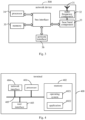
- the network device 300 includes: an antenna 31, a radio frequency component 32 and a base band component 33.
- the antenna 31 is connected with the radio frequency component 32.
- the radio frequency component 32 receives information via the antenna 31 and sends the received information to the base band component 33 for processing.
- the base band component 33 processes information to be transmitted and sends the processed information to the radio frequency component 32, and the radio frequency component 32 processes the received information and then transmits the information via the antenna 31.
- the above-described frequency band processing component may be located within the base band component 33.
- the method executed by the network device in foregoing embodiments may be implemented in the base band component 33.
- the base band component 33 includes a processor 34 and a memory 35.
- the base band component 33 may include at least one base band plate which is provided with multiple chips. As shown in Fig. 3 , one chip such as the processor 34 is connected to the memory 35, to call a program in the memory 35 and implement processes of the network device according to the foregoing embodiments.
- the base band component 33 may further include a network interface 36 which is configured to exchange information with the radio frequency component 32.
- the interface is, for example, a common public radio interface (CPRI).
- CPRI common public radio interface
- the processor may be one processor, or may be multiple processing units.
- the processor may be a CPU, or an ASIC, or one or more integrated circuits configured to implement the method executed by the network device, such as one or more DSPs, or one or more FPGAs.
- the storage unit may be one memory or may be multiple storage units.
- the memory 35 may be may be a volatile memory or a non-volatile memory, or may include both volatile and non-volatile memories.
- the non-volatile memory may be a read-only memory (ROM), a programmable read-only memory (Programmable ROM, PROM), an erasable programmable read-only memory (Erasable PROM, EPROM), or an electrically erasable programmable read-only memory (Electrically EPROM, EEPROM) or a flash memory.
- the volatile memory may be a random access memory (RAM) that acts as a high-speed external cache.
- RAMs such as a static random access memory (Static RAM, SRAM), a dynamic random access memory (Dynamic RAM, DRAM), a synchronous dynamic random access memory (Synchronous DRAM, SDRAM), a double data rate synchronous dynamic random access memory (Double Data Rate SDRAM, DDRSDRAM), an enhanced synchronous dynamic random access memory (Enhanced SDRAM, ESDRAM), a synchlink dynamic random access memory (Synchlink DRAM, SDRAM) and a direct rambus random access memory (Direct Rambus RAM, DRRAM).
- SRAM static random access memory
- DRAM dynamic random access memory
- DRAM synchronous dynamic random access memory
- SDRAM double data rate synchronous dynamic random access memory
- Double Data Rate SDRAM Double Data Rate SDRAM
- ESDRAM enhanced synchronous dynamic random access memory
- Synchlink DRAM synchlink dynamic random access memory
- Direct Rambus RAM Direct Rambus RAM
- the network device further includes a computer program which is stored on the memory 35 and executable by the processor 34, and the processor 34 calls the computer program stored in the memory 35 to implement the method executed by respective modules as shown in Fig. 2 .
- the computer program when being called by the processor 34, may implement: listening to a channel of the unlicensed band with a reception beam of the node to obtain a channel listening result, when information needs to be transmitted with a transmission beam; and transmitting the information on the channel with the transmission beam, in a case that the channel listening result indicates that the channel is in an idle state.
- the computer program when being called by the processor 34, may implement: listening to the channel of the unlicensed band with the first reception beam corresponding to the first transmission beam to obtain the channel listening result, when the information needs to be transmitted with the first transmission beam.
- the computer program when being called by the processor 34, may implement: performing beamforming on the first transmission beam to obtain t transmission sub-beams, where t is an integer larger than 1; and listening to the channel of the unlicensed band with the first reception beam corresponding to the first transmission beam to obtain the channel listening result, when the information needs to be transmitted with at least one transmission sub-beam among the t transmission sub-beams.
- the computer program when being called by the processor 34, may implement: performing beamforming on the first reception beam corresponding to the first transmission beam to obtain y reception sub-beams, where y is an integer larger than 1; and listening to the channel of the unlicensed band with at least a part of the y reception sub-beams to obtain the channel listening result.
- the computer program when being called by the processor 34, may implement: listening to the channel of the unlicensed band with each reception sub-beam of the y reception sub-beams to obtain the channel listening result; or listening to the channel of the unlicensed band with y' reception sub-beams among the y reception sub-beams to obtain the channel listening result, where y' is smaller than y and y' is an integer equal to or larger than 1.
- the computer program when being called by the processor 34, may implement: listening to the channel of the unlicensed band with each reception sub-beam of the y reception sub-beams; and obtaining a channel listening result which indicates that the channel is idle, in a case that it is monitored that the channel of the unlicensed band is in the idle state with at least a part of the y reception sub-beams.
- the computer program when being called by the processor 34, may implement: listening to the channel of the unlicensed band with the y' reception sub-beams among the y reception sub-beams; and obtaining a channel listening result which indicates that the channel is idle, in a case that it is monitored that the channel of the unlicensed band is in the idle state with at least a part of the y' reception sub-beams among the y reception sub-beams.
- the computer program when being called by the processor 34, may implement: listening to the channel of the unlicensed band with at least a part of Y reception beams of the node to obtain the channel listening result, when the information needs to be transmitted with at least one transmission beam, where the node has Y reception beams and Y is an integer larger than 1.
- the computer program when being called by the processor 34, may implement: listening to the channel of the unlicensed band with each reception beam of the Y reception beams to obtain the channel listening result; or listening to the channel of the unlicensed band with Y' reception beams among the Y reception beams to obtain the channel listening result, where Y' is smaller than Y and Y' is an integer equal to or larger than 1.
- the computer program when being called by the processor 34, may implement: listening to the channel of the unlicensed band with each reception beam among the Y reception beams; and obtaining a channel listening result which indicates that the channel is idle, in a case that it is monitored that the channel of the unlicensed band is in the idle state with at least a part of the Y reception beams.
- the computer program when being called by the processor 34, may implement: listening to the channel of the unlicensed band with the Y' reception beams among the Y reception beams; and obtaining a channel listening result which indicates that the channel is idle, in a case that it is monitored that the channel of the unlicensed band is in the idle state with at least a part of the Y' reception beams among the Y reception beams.
- the channel of the unlicensed band is monitored on a corresponding reception beam to determine a state of the channel.
- the network device accesses the channel and performs channel listening, not only influence of powers of other devices on the channel but also influence of spatial characteristics of beamforming on different directions of the network device are considered, to determine an accurate state of the channel, thereby ensuring success access to the channel of the node and realizing information transmission in unlicensed band.
- a terminal is further provided according to embodiments of the present disclosure.
- the terminal includes a processor, a memory and a computer program which is stored on the memory and executable by the processor.
- the processor when executing the computer program, implement steps of the above-described method of transmitting information in the unlicensed band.
- a computer readable storage medium is further provided according to embodiments of the present disclosure.
- a computer program is stored on the computer readable storage medium, and the computer program, when being executed by a processor, implement steps of the above-described method of transmitting information in the unlicensed band.
- Fig. 4 is a block diagram of a terminal 400 according to embodiments of the present disclosure.
- the terminal shown in Fig. 4 includes: at least one processor 401, a memory 402, a user interface 403 and a network interface 404.
- Various components of the terminal 400 may be coupled together via a bus system 405.
- the bus system 405 is configured to implement connection and communication among the components.
- the bus system 405 includes a power bus, a control bus and a state signal bus.
- various buses are labeled as the bus system 405 in Fig. 4 .
- the user interface 403 may include a display or a click device such as a touch board or a touch screen.
- the memory 402 in the embodiments of the present disclosure may be a volatile memory or a non-volatile memory, or may include both volatile and non-volatile memories.
- the non-volatile memory may be a read-only memory (ROM), a programmable read-only memory (Programmable ROM, PROM), an erasable programmable read-only memory (Erasable PROM, EPROM), or an electrically erasable programmable read-only memory (Electrically EPROM, EEPROM) or a flash memory.
- the volatile memory may be a random access memory (RAM) that acts as a high-speed external cache.
- RAMs such as a static random access memory (Static RAM, SRAM), a dynamic random access memory (Dynamic RAM, DRAM), a synchronous dynamic random access memory (Synchronous DRAM, SDRAM), a double data rate synchronous dynamic random access memory (Double Data Rate SDRAM, DDRSDRAM), an enhanced synchronous dynamic random access memory (Enhanced SDRAM, ESDRAM), a synchlink dynamic random access memory (Synchlink DRAM, SDRAM) and a direct rambus random access memory (Direct Rambus RAM, DRRAM).
- SRAM static random access memory
- DRAM dynamic random access memory
- DRAM synchronous dynamic random access memory
- SDRAM double data rate synchronous dynamic random access memory
- Enhanced SDRAM, ESDRAM enhanced synchronous dynamic random access memory
- Synchlink DRAM synchlink dynamic random access memory
- SDRAM direct rambus random access memory
- Direct Rambus RAM Direct Rambus RAM
- the memory 402 stores the following elements, executable modules or data structures, or a subset thereof, or an extended set thereof: an operating system 4021; and an application 4022.
- the operating system 4021 includes various system programs such as a framework layer, a core library layer and a driving layer, for implementing various fundamental services and processing hardware-based tasks.
- the application 4022 includes various applications such as media player and browser, for implementing various application services.
- a program for implementing the method according to the embodiments of the present disclosure may be included in the application 4022.
- the terminal 400 further includes a computer program which is stored on the memory 402 and executable by the processor 401.
- the computer program may be the computer program in the application 4022.
- the computer program when being executed by the processor 401, may implement the following steps: listening to a channel of the unlicensed band with a reception beam of the node to obtain a channel listening result, when information needs to be transmitted with a transmission beam; and transmitting the information on the channel with the transmission beam, in a case that the channel listening result indicates that the channel is in an idle state.
- the methods according to the foregoing embodiments of the present disclosure may be applied to the processor 401, or implemented by the processor 401.
- the processor 401 may be an integrated circuit chip with signal processing capabilities. In implementation, each step of the foregoing methods may be completed by an integrated logic circuit in form of hardware in the processor 401 or instructions in form of software.
- the processor 401 above may be a general-purpose processor, a digital signal processor (DSP), an application specific integrated circuit (ASIC), a field programmable gate array (FPGA) or any other programmable logic device, a discrete gate, a transistor logic device or a discrete hardware component, which can implement or carry out the methods, steps, and logical block diagrams according to the embodiments of the present disclosure.
- DSP digital signal processor
- ASIC application specific integrated circuit
- FPGA field programmable gate array
- the general-purpose processor may be a microprocessor, or the processor may be any conventional processor or the like.
- the steps of the methods according to the embodiments of the present disclosure may be directly implemented by a hardware decoding processor, or may be performed by a combination of hardware and software modules in the decoding processor.
- the software module may be located in a conventional well-developed storage medium such as a random access memory, a flash memory, a read-only memory, a programmable read-only memory, an electrically erasable programmable memory, a register, or the like.
- the storage medium is located in the memory 402, and the processor 401 reads the information in the memory 402 and completes the steps of the above methods in combination with its hardware.
- the embodiments described herein may be implemented in hardware, software, firmware, middleware, microcode, or a combination thereof.
- the processing unit may be implemented in one or more application specific integrated circuits (ASIC), digital signal processors (DSP), digital signal processing devices (DSP Device, DSPD), programmable logic devices (Programmable Logic Device, PLD), field-programmable gate arrays (FPGA), general purpose processors, controllers, microcontrollers, microprocessors, other electronics units for performing the functions according to the present disclosure or a combination thereof.
- ASIC application specific integrated circuits
- DSP digital signal processors
- DSP Device digital signal processing devices
- PLD programmable logic devices
- FPGA field-programmable gate arrays
- controllers controllers, microcontrollers, microprocessors, other electronics units for performing the functions according to the present disclosure or a combination thereof.
- the technical solutions according to the present disclosure may be implemented by modules (e.g., processes, functions, and so on) for performing the functions according to the present disclosure.
- Software codes may be stored in a memory and executed by a processor.
- the memory may be implemented in the processor or external to the processor.
- the computer program when being executed by the processor 401, may further implement: listening to the channel of the unlicensed band with the first reception beam corresponding to the first transmission beam to obtain the channel listening result, when the information needs to be transmitted with the first transmission beam.
- the computer program when being executed by the processor 401, may implement: performing beamforming on the first transmission beam to obtain t transmission sub-beams, where t is an integer larger than 1; and listening to the channel of the unlicensed band with the first reception beam corresponding to the first transmission beam to obtain the channel listening result, when the information needs to be transmitted with at least one transmission sub-beam among the t transmission sub-beams.
- the computer program when being executed by the processor 401, may implement: performing beamforming on the first reception beam corresponding to the first transmission beam to obtain y reception sub-beams, where y is an integer larger than 1; and listening to the channel of the unlicensed band with at least a part of the y reception sub-beams to obtain the channel listening result.
- the computer program when being executed by the processor 401, may implement: listening to the channel of the unlicensed band with each reception sub-beam of the y reception sub-beams to obtain the channel listening result; or listening to the channel of the unlicensed band with y' reception sub-beams among the y reception sub-beams to obtain the channel listening result, where y' is smaller than y and y' is an integer equal to or larger than 1.
- the computer program when being executed by the processor 401, may implement: listening to the channel of the unlicensed band with each reception sub-beam of the y reception sub-beams; and obtaining a channel listening result which indicates that the channel is idle, in a case that it is monitored that the channel of the unlicensed band is in the idle state with at least a part of the y reception sub-beams.
- the computer program when being executed by the processor 401, may implement: listening to the channel of the unlicensed band with the y' reception sub-beams among the y reception sub-beams; and obtaining a channel listening result which indicates that the channel is idle, in a case that it is monitored that the channel of the unlicensed band is in the idle state with at least a part of the y' reception sub-beams among the y reception sub-beams.
- the computer program when being executed by the processor 401, may implement: listening to the channel of the unlicensed band with at least a part of Y reception beams of the node to obtain the channel listening result, when the information needs to be transmitted with at least one transmission beam, where the node has Y reception beams and Y is an integer larger than 1.
- the computer program when being executed by the processor 401, may implement: listening to the channel of the unlicensed band with each reception beam of the Y reception beams to obtain the channel listening result; or listening to the channel of the unlicensed band with Y' reception beams among the Y reception beams to obtain the channel listening result, where Y' is smaller than Y and Y' is an integer equal to or larger than 1.
- the computer program when being executed by the processor 401, may implement: listening to the channel of the unlicensed band with each reception beam among the Y reception beams; and obtaining a channel listening result which indicates that the channel is idle, in a case that it is monitored that the channel of the unlicensed band is in the idle state with at least a part of the Y reception beams.
- the computer program when being executed by the processor 401, may implement: listening to the channel of the unlicensed band with the Y' reception beams among the Y reception beams; and obtaining a channel listening result which indicates that the channel is idle, in a case that it is monitored that the channel of the unlicensed band is in the idle state with at least a part of the Y' reception beams among the Y reception beams.
- the channel of the unlicensed band is monitored on a corresponding reception beam to determine a state of the channel.
- the terminal accesses the channel and performs channel listening, not only influence of powers of other devices on the channel but also influence of spatial characteristics of beamforming on different directions of the terminal are considered, to determine an accurate state of the channel, thereby ensuring success access to the channel of the node and realizing information transmission in unlicensed band.
- the disclosed method and device may be implemented in other ways.
- the described embodiments directed to the device are merely exemplary.
- the units are divided merely in logical function, which may be divided in another way in actual implementation, e.g., multiple units or components may be combined or integrated into another system, or some features may be ignored or not performed.
- the disclosed or discussed mutual coupling or direct coupling or communication connection may be an indirect coupling or communication connection through some interfaces, devices or units, which may be implemented in electronic, mechanical or other forms.
- the units described as separate components may or may not be physically separated, and the components shown as units may or may not be physical units, that is, they may be located in one place or distributed over multiple network units. Some or all of the units may be selected according to practical needs to achieve the object of the technical solutions of the embodiments of the present disclosure.
- functional units in various embodiments of the present disclosure may be integrated into one processing unit, or may be physically independent, or two or more units may be integrated into one unit.
- the unit may be stored in a computer readable storage medium.
- the computer software product is stored in a storage media, and the computer software product includes a number of instructions to enable a computer device (which may be a personal computer, a server, or a network device, etc.) to perform all or part of the steps of the method described in the various embodiments of the present disclosure.
- the storage medium includes a USB flash disk, a mobile hard disk, a read-only memory (ROM), a random access memory (RAM), a magnetic disk, an optical disk, and other medium which can store program code.
- the object of the present disclosure can be realized by running a program or a group of programs on any computing device.
- the computing device may be a well-known general-purpose device.
- the object of the present disclosure can be realized by merely providing a program product including the program codes for implementing the method or device. That is, the present disclosure can also be embodied into such program product or a storage medium storing such program product.
- the storage medium may be any known storage medium or any storage medium to be developed in the future.
- various components of the device or various steps of the method in the present disclosure may be divided and/or re-combined. The steps for performing the above series of processing may be performed according to the described order in chronological order however, it is not necessary to perform the steps in the chronological order, and some steps may be performed concurrently or independently.
Landscapes
- Engineering & Computer Science (AREA)
- Computer Networks & Wireless Communication (AREA)
- Signal Processing (AREA)
- Mobile Radio Communication Systems (AREA)
Claims (15)
- Procédé de transmission d'informations dans une bande sans licence, appliqué à un noeud, comprenant :écouter (11) un canal de la bande sans licence avec un faisceau de réception du noeud pour obtenir un résultat d'écoute du canal, lorsque les informations doivent être transmises avec un faisceau de transmission ; ettransmettre (12) les informations sur le canal avec le faisceau de transmission, dans le cas où le résultat de l'écoute du canal indique que le canal se trouve dans un état inactif ;dans lequel, dans le cas où un premier faisceau de transmission et un premier faisceau de réception du noeud remplissent une condition de correspondance de faisceau,l'étape consistant à écouter (11) le canal de la bande sans licence avec le faisceau de réception du noeud pour obtenir le résultat de l'écoute du canal, lorsque les informations doivent être transmises avec le faisceau de transmission, comprend :écouter le canal de la bande sans licence avec le premier faisceau de réception correspondant au premier faisceau de transmission pour obtenir le résultat de l'écoute du canal, lorsque les informations doivent être transmises avec le premier faisceau de transmission, etl'étape consistant à écouter le canal de la bande sans licence avec le premier faisceau de réception correspondant au premier faisceau de transmission pour obtenir le résultat de l'écoute du canal comprend :effectuer la formation de faisceau sur le premier faisceau de réception correspondant au premier faisceau de transmission pour obtenir y sous-faisceaux de réception, où y est un nombre entier supérieur à 1 ; etécouter le canal de la bande sans licence avec au moins une partie des y sous-faisceaux de réception pour obtenir le résultat de l'écoute du canal, dans lequel effectuer la formation de faisceau sur le premier faisceau de réception correspondant au premier faisceau de transmission pour obtenir les y sous-faisceaux de réception comprend : diviser le premier faisceau de réception dans sa plage de direction en y faisceaux étroits ; oudans lequel, dans le cas où aucun faisceau de transmission et aucun faisceau de réception du noeud ne remplit une condition de correspondance de faisceau, l'étape consistant à écouter (11) le canal de la bande sans licence avec le faisceau de réception du noeud pour obtenir le résultat de l'écoute du canal, lorsque les informations doivent être transmises avec le faisceau de transmission, comprend :
écouter le canal de la bande sans licence avec au moins une partie des Y faisceaux de réception du noeud pour obtenir le résultat de l'écoute du canal, lorsque les informations doivent être transmises avec au moins un faisceau de transmission, dans lequel le noeud comporte Y faisceaux de réception et Y est un nombre entier supérieur à 1. - Procédé de transmission d'informations dans la bande sans licence selon la revendication 1, dans lequel l'étape consistant à écouter le canal de la bande sans licence avec le premier faisceau de réception correspondant au premier faisceau de transmission pour obtenir le résultat de l'écoute du canal, lorsque les informations doivent être transmises avec le premier faisceau de transmission, comprend :effectuer une formation de faisceau sur le premier faisceau de transmission pour obtenir t sous-faisceaux de transmission, où t est un nombre entier supérieur à 1 ; etécouter le canal de la bande sans licence avec le premier faisceau de réception correspondant au premier faisceau de transmission pour obtenir le résultat de l'écoute du canal, lorsque les informations doivent être transmises avec au moins un sous-faisceau de transmission parmi les t sous-faisceaux de transmission.
- Procédé de transmission d'informations dans la bande sans licence selon la revendication 1, dans lequel l'étape consistant à écouter le canal de la bande sans licence avec l'au moins une partie des y sous-faisceaux de réception pour obtenir le résultat de l'écoute du canal comprend :écouter le canal de la bande sans licence avec chaque sous-faisceau de réception des y sous-faisceaux de réception pour obtenir le résultat de l'écoute du canal ;
ouécouter le canal de la bande sans licence avec y' sous-faisceaux de réception parmi les y sous-faisceaux de réception pour obtenir le résultat de l'écoute du canal, où y' est inférieur à y et y' est un nombre entier égal ou supérieur à 1. - Procédé de transmission d'informations dans la bande sans licence selon la revendication 3, dans lequel l'étape consistant à écouter le canal de la bande sans licence avec chaque sous-faisceau de réception des y sous-faisceaux de réception pour obtenir le résultat de l'écoute du canal comprend :écouter le canal de la bande sans licence avec chaque sous-faisceau de réception des y sous-faisceaux de réception ; etobtenir un résultat d'écoute du canal qui indique que le canal est inactif, dans le cas où il est contrôlé que le canal de la bande sans licence se trouve dans l'état inactif avec au moins une partie des y sous-faisceaux de réception ; oul'étape consistant à écouter le canal de la bande sans licence avec les y' sous-faisceaux de réception parmi les y sous-faisceaux de réception pour obtenir le résultat de l'écoute du canal comprend :écouter le canal de la bande sans licence avec les y' sous-faisceaux de réception parmi les y sous-faisceaux de réception ; etobtenir un résultat d'écoute du canal qui indique que le canal est inactif, dans le cas où il est contrôlé que le canal de la bande sans licence se trouve dans l'état inactif avec au moins une partie des y' sous-faisceaux de réception parmi les y sous-faisceaux de réception.
- Procédé de transmission d'informations dans la bande sans licence selon la revendication 1, dans lequel l'étape consistant à écouter le canal de la bande sans licence avec au moins une partie des Y faisceaux de réception du noeud pour obtenir le résultat de l'écoute du canal comprend :écouter le canal de la bande sans licence avec chaque faisceau de réception des Y faisceaux de réception pour obtenir le résultat de l'écoute du canal ; ouécouter le canal de la bande sans licence avec Y' faisceaux de réception parmi les Y faisceaux de réception pour obtenir le résultat de l'écoute du canal, où Y' est inférieur à Y et Y' est un nombre entier égal ou supérieur à 1.
- Procédé de transmission d'informations dans la bande sans licence selon la revendication 5, dans lequel l'étape consistant à écouter le canal de la bande sans licence avec chaque faisceau de réception parmi les Y faisceaux de réception pour obtenir le résultat de l'écoute du canal comprend :écouter le canal de la bande sans licence avec chaque faisceau de réception parmi les Y faisceaux de réception ; etobtenir un résultat d'écoute du canal qui indique que le canal est inactif, dans le cas où il est contrôlé que le canal de la bande sans licence se trouve dans l'état inactif avec au moins une partie des Y faisceaux de réception.
- Procédé de transmission d'informations dans la bande sans licence selon la revendication 5, dans lequel l'étape consistant à écouter le canal de la bande sans licence avec les Y' faisceaux de réception parmi les Y faisceaux de réception pour obtenir le résultat de l'écoute du canal comprend :écouter le canal de la bande sans licence avec les Y' faisceaux de réception parmi les Y faisceaux de réception ; etobtenir un résultat d'écoute du canal qui indique que le canal est inactif, dans le cas où il est contrôlé que le canal de la bande sans licence se trouve dans l'état inactif avec au moins une partie des Y' faisceaux de réception parmi les Y faisceaux de réception.
- Procédé de transmission d'informations dans la bande sans licence selon la revendication 1, dans lequel le noeud comprend un terminal ou un dispositif de réseau.
- Noeud (200), comprenant :un module d'écoute (210), configuré pour écouter un canal d'une bande sans licence avec un faisceau de réception du noeud (200) pour obtenir un résultat d'écoute du canal, lorsque des informations doivent être transmises avec un faisceau de transmission ; etun module de transmission (220), configuré pour transmettre les informations sur le canal avec le faisceau de transmission, dans le cas où le résultat de l'écoute du canal indique que le canal se trouve dans un état inactif ;dans lequel le module d'écoute (210) comprend un premier sous-module d'écoute configuré pour, dans le cas où un premier faisceau d'émission et un premier faisceau de réception du noeud (200) remplissent une condition de correspondance de faisceau, écouter le canal de la bande sans licence avec le premier faisceau de réception correspondant au premier faisceau d'émission pour obtenir le résultat d'écoute du canal lorsque les informations doivent être transmises avec le premier faisceau d'émission, etle premier sous-module d'écoute comprend de plus une deuxième unité de formation configurée pour effectuer une formation de faisceau sur le premier faisceau de réception correspondant au premier faisceau de transmission afin d'obtenir y sous-faisceaux de réception, où y est un nombre entier supérieur à 1 ; etune deuxième unité d'écoute configurée pour écouter le canal de la bande sans licence avec au moins une partie des y sous-faisceaux de réception afin d'obtenir le résultat de l'écoute du canal, dans lequel effectuer la formation de faisceau sur le premier faisceau de réception correspondant au premier faisceau de transmission afin d'obtenir les y sous-faisceaux de réception comprend : diviser le premier faisceau de réception dans sa plage de direction en y faisceaux étroits ; oudans lequel le module d'écoute (210) comprend de plus un deuxième sous-module d'écoute, configuré pour, dans le cas où aucun faisceau de transmission et aucun faisceau de réception du noeud (200) ne remplit une condition de correspondance de faisceau, écouter le canal de la bande sans licence avec au moins une partie des Y faisceaux de réception du noeud (200) pour obtenir le résultat d'écoute du canal lorsque les informations doivent être transmise avec au moins un faisceau de transmission, dans lequel le noeud (200) comporte Y faisceaux de réception et Y étant un nombre entier supérieur à 1.
- Noeud (200) selon la revendication 9, dans lequel le premier sous-module d'écoute comprend :une première unité de formation, configurée pour effectuer une formation de faisceau sur le premier faisceau de transmission afin d'obtenir t sous-faisceaux de transmission, où t est un nombre entier supérieur à 1 ; etune première unité d'écoute, configurée pour écouter le canal de la bande sans licence avec le premier faisceau de réception correspondant au premier faisceau de transmission pour obtenir le résultat de l'écoute du canal, lorsque les informations doivent être transmises avec au moins un sous-faisceau de transmission parmi les t sous-faisceaux de transmission.
- Noeud (200) selon la revendication 9, dans lequel la deuxième unité d'écoute comprend :une première sous-unité d'écoute, configurée pour écouter le canal de la bande sans licence avec chaque sous-faisceau de réception parmi les y sous-faisceaux de réception pour obtenir le résultat de l'écoute du canal ;
ouune deuxième sous-unité d'écoute, configurée pour écouter le canal de la bande sans licence avec y' sous-faisceaux de réception parmi les y sous-faisceaux de réception pour obtenir le résultat de l'écoute du canal,où y' est inférieur à y et y' est un nombre entier égal ou supérieur à 1. - Noeud (200) selon la revendication 11, dans lequel :la première sous-unité d'écoute est configurée pour écouter le canal de la bande sans licence avec chaque sous-faisceau de réception des y sous-faisceaux de réception, et obtenir un résultat d'écoute du canal qui indique que le canal est inactif, dans le cas où il est contrôlé que le canal de la bande sans licence se trouve dans l'état inactif avec au moins une partie des y sous-faisceaux de réception ; oula deuxième sous-unité d'écoute est configurée pour écouter le canal de la bande sans licence avec les y' sous-faisceaux de réception parmi les y sous-faisceaux de réception, et obtenir un résultat d'écoute du canal qui indique que le canal est inactif, dans le cas où il est contrôlé que le canal de la bande sans licence se trouve dans l'état inactif avec au moins une partie des y' sous-faisceaux de réception parmi les y sous-faisceaux de réception.
- Noeud (200) selon la revendication 9, dans lequel le deuxième sous-module d'écoute comprend :une troisième unité d'écoute, configurée pour écouter le canal de la bande sans licence avec chaque faisceau de réception des Y faisceaux de réception pour obtenir le résultat de l'écoute du canal ; ouune quatrième unité d'écoute, configurée pour écouter le canal de la bande sans licence avec Y' faisceaux de réception parmi les Y faisceaux de réception pour obtenir le résultat de l'écoute du canal, où Y' est inférieur à Y et Y' est un nombre entier égal ou supérieur à 1.
- Noeud (200) selon la revendication 9, dans lequel le noeud est un terminal.
- Noeud (200) selon la revendication 9, dans lequel le noeud est un dispositif de réseau.
Applications Claiming Priority (2)
| Application Number | Priority Date | Filing Date | Title |
|---|---|---|---|
| CN201710651463.8A CN109392184B (zh) | 2017-08-02 | 2017-08-02 | 一种非授权频段下的信息传输方法、网络设备及终端 |
| PCT/CN2018/098041 WO2019024871A1 (fr) | 2017-08-02 | 2018-08-01 | Procédé de transmission d'informations dans une bande sans licence, dispositif de réseau, et terminal |
Publications (3)
| Publication Number | Publication Date |
|---|---|
| EP3664565A1 EP3664565A1 (fr) | 2020-06-10 |
| EP3664565A4 EP3664565A4 (fr) | 2020-08-05 |
| EP3664565B1 true EP3664565B1 (fr) | 2023-08-16 |
Family
ID=65232280
Family Applications (1)
| Application Number | Title | Priority Date | Filing Date |
|---|---|---|---|
| EP18841680.4A Active EP3664565B1 (fr) | 2017-08-02 | 2018-08-01 | Procédé de transmission d'informations dans une bande sans licence, dispositif de réseau, et terminal |
Country Status (7)
| Country | Link |
|---|---|
| US (1) | US11212835B2 (fr) |
| EP (1) | EP3664565B1 (fr) |
| CN (1) | CN109392184B (fr) |
| ES (1) | ES2955570T3 (fr) |
| HU (1) | HUE062943T2 (fr) |
| PT (1) | PT3664565T (fr) |
| WO (1) | WO2019024871A1 (fr) |
Families Citing this family (9)
| Publication number | Priority date | Publication date | Assignee | Title |
|---|---|---|---|---|
| CN109413751B (zh) * | 2017-08-17 | 2021-05-28 | 维沃移动通信有限公司 | 非授权频段下的信息传输方法及网络设备 |
| US10764024B2 (en) | 2018-01-11 | 2020-09-01 | At&T Intellectual Property I, L.P. | Multi-beam listen before talk |
| WO2020067957A1 (fr) * | 2018-09-27 | 2020-04-02 | Sony Corporation | Procédés de détermination d'un temps d'occupation de canal et nœuds sans fil associés |
| US10887890B2 (en) * | 2019-02-15 | 2021-01-05 | At&T Intellectual Property I, L.P. | Fast multi-beam listen before talk |
| CN113518432A (zh) * | 2020-04-09 | 2021-10-19 | 索尼公司 | 用于无线通信的电子设备和方法、计算机可读存储介质 |
| CN111669239B (zh) * | 2020-05-15 | 2022-09-09 | 中国信息通信研究院 | 一种支持方向性先听后发传输方法、设备和系统 |
| CN114450901B (zh) * | 2020-09-03 | 2024-05-14 | 北京小米移动软件有限公司 | 通信方法、装置、通信设备和存储介质 |
| CN114006665B (zh) * | 2021-11-01 | 2023-10-27 | 杭州联芯通半导体有限公司 | 闲置信道的侦测方法及电子设备、存储介质 |
| CN113727388B (zh) * | 2021-11-01 | 2022-01-18 | 广东省新一代通信与网络创新研究院 | 一种基于定向监听的信道使用方法及系统 |
Family Cites Families (14)
| Publication number | Priority date | Publication date | Assignee | Title |
|---|---|---|---|---|
| US20080117865A1 (en) | 2006-11-17 | 2008-05-22 | Li Guoqing C | Communication in a wireless network using multiple antennae |
| US8780869B2 (en) * | 2009-04-15 | 2014-07-15 | Qualcomm Incorporated | Method and apparatus for efficient association procedure |
| US10080159B2 (en) | 2014-06-24 | 2018-09-18 | Qualcomm Incorporated | Dynamic bandwidth management for load-based equipment in unlicensed spectrum |
| US9847962B2 (en) * | 2014-07-29 | 2017-12-19 | Futurewei Technologies, Inc. | Device, network, and method for communications with spatial-specific sensing |
| EP3332512B1 (fr) * | 2015-08-06 | 2020-02-19 | Telefonaktiebolaget LM Ericsson (publ) | Procédé et appareil de transmission à base d'écoute |
| US10863362B2 (en) * | 2016-05-03 | 2020-12-08 | Lg Electronics Inc. | Interference avoidance in unlicensed band |
| US10856329B2 (en) * | 2016-09-30 | 2020-12-01 | Samsung Electronics Co., Ltd | Methods and devices for transmitting and receiving signals |
| EP3310013B1 (fr) * | 2016-10-13 | 2020-07-15 | Nokia Technologies Oy | Partage des ressources dans une bande de fréquence exploitée sans licence |
| CN106658751B (zh) * | 2016-12-14 | 2020-06-02 | 北京佰才邦技术有限公司 | 多天线设备的信道接入方法及装置 |
| EP3585123B1 (fr) * | 2017-02-16 | 2023-02-01 | LG Electronics Inc. | Procédé d'émission/réception de signal entre une station de base et un terminal dans un système de communication sans fil prenant en charge une bande sans licence et appareil prenant en charge ledit procédé |
| US10952251B2 (en) * | 2017-03-10 | 2021-03-16 | Lg Electronics Inc. | Method for performing random access procedure by terminal in wireless communication system supporting unlicensed band and terminal for performing same |
| US10904773B2 (en) * | 2017-09-12 | 2021-01-26 | Qualcomm Incorporated | Beam management techniques in millimeter wave systems |
| US10523300B2 (en) * | 2017-09-19 | 2019-12-31 | Qualcomm Incorporated | Beam refinement techniques in millimeter wave systems |
| US20200059965A1 (en) * | 2018-08-17 | 2020-02-20 | Nokia Technologies Oy | Method for beamformed access in unlicensed band using rts and cts |
-
2017
- 2017-08-02 CN CN201710651463.8A patent/CN109392184B/zh active Active
-
2018
- 2018-08-01 PT PT188416804T patent/PT3664565T/pt unknown
- 2018-08-01 ES ES18841680T patent/ES2955570T3/es active Active
- 2018-08-01 US US16/635,507 patent/US11212835B2/en active Active
- 2018-08-01 WO PCT/CN2018/098041 patent/WO2019024871A1/fr not_active Ceased
- 2018-08-01 EP EP18841680.4A patent/EP3664565B1/fr active Active
- 2018-08-01 HU HUE18841680A patent/HUE062943T2/hu unknown
Also Published As
| Publication number | Publication date |
|---|---|
| CN109392184A (zh) | 2019-02-26 |
| US11212835B2 (en) | 2021-12-28 |
| ES2955570T3 (es) | 2023-12-04 |
| EP3664565A1 (fr) | 2020-06-10 |
| WO2019024871A1 (fr) | 2019-02-07 |
| PT3664565T (pt) | 2023-09-11 |
| EP3664565A4 (fr) | 2020-08-05 |
| CN109392184B (zh) | 2020-10-16 |
| HUE062943T2 (hu) | 2023-12-28 |
| US20200163117A1 (en) | 2020-05-21 |
Similar Documents
| Publication | Publication Date | Title |
|---|---|---|
| US11212835B2 (en) | Method of transmitting information in unlicensed band, network device, and terminal | |
| US11259275B2 (en) | Communication method, terminal device, and network device | |
| US12155595B2 (en) | Technologies for NR coverage enhancement | |
| JP7391099B2 (ja) | 通信方法およびデバイス | |
| CN109996265A (zh) | 波束测量方法、装置、系统、网络设备和终端设备 | |
| US12356346B2 (en) | Wireless communication method, terminal device and network device | |
| US10945215B2 (en) | Wireless communication method and terminal device | |
| US12041007B2 (en) | Counting active resources for UE processing complexity related capability | |
| EP3672345B1 (fr) | Procédé de transmission d'informations sur une bande de fréquences sans licence et dispositif de réseau | |
| US11425663B2 (en) | Wireless communication method, terminal device, and network device | |
| US11350455B2 (en) | Method and device for performing channel detection on unlicensed carrier | |
| EP3668148B1 (fr) | Procédé de transmission de données et dispositif de terminal | |
| US20230336974A1 (en) | Method for radio communication, terminal device, and network device | |
| EP3755082A1 (fr) | Procédé et appareil de transmission de canal, et support de stockage informatique | |
| KR20200120706A (ko) | 감지 방법 및 기기 | |
| CN113455053A (zh) | 一种资源管理方法、网络设备、用户设备 | |
| WO2022198518A1 (fr) | Procédé de configuration de puissance d'émission, et dispositif terminal | |
| KR20200120944A (ko) | 신호 전송 방법 및 기기 |
Legal Events
| Date | Code | Title | Description |
|---|---|---|---|
| STAA | Information on the status of an ep patent application or granted ep patent |
Free format text: STATUS: THE INTERNATIONAL PUBLICATION HAS BEEN MADE |
|
| PUAI | Public reference made under article 153(3) epc to a published international application that has entered the european phase |
Free format text: ORIGINAL CODE: 0009012 |
|
| STAA | Information on the status of an ep patent application or granted ep patent |
Free format text: STATUS: REQUEST FOR EXAMINATION WAS MADE |
|
| 17P | Request for examination filed |
Effective date: 20200302 |
|
| AK | Designated contracting states |
Kind code of ref document: A1 Designated state(s): AL AT BE BG CH CY CZ DE DK EE ES FI FR GB GR HR HU IE IS IT LI LT LU LV MC MK MT NL NO PL PT RO RS SE SI SK SM TR |
|
| AX | Request for extension of the european patent |
Extension state: BA ME |
|
| A4 | Supplementary search report drawn up and despatched |
Effective date: 20200706 |
|
| RIC1 | Information provided on ipc code assigned before grant |
Ipc: H04W 74/08 20090101AFI20200630BHEP Ipc: H04B 7/06 20060101ALI20200630BHEP |
|
| DAV | Request for validation of the european patent (deleted) | ||
| DAX | Request for extension of the european patent (deleted) | ||
| STAA | Information on the status of an ep patent application or granted ep patent |
Free format text: STATUS: EXAMINATION IS IN PROGRESS |
|
| 17Q | First examination report despatched |
Effective date: 20220125 |
|
| GRAP | Despatch of communication of intention to grant a patent |
Free format text: ORIGINAL CODE: EPIDOSNIGR1 |
|
| STAA | Information on the status of an ep patent application or granted ep patent |
Free format text: STATUS: GRANT OF PATENT IS INTENDED |
|
| INTG | Intention to grant announced |
Effective date: 20230316 |
|
| GRAS | Grant fee paid |
Free format text: ORIGINAL CODE: EPIDOSNIGR3 |
|
| GRAA | (expected) grant |
Free format text: ORIGINAL CODE: 0009210 |
|
| STAA | Information on the status of an ep patent application or granted ep patent |
Free format text: STATUS: THE PATENT HAS BEEN GRANTED |
|
| AK | Designated contracting states |
Kind code of ref document: B1 Designated state(s): AL AT BE BG CH CY CZ DE DK EE ES FI FR GB GR HR HU IE IS IT LI LT LU LV MC MK MT NL NO PL PT RO RS SE SI SK SM TR |
|
| REG | Reference to a national code |
Ref country code: CH Ref legal event code: EP |
|
| REG | Reference to a national code |
Ref country code: DE Ref legal event code: R096 Ref document number: 602018055627 Country of ref document: DE |
|
| REG | Reference to a national code |
Ref country code: PT Ref legal event code: SC4A Ref document number: 3664565 Country of ref document: PT Date of ref document: 20230911 Kind code of ref document: T Free format text: AVAILABILITY OF NATIONAL TRANSLATION Effective date: 20230906 |
|
| REG | Reference to a national code |
Ref country code: IE Ref legal event code: FG4D |
|
| REG | Reference to a national code |
Ref country code: NL Ref legal event code: FP |
|
| REG | Reference to a national code |
Ref country code: ES Ref legal event code: FG2A Ref document number: 2955570 Country of ref document: ES Kind code of ref document: T3 Effective date: 20231204 |
|
| REG | Reference to a national code |
Ref country code: SK Ref legal event code: T3 Ref document number: E 42335 Country of ref document: SK |
|
| REG | Reference to a national code |
Ref country code: LT Ref legal event code: MG9D |
|
| REG | Reference to a national code |
Ref country code: HU Ref legal event code: AG4A Ref document number: E062943 Country of ref document: HU |
|
| REG | Reference to a national code |
Ref country code: AT Ref legal event code: MK05 Ref document number: 1601346 Country of ref document: AT Kind code of ref document: T Effective date: 20230816 |
|
| PG25 | Lapsed in a contracting state [announced via postgrant information from national office to epo] |
Ref country code: GR Free format text: LAPSE BECAUSE OF FAILURE TO SUBMIT A TRANSLATION OF THE DESCRIPTION OR TO PAY THE FEE WITHIN THE PRESCRIBED TIME-LIMIT Effective date: 20231117 |
|
| PG25 | Lapsed in a contracting state [announced via postgrant information from national office to epo] |
Ref country code: IS Free format text: LAPSE BECAUSE OF FAILURE TO SUBMIT A TRANSLATION OF THE DESCRIPTION OR TO PAY THE FEE WITHIN THE PRESCRIBED TIME-LIMIT Effective date: 20231216 |
|
| PG25 | Lapsed in a contracting state [announced via postgrant information from national office to epo] |
Ref country code: SE Free format text: LAPSE BECAUSE OF FAILURE TO SUBMIT A TRANSLATION OF THE DESCRIPTION OR TO PAY THE FEE WITHIN THE PRESCRIBED TIME-LIMIT Effective date: 20230816 Ref country code: RS Free format text: LAPSE BECAUSE OF FAILURE TO SUBMIT A TRANSLATION OF THE DESCRIPTION OR TO PAY THE FEE WITHIN THE PRESCRIBED TIME-LIMIT Effective date: 20230816 Ref country code: NO Free format text: LAPSE BECAUSE OF FAILURE TO SUBMIT A TRANSLATION OF THE DESCRIPTION OR TO PAY THE FEE WITHIN THE PRESCRIBED TIME-LIMIT Effective date: 20231116 Ref country code: LV Free format text: LAPSE BECAUSE OF FAILURE TO SUBMIT A TRANSLATION OF THE DESCRIPTION OR TO PAY THE FEE WITHIN THE PRESCRIBED TIME-LIMIT Effective date: 20230816 Ref country code: LT Free format text: LAPSE BECAUSE OF FAILURE TO SUBMIT A TRANSLATION OF THE DESCRIPTION OR TO PAY THE FEE WITHIN THE PRESCRIBED TIME-LIMIT Effective date: 20230816 Ref country code: IS Free format text: LAPSE BECAUSE OF FAILURE TO SUBMIT A TRANSLATION OF THE DESCRIPTION OR TO PAY THE FEE WITHIN THE PRESCRIBED TIME-LIMIT Effective date: 20231216 Ref country code: HR Free format text: LAPSE BECAUSE OF FAILURE TO SUBMIT A TRANSLATION OF THE DESCRIPTION OR TO PAY THE FEE WITHIN THE PRESCRIBED TIME-LIMIT Effective date: 20230816 Ref country code: GR Free format text: LAPSE BECAUSE OF FAILURE TO SUBMIT A TRANSLATION OF THE DESCRIPTION OR TO PAY THE FEE WITHIN THE PRESCRIBED TIME-LIMIT Effective date: 20231117 Ref country code: FI Free format text: LAPSE BECAUSE OF FAILURE TO SUBMIT A TRANSLATION OF THE DESCRIPTION OR TO PAY THE FEE WITHIN THE PRESCRIBED TIME-LIMIT Effective date: 20230816 Ref country code: AT Free format text: LAPSE BECAUSE OF FAILURE TO SUBMIT A TRANSLATION OF THE DESCRIPTION OR TO PAY THE FEE WITHIN THE PRESCRIBED TIME-LIMIT Effective date: 20230816 |
|
| PG25 | Lapsed in a contracting state [announced via postgrant information from national office to epo] |
Ref country code: PL Free format text: LAPSE BECAUSE OF FAILURE TO SUBMIT A TRANSLATION OF THE DESCRIPTION OR TO PAY THE FEE WITHIN THE PRESCRIBED TIME-LIMIT Effective date: 20230816 |
|
| PG25 | Lapsed in a contracting state [announced via postgrant information from national office to epo] |
Ref country code: SM Free format text: LAPSE BECAUSE OF FAILURE TO SUBMIT A TRANSLATION OF THE DESCRIPTION OR TO PAY THE FEE WITHIN THE PRESCRIBED TIME-LIMIT Effective date: 20230816 Ref country code: RO Free format text: LAPSE BECAUSE OF FAILURE TO SUBMIT A TRANSLATION OF THE DESCRIPTION OR TO PAY THE FEE WITHIN THE PRESCRIBED TIME-LIMIT Effective date: 20230816 Ref country code: EE Free format text: LAPSE BECAUSE OF FAILURE TO SUBMIT A TRANSLATION OF THE DESCRIPTION OR TO PAY THE FEE WITHIN THE PRESCRIBED TIME-LIMIT Effective date: 20230816 Ref country code: DK Free format text: LAPSE BECAUSE OF FAILURE TO SUBMIT A TRANSLATION OF THE DESCRIPTION OR TO PAY THE FEE WITHIN THE PRESCRIBED TIME-LIMIT Effective date: 20230816 Ref country code: CZ Free format text: LAPSE BECAUSE OF FAILURE TO SUBMIT A TRANSLATION OF THE DESCRIPTION OR TO PAY THE FEE WITHIN THE PRESCRIBED TIME-LIMIT Effective date: 20230816 |
|
| REG | Reference to a national code |
Ref country code: DE Ref legal event code: R097 Ref document number: 602018055627 Country of ref document: DE |
|
| PLBE | No opposition filed within time limit |
Free format text: ORIGINAL CODE: 0009261 |
|
| STAA | Information on the status of an ep patent application or granted ep patent |
Free format text: STATUS: NO OPPOSITION FILED WITHIN TIME LIMIT |
|
| 26N | No opposition filed |
Effective date: 20240517 |
|
| PG25 | Lapsed in a contracting state [announced via postgrant information from national office to epo] |
Ref country code: SI Free format text: LAPSE BECAUSE OF FAILURE TO SUBMIT A TRANSLATION OF THE DESCRIPTION OR TO PAY THE FEE WITHIN THE PRESCRIBED TIME-LIMIT Effective date: 20230816 |
|
| PG25 | Lapsed in a contracting state [announced via postgrant information from national office to epo] |
Ref country code: BG Free format text: LAPSE BECAUSE OF FAILURE TO SUBMIT A TRANSLATION OF THE DESCRIPTION OR TO PAY THE FEE WITHIN THE PRESCRIBED TIME-LIMIT Effective date: 20230816 |
|
| PG25 | Lapsed in a contracting state [announced via postgrant information from national office to epo] |
Ref country code: BG Free format text: LAPSE BECAUSE OF FAILURE TO SUBMIT A TRANSLATION OF THE DESCRIPTION OR TO PAY THE FEE WITHIN THE PRESCRIBED TIME-LIMIT Effective date: 20230816 |
|
| REG | Reference to a national code |
Ref country code: CH Ref legal event code: PL |
|
| PG25 | Lapsed in a contracting state [announced via postgrant information from national office to epo] |
Ref country code: LU Free format text: LAPSE BECAUSE OF NON-PAYMENT OF DUE FEES Effective date: 20240801 |
|
| PG25 | Lapsed in a contracting state [announced via postgrant information from national office to epo] |
Ref country code: CH Free format text: LAPSE BECAUSE OF NON-PAYMENT OF DUE FEES Effective date: 20240831 Ref country code: MC Free format text: LAPSE BECAUSE OF FAILURE TO SUBMIT A TRANSLATION OF THE DESCRIPTION OR TO PAY THE FEE WITHIN THE PRESCRIBED TIME-LIMIT Effective date: 20230816 |
|
| REG | Reference to a national code |
Ref country code: BE Ref legal event code: MM Effective date: 20240831 |
|
| PGFP | Annual fee paid to national office [announced via postgrant information from national office to epo] |
Ref country code: GB Payment date: 20250626 Year of fee payment: 8 |
|
| PG25 | Lapsed in a contracting state [announced via postgrant information from national office to epo] |
Ref country code: BE Free format text: LAPSE BECAUSE OF NON-PAYMENT OF DUE FEES Effective date: 20240831 |
|
| PG25 | Lapsed in a contracting state [announced via postgrant information from national office to epo] |
Ref country code: IE Free format text: LAPSE BECAUSE OF NON-PAYMENT OF DUE FEES Effective date: 20240801 |
|
| PGFP | Annual fee paid to national office [announced via postgrant information from national office to epo] |
Ref country code: NL Payment date: 20250704 Year of fee payment: 8 |
|
| PGFP | Annual fee paid to national office [announced via postgrant information from national office to epo] |
Ref country code: HU Payment date: 20250728 Year of fee payment: 8 |
|
| PGFP | Annual fee paid to national office [announced via postgrant information from national office to epo] |
Ref country code: ES Payment date: 20250909 Year of fee payment: 8 Ref country code: PT Payment date: 20250801 Year of fee payment: 8 |
|
| PGFP | Annual fee paid to national office [announced via postgrant information from national office to epo] |
Ref country code: DE Payment date: 20250702 Year of fee payment: 8 |
|
| PGFP | Annual fee paid to national office [announced via postgrant information from national office to epo] |
Ref country code: IT Payment date: 20250722 Year of fee payment: 8 |
|
| PGFP | Annual fee paid to national office [announced via postgrant information from national office to epo] |
Ref country code: FR Payment date: 20250703 Year of fee payment: 8 |
|
| PGFP | Annual fee paid to national office [announced via postgrant information from national office to epo] |
Ref country code: SK Payment date: 20250714 Year of fee payment: 8 |
|
| PG25 | Lapsed in a contracting state [announced via postgrant information from national office to epo] |
Ref country code: CY Free format text: LAPSE BECAUSE OF FAILURE TO SUBMIT A TRANSLATION OF THE DESCRIPTION OR TO PAY THE FEE WITHIN THE PRESCRIBED TIME-LIMIT; INVALID AB INITIO Effective date: 20180801 |
|
| PG25 | Lapsed in a contracting state [announced via postgrant information from national office to epo] |
Ref country code: TR Free format text: LAPSE BECAUSE OF FAILURE TO SUBMIT A TRANSLATION OF THE DESCRIPTION OR TO PAY THE FEE WITHIN THE PRESCRIBED TIME-LIMIT Effective date: 20230816 |