EP3665955B1 - Procédé et appareil de découverte et d'accès à des services locaux restreints pour des eu non authentifiés - Google Patents
Procédé et appareil de découverte et d'accès à des services locaux restreints pour des eu non authentifiés Download PDFInfo
- Publication number
- EP3665955B1 EP3665955B1 EP18782183.0A EP18782183A EP3665955B1 EP 3665955 B1 EP3665955 B1 EP 3665955B1 EP 18782183 A EP18782183 A EP 18782183A EP 3665955 B1 EP3665955 B1 EP 3665955B1
- Authority
- EP
- European Patent Office
- Prior art keywords
- operator services
- restricted operator
- access
- mobile network
- land mobile
- Prior art date
- Legal status (The legal status is an assumption and is not a legal conclusion. Google has not performed a legal analysis and makes no representation as to the accuracy of the status listed.)
- Active
Links
Images




Classifications
-
- H—ELECTRICITY
- H04—ELECTRIC COMMUNICATION TECHNIQUE
- H04W—WIRELESS COMMUNICATION NETWORKS
- H04W48/00—Access restriction; Network selection; Access point selection
- H04W48/16—Discovering, processing access restriction or access information
-
- H—ELECTRICITY
- H04—ELECTRIC COMMUNICATION TECHNIQUE
- H04W—WIRELESS COMMUNICATION NETWORKS
- H04W12/00—Security arrangements; Authentication; Protecting privacy or anonymity
- H04W12/08—Access security
-
- H—ELECTRICITY
- H04—ELECTRIC COMMUNICATION TECHNIQUE
- H04W—WIRELESS COMMUNICATION NETWORKS
- H04W48/00—Access restriction; Network selection; Access point selection
- H04W48/02—Access restriction performed under specific conditions
-
- H—ELECTRICITY
- H04—ELECTRIC COMMUNICATION TECHNIQUE
- H04W—WIRELESS COMMUNICATION NETWORKS
- H04W48/00—Access restriction; Network selection; Access point selection
- H04W48/08—Access restriction or access information delivery, e.g. discovery data delivery
- H04W48/10—Access restriction or access information delivery, e.g. discovery data delivery using broadcasted information
-
- H—ELECTRICITY
- H04—ELECTRIC COMMUNICATION TECHNIQUE
- H04W—WIRELESS COMMUNICATION NETWORKS
- H04W48/00—Access restriction; Network selection; Access point selection
- H04W48/08—Access restriction or access information delivery, e.g. discovery data delivery
- H04W48/12—Access restriction or access information delivery, e.g. discovery data delivery using downlink control channel
-
- H—ELECTRICITY
- H04—ELECTRIC COMMUNICATION TECHNIQUE
- H04W—WIRELESS COMMUNICATION NETWORKS
- H04W48/00—Access restriction; Network selection; Access point selection
- H04W48/18—Selecting a network or a communication service
-
- H—ELECTRICITY
- H04—ELECTRIC COMMUNICATION TECHNIQUE
- H04W—WIRELESS COMMUNICATION NETWORKS
- H04W60/00—Affiliation to network, e.g. registration; Terminating affiliation with the network, e.g. de-registration
-
- H—ELECTRICITY
- H04—ELECTRIC COMMUNICATION TECHNIQUE
- H04W—WIRELESS COMMUNICATION NETWORKS
- H04W76/00—Connection management
- H04W76/10—Connection setup
-
- H—ELECTRICITY
- H04—ELECTRIC COMMUNICATION TECHNIQUE
- H04W—WIRELESS COMMUNICATION NETWORKS
- H04W76/00—Connection management
- H04W76/20—Manipulation of established connections
- H04W76/27—Transitions between radio resource control [RRC] states
-
- H—ELECTRICITY
- H04—ELECTRIC COMMUNICATION TECHNIQUE
- H04W—WIRELESS COMMUNICATION NETWORKS
- H04W88/00—Devices specially adapted for wireless communication networks, e.g. terminals, base stations or access point devices
- H04W88/02—Terminal devices
-
- H—ELECTRICITY
- H04—ELECTRIC COMMUNICATION TECHNIQUE
- H04W—WIRELESS COMMUNICATION NETWORKS
- H04W12/00—Security arrangements; Authentication; Protecting privacy or anonymity
- H04W12/06—Authentication
-
- H—ELECTRICITY
- H04—ELECTRIC COMMUNICATION TECHNIQUE
- H04W—WIRELESS COMMUNICATION NETWORKS
- H04W84/00—Network topologies
- H04W84/02—Hierarchically pre-organised networks, e.g. paging networks, cellular networks, WLAN [Wireless Local Area Network] or WLL [Wireless Local Loop]
- H04W84/04—Large scale networks; Deep hierarchical networks
- H04W84/042—Public Land Mobile systems, e.g. cellular systems
Definitions
- the present disclosure is directed to a method and apparatus for discovery and access of restricted local services for unauthenticated UEs. There is described herein a method in a mobile equipment and a mobile equipment.
- wireless communication devices such as User Equipment (UE) communicate with other communication devices using wireless signals.
- UEs use physical or virtual Subscriber Identity Modules (SIM) and other similar cards to access and operate on a service provider's cellular network corresponding to the SIM.
- SIM Subscriber Identity Modules
- the UE may not be able to access all services of an available cellular network of a different service provider, such as a local operator, as there are currently no mechanisms that allow a UE to access restricted local operator services.
- 3GPP TR 22.820 v15.0.0 is titled "Study on Provision of Access to Restricted Local Operator Services by Unauthenticated UEs" and published on 17 March 2017 .
- This document describes the use cases and potential requirements for an optional capability allowing an operator to provide access to restricted local operator services. Based on operator policy, access to these restricted local operator services is allowed for unauthenticated UEs. In such cases, the unauthenticated UE is restricted to only accessing a restricted local operator service. Any other access attempts by the UE are subject to normal 3GPP processing, including authentication.
- EP 2,830,361 B1 describes a method for accessing a cell by a user equipment in a wireless communication system. The method includes determining that the access to a target cell is barred if the system information for extended access barring is not broadcasted from the target cell.
- Claim 1 defines a method performed by a user equipment and claim 15 defines a user equipment.
- Claim 15 defines a user equipment.
- FIG. 9 is a flowchart according to the invention; other drawings depict only example embodiments of the disclosure and are not therefore to be considered to be limiting of its scope.
- the drawings may have been simplified for clarity and are not necessarily drawn to scale.
- Embodiments provide a method and apparatus for discovery and access of restricted local services for unauthenticated UEs.
- the claimed embodiment provides for RLOS, such as PARLOS, discovery, network/PLMN selection, and subsequent access control for managing the restricted local services.
- RLOS discovery such as determination of PARLOS support by a network, provides for RLOS registration, and access control for RLOS.
- Availability of restricted operator services access support can be detected.
- a cell of a public land mobile network that supports restricted operator services access can be selected as a serving cell if restricted operator services access support is available and the mobile equipment does not have valid credentials for accessing the available public land mobile network.
- An attach procedure can be performed for restricted operator services using the public land mobile network of the selected cell as a selected public land mobile network.
- a restricted operator services access request from a mobile station is received at a network entity of a public land mobile network.
- a determination is made as to whether restricted operator services access is available on the public land mobile network for the mobile station. Restricted operator services access can be granted on the public land mobile network to the mobile station if restricted operator services access is available for the mobile station on the public land mobile network.
- FIG. 1 is an example block diagram of a system 100 according to a possible embodiment.
- the system 100 can include a UE 110, a base station 120, and a network 130.
- the UE 110 can be a wireless wide area network device, a user device, wireless terminal, a portable wireless communication device, a smartphone, a cellular telephone, a flip phone, a personal digital assistant, a personal computer, a selective call receiver, an Internet of Things (IoT) device, a tablet computer, a laptop computer, or any other user device that is capable of sending and receiving communication signals on a wireless network.
- IoT Internet of Things
- the base station 120 can be a wireless wide area network base station, a NodeB, an enhanced NodeB (eNB), a 5G or New Radio NodeB (gNB), an unlicensed network base station, an access point, or any other base station that can provide wireless access between a UE and a network.
- a NodeB an enhanced NodeB (eNB), a 5G or New Radio NodeB (gNB), an unlicensed network base station, an access point, or any other base station that can provide wireless access between a UE and a network.
- eNB enhanced NodeB
- gNB New Radio NodeB
- the network 130 can include any type of network that is capable of sending and receiving wireless communication signals.
- the network 130 can include a wireless communication network, a cellular telephone network, a Time Division Multiple Access (TDMA)-based network, a Code Division Multiple Access (CDMA)-based network, an Orthogonal Frequency Division Multiple Access (OFDMA)-based network, a Long Term Evolution (LTE) network, a 3rd Generation Partnership Project (3GPP)-based network, a satellite communications network, a high altitude platform network, the Internet, and/or other communications networks.
- TDMA Time Division Multiple Access
- CDMA Code Division Multiple Access
- OFDMA Orthogonal Frequency Division Multiple Access
- LTE Long Term Evolution
- 3GPP 3rd Generation Partnership Project
- 3GPP 3rd Generation Partnership Project
- 3GPP SA1 3GPP Technical Specification Group on Service and System Aspects Services subgroup
- LTE Long Term Evolution
- VoIP Voice over LTE
- the feature consists in the optional capability to allow unauthenticated UEs to access restricted local operator services based on operator policy and regional regulatory requirements. These requirements are documented in stage 1 specifications listed in clause 2.3 of the SP-170382 document. They address the following areas: identifying an origination to restricted local operator services, such as dialed digits or captive portal; determining Restricted Local Operator Services (RLOS) are available; allowing access to restricted operator services by unauthenticated UEs; charging information collection; and security considerations.
- RLOS Restricted Local Operator Services
- PLMN Public Land Mobile Network
- TS 23122-f00 For RLOS discovery, as defined in 3GPP Technical Specification (TS) 23122-f00, there are a number of situations in which the MS is unable to obtain normal service from a PLMN and must therefore enter limited service state.
- One situation of entering limited service state can include failure to find a suitable cell of the selected PLMN.
- Another situation of entering limited service state can include no SIM in the MS.
- Another situation of entering limited service state can include a "PLMN not allowed" response in a received Location Registration (LR) reject message.
- LR Location Registration
- Another situation of entering limited service state can include an "illegal MS” or "illegal Mobile Equipment (ME)" response in a received LR reject message. Any SIM in the ME can then be considered “invalid.”
- a MS can include the ME and the SIM.
- Another situation of entering limited service state can include an "International Mobile Subscriber Identity (IMSI) unknown in Home Location Register (HLR)" response in a received LR reject message. Any SIM in the ME can then be considered “invalid" for non-General Packet Radio Service (GPRS) services.
- Another situation of entering limited service state can include a "GPRS services not allowed” response in a received LR reject message of a GPRS MS attached to GPRS services only is received. The cell selection state of GPRS MSs attached to GPRS and non-GPRS can depend on the outcome of the location updating.
- a similar situation can include an "EPS services not allowed" response is received when an EPS attach, tracking area update, or service request is performed.
- Another situation of entering limited service state can include a Power Saving Mode (PSM) being activated, such as described in 3GPP TS 23.682.
- PSM Power Saving Mode
- entering limited service state can occur if there is no SIM in the MS, if there is an authentication failure, or if the MS receives an "IMSI unknown in HLR,” “illegal ME,” or “illegal MS” response to an LR request. Then, there is effectively no selected PLMN, which can be considered a "No SIM" state. In these cases, the states of the cell selection process are such that no PLMN selection information is used. One exception to this is when performing GPRS attach or EPS attach for emergency bearer services. Otherwise, no further attempts at registration on any PLMN are made until the MS is switched off and on again or until a SIM is inserted.
- a possible embodiment can provide another exception where the MS, such as a ME if there is no SIM or USIM or if user through a user interface does not wish to use the available SIM subscription, detects that RLOS service is advertised by network and in such a case the states of the cell selection process can be such that the selected PLMN can be a PLMN that advertises RLOS support. If there are more than one such PLMN, then the MS can select one of these PLMNs randomly, based on best radio signal strength, based on user input solicited through a UI, and/or based on other criteria. When performing EPS attach for RLOS services, the PLMN of the current serving cell can be temporarily considered as the selected PLMN.
- the MS such as a ME if there is no SIM or USIM or if user through a user interface does not wish to use the available SIM subscription, detects that RLOS service is advertised by network and in such a case the states of the cell selection process can be such that the selected PLMN can be a PLMN that advertise
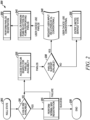
- FIG. 2 is an example a flowchart 200 illustrating operation of a wireless communication device, such as the UE 110, according to a possible embodiment.
- a null state can be present.
- a determination can be made as to whether a valid SIM is available.
- NAS Non-Access Stratum
- AS Access Stratum
- PARLOS such as RLOS
- PARLOS support is not available, then a limited service state can be entered at 235.
- PARLOS support is available, at 240, user input can be requested as to whether to use PARLOS or conventional access. If the user input indicates a choice to use conventional access, the limited service state can be entered at 235. If the user input indicates a choice to user PARLOS, at 245, manual or random PLMN selection can be performed on PLMNs that support PARLOS. After PLMN selection, at 250, PARLOS registration can be performed.
- a RLOS capable MS can determine if any of the PLMN(s) offer RLOS support. If it is determined that RLOS is supported in one or more of the PLMN(s) then the MS can register for RLOS service. User input to this end can be solicited at this or even at an earlier stage.
- the UI can display a software function button to check if the user is willing to use RLOS service and it can subsequently switch to manual mode of PLMN selection of displayed PLMNs that support RLOS or display all available PLMNs and mark those supporting RLOS for selection.
- SIB System Information Block
- SIB Type1 including PLMNs belonging to a plurality of new/separate/independent cellIdentity(s) as defined in SystemInformationBlockType1 of 3GPP TS 36.331 supporting RLOS.
- FIG. 3 is an example a flowchart 300 illustrating operation of a wireless communication device according to a possible embodiment.
- the flowchart 300 can show the PARLOS, such as RLOS, registration operation with user input solicited at the beginning before the MS goes on to check PARLOS support.
- a null state can be present.
- a determination can be made as to whether a valid SIM is available.
- an attempt for normal NAS registration can be performed. If successful, at 320, the process can end. If a valid SIM is not available at 310 or if the NAS registration fails at 315, at 325, user input can be requested as to whether to us PARLOS or conventional access.
- the limited service state can be entered at 330. If the user input indicates a choice to use conventional access, the limited service state can be entered at 330. If the user input indicates a choice to user PARLOS, at 335, an AS search can be performed for PARLOS availability. If, at 340, PARLOS support is not available, then a limited service state can be entered at 330. If, at 340, PARLOS support is available, at 345, manual, random, or other PLMN selection can be performed on PLMNs that support PARLOS. After PLMN selection, at 350, PARLOS registration can be performed.
- FIG. 4 is an example illustration of a UI 400 according to a possible embodiment.
- the UI 400 can be a display on a MS that can solicit for user input for RLOS use.
- the UI 400 can indicate that normal service is not available in the current roaming area and requests whether the user would like to use limited operator services that may be differently charged.
- the UI 400 can provide a first option button 410 or other selection input for the user to select to use limited operator service.
- the UI 400 can also provide a second option button 420 or other selection input for the user to select to only allow the MS to make emergency calls.
- the user input can be solicited using the UI 400, which can flash some functional buttons corresponding to the user options.
- FIG. 5 is an example illustration of a UI 500 according to a possible embodiment.
- the UI 500 can be a display on a MS that can solicit manual PLMN selection input for RLOS use.
- the UI 500 can request the user to select a PLMN to use limited operator services and can inform the user that network usage charges can differ from one PLMN to another PLMN.
- the UI 500 can provide option buttons 510, 520, and 530 or other input selections for different PLMNs.
- the RLOS support information for each cell/frequency/PLMN can be stored in the MS during the cell search and subsequent system information reading for a cell selection/reselection procedure. This information can be directly used during and for the phase of AS search for RLOS availability.
- the MS can already indicate to the MME the RLOS support capability while trying an initial normal ATTACH procedure.
- the Core Network such as a Mobility Management Entity (MME)
- MME Mobility Management Entity
- the network may broadcast an explicit RLOS support indication stating that RLOS support is available in the network.
- This explicit RLOS support indication can be valid of all the PLMNs sharing the radio cell.
- the explicit RLOS support indication can be broadcast for each of the PLMNs sharing the radio cell separately, which can allow per PLMN, such as operator, control of RLOS provisioning.
- the explicit RLOS support indication such as a broadcast indication, can be made on SystemInformationBlockType1 or in other subsequent SIB types.
- the AS in the MS upon indication from NAS layer, can determine if any PLMN of any of the suitable cell, such as defined in 3GPP TS 36.331-e10, has broadcast support of RLOS information.
- the result of the cell selection such as RLOS supported or RLOS not supported, can be indicated to the NAS layer.
- blind RLOS access can be supported by the UE where the blind access can be based on stored information for cell selection, such as based on a previous ATTACH/Registration attempt on a cell from the same PLMN.
- all cells from the same PLMN can be assumed to support or not support RLOS if one of the cells from this PLMN indicated support of RLOS in the recent past during UE/MS mobility there.
- the network can save the signaling load by not broadcasting the RLOS support.
- the UE/MS can perform an RRC connection establishment procedure with a new establishment cause and the network can reject the RRC connection if it does not support RLOS and/or if it does not understand the new establishment cause.
- the network can accept the RRC connection request and the NAS procedure can be performed towards an MME/Access Management Function (AMF) that supports RLOS.
- AMF Access Management Function
- the user can select, via a UI, which PLMN to access.
- the NAS layer can indicate to the AS layer a requested PLMN selected by the user to be used for cell selection.
- the RLOS indication can be an optional addition.
- the AS layer can indicate to the NAS layer whether the requested PLMN supports RLOS access. If the requested PLMN does not support RLOS access, the AS layer can indicate to the NAS layer a list of PLMN(s) supporting RLOS access alongside their measurement values and/or can indicate information, such as charging/billing information, that can help NAS and/or the user to make the PLMN selection choice.
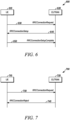
- FIG. 6 is an example illustration of a signal flow diagram 600 for RLOS registration with successful RRC connection establishment according to a possible embodiment.
- the signal flow diagram 600 shows messages between a UE 610 and an Evolved Universal Mobile Telecommunications System (UMTS) Terrestrial Radio Access Network (EUTRAN) 620, such as a Network Entity (NE) on a network.
- UMTS Universal Mobile Telecommunications System
- EUTRAN Evolved Universal Mobile Telecommunications System
- NE Network Entity
- a RRCConnectionRequest message can be sent from the UE 610 to the EUTRAN 620.
- a RRCConnectionSetup message can be sent from the EUTRAN 620 to the UE 610.
- a RRCConnectionSetupComplete message can be sent from the UE 610 to the EUTRAN 620.
- the NAS can trigger a RLOS ATTACH request to the network, such as the EUTRAN 620.
- the NAS can provide a RLOS ATTACH type, a RLOS EstablishmentCause, and/or a dedicated CN identity to the AS layer.
- the RLOS EstablishmentCause and/or a dedicated CN identity can indicate RLOS access or a RLOS dedicated network, such as using a Dedicated CN Identifier (DCN ID) and/or a new explicit RLOS indication.
- DCN ID Dedicated CN Identifier
- the UE 610 can signal this information to the Radio Access Network (RAN) node, such as an eNB or a gNB, of the EUTRAN 620 as a particular parameter or particular Information Element in the RRCConnectionRequest and/or in RRCConnectionSetupComplete message(s).
- RAN Radio Access Network
- the RAN node can admit the UE 610 and forward the embedded NAS Protocol Data Unit (PDU), such as DedicatedInfoNAS, to an appropriate MME of the EUTRAN 620 based on one or more of the Dedicated Core Network Identity, such as described in TS 23.401, selectedPLMN-Identity and/or RegisteredMME with some specific value like for mmegi and/or mmec, such as defined in 3GPP TS36.331-e30.
- the RAN node can use the RRC indication for RLOS access in different ways.
- the RAN node can use the RRC indication for RLOS access for access admission control, such as when considering overload mechanisms.
- the RAN node can use the RRC indication for RLOS access as input for the core network node selection procedure, such as MME selection.
- the network RAN node can provide a dedicated RACH, such as a PRACH Preamble(s) and/or specific time-frequency PRACH resources, for RLOS to separate them from normal service requests.
- a dedicated RACH such as a PRACH Preamble(s) and/or specific time-frequency PRACH resources
- FIG. 7 is an example illustration of a signal flow diagram 700 for RRC network rejection of connection establishment with redirection to a RLOS supporting PLMN and/or frequency according to a possible embodiment.
- the signal flow diagram 700 shows messages between a UE 710, such as the UE 110, and a EUTRAN 720, such as a NE on the network 130.
- a RRCConnectionRequest message can be sent from the UE 710 to the EUTRAN 720.
- a RRCConnectionReject message can be sent from the EUTRAN 720 to the UE 710.
- a network can reject the RRC connection request based on the RLOS indication in the RRCConnectionRequest message, such as a RLOS EstablishmentCause or Layer-2 logical channel identity, MAC Control Element (CE), or other indication.
- the network can then optionally redirect the UE, such as an MS, or the ME to a different PLMN/frequency where it can possibly attain the RLOS service.
- the appropriate new redirection information may be contained in the RRCConnectionReject message itself.
- a mechanism can be used to control the access to a network for RLOS services. If RLOS is supported by a network, a lot of users may attempt to access/use the radio network. A congested radio network may be required to control such accesses. Since the access class related information, such as including information for Access Class (AC), Extended Access Barring (EAB), Application specific Congestion control for Data Communication (ACDC), etc., can be present in a (U)SIM, a ME or MS with an invalid (U)SIM may be unable to acquire the usual access control as defined in TS 23.122-f00, TS 36.331-e30 etc. To this end, some embodiments can provide the following mechanisms for network access control.
- AC Access Class
- EAB Extended Access Barring
- ACDC Application specific Congestion control for Data Communication
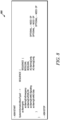
- FIG. 8 is an example illustration 800 of a SystemInformationBlockType2 information element according to a possible embodiment.
- an explicit indication such as ac-BarringForRLOS shown in the illustration 800, can be used in a SIB.
- RLOS access class for RLOS access if access barring is set for RLOS services, such as by setting an ac-BarringForRLOS information element to TRUE, then the MS can refrain from initiating RRC Connection request.
- the ac-BarringForRLOS information can be set per PLMN for the PLMNs sharing a radio cell.
- a persistence check can be used.
- a radio network can broadcast a decimal value, such as P, between 0 and 1.0 and the MS, such as a ME if there is no (U)SIM, shall randomly draw a decimal number, such as q, between 0 and 1.0.
- the access is made only if the q is less than or equal to P.
- the criteria can be a greater than a relationship between q and P to check the radio access possibility.
- RLOS-specific access classes can be used.
- all UEs are presently members of ACs 0 to 9.
- UEs may be members of one or more out of 5 special categories, such as ACs 11 to 15, also held in the SIM/USIM. These can be allocated to specific high priority users as follows, where the enumeration is not meant as a priority sequence.
- AC 15 can be for PLMN staff.
- AC 14 can be for emergency services.
- AC 13 can be for public utilities, such as water and gas suppliers.
- AC 12 can be for security services.
- AC 11 can be for PLMN use.
- RLOS-specific service classes can be used for controlling RLOS access from the UEs. These may be outside of the present range of access classes (0-15). These can be, for example, one RLOS service class, AC 16, or more if further granularity for Access Control for RLOS is required. These RLOS access class(es) can be stored in the ME itself and optionally in the (U)SIM card. For RLOS AC(s), their access can be controlled by information elements, such as ac-BarringFactor-RLOS and ac-BarringTime-RLOS. The UE can generate a random number, Rand. The random number generated by the UE may have to pass a persistent test in order for the UE to access RLOS. By setting ac-BarringFactor-RLOS to a lower value, access from a regular user can be restricted until the next attempt after the ac-BarringTime-RLOS time.
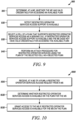
- FIG. 9 is an example flowchart 900 according to the invention illustrating the operation of a wireless communication device, such as a ME like the UE 110, according to a possible embodiment.
- a determination is made as to whether the ME has valid credentials for accessing an available PLMN.
- a MS can include a ME and the SIM.
- a MS can also be considered a UE.
- the MS and the ME such as in the case of an IoT device, desktop computer, or other semi-permanent fixture, may not actually be physically mobile in a practical sense, but may be considered a MS or ME because it uses a cellular network used by other MS/MEs.
- the ME is determined to not have valid credentials based on a SIM for an available PLMN not being coupled to the ME.
- the ME is also determined to not have valid credentials based on a NAS registration failure. For example, there may be a SIM, but the credentials of the SIM may not be valid for an available PLMN, but the ME may not know this until reception of an attach reject message, registration reject message, or other reject message.
- the ME is further determined to not have valid credentials based on an attach request being rejected.
- the ME can enter a limited service state after receiving the cause of the attach request being rejected and can act appropriately.
- one cause for entering limited service state can include failure to find a suitable cell of the selected PLMN.
- Another cause of entering limited service state can include no SIM in the MS.
- Another cause of entering limited service state can include a "PLMN not allowed" response in a received Location Registration (LR) reject message or attach reject message.
- Another cause of entering limited service state can include an "illegal MS” or "illegal ME” response in a received LR reject message. Any SIM in the ME can then be considered “invalid.”
- Another cause of entering limited service state can include an "IMSI unknown in Home Location Register (HLR)" response in a received LR reject message.
- HLR Home Location Register
- Any SIM in the ME can then be considered “invalid" for non-General Packet Radio Service (GPRS) services.
- Another cause of entering limited service state can include a "GPRS services not allowed" response in a LR reject message of a GPRS MS attached to GPRS services only being received.
- the cell selection state of GPRS MSs attached to GPRS and non-GPRS can depend on the outcome of the location updating.
- a similar situation can include an "EPS services not allowed" response received when an EPS attach, tracking area update, or service request is performed.
- Another cause of entering limited service state can include a PSM being activated, such as described in 3GPP TS 23.682.
- Restricted operator services can be RLOS, can be PARLOS-based services, can be services that are not available to users that do not have valid credentials for a given network, and/or can be any other restricted operator service that requires valid credentials for accessing a network.
- the ME can be in a limited service state, where it may only use emergency services, but not restricted operator services like voice calls, text messaging, internet applications, and other restricted operator services that require valid credentials.
- restricted operator services access support provides access to operator services that otherwise require valid credentials.
- a cell of a PLMN that supports restricted operator services access is selected as a serving cell if restricted operator services access support is available and the ME does not have valid credentials for accessing the available PLMN.
- an attach procedure is performed for restricted operator services using the PLMN of the selected cell as a selected PLMN.
- the attach procedure can be an EPS attach procedure, a registration procedure such as in a 5G System, a restricted operator access attach procedure, or any other attach procedure.
- Performing the attach procedure for restricted operator services includes performing a restricted operator services access RRC connection establishment procedure for restricted operator services access and determining restricted operator services access is at least temporarily not available if the RRC connection establishment procedure is rejected by the PLMN.
- a NAS layer can generate a NAS attach request message including a RLOS indication. The NAS layer sends the NAS attach request message to the RRC layer and the RRC layer can initiate an RRC connection establishment procedure with the RLOS indication in an RRC connection establishment request message.
- Performing the attach procedure for restricted operator services can also include signaling information of restricted operator services access to the selected PLMN.
- the information of restricted operator services access can be sent in an attach request message used by an MME following after RRC establishment is successful. It can also be sent in a RRCConnectionRequest message that can be used by a base station. It can also be in both messages.
- a SIB information element indicating restricted operator services access is barred can be received. Performing the attach procedure for restricted operator services can be refrained from if restricted operator services access is barred.
- the ME can initiate an RRC connection establishment with a RAN node, such as an NE, a base station, an eNB, a gNB, an access point, or other RAN node, by using an RRC RLOS indication.
- a RAN node such as an NE, a base station, an eNB, a gNB, an access point, or other RAN node
- the RAN node can accept or reject the request based on overload situation and/or the RAN node can select an appropriate MME for RLOS operation.
- the information of RLOS can be signaled in a RLOS indication, such as an RRC indication for RLOS access, that can indicate RLOS access and/or a RLOS dedicated network.
- the ME can signal this information to a RAN node, such as a base station, of the PLMN as a new parameter or new information element in RRCConnectionRequest and/or in RRCConnectionSetupComplete message(s).
- the RAN node can use the RRC indication for RLOS access for access admission control, such as considering overload mechanisms.
- the RAN node can also use the RRC indication for RLOS access as input for the core network node selection procedure, such as MME selection, and/or for other purposes.
- the PLMN can reject the RRC Connection Request based on the RLOS indication in the RRCConnectionRequest message and can optionally redirect the ME to a different PLMN/frequency where it can possibly attain the RLOS service.
- the attach procedure for restricted operator services can be performed by sending an attach request indicating the attachment is for restricted operator services access.
- the MS can already indicate to the MME the RLOS support capability while trying an initial normal ATTACH procedure.
- the NAS can trigger a RLOS ATTACH request to the network, such as a EUTRAN.
- the NAS can provide a RLOS ATTACH type, a RLOS EstablishmentCause, and/or a dedicated CN identity to the AS layer.
- the RLOS EstablishmentCause and/or a dedicated CN identity can indicate RLOS access or a RLOS dedicated network, such as using a DCN ID and/or a new explicit RLOS indication.
- a decimal number can be received from the PLMN.
- a random decimal number can be determined.
- a relationship between the random decimal number and the received decimal number can be determined.
- the attach procedure for restricted operator services can be performed based on the relationship between the random decimal number and the received decimal number.
- the attach procedure for restricted operator services can be performed if the random decimal number is greater than the received decimal number.
- the random decimal number can be a persistence value broadcasted by a base station.
- a radio network can broadcast a decimal value between 0 and 1.0 called P and the MS can randomly draw a decimal number called q between 0 and 1.0.
- the access may be made only if q is less than or equal to P.
- the criteria could also be a greater than a relationship between q and P to check the radio access possibility.
- the ME can be a member of a RLOS access class.
- Performing the attach procedure for restricted operator services can then include performing the attach procedure for restricted operator services only if the ME is a member of a RLOS access class and the RLOS access class is not barred as broadcast in the system information of the selected cell of the PLMN.
- the RLOS access class can be stored in UE memory, stored on a subscriber identify module, or otherwise stored on the UE.
- the access can be controlled by ac-BarringFactor-RLOS and ac-BarringTime-RLOS.
- the ME can generate a random number that has to pass a persistent test in order for the ME to access RLOS on the PLMN.
- ac-BarringFactor-RLOS By setting ac-BarringFactor-RLOS to a lower value, the access from regular user can be restricted until the next attempt after the ac-BarringTime-RLOS time.
- restricted operator services access support information can be stored in the ME for a cell, a frequency, and/or a PLMN.
- RLOS support information can be stored in the ME for multiple cells, frequencies, and/or PLMNs.
- the RLOS support information can be pre-stored, can be based on a previous attach attempt on a cell from the same PLMN, can be based on received information, and/or can be otherwise stored.
- At least one available PLMN for RLOS availability can be searched for if a valid SIM is not available.
- an indication that indicates RLOS is available can be received, where detecting at 920 can include detecting RLOS support is available based on receiving the indication that indicates RLOS is available.
- the indication can be received from an AS layer and the indication can provide at least one PLMN that supports RLOS access.
- the indication can also provide other information, such as measurement values, billing information, and/or other information, that can help a NAS and/or a user make a PLMN selection.
- a broadcasted system information message can be received.
- the broadcasted system information message can include a restricted operator services access indication from a network entity of the PLMN.
- the restricted operator services access indication can indicate the PLMN supports restricted operator services access.
- the broadcasted system information message including the restricted operator services access indication can be received at a AS layer of the ME.
- the restricted operator services access indication can be sent from the AS layer to a NAS layer of the ME.
- detecting restricted operator services access support is available at 920 can be based on the broadcasted system information message including the restricted operator services access indication indicating the PLMN supports restricted operator services access.
- the AS layer of the ME can detect restricted operator services access support on the PLMN is available based on the broadcasted system information message including the restricted operator services access indication indicating the PLMN supports restricted operator services access.
- selecting the cell of the PLMN can include selecting the cell of the PLMN based on the broadcasted system information message including the restricted operator services access indication indicating the PLMN supports restricted operator services access.
- the AS layer can select the cell of a PLMN that supports restricted operator services access as a serving cell if restricted operator services access support is available. An indication of the selected cell can be sent from the AS layer to the NAS layer.
- a broadcasted system information message which can be part of a new SIB or an existing SIB, can be modified to include a RLOS indication indicating that the PLMN supports RLOS.
- This modified broadcasted system information message can be used by the UE to determine that the PLMN supports RLOS. Also, the PLMN selection can be based on this modified broadcasted system information message.
- a network may broadcast an explicit RLOS support indication stating that RLOS support is available in the network.
- This explicit RLOS support indication can be valid of all the PLMNs sharing the radio cell.
- the explicit RLOS support indication can be broadcast for each of the PLMNs sharing the radio cell separately, which can allow per PLMN, such as operator, control of RLOS provisioning.
- the explicit RLOS support indication such as a broadcasted indication, can be made on the SystemInformationBlockType1 or in other subsequent SIB Types.
- the AS in the MS upon indication from NAS layer, can determine if any PLMN of any of the suitable cell, such as defined in 3GPP TS 36.331-e10, has broadcast support of RLOS information.
- the result of the cell selection such as whether RLOS supported or RLOS not supported, can be indicated to the NAS layer.
- a list of all PLMNs can be broadcast in, for example, SIB Type1 including PLMNs belonging to a plurality of new/separate/independent cellIdentity(s) as defined in SystemInformationBlockType1 of 3GPP TS 36.331 supporting RLOS.
- user input can be utilized at different stages of the process. For example, user input can be requested as to whether to use restricted operator services access. User input enabling the use of restricted operator services access can be received in response to requesting the user input.
- the cell of the PLMN that supports restricted operator services access can be selected as a serving cell if restricted operator services access support is available and if the received user input enables the use of restricted operator services access.
- the user input can be requested after detecting restricted operator services access support is available.
- the user input can also be requested before searching for restricted operator services access availability and searching can include searching for restricted operator services access availability if the ME does not have valid credentials for accessing the available PLMN and if the received user input enables the use of restricted operator services access.
- restricted operator services access can be detected to be available on more than one available PLMN.
- User input can be requested as to which PLMN to use for restricted operator services access.
- User input indicating which PLMN to use for restricted operator services access can be received.
- the cell of the PLMN can be selected based on the user input indicating which PLMN to use for restricted operator services access.
- a PLMN to use for restricted operator service access can also be configured, such as stored, in the USIM, configured in the UE/ME, provided by the network, or otherwise provided, such as for automatic PLMN selection.
- FIG. 10 is an example flowchart 1000 illustrating the operation of a wireless communication device, such as a NE like the base station 120 or other entity on the network 130, according to a possible embodiment.
- a restricted operator services access request can be received, at the NE of a PLMN, from a MS.
- the restricted operator services access request can be an RRC connection establishment message.
- the RRC connection establishment message can include the restricted operator services access request.
- the RRC connection establishment message can be an RRC connection request message and/or an RRC connection setup complete message.
- the RLOS request can be a particular parameter or particular Information Element in the RRCConnectionRequest and/or in RRCConnectionSetupComplete message(s).
- access admission control can be performed to determine whether to grant the MS access based on the restricted operator services access request.
- an RRC connection reject message including a back-off timer can be sent if restricted operator services access is not available for the MS on the PLMN.
- the restricted operator services access request can include a restricted operator services access attach type, a restricted operator services access establishment cause, a restricted operator services access core network identity identifying the core network for restricted operator services access, and/or any other restricted operator services access request.
- a RLOS EstablishmentCause and/or a dedicated CN identity can indicate RLOS access or a RLOS dedicated network, such as using a DCN ID and/or a new explicit RLOS indication.
- the RRC connection establishment message can be a NAS attach request message.
- the NAS attach request message can be included in an RRCConnectionSetupComplete message.
- the NAS attach request message can be forwarded to a MME based on information in the restricted operator services access request.
- the information in the restricted operator services access request can include a restricted operator services access dedicated core network identity identifying a restricted operator services access core network of the MME, a restricted operator services access PLMN identity identifying a PLMN of the MME, a restricted operator services access registered MME, and/or other information in a restricted operator services access request.
- a RAN node can admit the UE and forward the embedded NAS Protocol Data Unit (PDU), such as DedicatedInfoNAS, to an appropriate MME based on one or more of the Dedicated Core Network Identity, such as described in TS 23.401, selected PLMN-Identity, and/or RegisteredMME with some specific value like for mmegi and/or mmec, such as defined in 3GPP TS 36.331-e30.
- PDU embedded NAS Protocol Data Unit
- CN entity selection can be performed based on the restricted operator services access request.
- a CN entity can be an MME, can be an AMF, can be a Serving GPRS Support Node (SGSN) for UMTS, or can be any other CN entity.
- the RAN node can use the RRC indication for RLOS access in different ways.
- the RAN node can use the RRC indication for RLOS access for access admission control, such as when considering overload mechanisms.
- the RAN node can use the RRC indication for RLOS access as input for the core network node selection procedure, such as MME selection.
- the restricted operator services access can be determined to not be available based on restricted operator services access not being available at all on a PLMN of the NE.
- the MS can be sent information about another resource where restricted operator services access is available.
- the other resource can be another PLMN, can be another cell, can be another base station, can be another frequency, or can be any other resource that can provide RLOS.
- restricted operator services access can be granted to the MS if restricted operator services access is available for the MS on the PLMN. Granting access can include determining a load condition and granting access to the MS if restricted operator services access is available based on the load condition.
- the load condition can be a load condition of the NE, can be a load condition of a network, and/or can be any other load condition of a number of users accessing a network.
- the restricted operator services access can also be determined to not be available based on the MS being a member of a particular access class.
- a broadcasted system information message can be transmitted.
- the broadcasted system information message can include an indication that indicates the PLMN supports restricted operator services access.
- the broadcasted system information message can be sent in a SIB.
- SIB For example, a list of all PLMNs broadcasted in, for example, SIB Type1 including PLMNs belonging to a plurality of new/separate/independent cellIdentity(s) as defined in SystemInformationBlockType1 of 3GPP TS 36.331 supporting RLOS.
- the explicit RLOS support indication such as a broadcast indication, can be made on the SystemInformationBlockType1 or in other subsequent SIB types.
- FIG. 11 is an example block diagram of an apparatus 1100, such as the UE 110, the base station 120, a NE, and/or any other device disclosed herein, according to a possible embodiment.
- the apparatus 1100 can include a housing 1110, a controller 1120 coupled to the housing 1110, audio input and output circuitry 1130 coupled to the controller 1120, a display 1140 coupled to the controller 1120, a transceiver 1150 coupled to the controller 1120, an antenna 1155 coupled to the transceiver 1150, a user interface 1160 coupled to the controller 1120, a memory 1170 coupled to the controller 1120, and a network interface 1180 coupled to the controller 1120.
- the apparatus 1100 can perform the methods described in all the embodiments.
- the display 1140 can be a viewfinder, a Liquid Crystal Display (LCD), a Light Emitting Diode (LED) display, a plasma display, a projection display, a touch screen, or any other device that displays information.
- the transceiver 1150 can include a transmitter and/or a receiver.
- the audio input and output circuitry 1130 can include a microphone, a speaker, a transducer, or any other audio input and output circuitry.
- the user interface 1160 can include a keypad, a keyboard, buttons, a touch pad, a joystick, a touch screen display, another additional display, or any other device useful for providing an interface between a user and an electronic device.
- the network interface 1180 can be a Universal Serial Bus (USB) port, an Ethernet port, an infrared transmitter/receiver, an IEEE 1394 port, a WLAN transceiver, or any other interface that can connect an apparatus to a network, device, or computer and that can transmit and receive data communication signals.
- the memory 1170 can include a random access memory, a read only memory, an optical memory, a solid state memory, a flash memory, a removable memory, a hard drive, a cache, or any other memory that can be coupled to an apparatus.
- the apparatus 1100 or the controller 1120 may implement any operating system, such as Microsoft Windows ® , UNIX ® , or LINUX ® , Android TM , or any other operating system.
- Apparatus operation software may be written in any programming language, such as C, C++, Java or Visual Basic, for example.
- Apparatus software may also run on an application framework, such as, for example, a Java ® framework, a .NET ® framework, or any other application framework.
- the software and/or the operating system may be stored in the memory 1170 or elsewhere on the apparatus 1100.
- the apparatus 1100 or the controller 1120 may also use hardware to implement disclosed operations.
- the controller 1120 may be any programmable processor.
- Disclosed embodiments may also be implemented on a general-purpose or a special purpose computer, a programmed microprocessor or microprocessor, peripheral integrated circuit elements, an application-specific integrated circuit or other integrated circuits, hardware/electronic logic circuits, such as a discrete element circuit, a programmable logic device, such as a programmable logic array, field programmable gate-array, or the like.
- the controller 1120 may be any controller or processor device or devices capable of operating an apparatus and implementing the disclosed embodiments. Some or all of the additional elements of the apparatus 1100 can also perform some or all of the operations of the disclosed embodiments.
- the transceiver 1150 can transmit and receive signals.
- the controller 1120 can determine whether the apparatus 1100 has valid credentials for accessing an available PLMN.
- the controller 1120 can determine the apparatus 1100 does not have valid credentials based on determining a SIM for an available PLMN is not coupled to the apparatus 1100.
- the controller 1120 can also determine the apparatus 1100 does not have valid credentials based on a NAS registration failure.
- the controller 1120 can further determine the apparatus 1100 does not have valid credentials based on an attach request being rejected.
- the controller 1120 can determine the apparatus 1100 does not have valid credentials for any other reason for not having valid credentials.
- the controller 1120 can detect restricted operator services access support is available.
- the controller 1120 can select a cell of a PLMN that supports restricted operator services access as a serving cell if restricted operator services access support is available and the apparatus 1100 does not have valid credentials for accessing the available PLMN.
- the controller 1120 can perform, via the transceiver 1150, an attach procedure for restricted operator services using the PLMN of the selected cell as a selected PLMN.
- the controller 1120 can perform the attach procedure for restricted operator services by performing a restricted operator services access RRC connection establishment procedure for restricted operator services access services and by determining restricted operator services access is at least temporarily not available if the RRC connection establishment procedure is rejected by the PLMN.
- the transceiver 1150 can receive a broadcasted system information message including a restricted operator services access indication from a network entity of the PLMN.
- the restricted operator services access indication can indicate the PLMN supports restricted operator services access.
- the controller 1120 can detect restricted operator services access support on the PLMN is available based on the broadcasted system information message including the restricted operator services access indication indicating the PLMN supports restricted operator services access.
- the controller 1120 can select the cell of the PLMN based on the broadcasted system information message including the restricted operator services access indication indicating the PLMN supports restricted operator services access.
- the transceiver 1150 can transmit a broadcasted system information message including an indication that indicates the PLMN supports restricted operator services access.
- the transceiver 1150 can receive a restricted operator services access request from a MS.
- the restricted operator services access request can be an RRC connection establishment message.
- the RRC connection establishment message can include the restricted operator services access request.
- the RRC connection establishment message can be a NAS attach request message.
- the controller 1120 can forward the NAS attach request message to an MME based on information in the restricted operator services access request.
- the information in the restricted operator services access request can include a restricted operator services access dedicated core network identity identifying a restricted operator services access core network of the MME, a restricted operator services access PLMN identity identifying a PLMN of the MME, a restricted operator services access registered MME, and/or other information.
- the controller 1120 can determine whether restricted operator services access is available on the PLMN for the MS. According to a possible implementation, the controller 1120 can determine a load condition and determine whether restricted operator services access is available based on the load condition. The controller 1120 can grant access to the MS if restricted operator services access is available for the MS on the PLMN. According to a possible implementation, the controller 1120 can perform access admission control to determine whether to grant the MS access based on the restricted operator services access request.
- the method of this disclosure can be implemented on a programmed processor.
- the controllers, flowcharts, and modules may also be implemented on a general purpose or special purpose computer, a programmed microprocessor or microcontroller and peripheral integrated circuit elements, an integrated circuit, a hardware electronic or logic circuit such as a discrete element circuit, a programmable logic device, or the like.
- any device on which resides a finite state machine capable of implementing the flowcharts shown in the figures may be used to implement the processor functions of this disclosure.
- AAA Authentication, Authorization, and Accounting
- ACB Access Class Baring AMF Access and Mobility Management Function
- AP Access Point AuC Authentication Centre Base Station
- DRB Data Radio Bearer eNB Evolved Node-B gNB 5G Node-B GPRS General Packet Radio Service
- GSM Global System for Mobile Communications
- HSS Home Subscriber Server ID Identity
- Information Element
- MME Mobility Management Entity NAS Non Access Stratum Network Slice (Slice)
- a logical network that provides specific network capabilities and network characteristics NH Next Hop NR New Radio OAM Operation and Maintenance System
- OMA Open Mobile alliance Device Management
- PCI Physical Cell Identity RAN Radio Access Network
- RLOS Restricted Local Operator Services RRC Radio Resource Control SIB System Information Block
- SRB Signaling Radio Bearer
- UDM Unified Data Management UDR User Data Repository UE User Equipment UICC Universal Integrated Circuit Card UMTS Universal Mobile Telecommunication System UP User Plane (U)SIM UMTS
Landscapes
- Engineering & Computer Science (AREA)
- Computer Networks & Wireless Communication (AREA)
- Signal Processing (AREA)
- Computer Security & Cryptography (AREA)
- Mobile Radio Communication Systems (AREA)
Claims (20)
- Procédé (900) réalisé par un équipement utilisateur, UE, (1100), le procédé (900) comprenant :le fait de déterminer (910) si l'UE (1100) dispose d'informations d'identification valides permettant d'accéder à un réseau mobile terrestre public ;le fait de détecter (920) si une prise en charge d'accès à des services d'opérateur restreints est disponible au niveau d'une cellule du réseau mobile terrestre public ;la sélection (930) d'une cellule, dans lequel la cellule sélectionnée est une cellule du réseau mobile terrestre public qui prend en charge l'accès à des services d'opérateur restreints en tant que cellule de desserte, si la prise en charge d'accès à des services d'opérateur restreints est disponible et que l'UE (1100) ne dispose pas d'informations d'identification valides permettant d'accéder au réseau mobile terrestre public ; etla réalisation (940) d'une procédure de rattachement comprenant la réalisation d'une procédure d'établissement de connexion de commande de ressources radio, RRC, pour l'accès à des services d'opérateur restreints, dans lequel la procédure d'établissement de connexion RRC comporte la transmission d'une indication de demande de service d'opérateur restreint dans un message RRCConnectionSetupComplete ;dans lequel la procédure d'établissement de connexion RRC utilise le réseau mobile terrestre public de la cellule sélectionnée en tant que réseau mobile terrestre public sélectionné.
- Procédé (900) selon la revendication 1, comprenant en outre la réception d'un message d'informations système diffusé comportant une indication d'accès à des services d'opérateur restreints à partir d'une entité de réseau du réseau mobile terrestre public, l'indication d'accès à des services d'opérateur restreints indiquant que le réseau mobile terrestre public prend en charge l'accès à des services d'opérateur restreints,dans lequel le fait de détecter (920) qu'une prise en charge d'accès à des services d'opérateur restreints est disponible comprend le fait de détecter qu'une prise en charge d'accès à des services d'opérateur restreints sur le réseau mobile terrestre public est disponible sur la base du fait que le message d'informations système diffusé comporte l'indication d'accès à des services d'opérateur restreints indiquant que le réseau mobile terrestre public prend en charge un accès à des services d'opérateur restreints, etdans lequel la sélection (930) de la cellule sélectionnée est basée sur le fait que le message d'informations système diffusé comporte l'indication d'accès à des services d'opérateur restreints indiquant que le réseau mobile terrestre public prend en charge un accès à des services d'opérateur restreints.
- Procédé (900) selon la revendication 2,dans lequel le message d'informations système diffusé comportant l'indication d'accès à des services d'opérateur restreints est reçu au niveau d'une couche de strate d'accès de l'UE (1100),dans lequel le procédé (900) comprend en outre l'envoi de l'indication d'accès à des services d'opérateur restreints, de la couche de strate d'accès à une couche de strate de non-accès de l'UE (1100),dans lequel la détection comprend le fait de détecter, par la couche de strate d'accès de l'UE (1100), qu'une prise en charge d'accès à des services d'opérateur restreints sur le réseau mobile terrestre public est disponible sur la base du fait que le message d'informations système diffusé comporte l'indication d'accès à des services d'opérateur restreints indiquant que le réseau mobile terrestre public prend en charge un accès à des services d'opérateur restreints,dans lequel la sélection (930) de la cellule comprend la sélection, par la couche de strate d'accès, de la cellule d'un réseau mobile terrestre public qui prend en charge l'accès à des services d'opérateur restreints en tant que cellule de desserte si une prise en charge d'accès à des services d'opérateur restreints est disponible,dans lequel le procédé (900) comprend en outre l'envoi d'une indication de la cellule sélectionnée, de la couche de strate d'accès à la couche de strate de non-accès.
- Procédé (900) selon la revendication 1, dans lequel le fait de déterminer (910) si l'UE (1100) dispose d'informations d'identification valides comprend le fait de déterminer que l'UE (1100) n'a pas d'informations d'identification valides sur la base de la détermination du fait qu'un module d'identité d'abonné pour le réseau mobile terrestre public n'est pas couplé à l'UE (1100).
- Procédé (900) selon la revendication 1, dans lequel le fait de déterminer (910) si l'UE (1100) dispose d'informations d'identification valides comprend le fait de déterminer que l'UE (1100) n'a pas d'informations d'identification valides sur la base d'un échec d'enregistrement de strate de non-accès.
- Procédé (900) selon la revendication 1, dans lequel le fait de déterminer (910) si l'UE (100) dispose d'informations d'identification valides comprend le fait de déterminer que l'UE (1100) n'a pas d'informations d'identification valides sur la base du rejet d'une demande de rattachement.
- Procédé (900) selon la revendication 1, dans lequel la réalisation (940) de la procédure de rattachement pour les services d'opérateur restreints comprend :
le fait de déterminer qu'un accès à des services d'opérateur restreints est au moins temporairement indisponible si la procédure d'établissement de connexion RRC est rejetée par le réseau mobile terrestre public. - Procédé (900) selon la revendication 1, dans lequel la réalisation (940) de la procédure de rattachement pour des services d'opérateur restreints à l'aide du réseau mobile terrestre public de la cellule sélectionnée en tant que réseau mobile terrestre public sélectionné comprend le signalement d'informations d'accès à des services d'opérateur restreints au réseau mobile terrestre public sélectionné.
- Procédé (900) selon la revendication 1, comprenant en outre :le fait de demande une entrée utilisateur pour indiquer s'il souhaite utiliser l'accès à des services d'opérateur restreints ; etla réception d'une entrée utilisateur permettant l'utilisation d'un accès à des services d'opérateur restreints en réponse à la demande d'entrée utilisateur,dans lequel la sélection (930) de la cellule comprend la sélection d'une cellule d'un réseau mobile terrestre public qui prend en charge l'accès à des services d'opérateur restreints en tant que cellule de desserte si la prise en charge d'accès à des services d'opérateur restreints est disponible et si l'entrée utilisateur reçue permet l'utilisation d'un accès à des services d'opérateur restreints.
- Procédé (900) selon la revendication 1,dans lequel la détection (920) comprend le fait de détecter si un accès à des services d'opérateur restreints est disponible sur plus d'un réseau mobile terrestre public,dans lequel le procédé (900) comprend :le fait de demander une entrée utilisateur pour indiquer quel réseau mobile terrestre public utiliser pour l'accès à des services d'opérateur restreints ;la réception de l'entrée utilisateur indiquant le réseau mobile terrestre public à utiliser pour l'accès à des services d'opérateur restreints, etdans lequel la sélection (930) comprend la sélection de la cellule sur la base de l'entrée utilisateur indiquant le réseau mobile terrestre public à utiliser pour l'accès à des services d'opérateurs restreints.
- Procédé (900) selon la revendication 1, comprenant en outre le stockage d'informations de prise en charge d'accès à des services d'opérateur restreints dans l'UE (1100) pour au moins un élément sélectionné parmi une cellule, une fréquence, et un réseau mobile terrestre public.
- Procédé (900) selon la revendication 1, comprenant en outre :la réception d'un élément d'information de bloc d'informations système indiquant qu'un accès à des services d'opérateur restreints est interdit ; etle fait de s'abstenir de réaliser la procédure de rattachement pour des services d'opérateur restreints si l'accès à des services d'opérateur restreints est interdit.
- Procédé (900) selon la revendication 1, comprenant en outre :la réception d'un nombre décimal à partir du réseau mobile terrestre public ; etla détermination d'un nombre décimal aléatoire,dans lequel la réalisation (940) de la procédure de rattachement pour des services d'opérateur restreints comprend la réalisation de la procédure de rattachement pour des services d'opérateur restreints sur la base d'une relation entre le nombre décimal aléatoire et le nombre décimal reçu.
- Procédé (900) selon la revendication 1, dans lequel la réalisation (940) de la procédure de rattachement pour des services d'opérateur restreints comprend l'envoi d'une demande de rattachement indiquant que le rattachement est destiné à un accès à des services d'opérateur restreints.
- Équipement utilisateur, UE, (1100) comprenant :un émetteur-récepteur (1150) conçu pour transmettre et recevoir des signaux ; etun dispositif de commande (1120) couplé à l'émetteur-récepteur (1150), où le dispositif de commande (1120) est conçu pourdéterminer si l'UE (1100) dispose d'informations d'identification valides permettant d'accéder à un réseau mobile terrestre public,détecter si une prise en charge d'accès à des services d'opérateur restreints est disponible,sélectionner une cellule, dans lequel la cellule sélectionnée est une cellule d'un réseau mobile terrestre public qui prend en charge un accès à des services d'opérateur restreints en tant que cellule de desserte si la prise en charge d'accès à des services d'opérateur restreints est disponible et que l'UE (1100) ne dispose pas d'informations d'identification valides permettant d'accéder au réseau mobile terrestre public, etréaliser, par le biais de l'émetteur-récepteur (1150), une procédure de rattachement comprenant une procédure d'établissement de connexion de commande de ressources radio, RRC, pour l'accès à des services d'opérateur restreints, dans lequel la procédure d'établissement de connexion RRC comporte la transmission d'une indication de demande de service d'opérateur restreint dans un message RRCConnectionSetupComplete de l'UE (1100) au réseau mobile terrestre public ;dans lequel la procédure d'établissement de connexion RRC utilise le réseau mobile terrestre public de la cellule sélectionnée en tant que réseau mobile terrestre public sélectionné.
- UE (1100) selon la revendication 15,dans lequel l'émetteur-récepteur (1150) est conçu pour recevoir un message d'informations système diffusé comportant une indication d'accès à des services d'opérateur restreints à partir d'une entité de réseau du réseau mobile terrestre public, l'indication d'accès à des services d'opérateur restreints indiquant que le réseau mobile terrestre public prend en charge un accès à des services d'opérateur restreints,dans lequel le dispositif de commande (1120) est conçu pour détecter qu'une prise en charge d'accès à des services d'opérateur restreints sur le réseau mobile terrestre public est disponible sur la base du fait que le message d'informations système diffusé comporte l'indication d'accès à des services d'opérateur restreints indiquant que le réseau mobile terrestre public prend en charge un accès à des services d'opérateur restreints, etdans lequel le dispositif de commande (1120) est conçu pour sélectionner la cellule sur la base du fait que le message d'informations système diffusé comporte l'indication d'accès à des services d'opérateur restreints indiquant que le réseau mobile terrestre public prend en charge un accès à des services d'opérateur restreints.
- UE (1100) selon la revendication 15, dans lequel le dispositif de commande (1120) est conçu pour réaliser la procédure de rattachement pour les services d'opérateur restreints par :
le fait de déterminer qu'un accès à des services d'opérateur restreints est au moins temporairement indisponible si la procédure d'établissement de connexion RRC est rejetée par le réseau mobile terrestre public. - UE (1100) selon la revendication 15, dans lequel le dispositif de commande (1120) est conçu pour déterminer que l'UE (1100) ne dispose pas d'informations d'identification valides sur la base du fait de déterminer qu'un module d'identité d'abonné pour le réseau mobile terrestre public n'est pas couplé à l'UE (1100).
- UE (1100) selon la revendication 15, dans lequel le dispositif de commande (1120) est conçu pour déterminer que l'UE (1100) ne dispose pas d'informations d'identification valides sur la base d'un échec d'enregistrement de strate de non-accès.
- UE (1100) selon la revendication 15, dans lequel le dispositif de commande (1120) est conçu pour déterminer que l'UE (1100) ne dispose pas d'informations d'identification valides sur la base du rejet d'une demande de rattachement.
Priority Applications (1)
| Application Number | Priority Date | Filing Date | Title |
|---|---|---|---|
| EP24215602.4A EP4489479A3 (fr) | 2017-08-09 | 2018-08-09 | Procédé et appareil de découverte et d'accès à des services locaux restreints pour des ue non authentifiés |
Applications Claiming Priority (2)
| Application Number | Priority Date | Filing Date | Title |
|---|---|---|---|
| US201762543173P | 2017-08-09 | 2017-08-09 | |
| PCT/IB2018/001030 WO2019030569A1 (fr) | 2017-08-09 | 2018-08-09 | Procédé et appareil de découverte et d'accès à des services locaux restreints pour des eu non authentifiés |
Related Child Applications (2)
| Application Number | Title | Priority Date | Filing Date |
|---|---|---|---|
| EP24215602.4A Division EP4489479A3 (fr) | 2017-08-09 | 2018-08-09 | Procédé et appareil de découverte et d'accès à des services locaux restreints pour des ue non authentifiés |
| EP24215602.4A Division-Into EP4489479A3 (fr) | 2017-08-09 | 2018-08-09 | Procédé et appareil de découverte et d'accès à des services locaux restreints pour des ue non authentifiés |
Publications (3)
| Publication Number | Publication Date |
|---|---|
| EP3665955A1 EP3665955A1 (fr) | 2020-06-17 |
| EP3665955B1 true EP3665955B1 (fr) | 2025-01-15 |
| EP3665955C0 EP3665955C0 (fr) | 2025-01-15 |
Family
ID=63405375
Family Applications (2)
| Application Number | Title | Priority Date | Filing Date |
|---|---|---|---|
| EP24215602.4A Pending EP4489479A3 (fr) | 2017-08-09 | 2018-08-09 | Procédé et appareil de découverte et d'accès à des services locaux restreints pour des ue non authentifiés |
| EP18782183.0A Active EP3665955B1 (fr) | 2017-08-09 | 2018-08-09 | Procédé et appareil de découverte et d'accès à des services locaux restreints pour des eu non authentifiés |
Family Applications Before (1)
| Application Number | Title | Priority Date | Filing Date |
|---|---|---|---|
| EP24215602.4A Pending EP4489479A3 (fr) | 2017-08-09 | 2018-08-09 | Procédé et appareil de découverte et d'accès à des services locaux restreints pour des ue non authentifiés |
Country Status (6)
| Country | Link |
|---|---|
| US (3) | US11457402B2 (fr) |
| EP (2) | EP4489479A3 (fr) |
| KR (1) | KR102668573B1 (fr) |
| CN (1) | CN111386731B (fr) |
| ES (1) | ES3012967T3 (fr) |
| WO (1) | WO2019030569A1 (fr) |
Families Citing this family (26)
| Publication number | Priority date | Publication date | Assignee | Title |
|---|---|---|---|---|
| TWI670979B (zh) * | 2015-02-02 | 2019-09-01 | 南韓商Lg電子股份有限公司 | 於無線通訊系統中公共陸地行動網路選擇的方法及裝置 |
| US11457402B2 (en) * | 2017-08-09 | 2022-09-27 | Lenovo (Singapore) Pte. Ltd. | Method and apparatus for discovery and access of restricted local services for unauthenticated UEs |
| US11122417B2 (en) * | 2017-10-30 | 2021-09-14 | Telefonaktiebolaget Lm Ericsson (Publ) | Support for manual roaming for volte |
| US10841864B2 (en) * | 2018-04-09 | 2020-11-17 | Ofinno, Llc | Policy control for restricted local operator services |
| EP4408086A1 (fr) * | 2018-08-09 | 2024-07-31 | Nokia Technologies Oy | Procédé et appareil de réalisation de sécurité de connexions sur des réseaux d'accès hétérogènes |
| CN112567777B (zh) * | 2018-08-13 | 2024-03-08 | 苹果公司 | 用于受限本地运营商服务接入的演进分组核心中的技术 |
| WO2020046093A1 (fr) * | 2018-08-31 | 2020-03-05 | 엘지전자 주식회사 | Procédé et dispositif de sélection de réseau mobile terrestre public (plmn) dans un système de communication sans fil |
| CN112640534B (zh) * | 2018-08-31 | 2023-06-20 | Lg电子株式会社 | 在无线通信系统中选择公共陆地移动网络(plmn)的方法和设备 |
| US11818579B2 (en) * | 2019-01-18 | 2023-11-14 | Apple Inc. | Evolved packed core (EPC) solution for restricted local operator services (RLOS) access using device authentication |
| WO2020204282A1 (fr) * | 2019-04-02 | 2020-10-08 | 엘지전자 주식회사 | Procédé d'accès à un autre plmn pour traiter une défaillance de réseau |
| KR102401125B1 (ko) * | 2019-04-02 | 2022-05-24 | 엘지전자 주식회사 | 네트워크 장애에 대처하기 위한 통신 방안 |
| EP3984268A1 (fr) * | 2019-06-14 | 2022-04-20 | Nokia Technologies Oy | Commande de fourniture d'accès à des services d'opérateur locaux restreints par un équipement utilisateur |
| KR102662166B1 (ko) * | 2019-08-01 | 2024-05-07 | 엘지전자 주식회사 | Plmn을 변경하기 위한 방안 |
| GB201915748D0 (en) | 2019-10-30 | 2019-12-11 | Nokia Technologies Oy | Method and apparatus for manually selecting a network |
| BR112022022804A2 (pt) * | 2020-05-22 | 2022-12-13 | Apple Inc | Sistemas e métodos para indicar suporte de serviços de emergência para usuários em roaming |
| EP4201103A4 (fr) * | 2020-10-22 | 2024-08-28 | Apple Inc. | Solutions de limites géographiques pour faisceaux de terrassement |
| US12167423B2 (en) | 2020-10-22 | 2024-12-10 | Apple Inc. | Multimedia broadcast and multicast service (MBMS) transmission and reception in connected state during wireless communications |
| KR20230113609A (ko) * | 2020-11-30 | 2023-07-31 | 인터디지탈 패튼 홀딩스, 인크 | 서비스 중단의 최소화 |
| CN114760595B (zh) * | 2021-01-08 | 2023-11-24 | 大唐移动通信设备有限公司 | 多播广播业务mbs能力指示方法、装置、设备及存储介质 |
| US11930442B2 (en) * | 2021-01-13 | 2024-03-12 | Apple Inc. | Reducing wireless device service interruptions |
| US11706634B2 (en) * | 2021-02-03 | 2023-07-18 | T-Mobile Innovations Llc | Wireless communication network optimization for user applications in wireless user equipment (UE) |
| KR20220116717A (ko) * | 2021-02-15 | 2022-08-23 | 삼성전자주식회사 | 셀을 선택하는 전자 장치 및 그 동작 방법 |
| US20240259914A1 (en) * | 2021-05-17 | 2024-08-01 | Samsung Electronics Co., Ltd. | Method for improvements in and relating to proximity services |
| WO2023183753A1 (fr) * | 2022-03-22 | 2023-09-28 | Lenovo (Singapore) Pte. Ltd | Procédé de découverte de réseau prenant en charge un service localisé |
| KR20250021444A (ko) * | 2022-06-16 | 2025-02-13 | 삼성전자주식회사 | 무선 네트워크에서 엔트리의 제거 후 plmn 검색 및 선택 방법과 장치 |
| JP7854970B2 (ja) * | 2023-08-07 | 2026-05-07 | 株式会社東芝 | 通信システム、コントローラ、サーバ装置及び方法 |
Family Cites Families (13)
| Publication number | Priority date | Publication date | Assignee | Title |
|---|---|---|---|---|
| US7747275B2 (en) * | 2004-05-06 | 2010-06-29 | M-Stack Limited | Cell selection in mobile communications |
| US8831606B2 (en) * | 2007-07-18 | 2014-09-09 | Zte Corporation | Mobile terminal registration method in a radio network |
| US20100157850A1 (en) * | 2008-12-23 | 2010-06-24 | Qualcomm Incorporated | In-band provisioning for a closed subscriber group |
| KR101682388B1 (ko) * | 2009-07-31 | 2016-12-06 | 삼성전자주식회사 | 무선 통신 시스템에서 미인증/미등록 단말에게 통신 서비스를 제공하는 방법 및 이를 위한 장치 |
| US20110171924A1 (en) * | 2010-01-12 | 2011-07-14 | Research In Motion Limited | Selective Support and Establishment of Emergency Services in Home Cells |
| TWI504300B (zh) * | 2011-04-18 | 2015-10-11 | Innovative Sonic Corp | 在無線通訊系統中避免無線存取網路過載的裝置 |
| US9301239B2 (en) * | 2012-03-22 | 2016-03-29 | Lg Electronics Inc. | Method and apparatus for accessing cell in wireless communication system |
| CN103716774B (zh) * | 2012-09-29 | 2017-02-22 | 华为技术有限公司 | 一种公共陆地移动网络的选择方法、设备和系统 |
| US9532224B2 (en) * | 2012-11-05 | 2016-12-27 | Electronics And Telecommunications Research Institute | Method of device-to-device discovery and apparatus thereof |
| WO2014160978A2 (fr) * | 2013-03-29 | 2014-10-02 | Mobileum Inc. | Activation de services de voix sur évolution à long terme (volte) pour abonnés itinérants entrants non-volte |
| US9942762B2 (en) * | 2014-03-28 | 2018-04-10 | Qualcomm Incorporated | Provisioning credentials in wireless communications |
| WO2018203642A1 (fr) * | 2017-05-02 | 2018-11-08 | Samsung Electronics Co., Ltd. | Appareil et procédé de fourniture d'un service spécifique à un opérateur |
| US11457402B2 (en) * | 2017-08-09 | 2022-09-27 | Lenovo (Singapore) Pte. Ltd. | Method and apparatus for discovery and access of restricted local services for unauthenticated UEs |
-
2018
- 2018-08-08 US US16/058,992 patent/US11457402B2/en active Active
- 2018-08-09 EP EP24215602.4A patent/EP4489479A3/fr active Pending
- 2018-08-09 EP EP18782183.0A patent/EP3665955B1/fr active Active
- 2018-08-09 KR KR1020207003454A patent/KR102668573B1/ko active Active
- 2018-08-09 ES ES18782183T patent/ES3012967T3/es active Active
- 2018-08-09 CN CN201880051163.9A patent/CN111386731B/zh active Active
- 2018-08-09 WO PCT/IB2018/001030 patent/WO2019030569A1/fr not_active Ceased
-
2022
- 2022-09-07 US US17/939,938 patent/US11722954B2/en active Active
-
2023
- 2023-06-21 US US18/212,701 patent/US20230413166A1/en active Pending
Also Published As
| Publication number | Publication date |
|---|---|
| US11457402B2 (en) | 2022-09-27 |
| WO2019030569A1 (fr) | 2019-02-14 |
| KR20200034734A (ko) | 2020-03-31 |
| EP4489479A2 (fr) | 2025-01-08 |
| EP3665955A1 (fr) | 2020-06-17 |
| CN111386731A (zh) | 2020-07-07 |
| KR102668573B1 (ko) | 2024-05-24 |
| US20190053139A1 (en) | 2019-02-14 |
| EP4489479A3 (fr) | 2025-03-26 |
| CN111386731B (zh) | 2023-04-07 |
| US20220417838A1 (en) | 2022-12-29 |
| US11722954B2 (en) | 2023-08-08 |
| EP3665955C0 (fr) | 2025-01-15 |
| US20230413166A1 (en) | 2023-12-21 |
| ES3012967T3 (en) | 2025-04-10 |
Similar Documents
| Publication | Publication Date | Title |
|---|---|---|
| US11722954B2 (en) | Method and apparatus for discovery and access of restricted local services for unauthenticated UEs | |
| KR101469335B1 (ko) | 머신 타입 통신설비의 네트워크 액세스 제어방법 및 시스템 | |
| EP2922343B1 (fr) | Procédé de contrôle d'accès, station de base et système | |
| EP4258804A2 (fr) | Procédé et système de traitement des procédures liées aux groupes à accès fermé | |
| CN102761933B (zh) | Eab处理方法及装置、接入处理方法、装置及系统 | |
| US10219207B2 (en) | Method and system for selective access control with ensured service continuity guarantees | |
| RU2596602C2 (ru) | Запрет на расширенный доступ | |
| WO2019223669A1 (fr) | Gestion améliorée sur une liste de réseaux plmn interdits | |
| US11706816B2 (en) | Apparatus and method for a mobile telecommunications system | |
| WO2013071200A1 (fr) | Réduction de puissance aléatoire pour une interdiction d'accès élargie | |
| EP3349513B1 (fr) | Commande d'accès spécifique à service inverse (ssac) | |
| WO2024105576A1 (fr) | Condition de validité basée sur l'emplacement d'un réseau de desserte pour un service localisé et procédure sor améliorée pour un service localisé | |
| CN119836774A (zh) | 用于处理网络访问控制的网络和方法 | |
| HK1197712A (en) | Extended access barring |
Legal Events
| Date | Code | Title | Description |
|---|---|---|---|
| STAA | Information on the status of an ep patent application or granted ep patent |
Free format text: STATUS: UNKNOWN |
|
| STAA | Information on the status of an ep patent application or granted ep patent |
Free format text: STATUS: THE INTERNATIONAL PUBLICATION HAS BEEN MADE |
|
| PUAI | Public reference made under article 153(3) epc to a published international application that has entered the european phase |
Free format text: ORIGINAL CODE: 0009012 |
|
| STAA | Information on the status of an ep patent application or granted ep patent |
Free format text: STATUS: REQUEST FOR EXAMINATION WAS MADE |
|
| 17P | Request for examination filed |
Effective date: 20200309 |
|
| AK | Designated contracting states |
Kind code of ref document: A1 Designated state(s): AL AT BE BG CH CY CZ DE DK EE ES FI FR GB GR HR HU IE IS IT LI LT LU LV MC MK MT NL NO PL PT RO RS SE SI SK SM TR |
|
| AX | Request for extension of the european patent |
Extension state: BA ME |
|
| DAV | Request for validation of the european patent (deleted) | ||
| DAX | Request for extension of the european patent (deleted) | ||
| STAA | Information on the status of an ep patent application or granted ep patent |
Free format text: STATUS: EXAMINATION IS IN PROGRESS |
|
| 17Q | First examination report despatched |
Effective date: 20210716 |
|
| REG | Reference to a national code |
Ref legal event code: R079 Ipc: H04W0088020000 Ref country code: DE Ref legal event code: R079 Ref document number: 602018078530 Country of ref document: DE Free format text: PREVIOUS MAIN CLASS: H04W0048120000 Ipc: H04W0088020000 |
|
| RIC1 | Information provided on ipc code assigned before grant |
Ipc: H04W 48/18 20090101ALI20240404BHEP Ipc: H04W 48/12 20090101ALI20240404BHEP Ipc: H04W 88/02 20090101AFI20240404BHEP |
|
| GRAP | Despatch of communication of intention to grant a patent |
Free format text: ORIGINAL CODE: EPIDOSNIGR1 |
|
| STAA | Information on the status of an ep patent application or granted ep patent |
Free format text: STATUS: GRANT OF PATENT IS INTENDED |
|
| INTG | Intention to grant announced |
Effective date: 20240516 |
|
| GRAJ | Information related to disapproval of communication of intention to grant by the applicant or resumption of examination proceedings by the epo deleted |
Free format text: ORIGINAL CODE: EPIDOSDIGR1 |
|
| STAA | Information on the status of an ep patent application or granted ep patent |
Free format text: STATUS: EXAMINATION IS IN PROGRESS |
|
| INTC | Intention to grant announced (deleted) | ||
| GRAP | Despatch of communication of intention to grant a patent |
Free format text: ORIGINAL CODE: EPIDOSNIGR1 |
|
| STAA | Information on the status of an ep patent application or granted ep patent |
Free format text: STATUS: GRANT OF PATENT IS INTENDED |
|
| INTG | Intention to grant announced |
Effective date: 20240816 |
|
| GRAS | Grant fee paid |
Free format text: ORIGINAL CODE: EPIDOSNIGR3 |
|
| GRAA | (expected) grant |
Free format text: ORIGINAL CODE: 0009210 |
|
| STAA | Information on the status of an ep patent application or granted ep patent |
Free format text: STATUS: THE PATENT HAS BEEN GRANTED |
|
| RAP3 | Party data changed (applicant data changed or rights of an application transferred) |
Owner name: LENOVO (SINGAPORE) PTE. LTD. |
|
| AK | Designated contracting states |
Kind code of ref document: B1 Designated state(s): AL AT BE BG CH CY CZ DE DK EE ES FI FR GB GR HR HU IE IS IT LI LT LU LV MC MK MT NL NO PL PT RO RS SE SI SK SM TR |
|
| REG | Reference to a national code |
Ref country code: CH Ref legal event code: EP Ref country code: GB Ref legal event code: FG4D |
|
| REG | Reference to a national code |
Ref country code: DE Ref legal event code: R096 Ref document number: 602018078530 Country of ref document: DE |
|
| REG | Reference to a national code |
Ref country code: IE Ref legal event code: FG4D |
|
| U01 | Request for unitary effect filed |
Effective date: 20250130 |
|
| U07 | Unitary effect registered |
Designated state(s): AT BE BG DE DK EE FI FR IT LT LU LV MT NL PT RO SE SI Effective date: 20250206 |
|
| REG | Reference to a national code |
Ref country code: ES Ref legal event code: FG2A Ref document number: 3012967 Country of ref document: ES Kind code of ref document: T3 Effective date: 20250410 |
|
| PG25 | Lapsed in a contracting state [announced via postgrant information from national office to epo] |
Ref country code: RS Free format text: LAPSE BECAUSE OF FAILURE TO SUBMIT A TRANSLATION OF THE DESCRIPTION OR TO PAY THE FEE WITHIN THE PRESCRIBED TIME-LIMIT Effective date: 20250415 |
|
| PG25 | Lapsed in a contracting state [announced via postgrant information from national office to epo] |
Ref country code: PL Free format text: LAPSE BECAUSE OF FAILURE TO SUBMIT A TRANSLATION OF THE DESCRIPTION OR TO PAY THE FEE WITHIN THE PRESCRIBED TIME-LIMIT Effective date: 20250115 |
|
| PG25 | Lapsed in a contracting state [announced via postgrant information from national office to epo] |
Ref country code: IS Free format text: LAPSE BECAUSE OF FAILURE TO SUBMIT A TRANSLATION OF THE DESCRIPTION OR TO PAY THE FEE WITHIN THE PRESCRIBED TIME-LIMIT Effective date: 20250515 Ref country code: NO Free format text: LAPSE BECAUSE OF FAILURE TO SUBMIT A TRANSLATION OF THE DESCRIPTION OR TO PAY THE FEE WITHIN THE PRESCRIBED TIME-LIMIT Effective date: 20250415 |
|
| PG25 | Lapsed in a contracting state [announced via postgrant information from national office to epo] |
Ref country code: HR Free format text: LAPSE BECAUSE OF FAILURE TO SUBMIT A TRANSLATION OF THE DESCRIPTION OR TO PAY THE FEE WITHIN THE PRESCRIBED TIME-LIMIT Effective date: 20250115 |
|
| PG25 | Lapsed in a contracting state [announced via postgrant information from national office to epo] |
Ref country code: GR Free format text: LAPSE BECAUSE OF FAILURE TO SUBMIT A TRANSLATION OF THE DESCRIPTION OR TO PAY THE FEE WITHIN THE PRESCRIBED TIME-LIMIT Effective date: 20250416 |
|
| U20 | Renewal fee for the european patent with unitary effect paid |
Year of fee payment: 8 Effective date: 20250825 |
|
| PG25 | Lapsed in a contracting state [announced via postgrant information from national office to epo] |
Ref country code: SM Free format text: LAPSE BECAUSE OF FAILURE TO SUBMIT A TRANSLATION OF THE DESCRIPTION OR TO PAY THE FEE WITHIN THE PRESCRIBED TIME-LIMIT Effective date: 20250115 |
|
| PGFP | Annual fee paid to national office [announced via postgrant information from national office to epo] |
Ref country code: ES Payment date: 20250916 Year of fee payment: 8 |
|
| PGFP | Annual fee paid to national office [announced via postgrant information from national office to epo] |
Ref country code: GB Payment date: 20250826 Year of fee payment: 8 |
|
| PG25 | Lapsed in a contracting state [announced via postgrant information from national office to epo] |
Ref country code: CZ Free format text: LAPSE BECAUSE OF FAILURE TO SUBMIT A TRANSLATION OF THE DESCRIPTION OR TO PAY THE FEE WITHIN THE PRESCRIBED TIME-LIMIT Effective date: 20250115 |
|
| PG25 | Lapsed in a contracting state [announced via postgrant information from national office to epo] |
Ref country code: SK Free format text: LAPSE BECAUSE OF FAILURE TO SUBMIT A TRANSLATION OF THE DESCRIPTION OR TO PAY THE FEE WITHIN THE PRESCRIBED TIME-LIMIT Effective date: 20250115 |
|
| PLBE | No opposition filed within time limit |
Free format text: ORIGINAL CODE: 0009261 |
|
| STAA | Information on the status of an ep patent application or granted ep patent |
Free format text: STATUS: NO OPPOSITION FILED WITHIN TIME LIMIT |
|
| REG | Reference to a national code |
Ref country code: CH Ref legal event code: L10 Free format text: ST27 STATUS EVENT CODE: U-0-0-L10-L00 (AS PROVIDED BY THE NATIONAL OFFICE) Effective date: 20251126 |
|
| 26N | No opposition filed |
Effective date: 20251016 |
|
| REG | Reference to a national code |
Ref country code: CH Ref legal event code: H13 Free format text: ST27 STATUS EVENT CODE: U-0-0-H10-H13 (AS PROVIDED BY THE NATIONAL OFFICE) Effective date: 20260324 |
|
| PG25 | Lapsed in a contracting state [announced via postgrant information from national office to epo] |
Ref country code: MC Free format text: LAPSE BECAUSE OF FAILURE TO SUBMIT A TRANSLATION OF THE DESCRIPTION OR TO PAY THE FEE WITHIN THE PRESCRIBED TIME-LIMIT Effective date: 20250115 |
|
| PG25 | Lapsed in a contracting state [announced via postgrant information from national office to epo] |
Ref country code: CH Free format text: LAPSE BECAUSE OF NON-PAYMENT OF DUE FEES Effective date: 20250831 |