EP3666857A1 - Verfahren zur herstellung von flüssigem kohlenwasserstoffbrennstoff - Google Patents
Verfahren zur herstellung von flüssigem kohlenwasserstoffbrennstoff Download PDFInfo
- Publication number
- EP3666857A1 EP3666857A1 EP19783961.6A EP19783961A EP3666857A1 EP 3666857 A1 EP3666857 A1 EP 3666857A1 EP 19783961 A EP19783961 A EP 19783961A EP 3666857 A1 EP3666857 A1 EP 3666857A1
- Authority
- EP
- European Patent Office
- Prior art keywords
- reaction
- oil
- catalyst
- hydrocarbon fuel
- liquid hydrocarbon
- Prior art date
- Legal status (The legal status is an assumption and is not a legal conclusion. Google has not performed a legal analysis and makes no representation as to the accuracy of the status listed.)
- Pending
Links
- 239000007788 liquid Substances 0.000 title claims abstract description 120
- 239000000446 fuel Substances 0.000 title claims abstract description 112
- 229930195733 hydrocarbon Natural products 0.000 title claims abstract description 102
- 150000002430 hydrocarbons Chemical class 0.000 title claims abstract description 102
- 239000004215 Carbon black (E152) Substances 0.000 title claims abstract description 93
- 238000004519 manufacturing process Methods 0.000 title claims abstract description 38
- 238000006243 chemical reaction Methods 0.000 claims abstract description 165
- 239000003921 oil Substances 0.000 claims abstract description 149
- UFHFLCQGNIYNRP-UHFFFAOYSA-N Hydrogen Chemical compound [H][H] UFHFLCQGNIYNRP-UHFFFAOYSA-N 0.000 claims abstract description 81
- 239000002994 raw material Substances 0.000 claims abstract description 76
- 239000001257 hydrogen Substances 0.000 claims abstract description 62
- 229910052739 hydrogen Inorganic materials 0.000 claims abstract description 62
- 238000005984 hydrogenation reaction Methods 0.000 claims abstract description 45
- 238000004517 catalytic hydrocracking Methods 0.000 claims abstract description 44
- 239000003925 fat Substances 0.000 claims abstract description 26
- 239000007809 chemical reaction catalyst Substances 0.000 claims abstract description 24
- 235000019198 oils Nutrition 0.000 claims description 140
- 239000003054 catalyst Substances 0.000 claims description 109
- 239000007789 gas Substances 0.000 claims description 44
- PXHVJJICTQNCMI-UHFFFAOYSA-N Nickel Chemical compound [Ni] PXHVJJICTQNCMI-UHFFFAOYSA-N 0.000 claims description 39
- 229910052751 metal Inorganic materials 0.000 claims description 35
- 239000002184 metal Substances 0.000 claims description 35
- 239000003350 kerosene Substances 0.000 claims description 31
- OKTJSMMVPCPJKN-UHFFFAOYSA-N Carbon Chemical compound [C] OKTJSMMVPCPJKN-UHFFFAOYSA-N 0.000 claims description 27
- HNPSIPDUKPIQMN-UHFFFAOYSA-N dioxosilane;oxo(oxoalumanyloxy)alumane Chemical compound O=[Si]=O.O=[Al]O[Al]=O HNPSIPDUKPIQMN-UHFFFAOYSA-N 0.000 claims description 27
- VYPSYNLAJGMNEJ-UHFFFAOYSA-N Silicium dioxide Chemical compound O=[Si]=O VYPSYNLAJGMNEJ-UHFFFAOYSA-N 0.000 claims description 26
- 229910021536 Zeolite Inorganic materials 0.000 claims description 26
- 239000010457 zeolite Substances 0.000 claims description 26
- 235000019197 fats Nutrition 0.000 claims description 25
- 230000003647 oxidation Effects 0.000 claims description 24
- 238000007254 oxidation reaction Methods 0.000 claims description 24
- 239000011973 solid acid Substances 0.000 claims description 24
- 239000007795 chemical reaction product Substances 0.000 claims description 20
- 239000003502 gasoline Substances 0.000 claims description 20
- 229910052799 carbon Inorganic materials 0.000 claims description 19
- 229910052759 nickel Inorganic materials 0.000 claims description 18
- 239000010949 copper Substances 0.000 claims description 17
- RYGMFSIKBFXOCR-UHFFFAOYSA-N Copper Chemical compound [Cu] RYGMFSIKBFXOCR-UHFFFAOYSA-N 0.000 claims description 16
- KDLHZDBZIXYQEI-UHFFFAOYSA-N Palladium Chemical compound [Pd] KDLHZDBZIXYQEI-UHFFFAOYSA-N 0.000 claims description 16
- 229910052802 copper Inorganic materials 0.000 claims description 16
- 239000002028 Biomass Substances 0.000 claims description 14
- PNEYBMLMFCGWSK-UHFFFAOYSA-N aluminium oxide Inorganic materials [O-2].[O-2].[O-2].[Al+3].[Al+3] PNEYBMLMFCGWSK-UHFFFAOYSA-N 0.000 claims description 14
- 239000000377 silicon dioxide Substances 0.000 claims description 13
- 238000009826 distribution Methods 0.000 claims description 12
- 239000003208 petroleum Substances 0.000 claims description 12
- BASFCYQUMIYNBI-UHFFFAOYSA-N platinum Chemical compound [Pt] BASFCYQUMIYNBI-UHFFFAOYSA-N 0.000 claims description 12
- 125000004432 carbon atom Chemical group C* 0.000 claims description 10
- 239000002540 palm oil Substances 0.000 claims description 9
- XEEYBQQBJWHFJM-UHFFFAOYSA-N Iron Chemical compound [Fe] XEEYBQQBJWHFJM-UHFFFAOYSA-N 0.000 claims description 8
- ZOKXTWBITQBERF-UHFFFAOYSA-N Molybdenum Chemical compound [Mo] ZOKXTWBITQBERF-UHFFFAOYSA-N 0.000 claims description 8
- 229910052750 molybdenum Inorganic materials 0.000 claims description 8
- 239000011733 molybdenum Substances 0.000 claims description 8
- 229910052763 palladium Inorganic materials 0.000 claims description 8
- 239000002699 waste material Substances 0.000 claims description 8
- KJTLSVCANCCWHF-UHFFFAOYSA-N Ruthenium Chemical compound [Ru] KJTLSVCANCCWHF-UHFFFAOYSA-N 0.000 claims description 7
- 241000221089 Jatropha Species 0.000 claims description 6
- 235000019482 Palm oil Nutrition 0.000 claims description 6
- GWEVSGVZZGPLCZ-UHFFFAOYSA-N Titan oxide Chemical compound O=[Ti]=O GWEVSGVZZGPLCZ-UHFFFAOYSA-N 0.000 claims description 6
- MCMNRKCIXSYSNV-UHFFFAOYSA-N ZrO2 Inorganic materials O=[Zr]=O MCMNRKCIXSYSNV-UHFFFAOYSA-N 0.000 claims description 6
- 239000003240 coconut oil Substances 0.000 claims description 6
- 235000019864 coconut oil Nutrition 0.000 claims description 6
- 229910052697 platinum Inorganic materials 0.000 claims description 6
- 229910052707 ruthenium Inorganic materials 0.000 claims description 6
- 239000003549 soybean oil Substances 0.000 claims description 6
- 235000012424 soybean oil Nutrition 0.000 claims description 6
- FYYHWMGAXLPEAU-UHFFFAOYSA-N Magnesium Chemical compound [Mg] FYYHWMGAXLPEAU-UHFFFAOYSA-N 0.000 claims description 4
- 239000010775 animal oil Substances 0.000 claims description 4
- 229910017052 cobalt Inorganic materials 0.000 claims description 4
- 239000010941 cobalt Substances 0.000 claims description 4
- GUTLYIVDDKVIGB-UHFFFAOYSA-N cobalt atom Chemical compound [Co] GUTLYIVDDKVIGB-UHFFFAOYSA-N 0.000 claims description 4
- 229910052741 iridium Inorganic materials 0.000 claims description 4
- GKOZUEZYRPOHIO-UHFFFAOYSA-N iridium atom Chemical compound [Ir] GKOZUEZYRPOHIO-UHFFFAOYSA-N 0.000 claims description 4
- 229910052742 iron Inorganic materials 0.000 claims description 4
- 229910052749 magnesium Inorganic materials 0.000 claims description 4
- 239000011777 magnesium Substances 0.000 claims description 4
- 241001474374 Blennius Species 0.000 claims description 3
- 241000195493 Cryptophyta Species 0.000 claims description 3
- 235000001950 Elaeis guineensis Nutrition 0.000 claims description 3
- 240000003133 Elaeis guineensis Species 0.000 claims description 3
- 240000007594 Oryza sativa Species 0.000 claims description 3
- 235000007164 Oryza sativa Nutrition 0.000 claims description 3
- 235000019484 Rapeseed oil Nutrition 0.000 claims description 3
- 235000019486 Sunflower oil Nutrition 0.000 claims description 3
- 239000008162 cooking oil Substances 0.000 claims description 3
- 235000005687 corn oil Nutrition 0.000 claims description 3
- 239000002285 corn oil Substances 0.000 claims description 3
- 235000012343 cottonseed oil Nutrition 0.000 claims description 3
- 239000002385 cottonseed oil Substances 0.000 claims description 3
- 239000004006 olive oil Substances 0.000 claims description 3
- 235000008390 olive oil Nutrition 0.000 claims description 3
- 229910052702 rhenium Inorganic materials 0.000 claims description 3
- WUAPFZMCVAUBPE-UHFFFAOYSA-N rhenium atom Chemical compound [Re] WUAPFZMCVAUBPE-UHFFFAOYSA-N 0.000 claims description 3
- 235000009566 rice Nutrition 0.000 claims description 3
- 239000002600 sunflower oil Substances 0.000 claims description 3
- 239000000203 mixture Substances 0.000 abstract description 4
- 238000000034 method Methods 0.000 description 30
- 239000000047 product Substances 0.000 description 30
- 239000002253 acid Substances 0.000 description 13
- 150000002148 esters Chemical class 0.000 description 10
- 238000012360 testing method Methods 0.000 description 10
- 238000005336 cracking Methods 0.000 description 9
- 230000000694 effects Effects 0.000 description 9
- XLYOFNOQVPJJNP-UHFFFAOYSA-N water Substances O XLYOFNOQVPJJNP-UHFFFAOYSA-N 0.000 description 9
- 229910001868 water Inorganic materials 0.000 description 9
- 235000014113 dietary fatty acids Nutrition 0.000 description 7
- 239000000194 fatty acid Substances 0.000 description 7
- 229930195729 fatty acid Natural products 0.000 description 7
- 150000004665 fatty acids Chemical class 0.000 description 7
- CURLTUGMZLYLDI-UHFFFAOYSA-N Carbon dioxide Chemical compound O=C=O CURLTUGMZLYLDI-UHFFFAOYSA-N 0.000 description 6
- 238000006356 dehydrogenation reaction Methods 0.000 description 6
- 239000002245 particle Substances 0.000 description 6
- 238000000926 separation method Methods 0.000 description 6
- ZCYVEMRRCGMTRW-UHFFFAOYSA-N 7553-56-2 Chemical compound [I] ZCYVEMRRCGMTRW-UHFFFAOYSA-N 0.000 description 5
- PEDCQBHIVMGVHV-UHFFFAOYSA-N Glycerine Chemical compound OCC(O)CO PEDCQBHIVMGVHV-UHFFFAOYSA-N 0.000 description 5
- 239000004165 Methyl ester of fatty acids Substances 0.000 description 5
- QVGXLLKOCUKJST-UHFFFAOYSA-N atomic oxygen Chemical compound [O] QVGXLLKOCUKJST-UHFFFAOYSA-N 0.000 description 5
- 238000009835 boiling Methods 0.000 description 5
- 238000004821 distillation Methods 0.000 description 5
- 238000005485 electric heating Methods 0.000 description 5
- 235000019387 fatty acid methyl ester Nutrition 0.000 description 5
- 239000011630 iodine Substances 0.000 description 5
- 229910052740 iodine Inorganic materials 0.000 description 5
- 239000001301 oxygen Substances 0.000 description 5
- 229910052760 oxygen Inorganic materials 0.000 description 5
- ATUOYWHBWRKTHZ-UHFFFAOYSA-N Propane Chemical compound CCC ATUOYWHBWRKTHZ-UHFFFAOYSA-N 0.000 description 4
- 230000015572 biosynthetic process Effects 0.000 description 4
- 230000015556 catabolic process Effects 0.000 description 4
- 238000003776 cleavage reaction Methods 0.000 description 4
- 238000002485 combustion reaction Methods 0.000 description 4
- 238000007796 conventional method Methods 0.000 description 4
- 238000006731 degradation reaction Methods 0.000 description 4
- 238000011156 evaluation Methods 0.000 description 4
- -1 for example Substances 0.000 description 4
- 238000007710 freezing Methods 0.000 description 4
- 230000008014 freezing Effects 0.000 description 4
- 238000007654 immersion Methods 0.000 description 4
- 238000006317 isomerization reaction Methods 0.000 description 4
- 238000002360 preparation method Methods 0.000 description 4
- 230000001105 regulatory effect Effects 0.000 description 4
- 238000004458 analytical method Methods 0.000 description 3
- 239000003225 biodiesel Substances 0.000 description 3
- 229910002092 carbon dioxide Inorganic materials 0.000 description 3
- 239000001569 carbon dioxide Substances 0.000 description 3
- 238000006114 decarboxylation reaction Methods 0.000 description 3
- 239000002283 diesel fuel Substances 0.000 description 3
- 238000004817 gas chromatography Methods 0.000 description 3
- 150000002739 metals Chemical class 0.000 description 3
- 239000008188 pellet Substances 0.000 description 3
- 230000000704 physical effect Effects 0.000 description 3
- 239000011148 porous material Substances 0.000 description 3
- 239000010970 precious metal Substances 0.000 description 3
- 238000005070 sampling Methods 0.000 description 3
- 230000007017 scission Effects 0.000 description 3
- LFQSCWFLJHTTHZ-UHFFFAOYSA-N Ethanol Chemical compound CCO LFQSCWFLJHTTHZ-UHFFFAOYSA-N 0.000 description 2
- 239000006227 byproduct Substances 0.000 description 2
- 230000003197 catalytic effect Effects 0.000 description 2
- 238000012790 confirmation Methods 0.000 description 2
- 238000011109 contamination Methods 0.000 description 2
- 238000001816 cooling Methods 0.000 description 2
- 238000006606 decarbonylation reaction Methods 0.000 description 2
- 238000006297 dehydration reaction Methods 0.000 description 2
- 238000011161 development Methods 0.000 description 2
- 238000005516 engineering process Methods 0.000 description 2
- 150000002431 hydrogen Chemical class 0.000 description 2
- 125000004435 hydrogen atom Chemical group [H]* 0.000 description 2
- 239000000463 material Substances 0.000 description 2
- VNWKTOKETHGBQD-UHFFFAOYSA-N methane Chemical compound C VNWKTOKETHGBQD-UHFFFAOYSA-N 0.000 description 2
- 230000004048 modification Effects 0.000 description 2
- 238000012986 modification Methods 0.000 description 2
- 238000005457 optimization Methods 0.000 description 2
- 239000012188 paraffin wax Substances 0.000 description 2
- 238000012545 processing Methods 0.000 description 2
- 239000001294 propane Substances 0.000 description 2
- 239000011541 reaction mixture Substances 0.000 description 2
- 230000035484 reaction time Effects 0.000 description 2
- 230000009257 reactivity Effects 0.000 description 2
- 239000000126 substance Substances 0.000 description 2
- 238000005987 sulfurization reaction Methods 0.000 description 2
- 238000003786 synthesis reaction Methods 0.000 description 2
- 235000015112 vegetable and seed oil Nutrition 0.000 description 2
- 239000008158 vegetable oil Substances 0.000 description 2
- CIWBSHSKHKDKBQ-JLAZNSOCSA-N Ascorbic acid Chemical compound OC[C@H](O)[C@H]1OC(=O)C(O)=C1O CIWBSHSKHKDKBQ-JLAZNSOCSA-N 0.000 description 1
- 239000007848 Bronsted acid Substances 0.000 description 1
- UGFAIRIUMAVXCW-UHFFFAOYSA-N Carbon monoxide Chemical compound [O+]#[C-] UGFAIRIUMAVXCW-UHFFFAOYSA-N 0.000 description 1
- RWSOTUBLDIXVET-UHFFFAOYSA-N Dihydrogen sulfide Chemical compound S RWSOTUBLDIXVET-UHFFFAOYSA-N 0.000 description 1
- NINIDFKCEFEMDL-UHFFFAOYSA-N Sulfur Chemical compound [S] NINIDFKCEFEMDL-UHFFFAOYSA-N 0.000 description 1
- 238000009825 accumulation Methods 0.000 description 1
- 150000001336 alkenes Chemical class 0.000 description 1
- 125000000217 alkyl group Chemical group 0.000 description 1
- 229910000323 aluminium silicate Inorganic materials 0.000 description 1
- 239000002551 biofuel Substances 0.000 description 1
- 229910002091 carbon monoxide Inorganic materials 0.000 description 1
- 239000012295 chemical reaction liquid Substances 0.000 description 1
- 239000003795 chemical substances by application Substances 0.000 description 1
- 230000001276 controlling effect Effects 0.000 description 1
- 239000013078 crystal Substances 0.000 description 1
- 230000007547 defect Effects 0.000 description 1
- 230000007812 deficiency Effects 0.000 description 1
- 238000006477 desulfuration reaction Methods 0.000 description 1
- 230000023556 desulfurization Effects 0.000 description 1
- 230000001747 exhibiting effect Effects 0.000 description 1
- 230000002349 favourable effect Effects 0.000 description 1
- 238000000855 fermentation Methods 0.000 description 1
- 230000004151 fermentation Effects 0.000 description 1
- 238000011049 filling Methods 0.000 description 1
- 238000004508 fractional distillation Methods 0.000 description 1
- 238000002309 gasification Methods 0.000 description 1
- 150000002314 glycerols Chemical class 0.000 description 1
- 229910000037 hydrogen sulfide Inorganic materials 0.000 description 1
- 125000005647 linker group Chemical group 0.000 description 1
- 230000007774 longterm Effects 0.000 description 1
- 150000004702 methyl esters Chemical class 0.000 description 1
- 238000006011 modification reaction Methods 0.000 description 1
- 238000012544 monitoring process Methods 0.000 description 1
- 238000006386 neutralization reaction Methods 0.000 description 1
- TVMXDCGIABBOFY-UHFFFAOYSA-N octane Chemical compound CCCCCCCC TVMXDCGIABBOFY-UHFFFAOYSA-N 0.000 description 1
- 230000001737 promoting effect Effects 0.000 description 1
- 238000000197 pyrolysis Methods 0.000 description 1
- 238000007363 ring formation reaction Methods 0.000 description 1
- 229920006395 saturated elastomer Polymers 0.000 description 1
- 238000009738 saturating Methods 0.000 description 1
- 239000000344 soap Substances 0.000 description 1
- 239000002689 soil Substances 0.000 description 1
- 229910052717 sulfur Inorganic materials 0.000 description 1
- 239000011593 sulfur Substances 0.000 description 1
- 239000002023 wood Substances 0.000 description 1
Images

Classifications
-
- C—CHEMISTRY; METALLURGY
- C10—PETROLEUM, GAS OR COKE INDUSTRIES; TECHNICAL GASES CONTAINING CARBON MONOXIDE; FUELS; LUBRICANTS; PEAT
- C10G—CRACKING HYDROCARBON OILS; PRODUCTION OF LIQUID HYDROCARBON MIXTURES, e.g. BY DESTRUCTIVE HYDROGENATION, OLIGOMERISATION, POLYMERISATION; RECOVERY OF HYDROCARBON OILS FROM OIL-SHALE, OIL-SAND, OR GASES; REFINING MIXTURES MAINLY CONSISTING OF HYDROCARBONS; REFORMING OF NAPHTHA; MINERAL WAXES
- C10G65/00—Treatment of hydrocarbon oils by two or more hydrotreatment processes only
- C10G65/02—Treatment of hydrocarbon oils by two or more hydrotreatment processes only plural serial stages only
- C10G65/12—Treatment of hydrocarbon oils by two or more hydrotreatment processes only plural serial stages only including cracking steps and other hydrotreatment steps
-
- B—PERFORMING OPERATIONS; TRANSPORTING
- B01—PHYSICAL OR CHEMICAL PROCESSES OR APPARATUS IN GENERAL
- B01J—CHEMICAL OR PHYSICAL PROCESSES, e.g. CATALYSIS OR COLLOID CHEMISTRY; THEIR RELEVANT APPARATUS
- B01J8/00—Chemical or physical processes in general, conducted in the presence of fluids and solid particles; Apparatus for such processes
- B01J8/02—Chemical or physical processes in general, conducted in the presence of fluids and solid particles; Apparatus for such processes with stationary particles, e.g. in fixed beds
- B01J8/04—Chemical or physical processes in general, conducted in the presence of fluids and solid particles; Apparatus for such processes with stationary particles, e.g. in fixed beds the fluid passing successively through two or more beds
- B01J8/0446—Chemical or physical processes in general, conducted in the presence of fluids and solid particles; Apparatus for such processes with stationary particles, e.g. in fixed beds the fluid passing successively through two or more beds the flow within the beds being predominantly vertical
- B01J8/0449—Chemical or physical processes in general, conducted in the presence of fluids and solid particles; Apparatus for such processes with stationary particles, e.g. in fixed beds the fluid passing successively through two or more beds the flow within the beds being predominantly vertical in two or more cylindrical beds
- B01J8/0457—Chemical or physical processes in general, conducted in the presence of fluids and solid particles; Apparatus for such processes with stationary particles, e.g. in fixed beds the fluid passing successively through two or more beds the flow within the beds being predominantly vertical in two or more cylindrical beds the beds being placed in separate reactors
-
- C—CHEMISTRY; METALLURGY
- C10—PETROLEUM, GAS OR COKE INDUSTRIES; TECHNICAL GASES CONTAINING CARBON MONOXIDE; FUELS; LUBRICANTS; PEAT
- C10G—CRACKING HYDROCARBON OILS; PRODUCTION OF LIQUID HYDROCARBON MIXTURES, e.g. BY DESTRUCTIVE HYDROGENATION, OLIGOMERISATION, POLYMERISATION; RECOVERY OF HYDROCARBON OILS FROM OIL-SHALE, OIL-SAND, OR GASES; REFINING MIXTURES MAINLY CONSISTING OF HYDROCARBONS; REFORMING OF NAPHTHA; MINERAL WAXES
- C10G3/00—Production of liquid hydrocarbon mixtures from oxygen-containing organic materials, e.g. fatty oils, fatty acids
- C10G3/42—Catalytic treatment
- C10G3/44—Catalytic treatment characterised by the catalyst used
- C10G3/48—Catalytic treatment characterised by the catalyst used further characterised by the catalyst support
- C10G3/49—Catalytic treatment characterised by the catalyst used further characterised by the catalyst support containing crystalline aluminosilicates, e.g. molecular sieves
-
- C—CHEMISTRY; METALLURGY
- C10—PETROLEUM, GAS OR COKE INDUSTRIES; TECHNICAL GASES CONTAINING CARBON MONOXIDE; FUELS; LUBRICANTS; PEAT
- C10G—CRACKING HYDROCARBON OILS; PRODUCTION OF LIQUID HYDROCARBON MIXTURES, e.g. BY DESTRUCTIVE HYDROGENATION, OLIGOMERISATION, POLYMERISATION; RECOVERY OF HYDROCARBON OILS FROM OIL-SHALE, OIL-SAND, OR GASES; REFINING MIXTURES MAINLY CONSISTING OF HYDROCARBONS; REFORMING OF NAPHTHA; MINERAL WAXES
- C10G45/00—Refining of hydrocarbon oils using hydrogen or hydrogen-generating compounds
- C10G45/32—Selective hydrogenation of the diolefin or acetylene compounds
-
- C—CHEMISTRY; METALLURGY
- C10—PETROLEUM, GAS OR COKE INDUSTRIES; TECHNICAL GASES CONTAINING CARBON MONOXIDE; FUELS; LUBRICANTS; PEAT
- C10G—CRACKING HYDROCARBON OILS; PRODUCTION OF LIQUID HYDROCARBON MIXTURES, e.g. BY DESTRUCTIVE HYDROGENATION, OLIGOMERISATION, POLYMERISATION; RECOVERY OF HYDROCARBON OILS FROM OIL-SHALE, OIL-SAND, OR GASES; REFINING MIXTURES MAINLY CONSISTING OF HYDROCARBONS; REFORMING OF NAPHTHA; MINERAL WAXES
- C10G45/00—Refining of hydrocarbon oils using hydrogen or hydrogen-generating compounds
- C10G45/32—Selective hydrogenation of the diolefin or acetylene compounds
- C10G45/34—Selective hydrogenation of the diolefin or acetylene compounds characterised by the catalyst used
- C10G45/36—Selective hydrogenation of the diolefin or acetylene compounds characterised by the catalyst used containing nickel or cobalt metal, or compounds thereof
-
- C—CHEMISTRY; METALLURGY
- C10—PETROLEUM, GAS OR COKE INDUSTRIES; TECHNICAL GASES CONTAINING CARBON MONOXIDE; FUELS; LUBRICANTS; PEAT
- C10G—CRACKING HYDROCARBON OILS; PRODUCTION OF LIQUID HYDROCARBON MIXTURES, e.g. BY DESTRUCTIVE HYDROGENATION, OLIGOMERISATION, POLYMERISATION; RECOVERY OF HYDROCARBON OILS FROM OIL-SHALE, OIL-SAND, OR GASES; REFINING MIXTURES MAINLY CONSISTING OF HYDROCARBONS; REFORMING OF NAPHTHA; MINERAL WAXES
- C10G45/00—Refining of hydrocarbon oils using hydrogen or hydrogen-generating compounds
- C10G45/44—Hydrogenation of the aromatic hydrocarbons
-
- C—CHEMISTRY; METALLURGY
- C10—PETROLEUM, GAS OR COKE INDUSTRIES; TECHNICAL GASES CONTAINING CARBON MONOXIDE; FUELS; LUBRICANTS; PEAT
- C10G—CRACKING HYDROCARBON OILS; PRODUCTION OF LIQUID HYDROCARBON MIXTURES, e.g. BY DESTRUCTIVE HYDROGENATION, OLIGOMERISATION, POLYMERISATION; RECOVERY OF HYDROCARBON OILS FROM OIL-SHALE, OIL-SAND, OR GASES; REFINING MIXTURES MAINLY CONSISTING OF HYDROCARBONS; REFORMING OF NAPHTHA; MINERAL WAXES
- C10G47/00—Cracking of hydrocarbon oils, in the presence of hydrogen or hydrogen- generating compounds, to obtain lower boiling fractions
- C10G47/02—Cracking of hydrocarbon oils, in the presence of hydrogen or hydrogen- generating compounds, to obtain lower boiling fractions characterised by the catalyst used
- C10G47/10—Cracking of hydrocarbon oils, in the presence of hydrogen or hydrogen- generating compounds, to obtain lower boiling fractions characterised by the catalyst used with catalysts deposited on a carrier
- C10G47/12—Inorganic carriers
- C10G47/16—Crystalline alumino-silicate carriers
- C10G47/18—Crystalline alumino-silicate carriers the catalyst containing platinum group metals or compounds thereof
-
- C—CHEMISTRY; METALLURGY
- C10—PETROLEUM, GAS OR COKE INDUSTRIES; TECHNICAL GASES CONTAINING CARBON MONOXIDE; FUELS; LUBRICANTS; PEAT
- C10G—CRACKING HYDROCARBON OILS; PRODUCTION OF LIQUID HYDROCARBON MIXTURES, e.g. BY DESTRUCTIVE HYDROGENATION, OLIGOMERISATION, POLYMERISATION; RECOVERY OF HYDROCARBON OILS FROM OIL-SHALE, OIL-SAND, OR GASES; REFINING MIXTURES MAINLY CONSISTING OF HYDROCARBONS; REFORMING OF NAPHTHA; MINERAL WAXES
- C10G2300/00—Aspects relating to hydrocarbon processing covered by groups C10G1/00 - C10G99/00
- C10G2300/10—Feedstock materials
- C10G2300/1003—Waste materials
- C10G2300/1007—Used oils
-
- C—CHEMISTRY; METALLURGY
- C10—PETROLEUM, GAS OR COKE INDUSTRIES; TECHNICAL GASES CONTAINING CARBON MONOXIDE; FUELS; LUBRICANTS; PEAT
- C10G—CRACKING HYDROCARBON OILS; PRODUCTION OF LIQUID HYDROCARBON MIXTURES, e.g. BY DESTRUCTIVE HYDROGENATION, OLIGOMERISATION, POLYMERISATION; RECOVERY OF HYDROCARBON OILS FROM OIL-SHALE, OIL-SAND, OR GASES; REFINING MIXTURES MAINLY CONSISTING OF HYDROCARBONS; REFORMING OF NAPHTHA; MINERAL WAXES
- C10G2300/00—Aspects relating to hydrocarbon processing covered by groups C10G1/00 - C10G99/00
- C10G2300/10—Feedstock materials
- C10G2300/1011—Biomass
-
- C—CHEMISTRY; METALLURGY
- C10—PETROLEUM, GAS OR COKE INDUSTRIES; TECHNICAL GASES CONTAINING CARBON MONOXIDE; FUELS; LUBRICANTS; PEAT
- C10G—CRACKING HYDROCARBON OILS; PRODUCTION OF LIQUID HYDROCARBON MIXTURES, e.g. BY DESTRUCTIVE HYDROGENATION, OLIGOMERISATION, POLYMERISATION; RECOVERY OF HYDROCARBON OILS FROM OIL-SHALE, OIL-SAND, OR GASES; REFINING MIXTURES MAINLY CONSISTING OF HYDROCARBONS; REFORMING OF NAPHTHA; MINERAL WAXES
- C10G2300/00—Aspects relating to hydrocarbon processing covered by groups C10G1/00 - C10G99/00
- C10G2300/10—Feedstock materials
- C10G2300/1011—Biomass
- C10G2300/1014—Biomass of vegetal origin
-
- C—CHEMISTRY; METALLURGY
- C10—PETROLEUM, GAS OR COKE INDUSTRIES; TECHNICAL GASES CONTAINING CARBON MONOXIDE; FUELS; LUBRICANTS; PEAT
- C10G—CRACKING HYDROCARBON OILS; PRODUCTION OF LIQUID HYDROCARBON MIXTURES, e.g. BY DESTRUCTIVE HYDROGENATION, OLIGOMERISATION, POLYMERISATION; RECOVERY OF HYDROCARBON OILS FROM OIL-SHALE, OIL-SAND, OR GASES; REFINING MIXTURES MAINLY CONSISTING OF HYDROCARBONS; REFORMING OF NAPHTHA; MINERAL WAXES
- C10G2300/00—Aspects relating to hydrocarbon processing covered by groups C10G1/00 - C10G99/00
- C10G2300/40—Characteristics of the process deviating from typical ways of processing
- C10G2300/4012—Pressure
-
- C—CHEMISTRY; METALLURGY
- C10—PETROLEUM, GAS OR COKE INDUSTRIES; TECHNICAL GASES CONTAINING CARBON MONOXIDE; FUELS; LUBRICANTS; PEAT
- C10G—CRACKING HYDROCARBON OILS; PRODUCTION OF LIQUID HYDROCARBON MIXTURES, e.g. BY DESTRUCTIVE HYDROGENATION, OLIGOMERISATION, POLYMERISATION; RECOVERY OF HYDROCARBON OILS FROM OIL-SHALE, OIL-SAND, OR GASES; REFINING MIXTURES MAINLY CONSISTING OF HYDROCARBONS; REFORMING OF NAPHTHA; MINERAL WAXES
- C10G2300/00—Aspects relating to hydrocarbon processing covered by groups C10G1/00 - C10G99/00
- C10G2300/40—Characteristics of the process deviating from typical ways of processing
- C10G2300/4018—Spatial velocity, e.g. LHSV, WHSV
-
- C—CHEMISTRY; METALLURGY
- C10—PETROLEUM, GAS OR COKE INDUSTRIES; TECHNICAL GASES CONTAINING CARBON MONOXIDE; FUELS; LUBRICANTS; PEAT
- C10G—CRACKING HYDROCARBON OILS; PRODUCTION OF LIQUID HYDROCARBON MIXTURES, e.g. BY DESTRUCTIVE HYDROGENATION, OLIGOMERISATION, POLYMERISATION; RECOVERY OF HYDROCARBON OILS FROM OIL-SHALE, OIL-SAND, OR GASES; REFINING MIXTURES MAINLY CONSISTING OF HYDROCARBONS; REFORMING OF NAPHTHA; MINERAL WAXES
- C10G2300/00—Aspects relating to hydrocarbon processing covered by groups C10G1/00 - C10G99/00
- C10G2300/40—Characteristics of the process deviating from typical ways of processing
- C10G2300/4025—Yield
-
- C—CHEMISTRY; METALLURGY
- C10—PETROLEUM, GAS OR COKE INDUSTRIES; TECHNICAL GASES CONTAINING CARBON MONOXIDE; FUELS; LUBRICANTS; PEAT
- C10G—CRACKING HYDROCARBON OILS; PRODUCTION OF LIQUID HYDROCARBON MIXTURES, e.g. BY DESTRUCTIVE HYDROGENATION, OLIGOMERISATION, POLYMERISATION; RECOVERY OF HYDROCARBON OILS FROM OIL-SHALE, OIL-SAND, OR GASES; REFINING MIXTURES MAINLY CONSISTING OF HYDROCARBONS; REFORMING OF NAPHTHA; MINERAL WAXES
- C10G2400/00—Products obtained by processes covered by groups C10G9/00 - C10G69/14
- C10G2400/02—Gasoline
-
- C—CHEMISTRY; METALLURGY
- C10—PETROLEUM, GAS OR COKE INDUSTRIES; TECHNICAL GASES CONTAINING CARBON MONOXIDE; FUELS; LUBRICANTS; PEAT
- C10G—CRACKING HYDROCARBON OILS; PRODUCTION OF LIQUID HYDROCARBON MIXTURES, e.g. BY DESTRUCTIVE HYDROGENATION, OLIGOMERISATION, POLYMERISATION; RECOVERY OF HYDROCARBON OILS FROM OIL-SHALE, OIL-SAND, OR GASES; REFINING MIXTURES MAINLY CONSISTING OF HYDROCARBONS; REFORMING OF NAPHTHA; MINERAL WAXES
- C10G2400/00—Products obtained by processes covered by groups C10G9/00 - C10G69/14
- C10G2400/06—Gasoil
-
- C—CHEMISTRY; METALLURGY
- C10—PETROLEUM, GAS OR COKE INDUSTRIES; TECHNICAL GASES CONTAINING CARBON MONOXIDE; FUELS; LUBRICANTS; PEAT
- C10G—CRACKING HYDROCARBON OILS; PRODUCTION OF LIQUID HYDROCARBON MIXTURES, e.g. BY DESTRUCTIVE HYDROGENATION, OLIGOMERISATION, POLYMERISATION; RECOVERY OF HYDROCARBON OILS FROM OIL-SHALE, OIL-SAND, OR GASES; REFINING MIXTURES MAINLY CONSISTING OF HYDROCARBONS; REFORMING OF NAPHTHA; MINERAL WAXES
- C10G2400/00—Products obtained by processes covered by groups C10G9/00 - C10G69/14
- C10G2400/08—Jet fuel
-
- Y—GENERAL TAGGING OF NEW TECHNOLOGICAL DEVELOPMENTS; GENERAL TAGGING OF CROSS-SECTIONAL TECHNOLOGIES SPANNING OVER SEVERAL SECTIONS OF THE IPC; TECHNICAL SUBJECTS COVERED BY FORMER USPC CROSS-REFERENCE ART COLLECTIONS [XRACs] AND DIGESTS
- Y02—TECHNOLOGIES OR APPLICATIONS FOR MITIGATION OR ADAPTATION AGAINST CLIMATE CHANGE
- Y02P—CLIMATE CHANGE MITIGATION TECHNOLOGIES IN THE PRODUCTION OR PROCESSING OF GOODS
- Y02P30/00—Technologies relating to oil refining and petrochemical industry
- Y02P30/20—Technologies relating to oil refining and petrochemical industry using bio-feedstock
Definitions
- the present invention relates to a liquid hydrocarbon fuel which is excellent as a liquid fuel having low-temperature flowability, oxidation stability or the like, obtainable by hydrocracking or hydrogenating a raw material oil, for example, fats and oils and biomass retort oils, or a hydrocarbon or the like in a petroleum oil, a method for producing the liquid hydrocarbon fuel, and an apparatus for producing the liquid hydrocarbon fuel.
- a raw material oil for example, fats and oils and biomass retort oils, or a hydrocarbon or the like in a petroleum oil
- methyl esters of fatty acids are practically used as diesel fuels.
- the methyl esters of fatty acids produce about 10% of glycerol, a raw material of fats and oils as a by-product, and complete removal of this glycerol is difficult, so that the quality of the fuels is also lowered.
- the methyl esters of fatty acids are disadvantageous in that viscosities are large, from the viewpoint of low-temperature flowability.
- the methyl esters of fatty acids have an unsaturated bonding group in a carbon chain, so that the oxidation stability is poor. As described above, the methyl esters of fatty acids are yet disadvantageous in quality.
- Non-Patent Publication 1 In which experimentations are conducted in which a catalyst is nickel or molybdenum supported to silica-alumina, a raw material fat or oil is Jatropha oil, and a pressurized fixed bed reaction apparatus (1 to 8 MPa) is used, and the results of from 2 to 8 MPa are favorable, but the reaction efficiency is markedly lowered at a pressure of from a normal pressure to nearly 1 Mpa. Also, only the manufactured products limited primarily to C15 to 17 of the carbon components of the raw material Jatropha oil are obtained.
- a fat or oil is gasified, and a hydrocarbon is produced from the gas via Fischer-Tropsch synthesis.
- These can be referred in the same manner as the steps in the case of the petroleum raw material, which is a high-temperature, high-pressure technique.
- the method of hydrocracking a fat or oil in the above publications or the like includes saturating an unsaturated binding group of a fat or oil by hydrogenation to remove oxygen, and at the same time cracking an ester site of a fat or oil.
- a paraffin-based hydrocarbon, water, propane, or the like is produced from an ester site and hydrogen in the presence of a catalyst by hydrogenation dehydration reaction, decarbonylation reaction, and decarboxylation reaction, under high temperatures and high pressures.
- a desulfurization and hydrogenation catalyst as a catalyst and a purified palm oil as a fat or oil
- palm oil is cracked at a reaction pressure of 6 MPa and a reaction temperature of 260°C or higher, to produce 85% or so of a gas oil fraction, 10% of water, and 5% of gas (carbon dioxide, methane, propane).
- the reaction product obtained is constituted by a linear hydrocarbon having 15 carbon atoms to 18 carbon atoms, having physical properties nearing a gas oil (Non-Patent Publication 2).
- the n-paraffin is the main component, there is a disadvantage in low-temperature flowability, and the product does not sufficiently satisfy other properties as fuels.
- Non-Patent Publication 3 a catalyst in which a precious metal such as platinum is added to a zeolite-based solid acid catalyst is used as a cracking catalyst, and naphtha, kerosene, gas oil, or the like is produced in a reaction under high-temperature, high-pressure conditions.
- a catalyst in which a precious metal such as platinum is added to a zeolite-based solid acid catalyst is used as a cracking catalyst, and naphtha, kerosene, gas oil, or the like is produced in a reaction under high-temperature, high-pressure conditions.
- cyclized dehydrogenation, dehydrogenation, or isomerization takes place, so that physical properties required for fuels such as calorimetric amount, octane number, and cetane number are given.
- Non-Patent Publication 5 The developmental current situations on the liquid hydrocarbon fuels derived from biomass raw materials are fuels that are mainly equivalent to a gas oil, and the development of jet fuels that are equivalent to kerosene with the odds in demands are just started (Non-Patent Publication 5).
- the techniques that aim for practical use are:
- Patent Publication 2 a product which is equivalent to a gas oil is obtained from palm oil, Jatropha oil, a waste cooling oil or the like at a temperature of from 400° to 430°C using an MgO catalyst supported to carbons.
- the carbon chain distribution is limited to the carbon chains of the raw materials of the same kinds, whereby it is made difficult to obtain a liquid hydrocarbon fuel flexibly according to the applications required, in other words, a liquid hydrocarbon fuel that is equivalent to gasoline or kerosene as a main manufactured article cannot be obtained.
- the oxidation stability or the like is not mentioned therein, and certain queries remain on the saturation of unsaturated bonds because no hydrogens are used.
- Patent Publication 3 it is performed under a hydrogen pressure of an ambient pressure.
- An example under an ambient pressure is disclosed using a catalyst prepared by a specialized catalyst preparation.
- the disclosed contents are as follows: [Optimization of the reaction conditions (temperature, LHSV (liquid hourly space velocity), hydrogen feeding rate, pressure of 1 MPa or less, or the like) and optimization of the catalyst preparation (molybdenum addition / sulfurization treatment), in addition to the number of carbon atoms, can more approximate to the properties of a gas oil or kerosene, whereby the industrial long-term use of the life of the catalyst can be accomplished.
- LHSV liquid hourly space velocity
- hydrogen feeding rate pressure of 1 MPa or less
- optimization of the catalyst preparation mobdenum addition / sulfurization treatment
- kerosene equivalent product and a gas oil equivalent product can be separately obtained.
- the properties that are to be owned as fuels which are specifically low-temperature flowability, oxidation stability, and the like are not mentioned at all.
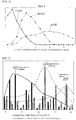
- biofuels applicable to internal combustion engines including jet engines, the technique in which fuels derived from biomass having carbon distributions within the range as shown in Non-Patent Publication etc. ( FIG. 2 ), gasoline, kerosene (jet fuels), and gas oils (diesel fuels) are produced in accordance with the applications, so that measures for satisfying the properties to be owned as the fuels are taken, and that the techniques for economically advantageously producing the fuels under a low-pressure hydrogen are desired.
- An object of the present invention is to provide a method for producing a liquid hydrocarbon fuel including hydrocracking a raw material oil such as fats and oils and biomass retort oils, or a hydrocarbon or the like in petroleum oils, to give a liquid hydrocarbon fuel having excellent low-temperature flowability and oxidation stability that is equivalent to gasoline, kerosene or a gas oil.
- raw materials of various liquid hydrocarbon fuels are subjected to a combination of a hydrocracking reaction and a hydrogenation reaction in the presence of a particular cracking catalyst and in the presence of a hydrogenation catalyst that supports a particular metal at a low pressure of from 0.2 to 0.95 MPa, whereby a liquid hydrocarbon fuel equivalent to and nearly satisfying each of the properties of gasoline, kerosene or a gas oil can be selectively and economically advantageously produced, and the present invention has been perfected thereby.
- the gist of the present invention relates to the following [1] to [8]:
- an economically advantageous method capable of accomplishing the production of a desired liquid hydrocarbon fuel can be provided by carrying out a combination of the hydrocracking reaction and the hydrogenation reaction of a raw material oil such as fats and oils and biomass retort oils, or a hydrocarbon or the like in petroleum oils by feeding a low-pressure hydrogen of nearly a normal pressure.
- the liquid hydrocarbon fuel obtained by the method is a product that is equivalent to gasoline, kerosene and/or a gas oil, and the fuel can be produced according to the present invention.
- One of the features of the present invention is in the aspect that a liquid hydrocarbon fuel can be produced at relatively low costs. While there are some ideas of directly applying the techniques based on petroleum oil raw materials to various raw material oils of the fields of the present invention, there are some disadvantages in accepting economically the use of an expensive precious metal in a catalyst, the use of a high-pressure hydrogen or the like, because locally produced and consumed-type fuel production apparatus is very often important, particularly when biomass raw material is used. In actual situations, it is understood as presupposition that the hydrocracking is carried out by the use of a high-temperature, high-pressure hydrogen, and it is the technical common knowledge that the hydrocracking has been accomplished for the first time under the assumptions of the technical idea mentioned above.
- the raw material oil in the present invention is preferably, but not limited to, one or more members selected from fats and oils such as rapeseed oil, cottonseed oil, palm oil, coconut oil, sunflower oil, soybean oil, corn oil, rice oil, oil palm oil, coconut oil, Jatropha oil, and olive oil. Further, fats and oils from seaweeds and algae and animal oils are also preferred. In addition, consumed waste cooking oils for tempura oil are more preferred currently. Dark oils obtained from working process of fats and oils, and further animal oils are also utilizable.
- the biomass retort oil is made from a waste wood such as a pruned material as a raw material, and included in the raw material oil in the present invention.
- the hydrocarbons in the petroleum oil are also included in the raw material oil in the present invention, and the raw material oils include gas oils and components having the number of carbon atoms larger than the gas oils, and various waste oils.
- the raw material oil may be constituted by a single kind, or constituted by plural kinds.
- a produced oil is obtained by allowing a raw material oil to pass through a catalyst bed packed with a specified catalyst together with hydrogen under given reaction conditions.
- a first reaction step as a result of forming carbenium ions at acid sites of zeolite (Non-Patent Publication 3), the cracking due to the cleavages of carbon chains, cyclized dehydrogenation, dehydrogenation, isomerization, and decarboxylation or hydrogenation of an ester moiety of the raw material fat or oil takes place.
- the cracking the physical properties required for fuels such as low-temperature flowability are given.
- the feeding pressure of hydrogen during processing is set to from 0.2 to 0.95 MPa. Since the high-pressure gas equipment would be subjected to regulation under the ordinance at a pressure exceeding 1.0 MPa, the pressure is not economically desirable. When the feeding pressure of hydrogen does not satisfy the above lower limit, there is a tendency that the reactivity is lowered, or that the activity is rapidly lowered. Industrially, it is preferable to connect with the second reaction step, so that a hydrogen pressure of from 0.2 to 0.95 MPa, which is a pressure at which a hydrogenation reaction of the second reaction step is efficiently carried out, is selected.
- the feeding pressure is preferably 0.3 MPa or more, and more preferably 0.5 MPa or more, and preferably 0.95 MPa or less, and more preferably 0.9 MPa or less.
- the flow rate of the raw material oil is set at a given value. Specifically, the flow rate of the above raw material oil is set at a liquid hourly space velocity of from 0.05 to 0.5 hr -1 .
- the lower the liquid hourly space velocity the more advantageous the reaction.
- the liquid hourly space velocity is preferably 0.05 hr -1 or more, and more preferably 0.1 hr -1 or more, and preferably 0.5 hr -1 or less, and more preferably 0.3 hr -1 or less.
- the ratio of the flow rate of hydrogen to the flow rate of raw material oil is set at from 100 to 1,000 NL (normal liters) of the hydrogen per 1 L of the raw material oil.
- the above ratio is preferably 200 NL or more, more preferably 300 NL or more, and even more preferably 400 NL or more, and preferably 900 NL or less, and more preferably 800 NL or less.
- the reaction temperature in other words, the temperature at which the above raw material oil and the hydrogen are held, is set to preferably from 200° to 500°C, and more preferably from 200° to 500°C.
- the reaction temperature is lower than 200°C, a desired reaction may not progress depending upon the kinds of the raw material oils in some cases, and when the reaction temperature exceeds 500°C, there are some tendencies that the carbon formation of the raw material oil progresses, thereby making the life of the catalyst shorter.
- the reaction temperature is even more preferably from 350° to 450°C.
- the reaction temperature is from 410° to 450°C, that when kerosene is used as a main object, the reaction temperature is from 380° to 430°C, and that when gas oil is used as a main object, the reaction temperature is from 350° to 400°C.
- the hydrogenation reaction does not efficiently concurrently take place, so that the olefins are formed or other various unsaturated bonds and a trace amount of ester sites remain in the solution.
- These unsaturated bonds and ester sites (and fatty acids modified in the reaction process) inhibit oxidation stability, or exist as unnecessary colored components that worsen the hues of the external appearance of the fuel properties. Therefore, it is preferable that unsaturated bonds are saturated in the hydrogenation reaction of the second reaction step to give oxidation stability and improve hues as an external appearance for the values of manufactured articles.
- the raw material is a fat or oil
- fatty acids remain due to a reaction of an undegraded ester site in a trace amount with a formed water, thereby bringing about the worsening of oxidation stability even when contained in a trace amount, which becomes a decisive defect.
- the feeding pressure of hydrogen during processing is set to from 0.2 to 0.95 MPa.
- the hydrogenation reaction is thermodynamically advantageously a pressurizing system of hydrogen. While a high-pressure hydrogen is significant, in consideration of the matter that it is possible to hydrogenate, i.e. saturate a double-bonded group, an ordinary fat or oil at a pressure of from 0.2 to 0.8 MPa, the hydrogenation of the above cracked solution can be carried out at a low-pressure hydrogen of 0.8 MPa or so at the highest.
- the feeding pressure is preferably 0.3 MPa or more, and more preferably 0.5 MPa or more, and preferably 0.95 MPa or less, and more preferably 0.9 MPa or less.
- the flow rate of the cracked solution obtained through the first reaction step is set at a liquid hourly space velocity of from 0.02 to 5 hr -1 .
- the liquid hourly space velocity is preferably 0.2 hr -1 or more, and more preferably 0.25 hr -1 or more, and preferably 5 hr -1 or less, and more preferably 3 hr -1 or less.
- the ratio of the flow rate of hydrogen to the flow rate of the cracked solution is set at from 100 to 1,000 NL of the hydrogen per 1 L of the cracked solution which is the same as in the first reaction step.
- the above ratio is preferably 200 NL or more, and more preferably 300 NL or more, and preferably 900 NL or less, and more preferably 800 NL or less. Practically speaking, it is preferable that the flow rates of hydrogen are the same because the first reaction step and the second reaction step are connected.
- the reaction temperature in other words, the temperature at which the above cracked solution and the hydrogen are held is set to preferably from 140° to 360°C, and more preferably from 200° to 340°C.
- the reaction temperature is 140°C or lower, a hydrogenation reaction is not likely to take place, and when the reaction temperature is 360°C or more, the reverse reaction is caused, so that the hydrogenation reaction is less likely to take place from the viewpoint of the thermodynamic limitations.
- a liquid hydrocarbon fuel which is a reaction product of the hydrocracking reaction and the subsequent hydrogenation reaction as mentioned above can be fractionated into a desired liquid hydrocarbon fuel through, for example, a gas-liquid separating step, a rectifying step, or the like.
- a gas-liquid separating step for example, a gas-liquid separation step, a rectifying step, or the like.
- these components can be removed by setting up a known gas-liquid separation facility and other device for removing by-product gases between the plurality of reaction vessels, and in the reaction product collecting step.
- the first reaction step of the method for producing a liquid hydrocarbon fuel of the present invention is accomplished by reacting a raw material oil with a hydrogen gas, in the presence of a hydrocracking reaction catalyst.
- the hydrocracking reaction catalyst is a catalyst containing one or more members selected from Group 1 and/or Group 2 given below:
- the catalyst is produced by, for example, the following method.
- the catalyst is a solid acid catalyst of zeolite and/or silica-alumina, or one in which one or more metal components selected from the group consisting of ruthenium, nickel, molybdenum, and copper, which are activity promoting agents, can be supported to the solid acid catalyst according an immersion method which is a conventional method.
- the supporting amount of the metal based on 100 parts by mass of the supporting catalyst, is preferably from 0.05 to 35 parts by mass, more preferably from 0.1 to 30 parts by mass, and even more preferably from 0.1 to 25 parts by mass.
- the hydrocracking reaction catalyst is preferably a solid acid having a cracking ability that also functions as a catalyst support, and one or more solid acids selected from the group consisting of silica, silica-alumina, zeolite, silica-zirconia, alumina-zirconia, and titania are recommended as more preferred ones.
- Zeolite refers to an aluminosilicate having fine pores in the crystals, and Y-type zeolite, X-type zeolite, ZSM zeolite, and the like are preferred. Among them, the Y-type zeolite is more preferred in the present invention because the pore size of the zeolite is the largest, and larger molecules intended to be cracked are easily penetrated, and thereby the internal of the pores can be effectively used.
- the ester sites of the fat or oil are cracked by a decarbonylation reaction, a decarboxylation reaction, or a hydrogenation dehydration reaction with a catalyst mentioned above under a hydrogen gas, as mentioned above.
- the reactions required in modifications of fuels to gasoline, kerosene or a gas oil such as a cracking reaction to form low-molecular weight components, a dehydrogenation reaction, an isomerization reaction, a cyclization reaction or the like, due to the cleavages of carbon chains progress with carbenium ions produced by Bronsted acid sites of the solid acid.
- the solid acid is functioned as a support for a metal catalyst, and supports a metal catalyst, from the viewpoint of meeting various reactions mentioned above. Therefore, the catalyst support is a solid acid, and acid sites exhibiting at silica-alumina binding sites are active sites, so that silica-alumina and zeolite are basically preferred.
- carbons may be gradually accumulated to a catalyst with the passage of time.
- the cracking reaction efficiency is lowered to an unacceptable level, it is preferable to perform the removal of carbons.
- the removal of carbons is carried out from the catalyst, it is recommended that removal by oxidation is carried out with the air or the like.
- the oxidation is gradually progressed from an oxygen concentration of 1% or so, and the catalyst bed temperature is controlled to a temperature of 450°C or lower, in order to avoid the accompaniment of abrupt generation of heat.
- the treatment is carried out by the air alone, and if a temperature raise is not found, the oxidation is terminated. After a certain time, the reaction mixture is reduced with hydrogen to be subjected to the reaction.
- a pre-reactor for suppressing the carbon production is set up as the constitution of the first reaction step.
- the main purpose of the pre-reactor is in the cleavages of the carbon chains.
- the pre-reactor is constituted by a catalyst mainly composed of zeolite to which a precious metal, Ni or the like is added. It is more preferable that two sets are arranged in parallel, whereby the cleavage reactions of the carbon chains are performed alternately so that the above oxygen oxidation is carried out alternately to remove carbons, thereby carrying out continuous operations. After a certain time, the reaction mixture is connected to a hydrocracking reaction.
- the hydrogenation reaction catalyst to be used in the second reaction step is a catalyst containing one or more catalysts selected from Group 3 and/or Group 4 given below:
- one or more metal components selected from the group consisting of nickel, palladium, and copper can be supported to a solid acid catalyst silica, zeolite and/or silica-alumina by an immersion method which is a conventional method.
- a hydrogenation reaction catalyst a commercially available catalyst is generally well circulated and can be suitably used.
- the metal components can be used without being particularly limited thereto.
- the metal components are not limited to the group of nickel, palladium, and copper, and preferably a solid acid to which one or more metal components having hydrogenating ability are supported, and an MgO-containing silica to which one or more metal components mentioned above are supported can also be suitably used in the second reaction step.
- the supporting amount of the metal in the hydrogenation reaction catalyst is preferably from 0.05 to 35 parts by mass, more preferably from 0.1 to 30 parts by mass, and even more preferably from 0.1 to 25 parts by mass, based on 100 parts by mass of the support.
- the degradation of the catalyst cannot be avoided.
- a metal soap of nickel or the like is generated by a fatty acid with a slightly unreacted ester site or in the course of degradation of the fatty acid, so that the activity would be lost.
- the fatty acid is subjected to removal by oxidation in the same manner as in the catalyst of the first reaction step to regain the activity of the metal.
- the sulfurization treatment in a hydrogen stream is preferably performed after the oxidation treatment.
- the particle sizes of the solid acids to be used in the first reaction step and the second reaction step are preferably from 0.01 to 3.0 mm, and more preferably from 0.03 to 3.0 mm.
- the particle sizes are smaller than 0.01 mm, it is undesirable because the pressure loss of the catalyst bed becomes excessively large, and the amount of scattered catalyst is likely to increase.
- the particle sizes are larger than 3 mm, a space is formed between the catalysts, so that fats and oils can pass therethrough; however, the larger particles are undesirable because the surface area per unit volume is small, thereby making it likely to worsen the contact efficiency.
- the catalyst having particle sizes of from 0.5 to 3 mm is more preferably employed, from the viewpoint of handling the catalyst particles.
- the BET specific surface area of the catalyst to be used in the first reaction step and the second reaction step is, for example, preferably 150 m 2 /g or more, more preferably 250 m 2 /g or more, and even more preferably 400 m 2 /g or more, and preferably 1,200 m 2 /g or less, more preferably 1,000 m 2 /g or less, and even more preferably 800 m 2 /g or less.
- the activity of the acid sites of ruthenium and nickel is maintained. Copper promotes hydrocracking, and molybdenum contributes to modifications of fuels such as isomerization and dehydrogenation.
- a further metal platinum, iridium, iron, cobalt, rhenium, or magnesium is also suitable as a substitutive metal or a supplementary additional metal, and catalysts further supported by these metals are more preferred.
- a further metal platinum, iridium, iron, or cobalt is also suitable as a substitutive metal or a supplementary additional metal.
- Magnesium is added for the purpose of improving the function of the support. Catalysts further supported by these metals are more preferred.
- the hydrocracking catalyst or hydrogenation catalyst is filled in a reaction vessel such as a known reaction tube.
- a reaction vessel such as a known reaction tube.
- Hydrogen can be employed in either of a countercurrent or cocurrent form against the raw material oil or the cracked solution.
- a form in which countercurrent and cocurrent forms are combined may be employed using a plurality of reaction vessels.
- a general form is a down flow form, and a cocurrent gas-liquid form can be employed.
- the reaction vessels may be used alone or in a combination in a plurality, and a structure in which an internal of one reaction vessel is zoned into plural catalyst beds may be employed.
- a liquid hydrocarbon fuel having controlled carbon distributions depending upon its purpose of use and having low-temperature flowability and oxidation stability can be produced.
- a liquid hydrocarbon fuel that is equivalent to gasoline, a liquid hydrocarbon fuel that is equivalent to kerosene, or a liquid hydrocarbon fuel that is equivalent to a gas oil can be produced.
- one of the features is in that the reaction temperature in the first reaction step is set, so that the these liquid hydrocarbon fuels can be individually produced.
- the liquid hydrocarbon fuel of the present invention is characterized in that a liquid hydrocarbon fuel is produced by a method for producing a liquid hydrocarbon fuel of the present invention.
- the liquid hydrocarbon fuel obtained is highly valuable as a fuel because each of the hydrocarbons equivalent to gasoline, a gas oil and kerosene is mainly obtained as a manufactured article, from the viewpoint of boiling points and the number of carbon atoms.
- the apparatus for producing a liquid hydrocarbon fuel of the present invention is an apparatus for producing a liquid hydrocarbon fuel including hydrocracking or hydrogenating a raw material oil, the apparatus comprising a feeding means for a raw material oil, a feeding means for a hydrogen gas, a first-reaction step member for reacting a fed raw material oil and a fed hydrogen gas in the presence of a hydrocracking reaction catalyst, a second-reaction step member for reacting the produced cracked solution and a fed hydrogen gas in the presence of a hydrogenation reaction catalyst, and a reaction product collecting member.
- the apparatus for producing a liquid hydrocarbon fuel of the present invention comprises a means of regulating a flow rate of a raw material oil and a flow rate of a hydrogen gas, a hydrogen gas production or collection apparatus or a reaction product separation apparatus for distilling and separating a reaction-terminated product, or the like.
- the apparatus for producing a liquid hydrocarbon fuel of the present invention will be described hereinafter more specifically referring to FIG. 1 .
- the apparatus of the present invention comprises at least three members:
- the hydrogen gas production or collection apparatus includes, for example, a steam modification reaction apparatus comprising a feeding member for a low-boiling point, gaseous product recycled raw material separated from a reaction product in the apparatus for producing a liquid hydrocarbon fuel of the present invention, or a manufactured gas feeding member (e.g., a facility comprising a ruthenium-alumina catalyst).
- a steam modification reaction apparatus comprising a feeding member for a low-boiling point, gaseous product recycled raw material separated from a reaction product in the apparatus for producing a liquid hydrocarbon fuel of the present invention, or a manufactured gas feeding member (e.g., a facility comprising a ruthenium-alumina catalyst).
- reaction product separation apparatus for separating a reaction product
- a normal pressure or reduced pressure distillation tower can be employed as the reaction product separation apparatus for separating a reaction product.
- a low-boiling point gaseous material is recycled to the hydrogen gas production apparatus.
- the gas oil equivalent portion may be recycled and fed to the hydrocracking apparatus, and converted to a kerosene equivalent portion or a gasoline equivalent portion.
- High-boiling point substances discharged from a reaction product separation apparatus i.e., a lower part of the distillation tower, are collected as a fuel for combustion, which may be fed to combustion or energy collecting apparatus for utilizing as heat sources necessary for an overall apparatus.
- Test Example 1 Confirmation Test of Controlling Properties of Carbon Distributions (Test of First Reaction Step)
- Test Example 1 is a confirmation test for a first reaction step, so that a reaction tube 11 simply served as a line without filling with a catalyst.
- reaction tube 7 An internal of a reaction tube 7 was filled with a catalyst (50 cc), and a hydrocracking reaction of fats and oils was carried out in a first reaction step.
- the reaction tube 7 was temperature-controlled with an electric heating furnace 8, a reaction product of the first reaction step (cracked solution) was cooled with an ambient temperature water chiller (condenser) 13, and a condensed component was then separated. Liquid components collected in a condensate receiver (hydrocarbons) 17 were subjected to gas chromatography analysis. The flow rate of hydrogen was controlled with a regulating unit 4 for a flow rate of hydrogen gas. The fats and oils which were the raw material oils were fed with a metering liquid pump 2.
- reaction product The condensed components of a reaction product were subjected to gas chromatography analysis. The results are shown in FIG. 3 . It can be seen from the results that hydrocarbons having lower molecular weights are produced according to the increase in the reaction temperatures. It can be seen from the comparisons of FIGs. 2 and 3 that a product that is equivalent to petroleum-based gasoline, a product that is equivalent to kerosene, or a product that is equivalent to a gas oil is nearly obtained. As such, in the present invention, it can be expected that a reaction product having desired carbon distributions is obtained with minor adjustments in reaction conditions (reaction temperature and liquid hourly space velocity or the like).
- the acid value is lowered with the increase in the reaction temperature, so that it is observed that the reaction efficiency is elevated (because unreacted esters and produced water form a fatty acid).
- a fixed bed circulation-type reaction apparatus of a pressurizing system with a constitution as shown in FIG. 1 was used as the continuous apparatus for the first reaction step and the second reaction step.
- reaction tubes 7 and 11 Internals of reaction tubes 7 and 11 were each filled with a given amount of a catalyst, and a hydrocracking reaction of fats and oils was carried out in a first reaction step, and a hydrogenation reaction of a product was carried out in a second reaction step.
- a thermocouple was set at a center in each of catalyst beds to measure a temperature of the catalyst bed.
- the reaction conditions were as follows.
- Test Example 1 Example 1 Raw Material Oil Commercially Available Edible Soybean Oil First Reaction Step Catalyst Zeolite - Cu Zeolite - Ru + Ni + Cu + Mo Hydrogen Feeding Pressure 0.8 MPa 0.8 MPa Liquid Hourly Space Velocity 0.25 hr -1 0.25 hr -1 Flow Rate Ratio 800 NL 800 NL Reaction Temperature 370°C, 400°C, or 430°C 400°C Second Reaction Step Catalyst MgO-Containing Silica - Ni Hydrogen Feeding Pressure 0.8 MPa Liquid Hourly Space Velocity 0.50 hr -1 Flow Rate Ratio 800 NL Reaction Temperature 280°C Reaction Time 8 hr 24 hr
- a freezing point of -7.5°C or lower is recommended in a bio-diesel fuel, so that it can be judged to be sufficiently satisfactory.
- an acid value of 0.1 or less is obtained, which, for example, clears the standard for the gas oil of 0.13.
- oxidation stability (iodine value) a value of 7.7 is obtained after the second reaction step.
- the liquid hydrocarbon fuel obtained by the method of the present invention can be suitably used as a liquid hydrocarbon fuel equivalent to gasoline, a liquid hydrocarbon fuel equivalent to a gas oil or a liquid hydrocarbon fuel equivalent to kerosene.
Landscapes
- Chemical & Material Sciences (AREA)
- Oil, Petroleum & Natural Gas (AREA)
- Chemical Kinetics & Catalysis (AREA)
- Organic Chemistry (AREA)
- Engineering & Computer Science (AREA)
- General Chemical & Material Sciences (AREA)
- Crystallography & Structural Chemistry (AREA)
- Inorganic Chemistry (AREA)
- Production Of Liquid Hydrocarbon Mixture For Refining Petroleum (AREA)
- Catalysts (AREA)
Priority Applications (1)
| Application Number | Priority Date | Filing Date | Title |
|---|---|---|---|
| DE19783961.6T DE19783961T1 (de) | 2018-10-30 | 2019-05-30 | Verfahren zur herstellung von flüssigem kohlenwasserstoffbrennstoff |
Applications Claiming Priority (2)
| Application Number | Priority Date | Filing Date | Title |
|---|---|---|---|
| JP2018203413 | 2018-10-30 | ||
| PCT/JP2019/021619 WO2020090141A1 (ja) | 2018-10-30 | 2019-05-30 | 液体炭化水素燃料の製造方法 |
Publications (2)
| Publication Number | Publication Date |
|---|---|
| EP3666857A1 true EP3666857A1 (de) | 2020-06-17 |
| EP3666857A4 EP3666857A4 (de) | 2020-12-23 |
Family
ID=70464383
Family Applications (1)
| Application Number | Title | Priority Date | Filing Date |
|---|---|---|---|
| EP19783961.6A Pending EP3666857A4 (de) | 2018-10-30 | 2019-05-30 | Verfahren zur herstellung von flüssigem kohlenwasserstoffbrennstoff |
Country Status (8)
| Country | Link |
|---|---|
| US (1) | US20210179952A1 (de) |
| EP (1) | EP3666857A4 (de) |
| JP (1) | JP7530097B2 (de) |
| CN (1) | CN112912474A (de) |
| DE (1) | DE19783961T1 (de) |
| PH (1) | PH12021550636A1 (de) |
| SG (1) | SG11202010666XA (de) |
| WO (1) | WO2020090141A1 (de) |
Families Citing this family (6)
| Publication number | Priority date | Publication date | Assignee | Title |
|---|---|---|---|---|
| US12319878B2 (en) | 2020-08-06 | 2025-06-03 | Chevron U.S.A. Inc. | Upgrading of low value lipid feedstocks for refinery processing |
| US12421460B2 (en) | 2024-01-15 | 2025-09-23 | Chevron U.S.A. Inc. | Downflow lipid conversion with upflow catalyst regeneration |
| US12434224B2 (en) | 2024-01-16 | 2025-10-07 | Chevron U.S.A. Inc. | Catalyst selection for improved lipid feedstock conversion |
| US12319881B1 (en) | 2024-09-27 | 2025-06-03 | Chevron U.S.A. Inc. | Converting a renewable fuel intermediate composition to finished transportation fuel |
| US12582954B1 (en) | 2024-12-13 | 2026-03-24 | Chevron U.S.A. Inc. | Processing feedstocks |
| US12590258B1 (en) | 2025-02-28 | 2026-03-31 | Chevron U.S.A. Inc. | Converting a lipid feedstock to fuel |
Family Cites Families (10)
| Publication number | Priority date | Publication date | Assignee | Title |
|---|---|---|---|---|
| US3598908A (en) | 1968-08-30 | 1971-08-10 | Ampex | Digitally controlled lap dissolver |
| FR2910484B1 (fr) * | 2006-12-22 | 2009-03-06 | Inst Francais Du Petrole | Procedes d'hydrotraitement d'un melange constitue d'huiles d'origine vegetale ou animale et de coupes petrolieres avec injection des huiles en trempe sur le dernier lit catalytique |
| FR2913024B1 (fr) * | 2007-02-27 | 2012-07-27 | Total France | Procede d'hydrotraitement d'une charge gazole, unite d'hydrotraitement pour la mise en oeuvre dudit procede, et unite d'hydroraffinage correspondante |
| AU2010292845A1 (en) * | 2009-08-28 | 2012-03-22 | Exxonmobil Research And Engineering Company | Reducing hydrogen consumption in hydrotreating of biocomponent feeds |
| JP2011148909A (ja) | 2010-01-21 | 2011-08-04 | Tokyo Univ Of Agriculture & Technology | バイオ炭化水素、バイオ炭化水素の製造方法、およびバイオ炭化水素製造装置 |
| JP5896510B2 (ja) * | 2011-08-08 | 2016-03-30 | 公益財団法人北九州産業学術推進機構 | 油脂の接触分解方法及びそれに用いる脱炭酸・水素化接触分解触媒 |
| KR20140107208A (ko) * | 2011-11-15 | 2014-09-04 | 코우에키 자이단호진 기타큐슈산교가쿠쥬쓰스이신키코 | 연료유의 제조 방법 |
| JP6073197B2 (ja) * | 2013-07-29 | 2017-02-01 | 株式会社タクマ | 軽油製造システムおよび軽油製造方法 |
| FR3039160B1 (fr) * | 2015-07-24 | 2017-07-28 | Ifp Energies Now | Procede d'hydrotraitement de matieres renouvelables avec un recycle gaz optimise |
| PH12018502509B1 (en) * | 2016-06-01 | 2022-04-27 | Revo Int Inc | Method for producing hydrocarbon liquid fuel |
-
2019
- 2019-05-30 JP JP2020554751A patent/JP7530097B2/ja active Active
- 2019-05-30 CN CN201980072558.1A patent/CN112912474A/zh active Pending
- 2019-05-30 US US16/605,901 patent/US20210179952A1/en not_active Abandoned
- 2019-05-30 SG SG11202010666XA patent/SG11202010666XA/en unknown
- 2019-05-30 DE DE19783961.6T patent/DE19783961T1/de active Pending
- 2019-05-30 EP EP19783961.6A patent/EP3666857A4/de active Pending
- 2019-05-30 WO PCT/JP2019/021619 patent/WO2020090141A1/ja not_active Ceased
-
2021
- 2021-03-19 PH PH12021550636A patent/PH12021550636A1/en unknown
Also Published As
| Publication number | Publication date |
|---|---|
| JPWO2020090141A1 (ja) | 2021-09-24 |
| PH12021550636A1 (en) | 2022-02-14 |
| EP3666857A4 (de) | 2020-12-23 |
| DE19783961T1 (de) | 2020-12-31 |
| CN112912474A (zh) | 2021-06-04 |
| US20210179952A1 (en) | 2021-06-17 |
| WO2020090141A1 (ja) | 2020-05-07 |
| SG11202010666XA (en) | 2020-11-27 |
| JP7530097B2 (ja) | 2024-08-07 |
Similar Documents
| Publication | Publication Date | Title |
|---|---|---|
| EP3666857A1 (de) | Verfahren zur herstellung von flüssigem kohlenwasserstoffbrennstoff | |
| US9133080B2 (en) | Biorenewable naphtha | |
| RU2394872C2 (ru) | Способ получения углеводородов | |
| JP6635362B1 (ja) | バイオジェット燃料の製造方法 | |
| US10144880B2 (en) | Conversion of triacylglycerides-containing oils to jet fuel range hydrocarbons | |
| CN102482599B (zh) | 航空燃料油组合物 | |
| US12319881B1 (en) | Converting a renewable fuel intermediate composition to finished transportation fuel | |
| CN111978987B (zh) | 一种航空煤油及生物质油与煤焦油联合生产航空煤油的方法 | |
| JP5022117B2 (ja) | 炭化水素油の製造方法 | |
| US12286599B2 (en) | Method and system for preparing fuel by using high acid value biological oil and fat | |
| US20140275670A1 (en) | Process for low-hydrogen-consumption conversion of renewable feedstocks to alkanes | |
| US10533140B2 (en) | Method for producing hydrocarbon liquid fuel | |
| Carli et al. | Sythesis of bioavture through hydrodeoxygenation and catalytic cracking from oleic acid using NiMo/Zeolit catalyst | |
| US10457875B2 (en) | H2 and bio-fuels production from renewable feedstocks | |
| CN103059902B (zh) | 一种以动植物油为原料制备喷气燃料调合组分的方法 | |
| RU2623088C1 (ru) | Способ получения моторных топлив | |
| JP5349213B2 (ja) | 航空燃料油基材の製造方法および航空燃料油組成物 | |
| CN116970420B (zh) | 一种加工生物油品的生产工艺 | |
| EP2918660A1 (de) | Verfahren zur umwandlung mit niedrigem wasserstoffverbrauch von nachwachsenden rohstoffen zu alkanen | |
| FI2880126T4 (fi) | Menetelmä biomassasta peräisin olevien raaka-aineiden hydrokäsittelyä ja hydroisomerisaatiota varten, jossa menetelmässä hydrokäsiteltävä poistovesi ja vetyvirtaus sisältävät rajoitetun pitoisuuden hiilimonoksidia |
Legal Events
| Date | Code | Title | Description |
|---|---|---|---|
| STAA | Information on the status of an ep patent application or granted ep patent |
Free format text: STATUS: UNKNOWN |
|
| STAA | Information on the status of an ep patent application or granted ep patent |
Free format text: STATUS: THE INTERNATIONAL PUBLICATION HAS BEEN MADE |
|
| PUAI | Public reference made under article 153(3) epc to a published international application that has entered the european phase |
Free format text: ORIGINAL CODE: 0009012 |
|
| STAA | Information on the status of an ep patent application or granted ep patent |
Free format text: STATUS: REQUEST FOR EXAMINATION WAS MADE |
|
| 17P | Request for examination filed |
Effective date: 20191018 |
|
| AK | Designated contracting states |
Kind code of ref document: A1 Designated state(s): AL AT BE BG CH CY CZ DE DK EE ES FI FR GB GR HR HU IE IS IT LI LT LU LV MC MK MT NL NO PL PT RO RS SE SI SK SM TR |
|
| AX | Request for extension of the european patent |
Extension state: BA ME |
|
| RIN1 | Information on inventor provided before grant (corrected) |
Inventor name: TSUTO, KEIICHI Inventor name: MATSUNAGA, KOTETSU Inventor name: AZUMA, YUICHIRO |
|
| REG | Reference to a national code |
Ref country code: AT Ref legal event code: EECC Ref document number: AT T Effective date: 20201215 |
|
| A4 | Supplementary search report drawn up and despatched |
Effective date: 20201119 |
|
| RIC1 | Information provided on ipc code assigned before grant |
Ipc: C10G 65/12 20060101AFI20201113BHEP Ipc: C10G 47/16 20060101ALI20201113BHEP Ipc: C10G 45/32 20060101ALI20201113BHEP Ipc: C10G 3/00 20060101ALI20201113BHEP Ipc: C10G 45/60 20060101ALI20201113BHEP Ipc: C10G 45/44 20060101ALI20201113BHEP |
|
| REG | Reference to a national code |
Ref country code: DE Ref legal event code: R210 |
|
| DAV | Request for validation of the european patent (deleted) | ||
| DAX | Request for extension of the european patent (deleted) | ||
| STAA | Information on the status of an ep patent application or granted ep patent |
Free format text: STATUS: EXAMINATION IS IN PROGRESS |
|
| 17Q | First examination report despatched |
Effective date: 20220222 |