EP3667517A1 - Verfahren und vorrichtung zur verarbeitung von natürlicher sprache - Google Patents
Verfahren und vorrichtung zur verarbeitung von natürlicher sprache Download PDFInfo
- Publication number
- EP3667517A1 EP3667517A1 EP18851590.2A EP18851590A EP3667517A1 EP 3667517 A1 EP3667517 A1 EP 3667517A1 EP 18851590 A EP18851590 A EP 18851590A EP 3667517 A1 EP3667517 A1 EP 3667517A1
- Authority
- EP
- European Patent Office
- Prior art keywords
- polarity
- processed
- word
- polarity characteristic
- characters
- Prior art date
- Legal status (The legal status is an assumption and is not a legal conclusion. Google has not performed a legal analysis and makes no representation as to the accuracy of the status listed.)
- Ceased
Links
Images




Classifications
-
- G—PHYSICS
- G06—COMPUTING OR CALCULATING; COUNTING
- G06F—ELECTRIC DIGITAL DATA PROCESSING
- G06F16/00—Information retrieval; Database structures therefor; File system structures therefor
- G06F16/30—Information retrieval; Database structures therefor; File system structures therefor of unstructured textual data
- G06F16/36—Creation of semantic tools, e.g. ontology or thesauri
- G06F16/374—Thesaurus
-
- G—PHYSICS
- G06—COMPUTING OR CALCULATING; COUNTING
- G06F—ELECTRIC DIGITAL DATA PROCESSING
- G06F40/00—Handling natural language data
- G06F40/30—Semantic analysis
-
- G—PHYSICS
- G06—COMPUTING OR CALCULATING; COUNTING
- G06F—ELECTRIC DIGITAL DATA PROCESSING
- G06F16/00—Information retrieval; Database structures therefor; File system structures therefor
- G06F16/30—Information retrieval; Database structures therefor; File system structures therefor of unstructured textual data
- G06F16/35—Clustering; Classification
-
- G—PHYSICS
- G06—COMPUTING OR CALCULATING; COUNTING
- G06F—ELECTRIC DIGITAL DATA PROCESSING
- G06F18/00—Pattern recognition
- G06F18/20—Analysing
- G06F18/21—Design or setup of recognition systems or techniques; Extraction of features in feature space; Blind source separation
- G06F18/214—Generating training patterns; Bootstrap methods, e.g. bagging or boosting
-
- G—PHYSICS
- G06—COMPUTING OR CALCULATING; COUNTING
- G06F—ELECTRIC DIGITAL DATA PROCESSING
- G06F40/00—Handling natural language data
- G06F40/20—Natural language analysis
- G06F40/237—Lexical tools
- G06F40/242—Dictionaries
-
- G—PHYSICS
- G06—COMPUTING OR CALCULATING; COUNTING
- G06N—COMPUTING ARRANGEMENTS BASED ON SPECIFIC COMPUTATIONAL MODELS
- G06N20/00—Machine learning
Definitions
- This application relates to the field of information processing, and more specifically, to a natural language processing method and apparatus.
- Natural language processing is a technology that enables a computer to understand and process a natural human language, and is also an important technical means to implement artificial intelligence.
- Sentiment analysis is a branch of natural language processing. A subjective sentiment contained in a text is analyzed, to determine a sentiment polarity, for example, performing a positive or negative determining, or identifying an emotion such as happiness, anger, sadness, or joy expressed in the text.
- a sentimentally inclined word (also referred to as a word with a sentiment polarity, a sentiment word for short below) in a sentence usually needs to be identified, and then a sentiment status of a phrase or the sentence is analyzed according to a syntactic rule. Therefore, accuracy of determining a sentiment tendency of the sentiment word affects accuracy of determining the sentiment status of the phrase or the sentence.
- a sentiment dictionary has been built for sentiment words to help determine sentiment tendencies of the sentiment words.
- an increasing quantity of new sentiment words are created.
- a word in the language may be formed by combining any two or more characters. Therefore, there is an urgent need to provide a method for accurately determining sentiment polarities of new sentiment words.
- This application provides a natural language processing method and apparatus, to accurately determine a sentiment polarity of a newborn sentiment word.
- a natural language processing method including:
- the polarity characteristic vector of the to-be-processed word is determined based on polarity characteristic information of at least some characters in the to-be-processed word, and the sentiment polarity is determined based on the polarity characteristic vector. In this way, a connection between a character and a word is fully used, helping improve accuracy of determining the sentiment polarity of the to-be-processed word.
- the determining a polarity characteristic vector of the to-be-processed word based on the polarity characteristic information of the m to-be-processed characters includes: combining polarity characteristic values in the polarity characteristic information of the m to-be-processed characters into the polarity characteristic vector of the to-be-processed word, where the j th group of components include m polarity characteristic values, and the m polarity characteristic values are obtained by combining j th polarity characteristic values of all of the m to-be-processed characters.
- a first polarity characteristic value of the i th character may be connected to an n th polarity characteristic value of an (i-1) th character, that is, a first polarity characteristic value of a character is connected to a last polarity characteristic value of a previous character.
- a method for combining polarity characteristic values in polarity characteristic information of a plurality of to-be-processed characters into the polarity characteristic vector of a to-be-processed word may be briefly referred to as a serial connection.
- polarity characteristic information of at least some characters in the to-be-processed word is connected in series; therefore, it is determined that an obtained sentiment polarity vector of the to-be-processed word includes the polarity characteristic information of the at least some characters, considers sentiment polarities of the at least some characters in the to-be-processed word, and has polarity characteristic values in more dimensions than polarity characteristic information of a character.
- the classifier is able to determine a sentiment polarity of the to-be-processed word based on the polarity characteristic values in more dimensions, helping obtain a more accurate determining result.
- the method further includes: determining the m to-be-processed characters in the M characters, where a greatest value of polarity characteristic values of any one of the m to-be-processed characters is greater than any polarity characteristic value of any one of remaining (M-m) characters.
- the m to-be-processed characters are selected based on a greatest value in polarity characteristic information of each of the M characters, that is, a character that greatly affects a sentiment polarity of the to-be-processed word is considered preferentially, and therefore less impact is exerted on determining of the sentiment polarity of the to-be-processed word.
- the combining polarity characteristic values in the polarity characteristic information of the m to-be-processed characters into the polarity characteristic vector of the to-be-processed word includes: combining the polarity characteristic values in the polarity characteristic information of the m to-be-processed characters into the polarity characteristic vector of the to-be-processed word according to an arrangement order of the m to-be-processed characters in the to-be-processed word.
- the n groups of components that are corresponding to the n sentiment polarities and that are obtained by connecting m polarity characteristic values in series according to the arrangement order of the m to-be-processed characters in the to-be-processed word fully consider a connection between a character and a word, and also consider a difference in sentiment polarity that may result from different arrangement orders of characters in the word.
- a polarity characteristic vector of the word obtained in this manner helps the classifier determine a sentiment polarity of the word accurately, thereby improving determining accuracy.
- the determining a polarity characteristic vector of the to-be-processed word based on the polarity characteristic information of the m to-be-processed characters includes:
- each group of components in the n groups of components include a polarity characteristic value, each polarity characteristic value is corresponding to one sentiment polarity, and a polarity characteristic value of the j th group of components is calculated based on j th polarity characteristic values of the m to-be-processed characters.
- polarity characteristic information of each character of the to-be-processed word is considered; in addition, for determining of sentiment polarities in more dimensions, a processing process is more convenient and is more applicable to determining for the to-be-processed word based on the sentiment polarities in more dimensions. The determining based on the sentiment polarities in more dimensions also helps improve determining accuracy.
- the method further includes: treating the to-be-processed word as a processed word, and adding the processed word into the dictionary.
- extension to the dictionary is extension to a training sample, thereby automatically extending the training sample.
- the method further includes:
- the classifier is trained through machine learning, and in a training process, a polarity characteristic vector of a word is determined based on a polarity characteristic value of a character, and the classifier is trained by using the polarity characteristic vector of the word and a known sentiment polarity.
- a connection between the character and the word is fully considered.
- a classifier trained in such manner is able to obtain a relatively accurate determining result when the classifier is used to determine a sentiment polarity of a word.
- the method further includes: using the processed word as the training sample to perform the training on the classifier.
- training the classifier again by using the extended training sample can optimize a parameter in a classification model. This helps improve accuracy of a determining result.
- the method further includes:
- the to-be-processed word may be used as the processed word and added into the dictionary, to automatically extend the dictionary.
- the processed word added into the dictionary may be used as a new training sample, to train the classifier again, so as to update the classifier.
- a natural language processing apparatus configured to perform any one of the first aspect or the possible implementations of the first aspect.
- the natural language processing apparatus may include a unit configured to perform the method according to any one of the first aspect or the possible implementations of the first aspect.
- a natural language processing apparatus including a memory, a processor, and a communications interface.
- the memory is configured to store a computer program.
- the processor is configured to: invoke the computer program from the memory, and run the computer program, so that the natural language processing apparatus performs the method according to any one of the first aspect or the possible implementations of the first aspect.
- the processor is configured to:
- a computer program product includes a computer program (which may also be referred to as code or an instruction).
- a computer program which may also be referred to as code or an instruction.
- the computer program runs on a computer, the computer is enabled to perform the method according to any one of the first aspect or the possible implementations of the first aspect.
- a computer-readable storage medium is provided, and is configured to store a computer program.
- the computer program includes an instruction used to perform the method according to any one of the first aspect or the possible implementations of the first aspect.
- the polarity characteristic vector of the to-be-processed word is determined based on a polarity characteristic value of at least some characters in the to-be-processed word in at least one dimension, and a sentiment polarity is determined based on a plurality of dimensions by using the classifier.
- the built polarity characteristic vector of the to-be-processed word is able to fully use a connection between a word and a character, helping improve accuracy of sentiment polarity determining.
- no limitation is imposed on the sentiment polarity dimension, and a user can analyze a sentiment polarity according to their own requirements by using a corresponding classifier. This helps improve user experience.
- Sentiment analysis is analyzing and determining subjective sentiment color of a specific text. Specifically, texts may be classified into two or more types: commendatory or derogatory, through the sentiment analysis based on meanings and sentiment information expressed in the texts. Sentiment polarity classification is analyzing and determining positive and negative aspects (that is, commendatory and derogatory) or more types of sentiments expressed in texts. In this application, each sentiment type may be referred to as a sentiment polarity (polarity).
- the sentiment type may include two types: commendation and derogation; or may include four types: happiness, anger, sadness, and joy; or may include seven types: happiness (happy), like (like), sadness (sad), surprise (surprise), anger (angry), fear (fear), and disgust (disgust).
- the dictionary may be a collection of words with a common attribute.
- words with sentiment color constitute a sentimental dictionary
- words with swear-word color constitute a dictionary of swear words
- words that represent names of places constitute a gazetteer.
- the corpus is also referred to as a free text.
- the corpus may be a character, a word, a sentence, a paragraph, an article, or the like, or any combination thereof.
- the classifier is a tool for determining a corpus type by using various classification algorithms.
- samples need to be used in parameter training performed on the classifier. These samples are referred to as training samples.
- training samples For example, for a classifier with two classification types (or referred to as a binary classifier), two types of samples: positive training samples and negative training samples, are needed.
- the positive training sample is a sample with a positive sentiment polarity that is used to constitute a training set during building of a binary classifier. That is, the positive training sample is used to constitute a positive training set.
- the negative training sample is a sample with a negative sentiment polarity that is used to constitute a training set during building of a binary classifier. That is, the negative training sample is used to constitute a negative training set.
- FIG 1 is a schematic diagram of a communications system 10 to which a natural language processing method and apparatus are applicable according to an embodiment of this application.
- the communications system 10 may include a server-side device 11.
- the server-side device 11 may be configured to perform sentiment analysis on obtained data (to be specific, a sentiment word, for example, a to-be-processed corpus or a training sample).
- a classifier may be deployed in the server-side device 11, and after obtaining data, the server-side device 11 may determine a sentiment polarity of a sentiment word by using the classifier.
- the server-side device 11 may be configured to determine polarity characteristic information of a character, a polarity characteristic vector of a word, and a sentiment polarity of the word, and the server-side device 11 may be further configured to train the classifier. Specific functions of the server-side device 11 are described in detail with reference to a specific embodiment below.
- the communications system 10 further includes a data collection device 12, configured to: obtain to-be-processed data, and transmit the to-be-processed data to the server-side device 11.
- the data collection device 12 may obtain the to-be-processed data through manual input, network search, or the like.
- the communications system 10 further includes a client device 13, configured to perform next natural language processing based on a processing result from the server-side device 11, for example, perform sentiment analysis on a corpus (for example, a phrase, a sentence, or a paragraph) based on the processing result from the server-side device 11.
- a client device 13 configured to perform next natural language processing based on a processing result from the server-side device 11, for example, perform sentiment analysis on a corpus (for example, a phrase, a sentence, or a paragraph) based on the processing result from the server-side device 11.
- the above-listed functions of the server-side device, the data collection device, and the client device are only an example, and shall not constitute any limitation on this application. Functions of the data collection device and the client device may alternatively be implemented by the server-side device. This is not limited in this application.
- deployment of the server-side device, the data collection device, and the client device is not particularly limited in this application.
- the server-side device, the data collection device, and the client device may be deployed in different physical devices, the different physical devices implement corresponding functions of the server-side device, the data collection device, and the client device, and the server-side device, the data collection device, and the client device that are deployed in the different physical devices may be connected to each other through a network.
- the server-side device, the data collection device, and the client device may be deployed in a same physical device, and functions of the server-side device, the data collection device, and the client device are implemented by using the physical device.
- the data collection device and the client device may be integrated into a same terminal device or different terminal devices, and deployed in a same physical device together with the terminal device, so that the physical device implements respective functions.
- server-side devices and client devices are not particularly limited.
- the plurality of server-side devices may constitute a server cluster.
- constituent components of the server-side device may include a processor, a hard disk, a memory, a system bus, and the like, and are similar to a general computer architecture.
- the server-side device needs to provide highly reliable services, and therefore may have higher requirements on a processing capability, stability, reliability, security, scalability, manageability, and the like.
- the terminal device may also be referred to as user equipment (user equipment, UE), an access terminal, a subscriber unit, a subscriber station, a mobile station, a mobile console, a remote station, a remote terminal, a mobile device, a user terminal, a terminal, a wireless communications device, a user agent, or a user apparatus.
- user equipment user equipment
- UE user equipment
- an access terminal a subscriber unit, a subscriber station, a mobile station, a mobile console, a remote station, a remote terminal, a mobile device, a user terminal, a terminal, a wireless communications device, a user agent, or a user apparatus.
- the terminal device in this embodiment of this application may be a mobile phone (mobile phone), a tablet computer (Pad), a computer with a wireless transceiving function, a virtual reality (Virtual Reality, VR) terminal device, an augmented reality (Augmented Reality, AR) terminal device, a wireless terminal in industrial control (industrial control), a wireless terminal in self driving (self driving), a wireless terminal in remote medical care (remote medical), a wireless terminal in smart grid (smart grid), a wireless terminal in transportation safety (transportation safety), a wireless terminal in smart city (smart city), a wireless terminal in smart home (smart home), or the like.
- the terminal device and a chip that can be disposed in the terminal device are collectively referred to as a terminal device.
- the server-side device, the data collection device, and the client device may directly communicate with each other through a network, for example, Ethernet (for example, Ethernet implemented by a communication cable such as optical fiber).
- a network for example, Ethernet (for example, Ethernet implemented by a communication cable such as optical fiber).
- the server-side device, the data collection device, and the client device may indirectly communicate with each other through a forwarding network including one or more network devices.
- the server-side device, the data collection device, and the client device may communicate with each other through a radio access network.
- the radio access network may use any communications system, for example, a Global System for Mobile Communications (Global System for Mobile communications, GSM) system, a Code Division Multiple Access (Code Division Multiple Access, CDMA) system, a Wideband Code Division Multiple Access (Wideband Code Division Multiple Access, WCDMA) system, a General Packet Radio Service (General Packet Radio Service, GPRS) system, a Long Term Evolution (Long Time Evolution, LTE) system, a Long Term Evolution Advanced (LTE-Advanced, LTE-A) system, an LTE frequency division duplex (Frequency Division Duplex, FDD) system, an LTE time division duplex (Time Division Duplex, TDD) system, a Universal Mobile Telecommunications System (Universal Mobile Telecommunication System, UMTS), a Worldwide Interoperability for Microwave Access (Worldwide Interoperability for Microwave Access, WiMAX) communications system, a next-generation communications system (for example, a 5th generation (5th generation. 5G) communications system), a fusion thereof (
- the communications system shown in FIG 1 is only a possible application scenario of this embodiment of this application and shall not constitute any limitation on this application.
- the communications system may further include other devices.
- Sentiment analysis has great business value and public service value. Texts in microblogs and various forums may be a corpora source for sentiment analysis. Enterprises may perform sentiment analysis on reviews or opinions of consumers on a product to obtain evaluation of the consumers on the product. For example, consumer preferences may be grasped through sentiment analysis on movie reviews and music reviews, or a government may perform sentiment analysis on news reviews to obtain an attitude of the mass to a news event.
- a sentiment dictionary needs to be maintained and updated. Therefore, a dictionary building technology emerges as the time requires.
- a sentiment word can be automatically found from a corpus and a sentiment polarity of the sentiment word is found, so as to extend a dictionary.
- a sentiment polarity of a sentiment word cannot be highly accurately analyzed by using current dictionary building technologies such as a pointwise mutual information (pointwise mutual information, PMI) method and a dictionary interpretation method.
- PMI pointwise mutual information
- a dictionary interpretation method As a basis of sentiment analysis, if the sentiment dictionary cannot ensure relatively high accuracy, accuracy of sentiment analysis on a phrase, a sentence, and even a paragraph and an article is inevitably affected.
- this application provides a natural language processing method that can be used to analyze a sentiment polarity of an obtained sentiment word and perform accurate determining.
- the corpus may be the texts in the microblogs and various forums described above, or may be a character, a word, a phrase, a sentence, a paragraph, or an article, or any combination thereof.
- a sentiment polarity of each sentiment word may be first analyzed, and then sentiment analysis is performed on the phrase, the sentence, the paragraph, or the article based on the sentiment polarity of the sentiment word.
- the natural language processing method provided in this embodiment of this application may be performed by a natural language processing apparatus in which a classifier is deployed.
- the natural language processing apparatus may be the server-side device 11 shown in FIG 1 .
- the classifier is used to determine a sentiment polarity of a sentiment word.
- a sentiment polarity and a quantity of sentiment polarity dimensions on which sentiment analysis is based are defined.
- the classifier may be preset to determine the sentiment polarity of the sentiment word based on two dimensions (for example, a positive polarity and a negative polarity), or the classifier may be set to determine the sentiment polarity of the sentiment word based on more dimensions.
- the quantity of sentiment polarity dimensions is not limited.
- the classifier performs sentiment analysis based on the configured sentiment polarity and the configured quantity of sentiment polarity dimensions, and cannot perform sentiment analysis based on another quantity of dimensions or another type of sentiment polarity.
- the quantity of sentiment polarity dimensions in the classifier has been preconfigured.
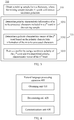
- FIG 2 is a schematic flowchart of a natural language processing method 200 according to an embodiment of this application. As shown in FIG 2 , the method 200 may include steps 210 to 240.
- a natural language processing apparatus obtains a to-be-processed word, where the to-be-processed word includes M characters.
- the to-be-processed word is a sentiment word that has not been collected in a sentiment dictionary.
- the to-be-processed word may be a newly created sentiment word in a network.
- the to-be-processed word may be split into the M characters. For example, a to-be-processed word " " is split into two characters: " " and " ".
- step 220 polarity characteristic information of m to-be-processed characters in the M characters is determined, where M ⁇ m ⁇ 1, and both M and m are integers.
- polarity characteristic information of a character may be obtained by combining polarity characteristic values of the word in all sentiment polarity dimensions.
- polarity characteristic information of each character includes n polarity characteristic values, and the n characteristic values are in a one-to-one correspondence with n sentiment polarities, where n ⁇ 1, and n is an integer.
- a j th polarity characteristic value of an i th character represents a percentage of a quantity of words, included in a prestored dictionary, with a sentiment polarity corresponding to the j th polarity characteristic value in a quantity of all words including the i th character included in the prestored dictionary, where i is any value in [1,m], and j is any value in [1,n].
- the prestored dictionary there are a total of 20 words including " ", among which there are 11 words with a positive polarity (that is, commendatory words, for example, polarities denoted in the sentiment dictionary may be "1"), eight words with a negative polarity (that is, derogatory words, for example, polarities denoted in the sentiment dictionary may be "2”), and one neutral word (that is, a word neither commendatory nor derogatory, for example, a polarity denoted in the sentiment dictionary may be "3").
- polarity characteristic information of " " includes two polarity characteristic values.
- a first polarity characteristic value may be corresponding to the positive polarity
- a second polarity characteristic value may be corresponding to the negative polarity. It can be calculated that the first polarity characteristic value of " " is 0.55, and the second polarity characteristic value of " “ is 0.4, and therefore it can be obtained that the polarity characteristic information of " " is represented as a two-dimensional vector (0.55,0.4).
- the natural language processing apparatus may determine polarity characteristic information of at least some characters in the to-be-processed word.
- a value of m may be determined based on a preset quantity (for example, N, where N is greater than 1, and N is a positive integer) of dimensions of the classifier.
- a polarity characteristic vector of the to-be-processed word is determined based on the polarity characteristic information of the m to-be-processed characters.
- the polarity characteristic vector of the to-be-processed word is determined based on the polarity characteristic information of the at least some characters in the to-be-processed word.
- the polarity characteristic vector of the to-be-processed word determined in step 230 may include n groups of components in a one-to-one correspondence with the n sentiment polarities. Each group of components include at least one polarity characteristic value. At least one polarity characteristic value included in a j th group of components may be determined based on a j th polarity characteristic value of each of the m to-be-processed characters. Therefore, the polarity characteristic vector of the to-be-processed word may include at least n polarity characteristic values.
- n represents a quantity of polarity characteristic values included in polarity characteristic information of a character, or a quantity of dimensions of sentiment polarities corresponding to the polarity characteristic information of the character.
- N represents a quantity of dimensions in which the classifier determines a sentiment polarity. In this embodiment of this application, n ⁇ N.
- the classifier determines a sentiment polarity of the to-be-processed word based on the two dimensions: the positive polarity and the negative polarity
- the polarity characteristic information of the character may be represented by using a polarity characteristic value of the positive polarity or a polarity characteristic value of the negative polarity, that is, polarity characteristic information of " " may be represented as a one-dimensional vector (0.55) or (0.4), and a polarity characteristic vector of the word obtained in this case is also based on a same sentiment polarity.
- the classifier needs to be configured in advance, to specify that a polarity characteristic vector of a currently input word is based on a sentiment polarity dimension, thereby helping the classifier perform accurate determining.
- the determining a polarity characteristic vector of the to-be-processed word based on the polarity characteristic information of the m to-be-processed characters is processing polarity characteristic information of each of the m to-be-processed characters according to a preset rule, to obtain the polarity characteristic vector of the to-be-processed word.
- a process of determining the polarity characteristic vector of the to-be-processed word in step 230 may be performed in any one of the following manners:
- Manner 1 Polarity characteristic values in the polarity characteristic information of the m to-be-processed characters are combined into the polarity characteristic vector of the to-be-processed word.
- the polarity characteristic vector of the to-be-processed word obtained in this way includes the n groups of components in a one-to-one correspondence with the n sentiment polarities.
- the j th group of components in the n groups of components include m polarity characteristic values.
- the m polarity characteristic values are obtained by combining j th polarity characteristic values of all of the m to-be-processed characters.
- the manner of combining polarity characteristic values in the polarity characteristic information of the m to-be-processed characters into the polarity characteristic vector of the to-be-processed word may be briefly referred to as connecting the polarity characteristic information of the m to-be-processed characters in series.
- a first polarity characteristic value of the i th character may be connected to an n th polarity characteristic value of an (i-1) th character, that is, a first polarity characteristic value of a latter character is connected to a last polarity characteristic value of a former character.
- an arrangement order of n pieces of polarity characteristic information of each of the m to-be-processed characters keeps unchanged.
- a polarity characteristic value in an x th group of components is determined in any one of the following manners based on a polarity characteristic value that corresponds to an x th sentiment polarity and that is in n polarity characteristic values of each of the m to-be-processed characters: summation, averaging, or finding a greatest value, where the range [1,n] is traversed for x, and x is a positive integer.
- the range [1,n] is traversed for x, and the x th group of components in the n groups of components in the polarity characteristic vector of the to-be-processed word are determined in any one of the following manners:
- each group of components include a polarity characteristic value, and each polarity characteristic value may be calculated based on the polarity characteristic information of the m to-be-processed characters.
- a sentiment polarity of the to-be-processed word is determined based on the polarity characteristic vector of the to-be-processed word by using a preset classifier.
- the polarity characteristic vector of the to-be-processed word is input into the preset classifier, so that the classifier determines and outputs the sentiment polarity of the to-be-processed word.
- the classifier may be configured to determine the sentiment polarity of the to-be-processed word, or classify the sentiment polarity of the to-be-processed word.
- the classifier may determine a type of data (for example, the to-be-processed word or a training sample) by using a classification algorithm.
- the classification algorithm may be obtained through training based on a word with a known sentiment polarity, or may be obtained according to a rule designed based on personal experience.
- step 250 the sentiment polarity of the to-be-processed word is output.
- the classifier may be configured in the natural language processing apparatus, and the natural language processing apparatus may be configured only to determine the sentiment polarity of the to-be-processed word.
- the classifier may output, through a communications interface of the natural language processing apparatus, a determining result of the sentiment polarity of the word to another apparatus, for example, a client device, so that the another apparatus performs next sentiment analysis on a corpus based on the determining result.
- the natural language processing apparatus may alternatively be configured to further perform sentiment analysis on a corpus (for example, a phrase, a sentence, or a paragraph) based on the sentiment polarity of the word.
- a corpus for example, a phrase, a sentence, or a paragraph
- the classifier may output the processing result to another module or unit configured to perform corpus sentiment analysis, in the natural language processing apparatus.
- the natural language processing apparatus may determine the polarity characteristic vector of the to-be-processed word in different implementations. Because different implementations are used, the polarity characteristic vector of the to-be-processed word determined based on the polarity characteristic information of the same m to-be-processed characters may include different quantities of polarity characteristic values.
- a quantity (for ease of differentiation and description, denoted as P, where it can be understood that P ⁇ n, and P is an integer) of polarity characteristic values included in the polarity characteristic vector, to be input into the classifier, of the to-be-processed word can be determined, or a quantity of polarity characteristic values included in the polarity characteristic vector, to be input into the classifier, of the to-be-processed word may be preset.
- the classifier may accurately determine the sentiment polarity of the to-be-processed word based on a preset correspondence between a sentiment polarity and each polarity characteristic value in an input polarity characteristic vector of a word.
- the quantity N of dimensions for sentiment polarity determining and the quantity P of polarity characteristic values included in the polarity characteristic vector, to be input into the classifier, of the to-be-processed word may be predetermined; based on the predetermined two parameters, a quantity n of polarity characteristic values included in polarity characteristic information of a character can be determined, and a preset quantity mo of to-be-processed characters is determined based on a manner of determining a polarity characteristic vector of a word.
- mo is only a parameter introduced for ease of description and understanding of this embodiment of this application, and shall not constitute any limitation on this application.
- mo may be predefined.
- a quantity of polarity characteristic values included in the polarity characteristic vector of the to-be-processed word determined in this way may be an integer multiple of n.
- the preset quantity N of sentiment polarity dimensions in the classifier is 2, which is corresponding to two dimensions: the positive polarity and the negative polarity
- polarity characteristic information of a character in the to-be-processed word may include two polarity characteristic values; or if the quantity P of polarity characteristic values included in the polarity characteristic vector, input into the classifier, of the to-be-processed word is 2, polarity characteristic information of a character in the to-be-processed word may include one polarity characteristic value.
- polarity characteristic information of” " may be represented as (0.55,0.4), and polarity characteristic information of " “ may be represented as (0.91,0.09); it can be obtained through serial connection that a polarity characteristic vector of the to-be-processed word " " is (0.55,0.4,0.91,0.09) or (0.91,0.09,0.55,0.4).
- (0.55,0.91) is a polarity characteristic value corresponding to the positive polarity
- (0.4,0.09) is a characteristic value corresponding to the negative polarity.
- (0.55,0.91) and (0.4,0.09) are two groups of components in the polarity characteristic vector of " " that are respectively corresponding to the positive polarity and the negative polarity. Each group of components include m polarity characteristic values in a one-to-one correspondence with the m to-be-processed characters.
- the polarity characteristic vector of the to-be-processed word obtained by sequentially connecting the polarity characteristic information of the m to-be-processed characters in series according to an arrangement order of the m to-be-processed characters in the to-be-processed word helps the classifier accurately determine the sentiment polarity of the word.
- step 230 further includes: combining the polarity characteristic values in the polarity characteristic information of the m to-be-processed characters into the polarity characteristic vector of the to-be-processed word according to an arrangement order of the m to-be-processed characters in the to-be-processed word.
- the polarity characteristic information of the m to-be-processed characters may be connected in series according to the arrangement order of the m to-be-processed characters in the to-be-processed word.
- An arrangement order of m polarity characteristic values included in each group of components in the n groups of components in the polarity characteristic vector of the to-be-processed word obtained through serial connection is the same as the arrangement order of the m to-be-processed characters in the to-be-processed word.
- the polarity characteristic vector of " " is (0.55,0.4,0.91,0.09).
- polarity characteristic information of " " may be represented as (0.55), and polarity characteristic information of " “ may be represented as (0.91); it can be obtained through serial connection that a polarity characteristic vector of the to-be-processed word " " is (0.55,0.91) or (0.91,0.55). If the polarity characteristic information of the m to-be-processed characters is connected in series according to an arrangement order of the m to-be-processed characters in the to-be-processed word, it can be obtained that the polarity characteristic vector of " " is (0.55,0.91).
- the polarity characteristic vector of the to-be-processed word in this embodiment is obtained by combining a polarity characteristic value of a sentiment polarity dimension of each character.
- a quantity M of characters in the to-be-processed word is 3, M>m 0 .
- the two to-be-processed characters may be determined according to a preset rule. For example, it is specified that a first character and a last character in three characters included in a to-be-processed word are selected to build a polarity characteristic vector of the to-be-processed word, or it is specified that a noun is preferentially selected from the three characters included in the to-be-processed word.
- the method further includes: determining the m to-be-processed characters in the M characters, where a greatest value of polarity characteristic values of any one of the m to-be-processed characters is greater than any polarity characteristic value of any one of remaining (M-m) characters.
- a greatest value of polarity characteristic values of each of the M characters may be determined based on n polarity characteristic values of each of the M characters, and then characters corresponding to first m values in M greatest values sorted in descending order are determined as the m to-be-processed characters.
- greatest values of n polarity characteristic values of each of the M characters are sorted in descending order, to obtain M greatest values, and characters corresponding to first m values in the M greatest values are determined as the m to-be-processed characters.
- a greatest value of n polarity characteristic values of any one of the m to-be-processed characters determined based on the foregoing method is greater than any polarity characteristic value of any one of remaining (M-m) characters.
- polarity characteristic information of " " may be represented as (0.47,0.53)
- polarity characteristic information of " " may be represented as (0.51,0.49)
- polarity characteristic information of " " may be represented as (0.32,0.68).
- This application additionally provides a supplement method.
- to-be-processed word " " as an example, it has been described in case a that the polarity characteristic vector of the word, (0.55,0.4,0.91,0.09), can be determined based on the polarity characteristic information of the characters, but the quantity of polarity characteristic values included in the polarity characteristic vector, to be input into the classifier, of the to-be-processed word cannot be 6, either.
- a quantity of polarity characteristic values included in the polarity characteristic vector of the to-be-processed word determined in this way may be the same as the quantity of polarity characteristic values included in the polarity characteristic information of the character, and is also n.
- the quantity P of polarity characteristic values included in the polarity characteristic vector, to be input into the classifier, of the to-be-processed word is equal to n.
- the polarity characteristic information of the character in the to-be-processed word may include seven polarity characteristic values, and the polarity characteristic vector of the to-be-processed word may also include seven polarity characteristic values.
- polarity characteristic information of " " may be represented as (0.23,0.57,0.02,0.05,0.06,0.00,0.07), and polarity characteristic information of " " may be represented as (0.44,0.32,0.04,0.03,0.08,0.03,0.06). If the polarity characteristic vector of the to-be-processed word is determined through averaging, a polarity characteristic vector of " ", (0.335,0.445,0.03,0.04,0.07,0.015,0.65), can be obtained.
- polarity characteristic information of " " may be represented as (0.03,0.06,0.25,0.02,0.15,0.16,0.33), polarity characteristic information of " “ may be represented as (0.28,0.37,0.10,0.06,0.04,0.02,0.13), and polarity characteristic information of " " may be represented as (0.08,0.21,0.13,0.04,0.12,0.03,0.39). If the polarity characteristic vector of the to-be-processed word is determined through finding a greatest value, a polarity characteristic vector of " ", (0.28,0.37,0.25,0.06,0.15,0.16,0.39), can be obtained.
- manner 1 or manner 2 as an example is not limited in this application.
- the polarity characteristic vector of the to-be-processed word may alternatively be determined in manner 2; likewise, in the embodiment described in manner 2 in which the sentiment polarity of the to-be-processed word is determined based on a plurality of sentiment polarity dimensions, the polarity characteristic vector of the to-be-processed word may alternatively be determined in manner 1.
- the method 200 further includes: treating the to-be-processed word as a processed word, and adding the processed word into the dictionary.
- the to-be-processed word may be used as a processed word with a known sentiment polarity, and added into the dictionary, to extend the dictionary.
- the processed word added into the dictionary may be used as a training sample to update polarity characteristic information of a character and a polarity characteristic vector of a word and optimize a parameter in a classification model by retraining the classifier.
- the polarity characteristic vector of the to-be-processed word is determined based on polarity characteristic information of at least some characters in the to-be-processed word, and the sentiment polarity is determined based on the polarity characteristic vector.
- a connection between a character and a word is fully used, helping improve accuracy of determining the sentiment polarity of the to-be-processed word.
- no limitation is imposed on the sentiment polarity dimension, and users can determine a sentiment polarity according to their own requirements by using a corresponding classifier. This helps improve user experience.
- the classifier provided in this application may be obtained through machine training.
- machine training process a large quantity of training samples are usually learned by using a machine learning classification algorithm, and therefore an input corpus can be accurately analyzed and determined. This helps improve accuracy of determining.
- a classifier training method provided in this embodiment of this application may be performed by a classifier training apparatus, and a classifier may be deployed in the apparatus.
- the classifier training apparatus may be the server-side device 11 shown in FIG 1 ; or may be another apparatus in which a classifier is deployed, and the classifier is configured in another apparatus after being trained.
- a specific form of the classifier training apparatus is not limited in this application.
- the classifier in the method 300 described in the following embodiment may be the classifier in the method 200. Therefore, a preset quantity of dimensions used by the classifier to determine a sentiment polarity may also be N, polarity characteristic information of each character in a training sample may also include n polarity characteristic values, and a polarity characteristic vector of a word determined based on the polarity characteristic information of the character may also include at least n polarity characteristic values.
- FIG 3 is a schematic flowchart of a classifier training method 300 according to another embodiment of this application. As shown in FIG 3 , the method 300 includes step 310 and step 320.
- a classifier training apparatus obtains a training sample from a dictionary, where the training sample includes Y words with known sentiment polarities, and each word includes m to-be-processed characters.
- a plurality of words with known sentiment polarities are prestored in a sentiment dictionary, and the classifier training apparatus may use the plurality of words with known sentiment polarities as a training sample to train a classifier.
- the training sample may include a positive training sample and a negative training sample.
- Each word may include m to-be-processed characters.
- the m to-be-processed characters may be some or all characters included in a word used as the current training sample.
- the word used as the training sample may include at least m characters.
- a value of m is the same as the value of the quantity m of to-be-processed characters described in the method 200, and when a polarity characteristic vector of a word is determined in different implementations, preset quantities m 0 of to-be-processed characters may be different. Values of m may alternatively be different with reference to quantities of characters included in different training samples.
- a positive training sample includes “ “”, “ “”, “ “”, and the like; the negative training sample includes “ “, “ “, “ “, and the like.
- a training sample with a sentiment polarity of "like” includes “ “ “; a training sample with a sentiment polarity of "happiness” includes “ “ “; a training sample with a sentiment polarity of "sadness” includes “ “ “; a training sample with a sentiment polarity of "surprise” includes “ “”; a training sample with a sentiment polarity of "anger” includes “ “”; a training sample with a sentiment polarity of "fear” includes “ “; and a training sample with a sentiment polarity of "disgust” includes “ “ “.
- step 320 classifier is trained by using the training sample.
- the training includes:
- the classifier training apparatus may determine, based on a quantity N of dimensions used by the classifier to determine a sentiment polarity, a quantity P of polarity characteristic values included in the polarity characteristic vector, to be input into the classifier, of the word, where polarity characteristic information of a character includes n polarity characteristic values, and may further determine a quantity of polarity characteristic values included in polarity characteristic information of each character.
- a specific process in which the classifier training apparatus determines a polarity characteristic vector of a word based on polarity characteristic information of a character is the same as the specific process, in step 230 of the method 200, in which the natural language processing apparatus determines the polarity characteristic vector of the to-be-processed word based on the polarity characteristic information of the character.
- the specific process is the same as the specific process, in step 230 of the method 200, in which the natural language processing apparatus determines the polarity characteristic vector of the to-be-processed word based on the polarity characteristic information of the character.
- the classifier training apparatus may train the classifier by using a known sentiment polarity of each word and the polarity characteristic vector of each word determined by using the foregoing method.
- training of the classifier can be understood as a process of training each parameter in a classification model by using a classification algorithm.
- the classifier training apparatus may build a sentiment polarity classification model by using a machine learning classification algorithm (for example, a support vector machine (support vector machine, SVM), a convolutional neural network (convolutional neural network, CNN), or a recurrent neural network (recurrent neural network, RNN)).
- a machine learning classification algorithm for example, a support vector machine (support vector machine, SVM), a convolutional neural network (convolutional neural network, CNN), or a recurrent neural network (recurrent neural network, RNN)
- the classification model may be a linear model such as a linear function, or may be a non-linear model such as a neural network model, or may be a combination of different types of models. This is not limited in this application.
- the SVM is a common supervised learning classification method.
- sentiment polarity labeling is first performed on an obtained training sample through manual labeling, and then mapping from a training sample to a sentiment polarity is trained by using a supervised machine learning model.
- a parameter in the classification model is optimized by using a polarity characteristic vector of the training sample and a known sentiment polarity.
- the polarity characteristic vector of each word and the sentiment polarity of each word may be used as inputs, to optimize each parameter in the classification model.
- the classifier training process may be an iterative update process. After obtaining any corpus and determining a sentiment polarity of the corpus, the classifier training apparatus may train the classifier once again based on the newly obtained corpus, to update the polarity characteristic information of the character, update the polarity characteristic vector of the word, and optimize the parameter in the classification model.
- the classifier training apparatus and the natural language processing apparatus in the method 200 may be a same apparatus, or may be two apparatuses communicatively connected. This is not limited in this application.
- the method 300 further includes:
- the word determined by the classifier may be the to-be-processed word in the method 200, and after steps 210 to 240 in the method 200 are performed, the sentiment polarity of the to-be-processed word can be obtained.
- the to-be-processed word is used as the processed word and added into the dictionary, to update the sentiment dictionary, that is, to update the training sample. Further, the classifier is trained based on the updated training sample, to update the classifier.
- an existing sentiment dictionary is used as a training sample, and the classifier is trained based on a connection between a character and a word.
- massive estimation is not needed, and the trained classifier can highly accurately determine a sentiment polarity of a word.
- a newborn sentiment word is added into the sentiment dictionary, so that the dictionary can be automatically extended, that is, training samples are automatically extended, and the training samples are extended in an iterative update manner; finally, a classification model is built based on the extended training samples. This can improve accuracy of determining a sentiment polarity of the newborn sentiment word by the classifier and eliminate a manual labeling process.
- no manual design rule is required, and no language professionals need to participate in training. This facilitates implementation.
- FIG 4 is a schematic block diagram of a natural language processing apparatus 400 according to an embodiment of this application.
- the natural language processing apparatus 400 includes an obtaining unit 410, a determining unit 420, and a communications unit 430.
- the obtaining unit 410 is configured to obtain a to-be-processed word.
- the to-be-processed word includes M characters.
- the determining unit 420 is configured to determine polarity characteristic information of m to-be-processed characters in the M characters.
- Polarity characteristic information of an i th character in the m to-be-processed characters includes n polarity characteristic values.
- a j th polarity characteristic value of the i th character is determined based on a percentage of a quantity of target words in a prestored dictionary in a quantity of all words including the i th character in the prestored dictionary.
- the target word is a word having a sentiment polarity corresponding to the j th polarity characteristic value, in all the words including the i th character.
- the determining unit 420 is further configured to determine a polarity characteristic vector of the to-be-processed word based on the polarity characteristic information of the m to-be-processed characters.
- the polarity characteristic vector includes n groups of components in a one-to-one correspondence with n sentiment polarities. A j th group of components in the n groups of components are determined based on a j th polarity characteristic value of each of the m to-be-processed characters.
- the determining unit 420 is further configured to determine a sentiment polarity of the to-be-processed word based on the polarity characteristic vector of the to-be-processed word by using a preset classifier.
- the classifier is configured to determine the sentiment polarity of the to-be-processed word.
- the communications unit 430 is configured to output the sentiment polarity of the to-be-processed word.
- M, n, m, i, and j are all positive integers, M ⁇ m, i is any value in [1,m], and j is any value in [1,n].
- the natural language processing apparatus 400 may be corresponding to the natural language processing apparatus in the natural language processing method 200 according to the embodiments of this application.
- the natural language processing apparatus 400 may include modules configured to perform the method performed by the natural language processing apparatus in the natural language processing method 200 in FIG. 2 .
- the modules in the natural language processing apparatus 400 and the foregoing other operations and/or functions are intended to implement corresponding procedures of the natural language processing method 200 in FIG 2 .
- the obtaining unit 410 is configured to perform step 210 in the method 200
- the determining unit 420 is configured to perform steps 220 to 240 in the method 200
- the communications unit 430 is configured to perform step 250 in the method 200.
- FIG. 5 is a schematic structural diagram of a natural language processing apparatus 500 according to an embodiment of this application.
- the natural language processing apparatus 500 includes a processor 510, a memory 520, and a communications interface 530.
- the memory 520 stores an instruction.
- the processor 510 is configured to execute the instruction in the memory 520. When the instruction is executed, the processor 510 is configured to perform the method provided in the foregoing method embodiments.
- the processor 510 is further configured to control the communications interface 530 to communicate with the outside world.
- the natural language processing apparatus 500 may be corresponding to the natural language processing apparatus in the natural language processing method 200 according to the embodiments of this application.
- the natural language processing apparatus 500 may include modules configured to perform the method performed by the natural language processing apparatus in the natural language processing method 200 in FIG.2 .
- the modules in the natural language processing apparatus 500 and the foregoing other operations and/or functions are intended to implement corresponding procedures of the natural language processing method 200 in FIG. 2 . Specific processes of performing the foregoing corresponding steps by the modules have been described in detail in the method 200, and for brevity, details are not described herein again.
- FIG. 6 is a schematic block diagram of a classifier training apparatus 600 according to an embodiment of this application. As shown in FIG. 6 , the classifier training apparatus 600 includes an obtaining unit 610 and a training unit 620.
- the classifier training apparatus 600 may be corresponding to the classifier training apparatus in the classifier training method 300 according to the embodiments of this application.
- the classifier training apparatus 600 may include modules configured to perform the method performed by the classifier training apparatus in the classifier training method 300 in FIG. 3 .
- the modules in the classifier training apparatus 600 and the foregoing other operations and/or functions are intended to implement corresponding procedures of the classifier training method 300 in FIG. 3 .
- the obtaining unit 610 is configured to perform step 310 in the method 300
- the training unit 620 is configured to perform step 320 in the method 300. Specific processes of performing the foregoing corresponding steps by the units have been described in detail in the method 300, and for brevity, details are not described herein again.
- FIG. 7 is a schematic structural diagram of a classifier training apparatus 700 according to an embodiment of this application.
- the classifier training apparatus 700 includes a processor 710, a memory 720, and a communications interface 730.
- the memory 720 stores an instruction.
- the processor 710 is configured to execute the instruction in the memory 720. When the instruction is executed, the processor 710 is configured to perform the method provided in the foregoing method embodiments.
- the processor 710 is further configured to control the communications interface 730 to communicate with the outside world.
- the classifier training apparatus 700 may be corresponding to the classifier training apparatus in the classifier training method 300 according to the embodiments of this application.
- the classifier training apparatus 700 may include modules configured to perform the method performed by the classifier training apparatus in the classifier training method 300 in FIG. 3 .
- the modules in the classifier training apparatus 700 and the foregoing other operations and/or functions are intended to implement corresponding procedures of the classifier training method 300 in FIG. 3 . Specific processes of performing the foregoing corresponding steps by the modules have been described in detail in method 300, and for brevity, details are not described herein again.
- An embodiment of this application further provides a computer-readable storage medium.
- the computer-readable storage medium includes a computer program.
- the computer program runs on a computer, the computer is enabled to perform the method provided in the foregoing method embodiments.
- An embodiment of this application further provides a computer program product including an instruction.
- the computer program product runs on a computer, the computer is enabled to perform the method provided in the foregoing method embodiments.
- the processor in the embodiments of this application may be a central processing unit (central processing unit, CPU), or may be another general purpose processor, a digital signal processor (digital signal processor, DSP), an application-specific integrated circuit (application-specific integrated circuit, ASIC), a field programmable gate array (field-programmable gate array, FPGA) or another programmable logic device, a discrete gate or transistor logic device, a discrete hardware component, or the like.
- the general purpose processor may be a microprocessor, or the processor may be any conventional processor or the like.
- the memory in the embodiments of this application may be a volatile memory or a nonvolatile memory, or may include both a volatile memory and a nonvolatile memory.
- the nonvolatile memory may be a read-only memory (read-only memory, ROM), a programmable read-only memory (programmable ROM, PROM), an erasable programmable read-only memory (erasable PROM, EPROM), an electrically erasable programmable read-only memory (electrically EPROM, EEPROM), or a flash memory.
- the volatile memory may be a random access memory (random access memory, RAM) used as an external cache.
- random access memory random access memory
- static random access memory static random access memory
- DRAM dynamic random access memory
- SDRAM synchronous dynamic random access memory
- double data rate SDRAM double data rate SDRAM
- DDR SDRAM double data rate SDRAM
- ESDRAM enhanced synchronous dynamic random access memory
- SCRAM synchronous link dynamic random access memory
- direct rambus RAM direct rambus RAM, DR RAM
- the disclosed system, apparatus, and method may be implemented in other manners.
- the described apparatus embodiment is merely an example.
- the unit division is merely logical function division and may be other division in actual implementation.
- a plurality of units or components may be combined or integrated into another system, or some features may be ignored or may not be performed.
- the displayed or discussed mutual couplings or direct couplings or communication connections may be implemented by using some interfaces.
- the indirect couplings or communication connections between the apparatuses or units may be implemented in electrical, mechanical, or other forms.
- the units described as separate parts may or may not be physically separate, and parts displayed as units may or may not be physical units, may be located in one position, or may be distributed on a plurality of network units. Some or all of the units may be selected based on actual requirements to achieve the objectives of the solutions of the embodiments.
- the functions When the functions are implemented in a form of a software functional unit and sold or used as an independent product, the functions may be stored in a computer-readable storage medium. Based on such an understanding, the technical solutions of this application essentially, or the part contributing to the prior art, or some of the technical solutions may be implemented in a form of a software product.
- the software product is stored in a storage medium, and includes one or more instructions for instructing a computer device (which may be a personal computer, a server, a network device, or the like) to perform all or some of the steps of the methods described in the embodiments of this application.
- the foregoing storage medium includes any medium that can store program code, such as a USB flash drive, a removable hard disk, a read-only memory (Read-Only Memory, ROM), a random access memory (Random Access Memory, RAM), a magnetic disk, or an optical disc.
- program code such as a USB flash drive, a removable hard disk, a read-only memory (Read-Only Memory, ROM), a random access memory (Random Access Memory, RAM), a magnetic disk, or an optical disc.
Landscapes
- Engineering & Computer Science (AREA)
- Theoretical Computer Science (AREA)
- Physics & Mathematics (AREA)
- General Engineering & Computer Science (AREA)
- General Physics & Mathematics (AREA)
- Artificial Intelligence (AREA)
- Data Mining & Analysis (AREA)
- Computational Linguistics (AREA)
- General Health & Medical Sciences (AREA)
- Audiology, Speech & Language Pathology (AREA)
- Health & Medical Sciences (AREA)
- Databases & Information Systems (AREA)
- Software Systems (AREA)
- Computer Vision & Pattern Recognition (AREA)
- Evolutionary Computation (AREA)
- Medical Informatics (AREA)
- Computing Systems (AREA)
- Mathematical Physics (AREA)
- Evolutionary Biology (AREA)
- Bioinformatics & Computational Biology (AREA)
- Bioinformatics & Cheminformatics (AREA)
- Life Sciences & Earth Sciences (AREA)
- Machine Translation (AREA)
- Information Retrieval, Db Structures And Fs Structures Therefor (AREA)
Applications Claiming Priority (2)
| Application Number | Priority Date | Filing Date | Title |
|---|---|---|---|
| CN201710786457.3A CN107526831B (zh) | 2017-09-04 | 2017-09-04 | 一种自然语言处理方法和装置 |
| PCT/CN2018/103837 WO2019042450A1 (zh) | 2017-09-04 | 2018-09-03 | 一种自然语言处理方法和装置 |
Publications (2)
| Publication Number | Publication Date |
|---|---|
| EP3667517A1 true EP3667517A1 (de) | 2020-06-17 |
| EP3667517A4 EP3667517A4 (de) | 2020-06-17 |
Family
ID=60683607
Family Applications (1)
| Application Number | Title | Priority Date | Filing Date |
|---|---|---|---|
| EP18851590.2A Ceased EP3667517A4 (de) | 2017-09-04 | 2018-09-03 | Verfahren und vorrichtung zur verarbeitung von natürlicher sprache |
Country Status (4)
| Country | Link |
|---|---|
| US (1) | US11630957B2 (de) |
| EP (1) | EP3667517A4 (de) |
| CN (1) | CN107526831B (de) |
| WO (1) | WO2019042450A1 (de) |
Families Citing this family (8)
| Publication number | Priority date | Publication date | Assignee | Title |
|---|---|---|---|---|
| CN107526831B (zh) | 2017-09-04 | 2020-03-31 | 华为技术有限公司 | 一种自然语言处理方法和装置 |
| CN108763326B (zh) * | 2018-05-04 | 2021-01-12 | 南京邮电大学 | 一种基于特征多样化的卷积神经网络的情感分析模型构建方法 |
| CN109271510B (zh) * | 2018-08-16 | 2019-07-09 | 龙马智芯(珠海横琴)科技有限公司 | 情感词向量构建方法及系统 |
| CN110910898B (zh) * | 2018-09-15 | 2022-12-30 | 华为技术有限公司 | 一种语音信息处理的方法和装置 |
| JP7111017B2 (ja) * | 2019-02-08 | 2022-08-02 | 日本電信電話株式会社 | パラ言語情報推定モデル学習装置、パラ言語情報推定装置、およびプログラム |
| CN110210024B (zh) | 2019-05-28 | 2024-04-02 | 腾讯科技(深圳)有限公司 | 一种信息处理方法、装置及存储介质 |
| CN111552815B (zh) * | 2020-04-01 | 2023-11-17 | 华东理工大学 | 情感语料库的扩展方法、装置及计算机可读存储介质 |
| CN116108859A (zh) * | 2023-03-17 | 2023-05-12 | 美云智数科技有限公司 | 情感倾向确定、样本构建、模型训练方法、装置及设备 |
Family Cites Families (28)
| Publication number | Priority date | Publication date | Assignee | Title |
|---|---|---|---|---|
| US8731995B2 (en) * | 2008-05-12 | 2014-05-20 | Microsoft Corporation | Ranking products by mining comparison sentiment |
| US8166032B2 (en) * | 2009-04-09 | 2012-04-24 | MarketChorus, Inc. | System and method for sentiment-based text classification and relevancy ranking |
| CN102200969A (zh) * | 2010-03-25 | 2011-09-28 | 日电(中国)有限公司 | 基于句子顺序的文本情感极性分类系统和方法 |
| US20120246054A1 (en) * | 2011-03-22 | 2012-09-27 | Gautham Sastri | Reaction indicator for sentiment of social media messages |
| US20120278253A1 (en) * | 2011-04-29 | 2012-11-01 | Gahlot Himanshu | Determining sentiment for commercial entities |
| WO2013119819A1 (en) * | 2012-02-07 | 2013-08-15 | Social Market Analytics, Inc. | Systems and methods of detecting, measuring, and extracting signatures of signals embedded in social media data streams |
| CN102682124B (zh) * | 2012-05-16 | 2014-07-09 | 苏州大学 | 一种文本的情感分类方法及装置 |
| CN103699521B (zh) | 2012-09-27 | 2017-11-14 | 腾讯科技(深圳)有限公司 | 文本分析方法及装置 |
| JP6237639B2 (ja) * | 2012-10-26 | 2017-11-29 | 日本電気株式会社 | 情報抽出システム、情報抽出方法および情報抽出用プログラム |
| CN103020249A (zh) * | 2012-12-19 | 2013-04-03 | 苏州大学 | 分类器的构建方法及装置、中文文本情感分类方法及系统 |
| CN103049435B (zh) | 2013-01-04 | 2015-10-14 | 浙江工商大学 | 文本细粒度情感分析方法及装置 |
| US9396723B2 (en) * | 2013-02-01 | 2016-07-19 | Tencent Technology (Shenzhen) Company Limited | Method and device for acoustic language model training |
| CN103838712B (zh) | 2013-11-18 | 2017-01-04 | 北京理工大学 | 一种针对词语级别的汉语情感词极性强度量化方法 |
| JP5907393B2 (ja) * | 2013-12-20 | 2016-04-26 | 国立研究開発法人情報通信研究機構 | 複雑述語テンプレート収集装置、及びそのためのコンピュータプログラム |
| CN105095183A (zh) * | 2014-05-22 | 2015-11-25 | 株式会社日立制作所 | 文本情感倾向判断方法与系统 |
| US9317566B1 (en) * | 2014-06-27 | 2016-04-19 | Groupon, Inc. | Method and system for programmatic analysis of consumer reviews |
| WO2016035072A2 (en) | 2014-09-02 | 2016-03-10 | Feelter Sales Tools Ltd | Sentiment rating system and method |
| CN104281694A (zh) * | 2014-10-13 | 2015-01-14 | 安徽华贞信息科技有限公司 | 一种文本情感倾向分析系统 |
| US9690772B2 (en) * | 2014-12-15 | 2017-06-27 | Xerox Corporation | Category and term polarity mutual annotation for aspect-based sentiment analysis |
| CN104794212B (zh) * | 2015-04-27 | 2018-04-10 | 清华大学 | 基于用户评论文本的上下文情感分类方法及分类系统 |
| CN105045819B (zh) * | 2015-06-26 | 2018-04-20 | 深圳市腾讯计算机系统有限公司 | 一种训练数据的模型训练方法及装置 |
| CN105045857A (zh) | 2015-07-09 | 2015-11-11 | 中国科学院计算技术研究所 | 一种社交网络谣言识别方法及系统 |
| US20170213138A1 (en) * | 2016-01-27 | 2017-07-27 | Machine Zone, Inc. | Determining user sentiment in chat data |
| CN105912720B (zh) * | 2016-05-04 | 2019-02-22 | 南京大学 | 一种计算机中涉及情感的文本数据分析方法 |
| CN105930503A (zh) * | 2016-05-09 | 2016-09-07 | 清华大学 | 基于组合特征向量和深度学习的情感分类方法及装置 |
| US10796220B2 (en) * | 2016-05-24 | 2020-10-06 | Marvell Asia Pte, Ltd. | Systems and methods for vectorized FFT for multi-dimensional convolution operations |
| CN106503049A (zh) | 2016-09-22 | 2017-03-15 | 南京理工大学 | 一种基于svm融合多种情感资源的微博情感分类方法 |
| CN107526831B (zh) * | 2017-09-04 | 2020-03-31 | 华为技术有限公司 | 一种自然语言处理方法和装置 |
-
2017
- 2017-09-04 CN CN201710786457.3A patent/CN107526831B/zh active Active
-
2018
- 2018-09-03 WO PCT/CN2018/103837 patent/WO2019042450A1/zh not_active Ceased
- 2018-09-03 EP EP18851590.2A patent/EP3667517A4/de not_active Ceased
-
2020
- 2020-03-03 US US16/807,997 patent/US11630957B2/en active Active
Also Published As
| Publication number | Publication date |
|---|---|
| CN107526831B (zh) | 2020-03-31 |
| US20200202075A1 (en) | 2020-06-25 |
| WO2019042450A1 (zh) | 2019-03-07 |
| CN107526831A (zh) | 2017-12-29 |
| US11630957B2 (en) | 2023-04-18 |
| EP3667517A4 (de) | 2020-06-17 |
Similar Documents
| Publication | Publication Date | Title |
|---|---|---|
| US11630957B2 (en) | Natural language processing method and apparatus | |
| JP7498248B2 (ja) | コンテンツ推薦とソートモデルトレーニング方法、装置、機器、記憶媒体及びコンピュータプログラム | |
| US10552712B2 (en) | Training device and training method for training image processing device | |
| CN110633577B (zh) | 文本脱敏方法以及装置 | |
| CN111930940A (zh) | 一种文本情感分类方法、装置、电子设备及存储介质 | |
| US10373273B2 (en) | Evaluating an impact of a user's content utilized in a social network | |
| CN105205081B (zh) | 物品推荐方法和装置 | |
| CN111159409B (zh) | 基于人工智能的文本分类方法、装置、设备、介质 | |
| DE102017121712A1 (de) | Intelligente Antworten mittels eines geräteinternen Modells | |
| CN108353256A (zh) | 用于在即时通讯系统中创建和使用表情符号和其它图形内容的方法和系统 | |
| CN112748828B (zh) | 一种信息处理方法、装置、终端设备及介质 | |
| US20240095446A1 (en) | Artificial intelligence (ai) and natural language processing (nlp) for improved question/answer sessions in teleconferences | |
| US11507876B1 (en) | Systems and methods for training machine learning models to classify inappropriate material | |
| CN113722438A (zh) | 基于句向量模型的句向量生成方法、装置及计算机设备 | |
| CN113535946B (zh) | 基于深度学习的文本鉴别方法、装置、设备及存储介质 | |
| US11019012B2 (en) | File sending in instant messaging application | |
| CN113254649A (zh) | 敏感内容识别模型的训练方法、文本识别方法及相关装置 | |
| US20210004662A1 (en) | Systems and methods for providing content | |
| CN109245996A (zh) | 邮件推送方法、装置、计算机设备和存储介质 | |
| US11045340B2 (en) | Adding accessibility properties to a software application | |
| CN112926308A (zh) | 匹配正文的方法、装置、设备、存储介质以及程序产品 | |
| CN118428336A (zh) | 低代码应用的生成方法、装置、电子设备及存储介质 | |
| CN117313677A (zh) | 评论生成方法、装置、电子设备及介质 | |
| CN110909768B (zh) | 一种标注数据获取方法及装置 | |
| Bakkialakshmi et al. | Anomaly detection in social media using text-mining and emotion classification with emotion detection |
Legal Events
| Date | Code | Title | Description |
|---|---|---|---|
| STAA | Information on the status of an ep patent application or granted ep patent |
Free format text: STATUS: THE INTERNATIONAL PUBLICATION HAS BEEN MADE |
|
| PUAI | Public reference made under article 153(3) epc to a published international application that has entered the european phase |
Free format text: ORIGINAL CODE: 0009012 |
|
| STAA | Information on the status of an ep patent application or granted ep patent |
Free format text: STATUS: REQUEST FOR EXAMINATION WAS MADE |
|
| 17P | Request for examination filed |
Effective date: 20200313 |
|
| A4 | Supplementary search report drawn up and despatched |
Effective date: 20200515 |
|
| AK | Designated contracting states |
Kind code of ref document: A1 Designated state(s): AL AT BE BG CH CY CZ DE DK EE ES FI FR GB GR HR HU IE IS IT LI LT LU LV MC MK MT NL NO PL PT RO RS SE SI SK SM TR |
|
| AX | Request for extension of the european patent |
Extension state: BA ME |
|
| DAV | Request for validation of the european patent (deleted) | ||
| DAX | Request for extension of the european patent (deleted) | ||
| STAA | Information on the status of an ep patent application or granted ep patent |
Free format text: STATUS: EXAMINATION IS IN PROGRESS |
|
| 17Q | First examination report despatched |
Effective date: 20211130 |
|
| REG | Reference to a national code |
Ref country code: DE Ref legal event code: R003 |
|
| STAA | Information on the status of an ep patent application or granted ep patent |
Free format text: STATUS: THE APPLICATION HAS BEEN REFUSED |
|
| 18R | Application refused |
Effective date: 20231007 |