EP3667645B1 - Aéronef et procédé de réglage de la charge de travail d'un pilote - Google Patents
Aéronef et procédé de réglage de la charge de travail d'un pilote Download PDFInfo
- Publication number
- EP3667645B1 EP3667645B1 EP19214150.5A EP19214150A EP3667645B1 EP 3667645 B1 EP3667645 B1 EP 3667645B1 EP 19214150 A EP19214150 A EP 19214150A EP 3667645 B1 EP3667645 B1 EP 3667645B1
- Authority
- EP
- European Patent Office
- Prior art keywords
- pilot
- flight
- workload
- aircraft
- controller
- Prior art date
- Legal status (The legal status is an assumption and is not a legal conclusion. Google has not performed a legal analysis and makes no representation as to the accuracy of the status listed.)
- Active
Links
Images


Classifications
-
- G—PHYSICS
- G08—SIGNALLING
- G08G—TRAFFIC CONTROL SYSTEMS
- G08G5/00—Traffic control systems for aircraft
- G08G5/30—Flight plan management
- G08G5/34—Flight plan management for flight plan modification
-
- G—PHYSICS
- G06—COMPUTING OR CALCULATING; COUNTING
- G06Q—INFORMATION AND COMMUNICATION TECHNOLOGY [ICT] SPECIALLY ADAPTED FOR ADMINISTRATIVE, COMMERCIAL, FINANCIAL, MANAGERIAL OR SUPERVISORY PURPOSES; SYSTEMS OR METHODS SPECIALLY ADAPTED FOR ADMINISTRATIVE, COMMERCIAL, FINANCIAL, MANAGERIAL OR SUPERVISORY PURPOSES, NOT OTHERWISE PROVIDED FOR
- G06Q10/00—Administration; Management
- G06Q10/06—Resources, workflows, human or project management; Enterprise or organisation planning; Enterprise or organisation modelling
- G06Q10/063—Operations research, analysis or management
- G06Q10/0639—Performance analysis of employees; Performance analysis of enterprise or organisation operations
- G06Q10/06393—Score-carding, benchmarking or key performance indicator [KPI] analysis
-
- G—PHYSICS
- G08—SIGNALLING
- G08G—TRAFFIC CONTROL SYSTEMS
- G08G5/00—Traffic control systems for aircraft
- G08G5/20—Arrangements for acquiring, generating, sharing or displaying traffic information
- G08G5/21—Arrangements for acquiring, generating, sharing or displaying traffic information located onboard the aircraft
-
- A—HUMAN NECESSITIES
- A61—MEDICAL OR VETERINARY SCIENCE; HYGIENE
- A61B—DIAGNOSIS; SURGERY; IDENTIFICATION
- A61B5/00—Measuring for diagnostic purposes; Identification of persons
- A61B5/16—Devices for psychotechnics; Testing reaction times ; Devices for evaluating the psychological state
- A61B5/165—Evaluating the state of mind, e.g. depression, anxiety
-
- A—HUMAN NECESSITIES
- A61—MEDICAL OR VETERINARY SCIENCE; HYGIENE
- A61B—DIAGNOSIS; SURGERY; IDENTIFICATION
- A61B5/00—Measuring for diagnostic purposes; Identification of persons
- A61B5/16—Devices for psychotechnics; Testing reaction times ; Devices for evaluating the psychological state
- A61B5/18—Devices for psychotechnics; Testing reaction times ; Devices for evaluating the psychological state for vehicle drivers or machine operators
-
- B—PERFORMING OPERATIONS; TRANSPORTING
- B60—VEHICLES IN GENERAL
- B60K—ARRANGEMENT OR MOUNTING OF PROPULSION UNITS OR OF TRANSMISSIONS IN VEHICLES; ARRANGEMENT OR MOUNTING OF PLURAL DIVERSE PRIME-MOVERS IN VEHICLES; AUXILIARY DRIVES FOR VEHICLES; INSTRUMENTATION OR DASHBOARDS FOR VEHICLES; ARRANGEMENTS IN CONNECTION WITH COOLING, AIR INTAKE, GAS EXHAUST OR FUEL SUPPLY OF PROPULSION UNITS IN VEHICLES
- B60K28/00—Safety devices for propulsion-unit control, specially adapted for, or arranged in, vehicles, e.g. preventing fuel supply or ignition in the event of potentially dangerous conditions
- B60K28/02—Safety devices for propulsion-unit control, specially adapted for, or arranged in, vehicles, e.g. preventing fuel supply or ignition in the event of potentially dangerous conditions responsive to conditions relating to the driver
-
- B—PERFORMING OPERATIONS; TRANSPORTING
- B64—AIRCRAFT; AVIATION; COSMONAUTICS
- B64D—EQUIPMENT FOR FITTING IN OR TO AIRCRAFT; FLIGHT SUITS; PARACHUTES; ARRANGEMENT OR MOUNTING OF POWER PLANTS OR PROPULSION TRANSMISSIONS IN AIRCRAFT
- B64D45/00—Aircraft indicators or protectors not otherwise provided for
- B64D45/0015—Devices specially adapted for the protection against criminal attack, e.g. anti-hijacking systems
- B64D45/0051—Devices specially adapted for the protection against criminal attack, e.g. anti-hijacking systems by monitoring passengers or crew on aircraft
- B64D45/0056—Devices specially adapted for the protection against criminal attack, e.g. anti-hijacking systems by monitoring passengers or crew on aircraft detecting passenger or crew behavior by sensors, e.g. biometrics
-
- G—PHYSICS
- G06—COMPUTING OR CALCULATING; COUNTING
- G06F—ELECTRIC DIGITAL DATA PROCESSING
- G06F3/00—Input arrangements for transferring data to be processed into a form capable of being handled by the computer; Output arrangements for transferring data from processing unit to output unit, e.g. interface arrangements
- G06F3/01—Input arrangements or combined input and output arrangements for interaction between user and computer
- G06F3/011—Arrangements for interaction with the human body, e.g. for user immersion in virtual reality
- G06F3/013—Eye tracking input arrangements
-
- G—PHYSICS
- G06—COMPUTING OR CALCULATING; COUNTING
- G06Q—INFORMATION AND COMMUNICATION TECHNOLOGY [ICT] SPECIALLY ADAPTED FOR ADMINISTRATIVE, COMMERCIAL, FINANCIAL, MANAGERIAL OR SUPERVISORY PURPOSES; SYSTEMS OR METHODS SPECIALLY ADAPTED FOR ADMINISTRATIVE, COMMERCIAL, FINANCIAL, MANAGERIAL OR SUPERVISORY PURPOSES, NOT OTHERWISE PROVIDED FOR
- G06Q10/00—Administration; Management
- G06Q10/06—Resources, workflows, human or project management; Enterprise or organisation planning; Enterprise or organisation modelling
- G06Q10/063—Operations research, analysis or management
- G06Q10/0631—Resource planning, allocation, distributing or scheduling for enterprises or organisations
- G06Q10/06311—Scheduling, planning or task assignment for a person or group
-
- G—PHYSICS
- G08—SIGNALLING
- G08G—TRAFFIC CONTROL SYSTEMS
- G08G5/00—Traffic control systems for aircraft
- G08G5/50—Navigation or guidance aids
- G08G5/53—Navigation or guidance aids for cruising
-
- A—HUMAN NECESSITIES
- A61—MEDICAL OR VETERINARY SCIENCE; HYGIENE
- A61B—DIAGNOSIS; SURGERY; IDENTIFICATION
- A61B5/00—Measuring for diagnostic purposes; Identification of persons
- A61B5/48—Other medical applications
- A61B5/486—Biofeedback
-
- B—PERFORMING OPERATIONS; TRANSPORTING
- B64—AIRCRAFT; AVIATION; COSMONAUTICS
- B64C—AEROPLANES; HELICOPTERS
- B64C13/00—Control systems or transmitting systems for actuating flying-control surfaces, lift-increasing flaps, air brakes, or spoilers
- B64C13/02—Initiating means
- B64C13/16—Initiating means actuated automatically, e.g. responsive to gust detectors
- B64C13/18—Initiating means actuated automatically, e.g. responsive to gust detectors using automatic pilot
-
- G—PHYSICS
- G06—COMPUTING OR CALCULATING; COUNTING
- G06F—ELECTRIC DIGITAL DATA PROCESSING
- G06F2203/00—Indexing scheme relating to G06F3/00 - G06F3/048
- G06F2203/01—Indexing scheme relating to G06F3/01
- G06F2203/011—Emotion or mood input determined on the basis of sensed human body parameters such as pulse, heart rate or beat, temperature of skin, facial expressions, iris, voice pitch, brain activity patterns
-
- G—PHYSICS
- G08—SIGNALLING
- G08G—TRAFFIC CONTROL SYSTEMS
- G08G5/00—Traffic control systems for aircraft
- G08G5/50—Navigation or guidance aids
- G08G5/55—Navigation or guidance aids for a single aircraft
Definitions
- the disclosure relates to a method of monitoring and adjusting pilot workload.
- Contemporary aircraft travel flight paths that generally includes a climb, a cruise, and a descent. Pilots along with flight management systems (FMS) implement the flight plan.
- the FMS may generate the flight plan by taking into account parameters specific to the aircraft and to the flight conditions such as the payload, the weight of the aircraft, the quantity of fuel onboard, temperature, wind, altitude, etc., and of the time constraints imposed by the air traffic control.
- the flight plan may describe all the waypoints or positions through which the aircraft is to pass, with the altitude and corresponding speed at each waypoint.
- US 2017/213467 A1 discloses a method of controlling an aircraft in the event of pilot incapacity, The method includes detecting, using at least one sensor, the occurrence of an event relating to a pilot's capacity to control the aircraft, determining whether the event justifies a controlled takeover of the aircraft from the pilot, asserting a controlled takeover of the aircraft from the pilot if it has been determined that a controlled takeover is justified, and executing a controlled landing of the aircraft without assistance of the pilot.
- US 2021/075123 A1 discloses a system and method for intelligently managing the avionics display, information, and controls to more evenly distribute pilot task loads and/or automatically configure/reconfigure displays during flights.
- Claim 1 defines a method of adjusting a planned pilot workload before the planned flight.
- apparatus and/or methods referred to as embodiments that nevertheless do not fall within the scope of the claims should be understood as examples useful for understanding the invention.
- aspects of the present disclosure are directed to a method of adjusting a pilot workload during a flight, not being part of the present invention.
- workload means the tasks a pilot must perform during various stages of the flight.
- portions of a flight plan such as takeoff, landing or even flying over certain geographic areas can require significant pilot attention and workload and in some cases can increase a pilot's stress level.
- Other portions of a flight plan such as cruise during long flights, may need minimal pilot attention. It can be beneficial to track a pilot's workload or stress level during flight and adjust the pilot's workload when the pilot's stress level or workload exceeds a predetermined threshold.
- the present invention is directed to a method of adjusting a pre-planned workload before a fight. Since flights often take place over the same flight path, such as from city-to-city, flight data can be collected that is representative of a typical flight. During any given flight, data representing a pilot's workload or stress level can be collected and correlated with portions of a flight plan such as takeoff, landing or flying over certain geographic areas. Statistical analysis of the data can determine when a pilot has experienced high workload volumes or high stress levels. The data can be saved and analyzed to understand when a pilot will likely experience increases in workload for a similar future planned flight. Prior to a future flight, it can be beneficial to understand when a pilot will likely experience higher workloads during the flight. In this scenario, it may be possible to adjust the expected pilot work load during heavy workload periods by shifting tasks during the heavy workload period to light workload periods. Moreover, understanding workloads during a flight can help airlines adjust crew rosters to adjust for workload conditions.
- a set can include any number of the respectively described elements, including only one element. All directional references (e.g., radial, axial, proximal, distal, upper, lower, upward, downward, left, right, lateral, front, back, top, bottom, above, below, vertical, horizontal, clockwise, counterclockwise, upstream, downstream, forward, aft, etc.) are only used for identification purposes to aid the reader's understanding of the present disclosure, and do not create limitations, particularly as to the position, orientation, or use of the disclosure. Connection references (e.g., attached, coupled, connected, and joined) are to be construed broadly and can include intermediate members between a collection of elements and relative movement between elements unless otherwise indicated. As such, connection references do not necessarily infer that two elements are directly connected and in fixed relation to one another.
- the exemplary drawings are for purposes of illustration only and the dimensions, positions, order, and relative sizes reflected in the drawings attached hereto can vary.
- a “controller” can include at least one processor and memory.
- the memory can include Random Access Memory (RAM), Read-Only Memory (ROM), flash memory, or one or more different types of portable electronic memory, such as discs, DVDs, CD-ROMs, etc., or any suitable combination of these types of memory.
- the processor can be configured to run any suitable programs or executable instructions designed to carry out various methods, functionality, processing tasks, calculations, or the like, to enable or achieve the technical operations or operations described herein.
- the program can include a computer program product that can include machine-readable media for carrying or having machine-executable instructions or data structures stored thereon.
- Such machine-readable media can be any available media, which can be accessed by a general purpose or special purpose computer or other machine with a processor.
- a computer program can include routines, programs, objects, components, data structures, algorithms, etc., that have the technical effect of performing particular tasks or implement particular abstract data types.
- FIG. 1 schematically illustrates an aircraft 10 according to various aspects described herein.
- One or more propulsion engines 12 can be coupled to a fuselage 14, a cockpit 16 can be positioned in the fuselage 14, and wing assemblies 18 can extend outward from the fuselage 14.
- a plurality of aircraft systems 20 that enable proper operation of the aircraft 10 can be included as well as a flight control computer 22 (or "computer” 22). While a commercial aircraft has been illustrated, it is contemplated that aspects of the disclosure can be used in any type of legacy aircraft, for example, without limitation, fixed-wing, rotating-wing, rocket, or personal aircraft.
- the plurality of aircraft systems 20 can reside within the cockpit 16, within an electronics and equipment bay 23, or in other locations throughout the aircraft 10 including that they can be associated with the engines 12.
- Such aircraft systems 20 can include but are not limited to: an electrical system, an oxygen system, hydraulics and/or pneumatics system, a fuel system, a propulsion system, navigation systems, flight controls, audio/video systems, an Integrated Vehicle Health Management (IVHM) system, and systems associated with the mechanical structure of the aircraft 10.
- IVHM Integrated Vehicle Health Management
- a variety of aircraft systems 20 have been illustrated for exemplary purposes and it will be understood that they are only a few of the systems that can be included in the aircraft 10.
- a data network 26 over which the plurality of aircraft systems 20 can communicate with each other and provide information to a crew of the aircraft 10 can be included.
- the aircraft systems 20 can output various information to a flight deck 30 located in a cockpit 16 of the aircraft 10.
- a communication interface 40 can be located within the aircraft 10 and operably coupled to at least some of the plurality of aircraft systems 20.
- the communication interface 40 has been illustrated as being included in the cockpit 16. It is contemplated that the communication interface 40 can be located in other locations within the aircraft 10 including within the electronics and equipment bay 23. Although only one communication interface 40 has been illustrated, it is contemplated that the aircraft 10 can have multiple communication interfaces.
- the communication interface 40 can be utilized for communication with other aircraft or a ground station 31, such as by radio contact in a non-limiting example.
- the communication interface 40 can transmit or receive data, including audio or visual data as appropriate.
- the ground station 31 can be in communication with the data network 26 or communication interface 40.
- the ground station 31 can have a processor and software and capabilities for uploading or downloading software or data to the aircraft.
- the ground station 31 might also capability to store, analyze, and manipulate flight data with data analysis or other statistical software.
- the aircraft 10 might also have a computing system capable of storing, analyzing, and manipulating flight data with data analysis or other statistical software.
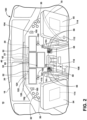
- FIG. 2 illustrates a portion of the cockpit 16 of the aircraft 10 and an exemplary flight deck 30 having various instruments 50 and flight displays 52.
- a first pilot (herein, a "pilot”) can be present in a seat 54 at the left side of the cockpit 16 and a second pilot (herein, a "co-pilot”) can be present at the right side of the cockpit 16 in a seat 55 and the flight deck 30 can be located in front of the pilot and co-pilot and can provide the flight crew with information to aid in operating the aircraft 10.
- the flight displays 52 can include either primary flight displays or multi-function displays and can display a wide range of aircraft, flight, navigation, and other information used in the operation and control of the aircraft 10. Further, both the various instruments 50 and flight displays 52 of the flight deck 30 can provide one or more visual indicia indicative of a corresponding health condition of one or more of the aircraft systems 20.
- the instruments 50 and flight displays 52 can be laid out in any manner including having fewer or more instruments or displays. Further, the flight displays 52 need not be coplanar and need not be the same size.
- a touch screen display or touch screen surface can be included in the flight display 52 and may be used by one or more flight crew members, including the pilot and co-pilot, to interact with the systems of the aircraft 10. Such touch screen surface can take any suitable form including that of a liquid crystal display (LCD) and can use various physical or electrical attributes to sense inputs from the flight crew. It is contemplated that the flight display 52 can be dynamic and that one or more cursor control devices 56 and/or one or more multifunction keyboards 58 can be included in the cockpit 16 and can be used by one or more flight crew members to interact with the systems of the aircraft 10. In this manner, the flight deck 30 can be considered a user interface for the aircraft systems 20 and the aircraft 10.
- the flight control computer 22 can be operably coupled to components of the aircraft 10 including the aircraft systems 20, instruments 50, flight displays 52, touch screen surfaces, cursor control devices 56, keyboards 58, etc.
- the flight control computer 22 can receive inputs from any number of aircraft systems 20 or software programs responsible for managing the acquisition and storage of data.
- the flight control computer 22 can also be in the form of a controller, and can be connected with other controllers of the aircraft 10.
- the flight control computer 22 can include memory 60 and processing units 62, which can be running any suitable programs to implement a graphical user interface (GUI) and operating system.
- GUI graphical user interface
- the flight control computer 22 can include or be associated with, any suitable number of individual microprocessors, power supplies, storage devices, interface cards, auto flight systems, flight management computers, and other standard components.
- the flight control computer 22 can include or cooperate with any number of software programs (e.g., flight management programs) or instructions designed to carry out the various methods, process tasks, calculations, and control/display functions necessary for operation of the aircraft 10.
- the communication interface 40 can be communicably coupled to the flight control computer 22 or other processors of the aircraft 10 as well as any number of the plurality of aircraft systems 20 to transfer information on and off the aircraft 10.
- the communication interface 40 can include any desired communication mechanism capable of wirelessly linking with other systems and devices, such as by radio contact in a non-limiting example.
- one of the aircraft systems 20 can be in the form of a distress tracker 21 configured to transmit a state of aircraft distress (for example, "normal,” "abnormal,” or "distressed").
- a pilot tracking system or tracking system 100 is illustrated as being in communication with the flight control computer 22. It will be understood that the tracking system 100 can be hard wired to the flight control computer 22 or can communicate in any suitable manner with the flight control computer 22 including via wireless communication. Alternatively, the tracking system 100 can be included as a module within the flight control computer 22.
- the tracking system 100 can include at least one imaging module 102 and at least one audio module 104.
- the imaging module 102 can include an image sensor 103 configured to sense visual information about a pilot or co-pilot, such as rapid eye movement, eyes moving one direction or another, being open or closed, a direction of gaze, or a facial state such as eyebrows raised or lowered, by way of non-limiting examples and provide an output signal based thereon.
- An eye movement or body movement parameter can be stored by the tracking system 100
- the imaging module 102 or the flight control computer 22 can also be in signal communication with any of the flight displays 52, such as to display a visual indication based on the sensed visual information from the imaging module 102.
- the audio module 104 can include an audio sensor 105 configured to sense audio information about a pilot or co-pilot, such as a language being spoken in the cockpit 16, a voice volume, slurred or altered speech, a speech pattern, or sounds that can occur due to pilot or co-pilot interaction with an aircraft system 20 such as striking the flight deck 30 or typing on the multifunction keyboard 58 and provide an output signal based thereon.
- the audio module 104 can also provide audio feedback or sound to the pilot or co-pilot, such as through speakers mounted within the cockpit or through headphones worn by the pilot or co-pilot. Further, the audio module 104 can be in signal communication with the imaging module 102.
- the imaging module 102 can provide an indication for transmission through the audio module 104, such as spoken commands in a low-visibility environment within the cockpit 16.
- the audio module 104 can also provide a signal for transmission via the imaging module 102, such as a flashing light display or text-based indicator to be read by a pilot or co-pilot.
- At least one biometric sensor 106 configured to sense a biometric parameter of the pilot or co-pilot can be included in the tracking system 100.
- a biometric sensor 106 positioned on the first seat 54 can be configured to sense or detect a heart rate, breathing rate, perspiration rate, or bodily motion of the pilot when the pilot is sitting in the first seat 54.
- the biometric sensor 106 can be positioned on a wearable device such as a wrist strap or headband.
- the biometric sensor 106 can be in the form of an optical sensor, e.g. a camera that monitors the pilot or co-pilot.
- a seat tracking module 108 can control a seat distance 110 between the first seat 54 and the flight deck 30. While not shown, the second seat 55 can also include such a seat tracking module 108. Further, a seat belt sensor 112 can sense the position of a seat belt 70 on the first seat 54 or the second seat 55, such as the seat belt 70 being buckled or unbuckled.
- a haptic feedback generator 114 can be coupled or integrated with either or both of the first and second seats 54, 55.
- the haptic feedback generator 114 can be configured to vibrate, such as a steady or varying vibration pattern, to provide feedback to the pilot or co-pilot.
- the haptic feedback generator 114 can vibrate on a right-hand portion or left-hand portion of the seat 54, 55 to indicate to a pilot or co-pilot which direction to bank the aircraft 10 for correct orientation when flying.
- a timer 115 can also be included in the tracking system 100 and is illustrated as being coupled to the flight deck 30.
- the timer 115 can be positioned anywhere within or outside of the cockpit 16.
- the timer 115 can be configured to track an elapsed time of an event or to provide an alarm or other indication at a predetermined time.
- Non-limiting examples where the timer 115 can be utilized include tracking an elapsed time of flight, an elapsed time of a pilot interaction with an aircraft system 20 (such as updating flight records via the multifunction keyboard 58), tracking an elapsed sleep time, indicating a time for changing a flight direction, or indicating a wake time.
- An additional controller 120 having a processor 122 and a memory 124 can also be included in the tracking system 100.
- the controller 120 is illustrated as being coupled to the flight deck 30 and in signal communication with any or all of the flight control computer 22, instruments 50, flight displays 52, memory 60, processing unit 62, imaging module 102, audio module 104, biometric sensor 106, seat tracking module 108, seat belt sensor 112, haptic feedback generator 114, or timer 115. Dashed lines have been used to illustrate a portion of the signal connection between the above-described components. The lack of a dashed line for signal connections is done for clarity of the figures, and it will be understood that components not connected by a dashed line can nonetheless be in signal communication.
- FIG. 3 schematically illustrates components of the tracking system 100 in exemplary communicative connection, where a separate controller 120 is shown in signal connection with the various modules and sensors described above.
- the flight control computer 22 can be utilized or that each module or any combination of modules can include their own controller, processor, or memory.
- Arrows have been included to indicate an exemplary signal or control direction, and are provided for clarity in discussion. It will be understood that any signal communication or control between connected components in FIG. 3 can be transmitted in either direction, and an arrow's illustrated direction does not imply a one-way signal or control direction.
- a door lock module 116 with a door lock sensor 117 can further be included in the tracking system 100.
- a cockpit door 72 can include the door lock module 116 configured to sense whether the door 72 is locked or unlock.
- the module 116 can also automatically lock or unlock the door 72 based on a control signal within the tracking system 100.
- the controller 120 can be operably connected to and receive input from any or all of the flight control computer 22, image sensor 103, audio sensor 105, biometric sensor 106, seat tracking module 108, seat belt sensor 112, haptic feedback generator 114, timer 115, or door lock module 116. Any of the inputs received by the controller 120 can be stored in the memory 124.
- the memory 124 can store a history of audio input or recordings from data gathered within the cockpit 16, or an elapsed time since a pilot last interacted with a flight display 52 ( FIG. 2 ).
- the processor 122 of the controller 120 can send a signal or control command to any or all of the imaging module 102, audio module 104, seat tracking module 108, haptic feedback generator 114, or door lock module 116.
- the processor 122 can send a signal to the imaging module 102, such as a visual message to be read by the pilot or co-pilot on the flight display 52, or a command to enable or disable the image sensor 103.
- controller 120 of the tracking system 100 can issue a signal or command to another aircraft system, such as the communication interface 40 via the flight control computer 22.
- the controller 120 can communicate with an external aircraft or ground station (not shown).
- the controller 120 can also be communicatively coupled with any other aircraft system 20 as desired.
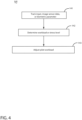
- the method 140 begins at 141 with tracking inputs by a pilot or tracking image sensor 103 data or a biometric parameters of the pilot to determine a stress level of the pilot during flight of the aircraft 10 by using at least one sensor within the tracking system 100.
- the tracking of inputs, sensor data or biometric parameters can occur over distinct periods of time such as over an entire flight, or portions of a flight such as an elapsed time over a geographic location, an elapsed time a pilot has been on-board, or an elapsed time of a flight phase such as flight take off, flight landing or cruising.
- Tracking inputs by the pilot can be an indication of the pilot's workload.
- tracking pilot input can be accomplished via the image sensor 103, such as visually detecting the pilot's hand interacting with the keyboard 58 or flight display 52.
- the controller 120 can detect that the pilot has touched or interacted with the touchscreen flight display 52.
- Tracking pilot input can also be accomplished via the flight control computer 22 which is communicatively coupled to the controller 120, including tracking that the pilot has interacted with or entered input to any cockpit system e.g. the keyboard 58 or the cursor control device 56.
- Tracking a pilot's stress level can be accomplished by tracking a pilot's eye movements or body movements from the image sensor 103 or by tracking various biometric parameters of the pilot.
- the image sensor 103 can track both the eye movements and body movements of the pilot during all or portions of the flight.
- biometric parameters of the pilot such as heart rate, breathing rate, skin temperature, and the like, can be indicative of the pilot's stress level. It should be recognized that this data can be used to make real-time decisions about pilot workload or stress level during a flight or the data can be saved to a database and processed after the flight.
- the controller 120 can determine the workload or stress level of the pilot based on the tracked pilot input, image sensor 103 data, or biometric parameter(s) from 141.
- the timer 115 in conjunction with the flight control computer 22 can indicate to the controller 120 that the pilot has input multiple inputs into various avionics systems over a short period of time and is backed up on flight control computer 22 requests.
- the controller 120 can then determine the rate at which the pilot is addressing flight control computer 22 requests and determine the workload level of the pilot.
- the controller 120 can also or alternatively determine, at 142, a stress level of the pilot based image sensor 103 data. For example, if the pilot's eyes are rapidly moving from screen to screen the controller 120 can determine the pilot stress level by correlating the movements with other real-time parameters, against pre-existing data, or above a predetermined threshold level.
- the controller 120 can also or alternatively determine, at 142, a stress level of the pilot based on the biometric parameter.
- the biometric sensor 106 can determine a pilot's rate of breathing, heart rate, pulse rate, and the like.
- the controller 120 can determine the pilot stress level by correlating any of the biometrics parameters with other real-time parameters such as data from the image sensor 103, against pre-existing data, or above a predetermined threshold level.
- the controller 120 can adjust the pilot workload during flight when one of the pilot workload or pilot stress level exceeds a predetermined threshold. For example, if the controller 120 determines that the pilot's stress level is above a predetermined threshold value based on sensor readings from one of the image sensor 103 or biometric sensor 106 then the controller 120 can be programmed to shift certain tasks such as non-critical or non-essential pilot tasks to the co-pilot or other crew member. In addition or alternatively, the controller 120 can be programmed to shift the non-critical or non-essential pilot tasks to a future time frame when the pilot has less tasks in his workload.
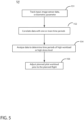
- the method includes, at 151, tracking inputs by a pilot, or tracking image sensor 103 data, or a biometric parameter of the pilot during flight of the aircraft 10 during one or more aircraft flights. Since flights often take place over the same flight path, such as from city-to-city, flight data can be collected that is representative of a typical flight between the two cities. At this step, it is contemplated that data can be tracked and collected from multiple flights over various time frames and preferably from flights that fly the same or similar flight paths. The data can be tracked, collected, and analyzed to understand time frames during a flight that pilot's experience heavy workloads and high stress. The data processing can be done on or off aircraft 10, where the flight control computer 22 or other processors on the aircraft 10 can adjust the expected pilot workload before the planned flight.
- data from the image sensor 103, biometric sensor 106 (i.e. biometric parameters), and pilot inputs responsive to the flight control computer 22 can be correlated with one or more time periods of the flight.
- data representing a pilot's workload or stress level can be collected and correlated over distinct periods of time such as over an entire flight, or portions of a flight such as an elapsed time over a geographic location, an elapsed time a pilot has been on-board, or an elapsed time of a flight phase such as flight take off, flight landing or cruising.
- the timer 115 can track the time of flight which can be correlated with the collected pilot data across the all or a portion of the flight. Data from each recorded flight can be stored onboard or can be transmitted offsite to a ground station 31 for analysis and processing.
- analysis of the data can identify which of the time periods the pilot's workload was above a predetermined threshold value indicative of a pilot experiencing high workload volumes or high stress levels.
- data from multiple independent flights with similar flight paths can be analyzed to understand specific time frames the pilots of each of flights experienced high workload volumes or stress levels.
- the controller 120 or other processor can predict when a pilot on a planned flight will likely experience increases in workload or higher stress levels.
- the controller 120 or other processer that is operatively connected to the flight control computer can adjust the expected pilot work load during the planned flight.
- the controller 120 or other processer can predict heavy workload periods in the planned flight and can adjust the pilot workload by shifting tasks from the predicted heavy workload period to periods where the pilot workload if predicted to be light.
- the controller 120 or other process can predict when work load will be heavy for the entire crew and can predict when additional or less crew may be required for certain flights or certain conditions.
Landscapes
- Engineering & Computer Science (AREA)
- Health & Medical Sciences (AREA)
- Life Sciences & Earth Sciences (AREA)
- Business, Economics & Management (AREA)
- Physics & Mathematics (AREA)
- Human Resources & Organizations (AREA)
- Psychiatry (AREA)
- General Physics & Mathematics (AREA)
- Animal Behavior & Ethology (AREA)
- Surgery (AREA)
- Molecular Biology (AREA)
- Medical Informatics (AREA)
- Heart & Thoracic Surgery (AREA)
- Biomedical Technology (AREA)
- Pathology (AREA)
- Biophysics (AREA)
- General Health & Medical Sciences (AREA)
- Public Health (AREA)
- Veterinary Medicine (AREA)
- Psychology (AREA)
- Hospice & Palliative Care (AREA)
- Child & Adolescent Psychology (AREA)
- Social Psychology (AREA)
- Developmental Disabilities (AREA)
- Educational Technology (AREA)
- Entrepreneurship & Innovation (AREA)
- Economics (AREA)
- Strategic Management (AREA)
- Theoretical Computer Science (AREA)
- Aviation & Aerospace Engineering (AREA)
- Educational Administration (AREA)
- Development Economics (AREA)
- Tourism & Hospitality (AREA)
- Game Theory and Decision Science (AREA)
- Marketing (AREA)
- Operations Research (AREA)
- Quality & Reliability (AREA)
- General Business, Economics & Management (AREA)
- General Engineering & Computer Science (AREA)
- Human Computer Interaction (AREA)
Claims (9)
- Procédé (150) permettant d'ajuster une charge de travail planifiée de pilote avant un vol planifié, le procédé comprenant :le suivi (151) sur une période de temps, à l'aide d'au moins un capteur (103, 105, 106, 112, 117), d'entrées d'un pilote indiquant une charge de travail de pilote, ou des données de capteur d'image ou un paramètre biométrique indiquant un niveau de stress de pilote, pendant une pluralité de vols d'un aéronef avant le vol planifié, la pluralité de vols ayant des trajectoires de vol identiques ou similaires ;la corrélation (152), à l'aide d'un dispositif de commande (120) qui est connecté de manière opérationnelle à l'au moins un capteur (103, 105, 106, 112, 117), des entrées par un pilote indiquant une charge de travail de pilote, ou des données de capteur d'image ou du paramètre biométrique indiquant un niveau de stress de pilote, avec une ou plusieurs périodes de temps pour analyse ;l'identification, sur la base de l'analyse, à l'aide d'un processeur (122) qui est connecté de manière opérationnelle à un dispositif de commande (120), desquelles parmi la ou les périodes de temps comprennent une charge de travail ou un niveau de stress de pilote supérieur à une valeur seuil indiquant qu'un pilote subit des volumes de charge de travail élevée ou des niveaux de stress élevés ; etl'ajustement (156), à l'aide d'un dispositif de commande (120) qui est connecté de manière opérationnelle à l'ordinateur de commande de vol (22), de la charge de travail de pilote pendant les périodes de temps qui comprennent une charge de travail de pilote ou un niveau de stress supérieur à la valeur seuil d'une charge de travail de pilote préplanifiée pour le vol planifié.
- Procédé (150) selon la revendication 1, dans lequel la période de temps comprend un parmi un temps écoulé au-dessus d'un emplacement géographique, un temps écoulé pendant lequel un pilote a été à bord, ou un temps écoulé d'une phase de vol.
- Procédé (150) selon la revendication 1 ou 2, dans lequel une phase de vol comprend un parmi un décollage de vol, un atterrissage de vol ou une croisière de vol.
- Procédé (150) selon l'une quelconque des revendications 1 à 3, dans lequel l'identification des périodes de temps où des charges de travail de pilote sont plus élevées comprend la comparaison d'entrées par un pilote au cours d'une période de temps à un seuil prédéterminé.
- Procédé (150) selon l'une quelconque des revendications 1 à 4, dans lequel l'identification des périodes de temps où les charges de travail de pilote sont plus élevées a lieu après la fin d'un vol.
- Procédé (150) selon l'une quelconque des revendications 1 à 5, dans lequel l'ajustement de la charge de travail de pilote comprend le déplacement d'une ou plusieurs tâches de pilote du dispositif de commande de commande de vol vers une période de temps différente.
- Procédé (150) selon l'une quelconque des revendications 1 à 6, dans lequel l'étape d'ajustement de la charge de travail de pilote comprend l'ajustement d'une liste des membres de l'équipage pour tenir compte d'une charge de travail de pilote.
- Procédé (150) selon l'une quelconque des revendications 1 à 7, dans lequel les données de capteur d'image indiquent un parmi des mouvements oculaires ou des mouvements corporels du pilote.
- Procédé (150) selon l'une quelconque des revendications 1 à 8, dans lequel le paramètre biométrique est basé sur un parmi la respiration, la fréquence cardiaque ou le pouls du pilote.
Priority Applications (1)
| Application Number | Priority Date | Filing Date | Title |
|---|---|---|---|
| EP24200033.9A EP4459233A3 (fr) | 2018-12-11 | 2019-12-06 | Aéronef et procédé de réglage d'une charge de travail de pilote |
Applications Claiming Priority (1)
| Application Number | Priority Date | Filing Date | Title |
|---|---|---|---|
| GB1820118.6A GB2579775B (en) | 2018-12-11 | 2018-12-11 | Aircraft and method of adjusting a pilot workload |
Related Child Applications (2)
| Application Number | Title | Priority Date | Filing Date |
|---|---|---|---|
| EP24200033.9A Division EP4459233A3 (fr) | 2018-12-11 | 2019-12-06 | Aéronef et procédé de réglage d'une charge de travail de pilote |
| EP24200033.9A Division-Into EP4459233A3 (fr) | 2018-12-11 | 2019-12-06 | Aéronef et procédé de réglage d'une charge de travail de pilote |
Publications (2)
| Publication Number | Publication Date |
|---|---|
| EP3667645A1 EP3667645A1 (fr) | 2020-06-17 |
| EP3667645B1 true EP3667645B1 (fr) | 2024-10-30 |
Family
ID=65030007
Family Applications (2)
| Application Number | Title | Priority Date | Filing Date |
|---|---|---|---|
| EP24200033.9A Pending EP4459233A3 (fr) | 2018-12-11 | 2019-12-06 | Aéronef et procédé de réglage d'une charge de travail de pilote |
| EP19214150.5A Active EP3667645B1 (fr) | 2018-12-11 | 2019-12-06 | Aéronef et procédé de réglage de la charge de travail d'un pilote |
Family Applications Before (1)
| Application Number | Title | Priority Date | Filing Date |
|---|---|---|---|
| EP24200033.9A Pending EP4459233A3 (fr) | 2018-12-11 | 2019-12-06 | Aéronef et procédé de réglage d'une charge de travail de pilote |
Country Status (4)
| Country | Link |
|---|---|
| US (2) | US11928970B2 (fr) |
| EP (2) | EP4459233A3 (fr) |
| CN (1) | CN111311051A (fr) |
| GB (1) | GB2579775B (fr) |
Families Citing this family (8)
| Publication number | Priority date | Publication date | Assignee | Title |
|---|---|---|---|---|
| WO2022019826A1 (fr) * | 2020-07-20 | 2022-01-27 | Hitachi, Ltd. | Système de planification, méthodes de fonctionnement et de formation de celui-ci |
| FR3117631B1 (fr) * | 2020-12-15 | 2024-11-29 | Dassault Aviat | Système de détermination d’un état opérationnel d’un équipage d’aéronef en fonction d’un plan de tâches adaptatif et procédé associé |
| FR3126517B1 (fr) * | 2021-08-31 | 2024-09-20 | Thales Sa | Système d'aide à la prise en compte de rétroactions concernant une action antérieure d'un utilisateur ; procédé et produit programme d'ordinateur assosiciés |
| US12555052B2 (en) | 2022-01-19 | 2026-02-17 | Honeywell International Inc. | System for vehicle operator workload assessment and annunciation |
| CN114200962B (zh) * | 2022-02-15 | 2022-05-17 | 四川腾盾科技有限公司 | 无人机飞行任务执行情况分析方法 |
| US20230297123A1 (en) * | 2022-03-17 | 2023-09-21 | Honeywell International Inc. | Multimodal pilot monitoring methods and systems |
| EP4324749B1 (fr) * | 2022-08-17 | 2025-10-29 | Airbus (S.A.S.) | Procédé et système de surveillance d'opérateur de véhicule |
| US20250259549A1 (en) * | 2024-02-09 | 2025-08-14 | Fly Hangar, LLC | Systems and methods for flight data content generation |
Citations (1)
| Publication number | Priority date | Publication date | Assignee | Title |
|---|---|---|---|---|
| EP2437033A2 (fr) * | 2010-09-29 | 2012-04-04 | Honeywell International, Inc. | Gestionnaire d'affichage de tâches dynamiques et d'avionique adaptative |
Family Cites Families (52)
| Publication number | Priority date | Publication date | Assignee | Title |
|---|---|---|---|---|
| US5243339A (en) | 1988-06-07 | 1993-09-07 | The Boeing Company | Flight crew response monitor |
| US5900827A (en) | 1988-06-07 | 1999-05-04 | The Boeing Company | Flight crew response monitor |
| US6070098A (en) | 1997-01-11 | 2000-05-30 | Circadian Technologies, Inc. | Method of and apparatus for evaluation and mitigation of microsleep events |
| US7664601B2 (en) * | 1999-11-10 | 2010-02-16 | Honeywell International Inc. | Weather incident prediction |
| US7383283B2 (en) * | 2001-10-16 | 2008-06-03 | Joseph Carrabis | Programable method and apparatus for real-time adaptation of presentations to individuals |
| KR20050120721A (ko) * | 2003-05-06 | 2005-12-22 | 유니버시티 오브 피츠버그 오브 더 커먼웰쓰 시스템 오브 하이어 에듀케이션 | 인지적 업무를 수행하는 동안의 자세를 평가하는 장치 및방법 |
| DE10322458A1 (de) * | 2003-05-16 | 2004-12-02 | Daimlerchrysler Ag | Verfahren und Vorrichtung zur Beeinflussung der Beanspruchung eines Fahrers in einem Kraftfahrzeug |
| US8164464B2 (en) | 2005-03-24 | 2012-04-24 | Matos Jeffrey A | Method and system of aircraft pilot assessment |
| US7301464B2 (en) | 2005-05-24 | 2007-11-27 | Electronic Data Systems Corporation | Process and method for safer vehicle navigation through facial gesture recognition and operator condition monitoring |
| US7437225B1 (en) | 2005-07-29 | 2008-10-14 | Rockwell Collins, Inc. | Flight management system |
| FR2906048B1 (fr) * | 2006-09-19 | 2008-12-19 | Thales Sa | Procede et dispositif de modification d'un plan de vol et notamment d'une procedure de decollage pour un aeronef |
| FR2922642B1 (fr) * | 2007-10-19 | 2010-01-22 | Airbus France | Procede et dispositif de creation d'un plan de vol d'un aeronef |
| WO2009128064A2 (fr) * | 2008-04-14 | 2009-10-22 | Pointgrab Ltd. | Emulation d’un dispositif de pointage basé sur la vision |
| US8200379B2 (en) | 2008-07-03 | 2012-06-12 | Manfredi Dario P | Smart recovery system |
| US20100106346A1 (en) * | 2008-10-23 | 2010-04-29 | Honeywell International Inc. | Method and system for managing flight plan data |
| KR101173944B1 (ko) | 2008-12-01 | 2012-08-20 | 한국전자통신연구원 | 차량 운전자의 감성 조절 시스템 및 방법 |
| US8514104B1 (en) * | 2009-06-12 | 2013-08-20 | Rockwell Collins, Inc. | Integrated minimum equipment decision support system |
| US20120116186A1 (en) | 2009-07-20 | 2012-05-10 | University Of Florida Research Foundation, Inc. | Method and apparatus for evaluation of a subject's emotional, physiological and/or physical state with the subject's physiological and/or acoustic data |
| US20110118908A1 (en) * | 2009-11-18 | 2011-05-19 | The Boeing Company | Methods and systems for management of airplane speed profile |
| US8552850B2 (en) | 2010-02-17 | 2013-10-08 | Honeywell International Inc. | Near-to-eye tracking for adaptive operation |
| GB2496765B (en) * | 2010-07-29 | 2014-04-16 | Ford Global Tech Llc | Systems and methods for scheduling driver interface tasks based on driver workload |
| US8972106B2 (en) * | 2010-07-29 | 2015-03-03 | Ford Global Technologies, Llc | Systems and methods for scheduling driver interface tasks based on driver workload |
| US20120075122A1 (en) | 2010-09-24 | 2012-03-29 | Honeywell International Inc. | Alert generation and related aircraft operating methods |
| US8928498B2 (en) * | 2010-09-27 | 2015-01-06 | Honeywell International Inc | Workload management system and method |
| US20120256749A1 (en) * | 2011-04-11 | 2012-10-11 | Ford Global Technologies, Llc | Method and Apparatus for Health Monitoring |
| US8766819B2 (en) * | 2011-06-17 | 2014-07-01 | The Boeing Company | Crew allertness monitoring of biowaves |
| US9380978B2 (en) * | 2011-06-29 | 2016-07-05 | Bruce Reiner | Method and apparatus for real-time measurement and analysis of occupational stress and fatigue and performance outcome predictions |
| US9124955B2 (en) * | 2011-09-19 | 2015-09-01 | Card Guard Scientific Survival Ltd. | Vehicle driver monitor and a method for monitoring a driver |
| US20140343765A1 (en) * | 2012-12-28 | 2014-11-20 | Sean Patrick Suiter | Flight Assistant with Automatic Configuration and Landing Site Selection |
| US8988524B2 (en) * | 2013-03-11 | 2015-03-24 | The United States Of America As Represented By The Secretary Of The Army | Apparatus and method for estimating and using a predicted vehicle speed in an indirect vision driving task |
| US9446852B2 (en) | 2013-09-18 | 2016-09-20 | Honeywell International Inc. | Aircraft systems and methods for detecting non-compliant pilot action |
| EP3077881A4 (fr) * | 2013-12-04 | 2017-09-13 | Spatial Information Systems Research Ltd. | Procédé et appareil d'élaboration de trajet de vol |
| US9227736B2 (en) | 2014-03-07 | 2016-01-05 | Honeywell International Inc. | Methods and apparatus for determining pilot awareness of a system-initiated change based on scanning behavior |
| US20150302653A1 (en) * | 2014-04-22 | 2015-10-22 | Cherif Atia Algreatly | Augmented Digital Data |
| MX2017002988A (es) | 2014-09-09 | 2018-02-01 | Torvec Inc | Métodos y aparato para monitorear el nivel de alerta de una persona que utiliza un dispositivo portátil, y proporcionar una notificación. |
| US9472106B2 (en) * | 2014-09-30 | 2016-10-18 | The Boeing Company | Automated flight object procedure selection system |
| US9697737B2 (en) * | 2014-09-30 | 2017-07-04 | The Boeing Company | Automatic real-time flight plan updates |
| GB2535544B (en) * | 2015-02-23 | 2018-10-03 | Jaguar Land Rover Ltd | Display control apparatus and method |
| US9637133B1 (en) | 2015-08-10 | 2017-05-02 | Rockwell Collins, Inc. | Operator capacity monitor and engagement of emergency action system and method |
| US9919712B1 (en) | 2015-08-10 | 2018-03-20 | Rockwell Collins, Inc. | Crew biometrics and aircraft data analysis with real-time and proactive actions |
| US9701418B2 (en) | 2015-10-06 | 2017-07-11 | Honeywell International Inc. | Pilot fatigue detection system and method from aircraft control device movement |
| US20170115124A1 (en) * | 2015-10-21 | 2017-04-27 | Ford Global Technologies, Llc | Driver Workload Prediction and Path Routing |
| US9786189B2 (en) * | 2016-01-25 | 2017-10-10 | Sikorsky Aircraft Corp. | Aircraft control systems |
| KR101663922B1 (ko) | 2016-01-26 | 2016-10-14 | 이호석 | 조종사 상태 모니터링 장치 및 방법 |
| US10216186B2 (en) * | 2016-05-23 | 2019-02-26 | Sikorsky Aircraft Corporation | Task allocation and variable autonomy levels |
| US10065658B2 (en) * | 2016-05-23 | 2018-09-04 | International Business Machines Corporation | Bias of physical controllers in a system |
| CN109716411B (zh) * | 2016-09-08 | 2021-06-25 | 福特汽车公司 | 用以监测驾驶员的活动水平的方法和设备 |
| GB2559606B (en) * | 2017-02-13 | 2021-03-10 | Jaguar Land Rover Ltd | Controlling the operation of a head-up display apparatus |
| US10816970B2 (en) * | 2017-06-15 | 2020-10-27 | Aurora Flight Sciences Corporation | System and method for performing an emergency descent and landing |
| US10556703B1 (en) * | 2017-06-21 | 2020-02-11 | Rockwell Collins, Inc. | Predictive aircraft performance systems and methods |
| US10426393B2 (en) * | 2017-09-22 | 2019-10-01 | Aurora Flight Sciences Corporation | Systems and methods for monitoring pilot health |
| US20190340935A1 (en) * | 2018-05-03 | 2019-11-07 | Honeywell International Inc. | Aircraft navigation system for free route airspace |
-
2018
- 2018-12-11 GB GB1820118.6A patent/GB2579775B/en active Active
-
2019
- 2019-12-06 EP EP24200033.9A patent/EP4459233A3/fr active Pending
- 2019-12-06 EP EP19214150.5A patent/EP3667645B1/fr active Active
- 2019-12-09 CN CN201911249610.4A patent/CN111311051A/zh active Pending
- 2019-12-10 US US16/709,409 patent/US11928970B2/en active Active
-
2024
- 2024-02-16 US US18/443,835 patent/US12494134B2/en active Active
Patent Citations (1)
| Publication number | Priority date | Publication date | Assignee | Title |
|---|---|---|---|---|
| EP2437033A2 (fr) * | 2010-09-29 | 2012-04-04 | Honeywell International, Inc. | Gestionnaire d'affichage de tâches dynamiques et d'avionique adaptative |
Also Published As
| Publication number | Publication date |
|---|---|
| US20240185726A1 (en) | 2024-06-06 |
| EP4459233A2 (fr) | 2024-11-06 |
| US11928970B2 (en) | 2024-03-12 |
| GB2579775A (en) | 2020-07-08 |
| US20200184833A1 (en) | 2020-06-11 |
| US12494134B2 (en) | 2025-12-09 |
| EP4459233A3 (fr) | 2025-02-12 |
| CN111311051A (zh) | 2020-06-19 |
| GB2579775B (en) | 2022-02-23 |
| GB201820118D0 (en) | 2019-01-23 |
| EP3667645A1 (fr) | 2020-06-17 |
Similar Documents
| Publication | Publication Date | Title |
|---|---|---|
| US12494134B2 (en) | System and method of adjusting a pilot workload | |
| US11810400B2 (en) | Method of assessing a pilot emotional state | |
| US10426393B2 (en) | Systems and methods for monitoring pilot health | |
| EP3415416B1 (fr) | Système d'automatisation du personnel navigant | |
| US12013692B2 (en) | Aircraft and method of controlling | |
| EP3939020B1 (fr) | Atténuation du risque opérationnel dans un aéronef | |
| CN109070997B (zh) | 机组自动化系统和方法 | |
| EP3154038B1 (fr) | Système et procédé de détection de fatigue du pilote à partir du mouvement du dispositif de contrôle d'un aéronef | |
| US20230297123A1 (en) | Multimodal pilot monitoring methods and systems | |
| US20180268722A1 (en) | System and method for optimization of aircraft fuel economy in real-time | |
| US10328852B2 (en) | Systems and methods to provide feedback to pilot/operator by utilizing integration of navigation and physiological monitoring | |
| US10627252B2 (en) | Device, system and method for assisting a pilot of an aircraft | |
| EP4246494A1 (fr) | Procédés et systèmes de surveillance de pilote multimodal | |
| GB2604716A (en) | Aircraft and method of adjusting a pilot workload | |
| GB2609873A (en) | Aircraft and method of controlling | |
| US20190161202A1 (en) | Method and system for selecting and displaying an operating protocol for an aerial vehicle | |
| Nagel et al. | Human Error |
Legal Events
| Date | Code | Title | Description |
|---|---|---|---|
| PUAI | Public reference made under article 153(3) epc to a published international application that has entered the european phase |
Free format text: ORIGINAL CODE: 0009012 |
|
| STAA | Information on the status of an ep patent application or granted ep patent |
Free format text: STATUS: THE APPLICATION HAS BEEN PUBLISHED |
|
| AK | Designated contracting states |
Kind code of ref document: A1 Designated state(s): AL AT BE BG CH CY CZ DE DK EE ES FI FR GB GR HR HU IE IS IT LI LT LU LV MC MK MT NL NO PL PT RO RS SE SI SK SM TR |
|
| AX | Request for extension of the european patent |
Extension state: BA ME |
|
| STAA | Information on the status of an ep patent application or granted ep patent |
Free format text: STATUS: REQUEST FOR EXAMINATION WAS MADE |
|
| 17P | Request for examination filed |
Effective date: 20201216 |
|
| RBV | Designated contracting states (corrected) |
Designated state(s): AL AT BE BG CH CY CZ DE DK EE ES FI FR GB GR HR HU IE IS IT LI LT LU LV MC MK MT NL NO PL PT RO RS SE SI SK SM TR |
|
| STAA | Information on the status of an ep patent application or granted ep patent |
Free format text: STATUS: EXAMINATION IS IN PROGRESS |
|
| 17Q | First examination report despatched |
Effective date: 20220425 |
|
| REG | Reference to a national code |
Ref country code: DE Ref legal event code: R079 Free format text: PREVIOUS MAIN CLASS: G08G0005000000 Ipc: A61B0005160000 Ref document number: 602019061063 Country of ref document: DE |
|
| GRAP | Despatch of communication of intention to grant a patent |
Free format text: ORIGINAL CODE: EPIDOSNIGR1 |
|
| STAA | Information on the status of an ep patent application or granted ep patent |
Free format text: STATUS: GRANT OF PATENT IS INTENDED |
|
| RIC1 | Information provided on ipc code assigned before grant |
Ipc: G01C 23/00 20060101ALI20240419BHEP Ipc: G08G 5/00 20060101ALI20240419BHEP Ipc: G06F 3/01 20060101ALI20240419BHEP Ipc: A61B 5/00 20060101ALI20240419BHEP Ipc: A61B 5/18 20060101ALI20240419BHEP Ipc: A61B 5/16 20060101AFI20240419BHEP |
|
| INTG | Intention to grant announced |
Effective date: 20240528 |
|
| GRAS | Grant fee paid |
Free format text: ORIGINAL CODE: EPIDOSNIGR3 |
|
| GRAA | (expected) grant |
Free format text: ORIGINAL CODE: 0009210 |
|
| STAA | Information on the status of an ep patent application or granted ep patent |
Free format text: STATUS: THE PATENT HAS BEEN GRANTED |
|
| AK | Designated contracting states |
Kind code of ref document: B1 Designated state(s): AL AT BE BG CH CY CZ DE DK EE ES FI FR GB GR HR HU IE IS IT LI LT LU LV MC MK MT NL NO PL PT RO RS SE SI SK SM TR |
|
| REG | Reference to a national code |
Ref country code: GB Ref legal event code: FG4D |
|
| REG | Reference to a national code |
Ref country code: CH Ref legal event code: EP |
|
| P01 | Opt-out of the competence of the unified patent court (upc) registered |
Free format text: CASE NUMBER: APP_55954/2024 Effective date: 20241011 |
|
| REG | Reference to a national code |
Ref country code: IE Ref legal event code: FG4D |
|
| REG | Reference to a national code |
Ref country code: DE Ref legal event code: R096 Ref document number: 602019061063 Country of ref document: DE |
|
| REG | Reference to a national code |
Ref country code: LT Ref legal event code: MG9D |
|
| REG | Reference to a national code |
Ref country code: NL Ref legal event code: MP Effective date: 20241030 |
|
| PG25 | Lapsed in a contracting state [announced via postgrant information from national office to epo] |
Ref country code: PT Free format text: LAPSE BECAUSE OF FAILURE TO SUBMIT A TRANSLATION OF THE DESCRIPTION OR TO PAY THE FEE WITHIN THE PRESCRIBED TIME-LIMIT Effective date: 20250228 Ref country code: HR Free format text: LAPSE BECAUSE OF FAILURE TO SUBMIT A TRANSLATION OF THE DESCRIPTION OR TO PAY THE FEE WITHIN THE PRESCRIBED TIME-LIMIT Effective date: 20241030 Ref country code: IS Free format text: LAPSE BECAUSE OF FAILURE TO SUBMIT A TRANSLATION OF THE DESCRIPTION OR TO PAY THE FEE WITHIN THE PRESCRIBED TIME-LIMIT Effective date: 20250228 |
|
| PG25 | Lapsed in a contracting state [announced via postgrant information from national office to epo] |
Ref country code: FI Free format text: LAPSE BECAUSE OF FAILURE TO SUBMIT A TRANSLATION OF THE DESCRIPTION OR TO PAY THE FEE WITHIN THE PRESCRIBED TIME-LIMIT Effective date: 20241030 Ref country code: NL Free format text: LAPSE BECAUSE OF FAILURE TO SUBMIT A TRANSLATION OF THE DESCRIPTION OR TO PAY THE FEE WITHIN THE PRESCRIBED TIME-LIMIT Effective date: 20241030 |
|
| REG | Reference to a national code |
Ref country code: AT Ref legal event code: MK05 Ref document number: 1736098 Country of ref document: AT Kind code of ref document: T Effective date: 20241030 |
|
| PG25 | Lapsed in a contracting state [announced via postgrant information from national office to epo] |
Ref country code: BG Free format text: LAPSE BECAUSE OF FAILURE TO SUBMIT A TRANSLATION OF THE DESCRIPTION OR TO PAY THE FEE WITHIN THE PRESCRIBED TIME-LIMIT Effective date: 20241030 |
|
| PG25 | Lapsed in a contracting state [announced via postgrant information from national office to epo] |
Ref country code: ES Free format text: LAPSE BECAUSE OF FAILURE TO SUBMIT A TRANSLATION OF THE DESCRIPTION OR TO PAY THE FEE WITHIN THE PRESCRIBED TIME-LIMIT Effective date: 20241030 |
|
| PG25 | Lapsed in a contracting state [announced via postgrant information from national office to epo] |
Ref country code: NO Free format text: LAPSE BECAUSE OF FAILURE TO SUBMIT A TRANSLATION OF THE DESCRIPTION OR TO PAY THE FEE WITHIN THE PRESCRIBED TIME-LIMIT Effective date: 20250130 |
|
| PG25 | Lapsed in a contracting state [announced via postgrant information from national office to epo] |
Ref country code: LV Free format text: LAPSE BECAUSE OF FAILURE TO SUBMIT A TRANSLATION OF THE DESCRIPTION OR TO PAY THE FEE WITHIN THE PRESCRIBED TIME-LIMIT Effective date: 20241030 Ref country code: AT Free format text: LAPSE BECAUSE OF FAILURE TO SUBMIT A TRANSLATION OF THE DESCRIPTION OR TO PAY THE FEE WITHIN THE PRESCRIBED TIME-LIMIT Effective date: 20241030 Ref country code: GR Free format text: LAPSE BECAUSE OF FAILURE TO SUBMIT A TRANSLATION OF THE DESCRIPTION OR TO PAY THE FEE WITHIN THE PRESCRIBED TIME-LIMIT Effective date: 20250131 |
|
| PG25 | Lapsed in a contracting state [announced via postgrant information from national office to epo] |
Ref country code: PL Free format text: LAPSE BECAUSE OF FAILURE TO SUBMIT A TRANSLATION OF THE DESCRIPTION OR TO PAY THE FEE WITHIN THE PRESCRIBED TIME-LIMIT Effective date: 20241030 |
|
| PG25 | Lapsed in a contracting state [announced via postgrant information from national office to epo] |
Ref country code: RS Free format text: LAPSE BECAUSE OF FAILURE TO SUBMIT A TRANSLATION OF THE DESCRIPTION OR TO PAY THE FEE WITHIN THE PRESCRIBED TIME-LIMIT Effective date: 20250130 |
|
| PG25 | Lapsed in a contracting state [announced via postgrant information from national office to epo] |
Ref country code: SM Free format text: LAPSE BECAUSE OF FAILURE TO SUBMIT A TRANSLATION OF THE DESCRIPTION OR TO PAY THE FEE WITHIN THE PRESCRIBED TIME-LIMIT Effective date: 20241030 |
|
| PG25 | Lapsed in a contracting state [announced via postgrant information from national office to epo] |
Ref country code: MC Free format text: LAPSE BECAUSE OF FAILURE TO SUBMIT A TRANSLATION OF THE DESCRIPTION OR TO PAY THE FEE WITHIN THE PRESCRIBED TIME-LIMIT Effective date: 20241030 |
|
| PG25 | Lapsed in a contracting state [announced via postgrant information from national office to epo] |
Ref country code: DK Free format text: LAPSE BECAUSE OF FAILURE TO SUBMIT A TRANSLATION OF THE DESCRIPTION OR TO PAY THE FEE WITHIN THE PRESCRIBED TIME-LIMIT Effective date: 20241030 |
|
| PG25 | Lapsed in a contracting state [announced via postgrant information from national office to epo] |
Ref country code: EE Free format text: LAPSE BECAUSE OF FAILURE TO SUBMIT A TRANSLATION OF THE DESCRIPTION OR TO PAY THE FEE WITHIN THE PRESCRIBED TIME-LIMIT Effective date: 20241030 |
|
| PG25 | Lapsed in a contracting state [announced via postgrant information from national office to epo] |
Ref country code: RO Free format text: LAPSE BECAUSE OF FAILURE TO SUBMIT A TRANSLATION OF THE DESCRIPTION OR TO PAY THE FEE WITHIN THE PRESCRIBED TIME-LIMIT Effective date: 20241030 |
|
| PG25 | Lapsed in a contracting state [announced via postgrant information from national office to epo] |
Ref country code: SK Free format text: LAPSE BECAUSE OF FAILURE TO SUBMIT A TRANSLATION OF THE DESCRIPTION OR TO PAY THE FEE WITHIN THE PRESCRIBED TIME-LIMIT Effective date: 20241030 |
|
| PG25 | Lapsed in a contracting state [announced via postgrant information from national office to epo] |
Ref country code: CZ Free format text: LAPSE BECAUSE OF FAILURE TO SUBMIT A TRANSLATION OF THE DESCRIPTION OR TO PAY THE FEE WITHIN THE PRESCRIBED TIME-LIMIT Effective date: 20241030 |
|
| PG25 | Lapsed in a contracting state [announced via postgrant information from national office to epo] |
Ref country code: IT Free format text: LAPSE BECAUSE OF FAILURE TO SUBMIT A TRANSLATION OF THE DESCRIPTION OR TO PAY THE FEE WITHIN THE PRESCRIBED TIME-LIMIT Effective date: 20241030 |
|
| REG | Reference to a national code |
Ref country code: CH Ref legal event code: PL Ref country code: DE Ref legal event code: R097 Ref document number: 602019061063 Country of ref document: DE |
|
| PG25 | Lapsed in a contracting state [announced via postgrant information from national office to epo] |
Ref country code: LU Free format text: LAPSE BECAUSE OF NON-PAYMENT OF DUE FEES Effective date: 20241206 |
|
| PLBE | No opposition filed within time limit |
Free format text: ORIGINAL CODE: 0009261 |
|
| STAA | Information on the status of an ep patent application or granted ep patent |
Free format text: STATUS: NO OPPOSITION FILED WITHIN TIME LIMIT |
|
| PG25 | Lapsed in a contracting state [announced via postgrant information from national office to epo] |
Ref country code: SE Free format text: LAPSE BECAUSE OF FAILURE TO SUBMIT A TRANSLATION OF THE DESCRIPTION OR TO PAY THE FEE WITHIN THE PRESCRIBED TIME-LIMIT Effective date: 20241030 |
|
| 26N | No opposition filed |
Effective date: 20250731 |
|
| REG | Reference to a national code |
Ref country code: BE Ref legal event code: MM Effective date: 20241231 |
|
| PG25 | Lapsed in a contracting state [announced via postgrant information from national office to epo] |
Ref country code: BE Free format text: LAPSE BECAUSE OF NON-PAYMENT OF DUE FEES Effective date: 20241231 |
|
| PG25 | Lapsed in a contracting state [announced via postgrant information from national office to epo] |
Ref country code: CH Free format text: LAPSE BECAUSE OF NON-PAYMENT OF DUE FEES Effective date: 20241231 |
|
| PG25 | Lapsed in a contracting state [announced via postgrant information from national office to epo] |
Ref country code: IE Free format text: LAPSE BECAUSE OF NON-PAYMENT OF DUE FEES Effective date: 20241206 |
|
| PGFP | Annual fee paid to national office [announced via postgrant information from national office to epo] |
Ref country code: DE Payment date: 20251126 Year of fee payment: 7 |
|
| PGFP | Annual fee paid to national office [announced via postgrant information from national office to epo] |
Ref country code: GB Payment date: 20251119 Year of fee payment: 7 |
|
| PGFP | Annual fee paid to national office [announced via postgrant information from national office to epo] |
Ref country code: FR Payment date: 20251120 Year of fee payment: 7 |