EP3668043A1 - Procédé d'identification de flux de données chiffrées, dispositif, support d'informations et système - Google Patents
Procédé d'identification de flux de données chiffrées, dispositif, support d'informations et système Download PDFInfo
- Publication number
- EP3668043A1 EP3668043A1 EP18869093.7A EP18869093A EP3668043A1 EP 3668043 A1 EP3668043 A1 EP 3668043A1 EP 18869093 A EP18869093 A EP 18869093A EP 3668043 A1 EP3668043 A1 EP 3668043A1
- Authority
- EP
- European Patent Office
- Prior art keywords
- authentication
- core network
- network device
- data stream
- association relationship
- Prior art date
- Legal status (The legal status is an assumption and is not a legal conclusion. Google has not performed a legal analysis and makes no representation as to the accuracy of the status listed.)
- Withdrawn
Links
Images








Classifications
-
- H—ELECTRICITY
- H04—ELECTRIC COMMUNICATION TECHNIQUE
- H04L—TRANSMISSION OF DIGITAL INFORMATION, e.g. TELEGRAPHIC COMMUNICATION
- H04L63/00—Network architectures or network communication protocols for network security
- H04L63/04—Network architectures or network communication protocols for network security for providing a confidential data exchange among entities communicating through data packet networks
- H04L63/0428—Network architectures or network communication protocols for network security for providing a confidential data exchange among entities communicating through data packet networks wherein the data content is protected, e.g. by encrypting or encapsulating the payload
-
- H—ELECTRICITY
- H04—ELECTRIC COMMUNICATION TECHNIQUE
- H04W—WIRELESS COMMUNICATION NETWORKS
- H04W12/00—Security arrangements; Authentication; Protecting privacy or anonymity
- H04W12/03—Protecting confidentiality, e.g. by encryption
- H04W12/033—Protecting confidentiality, e.g. by encryption of the user plane, e.g. user's traffic
-
- H—ELECTRICITY
- H04—ELECTRIC COMMUNICATION TECHNIQUE
- H04L—TRANSMISSION OF DIGITAL INFORMATION, e.g. TELEGRAPHIC COMMUNICATION
- H04L63/00—Network architectures or network communication protocols for network security
- H04L63/16—Implementing security features at a particular protocol layer
- H04L63/166—Implementing security features at a particular protocol layer at the transport layer
-
- H—ELECTRICITY
- H04—ELECTRIC COMMUNICATION TECHNIQUE
- H04L—TRANSMISSION OF DIGITAL INFORMATION, e.g. TELEGRAPHIC COMMUNICATION
- H04L63/00—Network architectures or network communication protocols for network security
- H04L63/20—Network architectures or network communication protocols for network security for managing network security; network security policies in general
-
- H—ELECTRICITY
- H04—ELECTRIC COMMUNICATION TECHNIQUE
- H04L—TRANSMISSION OF DIGITAL INFORMATION, e.g. TELEGRAPHIC COMMUNICATION
- H04L9/00—Cryptographic mechanisms or cryptographic arrangements for secret or secure communications; Network security protocols
- H04L9/40—Network security protocols
-
- H—ELECTRICITY
- H04—ELECTRIC COMMUNICATION TECHNIQUE
- H04W—WIRELESS COMMUNICATION NETWORKS
- H04W12/00—Security arrangements; Authentication; Protecting privacy or anonymity
- H04W12/06—Authentication
-
- H—ELECTRICITY
- H04—ELECTRIC COMMUNICATION TECHNIQUE
- H04W—WIRELESS COMMUNICATION NETWORKS
- H04W76/00—Connection management
- H04W76/10—Connection setup
- H04W76/12—Setup of transport tunnels
-
- H—ELECTRICITY
- H04—ELECTRIC COMMUNICATION TECHNIQUE
- H04W—WIRELESS COMMUNICATION NETWORKS
- H04W76/00—Connection management
- H04W76/20—Manipulation of established connections
- H04W76/25—Maintenance of established connections
-
- H—ELECTRICITY
- H04—ELECTRIC COMMUNICATION TECHNIQUE
- H04W—WIRELESS COMMUNICATION NETWORKS
- H04W76/00—Connection management
- H04W76/30—Connection release
-
- H—ELECTRICITY
- H04—ELECTRIC COMMUNICATION TECHNIQUE
- H04W—WIRELESS COMMUNICATION NETWORKS
- H04W80/00—Wireless network protocols or protocol adaptations to wireless operation
- H04W80/02—Data link layer protocols
-
- H—ELECTRICITY
- H04—ELECTRIC COMMUNICATION TECHNIQUE
- H04W—WIRELESS COMMUNICATION NETWORKS
- H04W80/00—Wireless network protocols or protocol adaptations to wireless operation
- H04W80/08—Upper layer protocols
- H04W80/10—Upper layer protocols adapted for application session management, e.g. SIP [Session Initiation Protocol]
Definitions
- Embodiments of the present invention relate to the field of network security technologies and, in particular to a method for identifying an encrypted data stream, a device, a readable storage medium and a system.
- HTTP HyperText Transfer Protocol
- TLS Transport Layer Security Protocol
- embodiments of the present invention desirably provide a method for identifying an encrypted data stream, a device, a readable storage medium and a system, which can identify the encrypted data stream without relying on a plaintext identifier, thereby improving the identification safety.
- an embodiment of the present invention provides a method for identifying an encrypted data stream, where the method is applied to a core network device, and the method includes:
- an embodiment of the present invention provides a method for identifying an encrypted data stream, where the method is applied to a user equipment (UE), and the method includes: sending a data packet carrying authentication data; where the authentication data is used for the core network device to perform authentication, and the authentication data includes: a first authentication parameter, a first authentication result and an application identifier.
- UE user equipment
- an embodiment of the present invention provides a core network device, including: a first receiving part, an authenticating part and an establishing part; where, the first receiving part is configured to receive a data packet carrying authentication data sent by a user equipment (UE); where the authentication data includes a first authentication parameter, a first authentication result and an application identifier; the authenticating part is configured to obtain, based on the first authentication parameter and a second authentication parameter, a second authentication result according to a set authentication algorithm; where the second authentication parameter is a pre-stored authentication parameter corresponding to the application identifier; and the establishing part is configured to establish an association relationship between characteristic information of the data packet and the application identifier when the second authentication result is consistent with the first authentication result in comparison; where the association relationship is used for subsequently identifying an encrypted data stream which is sent by the UE and corresponds to the application identifier.
- UE user equipment
- an embodiment of the present invention provides a user equipment (UE), where the UE includes: a second sending part, configured to send a data packet carrying authentication data; where the authentication data is used for the core network device to perform authentication, and the authentication data includes: a first authentication parameter, a first authentication result and an application identifier.
- UE user equipment
- an embodiment of the present invention provides a core network device, where a first network interface, a first memory, and a first processor; where, the first network interface is configured to receive and send signals in a process of receiving and sending information with other external network elements; the first memory is configured to store a computer program operable on the first processor; and the first processor is configured to perform steps of the method of the first aspect when running the computer program.
- an embodiment of the present invention provides a user equipment (UE), where the UE includes: a second network interface, a second memory, and a second processor;
- UE user equipment
- the second network interface is configured to receive and send signals in a process of receiving and sending information with other external network elements
- the second memory is configured to store a computer program operable on the second processor
- the second processor is configured to perform steps of the method of the second aspect when running the computer program.
- an embodiment of the present invention provides a computer readable medium, having a management program of an access link stored thereon, where the management program of the access link implements steps of the method of the first aspect or the second aspect when executed by at least one processor.
- an embodiment of the present invention provides a system for identifying encrypted traffic, including a core network device and a user equipment, where, the user equipment is configured to send a data packet carrying authentication data; where the authentication data is used for the core network device to perform authentication, and the authentication data includes: a first authentication parameter, a first authentication result and an application identifier; the core network device is configured to receive the data packet carrying the authentication data sent by the user equipment (UE); obtain, based on the first authentication parameter and a second authentication parameter, a second authentication result according to a set authentication algorithm; where the second authentication parameter is a pre-stored authentication parameter corresponding to the application identifier; and establish an association relationship between characteristic information of the data packet and the application identifier when the second authentication result is consistent with the first authentication result in comparison; where the association relationship is used for subsequently identifying an encrypted data stream which is sent by the UE and corresponds to the application identifier.
- the embodiments of the present invention provide a method for identifying an encrypted data stream, a device, a readable storage medium and a system.
- the core network device performs authentication with the UE in the TLS handshake process of the UE and the OTT server or after the handshake is completed, and thus the association relationship for identifying the encrypted data stream is established to realize the detection and the statistics of the encrypted data stream.
- SA2 Service and System Aspects Working Group
- 3GPP 3rd Generation Partnership Project
- OTT Over The Top
- FIG. 1 shows a method for identifying an encrypted data stream according to an embodiment of the present invention.
- the method can be applied to a core network device, and it can be understood that the core network device of this embodiment includes two parts, namely a user plane and a control plane; therefore, the core network device of this embodiment may be a single entity device including two parts, i.e., the user plane and the control plane, or may be a logical network element device in a core network formed by two entities, i.e., the user plane and the control plane, which is not specifically limited in this embodiment.
- the method shown in FIG. 1 can include:
- the association relationship is used for subsequently identifying an encrypted data stream which is sent by the UE and corresponds to the application identifier.
- the characteristic information of the data packet can include at least one or more of: an Internet protocol (IP) source address, an IP source port number, an IP destination address, an IP destination port number, a media access control (MAC, Media Access Control) source address, an IP source port number, a MAC destination address, a MAC destination port number, a protocol type, and a virtual local area network (VLAN, Virtual Local Area Network) label.
- IP Internet protocol
- MAC Media Access Control
- VLAN Virtual Local Area Network
- the core network device can identify the encrypted data stream of the application represented by the application identifier through the association relationship, so that the detection and statistics of the encrypted data stream are further realized. There is no need to rely on the plaintext identifier, and no complicated IP address configuration and maintenance are required, thereby improving the safety and reducing the computing resources required for the configuration and maintenance.
- the characteristic information of the data packet may include layer-3 characteristics, i.e., the IP source address, the IP source port number, the IP destination address, the IP destination port number, the IP source port number, and may also include layer-2 characteristics, i.e., the media access control (MAC, Media Access Control) source address, the MAC destination address, the MAC destination port number, the protocol type, and the virtual local area network (VLAN, Virtual Local Area Network) label;
- the above association relationship is not only an association relationship between the layer-3 characteristics of the data packet and the application identifier, but may also be an association relationship between the layer-2 characteristics and the application identifier, which shows that when the data packet is transmitted through a non-IP data packet, the encrypted data stream of the application represented by the application identifier can still be identified through the association relationship.
- the technical solution shown in FIG. 1 can be implemented in a process of establishing a TLS handshake between the UE and the OTT server, and therefore, the receiving a data packet carrying authentication data sent by a user equipment (UE) includes that: a user plane of the core network device receives a first TLS handshake request sent by the UE in the TLS handshake process established by an application layer session; where the authentication data is carried in a plaintext field of the first TLS handshake request.
- UE user equipment
- the UE can add a plaintext field in the first TLS handshake request, and add the authentication data to the added plaintext field.
- the method after receiving the data packet carrying the authentication data sent by the user equipment (UE), the method further includes: the user plane of the core network device transmits the authentication data to a control plane of the core network device after detecting the authentication data from the plaintext field of the first TLS handshake request.
- the control plane of the core network device can execute S 102 of the solution shown in FIG. 1 according to the authentication data, and send a comparison result to the user plane of the core network device after comparing the second authentication result with the first authentication result, so that the user plane of the core network device determines whether to execute S103 according to the comparison result. It can be understood that the comparison result is ignored when the second authentication result is not consistent with the first authentication result.
- the technical solution shown in FIG. 1 can be implemented after a TLS handshake is completed between the UE and the OTT server, and therefore, the receiving a data packet carrying authentication data sent by a user equipment (UE) includes that: after completing the TLS handshake, the user plane of the core network device receives an authentication request sent by the UE through a base station; where the authentication data is carried in an extended GTP-U field of the authentication request.
- UE user equipment
- the authentication request is initiated by the UE actively after the TLS handshake of the application layer is completed.
- the UE can carry the authentication data in an extended PDCP field to the base station side, and the base station side can convert the authentication data in the extended PDCP field into an extended GTP-U field and continue to send the extended GTP-U field to the user plane of the core network device.
- the method further includes: the user plane of the core network device transmits the authentication data to the control plane of the core network device after detecting the authentication data from the extended GTP-U field of the authentication request.
- the control plane of the core network device can execute S102 of the solution shown in FIG. 1 according to the authentication data, and send a comparison result to the user plane of the core network device after comparing the second authentication result with the first authentication result, so that the user plane of the core network device determines whether to execute S103 according to the comparison result. It can be understood that the comparison result is ignored when the second authentication result is inconsistent with the first authentication result.
- the first authentication parameter includes a random number
- the second authentication parameter includes a public key Ka
- the first authentication parameter includes a public key Ka
- the second authentication parameter includes a random number
- the random number may be a random number generated based on a preset random-number generation policy; in addition, the random number may be a number that changes with the current time and/or the current location of the UE, so that each random number is different. For example, there is usually a correlation between the current location of the UE and the IP address of the UE, and the IP addresses of different UEs are correspondingly different. Therefore, the random number can be obtained as a combination of a current timestamp and the IP address of the UE, so that when at least one of the UE, the time and the location is different, the corresponding random number is different. The effect that each random number is different is achieved.
- the obtaining, based on the first authentication parameter and the second authentication parameter, a second authentication result according to a set authentication algorithm includes that: the control plane of the core network device obtains, based on the first authentication parameter and the second authentication parameter, the second authentication result according to the set authentication algorithm.
- the establishing an association relationship between characteristic information of the data packet and the application identifier when the second authentication result is consistent with the first authentication result in comparison includes:
- the technical solution shown in FIG. 1 can be implemented after the TLS handshake is completed between the UE and the OTT server, but this implementation is different from the second implementation in that the authentication request is directly sent to the control plane of the core network device by the UE, and therefore, the receiving a data packet carrying authentication data sent by a user equipment (UE) includes that: the control plane of the core network device receives a non-access stratum session management (NAS-SM) message sent by the UE after the TLS handshake is completed.
- NAS-SM non-access stratum session management
- An extended field of the NAS-SM message includes: a first authentication parameter, a first authentication result, an application identifier and characteristic information of the NAS-SM message; where the first authentication parameter includes: a random number and a public key Ka; the characteristic information of the NAS-SM message includes at least one or more of: an IP address of the OTT server, a port number, a protocol type, and a MAC address of the OTT server.
- Ka is an optional authentication parameter. Ka may also be searched in a core network database by the core network device through the application identifier, and a correspondence between the application identifier in the core network database and Ka may be pre-configured in the database by a third-party server.
- the obtaining, based on the first authentication parameter and the second authentication parameter, a second authentication result according to a set authentication algorithm includes that: the control plane of the core network device obtains, based on the random number in the first authentication parameter and the public key in the second authentication parameter, the second authentication result according to the set authentication algorithm.
- the establishing an association relationship between characteristic information of the data packet and the application identifier when the second authentication result is consistent with the first authentication result in comparison includes that: when the second authentication result is consistent with the first authentication result in comparison, the control plane of the core network device generates the characteristic information of the data packet according to characteristic information of the OTT server and characteristic information of the UE, and transmits the generated characteristic information of the data packet and the application identifier to the user plane of the core network device; specifically, the characteristic information of the OTT server includes the IP address, the port number, the protocol type of the OTT server, and the MAC address of the OTT server; the characteristic information of the UE includes: an IP address, a port and a MAC address of the UE.
- the user plane of the core network device establishes the association relationship between the generated characteristic information of the data packet and the application identifier.
- the method further includes that: the control plane of the core network device sends the comparison result of the second authentication result and the first authentication result to the UE through the user plane of the core network device.
- the UE can know whether the core network device completes the establishment of the association relationship, and thus determines whether to continue the authentication with the core network device.
- a life cycle can be set for the association relationship.
- the technical solution shown in FIG. 1 can further include: receiving effective time information sent by the UE; where the effective time information is used for indicating an effective duration of the association relationship for identifying the encrypted data stream. It can be understood that the effective duration can be used as the life cycle of the association relationship. Therefore, preferably, the method can further include: when the effective duration expires, releasing the association relationship if the transmission of the encrypted data stream is not completed,
- association relationship can also be released through an indication from the UE, and based on this, the life cycle, i.e. the effective duration, may not need to be considered, and preferably, the method further includes:
- both the effective time message and the release indication message can be both sent through a NAS message.
- This embodiment provides the method for identifying an encrypted data stream applied to the core network device, which can perform authentication with the UE in the TLS handshake process of the UE and the OTT server or after the handshake is completed, and thus establish the association relationship for identifying the encrypted data stream to realize the detection and the statistics of the encrypted data stream.
- FIG. 2 illustrates a method for identifying an encrypted data stream provided in an embodiment of the present invention
- the method can be applied to a UE, and the method shown in FIG. 2 can include: S201: sending a data packet carrying authentication data; where the authentication data is used for the core network device to perform authentication, and the authentication data includes: a first authentication parameter, a first authentication result and an application identifier.
- the core network device can perform authentication according to the technical solution of the foregoing embodiment, thereby establishing the association relationship for identifying the encrypted data stream to realize the detection and the statistics of the encrypted data stream.
- the plaintext identifier no complicated IP address configuration and maintenance are required, thereby improving the safety and reducing the computing resources required for the configuration and maintenance.
- the technical solution shown in FIG. 2 can be implemented in the process of establishing a TLS handshake between the UE and an OTT server, and therefore, the sending a data packet carrying authentication data includes:
- the technical solution shown in FIG. 2 can be implemented after the TLS handshake is completed between the UE and the OTT server, and therefore, the sending a data packet carrying authentication data includes: after completing the TLS handshake, sending an authentication request carrying the authentication data in an extended PDCP field to a base station, converting, through the base station, the authentication data in the extended PDCP field into an extended GTP-U field and continuing to send the authentication request to the user plane of the core network device.
- the technical solution shown in FIG. 2 can be implemented after the TLS handshake is completed between the UE and the OTT server, but this implementation is different from the second implementation manner in that the authentication request is directly sent to the control plane of the core network device by the UE.
- the sending a data packet carrying authentication data includes: sending a non-access stratum session management NAS-SM message to the control plane of the core network device after the TLS handshake is completed; where an extended field of the NAS-SM message includes: the first authentication parameter, the first authentication result, the application identifier and characteristic information of the NAS-SM message; where the first authentication parameter includes: a random number and a public key Ka; the characteristic information of the NAS-SM message includes an IP address of the OTT server, a port number, a protocol type and a MAC address of the OTT server.
- a life cycle of the association relationship can also be determined by the UE. Based on this, preferably, the method further includes: sending an effective time message to the core network device; where the effective time information is used for indicating an effective duration of the association relationship between the characteristic information of the data packet and the application identifier for identifying the encrypted data stream.
- the method further includes: sending a release indication message to the core network device; where the release indication message is used for releasing the association relationship.
- both the effective time message and the release indication message can be sent through a NAS message.
- the method further includes: receiving an authentication result returned by the control plane of the core network device. It can be understood that, after receiving the comparison result, the UE can know whether the core network device completes the establishment of the association relationship, so as to determine whether to continue the authentication with the core network device.
- the specific examples introduce a parameter set for an application.
- the parameter set can include: a public key Ka, a random number, a token (Token), an application identifier (Application ID).
- the Ka is an optional authentication parameter; the Ka may also be searched in a core network database by the core network device through the application identifier, and a correspondence between the application identifier in the core network database and the Ka can be pre-configured in the database by a third-party server.
- the Ka and the random number are generated by the OTT server, and the authentication algorithm is statically configured on the core network device and the UE through the OTT server.
- the specific examples of this embodiment can be applied to an atypical network architecture as shown in FIG. 3 .
- the UE accesses the core network through the base station, or may be directly connected to the core network device.
- the core network device includes two parts, namely the user plane and the control plane.
- the UE is connected to a data network (DN, Data Network) through the core network device, so as to realize information interaction with the OTT server.
- DN Data Network
- the process can include:
- the UE and the core network device can perform calculation according to the authentication algorithm configured in S40A, and obtain a respective authentication result Token.
- association relationship enables the core network device to identify the encrypted data stream of the application represented by the application identifier subsequently, and count the traffic of the encrypted data stream according to the identification result.
- the control plane sends the comparison result to the UE through the user plane. Therefore, after receiving the comparison result, the UE can know whether the core network device completes the establishment of the association relationship, and can thus determine whether to continue the authentication with the core network device.
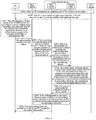
- FIG. 5 a specific exemplary process of a method for identifying an encrypted data stream according to an embodiment of the present invention is shown.
- the process is implemented after the TLS handshake is completed between the UE and the OTT server, and the process can include:
- association relationship enables the core network device to identify the encrypted data stream of the application represented by the application identifier subsequently, and count the traffic of the encrypted data stream according to the identification result.
- the control plane sends the comparison result to the UE through the user plane. Therefore, after receiving the comparison result, the UE can know whether the core network device completes the establishment of the association relationship, and can thus determine whether to continue the authentication with the core network device.
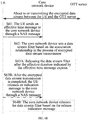
- FIG. 6A a specific exemplary process of a method for identifying an encrypted data stream according to an embodiment of the present invention is shown.
- the process is implemented after the TLS handshake is completed between the UE and the OTT server, and the process can include:
- a life cycle can also be established for the association relationship in the process of encrypted data transmission.
- the method can be applied to the process of the encrypted data stream being about to be transmitted or being transmitted between the UE and the OTT server, and the method can include: S61: the UE sends an effective time message to the core network device through a NAS message; where the effective time information is used for indicating an effective duration of the association relationship between the characteristic information of the data packet and the application identifier for identifying the encrypted data stream.
- the method can further include S62: the core network device sets a data stream filter based on the association relationship in the process of encrypted data stream transmission.
- the data stream filter can be considered as a concrete embodiment of the association relationship. Therefore, the life cycle of the association relationship is the same as the life cycle of the data stream filter.
- the dashed box in FIG. 6B shows that
- S63A releasing the data stream filter after the effective duration indicated by the effective time message expires.
- the life cycle of the association relationship can also be determined by an indication from the UE in addition to the above effective duration. Therefore, optionally, as shown by the dashed-dotted line in FIG. 6B ,
- the core network device when the core network device releases the data stream filter based on the release indication message sent by the UE, the limitation of the effective duration may not need to be considered. Moreover, in another specific implementation process, even if the effective duration expires, in the case that the encrypted data stream transmission is not terminated, the core network device does not release the data stream filter, and does not release the data stream filter until the encrypted data stream transmission is completed.
- an embodiment of the present invention provides a method for transmitting an encrypted data stream, which is applied to a core network device.
- the method includes:
- the method further includes:
- an embodiment of the present invention further provides a method for transmitting an encrypted data stream, which is applied to a UE.
- the method is applied to a user equipment (UE), and the method includes:
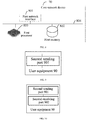
- FIG. 7A shows a structure of a core network device 70 provided in an embodiment of the present invention, which can include: a first receiving part 701, an authenticating part 702, and an establishing part 703; where, the first receiving part 701 is configured to receive a data packet carrying authentication data sent by a user equipment (UE); where the authentication data includes a first authentication parameter, a first authentication result and an application identifier; the authenticating part 702 is configured to obtain, based on the first authentication parameter and a second authentication parameter, a second authentication result according to a set authentication algorithm; where the second authentication parameter is a pre-stored authentication parameter corresponding to the application identifier; and the establishing part 703 is configured to establish an association relationship between characteristic information of the data packet and the application identifier when the second authentication result is consistent with the first authentication result in comparison; where the association relationship is used for subsequently identifying an encrypted data stream which is sent by the UE and corresponds to the application identifie
- UE user equipment
- the first receiving part 701 is configured to receive a first TLS handshake request sent by the UE in a TLS handshake process established by an application layer session; where the authentication data is carried in a plaintext field of the first TLS handshake request.
- the first receiving part 701 is configured to: receive, by a user plane of the core network device, an authentication request sent by the UE through a base station after a TLS handshake is completed; where the authentication data is carried in an extended GTP-U field of the authentication request.
- the first receiving part 701 can be a user plane of the core network device 70, and accordingly, the authenticating part is a control plane of the core network device 70, and the establishing part is the user plane of the core network device 70.
- the first receiving part 701 is configured to receive, by the control plane of the core network device, a non-access stratum session management (NAS-SM) message sent by the UE after a TLS handshake is completed; where an extended field of the NAS-SM message includes: a first authentication parameter, a first authentication result, an application identifier and characteristic information of the NAS-SM message; where the first authentication parameter includes: a random number and a public key Ka; the characteristic information of the NAS-SM message includes an IP address, a port number, a protocol type of an OTT server and a MAC address of the OTT server.
- NAS-SM non-access stratum session management
- the authenticating part 702 is configured to obtain, based on the random number in the first authentication parameter and a public key in the second authentication parameter, the second authentication result according to the set authentication algorithm.
- the establishing part 703 is configured to: when the second authentication result is consistent with the first authentication result in comparison, generate the characteristic information of the data packet according to characteristic information of the OTT server and characteristic information of the UE, and establish the association relationship between the generated characteristic information of the data packet and the application identifier.
- the characteristic information of the OTT server includes an IP address, a port number, a protocol type of the OTT server and a MAC address of the OTT server;
- the characteristic information of the UE includes: an IP address, a port and a MAC address of the UE.
- the first receiving part 701 and the authenticating part 702 can be the control plane of the core network device 70, and accordingly, the establishing part 703 is the user plane of the core network device 70.
- the core network device 70 further includes a first sending part 704 configured to send a comparison result of the second authentication result and the first authentication result to the UE. It should be noted that the first sending part 704 is the control plane of the core network device 70.
- the first receiving part 701 is further configured to receive effective time information sent by the UE; where the effective time information is used for indicating an effective duration of the association relationship for identifying the encrypted data stream.
- the core network device 70 further includes a control part 705, configured to: after the effective duration expires, release the association relationship if encrypted data stream transmission is not completed.
- the first receiving part 701 is further configured to receive a release indication message sent by the UE after the encrypted data stream transmission is completed; and the control part 705 is further configured to release the association relationship based on the release indication message.
- a “part” may be part of a circuit, part of a processor, part of a program or software, etc.
- a “part” may also be a unit, and may also be a module or non-modular.
- the components in the embodiment may be integrated in one processing unit, or each unit may exist alone physically, or two or more units are integrated in one unit.
- the integrated unit can be realized in a form of hardware or a form of a software functional module.
- the integrated unit may be stored in a computer readable storage medium.
- a computer device which may be a personal computer, a server, or a network device, etc.
- a processor processor
- the aforementioned storage medium includes: a U-disk, a removable hard disk, a read-only memory (ROM, Read Only Memory), a random access memory (RAM, Random Access Memory), a magnetic disk or an optical disk, and other various media capable of storing program codes.
- this embodiment provides a computer readable medium, having a program for identifying an encrypted data stream stored thereon, where the program for identifying an encrypted data stream implements the steps of the method of Embodiment 1 when executed by at least one processor.
- a specific hardware structure of the core network device 70 provided in an embodiment of the present invention is shown, and the specific hardware structure can include: a first network interface 801, a first memory 802, and a first processor 803; the various components are coupled together by a bus system 804.
- the bus system 804 is configured to enable connective communication among the components.
- the bus system 804 includes a power bus, a control bus, and a status signal bus in addition to a data bus. For clarity of illustration, however, the various buses are labeled as the bus system 804 in FIG. 8 .
- the first network interface 801 is configured to receive and send signals in the process of receiving and sending information with other external network elements;
- the first memory 802 is configured to store a computer program operable on the first processor 803;
- the first processor 803 is configured to, when running the computer program, execute:
- the first memory 802 in embodiments of the present invention can be either volatile memory or nonvolatile memory, or can include both volatile memory and nonvolatile memory.
- the non-volatile memory may be a read-only memory (Read-Only Memory, ROM), a programmable read-only memory (Programmable ROM, PROM), an erasable programmable read-only memory (Erasable PROM, EPROM), an electrically erasable programmable read-only memory (Electrically EPROM, EEPROM), or a flash Memory.
- the volatile memory may be a random access memory (Random Access Memory, RAM), which acts as an external cache memory.
- RAMs such as static random access memory (Static RAM, SRAM), dynamic random access memory (Dynamic RAM, DRAM), synchronous dynamic random access memory (Synchronous DRAM, SDRAM), double data rate synchronous dynamic random access memory (Double Data Rate SDRAM, DDRSDRAM), enhanced synchronous dynamic random access memory (Enhanced SDRAM, ESDRAM), synchlink dynamic random access memory (Synchlink DRAM, SLDRAM), and direct memory bus random access memory (Direct Rambus RAM, DRRAM).
- Static RAM, SRAM static random access memory
- DRAM dynamic random access memory
- synchronous dynamic random access memory Synchronous DRAM, SDRAM
- Double data rate synchronous dynamic random access memory Double Data Rate SDRAM, DDRSDRAM
- enhanced SDRAM Enhanced SDRAM, ESDRAM
- synchlink dynamic random access memory Synchlink DRAM, SLDRAM
- Direct Rambus RAM Direct Rambus RAM
- the first processor 803 may be an integrated circuit chip having signal processing capabilities. In the implementation process, the steps of the above methods may be performed by integrated logic circuits of hardware or instructions in the form of software in the first processor 803.
- the first processor 803 may be a general purpose processor, a digital signal processor (Digital Signal Processor, DSP), an application specific integrated circuit (Application Specific Integrated Circuit, ASIC), a field programmable gate array (Field Programmable Gate Array, FPGA) or other programmable logic device, discrete Gate or transistor logic device, or discrete hardware component.
- DSP Digital Signal Processor
- ASIC Application Specific Integrated Circuit
- FPGA Field Programmable Gate Array
- a general purpose processor may be a microprocessor or the processor may be any conventional processor or the like.
- the steps of the methods disclosed in connection with the embodiments of the present invention may be directly implemented by a hardware decoding processor, or implemented by a combination of hardware and software modules in the decoding processor.
- the software module may be located in a random access memory, a flash memory, a read-only memory, programmable read-only memory, or electrically erasable programmable memory, registers, etc. storage media as is well known in the art.
- the storage medium is located in the first memory 802, and the first processor 803 reads the information in the first memory 802, and completes the steps of the above methods in combination with the hardware thereof.
- the embodiments described herein may be implemented in hardware, software, firmware, middleware, microcode, or any combination thereof.
- the processing units may be implemented within one or more application specific integrated circuits (Application Specific Integrated Circuits, ASICs), digital signal processors (Digital Signal Processing, DSPs), digital signal processing devices (DSP Devices, DSPDs), programmable logic devices (Programmable Logic Devices, PLDs), field-programmable gate arrays (Field-Programmable Gate Arrays, FPGAs), general purpose processors, controllers, micro-controllers, microprocessors, other electronic units configured to perform the functions described herein, or a combination thereof.
- ASICs Application Specific Integrated Circuits
- DSPs Digital Signal Processing
- DSP Devices digital signal processing devices
- DSPDs digital signal processing devices
- PLDs programmable logic devices
- FPGAs field-programmable gate arrays
- general purpose processors controllers, micro-controllers, microprocessors, other electronic units configured to perform the functions described
- the techniques described herein may be implemented with modules (e.g., procedures, functions, and so on) that perform the functions described herein.
- the software codes may be stored in a memory and executed by a processor.
- the memory may be implemented within the processor or external to the processor.
- the first processor 803 in the core network device 70 is further configured to, when running the computer program, execute the method steps described in the foregoing Embodiment 1, which is not described here again.
- FIG. 9 illustrates a structure of a user equipment 90 provided by an embodiment of the present invention, which can include: a second sending part 901 configured to send a data packet carrying authentication data; where the authentication data is used for the core network device to perform authentication, and the authentication data includes: a first authentication parameter, a first authentication result and an application identifier.
- the second sending part 901 is configured to: carry the authentication data in a plaintext field of a first TLS handshake request in a TLS handshake process established by an application layer session; and perform transparent transmission on the first TLS handshake request carrying the authentication data to a control plane of the core network device through a user plane of the core network device.
- the second sending part 901 is configured to: send an authentication request carrying the authentication data in an extended PDCP field to a base station after a TLS handshake is completed, convert, through the base station, the authentication data in the extended PDCP field into an extended GTP-U field and continue to send the authentication request to the user plane of the core network device.
- the second sending part 901 is configured to: send a non-access stratum session management (NAS-SM) message to the control plane of the core network device after the TLS handshake is completed; where an extended field of the NAS-SM message includes: a first authentication parameter, a first authentication result, an application identifier and characteristic information of the NAS-SM message; where the first authentication parameter includes: a random number and a public key Ka; the characteristic information of the NAS-SM message includes an IP address, a port number, a protocol type of an OTT server and a MAC address of the OTT server.
- NAS-SM non-access stratum session management
- the UE 90 further includes a second receiving part 902 configured to receive an authentication result returned by the control plane of the core network device.
- the second sending part 901 is further configured to send an effective time message to the core network device; where the effective time information is used for indicating an effective duration of an association relationship between characteristic information of the data packet and the application identifier for identifying an encrypted data stream.
- the second sending part 901 is further configured to send a release indication message to the core network device; where the release indication message is used for releasing an association relationship.
- the present embodiment also provides a computer readable medium, having a program for identifying an encrypted data stream stored thereon, where the program for identifying an encrypted data stream implements the steps of the method described in Embodiment 2 when executed by at least one processor.
- a computer readable medium having a program for identifying an encrypted data stream stored thereon, where the program for identifying an encrypted data stream implements the steps of the method described in Embodiment 2 when executed by at least one processor.
- FIG. 11 shows a specific hardware structure of the UE 90 provided by an embodiment of the present invention, which can include: a second network interface 1101, a second memory 1102 and a second processor 1103; the various components are coupled together by a bus system 1104. It is understood that the bus system 1104 is configured to enable connective communication among the components.
- the bus system 1104 includes a power bus, a control bus, and a status signal bus in addition to a data bus. For clarity of illustration, however, the various buses are labeled as the bus system 1104 in FIG. 11 .
- the second network interface 1101 is configured to receive and send signals in a process of receiving and sending information with other external network elements;
- the second memory 1102 is configured to store a computer program operable on a second processor 1103;
- the second processor 1103 is configured to, when running the computer program, execute: sending a data packet carrying authentication data; where the authentication data is used for the core network device to perform authentication, and the authentication data includes: a first authentication parameter, a first authentication result and an application identifier.
- the second processor 1103 in the UE 90 is further configured to execute the method steps described in Embodiment 2 when running the computer program, which is not described here again.
- FIG. 12 shows another core network device 120 provided in an embodiment of the present invention, including: a message receiving part 1201, a first transmitting part 1202, and a control part 1203; where the message receiving part 1201 is configured to receive an effective time message sent by a user equipment (UE) after an association relationship between characteristic information of a data packet and an application identifier is established; where the effective time information is used for indicating an effective duration of the association relationship for identifying an encrypted data stream; the first transmitting part 1202 is configured to perform, within the effective duration, encrypted data stream transmission with the UE based on the association relationship; the message receiving part 1201 is further configured to receive a release indication message sent by the UE after the encrypted data stream transmission is completed; and the control part 1203 is configured to release the association relationship based on the release indication message.
- UE user equipment
- control part 1203 is further configured to release the association relationship after the effective duration expires; or continue, after the effective duration expires, the encrypted data stream transmission with the UE until the first receiving part receives the release indication message after the encrypted data stream transmission is completed, and release the association relationship based on the release indication message.
- this embodiment provides a computer readable medium, having a program for transmitting an encrypted data stream stored thereon, where the program for transmitting an encrypted data stream implements the steps of the method described in the specific example 4 of Embodiment 3 when executed by at least one processor.
- the program for transmitting an encrypted data stream implements the steps of the method described in the specific example 4 of Embodiment 3 when executed by at least one processor.
- the computer readable medium please refer to the description in Embodiment 4, which is not repeated here.
- FIG. 18 shows a specific hardware structure of the core network device 120 provided in an embodiment of the present invention, which can include: a third network interface 1301, a third memory 1302, and a third processor 1303; the various components are coupled together by a bus system 1304.
- the bus system 1304 is configured to enable connective communication among the components.
- the bus system 1304 includes a power bus, a control bus, and a status signal bus in addition to a data bus. For clarity of illustration, however, the various buses are labeled in FIG. 13 as the bus system 1304.
- the third network interface 1301 is configured to receive and send signals in a process of receiving and sending information with other external network elements;
- the third memory 1302 is configured to store a computer program operable on the third processor 1303;
- the third processor 1303 is configured to, when running the computer program, execute:
- the third processor 1303 in the core network device 120 is further configured to execute the method steps specifically illustrated in Embodiment 4 when running the computer program, which is not described here again.
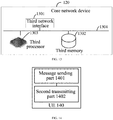
- FIG. 14 shows another UE 140 provided in an embodiment of the present invention, which includes: a message sending part 1401 and a second transmitting part 1402, where the message sending part 1401 is configured to send an effective time message to a core network device; where the effective time information is used for indicating an effective duration of an association relationship between characteristic information of a data packet and an application identifier for identifying an encrypted data stream; the second transmitting part 1402 is configured to perform, within the effective duration, encrypted data stream transmission with the core network device based on the association relationship; and the message sending part 1401 is further configured to send a release indication message to the core network device; where the release indication message is used for releasing the association relationship.
- this embodiment provides a computer readable medium, having a program for transmitting an encrypted data stream stored thereon, where the program for transmitting an encrypted data stream implements the steps of the method described in the specific example 4 of Embodiment 3 when executed by at least one processor.
- the program for transmitting an encrypted data stream implements the steps of the method described in the specific example 4 of Embodiment 3 when executed by at least one processor.
- the computer readable medium please refer to the description in Embodiment 4, which is not repeated here.
- FIG. 15 shows a specific hardware structure of the UE 140 provided in an embodiment of the present invention, which can include: a fourth network interface 1501, a fourth memory 1502, and a fourth processor 1503; the various components are coupled together by a bus system 1504.
- the bus system 1504 is used to enable connective communication among the components.
- the bus system 1504 includes a power bus, a control bus, and a status signal bus in addition to a data bus. For clarity of illustration, however, the various buses are labeled in FIG. 15 as the bus system 1304.
- the fourth network interface 1501 is configured to receive and send signals in a process of receiving and sending information with other external network elements;
- the fourth memory 1502 is configured to store a computer program operable on the fourth processor 1503;
- the fourth processor 1503 is configured to, when running the computer program, execute:
- FIG. 16A shows a method for identifying an encrypted data stream provided in an embodiment of the present invention, where the method can be applied to a core network device.
- the core network device can include a control plane, such as a session management function SMF, and a user plane, such as a user plane function UPF.
- the method includes: S 1601A: receiving service description information sent by a user equipment (UE); where the service description information includes an application identifier and/or data stream description information; the data stream description information includes at least one of: an IP source address, an IP source port number, an IP destination address, an IP destination port number, a MAC source address, a MAC source port number, a MAC destination address, a MAC destination port number, a protocol type and a VLAN label.
- UE user equipment
- the data stream description information may include not only layer-3 characteristics but also an association relationship between layer-2 characteristics and the application identifier, it can be known that when the UE transmits through a non-IP data packet, the UE can still identify an encrypted data stream of an application.
- S 1602A Identifying an encrypted data stream transmitted by the UE according to the established association relationship between the characteristic information of the data packet and the application identifier.
- the receiving service description information sent by a user equipment includes that: the control plane of the core network device receives a control plane non-access stratum (NAS) message which is sent by the UE and includes the service description information.
- NAS control plane non-access stratum
- the receiving service description information sent by a user equipment includes that: the user plane of the core network device receives a user plane data packet including the service description information.
- a PDCP header and/or a GTP-U header of the user plane data packet includes the service description information; or, an IPV4 or IPV6 header of the user plane data packet includes the service description information; or, a header of the user plane data packet for tunnel encapsulation includes the service description information.
- the method before identifying the encrypted data stream transmitted by the UE according to the established association relationship between the characteristic information of the data packet and the application identifier, the method further includes: determining that the service description information is credible.
- the determining that the service description information is credible includes: receiving authentication information sent by the UE; where the authentication information includes an authentication parameter and a first authentication result; obtaining a second authentication result according to the authentication parameter; and when the first authentication result is the same as the second authentication result, determining that the service description information is credible.
- the authentication parameter in the authentication information may include the random number and the public key Ka described in the foregoing embodiments; or may include the random number, the public key Ka, and the application identifier Application ID.
- the Ka is an optional authentication parameter.
- the Ka may also be searched in a core network database by the core network device through the application identifier, and a correspondence between the application identifier and the Ka in the core network database may be pre-configured in the database by a third party server.
- the second authentication result Token2 calculated by the core network device is the same as the first authentication result Token1, it can be indicated that the service description information sent by the UE is credible.
- this credible status can be applicable to NAS messages subsequently sent by the UE.
- the core network device can believe that all service description messages included in NAS messages subsequently sent by the UE are in a credible status; when the authentication parameter includes the application identifier Application ID and the authentication is passed, the core network device can believe that service description information which is included in NAS messages subsequently sent by the UE and corresponds to the application identifier Application ID is in a credible status.
- the UE can carry the authentication information and the service description information in the same NAS message or user plane data packet and send the same to the core network device, so that the core network device can receive the service description information and the authentication information at the same time.
- the service description information sent by the UE may also be determined to be credible by other authentication methods, which will not be described in this embodiment.
- the identifying an encrypted data stream transmitted by the UE according to the established association relationship between the characteristic information of the data packet and the application identifier includes that: the control plane of the core network device interactively establishes a filter (filter) for detecting the encrypted data stream of the UE with the user plane of the core network device according to the service description information.
- the control plane of the core network device can send the authentication result to the user plane of the core network device, so that the user plane can establish the association relationship between the application identifier and the characteristic information of the data packet, and establish the filter (filter) for detecting the encrypted data stream of the UE based on the association relationship.
- the core network device After the filter is established, the core network device cannot perform authentication on data sent by the UE, but can directly use the filter to identify the encrypted data stream.
- the core network device After the filter is established, the core network device cannot perform authentication on data sent by the UE, but can directly use the filter to identify the encrypted data stream.
- the core network device After the filter is established, the core network device cannot perform authentication on data sent by the UE, but can directly use the filter to identify the encrypted data stream.
- there can be a corresponding life cycle when authentication is not performed on the data sent by the UE for which the effective time message described in the foregoing embodiments may be referred to specifically, which is not described in detail in this embodiment.
- FIG. 16B shows a method for identifying an encrypted data stream, which is applied to a UE, according to an embodiment of the present invention.
- the method can include: S 1601B: sending service description information to a core network device; where the service description information includes an application identifier and/or data stream description information; the data stream description information includes at least one of: an IP source address, an IP source port number, an IP destination address, an IP destination port number, a MAC source address, a MAC source port number, a MAC destination address, a MAC destination port number, a protocol type, and a VLAN label.
- the sending service description information to a core network device includes: carrying the service description information in a control plane non-access stratum (NAS) message and sending the same to the core network device.
- NAS control plane non-access stratum
- the sending service description information to a core network device includes:
- the carrying the service description information in a user plane data packet includes: adding the service description information in a PDCP header and/or a GTP-U header of the user plane data packet; or, adding the service description information in an IPV4 or IPV6 header of the user plane data packet; or, adding the service description information in a header of the user plane data packet for tunnel encapsulation.
- the method further includes: sending authentication information to the core network device; where the authentication information includes an authentication parameter and a first authentication result.
- the UE can carry the authentication information and the service description information in the same NAS message or user plane data packet and send the same to the core network device, so that the core network device can receive the authentication information and the service description information at the same time.
- the core network device can perform authentication according to the description for the technical solution shown in FIG. 16A , and determines after the authentication is successful that the service description information sent by the UE is credible.
- FIG. 17A shows a structure of yet another core network device 170 provided in an embodiment of the present invention, including: an information receiving part 1701A and an identifying part 1702A; where, the information receiving part 1701A is configured to receive service description information sent by a user equipment (UE); where the service description information includes an application identifier and/or data stream description information; the data stream description information includes at least one of: an IP source address, an IP source port number, an IP destination address, an IP destination port number, a MAC source address, a MAC source port number, a MAC destination address, a protocol type and a VLAN label; and the identifying part 1702A is configured to identify an encrypted data stream transmitted by the UE according to an established association relationship between characteristic information of a data packet and the application identifier.
- UE user equipment
- the information receiving part 1701A is configured to: receive, by the control plane of the core network device, a control plane non-access stratum (NAS) message which is sent by the UE and includes the service description information.
- NAS control plane non-access stratum
- the information receiving part 1701A is configured to: receive, by a user plane of the core network device, a user plane data packet including service description information.
- a PDCP header and/or a GTP-U header of the user plane data packet includes the service description information; or, an IPV4 or IPV6 header of the user plane data packet includes the service description information; or, a header of the user plane data packet for tunnel encapsulation includes the service description information.
- the core network device 170 can further include a determining part 1703A configured to: determine whether the service description information is credible, and trigger the identifying part 1702A after it is determined that the service description information is credible.
- the determining part 1703A is configured to:
- the identifying part 1702A is configured to: after the service description information is determined to be credible, interactively establishing, by the control plane of the core network device, a filter (filter) for detecting the encrypted data stream of the UE with the user plane of the core network device according to the service description information.
- this embodiment further provides a computer readable medium, having a program for identifying an encrypted data stream stored thereon, where the program for identifying an encrypted data stream implements the steps of the method described in FIG. 16A when executed by at least one processor.
- a computer readable medium having a program for identifying an encrypted data stream stored thereon, where the program for identifying an encrypted data stream implements the steps of the method described in FIG. 16A when executed by at least one processor.
- a specific hardware structure of the core network device 170 provided in an embodiment of the present invention is shown, which can include: a fifth network interface 1701B, a fifth memory 1702B, and a fifth processor 1703B; the various components are coupled together by a bus system 1104.
- the bus system 1704B is configured to enable connective communication among the components.
- the bus system 1704B includes a power bus, a control bus, and a status signal bus in addition to a data bus. For clarity of illustration, however, the various buses are labeled in FIG. 17B as the bus system 1704B.
- the fifth network interface 1701B is configured to receive and send signals in a process of receiving and sending information with other external network elements; the fifth memory 1702B is configured to store a computer program operable on the fifth processor 1703B; the fifth processor 1703B is configured to execute the steps of the method of FIG. 16A when running the computer program.
- a structure of a UE 180 provided in an embodiment of the present invention including: an information sending part 1801A configured to send service description information to a core network device; where the service description information includes an application identifier and/or data stream description information; the data stream description information includes at least one of: an IP source address, an IP source port number, an IP destination address, an IP destination port number, a MAC source address, a MAC source port number, a MAC destination address, a MAC destination port number, a protocol type, and a VLAN label.
- the information sending part 1801A is configured to: carry the service description information in a control plane non-access stratum (NAS) message and send the message to the core network device.
- NAS control plane non-access stratum
- the information sending part 1801A is configured to: carry the service description information in a user plane data packet; and send the user plane data packet carrying the service description information to the core network device.
- the information sending part 1801A is configured to: add the service description information in a PDCP header and/or a GTP-U header of the user plane data packet; or, add the service description information in an IPV4 or IPV6 header of the user plane data packet; or, add the service description information in a header of the user plane data packet for tunnel encapsulation.
- the information sending part 1801A is further configured to: send authentication information to the core network device; where the authentication information includes an authentication parameter and a first authentication result.
- this embodiment also provides a computer readable medium, having a program for identifying an encrypted data stream stored thereon, where the program for identifying an encrypted data stream implements the steps of the method described in FIG. 16B when executed by at least one processor.
- the computer readable medium please refer to the description in Embodiment 4, which is not repeated here.
- a specific hardware structure of the UE 180 provided in an embodiment of the present invention is shown, which can include: a sixth network interface 1801B, a sixth memory 1802B, and a sixth processor 1803B; the various components are coupled together by a bus system 1804B.
- the bus system 1804B is configured to enable connective communication among the components.
- the bus system 1804B includes a power bus, a control bus, and a status signal bus in addition to a data bus. For clarity of illustration, however, the various buses are labeled in FIG. 18B as the bus system 1804B.
- the sixth network interface 1801B is configured to receive and send signals in a process of receiving and sending information with another external network elements; the sixth memory 1802B is configured to store a computer program operable on the sixth processor 1803B; the sixth processor 1803B is configured to execute the steps of the method described in FIG. 16B when running the computer program.
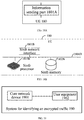
- FIG. 19 shows a structure of a system 190 for identifying an encrypted traffic according to an embodiment of the present invention, which includes a core network device 1901 and a user equipment 1902, where, the core network device 1901 is preferably the core network device according to any of the foregoing embodiments; the user equipment 1902 may preferably be the user equipment according to any of the foregoing embodiments.
- the core network device performs authentication with the UE in the TLS handshake process of the UE and the OTT server or after the handshake is completed, and thus the association relationship for identifying the encrypted data stream is established to realize the detection and the statistics of the encrypted data stream.
- the plaintext identifier There is no need to rely on the plaintext identifier, and no complicated IP address configuration and maintenance are required, thereby improving the safety and reducing the computing resources required for the configuration and maintenance.
Landscapes
- Engineering & Computer Science (AREA)
- Computer Networks & Wireless Communication (AREA)
- Signal Processing (AREA)
- Computer Security & Cryptography (AREA)
- Computer Hardware Design (AREA)
- Computing Systems (AREA)
- General Engineering & Computer Science (AREA)
- Data Exchanges In Wide-Area Networks (AREA)
- Mobile Radio Communication Systems (AREA)
Applications Claiming Priority (3)
| Application Number | Priority Date | Filing Date | Title |
|---|---|---|---|
| PCT/CN2017/106349 WO2019075608A1 (fr) | 2017-10-16 | 2017-10-16 | Procédé et dispositif d'identification de flux de données cryptées, support d'informations et système |
| PCT/CN2018/081774 WO2019076000A1 (fr) | 2017-10-16 | 2018-04-03 | Procédé et dispositif permettant d'identifier un flux de données chiffrées, support de stockage, et système |
| PCT/CN2018/085510 WO2019076025A1 (fr) | 2017-10-16 | 2018-05-03 | Procédé d'identification de flux de données chiffrées, dispositif, support d'informations et système |
Publications (2)
| Publication Number | Publication Date |
|---|---|
| EP3668043A1 true EP3668043A1 (fr) | 2020-06-17 |
| EP3668043A4 EP3668043A4 (fr) | 2020-10-07 |
Family
ID=66173068
Family Applications (1)
| Application Number | Title | Priority Date | Filing Date |
|---|---|---|---|
| EP18869093.7A Withdrawn EP3668043A4 (fr) | 2017-10-16 | 2018-05-03 | Procédé d'identification de flux de données chiffrées, dispositif, support d'informations et système |
Country Status (4)
| Country | Link |
|---|---|
| US (1) | US11418951B2 (fr) |
| EP (1) | EP3668043A4 (fr) |
| CN (2) | CN110741613B (fr) |
| WO (3) | WO2019075608A1 (fr) |
Cited By (1)
| Publication number | Priority date | Publication date | Assignee | Title |
|---|---|---|---|---|
| WO2023094373A1 (fr) * | 2021-11-26 | 2023-06-01 | Abb Schweiz Ag | Procédé de mise en service de dispositif dans un système de réseau et système de réseau |
Families Citing this family (9)
| Publication number | Priority date | Publication date | Assignee | Title |
|---|---|---|---|---|
| DK3738331T3 (da) * | 2018-04-05 | 2021-05-31 | Ericsson Telefon Ab L M | Konfigurering af radioressourcer |
| CN110535552B (zh) * | 2019-09-27 | 2021-07-20 | 腾讯科技(深圳)有限公司 | 网络节点执行的方法以及相应的网络节点 |
| CN113923717B (zh) * | 2020-07-07 | 2024-05-31 | 中国移动通信有限公司研究院 | 一种数据的传输方法、装置及设备 |
| CN112671661A (zh) * | 2020-12-24 | 2021-04-16 | 广州市网优优信息技术开发有限公司 | 物联网数据传输方法及系统 |
| CN114760623A (zh) * | 2021-01-10 | 2022-07-15 | 华为技术有限公司 | 安全策略处理方法以及通信设备 |
| CN113674455B (zh) * | 2021-08-13 | 2023-08-04 | 京东科技信息技术有限公司 | 智能门锁远程控制方法、装置、系统、设备及存储介质 |
| CN114143385B (zh) * | 2021-11-24 | 2024-01-05 | 广东电网有限责任公司 | 一种网络流量数据的识别方法、装置、设备和介质 |
| CN116567657B (zh) * | 2022-01-28 | 2025-12-12 | 腾讯科技(深圳)有限公司 | 数据传输方法、装置、计算机可读介质及电子设备 |
| CN118368279B (zh) * | 2024-05-22 | 2026-01-02 | 奇瑞新能源汽车股份有限公司 | 一种http接口鉴权方法及相关设备 |
Family Cites Families (31)
| Publication number | Priority date | Publication date | Assignee | Title |
|---|---|---|---|---|
| US6948060B1 (en) * | 2000-08-11 | 2005-09-20 | Intel Corporation | Method and apparatus for monitoring encrypted communication in a network |
| US8239669B2 (en) * | 2004-03-17 | 2012-08-07 | Telecommunication Systems, Inc. | Reach-back communications terminal with selectable networking options |
| US7778194B1 (en) * | 2004-08-13 | 2010-08-17 | Packeteer, Inc. | Examination of connection handshake to enhance classification of encrypted network traffic |
| US7562211B2 (en) * | 2005-10-27 | 2009-07-14 | Microsoft Corporation | Inspecting encrypted communications with end-to-end integrity |
| US8875236B2 (en) * | 2007-06-11 | 2014-10-28 | Nokia Corporation | Security in communication networks |
| CN101668016B (zh) * | 2009-09-30 | 2012-10-03 | 华为技术有限公司 | 鉴权方法及装置 |
| CN101714952B (zh) * | 2009-12-22 | 2012-03-07 | 北京邮电大学 | 一种接入网的流量识别方法和装置 |
| EP2571329B1 (fr) * | 2010-05-13 | 2019-03-06 | Nec Corporation | Contrôler le montant de traffic dans un réseau-coeur |
| CN102111263A (zh) * | 2011-02-21 | 2011-06-29 | 山东中孚信息产业股份有限公司 | 一种数据流加密的方法 |
| CN102137022B (zh) * | 2011-04-01 | 2013-11-06 | 华为技术有限公司 | 提供用于识别数据包的信息的方法、爬虫引擎及网络系统 |
| CN103428643A (zh) * | 2012-05-17 | 2013-12-04 | 大唐移动通信设备有限公司 | 一种动态重组方法及装置 |
| EP2675203B1 (fr) * | 2012-06-11 | 2019-11-27 | BlackBerry Limited | Activation de multiples applications d'authentification |
| CN103596166B (zh) * | 2012-08-13 | 2016-08-03 | 电信科学技术研究院 | 一种标识映射方法与设备及策略控制方法与系统 |
| US9985967B2 (en) * | 2013-05-29 | 2018-05-29 | Telefonaktiebolaget Lm Ericsson (Publ) | Gateway, client device and methods for facilitating communication between a client device and an application server |
| CN103414709A (zh) * | 2013-08-02 | 2013-11-27 | 杭州华三通信技术有限公司 | 用户身份绑定、协助绑定的方法及装置 |
| GB2518254B (en) * | 2013-09-13 | 2020-12-16 | Vodafone Ip Licensing Ltd | Communicating with a machine to machine device |
| EP2890073A1 (fr) * | 2013-12-31 | 2015-07-01 | Gemalto SA | Système et procédé pour sécuriser des communications machine-machine |
| CN105099930B (zh) * | 2014-05-21 | 2019-07-09 | 新华三技术有限公司 | 加密数据流流量控制方法及装置 |
| CN104038389A (zh) * | 2014-06-19 | 2014-09-10 | 高长喜 | 多重应用协议识别方法和装置 |
| CN105592449B (zh) * | 2014-10-20 | 2018-10-09 | 中国电信股份有限公司 | 业务识别方法和系统 |
| KR101663401B1 (ko) * | 2015-01-05 | 2016-10-06 | 주식회사 퓨쳐시스템 | Ssl로 암호화된 패킷을 커널에서 분석하는 장치 및 방법 |
| US9717003B2 (en) * | 2015-03-06 | 2017-07-25 | Qualcomm Incorporated | Sponsored connectivity to cellular networks using existing credentials |
| US10498652B2 (en) * | 2015-04-13 | 2019-12-03 | Nicira, Inc. | Method and system of application-aware routing with crowdsourcing |
| CN107317674B (zh) * | 2016-04-27 | 2021-08-31 | 华为技术有限公司 | 密钥分发、认证方法,装置及系统 |
| CN105915396A (zh) * | 2016-06-20 | 2016-08-31 | 中国联合网络通信集团有限公司 | 家庭网络流量识别系统和方法 |
| CN106209775B (zh) * | 2016-06-24 | 2019-05-24 | 深圳信息职业技术学院 | 一种ssl加密网络流的应用类型识别方法与装置 |
| US10530811B2 (en) * | 2016-08-11 | 2020-01-07 | Vm-Robot, Inc. | Routing systems and methods |
| US10715510B2 (en) * | 2017-01-16 | 2020-07-14 | Citrix Systems, Inc. | Secure device notifications from remote applications |
| US10397186B2 (en) * | 2017-10-06 | 2019-08-27 | Stealthpath, Inc. | Methods for internet communication security |
| US10630642B2 (en) * | 2017-10-06 | 2020-04-21 | Stealthpath, Inc. | Methods for internet communication security |
| US10367811B2 (en) * | 2017-10-06 | 2019-07-30 | Stealthpath, Inc. | Methods for internet communication security |
-
2017
- 2017-10-16 WO PCT/CN2017/106349 patent/WO2019075608A1/fr not_active Ceased
- 2017-10-16 CN CN201780091924.9A patent/CN110741613B/zh active Active
-
2018
- 2018-04-03 WO PCT/CN2018/081774 patent/WO2019076000A1/fr not_active Ceased
- 2018-05-03 WO PCT/CN2018/085510 patent/WO2019076025A1/fr not_active Ceased
- 2018-05-03 CN CN201880038900.1A patent/CN110771116B/zh active Active
- 2018-05-03 EP EP18869093.7A patent/EP3668043A4/fr not_active Withdrawn
-
2020
- 2020-04-15 US US16/849,865 patent/US11418951B2/en active Active
Cited By (2)
| Publication number | Priority date | Publication date | Assignee | Title |
|---|---|---|---|---|
| WO2023094373A1 (fr) * | 2021-11-26 | 2023-06-01 | Abb Schweiz Ag | Procédé de mise en service de dispositif dans un système de réseau et système de réseau |
| US12568084B2 (en) | 2021-11-26 | 2026-03-03 | Abb Schweiz Ag | Method for device commissioning in a network system and network system |
Also Published As
| Publication number | Publication date |
|---|---|
| CN110741613A (zh) | 2020-01-31 |
| EP3668043A4 (fr) | 2020-10-07 |
| CN110771116A (zh) | 2020-02-07 |
| CN110741613B (zh) | 2021-01-12 |
| WO2019075608A1 (fr) | 2019-04-25 |
| WO2019076025A1 (fr) | 2019-04-25 |
| WO2019076000A1 (fr) | 2019-04-25 |
| CN110771116B (zh) | 2021-02-26 |
| US20200245136A1 (en) | 2020-07-30 |
| US11418951B2 (en) | 2022-08-16 |
Similar Documents
| Publication | Publication Date | Title |
|---|---|---|
| EP3668043A1 (fr) | Procédé d'identification de flux de données chiffrées, dispositif, support d'informations et système | |
| EP3262821B1 (fr) | Application de politique efficace au moyen de jetons de réseau pour des services - une approche de plan utilisateur | |
| CN105210408B (zh) | 被卸载的安全即服务 | |
| JP4966432B2 (ja) | 非3gppアクセスネットワーク経由のアクセス | |
| CN102790813B (zh) | 基于IPv6网络的通信方法和系统以及终端设备 | |
| CN117641347A (zh) | 注册方法、认证方法、装置及计算机可读存储介质 | |
| US10798080B2 (en) | User authentication in communication systems | |
| CN114024741B (zh) | 请求处理方法、装置、流量代理端、设备及可读存储介质 | |
| CN106465108A (zh) | 蜂窝网络认证控制 | |
| CN111742529B (zh) | 基于服务的架构(sba)中的安全协商 | |
| JP2019515555A (ja) | 識別情報指向型ネットワークの匿名識別情報及びプロトコル | |
| CN110474922B (zh) | 一种通信方法、pc系统及接入控制路由器 | |
| CN114915583A (zh) | 报文处理方法、客户端设备、服务器端设备和介质 | |
| CN114531681A (zh) | 一种异常终端控制方法及装置 | |
| CN102546429B (zh) | 基于dhcp监听的isatap隧道的认证方法和系统 | |
| CN114257464B (zh) | 计费方法、装置、通信设备及可读存储介质 | |
| US20100275008A1 (en) | Method and apparatus for secure packet transmission | |
| EP3552367B1 (fr) | Procédé et noeud de réseau intermédiaire de gestion de segment tcp | |
| CN114554482A (zh) | 数据通信方法、装置、系统、电子设备及存储介质 | |
| CN109996225B (zh) | 一种数据传输的方法及设备 | |
| CN120980533A (zh) | 应用于5g核心网的dhcp安全增强方法及系统 | |
| CN119011273A (zh) | 报文转发方法、装置、电子设备及存储介质 | |
| Yoon et al. | Robust mutual trust architecture for safety critical service in heterogeneous mobile network environment | |
| WO2011056317A1 (fr) | Procédé de fourniture d'associations de sécurité pour données par paquets cryptées | |
| CN108965496A (zh) | 一种校验dns请求合法性的方法及装置 |
Legal Events
| Date | Code | Title | Description |
|---|---|---|---|
| STAA | Information on the status of an ep patent application or granted ep patent |
Free format text: STATUS: THE INTERNATIONAL PUBLICATION HAS BEEN MADE |
|
| PUAI | Public reference made under article 153(3) epc to a published international application that has entered the european phase |
Free format text: ORIGINAL CODE: 0009012 |
|
| STAA | Information on the status of an ep patent application or granted ep patent |
Free format text: STATUS: REQUEST FOR EXAMINATION WAS MADE |
|
| 17P | Request for examination filed |
Effective date: 20200310 |
|
| AK | Designated contracting states |
Kind code of ref document: A1 Designated state(s): AL AT BE BG CH CY CZ DE DK EE ES FI FR GB GR HR HU IE IS IT LI LT LU LV MC MK MT NL NO PL PT RO RS SE SI SK SM TR |
|
| AX | Request for extension of the european patent |
Extension state: BA ME |
|
| A4 | Supplementary search report drawn up and despatched |
Effective date: 20200907 |
|
| RIC1 | Information provided on ipc code assigned before grant |
Ipc: H04L 29/06 20060101AFI20200901BHEP |
|
| DAV | Request for validation of the european patent (deleted) | ||
| DAX | Request for extension of the european patent (deleted) | ||
| STAA | Information on the status of an ep patent application or granted ep patent |
Free format text: STATUS: EXAMINATION IS IN PROGRESS |
|
| 17Q | First examination report despatched |
Effective date: 20210311 |
|
| STAA | Information on the status of an ep patent application or granted ep patent |
Free format text: STATUS: THE APPLICATION IS DEEMED TO BE WITHDRAWN |
|
| 18D | Application deemed to be withdrawn |
Effective date: 20220426 |