EP3668063A1 - Verfahren, server und system zur auflösung von domainnamen - Google Patents
Verfahren, server und system zur auflösung von domainnamen Download PDFInfo
- Publication number
- EP3668063A1 EP3668063A1 EP18907693.8A EP18907693A EP3668063A1 EP 3668063 A1 EP3668063 A1 EP 3668063A1 EP 18907693 A EP18907693 A EP 18907693A EP 3668063 A1 EP3668063 A1 EP 3668063A1
- Authority
- EP
- European Patent Office
- Prior art keywords
- address
- domain name
- dns server
- resolved
- terminal
- Prior art date
- Legal status (The legal status is an assumption and is not a legal conclusion. Google has not performed a legal analysis and makes no representation as to the accuracy of the status listed.)
- Ceased
Links
- 238000000034 method Methods 0.000 title claims abstract description 43
- 230000004044 response Effects 0.000 claims abstract description 85
- 238000012986 modification Methods 0.000 description 5
- 230000004048 modification Effects 0.000 description 5
- 230000008569 process Effects 0.000 description 5
- 230000003993 interaction Effects 0.000 description 3
- 230000005540 biological transmission Effects 0.000 description 2
- 238000005516 engineering process Methods 0.000 description 2
- 238000004891 communication Methods 0.000 description 1
- 238000013500 data storage Methods 0.000 description 1
- 230000006870 function Effects 0.000 description 1
- 238000007726 management method Methods 0.000 description 1
- 230000003287 optical effect Effects 0.000 description 1
- 230000002093 peripheral effect Effects 0.000 description 1
- 239000004065 semiconductor Substances 0.000 description 1
Images



Classifications
-
- H—ELECTRICITY
- H04—ELECTRIC COMMUNICATION TECHNIQUE
- H04L—TRANSMISSION OF DIGITAL INFORMATION, e.g. TELEGRAPHIC COMMUNICATION
- H04L61/00—Network arrangements, protocols or services for addressing or naming
- H04L61/45—Network directories; Name-to-address mapping
- H04L61/4505—Network directories; Name-to-address mapping using standardised directories; using standardised directory access protocols
- H04L61/4511—Network directories; Name-to-address mapping using standardised directories; using standardised directory access protocols using domain name system [DNS]
-
- H—ELECTRICITY
- H04—ELECTRIC COMMUNICATION TECHNIQUE
- H04L—TRANSMISSION OF DIGITAL INFORMATION, e.g. TELEGRAPHIC COMMUNICATION
- H04L67/00—Network arrangements or protocols for supporting network services or applications
- H04L67/01—Protocols
- H04L67/10—Protocols in which an application is distributed across nodes in the network
- H04L67/1001—Protocols in which an application is distributed across nodes in the network for accessing one among a plurality of replicated servers
- H04L67/1036—Load balancing of requests to servers for services different from user content provisioning, e.g. load balancing across domain name servers
-
- H—ELECTRICITY
- H04—ELECTRIC COMMUNICATION TECHNIQUE
- H04L—TRANSMISSION OF DIGITAL INFORMATION, e.g. TELEGRAPHIC COMMUNICATION
- H04L61/00—Network arrangements, protocols or services for addressing or naming
- H04L61/09—Mapping addresses
- H04L61/10—Mapping addresses of different types
-
- H—ELECTRICITY
- H04—ELECTRIC COMMUNICATION TECHNIQUE
- H04L—TRANSMISSION OF DIGITAL INFORMATION, e.g. TELEGRAPHIC COMMUNICATION
- H04L61/00—Network arrangements, protocols or services for addressing or naming
- H04L61/50—Address allocation
- H04L61/5007—Internet protocol [IP] addresses
-
- H—ELECTRICITY
- H04—ELECTRIC COMMUNICATION TECHNIQUE
- H04L—TRANSMISSION OF DIGITAL INFORMATION, e.g. TELEGRAPHIC COMMUNICATION
- H04L61/00—Network arrangements, protocols or services for addressing or naming
- H04L61/58—Caching of addresses or names
-
- H—ELECTRICITY
- H04—ELECTRIC COMMUNICATION TECHNIQUE
- H04L—TRANSMISSION OF DIGITAL INFORMATION, e.g. TELEGRAPHIC COMMUNICATION
- H04L67/00—Network arrangements or protocols for supporting network services or applications
- H04L67/50—Network services
- H04L67/56—Provisioning of proxy services
- H04L67/568—Storing data temporarily at an intermediate stage, e.g. caching
Definitions
- the present disclosure relates to network communication technologies, in particular, a method, server and system for resolving a domain name.
- a domain name system is responsible for providing domain name resolution services for the Internet.
- the domain name system resolves a domain name into an Internet protocol (IP) address, so that an Internet user may access the corresponding domain name according to the IP address.
- IP Internet protocol
- Edns-Client-Subnet is a DNS extended protocol submitted by Google, which allows a recursive DNS server to transmit a user's IP address to an authoritative DNS server, and the authoritative DNS server that supports ECS may obtain the user's IP address and perform accurate scheduling according to the user's IP address. For example, domain names of some large websites may often be resolved into IP addresses that are throughout multiple regions, and each IP address corresponds to one application server (or application server cluster).
- the authoritative DNS server may select the application server that is close to the user according to the user's IP address and return the IP address of the application server to the user through the recursive DNS server. Due to that the application server assigned to the user by the authoritative DNS server is close to the user, the response speed of the application server to a user access message can be improved.
- Embodiments of the present disclosure provide a method, server and system for resolving a domain name to improve efficiency of domain name resolution.
- embodiments of the present disclosure provide a method for resolving a domain name, including:
- the association relation stored in the recursive DNS server is an association relation between a set of IP address segments, the domain name to be resolved, and the IP address of the domain name to be resolved.
- the association relation is in the authoritative DNS server corresponding to the domain name to be resolved, and the set of IP address segments is a set of IP address segments to which the IP address of the terminal belongs in the authoritative DNS server.
- IP addresses in the same set of IP address segments correspond to the same association relation. Therefore, the recursive DNS server may reduce times for accessing the authoritative DNS server by caching the association relation between the set of IP address segments, the domain name to be resolved and the IP address of the domain name to be resolved, thereby improving efficiency of domain name resolution.
- the method further includes:
- the alternative method provides a method for the recursive DNS server to obtain the association relation in the authoritative DNS server.
- the recursive DNS server may obtain the association relation between the set of IP address segments to which the IP address of the terminal belongs, the domain name to be resolved, and the IP address of the domain name to be resolved.
- the recursive DNS server may directly obtain the resolution result from the cache as long as the recursive DNS server used to respond to a resolution request for the domain name to be resolved from any IP address in the set of IP address segments, so that there is no need to access the authoritative server, thereby improving efficiency of resolution .
- the recursive DNS server determines the IP address of the domain name to be resolved according to the pre-stored association relation, further including:
- the recursive DNS server usually caches association relations from a plurality of authoritative DNS servers, and resources of the association relations are distinguished through identifiers of the authoritative DNS servers. Since the IP address of the domain name to be resolved is assigned to the domain name to be resolved by the authoritative DNS server corresponding to the domain name to be resolved, the recursive DNS server first determines the identifier of the authoritative DNS server corresponding to the domain name to be resolved and then uses the identifier of the authoritative DNS server to determine the association relation from the authoritative DNS server when querying the cached association relation, thereby accelerating query efficiency of the recursive DNS server.
- the recursive DNS server determines the IP address of the domain name to be resolved according to the pre-stored association relation, including:
- one IP address segment corresponds to a plurality of domain names and IP addresses of the domain names. Therefore, when determining an IP address of a domain name to be resolved, the IP address segment to which an IP address of a terminal belongs is determined first, and then the IP address of the domain name to be resolved is determined according to the domain name to be resolved in a plurality of domain names and IP addresses of the domain names corresponding to the IP address segment.
- the IP address segments in the set of IP address segments are B-type IP address segments.
- the B-type IP address segments may include a greater number of IP addresses, and the recursive DNS server caches by the B-type IP address segments, so that the memory space of the recursive DNS server occupied by the cached data may be reduced.
- embodiments of the present disclosure provide a method for resolving a domain name, including:
- embodiments of the present disclosure provide a recursive DNS server, including:
- the processor unit is further configured to: send a query request to the authoritative DNS server corresponding to the domain name to be resolved through the transceiver unit when the IP address of the domain name to be resolved does not exist in the storage unit; where the query request includes the domain name to be resolved and the IP address of the terminal.
- the transceiver unit is further configured to: receive a query response sent by the authoritative DNS server, where the query response includes the IP address of the domain name to be resolved and the set of the IP address segments to which the IP address of the terminal belongs in the authoritative DNS server.
- the processor unit is further configured to: generate the resolution response including the IP address of the domain name to be resolved according to the query response, return the resolution response to the terminal through the transceiver unit, and control the storage unit to store the association relation between the domain name to be resolved, the IP address of the domain name to be resolved and the set of the IP address segments.
- the processor unit is further configured to:
- the processor unit is configured to:
- the IP address segments in the set of the IP address segments are B-type IP address segments.
- embodiments of the present disclosure provide an authoritative DNS server, including:
- embodiments of the present disclosure provide a computer readable storage medium storing a computer executable instruction, where the computer executable instruction is configured to cause the computer to execute any one of the methods described above.
- embodiments of the present disclosure provide a computing device, including:
- embodiments of the present disclosure provide a DNS system, including any one of the recursive DNS server described above, and/or any one of the authoritative DNS server described above.
- the embodiments of the present disclosure provide a method, server and system for resolving a domain name, and the method includes: receiving, by a recursive DNS server, a resolution request sent by a terminal, where the resolution request includes a domain name to be resolved and an IP address of the terminal; determining, by the recursive DNS server, the IP address of the domain name to be resolved according to a pre-stored association relation; where the association relation is an association relation between a set of IP address segments, the domain name to be resolved, and the IP address of the domain name to be resolved; where the association relation is obtained by the recursive DNS server from an authoritative DNS server corresponding to the domain name to be resolved, and the set of IP address segments is a set of IP address segments to which the IP address of the terminal belongs in the authoritative DNS server; and generating, by the recursive DNS server, a resolution response including the IP address of the domain name to be resolved, and returning the resolution response to the terminal, when the IP address of the domain name to be resolved exists in the
- the association relation stored in the recursive DNS server is an association relation between a set of IP address segments, the domain name to be resolved, and the IP address of the domain name to be resolved.
- the association relation is in the authoritative DNS server corresponding to the domain name to be resolved, and the set of IP address segments is a set of IP address segments to which the IP address of the terminal belongs.
- IP addresses in the same set of IP address segments correspond to the same association relation. Therefore, the recursive DNS server may reduce times for accessing the authoritative DNS server by caching the association relation between the set of IP address segments, the domain name to be resolved and the IP address of the domain name to be resolved, thereby improving efficiency of domain name resolution.
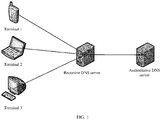
- FIG. 1 is a schematic architecture of a DNS system.
- the DNS system includes a DNS server and an authoritative server. Any of terminal 1, terminal 2 and terminal 3, when needing to access a domain name, has to resolve an IP address of the domain name through the DNS system.
- a terminal may send a domain name resolution request to a recursive DNS server first, and the domain name to be resolved is included in the domain name resolution request.
- the recursive DNS server may query a local cache first. If the local cache has the IP address of the domain name to be resolved, a resolution response carrying the IP address of the domain name to be resolved may be generated and returned to the terminal.
- the recursive DNS server may send a query request to an authoritative DNS server, and the domain name to be resolved is carried in the query request.
- the authoritative DNS server is a server that assigns the IP address to the domain name to be resolved.
- the IP address of the domain name to be resolved may be determined according to the domain name to be resolved, after which a query response carrying the IP address of the domain name to be resolved may generated and returned to the recursive DNS server, and the recursive DNS server further generates the resolution response carrying the IP address of the domain name to be resolved and returns the resolution response to the terminal.
- the recursive DNS server that supports the ECS protocol may carry the IP address of the terminal in an additional block of the query request when sending the query request to the authoritative DNS server.
- the authoritative DNS server may query a corresponding set of IP address segments according to the IP address of the terminal in the query request after receiving the query request, so as to perform a more accurate scheduling.
- IP addresses in the same set of IP address segments have the same attribute, for example, IP addresses are located in the same region, and for another example, IP addresses belong to the same operator, and so on.
- a particular attribute type may be determined according to the practical application situation and is not limited in the embodiments of the present disclosure.
- the authoritative DNS server may assign a same corresponding relation between the domain name and the IP address of the domain name for IP addresses in the same set of IP address segments. For example, in the authoritative DNS server, for a set 1 of IP address segments, the domain name A may be resolved as IPal, while for a set 2 of IP address segments, the domain name A may be resolved as IPa2.
- FIG. 2 is a schematic flowchart of the method for the domain name provided in the embodiments of the present disclosure. As shown in FIG. 2 , the method includes the following steps.
- a recursive DNS server receives a resolution request sent by a terminal; where the resolution request includes a domain name to be resolved and an IP address of the terminal.
- the recursive DNS server determines the IP address of the domain name to be resolved according to a pre-stored association relation; where the association relation is an association relation between a set of IP address segments, the domain name to be resolved, and the IP address of the domain name to be resolved; where the association relation is obtained by the recursive DNS server from an authoritative DNS server corresponding to the domain name to be resolved, and the set of IP address segments is a set of IP address segments to which the IP address of the terminal belongs in the authoritative DNS server.
- the recursive DNS server In step 203, the recursive DNS server generates a resolution response including the IP address of the domain name to be resolved, and returns the resolution response to the terminal, when the IP address of the domain name to be resolved exists in the recursive DNS server.
- the recursive DNS server is a server that supports the ECS protocol. Therefore, an additional block of the resolution request sent by the terminal to the recursive DNS server may carry the IP address of the terminal.
- the IP address of the terminal 1 in FIG. 1 is (1.1.1.1), and the terminal 1 needs to access www.wangsu.com, then the resolution request received by the recursive DNS server from the terminal 1 may include the resolution domain name www.wangsu.com and the IP address (1.1.1.1) of the terminal 1.
- the recursive DNS server may store a historical resolution result.
- what the recursive DNS server stores is an association relation between the set of IP address segments, the domain name to be resolved, and the IP address of the domain name to be resolved.
- the association relation is obtained from the authoritative DNS server, and the set of IP address segments is a set of IP address segments to which the IP address of the terminal belongs in the authoritative DNS server.
- the association relation may be shown as the following Table 1. Table 1: Set of IP address segments Domain name to be resolved IP address of domain name to be resolved set 1 domain name A IPa1 domain name B IPb1 domain name C IPc 1 set 2 domain name A IPa2 domain name B IPb2
- set 1 and set 2 are two sets of IP address segments stored in the recursive DNS server.
- the IP address segments in set 1 and set 2 are IP address segments of the terminal which have the same attributes.
- For domain name A there is an association relation between set 1, domain name A, and IPal, and there is also an association relation between set 2, domain name A, and IPa2.
- the association relation as shown in Table 1 is assigned by the authoritative server corresponding to each domain name.
- the recursive DNS server determines the IP address of the domain name to be resolved according to the pre-stored association relation, including: determining, by the recursive DNS server, the IP address segment to which the IP address of the terminal belongs in the association relation; and querying, by the recursive DNS server, the association relation according to the domain name to be resolved and the IP address segment, and determining, by the recursive DNS server, the IP address of the domain name to be resolved. Take the association relation shown in Table 1 as an example.
- the recursive DNS server determines that the IP address segment to which IPx belongs is IPX, and further determines the set of IP address segments to which the IP address segment IPX belongs, assuming it is set 1.
- the recursive DNS server determines that a resolution result corresponding to domain name A is IPa1 according to domain name A to be resolved.
- the IP address segments in the set of the IP address segments are B-type IP address segments.
- the IP address of the terminal 1 is (1.1.1.1)
- a B-type IP address segment corresponding to the IP address is (1.1.0.0/16)
- a C-type IP address segment corresponding to the IP address is (1.1.1.0/24).
- the embodiments of the present disclosure perform caching by the B-type IP address segment, which may further reduce the memory space of the recursive DNS server occupied by the cached data.
- the IP address segments in the set of IP address segments are also B-type IP address segments, and the recursive DNS server may directly obtain the association relation from the authoritative DNS server and store the association relation, thereby reducing additional processing to the set of IP address segments by the recursive DNS server.
- the recursive DNS server may receive resolution requests of multiple types of domain names. These domain names may be assigned with IP addresses by different authoritative DNS servers. Therefore, data transmission may exist between the recursive DNS server and multiple authoritative DNS servers, and association relations from multiple authoritative DNS servers may also be stored in the recursive DNS server. Alternatively, the recursive DNS server respectively stores the association relations according to the authoritative DNS servers.
- the recursive DNS server determines the IP address of the domain name to be resolved according to the pre-stored association relation, further including: determining, by the recursive DNS server, an identifier of the authoritative DNS server corresponding to the domain name to be resolved according to the domain name to be resolved; and obtaining, by the recursive DNS server, the association relation according to the identifier of the authoritative DNS server.
- the recursive DNS server first determines the identifier of the authoritative DNS server corresponding to the domain name to be resolved, and then determines the association relation from the authoritative DNS server through the identifier of the authoritative DNS server, which reduces the data quantity to be queried, thereby accelerating query efficiency of the recursive DNS server.
- the recursive DNS server In step 203, the recursive DNS server generates a resolution response including the IP address of the domain name to be resolved, and returns the resolution response to the terminal, when the IP address of the domain name to be resolved exists in the recursive DNS server.
- the recursive DNS server may send a query request to the authoritative DNS server corresponding to the domain name to be resolved when the IP address of the domain name to be resolved does not exist in the recursive DNS server. Since the authoritative DNS server is a server that assigns the IP address to the domain name to be resolved, the authoritative DNS server may be able to determine the IP address of the domain name to be resolved.
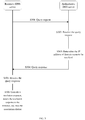
- FIG. 3 is a schematic flowchart of a method for a feasible query interaction provided in embodiments of the present disclosure.
- the recursive DNS server may acquire an association relation from the authoritative DNS server through the method process shown in FIG. 3 . As shown in FIG. 3 , the method includes the following steps.
- the recursive DNS server sends a query request to the authoritative DNS server corresponding to a domain name to be resolved when an IP address of the domain name to be resolved does not exist in the recursive DNS server; where the query request includes the domain name to be resolved and an IP address of a terminal.
- step 302 the authoritative DNS server receives the query request.
- the authoritative DNS server determines the IP address of the domain name to be resolved according to the IP address of the terminal.
- the authoritative DNS server In step 304, the authoritative DNS server generates a query response according to the IP address of the domain name to be resolved, and returns the query response to the recursive DNS server; where the query response includes the IP address of the domain name to be resolved and a set of IP address segments corresponding to the IP address of the terminal.
- step 305 the recursive DNS server receives the query response sent by the authoritative DNS server.
- step 306 the recursive DNS server generates a resolution response including the IP address of the domain name to be resolved according to the query response, and returns the resolution response to the terminal; and the recursive DNS server stores the association relation between the domain name to be resolved, the IP address of the domain name to be resolved and the set of the IP address segments.
- the recursive DNS server may first query locally after receiving the resolution request of the terminal. And step 301 is then implemented and the query request is sent to the authoritative DNS server if the IP address of the domain name to be resolved does not exist locally.
- the query request includes the domain name to be resolved and the IP address of the terminal.
- the IP address of the terminal may either be a specific form of the IP address of the terminal or an IP address segment to which the IP address of the terminal belongs.
- the resolution request received by the recursive DNS server is from the terminal 1, and the IP address of the terminal 1 is (1.1.1.1), then the IP address of the terminal in the query request is either (1.1.1.1) or the B-type IP address segment (1.1.0.0/16).
- step 303 there are also multiple association relations similar to those shown in Table 1 in the authoritative DNS server.
- the difference is that the domain names in the association relations of the authoritative DNS server are the domain names to which IP addresses are assigned by the authoritative DNS server.
- the authoritative DNS server assigns different IP addresses to the same domain name when the same domain name corresponds to different sets of IP address segments, and IP addresses of the terminal belonging to the same set of IP address segments have the same attributes.
- the authoritative DNS server determines the set of IP address segments to which the IP address of the terminal belongs according to the IP address of the terminal after receiving the query request.
- the IP address that satisfies the association relation with the set of IP address segments and the domain name to be resolved is determined as the IP address of the domain name to be resolved according to the domain name to be resolved.
- the query response returned by the authoritative DNS server includes not only the IP address of the domain name to be resolved, but also the set of IP address segments corresponding to the IP address of the terminal in an additional block of the query response.
- the IP address of the terminal 1 is (1.1.1.1)
- the domain name to be resolved is www.wangsu.com
- the IP address of the domain name to be resolved is IPm.
- the set of IP address segments to which the IP address of the terminal 1 belongs is ⁇ (1.1.0.0/16), (2.2.0.0/16) ⁇
- the query response includes not only IPm, but also a set of the IP address segments ⁇ (1.1.0.0/16), (2.2.0.0/16) ⁇ .
- the recursive DNS server stores the association relation between the domain name to be resolved, the IP address of the domain name to be resolved and the set of the IP address segments.
- the terminal 1 in step 305 is still taken as an example, and the DNS server may store the association relation in the following manner.
- the recursive DNS server may query the association relation of the authoritative DNS server which has been locally cached in the recursive DNS server according to the identification information of the authoritative DNS server.
- the recursive DNS server adds www.wangsu.com and IPm after the set of IP address segments according to the set of IP address segments ⁇ (1.1.0.0/16), (2.2.0.0/16) ⁇ .
- the recursive DNS server adds the set of the IP address segments ⁇ (1.1.0.0/16), (2.2.0.0/16) ⁇ first, and then adds www.wangsu.com and IPm after the set of IP address segments, thereby storing the association relation between the set of IP address segments ⁇ (1.1.0.0/16), (2.2.0.0/16) ⁇ , www.wangsu.com and IPm.
- the recursive DNS server may obtain the association relation between the set of IP address segments to which the IP address of the terminal belongs, the domain name to be resolved, and the IP address of the domain name to be resolved at one time.
- the recursive DNS server may directly obtain the resolution result from the cache as long as the recursive DNS server used to respond to a resolution request for the domain name to be resolved from any IP address in the set of IP address segments, so that there is no need to access the authoritative server, thereby improving efficiency of resolution. For example, with reference to FIG.
- the recursive DNS server may locally store the association relation between the set of IP address segments ⁇ (1.1.0.0/16), (2.2.0.0/16) ⁇ , www.wangsu.com and IPm according to a query response returned by the authoritative DNS server.
- the recursive DNS server determines that the B-type IP address segment to which the IP address (1.1.2.2) of the terminal 2 belongs is (1.1.0.0/16), thereby determining that a set of IP address segments corresponding to the IP address of the terminal 2 is ⁇ (1.1.0.0/16), (2.2.0.0/16) ⁇ , and further, it may be determined that the IP address of www.wangsu.com is IPm, and there is no need to send the query request to the authoritative DNS server again.
- the recursive DNS server determines that the B-type IP address segment to which the IP address (2.2.2.2) of the terminal 3 belongs is (2.2.0.0/16), thereby determining that a set of IP address segments corresponding to the IP address of the terminal 3 is ⁇ (1.1.0.0/16), (2.2.0.0/16) ⁇ , and further, it may be determined that the IP address of www.wangsu.com is IPm, and there is no need to send the query request to the authoritative DNS server again.
- the association relation stored in the recursive DNS server is an association relation, in the authoritative DNS server corresponding to the domain name to be resolved,, between a set of IP address segments to which the IP address of the terminal belongs, the domain name to be resolved, and the IP address of the domain name to be resolved.
- the authoritative DNS server IP addresses in the same set of IP address segments correspond to the same association relation. Therefore, the recursive DNS server may reduce times for accessing the authoritative DNS server by caching the association relation between the set of IP address segments, the domain name to be resolved and the IP address of the domain name to be resolved, thereby improving efficiency of domain name resolution.
- FIG. 4 is a schematic structure of the recursive DNS server provided in the embodiments of the present disclosure.
- the recursive DNS server 400 includes a transceiver unit 401, a processer unit 402 and a storage unit 403.
- the recursive DNS server 400 includes a transceiver unit 401, a processer unit 402 and a storage unit 403.
- the transceiver unit 401 is configured to receive a resolution request sent by a terminal; where the resolution request includes a domain name to be resolved and an IP address of the terminal.
- the processer unit 402 is configured to determine the IP address of the domain name to be resolved according to a pre-stored association relation in a storage unit 403.
- the association relation is an association relation, obtained by the recursive DNS server from an authoritative DNS server corresponding to the domain name to be resolved, between a set of IP address segments to which the IP address of the terminal belongs in the authoritative DNS server, the domain name to be resolved, and the IP address of the domain name to be resolved.
- the processer unit 402 is further configured to generate a resolution response including the IP address of the domain name to be resolved, and return the resolution response to the terminal through the transceiver unit 401, when the IP address of the domain name to be resolved exists in the storage unit 403.
- the processer unit 402 is further configured to: send a query request to the authoritative DNS server corresponding to the domain name to be resolved through the transceiver unit 401 when the IP address of the domain name to be resolved does not exist in the storage unit 403; where the query request includes the domain name to be resolved and the IP address of the terminal.
- the transceiver unit 401 is further configured to: receive a query response sent by the authoritative DNS server, and the query response includes the IP address of the domain name to be resolved and the set of the IP address segments to which the IP address of the terminal belongs in the authoritative DNS server.
- the processor unit 402 is further configured to: generate the resolution response including the IP address of the domain name to be resolved according to the query response, return the resolution response to the terminal through the transceiver unit 401, and control the storage unit 403 to store the association relation between the domain name to be resolved, the IP address of the domain name to be resolved and the set of the IP address segments.
- processor unit 402 is further configured to:
- the processor unit 402 is configured to:
- the IP address segments in the set of the IP address segments are B-type IP address segments.
- FIG. 5 is a schematic structure of the authoritative DNS server provided in the embodiments of the present disclosure.
- the authoritative DNS server 500 includes a transceiver unit 501 and a processer unit 501.
- the authoritative DNS server 500 includes a transceiver unit 501 and a processer unit 501.
- the transceiver unit 501 is configured to receive a query request sent by a recursive DNS server; where the query request includes a domain name to be resolved and an IP address of a terminal.
- the processor unit 502 is configured to determine the IP address of the domain name to be resolved according to the IP address of the terminal.
- the processor unit 502 is further configured to generate a query response according to the IP address of the domain name to be resolved, and return the query response to the recursive DNS server through the transceiver unit 501; where the query response includes the IP address of the domain name to be resolved and a set of IP address segments corresponding to the IP address of the terminal.
- the transceiver unit may be implemented by a transceiver
- the processor unit may be implemented by a processor
- the storage unit may be implemented by a memory.
- FIG. 6 is a schematic structure of the computing device provided in the embodiments of the present disclosure. As shown in FIG. 6 , the computing device corresponds to the recursive DNS server in any of the embodiments described above.
- the computer device in FIG. 6 includes a processor 600 configured to read programs in a memory 620 to implement the following processes:
- the processor 600 is further configured to: send a query request to the authoritative DNS server corresponding to the domain name to be resolved through the transceiver 610 when the IP address of the domain name to be resolved does not exist in the memory 620; where the query request includes the domain name to be resolved and the IP address of the terminal.
- the transceiver 610 is further configured to: receive a query response sent by the authoritative DNS server, and the query response includes the IP address of the domain name to be resolved and the set of the IP address segments to which the IP address of the terminal belongs in the authoritative DNS server.
- the processor 600 is further configured to: generate a resolution response including the IP address of the domain name to be resolved according to the query response, return the resolution response to the terminal through the transceiver unit 610, and control the memory 620 to store the association relation between the domain name to be resolved, the IP address of the domain name to be resolved and the set of the IP address segments.
- the processor 600 is further configured to:
- the processor 600 is configured to:
- the IP address segments in the set of the IP address segments are B-type IP address segments.
- a bus interface may include a random number of interconnecting buses and bridges which, specifically, are linked together via various circuits of one or more processors represented by the processor 600 and a memory represented by a memory 620.
- the bus interface may further link various other circuits such as a peripheral device, a regulator and a power management circuit together, which are known in the art, and therefore, is not further described herein.
- the bus interface provides an interface.
- the transceiver 610 may be a plurality of elements, i.e., including a transmitter and a receiver, and providing a unit configured to communicate with various other devices over a transmission medium.
- the processor 600 is responsible for managing the bus interface and general processing, and the memory 620 may store data used by the processor 600 when performing operations.
- the processor 600 may be central processing unit (CPU), an application specific integrated circuit (ASIC), a field-programmable gate array (EPGA) or a complex programmable logic device (CPLD).
- CPU central processing unit
- ASIC application specific integrated circuit
- EPGA field-programmable gate array
- CPLD complex programmable logic device
- FIG. 7 is a schematic structure of the computing device provided in the embodiments of the present disclosure. As shown in FIG. 7 , the computing device corresponds to the second device in any of the embodiments described above.
- the computing device in FIG. 7 includes a processor 700 configured to read programs in a memory 720 to implement the following processes:
- embodiments of the present disclosure further provide a non-volatile computer readable storage medium, and the non-volatile computer readable storage medium stores a computer executable instruction which is configured to enable a computing device to perform the method for resolving the domain in any of the embodiments of the present disclosure described above.
- the non-volatile computer readable storage medium may be any usable medium or data storage device that is accessible by the computer, including but not limited to a magnetic memory (for example, a floppy disk, a hard disk, a magnetic tape, a magneto-optical (MO) disk and the like), an optical memory (for example, CD, DVD, BD, HVD and the like), and a semiconductor memory (for example, ROM, EPROM, FEPROM, a non-volatile memory (NAND FLASH) and a solid-state hard disk (SSD)) and so on.
- a magnetic memory for example, a floppy disk, a hard disk, a magnetic tape, a magneto-optical (MO) disk and the like
- an optical memory for example, CD, DVD, BD, HVD and the like
- a semiconductor memory for example, ROM, EPROM, FEPROM, a non-volatile memory (NAND FLASH) and a solid-state hard disk (SSD)
- embodiments of the present disclosure further provide a DNS system, and the DNS system includes the recursive DNS server provided in any of the embodiments described above, and/or the authoritative DNS server provided in any of the embodiments described above.
- the DNS system may be configured to perform the method for resolving the domain name provided in any of the embodiments described above.
Landscapes
- Engineering & Computer Science (AREA)
- Computer Networks & Wireless Communication (AREA)
- Signal Processing (AREA)
- Data Exchanges In Wide-Area Networks (AREA)
Applications Claiming Priority (2)
| Application Number | Priority Date | Filing Date | Title |
|---|---|---|---|
| CN201810167935.7A CN108494891A (zh) | 2018-02-28 | 2018-02-28 | 一种域名解析方法、服务器及系统 |
| PCT/CN2018/081458 WO2019165665A1 (zh) | 2018-02-28 | 2018-03-30 | 一种域名解析方法、服务器及系统 |
Publications (2)
| Publication Number | Publication Date |
|---|---|
| EP3668063A1 true EP3668063A1 (de) | 2020-06-17 |
| EP3668063A4 EP3668063A4 (de) | 2020-08-05 |
Family
ID=63341060
Family Applications (1)
| Application Number | Title | Priority Date | Filing Date |
|---|---|---|---|
| EP18907693.8A Ceased EP3668063A4 (de) | 2018-02-28 | 2018-03-30 | Verfahren, server und system zur auflösung von domainnamen |
Country Status (4)
| Country | Link |
|---|---|
| US (1) | US20200220840A1 (de) |
| EP (1) | EP3668063A4 (de) |
| CN (1) | CN108494891A (de) |
| WO (1) | WO2019165665A1 (de) |
Families Citing this family (27)
| Publication number | Priority date | Publication date | Assignee | Title |
|---|---|---|---|---|
| CN109922120B (zh) * | 2018-12-10 | 2022-04-05 | 网宿科技股份有限公司 | 提高dns可用性的方法及终端 |
| US10812442B1 (en) * | 2019-09-23 | 2020-10-20 | Citrix Systems, Inc. | Intelligent redirector based on resolver transparency |
| CN112769967B (zh) * | 2019-10-21 | 2023-06-27 | 阿里巴巴集团控股有限公司 | 域名解析处理方法、装置及电子设备 |
| CN110636150B (zh) * | 2019-10-24 | 2023-04-18 | 北京小米移动软件有限公司 | 域名解析方法、域名解析装置及存储介质 |
| CN111343042B (zh) * | 2020-02-05 | 2022-02-22 | 网宿科技股份有限公司 | 一种dns解析的测试方法及测试系统 |
| FR3107798A1 (fr) * | 2020-03-02 | 2021-09-03 | Orange | Procédé de gestion d’une requête d’accès à un site internet depuis un dispositif d’accès |
| CN112261153B (zh) * | 2020-03-04 | 2021-07-13 | 腾讯科技(深圳)有限公司 | 一种网络资源的管理方法以及相关装置 |
| CN117177266A (zh) | 2020-04-28 | 2023-12-05 | 华为技术有限公司 | 一种地址获取方法及装置 |
| CN111866206B (zh) * | 2020-06-24 | 2023-03-14 | 北京金山云网络技术有限公司 | 分布式域名解析方法、装置及设备 |
| CN114095474B (zh) * | 2020-07-31 | 2023-02-03 | 华为技术有限公司 | 确定mptcp服务器公网地址的方法和通信装置 |
| CN114363287B (zh) * | 2020-10-13 | 2022-12-20 | 中国电信股份有限公司 | 域名递归查询方法、装置、递归服务器以及dns系统 |
| CN114513487A (zh) * | 2020-10-28 | 2022-05-17 | 武汉斗鱼网络科技有限公司 | 一种加速域名解析的方法、装置、电子设备及计算机可读存储介质 |
| CN114598677B (zh) * | 2020-11-20 | 2024-06-28 | 中国电信股份有限公司 | Cdn调度方法及系统、智能网卡、电子设备 |
| CN112929466A (zh) * | 2021-04-20 | 2021-06-08 | 光载无限(北京)科技有限公司 | 一种公网网关ip和本地域名服务器ip的探测方法及系统 |
| CN112995359B (zh) * | 2021-04-27 | 2021-08-13 | 南京华飞数据技术有限公司 | 一种基于dns的网络身份溯源系统及方法 |
| CN113452808B (zh) * | 2021-06-29 | 2023-06-23 | 百果园技术(新加坡)有限公司 | 域名解析方法、装置、设备及存储介质 |
| CN113992626A (zh) * | 2021-10-22 | 2022-01-28 | 浪潮思科网络科技有限公司 | 一种实现dns的方法、设备、存储介质 |
| CN114244805B (zh) * | 2021-11-08 | 2023-10-03 | 网宿科技股份有限公司 | 一种域名配置方法及设备 |
| CN114205330B (zh) * | 2021-11-09 | 2024-08-13 | 北京快乐茄信息技术有限公司 | 域名解析方法、域名解析装置、服务器以及存储介质 |
| CN114124887B (zh) * | 2021-11-29 | 2023-09-05 | 牙木科技股份有限公司 | Dns服务器的视图查询方法、dns服务器及可读存储介质 |
| CN114827083B (zh) * | 2022-04-14 | 2024-12-17 | 中国电信股份有限公司 | 域名解析方法、系统以及ecs递归服务器 |
| CN115334040B (zh) * | 2022-08-10 | 2023-07-18 | 北京百度网讯科技有限公司 | 域名的互联网协议ip地址的确定方法及其装置 |
| CN115473870B (zh) * | 2022-09-06 | 2024-05-10 | 中国电子信息产业集团有限公司第六研究所 | 顶级域名解析方法、系统、电子设备及存储介质 |
| CN115604226A (zh) * | 2022-10-12 | 2023-01-13 | 中国电信股份有限公司(Cn) | 基于ecs协议的域名查询方法及装置、存储介质及设备 |
| CN117294675A (zh) * | 2023-09-19 | 2023-12-26 | 中国互联网络信息中心 | 一种基于标识dns查询请求查询ip的方法、装置及设备 |
| CN118400350B (zh) * | 2024-04-18 | 2025-03-04 | 国家计算机网络与信息安全管理中心 | 一种识别发现不同类型域名权威服务器的方法及系统 |
| CN118827621A (zh) * | 2024-06-21 | 2024-10-22 | 中国电信股份有限公司技术创新中心 | 通信方法、通信设备与通信系统 |
Family Cites Families (10)
| Publication number | Priority date | Publication date | Assignee | Title |
|---|---|---|---|---|
| CN103685168B (zh) * | 2012-09-07 | 2016-12-07 | 中国科学院计算机网络信息中心 | 一种dns递归服务器的查询请求服务方法 |
| CN103701957A (zh) * | 2014-01-14 | 2014-04-02 | 互联网域名系统北京市工程研究中心有限公司 | Dns递归方法及其系统 |
| CN104954507B (zh) * | 2015-06-23 | 2018-09-18 | 中国互联网络信息中心 | 数据优选的域名解析方法及系统 |
| CN105162900B (zh) * | 2015-09-25 | 2019-02-15 | 中国互联网络信息中心 | 一种多节点协作的域名解析和缓存方法及系统 |
| US10079800B2 (en) * | 2015-10-14 | 2018-09-18 | Nominum, Inc. | Client subnet efficiency by equivalence class aggregation |
| CN105472056B (zh) * | 2015-11-23 | 2019-04-16 | 中国互联网络信息中心 | Dns递归服务器分层缓存方法和系统 |
| CN105516383B (zh) * | 2015-11-23 | 2019-04-19 | 中国互联网络信息中心 | 一种新型dns递归服务器缓存方法和系统 |
| CN105376344B (zh) * | 2015-11-26 | 2019-01-04 | 中国互联网络信息中心 | 一种与源地址相关的递归域名服务器的解析方法及系统 |
| CN105516385B (zh) * | 2015-12-02 | 2019-05-14 | 传线网络科技(上海)有限公司 | 域名解析方法、服务器和系统 |
| CN107613039B (zh) * | 2017-09-19 | 2020-11-20 | 北京小米移动软件有限公司 | Ip地址归属地查询方法、装置、系统及存储介质 |
-
2018
- 2018-02-28 CN CN201810167935.7A patent/CN108494891A/zh active Pending
- 2018-03-30 WO PCT/CN2018/081458 patent/WO2019165665A1/zh not_active Ceased
- 2018-03-30 EP EP18907693.8A patent/EP3668063A4/de not_active Ceased
-
2020
- 2020-03-13 US US16/818,762 patent/US20200220840A1/en not_active Abandoned
Also Published As
| Publication number | Publication date |
|---|---|
| EP3668063A4 (de) | 2020-08-05 |
| CN108494891A (zh) | 2018-09-04 |
| WO2019165665A1 (zh) | 2019-09-06 |
| US20200220840A1 (en) | 2020-07-09 |
Similar Documents
| Publication | Publication Date | Title |
|---|---|---|
| US20200220840A1 (en) | Method, server and system for resolving domain name | |
| US20230128125A1 (en) | Systems and methods for processing requests for content of a content distribution network | |
| US20250202996A1 (en) | Cdn network request scheduling method, electronic device, and storage medium | |
| WO2021135835A1 (zh) | 资源获取方法、装置及cdn网络中的节点设备 | |
| CN106230942B (zh) | 一种回源访问的方法及系统 | |
| US11323414B2 (en) | Managing domain name system (DNS) record cache across multiple DNS servers using multicast communication | |
| US11245661B2 (en) | DNS resolution method, authoritative DNS server and DNS resolution system | |
| US20230022183A1 (en) | Systems and methods for processing requests for content of a content distribution network | |
| CN110071986A (zh) | 一种用于域名解析的系统 | |
| CN109951543A (zh) | 一种cdn节点的数据查找方法、装置及网络设备 | |
| US12061708B1 (en) | Remote tracking and identification of key access patterns for databases | |
| US20240179117A1 (en) | Host Virtual Machine Domain Name System (DNS) Cache Enabling DNS Resolution During Network Connectivity Issues | |
| US10298539B2 (en) | Passive delegations and records | |
| WO2016179816A1 (zh) | 域名系统访问方法及设备 | |
| CN109302505B (zh) | 数据传输方法、系统、装置和存储介质 | |
| US12445426B1 (en) | Deterministic user device identification | |
| CN118827619B (zh) | 信息处理方法、相关设备及存储介质 | |
| CN111327713B (zh) | 一种dns解析的方法及装置 | |
| CN105897832A (zh) | 用于提供服务数据的服务器、方法及系统 | |
| WO2016074148A1 (en) | Method and system for domain name load balancing | |
| CN118118459A (zh) | 域名服务器的应答方法、装置、设备和存储介质 | |
| CN120500834A (zh) | 在网络连接性问题期间启用域名系统(dns)解析的主机虚拟机dns高速缓存 | |
| CN119201342A (zh) | 资源调度方法、装置、设备、存储介质和产品 | |
| CN120223672A (zh) | 一种基于云计算技术的域名解析方法以及装置 | |
| CN119201343A (zh) | 资源调度方法、装置、设备、存储介质和产品 |
Legal Events
| Date | Code | Title | Description |
|---|---|---|---|
| STAA | Information on the status of an ep patent application or granted ep patent |
Free format text: STATUS: THE INTERNATIONAL PUBLICATION HAS BEEN MADE |
|
| PUAI | Public reference made under article 153(3) epc to a published international application that has entered the european phase |
Free format text: ORIGINAL CODE: 0009012 |
|
| STAA | Information on the status of an ep patent application or granted ep patent |
Free format text: STATUS: REQUEST FOR EXAMINATION WAS MADE |
|
| 17P | Request for examination filed |
Effective date: 20200313 |
|
| AK | Designated contracting states |
Kind code of ref document: A1 Designated state(s): AL AT BE BG CH CY CZ DE DK EE ES FI FR GB GR HR HU IE IS IT LI LT LU LV MC MK MT NL NO PL PT RO RS SE SI SK SM TR |
|
| AX | Request for extension of the european patent |
Extension state: BA ME |
|
| A4 | Supplementary search report drawn up and despatched |
Effective date: 20200708 |
|
| RIC1 | Information provided on ipc code assigned before grant |
Ipc: H04L 29/08 20060101ALI20200702BHEP Ipc: H04L 29/12 20060101AFI20200702BHEP |
|
| RIC1 | Information provided on ipc code assigned before grant |
Ipc: H04L 29/08 20060101ALI20210127BHEP Ipc: H04L 29/12 20060101AFI20210127BHEP |
|
| DAV | Request for validation of the european patent (deleted) | ||
| DAX | Request for extension of the european patent (deleted) | ||
| STAA | Information on the status of an ep patent application or granted ep patent |
Free format text: STATUS: EXAMINATION IS IN PROGRESS |
|
| 17Q | First examination report despatched |
Effective date: 20211007 |
|
| REG | Reference to a national code |
Ref country code: DE Ref legal event code: R003 |
|
| STAA | Information on the status of an ep patent application or granted ep patent |
Free format text: STATUS: THE APPLICATION HAS BEEN REFUSED |
|
| 18R | Application refused |
Effective date: 20220505 |