EP3668134A1 - Procédé de communication sans fil, dispositif de réseau et dispositif terminal - Google Patents
Procédé de communication sans fil, dispositif de réseau et dispositif terminal Download PDFInfo
- Publication number
- EP3668134A1 EP3668134A1 EP18905239.2A EP18905239A EP3668134A1 EP 3668134 A1 EP3668134 A1 EP 3668134A1 EP 18905239 A EP18905239 A EP 18905239A EP 3668134 A1 EP3668134 A1 EP 3668134A1
- Authority
- EP
- European Patent Office
- Prior art keywords
- terminal device
- network device
- parameter
- policy information
- information
- Prior art date
- Legal status (The legal status is an assumption and is not a legal conclusion. Google has not performed a legal analysis and makes no representation as to the accuracy of the status listed.)
- Granted
Links
Images

Classifications
-
- H—ELECTRICITY
- H04—ELECTRIC COMMUNICATION TECHNIQUE
- H04W—WIRELESS COMMUNICATION NETWORKS
- H04W12/00—Security arrangements; Authentication; Protecting privacy or anonymity
-
- H—ELECTRICITY
- H04—ELECTRIC COMMUNICATION TECHNIQUE
- H04M—TELEPHONIC COMMUNICATION
- H04M15/00—Arrangements for metering, time-control or time indication ; Metering, charging or billing arrangements for voice wireline or wireless communications, e.g. VoIP
- H04M15/66—Policy and charging system
-
- H—ELECTRICITY
- H04—ELECTRIC COMMUNICATION TECHNIQUE
- H04L—TRANSMISSION OF DIGITAL INFORMATION, e.g. TELEGRAPHIC COMMUNICATION
- H04L12/00—Data switching networks
- H04L12/02—Details
- H04L12/14—Charging, metering or billing arrangements specially adapted for data communications, e.g. authentication, authorisation and accounting [AAA] framework
- H04L12/1403—Architecture for metering, charging or billing
- H04L12/1407—Policy-and-charging control [PCC] architecture
-
- H—ELECTRICITY
- H04—ELECTRIC COMMUNICATION TECHNIQUE
- H04L—TRANSMISSION OF DIGITAL INFORMATION, e.g. TELEGRAPHIC COMMUNICATION
- H04L41/00—Arrangements for maintenance, administration or management of data switching networks, e.g. of packet switching networks
- H04L41/08—Configuration management of networks or network elements
- H04L41/085—Retrieval of network configuration; Tracking network configuration history
- H04L41/0853—Retrieval of network configuration; Tracking network configuration history by actively collecting configuration information or by backing up configuration information
-
- H—ELECTRICITY
- H04—ELECTRIC COMMUNICATION TECHNIQUE
- H04L—TRANSMISSION OF DIGITAL INFORMATION, e.g. TELEGRAPHIC COMMUNICATION
- H04L41/00—Arrangements for maintenance, administration or management of data switching networks, e.g. of packet switching networks
- H04L41/08—Configuration management of networks or network elements
- H04L41/0893—Assignment of logical groups to network elements
-
- H—ELECTRICITY
- H04—ELECTRIC COMMUNICATION TECHNIQUE
- H04L—TRANSMISSION OF DIGITAL INFORMATION, e.g. TELEGRAPHIC COMMUNICATION
- H04L41/00—Arrangements for maintenance, administration or management of data switching networks, e.g. of packet switching networks
- H04L41/08—Configuration management of networks or network elements
- H04L41/0894—Policy-based network configuration management
-
- H—ELECTRICITY
- H04—ELECTRIC COMMUNICATION TECHNIQUE
- H04M—TELEPHONIC COMMUNICATION
- H04M15/00—Arrangements for metering, time-control or time indication ; Metering, charging or billing arrangements for voice wireline or wireless communications, e.g. VoIP
- H04M15/80—Rating or billing plans; Tariff determination aspects
- H04M15/8044—Least cost routing
-
- H—ELECTRICITY
- H04—ELECTRIC COMMUNICATION TECHNIQUE
- H04W—WIRELESS COMMUNICATION NETWORKS
- H04W12/00—Security arrangements; Authentication; Protecting privacy or anonymity
- H04W12/009—Security arrangements; Authentication; Protecting privacy or anonymity specially adapted for networks, e.g. wireless sensor networks, ad-hoc networks, RFID networks or cloud networks
-
- H—ELECTRICITY
- H04—ELECTRIC COMMUNICATION TECHNIQUE
- H04W—WIRELESS COMMUNICATION NETWORKS
- H04W12/00—Security arrangements; Authentication; Protecting privacy or anonymity
- H04W12/02—Protecting privacy or anonymity, e.g. protecting personally identifiable information [PII]
-
- H—ELECTRICITY
- H04—ELECTRIC COMMUNICATION TECHNIQUE
- H04W—WIRELESS COMMUNICATION NETWORKS
- H04W12/00—Security arrangements; Authentication; Protecting privacy or anonymity
- H04W12/03—Protecting confidentiality, e.g. by encryption
- H04W12/037—Protecting confidentiality, e.g. by encryption of the control plane, e.g. signalling traffic
-
- H—ELECTRICITY
- H04—ELECTRIC COMMUNICATION TECHNIQUE
- H04W—WIRELESS COMMUNICATION NETWORKS
- H04W12/00—Security arrangements; Authentication; Protecting privacy or anonymity
- H04W12/30—Security of mobile devices; Security of mobile applications
- H04W12/37—Managing security policies for mobile devices or for controlling mobile applications
-
- H—ELECTRICITY
- H04—ELECTRIC COMMUNICATION TECHNIQUE
- H04W—WIRELESS COMMUNICATION NETWORKS
- H04W12/00—Security arrangements; Authentication; Protecting privacy or anonymity
- H04W12/60—Context-dependent security
- H04W12/69—Identity-dependent
- H04W12/72—Subscriber identity
-
- H—ELECTRICITY
- H04—ELECTRIC COMMUNICATION TECHNIQUE
- H04W—WIRELESS COMMUNICATION NETWORKS
- H04W4/00—Services specially adapted for wireless communication networks; Facilities therefor
- H04W4/24—Accounting or billing
-
- H—ELECTRICITY
- H04—ELECTRIC COMMUNICATION TECHNIQUE
- H04W—WIRELESS COMMUNICATION NETWORKS
- H04W48/00—Access restriction; Network selection; Access point selection
- H04W48/18—Selecting a network or a communication service
-
- H—ELECTRICITY
- H04—ELECTRIC COMMUNICATION TECHNIQUE
- H04W—WIRELESS COMMUNICATION NETWORKS
- H04W60/00—Affiliation to network, e.g. registration; Terminating affiliation with the network, e.g. de-registration
- H04W60/04—Affiliation to network, e.g. registration; Terminating affiliation with the network, e.g. de-registration using triggered events
-
- H—ELECTRICITY
- H04—ELECTRIC COMMUNICATION TECHNIQUE
- H04W—WIRELESS COMMUNICATION NETWORKS
- H04W8/00—Network data management
- H04W8/18—Processing of user or subscriber data, e.g. subscribed services, user preferences or user profiles; Transfer of user or subscriber data
- H04W8/183—Processing at user equipment or user record carrier
-
- H—ELECTRICITY
- H04—ELECTRIC COMMUNICATION TECHNIQUE
- H04W—WIRELESS COMMUNICATION NETWORKS
- H04W8/00—Network data management
- H04W8/18—Processing of user or subscriber data, e.g. subscribed services, user preferences or user profiles; Transfer of user or subscriber data
- H04W8/20—Transfer of user or subscriber data
- H04W8/205—Transfer to or from user equipment or user record carrier
-
- H—ELECTRICITY
- H04—ELECTRIC COMMUNICATION TECHNIQUE
- H04W—WIRELESS COMMUNICATION NETWORKS
- H04W8/00—Network data management
- H04W8/22—Processing or transfer of terminal data, e.g. status or physical capabilities
-
- H—ELECTRICITY
- H04—ELECTRIC COMMUNICATION TECHNIQUE
- H04W—WIRELESS COMMUNICATION NETWORKS
- H04W8/00—Network data management
- H04W8/22—Processing or transfer of terminal data, e.g. status or physical capabilities
- H04W8/24—Transfer of terminal data
-
- H—ELECTRICITY
- H04—ELECTRIC COMMUNICATION TECHNIQUE
- H04W—WIRELESS COMMUNICATION NETWORKS
- H04W84/00—Network topologies
- H04W84/02—Hierarchically pre-organised networks, e.g. paging networks, cellular networks, WLAN [Wireless Local Area Network] or WLL [Wireless Local Loop]
- H04W84/04—Large scale networks; Deep hierarchical networks
- H04W84/042—Public Land Mobile systems, e.g. cellular systems
Definitions
- Embodiments of the present invention relate to the communication field, and more particularly, to a wireless communication method, a network device and a terminal device.
- PSI Policy Section Identifier
- UE User Equipment
- UE-2 acquires the PSI parameter of UE-1 through the Registration Request of UE-1 (because the Registration Request is sent in a plaintext), then UE-2 may initiate a registration request carrying the PSI parameter of UE-1, and the network device will send the UE Policy of UE-1 to UE-2, causing potential safety hazards and privacy leaks.
- a wireless communication method, a network device and a terminal device are provided, PSI parameters can be updated timely/correctly, and then potential safety hazards can be eliminated.
- a wireless communication method includes: determining, by a first network device, whether to update policy information of a terminal device after acquiring a Policy Section Identifier (PSI) parameter of the terminal device, wherein the PSI parameter is used for identifying a part of policy information for the terminal device under a subscribed user.
- PSI Policy Section Identifier
- the first network device after acquiring the PSI parameter of the terminal device, directly determines whether to update the policy information of the terminal device, so that the PSI parameter can be updated timely/correctly, and then potential safety hazards can be eliminated.
- the PSI parameter includes a subscriber identifier.
- Determining whether to update the policy of the terminal device includes: receiving, by the first network device, a subscriber identifier sent by a second network device; and determining, by the first network device, whether to update the policy of the terminal device according to the subscriber identifier corresponding to the PSI parameter and the subscriber identifier sent by the second network device.
- determining, by the first network device, whether to update the policy of the terminal device according to the subscriber identifier corresponding to the PSI parameter and the subscriber identifier sent by the second network device includes: determining, by the first network device, to update the policy information of the terminal device when determining that the subscriber identifier corresponding to the PSI parameter is different from the subscriber identifier sent by the second network device.
- determining to update the policy information of the terminal device includes: sending, by the first network device, policy information corresponding to a subscriber identifier of the terminal device currently used to the terminal device.
- determining to update the policy information of the terminal device includes: sending, by the first network device, policy information corresponding to the subscriber identifier sent by the second network device to the terminal device.
- the subscriber identifier includes a Subscriber Private Identifier (SUPI) and/or a Subscriber Concealed Identifier (SUCI).
- SUPI Subscriber Private Identifier
- SUCI Subscriber Concealed Identifier
- global uniqueness of the PSI parameter is uniquely identified by the subscriber identifier (e.g., SUPI and/or SUCI) in the PSI parameter, so that the network device can timely/correctly update the policy information of the terminal device.
- the PSI parameter is used for identifying uniquely a part of the policy information for the terminal device under the subscribed user, and a quantity of Bits of the PSI parameter is relatively small, therefore there only needs to distinguish (dozens of) different PSI parameters under one subscribed user.
- the first network device can timely/correctly determine whether the terminal device needs to update the policy information by comparing the subscriber identifier carried in the PSI parameter of the terminal device with the subscriber identifier acquired from the second network device.
- the PSI parameter includes a Public Land Mobile Network (PLMN) identifier and a first identifier, and the first identifier is used for uniquely identifying a PSI parameter under the PLMN.
- PLMN Public Land Mobile Network
- the PSI parameter includes a timestamp and/or a version identifier.
- Determining whether to update a policy of the terminal device includes: acquiring, by the first network device, a last update time of the policy information of the terminal device according to the timestamp and/or the version identifier in the PSI parameter, and determining whether to update the policy information of the terminal device according to an update time threshold and/or a latest version.
- the PSI parameter is uniquely identified by the PLMN identifier and first identifier.
- a quantity of bits of the first identifier will be very large (hundreds of millions), and multiple PSI parameters may be carried under one SUPI, which has a great influence on the network side.
- the security is higher.
- a last update time of the policy information of the terminal device is acquired through the timestamp and/or version identifier in the PSI parameter, and then whether to update the policy information of the terminal device is determined according to an update time threshold and/or a latest version, so that whether the terminal device needs to update the policy information can be timely/correctly determined.
- the method further includes: updating, by the first network device, the policy information of the terminal device when determining to update a policy of the terminal device.
- updating the policy information of the terminal device includes: updating periodically, by the first network device, the policy information of the terminal device.
- updating the policy information of the terminal device includes: sending/updating, by the first network device, part of the policy information to the terminal device according to capability information of the terminal device.
- the capability information includes at least one of the following: a Permanent Equipment Identifier (PEI), a voice support capability of the terminal device, a Radio Frequency Selection Priority (RFSP) parameter of the terminal device, Single-Network Slice Selection Assistance Information (S-NSSAI) reported by the terminal device, whether an operating system supports receiving and/or identifying a Data Network Name (DNN) parameter sent by an application layer, and whether mapping an upper layer request message of 3GPP into a parameter indicating a PDU session characteristic is supported.
- PEI Permanent Equipment Identifier
- RFSP Radio Frequency Selection Priority
- S-NSSAI Single-Network Slice Selection Assistance Information
- the method before the first network device updates the policy information of the terminal device according to the capability information of the terminal device, the method further includes: acquiring, by the first network device, the capability information of the terminal device.
- updating the policy information of the terminal device includes: sending, by the first network device, all policy information to the terminal device to enable the terminal device to select part of the policy information to use from the all policy information according to a capability of the terminal device.
- the first network device is a Policy Control Function (PCF).
- PCF Policy Control Function
- the second network device is an Access and Mobility Management Function (AMF).
- AMF Access and Mobility Management Function
- a wireless communication method includes: determining, by a terminal device, a Policy Section Identifier (PSI) parameter which is used for identifying a part of policy information for the terminal device under a subscribed user; and sending, by the terminal device, the PSI parameter to a first network device.
- PSI Policy Section Identifier
- the PSI parameter includes a subscriber identifier.
- the method further includes: receiving, by the terminal device, policy information corresponding to a subscriber identifier of the terminal device currently used, which is sent by the first network device.
- receiving, by the terminal device, the policy information corresponding to the subscriber identifier of the terminal device currently used, which is sent by the first network device includes: receiving, by the terminal device, the policy information corresponding to a subscriber identifier sent by a second network device.
- the subscriber identifier includes a Subscriber Private Identifier (SUPI) and/or a Subscriber Concealed Identifier (SUCI).
- SUPI Subscriber Private Identifier
- SUCI Subscriber Concealed Identifier
- the PSI parameter includes a Public Land Mobile Network (PLMN) identifier and a first identifier, and the first identifier is used for uniquely identifying a PSI parameter under the PLMN.
- PLMN Public Land Mobile Network
- the method further includes: receiving, by the terminal device, the policy information of the terminal device sent by the first network device.
- receiving, by the terminal device, the policy information of the terminal device sent by the first network device includes: receiving periodically, by the terminal device, the policy information of the terminal device sent by the first network device.
- the policy information of the terminal device sent by the first network device is the policy information of the terminal device determined by the first network device according to capability information of the terminal device.
- the capability information includes at least one of the following: a Permanent Equipment Identifier (PEI), a voice support capability of the terminal device, a Radio Frequency Selection Priority (RFSP) parameter of the terminal device, Single-Network Slice Selection Assistance Information (S-NSSAI) reported by the terminal device, whether an operating system supports receiving and/or identifying a Data Network Name (DNN) parameter sent by an application layer, and whether mapping an upper layer request message of 3GPP into a parameter indicating a PDU session characteristic is supported.
- PEI Permanent Equipment Identifier
- RFSP Radio Frequency Selection Priority
- S-NSSAI Single-Network Slice Selection Assistance Information
- the method before the terminal device receives the policy information of the terminal device sent by the first network device, the method further includes: sending, by the terminal device, the capability information of the terminal device to the first network device.
- receiving, by the terminal device, the policy information of the terminal device sent by the first network device includes: receiving, by the terminal device, all policy information of the terminal device sent by the first network device; and the method further includes: selecting, by the terminal device, part of the policy information to use from the all policy information according to a capability of the terminal device.
- the first network device is a Policy Control Function (PCF).
- PCF Policy Control Function
- the second network device is an Access and Mobility Management Function (AMF).
- AMF Access and Mobility Management Function
- a network device in a third aspect, includes a processing unit, used for determining whether to update policy information of a terminal device after acquiring a Policy Section Identifier (PSI) parameter of the terminal device, wherein the PSI parameter is used for identifying a part of policy information for the terminal device under a subscribed user.
- PSI Policy Section Identifier
- a network device including: a processor, used for determining whether to update policy information of a terminal device after acquiring a Policy Section Identifier (PSI) parameter of the terminal device, wherein the PSI parameter is used for identifying a part of policy information for the terminal device under a subscribed user.
- PSI Policy Section Identifier
- a terminal device including: a determining unit, used for determining a Policy Section Identifier (PSI) parameter which is used for identifying a part of policy information for the terminal device under a subscribed user; and a transceiving unit, used for sending the PSI parameter to a first network device.
- PSI Policy Section Identifier
- a terminal device including: a determiner, used for determining a Policy Section Identifier (PSI) parameter which is used for identifying a part of policy information for the terminal device under a subscribed user; and a transceiver, used for sending the PSI parameter to a first network device.
- PSI Policy Section Identifier
- a wireless communication method includes: determining, by a first network device, that in a registration request message, a Policy Section Identifier (PSI) parameter is not carried or the PSI parameter is null, wherein the PSI parameter is used for identifying a part of policy information for a terminal device under a subscribed user; and sending, by the first network device, policy information to the terminal device.
- PSI Policy Section Identifier
- a wireless communication method includes: sending, by a terminal device, a registration request message to a network device, wherein a Policy Section Identifier (PSI) parameter is not carried or the PSI parameter is null in the registration request message, wherein the PSI parameter is used for identifying a part of policy information for the terminal device under a subscribed user; and receiving, by the terminal device, policy information sent by a first network device.
- PSI Policy Section Identifier
- a network device including: a processing unit, used for determining that in a registration request message, a Policy Section Identifier (PSI) parameter is not carried or the PSI parameter is null, wherein the PSI parameter is used for identifying a part of policy information for a terminal device under a subscribed user; and a transceiving unit, used for sending policy information to the terminal device.
- PSI Policy Section Identifier
- a terminal device including: a transceiving unit, used for sending a registration request message to a network device, wherein a Policy Section Identifier (PSI) parameter is not carried or the PSI parameter is null in the registration request message, wherein the PSI parameter is used for identifying a part of policy information for the terminal device under a subscribed user; wherein the transceiving unit is further used for receiving policy information sent by a first network device.
- PSI Policy Section Identifier
- a computer readable medium for storing a computer program.
- the computer program includes instructions for executing the method embodiments of the above first aspect, the second aspect, the seventh aspect and the eighth aspect.
- a computer chip including an input interface, an output interface, at least one processor, and a memory, wherein the processor is used for executing codes in the memory, and when the codes are executed, the processor may implement various processes executed by the first network device in the method embodiments of the above-mentioned first aspect, second aspect, seventh aspect, eighth aspect, and various implementation modes.
- a computer chip including an input interface, an output interface, at least one processor, and a memory, wherein the processor is used for executing codes in the memory, and when the codes are executed, the processor may implement various processes executed by the terminal device in the method embodiments of the above-mentioned first aspect, second aspect, seventh aspect, eighth aspect, and various implementation modes.
- a fourteenth aspect there is provided a communication system including the aforementioned first network device and terminal device.
- GSM Global System of Mobile communication
- CDMA Code Division Multiple Access
- WCDMA Wideband Code Division Multiple Access
- GPRS General Packet Radio Service
- LTE Long Term Evolution
- TDD Time Division Duplex
- UMTS Universal Mobile Telecommunication System
- WiMAX Worldwide Interoperability for Microwave Access
- NR New Radio
- the technical solutions of the embodiments of the present application can be applied to various communication systems based on non-orthogonal multiple access technologies, such as a Sparse Code Multiple Access (SCMA) system, and a Low Density Signature (LDS) system, etc.
- SCMA Sparse Code Multiple Access
- LDS Low Density Signature
- SCMA Sparse Code Multiple Access
- SCMA Sparse Code Multiple Access
- LDS Low Density Signature
- SCMA Sparse Code Multiple Access
- LDS Low Density Signature
- the technical solutions of the embodiments of the present application can be applied to a multicarrier transmission system employing non-orthogonal multiple access technology, such as an Orthogonal Frequency Division Multiplexing (OFDM) system based on the non-orthogonal multiple access technology, a Filter Bank Multi-Carrier (FBMC) system, a Generalized Frequency Division Multiplexing (GFDM) system, and a Filtered OFDM (F-OFDM) system, etc.
- OFDM Orthogonal Frequency Division Multiplexing
- FBMC Filter Bank Multi-Carrier
- GFDM Generalized Frequency Division Multiplexing
- F-OFDM Filtered OFDM
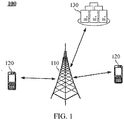
- FIG. 1 shows a wireless communication system 100 to which an embodiment of the present application is applied.
- the wireless communication system 100 may include an access network device 110.
- the access network device 110 may be a device that communicates with a terminal device.
- the access network device 110 may provide communication coverage for a specific geographic area and may communicate with a terminal device (e.g., UE) located within the coverage area.
- a terminal device e.g., UE
- the access network device 110 may be a base station (gNB) in a Next Generation Radio Access Network (NG RAN) or an NR system, or a radio controller in a Cloud Radio Access Network (CRAN), or the access network device may be a relay station, an access point, an on-board device, a wearable device, or a network device in a future evolved Public Land Mobile Network (PLMN), etc.
- the access network device 110 may further be a base station in an LTE system, for example, an evolved Universal Terrestrial Radio Access Network (E-UTRAN) device.
- E-UTRAN evolved Universal Terrestrial Radio Access Network
- the wireless communication system 100 also includes at least one terminal device 120 located within the coverage area of the access network device 110.
- the terminal device 120 may be mobile or fixed.
- the terminal device 120 may be referred to as an access terminal, a User Equipment (UE), a subscriber unit, a subscriber station, a mobile station, a remote station, a remote terminal, a mobile device, a user terminal, a terminal, a wireless communication device, a user agent, or a user apparatus.
- UE User Equipment
- the access terminal may be a cellular phone, a cordless phone, a Session Initiation Protocol (SIP) phone, a Wireless Local Loop (WLL) station, a Personal Digital Assistant (PDA), a handheld device with a wireless communication function, a computing device, or other processing device connected to a wireless modem, a vehicle-mounted device, a wearable device, a terminal device in a future 5G network, or a terminal device in a future evolved Public Land Mobile Network (PLMN), or the like.
- SIP Session Initiation Protocol
- WLL Wireless Local Loop
- PDA Personal Digital Assistant
- PLMN Public Land Mobile Network
- the wireless communication system 100 further includes a core network device 130 that communicates with the access network device.
- the core network device 130 may be a 5G core network device, for example, an Access and Mobility Management Function (AMF), for another example, a Session Management Function (SMF).
- the core network device 130 may also be an Evolved Packet Core (EPC) device of the LTE network, for example, a Session Management Function + Core Packet Gateway (SMF+PGW-C) device.
- EPC Evolved Packet Core
- SMF+PGW-C may realize the functions which can be realized by the SMF and the PGW-C at the same time.
- the AMF may perform information interaction with the SMF, for example, the SMF acquires information of the radio access network side from the AMF.
- the AMF may acquire a fallback identification from the radio access network, or acquire a message indicating that the bearer/flow is not successfully established for the terminal device.
- FIG. 1 exemplifies one access network device, one core network device and two terminal devices.
- the wireless communication system 100 may include multiple access network devices, and another quantity of terminal devices may be included within the coverage area of each access network device, which is not restricted in embodiments of the present application.
- the wireless communication system 100 may further include a Mobile Management Entity (MME), a Unified Data Management (UDM), an Authentication Server Function (AUSF), a User Plane Function (UPF), a Signaling Gateway (SGW) or other network entities, which is not restricted in embodiments of the present application.
- MME Mobile Management Entity
- UDM Unified Data Management
- AUSF Authentication Server Function
- UPF User Plane Function
- SGW Signaling Gateway
- the terminal device shown in FIG. 1 may establish and/or bind a Protocol Data Unit (PDU) session according to a route selection descriptor table corresponding to a first rule in a UE Route Selection Policy (URSP).
- the route selection descriptor table includes at least one group of index combinations. Each group of index combinations in the at least one group of index combinations includes at least one index. Each group of index combinations is used for indicating a group of parameter combinations.
- the parameter combination includes a value of each of at least one parameter for establishing and/or binding a PDU session.
- the at least one index corresponds to the at least one parameter in a one-to-one way, and the each parameter includes at least one value.
- URSP is introduced in an embodiment of the present invention, and the URSP policy is a policy for selecting different Protocol Data Unit (PDU) Sessions.
- the URSP policy specifies a routing policy of UE for different data flow filters. For UE, there is only one URSP, and there may be multiple rules in the URSP, and the rules in the URSP may include, but not limited to, Traffic descriptors, Application identifiers, Internet Protocol (IP) descriptors, non-IP descriptors and Route Selection descriptor (RSD). Each rule may further have a different priority value.
- IP Internet Protocol
- RSD Route Selection descriptor
- the RSD table includes, but not limited to, a value of at least one parameter for establishing and/or binding Protocol Data Unit (PDU) sessions, such as, a session and service continuity mode, Network Slice Selection Assistance Information (NSSAI), a Data Network Name (DNN), a non-seamless traffic offloading indicator, a radio access type.
- PDU Protocol Data Unit
- NSSAI Network Slice Selection Assistance Information
- DNN Data Network Name
- Each parameter may include at least one value.
- the parameter combination in an embodiment of the present application may refer to a combination of values of various parameters, for example, a parameter combination of a session and service continuity mode 1, NSSAI_1, a DNN_1, a non-seamless traffic offloading indicator as allowance, and a radio access type of the 3rd Generation Partnership Project (3GPP), and another parameter combination of a Session and service Continuity Mode 1, NSSAI_2, a DNN_3, a Non-Seamless traffic offloading indicator of Allowance, and a radio access type of the 3rd Generation Partnership Project (3GPP).
- all values of each parameter may be represented by indexes firstly.
- the session and service continuity mode has three values, the session and service continuity mode 1 is represented by index 1, the session and service continuity mode 2 is represented by index 2, and the session and service continuity mode 3 is represented by index 3.
- an index combination may be used for indicating a parameter combination.
- the index combination is [2; 1; 2; 1; 1], assuming that the parameters represented by indexes in the index combination from left to right are a session and service continuity mode, NSSAI, a DNN, a non-seamless traffic offloading indicator and a radio access type, respectively.
- the index combination [2; 1; 2; 1; 1] represents a parameter combination of a Session and service Continuity Mode 2, NSSAI_1, a DNN_2, a non-seamless traffic offloading indicator of allowance, and a radio access type of 3GPP.
- at least one index combination may be added to the RSD table, and the terminal device may establish and/or bind a PDU session according to parameter values in a parameter combination indicated by the at least one index combination.
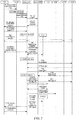
- FIGs. 2 and 3 show schematic block diagrams of wireless communication methods according to embodiments of the present application.
- the terminal devices shown in FIGs. 2 and 3 may be the terminal device shown in FIG. 1 .
- the method shown in FIG. 2 includes some or all of the following.
- a terminal device registers a request to a (Radio) Access Network ((R)AN), including a PSI parameter.
- R Radio
- the (Radio) Access Network (R)AN) performs Access and Mobility Management Function (AMF) selection.
- AMF Access and Mobility Management Function
- the (R)AN sends a registration request to a second AMF, including a PSI parameter.
- a first AMF sends a UE context to the second AMF.
- the second AMF sends a UE context response to the first AMF.
- the first AMF sends an identity verification request to the terminal device.
- the terminal device sends an identity verification response to the first AMF.
- the first AMF performs Authentication Server Function (AUSF) selection.
- AUSF Authentication Server Function
- an authentication/security operation is performed between the terminal device and the first AMF.
- the first AMF sends a registration complete notification to the second AMF.
- the first AMF performs an identity verification request/response operation with the terminal device and the AUSF respectively, and the AUSF performs an identity verification request/response operation with the Unified Data Management (UDM).
- UDM Unified Data Management
- an identity verification request/response operation is performed between the Equipment Identity Register (EIR) and the first AMF.
- EIR Equipment Identity Register
- the first AMF performs UDM selection.
- the first AMF sends a registration message to the UDM.
- the UDM sends an access message to the first AMF.
- the first AMF sends a subscription message to the UDM.
- the UDM sends a registration notification message to the second AMF.
- the second AMF sends a subscription to the UDM.
- the first AMF performs a Policy Control Function (PCF) selection.
- PCF Policy Control Function
- the first AMF and the PCF establish a policy during the registration process, including a PSI parameter.
- the first AMF and the PCF perform a subscription event operation.
- the first AMF sends an update/release PDU session to a Session Management Function (SMF).
- SMF Session Management Function
- the first AMF sends an AMF mobility request to a non-3GPP interworking function N3 (N3IWF).
- N3IWF non-3GPP interworking function
- the N3IWF sends an AMF mobility response for the request to the first AMF.
- the first AMF sends a Registration Accept to the terminal device.
- the terminal device sends a first Registration Complete to the first AMF.
- PSI Policy Section Identifier
- UE User Equipment
- UE-2 acquires the PSI parameter of UE-1 through the Registration Request of UE-1 (because the Registration Request is sent in a plaintext), then UE-2 may initiate a registration request carrying the PSI parameter of UE-1, and the network device will send the UE Policy of UE-1 to UE-2, causing potential security risk and privacy leak.
- the network side does not send a new UE Policy, thus the content of the UE Policy is falsified or partially lost.
- a wireless communication method is provided in an embodiment of the present invention.
- FIG. 3 is a schematic block diagram of another wireless communication method according to an embodiment of the present invention.
- the method 300 includes the following acts 310-320.
- a first network device acquires a Policy Section Identifier (PSI) parameter of a terminal device.
- PSI Policy Section Identifier
- the first network device determines whether to update policy information of the terminal device.
- the first network device determines whether to update policy information of a terminal device after acquiring the Policy Section Identifier (PSI) parameter of the terminal device. If determining to update the policy information of the terminal device, the first network device updates the policy information of the terminal device.
- measurement information in an embodiment of the present invention may include, but not limited to, a first policy, a UE Route Selection Policy (URSP) policy, and a Wireless Local Area Network Selection Policy (WLANSP).
- the first policy may be a policy for selecting a Service Set Identifier (SSID) for wireless local area network (WLAN) access
- the URSP policy is a policy for selecting different Protocol Data Unit (PDU) Sessions.
- SSID Service Set Identifier
- PDU Protocol Data Unit
- a Policy Section Identifier (PSI) list is introduced to flexibly divide the UE policy.
- PSI parameter it may be understood that the terminal device adds the PSI parameter saved by the terminal device into a request message for Initial registration to send to the PCF, so that the PCF can acquire what the PSI parameter currently stored by the terminal device is like, for the PCF to adjust the UE Policy as needed.
- the PSI parameter includes a subscriber identifier.
- the first network device receives a subscriber identifier sent by a second network device; and the first network device determines whether to update a policy of the terminal device according to the subscriber identifier corresponding to the PSI parameter and the subscriber identifier sent by the second network device.
- the first network device determines to update the policy information of the terminal device when determining that the subscriber identifier corresponding to the PSI parameter is different from the subscriber identifier sent by the second network device.
- the first network device when the first network device determines that the subscriber identifier corresponding to the PSI parameter is different from the subscriber identifier sent by the second network device, the first network device sends policy information corresponding to the subscriber identifier of the terminal device currently used to the terminal device. More specifically, when the first network device determines that the subscriber identifier corresponding to the PSI parameter is different from the subscriber identifier sent by the second network device, the first network device sends policy information corresponding to the subscriber identifier sent by the second network device to the terminal device.
- the subscriber identifier includes a Subscriber Private Identifier (SUPI) and/or a Subscriber Concealed Identifier (SUCI).
- the subscriber identifier may be an International Mobile Subscriber Identification Number (IMSI) assigned to the UE by a service provider (SP).
- IMSI International Mobile Subscriber Identification Number
- SP service provider
- the IMSI is a sign for distinguishing mobile subscribers, is stored in a Subscriber Identification Module (SIM) card, and may be used for distinguishing valid information of mobile subscribers.
- SIM Subscriber Identification Module
- the subscriber identifier may be a Temporary Mobile Subscriber Identity (S-TMSI) or an International Mobile Equipment Identity (IMEI) or the like.
- global uniqueness of the PSI parameter is uniquely identified by the subscriber identifier (e.g., SUPI and/or SUCI) in the PSI parameter, so that the network device can timely/correctly update the policy information of the terminal device.
- the PSI parameter is used for identifying a part of policy information for the terminal device under a subscribed user, and a quantity of its Bits is relatively small, therefore there only needs to distinguish (dozens of) different PSI parameters under one subscribed user.
- the first network device can timely/correctly determine whether the terminal device needs to update the policy information by comparing the subscriber identifier carried in the PSI parameter of the terminal device with the subscriber identifier acquired from the second network device.
- the first network device involved in an embodiment of the present invention may be PCF or a core network device
- the second network device may be AMF or a core network device, which is not specifically restricted in embodiments of the present invention.
- the PSI parameter including a subscriber identifier is taken as an example, and embodiments of the present invention are not limited thereto.
- the PSI parameter includes a Public Land Mobile Network (PLMN) identifier and a first identifier, the first identifier is used for uniquely identifying a PSI parameter under a PLMN.
- PLMN Public Land Mobile Network
- the PSI parameter may further include a timestamp and/or a version identifier.
- the first network device may acquire a last update time of the policy information of the terminal device according to the timestamp and/or the version identifier in the PSI parameter, and determine whether to update the policy information of the terminal device according to an update time threshold and/or a latest version.
- China Mobile's PLMN is 46000
- China Unicorn's PLMN is 46001.
- the PSI parameter is uniquely identified by the PLMN identifier and first identifier.
- a quantity of bits of the first identifier will be very large (hundreds of millions), and multiple PSI parameters may be carried under one SUPI, which has a great influence on the network side.
- the security is higher.
- a last update time of the policy information of the terminal device is acquired through the timestamp and/or version identifier in the PSI parameter, and then whether to update the policy information of the terminal device is determined according to a update time threshold and/or a latest version, so that whether the terminal device needs to update the policy information can be timely/correctly determined.
- an embodiment of the present invention further provides a way to update the policy information of the terminal device.
- the first network device updates the policy information of the terminal device when determining to update a policy of the terminal device.
- the first network device may periodically update the policy information of the terminal device.
- the first network device may aperiodically update the policy information of the terminal device.
- an embodiment of the present invention further provides an implementation mode for updating the policy information. For example, when the first network device determines to update the policy of the terminal device, the first network device may send all policy information to the terminal device, so that the terminal device selects part of the policy information to use from the all policy information according to a capability of the terminal device.
- the first network device may send/update part of policy information to the terminal device according to the capability information of the terminal device.
- the capability information includes at least one of the following information: a Permanent Equipment Identifier (PEI), a voice support capability of the terminal device, a Radio Frequency Selection Priority (RFSP) parameter of the terminal device, Single-Network Slice Selection Assistance Information (S-NSSAI) reported by the terminal device, whether an operating system supports receiving and/or identifying a Data Network Name (DNN) parameter sent by an application layer, and whether mapping an upper layer request message of 3GPP into a parameter indicating a PDU session characteristic is supported.
- DNN Data Network Name
- a parameter for mapping an upper layer request message of 3GPP for session establishment/modification may be a DNN parameter.
- the first network device acquires the capability information of the terminal device.
- UE Policy policy information
- the policy information may include multiple parameters.
- Table 1 UE route selection policy rule Parameter name Description Level Rule priority Determine an order by which URSP rules are executed Required Traffic descriptor Describe characteristics of the traffic Application descriptor Include an application identifier recognizable by a terminal operating system, the application identifier uniquely refers to a certain application Optional IP descriptor IP triple or IPv6 prefix, port number, protocol identifier, etc.
- Optional Non-IP descriptor Describe characteristics of non-IP packets
- Optional DNN DNN is provided by an application layer
- Optional Connectivity capability The capability parameter is provided by an application layer and used for requesting to run data on a connection supporting the capability
- Optional Route selection descriptor Route selection descriptor list see table 2 for its specific content
- Required Table 2 Route selection descriptor Parameter name Description
- Level Route selection descriptor priority Determine an order by which route selection descriptors are used
- Required Route selection parameter Define a sum of route selection parameters Optional Service and continuity mode selection Contain one value Optional Network slice selection Contain one or more values
- Optional PDU session type selection Contain one type value
- Optional Non-seamless traffic offloading indicator Indicate whether specific traffic needs to be offloaded to non-3GPP access
- UE Policy may include a UE route selection policy rule which may include a route selection descriptor.
- the route selection descriptor may include multiple parameters, for example, a route selection descriptor priority, a route selection parameter service and a continuity mode selection, etc.
- the terminal device when the terminal device receives all policy information sent by the first network device, the terminal device may select part of the policy information to use from the all policy information according to a capability of the terminal device. Further, the terminal device may perform a first behavior or a second behavior on the policy information according to the capability of the terminal device.
- the first behavior refers to that after the terminal device selects a first rule of a first priority, if the terminal device does not support a first parameter in the first rule, the terminal device does not select the first rule but selects a second rule of a second priority.
- the terminal device does not support a connection capability parameter in the first rule
- the first rule of the first priority is abandoned and the second rule of the second priority is selected.
- the route selection descriptor of the first priority is not selected, and the route selection descriptor of the second priority is selected.
- the route restriction descriptor of the first priority and the route restriction descriptor of the second priority belong to the same UE route selection policy rule.
- the second behavior refers to that after the terminal device selects the first rule of the first priority, if the terminal device does not support the first parameter in the first rule, the terminal device does not select the first parameter, and parameters other than the first parameter in the first rule remain valid.
- connection capability parameter in the first rule is abandoned and other parameters in the first rule remain valid.
- the access type selection parameter in the route selection descriptor of the first priority is not selected, and other parameters in the route selection descriptor of the first priority remain valid.
- connection capability is taken as an example below to explain that negotiation for UE capability and network behavior is needed in combination with Table 3.
- Table 3 Connectivity capability Parameter name Description Level Connectivity capability The parameter is provided by a UE application layer and is used for requesting a connection with a specific capability, such as supporting a specific DNN of a PDU session.
- the connection capability may refer to that a communication capability (e.g., an IMS service, a voice service, etc.) requested by an application layer is mapped, through an OS layer, to DNN parameters that may be recognized and supported by a 3GPP layer (a communication layer), and UE uses the mapped DNN to establish/modify a PDU session. Therefore, negotiation of UE capability and network behavior is needed.
- a communication capability e.g., an IMS service, a voice service, etc.
- 3GPP layer a communication layer
- whether the OS of the UE can directly identify a DNN provided by the application layer or allow the application layer to provide DNN information (such as opening a specific API interface), thereby binding the traffic corresponding to the belonged DNN to the PDU session corresponding to the route selection descriptor, is an optional item, therefore negotiation of UE capability and network behavior is also needed.
- the negotiation of UE capability and network behavior may include the following two approaches.
- an embodiment of the present invention further provides a wireless communication method, which includes: a first network device determines that a registration request message does not carry a Policy Section Identifier (PSI) parameter.
- PSI Policy Section Identifier
- the PSI parameter is used for identifying a part of policy information for a terminal device under a subscribed user; and a first network device sends policy information to the terminal device.
- the terminal device sends a registration request message to the network device, wherein the registration request message does not carry a PSI parameter or the PSI parameter is null.
- the terminal device receives policy information sent by the first network device.
- the terminal device when a Subscriber Identification Module (SIM) card is replaced, the terminal device initiates an initial registration request message in which a PSI parameter is not carried or the PSI parameter is set to be null, and clears the PSI parameters stored locally. For another example, the terminal device does not carry a PSI parameter or sets the PSI parameter to be null in an initial registration request message when a non-SIM card is unchanged. In this case, the terminal device receives policy information corresponding to a subscriber identifier of the terminal device currently used, which is sent by the first network device. Further, the terminal device may further clear PSI parameters stored locally.
- SIM Subscriber Identification Module
- the first network device determines that the registration request message may further carry first indication information for indicating that a Subscriber Identification Module (SIM) card of the terminal device has been replaced.
- SIM Subscriber Identification Module
- the first network device may directly update the policy information of the terminal device according to the first indication information.
- the first network device may generate second indication information after receiving the first indication information, wherein the second indication information is used for instructing the terminal device to delete and/or add policy information corresponding to each PSI parameter in at least one PSI parameter; and then, the first network device sends the second indication information to the terminal device.
- the terminal device may delete and/or add policy information according to the second indication information after receiving the second indication information sent by the first network device.
- the first network device sends policy information to the terminal device according to mapping relationship information which includes a corresponding relationship between subscriber identifiers and PSI parameters. For example, the first network device may generate the second indication information according to the mapping relationship information of the terminal device. In an embodiment of the present invention, before the first network device generates the second indication information according to the mapping relationship information of the terminal device, the first network device may further store the mapping relationship information of the terminal device.
- an embodiment of the present invention further provides a wireless communication method, which includes: a first network device sends/updates part of policy information to a terminal device according to capability information of the terminal device.
- the capability information includes at least one of the following information: a Permanent Equipment Identifier (PEI), a voice support capability of the terminal device, a Radio Frequency Selection Priority (RFSP) parameter of the terminal device, Single-Network Slice Selection Assistance Information (S-NSSAI) reported by the terminal device, whether an operating system supports receiving and/or identifying a Data Network Name (DNN) parameter sent by an application layer, and whether mapping an upper layer request message of 3GPP into a parameter indicating a PDU session characteristic is supported.
- PKI Permanent Equipment Identifier
- RFSP Radio Frequency Selection Priority
- S-NSSAI Single-Network Slice Selection Assistance Information
- the first network device acquires capability information of the terminal device.
- the terminal device sends the capability information of the terminal device to the first network device; and the terminal device receives the policy information of the terminal device sent by the first network device.
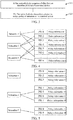
- mapping relationship in an embodiment of the present invention will be described below with reference to FIGs. 4 and 5 .
- the first network device may establish a mapping relationship between subscriber 1, subscriber 2, and subscriber 3 and all policy information.
- subscriber 1 corresponds to PSI 1, PSI 3, and PSI 5
- subscriber 2 corresponds to PSI 2 and PSI 3
- subscriber 3 corresponds to PSI 4, PSI 5, and PSI n.
- each PSI indicates one piece of policy information.
- each subscriber identifier in the mapping relationship information corresponds to at least one PSI parameter separately, and further, one PSI parameter in the mapping relationship information corresponds to one subscriber identifier only.
- subscriber 1, subscriber 2, and subscriber 3 respectively establish corresponding relationships between PSI parameters corresponding to policy information and subscriber identifiers.
- subscriber 1 corresponds to PSI 1, PSI 2, and PSI 3
- PSI 1 is used for indicating policy information 1
- PSI 2 is used for indicating policy information 2
- PSI 3 is used for indicating policy information 3.
- each subscriber identifier in the mapping relationship information corresponds to at least one PSI parameter separately, PSI and policy information between subscribers will not affect each other, and therefore, the same PSI or policy information may be used repeatedly.
- PSI 4 corresponding to subscriber 2 may also be used for indicating policy information 3.
- the first network device may only send policy information according to the subscriber identifier.
- mapping relationship information shown in FIGs. 4 and 5 is only illustrative, and an embodiment of the present invention does not specifically limit a form and quantity of the mapping relationship information.
- subscriber 2 shown in FIG. 4 may further correspond to other multiple PSIs.
- the mapping relationship information may be in a form of a table or a form of a graph.
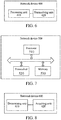
- FIG. 6 is a schematic block diagram of a network device according to an embodiment of the present invention.
- the network device 400 includes a processing unit 410.
- the processing unit 410 is used for determining whether to update policy information of a terminal device after acquiring a Policy Section Identifier (PSI) parameter of the terminal device.
- PSI Policy Section Identifier
- the PSI parameter includes a subscriber identifier.
- the terminal device further includes a transceiving unit 420.
- the transceiving unit 420 is used for receiving a subscriber identifier sent by a second network device.
- the processing unit 410 is specifically used for determining whether to update the policy of the terminal device according to the subscriber identifier corresponding to the PSI parameter and the subscriber identifier sent by the second network device.
- the processing unit 410 is further specifically used for: determining to update the policy information of the terminal device when determining that the subscriber identifier corresponding to the PSI parameter is different from the subscriber identifier sent by the second network device.
- the processing unit 410 is further specifically used for sending policy information corresponding to a subscriber identifier of the terminal device currently used to the terminal device.
- the processing unit 410 is further specifically used for sending policy information corresponding to the subscriber identifier sent by the second network device to the terminal device.
- the subscriber identifier includes a Subscriber Private Identifier (SUPI) and/or a Subscriber Concealed Identifier (SUCI).
- SUPI Subscriber Private Identifier
- SUCI Subscriber Concealed Identifier
- the PSI parameter includes a Public Land Mobile Network (PLMN) identifier and a first identifier, and the first identifier is used for uniquely identifying a PSI parameter under the PLMN.
- PLMN Public Land Mobile Network
- the PSI parameter includes a timestamp and/or a version identifier.
- the processing unit 410 is specifically used for: acquiring a last update time of the policy information of the terminal device according to the timestamp and/or the version identifier in the PSI parameter, and determining whether to update the policy information of the terminal device according to an update time threshold and/or a latest version.
- the processing unit 410 is further used for: updating the policy information of the terminal device when determining to update a policy of the terminal device.
- the processing unit 410 is specifically used for: updating periodically the policy information of the terminal device.
- the processing unit 410 is specifically used for: sending/updating part of the policy information to the terminal device according to capability information of the terminal device.
- the capability information of the terminal device includes at least one of the following: a Permanent Equipment Identifier (PEI), a voice support capability of the terminal device, a Radio Frequency Selection Priority (RFSP) parameter of the terminal device, Single-Network Slice Selection Assistance Information (S-NSSAI) reported by the terminal device, whether an operating system supports receiving and/or identifying a Data Network Name (DNN) parameter sent by an application layer, and whether mapping an upper layer request message of 3GPP into a parameter indicating a PDU session characteristic is supported.
- PEI Permanent Equipment Identifier
- RFSP Radio Frequency Selection Priority
- S-NSSAI Single-Network Slice Selection Assistance Information
- the processing unit 410 is further used for: acquiring the capability information of the terminal device before updating the policy information of the terminal device according to the capability information of the terminal device.
- the processing unit 410 is specifically used for: sending all policy information to the terminal device so that the terminal device selects part of the policy information to use from the all policy information according to a capability of the terminal device.
- the network device is a Policy Control Function (PCF).
- PCF Policy Control Function
- the second network device is an Access and Mobility Management Function (AMF).
- AMF Access and Mobility Management Function
- a network device 500 may include a processor 510, a transceiver 520, and a memory 530.
- the memory 530 may be used for storing indication information, or may be used for storing codes, instructions, etc., executed by the processor 510.
- the various components in the network device 500 are connected by a bus system.
- the bus system includes a power bus, a control bus and a status signal bus in addition to a data bus.
- the network device 500 shown in FIG. 7 can implement the various processes implemented by the first network device in the method embodiment shown in FIG. 3 . To avoid duplication, the details will not be repeated here.
- FIG. 8 is a schematic block diagram of a terminal device 600 according to an embodiment of the present invention.
- the terminal device 600 includes a determining unit 610 and a transceiving unit 620.
- the determining unit 610 is used for determining a Policy Section Identifier (PSI) parameter which is used for identifying a part of policy information for the terminal device under a subscribed user.
- PSI Policy Section Identifier
- the transceiving unit 620 is used for sending the PSI parameter to a first network device.
- the PSI parameter includes a subscriber identifier.
- the transceiving unit 620 is further used for: receiving policy information corresponding to a subscriber identifier of the terminal device currently used, which is sent by the first network device.
- the transceiving unit 620 is specifically used for: receiving policy information corresponding to a subscriber identifier sent by a second network device.
- the subscriber identifier includes a Subscriber Private Identifier (SUPI) and/or a Subscriber Concealed Identifier (SUCI).
- SUPI Subscriber Private Identifier
- SUCI Subscriber Concealed Identifier
- the PSI parameter includes a Public Land Mobile Network (PLMN) identifier and a first identifier, and the first identifier is used for uniquely identifying a PSI parameter under the PLMN.
- PLMN Public Land Mobile Network
- the transceiving unit 620 is further used for: receiving the policy information of the terminal device sent by the first network device.
- the transceiving unit 620 is further specifically used for: receiving periodically policy information of the terminal device sent by the first network device.
- the terminal device is the policy information of the terminal device determined by the first network device according to capability information of the terminal device.
- the capability information of the terminal device includes at least one of the following: Permanent Equipment Identifier (PEI), a voice support capability of the terminal device, a Radio Frequency Selection Priority (RFSP) parameter of the terminal device, Single-Network Slice Selection Assistance Information (S-NSSAI) reported by the terminal device, whether an operating system supports receiving and/or identifying a Data Network Name (DNN) parameter sent by an application layer, and whether mapping an upper layer request message of 3GPP into a parameter indicating a PDU session characteristic is supported.
- PEI Permanent Equipment Identifier
- RFSP Radio Frequency Selection Priority
- S-NSSAI Single-Network Slice Selection Assistance Information
- the transceiving unit 620 is further used for: before receiving the policy information of the terminal device sent by the first network device, sending the capability information of the terminal device to the first network device.
- the transceiving unit 620 is specifically used for: receiving all of the policy information of the terminal device sent by the first network device; and wherein the processing unit is further used for selecting part of the policy information to use from the all policy information according to a capability of the terminal device.
- the first network device is a Policy Control Function (PCF).
- PCF Policy Control Function
- the second network device is an Access and Mobility Management Function (AMF).
- AMF Access and Mobility Management Function
- a terminal device 700 may include a processor 710, a transceiver 720, and a memory 730.
- the memory 730 may be used for storing indication information, or may be used for storing codes, instructions, etc., executed by the processor 710.
- the various components in the terminal device 700 are connected by a bus system.
- the bus system includes a power bus, a control bus and a status signal bus in addition to a data bus.
- the terminal device 700 shown in FIG. 9 can implement the various processes implemented by the terminal device in the method embodiment shown in FIG. 3 . To avoid duplication, the details will not be repeated here. That is, a method embodiment in embodiments of the present invention may be applied to or implemented by a processor.
- an embodiment of the present invention further provides a network device, which includes a processing unit and a transceiving unit.
- the processing unit is used for determining that the registration request message does not carry a Policy Section Identifier (PSI) parameter, wherein the PSI parameter is used for identifying a part of policy information for the terminal device under a subscribed user.
- the transceiving unit is used for sending policy information to the terminal device.
- PSI Policy Section Identifier
- the processing unit is further used for determining that the registration request message carries first indication information, wherein the first indication information is used for indicating that a Subscriber Identification Module (SIM) card of the terminal device has been replaced.
- SIM Subscriber Identification Module
- the processing unit is further used for generating second indication information, wherein the second indication information is used for instructing the terminal device to delete and/or add policy information corresponding to each PSI parameter in at least one PSI parameter; wherein the transceiving unit is further used for sending second indication information to the terminal device.
- the transceiving unit is specifically used for sending the policy information to the terminal device according to mapping relationship information, wherein the mapping relationship information includes a corresponding relationship between subscriber identifiers and PSI parameters.
- each subscriber identifier in the mapping relationship information corresponds to at least one PSI parameter separately.
- one PSI parameter in the mapping relationship information corresponds to one subscriber identifier only.
- mapping relationship information corresponds to multiple PSI parameters.
- one PSI parameter in the mapping relationship information corresponds to multiple subscriber identifiers.
- the transceiving unit is specifically used for sending policy information corresponding to a subscriber identifier sent by a second network device to the terminal device.
- An embodiment of the invention further provides a terminal device, which includes a transceiving unit, used for sending a registration request message to the network device.
- the registration request message does not carry a Policy Section Identifier (PSI) parameter
- the PSI parameter is used for identifying a part of policy information for the terminal device under a subscribed user.
- the transceiving unit is further used for receiving policy information sent by a first network device. For example, when a Subscriber Identification Module (SIM) card is replaced, the terminal device initiates an initial registration request message in which a PSI parameter is not carried or the PSI parameter is set to be null, and clears the PSI parameters stored locally.
- SIM Subscriber Identification Module
- the terminal device does not carry a PSI parameter or sets the PSI parameter to be null in an initial registration request message when a non-SIM card is unchanged.
- the registration request message carries first indication information, wherein the first indication information is used for indicating that a Subscriber Identification Module (SIM) card of the terminal device has been replaced.
- SIM Subscriber Identification Module
- the transceiving unit is specifically used for: receiving second indication information sent by the first network device, wherein the second indication information is used for instructing the terminal device to delete and/or add policy information corresponding to each PSI parameter in at least one PSI parameter; and deleting and/or adding policy information according to the second indication information.
- the transceiving unit is specifically used for receiving policy information corresponding to a subscriber identifier of the terminal device currently used, which is sent by the first network device.
- the terminal device further includes a processing unit for clearing PSI parameters stored locally.
- An embodiment of the present application further provides a network device, which includes: a transceiving unit, used for sending/updating part of policy information to the terminal device according to capability information of the terminal device.
- the capability information includes at least one of the following: a Permanent Equipment Identifier (PEI), a voice support capability of the terminal device, a Radio Frequency Selection Priority (RFSP) parameter of the terminal device, Single-Network Slice Selection Assistance Information (S-NSSAI) reported by the terminal device, whether an operating system supports receiving and/or identifying a Data Network Name (DNN) parameter sent by an application layer, and whether mapping an upper layer request message of 3GPP into a parameter indicating a PDU session characteristic is supported.
- PEI Permanent Equipment Identifier
- RFSP Radio Frequency Selection Priority
- S-NSSAI Single-Network Slice Selection Assistance Information
- the transceiving unit is further used for: acquiring, by a first network device, the capability information of the terminal device.
- An embodiment of the present application further provides a terminal device, which includes: a sending unit, used for sending capability information of the terminal device to a first network device; and a transceiving unit, used for receiving the policy information of the terminal device sent by the first network device.
- the capability information includes at least one of the following: a Permanent Equipment Identifier (PEI), a voice support capability of the terminal device, a Radio Frequency Selection Priority (RFSP) parameter of the terminal device, Single-Network Slice Selection Assistance Information (S-NSSAI) reported by the terminal device, whether an operating system supports receiving and/or identifying a Data Network Name (DNN) parameter sent by an application layer, and whether mapping an upper layer request message of 3GPP into a parameter indicating a PDU session characteristic is supported.
- PEI Permanent Equipment Identifier
- RFSP Radio Frequency Selection Priority
- S-NSSAI Single-Network Slice Selection Assistance Information
- each act of the method embodiments in the embodiments of the present invention may be completed by an integrated logic circuit of hardware in the processor or an instruction in the form of software. More specifically, the acts of the method disclosed in connection with the embodiments of the present invention may be directly embodied as accomplishment through the execution of a hardware decoding processor or accomplishment through the execution in the combination of hardware and software modules in the decoding processor.
- Software modules may be located in a typical storage medium in the art, such as, a random access memory (RAM), a flash memory, a read-only memory, a programmable read-only memory, an electrical erasable programmable memory, or a register.
- the storage medium is located in the memory, and the processor reads the information in the memory and completes the acts of the above method in combination with its hardware.
- the processor mentioned in embodiments of the present invention may be an integrated circuit chip with a capability of signal processing.
- the processor can implement or execute the methods, acts or logical diagrams disclosed in the embodiments of the present invention.
- the above processor may be a general purpose processor, a digital signal processor (DSP), an application specific integrated circuit (ASIC), a field programmable gate array (FPGA) or other programmable logic devices, a transistor logic device, or a discrete hardware component, or the like.
- the general purpose processor may be a microprocessor or the processor may be any conventional processor or the like.
- the memory mentioned in the embodiments of the present invention may be a volatile memory or non-volatile memory, or may include both volatile and non-volatile memories.
- the non-transitory memory may be a read-only memory (ROM), a programmable ROM (PROM), an erasable PROM (EPROM), an electrically erasable EPROM (EEPROM), or a flash memory.
- the volatile memory may be a Random Access Memory (RAM) which serves as an external cache. It should be understood that, the foregoing memory is illustrative and should not be construed as limiting.
- the memory in the embodiments of the present invention may be a Static RAM (SRAM), Dynamic RAM (DRAM), Synchronous DRAM (SDRAM), Double Data Rate SDRAM (DDR SDRAM), Enhanced SDRAM (ESDRAM), Synch link DRAM (SLDRAM), Direct Rambus RAM (DR RAM), or the like. That is, memories in the systems and methods described in this document are intended to include, but not limited to, these and any other suitable types of memories.
- SRAM Static RAM
- DRAM Dynamic RAM
- SDRAM Synchronous DRAM
- DDR SDRAM Double Data Rate SDRAM
- ESDRAM Enhanced SDRAM
- SLDRAM Synch link DRAM
- DR RAM Direct Rambus RAM
- first identifier may be used in an embodiment of the present invention, but these identifiers should not be limited to these terms. These terms are only used for distinguishing the identifiers from each other.
- the word “when” as used herein may be interpreted as “ if” or “ whether” or “ while” or “ in response to a determination of/that” or “ in response to a detection of/that”.
- the phrase “if determining” or “if detecting (a stated condition or event)” may be interpreted as “when ... is determined” or “in response to a determination” or “when (stated condition or event) is detected” or “in response to a detection of (stated condition or event)”.
- the disclosed systems, devices and methods may be implemented in other ways.
- the device embodiments described above are only illustrative, for example, the division of the units is only a logical function division, and there may be other division modes in an actual implementation mode, for example, multiple units or components may be combined or integrated into another system, or some features may be ignored or not executed.
- the mutual coupling or direct coupling or communication connection between each other shown or discussed may be indirect coupling or communication connection through some interfaces, devices or units, and may be in electrical, mechanical or other forms.
- the units described as separated components may or may not be physically separated, and the component shown as a unit may or may not be a physical unit, i.e., it may be located in one place or may be allocated over multiple network units. Parts or all of the units can be selected according to actual needs to achieve the purpose of the embodiments of the present invention.
- various functional units in the embodiments of the present invention may be integrated in one processing unit, or various units may be presented separately in a physical way, or two or more units may be integrated into one unit.
- the function units may be stored in a computer readable storage medium if realized in a form of software functional units and sold or used as a separate product.
- the technical solutions of the embodiments of the present invention in essence, or the part contributing to the related art, or the part of the technical solutions, may be embodied in the form of a software product stored in a storage medium, including several instructions for causing a computer device (which may be a personal computer, a server, or a network device, etc.) to perform all or parts of the acts of the methods described in various embodiments of the present invention.
- the aforementioned storage medium includes a medium capable of storing program codes, such as, a U disk, a mobile hard disk, a read-only memory (ROM), a magnetic disk or an optical disk, etc.
Landscapes
- Engineering & Computer Science (AREA)
- Computer Networks & Wireless Communication (AREA)
- Signal Processing (AREA)
- Computer Security & Cryptography (AREA)
- Databases & Information Systems (AREA)
- Business, Economics & Management (AREA)
- Accounting & Taxation (AREA)
- Mobile Radio Communication Systems (AREA)
- Telephone Function (AREA)
Priority Applications (2)
| Application Number | Priority Date | Filing Date | Title |
|---|---|---|---|
| PL18905239T PL3668134T3 (pl) | 2018-02-09 | 2018-10-08 | Sposób komunikacji bezprzewodowej, urządzenie sieciowe i urządzenie końcowe |
| EP21191084.9A EP3926990B1 (fr) | 2018-02-09 | 2018-10-08 | Procédé de communication sans fil, dispositif de réseau et dispositif terminal |
Applications Claiming Priority (4)
| Application Number | Priority Date | Filing Date | Title |
|---|---|---|---|
| PCT/CN2018/076013 WO2019153252A1 (fr) | 2018-02-09 | 2018-02-09 | Procédé de communication sans fil, dispositif de réseau et dispositif terminal |
| CN2018078330 | 2018-03-07 | ||
| PCT/CN2018/079203 WO2019153428A1 (fr) | 2018-02-09 | 2018-03-15 | Procédé de communication sans fil, dispositif de réseau et dispositif terminal |
| PCT/CN2018/109369 WO2019153766A1 (fr) | 2018-02-09 | 2018-10-08 | Procédé de communication sans fil, dispositif de réseau et dispositif terminal |
Related Child Applications (1)
| Application Number | Title | Priority Date | Filing Date |
|---|---|---|---|
| EP21191084.9A Division EP3926990B1 (fr) | 2018-02-09 | 2018-10-08 | Procédé de communication sans fil, dispositif de réseau et dispositif terminal |
Publications (3)
| Publication Number | Publication Date |
|---|---|
| EP3668134A4 EP3668134A4 (fr) | 2020-06-17 |
| EP3668134A1 true EP3668134A1 (fr) | 2020-06-17 |
| EP3668134B1 EP3668134B1 (fr) | 2021-09-08 |
Family
ID=67548658
Family Applications (2)
| Application Number | Title | Priority Date | Filing Date |
|---|---|---|---|
| EP18905239.2A Active EP3668134B1 (fr) | 2018-02-09 | 2018-10-08 | Procédé de communication sans fil, dispositif de réseau et dispositif terminal |
| EP21191084.9A Active EP3926990B1 (fr) | 2018-02-09 | 2018-10-08 | Procédé de communication sans fil, dispositif de réseau et dispositif terminal |
Family Applications After (1)
| Application Number | Title | Priority Date | Filing Date |
|---|---|---|---|
| EP21191084.9A Active EP3926990B1 (fr) | 2018-02-09 | 2018-10-08 | Procédé de communication sans fil, dispositif de réseau et dispositif terminal |
Country Status (19)
| Country | Link |
|---|---|
| US (2) | US10771962B2 (fr) |
| EP (2) | EP3668134B1 (fr) |
| JP (1) | JP7127118B6 (fr) |
| KR (1) | KR102355344B1 (fr) |
| CN (2) | CN111314908B (fr) |
| AU (1) | AU2018408054B2 (fr) |
| CA (1) | CA3065119C (fr) |
| CL (1) | CL2019003773A1 (fr) |
| ES (1) | ES2893172T3 (fr) |
| IL (1) | IL271041B (fr) |
| MX (1) | MX2019015584A (fr) |
| MY (1) | MY205215A (fr) |
| PH (1) | PH12019502683A1 (fr) |
| PL (1) | PL3668134T3 (fr) |
| RU (1) | RU2750996C1 (fr) |
| SG (1) | SG11201911307TA (fr) |
| TW (1) | TWI797247B (fr) |
| WO (2) | WO2019153428A1 (fr) |
| ZA (1) | ZA202000039B (fr) |
Families Citing this family (31)
| Publication number | Priority date | Publication date | Assignee | Title |
|---|---|---|---|---|
| KR102709496B1 (ko) * | 2018-04-05 | 2024-09-26 | 삼성전자주식회사 | 무선 통신 시스템에서 사용자 장치의 정책 관리를 위한 장치 및 방법 |
| WO2020037666A1 (fr) * | 2018-08-24 | 2020-02-27 | Nokia Technologies Oy | Configuration de politiques de sélection de route |
| CN116801423A (zh) * | 2018-09-19 | 2023-09-22 | 华为技术有限公司 | 策略控制方法、设备及系统 |
| WO2020064125A1 (fr) * | 2018-09-28 | 2020-04-02 | Lenovo (Singapore) Pte. Ltd. | Détermination d'un type de connexion réseau à partir d'une capacité de connexion spécifique à un os |
| US10582371B1 (en) * | 2019-08-09 | 2020-03-03 | Cisco Technology, Inc. | Subscriber management with a stateless network architecture in a fifth generation (5G) network |
| US10986568B1 (en) * | 2019-10-31 | 2021-04-20 | Verizon Patent And Licensing Inc. | Systems and methods for providing network slice selection assistance and route selection policy configurations in a universal integrated circuit card |
| CN112787837A (zh) * | 2019-11-07 | 2021-05-11 | 华为技术有限公司 | 数据共享的方法、设备及系统 |
| CN112954768B (zh) * | 2019-12-10 | 2023-01-13 | 华为技术有限公司 | 通信方法、装置及系统 |
| US11388662B2 (en) * | 2020-02-14 | 2022-07-12 | Charter Communications Operating, Llc | Apparatus and methods for generating and distributing policy in wireless networks |
| EP4102869A4 (fr) * | 2020-03-27 | 2023-07-19 | Samsung Electronics Co., Ltd. | Procédé de gestion de session en fonction d'une application de politique d'équipement utilisateur dans un système de communication sans fil |
| JP7499871B2 (ja) * | 2020-03-31 | 2024-06-14 | テレフオンアクチーボラゲット エルエム エリクソン(パブル) | ネットワーク誘導wdセル再選択のための方法 |
| CN113573370B (zh) * | 2020-04-29 | 2022-09-13 | 中国移动通信有限公司研究院 | 一种信息处理方法、网络设备、终端及存储介质 |
| CN113747511B (zh) * | 2020-05-28 | 2022-09-16 | 荣耀终端有限公司 | 数据传输方法及装置 |
| WO2022011540A1 (fr) * | 2020-07-14 | 2022-01-20 | Qualcomm Incorporated | Temporisateur de sélection de descripteur de sélection de route à haute priorité (rsd) |
| WO2022032560A1 (fr) * | 2020-08-13 | 2022-02-17 | Qualcomm Incorporated | Procédure de sélection de tranche de réseau flexible |
| CN114258089B (zh) * | 2020-09-23 | 2025-12-19 | 中兴通讯股份有限公司 | 网络切片的选择方法、装置及终端、计算机可读存储介质 |
| WO2022088003A1 (fr) * | 2020-10-30 | 2022-05-05 | 华为技术有限公司 | Procédé de transmission d'informations, procédé de traitement léger et appareil de communication associé |
| CN114449657A (zh) * | 2020-11-06 | 2022-05-06 | 维沃移动通信有限公司 | 策略关联的建立方法及装置、终端及网络侧设备 |
| CN112399523B (zh) * | 2020-12-01 | 2022-11-18 | 中国联合网络通信集团有限公司 | 一种ursp核查方法及装置 |
| CN115150933A (zh) * | 2021-03-30 | 2022-10-04 | 中国移动通信有限公司研究院 | 一种切片确定方法、装置和存储介质 |
| CN112822646B (zh) * | 2021-04-19 | 2021-08-13 | 中兴通讯股份有限公司 | 消息处理方法和装置、电子设备、计算机可读存储介质 |
| KR20230172598A (ko) | 2021-04-26 | 2023-12-22 | 후아웨이 테크놀러지 컴퍼니 리미티드 | 통신 방법 및 장치, 저장 매체, 및 칩 시스템 |
| US11540196B2 (en) * | 2021-05-11 | 2022-12-27 | Verizon Patent And Licensing Inc. | System and method for processing enhanced route selection descriptors |
| US12108302B2 (en) * | 2021-06-29 | 2024-10-01 | At&T Intellectual Property I, L.P. | Method and system for network slice-based high priority service handling in radio access technology (RAT) switching |
| US20230075944A1 (en) * | 2021-08-13 | 2023-03-09 | Parallel Wireless, Inc. | REST Resilient Client-Server Reconciliation for Telecom Networks |
| CN116567529B (zh) * | 2022-01-28 | 2025-11-21 | 维沃移动通信有限公司 | 终端策略更新方法、终端及通信设备 |
| WO2023160831A1 (fr) * | 2022-02-25 | 2023-08-31 | Lenovo (Singapore) Pte. Ltd | Règles de politique de sélection d'itinéraire pour différents réseaux |
| CN118055394A (zh) * | 2022-11-15 | 2024-05-17 | 维沃移动通信有限公司 | 信息传输方法、装置、通信设备及可读存储介质 |
| KR20240103194A (ko) * | 2022-12-27 | 2024-07-04 | 삼성전자주식회사 | 무선 통신 시스템에서 엔티티들 간 단말 정책을 동기화 하기 위한 방법 및 장치 |
| WO2024239175A1 (fr) * | 2023-05-19 | 2024-11-28 | 北京小米移动软件有限公司 | Procédé et appareil de détermination de positionnement, ainsi que dispositif de communication, système de commuication et support d'enregistrement |
| CN121645446A (zh) * | 2024-08-29 | 2026-03-10 | 华为技术有限公司 | 通信方法及相关装置 |
Family Cites Families (30)
| Publication number | Priority date | Publication date | Assignee | Title |
|---|---|---|---|---|
| US7136363B2 (en) * | 2001-01-09 | 2006-11-14 | Nokia Corporation | Method and apparatus for improving radio spectrum usage and decreasing user data delay when providing packet PSI status |
| US7246165B2 (en) * | 2001-11-28 | 2007-07-17 | Telefonaktiebolaget Lm Ericsson (Publ) | Policy co-ordination in a communications network |
| US7701963B2 (en) * | 2002-10-15 | 2010-04-20 | Qualcomm Incorporated | Method and apparatus for the use of micro-tunnels in a communications system |
| SG154340A1 (en) * | 2003-05-01 | 2009-08-28 | Interdigital Tech Corp | Delivery of data over wlan coupled to 3gpp |
| FI20045298A0 (fi) * | 2004-08-16 | 2004-08-16 | Nokia Corp | Mediapalvelun reititys |
| US8340626B2 (en) * | 2006-04-28 | 2012-12-25 | Qualcomm Incorporated | System and method for supporting voice call continuity for VOIP emergency calls |
| CN101094224B (zh) * | 2006-06-22 | 2012-06-27 | 华为技术有限公司 | 提供、访问与注销服务的方法及提供服务的系统 |
| CN101282519B (zh) * | 2007-04-03 | 2010-12-22 | 展讯通信(上海)有限公司 | 一种智能卡装置中需要加密imsi的plmn列表的更新方法 |
| CN101365230B (zh) * | 2007-08-07 | 2010-08-11 | 华为技术有限公司 | 异构网络切换/改变时的用户分离方法、系统及装置 |
| CN101478796B (zh) * | 2009-01-20 | 2011-01-05 | 中国科学院计算技术研究所 | 一种异构网络分级切换控制信令系统及其切换方法 |
| US8977303B2 (en) * | 2009-05-08 | 2015-03-10 | Zte Corporation | Interworking circuit service fall back |
| JP5620808B2 (ja) | 2010-12-24 | 2014-11-05 | 株式会社Nttドコモ | 通信管理装置、移動機、通信システムおよび通信管理方法 |
| CN103379479B (zh) * | 2012-04-27 | 2016-08-03 | 电信科学技术研究院 | 一种确定用户标识和通知参数信息的方法、系统及设备 |
| CN103428822A (zh) * | 2012-05-14 | 2013-12-04 | 中兴通讯股份有限公司 | 分流到无线局域网络的接入方法及系统、mme和ue |
| CN103702377B (zh) * | 2012-09-27 | 2017-04-12 | 华为终端有限公司 | 一种网络切换方法和设备 |
| CN104349269B (zh) * | 2013-08-08 | 2018-10-30 | 华为终端(东莞)有限公司 | 一种更新策略控制功能信息的方法、装置和系统 |
| EP2871875B1 (fr) * | 2013-11-06 | 2020-10-14 | Vodafone Holding GmbH | Procédé de sécurité pour la vérification d'une requête de recherche d'informations |
| US9763081B2 (en) * | 2013-11-21 | 2017-09-12 | Apple Inc. | System and method for policy control functions management mechanism |
| CN105637498B (zh) | 2014-05-23 | 2019-05-28 | 华为技术有限公司 | eUICC的管理方法、eUICC、SM平台和系统 |
| WO2016019559A1 (fr) | 2014-08-08 | 2016-02-11 | 华为技术有限公司 | Appareil, système, et procédé d'identification d'équipement d'utilisateur de réseau partagé |
| CN105491566B (zh) * | 2014-09-18 | 2018-11-02 | 中国电信股份有限公司 | 孖机检测方法、系统与pcrf设备 |
| DE102016206488B4 (de) * | 2015-04-21 | 2022-10-27 | Apple Inc. | Verwalten von inaktiven elektronischen Teilnehmeridentitätsmodulen |
| US11245725B2 (en) * | 2015-04-24 | 2022-02-08 | Matthew B. TREVATHAN | Dynamically updating policy controls for mobile devices and applications |
| WO2016183745A1 (fr) * | 2015-05-15 | 2016-11-24 | 华为技术有限公司 | Procédé et appareil d'établissement de connexion |
| US10516540B2 (en) * | 2016-01-28 | 2019-12-24 | Apple Inc. | Management of profiles in an embedded universal integrated circuit card (eUICC) |
| CN109565370B (zh) * | 2016-06-15 | 2021-06-15 | 康维达无线有限责任公司 | 用于新无线电的上传控制信令的装置 |
| EP4109777A1 (fr) * | 2017-05-05 | 2022-12-28 | Apple Inc. | Gestion de systèmes de communication mimo |
| CN107770815B (zh) * | 2017-10-18 | 2020-09-11 | 中国联合网络通信集团有限公司 | 一种基于位置的mec方法及设备 |
| EP3697170B1 (fr) * | 2017-11-17 | 2022-01-12 | LG Electronics Inc. | Procédés, équipement d'utilisateur et amf permettant le lancement d'une procédure de demande de service |
| WO2019169679A1 (fr) * | 2018-03-05 | 2019-09-12 | Oppo广东移动通信有限公司 | Procédé de transmission d'informations de terminal et produits associés |
-
2018
- 2018-03-15 WO PCT/CN2018/079203 patent/WO2019153428A1/fr not_active Ceased
- 2018-10-08 CA CA3065119A patent/CA3065119C/fr active Active
- 2018-10-08 AU AU2018408054A patent/AU2018408054B2/en active Active
- 2018-10-08 CN CN202010103313.5A patent/CN111314908B/zh active Active
- 2018-10-08 JP JP2020513637A patent/JP7127118B6/ja active Active
- 2018-10-08 IL IL271041A patent/IL271041B/en unknown
- 2018-10-08 KR KR1020207006586A patent/KR102355344B1/ko active Active
- 2018-10-08 EP EP18905239.2A patent/EP3668134B1/fr active Active
- 2018-10-08 MX MX2019015584A patent/MX2019015584A/es unknown
- 2018-10-08 PL PL18905239T patent/PL3668134T3/pl unknown
- 2018-10-08 MY MYPI2019007045A patent/MY205215A/en unknown
- 2018-10-08 ES ES18905239T patent/ES2893172T3/es active Active
- 2018-10-08 SG SG11201911307TA patent/SG11201911307TA/en unknown
- 2018-10-08 EP EP21191084.9A patent/EP3926990B1/fr active Active
- 2018-10-08 RU RU2019139729A patent/RU2750996C1/ru active
- 2018-10-08 WO PCT/CN2018/109369 patent/WO2019153766A1/fr not_active Ceased
- 2018-10-08 CN CN201880042535.1A patent/CN110800330A/zh active Pending
-
2019
- 2019-02-01 TW TW108104175A patent/TWI797247B/zh active
- 2019-11-28 PH PH12019502683A patent/PH12019502683A1/en unknown
- 2019-12-10 US US16/709,885 patent/US10771962B2/en active Active
- 2019-12-20 CL CL2019003773A patent/CL2019003773A1/es unknown
-
2020
- 2020-01-03 ZA ZA2020/00039A patent/ZA202000039B/en unknown
- 2020-08-03 US US16/983,601 patent/US11582596B2/en active Active
Also Published As
Similar Documents
| Publication | Publication Date | Title |
|---|---|---|
| US11582596B2 (en) | Method for updating policy information, network device and terminal device | |
| EP3691380B1 (fr) | Procédé de transmission de données, dispositif terminal, et dispositif de fonction de gestion de session (smf) | |
| JP7198906B2 (ja) | 能力管理方法及び通信装置 | |
| US12581285B2 (en) | Method for traffic descriptor transmission and related devices | |
| EP3528591A1 (fr) | Procédé, terminal, réseau, et système de communication par connexion à double appel et double carte sim | |
| CN113261346A (zh) | 信息传输方法和设备 | |
| CN115334490B (zh) | 网络分片准入控制(nsac)发现和漫游增强 | |
| US10904763B2 (en) | Network access method and device | |
| CN111432456A (zh) | 终端驻留的方法、移动管理实体、基站、系统及存储介质 | |
| CN111757417A (zh) | 网络接入方法和设备 | |
| US12369021B2 (en) | Terminal capability identifier operation method and communications device | |
| CN116472729A (zh) | 处理plmn优先化 | |
| US9729503B2 (en) | Network name processing method and mobility management network element device | |
| WO2019153252A1 (fr) | Procédé de communication sans fil, dispositif de réseau et dispositif terminal | |
| CN117377065A (zh) | 无线通信方法、设备及存储介质 | |
| CN115707061A (zh) | 中继选择方法和装置 | |
| CN104780527B (zh) | 网络名称处理方法和移动性管理网元设备 | |
| HK40064700A (en) | Terminal capability identification operating method and communication device | |
| BR112019027476B1 (pt) | Método de comunicação sem fio e dispositivo terminal |
Legal Events
| Date | Code | Title | Description |
|---|---|---|---|
| STAA | Information on the status of an ep patent application or granted ep patent |
Free format text: STATUS: THE INTERNATIONAL PUBLICATION HAS BEEN MADE |
|
| PUAI | Public reference made under article 153(3) epc to a published international application that has entered the european phase |
Free format text: ORIGINAL CODE: 0009012 |
|
| STAA | Information on the status of an ep patent application or granted ep patent |
Free format text: STATUS: REQUEST FOR EXAMINATION WAS MADE |
|
| 17P | Request for examination filed |
Effective date: 20200309 |
|
| A4 | Supplementary search report drawn up and despatched |
Effective date: 20200514 |
|
| AK | Designated contracting states |
Kind code of ref document: A1 Designated state(s): AL AT BE BG CH CY CZ DE DK EE ES FI FR GB GR HR HU IE IS IT LI LT LU LV MC MK MT NL NO PL PT RO RS SE SI SK SM TR |
|
| AX | Request for extension of the european patent |
Extension state: BA ME |
|
| STAA | Information on the status of an ep patent application or granted ep patent |
Free format text: STATUS: EXAMINATION IS IN PROGRESS |
|
| 17Q | First examination report despatched |
Effective date: 20201118 |
|
| GRAP | Despatch of communication of intention to grant a patent |
Free format text: ORIGINAL CODE: EPIDOSNIGR1 |
|
| STAA | Information on the status of an ep patent application or granted ep patent |
Free format text: STATUS: GRANT OF PATENT IS INTENDED |
|
| RIC1 | Information provided on ipc code assigned before grant |
Ipc: H04W 60/04 20090101ALN20210331BHEP Ipc: H04W 48/18 20090101ALN20210331BHEP Ipc: H04W 8/22 20090101ALN20210331BHEP Ipc: H04W 8/18 20090101ALN20210331BHEP Ipc: H04W 12/02 20090101ALN20210331BHEP Ipc: H04W 8/20 20090101ALI20210331BHEP Ipc: H04W 4/24 20180101ALI20210331BHEP Ipc: H04M 15/00 20060101ALI20210331BHEP Ipc: H04L 12/24 20060101ALI20210331BHEP Ipc: H04L 12/14 20060101ALI20210331BHEP Ipc: H04W 12/72 20210101ALI20210331BHEP Ipc: H04W 12/037 20210101ALI20210331BHEP Ipc: H04W 12/00 20210101AFI20210331BHEP |
|
| RIC1 | Information provided on ipc code assigned before grant |
Ipc: H04W 60/04 20090101ALN20210407BHEP Ipc: H04W 48/18 20090101ALN20210407BHEP Ipc: H04W 8/22 20090101ALN20210407BHEP Ipc: H04W 8/18 20090101ALN20210407BHEP Ipc: H04W 12/02 20090101ALN20210407BHEP Ipc: H04W 8/20 20090101ALI20210407BHEP Ipc: H04W 4/24 20180101ALI20210407BHEP Ipc: H04M 15/00 20060101ALI20210407BHEP Ipc: H04L 12/24 20060101ALI20210407BHEP Ipc: H04L 12/14 20060101ALI20210407BHEP Ipc: H04W 12/72 20210101ALI20210407BHEP Ipc: H04W 12/037 20210101ALI20210407BHEP Ipc: H04W 12/00 20210101AFI20210407BHEP |
|
| DAV | Request for validation of the european patent (deleted) | ||
| DAX | Request for extension of the european patent (deleted) | ||
| INTG | Intention to grant announced |
Effective date: 20210428 |
|
| GRAS | Grant fee paid |
Free format text: ORIGINAL CODE: EPIDOSNIGR3 |
|
| GRAA | (expected) grant |
Free format text: ORIGINAL CODE: 0009210 |
|
| STAA | Information on the status of an ep patent application or granted ep patent |
Free format text: STATUS: THE PATENT HAS BEEN GRANTED |
|
| AK | Designated contracting states |
Kind code of ref document: B1 Designated state(s): AL AT BE BG CH CY CZ DE DK EE ES FI FR GB GR HR HU IE IS IT LI LT LU LV MC MK MT NL NO PL PT RO RS SE SI SK SM TR |
|
| REG | Reference to a national code |
Ref country code: GB Ref legal event code: FG4D |
|
| REG | Reference to a national code |
Ref country code: AT Ref legal event code: REF Ref document number: 1429677 Country of ref document: AT Kind code of ref document: T Effective date: 20210915 Ref country code: CH Ref legal event code: EP |
|
| REG | Reference to a national code |
Ref country code: IE Ref legal event code: FG4D |
|
| REG | Reference to a national code |
Ref country code: DE Ref legal event code: R096 Ref document number: 602018023452 Country of ref document: DE |
|
| REG | Reference to a national code |
Ref country code: NO Ref legal event code: T2 Effective date: 20210908 |
|
| REG | Reference to a national code |
Ref country code: SE Ref legal event code: TRGR |
|
| REG | Reference to a national code |
Ref country code: NL Ref legal event code: FP |
|
| REG | Reference to a national code |
Ref country code: GR Ref legal event code: EP Ref document number: 20210402606 Country of ref document: GR Effective date: 20211111 |
|
| REG | Reference to a national code |
Ref country code: LT Ref legal event code: MG9D |
|
| PG25 | Lapsed in a contracting state [announced via postgrant information from national office to epo] |
Ref country code: FI Free format text: LAPSE BECAUSE OF FAILURE TO SUBMIT A TRANSLATION OF THE DESCRIPTION OR TO PAY THE FEE WITHIN THE PRESCRIBED TIME-LIMIT Effective date: 20210908 Ref country code: RS Free format text: LAPSE BECAUSE OF FAILURE TO SUBMIT A TRANSLATION OF THE DESCRIPTION OR TO PAY THE FEE WITHIN THE PRESCRIBED TIME-LIMIT Effective date: 20210908 Ref country code: BG Free format text: LAPSE BECAUSE OF FAILURE TO SUBMIT A TRANSLATION OF THE DESCRIPTION OR TO PAY THE FEE WITHIN THE PRESCRIBED TIME-LIMIT Effective date: 20211208 Ref country code: LT Free format text: LAPSE BECAUSE OF FAILURE TO SUBMIT A TRANSLATION OF THE DESCRIPTION OR TO PAY THE FEE WITHIN THE PRESCRIBED TIME-LIMIT Effective date: 20210908 Ref country code: HR Free format text: LAPSE BECAUSE OF FAILURE TO SUBMIT A TRANSLATION OF THE DESCRIPTION OR TO PAY THE FEE WITHIN THE PRESCRIBED TIME-LIMIT Effective date: 20210908 |
|
| REG | Reference to a national code |
Ref country code: ES Ref legal event code: FG2A Ref document number: 2893172 Country of ref document: ES Kind code of ref document: T3 Effective date: 20220208 |
|
| REG | Reference to a national code |
Ref country code: AT Ref legal event code: MK05 Ref document number: 1429677 Country of ref document: AT Kind code of ref document: T Effective date: 20210908 |
|
| PG25 | Lapsed in a contracting state [announced via postgrant information from national office to epo] |
Ref country code: LV Free format text: LAPSE BECAUSE OF FAILURE TO SUBMIT A TRANSLATION OF THE DESCRIPTION OR TO PAY THE FEE WITHIN THE PRESCRIBED TIME-LIMIT Effective date: 20210908 |
|
| PG25 | Lapsed in a contracting state [announced via postgrant information from national office to epo] |
Ref country code: AT Free format text: LAPSE BECAUSE OF FAILURE TO SUBMIT A TRANSLATION OF THE DESCRIPTION OR TO PAY THE FEE WITHIN THE PRESCRIBED TIME-LIMIT Effective date: 20210908 |
|
| REG | Reference to a national code |
Ref country code: CH Ref legal event code: PL |
|
| PG25 | Lapsed in a contracting state [announced via postgrant information from national office to epo] |
Ref country code: IS Free format text: LAPSE BECAUSE OF FAILURE TO SUBMIT A TRANSLATION OF THE DESCRIPTION OR TO PAY THE FEE WITHIN THE PRESCRIBED TIME-LIMIT Effective date: 20220108 Ref country code: SM Free format text: LAPSE BECAUSE OF FAILURE TO SUBMIT A TRANSLATION OF THE DESCRIPTION OR TO PAY THE FEE WITHIN THE PRESCRIBED TIME-LIMIT Effective date: 20210908 Ref country code: SK Free format text: LAPSE BECAUSE OF FAILURE TO SUBMIT A TRANSLATION OF THE DESCRIPTION OR TO PAY THE FEE WITHIN THE PRESCRIBED TIME-LIMIT Effective date: 20210908 Ref country code: RO Free format text: LAPSE BECAUSE OF FAILURE TO SUBMIT A TRANSLATION OF THE DESCRIPTION OR TO PAY THE FEE WITHIN THE PRESCRIBED TIME-LIMIT Effective date: 20210908 Ref country code: PT Free format text: LAPSE BECAUSE OF FAILURE TO SUBMIT A TRANSLATION OF THE DESCRIPTION OR TO PAY THE FEE WITHIN THE PRESCRIBED TIME-LIMIT Effective date: 20220110 Ref country code: EE Free format text: LAPSE BECAUSE OF FAILURE TO SUBMIT A TRANSLATION OF THE DESCRIPTION OR TO PAY THE FEE WITHIN THE PRESCRIBED TIME-LIMIT Effective date: 20210908 Ref country code: CZ Free format text: LAPSE BECAUSE OF FAILURE TO SUBMIT A TRANSLATION OF THE DESCRIPTION OR TO PAY THE FEE WITHIN THE PRESCRIBED TIME-LIMIT Effective date: 20210908 Ref country code: AL Free format text: LAPSE BECAUSE OF FAILURE TO SUBMIT A TRANSLATION OF THE DESCRIPTION OR TO PAY THE FEE WITHIN THE PRESCRIBED TIME-LIMIT Effective date: 20210908 |
|
| REG | Reference to a national code |
Ref country code: DE Ref legal event code: R097 Ref document number: 602018023452 Country of ref document: DE |
|
| REG | Reference to a national code |
Ref country code: BE Ref legal event code: MM Effective date: 20211031 |
|
| PG25 | Lapsed in a contracting state [announced via postgrant information from national office to epo] |
Ref country code: MC Free format text: LAPSE BECAUSE OF FAILURE TO SUBMIT A TRANSLATION OF THE DESCRIPTION OR TO PAY THE FEE WITHIN THE PRESCRIBED TIME-LIMIT Effective date: 20210908 |
|
| PLBE | No opposition filed within time limit |
Free format text: ORIGINAL CODE: 0009261 |
|
| STAA | Information on the status of an ep patent application or granted ep patent |
Free format text: STATUS: NO OPPOSITION FILED WITHIN TIME LIMIT |
|
| PG25 | Lapsed in a contracting state [announced via postgrant information from national office to epo] |
Ref country code: DK Free format text: LAPSE BECAUSE OF FAILURE TO SUBMIT A TRANSLATION OF THE DESCRIPTION OR TO PAY THE FEE WITHIN THE PRESCRIBED TIME-LIMIT Effective date: 20210908 Ref country code: BE Free format text: LAPSE BECAUSE OF NON-PAYMENT OF DUE FEES Effective date: 20211031 Ref country code: LU Free format text: LAPSE BECAUSE OF NON-PAYMENT OF DUE FEES Effective date: 20211008 |
|
| 26N | No opposition filed |
Effective date: 20220609 |
|
| PG25 | Lapsed in a contracting state [announced via postgrant information from national office to epo] |
Ref country code: SI Free format text: LAPSE BECAUSE OF FAILURE TO SUBMIT A TRANSLATION OF THE DESCRIPTION OR TO PAY THE FEE WITHIN THE PRESCRIBED TIME-LIMIT Effective date: 20210908 Ref country code: LI Free format text: LAPSE BECAUSE OF NON-PAYMENT OF DUE FEES Effective date: 20211031 Ref country code: CH Free format text: LAPSE BECAUSE OF NON-PAYMENT OF DUE FEES Effective date: 20211031 |
|
| PG25 | Lapsed in a contracting state [announced via postgrant information from national office to epo] |
Ref country code: IE Free format text: LAPSE BECAUSE OF NON-PAYMENT OF DUE FEES Effective date: 20211008 |
|
| P01 | Opt-out of the competence of the unified patent court (upc) registered |
Effective date: 20230412 |
|
| PG25 | Lapsed in a contracting state [announced via postgrant information from national office to epo] |
Ref country code: CY Free format text: LAPSE BECAUSE OF FAILURE TO SUBMIT A TRANSLATION OF THE DESCRIPTION OR TO PAY THE FEE WITHIN THE PRESCRIBED TIME-LIMIT Effective date: 20210908 |
|
| PG25 | Lapsed in a contracting state [announced via postgrant information from national office to epo] |
Ref country code: HU Free format text: LAPSE BECAUSE OF FAILURE TO SUBMIT A TRANSLATION OF THE DESCRIPTION OR TO PAY THE FEE WITHIN THE PRESCRIBED TIME-LIMIT; INVALID AB INITIO Effective date: 20181008 |
|
| PG25 | Lapsed in a contracting state [announced via postgrant information from national office to epo] |
Ref country code: MK Free format text: LAPSE BECAUSE OF FAILURE TO SUBMIT A TRANSLATION OF THE DESCRIPTION OR TO PAY THE FEE WITHIN THE PRESCRIBED TIME-LIMIT Effective date: 20210908 |
|
| PG25 | Lapsed in a contracting state [announced via postgrant information from national office to epo] |
Ref country code: TR Free format text: LAPSE BECAUSE OF FAILURE TO SUBMIT A TRANSLATION OF THE DESCRIPTION OR TO PAY THE FEE WITHIN THE PRESCRIBED TIME-LIMIT Effective date: 20210908 |
|
| PG25 | Lapsed in a contracting state [announced via postgrant information from national office to epo] |
Ref country code: MT Free format text: LAPSE BECAUSE OF FAILURE TO SUBMIT A TRANSLATION OF THE DESCRIPTION OR TO PAY THE FEE WITHIN THE PRESCRIBED TIME-LIMIT Effective date: 20210908 |
|
| PGFP | Annual fee paid to national office [announced via postgrant information from national office to epo] |
Ref country code: PL Payment date: 20250930 Year of fee payment: 8 |
|
| PGFP | Annual fee paid to national office [announced via postgrant information from national office to epo] |
Ref country code: NL Payment date: 20251027 Year of fee payment: 8 |
|
| PGFP | Annual fee paid to national office [announced via postgrant information from national office to epo] |
Ref country code: DE Payment date: 20251027 Year of fee payment: 8 |
|
| PGFP | Annual fee paid to national office [announced via postgrant information from national office to epo] |
Ref country code: GB Payment date: 20251024 Year of fee payment: 8 |
|
| PGFP | Annual fee paid to national office [announced via postgrant information from national office to epo] |
Ref country code: NO Payment date: 20251022 Year of fee payment: 8 |
|
| PGFP | Annual fee paid to national office [announced via postgrant information from national office to epo] |
Ref country code: IT Payment date: 20251022 Year of fee payment: 8 |
|
| PGFP | Annual fee paid to national office [announced via postgrant information from national office to epo] |
Ref country code: FR Payment date: 20251028 Year of fee payment: 8 |
|
| PGFP | Annual fee paid to national office [announced via postgrant information from national office to epo] |
Ref country code: GR Payment date: 20251030 Year of fee payment: 8 |
|
| PGFP | Annual fee paid to national office [announced via postgrant information from national office to epo] |
Ref country code: SE Payment date: 20251027 Year of fee payment: 8 |
|
| PGFP | Annual fee paid to national office [announced via postgrant information from national office to epo] |
Ref country code: ES Payment date: 20251104 Year of fee payment: 8 |