EP3668146B1 - Informationsübertragungsverfahren und -vorrichtung - Google Patents
Informationsübertragungsverfahren und -vorrichtung Download PDFInfo
- Publication number
- EP3668146B1 EP3668146B1 EP18845149.6A EP18845149A EP3668146B1 EP 3668146 B1 EP3668146 B1 EP 3668146B1 EP 18845149 A EP18845149 A EP 18845149A EP 3668146 B1 EP3668146 B1 EP 3668146B1
- Authority
- EP
- European Patent Office
- Prior art keywords
- signal
- cyclic shift
- sequence
- terminal
- index
- Prior art date
- Legal status (The legal status is an assumption and is not a legal conclusion. Google has not performed a legal analysis and makes no representation as to the accuracy of the status listed.)
- Active
Links
Images

Classifications
-
- H—ELECTRICITY
- H04—ELECTRIC COMMUNICATION TECHNIQUE
- H04W—WIRELESS COMMUNICATION NETWORKS
- H04W72/00—Local resource management
- H04W72/20—Control channels or signalling for resource management
- H04W72/23—Control channels or signalling for resource management in the downlink direction of a wireless link, i.e. towards a terminal
-
- H—ELECTRICITY
- H04—ELECTRIC COMMUNICATION TECHNIQUE
- H04L—TRANSMISSION OF DIGITAL INFORMATION, e.g. TELEGRAPHIC COMMUNICATION
- H04L5/00—Arrangements affording multiple use of the transmission path
- H04L5/003—Arrangements for allocating sub-channels of the transmission path
- H04L5/0053—Allocation of signalling, i.e. of overhead other than pilot signals
-
- H—ELECTRICITY
- H04—ELECTRIC COMMUNICATION TECHNIQUE
- H04B—TRANSMISSION
- H04B17/00—Monitoring; Testing
- H04B17/30—Monitoring; Testing of propagation channels
-
- H—ELECTRICITY
- H04—ELECTRIC COMMUNICATION TECHNIQUE
- H04L—TRANSMISSION OF DIGITAL INFORMATION, e.g. TELEGRAPHIC COMMUNICATION
- H04L27/00—Modulated-carrier systems
- H04L27/26—Systems using multi-frequency codes
-
- H—ELECTRICITY
- H04—ELECTRIC COMMUNICATION TECHNIQUE
- H04L—TRANSMISSION OF DIGITAL INFORMATION, e.g. TELEGRAPHIC COMMUNICATION
- H04L27/00—Modulated-carrier systems
- H04L27/26—Systems using multi-frequency codes
- H04L27/2601—Multicarrier modulation systems
-
- H—ELECTRICITY
- H04—ELECTRIC COMMUNICATION TECHNIQUE
- H04L—TRANSMISSION OF DIGITAL INFORMATION, e.g. TELEGRAPHIC COMMUNICATION
- H04L27/00—Modulated-carrier systems
- H04L27/26—Systems using multi-frequency codes
- H04L27/2601—Multicarrier modulation systems
- H04L27/2602—Signal structure
- H04L27/2605—Symbol extensions, e.g. Zero Tail, Unique Word [UW]
-
- H—ELECTRICITY
- H04—ELECTRIC COMMUNICATION TECHNIQUE
- H04L—TRANSMISSION OF DIGITAL INFORMATION, e.g. TELEGRAPHIC COMMUNICATION
- H04L5/00—Arrangements affording multiple use of the transmission path
-
- H—ELECTRICITY
- H04—ELECTRIC COMMUNICATION TECHNIQUE
- H04L—TRANSMISSION OF DIGITAL INFORMATION, e.g. TELEGRAPHIC COMMUNICATION
- H04L5/00—Arrangements affording multiple use of the transmission path
- H04L5/0001—Arrangements for dividing the transmission path
- H04L5/0003—Two-dimensional division
- H04L5/0005—Time-frequency
- H04L5/0007—Time-frequency the frequencies being orthogonal, e.g. OFDM(A) or DMT
-
- H—ELECTRICITY
- H04—ELECTRIC COMMUNICATION TECHNIQUE
- H04W—WIRELESS COMMUNICATION NETWORKS
- H04W24/00—Supervisory, monitoring or testing arrangements
-
- H—ELECTRICITY
- H04—ELECTRIC COMMUNICATION TECHNIQUE
- H04W—WIRELESS COMMUNICATION NETWORKS
- H04W4/00—Services specially adapted for wireless communication networks; Facilities therefor
- H04W4/70—Services for machine-to-machine communication [M2M] or machine type communication [MTC]
-
- H—ELECTRICITY
- H04—ELECTRIC COMMUNICATION TECHNIQUE
- H04W—WIRELESS COMMUNICATION NETWORKS
- H04W52/00—Power management, e.g. Transmission Power Control [TPC] or power classes
- H04W52/02—Power saving arrangements
-
- H—ELECTRICITY
- H04—ELECTRIC COMMUNICATION TECHNIQUE
- H04W—WIRELESS COMMUNICATION NETWORKS
- H04W52/00—Power management, e.g. Transmission Power Control [TPC] or power classes
- H04W52/02—Power saving arrangements
- H04W52/0209—Power saving arrangements in terminal devices
- H04W52/0225—Power saving arrangements in terminal devices using monitoring of external events, e.g. the presence of a signal
-
- H—ELECTRICITY
- H04—ELECTRIC COMMUNICATION TECHNIQUE
- H04W—WIRELESS COMMUNICATION NETWORKS
- H04W68/00—User notification, e.g. alerting and paging, for incoming communication, change of service or the like
-
- H—ELECTRICITY
- H04—ELECTRIC COMMUNICATION TECHNIQUE
- H04W—WIRELESS COMMUNICATION NETWORKS
- H04W68/00—User notification, e.g. alerting and paging, for incoming communication, change of service or the like
- H04W68/005—Transmission of information for alerting of incoming communication
-
- H—ELECTRICITY
- H04—ELECTRIC COMMUNICATION TECHNIQUE
- H04W—WIRELESS COMMUNICATION NETWORKS
- H04W76/00—Connection management
- H04W76/20—Manipulation of established connections
- H04W76/28—Discontinuous transmission [DTX]; Discontinuous reception [DRX]
-
- H—ELECTRICITY
- H04—ELECTRIC COMMUNICATION TECHNIQUE
- H04W—WIRELESS COMMUNICATION NETWORKS
- H04W72/00—Local resource management
- H04W72/04—Wireless resource allocation
- H04W72/044—Wireless resource allocation based on the type of the allocated resource
Definitions
- the present application relates to communications and, for example, to an information transmission method terminal and base station.
- MTC Machine Type Communications
- M2M Machine to Machine
- GSM global system of mobile communication
- LTE Long Term Evolution
- LTE-A Long Term Evolution-Advanced
- Various MTC data services based on the LTE/LTE-A will also be more attractive.
- C-IoT Comb-Internet Of Things
- 3GPP 3rd generation partnership project
- NB-IOT Narrow Band-Internet Of Things
- the NB-IoT system focuses on radio frequency (RF) access technologies with low complexity and low throughput, and the main research objects include: indoor coverage improvement, support for a massive number of user equipments with low throughput, low delay sensitivity, ultra-low equipment costs, low equipment power consumption and network architecture.
- RF radio frequency
- the network can send paging to user equipment (UE) in an idle state or the UE in a connected state.
- the paging process may be triggered by a core network for instructing a certain UE to receive a paging request, or may also be triggered by an enhanced Node B (eNB) for notifying update of system information.
- eNB enhanced Node B
- the paging message is scheduled by using a Physical Downlink Control Channel (PDCCH) scrambled by a P-Radio Network Temporary Identifier (RNTI), and is transmitted in a Physical Downlink Shared Channel (PDSCH).
- PDCCH Physical Downlink Control Channel
- RNTI P-Radio Network Temporary Identifier
- a process of a terminal obtaining a paging message is that: the terminal detects a corresponding PDCCH at a paging occasion (PO) to determine whether the PDSCH indicated by the PDCCH carries a paging message or a system message change indication corresponding to the terminal, but if the terminal does not detect the corresponding PDCCH at the PO, it indicates that there is no paging message corresponding to the terminal at the PO, and then the terminal detects the PDCCH at a next PO.
- PO paging occasion
- the Machine Type Communications Physical Downlink Control Channel (MPDCCH) or the Narrowband Physical Downlink Control Channel (NPDCCH) is carried in the PDSCH, that is, only after receiving a complete subframe, the terminal may determine whether a corresponding MPDCCH is detected.
- MPDCCH Machine Type Communications Physical Downlink Control Channel
- NPDCCH Narrowband Physical Downlink Control Channel
- the detection process of the PDCCH is that: the terminal attempts to detect the PDCCH according to all downlink control information formats, and if the PDCCH is not detected, the terminal continues to attempt the detection on a next sub-frame until the PDCCH is detected.
- Embodiments of the present application provide an information transmission method and apparatus to avoid the problems in the related art of excessive times of detecting the physical downlink channel by the terminal and increased power consumption of the terminal.
- An embodiment of the present application provides a mobile communication network (which includes, but is not limited to a 5th generation (5G) mobile communication network).
- the network architecture of this network may include a network side device (such as a base station) and a terminal.
- An information transmission method executable on the above network architecture is provided in the embodiment. It is to be noted that an execution environment of the above information transmission method provided by the embodiment of the present application is not limited to the above network architecture.
- FIG. 1 is a block diagram of a hardware structure of a mobile terminal for a signal transmission method according to an embodiment of the present application.
- a mobile terminal 10 may include one or more (only one is shown in FIG. 1 ) processors 102 (the processor 102 may include, but is not limited to, a processing device such as a microcontroller unit (MCU) and a field programmable gate array (FPGA)), a memory 104 used for storing data, and a transmission apparatus 106 used for implementing a communication function.
- MCU microcontroller unit
- FPGA field programmable gate array
- the structure shown in FIG. 1 is merely illustrative, and not intended to limit the structure of the electronic apparatus described above.
- the mobile terminal 10 may further include more or fewer components than the components shown in FIG. 1 , or may have a configuration different from the configuration shown in FIG. 1 .
- the memory 104 may be configured to store software programs and modules of application software, such as program instructions/modules corresponding to the signal transmission method in the embodiments of the present application.
- the processors 102 execute the software programs and modules stored in the memory 104 to perform functional applications and data processing, that is, the method described above is implemented.
- the memory 104 may include a high-speed random access memory, or may further include a nonvolatile memory such as one or more magnetic storage apparatuses, flash memories or other nonvolatile solid-state memories.
- the memory 104 may further include memories that are remotely disposed with respect to the processors 102. These remote memories may be connected to the mobile terminal 10 via a network. Examples of the above network include, but are not limited to, the Internet, an intranet, a local area network, a mobile communication network and a combination thereof.
- the transmission apparatus 106 is configured to receive or transmit data via a network.
- a network may include a radio network provided by a communication provider of the mobile terminal 10.
- the transmission apparatus 106 includes a network interface controller (NIC), which may be connected to other network equipment via a base station and thus be capable of communicating with the Internet.
- the transmission apparatus 106 may be a radio frequency (RF) module, which is configured to communicate with the Internet in a wireless way.
- RF radio frequency
- FIG. 2 is a flowchart of a signal transmission method according to an embodiment of the present application. As shown in FIG. 2 , the method includes the steps S202 and S204 described below.
- step S202 a terminal receives, at a preset first time-frequency position, a signal sent by a base station.
- step S204 the terminal detects the signal, and determines whether to detect a physical downlink channel according to a detection result for the signal.
- a terminal receives a signal sent by a base station at a preset first time-frequency position, detects the signal, and determines whether to detect a physical downlink channel according to a detection result for the signal. In other words, the terminal determines whether to detect the physical downlink channel according to whether a detection result of the detected signal meets a pre-agreed rule.
- the above steps may, but are not limited to, be executed by the terminal.
- the physical downlink channel described above may include a PDCCH, and the PDCCH is a physical downlink control channel carting downlink control information.
- the step of determining whether to detect the physical downlink channel according to the detection result for the signal includes operations as follows: the terminal detects the physical downlink channel in condition that the signal is determined to be a first signal by the terminal; and the terminal does not detect the physical downlink channel in condition that the signal is determined to be a second signal by the terminal.
- the step that the terminal detects the signal includes operations as follows: the terminal detects the signal according to a connection mode configured by the base station; where in condition that the terminal is in a first connection mode, when the signal is determined to be a third signal, the terminal detects the physical downlink channel, and when the signal is determined to be a fourth signal, the terminal does not detect the physical downlink channel; or in condition that the terminal is in a second connection mode, when the signal is determined to be a fifth signal, the terminal detects the physical downlink channel, and when the signal is determined to be a sixth signal, the terminal does not detect the physical downlink channel.
- the step that the terminal detects the signal includes operations as follows: the terminal detects the signal according to a connection mode configured by the base station; where in condition that the terminal is in the first connection mode, the terminal detects the physical downlink channel only when the signal is detected to be a seventh signal; or in condition that the terminal is in the second connection mode, the terminal detects the physical downlink channel only when the signal is detected to be an eighth signal.
- a frequency domain position of the first time-frequency position contains a narrowband where the signal is located.
- the narrowband is a paging narrowband (PNB), or a narrowband where the PDCCH is located.
- PPB paging narrowband
- a frequency domain position of the first time-frequency position contains a resource block where the signal is located.
- the resource block is a resource block determined according to a terminal index in the narrowband, a resource block where paging is located, or a resource block where the PDCCH is located.
- a frequency domain position of the first time-frequency position contains a subframe where the signal is located.
- the subframe is determined according to at least one of: a starting position of a PDCCH search space, a discontinuous reception (DRX) starting position or an extended DRX (eDRX) starting position, a first offset, or the number of repetitions of the signal; where the first offset is configured via high-layer signaling or is preset, and the number of repetitions of the signal is configured via high-layer signaling.
- an orthogonal frequency division multiplexing (OFDM) symbol where the signal contained at a time domain position in the preset first time-frequency position is located is one of: at least one of a second OFDM symbol and a third OFDM symbol in the subframe under conventional coverage; or symbols in the subframe from an m1-th OFDM symbol to an end of the subframe under coverage enhancement; or symbols in the subframe from an m2-th OFDM symbol to an end of the subframe.
- the first time domain position is a time domain position in the first time-frequency position
- m1 and m2 are positive integers greater than or equal to 0.
- a Zadoff-Chu (ZC) sequence corresponds to the signal, where a root sequence index of the ZC sequence is determined according to a cell index; or a ZC sequence and a pseudo-noise (PN) sequence correspond to the signal, where the root sequence index of the ZC sequence is determined according to a cell index and an initial value of the PN sequence is determined according to a terminal index, where a length of a sequence is determined according to at least one of: the number of sub-carriers in a frequency domain occupied by the signal, or the number of OFDM symbols in a time domain occupied by the signal.
- the length of the sequence refers to a length of a sequence corresponding to the signal.
- the length of the sequence refers to a length of the ZC sequence, but if the sequence corresponding to the signal is a ZC sequence and a PN sequence, the length of the sequence refers to a length of both the ZC sequence and the PN sequence.
- a cyclic shift index of the ZC sequence is determined according to a cyclic shift index 1 corresponding to the first signal, and a cyclic shift index of the ZC sequence is determined according to a cyclic shift index 2 corresponding to the second signal; where the cyclic shift index 1 and the cyclic shift index 2 are pre-determined values, or are cyclic shift indexes having a maximum cyclic shift spacing between the cyclic shift indexes.
- a cyclic shift index of the ZC sequence is determined according to a cyclic shift index 3 corresponding to the third signal, and a cyclic shift index of the ZC sequence is determined according to a cyclic shift index 4 corresponding to the fourth signal;
- a cyclic shift index of the ZC sequence is determined according to a cyclic shift index 5 corresponding to the fifth signal, and a cyclic shift index of the ZC sequence is determined according to a cyclic shift index 6 corresponding to the sixth signal;
- the cyclic shift index 3, the cyclic shift index 4, the cyclic shift index 5 and the cyclic shift index 6 are pre-determined values, or satisfy that each two of the cyclic shift index 3, the cyclic shift index 4, the cyclic shift index 5 and the cyclic shift index 6 have a maximum cyclic shift spacing between the each two of the cyclic shift index 3, the cyclic shift index 4, the cyclic shift index
- cyclic shift index 3 the cyclic shift index 4
- cyclic shift index 5 the cyclic shift index 6
- cyclic shift index 6 the cyclic shift index 6
- the above selection manner may also be adopted when two cyclic shift indexes need to be selected.
- a cyclic shift index of the ZC sequence is determined according to a cyclic shift index 7 corresponding to the seventh signal; when the terminal is in the second connection mode, a cyclic shift index of the ZC sequence is determined according to a cyclic shift index 8 corresponding to the eighth signal; where the cyclic shift index 7 and the cyclic shift index 8 are pre-determined values, or are cyclic shift indexes having maximum cyclic shift spacing therebetween.
- a signal transmission method is further provided.
- the method includes steps one and two described below.
- a base station sends a signal at a preset first time-frequency position.
- step two the base station determines whether to send a physical downlink channel according to the signal.
- the step that the base station determines whether to send the physical downlink channel according to the signal includes operations as follows: when the signal is a first signal, the base station sends a physical downlink channel corresponding to the signal; and when the signal is a second signal, the base station does not send a physical downlink channel corresponding to the signal.
- the step that the base station sends the signal at the preset first time-frequency position includes operations as follows: the base station sends the signal according to a connection mode of the terminal; where in condition that the terminal is in a first connection mode, when the signal sent by the base station is a third signal, the base station sends the corresponding physical downlink channel, and when the signal sent by the base station is a fourth signal, the base station does not send the physical downlink channel; or in condition that the terminal is in a second connection mode, when the signal sent by the base station is a fifth signal, the base station sends the corresponding physical downlink channel, and when the signal sent by the base station is a sixth signal, the base station does not send the physical downlink channel.
- the step that the base station sends the signal at the preset first time-frequency position includes operations as follows: the base station sends the signal according to the connection mode of the terminal; where in condition that the terminal is in a first connection mode, the base station sends the corresponding physical downlink channel only when the signal sent by the base station is a seventh signal; or in condition that the terminal is in a second connection mode, the base station sends the corresponding physical downlink channel only when the signal sent by the base station is an eighth signal.
- a first frequency domain position contains a narrowband where the signal is located.
- the narrowband is a PNB, or a narrowband where the PDCCH is located.
- the first frequency domain position is a frequency domain position of the first time-frequency position.
- the first frequency domain position contains a resource block where the signal is located.
- the resource block is one of: a resource block determined according to a terminal index in the narrowband, a resource block where paging is located, or a resource block where the PDCCH is located.
- the first frequency domain position is a frequency domain position of the first time-frequency position.
- the first frequency domain position contains a subframe where the signal is located.
- the subframe is determined according to at least one of: a starting position of a PDCCH search space, a DRX starting position or an eDRX starting position, a first offset, or the number of repetitions of the signal; where the first offset is configured via high-layer signaling or is preset, and the number of repetitions of the signal is configured via high-layer signaling.
- the first time domain position is a time domain position in the first time-frequency position.
- the preset first frequency domain position contains an OFDM symbol where the signal is located.
- the OFDM symbol is one of: under conventional coverage, at least one of a second OFDM symbol and a third OFDM symbol in the subframe; or under coverage enhancement, symbols in the subframe from an m1-th OFDM symbol to an end of the subframe, or symbols in the subframe from an m2-th OFDM symbol to an end of the subframe; where the first time domain position is a time domain position in the first time-frequency position, and m1 and m2 are positive integers greater than or equal to 0.
- a ZC sequence corresponds to the signal, where a root sequence index of the ZC sequence is determined according to a cell index; or a ZC sequence and a PN sequence correspond to the signal, where the root sequence index of the ZC sequence is determined according to a cell index and an initial value of the PN sequence is determined according to a terminal index; where a length of a sequence is determined according to at least one of: the number of sub-carriers in a frequency domain occupied by the signal, or the number of OFDM symbols in a time domain occupied by the signal.
- the terminal determines a cyclic shift index of the ZC sequence according to a cyclic shift index 1 corresponding to the first signal, and determines a cyclic shift index of the ZC sequence according to a cyclic shift index 2 corresponding to the second signal; where the cyclic shift index 1 and the cyclic shift index 2 are pre-determined values, or are cyclic shift indexes having a maximum cyclic shift spacing between the cyclic shift indexes.
- the terminal when the terminal is in the first connection mode, the terminal determines a cyclic shift index of the ZC sequence according to a cyclic shift index 3 corresponding to the third signal, and determines a cyclic shift index of the ZC sequence according to a cyclic shift index 4 corresponding to the fourth signal; when the terminal is in the second connection mode, the terminal determines a cyclic shift index of the ZC sequence according to a cyclic shift index 5 corresponding to the fifth signal, and determines a cyclic shift index of the ZC sequence according to a cyclic shift index 6 corresponding to the sixth signal; where the cyclic shift index 3, the cyclic shift index 4, the cyclic shift index 5 and the cyclic shift index 6 are pre-determined values, or are cyclic shift indexes having maximum cyclic shift spacing therebetween.
- cyclic shift index 3 the cyclic shift index 4
- cyclic shift index 5 the cyclic shift index 6
- cyclic shift index 6 the cyclic shift index 6
- the above selection manner may also be adopted when two cyclic shift indexes need to be selected.
- the terminal when the terminal is in the first connection mode, the terminal determines a cyclic shift index of the ZC sequence according to a cyclic shift index 7 corresponding to the seventh signal; when the terminal is in the second connection mode, the terminal determines a cyclic shift index of the ZC sequence according to a cyclic shift index 8 corresponding to the eighth signal; where the cyclic shift index 7 and the cyclic shift index 8 are pre-determined values, or are cyclic shift indexes having maximum cyclic shift spacing therebetween.
- the first connection mode is a radio resource control (RRC) idle mode
- the second connection mode is an RRC connected mode
- the signal transmission method in the exemplary embodiment one includes steps 1 and 2 described below.
- a terminal receives a signal sent by a base station at a first time-frequency position.
- step 2 the terminal determines whether to detect a physical downlink channel according to a detection result for the signal.
- the signal transmission method in the exemplary embodiment 1a includes steps 1 and 2 described below.
- a terminal receives a signal sent by a base station at a first time-frequency position, and detects the received signal.
- step 2 when the received signal is detected to be a first signal by the terminal, the terminal detects the physical downlink channel; and when the received signal is detected to be a second signal by the terminal, the terminal does not detect the physical downlink channel.
- the signal transmission method in the exemplary embodiment 1 includes steps 1 and 2 described below.
- a terminal receives a signal sent by a base station at a first time-frequency position, and detects the signal according to a configured connection mode.
- step 2 in condition that the terminal is in a first connection mode, the terminal detects the physical downlink channel when the signal is determined to be a third signal by the terminal, and the terminal does not detect the physical downlink channel when the signal is determined to be a fourth signal by the terminal; or in condition that the terminal is in a second connection mode, the terminal detects the physical downlink channel when the signal is determined to be a fifth signal by the terminal, and the terminal does not detect the physical downlink channel when the signal is determined to be a sixth signal by the terminal.
- Exemplary embodiment 1c includes steps 1 and 2 described below.
- a terminal receives a signal sent by a base station at a first time-frequency position, and detects the signal according to a configured connection mode.
- step 2 in condition that the terminal is in the first connection mode, the terminal detects the physical downlink channel only when the signal is determined to be a seventh signal by the terminal; or in condition that the terminal is in the second connection mode, the terminal detects the physical downlink channel only when the signal is determined to be an eighth signal by the terminal.
- the first connection mode is an RRC idle mode
- the second connection mode is an RRC connected mode
- the physical downlink channel is a PDCCH or a PDSCH.
- the PDCCH is a physical downlink control channel that carries downlink control information, and may have different names under different systems.
- the PDCCH is an MPDCCH while for an NB-IoT system, the PDCCH is an NPDCCH.
- the downlink control channel that carries the physical downlink control information falls within the scope of the present application.
- the signal transmission method in the exemplary embodiment two includes steps 1 and 2 described below.
- a terminal receives a signal sent by a base station at a first time-frequency position, and detects the received signal.
- step 2 the terminal determines whether to detect a PDCCH according to a detection result for the signal.
- a frequency domain position of the first time-frequency position contains a narrowband where the signal is located.
- the narrowband where the signal is located is a PNB or a narrowband where the PDCCH is located.
- a frequency domain position of the first time-frequency position contains a resource block where the signal is located.
- the resource block corresponding to the signal is a resource block (RB) where paging is located or an RB where the PDCCH is located.
- UE_ID UE_ID mod Nprb
- Table 1 is a correspondence table according to the exemplary embodiment 2d.
- Table 1 UE_ID mod (Nn*Nprb) NB_index PRB_index 0 0 0 1 0 1 2 0 2 4 0 3 5 0 4 6 0 5 7 1 0 ... ... ...
- the above table is merely illustrative and is for the propose of describing that the NB_index and the RB_index are implicitly obtained according to the UE_ID.
- a time domain position in the first time-frequency position contains a subframe where the signal is located.
- the subframe where the signal is located is determined according to a starting position of a PDCCH search space and the number of repetitions of the signal.
- subframes corresponding to the first time-frequency position are subframes from a subframe with a subframe index k-K-1 to a subframe with a subframe index k-1 ; that is, a subframe index corresponding to an ending subframe of the signal is k-1, and a subframe index corresponding to a starting subframe of the signal is k-K-1 ; where a value of K is a value indicated by a system information block (SIB) or a value configured via RRC signaling based on the UE.
- SIB system information block
- the base station stores a K value configured for the terminal, and when the terminal accesses the base station again, the base station uses the store K value to configure a K value for the terminal; or the base station reports a K value configured for the terminal to a mobility management entity (MME), and when the terminal accesses the base station again, the base station uses the K value in the MME to configure a K value for the terminal; or the terminal reports its own type, and the base station configures different K values according to the terminal type reported by the terminal.
- MME mobility management entity
- the subframe where the signal is located contained at the time domain position is determined according to a DRX starting position and the number of repetitions when the signal is transmitted.
- a subframe index k is a the DRX starting subframe and the number of repetitions when the signal is transmitted is K subframes
- subframes corresponding to the first time-frequency position are subframes from a subframe with a subframe index k-K-1 to a subframe with a subframe index k-1; that is, a subframe index corresponding to an ending subframe of the signal is k-1, and a subframe index corresponding to a starting subframe of the signal is k-K-1.
- the subframe where the signal is located contained at the time domain position is determined according to a starting position of the PDCCH search space, the number of repetitions of the signal and a first offset.
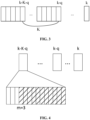
- FIG. 3 is a schematic diagram of determination of a subframe position according to the exemplary embodiment 2g of the present application.
- a value of K is a value indicated by SIB or a value configured via RRC signaling based on the UE.
- the base station stores a K value configured for the terminal, and when the terminal accesses the base station again, the base station uses the store value to configure a K value for the terminal; or the base station reports a K value configured for the terminal to an MME, and when the terminal accesses the base station again, the base station uses the K value in the MME to configure a K value for the terminal; or the terminal reports its own type, and the base station configures different K values according to the terminal type reported by the terminal.
- the OFDM symbol where the signal is located contained at the time domain positon is symbols in the subframe from an m2-th OFDM symbol to the end of the subframe; where m2 is a positive integer greater than or equal to 1.
- FIG. 4 is a schematic diagram according to the exemplary embodiment 2h of the present application. In FIG. 4 , it is assumed that m2 equals to 3.
- Determining the OFDM symbol where the signal is located contained at the time domain position includes: determining an OFDM symbol where the signal is located according to coverage of the terminal; where under conventional coverage, the OFDM symbol where the signal is located is at least one of a second OFDM symbol and a third OFDM symbol in the subframe, or under coverage enhancement, the OFDM symbol where the signal is located is symbols in the subframe from an m1-th OFDM symbol to an end of the subframe, where m1 is a positive integers greater than or equal to 0.
- the signal transmission method in the exemplary embodiment three includes steps 1 and 2 described below.
- a terminal receives a signal sent by a base station at a first time-frequency position, and detects the received signal.
- step 2 when the terminal detects the received signal as a first signal, the terminal detects the PDCCH; and when the terminal detects the received signal as a second signal, the terminal does not detect the PDCCH.
- the UE In the above step 1, the UE generates a sequence 1 corresponding to the first signal and a sequence 2 corresponding to the second signal, and detects sequences corresponding to received signals sent by the base station respectively using the sequence 1 and the sequence 2.
- the UE detects that an energy peak corresponding to the sequence 1 is greater than an energy peak corresponding to the sequence 2
- the UE determines the received signal detected to be the first signal
- the UE detects that the energy peak corresponding to the sequence 2 is greater than the energy peak corresponding to the sequence 1
- the UE determines the received signal sent from the base station to the UE as the second signal.
- the value of v is obtained according to a cyclic shift index 1 corresponding to the first signal.
- the value of v is obtained according to a cyclic shift index 2 corresponding to the second signal.
- the cyclic shift index 1 and the cyclic shift index 2 are at least one of: pre-determined values, or values meeting that the cyclic shift spacing therebetween is maximum; or are values configured via high-layer signaling.
- the length N of a sequence is determined according to at least one of: the number of sub-carriers in the frequency domain occupied by the signal, or the number of symbols in the time domain occupied by the signal.
- the value of v is obtained according to a cyclic shift index 1 corresponding to the first signal.
- the value of v is obtained according to a cyclic shift index 2 corresponding to the second signal.
- the cyclic shift index 1 and the cyclic shift index 2 are at least one of: pre-determined values, or values meeting that the cyclic shift spacing therebetween is maximum; or are values configured via high-layer signaling.
- the length N of a sequence is determined according to at least one of: the number of sub-carriers in the frequency domain occupied by the signal, or the number of symbols in the time domain occupied by the signal.
- the value of v is obtained according to a cyclic shift index 1 corresponding to the first signal.
- the value of v is obtained according to a cyclic shift index 2 corresponding to the second signal.
- the cyclic shift index 1 and the cyclic shift index 2 are at least one of: pre-determined values, or values meeting that the cyclic shift spacing therebetween is maximum; or are values configured via high-layer signaling.
- the length N of a sequence is determined according to at least one of: the number of sub-carriers in the frequency domain occupied by the signal, or the number of symbols in the time domain occupied by the signal.
- the value of v is obtained according to a cyclic shift index 1 corresponding to the first signal.
- the value of v is obtained according to a cyclic shift index 2 corresponding to the second signal.
- the cyclic shift index 1 and the cyclic shift index 2 are at least one of: pre-determined values, or values meeting that the cyclic shift spacing therebetween is maximum; or are values configured via high-layer signaling.
- the length N of a sequence is determined according to at least one of: the number of sub-carriers in the frequency domain occupied by the signal, or the number of symbols in the time domain occupied by the signal.
- the value of v is obtained according to a cyclic shift index 1 corresponding to the first signal.
- the value of v is obtained according to a cyclic shift index 2 corresponding to the second signal.
- the cyclic shift index 1 and the cyclic shift index 2 are at least one of: pre-determined values, or values meeting that the cyclic shift spacing therebetween is maximum; or are values configured via high-layer signaling.
- the length N of a sequence is determined according to at least one of: the number of sub-carriers in the frequency domain occupied by the signal, or the number of symbols in the time domain occupied by the signal.
- the signal transmission method in this exemplary embodiment includes steps 1 and 2 described below.
- a terminal receives a signal sent by a base station at a first time-frequency position, and detects the signal according to a configured connection mode.
- step 2 in condition that the terminal is in a first connection mode, the terminal detects the PDCCH when the terminal determines the signal as a third signal, and the terminal does not detect the PDCCU when the terminal determines the signal as a fourth signal; or in condition that the terminal is in a second connection mode, the terminal detects the PDCCU when the terminal determines the signal as a fifth signal, and the terminal does not detect the PDCCU when the terminal determines the signal as a sixth signal.
- the UE when the terminal is in the RRC idle mode, the UE generates a sequence 3 corresponding to the third signal and a sequence 4 corresponding to the fourth signal, and detects sequences corresponding to received signals sent by the base station respectively using the sequence 4 and the sequence 3.
- the UE detects that an energy peak corresponding to the sequence 3 is greater than an energy peak corresponding to the sequence 4
- the UE determines the corresponding detected signal as the third signal
- the UE detects that the energy peak corresponding to the sequence 4 is greater than the energy peak corresponding to the sequence 3
- the UE determines the received signal sent to the UE as the fourth signal.
- the UE When the terminal is in the connected mode, the UE generates a sequence 5 corresponding to the fifth signal and a sequence 6 corresponding to the sixth signal, and detects sequences corresponding to received signals sent by the base station respectively using the sequence 5 and the sequence 6.
- the UE detects that an energy peak corresponding to the sequence 5 is greater than an energy peak corresponding to the sequence 6, the UE determines the corresponding signal detected to be the fifth signal, and when the UE detects that the energy peak corresponding to the sequence 6 is greater than the energy peak corresponding to the sequence 5, the UE determines the received signal sent to the UE as the sixth signal.
- the value of v is obtained according to a cyclic shift index 3 corresponding to the first signal.
- the value of v is obtained according to a cyclic shift index 4 corresponding to the second signal.
- the value of v is obtained according to a cyclic shift index 5 corresponding to the first signal.
- the value of v is obtained according to a cyclic shift index 6 corresponding to the second signal.
- the cyclic shift index 3, the cyclic shift index 4, the cyclic shift index 5 and the cyclic shift index 6 are at least one of: pre-determined values, or values meeting that the cyclic shift spacing therebetween is maximum; or are values configured via high-layer signaling.
- the length N of a sequence is determined according to at least one of: the number of sub-carriers in the frequency domain occupied by the signal, or the number of symbols in the time domain occupied by the signal.
- the ZC sequence is a ZC sequence with a length of 132 obtained after a ZC sequence with a length of 131 is extended (assuming that the number of sub-carriers is 12, and the number of OFDM symbols is 11), assuming that the cell index is 1 and then u equals to 1, assuming that the cyclic shift index 3, the cyclic shift index 4, the cyclic shift index 5 and the cyclic shift index 6 are values meeting that the cyclic shift spacing therebetween is maximum, that is, the cyclic shift index 3 is a sequence with a cyclic shift of 0, the cyclic shift index 4 is a sequence with a cyclic shift of 33, the cyclic shift index 5 is a sequence with a cyclic shift of 66 and the cyclic shift index 6 is a sequence with a cyclic shift of 99, the sequence 1 corresponding to the third signal is r (1,0) ( n ), the sequence 2 corresponding to the fourth signal is r (1,33) ( n ),
- the value of v is obtained according to a cyclic shift index 3 corresponding to the third signal.
- the value of v is obtained according to a cyclic shift index 4 corresponding to the fourth signal.
- the value of v is obtained according to a cyclic shift index 5 corresponding to the fifth signal.
- the value of v is obtained according to a cyclic shift index 6 corresponding to the sixth signal.
- the cyclic shift index 3, the cyclic shift index 4, the cyclic shift index 5 and the cyclic shift index 6 are at least one of: pre-determined values, or values meeting that the cyclic shift spacing therebetween is maximum; or are values configured via high-layer signaling.
- the length N of a sequence is determined according to at least one of: the number of sub-carriers in the frequency domain occupied by the signal, or the number of symbols in the time domain occupied by the signal.
- the value of v is obtained according to a cyclic shift index 3 corresponding to the third signal.
- the value of v is obtained according to a cyclic shift index 4 corresponding to the fourth signal.
- the value of v is obtained according to a cyclic shift index 5 corresponding to the fifth signal.
- the value of v is obtained according to a cyclic shift index 6 corresponding to the sixth signal.
- the cyclic shift index 3, the cyclic shift index 4, the cyclic shift index 5 and the cyclic shift index 6 are at least one of: pre-determined values, or values meeting that the cyclic shift spacing therebetween is maximum; or are values configured via high-layer signaling.
- the length N of a sequence is determined according to at least one of: the number of sub-carriers in the frequency domain occupied by the signal, or the number of symbols in the time domain occupied by the signal.
- the cyclic shift index 3, the cyclic shift index 4, the cyclic shift index 5 and the cyclic shift index 6 are at least one of: pre-determined values, or values meeting that the cyclic shift spacing therebetween is maximum; or are values configured via high-layer signaling.
- the cyclic shift index 3, the cyclic shift index 4, the cyclic shift index 5 and the cyclic shift index 6 are at least one of: pre-determined values, or values meeting that the cyclic shift spacing therebetween is maximum; or are values configured via high-layer signaling.
- the cyclic shift index 3, the cyclic shift index 4, the cyclic shift index 5 and the cyclic shift index 6 are at least one of: pre-determined values, or values meeting that the cyclic shift spacing therebetween is maximum; or are values configured via high-layer signaling.
- the signal transmission method in the exemplary embodiment five includes steps 1 and 2 described below.
- a terminal receives a signal sent by a base station at a first time-frequency position, and detects the signal according to a configured connection mode.
- step 2 in condition that the terminal is in the first connection mode, the terminal detects the PUCCH only when the terminal detects the signal as a seventh signal; or in condition that the terminal is in the second connection mode, the terminal detects the PDCCH only when the terminal detects the signal as an eighth signal.
- the UE when the terminal is in the RRC idle mode, the UE generates a sequence 7 corresponding to the seventh signal, and detects a sequence corresponding to the received signal sent by the base station using the sequence 7.
- the UE detects that an energy peak corresponding to the sequence 7 is greater than a preset threshold, the UE determines the corresponding detected signal as the seventh signal.
- the UE When the terminal is in the RRC connected mode, the UE generates a sequence 8 corresponding to the eighth signal, and detects a sequence corresponding to the received signal sent by the base station using the sequence 8. When the UE detects that an energy peak corresponding to the sequence 8 is greater than a preset threshold, the UE determines the corresponding signal as the eighth signal.
- the value of v is obtained according to a cyclic shift index 7 corresponding to the seventh signal.
- the value of v is obtained according to a cyclic shift index 8 corresponding to the eighth signal.
- the cyclic shift index 7 and the cyclic shift index 8 are at least one of: pre-determined values, or values meeting that the cyclic shift spacing therebetween is maximum; or are values configured via high-layer signaling.
- the length N of a sequence is determined according to at least one of: the number of sub-carriers in the frequency domain occupied by the signal, or the number of symbols in the time domain occupied by the signal.
- the value of v is obtained according to a cyclic shift index 7 corresponding to the seventh signal.
- the value of v is obtained according to a cyclic shift index 8 corresponding to the eighth signal.
- the cyclic shift index 7 and the cyclic shift index 8 are at least one of: pre-determined values, or values meeting that the cyclic shift spacing therebetween is maximum; or are values configured via high-layer signaling.
- the length N of a sequence is determined according to at least one of: the number of sub-carriers in the frequency domain occupied by the signal, or the number of symbols in the time domain occupied by the signal.
- the value of v is obtained according to a cyclic shift index 7 corresponding to the seventh signal.
- the value of v is obtained according to a cyclic shift index 8 corresponding to the eighth signal.
- the cyclic shift index 7 and the cyclic shift index 8 are at least one of: pre-determined values, or values meeting that the cyclic shift spacing therebetween is maximum; or are values configured via high-layer signaling.
- the length N of a sequence is determined according to at least one of: the number of sub-carriers in the frequency domain occupied by the signal, or the number of symbols in the time domain occupied by the signal.
- the value of v is obtained according to a cyclic shift index 8 corresponding to the eighth signal.
- the cyclic shift index 7 and the cyclic shift index 8 are at least one of: pre-determined values, or values meeting that the cyclic shift spacing therebetween is maximum; or are values configured via high-layer signaling.
- the length N of a sequence is determined according to at least one of: the number of sub-carriers in the frequency domain occupied by the signal, or the number of symbols in the time domain occupied by the signal.
- the value of v is obtained according to a cyclic shift index 7 corresponding to the seventh signal.
- the value of v is obtained according to a cyclic shift index 8 corresponding to the eighth signal.
- the cyclic shift index 7 and the cyclic shift index 8 are at least one of: pre-determined values, or values meeting that the cyclic shift spacing therebetween is maximum; or are values configured via high-layer signaling.
- the length N of a sequence is determined according to at least one of: the number of sub-carriers in the frequency domain occupied by the signal, or the number of symbols in the time domain occupied by the signal.
- the value of v is obtained according to a cyclic shift index 8 corresponding to the eighth signal.
- the cyclic shift index 7 and the cyclic shift index 8 are at least one of: pre-determined values, or values meeting that the cyclic shift spacing therebetween is maximum; or are values configured via high-layer signaling.
- the length N of a sequence is determined according to at least one of: the number of sub-carriers in the frequency domain occupied by the signal, or the number of symbols in the time domain occupied by the signal.
- the value of v is obtained according to a cyclic shift index 7 corresponding to the seventh signal.
- the value of v is obtained according to a cyclic shift index 8 corresponding to the eighth signal.
- the cyclic shift index 7 and the cyclic shift index 8 are at least one of: pre-determined values, or values meeting that the cyclic shift spacing therebetween is maximum; or are values configured via high-layer signaling.
- the length N of a sequence is determined according to at least one of: the number of sub-carriers in the frequency domain occupied by the signal, or the number of symbols in the time domain occupied by the signal.
- the cyclic shift index 7 and the cyclic shift index 8 are at least one of: pre-determined values, or values meeting that the cyclic shift spacing therebetween is maximum; or are values configured via high-layer signaling.
- the length N of a sequence is determined according to at least one of: the number of sub-carriers in the frequency domain occupied by the signal, or the number of symbols in the time domain occupied by the signal.
- the cyclic shift index 7 and the cyclic shift index 8 are at least one of: pre-determined values, or values meeting that the cyclic shift spacing therebetween is maximum; or are values configured via high-layer signaling.
- the length N of a sequence is determined according to at least one of: the number of sub-carriers in the frequency domain occupied by the signal, or the number of symbols in the time domain occupied by the signal.
- the signal transmission method in the exemplary embodiment six includes steps 1 and 2 described below.
- a terminal receives a signal sent by a base station at a first time-frequency position, and detects the received signal.
- a frequency domain of the first time-frequency position is: a narrowband and an RB in the narrowband.
- the narrowband is a PNB.
- a time domain of the first time-frequency position is: a subframe and an OFDM in the subframe.
- the subframe is determined according to at least one of: a starting position of the PDCCH search space, a first offset, or the number of repetitions when the signal is transmitted.
- the starting position of the search space is obtained according to a PO subframe; assuming that the subframe k is the subframe where the PO is located, a value of the first offset is 1, and the number of repetitions is K, the subframe where the signal is located is subframes from a subframe with a subframe index of k-K-1 to a subframe with a subframe index of k-1, where a value of K is configured via high-layer signaling.
- the OFDM symbol in the subframe is symbols from a third OFDM symbol in the subframe to an end of the subframe.
- the root sequence index corresponding to the ZC sequence is obtained according to a cell index
- the cyclic shift index corresponding to the ZC sequence is obtained according to a cyclic shift index 1 corresponding to the first signal.
- the root sequence index corresponding to the ZC sequence is obtained according to a cell index
- the cyclic shift index corresponding to the ZC sequence is obtained according to a cyclic shift index 2 corresponding to the second signal.
- the cyclic shift index 1 and the cyclic shift index 2 are at least one of: pre-determined values, or values meeting that the cyclic shift spacing therebetween is maximum; or are values configured via high-layer signaling.
- the step 2 is the same as the step 2 in the exemplary embodiment 1a.
- the signal transmission method in this exemplary embodiment includes steps 1 and 2 described below.
- a base station sends a signal at a preset first time-frequency position.
- step 2 the base station determines whether to send a corresponding physical downlink channel according to the sending of the signal.
- the signal transmission method in the exemplary embodiment 7a includes steps 1 and 2 described below.
- a base station sends a signal at a preset first time-frequency position.
- step 2 when the signal sent by the base station is a first signal, the base station sends the corresponding physical downlink channel; and when the signal sent by the base station is a second signal, the base station does not send the corresponding physical downlink channel.
- the signal transmission method of the exemplary embodiment 7b includes steps 1 and 2 described below.
- step 1 the base station sends a signal at a preset first time-frequency position according to a connection mode of the terminal.
- step 2 in condition that the terminal is in a first connection mode, when the signal sent by the base station is a third signal, the base station sends the corresponding physical downlink channel; when the signal sent by the base station is a fourth signal, the base station does not send the corresponding physical downlink channel; or in condition that the terminal is in a second connection mode, when the signal sent by the base station is a fifth signal, the base station sends the corresponding physical downlink channel; when the signal sent by the base station is a sixth signal, the base station does not send the corresponding physical downlink channel.
- the signal transmission method of this exemplary embodiment includes steps 1 and 2 described below.
- step 1 the base station sends a signal at a preset first time-frequency position according to a connection mode of the terminal.
- the preset first time-frequency position includes a first frequency domain position and a first time domain position.
- the first frequency domain position contains a narrowband where the signal is located and an RB where the signal is located.
- the narrowband where the signal is located is: a PNB where paging is located or a narrowband where the PDCCH is located.
- the RB where the signal is located is: an RB where paging is located or an RB where the PDCCH is located.
- the first time domain position contains a subframe where the signal is located and an OFDM symbol where the signal is located.
- the subframe where the signal is located is determined according to a starting position of a PDCCH search space and the number of repetitions of the signal. Assuming that the subframe index k is a subframe where a PO is located and the the number of repetitions when the signal is transmitted is K subframes, an index corresponding to the first time domain position is subframes from a subframe with a subframe index of k-K-1 to a subframe with a subframe index of k-1; that is, a subframe index corresponding to an ending subframe of the signal is k-1, and a subframe index corresponding to a starting subframe of the signal is k-K-1; where a value of K is a value specified by the SIB or a value configured via the RRC signaling based on the UE.
- the base station stores a K value configured for the terminal, and when the terminal accesses the base station again, the base station uses the stored K value as the K value configured for the terminal; or the base station reports a K value configured for the terminal to an MME, and when the terminal accesses the base station again, the base station uses the K value in the MME to configure a K value for the terminal; or the terminal reports its own type, and the base station configures different K values according to the terminal type reported by the terminal.
- the OFDM symbol where the signal is located is determined according to coverage of the terminal. Under conventional coverage, the OFDM symbol where the signal is located is at least one of a second OFDM symbol and a third OFDM symbol in the subframe, or under coverage enhancement, the OFDM symbol where the signal is located is symbols in the subframe from an m1-th OFDM symbol to an end of the subframe, where m1 is a positive integer greater than or equal to 0.
- step 2 in condition that the terminal is in a first connection mode, the base station sends the corresponding physical downlink channel only when the signal sent by the base station is a seventh signal; or in condition that the terminal is in a second connection mode, the base station sends the corresponding physical downlink channel only when the signal sent by the base station is an eighth signal.
- the signal transmission method of this exemplary embodiment includes steps 1 and 2 described below.
- step 1 the base station sends a signal at a preset first time-frequency position.
- step 2 when the signal sent by the base station is a first signal, the base station sends the corresponding physical downlink channel; when the signal sent by the base station is a second signal, the base station does not send the corresponding physical downlink channel.
- the value of v is obtained according to a cyclic shift index 1 corresponding to the first signal.
- the value of v is obtained according to a cyclic shift index 2 corresponding to the second signal.
- the cyclic shift index 1 and the cyclic shift index 2 are at least one of: pre-determined values, or values meeting that the cyclic shift spacing therebetween is maximum; or are values configured via high-layer signaling.
- the length N of a sequence is determined according to at least one of: the number of sub-carriers in the frequency domain occupied by the signal, or the number of symbols in the time domain occupied by the signal.
- the signal transmission method of this exemplary embodiment includes steps 1 and 2 described below.
- step 1 the base station sends a signal at a preset first time-frequency position according to a connection mode of the terminal.
- step 2 in condition that the terminal is in a first connection mode, when the signal sent by the base station is a third signal, the base station sends the corresponding physical downlink channel; when the signal sent by the base station is a fourth signal, the base station does not send the corresponding physical downlink channel; or in condition that the terminal is in a second connection mode, when the signal sent by the base station is a fifth signal, the base station sends the corresponding physical downlink channel; when the signal sent by the base station is a sixth signal, the base station does not send the corresponding physical downlink channel.
- the cyclic shift index 3, the cyclic shift index 4, the cyclic shift index 5 and the cyclic shift index 6 are at least one of: pre-determined values, or values meeting that the cyclic shift spacing therebetween is maximum; or are values configured via high-layer signaling.
- the signal transmission method of this exemplary embodiment includes steps 1 and 2 described below.
- step 1 the base station sends a signal at a preset first time-frequency position according to a connection mode of the terminal.
- step 2 in condition that the terminal is in a first connection mode, the base station sends the corresponding physical channel only when the signal sent by the base station is a seventh signal; or in condition that the terminal is in a second connection mode, the base station sends the corresponding physical channel only when the signal sent by the base station is an eighth signal.
- the sequence 7 corresponding to the seventh signal is the ZC sequence r (u,v) ( n ), and the value of v is obtained according to a cyclic shift index 7 corresponding to the seventh signal.
- the sequence 8 corresponding to the eighth signal is the ZC sequence r (u,v) ( n ) and the PN sequence C ( n ), and the value of v is obtained according to a cyclic shift index 8 corresponding to the eighth signal.
- the cyclic shift index 7 and the cyclic shift index 8 are at least one of: pre-determined values, or values meeting that the cyclic shift spacing therebetween is maximum; or are values configured via high-layer signaling.
- the length N of a sequence is determined according to at least one of: the number of sub-carriers in the frequency domain occupied by the signal, or the number of symbols in the time domain occupied by the signal.
- the method in the embodiments described above may be implemented by software plus a necessary general-purpose hardware platform, or may of course be implemented by hardware.
- the technical solution of the present application substantially, or the part contributing to the related art, may be embodied in the form of a software product.
- the computer software product is stored in a storage medium (such as a random access memory (RAM)/read-only memory (ROM), a magnetic disk or an optical disk) and includes several instructions for enabling a terminal device (which may be a mobile phone, a computer, a server, a network device or the like) to execute the method according to each embodiment of the present application.
- the embodiments of the present application further provide an information transmission apparatus.
- the apparatus is used for implementing the embodiments described above. What has been described will not be repeated.
- the term "module” may be software, hardware or a combination thereof capable of implementing predetermined functions.
- the apparatus described in the following embodiment is preferably implemented by software, but implementation by hardware or a combination of software and hardware is also possible and conceived.
- a signal transmission apparatus may be applied to a terminal side, and includes a receiving module and a detecting module.
- the receiving module is configured to receive, at a preset first time-frequency position, a signal sent by a base station.
- the detecting module is connected to the receiving module and is configured to detect the signal, and determine whether to detect a physical downlink channel according to a detection result for the signal.
- a signal transmission apparatus is further provided.
- the apparatus may be applied on a base station side, and includes a sending module and a determining module.
- the sending module is configured to send a signal at a preset first time-frequency position.
- the determining module is connected to the sending module and is configured to determine whether to send a physical downlink channel according to the signal.
- modules described above may be implemented by software or hardware. Implementation by hardware may, but may not necessarily, be performed in the following manners: the modules described above are located in the same processor, or the modules described above are located in different processors in any combination form.
- a processor is further provided.
- the processor is configured to execute programs which, when executed, perform the method of any one of embodiments described above.
- a storage medium is further provided.
- the storage medium includes stored programs which, when executed, perform the method of any one of embodiments described above.
- modules or steps of the present application may be implemented by a general-purpose computing apparatus, the modules or steps may be concentrated on a single computing apparatus or distributed on a network composed of multiple computing apparatuses, and alternatively, the modules or steps may be implemented by program codes executable by the computing apparatus, so that the modules or steps may be stored in a storage apparatus and executed by the computing apparatus.
- the illustrated or described steps may be executed in sequences different from those described herein, or the modules or steps may be made into various integrated circuit modules separately, or multiple modules or steps therein may be made into a single integrated circuit module for implementation. In this way, the present application is not limited to any specific combination of hardware and software.
Landscapes
- Engineering & Computer Science (AREA)
- Signal Processing (AREA)
- Computer Networks & Wireless Communication (AREA)
- Physics & Mathematics (AREA)
- Electromagnetism (AREA)
- Mobile Radio Communication Systems (AREA)
Claims (15)
- Signalübertragungsverfahren, dadurch gekennzeichnet, dass es umfasst:Empfangen (S202) in einer voreingestellten ersten Zeit-/Frequenz-Position, durch ein Endgerät, eines Signals, das von einer Basisstation gesendet wird, wobei die erste Zeit-/Frequenz-Position umfasst: einen Teilrahmen, in dem sich das Signal befindet, der in einer Position im Zeitbereich der ersten Zeit-/Frequenz-Position enthalten ist;wobei der Teilrahmen, in dem sich das Signal befindet, gemäß mindestens einem Element bestimmt wird von: einer Anfangsposition eines PDCCH-Suchraums, einer Anfangsposition eines erweiterten diskontinuierlichen Empfangs (DRX), eDRX, einem ersten Versatz oder einer Anzahl von Wiederholungen des Signals; undwobei der erste Versatz über eine Signalisierung höherer Schicht konfiguriert wird oder voreingestellt ist, und die Anzahl von Wiederholungen des Signals über eine Signalisierung höherer Schicht konfiguriert ist; undDetektieren (S204) des Signals durch das Endgerät und Bestimmen, ob ein physikalischer Downlink-Kanal zu detektieren ist, gemäß einem Detektionsergebnis für das Signal.
- Verfahren nach Anspruch 1, wobei das Bestimmen, ob der physikalische Downlink-Kanal zu detektieren ist, gemäß dem Detektionsergebnis für das Signal umfasst:unter der Bedingung, dass das Signal von dem Endgerät als ein erstes Signal bestimmt wird, Detektieren des physikalischen Downlink-Kanals durch das Endgerät; oderunter der Bedingung, dass das Signal von dem Endgerät als ein zweites Signal bestimmt wird, Nicht-Detektieren des physikalischen Downlink-Kanals durch das Endgerät; oderunter der Bedingung, dass sich das Endgerät in einem ersten Verbindungsmodus befindet, als Reaktion auf das Bestimmen, dass das Signal ein drittes Signal ist, Detektieren des physikalischen Downlink-Kanals durch das Endgerät; und als Reaktion auf das Bestimmen, dass das Signal ein viertes Signal ist, Nicht-Detektieren des physikalischen Downlink-Kanals durch das Endgerät; oderunter der Bedingung, dass sich das Endgerät in einem zweiten Verbindungsmodus befindet, als Reaktion auf das Bestimmen, dass das Signal ein fünftes Signal ist, Detektieren des physikalischen Downlink-Kanals durch das Endgerät; und als Reaktion auf das Bestimmen, dass das Signal ein sechstes Signal ist, Nicht-Detektieren des physikalischen Downlink-Kanals durch das Endgerät; oderunter der Bedingung, dass sich das Endgerät in einem ersten Verbindungsmodus befindet, Detektieren des physikalischen Downlink-Kanals durch das Endgerät, nur wenn das Signal als ein siebtes Signal detektiert wird; oderunter der Bedingung, dass sich das Endgerät in einem zweiten Verbindungsmodus befindet, Detektieren des physikalischen Downlink-Kanals durch das Endgerät, nur wenn das Signal als ein achtes Signal detektiert wird.
- Verfahren nach Anspruch 1, wobei die erste Zeit-/Frequenz-Position umfasst: ein Schmalband, in dem sich das Signal befindet, das in einer Position im Frequenzbereich der ersten Zeit-/Frequenz-Position enthalten ist;
wobei das Schmalband, in dem sich das Signal befindet, ein Paging-Schmalband oder ein Schmalband, in dem sich ein physikalischer Downlink-Steuerkanal, PDCCH, befindet, ist. - Verfahren nach Anspruch 1, wobei die erste Zeit-/Frequenz-Position umfasst: einen Ressourcenblock, in dem sich das Signal befindet, der in einer Position im Frequenzbereich der ersten Zeit-/Frequenz-Position enthalten ist;
wobei der Ressourcenblock, in dem sich das Signal befindet, einer ist von: einem Ressourcenblock in einem Paging-Schmalband, das gemäß einem Endgerätindex bestimmt wird, einem Ressourcenblock, in dem sich das Paging befindet, oder einem Ressourcenblock, in dem sich ein PDCCH befindet. - Verfahren nach Anspruch 1, wobei die erste Zeit-/Frequenz-Position umfasst: ein orthogonales Frequenzmultiplex-, OFDM, Symbol, in dem sich das Signal befindet, das in einer Position im Zeitbereich der ersten Zeit-/Frequenz-Position enthalten ist;
wobei das OFDM-Symbol, in dem sich das Signal befindet, eines ist von:mindestens einem von einem zweiten OFDM-Symbol und einem dritten OFDM-Symbol in dem Teilrahmen mit herkömmlicher Abdeckung;Symbolen in dem Teilrahmen von einem OFDM-Symbol m1 bis zum Ende des Teilrahmens mit Abdeckungsverstärkung; oderSymbolen in dem Teilrahmen von einem OFDM-Symbol m2 bis zum Ende des Teilrahmens;wobei m1 und m2 positive Ganzzahlen größer oder gleich 0 sind. - Verfahren nach Anspruch 2, ferner umfassend:Bestimmen einer Zadoff-Chu-, ZC, Sequenz, die dem Signal entspricht, wobei das Endgerät einen Wurzelsequenzindex der ZC-Sequenz gemäß einem Zellenindex bestimmt; oderBestimmen einer ZC-Sequenz und einer Pseudo-Rauschen-, PN, Sequenz, die dem Signal entspricht, wobei das Endgerät einen Wurzelsequenzindex der ZC-Sequenz gemäß einem Zellenindex bestimmt und einen Anfangswert der PN-Sequenz gemäß einem Endgerätindex bestimmt;wobei eine Länge einer Sequenz gemäß mindestens einem Element bestimmt wird von: einer Anzahl von Unterträgern in einem Frequenzbereich, die von dem Signal eingenommen werden, oder einer Anzahl von OFDM-Symbolen in einem Zeitbereich, die von dem Signal eingenommen werden.
- Verfahren nach Anspruch 6, wobeidurch das Endgerät ein zyklischer Verschiebungsindex der ZC-Sequenz, der in dem ersten Signal enthalten ist, gemäß einem zyklischen Verschiebungsindex 1, der dem ersten Signal entspricht, bestimmt wird, und durch das Endgerät ein zyklischer Verschiebungsindex der ZC-Sequenz, der in dem zweiten Signal enthalten ist, gemäß einem zyklischen Verschiebungsindex 2, der dem zweiten Signal entspricht, bestimmt wird;wobei der zyklische Verschiebungsindex 1 und der zyklische Verschiebungsindex 2 vorbestimmte Werte sind oder zyklische Verschiebungsindexe sind, die einen maximalen zyklischen Verschiebungsabstand zwischen den zyklischen Verschiebungsindexen aufweisen.
- Verfahren nach Anspruch 6, wobeiunter der Bedingung, dass sich das Endgerät in dem ersten Verbindungsmodus befindet, ein zyklischer Verschiebungsindex der ZC-Sequenz, der in dem dritten Signal enthalten ist, gemäß einem zyklischen Verschiebungsindex 3, der dem dritten Signal entspricht, bestimmt wird, und ein zyklischer Verschiebungsindex der ZC-Sequenz, der in dem vierten Signal enthalten ist, gemäß einem zyklischen Verschiebungsindex 4, der dem vierten Signal entspricht, bestimmt wird;unter der Bedingung, dass sich das Endgerät in dem zweiten Verbindungsmodus befindet, ein zyklischer Verschiebungsindex der ZC-Sequenz, der in dem fünften Signal enthalten ist, gemäß einem zyklischen Verschiebungsindex 5, der dem fünften Signal entspricht, bestimmt wird, und ein zyklischer Verschiebungsindex der ZC-Sequenz, der in dem sechsten Signal enthalten ist, gemäß einem zyklischen Verschiebungsindex 6, der dem sechsten Signal entspricht, bestimmt wird;wobei der zyklische Verschiebungsindex 3, der zyklische Verschiebungsindex 4, der zyklische Verschiebungsindex 5 und der zyklische Verschiebungsindex 6 vorbestimmte Werte sind oder die Bedingung erfüllen, dass jeweils zwei von dem zyklischen Verschiebungsindex 3, dem zyklischen Verschiebungsindex 4, dem zyklischen Verschiebungsindex 5 und dem zyklischen Verschiebungsindex 6 einen maximalen zyklischen Verschiebungsabstand zwischen den jeweiligen beiden von dem zyklischen Verschiebungsindex 3, dem zyklischen Verschiebungsindex 4, dem zyklischen Verschiebungsindex 5 und dem zyklischen Verschiebungsindex 6 aufweisen.
- Verfahren nach Anspruch 6, wobeiunter der Bedingung, dass sich das Endgerät in dem ersten Verbindungsmodus befindet, ein zyklischer Verschiebungsindex der ZC-Sequenz, der in dem siebten Signal enthalten ist, gemäß einem zyklischen Verschiebungsindex 7, der dem siebten Signal entspricht, bestimmt wird;unter der Bedingung, dass sich das Endgerät in dem zweiten Verbindungsmodus befindet, ein zyklischer Verschiebungsindex der ZC-Sequenz, der in dem achten Signal enthalten ist, gemäß einem zyklischen Verschiebungsindex 8, der dem achten Signal entspricht, bestimmt wird;wobei der zyklische Verschiebungsindex 7 und der zyklische Verschiebungsindex 8 vorbestimmte Werte sind oder zyklische Verschiebungsindexe sind, die einen maximalen zyklischen Verschiebungsabstand zwischen den zyklischen Verschiebungsindexen aufweisen.
- Signalübertragungsverfahren, dadurch gekennzeichnet, dass es umfasst:Senden, durch eine Basisstation, eines Signals in einer voreingestellten ersten Zeit-/Frequenz-Position, wobei die erste Zeit-/Frequenz-Position umfasst: einen Teilrahmen, in dem sich das Signal befindet, der in einer Position im Zeitbereich der ersten Zeit-/Frequenz-Position enthalten ist;wobei der Teilrahmen, in dem sich das Signal befindet, gemäß mindestens einem Element bestimmt wird von: einer Anfangsposition eines PDCCH-Suchraums, einer Anfangsposition eines erweiterten DRX, eDRX, einem ersten Versatz oder einer Anzahl von Wiederholungen des Signals; undwobei der erste Versatz über eine Signalisierung höherer Schicht konfiguriert wird oder voreingestellt ist, und die Anzahl von Wiederholungen des Signals über eine Signalisierung höherer Schicht konfiguriert wird; undBestimmen, durch die Basisstation, ob ein physikalischer Downlink-Kanal gemäß dem Signal zu senden ist.
- Verfahren nach Anspruch 10, wobei das Bestimmen durch die Basisstation, ob der physikalische Downlink-Kanal gemäß dem Signal zu senden ist, umfasst:unter der Bedingung, dass das Signal ein erstes Signal ist, Senden, durch die Basisstation, eines physikalischen Downlink-Kanals, der dem Signal entspricht; oderunter der Bedingung, dass das Signal ein zweites Signal ist, Nicht-Senden, durch die Basisstation, eines physikalischen Downlink-Kanals, der dem Signal entspricht; oderunter der Bedingung, dass sich das Endgerät in einem ersten Verbindungsmodus befindet, als Reaktion darauf, dass das Signal, das von der Basisstation gesendet wird, ein drittes Signal ist, Senden, durch die Basisstation, des entsprechenden physikalischen Downlink-Kanals; und als Reaktion darauf, dass das Signal, das von der Basisstation gesendet wird, ein viertes Signal ist, Nicht-Senden, durch die Basisstation, des physikalischen Downlink-Kanals; oderunter der Bedingung, dass sich das Endgerät in einem zweiten Verbindungsmodus befindet, als Reaktion darauf, dass das Signal, das von der Basisstation gesendet wird, ein fünftes Signal ist, Senden, durch die Basisstation, des entsprechenden physikalischen Downlink-Kanals; und als Reaktion darauf, dass das Signal, das von der Basisstation gesendet wird, ein sechstes Signal ist, Nicht-Senden, durch die Basisstation, des physikalischen Downlink-Kanals; oderunter der Bedingung, dass sich das Endgerät in einem ersten Verbindungsmodus befindet, Senden, durch die Basisstation, des entsprechenden physikalischen Downlink-Kanals, nur wenn das Signal, das von der Basisstation gesendet wird, ein siebtes Signal ist; oderunter der Bedingung, dass sich das Endgerät in einem zweiten Verbindungsmodus befindet, Senden, durch die Basisstation, des entsprechenden physikalischen Downlink-Kanals, nur wenn das Signal, das von der Basisstation gesendet wird, ein achtes Signal ist.
- Signalübertragungsendgerät, umfassend:ein Empfangsmodul, das dazu konfiguriert ist, in einer voreingestellten ersten Zeit-/Frequenz-Position ein Signal, das von einer Basisstation gesendet wird, zu empfangen, wobei die erste Zeit-/Frequenz-Position umfasst: einen Teilrahmen, in dem sich das Signal befindet, der in einer Position im Zeitbereich der ersten Zeit-/Frequenz-Position enthalten ist;wobei der Teilrahmen, in dem sich das Signal befindet, gemäß mindestens einem Element bestimmt wird von: einer Anfangsposition eines PDCCH-Suchraums, einer Anfangsposition eines erweiterten DRX, eDRX, einem ersten Versatz oder einer Anzahl von Wiederholungen des Signals; undwobei der erste Versatz über eine Signalisierung höherer Schicht konfiguriert wird oder voreingestellt ist, und die Anzahl von Wiederholungen des Signals über eine Signalisierung höherer Schicht konfiguriert wird; undein Detektionsmodul, das dazu konfiguriert ist, das Signal zu detektieren und zu bestimmen, ob ein physikalischer Downlink-Kanal gemäß einem Detektionsergebnis für das Signal zu detektieren ist.
- Signalübertragungsbasisstation, umfassend:ein Sendemodul, das dazu konfiguriert ist, ein Signal in einer voreingestellten ersten Zeit-/Frequenz-Position zu senden, wobei die erste Zeit-/Frequenz-Position umfasst: einen Teilrahmen, in dem sich das Signal befindet, der in einer Position im Zeitbereich der ersten Zeit-/Frequenz-Position enthalten ist;wobei der Teilrahmen, in dem sich das Signal befindet, gemäß mindestens einem Element bestimmt wird von: einer Anfangsposition eines PDCCH-Suchraums, einer Anfangsposition eines erweiterten DRX, eDRX, einem ersten Versatz oder einer Anzahl von Wiederholungen des Signals; undwobei der erste Versatz über eine Signalisierung höherer Schicht konfiguriert wird oder voreingestellt ist, und die Anzahl von Wiederholungen des Signals über eine Signalisierung höherer Schicht konfiguriert wird; undein Bestimmungsmodul, das dazu konfiguriert ist, zu bestimmen, ob ein physikalischer Downlink-Kanal gemäß dem Signal zu senden ist.
- Speichermedium, umfassend gespeicherte Programme, die, wenn sie von einem Prozessor ausgeführt werden, der in einem Endgerät enthalten ist, das Verfahren nach einem der Ansprüche 1 bis 9 ausführen.
- Speichermedium, umfassend gespeicherte Programme, die, wenn sie von einem Prozessor ausgeführt werden, der in einer Basisstation enthalten ist, das Verfahren nach Anspruch 10 oder Anspruch 11 ausführen.
Applications Claiming Priority (2)
| Application Number | Priority Date | Filing Date | Title |
|---|---|---|---|
| CN201710687653.5A CN109391433B (zh) | 2017-08-11 | 2017-08-11 | 信息传输方法及装置 |
| PCT/CN2018/100228 WO2019029746A1 (zh) | 2017-08-11 | 2018-08-13 | 信息传输方法及装置 |
Publications (3)
| Publication Number | Publication Date |
|---|---|
| EP3668146A1 EP3668146A1 (de) | 2020-06-17 |
| EP3668146A4 EP3668146A4 (de) | 2021-05-05 |
| EP3668146B1 true EP3668146B1 (de) | 2024-09-11 |
Family
ID=65270896
Family Applications (1)
| Application Number | Title | Priority Date | Filing Date |
|---|---|---|---|
| EP18845149.6A Active EP3668146B1 (de) | 2017-08-11 | 2018-08-13 | Informationsübertragungsverfahren und -vorrichtung |
Country Status (7)
| Country | Link |
|---|---|
| US (1) | US11743902B2 (de) |
| EP (1) | EP3668146B1 (de) |
| CN (1) | CN109391433B (de) |
| ES (1) | ES2991905T3 (de) |
| FI (1) | FI3668146T3 (de) |
| PT (1) | PT3668146T (de) |
| WO (1) | WO2019029746A1 (de) |
Families Citing this family (3)
| Publication number | Priority date | Publication date | Assignee | Title |
|---|---|---|---|---|
| CN111885713B (zh) * | 2017-10-05 | 2022-08-26 | 上海朗帛通信技术有限公司 | 一种被用于无线通信的用户设备、基站中的方法和装置 |
| CN109891948B (zh) * | 2019-01-30 | 2022-02-22 | 北京小米移动软件有限公司 | 检测下行传输、传输配置信息和下行传输的方法及装置 |
| US11665596B2 (en) * | 2021-08-24 | 2023-05-30 | At&T Intellectual Property I, L.P. | Planning of fixed wireless internet |
Family Cites Families (14)
| Publication number | Priority date | Publication date | Assignee | Title |
|---|---|---|---|---|
| KR101447218B1 (ko) * | 2007-11-02 | 2014-10-06 | 삼성전자주식회사 | 무선통신 시스템에서 셀 탐색 방법 및 장치 |
| CN102858014B (zh) | 2011-06-30 | 2015-05-06 | 华为技术有限公司 | 控制信令的发送和接收方法及设备 |
| RU2602808C1 (ru) | 2012-09-26 | 2016-11-20 | Хуавей Текнолоджиз Ко., Лтд. | Способ обнаружения канала управления и пользовательское устройство |
| CN104244417A (zh) * | 2013-06-08 | 2014-12-24 | 北京三星通信技术研究有限公司 | Tdd上行下行配置的指示方法及用户设备 |
| CN104469804B (zh) * | 2013-09-12 | 2017-11-14 | 普天信息技术研究院有限公司 | 物理下行控制信道的盲检方法 |
| CN104754603B (zh) * | 2013-12-31 | 2018-11-20 | 联芯科技有限公司 | 终端对pdcch信道的检测方法及终端 |
| WO2016018469A1 (en) * | 2014-08-01 | 2016-02-04 | Intel IP Corporation | Pdcch design for narrowband deployment |
| CN105743626B (zh) * | 2014-12-30 | 2020-09-15 | 北京三星通信技术研究有限公司 | 一种下行信道和/或下行参考信号的接收方法和设备 |
| US10492142B2 (en) * | 2015-09-25 | 2019-11-26 | Intel Corporation | Low-power wakeup radio for mobile devices |
| US9686783B1 (en) * | 2015-11-11 | 2017-06-20 | Mbit Wireless, Inc. | Method and apparatus for PDCCH detection |
| US10542491B2 (en) * | 2017-03-17 | 2020-01-21 | Qualcomm Incorporated | Techniques and apparatuses for control channel monitoring using a wakeup signal |
| US11284372B2 (en) * | 2017-03-24 | 2022-03-22 | Apple Inc. | Wake up signal for machine type communication and narrowband-internet-of-things devices |
| CN113891437B (zh) * | 2017-03-24 | 2024-04-26 | Lg电子株式会社 | 用于接收寻呼消息的方法和无线设备 |
| CN109327888B (zh) * | 2017-07-31 | 2020-10-16 | 维沃移动通信有限公司 | 一种终端状态的指示、确定方法、基站及终端 |
-
2017
- 2017-08-11 CN CN201710687653.5A patent/CN109391433B/zh active Active
-
2018
- 2018-08-13 EP EP18845149.6A patent/EP3668146B1/de active Active
- 2018-08-13 FI FIEP18845149.6T patent/FI3668146T3/fi active
- 2018-08-13 ES ES18845149T patent/ES2991905T3/es active Active
- 2018-08-13 PT PT188451496T patent/PT3668146T/pt unknown
- 2018-08-13 US US16/638,338 patent/US11743902B2/en active Active
- 2018-08-13 WO PCT/CN2018/100228 patent/WO2019029746A1/zh not_active Ceased
Also Published As
| Publication number | Publication date |
|---|---|
| US20200396723A1 (en) | 2020-12-17 |
| EP3668146A4 (de) | 2021-05-05 |
| FI3668146T3 (fi) | 2024-10-24 |
| PT3668146T (pt) | 2024-10-21 |
| ES2991905T3 (es) | 2024-12-05 |
| US11743902B2 (en) | 2023-08-29 |
| EP3668146A1 (de) | 2020-06-17 |
| CN109391433B (zh) | 2022-05-06 |
| WO2019029746A1 (zh) | 2019-02-14 |
| CN109391433A (zh) | 2019-02-26 |
Similar Documents
| Publication | Publication Date | Title |
|---|---|---|
| EP4122249B1 (de) | Methode des erstzugriffs in der dratlosen kommunikation und verwandtes gerät | |
| US12538350B2 (en) | Method and apparatus for selecting resource and transmitting PSSCH in wireless communication system | |
| US11330634B2 (en) | Method for sending random access preamble, method for receiving random access preamble, and apparatus | |
| US12309697B2 (en) | Method and device for sending group wake-up signal | |
| EP3941151B1 (de) | Durch reservierten ressourcenpool unterstützte zugriffressourcenauswahl zur kleindatenübertragung | |
| US9237557B2 (en) | Method and apparatus for service access barring | |
| EP4061059B1 (de) | Verfahren und vorrichtung zur reduzierung des energieverbrauchs einer kommunikationsvorrichtung | |
| JP2019532602A (ja) | システム情報配信のための方法および装置 | |
| US9380521B2 (en) | Method for cell selection for narrowband terminal and apparatus using same | |
| US12150055B2 (en) | Method and apparatus for transmitting and receiving signal, storage medium and electronic apparatus | |
| EP3780761B1 (de) | Verfahren und vorrichtungen zur übertragung eines stromsparsignals | |
| KR20220002512A (ko) | 향상된 랜덤 액세스 절차의 시스템 및 방법 | |
| US11026161B2 (en) | Method and apparatus for controlling a radio access connection to a telecommunications network | |
| US20240244552A1 (en) | Terminal, base station, and wireless communication method | |
| US20190281633A1 (en) | Method and device for transmitting random access preamble | |
| US11399332B2 (en) | Message transmission method and apparatus | |
| US20170005850A1 (en) | Method and apparatus for acquiring synchronization by device-to-device terminal in wireless communication system | |
| EP3668146B1 (de) | Informationsübertragungsverfahren und -vorrichtung | |
| EP4412370A1 (de) | Endgerät, basisstation und drahtloskommunikationsverfahren | |
| US11665643B2 (en) | Signal sending and receiving method and apparatus | |
| US20200037364A1 (en) | Apparatus and Method for Transmitting Signals over a Physical Random Access Channel | |
| US12213143B2 (en) | Data transmission method and device and resource determination method and device | |
| US20240244637A1 (en) | Terminal, base station, and wireless communication method | |
| US12568531B2 (en) | Sending and configuring messaging in a random access procedure | |
| CN120166564A (zh) | 信号重复传输确定方法、装置、存储介质及程序产品 |
Legal Events
| Date | Code | Title | Description |
|---|---|---|---|
| STAA | Information on the status of an ep patent application or granted ep patent |
Free format text: STATUS: THE INTERNATIONAL PUBLICATION HAS BEEN MADE |
|
| PUAI | Public reference made under article 153(3) epc to a published international application that has entered the european phase |
Free format text: ORIGINAL CODE: 0009012 |
|
| STAA | Information on the status of an ep patent application or granted ep patent |
Free format text: STATUS: REQUEST FOR EXAMINATION WAS MADE |
|
| 17P | Request for examination filed |
Effective date: 20200311 |
|
| AK | Designated contracting states |
Kind code of ref document: A1 Designated state(s): AL AT BE BG CH CY CZ DE DK EE ES FI FR GB GR HR HU IE IS IT LI LT LU LV MC MK MT NL NO PL PT RO RS SE SI SK SM TR |
|
| AX | Request for extension of the european patent |
Extension state: BA ME |
|
| DAV | Request for validation of the european patent (deleted) | ||
| DAX | Request for extension of the european patent (deleted) | ||
| A4 | Supplementary search report drawn up and despatched |
Effective date: 20210407 |
|
| RIC1 | Information provided on ipc code assigned before grant |
Ipc: H04W 68/00 20090101AFI20210330BHEP Ipc: H04W 52/02 20090101ALI20210330BHEP Ipc: H04W 72/04 20090101ALI20210330BHEP Ipc: H04W 24/00 20090101ALI20210330BHEP Ipc: H04L 5/00 20060101ALI20210330BHEP Ipc: H04L 27/26 20060101ALI20210330BHEP |
|
| STAA | Information on the status of an ep patent application or granted ep patent |
Free format text: STATUS: EXAMINATION IS IN PROGRESS |
|
| 17Q | First examination report despatched |
Effective date: 20221005 |
|
| REG | Reference to a national code |
Ref country code: DE Ref legal event code: R079 Free format text: PREVIOUS MAIN CLASS: H04W0024000000 Ipc: H04W0068000000 Ref country code: DE Ref legal event code: R079 Ref document number: 602018074346 Country of ref document: DE Free format text: PREVIOUS MAIN CLASS: H04W0024000000 Ipc: H04W0068000000 |
|
| GRAP | Despatch of communication of intention to grant a patent |
Free format text: ORIGINAL CODE: EPIDOSNIGR1 |
|
| STAA | Information on the status of an ep patent application or granted ep patent |
Free format text: STATUS: GRANT OF PATENT IS INTENDED |
|
| RIC1 | Information provided on ipc code assigned before grant |
Ipc: H04W 72/23 20230101ALI20240424BHEP Ipc: H04L 27/26 20060101ALI20240424BHEP Ipc: H04L 5/00 20060101ALI20240424BHEP Ipc: H04W 24/00 20090101ALI20240424BHEP Ipc: H04W 72/04 20090101ALI20240424BHEP Ipc: H04W 52/02 20090101ALI20240424BHEP Ipc: H04W 68/00 20090101AFI20240424BHEP |
|
| INTG | Intention to grant announced |
Effective date: 20240510 |
|
| GRAS | Grant fee paid |
Free format text: ORIGINAL CODE: EPIDOSNIGR3 |
|
| GRAA | (expected) grant |
Free format text: ORIGINAL CODE: 0009210 |
|
| STAA | Information on the status of an ep patent application or granted ep patent |
Free format text: STATUS: THE PATENT HAS BEEN GRANTED |
|
| AK | Designated contracting states |
Kind code of ref document: B1 Designated state(s): AL AT BE BG CH CY CZ DE DK EE ES FI FR GB GR HR HU IE IS IT LI LT LU LV MC MK MT NL NO PL PT RO RS SE SI SK SM TR |
|
| REG | Reference to a national code |
Ref country code: GB Ref legal event code: FG4D |
|
| REG | Reference to a national code |
Ref country code: CH Ref legal event code: EP |
|
| REG | Reference to a national code |
Ref country code: DE Ref legal event code: R096 Ref document number: 602018074346 Country of ref document: DE |
|
| REG | Reference to a national code |
Ref country code: IE Ref legal event code: FG4D |
|
| REG | Reference to a national code |
Ref country code: PT Ref legal event code: SC4A Ref document number: 3668146 Country of ref document: PT Date of ref document: 20241021 Kind code of ref document: T Free format text: AVAILABILITY OF NATIONAL TRANSLATION Effective date: 20241015 |
|
| REG | Reference to a national code |
Ref country code: FI Ref legal event code: FGE |
|
| REG | Reference to a national code |
Ref country code: ES Ref legal event code: FG2A Ref document number: 2991905 Country of ref document: ES Kind code of ref document: T3 Effective date: 20241205 |
|
| REG | Reference to a national code |
Ref country code: LT Ref legal event code: MG9D |
|
| PG25 | Lapsed in a contracting state [announced via postgrant information from national office to epo] |
Ref country code: NO Free format text: LAPSE BECAUSE OF FAILURE TO SUBMIT A TRANSLATION OF THE DESCRIPTION OR TO PAY THE FEE WITHIN THE PRESCRIBED TIME-LIMIT Effective date: 20241211 |
|
| REG | Reference to a national code |
Ref country code: NL Ref legal event code: MP Effective date: 20240911 |
|
| PG25 | Lapsed in a contracting state [announced via postgrant information from national office to epo] |
Ref country code: BG Free format text: LAPSE BECAUSE OF FAILURE TO SUBMIT A TRANSLATION OF THE DESCRIPTION OR TO PAY THE FEE WITHIN THE PRESCRIBED TIME-LIMIT Effective date: 20240911 |
|
| PG25 | Lapsed in a contracting state [announced via postgrant information from national office to epo] |
Ref country code: LV Free format text: LAPSE BECAUSE OF FAILURE TO SUBMIT A TRANSLATION OF THE DESCRIPTION OR TO PAY THE FEE WITHIN THE PRESCRIBED TIME-LIMIT Effective date: 20240911 |
|
| PG25 | Lapsed in a contracting state [announced via postgrant information from national office to epo] |
Ref country code: HR Free format text: LAPSE BECAUSE OF FAILURE TO SUBMIT A TRANSLATION OF THE DESCRIPTION OR TO PAY THE FEE WITHIN THE PRESCRIBED TIME-LIMIT Effective date: 20240911 |
|
| PG25 | Lapsed in a contracting state [announced via postgrant information from national office to epo] |
Ref country code: RS Free format text: LAPSE BECAUSE OF FAILURE TO SUBMIT A TRANSLATION OF THE DESCRIPTION OR TO PAY THE FEE WITHIN THE PRESCRIBED TIME-LIMIT Effective date: 20241211 |
|
| REG | Reference to a national code |
Ref country code: GR Ref legal event code: EP Ref document number: 20240402790 Country of ref document: GR Effective date: 20250120 |
|
| PG25 | Lapsed in a contracting state [announced via postgrant information from national office to epo] |
Ref country code: RS Free format text: LAPSE BECAUSE OF FAILURE TO SUBMIT A TRANSLATION OF THE DESCRIPTION OR TO PAY THE FEE WITHIN THE PRESCRIBED TIME-LIMIT Effective date: 20241211 Ref country code: NO Free format text: LAPSE BECAUSE OF FAILURE TO SUBMIT A TRANSLATION OF THE DESCRIPTION OR TO PAY THE FEE WITHIN THE PRESCRIBED TIME-LIMIT Effective date: 20241211 Ref country code: LV Free format text: LAPSE BECAUSE OF FAILURE TO SUBMIT A TRANSLATION OF THE DESCRIPTION OR TO PAY THE FEE WITHIN THE PRESCRIBED TIME-LIMIT Effective date: 20240911 Ref country code: HR Free format text: LAPSE BECAUSE OF FAILURE TO SUBMIT A TRANSLATION OF THE DESCRIPTION OR TO PAY THE FEE WITHIN THE PRESCRIBED TIME-LIMIT Effective date: 20240911 Ref country code: BG Free format text: LAPSE BECAUSE OF FAILURE TO SUBMIT A TRANSLATION OF THE DESCRIPTION OR TO PAY THE FEE WITHIN THE PRESCRIBED TIME-LIMIT Effective date: 20240911 |
|
| REG | Reference to a national code |
Ref country code: AT Ref legal event code: MK05 Ref document number: 1723782 Country of ref document: AT Kind code of ref document: T Effective date: 20240911 |
|
| PG25 | Lapsed in a contracting state [announced via postgrant information from national office to epo] |
Ref country code: NL Free format text: LAPSE BECAUSE OF FAILURE TO SUBMIT A TRANSLATION OF THE DESCRIPTION OR TO PAY THE FEE WITHIN THE PRESCRIBED TIME-LIMIT Effective date: 20240911 |
|
| PG25 | Lapsed in a contracting state [announced via postgrant information from national office to epo] |
Ref country code: IS Free format text: LAPSE BECAUSE OF FAILURE TO SUBMIT A TRANSLATION OF THE DESCRIPTION OR TO PAY THE FEE WITHIN THE PRESCRIBED TIME-LIMIT Effective date: 20250111 |
|
| PG25 | Lapsed in a contracting state [announced via postgrant information from national office to epo] |
Ref country code: RO Free format text: LAPSE BECAUSE OF FAILURE TO SUBMIT A TRANSLATION OF THE DESCRIPTION OR TO PAY THE FEE WITHIN THE PRESCRIBED TIME-LIMIT Effective date: 20240911 Ref country code: SM Free format text: LAPSE BECAUSE OF FAILURE TO SUBMIT A TRANSLATION OF THE DESCRIPTION OR TO PAY THE FEE WITHIN THE PRESCRIBED TIME-LIMIT Effective date: 20240911 |
|
| PG25 | Lapsed in a contracting state [announced via postgrant information from national office to epo] |
Ref country code: EE Free format text: LAPSE BECAUSE OF FAILURE TO SUBMIT A TRANSLATION OF THE DESCRIPTION OR TO PAY THE FEE WITHIN THE PRESCRIBED TIME-LIMIT Effective date: 20240911 Ref country code: AT Free format text: LAPSE BECAUSE OF FAILURE TO SUBMIT A TRANSLATION OF THE DESCRIPTION OR TO PAY THE FEE WITHIN THE PRESCRIBED TIME-LIMIT Effective date: 20240911 |
|
| PG25 | Lapsed in a contracting state [announced via postgrant information from national office to epo] |
Ref country code: CZ Free format text: LAPSE BECAUSE OF FAILURE TO SUBMIT A TRANSLATION OF THE DESCRIPTION OR TO PAY THE FEE WITHIN THE PRESCRIBED TIME-LIMIT Effective date: 20240911 Ref country code: PL Free format text: LAPSE BECAUSE OF FAILURE TO SUBMIT A TRANSLATION OF THE DESCRIPTION OR TO PAY THE FEE WITHIN THE PRESCRIBED TIME-LIMIT Effective date: 20240911 |
|
| PG25 | Lapsed in a contracting state [announced via postgrant information from national office to epo] |
Ref country code: SK Free format text: LAPSE BECAUSE OF FAILURE TO SUBMIT A TRANSLATION OF THE DESCRIPTION OR TO PAY THE FEE WITHIN THE PRESCRIBED TIME-LIMIT Effective date: 20240911 |
|
| REG | Reference to a national code |
Ref country code: DE Ref legal event code: R097 Ref document number: 602018074346 Country of ref document: DE |
|
| PG25 | Lapsed in a contracting state [announced via postgrant information from national office to epo] |
Ref country code: DK Free format text: LAPSE BECAUSE OF FAILURE TO SUBMIT A TRANSLATION OF THE DESCRIPTION OR TO PAY THE FEE WITHIN THE PRESCRIBED TIME-LIMIT Effective date: 20240911 |
|
| PLBE | No opposition filed within time limit |
Free format text: ORIGINAL CODE: 0009261 |
|
| STAA | Information on the status of an ep patent application or granted ep patent |
Free format text: STATUS: NO OPPOSITION FILED WITHIN TIME LIMIT |
|
| 26N | No opposition filed |
Effective date: 20250612 |
|
| PG25 | Lapsed in a contracting state [announced via postgrant information from national office to epo] |
Ref country code: SE Free format text: LAPSE BECAUSE OF FAILURE TO SUBMIT A TRANSLATION OF THE DESCRIPTION OR TO PAY THE FEE WITHIN THE PRESCRIBED TIME-LIMIT Effective date: 20240911 |
|
| PGFP | Annual fee paid to national office [announced via postgrant information from national office to epo] |
Ref country code: FI Payment date: 20250822 Year of fee payment: 8 Ref country code: PT Payment date: 20250731 Year of fee payment: 8 Ref country code: ES Payment date: 20250926 Year of fee payment: 8 |
|
| PGFP | Annual fee paid to national office [announced via postgrant information from national office to epo] |
Ref country code: DE Payment date: 20250820 Year of fee payment: 8 |
|
| PGFP | Annual fee paid to national office [announced via postgrant information from national office to epo] |
Ref country code: GR Payment date: 20250822 Year of fee payment: 8 |
|
| PGFP | Annual fee paid to national office [announced via postgrant information from national office to epo] |
Ref country code: IT Payment date: 20250825 Year of fee payment: 8 |
|
| PGFP | Annual fee paid to national office [announced via postgrant information from national office to epo] |
Ref country code: GB Payment date: 20250820 Year of fee payment: 8 |
|
| PGFP | Annual fee paid to national office [announced via postgrant information from national office to epo] |
Ref country code: FR Payment date: 20250828 Year of fee payment: 8 |
|
| REG | Reference to a national code |
Ref country code: CH Ref legal event code: H13 Free format text: ST27 STATUS EVENT CODE: U-0-0-H10-H13 (AS PROVIDED BY THE NATIONAL OFFICE) Effective date: 20260324 |
|
| PG25 | Lapsed in a contracting state [announced via postgrant information from national office to epo] |
Ref country code: MC Free format text: LAPSE BECAUSE OF FAILURE TO SUBMIT A TRANSLATION OF THE DESCRIPTION OR TO PAY THE FEE WITHIN THE PRESCRIBED TIME-LIMIT Effective date: 20240911 |
|
| PG25 | Lapsed in a contracting state [announced via postgrant information from national office to epo] |
Ref country code: LU Free format text: LAPSE BECAUSE OF NON-PAYMENT OF DUE FEES Effective date: 20250813 |
|
| PG25 | Lapsed in a contracting state [announced via postgrant information from national office to epo] |
Ref country code: CH Free format text: LAPSE BECAUSE OF NON-PAYMENT OF DUE FEES Effective date: 20250831 |