EP3668207B1 - Station de base radio et procédé de communication radio - Google Patents
Station de base radio et procédé de communication radio Download PDFInfo
- Publication number
- EP3668207B1 EP3668207B1 EP17920929.1A EP17920929A EP3668207B1 EP 3668207 B1 EP3668207 B1 EP 3668207B1 EP 17920929 A EP17920929 A EP 17920929A EP 3668207 B1 EP3668207 B1 EP 3668207B1
- Authority
- EP
- European Patent Office
- Prior art keywords
- paging
- capability
- radio
- radio communication
- enb
- Prior art date
- Legal status (The legal status is an assumption and is not a legal conclusion. Google has not performed a legal analysis and makes no representation as to the accuracy of the status listed.)
- Active
Links
Images






Classifications
-
- H—ELECTRICITY
- H04—ELECTRIC COMMUNICATION TECHNIQUE
- H04W—WIRELESS COMMUNICATION NETWORKS
- H04W28/00—Network traffic management; Network resource management
- H04W28/02—Traffic management, e.g. flow control or congestion control
- H04W28/0215—Traffic management, e.g. flow control or congestion control based on user or device properties, e.g. MTC-capable devices
-
- H—ELECTRICITY
- H04—ELECTRIC COMMUNICATION TECHNIQUE
- H04W—WIRELESS COMMUNICATION NETWORKS
- H04W48/00—Access restriction; Network selection; Access point selection
- H04W48/18—Selecting a network or a communication service
-
- H—ELECTRICITY
- H04—ELECTRIC COMMUNICATION TECHNIQUE
- H04W—WIRELESS COMMUNICATION NETWORKS
- H04W68/00—User notification, e.g. alerting and paging, for incoming communication, change of service or the like
- H04W68/02—Arrangements for increasing efficiency of notification or paging channel
-
- H—ELECTRICITY
- H04—ELECTRIC COMMUNICATION TECHNIQUE
- H04W—WIRELESS COMMUNICATION NETWORKS
- H04W68/00—User notification, e.g. alerting and paging, for incoming communication, change of service or the like
- H04W68/12—Inter-network notification
-
- H—ELECTRICITY
- H04—ELECTRIC COMMUNICATION TECHNIQUE
- H04W—WIRELESS COMMUNICATION NETWORKS
- H04W76/00—Connection management
- H04W76/10—Connection setup
- H04W76/15—Setup of multiple wireless link connections
- H04W76/16—Involving different core network technologies, e.g. a packet-switched [PS] bearer in combination with a circuit-switched [CS] bearer
-
- H—ELECTRICITY
- H04—ELECTRIC COMMUNICATION TECHNIQUE
- H04W—WIRELESS COMMUNICATION NETWORKS
- H04W8/00—Network data management
- H04W8/22—Processing or transfer of terminal data, e.g. status or physical capabilities
-
- H—ELECTRICITY
- H04—ELECTRIC COMMUNICATION TECHNIQUE
- H04W—WIRELESS COMMUNICATION NETWORKS
- H04W88/00—Devices specially adapted for wireless communication networks, e.g. terminals, base stations or access point devices
- H04W88/02—Terminal devices
- H04W88/06—Terminal devices adapted for operation in multiple networks or having at least two operational modes, e.g. multi-mode terminals
-
- H—ELECTRICITY
- H04—ELECTRIC COMMUNICATION TECHNIQUE
- H04W—WIRELESS COMMUNICATION NETWORKS
- H04W36/00—Hand-off or reselection arrangements
- H04W36/14—Reselecting a network or an air interface
- H04W36/144—Reselecting a network or an air interface over a different radio air interface technology
- H04W36/1443—Reselecting a network or an air interface over a different radio air interface technology between licensed networks
Definitions
- the present invention relates to a radio base station and a radio communication method that are capable of controlling a user device that supports a coverage enhancement mode.
- 3rd Generation Partnership Project specifies Long Term Evolution (LTE), and with the aim of further speeding, specifies LTE-Advanced (hereinbelow, the LTE includes the LTE-Advanced).
- LTE Long Term Evolution
- 5G 5th generation mobile communication system
- categories for inexpensive terminals such as Internet of Things (IoT) modules are stipulated.
- specifications of categories M1 and M2 (hereinafter, Cat.M) are stipulated for bandwidth reduced low complexity UEs (BL UE).
- coverage enhancement (CE) mode that is aimed at achieving the same effect as that of cell coverage enhancement is stipulated.
- CE coverage enhancement
- the coverage enhancement mode is not limited to the BL UEs and can support UEs of other categories (non-enhancement mode).
- CE Mode A and CE Mode B a plurality of modes having different repetitive transmission count of Random Access Channel (RACH) preambles and the like is stipulated. Therefore, depending on whether the coverage enhancement mode is applied and which coverage enhancement mode is applied, the transmission channel and the repetition count of the paging, too, differ.
- RACH Random Access Channel
- Non-Patent Document 1 As a message of S1 application protocol (S1-AP) that is notified from a core network to the radio base station (eNB), UE Radio Capability for Paging is stipulated (see Non-Patent Document 1).
- S1-AP S1 application protocol
- eNB radio base station
- the UE Radio Capability for Paging includes an information element (IE) that indicates whether the UE supports the Cat.M and the coverage enhancement mode.
- IE information element
- the core network configures the UE Radio Capability for Paging in the message. Based on the UE Radio Capability for Paging, the eNB can transmit appropriate paging to the UE.
- the eNB acquires the UE Radio Capability for Paging from the UE via UE Capability Enquiry procedure, and notifies the same to the core network.
- the core network retains the UE Radio Capability for Paging.
- 3G Universal Mobile Telecommunications System (UMTS)
- the specification covers both roaming and non-roaming scenarios and covers all aspects, including mobility between EUTRAN and pre-E-UTR_AN 3GPP radio access technologies, policy control and charging, and authentication, as well as paging enhancements.
- An Evolved Packet System architecture optimised for the support of Cellular loT (Internet of Things) applications is also defined in this document.
- WO 2016/025899 A1 discloses a wireless transmit/receive unit (WTRU) that transmits a preamble using a physical random access channel (PRACH) and determines a location of a random access response (RAR) based on a parameter of the PRACH.
- the location may include a subframe and/or a frequency resource on which the RAR is transmitted.
- the RAR may be received at the location.
- a device may receive a preamble using a PRACH associated with a coverage enhancement (CE) level and/or a CE mode of a WTRU.
- CE coverage enhancement
- the device may determine a location of an RAR based on a parameter of the PRACH.
- the location may include a subframe and/or a frequency resource on which the RAR is to be transmitted.
- the device may determine a number of repetitions of the RAR to transmit based on the CE level or CE mode.
- the RAR may be transmitted at the location with the determined number of repetitions.
- Non Patent Document 1 3GPP TS 36.413 V13.6.0 Subclause 9.2.1.98 UE Radio Capability for Paging, 3rd Generation Partnership Project; Technical Specification Group Radio Access Network; Evolved Universal Terrestrial Radio Access Network (E-UTRAN) ; S1 Application Protocol (S1AP) (Release 13), 3GPP, June 2017
- Non Patent Document 2 3GPP TS 23.401 V13.11.0 5.11.4 UE Radio Capability for Paging Information, 3rd Generation Partnership Project; Technical Specification Group Services and System Aspects; General Packet Radio Service (GPRS) enhancements for Evolved Universal Terrestrial Radio Access Network (E-UTRAN) access (Release 13), 3GPP, June 2017
- GPRS General Packet Radio Service
- the UE Radio Capability for Paging is not retained at the 3G (UMTS) side, the following issues arise. Specifically, when the UE has transited (handed over or performed cell reselection) from the 3G to the LTE, a core network of a transition-destination LTE does not retain the UE Radio Capability for Paging. In such a state, when paging transmission is triggered, the UE Radio Capability for Paging is not configured in SL-AP Paging, and the eNB that has received SL-AP Paging knows that the UE does not support Cat.M and does not support the coverage enhancement mode.
- UMTS 3G
- the transited UE is BL UE and supports the coverage enhancement mode
- the eNB executes paging for a normal UE that is not BL UE, and the BL UE cannot correctly receive such a paging.
- One object of the present invention is to provide, even when BL UE transitions from the 3G (UMTS) to the LTE, a radio base station and a radio communication method capable of executing appropriate paging with the BL UE.
- 3G 3G
- the present invention provides a radio base station, in accordance with claim 1.
- the present invention also provides a radio communication method, in accordance with claim 4.
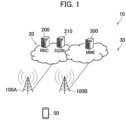
- FIG. 1 is an overall structural diagram of a radio communication system 10 according to the present embodiment.
- the radio communication system 10 is a radio communication system in accordance with 3G (UMTS) and LTE specifications.
- the radio communication system 10 includes 3G system 20 (a first radio communication system) and LTE system 30 (a second radio communication system).
- a user device (user equipment) 50 (hereinafter, "UE 50") is connected to the 3G system 20 and the LTE system 30, and executes radio communication.
- UE 50 user equipment
- the 3G system 20 includes a radio base station 100A (hereinafter, "BTS 100A”), a radio network controller (hereinafter, "RNC 200"), and a packet access control node, specifically, Serving GPRS Support Node (hereinafter, "SGSN 210").
- the RNC 200 and the SGSN 210 are network devices that constitute a core network of the 3G system 20.
- the RNC 200 performs various controls of the UE 50 and the BTS 100A.
- the SGSN 210 forwards packet data (user data) that is transmitted from / received by the UE 50.
- the LTE system 30 includes a radio base station 100B (hereinafter, "eNB 100B”) and a mobility management entity (hereinafter, "MME 300") .
- eNB 100B radio base station 100B
- MME 300 mobility management entity
- the MME 300 accommodates the eNB 100B, and performs mobility control and bearer control and the like relating to the UE 50.
- the MME 300 is a network device that constitutes a core network of the LTE system 30.
- the UE 50 executes radio communication with the BTS 100A in accordance with the specification of the 3G.
- the UE 50 executes radio communication with the eNB 100B in accordance with the specification of the LTE.
- the UE 50 is capable of transitioning from the 3G to the LTE and from the LTE to the 3G.
- the UE 50 is capable of executing Inter-RAT (Radio Access Technology) handover (hereinafter, "Inter-RAT HO") that is executed between the 3G and the LTE, and Cell Reselection that is executed between the 3G and the LTE.
- Inter-RAT Radio Access Technology
- the type of the UE 50 is not limited to any particular UE type, and the UE 50 can be a bandwidth reduced low complexity UE (BL UE). Furthermore, the UE 50 can support a coverage enhancement mode (CE mode). Specifically, the UE 50 is capable of supporting CE Mode A and CE Mode B (see 3GPP TS 36.213 and the like).
- the CE mode is a technology by which a cell coverage is equivalently enhanced by gradually lowering the threshold of the received power level (RSRP/RSRQ), and in which, a number of attempts of the random access procedure (RA procedure) according to the respective mode is also stipulated.
- RSRP/RSRQ received power level
- RA procedure random access procedure
- the UE 50 can notify the 3G system 20 and the LTE system 30 of capability information that indicates various capabilities (UE category, Carrier Aggregation / Dual Connectivity (CA / DC) band combination, MIMO layer, and the like) of the UE 50.
- the capability information also includes information that indicates whether the UE 50 supports the CE Mode.
- the capability information that indicates that the UE 50 supports the CE Mode is not retained in the 3G system 20 (see Chapter 5.11.4 of TS 23.401 V13.11.0 (Non-Patent Document 2)).
- the capability information that indicates that the UE 50 supports the CE Mode is retained in the LTE system 30.
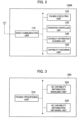
- FIG. 2 is a functional block diagram of the eNB 100B.
- the eNB 100B includes a radio communication unit 110, a paging executing unit 120, a transition controlling unit 130, a capability information acquiring unit 140, and a capability enquiring unit 150.
- the radio communication unit 110 executes radio communication in accordance with the LTE system. Specifically, the radio communication unit 110 transmits to / receives from the UE 50 radio signals in accordance with the LTE system. The user data or control data is multiplexed in the radio signal. Moreover, the control data is transmitted / received via a radio resource control layer (RRC layer) message.
- RRC layer radio resource control layer
- the transition controlling unit 130 transitions the UE 50 to the LTE system 30
- the paging executing unit 120 executes various different paging corresponding to the type (UE category) of the UE 50.
- the paging executing unit 120 can execute the paging corresponding to the CE Mode and the paging corresponding to a non-enhancement mode other than the CE Mode (RRC Paging) .
- the paging executing unit 120 executes the paging corresponding to the CE Mode and the paging corresponding to the non-enhancement mode at the same time.
- the non-enhancement mode denotes a user device that does not support the CE Mode, specifically, denotes a user device that is other than BL UE (Cat.M) and that does not support the CE Mode (called Normal Mode UE).
- the paging executing unit 120 can also execute the paging corresponding to the non-enhancement mode.
- IE information element
- the paging executing unit 120 executes the paging corresponding to the non-enhancement mode.
- the paging executing unit 120 can also execute the paging corresponding to the CE Mode or the paging corresponding to a non-enhancement mode other than the CE Mode.
- the paging executing unit 120 executes the paging corresponding to the CE Mode.
- the paging executing unit 120 executes the paging corresponding to the non-enhancement mode (Normal Mode UE).
- the paging executing unit 120 can execute the paging corresponding to the CE Mode or the paging corresponding to Normal Mode UE, and can execute the other paging, if the one executed first fails.
- the paging executing unit 120 can first execute the paging that corresponds to the non-enhancement mode.
- the transition controlling unit 130 controls the transition of the UE 50 from the 3G system 20 to the LTE system 30. Specifically, the transition controlling unit 130 executes Inter-RAT HO and Cell Reselection between the 3G and the LTE.
- Inter-RAT HO is a procedure via which the UE 50 in the Active (RRC_CONNECTED) state is transited
- Cell Reselection is a procedure via which the UE 50 in the Idle state is transited.
- the capability information acquiring unit 140 acquires the capability information of the UE 50. Specifically, the capability information acquiring unit 140 acquires from the MME 300 the UE Capability that includes the information element (ue-CategoryDL-v1310 and ce-ModeA-r13, ce-ModeB-r13) that shows that the UE 50 supports the non-enhancement mode (Normal Mode UE).
- the information element (ue-CategoryDL-v1310 and ce-ModeA-r13, ce-ModeB-r13) that shows that the UE 50 supports the non-enhancement mode (Normal Mode UE).
- the capability information acquiring unit 140 can generate the UE Radio Capability for Paging in which the information element (ue-CategoryDL-v1310 and ce-ModeA-r13, ce-ModeB-r13) option is set to OFF.
- the capability enquiring unit 150 enquires about the capability information of the UE 50. Specifically, when the transition controlling unit 130 transitions the UE 50 to the LTE system 30, the capability enquiring unit 150 transmits to the UE 50 the UE Capability Enquiry (capability enquiry) via which the UE Capability of the UE 50 is enquired.
- the capability enquiring unit 150 acquires from the UE 50 the UE Capability that includes whether the UE 50 supports the CE Mode. Specifically, the capability enquiring unit 150 acquires the UE Capability Information transmitted by the UE 50.
- FIG. 3 is a functional block diagram of the MME 300.
- the MME 300 includes a paging processing unit 310, a UE capability information managing unit 320, and UE capability information retaining unit 330.
- the paging processing unit 310 executes processing relating to paging that is executed with the UE 50. Specifically, the paging processing unit 310 transmits to the eNB 100B a paging message for the UE 50 at a predetermined timing depending on the presence or absence of the downlink data for the UE 50.
- the paging processing unit 310 transmits to the eNB 100B the UE Radio Capability for Paging that includes the capability information of the UE 50.
- the UE Radio Capability for Paging includes the information elements of ue-CategoryDL-v1310 and ce-ModeA-r13, ce-ModeB-r13.
- the UE capability information managing unit 320 manages the capability information of the UE 50. Specifically, the UE capability information managing unit 320 acquires the UE Capability included in the UE Capability Information that is transmitted from the UE 50, and the UE capability information retaining unit 330 retains the UE Capability Information.
- the UE capability information managing unit 320 can acquire the capability information of the UE 50 acquired from another network device (such as home subscriber server (HSS)) and the UE capability information retaining unit 330 can retain the capability information of the UE 50.
- HSS home subscriber server
- the UE capability information retaining unit 330 retains the UE Capability Information by mapping the capability information of a plurality of the UEs that includes the UE 50 with the corresponding UEs.
- a plurality of patterns of the UE 50 capability can exist depending on whether it is BL UE (Cat.M and the like) and whether the CE Mode is supported, and that the capability of the UE 50 is not known at the network side (radio base station and network device) when the UE 50 transitions from the 3G system 20 to the LTE system 30.
- the LTE system 30 eNB 100B cannot know the capability of the UE 50.
- FIG. 12A shows a relation between the capability information of the UE 50 that can be assumed at the eNB 100B side and the paging (corresponding to Operation Example 1 explained later), and FIG. 12B shows the relation between the capability information of the UE 50 that can be assumed at the eNB 100B side and the paging (corresponding to Operation Example 2 explained later).
- the UE Radio Capability for Paging includes combinations depending on whether Cat.M (here, Cat M1 is given as an example) and the CE Mode are supported.
- a case of "Cat.M: Not supported, CE Mode: Not supported” corresponds to a case in which the UE Radio Capability for Paging is not notified from the MME 300. Moreover, in such a case, instead of determining whether the CE Modes A and B are supported, a case in which the paging method (cycle and channel and the like) is determined depending on whether the UE 50 supports the the CE mode is assumed. Alternatively, the number of repetitions of the paging can be optimized by determining whether the CE Modes A and B are supported.
- the UE 50 when the UE 50 supports the Cat.M and the CE Mode, the UE 50 supports BL UE or the CE Mode (denoted as UE (CE)). Therefore, it is necessary to execute paging for BL UE / UE (CE) . On the other hand, in such a case, paging for Normal Mode UE (that is, for no CE Mode support) is not necessary.
- FIG. 4 shows a paging sequence that is performed with the UE 50 (Operation Example 1).
- the paging for BL UE / UE (CE) and the paging for Normal Mode UE (that is, for no CE Mode support) are executed, regardless of the capability of the UE 50.
- the UE 50 transitions from the 3G system 20 to the LTE system 30 (performs Inter-RAT HO or Cell Reselection) (Step 1).
- the eNB 100B Upon receiving the paging message, the eNB 100B executes the paging for BL UE / UE (CE) and the paging for Normal Mode UE (Steps 3 and 4).
- FIG. 5 shows the paging sequence that is performed with the UE 50 (Operation Example 2).
- the UE 50 by adding a notification of the capability information relating to Normal Mode UE, it can be distinguished that whether the UE 50 does not support the CE Mode because the UE 50 is Normal Mode UE, or whether it is unclear that the CE Mode is supported because the UE 50 has transited from the 3G system 20 that does not use the UE Radio Capability for Paging.
- the MME 300 transmits the paging message to the eNB 100B (Step 3), at this step, the MME 300 transmits the UE Radio Capability for Paging of the UE 50.
- the UE Radio Capability for Paging transmitted by the MME 300 includes the information elements of ue-CategoryDL-v1310 and ce-ModeA-r13, ce-ModeB-r13.
- the information elements ue-CategoryDL-v1310 and ce-ModeA-r13, ce-ModeB-r13 are all set to Option OFF. Accordingly, it is explicitly indicated that the UE 50 is not BL UE, does not support the CE Mode, and is Normal Mode UE.
- the eNB 100B determines the paging type to be executed with the UE 50 (Step 4). Specifically, the eNB 100B determines that the paging for Normal Mode UE is to be executed, and executes the paging for Normal Mode UE (Step 5).
- the capability information is acquired from the UE 50 when the UE 50 transitions from the 3G system 20 to the LTE system 30. Paging sequences that are to be performed in accordance with a transition method or a difference in the state of the UE 50 will be explained below.
- FIG. 6 shows the paging initiation sequence that is performed with the UE 50 (Operation Example 3: Inter-RAT HO) . A part of operations that differs from those performed in Operation Example 1 will be explained below.
- the RNC 200 transmits HO From UTRAN Command associated with the Inter-RAT HO processing to the UE 50 (Step 3).
- the UE 50 transmits RRC Connection Reconfiguration to the eNB 100B according to the received HO From UTRAN Command (Step 4).
- the eNB 100B transmits HO Notify to the MME 300 according to the received RRC Connection Reconfiguration (Step 5). Moreover, the eNB 100B transmits to the UE 50 the UE Capability Enquiry (Step 6).
- the UE 50 returns the UE Capability Information that includes the UE Capability of the UE 50 to the eNB 100B according to the received UE Capability Enquiry (Step 7) .
- the information element that indicates that the UE 50 supports the CE Mode is included in the UE Capability (E-UTRA UE Capability).
- the eNB 100B Based on the received UE Capability Information, the eNB 100B transmits to the MME 300 the UE Capability Info Indication that includes the UE Capability of the UE 50 (Step 8) .
- a call release processing relating to the UE 50 is executed at the 3G side (RNC 200, SGSN 210) (Step 9).
- Step 9 Because the UE capability of the UE 50 has already been acquired when the paging is executed with the UE 50, the UE Radio Capability for Paging can be used. In other words, appropriate paging can be executed with the UE 50.
- FIG. 7 shows the paging initiation sequence that is performed with the UE 50 (Operation Example 3: Cell Reselection (Active Flag - Absent)).
- the UE 50 performs with the eNB 100B the settings in the radio resource control layer (RRC layer) that are associated with the execution of Cell Reselection from the 3G system 20 to the LTE system 30 (Step 1). Moreover, the eNB 100B transmits to / receives from the MME 300 an initial message associated with the Cell Reselection of the UE 50 (Steps 2 and 3) .
- RRC layer radio resource control layer
- the eNB 100B promptly transmits the UE Capability Enquiry to the UE 50 (Step 4).
- the Active Flag is present (True) in the TAU, the UE Capability of the UE 50 is instantaneously acquired and used to execute the paging with the UE 50.
- the UE 50 returns the UE Capability Information that includes the UE Capability of the UE 50 to the eNB 100B according to the received UE Capability Enquiry (Step 5).
- the eNB 100B Based on the received UE Capability Information, the eNB 100B transmits to the MME 300 the UE Capability Info Indication that includes UE Capability of the UE 50 (Step 6).
- the eNB 100B further transmits to / receives from the UE 50 a message relating to security and establishes settings in the RRC layer (Steps 7 to 11).
- Step 11 After the processes up to Step 11 are completed, because the UE capability of the UE 50 has already been acquired when the paging is executed with the UE 50, the UE Radio Capability for Paging can be used. In other words, appropriate paging can be executed with the UE 50.
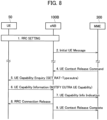
- FIG. 8 shows the paging initiation sequence that is performed with the UE 50 (Operation Example 3: Cell Reselection (Active Flag - Absent)). A part of the sequence that differs from that performed in the case of Cell Reselection (Active Flag - Present) shown in FIG. 7 will be mainly explained below.
- the MME 300 transmits UE Context Release Command to the eNB 100B (Step 4). In other words, the MME 300 completes the TAU process in the Non-Access Stratum (NAS) and instructs call release relating to the UE 50. Moreover, compared to FIG. 7 , in the case of the sequence shown in FIG. 8 (Cell Reselection (Active Flag - Absent)), Initial Context Setup Request is not transmitted.
- the eNB 100B transmits the UE Capability Enquiry to the UE 50, and acquires the UE Capability Information (Steps 5 and 6).
- the eNB 100B transmits the UE Capability Info Indication to the MME 300 (Step 7).
- the eNB 100B releases the connection of the RRC layer with the UE 50, and notifies the MME 300 that the context of the UE 50 is released (Steps 8 and 9).
- Step 9 Because the UE capability of the UE 50 has already been acquired when the paging is executed with the UE 50, the UE Radio Capability for Paging can be used. In other words, appropriate paging can be executed with the UE 50.
- the paging message (that is, the paging for BL UE / UE (CE) or the paging for Normal Mode UE) is transmitted by only using one channel. If the eNB 100B is not able to confirm the response for the paging message, the eNB 100B transmits the paging message by using the other channel (or, re-transmits the paging message by using both the channels).
- the eNB 100B sets a timer to wait for a response from the UE 50 for the paging message, and till the timer expires, waits for the RRC Connection Establishment procedure to be started by the UE 50 (retains UE 50-related ID such as S-TMSI).
- the eNB 100B can promptly transmit to the UE 50 the UE Capability Enquiry and acquire the UE Capability of the UE 50.
- first idle-mode TAU after RAT change an operation example in which the MME 300 acquires the UE Capability Enquiry in the first Tracking Area Update (called "first idle-mode TAU after RAT change") performed from the UE 50 that is in the Idle state after the UE 50 has transited from the 3G system 20 to the LTE system 30, that is, after RAT (Radio Access Technology) is changed is explained.
- FIG. 9 the paging initiation sequence that is performed with the UE 50 that corresponds to the first idle-mode TAU after RAT change (Operation Example 4.1) is shown.
- the UE 50 initiates the Tracking Area Update (TAU) procedure (Step 0).
- TAU Tracking Area Update
- the UE 50 and the eNB 100B execute the random access (RA) procedure by using Random Access Channel (RACH) (Step 1) .
- RACH Random Access Channel
- the UE 50 transmits TAU Request to the eNB 100B (Step 2).
- the eNB 100B transmits to the MME 300 the TAU Request based on the received TAU Request from the UE 50 (Step 3).
- the MME 300 Based on the received TAU Request, the MME 300 known that the received TAU Request is a first TAU after the transition of the UE 50 to the LTE system 30 (Step 4). Specifically, the MME 300 knows that the received TAU Request is a first TAU based on 4G-GUTI (Global Unique Temporary ID) provided from the UE 50.
- 4G-GUTI Global Unique Temporary ID
- the MME 300 transmits Context Request to the SGSN 210 (Step 5).
- the SGSN 210 returns Context Response as a response to the Context Request (Step 6).
- the MME 300 Upon receiving the Context Response, the MME 300 returns TAU Accept to the eNB 100B as a response to the TAU Request (Step 7). Based on the TAU Accept received from the MME 300, the eNB 100B transmits the TAU Accept to the UE 50 (Step 8) .
- the MME 300 After transmitting the TAU Accept, the MME 300 transmits S1 Release Command to the eNB 100B (Step 9).
- the S1 Release Command includes information that indicates that the UE 50 does not possess the UE Radio Capability for Paging (No UE Radio Capability for Paging) . Accordingly, the eNB 100B can be requested to acquire the UE Capability of the UE 50.
- the eNB 100B Based on the information on the No UE Radio Capability for Paging included in the received S1 Release Command, the eNB 100B transmits the UE Capability Enquiry to the UE 50 (Step 10).
- the UE 50 returns the UE Capability Information that includes the UE Capability of the UE 50 to the eNB 100B according to the received UE Capability Enquiry, (Step 11).
- the eNB 100B Based on the received UE Capability Information, the eNB 100B transmits to the MME 300 the UE Capability Info Indication that includes UE Capability of the UE 50 (Step 12) .
- the MME 300 retains the UE Capability (including the UE Radio Capability for Paging) of the UE 50 included in the received UE Capability Info Indication (Step 13).
- the eNB 100B releases the connection of the RRC layer with the UE 50 (Step 14), and transmits S1 Release Complete to the MME 300 (Step 15).
- the MME 300 performs the operation in accordance with the present operation example (transmission of S1 Release Command (Release instruction in S1 interface that includes the No UE Radio Capability for Paging) only in the case of the first idle-mode TAU after RAT change.
- S1 Release Command Release instruction in S1 interface that includes the No UE Radio Capability for Paging
- the eNB 100B and the MME 300 are already aware of the contents of the UE Radio Capability for Paging of the UE 50, such operation is not necessary.
- the UE Radio Capability for Paging of the UE 50 can be acquired without adding a new message that is to be transmitted from the MME 300.
- FIG. 10 a paging initiation sequence that is performed with the UE 50 that corresponds to the first idle-mode TAU after RAT change (Operation Example 4.2) is shown.
- the operation is similar to that executed in Operation Example 4.1.
- the MME 300 acquires the UE Radio Capability for Paging of the UE 50 by receiving the S1 Release Complete that includes the UE Capability (completion response for the release instruction in the S1 interface).
- Steps 0 to 11 are the same as those performed at Steps 1 to 11 in Operation Example 4.1.
- the eNB 100B releases the connection of the RRC layer with the UE 50 (Step 12), and transmits S1 Release Complete to the MME 300 (Step 13).
- the S1 Release Complete includes the UE Capability (including the UE Radio Capability for Paging) of the UE 50.
- the UE Radio Capability for Paging of the UE 50 can be acquired without adding a new message that is to be transmitted from the MME 300.
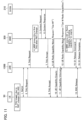
- FIG. 11 a paging initiation sequence that is performed with the UE 50 that corresponds to first idle-mode TAU after RAT change (Operation Example 4.3) is shown.
- a message via which a type of the UE 50 is enquired is transmitted from the MME 300 to the eNB 100B.
- the eNB 100B acquires the UE Capability of the UE 50 according to the received message.
- a part of processes that differs from those performed in Operation Example 4.1 will be mainly explained in the following explanation.
- the MME 300 After transmitting the TAU Accept, the MME 300 transmits the UE Radio Capability Match Request (UE type request) to the eNB 100B (Step 9) .
- the UE Radio Capability Match Request includes information that enquires about the type of the UE 50 (UE category) (Cat. M?). However, at this step, even if Cat.M is assumed as the UE category, the UE category can be BL UE or CE Mode-supporting UE. Accordingly, the eNB 100B can be requested to acquire the UE Capability of the UE 50.
- the eNB 100B Based on the information on Cat. M? included in the received UE Radio Capability Match Request, the eNB 100B transmits the UE Capability Enquiry to the UE 50 (Step 10). Specifically, when the UE 50 is Cat.M, the eNB 100B transmits the UE Capability Enquiry.
- the eNB 100B can transmit to the MME 300 the information that indicates that the UE 50 is Cat.M.
- the UE 50 returns the UE Capability Information that includes the UE Capability of the UE 50 to the eNB 100B according to the received UE Capability Enquiry, (Step 11).
- the eNB 100B Based on the received UE Capability Information, the eNB 100B transmits to the MME 300 the UE Radio Capability Match Response (UE type response) that includes the UE Capability of the UE 50 (Cat.M) (Step 12). However, if the UE 50 is not Cat.M, the eNB 100B can transmit the UE Radio Capability Match Response that includes information that indicates that the UE 50 is not Cat.M, or can transmit a different message that includes the information that indicates that the UE 50 is not Cat.M to the MME 300.
- UE Radio Capability Match Response UE type response
- the eNB 100B can transmit the UE Radio Capability Match Response that includes information that indicates that the UE 50 is not Cat.M, or can transmit a different message that includes the information that indicates that the UE 50 is not Cat.M to the MME 300.
- the eNB 100B can transmit the UE Capability Enquiry only when the UE 50 is Cat.M (or BL UE).
- the MME 300 retains the UE Capability (including the UE Radio Capability for Paging) of the UE 50 that is included in the received UE Radio Capability Match Response (Step 13) .
- the MME 300 After receiving the UE Radio Capability Match Response, the MME 300 transmits the S1 Release Command to the eNB 100B (Step 14).
- the eNB 100B releases the connection of the RRC layer with the UE 50 (Step 15), and transmits S1 Release Complete to the MME 300 (Step 16).
- the UE Radio Capability Match Request explained in the present operation example is a changed form of UE Radio Capability Match procedure that is applied to UE that executes SRVCC (Single Radio Voice Call Continuity).
- SRVCC Single Radio Voice Call Continuity
- the UE Radio Capability for Paging of the UE 50 can be acquired without adding a new message that is to be transmitted from the MME 300.
- the radio communication system 10 when the UE 50 transitions from the 3G system 20 to the LTE system 30, the paging for BL UE / UE (CE) and the paging for Normal Mode UE (that is, for no CE Mode support) is executed with the UE 50 (see Operation Example 1).
- the UE 50 not correctly receiving either of the paging for BL UE / UE(CE) and the paging for Normal Mode UE results in wastage of the radio resources to a certain extent, however, a situation in which the paging cannot be received correctly at all by the UE 50 can be reliably avoided.
- the eNB 100B can acquire from the MME 300 the UE Capability of the UE 50 that includes the information element that indicates that the UE 50 is non-enhancement mode (in other words, Normal Mode UE) that does not support the CE Mode (see Operation Example 2).
- the eNB 100B can transmit to the UE 50 the UE Capability Enquiry (capability enquiry) via which the UE Capability of the UE 50 is enquired, and acquire from the UE 50 the UE Capability that includes whether the UE 50 supports the CE Mode (see Operation Example 3).
- the existing UE Capability is the information relating to the capability that is used when the UE 50 is in the connected state (Active state, RRC_CONNECTED), it is acceptable if the UE 50 acquires the UE Capability when the state of the UE 50 changes from the Idle state to the connected state (Active state). In other words, when the UE 50 is in the Idle state, it is acceptable if the network side does not retain UE Capability of the UE 50.
- the UE Capability (such as ue-CategoryDL-v1310) included in the UE Radio Capability for Paging is the information on the capability that is used when the UE 50 is in the Idle state, even when the UE 50 is in the Idle state, it is necessary that the network side retains the UE Capability of the UE 50.
- the eNB 100B can transmit to the MME 300 (or the SGSN 210) the UE Capability included in the UE Capability Information acquired from the UE 50 (see Operation Example 3).
- the MME 300 can transmit to the eNB 100B an instruction to execute appropriate paging with the UE 50.
- the UE 50 corresponds to the BL UE (Cat.M) is explained.
- the UE 50 can be UE for Narrow Band Internet of Things (NB-IoT).
- NB-IoT Narrow Band Internet of Things
- the SGSN 210 is cited as an example.
- other packet access control nodes for example, Gateway GPRS Support Node (GGSN)
- GGSN Gateway GPRS Support Node
- each functional block may be realized by one device combined physically and/or logically.
- two or more devices separated physically and/or logically may be directly and/or indirectly connected (for example, wired and/or wireless) to each other, and each functional block may be realized by these plural devices.
- FIG. 13 is a diagram showing an example of a hardware configuration of these devices. As shown in FIG. 13 , each of these devices can be configured as a computer device including a processor 1001, a memory 1002, a storage 1003, a communication device 1004, an input device 1005, an output device 1006, a bus 1007, and the like.
- the functional blocks of the devices can be realized by any of hardware elements of the computer device or a desired combination of the hardware elements.
- the processor 1001 for example, operates an operating system to control the entire computer.
- the processor 1001 can be configured with a central processing unit (CPU) including an interface with a peripheral device, a control device, a computing device, a register, and the like.
- CPU central processing unit
- the memory 1002 is a computer readable recording medium and is configured, for example, with at least one of ROM (Read Only Memory), EPROM (Erasable Programmable ROM), EEPROM (Electrically Erasable Programmable ROM), RAM (Random Access Memory), and the like.
- the memory 1002 can be called register, cache, main memory (main memory), and the like.
- the memory 1002 can store therein a computer program (computer program codes), software modules, and the like that can execute the method according to the above embodiments.
- the storage 1003 is a computer readable recording medium.
- Examples of the storage 1003 include an optical disk such as CD-ROM (Compact Disc ROM), a hard disk drive, a flexible disk, a magneto-optical disk (for example, a compact disk, a digital versatile disk, a Blu-ray (Registered Trademark) disk), a smart card, a flash memory (for example, a card, a stick, a key drive), a floppy (Registered Trademark) disk, a magnetic strip, and the like.
- the storage 1003 can be called an auxiliary storage device.
- the recording medium can be, for example, a database including the memory 1002 and/or the storage 1003, a server, or other appropriate medium.
- the communication device 1004 is hardware (transmission/reception device) capable of performing communication between computers via a wired and/or wireless network.
- the communication device 1004 is also called, for example, a network device, a network controller, a network card, a communication module, and the like.
- the input device 1005 is an input device (for example, a keyboard, a mouse, a microphone, a switch, a button, a sensor, and the like) that accepts input from the outside.
- the output device 1006 is an output device (for example, a display, a speaker, an LED lamp, and the like) that outputs data to the outside. Note that, the input device 1005 and the output device 1006 may be integrated (for example, a touch screen).
- the respective devices such as the processor 1001 and the memory 1002, are connected to each other with the bus 1007 for communicating information there among.
- the bus 1007 can be constituted by a single bus or can be constituted by separate buses between the devices.
- the manner of notification of information is not limited to the one explained in the embodiments, and the notification may be performed in other manner.
- the notification of information can be performed by physical layer signaling (for example, DCI (Downlink Control Information), UCI (Uplink Control Information)), upper layer signaling (for example, RRC signaling, MAC (Medium Access Control) signaling, notification information (MIB (Master Information Block), SIB (System Information Block)), other signals, or a combination thereof.
- the RRC signaling can be called RRC message
- the RRC signaling can be, for example, RRC Connection Setup message, RRC Connection Reconfiguration message, and the like.
- the input/output information can be stored in a specific location (for example, a memory) or can be managed in a management table.
- the information to be input/output can be overwritten, updated, or added.
- the information can be deleted after outputting.
- the inputted information can be transmitted to another device.
- the specific operations performed by the eNB 100B and the MME 300 can be performed by another network node (device).
- functions of the eNB 100B and the MME 300 can be provided by combining a plurality of other network nodes.
- the used parameter and the like can be represented by an absolute value, can be expressed as a relative value from a predetermined value, or can be represented by corresponding other information.
- the radio resource can be indicated by an index.
- the eNB 100B can accommodate one or more (for example, three) cells (also called sectors).
- the entire coverage area of the base station can be divided into a plurality of smaller areas.
- communication service can be provided by a base station subsystem (for example, a small base station for indoor use RRH: Remote Radio Head).
- the term “cell” or “sector” refers to a part or all of the coverage area of a base station and/or a base station subsystem that performs communication service in this coverage .
- the terms “base station” “eNB”, “cell”, and “sector” can be used interchangeably in the present specification.
- the base station can also be referred to as a fixed station, NodeB, eNodeB (eNB), gNodeB (gNB), an access point, a femtocell, a small cell, and the like.
- the UE 50 is called by the persons skilled in the art as a subscriber station, a mobile unit, a subscriber unit, a radio unit, a remote unit, a mobile device, a radio device, a radio communication device, a remote device, a mobile subscriber station, an access terminal, a mobile terminal, a radio terminal, a remote terminal, a handset, a user agent, a mobile client, a client, or with some other suitable term.
- the phrase “based on” does not mean “based only on” unless explicitly stated otherwise. In other words, the phrase “based on” means both “based only on” and “based at least on”.
- any reference to an element using a designation such as “first”, “second”, and the like used in the present specification generally does not limit the amount or order of those elements. Such designations can be used in the present specification as a convenient way to distinguish between two or more elements. Thus, the reference to the first and second elements does not imply that only two elements can be adopted, or that the first element must precede the second element in some or the other manner.
- the present invention is useful in that, even when the BL UE transitions from the 3G (UMTS) to the LTE, appropriate paging can be executed with the BL UE.
- 3G UMTS
Landscapes
- Engineering & Computer Science (AREA)
- Computer Networks & Wireless Communication (AREA)
- Signal Processing (AREA)
- Databases & Information Systems (AREA)
- Computer Security & Cryptography (AREA)
- Mobile Radio Communication Systems (AREA)
Claims (4)
- Station de base radio (100B) utilisable dans un système de communication radio (10) qui inclut un premier système de communication radio (20) et un second système de communication radio (30), et qui constitue le second système de communication radio (30), dans laquellele premier système de communication radio (20) ne conserve pas d'informations de capacité qui indiquent qu'un dispositif utilisateur prend en charge un mode d'amélioration de couverture,le second système de communication radio (30) conserve les informations de capacité, etla station de base radio (100B) inclutune unité d'exécution de radiomessagerie (120) configurée pour exécuter, lorsque l'unité de commande de transition (130) fait passer le dispositif utilisateur au second système de communication radio (30), une radiomessagerie qui correspond au mode d'amélioration de couverture en utilisant un premier canal de transmission et une radiomessagerie qui correspond à un mode de non-amélioration autre que le mode d'amélioration de couverture en utilisant un second canal de transmission différent du premier canal de transmission.
une unité de commande de transition (130) configurée pour commander la transition du dispositif utilisateur du premier système de communication radio (20) au second système de communication radio (30) ; et
la station de base radio étant caractérisée par, - Station de base radio (100B) selon la revendication 1, dans laquelle l'unité d'exécution de radiomessagerie (120) est configurée pour exécuter soit la radiomessagerie qui correspond au mode d'amélioration de couverture, soit la radiomessagerie qui correspond au mode de non-amélioration, et exécute l'autre radiomessagerie si celle exécutée en premier échoue.
- Station de base radio (100B) selon la revendication 2, dans laquelle l'unité d'exécution de radiomessagerie (120) est configurée pour exécuter d'abord la radiomessagerie qui correspond au mode de non-amélioration.
- Procédé de communication radio qui est mis en oeuvre dans un système de communication radio (10) qui inclut un premier système de communication radio (20) et un second système de communication radio (30), dans lequelle premier système de communication radio (20) ne conserve pas d'informations de capacité qui indiquent qu'un dispositif utilisateur prend en charge un mode d'amélioration de couverture,le second système de communication radio (30) conserve les informations de capacité, etle procédé de communication radio inclutune exécution dans laquelle la station de base radio (100B) exécute une radiomessagerie qui correspond au mode d'amélioration de couverture en utilisant un premier canal de transmission et une radiomessagerie qui correspond à un mode de non-amélioration autre que le mode d'amélioration de couverture en utilisant un second canal de transmission différent du premier canal de transmission lorsque le dispositif utilisateur passe au second système de communication radio (30).
une commande dans laquelle une station de base radio (100B) qui constitue le second système de communication radio (30) commande la transition du dispositif utilisateur du premier système de communication radio (20) au second système de communication radio (30) ; et
le procédé étant caractérisée par,
Applications Claiming Priority (2)
| Application Number | Priority Date | Filing Date | Title |
|---|---|---|---|
| JP2017154773 | 2017-08-09 | ||
| PCT/JP2017/029416 WO2019030938A1 (fr) | 2017-08-09 | 2017-08-15 | Station de base radio et procédé de communication radio |
Publications (3)
| Publication Number | Publication Date |
|---|---|
| EP3668207A1 EP3668207A1 (fr) | 2020-06-17 |
| EP3668207A4 EP3668207A4 (fr) | 2021-05-05 |
| EP3668207B1 true EP3668207B1 (fr) | 2025-01-29 |
Family
ID=65271027
Family Applications (1)
| Application Number | Title | Priority Date | Filing Date |
|---|---|---|---|
| EP17920929.1A Active EP3668207B1 (fr) | 2017-08-09 | 2017-08-15 | Station de base radio et procédé de communication radio |
Country Status (6)
| Country | Link |
|---|---|
| US (1) | US20200245180A1 (fr) |
| EP (1) | EP3668207B1 (fr) |
| JP (1) | JP7002551B2 (fr) |
| CN (1) | CN110999440B (fr) |
| BR (1) | BR112020002493A2 (fr) |
| WO (1) | WO2019030938A1 (fr) |
Families Citing this family (13)
| Publication number | Priority date | Publication date | Assignee | Title |
|---|---|---|---|---|
| US20190053042A1 (en) * | 2017-08-11 | 2019-02-14 | Qualcomm Incorporated | Signaling user equipment capability information |
| WO2019074436A1 (fr) * | 2017-10-10 | 2019-04-18 | Telefonaktiebolaget Lm Ericsson (Publ) | Transmission de données précoces à terminaison mobile |
| US11418998B2 (en) * | 2018-04-17 | 2022-08-16 | Telefonaktiebolaget Lm Ericsson (Publ) | Wireless device, network node, core node and methods for handling radio communication of data |
| CN111757402B (zh) * | 2019-03-29 | 2022-02-25 | 华为技术有限公司 | 一种通信方法及装置 |
| JP7529769B2 (ja) | 2019-09-16 | 2024-08-06 | 華為技術有限公司 | エアインターフェース情報セキュリティ保護方法および装置 |
| WO2021051408A1 (fr) * | 2019-09-20 | 2021-03-25 | 北京小米移动软件有限公司 | Procédé et appareil de communication, et support de stockage |
| WO2021091155A1 (fr) * | 2019-11-06 | 2021-05-14 | 엘지전자 주식회사 | Procédé et appareil de transmission et de réception de signaux d'un équipement d'utilisateur et station de base dans un système de communication sans fil |
| CN112887989B (zh) * | 2019-11-30 | 2023-03-03 | 华为技术有限公司 | 基于oam的通信方法和相关设备及存储介质 |
| US20230052093A1 (en) * | 2019-12-27 | 2023-02-16 | Ntt Docomo, Inc. | Base station and radio communication method |
| CN115280867B (zh) * | 2020-03-27 | 2025-08-19 | 高通股份有限公司 | 用于覆盖增强的多模式配置 |
| JPWO2022029974A1 (fr) * | 2020-08-06 | 2022-02-10 | ||
| CA3188195A1 (fr) * | 2020-12-22 | 2022-06-30 | Zte Corporation | Systeme et procede pour la selection de ressources de teleavertissement |
| WO2025147981A1 (fr) * | 2024-01-11 | 2025-07-17 | Nec Corporation | Dispositifs et procédés pour effectuer un processus de radiomessagerie |
Citations (1)
| Publication number | Priority date | Publication date | Assignee | Title |
|---|---|---|---|---|
| WO2016025899A1 (fr) * | 2014-08-15 | 2016-02-18 | Interdigital Patent Holding, Inc. | Prise en charge de procédures d'accès aléatoire et de radiomessagerie pour wtru à capacité réduite dans un système lte |
Family Cites Families (5)
| Publication number | Priority date | Publication date | Assignee | Title |
|---|---|---|---|---|
| CN101400110B (zh) * | 2007-09-27 | 2011-12-07 | 华为技术有限公司 | 一种确定寻呼传输信道的方法及系统 |
| EP2903363B1 (fr) * | 2014-01-30 | 2023-08-16 | Alcatel Lucent | Indiquer des propriétés d'un équipement utilisateur à un noeud de commande de réseau |
| EP3723401B1 (fr) * | 2014-07-02 | 2023-01-25 | Apple Inc. | Appareil et procédé pour améliorations de radiomessagerie pour équipement utilisateur de faible complexité |
| CN105850201B (zh) * | 2014-11-07 | 2018-07-03 | 华为技术有限公司 | 寻呼消息的传输方法和基站、移动管理实体以及用户设备 |
| EP4231678B1 (fr) * | 2015-02-23 | 2025-09-10 | Panasonic Intellectual Property Corporation of America | Procédé et station de base radio pour procédures de radiomessagerie améliorée pour des équipements utilisateurs nécessitant une extension de couverture |
-
2017
- 2017-08-15 BR BR112020002493-7A patent/BR112020002493A2/pt unknown
- 2017-08-15 JP JP2019535576A patent/JP7002551B2/ja active Active
- 2017-08-15 CN CN201780093663.4A patent/CN110999440B/zh active Active
- 2017-08-15 US US16/636,769 patent/US20200245180A1/en not_active Abandoned
- 2017-08-15 WO PCT/JP2017/029416 patent/WO2019030938A1/fr not_active Ceased
- 2017-08-15 EP EP17920929.1A patent/EP3668207B1/fr active Active
Patent Citations (1)
| Publication number | Priority date | Publication date | Assignee | Title |
|---|---|---|---|---|
| WO2016025899A1 (fr) * | 2014-08-15 | 2016-02-18 | Interdigital Patent Holding, Inc. | Prise en charge de procédures d'accès aléatoire et de radiomessagerie pour wtru à capacité réduite dans un système lte |
Non-Patent Citations (1)
| Title |
|---|
| HUAWEI (RAPPORTEUR): "Introduction of NB-IoT", vol. RAN WG2, no. St Julian's, Malta; 20160215 - 20160219, 7 March 2016 (2016-03-07), XP051081859, Retrieved from the Internet <URL:http://www.3gpp.org/ftp/tsg_ran/WG2_RL2/TSGR2_93/Docs/> [retrieved on 20160307] * |
Also Published As
| Publication number | Publication date |
|---|---|
| JP7002551B2 (ja) | 2022-01-20 |
| US20200245180A1 (en) | 2020-07-30 |
| CN110999440A (zh) | 2020-04-10 |
| CN110999440B (zh) | 2023-03-24 |
| JPWO2019030938A1 (ja) | 2020-08-27 |
| WO2019030938A1 (fr) | 2019-02-14 |
| EP3668207A4 (fr) | 2021-05-05 |
| EP3668207A1 (fr) | 2020-06-17 |
| BR112020002493A2 (pt) | 2020-08-04 |
Similar Documents
| Publication | Publication Date | Title |
|---|---|---|
| EP3668207B1 (fr) | Station de base radio et procédé de communication radio | |
| JP7279773B2 (ja) | 無線端末及びその方法 | |
| JP7469392B2 (ja) | 移動性管理の方法、端末および基地局 | |
| US11943700B2 (en) | User device | |
| CN104205935B (zh) | 用于在移动通信系统中建立呼叫的方法和装置 | |
| US8125960B2 (en) | Mobile communication method, mobile station, and wireless access network apparatus | |
| EP2930986B1 (fr) | Procédé et dispositif de gestion de mobilité | |
| JP2020505890A (ja) | 通信方法および通信機器 | |
| JP7290196B2 (ja) | Ranノード及びranノードにより行われる方法 | |
| KR20140132747A (ko) | 공유 네트워크 노드를 위한 회선 교환 호 폴백(csfb) 서비스 향상 방법 및 장치 | |
| US20200154388A1 (en) | Network device and radio communication method | |
| JP2014511079A (ja) | 音声ビジネスの実装方法および端末 | |
| JP2020505846A (ja) | オンデマンド処理方法、ユーザ装置及び基地局 | |
| US9769640B2 (en) | Emergency center selection method, device, and system | |
| JP6754900B2 (ja) | 無線通信システム、ユーザ装置、無線基地局及び無線通信方法 | |
| EP3637862B1 (fr) | Dispositif utilisateur, système de communication sans fil et procédé de communication sans fil | |
| WO2017029909A1 (fr) | Système de communication sans fil, dispositif de passerelle, entité de gestion de mobilité, et procédé de commande de communication |
Legal Events
| Date | Code | Title | Description |
|---|---|---|---|
| STAA | Information on the status of an ep patent application or granted ep patent |
Free format text: STATUS: THE INTERNATIONAL PUBLICATION HAS BEEN MADE |
|
| PUAI | Public reference made under article 153(3) epc to a published international application that has entered the european phase |
Free format text: ORIGINAL CODE: 0009012 |
|
| STAA | Information on the status of an ep patent application or granted ep patent |
Free format text: STATUS: REQUEST FOR EXAMINATION WAS MADE |
|
| 17P | Request for examination filed |
Effective date: 20200213 |
|
| AK | Designated contracting states |
Kind code of ref document: A1 Designated state(s): AL AT BE BG CH CY CZ DE DK EE ES FI FR GB GR HR HU IE IS IT LI LT LU LV MC MK MT NL NO PL PT RO RS SE SI SK SM TR |
|
| AX | Request for extension of the european patent |
Extension state: BA ME |
|
| DAV | Request for validation of the european patent (deleted) | ||
| DAX | Request for extension of the european patent (deleted) | ||
| A4 | Supplementary search report drawn up and despatched |
Effective date: 20210401 |
|
| RIC1 | Information provided on ipc code assigned before grant |
Ipc: H04W 68/12 20090101AFI20210326BHEP Ipc: H04W 8/22 20090101ALI20210326BHEP Ipc: H04W 36/14 20090101ALI20210326BHEP Ipc: H04W 48/18 20090101ALI20210326BHEP Ipc: H04W 68/02 20090101ALI20210326BHEP |
|
| STAA | Information on the status of an ep patent application or granted ep patent |
Free format text: STATUS: EXAMINATION IS IN PROGRESS |
|
| 17Q | First examination report despatched |
Effective date: 20230411 |
|
| P01 | Opt-out of the competence of the unified patent court (upc) registered |
Effective date: 20230517 |
|
| GRAP | Despatch of communication of intention to grant a patent |
Free format text: ORIGINAL CODE: EPIDOSNIGR1 |
|
| STAA | Information on the status of an ep patent application or granted ep patent |
Free format text: STATUS: GRANT OF PATENT IS INTENDED |
|
| INTG | Intention to grant announced |
Effective date: 20240916 |
|
| GRAS | Grant fee paid |
Free format text: ORIGINAL CODE: EPIDOSNIGR3 |
|
| GRAA | (expected) grant |
Free format text: ORIGINAL CODE: 0009210 |
|
| STAA | Information on the status of an ep patent application or granted ep patent |
Free format text: STATUS: THE PATENT HAS BEEN GRANTED |
|
| AK | Designated contracting states |
Kind code of ref document: B1 Designated state(s): AL AT BE BG CH CY CZ DE DK EE ES FI FR GB GR HR HU IE IS IT LI LT LU LV MC MK MT NL NO PL PT RO RS SE SI SK SM TR |
|
| REG | Reference to a national code |
Ref country code: GB Ref legal event code: FG4D |
|
| REG | Reference to a national code |
Ref country code: CH Ref legal event code: EP |
|
| REG | Reference to a national code |
Ref country code: DE Ref legal event code: R096 Ref document number: 602017087603 Country of ref document: DE |
|
| REG | Reference to a national code |
Ref country code: IE Ref legal event code: FG4D |
|
| REG | Reference to a national code |
Ref country code: NL Ref legal event code: MP Effective date: 20250129 |
|
| PG25 | Lapsed in a contracting state [announced via postgrant information from national office to epo] |
Ref country code: NL Free format text: LAPSE BECAUSE OF FAILURE TO SUBMIT A TRANSLATION OF THE DESCRIPTION OR TO PAY THE FEE WITHIN THE PRESCRIBED TIME-LIMIT Effective date: 20250129 |
|
| PG25 | Lapsed in a contracting state [announced via postgrant information from national office to epo] |
Ref country code: RS Free format text: LAPSE BECAUSE OF FAILURE TO SUBMIT A TRANSLATION OF THE DESCRIPTION OR TO PAY THE FEE WITHIN THE PRESCRIBED TIME-LIMIT Effective date: 20250429 |
|
| PG25 | Lapsed in a contracting state [announced via postgrant information from national office to epo] |
Ref country code: FI Free format text: LAPSE BECAUSE OF FAILURE TO SUBMIT A TRANSLATION OF THE DESCRIPTION OR TO PAY THE FEE WITHIN THE PRESCRIBED TIME-LIMIT Effective date: 20250129 |
|
| PG25 | Lapsed in a contracting state [announced via postgrant information from national office to epo] |
Ref country code: PL Free format text: LAPSE BECAUSE OF FAILURE TO SUBMIT A TRANSLATION OF THE DESCRIPTION OR TO PAY THE FEE WITHIN THE PRESCRIBED TIME-LIMIT Effective date: 20250129 |
|
| PG25 | Lapsed in a contracting state [announced via postgrant information from national office to epo] |
Ref country code: ES Free format text: LAPSE BECAUSE OF FAILURE TO SUBMIT A TRANSLATION OF THE DESCRIPTION OR TO PAY THE FEE WITHIN THE PRESCRIBED TIME-LIMIT Effective date: 20250129 |
|
| REG | Reference to a national code |
Ref country code: LT Ref legal event code: MG9D |
|
| PG25 | Lapsed in a contracting state [announced via postgrant information from national office to epo] |
Ref country code: NO Free format text: LAPSE BECAUSE OF FAILURE TO SUBMIT A TRANSLATION OF THE DESCRIPTION OR TO PAY THE FEE WITHIN THE PRESCRIBED TIME-LIMIT Effective date: 20250429 Ref country code: IS Free format text: LAPSE BECAUSE OF FAILURE TO SUBMIT A TRANSLATION OF THE DESCRIPTION OR TO PAY THE FEE WITHIN THE PRESCRIBED TIME-LIMIT Effective date: 20250529 |
|
| REG | Reference to a national code |
Ref country code: AT Ref legal event code: MK05 Ref document number: 1764648 Country of ref document: AT Kind code of ref document: T Effective date: 20250129 |
|
| PG25 | Lapsed in a contracting state [announced via postgrant information from national office to epo] |
Ref country code: HR Free format text: LAPSE BECAUSE OF FAILURE TO SUBMIT A TRANSLATION OF THE DESCRIPTION OR TO PAY THE FEE WITHIN THE PRESCRIBED TIME-LIMIT Effective date: 20250129 |
|
| PG25 | Lapsed in a contracting state [announced via postgrant information from national office to epo] |
Ref country code: LV Free format text: LAPSE BECAUSE OF FAILURE TO SUBMIT A TRANSLATION OF THE DESCRIPTION OR TO PAY THE FEE WITHIN THE PRESCRIBED TIME-LIMIT Effective date: 20250129 Ref country code: PT Free format text: LAPSE BECAUSE OF FAILURE TO SUBMIT A TRANSLATION OF THE DESCRIPTION OR TO PAY THE FEE WITHIN THE PRESCRIBED TIME-LIMIT Effective date: 20250529 |
|
| PG25 | Lapsed in a contracting state [announced via postgrant information from national office to epo] |
Ref country code: GR Free format text: LAPSE BECAUSE OF FAILURE TO SUBMIT A TRANSLATION OF THE DESCRIPTION OR TO PAY THE FEE WITHIN THE PRESCRIBED TIME-LIMIT Effective date: 20250430 Ref country code: BG Free format text: LAPSE BECAUSE OF FAILURE TO SUBMIT A TRANSLATION OF THE DESCRIPTION OR TO PAY THE FEE WITHIN THE PRESCRIBED TIME-LIMIT Effective date: 20250129 |
|
| PG25 | Lapsed in a contracting state [announced via postgrant information from national office to epo] |
Ref country code: AT Free format text: LAPSE BECAUSE OF FAILURE TO SUBMIT A TRANSLATION OF THE DESCRIPTION OR TO PAY THE FEE WITHIN THE PRESCRIBED TIME-LIMIT Effective date: 20250129 |
|
| PG25 | Lapsed in a contracting state [announced via postgrant information from national office to epo] |
Ref country code: SE Free format text: LAPSE BECAUSE OF FAILURE TO SUBMIT A TRANSLATION OF THE DESCRIPTION OR TO PAY THE FEE WITHIN THE PRESCRIBED TIME-LIMIT Effective date: 20250129 |
|
| PG25 | Lapsed in a contracting state [announced via postgrant information from national office to epo] |
Ref country code: SM Free format text: LAPSE BECAUSE OF FAILURE TO SUBMIT A TRANSLATION OF THE DESCRIPTION OR TO PAY THE FEE WITHIN THE PRESCRIBED TIME-LIMIT Effective date: 20250129 |
|
| PG25 | Lapsed in a contracting state [announced via postgrant information from national office to epo] |
Ref country code: DK Free format text: LAPSE BECAUSE OF FAILURE TO SUBMIT A TRANSLATION OF THE DESCRIPTION OR TO PAY THE FEE WITHIN THE PRESCRIBED TIME-LIMIT Effective date: 20250129 |
|
| PGFP | Annual fee paid to national office [announced via postgrant information from national office to epo] |
Ref country code: DE Payment date: 20250821 Year of fee payment: 9 |
|
| PG25 | Lapsed in a contracting state [announced via postgrant information from national office to epo] |
Ref country code: IT Free format text: LAPSE BECAUSE OF FAILURE TO SUBMIT A TRANSLATION OF THE DESCRIPTION OR TO PAY THE FEE WITHIN THE PRESCRIBED TIME-LIMIT Effective date: 20250129 |
|
| PG25 | Lapsed in a contracting state [announced via postgrant information from national office to epo] |
Ref country code: CZ Free format text: LAPSE BECAUSE OF FAILURE TO SUBMIT A TRANSLATION OF THE DESCRIPTION OR TO PAY THE FEE WITHIN THE PRESCRIBED TIME-LIMIT Effective date: 20250129 Ref country code: EE Free format text: LAPSE BECAUSE OF FAILURE TO SUBMIT A TRANSLATION OF THE DESCRIPTION OR TO PAY THE FEE WITHIN THE PRESCRIBED TIME-LIMIT Effective date: 20250129 |
|
| PG25 | Lapsed in a contracting state [announced via postgrant information from national office to epo] |
Ref country code: RO Free format text: LAPSE BECAUSE OF FAILURE TO SUBMIT A TRANSLATION OF THE DESCRIPTION OR TO PAY THE FEE WITHIN THE PRESCRIBED TIME-LIMIT Effective date: 20250129 |
|
| PG25 | Lapsed in a contracting state [announced via postgrant information from national office to epo] |
Ref country code: SK Free format text: LAPSE BECAUSE OF FAILURE TO SUBMIT A TRANSLATION OF THE DESCRIPTION OR TO PAY THE FEE WITHIN THE PRESCRIBED TIME-LIMIT Effective date: 20250129 |
|
| REG | Reference to a national code |
Ref country code: DE Ref legal event code: R097 Ref document number: 602017087603 Country of ref document: DE |
|
| PLBE | No opposition filed within time limit |
Free format text: ORIGINAL CODE: 0009261 |
|
| STAA | Information on the status of an ep patent application or granted ep patent |
Free format text: STATUS: NO OPPOSITION FILED WITHIN TIME LIMIT |
|
| REG | Reference to a national code |
Ref country code: CH Ref legal event code: L10 Free format text: ST27 STATUS EVENT CODE: U-0-0-L10-L00 (AS PROVIDED BY THE NATIONAL OFFICE) Effective date: 20251210 |
|
| 26N | No opposition filed |
Effective date: 20251030 |
|
| REG | Reference to a national code |
Ref country code: CH Ref legal event code: H13 Free format text: ST27 STATUS EVENT CODE: U-0-0-H10-H13 (AS PROVIDED BY THE NATIONAL OFFICE) Effective date: 20260324 |
|
| PG25 | Lapsed in a contracting state [announced via postgrant information from national office to epo] |
Ref country code: MC Free format text: LAPSE BECAUSE OF FAILURE TO SUBMIT A TRANSLATION OF THE DESCRIPTION OR TO PAY THE FEE WITHIN THE PRESCRIBED TIME-LIMIT Effective date: 20250129 |
|
| PG25 | Lapsed in a contracting state [announced via postgrant information from national office to epo] |
Ref country code: LU Free format text: LAPSE BECAUSE OF NON-PAYMENT OF DUE FEES Effective date: 20250815 |
|
| PG25 | Lapsed in a contracting state [announced via postgrant information from national office to epo] |
Ref country code: CH Free format text: LAPSE BECAUSE OF NON-PAYMENT OF DUE FEES Effective date: 20250831 |