EP3668700B1 - Procédé de fabrication de polymère et encadrement de portes - Google Patents
Procédé de fabrication de polymère et encadrement de portes Download PDFInfo
- Publication number
- EP3668700B1 EP3668700B1 EP18846512.4A EP18846512A EP3668700B1 EP 3668700 B1 EP3668700 B1 EP 3668700B1 EP 18846512 A EP18846512 A EP 18846512A EP 3668700 B1 EP3668700 B1 EP 3668700B1
- Authority
- EP
- European Patent Office
- Prior art keywords
- polymer
- fabrication method
- blank
- elongate
- reduced thickness
- Prior art date
- Legal status (The legal status is an assumption and is not a legal conclusion. Google has not performed a legal analysis and makes no representation as to the accuracy of the status listed.)
- Active
Links
Images



Classifications
-
- B—PERFORMING OPERATIONS; TRANSPORTING
- B29—WORKING OF PLASTICS; WORKING OF SUBSTANCES IN A PLASTIC STATE IN GENERAL
- B29C—SHAPING OR JOINING OF PLASTICS; SHAPING OF MATERIAL IN A PLASTIC STATE, NOT OTHERWISE PROVIDED FOR; AFTER-TREATMENT OF THE SHAPED PRODUCTS, e.g. REPAIRING
- B29C53/00—Shaping by bending, folding, twisting, straightening or flattening; Apparatus therefor
- B29C53/02—Bending or folding
- B29C53/04—Bending or folding of plates or sheets
- B29C53/06—Forming folding lines by pressing or scoring
- B29C53/063—Forming folding lines by pressing or scoring combined with folding
- B29C53/066—Forming folding lines by pressing or scoring combined with folding and joining the sides of the folding line, e.g. "Abkantschweissen"
-
- B—PERFORMING OPERATIONS; TRANSPORTING
- B23—MACHINE TOOLS; METAL-WORKING NOT OTHERWISE PROVIDED FOR
- B23K—SOLDERING OR UNSOLDERING; WELDING; CLADDING OR PLATING BY SOLDERING OR WELDING; CUTTING BY APPLYING HEAT LOCALLY, e.g. FLAME CUTTING; WORKING BY LASER BEAM
- B23K20/00—Non-electric welding by applying impact or other pressure, with or without the application of heat, e.g. cladding or plating
- B23K20/02—Non-electric welding by applying impact or other pressure, with or without the application of heat, e.g. cladding or plating by means of a press ; Diffusion bonding
- B23K20/023—Thermo-compression bonding
-
- B—PERFORMING OPERATIONS; TRANSPORTING
- B23—MACHINE TOOLS; METAL-WORKING NOT OTHERWISE PROVIDED FOR
- B23K—SOLDERING OR UNSOLDERING; WELDING; CLADDING OR PLATING BY SOLDERING OR WELDING; CUTTING BY APPLYING HEAT LOCALLY, e.g. FLAME CUTTING; WORKING BY LASER BEAM
- B23K35/00—Rods, electrodes, materials, or media, for use in soldering, welding, or cutting
- B23K35/22—Rods, electrodes, materials, or media, for use in soldering, welding, or cutting characterised by the composition or nature of the material
- B23K35/24—Selection of soldering or welding materials proper
- B23K35/26—Selection of soldering or welding materials proper with the principal constituent melting at less than 400°C
-
- B—PERFORMING OPERATIONS; TRANSPORTING
- B23—MACHINE TOOLS; METAL-WORKING NOT OTHERWISE PROVIDED FOR
- B23K—SOLDERING OR UNSOLDERING; WELDING; CLADDING OR PLATING BY SOLDERING OR WELDING; CUTTING BY APPLYING HEAT LOCALLY, e.g. FLAME CUTTING; WORKING BY LASER BEAM
- B23K35/00—Rods, electrodes, materials, or media, for use in soldering, welding, or cutting
- B23K35/22—Rods, electrodes, materials, or media, for use in soldering, welding, or cutting characterised by the composition or nature of the material
- B23K35/36—Selection of non-metallic compositions, e.g. coatings or fluxes; Selection of soldering or welding materials, conjoint with selection of non-metallic compositions, both selections being of interest
- B23K35/3612—Selection of non-metallic compositions, e.g. coatings or fluxes; Selection of soldering or welding materials, conjoint with selection of non-metallic compositions, both selections being of interest with organic compounds as principal constituents
- B23K35/3613—Polymers, e.g. resins
-
- B—PERFORMING OPERATIONS; TRANSPORTING
- B29—WORKING OF PLASTICS; WORKING OF SUBSTANCES IN A PLASTIC STATE IN GENERAL
- B29C—SHAPING OR JOINING OF PLASTICS; SHAPING OF MATERIAL IN A PLASTIC STATE, NOT OTHERWISE PROVIDED FOR; AFTER-TREATMENT OF THE SHAPED PRODUCTS, e.g. REPAIRING
- B29C65/00—Joining or sealing of preformed parts, e.g. welding of plastics materials; Apparatus therefor
- B29C65/02—Joining or sealing of preformed parts, e.g. welding of plastics materials; Apparatus therefor by heating, with or without pressure
- B29C65/10—Joining or sealing of preformed parts, e.g. welding of plastics materials; Apparatus therefor by heating, with or without pressure using hot gases (e.g. combustion gases) or flames coming in contact with at least one of the parts to be joined
- B29C65/12—Joining or sealing of preformed parts, e.g. welding of plastics materials; Apparatus therefor by heating, with or without pressure using hot gases (e.g. combustion gases) or flames coming in contact with at least one of the parts to be joined and welding bar
-
- B—PERFORMING OPERATIONS; TRANSPORTING
- B29—WORKING OF PLASTICS; WORKING OF SUBSTANCES IN A PLASTIC STATE IN GENERAL
- B29C—SHAPING OR JOINING OF PLASTICS; SHAPING OF MATERIAL IN A PLASTIC STATE, NOT OTHERWISE PROVIDED FOR; AFTER-TREATMENT OF THE SHAPED PRODUCTS, e.g. REPAIRING
- B29C66/00—General aspects of processes or apparatus for joining preformed parts
- B29C66/01—General aspects dealing with the joint area or with the area to be joined
- B29C66/02—Preparation of the material, in the area to be joined, prior to joining or welding
- B29C66/022—Mechanical pre-treatments, e.g. reshaping
- B29C66/0224—Mechanical pre-treatments, e.g. reshaping with removal of material
- B29C66/02241—Cutting, e.g. by using waterjets, or sawing
-
- B—PERFORMING OPERATIONS; TRANSPORTING
- B29—WORKING OF PLASTICS; WORKING OF SUBSTANCES IN A PLASTIC STATE IN GENERAL
- B29C—SHAPING OR JOINING OF PLASTICS; SHAPING OF MATERIAL IN A PLASTIC STATE, NOT OTHERWISE PROVIDED FOR; AFTER-TREATMENT OF THE SHAPED PRODUCTS, e.g. REPAIRING
- B29C66/00—General aspects of processes or apparatus for joining preformed parts
- B29C66/01—General aspects dealing with the joint area or with the area to be joined
- B29C66/02—Preparation of the material, in the area to be joined, prior to joining or welding
- B29C66/024—Thermal pre-treatments
- B29C66/0242—Heating, or preheating, e.g. drying
-
- B—PERFORMING OPERATIONS; TRANSPORTING
- B29—WORKING OF PLASTICS; WORKING OF SUBSTANCES IN A PLASTIC STATE IN GENERAL
- B29C—SHAPING OR JOINING OF PLASTICS; SHAPING OF MATERIAL IN A PLASTIC STATE, NOT OTHERWISE PROVIDED FOR; AFTER-TREATMENT OF THE SHAPED PRODUCTS, e.g. REPAIRING
- B29C66/00—General aspects of processes or apparatus for joining preformed parts
- B29C66/01—General aspects dealing with the joint area or with the area to be joined
- B29C66/32—Measures for keeping the burr form under control; Avoiding burr formation; Shaping the burr
- B29C66/322—Providing cavities in the joined article to collect the burr
-
- B—PERFORMING OPERATIONS; TRANSPORTING
- B29—WORKING OF PLASTICS; WORKING OF SUBSTANCES IN A PLASTIC STATE IN GENERAL
- B29C—SHAPING OR JOINING OF PLASTICS; SHAPING OF MATERIAL IN A PLASTIC STATE, NOT OTHERWISE PROVIDED FOR; AFTER-TREATMENT OF THE SHAPED PRODUCTS, e.g. REPAIRING
- B29C66/00—General aspects of processes or apparatus for joining preformed parts
- B29C66/40—General aspects of joining substantially flat articles, e.g. plates, sheets or web-like materials; Making flat seams in tubular or hollow articles; Joining single elements to substantially flat surfaces
- B29C66/41—Joining substantially flat articles ; Making flat seams in tubular or hollow articles
- B29C66/43—Joining a relatively small portion of the surface of said articles
- B29C66/431—Joining the articles to themselves
-
- B—PERFORMING OPERATIONS; TRANSPORTING
- B29—WORKING OF PLASTICS; WORKING OF SUBSTANCES IN A PLASTIC STATE IN GENERAL
- B29C—SHAPING OR JOINING OF PLASTICS; SHAPING OF MATERIAL IN A PLASTIC STATE, NOT OTHERWISE PROVIDED FOR; AFTER-TREATMENT OF THE SHAPED PRODUCTS, e.g. REPAIRING
- B29C66/00—General aspects of processes or apparatus for joining preformed parts
- B29C66/40—General aspects of joining substantially flat articles, e.g. plates, sheets or web-like materials; Making flat seams in tubular or hollow articles; Joining single elements to substantially flat surfaces
- B29C66/41—Joining substantially flat articles ; Making flat seams in tubular or hollow articles
- B29C66/43—Joining a relatively small portion of the surface of said articles
- B29C66/432—Joining a relatively small portion of the surface of said articles for making tubular articles or closed loops, e.g. by joining several sheets ; for making hollow articles or hollow preforms
- B29C66/4326—Joining a relatively small portion of the surface of said articles for making tubular articles or closed loops, e.g. by joining several sheets ; for making hollow articles or hollow preforms for making hollow articles or hollow-preforms, e.g. half-shells
-
- B—PERFORMING OPERATIONS; TRANSPORTING
- B29—WORKING OF PLASTICS; WORKING OF SUBSTANCES IN A PLASTIC STATE IN GENERAL
- B29C—SHAPING OR JOINING OF PLASTICS; SHAPING OF MATERIAL IN A PLASTIC STATE, NOT OTHERWISE PROVIDED FOR; AFTER-TREATMENT OF THE SHAPED PRODUCTS, e.g. REPAIRING
- B29C66/00—General aspects of processes or apparatus for joining preformed parts
- B29C66/70—General aspects of processes or apparatus for joining preformed parts characterised by the composition, physical properties or the structure of the material of the parts to be joined; Joining with non-plastics material
- B29C66/73—General aspects of processes or apparatus for joining preformed parts characterised by the composition, physical properties or the structure of the material of the parts to be joined; Joining with non-plastics material characterised by the intensive physical properties of the material of the parts to be joined, by the optical properties of the material of the parts to be joined, by the extensive physical properties of the parts to be joined, by the state of the material of the parts to be joined or by the material of the parts to be joined being a thermoplastic or a thermoset
- B29C66/737—General aspects of processes or apparatus for joining preformed parts characterised by the composition, physical properties or the structure of the material of the parts to be joined; Joining with non-plastics material characterised by the intensive physical properties of the material of the parts to be joined, by the optical properties of the material of the parts to be joined, by the extensive physical properties of the parts to be joined, by the state of the material of the parts to be joined or by the material of the parts to be joined being a thermoplastic or a thermoset characterised by the state of the material of the parts to be joined
- B29C66/7377—General aspects of processes or apparatus for joining preformed parts characterised by the composition, physical properties or the structure of the material of the parts to be joined; Joining with non-plastics material characterised by the intensive physical properties of the material of the parts to be joined, by the optical properties of the material of the parts to be joined, by the extensive physical properties of the parts to be joined, by the state of the material of the parts to be joined or by the material of the parts to be joined being a thermoplastic or a thermoset characterised by the state of the material of the parts to be joined amorphous, semi-crystalline or crystalline
- B29C66/73773—General aspects of processes or apparatus for joining preformed parts characterised by the composition, physical properties or the structure of the material of the parts to be joined; Joining with non-plastics material characterised by the intensive physical properties of the material of the parts to be joined, by the optical properties of the material of the parts to be joined, by the extensive physical properties of the parts to be joined, by the state of the material of the parts to be joined or by the material of the parts to be joined being a thermoplastic or a thermoset characterised by the state of the material of the parts to be joined amorphous, semi-crystalline or crystalline the to-be-joined area of at least one of the parts to be joined being semi-crystalline
- B29C66/73774—General aspects of processes or apparatus for joining preformed parts characterised by the composition, physical properties or the structure of the material of the parts to be joined; Joining with non-plastics material characterised by the intensive physical properties of the material of the parts to be joined, by the optical properties of the material of the parts to be joined, by the extensive physical properties of the parts to be joined, by the state of the material of the parts to be joined or by the material of the parts to be joined being a thermoplastic or a thermoset characterised by the state of the material of the parts to be joined amorphous, semi-crystalline or crystalline the to-be-joined area of at least one of the parts to be joined being semi-crystalline the to-be-joined areas of both parts to be joined being semi-crystalline
-
- B—PERFORMING OPERATIONS; TRANSPORTING
- B29—WORKING OF PLASTICS; WORKING OF SUBSTANCES IN A PLASTIC STATE IN GENERAL
- B29C—SHAPING OR JOINING OF PLASTICS; SHAPING OF MATERIAL IN A PLASTIC STATE, NOT OTHERWISE PROVIDED FOR; AFTER-TREATMENT OF THE SHAPED PRODUCTS, e.g. REPAIRING
- B29C66/00—General aspects of processes or apparatus for joining preformed parts
- B29C66/70—General aspects of processes or apparatus for joining preformed parts characterised by the composition, physical properties or the structure of the material of the parts to be joined; Joining with non-plastics material
- B29C66/73—General aspects of processes or apparatus for joining preformed parts characterised by the composition, physical properties or the structure of the material of the parts to be joined; Joining with non-plastics material characterised by the intensive physical properties of the material of the parts to be joined, by the optical properties of the material of the parts to be joined, by the extensive physical properties of the parts to be joined, by the state of the material of the parts to be joined or by the material of the parts to be joined being a thermoplastic or a thermoset
- B29C66/739—General aspects of processes or apparatus for joining preformed parts characterised by the composition, physical properties or the structure of the material of the parts to be joined; Joining with non-plastics material characterised by the intensive physical properties of the material of the parts to be joined, by the optical properties of the material of the parts to be joined, by the extensive physical properties of the parts to be joined, by the state of the material of the parts to be joined or by the material of the parts to be joined being a thermoplastic or a thermoset characterised by the material of the parts to be joined being a thermoplastic or a thermoset
- B29C66/7392—General aspects of processes or apparatus for joining preformed parts characterised by the composition, physical properties or the structure of the material of the parts to be joined; Joining with non-plastics material characterised by the intensive physical properties of the material of the parts to be joined, by the optical properties of the material of the parts to be joined, by the extensive physical properties of the parts to be joined, by the state of the material of the parts to be joined or by the material of the parts to be joined being a thermoplastic or a thermoset characterised by the material of the parts to be joined being a thermoplastic or a thermoset characterised by the material of at least one of the parts being a thermoplastic
- B29C66/73921—General aspects of processes or apparatus for joining preformed parts characterised by the composition, physical properties or the structure of the material of the parts to be joined; Joining with non-plastics material characterised by the intensive physical properties of the material of the parts to be joined, by the optical properties of the material of the parts to be joined, by the extensive physical properties of the parts to be joined, by the state of the material of the parts to be joined or by the material of the parts to be joined being a thermoplastic or a thermoset characterised by the material of the parts to be joined being a thermoplastic or a thermoset characterised by the material of at least one of the parts being a thermoplastic characterised by the materials of both parts being thermoplastics
-
- B—PERFORMING OPERATIONS; TRANSPORTING
- B29—WORKING OF PLASTICS; WORKING OF SUBSTANCES IN A PLASTIC STATE IN GENERAL
- B29C—SHAPING OR JOINING OF PLASTICS; SHAPING OF MATERIAL IN A PLASTIC STATE, NOT OTHERWISE PROVIDED FOR; AFTER-TREATMENT OF THE SHAPED PRODUCTS, e.g. REPAIRING
- B29C66/00—General aspects of processes or apparatus for joining preformed parts
- B29C66/80—General aspects of machine operations or constructions and parts thereof
- B29C66/83—General aspects of machine operations or constructions and parts thereof characterised by the movement of the joining or pressing tools
- B29C66/836—Moving relative to and tangentially to the parts to be joined, e.g. transversely to the displacement of the parts to be joined, e.g. using a X-Y table
-
- B—PERFORMING OPERATIONS; TRANSPORTING
- B29—WORKING OF PLASTICS; WORKING OF SUBSTANCES IN A PLASTIC STATE IN GENERAL
- B29C—SHAPING OR JOINING OF PLASTICS; SHAPING OF MATERIAL IN A PLASTIC STATE, NOT OTHERWISE PROVIDED FOR; AFTER-TREATMENT OF THE SHAPED PRODUCTS, e.g. REPAIRING
- B29C66/00—General aspects of processes or apparatus for joining preformed parts
- B29C66/80—General aspects of machine operations or constructions and parts thereof
- B29C66/84—Specific machine types or machines suitable for specific applications
- B29C66/863—Robotised, e.g. mounted on a robot arm
-
- B—PERFORMING OPERATIONS; TRANSPORTING
- B29—WORKING OF PLASTICS; WORKING OF SUBSTANCES IN A PLASTIC STATE IN GENERAL
- B29C—SHAPING OR JOINING OF PLASTICS; SHAPING OF MATERIAL IN A PLASTIC STATE, NOT OTHERWISE PROVIDED FOR; AFTER-TREATMENT OF THE SHAPED PRODUCTS, e.g. REPAIRING
- B29C66/00—General aspects of processes or apparatus for joining preformed parts
- B29C66/80—General aspects of machine operations or constructions and parts thereof
- B29C66/87—Auxiliary operations or devices
- B29C66/872—Starting or stopping procedures
-
- B—PERFORMING OPERATIONS; TRANSPORTING
- B29—WORKING OF PLASTICS; WORKING OF SUBSTANCES IN A PLASTIC STATE IN GENERAL
- B29C—SHAPING OR JOINING OF PLASTICS; SHAPING OF MATERIAL IN A PLASTIC STATE, NOT OTHERWISE PROVIDED FOR; AFTER-TREATMENT OF THE SHAPED PRODUCTS, e.g. REPAIRING
- B29C66/00—General aspects of processes or apparatus for joining preformed parts
- B29C66/90—Measuring or controlling the joining process
- B29C66/91—Measuring or controlling the joining process by measuring or controlling the temperature, the heat or the thermal flux
- B29C66/912—Measuring or controlling the joining process by measuring or controlling the temperature, the heat or the thermal flux by measuring the temperature, the heat or the thermal flux
- B29C66/9121—Measuring or controlling the joining process by measuring or controlling the temperature, the heat or the thermal flux by measuring the temperature, the heat or the thermal flux by measuring the temperature
-
- B—PERFORMING OPERATIONS; TRANSPORTING
- B29—WORKING OF PLASTICS; WORKING OF SUBSTANCES IN A PLASTIC STATE IN GENERAL
- B29C—SHAPING OR JOINING OF PLASTICS; SHAPING OF MATERIAL IN A PLASTIC STATE, NOT OTHERWISE PROVIDED FOR; AFTER-TREATMENT OF THE SHAPED PRODUCTS, e.g. REPAIRING
- B29C66/00—General aspects of processes or apparatus for joining preformed parts
- B29C66/90—Measuring or controlling the joining process
- B29C66/96—Measuring or controlling the joining process characterised by the method for implementing the controlling of the joining process
- B29C66/961—Measuring or controlling the joining process characterised by the method for implementing the controlling of the joining process involving a feedback loop mechanism, e.g. comparison with a desired value
-
- B—PERFORMING OPERATIONS; TRANSPORTING
- B23—MACHINE TOOLS; METAL-WORKING NOT OTHERWISE PROVIDED FOR
- B23K—SOLDERING OR UNSOLDERING; WELDING; CLADDING OR PLATING BY SOLDERING OR WELDING; CUTTING BY APPLYING HEAT LOCALLY, e.g. FLAME CUTTING; WORKING BY LASER BEAM
- B23K2103/00—Materials to be soldered, welded or cut
- B23K2103/30—Organic materials
- B23K2103/42—Plastics other than composite materials
-
- B—PERFORMING OPERATIONS; TRANSPORTING
- B29—WORKING OF PLASTICS; WORKING OF SUBSTANCES IN A PLASTIC STATE IN GENERAL
- B29C—SHAPING OR JOINING OF PLASTICS; SHAPING OF MATERIAL IN A PLASTIC STATE, NOT OTHERWISE PROVIDED FOR; AFTER-TREATMENT OF THE SHAPED PRODUCTS, e.g. REPAIRING
- B29C65/00—Joining or sealing of preformed parts, e.g. welding of plastics materials; Apparatus therefor
- B29C65/02—Joining or sealing of preformed parts, e.g. welding of plastics materials; Apparatus therefor by heating, with or without pressure
- B29C65/10—Joining or sealing of preformed parts, e.g. welding of plastics materials; Apparatus therefor by heating, with or without pressure using hot gases (e.g. combustion gases) or flames coming in contact with at least one of the parts to be joined
- B29C65/12—Joining or sealing of preformed parts, e.g. welding of plastics materials; Apparatus therefor by heating, with or without pressure using hot gases (e.g. combustion gases) or flames coming in contact with at least one of the parts to be joined and welding bar
- B29C65/125—Joining or sealing of preformed parts, e.g. welding of plastics materials; Apparatus therefor by heating, with or without pressure using hot gases (e.g. combustion gases) or flames coming in contact with at least one of the parts to be joined and welding bar characterised by the composition of the welding bar
-
- B—PERFORMING OPERATIONS; TRANSPORTING
- B29—WORKING OF PLASTICS; WORKING OF SUBSTANCES IN A PLASTIC STATE IN GENERAL
- B29C—SHAPING OR JOINING OF PLASTICS; SHAPING OF MATERIAL IN A PLASTIC STATE, NOT OTHERWISE PROVIDED FOR; AFTER-TREATMENT OF THE SHAPED PRODUCTS, e.g. REPAIRING
- B29C66/00—General aspects of processes or apparatus for joining preformed parts
- B29C66/70—General aspects of processes or apparatus for joining preformed parts characterised by the composition, physical properties or the structure of the material of the parts to be joined; Joining with non-plastics material
- B29C66/71—General aspects of processes or apparatus for joining preformed parts characterised by the composition, physical properties or the structure of the material of the parts to be joined; Joining with non-plastics material characterised by the composition of the plastics material of the parts to be joined
-
- B—PERFORMING OPERATIONS; TRANSPORTING
- B29—WORKING OF PLASTICS; WORKING OF SUBSTANCES IN A PLASTIC STATE IN GENERAL
- B29C—SHAPING OR JOINING OF PLASTICS; SHAPING OF MATERIAL IN A PLASTIC STATE, NOT OTHERWISE PROVIDED FOR; AFTER-TREATMENT OF THE SHAPED PRODUCTS, e.g. REPAIRING
- B29C66/00—General aspects of processes or apparatus for joining preformed parts
- B29C66/90—Measuring or controlling the joining process
- B29C66/91—Measuring or controlling the joining process by measuring or controlling the temperature, the heat or the thermal flux
- B29C66/912—Measuring or controlling the joining process by measuring or controlling the temperature, the heat or the thermal flux by measuring the temperature, the heat or the thermal flux
- B29C66/9121—Measuring or controlling the joining process by measuring or controlling the temperature, the heat or the thermal flux by measuring the temperature, the heat or the thermal flux by measuring the temperature
- B29C66/91211—Measuring or controlling the joining process by measuring or controlling the temperature, the heat or the thermal flux by measuring the temperature, the heat or the thermal flux by measuring the temperature with special temperature measurement means or methods
- B29C66/91212—Measuring or controlling the joining process by measuring or controlling the temperature, the heat or the thermal flux by measuring the temperature, the heat or the thermal flux by measuring the temperature with special temperature measurement means or methods involving measurement means being part of the welding jaws, e.g. integrated in the welding jaws
-
- B—PERFORMING OPERATIONS; TRANSPORTING
- B29—WORKING OF PLASTICS; WORKING OF SUBSTANCES IN A PLASTIC STATE IN GENERAL
- B29C—SHAPING OR JOINING OF PLASTICS; SHAPING OF MATERIAL IN A PLASTIC STATE, NOT OTHERWISE PROVIDED FOR; AFTER-TREATMENT OF THE SHAPED PRODUCTS, e.g. REPAIRING
- B29C66/00—General aspects of processes or apparatus for joining preformed parts
- B29C66/90—Measuring or controlling the joining process
- B29C66/91—Measuring or controlling the joining process by measuring or controlling the temperature, the heat or the thermal flux
- B29C66/914—Measuring or controlling the joining process by measuring or controlling the temperature, the heat or the thermal flux by controlling or regulating the temperature, the heat or the thermal flux
- B29C66/9141—Measuring or controlling the joining process by measuring or controlling the temperature, the heat or the thermal flux by controlling or regulating the temperature, the heat or the thermal flux by controlling or regulating the temperature
- B29C66/91431—Measuring or controlling the joining process by measuring or controlling the temperature, the heat or the thermal flux by controlling or regulating the temperature, the heat or the thermal flux by controlling or regulating the temperature the temperature being kept constant over time
-
- B—PERFORMING OPERATIONS; TRANSPORTING
- B29—WORKING OF PLASTICS; WORKING OF SUBSTANCES IN A PLASTIC STATE IN GENERAL
- B29C—SHAPING OR JOINING OF PLASTICS; SHAPING OF MATERIAL IN A PLASTIC STATE, NOT OTHERWISE PROVIDED FOR; AFTER-TREATMENT OF THE SHAPED PRODUCTS, e.g. REPAIRING
- B29C66/00—General aspects of processes or apparatus for joining preformed parts
- B29C66/90—Measuring or controlling the joining process
- B29C66/91—Measuring or controlling the joining process by measuring or controlling the temperature, the heat or the thermal flux
- B29C66/914—Measuring or controlling the joining process by measuring or controlling the temperature, the heat or the thermal flux by controlling or regulating the temperature, the heat or the thermal flux
- B29C66/9161—Measuring or controlling the joining process by measuring or controlling the temperature, the heat or the thermal flux by controlling or regulating the temperature, the heat or the thermal flux by controlling or regulating the heat or the thermal flux, i.e. the heat flux
- B29C66/91641—Measuring or controlling the joining process by measuring or controlling the temperature, the heat or the thermal flux by controlling or regulating the temperature, the heat or the thermal flux by controlling or regulating the heat or the thermal flux, i.e. the heat flux the heat or the thermal flux being non-constant over time
-
- B—PERFORMING OPERATIONS; TRANSPORTING
- B29—WORKING OF PLASTICS; WORKING OF SUBSTANCES IN A PLASTIC STATE IN GENERAL
- B29C—SHAPING OR JOINING OF PLASTICS; SHAPING OF MATERIAL IN A PLASTIC STATE, NOT OTHERWISE PROVIDED FOR; AFTER-TREATMENT OF THE SHAPED PRODUCTS, e.g. REPAIRING
- B29C66/00—General aspects of processes or apparatus for joining preformed parts
- B29C66/90—Measuring or controlling the joining process
- B29C66/91—Measuring or controlling the joining process by measuring or controlling the temperature, the heat or the thermal flux
- B29C66/919—Measuring or controlling the joining process by measuring or controlling the temperature, the heat or the thermal flux characterised by specific temperature, heat or thermal flux values or ranges
-
- B—PERFORMING OPERATIONS; TRANSPORTING
- B29—WORKING OF PLASTICS; WORKING OF SUBSTANCES IN A PLASTIC STATE IN GENERAL
- B29C—SHAPING OR JOINING OF PLASTICS; SHAPING OF MATERIAL IN A PLASTIC STATE, NOT OTHERWISE PROVIDED FOR; AFTER-TREATMENT OF THE SHAPED PRODUCTS, e.g. REPAIRING
- B29C66/00—General aspects of processes or apparatus for joining preformed parts
- B29C66/90—Measuring or controlling the joining process
- B29C66/93—Measuring or controlling the joining process by measuring or controlling the speed
- B29C66/934—Measuring or controlling the joining process by measuring or controlling the speed by controlling or regulating the speed
- B29C66/93441—Measuring or controlling the joining process by measuring or controlling the speed by controlling or regulating the speed the speed being non-constant over time
-
- B—PERFORMING OPERATIONS; TRANSPORTING
- B29—WORKING OF PLASTICS; WORKING OF SUBSTANCES IN A PLASTIC STATE IN GENERAL
- B29K—INDEXING SCHEME ASSOCIATED WITH SUBCLASSES B29B, B29C OR B29D, RELATING TO MOULDING MATERIALS OR TO MATERIALS FOR MOULDS, REINFORCEMENTS, FILLERS OR PREFORMED PARTS, e.g. INSERTS
- B29K2023/00—Use of polyalkenes or derivatives thereof as moulding material
- B29K2023/04—Polymers of ethylene
- B29K2023/06—PE, i.e. polyethylene
- B29K2023/0608—PE, i.e. polyethylene characterised by its density
- B29K2023/065—HDPE, i.e. high density polyethylene
-
- B—PERFORMING OPERATIONS; TRANSPORTING
- B29—WORKING OF PLASTICS; WORKING OF SUBSTANCES IN A PLASTIC STATE IN GENERAL
- B29K—INDEXING SCHEME ASSOCIATED WITH SUBCLASSES B29B, B29C OR B29D, RELATING TO MOULDING MATERIALS OR TO MATERIALS FOR MOULDS, REINFORCEMENTS, FILLERS OR PREFORMED PARTS, e.g. INSERTS
- B29K2023/00—Use of polyalkenes or derivatives thereof as moulding material
- B29K2023/10—Polymers of propylene
- B29K2023/12—PP, i.e. polypropylene
-
- B—PERFORMING OPERATIONS; TRANSPORTING
- B29—WORKING OF PLASTICS; WORKING OF SUBSTANCES IN A PLASTIC STATE IN GENERAL
- B29K—INDEXING SCHEME ASSOCIATED WITH SUBCLASSES B29B, B29C OR B29D, RELATING TO MOULDING MATERIALS OR TO MATERIALS FOR MOULDS, REINFORCEMENTS, FILLERS OR PREFORMED PARTS, e.g. INSERTS
- B29K2267/00—Use of polyesters or derivatives thereof as reinforcement
- B29K2267/003—PET, i.e. poylethylene terephthalate
-
- B—PERFORMING OPERATIONS; TRANSPORTING
- B29—WORKING OF PLASTICS; WORKING OF SUBSTANCES IN A PLASTIC STATE IN GENERAL
- B29K—INDEXING SCHEME ASSOCIATED WITH SUBCLASSES B29B, B29C OR B29D, RELATING TO MOULDING MATERIALS OR TO MATERIALS FOR MOULDS, REINFORCEMENTS, FILLERS OR PREFORMED PARTS, e.g. INSERTS
- B29K2995/00—Properties of moulding materials, reinforcements, fillers, preformed parts or moulds
- B29K2995/0037—Other properties
- B29K2995/0041—Crystalline
-
- B—PERFORMING OPERATIONS; TRANSPORTING
- B29—WORKING OF PLASTICS; WORKING OF SUBSTANCES IN A PLASTIC STATE IN GENERAL
- B29L—INDEXING SCHEME ASSOCIATED WITH SUBCLASS B29C, RELATING TO PARTICULAR ARTICLES
- B29L2012/00—Frames
-
- B—PERFORMING OPERATIONS; TRANSPORTING
- B29—WORKING OF PLASTICS; WORKING OF SUBSTANCES IN A PLASTIC STATE IN GENERAL
- B29L—INDEXING SCHEME ASSOCIATED WITH SUBCLASS B29C, RELATING TO PARTICULAR ARTICLES
- B29L2031/00—Other particular articles
- B29L2031/001—Profiled members, e.g. beams, sections
- B29L2031/003—Profiled members, e.g. beams, sections having a profiled transverse cross-section
Definitions
- This invention relates to polymer fabrication methods.
- This invention has particular application to forming crystalline thermopolymer products such as HDPE door and other frames and fittings for use in installations such as hospital, cold room and other sterile, food preparation and wet areas, and the invention will be further described with reference to these applications.
- this invention will find wider application in fabricated crystalline plastic (e.g HDPE, PET and PP) components.
- crystalline polymers are thermoplastic polymers having a percentage of crystalline morphology in concert with amorphous regions and are technically semicrystalline in nature. While not strictly analogous to fatigue in metal, plastic components when machined to thin sections and then formed into structures by bending may suffer from cracking failure at the bends.
- WO2010/111030A2 relates to step noses formed of polyvinylchloride (PVC).
- the step noses are generally flat when formed but folded into an assembled state of use.
- a flexible web interconnects tread and riser portions, to permit folding.
- Metal door frames despite being the best option currently available, are inadequately suited to the needs of many hospitals and food preparation facilities.
- the metal frames rust, promoting contamination.
- the corrosion risk is substantially increased in wet areas (such as cold rooms in food preparation facilities), which is exacerbated by the fact that the frames themselves prevent the installation of proper waterproofing. Since metal door frames are necessarily fitted at the time of stud framing, waterproofing behind them is impossible.
- Metal door frames are further required to be painted, making them susceptible to chips by carts, trolleys or other such common devices. Paint chips allow entry to microorganisms under the paint, as well as being a hazard themselves through the risk of contaminants entering food products or open wounds.
- HDPE is affected by environmental stress cracking (ESC) when it is subjected to external or internal stress in the presence of polar liquids or vapours. ESC can also be caused by detergents or silicone fluids as well as many other agents.
- PP is far less affected by ESC than HDPE.
- HDPE has good dynamic fatigue resistance but not as good as PP and exhibits no living hinge effect. Compared to PP homopolymer, HDPE has better resistance to low temperature impact and to oxidation.
- the surface gloss on products can be similar for either polymer.
- HDPE is not attacked by concentrated salts, acids or alkalis at room temperature and resists some oxidising agents such as hypochlorites.
- the present invention resides broadly in a polymer fabrication method including the steps of:
- Non-exhaustive examples of suitable polymers are crystalline polymers including HDPE, PP and PET.
- the degree of crystallinity may vary and the propensity for cracking is not necessarily in linear correlation with the crystalline content of the polymer.
- Heating the reduced thickness portion may effect thermo-reforming by any one or more of partial remelting, annealing and recrystallization of the polymer sufficient to reinstate the integrity of the polymer matrix.
- the heating of the reduced thickness portion may comprise hot air, radiant or contact heating means.
- the presence of the chamber admits of heating means operating transverse the axis of the chamber such as through said elongate gap.
- the heating means may be drawn along the chamber ahead of the advance of the hot air welding zone.
- the heating means may comprise utilizing waste heat from the hot air welding process.
- the thermo-reforming process may be controlled by calibration against the temperature and speed of the welding process.
- the thermo-reforming may be controlled as to temperature and time in response to appropriate sensors, such as temperature sensors directly or indirectly responsive to the thermo-reforming temperature of the polymer.
- the thermo-reforming temperature appropriate to the polymer in situ is dependent on the type of polymer, the degree of crystallinity and the working history of the section.
- the present invention resides broadly in an HDPE fabrication method including the steps of:
- the sheet HDPE blank may be of any suitable HDPE grade for the intended application.
- HDPE sheet is of density of 0.940 to 0.965 g/cm 3 , with higher density correlating with higher crystallinity, in turn providing higher rigidity, tensile strength, hardness, melting point, heat distortion temperature, chemical resistance, viscosity and resistance to permeation.
- higher density correlating with higher crystallinity, in turn providing higher rigidity, tensile strength, hardness, melting point, heat distortion temperature, chemical resistance, viscosity and resistance to permeation.
- increasing crystallinity results in lower clarity and impact strength, and increasing tendency to stress cracking.
- common commercial grades of high-density polyethylene have a melting point in the range of about 130 to 180 °C
- the thickness and shape is determined by the nature of the end product and will be described hereinafter with reference to a door frame.
- the 3-dimensional shape may comprise a unitary door frame section comprising a door jamb portion bounded by a pair of spaced, integral architrave portions.
- the at least one re-entrant, elongate groove may be of any suitable cross section consistent with the purpose of forming the elongate chamber on folding of the sheet.
- an ovoid cross section may approximate a substantially part-circular cross sectioned elongate chamber on folding of the sheet.
- the depth of the groove is selected having regard to the residual thickness necessary to leave to provide in-use structural strength and resistance to impact damage while being foldable.
- a door frame made from 10mm sheet may be machined to form a groove leaving a residual material thickness of from about 1.5mm to about 3.0mm, and typically about 2mm.
- the groove may be formed by any suitable means including but not limited to CNC router.
- the folding of the blank about the groove to form at least a portion of the 3-dimensional shape is preferably done in a single pass and the shape retained by a jig or the like.
- the nature of the material is that repeated self-hinging is to be avoided as cracking is highly likely.
- the groove is chosen to present an elongate gap opening the elongate chamber to the atmosphere on folding.
- the gap may be any width consistent with bridging by hot air welding using filler rod while admitting hot air to the chamber to heat the HDPE at the fold.
- the hot air welding method may comprise freehand welding, where a jet of hot air (or inert gas) from the welder is played on the weld area and the tip of a weld rod at the same time. As the rod softens, it is pushed into the joint and fuses to the parts. The welding exhaust air passes into said chamber and heats the reduced thickness portion to the selected thermo-reforming temperature.
- a metal head fitted on a hot air welding tool has a feed tube for a plastic weld rod. The metal head heats the rod and the substrate, while at the same time the melting weld rod is pressed into position. A consistent bypass of hot air may pass into the elongate chamber and heats the reduced thickness portion to the selected thermo-reforming temperature.
- the suitable polymer welding tip temperature varies substantially linearly with welding speed:
- the speed and tip temperature may therefore be manipulated to achieve a selected thermo-reforming temperature delivered by welding exhaust air and will be selected having regard to the grade of HDPE being used.
- higher crystallinity grades of HDPE have by their nature a melting point at the higher end of the scale of 130 to 180 °C.
- the notional melting point is (the applicant has determined) slightly increased in regions of cold working such as the bend in the reduced-thickness portion.
- the thermo-reforming effect may require that the HDPE be heated to between about 171 and about 182 °C in order to de-stress it and avoid later cracking. A temperature much in excess of 182 degrees C may result in unacceptable surface deformation as the material begins to melt. Temperatures below 171 °C require a long dwell time that may disrupt the welding process closing the elongate gap.
- the HOPE 3-dimensional shape produced by the method may be preconfigured by machining and cutting while in the sheet form with features such as one or more of hinge rebates, striker plate rebates, corner mitres or the like.
- the folded sections may be post-configured with machined spline-receiving corner grooves and/or insertable metal right-angle joiners adapted to engage the ends of the elongate chamber and so mitre-join the upright portions with the head portion of the door frame.
- the methods of the present invention may be adapted to a robotic process.
- an at least three axis robotic machine such as a modified flatbed CNC machine may be used.
- more complex manipulation may be advanced by the use of, e.g., a 6-axis robotic arm.
- the machined job blank may be loaded into a mechanical bender which bends the blank into the final shape.
- the PLC of the welding robot may be informed e.g. via a touch screen of the width of the blank so that the robot can weld both sides of the job with certainty of position.
- the robotic arm may be activated in automatic mode and proceeds to perform a sensing run over the blank to determine the length of the blank and the required weld length. This sensing may be performed by e.g. an ultrasonic distance sensor.
- the hot air welding may be performed by a PLC-controlled robotic process including a PLC-controlled polymer welding rod feeder and a PLC-controlled air heating unit supplying hot air to the welding tip, and responsive to at least a temperature sensor associated with the welding tip. Air flow may be monitored to ensure heater shut-off if the air fails, thus avoiding burnout.
- the monitor may comprise a substantially vertical tube confining a gravity ball lifted by air pressure in the tube to contact a microswitch switch at the top of the tube and trigger an on signal from the PLC to the air heating unit, and an off signal if air flow drops and the ball falls away from the switch to de-activate the heating unit.
- the opening of the microswitch preferably triggers welding shut-off on air failure, such as by shutting off the PLC-controlled polymewr rod feeder.
- the PLC monitors that the temperature (by measuring a thermocouple comprising the sensor at the welding tip) that the air temperature has reached the set point for starting the weld starting before energizing the robot arm.
- the set point may be different for different types or colours of plastic and typically covers a range from 250 to 300 degrees Celsius.
- the robot may proceed to weld the first side of the job.
- the program may monitor the heat developed at the tip (via the thermocouple sensor) at selected increments such as about 10mm along the weld and may continually adjust weld speed though a, for example, four-speed range.
- the program may also continually adjust the heat setting in the microprocessor air heating unit, to maintain a temperature set point at the tip as constant as is possible.
- Air is supplied to the microprocessor air heating unit by any suitable means.
- the action of crowding the weld tip while welding interferes with the air supply and delivers a non-constant air supply, which in turn cavitates air effecting the heat source, or supplies too much or not enough air at the tip and adversely alters the weld temperature.
- the PLC regulate parameters such as one or more of rod feed speed, speed of advance, air temperature and air pressure.
- the PLC may adjust the feed speed of the weld rod via a stepper or servo motor feed unit in direct proportion to the weld speed of the robot arm.
- the weld rod may be severed, for example, about 200mm from the end of the weld run and the remaining weld rod allowed to run out aligning the end of the weld rod with the end of the blank. This ensures that the weld rod feeder tube is empty until ready to begin the following weld. If the weld rod was occupying the weld rod feeder tube, the heat developed at the tip would melt the weld rod and foul the end of the weld top and feeder tube.
- the robot arm is articulated to move to the opposite side of the blank to weld the second weld, on refeeding weld rod into the tip.
- a polymer welding robot apparatus including:
- a door frame assembly including a pair of door frame upright members and a door frame header member, each comprising a jamb portion bounded by integral architrave portions and formed from a sheet HDPE blank of selected thickness, said jamb portion and architrave portions being formed about respective re-entrant, elongate grooves across a surface of said blank, said groove forming a reduced thickness portion of said blank permitting said blank to be folded to form said door frame members, the re-entrant of said groove forming an elongate chamber adjacent said reduced thickness portion and opening through an elongate gap between said opposed edges, said elongate gap being closed by hot air welding said opposed edges across said gap with filler rod, welding exhaust air passing into said chamber to heat said reduced thickness portion to a selected thermo-reforming temperature.
- the jamb portions may be configured with a door stop arrangement.
- a machined groove may be adapted to receive as door stop assembly having a stop portion and a key portion locating in the groove.
- the key portion may be screw fixed into the groove with hidden fastenings driven in from the back of the jamb portions.
- the key portion may comprise an elongate key member of generally T-section and adapted to engaged with a corresponding T-shaped slot milled into the back of a stop batten member.
- the stop batten may be invisibly secured to the jamb portion by screw fixing into the key member from behind the jamb portion.
- the door frame may be secured into the door opening in a wall by any suitable means.
- the door frame may be adhesively fit to the opening using urethane adhesive sealant, preferably with corona or flame treatment of the HDPE to improve adhesion.
- the HDPE may be grooved with a router to form an elongate recess in the architrave portions and into which screw fixings may be inserted to secure the frame to a wall opening.
- the recess may be dovetail in section to retain a flexible cover strip to conceal the screw heads.
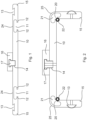
- a 10mm thick sheet of HDPE forms a door frame blank 10 comprising two uprights and a header.
- the blank 10 is CNC routed to provide re-entrant grooves having spaced outer edges 12, screw line dovetail grooves 13, door stop peg recesses 14 and edge rebates 15.
- a door stop portion 16 is retained by T-section key member 17 secured from the back of the blank 10 by screws (not shown).
- the preformed blanks 10 are subjected to cold bending to form the door frame shape as in Fig. 2 .
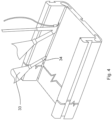
- the spaced edges 12 leave a gap 20 in the folded blank, leaving the reentrant grooves 11 forming an elongate chamber 21 having the gap 20 as an ingress point.
- Plastic welding uses hot air to melt a 4mm diameter HDPE weld rod 22 into the gap 20.
- the re-entrant grooves 11 leave a 2mm web 24 of reduced thickness to provide a bending zone.
- the web 24 when bent forms an outer curved surface at the bend 25 with some crystalline embrittlement of the material.
- heat needs to be applied to "de-stress" or "relax" the HDPE at the bend 25.
- the weld rod 22 is fed into a feeder tube 26 of a metal speed welding attachment 27 heated by a hot air source 30.
- the speed welding attachment 27 has a welding tip 31 that slides along the forming joint, preheating the HDPE.
- a thermocouple sensor 28 is connected by wire 29 to a PLC for control of the welding process. Exhaust air passed through the welding tip 31 and into the gap 20, thermo-reforming the bend 25.
- the stressed HDPE at the bend 25 is heated to a thermo-reforming temperature of between 171 and 182 °C in order to de-stress it and avoid later cracking. A temperature higher than 182 degrees C will result in unacceptable surface deformation as the material begins to melt.
- the elongate chamber 21 provides a pipe effect that channels the hot air through it, adding a degree of controlled uniform heat to the thermo-reforming plastic, distributing even heat.
- the stressed HDPE at the bend 25 is preheated by a hot air nozzle assembly 33 having a flattened tip orifice 34 engaged with the gap 20 and moving in advance of the welding tip 31.
- a hot air nozzle assembly 33 having a flattened tip orifice 34 engaged with the gap 20 and moving in advance of the welding tip 31.
- the stressed HDPE at the bend 25 is preheated by a hot air feed tube assembly 35 having a round orifice 36 located in the elongate chamber 21 and moving (by progressive withdrawal of the hot air feed tube assembly 35) in advance of the welding tip 31.
- a hot air feed tube assembly 35 having a round orifice 36 located in the elongate chamber 21 and moving (by progressive withdrawal of the hot air feed tube assembly 35) in advance of the welding tip 31.
- Fig. 6 is a flow chart of a robot-executed method orf the present invention, with the tool end of a typical robot being illustrated in Fig. 7 .
- the last stage mounting flange 40 of a 6-axis industrial robot mounts a tool head assembly 41 incorporating a welding assembly 42 mounted to an air heater 43 controlled by a PLC.
- the welding assembly 42 accepts air from the air heater 43 and delivers it to the welding tip 31, incorporating the thermocouple 28 providing tip temperature data to a PLC via the wire 29.
- a polymer rod feeder 44 is controlled by the PLC and delivers polymer welding rod 22 to the welding tip 31 via feed tube 45.
- Air is supplied to the air heater 43 by via a monitor assembly 46.
- the monitor assembly 46 consists of an air inlet 47 delivering pressurized air to a riser tube 50 containing a gravity ball (not shown and in this example a golf ball).
- the lower end of the riser tube 50 communicates with the air heater 43.
- the rise tube 50 is manually throttled by a ball valve 51.
- the upper end of the riser tube 50 is occluded by a microswitch and adjuster assembly 52 providing on-off control signal to the PLC.
- An airlock eliminator aperture 53 bleeds air from above the golf ball.
- air passing through the apparatus is heated and delivered to the tip 31.
- the gravity ball is responsive to the rate of flow whereby adequate flow maintains the ball in contact with the microswitch and the PLC. Inadequate flow causes the ball to drop away from the microswitch, signalling the PLC to switch off the air heater 34 and the polymer rod feeder 44.
- welder temperature hot air temperature
- welder travel speed thickness of HDPE remaining at the bend 25
- the size of the gap 20 and the ambient temperature of air and plastic material are all variables that are able to be managed to an acceptable degree with the use of visual indicators during the welding.
- Robotic technology is used to monitor these variables to use all of the input data to eliminate inconsistency.
- the robot technology is using continuous laser temperature readings of both the surface temperature of the plastic as well as the welder tip temperature to enable a continuously varying weld speed.
- the other variables (plastic thickness and weld gap) are controlled as constants in this example.
- the gap between plastics to be welded is relevant to the thickness of the plastic to be thermo-reformed.
- the gap required for 2.0mm thermo-reformed plastic may be 2.0mm
- the gap for 1.0mm thermo-reformed plastic is reduced to 1.0mm, otherwise the heat from the hot air welder (that cannot be lower than 171 °C in order to thermoform and prevent cracking) will unacceptably deform the plastic surface. This ensures that the heat reaching the thermo-reforming plastic surface is of the correct temperature to thermoform, but the volume of hot air is controlled by the gap to suit the plastic thickness.
- Door frames produced by the present method do not rust.
- HOPE door frames are food grade and homogeneous, they do not require and in fact, cannot be painted, will not rust, decay, flake or chip.
- the door frames are fitted after the complete installation of the water proof membrane. The door frame in no way detract from the integrity of the membrane.
- the door frames are designed to be a fast and effective retrofit solution, reducing retrofit door way installation from four days to several hours by elimination of all plastering and painting. They are able to be fitted with very minimal mess or disruption, reducing the cost of the current method by thousands of dollars.
Landscapes
- Engineering & Computer Science (AREA)
- Mechanical Engineering (AREA)
- Chemical & Material Sciences (AREA)
- Crystallography & Structural Chemistry (AREA)
- Combustion & Propulsion (AREA)
- Physics & Mathematics (AREA)
- Thermal Sciences (AREA)
- Robotics (AREA)
- Lining Or Joining Of Plastics Or The Like (AREA)
- Shaping Of Tube Ends By Bending Or Straightening (AREA)
- Door And Window Frames Mounted To Openings (AREA)
Claims (15)
- Procédé de fabrication de polymère comprenant les étapes consistant à :prévoir une ébauche de plaque de polymère (10) d'une épaisseur choisie et d'une forme choisie correspondant à une forme en 3 dimensions choisie ;usiner au moins une rainure allongée en retrait au sein d'une surface de ladite ébauche, ladite rainure formant une partie à épaisseur réduite (24) qui permet à ladite ébauche d'être pliée et ayant des bords opposés (12) au niveau de ladite surface ;plier ladite ébauche autour de ladite rainure afin de former au moins une partie de ladite forme en 3 dimensions, le retrait de ladite rainure formant une chambre allongée (21) adjacente à ladite partie à épaisseur réduite et s'ouvrant à travers un espace allongé (20) entre lesdits bords opposés ;souder à l'air chaud lesdits bords opposés (12) au sein dudit espace avec une baguette d'apport (22) ;
etchauffer ladite partie à épaisseur réduite (24) à une température de thermo-reformage choisie via ladite chambre (21). - Procédé de fabrication de polymère selon la revendication 1, dans lequel le polymère est un polymère cristallin choisi parmi du HDPE, du PP et du PET.
- Procédé de fabrication de polymère selon la revendication 1, dans lequel ledit thermo-reformage est effectué par n'importe lequel ou plusieurs d'une refonte partielle, d'un recuit et d'une recristallisation du polymère suffisant(e) pour rétablir l'intégrité de la matrice de polymère, et, éventuellement, le thermo-reformage de la partie à épaisseur réduite comprend le chauffage à l'aide d'un moyen choisi parmi un moyen de chauffage à air chaud, radiant ou par contact, et, en outre, éventuellement, le chauffage comprend l'utilisation de la chaleur résiduelle du processus de soudage à l'air chaud.
- Procédé de fabrication de polymère selon la revendication 3, dans lequel le processus de thermo-reformage est contrôlé par un calibrage par rapport à la température et la vitesse du processus de soudage.
- Procédé de fabrication de polymère selon la revendication 1, dans lequel l'ébauche de plaque de polymère est une plaque de HDPE.
- Procédé de fabrication de polymère selon la revendication 5, dans lequel la plaque de HDPE présente une densité de 0,940 à 0,965 g/cm3.
- Procédé de fabrication de polymère selon l'une quelconque des revendications précédentes, dans lequel la au moins une rainure allongée en retrait présente une section transversale ovoïde.
- Procédé de fabrication de polymère selon la revendication 1, dans lequel la profondeur de la rainure est choisie par rapport à la partie à épaisseur réduite nécessaire qui doit être laissée afin de garantir une résistance structurelle pendant l'utilisation et une résistance aux dommages liés aux chocs, tout en lui permettant d'être pliable.
- Procédé de fabrication de polymère selon la revendication 5, dans lequel la plaque de HDPE est une plaque de 10 mm et est usinée afin de former ladite rainure de sorte que ladite partie à épaisseur réduite présente une épaisseur comprise entre 1,5 mm et environ 3 mm.
- Procédé de fabrication de polymère selon l'une quelconque des revendications précédentes, dans lequel la rainure est formée par une évideuse à commande numérique par ordinateur.
- Procédé de fabrication de polymère selon l'une quelconque des revendications précédentes, dans lequel le pliage de l'ébauche autour de la rainure afin de former au moins une partie de la forme en 3 dimensions est effectué en un seul passage et la forme est retenue par un gabarit.
- Procédé de fabrication de polymère selon l'une quelconque des revendications précédentes, dans lequel l'espace allongé présente sensiblement la même largeur que ladite partie à épaisseur réduite, et, éventuellement, l'espace mesure moins de 6 mm de largeur.
- Procédé de fabrication de polymère selon l'une quelconque des revendications précédentes, dans lequel le procédé de soudage à l'air chaud est un soudage rapide, dans lequel une tête métallique placée sur un outil de soudage à l'air chaud possède un tube d'alimentation destiné à une tige de soudage de plastiques, et la tête métallique chauffe la tige et le substrat, pendant que, alors que la tige de soudage par fusion est appuyée en position, un courant d'air chaud constant traverse ladite chambre allongée.
- Procédé de fabrication de polymère selon la revendication 5, dans lequel la partie à épaisseur réduite est chauffée entre 171 et environ 182°C.
- Ensemble d'encadrement de porte comprenant une paire de montants d'encadrement de porte et un linteau d'encadrement de porte, comprenant chacun une partie de piédroit délimitée par des parties de chambranle intégral et formés d'une ébauche de plaque de HDPE d'une épaisseur choisie, ladite partie de piédroit étant formée autour de rainures allongées en retrait respectives (11) sur une surface de ladite ébauche, ladite rainure formant une partie à épaisseur réduite (24) de ladite ébauche qui permet à ladite ébauche d'être pliée afin de former lesdits éléments d'encadrement de porte, le retrait de ladite rainure formant une chambre allongée (21) adjacente à ladite partie à épaisseur réduite et s'ouvrant à travers un espace allongé (20) entre les bords opposés (12), caractérisé en ce que ledit espace allongé est fermé en soudant à l'air chaud lesdits bords opposés au sein dudit espace avec une baguette d'apport (22), l'air d'évacuation du soudage passant dans ladite chambre afin de chauffer ladite partie à épaisseur réduite à une température de thermo-reformage choisie.
Applications Claiming Priority (2)
| Application Number | Priority Date | Filing Date | Title |
|---|---|---|---|
| AU2017903304A AU2017903304A0 (en) | 2017-08-17 | Hdpe fabrication methods | |
| PCT/AU2018/050877 WO2019033174A1 (fr) | 2017-08-17 | 2018-08-17 | Procédés de fabrication de polymère |
Publications (4)
| Publication Number | Publication Date |
|---|---|
| EP3668700A1 EP3668700A1 (fr) | 2020-06-24 |
| EP3668700A4 EP3668700A4 (fr) | 2021-04-14 |
| EP3668700C0 EP3668700C0 (fr) | 2023-10-11 |
| EP3668700B1 true EP3668700B1 (fr) | 2023-10-11 |
Family
ID=65361698
Family Applications (1)
| Application Number | Title | Priority Date | Filing Date |
|---|---|---|---|
| EP18846512.4A Active EP3668700B1 (fr) | 2017-08-17 | 2018-08-17 | Procédé de fabrication de polymère et encadrement de portes |
Country Status (5)
| Country | Link |
|---|---|
| US (1) | US11623385B2 (fr) |
| EP (1) | EP3668700B1 (fr) |
| AU (1) | AU2018317945B2 (fr) |
| NZ (2) | NZ762632A (fr) |
| WO (1) | WO2019033174A1 (fr) |
Families Citing this family (2)
| Publication number | Priority date | Publication date | Assignee | Title |
|---|---|---|---|---|
| JP6985541B1 (ja) * | 2021-03-19 | 2021-12-22 | 日鉄エンジニアリング株式会社 | 温度計測装置、溶接システム及び溶接システムの取付け方法 |
| JP7113953B1 (ja) * | 2021-03-19 | 2022-08-05 | 日鉄エンジニアリング株式会社 | 温度計測装置及び溶接システム |
Family Cites Families (13)
| Publication number | Priority date | Publication date | Assignee | Title |
|---|---|---|---|---|
| JPS564699B2 (fr) * | 1974-09-25 | 1981-01-31 | ||
| US4387128A (en) * | 1979-07-12 | 1983-06-07 | Brymitre Limited | Foldable structure |
| US5820718A (en) * | 1996-12-26 | 1998-10-13 | Pro Poly Of America, Inc. | Liquid storage tank |
| US6793299B2 (en) * | 2001-03-13 | 2004-09-21 | The Mills Company, Inc. | Storage unit |
| GB2449671B (en) * | 2007-05-31 | 2012-08-15 | Taplanes Ltd | Method for manufacturing a shower cubicle |
| US8104241B2 (en) * | 2007-08-13 | 2012-01-31 | Andres Craig E | Window and door frame assembly apparatus and method |
| EP2090710A1 (fr) | 2008-02-13 | 2009-08-19 | Lyngsoe Carpot A/S | Panneau mural formé intégralement |
| US20100242382A1 (en) * | 2009-03-27 | 2010-09-30 | Dennis Pearson | Field formable step nose system |
| SI2700583T1 (en) * | 2012-08-24 | 2018-05-31 | Philip Morris Products S.A. | A cut for the production of a box or the like, and a process for producing such a cut |
| JP6207924B2 (ja) * | 2013-08-21 | 2017-10-04 | スタンレー電気株式会社 | 樹脂部材の溶着装置 |
| DE102014112293B4 (de) * | 2014-08-27 | 2020-06-25 | Joachim Sonnberger | Verfahren zur Herstellung einer abgerundeten Möbelecke |
| GB2544988B (en) * | 2015-12-02 | 2019-07-17 | Property Dev Services Uk Ltd | Adjustable door jamb |
| US20180319096A1 (en) * | 2017-05-02 | 2018-11-08 | Amt Group Bahamas Ltd. | Welding apparatus for automated welding of plastic components |
-
2018
- 2018-08-17 AU AU2018317945A patent/AU2018317945B2/en active Active
- 2018-08-17 NZ NZ762632A patent/NZ762632A/en unknown
- 2018-08-17 EP EP18846512.4A patent/EP3668700B1/fr active Active
- 2018-08-17 WO PCT/AU2018/050877 patent/WO2019033174A1/fr not_active Ceased
- 2018-08-17 NZ NZ802622A patent/NZ802622A/en unknown
- 2018-08-17 US US16/639,376 patent/US11623385B2/en active Active
Also Published As
| Publication number | Publication date |
|---|---|
| AU2018317945B2 (en) | 2024-04-04 |
| EP3668700C0 (fr) | 2023-10-11 |
| NZ802622A (en) | 2026-01-30 |
| NZ762632A (en) | 2026-01-30 |
| EP3668700A1 (fr) | 2020-06-24 |
| EP3668700A4 (fr) | 2021-04-14 |
| US20200254678A1 (en) | 2020-08-13 |
| US11623385B2 (en) | 2023-04-11 |
| WO2019033174A1 (fr) | 2019-02-21 |
| AU2018317945A1 (en) | 2020-04-02 |
Similar Documents
| Publication | Publication Date | Title |
|---|---|---|
| EP3668700B1 (fr) | Procédé de fabrication de polymère et encadrement de portes | |
| EP3362255B1 (fr) | Procede d'assemblage par cohesion de la matiere de deux pieces | |
| US20230287728A1 (en) | Polymer fabrication methods | |
| US20110094653A1 (en) | Flashless welding method and apparatus | |
| US5855720A (en) | Clamping head for use in joining plastic extrusions and method thereof | |
| WO2014108857A1 (fr) | Procédé et appareil d'extrusion de bandes de matériaux sur un substrat | |
| EP3515256A4 (fr) | Article comprenant une surface à climatisation de température, unité de commande thermoélectrique et procédé de climatisation de la surface d'un article | |
| EP1531036A1 (fr) | Procédé et dispositif pour envelopper des matériaux flexibles | |
| WO2006020918A2 (fr) | Systemes et procedes pour un applicateur de bande robotise | |
| US7060929B2 (en) | Sheet-to-tube resistance spot welding using servo gun | |
| AU2008256558B2 (en) | Joint system for the manufacturing of a shower cubicle | |
| AU7510898A (en) | A method of welding together articles made of plastic material | |
| US20180245849A1 (en) | Workpiece transfer apparatus for furnace | |
| KR101780749B1 (ko) | 엘보관 제조장치 | |
| EP3156210A1 (fr) | Procede de soudage de deux matieres plastiques differentes | |
| EP1726764A3 (fr) | Profilé et procédé pour sa fabrication | |
| WO2015137893A1 (fr) | Machine à souder sans bavure pour profilés d'angle en pvc | |
| JP2006168360A5 (fr) | ||
| Ahamad et al. | Welding of plastics through hot gas technique: a review | |
| KR20210061797A (ko) | 불산가스 배관 제작 공정용 폴리에틸렌관 삽입장치 | |
| Gaurav et al. | Experimental Analysis of Mechanical Behaviour of Poly Vinyl Chloride (PVC) Plastic Welded through the Fabricated Experimental Set-up for Hot Air Welding | |
| EP3050711A1 (fr) | Machine pour couvrir des livres | |
| CA2443091A1 (fr) | Methode et machine de soudage de matieres plastiques portative | |
| JP6610500B2 (ja) | ガスワイピング装置、及び溶融金属めっき鋼帯の製造方法 | |
| Gross | Controlling Pipe Wall Thickness around the Circumference |
Legal Events
| Date | Code | Title | Description |
|---|---|---|---|
| STAA | Information on the status of an ep patent application or granted ep patent |
Free format text: STATUS: THE INTERNATIONAL PUBLICATION HAS BEEN MADE |
|
| PUAI | Public reference made under article 153(3) epc to a published international application that has entered the european phase |
Free format text: ORIGINAL CODE: 0009012 |
|
| STAA | Information on the status of an ep patent application or granted ep patent |
Free format text: STATUS: REQUEST FOR EXAMINATION WAS MADE |
|
| 17P | Request for examination filed |
Effective date: 20200312 |
|
| AK | Designated contracting states |
Kind code of ref document: A1 Designated state(s): AL AT BE BG CH CY CZ DE DK EE ES FI FR GB GR HR HU IE IS IT LI LT LU LV MC MK MT NL NO PL PT RO RS SE SI SK SM TR |
|
| AX | Request for extension of the european patent |
Extension state: BA ME |
|
| DAV | Request for validation of the european patent (deleted) | ||
| DAX | Request for extension of the european patent (deleted) | ||
| A4 | Supplementary search report drawn up and despatched |
Effective date: 20210317 |
|
| RIC1 | Information provided on ipc code assigned before grant |
Ipc: B29C 53/06 20060101AFI20210311BHEP Ipc: B29C 65/12 20060101ALI20210311BHEP |
|
| GRAP | Despatch of communication of intention to grant a patent |
Free format text: ORIGINAL CODE: EPIDOSNIGR1 |
|
| STAA | Information on the status of an ep patent application or granted ep patent |
Free format text: STATUS: GRANT OF PATENT IS INTENDED |
|
| INTG | Intention to grant announced |
Effective date: 20230323 |
|
| GRAS | Grant fee paid |
Free format text: ORIGINAL CODE: EPIDOSNIGR3 |
|
| GRAA | (expected) grant |
Free format text: ORIGINAL CODE: 0009210 |
|
| STAA | Information on the status of an ep patent application or granted ep patent |
Free format text: STATUS: THE PATENT HAS BEEN GRANTED |
|
| AK | Designated contracting states |
Kind code of ref document: B1 Designated state(s): AL AT BE BG CH CY CZ DE DK EE ES FI FR GB GR HR HU IE IS IT LI LT LU LV MC MK MT NL NO PL PT RO RS SE SI SK SM TR |
|
| REG | Reference to a national code |
Ref country code: GB Ref legal event code: FG4D |
|
| REG | Reference to a national code |
Ref country code: CH Ref legal event code: EP |
|
| REG | Reference to a national code |
Ref country code: DE Ref legal event code: R096 Ref document number: 602018059319 Country of ref document: DE |
|
| REG | Reference to a national code |
Ref country code: IE Ref legal event code: FG4D |
|
| U01 | Request for unitary effect filed |
Effective date: 20231026 |
|
| U07 | Unitary effect registered |
Designated state(s): AT BE BG DE DK EE FI FR IT LT LU LV MT NL PT SE SI Effective date: 20231102 |
|
| PG25 | Lapsed in a contracting state [announced via postgrant information from national office to epo] |
Ref country code: GR Free format text: LAPSE BECAUSE OF FAILURE TO SUBMIT A TRANSLATION OF THE DESCRIPTION OR TO PAY THE FEE WITHIN THE PRESCRIBED TIME-LIMIT Effective date: 20240112 |
|
| PG25 | Lapsed in a contracting state [announced via postgrant information from national office to epo] |
Ref country code: IS Free format text: LAPSE BECAUSE OF FAILURE TO SUBMIT A TRANSLATION OF THE DESCRIPTION OR TO PAY THE FEE WITHIN THE PRESCRIBED TIME-LIMIT Effective date: 20240211 |
|
| PG25 | Lapsed in a contracting state [announced via postgrant information from national office to epo] |
Ref country code: ES Free format text: LAPSE BECAUSE OF FAILURE TO SUBMIT A TRANSLATION OF THE DESCRIPTION OR TO PAY THE FEE WITHIN THE PRESCRIBED TIME-LIMIT Effective date: 20231011 |
|
| PG25 | Lapsed in a contracting state [announced via postgrant information from national office to epo] |
Ref country code: IS Free format text: LAPSE BECAUSE OF FAILURE TO SUBMIT A TRANSLATION OF THE DESCRIPTION OR TO PAY THE FEE WITHIN THE PRESCRIBED TIME-LIMIT Effective date: 20240211 Ref country code: GR Free format text: LAPSE BECAUSE OF FAILURE TO SUBMIT A TRANSLATION OF THE DESCRIPTION OR TO PAY THE FEE WITHIN THE PRESCRIBED TIME-LIMIT Effective date: 20240112 Ref country code: ES Free format text: LAPSE BECAUSE OF FAILURE TO SUBMIT A TRANSLATION OF THE DESCRIPTION OR TO PAY THE FEE WITHIN THE PRESCRIBED TIME-LIMIT Effective date: 20231011 |
|
| PG25 | Lapsed in a contracting state [announced via postgrant information from national office to epo] |
Ref country code: RS Free format text: LAPSE BECAUSE OF FAILURE TO SUBMIT A TRANSLATION OF THE DESCRIPTION OR TO PAY THE FEE WITHIN THE PRESCRIBED TIME-LIMIT Effective date: 20231011 Ref country code: PL Free format text: LAPSE BECAUSE OF FAILURE TO SUBMIT A TRANSLATION OF THE DESCRIPTION OR TO PAY THE FEE WITHIN THE PRESCRIBED TIME-LIMIT Effective date: 20231011 Ref country code: NO Free format text: LAPSE BECAUSE OF FAILURE TO SUBMIT A TRANSLATION OF THE DESCRIPTION OR TO PAY THE FEE WITHIN THE PRESCRIBED TIME-LIMIT Effective date: 20240111 Ref country code: HR Free format text: LAPSE BECAUSE OF FAILURE TO SUBMIT A TRANSLATION OF THE DESCRIPTION OR TO PAY THE FEE WITHIN THE PRESCRIBED TIME-LIMIT Effective date: 20231011 |
|
| REG | Reference to a national code |
Ref country code: DE Ref legal event code: R097 Ref document number: 602018059319 Country of ref document: DE |
|
| PG25 | Lapsed in a contracting state [announced via postgrant information from national office to epo] |
Ref country code: CZ Free format text: LAPSE BECAUSE OF FAILURE TO SUBMIT A TRANSLATION OF THE DESCRIPTION OR TO PAY THE FEE WITHIN THE PRESCRIBED TIME-LIMIT Effective date: 20231011 |
|
| PG25 | Lapsed in a contracting state [announced via postgrant information from national office to epo] |
Ref country code: SK Free format text: LAPSE BECAUSE OF FAILURE TO SUBMIT A TRANSLATION OF THE DESCRIPTION OR TO PAY THE FEE WITHIN THE PRESCRIBED TIME-LIMIT Effective date: 20231011 |
|
| PG25 | Lapsed in a contracting state [announced via postgrant information from national office to epo] |
Ref country code: SM Free format text: LAPSE BECAUSE OF FAILURE TO SUBMIT A TRANSLATION OF THE DESCRIPTION OR TO PAY THE FEE WITHIN THE PRESCRIBED TIME-LIMIT Effective date: 20231011 Ref country code: SK Free format text: LAPSE BECAUSE OF FAILURE TO SUBMIT A TRANSLATION OF THE DESCRIPTION OR TO PAY THE FEE WITHIN THE PRESCRIBED TIME-LIMIT Effective date: 20231011 Ref country code: RO Free format text: LAPSE BECAUSE OF FAILURE TO SUBMIT A TRANSLATION OF THE DESCRIPTION OR TO PAY THE FEE WITHIN THE PRESCRIBED TIME-LIMIT Effective date: 20231011 Ref country code: CZ Free format text: LAPSE BECAUSE OF FAILURE TO SUBMIT A TRANSLATION OF THE DESCRIPTION OR TO PAY THE FEE WITHIN THE PRESCRIBED TIME-LIMIT Effective date: 20231011 |
|
| PLBE | No opposition filed within time limit |
Free format text: ORIGINAL CODE: 0009261 |
|
| STAA | Information on the status of an ep patent application or granted ep patent |
Free format text: STATUS: NO OPPOSITION FILED WITHIN TIME LIMIT |
|
| 26N | No opposition filed |
Effective date: 20240712 |
|
| U20 | Renewal fee for the european patent with unitary effect paid |
Year of fee payment: 7 Effective date: 20240827 |
|
| REG | Reference to a national code |
Ref country code: CH Ref legal event code: PL |
|
| PG25 | Lapsed in a contracting state [announced via postgrant information from national office to epo] |
Ref country code: CH Free format text: LAPSE BECAUSE OF NON-PAYMENT OF DUE FEES Effective date: 20240831 Ref country code: MC Free format text: LAPSE BECAUSE OF FAILURE TO SUBMIT A TRANSLATION OF THE DESCRIPTION OR TO PAY THE FEE WITHIN THE PRESCRIBED TIME-LIMIT Effective date: 20231011 |
|
| PG25 | Lapsed in a contracting state [announced via postgrant information from national office to epo] |
Ref country code: IE Free format text: LAPSE BECAUSE OF NON-PAYMENT OF DUE FEES Effective date: 20240817 |
|
| U20 | Renewal fee for the european patent with unitary effect paid |
Year of fee payment: 8 Effective date: 20250827 |
|
| PGFP | Annual fee paid to national office [announced via postgrant information from national office to epo] |
Ref country code: GB Payment date: 20250820 Year of fee payment: 8 |
|
| PG25 | Lapsed in a contracting state [announced via postgrant information from national office to epo] |
Ref country code: CY Free format text: LAPSE BECAUSE OF FAILURE TO SUBMIT A TRANSLATION OF THE DESCRIPTION OR TO PAY THE FEE WITHIN THE PRESCRIBED TIME-LIMIT; INVALID AB INITIO Effective date: 20180817 |
|
| PG25 | Lapsed in a contracting state [announced via postgrant information from national office to epo] |
Ref country code: HU Free format text: LAPSE BECAUSE OF FAILURE TO SUBMIT A TRANSLATION OF THE DESCRIPTION OR TO PAY THE FEE WITHIN THE PRESCRIBED TIME-LIMIT; INVALID AB INITIO Effective date: 20180817 |