EP3669864B1 - Mikropartikel mit finasterid und verfahren zu deren herstellung - Google Patents
Mikropartikel mit finasterid und verfahren zu deren herstellung Download PDFInfo
- Publication number
- EP3669864B1 EP3669864B1 EP18846645.2A EP18846645A EP3669864B1 EP 3669864 B1 EP3669864 B1 EP 3669864B1 EP 18846645 A EP18846645 A EP 18846645A EP 3669864 B1 EP3669864 B1 EP 3669864B1
- Authority
- EP
- European Patent Office
- Prior art keywords
- microparticles
- mixture
- finasteride
- biodegradable polymer
- microchannel
- Prior art date
- Legal status (The legal status is an assumption and is not a legal conclusion. Google has not performed a legal analysis and makes no representation as to the accuracy of the status listed.)
- Active
Links
Images

Classifications
-
- A—HUMAN NECESSITIES
- A61—MEDICAL OR VETERINARY SCIENCE; HYGIENE
- A61K—PREPARATIONS FOR MEDICAL, DENTAL OR TOILETRY PURPOSES
- A61K9/00—Medicinal preparations characterised by special physical form
- A61K9/14—Particulate form, e.g. powders, Processes for size reducing of pure drugs or the resulting products, Pure drug nanoparticles
- A61K9/16—Agglomerates; Granulates; Microbeadlets ; Microspheres; Pellets; Solid products obtained by spray drying, spray freeze drying, spray congealing,(multiple) emulsion solvent evaporation or extraction
- A61K9/1605—Excipients; Inactive ingredients
- A61K9/1629—Organic macromolecular compounds
- A61K9/1641—Organic macromolecular compounds obtained otherwise than by reactions only involving carbon-to-carbon unsaturated bonds, e.g. polyethylene glycol, poloxamers
- A61K9/1647—Polyesters, e.g. poly(lactide-co-glycolide)
-
- A—HUMAN NECESSITIES
- A61—MEDICAL OR VETERINARY SCIENCE; HYGIENE
- A61K—PREPARATIONS FOR MEDICAL, DENTAL OR TOILETRY PURPOSES
- A61K47/00—Medicinal preparations characterised by the non-active ingredients used, e.g. carriers or inert additives; Targeting or modifying agents chemically bound to the active ingredient
- A61K47/50—Medicinal preparations characterised by the non-active ingredients used, e.g. carriers or inert additives; Targeting or modifying agents chemically bound to the active ingredient the non-active ingredient being chemically bound to the active ingredient, e.g. polymer-drug conjugates
- A61K47/51—Medicinal preparations characterised by the non-active ingredients used, e.g. carriers or inert additives; Targeting or modifying agents chemically bound to the active ingredient the non-active ingredient being chemically bound to the active ingredient, e.g. polymer-drug conjugates the non-active ingredient being a modifying agent
- A61K47/56—Medicinal preparations characterised by the non-active ingredients used, e.g. carriers or inert additives; Targeting or modifying agents chemically bound to the active ingredient the non-active ingredient being chemically bound to the active ingredient, e.g. polymer-drug conjugates the non-active ingredient being a modifying agent the modifying agent being an organic macromolecular compound, e.g. an oligomeric, polymeric or dendrimeric molecule
- A61K47/59—Medicinal preparations characterised by the non-active ingredients used, e.g. carriers or inert additives; Targeting or modifying agents chemically bound to the active ingredient the non-active ingredient being chemically bound to the active ingredient, e.g. polymer-drug conjugates the non-active ingredient being a modifying agent the modifying agent being an organic macromolecular compound, e.g. an oligomeric, polymeric or dendrimeric molecule obtained otherwise than by reactions only involving carbon-to-carbon unsaturated bonds, e.g. polyureas or polyurethanes
- A61K47/593—Polyesters, e.g. PLGA or polylactide-co-glycolide
-
- A—HUMAN NECESSITIES
- A61—MEDICAL OR VETERINARY SCIENCE; HYGIENE
- A61K—PREPARATIONS FOR MEDICAL, DENTAL OR TOILETRY PURPOSES
- A61K9/00—Medicinal preparations characterised by special physical form
- A61K9/14—Particulate form, e.g. powders, Processes for size reducing of pure drugs or the resulting products, Pure drug nanoparticles
- A61K9/141—Intimate drug-carrier mixtures characterised by the carrier, e.g. ordered mixtures, adsorbates, solid solutions, eutectica, co-dried, co-solubilised, co-kneaded, co-milled, co-ground products, co-precipitates, co-evaporates, co-extrudates, co-melts; Drug nanoparticles with adsorbed surface modifiers
- A61K9/146—Intimate drug-carrier mixtures characterised by the carrier, e.g. ordered mixtures, adsorbates, solid solutions, eutectica, co-dried, co-solubilised, co-kneaded, co-milled, co-ground products, co-precipitates, co-evaporates, co-extrudates, co-melts; Drug nanoparticles with adsorbed surface modifiers with organic macromolecular compounds
-
- A—HUMAN NECESSITIES
- A61—MEDICAL OR VETERINARY SCIENCE; HYGIENE
- A61K—PREPARATIONS FOR MEDICAL, DENTAL OR TOILETRY PURPOSES
- A61K31/00—Medicinal preparations containing organic active ingredients
- A61K31/56—Compounds containing cyclopenta[a]hydrophenanthrene ring systems; Derivatives thereof, e.g. steroids
-
- A—HUMAN NECESSITIES
- A61—MEDICAL OR VETERINARY SCIENCE; HYGIENE
- A61K—PREPARATIONS FOR MEDICAL, DENTAL OR TOILETRY PURPOSES
- A61K31/00—Medicinal preparations containing organic active ingredients
- A61K31/56—Compounds containing cyclopenta[a]hydrophenanthrene ring systems; Derivatives thereof, e.g. steroids
- A61K31/58—Compounds containing cyclopenta[a]hydrophenanthrene ring systems; Derivatives thereof, e.g. steroids containing heterocyclic rings, e.g. danazol, stanozolol, pancuronium or digitogenin
-
- A—HUMAN NECESSITIES
- A61—MEDICAL OR VETERINARY SCIENCE; HYGIENE
- A61K—PREPARATIONS FOR MEDICAL, DENTAL OR TOILETRY PURPOSES
- A61K47/00—Medicinal preparations characterised by the non-active ingredients used, e.g. carriers or inert additives; Targeting or modifying agents chemically bound to the active ingredient
- A61K47/30—Macromolecular organic or inorganic compounds, e.g. inorganic polyphosphates
- A61K47/34—Macromolecular compounds obtained otherwise than by reactions only involving carbon-to-carbon unsaturated bonds, e.g. polyesters, polyamino acids, polysiloxanes, polyphosphazines, copolymers of polyalkylene glycol or poloxamers
-
- A—HUMAN NECESSITIES
- A61—MEDICAL OR VETERINARY SCIENCE; HYGIENE
- A61K—PREPARATIONS FOR MEDICAL, DENTAL OR TOILETRY PURPOSES
- A61K9/00—Medicinal preparations characterised by special physical form
- A61K9/0012—Galenical forms characterised by the site of application
- A61K9/0019—Injectable compositions; Intramuscular, intravenous, arterial, subcutaneous administration; Compositions to be administered through the skin in an invasive manner
-
- A—HUMAN NECESSITIES
- A61—MEDICAL OR VETERINARY SCIENCE; HYGIENE
- A61K—PREPARATIONS FOR MEDICAL, DENTAL OR TOILETRY PURPOSES
- A61K9/00—Medicinal preparations characterised by special physical form
- A61K9/10—Dispersions; Emulsions
-
- A—HUMAN NECESSITIES
- A61—MEDICAL OR VETERINARY SCIENCE; HYGIENE
- A61K—PREPARATIONS FOR MEDICAL, DENTAL OR TOILETRY PURPOSES
- A61K9/00—Medicinal preparations characterised by special physical form
- A61K9/14—Particulate form, e.g. powders, Processes for size reducing of pure drugs or the resulting products, Pure drug nanoparticles
- A61K9/16—Agglomerates; Granulates; Microbeadlets ; Microspheres; Pellets; Solid products obtained by spray drying, spray freeze drying, spray congealing,(multiple) emulsion solvent evaporation or extraction
- A61K9/1605—Excipients; Inactive ingredients
- A61K9/1629—Organic macromolecular compounds
- A61K9/1641—Organic macromolecular compounds obtained otherwise than by reactions only involving carbon-to-carbon unsaturated bonds, e.g. polyethylene glycol, poloxamers
-
- A—HUMAN NECESSITIES
- A61—MEDICAL OR VETERINARY SCIENCE; HYGIENE
- A61K—PREPARATIONS FOR MEDICAL, DENTAL OR TOILETRY PURPOSES
- A61K9/00—Medicinal preparations characterised by special physical form
- A61K9/14—Particulate form, e.g. powders, Processes for size reducing of pure drugs or the resulting products, Pure drug nanoparticles
- A61K9/16—Agglomerates; Granulates; Microbeadlets ; Microspheres; Pellets; Solid products obtained by spray drying, spray freeze drying, spray congealing,(multiple) emulsion solvent evaporation or extraction
- A61K9/1682—Processes
-
- A—HUMAN NECESSITIES
- A61—MEDICAL OR VETERINARY SCIENCE; HYGIENE
- A61K—PREPARATIONS FOR MEDICAL, DENTAL OR TOILETRY PURPOSES
- A61K9/00—Medicinal preparations characterised by special physical form
- A61K9/14—Particulate form, e.g. powders, Processes for size reducing of pure drugs or the resulting products, Pure drug nanoparticles
- A61K9/16—Agglomerates; Granulates; Microbeadlets ; Microspheres; Pellets; Solid products obtained by spray drying, spray freeze drying, spray congealing,(multiple) emulsion solvent evaporation or extraction
- A61K9/1682—Processes
- A61K9/1694—Processes resulting in granules or microspheres of the matrix type containing more than 5% of excipient
-
- A—HUMAN NECESSITIES
- A61—MEDICAL OR VETERINARY SCIENCE; HYGIENE
- A61K—PREPARATIONS FOR MEDICAL, DENTAL OR TOILETRY PURPOSES
- A61K9/00—Medicinal preparations characterised by special physical form
- A61K9/48—Preparations in capsules, e.g. of gelatin, of chocolate
- A61K9/50—Microcapsules having a gas, liquid or semi-solid filling; Solid microparticles or pellets surrounded by a distinct coating layer, e.g. coated microspheres, coated drug crystals
- A61K9/5084—Mixtures of one or more drugs in different galenical forms, at least one of which being granules, microcapsules or (coated) microparticles according to A61K9/16 or A61K9/50, e.g. for obtaining a specific release pattern or for combining different drugs
-
- A—HUMAN NECESSITIES
- A61—MEDICAL OR VETERINARY SCIENCE; HYGIENE
- A61P—SPECIFIC THERAPEUTIC ACTIVITY OF CHEMICAL COMPOUNDS OR MEDICINAL PREPARATIONS
- A61P17/00—Drugs for dermatological disorders
- A61P17/14—Drugs for dermatological disorders for baldness or alopecia
-
- A—HUMAN NECESSITIES
- A61—MEDICAL OR VETERINARY SCIENCE; HYGIENE
- A61P—SPECIFIC THERAPEUTIC ACTIVITY OF CHEMICAL COMPOUNDS OR MEDICINAL PREPARATIONS
- A61P43/00—Drugs for specific purposes, not provided for in groups A61P1/00-A61P41/00
-
- A—HUMAN NECESSITIES
- A61—MEDICAL OR VETERINARY SCIENCE; HYGIENE
- A61P—SPECIFIC THERAPEUTIC ACTIVITY OF CHEMICAL COMPOUNDS OR MEDICINAL PREPARATIONS
- A61P5/00—Drugs for disorders of the endocrine system
- A61P5/24—Drugs for disorders of the endocrine system of the sex hormones
- A61P5/28—Antiandrogens
Definitions
- the present invention relates to microparticles containing finasteride and a preparation method thereof, and more particularly, to microparticles containing finasteride, which is a physiologically active substance for hair sprouting and hair growth, and a biodegradable polymer, and a preparation method thereof.
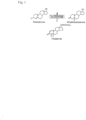
- Therapeutic agents for male pattern alopecia currently used in Korea include finasteride and dutasteride as oral preparations. These therapeutic agents for alopecia suppress the production of a strong male hormone DHT by blocking 5- ⁇ -reductase inhibitors which act to convert testosterone into dihydrotestosterone (DHT) as the action mechanism illustrated in FIG. 1 , and treat androgenetic alopecia by suppressing the shrinkage of hair roots by DHT at the scalp through the suppression of production of DHT.
- DHT dihydrotestosterone
- 5- ⁇ -reductase inhibitors can be divided into Type 1 and Type 2, and Type 1 is distributed in the scalp and sebaceous glands, and Type 2 is distributed in the scalp and prostate. Finasteride only blocks Type 2 of the 5- ⁇ -reductase inhibitor, but dutasteride blocks both Type 1 and Type 2 inhibitors. It is known that due to the mechanism, dutasteride is stronger than finasteride in terms of suppression effect of DHT.
- Therapeutic agents for alopecia such as dutasteride and finasteride are associated with male hormones, and thus are specified as a contraindication in pregnant or potentially pregnant women, and when the therapeutic agent for alopecia is exposed to pregnant or potentially pregnant women, the therapeutic agent may cause abnormalities of the external genitalia of a male fetus, so that the therapeutic agent for alopecia needs to be taken with caution in view of storage or handling of the therapeutic agents for alopecia because there is a risk of birth defects. Further, since the medicines are absorbed through the skin and may affect fetuses, there are problems in that the medicines need not be touched and medicine takers who live with pregnant or potentially pregnant women around the medicine takers need to handle the medicines with particular caution.
- US 6 277 391 B1 discloses a solvent evaporation method for preparing microspheres comprising finasteride, but fails to disclose the use of a microfluidic device with microchannels.
- Vladisavljevic Goran T et al. in J. Colloid Interface Sci. 2013, 418, 163 to 170 and US 2006/014894 A1 disclose microfluidic methods in general.
- Kong Tiantian et al. in Biomicrofluidics 6, 034104 (2012 ) teaches that it is well-known that microfluidics technology enables the generation of monodisperse particles. However, stirring of obtained particles may increase the polydispersity of the particles.
- the present invention relates to microparticles containing finasteride and a preparation method thereof.
- An object of the present invention is to provide sustained-release microparticles capable of maintaining the effect of treating alopecia sustainably for 1 month to 3 months when the microparticles containing finasteride are administered, unlike oral dosage forms in the related art, which need to be taken daily due to the short half-life, and a preparation method thereof.
- Another object of the present invention is to provide ease in storage and handling because microparticles containing finasteride are used in a manner that the microparticles are administered to a patient through injection so that the patient need not directly store and handle a medicine unlike oral dosage forms.
- Still another object of the present invention is to maintain the effect of administering a drug for a long period of time such as 1 month to 3 months by using sustained-release particles containing finasteride, to, as an average diameter of particles is prepared to a constant micro size, maintain an effective drug concentration at a constant level by controlling the release of a drug from the microparticles, and to decrease a foreign body sensation and pain when the microparticles are applied to an injection consisting of particles with a uniform size and administered to a patient by the injection.
- the present invention relates to microparticles containing finasteride and a preparation method thereof, and more particularly to sustained-release microparticles which can maintain the effect of treating alopecia sustainably for 1 month to 3 months as the microparticles containing finasteride are administered, and a preparation method thereof.
- the present invention may facilitate storage and handling of microparticles containing finasteride unlike oral dosage forms as a patient need not directly store and handle the microparticles by using the microparticles containing finasteride in a manner that the microparticles are administered to the patient through injection, maintain the drug effect for a long period of time such as 1 month to 3 months, and facilitate the administration as an injection by decreasing a foreign body sensation and pain at the time of administering the injection to a patient as the particles are prepared by maintaining the average diameter of the particles to a certain micro size.
- the present invention relates to microparticles containing finasteride, which are microparticles containing finasteride and a biodegradable polymer, in which the microparticles have a shape in which the finasteride drug is uniformly distributed in the spherical biodegradable polymer, and the microparticles have an average particle diameter of 20 to 70 ⁇ m.
- the present invention relates to a method for preparing microparticles containing finasteride, the method including: 1) preparing a first mixture by dissolving a biodegradable polymer and finasteride in an organic solvent; 2) preparing a second mixture by dissolving a surfactant in water; 3) infusing the first mixture in Step 1) into a microchannel in a straight-line direction and allowing the first mixture to flow; 4) preparing microparticles in a form in which a finasteride drug is uniformly distributed in spherical biodegradable polymer particles by infusing the second mixture in Step 2) into a microchannel formed on both side surfaces or one side surface and allowing the second mixture to flow so as to form an intersection point with a microchannel through which the first mixture in Step 3) flows in a straight-line direction, and intersecting a flow of the first mixture in a straight-line direction with a flow of the second mixture; 5) collecting the microparticles produced at the
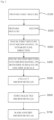
- FIG. 2 is a flowchart of a method for preparing microparticles containing finasteride of the present invention.
- the preparation of the microparticles containing finasteride of the present invention proceeds in the order of 1) preparing a first mixture (S100); 2) preparing a second mixture (S200); 3) infusing the first mixture into a microchannel in a straight-line direction (S300); 4) infusing the second mixture into a microchannel on both side surfaces or one side surface (S400); collecting the microparticles (S500); stirring the collected microparticles (S600); and washing the microparticles and drying the microparticles (S700).
- Step 1) is a step of preparing a first mixture, specifically a step of preparing a first mixture by dissolving a biodegradable polymer and finasteride in an organic solvent, in which the biodegradable polymer is selected from the group consisting of polylactic acid, polylactide, poly(lactic-co-glycolic acid), poly(lactide-co-glycolide) (PLGA), polyphosphazine, polyiminocarbonate, polyphosphoester, polyanhydride, polyorthoester, polycaprolactone, polyhydroxyvalerate, polyhydroxybutyrate, polyamino acid, and a combination thereof, and is preferably poly(lactide-co-glycolide) (PLGA), but the biodegradable polymer is not limited to the example.
- the biodegradable polymer is selected from the group consisting of polylactic acid, polylactide, poly(lactic-co-glycolic acid), poly(lactide-co-glycolide) (PLGA),
- the organic solvent is an organic solvent which is immiscible with water, is one or more selected from the group consisting of, for example, chloroform, chloroethane, dichloroethane, trichloroethane, and a mixture thereof, and is preferably dichloromethane, but the organic solvent is not limited to the example, and the organic solvent can dissolve a biodegradable polymer and finasteride, and the organic solvent is not limited to the aforementioned example but any organic solvent can be easily selected by a person with ordinary skill in the art.
- Step 1) prepares a first mixture in which a biodegradable polymer and finasteride are dissolved, and as the solvent, an organic solvent is used as described above.
- the finasteride and the biodegradable polymer are completely dissolved by using an organic solvent using dissolution characteristics of the finasteride and the biodegradable polymer.
- the first mixture contains the biodegradable polymer and finasteride at a weight ratio of 4 : 1 to 15 : 1.
- the weight ratio of the biodegradable polymer and finasteride is less than 4:1, that is, when the biodegradable polymer is contained at less than the above weight ratio, the weight ratio of the biodegradable polymer is smaller than the weight ratio of finasteride, so that there occurs a problem in that it is difficult to prepare microparticles in a form in which finasteride is uniformly distributed and contained in the spherical biodegradable polymer particles, and when the weight ratio of the biodegradable polymer and finasteride is more than 15 : 1, that is, when the biodegradable polymer is contained at more than the above weight ratio, the content of finasteride in the microparticles is small, so that there occurs a problem in that the microparticles need to be administered in a large amount in order to administer the drug at a desired concentration.
- the biodegradable polymer is comprised in an amount of 10 to 20 wt%, preferably 15 wt% in the first mixture, but the amount is not limited to the example.
- Step 2) is a step of preparing a second mixture, and prepares a second mixture by dissolving a surfactant in water.
- the surfactant can be used without limitation as long as the surfactant can help the biodegradable polymer solution form a stable emulsion.
- the surfactant is one or more selected from the group consisting of a non-ionic surfactant, an anionic surfactant, a cationic surfactant, and a mixture thereof, and more specifically, the surfactant is one or more selected from the group consisting of methyl cellulose, polyvinylpyrrolidone, lecithin, gelatin, polyvinyl alcohol, polyoxyethylene sorbitan fatty acid esters, polyoxyethylene castor oil derivatives, sodium lauryl sulfate, sodium stearate, esters, amines, linear diamines, fatty amines, and a mixture thereof, and is preferably polyvinyl alcohol, but the surfactant is not limited to the example.
- Step 3) (S300) and Step 4) (S400) are steps of infusing the first mixture and the second mixture into a microchannel formed on a wafer and allowing the first mixture and the second mixture to flow.
- ⁇ is deposited onto a silicon wafer by using an e-beam evaporator, and a photoresist is patterned on aluminum by using a photolithography technique. Thereafter, the wafer is aluminum-etched by using a photoresist as a mask, silicon is etched by deep ion reactive etching (DRIE) by using aluminum as a mask after removing the photoresist, and glass is anodically bonded onto the wafer and hermetically sealed after removing aluminum, thereby manufacturing the aforementioned microchannel.
- DRIE deep ion reactive etching
- the aforementioned microchannels have an average diameter of 40 to 100 ⁇ m, preferably 40 to 60 ⁇ m, and more preferably 50 ⁇ m, but the average diameter is not limited to the example.
- microparticles to be prepared are likely to be prepared as small microparticles having a diameter of 20 ⁇ m or less, so that the microparticles are highly likely to be captured by microphages after being infused into the human body, and through this, it is possible to affect the release and in vivo absorption of an effective drug.
- microparticles to be prepared are likely to be prepared as microparticles having a size of 70 ⁇ m or more, so that when the injection is administered, a foreign body sensation and pain may be increased, and the particle size distribution of the prepared particles is increased, so that it is difficult to prepare microparticles having a uniform particle size.
- a width (w) of the cross section and a height (d) of the cross section of the microchannel are closely associated with an average diameter (d') of microparticles to be prepared.
- the width (w) of the cross section of the microchannel is within a ratio range of 0.7 to 1.3 for an average diameter (d') of the microparticles
- a height (d) of the cross section of the microchannel is within a ratio range of 0.7 to 1.3 for an average diameter (d') of the microparticles.
- the average diameter (d') of the microparticles to be prepared is determined, it is possible to prepare microparticles with a desired size only when the width (w) and height (d) of the cross section of the microchannel are set to a ratio range of 0.7 to 1.3 for the d'.
- Step 3) (S300) infuses the first mixture into a microchannel in a straight-line direction and allows the first mixture to flow
- Step 4) (S400) infuses the second mixture into a microchannel on both side surfaces or one side surface formed so as to form an intersection point with a microchannel in a straight-line direction, and allows the second mixture to flow.
- the first mixture flows along the microchannel in a straight-line direction
- the second mixture flows along the microchannel which forms an intersection point with the microchannel in a straight-line direction on both side surfaces or one side surface based on the microchannel in a straight-line direction, and meets the flow of the first mixture.
- the first mixture when the first mixture is infused into a microchannel in a straight-line direction, the first mixture is infused under a certain pressure condition and allowed to flow at a certain flow rate, and in this case, the pressure condition is 600 to 1,000 mbar, preferably 800 mbar, but is not limited to the example.
- the second mixture when the second mixture is infused into a microchannel on both side surfaces or one side surface, the second mixture is infused under a certain pressure condition and allowed to flow at a certain flow rate, and in this case, the pressure condition is 1,200 to 1,600 mbar, preferably 1,400 mbar, but is not limited to the example.
- the second mixture in order to allow the second mixture forming an intersection point with the flow of the first mixture to flow at a faster flow rate than the first mixture to be infused into the microchannel in a straight-line direction, the second mixture is allowed to flow under a higher pressure condition.
- the second mixture having a relatively faster flow rate compresses the first mixture at a point where the flow of the first mixture and the flow of the second mixture meet each other by varying the flow rates of the first mixture and the second mixture and making the flow rate of the second mixture faster than the flow rate of the first mixture, and in this case, due to repulsive force between the first mixture and the second mixture, the biodegradable polymer and finasteride in the first mixture form spherical microparticles, and more specifically, microparticles in a form in which finasteride is uniformly distributed in the spherical biodegradable polymer are formed.
- Step 5) is a step of collecting microparticles, and prevents aggregation of initially produced microparticles by collecting the microparticles in a bath comprising the second mixture.
- Step 5) uses the second mixture prepared in Step 2) (S200), that is, a mixed solution of a surfactant and water, and is used to prevent aggregation of collected microparticles by preparing the second mixture in Step 2) (S200), and then infusing a portion of the second mixture into a microchannel, and transferring the other portion to the bath in Step 5) (S500).
- S200 second mixture prepared in Step 2)
- S200 a mixed solution of a surfactant and water
- Step 6) is a step of stirring microparticles collected in the bath, and an organic solvent present on the surfaces of the microparticles is evaporated and removed by stirring the microparticles at a predetermined stirring rate under a predetermined temperature condition.
- the stirring condition proceeds in an order of firstly stirring the microparticles at a rate of 800 to 1,200 rpm at 14 to 16°C for 1 to 2 hours; secondly stirring the microparticles at a rate of 800 to 1,200 rpm at 19 to 21°C for 0.5 to 1.5 hours after the first stirring; and thirdly stirring the microparticles at a rate of 800 to 1,200 rpm at 24 to 26°C for 0.5 to 1.5 hours after the second stirring.
- the stirring rate is 800 to 1,200 rpm, preferably 1,000 rpm, but is not limited to the example.
- the stirring rate at which microparticles are stirred is maintained equally in the first, second, and third stirring, but the microparticles are stirred while gradually increasing the temperature, and as the temperature is increased step by step, the evaporation rate of the organic solvent present on the surfaces of the microparticles may be adjusted. That is, microparticles having smooth surfaces may be prepared by slowly evaporating the organic solvent present on the surfaces of the microparticles.
- Step 6 the microparticles are firstly stirred at 14 to 16°C for 1 to 2 hours, preferably at 15°C for 1.5 hours. Thereafter, the microparticles are secondly stirred at 19 to 21°C for 0.5 to 1.5 hours, preferably at 20°C for 1 hour. Thereafter, the microparticles are thirdly stirred at 24 to 26°C for 0.5 to 1.5 hours, preferably at 25°C for 1 hour.
- the temperature at which the first mixture and the second mixture flow in the microchannel is also 14 to 16°C, preferably 15°C. That is, after the mixtures flow in the microchannel and form an intersection point to produce microparticles, the temperature is constantly maintained at a low temperature of 14 to 16°C until the collected microparticles are firstly stirred. Only when the low temperature is maintained during the process of preparing microparticles, it is possible to prepare and maintain spherical particles. That is, when the temperature is not under the low temperature condition, there occurs a problem in that it is difficult to prepare particles having a predetermined spherical shape.
- Step 7) is a step of washing the microparticles and drying the microparticles, and the microparticles from which the organic solvent on the surfaces is completely removed by stirring are washed several times with purified water which is sterilized and filtered to remove the surfactant remaining in the microparticles, and are later lyophilized.
- the microparticles finally produced are in a form in which the finasteride drug is uniformly distributed in the spherical biodegradable polymer microparticles, have an average particle diameter of 20 to 70 ⁇ m, and contain the biodegradable polymer and finasteride at a weight ratio of 3 : 1 to 9 : 1.
- the microparticles When the microparticles have an average diameter of less than 20 ⁇ m, the microparticles are highly likely to be captured by macrophages after being infused into the human body, and accordingly, the release of the drug from the particles and in vivo absorption of the drug may be affected, and when the particles have an average diameter of more than 70 ⁇ m, pain may be increased when the drug included in an injection is administered to a patient to be administered by using a syringe needle having a large gauge.
- the weight ratio of the biodegradable polymer and finasteride included in the microparticles is the same as the weight ratio in the first mixture, and as the microparticles are prepared and the organic solvent is completely evaporated and removed, it is possible to prepare microparticles containing the biodegradable polymer and finasteride at a ratio which is the same as the weight ratio in the first mixture.
- a first mixture was prepared by dissolving poly(lactide-co-glycolide) (PLGA) and finasteride in dichloromethane.
- poly(lactide-co-glycolide) in the first mixture was contained at a ratio of 15 wt%, and the weight ratio of poly(lactide-co-glycolide) and finasteride was 4:1.
- a second mixture including polyvinyl alcohol in an amount of 0.25 wt% was prepared by mixing a surfactant polyvinyl alcohol with water.
- the first mixture and the second mixture were infused into a microchannel formed on a silicon wafer and allowed to flow.
- the first mixture and the second mixture were allowed to flow under a pressure condition of 800 mbar and under a pressure condition of 1,400 mbar, respectively.
- the temperature condition was maintained at 15°C.
- Microparticles produced at an intersection point where the flow of the first mixture and the flow of the second mixture meet each other were collected in a bath comprising the second mixture.
- the microparticles collected in the bath were firstly stirred at a rate of 1,000 rpm at 15°C for 1.5 hours, the temperature was increased to 20°C and the microparticles were secondly stirred at a rate of 1,000 rpm for 1 hour, and the temperature was increased to 25°C and the microparticles were thirdly stirred at a rate of 1,000 rpm for 1 hour.
- microparticles completely stirred were washed several times with purified water which was sterilized and filtered, and were lyophilized, thereby preparing microparticles.
- Microparticles were prepared in the same manner as in Example 1, except that poly(lactide-co-glycolide) and finasteride were contained at a weight ratio of 9 : 1.
- Microparticles were prepared in the same manner as in Example 1, except that poly(lactide-co-glycolide) and finasteride were contained at a weight ratio of 2 : 1.
- Microparticles were prepared in the same manner as in Example 1, except that poly(lactide-co-glycolide) and finasteride were contained at a weight ratio of 12 : 1.
- Microparticles were prepared in the same manner as in Example 1, except that poly(lactide-co-glycolide) and finasteride were contained at a weight ratio of 15 : 1.
- Microparticles were prepared in the same manner as in Example 1, except that poly(lactide-co-glycolide) and finasteride were contained at a weight ratio of 20 : 1.
- Microparticles were prepared in the same manner as in Example 1, but microparticles were collected in the bath comprising the second mixture, and then the stirring process was performed under the conditions in the following Table 1 as the stirring conditions.
- Table 1 Stirring condition Stirring temperature Stirring time Stirring rate
- Example 7 1 15°C 1.5 hours 800 rpm 2 1 hour 1,000 rpm 3 1 hour 1,200 rpm
- Example 8 1 20°C 1.5 hours 800 rpm 2 1 hour 1,000 rpm 3 1 hour 1,200 rpm
- Example 9 1 25°C 1.5 hours 800 rpm 2 1 hour 1,000 rpm 3 1 hour 1,200 rpm
- Example 10 1 15°C 1.5 hours 800 rpm 2 20°C 1 hour 3 25°C 1 hour
- Example 11 1 15°C 1.5 hours 1,200 rpm 2 20°C 1 hour 3 25°C 1 hour
- Example 1 About 100 mg of the microparticles in Examples 1 to 6 were put into a glass test container having a volume of 120 mL, and the container was filled with 100 mL of a release test solution.
- a drug release experiment was performed by putting the test container into a water bath at 45°C and reciprocating the test container at an amplitude of 4 cm and a shaking frequency of 120 times/min as an experimental condition for acceleration of drug release.
- the mixture was mixed by shaking the bottle well, and 1 mL of the sample was taken. After the sample was centrifuged at 13,000 rpm for 3 minutes, the supernatant was taken and analyzed with high performance liquid chromatography.
- Example 2 Day Example 1
- Example 3 Example 4
- Example 5 Example 6 0 0 0 0 0 0 0 0 0.02 32.60 27.85 35.00 16.40 15.30 5.49 0.04 38.83 30.73 40.3 18.6 17.32 6.53 0.06 44.97 39.6 47.1 20.4 20.6 7.49 0.08 42.47 23.4 50.3 21.6 21.7 8.51 0.10 46.80 28.80 50.40 22.00 21.90 8.70 0.13 50.53 32.53 53.70 24.50 23.70 9.42 0.17 47.03 33.67 65.80 22.80 22.75 10.42 0.25 62.60 29.53 70.60 25.00 24.64 12.24 0.33 50.93 29.03 76.30 21.60 25.86 12.12 0.50 35.67 17.27 65.20 20.70 26.75 13.24 1.00 23.40 12.38 51.80 18.40 23.46 11.05 7 33.27 9.13 35.70 16.70 22.
- Example 3 (Unit ng/ml) According to FIG. 3 and Table 2, there are problems in that in Example 3, an excessively large amount of drug was released at the initial stage, and after 14 days, the drug was almost completely released, and accordingly, it was difficult to exhibit an effect of releasing the drug over a long period of time. In addition, in Example 6, there is a problem in that the amount of drug released at the initial stage was so small that the treatment effect of the finasteride drug was slight.
- Example 1 it was confirmed that the finasteride drug was released sustainably for 1 month, and in Examples 2, 4, and 5, it was confirmed that the finasteride drug was released sustainably up to 3 months.
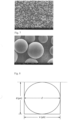
- ⁇ means that due to the effect of the remaining solvent, an aggregation phenomenon of microparticles occurs and the shapes of the microparticles are not uniform as in the SEM photographs in FIGS. 4 and 5 . On the contrary, in Examples 1, 10, and 11, it was confirmed that the shapes of the microparticles were uniformly formed, and the aggregation phenomenon did not occur as in the SEM photographs in FIGS. 6 and 7 .
- the present invention relates to microparticles containing finasteride and a preparation method thereof.
- An object of the present invention is to provide sustained-release microparticles capable of maintaining the effect of treating alopecia sustainably for 1 month to 3 months when the microparticles containing finasteride are administered, unlike oral dosage forms in the related art, which need to be taken daily due to the short half-life, and a preparation method thereof.
- Another object of the present invention is to provide ease in storage and handling because microparticles containing finasteride is used in a manner that the microparticles are administered to a patient through injection and the patient need not directly store and handle a medicine unlike oral dosage forms.
- Still another object of the present invention is to maintain the effect of administering a drug for a long period of time such as 1 month to 3 months by using sustained-release particles containing finasteride, to, as an average diameter of particles is prepared to a constant micro size, maintain an effective drug concentration at a constant level by controlling the release of a drug from the microparticles, and to decrease a foreign body sensation and pain when the microparticles are applied to an injection consisting of particles with a uniform size and administered to a patient by the injection.
Landscapes
- Health & Medical Sciences (AREA)
- Chemical & Material Sciences (AREA)
- Life Sciences & Earth Sciences (AREA)
- Engineering & Computer Science (AREA)
- Bioinformatics & Cheminformatics (AREA)
- Animal Behavior & Ethology (AREA)
- Veterinary Medicine (AREA)
- Medicinal Chemistry (AREA)
- Public Health (AREA)
- General Health & Medical Sciences (AREA)
- Pharmacology & Pharmacy (AREA)
- Epidemiology (AREA)
- General Chemical & Material Sciences (AREA)
- Organic Chemistry (AREA)
- Nuclear Medicine, Radiotherapy & Molecular Imaging (AREA)
- Chemical Kinetics & Catalysis (AREA)
- Dermatology (AREA)
- Proteomics, Peptides & Aminoacids (AREA)
- Inorganic Chemistry (AREA)
- Dispersion Chemistry (AREA)
- Diabetes (AREA)
- Endocrinology (AREA)
- Medicinal Preparation (AREA)
- Pharmaceuticals Containing Other Organic And Inorganic Compounds (AREA)
Claims (13)
- Ein Herstellungsverfahren für Finasterid-haltige Mikropartikel, das Verfahren umfassend1) Herstellen eines ersten Gemischs durch Auflösen eines biologisch abbaubaren Polymers und Finasterids in einem organischen Lösungsmittel;2) Herstellen eines zweiten Gemischs durch Auflösen eines Tensids in Wasser;3) Infundieren des ersten Gemischs aus Schritt 1) in einen Mikrokanal in einer Richtung einer geraden Linie und ermöglichen, dass das erste Gemisch fließt;4) Herstellen von Mikropartikeln in einer Form, in der das Finasterid-Arzneimittel gleichmäßig in kugelförmigen, biologisch abbaubaren Polymerpartikeln verteilt ist, durch Infundieren des zweiten Gemischs aus Schritt 2) in einen Mikrokanal, gebildet an beiden Seitenflächen oder einer Seitenfläche, und erlauben, dass das zweite Gemisch so fließt, dass ein Überschneidungspunkt mit einem Mikrokanal gebildet wird, durch den das erste Gemisch in Schritt 3) in einer Richtung einer geraden Linie fließt, und
Überschneiden eines Flusses des ersten Gemischs in einer Richtung einer geraden Linie mit einem Fluss des zweiten Gemischs;5) Einsammeln der am Überschneidungspunkt in Schritt 4) hergestellten Mikropartikel;6) Abdampfen und Entfernen eines in den in Schritt 5) eingesammelten Mikropartikeln vorhandenen organischen Lösungsmittels durch Rühren der Mikropartikel; und7) Waschen der Mikropartikel aus Schritt 6) und Trocknen der Mikropartikel,worin die Mikropartikel einen mittleren Teilchendurchmesser von 20 bis 70 µm haben, wie abgeleitet von der Breite und der Höhe eines Schnitts des Mikrokanals, die beide innerhalb eines Verhältnisbereichs von 0,7 bis 1,3 des mittleren Durchmessers der Mikropartikel sind, worin Schritt 6) umfasst:Schritt 6-1) erstens Rühren der Mikropartikel mit einer Geschwindigkeit von 800 bis 1.200 rpm bei 14 bis 16°C während 1 bis 2 Stunden;Schritt 6-2) zweitens Rühren der Mikropartikel mit einer Geschwindigkeit von 800 bis 1.200 rpm bei 19 bis 21°C während 0,5 bis 1,5 Stunden nach dem ersten Rühren; undSchritt 6-3) drittens Rühren der Mikropartikel mit einer Geschwindigkeit von 800 bis 1.200 rpm bei 24 bis 26°C während 0,5 bis 1,5 Stunden nach dem zweiten Rühren. - Das Verfahren aus Anspruch 1, worin das erste Gemisch in Schritt 1) das biologisch abbaubare Polymer in einer Menge von 10 bis 20 Gew.-% umfasst.
- Das Verfahren aus Anspruch 1 oder 2, worin das erste Gemisch in Schritt 1) das biologisch abbaubare Polymer und das Finasterid in einem Gewichtsverhältnis von 4 : 1 bis 15 : 1 umfasst.
- Das Verfahren aus irgendeinem der Ansprüche 1 bis 3, worin das biologisch abbaubare Polymer ausgewählt ist aus der Gruppe bestehend aus Polymilchsäure, Polylactid, Poly(milchsäure-co-glycolsäure), Polylactid-co-Glycolid (PLGA), Polyphosphazin, Polyiminocarbonat, Polyphosphoester, Polyanhydrid, Polyorthoester, Polycaprolacton, Polyhydroxyvalerat, Polyhydroxybutyrat, Polyaminosäure, und einer Kombination davon.
- Das Verfahren aus irgendeinem der Ansprüche 1 bis 4, worin das organische Lösungsmittel in Schritt 1) Dichloromethan ist.
- Das Verfahren aus irgendeinem der Ansprüche 1 bis 5, worin das zweite Gemisch in Schritt 2) das Tensid in einer Menge von 0,2 Gew.-% bis 0,3 Gew.-% umfasst.
- Das Verfahren aus irgendeinem der Ansprüche 1 to 6, worin Schritt 3) das erste Gemisch in einen Mikrokanal in einer Richtung einer geraden Linie unter einem Druck von 60.000 bis 100.000 Pa (600 bis 1.000 mbar) infundiert.
- Das Verfahren aus irgendeinem der Ansprüche 1 bis 7, worin Schritt 4) das zweite Gemisch in einen Mikrokanal infundiert, der an beiden Seitenflächen oder einer Seitenfläche gebildet ist, so dass ein Schnittpunkt mit einem Mikrokanal gebildet wird, durch den das erste Gemisch in einer geraden linie fließt, und
das zweite Gemisch unter einem Druck von 120.000 bis 160.000 Pa (1.200 bis 1.600 mbar) infundiert. - Das Verfahren aus irgendeinem der Ansprüche 1 bis 8, worin Schritt 5) die Mikropartikel in einem Bad, welches das zweite Gemisch umfasst, einsammelt.
- Das Verfahren aus irgendeinem der Ansprüche 1 bis 9, worin die Mikrokanäle in Schritten 3) und 4) auf einer Oberfläche eines Wafers gebildet werden, und
ein durchschnittlicher Durchmesser 40 bis 100 µm ist. - Mikropartikel, umfassend Finasterid, als Mikropartikel, umfassend Finasterid und ein biologisch abbaubares Polymer, hergestellt durch das Verfahren aus irgendeinem der Ansprüche 1 bis 10,worin die Mikropartikel eine Form haben, in der das Finasterid-Arzneimittel gleichmäßig im kugelförmigen biologisch abbaubaren Polymer verteilt ist, unddie Mikropartikel einen durchschnittlichen Teilchendurchmesser von 20 bis 70 µm haben, wie abgeleitet von der Breite und der Höhe eines Schnitts der im Verfahren eingesetzten Mikrokanäle, die beide in einem Verhältnisbereich von 0,7 bis 1,3 des durchschnittlichen Durchmessers der Mikropartikel sind.
- Die Mikropartikel, umfassend Finasterid, aus Anspruch 11, worin die Mikropartikel das biologisch abbaubare Polymer und das Finasterid in einem Gewichtsverhältnis von 4 : 1 bis 15 : 1 umfassen.
- Die Mikropartikel, umfassend Finasterid, aus irgendeinem der Ansprüche 11 bis 12, worin das biologisch abbaubare Polymer ausgewählt ist aus der Gruppe bestehend aus Polymilchsäure, Polylactid, Poly(milchsäure-co-glycolsäure), Polylactid-co-Glycolid (PLGA), Polyphosphazin, Polyiminocarbonat, Polyphosphoester, Polyanhydrid, Polyorthoester, Polycaprolacton, Polyhydroxyvalerat, Polyhydroxybutyrat, Polyaminosäure, und einer Kombination davon.
Applications Claiming Priority (3)
| Application Number | Priority Date | Filing Date | Title |
|---|---|---|---|
| KR20170104776 | 2017-08-18 | ||
| KR1020180057092A KR102031740B1 (ko) | 2017-08-18 | 2018-05-18 | 피나스테라이드를 포함하는 마이크로 입자 및 이의 제조 방법 |
| PCT/KR2018/009440 WO2019035679A2 (ko) | 2017-08-18 | 2018-08-17 | 피나스테라이드를 포함하는 마이크로 입자 및 이의 제조 방법 |
Publications (3)
| Publication Number | Publication Date |
|---|---|
| EP3669864A2 EP3669864A2 (de) | 2020-06-24 |
| EP3669864A4 EP3669864A4 (de) | 2021-01-20 |
| EP3669864B1 true EP3669864B1 (de) | 2024-12-11 |
Family
ID=65560979
Family Applications (1)
| Application Number | Title | Priority Date | Filing Date |
|---|---|---|---|
| EP18846645.2A Active EP3669864B1 (de) | 2017-08-18 | 2018-08-17 | Mikropartikel mit finasterid und verfahren zu deren herstellung |
Country Status (5)
| Country | Link |
|---|---|
| US (1) | US11344624B2 (de) |
| EP (1) | EP3669864B1 (de) |
| JP (1) | JP6722828B2 (de) |
| KR (1) | KR102031740B1 (de) |
| CN (2) | CN110996916A (de) |
Families Citing this family (10)
| Publication number | Priority date | Publication date | Assignee | Title |
|---|---|---|---|---|
| GB201622024D0 (en) * | 2016-11-14 | 2017-02-08 | Inventage Lab Inc | Apparatus and method for large scale production of monodisperse, microsheric and biodegradable polymer-based drug delivery |
| KR20200099901A (ko) * | 2019-02-15 | 2020-08-25 | (주)인벤티지랩 | 피나스테라이드를 포함하는 마이크로 입자를 함유한 피하 주사용 조성물 |
| KR20210004367A (ko) | 2019-07-04 | 2021-01-13 | (주)에이티 랩 | 마이크로 입자 및 이의 제조방법. |
| KR102157124B1 (ko) * | 2019-12-23 | 2020-09-18 | (주)인벤티지랩 | 피나스테라이드를 포함하는 서방성 주사용 조성물 |
| KR102382612B1 (ko) * | 2020-02-03 | 2022-04-05 | (주)인벤티지랩 | 운반유체를 포함하는 마이크로파티클 생산 시스템 및 그 제어 방법 |
| KR20220032301A (ko) * | 2020-09-07 | 2022-03-15 | (주)인벤티지랩 | 약물의 지속 방출을 위한 서방형 마이크로입자 |
| KR20220143359A (ko) | 2021-04-16 | 2022-10-25 | 동국제약 주식회사 | 피나스테리드 함유 장기지속형 주사제 조성물의 제조방법 |
| US20240180896A1 (en) * | 2021-11-18 | 2024-06-06 | Inventage Lab Inc. | Method for preparing microparticles containing poorly soluble drugs |
| US20250213594A1 (en) * | 2023-12-27 | 2025-07-03 | Inventage Lab Inc. | Novel long-acting injectable composition for preventing or treating androgenetic alopecia containing finasteride |
| WO2025230821A1 (en) * | 2024-04-29 | 2025-11-06 | Avidence Therapeutics, Inc. | Microsphere-based injectable finasteride formulation |
Family Cites Families (9)
| Publication number | Priority date | Publication date | Assignee | Title |
|---|---|---|---|---|
| KR100293504B1 (ko) * | 1998-06-05 | 2001-07-12 | 김윤 | 서방형전립선염치료제조성물 |
| JP4527384B2 (ja) * | 2002-12-06 | 2010-08-18 | 綜研化学株式会社 | マイクロチャンネルを用いた着色球状粒子の製造方法、およびその製造方法に用いるマイクロチャンネル式製造装置 |
| CN1965839B (zh) * | 2005-11-15 | 2010-11-10 | 上海医药工业研究院 | 非那雄胺及其类似物的注射用缓释微球、其制备方法及其应用 |
| CN101757609B (zh) * | 2008-12-23 | 2014-01-15 | 成都地奥九泓制药厂 | 控制胸腺肽α1微球中有机溶剂残留的方法 |
| CN103386118B (zh) | 2008-12-23 | 2015-04-08 | 成都地奥九泓制药厂 | 控制胸腺肽α1微球中有机溶剂残留的方法 |
| CN102133180B (zh) * | 2011-03-18 | 2016-03-09 | 黄芳 | 一种甾体5α-还原酶抑制剂长效注射制剂及其制备方法 |
| CN102631326A (zh) | 2011-08-10 | 2012-08-15 | 韩彬 | 一种注射用缓释微球及其制备方法和应用 |
| CN107028893A (zh) * | 2016-02-03 | 2017-08-11 | 常中飞 | 非那雄胺缓释微球的制备方法 |
| GB201622024D0 (en) | 2016-11-14 | 2017-02-08 | Inventage Lab Inc | Apparatus and method for large scale production of monodisperse, microsheric and biodegradable polymer-based drug delivery |
-
2018
- 2018-05-18 KR KR1020180057092A patent/KR102031740B1/ko active Active
- 2018-08-17 CN CN201880053414.7A patent/CN110996916A/zh active Pending
- 2018-08-17 JP JP2019542343A patent/JP6722828B2/ja active Active
- 2018-08-17 US US16/639,810 patent/US11344624B2/en active Active
- 2018-08-17 EP EP18846645.2A patent/EP3669864B1/de active Active
- 2018-08-17 CN CN202510880368.XA patent/CN120643516A/zh active Pending
Non-Patent Citations (1)
| Title |
|---|
| KONG TIANTIAN ET AL: "Droplet based microfluidic fabrication of designer microparticles for encapsulation applications", BIOMICROFLUIDICS, vol. 6, no. 3, 20 July 2012 (2012-07-20), US, XP093139443, ISSN: 1932-1058, Retrieved from the Internet <URL:https://pubs.aip.org/aip/bmf/article-pdf/doi/10.1063/1.4738586/14587853/034104_1_online.pdf> DOI: 10.1063/1.4738586 * |
Also Published As
| Publication number | Publication date |
|---|---|
| JP6722828B2 (ja) | 2020-07-15 |
| KR102031740B1 (ko) | 2019-10-14 |
| CN120643516A (zh) | 2025-09-16 |
| KR20190019821A (ko) | 2019-02-27 |
| EP3669864A4 (de) | 2021-01-20 |
| CN110996916A (zh) | 2020-04-10 |
| JP2019534900A (ja) | 2019-12-05 |
| US11344624B2 (en) | 2022-05-31 |
| US20200246470A1 (en) | 2020-08-06 |
| EP3669864A2 (de) | 2020-06-24 |
Similar Documents
| Publication | Publication Date | Title |
|---|---|---|
| EP3669864B1 (de) | Mikropartikel mit finasterid und verfahren zu deren herstellung | |
| US6623761B2 (en) | Method of making nanoparticles of substantially water insoluble materials | |
| US11911508B2 (en) | Microparticles containing dutasteride, and preparation method therefor | |
| EP3733164B1 (de) | Moxidectin enthaltende mikropartikel und herstellungsverfahren dafür | |
| JP7590759B2 (ja) | フィナステリドを含む徐放性注射用組成物 | |
| US11400085B2 (en) | Method for preparing pharmaceutical composition for preventing or treating cognitive impairment-related disease and pharmaceutical composition for preventing or treating cognitive impairment-related disease prepared by the same | |
| US20210161917A1 (en) | Composition for subcutaneous injection, containing deoxycholic acid, and preparation method therefor | |
| JP2025522076A (ja) | デュタステリドを含む徐放性注射用組成物 | |
| KR20200099901A (ko) | 피나스테라이드를 포함하는 마이크로 입자를 함유한 피하 주사용 조성물 | |
| EP4491172A1 (de) | Verfahren zur herstellung von mikropartikeln mit moxidectin und injizierbare zusammensetzung mit verzögerter freisetzung mit anhand dieses herstellungsverfahrens hergestellten mikropartikeln | |
| EP4491171A1 (de) | Mikropartikel mit moxidectin und injektionszusammensetzung mit verzögerter freisetzung damit | |
| US20240238204A1 (en) | Microparticles containing moxidectin, and preparation method therefor | |
| KR102392742B1 (ko) | 데옥시콜린산을 포함하는 피하 주사용 조성물 및 이의 제조 방법 | |
| JP7854742B2 (ja) | モキシデクチンを含むマイクロ粒子およびこれを含む徐放型注射剤組成物 | |
| Mali et al. | Formulation, Development and Evaluation of Colloidosomes of Glipizide | |
| CN120267638A (zh) | 一种曲安奈德颗粒制备方法和含药微针递送系统的应用 | |
| HK40055474A (en) | Sustained-release injectable composition comprising finasteride |
Legal Events
| Date | Code | Title | Description |
|---|---|---|---|
| STAA | Information on the status of an ep patent application or granted ep patent |
Free format text: STATUS: THE INTERNATIONAL PUBLICATION HAS BEEN MADE |
|
| PUAI | Public reference made under article 153(3) epc to a published international application that has entered the european phase |
Free format text: ORIGINAL CODE: 0009012 |
|
| STAA | Information on the status of an ep patent application or granted ep patent |
Free format text: STATUS: REQUEST FOR EXAMINATION WAS MADE |
|
| 17P | Request for examination filed |
Effective date: 20200318 |
|
| AK | Designated contracting states |
Kind code of ref document: A2 Designated state(s): AL AT BE BG CH CY CZ DE DK EE ES FI FR GB GR HR HU IE IS IT LI LT LU LV MC MK MT NL NO PL PT RO RS SE SI SK SM TR |
|
| AX | Request for extension of the european patent |
Extension state: BA ME |
|
| DAV | Request for validation of the european patent (deleted) | ||
| DAX | Request for extension of the european patent (deleted) | ||
| A4 | Supplementary search report drawn up and despatched |
Effective date: 20201217 |
|
| RIC1 | Information provided on ipc code assigned before grant |
Ipc: A61K 9/10 20060101ALI20201211BHEP Ipc: A61K 31/58 20060101ALI20201211BHEP Ipc: A61K 47/34 20170101ALI20201211BHEP Ipc: A61K 9/00 20060101ALI20201211BHEP Ipc: A61K 9/16 20060101ALI20201211BHEP Ipc: A61K 9/14 20060101AFI20201211BHEP |
|
| STAA | Information on the status of an ep patent application or granted ep patent |
Free format text: STATUS: EXAMINATION IS IN PROGRESS |
|
| 17Q | First examination report despatched |
Effective date: 20240315 |
|
| GRAP | Despatch of communication of intention to grant a patent |
Free format text: ORIGINAL CODE: EPIDOSNIGR1 |
|
| STAA | Information on the status of an ep patent application or granted ep patent |
Free format text: STATUS: GRANT OF PATENT IS INTENDED |
|
| INTG | Intention to grant announced |
Effective date: 20240910 |
|
| GRAS | Grant fee paid |
Free format text: ORIGINAL CODE: EPIDOSNIGR3 |
|
| GRAA | (expected) grant |
Free format text: ORIGINAL CODE: 0009210 |
|
| STAA | Information on the status of an ep patent application or granted ep patent |
Free format text: STATUS: THE PATENT HAS BEEN GRANTED |
|
| P01 | Opt-out of the competence of the unified patent court (upc) registered |
Free format text: CASE NUMBER: APP_54160/2024 Effective date: 20241001 |
|
| AK | Designated contracting states |
Kind code of ref document: B1 Designated state(s): AL AT BE BG CH CY CZ DE DK EE ES FI FR GB GR HR HU IE IS IT LI LT LU LV MC MK MT NL NO PL PT RO RS SE SI SK SM TR |
|
| REG | Reference to a national code |
Ref country code: GB Ref legal event code: FG4D |
|
| REG | Reference to a national code |
Ref country code: CH Ref legal event code: EP |
|
| REG | Reference to a national code |
Ref country code: IE Ref legal event code: FG4D |
|
| REG | Reference to a national code |
Ref country code: DE Ref legal event code: R096 Ref document number: 602018077570 Country of ref document: DE |
|
| REG | Reference to a national code |
Ref country code: SE Ref legal event code: TRGR |
|
| REG | Reference to a national code |
Ref country code: LT Ref legal event code: MG9D |
|
| PG25 | Lapsed in a contracting state [announced via postgrant information from national office to epo] |
Ref country code: HR Free format text: LAPSE BECAUSE OF FAILURE TO SUBMIT A TRANSLATION OF THE DESCRIPTION OR TO PAY THE FEE WITHIN THE PRESCRIBED TIME-LIMIT Effective date: 20241211 |
|
| PG25 | Lapsed in a contracting state [announced via postgrant information from national office to epo] |
Ref country code: FI Free format text: LAPSE BECAUSE OF FAILURE TO SUBMIT A TRANSLATION OF THE DESCRIPTION OR TO PAY THE FEE WITHIN THE PRESCRIBED TIME-LIMIT Effective date: 20241211 |
|
| PG25 | Lapsed in a contracting state [announced via postgrant information from national office to epo] |
Ref country code: BG Free format text: LAPSE BECAUSE OF FAILURE TO SUBMIT A TRANSLATION OF THE DESCRIPTION OR TO PAY THE FEE WITHIN THE PRESCRIBED TIME-LIMIT Effective date: 20241211 |
|
| REG | Reference to a national code |
Ref country code: NL Ref legal event code: MP Effective date: 20241211 |
|
| PG25 | Lapsed in a contracting state [announced via postgrant information from national office to epo] |
Ref country code: ES Free format text: LAPSE BECAUSE OF FAILURE TO SUBMIT A TRANSLATION OF THE DESCRIPTION OR TO PAY THE FEE WITHIN THE PRESCRIBED TIME-LIMIT Effective date: 20241211 |
|
| PG25 | Lapsed in a contracting state [announced via postgrant information from national office to epo] |
Ref country code: NO Free format text: LAPSE BECAUSE OF FAILURE TO SUBMIT A TRANSLATION OF THE DESCRIPTION OR TO PAY THE FEE WITHIN THE PRESCRIBED TIME-LIMIT Effective date: 20250311 |
|
| PG25 | Lapsed in a contracting state [announced via postgrant information from national office to epo] |
Ref country code: LV Free format text: LAPSE BECAUSE OF FAILURE TO SUBMIT A TRANSLATION OF THE DESCRIPTION OR TO PAY THE FEE WITHIN THE PRESCRIBED TIME-LIMIT Effective date: 20241211 Ref country code: GR Free format text: LAPSE BECAUSE OF FAILURE TO SUBMIT A TRANSLATION OF THE DESCRIPTION OR TO PAY THE FEE WITHIN THE PRESCRIBED TIME-LIMIT Effective date: 20250312 |
|
| PG25 | Lapsed in a contracting state [announced via postgrant information from national office to epo] |
Ref country code: RS Free format text: LAPSE BECAUSE OF FAILURE TO SUBMIT A TRANSLATION OF THE DESCRIPTION OR TO PAY THE FEE WITHIN THE PRESCRIBED TIME-LIMIT Effective date: 20250311 |
|
| PG25 | Lapsed in a contracting state [announced via postgrant information from national office to epo] |
Ref country code: NL Free format text: LAPSE BECAUSE OF FAILURE TO SUBMIT A TRANSLATION OF THE DESCRIPTION OR TO PAY THE FEE WITHIN THE PRESCRIBED TIME-LIMIT Effective date: 20241211 |
|
| REG | Reference to a national code |
Ref country code: AT Ref legal event code: MK05 Ref document number: 1749824 Country of ref document: AT Kind code of ref document: T Effective date: 20241211 |
|
| PG25 | Lapsed in a contracting state [announced via postgrant information from national office to epo] |
Ref country code: SM Free format text: LAPSE BECAUSE OF FAILURE TO SUBMIT A TRANSLATION OF THE DESCRIPTION OR TO PAY THE FEE WITHIN THE PRESCRIBED TIME-LIMIT Effective date: 20241211 |
|
| PG25 | Lapsed in a contracting state [announced via postgrant information from national office to epo] |
Ref country code: PL Free format text: LAPSE BECAUSE OF FAILURE TO SUBMIT A TRANSLATION OF THE DESCRIPTION OR TO PAY THE FEE WITHIN THE PRESCRIBED TIME-LIMIT Effective date: 20241211 |
|
| PG25 | Lapsed in a contracting state [announced via postgrant information from national office to epo] |
Ref country code: IS Free format text: LAPSE BECAUSE OF FAILURE TO SUBMIT A TRANSLATION OF THE DESCRIPTION OR TO PAY THE FEE WITHIN THE PRESCRIBED TIME-LIMIT Effective date: 20250411 |
|
| PG25 | Lapsed in a contracting state [announced via postgrant information from national office to epo] |
Ref country code: PT Free format text: LAPSE BECAUSE OF FAILURE TO SUBMIT A TRANSLATION OF THE DESCRIPTION OR TO PAY THE FEE WITHIN THE PRESCRIBED TIME-LIMIT Effective date: 20250411 |
|
| PG25 | Lapsed in a contracting state [announced via postgrant information from national office to epo] |
Ref country code: EE Free format text: LAPSE BECAUSE OF FAILURE TO SUBMIT A TRANSLATION OF THE DESCRIPTION OR TO PAY THE FEE WITHIN THE PRESCRIBED TIME-LIMIT Effective date: 20241211 |
|
| PG25 | Lapsed in a contracting state [announced via postgrant information from national office to epo] |
Ref country code: RO Free format text: LAPSE BECAUSE OF FAILURE TO SUBMIT A TRANSLATION OF THE DESCRIPTION OR TO PAY THE FEE WITHIN THE PRESCRIBED TIME-LIMIT Effective date: 20241211 Ref country code: AT Free format text: LAPSE BECAUSE OF FAILURE TO SUBMIT A TRANSLATION OF THE DESCRIPTION OR TO PAY THE FEE WITHIN THE PRESCRIBED TIME-LIMIT Effective date: 20241211 |
|
| PG25 | Lapsed in a contracting state [announced via postgrant information from national office to epo] |
Ref country code: SK Free format text: LAPSE BECAUSE OF FAILURE TO SUBMIT A TRANSLATION OF THE DESCRIPTION OR TO PAY THE FEE WITHIN THE PRESCRIBED TIME-LIMIT Effective date: 20241211 |
|
| PG25 | Lapsed in a contracting state [announced via postgrant information from national office to epo] |
Ref country code: CZ Free format text: LAPSE BECAUSE OF FAILURE TO SUBMIT A TRANSLATION OF THE DESCRIPTION OR TO PAY THE FEE WITHIN THE PRESCRIBED TIME-LIMIT Effective date: 20241211 |
|
| REG | Reference to a national code |
Ref country code: DE Ref legal event code: R097 Ref document number: 602018077570 Country of ref document: DE |
|
| PG25 | Lapsed in a contracting state [announced via postgrant information from national office to epo] |
Ref country code: DK Free format text: LAPSE BECAUSE OF FAILURE TO SUBMIT A TRANSLATION OF THE DESCRIPTION OR TO PAY THE FEE WITHIN THE PRESCRIBED TIME-LIMIT Effective date: 20241211 |
|
| PGFP | Annual fee paid to national office [announced via postgrant information from national office to epo] |
Ref country code: DE Payment date: 20250812 Year of fee payment: 8 |
|
| PGFP | Annual fee paid to national office [announced via postgrant information from national office to epo] |
Ref country code: IT Payment date: 20250825 Year of fee payment: 8 |
|
| PGFP | Annual fee paid to national office [announced via postgrant information from national office to epo] |
Ref country code: GB Payment date: 20250820 Year of fee payment: 8 |
|
| PLBE | No opposition filed within time limit |
Free format text: ORIGINAL CODE: 0009261 |
|
| STAA | Information on the status of an ep patent application or granted ep patent |
Free format text: STATUS: NO OPPOSITION FILED WITHIN TIME LIMIT |
|
| PGFP | Annual fee paid to national office [announced via postgrant information from national office to epo] |
Ref country code: FR Payment date: 20250828 Year of fee payment: 8 |
|
| PGFP | Annual fee paid to national office [announced via postgrant information from national office to epo] |
Ref country code: SE Payment date: 20250820 Year of fee payment: 8 |
|
| REG | Reference to a national code |
Ref country code: CH Ref legal event code: L10 Free format text: ST27 STATUS EVENT CODE: U-0-0-L10-L00 (AS PROVIDED BY THE NATIONAL OFFICE) Effective date: 20251022 |
|
| 26N | No opposition filed |
Effective date: 20250912 |
|
| REG | Reference to a national code |
Ref country code: CH Ref legal event code: H13 Free format text: ST27 STATUS EVENT CODE: U-0-0-H10-H13 (AS PROVIDED BY THE NATIONAL OFFICE) Effective date: 20260324 |
|
| PG25 | Lapsed in a contracting state [announced via postgrant information from national office to epo] |
Ref country code: MC Free format text: LAPSE BECAUSE OF FAILURE TO SUBMIT A TRANSLATION OF THE DESCRIPTION OR TO PAY THE FEE WITHIN THE PRESCRIBED TIME-LIMIT Effective date: 20241211 |
|
| PG25 | Lapsed in a contracting state [announced via postgrant information from national office to epo] |
Ref country code: LU Free format text: LAPSE BECAUSE OF NON-PAYMENT OF DUE FEES Effective date: 20250817 |
|
| PG25 | Lapsed in a contracting state [announced via postgrant information from national office to epo] |
Ref country code: CH Free format text: LAPSE BECAUSE OF NON-PAYMENT OF DUE FEES Effective date: 20250831 |