EP3671379A1 - Système d'authentification et procédé d'authentification permettant de mettre en uvre un processus de travail sur un objet - Google Patents
Système d'authentification et procédé d'authentification permettant de mettre en uvre un processus de travail sur un objet Download PDFInfo
- Publication number
- EP3671379A1 EP3671379A1 EP19216824.3A EP19216824A EP3671379A1 EP 3671379 A1 EP3671379 A1 EP 3671379A1 EP 19216824 A EP19216824 A EP 19216824A EP 3671379 A1 EP3671379 A1 EP 3671379A1
- Authority
- EP
- European Patent Office
- Prior art keywords
- information
- auditor
- work process
- control device
- auditing
- Prior art date
- Legal status (The legal status is an assumption and is not a legal conclusion. Google has not performed a legal analysis and makes no representation as to the accuracy of the status listed.)
- Granted
Links
Images
Classifications
-
- G—PHYSICS
- G05—CONTROLLING; REGULATING
- G05B—CONTROL OR REGULATING SYSTEMS IN GENERAL; FUNCTIONAL ELEMENTS OF SUCH SYSTEMS; MONITORING OR TESTING ARRANGEMENTS FOR SUCH SYSTEMS OR ELEMENTS
- G05B19/00—Program-control systems
- G05B19/02—Program-control systems electric
- G05B19/04—Program control other than numerical control, i.e. in sequence controllers or logic controllers
- G05B19/042—Program control other than numerical control, i.e. in sequence controllers or logic controllers using digital processors
- G05B19/0428—Safety, monitoring
-
- G—PHYSICS
- G05—CONTROLLING; REGULATING
- G05B—CONTROL OR REGULATING SYSTEMS IN GENERAL; FUNCTIONAL ELEMENTS OF SUCH SYSTEMS; MONITORING OR TESTING ARRANGEMENTS FOR SUCH SYSTEMS OR ELEMENTS
- G05B19/00—Program-control systems
- G05B19/02—Program-control systems electric
- G05B19/18—Numerical control [NC], i.e. automatically operating machines, in particular machine tools, e.g. in a manufacturing environment, so as to execute positioning, movement or co-ordinated operations by means of program data in numerical form
- G05B19/406—Numerical control [NC], i.e. automatically operating machines, in particular machine tools, e.g. in a manufacturing environment, so as to execute positioning, movement or co-ordinated operations by means of program data in numerical form characterised by monitoring or safety
- G05B19/4065—Monitoring tool breakage, life or condition
-
- G—PHYSICS
- G05—CONTROLLING; REGULATING
- G05B—CONTROL OR REGULATING SYSTEMS IN GENERAL; FUNCTIONAL ELEMENTS OF SUCH SYSTEMS; MONITORING OR TESTING ARRANGEMENTS FOR SUCH SYSTEMS OR ELEMENTS
- G05B19/00—Program-control systems
- G05B19/02—Program-control systems electric
- G05B19/04—Program control other than numerical control, i.e. in sequence controllers or logic controllers
- G05B19/041—Function-oriented details
- G05B19/0415—Function-oriented details adapting phase duration according to measured parameters
-
- G—PHYSICS
- G06—COMPUTING OR CALCULATING; COUNTING
- G06F—ELECTRIC DIGITAL DATA PROCESSING
- G06F21/00—Security arrangements for protecting computers, components thereof, programs or data against unauthorised activity
- G06F21/50—Monitoring users, programs or devices to maintain the integrity of platforms, e.g. of processors, firmware or operating systems
-
- G—PHYSICS
- G05—CONTROLLING; REGULATING
- G05B—CONTROL OR REGULATING SYSTEMS IN GENERAL; FUNCTIONAL ELEMENTS OF SUCH SYSTEMS; MONITORING OR TESTING ARRANGEMENTS FOR SUCH SYSTEMS OR ELEMENTS
- G05B2219/00—Program-control systems
- G05B2219/20—Pc systems
- G05B2219/21—Pc I-O input output
- G05B2219/21081—At start up, check I-O configuration and store addresses in ram
-
- G—PHYSICS
- G05—CONTROLLING; REGULATING
- G05B—CONTROL OR REGULATING SYSTEMS IN GENERAL; FUNCTIONAL ELEMENTS OF SUCH SYSTEMS; MONITORING OR TESTING ARRANGEMENTS FOR SUCH SYSTEMS OR ELEMENTS
- G05B2219/00—Program-control systems
- G05B2219/20—Pc systems
- G05B2219/25—Pc structure of the system
- G05B2219/25068—Check correct configuration of device
-
- G—PHYSICS
- G05—CONTROLLING; REGULATING
- G05B—CONTROL OR REGULATING SYSTEMS IN GENERAL; FUNCTIONAL ELEMENTS OF SUCH SYSTEMS; MONITORING OR TESTING ARRANGEMENTS FOR SUCH SYSTEMS OR ELEMENTS
- G05B2219/00—Program-control systems
- G05B2219/30—Nc systems
- G05B2219/50—Machine tool, machine tool null till machine tool work handling
- G05B2219/50185—Monitoring, detect failures, control of efficiency of machine, tool life
-
- G—PHYSICS
- G05—CONTROLLING; REGULATING
- G05B—CONTROL OR REGULATING SYSTEMS IN GENERAL; FUNCTIONAL ELEMENTS OF SUCH SYSTEMS; MONITORING OR TESTING ARRANGEMENTS FOR SUCH SYSTEMS OR ELEMENTS
- G05B2219/00—Program-control systems
- G05B2219/30—Nc systems
- G05B2219/50—Machine tool, machine tool null till machine tool work handling
- G05B2219/50193—Safety in general
-
- G—PHYSICS
- G06—COMPUTING OR CALCULATING; COUNTING
- G06F—ELECTRIC DIGITAL DATA PROCESSING
- G06F2221/00—Indexing scheme relating to security arrangements for protecting computers, components thereof, programs or data against unauthorised activity
- G06F2221/21—Indexing scheme relating to G06F21/00 and subgroups addressing additional information or applications relating to security arrangements for protecting computers, components thereof, programs or data against unauthorised activity
- G06F2221/2101—Auditing as a secondary aspect
Definitions
- the invention relates to a system and a method for carrying out a work process on an object, the system comprising at least one work station, a detection device, a control device and an auditor device.
- the system and the method can be used to authenticate process steps or system configurations.
- the system is characterized in that the control device queries configuration information of the detection device at a point in time before the start of the work process, and the auditor device receives and checks the configuration information and creates auditing information as a function of a result of the checking of the configuration information and sends the auditing information to the control device , and the control device processes the auditing information and starts the work process depending on the auditing information or not.
- an auditor device monitors when a system controller queries the individual components of the system, for example with regard to whether a system component is present and / or ready for use or whether a "correct" system component is installed, which is particularly suitable to take on the desired function when carrying out a work process.
- the auditor device can preferably also be referred to as an auditor, the terms being used synonymously.
- the monitoring of the auditor can also be regarded as “listening in” or “recording” the query by the system controller, the function of the system controller being carried out in particular by a control device within the proposed system. In the sense of the invention, this is preferably also referred to as a control device.
- the auditor device is implemented by a security device of a system component.
- the auditor device or the safety device can preferably be a component of the work station with which a working method or a working process is carried out on an object.
- the security device preferably comprises or is formed by a hardware security module (HSM).
- HSM hardware security module
- the HSM can preferably also be a component of the workstation or another component of the proposed system.
- the auditor device is a safety device of the work station.
- the HSM represents a hardware-based, cryptographic module, which preferably has a FIPS-140-2 certification.
- the wording that a device works safely means technically that the corresponding device has such a FIPS certification.
- Providing the auditor device working with FIPS certification solves in particular a technical problem using technical means, namely the provision of particularly secure data transmission within an authorization system and method.
- the HSM can be formed by or comprise a single chip module, an autonomous multichip module or an embedded multichip module.
- the HSM is preferably set up to store data in a particularly secure manner.
- an HSM is able to access critical security parameters such as passwords, confidential data or keys for encrypting data generate, save, use and / or maintain.
- the keys can be symmetrical or asymmetrical, for example.
- HSM can advantageously be used as cryptographic coprocessors.
- an HSM can have a battery-operated circuit and / or a voltage monitor. In particular, this enables the integration or provision of a real-time clock for correct time recording and time stamping, which can ensure, for example, that expired keys can no longer be used.
- an HSM can include redundant memory, which can be used, for example, to use several technologies to generate additional data security at the same time.
- an HSM comprises a chain of certificates which are preferably loaded onto the device before the HSM is put into operation.
- the HSM is also set up to generate its own private and public device keys.
- the private key preferably does not leave the HSM at any time, while the public key can be released to the outside, for example to an external server for signing there.
- the HSM can receive a personalized, signed device certificate with which the HSM can significantly increase security in an Internet of Things system (loT).
- the HSM can then be recognized and authenticated by the external server as a "real" security device, which is made possible in particular by assigning a unique identifier. In this way, authenticated TLS connections (Transport Layer Security) can be established in a particularly uncomplicated manner. It is preferred to use a public key infrastructure.
- the auditor device and the other components of the system are assigned an ID or an ID value.
- the corresponding IDs or ID values can be stored individually in each system component. However, it can also be preferred that the IDs or ID values of the system components are stored centrally at one point in the system, for example in the control device.
- the query of the system which is carried out by the control device, then consists, for example, in that the control device checks whether a system component is present and ready for use, or whether a "correct" system component is installed, which the desired one Function in the execution of a work process without leading to incorrect results or damage. In particular, when checking or "listening in", the control device asks the auditor whether the determined, ie ascertained, system configuration corresponds to the specifications.
- the IDs or ID values are composed of different sub-IDs or sub-ID values. This can be the case in particular if the system component itself consists of various technical components, such as, for example, a franking machine, which, for example, can form a workstation in the sense of the invention.
- each component of the workstation is assigned its own ID or its own ID value, and when querying the system components the components of the one system component are taken into account or treated like their own system components.
- the method step of the proposed auditing method described here is preferably referred to as querying configuration information of a detection device by a control device at a point in time before the start of the work process, the detection device being assigned to the work station and being set up to provide at least one piece of detection information and / or a state parameter of the work station and / or to detect the object.
- the configuration information is ID and / or detection information and / or status information of the detection device.
- Status information and status parameters are preferably terms used synonymously.
- acquisition information and / or the status information of the detection device is to be understood in the sense of the invention in such a way that it means both an operating parameter that is determined by the detection device, the term" operating parameters "in particular describing the status of a system component, for example a workstation is meant as well as a state parameter that is determined by the detection device, the term “state parameters” being used to describe states which act on the system, in particular from the outside, such as a state of the object, the state of which is to be changed by the working method. Therefore, the term acquisition information is preferably used, which includes both operating parameters and status parameters.
- the auditor determines that the ID of each system component or component of the system matches a stored ID
- the auditor gives his consent to the execution of the work process and the work process can be started.
- This consent is based on the processing of the auditing information by the control device, which preferably leads to the fact that the work process is dependent on the auditing information, i.e. if the determined and the stored IDs match, is started.
- a signal can be generated, sent and / or given, for example in the form of an SMS message that is sent to an operator of the workstation or to his mobile communication device, or by an e-mail notification that is sent to a stored E -Mail address is sent, or by an acoustic signal or by an error message that is displayed on a display device or a dashboard.
- This advantageously enables the operator to change the system components in such a way that a further query of the system components by the system control, in which the auditor "listens", leads to a positive result and to a start of the work process. This can be achieved, for example, by exchanging a system component identified as “incorrect” or “not ready for use” or by converting it into a ready-to-use state.
- the auditor's consent at the start of the work process is signed, i.e. that the corresponding release is signed.
- this preferably means that the release is assigned a preferably digital signature.
- a signature key is assigned to the release of the auditor, which is preferably calculated by the auditor and is required so that the recipient of the release message, here preferably the control device, can receive, decrypt and implement the release.
- the auditor sends the auditing information to the control device and that the auditing information is processed by the control device.
- the auditor device is set up to secure the auditing information using cryptographic means, for example by using a public key infrastructure. This can be done, for example, by preferably digitally signing the auditing information.
- the auditor device preferably has cryptographic capabilities which are used in the generation of the digital signature in order to achieve or improve encryption of the transmitted information.
- the auditor device preferably comprises cryptographic means, for example a processor with high computing power, with the aid of which information, messages and / or transactions can be transmitted in encrypted form and / or signed in the proposed system.
- the detection device comprises at least one sensor or a sensor system.
- the sensors of the detection device are preferably set up to collect the configuration information which is later forwarded to the auditor device.
- the configuration information preferably includes operating and / or status parameters of the system or a workstation, which interact with the corresponding detection device.
- the state parameters describe the parameters which act on the system or the workstation from the outside. This can be, for example, a temperature in a room in which the workstation is installed. For example, it can also be, but is not limited to, humidity, ambient pressure, time of day, brightness, etc.
- the detection device functions in particular as a safety device and that the proposed system preferably comprises a plurality of safety devices that can communicate with one another or with one another. It is very particularly preferred that the safety devices of the work stations form a communication network with one another in which information can be exchanged. It is very particularly preferred that the information exchange and communication in the communication network, which is preferably part of the proposed system, take place securely, that is to say meets the requirements for security in accordance with the FIPS standard.
- the system components communicate with one another in such a way that a component of the proposed system, for example the detection device, establishes a system configuration, the same or another system component being able to use this configuration information to derive which actions on the basis of the ascertained Configuration with the proposed system are possible.
- a component of the proposed system for example the detection device
- establishes a system configuration the same or another system component being able to use this configuration information to derive which actions on the basis of the ascertained Configuration with the proposed system are possible.
- the proposed system can be part of a production system for security documents.
- Security documents can be, for example, identity cards, passports or driving licenses.
- different workstations can be provided, which take on different tasks in the course of the production process.
- various workstations can be provided, which introduce different types of security features into the security document to be produced.
- laser sources, printing units, punching units and / or perforation units can be provided which, for example, are capable of lasering, printing, punching or punching security features into the security document.
- a work station can be provided in which a user can insert blanks from which the security documents are later to be produced.
- these can be paper, cardboard or plastic-based substrates that are neither individualized nor serialized as blanks. It may be preferred that, for example, the ID documents of different countries are different Blank types are provided, which can be inserted into the insertion station and processed with the production system to produce finished identification documents.
- the various workstations such as the laser source, printing unit, punching unit, perforation unit and / or insertion station, preferably include detection devices which can determine the state of the respective workstation.
- an operating parameter can be, for example, what type of blanks are inserted in the loading station (thick or thin blanks, paper or plastic, sufficient quantity or almost used up).
- the corresponding detection device can determine, for example, whether there is sufficient color or ink in the printer and whether the printer is warmed up and ready for use or cold and not ready for use.
- a workstation can, for example, also be a data processing system with a storage medium and / or with a database, the relevant information which is required for producing the desired security document (for example: "Italian passport on a type A blank made of paper with the security features A , B and C "), can be stored in this data processing system, the storage medium and / or the database.
- the proposed system recognizes which workstations are currently ready for use and are able to carry out the functions assigned to them. If, for example, 100 Italian passports with the above-mentioned properties are to be produced, the proposed system can check whether the corresponding information is stored in the system and whether the corresponding requirements for the production are met. In the example above, this would be the case in particular if there were at least 100 paper type A blanks in the system and the corresponding consumables in the corresponding workstations in order to apply the security features A, B and C to the passports. In addition, all required workstations should have reported to the system, especially the auditor facility, that they are ready for use. If all of these requirements 100 Italian passports can be produced.
- the auditor device determines the actual state of the system or the work stations on the basis of the information transmitted by the recording devices and compares them with the requirements, which are preferably stored in the system, for the production of Italian passports. If all conditions are met, the auditor device can use a control device to have the 100 Italian passports produced.
- the information transmitted by the detection devices with respect to the actual state of the system is preferably the operating parameters of the workstations or the state parameters of the object that is to be processed or manufactured with the work process, here the Italian passport, or the configuration information that is transmitted from the detection devices to the auditor device of the proposed system.
- the components of the proposed system can check each other themselves and that the auditor device in connection with the control device of the system can determine which processes can and can not be carried out.
- the mutual check can consist, for example, of checking a workstation to determine whether it is ready for use or whether it has enough consumables available to be able to carry out a specific process step.
- workstations can be provided in the system for producing security documents which are essentially able to carry out the same process step, but at different security levels, which can be expressed, for example, by different security certifications. If, for example, a security document is to be produced for which only processing with a workstation with a very high level of security is possible, the proposed system, in particular through the auditor device and the data available to it, can be used by a workstation that has a higher security certification has to carry out the process step allow and exclude the other workstation with an insufficient security level from the execution of the process step.
- the proposed system When it comes to the production of goods or products, the proposed system preferably enables the system to control its own operation independently, depending on both the external parameters affecting the system and the internal parameters existing operating parameters.
- the particular advantage of the proposed system is, in particular, that the corresponding data is exchanged "securely" between the system components in the sense of the invention, namely, for example, using FIPS-certified security devices or system components or workstations. This ensures, particularly in security-relevant applications, such as the production of security documents, that the transmitted data cannot be manipulated from the outside.
- the secure, ie FIPS-certified transmission of data within the system represents a particular advantage of the present invention.
- the interaction of the system components takes place intelligently, ie smartly, in the context of the proposed invention.
- intelligent and “smart” are used synonymously in the sense of the invention and are preferably understood in the sense of the invention as follows:
- the system is often controlled or regulated with the aid of fixed limit or threshold values.
- limit or threshold values For example, it can be provided that in a building ventilation system an air conditioning system starts to work at temperatures of over 20 ° C.
- a display device in an engine or its oil system can indicate that a soot filter has to be replaced because a certain degree of contamination of the oil or the filter is exceeded.
- the control of a system is not determined or not only by fixed or predetermined limit or threshold values, but the corresponding auditor device of the proposed smart system is preferably in capable of interactions between the state parameters which preferably act on the system from the outside and the operating parameters prevailing within the system in the control the system or its workstations.
- the auditor device is preferably configured to recognize that the low ambient temperature has an effect on the viscosity of the engine oil, so that other limits for the level of contamination of the engine oil may apply than at high temperatures at which the engine oil is usually less viscous.
- the proposed system is used in a building ventilation and air conditioning system, for example, relationships between temperature, solar radiation, air pressure and / or air humidity as status parameters on the one hand and degree of contamination of a filter device or amount of liquid in a room humidification device as operating parameters on the other hand can be related to one another be put in relation.
- This preferably makes it possible for the proposed system to be able to control the system with which it cooperates as a function of external status parameters, the external status parameters preferably using the operating parameters of the system or of the workstations - similar to communicating tubes - interact.
- Possible relationships and dependencies between the preferably system-internal operating parameters and the state parameters can be stored, for example, in the auditor device of the system or in a storage medium within the system and / or a database, the database being able to be a local component of the system, for example, or remote access to one external database may be possible.
- a system in which interactions or relations between operating and state parameters can be taken into account when controlling the system is referred to as intelligent or smart.
- the proposed authentication system or the proposed authentication method can interact with other loT systems or loT methods, such as payment and / or logging systems or methods.
- the various possible uses of the invention are thereby advantageously further increased.
- the proposed system is set up to carry out a work process on an object, the work process comprising at least one process step and wherein at least one state of the object is at least partially changed by the work process.
- the object can preferably be a physical or a non-physical object.
- a work station which can be, for example, a franking machine, is preferably used to carry out the work process.
- the object can be, for example, a physical object, for example an envelope, which is printed with a franking code.
- the printing of the franking code represents a change in the state of the object, since the envelope is transferred from a first state to a second state by the printing. In the first state, the envelope is preferably unprinted and therefore unstamped, while in the second state the envelope is printed and is therefore franked.
- the object can, for example, also be a numerical value or a parameter set that describes the state of an object or a method.
- a change in this numerical value or this parameter set can then be a change in an object state in the sense of the invention. If a numerical value or each individual parameter in a parameter set changes, it is preferably spoken in the sense of the invention of a complete change in the object state. If only one parameter or a subset of the parameters of the parameter set changes, then it is preferable to speak of a partial change in the object state.
- the working process changes at least one state of the object at least temporarily.
- this preferably means that a change in the state of an object lasts at least for a certain period of time, that is to say for a period of time with a certain period of time, the change in state being permanent or the state change being able to be ended after a certain time.
- a temporary change of state is preferably spoken of.
- the object can, for example, return to its initial state, which is referred to as the first state in the sense of the invention.
- it can also be preferred for the object to be in a third State is transferred, which differs from the initial and the intermediate state, which is preferably referred to as the second state.
- states of system components can advantageously be monitored. This in particular at a particularly high level of security, which is preferably ensured by the provision of the auditing device, which can be designed, for example, as a hardware security module (HSM).
- HSM hardware security module
- the provision of the possibility of monitoring component or object states is particularly advantageous because a change in business models can be observed in the economy and in industry. For example, when renting compressed air compressors, the service life or the operating time of the compressor is no longer used as a calculation variable for determining a rental fee, but often the amount of compressed air actually discharged by the compressor. With the proposed system and the proposed method, the amount of this compressed air can be recorded, forwarded, processed and billed particularly easily as a change in state.
- the required parameters can preferably be present both as status parameters (example: air volume consumed) and as operating parameters (example: movements of a compressed air pump) and in particular include redundant information to avoid errors.
- the proposed system and the proposed method make it possible to individualize devices, components and / or objects, which previously was not possible or was possible only with great effort.
- all delivered products or products can be provided with an individualized seal or an individual digital signature, which is bound around the product, for example as an individualized band, such a band, for example, with a unique and unambiguous code, for example a bar code. or QR code, which can be read and tracked again and again during the life of the product. This enables products to be tracked and data on the product life cycle to be determined, with which the products can be further improved.
- the work process comprises at least one process step.
- this preferably means that the work process can comprise one or more process steps.
- at least one state of the object changes, i.e. when the work process is carried out.
- one or more states of the object can be changed.
- a state of the object is changed with a separate process step.
- the term “state of an object” preferably describes the state that an object can have with regard to a property. If the object is formed, for example, by an envelope, the envelope can be printed or unprinted, franked or unfranked, open or closed. In the sense of the invention, these object states are referred to as binary states or binary properties of the object, because they can exist in two different forms.
- the binary states preferably represent disjoint subsets of the state space, the state space preferably being formed by two disjoint subsets and the object can each be in a state which is assigned to either a first or a second subset of the state space.
- the transfer of the object from a first to a second state is preferably carried out with the workstation of the proposed system, the workstation, by executing a process step, effecting this transfer from a first to a second binary state.
- the object states are continuous states, the states preferably flowing smoothly into one another and not forming disjoint subsets of the state space.
- the work process can consist, for example, of franking and sealing the envelope.
- the work process consists of two process steps - franking and closing - and with regard to both properties, Binary object states exist, namely franked and unfranked, as well as open and closed, which are changed with each process step.
- the execution of a process step on an object - for example the envelope - changes the state of another object. If the franking of the envelope is carried out, for example, by a franking machine and the envelope is thereby transferred from a first state (unfranked) to a second state (franked), this change in state can simultaneously reduce a numerical value that is stored in the franking machine .
- a credit value can be stored in the franking machine, which corresponds to an amount of money with which a user has loaded a franking machine in order to frank his outgoing mail. If an envelope is now franked, a numerical value can be assigned to this franking process, depending on which postal product has been selected for franking the envelope. This can be, for example, a postage amount for a standard letter, a maxi letter or a registered letter, but is not restricted to this.
- the credit value stored in the franking machine, triggered by the franking process, is reduced by the numerical value that corresponds to or is assigned to the postal product.
- the reduction in the credit value preferably corresponds to the change in a state of a non-physical object.
- a state within the franking machine which in this example preferably represents a work station for carrying out the work process, is changed, namely from a first, original credit value to a second credit value reduced by the franking process.
- the franking process changes the states of two objects, namely the state of the envelope and the state of the credit value, so that two state changes are made here with one process step.
- the auditor device is set up to receive default information and to adapt a process step of the work process as a function of the default information.
- Default information preferably means information which the system receives from an external source, for example an external server, and which relates to the object and / or a work process to be carried out on the object.
- the default information can be a priority indication for an object or a group of objects.
- the processing of a specific object e.g. the passport of a specific person
- the processing of a specific object can be set to a higher priority using the default information.
- the auditor device can provide a preferred adaptation of one or more process steps in relation to the object. For example, it can be preferred that the order in which the passports are produced is changed and a forward processing position is assigned to the passport of the person concerned.
- the sequence of the process steps for producing the passports is not changed, but a process step provided for further processing is adapted in order to ensure increased prioritization for subsequent process steps.
- certain objects e.g. the passports of a certain person
- a (separate) priority mailbox which ensures particularly rapid delivery.
- the proposed embodiment allows the provision of premium services and / or premium products, which can be remunerated accordingly, in a particularly simple and robust manner. With minor adjustments, the system can thus guarantee preferential processing, for example of a passport.
- the default information can also be used to change the state of the object.
- the default information can include an adaptation and / or addition to the printing.
- An individualized imprint company logo, greeting, etc.
- Seasonal printing can also be applied to all objects at short notice - for example, envelopes.
- the external source can preferably be an external server, an external data processing device or other input options which are suitable and intended to forward a default information to the system.
- the individualized adaptation of the process steps for selected objects can preferably take place on the basis of identification elements for the respective objects.
- the default information includes information for adapting a process step for an object as a function of an identification element of the object.
- the assignment of an identification element to an object can preferably take place both during the production of the unprocessed raw or initial object, and also during the execution of process steps, for example by a workstation or its cryptographic security device, and by the auditor device with the help of the workstation.
- a physical memory connected to the object already contains an unchangeable basic identification, which is supplemented by further process steps.
- the identification element is preferably already present in the auditor device, for example in a memory set up for it, and / or is preferably supplied to it via a trustworthy medium and / or in a cryptographically secure manner.
- the identification element is physically assigned to the object.
- Such an assignment is preferably also referred to as a physical link between the object and the identification element.
- a physical assignment can consist, for example, of a memory or a storage device being permanently connected to the object.
- Such a memory can be formed, for example, by an OTP.
- OTP is preferably understood in the sense of the invention as “one time programmable”.
- the memory which is preferably formed by an OTP, therefore preferably represents an electronic component that can be written to only once.
- the OTP preferably comprises a non-volatile memory, the physical association between the object and identification element preferably being able to be achieved in that the object comprises the OTP memory in that these two objects are firmly connected to one another.
- the memory can preferably be read out by the auditor device, so that the auditor device can assign the acquisition information to the ID.
- the identification element is logically assigned to the object.
- a logical assignment can be formed, for example, by an ID that is assigned to the object. In the sense of the invention, it is also preferred to speak of a logical link between the object and the identification element.
- An ID or an ID value is preferably able to differentiate between objects that initially appear to be the same or similar, for example by assigning the objects a number combination or an alphanumeric code, for example a file number, which can also be found at the same or distinguish between objects that appear similar and thereby significantly reduce the likelihood of confusion between objects.
- a logical link is preferably carried out by the system, in particular the auditor device and / or a workstation, in particular in connection with a connected and / or integrated storage unit. It can be preferred that printing a code that contains an identification element also includes a process step that changes the state of an object. For example, a code printed on an object, e.g. B. in the form of a barcode and / or franking code to change the state of an object, in particular its value, and at the same time to include an identification element in the printed code.
- the proposed system comprises at least one work station, a detection device, a control device and an auditor device.
- the work station, detection device, control device and auditor device are referred to as system components in the sense of the invention.
- the term “at least” preferably means that the system comprises, for example, at least one workstation, but it can also be preferred that the system comprises two or three workstations. This applies analogously to all system components. It may also be the case that the system comprises other components in addition to the system components mentioned. In the sense of the invention it can be preferred that the system components are located together in one place. However, it can also be preferred that individual system components or groups of system components are located at different locations or are positioned there.
- the components of the system are set up in particular for data processing, the components of the system comprising means or being configured to carry out the described (preferably computer-implemented) method steps.
- the work station is preferably set up to carry out at least one process step of the work process.
- the working method which is preferably also referred to as a working process in the sense of the invention, preferably comprises one or more process steps, the process steps being able to be carried out with one or more work stations of the proposed system.
- a workstation can be, for example, a franking machine, wherein a franking machine preferably has a mainboard, a printing system for issuing or printing letters, as well as a display and mechanical devices for conveying envelopes or label strips.
- Various software applications can be installed and operated on the mainboard of the franking machine. In the sense of the invention it is preferred that corresponding postage values or postage codes are printed directly on an envelope or a label strip.
- the printing of a postage code on an envelope or a label strip is preferably referred to in the sense of the invention as "generation of an impression", wherein the generation of the impression in the sense of this invention preferably a change in the state of an envelope, i.e. of an object. It is preferred in the sense of the invention that the impression is generated with the aid of a cryptographically operating security device, which is preferably part of the franking machine, which can be associated, for example, with the auditing device of the proposed system.
- the detection device is preferably set up to detect at least one operating parameter of the work station and / or a state parameter of the object, with each work station being assigned a detection device. If the proposed system comprises, for example, two workstations, the system preferably also comprises two detection devices, one workstation and one detection device being assigned to each other.
- the operating parameter describes, for example, whether a workstation is ready for use or not. For example, if a workstation is from a printer For example, the condition parameter can indicate that the printer is ready for use because there is enough paper and ink to do an average print job.
- the detection device detects at least one state parameter of the object.
- This can be, for example, the condition of an envelope that is to be printed with the printer as a workstation.
- the detection station can be set up to determine whether the envelope is “correctly” inserted in the feed device of the printer, so that a printing process is possible at all. This is not the case, for example, if the envelope is inserted into the printer with the "wrong" side that is not to be printed on facing up.
- the proposed system for performing different functions comprises sensors which determine the various information that is required for carrying out the working method and pass it on to the corresponding evaluation units. These can be, for example, light barriers, cameras, thermal sensors, optical sensors, electrical sensors, magnetic sensors and / or acoustic sensors, without being restricted to this.
- the control device is preferably set up to control the work station when a process step of the work process is carried out.
- the control device or control device controls at least one work station when carrying out at least one process step of the work process. It can also be preferred in the sense of the invention that the control device controls more than one work station when carrying out more than one process step.
- the control device is preferably set up to query configuration information of the detection device at least at a point in time before the start of the work process.
- the configuration information is preferably the operating parameters and / or State data that the detection device determines from the workstations of the proposed system.
- the configuration information preferably represents information that depicts and / or describes the state of the system components.
- the entirety of the parameters that are used to describe the state of the system components thus preferably form the configuration information that is queried by the control device, the detection device being the information provider that contains the corresponding data from the system components, in particular the workstations that carry out the process -Complete steps of the work process.
- the control device is the information recipient.
- the proposed system comprises an auditor device which is preferably set up to receive and check the configuration information collected by the detection device.
- the method steps of the proposed auditing method described here are preferably referred to as “receipt” or “check of the configuration information by the auditor device”.
- the check is preferably carried out by comparing IDs or ID values which are assigned to the system components, in particular comparing the actual IDs of the system components with the target IDs which are stored in the system, preferably in the control device or in the auditor become. Accordingly, the check preferably determines whether the actual IDs that describe the current actual state of a system component and the target IDs that are preferably stored in the system for each system component match.
- the checking of the configuration information by the auditor device can also include a verification of the configuration information.
- the auditor device is set up to check the authenticity of system components or components of the proposed system.
- the auditor device is preferably set up to verify the configuration information.
- the auditor device can be used to determine whether or not the coffee pods of the manufacturer of the coffee machine are used. These coffee pods, which are manufactured by the manufacturer of the coffee machine, are referred to as "real" coffee pods in the sense of the invention. If the result of the assessment is negative, ie if coffee pods are used another, possibly cheaper competitor, the delivery of a coffee beverage can be refused, for example. Similar verification processes are conceivable for printers or many technical devices, in which components or consumables have to be regularly refilled or renewed, which can make a significant contribution to the financial success of a product.
- the proposed system or the proposed method can thus also help to check the fulfillment of service level agreements or maintenance contracts. If, for example, a company A has concluded a maintenance contract with a service provider B for the maintenance of a group of technical devices, it can be part of the maintenance contract that an operating time per machine is agreed upon, after which the service provider B automatically carries out the maintenance. If Company A's devices are regularly audited through a proposed system or method, the risk of fraud to extend maintenance intervals is significantly reduced because Company A can then no longer manipulate the internal clock in its devices to claim against service provider B that the number of operating hours that require maintenance has not yet been accumulated. The proposed system and the proposed method thus contribute to considerably reducing the risk of manipulation of mechanical or electromechanical devices which are easy to manipulate per se.
- the auditing information is obtained, which in the sense of the invention is referred to as deriving the auditing information from the configuration information.
- the configuration information is compared with target data in the auditor of the proposed system, the information technology result of this comparison or this check being preferably referred to as “auditing information”.
- the auditing information can be derived from the configuration information or that the auditing information can be derived from the configuration information.
- the audit result can be positive if the configuration data of all system components match the corresponding target values, while a negative audit result is obtained if the configuration data do not match the target values, whereby, for example, a mismatch is sufficient to obtain an overall negative audit result.
- the derivation of the auditing information from the configuration data takes place in particular as a function of the result of the comparison of the actual and target data or as a function of the result of the verification of the configuration information. In the sense of the invention, this process is preferably referred to as “creation of auditing information by the auditor device depending on a result of the checking of the configuration information”.
- the auditor device is preferably set up to forward the auditing information to the control device of the proposed system or to send it there.
- this process is preferably referred to as "sending the auditing information by the auditor device to the control device".
- the auditor preferably includes the corresponding communication means.
- the auditor represents the information provider and the control device the information recipient.
- the control device is preferably set up to process the auditing information and, depending on the auditing information, to start or to initiate the work process that is to be carried out with the proposed system, that it will start.
- these processes are preferably referred to as "processing of the auditing information by the control device” and "start of the work process by the control device as a function of the auditing information". If the result of the audit is positive, for example, a start signal for the working method can be generated in the control device and sent to the workstations at which the process steps are carried out. If the result of the audit is negative, the corresponding start signal is not generated and sent. In the case of a negative audit result, the described method can, for example, be repeated at a later point in time and, if a positive audit result is then obtained, can lead to the execution of the work process.
- the proposed system is set up to carry out a watchdog function in that the proposed auditing method is carried out regularly and / or is initiated by an event.
- the event that leads to the initiation or execution of the auditing process can be, for example, a change in the system configuration.
- the proposed auditing method comprises a watchdog function in that the method steps a) to g) mentioned below are carried out in whole or in part regularly and / or their implementation is initiated by an event to be defined.
- an audit cycle which includes, for example, the method steps a) to g) mentioned below, can be carried out regularly or initiated when a previously defined event occurs.
- the system stores the intervals at which an auditing process is carried out. If the system is formed, for example, by a network of technical devices, it can be set in the system, for example in the control device or in the auditor, that an auditing process is carried out at intervals of minutes, hours, days, weeks, months and years, depending as required, maintenance requirements and / or duration and frequency of use of the technical devices.
- the proposed method is carried out before the start of a working process. For example, when starting up a newly assembled system from different system components, it can be carried out or during a break to determine the operating and / or status parameters of the system components.
- the detection device not only determines binary states of the system components, such as “ready for use” and “not ready for use”, but can also determine and transmit continuous intermediate states, such as fill levels or degrees of wear and tear. These can preferably be given in percent (%) and assume values between 0 and 100%, for example values of 0.3%; 12.5%; 27.85% and all possible other values can be assumed.
- the system is set up to carry out a dead man function, in which the execution of the work process is stopped if an expected event does not occur or an unexpected event occurs. Deviating from this, the object can also be invalidated in a subsequent process step, that is to say that a targeted incorrect processing can prevent the previous process step from becoming valid and thus prevent a valid intermediate version of the object.
- the proposed auditing method can preferably include a dead man function or an invalidation function, by means of which the execution of the work process can be stopped or specifically changed if an expected event does not occur or if an unexpected event occurs.
- the method comprises an invalidation function, by means of which the execution of the work process is specifically changed if an expected event does not occur or an unexpected event occurs.
- the system comprises means with which the proposed system is set up to detect unexpected changes in the system.
- the method can preferably be used to detect unexpected changes in a system comprising a workstation, detection device, control device and auditor device, the system comprising means by which the system is set up to detect unexpected changes in the system.
- these can be sensors that are set up to detect or detect unexpected changes to the system components, the components of the system components or to the object that is to be changed by the working method.
- the sensors can preferably be selected from a group comprising light barriers, cameras, thermal sensors, optical sensors, electrical sensors, magnetic sensors and / or acoustic sensors, without being limited thereto.
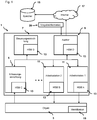
- Figure 1 shows a system 1, wherein a work process is carried out on the object 3 by the work stations 11 and its state of the object is changed.
- the detection information which represents a state and / or operating parameter, is detected by the detection device 5 .
- the control device 7 can now query configuration information of the detection device 5 before starting a further work process.
- the auditor device 9 receives the configuration information and checks it. Depending on a result of the checking of the configuration information, di creates auditing information and sends it to the control device. Depending on the auditing information, the control device 7 starts a work process or not.
- the configuration information preferably includes the operating parameters and / or status data that the detection device 5 determines from the workstations 11 and can preferably also include an identification element of the object 3 .
- the processes and / or configuration information can preferably also be stored in a memory 15 in the network, for example as part of the Internet 17 .
- HSM 13 are preferably used in the components to increase security.
- the auditor device 9 is preferably set up to receive default information 25 from an external source, for example an external server 15, and to adapt a process step of the work process as a function of the default information 25 .
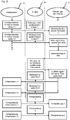
- Figure 2 presents a typical process flow.
- the auditor 9 queries information from the workstation 11 and then checks configuration information, which is preferably transmitted to the control device 7 .
- the auditor 9 can thus initiate the release of processes.
- Auditor 9 can also carry out an examination, documentation and auditing.
Landscapes
- Engineering & Computer Science (AREA)
- Physics & Mathematics (AREA)
- General Physics & Mathematics (AREA)
- Automation & Control Theory (AREA)
- Computer Security & Cryptography (AREA)
- Software Systems (AREA)
- Theoretical Computer Science (AREA)
- Human Computer Interaction (AREA)
- Manufacturing & Machinery (AREA)
- Computer Hardware Design (AREA)
- General Engineering & Computer Science (AREA)
- General Factory Administration (AREA)
Applications Claiming Priority (1)
| Application Number | Priority Date | Filing Date | Title |
|---|---|---|---|
| DE102018132993 | 2018-12-19 |
Publications (2)
| Publication Number | Publication Date |
|---|---|
| EP3671379A1 true EP3671379A1 (fr) | 2020-06-24 |
| EP3671379B1 EP3671379B1 (fr) | 2023-07-26 |
Family
ID=68917793
Family Applications (1)
| Application Number | Title | Priority Date | Filing Date |
|---|---|---|---|
| EP19216824.3A Active EP3671379B1 (fr) | 2018-12-19 | 2019-12-17 | Système d'authentification et procédé d'authentification permettant de mettre en oeuvre un processus de travail sur un objet |
Country Status (2)
| Country | Link |
|---|---|
| US (1) | US11334050B2 (fr) |
| EP (1) | EP3671379B1 (fr) |
Families Citing this family (3)
| Publication number | Priority date | Publication date | Assignee | Title |
|---|---|---|---|---|
| DE102018132991A1 (de) * | 2018-12-19 | 2020-06-25 | Francotyp-Postalia Gmbh | System und verfahren zum protokollieren von prozess-schritten |
| CN115951745B (zh) * | 2022-12-21 | 2025-02-25 | 星宸科技股份有限公司 | 数字电路系统与供电方法 |
| EP4513282A1 (fr) * | 2023-08-25 | 2025-02-26 | Siemens Aktiengesellschaft | Procédé de fonctionnement d'un système technique au moyen d'un système d'automatisation, produit programme informatique, support d'enregistrement lisible par ordinateur et système d'automatisation |
Citations (3)
| Publication number | Priority date | Publication date | Assignee | Title |
|---|---|---|---|---|
| WO2006013021A2 (fr) * | 2004-07-30 | 2006-02-09 | Abb Patent Gmbh | Procede et dispositif pour verifier de maniere fonctionnelle un appareil de champ avant sa mise en marche |
| EP2237123A1 (fr) * | 2009-03-30 | 2010-10-06 | Siemens Aktiengesellschaft | Procédé, dispositif et programme de commande pour vérifications décentralisée de compatibilité des composants d' un système d' automatisation |
| WO2016065493A1 (fr) * | 2014-10-31 | 2016-05-06 | Cloudbased Industry 4.0 Technologies Ag | Dispositif client pour acquisition de données et prétraitement de données de masse relatives aux processus provenant d'au moins une machine cnc ou robot industriel |
Family Cites Families (6)
| Publication number | Priority date | Publication date | Assignee | Title |
|---|---|---|---|---|
| JP4457581B2 (ja) * | 2003-05-28 | 2010-04-28 | 日本電気株式会社 | 耐障害システム、プログラム並列実行方法、耐障害システムの障害検出装置およびプログラム |
| KR20090023050A (ko) * | 2007-08-29 | 2009-03-04 | 삼성전자주식회사 | 광대역 통신시스템에서 부하균등을 위한 방법 및 장치 |
| WO2009096519A1 (fr) * | 2008-01-31 | 2009-08-06 | Nec Corporation | Procédé de précompensation, dispositif de contrôle qualité de fourniture de services, système, programme et support d'enregistrement associé |
| US9071613B2 (en) * | 2012-04-06 | 2015-06-30 | International Business Machines Corporation | Dynamic allocation of workload deployment units across a plurality of clouds |
| US9628457B2 (en) * | 2013-11-01 | 2017-04-18 | Charter Communications Operating, Llc | System and method for authenticating local CPE |
| US10768598B2 (en) * | 2017-10-02 | 2020-09-08 | Fisher-Rosemount Systems, Inc. | Systems and methods for ease of graphical display design workflow in a process control plant |
-
2019
- 2019-12-17 EP EP19216824.3A patent/EP3671379B1/fr active Active
- 2019-12-17 US US16/716,682 patent/US11334050B2/en active Active
Patent Citations (3)
| Publication number | Priority date | Publication date | Assignee | Title |
|---|---|---|---|---|
| WO2006013021A2 (fr) * | 2004-07-30 | 2006-02-09 | Abb Patent Gmbh | Procede et dispositif pour verifier de maniere fonctionnelle un appareil de champ avant sa mise en marche |
| EP2237123A1 (fr) * | 2009-03-30 | 2010-10-06 | Siemens Aktiengesellschaft | Procédé, dispositif et programme de commande pour vérifications décentralisée de compatibilité des composants d' un système d' automatisation |
| WO2016065493A1 (fr) * | 2014-10-31 | 2016-05-06 | Cloudbased Industry 4.0 Technologies Ag | Dispositif client pour acquisition de données et prétraitement de données de masse relatives aux processus provenant d'au moins une machine cnc ou robot industriel |
Also Published As
| Publication number | Publication date |
|---|---|
| US11334050B2 (en) | 2022-05-17 |
| EP3671379B1 (fr) | 2023-07-26 |
| US20200218230A1 (en) | 2020-07-09 |
Similar Documents
| Publication | Publication Date | Title |
|---|---|---|
| EP3815326B1 (fr) | Création d'un certificat de véhicule à l'aide d'une chaîne de blocs | |
| EP3596878B1 (fr) | Enregistrement de données d'état d'un dispositif dans une chaîne de blocs | |
| EP1405274B1 (fr) | Procede de verification de la validite de mentions d'affranchissement numeriques | |
| EP3108610B1 (fr) | Procédé et système d'établissement et vérification de validité de certificats d'appareil | |
| EP3319006B1 (fr) | Procédé de contrôle d'authenticité hors ligne d'un document virtuel | |
| DE202023102181U1 (de) | Blockchain-basiertes System zur Fälschungssicherheit und Rückverfolgbarkeit | |
| DE69736752T2 (de) | System und Vorrichtung zum Personalisieren von Chipkarten | |
| EP3318999B1 (fr) | Procédé de délivrance d'une version virtuelle d'un document | |
| DE102011004978B4 (de) | Verfahren, Steuerungseinrichtung und System zum Nachweis von Verletzungen der Authentzität von Anlagenkomponenten | |
| EP3671379B1 (fr) | Système d'authentification et procédé d'authentification permettant de mettre en oeuvre un processus de travail sur un objet | |
| EP3777088B1 (fr) | Procédé et système de commande d'une libération d'une ressource | |
| WO2019016140A1 (fr) | Système matériel à chaîne de blocs | |
| DE102019108891A1 (de) | Verfahren und Vorrichtung zur Zuordnung eines von einer Ladestation erfassten Messwertes zu einem Nutzer | |
| DE102011012874A1 (de) | Verfahren und Anordnung zum Freigeben der Nutzung einer Verbrauchseinheit | |
| EP3671596A1 (fr) | Système et procédé d'enregistrement des étapes de processus | |
| DE102018007996A1 (de) | Verfahren und Anordnung zum Zugriff auf SCADA-Daten von Windenergieanlagen | |
| EP4031945B1 (fr) | Procédé pour valider ou vérifier un appareil de terrain | |
| EP3671517B1 (fr) | Système et procédé de paiement de services | |
| DE102009058516A1 (de) | Vorrichtung und Verfahren zum Gewähren von Zugriffsrechten auf eine Wartungsfunktionalität | |
| EP3248356B1 (fr) | Jeton de certificat permettant de mettre à disposition un certificat numérique d'un utilisateur | |
| DE102004032323A1 (de) | Verfahren und Anordnung zum Erstatten von Porto | |
| EP3248357A1 (fr) | Jeton de certificat permettant de mettre à disposition un certificat numérique d'un utilisateur | |
| EP4113928A1 (fr) | Système de commande pour une installation technique et procédé d'émission d'une demande de certificat pour un composant d'installation | |
| EP3232640B1 (fr) | Vérification de la validité et blocage de certificats | |
| DE102015202360A1 (de) | Gesichertes Bereitstellen von Nutzerdaten durch einen passiven Transponder und Prüfung einer Integrität und/oder Authentizität der Nutzerdaten durch ein Lesegerät |
Legal Events
| Date | Code | Title | Description |
|---|---|---|---|
| PUAI | Public reference made under article 153(3) epc to a published international application that has entered the european phase |
Free format text: ORIGINAL CODE: 0009012 |
|
| STAA | Information on the status of an ep patent application or granted ep patent |
Free format text: STATUS: THE APPLICATION HAS BEEN PUBLISHED |
|
| AK | Designated contracting states |
Kind code of ref document: A1 Designated state(s): AL AT BE BG CH CY CZ DE DK EE ES FI FR GB GR HR HU IE IS IT LI LT LU LV MC MK MT NL NO PL PT RO RS SE SI SK SM TR |
|
| AX | Request for extension of the european patent |
Extension state: BA ME |
|
| STAA | Information on the status of an ep patent application or granted ep patent |
Free format text: STATUS: REQUEST FOR EXAMINATION WAS MADE |
|
| 17P | Request for examination filed |
Effective date: 20201223 |
|
| RBV | Designated contracting states (corrected) |
Designated state(s): AL AT BE BG CH CY CZ DE DK EE ES FI FR GB GR HR HU IE IS IT LI LT LU LV MC MK MT NL NO PL PT RO RS SE SI SK SM TR |
|
| STAA | Information on the status of an ep patent application or granted ep patent |
Free format text: STATUS: EXAMINATION IS IN PROGRESS |
|
| 17Q | First examination report despatched |
Effective date: 20210303 |
|
| GRAP | Despatch of communication of intention to grant a patent |
Free format text: ORIGINAL CODE: EPIDOSNIGR1 |
|
| STAA | Information on the status of an ep patent application or granted ep patent |
Free format text: STATUS: GRANT OF PATENT IS INTENDED |
|
| INTG | Intention to grant announced |
Effective date: 20221107 |
|
| GRAJ | Information related to disapproval of communication of intention to grant by the applicant or resumption of examination proceedings by the epo deleted |
Free format text: ORIGINAL CODE: EPIDOSDIGR1 |
|
| STAA | Information on the status of an ep patent application or granted ep patent |
Free format text: STATUS: EXAMINATION IS IN PROGRESS |
|
| INTC | Intention to grant announced (deleted) | ||
| GRAP | Despatch of communication of intention to grant a patent |
Free format text: ORIGINAL CODE: EPIDOSNIGR1 |
|
| STAA | Information on the status of an ep patent application or granted ep patent |
Free format text: STATUS: GRANT OF PATENT IS INTENDED |
|
| INTG | Intention to grant announced |
Effective date: 20230425 |
|
| GRAS | Grant fee paid |
Free format text: ORIGINAL CODE: EPIDOSNIGR3 |
|
| GRAA | (expected) grant |
Free format text: ORIGINAL CODE: 0009210 |
|
| STAA | Information on the status of an ep patent application or granted ep patent |
Free format text: STATUS: THE PATENT HAS BEEN GRANTED |
|
| P01 | Opt-out of the competence of the unified patent court (upc) registered |
Effective date: 20230522 |
|
| AK | Designated contracting states |
Kind code of ref document: B1 Designated state(s): AL AT BE BG CH CY CZ DE DK EE ES FI FR GB GR HR HU IE IS IT LI LT LU LV MC MK MT NL NO PL PT RO RS SE SI SK SM TR |
|
| REG | Reference to a national code |
Ref country code: CH Ref legal event code: EP |
|
| REG | Reference to a national code |
Ref country code: DE Ref legal event code: R096 Ref document number: 502019008644 Country of ref document: DE |
|
| REG | Reference to a national code |
Ref country code: IE Ref legal event code: FG4D Free format text: LANGUAGE OF EP DOCUMENT: GERMAN |
|
| REG | Reference to a national code |
Ref country code: NL Ref legal event code: FP |
|
| REG | Reference to a national code |
Ref country code: LT Ref legal event code: MG9D |
|
| REG | Reference to a national code |
Ref country code: SE Ref legal event code: TRGR |
|
| PG25 | Lapsed in a contracting state [announced via postgrant information from national office to epo] |
Ref country code: GR Free format text: LAPSE BECAUSE OF FAILURE TO SUBMIT A TRANSLATION OF THE DESCRIPTION OR TO PAY THE FEE WITHIN THE PRESCRIBED TIME-LIMIT Effective date: 20231027 |
|
| PG25 | Lapsed in a contracting state [announced via postgrant information from national office to epo] |
Ref country code: IS Free format text: LAPSE BECAUSE OF FAILURE TO SUBMIT A TRANSLATION OF THE DESCRIPTION OR TO PAY THE FEE WITHIN THE PRESCRIBED TIME-LIMIT Effective date: 20231126 |
|
| PG25 | Lapsed in a contracting state [announced via postgrant information from national office to epo] |
Ref country code: RS Free format text: LAPSE BECAUSE OF FAILURE TO SUBMIT A TRANSLATION OF THE DESCRIPTION OR TO PAY THE FEE WITHIN THE PRESCRIBED TIME-LIMIT Effective date: 20230726 Ref country code: PT Free format text: LAPSE BECAUSE OF FAILURE TO SUBMIT A TRANSLATION OF THE DESCRIPTION OR TO PAY THE FEE WITHIN THE PRESCRIBED TIME-LIMIT Effective date: 20231127 Ref country code: NO Free format text: LAPSE BECAUSE OF FAILURE TO SUBMIT A TRANSLATION OF THE DESCRIPTION OR TO PAY THE FEE WITHIN THE PRESCRIBED TIME-LIMIT Effective date: 20231026 Ref country code: LV Free format text: LAPSE BECAUSE OF FAILURE TO SUBMIT A TRANSLATION OF THE DESCRIPTION OR TO PAY THE FEE WITHIN THE PRESCRIBED TIME-LIMIT Effective date: 20230726 Ref country code: LT Free format text: LAPSE BECAUSE OF FAILURE TO SUBMIT A TRANSLATION OF THE DESCRIPTION OR TO PAY THE FEE WITHIN THE PRESCRIBED TIME-LIMIT Effective date: 20230726 Ref country code: IS Free format text: LAPSE BECAUSE OF FAILURE TO SUBMIT A TRANSLATION OF THE DESCRIPTION OR TO PAY THE FEE WITHIN THE PRESCRIBED TIME-LIMIT Effective date: 20231126 Ref country code: HR Free format text: LAPSE BECAUSE OF FAILURE TO SUBMIT A TRANSLATION OF THE DESCRIPTION OR TO PAY THE FEE WITHIN THE PRESCRIBED TIME-LIMIT Effective date: 20230726 Ref country code: GR Free format text: LAPSE BECAUSE OF FAILURE TO SUBMIT A TRANSLATION OF THE DESCRIPTION OR TO PAY THE FEE WITHIN THE PRESCRIBED TIME-LIMIT Effective date: 20231027 Ref country code: FI Free format text: LAPSE BECAUSE OF FAILURE TO SUBMIT A TRANSLATION OF THE DESCRIPTION OR TO PAY THE FEE WITHIN THE PRESCRIBED TIME-LIMIT Effective date: 20230726 |
|
| PG25 | Lapsed in a contracting state [announced via postgrant information from national office to epo] |
Ref country code: PL Free format text: LAPSE BECAUSE OF FAILURE TO SUBMIT A TRANSLATION OF THE DESCRIPTION OR TO PAY THE FEE WITHIN THE PRESCRIBED TIME-LIMIT Effective date: 20230726 |
|
| PG25 | Lapsed in a contracting state [announced via postgrant information from national office to epo] |
Ref country code: ES Free format text: LAPSE BECAUSE OF FAILURE TO SUBMIT A TRANSLATION OF THE DESCRIPTION OR TO PAY THE FEE WITHIN THE PRESCRIBED TIME-LIMIT Effective date: 20230726 |
|
| REG | Reference to a national code |
Ref country code: DE Ref legal event code: R097 Ref document number: 502019008644 Country of ref document: DE |
|
| PG25 | Lapsed in a contracting state [announced via postgrant information from national office to epo] |
Ref country code: SM Free format text: LAPSE BECAUSE OF FAILURE TO SUBMIT A TRANSLATION OF THE DESCRIPTION OR TO PAY THE FEE WITHIN THE PRESCRIBED TIME-LIMIT Effective date: 20230726 Ref country code: RO Free format text: LAPSE BECAUSE OF FAILURE TO SUBMIT A TRANSLATION OF THE DESCRIPTION OR TO PAY THE FEE WITHIN THE PRESCRIBED TIME-LIMIT Effective date: 20230726 Ref country code: ES Free format text: LAPSE BECAUSE OF FAILURE TO SUBMIT A TRANSLATION OF THE DESCRIPTION OR TO PAY THE FEE WITHIN THE PRESCRIBED TIME-LIMIT Effective date: 20230726 Ref country code: EE Free format text: LAPSE BECAUSE OF FAILURE TO SUBMIT A TRANSLATION OF THE DESCRIPTION OR TO PAY THE FEE WITHIN THE PRESCRIBED TIME-LIMIT Effective date: 20230726 Ref country code: DK Free format text: LAPSE BECAUSE OF FAILURE TO SUBMIT A TRANSLATION OF THE DESCRIPTION OR TO PAY THE FEE WITHIN THE PRESCRIBED TIME-LIMIT Effective date: 20230726 Ref country code: CZ Free format text: LAPSE BECAUSE OF FAILURE TO SUBMIT A TRANSLATION OF THE DESCRIPTION OR TO PAY THE FEE WITHIN THE PRESCRIBED TIME-LIMIT Effective date: 20230726 Ref country code: SK Free format text: LAPSE BECAUSE OF FAILURE TO SUBMIT A TRANSLATION OF THE DESCRIPTION OR TO PAY THE FEE WITHIN THE PRESCRIBED TIME-LIMIT Effective date: 20230726 |
|
| PLBE | No opposition filed within time limit |
Free format text: ORIGINAL CODE: 0009261 |
|
| STAA | Information on the status of an ep patent application or granted ep patent |
Free format text: STATUS: NO OPPOSITION FILED WITHIN TIME LIMIT |
|
| 26N | No opposition filed |
Effective date: 20240429 |
|
| PG25 | Lapsed in a contracting state [announced via postgrant information from national office to epo] |
Ref country code: SI Free format text: LAPSE BECAUSE OF FAILURE TO SUBMIT A TRANSLATION OF THE DESCRIPTION OR TO PAY THE FEE WITHIN THE PRESCRIBED TIME-LIMIT Effective date: 20230726 |
|
| PG25 | Lapsed in a contracting state [announced via postgrant information from national office to epo] |
Ref country code: LU Free format text: LAPSE BECAUSE OF NON-PAYMENT OF DUE FEES Effective date: 20231217 |
|
| PG25 | Lapsed in a contracting state [announced via postgrant information from national office to epo] |
Ref country code: MC Free format text: LAPSE BECAUSE OF FAILURE TO SUBMIT A TRANSLATION OF THE DESCRIPTION OR TO PAY THE FEE WITHIN THE PRESCRIBED TIME-LIMIT Effective date: 20230726 |
|
| REG | Reference to a national code |
Ref country code: BE Ref legal event code: MM Effective date: 20231231 |
|
| PG25 | Lapsed in a contracting state [announced via postgrant information from national office to epo] |
Ref country code: MC Free format text: LAPSE BECAUSE OF FAILURE TO SUBMIT A TRANSLATION OF THE DESCRIPTION OR TO PAY THE FEE WITHIN THE PRESCRIBED TIME-LIMIT Effective date: 20230726 Ref country code: LU Free format text: LAPSE BECAUSE OF NON-PAYMENT OF DUE FEES Effective date: 20231217 |
|
| REG | Reference to a national code |
Ref country code: IE Ref legal event code: MM4A |
|
| PG25 | Lapsed in a contracting state [announced via postgrant information from national office to epo] |
Ref country code: IE Free format text: LAPSE BECAUSE OF NON-PAYMENT OF DUE FEES Effective date: 20231217 |
|
| PG25 | Lapsed in a contracting state [announced via postgrant information from national office to epo] |
Ref country code: BE Free format text: LAPSE BECAUSE OF NON-PAYMENT OF DUE FEES Effective date: 20231231 |
|
| PG25 | Lapsed in a contracting state [announced via postgrant information from national office to epo] |
Ref country code: IE Free format text: LAPSE BECAUSE OF NON-PAYMENT OF DUE FEES Effective date: 20231217 Ref country code: BE Free format text: LAPSE BECAUSE OF NON-PAYMENT OF DUE FEES Effective date: 20231231 |
|
| PG25 | Lapsed in a contracting state [announced via postgrant information from national office to epo] |
Ref country code: BG Free format text: LAPSE BECAUSE OF FAILURE TO SUBMIT A TRANSLATION OF THE DESCRIPTION OR TO PAY THE FEE WITHIN THE PRESCRIBED TIME-LIMIT Effective date: 20230726 |
|
| PG25 | Lapsed in a contracting state [announced via postgrant information from national office to epo] |
Ref country code: BG Free format text: LAPSE BECAUSE OF FAILURE TO SUBMIT A TRANSLATION OF THE DESCRIPTION OR TO PAY THE FEE WITHIN THE PRESCRIBED TIME-LIMIT Effective date: 20230726 |
|
| PG25 | Lapsed in a contracting state [announced via postgrant information from national office to epo] |
Ref country code: CY Free format text: LAPSE BECAUSE OF FAILURE TO SUBMIT A TRANSLATION OF THE DESCRIPTION OR TO PAY THE FEE WITHIN THE PRESCRIBED TIME-LIMIT; INVALID AB INITIO Effective date: 20191217 |
|
| PG25 | Lapsed in a contracting state [announced via postgrant information from national office to epo] |
Ref country code: HU Free format text: LAPSE BECAUSE OF FAILURE TO SUBMIT A TRANSLATION OF THE DESCRIPTION OR TO PAY THE FEE WITHIN THE PRESCRIBED TIME-LIMIT; INVALID AB INITIO Effective date: 20191217 |
|
| REG | Reference to a national code |
Ref country code: CH Ref legal event code: U11 Free format text: ST27 STATUS EVENT CODE: U-0-0-U10-U11 (AS PROVIDED BY THE NATIONAL OFFICE) Effective date: 20260101 |
|
| PGFP | Annual fee paid to national office [announced via postgrant information from national office to epo] |
Ref country code: DE Payment date: 20251017 Year of fee payment: 7 |
|
| PGFP | Annual fee paid to national office [announced via postgrant information from national office to epo] |
Ref country code: GB Payment date: 20251219 Year of fee payment: 7 |
|
| PGFP | Annual fee paid to national office [announced via postgrant information from national office to epo] |
Ref country code: AT Payment date: 20251222 Year of fee payment: 7 |
|
| PGFP | Annual fee paid to national office [announced via postgrant information from national office to epo] |
Ref country code: IT Payment date: 20251223 Year of fee payment: 7 |
|
| PGFP | Annual fee paid to national office [announced via postgrant information from national office to epo] |
Ref country code: NL Payment date: 20251219 Year of fee payment: 7 Ref country code: FR Payment date: 20251229 Year of fee payment: 7 |
|
| PGFP | Annual fee paid to national office [announced via postgrant information from national office to epo] |
Ref country code: TR Payment date: 20251210 Year of fee payment: 7 |
|
| PGFP | Annual fee paid to national office [announced via postgrant information from national office to epo] |
Ref country code: SE Payment date: 20251219 Year of fee payment: 7 |
|
| PGFP | Annual fee paid to national office [announced via postgrant information from national office to epo] |
Ref country code: CH Payment date: 20260101 Year of fee payment: 7 |